US9538969B2 - Management apparatus - Google Patents
Management apparatus Download PDFInfo
- Publication number
- US9538969B2 US9538969B2 US14/801,475 US201514801475A US9538969B2 US 9538969 B2 US9538969 B2 US 9538969B2 US 201514801475 A US201514801475 A US 201514801475A US 9538969 B2 US9538969 B2 US 9538969B2
- Authority
- US
- United States
- Prior art keywords
- imaging
- image
- unit
- information
- notification
- Prior art date
- Legal status (The legal status is an assumption and is not a legal conclusion. Google has not performed a legal analysis and makes no representation as to the accuracy of the status listed.)
- Expired - Fee Related
Links
Images






Classifications
-
- A—HUMAN NECESSITIES
- A61—MEDICAL OR VETERINARY SCIENCE; HYGIENE
- A61B—DIAGNOSIS; SURGERY; IDENTIFICATION
- A61B6/00—Apparatus or devices for radiation diagnosis; Apparatus or devices for radiation diagnosis combined with radiation therapy equipment
- A61B6/42—Arrangements for detecting radiation specially adapted for radiation diagnosis
- A61B6/4208—Arrangements for detecting radiation specially adapted for radiation diagnosis characterised by using a particular type of detector
- A61B6/4233—Arrangements for detecting radiation specially adapted for radiation diagnosis characterised by using a particular type of detector using matrix detectors
-
- A—HUMAN NECESSITIES
- A61—MEDICAL OR VETERINARY SCIENCE; HYGIENE
- A61B—DIAGNOSIS; SURGERY; IDENTIFICATION
- A61B6/00—Apparatus or devices for radiation diagnosis; Apparatus or devices for radiation diagnosis combined with radiation therapy equipment
- A61B6/46—Arrangements for interfacing with the operator or the patient
- A61B6/461—Displaying means of special interest
- A61B6/465—Displaying means of special interest adapted to display user selection data, e.g. graphical user interface, icons or menus
-
- A—HUMAN NECESSITIES
- A61—MEDICAL OR VETERINARY SCIENCE; HYGIENE
- A61B—DIAGNOSIS; SURGERY; IDENTIFICATION
- A61B6/00—Apparatus or devices for radiation diagnosis; Apparatus or devices for radiation diagnosis combined with radiation therapy equipment
- A61B6/54—Control of apparatus or devices for radiation diagnosis
- A61B6/542—Control of apparatus or devices for radiation diagnosis involving control of exposure
Definitions
- the present invention relates to a radiation detection technique and, more particularly, to a management apparatus and management method for managing a radiation detection apparatus capable of capturing a radiation image without exchanging synchronization signals with a radiation generating apparatus, and a non-transitory computer-readable storage medium.
- Radiation detection apparatuses have been commercially available and rapidly popular, which use a digital radiation imaging method of forming an image by converting radiation into an electric signal by using a plurality of radiation detection elements arrayed in a two-dimensional matrix instead of a film.
- a radiation detection apparatus of this type a radiation detection apparatus using an FPD (Flat Panel Detector) has been proposed.
- minute radiation detectors each obtained by stacking a solid-state photoelectric conversion element and a scintillator for converting radiation into visible light, are arranged as image sensing elements in a two-dimensional matrix.
- Each image sensing element converts irradiated radiation into an electric signal (charge amount) corresponding to the irradiation dose.
- an FPD can accumulate charges generated by irradiation with radiation in solid-state photoelectric conversion elements by controlling a voltage to be applied to the elements. Then, the FPD reads out charges from the solid-state photoelectric conversion elements by controlling the voltage to be applied to the elements to be another voltage, and forms image data in accordance with the accumulated charge amounts.
- the timing of irradiation with radiation and the timing to perform accumulation (imaging) of charges in the radiation detection apparatus need to be accurately synchronized with each other in consideration of the characteristics of solid-state photoelectric conversion elements in use.
- a radiation imaging system which synchronizes the radiation irradiation timing and the imaging timing by exchanging synchronization signals between the radiation generating apparatus and the FPD, as disclosed in, for example, Japanese Patent No. 4684747. More specifically, the FPD makes preparation for imaging in response to an irradiation request signal from the radiation generating apparatus.
- an irradiation permission signal is transmitted to the radiation generating apparatus in accordance with the start of imaging by the FPD (the start of accumulating charges), thereby performing irradiation with radiation.
- the FPD detects the radiation irradiation timing by detecting a change of a current caused inside upon irradiation with radiation.
- the FPD starts imaging in response to the detection as a trigger, thereby establishing synchronization between the radiation irradiation timing and the imaging timing.
- the radiation generating apparatus and the FPD need to be connected in electrically one-to-one correspondence. This puts a constraint on system building such that the radiation generating apparatus and the FPD require connection interfaces. Further, in a system as disclosed in Japanese Patent No. 4684747, a conventional radiation generating apparatus not coping with the FPD does not have a connection interface and suffers problems such as incapability of imaging by the FPD.
- the radiation detection apparatus itself detects irradiation with radiation and performs imaging.
- This system can therefore solve problems arising from the necessity of an electric connection with the radiation generating apparatus. Since no additional apparatus or the like need be connected, the system is satisfactorily flexible. However, the following problems may arise.
- the radiation generating apparatus can generate radiation regardless of the state of the radiation detection apparatus and the state of an imaging control apparatus which controls the radiation detection apparatus and displays and saves an image.
- a case first case is conceivable, in which an obtained image becomes a poor image under the influence of charges remaining in the radiation detection apparatus or the like, and no effective image can be obtained.
- a case (second case) is also conceivable, in which even if the radiation detection apparatus obtains an effective image, the imaging control apparatus is not ready for controlling the radiation detection apparatus and the image can be neither displayed nor saved.
- a case (third case) is also conceivable, in which even if the radiation control apparatus obtains an image from the radiation detection apparatus, it cannot appropriately associate the image with patient information and examination information. Re-imaging is necessary in all these cases, causing a problem because ineffective exposure to a patent may be performed.
- the present invention has been made to solve the above problems, and provides suppressing the necessity of re-imaging when irradiation with radiation is performed in a state in which a radiation detection apparatus is not ready yet.
- a management apparatus which manages an image captured in a radiation detection apparatus by irradiation with radiation
- the management apparatus comprises a management unit configured to manage imaging information which is input by a user and serves as information for imaging, an obtaining unit configured to obtain the captured image, and an association unit configured to associate the obtained image with the imaging information, wherein when a mis-exposure notification is received from the radiation detection apparatus and the management unit manages the necessary imaging information, the obtaining unit obtains the captured image.
- FIG. 1 is a block diagram showing the arrangement of an imaging system according to the first embodiment
- FIG. 2 is a circuit diagram showing the equivalent circuit of a radiation detector according to the first embodiment
- FIG. 3 is a flowchart showing an example of the state transition of a radiation detection apparatus according to the first embodiment
- FIG. 4 is a block diagram showing an example of the arrangement of an imaging control apparatus according to the first embodiment
- FIG. 5 is a block diagram showing an example of the arrangement of the imaging control apparatus according to modification 3 of the first embodiment
- FIG. 6 is a block diagram showing an example of the arrangement of the imaging control apparatus according to modification 5 of the first embodiment
- FIG. 7 is a block diagram showing an example of the arrangement of the imaging control apparatus according to modification 7 of the first embodiment
- FIG. 8 is a block diagram showing an example of the arrangement of the imaging control apparatus according to modification 8 of the first embodiment
- FIG. 9 is a flowchart showing the operation of the imaging system according to the first embodiment.
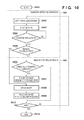
- FIG. 10 is a flowchart showing the operation of the imaging system according to modification 1 of the first embodiment
- FIG. 11 is a flowchart showing the operation of the imaging system according to modification 2 of the first embodiment
- FIG. 12 is a flowchart showing the operation of the imaging system according to modification 3 of the first embodiment
- FIG. 13 is a flowchart showing the operation of the imaging system according to modification 4 of the first embodiment
- FIG. 14 is a flowchart showing the operation of the imaging system according to modification 5 of the first embodiment
- FIG. 15 is a flowchart showing the operation of the imaging system according to modification 6 of the first embodiment
- FIG. 16 is a flowchart showing the operation of the imaging system according to modification 7 of the first embodiment
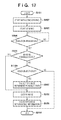
- FIG. 17 is a flowchart showing the operation of the imaging system according to modification 8 of the first embodiment
- FIG. 18 is a flowchart showing the operation of the imaging system according to modification 9 of the first embodiment
- FIG. 19 is a block diagram showing the arrangement of an imaging system according to the second embodiment.
- FIG. 20 is a flowchart showing the operation of the imaging system according to the second embodiment
- FIG. 21 is a block diagram showing the arrangement of the imaging system according to a modification of the second embodiment.
- FIG. 22 is a flowchart showing the operation of the imaging system according to the modification of the second embodiment.
- radiation imaging in the following embodiments may be imaging using ⁇ -rays, ⁇ -rays, ⁇ -rays, or other electromagnetic waves, in addition to imaging using X-rays.
- FIG. 1 is a block diagram showing the arrangement of a radiation imaging system (to be referred to as an imaging system hereinafter) 10 according to the first embodiment.
- radiation imaging may be imaging using ⁇ -rays, ⁇ -rays, ⁇ -rays, or other electromagnetic waves, in addition to imaging using X-rays.
- the imaging system according to this embodiment includes a radiation detection apparatus 100 , a radiation generating apparatus 200 , a radiation control apparatus 210 , and an imaging control apparatus 400 .
- the radiation detection apparatus 100 includes a radiation detector 110 constituted by a two-dimensional image sensing element 120 and a bias power supply 140 , a radiation irradiation sensing unit 150 , a control unit 160 , a driving unit 165 , a readout unit 170 , an image processing unit 175 , and a communication unit 180 .
- the two-dimensional image sensing element 120 is constituted by arraying a plurality of solid-state photoelectric conversion elements in a two-dimensional matrix.
- the bias power supply 140 supplies a bias voltage to the two-dimensional image sensing element 120 .
- the radiation irradiation sensing unit 150 is connected to the bias power supply 140 and senses irradiation with radiation.
- the control unit 160 controls various operations of the radiation detection apparatus 100 .
- the readout unit 170 reads out image data.
- the image processing unit 175 performs image processing on an image read out by the readout unit 170 .
- the communication unit 180 can perform communication by at least either wireless communication or wired communication.
- the imaging control apparatus 400 may be a smart device or a mobile phone, and in some cases, an in-hospital server or a cloud system. In some cases, the system may be constituted by incorporating the display-equipped radiation detection apparatus 100 in the imaging control apparatus 400 .
- the radiation generating apparatus 200 generates pulse-like radiation 220 .
- the radiation control apparatus 210 controls radiation generation conditions such as ON/OFF of radiation, a tube current, and a tube voltage in the radiation generating apparatus 200 .
- the radiation 220 generated by the radiation generating apparatus 200 irradiates an object 300 .
- the radiation 220 having passed through the object 300 enters the two-dimensional image sensing element 120 arranged in the radiation detection apparatus 100 .
- the two-dimensional image sensing element 120 converts the radiation 220 into a radiation image.
- the converted radiation image is read out via the readout unit 170 and then transferred as digital image data to the imaging control apparatus 400 via the communication unit 180 .
- the imaging control apparatus 400 displays and saves the received image data, and transfers it to a printer or PACS (Picture Archiving and Communication System) (neither is shown).
- PACS Picture Archiving and Communication System
- FIG. 2 is a circuit diagram showing the equivalent circuit of the radiation detector 110 .
- the two-dimensional image sensing element 120 is constituted by a plurality of pixels arrayed in an m (row) ⁇ n (column) matrix.
- Each pixel is constituted by one of photoelectric conversion elements S 11 to S 33 , a phosphor (not shown) which converts the radiation 220 into light in a wavelength band that can be sensed by the photoelectric conversion element S 11 , and one of switching elements T 11 to T 33 .
- Each of the photoelectric conversion elements S 11 to S 33 generates and accumulates charges corresponding to the amount of incident radiation.
- the transmission amount of radiation passing through the object 300 has a different distribution depending on a structure such as a bone or internal organ, a focus of disease, or the like in the object.
- the photoelectric conversion elements S 11 to S 33 convert such a different distribution into a charge distribution and accumulate it.
- various elements using amorphous silicon and polysilicon are known, as well as a CCD.
- MIS photodiodes which are mainly made of amorphous silicon and arranged on an insulating substrate such as a glass substrate are used as the photoelectric conversion elements S 11 to S 33 .
- TFTs thin-film transistors
- the electrode on the lower electrode side is indicated as a G electrode
- the electrode on the upper electrode side is indicated as a D electrode.
- the D electrode is electrically connected to one of the two main terminals of the switching element.
- the G electrode is connected to the bias power supply 140 via a common bias wiring.
- the control terminals of the plurality of switching elements T 11 , T 12 , and T 13 in the row direction are commonly connected to a driving wiring g 1 on the first row, and the driving unit 165 supplies a driving signal for controlling the conductive states of the switching elements T 11 , T 12 , and T 13 via the driving wiring g 1 for each row.
- the main terminals of the plurality of switching elements T 11 , T 21 , and T 31 in the column direction, which are not connected to the photoelectric conversion elements S 11 , S 21 , and S 31 , are electrically connected to a signal wiring s 1 on the first column. While the switching elements T 11 , T 21 , and T 31 are in the conductive state, electric signals corresponding to amounts of charges accumulated in the photoelectric conversion elements S 11 , S 21 , and S 31 are output to the readout unit 170 via the signal wiring s 1 .
- a plurality of signal wirings s 1 to s 3 in the column direction in parallel transmit electric signals read out from a plurality of pixels to the readout unit 170 .
- the readout unit 170 includes a multiplexer (not shown) which sequentially processes readout electric signals in parallel and outputs the resultant signals as serial image signals, and a buffer amplifier (not shown) which outputs the image signals after impedance conversion.
- An A/D converter 142 converts the image signal serving as the analog electric signal output from the buffer amplifier into digital image data. This image data is transmitted to the imaging control apparatus 400 via the image processing unit 175 and the communication unit 180 .
- the bias power supply 140 supplies a bias voltage Vb to the G electrodes of the photoelectric conversion elements S 11 to S 33 via the bias wirings, and also outputs current information including a change of the amount of current supplied to the bias wirings.
- a circuit which outputs the current information includes a current-voltage conversion circuit 141 constituted by an operational amplifier and a resistor, and the A/D converter 142 which converts a converted output voltage into a digital value.
- a current-voltage conversion circuit using a shunt resistor may be used.
- the bias power supply 140 may directly output the output voltage of the current-voltage conversion circuit 141 .
- the bias power supply 140 may output a physical amount corresponding to the amount of current supplied to the bias wiring.
- the digital current information is sent to the radiation irradiation sensing unit 150 . Irradiation with radiation can be sensed by capturing a change of the current amount caused during radiation irradiation.
- an SW control circuit 143 controls a voltage to be applied to the G electrode. The SW control circuit 143 performs control to apply a voltage Vr during the refresh period of the photoelectric conversion element (period of a refresh mode) and a voltage Vs during the remaining period (period of a photoelectric conversion mode).
- FIG. 3 is a flowchart showing an example of the state transition of the radiation detection apparatus 100 according to the first embodiment.
- the control state of the radiation detection apparatus 100 mainly takes five states: an initialization state, imaging preparation state, imaging possible state, ongoing imaging state, and imaging impossible state.
- Step S 201 represents that the radiation detection apparatus 100 is in the initialization state.
- the initialization state is a state in which the photoelectric conversion elements on the two-dimensional image sensing element 120 in the radiation detection apparatus 100 are initialized. That is, the initialization state is a state in which application of a voltage to the electrodes of the photoelectric conversion elements is stopped.
- the initialization state is the same state as a so-called sleep state in a general PC (that is, a power-saving standby power supply mode in which power can be greatly saved in comparison with a normal activation state, and a quick return is possible because information is kept held in the memory).
- the imaging control apparatus 400 notifies the radiation detection apparatus 100 of a preparation start instruction, and the radiation detection apparatus 100 transits to step S 202 .
- Step S 202 represents that the radiation detection apparatus 100 is in the imaging preparation state.
- the imaging preparation state is a state in which the driving unit 165 has executed imaging driving and a predetermined time has elapsed after the start of imaging driving. More specifically, the imaging preparation state is a state in which the initializing operation of the photoelectric conversion elements in the radiation detection apparatus 100 is performed.
- the initializing operation is performed to remove charges generated by a dark current generated in the photoelectric conversion element or by radiation irradiation.
- the initializing operation is an operation of performing a readout operation repetitively a plurality of times in an idling period in the preparatory stage before performing radiation imaging.
- the initializing operation is an operation of reading out image data having no radiation image.
- the initializing operation is repeated in a predetermined cycle for a predetermined time until the radiation detection apparatus 100 changes to the imaging possible state.
- Step S 203 represents that the radiation detection apparatus 100 is in the imaging possible state.
- the imaging possible state is a state in which the initializing operation of the photoelectric conversion elements in the radiation detection apparatus 100 has already been executed for a predetermined time.
- the imaging possible state is also a state in which obtainment, display, save, and the like of an image are possible in the imaging control apparatus 400 , together with the above-described state in the radiation detection apparatus 100 .
- the imaging possible state may be a state in which radiation imaging can be performed normally. If irradiation with radiation is performed in the imaging possible state, charges read out from the photoelectric conversion elements increase, and the radiation irradiation sensing unit 150 senses the irradiation with radiation.
- the imaging impossible state is a state in which imaging is possible and to which the radiation detection apparatus 100 transits when the imaging control apparatus 400 is not ready yet. For example, when the radiation detection apparatus 100 is in the imaging possible state and receives a temporary impossible instruction from the imaging control apparatus 400 , it shifts to the imaging impossible state.
- the imaging impossible state is a state in which the initializing operation of the photoelectric conversion elements has already been executed for a predetermined time, as in the imaging possible state, but the state can quickly return to the imaging possible state, unlike the imaging preparation state.
- the radiation detection apparatus 100 when the radiation detection apparatus 100 is in the ongoing imaging state of step S 204 , it determines the start of irradiation with radiation, that is, senses irradiation with radiation. However, the radiation detection apparatus 100 may sense irradiation with radiation in the imaging preparation state of step S 202 or the imaging impossible state of step S 205 . However, even if irradiation with radiation is sensed in these states, no appropriate image may be obtained.
- FIG. 4 shows an example of the arrangement of the imaging control apparatus 400 according to this embodiment.
- the imaging control apparatus 400 includes a communication unit 410 , an image processing unit 420 , an image display unit 430 , an image save unit 440 , an imaging control unit 450 , an imaging information input unit 460 , an imaging information management unit 470 , and an image output unit 480 .
- the communication unit 410 obtains an image from the radiation detection apparatus 100 , and transmits/receives a control command.
- the image processing unit 420 performs image processing on an image obtained from the communication unit 410 .
- the image display unit 430 performs control to display an image having undergone image processing by the image processing unit 420 on an external device such as a monitor.
- the image save unit 440 saves an image having undergone image processing by the image processing unit 420 in a hard disk or the like.
- the imaging information input unit 460 is an interface for allowing a user to input imaging information (patient information/examination information) such as patient information, examination information, information of a radiation detection apparatus to be used, an imaging region, and a body build.
- imaging information patient information/examination information
- the imaging information input unit 460 includes a touch panel formed integrally with a monitor.
- the imaging information input unit 460 may be another device that accepts an operation input from a user, including a keyboard and mouse connected to the imaging control apparatus 400 .
- the imaging information includes, for example, information of a patient or object, and examination information of imaging conditions and the like.
- the information of the object includes information of the ID, name, age, and sex of the object.
- the examination information includes information of the examination ID, imaging count, imaging target region in every imaging, imaging method, and imaging direction.
- the imaging information management unit 470 manages imaging information input via the imaging information input unit 460 .
- the imaging control unit 450 controls the radiation detection apparatus 100 based on information managed by the imaging information management unit 470 .
- the image output unit 480 performs control of output to a printer, save medium, PACS, or the like.
- the imaging control unit 450 includes a processing switching unit 451 .
- the processing switching unit 451 instructs the radiation detection apparatus 100 via the communication unit 410 to transit to imaging preparation state S 202 .
- the imaging control unit 450 receives, from the radiation detection apparatus 100 via the communication unit 410 a predetermined time after this instruction, a notification that the radiation detection apparatus 100 has transited to imaging possible state S 203 .
- image obtainment sometimes becomes impossible for a reason to, for example, change imaging information or system settings.
- the imaging control unit 450 determines to temporarily cancel the imaging possible state, and instructs the radiation detection apparatus 100 via the communication unit 410 to transit to imaging impossible state S 205 . After the radiation detection apparatus 100 transits to imaging possible state S 203 , it notifies the imaging control apparatus 400 via the communication unit 410 that imaging has started. Then, the imaging control apparatus 400 obtains an image via the communication unit 410 .
- the imaging control unit 450 includes the processing switching unit 451 which determines whether imaging information managed by the imaging information management unit 470 is complete, and switches the method of obtaining an image to be held in the radiation detection apparatus 100 , and the method of associating an image with imaging information.
- FIG. 9 is a flowchart showing the operation of the imaging system according to this embodiment.
- the radiation detection apparatus 100 starts initializing driving under the control of the driving unit 165 (step S 902 ), and starts a radiation sensing operation (step S 903 ). If the radiation irradiation sensing unit 150 senses irradiation with radiation (YES in step S 904 ), the radiation detection apparatus 100 determines whether the radiation detection apparatus 100 is in imaging possible state S 203 (step S 905 ). If the radiation detection apparatus 100 is in imaging possible state S 203 (YES in step S 905 ), it notifies the imaging control apparatus 400 of normal exposure.
- the imaging control apparatus 400 obtains an image from the radiation detection apparatus 100 via the communication unit 410 (step S 908 ).
- the imaging control unit 450 of the imaging control apparatus 400 associates the image obtained via the communication unit 410 with imaging information managed by the imaging information management unit 470 (step S 909 ).
- the radiation detection apparatus 100 is not in imaging possible state S 203 , that is, the radiation detection apparatus 100 is in imaging preparation state S 202 or imaging impossible state S 205 (NO in step S 905 )
- the processing switching unit 451 of the imaging control apparatus 400 confirms whether imaging information managed by the imaging information management unit 470 is complete (step S 906 ).
- step S 906 If the processing switching unit 451 confirms that imaging information is complete (YES in step S 906 ), the imaging control apparatus 400 transits to an image obtainment possible state (step S 907 ), and executes image obtainment via the communication unit 410 (step S 908 ).
- the imaging control unit 450 associates the image obtained via the communication unit 410 with the imaging information managed by the imaging information management unit 470 (step S 909 ). If the processing switching unit 451 confirms that imaging information is not complete (NO in step S 906 ), the imaging control apparatus 400 transits to the image obtainment possible state (step S 911 ), and executes image obtainment via the communication unit 410 (step S 912 ).
- the imaging control apparatus 400 may execute image display or image save.
- the imaging control apparatus 400 desirably displays an image at a tone capable of covering a wide dynamic range. This is because display in a dynamic range specialized in a specific region is not desirable, and an imaged region is first determined and then the user is allowed to select information of a region, body build, and the like.
- step S 906 the confirmation of whether imaging information is complete is not limited to the above example.
- a patient information input/examination selection screen is displayed in the imaging control apparatus 400 , it may be confirmed that the imaging information is not complete (NO in step S 906 ).
- an imaging screen (screen for capturing and displaying a radiation image after designating patient information/examination information) or a region selection screen is displayed, it may be confirmed that the imaging information is complete (YES in step S 906 ).
- the association between an image and imaging information is implemented by a data operation of, for example, setting the ID of imaging information in supplementary information of an image or the header of an image, or using an image ID included in imaging information as the ID of a corresponding image.
- An image including the ID of imaging information, and imaging information including the ID of the image are stored in the image save unit 440 or the like.
- the user While referring to a displayed image, the user inputs patient information, examination information, information of a radiation detection apparatus to be used, and imaging information of an imaging region, body build, and the like to the imaging control apparatus 400 arbitrarily or in accordance with a system notification (step S 913 ). Then, the image obtained by the radiation detection apparatus 100 and the imaging information are associated with each other (step S 909 ).
- the processing is performed according to the above-mentioned sequence coping with a case in which imaging information is not complete, but the partial imaging information input in advance is diverted. If imaging is not performed again (YES in step S 910 ), the process ends (step S 914 ).
- the imaging control apparatus 400 when mis-exposure is performed, the imaging control apparatus 400 associates an obtained image with imaging information after the imaging information is input. That is, if the user inputs imaging information even for a captured image obtained by mis-exposure, the imaging control apparatus 400 saves the captured image and the imaging information in association with each other. Thus, even for a captured image obtained by mis-exposure, the user can manage the image in the imaging control apparatus 400 , and the necessity of re-imaging can be suppressed.
- FIG. 10 is a flowchart showing the operation of the imaging system according to this modification.
- Processes up to confirmation (step S 906 ) of whether imaging information is complete are the same as those in FIG. 9 explained in the first embodiment. Processing when imaging information is complete (YES in step S 906 ) is also the same. However, when imaging information is not complete (NO in step S 906 ), the imaging control apparatus 400 advances to step S 910 without executing image obtainment and the like, and if imaging is not performed again (YES in step S 910 ), the process ends (step S 914 ).
- the imaging control apparatus 400 when mis-exposure is performed and imaging information is not complete in the imaging control apparatus 400 , the imaging control apparatus 400 does not obtain an image from the radiation detection apparatus 100 . That is, only when imaging information is complete even for a captured image obtained by mis-exposure, the imaging control apparatus 400 saves the captured image and the imaging information in association with each other. Hence, even for a captured image obtained by mis-exposure, the user can manage the image in the imaging control apparatus 400 on condition that there is imaging information, and the necessity of re-imaging can be suppressed.
- FIG. 11 is a flowchart showing the operation of the imaging system according to this modification.
- Processes up to confirmation (step S 906 ) of whether imaging information is complete are the same as those in FIG. 9 explained in the first embodiment. Processing when imaging information is complete (YES in step S 906 ) is also the same. However, when imaging information is not complete (NO in step S 906 ), the order of steps S 911 to S 913 of FIG. 9 explained in the first embodiment is different. More specifically, the user executes input (step S 913 ) of imaging information to the imaging control apparatus 400 arbitrarily or in accordance with a system notification.
- step S 912 the process transits to the image obtainment possible state (step S 912 ), and image obtainment is executed via the communication unit 410 (step S 911 ).
- the imaging control unit 450 associates the image obtained via the communication unit 410 with imaging information (step S 909 ). If imaging is not performed again (YES in step S 910 ), the process ends (step S 914 ).
- the imaging control apparatus 400 transits to the image obtainment possible state after waiting for input of imaging information by the user. That is, even for a captured image obtained by mis-exposure, if the user inputs imaging information, the imaging control apparatus 400 saves the captured image and the imaging information in association with each other. Even for the captured image obtained by mis-exposure, the user can manage the image in the imaging control apparatus 400 , and the necessity of re-imaging can be suppressed.
- FIG. 5 is a block diagram showing an example of the arrangement of the imaging control apparatus 400 according to this modification.
- the imaging control apparatus 400 according to this modification is partially different from that in FIG. 4 explained in the first embodiment, and the imaging control unit 450 includes an unobtained image obtaining unit 452 .
- the unobtained image obtaining unit 452 confirms the presence/absence of an image not obtained by the imaging control apparatus 400 though irradiation with radiation has been sensed in the radiation detection apparatus 100 .
- the confirmation timing is the timing when a connection between the imaging control apparatus 400 and the radiation detection apparatus 100 is established.
- the imaging control apparatus 400 performs image obtainment and association with imaging information.
- FIG. 12 is a flowchart showing the operation of the imaging control apparatus 400 according to this modification. Assume that the radiation detection apparatus 100 and the imaging control apparatus 400 are in the disconnected state, irradiation with radiation has been performed, and the radiation detection apparatus 100 has performed radiation detection and imaging in advance.
- the imaging control apparatus 400 confirms whether a connection with the radiation detection apparatus 100 has been established (step S 1202 ). If the establishment is confirmed (YES in step S 1202 ), the unobtained image obtaining unit 452 of the imaging control apparatus 400 confirms the presence/absence of an image which has not been obtained yet by the imaging control apparatus 400 though irradiation with radiation has been sensed (step S 1203 ).
- the radiation detection apparatus 100 notifies the imaging control apparatus 400 that irradiation with radiation has been sensed.
- This notification includes information (for example, identification information) of an image already captured in the radiation detection apparatus 100 .
- the imaging control apparatus 400 confirms the image which has not been obtained yet by the imaging control apparatus 400 . If there is no unobtained image (NO in step S 1203 ), the process ends (step S 1208 ). If there is an unobtained image (YES in step S 1203 ), the imaging control apparatus 400 transits to the image obtainment possible state (step S 1204 ), and executes image obtainment (step S 1205 ) via the communication unit 410 .
- step S 1205 and subsequent steps are the same as those in FIG. 9 explained in the first embodiment.
- the user inputs patient information, examination information, information of a radiation detection unit to be used, and imaging information of an imaging region, body build, and the like arbitrarily or in accordance with a system notification (step S 1206 ).
- the imaging control unit 450 of the imaging control apparatus 400 associates the image with the imaging information (step S 1207 ), and ends the process (step S 1208 ).
- the timing of the processing (step S 1203 ) of confirming the presence/absence of an unobtained image by the imaging control apparatus 400 is not limited to the timing after confirmation of connection establishment with the radiation detection apparatus 100 .
- the imaging control apparatus 400 may perform image display and image save, as in the first embodiment.
- image display an image is desirably displayed at a tone capable of covering a wide dynamic range. This is because display in a dynamic range specialized in a specific region is not desirable, and an imaged region is first determined and then the user is allowed to select information of a region, body build, and the like.
- the processing is performed according to the above-mentioned sequence coping with a case in which imaging information is not complete, but the partial imaging information input in advance is diverted.
- the imaging control apparatus 400 obtains an image which has already been captured by the radiation detection apparatus 100 but has not been held yet by the imaging control apparatus 400 itself.
- the imaging control apparatus 400 then associates the captured image with imaging information.
- the user can therefore manage images captured by the radiation detection apparatus 100 without missing them.
- re-imaging to be executed for this reason can be avoided.
- FIG. 13 is a flowchart showing the operation of the imaging control apparatus 400 according to this modification.
- Processes up to confirmation (step S 1203 ) of the presence/absence of an image which has not been obtained yet though irradiation with radiation has been sensed are the same as those in FIG. 12 explained in modification 3. Processing when there is no such image (NO in step S 1203 ) is also the same. However, when there is an unobtained image (YES in step S 1203 ), the order of steps S 1204 to S 1206 in FIG. 13 is different. More specifically, the user executes input (step S 1206 ) of imaging information arbitrarily or in accordance with a system notification.
- the imaging control apparatus 400 transits to the image obtainment possible state (step S 1204 ), executes image obtainment via the communication unit 410 (step S 1205 ), associates the image with imaging information (step S 1207 ), and ends the process (step S 1208 ).
- the imaging control apparatus 400 After the imaging control apparatus 400 obtains an image which has already been captured by the radiation detection apparatus 100 and has not been held yet by the imaging control apparatus 400 itself, it transits to the image obtainment possible stage after waiting for input of imaging information by the user. Therefore, the user does not miss a captured image, and the imaging control apparatus 400 obtains and saves only an image associated with imaging information. The user can easily manage the image saved in the imaging control apparatus 400 . In addition, when a given image has been captured by the radiation detection apparatus 100 but is not managed by the imaging control apparatus 400 , re-imaging to be executed for this reason can be avoided.
- FIG. 6 shows an example of the arrangement of the imaging control apparatus 400 according to this modification.
- the imaging control apparatus 400 according to this modification is partially different from those in FIGS. 4 and 5 , and the imaging control unit 450 includes an elapsed time image switching unit 453 .
- the elapsed time image switching unit 453 determines whether to obtain an image, based on the time elapsed after the start of initialization.
- FIG. 14 is a flowchart showing the operation of the imaging system according to this modification. Processes up to confirmation (step S 905 ) of whether the radiation detection apparatus 100 is in the imaging possible state are the same as those in FIG. 10 explained in modification 1. However, if the radiation detection apparatus 100 is not in the imaging possible state (NO in step S 905 ), the elapsed time image switching unit 453 determines whether an elapsed time A has elapsed after the start of initialization (step S 1401 ). Note that the radiation detection apparatus 100 may notify the imaging control apparatus 400 of the initialization start time at the start of initializing driving in step S 902 .
- the elapsed time A is, for example, 10 sec and is equal to the time when the radiation detection apparatus 100 transits from imaging preparation state S 202 to imaging possible state S 203 .
- the quality of an image to be captured by the radiation detection apparatus 100 is equal to that of an image to be captured in imaging possible state S 203 .
- step S 1401 When, therefore, the predetermined elapsed time has elapsed (YES in step S 1401 ), even if the radiation detection apparatus 100 is in imaging impossible state S 205 , the radiation detection apparatus 100 is free from a problem in imaging, and the imaging control apparatus 400 transits to the image obtainment possible state (step S 907 ).
- the imaging control apparatus 400 obtains an image (step S 908 ), and associates the image with imaging information by a method described in one of the first embodiment and modification 1 to modification 4 (step S 909 ). If imaging is not performed again (YES in step S 910 ), the process ends (step S 914 ).
- the imaging control apparatus 400 determines that there is no problem in image quality, and obtains a captured image from the radiation detection apparatus 100 . That is, even if the user does not accurately measure the time elapsed after the initializing operation in the radiation detection apparatus 100 , the imaging control apparatus 400 measures this time and determines whether an image free from a problem in image quality can be obtained. Wasteful re-imaging to be performed for the reason of inaccurate time measurement by the user can be avoided.
- FIG. 15 is a flowchart showing the operation of the imaging system according to this modification.
- Processes up to confirmation (step S 1401 ) of whether the elapsed time A has elapsed are the same as those in FIG. 14 explained in modification 5. Processing when the elapsed time has elapsed (YES in step S 1401 ) is also the same. However, processing when the elapsed time A has not elapsed (NO in step S 1401 ) is different.
- the elapsed time image switching unit 453 determines whether an elapsed time B shorter than the elapsed time A has elapsed (step S 1501 ). For example, it can be determined that when A is equal to or longer than 10 sec, an image free from a problem in image quality can be obtained, when B is equal to or longer than 5 sec, an image can be effective depending on the purpose of the user, and when the time is shorter than 5 sec, the image quality cannot be guaranteed.
- the imaging control apparatus 400 prompts the user to determine whether to obtain an image (step S 1502 ). If the user wants to obtain an image (YES in step S 1502 ), the process shifts to the image obtaining sequence (steps S 907 to S 909 ). If the user determines not to obtain an image (NO in step S 1502 ), the imaging control apparatus 400 does not obtain an image.
- the imaging control apparatus 400 when the user wants to obtain an image in the stage in which an effective image can be obtained, the imaging control apparatus 400 obtains an image from the radiation detection apparatus 100 . That is, even if the user does not accurately measure the time elapsed after the initializing operation in the radiation detection apparatus 100 , the imaging control apparatus 400 measures this time and determines whether an effective image can be obtained, and then the user determines whether to obtain an image. Wasteful re-imaging to be performed against the user intention for the reason of inaccurate time measurement by the user can therefore be avoided.
- FIG. 16 is a flowchart showing the operation of the imaging system according to this modification.
- Processes up to confirmation (step S 1401 ) of whether the elapsed time A has elapsed are the same as those in FIGS. 14 and 15 explained in modification 5 and modification 6.
- Processing when the elapsed time has elapsed (YES in step S 1401 ) is also the same. However, processing when the elapsed time A has not elapsed (NO in step S 1401 ) is different.
- the process shifts to the image obtaining sequence (steps S 1601 to S 1603 ), as in the case in which the elapsed time A has elapsed (YES in step S 1401 ).
- the imaging control apparatus 400 handles the obtained image as a rejected image (failed image as a result of a failure by various causes generated at the time of capturing a radiation image: a rejected image is transferred to neither the PACS nor the printer).
- the imaging control apparatus 400 displays the rejected image on the screen in an expression indicating the failure by superimposing a x mark on the image. The user can refer to the rejected image, and if he checks the image and determines that it is an effective image, can cancel the rejection and return the rejected image to a normal image.
- the imaging control apparatus 400 can handle the image as a normal image if the effectiveness is confirmed.
- the imaging control apparatus 400 handles the image as a rejected image, can save information of the dose used, and can exploit it even in statistical information of dose management.
- it may be described in this reason that the elapsed time after the start of initialization has not reached a predetermined time and no satisfactory image quality may be guaranteed.
- the elapsed time after the start of initialization may also be described in this reason.
- the imaging control apparatus 400 obtains an image from the radiation detection apparatus 100 , and handles the obtained image as a rejected image.
- the user can avoid wasteful re-imaging on condition that a poor-quality image is handled as a rejected image in the imaging control apparatus 400 .
- FIG. 7 shows an example of the arrangement of the imaging control apparatus 400 according to this modification.
- the imaging control apparatus 400 according to this modification is partially different from those in FIGS. 4 to 6 , and the imaging control unit 450 includes an object recognition unit 454 capable of recognizing whether the object 300 exists.
- the object 300 is a human in the case of medical equipment, an animal in the case of medical equipment for animals, and a matter in the case of inspection equipment as for nondestructive inspection.
- FIG. 17 is a flowchart showing the operation of the imaging control apparatus 400 according to this modification.
- Processes up to determination (step S 905 ) of whether the radiation detection apparatus 100 is in the imaging possible state are the same as those in FIG. 10 explained in modification 1. However, processing when the radiation detection apparatus 100 is not in the imaging possible state (NO in step S 905 ) is different. If the radiation detection apparatus 100 is not in the imaging possible state (NO in step S 905 ), the object recognition unit 454 determines, by a predetermined object recognition method, whether an object exists in a captured image (step S 1701 ).
- the object recognition method by the object recognition unit 454 there is a determination method based on image processing of, for example, extracting the histogram of an image, the edge of an object, or the like, or a determining method using a contact sensor. Further, as the object recognition method, there are conceivable a determination method using an infrared remote sensor or the like, and a determination method based on information from a dosemeter or phototimer. Another recognition method may also be used.
- the object recognition unit 454 may obtain a rough image from the radiation detection apparatus 100 and perform such analysis. Note that the object recognition unit 454 may receive, from the radiation detection apparatus 100 , the result of analyzing a captured image, and determine whether an object exists in the captured image.
- step S 1701 If an object exists (YES in step S 1701 ), the process shifts to the image obtaining sequence (steps S 907 to S 909 ). If no object exists (NO in step S 1701 ), image obtainment is not performed. If an object exists, the imaging control apparatus 400 may handle the image as a rejected image, as described in modification 7. This image is handled as the rejected image because when an object exists, it is necessary to perform dose management, and hold the image or hold it as a rejected image. To the contrary, if no object exists, erroneous mis-exposure or erroneous detection by the radiation detection apparatus is highly likely to have been performed, and no image need be held.
- the imaging control apparatus 400 when an object exists, the imaging control apparatus 400 obtains a captured image. Even if the image quality is poor in the imaging control apparatus 400 , the user can obtain and save an image in which the object exists, and avoid wasteful re-imaging.
- FIG. 8 shows an example of the arrangement of the imaging control apparatus 400 according to this modification.
- an object recognition unit 161 equivalent to the object recognition unit 454 according to modification 8 exists in the control unit 160 .
- FIG. 18 is a flowchart showing the operation of the imaging control apparatus 400 according to this modification.
- the operation in FIG. 18 is different from that in FIG. 17 explained in modification 8 in that the object recognition unit 161 exists in the radiation detection apparatus 100 , so the imaging control apparatus 400 determines whether it has received a radiation irradiation sensing notification from the radiation detection apparatus 100 (step S 1801 ). If the object recognition unit 161 determines that an object exists, the radiation detection apparatus 100 determines whether radiation irradiation has been sensed. If radiation irradiation has been sensed, the radiation detection apparatus 100 notifies the imaging control apparatus 400 that the radiation irradiation has been sensed.
- the imaging control apparatus 400 If the imaging control apparatus 400 receives the radiation irradiation sensing notification (YES in step S 1801 ), it shifts to the image obtaining sequence (steps S 907 to S 909 ) as in FIG. 17 . If the imaging control apparatus 400 does not receive the radiation irradiation sensing notification (NO in step S 1801 ), it does nothing.
- the imaging control apparatus 400 when the radiation detection apparatus 100 notifies the imaging control apparatus 400 of sensing of radiation irradiation, including confirmation of the presence of an object, the imaging control apparatus 400 obtains a captured image. Even if the image quality is poor in the imaging control apparatus 400 , the user can obtain and save an image in which the object exists, and avoid wasteful re-imaging.
- imaging information is input, and selection of imaging information and imaging corresponding to the imaging information are alternately repeated.
- the image display unit 430 displays an object information list in response to activation of the imaging control apparatus 400 .
- One piece of displayed imaging information is selected in accordance with an operation input by the user to the imaging information input unit 460 .
- the imaging information management unit 470 manages the selected imaging information as target imaging information to be associated with captured image data to be received next. More specifically, control is performed to store the imaging information in the memory together with supplementary information representing that this imaging information is target imaging information to be associated with captured image data to be received next.
- imaging information supplementary to the imaging information before reselection is deleted, and supplementary information representing that this imaging information is target imaging information to be associated with captured image data to be received next is associated with the imaging information after reselection, and stored in the memory.
- the irradiation switch is pressed, radiation is generated, and the communication unit 410 receives image data obtained by the radiation detection apparatus.
- the imaging information management unit 470 associates this image data with the imaging information to which the above-mentioned supplementary information is supplementary.
- the image data is then stored in the image save unit 440 . In this way, imaging of one unit is completed.
- the next imaging information is selected, and the next radiation irradiation is performed.
- the radiation detector 110 of the radiation detection apparatus 100 transits to the imaging possible state in accordance with selection of imaging information, and a normal imaging period starts.
- imaging information is complete at the timing of radiation irradiation, and an image is transmitted to the imaging control apparatus 400 immediately after imaging.
- the communication unit 410 receives an image only when imaging information is complete in the above-described embodiment. The possibility that imaging information and image data may not properly correspond to each other can therefore be reduced.
- an imaging system in which when imaging is performed despite mis-exposure, the user is quickly notified of the mis-exposure to stop irradiation by the radiation generating apparatus, and a notification to request re-imaging, and the like are performed.
- the user may not be notified of the mis-exposure if a display for presenting the notification to the user is OFF, if the user has not performed an operation for a while and the screen saver function operates, or if the user logged out.
- FIG. 19 is a block diagram showing the imaging system according to this embodiment.
- FIG. 20 is a flowchart showing the operation of an imaging control apparatus 400 according to this embodiment. The arrangement of the imaging system according to this embodiment will be explained first with reference to FIG. 19 . Subsequently, the sequence of processing in the imaging system according to this embodiment will be explained with reference to FIG. 20 .
- a radiation detection apparatus 100 converts radiation energy emitted by a radiation generating apparatus 200 into an electric signal, builds a digital radiation image, and transfers the image to the imaging control apparatus 400 .
- the radiation detection apparatus 100 includes a radiation detector 1901 , an imaging control unit 1902 , a state management unit 1903 , an image data storage unit 1904 , a data storage unit 1905 , a communication unit 1906 , a power supply unit 1907 , and an irradiation sensing unit 1908 .
- the radiation detector 1901 converts radiation energy received from the radiation generating apparatus 200 into a charge amount, and the charges are accumulated in the capacitors of pixels arranged in a matrix.
- the accumulated charges are A/D-converted via TFT (Thin Film Transistor) switches and charge amplifiers, and read out as digital values.
- the TFT is a transistor on a thin film and is a semiconductor element for performing a switching operation.
- the TFT switches are switched between ON and OFF for each row to perform scanning and read the pixels of the entire screen, thereby obtaining a radiation image.
- the irradiation sensing unit 1908 constituted by a plurality of photomultipliers sensitive to radiation is arranged on the back side of a sensor array.
- the radiation detector 1901 senses the start of irradiation or the end of irradiation based on a signal from each photomultiplier. In response to this, the radiation detector 1901 starts and ends reading of charges, and automatically senses irradiation with radiation from the radiation generating apparatus 200 and the end of the irradiation.
- the imaging control unit 1902 is a building component corresponding to the control unit 160 in FIG. 1 .
- the imaging control unit 1902 is constituted by a multiprocessor unit, and appropriately controls the radiation detector 1901 in accordance with the state of the radiation detection apparatus 100 that is managed by the state management unit 1903 .
- the radiation detector 1901 is controlled to perform idling driving for removing charges accumulated in the capacitor of the radiation detector 1901 and reading pixel information.
- the radiation detector 1901 is controlled to perform reading driving for accumulating charges for a predetermined time, energizing the charge amplifier, and then reading image information.
- the state management unit 1903 is also constituted by a multiprocessor unit, and manages the state of the radiation detection apparatus 100 .
- the state of the radiation detection apparatus 100 transits in accordance with a control signal received from the imaging control apparatus 400 or the radiation generating apparatus 200 .
- States according to this embodiment are classified into four states: an imaging possible state, ongoing imaging state, standby state, and radiation detection possible state.
- the communication unit 1906 receives a control signal from the imaging control apparatus 400 or the radiation generating apparatus 200 , compares the signal with the current driving state of the radiation detector 1901 , and when driving needs to be switched, transmits a signal designating switching of driving to the imaging control unit 1902 .
- the radiation detection possible state indicates a state in which imaging is impossible, but when the radiation generating apparatus 200 performs irradiation with radiation, the irradiation with radiation can be detected. When the radiation detection apparatus 100 detects the radiation irradiation in this state, it determines that mis-exposure has been performed, and transmits mis-exposure information to the imaging control apparatus 400 via the communication unit 1906 .
- the image data storage unit 1904 is a storage area for temporarily storing image data generated by the radiation detector 1901 .
- the image data storage unit 1904 is constituted by a semiconductor storage device such as a ROM or flash memory.
- the image data storage unit 1904 has a minimum storage capacity for data of one image, and can have even a capacity for data of a plurality of images depending on the operation method. If image transfer from the radiation detection apparatus 100 to the imaging control apparatus 400 fails, image data is held in this storage area.
- the sensor data storage unit 1905 is a storage area formed from a semiconductor storage device, and holds sensor-specific data.
- Main data are the serial number of a sensor, the manufacturing number, communication information such as an IP address necessary for communication with an external device, and the like.
- the communication unit 1906 has a function of transferring outside image data generated by the radiation detector 1901 , or sensor information held by the sensor data storage unit 1905 .
- the communication unit 1906 communicates with the imaging control apparatus 400 by using the TCP/IP protocol and Ethernet®, the IP address and port number of the sensor are set prior to the start of communication.
- a communication unit 1915 of the imaging control apparatus 400 is similarly set. Then, communication using these pieces of information is established.
- the communication unit 1906 does not determine whether to transfer image data. If the communication unit 1906 receives an image transfer start signal from the communication unit 1915 of the imaging control apparatus 400 , it transmits image data present in the image data storage unit 1904 .
- the power supply unit 1907 is constituted by a battery or the like, and supplies power for normally operating the radiation detection apparatus 100 .
- the imaging control apparatus 400 performs control including management of sensor information, reception of image data generated by the radiation detection apparatus 100 , display of the image data on a monitor or the like, and presentation of a captured image to the user.
- the imaging control apparatus 400 includes an imaging data generation unit 1911 , an imaging data storage unit 1912 , a sensor data management unit 1913 , a notification state control unit 1914 , the communication unit 1915 , a notification unit 1916 , and a power supply unit 1917 .
- the imaging control apparatus 400 is generally constituted by a desktop, notebook, or tablet computer.
- the imaging control apparatus 400 includes data input devices such as a mouse and keyboard.
- the imaging data generation unit 1911 links patient information and imaging information set by the user prior to imaging with image data received by the communication unit 1915 , thereby generating imaging data to be finally output.
- the generated imaging data is transferred to the imaging data storage unit 1912 and saved.
- the generated imaging data is transferred to a monitor connected to the imaging control apparatus 400 or the like, and the user can confirm the captured image.
- the imaging data storage unit 1912 is constituted by a solid-state drive (SSD) for a magnetic storage device such as a hard disk or a large-capacity storage device using a semiconductor memory.
- the imaging data storage unit 1912 saves imaging data generated by the imaging data generation unit 1911 .
- the imaging data generation unit 1911 can also transfer generated imaging data to an external storage device such as PACS (Picture Archiving and Communication System).
- the sensor data management unit 1913 includes memory such as a magnetic storage device or a semiconductor memory device, and manages sensor information used in the imaging control apparatus 400 .
- the sensor data management unit 1913 obtains sensor information held by the sensor data storage unit 1905 , and manages it as a data table.
- the sensor data management unit 1913 obtains sensor information from a memory incorporated in the sensor data management unit 1913 , and links it with imaging data.
- the notification state control unit 1914 always monitors and manages the current state of the notification unit 1916 .
- the notification state control unit 1914 switches the notification in accordance with the state of the notification unit 1916 .
- the notification state control unit 1914 can also manage a plurality of notification units 1916 .
- the notification state control unit 1914 manages the notification state of each notification unit by using a data table. Similar to the sensor data management unit 1913 , the notification state control unit 1914 is constituted by a magnetic storage device or a semiconductor memory device.
- the notification state control unit 1914 can also be constituted by sharing the imaging data storage unit 1912 and the sensor data management unit 1913 .
- a method of managing the notification state of the notification unit 1916 for example, there is a method using a command capable of transmitting/receiving a window-related notification message WM_SYSCOMMAND, which is one window message usable in the Windows® OS environment.
- the notification state control unit 1914 can switch the monitor power supply, and activate utility software (to be referred to as a screen saver hereinafter) which is automatically activated to protect the monitor when there is no input operation from the user for a long time.
- the notification state control unit 1914 can keep transmitting this command to the notification unit 1916 at a predetermined interval and manage the display state at this time as a data table in the notification state control unit 1914 .
- the communication unit 1915 has the same role as that of the communication unit 1906 of the radiation detection apparatus 100 .
- Information for establishing communication is set in advance, and the communication unit 1915 exchanges image data, sensor information, and the like.
- the notification unit 1916 notifies the user that mis-exposure has been detected.
- the method of this notification is not limited to one and includes emission of light and output of a sound.
- the imaging control apparatus 400 can also adopt a method of displaying a message on a monitor connected to the imaging control apparatus 400 or the like, or outputting a notification using an external device.
- the imaging control apparatus 400 when the imaging control apparatus 400 is connected to an LED emission device or the like, it is conceivable that the user is notified of mis-exposure by transmitting a communication command which causes the emission device to emit light and the imaging control apparatus 400 to output a sound upon detecting mis-exposure.
- the power supply unit 1917 supplies power to the entire imaging control apparatus 400 .
- the radiation generating apparatus 200 performs irradiation with radiation by applying a high voltage generated from a high-voltage generation unit 1933 to a radiation source unit 1931 in accordance with irradiation conditions such as the tube current and radiation duration, which are set by the user prior to imaging.
- the radiation generating apparatus 200 includes the radiation source unit 1931 , a line source control unit 1932 , the high-voltage generation unit 1933 , and a communication unit 1934 . Irradiation with radiation from the radiation generating apparatus 200 is performed when the user presses an irradiation switch 1920 , and ends when the user releases the switch.
- step S 2001 and S 2002 the user operates the irradiation switch 1920 to perform irradiation with radiation while the radiation detection apparatus 100 is not in the imaging possible state but in the radiation detection possible state.
- the radiation detection apparatus 100 is in the standby state in which detection of irradiation with radiation is impossible, it cannot detect radiation irradiation. If the radiation detection apparatus 100 is in the imaging possible state, a radiation image is generated by the radiation detector 1901 and saved in the image data storage unit 1904 .
- the radiation detector 1901 notifies the state management unit 1903 that the radiation irradiation has been detected. If the radiation detection apparatus 100 is not in the imaging possible state but in the radiation detection possible state, the state management unit 1903 transmits mis-exposure detection information to the imaging control apparatus 400 (step S 2003 ). In the imaging control apparatus 400 , the notification state control unit 1914 is notified of the mis-exposure information via the communication unit 1915 . The notification state control unit 1914 inquires regarding a display state of the notification unit 1916 (step S 2004 ). If the monitor power supply is OFF (YES in step S 2005 ), the notification unit 1916 sends back, to the notification state control unit 1914 in response to the inquiry, a signal representing that the monitor power supply is OFF.
- the notification state control unit 1914 transmits, to the notification unit 1916 , a signal for turning on the monitor power supply (step S 2006 ). If the monitor power supply is ON (NO in step S 2005 ) and the screen saver is being displayed (YES in step S 2007 ), the notification unit 1916 sends back, to the notification state control unit 1914 , a signal representing that the screen saver is being displayed. In this case, the notification state control unit 1914 transmits, to the notification unit 1916 , a signal for canceling the screen saver function (step S 2008 ). The inquiry (step S 2004 ) is repeated until the notification unit 1916 becomes able to normally notify the user of mis-exposure information.
- the notification state control unit 1914 transmits mis-exposure information to the notification unit 1916 (step S 2009 ).
- the notification unit 1916 performs processing of notifying the user of the received mis-exposure information.
- the method of notifying the user of the mis-exposure information is not limited to a specific method, as described above. Note that when a message or the like is displayed on the monitor and another window or dialog is being displayed, the mis-exposure information is processed to display it on the foreground with respect to other display items, thereby preventing a state in which the user cannot confirm the mis-exposure information.
- the notification state control unit 1914 obtains information of a window or dialog during display on the monitor and performs control to output the mis-exposure information notification on the foreground.
- the notification state control unit 1914 detects mis-exposure information in a state in which the notification unit 1916 cannot quickly output a mis-exposure notification, it is controlled to automatically output the mis-exposure notification without requiring an operation by the user. This can prevent leaving the user in a state in which he cannot recognize mis-exposure at all.
- the second embodiment has described a method of notifying the user of mis-exposure in a state in which, for example, the screen saver is being displayed and an information notification to the user cannot be displayed quickly.
- This modification will describe a form in which a user notification upon detecting mis-exposure is performed immediately when a state in which an operation (to be referred to as log-in hereinafter) of identifying the identity and validity of a user and obtaining necessary qualification information at the start of using the operation system (to be referred to as an OS hereinafter) of the control apparatus changes to a state in which the session is ended (to be referred to as log-out hereinafter).
- FIG. 21 is a block diagram showing the arrangement of the imaging system according to this modification.
- FIG. 22 is a flowchart showing the operation of the imaging system according to this modification. The arrangement of the imaging system according to this modification will be explained first with reference to FIG. 21 . Subsequently, the sequence of processing in the imaging control apparatus 400 according to this modification will be explained with reference to FIG. 22 .
- a user information management unit 1918 is constituted by a magnetic storage device or a semiconductor memory device, and obtains and manages the latest OS log-in information.
- the user information management unit 1918 manages user information in a data table, and manages operation authority permitted for each user.
- the imaging control apparatus 400 can make a setting to limit, to restrictive users, users who can change the basic settings of the system and the like, and inhibit a change by general users.
- the radiation detector 1901 if irradiation with radiation is performed when the radiation detection apparatus 100 is in the radiation detection possible state (steps S 401 and S 402 ), the radiation detector 1901 notifies the state management unit 1903 that the radiation irradiation has been detected.
- the state management unit 1903 determines that this radiation irradiation is mis-exposure, and notifies the notification state control unit 1914 via the communication unit 1906 of the mis-exposure information (step S 403 ).
- the notification state control unit 1914 upon receiving the mis-exposure information, inquires regarding a notification state of the notification unit 1916 (step S 404 ). If the notification unit 1916 sends back a signal representing the log-out state, the notification state control unit 1914 requests the user information management unit 1918 to obtain user information necessary for log-in (step S 406 ). The user information management unit 1918 sets in advance user information at the time of a mis-exposure notification, and notifies the notification state control unit 1914 of the user information. By using this user information, the notification state control unit 1914 performs log-in processing (step S 407 ).
- the notification state control unit 1914 After confirming a state in which the user can be normally notified of mis-exposure information, the notification state control unit 1914 performs a mis-exposure notification via the notification unit 1916 (step S 408 ).
- the notification method is not limited to one, as in the first embodiment.
- the user can set in advance user information to be temporarily used, in order to notify the user of mis-exposure information.
- special log-in information incapable of all imaging operations and setting changes is desirably set.
- User information having imaging authority can also be set so that imaging can be started immediately after detecting mis-exposure, in order to put importance on user operability though security becomes poor.
- the user confirms the mis-exposure information via the notification unit 1916 (step S 409 ).
- the user clicks a confirmation button using an I/O interface such as a mouse to notify the imaging control apparatus 400 that he has confirmed the mis-exposure information.
- the notification state control unit 1914 automatically performs log-out control of the OS in order to return again to the log-out state (step S 410 ).
- the imaging control apparatus 400 even if the imaging control apparatus 400 is in the log-out state upon detecting mis-exposure by the radiation detection apparatus 100 , the user can be automatically notified of mis-exposure information without paying attention to the display state. Even if the imaging control apparatus 400 temporarily changes to the log-in state, it is set in advance to minimize user authority at this time, and a malfunction by the user can also be prevented.
- Each unit constituting the imaging system according to each of the above-described embodiments of the present invention, and each step of processing by the unit can be implemented when a program stored in the RAM or ROM of a computer or the like runs.
- the present invention incorporates the program, and a computer-readable recording medium on which the program is recorded.
- Each of the radiation detection apparatus, radiation control apparatus, radiation detection apparatus, imaging control apparatus, and the like included in the imaging system according to each of the embodiments of the present invention may be implemented by a system constituted by a plurality of independent apparatuses. Even such an embodiment falls within the embodiments of the present invention.
- the independent apparatuses communicate with each other via a network or directly by peer-to-peer, and the plurality of apparatuses cooperate with each other, thereby implementing the above-described imaging system.
- the image save unit 440 and image processing unit 420 of the imaging control apparatus 400 shown in FIG. 4 may be independent of the imaging control apparatus 400 and shared as an image management server and image processing apparatus between a plurality of imaging systems.
- the plurality of independent apparatuses described above may be arranged in different countries.
- Embodiment(s) of the present invention can also be realized by a computer of a system or apparatus that reads out and executes computer executable instructions (e.g., one or more programs) recorded on a storage medium (which may also be referred to more fully as a ‘non-transitory computer-readable storage medium’) to perform the functions of one or more of the above-described embodiment(s) and/or that includes one or more circuits (e.g., application specific integrated circuit (ASIC)) for performing the functions of one or more of the above-described embodiment(s), and by a method performed by the computer of the system or apparatus by, for example, reading out and executing the computer executable instructions from the storage medium to perform the functions of one or more of the above-described embodiment(s) and/or controlling the one or more circuits to perform the functions of one or more of the above-described embodiment(s).
- computer executable instructions e.g., one or more programs
- a storage medium which may also be referred to more fully as a
- the computer may comprise one or more processors (e.g., central processing unit (CPU), micro processing unit (MPU)) and may include a network of separate computers or separate processors to read out and execute the computer executable instructions.
- the computer executable instructions may be provided to the computer, for example, from a network or the storage medium.
- the storage medium may include, for example, one or more of a hard disk, a random-access memory (RAM), a read only memory (ROM), a storage of distributed computing systems, an optical disk (such as a compact disc (CD), digital versatile disc (DVD), or Blu-ray Disc (BD)TM), a flash memory device, a memory card, and the like.
Landscapes
- Health & Medical Sciences (AREA)
- Life Sciences & Earth Sciences (AREA)
- Engineering & Computer Science (AREA)
- Medical Informatics (AREA)
- Physics & Mathematics (AREA)
- Heart & Thoracic Surgery (AREA)
- Surgery (AREA)
- Nuclear Medicine, Radiotherapy & Molecular Imaging (AREA)
- Optics & Photonics (AREA)
- Pathology (AREA)
- Radiology & Medical Imaging (AREA)
- Biomedical Technology (AREA)
- Biophysics (AREA)
- Molecular Biology (AREA)
- High Energy & Nuclear Physics (AREA)
- Animal Behavior & Ethology (AREA)
- General Health & Medical Sciences (AREA)
- Public Health (AREA)
- Veterinary Medicine (AREA)
- Human Computer Interaction (AREA)
- Mathematical Physics (AREA)
- Apparatus For Radiation Diagnosis (AREA)
- Measurement Of Radiation (AREA)
- Computer Vision & Pattern Recognition (AREA)
- Physiology (AREA)
Applications Claiming Priority (2)
| Application Number | Priority Date | Filing Date | Title |
|---|---|---|---|
| JP2014158124A JP6431310B2 (ja) | 2014-08-01 | 2014-08-01 | 管理装置、その制御方法、およびプログラム |
| JP2014-158124 | 2014-08-01 |
Publications (2)
| Publication Number | Publication Date |
|---|---|
| US20160029986A1 US20160029986A1 (en) | 2016-02-04 |
| US9538969B2 true US9538969B2 (en) | 2017-01-10 |
Family
ID=55178783
Family Applications (1)
| Application Number | Title | Priority Date | Filing Date |
|---|---|---|---|
| US14/801,475 Expired - Fee Related US9538969B2 (en) | 2014-08-01 | 2015-07-16 | Management apparatus |
Country Status (3)
| Country | Link |
|---|---|
| US (1) | US9538969B2 (enExample) |
| JP (1) | JP6431310B2 (enExample) |
| CN (1) | CN105310707B (enExample) |
Cited By (5)
| Publication number | Priority date | Publication date | Assignee | Title |
|---|---|---|---|---|
| US10111640B2 (en) | 2016-04-08 | 2018-10-30 | Canon Kabushiki Kaisha | Radiation imaging system, radiation imaging apparatus, radiation imaging method, and storage medium |
| US20190145911A1 (en) * | 2017-11-15 | 2019-05-16 | Canon Kabushiki Kaisha | Radiation imaging apparatus |
| US20200355630A1 (en) * | 2019-05-10 | 2020-11-12 | Konica Minolta, Inc. | Radiation image imaging apparatus, electronic device, wireless communication system, and storage medium |
| US11032469B2 (en) | 2018-05-15 | 2021-06-08 | Canon Kabushiki Kaisha | Imaging control apparatus, radiation imaging system, imaging control method, and storage medium |
| US20240176035A1 (en) * | 2022-11-28 | 2024-05-30 | Canon Kabushiki Kaisha | Radiation imaging system |
Families Citing this family (10)
| Publication number | Priority date | Publication date | Assignee | Title |
|---|---|---|---|---|
| JP6811673B2 (ja) * | 2017-04-25 | 2021-01-13 | 富士フイルム株式会社 | 放射線照射検出システムおよび放射線発生装置 |
| EP3398514A1 (en) * | 2017-05-02 | 2018-11-07 | Koninklijke Philips N.V. | X-ray system for guided operation |
| JP6611833B2 (ja) * | 2018-01-16 | 2019-11-27 | キヤノン株式会社 | 放射線撮影システム、並びに、カメラ制御装置及びその制御方法 |
| JP7062447B2 (ja) * | 2018-01-19 | 2022-05-06 | キヤノン株式会社 | 放射線撮影装置、転送制御方法及びプログラム |
| JP6934834B2 (ja) * | 2018-04-02 | 2021-09-15 | 富士フイルム株式会社 | 放射線画像撮影装置及びプログラム |
| JP7292952B2 (ja) * | 2019-04-25 | 2023-06-19 | キヤノン株式会社 | 放射線撮影システム、照射制御装置及び放射線撮影システムの制御方法 |
| JP7324505B2 (ja) * | 2019-11-18 | 2023-08-10 | 株式会社吉田製作所 | X線線量管理システム及びx線線量管理方法 |
| JP7344769B2 (ja) * | 2019-11-22 | 2023-09-14 | キヤノン株式会社 | 放射線検出装置及び出力方法 |
| CN113116365A (zh) * | 2019-12-31 | 2021-07-16 | 上海联影医疗科技股份有限公司 | 一种图像采集方法、装置、系统及存储介质 |
| WO2021136250A1 (en) | 2019-12-31 | 2021-07-08 | Shanghai United Imaging Healthcare Co., Ltd. | Imaging systems and methods |
Citations (10)
| Publication number | Priority date | Publication date | Assignee | Title |
|---|---|---|---|---|
| JPH11155847A (ja) | 1997-11-28 | 1999-06-15 | Canon Inc | 放射線撮影装置及び駆動方法 |
| US20110052016A1 (en) | 2009-09-03 | 2011-03-03 | Canon Kabushiki Kaisha | Information processing apparatus, control method for the same, and program |
| JP4684747B2 (ja) | 2005-05-31 | 2011-05-18 | キヤノン株式会社 | 放射線発生装置及び制御方法 |
| US20120132810A1 (en) * | 2010-11-29 | 2012-05-31 | Canon Kabushiki Kaisha | Radiation imaging apparatus and control method |
| US20120243663A1 (en) | 2011-03-23 | 2012-09-27 | Canon Kabushiki Kaisha | X-ray imaging system, method of controlling x-ray imaging system, information processing apparatus, and x-ray imaging apparatus |
| US20130114793A1 (en) * | 2010-07-26 | 2013-05-09 | Fujifilm Corporation | Radiographic imaging device, radiographic imaging system, and radiographic imaging method |
| US8724772B2 (en) | 2010-11-24 | 2014-05-13 | Canon Kabushiki Kaisha | X-ray fluoroscopic radiographing apparatus and method |
| US20140258907A1 (en) | 2013-03-06 | 2014-09-11 | Canon Kabushiki Kaisha | Radiation imaging system, control apparatus, control method, and storage medium |
| US20140252205A1 (en) | 2013-03-06 | 2014-09-11 | Canon Kabushiki Kaisha | Radiation imaging system, control apparatus, control method, and storage medium |
| US9031194B2 (en) | 2011-03-23 | 2015-05-12 | Canon Kabushiki Kaisha | X-ray imaging apparatus, method for X-ray imaging apparatus and non-transitory computer-readable recording medium |
Family Cites Families (16)
| Publication number | Priority date | Publication date | Assignee | Title |
|---|---|---|---|---|
| JP2002159483A (ja) * | 2000-11-24 | 2002-06-04 | Fuji Photo Film Co Ltd | 画像情報処理システム |
| JP2003290196A (ja) * | 2002-03-29 | 2003-10-14 | Konica Corp | 医用画像撮影管理装置、スクリーンセーバー制御方法、及びプログラム |
| JP2006122115A (ja) * | 2004-10-26 | 2006-05-18 | Konica Minolta Medical & Graphic Inc | 放射線画像撮影システム |
| JP2006218139A (ja) * | 2005-02-14 | 2006-08-24 | Fuji Photo Film Co Ltd | 写損情報集計システム |
| JP2006247141A (ja) * | 2005-03-10 | 2006-09-21 | Konica Minolta Medical & Graphic Inc | 放射線画像検出器及び放射線画像撮影システム |
| JP2007260064A (ja) * | 2006-03-28 | 2007-10-11 | Fujifilm Corp | 表示制御装置および表示制御プログラム |
| JP2010042150A (ja) * | 2008-08-13 | 2010-02-25 | Fujifilm Corp | 放射線画像撮影装置 |
| JP5623891B2 (ja) * | 2010-03-19 | 2014-11-12 | 富士フイルム株式会社 | 放射線制御装置および放射線画像撮影システム |
| JP5597408B2 (ja) * | 2010-02-08 | 2014-10-01 | 株式会社東芝 | 医用画像システム |
| JP5849646B2 (ja) * | 2011-10-25 | 2016-01-27 | コニカミノルタ株式会社 | 放射線画像撮影システムおよび放射線画像撮影装置 |
| JP2013141484A (ja) * | 2012-01-10 | 2013-07-22 | Konica Minolta Inc | 放射線画像撮影システム |
| JP5647639B2 (ja) * | 2012-03-19 | 2015-01-07 | 富士フイルム株式会社 | 放射線撮影情報管理システムおよび方法、並びにプログラム |
| US20130279661A1 (en) * | 2012-04-19 | 2013-10-24 | Canon Kabushiki Kaisha | Radiant ray generation control apparatus, radiation imaging system, and method for controlling the same |
| JP6108695B2 (ja) * | 2012-06-15 | 2017-04-05 | キヤノン株式会社 | X線撮影制御装置および方法 |
| JP5607714B2 (ja) * | 2012-12-28 | 2014-10-15 | キヤノン株式会社 | X線検出器、制御装置、及びそれらの制御方法、システム並びにプログラム |
| JP6151029B2 (ja) * | 2013-01-21 | 2017-06-21 | 東芝メディカルシステムズ株式会社 | 被曝警告装置およびx線診断装置 |
-
2014
- 2014-08-01 JP JP2014158124A patent/JP6431310B2/ja not_active Expired - Fee Related
-
2015
- 2015-07-16 US US14/801,475 patent/US9538969B2/en not_active Expired - Fee Related
- 2015-07-31 CN CN201510463371.8A patent/CN105310707B/zh not_active Expired - Fee Related
Patent Citations (10)
| Publication number | Priority date | Publication date | Assignee | Title |
|---|---|---|---|---|
| JPH11155847A (ja) | 1997-11-28 | 1999-06-15 | Canon Inc | 放射線撮影装置及び駆動方法 |
| JP4684747B2 (ja) | 2005-05-31 | 2011-05-18 | キヤノン株式会社 | 放射線発生装置及び制御方法 |
| US20110052016A1 (en) | 2009-09-03 | 2011-03-03 | Canon Kabushiki Kaisha | Information processing apparatus, control method for the same, and program |
| US20130114793A1 (en) * | 2010-07-26 | 2013-05-09 | Fujifilm Corporation | Radiographic imaging device, radiographic imaging system, and radiographic imaging method |
| US8724772B2 (en) | 2010-11-24 | 2014-05-13 | Canon Kabushiki Kaisha | X-ray fluoroscopic radiographing apparatus and method |
| US20120132810A1 (en) * | 2010-11-29 | 2012-05-31 | Canon Kabushiki Kaisha | Radiation imaging apparatus and control method |
| US20120243663A1 (en) | 2011-03-23 | 2012-09-27 | Canon Kabushiki Kaisha | X-ray imaging system, method of controlling x-ray imaging system, information processing apparatus, and x-ray imaging apparatus |
| US9031194B2 (en) | 2011-03-23 | 2015-05-12 | Canon Kabushiki Kaisha | X-ray imaging apparatus, method for X-ray imaging apparatus and non-transitory computer-readable recording medium |
| US20140258907A1 (en) | 2013-03-06 | 2014-09-11 | Canon Kabushiki Kaisha | Radiation imaging system, control apparatus, control method, and storage medium |
| US20140252205A1 (en) | 2013-03-06 | 2014-09-11 | Canon Kabushiki Kaisha | Radiation imaging system, control apparatus, control method, and storage medium |
Cited By (9)
| Publication number | Priority date | Publication date | Assignee | Title |
|---|---|---|---|---|
| US10111640B2 (en) | 2016-04-08 | 2018-10-30 | Canon Kabushiki Kaisha | Radiation imaging system, radiation imaging apparatus, radiation imaging method, and storage medium |
| US10856830B2 (en) | 2016-04-08 | 2020-12-08 | Canon Kabushiki Kaisha | Radiation imaging system, radiation imaging apparatus, radiation imaging method, and storage medium |
| US20190145911A1 (en) * | 2017-11-15 | 2019-05-16 | Canon Kabushiki Kaisha | Radiation imaging apparatus |
| US10856833B2 (en) * | 2017-11-15 | 2020-12-08 | Canon Kabushiki Kaisha | Radiation imaging apparatus comprising a processing unit configured to set a control timing of a radiation source with respect to a wired or wireless communication with an imaging capturing unit |
| US11032469B2 (en) | 2018-05-15 | 2021-06-08 | Canon Kabushiki Kaisha | Imaging control apparatus, radiation imaging system, imaging control method, and storage medium |
| US20200355630A1 (en) * | 2019-05-10 | 2020-11-12 | Konica Minolta, Inc. | Radiation image imaging apparatus, electronic device, wireless communication system, and storage medium |
| US11484281B2 (en) * | 2019-05-10 | 2022-11-01 | Konica Minolta, Inc. | Radiation image imaging apparatus, electronic device, wireless communication system, and storage medium |
| US20240176035A1 (en) * | 2022-11-28 | 2024-05-30 | Canon Kabushiki Kaisha | Radiation imaging system |
| US12436304B2 (en) * | 2022-11-28 | 2025-10-07 | Canon Kabushiki Kaisha | Radiation imaging system |
Also Published As
| Publication number | Publication date |
|---|---|
| JP2016034354A (ja) | 2016-03-17 |
| CN105310707A (zh) | 2016-02-10 |
| JP6431310B2 (ja) | 2018-11-28 |
| CN105310707B (zh) | 2018-04-06 |
| US20160029986A1 (en) | 2016-02-04 |
Similar Documents
| Publication | Publication Date | Title |
|---|---|---|
| US9538969B2 (en) | Management apparatus | |
| JP6577700B2 (ja) | 放射線検出装置、その制御方法、放射線撮影装置、およびプログラム | |
| US9675307B2 (en) | Radiation imaging apparatus, radiation imaging system, and control method of radiation imaging system | |
| JP5797630B2 (ja) | 放射線画像撮影装置、画素値取得方法およびプログラム | |
| US9360562B2 (en) | Radiation imaging apparatus and radiation imaging system | |
| JP5473854B2 (ja) | 放射線撮影装置及び放射線撮影システム | |
| US10271813B2 (en) | Radiography system, control method, and storage medium | |
| US20140252205A1 (en) | Radiation imaging system, control apparatus, control method, and storage medium | |
| JP5697732B2 (ja) | X線撮像システム、x線画像検出器、及び制御方法 | |
| JP6425658B2 (ja) | 放射線撮影装置及び情報処理装置 | |
| JP6600403B2 (ja) | 放射線検出装置、その制御方法、放射線撮影装置、およびプログラム | |
| US20230341567A1 (en) | Radiation imaging apparatus, radiation imaging system, and control method for radiation imaging apparatus | |
| US12436304B2 (en) | Radiation imaging system | |
| JP6147316B2 (ja) | X線撮像システム及びx線撮像システムの制御方法 | |
| JP2014061400A (ja) | X線撮像装置及びこれらの通信方法 | |
| US20220337762A1 (en) | Radiation imaging apparatus, radiation imaging system, method for controlling radiation imaging apparatus, and storage medium | |
| JP2019030419A (ja) | 放射線撮像システム | |
| JP6478524B2 (ja) | 放射線撮像システム、制御方法及びプログラム | |
| CN120786008A (zh) | 放射线成像装置、放射线成像装置的控制方法和计算机程序产品 | |
| JP5936590B2 (ja) | 放射線撮像装置、放射線撮影システム、制御方法、及びプログラム | |
| JP2014117398A (ja) | 放射線画像撮影システム | |
| WO2013125111A1 (ja) | 放射線画像撮影制御装置、放射線画像撮影システム、放射線画像撮影装置の制御方法、及び放射線画像撮影制御プログラム | |
| JP2019141345A (ja) | 放射線撮像装置の制御装置、放射線撮像システム、および、放射線撮像システムの制御方法 |
Legal Events
| Date | Code | Title | Description |
|---|---|---|---|
| AS | Assignment |
Owner name: CANON KABUSHIKI KAISHA, JAPAN Free format text: ASSIGNMENT OF ASSIGNORS INTEREST;ASSIGNORS:NISHII, YUICHI;TANAKA, HIKARU;HARAGUCHI, TOMOHIKO;SIGNING DATES FROM 20150727 TO 20150815;REEL/FRAME:036850/0593 |
|
| STCF | Information on status: patent grant |
Free format text: PATENTED CASE |
|
| MAFP | Maintenance fee payment |
Free format text: PAYMENT OF MAINTENANCE FEE, 4TH YEAR, LARGE ENTITY (ORIGINAL EVENT CODE: M1551); ENTITY STATUS OF PATENT OWNER: LARGE ENTITY Year of fee payment: 4 |
|
| FEPP | Fee payment procedure |
Free format text: MAINTENANCE FEE REMINDER MAILED (ORIGINAL EVENT CODE: REM.); ENTITY STATUS OF PATENT OWNER: LARGE ENTITY |
|
| LAPS | Lapse for failure to pay maintenance fees |
Free format text: PATENT EXPIRED FOR FAILURE TO PAY MAINTENANCE FEES (ORIGINAL EVENT CODE: EXP.); ENTITY STATUS OF PATENT OWNER: LARGE ENTITY |
|
| STCH | Information on status: patent discontinuation |
Free format text: PATENT EXPIRED DUE TO NONPAYMENT OF MAINTENANCE FEES UNDER 37 CFR 1.362 |
|
| FP | Lapsed due to failure to pay maintenance fee |
Effective date: 20250110 |