EP4474430A1 - Thermoplastic elastomer composition and molded article thereof - Google Patents
Thermoplastic elastomer composition and molded article thereof Download PDFInfo
- Publication number
- EP4474430A1 EP4474430A1 EP23747137.0A EP23747137A EP4474430A1 EP 4474430 A1 EP4474430 A1 EP 4474430A1 EP 23747137 A EP23747137 A EP 23747137A EP 4474430 A1 EP4474430 A1 EP 4474430A1
- Authority
- EP
- European Patent Office
- Prior art keywords
- component
- thermoplastic elastomer
- elastomer composition
- mass
- composition according
- Prior art date
- Legal status (The legal status is an assumption and is not a legal conclusion. Google has not performed a legal analysis and makes no representation as to the accuracy of the status listed.)
- Withdrawn
Links
Images


Classifications
-
- C—CHEMISTRY; METALLURGY
- C08—ORGANIC MACROMOLECULAR COMPOUNDS; THEIR PREPARATION OR CHEMICAL WORKING-UP; COMPOSITIONS BASED THEREON
- C08L—COMPOSITIONS OF MACROMOLECULAR COMPOUNDS
- C08L91/00—Compositions of oils, fats or waxes; Compositions of derivatives thereof
- C08L91/06—Waxes
-
- C—CHEMISTRY; METALLURGY
- C08—ORGANIC MACROMOLECULAR COMPOUNDS; THEIR PREPARATION OR CHEMICAL WORKING-UP; COMPOSITIONS BASED THEREON
- C08K—Use of inorganic or non-macromolecular organic substances as compounding ingredients
- C08K5/00—Use of organic ingredients
- C08K5/01—Hydrocarbons
-
- C—CHEMISTRY; METALLURGY
- C08—ORGANIC MACROMOLECULAR COMPOUNDS; THEIR PREPARATION OR CHEMICAL WORKING-UP; COMPOSITIONS BASED THEREON
- C08L—COMPOSITIONS OF MACROMOLECULAR COMPOUNDS
- C08L23/00—Compositions of homopolymers or copolymers of unsaturated aliphatic hydrocarbons having only one carbon-to-carbon double bond; Compositions of derivatives of such polymers
- C08L23/02—Compositions of homopolymers or copolymers of unsaturated aliphatic hydrocarbons having only one carbon-to-carbon double bond; Compositions of derivatives of such polymers not modified by chemical after-treatment
- C08L23/10—Homopolymers or copolymers of propene
- C08L23/12—Polypropene
-
- C—CHEMISTRY; METALLURGY
- C08—ORGANIC MACROMOLECULAR COMPOUNDS; THEIR PREPARATION OR CHEMICAL WORKING-UP; COMPOSITIONS BASED THEREON
- C08L—COMPOSITIONS OF MACROMOLECULAR COMPOUNDS
- C08L53/00—Compositions of block copolymers containing at least one sequence of a polymer obtained by reactions only involving carbon-to-carbon unsaturated bonds; Compositions of derivatives of such polymers
- C08L53/02—Compositions of block copolymers containing at least one sequence of a polymer obtained by reactions only involving carbon-to-carbon unsaturated bonds; Compositions of derivatives of such polymers of vinyl-aromatic monomers and conjugated dienes
-
- C—CHEMISTRY; METALLURGY
- C08—ORGANIC MACROMOLECULAR COMPOUNDS; THEIR PREPARATION OR CHEMICAL WORKING-UP; COMPOSITIONS BASED THEREON
- C08L—COMPOSITIONS OF MACROMOLECULAR COMPOUNDS
- C08L53/00—Compositions of block copolymers containing at least one sequence of a polymer obtained by reactions only involving carbon-to-carbon unsaturated bonds; Compositions of derivatives of such polymers
- C08L53/02—Compositions of block copolymers containing at least one sequence of a polymer obtained by reactions only involving carbon-to-carbon unsaturated bonds; Compositions of derivatives of such polymers of vinyl-aromatic monomers and conjugated dienes
- C08L53/025—Compositions of block copolymers containing at least one sequence of a polymer obtained by reactions only involving carbon-to-carbon unsaturated bonds; Compositions of derivatives of such polymers of vinyl-aromatic monomers and conjugated dienes modified
-
- C—CHEMISTRY; METALLURGY
- C08—ORGANIC MACROMOLECULAR COMPOUNDS; THEIR PREPARATION OR CHEMICAL WORKING-UP; COMPOSITIONS BASED THEREON
- C08L—COMPOSITIONS OF MACROMOLECULAR COMPOUNDS
- C08L67/00—Compositions of polyesters obtained by reactions forming a carboxylic ester link in the main chain; Compositions of derivatives of such polymers
- C08L67/02—Polyesters derived from dicarboxylic acids and dihydroxy compounds
- C08L67/025—Polyesters derived from dicarboxylic acids and dihydroxy compounds containing polyether sequences
-
- C—CHEMISTRY; METALLURGY
- C08—ORGANIC MACROMOLECULAR COMPOUNDS; THEIR PREPARATION OR CHEMICAL WORKING-UP; COMPOSITIONS BASED THEREON
- C08L—COMPOSITIONS OF MACROMOLECULAR COMPOUNDS
- C08L91/00—Compositions of oils, fats or waxes; Compositions of derivatives thereof
-
- C—CHEMISTRY; METALLURGY
- C08—ORGANIC MACROMOLECULAR COMPOUNDS; THEIR PREPARATION OR CHEMICAL WORKING-UP; COMPOSITIONS BASED THEREON
- C08L—COMPOSITIONS OF MACROMOLECULAR COMPOUNDS
- C08L2205/00—Polymer mixtures characterised by other features
- C08L2205/06—Polymer mixtures characterised by other features having improved processability or containing aids for moulding methods
Definitions
- the present invention relates to a thermoplastic elastomer composition and molded article thereof.
- Thermoplastic elastomers have molding processability similar to that of thermoplastic resins, and also have a unique rubber elasticity.
- Thermoplastic resins and thermoplastic elastomers can be recycled, so they are widely used, and examples of the uses include those in automotive parts, building components, medical components, electric wire covering materials, food components, packaging materials, sundry goods, clothing supplies, sporting goods, and the like.
- thermoplastic elastomer compositions are known in which a specific hydrogenated block copolymer, a non-aromatic-based softening agent for rubber having a kinematic viscosity of 100 cSt or more at 40°C, and a polyolefin resin are blended in specific proportions.
- thermoplastic elastomers as a substitute for vulcanized rubber is also attracting attention, and particular emphasis has been placed on having good rubber elasticity.
- thermoplastic elastomers used in a wide range of applications are used in various temperature environments, there are concerns about weight loss and bleed-out due to the volatilization of low-boiling components.
- thermoplastic elastomer composition described in Patent Literature 1 has insufficient bleed-out resistance under certain conditions, and there is room for improvement.
- the present invention has been made in view of these conventional problems.
- Objects of the present invention are to provide a thermoplastic elastomer composition having not only good moldability and rubber elasticity, but also allowing a resin to be made lighter and having excellent bleed-out resistance, and to provide a molded article thereof.
- thermoplastic elastomer composition containing specific components (A), (B), and (C) below can solve the above problems.
- the gist of the present invention is as follows.
- thermoplastic elastomer composition that not only has good moldability and rubber elasticity, but also allows the resin to be made lighter and has excellent bleed-out resistance, and a molded article thereof.
- thermoplastic resin composition of the present invention and its molded article are expected to be used in a wide range of applications, such as automotive parts, building components, medical components, food components, packaging materials, sundry goods, clothing supplies, sporting goods, and the like.
- thermoplastic elastomer composition [Thermoplastic elastomer composition]
- thermoplastic elastomer composition of the present invention contains the following components (A) to (C).
- thermoplastic elastomer composition according to the first embodiment of the present invention is characterized in that the component (C) has a kinematic viscosity at 40°C of 20 cSt or more and 8000 cSt or less.
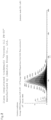
- thermoplastic elastomer composition according to the second embodiment of the present invention is characterized in that a main structural unit identified from a mass spectrum (FD-MS) obtained by measuring the component (C) is represented by at least one of the molecular formulas C 16 H 34 and C 16 H 32 .
- FD-MS mass spectrum
- thermoplastic elastomer composition according to the third embodiment of the present invention is characterized in that the component (C) contains as a main component at least one of the compounds represented by the molecular formulas C n H 2n + 2 and C n H 2n (40 ⁇ n ⁇ 60), which are identified from a mass spectrum (FD-MS) obtained by measuring the component (C).
- the component (C) contains as a main component at least one of the compounds represented by the molecular formulas C n H 2n + 2 and C n H 2n (40 ⁇ n ⁇ 60), which are identified from a mass spectrum (FD-MS) obtained by measuring the component (C).
- the configuration of the component (C) in each of the above embodiments satisfies solely the condition of each embodiment, then the configuration of the component (C) satisfies the conditions of each embodiment, so that the configurations of other embodiments are considered to be preferable configurations. That is, it is preferable that the component (C) in the first embodiment satisfies at least one of the conditions in the second embodiment and the conditions in the third embodiment, and it is more preferable to satisfy both of these conditions. Further, in each of the second embodiment and the third embodiment, the conditions of the other embodiments have the same meaning as preferable conditions.
- thermoplastic elastomer composition of the present invention not only good moldability can be obtained, but also the weight of the resin can be reduced. According to the thermoplastic elastomer composition of the present invention, it is also possible to obtain a molded article having good rubber elasticity and excellent bleed-out resistance.
- thermoplastic elastomer composition of the present invention exhibits such effects.
- thermoplastic elastomer composition of the present invention contains the thermoplastic resin (A) and the elastomer (B), and further contains the isoalkane mixture (C) having kinematic viscosity at 40°C of within a specific range, or the isoalkane mixture (C) having specific characteristics specified by the mass spectrum obtained by measuring by FD-MS. Therefore, due to the entanglement of the elastomer (B) and the isoalkane mixture (C), the affinity between the elastomer (B) and the isoalkane mixture (C) increases, and the plasticization of the elastomer (B) is promoted.
- the isoalkane mixture (C) is an alkane, it has a light specific gravity, and it is possible to lower the specific gravity of the thermoplastic elastomer composition.
- the isoalkane mixture (C) further has a side chain alkyl group, preferably a side chain alkyl group having 1 to 18 carbon atoms, it becomes easier to obtain the entanglement effect of the elastomer (B) and the isoalkane mixture (C) described above. As a result, stable fluidity can be obtained, and molded articles having excellent heat resistance and other mechanical strengths can be obtained.
- thermoplastic resin of the component (A) known thermoplastic resins can be used.
- the thermoplastic resin include olefin resins such as propylene-based polymers, ethylene-based polymers, and the like; ester resins such as polyethylene terephthalate, polybutylene terephthalate, and the like; amide resins such as nylon 6, nylon 66, and the like; styrene resins such as polystyrene, and the like; acrylic resins such as polymethyl methacrylate, and the like; carbonate resins such as polycarbonate, and the like; polyoxymethylene resins such as polyoxymethylene copolymers, and the like; polyphenylene ether resins; polyvinyl chloride resins; and the like.
- olefin resins and ester resins are preferred from the viewpoint of lightness and mechanical properties.
- thermoplastic resins may be used alone or in a mixture of two or more.
- thermoplastic resin contains a resin having a weight average molecular weight of 500 to 1,500,000 as measured by gel permeation chromatography (GPC).
- the weight average molecular weight is more preferably 1,000 to 1,000,000, and even more preferably 2,000 to 500,000.
- propylene-based polymers include propylene homopolymers, and propylene-based copolymers that are random or block copolymers of polypropylene and ethylene or ⁇ -olefins such as butene-1, hexene-1, and the like.
- a melt flow rate (JIS K7210, at 230°C, and under a load of 21.2 N) of the propylene-based polymer is not particularly limited, but is typically 0.05 to 200 g/10 minutes.
- the melt flow rate is preferably 0.05 to 100 g/10 minutes and more preferably 0.1 to 80 g/10 minutes.
- good moldability is achieved, and, therefore, a resulting molded article has a good appearance.
- mechanical properties, particularly, a tensile strength at break can be controlled within a desired range.
- polypropylene can be obtained from the manufacturers listed below, and can be selected as appropriate.
- thermoplastic resins of the component (A) examples include high-density polyethylene, low-density polyethylene, and linear low-density polyethylene.
- the ethylene-based polymer preferably has a density of 0.910 g/cm 3 or more and 1.00 g/cm 3 or less as measured by JIS K7112 from the viewpoint of achieving both mechanical strength and rubber elasticity.
- a melt flow rate (JIS K7210, at 190°C, and under a load of 21.2 N) of the ethylene-based polymer is not particularly limited but is typically 0.05 to 200 g/10 minutes.
- the melt flow rate is preferably 0.05 to 100 g/10 minutes and more preferably 0.1 to 80 g/10 minutes.
- good moldability is achieved, and, therefore, a resulting molded article has a good appearance.
- mechanical properties, particularly, a tensile strength at break can be controlled within a desired range.
- ethylene-based polymers can be obtained from the manufacturers listed below, and can be selected as appropriate.
- elastomers include olefin elastomers containing one or more types of ethylene-propylene-copolymer rubber (EPM), ethylene-propylene-nonconjugated diene copolymer rubber (EPDM), ethylene-butene copolymer rubber (EBM), ethylene-propylene-butene copolymer rubber, and the like; styrenic elastomers containing one or more types of styrene-butadiene-styrene copolymer (SBS), styrene-ethylenebutylene-styrene copolymer (SEBS), and the like; polyester elastomers containing one or more types of polybutylene terephthalate-polytetramethylene ether glycol copolymers (PBT-PTMG), and the like; polyamide elastomers; polyurethane elastomers; polyvinyl chloride elastomers; polybuta
- elastomers may be used alone or in combination of two or more.
- olefin elastomers olefin elastomers, styrenic elastomers, and polyester elastomers are preferred from the viewpoint of lightness and mechanical properties. Further, from the viewpoint of interaction with the component (C), olefin elastomers and styrenic elastomers are more preferred.
- an ethylene-propylene copolymer elastomer having a Mooney viscosity ML 1+4 (125°C) of 30 to 300 is preferred, and ethylene-propylene-nonconjugated diene copolymer rubber (EPDM) is particularly preferred.
- the EPDM may be an oil-extended type that contains pre-mixed oil, a non-oil-extended type that does not contain oil, or a combination of these.
- Non-oil-extended EPDM which does not contain pre-mixed oil, is economically inexpensive.
- oil-extended EPDM tends to improve mechanical properties and moldability.
- it is preferable to use any type of EPDM in a state where the Mooney viscosity ML 1+4 (125°C) in a state containing oil is 30 to 100, particularly 35 to 80.
- non-conjugated diene examples include dicyclopentadiene, 1,4-hexadiene, cyclooctadiene, methylene norbornene, ethylidene norbornene, and the like. Ethylidene norbornene is particularly preferred as the non-conjugated diene.
- a preferred specific example of the olefin elastomer is EPDM having an ethylene unit content of 55 to 75% by mass and a non-conjugated diene unit content of 1 to 10% by mass.
- EPDM having an ethylene unit content of 55 to 75% by mass and a non-conjugated diene unit content of 1 to 10% by mass.
- a block copolymer and/or a hydrogenated product thereof (which may hereinafter be referred to as a " (hydrogenated) block copolymer”
- the block copolymer including at least one polymer block P (which may hereinafter be referred to simply as “block P") and at least one polymer block Q (which may hereinafter be referred to simply as a "block Q"), the at least on polymer block P primarily including aromatic vinyl compound units, the at least one polymer block Q primarily including conjugated diene compound units, is preferred.
- a polymer block of interest includes monomer units of interest in an amount of 50 mole % or more.
- the aromatic vinyl compound that forms the block P is not particularly limited.
- the aromatic vinyl compound include styrene, a-methylstyrene, p-methylstyrene, divinylbenzene, 1,1-diphenylethylene, N,N-dimethyl-p-aminoethylstyrene, and N,N-diethyl-p-aminoethylstyrene.
- styrene, ⁇ -methylstyrene, and p-methylstyrene are preferable from the viewpoints of availability and productivity. Styrene is more preferable.
- the block P may be formed of one type of aromatic vinyl compound unit or formed of two or more types of aromatic vinyl compound units.
- the block P may include monomer units other than vinyl aromatic compound units.
- the conjugated diene compound that forms the block Q is a diolefin having a pair of conjugated double bonds.
- the conjugated diene compound include, but are not limited to, 1,3-butadiene, 2-methyl-1,3-butadiene (isoprene), 2,3-dimethyl-1,3-butadiene, 1,3-pentadiene, 2-methyl-1,3-pentadiene, and 1,3-hexadiene.
- 1,3-butadiene and isoprene are preferable from the viewpoint of productivity. 1,3-butadiene is more preferable.
- the block Q may be formed of one type of conjugated diene compound unit or formed of two or more types of conjugated diene compound units.
- the block Q may include monomer units other than conjugated diene compound units.
- Examples of commercially available products include “Kraton (registered trademark) G” manufactured by Kraton Polymer Corporation, “Septon (registered trademark) “ and “Septon (registered trademark) Bio” manufactured by Kuraray Co., Ltd, “Tuftec (registered trademark)” and “S.O.E (registered trademark)” manufactured by Asahi Kasei Corporation, “TAIPOL (registered trademark)” manufactured by TSRC Corporation, and "GLOBAL PRENE” manufactured by LCY Corporation.
- a polyester elastomer is usually a block copolymer having a hard segment having crystallinity and a soft segment having flexibility.
- Examples of the polyester elastomers include:
- the cyclic polyester-polyalkylene glycol block copolymer is preferred.
- Examples of the cyclic polyester-polyalkylene glycol block copolymer include a copolymer having a hard segment consisting of an aromatic polyester (hereinafter sometimes referred to as "aromatic polyester unit”) and a polyalkylene glycol unit (herein after sometimes referred to as “aromatic polyester-polyalkylene glycol block copolymer”), and a block copolymer having a hard segment consisting of an alicyclic polyester (hereinafter sometimes referred to as an "alicyclic polyester unit”) and a polyalkylene glycol unit (hereinafter sometimes referred to as "alicyclic polyester-polyalkylene glycol block copolymer”).
- aromatic polyester-polyalkylene glycol block copolymers are preferred.
- the aromatic polyester-polyalkylene glycol block copolymer is a known thermoplastic elastomer as described in JP H10-130451 A , and the like.
- each block may be a homopolymer or a copolymer as long as it contains a polyalkylene glycol unit.
- the raw material for the aromatic polyester unit will be described in detail below.
- the raw material for the aromatic polyester unit preferably contains polybutylene terephthalate as a hard segment.
- the raw material for the polyalkylene glycol unit preferably contains a soft segment made from polytetramethylene ether glycol (hereinafter sometimes referred to as "polytetramethylene glycol unit").
- the polyester elastomer used in the present invention is preferably a polybutylene terephthalate-polyalkylene glycol block copolymer, and more preferably a polybutylene terephthalate-polytetramethylene glycol block copolymer.
- alicyclic polyester-polyalkylene glycol block copolymer examples include, those obtained from an alicyclic dicarboxylic acid (in this specification, "alicyclic dicarboxylic acid” means a compound in which two carboxyl groups are directly bonded to a cyclic aliphatic hydrocarbon), a alicyclic diol and a polyalkylene glycol as raw materials.
- alicyclic dicarboxylic acid means a compound in which two carboxyl groups are directly bonded to a cyclic aliphatic hydrocarbon
- each block may be a homopolymer or a copolymer.
- the alicyclic polyester unit preferably contains a hard segment obtained from a cyclohexanedicarboxylic acid and a cyclohexanedimethanol as raw materials.
- the polyalkylene glycol unit of the alicyclic polyester-polyalkylene glycol block copolymer preferably contains a soft segment (polytetramethylene glycol unit) obtained from a polytetramethylene ether glycol as a raw material.
- Examples of the cyclic polyester-chain aliphatic polyester block copolymer include a block copolymer having a hard segment made of an aromatic polyester and a soft segment made of a chain aliphatic polyester (hereinafter sometimes referred to as "aromatic polyester-chain aliphatic polyester block copolymer”), and a block copolymer having a hard segment made of an alicyclic polyester and a soft segment made of a chain aliphatic polyester (hereinafter sometimes referred to as "alicyclic polyester-chain aliphatic polyester block copolymer").
- the aromatic polyester-chain aliphatic polyester block copolymers are preferred.
- polybutylene terephthalate-chain aliphatic polyester block copolymers in which the aromatic polyester unit is composed of polybutylene terephthalate are more preferred.
- Preferred chain aliphatic polyester units are those obtained from a chain aliphatic dicarboxylic acid having 4 to 10 carbon atoms, typified by sebacic acid and adipic acid, and a chain aliphatic diol.
- polyalkylene ether glycol is preferred.
- the polyalkylene ether glycol include linear and branched aliphatic ethers such as polymethylene glycol, polyethylene glycol, poly(1,2- and 1,3-)propylene glycol, polytetramethylene glycol, polyhexamethylene glycol, and the like.
- Other examples include homopolymers or copolymers of alicyclic ethers such as condensation products of cyclohexanediol and condensation products of cyclohexanedimethanol.
- the soft segment may be a random copolymer within these ether units.
- a block copolymer having a polyalkylene glycol unit can also be used for the soft segment.
- the number average molecular weight of the polyalkylene glycol contained in the cyclic polyester-polyalkylene glycol block copolymer is preferably 600 to 4,000, more preferably 800 to 2,500, and even more preferably 900 to 2,100.
- the number average molecular weight of polyalkylene glycol refers to a value calculated by magnetic resonance spectroscopy (NMR).
- the cyclic polyester-polyalkylene glycol block copolymer may contain only one type of these polyalkylene glycols, or may contain two or more types having different number average molecular weights or constituent components.
- an aromatic polyester-polyalkylene glycol block copolymer using an aromatic polyester and a polyalkylene ether glycol can be obtained by polycondensing an oligomer obtained by an esterification reaction or a transesterification reaction using a chain aliphatic and/or alicyclic diol having 2 to 12 carbon atoms, an aromatic dicarboxylic acid or its alkyl ester and a polyalkylene ether glycol as a raw material .
- chain aliphatic and/or alicyclic diol having 2 to 12 carbon atoms those commonly used as raw materials for polyester can be used.
- chain aliphatic diol examples include ethylene glycol, propylene glycol, trimethylene glycol, 1,3-butylene glycol, 1,4-butylene glycol, and 1,6-hexene glycol. Among these, 1,4-butylene glycol is preferred.
- Examples of the alicyclic diol include 1,4-cyclohexene glycol and 1,4-cyclohexanedimethanol. Among these, 1,4-cyclohexanedimethanol is preferred.
- chain aliphatic and/or alicyclic diols having 2 to 12 carbon atoms may be used alone or in combination of two or more.
- aromatic dicarboxylic acid or its alkyl ester those commonly used as raw materials for polyester can be used.
- examples include terephthalic acid and its lower (in this specification, “lower” means 4 or less of carbon atoms) alkyl esters, isophthalic acid, phthalic acid, 2,5-norbornenedicarboxylic acid, 1,4-naphthalenedicarboxylic acid , 1,5-naphthalene dicarboxylic acid, 2,6-naphthalene dicarboxylic acid and lower alkyl esters thereof.
- terephthalic acid and isophthalic acid are preferred, and terephthalic acid is more preferred.
- aromatic dicarboxylic acids or alkyl esters thereof may be used alone, or two or more types may be used in combination.
- examples of the polyalkylene ether glycol include linear and branched aliphatic ether glycols such as polymethylene glycol, polyethylene glycol, poly(1,2-and 1,3-)propylene glycol, polytetramethylene glycol, polyhexamethylene glycol, and the like.
- examples thereof include homopolymers or copolymers of alicyclic ethers such as a condensate of cyclohexanediol, a condensate of cyclohexanedimethanol, and the like.
- a random copolymer within these ether units may be used.
- linear and branched aliphatic ether glycols such as polymethylene glycol, polyethylene glycol, poly(1,2- and 1,3-)propylene glycol, polytetramethylene glycol, polyhexamethylene glycol, and the like. More preferred are polymethylene glycol, polyethylene glycol, poly(1,2- and 1,3-)propylene glycol and polytetramethylene glycol, and even more preferred is polytetramethylene glycol.
- an alicyclic dicarboxylic acid or its alkyl ester may be used.
- the alicyclic polyester-polyalkylene glycol block copolymer can be obtained by polycondensing an oligomer obtained by an esterification reaction or a transesterification reaction using a chain aliphatic and/or alicyclic diol having 2 to 12 carbon atoms, an alicyclic dicarboxylic acid or its alkyl ester, and a polyalkylene ether glycol as a raw material.
- alicyclic dicarboxylic acid or its alkyl ester those commonly used as raw materials for polyester can be used.
- examples include cyclohexanedicarboxylic acid and its lower alkyl esters, and cyclopentanedicarboxylic acid and its lower alkyl esters.
- cyclohexanedicarboxylic acid and its lower alkyl esters are preferred, and cyclohexanedicarboxylic acid is more preferred.
- One type of these alicyclic dicarboxylic acids or alkyl esters thereof may be used alone, or two or more types may be used in combination.
- the respective contents of the cyclic polyester unit and polyalkylene glycol unit in the cyclic polyester-polyalkylene glycol block copolymer are not limited, but are usually within the following range from the balance between the crystallinity of the hard segment and the flexibility of the soft segment.
- the lower limit of the content of the cyclic polyester unit in the cyclic polyester-polyalkylene glycol block copolymer is not limited, but is usually 10% by mass or more, and preferably 15% by mass or more.
- the upper limit of the content of the cyclic polyester unit is not limited, but is usually 95% by mass or less, preferably 90% by mass or less, and more preferably 80% by mass or less.
- the lower limit of the content of the polyalkylene glycol unit in the cyclic polyester-polyalkylene glycol block copolymer is not limited, but is usually 5% by mass or more, preferably 10% by mass or more, and more preferably 20% by mass or more.
- the upper limit of the content of the polyalkylene glycol units is not limited, but is usually 90% by mass or less, and preferably 85% by mass or less.
- the content of the cyclic polyester unit in the block copolymer having a cyclic polyester unit can be calculated based on the chemical shift of its hydrogen atoms and its content using nuclear magnetic resonance spectroscopy (NMR).
- the content of the polyalkylene glycol unit in the block copolymer having a polyalkylene glycol unit can be calculated based on the chemical shift of its hydrogen atoms and its content using nuclear magnetic resonance spectroscopy (NMR).
- polybutylene terephthalate-polyalkylene glycol block copolymer is preferred because it has a particularly fast crystallization rate and excellent moldability.
- a number of carbon atoms of the alkylene group of the polyalkylene glycol unit is preferably 2 to 12, more preferably 2 to 8, even more preferably 2 to 5, and particularly preferably 4.
- the cyclic polyester-polyalkylene glycol block copolymer according to the present invention may be copolymerized with a small amount of one or more trifunctional alcohols, and tricarboxylic acids and/or esters thereof.
- a chain aliphatic dicarboxylic acid such as adipic acid or its dialkyl ester may be introduced as a copolymerization component.
- the above cyclic polyester-polyalkylene glycol block copolymer is also available as a commercial product.
- thermoplastic elastomer composition of the present invention contains an isoalkane mixture as the component (C) .
- Isoalkane means an alkane having an isomethyl group at the terminal, and does not include a double bond or a cyclic substituent.
- Isoalkane mixture means a mixture of an isoalkane and a hydrocarbon that does not have an isoalkane structure.
- the “isoalkane” according to the present invention may be any alkane having an isomethyl group at the terminal. It may be an isoalkane that has no side chain other than the terminal isomethyl group, or it may have an alkyl group (In the present invention, this alkyl group is referred to as a "side chain alkyl group”.) as a side chain other than the terminal isomethyl group in the main chain of the alkane. As mentioned above, from the viewpoint of the entanglement effect between the elastomer (B) and the isoalkane, isoalkanes having a side chain alkyl group are preferred.
- the component (C) is referred to as "isoalkane mixture" in the present invention, but the component (C) may be a single isoalkane substance.
- Examples of the side chain alkyl group contained in the isoalkane mixture of the component (C) include alkyl groups such as methyl group, ethyl group, propyl group, butyl group, pentyl group, hexyl group, heptyl group, octyl group, and the like. Among these, an alkyl group having 1 to 18 carbon atoms is more preferred, an alkyl group having 1 to 3 carbon atoms is even more preferred, and a methyl group is particularly preferred.
- the side chain alkyl group of the isoalkane is an alkyl chain branching from the main chain which is the longest linear alkyl chain.
- the number of side chain alkyl groups in one molecule is not limited to one but two or more.
- the number of side chain alkyl groups contained the isoalkane is preferably 2 to 16, more preferably 4 to 12, and even more preferably 4 to 8.
- the isoalkane mixture of the component (C) preferably has the side chain alkyl group in the molecule at a content of 1 to 80%.
- the content of the side chain alkyl group is more preferably 5 to 70%, even more preferably 10 to 60%, and particularly preferably 15 to 50%.
- the content of the side chain alkyl group is preferably higher from the viewpoints of bleed-out resistance and rubber elasticity, and lower from the viewpoint of moldability.
- the content of the side chain alkyl group is the ratio (percentage) of the molecular weight of the side chain alkyl group (the total molecular weight when there are multiple side chain alkyl groups) to the molecular weight of the entire isoalkane.
- the obtained thermoplastic elastomer composition is softened and the softness and rubber elasticity are increased, and the processability, fluidity, and bleed-out resistance of the obtained thermoplastic elastomer composition can be improved.
- the kinematic viscosity at 40°C of the isoalkane mixture of the component (C) is preferably 20 centistokes (cSt) or more, and more preferably 25 cSt or more, from the viewpoints of bleed-out resistance and rubber elasticity.
- the kinematic viscosity at 40°C of the isoalkane mixture of the component (C) is preferably 8000 cSt or less, more preferably 3000 cSt or less, and even more preferably 1000 cSt or less, from the viewpoints of processability and moldability.
- the kinematic viscosity is the kinematic viscosity at 40°C measured by a method in accordance with JIS K2283.
- the flash point (COC method) of the isoalkane mixture of the component (C) is preferably higher than the melting point of the thermoplastic resin (A) used or equal to or higher than the processing temperature.
- the flash point of the isoalkane mixture is preferably 150°C or higher, more preferably 180°C or higher, even more preferably 200°C or higher, and particularly preferably 250°C or higher.
- the pour point (measured by ASTM D97) of the isoalkane mixture of the component (C) is preferably -60°C or higher, more preferably -50°C or higher, and even more preferably - 40°C or higher, because the lower the pour point, the higher the molecular mobility and the poorer the bleed-out resistance accordingly.
- the pour point is preferably 0°C or lower, more preferably -10°C or lower, even more preferably -20°C or lower, and particularly preferably -25°C or lower.
- the molecular weight dispersity index (PDI) of the isoalkane mixture of the component (C) is preferably 1.30 or less, more preferably 1.2 or less, and even more preferably 1.1 or less, from the viewpoint of bleed-out resistance.
- the weight average molecular weight of the isoalkane mixture of the component (C) is preferably 200 or more, more preferably 300 or more, and even more preferably 350 or more as a polystyrene equivalent value measured by GPC.
- it is preferably 5,000 or less, more preferably 3,000 or less, and even more preferably 1,500 or less.
- the molecular weight dispersity index and weight average molecular weight can be measured by gel permeation chromatography (hereinafter sometimes abbreviated as GPC).
- the isoalkane mixture of the component (C) has a naphthenic carbon content (%CN) determined by ring analysis of usually 20% or less, preferably 150 or less, more preferably 10% or less, and even more preferably 5%.
- the isoalkane mixture of the component (C) has an aromatic carbon content (%CA) determined by ring analysis of preferably 5% or less, and more preferably 1% or less.
- the above ring analysis can be specifically performed by the n-d-M method specified in ASTM D2140 or ASTM D3238.
- thermoplastic elastomer composition by including the isoalkane mixture (C) whose main structural unit identified from a mass spectrum obtained by measurement by FD-MS is represented by at least one of the molecular formulas C 16 H 34 and C 16 H 32 , the obtained thermoplastic elastomer composition is softened and the softness and rubber elasticity are increased, and the processability, fluidity, and bleed-out resistance of the obtained thermoplastic elastomer composition can be improved.
- C isoalkane mixture
- the molecular formula of the hydrocarbon expressed by the m/z value of the peak is specified based on the atomic weight of carbon: 12 and the atomic weight of hydrogen: 1.00794.
- the value of m/z is 16.0 for CH 4 , 420.5 for C 30 H 60 , and 841.0 for C 60 H 120 .
- peaks having an even number in one place of m/z are extracted for hydrocarbons having 2 to 118 hydrogen atoms.
- peaks having an odd number in one place of m/z are extracted, and for hydrocarbons having 246 to 370 hydrogen atoms, peaks having an even number in one place of m/z are extracted.
- a plurality of peaks having strong peak intensities are sequentially extracted from among the peaks thus extracted.
- the molecular formula of the hydrocarbon that can be identified from the m/z difference expressed by the extracted peaks is called the main structural unit. Peaks having the same number of carbon atoms are not included in the calculation of the main structural units.
- the isoalkane mixture (C) contains as a main component at least one of the compounds represented by the molecular formulas C 48 H 96 and C 48 H 98 in the mass spectrum measured by FD-MS.
- the term "main component" as used herein refers to the strongest peak extracted from the peak representing the molecule itself in the mass spectrum measured by FD-MS.
- thermoplastic elastomer composition by including the isoalkane mixture (C) containing as a main component at least one of the compounds represented by the molecular formulas C n H 2n + 2 and C n H 2n (40 ⁇ n ⁇ 60) identified from a mass spectrum obtained by measurement by FD-MS, the obtained thermoplastic elastomer composition is softened and the softness and rubber elasticity are increased, and the processability, fluidity, and bleed-out resistance of the obtained thermoplastic elastomer composition can be improved.
- C isoalkane mixture
- the isoalkane mixture (C) may contain a biomass-derived raw material.
- the biomass degree of the isoalkane mixture (C) is calculated according to ASTM D 6866 based on the 14C content. From the viewpoint of reducing environmental load, the biomass degree of the isoalkane mixture (C) is preferably 40% or more, more preferably 50% or more, and particularly preferably 60% or more. The upper limit of the biomass degree of the isoalkane mixture (C) is not particularly limited, and is 100% or less.
- the isoalkane mixture of the component (C) can also be used in combination with a general hydrocarbon-based softening agent for rubber.
- the general hydrocarbon-based softening agent for rubber refers to a hydrocarbon-based softening agent for rubber other than the component (C) .
- Typical hydrocarbon-based softening agent for rubber includes a mineral-oil-based softening agent, a syntheticresin-based softening agent, and the like.
- a mineral-oil-based softening agent is particularly preferable.
- mineral-oil-based softening agents are mixtures of an aromatic hydrocarbon, a naphthenic hydrocarbon, and a paraffinic hydrocarbon. Oils in which 50% or more of all the carbon atoms are carbon atoms derived from a paraffinic hydrocarbon are referred to as paraffinic oils. Oils in which 30 to 45% of all the carbon atoms are carbon atoms derived from a naphthenic hydrocarbon are referred to as naphthenic oils. Oils in which 35% or more of all the carbon atoms are carbon atoms derived from an aromatic hydrocarbon are referred to as aromatic oils. Among these, paraffinic oils are preferable.
- the kinematic viscosity at 40°C of the hydrocarbon-based softening agent for rubber is preferably 20 centistokes (cSt) or more, and more preferably 50 cSt or more. On the other hand, it is preferably 800 cSt or less, and more preferably 600 cSt or less. Further, the flash point (COC method) of the hydrocarbon-based softening agent for rubber is preferably 200°C or higher, and more preferably 250°C or higher.
- hydrocarbon-based softening agents for rubber may be used.
- examples of commercially available product include "Nisseki Polybutene (registered trademark) HV” series manufactured by ENEOS Corporation, “Diana (registered trademark) process oil PW” series manufactured by Idemitsu Kosan Co., Ltd., and the like. It is possible to appropriately select and use one of these.
- Hydrocarbon-based softening agent for rubber can be used alone or in any combination and ratio of two or more.
- the lower limit of the content of the component (A) is preferably 3% by mass or more based on 100% by mass of a total of the components (A) to (C), from the viewpoints of stable moldability, heat resistance, and other mechanical properties. It is more preferably 5% by mass or more, even more preferably 7% by mass or more, and particularly preferably 10% by mass or more.
- the upper limit of the content of the component (A) is preferably 95% by mass or less, more preferably 90% by mass or less, even more preferably 85% by mass or less, and particularly preferably 80% by mass or less.
- the lower limit of the content of the component (B) is preferably 3% by mass or more based on 100% by mass of a total of the components (A) to (C), from the viewpoints of stable rubber elasticity and good moldability. It is more preferably 5% by mass or more, even more preferably 10% by mass or more, and particularly preferably 15% by mass or more.
- the upper limit of the content of the component (B) is preferably 90% by mass or less, more preferably 80% by mass or less, even more preferably 70% by mass or less, and particularly preferably 60% by mass or less.
- the lower limit of the content of the component (C) is preferably 10 parts by mass or more based on 100 parts by mass of the component (B), from the viewpoints of stable rubber elasticity and good moldability. It is more preferably 20 parts by mass or more, even more preferably 30 parts by mass or more, and particularly preferably 40 parts by mass or more.
- the upper limit of the content of the component (C) is preferably 400 parts by mass or less, more preferably 350 parts by mass or less, even more preferably 300 parts by mass or less, and particularly preferably 200 parts by mass or less, based on 100 parts by mass of the component (B).
- the thermoplastic elastomer composition of the present invention contains the above-mentioned hydrocarbon-based softening agent for rubber together with the component (C), from the viewpoints of weight lightening, stable rubber elasticity, and good moldability, the content of the hydrocarbon-based softening agent for rubber is preferably 300 parts by mass or less, and more preferably 200 parts by mass or less, based on 100 parts by mass of the component (B). Further, it is preferable that the hydrocarbon-based softening agent for rubber is used such that the total content of the component (C) and the hydrocarbon-based softening agent for rubber falls within the above content range of the component (C).
- the content of the component (C) relative to a total amount of the component (C) and the hydrocarbon-based softening agent for rubber such as paraffin oil is preferably 1% by mass or more, more preferably 5% by mass or more, and even more preferably 10% by mass or more.
- the content of the component (C) relative to a total amount of the component (C) and the hydrocarbon-based softening agent for rubber such as paraffin oil is equal to or higher than the above lower limit, it is possible to effectively obtain the effect of improving moldability, bleed-out resistance and rubber elasticity due to the use of the component (C).
- the content of the component (C) relative to a total amount of the component (C) and the hydrocarbon-based softening agent for rubber such as paraffin oil is preferably 99% by mass or less, more preferably 90% by mass or less, and even more preferably 80% by mass or less.
- the content of the component (C) relative to a total amount of the component (C) and the hydrocarbon-based softening agent for rubber such as paraffin oil is equal to or lower the above upper limit, it is possible to effectively obtain the effect of improving weight lightening, rubber elasticity, and moldability due to the use of the hydrocarbon-based softening agent for rubber together with the component (C).
- thermoplastic elastomer composition of the present invention in addition to the above-mentioned components (A) to (C), other components may be added to the thermoplastic elastomer composition of the present invention, depending on the purpose, as long as the effects of the present invention are not impaired.
- ingredients include, for example, various additives such as fillers, antioxidants, heat stabilizers, light stabilizers, ultraviolet absorbers, neutralizers, lubricants, antifogging agents, antiblocking agents, slip agents, dispersants, colorants, flame retardants, crosslinking agents, crosslinking aids, antistatic agents, conductivity imparting agents, metal deactivators, molecular weight regulators, antibacterial agents, antifungal agents, optical brighteners, and the like. Any of these can be used alone or in combination.
- filler examples include glass fiber, hollow glass bulb, carbon fiber, alumina, talc, calcium carbonate, clay, mica, potassium titanate fiber, silica, zeolite, metal soap, calcium carbonate, titanium dioxide, carbon black, boron nitride, cellulose, and the like.
- fillers may be used alone or in any combination and ratio of two or more.
- heat stabilizer also called antioxidant, hereinafter sometimes referred to as "component (D)"
- phosphorus compounds such as aliphatic, aromatic, or alkyl group-substituted aromatic esters of phosphoric acid and phosphorous acid, hypophosphorous acid derivatives, phenylphosphonic acid, phenylphosphinic acid, diphenylphosphonic acid, polyphosphonate, dialkylpentaerythritol diphosphite, dialkylbisphenol A diphosphate, and the like
- phenol derivatives especially hindered phenol compounds
- sulfur-containing compounds such as thioether type, dithio acid salt type, mercaptobenzimidazole type, thiocarbanilide type, thiodipropionic acid ester type, and the like
- tin-based compounds such as tin maleate, dibutyltin monoxide, and the like can be used.
- hindered phenol compound examples include "Irganox (registered trademark) 1010" and “Irganox (registered trademark) 1520” (both trade names: manufactured by BASF Japan Ltd.), and the like.
- Examples of phosphorus compound include "PEP-36”, “PEP-24G”, “HP-10” (all product names: manufactured by ADEKA Corporation), “Irgafos (registered trademark) 168” (product name: manufactured by BASF Japan Ltd.), and the like.
- sulfur-containing compound examples include thioether compounds such as dilaurylthiopropionate (DLTP), distearylthiopropionate (DSTP), and the like.
- the lower limit of the amount of the heat stabilizer to be added is preferably 0.01 part by mass and more preferably 0.05 parts by mass, and the upper limit is preferably 1 part by mass and more preferably 0.5 parts by mass as a mass proportion in 100 parts by mass of the thermoplastic elastomer composition.
- Examples of the light stabilizer include benzotriazole compounds, benzophenone compounds, and the like. Specifically, “TINUVIN622LD”, “TINUVIN765" (both product names: manufactured by BASF Japan Ltd.), and “SANOLLS-2626”, “SANOLLS-765" (both product names: manufactured by Sankyo Co., Ltd.) can be used.
- ultraviolet absorber examples include "TINUVIN328”, “TINUVIN234" (both trade names: manufactured by BASF Japan Ltd.), and the like.
- the lower limit of the amount of the light stabilizer and the ultraviolet absorber to be added is, respectively, preferably 0.01 parts by mass and more preferably 0.05 parts by mass, and the upper limit is preferably 1 part by mass and more preferably 0.5 part by mass, as a mass proportion in 100 parts by mass of the thermoplastic elastomer composition.
- coloring agent examples include dyes such as direct dyes, acid dyes, basic dyes, metal complex dyes, and the like; inorganic pigments such as carbon black, titanium oxide, zinc oxide, iron oxide, mica, and the like; organic pigments such as coupled azo-based, condensed azo-based, anthraquinone, thioindigo type, dioxazone type, and phthalocyanine type pigments; and the like.
- flame retardant examples include additive and reactive flame retardants such as organic compounds containing phosphorus and halogen, organic compounds containing bromine or chlorine, ammonium polyphosphate, aluminum hydroxide, antimony oxide, and the like.
- component (E) examples include organic peroxides, phenol resins, crosslinking agents other than these, and the like.
- organic peroxide examples include dialkyl peroxides such as di-t-butyl peroxide, t-butylcumyl peroxide, dicumyl peroxide, 2,5-dimethyl-2,5-di(t-butylperoxy)hexane, 2 ,5-dimethyl-2,5-di(t-butylperoxy)hexyne-3,1,3-bis(t-butylperoxyisopropyl)benzene,1,1-di(t-butylperoxy)-3,3,5-trimethylcyclohexane, and the like; peroxy esters such as t-butylperoxybenzoate, t-butylperoxy-2-ethylhexanoate, t-butylperoxyisopropyl carbonate, 2,5-dimethyl-2,5-di(benzoylperoxy)hexane, 2,5-dimethyl-2,5-di(benzoylper
- phenolic resin crosslinkers are usually used in conjunction with activators.
- Activators that can be used here include, for example, halogen donors such as stannous chloride, ferric chloride, chlorinated paraffin, chlorinated polyethylene, chlorosulfonated polyethylene, and the like, and acid acceptors such as iron oxide, titanium oxide, magnesium oxide, silicon dioxide, zinc oxide, and the like.
- halogen donors such as stannous chloride, ferric chloride, chlorinated paraffin, chlorinated polyethylene, chlorosulfonated polyethylene, and the like
- acid acceptors such as iron oxide, titanium oxide, magnesium oxide, silicon dioxide, zinc oxide, and the like.
- a halogen donor may not be used.
- crosslinking aid examples include auxiliary agents for peroxide such as sulfur, p-quinonedioxime, p-dinitrosobenzene, 1,3-diphenylguanidine, and the like; crosslinking auxiliary agents for phenolic resin such as stannous chloride anhydride, stannous chloride dihydrate, ferric chloride, and the like; polyfunctional vinyl compounds such as divinylbenzene, triallyl cyanurate, triallyl isocyanurate, diallyl phthalate, and the like; polyfunctional (meth) acrylate compounds such as ethylene glycol di(meth)acrylate, diethylene glycol di(meth)acrylate, polyethylene glycol di(meth)acrylate, trimethylolpropane tri(meth)acrylate, allyl(meth)acrylate, and the like.
- component (F) examples include auxiliary agents for peroxide such as sulfur, p-quinonedioxime, p-dinitrosobenzene, 1,3
- the content of the component (E) is preferably 0.01 part by mass or more, more preferably 0.05 part by mass or more, and even more preferably 0.1 parts by mass or more, based on a total of 100 parts by mass of the components (A) to (C) or, when a hydrocarbon-based softening agent for rubber is included, based on a total 100 parts by mass of the components (A) to (C) and the hydrocarbon-based softening agent for rubber, in order to allow the crosslinking reaction to proceed sufficiently.
- this component is preferably 10 parts by mass or less, more preferably 8 parts by mass or less, and even more preferably 5 parts by mass or less.
- the amount of the crosslinking aid used as the component (F) is usually preferably 0.05 to 3 parts by mass, and particularly preferably 0.1 to 2 parts by mass, based on a total of 100 parts by mass of the components (A) to (C) or, when a hydrocarbon-based softening agent for rubber is included, based on a total 100 parts by mass of the components (A) to (C) and the hydrocarbon-based softening agent for rubber.
- the amount of the crosslinking aid used equal to or higher than at least the above lower limit, the effect of using the crosslinking aid can be obtained. It is preferable in terms of cost that the amount of the crosslinking aid used is equal to or lower than the above upper limit.
- the above additives may be used alone or in any combination and ratio of two or more.
- thermoplastic elastomer composition [Method for producing thermoplastic elastomer composition]
- thermoplastic elastomer composition of the present invention is not particularly limited.
- the thermoplastic elastomer composition of the present invention can be produced by dryblending together the components (A) to (C), and the component (D) and other components that are optionally added and subsequently melt-kneading the blend.
- mixing apparatuses that may be used are not particularly limited, and examples thereof include kneading apparatuses, such as Banbury mixers, Labo Plastomills, single-screw extruders, and twin-screw extruders. Among these, producing by a melt-kneading method using an extruder is preferable from the viewpoint of productivity and good kneading properties.
- kneading apparatuses such as Banbury mixers, Labo Plastomills, single-screw extruders, and twin-screw extruders.
- a melting temperature for the kneading may be appropriately set.
- the melting temperature is typically within a range of 130 to 300°C and preferably within a range of 150 to 250°C.
- thermoplastic elastomer composition of the present invention those obtained by crosslinking by dynamic heat treatment of the components (A) to (C), and the component (D) and other components that are optionally added in a predetermined content ratio, in the presence of the component (E): crosslinking agent and the component (F): crosslinking aid, are also preferred.
- dynamic heat treatment means kneading in a molten or semi-molten state. This dynamic heat treatment is preferably carried out by melt-kneading.
- mixing and kneading apparatus used for this purpose include a closed Banbury mixer, a mixing roll, a kneader, and a twin-screw extruder. Among these, it is preferable to use a twin-screw extruder.
- a preferred embodiment of the producing method using this twin-screw extruder is one in which dynamic heat treatment is performed by supplying each component to a raw material supply port (hopper) of a twin-screw extruder having a plurality of raw material supply ports.
- the temperature during dynamic heat treatment is usually 80 to 300°C, preferably 100 to 250°C. Further, the time for performing the dynamic heat treatment is usually 0.1 to 30 minutes.
- thermoplastic elastomer composition of the present invention When the thermoplastic elastomer composition of the present invention is subjected to dynamic heat treatment using a twin-screw extruder, it is preferable to carry out extrusion while maintaining the relationship of the following formula (1) between the barrel radius R (mm), the screw rotation speed N (rpm), and the discharge rate Q (kg/hour) of the twin-screw extruder, and it is more preferable to carry out extrusion while maintaining the relationship of the following formula (2).
- the relationship between the barrel radius R (mm), the screw rotation speed N (rpm), and the discharge rate Q (kg/hour) of the twin-screw extruder is larger than the above lower limit value in order to efficiently produce the thermoplastic elastomer composition.
- the above relationship is smaller than the above upper limit value because heat generation due to shearing is suppressed and foreign matter that causes poor appearance is less likely to be generated.
- thermoplastic elastomer composition Physical properties of thermoplastic elastomer composition
- the melt flow rate (MFR) of the thermoplastic elastomer composition of the present invention is preferably 2 g/10 minutes or more, more preferably 5 g/10 minutes or more, and even more preferably 10 g/10 minutes or more from the viewpoint of fluidity.
- the melt flow rate (MFR) is preferably 200 g/10 minutes or less, more preferably 185 g/10 minutes or less, and even more preferably 160 g/10 minutes or less.
- the melt flow rate (MFR) of the thermoplastic elastomer composition of the present invention is preferably 0.1 g/10 minutes or more, more preferably 0.5 g/10 minutes or more, and even more preferably 1 g/10 minutes or more from the viewpoint of fluidity.
- the melt flow rate (MFR) is preferably 40 g/10 minutes or less, more preferably 35 g/10 minutes or less, and even more preferably 30 g/10 minutes or less.
- a lower limit of hardness Duro A of the thermoplastic elastomer composition of the present invention which is a value measured 15 seconds after pressing a needle against a test piece in accordance with ISO 7619, is preferably 10 or more, more preferably 20 or more even, even more preferably 30 or more, and particularly preferably 40 or more.
- the upper limit of hardness Duro A is preferably 95 or less, and more preferably 90 or less.
- the thermoplastic elastomer composition of the present invention preferably has a biomass degree of 1% or more, more preferably 10% or more, even more preferably 15% or more, and particularly preferably 20% or more, according to ASTM D 6866-22.
- the upper limit of the biomass degree is 100% or less.
- biomass-derived raw materials may be appropriately selected and blended as raw materials for the component (A), the component (B), the component (C), and the like .
- the molded article of the present invention can be obtained by molding the thermoplastic elastomer composition of the present invention.
- thermoplastic elastomer composition of the present invention can be made into a molded article by various molding methods commonly used, such as injection molding, extrusion molding, blow molding, compression molding, and vacuum molding. Among these, molded articles obtained by injection molding and extrusion molding are preferred. Moreover, after performing these moldings, the molded article may be subjected to secondary processing such as lamination molding or thermoforming.
- thermoplastic resin composition of the present invention there are no particular limitations on the uses of the thermoplastic resin composition of the present invention and its molded article.
- the thermoplastic resin composition of the present invention and its molded article can be used in a wide range of fields such as civil engineering and construction parts (waterstop materials, joint materials, window frames), sporting goods, industrial parts (multilayer hose tubes), home appliance parts (multilayer hoses), medical components (medical multilayer containers, syringe gaskets, rubber stoppers), food components (multilayer packaging films, containers, bottles, design packagings, labels, cap liners, packings), electric wire covering materials, miscellaneous goods, and automobile parts (weather strips, ceiling materials, interior sheets, bumper moldings, side moldings, air spoilers, hoses, armrests, door trims, console lids, mats).
- the thermoplastic elastomer composition of the present invention and its molded article is suitable for applications such as miscellaneous goods and automobile parts that require excellent moldability due to diversified designs.
- A-1 Propylene homopolymer
- F-1 "DVB-570" manufactured by Shin Nittestu Kagaku Co., Ltd.
- thermoplastic elastomer compositions of the following Examples and Comparative Examples are as follows.
- a measurement of MFR was performed on the pellets of the thermoplastic elastomer compositions obtained in Examples and Comparative Examples under the conditions of a measurement temperature of 230°C and a measurement load of 49N using a melt indexer (manufactured by Toyo Seiki Seisaku-sho, Ltd.) in accordance with ISO1133.
- a melt indexer manufactured by Toyo Seiki Seisaku-sho, Ltd.
- a measurement of specific gravity was performed on the injection molded products (120 mm x 80 mm x 2 mm) manufactured in Examples and Comparative Examples by an underwater displacement method using a density meter (manufactured by Toyo Seiki Seisaku-sho, Ltd.) in accordance with ISO1183. The smaller the specific gravity, the more excellent the lightness.
- Duro A hardness is equivalent within the range of ⁇ 4.
- a test piece was prepared by stacking six Type A disks (29 mm ⁇ ) obtained by punching out the injection molded products (120 mm x 80 mm x 2 mm) manufactured in Examples and Comparative Examples.
- the compression set of the obtained test piece was measured at 70°C for 22 hours under 25% compression conditions in accordance with JIS K6262. The smaller the compression set value, the better the rubber elasticity. Generally, the lower the duro hardness, the better the compression set tends to be.
- a measurement of 14C concentration was performed on the pellets of the thermoplastic elastomer composition obtained in Examples and Comparative Examples using a C-AMS dedicated device (manufactured by NEC Corporation) based on a tandem accelerator.
- the biomass degree was calculated from the measured value of 14C concentration according to ASTM D6866-22.
- thermoplastic elastomer composition was injected and filled into a sheet-like mold having a length of 120mm, a width of 80mm and a thickness of 2 mm at an injection speed of 40 mm/sec, using an electric injection molding machine (manufactured by Sumitomo Heavy Industries, Ltd.) under the conditions of a mold clamping force of 180 t, a cylinder temperature of 200°C and a mold temperature of 40°C. After filling was completed, the injection molded product was cooled for 30 seconds and then taken out. The obtained injection molded product was evaluated and the results are shown in Table-1.
- thermoplastic elastomer composition Pellets of a thermoplastic elastomer composition were obtained in the same manner as in Example 1, except that the formulations shown in Table 1 were used. The obtained thermoplastic elastomer compositions were evaluated in the same manner as in Example 1, and the evaluation results are shown in Table-1.
- thermoplastic elastomer composition Pellets of a thermoplastic elastomer composition were obtained in the same manner as in Example 1, except that the formulations shown in Table-2 were used. The obtained thermoplastic elastomer compositions were evaluated in the same manner as in Example 1, and the evaluation results are shown in Table-2.
- thermoplastic elastomer compositions of Examples 1 to 3 had good moldability, lightness, rubber elasticity, and bleed-out resistance.
- thermoplastic elastomer composition of Example 1 a biomass degree corresponding to the content ratio of the component (C) was confirmed.
- Comparative Examples 1 to 3 and 6 to 7 in which paraffinic oil was used instead of the isoalkane mixture of the component (C), the MFR was small and the moldability was poor, especially in Comparative Examples 1, 2, and 6, the bleed-out resistance was also poor.
- Comparative Example 4 had a small MFR and poor moldability.
- Comparative Example 5 had poor bleed-out resistance.
- thermoplastic elastomer composition of the present invention has excellent moldability, lightness, rubber elasticity, and bleed-out resistance, so it can be used in a wide range of fields such as civil engineering and construction parts (waterstop materials, joint materials, window frames), sporting goods, industrial parts (multilayer hose tubes), home appliance parts (multilayer hoses), medical components (medical multilayer containers, syringe gaskets, rubber stoppers), food components (multilayer packaging films, containers, bottles, design packagings, labels, cap liners, packings), electric wires, sundry goods, and automotive parts (weather strips, ceiling materials, interior sheets, bumper moldings, side moldings, air spoilers, hoses, armrests, door trims, console lids, mats).
- the thermoplastic elastomer composition of the present invention is suitable for applications such as sundry goods and automotive parts that require excellent moldability due to diversified designs.
Landscapes
- Chemical & Material Sciences (AREA)
- Health & Medical Sciences (AREA)
- Chemical Kinetics & Catalysis (AREA)
- Medicinal Chemistry (AREA)
- Polymers & Plastics (AREA)
- Organic Chemistry (AREA)
- Oil, Petroleum & Natural Gas (AREA)
- Compositions Of Macromolecular Compounds (AREA)
Applications Claiming Priority (2)
| Application Number | Priority Date | Filing Date | Title |
|---|---|---|---|
| JP2022013133 | 2022-01-31 | ||
| PCT/JP2023/002812 WO2023145927A1 (ja) | 2022-01-31 | 2023-01-30 | 熱可塑性エラストマー組成物及びその成形体 |
Publications (1)
| Publication Number | Publication Date |
|---|---|
| EP4474430A1 true EP4474430A1 (en) | 2024-12-11 |
Family
ID=87471632
Family Applications (1)
| Application Number | Title | Priority Date | Filing Date |
|---|---|---|---|
| EP23747137.0A Withdrawn EP4474430A1 (en) | 2022-01-31 | 2023-01-30 | Thermoplastic elastomer composition and molded article thereof |
Country Status (5)
| Country | Link |
|---|---|
| US (1) | US20240384081A1 (https=) |
| EP (1) | EP4474430A1 (https=) |
| JP (2) | JP7409582B2 (https=) |
| CN (1) | CN118632903A (https=) |
| WO (1) | WO2023145927A1 (https=) |
Families Citing this family (3)
| Publication number | Priority date | Publication date | Assignee | Title |
|---|---|---|---|---|
| JP7554954B2 (ja) * | 2022-09-30 | 2024-09-20 | 株式会社クラレ | 樹脂組成物及び成形体 |
| WO2024070188A1 (ja) * | 2022-09-30 | 2024-04-04 | 株式会社クラレ | 樹脂組成物及び成形体 |
| WO2024122591A1 (ja) * | 2022-12-07 | 2024-06-13 | 三井化学株式会社 | 熱可塑性エラストマー組成物およびこれからなる成形体 |
Citations (3)
| Publication number | Priority date | Publication date | Assignee | Title |
|---|---|---|---|---|
| US20070066753A1 (en) | 2005-09-16 | 2007-03-22 | Ehrlich Martin L | Highly processible compounds of high MW conventional block copolymers and controlled distribution block copolymers |
| US20090192250A1 (en) | 2008-01-29 | 2009-07-30 | Sumitomo Chemical Company, Limited | Thermoplastic elastomer composition and composite molding |
| EP3325519B1 (en) | 2015-07-24 | 2019-06-05 | Dynasol Elastómeros S.A. | Hydrogenated rubber with improved performance in tpe compositions |
Family Cites Families (6)
| Publication number | Priority date | Publication date | Assignee | Title |
|---|---|---|---|---|
| JPH10130451A (ja) | 1996-10-29 | 1998-05-19 | Mitsubishi Chem Corp | 熱可塑性エラストマー組成物及びその複合成形体 |
| JP2005281489A (ja) * | 2004-03-30 | 2005-10-13 | Riken Technos Corp | 熱可塑性エラストマー組成物 |
| WO2008139512A1 (ja) * | 2007-04-26 | 2008-11-20 | Aronkasei Co., Ltd. | 医療用熱可塑性エラストマー組成物およびそれを用いた薬液容器用栓体 |
| JP5205860B2 (ja) * | 2007-08-10 | 2013-06-05 | ユニマテック株式会社 | アクリル系エラストマー組成物 |
| JP2013159666A (ja) * | 2012-02-02 | 2013-08-19 | Sumitomo Rubber Ind Ltd | タイヤ外層用ゴム組成物及び空気入りタイヤ |
| JP7294256B2 (ja) | 2020-07-03 | 2023-06-20 | トヨタ自動車株式会社 | レーザレーダ取付方法 |
-
2023
- 2023-01-30 JP JP2023561258A patent/JP7409582B2/ja active Active
- 2023-01-30 EP EP23747137.0A patent/EP4474430A1/en not_active Withdrawn
- 2023-01-30 WO PCT/JP2023/002812 patent/WO2023145927A1/ja not_active Ceased
- 2023-01-30 CN CN202380019440.9A patent/CN118632903A/zh active Pending
- 2023-11-28 JP JP2023200853A patent/JP2024009290A/ja active Pending
-
2024
- 2024-07-29 US US18/788,063 patent/US20240384081A1/en active Pending
Patent Citations (3)
| Publication number | Priority date | Publication date | Assignee | Title |
|---|---|---|---|---|
| US20070066753A1 (en) | 2005-09-16 | 2007-03-22 | Ehrlich Martin L | Highly processible compounds of high MW conventional block copolymers and controlled distribution block copolymers |
| US20090192250A1 (en) | 2008-01-29 | 2009-07-30 | Sumitomo Chemical Company, Limited | Thermoplastic elastomer composition and composite molding |
| EP3325519B1 (en) | 2015-07-24 | 2019-06-05 | Dynasol Elastómeros S.A. | Hydrogenated rubber with improved performance in tpe compositions |
Non-Patent Citations (2)
| Title |
|---|
| ANONYMOUS: "Melt flow index", WIKIPEDIA, 18 February 2012 (2012-02-18), pages 1 - 2, XP093349881, Retrieved from the Internet <URL:https://web.archive.org/web/20120218011539/https://en.wikipedia.org/wiki/Melt_flow_index> |
| See also references of WO2023145927A1 |
Also Published As
| Publication number | Publication date |
|---|---|
| JP7409582B2 (ja) | 2024-01-09 |
| US20240384081A1 (en) | 2024-11-21 |
| WO2023145927A1 (ja) | 2023-08-03 |
| JPWO2023145927A1 (https=) | 2023-08-03 |
| JP2024009290A (ja) | 2024-01-19 |
| CN118632903A (zh) | 2024-09-10 |
Similar Documents
| Publication | Publication Date | Title |
|---|---|---|
| EP4474430A1 (en) | Thermoplastic elastomer composition and molded article thereof | |
| EP2757131B1 (en) | Cross-linked composition, method for producing cross-linked composition, and molding | |
| JP7616277B2 (ja) | 熱可塑性エラストマー組成物、並びに接合部材及びその製造方法 | |
| JP2024056973A (ja) | 熱可塑性エラストマー組成物 | |
| JP2017025315A (ja) | 熱可塑性エラストマー組成物、成形体及び自動車用部品 | |
| JP2001081199A (ja) | 熱可塑性エラストマー組成物の製造方法 | |
| JP2018154821A (ja) | 熱可塑性エラストマー組成物 | |
| JP7119869B2 (ja) | 熱可塑性エラストマー組成物及び接合部材 | |
| JP2000103934A (ja) | 熱可塑性エラストマー組成物 | |
| JP2019131722A (ja) | 熱可塑性エラストマー組成物及び接合部材 | |
| JP2019044112A (ja) | 複合成形体用動的架橋型熱可塑性エラストマー組成物及び複合成形体 | |
| JPH0866990A (ja) | 複合成形体及びその製造方法 | |
| JP3777128B2 (ja) | 難燃性樹脂組成物およびこれからなる成形体 | |
| JP7803279B2 (ja) | 熱可塑性エラストマー組成物及び複合成形体 | |
| JP7567194B2 (ja) | 熱可塑性エラストマー組成物、成形体及びインストルメントパネル用表皮 | |
| JP6838439B2 (ja) | 熱可塑性エラストマー組成物 | |
| JPH10130452A (ja) | 熱可塑性エラストマー組成物 | |
| JP2001220513A (ja) | 熱可塑性エラストマー組成物 | |
| JP7834997B2 (ja) | 架橋熱可塑性エラストマー組成物 | |
| WO2025164773A1 (ja) | 自動車内装部材用熱可塑性エラストマー組成物およびその成形体 | |
| JP2023128915A (ja) | 積層体、積層体の製造方法、及び自動車内装表皮 | |
| US20240150570A1 (en) | Thermoplastic elastomer composition and molded article thereof | |
| JP2023117162A (ja) | 熱可塑性エラストマー組成物、射出成形品及びエアバッグ収納カバー | |
| JP2022142499A (ja) | 熱可塑性エラストマー組成物、成形体及びエアバック収納カバー | |
| JPH1053688A (ja) | 熱可塑性エラストマー組成物 |
Legal Events
| Date | Code | Title | Description |
|---|---|---|---|
| STAA | Information on the status of an ep patent application or granted ep patent |
Free format text: STATUS: THE INTERNATIONAL PUBLICATION HAS BEEN MADE |
|
| TPAC | Observations filed by third parties |
Free format text: ORIGINAL CODE: EPIDOSNTIPA |
|
| PUAI | Public reference made under article 153(3) epc to a published international application that has entered the european phase |
Free format text: ORIGINAL CODE: 0009012 |
|
| STAA | Information on the status of an ep patent application or granted ep patent |
Free format text: STATUS: REQUEST FOR EXAMINATION WAS MADE |
|
| 17P | Request for examination filed |
Effective date: 20240829 |
|
| AK | Designated contracting states |
Kind code of ref document: A1 Designated state(s): AL AT BE BG CH CY CZ DE DK EE ES FI FR GB GR HR HU IE IS IT LI LT LU LV MC ME MK MT NL NO PL PT RO RS SE SI SK SM TR |
|
| DAV | Request for validation of the european patent (deleted) | ||
| DAX | Request for extension of the european patent (deleted) | ||
| TPAC | Observations filed by third parties |
Free format text: ORIGINAL CODE: EPIDOSNTIPA |
|
| STAA | Information on the status of an ep patent application or granted ep patent |
Free format text: STATUS: THE APPLICATION HAS BEEN WITHDRAWN |
|
| 18W | Application withdrawn |
Effective date: 20251202 |