EP4060104B1 - Webverfahren zum schliessen von gurtkanten - Google Patents
Webverfahren zum schliessen von gurtkanten Download PDFInfo
- Publication number
- EP4060104B1 EP4060104B1 EP20887248.1A EP20887248A EP4060104B1 EP 4060104 B1 EP4060104 B1 EP 4060104B1 EP 20887248 A EP20887248 A EP 20887248A EP 4060104 B1 EP4060104 B1 EP 4060104B1
- Authority
- EP
- European Patent Office
- Prior art keywords
- warp
- weft
- fore
- trip
- lock
- Prior art date
- Legal status (The legal status is an assumption and is not a legal conclusion. Google has not performed a legal analysis and makes no representation as to the accuracy of the status listed.)
- Active
Links
Images


Classifications
-
- D—TEXTILES; PAPER
- D03—WEAVING
- D03D—WOVEN FABRICS; METHODS OF WEAVING; LOOMS
- D03D1/00—Woven fabrics designed to make specified articles
- D03D1/0094—Belts
-
- D—TEXTILES; PAPER
- D03—WEAVING
- D03D—WOVEN FABRICS; METHODS OF WEAVING; LOOMS
- D03D13/00—Woven fabrics characterised by the special disposition of the warp or weft threads, e.g. with curved weft threads, with discontinuous warp threads, with diagonal warp or weft
- D03D13/004—Woven fabrics characterised by the special disposition of the warp or weft threads, e.g. with curved weft threads, with discontinuous warp threads, with diagonal warp or weft with weave pattern being non-standard or providing special effects
-
- D—TEXTILES; PAPER
- D03—WEAVING
- D03D—WOVEN FABRICS; METHODS OF WEAVING; LOOMS
- D03D3/00—Woven fabrics characterised by their shape
- D03D3/005—Tapes or ribbons not otherwise provided for
-
- D—TEXTILES; PAPER
- D03—WEAVING
- D03D—WOVEN FABRICS; METHODS OF WEAVING; LOOMS
- D03D5/00—Selvedges
Definitions
- the present application relates to different type of elastics included shoulder straps, waistband, under bust and fold over elastics all use for underwear, swimwear and sportswear, and in particular to a weaving method for closing webbing edges.
- the webbing is typically interwoven at regular intervals by warp yarns and weft yarns, which is widely used in the garment industry, especially in shoulder straps, waistband, under bust and fold over elastics all use for underwear, swimwear, and sportswear.
- shoulder straps, waistband, under bust and fold over elastics all use for underwear, swimwear, and sportswear.
- the market is focused on the appearance decorations of shoulder straps, waistband, under bust and fold over elastics all use for underwear, swimwear, and sportswear, but ignores the comfort of wearing.
- the edges of shoulder straps, waistband, under bust or fold over elastics use for use a common and simple edge process, as shown in FIG. 8 (only two radial lines of the left and right edges are shown in FIG. 8 ), i. e., the weft 1 is required to bypass the warp at the edge position (edge closing position) at each switch-back stroke, and the tissue structure at the edge position is shown in FIG. 9 .
- the use of this common and simple edge process results in the weft 1 being sufficiently exposed to the warp at the edge position (edge closing position), making the left and right edges of shoulder straps, waistband, under bust or fold over elastics solid and sharp so that the edges scratch, which results in wearing extremely uncomfortably.
- the object of the present application is to provide a weaving method for closing webbing edges that enables the webbing edge portion shaggier and fluffier.
- the embodiment of the present application provides a weaving method for closing webbing edges, to weave two side edges of the webbing, herein a single side edge of the webbing includes a plurality of warp yarns and at least one weft yarn; the warp yarns alternately move upward and downward, thereby forming upper and lower layers; the weft yarn shuttles left and right between the upper and lower layers of the warp yarns, thereby forming the webbing edges by interweaving with the warp yarns; either of the left and right edges of the webbing includes at least four warp yarns, referred to as Warp A, B, C, D from left to right; the right edge of the webbing is provided with a right side yarn.
- the weaving processes include:
- Warp A, B, D move downward, the weft shuttles over Warp A, B, D from left to right, and, Warp C moves upward, the weft shuttles under Warp C from left to right and then reach the right edge, and in the fore trip of the weft at the left edge, Warp A and the weft interweave and lock with each other at Warp A;
- Warp A, B, D move downward, the weft shuttles over Warp A, B, D from left to right, and, Warp C moves upward, the weft shuttles under Warp C from left to right and then lock with the right side yarn, and in the fore trip of the weft at the right edge, Warp A and the weft interweave and lock with each other at Warp A;
- the back trip of the weft the weft returns along the way of the fore trip, and in the process of the weft return, Warp A, B, C, D remain motionless, and the tissue form formed by the first fore-and-back trip is referred to as three-sinking-one-floating;
- Warp A, B, C move upward, the weft shuttles under Warp A, B, C from left to right, and, Warp D moves downward, the weft shuttles over Warp D from left to right and then reach the right edge, and in the fore trip of the weft at the left edge, Warp B and the weft interweave and lock with each other at Warp B;
- Warp A, B, C move upward, the weft shuttles under Warp A, B, C from left to right, and, Warp D moves downward, the weft shuttles over Warp D from left to right and then lock with the right side yarn, and in the fore trip of the weft at the right edge, Warp B and the weft interweave and lock with each other at Warp B;
- the back trip of the weft the weft returns along the way of the fore trip, and in the process of the weft return, Warp A, B, C, D remain motionless, and the tissue form formed by the second fore-and-back trip is referred to as three-floating-one-sinking;
- Warp B, C, D move downward, the weft shuttles over Warp B, C, D from left to right, and, Warp A moves upward, the weft shuttles under Warp A from left to right and then reach the right edge, and in the fore trip of the weft at the left edge, Warp C and the weft interweave and lock with each other at Warp C;
- Warp B, C, D move downward, the weft shuttles over Warp B, C, D from left to right, and, Warp A moves upward, the weft shuttles under Warp A from left to right and then lock with the right side yarn, and in the fore trip of the weft at the right edge, Warp C and the weft interweave and lock with each other at Warp C;
- the back trip of the weft the weft returns along the way of the fore trip, and in the process of the weft return, Warp A, B, C, D remain motionless, and the tissue form formed by the third fore-and-back trip is referred to as three-sinking-one-floating;
- Warp A, C, D move upward, the weft shuttles under Warp A, C, D from left to right, and, Warp B moves downward, the weft shuttles over Warp B from left to right and then reach the right edge, and in the fore trip of the weft at the left edge, Warp D and the weft interweave and lock with each other at Warp D;
- Warp A, C, D move upward, the weft shuttles under Warp A, C, D from left to right, and, Warp B moves downward, the weft shuttles over Warp B from left to right and then lock with the right side yarn, and in the fore trip of the weft at the right edge, Warp D and the weft interweave and lock with each other at Warp D;
- the back trip of the weft the weft returns along the way of the fore trip, and in the process of the weft return, Warp A, B, C, D remain motionless, and the tissue form formed by the fourth fore-and-back trip is referred to as three-floating-one-sinking;
- the said Warp A, B, C, D are a group, each warp yarn is independently controlled to move upward and downward, three of Warp A, B, C, D are required to move in the opposite direction of the other one, thereby forming the upper and lower layers, a group of four warp yarns in each fore-and-back trip have only one warp yarn interweaving and locking with weft yarn, thereby forming lock sites, and the lock sites of respectively four successive fore-and-back trips locate on different warp yarns, each lock site is not at the same position, thereby forming misaligned pair lock of the upper and lower layers.
- the said structure may arbitrarily select the starting point to form a four-lateral-four-longitudinal structure, but the structure is required to conform to a three-sinking-one-floating or three-floating-one-sinking form.
- the tissue form of the webbing edge in the present application includes sinking lock sites and floating lock sites, and the structure of two side edges of the webbing enables the sinking and floating of the upper and lower layers misalign properly, forming misaligned positions of warp yarns so as to make the weft yarn weave pair locks.
- the above-described pair locks weaved by the weft yarn are able to utilize the tightness of the back trip of the weft to reduce the exposure of the weft at the edge closing, thereby forming elastic band with shaggy, fluffy and soft round corners at the left and right sides that are symmetrical and have no difference in shape.
- the structures of the left and right edges of the webbing form shaggy, fluffy and soft round corners, so as to not scratch when contacting with the skins, and wear more comfortably.
- a weaving method for closing webbing edges, to weave two side edges of the webbing herein a single side edge of the webbing includes a plurality of warp yarns and at least one weft 1 yarn; the warp yarns alternately move upward and downward, thereby forming upper and lower layers; the weft 1 yarn shuttles left and right between the upper and lower layers of the warp yarns, thereby forming the webbing edges by interweaving with the warp yarns; either of the left and right edges of the webbing includes at least four warp yarns, referred to as Warp A, B, C, D from left to right; the right edge of the webbing is provided with a right side yarn 2.
- the weaving processes include:
- Warp A, B, D move downward, the weft 1 shuttles over Warp A, B, D from left to right, and, Warp C moves upward, the weft 1 shuttles under Warp C from left to right and then reach the right edge, and in the fore trip of the weft 1 at the left edge, Warp A and the weft 1 interweave and lock with each other at Warp A (see FIG. 1 );
- Warp A, B, D move downward, the weft 1 shuttles over Warp A, B, D from left to right, and, Warp C moves upward, the weft 1 shuttles under Warp C from left to right and then lock with the right side yarn 2, and in the fore trip of the weft 1 at the right edge, Warp A and the weft 1 interweave and lock with each other at Warp A (see FIG. 1 );
- the back trip of the weft 1 the weft 1 returns along the way of the fore trip, and in the process of the weft 1 return, Warp A, B, C, D remain motionless, and the tissue form formed by the first fore-and-back trip is referred to as three-sinking-one-floating (see FIGS. 1 , 2 ).
- Warp A, B, C move upward, the weft 1 shuttles under Warp A, B, C from left to right, and, Warp D moves downward, the weft 1 shuttles over Warp D from left to right and then reach the right edge, and in the fore trip of the weft 1 at the left edge, Warp B and the weft 1 interweave and lock with each other at Warp B (see FIG. 1 );
- Warp A, B, C move upward, the weft 1 shuttles under Warp A, B, C from left to right, and, Warp D moves downward, the weft 1 shuttles over Warp D from left to right and then lock with the right side yarn 2, and in the fore trip of the weft 1 at the right edge, Warp B and the weft 1 interweave and lock with each other at Warp B (see FIG. 1 );
- the back trip of the weft 1 the weft 1 returns along the way of the fore trip, and in the process of the weft 1 return, Warp A, B, C, D remain motionless, and the tissue form formed by the second fore-and-back trip is referred to as three-floating-one-sinking (see FIGS. 1 , 2 ).
- Warp B, C, D move downward, the weft 1 shuttles over Warp B, C, D from left to right, and, Warp A moves upward, the weft 1 shuttles under Warp A from left to right and then reach the right edge, and in the fore trip of the weft 1 at the left edge, Warp C and the weft 1 interweave and lock with each other at Warp C (see FIG. 1 );
- Warp B, C, D move downward, the weft 1 shuttles over Warp B, C, D from left to right, and, Warp A moves upward, the weft 1 shuttles under Warp A from left to right and then lock with the right side yarn 2, and in the fore trip of the weft 1 at the right edge, Warp C and the weft 1 interweave and lock with each other at Warp C (see FIG. 1 );
- the back trip of the weft 1 the weft 1 returns along the way of the fore trip, and in the process of the weft 1 return, Warp A, B, C, D remain motionless, and the tissue form formed by the third fore-and-back trip is referred to as three-sinking-one-floating (see FIGS. 1 , 2 ).
- Warp A, C, D move upward, the weft 1 shuttles under Warp A, C, D from left to right, and, Warp B moves downward, the weft 1 shuttles over Warp B from left to right and then reach the right edge, and in the fore trip of the weft 1 at the left edge, Warp D and the weft 1 interweave and lock with each other at Warp D (see FIG. 1 );
- Warp A, C, D move upward, the weft 1 shuttles under Warp A, C, D from left to right, and, Warp B moves downward, the weft 1 shuttles over Warp B from left to right and then lock with the right side yarn 2, and in the fore trip of the weft 1 at the right edge, Warp D and the weft 1 interweave and lock with each other at Warp D (see FIG. 1 );
- the back trip of the weft 1 the weft 1 returns along the way of the fore trip, and in the process of the weft 1 return, Warp A, B, C, D remain motionless, and the tissue form formed by the fourth fore-and-back trip is referred to as three-floating-one-sinking (see FIGS. 1 , 2 );
- the said Warp A, B, C, D are a group, each warp yarn is independently controlled to move upward and downward, three of Warp A, B, C, D are required to move in the opposite direction of the other one, thereby forming the upper and lower layers.
- a group of four warp yarns in each fore-and-back trip have only one warp yarn interweaving and locking with the weft 1yarn, thereby forming lock sites (see FIG. 1 ), and the lock sites of respectively four successive fore-and-back trips locate on different warp yarns, each lock site is not at the same position, thereby forming misaligned pair lock of the upper and lower layers.
- the said structure may arbitrarily select the starting point to form a four-lateral-four-longitudinal structure, but the structure is required to conform to a three-sinking-one-floating or three-floating-one-sinking form.
- a single side edge of the webbing may include five, six, seven or more warp yarns, which may arbitrarily select the starting point to form a four-lateral-four-longitudinal structure, and the structure is required to conform to a three-sinking-one-floating or three-floating-one-sinking form.
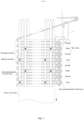
- the lock sites of the structure of two side edges of the webbing are shown in FIG. 1 , herein the solid points are sinking lock sites and the dotted line points are the floating lock sites.
- the structure of two side edges of the webbing enables the sinking and floating of the upper and lower layers misalign properly, forming misaligned positions of warp yarns so as to make the weft 1 yarn weave pair locks.
- FIG. 10 is a view of the webbing in the present application.
Landscapes
- Engineering & Computer Science (AREA)
- Textile Engineering (AREA)
- Woven Fabrics (AREA)
- Automotive Seat Belt Assembly (AREA)
Claims (3)
- Webverfahren zum Schließen von Gurtbandkanten, um zwei Seitenkanten des Gurtbandes zu weben, wobei eine einzelne Seitenkante des Gurtbandes eine Vielzahl von Ketnfäden und mindestens ein Schussfaden beinhaltet; die Kettfaden sich abwechselnd nach oben und nach unten bewegt, wodurch eine obere und eine untere Schicht gebildet wird; der Schussfaden sich zwischen der oberen und der unteren Schicht der Kettfäden nach links und rechts hin- und herbewegt, wodurch durch Verweben mit den Kettfäden die Gurtbandkanten gebildet werden; eine der linken und der rechten Kante des Gurtbandes mindestens vier Kettfäden beinhaltet, die von links nach rechts als Kette A, B, C, D bezeichnet werden; die rechte Kante des Gurtbandes mit einem rechten Seitenarn versehen ist, dadurch gekennzeichnet, dass die Webprozesse Folgendes beinhalten:
Erster Vor- und Rücklauf:Der Vorlauf des Schusses an der linken Kante: Kette A, B, D bewegen sich nach unten, der Schuss bewegt sich über Kette A, B, D von links nach rechts hin und her und Kette C bewegt sich nach oben, der Schuss bewegt sich unter Kette C von links nach rechts und erreicht dann die rechte Kante und im Vorlauf des Schusses an der linken Kante werden Kette A und der Schuss verwebt und an Kette A miteinander verbunden;Der Vorlauf des Schusses an der rechten Kante: Der Vorlauf des Schusses an der rechten Kante: Kette A, B, D bewegen sich nach unten, der Schuss bewegt sich über Kette A, B, D von links nach rechts hin und her und Kette C bewegt sich nach oben, der Schuss bewegt sich unter Kette C von links nach rechts und wird dann mit dem rechten Seitenfaden verbunden und im Vorlauf des Schusses an der rechten Kante werden Kette A und der Schuss verwebt und an Kette A miteinander verbunden;Der Rücklauf des Schusses: der Schuss kehrt entlang des Weges des Vorlaufs zurück und im Prozess des Schussrücklaufs bleiben Kette A, B, C, D bewegungslos und die durch den ersten Vor- und Rüücklauf gebildete Gewebeform wird als dreifach sinkend, einfach schwebend bezeichnet;Zweiter Vor- und Rücklauf:Der Vorlauf des Schusses an der linken Kante: Der Vorlauf des Schusses an der linken Kante: Kette A, B, C bewegen sich nach oben, der Schuss bewegt sich unter Kette A, B, C von links nach rechts hin und her und Kette D bewegt sich nach unten, der Schuss bewegt sich über Kette D von links nach rechts und erreicht dann die rechte Kante und im Vorlauf des Schusses an der linken Kante werden Kette B und der Schuss verwebt und an Kette B miteinander verbunden;Der Vorlauf des Schusses an der rechten Kante: Kette A, B, C bewegen sich nach oben, der Schuss bewegt sich unter Kette A, B, C von links nach rechts hin und her und Kette D bewegt sich nach unten, der Schuss bewegt sich über Kette D von links nach rechts und wird dann mit dem rechten Seitenfaden verbunden und im Vorlauf des Schusses an der rechten Kante werden Kette B und der Schuss verwebt und an Kette B miteinander verbunden;Der Rücklauf des Schusses: der Schuss kehrt entlang des Weges des Vorlaufs zurück und im Prozess des Schussrücklaufs bleiben Kette A, B, C, D bewegungslos und die durch den zweiten Vor- und Rüücklauf gebildete Gewebeform wird als dreifach schwebend, einfach sinkend bezeichnet;Dritter Vor- und Rücklauf:Der Vorlauf des Schusses an der linken Kante: Der Vorlauf des Schusses an der linken Kante: Kette B, C, D bewegen sich nach unten, der Schuss bewegt sich über Kette B, C, D von links nach rechts hin und her und Kette A bewegt sich nach oben, der Schuss bewegt sich unter Kette A von links nach rechts und erreicht dann die rechte Kante und im Vorlauf des Schusses an der linken Kante werden Kette C und der Schuss verwebt und an Kette C miteinander verbunden;Der Vorlauf des Schusses an der rechten Kante: Kette B, C, D bewegen sich nach unten, der Schuss bewegt sich über Kette B, C, D von links nach rechts hin und her und Kette A bewegt sich nach oben, der Schuss bewegt sich unter Kette A von links nach rechts und wird dann mit dem rechten Seitenfaden verbunden und im Vorlauf des Schusses an der rechten Kante werden Kette C und der Schuss verwebt und an Kette C miteinander verbunden;Der Rücklauf des Schusses: der Schuss kehrt entlang des Weges des Vorlaufs zurück und im Prozess des Schussrücklaufs bleiben Kette A, B, C, D bewegungslos und die durch den dritten Vor- und Rüücklauf gebildete Gewebeform wird als dreifach sinkens, einfach schwebend bezeichnet;Vierter Vor- und Rücklauf:Der Vorlauf des Schusses an der linken Kante: Kette A, C, D bewegen sich nach oben, der Schuss bewegt sich unter Kette A, C, D von links nach rechts hin und her und Kette B bewegt sich nach unten, der Schuss bewegt sich über Kette B von links nach rechts und erreicht dann die rechte Kante und im Vorlauf des Schusses an der linken Kante werden Kette D und der Schuss verwebt und an Kette D miteinander verbunden;Der Vorlauf des Schusses an der rechten Kante: Kette A, C, D bewegen sich nach oben, der Schuss bewegt sich unter Kette A, C, D von links nach rechts hin und her und Kette B bewegt sich nach unten, der Schuss bewegt sich über Kette A von links nach rechts und wird dann mit dem rechten Seitenfaden verbunden und im Vorlauf des Schusses an der rechten Kante werden Kette D und der Schuss verwebt und an Kette D miteinander verbunden;Der Rücklauf des Schusses: der Schuss kehrt entlang des Weges des Vorlaufs zurück und im Prozess des Schussrücklaufs bleiben Kette A, B, C, D bewegungslos und die durch den vierten Vor- und Rüücklauf gebildete Gewebeform wird als dreifach schwebend, einfach sinkend bezeichnet. - Webverfahren zum Schließen von Gurtbandkanten nach Anspruch 1, dadurch gekennzeichnet das: die Kette A, B, C, D sind eine Gruppe, jeder Kettfaden wird unabhängig gesteuert, um sich nach oben und unten zu bewegen, drei von Kette A, B, C, D erforderlich sind, um sich in die entgegengesetzte Richtung der anderen zu bewegen, wodurch die obere und die untere Schicht gebildet werden, eine Gruppe von vier Kettfäden bei jedem Vor- und Rücklauf nur einen Kettfaden aufweisen, der sich mit einem Schussfaden verwebt und verbindet, wodurch Verbindungsstellen gebildet werden, und sich die Verbindungsstellen jeweiliger vier aufeinanderfolgender Vor- und Rückläufe an verschiedenen Kettfäden befinden, keine Verbindungsstelle sich in der selben Position befindet, wodurch eine fehlausgerichtete Paarverbindung der oberen und der unteren Schicht gebildet wird.
- Webverfahren zum Schließen von Gurtbandkanten nach Anspruch 1, dadurch gekennzeichnet, dass: die Struktur zum Bilden einer Vier-seitlich-vier-längs-Struktur willkürlich einen Startpunkt auswählen kann, doch es erforderlich ist, eine dreifach sinkende, einfach schwebende oder eine dreifach schwebende, einfach sinkende Form einzuhalten.
Applications Claiming Priority (2)
| Application Number | Priority Date | Filing Date | Title |
|---|---|---|---|
| CN201911094836.1A CN110923895B (zh) | 2019-11-11 | 2019-11-11 | 一种织带边缘收边的编织方法 |
| PCT/CN2020/107834 WO2021093385A1 (zh) | 2019-11-11 | 2020-08-07 | 一种织带边缘收边的编织方法 |
Publications (4)
| Publication Number | Publication Date |
|---|---|
| EP4060104A1 EP4060104A1 (de) | 2022-09-21 |
| EP4060104A4 EP4060104A4 (de) | 2023-11-22 |
| EP4060104C0 EP4060104C0 (de) | 2024-12-18 |
| EP4060104B1 true EP4060104B1 (de) | 2024-12-18 |
Family
ID=69853765
Family Applications (1)
| Application Number | Title | Priority Date | Filing Date |
|---|---|---|---|
| EP20887248.1A Active EP4060104B1 (de) | 2019-11-11 | 2020-08-07 | Webverfahren zum schliessen von gurtkanten |
Country Status (6)
| Country | Link |
|---|---|
| US (1) | US12043928B2 (de) |
| EP (1) | EP4060104B1 (de) |
| JP (1) | JP7417727B2 (de) |
| CN (1) | CN110923895B (de) |
| ES (1) | ES3004963T3 (de) |
| WO (1) | WO2021093385A1 (de) |
Families Citing this family (1)
| Publication number | Priority date | Publication date | Assignee | Title |
|---|---|---|---|---|
| CN110923895B (zh) * | 2019-11-11 | 2023-12-19 | 肇庆市鼎湖兴文塑胶五金制品有限公司 | 一种织带边缘收边的编织方法 |
Family Cites Families (75)
| Publication number | Priority date | Publication date | Assignee | Title |
|---|---|---|---|---|
| US37546A (en) * | 1863-01-27 | Improvement in weaving corsets | ||
| US1622542A (en) * | 1927-03-29 | Method oe weaving naeeow-width wabe and machine eor carrying out | ||
| US1037752A (en) * | 1912-03-23 | 1912-09-03 | Helvetia Silk Mills | Weave. |
| US3177873A (en) * | 1962-11-28 | 1965-04-13 | Johnson & Johnson | Diaper |
| GB1482927A (en) * | 1974-03-21 | 1977-08-17 | French & Sons Thomas | Narrow fabrics |
| AR206830A1 (es) * | 1974-10-01 | 1976-08-23 | Berger Ohg Elastic | Cinta tejida para cinturones de seguridad |
| DE2508732A1 (de) * | 1975-02-28 | 1976-09-09 | Berger Ohg Elastic | Gurtband fuer sicherheitsgurte |
| US3952778A (en) * | 1975-04-28 | 1976-04-27 | Rockwell International Corporation | Selvage forming device |
| CH636386A5 (de) * | 1978-12-05 | 1983-05-31 | Textilma Ag | Bandgewebe, verfahren zu seiner herstellung und bandwebmaschine zur durchfuehrung des verfahrens. |
| CH639710A5 (de) * | 1979-11-08 | 1983-11-30 | Textilma Ag | Verfahren zur herstellung eines gewebes, webmaschine zur durchfuehrung des verfahrens und nach dem verfahren hergestelltes gewebe. |
| JPS5836240A (ja) * | 1981-08-25 | 1983-03-03 | ニツシンカ−ペツト工業株式会社 | カ−ペツトの製織方法 |
| US4481981A (en) * | 1983-03-21 | 1984-11-13 | General Motors Corporation | Soft edge seat belt webbing |
| JPS6094643A (ja) * | 1983-10-28 | 1985-05-27 | 株式会社新井クリエーションシステム | フリンジ織物製造法 |
| DE3345508A1 (de) * | 1983-12-16 | 1985-06-27 | Ieperband N.V., Ieper | Gurtband mit flexibelem schussmaterial |
| JPH0243894Y2 (de) * | 1986-02-28 | 1990-11-21 | ||
| JPH031493Y2 (de) * | 1986-03-17 | 1991-01-17 | ||
| US4894276A (en) * | 1986-05-16 | 1990-01-16 | Bgf Industries, Inc. | Bonded glass fabric edge |
| US4981161A (en) * | 1988-11-17 | 1991-01-01 | Lagran Canada, Inc. | Seat belt webbing having multifilament and monofilament yarns |
| JPH0434786Y2 (de) * | 1989-08-28 | 1992-08-18 | ||
| DE4009455A1 (de) * | 1990-03-23 | 1991-09-26 | Berger Johann | Verfahren zum weben eines bandes |
| US5419951A (en) * | 1991-04-19 | 1995-05-30 | Murdock Webbing Company, Inc. | Cut and abrasion resistant webbing and multifilament bicomponent yarn used in the manufacturing thereof |
| US5167263A (en) * | 1991-10-16 | 1992-12-01 | Kelen Steven I | Industrial high strength webbing |
| JPH07238434A (ja) * | 1994-02-23 | 1995-09-12 | Tokyo Metropolis | 組織と原料糸の組み合わせによる立体構造織物とその製造方法 |
| DE4409980A1 (de) * | 1994-03-23 | 1995-09-28 | Stahl Gurt Bandweberei | Verfahren zur Herstellung eines Gurtbandes und danach hergestelltes Gurtband |
| US5635270A (en) * | 1995-04-19 | 1997-06-03 | American Weavers, L.L.C. | Woven polypropylene fabric with frayed edges |
| JPH0921034A (ja) * | 1995-07-03 | 1997-01-21 | Hiroyuki Yoshino | 寝 具 |
| US5979135A (en) * | 1997-09-11 | 1999-11-09 | Certainteed Corporation | Siding panel with fabric tape attachment |
| JP3767173B2 (ja) * | 1998-06-09 | 2006-04-19 | タカタ株式会社 | エアベルト用バッグ |
| US6199597B1 (en) * | 1998-10-13 | 2001-03-13 | Narricot Industries, Inc. | Seat belt webbing double faced with ribs |
| BR9916240B1 (pt) * | 1998-12-14 | 2009-01-13 | processo para a fabricaÇço de uma faixa de cinto inflÁvel, e, faixa de cinto. | |
| US6085802A (en) * | 1999-02-02 | 2000-07-11 | Silberberg; Abraham A. | Shock absorbing woven webbing |
| US6112775A (en) * | 1999-03-05 | 2000-09-05 | Narricot Industries Incorporated | Weft yarn selection mechanism and methods for weaving seat belt webbing |
| US6918411B2 (en) * | 1999-12-24 | 2005-07-19 | Johann Berger | Ribbon and method for production thereof |
| US6260926B1 (en) * | 2000-02-28 | 2001-07-17 | Leonard James Meraw | Energy absorbing webbing for seat belt systems |
| JP2003119646A (ja) | 2001-10-10 | 2003-04-23 | Toyobo Co Ltd | 難燃性ポリエステル布帛及び繊維製品 |
| DE10228066B4 (de) * | 2002-06-17 | 2004-07-29 | Berger, Johann | Verfahren zur Herstellung eines gewebten Gurtbandes |
| JP2004107823A (ja) | 2002-09-18 | 2004-04-08 | Masaoka Towel Kk | 多重ガーゼ織物 |
| FR2850117B1 (fr) * | 2003-01-21 | 2005-07-29 | Chomarat Composites | Ruban de renforcement |
| JP4141889B2 (ja) * | 2003-04-25 | 2008-08-27 | 菊地工業株式会社 | ウエビング及びその製造方法 |
| DE10326757A1 (de) * | 2003-06-13 | 2005-01-13 | Bst Berger Safety Textiles Gmbh & Co. Kg | Verfahren zur Herstellung eines Luftsacks |
| US7178559B2 (en) * | 2003-09-11 | 2007-02-20 | Forrester Ketley & Co. | Webbing belt |
| ATE440164T1 (de) * | 2004-06-03 | 2009-09-15 | Textilma Ag | Schussfadeneintragnadel für eine nadelbandwebmaschine |
| DE102004059780B4 (de) * | 2004-12-07 | 2020-10-15 | Kikuchi Kogyo Co., Ltd. | Verfahren zur Herstellung eines auf Nadelwebmaschinen gewebten Bandes mit webtechnisch gleichen Kanten |
| US7750200B2 (en) * | 2004-12-13 | 2010-07-06 | Lohmann & Rauscher Gmbh & Co. Kg | Material for producing a support bandage |
| US20060185778A1 (en) * | 2005-02-22 | 2006-08-24 | Dany Michiels | Tire with cap ply layer |
| US7252129B2 (en) * | 2005-02-22 | 2007-08-07 | Milliken & Company | Tire with cap ply layer |
| EP1931822B1 (de) * | 2005-10-06 | 2010-01-13 | Textilma Ag | Verfahren und nadelbandwebmaschine zum weben eines bandes |
| DE102005061351A1 (de) * | 2005-12-21 | 2007-07-05 | Bst Safety Textiles Gmbh | Gewebe und Verfahren zum Herstellen desselben |
| DE102006010775A1 (de) * | 2006-03-08 | 2007-09-13 | Johann Berger | Gurtband, Verfahren und Nadel-Bandwebmaschine zur Herstellung desselben |
| FR2900163B1 (fr) | 2006-04-25 | 2008-07-04 | A Deschamps & Fils Soc Par Act | Revetement de sol ameliore |
| DE102006021082A1 (de) * | 2006-05-05 | 2007-11-15 | Bst Safety Textiles Gmbh | Nahtkonstruktion für ein Gewebe |
| US7603755B2 (en) | 2006-08-29 | 2009-10-20 | Northeast Textiles, Inc. | Method of producing a twill weave fabric with a satin face |
| US7721518B2 (en) * | 2007-01-26 | 2010-05-25 | Pascale Industries, Inc. | Yarns for cut-resistant webbing and other products |
| US8163362B2 (en) * | 2008-02-29 | 2012-04-24 | Ykk Corporation Of America | Line of sight hose cover |
| US8137779B2 (en) * | 2008-02-29 | 2012-03-20 | Ykk Corporation Of America | Line of sight hose cover |
| US7992611B2 (en) * | 2008-09-15 | 2011-08-09 | The Goodyear Tire & Rubber Company | Pneumatic tire with a leno weave flipper or chipper |
| US8925592B2 (en) * | 2009-06-11 | 2015-01-06 | Federal-Mogul Powertrain, Inc. | Flexible, abrasion resistant textile sleeve and method of construction thereof |
| AT508364B1 (de) * | 2009-09-21 | 2011-01-15 | Storsack Holding Gmbh | Transportsack und verfahren zur herstellung einer verstärkten gewebekante |
| JP2013104161A (ja) | 2011-11-16 | 2013-05-30 | Seiren Co Ltd | 織物 |
| CN202499976U (zh) * | 2011-11-21 | 2012-10-24 | 东莞润信弹性织物有限公司 | 一种弹性织带 |
| DE102012009420A1 (de) * | 2012-05-11 | 2013-11-14 | Gebrüder Klöcker GmbH | Vorrichtung zum Herstellen eines Gewebes |
| US9328436B2 (en) * | 2013-03-14 | 2016-05-03 | Ykk Corporation Of America | Energy absorbing fabric and method of manufacturing same |
| JP2016037676A (ja) | 2014-08-07 | 2016-03-22 | 妙中パイル織物株式会社 | 綴織調ループパイル織物、及び、その綴織調ループパイル織物の製造方法 |
| CN205295660U (zh) * | 2015-11-18 | 2016-06-08 | 东莞润信弹性织物有限公司 | 一种软边织带 |
| CN106498595B (zh) * | 2016-11-04 | 2018-03-27 | 中山市鼎伟纺织染整有限公司 | 一种梭织弹性织物 |
| US10799731B2 (en) * | 2016-12-12 | 2020-10-13 | Msa Technology, Llc | Harness with integrated energy absorber |
| US10702723B2 (en) * | 2016-12-12 | 2020-07-07 | Msa Technology, Llc | Harness with structural tear tape |
| JP6890433B2 (ja) | 2017-02-15 | 2021-06-18 | 日本フエルト株式会社 | 製紙用フェルト基布及びその製造方法 |
| JP6424251B2 (ja) | 2017-04-18 | 2018-11-14 | ソンウォルビナジェイエスシーSongwol Vina Jsc. | パイル織物及びその製造方法 |
| JP6649918B2 (ja) | 2017-06-27 | 2020-02-19 | ソンウォルビナジェイエスシーSongwol Vina Jsc. | パイル織物及びその製造方法 |
| CN107557949A (zh) * | 2017-08-14 | 2018-01-09 | 中山市鼎伟纺织染整有限公司 | 一种软边织带及制作方法 |
| CN207619590U (zh) * | 2017-11-17 | 2018-07-17 | 浙江三鼎织造有限公司 | 一种双耳朵须边织带 |
| JP7027661B2 (ja) | 2018-03-15 | 2022-03-02 | クラレファスニング株式会社 | 難燃性の面ファスナー |
| JP7301041B2 (ja) | 2018-03-29 | 2023-06-30 | クラレファスニング株式会社 | ポリフェニレンサルファイド繊維からなる繊維製品の染色方法および繊維製品 |
| CN110923895B (zh) * | 2019-11-11 | 2023-12-19 | 肇庆市鼎湖兴文塑胶五金制品有限公司 | 一种织带边缘收边的编织方法 |
-
2019
- 2019-11-11 CN CN201911094836.1A patent/CN110923895B/zh active Active
-
2020
- 2020-08-07 ES ES20887248T patent/ES3004963T3/es active Active
- 2020-08-07 EP EP20887248.1A patent/EP4060104B1/de active Active
- 2020-08-07 WO PCT/CN2020/107834 patent/WO2021093385A1/zh not_active Ceased
- 2020-08-07 JP JP2022526846A patent/JP7417727B2/ja active Active
-
2022
- 2022-05-05 US US17/737,961 patent/US12043928B2/en active Active
Also Published As
| Publication number | Publication date |
|---|---|
| JP2023500397A (ja) | 2023-01-05 |
| EP4060104C0 (de) | 2024-12-18 |
| ES3004963T3 (en) | 2025-03-13 |
| EP4060104A1 (de) | 2022-09-21 |
| EP4060104A4 (de) | 2023-11-22 |
| CN110923895A (zh) | 2020-03-27 |
| WO2021093385A1 (zh) | 2021-05-20 |
| US12043928B2 (en) | 2024-07-23 |
| CN110923895B (zh) | 2023-12-19 |
| JP7417727B2 (ja) | 2024-01-18 |
| US20220290341A1 (en) | 2022-09-15 |
Similar Documents
| Publication | Publication Date | Title |
|---|---|---|
| US4244199A (en) | Warp knit elastic tape construction for use as waistband reinforcement | |
| US20200362488A1 (en) | Free cut fabric being not prone to edge curling | |
| EP4060104B1 (de) | Webverfahren zum schliessen von gurtkanten | |
| CN107988688B (zh) | 一种透气三明治网布的编织工艺 | |
| FI57530B (fi) | Baerarband foer blixtlaos | |
| HK1249717A1 (zh) | 特别适用於水上活动的衣物 | |
| US3710599A (en) | Warp knit combination elastic fabric having integrally knit two-way stretch and one-way stretch portions, and method of making such fabric | |
| US9080265B2 (en) | Fabric strap with soft side edges | |
| EP3408435B1 (de) | Mehrträger, zonenwebsystem, verfahren und material | |
| CN108532094A (zh) | 一种毛巾组织及其织造工艺 | |
| KR101549186B1 (ko) | 뜯김이 방지되는 트리코트 원단 및 그의 제조방법 | |
| US2558336A (en) | Elastic webbing | |
| CN212505288U (zh) | 一种新型经编织物 | |
| CN209144376U (zh) | 针织牛仔面料 | |
| US20200107599A1 (en) | Woven breathable textile | |
| CN222182688U (zh) | 一种强力高的防脱防暴锦缎布料 | |
| CN105019130A (zh) | 经编无缝无底提花丝袜的织造方法 | |
| US20150292129A1 (en) | Stretchable warp knit fabric for clothes, bottom garment, and tubular clothes | |
| JP6857583B2 (ja) | パワーネット経編地 | |
| CN223202005U (zh) | 一种含经向换层双层组织的梭织网布 | |
| CN210970242U (zh) | 一种弹性经编面料 | |
| GB518678A (en) | An improved woven fabric and loom | |
| EP2251471A1 (de) | Elastisches Textil | |
| CN117166111A (zh) | 一种立体分叉带及其制备方法 | |
| CN203360732U (zh) | 隐藏拉链专用织带 |
Legal Events
| Date | Code | Title | Description |
|---|---|---|---|
| STAA | Information on the status of an ep patent application or granted ep patent |
Free format text: STATUS: THE INTERNATIONAL PUBLICATION HAS BEEN MADE |
|
| PUAI | Public reference made under article 153(3) epc to a published international application that has entered the european phase |
Free format text: ORIGINAL CODE: 0009012 |
|
| STAA | Information on the status of an ep patent application or granted ep patent |
Free format text: STATUS: REQUEST FOR EXAMINATION WAS MADE |
|
| 17P | Request for examination filed |
Effective date: 20220504 |
|
| AK | Designated contracting states |
Kind code of ref document: A1 Designated state(s): AL AT BE BG CH CY CZ DE DK EE ES FI FR GB GR HR HU IE IS IT LI LT LU LV MC MK MT NL NO PL PT RO RS SE SI SK SM TR |
|
| DAV | Request for validation of the european patent (deleted) | ||
| DAX | Request for extension of the european patent (deleted) | ||
| A4 | Supplementary search report drawn up and despatched |
Effective date: 20231025 |
|
| RIC1 | Information provided on ipc code assigned before grant |
Ipc: D03D 5/00 20060101ALI20231019BHEP Ipc: D03D 13/00 20060101ALI20231019BHEP Ipc: D03D 1/00 20060101AFI20231019BHEP |
|
| GRAP | Despatch of communication of intention to grant a patent |
Free format text: ORIGINAL CODE: EPIDOSNIGR1 |
|
| STAA | Information on the status of an ep patent application or granted ep patent |
Free format text: STATUS: GRANT OF PATENT IS INTENDED |
|
| INTG | Intention to grant announced |
Effective date: 20240926 |
|
| GRAS | Grant fee paid |
Free format text: ORIGINAL CODE: EPIDOSNIGR3 |
|
| GRAA | (expected) grant |
Free format text: ORIGINAL CODE: 0009210 |
|
| STAA | Information on the status of an ep patent application or granted ep patent |
Free format text: STATUS: THE PATENT HAS BEEN GRANTED |
|
| AK | Designated contracting states |
Kind code of ref document: B1 Designated state(s): AL AT BE BG CH CY CZ DE DK EE ES FI FR GB GR HR HU IE IS IT LI LT LU LV MC MK MT NL NO PL PT RO RS SE SI SK SM TR |
|
| REG | Reference to a national code |
Ref country code: CH Ref legal event code: EP |
|
| REG | Reference to a national code |
Ref country code: DE Ref legal event code: R096 Ref document number: 602020043522 Country of ref document: DE |
|
| REG | Reference to a national code |
Ref country code: IE Ref legal event code: FG4D |
|
| U01 | Request for unitary effect filed |
Effective date: 20250115 |
|
| U07 | Unitary effect registered |
Designated state(s): AT BE BG DE DK EE FI FR IT LT LU LV MT NL PT RO SE SI Effective date: 20250121 |
|
| REG | Reference to a national code |
Ref country code: ES Ref legal event code: FG2A Ref document number: 3004963 Country of ref document: ES Kind code of ref document: T3 Effective date: 20250313 |
|
| PG25 | Lapsed in a contracting state [announced via postgrant information from national office to epo] |
Ref country code: HR Free format text: LAPSE BECAUSE OF FAILURE TO SUBMIT A TRANSLATION OF THE DESCRIPTION OR TO PAY THE FEE WITHIN THE PRESCRIBED TIME-LIMIT Effective date: 20241218 |
|
| PG25 | Lapsed in a contracting state [announced via postgrant information from national office to epo] |
Ref country code: NO Free format text: LAPSE BECAUSE OF FAILURE TO SUBMIT A TRANSLATION OF THE DESCRIPTION OR TO PAY THE FEE WITHIN THE PRESCRIBED TIME-LIMIT Effective date: 20250318 |
|
| PG25 | Lapsed in a contracting state [announced via postgrant information from national office to epo] |
Ref country code: GR Free format text: LAPSE BECAUSE OF FAILURE TO SUBMIT A TRANSLATION OF THE DESCRIPTION OR TO PAY THE FEE WITHIN THE PRESCRIBED TIME-LIMIT Effective date: 20250319 |
|
| PG25 | Lapsed in a contracting state [announced via postgrant information from national office to epo] |
Ref country code: RS Free format text: LAPSE BECAUSE OF FAILURE TO SUBMIT A TRANSLATION OF THE DESCRIPTION OR TO PAY THE FEE WITHIN THE PRESCRIBED TIME-LIMIT Effective date: 20250318 |
|
| PG25 | Lapsed in a contracting state [announced via postgrant information from national office to epo] |
Ref country code: SM Free format text: LAPSE BECAUSE OF FAILURE TO SUBMIT A TRANSLATION OF THE DESCRIPTION OR TO PAY THE FEE WITHIN THE PRESCRIBED TIME-LIMIT Effective date: 20241218 |
|
| PG25 | Lapsed in a contracting state [announced via postgrant information from national office to epo] |
Ref country code: PL Free format text: LAPSE BECAUSE OF FAILURE TO SUBMIT A TRANSLATION OF THE DESCRIPTION OR TO PAY THE FEE WITHIN THE PRESCRIBED TIME-LIMIT Effective date: 20241218 |
|
| PG25 | Lapsed in a contracting state [announced via postgrant information from national office to epo] |
Ref country code: IS Free format text: LAPSE BECAUSE OF FAILURE TO SUBMIT A TRANSLATION OF THE DESCRIPTION OR TO PAY THE FEE WITHIN THE PRESCRIBED TIME-LIMIT Effective date: 20250418 |
|
| PG25 | Lapsed in a contracting state [announced via postgrant information from national office to epo] |
Ref country code: SK Free format text: LAPSE BECAUSE OF FAILURE TO SUBMIT A TRANSLATION OF THE DESCRIPTION OR TO PAY THE FEE WITHIN THE PRESCRIBED TIME-LIMIT Effective date: 20241218 |
|
| PG25 | Lapsed in a contracting state [announced via postgrant information from national office to epo] |
Ref country code: CZ Free format text: LAPSE BECAUSE OF FAILURE TO SUBMIT A TRANSLATION OF THE DESCRIPTION OR TO PAY THE FEE WITHIN THE PRESCRIBED TIME-LIMIT Effective date: 20241218 |
|
| U20 | Renewal fee for the european patent with unitary effect paid |
Year of fee payment: 6 Effective date: 20250717 |
|
| PGFP | Annual fee paid to national office [announced via postgrant information from national office to epo] |
Ref country code: ES Payment date: 20250909 Year of fee payment: 6 |
|
| PGFP | Annual fee paid to national office [announced via postgrant information from national office to epo] |
Ref country code: GB Payment date: 20250717 Year of fee payment: 6 |
|
| PLBE | No opposition filed within time limit |
Free format text: ORIGINAL CODE: 0009261 |
|
| STAA | Information on the status of an ep patent application or granted ep patent |
Free format text: STATUS: NO OPPOSITION FILED WITHIN TIME LIMIT |
|
| 26N | No opposition filed |
Effective date: 20250919 |