EP4033486A1 - Systeme und verfahren zur leistungseffizienten schlüsselwortdetektion - Google Patents
Systeme und verfahren zur leistungseffizienten schlüsselwortdetektion Download PDFInfo
- Publication number
- EP4033486A1 EP4033486A1 EP22153180.9A EP22153180A EP4033486A1 EP 4033486 A1 EP4033486 A1 EP 4033486A1 EP 22153180 A EP22153180 A EP 22153180A EP 4033486 A1 EP4033486 A1 EP 4033486A1
- Authority
- EP
- European Patent Office
- Prior art keywords
- nmd
- sound data
- playback
- stage
- sound
- Prior art date
- Legal status (The legal status is an assumption and is not a legal conclusion. Google has not performed a legal analysis and makes no representation as to the accuracy of the status listed.)
- Withdrawn
Links
Images



Classifications
-
- G—PHYSICS
- G10—MUSICAL INSTRUMENTS; ACOUSTICS
- G10L—SPEECH ANALYSIS TECHNIQUES OR SPEECH SYNTHESIS; SPEECH RECOGNITION; SPEECH OR VOICE PROCESSING TECHNIQUES; SPEECH OR AUDIO CODING OR DECODING
- G10L21/00—Speech or voice signal processing techniques to produce another audible or non-audible signal, e.g. visual or tactile, in order to modify its quality or its intelligibility
- G10L21/02—Speech enhancement, e.g. noise reduction or echo cancellation
- G10L21/0208—Noise filtering
-
- G—PHYSICS
- G10—MUSICAL INSTRUMENTS; ACOUSTICS
- G10L—SPEECH ANALYSIS TECHNIQUES OR SPEECH SYNTHESIS; SPEECH RECOGNITION; SPEECH OR VOICE PROCESSING TECHNIQUES; SPEECH OR AUDIO CODING OR DECODING
- G10L17/00—Speaker identification or verification techniques
- G10L17/22—Interactive procedures; Man-machine interfaces
-
- G—PHYSICS
- G10—MUSICAL INSTRUMENTS; ACOUSTICS
- G10L—SPEECH ANALYSIS TECHNIQUES OR SPEECH SYNTHESIS; SPEECH RECOGNITION; SPEECH OR VOICE PROCESSING TECHNIQUES; SPEECH OR AUDIO CODING OR DECODING
- G10L15/00—Speech recognition
- G10L15/02—Feature extraction for speech recognition; Selection of recognition unit
-
- G—PHYSICS
- G10—MUSICAL INSTRUMENTS; ACOUSTICS
- G10L—SPEECH ANALYSIS TECHNIQUES OR SPEECH SYNTHESIS; SPEECH RECOGNITION; SPEECH OR VOICE PROCESSING TECHNIQUES; SPEECH OR AUDIO CODING OR DECODING
- G10L15/00—Speech recognition
- G10L15/04—Segmentation; Word boundary detection
- G10L15/05—Word boundary detection
-
- G—PHYSICS
- G10—MUSICAL INSTRUMENTS; ACOUSTICS
- G10L—SPEECH ANALYSIS TECHNIQUES OR SPEECH SYNTHESIS; SPEECH RECOGNITION; SPEECH OR VOICE PROCESSING TECHNIQUES; SPEECH OR AUDIO CODING OR DECODING
- G10L15/00—Speech recognition
- G10L15/22—Procedures used during a speech recognition process, e.g. man-machine dialogue
-
- G—PHYSICS
- G10—MUSICAL INSTRUMENTS; ACOUSTICS
- G10L—SPEECH ANALYSIS TECHNIQUES OR SPEECH SYNTHESIS; SPEECH RECOGNITION; SPEECH OR VOICE PROCESSING TECHNIQUES; SPEECH OR AUDIO CODING OR DECODING
- G10L17/00—Speaker identification or verification techniques
- G10L17/02—Preprocessing operations, e.g. segment selection; Pattern representation or modelling, e.g. based on linear discriminant analysis [LDA] or principal components; Feature selection or extraction
-
- G—PHYSICS
- G10—MUSICAL INSTRUMENTS; ACOUSTICS
- G10L—SPEECH ANALYSIS TECHNIQUES OR SPEECH SYNTHESIS; SPEECH RECOGNITION; SPEECH OR VOICE PROCESSING TECHNIQUES; SPEECH OR AUDIO CODING OR DECODING
- G10L25/00—Speech or voice analysis techniques not restricted to a single one of groups G10L15/00 - G10L21/00
- G10L25/78—Detection of presence or absence of voice signals
-
- G—PHYSICS
- G10—MUSICAL INSTRUMENTS; ACOUSTICS
- G10L—SPEECH ANALYSIS TECHNIQUES OR SPEECH SYNTHESIS; SPEECH RECOGNITION; SPEECH OR VOICE PROCESSING TECHNIQUES; SPEECH OR AUDIO CODING OR DECODING
- G10L15/00—Speech recognition
- G10L15/22—Procedures used during a speech recognition process, e.g. man-machine dialogue
- G10L2015/223—Execution procedure of a spoken command
-
- G—PHYSICS
- G10—MUSICAL INSTRUMENTS; ACOUSTICS
- G10L—SPEECH ANALYSIS TECHNIQUES OR SPEECH SYNTHESIS; SPEECH RECOGNITION; SPEECH OR VOICE PROCESSING TECHNIQUES; SPEECH OR AUDIO CODING OR DECODING
- G10L21/00—Speech or voice signal processing techniques to produce another audible or non-audible signal, e.g. visual or tactile, in order to modify its quality or its intelligibility
- G10L21/02—Speech enhancement, e.g. noise reduction or echo cancellation
- G10L21/0208—Noise filtering
- G10L21/0216—Noise filtering characterised by the method used for estimating noise
- G10L2021/02161—Number of inputs available containing the signal or the noise to be suppressed
- G10L2021/02166—Microphone arrays; Beamforming
-
- H—ELECTRICITY
- H04—ELECTRIC COMMUNICATION TECHNIQUE
- H04R—LOUDSPEAKERS, MICROPHONES, GRAMOPHONE PICK-UPS OR LIKE ACOUSTIC ELECTROMECHANICAL TRANSDUCERS; ELECTRIC HEARING AIDS; PUBLIC ADDRESS SYSTEMS
- H04R3/00—Circuits for transducers
- H04R3/005—Circuits for transducers for combining the signals of two or more microphones
Definitions
- the present technology relates to consumer goods and, more particularly, to methods, systems, products, features, services, and other elements directed to voice-controllable media playback systems or some aspect thereof.
- SONOS, Inc. filed for one of its first patent applications, entitled “Method for Synchronizing Audio Playback between Multiple Networked Devices,” and began offering a media playback system for sale in 2005.
- the SONOS Wireless HiFi System enables people to experience music from many sources via one or more networked playback devices. Through a software control application installed on a smartphone, tablet, or computer, one can play what he or she wants in any room that has a networked playback device. Additionally, using a controller, for example, different songs can be streamed to each room that has a playback device, rooms can be grouped together for synchronous playback, or the same song can be heard in all rooms synchronously.
- Voice control can be beneficial in a "smart" home that includes smart appliances and devices that are connected to a communication network, such as wireless audio playback devices, illumination devices, and home-automation devices (e.g., thermostats, door locks, etc.).
- network microphone devices may be used to control smart home devices.
- a network microphone device is a networked computing device that typically includes an arrangement of microphones, such as a microphone array, that is configured to detect sounds present in the NMD's environment.
- the detected sound may include a person's speech mixed with background noise (e.g., music being output by a playback device or other ambient noise).
- background noise e.g., music being output by a playback device or other ambient noise.
- an NMD typically filters detected sound to remove the background noise from the person's speech to facilitate identifying whether the speech contains a voice input indicative of voice control. If so, the NMD may take action based on such a voice input.
- An NMD often employs a wake-word engine, which is typically onboard the NMD, to identify whether sound detected by the NMD contains a voice input that includes a particular wake word.
- the wake-word engine may be configured to identify (i.e., "spot") a particular wake word using one or more identification algorithms. This wake-word identification process is commonly referred to as "keyword spotting.”
- the NMD may buffer sound detected by a microphone of the NMD and then use the wake-word engine to process that buffered sound to determine whether a wake word is present.
- the NMD may determine that a wake-word event (i.e., a "wake-word trigger") has occurred, which indicates that the NMD has detected sound that includes a potential voice input.
- the occurrence of the wake-word event typically causes the NMD to perform additional processes involving the detected sound.
- these additional processes may include outputting an alert (e.g., an audible chime and/or a light indicator) indicating that a wake word has been identified and extracting detected-sound data from a buffer, among other possible additional processes. Extracting the detected sound may include reading out and packaging a stream of the detected-sound according to a particular format and transmitting the packaged sound-data to an appropriate voice-assistant service (VAS) for interpretation.
- VAS voice-assistant service
- the VAS corresponding to the wake word that was identified by the wake-word engine receives the transmitted sound data from the NMD over a communication network.
- a VAS traditionally takes the form of a remote service implemented using one or more cloud servers configured to process voice inputs (e.g., AMAZON's ALEXA, APPLE's SIRI, MICROSOFT's CORTANA, GOOGLE'S ASSISTANT, etc.).
- voice inputs e.g., AMAZON's ALEXA, APPLE's SIRI, MICROSOFT's CORTANA, GOOGLE'S ASSISTANT, etc.
- certain components and functionality of the VAS may be distributed across local and remote devices.
- a VAS may take the form of a local service implemented at an NMD or a media playback system comprising the NMD such that a voice input or certain types of voice input (e.g., rudimentary commands) are processed locally without intervention from a remote VAS.
- a voice input or certain types of voice input e.g., rudimentary commands
- the VAS when a VAS receives detected-sound data, the VAS will typically process this data, which involves identifying the voice input and determining an intent of words captured in the voice input. The VAS may then provide a response back to the NMD with some instruction according to the determined intent. Based on that instruction, the NMD may cause one or more smart devices to perform an action. For example, in accordance with an instruction from a VAS, an NMD may cause a playback device to play a particular song or an illumination device to turn on/off, among other examples. In some cases, an NMD, or a media system with NMDs (e.g., a media playback system with NMD-equipped playback devices) may be configured to interact with multiple VASes. In practice, the NMD may select one VAS over another based on the particular wake word identified in the sound detected by the NMD
- a playback device that is configured to be part of a networked media playback system may include components and functionality of an NMD (i.e., the playback device is "NMD-equipped").
- NMD i.e., the playback device is "NMD-equipped"
- such a playback device may include a microphone that is configured to detect sounds present in the playback device's environment, such as people speaking, audio being output by the playback device itself or another playback device that is nearby, or other ambient noises, and may also include components for buffering detected sound to facilitate wake-word identification.
- Some NMD-equipped playback devices may include an internal power source (e.g., a rechargeable battery) that allows the playback device to operate without being physically connected to a wall electrical outlet or the like.
- a playback device may be referred to herein as a "portable playback device.”
- playback devices that are configured to rely on power from a wall electrical outlet or the like may be referred to herein as “stationary playback devices," although such devices may in fact be moved around a home or other environment.
- a person might often take a portable playback device to and from a home or other environment in which one or more stationary playback devices remain.
- multiple voice services are configured for the NMD, or a system of NMDs (e.g., a media playback system of playback devices).
- One or more services can be configured during a set-up procedure, and additional voice services can be configured for the system later on.
- the NMD acts as an interface with multiple voice services, perhaps alleviating a need to have an NMD from each of the voice services to interact with the respective voice services.
- the NMD can operate in concert with service-specific NMDs present in a household to process a given voice command.
- a particular voice service can be invoked by utterance of a wake word corresponding to the particular voice service. For instance, in querying AMAZON, a user might speak the wake word "Alexa” followed by a voice command. Other examples include “Ok, Google” for querying GOOGLE and “Hey, Siri” for querying APPLE.
- a generic wake word can be used to indicate a voice input to an NMD.
- this is a manufacturer-specific wake word rather than a wake word tied to any particular voice service (e.g., "Hey, Sonos" where the NMD is a SONOS playback device).
- the NMD can identify a particular voice service to process the request. For instance, if the voice input following the wake word is related to a particular type of command (e.g., music playback), then the voice input is sent to a particular voice service associated with that type of command (e.g. a streaming music service having voice command capabilities).
- Keyword spotting can be computationally demanding and power intensive, as it involves continuously processing sound data to detect whether the sound data includes one or more keywords.
- voice processing operations such as spatial filtering, noise cancellation, and wake-word detection can increase computational load, resulting in increased average CPU clock rate and accompanying power consumption.
- Increased power demands may require larger batteries in the case of portable devices, and/or may require tradeoffs among other components such as audio amplifiers, wireless transceivers, or other electronic components that also consume power. Accordingly, there remains a need to reduce the computational demands and power consumption associated with detecting keywords in voice input provided by a user.
- One way to address these issues is to place at least some voice processing components of an NMD into a low-power, standby, or disabled stage for certain periods of time.
- Embodiments of the present technology solve this and other problems by providing a multi-stage NMD that can monitor sound data for voice activity while in a low-power stage and only activate downstream voice processing components once voice activity has been detected.
- Another potential future benefit may be helping to meet energy efficiency regulations which may be imposed on consumer electronic products, for example, if official limitations are enacted for power consumption in the idle state when the playback device is not active.
- the NMD can default to a low-power or standby stage. While in this low-power stage, the NMD captures sound data using one or more microphones and analyzes the captured sound data to detect voice activity. If no voice activity is detected, the NMD can maintain the low-power stage and continue to monitor detected sounds for voice activity. In various embodiments, the NMD can use any suitable technique for detecting voice activity in the sound data. In particular, any suitable algorithm or combination of algorithms for determining a speech presence probability may be used.
- certain acoustic features can be extracted from the sound data, such as energy-based features (e.g., signal-to-noise ratio), periodicity (e.g., speech signals tend to be more periodic than background noises), speech signal dynamics (e.g., analyzing the variance of power envelopes), or others.
- energy-based features e.g., signal-to-noise ratio
- periodicity e.g., speech signals tend to be more periodic than background noises
- speech signal dynamics e.g., analyzing the variance of power envelopes
- One or more such acoustic features can then be analyzed using statistical models or other discriminators to detect voice activity in the sound data.
- Example classifiers include Gaussian mixture models, Laplacian models, or other classifiers that discriminate between voice and non-voice sound data.
- Various other approaches to identifying speech in captured sound data may be used.
- the NMD can transition to a second, high-power or fully operational stage.
- the NMD can further process the captured sound data utilizing downstream components that were previously in a disabled or standby stage or otherwise consuming less power.
- This further processing can include the activation and operation of relatively power-demanding components to perform additional tasks, such as spatial filtering, acoustic echo cancellation, wake-word detection, and data transmission over a network interface (e.g., streaming captured sound data to a remote VAS for processing).
- the NMD can revert to the first, low-power or standby stage.
- overall power consumption can be reduced without deleteriously impacting the user experience.
- an NMD detects sound via at least one of its microphones.
- the NMD can determine, via a voice activity detection process, whether the detected sound includes voice activity.
- the NMD can operate in a first stage, in which the NMD forgoes spatial processing (and optionally other processing steps) of the sound data, resulting in unfiltered sound data.
- the NMD can transition to a second stage that is more power-intensive than the first stage. While in the second stage, the NMD can spatially process (e.g., using a multi-channel Wiener filter or other suitable spatial processing technique) at least the second portion of the captured sound data, thereby producing filtered sound data.
- the NMD may then detect, via a wake-word engine, a wake word in the sound data.
- the wake word can be detected based on both the unfiltered sound data and the filtered sound data.
- the NMD may then determine an action to be performed based on the sound data (e.g., pause audio playback, transmit data to a remote VAS, etc.).
- the NMD may revert from the second stage to the first stage, thereby reducing power consumption.
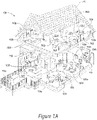
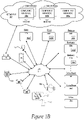
- FIGs 1A and 1B illustrate an example configuration of a media playback system 100 (or "MPS 100") in which one or more embodiments disclosed herein may be implemented.
- the MPS 100 as shown is associated with an example home environment having a plurality of rooms and spaces, which may be collectively referred to as a "home environment,” "smart home,” or “environment 101.”
- the environment 101 comprises a household having several rooms, spaces, and/or playback zones, including a master bathroom 101a, a master bedroom 101b (referred to herein as "Nick's Room"), a second bedroom 101c, a family room or den 101d, an office 101e, a living room 101f, a dining room 101g, a kitchen 101h, and an outdoor patio 101i.
- the MPS 100 can be implemented in one or more commercial settings (e.g., a restaurant, mall, airport, hotel, a retail or other store), one or more vehicles (e.g., a sports utility vehicle, bus, car, a ship, a boat, an airplane), multiple environments (e.g., a combination of home and vehicle environments), and/or another suitable environment where multi-zone audio may be desirable.
- a commercial setting e.g., a restaurant, mall, airport, hotel, a retail or other store
- vehicles e.g., a sports utility vehicle, bus, car, a ship, a boat, an airplane
- multiple environments e.g., a combination of home and vehicle environments
- multi-zone audio may be desirable.
- the MPS 100 includes one or more computing devices.
- such computing devices can include playback devices 102 (identified individually as playback devices 102a-102o), network microphone devices 103 (identified individually as “NMDs” 103a-102i), and controller devices 104a and 104b (collectively "controller devices 104").
- the home environment may include additional and/or other computing devices, including local network devices, such as one or more smart illumination devices 108 ( Figure 1B ), a smart thermostat 110, and a local computing device 105 ( Figure 1A ).
- one or more of the various playback devices 102 may be configured as portable playback devices, while others may be configured as stationary playback devices.
- the headphones 102o ( Figure 1B ) are a portable playback device, while the playback device 102d on the bookcase may be a stationary device.
- the playback device 102c on the Patio may be a battery-powered device, which may allow it to be transported to various areas within the environment 101, and outside of the environment 101, when it is not plugged in to a wall outlet or the like.
- the various playback, network microphone, and controller devices 102-104 and/or other network devices of the MPS 100 may be coupled to one another via point-to-point connections and/or over other connections, which may be wired and/or wireless, via a LAN 111 including a network router 109.
- the playback device 102j in the Den 101d ( Figure 1A ), which may be designated as the "Left” device, may have a point-to-point connection with the playback device 102a, which is also in the Den 101d and may be designated as the "Right" device.
- the Left playback device 102j may communicate with other network devices, such as the playback device 102b, which may be designated as the "Front" device, via a point-to-point connection and/or other connections via the LAN 111.
- the MPS 100 may be coupled to one or more remote computing devices 106 via a wide area network ("WAN") 107.
- each remote computing device 106 may take the form of one or more cloud servers.
- the remote computing devices 106 may be configured to interact with computing devices in the environment 101 in various ways.
- the remote computing devices 106 may be configured to facilitate streaming and/or controlling playback of media content, such as audio, in the home environment 101.
- the various playback devices, NMDs, and/or controller devices 102-104 may be communicatively coupled to at least one remote computing device associated with a VAS and at least one remote computing device associated with a media content service ("MCS").
- remote computing devices 106a are associated with a VAS 190 and remote computing devices 106b are associated with an MCS 192.
- MCS media content service
- the MPS 100 may be coupled to multiple, different VASes and/or MCSes.
- VASes may be operated by one or more of AMAZON, GOOGLE, APPLE, MICROSOFT, SONOS or other voice assistant providers.
- MCSes may be operated by one or more of SPOTIFY, PANDORA, AMAZON MUSIC, or other media content services.
- the remote computing devices 106 further include remote computing device 106c configured to perform certain operations, such as remotely facilitating media playback functions, managing device and system status information, directing communications between the devices of the MPS 100 and one or multiple VASes and/or MCSes, among other operations.
- the remote computing devices 106c provide cloud servers for one or more SONOS Wireless HiFi Systems.
- one or more of the playback devices 102 may take the form of or include an on-board (e.g., integrated) network microphone device.
- the playback devices 102a-e include or are otherwise equipped with corresponding NMDs 103a-e, respectively.
- a playback device that includes or is equipped with an NMD may be referred to herein interchangeably as a playback device or an NMD unless indicated otherwise in the description.
- one or more of the NMDs 103 may be a stand-alone device.
- the NMDs 103f and 103g may be stand-alone devices.
- a stand-alone NMD may omit components and/or functionality that is typically included in a playback device, such as a speaker or related electronics. For instance, in such cases, a stand-alone NMD may not produce audio output or may produce limited audio output (e.g., relatively low-quality audio output).
- the various playback and network microphone devices 102 and 103 of the MPS 100 may each be associated with a unique name, which may be assigned to the respective devices by a user, such as during setup of one or more of these devices. For instance, as shown in the illustrated example of Figure 1B , a user may assign the name "Bookcase” to playback device 102d because it is physically situated on a bookcase. Similarly, the NMD 103f may be assigned the named "Island" because it is physically situated on an island countertop in the Kitchen 101h ( Figure 1A ).
- Some playback devices may be assigned names according to a zone or room, such as the playback devices 102e, 1021, 102m, and 102n, which are named “Bedroom,” “Dining Room,” “Living Room,” and “Office,” respectively. Further, certain playback devices may have functionally descriptive names. For example, the playback devices 102a and 102b are assigned the names “Right” and “Front,” respectively, because these two devices are configured to provide specific audio channels during media playback in the zone of the Den 101d ( Figure 1A ). The playback device 102c in the Patio may be named portable because it is battery-powered and/or readily transportable to different areas of the environment 101. Other naming conventions are possible.
- an NMD may detect and process sound from its environment, such as sound that includes background noise mixed with speech spoken by a person in the NMD's vicinity. For example, as sounds are detected by the NMD in the environment, the NMD may process the detected sound to determine if the sound includes speech that contains voice input intended for the NMD and ultimately a particular VAS. For example, the NMD may identify whether speech includes a wake word associated with a particular VAS.
- the NMDs 103 are configured to interact with the VAS 190 over a network via the LAN 111 and the router 109. Interactions with the VAS 190 may be initiated, for example, when an NMD identifies in the detected sound a potential wake word. The identification causes a wake-word event, which in turn causes the NMD to begin transmitting detected-sound data to the VAS 190.
- the various local network devices 102-105 ( Figure 1A ) and/or remote computing devices 106c of the MPS 100 may exchange various feedback, information, instructions, and/or related data with the remote computing devices associated with the selected VAS. Such exchanges may be related to or independent of transmitted messages containing voice inputs.
- the remote computing device(s) and the media playback system 100 may exchange data via communication paths as described herein and/or using a metadata exchange channel as described in U.S. Application No. 15/438,749 filed February 21, 2017 , and titled "Voice Control of a Media Playback System,” which is herein incorporated by reference in its entirety.
- the VAS 190 Upon receiving the stream of sound data, the VAS 190 determines if there is voice input in the streamed data from the NMD, and if so the VAS 190 will also determine an underlying intent in the voice input. The VAS 190 may next transmit a response back to the MPS 100, which can include transmitting the response directly to the NMD that caused the wake-word event. The response is typically based on the intent that the VAS 190 determined was present in the voice input.
- the VAS 190 may determine that the underlying intent of the voice input is to initiate playback and further determine that intent of the voice input is to play the particular song "Hey Jude.” After these determinations, the VAS 190 may transmit a command to a particular MCS 192 to retrieve content (i.e., the song "Hey Jude"), and that MCS 192, in turn, provides (e.g., streams) this content directly to the MPS 100 or indirectly via the VAS 190. In some implementations, the VAS 190 may transmit to the MPS 100 a command that causes the MPS 100 itself to retrieve the content from the MCS 192.
- NMDs may facilitate arbitration amongst one another when voice input is identified in speech detected by two or more NMDs located within proximity of one another.
- the NMD-equipped playback device 102d in the environment 101 ( Figure 1A ) is in relatively close proximity to the NMD-equipped Living Room playback device 102m, and both devices 102d and 102m may at least sometimes detect the same sound. In such cases, this may require arbitration as to which device is ultimately responsible for providing detected-sound data to the remote VAS. Examples of arbitrating between NMDs may be found, for example, in previously referenced U.S. Application No. 15/438,749 .
- an NMD may be assigned to, or otherwise associated with, a designated or default playback device that may not include an NMD.
- the Island NMD 103f in the Kitchen 101h ( Figure 1A ) may be assigned to the Dining Room playback device 1021, which is in relatively close proximity to the Island NMD 103f.
- an NMD may direct an assigned playback device to play audio in response to a remote VAS receiving a voice input from the NMD to play the audio, which the NMD might have sent to the VAS in response to a user speaking a command to play a certain song, album, playlist, etc. Additional details regarding assigning NMDs and playback devices as designated or default devices may be found, for example, in previously referenced U.S. Patent Application No. 15/438,749 .
- the LAN 111 ( Figure 1B ) may be eliminated and the single playback device 102 and/or the single NMD 103 may communicate directly with the remote computing devices 106a-d.
- a telecommunication network e.g., an LTE network, a 5G network, etc.
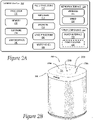
- FIG 2A is a functional block diagram illustrating certain aspects of one of the playback devices 102 of the MPS 100 of Figures 1A and 1B .
- the playback device 102 includes various components, each of which is discussed in further detail below, and the various components of the playback device 102 may be operably coupled to one another via a system bus, communication network, or some other connection mechanism.
- the playback device 102 may be referred to as an "NMD-equipped" playback device because it includes components that support the functionality of an NMD, such as one of the NMDs 103 shown in Figure 1A .
- the playback device 102 includes at least one processor 212, which may be a clock-driven computing component configured to process input data according to instructions stored in memory 213.
- the memory 213 may be a tangible, non-transitory, computer-readable medium configured to store instructions that are executable by the processor 212.
- the memory 213 may be data storage that can be loaded with software code 214 that is executable by the processor 212 to achieve certain functions.
- these functions may involve the playback device 102 retrieving audio data from an audio source, which may be another playback device.
- the functions may involve the playback device 102 sending audio data, detected-sound data (e.g., corresponding to a voice input), and/or other information to another device on a network via at least one network interface 224.
- the functions may involve the playback device 102 causing one or more other playback devices to synchronously playback audio with the playback device 102.
- the functions may involve the playback device 102 facilitating being paired or otherwise bonded with one or more other playback devices to create a multi-channel audio environment. Numerous other example functions are possible, some of which are discussed below.
- certain functions may involve the playback device 102 synchronizing playback of audio content with one or more other playback devices.
- a listener may not perceive time-delay differences between playback of the audio content by the synchronized playback devices.
- U.S. Patent No. 8,234,395 filed on April 4, 2004 and titled "System and method for synchronizing operations among a plurality of independently clocked digital data processing devices," which is hereby incorporated by reference in its entirety, provides in more detail some examples for audio playback synchronization among playback devices.
- the playback device 102 includes audio processing components 216 that are generally configured to process audio prior to the playback device 102 rendering the audio.
- the audio processing components 216 may include one or more digital-to-analog converters ("DAC"), one or more audio preprocessing components, one or more audio enhancement components, one or more digital signal processors ("DSPs"), and so on.
- DAC digital-to-analog converter
- DSPs digital signal processors
- one or more of the audio processing components 216 may be a subcomponent of the processor 212.
- the audio processing components 216 receive analog and/or digital audio and process and/or otherwise intentionally alter the audio to produce audio signals for playback.
- the produced audio signals may then be provided to one or more audio amplifiers 217 for amplification and playback through one or more speakers 218 operably coupled to the amplifiers 217.
- the audio amplifiers 217 may include components configured to amplify audio signals to a level for driving one or more of the speakers 218.
- Each of the speakers 218 may include an individual transducer (e.g., a "driver") or the speakers 218 may include a complete speaker system involving an enclosure with one or more drivers.
- a particular driver of a speaker 218 may include, for example, a subwoofer (e.g., for low frequencies), a mid-range driver (e.g., for middle frequencies), and/or a tweeter (e.g., for high frequencies).
- a transducer may be driven by an individual corresponding audio amplifier of the audio amplifiers 217.
- a playback device may not include the speakers 218, but instead may include a speaker interface for connecting the playback device to external speakers.
- a playback device may include neither the speakers 218 nor the audio amplifiers 217, but instead may include an audio interface (not shown) for connecting the playback device to an external audio amplifier or audio-visual receiver.
- the audio processing components 216 may be configured to process audio to be sent to one or more other playback devices, via the network interface 224, for playback.
- audio content to be processed and/or played back by the playback device 102 may be received from an external source, such as via an audio line-in interface (e.g., an auto-detecting 3.5mm audio line-in connection) of the playback device 102 (not shown) or via the network interface 224, as described below.
- an audio line-in interface e.g., an auto-detecting 3.5mm audio line-in connection
- the at least one network interface 224 may take the form of one or more wireless interfaces 225 and/or one or more wired interfaces 226.
- a wireless interface may provide network interface functions for the playback device 102 to wirelessly communicate with other devices (e.g., other playback device(s), NMD(s), and/or controller device(s)) in accordance with a communication protocol (e.g., any wireless standard including IEEE 802.11a, 802.11b, 802.11g, 802.11n, 802.11ac, 802.15, 4G mobile communication standard, and so on).
- a wired interface may provide network interface functions for the playback device 102 to communicate over a wired connection with other devices in accordance with a communication protocol (e.g., IEEE 802.3). While the network interface 224 shown in Figure 2A include both wired and wireless interfaces, the playback device 102 may in some implementations include only wireless interface(s) or only wired interface(s).
- the network interface 224 facilitates data flow between the playback device 102 and one or more other devices on a data network.
- the playback device 102 may be configured to receive audio content over the data network from one or more other playback devices, network devices within a LAN, and/or audio content sources over a WAN, such as the Internet.
- the audio content and other signals transmitted and received by the playback device 102 may be transmitted in the form of digital packet data comprising an Internet Protocol (IP)-based source address and IP-based destination addresses.
- IP Internet Protocol
- the network interface 224 may be configured to parse the digital packet data such that the data destined for the playback device 102 is properly received and processed by the playback device 102.
- the playback device 102 also includes voice processing components 220 that are operably coupled to one or more microphones 222.
- the microphones 222 are configured to detect sound (i.e., acoustic waves) in the environment of the playback device 102, which is then provided to the voice processing components 220. More specifically, each microphone 222 is configured to detect sound and convert the sound into a digital or analog signal representative of the detected sound, which can then cause the voice processing component 220 to perform various functions based on the detected sound, as described in greater detail below.
- the microphones 222 are arranged as an array of microphones (e.g., an array of six microphones).
- the playback device 102 includes more than six microphones (e.g., eight microphones or twelve microphones) or fewer than six microphones (e.g., four microphones, two microphones, or a single microphones).
- the voice-processing components 220 are generally configured to detect and process sound received via the microphones 222, identify potential voice input in the detected sound, and extract detected-sound data to enable a VAS, such as the VAS 190 ( Figure 1B ), to process voice input identified in the detected-sound data.
- a VAS such as the VAS 190 ( Figure 1B )
- the voice processing components 220 may include one or more analog-to-digital converters, an acoustic echo canceller ("AEC"), a spatial processor (e.g., one or more multi-channel Wiener filters, one or more other filters, and/or one or more beam former components), one or more buffers (e.g., one or more circular buffers), one or more wake-word engines, one or more voice extractors, and/or one or more speech processing components (e.g., components configured to recognize a voice of a particular user or a particular set of users associated with a household), among other example voice processing components.
- the voice processing components 220 may include or otherwise take the form of one or more DSPs or one or more modules of a DSP.
- certain voice processing components 220 may be configured with particular parameters (e.g., gain and/or spectral parameters) that may be modified or otherwise tuned to achieve particular functions.
- one or more of the voice processing components 220 may be a subcomponent of the processor 212.
- the voice-processing components 220 may detect and store a user's voice profile, which may be associated with a user account of the MPS 100.
- voice profiles may be stored as and/or compared to variables stored in a set of command information or data table.
- the voice profile may include aspects of the tone or frequency of a user's voice and/or other unique aspects of the user's voice, such as those described in previously referenced U.S. Patent Application No. 15/438,749 .
- the playback device 102 also includes power components 227.
- the power components 227 include at least an external power source interface 228, which may be coupled to a power source (not shown) via a power cable or the like that physically connects the playback device 102 to an electrical outlet or some other external power source.
- Other power components may include, for example, transformers, converters, and like components configured to format electrical power.
- the power components 227 of the playback device 102 may additionally include an internal power source 229 (e.g., one or more batteries) configured to power the playback device 102 without a physical connection to an external power source.
- an internal power source 229 e.g., one or more batteries
- the playback device 102 may operate independent of an external power source.
- the external power source interface 228 may be configured to facilitate charging the internal power source 229.
- a playback device comprising an internal power source may be referred to herein as a "portable playback device.”
- a playback device that operates using an external power source may be referred to herein as a "stationary playback device," although such a device may in fact be moved around a home or other environment.
- the playback device 102 further includes a user interface 240 that may facilitate user interactions independent of or in conjunction with user interactions facilitated by one or more of the controller devices 104.
- the user interface 240 includes one or more physical buttons and/or supports graphical interfaces provided on touch sensitive screen(s) and/or surface(s), among other possibilities, for a user to directly provide input.
- the user interface 240 may further include one or more of lights (e.g., LEDs) and the speakers to provide visual and/or audio feedback to a user.
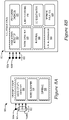
- Figure 2B shows an example housing 230 of the playback device 102 that includes a user interface in the form of a control area 232 at a top portion 234 of the housing 230.
- the control area 232 includes buttons 236a-c for controlling audio playback, volume level, and other functions.
- the control area 232 also includes a button 236d for toggling the microphones 222 to either an on state or an off state.
- control area 232 is at least partially surrounded by apertures formed in the top portion 234 of the housing 230 through which the microphones 222 (not visible in Figure 2B ) receive the sound in the environment of the playback device 102.
- the microphones 222 may be arranged in various positions along and/or within the top portion 234 or other areas of the housing 230 so as to detect sound from one or more directions relative to the playback device 102.
- SONOS, Inc. presently offers (or has offered) for sale certain playback devices that may implement certain of the embodiments disclosed herein, including a "PLAY:1,” “PLAY:3,” “PLAY:5,” “PLAYBAR,” “CONNECT:AMP,” “PLAYBASE,” “BEAM,” “CONNECT,” and “SUB.” Any other past, present, and/or future playback devices may additionally or alternatively be used to implement the playback devices of example embodiments disclosed herein. Additionally, it should be understood that a playback device is not limited to the examples illustrated in Figures 2A or 2B or to the SONOS product offerings.
- a playback device may include, or otherwise take the form of, a wired or wireless headphone set, which may operate as a part of the media playback system 100 via a network interface or the like.
- a playback device may include or interact with a docking station for personal mobile media playback devices.
- a playback device may be integral to another device or component such as a television, a lighting fixture, or some other device for indoor or outdoor use.
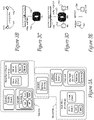
- Figures 3A-3E show example configurations of playback devices.
- a single playback device may belong to a zone.
- the playback device 102c ( Figure 1A ) on the Patio may belong to Zone A.
- multiple playback devices may be "bonded" to form a "bonded pair," which together form a single zone.
- the playback device 102f ( Figure 1A ) named "Bed 1" in Figure 3A may be bonded to the playback device 102g ( Figure 1A ) named "Bed 2" in Figure 3A to form Zone B. Bonded playback devices may have different playback responsibilities (e.g., channel responsibilities).
- multiple playback devices may be merged to form a single zone.
- the playback device 102d named "Bookcase” may be merged with the playback device 102m named "Living Room” to form a single Zone C.
- the merged playback devices 102d and 102m may not be specifically assigned different playback responsibilities. That is, the merged playback devices 102d and 102m may, aside from playing audio content in synchrony, each play audio content as they would if they were not merged.
- each zone in the MPS 100 may be represented as a single user interface ("UI") entity.
- UI user interface
- Zone A may be provided as a single entity named "Portable”
- Zone B may be provided as a single entity named “Stereo”
- Zone C may be provided as a single entity named "Living Room.”
- a zone may take on the name of one of the playback devices belonging to the zone.
- Zone C may take on the name of the Living Room device 102m (as shown).
- Zone C may instead take on the name of the Bookcase device 102d.
- Zone C may take on a name that is some combination of the Bookcase device 102d and Living Room device 102m. The name that is chosen may be selected by a user via inputs at a controller device 104.
- a zone may be given a name that is different than the device(s) belonging to the zone. For example, Zone B in Figure 3A is named "Stereo" but none of the devices in Zone B have this name.
- Zone B is a single UI entity representing a single device named "Stereo," composed of constituent devices "Bed 1" and "Bed 2."
- the Bed 1 device may be playback device 102f in the master bedroom 101h ( Figure 1A ) and the Bed 2 device may be the playback device 102g also in the master bedroom 101h ( Figure 1A ).
- playback devices that are bonded may have different playback responsibilities, such as playback responsibilities for certain audio channels.
- the Bed 1 and Bed 2 devices 102f and 102g may be bonded so as to produce or enhance a stereo effect of audio content.
- the Bed 1 playback device 102f may be configured to play a left channel audio component
- the Bed 2 playback device 102g may be configured to play a right channel audio component.
- stereo bonding may be referred to as "pairing.”
- playback devices that are configured to be bonded may have additional and/or different respective speaker drivers.
- the playback device 102b named "Front” may be bonded with the playback device 102k named "SUB.”
- the Front device 102b may render a range of mid to high frequencies, and the SUB device 102k may render low frequencies as, for example, a subwoofer. When unbonded, the Front device 102b may be configured to render a full range of frequencies.
- Figure 3D shows the Front and SUB devices 102b and 102k further bonded with Right and Left playback devices 102a and 102j, respectively.
- the Right and Left devices 102a and 102j may form surround or "satellite" channels of a home theater system.
- the bonded playback devices 102a, 102b, 102j, and 102k may form a single Zone D ( Figure 3A ).
- playback devices may also be "merged.”
- playback devices that are merged may not have assigned playback responsibilities but may each render the full range of audio content that each respective playback device is capable of.
- merged devices may be represented as a single UI entity (i.e., a zone, as discussed above).
- Figure 3E shows the playback devices 102d and 102m in the Living Room merged, which would result in these devices being represented by the single UI entity of Zone C.
- the playback devices 102d and 102m may playback audio in synchrony, during which each outputs the full range of audio content that each respective playback device 102d and 102m is capable of rendering.
- a stand-alone NMD may be in a zone by itself.
- the NMD 103h from Figure 1A is named "Closet” and forms Zone I in Figure 3A .
- An NMD may also be bonded or merged with another device so as to form a zone.
- the NMD device 103f named "Island” may be bonded with the playback device 102i Kitchen, which together form Zone F, which is also named "Kitchen.” Additional details regarding assigning NMDs and playback devices as designated or default devices may be found, for example, in previously referenced U.S. Patent Application No. 15/438,749 .
- a stand-alone NMD may not be assigned to a zone.
- Zones of individual, bonded, and/or merged devices may be arranged to form a set of playback devices that playback audio in synchrony. Such a set of playback devices may be referred to as a "group,” “zone group,” “synchrony group,” or “playback group.”
- playback devices may be dynamically grouped and ungrouped to form new or different groups that synchronously play back audio content.
- Zone A may be grouped with Zone B to form a zone group that includes the playback devices of the two zones.
- Zone A may be grouped with one or more other Zones C-I.
- the Zones A-I may be grouped and ungrouped in numerous ways.
- Zones A-I may be grouped.
- the zones of individual and/or bonded playback devices may play back audio in synchrony with one another, as described in previously referenced U.S. Patent No. 8,234,395 .
- Grouped and bonded devices are example types of associations between portable and stationary playback devices that may be caused in response to a trigger event, as discussed above and described in greater detail below.
- the zones in an environment may be assigned a particular name, which may be the default name of a zone within a zone group or a combination of the names of the zones within a zone group, such as "Dining Room + Kitchen,” as shown in Figure 3A .
- a zone group may be given a unique name selected by a user, such as "Nick's Room,” as also shown in Figure 3A .
- the name "Nick's Room” may be a name chosen by a user over a prior name for the zone group, such as the room name "Master Bedroom.”
- certain data may be stored in the memory 213 as one or more state variables that are periodically updated and used to describe the state of a playback zone, the playback device(s), and/or a zone group associated therewith.
- the memory 213 may also include the data associated with the state of the other devices of the media playback system 100, which may be shared from time to time among the devices so that one or more of the devices have the most recent data associated with the system.
- the memory 213 of the playback device 102 may store instances of various variable types associated with the states. Variables instances may be stored with identifiers (e.g., tags) corresponding to type. For example, certain identifiers may be a first type "a1" to identify playback device(s) of a zone, a second type “b1” to identify playback device(s) that may be bonded in the zone, and a third type "c1" to identify a zone group to which the zone may belong. As a related example, in Figure 1A , identifiers associated with the Patio may indicate that the Patio is the only playback device of a particular zone and not in a zone group.
- identifiers associated with the Patio may indicate that the Patio is the only playback device of a particular zone and not in a zone group.
- Identifiers associated with the Living Room may indicate that the Living Room is not grouped with other zones but includes bonded playback devices 102a, 102b, 102j, and 102k.
- Identifiers associated with the Dining Room may indicate that the Dining Room is part of Dining Room + Kitchen group and that devices 103f and 102i are bonded.
- Identifiers associated with the Kitchen may indicate the same or similar information by virtue of the Kitchen being part of the Dining Room + Kitchen zone group. Other example zone variables and identifiers are described below.
- the MPS 100 may include variables or identifiers representing other associations of zones and zone groups, such as identifiers associated with Areas, as shown in Figure 3A .
- An Area may involve a cluster of zone groups and/or zones not within a zone group.
- Figure 3A shows a first area named "First Area” and a second area named "Second Area.”
- the First Area includes zones and zone groups of the Patio, Den, Dining Room, Kitchen, and Bathroom.
- the Second Area includes zones and zone groups of the Bathroom, Nick's Room, Bedroom, and Living Room.
- an Area may be used to invoke a cluster of zone groups and/or zones that share one or more zones and/or zone groups of another cluster.
- Such an Area differs from a zone group, which does not share a zone with another zone group.
- Further examples of techniques for implementing Areas may be found, for example, in U.S. Application No. 15/682,506 filed August 21, 2017 and titled “Room Association Based on Name," and U.S. Patent No. 8,483,853 filed September 11, 2007 , and titled “Controlling and manipulating groupings in a multi-zone media system.” Each of these applications is incorporated herein by reference in its entirety.
- the MPS 100 may not implement Areas, in which case the system may not store variables associated with Areas.
- the memory 213 may be further configured to store other data. Such data may pertain to audio sources accessible by the playback device 102 or a playback queue that the playback device (or some other playback device(s)) may be associated with. In embodiments described below, the memory 213 is configured to store a set of command data for selecting a particular VAS when processing voice inputs.
- one or more playback zones in the environment of Figure 1A may each be playing different audio content.
- the user may be grilling in the Patio zone and listening to hip hop music being played by the playback device 102c, while another user may be preparing food in the Kitchen zone and listening to classical music being played by the playback device 102i.
- a playback zone may play the same audio content in synchrony with another playback zone.
- the user may be in the Office zone where the playback device 102n is playing the same hip-hop music that is being playing by playback device 102c in the Patio zone.
- playback devices 102c and 102n may be playing the hip-hop in synchrony such that the user may seamlessly (or at least substantially seamlessly) enjoy the audio content that is being played out-loud while moving between different playback zones. Synchronization among playback zones may be achieved in a manner similar to that of synchronization among playback devices, as described in previously referenced U.S. Patent No. 8,234,395 .
- the zone configurations of the MPS 100 may be dynamically modified.
- the MPS 100 may support numerous configurations. For example, if a user physically moves one or more playback devices to or from a zone, the MPS 100 may be reconfigured to accommodate the change(s). For instance, if the user physically moves the playback device 102c from the Patio zone to the Office zone, the Office zone may now include both the playback devices 102c and 102n. In some cases, the user may pair or group the moved playback device 102c with the Office zone and/or rename the players in the Office zone using, for example, one of the controller devices 104 and/or voice input. As another example, if one or more playback devices 102 are moved to a particular space in the home environment that is not already a playback zone, the moved playback device(s) may be renamed or associated with a playback zone for the particular space.
- different playback zones of the MPS 100 may be dynamically combined into zone groups or split up into individual playback zones.
- the Dining Room zone and the Kitchen zone may be combined into a zone group for a dinner party such that playback devices 102i and 1021 may render audio content in synchrony.
- bonded playback devices in the Den zone may be split into (i) a television zone and (ii) a separate listening zone.
- the television zone may include the Front playback device 102b.
- the listening zone may include the Right, Left, and SUB playback devices 102a, 102j, and 102k, which may be grouped, paired, or merged, as described above. Splitting the Den zone in such a manner may allow one user to listen to music in the listening zone in one area of the living room space, and another user to watch the television in another area of the living room space.
- a user may utilize either of the NMD 103a or 103b ( Figure 1B ) to control the Den zone before it is separated into the television zone and the listening zone.
- the listening zone may be controlled, for example, by a user in the vicinity of the NMD 103a, and the television zone may be controlled, for example, by a user in the vicinity of the NMD 103b.
- any of the NMDs 103 may be configured to control the various playback and other devices of the MPS 100.
- FIG 4A is a functional block diagram illustrating certain aspects of a selected one of the controller devices 104 of the MPS 100 of Figure 1A .
- Such controller devices may also be referred to herein as a "control device” or “controller.”
- the controller device shown in Figure 4A may include components that are generally similar to certain components of the network devices described above, such as a processor 412, memory 413 storing program software 414, at least one network interface 424, and one or more microphones 422.
- a controller device may be a dedicated controller for the MPS 100.
- a controller device may be a network device on which media playback system controller application software may be installed, such as for example, an iPhone TM , iPad TM or any other smart phone, tablet, or network device (e.g., a networked computer such as a PC or Mac TM ).
- network device e.g., a networked computer such as a PC or Mac TM .
- the memory 413 of the controller device 104 may be configured to store controller application software and other data associated with the MPS 100 and/or a user of the system 100.
- the memory 413 may be loaded with instructions in software 414 that are executable by the processor 412 to achieve certain functions, such as facilitating user access, control, and/or configuration of the MPS 100.
- the controller device 104 is configured to communicate with other network devices via the network interface 424, which may take the form of a wireless interface, as described above.
- system information may be communicated between the controller device 104 and other devices via the network interface 424.
- the controller device 104 may receive playback zone and zone group configurations in the MPS 100 from a playback device, an NMD, or another network device.
- the controller device 104 may transmit such system information to a playback device or another network device via the network interface 424.
- the other network device may be another controller device.
- the controller device 104 may also communicate playback device control commands, such as volume control and audio playback control, to a playback device via the network interface 424.
- playback device control commands such as volume control and audio playback control
- changes to configurations of the MPS 100 may also be performed by a user using the controller device 104.
- the configuration changes may include adding/removing one or more playback devices to/from a zone, adding/removing one or more zones to/from a zone group, forming a bonded or merged player, separating one or more playback devices from a bonded or merged player, among others.
- the controller device 104 also includes a user interface 440 that is generally configured to facilitate user access and control of the MPS 100.
- the user interface 440 may include a touch-screen display or other physical interface configured to provide various graphical controller interfaces, such as the controller interfaces 440a and 440b shown in Figures 4B and 4C .
- the controller interfaces 440a and 440b includes a playback control region 442, a playback zone region 443, a playback status region 444, a playback queue region 446, and a sources region 448.
- the user interface as shown is just one example of an interface that may be provided on a network device, such as the controller device shown in Figure 4A , and accessed by users to control a media playback system, such as the MPS 100.
- a network device such as the controller device shown in Figure 4A
- Other user interfaces of varying formats, styles, and interactive sequences may alternatively be implemented on one or more network devices to provide comparable control access to a media playback system.
- the playback control region 442 may include selectable icons (e.g., by way of touch or by using a cursor) that, when selected, cause playback devices in a selected playback zone or zone group to play or pause, fast forward, rewind, skip to next, skip to previous, enter/exit shuffle mode, enter/exit repeat mode, enter/exit cross fade mode, etc.
- selectable icons e.g., by way of touch or by using a cursor
- the playback control region 442 may also include selectable icons that, when selected, modify equalization settings and/or playback volume, among other possibilities.
- the playback zone region 443 may include representations of playback zones within the MPS 100.
- the playback zones regions 443 may also include a representation of zone groups, such as the Dining Room + Kitchen zone group, as shown.
- the graphical representations of playback zones may be selectable to bring up additional selectable icons to manage or configure the playback zones in the MPS 100, such as a creation of bonded zones, creation of zone groups, separation of zone groups, and renaming of zone groups, among other possibilities.
- a "group” icon may be provided within each of the graphical representations of playback zones.
- the "group” icon provided within a graphical representation of a particular zone may be selectable to bring up options to select one or more other zones in the MPS 100 to be grouped with the particular zone.
- playback devices in the zones that have been grouped with the particular zone will be configured to play audio content in synchrony with the playback device(s) in the particular zone.
- a "group” icon may be provided within a graphical representation of a zone group. In this case, the "group” icon may be selectable to bring up options to deselect one or more zones in the zone group to be removed from the zone group.
- Other interactions and implementations for grouping and ungrouping zones via a user interface are also possible.
- the representations of playback zones in the playback zone region 443 ( Figure 4C ) may be dynamically updated as playback zone or zone group configurations are modified.
- the playback status region 444 may include graphical representations of audio content that is presently being played, previously played, or scheduled to play next in the selected playback zone or zone group.
- the selected playback zone or zone group may be visually distinguished on a controller interface, such as within the playback zone region 443 and/or the playback status region 444.
- the graphical representations may include track title, artist name, album name, album year, track length, and/or other relevant information that may be useful for the user to know when controlling the MPS 100 via a controller interface.
- the playback queue region 446 may include graphical representations of audio content in a playback queue associated with the selected playback zone or zone group.
- each playback zone or zone group may be associated with a playback queue comprising information corresponding to zero or more audio items for playback by the playback zone or zone group.
- each audio item in the playback queue may comprise a uniform resource identifier (URI), a uniform resource locator (URL), or some other identifier that may be used by a playback device in the playback zone or zone group to find and/or retrieve the audio item from a local audio content source or a networked audio content source, which may then be played back by the playback device.
- URI uniform resource identifier
- URL uniform resource locator
- a playlist may be added to a playback queue, in which case information corresponding to each audio item in the playlist may be added to the playback queue.
- audio items in a playback queue may be saved as a playlist.
- a playback queue may be empty, or populated but "not in use" when the playback zone or zone group is playing continuously streamed audio content, such as Internet radio that may continue to play until otherwise stopped, rather than discrete audio items that have playback durations.
- a playback queue can include Internet radio and/or other streaming audio content items and be "in use" when the playback zone or zone group is playing those items. Other examples are also possible.
- playback queues associated with the affected playback zones or zone groups may be cleared or re-associated. For example, if a first playback zone including a first playback queue is grouped with a second playback zone including a second playback queue, the established zone group may have an associated playback queue that is initially empty, that contains audio items from the first playback queue (such as if the second playback zone was added to the first playback zone), that contains audio items from the second playback queue (such as if the first playback zone was added to the second playback zone), or a combination of audio items from both the first and second playback queues.
- the resulting first playback zone may be re-associated with the previous first playback queue or may be associated with a new playback queue that is empty or contains audio items from the playback queue associated with the established zone group before the established zone group was ungrouped.
- the resulting second playback zone may be re-associated with the previous second playback queue or may be associated with a new playback queue that is empty or contains audio items from the playback queue associated with the established zone group before the established zone group was ungrouped.
- Other examples are also possible.
- the graphical representations of audio content in the playback queue region 446 may include track titles, artist names, track lengths, and/or other relevant information associated with the audio content in the playback queue.
- graphical representations of audio content may be selectable to bring up additional selectable icons to manage and/or manipulate the playback queue and/or audio content represented in the playback queue. For instance, a represented audio content may be removed from the playback queue, moved to a different position within the playback queue, or selected to be played immediately, or after any currently playing audio content, among other possibilities.
- a playback queue associated with a playback zone or zone group may be stored in a memory on one or more playback devices in the playback zone or zone group, on a playback device that is not in the playback zone or zone group, and/or some other designated device. Playback of such a playback queue may involve one or more playback devices playing back media items of the queue, perhaps in sequential or random order.
- the sources region 448 may include graphical representations of selectable audio content sources and/or selectable voice assistants associated with a corresponding VAS.
- the VASes may be selectively assigned.
- multiple VASes such as AMAZON's Alexa, MICROSOFT'sCortana, etc., may be invokable by the same NMD.
- a user may assign a VAS exclusively to one or more NMDs. For example, a user may assign a first VAS to one or both of the NMDs 102a and 102b in the Living Room shown in Figure 1A , and a second VAS to the NMD 103f in the Kitchen. Other examples are possible.
- the audio sources in the sources region 448 may be audio content sources from which audio content may be retrieved and played by the selected playback zone or zone group.
- One or more playback devices in a zone or zone group may be configured to retrieve for playback audio content (e.g., according to a corresponding URI or URL for the audio content) from a variety of available audio content sources.
- audio content may be retrieved by a playback device directly from a corresponding audio content source (e.g., via a line-in connection).
- audio content may be provided to a playback device over a network via one or more other playback devices or network devices.
- audio content may be provided by one or more media content services.
- Example audio content sources may include a memory of one or more playback devices in a media playback system such as the MPS 100 of Figure 1 , local music libraries on one or more network devices (e.g., a controller device, a network-enabled personal computer, or a networkedattached storage (“NAS”)), streaming audio services providing audio content via the Internet (e.g., cloud-based music services), or audio sources connected to the media playback system via a line-in input connection on a playback device or network device, among other possibilities.
- network devices e.g., a controller device, a network-enabled personal computer, or a networkedattached storage (“NAS”)
- streaming audio services providing audio content via the Internet (e.g., cloud-based music services)
- audio sources connected to the media playback system via a line-in input connection on a playback device or network device, among other possibilities.
- audio content sources may be added or removed from a media playback system such as the MPS 100 of Figure 1A .
- an indexing of audio items may be performed whenever one or more audio content sources are added, removed, or updated. Indexing of audio items may involve scanning for identifiable audio items in all folders/directories shared over a network accessible by playback devices in the media playback system and generating or updating an audio content database comprising metadata (e.g., title, artist, album, track length, among others) and other associated information, such as a URI or URL for each identifiable audio item found. Other examples for managing and maintaining audio content sources may also be possible.
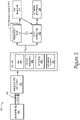
- FIG. 5 is a functional block diagram showing an NMD 503 configured in accordance with embodiments of the disclosure.
- the NMD 503 includes a voice activity detector 550, voice capture components ("VCC", or collectively “voice processor 560"), a wake-word engine 570, and at least one voice extractor 572, each of which is operably coupled to the voice processor 560.
- the NMD 503 further includes the microphones 222 and the at least one network interface 224 described above and may also include other components, such as audio amplifiers, interface, etc., which are not shown in Figure 5 for purposes of clarity.
- the microphones 222 of the NMD 503 are configured to provide detected sound, S D , from the environment of the NMD 503 to the voice activity detector 550.
- the detected sound S D may take the form of one or more analog or digital signals.
- the detected sound S D may be composed of a plurality signals associated with respective channels 562 that are fed to the voice processor 560.
- Each channel 562 may correspond to a particular microphone 222.
- an NMD having six microphones may have six corresponding channels.
- Each channel of the detected sound S D may bear certain similarities to the other channels but may differ in certain regards, which may be due to the position of the given channel's corresponding microphone relative to the microphones of other channels.
- one or more of the channels of the detected sound S D may have a greater signal to noise ratio ("SNR") of speech to background noise than other channels.
- SNR signal to noise ratio
- the voice activity detector 550 can process the detected sound S D to determine whether speech is present. If voice activity is detected, the detected sound S D can be passed to the VCC 560 for additional downstream processing. While in some embodiments the detected sound S D is passed to the VCC 560 without any processing via the voice activity detector 550, in various embodiments the voice activity detector 550 may perform certain processing functions such that the input to the voice activity detector 550 is not identical to the output S D provided to the VCC 560. For example, the voice activity detector 550 may buffer and/or time-delay the signal, may perform channel selection, or any other suitable pre-processing steps.
- the further processing steps may be forgone.
- the sound data may not be passed to the VCC 560 and downstream components.
- the downstream components can be configured to forgo processing the incoming sound data S D , such as by the use of bypass tags or other techniques.
- the downstream components e.g., VCC 560, wake-word engine 570, voice extractor 572, network interface 224) can remain in a standby, disabled, or low-power state until voice activity is detected via the voice activity detector 550, at which point some or all of these downstream components can transition to a higher-power or fully operational state.
- any number of components may be turned on, supplied power or additional power, taken out of standby or sleep stage, or otherwise activated in such a way that the enabled component(s) are allowed to draw more power than they could when disabled.
- the NMD 503 can assume a relatively low-power stage while monitoring for speech activity via the voice activity detector 550. Unless and until the voice activity detector 550 identifies voice activity, the NMD 503 may remain in the low-power stage.
- the NMD 503 may revert to the low-power or standby stage once voice input is no longer detected via the voice activity detector 550, after a VAS interaction is determined to be concluded, and/or once a given period of time has elapsed.
- the voice activity detector 550 can perform a first algorithm for identifying speech in the sound data S D detected via the microphone(s) 222.
- the algorithm can include any suitable algorithm for discriminating between speech and non-speech sound data.
- the algorithm can include extracting certain acoustic features from the sound data, such as energy-based features (e.g., signal-to-noise ratio), periodicity (e.g., speech signals tend to be more periodic than background noises), speech signal dynamics (e.g., analyzing the variance of power envelopes), or others.
- energy-based features e.g., signal-to-noise ratio
- periodicity e.g., speech signals tend to be more periodic than background noises
- speech signal dynamics e.g., analyzing the variance of power envelopes
- Example classifiers include Gaussian mixture models, Laplacian models, or other classifiers that discriminate between speech and non-speech sound data. Additional examples include using neural network based approaches. As well as energy, other features including entropy, pitch, or zero-crossing rate can be used as input to the classifier. Many approaches can be implemented directly in the time-domain or alternatively in the frequency-domain by applying a filter bank to the microphone input signals. For example, a short-time Fourier transform (STFT) enables SD and the associated features to be efficiently split into multiple frequency bands each of which can be processed independently.
- STFT short-time Fourier transform
- detecting speech in the sound data via the voice activity detector 550 consumes less power and/or computational resources (e.g., as measured by average CPU clock rate or millions of instructions per second (MIPS) values) than one or more of the downstream processes such as spatial processing, acoustic echo cancellation, wake-word detection, or any other downstream signal processing steps.
- the amount of energy required to power a processing unit is directly related to the clock rate or MIPS, thus by reducing the average MIPS it is possible to also reduce average power consumption.
- the VAD 550 process can run on a Digital Signal Processor (DSP) co-processing unit or Low Power Island (LPI), enabling the main CPU to sleep or transition to a low-power state at times when voice activity is not detected.
- DSP Digital Signal Processor
- LPI Low Power Island
- the voice processor 560 includes an AEC 564, a spatial processor 566, and one or more buffers 568.
- the AEC 564 receives the detected sound S D and filters or otherwise processes the sound to suppress echoes and/or to otherwise improve the quality of the detected sound S D . That processed sound may then be passed to the spatial processor 566.
- the spatial processor 566 is typically configured to analyze the detected sound S D and identify certain characteristics, such as a sound's amplitude (e.g., decibel level), frequency spectrum, directionality, etc. In one respect, the spatial processor 566 may help filter or suppress ambient noise in the detected sound S D from potential user speech based on similarities and differences in the constituent channels 562 of the detected sound S D , as discussed above. As one possibility, the spatial processor 566 may monitor metrics that distinguish speech from other sounds. Such metrics can include, for example, energy within the speech band relative to background noise and entropy within the speech band - a measure of spectral structure - which is typically lower in speech than in most common background noise.
- metrics can include, for example, energy within the speech band relative to background noise and entropy within the speech band - a measure of spectral structure - which is typically lower in speech than in most common background noise.
- the spatial processor 566 may be configured to determine a speech presence probability, examples of such functionality are disclosed in U.S. Patent Application No. 15/984,073, filed May 18, 2018 , titled “Linear Filtering for Noise-Suppressed Speech Detection," and U.S. Patent Application No. 16/147,710, filed September 29, 2018 , and titled “Linear Filtering for Noise-Suppressed Speech Detection via Multiple Network Microphone Devices,” each of which is incorporated herein by reference in its entirety.
- the wake-word engine 570 is configured to monitor and analyze received audio to determine if any wake words are present in the audio.
- the wake-word engine 570 may analyze the received audio using a wake word detection algorithm. If the wake-word engine 570 detects a wake word, a network microphone device may process voice input contained in the received audio.
- Example wake-word detection algorithms accept audio as input and provide an indication of whether a wake word is present in the audio.
- Many first- and third-party wake word detection algorithms are known and commercially available. For instance, operators of a voice service may make their algorithm available for use in third-party devices. Alternatively, an algorithm may be trained to detect certain wake-words.
- the wake-word engine 570 runs multiple wake word detection algorithms on the received audio simultaneously (or substantially simultaneously). As noted above, different voice services (e.g. AMAZON's Alexa ® , APPLE's Siri ® , MICROSOFT's Cortana ® , GOOGLE'S Assistant, etc.) each use a different wake word for invoking their respective voice service. To support multiple services, the wake-word engine 570 may run the received audio through the wake word detection algorithm for each supported voice service in parallel.
- the network microphone device 103 may include VAS selector components 574 configured to pass voice input to the appropriate voice assistant service. In other embodiments, the VAS selector components 574 may be omitted.
- individual NMDs 103 of the MPS 100 may be configured to run different wake word detection algorithms associated with particular VASes.
- the NMDs of playback devices 102a and 102b of the Living Room may be associated with AMAZON's ALEXA ® , and be configured to run a corresponding wake word detection algorithm (e.g., configured to detect the wake word "Alexa" or other associated wake word), while the NMD of playback device 102f in the Kitchen may be associated with GOOGLE's Assistant, and be configured to run a corresponding wake word detection algorithm (e.g., configured to detect the wake word "OK, Google" or other associated wake word).
- a network microphone device may include speech processing components configured to further facilitate voice processing, such as by performing voice recognition trained to recognize a particular user or a particular set of users associated with a household.
- Voice recognition software may implement voice-processing algorithms that are tuned to specific voice profile(s).
- the detected-sound data form a digital representation (i.e., sound-data stream), S DS , of the sound detected by the microphones 222.
- the sound-data stream S DS may take a variety of forms.
- the sound-data stream S DS may be composed of frames, each of which may include one or more sound samples. The frames may be streamed (i.e., read out) from the one or more buffers 568 for further processing by downstream components, such as the wake-word engine 570 and the voice extractor 572 of the NMD 503.
- At least one buffer 568 captures detected-sound data utilizing a sliding window approach in which a given amount (i.e., a given window) of the most recently captured detected-sound data is retained in the at least one buffer 568 while older detected-sound data are overwritten when they fall outside of the window.
- at least one buffer 568 may temporarily retain 20 frames of a sound specimen at given time, discard the oldest frame after an expiration time, and then capture a new frame, which is added to the 19 prior frames of the sound specimen.
- the frames may take a variety of forms having a variety of characteristics.
- the frames may take the form of audio frames that have a certain resolution (e.g., 16 bits of resolution), which may be based on a sampling rate (e.g., 44,100 Hz).
- the frames may include information corresponding to a given sound specimen that the frames define, such as metadata that indicates frequency response, power input level, signal-to-noise ratio, microphone channel identification, and/or other information of the given sound specimen, among other examples.
- a frame may include a portion of sound (e.g., one or more samples of a given sound specimen) and metadata regarding the portion of sound.
- a frame may only include a portion of sound (e.g., one or more samples of a given sound specimen) or metadata regarding a portion of sound.
- the voice processor 560 also includes at least one lookback buffer 569, which may be part of or separate from the memory 213 ( Figure 2A ).
- the lookback buffer 569 can store sound metadata that is processed based on the detected-sound data S D received from the microphones 222.
- the microphones 222 can include a plurality of microphones arranged in an array.
- the sound metadata can include, for example: (1) frequency response data for individual microphones of the array, (2) an echo return loss enhancement measure (i.e., a measure of the effectiveness of the acoustic echo canceller (AEC) for each microphone), (3) a voice direction measure; (4) arbitration statistics (e.g., signal and noise estimates for the spatial processing streams associated with different microphones); and/or (5) speech spectral data (i.e., frequency response evaluated on processed audio output after acoustic echo cancellation and spatial processing have been performed).
- AEC a measure of the effectiveness of the acoustic echo canceller
- the sound metadata may be transmitted separately from the sound-data stream S DS , as reflected in the arrow extending from the lookback buffer 569 to the network interface 224.
- the sound metadata may be transmitted from the lookback buffer 569 to one or more remote computing devices separate from the VAS which receives the sound-data stream S DS .
- components of the NMD 503 downstream of the voice processor 560 may process the sound-data stream S DS .
- the wake-word engine 570 can be configured to apply one or more identification algorithms to the sound-data stream S DS (e.g., streamed sound frames) to spot potential wake words in the detected-sound S D .
- the wake-word engine 570 spots a potential wake word
- the wake-word engine 570 can provide an indication of a "wake-word event" (also referred to as a "wake-word trigger”) to the voice extractor 572 in the form of signal S w .
- the voice extractor 572 In response to the wake-word event (e.g., in response to a signal S W from the wake-word engine 570 indicating the wake-word event), the voice extractor 572 is configured to receive and format (e.g., packetize) the sound-data stream S DS . For instance, the voice extractor 572 packetizes the frames of the sound-data stream S DS into messages. The voice extractor 572 transmits or streams these messages, M v , that may contain voice input in real time or near real time to a remote VAS, such as the VAS 190 ( Figure 1B ), via the network interface 224.
- a remote VAS such as the VAS 190 ( Figure 1B
- a voice input 680 may include a wake-word portion 680a and an utterance portion 680b.
- the wake-word portion 680a corresponds to detected sound that caused the wake-word event.
- the wake-word portion 680a corresponds to detected sound that caused the wake-word engine 570 to provide an indication of a wake-word event to the voice extractor 572.
- the utterance portion 680b corresponds to detected sound that potentially comprises a user request following the wake-word portion 680a.
- Figure 6B shows an example first sound specimen.
- the sound specimen corresponds to the sound-data stream S DS (e.g., one or more audio frames) associated with the spotted wake word 680a of Figure 6A .
- the example first sound specimen comprises sound detected in the playback device 102i's environment (i) immediately before a wake word was spoken, which may be referred to as a pre-roll portion (between times to and ti), (ii) while the wake word was spoken, which may be referred to as a wake-meter portion (between times t 1 and t 2 ), and/or (iii) after the wake word was spoken, which may be referred to as a post-roll portion (between times t 2 and t 3 ).
- Other sound specimens are also possible.
- the VAS may first process the wake-word portion 680a within the sound-data stream S DS to verify the presence of the wake word.
- the VAS may determine that the wake-word portion 680a comprises a false wake word (e.g., the word "Election” when the word "Alexa” is the target wake word).
- the VAS may send a response to the NMD 503 ( Figure 5 ) with an indication for the NMD 503 to cease extraction of sound data, which may cause the voice extractor 572 to cease further streaming of the detected-sound data to the VAS.
- the wake-word engine 570 may resume or continue monitoring sound specimens until another potential wake word, leading to another wake-word event.
- the VAS may not process or receive the wake-word portion 680a but instead processes only the utterance portion 680b.
- the VAS processes the utterance portion 680b to identify the presence of any words in the detected-sound data and to determine an underlying intent from these words.
- the words may correspond to a certain command and certain keywords 684 (identified individually in Figure 6A as a first keyword 684a and a second keyword 684b).
- a keyword may be, for example, a word in the voice input 680 identifying a particular device or group in the MPS 100.
- the keywords 684 may be one or more words identifying one or more zones in which the music is to be played, such as the Living Room and the Dining Room ( Figure 1A ).
- the VAS is typically in communication with one or more databases associated with the VAS (not shown) and/or one or more databases (not shown) of the MPS 100.
- databases may store various user data, analytics, catalogs, and other information for natural language processing and/or other processing.
- databases may be updated for adaptive learning and feedback for a neural network based on voice-input processing.
- the utterance portion 680b may include additional information, such as detected pauses (e.g., periods of non-speech) between words spoken by a user, as shown in Figure 6A .
- the pauses may demarcate the locations of separate commands, keywords, or other information spoke by the user within the utterance portion 680b.
- command criteria may be based on the inclusion of certain keywords within the voice input, among other possibilities. Additionally, or alternatively, command criteria for commands may involve identification of one or more control-state and/or zone-state variables in conjunction with identification of one or more particular commands.
- Control-state variables may include, for example, indicators identifying a level of volume, a queue associated with one or more devices, and playback state, such as whether devices are playing a queue, paused, etc.
- Zone-state variables may include, for example, indicators identifying which, if any, zone players are grouped.
- the VAS may send a response to the MPS 100 with an instruction to perform one or more actions based on an intent it determined from the voice input. For example, based on the voice input, the VAS may direct the MPS 100 to initiate playback on one or more of the playback devices 102, control one or more of these devices (e.g., raise/lower volume, group/ungroup devices, etc.), turn on/off certain smart devices, among other actions.
- the wake-word engine 570 the NMD 503 may resume or continue to monitor the sound-data stream S DS until it spots another potential wake-word, as discussed above.
- the NMD 503 may include a VAS selector 574 (shown in dashed lines) that is generally configured to direct the voice extractor's extraction and transmission of the sound-data stream S DS to the appropriate VAS when a given wake-word is identified by a particular wake-word engine, such as the first wake-word engine 570a, the second wake-word engine 570b, or the additional wake-word engine 571.
- the NMD 503 may include multiple, different wake-word engines and/or voice extractors, each supported by a particular VAS.
- each wake-word engine may be configured to receive as input the sound-data stream S DS from the one or more buffers 568 and apply identification algorithms to cause a wake-word trigger for the appropriate VAS.
- the first wake-word engine 570a may be configured to identify the wake word "Alexa” and cause the NMD 503 to invoke the AMAZON VAS when "Alexa” is spotted.
- the second wake-word engine 570b may be configured to identify the wake word "Ok, Google” and cause the NMD 503 to invoke the GOOGLE VAS when "Ok, Google” is spotted.
- the VAS selector 574 may be omitted.
- the NMD 503 may include other voice-input identification engines 571 (shown in dashed lines) that enable the NMD 503 to operate without the assistance of a remote VAS.
- such an engine may identify in detected sound certain commands (e.g., "play,” “pause,” “turn on,” etc.) and/or certain keywords or phrases, such as the unique name assigned to a given playback device (e.g., "Bookcase,” “Patio,” “Office,” etc.).
- the NMD 503 may communicate a signal (not shown in Figure 5 ) that causes the audio processing components 216 ( Figure 2A ) to perform one or more actions.
- the NMD 503 may communicate a signal to the office playback device 102n, either directly, or indirectly via one or more other devices of the MPS 100, which causes the office device 102n to stop audio playback. Reducing or eliminating the need for assistance from a remote VAS may reduce latency that might otherwise occur when processing voice input remotely.
- the identification algorithms employed may be configured to identify commands that are spoken without a preceding wake word. For instance, in the example above, the NMD 503 may employ an identification algorithm that triggers an event to stop the music in the office without the user first saying "Hey Sonos" or another wake word.
- the NMD 503 can include a voice activity detector 550 upstream of the voice capture components 560 (e.g., spatial processor 566), which in turn are upstream of the wake-word engine 570.
- the sound data is passed from the microphones 222 to the voice activity detector 550 which can process the sound data S D to identify the presence of speech therein.
- the voice activity detector 550 can utilize an associated buffer storing sufficient frames of sound data S D to evaluate the sound data for the presence of speech therein. The stored frames can be overwritten on a rolling basis (e.g., using a ring buffer) such the most recent N frames of sound data S D are stored in the buffer.
- the voice activity detector 550 can analyze the sound data S D on a frame-by-frame basis, it can be useful to store a plurality of frames to compensate for time delay between onset of speech and successful detection of the voice activity. In other words, if the voice activity detector 550 takes 50 ms to detect that the user has started talking, then the signal which gets passed to VCC 560 must be delayed by at least 50 ms so that the first syllables aren't omitted. In practice, performance of noise suppression and wake word detection may both depend on receiving some noise or silence prior to the onset of speech, so the delay may need to be longer (e.g., up to 1 second or more).
- some or all of the downstream components of the NMD 503 can remain in a standby or low-power state unless and until voice activity is detected via the voice activity detector 550. This permits the NMD 503 to continuously monitor the sound data S D for user input without running the relatively computationally intensive and energy-demanding components that are downstream of the voice activity detector 550. Once the voice activity detector 550 identifies the presence of speech in the sound data S D , some or all of the downstream components can transition to a high-power or fully operational state. This arrangement can take several forms. In some examples, the use of bypass flags or other signal processing techniques can be used such that sound data S D from the voice activity detector effectively bypasses the downstream components.
- the voice activity detector 550 may not pass the sound data S D along to the downstream components at all unless and until voice activity is detected.
- the operation of some or all of the downstream components can be modified while in the low-power state, such that although some processing is performed, it is less energy-demanding and/or computationally intensive than it would be in the presence of voice activity.
- the acoustic echo cancellation and/or spatial processing steps may continue to operate on the incoming sound data, but may do so in a modified fashion that consumes less power and/or computational resources than they otherwise would.
- an NMD is configured to monitor and analyze received audio to determine if any voice activity are present in the received audio.
- Figure 7 shows an example embodiment of a method 700 for an NMD to determine if any wake words are present in the received audio.
- the method 700 can be implemented by any of the NMDs disclosed and/or described herein, or any other NMD now known or later developed.
- method 700 include one or more operations, functions, and actions illustrated by blocks 702 through 718. Although the blocks are illustrated in sequential order, these blocks may also be performed in parallel, and/or in a different order than the order disclosed and described herein. Also, the various blocks may be combined into fewer blocks, divided into additional blocks, and/or removed based upon a desired implementation.
- the method 700 begins at block 702, which involves the NMD detecting sound via one or more microphones and, in block 704, capturing the detected sound as sound data.
- the captured sound data includes sound data from an environment of the NMD and, in some embodiments, includes a voice input, such as voice input 680 depicted in Figure 6A .
- method 700 involves the NMD determining whether the sound data includes voice activity.
- the NMD can use any suitable technique for detecting voice activity in the sound data. For example, certain acoustic features can be extracted from the sound data, such as energy-based features (e.g., signal-to-noise ratio), periodicity (e.g., speech signals tend to be more periodic than background noises), speech signal dynamics (e.g., analyzing the variance of power envelopes). One or more such acoustic features can then be analyzed using statistical models or other discriminators to detect voice activity in the sound data.
- energy-based features e.g., signal-to-noise ratio
- periodicity e.g., speech signals tend to be more periodic than background noises
- speech signal dynamics e.g., analyzing the variance of power envelopes.
- One or more such acoustic features can then be analyzed using statistical models or other discriminators to detect voice activity in the sound data.
- the NMD remains in a first low-power stage, as reflected in block 710. While in this first stage, the NMD forgoes spatial processing (and optionally also forgoes additional processing operations) of the sound data, resulting in unfiltered sound data. In some embodiments, this unfiltered sound data can be stored in a buffer and overwritten on a rolling basis. The process then returns to block 702 with continuing detection of additional sound via the one or more microphones.
- the method 700 continues to block 712, which includes transitioning the NMD from the first stage to a second stage.
- the first stage is a low-power or standby stage
- the second stage is a higher-power or fully operational stage, in which some or all components that were in a standby or low-power condition in the first stage are instead in a fully operational stage.
- the NMD may consume more power and/or computational resources while in the second stage.
- the method 700 continues in block 714 with spatially processing the sound data to produce filtered sound data.
- This can include, for example using the spatial processor 566 of Figure 5 to analyze the detected sound S D and identify certain characteristics, such as a sound's amplitude (e.g., decibel level), frequency spectrum, directionality, etc.
- the spatial processor 566 may help filter or suppress ambient noise in the detected sound S D from potential user speech based on similarities and differences in the constituent channels 562 of the detected sound S D , as discussed above.
- the spatial processor 566 may monitor metrics that distinguish speech from other sounds.
- Such metrics can include, for example, energy within the speech band relative to background noise and entropy within the speech band - a measure of spectral structure - which is may be lower in speech than in most common background noise.
- the spatial processor can utilize a multi-channel Wiener filter algorithm or other suitable technique for spatially processing the sound data to produce the filtered sound data.
- the spatial processor does not initiate processing of sound data until voice activity has been detected in block 706, it can be useful to utilize a spatial processor configuration that does not require significant time for convergence. For example, certain direction of arrival (DOA) tracking techniques may require several seconds of sound data before the spatial processing converges to produce suitable outputs. Accordingly, initiating a DOA tracking spatial processor in response to detection of voice activity via the voice activity detector may result in poor spatial processing of the first frames of sound data. This may hinder the ability of the downstream wake-word engine to detect a wake word and/or may interfere with other downstream processes. Accordingly, it can be beneficial to utilize spatial processing techniques that converge relatively quickly (e.g., within less than about 1 second) upon initiation to produce useful outputs. In some embodiments, a spatial processor utilizing multi-channel Wiener filters can satisfy this condition.
- DOA direction of arrival
- the method includes detecting, via a wake-word engine, a wake word in the sound data.
- this involves the NMD causing the wake-word engine 570 described above in connection with Figure 5 to utilize a wake-word detection algorithm to detect the wake word.
- the sound data that is not identified as containing voice activity is not spatially processed.
- the sound data that is identified as including voice activity is spatially processed and can be stored as filtered sound data. The filtered sound data can then be used for wake-word detection.
- the voice activity detector 550 can be configured to store data to a fixed length circular buffer when it is running.
- the buffer length can correspond to the time duration of past data which will be passed to downstream components (e.g., the VCC 560). After detecting voice activity, the buffered data will first be passed to all the downstream components (including the spatial processor) followed by new incoming data from the microphone array. This provides the computational advantage that most non-speech microphone data will be overwritten in the ring buffer and never passed downstream for further processing.
- wake words examples include (i) the wake word “Alexa” corresponding to AMAZON voice services, (ii) the wake word “Ok, Google” corresponding to GOOGLE voice services, or (iii) the wake word “Hey, Siri” corresponding to APPLE voice services.
- the algorithm(s) used in connection with wake-word engines can include various keyword spotting algorithms now known or later developed, or variations thereof.
- keyword detection algorithms include, but are not limited to, (i) the sliding window model, in which features within a sliding time-interval of the captured audio are compared to keyword models, (ii) a Hidden Markov Model (HMM), which can be constructed for each keyword as well as for non-keywords, such that the non-keyword models are used to help distinguish non-keyword speech from keyword speech, (iii) the use of Large Vocabulary Continuous Speech Recognition (LVCSR), in which input speech is decoded into lattices that are searched for predefined keywords, and (iv) the use of neural networks, such as deep neural networks (DNNs), convolutional neural networks (CNNs), or recurrent neural networks (RNNs) to model the keywords based on large amounts of keywordspecific training data.
- DNNs deep neural networks
- CNNs convolutional neural networks
- RNNs recurrent neural networks
- the method 700 continues in block 718 with determining an action to be performed based on the sound data.
- the action may involve transmitting, via a network interface, the sound data to one or more remote computing devices associated with the VAS for further processing.
- this can include the NMD transmitting, via a network interface to one or more servers of the respective voice service, data representing the sound data and a command or query to process the data representing the sound data.
- the command or query may cause the respective voice service to process the voice command and may vary according to the respective voice service so as to conform the command or query to the respective voice service (e.g., to an API of the voice service).
- the captured audio includes voice input 680, which in turn includes a first portion representing the wake word 680a and a second portion representing a voice utterance 680b, which can include one or more commands such as command 682.
- the NMD may transmit only the data representing at least the second portion of the voice input (e.g., the portion representing the voice utterance 680b). By excluding the first portion, the NMD may reduce bandwidth needed to transmit the voice input 680 and avoid possible misprocessing of the voice input 680 due to the wake word 680a, among other possible benefits. Alternatively, the NMD may transmit data representing both portions of the voice input 680, or some other portion of the voice input 680.
- causing the respective voice service to process the captured sound data involves the NMD querying a wake-word-detection algorithm corresponding to the respective voice service.
- queries to the voice services may involve invoking respective APIs of the voice services, either locally on the NMD or remotely using a network interface.
- the NMD receives a response indicating whether or not the captured sound data submitted in the query included the wake word corresponding to that voice service.
- the NMD may cause that specific voice service to further process the sound data, for instance, to identify voice commands in the captured sound data.
- the NMD After causing the respective voice service to process the captured audio, the NMD receives results of the processing. For instance, if the detected sound data represents a search query, the NMD may receive search results. As another example, if the detected sound data represents a command to a device (e.g., a media playback command to a playback device), the NMD may receive the command and perhaps additional data associated with the command (e.g., a source of media associated with the command). The NMD may output these results as appropriate based on the type of command and the received results.
- a device e.g., a media playback command to a playback device
- additional data associated with the command e.g., a source of media associated with the command
- NMD 103f in the kitchen 101h may receive a voice input that was directed to playback device 1021 of the dining room 101g (e.g., to adjust media playback by playback device 1021).
- the results of the processing e.g., a command to adjust media playback
- the voice service may send the results to NMD 103f, which may relay the command to playback device 1021 or otherwise cause playback device 1021 to carry out the command.
- the NMD can transition back to the first stage (e.g., a low-power or standby stage). In some embodiments, this transition can occur once speech is no longer detected in newly received sound data at the voice activity detector. Additionally or alternatively, this transition can occur after a predetermined period of time has elapsed, for example a given time period (e.g., 1 minutes) since the wake-word was detected. In some embodiments, this transition can occur once the voice interaction is completed, including multi-turn interactions, as indicated by the VAS state, or after a predetermined period of time has elapsed.
- the first stage e.g., a low-power or standby stage. In some embodiments, this transition can occur once speech is no longer detected in newly received sound data at the voice activity detector. Additionally or alternatively, this transition can occur after a predetermined period of time has elapsed, for example a given time period (e.g., 1 minutes) since the wake-word was detected. In some embodiments, this transition can occur once the voice interaction is completed,
- FIGS. 8A and 8B are schematic diagrams illustrating an NMD 803 in certain configurations, or stages, in which such components are enabled/disabled to conserve power during operation.
- a component that is enabled from a disabled state may be turned on, supplied power or additional power, taken out of standby or sleep stage, or otherwise activated in such a way that the enabled component is allowed to draw more power than it could when disabled.
- a stationary playback device may be configured in a similar manner to reduce processing load and power consumption.
- the NMD 803 is in a first stage, or low-power stage, in which a limited number of components have been enabled. For instance, in FIG. 8A , a single microphone 822a is enabled while other microphones 822 are disabled. In some embodiments, one or more additional microphone(s) 822b, but fewer than all of the microphones may be enabled. Also during the first stage, other components of the NMD 803 (not shown in FIG. 8A ) may be disabled, such as DSP and application processors, among other components. In various embodiments, the low power mode shown in 8A does necessarily require any microphones to be powered down, for instance when the primary goal is to reduce power usage by the processer, rather than the microphone bias.
- the NMD 803 enables a voice-activity detector 550, a noise classifier 865, and one or more buffers 568.
- the voice-activity detector 550 can determine if a sound is detected by the enabled microphone(s) 822 (using, e.g., a voice-activity detection algorithm, such as a voice activity detection algorithm that is less computationally intensive than a wake-word engine), and the noise classifier 865 may classify the detected sound as being a detected sound of interest. Captured sound data can be stored in a rolling basis in one or more buffers 568.
- the noise classifier may detect if there is a spike in a signal-to-noise ratio in ambient sound detected by an enabled microphone. In any event, if there is a detected sound of interest, this causes the NMD 803 to proceed to a second stage, or low-power stage, to enable/disable additional components.
- the NMD 803 can determine whether to proceed from the first stage to the second stage based on whether a user is in proximity to the NMD 803, as the detected presence of a user may correlate with an increased likelihood of the NMD 803 receiving voice input and the absence of a user may likewise correlate with a decreased likelihood of the NMD 803 receiving voice input.
- the NMD 803 may include a proximity sensor or presence detector.
- the NMD 803 may include an optical or radio frequency proximity sensor that emits a signal into an environment of the NMD 803 and determines the presence of a user based on changes in the reflected signal.
- the NMD 803 detects the presence of a user based on detecting network interference via a wireless network interface of the NMD 803, such as by detecting interference with a Wi-Fi signal of the NMD 803. In any case, responsive to detecting the presence of a user, the NMD 803 can proceed from the first stage to a second stage.
- the NMD 803 in a second stage or full-power stage, the NMD 803 enables a number of additional components for processing of captured sound data. These components can include the spatial processor 566, audio processing components 816, and all the microphones 822 to process detected sound.
- the NMD 803 also enables a wake-word engine 570 (and/or other appropriate voice-input identification engine(s)).
- the NMD 803 also enables a voice extractor 572 and network communication components associated with the network interface 224 for transmitting potential voice input to a remote VAS (not shown).
- the NMD may enable audio processing components during the third stage, such as readying one or more amplifiers, for outputting audio or other content.
- the NMD 803 may wait until a subsequent full-performance stage to enable certain audio processing components, such as after confirming that a wake word was positively identified. Further, during the second stage or a subsequent full-performance stage, the NMD 803 may fully enable DSP and application processors.
- the NMD 803 may return to the first stage shown in FIG. 8A to conserve power.
- the NMD 803 may also return to the first stage if the device has been idle for a certain amount of time and/or in response to an instruction to enter a lower-power mode.
- At least one of the elements in at least one example is hereby expressly defined to include a tangible, non-transitory medium such as a memory, DVD, CD, Blu-ray, and so on, storing the software and/or firmware.
Landscapes
- Engineering & Computer Science (AREA)
- Multimedia (AREA)
- Audiology, Speech & Language Pathology (AREA)
- Human Computer Interaction (AREA)
- Physics & Mathematics (AREA)
- Acoustics & Sound (AREA)
- Health & Medical Sciences (AREA)
- Computational Linguistics (AREA)
- Computer Vision & Pattern Recognition (AREA)
- Signal Processing (AREA)
- Quality & Reliability (AREA)
- Selective Calling Equipment (AREA)
- Telephonic Communication Services (AREA)
Applications Claiming Priority (1)
| Application Number | Priority Date | Filing Date | Title |
|---|---|---|---|
| US17/248,427 US11551700B2 (en) | 2021-01-25 | 2021-01-25 | Systems and methods for power-efficient keyword detection |
Publications (1)
| Publication Number | Publication Date |
|---|---|
| EP4033486A1 true EP4033486A1 (de) | 2022-07-27 |
Family
ID=80035210
Family Applications (1)
| Application Number | Title | Priority Date | Filing Date |
|---|---|---|---|
| EP22153180.9A Withdrawn EP4033486A1 (de) | 2021-01-25 | 2022-01-25 | Systeme und verfahren zur leistungseffizienten schlüsselwortdetektion |
Country Status (2)
| Country | Link |
|---|---|
| US (3) | US11551700B2 (de) |
| EP (1) | EP4033486A1 (de) |
Families Citing this family (7)
| Publication number | Priority date | Publication date | Assignee | Title |
|---|---|---|---|---|
| US12367873B2 (en) * | 2018-09-14 | 2025-07-22 | Aondevices, Inc. | System architecture and embedded circuit to locate a lost portable device using voice command |
| KR20210125356A (ko) * | 2020-04-08 | 2021-10-18 | 삼성전자주식회사 | 전자 장치 및 그 동작 방법 |
| US11551700B2 (en) * | 2021-01-25 | 2023-01-10 | Sonos, Inc. | Systems and methods for power-efficient keyword detection |
| CN113448533B (zh) * | 2021-06-11 | 2023-10-31 | 阿波罗智联(北京)科技有限公司 | 提醒音频的生成方法、装置、电子设备和存储介质 |
| US11990125B2 (en) * | 2021-06-21 | 2024-05-21 | Kyndryl, Inc. | Intent driven voice interface |
| US12380228B2 (en) * | 2022-01-19 | 2025-08-05 | Sensory, Incorporated | Sanitizing personally identifiable information (PII) in audio and visual data |
| US20250285622A1 (en) * | 2024-03-08 | 2025-09-11 | Adeia Guides Inc. | Cascaded speech recognition for enhanced privacy |
Citations (4)
| Publication number | Priority date | Publication date | Assignee | Title |
|---|---|---|---|---|
| US8234395B2 (en) | 2003-07-28 | 2012-07-31 | Sonos, Inc. | System and method for synchronizing operations among a plurality of independently clocked digital data processing devices |
| US8483853B1 (en) | 2006-09-12 | 2013-07-09 | Sonos, Inc. | Controlling and manipulating groupings in a multi-zone media system |
| WO2019005772A1 (en) * | 2017-06-29 | 2019-01-03 | Amazon Technologies, Inc. | ELECTRONIC DEVICE WITH TWO-PHASE DETECTION OF A WORD OF AWAKENING |
| US20200125162A1 (en) * | 2018-10-23 | 2020-04-23 | Sonos, Inc. | Multiple Stage Network Microphone Device with Reduced Power Consumption and Processing Load |
Family Cites Families (834)
| Publication number | Priority date | Publication date | Assignee | Title |
|---|---|---|---|---|
| US3014423A (en) | 1959-11-27 | 1961-12-26 | Jersey Prod Res Co | Apparatus for drilling boreholes with explosive charges |
| US4941187A (en) | 1984-02-03 | 1990-07-10 | Slater Robert W | Intercom apparatus for integrating disparate audio sources for use in light aircraft or similar high noise environments |
| US4741038A (en) | 1986-09-26 | 1988-04-26 | American Telephone And Telegraph Company, At&T Bell Laboratories | Sound location arrangement |
| US4974213A (en) | 1988-12-16 | 1990-11-27 | Siwecki Thomas L | Passive active underwater sound detection apparatus |
| US5036538A (en) | 1989-11-22 | 1991-07-30 | Telephonics Corporation | Multi-station voice recognition and processing system |
| US5440644A (en) | 1991-01-09 | 1995-08-08 | Square D Company | Audio distribution system having programmable zoning features |
| EP0548836B1 (de) | 1991-12-20 | 1997-06-11 | Matsushita Electric Industrial Co., Ltd. | Lautsprecherapparat zur Basswiedergabe |
| US6311157B1 (en) | 1992-12-31 | 2001-10-30 | Apple Computer, Inc. | Assigning meanings to utterances in a speech recognition system |
| US5740260A (en) | 1995-05-22 | 1998-04-14 | Presonus L.L.P. | Midi to analog sound processor interface |
| US7174299B2 (en) | 1995-08-18 | 2007-02-06 | Canon Kabushiki Kaisha | Speech recognition system, speech recognition apparatus, and speech recognition method |
| JP3094900B2 (ja) | 1996-02-20 | 2000-10-03 | ヤマハ株式会社 | ネットワーク機器およびデータ送受信方法 |
| US6404811B1 (en) | 1996-05-13 | 2002-06-11 | Tektronix, Inc. | Interactive multimedia system |
| JP3679526B2 (ja) | 1996-10-31 | 2005-08-03 | キヤノン株式会社 | 画像共有装置、画面制御方法及びコンピュータ可読メモリ |
| US6469633B1 (en) | 1997-01-06 | 2002-10-22 | Openglobe Inc. | Remote control of electronic devices |
| US6078886A (en) | 1997-04-14 | 2000-06-20 | At&T Corporation | System and method for providing remote automatic speech recognition services via a packet network |
| US6611537B1 (en) | 1997-05-30 | 2003-08-26 | Centillium Communications, Inc. | Synchronous network for digital media streams |
| US6088459A (en) | 1997-10-30 | 2000-07-11 | Hobelsberger; Maximilian Hans | Loudspeaker system with simulated baffle for improved base reproduction |
| US6408078B1 (en) | 1997-10-30 | 2002-06-18 | Maximilian Hobelsberger | Active reactive acoustical elements |
| US6032202A (en) | 1998-01-06 | 2000-02-29 | Sony Corporation Of Japan | Home audio/video network with two level device control |
| US20020002039A1 (en) | 1998-06-12 | 2002-01-03 | Safi Qureshey | Network-enabled audio device |
| US6301603B1 (en) | 1998-02-17 | 2001-10-09 | Euphonics Incorporated | Scalable audio processing on a heterogeneous processor array |
| US6953886B1 (en) | 1998-06-17 | 2005-10-11 | Looney Productions, Llc | Media organizer and entertainment center |
| IL127569A0 (en) | 1998-09-16 | 1999-10-28 | Comsense Technologies Ltd | Interactive toys |
| US6839410B2 (en) | 1998-09-01 | 2005-01-04 | At&T Corp. | Method and apparatus for setting user communication parameters based on voice identification of users |
| US20020116196A1 (en) | 1998-11-12 | 2002-08-22 | Tran Bao Q. | Speech recognizer |
| US7130616B2 (en) | 2000-04-25 | 2006-10-31 | Simple Devices | System and method for providing content, management, and interactivity for client devices |
| US6256554B1 (en) | 1999-04-14 | 2001-07-03 | Dilorenzo Mark | Multi-room entertainment system with in-room media player/dispenser |
| US6414251B1 (en) | 1999-04-19 | 2002-07-02 | Breck Colquett | Weighing apparatus and method having automatic tolerance analysis and calibration |
| US7657910B1 (en) | 1999-07-26 | 2010-02-02 | E-Cast Inc. | Distributed electronic entertainment method and apparatus |
| GB2352933A (en) | 1999-07-31 | 2001-02-07 | Ibm | Speech encoding in a client server system |
| US6542868B1 (en) | 1999-09-23 | 2003-04-01 | International Business Machines Corporation | Audio notification management system |
| US6937977B2 (en) | 1999-10-05 | 2005-08-30 | Fastmobile, Inc. | Method and apparatus for processing an input speech signal during presentation of an output audio signal |
| US6611604B1 (en) | 1999-10-22 | 2003-08-26 | Stillwater Designs & Audio, Inc. | Ultra low frequency transducer and loud speaker comprising same |
| US7725307B2 (en) | 1999-11-12 | 2010-05-25 | Phoenix Solutions, Inc. | Query engine for processing voice based queries including semantic decoding |
| US6594630B1 (en) | 1999-11-19 | 2003-07-15 | Voice Signal Technologies, Inc. | Voice-activated control for electrical device |
| US6522886B1 (en) | 1999-11-22 | 2003-02-18 | Qwest Communications International Inc. | Method and system for simultaneously sharing wireless communications among multiple wireless handsets |
| EP1104968B1 (de) | 1999-12-03 | 2007-02-14 | Telefonaktiebolaget LM Ericsson (publ) | Verfahren zur gleichzeitigen Wiedergabe von Audio Signalen in zwei Telefonen |
| US20010042107A1 (en) | 2000-01-06 | 2001-11-15 | Palm Stephen R. | Networked audio player transport protocol and architecture |
| US7661107B1 (en) | 2000-01-18 | 2010-02-09 | Advanced Micro Devices, Inc. | Method and apparatus for dynamic allocation of processing resources |
| JP2004500651A (ja) | 2000-01-24 | 2004-01-08 | フリスキット インコーポレイテッド | ストリーミングメディアの検索および再生システム |
| US20020026442A1 (en) | 2000-01-24 | 2002-02-28 | Lipscomb Kenneth O. | System and method for the distribution and sharing of media assets between media players devices |
| JP2001236093A (ja) | 2000-02-24 | 2001-08-31 | Omron Corp | 電子機器制御装置および電子機器 |
| US8645137B2 (en) | 2000-03-16 | 2014-02-04 | Apple Inc. | Fast, language-independent method for user authentication by voice |
| US6631410B1 (en) | 2000-03-16 | 2003-10-07 | Sharp Laboratories Of America, Inc. | Multimedia wired/wireless content synchronization system and method |
| AU4219601A (en) | 2000-03-31 | 2001-10-15 | Classwave Wireless Inc. | Dynamic protocol selection and routing of content to mobile devices |
| GB2363036B (en) | 2000-05-31 | 2004-05-12 | Nokia Mobile Phones Ltd | Conference call method and apparatus therefor |
| US20050164664A1 (en) | 2000-07-21 | 2005-07-28 | Difonzo Daniel F. | Dynamically reconfigurable wireless networks (DRWiN) and methods for operating such networks |
| US8165867B1 (en) | 2000-09-15 | 2012-04-24 | Fish Robert D | Methods for translating a device command |
| US6934756B2 (en) | 2000-11-01 | 2005-08-23 | International Business Machines Corporation | Conversational networking via transport, coding and control conversational protocols |
| US20020072816A1 (en) | 2000-12-07 | 2002-06-13 | Yoav Shdema | Audio system |
| US7016847B1 (en) | 2000-12-08 | 2006-03-21 | Ben Franklin Patent Holdings L.L.C. | Open architecture for a voice user interface |
| US6778869B2 (en) | 2000-12-11 | 2004-08-17 | Sony Corporation | System and method for request, delivery and use of multimedia files for audiovisual entertainment in the home environment |
| US7143939B2 (en) | 2000-12-19 | 2006-12-05 | Intel Corporation | Wireless music device and method therefor |
| US20020124097A1 (en) | 2000-12-29 | 2002-09-05 | Isely Larson J. | Methods, systems and computer program products for zone based distribution of audio signals |
| US7617099B2 (en) | 2001-02-12 | 2009-11-10 | FortMedia Inc. | Noise suppression by two-channel tandem spectrum modification for speech signal in an automobile |
| US6757517B2 (en) | 2001-05-10 | 2004-06-29 | Chin-Chi Chang | Apparatus and method for coordinated music playback in wireless ad-hoc networks |
| KR100420069B1 (ko) | 2001-08-23 | 2004-02-25 | 한국과학기술원 | 인지 특성을 반영한 메뉴 설계 및 아이템 제시방법 |
| US6892083B2 (en) | 2001-09-05 | 2005-05-10 | Vocera Communications Inc. | Voice-controlled wireless communications system and method |
| US7536704B2 (en) | 2001-10-05 | 2009-05-19 | Opentv, Inc. | Method and apparatus automatic pause and resume of playback for a popup on interactive TV |
| CA2408045A1 (en) | 2001-10-16 | 2003-04-16 | Audio Products International Corp. | Loudspeaker with large displacement motional feedback |
| CA2407123C (en) | 2001-10-16 | 2007-12-18 | Audio Products International Corp. | Low distortion loudspeaker cone suspension |
| US7006639B2 (en) | 2001-11-20 | 2006-02-28 | Maximilian Hans Hobelsberger | Active noise-attenuating duct element |
| US7103542B2 (en) | 2001-12-14 | 2006-09-05 | Ben Franklin Patent Holding Llc | Automatically improving a voice recognition system |
| US7391791B2 (en) | 2001-12-17 | 2008-06-24 | Implicit Networks, Inc. | Method and system for synchronization of content rendering |
| US8103009B2 (en) | 2002-01-25 | 2012-01-24 | Ksc Industries, Inc. | Wired, wireless, infrared, and powerline audio entertainment systems |
| US7853341B2 (en) | 2002-01-25 | 2010-12-14 | Ksc Industries, Inc. | Wired, wireless, infrared, and powerline audio entertainment systems |
| JP4086280B2 (ja) | 2002-01-29 | 2008-05-14 | 株式会社東芝 | 音声入力システム、音声入力方法及び音声入力プログラム |
| AU2003216319A1 (en) | 2002-02-20 | 2003-09-09 | Meshnetworks, Inc. | A system and method for routing 802.11 data traffic across channels to increase ad-hoc network capacity |
| JP3715584B2 (ja) | 2002-03-28 | 2005-11-09 | 富士通株式会社 | 機器制御装置および機器制御方法 |
| US7657224B2 (en) | 2002-05-06 | 2010-02-02 | Syncronation, Inc. | Localized audio networks and associated digital accessories |
| US7643894B2 (en) | 2002-05-09 | 2010-01-05 | Netstreams Llc | Audio network distribution system |
| US6961423B2 (en) | 2002-06-24 | 2005-11-01 | Freescale Semiconductor, Inc. | Method and apparatus for performing adaptive filtering |
| JP3815388B2 (ja) | 2002-06-25 | 2006-08-30 | 株式会社デンソー | 音声認識システムおよび端末 |
| US8060225B2 (en) | 2002-07-31 | 2011-11-15 | Hewlett-Packard Development Company, L. P. | Digital audio device |
| EP1389853B1 (de) | 2002-08-14 | 2006-03-29 | Sony Deutschland GmbH | Bandbreitenorientierte Neukonfigurierung von drahtlosen Ad-Hoc-Netzen |
| US7228275B1 (en) | 2002-10-21 | 2007-06-05 | Toyota Infotechnology Center Co., Ltd. | Speech recognition system having multiple speech recognizers |
| KR20040042242A (ko) | 2002-11-13 | 2004-05-20 | 삼성전자주식회사 | 홈서버를 이용하는 홈로봇 및 이를 포함하는 홈네트워크시스템 |
| US7295548B2 (en) | 2002-11-27 | 2007-11-13 | Microsoft Corporation | Method and system for disaggregating audio/visual components |
| US7076428B2 (en) | 2002-12-30 | 2006-07-11 | Motorola, Inc. | Method and apparatus for selective distributed speech recognition |
| JP2004347943A (ja) | 2003-05-23 | 2004-12-09 | Clarion Co Ltd | データ処理装置、楽曲再生装置、データ処理装置の制御プログラムおよび楽曲再生装置の制御プログラム |
| JP2004354721A (ja) | 2003-05-29 | 2004-12-16 | Shimizu Corp | 音声制御装置、音声制御方法および音声制御プログラム |
| US8290603B1 (en) | 2004-06-05 | 2012-10-16 | Sonos, Inc. | User interfaces for controlling and manipulating groupings in a multi-zone media system |
| US7961892B2 (en) | 2003-07-28 | 2011-06-14 | Texas Instruments Incorporated | Apparatus and method for monitoring speaker cone displacement in an audio speaker |
| US7571014B1 (en) | 2004-04-01 | 2009-08-04 | Sonos, Inc. | Method and apparatus for controlling multimedia players in a multi-zone system |
| US10613817B2 (en) | 2003-07-28 | 2020-04-07 | Sonos, Inc. | Method and apparatus for displaying a list of tracks scheduled for playback by a synchrony group |
| US20060104451A1 (en) | 2003-08-07 | 2006-05-18 | Tymphany Corporation | Audio reproduction system |
| US20050031140A1 (en) | 2003-08-07 | 2005-02-10 | Tymphany Corporation | Position detection of an actuator using a capacitance measurement |
| US20050031134A1 (en) | 2003-08-07 | 2005-02-10 | Tymphany Corporation | Position detection of an actuator using infrared light |
| US20050031131A1 (en) | 2003-08-07 | 2005-02-10 | Tymphany Corporation | Method of modifying dynamics of a system |
| US20050031133A1 (en) | 2003-08-07 | 2005-02-10 | Tymphany Corporation | Process for position indication |
| US20050031139A1 (en) | 2003-08-07 | 2005-02-10 | Tymphany Corporation | Position detection of an actuator using impedance |
| US20050031137A1 (en) | 2003-08-07 | 2005-02-10 | Tymphany Corporation | Calibration of an actuator |
| US20050031132A1 (en) | 2003-08-07 | 2005-02-10 | Tymphany Corporation | Control system |
| US20050031138A1 (en) | 2003-08-07 | 2005-02-10 | Tymphany Corporation | Method of measuring a cant of an actuator |
| KR20050023841A (ko) | 2003-09-03 | 2005-03-10 | 삼성전자주식회사 | 비선형 왜곡 저감 방법 및 장치 |
| US7099821B2 (en) | 2003-09-12 | 2006-08-29 | Softmax, Inc. | Separation of target acoustic signals in a multi-transducer arrangement |
| US20050077843A1 (en) | 2003-10-11 | 2005-04-14 | Ronnie Benditt | Method and apparatus for controlling a performing arts show by an onstage performer |
| KR20060093722A (ko) | 2003-10-24 | 2006-08-25 | 코닌클리케 필립스 일렉트로닉스 엔.브이. | 적응성 사운드 재생 |
| EP1691344B1 (de) | 2003-11-12 | 2009-06-24 | HONDA MOTOR CO., Ltd. | Spracherkennungssystem |
| US7707039B2 (en) | 2004-02-15 | 2010-04-27 | Exbiblio B.V. | Automatic modification of web pages |
| JP4269973B2 (ja) | 2004-02-27 | 2009-05-27 | 株式会社デンソー | カーオーディオシステム |
| US7415117B2 (en) | 2004-03-02 | 2008-08-19 | Microsoft Corporation | System and method for beamforming using a microphone array |
| US7483538B2 (en) | 2004-03-02 | 2009-01-27 | Ksc Industries, Inc. | Wireless and wired speaker hub for a home theater system |
| JP4059214B2 (ja) | 2004-03-04 | 2008-03-12 | ソニー株式会社 | 情報再生システムの制御方法、情報再生システム、情報提供装置、および情報提供プログラム |
| US10200504B2 (en) | 2007-06-12 | 2019-02-05 | Icontrol Networks, Inc. | Communication protocols over internet protocol (IP) networks |
| US7372966B2 (en) | 2004-03-19 | 2008-05-13 | Nokia Corporation | System for limiting loudspeaker displacement |
| JP2005284492A (ja) | 2004-03-29 | 2005-10-13 | Mitsubishi Electric Corp | 音声利用操作装置 |
| US7630501B2 (en) | 2004-05-14 | 2009-12-08 | Microsoft Corporation | System and method for calibration of an acoustic system |
| US7792311B1 (en) | 2004-05-15 | 2010-09-07 | Sonos, Inc., | Method and apparatus for automatically enabling subwoofer channel audio based on detection of subwoofer device |
| US7346846B2 (en) | 2004-05-28 | 2008-03-18 | Microsoft Corporation | Strategies for providing just-in-time user assistance |
| US7006938B2 (en) | 2004-06-16 | 2006-02-28 | Ami Semiconductor, Inc. | Reactive sensor modules using Pade' Approximant based compensation and providing module-sourced excitation |
| US7672845B2 (en) | 2004-06-22 | 2010-03-02 | International Business Machines Corporation | Method and system for keyword detection using voice-recognition |
| US20060004834A1 (en) | 2004-06-30 | 2006-01-05 | Nokia Corporation | Dynamic shortcuts |
| JP2006092482A (ja) | 2004-09-27 | 2006-04-06 | Yamaha Corp | 音声認識通報装置 |
| US7720232B2 (en) | 2004-10-15 | 2010-05-18 | Lifesize Communications, Inc. | Speakerphone |
| US8386523B2 (en) | 2004-12-30 | 2013-02-26 | Texas Instruments Incorporated | Random access audio decoder |
| TWI272860B (en) | 2005-01-03 | 2007-02-01 | Lite On Technology Corp | Audio receiver and volume reminder method |
| US20070189544A1 (en) | 2005-01-15 | 2007-08-16 | Outland Research, Llc | Ambient sound responsive media player |
| US20060190968A1 (en) | 2005-01-31 | 2006-08-24 | Searete Llc, A Limited Corporation Of The State Of The State Of Delaware | Sharing between shared audio devices |
| US7991167B2 (en) | 2005-04-29 | 2011-08-02 | Lifesize Communications, Inc. | Forming beams with nulls directed at noise sources |
| US7720684B2 (en) | 2005-04-29 | 2010-05-18 | Nuance Communications, Inc. | Method, apparatus, and computer program product for one-step correction of voice interaction |
| US9300790B2 (en) | 2005-06-24 | 2016-03-29 | Securus Technologies, Inc. | Multi-party conversation analyzer and logger |
| JP4760160B2 (ja) | 2005-06-29 | 2011-08-31 | ヤマハ株式会社 | 集音装置 |
| JP4804052B2 (ja) | 2005-07-08 | 2011-10-26 | アルパイン株式会社 | 音声認識装置、音声認識装置を備えたナビゲーション装置及び音声認識装置の音声認識方法 |
| US20070018844A1 (en) | 2005-07-19 | 2007-01-25 | Sehat Sutardja | Two way remote control |
| JP4285457B2 (ja) | 2005-07-20 | 2009-06-24 | ソニー株式会社 | 音場測定装置及び音場測定方法 |
| CN101233783B (zh) | 2005-07-29 | 2011-12-21 | 松下电器产业株式会社 | 扬声器装置 |
| CN1909625A (zh) | 2005-08-05 | 2007-02-07 | 鸿富锦精密工业(深圳)有限公司 | 一种自动调整音量的电视装置及控制方法 |
| US20090076821A1 (en) | 2005-08-19 | 2009-03-19 | Gracenote, Inc. | Method and apparatus to control operation of a playback device |
| JP4519041B2 (ja) | 2005-09-20 | 2010-08-04 | ローランド株式会社 | 楽器用スピーカ装置 |
| EP1952619B1 (de) | 2005-11-07 | 2018-02-28 | Telecom Italia S.p.A. | Verfahren zur verwaltung einer konferenzverbindung in einem telefonnetz |
| US8135143B2 (en) | 2005-11-15 | 2012-03-13 | Yamaha Corporation | Remote conference apparatus and sound emitting/collecting apparatus |
| JP4929685B2 (ja) | 2005-11-15 | 2012-05-09 | ヤマハ株式会社 | 遠隔会議装置 |
| US20070140058A1 (en) | 2005-11-21 | 2007-06-21 | Motorola, Inc. | Method and system for correcting transducer non-linearities |
| US7600194B2 (en) | 2005-12-02 | 2009-10-06 | Microsoft Corporation | Start menu operation for computer user interface |
| JP2007174233A (ja) | 2005-12-21 | 2007-07-05 | Pioneer Electronic Corp | スピーカー装置及び携帯電話機 |
| JP4677341B2 (ja) | 2005-12-21 | 2011-04-27 | パイオニア株式会社 | スピーカー装置及び携帯電話機 |
| KR100762636B1 (ko) | 2006-02-14 | 2007-10-01 | 삼성전자주식회사 | 네트워크 단말의 음성 검출 제어 시스템 및 방법 |
| WO2007103937A2 (en) | 2006-03-06 | 2007-09-13 | General Innovations, Inc. | Positionally sequenced loudspeaker system |
| CN101449538A (zh) | 2006-04-04 | 2009-06-03 | 约翰逊控制技术公司 | 媒体文件的文本-语法改进 |
| KR100786108B1 (ko) | 2006-05-01 | 2007-12-18 | 김준식 | 음파통신 네트워크 |
| US9208785B2 (en) | 2006-05-10 | 2015-12-08 | Nuance Communications, Inc. | Synchronizing distributed speech recognition |
| US8207936B2 (en) | 2006-06-30 | 2012-06-26 | Sony Ericsson Mobile Communications Ab | Voice remote control |
| US20080037814A1 (en) | 2006-08-09 | 2008-02-14 | Jeng-Jye Shau | Precision audio speakers |
| WO2008018099A1 (en) | 2006-08-10 | 2008-02-14 | Claudio Lastrucci | Improvements to systems for acoustic diffusion |
| US10013381B2 (en) | 2006-08-31 | 2018-07-03 | Bose Corporation | Media playing from a docked handheld media device |
| US8473618B2 (en) | 2006-09-19 | 2013-06-25 | Motorola Solutions, Inc. | Method and system for processing multiple communication sessions in a communication network |
| JP2008079256A (ja) | 2006-09-25 | 2008-04-03 | Toshiba Corp | 音響信号処理装置、音響信号処理方法及びプログラム |
| US8073681B2 (en) | 2006-10-16 | 2011-12-06 | Voicebox Technologies, Inc. | System and method for a cooperative conversational voice user interface |
| US7747293B2 (en) | 2006-10-17 | 2010-06-29 | Marvell Worl Trade Ltd. | Display control for cellular phone |
| TWI435591B (zh) | 2006-10-17 | 2014-04-21 | Marvell World Trade Ltd | 用於蜂巢電話之顯示控制 |
| AU2007312942A1 (en) | 2006-10-17 | 2008-04-24 | Altec Lansing Australia Pty Ltd | Unification of multimedia devices |
| US9124650B2 (en) | 2006-12-13 | 2015-09-01 | Quickplay Media Inc. | Digital rights management in a mobile environment |
| US20080146289A1 (en) | 2006-12-14 | 2008-06-19 | Motorola, Inc. | Automatic audio transducer adjustments based upon orientation of a mobile communication device |
| JP2008158868A (ja) | 2006-12-25 | 2008-07-10 | Toyota Motor Corp | 移動体、及びその制御方法 |
| TW200833152A (en) | 2007-01-31 | 2008-08-01 | Bluepacket Comm Co Ltd | Multimedia switching system |
| US20090228919A1 (en) | 2007-11-16 | 2009-09-10 | Zott Joseph A | Media playlist management and viewing remote control |
| US20080208594A1 (en) | 2007-02-27 | 2008-08-28 | Cross Charles W | Effecting Functions On A Multimodal Telephony Device |
| US8886545B2 (en) | 2007-03-07 | 2014-11-11 | Vlingo Corporation | Dealing with switch latency in speech recognition |
| US8996379B2 (en) | 2007-03-07 | 2015-03-31 | Vlingo Corporation | Speech recognition text entry for software applications |
| US8635243B2 (en) | 2007-03-07 | 2014-01-21 | Research In Motion Limited | Sending a communications header with voice recording to send metadata for use in speech recognition, formatting, and search mobile search application |
| US8019076B1 (en) | 2007-03-14 | 2011-09-13 | Clearone Communications, Inc. | Portable speakerphone device and subsystem utilizing false doubletalk detection |
| GB0706074D0 (en) | 2007-03-28 | 2007-05-09 | Skype Ltd | Detection of communication states |
| US8977255B2 (en) | 2007-04-03 | 2015-03-10 | Apple Inc. | Method and system for operating a multi-function portable electronic device using voice-activation |
| US8983051B2 (en) | 2007-04-03 | 2015-03-17 | William F. Barton | Outgoing call classification and disposition |
| US8406439B1 (en) | 2007-04-04 | 2013-03-26 | At&T Intellectual Property I, L.P. | Methods and systems for synthetic audio placement |
| US8848879B1 (en) | 2007-05-03 | 2014-09-30 | Avaya Inc. | Customizable notification based on recent communication history |
| US8032383B1 (en) | 2007-05-04 | 2011-10-04 | Foneweb, Inc. | Speech controlled services and devices using internet |
| KR100827613B1 (ko) | 2007-05-04 | 2008-05-07 | 삼성전자주식회사 | 휴대용 단말기의 마이크 제어 장치 및 방법 |
| US8041565B1 (en) | 2007-05-04 | 2011-10-18 | Foneweb, Inc. | Precision speech to text conversion |
| US8136040B2 (en) | 2007-05-16 | 2012-03-13 | Apple Inc. | Audio variance for multiple windows |
| CN101681484B (zh) | 2007-05-18 | 2013-10-16 | 速函移动公司 | 用于通过小数据速率通信系统的增强型通信的系统和方法 |
| EP1998446A1 (de) | 2007-05-31 | 2008-12-03 | Alcatel Lucent | Fernbedienung für Vorrichtungen mit Konnektivität zu einer Dienstleistungsplattform |
| US8068925B2 (en) | 2007-06-28 | 2011-11-29 | Apple Inc. | Dynamic routing of audio among multiple audio devices |
| JP4985151B2 (ja) | 2007-06-29 | 2012-07-25 | ヤマハ株式会社 | コンテンツ配信システム及びセンタ装置 |
| JP4916394B2 (ja) | 2007-07-03 | 2012-04-11 | 富士通株式会社 | エコー抑圧装置、エコー抑圧方法及びコンピュータプログラム |
| US8323201B2 (en) | 2007-08-06 | 2012-12-04 | Orison Corporation | System and method for three-dimensional ultrasound imaging |
| US8073125B2 (en) | 2007-09-25 | 2011-12-06 | Microsoft Corporation | Spatial audio conferencing |
| US8013720B2 (en) | 2007-11-02 | 2011-09-06 | Reverse Control, Inc. | Signal apparatus for facilitating safe backup of vehicles |
| CN103648071B (zh) | 2007-11-20 | 2018-11-02 | 松下知识产权经营株式会社 | 扬声器、视频设备、以及便携式信息处理装置 |
| US20090153289A1 (en) | 2007-12-12 | 2009-06-18 | Eric James Hope | Handheld electronic devices with bimodal remote control functionality |
| US9386154B2 (en) | 2007-12-21 | 2016-07-05 | Nuance Communications, Inc. | System, method and software program for enabling communications between customer service agents and users of communication devices |
| US8473081B2 (en) | 2007-12-25 | 2013-06-25 | Personics Holdings, Inc. | Method and system for event reminder using an earpiece |
| WO2009086599A1 (en) | 2008-01-07 | 2009-07-16 | Avega Systems Pty Ltd | A user interface for managing the operation of networked media playback devices |
| US9992314B2 (en) | 2008-01-24 | 2018-06-05 | Garmin Switzerland Gmbh | Automatic device mode switching |
| DE102008039329A1 (de) | 2008-01-25 | 2009-07-30 | Fraunhofer-Gesellschaft zur Förderung der angewandten Forschung e.V. | Vorrichtung und Verfahren zur Berechnung von Steuerinformationen für ein Echounterdrückungsfilter und Vorrichtung und Verfahren zur Berechnung eines Verzögerungswerts |
| US8072905B2 (en) | 2008-02-04 | 2011-12-06 | Sony Ericsson Mobile Communications Ab | Intelligent interaction between devices in a local network |
| US8194882B2 (en) | 2008-02-29 | 2012-06-05 | Audience, Inc. | System and method for providing single microphone noise suppression fallback |
| US8255224B2 (en) | 2008-03-07 | 2012-08-28 | Google Inc. | Voice recognition grammar selection based on context |
| US9113240B2 (en) | 2008-03-18 | 2015-08-18 | Qualcomm Incorporated | Speech enhancement using multiple microphones on multiple devices |
| US20090248397A1 (en) | 2008-03-25 | 2009-10-01 | Microsoft Corporation | Service Initiation Techniques |
| WO2009120301A2 (en) | 2008-03-25 | 2009-10-01 | Square Products Corporation | System and method for simultaneous media presentation |
| CN101562671A (zh) | 2008-04-18 | 2009-10-21 | 鸿富锦精密工业(深圳)有限公司 | 音频设备的音量控制方法及通信装置 |
| US8831948B2 (en) | 2008-06-06 | 2014-09-09 | At&T Intellectual Property I, L.P. | System and method for synthetically generated speech describing media content |
| US8385557B2 (en) | 2008-06-19 | 2013-02-26 | Microsoft Corporation | Multichannel acoustic echo reduction |
| US8693663B2 (en) | 2008-06-27 | 2014-04-08 | Centurylink Intellectual Property Llc | System and method for implementing do-not-disturb during playback of media content |
| US8364481B2 (en) | 2008-07-02 | 2013-01-29 | Google Inc. | Speech recognition with parallel recognition tasks |
| US8505056B2 (en) | 2008-07-10 | 2013-08-06 | Apple Inc. | Updating properties of remote A/V performance nodes |
| EP2146519B1 (de) | 2008-07-16 | 2012-06-06 | Nuance Communications, Inc. | Strahlenformungsvorverarbeitung zur Lokalisierung von Sprechern |
| US8639830B2 (en) | 2008-07-22 | 2014-01-28 | Control4 Corporation | System and method for streaming audio |
| JP5206234B2 (ja) | 2008-08-27 | 2013-06-12 | 富士通株式会社 | 雑音抑圧装置、携帯電話機、雑音抑圧方法及びコンピュータプログラム |
| KR20100034229A (ko) | 2008-09-23 | 2010-04-01 | 삼성전자주식회사 | 이어폰 회로를 포함하는 휴대 단말기 및 이의 운용방법 |
| US8676904B2 (en) | 2008-10-02 | 2014-03-18 | Apple Inc. | Electronic devices with voice command and contextual data processing capabilities |
| KR101829865B1 (ko) | 2008-11-10 | 2018-02-20 | 구글 엘엘씨 | 멀티센서 음성 검출 |
| US8386261B2 (en) | 2008-11-14 | 2013-02-26 | Vocollect Healthcare Systems, Inc. | Training/coaching system for a voice-enabled work environment |
| JP5347472B2 (ja) | 2008-12-12 | 2013-11-20 | ヤマハ株式会社 | 遠隔制御装置および遠隔制御システム |
| US8548812B2 (en) | 2008-12-22 | 2013-10-01 | Avaya Inc. | Method and system for detecting a relevant utterance in a voice session |
| US20120010890A1 (en) * | 2008-12-30 | 2012-01-12 | Raymond Clement Koverzin | Power-optimized wireless communications device |
| KR101467796B1 (ko) | 2009-01-12 | 2014-12-10 | 엘지전자 주식회사 | 이동단말기 및 그 제어 방법 |
| US20100179874A1 (en) | 2009-01-13 | 2010-07-15 | Yahoo! Inc. | Media object metadata engine configured to determine relationships between persons and brands |
| US8428758B2 (en) | 2009-02-16 | 2013-04-23 | Apple Inc. | Dynamic audio ducking |
| FR2943875A1 (fr) | 2009-03-31 | 2010-10-01 | France Telecom | Procede et dispositif de classification du bruit de fond contenu dans un signal audio. |
| KR101064976B1 (ko) | 2009-04-06 | 2011-09-15 | 한국과학기술원 | 음원위치추정시스템 및 이를 구비한 음원에 반응하는 로봇 |
| JP4820434B2 (ja) | 2009-06-08 | 2011-11-24 | レノボ・シンガポール・プライベート・リミテッド | マイクロフォンのミュート・コントロール |
| US8478982B2 (en) | 2009-08-06 | 2013-07-02 | Broadcom Corporation | Media access control security management in physical layer |
| US8625775B2 (en) | 2009-08-06 | 2014-01-07 | Hti Ip, L.L.C. | Method and system for reducing echo and noise in a vehicle passenger compartment environment |
| JP5440053B2 (ja) | 2009-09-14 | 2014-03-12 | ソニー株式会社 | 情報処理装置及び情報処理方法、並びにコンピューター・プログラム |
| CN102577436B (zh) | 2009-09-17 | 2015-02-11 | 株式会社日立医疗器械 | 超声波探头及超声波摄像装置 |
| US20110091055A1 (en) | 2009-10-19 | 2011-04-21 | Broadcom Corporation | Loudspeaker localization techniques |
| US8600073B2 (en) | 2009-11-04 | 2013-12-03 | Cambridge Silicon Radio Limited | Wind noise suppression |
| US20110145581A1 (en) | 2009-12-14 | 2011-06-16 | Verizon Patent And Licensing, Inc. | Media playback across devices |
| JP5641186B2 (ja) | 2010-01-13 | 2014-12-17 | ヤマハ株式会社 | 雑音抑圧装置およびプログラム |
| US10553209B2 (en) | 2010-01-18 | 2020-02-04 | Apple Inc. | Systems and methods for hands-free notification summaries |
| WO2011091402A1 (en) | 2010-01-25 | 2011-07-28 | Justin Mason | Voice electronic listening assistant |
| US8718290B2 (en) | 2010-01-26 | 2014-05-06 | Audience, Inc. | Adaptive noise reduction using level cues |
| US8713571B2 (en) | 2010-02-17 | 2014-04-29 | Microsoft Corporation | Asynchronous task execution |
| US8682667B2 (en) | 2010-02-25 | 2014-03-25 | Apple Inc. | User profiling for selecting user specific voice input processing information |
| EP2375779A3 (de) | 2010-03-31 | 2012-01-18 | Fraunhofer-Gesellschaft zur Förderung der Angewandten Forschung e.V. | Vorrichtung und Verfahren zum Messen einer Vielzahl von Lautsprechern und Mikrofonanordnung |
| US9112989B2 (en) | 2010-04-08 | 2015-08-18 | Qualcomm Incorporated | System and method of smart audio logging for mobile devices |
| US9514476B2 (en) | 2010-04-14 | 2016-12-06 | Viacom International Inc. | Systems and methods for discovering artists |
| US8437339B2 (en) | 2010-04-28 | 2013-05-07 | Hewlett-Packard Development Company, L.P. | Techniques to provide integrated voice service management |
| WO2011140221A1 (en) | 2010-05-04 | 2011-11-10 | Shazam Entertainment Ltd. | Methods and systems for synchronizing media |
| US9307340B2 (en) | 2010-05-06 | 2016-04-05 | Dolby Laboratories Licensing Corporation | Audio system equalization for portable media playback devices |
| US9736600B2 (en) | 2010-05-17 | 2017-08-15 | Iii Holdings 4, Llc | Devices and methods for collecting acoustic data |
| US20110289506A1 (en) | 2010-05-18 | 2011-11-24 | Google Inc. | Management of computing resources for applications |
| US8395653B2 (en) | 2010-05-18 | 2013-03-12 | Polycom, Inc. | Videoconferencing endpoint having multiple voice-tracking cameras |
| US8831761B2 (en) | 2010-06-02 | 2014-09-09 | Sony Corporation | Method for determining a processed audio signal and a handheld device |
| JP2011259097A (ja) | 2010-06-07 | 2011-12-22 | Sony Corp | 音声信号処理装置及び音声信号処理方法 |
| US8588849B2 (en) | 2010-07-09 | 2013-11-19 | Blackberry Limited | System and method for resuming media |
| US8699723B2 (en) | 2010-07-20 | 2014-04-15 | International Business Machines Corporation | Audio device volume manager using measured volume perceived at a first audio device to control volume generation by a second audio device |
| US8762144B2 (en) | 2010-07-21 | 2014-06-24 | Samsung Electronics Co., Ltd. | Method and apparatus for voice activity detection |
| US8359020B2 (en) | 2010-08-06 | 2013-01-22 | Google Inc. | Automatically monitoring for voice input based on context |
| US8731939B1 (en) | 2010-08-06 | 2014-05-20 | Google Inc. | Routing queries based on carrier phrase registration |
| US9820008B2 (en) | 2010-08-27 | 2017-11-14 | Intel Corporation | Capture and recall of home entertainment system session |
| US8861756B2 (en) | 2010-09-24 | 2014-10-14 | LI Creative Technologies, Inc. | Microphone array system |
| US20120078635A1 (en) | 2010-09-24 | 2012-03-29 | Apple Inc. | Voice control system |
| WO2012042578A1 (ja) | 2010-10-01 | 2012-04-05 | 三菱電機株式会社 | 音声認識装置 |
| US9240111B2 (en) | 2010-10-06 | 2016-01-19 | Microsoft Technology Licensing, Llc | Inferring building metadata from distributed sensors |
| US9805734B2 (en) | 2010-10-08 | 2017-10-31 | Nec Corporation | Signal processing device, signal processing method and signal processing program for noise cancellation |
| US20120099594A1 (en) | 2010-10-22 | 2012-04-26 | Phorus Llc | Media distribution architecture |
| US9552840B2 (en) | 2010-10-25 | 2017-01-24 | Qualcomm Incorporated | Three-dimensional sound capturing and reproducing with multi-microphones |
| US9226069B2 (en) * | 2010-10-29 | 2015-12-29 | Qualcomm Incorporated | Transitioning multiple microphones from a first mode to a second mode |
| EP2456199A3 (de) | 2010-11-22 | 2014-07-16 | DDS Newco Inc. | Verfahren und Systeme zur dynamischen Verwaltung von Inhalt zur Verwendung durch eine Medienwiedergabevorrichtung |
| US20120148075A1 (en) | 2010-12-08 | 2012-06-14 | Creative Technology Ltd | Method for optimizing reproduction of audio signals from an apparatus for audio reproduction |
| EP2652737B1 (de) | 2010-12-15 | 2014-06-04 | Koninklijke Philips N.V. | Geräuschunterdrückung mit separatem geräuschsensor |
| JP5771002B2 (ja) | 2010-12-22 | 2015-08-26 | 株式会社東芝 | 音声認識装置、音声認識方法および音声認識装置を搭載したテレビ受像機 |
| US9241227B2 (en) | 2011-01-06 | 2016-01-19 | Bose Corporation | Transducer with integrated sensor |
| JP2012150237A (ja) | 2011-01-18 | 2012-08-09 | Sony Corp | 音信号処理装置、および音信号処理方法、並びにプログラム |
| CN102123188A (zh) | 2011-03-03 | 2011-07-13 | 曾超宁 | 移动电话耳麦装置 |
| US8929564B2 (en) | 2011-03-03 | 2015-01-06 | Microsoft Corporation | Noise adaptive beamforming for microphone arrays |
| US9262612B2 (en) | 2011-03-21 | 2016-02-16 | Apple Inc. | Device access using voice authentication |
| US8938312B2 (en) | 2011-04-18 | 2015-01-20 | Sonos, Inc. | Smart line-in processing |
| US9342516B2 (en) | 2011-05-18 | 2016-05-17 | Microsoft Technology Licensing, Llc | Media presentation playback annotation |
| WO2012166811A2 (en) | 2011-05-31 | 2012-12-06 | Google Inc. | Muting participants in a communication session |
| US8897465B2 (en) | 2011-06-01 | 2014-11-25 | Robert Bosch Gmbh | Class D micro-speaker |
| US8958571B2 (en) | 2011-06-03 | 2015-02-17 | Cirrus Logic, Inc. | MIC covering detection in personal audio devices |
| US8738925B1 (en) | 2013-01-07 | 2014-05-27 | Fitbit, Inc. | Wireless portable biometric device syncing |
| US9307321B1 (en) | 2011-06-09 | 2016-04-05 | Audience, Inc. | Speaker distortion reduction |
| US9264553B2 (en) | 2011-06-11 | 2016-02-16 | Clearone Communications, Inc. | Methods and apparatuses for echo cancelation with beamforming microphone arrays |
| US9762967B2 (en) | 2011-06-14 | 2017-09-12 | Comcast Cable Communications, Llc | System and method for presenting content with time based metadata |
| US8731765B2 (en) | 2011-06-28 | 2014-05-20 | GM Global Technology Operations LLC | Method and apparatus for fault detection in a torque machine of a powertrain system |
| US9042556B2 (en) | 2011-07-19 | 2015-05-26 | Sonos, Inc | Shaping sound responsive to speaker orientation |
| US20130024018A1 (en) | 2011-07-22 | 2013-01-24 | Htc Corporation | Multimedia control method and multimedia control system |
| JP5289517B2 (ja) | 2011-07-28 | 2013-09-11 | 株式会社半導体理工学研究センター | センサネットワークシステムとその通信方法 |
| JP5640918B2 (ja) | 2011-08-05 | 2014-12-17 | ブラザー工業株式会社 | サーバ装置、対応付け方法、及び携帯機器用プログラム |
| US20130039527A1 (en) | 2011-08-08 | 2013-02-14 | Bang & Olufsen A/S | Modular, configurable speaker and a method of operating it |
| KR101252167B1 (ko) | 2011-08-18 | 2013-04-05 | 엘지전자 주식회사 | 가전기기 진단장치 및 그 진단방법 |
| US20130211826A1 (en) | 2011-08-22 | 2013-08-15 | Claes-Fredrik Urban Mannby | Audio Signals as Buffered Streams of Audio Signals and Metadata |
| US9094539B1 (en) | 2011-09-22 | 2015-07-28 | Amazon Technologies, Inc. | Dynamic device adjustments based on determined user sleep state |
| US8340975B1 (en) | 2011-10-04 | 2012-12-25 | Theodore Alfred Rosenberger | Interactive speech recognition device and system for hands-free building control |
| CN103052001B (zh) | 2011-10-17 | 2015-06-24 | 联想(北京)有限公司 | 智能设备及其控制方法 |
| US8983089B1 (en) | 2011-11-28 | 2015-03-17 | Rawles Llc | Sound source localization using multiple microphone arrays |
| CN102567468B (zh) | 2011-12-06 | 2014-06-04 | 上海聚力传媒技术有限公司 | 一种用于对媒体文件的播放音量进行调节的方法与设备 |
| GB2497343B (en) | 2011-12-08 | 2014-11-26 | Skype | Processing audio signals |
| JP5878987B2 (ja) | 2011-12-13 | 2016-03-08 | インテル・コーポレーション | キーワードの選択による、接続されたメディア機器におけるチャンネルナビゲーション |
| US9084058B2 (en) | 2011-12-29 | 2015-07-14 | Sonos, Inc. | Sound field calibration using listener localization |
| KR102022318B1 (ko) | 2012-01-11 | 2019-09-18 | 삼성전자 주식회사 | 음성 인식을 사용하여 사용자 기능을 수행하는 방법 및 장치 |
| US8825020B2 (en) | 2012-01-12 | 2014-09-02 | Sensory, Incorporated | Information access and device control using mobile phones and audio in the home environment |
| US9654817B2 (en) | 2012-01-27 | 2017-05-16 | Avaya Inc. | System and method to synchronize video playback on mobile devices |
| US9401058B2 (en) | 2012-01-30 | 2016-07-26 | International Business Machines Corporation | Zone based presence determination via voiceprint location awareness |
| WO2013115748A1 (en) | 2012-01-30 | 2013-08-08 | Echostar Ukraine, L.L.C. | Apparatus, systems and methods for adjusting output audio volume based on user location |
| US9947333B1 (en) | 2012-02-10 | 2018-04-17 | Amazon Technologies, Inc. | Voice interaction architecture with intelligent background noise cancellation |
| US8453058B1 (en) | 2012-02-20 | 2013-05-28 | Google Inc. | Crowd-sourced audio shortcuts |
| US9065895B2 (en) | 2012-02-22 | 2015-06-23 | Broadcom Corporation | Non-linear echo cancellation |
| US9361878B2 (en) | 2012-03-30 | 2016-06-07 | Michael Boukadakis | Computer-readable medium, system and method of providing domain-specific information |
| US9633186B2 (en) | 2012-04-23 | 2017-04-25 | Apple Inc. | Systems and methods for controlling output of content based on human recognition data detection |
| US8886524B1 (en) | 2012-05-01 | 2014-11-11 | Amazon Technologies, Inc. | Signal processing based on audio context |
| US11452153B2 (en) | 2012-05-01 | 2022-09-20 | Lisnr, Inc. | Pairing and gateway connection using sonic tones |
| US9584909B2 (en) | 2012-05-10 | 2017-02-28 | Google Inc. | Distributed beamforming based on message passing |
| US8908879B2 (en) | 2012-05-23 | 2014-12-09 | Sonos, Inc. | Audio content auditioning |
| US9633368B2 (en) | 2012-05-25 | 2017-04-25 | Apple Inc. | Content ranking and serving on a multi-user device or interface |
| CN103456332A (zh) | 2012-05-28 | 2013-12-18 | 富泰华工业(深圳)有限公司 | 音频播放装置及音量调节方法 |
| US20130324031A1 (en) | 2012-05-31 | 2013-12-05 | Nokia Corporation | Dynamic allocation of audio channel for surround sound systems |
| US9060224B1 (en) | 2012-06-01 | 2015-06-16 | Rawles Llc | Voice controlled assistant with coaxial speaker and microphone arrangement |
| US9997069B2 (en) | 2012-06-05 | 2018-06-12 | Apple Inc. | Context-aware voice guidance |
| US8903526B2 (en) | 2012-06-06 | 2014-12-02 | Sonos, Inc. | Device playback failure recovery and redistribution |
| US9881616B2 (en) | 2012-06-06 | 2018-01-30 | Qualcomm Incorporated | Method and systems having improved speech recognition |
| US9301073B2 (en) | 2012-06-08 | 2016-03-29 | Apple Inc. | Systems and methods for determining the condition of multiple microphones |
| US9142215B2 (en) | 2012-06-15 | 2015-09-22 | Cypress Semiconductor Corporation | Power-efficient voice activation |
| US10354650B2 (en) | 2012-06-26 | 2019-07-16 | Google Llc | Recognizing speech with mixed speech recognition models to generate transcriptions |
| US9674587B2 (en) | 2012-06-26 | 2017-06-06 | Sonos, Inc. | Systems and methods for networked music playback including remote add to queue |
| US9106192B2 (en) | 2012-06-28 | 2015-08-11 | Sonos, Inc. | System and method for device playback calibration |
| US9137564B2 (en) | 2012-06-28 | 2015-09-15 | Sonos, Inc. | Shift to corresponding media in a playback queue |
| US9706323B2 (en) | 2014-09-09 | 2017-07-11 | Sonos, Inc. | Playback device calibration |
| US9384737B2 (en) | 2012-06-29 | 2016-07-05 | Microsoft Technology Licensing, Llc | Method and device for adjusting sound levels of sources based on sound source priority |
| US20140006825A1 (en) | 2012-06-30 | 2014-01-02 | David Shenhav | Systems and methods to wake up a device from a power conservation state |
| US20140003635A1 (en) | 2012-07-02 | 2014-01-02 | Qualcomm Incorporated | Audio signal processing device calibration |
| US9615171B1 (en) | 2012-07-02 | 2017-04-04 | Amazon Technologies, Inc. | Transformation inversion to reduce the effect of room acoustics |
| US9497544B2 (en) | 2012-07-02 | 2016-11-15 | Qualcomm Incorporated | Systems and methods for surround sound echo reduction |
| KR101972955B1 (ko) | 2012-07-03 | 2019-04-26 | 삼성전자 주식회사 | 음성을 이용한 사용자 디바이스들 간 서비스 연결 방법 및 장치 |
| US9536528B2 (en) | 2012-07-03 | 2017-01-03 | Google Inc. | Determining hotword suitability |
| US8972762B2 (en) | 2012-07-11 | 2015-03-03 | Blackberry Limited | Computing devices and methods for resetting inactivity timers on computing devices |
| US8983844B1 (en) | 2012-07-31 | 2015-03-17 | Amazon Technologies, Inc. | Transmission of noise parameters for improving automatic speech recognition |
| US8831957B2 (en) | 2012-08-01 | 2014-09-09 | Google Inc. | Speech recognition models based on location indicia |
| DE112013007830B4 (de) | 2012-08-03 | 2024-07-04 | Semiconductor Energy Laboratory Co., Ltd. | Lichtemittierendes Element, lichtemittierende Vorrichtung und Beleuchtungsvorrichtung |
| US8930005B2 (en) | 2012-08-07 | 2015-01-06 | Sonos, Inc. | Acoustic signatures in a playback system |
| US9532153B2 (en) | 2012-08-29 | 2016-12-27 | Bang & Olufsen A/S | Method and a system of providing information to a user |
| US20140075311A1 (en) | 2012-09-11 | 2014-03-13 | Jesse William Boettcher | Methods and apparatus for controlling audio volume on an electronic device |
| US20140075306A1 (en) | 2012-09-12 | 2014-03-13 | Randy Rega | Music search and retrieval system |
| US8983383B1 (en) | 2012-09-25 | 2015-03-17 | Rawles Llc | Providing hands-free service to multiple devices |
| US9319816B1 (en) | 2012-09-26 | 2016-04-19 | Amazon Technologies, Inc. | Characterizing environment using ultrasound pilot tones |
| JP2014071138A (ja) | 2012-09-27 | 2014-04-21 | Xing Inc | カラオケ装置 |
| US8725125B2 (en) | 2012-09-28 | 2014-05-13 | United Video Properties, Inc. | Systems and methods for controlling audio playback on portable devices with vehicle equipment |
| KR102091236B1 (ko) | 2012-09-28 | 2020-03-18 | 삼성전자 주식회사 | 전자기기 및 그 제어방법 |
| EP2759147A1 (de) | 2012-10-02 | 2014-07-30 | MH Acoustics, LLC | Kopfhörer mit konfigurierbaren mikrofonanordnungen |
| US8484025B1 (en) | 2012-10-04 | 2013-07-09 | Google Inc. | Mapping an audio utterance to an action using a classifier |
| CN102902253B (zh) | 2012-10-09 | 2015-07-15 | 鸿富锦精密工业(深圳)有限公司 | 具有语音控制功能的智能开关及智能控制系统 |
| WO2014062729A1 (en) | 2012-10-15 | 2014-04-24 | Msi Dfat Llc | Direct field acoustic testing in a semi-reverberant enclosure |
| US9232310B2 (en) | 2012-10-15 | 2016-01-05 | Nokia Technologies Oy | Methods, apparatuses and computer program products for facilitating directional audio capture with multiple microphones |
| DE102012020271A1 (de) | 2012-10-17 | 2014-04-17 | Wolfgang Klippel | Anordnung und Verfahren zur Steuerung von Wandlern |
| KR101978688B1 (ko) | 2012-10-22 | 2019-05-15 | 삼성전자주식회사 | 마이크로폰 장치를 갖는 전자 장치 및 그 운용 방법 |
| US9319445B2 (en) | 2012-10-22 | 2016-04-19 | Spotify Ab | Systems and methods for pre-fetching media content |
| WO2014064324A1 (en) | 2012-10-26 | 2014-05-01 | Nokia Corporation | Multi-device speech recognition |
| KR20140054643A (ko) | 2012-10-29 | 2014-05-09 | 삼성전자주식회사 | 음성인식장치 및 음성인식방법 |
| US9584642B2 (en) | 2013-03-12 | 2017-02-28 | Google Technology Holdings LLC | Apparatus with adaptive acoustic echo control for speakerphone mode |
| US10381002B2 (en) | 2012-10-30 | 2019-08-13 | Google Technology Holdings LLC | Voice control user interface during low-power mode |
| US9275637B1 (en) | 2012-11-06 | 2016-03-01 | Amazon Technologies, Inc. | Wake word evaluation |
| KR20140060040A (ko) | 2012-11-09 | 2014-05-19 | 삼성전자주식회사 | 디스플레이장치, 음성취득장치 및 그 음성인식방법 |
| US9275642B2 (en) | 2012-11-13 | 2016-03-01 | Unified Computer Intelligence Corporation | Voice-operated internet-ready ubiquitous computing device and method thereof |
| US9685171B1 (en) | 2012-11-20 | 2017-06-20 | Amazon Technologies, Inc. | Multiple-stage adaptive filtering of audio signals |
| US9154877B2 (en) | 2012-11-28 | 2015-10-06 | Qualcomm Incorporated | Collaborative sound system |
| WO2014142702A1 (en) | 2013-03-15 | 2014-09-18 | Obschestvo S Ogranichennoy Otvetstvennostiyu "Speaktoit" | Selective speech recognition for chat and digital personal assistant systems |
| US9203045B2 (en) | 2012-11-29 | 2015-12-01 | Semiconductor Energy Laboratory Co., Ltd. | Light-emitting element, light-emitting device, electronic device, and lighting device |
| US9171092B2 (en) | 2012-12-07 | 2015-10-27 | Empire Technology Development Llc | Personal assistant context building |
| US9704486B2 (en) | 2012-12-11 | 2017-07-11 | Amazon Technologies, Inc. | Speech recognition power management |
| US9226071B2 (en) | 2012-12-13 | 2015-12-29 | Maxim Integrated Products, Inc. | Direct measurement of an input signal to a loudspeaker to determine and limit a temperature of a voice coil of the loudspeaker |
| US9300910B2 (en) | 2012-12-14 | 2016-03-29 | Biscotti Inc. | Video mail capture, processing and distribution |
| US9271111B2 (en) | 2012-12-14 | 2016-02-23 | Amazon Technologies, Inc. | Response endpoint selection |
| CN104885406B (zh) | 2012-12-18 | 2019-06-21 | 三星电子株式会社 | 用于在家庭网络系统中远程控制家庭设备的方法和设备 |
| US9098467B1 (en) | 2012-12-19 | 2015-08-04 | Rawles Llc | Accepting voice commands based on user identity |
| WO2014102722A1 (en) | 2012-12-26 | 2014-07-03 | Sia Technology Ltd. | Device, system, and method of controlling electronic devices via thought |
| KR102051588B1 (ko) | 2013-01-07 | 2019-12-03 | 삼성전자주식회사 | 휴대 단말기의 오디오 컨텐츠 재생 방법 및 그 장치 |
| JP2014137590A (ja) | 2013-01-18 | 2014-07-28 | Yoji Fukinuki | 音楽コンテンツ配信方法 |
| US9646605B2 (en) | 2013-01-22 | 2017-05-09 | Interactive Intelligence Group, Inc. | False alarm reduction in speech recognition systems using contextual information |
| DE102013001219B4 (de) | 2013-01-25 | 2019-08-29 | Inodyn Newmedia Gmbh | Verfahren und System zur Sprachaktivierung eines Software-Agenten aus einem Standby-Modus |
| US20140215332A1 (en) | 2013-01-31 | 2014-07-31 | Hewlett-Packard Development Company, Lp | Virtual microphone selection corresponding to a set of audio source devices |
| DE112014000709B4 (de) | 2013-02-07 | 2021-12-30 | Apple Inc. | Verfahren und vorrichtung zum betrieb eines sprachtriggers für einen digitalen assistenten |
| TWI593294B (zh) | 2013-02-07 | 2017-07-21 | 晨星半導體股份有限公司 | 收音系統與相關方法 |
| US9818407B1 (en) | 2013-02-07 | 2017-11-14 | Amazon Technologies, Inc. | Distributed endpointing for speech recognition |
| US9300266B2 (en) | 2013-02-12 | 2016-03-29 | Qualcomm Incorporated | Speaker equalization for mobile devices |
| US9842489B2 (en) | 2013-02-14 | 2017-12-12 | Google Llc | Waking other devices for additional data |
| US9172747B2 (en) | 2013-02-25 | 2015-10-27 | Artificial Solutions Iberia SL | System and methods for virtual assistant networks |
| US9195432B2 (en) | 2013-02-26 | 2015-11-24 | Sonos, Inc. | Pre-caching of audio content |
| JP6519877B2 (ja) | 2013-02-26 | 2019-05-29 | 聯發科技股▲ふん▼有限公司Mediatek Inc. | 音声信号を発生するための方法及び装置 |
| CN104010251B (zh) | 2013-02-27 | 2018-06-19 | 晨星半导体股份有限公司 | 收音系统与相关方法 |
| US9460715B2 (en) | 2013-03-04 | 2016-10-04 | Amazon Technologies, Inc. | Identification using audio signatures and additional characteristics |
| US20140258292A1 (en) | 2013-03-05 | 2014-09-11 | Clip Interactive, Inc. | Apparatus, system, and method for integrating content and content services |
| JP6429465B2 (ja) | 2013-03-07 | 2018-11-28 | 株式会社半導体エネルギー研究所 | 装置及びその作製方法 |
| JP6326071B2 (ja) | 2013-03-07 | 2018-05-16 | アップル インコーポレイテッド | 部屋およびプログラム反応型ラウドスピーカシステム |
| US9349386B2 (en) | 2013-03-07 | 2016-05-24 | Analog Device Global | System and method for processor wake-up based on sensor data |
| US9161126B2 (en) | 2013-03-08 | 2015-10-13 | Cirrus Logic, Inc. | Systems and methods for protecting a speaker |
| TWI533686B (zh) | 2013-03-11 | 2016-05-11 | 緯創資通股份有限公司 | 虛擬頻道之管理方法、具有虛擬頻道之網路多媒體重現系統和電腦可讀取記錄媒體 |
| CN104053088A (zh) | 2013-03-11 | 2014-09-17 | 联想(北京)有限公司 | 一种麦克风阵列调整方法、麦克风阵列及电子设备 |
| CN105122844B (zh) | 2013-03-11 | 2018-09-21 | 苹果公司 | 用于在整个指向性范围内保持扬声器的音色恒定性的方法、系统和音频接收器 |
| EP2946383B1 (de) | 2013-03-12 | 2020-02-26 | Nuance Communications, Inc. | Verfahren und vorrichtungen zur detektion eines sprachbefehls |
| US9357306B2 (en) | 2013-03-12 | 2016-05-31 | Nokia Technologies Oy | Multichannel audio calibration method and apparatus |
| US9173021B2 (en) | 2013-03-12 | 2015-10-27 | Google Technology Holdings LLC | Method and device for adjusting an audio beam orientation based on device location |
| US11393461B2 (en) | 2013-03-12 | 2022-07-19 | Cerence Operating Company | Methods and apparatus for detecting a voice command |
| KR101571338B1 (ko) | 2013-03-13 | 2015-11-24 | 삼성전자주식회사 | 복수의 재생 장치들이 스트리밍 컨텐트를 동기화하여 재생하는 방법 및 이를 위한 장치 |
| KR102152754B1 (ko) | 2013-03-14 | 2020-09-07 | 삼성전자주식회사 | 블루루스 디바이스에서 통신 연결 방법 및 그 장치 |
| US20140274185A1 (en) | 2013-03-14 | 2014-09-18 | Aliphcom | Intelligence device connection for wireless media ecosystem |
| CN105144754B (zh) | 2013-03-14 | 2017-03-15 | 苹果公司 | 扬声器与调节由房间中的扬声器发出的声音的方法和设备 |
| WO2014144773A2 (en) | 2013-03-15 | 2014-09-18 | The Echo Nest Corporation | Systems, methods, and computer readable medium for generating playlists |
| US9854081B2 (en) | 2013-03-15 | 2017-12-26 | Apple Inc. | Volume control for mobile device using a wireless device |
| EP2976897B8 (de) | 2013-03-21 | 2020-07-01 | Cerence Operating Company | System und verfahren zur identifizierung von suboptimaler mikrofonleistung |
| WO2014157433A1 (en) | 2013-03-26 | 2014-10-02 | Semiconductor Energy Laboratory Co., Ltd. | Light-emitting element, light-emitting device, electronic device, and lighting device |
| JP6300589B2 (ja) | 2013-04-04 | 2018-03-28 | 株式会社半導体エネルギー研究所 | 半導体装置の作製方法 |
| CA2897539C (en) | 2013-04-04 | 2016-05-17 | James S. RAND | Unified communications system and method |
| WO2014172299A1 (en) | 2013-04-15 | 2014-10-23 | Chacha Search, Inc. | Method and system of increasing user interaction |
| US9875494B2 (en) | 2013-04-16 | 2018-01-23 | Sri International | Using intents to analyze and personalize a user's dialog experience with a virtual personal assistant |
| US9501533B2 (en) | 2013-04-16 | 2016-11-22 | Sonos, Inc. | Private queue for a media playback system |
| US9304736B1 (en) | 2013-04-18 | 2016-04-05 | Amazon Technologies, Inc. | Voice controlled assistant with non-verbal code entry |
| JP6416752B2 (ja) | 2013-04-19 | 2018-10-31 | パナソニック インテレクチュアル プロパティ コーポレーション オブ アメリカPanasonic Intellectual Property Corporation of America | 家電機器の制御方法、家電機器制御システム、及びゲートウェイ |
| KR102230139B1 (ko) | 2013-05-17 | 2021-03-18 | 가부시키가이샤 한도오따이 에네루기 켄큐쇼 | 발광 소자, 조명 장치, 발광 장치, 및 전자 기기 |
| US9472201B1 (en) | 2013-05-22 | 2016-10-18 | Google Inc. | Speaker localization by means of tactile input |
| US9390708B1 (en) | 2013-05-28 | 2016-07-12 | Amazon Technologies, Inc. | Low latency and memory efficient keywork spotting |
| US9215545B2 (en) | 2013-05-31 | 2015-12-15 | Bose Corporation | Sound stage controller for a near-field speaker-based audio system |
| US20140357248A1 (en) | 2013-06-03 | 2014-12-04 | Ford Global Technologies, Llc | Apparatus and System for Interacting with a Vehicle and a Device in a Vehicle |
| US9438193B2 (en) | 2013-06-05 | 2016-09-06 | Sonos, Inc. | Satellite volume control |
| WO2014197336A1 (en) | 2013-06-07 | 2014-12-11 | Apple Inc. | System and method for detecting errors in interactions with a voice-based digital assistant |
| US9654073B2 (en) | 2013-06-07 | 2017-05-16 | Sonos, Inc. | Group volume control |
| WO2014197335A1 (en) | 2013-06-08 | 2014-12-11 | Apple Inc. | Interpreting and acting upon commands that involve sharing information with remote devices |
| US9787273B2 (en) | 2013-06-13 | 2017-10-10 | Google Technology Holdings LLC | Smart volume control of device audio output based on received audio input |
| US8953778B2 (en) | 2013-06-17 | 2015-02-10 | Avaya Inc. | Real-time intelligent mute interactive features |
| US9324322B1 (en) | 2013-06-18 | 2016-04-26 | Amazon Technologies, Inc. | Automatic volume attenuation for speech enabled devices |
| US9494683B1 (en) | 2013-06-18 | 2016-11-15 | Amazon Technologies, Inc. | Audio-based gesture detection |
| US9311298B2 (en) | 2013-06-21 | 2016-04-12 | Microsoft Technology Licensing, Llc | Building conversational understanding systems using a toolset |
| US9697831B2 (en) | 2013-06-26 | 2017-07-04 | Cirrus Logic, Inc. | Speech recognition |
| US9640179B1 (en) | 2013-06-27 | 2017-05-02 | Amazon Technologies, Inc. | Tailoring beamforming techniques to environments |
| US9747899B2 (en) | 2013-06-27 | 2017-08-29 | Amazon Technologies, Inc. | Detecting self-generated wake expressions |
| US10255930B2 (en) | 2013-06-28 | 2019-04-09 | Harman International Industries, Incorporated | Wireless control of linked devices |
| US20150019201A1 (en) | 2013-07-09 | 2015-01-15 | Stanley F. Schoenbach | Real-time interpreting systems and methods |
| US9298415B2 (en) | 2013-07-09 | 2016-03-29 | Sonos, Inc. | Systems and methods to provide play/pause content |
| US9396727B2 (en) | 2013-07-10 | 2016-07-19 | GM Global Technology Operations LLC | Systems and methods for spoken dialog service arbitration |
| US9293480B2 (en) | 2013-07-10 | 2016-03-22 | Semiconductor Energy Laboratory Co., Ltd. | Semiconductor device and display device including the semiconductor device |
| CN105283836B (zh) | 2013-07-11 | 2019-06-04 | 英特尔公司 | 用于设备唤醒的设备、方法、装置及计算机可读存储介质 |
| WO2015009748A1 (en) | 2013-07-15 | 2015-01-22 | Dts, Inc. | Spatial calibration of surround sound systems including listener position estimation |
| US9666187B1 (en) | 2013-07-25 | 2017-05-30 | Google Inc. | Model for enabling service providers to address voice-activated commands |
| WO2015017303A1 (en) | 2013-07-31 | 2015-02-05 | Motorola Mobility Llc | Method and apparatus for adjusting voice recognition processing based on noise characteristics |
| DE102013012811B4 (de) | 2013-08-01 | 2024-02-22 | Wolfgang Klippel | Anordnung und Verfahren zur Identifikation und Korrektur der nichtlinearen Eigenschaften elektromagnetischer Wandler |
| US10873997B2 (en) | 2013-08-01 | 2020-12-22 | Fong-Min Chang | Voice controlled artificial intelligent smart illumination device |
| US9190043B2 (en) | 2013-08-27 | 2015-11-17 | Bose Corporation | Assisting conversation in noisy environments |
| TWI520127B (zh) | 2013-08-28 | 2016-02-01 | 晨星半導體股份有限公司 | 應用於音訊裝置的控制器與相關的操作方法 |
| CN103718528B (zh) | 2013-08-30 | 2016-09-28 | 华为技术有限公司 | 一种多终端协同播放多媒体文件的方法和相关装置及系统 |
| US10163435B2 (en) | 2013-09-11 | 2018-12-25 | Denso Corporation | Voice output control device, voice output control method, and recording medium |
| US9516081B2 (en) | 2013-09-20 | 2016-12-06 | Amazon Technologies, Inc. | Reduced latency electronic content system |
| US9668052B2 (en) | 2013-09-25 | 2017-05-30 | Google Technology Holdings LLC | Audio routing system for routing audio data to and from a mobile device |
| US9443527B1 (en) | 2013-09-27 | 2016-09-13 | Amazon Technologies, Inc. | Speech recognition capability generation and control |
| US9355555B2 (en) | 2013-09-27 | 2016-05-31 | Sonos, Inc. | System and method for issuing commands in a media playback system |
| CN103546616A (zh) | 2013-09-30 | 2014-01-29 | 深圳市同洲电子股份有限公司 | 一种调节音量的方法及装置 |
| US9288596B2 (en) | 2013-09-30 | 2016-03-15 | Sonos, Inc. | Coordinator device for paired or consolidated players |
| KR102114219B1 (ko) | 2013-10-10 | 2020-05-25 | 삼성전자주식회사 | 오디오 시스템 및 오디오 출력 방법, 그리고 스피커 장치 |
| US9245527B2 (en) | 2013-10-11 | 2016-01-26 | Apple Inc. | Speech recognition wake-up of a handheld portable electronic device |
| US9633671B2 (en) | 2013-10-18 | 2017-04-25 | Apple Inc. | Voice quality enhancement techniques, speech recognition techniques, and related systems |
| TWI642170B (zh) | 2013-10-18 | 2018-11-21 | 半導體能源研究所股份有限公司 | 顯示裝置及電子裝置 |
| US9300268B2 (en) | 2013-10-18 | 2016-03-29 | Apple Inc. | Content aware audio ducking |
| US9818061B1 (en) | 2013-10-22 | 2017-11-14 | Lumin, LLC | Collaboration of audio sensors for geo-location and continuous tracking of multiple users in a device-independent artificial intelligence (AI) environment |
| US10229256B2 (en) | 2013-10-25 | 2019-03-12 | Intel Corporation | Techniques for preventing voice replay attacks |
| US9147397B2 (en) * | 2013-10-29 | 2015-09-29 | Knowles Electronics, Llc | VAD detection apparatus and method of operating the same |
| DK2869599T3 (da) | 2013-11-05 | 2020-12-14 | Oticon As | Binauralt høreassistancesystem, der omfatter en database med hovedrelaterede overføringsfunktioner |
| JP2015090570A (ja) | 2013-11-06 | 2015-05-11 | ソニー株式会社 | 情報処理装置および制御方法 |
| US10311482B2 (en) | 2013-11-11 | 2019-06-04 | At&T Intellectual Property I, Lp | Method and apparatus for adjusting a digital assistant persona |
| US8775191B1 (en) | 2013-11-13 | 2014-07-08 | Google Inc. | Efficient utterance-specific endpointer triggering for always-on hotwording |
| JP6236303B2 (ja) | 2013-11-26 | 2017-11-22 | 株式会社デンソーアイティーラボラトリ | 制御装置、制御方法およびプログラム |
| US9704478B1 (en) | 2013-12-02 | 2017-07-11 | Amazon Technologies, Inc. | Audio output masking for improved automatic speech recognition |
| US9698999B2 (en) | 2013-12-02 | 2017-07-04 | Amazon Technologies, Inc. | Natural language control of secondary device |
| CN104143326B (zh) | 2013-12-03 | 2016-11-02 | 腾讯科技(深圳)有限公司 | 一种语音命令识别方法和装置 |
| US8719039B1 (en) | 2013-12-05 | 2014-05-06 | Google Inc. | Promoting voice actions to hotwords |
| US10720153B2 (en) | 2013-12-13 | 2020-07-21 | Harman International Industries, Incorporated | Name-sensitive listening device |
| US10224056B1 (en) | 2013-12-17 | 2019-03-05 | Amazon Technologies, Inc. | Contingent device actions during loss of network connectivity |
| US9721570B1 (en) | 2013-12-17 | 2017-08-01 | Amazon Technologies, Inc. | Outcome-oriented dialogs on a speech recognition platform |
| US9378651B2 (en) | 2013-12-17 | 2016-06-28 | Google Inc. | Audio book smart pause |
| GB2523984B (en) | 2013-12-18 | 2017-07-26 | Cirrus Logic Int Semiconductor Ltd | Processing received speech data |
| US9099974B2 (en) | 2013-12-20 | 2015-08-04 | Vmware, Inc. | Volume redirection |
| US20150179181A1 (en) | 2013-12-20 | 2015-06-25 | Microsoft Corporation | Adapting audio based upon detected environmental accoustics |
| EP2890160B1 (de) | 2013-12-24 | 2019-08-14 | Nxp B.V. | Lautsprechersteuerung |
| US9301077B2 (en) | 2014-01-02 | 2016-03-29 | Harman International Industries, Incorporated | Context-based audio tuning |
| US8938394B1 (en) | 2014-01-09 | 2015-01-20 | Google Inc. | Audio triggers based on context |
| US9288597B2 (en) | 2014-01-20 | 2016-03-15 | Sony Corporation | Distributed wireless speaker system with automatic configuration determination when new speakers are added |
| WO2015112137A1 (en) | 2014-01-22 | 2015-07-30 | Pearl Capital Developments Llc | Coordinated hand-off of audio data transmission |
| US9356882B2 (en) | 2014-02-04 | 2016-05-31 | Printeron Inc. | Streamlined system for the transmission of network resource data |
| US9443876B2 (en) | 2014-02-05 | 2016-09-13 | Semiconductor Energy Laboratory Co., Ltd. | Semiconductor device, display device including the semiconductor device, display module including the display device, and electronic device including the semiconductor device, the display device, and the display module |
| US9652532B2 (en) | 2014-02-06 | 2017-05-16 | Sr Homedics, Llc | Methods for operating audio speaker systems |
| US9929368B2 (en) | 2014-02-06 | 2018-03-27 | Semiconductor Energy Laboratory Co., Ltd. | Light-emitting element, lighting device, and electronic appliance |
| TWI685116B (zh) | 2014-02-07 | 2020-02-11 | 日商半導體能源研究所股份有限公司 | 半導體裝置 |
| US9318112B2 (en) | 2014-02-14 | 2016-04-19 | Google Inc. | Recognizing speech in the presence of additional audio |
| JP6289936B2 (ja) | 2014-02-26 | 2018-03-07 | 株式会社東芝 | 音源方向推定装置、音源方向推定方法およびプログラム |
| FR3018025B1 (fr) | 2014-02-26 | 2016-03-18 | Devialet | Dispositif de commande d'un haut-parleur |
| FR3018024B1 (fr) | 2014-02-26 | 2016-03-18 | Devialet | Dispositif de commande d'un haut-parleur |
| US9408008B2 (en) | 2014-02-28 | 2016-08-02 | Sonos, Inc. | Playback zone representations |
| US10015593B2 (en) | 2014-03-03 | 2018-07-03 | University Of Utah | Digital signal processor for audio extensions and correction of nonlinear distortions in loudspeakers |
| US9489171B2 (en) | 2014-03-04 | 2016-11-08 | Microsoft Technology Licensing, Llc | Voice-command suggestions based on user identity |
| US9679054B2 (en) | 2014-03-05 | 2017-06-13 | Sonos, Inc. | Webpage media playback |
| US10599287B2 (en) | 2014-03-11 | 2020-03-24 | Sonos, Inc. | Group volume control |
| US9640669B2 (en) | 2014-03-13 | 2017-05-02 | Semiconductor Energy Laboratory Co., Ltd. | Semiconductor device, display device including the semiconductor device, display module including the display device, and electronic appliance including the semiconductor device, the display device, and the display module |
| US9226062B2 (en) | 2014-03-18 | 2015-12-29 | Cisco Technology, Inc. | Techniques to mitigate the effect of blocked sound at microphone arrays in a telepresence device |
| US9654076B2 (en) | 2014-03-25 | 2017-05-16 | Apple Inc. | Metadata for ducking control |
| US9648564B1 (en) | 2014-03-26 | 2017-05-09 | Amazon Technologies, Inc. | Wake-up management for mobile devices |
| US9916839B1 (en) | 2014-03-27 | 2018-03-13 | Amazon Technologies, Inc. | Shared audio functionality based on device grouping |
| US9431021B1 (en) | 2014-03-27 | 2016-08-30 | Amazon Technologies, Inc. | Device grouping for audio based interactivity |
| US9547468B2 (en) | 2014-03-31 | 2017-01-17 | Microsoft Technology Licensing, Llc | Client-side personal voice web navigation |
| US8874448B1 (en) | 2014-04-01 | 2014-10-28 | Google Inc. | Attention-based dynamic audio level adjustment |
| EP2930716B1 (de) | 2014-04-07 | 2018-10-31 | Samsung Electronics Co., Ltd | Spracherkennung unter verwendung einer elektronischen vorrichtung und server |
| DE102014005381B3 (de) | 2014-04-11 | 2014-12-11 | Wolfgang Klippel | Anordnung und Verfahren zur Identifikation und Kompensation nichtlinearer Partialschwingungen elektromechanischer Wandler |
| US20150302856A1 (en) | 2014-04-17 | 2015-10-22 | Qualcomm Incorporated | Method and apparatus for performing function by speech input |
| US20150334471A1 (en) | 2014-05-15 | 2015-11-19 | Echostar Technologies L.L.C. | Multiple simultaneous audio video data decoding |
| US10368183B2 (en) | 2014-05-19 | 2019-07-30 | Apple Inc. | Directivity optimized sound reproduction |
| US9860289B2 (en) | 2014-05-23 | 2018-01-02 | Radeeus, Inc. | Multimedia digital content retrieval, matching, and syncing systems and methods of using the same |
| RU2658794C1 (ru) | 2014-05-23 | 2018-06-22 | Самсунг Электроникс Ко., Лтд. | Способ и устройство для предоставления уведомления |
| US9900723B1 (en) | 2014-05-28 | 2018-02-20 | Apple Inc. | Multi-channel loudspeaker matching using variable directivity |
| TWI777568B (zh) | 2014-05-30 | 2022-09-11 | 日商半導體能源研究所股份有限公司 | 發光元件,發光裝置,電子裝置以及照明裝置 |
| US9715875B2 (en) | 2014-05-30 | 2017-07-25 | Apple Inc. | Reducing the need for manual start/end-pointing and trigger phrases |
| WO2015184186A1 (en) | 2014-05-30 | 2015-12-03 | Apple Inc. | Multi-command single utterance input method |
| US10318016B2 (en) | 2014-06-03 | 2019-06-11 | Harman International Industries, Incorporated | Hands free device with directional interface |
| US9720642B2 (en) | 2014-06-04 | 2017-08-01 | Sonos, Inc. | Prioritizing media content requests |
| US10624612B2 (en) | 2014-06-05 | 2020-04-21 | Chikayoshi Sumi | Beamforming method, measurement and imaging instruments, and communication instruments |
| US9615170B2 (en) | 2014-06-09 | 2017-04-04 | Harman International Industries, Inc. | Approach for partially preserving music in the presence of intelligible speech |
| CN104092936B (zh) | 2014-06-12 | 2017-01-04 | 小米科技有限责任公司 | 自动对焦方法及装置 |
| US20150363061A1 (en) | 2014-06-13 | 2015-12-17 | Autonomic Controls, Inc. | System and method for providing related digital content |
| US9767159B2 (en) | 2014-06-13 | 2017-09-19 | Google Inc. | Ranking search results |
| US9589556B2 (en) | 2014-06-19 | 2017-03-07 | Yang Gao | Energy adjustment of acoustic echo replica signal for speech enhancement |
| US9520139B2 (en) | 2014-06-19 | 2016-12-13 | Yang Gao | Post tone suppression for speech enhancement |
| US9697828B1 (en) | 2014-06-20 | 2017-07-04 | Amazon Technologies, Inc. | Keyword detection modeling using contextual and environmental information |
| US10152987B2 (en) | 2014-06-23 | 2018-12-11 | Google Llc | Remote invocation of mobile device actions |
| US9632748B2 (en) | 2014-06-24 | 2017-04-25 | Google Inc. | Device designation for audio input monitoring |
| US9691379B1 (en) | 2014-06-26 | 2017-06-27 | Amazon Technologies, Inc. | Selecting from multiple content sources |
| US9335819B1 (en) | 2014-06-26 | 2016-05-10 | Audible, Inc. | Automatic creation of sleep bookmarks in content items |
| US9639854B2 (en) | 2014-06-26 | 2017-05-02 | Nuance Communications, Inc. | Voice-controlled information exchange platform, such as for providing information to supplement advertising |
| US9368105B1 (en) | 2014-06-26 | 2016-06-14 | Amazon Technologies, Inc. | Preventing false wake word detections with a voice-controlled device |
| US9338493B2 (en) | 2014-06-30 | 2016-05-10 | Apple Inc. | Intelligent automated assistant for TV user interactions |
| US9374634B2 (en) | 2014-07-10 | 2016-06-21 | Nxp B.V. | System for controlling displacement of a loudspeaker |
| US10209947B2 (en) | 2014-07-23 | 2019-02-19 | Sonos, Inc. | Device grouping |
| US9263042B1 (en) | 2014-07-25 | 2016-02-16 | Google Inc. | Providing pre-computed hotword models |
| KR20160017253A (ko) | 2014-08-01 | 2016-02-16 | 삼성전자주식회사 | 디스플레이 구동용 집적 회로 칩 |
| US9874997B2 (en) | 2014-08-08 | 2018-01-23 | Sonos, Inc. | Social playback queues |
| US9548066B2 (en) | 2014-08-11 | 2017-01-17 | Amazon Technologies, Inc. | Voice application architecture |
| US9769552B2 (en) | 2014-08-19 | 2017-09-19 | Apple Inc. | Method and apparatus for estimating talker distance |
| US9549273B2 (en) * | 2014-08-28 | 2017-01-17 | Qualcomm Incorporated | Selective enabling of a component by a microphone circuit |
| US9799330B2 (en) | 2014-08-28 | 2017-10-24 | Knowles Electronics, Llc | Multi-sourced noise suppression |
| US9560050B2 (en) | 2014-09-08 | 2017-01-31 | At&T Intellectual Property I, L.P | System and method to share a resource or a capability of a device |
| US9747011B2 (en) | 2014-09-16 | 2017-08-29 | Google Inc. | Continuation of playback of media content by different output devices |
| US9548053B1 (en) | 2014-09-19 | 2017-01-17 | Amazon Technologies, Inc. | Audible command filtering |
| US10645130B2 (en) | 2014-09-24 | 2020-05-05 | Sonos, Inc. | Playback updates |
| GB2525051B (en) | 2014-09-30 | 2016-04-13 | Imagination Tech Ltd | Detection of acoustic echo cancellation |
| US9681228B2 (en) | 2014-09-30 | 2017-06-13 | Apple Inc. | Capacitive position sensing for transducers |
| US9641919B1 (en) | 2014-09-30 | 2017-05-02 | Amazon Technologies, Inc. | Audio assemblies for electronic devices |
| US10127911B2 (en) | 2014-09-30 | 2018-11-13 | Apple Inc. | Speaker identification and unsupervised speaker adaptation techniques |
| US10817672B2 (en) | 2014-10-01 | 2020-10-27 | Nuance Communications, Inc. | Natural language understanding (NLU) processing based on user-specified interests |
| KR102342623B1 (ko) | 2014-10-01 | 2021-12-22 | 엑스브레인, 인크. | 음성 및 연결 플랫폼 |
| US9318107B1 (en) | 2014-10-09 | 2016-04-19 | Google Inc. | Hotword detection on multiple devices |
| KR102287943B1 (ko) | 2014-10-14 | 2021-08-09 | 삼성전자주식회사 | 전자 기기, 상기 전자 기기의 음량 조절 방법 및 상기 전자 기기의 제어 방법 |
| EP3010251B1 (de) | 2014-10-15 | 2019-11-13 | Nxp B.V. | Audiosystem |
| US20160162469A1 (en) | 2014-10-23 | 2016-06-09 | Audience, Inc. | Dynamic Local ASR Vocabulary |
| US9560409B2 (en) | 2014-10-30 | 2017-01-31 | Verizon Patent And Licensing Inc. | Media service personalization systems and methods |
| US9530408B2 (en) | 2014-10-31 | 2016-12-27 | At&T Intellectual Property I, L.P. | Acoustic environment recognizer for optimal speech processing |
| US9699550B2 (en) | 2014-11-12 | 2017-07-04 | Qualcomm Incorporated | Reduced microphone power-up latency |
| US20160134982A1 (en) | 2014-11-12 | 2016-05-12 | Harman International Industries, Inc. | System and method for estimating the displacement of a speaker cone |
| JP2016095383A (ja) | 2014-11-14 | 2016-05-26 | 株式会社ATR−Trek | 音声認識クライアント装置及びサーバ型音声認識装置 |
| US10116748B2 (en) | 2014-11-20 | 2018-10-30 | Microsoft Technology Licensing, Llc | Vehicle-based multi-modal interface |
| US9812126B2 (en) | 2014-11-28 | 2017-11-07 | Microsoft Technology Licensing, Llc | Device arbitration for listening devices |
| US9992596B2 (en) | 2014-11-28 | 2018-06-05 | Audera Acoustics Inc. | High displacement acoustic transducer systems |
| US10192549B2 (en) | 2014-11-28 | 2019-01-29 | Microsoft Technology Licensing, Llc | Extending digital personal assistant action providers |
| US10126406B2 (en) | 2014-12-02 | 2018-11-13 | Qualcomm Incorporated | Method and apparatus for performing ultrasonic presence detection |
| US9775113B2 (en) | 2014-12-11 | 2017-09-26 | Mediatek Inc. | Voice wakeup detecting device with digital microphone and associated method |
| US9779725B2 (en) | 2014-12-11 | 2017-10-03 | Mediatek Inc. | Voice wakeup detecting device and method |
| CN104538030A (zh) | 2014-12-11 | 2015-04-22 | 科大讯飞股份有限公司 | 一种可以通过语音控制家电的控制系统与方法 |
| CN111427534B (zh) | 2014-12-11 | 2023-07-25 | 微软技术许可有限责任公司 | 能够实现可动作的消息传送的虚拟助理系统 |
| US9813812B2 (en) | 2014-12-12 | 2017-11-07 | Analog Devices Global | Method of controlling diaphragm excursion of electrodynamic loudspeakers |
| US9552816B2 (en) | 2014-12-19 | 2017-01-24 | Amazon Technologies, Inc. | Application focus in speech-based systems |
| US9560441B1 (en) | 2014-12-24 | 2017-01-31 | Amazon Technologies, Inc. | Determining speaker direction using a spherical microphone array |
| US10572810B2 (en) | 2015-01-07 | 2020-02-25 | Microsoft Technology Licensing, Llc | Managing user interaction for input understanding determinations |
| US9934406B2 (en) | 2015-01-08 | 2018-04-03 | Microsoft Technology Licensing, Llc | Protecting private information in input understanding system |
| US9584915B2 (en) | 2015-01-19 | 2017-02-28 | Microsoft Technology Licensing, Llc | Spatial audio with remote speakers |
| US20160210110A1 (en) | 2015-01-21 | 2016-07-21 | Ford Global Technologies, Llc | Audio synchronization between vehicles and mobile devices |
| US9947313B2 (en) | 2015-01-26 | 2018-04-17 | William Drewes | Method for substantial ongoing cumulative voice recognition error reduction |
| US9633661B1 (en) | 2015-02-02 | 2017-04-25 | Amazon Technologies, Inc. | Speech-responsive portable speaker |
| GB201501791D0 (en) | 2015-02-03 | 2015-03-18 | Microsoft Technology Licensing Llc | Non-linear echo path detection |
| US20160232451A1 (en) | 2015-02-09 | 2016-08-11 | Velocee Ltd. | Systems and methods for managing audio content |
| US9521496B2 (en) | 2015-02-12 | 2016-12-13 | Harman International Industries, Inc. | Media content playback system and method |
| US10121472B2 (en) | 2015-02-13 | 2018-11-06 | Knowles Electronics, Llc | Audio buffer catch-up apparatus and method with two microphones |
| US20160239255A1 (en) | 2015-02-16 | 2016-08-18 | Harman International Industries, Inc. | Mobile interface for loudspeaker optimization |
| US20160253050A1 (en) | 2015-02-26 | 2016-09-01 | Fingertips Lab, Inc. | System and method for audio and tactile based browsing |
| US9721566B2 (en) | 2015-03-08 | 2017-08-01 | Apple Inc. | Competing devices responding to voice triggers |
| US9697826B2 (en) | 2015-03-27 | 2017-07-04 | Google Inc. | Processing multi-channel audio waveforms |
| US10762894B2 (en) | 2015-03-27 | 2020-09-01 | Google Llc | Convolutional neural networks |
| US10192546B1 (en) | 2015-03-30 | 2019-01-29 | Amazon Technologies, Inc. | Pre-wakeword speech processing |
| US10034109B2 (en) | 2015-04-09 | 2018-07-24 | Audera Acoustics Inc. | Acoustic transducer systems with position sensing |
| WO2016165067A1 (en) | 2015-04-14 | 2016-10-20 | Motorola Solutions, Inc. | Method and apparatus for a volume of a device |
| US10178474B2 (en) | 2015-04-21 | 2019-01-08 | Google Llc | Sound signature database for initialization of noise reduction in recordings |
| US10079012B2 (en) | 2015-04-21 | 2018-09-18 | Google Llc | Customizing speech-recognition dictionaries in a smart-home environment |
| US9472196B1 (en) | 2015-04-22 | 2016-10-18 | Google Inc. | Developer voice actions system |
| KR102623039B1 (ko) | 2015-05-15 | 2024-01-08 | 가부시키가이샤 한도오따이 에네루기 켄큐쇼 | 발광 소자, 발광 장치, 전자 기기 및 조명 장치 |
| US10070237B2 (en) | 2015-05-21 | 2018-09-04 | Analog Devices, Inc. | Optical and capacitive sensing of electroacoustic transducers |
| DE112016002297B4 (de) | 2015-05-21 | 2025-06-12 | Semiconductor Energy Laboratory Co., Ltd. | Licht emittierende Vorrichtung, hochmolekulares Material und elektronisches Gerät |
| TWI757234B (zh) | 2015-05-21 | 2022-03-11 | 日商半導體能源研究所股份有限公司 | 發光元件、顯示裝置、電子裝置、及照明裝置 |
| JP2016218852A (ja) | 2015-05-22 | 2016-12-22 | ソニー株式会社 | 情報処理装置および情報処理方法、並びにプログラム |
| US9837547B2 (en) | 2015-05-22 | 2017-12-05 | Semiconductor Energy Laboratory Co., Ltd. | Semiconductor device comprising oxide conductor and display device including the semiconductor device |
| EP3099047A1 (de) | 2015-05-28 | 2016-11-30 | Nxp B.V. | Echoregler |
| US9706320B2 (en) | 2015-05-29 | 2017-07-11 | Sound United, LLC | System and method for providing user location-based multi-zone media |
| US9734822B1 (en) | 2015-06-01 | 2017-08-15 | Amazon Technologies, Inc. | Feedback based beamformed signal selection |
| US9864571B2 (en) | 2015-06-04 | 2018-01-09 | Sonos, Inc. | Dynamic bonding of playback devices |
| US9672821B2 (en) | 2015-06-05 | 2017-06-06 | Apple Inc. | Robust speech recognition in the presence of echo and noise using multiple signals for discrimination |
| US9736578B2 (en) | 2015-06-07 | 2017-08-15 | Apple Inc. | Microphone-based orientation sensors and related techniques |
| KR102444075B1 (ko) | 2015-06-09 | 2022-09-16 | 삼성전자주식회사 | 전자 장치, 주변 기기 및 그 제어 방법 |
| US10248376B2 (en) | 2015-06-11 | 2019-04-02 | Sonos, Inc. | Multiple groupings in a playback system |
| US20160373909A1 (en) | 2015-06-17 | 2016-12-22 | Hive Life, LLC | Wireless audio, security communication and home automation |
| DE112016002728B4 (de) | 2015-06-17 | 2024-09-12 | Semiconductor Energy Laboratory Co., Ltd. | Licht emittierendes Element, Anzeigevorrichtung, elektronisches Gerät und Beleuchtungsvorrichtung |
| JP6739907B2 (ja) | 2015-06-18 | 2020-08-12 | パナソニック インテレクチュアル プロパティ コーポレーション オブ アメリカPanasonic Intellectual Property Corporation of America | 機器特定方法、機器特定装置及びプログラム |
| KR102317526B1 (ko) | 2015-06-25 | 2021-10-26 | 엘지전자 주식회사 | 헤드셋 및 그 제어 방법 |
| US9554210B1 (en) | 2015-06-25 | 2017-01-24 | Amazon Technologies, Inc. | Multichannel acoustic echo cancellation with unique individual channel estimations |
| KR20170001173A (ko) | 2015-06-25 | 2017-01-04 | 엘지전자 주식회사 | 와치 타입 이동 단말기 및 그의 동작 방법 |
| US20160378747A1 (en) | 2015-06-29 | 2016-12-29 | Apple Inc. | Virtual assistant for media playback |
| US9472203B1 (en) | 2015-06-29 | 2016-10-18 | Amazon Technologies, Inc. | Clock synchronization for multichannel system |
| KR102646440B1 (ko) | 2015-07-08 | 2024-03-13 | 가부시키가이샤 한도오따이 에네루기 켄큐쇼 | 발광 소자, 표시 장치, 전자 장치, 및 조명 장치 |
| KR102873722B1 (ko) | 2015-07-21 | 2025-10-17 | 가부시키가이샤 한도오따이 에네루기 켄큐쇼 | 발광 소자, 표시 장치, 전자 기기, 및 조명 장치 |
| US9686625B2 (en) | 2015-07-21 | 2017-06-20 | Disney Enterprises, Inc. | Systems and methods for delivery of personalized audio |
| US9769563B2 (en) | 2015-07-22 | 2017-09-19 | Harman International Industries, Incorporated | Audio enhancement via opportunistic use of microphones |
| KR102616411B1 (ko) | 2015-07-23 | 2023-12-26 | 가부시키가이샤 한도오따이 에네루기 켄큐쇼 | 발광 소자, 표시 장치, 전자 기기, 및 조명 장치 |
| WO2017015759A1 (en) | 2015-07-30 | 2017-02-02 | Amp Me Inc. | Synchronized playback of streamed audio content by multiple internet-capable portable devices |
| KR102402512B1 (ko) | 2015-08-04 | 2022-05-27 | 삼성전자주식회사 | 외부장치의 음량을 조정하는 전자장치 및 방법 |
| CN105187907A (zh) | 2015-08-05 | 2015-12-23 | 四川长虹电器股份有限公司 | 智能电视音量控制系统及控制方法 |
| US9913056B2 (en) | 2015-08-06 | 2018-03-06 | Dolby Laboratories Licensing Corporation | System and method to enhance speakers connected to devices with microphones |
| US10333904B2 (en) | 2015-08-08 | 2019-06-25 | Peter J. Tormey | Voice access and control |
| US10270041B2 (en) | 2015-08-28 | 2019-04-23 | Semiconductor Energy Laboratory Co., Ltd. | Light-emitting element, light-emitting device, electronic device, and lighting device |
| WO2017039632A1 (en) | 2015-08-31 | 2017-03-09 | Nunntawi Dynamics Llc | Passive self-localization of microphone arrays |
| US10031719B2 (en) | 2015-09-02 | 2018-07-24 | Harman International Industries, Incorporated | Audio system with multi-screen application |
| US10339917B2 (en) | 2015-09-03 | 2019-07-02 | Google Llc | Enhanced speech endpointing |
| KR102417682B1 (ko) | 2015-09-09 | 2022-07-07 | 삼성전자주식회사 | 음성 인식을 이용한 닉네임 관리 장치 및 방법 |
| US10026399B2 (en) | 2015-09-11 | 2018-07-17 | Amazon Technologies, Inc. | Arbitration between voice-enabled devices |
| KR20170031392A (ko) | 2015-09-11 | 2017-03-21 | 삼성전자주식회사 | 전자 장치, 음향 시스템 및 오디오 출력 방법 |
| CN105206281B (zh) | 2015-09-14 | 2019-02-15 | 胡旻波 | 基于分布式麦克风阵列网络的语音增强方法 |
| CN105204357B (zh) | 2015-09-18 | 2018-02-06 | 小米科技有限责任公司 | 智能家居设备的情景模式调整方法及装置 |
| US10706873B2 (en) | 2015-09-18 | 2020-07-07 | Sri International | Real-time speaker state analytics platform |
| US9875081B2 (en) | 2015-09-21 | 2018-01-23 | Amazon Technologies, Inc. | Device selection for providing a response |
| KR102446392B1 (ko) | 2015-09-23 | 2022-09-23 | 삼성전자주식회사 | 음성 인식이 가능한 전자 장치 및 방법 |
| US9936156B2 (en) | 2015-09-24 | 2018-04-03 | Samantha WESTERN | Volume adjusting apparatus and method |
| US10229700B2 (en) | 2015-09-24 | 2019-03-12 | Google Llc | Voice activity detection |
| EP3357252B1 (de) | 2015-09-28 | 2023-09-06 | Google LLC | Zeitsynchronisiertes multizonen-medienstreaming |
| US9996316B2 (en) | 2015-09-28 | 2018-06-12 | Amazon Technologies, Inc. | Mediation of wakeword response for multiple devices |
| JP6536320B2 (ja) | 2015-09-28 | 2019-07-03 | 富士通株式会社 | 音声信号処理装置、音声信号処理方法及びプログラム |
| US20170092278A1 (en) | 2015-09-30 | 2017-03-30 | Apple Inc. | Speaker recognition |
| CN108140740B (zh) | 2015-09-30 | 2020-04-14 | 株式会社半导体能源研究所 | 发光元件、显示装置、电子设备及照明装置 |
| KR102914550B1 (ko) | 2015-09-30 | 2026-01-19 | 가부시키가이샤 한도오따이 에네루기 켄큐쇼 | 발광 소자, 표시 장치, 전자 기기, 및 조명 장치 |
| US9978366B2 (en) | 2015-10-09 | 2018-05-22 | Xappmedia, Inc. | Event-based speech interactive media player |
| KR102429260B1 (ko) | 2015-10-12 | 2022-08-05 | 삼성전자주식회사 | 음성 에이전트 기반의 제어 명령 처리 장치 및 방법과, 에이전트 장치 |
| US9747926B2 (en) | 2015-10-16 | 2017-08-29 | Google Inc. | Hotword recognition |
| US10453450B2 (en) | 2015-10-20 | 2019-10-22 | Bragi GmbH | Wearable earpiece voice command control system and method |
| KR102444061B1 (ko) | 2015-11-02 | 2022-09-16 | 삼성전자주식회사 | 음성 인식이 가능한 전자 장치 및 방법 |
| US9691378B1 (en) | 2015-11-05 | 2017-06-27 | Amazon Technologies, Inc. | Methods and devices for selectively ignoring captured audio data |
| US9653075B1 (en) | 2015-11-06 | 2017-05-16 | Google Inc. | Voice commands across devices |
| US10863267B2 (en) | 2015-11-10 | 2020-12-08 | Savant Systems, Inc. | Volume control for audio/video devices |
| US9990209B2 (en) | 2015-11-12 | 2018-06-05 | Microsoft Technology Licensing, Llc | Digital assistance device for facilitating multi-stage setup |
| US10592949B2 (en) | 2015-11-13 | 2020-03-17 | [24]7.ai, Inc. | Method and apparatus for linking customer interactions with customer messaging platforms |
| US10706852B2 (en) | 2015-11-13 | 2020-07-07 | Microsoft Technology Licensing, Llc | Confidence features for automated speech recognition arbitration |
| US11929088B2 (en) | 2015-11-20 | 2024-03-12 | Synaptics Incorporated | Input/output mode control for audio processing |
| WO2017090115A1 (ja) | 2015-11-25 | 2017-06-01 | 三菱電機株式会社 | 音声対話装置および音声対話方法 |
| US9484030B1 (en) | 2015-12-02 | 2016-11-01 | Amazon Technologies, Inc. | Audio triggered commands |
| US9747920B2 (en) | 2015-12-17 | 2017-08-29 | Amazon Technologies, Inc. | Adaptive beamforming to create reference channels |
| US10547942B2 (en) | 2015-12-28 | 2020-01-28 | Samsung Electronics Co., Ltd. | Control of electrodynamic speaker driver using a low-order non-linear model |
| US9826599B2 (en) | 2015-12-28 | 2017-11-21 | Amazon Technologies, Inc. | Voice-controlled light switches |
| US10026401B1 (en) | 2015-12-28 | 2018-07-17 | Amazon Technologies, Inc. | Naming devices via voice commands |
| US9820036B1 (en) | 2015-12-30 | 2017-11-14 | Amazon Technologies, Inc. | Speech processing of reflected sound |
| US9813810B1 (en) | 2016-01-05 | 2017-11-07 | Google Inc. | Multi-microphone neural network for sound recognition |
| US10049666B2 (en) | 2016-01-06 | 2018-08-14 | Google Llc | Voice recognition system |
| US9743207B1 (en) | 2016-01-18 | 2017-08-22 | Sonos, Inc. | Calibration using multiple recording devices |
| KR20170086814A (ko) | 2016-01-19 | 2017-07-27 | 삼성전자주식회사 | 음성 인식 기능을 제공하는 전자 장치 및 그 동작 방법 |
| KR102392113B1 (ko) | 2016-01-20 | 2022-04-29 | 삼성전자주식회사 | 전자 장치 및 전자 장치의 음성 명령 처리 방법 |
| US9749731B2 (en) | 2016-01-21 | 2017-08-29 | Bose Corporation | Sidetone generation using multiple microphones |
| US9659555B1 (en) | 2016-02-09 | 2017-05-23 | Amazon Technologies, Inc. | Multichannel acoustic echo cancellation |
| US9653060B1 (en) | 2016-02-09 | 2017-05-16 | Amazon Technologies, Inc. | Hybrid reference signal for acoustic echo cancellation |
| WO2017138934A1 (en) | 2016-02-10 | 2017-08-17 | Nuance Communications, Inc. | Techniques for spatially selective wake-up word recognition and related systems and methods |
| US9858927B2 (en) | 2016-02-12 | 2018-01-02 | Amazon Technologies, Inc | Processing spoken commands to control distributed audio outputs |
| US9811314B2 (en) | 2016-02-22 | 2017-11-07 | Sonos, Inc. | Metadata exchange involving a networked playback system and a networked microphone system |
| US10264030B2 (en) | 2016-02-22 | 2019-04-16 | Sonos, Inc. | Networked microphone device control |
| US10095470B2 (en) | 2016-02-22 | 2018-10-09 | Sonos, Inc. | Audio response playback |
| US9772817B2 (en) | 2016-02-22 | 2017-09-26 | Sonos, Inc. | Room-corrected voice detection |
| US9965247B2 (en) | 2016-02-22 | 2018-05-08 | Sonos, Inc. | Voice controlled media playback system based on user profile |
| US9947316B2 (en) | 2016-02-22 | 2018-04-17 | Sonos, Inc. | Voice control of a media playback system |
| US9779735B2 (en) | 2016-02-24 | 2017-10-03 | Google Inc. | Methods and systems for detecting and processing speech signals |
| US9769420B1 (en) | 2016-03-18 | 2017-09-19 | Thomas Lawrence Moses | Portable wireless remote monitoring and control systems |
| US10373612B2 (en) | 2016-03-21 | 2019-08-06 | Amazon Technologies, Inc. | Anchored speech detection and speech recognition |
| US9805714B2 (en) | 2016-03-22 | 2017-10-31 | Asustek Computer Inc. | Directional keyword verification method applicable to electronic device and electronic device using the same |
| US10365887B1 (en) | 2016-03-25 | 2019-07-30 | Amazon Technologies, Inc. | Generating commands based on location and wakeword |
| US10149049B2 (en) | 2016-05-13 | 2018-12-04 | Bose Corporation | Processing speech from distributed microphones |
| EP3455853A2 (de) | 2016-05-13 | 2019-03-20 | Bose Corporation | Verarbeitung von sprache aus verteilten mikrofonen |
| US10187440B2 (en) | 2016-05-27 | 2019-01-22 | Apple Inc. | Personalization of media streams |
| US10063965B2 (en) | 2016-06-01 | 2018-08-28 | Google Llc | Sound source estimation using neural networks |
| US10474419B2 (en) | 2016-06-03 | 2019-11-12 | Crestron Electronics, Inc. | Audio digital signal processor utilizing a hybrid network architecture |
| US10235124B2 (en) | 2016-06-08 | 2019-03-19 | Google Llc | Audio announcement prioritization system |
| AU2017100581B4 (en) | 2016-06-08 | 2018-02-01 | Apple Inc. | Intelligent automated assistant for media exploration |
| US9754605B1 (en) | 2016-06-09 | 2017-09-05 | Amazon Technologies, Inc. | Step-size control for multi-channel acoustic echo canceller |
| DK179415B1 (en) | 2016-06-11 | 2018-06-14 | Apple Inc | Intelligent device arbitration and control |
| AU2017100486C4 (en) | 2016-06-11 | 2019-09-05 | Apple Inc. | Intelligent device arbitration and control |
| US10212029B2 (en) | 2016-06-15 | 2019-02-19 | Microsoft Technology Licensing, Llc | Service provisioning in cloud computing systems |
| ITUA20164622A1 (it) | 2016-06-23 | 2017-12-23 | St Microelectronics Srl | Procedimento di beamforming basato su matrici di microfoni e relativo apparato |
| US9728188B1 (en) | 2016-06-28 | 2017-08-08 | Amazon Technologies, Inc. | Methods and devices for ignoring similar audio being received by a system |
| EP3270377B1 (de) | 2016-07-12 | 2020-02-19 | Dolby Laboratories Licensing Corporation | Beurteilung und anpassung einer audioinstallation |
| US9860670B1 (en) | 2016-07-15 | 2018-01-02 | Sonos, Inc. | Spectral correction using spatial calibration |
| US10134399B2 (en) | 2016-07-15 | 2018-11-20 | Sonos, Inc. | Contextualization of voice inputs |
| US10152969B2 (en) | 2016-07-15 | 2018-12-11 | Sonos, Inc. | Voice detection by multiple devices |
| US10621992B2 (en) | 2016-07-22 | 2020-04-14 | Lenovo (Singapore) Pte. Ltd. | Activating voice assistant based on at least one of user proximity and context |
| CN106028223A (zh) | 2016-07-26 | 2016-10-12 | 广东欧珀移动通信有限公司 | 一种智能音箱的控制方法、装置及智能音箱 |
| US10431211B2 (en) | 2016-07-29 | 2019-10-01 | Qualcomm Incorporated | Directional processing of far-field audio |
| US10459684B2 (en) | 2016-08-05 | 2019-10-29 | Sonos, Inc. | Calibration of a playback device based on an estimated frequency response |
| US10115400B2 (en) | 2016-08-05 | 2018-10-30 | Sonos, Inc. | Multiple voice services |
| US10026403B2 (en) | 2016-08-12 | 2018-07-17 | Paypal, Inc. | Location based voice association system |
| US9967382B2 (en) | 2016-08-19 | 2018-05-08 | Amazon Technologies, Inc. | Enabling voice control of telephone device |
| US20180053504A1 (en) | 2016-08-19 | 2018-02-22 | Otis Elevator Company | Intention recognition for triggering voice recognition system |
| US9972320B2 (en) | 2016-08-24 | 2018-05-15 | Google Llc | Hotword detection on multiple devices |
| WO2018039045A1 (en) | 2016-08-24 | 2018-03-01 | Knowles Electronics, Llc | Methods and systems for keyword detection using keyword repetitions |
| US10461953B2 (en) | 2016-08-29 | 2019-10-29 | Lutron Technology Company Llc | Load control system having audio control devices |
| US10685656B2 (en) | 2016-08-31 | 2020-06-16 | Bose Corporation | Accessing multiple virtual personal assistants (VPA) from a single device |
| US10074369B2 (en) | 2016-09-01 | 2018-09-11 | Amazon Technologies, Inc. | Voice-based communications |
| US10580404B2 (en) | 2016-09-01 | 2020-03-03 | Amazon Technologies, Inc. | Indicator for voice-based communications |
| US10057698B2 (en) | 2016-09-02 | 2018-08-21 | Bose Corporation | Multiple room communication system and method |
| EP3297298B1 (de) | 2016-09-19 | 2020-05-06 | A-Volute | Verfahren zur reproduktion von räumlich verteilten geräuschen |
| JP6520878B2 (ja) | 2016-09-21 | 2019-05-29 | トヨタ自動車株式会社 | 音声取得システムおよび音声取得方法 |
| US9972318B1 (en) | 2016-09-21 | 2018-05-15 | Amazon Technologies, Inc. | Interpreting voice commands |
| US9942678B1 (en) | 2016-09-27 | 2018-04-10 | Sonos, Inc. | Audio playback settings for voice interaction |
| US10409548B2 (en) | 2016-09-27 | 2019-09-10 | Grabango Co. | System and method for differentially locating and modifying audio sources |
| US9743204B1 (en) | 2016-09-30 | 2017-08-22 | Sonos, Inc. | Multi-orientation playback device microphones |
| JP6683893B2 (ja) | 2016-10-03 | 2020-04-22 | グーグル エルエルシー | デバイストポロジーに基づく音声コマンドの処理 |
| WO2018067404A1 (en) | 2016-10-03 | 2018-04-12 | Google Inc. | Synthesized voice selection for computational agents |
| US10283138B2 (en) | 2016-10-03 | 2019-05-07 | Google Llc | Noise mitigation for a voice interface device |
| US10712997B2 (en) | 2016-10-17 | 2020-07-14 | Sonos, Inc. | Room association based on name |
| US10181323B2 (en) | 2016-10-19 | 2019-01-15 | Sonos, Inc. | Arbitration-based voice recognition |
| US20180122372A1 (en) | 2016-10-31 | 2018-05-03 | Soundhound, Inc. | Distinguishable open sounds |
| US10783883B2 (en) | 2016-11-03 | 2020-09-22 | Google Llc | Focus session at a voice interface device |
| JP6616048B1 (ja) | 2016-11-07 | 2019-12-04 | グーグル エルエルシー | 記録されたメディアホットワードトリガ抑制 |
| US10154496B2 (en) | 2016-11-10 | 2018-12-11 | Futurewei Technologies, Inc. | System and method for beamformed reference signals in three dimensional multiple input multiple output communications systems |
| CN106708403A (zh) | 2016-11-30 | 2017-05-24 | 努比亚技术有限公司 | 输入滑动操作时同步播放提示音的方法及装置 |
| US10186265B1 (en) | 2016-12-06 | 2019-01-22 | Amazon Technologies, Inc. | Multi-layer keyword detection to avoid detection of keywords in output audio |
| US10079015B1 (en) | 2016-12-06 | 2018-09-18 | Amazon Technologies, Inc. | Multi-layer keyword detection |
| US10255032B2 (en) | 2016-12-13 | 2019-04-09 | EVA Automation, Inc. | Wireless coordination of audio sources |
| US11184764B2 (en) | 2016-12-14 | 2021-11-23 | Amzetta Technologies, Llc | Methods and systems of establishing communication between devices |
| US10068573B1 (en) | 2016-12-21 | 2018-09-04 | Amazon Technologies, Inc. | Approaches for voice-activated audio commands |
| US10403279B2 (en) * | 2016-12-21 | 2019-09-03 | Avnera Corporation | Low-power, always-listening, voice command detection and capture |
| US10276161B2 (en) | 2016-12-27 | 2019-04-30 | Google Llc | Contextual hotwords |
| US10290302B2 (en) | 2016-12-30 | 2019-05-14 | Google Llc | Compact home assistant with combined acoustic waveguide and heat sink |
| US10672387B2 (en) | 2017-01-11 | 2020-06-02 | Google Llc | Systems and methods for recognizing user speech |
| US11164570B2 (en) | 2017-01-17 | 2021-11-02 | Ford Global Technologies, Llc | Voice assistant tracking and activation |
| KR20180084392A (ko) | 2017-01-17 | 2018-07-25 | 삼성전자주식회사 | 전자 장치 및 그의 동작 방법 |
| US10306254B2 (en) | 2017-01-17 | 2019-05-28 | Seiko Epson Corporation | Encoding free view point data in movie data container |
| KR102556840B1 (ko) | 2017-01-20 | 2023-07-18 | 삼성전자주식회사 | 전자 장치 및 그의 제어 방법 |
| US20180218747A1 (en) | 2017-01-28 | 2018-08-02 | Bose Corporation | Audio Device Filter Modification |
| KR102716757B1 (ko) | 2017-02-03 | 2024-10-15 | 삼성전자주식회사 | 알림을 제공하는 방법 및 그 전자 장치 |
| CA3155434C (en) | 2017-02-07 | 2024-07-02 | Lutron Technology Company Llc | Audio-based load control system |
| US10467509B2 (en) | 2017-02-14 | 2019-11-05 | Microsoft Technology Licensing, Llc | Computationally-efficient human-identifying smart assistant computer |
| US10264358B2 (en) | 2017-02-15 | 2019-04-16 | Amazon Technologies, Inc. | Selection of master device for synchronized audio |
| US10839795B2 (en) | 2017-02-15 | 2020-11-17 | Amazon Technologies, Inc. | Implicit target selection for multiple audio playback devices in an environment |
| US10431217B2 (en) | 2017-02-15 | 2019-10-01 | Amazon Technologies, Inc. | Audio playback device that dynamically switches between receiving audio data from a soft access point and receiving audio data from a local access point |
| US20180262793A1 (en) | 2017-03-09 | 2018-09-13 | Google Inc. | Reverse Casting from a First Screen Device to a Second Screen Device |
| US10074371B1 (en) | 2017-03-14 | 2018-09-11 | Amazon Technologies, Inc. | Voice control of remote device by disabling wakeword detection |
| US10499139B2 (en) | 2017-03-20 | 2019-12-03 | Bose Corporation | Audio signal processing for noise reduction |
| US10621980B2 (en) | 2017-03-21 | 2020-04-14 | Harman International Industries, Inc. | Execution of voice commands in a multi-device system |
| US11183181B2 (en) | 2017-03-27 | 2021-11-23 | Sonos, Inc. | Systems and methods of multiple voice services |
| US11188808B2 (en) | 2017-04-11 | 2021-11-30 | Lenovo (Singapore) Pte. Ltd. | Indicating a responding virtual assistant from a plurality of virtual assistants |
| KR102068182B1 (ko) | 2017-04-21 | 2020-01-20 | 엘지전자 주식회사 | 음성 인식 장치, 및 음성 인식 시스템 |
| KR102298947B1 (ko) | 2017-04-28 | 2021-09-08 | 삼성전자주식회사 | 음성 데이터 처리 방법 및 이를 지원하는 전자 장치 |
| US10992795B2 (en) | 2017-05-16 | 2021-04-27 | Apple Inc. | Methods and interfaces for home media control |
| US10013995B1 (en) | 2017-05-10 | 2018-07-03 | Cirrus Logic, Inc. | Combined reference signal for acoustic echo cancellation |
| US10628484B2 (en) | 2017-05-17 | 2020-04-21 | Board Of Trustees Of The University Of Illinois | Vibrational devices as sound sensors |
| US10522146B1 (en) | 2019-07-09 | 2019-12-31 | Instreamatic, Inc. | Systems and methods for recognizing and performing voice commands during advertisement |
| US10983753B2 (en) | 2017-06-09 | 2021-04-20 | International Business Machines Corporation | Cognitive and interactive sensor based smart home solution |
| US10984329B2 (en) | 2017-06-14 | 2021-04-20 | Ademco Inc. | Voice activated virtual assistant with a fused response |
| US20190013019A1 (en) | 2017-07-10 | 2019-01-10 | Intel Corporation | Speaker command and key phrase management for muli -virtual assistant systems |
| US10687353B2 (en) | 2017-07-10 | 2020-06-16 | Qualcomm Incorporated | Management of conflicting scheduling commands in wireless networks |
| US10310082B2 (en) | 2017-07-27 | 2019-06-04 | Quantenna Communications, Inc. | Acoustic spatial diagnostics for smart home management |
| US11205421B2 (en) | 2017-07-28 | 2021-12-21 | Cerence Operating Company | Selection system and method |
| US11798544B2 (en) | 2017-08-07 | 2023-10-24 | Polycom, Llc | Replying to a spoken command |
| US10475449B2 (en) | 2017-08-07 | 2019-11-12 | Sonos, Inc. | Wake-word detection suppression |
| US11062702B2 (en) | 2017-08-28 | 2021-07-13 | Roku, Inc. | Media system with multiple digital assistants |
| US10546583B2 (en) | 2017-08-30 | 2020-01-28 | Amazon Technologies, Inc. | Context-based device arbitration |
| US10366699B1 (en) | 2017-08-31 | 2019-07-30 | Amazon Technologies, Inc. | Multi-path calculations for device energy levels |
| US10482895B2 (en) | 2017-09-01 | 2019-11-19 | Cirrus Logic, Inc. | Acoustic echo cancellation (AEC) rate adaptation |
| US20190082255A1 (en) | 2017-09-08 | 2019-03-14 | Olympus Corporation | Information acquiring apparatus, information acquiring method, and computer readable recording medium |
| JP6571144B2 (ja) | 2017-09-08 | 2019-09-04 | シャープ株式会社 | 監視システム、監視機器、サーバ、および監視方法 |
| US10048930B1 (en) | 2017-09-08 | 2018-08-14 | Sonos, Inc. | Dynamic computation of system response volume |
| US10083006B1 (en) | 2017-09-12 | 2018-09-25 | Google Llc | Intercom-style communication using multiple computing devices |
| US11314214B2 (en) | 2017-09-15 | 2022-04-26 | Kohler Co. | Geographic analysis of water conditions |
| US9973849B1 (en) | 2017-09-20 | 2018-05-15 | Amazon Technologies, Inc. | Signal quality beam selection |
| US10051366B1 (en) | 2017-09-28 | 2018-08-14 | Sonos, Inc. | Three-dimensional beam forming with a microphone array |
| US11233782B2 (en) | 2017-10-04 | 2022-01-25 | Resilience Magnum IP, LLC | Single node network connectivity for structure automation functionality |
| US10897680B2 (en) | 2017-10-04 | 2021-01-19 | Google Llc | Orientation-based device interface |
| US10403266B2 (en) | 2017-10-18 | 2019-09-03 | Intel Corporation | Detecting keywords in audio using a spiking neural network |
| JP2019086903A (ja) | 2017-11-02 | 2019-06-06 | 東芝映像ソリューション株式会社 | 音声対話端末、および音声対話端末制御方法 |
| US20190163153A1 (en) | 2017-11-30 | 2019-05-30 | International Business Machines Corporation | Enforcing dynamic volume thresholds of an entertainment device |
| US10510340B1 (en) | 2017-12-05 | 2019-12-17 | Amazon Technologies, Inc. | Dynamic wakeword detection |
| EP3610480B1 (de) | 2017-12-06 | 2022-02-16 | Google LLC | Verminderung und ausloeschung von audio-signalen aus nahe gelegenen vorrichtungen |
| US20190172452A1 (en) | 2017-12-06 | 2019-06-06 | GM Global Technology Operations LLC | External information rendering |
| CN107919123B (zh) | 2017-12-07 | 2022-06-03 | 北京小米移动软件有限公司 | 多语音助手控制方法、装置及计算机可读存储介质 |
| US11182122B2 (en) | 2017-12-08 | 2021-11-23 | Amazon Technologies, Inc. | Voice control of computing devices |
| US20190179611A1 (en) | 2017-12-11 | 2019-06-13 | Sonos, Inc. | Systems and Methods of Receiving Voice Input |
| US10425247B2 (en) | 2017-12-12 | 2019-09-24 | Rovi Guides, Inc. | Systems and methods for modifying playback of a media asset in response to a verbal command unrelated to playback of the media asset |
| US10051600B1 (en) | 2017-12-12 | 2018-08-14 | Amazon Technologies, Inc. | Selective notification delivery based on user presence detections |
| US10374816B1 (en) | 2017-12-13 | 2019-08-06 | Amazon Technologies, Inc. | Network conference management and arbitration via voice-capturing devices |
| JP7044415B2 (ja) | 2017-12-31 | 2022-03-30 | 美的集団股▲フン▼有限公司 | ホームアシスタント装置を制御するための方法及びシステム |
| US9972343B1 (en) | 2018-01-08 | 2018-05-15 | Republic Wireless, Inc. | Multi-step validation of wakeup phrase processing |
| US20190237067A1 (en) | 2018-01-31 | 2019-08-01 | Toyota Motor Engineering & Manufacturing North America, Inc. | Multi-channel voice recognition for a vehicle environment |
| US10157042B1 (en) | 2018-02-06 | 2018-12-18 | Amazon Technologies, Inc. | Audio output control |
| US10425780B1 (en) | 2018-02-22 | 2019-09-24 | Amazon Technologies, Inc. | Outputting notifications using device groups |
| US10438605B1 (en) | 2018-03-19 | 2019-10-08 | Bose Corporation | Echo control in binaural adaptive noise cancellation systems in headsets |
| US10440440B1 (en) | 2018-03-23 | 2019-10-08 | Rovi Guides, Inc. | Systems and methods for prompting a user to view an important event in a media asset presented on a first device when the user is viewing another media asset presented on a second device |
| US10446169B1 (en) | 2018-03-26 | 2019-10-15 | Motorola Mobility Llc | Pre-selectable and dynamic configurable multistage echo control system for large range level of acoustic echo |
| US11151991B2 (en) | 2018-03-30 | 2021-10-19 | Verizon Media Inc. | Electronic message transmission |
| WO2019193378A1 (en) | 2018-04-06 | 2019-10-10 | Flex Ltd. | Device and system for accessing multiple virtual assistant services |
| US10679629B2 (en) | 2018-04-09 | 2020-06-09 | Amazon Technologies, Inc. | Device arbitration by multiple speech processing systems |
| US10928917B2 (en) | 2018-04-12 | 2021-02-23 | International Business Machines Corporation | Multiple user interaction with audio devices using speech and gestures |
| US10847178B2 (en) * | 2018-05-18 | 2020-11-24 | Sonos, Inc. | Linear filtering for noise-suppressed speech detection |
| US10959029B2 (en) | 2018-05-25 | 2021-03-23 | Sonos, Inc. | Determining and adapting to changes in microphone performance of playback devices |
| US10433058B1 (en) | 2018-06-14 | 2019-10-01 | Sonos, Inc. | Content rules engines for audio playback devices |
| US10762896B1 (en) | 2018-06-25 | 2020-09-01 | Amazon Technologies, Inc. | Wakeword detection |
| US10681460B2 (en) | 2018-06-28 | 2020-06-09 | Sonos, Inc. | Systems and methods for associating playback devices with voice assistant services |
| US11144596B2 (en) | 2018-07-24 | 2021-10-12 | Harman International Industries, Incorporated | Retroactive information searching enabled by neural sensing |
| US10622009B1 (en) | 2018-09-10 | 2020-04-14 | Amazon Technologies, Inc. | Methods for detecting double-talk |
| US10587430B1 (en) * | 2018-09-14 | 2020-03-10 | Sonos, Inc. | Networked devices, systems, and methods for associating playback devices based on sound codes |
| US10878811B2 (en) | 2018-09-14 | 2020-12-29 | Sonos, Inc. | Networked devices, systems, and methods for intelligently deactivating wake-word engines |
| US12367873B2 (en) * | 2018-09-14 | 2025-07-22 | Aondevices, Inc. | System architecture and embedded circuit to locate a lost portable device using voice command |
| US10811015B2 (en) | 2018-09-25 | 2020-10-20 | Sonos, Inc. | Voice detection optimization based on selected voice assistant service |
| US11100923B2 (en) | 2018-09-28 | 2021-08-24 | Sonos, Inc. | Systems and methods for selective wake word detection using neural network models |
| US10971158B1 (en) | 2018-10-05 | 2021-04-06 | Facebook, Inc. | Designating assistants in multi-assistant environment based on identified wake word received from a user |
| US10346122B1 (en) | 2018-10-18 | 2019-07-09 | Brent Foster Morgan | Systems and methods for a supplemental display screen |
| US10388272B1 (en) | 2018-12-04 | 2019-08-20 | Sorenson Ip Holdings, Llc | Training speech recognition systems using word sequences |
| US11132989B2 (en) * | 2018-12-13 | 2021-09-28 | Sonos, Inc. | Networked microphone devices, systems, and methods of localized arbitration |
| US10602268B1 (en) | 2018-12-20 | 2020-03-24 | Sonos, Inc. | Optimization of network microphone devices using noise classification |
| US11198446B2 (en) | 2019-01-04 | 2021-12-14 | Faraday & Future Inc. | On-board vehicle query system |
| US11315556B2 (en) * | 2019-02-08 | 2022-04-26 | Sonos, Inc. | Devices, systems, and methods for distributed voice processing by transmitting sound data associated with a wake word to an appropriate device for identification |
| US10943598B2 (en) | 2019-03-18 | 2021-03-09 | Rovi Guides, Inc. | Method and apparatus for determining periods of excessive noise for receiving smart speaker voice commands |
| EP4184949A1 (de) | 2019-04-17 | 2023-05-24 | Oticon A/s | Hörgerät mit einem sender |
| US11361756B2 (en) | 2019-06-12 | 2022-06-14 | Sonos, Inc. | Conditional wake word eventing based on environment |
| US11200894B2 (en) | 2019-06-12 | 2021-12-14 | Sonos, Inc. | Network microphone device with command keyword eventing |
| US10586540B1 (en) | 2019-06-12 | 2020-03-10 | Sonos, Inc. | Network microphone device with command keyword conditioning |
| US11138969B2 (en) | 2019-07-31 | 2021-10-05 | Sonos, Inc. | Locally distributed keyword detection |
| US10871943B1 (en) * | 2019-07-31 | 2020-12-22 | Sonos, Inc. | Noise classification for event detection |
| US11138975B2 (en) | 2019-07-31 | 2021-10-05 | Sonos, Inc. | Locally distributed keyword detection |
| US11172328B2 (en) * | 2019-09-27 | 2021-11-09 | Sonos, Inc. | Systems and methods for device localization |
| US11189286B2 (en) * | 2019-10-22 | 2021-11-30 | Sonos, Inc. | VAS toggle based on device orientation |
| US11200900B2 (en) * | 2019-12-20 | 2021-12-14 | Sonos, Inc. | Offline voice control |
| US11308958B2 (en) * | 2020-02-07 | 2022-04-19 | Sonos, Inc. | Localized wakeword verification |
| US11445301B2 (en) * | 2020-02-12 | 2022-09-13 | Sonos, Inc. | Portable playback devices with network operation modes |
| CN111341306B (zh) | 2020-02-14 | 2022-06-17 | 东南大学 | 基于语音特征复用的关键词唤醒cnn的存储和计算压缩方法 |
| US11482224B2 (en) * | 2020-05-20 | 2022-10-25 | Sonos, Inc. | Command keywords with input detection windowing |
| US11308962B2 (en) * | 2020-05-20 | 2022-04-19 | Sonos, Inc. | Input detection windowing |
| US11551700B2 (en) * | 2021-01-25 | 2023-01-10 | Sonos, Inc. | Systems and methods for power-efficient keyword detection |
-
2021
- 2021-01-25 US US17/248,427 patent/US11551700B2/en active Active
-
2022
- 2022-01-25 EP EP22153180.9A patent/EP4033486A1/de not_active Withdrawn
- 2022-11-30 US US18/060,176 patent/US11769511B2/en active Active
-
2023
- 2023-09-05 US US18/461,457 patent/US20230419972A1/en active Pending
Patent Citations (4)
| Publication number | Priority date | Publication date | Assignee | Title |
|---|---|---|---|---|
| US8234395B2 (en) | 2003-07-28 | 2012-07-31 | Sonos, Inc. | System and method for synchronizing operations among a plurality of independently clocked digital data processing devices |
| US8483853B1 (en) | 2006-09-12 | 2013-07-09 | Sonos, Inc. | Controlling and manipulating groupings in a multi-zone media system |
| WO2019005772A1 (en) * | 2017-06-29 | 2019-01-03 | Amazon Technologies, Inc. | ELECTRONIC DEVICE WITH TWO-PHASE DETECTION OF A WORD OF AWAKENING |
| US20200125162A1 (en) * | 2018-10-23 | 2020-04-23 | Sonos, Inc. | Multiple Stage Network Microphone Device with Reduced Power Consumption and Processing Load |
Also Published As
| Publication number | Publication date |
|---|---|
| US11551700B2 (en) | 2023-01-10 |
| US20220238120A1 (en) | 2022-07-28 |
| US11769511B2 (en) | 2023-09-26 |
| US20230419972A1 (en) | 2023-12-28 |
| US20230186923A1 (en) | 2023-06-15 |
Similar Documents
| Publication | Publication Date | Title |
|---|---|---|
| US12578779B2 (en) | Multiple stage network microphone device with reduced power consumption and processing load | |
| US12165644B2 (en) | Systems and methods for selective wake word detection | |
| US12562167B2 (en) | Localized wakeword verification | |
| US12579978B2 (en) | Networked devices, systems, and methods for intelligently deactivating wake-word engines | |
| US11694689B2 (en) | Input detection windowing | |
| US11538460B2 (en) | Networked microphone devices, systems, and methods of localized arbitration | |
| US11769511B2 (en) | Systems and methods for power-efficient keyword detection | |
| US20230075581A1 (en) | Command keywords with input detection windowing | |
| CA3067776A1 (en) | Systems and methods for selective wake word detection using neural network models | |
| EP4409571B1 (de) | Konfliktverwaltung für wake-word-detektionsverfahren | |
| US12499901B2 (en) | Noise reduction using synthetic audio | |
| US20240257821A1 (en) | Systems and methods for acoustic echo cancellation for audio playback devices | |
| US20240233721A1 (en) | Delay Gating for Voice Arbitration |
Legal Events
| Date | Code | Title | Description |
|---|---|---|---|
| PUAI | Public reference made under article 153(3) epc to a published international application that has entered the european phase |
Free format text: ORIGINAL CODE: 0009012 |
|
| STAA | Information on the status of an ep patent application or granted ep patent |
Free format text: STATUS: THE APPLICATION HAS BEEN PUBLISHED |
|
| AK | Designated contracting states |
Kind code of ref document: A1 Designated state(s): AL AT BE BG CH CY CZ DE DK EE ES FI FR GB GR HR HU IE IS IT LI LT LU LV MC MK MT NL NO PL PT RO RS SE SI SK SM TR |
|
| STAA | Information on the status of an ep patent application or granted ep patent |
Free format text: STATUS: THE APPLICATION IS DEEMED TO BE WITHDRAWN |
|
| 18D | Application deemed to be withdrawn |
Effective date: 20230128 |