EP3951466B1 - Confocal microscope unit and confocal microscope - Google Patents
Confocal microscope unit and confocal microscope Download PDFInfo
- Publication number
- EP3951466B1 EP3951466B1 EP20776340.0A EP20776340A EP3951466B1 EP 3951466 B1 EP3951466 B1 EP 3951466B1 EP 20776340 A EP20776340 A EP 20776340A EP 3951466 B1 EP3951466 B1 EP 3951466B1
- Authority
- EP
- European Patent Office
- Prior art keywords
- subunit
- fluorescence
- excitation light
- confocal microscope
- aperture
- Prior art date
- Legal status (The legal status is an assumption and is not a legal conclusion. Google has not performed a legal analysis and makes no representation as to the accuracy of the status listed.)
- Active
Links
Images

Classifications
-
- G—PHYSICS
- G02—OPTICS
- G02B—OPTICAL ELEMENTS, SYSTEMS OR APPARATUS
- G02B21/00—Microscopes
- G02B21/0004—Microscopes specially adapted for specific applications
- G02B21/002—Scanning microscopes
- G02B21/0024—Confocal scanning microscopes (CSOMs) or confocal "macroscopes"; Accessories which are not restricted to use with CSOMs, e.g. sample holders
- G02B21/0036—Scanning details, e.g. scanning stages
- G02B21/0048—Scanning details, e.g. scanning stages scanning mirrors, e.g. rotating or galvanomirrors, MEMS mirrors
-
- G—PHYSICS
- G01—MEASURING; TESTING
- G01N—INVESTIGATING OR ANALYSING MATERIALS BY DETERMINING THEIR CHEMICAL OR PHYSICAL PROPERTIES
- G01N21/00—Investigating or analysing materials by the use of optical means, i.e. using sub-millimetre waves, infrared, visible or ultraviolet light
- G01N21/62—Systems in which the material investigated is excited whereby it emits light or causes a change in wavelength of the incident light
- G01N21/63—Systems in which the material investigated is excited whereby it emits light or causes a change in wavelength of the incident light optically excited
- G01N21/64—Fluorescence; Phosphorescence
- G01N21/645—Specially adapted constructive features of fluorimeters
- G01N21/6456—Spatial resolved fluorescence measurements; Imaging
- G01N21/6458—Fluorescence microscopy
-
- G—PHYSICS
- G02—OPTICS
- G02B—OPTICAL ELEMENTS, SYSTEMS OR APPARATUS
- G02B21/00—Microscopes
- G02B21/0004—Microscopes specially adapted for specific applications
- G02B21/002—Scanning microscopes
- G02B21/0024—Confocal scanning microscopes (CSOMs) or confocal "macroscopes"; Accessories which are not restricted to use with CSOMs, e.g. sample holders
- G02B21/0032—Optical details of illumination, e.g. light-sources, pinholes, beam splitters, slits, fibers
-
- G—PHYSICS
- G02—OPTICS
- G02B—OPTICAL ELEMENTS, SYSTEMS OR APPARATUS
- G02B21/00—Microscopes
- G02B21/0004—Microscopes specially adapted for specific applications
- G02B21/002—Scanning microscopes
- G02B21/0024—Confocal scanning microscopes (CSOMs) or confocal "macroscopes"; Accessories which are not restricted to use with CSOMs, e.g. sample holders
- G02B21/0052—Optical details of the image generation
- G02B21/0064—Optical details of the image generation multi-spectral or wavelength-selective arrangements, e.g. wavelength fan-out, chromatic profiling
-
- G—PHYSICS
- G02—OPTICS
- G02B—OPTICAL ELEMENTS, SYSTEMS OR APPARATUS
- G02B21/00—Microscopes
- G02B21/0004—Microscopes specially adapted for specific applications
- G02B21/002—Scanning microscopes
- G02B21/0024—Confocal scanning microscopes (CSOMs) or confocal "macroscopes"; Accessories which are not restricted to use with CSOMs, e.g. sample holders
- G02B21/0052—Optical details of the image generation
- G02B21/0076—Optical details of the image generation arrangements using fluorescence or luminescence
-
- G—PHYSICS
- G02—OPTICS
- G02B—OPTICAL ELEMENTS, SYSTEMS OR APPARATUS
- G02B21/00—Microscopes
- G02B21/16—Microscopes adapted for ultraviolet illumination ; Fluorescence microscopes
-
- G—PHYSICS
- G02—OPTICS
- G02B—OPTICAL ELEMENTS, SYSTEMS OR APPARATUS
- G02B26/00—Optical devices or arrangements for the control of light using movable or deformable optical elements
- G02B26/08—Optical devices or arrangements for the control of light using movable or deformable optical elements for controlling the direction of light
- G02B26/0816—Optical devices or arrangements for the control of light using movable or deformable optical elements for controlling the direction of light by means of one or more reflecting elements
- G02B26/0833—Optical devices or arrangements for the control of light using movable or deformable optical elements for controlling the direction of light by means of one or more reflecting elements the reflecting element being a micromechanical device, e.g. a MEMS mirror, DMD
-
- G—PHYSICS
- G02—OPTICS
- G02B—OPTICAL ELEMENTS, SYSTEMS OR APPARATUS
- G02B27/00—Optical systems or apparatus not provided for by any of the groups G02B1/00 - G02B26/00, G02B30/00
- G02B27/10—Beam splitting or combining systems
- G02B27/14—Beam splitting or combining systems operating by reflection only
-
- G—PHYSICS
- G01—MEASURING; TESTING
- G01N—INVESTIGATING OR ANALYSING MATERIALS BY DETERMINING THEIR CHEMICAL OR PHYSICAL PROPERTIES
- G01N21/00—Investigating or analysing materials by the use of optical means, i.e. using sub-millimetre waves, infrared, visible or ultraviolet light
- G01N21/62—Systems in which the material investigated is excited whereby it emits light or causes a change in wavelength of the incident light
- G01N21/63—Systems in which the material investigated is excited whereby it emits light or causes a change in wavelength of the incident light optically excited
- G01N21/64—Fluorescence; Phosphorescence
- G01N2021/6417—Spectrofluorimetric devices
-
- G—PHYSICS
- G02—OPTICS
- G02B—OPTICAL ELEMENTS, SYSTEMS OR APPARATUS
- G02B27/00—Optical systems or apparatus not provided for by any of the groups G02B1/00 - G02B26/00, G02B30/00
- G02B27/10—Beam splitting or combining systems
- G02B27/14—Beam splitting or combining systems operating by reflection only
- G02B27/145—Beam splitting or combining systems operating by reflection only having sequential partially reflecting surfaces
Definitions
- the present disclosure relates to a confocal microscope unit constituting a confocal microscope and a confocal microscope.
- JP 2011-090 248 A discloses a microscope connection unit including a microscope connection port which is connected to a microscope, a stimulation unit which irradiates a specimen with light, an observation unit which detects light emitted from the specimen, and an optical path synthesizer which synthesizes optical paths optically connecting the microscope to the stimulation unit and the observation unit.
- the same observation unit is provided with an optical system which guides light emitted from a plurality of light sources and a dichroic mirror, a confocal pinhole, and a photomultiplier tube which detect fluorescence generated in response to the light for each of a plurality of wavelengths.
- imaging in a plurality of wavelength regions is realized with the same device by using excitation light of a plurality of wavelengths and detecting fluorescence generated in response to the excitation light.
- EP 2 322 969 A1 states a microscope device including a plurality of confocal observation units or image capturing units that are capable of acquiring images of the same sample, a region specifying unit that specifies, on a reference image acquired by a confocal observation unit or image capturing unit, an ROI of an observation image to be acquired by another image capturing unit or confocal observation unit, and a field-of-view displaying unit that displays, superimposed on the reference image, a maximum-limit indication indicating a maximum field of view of the other image capturing unit or confocal observation unit.
- Embodiments have been made in view of such problems and an object is to provide a confocal microscope unit capable of easily performing confocal imaging at a plurality of wavelengths by providing a unit in which a light source outputting excitation light and an aperture limiting a luminous flux of fluorescence are provided at a conjugate position with respect to a dichroic mirror.
- a confocal microscope unit is a confocal microscope unit attached to a connection port of a microscope including a microscope optical system to constitute a confocal microscope, the confocal microscope unit including: a first subunit which includes a light source configured to output first excitation light, a first aperture configured to limit a luminous flux of first fluorescence generated from a sample to be observed in response to the first excitation light, and a first photodetector configured to detect the first fluorescence having passed through the first aperture; a second subunit which includes a light source configured to output second excitation light, a second aperture configured to limit a luminous flux of second fluorescence generated from the sample in response to the second excitation light, and a second photodetector configured to detect the second fluorescence having passed through the second aperture; a scan mirror configured to scan the excitation light output from the first and second subunits on the sample and guide the fluorescence generated from the sample in response to the excitation light to the first and second sub
- the light source outputting the first excitation light, the first aperture, the first photodetector, and the first beam splitter included in the first subunit are disposed on a first base plate in the main housing and the light source outputting the second excitation light, the second aperture, and the second photodetector included in the second subunit, are disposed on a second base plate in the main housing.
- the first excitation light output from the first subunit is reflected on the first beam splitter and is scanned on the sample via the scan mirror and the scan lens, the first fluorescence generated from the sample in response to the first excitation light is reflected on the first beam splitter via the scan lens and the scan mirror and is incident to the first subunit, and an image is formed on the first aperture in the first subunit and is detected by the first photodetector.
- the second excitation light output from the second subunit is transmitted through the first beam splitter in the first subunit and is scanned on the sample via the scan mirror and the scan lens, the second fluorescence generated from the sample in response to the second excitation light is transmitted through the first beam splitter via the scan lens and the scan mirror and is incident to the second subunit, and an image is formed on the second aperture in the second subunit and is detected by the second photodetector.
- the scan mirror, the scan lens, and the first and second subunits are fixed to the main housing, it is possible to set a positional relationship of the aperture and the optical system of the light source by the unit of the first and second subunits. As a result, it is possible to improve the accuracy of imaging in a plurality of wavelength regions while facilitating the setting work.
- another embodiment of the present disclosure is a confocal microscope including the above-described confocal microscope unit and a microscope having the microscope optical system and the connection port to which the confocal microscope unit is attached. According to such a confocal microscope, it is possible to easily perform confocal imaging at desired excitation and fluorescence wavelengths.
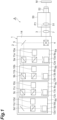
- FIG. 1 is a schematic configuration diagram of a confocal microscope A according to an embodiment.
- the confocal microscope A shown in FIG. 1 constitutes a confocal microscope that acquires an image enabling the construction of an optical sectioning image of a sample M to be observed and is configured such that a confocal microscope unit 1 is connected to a connection port P1 used for connection to an external unit of a microscope 50.
- This confocal microscope unit 1 is a device that irradiates the sample M disposed on a stage or the like of the microscope 50 via a microscope optical system such as an imaging lens 51 and an objective lens 52 inside the microscope 50 with excitation light, receives (detects) fluorescence generated from the sample M in response to the excitation light via the microscope optical system of the microscope 50, generates an optical sectioning image, and outputs the image.
- a microscope optical system such as an imaging lens 51 and an objective lens 52 inside the microscope 50 with excitation light
- receives (detects) fluorescence generated from the sample M in response to the excitation light via the microscope optical system of the microscope 50 generates an optical sectioning image, and outputs the image.
- the confocal microscope unit 1 includes a main housing 2, a lens barrel 3 which constitutes a part of the main housing 2 and is removably connected to the connection port P1 of the microscope 50, a scan mirror 4, a fixed mirror 5, and first to fourth subunits 6a to 6d which are fixed into the main housing 2, and a scan lens 7 which is fixed into the lens barrel 3.
- a main housing 2 a lens barrel 3 which constitutes a part of the main housing 2 and is removably connected to the connection port P1 of the microscope 50, a scan mirror 4, a fixed mirror 5, and first to fourth subunits 6a to 6d which are fixed into the main housing 2, and a scan lens 7 which is fixed into the lens barrel 3.
- each component of the confocal microscope unit 1 will be described in detail.
- the scan lens 7 in the lens barrel 3 is an optical element having a function of relaying a reflection surface of the scan mirror 4 to a pupil position of the objective lens 52 and forming a spot on a primary image plane of the microscope optical system of the microscope 50.
- the scan lens 7 irradiates the sample M by guiding the excitation light scanned by the scan mirror 4 to the microscope optical system and guides the fluorescence generated from the sample M in response to the excitation light to the scan mirror 4.
- the scan mirror 4 in the main housing 2 is, for example, an optical scanning element such as a micro electro mechanical system (MEMS) mirror configured so that a reflector can be tilted in two axes.
- the scan mirror 4 has a function of scanning the excitation light output from the first to fourth subunits 6a to 6d on the sample M by continuously changing a reflection angle and guiding the fluorescence generated in response to the excitation light to the first to fourth subunits 6a to 6d.
- MEMS micro electro mechanical system
- the first subunit 6a includes a base plate 8a and a dichroic mirror (first beam splitter) 9a, a light source 10a, a dichroic mirror 11a, a pinhole plate (first aperture) 12a, and a photodetector (first photodetector) 13a which are disposed on the base plate 8a.
- the dichroic mirror 9a is a beam splitter which is fixed in the reflection direction of the fluorescence of the fixed mirror 5 and has a property of reflecting first excitation light of a wavelength ⁇ 1 irradiated by the first subunit 6a and first fluorescence of a wavelength range ⁇ 1 generated from the sample M in response to the first excitation light and transmitting light of a wavelength longer than those of the first excitation light and the first fluorescence.
- the dichroic mirror 11a is a beam splitter which is provided in the reflection direction of the first fluorescence of the dichroic mirror 9a and has a property of transmitting the first fluorescence of the wavelength range ⁇ 1 and reflecting the first excitation light of the wavelength ⁇ 1 shorter than that of the wavelength range ⁇ 1 .
- the light source 10a is a light emitting element (for example, laser diode) outputting the first excitation light (for example, laser beam) of the wavelength ⁇ 1 and is disposed so that the first excitation light is reflected toward the dichroic mirror 9a coaxially with the first fluorescence by the dichroic mirror 11a.
- the pinhole plate 12a is an aperture which is disposed so that a pinhole position coincides with a conjugate position of a spot of the first excitation light of the sample M and limits the luminous flux of the first fluorescence and constitutes a confocal optical system along with the light source 10a and the like.
- This pinhole plate 12a has a pinhole diameter that can be adjusted from the outside and the resolution of the image detected by the photodetector 13a and the signal intensity of the image can be changed.
- the photodetector 13a is disposed so that a detection surface is opposed to the pinhole plate 12a and receives and detects the first fluorescence having passed through the pinhole plate 12a. Additionally, the photodetector 13a is a photomultiplier tube, a photodiode, an avalanche photodiode, a multi-pixel photon counter (MPPC), a hybrid photo detector (HPD), an area image sensor, or the like.
- MPPC multi-pixel photon counter
- HPD hybrid photo detector
- the second to fourth subunits 6b to 6d also have the same configuration as that of the first subunit 6a.
- the second subunit 6b includes a base plate 8b, a dichroic mirror (second beam splitter) 9b, a light source 10b, a dichroic mirror 11b, a pinhole plate (second aperture) 12b, and a photodetector (second photodetector) 13b.
- the dichroic mirror 9b has a property of reflecting second excitation light of a wavelength ⁇ 2 (> ⁇ 1 ) irradiated by the second subunit 6b and second fluorescence of a wavelength range ⁇ 2 generated from the sample M in response to the second excitation light and transmitting light of a wavelength longer than those of the second excitation light and the second fluorescence.
- the dichroic mirror 11b has a property of transmitting the second fluorescence of the wavelength range ⁇ 2 and reflecting the second excitation light of the wavelength ⁇ 2 shorter than the wavelength range ⁇ 2 .
- the light source 10b is a light emitting element which outputs the second excitation light of the wavelength ⁇ 2 .
- the pinhole plate 12b is an aperture which is disposed so that a pinhole position coincides with a conjugate position of a spot of the second excitation light of the sample M and limits the luminous flux of the second fluorescence.
- the photodetector 13b is disposed so that a detection surface is opposed to the pinhole plate 12b and receives and detects the second fluorescence having passed through the pinhole plate 12b.
- the photodetector 13b is a photomultiplier tube, a photodiode, an avalanche photodiode, a multi-pixel photon counter (MPPC), a hybrid photo detector (HPD), an area image sensor, or the like.
- the third subunit 6c includes a base plate 8c, a dichroic mirror (third beam splitter) 9c, a light source 10c, a dichroic mirror 11c, a pinhole plate (third aperture) 12c, and a photodetector (third photodetector) 13c.
- the dichroic mirror 9c has a property of reflecting third excitation light of a wavelength ⁇ 3 (> ⁇ 2 ) irradiated by the third subunit 6c and third fluorescence of a wavelength range ⁇ 3 generated from the sample M in response to the third excitation light and transmitting light of a wavelength longer than those of the third excitation light and the third fluorescence.
- the dichroic mirror 11c has a property of transmitting the third fluorescence of the wavelength range ⁇ 3 and reflecting the third excitation light of the wavelength ⁇ 3 shorter than the wavelength range ⁇ 3 .
- the light source 10c is a light emitting element which outputs the third excitation light of the wavelength ⁇ 3 .
- the pinhole plate 12c is an aperture which is disposed so that a pinhole position coincides with a conjugate position of a spot of the third excitation light of the sample M and limits the luminous flux of the third fluorescence.
- the photodetector 13c is disposed so that a detection surface is opposed to the pinhole plate 12c and receives and detects the third fluorescence having passed through the pinhole plate 12c.
- the photodetector 13c is a photomultiplier tube, a photodiode, an avalanche photodiode, a multi-pixel photon counter (MPPC), a hybrid photo detector (HPD), an area image sensor, or the like.
- the fourth subunit 6d includes a base plate 8d, a total reflection mirror 9d, a light source 10d, a dichroic mirror 11d, a pinhole plate (fourth aperture) 12d, and a photodetector (fourth photodetector) 13d.
- the total reflection mirror 9c reflects fourth excitation light of a wavelength ⁇ 4 (> ⁇ 3 ) irradiated by the fourth subunit 6d and fourth fluorescence of a wavelength range ⁇ 4 generated from the sample M in response to the fourth excitation light.
- the dichroic mirror 11d has a property of transmitting the fourth fluorescence of the wavelength range ⁇ 4 and reflecting the fourth excitation light of the wavelength ⁇ 4 shorter than the wavelength range ⁇ 4 .
- the light source 10d is a light emitting element which outputs the fourth excitation light of the wavelength ⁇ 4 .
- the pinhole plate 12d is an aperture which is disposed so that a pinhole position coincides with a conjugate position of a spot of the fourth excitation light of the sample M and limits the luminous flux of the fourth fluorescence.
- the photodetector 13d is disposed so that a detection surface is opposed to the pinhole plate 12d and receives and detects the fourth fluorescence having passed through the pinhole plate 12d.
- the photodetector 13d is a photomultiplier tube, a photodiode, an avalanche photodiode, a multi-pixel photon counter (MPPC), a hybrid photo detector (HPD), an area image sensor, or the like.
- the first to fourth subunits 6a to 6d are fixed into the main housing 2 so that the first to fourth subunits are arranged in this order along the light guiding direction of the first to fourth fluorescences formed by the scan mirror 4 and the fixed mirror 5 to be away from the fixed mirror 5 and the dichroic mirrors 9a to 9c and the total reflection mirror 9d are located on the optical paths of the first to fourth fluorescences.
- the second to fourth subunits 6b to 6d are respectively disposed to be shifted from the first to third subunits 6a to 6c by a predetermined distance d in a direction perpendicular to the light guiding direction of the second to fourth fluorescences based on the center positions of the dichroic mirrors 9a to 9c and the total reflection mirror 9d.
- This predetermined distance d is set to be substantially the same as a shift amount ⁇ generated due to the refraction of the fluorescence of each of the dichroic mirrors 9a to 9c in a direction perpendicular to the optical path of the fluorescence transmitted in the dichroic mirrors 9a to 9c.
- the shift amount generated in the dichroic mirrors 9a to 9c is substantially the same and hence the shift distance d between two subunits adjacent to each other among the first to fourth subunits 6a to 6d is also set to be the same.
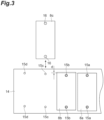
- FIG. 3 shows an example of the positioning structure of the first to fourth subunits 6a to 6d.
- components of the first to third subunits 6a to 6d are not shown.
- two protrusion portions (first to fourth positioning portions) 15a to 15d are provided on the base plate 14 constituting the main housing 2 to respectively correspond to the first to fourth subunits 6a to 6d and hole portions 16 formed in the base plates 8a to 8d of the first to fourth subunits 6a to 6d are respectively fitted to two protrusion portions 15a to 15d so that the first to fourth subunits 6a to 6d are positioned to be shifted from each other by the predetermined distance d.
- both of a gap of each of two protrusion portions 15a to 15d on the base plate 14 and a gap of each of two hole portions 16 of the base plates 8a to 8d are formed to be the same.
- an arbitrary subunit can be selected from the first to fourth subunits 6a to 6d and can be disposed on the base plate 14 in the main housing 2.
- the selected subunits are disposed to be packed on the side of the fixed mirror 5 and are arranged from the side of the fixed mirror 5 in order from the one having the shortest wavelength of the excitation light to be irradiated.
- the first excitation light output from the first subunit 6a is reflected on the dichroic mirror 9a and then is scanned on the sample M via the scan mirror 4 and the scan lens 7, the first fluorescence generated from the sample M in response to the first excitation light is reflected on the dichroic mirror 9a via the scan lens 7 and the scan mirror 4, and is incident to the first subunit 6a, and the image is formed on the pinhole plate 12a in the first subunit 6a and is detected by the photodetector 13a.
- the second excitation light output from the second subunit 6b is reflected on the dichroic mirror 9b in the second subunit 6b, is transmitted through the dichroic mirror 9a in the first subunit 6a, and is scanned on the sample M via the scan mirror 4 and the scan lens 7, the second fluorescence generated from the sample M in response to the second excitation light is transmitted through the dichroic mirror 9a via the scan lens 7 and the scan mirror 4, is reflected on the dichroic mirror 9b, and is incident to the second subunit 6b, and the image is formed on the pinhole plate 12b in the second subunit 6b and is detected by the photodetector 13b.
- the excitation light emitted from the own unit and the fluorescence generated in response to the excitation light are reflected on the dichroic mirror of the own unit and are transmitted through the dichroic mirror of the other unit. Accordingly, it is possible to independently detect the fluorescence generated in response to the excitation light of two wavelengths.
- the first to fourth subunits 6a to 6d can be respectively adjusted so that the positions of the light source and the pinhole are in a conjugate relationship outside the confocal microscope unit 1 and the troublesome optical adjustment is not required after mounting to the confocal microscope unit 1. Accordingly, it is possible to easily add or replace the subunit.
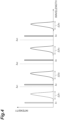
- FIG. 4 is a graph showing wavelength distribution characteristics of the excitation light and the fluorescence handled by the first to fourth subunits 6a to 6d.
- the wavelength range ⁇ 1 of the fluorescence generated in response to the excitation light of the wavelength ⁇ 1 irradiated from the first subunit 6a is generally in the vicinity of the wavelength ⁇ 1 and in the range of the wavelength longer than the wavelength ⁇ 1 .
- the wavelength ⁇ 2 of the excitation light irradiated from the second subunit 6b and the wavelength range ⁇ 2 of the fluorescence generated in response to the excitation light are in the range of the wavelength longer than the wavelength ⁇ 1 and the wavelength range ⁇ 1 .
- the boundary wavelength ⁇ d1 of the optical division of the dichroic mirror 9a of the first subunit 6a is set to a value which is longer than the wavelength ⁇ 1 and the wavelength range ⁇ 1 and is shorter than the wavelength ⁇ 2 and the wavelength range ⁇ 2 . Accordingly, it is possible to perform the confocal measurement in the range of the wavelength ⁇ 1 and the wavelength range ⁇ 1 using the first subunit 6a and to perform the confocal measurement in the range of the wavelength ⁇ 2 and the wavelength range ⁇ 2 using the second subunit 6b of the same device.
- the boundary wavelength ⁇ d2 of the optical division of the dichroic mirror 9b of the second subunit 6b is set to a value which is longer than the wavelength ⁇ 2 and the wavelength range ⁇ 2 and is shorter than the wavelength ⁇ 3 and the wavelength range ⁇ 3
- the boundary wavelength ⁇ d3 of the optical division of the dichroic mirror 9c of the third subunit 6c is set to a value which is longer than the wavelength ⁇ 3 and the wavelength range ⁇ 3 and is shorter than the wavelength ⁇ 4 and the wavelength range ⁇ 4 .
- the scan mirror 4, the scan lens 7, and the first to fourth subunits 6a to 6d are fixed to the main housing 2 and the first to fourth subunits 6a to 6d can be disposed on the base plate 14 of the main housing 2 so that an arbitrary subunit can be selected.
- pinhole diameters of the pinhole plates 12a to 12d of the respective first to fourth subunits 6a to 6d can be adjusted in response to the wavelength of the fluorescence to be observed, it is possible to adjust the resolution of the image and the signal intensity of the image in response to the wavelength of the fluorescence to be observed.
- the thickness of the mirror members constituting the first to third dichroic mirrors 9a to 9c is set to be substantially the same. According to such a configuration, a shift between the optical axes of the excitation light or fluorescence generated by transmission through each of the first to third dichroic mirrors 9a to 9c can be set to be the same, a shift between the first to fourth subunits 6a to 6d may be set to the same distance d, and the positioning structure can be simplified. As a result, it is possible to realize imaging in a plurality of wavelength regions while facilitating the setting work of the first to fourth subunits 6a to 6b.
- the main housing 2 is provided with the protrusion portions 15a to 15d for positioning the first to fourth subunits 6a to 6d and these protrusion portions 15a to 15d are used for a positioning operation by shifting each of the second to fourth subunits 6b to 6d from each of the first to third subunits 6a to 6c by the predetermined distance d in a direction perpendicular to the light guiding direction of the fluorescence. If such a configuration is adopted, it is possible to position the subunit with respect to the other subunit at the front stage in accordance with the shift of the optical axis of the excitation light or fluorescence generated by transmission through the dichroic mirror in the other subunit at the front stage. As a result, it is possible to improve the accuracy of imaging in four wavelength regions.
- the shift distance d of each of the second to fourth subunits 6b to 6d with respect to the first to third subunits 6a to 6c at the front stage may be set in response to the shift amount ⁇ of the optical path of the fluorescence due to the dichroic mirrors 9a to 9c. Further, since the shift amount is different in accordance with the wavelength of the fluorescence, the shift distance d for the subunit at the front stage may be set to a different value for each subunit. However, when the shift amount ⁇ of the optical path of the fluorescence due to the dichroic mirrors 9a to 9c is not almost changed, the shift distance d of each subunit for the subunit at the front stage may be set to the same value.
- the scan mirror 4 is configured as the MEMS mirror. In the case of such a configuration, the miniaturization of the device can be easily realized.
- the pinhole plate is used as an aperture to form a confocal optical system, but may be, for example, a color aperture, a fiber core, or the like if the aperture is any optical element that limits the luminous flux.
- the position of the end surface of the fiber core may be the aperture position (the position where the luminous flux is limited).
- a laser light source such as a solid-state laser or a diode laser can also be used.
- the position of the beam waist of these laser light sources may be set to the aperture position (the position where the luminous flux is limited) and the light source itself plays the role of the aperture.
- the first to fourth subunits 6a to 6d are arranged in order from the one having the shortest wavelength range of the excitation light and the fluorescence to be handled to be away from the side of the scan mirror 4, but may be arranged in order from the one having the longest wavelength range.
- the characteristics of the dichroic mirrors 9a to 9c are set to the characteristics in which the excitation light and the fluorescence having a relatively long wavelength handled by each of the subunits 6a to 6c are reflected and the excitation light and the fluorescence having a relatively short wavelength handled by the other subunits are transmitted.
- the main housing may include the first positioning portion which positions the first subunit and the second positioning portion which positions the second subunit and the first positioning portion and the second positioning portion may position the second subunit by shifting the second subunit from the first subunit by a predetermined distance in a direction intersecting the light guiding direction of the fluorescence. Accordingly, the horizontal positions of the beams from the respective subunits can be aligned.
- this predetermined distance may be set in accordance with the shift amount of the optical path of the fluorescence in a direction intersecting the light guiding direction of the fluorescence.
- the second subunit can be positioned to the first subunit in accordance with the shift of the optical axis of the excitation light or fluorescence generated by transmission through the first beam splitter. As a result, it is possible to improve the accuracy of imaging in a plurality of wavelength regions.
- the scan mirror may be a MEMS mirror.
- the miniaturization of the device can be easily realized.
- first subunit and the second subunit may be fixed to the main housing while being arranged in order of the first subunit and the second subunit along the light guiding direction of the fluorescence formed by the scan mirror.
- the first and second excitation light irradiated from the first and second subunits can be irradiated to the sample on the side of the microscope via the first beam splitter in the first subunit and the first and second fluorescence generated from the sample in response to the first and second excitation light can be introduced into the first and second subunits via the first beam splitter in the first subunit.
- the confocal microscope unit may further include the third subunit which includes the light source configured to output the third excitation light, the third aperture configured to limit a luminous flux of the third fluorescence generated from the sample in response to the third excitation light, and the third photodetector configured to detect the third fluorescence having passed through the third aperture and the second subunit may include the second beam splitter configured to which reflect the second excitation light and the second fluorescence and transmit the third excitation light and the third fluorescence.
- the second excitation light output from the second subunit is reflected on the second beam splitter in the second subunit, is transmitted through the first beam splitter in the first subunit, and is scanned on the sample via the scan mirror and the scan lens, the second fluorescence generated from the sample in response to the second excitation light is transmitted through the first beam splitter via the scan lens and the scan mirror, is reflected on the second beam splitter, and is incident to the second subunit, and an image is formed on the second aperture in the second subunit and is detected by the second photodetector.
- the third excitation light output from the third subunit is transmitted through the second beam splitter in the second subunit and the first beam splitter in the first subunit, and is scanned on the sample via the scan mirror and the scan lens, the third fluorescence generated from the sample in response to the third excitation light is transmitted through the first beam splitter and the second beam splitter via the scan lens and the scan mirror and is incident to the third subunit, and an image is formed on the third aperture in the third subunit and is detected by the third photodetector. Accordingly, it is possible to realize imaging in three wavelength regions with the same device.
- the main housing may include the second positioning portion which positions the second subunit and the third positioning portion which positions the third subunit and the second positioning portion and the third positioning portion may position the third subunit to the second subunit by shifting the third subunit from the second subunit by a predetermined distance in a direction intersecting the light guiding direction of the fluorescence. If such a configuration is adopted, the third subunit can be positioned to the second subunit in accordance with the shift of the optical axis of the excitation light or fluorescence generated by transmission through the second beam splitter. As a result, it is possible to improve the accuracy of imaging in a plurality of wavelength regions.
- the thickness of the first beam splitter may be the same as the thickness of the second beam splitter. If such a configuration is adopted, the shift of the optical axis of the excitation light or fluorescence generated by transmission through each of the first and second beam splitters can be the same and the setting of the arrangement between the first to third subunits can be facilitated. As a result, it is possible to realize imaging in a plurality of wavelength regions while facilitating the setting work.
- the first subunit, the second subunit, and the third subunit may be fixed to the main housing while being arranged in order of the first subunit, the second subunit, and the third subunit along the light guiding direction of the fluorescence formed by the scan mirror.
- the first to third excitation light irradiated from the first to third subunits can be irradiated to the sample on the side of the microscope via the first and second beam splitters in the first and second subunits and the first to third fluorescence generated from the sample in response to the first to third excitation light can be introduced into the first to third subunits via the first and second beam splitters in the first and second subunits.
- the confocal microscope unit constituting the confocal microscope and the confocal microscope, it is possible to easily perform confocal imaging at a plurality of wavelengths.
- M sample, P1: connection port, d: predetermined distance, 10a to 10d: light sources, 12a to 12d: pinhole plates (apertures), 13a to 13d: photodetectors, 15a to 15d: protrusion portions (positioning portions), 6a to 6b: first to fourth subunits, 9a to 9c: dichroic mirrors (first to third beam splitters), 1: confocal microscope unit, 2: main housing, 3: lens barrel, 4: scan mirror, 7: scan lens, 50: microscope, A: confocal microscope.
Landscapes
- Physics & Mathematics (AREA)
- General Physics & Mathematics (AREA)
- Optics & Photonics (AREA)
- Chemical & Material Sciences (AREA)
- Analytical Chemistry (AREA)
- Health & Medical Sciences (AREA)
- Nuclear Medicine, Radiotherapy & Molecular Imaging (AREA)
- Life Sciences & Earth Sciences (AREA)
- Biochemistry (AREA)
- General Health & Medical Sciences (AREA)
- Immunology (AREA)
- Pathology (AREA)
- Spectroscopy & Molecular Physics (AREA)
- Microscoopes, Condenser (AREA)
- Investigating, Analyzing Materials By Fluorescence Or Luminescence (AREA)
Applications Claiming Priority (2)
| Application Number | Priority Date | Filing Date | Title |
|---|---|---|---|
| JP2019062976 | 2019-03-28 | ||
| PCT/JP2020/013799 WO2020196783A1 (ja) | 2019-03-28 | 2020-03-26 | 共焦点顕微鏡ユニット及び共焦点顕微鏡 |
Publications (3)
| Publication Number | Publication Date |
|---|---|
| EP3951466A1 EP3951466A1 (en) | 2022-02-09 |
| EP3951466A4 EP3951466A4 (en) | 2023-01-04 |
| EP3951466B1 true EP3951466B1 (en) | 2025-05-07 |
Family
ID=72608840
Family Applications (2)
| Application Number | Title | Priority Date | Filing Date |
|---|---|---|---|
| EP20776340.0A Active EP3951466B1 (en) | 2019-03-28 | 2020-03-26 | Confocal microscope unit and confocal microscope |
| EP20777264.1A Active EP3951468B1 (en) | 2019-03-28 | 2020-03-26 | Confocal microscope unit and confocal microscope |
Family Applications After (1)
| Application Number | Title | Priority Date | Filing Date |
|---|---|---|---|
| EP20777264.1A Active EP3951468B1 (en) | 2019-03-28 | 2020-03-26 | Confocal microscope unit and confocal microscope |
Country Status (5)
| Country | Link |
|---|---|
| US (2) | US12117600B2 (enExample) |
| EP (2) | EP3951466B1 (enExample) |
| JP (2) | JP7488253B2 (enExample) |
| CN (2) | CN113631980B (enExample) |
| WO (2) | WO2020196783A1 (enExample) |
Families Citing this family (4)
| Publication number | Priority date | Publication date | Assignee | Title |
|---|---|---|---|---|
| JP7534984B2 (ja) | 2021-03-03 | 2024-08-15 | 株式会社日立ハイテク | 分光測定装置 |
| CN117203564A (zh) * | 2021-04-26 | 2023-12-08 | 浜松光子学株式会社 | 共聚焦显微镜单元、共聚焦显微镜及共聚焦显微镜单元的控制方法 |
| US12189137B2 (en) * | 2022-02-23 | 2025-01-07 | The Boeing Company | System and method for super-resolution imaging |
| DE102022114257A1 (de) * | 2022-06-07 | 2023-12-07 | Ludwig-Maximilians-Universität München (Körperschaft des öffentlichen Rechts) | Baukastensystem für eine Mikroskopievorrichtung, Mikroskopievorrichtung und Verfahren zum Herstellen einer Mikroskopievorrichtung |
Family Cites Families (21)
| Publication number | Priority date | Publication date | Assignee | Title |
|---|---|---|---|---|
| US5535052A (en) | 1992-07-24 | 1996-07-09 | Carl-Zeiss-Stiftung | Laser microscope |
| JP3917731B2 (ja) | 1996-11-21 | 2007-05-23 | オリンパス株式会社 | レーザ走査顕微鏡 |
| JP2003185927A (ja) | 2001-12-13 | 2003-07-03 | Olympus Optical Co Ltd | 走査型レーザー顕微鏡 |
| US7038848B2 (en) * | 2002-12-27 | 2006-05-02 | Olympus Corporation | Confocal microscope |
| CN100474028C (zh) | 2003-11-26 | 2009-04-01 | 奥林巴斯株式会社 | 激光扫描型荧光显微镜 |
| JP4409390B2 (ja) | 2004-08-24 | 2010-02-03 | オリンパス株式会社 | 光走査型共焦点観察装置 |
| JP2006133499A (ja) | 2004-11-05 | 2006-05-25 | Shimadzu Corp | 共焦点スキャナ及び共焦点顕微鏡 |
| JP5058625B2 (ja) * | 2007-02-19 | 2012-10-24 | オリンパス株式会社 | レーザ顕微鏡 |
| EP2259125B1 (de) | 2007-10-22 | 2017-07-26 | Tecan Trading AG | Laser Scanner-Gerät für Fluoreszenzmessungen |
| JP2009116082A (ja) * | 2007-11-07 | 2009-05-28 | Nsk Ltd | 光走査ユニット及び観察装置 |
| JP2009198980A (ja) | 2008-02-25 | 2009-09-03 | Nikon Corp | 共焦点顕微鏡 |
| DE102008029458B4 (de) * | 2008-06-20 | 2019-02-07 | Carl Zeiss Microscopy Gmbh | Verfahren zum Aufzeichnen von Impulssignalen |
| JP5371694B2 (ja) | 2009-10-26 | 2013-12-18 | オリンパス株式会社 | 顕微鏡接続ユニットおよび顕微鏡システム |
| JP5452180B2 (ja) | 2009-11-13 | 2014-03-26 | オリンパス株式会社 | 顕微鏡装置 |
| JP5056871B2 (ja) | 2010-03-02 | 2012-10-24 | 横河電機株式会社 | 共焦点顕微鏡システム |
| US20130015370A1 (en) * | 2011-07-15 | 2013-01-17 | Huron Technologies International In | Confocal fluorescence slide scanner with parallel detection |
| JP5926966B2 (ja) | 2012-01-30 | 2016-05-25 | オリンパス株式会社 | 蛍光観察装置 |
| JP5969803B2 (ja) * | 2012-04-23 | 2016-08-17 | オリンパス株式会社 | 顕微鏡装置 |
| DE102014017001A1 (de) * | 2014-11-12 | 2016-05-12 | Carl Zeiss Ag | Mikroskop mit geringem Verzeichnungsfehler |
| GB2562428B (en) | 2016-02-22 | 2020-04-29 | Hitachi High Tech Corp | Light-emitting detection device |
| CN106980174B (zh) * | 2017-02-28 | 2019-04-16 | 浙江大学 | 一种综合性荧光超分辨显微成像装置 |
-
2020
- 2020-03-26 WO PCT/JP2020/013799 patent/WO2020196783A1/ja not_active Ceased
- 2020-03-26 WO PCT/JP2020/013801 patent/WO2020196784A1/ja not_active Ceased
- 2020-03-26 EP EP20776340.0A patent/EP3951466B1/en active Active
- 2020-03-26 CN CN202080024983.6A patent/CN113631980B/zh active Active
- 2020-03-26 US US17/442,238 patent/US12117600B2/en active Active
- 2020-03-26 US US17/442,163 patent/US12078789B2/en active Active
- 2020-03-26 EP EP20777264.1A patent/EP3951468B1/en active Active
- 2020-03-26 JP JP2021509611A patent/JP7488253B2/ja active Active
- 2020-03-26 JP JP2021509612A patent/JP7344281B2/ja active Active
- 2020-03-26 CN CN202080025057.0A patent/CN113646686B/zh active Active
Also Published As
| Publication number | Publication date |
|---|---|
| JP7488253B2 (ja) | 2024-05-21 |
| JPWO2020196783A1 (enExample) | 2020-10-01 |
| WO2020196783A1 (ja) | 2020-10-01 |
| CN113631980B (zh) | 2023-07-28 |
| CN113646686A (zh) | 2021-11-12 |
| EP3951468A4 (en) | 2023-01-04 |
| EP3951466A4 (en) | 2023-01-04 |
| US20220155577A1 (en) | 2022-05-19 |
| WO2020196784A1 (ja) | 2020-10-01 |
| CN113631980A (zh) | 2021-11-09 |
| EP3951466A1 (en) | 2022-02-09 |
| US12078789B2 (en) | 2024-09-03 |
| JP7344281B2 (ja) | 2023-09-13 |
| US12117600B2 (en) | 2024-10-15 |
| EP3951468B1 (en) | 2025-05-07 |
| CN113646686B (zh) | 2023-10-03 |
| US20220179185A1 (en) | 2022-06-09 |
| EP3951468A1 (en) | 2022-02-09 |
| JPWO2020196784A1 (enExample) | 2020-10-01 |
Similar Documents
| Publication | Publication Date | Title |
|---|---|---|
| EP3951466B1 (en) | Confocal microscope unit and confocal microscope | |
| US20060187499A1 (en) | Connection unit and optical-scanning fluoroscopy apparatus | |
| JP5623654B2 (ja) | 共焦点レーザー走査顕微鏡 | |
| US20150304552A1 (en) | Confocal microscope | |
| US6496307B2 (en) | Confocal scanning microscope | |
| JP4601266B2 (ja) | レーザ顕微鏡 | |
| JP2006030988A (ja) | レーザ走査型顕微鏡 | |
| EP3951467A1 (en) | Scanning microscope unit | |
| JP5544548B2 (ja) | サーキュレータを有する走査型顕微鏡および共焦点走査型顕微鏡 | |
| EP2278264A1 (en) | Probe microscope | |
| JP4818634B2 (ja) | 走査型蛍光観察装置 | |
| EP2876480B1 (en) | Confocal laser microscope | |
| JP2006195390A (ja) | レーザ走査型蛍光顕微鏡および検出光学系ユニット | |
| JP2008164719A (ja) | 走査型共焦点顕微鏡 | |
| EP4286914A1 (en) | Scanning microscope unit, scanning microscope, and calibration method for scanning microscope unit | |
| CN111983795A (zh) | 用于监测显微镜的聚焦状态的方法和装置 | |
| JP2007140196A (ja) | 光源装置とこれを有するレーザ顕微鏡。 | |
| JP2007183111A (ja) | 光強度検出装置とこれを有する光学装置、顕微鏡 | |
| JP2010262194A (ja) | 走査型顕微鏡 |
Legal Events
| Date | Code | Title | Description |
|---|---|---|---|
| STAA | Information on the status of an ep patent application or granted ep patent |
Free format text: STATUS: THE INTERNATIONAL PUBLICATION HAS BEEN MADE |
|
| PUAI | Public reference made under article 153(3) epc to a published international application that has entered the european phase |
Free format text: ORIGINAL CODE: 0009012 |
|
| STAA | Information on the status of an ep patent application or granted ep patent |
Free format text: STATUS: REQUEST FOR EXAMINATION WAS MADE |
|
| 17P | Request for examination filed |
Effective date: 20210930 |
|
| AK | Designated contracting states |
Kind code of ref document: A1 Designated state(s): AL AT BE BG CH CY CZ DE DK EE ES FI FR GB GR HR HU IE IS IT LI LT LU LV MC MK MT NL NO PL PT RO RS SE SI SK SM TR |
|
| DAV | Request for validation of the european patent (deleted) | ||
| DAX | Request for extension of the european patent (deleted) | ||
| A4 | Supplementary search report drawn up and despatched |
Effective date: 20221206 |
|
| RIC1 | Information provided on ipc code assigned before grant |
Ipc: G02B 26/08 20060101ALN20221130BHEP Ipc: G02B 27/14 20060101ALN20221130BHEP Ipc: G01N 21/64 20060101ALI20221130BHEP Ipc: G02B 21/00 20060101AFI20221130BHEP |
|
| GRAP | Despatch of communication of intention to grant a patent |
Free format text: ORIGINAL CODE: EPIDOSNIGR1 |
|
| STAA | Information on the status of an ep patent application or granted ep patent |
Free format text: STATUS: GRANT OF PATENT IS INTENDED |
|
| RIC1 | Information provided on ipc code assigned before grant |
Ipc: G02B 26/08 20060101ALN20250117BHEP Ipc: G02B 27/14 20060101ALN20250117BHEP Ipc: G01N 21/64 20060101ALI20250117BHEP Ipc: G02B 21/00 20060101AFI20250117BHEP |
|
| INTG | Intention to grant announced |
Effective date: 20250203 |
|
| GRAS | Grant fee paid |
Free format text: ORIGINAL CODE: EPIDOSNIGR3 |
|
| GRAA | (expected) grant |
Free format text: ORIGINAL CODE: 0009210 |
|
| STAA | Information on the status of an ep patent application or granted ep patent |
Free format text: STATUS: THE PATENT HAS BEEN GRANTED |
|
| AK | Designated contracting states |
Kind code of ref document: B1 Designated state(s): AL AT BE BG CH CY CZ DE DK EE ES FI FR GB GR HR HU IE IS IT LI LT LU LV MC MK MT NL NO PL PT RO RS SE SI SK SM TR |
|
| REG | Reference to a national code |
Ref country code: GB Ref legal event code: FG4D |
|
| REG | Reference to a national code |
Ref country code: CH Ref legal event code: EP |
|
| REG | Reference to a national code |
Ref country code: DE Ref legal event code: R096 Ref document number: 602020050905 Country of ref document: DE |
|
| REG | Reference to a national code |
Ref country code: IE Ref legal event code: FG4D |
|
| P01 | Opt-out of the competence of the unified patent court (upc) registered |
Free format text: CASE NUMBER: APP_23037/2025 Effective date: 20250514 |
|
| REG | Reference to a national code |
Ref country code: NL Ref legal event code: MP Effective date: 20250507 |
|
| PG25 | Lapsed in a contracting state [announced via postgrant information from national office to epo] |
Ref country code: FI Free format text: LAPSE BECAUSE OF FAILURE TO SUBMIT A TRANSLATION OF THE DESCRIPTION OR TO PAY THE FEE WITHIN THE PRESCRIBED TIME-LIMIT Effective date: 20250507 Ref country code: PT Free format text: LAPSE BECAUSE OF FAILURE TO SUBMIT A TRANSLATION OF THE DESCRIPTION OR TO PAY THE FEE WITHIN THE PRESCRIBED TIME-LIMIT Effective date: 20250908 Ref country code: ES Free format text: LAPSE BECAUSE OF FAILURE TO SUBMIT A TRANSLATION OF THE DESCRIPTION OR TO PAY THE FEE WITHIN THE PRESCRIBED TIME-LIMIT Effective date: 20250507 |
|
| REG | Reference to a national code |
Ref country code: LT Ref legal event code: MG9D |
|
| PG25 | Lapsed in a contracting state [announced via postgrant information from national office to epo] |
Ref country code: NO Free format text: LAPSE BECAUSE OF FAILURE TO SUBMIT A TRANSLATION OF THE DESCRIPTION OR TO PAY THE FEE WITHIN THE PRESCRIBED TIME-LIMIT Effective date: 20250807 Ref country code: GR Free format text: LAPSE BECAUSE OF FAILURE TO SUBMIT A TRANSLATION OF THE DESCRIPTION OR TO PAY THE FEE WITHIN THE PRESCRIBED TIME-LIMIT Effective date: 20250808 |
|
| PG25 | Lapsed in a contracting state [announced via postgrant information from national office to epo] |
Ref country code: NL Free format text: LAPSE BECAUSE OF FAILURE TO SUBMIT A TRANSLATION OF THE DESCRIPTION OR TO PAY THE FEE WITHIN THE PRESCRIBED TIME-LIMIT Effective date: 20250507 Ref country code: PL Free format text: LAPSE BECAUSE OF FAILURE TO SUBMIT A TRANSLATION OF THE DESCRIPTION OR TO PAY THE FEE WITHIN THE PRESCRIBED TIME-LIMIT Effective date: 20250507 |
|
| REG | Reference to a national code |
Ref country code: AT Ref legal event code: MK05 Ref document number: 1793080 Country of ref document: AT Kind code of ref document: T Effective date: 20250507 |
|
| PG25 | Lapsed in a contracting state [announced via postgrant information from national office to epo] |
Ref country code: BG Free format text: LAPSE BECAUSE OF FAILURE TO SUBMIT A TRANSLATION OF THE DESCRIPTION OR TO PAY THE FEE WITHIN THE PRESCRIBED TIME-LIMIT Effective date: 20250507 |
|
| PG25 | Lapsed in a contracting state [announced via postgrant information from national office to epo] |
Ref country code: HR Free format text: LAPSE BECAUSE OF FAILURE TO SUBMIT A TRANSLATION OF THE DESCRIPTION OR TO PAY THE FEE WITHIN THE PRESCRIBED TIME-LIMIT Effective date: 20250507 |
|
| PG25 | Lapsed in a contracting state [announced via postgrant information from national office to epo] |
Ref country code: AT Free format text: LAPSE BECAUSE OF FAILURE TO SUBMIT A TRANSLATION OF THE DESCRIPTION OR TO PAY THE FEE WITHIN THE PRESCRIBED TIME-LIMIT Effective date: 20250507 |
|
| PG25 | Lapsed in a contracting state [announced via postgrant information from national office to epo] |
Ref country code: RS Free format text: LAPSE BECAUSE OF FAILURE TO SUBMIT A TRANSLATION OF THE DESCRIPTION OR TO PAY THE FEE WITHIN THE PRESCRIBED TIME-LIMIT Effective date: 20250807 |
|
| PG25 | Lapsed in a contracting state [announced via postgrant information from national office to epo] |
Ref country code: IS Free format text: LAPSE BECAUSE OF FAILURE TO SUBMIT A TRANSLATION OF THE DESCRIPTION OR TO PAY THE FEE WITHIN THE PRESCRIBED TIME-LIMIT Effective date: 20250907 |
|
| PG25 | Lapsed in a contracting state [announced via postgrant information from national office to epo] |
Ref country code: LV Free format text: LAPSE BECAUSE OF FAILURE TO SUBMIT A TRANSLATION OF THE DESCRIPTION OR TO PAY THE FEE WITHIN THE PRESCRIBED TIME-LIMIT Effective date: 20250507 |