EP3918152B1 - Fahrzeug - Google Patents
Fahrzeug Download PDFInfo
- Publication number
- EP3918152B1 EP3918152B1 EP20703180.8A EP20703180A EP3918152B1 EP 3918152 B1 EP3918152 B1 EP 3918152B1 EP 20703180 A EP20703180 A EP 20703180A EP 3918152 B1 EP3918152 B1 EP 3918152B1
- Authority
- EP
- European Patent Office
- Prior art keywords
- valve
- devices
- arrangement
- hydraulic
- mast
- Prior art date
- Legal status (The legal status is an assumption and is not a legal conclusion. Google has not performed a legal analysis and makes no representation as to the accuracy of the status listed.)
- Active
Links
Images


Classifications
-
- E—FIXED CONSTRUCTIONS
- E04—BUILDING
- E04G—SCAFFOLDING; FORMS; SHUTTERING; BUILDING IMPLEMENTS OR AIDS, OR THEIR USE; HANDLING BUILDING MATERIALS ON THE SITE; REPAIRING, BREAKING-UP OR OTHER WORK ON EXISTING BUILDINGS
- E04G21/00—Preparing, conveying, or working-up building materials or building elements in situ; Other devices or measures for constructional work
- E04G21/02—Conveying or working-up concrete or similar masses able to be heaped or cast
- E04G21/04—Devices for both conveying and distributing
- E04G21/0418—Devices for both conveying and distributing with distribution hose
- E04G21/0436—Devices for both conveying and distributing with distribution hose on a mobile support, e.g. truck
-
- B—PERFORMING OPERATIONS; TRANSPORTING
- B60—VEHICLES IN GENERAL
- B60S—SERVICING, CLEANING, REPAIRING, SUPPORTING, LIFTING, OR MANOEUVRING OF VEHICLES, NOT OTHERWISE PROVIDED FOR
- B60S9/00—Ground-engaging vehicle fittings for supporting, lifting, or manoeuvring the vehicle, wholly or in part, e.g. built-in jacks
- B60S9/02—Ground-engaging vehicle fittings for supporting, lifting, or manoeuvring the vehicle, wholly or in part, e.g. built-in jacks for only lifting or supporting
- B60S9/10—Ground-engaging vehicle fittings for supporting, lifting, or manoeuvring the vehicle, wholly or in part, e.g. built-in jacks for only lifting or supporting by fluid pressure
-
- B—PERFORMING OPERATIONS; TRANSPORTING
- B66—HOISTING; LIFTING; HAULING
- B66C—CRANES; LOAD-ENGAGING ELEMENTS OR DEVICES FOR CRANES, CAPSTANS, WINCHES, OR TACKLES
- B66C13/00—Other constructional features or details
- B66C13/18—Control systems or devices
-
- B—PERFORMING OPERATIONS; TRANSPORTING
- B66—HOISTING; LIFTING; HAULING
- B66C—CRANES; LOAD-ENGAGING ELEMENTS OR DEVICES FOR CRANES, CAPSTANS, WINCHES, OR TACKLES
- B66C23/00—Cranes comprising essentially a beam, boom, or triangular structure acting as a cantilever and mounted for translatory of swinging movements in vertical or horizontal planes or a combination of such movements, e.g. jib-cranes, derricks, tower cranes
- B66C23/62—Constructional features or details
- B66C23/72—Counterweights or supports for balancing lifting couples
- B66C23/78—Supports, e.g. outriggers, for mobile cranes
- B66C23/80—Supports, e.g. outriggers, for mobile cranes hydraulically actuated
-
- E—FIXED CONSTRUCTIONS
- E04—BUILDING
- E04G—SCAFFOLDING; FORMS; SHUTTERING; BUILDING IMPLEMENTS OR AIDS, OR THEIR USE; HANDLING BUILDING MATERIALS ON THE SITE; REPAIRING, BREAKING-UP OR OTHER WORK ON EXISTING BUILDINGS
- E04G21/00—Preparing, conveying, or working-up building materials or building elements in situ; Other devices or measures for constructional work
- E04G21/02—Conveying or working-up concrete or similar masses able to be heaped or cast
- E04G21/04—Devices for both conveying and distributing
- E04G21/0418—Devices for both conveying and distributing with distribution hose
- E04G21/0445—Devices for both conveying and distributing with distribution hose with booms
-
- E—FIXED CONSTRUCTIONS
- E04—BUILDING
- E04G—SCAFFOLDING; FORMS; SHUTTERING; BUILDING IMPLEMENTS OR AIDS, OR THEIR USE; HANDLING BUILDING MATERIALS ON THE SITE; REPAIRING, BREAKING-UP OR OTHER WORK ON EXISTING BUILDINGS
- E04G21/00—Preparing, conveying, or working-up building materials or building elements in situ; Other devices or measures for constructional work
- E04G21/02—Conveying or working-up concrete or similar masses able to be heaped or cast
- E04G21/04—Devices for both conveying and distributing
- E04G21/0418—Devices for both conveying and distributing with distribution hose
- E04G21/0445—Devices for both conveying and distributing with distribution hose with booms
- E04G21/0463—Devices for both conveying and distributing with distribution hose with booms with boom control mechanisms, e.g. to automate concrete distribution
-
- F—MECHANICAL ENGINEERING; LIGHTING; HEATING; WEAPONS; BLASTING
- F15—FLUID-PRESSURE ACTUATORS; HYDRAULICS OR PNEUMATICS IN GENERAL
- F15B—SYSTEMS ACTING BY MEANS OF FLUIDS IN GENERAL; FLUID-PRESSURE ACTUATORS, e.g. SERVOMOTORS; DETAILS OF FLUID-PRESSURE SYSTEMS, NOT OTHERWISE PROVIDED FOR
- F15B13/00—Details of servomotor systems ; Valves for servomotor systems
- F15B13/02—Fluid distribution or supply devices characterised by their adaptation to the control of servomotors
-
- F—MECHANICAL ENGINEERING; LIGHTING; HEATING; WEAPONS; BLASTING
- F15—FLUID-PRESSURE ACTUATORS; HYDRAULICS OR PNEUMATICS IN GENERAL
- F15B—SYSTEMS ACTING BY MEANS OF FLUIDS IN GENERAL; FLUID-PRESSURE ACTUATORS, e.g. SERVOMOTORS; DETAILS OF FLUID-PRESSURE SYSTEMS, NOT OTHERWISE PROVIDED FOR
- F15B2211/00—Circuits for servomotor systems
- F15B2211/30—Directional control
- F15B2211/305—Directional control characterised by the type of valves
- F15B2211/3056—Assemblies of multiple valves
- F15B2211/3059—Assemblies of multiple valves having multiple valves for multiple output members
-
- F—MECHANICAL ENGINEERING; LIGHTING; HEATING; WEAPONS; BLASTING
- F15—FLUID-PRESSURE ACTUATORS; HYDRAULICS OR PNEUMATICS IN GENERAL
- F15B—SYSTEMS ACTING BY MEANS OF FLUIDS IN GENERAL; FLUID-PRESSURE ACTUATORS, e.g. SERVOMOTORS; DETAILS OF FLUID-PRESSURE SYSTEMS, NOT OTHERWISE PROVIDED FOR
- F15B2211/00—Circuits for servomotor systems
- F15B2211/30—Directional control
- F15B2211/31—Directional control characterised by the positions of the valve element
- F15B2211/3138—Directional control characterised by the positions of the valve element the positions being discrete
-
- F—MECHANICAL ENGINEERING; LIGHTING; HEATING; WEAPONS; BLASTING
- F15—FLUID-PRESSURE ACTUATORS; HYDRAULICS OR PNEUMATICS IN GENERAL
- F15B—SYSTEMS ACTING BY MEANS OF FLUIDS IN GENERAL; FLUID-PRESSURE ACTUATORS, e.g. SERVOMOTORS; DETAILS OF FLUID-PRESSURE SYSTEMS, NOT OTHERWISE PROVIDED FOR
- F15B2211/00—Circuits for servomotor systems
- F15B2211/30—Directional control
- F15B2211/31—Directional control characterised by the positions of the valve element
- F15B2211/3144—Directional control characterised by the positions of the valve element the positions being continuously variable, e.g. as realised by proportional valves
-
- F—MECHANICAL ENGINEERING; LIGHTING; HEATING; WEAPONS; BLASTING
- F15—FLUID-PRESSURE ACTUATORS; HYDRAULICS OR PNEUMATICS IN GENERAL
- F15B—SYSTEMS ACTING BY MEANS OF FLUIDS IN GENERAL; FLUID-PRESSURE ACTUATORS, e.g. SERVOMOTORS; DETAILS OF FLUID-PRESSURE SYSTEMS, NOT OTHERWISE PROVIDED FOR
- F15B2211/00—Circuits for servomotor systems
- F15B2211/70—Output members, e.g. hydraulic motors or cylinders or control therefor
- F15B2211/71—Multiple output members, e.g. multiple hydraulic motors or cylinders
- F15B2211/7142—Multiple output members, e.g. multiple hydraulic motors or cylinders the output members being arranged in multiple groups
Definitions
- the invention relates to a vehicle having a mast arrangement thereon, wherein at least one support device is provided on the vehicle.
- Such vehicles for example, also have a slurry pump and are then also known as concrete pumps. They have a hydraulic drive system with which both the mast assembly and at least one support device can be moved.
- the support device serves to support or align the vehicle.
- the mast assembly on it is moved and aligned hydraulically and serves, for example, to transport concrete to a specific point on a construction site for further processing using the concrete pump or slurry pump.
- the hydraulic drive arrangements and especially the valve arrangements are relatively complex and therefore expensive to provide.
- a mobile hydraulic system is known, for example, for a mobile crane, which can control retractable and extendable supports as well as a versatile mast.
- the mobile hydraulic system features two directional spool valves corresponding to proportional valves, each of which is followed by a switching valve. Each switching valve can supply two outlets as hydraulic consumer connections.
- a hydraulic system for, for example, an aerial work platform is known.
- several proportional valves are known in a valve arrangement, with switching elements arranged downstream as changeover valve devices. These switching elements can be used to drive work machines designed as hydraulic cylinders.
- the invention is based on the object of creating a vehicle as mentioned above with which problems of the prior art can be solved and, in particular, it is possible to provide a simpler hydraulic drive arrangement and valve arrangement.
- the vehicle has at least one outrigger to support and/or align it.
- a rotatable mast arrangement is provided on or at the vehicle. It has several independently movable sub-mast members, so that in addition to the rotary drive for the mast arrangement, each of the sub-mast members advantageously also has its own hydraulic drive. These hydraulic drives are part of a hydraulic drive arrangement provided for the at least one outrigger and the mast arrangement.
- the multiple hydraulic drives can each assume the movement of each outrigger and each of the movable sub-mast members, advantageously as a hydraulic cylinder.
- a hydraulic drive is also advantageously provided for rotating the mast arrangement relative to the vehicle, and is specially designed for this purpose.
- a valve assembly which controls the hydraulic drives of the hydraulic drive assembly in a conventional manner. This allows each support device and/or each of the sub-mast sections, and thus the entire mast assembly, to be moved.
- the valve arrangement comprises a group of proportional valves, i.e., at least two proportional valves, which can be used to actuate the hydraulic drive arrangement or which are designed to control the hydraulic drive arrangement. By designing them as proportional valves, such control can be carried out very sensitively and precisely.
- the hydraulic drives of the drive arrangement can be well controlled in order to effectively control or move the functional units of the at least one support device and the sub-mast members driven by them.
- the valve arrangement further comprises a group of switching valve devices, i.e. at least two switching valve devices, each connected to at least one hydraulic drive, i.e. to a hydraulic drive of the at least one support device or the partial mast links.
- the said switching valve devices are connected downstream of the proportional valves, with exactly one switching valve device or several switching valve devices each being supplied by exactly one proportional valve or each being connected downstream of exactly a single proportional valve.
- the outputs of at least two proportional valves are led exclusively to the inputs of the switching valve devices, i.e., they are not led directly from these two proportional valves to one of the hydraulic drives.
- a switching valve device is arranged downstream, which can, so to speak, direct the control of the movement of the proportional valves to different hydraulic drives.
- the vehicle itself has, or can be connected to, a slurry pump that pumps slurry or concrete into a pipeline attached to the mast assembly. This is known.
- the outputs of all proportional valves are connected exclusively to the inputs of the switching valve devices, so that the number of proportional valves required can be reduced to a maximum.
- exactly one single switching valve device can be connected downstream of each single proportional valve, i.e., supplied by this valve. This can be particularly advantageously provided for each proportional valve of the valve arrangement, so that exactly one single switching valve device is connected downstream of each single proportional valve.
- These switching valve devices can then be designed similarly or identically and grouped similarly, which will be explained in more detail below.
- all switching valve devices have the same adjustment and switching options, so that they are functionally equivalent.
- all switching valve devices are identical. This can reduce costs and effort during production and, above all, during repair because the required number of parts is reduced.
- the proportional valves are different; advantageously, at least two different types of proportional valves can be provided. These can vary, in particular, with regard to their spool configuration, which can particularly preferably affect their oil quantity setting or passage and/or the center position of a spool of these proportional valves, generally for the hydraulic fluid. For example, it can be provided that some proportional valves are designed for larger quantities of hydraulic fluid as a throughput because the hydraulic drives controlled by them require a larger throughput.
- each of the switching valve devices has between two and five outlets. There are exactly three outlets, so that the technical complexity of a switching valve device remains within technically reasonable limits.
- Each of the outlets of a switching valve device has two connections that lead to or into the switching valve device.
- each outlet can advantageously lead to one of the hydraulic drives of the support devices or to one of the hydraulic drives of the mast arrangement.
- the invention provides that for each switching valve device, exactly two outlets lead to hydraulic drives of the support device and exactly one outlet leads to hydraulic drives of the mast arrangement. With these two outlets to the hydraulic drives of the at least one support device, preferably to several support devices, it can be provided that at least one support device is arranged on each side of the vehicle, advantageously two support devices on each side.
- These support devices can then be grouped into a left side of the vehicle and a right side of the vehicle.
- the switching valve devices can be used to adjust at exactly one point in time, only the outriggers on the left or only the outriggers on the right can be operated or moved.
- the proportional valves are then connected only to these subgroups of outriggers via the switchover valve devices, which makes it easier to align the vehicle and, above all, reduces operating errors. It can then be provided in a corresponding form that, in one position of the switchover valve devices, only the hydraulic drives of the mast arrangement can be moved or controlled, so that no negative impact on the alignment or support of the vehicle is possible, whereas the mast arrangement is actually intended to be moved during the main operation of the vehicle.
- the multiple outlets on each switching valve device are arranged in a row, specifically all outlets of this switching valve device.
- the outlets at the beginning and end of the row each lead to one of the hydraulic drives of the support devices.
- a middle outlet in the row then leads to one of the hydraulic drives of the mast arrangement.
- the hydraulic drives at the beginning and end of the row are then advantageously routed to support devices on the left or right side of the vehicle, respectively.
- a selector mode valve is connected upstream of the group of proportional valves, specifically between the group of proportional valves and an oil pump or pump for hydraulic fluid. It can be particularly advantageous that only a single feed with the oil pump is provided, wherein an input module can also be connected upstream of the selector mode valve.
- Such a selector mode valve is preferably designed to switch the changeover valve devices.
- the selector mode valve can be designed to switch several or advantageously all changeover valve devices simultaneously and in the same way between a position for one outlet. With reference to the aforementioned design of the changeover valve devices with rows of outlets, this means that they are switched simultaneously and in the same way between a position for one of these outlets.
- switching the switching valve devices by means of the aforementioned selector mode valve switches these switching valve devices either to control hydraulic drives of the support devices only, on the one hand, or to control hydraulic drives of the mast assembly only, on the other.
- a support mode and a mast mode whereby the support mode can be further subdivided into a left side and a right side of the vehicle.
- the hydraulic drives in the support devices to be divided into at least two groups, advantageously into exactly two groups: the left side of the vehicle and the right side of the vehicle. This advantageously ensures that no support device can be adjusted simultaneously or jointly on both sides, but only on one side or only on the other. This improves safety when operating the vehicle or a slurry pump, especially when supporting the vehicle, which is very safety-critical.
- a monitoring device which is designed to determine whether all switching valve devices are in the same position.
- they can only control hydraulic drives of the support devices on the one hand or only hydraulic drives of the mast arrangement on the other hand, or control a subdivided group of hydraulic drives.
- This monitoring device is therefore intended to additionally serve to ensure and monitor the aforementioned increase in safety. It is advantageously provided that the monitoring device closes a safety valve in the event that not all switching valve devices are in the same position.
- This safety valve is connected upstream of the proportional valves, preferably also upstream of the selector mode valve. Thus, the entire valve arrangement cannot initiate a pressure change or control for one of the hydraulic drives of the hydraulic drive arrangement if not all switching valve devices are in the same position.
- said monitoring device can comprise means for hydraulic feedback, in particular a hydraulic line.
- These means for hydraulic feedback lead from each switching valve device through all pre-selector spools of the switching valve devices such that they form a continuous or open feedback line to the safety valve.
- This feedback line is open in the event that all pre-selector spools of all switching valve devices are in the same position.
- the feedback line is interrupted in the event that at least one pre-selector spool of a switching valve device is in a different position than at least one pre-selector spool of another switching valve device, i.e., when the position of one pre-selector spool differs from the position of one of the other pre-selector spools.
- the safety valve closes, so that the proportional valves cannot be controlled and no hydraulic drive can take place.
- the monitoring device also has means for feedback, but these means are electrically designed or designed for electrical feedback.
- an electrical line can lead as a feedback line through all pre-selector slides of the changeover valve devices, for example, formed by corresponding electrical switches or contact means, so that the electrical feedback line is continuous or closed as an electrical contact in the event that all pre-selector slides of all changeover valve devices are in the same position. Electrical feedback is interrupted in the other case, in which not all pre-selector slides of the changeover valve devices are in one or the same position.
- hydraulic feedback is more reliable because the condition that all preselector spools of the switching valve assembly are in the same position must be met. If this condition is not met, which is unlikely to be the case if the hydraulic feedback is malfunctioning, the hydraulic actuators cannot be operated. With electrical feedback, a through-hole connection could also be caused by other faults, although the probability of this is low and can be further reduced through structural design.
- the switching valve devices and/or the aforementioned selector valve can be electrically controlled by means of a control device. This is particularly advantageously done electrohydraulically in order to ensure efficient application of any possible actuating forces.
- a control device can have operating elements for an operator, for example push buttons or levers, to operate the individual hydraulic drives.
- the operating elements of the control device are advantageously provided centrally or jointly, for example at a so-called central operating point. This allows an operator to control the aforementioned functional units of the at least one support device and the mast arrangement, relatively conveniently, all from one location.
- Such a control device can advantageously be located some distance from the at least one support device and the mast arrangement for reasons of operational safety or accident prevention, and possibly also to provide a better overview of the operation.
- the control device can have a type of control panel or control console, as is known per se. It can also be designed as a radio remote control and thus be mobile, so that it can be used even at some distance from the vehicle.
- the valve arrangement has a common valve carrier.
- the aforementioned selector valve can also be provided here.
- the valve carrier can advantageously have a carrier plate to which the aforementioned proportional valves and changeover valve devices can be attached. This easily facilitates the supply of hydraulic fluid from the aforementioned oil pump.
- the previously described advantageous monitoring device with the two feedback options can also be well constructed because the changeover valve devices are provided close to one another.
- a vehicle 11 is shown, which is also known as a so-called concrete pump.
- the vehicle 11 has a driver's cab 12 at the front and a large usable area 14 at the rear.
- two outriggers 16 are provided at the front and two outriggers 17 at the rear, two on each side, which are designed in a known manner.
- a support 16l is shown at the front left, which can also be extended to different lengths, as will be explained below.
- a support 17l is provided at the rear left. Both outriggers 16 and 17 can be pivoted within a certain range in a horizontal plane and extended downwards to different extents.
- a mast arrangement 20 is provided with four mast sections 21b to 21e on a turntable 23.
- the mast sections 21b-e are folded together for transport, in the Fig. 3 they are at least schematically unfolded.
- a pump module 25 is provided, into which concrete is poured from above and which then, in a known manner, pumps this poured concrete or generally thick material through a movable line along the mast arrangement 20 or its mast members 21.
- control panel 27 is provided on the usable area 14 as the aforementioned control device or operating point.
- a valve arrangement 30 is shown schematically next to it, but this does not necessarily have to be visible. Its valves are controlled by the control panel 27.
- valve assembly 30 is shown in detail.
- a hydraulic pump 32 is shown at the bottom right, which pumps hydraulic fluid under pressure into the valve assembly 30.
- the valve assembly 30 has a valve carrier plate 34, on which proportional valves 36 are arranged or mounted in the lower area, and switching valves 40 as a group in the upper area.
- Each of the proportional valves 36a to 36e is connected directly to exactly one downstream switching valve 40a to 40e.
- the proportional valves 36a to 36e and the switching valves 40a to 40e are each designed identically.
- the proportional valves 36a to 36e are advantageously designed as pressure-compensated proportional valves.
- the switching valves 40a to 40e each have three outputs, which are arranged the same for all switching valves. Using an adjustable slide 41a to 41e for each switching valve 40a to 40e, switching between the three outputs is possible. All slides 41a to 41e are moved simultaneously and in a similar manner by a common actuating device 43. An actuator 44 is provided for this purpose.
- the actuator 44 like the control devices 37a to 37e of the proportional valves 36, is connected to one of several control elements 28 of the control panel 27 for control purposes.
- the lowest outlet of the switching valves 40a to 40e goes to the group Al of the left supports 16l and 17l.
- the middle outlets M all go to the mast assembly 20 including the turntable 23.
- the uppermost outlets Ar go to the Fig. 3 right supports 16r and 17r shown top right.
- a hydraulic drive of the mast assembly 20 or the turntable 23 can be driven by means of the proportional valves 36a to 36e.
- the first switching valve 40a is responsible for the turntable 23; in the middle position, it is responsible for the mast arrangement M. In the lower position, it is responsible for the right-hand outriggers Ar, specifically for the horizontal extension of the front right outrigger 16r. In the uppermost position, it is responsible for the horizontal extension of the left front outrigger 16l and controls the corresponding hydraulic drive.
- the switching valve 40a If the switching valve 40a is in one of the three positions, then by correspondingly actuating the precisely and directly assigned proportional valve 36a using the control panel 27, either the turntable 23 with the mast arrangement 20 on it can be rotated in one direction or the other. In one of the two other positions, either the left front outrigger 16l or the right front outrigger 16r can be moved further out or further in horizontally. It is clear that before switching the switching valve 40, the corresponding proportional valve 36 must be depressurized.
- the second switching valve 40b is connected to the first, lowest mast link 21b and its hydraulic drive.
- the upper position it is connected to the left front support 16l and its hydraulic drive to extend it downwards in a vertical direction.
- the lower position it is connected to the hydraulic drive of the right front support 16r to move it vertically.
- the third switching valve 40c is connected to the second mast section 21c and its hydraulic drive in the middle position M, as can be seen. In the upper position, it is connected to the hydraulic drive of the left rear support 17l to extend it vertically. In the lower position, it is connected to the hydraulic drive of the right rear support 17r for vertical movement.
- the fourth switching valve 40d is connected to the third mast section 21d or its hydraulic drive in the middle position M. In the upper position, it is connected to a hydraulic drive for horizontally pivoting the left front support 16l. In the lower position, it is connected to the hydraulic drive for the right front support 16r to pivot it back and forth in a horizontal plane.
- the fifth switching valve 40e is connected in the middle position M to the hydraulic drive for the fourth and last mast section 21e. In the upper position, it is connected to the hydraulic drive for the left rear support 171 to pivot it in the horizontal plane. In the lowest position of its slide, it is connected to the hydraulic drive for the right rear support 17r to pivot it in the horizontal plane.
- valve arrangement 30 The precise hydraulic circuit diagram can be seen from the detailed illustration of the valve arrangement 30, some of which have already been described above. It can be seen how each proportional valve 36a to 36e is directly followed by a single changeover valve 40a to 40e.
- the proportional valves 36a to 36e and the changeover valves 40a to 40e are advantageously mounted on a common valve support plate, which is not shown here.
- the valve arrangement 30 also advantageously has an input module 46 at the bottom right and, downstream of this, a selector mode valve 48. Two electric pilot valves 50 are provided at the top right.
- a hydraulic feedback signal 52 is shown in dashed lines. It passes through all the changeover valves 40a to 40e and is only closed when all the changeover valves 40a to 40e are actually in the same position. Only then is one of the aforementioned groups activated. Otherwise, the hydraulic feedback signal is interrupted, and as a result, it can be provided that none of the proportional valves 36a to 36e can be opened. Furthermore, a fault message should be output visually and/or acoustically, ideally at least on the control panel 27, but particularly advantageously also at another location.
Landscapes
- Engineering & Computer Science (AREA)
- Mechanical Engineering (AREA)
- Architecture (AREA)
- Civil Engineering (AREA)
- Structural Engineering (AREA)
- Physics & Mathematics (AREA)
- Fluid Mechanics (AREA)
- Automation & Control Theory (AREA)
- General Engineering & Computer Science (AREA)
- Forklifts And Lifting Vehicles (AREA)
- On-Site Construction Work That Accompanies The Preparation And Application Of Concrete (AREA)
- Fluid-Pressure Circuits (AREA)
Description
- Die Erfindung betrifft ein Fahrzeug mit einer Mastanordnung darauf, wobei an dem Fahrzeug noch mindestens eine Abstützvorrichtung vorgesehen ist.
- Derartige Fahrzeuge weisen beispielsweise noch eine Dickstoffpumpe auf und sind dann auch als sogenannte Betonpumpen bekannt. Sie weisen eine hydraulische Antriebsanordnung auf, mit der sowohl die Mastanordnung als auch die mindestens eine Abstützvorrichtung bewegt werden kann. Die Abstützvorrichtung dient dazu, das Fahrzeug abzustützen oder auszurichten. Die Mastanordnung darauf wird hydraulisch bewegt und ausgerichtet und dient beispielsweise dazu, Beton mittels der Betonpumpe bzw. Dickstoffpumpe auf einer Baustelle an einen bestimmten Punkt zur Weiterverarbeitung zu bringen.
- Die hydraulischen Antriebsanordnungen und vor allem die Ventilanordnungen sind relativ aufwändig und somit teuer in der Bereitstellung.
- Aus der
DE 10 2018 202 148 B3 ist ein Mobilhydrauliksystem für beispielsweise einen Mobilkran bekannt, welches ein- und ausfahrbare Stützen sowie einen vielseitig bewegbaren Mast ansteuern kann. Das Mobilhydrauliksystem weist dabei zwei Proportionalventilen entsprechende Wegeschieber auf, denen jeweils ein Umschaltventil nachgeschaltet ist. Mit jedem Umschaltventil können zwei Abgänge als Hydroverbraucheranschlüsse versorgt werden. - Aus der
EP 2 594 807 A1 ist ein Hydrauliksystem für beispielsweise eine Hubarbeitsbühne bekannt. Auch hier sind mehrere Proportionalventile in einer Ventilanordnung bekannt, denen Schaltelemente als Umschaltventileinrichtungen nachgeschaltet sind. Mittels dieser Schaltelemente können als Hydraulikzylinder ausgebildete Arbeitsmaschinen angetrieben werden. - Aus der
EP 0 670 946 B1 ist ein Fahrzeug mit Abstützungen, einer Mastanordnung und einer Dickstoffpumpe bekannt, wobei die Abstützungen und die Mastglieder mit einzelnen Hydraulikzylindern angetrieben werden. Für jeden der Hydraulikzylinder ist ein Proportionalventil als Steuerventil vorgesehen. - Aus der
WO 2013/021404 A2 ist ein weiteres Fahrzeug mit Abstützungen und einer Mastanordnung bekannt, siehe Fig. 3A und 3B. Auch hier werden die Abstützungen und die Mastanordnung mit einer hydraulischen Antriebsanordnung bewegt. Hierfür ist eine größere Anzahl von Abgängen von einer Umschalteinrichtung an der hydraulischen Antriebsanordnung vorgesehen, wobei die Abgänge jeweils an die Abstützungen oder an die Mastanordnung gehen. Die Abgänge sind dabei in funktionale Gruppen aufgeteilt, wobei die Abgänge unabhängig von den Gruppen jeweils durchwechselnd an der Umschalteinrichtung angeordnet sind. - Der Erfindung liegt die Aufgabe zugrunde, ein eingangs genanntes Fahrzeug zu schaffen, mit dem Probleme des Standes der Technik gelöst werden können und es insbesondere möglich ist, eine einfacher ausgebildete hydraulische Antriebsanordnung und Ventilanordnung vorzusehen.
- Gelöst wird diese Aufgabe durch ein Fahrzeug mit den Merkmalen des Anspruchs 1. Vorteilhafte sowie bevorzugte Ausgestaltungen der Erfindung sind Gegenstand der weiteren Ansprüche und werden im Folgenden näher erläutert. Der Wortlaut der Ansprüche wird durch ausdrückliche Bezugnahme zum Inhalt der Beschreibung gemacht.
- Es ist vorgesehen, dass das Fahrzeug die mindestens eine Abstützvorrichtung aufweist, um es abstützen und/oder ausrichten zu können. Vorteilhaft sind es mindestens zwei Abstützvorrichtungen, besonders vorteilhaft mindestens vier Abstützvorrichtungen, die verteilt angeordnet sind, vorzugsweise zwei an jeder Seite. Es ist eine Mastanordnung an bzw. auf dem Fahrzeug vorgesehen, die drehbar ist. Sie weist mehrere unabhängig voneinander bewegbare Teil-Mastglieder auf, so dass neben dem Drehantrieb für die Mastanordnung auch jedes der Teil-Mastglieder vorteilhaft einen eigenen Hydraulikantrieb aufweist. Diese Hydraulikantriebe sind Teil einer hydraulischen Antriebsanordnung, die für die mindestens eine Abstützvorrichtung und die Mastanordnung vorgesehen ist. Die mehreren Hydraulikantriebe können jeweils die Bewegung jeder Abstützvorrichtung und jedes der bewegbaren Teil-Mastglieder übernehmen, vorteilhaft als Hydraulikzylinder. Ein Hydraulikantrieb ist eben vorteilhaft auch zum Drehen der Mastanordnung gegenüber dem Fahrzeug vorgesehen, der speziell dazu ausgebildet ist.
- Zur Ansteuerung der hydraulischen Antriebsanordnung ist eine vorgenannte Ventilanordnung vorgesehen, die auf an sich bekannte Art und Weise die Hydraulikantriebe der hydraulischen Antriebsanordnung ansteuert. So kann jede Abstützvorrichtung und/oder jedes der Teil-Mastglieder und somit die gesamte Mastanordnung bewegt werden.
- Erfindungsgemäß ist vorgesehen, dass die Ventilanordnung eine Gruppe von Proportionalventilen aufweist, also mindestens zwei Proportionalventile, mit denen die hydraulische Antriebsanordnung beaufschlagt werden kann bzw. die für die Steuerung der hydraulischen Antriebsanordnung ausgebildet sind. Durch die Ausbildung als Proportionalventile kann eine solche Steuerung sehr feinfühlig und genau erfolgen. So können die Hydraulikantriebe der Antriebsanordnung gut gesteuert werden, um wiederum die davon angetriebenen Funktionseinheiten der mindestens einen Abstützvorrichtung und der Teil-Mastglieder gut steuern bzw. bewegen zu können. Die Ventilanordnung weist des Weiteren eine Gruppe von Umschaltventileinrichtungen auf, also mindestens zwei Umschaltventileinrichtungen, die jeweils mit mindestens einem Hydraulikantrieb verbunden sind, also mit einem Hydraulikantrieb der mindestens einen Abstützvorrichtung oder der Teil-Mastglieder. Die genannten Umschaltventileinrichtungen sind den Proportionalventilen nachgeschaltet, wobei genau eine Umschaltventileinrichtung oder mehrere Umschaltventileinrichtungen von je genau einem Proportionalventil versorgt sind bzw. je genau einem einzigen Proportionalventil nachgeschaltet sind. Dabei sind die Ausgänge von mindestens zwei Proportionalventilen ausschließlich an Eingänge der Umschaltventileinrichtungen geführt, also von diesen beiden Proportionalventilen noch nicht direkt an einen der Hydraulikantriebe geführt. Dies bedeutet also, dass mit der Erfindung erreicht werden kann, dass zumindest für zwei Proportionalventile, vorteilhaft für noch mehr Proportionalventile der Ventilanordnung, eine Umschaltventileinrichtung nachgeordnet ist, die sozusagen die Steuerung der Bewegung der Proportionalventile an verschiedene Hydraulikantriebe lenken kann. Dadurch kann die Zahl der aufwändigen Proportionalventile reduziert werden, und durch die diesen Proportionalventilen nachgeschalteten Umschaltventileinrichtungen kann die Steuerung der Bewegung bzw. konkret die Hydraulikflüssigkeit an denjenigen Hydraulikantrieb gegeben werden, der angetrieben werden soll. Dann ist zwar vor einem Betätigen oder Aktivieren eines Hydraulikantriebs dieser erst mittels der Umschaltventileinrichtung anzusteuern oder einzustellen, der konstruktive Aufwand insgesamt kann aber deutlich reduziert werden.
- Bevorzugt weist das Fahrzeug selbst eine Dickstoffpumpe auf oder kann mit einer solchen verbunden werden, die Dickstoff bzw. Beton in eine Rohrleitung pumpt, die an der Mastanordnung befestigt ist. Dies ist bekannt.
- Vorteilhaft sind die Ausgänge von allen Proportionalventilen ausschließlich an Eingänge der Umschaltventileinrichtungen geführt, so dass die Zahl der benötigten Proportionalventile maximal reduziert werden kann.
- In weiterer vorteilhafter Ausgestaltung der Erfindung kann jeweils genau einem einzigen Proportionalventil genau eine einzige Umschaltventileinrichtung nachgeschaltet sein, also von diesem versorgt werden. Dies kann besonders vorteilhaft für jedes Proportionalventil der Ventilanordnung vorgesehen sein, so dass jeweils genau einem einzigen Proportionalventil genau eine einzige Umschaltventileinrichtung nachgeschaltet ist. Diese Umschaltventileinrichtungen können dann ähnlich oder identisch ausgebildet sein und ähnlich gruppiert werden, was im Folgenden noch näher erläutert wird.
- Es kann nämlich vorteilhaft vorgesehen sein, dass sämtliche Umschaltventileinrichtungen untereinander die gleichen Einstellmöglichkeiten und Umstellmöglichkeiten aufweisen, so dass sie einander funktional entsprechen. In nochmals weiterer vorteilhafter Ausgestaltung der Erfindung kann vorgesehen sein, dass sämtliche Umschaltventileinrichtungen identisch sind. So können Kosten und Aufwand bei der Herstellung und vor allem auch bei der Reparatur verringert werden, weil die benötigte Teilevielfalt geringer wird.
- In nochmals weiterer Ausgestaltung der Erfindung kann vorgesehen sein, dass sämtliche Proportionalventile untereinander ebenfalls die gleichen Einstellmöglichkeiten und Umstellmöglichkeiten aufweisen, besonders vorteilhaft auch identisch sind. Damit lässt sich ebenfalls der vorgenannte Vorteil eines verringerten Aufwands erreichen.
- In alternativer Ausgestaltung kann zur besseren Anpassung an den jeweiligen Anwendungszweck vorgesehen sein, dass die Proportionalventile unterschiedlich sind, vorteilhaft können mindestens zwei unterschiedliche Arten von Proportionalventilen vorgesehen sein. Diese können insbesondere hinsichtlich einer Schieberbestückung variieren, was sich besonders bevorzugt auf deren Ölmengeneinstellung bzw. Durchlass und/oder auf eine Mittelstellung eines Schiebers dieser Proportionalventile auswirken kann, allgemein für die Hydraulikflüssigkeit. So kann es beispielsweise vorgesehen sein, dass manche Proportionalventile für größere Mengen an Hydraulikflüssigkeit als Durchsatz ausgelegt sind, weil die davon ansteuerbaren Hydraulikantriebe einen größeren Durchsatz benötigen.
- Bei der Erfindung ist vorgesehen, dass jede der Umschaltventileinrichtungen zwischen zwei Abgängen und fünf Abgängen aufweist. Dabei sind es genau drei Abgänge, so dass sich die technische Komplexität einer Umschaltventileinrichtung in technisch sinnvollen Grenzen bewegt. Jeder der Abgänge einer Umschaltventileinrichtung weist zwei Anschlüsse auf, die an oder in die Umschaltventileinrichtung führen. Damit kann jeder Abgang vorteilhaft zu einem der Hydraulikantriebe der Abstützvorrichtungen oder zu einem der Hydraulikantriebe der Mastanordnung führen. So ist bei der Erfindung vorgesehen, dass bei jeder Umschaltventileinrichtung genau zwei Abgänge zu Hydraulikantrieben der Abstützvorrichtung führen und genau ein Abgang zu Hydraulikantrieben der Mastanordnung. Bei diesen zwei Abgängen zu den Hydraulikantrieben der mindestens einen Abstützvorrichtung, vorzugsweise zu mehreren Abstützvorrichtungen, kann vorgesehen sein, dass mindestens eine Abstützvorrichtung auf jeder Seite des Fahrzeugs angeordnet ist, vorteilhaft auf jeder Seite zwei Abstützvorrichtungen. Dann können diese Abstützvorrichtungen gruppiert werden in eine linke Seite des Fahrzeugs und in eine rechte Seite des Fahrzeugs. So kann vor allem im Fall von zwei Abstützvorrichtungen an jeder Seite mittels der Umschaltventileinrichtungen eingestellt werden, dass zu genau einem Zeitpunkt nur die Abstützvorrichtungen auf der linken Seite oder nur die Abstützvorrichtungen auf der rechten Seite bedient bzw. bewegt werden können. Die Proportionalventile sind dann mittels der Umschaltventileinrichtungen nur mit diesen Untergruppen von Abstützvorrichtungen verbunden, wodurch ein Ausrichten des Fahrzeugs leichter möglich ist und vor allem Bedienfehler verringert werden können. In entsprechender Form kann dann vorgesehen sein, dass in einer Stellung der Umschaltventileinrichtungen nur die Hydraulikantriebe der Mastanordnung bewegbar bzw. ansteuerbar sind, so dass keinerlei negative Auswirkung auf die Ausrichtung bzw. Abstützung des Fahrzeugs möglich ist, während im hauptsächlichen Betrieb des Fahrzeugs eigentlich die Mastanordnung bewegt werden soll.
- Erfindungsgemäß ist vorgesehen, dass die mehreren Abgänge an jeder Umschaltventileinrichtung in einer Reihe angeordnet sind, und zwar sämtliche Abgänge dieser Umschaltventileinrichtung. So ist vorgesehen, dass die Abgänge am Anfang der Reihe und am Ende der Reihe jeweils zu einem der Hydraulikantriebe der Abstützvorrichtungen führen. Ein mittlerer Abgang der Reihe führt dann zu einem der Hydraulikantriebe der Mastanordnung. Die Hydraulikantriebe am Anfang der Reihe und am Ende der Reihe sind dann vorteilhaft zu Abstützvorrichtungen auf jeweils der linken oder jeweils der rechten Seite des Fahrzeugs geführt.
- Es ist vorteilhaft vorgesehen, dass der Gruppe von Proportionalventilen ein Wahlbetriebsartenventil vorgeschaltet ist, und zwar zwischen der Gruppe von Proportionalventilen und einer Ölpumpe bzw. Pumpe für Hydraulikflüssigkeit. Besonders vorteilhaft kann vorgesehen sein, dass nur eine einzige Einspeisung mit der Ölpumpe vorgesehen ist, wobei hier noch ein Eingangsmodul vor dem Wahlbetriebsartenventil vorgeschaltet sein kann. Ein solches Wahlbetriebsartenventil ist bevorzugt dazu ausgebildet, die Umschaltventileinrichtungen umzustellen. Insbesondere kann das Wahlbetriebsartenventil dazu ausgebildet sein, mehrere oder vorteilhaft alle Umschaltventileinrichtungen gleichzeitig und gleichartig umzustellen zwischen jeweils einer Stellung für einen Abgang. Auf die vorgenannte Ausbildung der Umschaltventileinrichtungen mit Reihen von Abgängen bezogen bedeutet dies, dass sie gleichzeitig und gleichartig umgestellt werden zwischen jeweils einer Stellung für einen dieser Abgänge. Dabei kann in nochmals weiterer Ausgestaltung der Erfindung vorgesehen sein, dass ein Umstellen der Umschaltventileinrichtungen mittels des genannten Wahlbetriebsartenventils diese Umschaltventileinrichtungen entweder zur Ansteuerung von Hydraulikantrieben nur der Abstützvorrichtungen einerseits oder zur Ansteuerung von Hydraulikantrieben nur der Mastanordnung andererseits umstellt. Somit gibt es sozusagen eine Abstütz-Betriebsart und eine Mast-Betriebsart, wobei die Abstütz-Betriebsart noch unterteilt sein kann in eine linke Seite und eine rechte Seite des Fahrzeugs.
- Somit können die Hydraulikantriebe in den Abstützvorrichtungen in mindestens zwei Gruppen unterteilt werden, vorteilhaft in genau zwei Gruppen, nämlich linke Seite des Fahrzeugs und rechte Seite des Fahrzeugs. Dadurch kann vorteilhaft erreicht werden, dass auf beiden Seiten keine Abstützvorrichtung gemeinsam oder gleichzeitig einstellbar ist, sondern eben nur auf der einen Seite oder nur auf der anderen Seite. So lässt sich die Sicherheit bei der Bedienung des Fahrzeugs bzw. einer Dickstoffpumpe, insbesondere bei der sehr sicherheitsrelevanten Abstützung des Fahrzeugs, verbessern.
- In vorteilhafter Ausgestaltung der Erfindung ist eine Überwachungseinrichtung vorgesehen, die dazu ausgebildet ist, festzustellen, ob alle Umschaltventileinrichtungen in derselben Stellung sind. Dann können sie nämlich, wie zuvor beschrieben worden ist, nur Hydraulikantriebe der Abstützvorrichtungen einerseits oder nur Hydraulikantriebe der Mastanordnung andererseits ansteuern bzw. eine unterteilte Gruppe von Hydraulikantrieben ansteuern. Diese Überwachungseinrichtung soll also zusätzlich dazu dienen, die vorgenannte Erhöhung der Sicherheit sicherzustellen bzw. zu überwachen. Dabei ist vorteilhaft vorgesehen, dass die Überwachungseinrichtung für den Fall, dass nicht alle Umschaltventileinrichtungen in derselben Stellung sind, ein Sicherheitsventil schließt. Dieses Sicherheitsventil wiederum ist den Proportionalventilen vorgeschaltet, bevorzugt auch dem Wahlbetriebsartenventil vorgeschaltet. So kann die gesamte Ventilanordnung keine Druckänderung bzw. keine Ansteuerung veranlassen für einen der Hydraulikantriebe der hydraulischen Antriebsanordnung, wenn nicht sämtliche Umschaltventileinrichtungen in derselben Stellung sind.
- In einer ersten Ausgestaltung der Erfindung kann die genannte Überwachungseinrichtung Mittel für eine hydraulische Rückmeldung aufweisen, insbesondere eine Hydraulikleitung. Diese Mittel zur hydraulischen Rückmeldung führen von jeder Umschaltventileinrichtung durch alle Vorwahlschieber der Umschaltventileinrichtungen derart, dass sie eine durchgehende bzw. offene Rückmeldungsleitung zu dem Sicherheitsventil bilden. Diese Rückmeldungsleitung ist eben offen für denjenigen Fall, dass alle Vorwahlschieber aller Umschaltventileinrichtungen in derselben Stellung sind. Die Rückmeldungsleitung ist unterbrochen für denjenigen Fall, dass mindestens ein Vorwahlschieber einer Umschaltventileinrichtung in einer anderen Stellung ist als mindestens ein Vorwahlschieber einer anderen Umschaltventileinrichtung, also wenn sich die Stellung eines Vorwahlschiebers von einer Stellung eines der anderen Vorwahlschieber unterscheidet. Bei dieser unterbrochenen Rückmeldungsleitung schließt das Sicherheitsventil, so dass auch die Proportionalventile nicht angesteuert werden können bzw. kein hydraulischer Antrieb erfolgen kann.
- In einer zweiten Ausgestaltung der Erfindung weist die Überwachungseinrichtung zwar auch Mittel zur Rückmeldung auf, diese Mittel sind allerdings elektrisch ausgebildet bzw. zur elektrischen Rückmeldung ausgebildet. Auch hier kann eine elektrische Leitung als Rückmeldungsleitung durch alle Vorwahlschieber der Umschaltventileinrichtungen führen, beispielsweise durch entsprechende elektrische Schalter oder Kontaktmittel gebildet sein, so dass die elektrische Rückmeldungsleitung durchgehend bzw. als elektrischer Kontakt geschlossen ist für den Fall, dass alle Vorwahlschieber aller Umschaltventileinrichtungen in derselben Stellung sind. Eine elektrische Rückmeldung ist unterbrochen für den anderen Fall, dass nicht sämtliche Vorwahlschieber der Umschaltventileinrichtungen in einer bzw. in derselben Stellung sind.
- Im Vergleich der beiden vorgenannten Möglichkeiten zur Ausbildung der Rückmeldung ist eine hydraulische Rückmeldung funktionssicherer, da eben die Bedingung erfüllt sein muss, dass sämtliche Vorwahlschieber der Umschaltventileinrichtung in derselben Stellung sind. Wenn diese Bedingung nicht erfüllt ist, was bei einer Fehlfunktion der hydraulischen Rückmeldung kaum der Fall sein kann, können die Hydraulikantriebe nicht betätigt werden. Bei einer elektrischen Rückmeldung könnte eine Durchkontaktierung möglicherweise auch durch andere Fehler entstehen, wobei die Wahrscheinlichkeit hierfür gering ist und baulich-konstruktiv noch weiter reduziert werden kann.
- Vorteilhaft ist vorgesehen, dass die Umschaltventileinrichtungen und/oder das vorgenannte Wahlbetriebsartenventil mittels einer Ansteuereinrichtung elektrisch angesteuert werden können. Dies erfolgt besonders vorteilhaft elektrohydraulisch, um auch mögliche Betätigungskräfte gut aufbringen zu können.
- Eine Ansteuereinrichtung kann Bedienelemente für eine Bedienperson aufweisen, beispielsweise Druckknöpfe oder Hebel, um die einzelnen Hydraulikantriebe zu betätigen. Die Bedienelemente der Ansteuereinrichtung sind vorteilhaft zentral bzw. gemeinsam vorgesehen, beispielsweise an einer sogenannten zentralen Bedienstelle. Somit kann hier eine Bedienperson die eingangs genannten Funktionseinheiten der mindestens einen Abstützeinrichtung und der Mastanordnung steuern, und zwar relativ komfortabel eben an einer Stelle. Eine solche Ansteuereinrichtung kann vorteilhaft ein Stück von der mindestens einen Abstützvorrichtung und der Mastanordnung entfernt sein aus Gründen der Betriebssicherheit bzw. Unfallvermeidung, möglicherweise auch um einen besseren Bedienüberblick zu haben. Die Ansteuereinrichtung kann eine Art Schaltpult oder Bedienpult aufweisen, wie es an sich bekannt ist. Sie kann auch als Funkfernsteuerung und somit mobil ausgebildet sein, um sie auch in einiger Entfernung vom Fahrzeug benutzen zu können.
- In weiterer vorteilhafter Ausgestaltung der Erfindung kann vorgesehen sein, dass die Ventilanordnung einen gemeinsamen Ventilträger aufweist. So können vorteilhaft sämtliche Proportionalventile und sämtliche Umschaltventileinrichtungen an dem gemeinsamen Ventilträger angeordnet sein. Dadurch ist eine hydraulische Verbindung einfach möglich. Auch das vorgenannte Wahlbetriebsartenventil kann hier vorgesehen sein. Der Ventilträger kann vorteilhaft eine Trägerplatte aufweisen, um darauf die genannten Proportionalventile und Umschaltventileinrichtungen zu befestigen. Somit ist eine Zuleitung von Hydraulikflüssigkeit von der vorgenannten Ölpumpe gut möglich. Des Weiteren kann auch die zuvor beschriebene vorteilhafte Überwachungseinrichtung mit den beiden Möglichkeiten für eine Rückmeldung gut aufgebaut sein, da eben die Umschaltventileinrichtungen nahe beieinander vorgesehen sind.
- Diese und weitere Merkmale gehen außer aus den Ansprüchen auch aus der Beschreibung und den Zeichnungen hervor, wobei die einzelnen Merkmale jeweils für sich allein oder zu mehreren in Form von Unterkombinationen bei einer Ausführungsform der Erfindung und auf anderen Gebieten verwirklicht sein und vorteilhafte sowie für sich schutzfähige Ausführungen darstellen können, für die hier Schutz beansprucht wird. Die Unterteilung der Anmeldung in einzelne Abschnitte sowie Zwischen-Überschriften beschränken die unter diesen gemachten Aussagen nicht in ihrer Allgemeingültigkeit.
- Ein Ausführungsbeispiel der Erfindung ist in den Zeichnungen schematisch dargestellt und wird im Folgenden näher erläutert. In den Zeichnungen zeigen:
- Fig. 1
- eine vereinfachte schematische Darstellung eines erfindungsgemäßen Fahrzeugs als sogenannte Betonpumpe mit Abstützungen und einer Mastanordnung,
- Fig. 2
- eine stark vereinfachte Darstellung einer erfindungsgemäßen Ventilanordnung für das Fahrzeug aus
Fig. 1 mit einer Gruppe von Proportionalventilen, der eine Gruppe von Umschaltventilen nachgeschaltet ist, - Fig. 3
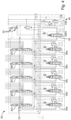
- eine detaillierte Darstellung des Aufbaus der Hydraulikanordnung samt verschiedenen Ansteuermöglichkeiten für die Abstützungen und die Mastanordnung und
- Fig. 4
- eine etwas vergrößerte Darstellung der Ventilanordnung aus
Fig. 3 . - In der
Fig. 1 ist ein Fahrzeug 11 dargestellt, welches auch als sogenannte Betonpumpe bekannt ist. Das Fahrzeug 11 weist eine Fahrerkabine 12 vorne und hinten eine große Nutzfläche 14 auf. An der Nutzfläche sind zwei Abstützungen 16 vorne und zwei Abstützungen 17 hinten vorgesehen, zwei auf jeder Seite, die auf bekannte Art und Weise ausgebildet sind. Eine Abstützung 16l vorne links ist dargestellt, die auch noch in ihrer Länge unterschiedlich weit ausgefahren werden kann, wie nachfolgend noch verdeutlicht wird. Hinten links ist eine Abstützung 17l vorgesehen. Beide Abstützungen 16 und 17 können in einer horizontalen Ebene in einem gewissen Bereich geschwenkt werden und unterschiedlich weit nach unten ausgefahren werden. - Auf der Nutzfläche 14 ist eine Mastanordnung 20 vorgesehen mit vier Mastgliedern 21b bis 21e auf einem Drehteller 23. Die Mastglieder 21b-e sind zusammengefaltet für den Transport, in der
Fig. 3 sind sie zumindest schematisch auseinandergefaltet. - Hinten an dem Fahrzeug 11 ist ein Pumpmodul 25 vorgesehen, in welches Beton von oben eingefüllt wird und welches dann auf bekannte Art und Weise diesen eingefüllten Beton oder allgemein Dickstoff durch eine bewegbare Leitung entlang der Mastanordnung 20 bzw. deren Mastglieder 21 pumpt.
- Des Weiteren ist an der Nutzfläche 14 ein Bedienfeld 27 als eingangs genannte Ansteuereinrichtung oder Bedienstelle vorgesehen. Daneben ist eine Ventilanordnung 30 schematisch dargestellt, die aber nicht zwingend sichtbar sein muss. Deren Ventile werden mittels des Bedienfelds 27 angesteuert.
- In der vereinfachten Darstellung gemäß
Fig. 2 ist eine Ventilanordnung 30 im Detail dargestellt. Rechts unten ist eine Hydraulikpumpe 32 dargestellt, die Hydraulikflüssigkeit mit Druck in die Ventilanordnung 30 pumpt. Die Ventilanordnung 30 weist eine Ventilträgerplatte 34 auf, auf der im unteren Bereich Proportionalventile 36 angeordnet bzw. montiert sind, und im oberen Bereich Umschaltventile 40 als Gruppe. - Jedes der Proportionalventile 36a bis 36e, die jeweils eine Ansteuerung 37a bis 37e aufweisen, geht an jeweils genau ein nachgeschaltetes Umschaltventil 40a bis 40e, und zwar direkt. Die Proportionalventile 36a bis 36e und die Umschaltventile 40a bis 40e sind dabei jeweils identisch ausgebildet. Die Proportionalventile 36a bis 36e sind vorteilhaft als druckkompensierte Proportionalventile ausgebildet.
- Die Umschaltventile 40a bis 40e weisen jeweils drei Ausgänge auf, die bei allen Umschaltventilen gleich angeordnet sind. Mittels eines verstellbaren Schiebers 41a bis 41e pro Umschaltventil 40a bis 40e kann zwischen den drei Ausgängen umgestellt werden. Sämtliche Schieber 41a bis 41e werden gleichzeitig von einer gemeinsamen Betätigungseinrichtung 43 bewegt und auch gleichartig bewegt. Hierfür ist ein Aktor 44 vorgesehen. Der Aktor 44 ist ebenso wie die Ansteuerung 37a bis 37e der Proportionalventile 36 mit jeweils einem von mehreren Bedienelementen 28 des Bedienfelds 27 verbunden zur Ansteuerung.
- Der unterste Abgang der Umschaltventile 40a bis 40e geht an die Gruppe Al der linken Abstützungen 16l und 17l. Die mittleren Abgänge M gehen sämtlich an die Mastanordnung 20 samt Drehteller 23. Die obersten Abgänge Ar gehen an die in
Fig. 3 rechts oben dargestellten rechten Abstützungen 16r und 17r. - Durch die erfindungsgemäße und vorbeschriebene gleichzeitige Verstellung innerhalb der Umschaltventile 40a bis 40e ist somit gewährleistet, dass entweder nur die linken Abstützungen, nur die Mastanordnung samt Drehteller oder nur die rechten Abstützungen angesteuert werden können bzw. deren Hydraulikantriebe. Eine eingangs erläuterte Rückmeldungsleitung oder Rückmeldung ist hier noch nicht installiert bzw. nicht dargestellt.
- In der in
Fig. 2 dargestellten Stellung der Schieber 41a bis 41e in der Mittelstellung für die Mastanordnung 20 bzw. den Drehteller 23 kann mittels der Proportionalventile 36a bis 36e jeweils ein Hydraulikantrieb der Mastanordnung 20 oder des Drehtellers 23 angetrieben werden. Dies ist inFig. 3 oben in der Mitte gut zu erkennen. Das erste Umschaltventil 40a ist für den Drehteller 23 zuständig in der mittleren Stellung für die Mastanordnung M. In der unteren Stellung ist es für die rechten Abstützungen Ar zuständig, und zwar für das horizontale Herausfahren der vorderen rechten Abstützung 16r. In der obersten Stellung ist es für das horizontale Herausfahren der linken vorderen Abstützung 16l zuständig bzw. steuert den entsprechenden Hydraulikantrieb an. Befindet sich das Umschaltventil 40a in einer der drei Stellungen, so kann dann durch entsprechende Betätigung des genau und direkt zugeordneten Proportionalventils 36a mittels des Bedienfelds 27 entweder der Drehteller 23 mit der Mastanordnung 20 darauf in die eine oder in die andere Richtung gedreht werden. In einer der beiden anderen Stellungen kann entweder die linke vordere Abstützung 16l oder die rechte vordere Abstützung 16r in horizontaler Richtung weiter heraus oder weiter hinein gefahren werden. Dabei ist klar, dass vor Umstellen des Umschaltventils 40 das zugehörige Proportionalventil 36 drucklos sein muss. - Das zweite Umschaltventil 40b ist in der mittleren Stellung M mit dem ersten untersten Mastglied 21b bzw. dessen Hydraulikantrieb verbunden. In der oberen Stellung ist es mit der linken vorderen Abstützung 16l verbunden bzw. dem Hydraulikantrieb, um diese in vertikaler Richtung nach unten auszufahren. In der unteren Stellung ist es mit dem Hydraulikantrieb der rechten vorderen Abstützung 16r verbunden, um diese in vertikaler Richtung zu bewegen.
- Das dritte Umschaltventil 40c ist in der mittleren Stellung M mit dem zweiten Mastglied 21c bzw. dessen Hydraulikantrieb verbunden, wie zu erkennen ist. In der oberen Stellung ist es mit dem Hydraulikantrieb der linken hinteren Abstützung 17l verbunden, um diese in vertikaler Richtung auszufahren. In der unteren Stellung ist es mit dem Hydraulikantrieb der rechten hinteren Abstützung 17r verbunden zur vertikalen Bewegung.
- Das vierte Umschaltventil 40d ist in der mittleren Stellung M mit dem dritten Mastglied 21d bzw. dessen Hydraulikantrieb verbunden. In der oberen Stellung ist es mit einem Hydraulikantrieb zum horizontalen Schwenken der linken vorderen Abstützung 16l verbunden. In der unteren Stellung ist es mit dem Hydraulikantrieb für die rechte vordere Abstützung 16r verbunden, um diese in horizontaler Ebene hin- und herzuschwenken.
- Das fünfte Umschaltventil 40e ist in der mittleren Stellung M mit dem Hydraulikantrieb für das vierte letzte Mastglied 21e verbunden. In der oberen Stellung ist es mit dem Hydraulikantrieb für die linke hintere Abstützung 171 verbunden, um diese in horizontaler Ebene zu schwenken. In der untersten Position seines Schiebers ist es mit dem Hydraulikantrieb für die rechte hintere Abstützung 17r verbunden, um diese in der horizontalen Ebene zu schwenken.
- Somit ist klar, dass in jeder der drei Stellungen der Schieber 41 der Umschaltventile 40 entweder die Mastanordnung 20 bzw. deren vier Mastglieder 21b bis 21e oder der Drehteller 23 angesteuert werden können bzw. deren Hydraulikantriebe. In einer weiteren Stellung können sämtliche Abstützungen 16l und 171 an der linken Seite des Fahrzeugs 11 bewegt werden, und in einer nochmals weiteren Stellung können sämtliche rechten Abstützungen 16r und 17r bewegt werden.
- Aus der zuvor schon zum Teil beschriebenen detaillierten Darstellung der Ventilanordnung 30 ist der genaue hydraulische Schaltplan zu erkennen. Es ist zu erkennen, wie jedem Proportionalventil 36a bis 36e jeweils genau ein einziges Umschaltventil 40a bis 40e direkt nachgeschaltet ist. Die Proportionalventile 36a bis 36e und die Umschaltventile 40a bis 40e sind auch tatsächlich vorteilhaft auf einer gemeinsamen Ventilträgerplatte montiert, die hier nicht dargestellt ist. Die Ventilanordnung 30 weist hier vorteilhaft auch noch unten rechts ein Eingangsmodul 46 auf und, diesem nachgeschaltet, ein Wahlbetriebsartenventil 48. Oben rechts sind zwei elektrische Vorsteuerventile 50 vorgesehen.
- Um sicherzustellen, wie eingangs erläutert worden ist, dass sämtliche Umschaltventile 40a bis 40e bzw. ihre Schieber 41a bis 41e in derselben Stellung sind, so dass eine Bedienperson genau weiß, welcher Hydraulikantrieb bzw. welche Funktionseinheit durch Betätigen des entsprechenden Proportionalventils 36a bis 36e über das Bedienfeld 27 betätigt wird, ist hier eine hydraulische Rückmeldung 52 gestrichelt dargestellt. Sie geht durch sämtliche Umschaltventile 40a bis 40e hindurch, und ist nur dann geschlossen, wenn sämtliche Umschaltventile 40a bis 40e tatsächlich in derselben Stellung sind. Nur dann ist jeweils eine der vorgenannten Gruppen angesteuert. Ansonsten ist die hydraulische Rückmeldung unterbrochen, und als Folge davon kann vorgesehen sein, dass keines der Proportionalventile 36a bis 36e geöffnet werden kann. Des Weiteren sollte eine Störungsmeldung optisch und/oder akustisch ausgegeben werden, am besten mindestens auf dem Bedienfeld 27, besonders vorteilhaft aber auch noch an weiterer Stelle.
- Durch das direkte Nachschalten der Umschaltventile 40a bis 40e hinter die Proportionalventile 36a bis 36e, vorteilhaft mit kurzen Leitungslängen dazwischen, kann eine kompakte, leicht zu überschauende und leicht zu wartende Ventilanordnung 30 geschaffen werden.
Claims (14)
- Fahrzeug (11) für eine Dickstoffpumpeneinrichtung (25), wobei das Fahrzeug aufweist:- mindestens zwei Abstützvorrichtungen (16, 17) zum Abstützen und/oder Ausrichten des Fahrzeugs (11),- eine Mastanordnung (20), die drehbar ist und die mehrere unabhängig voneinander bewegbare Teil-Mastglieder (21) aufweist,- eine hydraulische Antriebsanordnung für die Abstützvorrichtungen (16, 17) und die Mastanordnung (20), die für jeweils die Bewegung der Abstützvorrichtungen und der bewegbaren Teil-Mastglieder (21) Hydraulikantriebe aufweist,- eine Ventilanordnung (30), um mittels der hydraulischen Antriebsanordnung (32) und deren Hydraulikantrieben eine der Abstützvorrichtungen (16, 17) und/oder eines der Teil-Mastglieder (21) zu bewegen,
wobei- die Ventilanordnung (30) eine Gruppe von Proportionalventilen (36) aufweist für die Steuerung der hydraulischen Antriebsanordnung,- die Ventilanordnung (30) eine Gruppe von Umschaltventileinrichtungen (40) aufweist, die jeweils mit mindestens einem Hydraulikantrieb der Abstützvorrichtungen (16, 17) oder der Teil-Mastglieder (21) verbunden sind,- die Umschaltventileinrichtungen (40) den Proportionalventilen (36) nachgeschaltet sind,- genau eine Umschaltventileinrichtung (40) oder mehrere Umschaltventileinrichtungen von genau einem Proportionalventil (36) versorgt sind bzw. genau einem einzigen Proportionalventil nachgeschaltet sind,- Ausgänge der Proportionalventile (36) ausschließlich an Eingänge der Umschaltventileinrichtungen (40) führen,- jede der Umschaltventileinrichtungen (40) zwischen zwei und fünf Abgänge (AI, Ar, M) aufweist, wobei jeder Abgang zu einem der Hydraulikantriebe der Abstützvorrichtungen (16, 17) oder der Mastanordnung (20) führt,
dadurch gekennzeichnet, dass- bei jeder Umschaltventileinrichtung (40) genau zwei Abgänge (AI, Ar) zu den Hydraulikantrieben der Abstützvorrichtungen (16, 17) führen und genau ein Abgang (M) zu den Hydraulikantrieben der Mastanordnung (20) führt,- die mehreren Abgänge (AI, Ar, M) an jeder Umschaltventileinrichtung (40) in einer Reihe angeordnet sind,- die Abgänge (Al, Ar) am Anfang der Reihe und am Ende der Reihe zu einem der Hydraulikantriebe der Abstützvorrichtungen (16, 17) führen,- ein mittlerer Abgang (M) der Reihe zu einem der Hydraulikantriebe der Mastanordnung (20) führt. - Fahrzeug nach Anspruch 1, dadurch gekennzeichnet, dass jeweils genau einem einzigen Proportionalventil (36) genau eine einzige Umschaltventileinrichtung (40) nachgeschaltet ist, insbesondere jedem einzigen Proportionalventil (36) genau eine einzige Umschaltventileinrichtung (40) nachgeschaltet ist.
- Fahrzeug nach Anspruch 1 oder 2, dadurch gekennzeichnet, dass sämtliche Umschaltventileinrichtungen (40) untereinander die gleichen Einstellmöglichkeiten und Umstellmöglichkeiten aufweisen, insbesondere identisch sind.
- Fahrzeug nach einem der vorhergehenden Ansprüche, dadurch gekennzeichnet, dass sämtliche Proportionalventile (36) untereinander die gleichen Einstellmöglichkeiten und Umstellmöglichkeiten aufweisen, insbesondere identisch sind.
- Fahrzeug nach einem der vorhergehenden Ansprüche, dadurch gekennzeichnet, dass jede der Umschaltventileinrichtungen (40) drei oder vier Abgänge (AI, Ar, M) aufweist.
- Fahrzeug nach einem der vorhergehenden Ansprüche, dadurch gekennzeichnet, dass der Gruppe von Proportionalventilen (36) von einer Ölpumpe (32) kommend ein Wahlbetriebsartenventil (48) vorgeschaltet ist, wobei vorzugsweise eine einzige Öleinspeisung mit der Ölpumpe (32) samt einem Eingangsmodul (46) vor dem Wahlbetriebsartenventil (48) vorgeschaltet ist.
- Einrichtung nach Anspruch 6, dadurch gekennzeichnet, dass das Wahlbetriebsartenventil (48) dazu ausgebildet ist, die Umschaltventileinrichtungen (40) umzustellen, insbesondere alle Umschaltventileinrichtungen gleichzeitig und gleichartig umzustellen zwischen jeweils einer Stellung für einen Abgang (AI, Ar, M).
- Fahrzeug nach Anspruch 7, dadurch gekennzeichnet, dass ein Umstellen der Umschaltventileinrichtungen (40) mittels des Wahlbetriebsartenventils (48) diese Umschaltventileinrichtungen zur Ansteuerung von Hydraulikantrieben nur der Abstützvorrichtungen (16, 17) einerseits oder nur der Mastanordnung (20) andererseits umstellt.
- Fahrzeug nach Anspruch 8, dadurch gekennzeichnet, dass innerhalb der Hydraulikantriebe der Abstützvorrichtungen (16, 17) eine Unterscheidung in mindestens zwei Gruppen, insbesondere in genau zwei Gruppen, vorgenommen ist, insbesondere zwischen Abstützvorrichtungen (16l, 17l) auf der linken Seite des Fahrzeugs (11) und Abstützvorrichtungen (16r, 17r) auf der rechten Seite des Fahrzeugs, wobei vorzugsweise die beiden Seiten nicht gemeinsam und/oder gleichzeitig einstellbar sind.
- Fahrzeug nach Anspruch 8 oder 9, dadurch gekennzeichnet, dass eine Überwachungseinrichtung vorgesehen ist, die feststellt, ob alle Umschaltventileinrichtungen (40) in derselben Stellung sind, so dass sie gemäß Anspruch 7 nur Hydraulikantriebe der Abstützvorrichtungen (16, 17) oder nur Hydraulikantriebe der Mastanordnung (20) ansteuern bzw. eine unterteilte Gruppe von Hydraulikantrieben ansteuern, wobei vorzugsweise die Überwachungseinrichtung für den Fall, dass nicht alle Umschaltventileinrichtungen (40) in derselben Stellung sind, ein Sicherheitsventil schließt, das den Proportionalventilen (36) vorgeschaltet ist, insbesondere auch dem Wahlbetriebsartenventil (48) vorgeschaltet ist, so dass die gesamte Ventilanordnung keine Druckänderung bzw. keine Ansteuerung veranlassen kann für einen der Hydraulikantriebe der hydraulischen Antriebsanordnung.
- Fahrzeug nach Anspruch 10, dadurch gekennzeichnet, dass die Überwachungseinrichtung Mittel zur hydraulischen Rückmeldung aufweist, wobei die Mittel zur hydraulischen Rückmeldung von jeder Umschaltventileinrichtung (40) durch alle Vorwahlschieber (41) der Umschaltventileinrichtungen führen derart, dass sie eine Rückmeldungsleitung zu dem Sicherheitsventil bilden, wobei die Rückmeldungsleitung offen ist für den Fall, dass alle Vorwahlschieber aller Umschaltventileinrichtungen in derselben Stellung sind, und wobei die Rückmeldungsleitung unterbrochen ist für den Fall, dass mindestens ein Vorwahlschieber (41) einer Umschaltventileinrichtung (40) in einer anderen Stellung ist als mindestens ein Vorwahlschieber einer anderen Umschaltventileinrichtung.
- Fahrzeug nach einem der vorhergehenden Ansprüche, dadurch gekennzeichnet, dass die Umschaltventileinrichtungen (40) und/oder das Wahlbetriebsartenventil (48) mittels einer Ansteuereinrichtung (27) elektrisch ansteuerbar sind, insbesondere elektromotorisch, wobei die Ansteuereinrichtung Bedienelemente (28) für eine Bedienperson aufweist, wobei vorzugsweise die Ansteuereinrichtung (27) an einer zentralen gemeinsamen Stelle des Fahrzeugs (11) vorgesehen ist.
- Fahrzeug nach Anspruch 12, dadurch gekennzeichnet, dass die Ansteuereinrichtung (27) mindestens 1 m von den Abstützvorrichtungen (16, 17) und der Mastanordnung (20) entfernt ist.
- Fahrzeug nach einem der vorhergehenden Ansprüche, dadurch gekennzeichnet, dass die Ventilanordnung (30) an einem gemeinsamen Ventilträger angeordnet ist, insbesondere sämtliche Proportionalventile (36) und sämtliche Umschaltventileinrichtungen (40) an dem gemeinsamen Ventilträger angeordnet sind, wobei vorzugsweise der Ventilträger eine Trägerplatte (34) aufweist zur Befestigung der Proportionalventile (36) und Umschaltventileinrichtungen (40).
Applications Claiming Priority (2)
| Application Number | Priority Date | Filing Date | Title |
|---|---|---|---|
| DE102019201182.9A DE102019201182A1 (de) | 2019-01-30 | 2019-01-30 | Fahrzeug |
| PCT/EP2020/052154 WO2020157124A1 (de) | 2019-01-30 | 2020-01-29 | Fahrzeug |
Publications (2)
| Publication Number | Publication Date |
|---|---|
| EP3918152A1 EP3918152A1 (de) | 2021-12-08 |
| EP3918152B1 true EP3918152B1 (de) | 2025-06-18 |
Family
ID=69423302
Family Applications (1)
| Application Number | Title | Priority Date | Filing Date |
|---|---|---|---|
| EP20703180.8A Active EP3918152B1 (de) | 2019-01-30 | 2020-01-29 | Fahrzeug |
Country Status (7)
| Country | Link |
|---|---|
| US (1) | US11732488B2 (de) |
| EP (1) | EP3918152B1 (de) |
| JP (1) | JP7372980B2 (de) |
| KR (1) | KR102711574B1 (de) |
| CN (1) | CN113330174B (de) |
| DE (1) | DE102019201182A1 (de) |
| WO (1) | WO2020157124A1 (de) |
Families Citing this family (5)
| Publication number | Priority date | Publication date | Assignee | Title |
|---|---|---|---|---|
| US11052878B2 (en) * | 2017-03-29 | 2021-07-06 | Lippert Components, Inc. | Manually-operable hydraulic stabilizing system |
| DE102022207778A1 (de) * | 2022-07-28 | 2024-02-08 | Hawe Hydraulik Se | Hydraulikventilverband |
| DE102022207791A1 (de) * | 2022-07-28 | 2024-02-08 | Hawe Hydraulik Se | Hydraulikventilverband |
| JP7498833B2 (ja) | 2022-07-28 | 2024-06-12 | ハーヴェー ハイドローリック エスイー | 油圧弁装置 |
| DE102022207790A1 (de) * | 2022-07-28 | 2024-02-08 | Hawe Hydraulik Se | Hydraulikventilverband |
Family Cites Families (28)
| Publication number | Priority date | Publication date | Assignee | Title |
|---|---|---|---|---|
| US5634334A (en) * | 1992-10-14 | 1997-06-03 | Hehl; Karl | Hydraulic device for use in a production machine |
| JP2571190Y2 (ja) * | 1992-10-31 | 1998-05-13 | 株式会社ミヨシ | パワーショベル等の油圧回路 |
| DE4330137A1 (de) | 1993-09-07 | 1995-03-09 | Putzmeister Maschf | Hydraulisches Druckversorgungs- und Steueraggregat für eine Autobetonpumpe |
| JP3609182B2 (ja) * | 1996-01-08 | 2005-01-12 | 日立建機株式会社 | 建設機械の油圧駆動装置 |
| JP4067069B2 (ja) * | 1997-12-12 | 2008-03-26 | 株式会社小松製作所 | 複数の油圧モータとクラッチの制御装置 |
| US6431050B1 (en) * | 2000-06-26 | 2002-08-13 | Caterpillar Inc. | Apparatus for multiplexing a plurality of hydraulic cylinders |
| JP3999149B2 (ja) * | 2003-03-11 | 2007-10-31 | 日立建機株式会社 | 建設機械の操作パターン切換装置 |
| KR100900436B1 (ko) * | 2007-05-21 | 2009-06-01 | 볼보 컨스트럭션 이키프먼트 홀딩 스웨덴 에이비 | 무한궤도형 중장비의 주행장치 |
| CN101440829B (zh) * | 2008-12-19 | 2011-02-09 | 三一集团有限公司 | 一种工程机械和工程机械控制方法 |
| CN201574992U (zh) * | 2009-11-10 | 2010-09-08 | 三一重工股份有限公司 | 多路阀、液压装置及混凝土泵车 |
| CN102221101A (zh) * | 2010-04-14 | 2011-10-19 | 南京理工大学 | 阀芯位置检测反馈型总线控制电磁集装阀 |
| CN201802695U (zh) * | 2010-09-29 | 2011-04-20 | 山东泰丰液压股份有限公司 | 带有阀芯位置监控液压电磁换向阀 |
| EP2660478B1 (de) * | 2010-12-27 | 2017-03-15 | Volvo Construction Equipment AB | Hydraulisches steuersystem eines auslegerdrehgelenkverbundantriebs einer einer baumaschine |
| DE102011018267A1 (de) * | 2011-04-20 | 2012-10-25 | Schwing Gmbh | Vorrichtung und Verfahren zur Dickstoff-, insbesondere Betonförderung mit Drehwinkelmessung |
| ITFI20110164A1 (it) * | 2011-08-05 | 2013-02-06 | Imer Int Spa | Circuito idraulico per macchine operatrici e macchina operatrice. |
| CN102434534B (zh) * | 2011-11-09 | 2014-10-01 | 中国重型机械研究院有限公司 | 一种伺服液压系统工作状态监控装置及方法 |
| EP2594807A1 (de) * | 2011-11-16 | 2013-05-22 | Palfinger Platforms GmbH | Hydrauliksystem mit zumindest einer, insbesondere als Pumpe ausgebildeten, Antriebsmaschine |
| CN103062610B (zh) | 2012-12-26 | 2016-03-23 | 中联重科股份有限公司 | 工程机械的润滑方法、润滑系统及具有该系统的工程机械 |
| AT514115B1 (de) * | 2013-04-09 | 2015-05-15 | Ttcontrol Gmbh | Elektrohydraulischer Steuerkreis |
| CN103603843B (zh) * | 2013-12-04 | 2017-01-11 | 三一汽车制造有限公司 | 油缸控制系统、控制方法及泵送机械 |
| DE102014207669A1 (de) * | 2014-04-23 | 2015-10-29 | Putzmeister Engineering Gmbh | Steuerungssystem für eine hydraulische Arbeitsmaschine |
| DE102015208071A1 (de) * | 2015-04-30 | 2016-11-03 | Putzmeister Engineering Gmbh | Fahrbare Arbeitsmaschine und Verfahren zu deren Betrieb |
| DE102016106643A1 (de) * | 2016-04-11 | 2017-10-12 | Schwing Gmbh | Elektrohydraulischer Steuerkreis für einen Großmanipulator |
| DE102016106616B4 (de) * | 2016-04-11 | 2023-07-06 | Schwing Gmbh | Elektrohydraulischer Steuerkreis für einen Großmanipulator |
| DE102016106589B4 (de) * | 2016-04-11 | 2019-08-14 | Schwing Gmbh | Elektrohydraulischer Steuerkreis mit Schrittmotor sowie Manipulator |
| CN108087369A (zh) * | 2016-11-22 | 2018-05-29 | 重庆大江工业有限责任公司 | 一种用于车辆的液压支撑调平系统 |
| DE102016123160A1 (de) * | 2016-11-30 | 2018-05-30 | Schwing Gmbh | Großmanipulator mit schnell ein- und ausfaltbarem Knickmast |
| DE102018202148B3 (de) * | 2018-02-12 | 2019-03-07 | Hawe Hydraulik Se | Hydraulikventilverband mit Zwangsschaltung und Mobilhydrauliksystem |
-
2019
- 2019-01-30 DE DE102019201182.9A patent/DE102019201182A1/de active Pending
-
2020
- 2020-01-29 EP EP20703180.8A patent/EP3918152B1/de active Active
- 2020-01-29 CN CN202080011841.6A patent/CN113330174B/zh active Active
- 2020-01-29 WO PCT/EP2020/052154 patent/WO2020157124A1/de not_active Ceased
- 2020-01-29 US US17/427,353 patent/US11732488B2/en active Active
- 2020-01-29 JP JP2021544310A patent/JP7372980B2/ja active Active
- 2020-01-29 KR KR1020217026640A patent/KR102711574B1/ko active Active
Also Published As
| Publication number | Publication date |
|---|---|
| KR102711574B1 (ko) | 2024-09-27 |
| KR20210118439A (ko) | 2021-09-30 |
| CN113330174A (zh) | 2021-08-31 |
| JP2022519053A (ja) | 2022-03-18 |
| WO2020157124A1 (de) | 2020-08-06 |
| US11732488B2 (en) | 2023-08-22 |
| JP7372980B2 (ja) | 2023-11-01 |
| EP3918152A1 (de) | 2021-12-08 |
| CN113330174B (zh) | 2023-12-08 |
| US20220128069A1 (en) | 2022-04-28 |
| DE102019201182A1 (de) | 2020-07-30 |
Similar Documents
| Publication | Publication Date | Title |
|---|---|---|
| EP3918152B1 (de) | Fahrzeug | |
| DE69736538T2 (de) | Hydraulischer kreislauf für eine hydraulische maschine | |
| DE102016106616B4 (de) | Elektrohydraulischer Steuerkreis für einen Großmanipulator | |
| DE102004052602B4 (de) | Ventilanordnung | |
| DE10127898A1 (de) | Vorrichtung zur Mehrfachschaltung einer Vielzahl von Hydraulikzylindern | |
| DE112017003249T5 (de) | Ventilvorrichtung und damit ausgestattetes Fluiddrucksystem | |
| DE102010034187A1 (de) | Steuereinrichtung für erstes und zweites Arbeitsgerät | |
| DE2548791C3 (de) | Steuervorrichtung zur Steuerung des Rück-Setzvorganges der Grubenausbaugestelle eines Strebausbaus | |
| WO2018202736A1 (de) | Steuerungssystem für eine aufzugsanlage, aufzugsanlage und verfahren zum steuern einer aufzugsanlage | |
| DE1259071B (de) | Hydraulische Antriebsvorrichtung fuer einen Drehkran | |
| DE102006029702B4 (de) | Hydraulische Vorrichtung zur Steuerung der Greifarme einer Zange und Zange mit einer solchen hydraulischen Vorrichtung | |
| DE2261627C2 (de) | Hydrauliksteuerung | |
| DE112018002617T5 (de) | Auslegersteuersystem für eine baumaschine | |
| DE3840478C2 (de) | Einrichtung zur Notbetätigung hydraulischer Ausbaueinheiten bei elektrohydraulischen Ausbausteuerungen | |
| DE102008053061A1 (de) | Hydromechanische Abstützeinrichtung | |
| EP3765349A1 (de) | Mehrwegetransportfahrzeug | |
| DE102016123503B4 (de) | Hydraulikventilverband | |
| EP1780422B1 (de) | Modulsystem zur wahlfreien Ansteuerung von Hydraulikelementen | |
| DE3110220C2 (de) | ||
| EP2541071B1 (de) | Ventilanordnung für ein hydraulisches Steuerungssystem | |
| DE3314459C2 (de) | Siloblockschneider | |
| DE2838374B1 (de) | Nachbarsteuerung fuer hydraulische Schreitausbaugestelle | |
| EP2594807A1 (de) | Hydrauliksystem mit zumindest einer, insbesondere als Pumpe ausgebildeten, Antriebsmaschine | |
| EP4335981B1 (de) | Baumaschine mit einem hydrauliksystem | |
| EP4567284A1 (de) | Hydrauliksystem für eine hebevorrichtung |
Legal Events
| Date | Code | Title | Description |
|---|---|---|---|
| STAA | Information on the status of an ep patent application or granted ep patent |
Free format text: STATUS: UNKNOWN |
|
| STAA | Information on the status of an ep patent application or granted ep patent |
Free format text: STATUS: THE INTERNATIONAL PUBLICATION HAS BEEN MADE |
|
| PUAI | Public reference made under article 153(3) epc to a published international application that has entered the european phase |
Free format text: ORIGINAL CODE: 0009012 |
|
| STAA | Information on the status of an ep patent application or granted ep patent |
Free format text: STATUS: REQUEST FOR EXAMINATION WAS MADE |
|
| 17P | Request for examination filed |
Effective date: 20210826 |
|
| AK | Designated contracting states |
Kind code of ref document: A1 Designated state(s): AL AT BE BG CH CY CZ DE DK EE ES FI FR GB GR HR HU IE IS IT LI LT LU LV MC MK MT NL NO PL PT RO RS SE SI SK SM TR |
|
| DAV | Request for validation of the european patent (deleted) | ||
| DAX | Request for extension of the european patent (deleted) | ||
| RAP1 | Party data changed (applicant data changed or rights of an application transferred) |
Owner name: HAWE HYDRAULIK SE Owner name: PUTZMEISTER ENGINEERING GMBH |
|
| GRAP | Despatch of communication of intention to grant a patent |
Free format text: ORIGINAL CODE: EPIDOSNIGR1 |
|
| STAA | Information on the status of an ep patent application or granted ep patent |
Free format text: STATUS: GRANT OF PATENT IS INTENDED |
|
| INTG | Intention to grant announced |
Effective date: 20250122 |
|
| GRAS | Grant fee paid |
Free format text: ORIGINAL CODE: EPIDOSNIGR3 |
|
| GRAA | (expected) grant |
Free format text: ORIGINAL CODE: 0009210 |
|
| STAA | Information on the status of an ep patent application or granted ep patent |
Free format text: STATUS: THE PATENT HAS BEEN GRANTED |
|
| AK | Designated contracting states |
Kind code of ref document: B1 Designated state(s): AL AT BE BG CH CY CZ DE DK EE ES FI FR GB GR HR HU IE IS IT LI LT LU LV MC MK MT NL NO PL PT RO RS SE SI SK SM TR |
|
| REG | Reference to a national code |
Ref country code: GB Ref legal event code: FG4D Free format text: NOT ENGLISH |
|
| REG | Reference to a national code |
Ref country code: CH Ref legal event code: EP |
|
| REG | Reference to a national code |
Ref country code: DE Ref legal event code: R096 Ref document number: 502020011234 Country of ref document: DE |
|
| REG | Reference to a national code |
Ref country code: CH Ref legal event code: EP |
|
| REG | Reference to a national code |
Ref country code: IE Ref legal event code: FG4D Free format text: LANGUAGE OF EP DOCUMENT: GERMAN |
|
| PG25 | Lapsed in a contracting state [announced via postgrant information from national office to epo] |
Ref country code: FI Free format text: LAPSE BECAUSE OF FAILURE TO SUBMIT A TRANSLATION OF THE DESCRIPTION OR TO PAY THE FEE WITHIN THE PRESCRIBED TIME-LIMIT Effective date: 20250618 |
|
| REG | Reference to a national code |
Ref country code: LT Ref legal event code: MG9D |
|
| PG25 | Lapsed in a contracting state [announced via postgrant information from national office to epo] |
Ref country code: NO Free format text: LAPSE BECAUSE OF FAILURE TO SUBMIT A TRANSLATION OF THE DESCRIPTION OR TO PAY THE FEE WITHIN THE PRESCRIBED TIME-LIMIT Effective date: 20250918 Ref country code: GR Free format text: LAPSE BECAUSE OF FAILURE TO SUBMIT A TRANSLATION OF THE DESCRIPTION OR TO PAY THE FEE WITHIN THE PRESCRIBED TIME-LIMIT Effective date: 20250919 |
|
| PG25 | Lapsed in a contracting state [announced via postgrant information from national office to epo] |
Ref country code: BG Free format text: LAPSE BECAUSE OF FAILURE TO SUBMIT A TRANSLATION OF THE DESCRIPTION OR TO PAY THE FEE WITHIN THE PRESCRIBED TIME-LIMIT Effective date: 20250618 |
|
| PG25 | Lapsed in a contracting state [announced via postgrant information from national office to epo] |
Ref country code: HR Free format text: LAPSE BECAUSE OF FAILURE TO SUBMIT A TRANSLATION OF THE DESCRIPTION OR TO PAY THE FEE WITHIN THE PRESCRIBED TIME-LIMIT Effective date: 20250618 |
|
| PG25 | Lapsed in a contracting state [announced via postgrant information from national office to epo] |
Ref country code: RS Free format text: LAPSE BECAUSE OF FAILURE TO SUBMIT A TRANSLATION OF THE DESCRIPTION OR TO PAY THE FEE WITHIN THE PRESCRIBED TIME-LIMIT Effective date: 20250918 |
|
| REG | Reference to a national code |
Ref country code: NL Ref legal event code: MP Effective date: 20250618 |
|
| PG25 | Lapsed in a contracting state [announced via postgrant information from national office to epo] |
Ref country code: LV Free format text: LAPSE BECAUSE OF FAILURE TO SUBMIT A TRANSLATION OF THE DESCRIPTION OR TO PAY THE FEE WITHIN THE PRESCRIBED TIME-LIMIT Effective date: 20250618 |
|
| PG25 | Lapsed in a contracting state [announced via postgrant information from national office to epo] |
Ref country code: NL Free format text: LAPSE BECAUSE OF FAILURE TO SUBMIT A TRANSLATION OF THE DESCRIPTION OR TO PAY THE FEE WITHIN THE PRESCRIBED TIME-LIMIT Effective date: 20250618 |
|
| PG25 | Lapsed in a contracting state [announced via postgrant information from national office to epo] |
Ref country code: PT Free format text: LAPSE BECAUSE OF FAILURE TO SUBMIT A TRANSLATION OF THE DESCRIPTION OR TO PAY THE FEE WITHIN THE PRESCRIBED TIME-LIMIT Effective date: 20251020 |
|
| PG25 | Lapsed in a contracting state [announced via postgrant information from national office to epo] |
Ref country code: IS Free format text: LAPSE BECAUSE OF FAILURE TO SUBMIT A TRANSLATION OF THE DESCRIPTION OR TO PAY THE FEE WITHIN THE PRESCRIBED TIME-LIMIT Effective date: 20251018 |
|
| PG25 | Lapsed in a contracting state [announced via postgrant information from national office to epo] |
Ref country code: SM Free format text: LAPSE BECAUSE OF FAILURE TO SUBMIT A TRANSLATION OF THE DESCRIPTION OR TO PAY THE FEE WITHIN THE PRESCRIBED TIME-LIMIT Effective date: 20250618 |
|
| PG25 | Lapsed in a contracting state [announced via postgrant information from national office to epo] |
Ref country code: CZ Free format text: LAPSE BECAUSE OF FAILURE TO SUBMIT A TRANSLATION OF THE DESCRIPTION OR TO PAY THE FEE WITHIN THE PRESCRIBED TIME-LIMIT Effective date: 20250618 |
|
| PG25 | Lapsed in a contracting state [announced via postgrant information from national office to epo] |
Ref country code: PL Free format text: LAPSE BECAUSE OF FAILURE TO SUBMIT A TRANSLATION OF THE DESCRIPTION OR TO PAY THE FEE WITHIN THE PRESCRIBED TIME-LIMIT Effective date: 20250618 |
|
| PG25 | Lapsed in a contracting state [announced via postgrant information from national office to epo] |
Ref country code: EE Free format text: LAPSE BECAUSE OF FAILURE TO SUBMIT A TRANSLATION OF THE DESCRIPTION OR TO PAY THE FEE WITHIN THE PRESCRIBED TIME-LIMIT Effective date: 20250618 |
|
| PG25 | Lapsed in a contracting state [announced via postgrant information from national office to epo] |
Ref country code: RO Free format text: LAPSE BECAUSE OF FAILURE TO SUBMIT A TRANSLATION OF THE DESCRIPTION OR TO PAY THE FEE WITHIN THE PRESCRIBED TIME-LIMIT Effective date: 20250618 Ref country code: SK Free format text: LAPSE BECAUSE OF FAILURE TO SUBMIT A TRANSLATION OF THE DESCRIPTION OR TO PAY THE FEE WITHIN THE PRESCRIBED TIME-LIMIT Effective date: 20250618 |
|
| PG25 | Lapsed in a contracting state [announced via postgrant information from national office to epo] |
Ref country code: ES Free format text: LAPSE BECAUSE OF FAILURE TO SUBMIT A TRANSLATION OF THE DESCRIPTION OR TO PAY THE FEE WITHIN THE PRESCRIBED TIME-LIMIT Effective date: 20250618 |
|
| REG | Reference to a national code |
Ref country code: DE Ref legal event code: R097 Ref document number: 502020011234 Country of ref document: DE |
|
| PG25 | Lapsed in a contracting state [announced via postgrant information from national office to epo] |
Ref country code: DK Free format text: LAPSE BECAUSE OF FAILURE TO SUBMIT A TRANSLATION OF THE DESCRIPTION OR TO PAY THE FEE WITHIN THE PRESCRIBED TIME-LIMIT Effective date: 20250618 |
|
| PGFP | Annual fee paid to national office [announced via postgrant information from national office to epo] |
Ref country code: DE Payment date: 20260127 Year of fee payment: 7 |
|
| PGFP | Annual fee paid to national office [announced via postgrant information from national office to epo] |
Ref country code: IT Payment date: 20260130 Year of fee payment: 7 |
|
| PGFP | Annual fee paid to national office [announced via postgrant information from national office to epo] |
Ref country code: TR Payment date: 20260126 Year of fee payment: 7 |
|
| PLBE | No opposition filed within time limit |
Free format text: ORIGINAL CODE: 0009261 |
|
| STAA | Information on the status of an ep patent application or granted ep patent |
Free format text: STATUS: NO OPPOSITION FILED WITHIN TIME LIMIT |
|
| REG | Reference to a national code |
Ref country code: CH Ref legal event code: L10 Free format text: ST27 STATUS EVENT CODE: U-0-0-L10-L00 (AS PROVIDED BY THE NATIONAL OFFICE) Effective date: 20260430 |