EP3882275B1 - Anti-pd-1 and anti-vegfa bifunctional antibody, pharmaceutical composition thereof and use thereof - Google Patents
Anti-pd-1 and anti-vegfa bifunctional antibody, pharmaceutical composition thereof and use thereof Download PDFInfo
- Publication number
- EP3882275B1 EP3882275B1 EP19853809.2A EP19853809A EP3882275B1 EP 3882275 B1 EP3882275 B1 EP 3882275B1 EP 19853809 A EP19853809 A EP 19853809A EP 3882275 B1 EP3882275 B1 EP 3882275B1
- Authority
- EP
- European Patent Office
- Prior art keywords
- antibody
- seq
- amino acid
- variable region
- chain variable
- Prior art date
- Legal status (The legal status is an assumption and is not a legal conclusion. Google has not performed a legal analysis and makes no representation as to the accuracy of the status listed.)
- Active
Links
Images






Classifications
-
- A—HUMAN NECESSITIES
- A61—MEDICAL OR VETERINARY SCIENCE; HYGIENE
- A61K—PREPARATIONS FOR MEDICAL, DENTAL OR TOILETRY PURPOSES
- A61K47/00—Medicinal preparations characterised by the non-active ingredients used, e.g. carriers or inert additives; Targeting or modifying agents chemically bound to the active ingredient
- A61K47/50—Medicinal preparations characterised by the non-active ingredients used, e.g. carriers or inert additives; Targeting or modifying agents chemically bound to the active ingredient the non-active ingredient being chemically bound to the active ingredient, e.g. polymer-drug conjugates
- A61K47/51—Medicinal preparations characterised by the non-active ingredients used, e.g. carriers or inert additives; Targeting or modifying agents chemically bound to the active ingredient the non-active ingredient being chemically bound to the active ingredient, e.g. polymer-drug conjugates the non-active ingredient being a modifying agent
- A61K47/68—Medicinal preparations characterised by the non-active ingredients used, e.g. carriers or inert additives; Targeting or modifying agents chemically bound to the active ingredient the non-active ingredient being chemically bound to the active ingredient, e.g. polymer-drug conjugates the non-active ingredient being a modifying agent the modifying agent being an antibody, an immunoglobulin or a fragment thereof, e.g. an Fc-fragment
- A61K47/6835—Medicinal preparations characterised by the non-active ingredients used, e.g. carriers or inert additives; Targeting or modifying agents chemically bound to the active ingredient the non-active ingredient being chemically bound to the active ingredient, e.g. polymer-drug conjugates the non-active ingredient being a modifying agent the modifying agent being an antibody, an immunoglobulin or a fragment thereof, e.g. an Fc-fragment the modifying agent being an antibody or an immunoglobulin bearing at least one antigen-binding site
- A61K47/6849—Medicinal preparations characterised by the non-active ingredients used, e.g. carriers or inert additives; Targeting or modifying agents chemically bound to the active ingredient the non-active ingredient being chemically bound to the active ingredient, e.g. polymer-drug conjugates the non-active ingredient being a modifying agent the modifying agent being an antibody, an immunoglobulin or a fragment thereof, e.g. an Fc-fragment the modifying agent being an antibody or an immunoglobulin bearing at least one antigen-binding site the antibody targeting a receptor, a cell surface antigen or a cell surface determinant
-
- A—HUMAN NECESSITIES
- A61—MEDICAL OR VETERINARY SCIENCE; HYGIENE
- A61P—SPECIFIC THERAPEUTIC ACTIVITY OF CHEMICAL COMPOUNDS OR MEDICINAL PREPARATIONS
- A61P35/00—Antineoplastic agents
-
- A—HUMAN NECESSITIES
- A61—MEDICAL OR VETERINARY SCIENCE; HYGIENE
- A61P—SPECIFIC THERAPEUTIC ACTIVITY OF CHEMICAL COMPOUNDS OR MEDICINAL PREPARATIONS
- A61P35/00—Antineoplastic agents
- A61P35/02—Antineoplastic agents specific for leukemia
-
- C—CHEMISTRY; METALLURGY
- C07—ORGANIC CHEMISTRY
- C07K—PEPTIDES
- C07K16/00—Immunoglobulins [IGs], e.g. monoclonal or polyclonal antibodies
- C07K16/18—Immunoglobulins [IGs], e.g. monoclonal or polyclonal antibodies against material from animals or humans
- C07K16/22—Immunoglobulins [IGs], e.g. monoclonal or polyclonal antibodies against material from animals or humans against growth factors ; against growth regulators
-
- C—CHEMISTRY; METALLURGY
- C07—ORGANIC CHEMISTRY
- C07K—PEPTIDES
- C07K16/00—Immunoglobulins [IGs], e.g. monoclonal or polyclonal antibodies
- C07K16/18—Immunoglobulins [IGs], e.g. monoclonal or polyclonal antibodies against material from animals or humans
- C07K16/28—Immunoglobulins [IGs], e.g. monoclonal or polyclonal antibodies against material from animals or humans against receptors, cell surface antigens or cell surface determinants
- C07K16/2803—Immunoglobulins [IGs], e.g. monoclonal or polyclonal antibodies against material from animals or humans against receptors, cell surface antigens or cell surface determinants against the immunoglobulin superfamily
- C07K16/2818—Immunoglobulins [IGs], e.g. monoclonal or polyclonal antibodies against material from animals or humans against receptors, cell surface antigens or cell surface determinants against the immunoglobulin superfamily against CD28 or CD152
-
- C—CHEMISTRY; METALLURGY
- C12—BIOCHEMISTRY; BEER; SPIRITS; WINE; VINEGAR; MICROBIOLOGY; ENZYMOLOGY; MUTATION OR GENETIC ENGINEERING
- C12N—MICROORGANISMS OR ENZYMES; COMPOSITIONS THEREOF; PROPAGATING, PRESERVING, OR MAINTAINING MICROORGANISMS; MUTATION OR GENETIC ENGINEERING; CULTURE MEDIA
- C12N15/00—Mutation or genetic engineering; DNA or RNA concerning genetic engineering, vectors, e.g. plasmids, or their isolation, preparation or purification; Use of hosts therefor
- C12N15/09—Recombinant DNA-technology
- C12N15/11—DNA or RNA fragments; Modified forms thereof; Non-coding nucleic acids having a biological activity
- C12N15/62—DNA sequences coding for fusion proteins
-
- G—PHYSICS
- G01—MEASURING; TESTING
- G01N—INVESTIGATING OR ANALYSING MATERIALS BY DETERMINING THEIR CHEMICAL OR PHYSICAL PROPERTIES
- G01N33/00—Investigating or analysing materials by specific methods not covered by groups G01N1/00 - G01N31/00
- G01N33/48—Biological material, e.g. blood, urine; Haemocytometers
- G01N33/50—Chemical analysis of biological material, e.g. blood, urine; Testing involving biospecific ligand binding methods; Immunological testing
- G01N33/53—Immunoassay; Biospecific binding assay; Materials therefor
- G01N33/531—Production of immunochemical test materials
- G01N33/532—Production of labelled immunochemicals
-
- G—PHYSICS
- G01—MEASURING; TESTING
- G01N—INVESTIGATING OR ANALYSING MATERIALS BY DETERMINING THEIR CHEMICAL OR PHYSICAL PROPERTIES
- G01N33/00—Investigating or analysing materials by specific methods not covered by groups G01N1/00 - G01N31/00
- G01N33/48—Biological material, e.g. blood, urine; Haemocytometers
- G01N33/50—Chemical analysis of biological material, e.g. blood, urine; Testing involving biospecific ligand binding methods; Immunological testing
- G01N33/68—Chemical analysis of biological material, e.g. blood, urine; Testing involving biospecific ligand binding methods; Immunological testing involving proteins, peptides or amino acids
-
- G—PHYSICS
- G01—MEASURING; TESTING
- G01N—INVESTIGATING OR ANALYSING MATERIALS BY DETERMINING THEIR CHEMICAL OR PHYSICAL PROPERTIES
- G01N33/00—Investigating or analysing materials by specific methods not covered by groups G01N1/00 - G01N31/00
- G01N33/48—Biological material, e.g. blood, urine; Haemocytometers
- G01N33/50—Chemical analysis of biological material, e.g. blood, urine; Testing involving biospecific ligand binding methods; Immunological testing
- G01N33/68—Chemical analysis of biological material, e.g. blood, urine; Testing involving biospecific ligand binding methods; Immunological testing involving proteins, peptides or amino acids
- G01N33/6854—Immunoglobulins
- G01N33/6857—Antibody fragments
-
- G—PHYSICS
- G01—MEASURING; TESTING
- G01N—INVESTIGATING OR ANALYSING MATERIALS BY DETERMINING THEIR CHEMICAL OR PHYSICAL PROPERTIES
- G01N33/00—Investigating or analysing materials by specific methods not covered by groups G01N1/00 - G01N31/00
- G01N33/48—Biological material, e.g. blood, urine; Haemocytometers
- G01N33/50—Chemical analysis of biological material, e.g. blood, urine; Testing involving biospecific ligand binding methods; Immunological testing
- G01N33/68—Chemical analysis of biological material, e.g. blood, urine; Testing involving biospecific ligand binding methods; Immunological testing involving proteins, peptides or amino acids
- G01N33/6872—Intracellular protein regulatory factors and their receptors, e.g. including ion channels
-
- G—PHYSICS
- G01—MEASURING; TESTING
- G01N—INVESTIGATING OR ANALYSING MATERIALS BY DETERMINING THEIR CHEMICAL OR PHYSICAL PROPERTIES
- G01N33/00—Investigating or analysing materials by specific methods not covered by groups G01N1/00 - G01N31/00
- G01N33/48—Biological material, e.g. blood, urine; Haemocytometers
- G01N33/50—Chemical analysis of biological material, e.g. blood, urine; Testing involving biospecific ligand binding methods; Immunological testing
- G01N33/74—Chemical analysis of biological material, e.g. blood, urine; Testing involving biospecific ligand binding methods; Immunological testing involving hormones or other non-cytokine intercellular protein regulatory factors such as growth factors, including receptors to hormones and growth factors
-
- A—HUMAN NECESSITIES
- A61—MEDICAL OR VETERINARY SCIENCE; HYGIENE
- A61K—PREPARATIONS FOR MEDICAL, DENTAL OR TOILETRY PURPOSES
- A61K39/00—Medicinal preparations containing antigens or antibodies
- A61K2039/505—Medicinal preparations containing antigens or antibodies comprising antibodies
-
- C—CHEMISTRY; METALLURGY
- C07—ORGANIC CHEMISTRY
- C07K—PEPTIDES
- C07K2317/00—Immunoglobulins specific features
- C07K2317/20—Immunoglobulins specific features characterized by taxonomic origin
- C07K2317/24—Immunoglobulins specific features characterized by taxonomic origin containing regions, domains or residues from different species, e.g. chimeric, humanized or veneered
-
- C—CHEMISTRY; METALLURGY
- C07—ORGANIC CHEMISTRY
- C07K—PEPTIDES
- C07K2317/00—Immunoglobulins specific features
- C07K2317/30—Immunoglobulins specific features characterized by aspects of specificity or valency
- C07K2317/31—Immunoglobulins specific features characterized by aspects of specificity or valency multispecific
-
- C—CHEMISTRY; METALLURGY
- C07—ORGANIC CHEMISTRY
- C07K—PEPTIDES
- C07K2317/00—Immunoglobulins specific features
- C07K2317/50—Immunoglobulins specific features characterized by immunoglobulin fragments
- C07K2317/56—Immunoglobulins specific features characterized by immunoglobulin fragments variable (Fv) region, i.e. VH and/or VL
- C07K2317/565—Complementarity determining region [CDR]
-
- C—CHEMISTRY; METALLURGY
- C07—ORGANIC CHEMISTRY
- C07K—PEPTIDES
- C07K2317/00—Immunoglobulins specific features
- C07K2317/60—Immunoglobulins specific features characterized by non-natural combinations of immunoglobulin fragments
- C07K2317/62—Immunoglobulins specific features characterized by non-natural combinations of immunoglobulin fragments comprising only variable region components
- C07K2317/622—Single chain antibody (scFv)
-
- C—CHEMISTRY; METALLURGY
- C07—ORGANIC CHEMISTRY
- C07K—PEPTIDES
- C07K2317/00—Immunoglobulins specific features
- C07K2317/60—Immunoglobulins specific features characterized by non-natural combinations of immunoglobulin fragments
- C07K2317/64—Immunoglobulins specific features characterized by non-natural combinations of immunoglobulin fragments comprising a combination of variable region and constant region components
-
- C—CHEMISTRY; METALLURGY
- C07—ORGANIC CHEMISTRY
- C07K—PEPTIDES
- C07K2317/00—Immunoglobulins specific features
- C07K2317/70—Immunoglobulins specific features characterized by effect upon binding to a cell or to an antigen
-
- C—CHEMISTRY; METALLURGY
- C07—ORGANIC CHEMISTRY
- C07K—PEPTIDES
- C07K2317/00—Immunoglobulins specific features
- C07K2317/70—Immunoglobulins specific features characterized by effect upon binding to a cell or to an antigen
- C07K2317/73—Inducing cell death, e.g. apoptosis, necrosis or inhibition of cell proliferation
-
- C—CHEMISTRY; METALLURGY
- C07—ORGANIC CHEMISTRY
- C07K—PEPTIDES
- C07K2317/00—Immunoglobulins specific features
- C07K2317/70—Immunoglobulins specific features characterized by effect upon binding to a cell or to an antigen
- C07K2317/76—Antagonist effect on antigen, e.g. neutralization or inhibition of binding
-
- C—CHEMISTRY; METALLURGY
- C07—ORGANIC CHEMISTRY
- C07K—PEPTIDES
- C07K2317/00—Immunoglobulins specific features
- C07K2317/90—Immunoglobulins specific features characterized by (pharmaco)kinetic aspects or by stability of the immunoglobulin
- C07K2317/92—Affinity (KD), association rate (Ka), dissociation rate (Kd) or EC50 value
-
- C—CHEMISTRY; METALLURGY
- C07—ORGANIC CHEMISTRY
- C07K—PEPTIDES
- C07K2319/00—Fusion polypeptide
-
- G—PHYSICS
- G01—MEASURING; TESTING
- G01N—INVESTIGATING OR ANALYSING MATERIALS BY DETERMINING THEIR CHEMICAL OR PHYSICAL PROPERTIES
- G01N2333/00—Assays involving biological materials from specific organisms or of a specific nature
- G01N2333/435—Assays involving biological materials from specific organisms or of a specific nature from animals; from humans
- G01N2333/475—Assays involving growth factors
-
- G—PHYSICS
- G01—MEASURING; TESTING
- G01N—INVESTIGATING OR ANALYSING MATERIALS BY DETERMINING THEIR CHEMICAL OR PHYSICAL PROPERTIES
- G01N2333/00—Assays involving biological materials from specific organisms or of a specific nature
- G01N2333/435—Assays involving biological materials from specific organisms or of a specific nature from animals; from humans
- G01N2333/705—Assays involving receptors, cell surface antigens or cell surface determinants
- G01N2333/70503—Immunoglobulin superfamily, e.g. VCAMs, PECAM, LFA-3
- G01N2333/70521—CD28, CD152
-
- G—PHYSICS
- G01—MEASURING; TESTING
- G01N—INVESTIGATING OR ANALYSING MATERIALS BY DETERMINING THEIR CHEMICAL OR PHYSICAL PROPERTIES
- G01N2333/00—Assays involving biological materials from specific organisms or of a specific nature
- G01N2333/435—Assays involving biological materials from specific organisms or of a specific nature from animals; from humans
- G01N2333/705—Assays involving receptors, cell surface antigens or cell surface determinants
- G01N2333/70596—Molecules with a "CD"-designation not provided for elsewhere in G01N2333/705
Definitions
- the present invention relates to the fields of tumor treatment and immunobiology, particularly to an anti-PD-1/VEGFA bifunctional antibody, a pharmaceutical composition thereof and use thereof. Specifically, the present invention relates to an anti-human PD-1/human VEGFA bifunctional antibody, a pharmaceutical composition thereof and use thereof.
- Tumor especially a malignant tumor
- Tumor is a serious health-threatening disease in the world today, and it is the second leading cause of death among various diseases.
- the incidence of the disease has been increasing remarkably.
- Malignant tumor is characterized by poor treatment response, high late metastasis rate and poor prognosis.
- conventional treatment methods such as radiotherapy, chemotherapy and surgical treatment
- the methods have great limitations, and it is difficult to further improve their efficacy.
- the angiogenesis enables the tumor to acquire enough nutrition to complete the blood vessel switching stage, and if there is no angiogenesis, the primary tumor will be no more than 1-2 mm, and thus the metastasis cannot be realized.
- VEGF Vascular Endothelial Growth Factor
- VEGF vascular endothelial growth factor
- the VEGF family includes: VEGFA, VEGFB, VEGFC, VEGFD and PIGF.
- Vascular Endothelial Growth Factor Receptors include VEGFR1 (also known as Flt1), VEGFR2 (also known as KDR or Flk1), VEGFR3 (also known as Flt4), and Neuropilin-1 (NRP-1).
- the first three receptors are similar in structure, belong to a tyrosine kinase superfamily, and are composed of an extramembrane region, a transmembrane segment and an intramembrane region, where the extramembrane region is composed of an immunoglobulin-like domain, and the intramembrane region is a tyrosine kinase region.
- VEGFR1 and VEGFR2 are located primarily on the surface of vascular endothelial cells
- VEGFR3 is located primarily on the surface of lymphatic endothelial cells.
- VEGFA mainly acts in combination with VEGFR1, VEGFR2 and NRP-1.
- VEGFR1 is the earliest found receptor and has a higher affinity for VEGFA than VEGFR2 under normal physiological conditions, but it has a lower tyrosinase activity in intracellular segment than VEGFR2 ( Ma Li, J. Chinese Journal of birth Health and Heredity, 24 (5): 146-148 (2016 )).
- VEGFR2 is the primary regulator of angiogenesis and vascular engineering, and has a much higher tyrosine kinase activity than VEGFR1.
- VEGFR2 after binding to ligand VEGFA, mediates the proliferation, differentiation and the like of vascular endothelial cells, as well as the formation process of blood vessels and the permeability of blood vessels ( Roskoski R Jr. et al., CritRev Oncol Hematol, 62(3): 179-213 (2007 )).
- VEGFA after binding to VEGFR2, mediates the transcriptional expression of intracellular related protein genes through the downstream PLC- ⁇ -PKC-Raf-MEK-MAPK signaling pathway, and thus promotes the proliferation of vascular endothelial cells ( Takahashi T et al., Oncogene, 18(13): 2221-2230 (1999 )).
- VEGFR3 is one of the tyrosine kinase family members, and mainly expresses embryonic vascular endothelial cell and adult lymphatic endothelial cells, and VEGFC and VEGFD bind to VEGFR3 to stimulate proliferation and migration of lymphatic endothelial cells and promote neogenesis of lymphatic vessels; NRP-1 is a non-tyrosine kinase transmembrane protein and is incapable of independently transducing biological signals, and it is able to mediate signaling only after forming a complex with a VEGF tyrosine kinase receptor. ( Ma Li, Chinese Journal of birth Health and Heredity, 24(5): 146-148 (2016 )).
- VEGFA and VEGFR2 are mainly involved in regulation of angiogenesis, where before and after the binding of VEGFA to VEGFR2, a cascade reaction of numerous intermediate signals in upstream and downstream pathways is formed, and finally the physiological functions are changed by proliferation, survival, migration, permeability increase and infiltration to peripheral tissues, etc. of endothelial cells ( Dong Hongchao et al., Sep. 2014, Journal of Modern Oncology, 22(9): 2231-3 ).
- VEGFA humanized monoclonal antibodies targeting human VEGF, particularly VEGFA, such as bevacizumab, which has been approved by the U.S. Food and Drug Administration for the treatment of various tumors such as non-small cell lung cancer, renal cell carcinoma, cervical cancer, and metastatic colorectal cancer in succession during 2004.
- the programmed cell death receptor-1 also known as CD279, is a type I transmembrane glycoprotein membrane surface receptor, belongs to the CD28 immunoglobulin superfamily, and is commonly expressed in T cells, B cells, and myeloid cells.
- PD-1 has two natural ligands, PD-L1 and PD-L2. Both PD-L1 and PD-L2 belong to the B7 superfamily and are expressed constitutively or inducibly on the membrane surface a variety of cells, including nonhematopoietic cells and a variety of tumor cells.
- PD-L1 is mainly expressed on T cells, B cells, DC and microvascular endothelial cells and a variety of tumor cells, while PD-L2 is expressed only on antigen presenting cells such as dendritic cells and macrophages.
- the interaction between PD-1 and its ligands can inhibit the activation of lymph, the proliferation of T cells, and the secretion of cytokines such as IL-2 and IFN- ⁇ .
- a tumor microenvironment can protect tumor cells from being damaged by immune cells
- expression of PD-1 in lymphocytes infiltrated in the tumor microenvironment is up-regulated
- various primary tumor tissues are PD-L1 positive in immunohistochemical analysis, such as lung cancer, liver cancer, ovarian cancer, skin cancer, colon cancer and glioma.
- the expression of PD-L1 in the tumor is significantly correlated with poor prognosis of cancer patients. Blocking the interaction between PD-1 and its ligands can promote the tumor-specific T cell immunity and enhance the immune elimination efficiency of tumor cells.
- antibodies targeting PD-1 or PD-L1 can promote infiltration of CD8 + T cells into tumor tissues and up-regulate anti-tumor immune effector factors such as IL-2, IFN- ⁇ , granzyme B and perforin, thereby effectively inhibiting the growth of tumors.
- anti-PD-1 antibodies may also be used in the treatment of viral chronic infections.
- Viral chronic infections are often accompanied by a loss of function of virus-specific effector T cells and a reduction in its number.
- the interaction between PD-1 and PD-L1 can be blocked by injecting a PD-1 antibody, thereby effectively inhibiting the exhaustion of effector T cells in viral chronic infection.
- the bifunctional antibody also known as bispecific antibody, is a specific medicament that targets two different antigens simultaneously, and can be produced by immunoselection purification.
- the bispecific antibody can also be produced by genetic engineering, which has certain advantages due to corresponding flexibility in aspects such as the optimization of binding sites, consideration of synthetic form, and yield.
- the bispecific antibody has been demonstrated to exist in over 45 forms ( Müller D, Kontermann RE. Bispecific antibodies for cancer immunotherapy: current perspectives. BioDrugs 2010; 24: 89-98 ).
- a number of bispecific antibodies have been developed in the form of IgG-ScFv, namely the Morrison form ( Coloma M. J., Morrison S. L. Design and production of novel tetravalent bispecific antibodies.
- US 2017/275353 A1 describes trispecific inhibitors for cancer treatment.
- WO2013/181452 A1 describes methods of treating cancer using PD-L1 axis binding antagonists and VEGF antagonists.
- US 2017/275375 A1 describes combination therapy with t-cell redirecting bispecific antibodies and checkpoint inhibitors.
- WO2018/036472 A1 describes an anti-PD1 monoclonal antibody, pharmaceutical composition thereof and use thereof.
- VEGFA monoclonal antibody Avastin (bevacizumab) and 14C12H1L1 acquired before see Chinese patent publication No. CN106977602A .
- the inventors have acquired a humanized bifunctional antibody named VP101, which is capable of simultaneously binding to VEGFA and PD-1, and blocking the binding of VEGFA to VEGFR2 and that of PD-1 to PD-L1.
- VP101 is capable of:
- references in the description to methods of treatment refer to the compounds, pharmaceutical compositions and medicaments of the present invention for use in a method for treatment of the human (or animal) body by therapy (or for diagnosis).
- bispecific antibody which comprises:
- the bispecific antibody is provided, wherein,
- the bispecific antibody is in IgG-scFv form.
- the first protein functional region is an immunoglobulin, a heavy chain variable region of the immunoglobulin comprising HCDR1-HCDR3 with amino acid sequences set forth in SEQ ID NOs: 15-17 respectively, and a light chain variable region of the immunoglobulin comprising LCDR1-LCDR3 with amino acid sequences set forth in SEQ ID NOs: 18-20 respectively; and the second protein functional region is a scFv, a heavy chain variable region of the scFv comprising HCDR1-HCDR3 with amino acid sequences set forth in SEQ ID NOs: 21-23 respectively, and a light chain variable region of the scFv comprising LCDR1-LCDR3 with amino acid sequences set forth in SEQ ID NOs: 24-26 respectively; or, the first protein functional region is a scFv, a heavy chain variable region of the scFv comprising HCDR1-HCDR3 with amino acid sequences set forth in SEQ ID NOs: 15-17 respectively;
- a bispecific antibody which comprises:
- the bispecific antibody is provided, wherein,
- the bispecific antibody is provided, wherein,
- each heavy chain constant region is Ig gamma-1 chain C region, ACCESSION: P01857, and each light chain constant region is Ig kappa chain C region, ACCESSION: P01834.
- the bispecific antibody is provided, wherein the first protein functional region and the second protein functional region are linked directly or via a linker fragment; preferably, the linker fragment is (GGGGS)m, wherein m is a positive integer such as 1, 2, 3, 4, 5, or 6, and GGGGS (SEQ ID NO: 14) is a constituent unit of the linker.
- the linker fragment is (GGGGS)m, wherein m is a positive integer such as 1, 2, 3, 4, 5, or 6, and GGGGS (SEQ ID NO: 14) is a constituent unit of the linker.
- the bispecific antibody is provided, wherein the numbers of the first protein functional region and the second protein functional region are each independently 1, 2 or more.
- the bispecific antibody is provided, wherein 1 immunoglobulin and 2 scFvs, preferably two identical scFvs, are present.
- the bispecific antibody is provided, wherein the immunoglobulin is an IgG, IgA, IgD, IgE, or IgM, preferably an IgG, such as an IgG1, IgG2, IgG3 or IgG4.
- the bispecific antibody is provided, wherein the scFv is linked to the C-terminus of the heavy chain of the immunoglobulin. Since an immunoglobulin has two heavy chains, two scFvs are linked to one immunoglobulin molecule. Preferably, the two scFvs are identical.
- the bispecific antibody is provided, wherein two scFvs are present, and one terminus of each scFv is linked to the C-terminus or the N-terminus of one of the two heavy chains of the immunoglobulin.
- a disulfide bond is present between the V H and the V L of the single chain antibody.
- Methods for introducing a disulfide bond between the VH and VL of an antibody are well known in the art, see, for example, US 5,747,654 ; Rajagopal et al., Prot. Engin. 10(1997)1453-1459 ; Reiter et al., Nat. Biotechnol.
- the bispecific antibody is provided, wherein the bispecific antibody binds to a VEGFA protein and/or a PD-1 protein with a K D of less than 10 -5 M, such as less than 10 -6 M, 10 -7 M, 10 -8 M, 10 -9 M or 10 -10 M or less; preferably, the K D is measured by a Fortebio molecular interaction instrument.
- the bispecific antibody is provided, wherein,
- Another aspect of the present invention relates to an isolated nucleic acid molecule encoding the bispecific antibody as claimed.
- the present invention also relates to a vector comprising the isolated nucleic acid molecule of the present invention.
- Another aspect of the present invention relates to a method for preparing the bispecific antibody as claimed, which comprises culturing the host cell of the present invention in a suitable condition and isolating the bispecific antibody from the cell cultures.
- Another aspect of the present invention relates to a conjugate, comprising a bispecific antibody and a conjugated moiety, wherein the bispecific antibody is the bispecific antibody as claimed and the conjugated moiety is a detectable label; preferably, the conjugated moiety is a radioisotope, a fluorescent substance, a luminescent substance, a colored substance, or an enzyme.
- kits comprising the bispecific antibody as claimed or comprising the conjugate of the present invention; wherein the kit further comprises a second antibody capable of specifically binding to the bispecific antibody; optionally, the second antibody further comprises a detectable label, such as a radioisotope, a fluorescent substance, a luminescent substance, a colored substance, or an enzyme.
- a detectable label such as a radioisotope, a fluorescent substance, a luminescent substance, a colored substance, or an enzyme.
- Another aspect of the present invention relates to use of the bispecific antibody as claimed in preparing a kit for detecting the presence or level of VEGFA and/or PD-1 in a sample.
- Another aspect of the present invention relates to a pharmaceutical composition
- a pharmaceutical composition comprising the bispecific antibody as claimed or comprising the conjugate of the present invention; and, it further comprises a pharmaceutically acceptable excipient.
- the bispecific antibody or the pharmaceutical composition may be formulated into any dosage form known in the pharmaceutical field, such as tablet, pill, suspension, emulsion, solution, gel, capsule, powder, granule, elixir, troche, suppository, injection (including injection solution, sterile powder for injection and concentrated solution for injection), inhalant, and spray.
- the preferred dosage form depends on the intended mode of administration and therapeutic use.
- the pharmaceutical composition of the present invention should be sterile and stable under the conditions of manufacture and storage.
- One preferred dosage form is an injection. Such injections may be sterile injection solutions.
- sterile injection solutions can be prepared by the following method: a necessary amount of the bispecific antibody of the present invention is added in an appropriate solvent, and optionally, other desired ingredients (including, but not limited to, pH regulators, surfactants, adjuvants, ionic strength enhancers, isotonic agents, preservatives, diluents, or any combination thereof) are added at the same time, followed by filtration and sterilization.
- sterile injection solutions can be prepared as sterile lyophilized powders (e.g ., by vacuum drying or lyophilizing) for convenient storage and use. Such sterile lyophilized powders may be dispersed in a suitable carrier (e.g ., sterile pyrogen-free water) prior to use.
- the bispecific antibody may be present in a pharmaceutical composition in unit dose form for ease of administration.
- the unit dose is at least 1 mg, at least 5 mg, at least 10 mg, at least 15 mg, at least 20 mg, at least 25 mg, at least 30 mg, at least 45 mg, at least 50 mg, at least 75 mg, or at least 100 mg.
- the pharmaceutical composition may comprise the bispecific antibody of the present invention at a concentration of at least 0.1 mg/mL, such as at least 0.25 mg/mL, at least 0.5 mg/mL, at least 1 mg/mL, at least 2.5 mg/mL, at least 5 mg/mL, at least 8 mg/mL, at least 10 mg/mL, at least 15 mg/mL, at least 25 mg/mL, at least 50 mg/mL, at least 75 mg/mL, or at least 100 mg/mL.
- a concentration of at least 0.1 mg/mL such as at least 0.25 mg/mL, at least 0.5 mg/mL, at least 1 mg/mL, at least 2.5 mg/mL, at least 5 mg/mL, at least 8 mg/mL, at least 10 mg/mL, at least 15 mg/mL, at least 25 mg/mL, at least 50 mg/mL, at least 75 mg/mL, or at least 100 mg/mL.
- the bispecific antibody or the pharmaceutical composition may be administered by any suitable method known in the art, including, but not limited to, oral, buccal, sublingual, ocular, topical, parenteral, rectal, intrathecal, intracisternal, inguinal, intravesical, topical (e.g ., powder, ointment, or drop), or nasal route.
- the preferred route/mode of administration is parenteral (such as intravenous injection, subcutaneous injection, intraperitoneal injection, and intramuscular injection).
- the bispecific antibody or the pharmaceutical composition of the present invention may be administered by intravenous infusion or injection.
- bispecific antibody or the pharmaceutical composition provided herein can be used alone or in combination, or used in combination with additional pharmaceutically active agents (e.g ., a tumor chemotherapeutic drug).
- additional pharmaceutically active agent e.g ., a tumor chemotherapeutic drug.
- Such an additional pharmaceutically active agent may be administered prior to, concurrently with, or subsequent to the administration of the bispecific antibody of the present invention or the pharmaceutical composition of the present invention.
- the administration regimen may be adjusted to achieve the optimal desired response (e.g., a therapeutic or prophylactic response). For example, it may be a single administration, may be multiple administrations over a period of time, or may be characterized by reducing or increasing the dose proportionally with the emergency degree of the treatment.
- An in vivo or in vitro method may comprise administering to a cell an effective amount of the bispecific antibody according to any embodiment of the present invention or the conjugate of the present invention, and the method is selected from:
- An in vitro method may be non-therapeutic and/or non-diagnostic.
- the anti-VEGFA antibody and the anti-VEGFA/PD-1 bifunctional antibody both can inhibit HUVEC cell proliferation, and the anti-PD-1 antibody and the anti-VEGFA/PD-1 bifunctional antibody both can promote the secretion of IFN- ⁇ and/or IL-2 and activate immune reaction.
- a method for preventing and/or treating a malignant tumor may comprise administering to a subject in need an effective amount of the bispecific antibody according to any embodiment of the present invention or the conjugate of the present invention, wherein preferably, the malignant tumor is selected from colon cancer, rectal cancer, lung cancer such as non-small cell lung cancer, liver cancer, ovarian cancer, skin cancer, glioma, melanoma, renal tumor, prostate cancer, bladder cancer, gastrointestinal cancer, breast cancer, brain cancer and leukemia.
- lung cancer such as non-small cell lung cancer, liver cancer, ovarian cancer, skin cancer, glioma, melanoma, renal tumor, prostate cancer, bladder cancer, gastrointestinal cancer, breast cancer, brain cancer and leukemia.
- a typical non-limiting range of a therapeutically or prophylactically effective amount of the bispecific antibody of the present invention is 0.02-50 mg/kg, such as 0.1-50 mg/kg, 0.1-25 mg/kg, or 1-10 mg/kg. It should be noted that the dose may vary with the type and severity of the symptom to be treated. Furthermore, those skilled in the art will appreciate that for any particular patient, the particular administration regimen will be adjusted over time according to the needs of the patient and the professional judgment of the physician; the dose ranges given herein are for illustrative purpose only and do not limit the use or scope of the pharmaceutical composition of the present invention.
- a subject may be a mammal, such as a human.
- the bispecific antibody or the conjugate as claimed for use in preventing and/or treating a malignant tumor wherein preferably, the malignant tumor is selected from colon cancer, rectal cancer, lung cancer such as non-small cell lung cancer, liver cancer, ovarian cancer, skin cancer, glioma, melanoma, renal tumor, prostate cancer, bladder cancer, gastrointestinal cancer, breast cancer, brain cancer and leukemia.
- lung cancer such as non-small cell lung cancer, liver cancer, ovarian cancer, skin cancer, glioma, melanoma, renal tumor, prostate cancer, bladder cancer, gastrointestinal cancer, breast cancer, brain cancer and leukemia.
- a bispecific antibody or conjugate may be for use in:
- Antibody drugs especially monoclonal antibodies, have achieved good efficacy in the treatment of various diseases.
- Traditional experimental methods for acquiring these therapeutic antibodies are to immunize animals with the antigen and acquire antibodies targeting the antigen in the immunized animals, or to improve those antibodies with lower affinity for the antigen by affinity maturation.
- variable regions of the light chain and the heavy chain determine the binding of the antigen; the variable region of each chain contains three hypervariable regions called Complementarity Determining Regions (CDRs)
- CDRs of the heavy chain (H Chain) comprise HCDR1, HCDR2, and HCDR3
- CDRs of the light chain (L Chain) comprise LCDR1, LCDR2, and LCDR3, which are named by Kabat et al., see Bethesda M.d., Sequences of Proteins of Immunological Interest, Fifth Edition, NIH Publication (1-3) 1991: 91-3242 ).
- CDRs may also be defined by the IMGT numbering system, see Ehrenmann, Francois, Quentin Kaas, and Marie-Paule Lefranc. "IMGT/3Dstructure-DB and IMGT/DomainGapAlign: a database and a tool for immunoglobulins or antibodies, T cell receptors, MHC, IgSF and MhcSF.” Nucleic acids research 38.suppl_1 (2009): D301-D307 .
- amino acid sequence of the heavy chain variable region is set forth in SEQ ID NO: 5
- amino acid sequence of the light chain variable region is set forth in SEQ ID NO: 7.
- amino acid sequences of the 3 CDR regions of its heavy chain variable region are as follows:
- amino acid sequences of the 3 CDR regions of its light chain variable region are as follows:
- amino acid sequence of the heavy chain variable region is set forth in SEQ ID NO: 9, and the amino acid sequence of the light chain variable region is set forth in SEQ ID NO: 11.
- amino acid sequences of the 3 CDR regions of its light chain variable region are as follows:
- amino acid sequences of the 9 CDR regions of its heavy chains are as follows:
- amino acid sequences of the 3 CDR regions of its light chain variable region are as follows:
- VEGFA protein As used herein, when referring to the amino acid sequence of VEGFA protein (GenBank ID: NP_001165097.1), it includes the full length of the VEGFA protein, as well as a fusion protein of VEGFA, such as a fragment fused to an Fc protein fragment of mouse or human IgG (mFc or hFc).
- mFc or hFc fragment fused to an Fc protein fragment of mouse or human IgG
- VEGFA protein should include all such sequences, including their natural or artificial variants.
- the amino acid sequence of the VEGFA protein is shown as the underlined part of SEQ ID NO: 1 (without the last 6 His, a total of 165 amino acids).
- VEGFR2 protein when referring to the amino acid sequence of VEGFR2 protein (also known as KDR, GenBank ID: NP_002244), it includes the full length of the VEGFR2 protein, or the extracellular fragment VEGFR2-ECD of VEGFR2, or a fragment comprising VEGFR2-ECD, and it also includes a fusion protein of VEGFR2-ECD, such as a fragment fused to an Fc protein fragment of mouse or human IgG (mFc or hFc).
- mFc or hFc Fc protein fragment of mouse or human IgG
- VEGFR2 protein should include all such sequences, including their natural or artificial variants.
- sequence fragment of the VEGFR2 protein when describing the sequence fragment of the VEGFR2 protein, it also includes the corresponding sequence fragments in its natural or artificial variants.
- amino acid sequence of the extracellular fragment VEGFR2-ECD of VEGFR2 is shown as the wavy-underlined part of SEQ ID NO: 3 (766 amino acids).
- VEGFR is VEGFR1 and/or VEGFR2; specific protein sequence thereof is a sequence known in the prior art, and reference may be made to the sequence disclosed in the existing literature or GenBank.
- VEGFR1 (VEGFR1, NCBI Gene ID: 2321); VEGFR2 (VEGFR2, NCBI Gene ID: 3791).
- PD-1 protein when referring to the amino acid sequence of PD-1 protein (Programmed cell death protein 1, NCBI GenBank: NM_005018), it includes the full length of the PD-1 protein, or the extracellular fragment PD-1ECD of PD-1 or a fragment comprising PD-1ECD, and it also includes a fusion protein of PD-1ECD, such as a fragment fused to an Fc protein fragment of a mouse or human IgG (mFc or hFc).
- mFc or hFc Fc protein fragment of a mouse or human IgG
- the term "PD-1 protein” should include all such sequences, including their natural or artificial variants.
- sequence fragment of the PD-1 protein when describing the sequence fragment of the PD-1 protein, it also includes the corresponding sequence fragments in its natural or artificial variants.
- the term "antibody” refers to an immunoglobulin molecule that generally consists of two pairs of polypeptide chains (each pair with one "light” (L) chain and one "heavy” (H) chain).
- the heavy chain can be interpreted as a polypeptide chain with a larger molecular weight in an antibody
- the light chain refers to a polypeptide chain with a smaller molecular weight in an antibody.
- Light chains are classified as ⁇ and ⁇ light chains.
- Heavy chains are generally classified as ⁇ , ⁇ , ⁇ , ⁇ , or ⁇ , and isotypes of antibodies are defined as IgM, IgD, IgG, IgA, and IgE, respectively.
- variable region and constant region are linked by a "J" region of about 12 or more amino acids, and the heavy chain also comprises a "D" region of about 3 or more amino acids.
- Each heavy chain consists of a heavy chain variable region (V H ) and a heavy chain constant region (C H ).
- the heavy chain constant region consists of 3 domains (C H1 , C H2 , and C H3 ).
- Each light chain consists of a light chain variable region (V L ) and a light chain constant region (C L ).
- the light chain constant region consists of one domain C L .
- the constant region of the antibody can mediate the binding of immunoglobulins to host tissues or factors, including the binding of various cells of the immune system (e.g ., effector cells) to the first component (C1q) of classical complement system.
- the V H and V L regions can be further subdivided into highly variable regions (called Complementarity Determining Regions (CDRs)), between which conservative regions called framework regions (FRs) are distributed.
- CDRs Complementarity Determining Regions
- FRs framework regions
- Each V H and V L consists of 3 CDRs and 4 FRs arranged from amino terminus to carboxyl terminus in the following order: FR1, CDR1, FR2, CDR2, FR3, CDR3, FR4.
- the variable regions (V H and V L ) of each heavy chain/light chain pair form antibody binding sites, respectively.
- the assignment of amino acids to the regions or domains may be based on Kabat Sequences of Proteins of Immunological Interest (National Institutes of Health, Bethesda, Md. (1987 and 1991 )), or Chothia & Lesk J. Mol. Biol. 196(1987): 901-917 ; Chothia et al. Nature 342(1989): 878-883 or the definition of IMGT numbering system, see Ehrenmann, Francois, Quentin Kaas, and Marie-Paule Lefranc.
- the heavy chain may also comprise more than 3 CDRs, such as 6, 9, or 12.
- the heavy chain may be a ScFv with the C-terminus of the heavy chain of IgG antibody linked to another antibody, and in this case, the heavy chain comprises 9 CDRs.
- antibody is not limited by any specific method for producing antibody.
- the antibody includes, in particular, a recombinant antibody, a monoclonal antibody, and a polyclonal antibody.
- Antibodies can be different isotypes, such as antibody IgG ( e.g ., subtype IgG1, IgG2, IgG3 or IgG4), IgA1, IgA2, IgD, IgE or IgM.
- the term "antigen binding fragment”, also known as the "antigen binding portion”, refers to a polypeptide comprising the fragment of a full-length antibody, which maintains the ability to specifically bind to the same antigen to which the full-length antibody binds, and/or competes with the full-length antibody for the specific binding to an antigen. See generally, Fundamental Immunology, Ch. 7 (Paul, W., ed., 2nd edition, Raven Press, N.Y. (1989 ).
- An antigen-binding fragment of an antibody can be produced by recombinant DNA technique or by enzymatic or chemical cleavage of an intact antibody.
- the antigen binding fragment includes Fab, Fab', F (ab') 2 , Fv, a scFv, a chimeric antibody, and a diabody.
- the term “Fd fragment” refers to an antibody fragment consisting of V H and C H1 domains;
- the term “Fv fragment” refers to an antibody fragment consisting of the V L and V H domains of a single arm of an antibody;
- the term “dAb fragment” refers to an antibody fragment consisting of a V H domain ( Ward et al., Nature 341 (1989):544-546 );
- the term “Fab fragment” refers to an antibody fragment consisting of V L , V H , C L and C H1 domains;
- the term “F(ab') 2 fragment” refers to an antibody fragment comprising two Fab fragments linked by the disulfide bridge on a hinge region.
- the antigen binding fragment of the antibody is a scFv in which the V L and V H domains are paired to form a monovalent molecule via a linker that enables them to produce a single polypeptide chain (see, e.g., Bird et al., Science 242 (1988):423-426 and Huston et al., Proc. Natl. Acad. Sci. USA 85 (1988):5879-5883 ).
- Such scFv molecules may have a general structure: NH 2 -V L -linker-V H -COOH or NH 2 -V H -linker-V L -COOH.
- An appropriate linker in prior art consists of a repeating GGGGS amino acid sequence or a variant thereof.
- a linker having the amino acid sequence (GGGGS) 4 can be used, and variants thereof can also be used ( Holliger et al., Proc. Natl. Acad. Sci. USA 90 (1993): 6444-6448 ).
- Other linkers useful in the present invention are described by Alfthan et al., Protein Eng. 8 (1995): 725-731 , Choi et al., Eur. J. Immunol. 31 (2001): 94-106 , Hu et al., Cancer Res. 56 (1996): 3055-3061 , Kipriyanov et al., J. Mol. Biol. 293 (1999): 41-56 , and Roovers et al., Cancer Immunol. (2001 ).
- the antigen binding fragment of the antibody is a diabody, that is, a bivalent antibody, in which the V H and V L domains are expressed on a single polypeptide chain.
- the linker used is too short to allow the pairing of the two domains on the same chain, thereby the domains are forced to pair with the complementary domains on the other chain and two antigen binding sites are generated (see, e.g., Holliger P. et al., Proc. Natl. Acad. Sci. USA 90 (1993):6444-6448 , and Poljak RJ et al., Structure 2 (1994):1121-1123 ).
- Antigen binding fragments e.g ., the above mentioned antibody fragments
- Antigen binding fragments of antibodies can be obtained from given antibodies by using conventional techniques known to those skilled in the art (e.g ., recombinant DNA technique or enzymatic or chemical cleavage), and the antigen binding fragments of the antibodies are screened for specificity in the same way as for intact antibodies.
- antibody As used herein, unless otherwise clearly defined in the context, when referring to the term “antibody”, it includes not only intact antibodies but also antigen binding fragments of antibodies.
- mAb and “monoclonal antibody” refer to an antibody or a fragment thereof that is derived from a group of highly homologous antibodies, i.e. from a group of identical antibody molecules, except for natural mutations that may occur spontaneously.
- the monoclonal antibody has a high specificity for a single epitope on an antigen.
- the polyclonal antibody, relative to the monoclonal antibody generally comprises at least two or more different antibodies which generally recognize different epitopes on an antigen.
- Monoclonal antibodies can generally be obtained by hybridoma technique first reported by Kohler et al. (Nature, 256:495, 1975 ), and can also be obtained by recombinant DNA technique (for example, see U.S. Patent 4,816,567 ).
- chimeric antibody refers to an antibody of which a part of the light or/and heavy chains is derived from an antibody (which may be derived from a specific species or belong to a specific antibody class or subclass), and the other part of the light or/and heavy chains are derived from another antibody (which may be derived from the same or different species or belong to the same or different antibody class or subclass). But in any case, it retains the binding activity for the target antigen ( U.S. Patent 4,816,567 to Cabilly et al. ; Morrison et al., Proc. Natl. Acad. Sci. USA, 81 (1984):6851-6855 ).
- humanized antibody refers to an antibody or antibody fragment obtained when all or a part of CDR regions of a human immunoglobulin (receptor antibody) are replaced by the CDR regions of a non-human antibody (donor antibody), wherein the donor antibody may be a non-human (e.g., mouse, rat or rabbit) antibody having expected specificity, affinity or reactivity.
- donor antibody may be a non-human (e.g., mouse, rat or rabbit) antibody having expected specificity, affinity or reactivity.
- some amino acid residues in the framework regions (FRs) of the receptor antibody can also be replaced by the amino acid residues of corresponding non-human antibodies or by the amino acid residues of other antibodies to further improve or optimize the performance of the antibody.
- epitope refers to a site on the antigen that an immunoglobulin or antibody specifically binds to.
- epitope is also called in the art as an "antigenic determinant”.
- the epitope or antigenic determinant generally consists of chemically active surface groups of a molecule such as amino acids or carbohydrates or sugar side chains, and usually has specific three-dimensional structural characteristics and specific charge characteristics.
- the epitope generally includes at least 3, 4, 5, 6, 7, 8, 9, 10, 11, 12, 13, 14, or 15 consecutive or non-consecutive amino acids in a unique spatial conformation, which can be "linear” or “conformational”. See, for example, Epitope Mapping Protocols in Methods in Molecular Biology, Vol. 66, G. E.
- isolated refers to obtained by artificial means from natural state. If a certain "isolated” substance or component appears in nature, it may be that change occurs in its natural environment, or that it is isolated from the natural environment, or both. For example, a certain non-isolated polynucleotide or polypeptide naturally exists in a certain living animal, and the same polynucleotide or polypeptide with a high purity isolated from such a natural state is called isolated polynucleotide or polypeptide.
- isolated does not exclude the existence of artificial or synthetic substances or other impurities that do not affect the activity of the substance.
- vector refers to a nucleic acid vehicle into which a polynucleotide can be inserted.
- a vector allows for the expression of the protein encoded by the inserted polynucleotide
- the vector is called an expression vector.
- a vector can be introduced into a host cell by transformation, transduction, or transfection so that the genetic substance elements carried by the vector can be expressed in the host cell.
- Vectors are well known to those skilled in the art, including but not limited to: plasmids; phagemids; cosmids; artificial chromosomes, such as yeast artificial chromosome (YAC), bacterial artificial chromosome (BAC), or P1-derived artificial chromosome (PAC); phages such as lambda phages or M13 phages, and animal viruses.
- artificial chromosomes such as yeast artificial chromosome (YAC), bacterial artificial chromosome (BAC), or P1-derived artificial chromosome (PAC)
- phages such as lambda phages or M13 phages, and animal viruses.
- Animal viruses that can be used as vectors include, but are not limited to, retroviruses (including lentiviruses), adenoviruses, adeno-associated viruses, herpes viruses (such as herpes simplex virus), poxviruses, baculoviruses, papillomaviruses, and papovaviruses (such as SV40).
- retroviruses including lentiviruses
- adenoviruses such as lentiviruses
- adeno-associated viruses such as herpes viruses
- herpes viruses such as herpes simplex virus
- poxviruses such as herpes simplex virus
- baculoviruses such as baculoviruses
- papillomaviruses papillomaviruses
- papovaviruses such as SV40
- a vector can contain a variety of elements that control expression, including, but not limited to, promoter sequences, transcription initiation sequence
- the term "host cell” refers to cells to which the vector can be introduced, including but not limited to prokaryotic cells such as E. coli or bacillus subtilis, fungal cells such as yeast cells or aspergillus, insect cells such as S2 drosophila cells or Sf9, or animal cells such as fibroblast, CHO cells, COS cells, NSO cells, HeLa cells, BHK cells, HEK 293 cells, or human cells.
- prokaryotic cells such as E. coli or bacillus subtilis
- fungal cells such as yeast cells or aspergillus
- insect cells such as S2 drosophila cells or Sf9
- animal cells such as fibroblast, CHO cells, COS cells, NSO cells, HeLa cells, BHK cells, HEK 293 cells, or human cells.
- the term “specifically bind” refers to a non-random binding reaction between two molecules, such as a reaction between an antibody and an antigen it targets.
- an antibody that specifically binds to an antigen means that the antibody binds to the antigen with an affinity (K D ) of less than about 10 -5 M, such as less than about 10 -6 M, 10 -7 M, 10 -8 M, 10 -9 M or 10 -10 M or less.
- affinity K D
- target refers to specific binding.
- K D refers to a dissociation equilibrium constant for a specific antibody-antigen interaction, which is used to describe the binding affinity between the antibody and the antigen.
- K D dissociation equilibrium constant
- antibodies bind to antigens with a dissociation equilibrium constant (K D ) of less than about 10 -5 M, such as less than about 10 -6 M, 10 -7 M, 10 -8 M, 10 -9 M or 10 -10 M or less, for example, as determined in a BIACORE instrument using Surface Plasmon Resonance (SPR).
- amino acids are generally represented by single-letter and three-letter abbreviations known in the art.
- alanine can be represented by A or Ala.
- adjuvant refers to a non-specific immune enhancer, which can enhance the immune response of an organism to antigens or change the type of immune response when delivered into the organism together with the antigens or delivered into the organism in advance.
- adjuvants including but not limited to aluminum adjuvant (such as aluminum hydroxide), Freund's adjuvant (such as complete Freund's adjuvant and incomplete Freund's adjuvant), corynebacterium parvum, lipopolysaccharide, cytokine, etc.
- the Freund's adjuvant is the most commonly used adjuvant in animal experiments.
- the aluminum hydroxide adjuvant is used more in clinical trials.
- the term "effective amount" refers to an amount sufficient to obtain or at least partially obtain desired effect.
- a prophylactically effective amount e.g ., for a disease associated with PD-1 binding to PD-L1 or overexpression of VEGF, such as a tumor
- a prophylactically effective amount is an amount sufficient to prevent, stop, or delay the onset of the disease (e.g ., a disease associated with PD-L1 binding to PD-L1 or overexpression of VEGF, such as a tumor)
- a therapeutically effective amount is an amount sufficient to cure or at least partially stop the disease and its complications in a patient suffering from the disease. It is undoubtedly within the ability of those skilled in the art to determine such an effective amount.
- the amount effective for therapeutic use will depend on the severity of the disease to be treated, the overall state of the immune system of the patient, the general condition of the patient such as age, weight and sex, the mode of drug administration, and other treatments administered concurrently, etc.
- the bispecific antibody VP101 can specifically bind to VEGFA well, effectively block the binding of VEGFA to VEGFR2, and specifically relieve the immunosuppression of VEGFA in an organism and the promoting effect of VEGFA on angiogenesis; VP101 can specifically bind to PD-1 well, effectively block the binding of PD-1 to PD-L1, and specifically relieve the immunosuppression of PD-1 in an organism, and activate the immune response.
- the marketed antibody bevacizumab (trade name Avastin ® ) for the same target was purchased from Roche as a control antibody, or was prepared according to Preparation Example 4.
- the marketed antibody nivolumab for the same target (trade name Opdivo ® ) was purchased from BMS as a control antibody.
- control antibodies BsAbB7 and BsAbB8 were identical to the amino acid sequences of BsAbB7 and BsAbB8 respectively in Chinese Patent Publication CN105175545A .
- amino acid sequences and the encoding nucleotide sequences of the fusion proteins PD-1-mFc, PD-1-hFc and PD-L1-hFc in this preparation example are the same as those of PD-1-mFc, PD-1-hFc and PDL-1-hFc respectively in the Preparation Example 1 of Chinese Patent Publication CN106632674A .
- Fusion proteins PD-1-mFc, PD-1-hFc and PD-L1-hFc were thus obtained.
- PCR amplification was performed using VEGFA human cDNA (purchased from Origene) as a template and the hVEGFA-His fragment was purified and isolated using an ordinary DNA product purification kit.
- the isolated hVEGFA-His fragment and an expression vector pcDNA3.1 were enzyme-digested with XbaI&HindIII-HF, and a target gene fragment was isolated by gel extraction and ligated with a linear expression vector by T4 ligase. Then all the ligation products were transformed into DH5a chemically competent cells and coated on an Agar plate with Amp.
- the culture medium was subjected to high-speed centrifugation, supernatant concentration and buffer exchange into Binding Buffer A, and then loaded onto a HisTrap column, and proteins were linearly eluted with Elution Buffer A.
- the primary pure sample was subjected to buffer exchange into Binding Buffer B with a HiTrap Desalting column and loaded onto a HiTrap Q column, proteins were linearly eluted with Elution Buffer B, and the target sample was isolated and buffer exchanged into PBS.
- the purified sample was added to a reduced protein electrophoresis loading buffer for SDS-PAGE electrophoresis detection.
- the fusion protein VEGFA-His was thus obtained.
- VEGFA-His The amino acid sequence of VEGFA-His is as follows (171 aa): wherein, the underlined part without the 6-His is the amino acid sequence of VEGFA.
- VEGFR2 ECD of gene VEGFR2 Vascular Endothelial Growth Factor Receptor 2, NCBI GenBank: NP_002244
- TEV Transcription Factor Receptor 2
- Fc Fc protein fragment of human IgG
- the wavy-underlined part is the ECD part of VEGFR2
- the framed part is TEV enzyme digestion site
- the solid-underlined part is hFc part.
- the wavy-underlined part is the ECD part of VEGFR2
- the framed part is TEV enzyme digestion site
- the solid-underlined part is hFc part.
- VEGFR2-hFc encoding gene synthesized by Genscript was cloned into an expression vector pUC57simple (provided by Genscript), and a pUC57simple-VEGFR2-hFc plasmid was obtained.
- the plasmid pUC57simple-VEGFR2-hFc was enzyme-digested (Xba I and BamH I), and the fusion gene fragment VEGFR2-hFc isolated by electrophoresis was ligated with expression vector pcDNA3.1 (purchased from Invitrogen) to give pcDNA3.1-VEGFR2-hFc, which was transfected into competent E. coli cell DH5a (purchased from TIANGEN); the transfection and culture were performed according to the manual.
- the positive pcDNA3.1-VEGFR2-hFc colonies were screened, E.
- coli was amplified according to a conventional method, and a kit (purchased from Tiangen Biotech (Beijing) Co., Ltd., DP103-03) was then used and a recombinant plasmid pcDNA3.1-VEGFR2-hFc was extracted according to the manual of the kit.
- a kit purchased from Tiangen Biotech (Beijing) Co., Ltd., DP103-03
- a recombinant plasmid pcDNA3.1-VEGFR2-hFc was extracted according to the manual of the kit.
- the recombinant plasmid pcDNA3.1-VEGFR2-hFc was transfected into 293F cells (purchased from Invitrogen) according to the lipofectamin transfection kit (purchased from Invitrogen).
- the culture medium was subjected to high-speed centrifugation, microporous membrane vacuum filtration and purification in a Mabselect SuRe column to obtain a VEGFR2-hFc fusion protein sample, and a part of the sample was added into a reduced protein electrophoresis loading buffer for SDS-PAGE electrophoresis detection.
- the fusion protein VEGFR2-hFc was thus obtained.
- Chinese Patent Publication CN1259962A is referred to for the amino acid sequences of the heavy chain variable region and the light chain variable region of the marketed VEGFA monoclonal antibody Avastin (bevacizumab). Genscript was entrusted to synthesize nucleotide sequences encoding the heavy chain variable region and the light chain variable region.
- Amino acid sequence of the heavy chain variable region of bevacizumab (123 aa)
- Amino acid sequence of the light chain variable region of bevacizumab (107 aa)
- the heavy chain constant regions were all Ig gamma-1 chain C region, ACCESSION: P01857; the light chain constant regions were all Ig kappa chain C region, ACCESSION: P01834.
- the heavy chain cDNA and the light chain cDNA of bevacizumab were cloned into vector pcDNA3.1, and the recombinant expression plasmid of the antibody bevacizumab was obtained.
- the recombinant plasmid was transfected into 293F cells.
- the 293F cell culture medium was purified and then detected.
- the anti-VEGFA monoclonal antibody Avastin (bevacizumab) was thus obtained.
- amino acid sequences of the heavy chain variable region and the light chain variable region of humanized antibody 14C12H1L1, and the nucleotide sequence encoding the same are also the same as those described in Examples 3-4 of Chinese Patent Publication CN106977602A , and are also provided herein as follows:
- the anti-PD-1 humanized antibody 14C12H1L1 was thus obtained.
- anti-HEL Human Anti-Hen Egg Lysozyme IgG
- hIgG human IgG
- the sequence of Human Anti-Hen Egg Lysozyme IgG is derived from a variable region sequence of the Fab F10.6.6 sequence in the research published by Acierno et al., which is entitled " Affinity maturation increases the stability and plasticity of the Fv domain of anti-protein antibodies" (Acierno et al., J Mol Biol. 2007; 374(1): 130-46 ).
- the preparation method is as follows: Nanjing Genscript Biology was entrusted to carry out codon optimization of amino acids and gene synthesis on heavy and light chain (complete sequence or variable region) genes of human IgG antibody, and by referring to the standard technologies introduced in the "Guide to Molecular Cloning Experiments (Third Edition)" and using standard molecular cloning technologies such as PCR, enzyme digestion, DNA gel extraction, ligation transformation, colony PCR or enzyme digestion identification, the heavy and light chain genes were respectively subcloned into the antibody heavy chain expression vector and antibody light chain expression vector of the mammalian expression system, and the heavy and light chain genes of the recombinant expression vector were further sequenced and analyzed.
- endotoxin-free expression plasmids were prepared in a large scale, and the heavy and light chain plasmids were transiently co-transfected into HEK293 cells for expression of recombinant antibody. After 7 days of culture, the cell culture medium was collected and affinity purified using an rProtein A column (GE), and the quality of the resulting antibody sample was determined using SDS-PAGE and SEC-HPLC standard analysis techniques.
- GE rProtein A column
- the hIgG was thus obtained, and used in Examples 8-9 below.
- Example 1 Sequence Design. Preparation and Detection of Heavy and Light Chains of Bifunctional Antibody VP101
- the structure of the bifunctional antibody VP101 of the present invention is in the Morrison form (IgG-scFv), i.e. C-termini of two heavy chains of an IgG antibody are each linked to a scFv fragment of another antibody, and the main composition design of the heavy and light chains is as shown in Table 1 below.
- Table 1 Composition design of the heavy and light chains of VP101 Bifunctional antibody No. Heavy chain Light chain IgG part Linker fragment scFv part VP101 Bevacizum ab-H Linker 1 14C12H1 V -Linker1-14C12L1v Bevacizumab-L
- the heavy chain cDNA sequence and the light chain cDNA sequence of VP101 were each cloned into vector pUC57simple (provided by Genscript) to obtain plasmids pUC57simple-VP101H and pUC57simple- VP101L, respectively.
- Plasmids pUC57simple-VP101H and pUC57simple-VP101L were enzyme-digested (HindIII&EcoRI), and heavy and light chains isolated by electrophoresis were subcloned into vector pcDNA3.1, and recombinant plasmids were extracted to co-transfect 293F cells. After 7 days of cell culture, the culture medium was centrifuged at high speed, and the supernatant was concentrated and loaded onto a HiTrap MabSelect SuRe column. The protein was further eluted in one step with Elution Buffer, and the target sample antibody VP101 was isolated and buffer exchanged into PBS.
- the purified sample was added to both a reduced protein electrophoresis loading buffer and a non-reduced protein electrophoresis loading buffer, and then boiled for SDS-PAGE electrophoresis detection.
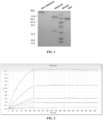
- the electropherogram of VP101 is shown in FIG. 1 .
- the target protein of the reduced protein sample is at 75 kD and 25 kD, and the target protein of the non-reduced protein sample (single antibody) is at 200 kD.
- the humanized antibody VP101 used in the following experiments was prepared by the method of this example.
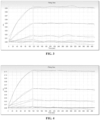
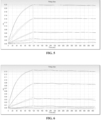
- the sample dilution buffer was PBS (0.02% Tween-20, 0.1% BSA, pH7.4). 5 ⁇ g/mL antibody was immobilized to an AHC sensor with the immobilization height being about 0.4 nM.
- the sensor was equilibrated in a buffer for 60 s, and the antibody immobilized to the sensor bound to PD-1-mFc at a concentration of 0.62-50 nM (three-fold gradient dilution) for 120 s, and then the antigen and antibody dissociated in the buffer for 300 s.
- the data were analyzed by 1: 1 model fitting to obtain affinity constants.
- the data acquisition software was Fortebio Data Acquisition 7.0, and the data analysis software was Fortebio Data Analysis 7.0.
- the method is specified as follows: The microplate was coated with VEGFA-His and incubated at 37 °C for 2 hours. After being washed, the microplate was blocked with 1% BSA for 2 hours. After being washed, the microplate was added with the gradiently diluted antibody and incubated at 37 °C for 30 minutes. After being washed, the microplate was added with the enzyme-labeled goat anti-human IgG secondary antibody working solution and incubated for 30 minutes at 37 °C. After being washed, the microplate was added with TMB chromogenic solution for color developing for 5 minutes in the absence of light, and then stop solution was added to terminate the chromogenic reaction. Then the microplate was put into a microplate reader immediately, and the OD value of each well in the microplate was read at 450 nm. SoftMax Pro 6.2.1 was used to analyze and process the data.
- the detection result of the binding of antibody VP101 to antigen VEGFA-His is shown in FIG. 11 .
- the absorbance intensities at each dose are shown in Table 4.
- the binding EC 50 of antibody was calculated by curve fitting using antibody concentration as the abscissa and absorbance value as the ordinate, and the results are shown in Table 4 below.
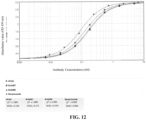
- the method is specified as follows: The microplate was coated with VEGFA-His and incubated overnight at 4 °C. After being washed, the microplate was blocked with 1% BSA (dissolved in PBS) for 2 hours. After being washed, the microplate was added with the gradiently diluted antibody and incubated at 37 °C for 30 minutes. After being washed, the microplate was added with the horseradish peroxidase-labeled goat anti-human IgG Fc (Jackson, 109-035-098) working solution and incubated for 30 minutes at 37 °C.
- the microplate After being washed, the microplate was added with TMB (Neogen, 308177) for color developing for 5 minutes in the absence of light, and then stop solution was added to terminate the chromogenic reaction. Then the microplate was put into a microplate reader immediately, and the OD value of each well in the microplate was read at 450 nm. SoftMax Pro 6.2.1 was used to analyze and process the data.
- TMB Neogen, 308177
- the result of the binding of antibody VP101 to antigen VEGFA-His is shown in FIG. 12 .
- the absorbance intensities at each dose are shown in Table 5.
- the binding EC 50 of antibody was calculated by curve fitting using antibody concentration as the abscissa and absorbance value as the ordinate, and the results are shown in Table 5 below.
- the method is specified as follows: The microplate was coated with human PD-1-mFc and incubated overnight at 4 °C. After being blocked with 1% BSA at 37 °C for 2 hours, the microplate was added with antibody, and then incubated at 37 °C for 30 minutes. After the microplate was washed and patted dry, the HRP-labeled goat anti-human IgG (H+L) secondary antibody (Jackson, 109-035-088) was added, and the microplate was incubated at 37 °C for 30 minutes. After the microplate was washed and patted dry, TMB (Neogen, 308177) was added for color developing for 5 minutes, and then stop solution was added to terminate the color development. Then the microplate was put into a microplate reader immediately, and the OD value of each well in the microplate was read at 450 nm. SoftMax Pro 6.2.1 was used to analyze and process the data.
- HRP-labeled goat anti-human IgG (H+L) secondary antibody
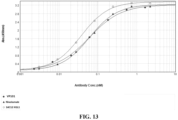
- the detection result of the binding of antibody VP101 to antigen PD-1 is shown in FIG. 13 .
- the absorbance intensities at each dose are shown in Table 6.
- the curve simulation was performed to obtain the binding efficiency EC 50 of the antibody, which is shown in Table 6 below.
- the method is specified as follows: The microplate was coated with human PD-1-mFc and incubated overnight at 4 °C. After being blocked with 1% BSA at 37 °C for 2 hours, the microplate was added with antibody, and then incubated at 37 °C for 30 minutes. After the microplate was washed and patted dry, the horseradish peroxidase-labeled goat anti-human IgG Fc (Jackson, 109-035-098) was added, and the microplate was incubated at 37 °C for 30 minutes. After the microplate was washed and patted dry, TMB (Neogen, 308177) was added for color developing for 5 minutes, and then stop solution was added to terminate the color development. Then the microplate was put into a microplate reader immediately, and the OD value of each well in the microplate was read at 450 nm. SoftMax Pro 6.2.1 was used to analyze and process the data.
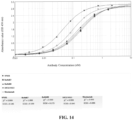
- the detection result of the binding of antibody VP101 to antigen PD-1 is shown in FIG. 14 .
- the absorbance intensities at each dose are shown in Table 7.
- the curve simulation was performed to give the binding efficiency EC 50 of the antibody, which is shown in Table 7 below.
- Table 7 Respective binding activities of antibodies VP101, BsAbB7, BsAbB8, 14C12H1L1 and nivolumab to PD-1 (Indirect ELISA) Antibody concentration ( ⁇ g/mL) Antigen coating: PD-1-mFc 0.5 ⁇ g/mL VP101 BsAbB7 BsAbB8 14C12 H1L1 Nivolumab 0.333 2.717 2.709 2.732 2.755 2.716 2.715 2.947 2.966 2.823 2.824 0.111 2.507 2.381 2.318 2.321 2.377 2.409 2.923 2.967 2.747 2.758 0.037 1.709 1.616 1.491 1.457 1.522 1.549 2.656 2.694 2.208 2.293 0.012 0.916 0.822 0.732 0.711 0.797 0.775 2.049 2.060 1.348 1.389 0.004 0.413 0.394 0.333 0.321 0.368 0.351 1.139 1.132 0.629
- the results show that the antibody VP101 can bind to the PD-1 protein efficiently and its binding efficiency is dose-dependent, and antibody VP101 has a higher binding activity to human PD-1 than BsAbB7 and BsAbB8.
- the method is specifically as follows: The microplate was coated with VEGF-His and incubated at 37 °C for 2 hours. After being washed, the microplate was blocked with 1% BSA for 1 hour at 37 °C. After being washed, the microplate was added with the gradiently diluted antibodies and human VEGFR2 ECD-mFc-bio (final concentration: 0.02 ⁇ g/mL) and incubated at room temperature for 2 hours. After being washed, the microplate was added with HRP-labeled streptavidin SA-HRP (1:4000) working solution and incubated at 37 °C for 30 minutes.
- the microplate After being washed, the microplate was added with TMB chromogenic solution for color developing for 5 minutes in the absence of light, and then stop solution was added to terminate the chromogenic reaction. Then the microplate was put into a microplate reader immediately, and the OD value of each well in the microplate was read at 450 nm. SoftMax Pro 6.2.1 was used to analyze and process the data.
- the results show that the antibody VP101 can effectively bind to the antigen VEGFA and inhibit the binding of VEGFR2 to VEGFA, and its efficiency in inhibiting the binding of VEGFR2 to VEGFA is dose-dependent.
- the method is specifically as follows: The microplate was coated with PD-1-hFc and incubated overnight at 4 °C. After the microplate was blocked with 1% BSA for 2 hours, antibodies at different concentrations were each mixed with PD-L1-hFc for 10 minutes (see Table 10 for the dilution concentrations). After incubation at 37 °C for 30 minutes, the microplate was washed and patted dry. Then enzyme-labeled secondary antibody was added, and the microplate was incubated at 37 °C for 30 minutes. After the microplate was washed and patted dry, TMB was added for color developing for 5 minutes, and then stop solution was added to terminate the color development. Then the microplate was put into a microplate reader immediately, and the OD value of each well in the microplate was read at 450 nm (see Table 10). SoftMax Pro 6.2.1 was used to analyze and process the data.
- Example 4 Binding of antibody VP101 to cell membrane surface antigen
- 293T cells expressing PD-1 antigen was constructed, and then the specific binding capacity of the antibody to the cell membrane surface antigen was analyzed and verified by flow cytometry.
- the vector pLenti6.3-PD-1 of PD-1 (the vector pLenti6.3 was purchased from Invitrogen) was transfected into 293T cells, and clone group 293T-PD-1 cells which stably express PD-1 were obtained by screening.
- the 293T-PD-1 expressing antigen obtained in the previous step was digested with pancreatin by a conventional pancreatin digestion method, and the number of cells in each collection tube was made to be 2 ⁇ 10 5 .
- Antibody diluting solutions with concentration gradiently diluted with PBSA (1% BSA) were each incubated with 293T-PD-1 cells on ice for 2 hours, and then each tube was added with 100 ⁇ L of FITC goat anti-human IgG (1:500) and incubated on ice for 1 hour. Then PBS was used for washing, and 300 ⁇ L of PBSA was used to resuspend the cells, and fluorescence signals (MFI) were detected with FITC channel on a flow cytometer.
- MFI fluorescence signals
- Table 10 Analysis of fluorescence intensity of the binding of VP101 to 293T-PD-1 surface antigen detected by FACS Antibody (nM) 0.14 0.41 1.23 3.70 11.11 33.33 100 EC 50 Bevacizumab 3.2 2.2 2.0 2.3 2.7 3.8 5.7 - Nivolumab 33.3 74.9 171.9 357.9 481.9 498.3 478.4 2.1 14C12H1L1 48.1 99.7 201.5 409.0 600.2 655.4 670.8 2.9 VP101 30.8 61.8 135.7 286.9 487.7 534.0 528.6 3.5
- the results show that the VP101 antibody can effectively bind to the PD-1 antigen on the 293T-PD-1 host cell surface, and its binding efficiency is dose-dependent, and bevacizumab has no binding activity to 293T-PD-1, which indicates that the binding of VP101 to 293T-PD-1 is specific.
- the binding EC 50 values of nivolumab, 14C12H1L1, VP101, BsAbB7 and BsAbB8 were calculated to be 7.853 nM, 3.607 nM, 7.896 nM, 9.943 nM and 10.610 nM, respectively.
- Table 11 Analysis of fluorescence intensities of the binding of VP101, BsAbB7 and BsAbB8 to 293T-PD-1 surface antigen detected by FACS Antibody (nM) 0.014 0.14 0.41 1.23 3.7 11 30 100 EC50(nM) Bevacizumab 1.89 1.90 2.20 1.92 2.04 2.48 2.80 2.43 - Nivolumab 3.91 15.30 34.69 94.04 234.34 533.63 640.15 804.69 7.853 14C12H1L1 7.40 29.55 69.16 175.54 422.53 868.45 831.27 813.58 3.607 VP101 3.47 16.16 38.75 93.08 216.76 509.23 810.37 783.58 7.896 BsAbB7 3.85 14.86 37.45 83.78 202.40 465.10 837.61 846.80 9.943 BsAbB8 4.41 16.77 36.86 89.89 210.40 457.91 8
- VP101 antibody can bind to the membrane surface PD-1 of 293T-PD1 in a dose-dependent manner.
- Bevacizumab has no binding activity to 293T-PD-1, which indicates that the binding of VP101 to 293T-PD-1 is specific.
- Example 5 Competitive binding of antibody VP101 to cell membrane surface antigen
- a competitive flow cytometry method was adopted to detect the EC 50 of the VP101 in competing with PD-L1 for binding to the cell membrane surface antigen PD-1, and the method is specified as follows:
- the 293T-PD-1 cells was digested in a conventional way, and divided into several samples with 300,000 cells for each, which were then subjected to centrifugation and washing. Then each tube was added with 100 ⁇ L of corresponding gradiently diluted antibody and incubated on ice for 30 minutes; 100 ⁇ L of PD-L1-mFc was then added to each tube, and the mixture was mixed well to reach a final concentration of 20 nM, and then incubated on ice for 1 hour.
- the binding EC 50 values of the antibodies VP101 and 14C12H1L1 were calculated to be 8.33 nM and 4.37 nM, respectively.
- Table 12 Analysis of fluorescence intensities of 14C12H1L1 and VP101 in competing for binding to 293T-PD-1 surface antigen detected by FACS Antibody (nM) 0.05 0.14 0.41 1.23 3.70 11.11 33.33 100.00 EC 50 R 2 14C12H1L1 288.17 287.29 277.09 237.22 177.80 12.04 10.32 9.87 4.37 0.988 VP101 272.66 264.39 279.11 272.26 239.18 99.29 17.05 14.91 8.33 0.999 The results show that the VP101 antibody can effectively block the binding of PDL-1 to PD-1 on the surface of 293T-PD-1 host cells in a dose-dependent manner.
- EC 50 values of VP101, BsAbB7, BsAbB8, 14C12H1L1 and nivolumab in competing with PD-L1 for binding to the cell membrane surface antigen PD-1 were detected by using competitive flow cytometry and referring to the experimental procedure described in step 1 of this example.
- the results are shown in FIG. 20 , and the MFI values at each concentration are shown in Table 13.
- the competitive binding EC50 values of antibodies VP101, BsAbB7, BsAbB8, 14C12H1L1 and nivolumab were calculated to be 15.04 nM, 22.25 nM, 19.25 nM, 9.21 nM and 9.72 nM, respectively.
- Table 13 Analysis of fluorescence intensities of VP101, BsAbB7, BsAbB8, 14C12H1L1 and nivolumab in competing for binding to 293T-PD-1 surface antigen detected by FACS Antibody (nM) 0.14 0.41 1.23 3.7 11.11 33.33 100 300 EC 50 R 2 VP101 1441.94 1380.62 1368.15 1288.34 982.69 112.90 8.49 8.21 15.04 0.9971 BsAbB7 1412.62 1377.27 1339.60 1341.27 1094.35 417.70 9.23 9.18 22.25 0.9985 BsAbB8 1578.36 1521.50 1427.20 1429.85 1137.74 359.69 9.73 9.68 19.25 0.9962 14C12H1L1 1384.08 1551.05 1462.85 1296.64 580.45 12.93 13.37 14.99 9.21 0.9950 Nivolumab 1539.58 1552.37 1483.84 1300.81 7
- the results show that the activity of the antibody 14C12H1L1 is equivalent to that of the marketed antibody nivolumab targeting PD-1, and is superior to that of the bifunctional antibody VP101.
- the activity of the antibody VP101 is superior that of to BsAbB7 and BsAbB8.
- KDR (VEGFR2) vector pCDH-KDRFL(OPV)-GFP-Puro (Vector pCDH-GFP-Puro is purchased from Youbio) and NFAT vector pNFAT-luc-hygro (vector pGL4-luc2P-hygro is purchased from Promega) were transfected into 293T cells, and a clone group 293T-NFAT-(opv) KDR(C7) cells stably expressing KDR and NFAT luciferase reporter genes were obtained by screening.
- 293T-NFAT-(opv)KDR(C7) cells were collected and centrifuged for 5 minutes to remove the supernatant; DMEM+10%FBS medium was used to resuspend the cells, and the cell number was counted and the cell viability was detected; then the cell concentration was adjusted to be in a proper range, and 50000 cells/50 ⁇ L cell suspension was added into each well of a black 96-well plate;
- Corresponding antibodies (final concentrations being 300, 100, 10, 2, 0.2, 0.02, 0.002 nM) and VEGF (final concentration being 30 ng/mL) were diluted according to the experimental design, and the antibodies targeting VEGF were preincubated with VEGF for 1 hour at room temperature before being added into the cells.
- Blank and isotype controls (final volume of each well being 100 ⁇ L) were designed and incubated in a carbon dioxide incubator at 37 °C, 5% CO 2 for 4 hours; 50 ⁇ L of Luciferase Assay System was added to each well, and Relative Fluorescence Units (RLUs) were detected by a multi-label microplate tester within 5 minutes.
- RLUs Relative Fluorescence Units
- the results show that the EC 50 of VP101 is 1.240 nM, the EC 50 of BsAbB7 is 1.217 nM, the EC 50 of BsAbB8 is 1.728 nM, and the EC 50 of bevacizumab is 0.773 nM, and the experimental results show that the activity of VP101 and BsAbB7 in blocking VEGF to activate NFAT signaling pathway is better than that of BsAbB8.
- Example 7 Experiment of VP101 Antibody Inhibiting VEGFA-Induced HUVEC Cell Proliferation
- HUVEC cells purchased from Allcell in a good growth state, after the cell concentration was adjusted to be 1.5 ⁇ 10 4 /mL, were inoculated into a 96-well plate at 200 ⁇ L/well, and then incubated in an incubator at 37 °C, 5% CO 2 for 24 hours. Then it was observed that the cells adhered well, and then culture medium was discarded. 20 nM VEGFA prepared by using 1640 containing 2% FBS was then added into the 96-well plate at 200 ⁇ L/well, and antibodies at different concentrations were added, followed by incubation for 72 hours. 72 hours later, the culture medium was discarded and MTT was added. 4 hours later, the MTT was discarded and DMSO was added, and then a microplate reader was used to measure the OD value at 490 nm.
- the results are shown in FIG. 22 .
- the results show that the humanized antibodies VP101 and bevacizumab both can effectively inhibit VEGFA-induced HUVEC cell proliferation in a dose-dependent manner, and the pharmacological activity of VP101 in inhibiting VEGFA-induced HUVEC cell proliferation is higher than that of bevacizumab at the same dose.
- PBMCs were isolated by Ficoll-Paque Plus (GE Healthcare) and added to IL-4 (Peprotech 200-04, 1000 U/mL) and GM-CSF (Peprotech 300-03, 1000 U/mL) for 6 days of induction, and then TNF- ⁇ (Peprotech 300-01A, 200 U/mL) was additionally added for 3 days of induction to obtain mature DC cells.
- IL-4 Peprotech 200-04, 1000 U/mL
- GM-CSF Peprotech 300-03, 1000 U/mL
- TNF- ⁇ Peprotech 300-01A, 200 U/mL
- VP101 can effectively promote secretion of IFN-y in a dose-dependent manner.
- VP101 has greater activity in promoting secretion of IFN- ⁇ than equivalent 14C12H1L1, and at dose level of 30 nM, it has greater activity in promoting secretion of IFN-y than equivalent nivolumab.
- Step 1 in this example was referred to for the experimental method, namely PBMCs were isolated by Ficoll-Paque Plus (GE Healthcare) and added to IL-4 (Peprotech 200-04, 1000 U/mL) and GM-CSF (Peprotech 300-03, 1000 U/mL) for 6 days of induction, and then TNF- ⁇ (Peprotech 300-01A, 200 U/mL) was additionally added for 3 days of induction to obtain mature DC cell.
- IL-4 Peprotech 200-04, 1000 U/mL
- GM-CSF Peprotech 300-03, 1000 U/mL
- VP101 The effect of VP101 on secretion of IFN-y in mixed culture system of DC and PBMC cells is shown in FIG. 24 .
- VP101 can effectively promote secretion of IFN-y in a dose-dependent manner.
- the pharmacological activity of VP101 in promoting secretion of IFN- ⁇ is significantly better than that of BsAbB7 and BsAbB8.
- VP101 The effect of VP101 on secretion of IL-2 in mixed culture system of DC and PBMC cells is shown in FIG. 25 .
- VP101 can effectively promote secretion of IL-2 in a dose-dependent manner, and the pharmacological activity of VP101 in promoting secretion of IL-2 is better than that of BsAbB7 and BsAbB8.
- PD-L1 was stably transfected into Raji cells through lentivirus infection, and Raji-PD-L1 cells stably expressing PD-L1 were obtained after dosing and screening; PBMCs, after two days of stimulation by SEB, were cultured in together with mitomycin C-treated Raji-PD-L1.
- the results are shown in FIGs. 26 and 27 .
- the results show that VP101 can effectively promote secretion of IL-2 and IFN-y, and at dose level of 300 nM, the activity of VP101 in promoting secretion of IL-2 is significantly better than that of equivalent 14C12H1L1 and nivolumab.
- the isotype control antibody to be studied was Human Anti-Hen Lysozyme (anti-HEL, i.e., human IgG, abbreviated as hIgG), and it was prepared as described in Preparation Example 6 above.
- anti-HEL Human Anti-Hen Lysozyme
- the results of secretion of IFN-y are shown in FIG. 28 .
- the results show that VP101 can effectively promote secretion of IFN-y in a dose-dependent manner.
- VP101 is significantly better than BsAbB7 at the same dose, while the pharmacological activity of VP101 is significantly better than that of BsAbB8 at dose levels of 3 nM and 30 nM.
- the results of secretion of IL-2 are shown in FIG. 29 .
- the results show that VP101 can effectively promote secretion of IL-2 in a dose-dependent manner.
- the pharmacological activity of VP101 is significantly better than that of BsAbB7 at doses of 3 nM and 300 nM, while VP101 is equivalent to BsAbB8 at the same dose.
- U87MG cells human glioma cells, purchased from ATCC
- Scid Beige mice purchased from Vital River
- Table 15 Dosing regimen of treating U87MG tumor xenograft Scid Beige mouse model with VP101 Grouping n Tumor xenograft Condition of administration Isotype control 40 mg/kg 7 U-87MG, 5 million cells/mouse subcutaneously Isotype control antibody, hIgG, 40 mg/kg, injected intravenously on days 0, 7 and 13 Bevacizumab 30mg/kg 8 Bevacizumab 30 mg/kg, injected intravenously on days 0, 7 and 13 VP101 40mg/kg 7 VP101 40 mg/kg, injected intravenously on days 0, 7 and 13 VP101 4mg/kg 7 VP101 4 mg/kg, injected intravenously on days 0, 7 and 13
- the results are shown in FIG. 30 .
- the results show that compared with an isotype control antibody hIgG (the preparation method is the same as that of the Preparation Example 6), bevacizumab and VP101 at different doses can effectively inhibit the growth of mouse tumors, and the high-dose VP101 is better than that of low-dose VP 101 in inhibiting tumors.
- VP 101 does not affect the body weight of tumor-bearing mouse.
Landscapes
- Health & Medical Sciences (AREA)
- Life Sciences & Earth Sciences (AREA)
- Chemical & Material Sciences (AREA)
- Immunology (AREA)
- Organic Chemistry (AREA)
- Molecular Biology (AREA)
- General Health & Medical Sciences (AREA)
- Medicinal Chemistry (AREA)
- Engineering & Computer Science (AREA)
- Biochemistry (AREA)
- Biomedical Technology (AREA)
- Hematology (AREA)
- Genetics & Genomics (AREA)
- Proteomics, Peptides & Aminoacids (AREA)
- Urology & Nephrology (AREA)
- Biophysics (AREA)
- Cell Biology (AREA)
- Animal Behavior & Ethology (AREA)
- Public Health (AREA)
- Pharmacology & Pharmacy (AREA)
- Veterinary Medicine (AREA)
- Biotechnology (AREA)
- Chemical Kinetics & Catalysis (AREA)
- Nuclear Medicine, Radiotherapy & Molecular Imaging (AREA)
- General Chemical & Material Sciences (AREA)
- Microbiology (AREA)
- Physics & Mathematics (AREA)
- Food Science & Technology (AREA)
- Analytical Chemistry (AREA)
- General Physics & Mathematics (AREA)
- Pathology (AREA)
- Bioinformatics & Cheminformatics (AREA)
- Oncology (AREA)
- General Engineering & Computer Science (AREA)
- Wood Science & Technology (AREA)
- Zoology (AREA)
- Epidemiology (AREA)
- Plant Pathology (AREA)
- Endocrinology (AREA)
- Peptides Or Proteins (AREA)
Priority Applications (4)
| Application Number | Priority Date | Filing Date | Title |
|---|---|---|---|
| SI201930851T SI3882275T1 (sl) | 2018-08-30 | 2019-08-30 | Bifunkcionalna protitelesa anti-pd-1 in anti-vegfa, njihova farmacevtska sestava in njihova uporaba |
| EP24192172.5A EP4461746A3 (en) | 2018-08-30 | 2019-08-30 | Anti-pd-1/vegfa bifunctional antibody, pharmaceutical composition thereof and use thereof |
| HRP20241417TT HRP20241417T1 (hr) | 2018-08-30 | 2019-08-30 | Bifunkcionalno antitijelo anti-pd-1 i anti-vegfa, njegov farmaceutski pripravak i njegova uporaba |
| RS20241104A RS66073B1 (sr) | 2018-08-30 | 2019-08-30 | Anti-pd-1 i anti-vegfa bifunkcionalno antitelo, njegova farmaceutska kompozicija i njena upotreba |
Applications Claiming Priority (2)
| Application Number | Priority Date | Filing Date | Title |
|---|---|---|---|
| CN201811002548.4A CN109053895B (zh) | 2018-08-30 | 2018-08-30 | 抗pd-1-抗vegfa的双功能抗体、其药物组合物及其用途 |
| PCT/CN2019/103618 WO2020043184A1 (zh) | 2018-08-30 | 2019-08-30 | 抗pd-1-抗vegfa的双功能抗体、其药物组合物及其用途 |
Related Child Applications (2)
| Application Number | Title | Priority Date | Filing Date |
|---|---|---|---|
| EP24192172.5A Division EP4461746A3 (en) | 2018-08-30 | 2019-08-30 | Anti-pd-1/vegfa bifunctional antibody, pharmaceutical composition thereof and use thereof |
| EP24192172.5A Division-Into EP4461746A3 (en) | 2018-08-30 | 2019-08-30 | Anti-pd-1/vegfa bifunctional antibody, pharmaceutical composition thereof and use thereof |
Publications (3)
| Publication Number | Publication Date |
|---|---|
| EP3882275A1 EP3882275A1 (en) | 2021-09-22 |
| EP3882275A4 EP3882275A4 (en) | 2022-08-10 |
| EP3882275B1 true EP3882275B1 (en) | 2024-09-18 |
Family
ID=64758699
Family Applications (2)
| Application Number | Title | Priority Date | Filing Date |
|---|---|---|---|
| EP19853809.2A Active EP3882275B1 (en) | 2018-08-30 | 2019-08-30 | Anti-pd-1 and anti-vegfa bifunctional antibody, pharmaceutical composition thereof and use thereof |
| EP24192172.5A Pending EP4461746A3 (en) | 2018-08-30 | 2019-08-30 | Anti-pd-1/vegfa bifunctional antibody, pharmaceutical composition thereof and use thereof |
Family Applications After (1)
| Application Number | Title | Priority Date | Filing Date |
|---|---|---|---|
| EP24192172.5A Pending EP4461746A3 (en) | 2018-08-30 | 2019-08-30 | Anti-pd-1/vegfa bifunctional antibody, pharmaceutical composition thereof and use thereof |
Country Status (25)
| Country | Link |
|---|---|
| US (3) | US20210340239A1 (pl) |
| EP (2) | EP3882275B1 (pl) |
| JP (3) | JP7374995B2 (pl) |
| KR (1) | KR20210053912A (pl) |
| CN (1) | CN109053895B (pl) |
| AU (1) | AU2019332708A1 (pl) |
| BR (1) | BR112021003559A2 (pl) |
| CA (1) | CA3110749A1 (pl) |
| DK (1) | DK3882275T5 (pl) |
| EA (1) | EA202190535A1 (pl) |
| ES (1) | ES2989584T3 (pl) |
| FI (1) | FI3882275T3 (pl) |
| HR (1) | HRP20241417T1 (pl) |
| HU (1) | HUE068809T2 (pl) |
| IL (1) | IL281116A (pl) |
| LT (1) | LT3882275T (pl) |
| MX (1) | MX2021002312A (pl) |
| PH (1) | PH12021550407A1 (pl) |
| PL (1) | PL3882275T3 (pl) |
| PT (1) | PT3882275T (pl) |
| RS (1) | RS66073B1 (pl) |
| SG (1) | SG11202101985TA (pl) |
| SI (1) | SI3882275T1 (pl) |
| WO (1) | WO2020043184A1 (pl) |
| ZA (1) | ZA202101894B (pl) |
Families Citing this family (35)
| Publication number | Priority date | Publication date | Assignee | Title |
|---|---|---|---|---|
| US9840553B2 (en) | 2014-06-28 | 2017-12-12 | Kodiak Sciences Inc. | Dual PDGF/VEGF antagonists |
| AU2016381964B2 (en) | 2015-12-30 | 2024-02-15 | Kodiak Sciences Inc. | Antibodies and conjugates thereof |
| CN112203679A (zh) | 2018-03-02 | 2021-01-08 | 科达制药股份有限公司 | Il-6抗体及其融合构建体和缀合物 |
| CN109053895B (zh) | 2018-08-30 | 2020-06-09 | 中山康方生物医药有限公司 | 抗pd-1-抗vegfa的双功能抗体、其药物组合物及其用途 |
| CN111423512B (zh) * | 2019-01-10 | 2024-01-05 | 北京比洋生物技术有限公司 | 阻断血管内皮细胞生长且活化t细胞的多靶向融合蛋白和包含其的药物组合物 |
| CN109942712B (zh) * | 2019-04-01 | 2022-12-20 | 华博生物医药技术(上海)有限公司 | 抗pd-l1/vegf双功能抗体及其用途 |
| JP7753186B2 (ja) * | 2019-08-02 | 2025-10-14 | シーティーティーキュー-アケソ(シャンハイ) バイオメド テク カンパニー リミテッド | 抗pd-1抗体およびその医学的使用 |
| CN115947846A (zh) | 2019-09-12 | 2023-04-11 | 普米斯生物技术(珠海)有限公司 | 一种抗pd-l1纳米抗体及其衍生物和用途 |
| CA3157509A1 (en) | 2019-10-10 | 2021-04-15 | Kodiak Sciences Inc. | Methods of treating an eye disorder |
| GB201914747D0 (en) * | 2019-10-11 | 2019-11-27 | Ultrahuman Eight Ltd | PD1 and vegfr2 dual-binding agents |
| BR112022010069A2 (pt) * | 2019-11-25 | 2022-09-06 | Akeso Biopharma Inc | Anticorpo biespecífico, molécula de ácido nucleico isolada, vetor, célula hospedeira, conjugado, kit, uso do anticorpo biespecífico e composição farmacêutica |
| AU2021210025A1 (en) * | 2020-01-21 | 2022-08-25 | Wuxi Biologics (Shanghai) Co. Ltd. | A bispecific anti-PD-L1/VEGF antibody and uses thereof |
| CA3176321A1 (en) * | 2020-04-22 | 2021-10-28 | Peng Zhang | Anti-cd73-anti-pd-1 bispecific antibody and use thereof |
| JP7711095B2 (ja) * | 2020-04-29 | 2025-07-22 | チア タイ ティエンチン ファーマシューティカル グループ カンパニー リミテッド | PD-1とTGF-βに対する二機能性タンパク質 |
| CN114057883B (zh) * | 2020-07-31 | 2024-04-16 | 江苏恒瑞医药股份有限公司 | 双特异性抗原结合分子及其医药用途 |
| CN114106190B (zh) * | 2020-08-31 | 2025-04-08 | 普米斯生物技术(珠海)有限公司 | 一种抗vegf/pd-l1双特异性抗体及其用途 |
| WO2022068894A1 (zh) * | 2020-09-30 | 2022-04-07 | 上海齐鲁制药研究中心有限公司 | 同时靶向pd-l1和vegf的双功能分子及其医药用途 |
| CN114316025B (zh) * | 2020-12-25 | 2025-01-03 | 百奥赛图(北京)医药科技股份有限公司 | Vegfr2基因人源化的非人动物及其构建方法和应用 |
| CA3193662A1 (en) * | 2021-03-12 | 2022-09-15 | Akeso Biopharma, Inc. | Pharmaceutical combination containing anti-pd-1-anti-vegfa bispecific antibody, and use thereof |
| JP2024513205A (ja) * | 2021-03-31 | 2024-03-22 | ウーシー バイオロジクス アイルランド リミテッド | 二重特異性抗pd-l1/vegf抗体およびその使用 |
| MX2023010687A (es) * | 2021-04-14 | 2023-09-22 | Akeso Biopharma Inc | Anticuerpos monoclonales anti cd47 y usos de los mismos. |
| KR20230171456A (ko) * | 2021-04-14 | 2023-12-20 | 아케소 파마슈티컬스, 인코포레이티드 | 항-종양 치료에서의 항체의 용도 |
| CN116143935A (zh) * | 2021-11-22 | 2023-05-23 | 杭州翰思生物医药有限公司 | 重组抗体及其应用 |
| CN114181310B (zh) * | 2022-02-14 | 2022-07-05 | 中山康方生物医药有限公司 | 抗tigit抗体、其药物组合物及用途 |
| CN119546633A (zh) * | 2022-07-20 | 2025-02-28 | 明慧医药(杭州)有限公司 | 多特异性抗体及其用途 |
| TW202413427A (zh) * | 2022-08-09 | 2024-04-01 | 大陸商上海濟煜醫藥科技有限公司 | 一種靶向pd-1和vegf的抗體及其應用 |
| WO2024051223A1 (zh) * | 2022-09-09 | 2024-03-14 | 中山康方生物医药有限公司 | 药物组合及用途 |
| JP2025534252A (ja) * | 2022-09-14 | 2025-10-15 | 尋済生物科技(北京)有限公司 | 抗vegfa抗体またはその抗原結合フラグメント、およびその使用 |
| CN116003619B (zh) * | 2022-12-12 | 2023-08-04 | 三门峡市眼科医院 | 人源化抗Ang-2和VEGF双功能抗体及其医药用途 |
| CN118591562A (zh) * | 2022-12-30 | 2024-09-03 | 上海荣昌生物科技有限公司 | 一种双特异性抗体及其应用 |
| CN119039450A (zh) * | 2023-05-22 | 2024-11-29 | 上海君实生物医药科技股份有限公司 | 抗pd-1-抗vegf的双特异性抗体、其药物组合物及其用途 |
| WO2025006794A1 (en) * | 2023-06-29 | 2025-01-02 | Promab Biotechnologies, Inc. | Her-2 -cd3-epsilon bispecific antibodies |
| CN119613559A (zh) * | 2023-09-14 | 2025-03-14 | 中山康方生物医药有限公司 | 药物组合及用途 |
| CN120361206A (zh) * | 2024-01-25 | 2025-07-25 | 中山康方生物医药有限公司 | 抗pd-1-抗vegfa的双特异性抗体的医药用途 |
| WO2025193962A1 (en) * | 2024-03-15 | 2025-09-18 | OncoC4, Inc. | Anti-vegf and pd-1 bispecific antibodies and uses thereof |
Citations (6)
| Publication number | Priority date | Publication date | Assignee | Title |
|---|---|---|---|---|
| WO2013181452A1 (en) | 2012-05-31 | 2013-12-05 | Genentech, Inc. | Methods of treating cancer using pd-l1 axis binding antagonists and vegf antagonists |
| CN105175545A (zh) | 2015-10-20 | 2015-12-23 | 安徽瀚海博兴生物技术有限公司 | 一种抗vegf-抗pd-1双功能抗体及其应用 |
| WO2017165681A1 (en) | 2016-03-24 | 2017-09-28 | Gensun Biopharma Inc. | Trispecific inhibitors for cancer treatment |
| WO2018036472A1 (zh) | 2016-08-23 | 2018-03-01 | 中山康方生物医药有限公司 | 一种抗pd1单克隆抗体、其药物组合物及其用途 |
| WO2018036473A1 (zh) | 2016-08-23 | 2018-03-01 | 中山康方生物医药有限公司 | 抗ctla4-抗pd-1双功能抗体、其药物组合物及其用途 |
| CN109053895A (zh) | 2018-08-30 | 2018-12-21 | 中山康方生物医药有限公司 | 抗pd-1-抗vegfa的双功能抗体、其药物组合物及其用途 |
Family Cites Families (46)
| Publication number | Priority date | Publication date | Assignee | Title |
|---|---|---|---|---|
| US4816567A (en) | 1983-04-08 | 1989-03-28 | Genentech, Inc. | Recombinant immunoglobin preparations |
| US5747654A (en) | 1993-06-14 | 1998-05-05 | The United States Of America As Represented By The Department Of Health And Human Services | Recombinant disulfide-stabilized polypeptide fragments having binding specificity |
| ES2273415T3 (es) | 1997-04-07 | 2007-05-01 | Genentech, Inc. | Anticuerpos anti-vegf. |
| US6884879B1 (en) | 1997-04-07 | 2005-04-26 | Genentech, Inc. | Anti-VEGF antibodies |
| US20040132101A1 (en) | 2002-09-27 | 2004-07-08 | Xencor | Optimized Fc variants and methods for their generation |
| US20090148435A1 (en) | 2007-10-30 | 2009-06-11 | Genentech, Inc. | Antibody purification by cation exchange chromatography |
| RS54233B1 (sr) * | 2008-08-25 | 2015-12-31 | Amplimmune Inc. | Kompozicije pd-1 antagonista i postupci za njihovu primenu |
| US9079953B2 (en) | 2009-06-17 | 2015-07-14 | Abbvie Biotherapeutics Inc. | Anti-VEGF antibodies and their uses |
| PL2542590T5 (pl) | 2010-03-05 | 2020-08-10 | The Johns Hopkins University | Kompozycje i sposoby dla ukierunkowanych immunomodulatorowych przeciwciał i białek fuzyjnych |
| AU2011290480B2 (en) | 2010-08-16 | 2015-07-30 | Novimmune S.A. | Methods for the generation of multispecific and multivalent antibodies |
| WO2013142255A2 (en) | 2012-03-22 | 2013-09-26 | University Of Miami | Multi-specific binding agents |
| US10131712B2 (en) * | 2012-08-14 | 2018-11-20 | Ibc Pharmaceuticals, Inc. | Combination therapy with T-cell redirecting bispecific antibodies and checkpoint inhibitors |
| US20140154255A1 (en) | 2012-11-30 | 2014-06-05 | Abbvie Biotherapeutics Inc. | Anti-vegf antibodies and their uses |
| EP3161000A4 (en) | 2014-06-28 | 2018-05-02 | Kodiak Sciences Inc. | Dual pdgf/vegf antagonists |
| US9840553B2 (en) | 2014-06-28 | 2017-12-12 | Kodiak Sciences Inc. | Dual PDGF/VEGF antagonists |
| AR103477A1 (es) * | 2015-01-28 | 2017-05-10 | Lilly Co Eli | Compuestos de vegfa / ang2 |
| CN105175544B (zh) | 2015-10-20 | 2021-04-09 | 安徽瀚海博兴生物技术有限公司 | 一种抗pd-1人源化单克隆抗体及其应用 |
| CN106632674B (zh) | 2015-10-30 | 2018-11-16 | 泽达生物医药有限公司 | 一种抗pd-1单克隆抗体、其药物组合物及其用途 |
| US11459405B2 (en) * | 2015-12-28 | 2022-10-04 | Massachusetts Institute Of Technology | Bispecific antibodies having constant region mutations and uses therefor |
| CN109152831A (zh) | 2015-12-29 | 2019-01-04 | 安口生物公司 | 贝伐珠单抗的缓冲制剂 |
| HK1247214B (zh) | 2016-03-04 | 2019-07-19 | 四川科伦博泰生物医药股份有限公司 | 一种pdl-1抗体、其药物组合物及其用途 |
| JP7503887B2 (ja) * | 2016-04-15 | 2024-06-21 | ジェネンテック, インコーポレイテッド | がんを監視及び治療するための方法 |
| EP3450460B1 (en) | 2016-04-29 | 2023-07-12 | Benhealth Biopharmaceutic (Shenzhen) Co. Ltd. | Multi-specific binding conjugate, related pharmaceutical compositions and use |
| CN106519034B (zh) | 2016-12-22 | 2020-09-18 | 鲁南制药集团股份有限公司 | 抗pd-1抗体及其用途 |
| EP3571231A4 (en) * | 2017-01-20 | 2020-12-02 | Tayu Huaxia Biotech Medical Group Co., Ltd. | ANTI-PD-1 ANTIBODIES AND THEIR USES |
| KR20200018436A (ko) | 2017-05-09 | 2020-02-19 | 테사로, 인코포레이티드 | 암 치료를 위한 조합 요법 |
| WO2018223923A1 (zh) | 2017-06-05 | 2018-12-13 | 江苏恒瑞医药股份有限公司 | Pd-1抗体与vegf配体或vegf受体抑制剂联合在制备治疗肿瘤的药物中的用途 |
| WO2019148412A1 (en) | 2018-02-01 | 2019-08-08 | Merck Sharp & Dohme Corp. | Anti-pd-1/lag3 bispecific antibodies |
| US11827697B2 (en) | 2018-02-11 | 2023-11-28 | Beijing Hanmi Pharmaceutical Co., Ltd. | Anti-PD-1/anti-VEGF natural antibody structure like heterodimeric form bispecific antibody and preparation thereof |
| CN111565738B (zh) | 2018-02-28 | 2023-12-26 | 圆祥生技股份有限公司 | 结合检查点阻碍物作为目标治疗的双功能性蛋白质 |
| CN112638950B (zh) | 2018-10-22 | 2024-09-06 | 南通壹宸生物医药科技有限公司 | 一种双特异性抗体 |
| CN113272330B (zh) | 2019-03-02 | 2024-07-26 | 南通壹宸生物医药科技有限公司 | 一种双特异抗体 |
| EP3996730A2 (en) | 2019-07-09 | 2022-05-18 | The Johns Hopkins University | Molecules, compositions and methods for treatment of cancer |
| BR112022000416A2 (pt) | 2019-07-11 | 2022-03-03 | Wuhan Yzy Biopharma Co Ltd | Anticorpo biespecífico, composição farmacêutica, conjugado, polinucleotídeo, célula e usos do anticorpo biespecífico |
| EP4008730A4 (en) | 2019-08-02 | 2023-09-06 | Akeso Pharmaceuticals, Inc. | BISPECIFIC ANTI-CTLA4-ANTI-PD-1 ANTIBODY AND ITS USES |
| JP7753186B2 (ja) | 2019-08-02 | 2025-10-14 | シーティーティーキュー-アケソ(シャンハイ) バイオメド テク カンパニー リミテッド | 抗pd-1抗体およびその医学的使用 |
| WO2021026685A1 (zh) | 2019-08-09 | 2021-02-18 | 安徽瀚海博兴生物技术有限公司 | 一种新型结构的抗vegf-抗pd1双特异性抗体 |
| CN110563849B (zh) | 2019-08-09 | 2022-09-09 | 安徽瀚海博兴生物技术有限公司 | 一种抗vegf-抗pd1双特异性抗体 |
| CN110498857B (zh) | 2019-08-09 | 2022-09-09 | 安徽瀚海博兴生物技术有限公司 | 一种抗vegf-抗pd1双特异性抗体 |
| GB201914747D0 (en) | 2019-10-11 | 2019-11-27 | Ultrahuman Eight Ltd | PD1 and vegfr2 dual-binding agents |
| BR112022010069A2 (pt) | 2019-11-25 | 2022-09-06 | Akeso Biopharma Inc | Anticorpo biespecífico, molécula de ácido nucleico isolada, vetor, célula hospedeira, conjugado, kit, uso do anticorpo biespecífico e composição farmacêutica |
| CN110960543A (zh) | 2019-12-10 | 2020-04-07 | 安徽瀚海博兴生物技术有限公司 | 一种联合抗vegf-抗pd1双特异性抗体用于制备抗癌药物 |
| JP7711095B2 (ja) | 2020-04-29 | 2025-07-22 | チア タイ ティエンチン ファーマシューティカル グループ カンパニー リミテッド | PD-1とTGF-βに対する二機能性タンパク質 |
| KR20220001106A (ko) | 2020-06-29 | 2022-01-05 | (주)메디톡스 | 고농도 항-vegf 항체 제제 및 이에 사용하기 위한 항-vegf 항체 |
| WO2022143801A1 (en) | 2020-12-30 | 2022-07-07 | Wuxi Biologics (Shanghai) Co., Ltd. | Multispecific antigen binding proteins |
| MX2023010687A (es) * | 2021-04-14 | 2023-09-22 | Akeso Biopharma Inc | Anticuerpos monoclonales anti cd47 y usos de los mismos. |
-
2018
- 2018-08-30 CN CN201811002548.4A patent/CN109053895B/zh active Active
-
2019
- 2019-08-30 EP EP19853809.2A patent/EP3882275B1/en active Active
- 2019-08-30 SG SG11202101985TA patent/SG11202101985TA/en unknown
- 2019-08-30 AU AU2019332708A patent/AU2019332708A1/en active Pending
- 2019-08-30 CA CA3110749A patent/CA3110749A1/en active Pending
- 2019-08-30 WO PCT/CN2019/103618 patent/WO2020043184A1/zh not_active Ceased
- 2019-08-30 EP EP24192172.5A patent/EP4461746A3/en active Pending
- 2019-08-30 ES ES19853809T patent/ES2989584T3/es active Active
- 2019-08-30 HU HUE19853809A patent/HUE068809T2/hu unknown
- 2019-08-30 LT LTEPPCT/CN2019/103618T patent/LT3882275T/lt unknown
- 2019-08-30 FI FIEP19853809.2T patent/FI3882275T3/fi active
- 2019-08-30 US US17/272,121 patent/US20210340239A1/en active Pending
- 2019-08-30 PT PT198538092T patent/PT3882275T/pt unknown
- 2019-08-30 MX MX2021002312A patent/MX2021002312A/es unknown
- 2019-08-30 HR HRP20241417TT patent/HRP20241417T1/hr unknown
- 2019-08-30 EA EA202190535A patent/EA202190535A1/ru unknown
- 2019-08-30 JP JP2021510912A patent/JP7374995B2/ja active Active
- 2019-08-30 RS RS20241104A patent/RS66073B1/sr unknown
- 2019-08-30 KR KR1020217008115A patent/KR20210053912A/ko active Pending
- 2019-08-30 PL PL19853809.2T patent/PL3882275T3/pl unknown
- 2019-08-30 SI SI201930851T patent/SI3882275T1/sl unknown
- 2019-08-30 DK DK19853809.2T patent/DK3882275T5/da active
- 2019-08-30 BR BR112021003559-1A patent/BR112021003559A2/pt unknown
-
2021
- 2021-02-25 IL IL281116A patent/IL281116A/en unknown
- 2021-02-26 PH PH12021550407A patent/PH12021550407A1/en unknown
- 2021-03-19 ZA ZA2021/01894A patent/ZA202101894B/en unknown
-
2023
- 2023-05-12 US US18/316,999 patent/US12195527B2/en active Active
- 2023-10-25 JP JP2023183148A patent/JP7589314B2/ja active Active
-
2024
- 2024-11-13 JP JP2024198037A patent/JP2025037880A/ja active Pending
- 2024-11-21 US US18/955,907 patent/US20250197487A1/en active Pending
Patent Citations (6)
| Publication number | Priority date | Publication date | Assignee | Title |
|---|---|---|---|---|
| WO2013181452A1 (en) | 2012-05-31 | 2013-12-05 | Genentech, Inc. | Methods of treating cancer using pd-l1 axis binding antagonists and vegf antagonists |
| CN105175545A (zh) | 2015-10-20 | 2015-12-23 | 安徽瀚海博兴生物技术有限公司 | 一种抗vegf-抗pd-1双功能抗体及其应用 |
| WO2017165681A1 (en) | 2016-03-24 | 2017-09-28 | Gensun Biopharma Inc. | Trispecific inhibitors for cancer treatment |
| WO2018036472A1 (zh) | 2016-08-23 | 2018-03-01 | 中山康方生物医药有限公司 | 一种抗pd1单克隆抗体、其药物组合物及其用途 |
| WO2018036473A1 (zh) | 2016-08-23 | 2018-03-01 | 中山康方生物医药有限公司 | 抗ctla4-抗pd-1双功能抗体、其药物组合物及其用途 |
| CN109053895A (zh) | 2018-08-30 | 2018-12-21 | 中山康方生物医药有限公司 | 抗pd-1-抗vegfa的双功能抗体、其药物组合物及其用途 |
Non-Patent Citations (5)
| Title |
|---|
| D1 - KEGG Drug listing of Ivonescimab including sequences |
| D2 - Inxight Drugs listing of Penpulimab including sequences |
| D3 - Patent Proprietor’s submission dated 31 December 2021 in EP3505535 proceedings (belonging to the patent family of D7/D7a) |
| D5 - CDRs of claim 1 shown in the sequences of BsAbB7 and BsAbB8 |
| D6 - Ivonescimab HCDR3 of scFv portion |
Also Published As
Similar Documents
| Publication | Publication Date | Title |
|---|---|---|
| US12195527B2 (en) | Anti-PD-1/VEGFA bifunctional antibody, pharmaceutical composition thereof | |
| US20250041409A1 (en) | Anti-pd1 monoclonal antibody, pharmaceutical composition thereof and use thereof | |
| KR102340832B1 (ko) | 항 pd-1 항체 및 그의 용도 | |
| JP2022130393A (ja) | 抗ctla4-抗pd-1二機能性抗体、その医薬組成物および使用 | |
| US10465014B2 (en) | PDL-1 antibody, pharmaceutical composition thereof, and uses thereof | |
| US20230027029A1 (en) | Anti-pd-1-anti-vegfa bispecific antibody, pharmaceutical composition and use thereof | |
| EP4273170A1 (en) | Pharmaceutical composition comprising anti-tigit antibody and anti-pd-1-anti-vegfa bispecific antibody, and use | |
| US20250114450A1 (en) | Pharmaceutical combination containing anti-pd-1-anti-vegfa bispecific antibody, and use thereof | |
| JP2024538669A (ja) | 抗lag3二重特異性抗体、医薬組成物、及び使用 | |
| EP4541821A1 (en) | Bispecific antibody containing anti-cldn18.2 antibody, and pharmaceutical composition and use thereof | |
| US20230257465A1 (en) | ANTI-PDL1 x EGFR BISPECIFIC ANTIBODY | |
| KR20250060271A (ko) | 약학적 조합 및 이의 용도 | |
| WO2023246247A1 (zh) | 药物组合物及其用途 | |
| HK40118237A (en) | Anti-pd-1/vegfa bifunctional antibody, pharmaceutical composition thereof and use thereof | |
| EA049135B1 (ru) | Бифункциональное антитело против pd-1 и против vegfa, его фармацевтическая композиция и его применение | |
| HK40091003A (en) | Pharmaceutical combination containing anti-pd-1-anti-vegfa bispecific antibody, and use thereof | |
| KR20250160510A (ko) | 항-lag3 항체, 약학적 조성물 및 용도 | |
| HK40100877A (en) | Pharmaceutical composition comprising anti-tigit antibody and anti-pd-1-anti-vegfa bispecific antibody, and use |
Legal Events
| Date | Code | Title | Description |
|---|---|---|---|
| REG | Reference to a national code |
Ref country code: HR Ref legal event code: TUEP Ref document number: P20241417T Country of ref document: HR |
|
| STAA | Information on the status of an ep patent application or granted ep patent |
Free format text: STATUS: THE INTERNATIONAL PUBLICATION HAS BEEN MADE |
|
| PUAI | Public reference made under article 153(3) epc to a published international application that has entered the european phase |
Free format text: ORIGINAL CODE: 0009012 |
|
| STAA | Information on the status of an ep patent application or granted ep patent |
Free format text: STATUS: REQUEST FOR EXAMINATION WAS MADE |
|
| 17P | Request for examination filed |
Effective date: 20210330 |
|
| AK | Designated contracting states |
Kind code of ref document: A1 Designated state(s): AL AT BE BG CH CY CZ DE DK EE ES FI FR GB GR HR HU IE IS IT LI LT LU LV MC MK MT NL NO PL PT RO RS SE SI SK SM TR |
|
| DAV | Request for validation of the european patent (deleted) | ||
| DAX | Request for extension of the european patent (deleted) | ||
| A4 | Supplementary search report drawn up and despatched |
Effective date: 20220708 |
|
| RIC1 | Information provided on ipc code assigned before grant |
Ipc: C07K 16/22 20060101ALI20220704BHEP Ipc: A61K 39/00 20060101ALI20220704BHEP Ipc: G01N 33/74 20060101ALI20220704BHEP Ipc: C07K 16/28 20060101ALI20220704BHEP Ipc: A61P 35/02 20060101ALI20220704BHEP Ipc: A61P 35/00 20060101ALI20220704BHEP Ipc: A61K 39/395 20060101ALI20220704BHEP Ipc: G01N 33/68 20060101ALI20220704BHEP Ipc: C12N 15/13 20060101ALI20220704BHEP Ipc: C07K 16/46 20060101AFI20220704BHEP |
|
| STAA | Information on the status of an ep patent application or granted ep patent |
Free format text: STATUS: EXAMINATION IS IN PROGRESS |
|
| 17Q | First examination report despatched |
Effective date: 20230621 |
|
| P01 | Opt-out of the competence of the unified patent court (upc) registered |
Effective date: 20230717 |
|
| GRAP | Despatch of communication of intention to grant a patent |
Free format text: ORIGINAL CODE: EPIDOSNIGR1 |
|
| STAA | Information on the status of an ep patent application or granted ep patent |
Free format text: STATUS: GRANT OF PATENT IS INTENDED |
|
| INTG | Intention to grant announced |
Effective date: 20231114 |
|
| GRAJ | Information related to disapproval of communication of intention to grant by the applicant or resumption of examination proceedings by the epo deleted |
Free format text: ORIGINAL CODE: EPIDOSDIGR1 |
|
| STAA | Information on the status of an ep patent application or granted ep patent |
Free format text: STATUS: EXAMINATION IS IN PROGRESS |
|
| INTC | Intention to grant announced (deleted) | ||
| GRAP | Despatch of communication of intention to grant a patent |
Free format text: ORIGINAL CODE: EPIDOSNIGR1 |
|
| STAA | Information on the status of an ep patent application or granted ep patent |
Free format text: STATUS: GRANT OF PATENT IS INTENDED |
|
| INTG | Intention to grant announced |
Effective date: 20240613 |
|
| GRAS | Grant fee paid |
Free format text: ORIGINAL CODE: EPIDOSNIGR3 |
|
| GRAA | (expected) grant |
Free format text: ORIGINAL CODE: 0009210 |
|
| STAA | Information on the status of an ep patent application or granted ep patent |
Free format text: STATUS: THE PATENT HAS BEEN GRANTED |
|
| RAP3 | Party data changed (applicant data changed or rights of an application transferred) |
Owner name: AKESO BIOPHARMA, INC. |
|
| AK | Designated contracting states |
Kind code of ref document: B1 Designated state(s): AL AT BE BG CH CY CZ DE DK EE ES FI FR GB GR HR HU IE IS IT LI LT LU LV MC MK MT NL NO PL PT RO RS SE SI SK SM TR |
|
| REG | Reference to a national code |
Ref country code: GB Ref legal event code: FG4D |
|
| REG | Reference to a national code |
Ref country code: CH Ref legal event code: EP |
|
| REG | Reference to a national code |
Ref country code: DE Ref legal event code: R096 Ref document number: 602019059225 Country of ref document: DE |
|
| REG | Reference to a national code |
Ref country code: IE Ref legal event code: FG4D |
|
| REG | Reference to a national code |
Ref country code: DK Ref legal event code: T3 Effective date: 20241009 |
|
| REG | Reference to a national code |
Ref country code: PT Ref legal event code: SC4A Ref document number: 3882275 Country of ref document: PT Date of ref document: 20241015 Kind code of ref document: T Free format text: AVAILABILITY OF NATIONAL TRANSLATION Effective date: 20241010 |
|
| REG | Reference to a national code |
Ref country code: NL Ref legal event code: FP |
|
| REG | Reference to a national code |
Ref country code: FI Ref legal event code: FGE |
|
| REG | Reference to a national code |
Ref country code: DK Ref legal event code: T5 Effective date: 20241024 |
|
| REG | Reference to a national code |
Ref country code: SE Ref legal event code: TRGR |
|
| REG | Reference to a national code |
Ref country code: ES Ref legal event code: FG2A Ref document number: 2989584 Country of ref document: ES Kind code of ref document: T3 Effective date: 20241127 |
|
| REG | Reference to a national code |
Ref country code: SK Ref legal event code: T3 Ref document number: E 45148 Country of ref document: SK |
|
| REG | Reference to a national code |
Ref country code: GR Ref legal event code: EP Ref document number: 20240402455 Country of ref document: GR Effective date: 20241209 |
|
| REG | Reference to a national code |
Ref country code: HR Ref legal event code: T1PR Ref document number: P20241417 Country of ref document: HR |
|
| PG25 | Lapsed in a contracting state [announced via postgrant information from national office to epo] |
Ref country code: BG Free format text: LAPSE BECAUSE OF FAILURE TO SUBMIT A TRANSLATION OF THE DESCRIPTION OR TO PAY THE FEE WITHIN THE PRESCRIBED TIME-LIMIT Effective date: 20240918 |
|
| REG | Reference to a national code |
Ref country code: HU Ref legal event code: AG4A Ref document number: E068809 Country of ref document: HU |
|
| PG25 | Lapsed in a contracting state [announced via postgrant information from national office to epo] |
Ref country code: BG Free format text: LAPSE BECAUSE OF FAILURE TO SUBMIT A TRANSLATION OF THE DESCRIPTION OR TO PAY THE FEE WITHIN THE PRESCRIBED TIME-LIMIT Effective date: 20240918 |
|
| PG25 | Lapsed in a contracting state [announced via postgrant information from national office to epo] |
Ref country code: IS Free format text: LAPSE BECAUSE OF FAILURE TO SUBMIT A TRANSLATION OF THE DESCRIPTION OR TO PAY THE FEE WITHIN THE PRESCRIBED TIME-LIMIT Effective date: 20250118 |
|
| PG25 | Lapsed in a contracting state [announced via postgrant information from national office to epo] |
Ref country code: SM Free format text: LAPSE BECAUSE OF FAILURE TO SUBMIT A TRANSLATION OF THE DESCRIPTION OR TO PAY THE FEE WITHIN THE PRESCRIBED TIME-LIMIT Effective date: 20240918 |
|
| PG25 | Lapsed in a contracting state [announced via postgrant information from national office to epo] |
Ref country code: EE Free format text: LAPSE BECAUSE OF FAILURE TO SUBMIT A TRANSLATION OF THE DESCRIPTION OR TO PAY THE FEE WITHIN THE PRESCRIBED TIME-LIMIT Effective date: 20240918 |
|
| REG | Reference to a national code |
Ref country code: DE Ref legal event code: R026 Ref document number: 602019059225 Country of ref document: DE |
|
| PLBI | Opposition filed |
Free format text: ORIGINAL CODE: 0009260 |
|
| PLAB | Opposition data, opponent's data or that of the opponent's representative modified |
Free format text: ORIGINAL CODE: 0009299OPPO |
|
| PLAX | Notice of opposition and request to file observation + time limit sent |
Free format text: ORIGINAL CODE: EPIDOSNOBS2 |
|
| 26 | Opposition filed |
Opponent name: STRAWMAN LIMITED Effective date: 20250618 |
|
| R26 | Opposition filed (corrected) |
Opponent name: STRAWMAN LIMITED Effective date: 20250618 |
|
| PGFP | Annual fee paid to national office [announced via postgrant information from national office to epo] |
Ref country code: LU Payment date: 20250822 Year of fee payment: 7 Ref country code: NL Payment date: 20250821 Year of fee payment: 7 |
|
| PGFP | Annual fee paid to national office [announced via postgrant information from national office to epo] |
Ref country code: HU Payment date: 20250825 Year of fee payment: 7 |
|
| REG | Reference to a national code |
Ref country code: HR Ref legal event code: ODRP Ref document number: P20241417 Country of ref document: HR Payment date: 20250821 Year of fee payment: 7 |
|
| PLAF | Information modified related to communication of a notice of opposition and request to file observations + time limit |
Free format text: ORIGINAL CODE: EPIDOSCOBS2 |
|
| PGFP | Annual fee paid to national office [announced via postgrant information from national office to epo] |
Ref country code: FI Payment date: 20250822 Year of fee payment: 7 Ref country code: ES Payment date: 20250926 Year of fee payment: 7 Ref country code: PT Payment date: 20250821 Year of fee payment: 7 |
|
| PGFP | Annual fee paid to national office [announced via postgrant information from national office to epo] |
Ref country code: DE Payment date: 20250820 Year of fee payment: 7 Ref country code: LT Payment date: 20250723 Year of fee payment: 7 Ref country code: DK Payment date: 20250825 Year of fee payment: 7 |
|
| PGFP | Annual fee paid to national office [announced via postgrant information from national office to epo] |
Ref country code: MC Payment date: 20250822 Year of fee payment: 7 Ref country code: NO Payment date: 20250826 Year of fee payment: 7 Ref country code: GR Payment date: 20250822 Year of fee payment: 7 |
|
| PGFP | Annual fee paid to national office [announced via postgrant information from national office to epo] |
Ref country code: PL Payment date: 20250821 Year of fee payment: 7 Ref country code: TR Payment date: 20250825 Year of fee payment: 7 Ref country code: IT Payment date: 20250825 Year of fee payment: 7 |
|
| REG | Reference to a national code |
Ref country code: AT Ref legal event code: UEP Ref document number: 1724639 Country of ref document: AT Kind code of ref document: T Effective date: 20240918 |
|
| PGFP | Annual fee paid to national office [announced via postgrant information from national office to epo] |
Ref country code: BE Payment date: 20250820 Year of fee payment: 7 Ref country code: GB Payment date: 20250820 Year of fee payment: 7 |
|
| PGFP | Annual fee paid to national office [announced via postgrant information from national office to epo] |
Ref country code: HR Payment date: 20250821 Year of fee payment: 7 |
|
| PGFP | Annual fee paid to national office [announced via postgrant information from national office to epo] |
Ref country code: FR Payment date: 20250828 Year of fee payment: 7 Ref country code: AT Payment date: 20250821 Year of fee payment: 7 |
|
| PGFP | Annual fee paid to national office [announced via postgrant information from national office to epo] |
Ref country code: MT Payment date: 20250723 Year of fee payment: 7 Ref country code: CH Payment date: 20250901 Year of fee payment: 7 Ref country code: SE Payment date: 20250820 Year of fee payment: 7 |
|
| PGFP | Annual fee paid to national office [announced via postgrant information from national office to epo] |
Ref country code: IE Payment date: 20250820 Year of fee payment: 7 Ref country code: CZ Payment date: 20250827 Year of fee payment: 7 Ref country code: RS Payment date: 20250821 Year of fee payment: 7 |
|
| PGFP | Annual fee paid to national office [announced via postgrant information from national office to epo] |
Ref country code: RO Payment date: 20250825 Year of fee payment: 7 |
|
| PGFP | Annual fee paid to national office [announced via postgrant information from national office to epo] |
Ref country code: SK Payment date: 20250828 Year of fee payment: 7 |
|
| PGFP | Annual fee paid to national office [announced via postgrant information from national office to epo] |
Ref country code: LV Payment date: 20250818 Year of fee payment: 7 |
|
| PGFP | Annual fee paid to national office [announced via postgrant information from national office to epo] |
Ref country code: SI Payment date: 20250821 Year of fee payment: 7 |