EP3710159B1 - Katalysatorkomponenten für propylenpolymerisation - Google Patents
Katalysatorkomponenten für propylenpolymerisation Download PDFInfo
- Publication number
- EP3710159B1 EP3710159B1 EP18876554.9A EP18876554A EP3710159B1 EP 3710159 B1 EP3710159 B1 EP 3710159B1 EP 18876554 A EP18876554 A EP 18876554A EP 3710159 B1 EP3710159 B1 EP 3710159B1
- Authority
- EP
- European Patent Office
- Prior art keywords
- compound
- ethyl
- glycidyl
- ether
- epoxy
- Prior art date
- Legal status (The legal status is an assumption and is not a legal conclusion. Google has not performed a legal analysis and makes no representation as to the accuracy of the status listed.)
- Active
Links
Images


Classifications
-
- C—CHEMISTRY; METALLURGY
- C08—ORGANIC MACROMOLECULAR COMPOUNDS; THEIR PREPARATION OR CHEMICAL WORKING-UP; COMPOSITIONS BASED THEREON
- C08F—MACROMOLECULAR COMPOUNDS OBTAINED BY REACTIONS ONLY INVOLVING CARBON-TO-CARBON UNSATURATED BONDS
- C08F10/00—Homopolymers and copolymers of unsaturated aliphatic hydrocarbons having only one carbon-to-carbon double bond
-
- C—CHEMISTRY; METALLURGY
- C08—ORGANIC MACROMOLECULAR COMPOUNDS; THEIR PREPARATION OR CHEMICAL WORKING-UP; COMPOSITIONS BASED THEREON
- C08F—MACROMOLECULAR COMPOUNDS OBTAINED BY REACTIONS ONLY INVOLVING CARBON-TO-CARBON UNSATURATED BONDS
- C08F4/00—Polymerisation catalysts
- C08F4/42—Metals; Metal hydrides; Metallo-organic compounds; Use thereof as catalyst precursors
- C08F4/44—Metals; Metal hydrides; Metallo-organic compounds; Use thereof as catalyst precursors selected from light metals, zinc, cadmium, mercury, copper, silver, gold, boron, gallium, indium, thallium, rare earths or actinides
- C08F4/60—Metals; Metal hydrides; Metallo-organic compounds; Use thereof as catalyst precursors selected from light metals, zinc, cadmium, mercury, copper, silver, gold, boron, gallium, indium, thallium, rare earths or actinides together with refractory metals, iron group metals, platinum group metals, manganese, rhenium technetium or compounds thereof
- C08F4/62—Refractory metals or compounds thereof
- C08F4/64—Titanium, zirconium, hafnium or compounds thereof
- C08F4/65—Pretreating the metal or compound covered by group C08F4/64 before the final contacting with the metal or compound covered by group C08F4/44
- C08F4/652—Pretreating with metals or metal-containing compounds
- C08F4/658—Pretreating with metals or metal-containing compounds with metals or metal-containing compounds, not provided for in a single group of groups C08F4/653 - C08F4/657
- C08F4/6586—Pretreating with metals or metal-containing compounds with metals or metal-containing compounds, not provided for in a single group of groups C08F4/653 - C08F4/657 and silicon or compounds thereof
-
- B—PERFORMING OPERATIONS; TRANSPORTING
- B01—PHYSICAL OR CHEMICAL PROCESSES OR APPARATUS IN GENERAL
- B01J—CHEMICAL OR PHYSICAL PROCESSES, e.g. CATALYSIS OR COLLOID CHEMISTRY; THEIR RELEVANT APPARATUS
- B01J21/00—Catalysts comprising the elements, oxides, or hydroxides of magnesium, boron, aluminium, carbon, silicon, titanium, zirconium, or hafnium
- B01J21/10—Magnesium; Oxides or hydroxides thereof
-
- B—PERFORMING OPERATIONS; TRANSPORTING
- B01—PHYSICAL OR CHEMICAL PROCESSES OR APPARATUS IN GENERAL
- B01J—CHEMICAL OR PHYSICAL PROCESSES, e.g. CATALYSIS OR COLLOID CHEMISTRY; THEIR RELEVANT APPARATUS
- B01J31/00—Catalysts comprising hydrides, coordination complexes or organic compounds
- B01J31/02—Catalysts comprising hydrides, coordination complexes or organic compounds containing organic compounds or metal hydrides
- B01J31/0201—Oxygen-containing compounds
- B01J31/0204—Ethers
-
- B—PERFORMING OPERATIONS; TRANSPORTING
- B01—PHYSICAL OR CHEMICAL PROCESSES OR APPARATUS IN GENERAL
- B01J—CHEMICAL OR PHYSICAL PROCESSES, e.g. CATALYSIS OR COLLOID CHEMISTRY; THEIR RELEVANT APPARATUS
- B01J31/00—Catalysts comprising hydrides, coordination complexes or organic compounds
- B01J31/02—Catalysts comprising hydrides, coordination complexes or organic compounds containing organic compounds or metal hydrides
- B01J31/0201—Oxygen-containing compounds
- B01J31/0209—Esters of carboxylic or carbonic acids
-
- B—PERFORMING OPERATIONS; TRANSPORTING
- B01—PHYSICAL OR CHEMICAL PROCESSES OR APPARATUS IN GENERAL
- B01J—CHEMICAL OR PHYSICAL PROCESSES, e.g. CATALYSIS OR COLLOID CHEMISTRY; THEIR RELEVANT APPARATUS
- B01J31/00—Catalysts comprising hydrides, coordination complexes or organic compounds
- B01J31/02—Catalysts comprising hydrides, coordination complexes or organic compounds containing organic compounds or metal hydrides
- B01J31/0201—Oxygen-containing compounds
- B01J31/0211—Oxygen-containing compounds with a metal-oxygen link
- B01J31/0212—Alkoxylates
-
- B—PERFORMING OPERATIONS; TRANSPORTING
- B01—PHYSICAL OR CHEMICAL PROCESSES OR APPARATUS IN GENERAL
- B01J—CHEMICAL OR PHYSICAL PROCESSES, e.g. CATALYSIS OR COLLOID CHEMISTRY; THEIR RELEVANT APPARATUS
- B01J31/00—Catalysts comprising hydrides, coordination complexes or organic compounds
- B01J31/02—Catalysts comprising hydrides, coordination complexes or organic compounds containing organic compounds or metal hydrides
- B01J31/0272—Catalysts comprising hydrides, coordination complexes or organic compounds containing organic compounds or metal hydrides containing elements other than those covered by B01J31/0201 - B01J31/0255
- B01J31/0274—Catalysts comprising hydrides, coordination complexes or organic compounds containing organic compounds or metal hydrides containing elements other than those covered by B01J31/0201 - B01J31/0255 containing silicon
-
- B—PERFORMING OPERATIONS; TRANSPORTING
- B01—PHYSICAL OR CHEMICAL PROCESSES OR APPARATUS IN GENERAL
- B01J—CHEMICAL OR PHYSICAL PROCESSES, e.g. CATALYSIS OR COLLOID CHEMISTRY; THEIR RELEVANT APPARATUS
- B01J31/00—Catalysts comprising hydrides, coordination complexes or organic compounds
- B01J31/02—Catalysts comprising hydrides, coordination complexes or organic compounds containing organic compounds or metal hydrides
- B01J31/12—Catalysts comprising hydrides, coordination complexes or organic compounds containing organic compounds or metal hydrides containing organo-metallic compounds or metal hydrides
- B01J31/14—Catalysts comprising hydrides, coordination complexes or organic compounds containing organic compounds or metal hydrides containing organo-metallic compounds or metal hydrides of aluminium or boron
- B01J31/143—Catalysts comprising hydrides, coordination complexes or organic compounds containing organic compounds or metal hydrides containing organo-metallic compounds or metal hydrides of aluminium or boron of aluminium
-
- B—PERFORMING OPERATIONS; TRANSPORTING
- B01—PHYSICAL OR CHEMICAL PROCESSES OR APPARATUS IN GENERAL
- B01J—CHEMICAL OR PHYSICAL PROCESSES, e.g. CATALYSIS OR COLLOID CHEMISTRY; THEIR RELEVANT APPARATUS
- B01J31/00—Catalysts comprising hydrides, coordination complexes or organic compounds
- B01J31/26—Catalysts comprising hydrides, coordination complexes or organic compounds containing in addition, inorganic metal compounds not provided for in groups B01J31/02 - B01J31/24
- B01J31/38—Catalysts comprising hydrides, coordination complexes or organic compounds containing in addition, inorganic metal compounds not provided for in groups B01J31/02 - B01J31/24 of titanium, zirconium or hafnium
-
- B—PERFORMING OPERATIONS; TRANSPORTING
- B01—PHYSICAL OR CHEMICAL PROCESSES OR APPARATUS IN GENERAL
- B01J—CHEMICAL OR PHYSICAL PROCESSES, e.g. CATALYSIS OR COLLOID CHEMISTRY; THEIR RELEVANT APPARATUS
- B01J35/00—Catalysts, in general, characterised by their form or physical properties
- B01J35/20—Catalysts, in general, characterised by their form or physical properties characterised by their non-solid state
- B01J35/23—Catalysts, in general, characterised by their form or physical properties characterised by their non-solid state in a colloidal state
-
- B—PERFORMING OPERATIONS; TRANSPORTING
- B01—PHYSICAL OR CHEMICAL PROCESSES OR APPARATUS IN GENERAL
- B01J—CHEMICAL OR PHYSICAL PROCESSES, e.g. CATALYSIS OR COLLOID CHEMISTRY; THEIR RELEVANT APPARATUS
- B01J35/00—Catalysts, in general, characterised by their form or physical properties
- B01J35/40—Catalysts, in general, characterised by their form or physical properties characterised by dimensions, e.g. grain size
-
- B—PERFORMING OPERATIONS; TRANSPORTING
- B01—PHYSICAL OR CHEMICAL PROCESSES OR APPARATUS IN GENERAL
- B01J—CHEMICAL OR PHYSICAL PROCESSES, e.g. CATALYSIS OR COLLOID CHEMISTRY; THEIR RELEVANT APPARATUS
- B01J35/00—Catalysts, in general, characterised by their form or physical properties
- B01J35/60—Catalysts, in general, characterised by their form or physical properties characterised by their surface properties or porosity
- B01J35/61—Surface area
- B01J35/615—100-500 m2/g
-
- B—PERFORMING OPERATIONS; TRANSPORTING
- B01—PHYSICAL OR CHEMICAL PROCESSES OR APPARATUS IN GENERAL
- B01J—CHEMICAL OR PHYSICAL PROCESSES, e.g. CATALYSIS OR COLLOID CHEMISTRY; THEIR RELEVANT APPARATUS
- B01J37/00—Processes, in general, for preparing catalysts; Processes, in general, for activation of catalysts
- B01J37/02—Impregnation, coating or precipitation
- B01J37/03—Precipitation; Co-precipitation
- B01J37/031—Precipitation
- B01J37/033—Using Hydrolysis
-
- C—CHEMISTRY; METALLURGY
- C07—ORGANIC CHEMISTRY
- C07C—ACYCLIC OR CARBOCYCLIC COMPOUNDS
- C07C69/00—Esters of carboxylic acids; Esters of carbonic or haloformic acids
- C07C69/76—Esters of carboxylic acids having a carboxyl group bound to a carbon atom of a six-membered aromatic ring
- C07C69/78—Benzoic acid esters
-
- C—CHEMISTRY; METALLURGY
- C08—ORGANIC MACROMOLECULAR COMPOUNDS; THEIR PREPARATION OR CHEMICAL WORKING-UP; COMPOSITIONS BASED THEREON
- C08F—MACROMOLECULAR COMPOUNDS OBTAINED BY REACTIONS ONLY INVOLVING CARBON-TO-CARBON UNSATURATED BONDS
- C08F10/00—Homopolymers and copolymers of unsaturated aliphatic hydrocarbons having only one carbon-to-carbon double bond
- C08F10/02—Ethene
-
- C—CHEMISTRY; METALLURGY
- C08—ORGANIC MACROMOLECULAR COMPOUNDS; THEIR PREPARATION OR CHEMICAL WORKING-UP; COMPOSITIONS BASED THEREON
- C08F—MACROMOLECULAR COMPOUNDS OBTAINED BY REACTIONS ONLY INVOLVING CARBON-TO-CARBON UNSATURATED BONDS
- C08F10/00—Homopolymers and copolymers of unsaturated aliphatic hydrocarbons having only one carbon-to-carbon double bond
- C08F10/04—Monomers containing three or four carbon atoms
- C08F10/06—Propene
-
- C—CHEMISTRY; METALLURGY
- C08—ORGANIC MACROMOLECULAR COMPOUNDS; THEIR PREPARATION OR CHEMICAL WORKING-UP; COMPOSITIONS BASED THEREON
- C08F—MACROMOLECULAR COMPOUNDS OBTAINED BY REACTIONS ONLY INVOLVING CARBON-TO-CARBON UNSATURATED BONDS
- C08F110/00—Homopolymers of unsaturated aliphatic hydrocarbons having only one carbon-to-carbon double bond
- C08F110/02—Ethene
-
- C—CHEMISTRY; METALLURGY
- C08—ORGANIC MACROMOLECULAR COMPOUNDS; THEIR PREPARATION OR CHEMICAL WORKING-UP; COMPOSITIONS BASED THEREON
- C08F—MACROMOLECULAR COMPOUNDS OBTAINED BY REACTIONS ONLY INVOLVING CARBON-TO-CARBON UNSATURATED BONDS
- C08F110/00—Homopolymers of unsaturated aliphatic hydrocarbons having only one carbon-to-carbon double bond
- C08F110/04—Monomers containing three or four carbon atoms
- C08F110/06—Propene
-
- C—CHEMISTRY; METALLURGY
- C08—ORGANIC MACROMOLECULAR COMPOUNDS; THEIR PREPARATION OR CHEMICAL WORKING-UP; COMPOSITIONS BASED THEREON
- C08F—MACROMOLECULAR COMPOUNDS OBTAINED BY REACTIONS ONLY INVOLVING CARBON-TO-CARBON UNSATURATED BONDS
- C08F210/00—Copolymers of unsaturated aliphatic hydrocarbons having only one carbon-to-carbon double bond
- C08F210/04—Monomers containing three or four carbon atoms
- C08F210/06—Propene
-
- C—CHEMISTRY; METALLURGY
- C08—ORGANIC MACROMOLECULAR COMPOUNDS; THEIR PREPARATION OR CHEMICAL WORKING-UP; COMPOSITIONS BASED THEREON
- C08F—MACROMOLECULAR COMPOUNDS OBTAINED BY REACTIONS ONLY INVOLVING CARBON-TO-CARBON UNSATURATED BONDS
- C08F210/00—Copolymers of unsaturated aliphatic hydrocarbons having only one carbon-to-carbon double bond
- C08F210/16—Copolymers of ethene with alpha-alkenes, e.g. EP rubbers
-
- C—CHEMISTRY; METALLURGY
- C08—ORGANIC MACROMOLECULAR COMPOUNDS; THEIR PREPARATION OR CHEMICAL WORKING-UP; COMPOSITIONS BASED THEREON
- C08F—MACROMOLECULAR COMPOUNDS OBTAINED BY REACTIONS ONLY INVOLVING CARBON-TO-CARBON UNSATURATED BONDS
- C08F4/00—Polymerisation catalysts
- C08F4/42—Metals; Metal hydrides; Metallo-organic compounds; Use thereof as catalyst precursors
- C08F4/44—Metals; Metal hydrides; Metallo-organic compounds; Use thereof as catalyst precursors selected from light metals, zinc, cadmium, mercury, copper, silver, gold, boron, gallium, indium, thallium, rare earths or actinides
- C08F4/60—Metals; Metal hydrides; Metallo-organic compounds; Use thereof as catalyst precursors selected from light metals, zinc, cadmium, mercury, copper, silver, gold, boron, gallium, indium, thallium, rare earths or actinides together with refractory metals, iron group metals, platinum group metals, manganese, rhenium technetium or compounds thereof
- C08F4/62—Refractory metals or compounds thereof
- C08F4/64—Titanium, zirconium, hafnium or compounds thereof
- C08F4/646—Catalysts comprising at least two different metals, in metallic form or as compounds thereof, in addition to the component covered by group C08F4/64
- C08F4/6465—Catalysts comprising at least two different metals, in metallic form or as compounds thereof, in addition to the component covered by group C08F4/64 containing silicium
-
- C—CHEMISTRY; METALLURGY
- C08—ORGANIC MACROMOLECULAR COMPOUNDS; THEIR PREPARATION OR CHEMICAL WORKING-UP; COMPOSITIONS BASED THEREON
- C08F—MACROMOLECULAR COMPOUNDS OBTAINED BY REACTIONS ONLY INVOLVING CARBON-TO-CARBON UNSATURATED BONDS
- C08F4/00—Polymerisation catalysts
- C08F4/42—Metals; Metal hydrides; Metallo-organic compounds; Use thereof as catalyst precursors
- C08F4/44—Metals; Metal hydrides; Metallo-organic compounds; Use thereof as catalyst precursors selected from light metals, zinc, cadmium, mercury, copper, silver, gold, boron, gallium, indium, thallium, rare earths or actinides
- C08F4/60—Metals; Metal hydrides; Metallo-organic compounds; Use thereof as catalyst precursors selected from light metals, zinc, cadmium, mercury, copper, silver, gold, boron, gallium, indium, thallium, rare earths or actinides together with refractory metals, iron group metals, platinum group metals, manganese, rhenium technetium or compounds thereof
- C08F4/62—Refractory metals or compounds thereof
- C08F4/64—Titanium, zirconium, hafnium or compounds thereof
- C08F4/65—Pretreating the metal or compound covered by group C08F4/64 before the final contacting with the metal or compound covered by group C08F4/44
- C08F4/651—Pretreating with non-metals or metal-free compounds
-
- C—CHEMISTRY; METALLURGY
- C08—ORGANIC MACROMOLECULAR COMPOUNDS; THEIR PREPARATION OR CHEMICAL WORKING-UP; COMPOSITIONS BASED THEREON
- C08F—MACROMOLECULAR COMPOUNDS OBTAINED BY REACTIONS ONLY INVOLVING CARBON-TO-CARBON UNSATURATED BONDS
- C08F4/00—Polymerisation catalysts
- C08F4/42—Metals; Metal hydrides; Metallo-organic compounds; Use thereof as catalyst precursors
- C08F4/44—Metals; Metal hydrides; Metallo-organic compounds; Use thereof as catalyst precursors selected from light metals, zinc, cadmium, mercury, copper, silver, gold, boron, gallium, indium, thallium, rare earths or actinides
- C08F4/60—Metals; Metal hydrides; Metallo-organic compounds; Use thereof as catalyst precursors selected from light metals, zinc, cadmium, mercury, copper, silver, gold, boron, gallium, indium, thallium, rare earths or actinides together with refractory metals, iron group metals, platinum group metals, manganese, rhenium technetium or compounds thereof
- C08F4/62—Refractory metals or compounds thereof
- C08F4/64—Titanium, zirconium, hafnium or compounds thereof
- C08F4/65—Pretreating the metal or compound covered by group C08F4/64 before the final contacting with the metal or compound covered by group C08F4/44
- C08F4/652—Pretreating with metals or metal-containing compounds
- C08F4/656—Pretreating with metals or metal-containing compounds with silicon or compounds thereof
- C08F4/6567—Pretreating with metals or metal-containing compounds with silicon or compounds thereof and aluminium or compounds thereof
-
- C—CHEMISTRY; METALLURGY
- C08—ORGANIC MACROMOLECULAR COMPOUNDS; THEIR PREPARATION OR CHEMICAL WORKING-UP; COMPOSITIONS BASED THEREON
- C08L—COMPOSITIONS OF MACROMOLECULAR COMPOUNDS
- C08L23/00—Compositions of homopolymers or copolymers of unsaturated aliphatic hydrocarbons having only one carbon-to-carbon double bond; Compositions of derivatives of such polymers
- C08L23/02—Compositions of homopolymers or copolymers of unsaturated aliphatic hydrocarbons having only one carbon-to-carbon double bond; Compositions of derivatives of such polymers not modified by chemical after-treatment
- C08L23/16—Ethylene-propylene or ethylene-propylene-diene copolymers
-
- B—PERFORMING OPERATIONS; TRANSPORTING
- B01—PHYSICAL OR CHEMICAL PROCESSES OR APPARATUS IN GENERAL
- B01J—CHEMICAL OR PHYSICAL PROCESSES, e.g. CATALYSIS OR COLLOID CHEMISTRY; THEIR RELEVANT APPARATUS
- B01J2523/00—Constitutive chemical elements of heterogeneous catalysts
-
- B—PERFORMING OPERATIONS; TRANSPORTING
- B01—PHYSICAL OR CHEMICAL PROCESSES OR APPARATUS IN GENERAL
- B01J—CHEMICAL OR PHYSICAL PROCESSES, e.g. CATALYSIS OR COLLOID CHEMISTRY; THEIR RELEVANT APPARATUS
- B01J2523/00—Constitutive chemical elements of heterogeneous catalysts
- B01J2523/20—Constitutive chemical elements of heterogeneous catalysts of Group II (IIA or IIB) of the Periodic Table
- B01J2523/22—Magnesium
-
- B—PERFORMING OPERATIONS; TRANSPORTING
- B01—PHYSICAL OR CHEMICAL PROCESSES OR APPARATUS IN GENERAL
- B01J—CHEMICAL OR PHYSICAL PROCESSES, e.g. CATALYSIS OR COLLOID CHEMISTRY; THEIR RELEVANT APPARATUS
- B01J2523/00—Constitutive chemical elements of heterogeneous catalysts
- B01J2523/40—Constitutive chemical elements of heterogeneous catalysts of Group IV (IVA or IVB) of the Periodic Table
- B01J2523/41—Silicon
-
- B—PERFORMING OPERATIONS; TRANSPORTING
- B01—PHYSICAL OR CHEMICAL PROCESSES OR APPARATUS IN GENERAL
- B01J—CHEMICAL OR PHYSICAL PROCESSES, e.g. CATALYSIS OR COLLOID CHEMISTRY; THEIR RELEVANT APPARATUS
- B01J2523/00—Constitutive chemical elements of heterogeneous catalysts
- B01J2523/40—Constitutive chemical elements of heterogeneous catalysts of Group IV (IVA or IVB) of the Periodic Table
- B01J2523/47—Titanium
-
- B—PERFORMING OPERATIONS; TRANSPORTING
- B01—PHYSICAL OR CHEMICAL PROCESSES OR APPARATUS IN GENERAL
- B01J—CHEMICAL OR PHYSICAL PROCESSES, e.g. CATALYSIS OR COLLOID CHEMISTRY; THEIR RELEVANT APPARATUS
- B01J31/00—Catalysts comprising hydrides, coordination complexes or organic compounds
- B01J31/02—Catalysts comprising hydrides, coordination complexes or organic compounds containing organic compounds or metal hydrides
- B01J31/0234—Nitrogen-, phosphorus-, arsenic- or antimony-containing compounds
- B01J31/0255—Phosphorus containing compounds
- B01J31/0257—Phosphorus acids or phosphorus acid esters
- B01J31/0258—Phosphoric acid mono-, di- or triesters ((RO)(R'O)2P=O), i.e. R= C, R'= C, H
-
- B—PERFORMING OPERATIONS; TRANSPORTING
- B01—PHYSICAL OR CHEMICAL PROCESSES OR APPARATUS IN GENERAL
- B01J—CHEMICAL OR PHYSICAL PROCESSES, e.g. CATALYSIS OR COLLOID CHEMISTRY; THEIR RELEVANT APPARATUS
- B01J31/00—Catalysts comprising hydrides, coordination complexes or organic compounds
- B01J31/26—Catalysts comprising hydrides, coordination complexes or organic compounds containing in addition, inorganic metal compounds not provided for in groups B01J31/02 - B01J31/24
- B01J31/36—Catalysts comprising hydrides, coordination complexes or organic compounds containing in addition, inorganic metal compounds not provided for in groups B01J31/02 - B01J31/24 of vanadium, niobium or tantalum
-
- C—CHEMISTRY; METALLURGY
- C08—ORGANIC MACROMOLECULAR COMPOUNDS; THEIR PREPARATION OR CHEMICAL WORKING-UP; COMPOSITIONS BASED THEREON
- C08F—MACROMOLECULAR COMPOUNDS OBTAINED BY REACTIONS ONLY INVOLVING CARBON-TO-CARBON UNSATURATED BONDS
- C08F2/00—Processes of polymerisation
- C08F2/02—Polymerisation in bulk
-
- C—CHEMISTRY; METALLURGY
- C08—ORGANIC MACROMOLECULAR COMPOUNDS; THEIR PREPARATION OR CHEMICAL WORKING-UP; COMPOSITIONS BASED THEREON
- C08F—MACROMOLECULAR COMPOUNDS OBTAINED BY REACTIONS ONLY INVOLVING CARBON-TO-CARBON UNSATURATED BONDS
- C08F2/00—Processes of polymerisation
- C08F2/12—Polymerisation in non-solvents
- C08F2/14—Organic medium
-
- C—CHEMISTRY; METALLURGY
- C08—ORGANIC MACROMOLECULAR COMPOUNDS; THEIR PREPARATION OR CHEMICAL WORKING-UP; COMPOSITIONS BASED THEREON
- C08F—MACROMOLECULAR COMPOUNDS OBTAINED BY REACTIONS ONLY INVOLVING CARBON-TO-CARBON UNSATURATED BONDS
- C08F2410/00—Features related to the catalyst preparation, the catalyst use or to the deactivation of the catalyst
- C08F2410/03—Multinuclear procatalyst, i.e. containing two or more metals, being different or not
-
- C—CHEMISTRY; METALLURGY
- C08—ORGANIC MACROMOLECULAR COMPOUNDS; THEIR PREPARATION OR CHEMICAL WORKING-UP; COMPOSITIONS BASED THEREON
- C08F—MACROMOLECULAR COMPOUNDS OBTAINED BY REACTIONS ONLY INVOLVING CARBON-TO-CARBON UNSATURATED BONDS
- C08F2410/00—Features related to the catalyst preparation, the catalyst use or to the deactivation of the catalyst
- C08F2410/06—Catalyst characterized by its size
-
- C—CHEMISTRY; METALLURGY
- C08—ORGANIC MACROMOLECULAR COMPOUNDS; THEIR PREPARATION OR CHEMICAL WORKING-UP; COMPOSITIONS BASED THEREON
- C08F—MACROMOLECULAR COMPOUNDS OBTAINED BY REACTIONS ONLY INVOLVING CARBON-TO-CARBON UNSATURATED BONDS
- C08F2500/00—Characteristics or properties of obtained polyolefins; Use thereof
- C08F2500/12—Melt flow index or melt flow ratio
-
- C—CHEMISTRY; METALLURGY
- C08—ORGANIC MACROMOLECULAR COMPOUNDS; THEIR PREPARATION OR CHEMICAL WORKING-UP; COMPOSITIONS BASED THEREON
- C08F—MACROMOLECULAR COMPOUNDS OBTAINED BY REACTIONS ONLY INVOLVING CARBON-TO-CARBON UNSATURATED BONDS
- C08F2500/00—Characteristics or properties of obtained polyolefins; Use thereof
- C08F2500/18—Bulk density
-
- C—CHEMISTRY; METALLURGY
- C08—ORGANIC MACROMOLECULAR COMPOUNDS; THEIR PREPARATION OR CHEMICAL WORKING-UP; COMPOSITIONS BASED THEREON
- C08F—MACROMOLECULAR COMPOUNDS OBTAINED BY REACTIONS ONLY INVOLVING CARBON-TO-CARBON UNSATURATED BONDS
- C08F2500/00—Characteristics or properties of obtained polyolefins; Use thereof
- C08F2500/24—Polymer with special particle form or size
-
- C—CHEMISTRY; METALLURGY
- C08—ORGANIC MACROMOLECULAR COMPOUNDS; THEIR PREPARATION OR CHEMICAL WORKING-UP; COMPOSITIONS BASED THEREON
- C08F—MACROMOLECULAR COMPOUNDS OBTAINED BY REACTIONS ONLY INVOLVING CARBON-TO-CARBON UNSATURATED BONDS
- C08F2800/00—Copolymer characterised by the proportions of the comonomers expressed
- C08F2800/20—Copolymer characterised by the proportions of the comonomers expressed as weight or mass percentages
-
- C—CHEMISTRY; METALLURGY
- C08—ORGANIC MACROMOLECULAR COMPOUNDS; THEIR PREPARATION OR CHEMICAL WORKING-UP; COMPOSITIONS BASED THEREON
- C08F—MACROMOLECULAR COMPOUNDS OBTAINED BY REACTIONS ONLY INVOLVING CARBON-TO-CARBON UNSATURATED BONDS
- C08F4/00—Polymerisation catalysts
- C08F4/42—Metals; Metal hydrides; Metallo-organic compounds; Use thereof as catalyst precursors
- C08F4/44—Metals; Metal hydrides; Metallo-organic compounds; Use thereof as catalyst precursors selected from light metals, zinc, cadmium, mercury, copper, silver, gold, boron, gallium, indium, thallium, rare earths or actinides
- C08F4/60—Metals; Metal hydrides; Metallo-organic compounds; Use thereof as catalyst precursors selected from light metals, zinc, cadmium, mercury, copper, silver, gold, boron, gallium, indium, thallium, rare earths or actinides together with refractory metals, iron group metals, platinum group metals, manganese, rhenium technetium or compounds thereof
- C08F4/61—Pretreating the metal or compound covered by group C08F4/60 before the final contacting with the metal or compound covered by group C08F4/44
- C08F4/612—Pretreating with metals or metal-containing compounds
- C08F4/618—Pretreating with metals or metal-containing compounds with metals or metal-containing compounds, provided for in at least two of the groups C08F4/613 - C08F4/617
- C08F4/6183—Pretreating with metals or metal-containing compounds with metals or metal-containing compounds, provided for in at least two of the groups C08F4/613 - C08F4/617 and magnesium or compounds thereof
-
- C—CHEMISTRY; METALLURGY
- C08—ORGANIC MACROMOLECULAR COMPOUNDS; THEIR PREPARATION OR CHEMICAL WORKING-UP; COMPOSITIONS BASED THEREON
- C08F—MACROMOLECULAR COMPOUNDS OBTAINED BY REACTIONS ONLY INVOLVING CARBON-TO-CARBON UNSATURATED BONDS
- C08F4/00—Polymerisation catalysts
- C08F4/42—Metals; Metal hydrides; Metallo-organic compounds; Use thereof as catalyst precursors
- C08F4/44—Metals; Metal hydrides; Metallo-organic compounds; Use thereof as catalyst precursors selected from light metals, zinc, cadmium, mercury, copper, silver, gold, boron, gallium, indium, thallium, rare earths or actinides
- C08F4/60—Metals; Metal hydrides; Metallo-organic compounds; Use thereof as catalyst precursors selected from light metals, zinc, cadmium, mercury, copper, silver, gold, boron, gallium, indium, thallium, rare earths or actinides together with refractory metals, iron group metals, platinum group metals, manganese, rhenium technetium or compounds thereof
- C08F4/61—Pretreating the metal or compound covered by group C08F4/60 before the final contacting with the metal or compound covered by group C08F4/44
- C08F4/612—Pretreating with metals or metal-containing compounds
- C08F4/618—Pretreating with metals or metal-containing compounds with metals or metal-containing compounds, provided for in at least two of the groups C08F4/613 - C08F4/617
- C08F4/6186—Pretreating with metals or metal-containing compounds with metals or metal-containing compounds, provided for in at least two of the groups C08F4/613 - C08F4/617 and silicon or compounds thereof
-
- C—CHEMISTRY; METALLURGY
- C08—ORGANIC MACROMOLECULAR COMPOUNDS; THEIR PREPARATION OR CHEMICAL WORKING-UP; COMPOSITIONS BASED THEREON
- C08F—MACROMOLECULAR COMPOUNDS OBTAINED BY REACTIONS ONLY INVOLVING CARBON-TO-CARBON UNSATURATED BONDS
- C08F4/00—Polymerisation catalysts
- C08F4/42—Metals; Metal hydrides; Metallo-organic compounds; Use thereof as catalyst precursors
- C08F4/44—Metals; Metal hydrides; Metallo-organic compounds; Use thereof as catalyst precursors selected from light metals, zinc, cadmium, mercury, copper, silver, gold, boron, gallium, indium, thallium, rare earths or actinides
- C08F4/60—Metals; Metal hydrides; Metallo-organic compounds; Use thereof as catalyst precursors selected from light metals, zinc, cadmium, mercury, copper, silver, gold, boron, gallium, indium, thallium, rare earths or actinides together with refractory metals, iron group metals, platinum group metals, manganese, rhenium technetium or compounds thereof
- C08F4/62—Refractory metals or compounds thereof
- C08F4/64—Titanium, zirconium, hafnium or compounds thereof
- C08F4/647—Catalysts containing a specific non-metal or metal-free compound
- C08F4/649—Catalysts containing a specific non-metal or metal-free compound organic
- C08F4/6497—Catalysts containing a specific non-metal or metal-free compound organic containing phosphorus
-
- C—CHEMISTRY; METALLURGY
- C08—ORGANIC MACROMOLECULAR COMPOUNDS; THEIR PREPARATION OR CHEMICAL WORKING-UP; COMPOSITIONS BASED THEREON
- C08F—MACROMOLECULAR COMPOUNDS OBTAINED BY REACTIONS ONLY INVOLVING CARBON-TO-CARBON UNSATURATED BONDS
- C08F4/00—Polymerisation catalysts
- C08F4/42—Metals; Metal hydrides; Metallo-organic compounds; Use thereof as catalyst precursors
- C08F4/44—Metals; Metal hydrides; Metallo-organic compounds; Use thereof as catalyst precursors selected from light metals, zinc, cadmium, mercury, copper, silver, gold, boron, gallium, indium, thallium, rare earths or actinides
- C08F4/60—Metals; Metal hydrides; Metallo-organic compounds; Use thereof as catalyst precursors selected from light metals, zinc, cadmium, mercury, copper, silver, gold, boron, gallium, indium, thallium, rare earths or actinides together with refractory metals, iron group metals, platinum group metals, manganese, rhenium technetium or compounds thereof
- C08F4/62—Refractory metals or compounds thereof
- C08F4/64—Titanium, zirconium, hafnium or compounds thereof
- C08F4/65—Pretreating the metal or compound covered by group C08F4/64 before the final contacting with the metal or compound covered by group C08F4/44
- C08F4/652—Pretreating with metals or metal-containing compounds
- C08F4/654—Pretreating with metals or metal-containing compounds with magnesium or compounds thereof
- C08F4/6543—Pretreating with metals or metal-containing compounds with magnesium or compounds thereof halides of magnesium
-
- C—CHEMISTRY; METALLURGY
- C08—ORGANIC MACROMOLECULAR COMPOUNDS; THEIR PREPARATION OR CHEMICAL WORKING-UP; COMPOSITIONS BASED THEREON
- C08F—MACROMOLECULAR COMPOUNDS OBTAINED BY REACTIONS ONLY INVOLVING CARBON-TO-CARBON UNSATURATED BONDS
- C08F4/00—Polymerisation catalysts
- C08F4/42—Metals; Metal hydrides; Metallo-organic compounds; Use thereof as catalyst precursors
- C08F4/44—Metals; Metal hydrides; Metallo-organic compounds; Use thereof as catalyst precursors selected from light metals, zinc, cadmium, mercury, copper, silver, gold, boron, gallium, indium, thallium, rare earths or actinides
- C08F4/60—Metals; Metal hydrides; Metallo-organic compounds; Use thereof as catalyst precursors selected from light metals, zinc, cadmium, mercury, copper, silver, gold, boron, gallium, indium, thallium, rare earths or actinides together with refractory metals, iron group metals, platinum group metals, manganese, rhenium technetium or compounds thereof
- C08F4/62—Refractory metals or compounds thereof
- C08F4/64—Titanium, zirconium, hafnium or compounds thereof
- C08F4/65—Pretreating the metal or compound covered by group C08F4/64 before the final contacting with the metal or compound covered by group C08F4/44
- C08F4/652—Pretreating with metals or metal-containing compounds
- C08F4/656—Pretreating with metals or metal-containing compounds with silicon or compounds thereof
-
- C—CHEMISTRY; METALLURGY
- C08—ORGANIC MACROMOLECULAR COMPOUNDS; THEIR PREPARATION OR CHEMICAL WORKING-UP; COMPOSITIONS BASED THEREON
- C08F—MACROMOLECULAR COMPOUNDS OBTAINED BY REACTIONS ONLY INVOLVING CARBON-TO-CARBON UNSATURATED BONDS
- C08F4/00—Polymerisation catalysts
- C08F4/42—Metals; Metal hydrides; Metallo-organic compounds; Use thereof as catalyst precursors
- C08F4/44—Metals; Metal hydrides; Metallo-organic compounds; Use thereof as catalyst precursors selected from light metals, zinc, cadmium, mercury, copper, silver, gold, boron, gallium, indium, thallium, rare earths or actinides
- C08F4/60—Metals; Metal hydrides; Metallo-organic compounds; Use thereof as catalyst precursors selected from light metals, zinc, cadmium, mercury, copper, silver, gold, boron, gallium, indium, thallium, rare earths or actinides together with refractory metals, iron group metals, platinum group metals, manganese, rhenium technetium or compounds thereof
- C08F4/62—Refractory metals or compounds thereof
- C08F4/64—Titanium, zirconium, hafnium or compounds thereof
- C08F4/65—Pretreating the metal or compound covered by group C08F4/64 before the final contacting with the metal or compound covered by group C08F4/44
- C08F4/652—Pretreating with metals or metal-containing compounds
- C08F4/656—Pretreating with metals or metal-containing compounds with silicon or compounds thereof
- C08F4/6565—Pretreating with metals or metal-containing compounds with silicon or compounds thereof and magnesium or compounds thereof
-
- C—CHEMISTRY; METALLURGY
- C08—ORGANIC MACROMOLECULAR COMPOUNDS; THEIR PREPARATION OR CHEMICAL WORKING-UP; COMPOSITIONS BASED THEREON
- C08L—COMPOSITIONS OF MACROMOLECULAR COMPOUNDS
- C08L2207/00—Properties characterising the ingredient of the composition
- C08L2207/02—Heterophasic composition
-
- Y—GENERAL TAGGING OF NEW TECHNOLOGICAL DEVELOPMENTS; GENERAL TAGGING OF CROSS-SECTIONAL TECHNOLOGIES SPANNING OVER SEVERAL SECTIONS OF THE IPC; TECHNICAL SUBJECTS COVERED BY FORMER USPC CROSS-REFERENCE ART COLLECTIONS [XRACs] AND DIGESTS
- Y02—TECHNOLOGIES OR APPLICATIONS FOR MITIGATION OR ADAPTATION AGAINST CLIMATE CHANGE
- Y02P—CLIMATE CHANGE MITIGATION TECHNOLOGIES IN THE PRODUCTION OR PROCESSING OF GOODS
- Y02P20/00—Technologies relating to chemical industry
- Y02P20/50—Improvements relating to the production of bulk chemicals
- Y02P20/52—Improvements relating to the production of bulk chemicals using catalysts, e.g. selective catalysts
Definitions
- the present disclosure relates to a process for the production of polymerization catalyst components, catalyst systems formed from the catalyst components, and methods of making the catalyst systems and olefin polymers and copolymers using the catalyst systems as described. More particularly, it relates to where the catalyst components are phthalate free.
- Polyolefins are a class of polymers derived from simple olefins.
- Known methods of making polyolefins involve the use of Ziegler-Natta polymerization catalysts. These catalysts polymerize olefin monomers using a transition metal halide to provide a polymer with various types of stereochemical configurations.
- One type of Ziegler-Natta catalyst system comprises a solid catalyst component, constituted by a magnesium halide on which are supported a titanium compound and an internal electron donor compound.
- a solid catalyst component constituted by a magnesium halide on which are supported a titanium compound and an internal electron donor compound.
- internal electron donor compounds must be added during catalyst synthesis.
- the internal donor can be of various types. Conventionally, when a higher crystallinity of the polymer is required, an external donor compound is also added during the polymerization reaction.
- Catalyst morphology control is an important aspect of industrial polyolefin plant operation. Catalyst morphology characteristics include particle size and particle size distribution, particle shape, and surface texture.
- Catalyst morphology characteristics influence polymer powder properties such as the bulk density, flowability, degassing and particle adhesion. Such properties greatly influence plant operation efficiency. For example, unsuitable catalyst morphology may cause failure in polymer morphology control, which can lead to serious trouble in plant operation, such as fouling or sheeting.
- MgCl 2 supported catalysts with good morphology control are desired.
- the general production scheme for MgCl 2 supported catalysts includes a process to make MgCl 2 support, impregnation of TiCl 4 and Lewis base, and internal donor to the MgCl 2 surface.
- One of the methods of MgCl 2 supported catalyst preparation is the reaction of Mg(OR)Cl or Mg(OR) 2 with excess TiCl 4 diluted in aromatic or halogenated solvents.
- MgCl 2 support is formed from the reaction between the magnesium compound and TiCl 4 and the internal donor is added to the process during or after the precipitation of the solid support.
- the alkoxy magnesium complex reacts first with electron donor precursor and then with TiCl 4 .
- the electron donor precursor is converted to the desired internal donor during the formation of MgCl 2 .
- the solid MgCl 2 is used to prepare the MgCl 2 catalyst.
- the solid MgCl 2 is dissolved in suitable solvents such as alcohol.
- the solution is then treated with TiCl 4 to precipitate the supported MgCl 2 catalyst.
- MgCl 2 can be dissolved in hot ethanol and precipitated in cooled hexane in presence of tetraethylorthosilicate (TEOS).
- TEOS tetraethylorthosilicate
- U.S. patent numbers 6,376,417 ; 4,784,983 ; and 4,861,847 describe a catalyst system for use in olefinic polymerization prepared by dissolving a halide of magnesium in a solvent system consisting of an organic compound, an organic phosphorus compound and an inert diluent to form a homogenous solution; mixing the homogenous solution with a halide of titanium to form a mixture; precipitating a solid from the mixture in the presence of an auxiliary precipitating agent; treating the solid with a polycarboxylic ester to load the ester on the solid; and treating the ester loaded with the halide of titanium and the inert diluent.
- patent number 9,714,302 requires the use of carboxylic acids, anhydrides, and phthalates to be used in preparing the solid catalysts.
- a need remains in the art, however, for improved Ziegler-Natta catalyst that have higher and/or longer activity during polymerization processes.
- a need also exists for a catalyst capable of producing polymer particles with improved morphology.
- a process of preparing a solid catalyst component for the production of a polyolefin, such as polypropylene comprising:
- the epoxy compound may include a glycidyl-containing compound represented by Formula: wherein:
- X is methyl, ethyl, F, Cl, Br, or I.
- the epoxy compound is selected from the group consisting of: ethylene oxide; propylene oxide; 1,2-epoxybutane; 2,3-epoxybutane; 1,2-epoxyhexane; 1,2-epoxyoctane; 1,2-epoxydecane; 1,2-epoxydodecane; 1,2-epoxytetradecane; 1,2-epoxyhexadecane; 1,2-epoxyoctadecane; 7,8-epoxy-2-methyloctadecane; 2-vinyl oxirane; 2-methyl-2-vinyl oxirane; 1,2-epoxy-5-hexene; 1,2-epoxy-7-octene; 1-phenyl-2,3-epoxypropane; 1-(1-naphthyl)-2,3-epoxypropane; 1-cyclo
- steps a) and b) may be performed in the presence of a di-(C 1 -C 12 )-alkylether.
- the process may also include addition of the organosilicon compound during, or after, the dissolution of Mg-compound in the organic solvent including epoxy organic compound in step a).
- Illustrative organosilicon compounds include, but are not limited to, a silane, a siloxane, or a polysiloxane.
- the organosilicon compound may be represented as Formula (II): R n Si(OR') 4-n (II).
- each R may be H, alkyl, or aryl; each R' may be H, alkyl, aryl, or -SiR n' (OR') 3-n , where n is 0, 1, 2, or 3.
- the organosilicon is a monomeric or polymeric compound.
- the organosilicon compound may contain -Si-O-Si- groups inside of one molecule or between others.
- Other illustrative examples of an organosilicon compound include polydialkylsiloxane and/or tetraalkoxysilane. Such compounds may be used individually or as a combination thereof.
- the organosilicon compound may be used with combination of aluminum alkoxides and the first internal donor.
- polydimethylsiloxane and/or tetraethoxysilane may be used.
- the aluminum alkoxide referred to above may be of formula Al(OR') 3 where each R' is individually a hydrocarbon with up to 20 carbon atoms. This may include where each R' is individually methyl, ethyl, n-propyl, iso-propyl, n-butyl, sec-butyl, tert-butyl, n-pentyl, iso-pentyl, neo-pentyl, etc.
- the process can occur in the presence of a non-phthalate electron donor.
- the process can occur in the presence of a supportive donor.
- the process occurs in the presence of a supportive donor (which may also be a first non-phthalate electron donor) and in the presence of a second non-phthalate electron donor.
- the supportive donor or first non-phthalate donor may include a diether, succinate, oxygen-containing electron donors such as organic acid ester, polycarboxylic acid ester, polyhydroxy ester, heterocyclic polycarboxylic acid esters, inorganic acid ester, alicyclic polycarboxylic acid ester, and hydroxy-substituted carboxylic acid esters compounds having 2 to about 30 carbon atoms.
- oxygen-containing electron donors such as organic acid ester, polycarboxylic acid ester, polyhydroxy ester, heterocyclic polycarboxylic acid esters, inorganic acid ester, alicyclic polycarboxylic acid ester, and hydroxy-substituted carboxylic acid esters compounds having 2 to about 30 carbon atoms.
- the first non-phthalate donor may include methyl formate; ethyl acetate; vinyl acetate; propyl acetate; octyl acetate; cyclohexyl acetate; ethyl propionate; methyl butyrate; ethyl valerate; ethyl stearate; methyl chloroacetate; ethyl dichloroacetate; methyl methacrylate; ethyl crotonate; dibutyl maleate; diethyl butylmalonate; diethyl dibutylmalonate; ethyl cyclohexanecarboxylate; diethyl 1,2-cyclohexanedicarboxylate; di-2-ethylhexyl 1,2-cyclohexanedicarboxylate; methyl benzoate; ethyl benzoate; propyl benzoate; butyl benzoate; octyl be
- the supportive donor or first non-phthalate donor may be selected from the group consisting of methyl formate, butyl formate, ethyl acetate, vinyl acetate, propyl acetate, octyl acetate, cyclohexyl acetate, ethyl propionate, methyl butyrate, ethyl butyrate, isobutyl butyrate, ethyl valerate, ethyl stearate, methyl chloroacetate, ethyl dichloroacetate, ethyl acrylate, methyl methacrylate, ethyl crotonate, ethyl cyclohexanecarboxylate, methyl benzoate, ethyl benzoate, propyl benzoate, butyl benzoate, octyl benzoate, cyclohexyl benzoate, phenyl benzoate, benzy
- the second non-phthalate electron donor may include a compound different from the supportive donor and is a compound that is a diether, succinate, oxygen-containing electron donors such as organic acid ester, polycarboxylic acid ester, polyhydroxy ester, heterocyclic polycarboxylic acid esters, inorganic acid ester, alicyclic polycarboxylic acid ester, a hydroxy-substituted carboxylic acid esters compound having 2 to about 30 carbon atoms, or a compound having at least one ether group and at least one ketone group.
- oxygen-containing electron donors such as organic acid ester, polycarboxylic acid ester, polyhydroxy ester, heterocyclic polycarboxylic acid esters, inorganic acid ester, alicyclic polycarboxylic acid ester, a hydroxy-substituted carboxylic acid esters compound having 2 to about 30 carbon atoms, or a compound having at least one ether group and at least one ketone group.
- the second non-phthalate donor may be selected from the group consisting of linear or cyclic diethers, and non-phthalate aromatic diesters.
- the second electron donor may comprise an aryl ester.
- the electron donor may comprise a substituted 1,2-phenylene dibenzoate.
- Various electron donors may include compounds represented by the following formulas: or where each of R 1 through R 34 is independently H, F, Cl, Br, I, alkyl, cycloalkyl, cycloalkylalkyl, aryl, aralkyl, heterocyclyl, heterocyclylalkyl, heteroaryl, or heteroarylalkyl; and q is an integer from 0 to 12.
- the treating the homogenous solution with the first titanium compound is conducted in the presence of an organic ester and a organosilicon compound; an organic ester and an aluminum alkoxide; or an organic ester, an organosilicon compound, and an aluminum alkoxide; to form the solid precipitate.
- the hydrocarbon solvent comprises an aromatic solvent, a non-aromatic solvent, or a mixture of any two or more thereof.
- the hydrocarbon solvent comprises a (C 1 -C 20 -alkyl)benzene, hexane, heptane, or a mixture of any two or more thereof.
- the hydrocarbon solvent may include toluene, hexane, heptane, or a mixture of any two or more thereof.
- step c) comprises the treating with the first titanium compound, the second titanium compound, or a mixture thereof is conducted at a temperature of from about -25 °C to about 150 °C.
- the halide-containing magnesium compound is selected from the group consisting of magnesium chloride, magnesium bromide, magnesium iodide, magnesium fluoride, and a mixture of any two or more thereof.
- the organic phosphorus compound is represented by: wherein R 1, R 2 , and R 3 are each independently C 1 -C 10 alkyl.
- the di-(C 1 -C 12 ) alkylether may be selected from the group consisting of: dimethyl ether, diethyl ether, dipropyl ether, di-n-butyl ether, butyl propyl ether, diamyl ether, diisoamyl ether, dihexyl ether, and mixtures of any two or more thereof.
- the organosilicon compound may be a siloxane or polysiloxane represented as Formula: R n Si(OR') 4-n wherein:
- the present disclosure is also directed to a solid catalyst component.
- the solid catalyst component in one embodiment, comprises:
- a catalyst system for use in olefinic polymerization comprising the solid catalyst component produced by the process of any of the above processes, an organoaluminum compound, and optionally, an organosilicon compound.
- the organoaluminum compound may be an alkyl-aluminum compound.
- it may be a trialkyl aluminum compound such as triethylaluminum, triisobutylaluminum, or tri-n-octylaluminum.
- a process for polymerizing or copolymerizing a polypropylene monomer may include contacting an olefinic monomer, or a mixture of olefinic monomers with any of the above catalyst systems for forming a homopolymer of the olefinic monomer or a co-polymer of a mixture of olefinic monomers.
- a process for polymerizing or copolymerizing an olefinic monomer comprising contacting polypropylene monomer, or a mixture of polypropylene with at least one other olefinic monomer, with the catalyst system as described herein to form polypropylene or a co-polymer of polypropylene and the olefinic monomers.
- Described herein are Ziegler-Natta catalyst systems and supports for Ziegler-Natta catalysts and methods of making the same.
- One aspect of the catalyst systems is a solid catalyst component containing a halide-containing magnesium compound and titanium compound for polymerizing an olefin, where the solid catalyst component has substantially spherical or spheroidal shape.
- the solid catalyst component can be used to form a competent Ziegler-Natta catalyst in combination with one or more external and/or internal electron donors and an organoaluminum compound.
- solid catalyst component refers to a pre-catalyst containing a halide-containing magnesium compound and titanium compound, and optionally one or more internal electron donors that are useful for forming a competent Ziegler-Natta catalyst system upon combination with a main group metal alkyl.
- a solid catalyst component, an electron donor, and an organoaluminum compound (a main group metal alkyl) form a slurry catalyst system, which can contain any suitable liquid such as an inert hydrocarbon medium.
- inert hydrocarbon media examples include aliphatic hydrocarbons such as propane, butane, pentane, hexane, heptane, octane, decane, dodecane and kerosene; alicyclic hydrocarbons such as cyclopentane, cyclohexane and methylcyclopentane; aromatic hydrocarbons such as benzene, toluene and xylene; halogenated hydrocarbons such as ethylene chloride and chlorobenzene; and mixtures thereof.
- the slurry medium can be hexane, heptane or mineral oil.
- the slurry medium can be different from the diluent used in forming the mixture from which the solid catalyst component is precipitated.
- Ziegler-Natta catalyst systems include a reagent or combination of reagents that are functional to catalyze the polymerization of 1-alkenes ( ⁇ -olefins) to form polymers, typically with high isotacticity, when prochiral 1-alkenes are polymerized.
- Ziegler-Natta catalyst refers to any composition having a transition metal and a main group metal alkyl component capable of supporting catalysis of 1-alkene polymerization.
- the transition metal component is typically a Group IV metal such as titanium, or vanadium
- the main group metal alkyl is typically an organoaluminum compound having a carbon-Al bond
- the electron donor can be any of numerous compounds including aromatic esters, alkoxysilanes, amines and ketones can be used as external donors added to the transition metal component and the main group metal alkyl component or an appropriate internal donor added to the transition metal component and the main group metal alkyl component during synthesis of those components.
- Described herein are methods of making a solid catalyst component for use in a Ziegler-Natta catalyst, and the methods and catalysts are free of carboxylic acid or anhydrides.
- the catalysts provide high activity due to absence of side products of the reaction between the carboxylic acid and/or anhydride with the magnesium compounds and TiCl 4 , that may otherwise result in the deactivation of active centers in polymerization process.
- the catalyst/support morphology is a key factor to consider in any commercial polymer production process.
- variable techniques and processes are used.
- One such technique is to use a surfactant during the support formation.
- Surfactants are compounds that lower the surface tension (or interfacial tension) between two liquids or between a liquid and a solid.
- Surfactants are usually polar organic compounds, and they can be removed from the solid catalyst or can partly stay on the catalyst surface.
- Surfactants may also act as a supportive internal donor interacting with the main internal donor or act as a negative component deactivating catalytic active center during the polymerization process.
- a process for preparing a solid catalyst component for the production of a polyolefin, such as a polypropylene.
- the processes include dissolving a halide-containing magnesium compound in a mixture, where the mixture includes epoxy compound, an organic phosphorus compound, and a first hydrocarbon solvent to form a homogenous solution.
- the homogenous solution is then treated with a first titanium compound in the presence of an organosilicon compound and optionally with a non-phthalate electron donor and/or supportive donor, and, to form a solid precipitate.
- the solid precipitate is then treated with a second titanium compound in the presence of a non-phthalate electron donor to form the solid catalyst component.
- the process is to be conducted free of carboxylic acids and anhydrides.
- first and second titanium compounds are, independently, represented as: Ti(OR) g X 4-g where each R is independently a C 1 -C 4 alkyl; X is Br, Cl, or I; and g is 0, 1, 2, 3, or 4.
- the halide-containing magnesium compound, epoxy compound, and organic phosphorus compound are reacted in the presence of a hydrocarbon solvent.
- the hydrocarbon solvent can include aromatic or non-aromatic solvents or combinations thereof.
- the aromatic hydrocarbon solvent is selected from toluene and C2-C20 alkylbenzene.
- the nonaromatic hydrocarbon solvent is selected from hexane and heptane.
- the hydrocarbon solvent is a mixture of toluene and hexane.
- the hydrocarbon solvent is a mixture of ethylbenzene and heptane.
- a ratio of the non-aromatic solvent to the aromatic solvent is from 10:90 to 90:10 wt% or 30:70 to 70:30 wt% or 40:60 to 65:35 wt% or 50:50 to 45:55 wt%.
- the halide-containing magnesium compound, epoxy compound, and organic phosphorus compound are reacted in the presence of an organic solvent at a first temperature from about 25 to about 100°C to form a homogenous solution.
- the first temperature is from about 40 to about 90°C or from about 50 to about 70°C.
- the molar ratio of the magnesium compound to alkylepoxide is from about 0.1:2 to about 2:0.1 or about 1:0.25 to about 1:4 or about 1:0.9 to about 1:2.2.
- the molar ratio of the magnesium compound to the Lewis base is from about 1:0.1 to about 1:4 or 0.5:1 to 2.0:1 or 1:0.7 to 1:1.
- a halogen atom is transferred from the magnesium compound to the epoxy compound to open the epoxide ring and form an alkoxide magnesium species having a bond between the magnesium atom and the oxygen atom of the newly formed alkoxide group.
- the organic phosphorus compound coordinates to Mg atom of halide-containing magnesium compound and increases the solubility of the magnesium-containing species present.
- the process for preparing the solid catalyst component may also include addition of an organosilicon compound during, or after, the dissolution of the magnesium compound (Mg-compound) in the organic solvent, along with the epoxy compound.
- the organosilicon compound may be a silane, a siloxane, or a polysiloxane.
- the organosilicon compound in some embodiments, may be represented as Formula (II): R n Si(OR') 4-n (II).
- each R may be H, alkyl, or aryl; each R' may be H, alkyl, aryl, or -SiR n' (OR') 3-n , where n is 0, 1, 2, or 3.
- the organosilicon is a monomeric or polymeric compound.
- the organosilicon compound may contain -Si-O-Si- groups inside of one molecule or between others.
- Other illustrative examples of an organosilicon compound include polydialkylsiloxane and/or tetraalkoxysilane. Such compounds may be used individually or as a combination thereof.
- the organosilicon compound may be used with combination of aluminum alkoxides and the first internal donor.
- polydimethylsiloxane and/or tetraethoxysilane may be used.
- the aluminum alkoxide referred to above may be of formula Al(OR') 3 where each R' is individually a hydrocarbon with up to 20 carbon atoms. This may include where each R' is individually methyl, ethyl, n-propyl, iso-propyl, n-butyl, sec-butyl, tert-butyl, n-pentyl, iso-pentyl, neo-pentyl, etc. It is believed that the organosilicon compound reacts with the aluminum oxide during the catalyst component preparation, thereby forming compounds containing Al-O-Si-O linkages. Therefore, these compounds can be prepared before the catalyst component synthesis and added directly to the process.
- the organosilicon compound helps to precipitate the solid catalyst component from the solution. It is believed that the Si-O groups from the organosilicon compound coordinate to Mg atoms of the Mg-compound during the precipitation of solid catalyst component, thereby leading to a desired catalyst component morphology. This type of coordination is usually weak. Therefore, during the treatment of the solid catalyst component with the second Ti-compound and the second non-phthalate internal donor, they displace the organosilicon compound from the Mg compound, providing the high activity catalyst component.
- the halide-containing magnesium compound in the homogenous solution is treated with a titanium halide compound to form a solid precipitate.
- the solution can be raised to a second temperature greater than the first temperature and a surface modifier can be added to control phase morphology.
- a non-phthalate electron donor is added when treating with a titanium halide compound.
- the first electron donor changes the viscosity and polarity of the solution that effects on the morphology precipitated particles, in particular, particle size, particle shape and particle density.
- a supportive donor is used that may also be referred to as the first non-phthalate donor.
- the supportive donor or first non-phthalate donor may be a diether, succinate, diester, oxygen-containing electron donor such as an organic ester, polyester, polyhydroxy ester, heterocyclic polyester, inorganic esters, alicyclic polyester, and hydroxy-substituted esters having 2 to about 30 carbon atoms.
- Illustrative first non-phthalate donors or supportive donors include methyl formate; ethyl acetate; vinyl acetate; propyl acetate; octyl acetate; cyclohexyl acetate; ethyl propionate; methyl butyrate; ethyl valerate; ethyl stearate; methyl chloroacetate; ethyl dichloroacetate; methyl methacrylate; ethyl crotonate; dibutyl maleate; diethyl butylmalonate; diethyl dibutylmalonate; ethyl cyclohexanecarboxylate; diethyl 1,2-cyclohexanedicarboxylate; di-2-ethylhexyl 1,2-cyclohexanedicarboxylate; methyl benzoate; ethyl benzoate; propyl benzoate; butyl benzoate; oct
- the first non-phthalate donor is methyl formate, butyl formate, ethyl acetate, vinyl acetate, propyl acetate, octyl acetate, cyclohexyl acetate, ethyl propionate, methyl butyrate, ethyl butyrate, isobutyl butyrate, ethyl valerate, ethyl stearate, methyl chloroacetate, ethyl dichloroacetate, ethyl acrylate, methyl methacrylate, ethyl crotonate, ethyl cyclohexanecarboxylate, methyl benzoate, ethyl benzoate, propyl benzoate, butyl benzoate, octyl benzoate, cyclohexyl benzoate, phenyl benzoate, benzyl benzoate, ethyl p-me
- a catalyst component with different morphology i.e. granular and/or spherical.
- a catalyst component with granular support may be produced using mono-ester as a first internal donor with an aromatic or hydrocarbon solvent
- spherical type catalyst components may be produced using two or three different internal donors (e.g. mono-ester, dialkyl ether and acrylates) in a mixture of two solvents (aromatic and hydrocarbons).
- a supportive donor or first internal electron donor is used in conjunction with a second non-phthalate electron donor.
- Second non-phthalate electron donors may include compounds that are different from the first non-phthalate electron donor and is a compound that is a diether, succinate, oxygen-containing electron donors such as organic ester, polyester, polyhydroxy ester, heterocyclic polyester, inorganic esters, alicyclic polyester, and hydroxy-substituted esters having 2 to about 30 carbon atoms, or a compounding having at least one ether group and at least one ketone group.
- the second non-phthalate donor is selected from the group consisting of linear of cyclic diethers, and non-phthalate aromatic diesters.
- the second internal electron donor may be a dibenzoate, a dialkylate, and/or diarylate.
- Additional illustrative second non-phthalate electron donors may include, alone or in combination with any of the above, compounds represented by the following formulas: where each of R 1 through R 34 is independently H, F, Cl, Br, I, OR 33 , alkyl, cycloalkyl, cycloalkylalkyl, aryl, aralkyl, heterocyclyl, heterocyclylalkyl, heteroaryl, or heteroarylalkyl; q is an integer from 0 to 12, wherein R 33 is a alkyl or heteroalkyl.
- Other non-phthalate donors may also include those as listed as internal electron donors in U.S. 9,045,570.
- halide-containing magnesium compound examples include magnesium chloride, magnesium bromide, magnesium iodide, and magnesium fluoride.
- the halide-containing magnesium compound is magnesium chloride.
- the epoxy compounds include, but are not limited to, glycidyl-containing compounds of Formula: wherein "a" is from 1, 2, 3, 4, or 5, X is F, Cl, Br, I, or methyl, and R a is H, alkyl, aryl, or cyclyl.
- the alkylepoxide is epichlorohydrin.
- the epoxy compound is a haloalkylepoxide or a nonhaloalkylepoxide.
- the epoxy compound is selected from the group consisting of ethylene oxide; propylene oxide; 1,2-epoxybutane; 2,3-epoxybutane; 1,2-epoxyhexane; 1,2-epoxyoctane; 1,2-epoxydecane; 1,2-epoxydodecane; 1,2-epoxytetradecane; 1,2-epoxyhexadecane; 1,2-epoxyoctadecane; 7,8-epoxy-2-methyloctadecane; 2-vinyl oxirane; 2-methyl-2-vinyl oxirane; 1,2-epoxy-5-hexene; 1,2-epoxy-7-octene; 1-phenyl-2,3-epoxypropane; 1-(1-naphthyl)-2,3-epoxypropane; 1-cyclohexyl-3,4-epoxybutane; 1,3-butadiene dioxide; 1,2,7,8-
- phosphate acid esters such as trialkyl phosphate acid ester may be named.
- Such compounds may be represented by Formula: wherein R 1 , R 2 , and R 3 are each independently selected from the group consisting of methyl, ethyl, and linear or branched (C 3 -C 10 ) alkyl groups.
- the trialkyl phosphate acid ester is tributyl phosphate acid ester.
- the halide-containing magnesium compound, epoxy compound, and organic phosphorus compound are contacted in the presence of a hydrocarbon solvent.
- the hydrocarbon solvent can include aromatic or non-aromatic solvents or combinations thereof.
- the aromatic hydrocarbon solvent is selected from toluene and C 2 -C 20 alkylbenzene.
- the nonaromatic hydrocarbon solvent is selected from hexane and heptane.
- the hydrocarbon solvent is a mixture of toluene and hexane.
- the hydrocarbon solvent is a mixture of ethylbenzene and heptane.
- a ratio of the non-aromatic solvent to the aromatic solvent is from 10:90 to 90:10 wt% or 30:70 to 70:30 wt% or 40:60 to 65:35 wt% or 50:50 to 45:55 wt%.
- the halide-containing magnesium compound, epoxy compound, and organic phosphorus compound are contacted in the presence of an organic solvent at a first temperature from about 25 to about 100°C to form a homogenous solution.
- the first temperature is from about 40 to about 90°C or from about 50 to about 70°C.
- the molar ratio of the magnesium compound to alkylepoxide is from about 0.1:2 to about 2:0.1 or about 1:0.25 to about 1:4 or about 1:0.9 to about 1:2.2.
- the molar ratio of the magnesium compound to the Lewis base is from about 1:0.1 to about 1:4 or 0.5:1 to 2.0:1 or 1:0.7 to 1:1.
- a halogen atom is transferred from the magnesium compound to the epoxy compound to open the epoxide ring and form an alkoxide magnesium species having a bond between the magnesium atom and the oxygen atom of the newly formed alkoxide group.
- the organic phosphorus compound functions to increase the solubility of the magnesium-containing species present.
- the homogenous solution can be optionally treated with a halogenating agent.
- the halogenating agent can be an organic or inorganic compound containing at least one halogen atom that can be transferrable to a magnesium atom.
- the halogenating agent contains chlorine.
- the halogenating agent is selected from arynoyl chlorides, alkanoyl chlorides, and alkyl chlorides.
- the halogenating agent is selected from benzoyl chloride, furoyl chloride, acetyl chloride, linear or branched (C 1 -C 6 ) alkyl chloride, and (C 1 -C 6 ) alkanoyl chloride.
- the halogenating agent may be phthaloyl chloride. In other embodiments, however, the catalyst composition can be completely phthalate-free. In other embodiments, the halogenating agent is selected from HCl, TiCl 4 R n TiCl 4-n , SiCl 4 , R n SiCl 4-n , and R n AlCl 4-n , wherein R represents an alkyl, cycloalkyl, aromatic or alkoxy, and n is a whole number satisfying the formula 0 ⁇ n ⁇ 4. In certain embodiments the ratio of halogenating agent to magnesium compound is at least 1:1 mol ratio.
- the molar ratio of the first titanium compound added to the halide-containing magnesium compound may be from about 3:1 to about 15:1, or from about 5:1 to about 10:1.
- the magnesium-containing solution formed during the reaction of halide-containing magnesium compound, epoxy compound, organic phosphorus compound and organosilicon compound can be in the form of dispersions, colloids, emulsions, and other two-phase systems.
- the homogenous solution can be emulsified using conventional emulsion techniques including one or more of agitation, stirring, mixing, high and/or low shear mixing, mixing nozzles, atomizers, membrane emulsification techniques, milling sonication, vibration, microfluidization, and the like.
- the magnesium-containing species phase is dispersed within the solvent phase.
- the size and shape of droplets forming the magnesium phase can be controlled through a combination of adjusting the temperature, adjusting the amount of solvent, adjusting the agitation energy, and including/excluding various additives, including the surface modifier.
- the temperature during the titanium compounds addition is from about -35 °C to about 15 °C. After phase separation and/or titanium compound addition, the mixture is raised to a higher temperature. In one embodiment, the higher temperature is from about 15 °C to about 100 °C. In another embodiment, the temperature is from about 20 °C to about 90 °C or from about 50 °C to about 85 °C or from about 60 °C to 85 °C.
- a surface modifier is added to facilitate formation of spherical droplets of the magnesium phase surrounded by the solvent phase. That is, the addition of a surface modifier can assist in controlling the morphology of the droplets of the magnesium phase.
- the reaction occurs between the magnesium alkoxide and the titanium halide compound forming the magnesium halide and complexes of the magnesium halide with titanium halide compound and the titanium alkoxide.
- the new formed associated groups of the magnesium halide molecules and complexes of the magnesium halide with titanium halide compound and the titanium alkoxide are presence in "oil phase-droplets" (higher viscosity liquid than other media (solvent) around).
- the reaction temperature is raised to 0 - 40°C
- the magnesium halide molecules and complexes of the magnesium halide with titanium halide compound and the titanium alkoxide in the oil phase are crystallized.
- the crystallization process is usually completed at temperature of 50-100° C forming the solid intermediate catalyst component.
- the morphology of the solid intermediate catalyst component (and the catalyst component) depends on many factors including the polarity of solvent, presence of reagents to control precipitation, surfactants, additives and others.
- the size and shape of droplets forming the magnesium phase can be controlled through a combination of adjusting the temperature, amount of solvent, adjusting the agitation energy, and including/excluding various additives, including the surface modifier and temperature of the precipitation.
- the catalyst component morphology and catalyst performances are sufficiently controlled by addition of the supportive electron donor (or donors).
- the supportive electron donor is an organic compound containing oxygen atom and has ability to coordinate to magnesium atom of magnesium in "oil phase-droplets" and allows to control the precipitation process of the solid catalyst component with desired morphology.
- the supportive electron donor only controls the precipitation process and catalyst component morphology and is not incorporated in the catalyst component.
- the supportive electron donor controls the precipitation process and catalyst component morphology and is incorporated in the catalyst component. Therefore, the supportive electron donor and the electron donor both define the catalyst performance in polymerization process.
- the supportive electron donors are usually weaker than the electron donors.
- the combination of the organosilicon compound and the supportive electron donor during the precipitation of the solid catalyst intermediate allow to make the catalyst component with desired granular or spherical shape morphology.
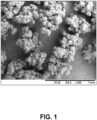
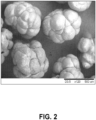
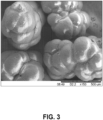
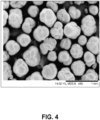
- the granular catalyst component morphology can be prepared with raspberry shape, rounded raspberry shape, rounded shape and substantially spherical shape by variation of organosilicon compounds, supportive electron donors and condition of the precipitation the solid catalyst intermediate.
- the particle sizes of the catalyst component are from about 5 microns to about 70 microns (on a 50% by volume basis) and depends on condition of the precipitation (temperature, agitation speed, solvent and others) and type and amount of the supportive donor.
- the supportive electron donor is selected from carboxylic monoesters methyl formate, butyl formate, ethyl acetate, vinyl acetate, propyl acetate, octyl acetate, cyclohexy acetate, ethyl propionate, methyl butyrate, ethyl butyrate, isobutyl butyrate, ethyl valerate, ethyl stearate, methyl chloroacetate, ethyl dichloroacetate, ethyl acrylate, methyl methacrylate, ethyl crotonate, ethyl cyclohexanecarboxylate, methyl benzoate, ethyl benzoate, propyl benzoate, butyl benzoate, octyl benzoate, cyclohexyl benzoate, phenyl benzoate, benzyl benzoate, ethyl p-me
- Combining the halide-containing magnesium compound, epoxy compound, organic phosphorus compound, titanium halide and hydrocarbon solvent might create an emulsion with two phases: the solvent phase and the magnesium-titanium oil phase and with proper selection the solvent and reagents.
- This process can be used to prepare spherical morphology catalyst component.
- Phase separation is accomplished by proper solvent selection.
- Solvent selection involves considering one or more of physical properties differences in polarity, density, and surface tension among others causing the separation between the solvent and the magnesium phase.
- Toluene is an organic solvent diluent that has been used for the formation of solid titanium catalyst components; however, use of toluene does not always promote the formation of two phases.
- Di-(C 1 -C 12 )-alkylether with combination of acrylates are used as the supportive electron donors to prepare the spherical type catalyst component.
- the surface modifier include polymer surfactants, such as polyacrylates, polymethacrylates, polyalkyl methacrylates, or any other surfactant that can stabilize and emulsify.
- surfactants are known in the art, and many surfactants are described in McCutcheon's "Volume I: Emulsifiers and Detergents", 2001, North American Edition, published by Manufacturing Confectioner Publishing Co., Glen Rock, N.J., and in particular, pp. 1-233 which describes a number of surfactants .
- a polyalkyl methacrylate is a polymer that may contain one or more methacrylate monomers, such as at least two different methacrylate monomers, at least three different methacrylate monomers, etc.
- the acrylate and methacrylate polymers may contain monomers other than acrylate and methacrylate monomers, so long as the polymer surfactant contains at least about 40% by weight acrylate and methacrylate monomers.
- Examples of monomers that can be polymerized using known polymerization techniques into polymer surfactants include one or more of acrylate; tert-butyl acrylate; n-hexyl acrylate; methacrylate; methyl methacrylate; ethyl methacrylate; propyl methacrylate; isopropyl methacrylate; n-butyl methacrylate; t-butyl methacrylate; isobutyl methacrylate; pentyl methacrylate; isoamyl methacrylate; n-hexyl methacrylate; isodecyl methacrylate; lauryl methacrylate; stearyl methacrylate; isooctyl acrylate; lauryl acrylate; stearyl acrylate; cyclohexyl acrylate; cyclohexyl methacrylate; methoxyethyl acrylate; isobenzyl acrylate; is
- the surface modifier is selected from poly((C 1 -C 6 ) alkyl) acrylate, a poly((C 1 -C 6 ) alkyl) methacrylate, and a copolymer of poly((C 1 -C 6 ) alkyl) acrylate and poly((C 1 -C 6 ) alkyl) methacrylate.
- a ratio of the surface modifier to halide-containing magnesium compound is from 1:10 to 2:1 wt% or from 1:5 to 1:1 wt%.
- polymer surfactants examples include those under the trade designation VISCOPLEX ® available from RohMax Additives, GmbH, including those having product designations 1-254, 1-256 and those under the trade designations CARBOPOL ® and PEMULEN ® available from Noveon/Lubrizol.
- the polymer surfactant is typically added in a mixture with an organic solvent.
- the weight ratio of surfactant to organic solvent is from about 1:20 to about 2:1.
- the weight ratio of surfactant to organic solvent is from about 1:10 to about 1:1.
- the weight ratio of surfactant to organic solvent is from about 1:4 to about 1:2.
- Treatment with the second titanium compound may include adding the second titanium halide compound and the second electron donor to a solution containing the precipitate to form a solid catalyst composition, and then bringing a temperature of the solid catalyst composition to from 80 °C to 150 °C and further treating with the second titanium compound to form the solid catalyst component.
- the treatment may include more than one second electron donor.
- a plurality of electron donors can occur during treatment with the second titanium compound.
- the second titanium compound treatment includes the steps of filtering out the precipitate, adding the second titanium compound and the second electron donor in a solvent to the precipitate to form a solid catalyst composition, and bringing a temperature of the solid catalyst composition to from 80 °C to 150°C.
- the second titanium compound treatment includes the steps of adding the second titanium compound to a solution containing the precipitate; and then bringing a temperature of the solid catalyst composition to from 80 °C to 150 °C and further treating with the second titanium compound and the second electron donor to form the solid catalyst component.
- Treatment with the second titanium compound may include adding the second titanium halide compound and the second electron donor to a solution containing the precipitate to form a solid catalyst composition, and then bringing a temperature of the solid catalyst composition to from 80 °C to 150 °C and further treating with the second titanium compound to form the solid catalyst component.
- the second titanium compound treatment includes the steps of filtering out the precipitate, adding the second titanium compound and the second electron donor in a solvent to the precipitate to form a solid catalyst composition, and bringing a temperature of the solid catalyst composition to from 80 °C to 150 °C.
- the second titanium compound treatment includes the steps of adding the second titanium compound to a solution containing the precipitate; and then bringing a temperature of the solid catalyst composition to from 80 °C to 150 °C and further treating with the second titanium compound and the second electron donor to form the solid catalyst component.
- the supportive electron donor partly or fully is removed from the catalyst component and the electron donors adjust the coordination to magnesium halides resulting in increased catalyst activity.
- a solid catalyst component can be made in accordance with the present disclosure by combining a magnesium halide, such as magnesium chloride with an epoxy compound.
- the epoxy compound for instance, can be epichlorohydrin.
- the magnesium halide and the epoxy compound can be combined together at a molar ratio of from about 0.5:1 to about 1:0.5, such as from about 0.8:1.2 to about 1.2:0.8.
- the magnesium halide and the epoxy compound can be combined together in approximately a 1 to 1 molar ratio.
- the magnesium halide and epoxy compound can be combined together in the presence of a phosphate such as tributyl phosphate and a solvent such as toluene.
- an aluminum alkoxide surfactant may be present, such as aluminum alkoxide/isopropoxide.
- a monoester such as ethylbenzoate and a silicate, such as tetraethylorthosilicate can be added to the above composition in addition to a titanium halide such as titaniumtetrachloride to cause a precipitate to form.
- a titanium halide such as titaniumtetrachloride
- complexes of the magnesium halide with the monoester, the titanium chloride can form including Cl 3 -Ti-O-CH(CH 2 Cl) 2 .
- the above precipitate can then be treated with a second internal donor, such as an aryldiester and optionally in the presence with a titanium halide.
- a second internal donor such as an aryldiester
- the resulting solid catalyst component can be washed and used as desired.
- the resulting solid catalyst component contains a magnesium halide, a titanium halide, the first internal donor or supportive donor, and the second internal donor.
- the solid catalyst component can contain residual amounts of an aluminum alkoxide, the organosilicon compound and the phosphorus compound.
- the amount of the aluminum alkoxide and/or the organosilicon compound present in the final catalyst can be generally greater than about 0.001% by weight, such as greater than about 0.01% by weight, such as greater than about 0.1% by weight and generally less than about 1% by weight, such as less than about 0.5% by weight, such as less than about 0.3% by weight.
- the solid catalyst component can also contain the phosphorous compound generally in an amount greater than about 0.1% by weight, such as in an amount greater than about 0.2% by weight, such as in an amount greater than about 0.3% by weight, and generally less than about 1% by weight, such as less than about 0.5% by weight.
- the first internal electron donor may include not only a monoester but also a dialklyether.
- the first internal electron donor can be combined into the catalyst composition with a spherical-promoting surfactant, such as an acrylate surfactant.
- the surfactant may comprise a polyalkyl methaclylate.
- the catalyst component of the present disclosure is produced with many beneficial properties and characteristics.
- the catalyst component can be made with a relatively high surface area.
- the BET surface area of the catalyst can be greater than about 100 m 2 /g, such as greater than about 200 m 2 /g, such as greater than about 300 m 2 /g, such as greater than about 400 m 2 /g and generally less than about 700 m 2 /g, such as less than about 600 m 2 /g.
- the solid catalyst component may be used after with an inorganic or organic compound such as a silicon compound or an aluminum compound.
- the catalyst system may contain at least one organoaluminum compound in addition to the solid catalyst component.
- organoaluminum compounds include those of Formula: AlR n X 3-n wherein, R independently represents a hydrocarbon group usually having 1 to about 20 carbon atoms, X represents a halogen atom, and 0 ⁇ n ⁇ 3.
- organoaluminum compounds include, but are not limited to, trialkyl aluminums such as triethyl aluminum, tributyl aluminum and trihexyl aluminum; trialkenyl aluminums such as triisoprenyl aluminum; dialkyl aluminum halides such as diethyl aluminum chloride, dibutyl aluminum chloride and diethyl aluminum bromide; alkyl aluminum sesquihalides such as ethyl aluminum sesquichloride, butyl aluminum sesquichloride and ethyl aluminum sesquibromide; alkyl aluminum dihalides such as ethyl aluminum dichloride, propyl aluminum dichloride and butyl aluminum dibromide; dialkyl aluminum hydrides such as diethyl aluminum hydride and dibutyl aluminum hydride; and other partially hydrogenated alkyl aluminum such as ethyl aluminum dihydride, and propyl aluminum dihydride.
- trialkyl aluminums such as triethyl aluminum, tributyl aluminum and
- the organoaluminum compound can be used in the catalyst system in an amount that the mole ratio of aluminum to titanium (from the solid catalyst component) is from about 5 to about 1. In another embodiment, the mole ratio of aluminum to titanium in the catalyst system is from about 10 to about 700. In yet another embodiment, the mole ratio of aluminum to titanium in the catalyst system is from about 25 to about 400.
- the catalyst system may contain one or more selectivity control agents (SCA) in addition to the solid catalyst component.
- the selectivity control agent can comprise one or more organosilicon compounds, such as one or more silane compounds.
- This organosilicon compound can also function as an external electron donor.
- the organosilicon compound contains silicon having at least one hydrogen ligand (hydrocarbon group).
- hydrocarbon groups include alkyl groups, cycloalkyl groups, (cycloalkyl)methylene groups, alkene groups, aromatic groups, and the like.
- the organosilicon compound when used as an external electron donor serving as one component of a Ziegler-Natta catalyst system for olefin polymerization, contributes to the ability to obtain a polymer (at least a portion of which is polyolefin) having a controllable molecular weight distribution and controllable crystallinity while retaining high performance with respect to catalytic activity.
- the organosilicon compound is used in the catalyst system in an amount such that the mole ratio of the organoaluminum compound to the organosilicon compound is from about 2 to about 90. In another embodiment, the mole ratio of the organoaluminum compound to the organosilicon compound is from about 5 to about 70. In yet another embodiment, the mole ration of the organoaluminum compound to the organosilicon compound is from about 7 to about 35.
- the organosilicon compound is represented by Formula: R n Si(OR') 4-n wherein each Rand R' independently represent a hydrocarbon group, and n is 0 ⁇ n ⁇ 4.
- organosilicon compound examples include, but are not limited to trimethylmethoxysilane, trimethylethoxysilane, dimethyldimethoxysilane, dimethyldiethoxysilane, diisopropyldimethoxysilane, diisobutyldimethoxysilane, t-butylmethyldimethoxysilane, t-butylmethyldiethoxysilane, t-amylmethyldiethoxysilane, dicyclopentyldimethoxysilane, diphenyldimethoxysilane, phenylmethyldimethoxysilane, diphenyldiethoxysilane, bis-o-tolydimethoxysilane, bis-m-tolydimethoxysilane, bis-p-tolydimethoxysilane, bis-p-tolydiethoxysilane, bisethylphenyldimethoxysilane, dicyclohexyldimeth
- the organosilicon compound is represented by Formula: SiRR' m (OR") 3-m wherein, 0 ⁇ m ⁇ 3, such as 0 ⁇ m ⁇ 2; and R independently represents a cyclic hydrocarbon or substituted cyclic hydrocarbon group.
- group R include, but are not limited to cyclopropyl; cyclobutyl; cyclopentyl; 2-methylcyclopentyl; 3-methylcyclopentyl; 2-ethylcyclopentyl; 3-propylcyclopentyl; 3-isopropylcyclopentyl; 3-butylcyclopentyl; 3-tertiary-butyl cyclopentyl; 2,2-dimethylcyclopentyl; 2,3-dimethylcyclopentyl; 2,5-dimethylcyclopentyl; 2,2,5-trimethylcyclopentyl; 2,3,4,5-tetramethylcyclopentyl; 2,2,5,5-tetramethylcyclopentyl; 1-cyclopentylpropyl; 1-methyl-1-cyclopentylethyl; cyclopentenyl; 2-cyclopentenyl; 3-cyclopentenyl; 2-methyl-1-cyclopentenyl; 2-methyl-3-cyclopentenyl; 3-methyl-3-cyclopentyl
- R' and R" are identical or different and each represents a hydrocarbon.
- R' and R" are alkyl, cycloalkyl, aryl and aralkyl groups having 3 or more carbon atoms. Furthermore, R and R' may be bridged by an alkyl group, etc.
- General examples of organosilicon compounds are those of formula (VIII) in which R is cyclopentyl group, R' is an alkyl group such as methyl or cyclopentyl group, and R" is an alkyl group, particularly a methyl or ethyl group.
- organosilicon compounds of Formula SiRR' m (OR") 3-m include, but are not limited to trialkoxysilanes such as cyclopropyltrimethoxysilane, cyclobutyltrimethoxysilane, cyclopentyltrimethoxysilane, 2-methylcyclopentyltrimethoxysilane, 2,3-dimethylcyclopentyltrimethoxysilane, 2,5-dimethylcyclopentyltrimethoxysilane, cyclopentyltriethoxysilane, cyclopentenyltrimethoxysilane, 3-cyclopentenyltrimethoxysilane, 2,4-cyclopentadienyltrimethoxysilane, indenyltrimethoxysilane and fluorenyltrimethoxysilane; dialkoxysilanes such as dicyclopentyldimethoxysilane, bis(2-methylcyclopentyl)dimethoxysilane
- one or more selectivity control agents are present in the catalyst system.
- Particularly preferred selectivity control agents include dimethyldimethoxysilane, n-propyltrimethoxysilane, methylcyclohexyldimethoxysilane, diisopropyldimethoxysilane, n-propyltriethoxysilane, bis(perhydroisoquinolino) dimethoxysilane, 2,2,6,6-tetramethylpiperidine, or mixtures thereof.
- one or more selectivity control agents may be used in conjunction with an activity limiting agent (ALA).
- the activity limiting agent can be an aliphatic ester.
- the aliphatic ester may be a C 4 -C 30 aliphatic acid ester, may be a mono- or a poly-(two or more) ester, may be straight chain or branched, may be saturated or unsaturated, and any combination thereof.
- the C 4 -C 30 aliphatic acid ester may also be substituted with one or more Group 14, 15 or 16 heteroatom containing substituents.
- Nonlimiting examples of suitable C 4 -C 30 aliphatic acid esters include C 1-20 alkyl esters of aliphatic C 4-30 monocarboxylic acids, C 1-20 alkyl esters of aliphatic C 8-20 monocarboxylic acids, C 1-4 allyl mono- and diesters of aliphatic C 4-20 monocarboxylic acids and dicarboxylic acids, C 1-4 alkyl esters of aliphatic C 5-20 monocarboxylic acids and dicarboxylic acids, and C 4-20 alkyl mono- or polycarboxylate derivatives of C 2-100 (poly)glycols or C 2-100 (poly)glycol ethers.
- the C 4 -C 30 aliphatic acid ester may be isopropyl myristate, di-n-butyl sebacate, (poly)(alkylene glycol) mono- or diacetates, (poly)(alkylene glycol) mono- or di-myristates, (poly)(alkylene glycol) mono- or di-laurates, (poly)(alkylene glycol) mono- or di-oleates, glyceryl tri(acetate), glyceryl tri-ester of C 2-10 aliphatic carboxylic acids, and mixtures thereof
- the C 4 -C 30 aliphatic ester is isopropyl myristate or di-n-butyl sebacate.
- the ALA is a non-ester composition.
- a “non-ester composition” is an atom, molecule, or compound that is free of an ester functional group. In other words, the "non-ester composition” does not contain the following functional group.
- the non-ester composition may be a dialkyl diether compound or an amine compound.
- the dialkyl diether compound can be represented by the following formula,
- R' R 4 are independently of one another an alkyl, aryl or aralkyl group having up to 20 carbon atoms, which may optionally contain a group 14. 15, 16, or 17 heteroatom, provided that R' and R 2 may be a hydrogen atom.
- Nonlimiting examples of suitable dialkyl ether compounds include dimethyl ether, diethyl ether, dibutyl ether, methyl ethyl ether, methyl butyl ether, methyl cyclohexyl ether, 2,2-dimethyl-1,3-dimethoxypropane, 2,2-diethyl-1,3-dimethoxypropane, 2,2-di-n-butyl-1,3-dimethoxypropane, 2,2-diisobutyl-1,3-dimethoxypropane, 2-ethyl-2-n-butyl-1,3-dimethoxypropane, 2-n-propyl-2-cyclopentyl-1,3-dimethoxypropane, 2,2-dimethyl-1,3-diethoxypropane, 2-isopropyl-2-isobutyl-1,3-dimethoxypropane, 2,2-dicyclopentyl-1,3-dimethoxypropane, 2-n-prop
- the non-ester composition is an amine compound.
- suitable amine compounds include 2,6-substituted piperidines such as 2.6-dimethylpiperidine and 2,2,6.6-tetramethylpiperidine and 2,5-substituted piperidines.
- the piperidine compound is 2,2,6,6-tetramethylpiperidine.
- ALA's that contains more than one carboxylate groups all the carboxylate groups are considered effective components.
- a sebacate molecule contains two carboxylate functional groups is considered to have two effective functional molecules.
- the activity limiting agent is a C4 to C30 Aliphatic acid ester.
- the activity limiting agent may comprise a diether or a poly(alkene glycol) ester of a C4 to C30 aliphatic acid
- Particular activity limiting agents that may be incorporated into the catalyst system include isopropyl myristate, di-n-butyl sebacate, ethyl 4-ethoxybenzoate, propoxylated (POE) coco fatty acid esters such as containing 10 to 20 mols of POE, a poly(ethylene)glycol coco fatty acid ester, or mixtures thereof.
- An especially preferred combination of SCA/ALA components is a mixture of an alkoxy silane selected from the group consisting of dicyclopentyldimethoxysilane, methylcyclohexyl-dimethoxysilane, and n-propyltrimethoxysilane with an ester which is isopropyl myristate, di(n-butyl) sebacate.
- an alkoxy silane selected from the group consisting of dicyclopentyldimethoxysilane, methylcyclohexyl-dimethoxysilane, and n-propyltrimethoxysilane with an ester which isopropyl myristate, di(n-butyl) sebacate.
- Preferred SCA/ALA mixtures according to the invention are those comprising from 1 to 99.9, more preferably from 30 to 99, and most preferably from 50 to 98 equivalent percent of one or more ALA compounds, and correspondingly from 99 to 0.1, more preferably from 70 to 1, most preferably from 50 to 2 equivalent percent of one or more alkoxysilane compounds.
- the normalized polymerization activity at an elevated temperature should be less than that obtainable at 67° C. and less than that obtainable if the alkoxysilane alone were employed alone in the same total SCA molar amount
- the total molar quantity of the SCA mixture employed in the present invention based on moles of transition metal is desirably from 0.1 to 500, more desirably from 0.5 to 100 and most preferably from 1.0 to 50.
- the corresponding molar ratio based on transition metal is desirably from 1 to 10,000, preferably from 2 to 1000, and most preferably from 5 to 100.
- Catalyst particle morphology is indicative of the polymer particle morphology produced therefrom.
- the three parameters of polymer particle morphology may be determined using a Camsizer instrument.
- SPHT is defined as 1. Otherwise, the value is less than 1.
- Symm 0,3 1 2 1 + min r 1 r 2 where, r 1 und r 2 are distance from the centre of area to the borders in the measuring direction.
- Symm is less than 1. If the centre of the area is outside the particle, i.e. r 1 r 2 ⁇ 0 , the Symm is less than 0.5
- x Ma r 1 + r 2 , or "Symm,” is the minimum value of measured set of symmetry values from different directions.
- the catalyst morphology characteristics such as aspect ratio (“B/L3”) can be used for characterization of polymer morphology.
- aspect ratio is higher than 0.6, or higher than 0.7, or higher than 0.8, or higher than 0.90.
- the particle size of the resulting catalyst component can vary depending upon the process conditions and the desired result.
- the D 50 particle size can be greater than about 5 microns, such as greater than about 10 microns, such as greater than about 20 microns, such as greater than about 30 microns, such as greater than about 40 microns, such as greater than about 50 microns, such as greater than about 60 microns, and generally less than about 70 microns, such as less than about 50 microns, such as less than about 30 microns, such as less than about 25 microns.
- Polymerization of olefins can be carried out in the presence of the catalyst systems as prepared and described above.
- Various different olefins can be polymerized in accordance with the present disclosure.
- catalyst systems of the present disclosure can be used to polymerize ethylene, propylene, and the like.
- the catalyst systems can also be used to produce homopolymers and copolymers.
- an olefin monomer, such as propylene is contacted with the catalyst system described above under suitable conditions to form desired polymer products.
- preliminary polymerization described below is carried out before the main polymerization.
- polymerization is carried out without preliminary polymerization.
- the formation of a polypropylene-co-polymer is carried out using at least two polymerization zones.
- the catalyst component of the present disclosure is well suited for use in all different types of polymerization processes.
- the catalyst component of the present disclosure can be used in bulk loop polymerization processes, gas phase processes, and the like.
- the catalyst component can also be used in a slurry process.
- the solid catalyst component is usually employed in combination with at least a portion of the organoaluminum compound. This may be carried out in the presence of part or the whole of the organosilicon compound (external electron donor compound).
- the concentration of the catalyst system used in the preliminary polymerization may be much higher than that in the reaction system of the main polymerization.
- the concentration of the solid catalyst component in the preliminary polymerization is usually from about 0.01 to about 200 millimoles, or from about 0.05 to about 100 millimoles, calculated as titanium atoms per liter of an inert hydrocarbon medium described below.
- the preliminary polymerization is carried out by adding propylene or a mixture of propylene with another olefin and the above catalyst system ingredients to an inert hydrocarbon medium and polymerizing the olefins under mild conditions.
- the inert hydrocarbon medium include, but are not limited to aliphatic hydrocarbons such as propane, butane, pentane, hexane, heptanes, octane, decane, dodecane and kerosene; alicyclic hydrocarbons such as cyclopentane, cyclohexane and methylcyclopentane; aromatic hydrocarbons such as benzene, toluene and xylene; and mixtures thereof.
- a liquid olefin may be used in place of part or the whole of the inert hydrocarbon medium.
- the olefin used in the preliminary polymerization may be the same as, or different from, an olefin to be used in the main polymerization.
- the reaction temperature for the preliminary polymerization is sufficient for the resulting preliminary polymer to not substantially dissolve in the inert hydrocarbon medium.
- the temperature is from about -20 °C to about 100 °C.
- the temperature is from about -10 °C to about 80 °C.
- the temperature is from about 0 °C to about 40 °C.
- a molecular-weight controlling agent such as hydrogen
- the molecular weight controlling agent is used in such an amount that the polymer obtained by the preliminary polymerization has an intrinsic viscosity, measured in decaliter at 135 °C, of at least about 0.2dl/g, or from about 0.5 to 10 dl/g.
- the preliminary polymerization is carried out so that from about 0.1 g to about 1,000 g of a polymer is formed per gram of the solid catalyst component of the catalyst system. In another embodiment, the preliminary polymerization is carried out so that from about 0.3 g to about 500 g of a polymer is formed per gram of the solid catalyst component. If the amount of the polymer formed by the preliminary polymerization is too large, the efficiency of producing the olefin polymer in the main polymerization may sometimes decrease, and when the resulting olefin polymer is molded into a film or another article, fish eyes tend to occur in the molded article.
- the preliminary polymerization may be carried out batchwise or continuously.
- the main polymerization of the propylene is carried out in the presence of the above-described polymerization catalyst system formed from the solid catalyst component, the organoaluminum compound and the organosilicon compound (external electron donor compound).
- ⁇ -olefins having 2 to 20 carbon atoms such as ethylene, propylene, 1-butene, 4-methyl-1-pentene, 1- pentene, 1-octene, 1-hexene, 3-methyl-1-pentene, 3-methyl-1-butene, 1-decene, 1-tetradecene, 1-eicosene, and vinylcyclohexane.
- these ⁇ -olefins may be used individually or in any combination.
- propylene is homopolymerized, or a mixed olefin containing propylene as a main component is copolymerized.
- the proportion of propylene as the main component is usually at least about 50 mole %, or at least about 70 mole %.
- the catalyst system in the main polymerization can be adjusted in the degree of activity. This adjustment tends to result in a powdery polymer having a high bulk density. Furthermore, when the preliminary polymerization is carried out, the particles shape of the resulting polymer becomes spherical, and in the case of slurry polymerization, the slurry attains excellent characteristics while in the case of gas phase polymerization, the polymer seed bed attains excellent characteristics. Furthermore, in these embodiments, a polymer having a high stereoregularity index can be produced with a high catalytic efficiency by polymerizing an ⁇ -olefin having at least 3 carbon atoms. Accordingly, when producing the propylene copolymer, the resulting copolymer powder or the copolymer becomes easy to handle.
- a polyunsaturated compound such as conjugated diene or non-conjugated diene may be used as a comonomer.
- comonomers include styrene, butadiene, acrylonitrile, acrylamide, ⁇ -methyl styrene, chlorostyrene, vinyl toluene, divinyl benzene, diallyphthalate, alkyl methacrylates and alkyl acrylates.
- the comonomers include thermoplastic and elastomeric monomers. The main polymerization of an olefin is carried out usually in the gaseous or liquid phase.
- polymerization employs a catalyst system containing the solid catalyst component in an amount from about 0.001 to about 0.75 millimoles calculated as Ti atom per liter of the volume of the polymerization zone, the organoaluminum compound in an amount from about 1 to about 2,000 moles per mole of titanium atoms in the solid catalyst component, and the organosilicon compound in an amount from about 0.001 to about 10 moles calculated as Si atoms in the organosilicon compound per mole of the metal atoms in the organoaluminum compound.
- polymerization employs a catalyst system containing the solid catalyst component in an amount of from 0.005 to about 0.5 milimoles calculated as Ti atom per liter of the volume of the polymerization zone, the organoaluminum compound in an amount from about 5 to about 500 moles per mole of titanium atoms in the solid catalyst component, and the organosilicon compound in an amount from about 0.01 to about 2 moles calculated as Si atoms in the organosilicon compound per mole of the metal atoms in the organoaluminum compound.
- polymerization employs a catalyst system containing the alkyl benzoate derivative in an amount from about 0.005 to about 1 mole calculated as Si atoms in the organosilicon compound per mole of the metal atoms in the organoaluminum compound.
- the catalyst system subjected to the preliminary polymerization is used together with the remainder of the catalyst system components.
- the catalyst system subjected to the preliminary polymerization may contain the preliminary polymerization product.
- the use of hydrogen at the time of polymerization promotes and contributes to control of the molecular weight of the resulting polymer, and the polymer obtained may have a high melt flow rate.
- the stereoregularity index of the resulting polymer and the activity of the catalyst system can be increased according to the above methods.
- the polymerization temperature is from about 20 °C to about 170 °C. In another embodiment, the polymerization temperature is from about 50 °C to about 165 °C. In one embodiment, the polymerization pressure is typically from atmospheric pressure to about 100 kg/cm 2 . In another embodiment, the polymerization pressure is typically from about 2 kg/cm 2 to about 50 kg/cm 2 .
- the main polymerization may be carried out batchwise, semi-continuously or continuously. The polymerization may also be carried out in two or more stages under different reaction conditions.
- the olefin polymer so obtained may be a homopolymer, a random copolymer, a block copolymer or an impact copolymer.
- the impact copolymer contains an intimate mixture of a polyolefin homopolymer and a polyolefin rubber.
- polyolefin rubbers include ethylene propylene rubber (EPR) such as ethylene propylene methylene copolymer rubber (EPM) and ethylene propylene diene methylene terpolymer rubber (EPDM).
- the olefin polymer obtained by using the catalyst system has a very small amount of an amorphous polymer component and therefore a small amount of a hydrocarbon-soluble component. Accordingly, a film molded from the resultant polymer has low surface tackiness.
- the polyolefin obtained by the polymerization process is excellent in particle size distribution, particle diameter and bulk density, and the copolyolefin obtained has a narrow composition distribution.
- excellent fluidity, low temperature resistance, and a desired balance between stiffness and elasticity can be obtained.
- propylene and an ⁇ -olefin having 2 or from about 4 to about 20 carbon atoms are copolymerized in the presence of the catalyst system described above.
- the catalyst system may be one subjected to the preliminary polymerization described above.
- propylene and an ethylene rubber are formed in two reactors coupled in series to form an impact polymer.
- the ⁇ -olefin having 2 carbon atoms is ethylene, and examples of the ⁇ -olefin having about 4 to about 20 carbon atoms are 1-butene, 1-pentene, 4-methyl-1-pentene, 1-octene, 1-hexene, 3-methyl-1-pentene, 3-methyl-1-butene, 1-decene, vinylcyclohexane, 1-tetradecene, and the like.
- propylene may be copolymerized with two or more such ⁇ -olefins.
- propylene is copolymerized with ethylene, 1-butene or ethylene and 1-butene.
- Block copolymerization of propylene and another ⁇ -olefin may be carried out in two stages.
- the polymerization in a first stage may be the homopolymerization of propylene or the copolymerization of propylene with the other ⁇ -olefin.
- the amount of the monomers polymerized in the first stage is from about 50 to about 95% by weight. In another embodiment, the amount of the monomers polymerized in the first stage is from about 60 to about 90% by weight.
- This first stage polymerization may be carried out in two or more stages under the same or different polymerization conditions.
- the polymerization in a second stage is carried out such that the mole ratio of propylene to the other ⁇ -olefin(s) is from about 10/90 to about 90/10. In another embodiment, the polymerization in a second stage is carried out such that the mole ratio of propylene to the other ⁇ -olefin(s) is from about 20/80 to about 80/20. In yet another embodiment, the polymerization in a second stage is carried out such that the mole ratio of propylene to the other ⁇ -olefin(s) is from about 30/70 to about 70/30. Producing a crystalline polymer or copolymer of another ⁇ -olefin may be provided in the second polymerization stage.
- the propylene copolymer so obtained may be a random copolymer or the above described block copolymer.
- This propylene copolymer can contain from about 7 to about 50 mole% of units derived from the ⁇ -olefin having 2 or from about 4 to about 20 carbon atoms.
- a propylene random copolymer contains from about 7 to about 20 mole % of units derived from the ⁇ -olefin having 2 or from about 4 to about 20 carbon atoms.
- the propylene block copolymer contains from about 10 to about 50 mole% of units derived from the ⁇ -olefin having 2 or 4-20 carbon atoms.
- copolymers made with the catalyst system contain from about 50% to about 99% by weight poly- ⁇ -olefins and from about 1% to about 50% by weight comonomers (such as thermoplastic or elastomeric monomers). In another embodiment, copolymers made with the catalyst system contain from about 75% to about 98% by weight poly- ⁇ -olefins and from about 2% to about 25% by weight comonomers.
- the catalyst efficiency (measured as kilogram of polymer produced per gram of catalyst) of the catalyst system is at least about 30 kg/g/h.
- the catalyst deficiency can be higher than about 60 kg/g/h, such as greater than about 80 kg/g/h, such as greater than about 100 kg/g/h, such as greater than about 140 kg/g/h.
- the catalysts/methods discussed above can in some instances lead to the production of poly- ⁇ -olefins having melt flow rates ("MFR", g/10 minutes) from about 0.01 to about 500 g/10 min, such as from about 0.1 to about 400 g/10 min.
- MFR melt flow rates
- the MFR is measured according to ASTM standard
- poly- ⁇ -olefins having an MFR from 0.1 to about 300 are produced.
- the polydispersity index (PI) can vary depending upon various factors and the desired result.
- the polydispersity index can generally be greater than about 3, such as greater than about 5, and generally less than about 8, such as less than about 6.
- poly- ⁇ -olefins having bulk densities (BD) of at least about 0.35 cc/g In another embodiment, poly- ⁇ -olefins having a BD of at least about 0.4 cc/g are produced. In another embodiment, poly- ⁇ -olefins having a BD of 0.35-0.5 cc/g, or from 0.38-0.46 cc/g are produced.
- BD bulk densities
- the catalysts/methods described above can lead to the production of poly- ⁇ -olefins having a Span of less than 1.0. In some embodiments, the Span is less than 0.6.
- Embodiments of the present invention can lead to the production of a propylene block copolymer and impact copolymers including polypropylene based impact copolymer having one or more excellent melt-flowability, moldability, desirable balance between rigidity and elasticity, good stereospecific control, good control over polymer particle size, shape, size distribution, and molecular weight distribution, and impact strength with a high catalytic efficiency and/or good operability.
- Employing the catalyst systems containing the solid catalyst component according to embodiments of the present invention yields catalysts simultaneously having high catalytic efficiency, and one or more of excellent melt-flowability, extrudability, moldability, rigidity, elasticity and impact strength.
- D 10 represents the size of particles (diameter), wherein 10% of particles are less than that size
- D 50 represents the size of particles, wherein 50% of particles are less than that size
- D 90 represents the size of particles, wherein 90% of particles are less than that size.
- BD is an abbreviation for bulk density, and is reported in units of g/ml.
- CE is an abbreviation for catalyst efficiency and is reported in units of Kg polymer per gram of catalyst (Kg/g) during the polymerization for 1 hour.
- MFR is an abbreviation for melt flow rate and is reported in units of g/10min.
- the MFR is measured cording to ASTM standrs D1238.T
- the catalyst component particle size analysis was conducted using laser light scattering method by Malvern Mastersizer 3000 instrument. Toluene used as a solvent.
- the surface area and pore size distribution of the catalyst components were measured by Micrometrics ASAP 2020 instrument.
- the catalyst component samples were degassed by heating at 60 °C under vacuum for few hours before the measurement.
- the polydispersity index index (PI) and zero shear viscosity for polymer samples were obtained from rheological data by ARES G2 Rheometer.
- the stabilized polymer sample is pressed on hot press to make plate.
- the polymer plate is then analyzed on the Rheometer. From the data plot PI and zero shear viscosity are calculated using built in MWD software.
- NPDE is an abbreviation for a non-phthalate diaryl ester and can be of the formula: where R 1 - R4 -selected from substituted or unsubstituted aryl groups, R 3 R 4 R 5 R 6 are the same or different alkyl or cycloalkyl having 1 to 20 carbon atoms, heteroatom or combination of them.
- NPDE1 is 3-methyl-5-tert-butyl-1,2-phenylene dibenzoate.
- NPDE2 is described in paragraph 52 of U.S. Patent Publication US 2013/0261 273 .
- SYLTHERM is a tradename for a polydimethyl siloxane (PDMS) that is commercially available from Dow Chemical.
- VISCOPLEX is a tradename for a polyalkyl methacrylate available from Evonik.
- EB is an abbreviation for ethyl benzoate.
- TBP is an abbreviation for tributyl phosphate.
- ECH is an abbreviation for epichlorohydrin.
- TEOS is an abbreviation for tetraethylorthosilicate.
- Ti, Mg, and D are the weight percentages (wt %) for each of the titanium, magnesium, and internal donor (NPDE), respectively, in the composition.
- XS is an abbreviation for xylene solubles, and is reported in units of wt%.
- catalysts of the examples are used in a method of propylene polymerization the following method was used.
- the reactor was baked at 100°C under nitrogen flow for 30 minutes prior to the polymerization run.
- the reactor was cooled to 30-35°C and cocatalyst (1.5 ml of 25 wt% triethylaluminum (TEAl)), C-donor [cyclohexylmethydimethoxysilane] (1 ml), hydrogen (3.5 psi) 24.1 kpa, and liquid propylene (1500 ml) were added in this sequence into the reactor.
- the catalyst (5-10 mg), loaded as a mineral oil slurry, was pushed into the reactors using high pressure nitrogen.
- the polymerization was performed for one hour at 70° C. After the polymerization, the reactors were cooled to 22° C, vented to atmospheric pressure, and the polymer collected.
- catalysts of the examples are used in a method of propylene polymerization the following method was used.
- the reactor was baked at 100°C under nitrogen flow for 30 minutes prior to the polymerization run.
- the reactor was cooled to 30°C and propylene was charged (120 g), with cocatalyst (0.27 ml of 25 wt% triethylaluminum (TEAl)), C-donor [cyclohexylmethydimethoxysilane] (0.38 ml), and hydrogen (0.5 g).
- a reactor was heated to 35° C and the catalyst component (0.5-0.7 mg) was flashed to the reactor with propylene (120 g).
- the polymerization was performed for one hour at 70° C. After the polymerization, the reactors were cooled to 22° C, vented to atmospheric pressure, and the polymer collected.
- Examples 1-3 illustrates preparing the catalyst components using an organosilicon compound without supportive donor and provides the properties of polymer produced using a bulk propylene polymerization scheme.
- Example 1 demonstrates preparing the catalyst component using tetraethylorthosilicate.
- the catalyst produced polymer with raspberry shape particle morphology with BD below 0.40g/cc and B/L3 ⁇ 0.7
- the reaction was washed with 50 mL of toluene, 3x. 65 ml of toluene was added and the reactor was heated to 40 °C @ 400 RPM. 0.64 grams of NPDE1 was added and the reactor was heated up to 105 °C and held for one hour. Filter. 65 mL of 10% TiCl 4 was added and the temperature raised to 105 °C for one hour. Filter. 65 mL of 10% TiCl 4 was added and the temperature raised to 110 °C for 30 minutes and filtered 3 times. The solid was washed with 50 mL of hexanes @ 65 °C and 400 RPM 3 times. The catalyst component was discharged as a hexane slurry. The analytical data and the catalyst performance is presented below.
- Example 2 demonstrates the catalyst component using two organosilicon compounds (tetraethylorthosilicate and Syltherm PDMS) and Al(OiPr)3.
- the internal donor was added in two places: in before the solid formed and to the solid component.
- the reaction was held at 35 °C for 30 minutes @ 300 RPM. The reaction was heated to 85 °C and held for 30 minutes. The reaction was filtered and 50 mL of toluene was added. The reactor was heated to 40 °C @ 400 RPM and 0.64 grams of NPDE1 was added. The reactor continued heating to 105 °C and was held for 1 hour, then allowed to settle and decanted. 65 mL of 10% TiCl 4 was added, heated to 105 °C and held for 1 hour. The reaction was allowed to settle and it was decanted. 65 mL of 10% TiCl 4 was added, heated to 110°C and held for 1 hour. The reaction was allowed to settle and it was decanted.
- Example 3 demonstrates the catalyst component using two organosilicon compounds (tetraethylorthosilicate and Syltherm PDMS) and Al(OiPr)3.
- the internal donor was added to the solid component..
- the particle size of catalyst component increased to 14 microns (compared with examples 1 and 2).
- the reactor was heated to 35 °C @ 200 RPM for over two hours and held at 35 °C for 30 minutes; heated to 85 °C over 30 minutes and held at 85 °C for 30 minutes and decanted washed 3x with toluene. Cool to 25 °C and let sit over weekend. Filter, add 65 mL of toluene. Heat to 40 °C @ 400 RPM and add 0.64 grams NPDE1. Heat to 105 °C for one hour. Filter. Add 65 mL of 10% TiCl 4 , heat to 105 °C, hold for one hour. Filter. Add 65 mL of 10% TiCl 4 , heat to 110 °C, hold for one hour. Filter. Wash with 50 mL of hexanes 3x, jacket temperature @ 65, agitate 5 minutes between washes. Discharge as hexane slurry.
- Example 4 (Comparative). This example demonstrates preparing the catalyst component without organosilicon compound. The catalyst produced polymer with irregular morphology with agglomerated polymer particles.
- the reaction was washed with 50 mL of toluene, 3x, JT 80 °C, 400 RPM. Filter. 65 ml of toluene was added and the reactor was heated to 40 °C @ 400 RPM. 0.64 grams NPDE1 was added and the reactor was heated up to 105 °C and held for one hour. Filter. 65 mL of 10% TiCl 4 was added and the temperature raised to 105 °C for one hour. Filter. 65 mL of 10% TiCl 4 was added and the temperature raised to 110 °C for 30 minutes and filtered 3 times. The reactor was washed with 50 mL of hexanes @ 65 °C and 400 RPM 3 times.
- Catalysts and polymer properties (catalyst components prepared with two organosilicon compounds and Al(OiPr)3) Catalyst component CE kg/g MFR, g/10 min XS,% BD, g/cc PP D10 PP D50 PP D90 PP Span B/L3 Comment on PP morphology
- Example 1 65 1.46 3.1 0.397 353 590 1120 1.3 0.66 Raspberry shape
- Example 2 91.2 0.25 1.88 0.443 319 495 915 1.204 0.681 Rounded raspberry shape
- Example 3 54.4 1.84 2.22 0.394 319 617 1081 1.235 0.682 Grape shape
- Examples 5-13 illustrate preparing the catalyst components using a supportive donor, ethyl benzoate.
- EB Table 3 Catalyst components prepared with organosilicon compounds and with supportive donors
- Example 5 Comparative) No epoxy compound 6.0 10.5 18.3 1.173 3.6 16.16 16.17
- Example 8 TEOS, EB/MgCl 2 0.34 12.7 18.6 26.1 0.720 3.71 16.37 14.2
- Example 10 19724-14
- Example 5 (Comparative).
- the catalyst component was made using tetraethylorthosilicate and the supportive donor, ethyl benzoate, and without an epoxy compound to dissolve MgCl 2 .
- This example demonstrates an irregular polymer morphology with low BD.
- FIG. 1 is a photograph of the polymer obtained from Example 5 (Comparative).
- the images presented are SEM images of polypropylene particles produced with the catalysts from the corresponding examples. Because the polymer particles replicate the catalyst particles, we can compare the catalyst morphology in each example.
- the catalyst and polymer morphology are key factors to consider in commercial polymer production processes.
- the polymerization processes require good flowability of the polymer for transfer of the polymer from one reactor unit to another. The process should operate without producing any polymer fines that result in a plugging polymerization reactor. Therefore, for any polymerization process the strong and uniform morphology of the catalyst and high bulk density of polymer is preferred.
- the polymer morphology of polymer prepared by Example 5 includes small sub-particles.
- the bulk density of polymer is very low at 0.321 g/ml.
- the catalyst and polymer from this example are not favored and would result in the plugging reactor by the fines that are generated.
- Example 6 Granular supported catalyst component prepared with Syltherm and TEOS (as organosilicon compounds) and ethyl benzoate as supportive electron donor.
- Syltherm and TEOS as organosilicon compounds
- ethyl benzoate as supportive electron donor.
- the example demonstrates improvement of the catalyst component with larger particle size 24 microns and high activity catalyst (catalyst efficiency 92 kg/g) and producing polymer with rounded shape.
- MgCl 2 (13.2 g), Al(OCH(CH3)2)3 (1.0 g), toluene (59.5 g), tri-n-butylphosphate (36.3 g), epichlorohydrin (14.25 g), and Syltherm (6.0 g) are combined and heated to 60 °C with agitation at 600 rpm for 8 hours under a nitrogen atmosphere.
- toluene 140 g was added, along with ethyl benzoate (4.5 g) and tetraethylorthosilicate (3 g).
- TiCl 4 (261 g) was slowly added under 600 rpm stirring, while maintaining the temperature at -25 °C.
- the temperature was maintained for 1 hour prior to warming to 35 °C over 30 minutes, at which temperature it was held for 30 minutes, then the temperature was raised to 85 °C over 30 minutes, and held for 30 minutes prior to collection of a solid precipitate via filtration.
- the solid precipitate was washed three times with toluene (200 ml, each wash).
- FIG. 2 is a photograph of the polymer produced with the catalyst component obtained from Example 6. Polymer morphology like rounded raspberry shape with large subparticles.
- Example 7 This example produced a granular supported catalyst illustrating high BD catalyst/PP, with a narrow Span.
- Example 6 was repeated, however the PDMS was added at 3.0 g, and Al(OCH(CH3)2)3 (0.5 g) and NPDE 1 (2.0g) was added in toluene wash before the final TiCl 4 /Toluene treatment.
- Example 9 This example produced a granular supported catalyst illustrating improvement of the catalyst and polymer morphology, and showing high BD catalyst/PP, with a narrow Span. The polymer is illustrated in Figure 3 . Example 7 was repeated; however the TEOS was added at 1.50g.
- Example 10 Illustrates preparation of catalyst component using Syltherm as organosilicon silicon compound. Granular supported catalyst component demonstrating reduction of particle sizes. Example 7 was repeated, however no TEOS was added.
- FIGs. 2 and 3 illustrate the rounded raspberry type morphology of polymers prepared by the catalysts of Examples 7, and 9, respectively, using an epoxy compound to dissolve MgCl 2 , along with varying combinations of organosilicon compounds (polydimethoxysilane (PDMS) and tetraethoxysilane (TEOS)), and ethyl benzoate, demonstrate improvement in catalyst and polymer morphology.
- the FIGs 2 and 3 show the materials as having a well-defined morphology.
- the large sub-particles are associated in large particles.
- the polymers produced with these catalysts exhibit a high density (> 0.40 g/ml) and sphericity (B/L3>0.71) (see tables above).
- Example 11 Demonstrates effect of amount of supportive donor on catalyst component particle size.
- Example 8 was repeated except amount of ethyl benzoate was reduced from 0.34g/gMgCl 2 to 0.26 g/gMgCl 2 which resulted in a reduction of the catalyst component particle size from 18.6 microns to 10.2 microns.
- Fig. 4 the rounded shape of polymer morphology produced by the catalyst from Example 11.
- Example 12 Demonstrates effect of agitation speed during the precipitation of the catalyst component on catalyst component particle size.
- Example 11 was repeated except the agitation speed was reduced from 300 rpm to 200 rpm, which resulted in increasing catalyst component particle size from 10.2 microns to 13.6 microns
- Example 13 (Comparative). Granular supported catalyst demonstrating reduction of particle sizes and bulk density of the catalyst and polymer. No Al(OCH(CH3)2)3, Syltherm, or TEOS was used. Example 7 was repeated, however no Al(OCH(CH3)2)3, PDMS, or TEOS was added.
- Example 13 demonstrates that performance of the catalyst component prepared by using an epoxy compound to dissolve the MgCl 2 , and using only ethyl benzoate as a supportive donor without using organosilicon compounds.
- FIG. 5 represents the morphology of polymer produced according to Example 13. Each polymer particle contains numerous small sub-particles. In some polymerization processes, this morphology is not favored because these particles can be easily disintegrated up during the polymerization process.
- Example 14 (Comparative). Catalyst component made with phthalic anhydride as a precipitation agent.
- the catalyst component contains bis(1,3-dichloro-iso-propyl) phthalate (1.2%) and phthaloyl chloride (0.3%) as a reaction product of phthalic anhydride with TiCl 4 and Mg-compounds during the catalyst component preparation.
- the catalyst component shows lower catalyst activity than the catalyst produced under the current claims.
- the polymer particle morphology is a grape type with B/L3 ⁇ 0.70.
- the solid was washed three times with toluene (200 ml) for 10 minutes each at the 85° C. The solid was then collected by filtration and washed with toluene (265 ml). After filtration, the TiCl 4 /toluene solution and NPDE 1 (3.0g) in toluene (2 g), was added and heated at 105° C. After again filtering, the solid was collected, and washed with the TiCl 4 /toluene solution at 110° C under agitation. Finally, the solid was washed with hexane (200 ml) four times under agitation at 60-65° C, with the catalyst being discharged as a hexane slurry.
- the catalyst of Example 14 demonstrates lower catalyst activity than the catalyst prepared without phthalic anhydride.
- Examples 15-17 illustrate the catalyst component preparation using TEOS as organosilicon compound and ethyl benzoate as a supportive electron donor.
- Examples 18-23 illustrate the polymerization data in bulk propylene and gas phase reactors producing polymer with substantially spherical shape.
- Example 16 Add 13.2g MgCl 2 , 0.5g Al(OR)3, 72g toluene , 25.7g ECH, 26.8g TBP, Heat and Agitate at 60C/600rpm/8hr. Cool down to 25C. Leave for next day under N2 Blanket. Add 75.0g toluene, 3.5g EB in 12g toluene, 6.0g TEOS in 8g toluene @ 25C. Cool to -25C @ 600 rpm and add 260.8g TiCl 4 slowly addition.
- Filter, 1st Act add 265ml 10% TiCl 4 /tol heat to 105C/400rpm/ 1hr and filter From the 2nd Act to 4th Act, add 265ml 10% TiCl 4 /tol heat to 110C/400rpm/ 30 minutes and filter Wash w/200ml of hexane @ 65C JT /4X/10min & discharge as hexane slurry
- Example 17 was repeated with increasing the NPDE1 amount by 10% Table 5 Catalyst Component Comment D10 D50 D90 Span Ti% Mg% NPDE1 %
- Example 15 TEOS, EB (20 kg of MgCl 2 scale) 8.8 11.6 15.4 0.570 3.04 16.85 10.68
- Example 17 TEOS, EB (20 kg of MgCl 2 scale) 6.19 11.4 18.1 1.044 2.56 16.64 10.37 Table 6
- Example Catalyst Component Polymerization condition CE kg/g MFR , g/10 min XS, % BD, g/cc PP D10 PP D50 PP D90 PP Span B/L3 PP morphology
- Example 18 From example 15 Bulk 70.6 1.36 2.40 0.463 490 717 1698 1.685 0.706 Rounded shape
- Example 19
- Examples 18-23 demonstrate production polymer in bulk and gas phase polymerization reactors with substantially spherical shape of particles with B/L3 of 0.8.
- Fig. 6 shows PP with substantially spherical shape morphology from example 23.
- Examples 24-27 illustrate the relationship of the catalyst performances and relatively ratio of supportive electron donor and internal electron donor.
- the catalyst isotacticity reduces (%XS) with increasing EB/NPDE1 ratio but the catalyst activity does not change sufficiently.
- Table 8 Analytical data for catalyst components and corresponding catalyst polymerization data with variable ratio of supportive electron donor and electron donor Example NPDEl/MgCl 2, wt Ti,% Mg% NPDE1, % EB, % CE kg/g MFR, g/10min XS,% Example 24 0.227 3.37 18.62 13.06 6.03 102.3 0.16 2.21
- Example 26 0.152 3.57 17.15 9.34 8.50 91.6 0.35 3.07
- Example 27 0.121 3.62 16.7 7.73 9.90 96.3 0.35 3.87
- Catalyst components in Examples 24 through 27 were produced as in Example 8 except the amount of NPDE1 was used as in Table 8. Catalyst component particle sizes are 32 microns (produced with agitation speed of 200 rpm during the support precipitation).
- Example 28 illustrates granular catalyst components prepared with NPDE2 as an internal donor diaryl ester and example 29 presents polymerization data in bulk propylene.
- the catalyst component was tested in bulk propylene polymerization to evaluate the hydrogen response on MFR.
- Table 8 Analytical data for catalyst components with NPDE 2 Conditions D10 D50 D90 Span Ti% Mg% D% Example 28 NPDE2, TEOS 11.2 18.8 28.9 0.940 3.53 17.12 n/a Table 9 Polymerization data using catalyst component from example 28 Catalyst component H2, SL CE kg/g MFR, g/10min XS,% BD, g/cc PP D10 PP D50 PP D90 PP Span B/L3 Example 29 From example 28 5 94.7 1.5 3.36 0.424 762 986 1604 0.854 0.696
- Example 29 was conducted at a hydrogen concentration of 5 SL.
- the hydrogen concentration can be from about 5 SL to about to 40 SL or higher.
- the melt flow rate can be less than about 8 g/10 min, such as less than about 5 g/10 min, such as less than about 3 g/10 min, such as less than about 2 g/10 min, such as less than 1 g/10 min, and generally greater than about 0.01 g/10 min.
- the melt flow rate can be dramatically increased.
- the melt flow rate can be greater than about 100 g/10 min, such as greater than about 150 g/10 min, such as greater than about 200 g/10 min, such as greater than about 250 g/10 min, such as greater than about 300 g/10 min, such as greater than about 350 g/10 min, such as greater than about 400 g/10 min, such as greater than about 450 g/10 min, such as greater than about 500 g/10 min, and generally less than about 800 g/10 min.
- Hydrogen concentration can have some impact on catalyst activity.
- the catalyst activity can range from about 90 kg/g to about 200 kg/g.
- a catalyst activity of from about 150 kg/g to about 200 kg/g can reflect a flat kinetic profile.
- Hydrogen concentration generally does not impact bulk density or particle size.
- the bulk density can be greater than about 0.3 g/cc, such as greater than about 0.35 g/cc, such as greater than about 0.4 g/cc, and generally less than about 0.5 g/cc, such as less than about 0.45 g/cc.
- the D50 particle size can generally be from about 500 microns to about 1700 microns, and generally from about 800 microns to about 1400 microns.
- the B/L3 of the polymer can generally be greater than about 0.6, such as greater than about 0.65 and generally less than about 0.8, such as less than about 0.75.
- Examples 30-32 illustrate preparing the catalyst components using 1,3 diether (3,3-bis(methoxymethyl)-2,6-dimethylheptane) (DEMH) as an internal donor.
- DEMH 1,3 diether
- Example 30 Added 6.6g MgCl 2 , 0.5g Al(O-iPr)3, 48g toluene, 18.2g TBP, 7.1g ECH to reactor. Heated and agitated at 60° C/600rpm/8hr. Cooled down to 25C. Added 35g toluene, 2.25g ethyl benzoate in 5g toluene, 3.0g TEOS in 5 g toluene and 0.75 g of DEMH in 5 g of toluene @ 25C. Cooled to -25C @ 600 rpm and added 130.4g TiCl 4 slowly addition.
- Example 31 Example 8 was repeated except the solid precipitation was conducted at 350 rpm agitator speed and 0.80 g of DEMH used as an internal donor with 15% TiCl 4 /toluene treatment.
- Example 32 Example 9 was repeated except the catalyst treatment was conducted with 20% TiCl 4 /toluene.
- Table 10 Catalyst component characterization (1,3 diether (3,3-bis(methoxymethyl)-2,6-dimethylheptane) (DEMH) D50 Span Ti% Mg% DEM H,% CE kg/g MFR, g/10min XS, % BD, g/cc PP D50 PP Span B/L3 PP morphology
- Example 30 18.4 1.014 19.2 76.2 8.5 1.24 0.407 835 0.620 0.736
- Example 31 10.8 0.525 2.66 18.03 12.2 74.6 6.8 0.424 710 1.244 0.672 Rounded raspberry shape
- Example 32 11 0.547 2.92 17.84 12.9 98.0 5.1 2.83 0.437 616 1.268 0.688 Rounded raspberry shape
- Example 33 Demonstration of the preparation and performance of the spherical catalyst component.
- MgCl 2 (13.2 g), Al(OCH(CH3)2)3 (1.0 g), toluene (59.5 g), tri-n-butylphosphate ("TBP;” 36.3 g), ECH (14.25 g), and Syltherm (6.0 g) are combined and heated to 60 °C with agitation at 600 rpm for 8 hours under a nitrogen atmosphere.
- the solid was then collected by filtration and washed with a 10 wt% TiCl 4 /toluene solution (265 ml) with agitation at 85° C, followed by addition of NPDE1 (2.0 g) in toluene (5.0 g) with heating at 85° C for 60 minute, and followed by filtration. After filtration, the solid was again washed with the TiCl 4 /toluene solution and NPDE1 (0.5 g) in toluene (2 g), but this time at 95° C. After again filtering, the solid was collected, and washed with the TiCl 4 /toluene solution at 110° C under agitation. Finally, the solid was washed with hexane (200 ml) four times under agitation at 60-65° C, with the catalyst being discharged as a hexane slurry.
- Example 34 demonstrates the preparation of a spherical catalyst component made using epoxy compounds to dissolve MgCl 2 , but without the use of an anhydride. Instead, an organosilicon compound, Al(O-iPr)3, and ethyl benzoate were used.
- the polymer produced with this catalyst shows high density particles and good sphericity.
- Example 35 Demonstration of the preparation and performance of the spherical catalyst component using TEOS instead Syltherm.
- Example 34 was repeated, however the Syltherm was replaced with TEOS (5 g) and dibutyl ether (12 g) was used.
- Example 36 (Comparative). A catalyst was made with EB (no PDMS, no aluminum alkoxide) demonstrating irregular catalyst/polymer morphology, low BD of catalyst/polymer and broad catalyst/PP span. Example 33 was repeated, however no PDMS and Al(OCH(CH3)2)3 were added.
- Example 35 demonstrates the preparation of a catalyst component, prepared using an epoxy compound to dissolve MgCl 2 , and ethyl benzoate. No organosilicon compounds and Al(O-iPr)3 were used. The polymer produced with the catalyst of Example 35, exhibits low bulk density particles and with an irregular morphology.
- the catalysts/methods lead to the production of poly-a-olefins having a a variable molecular weight distribution.
- Polydispersity Index (PI) is strictly connected with the molecular weight distribution of the polymer.
- Examples 37-39 demonstrate properties of polypropylene (PI and rheological breadth) produced with catalyst components using different internal donors Table 12 PI and phelogical breadth of PP produced with selected catalysts
- Example Catalyst Internal donor PI Rheological Breadth Example 37 Catalyst based on example 8 NPDE1 5.2559 0.2754
- Example 38 Catalyst based on example 8 NPDE1 6.1586 0.2892
- Example 39 Catalyst based on example 31 DEMH 3.8113 0.3912
- Example 40-43 The solid catalyst component from example 1 1 was used for bulk propylene polymerization as described above except a mixture of external donors sold under the designation D6500 were used, which are commercially available from W.R. Grace and Company.
- D6500 a mixture of external donors sold under the designation
- the table below demonstrates effect of amount of a mixture of external donors on XS level (catalyst activity) and polymer properties.
- Example 40 Example 15 0.39 108.8 0.411 2.46 5.53 1698 1.042 0.596
- Example 41 Example 15 0.78 96.8 0.439 0.73 3.27 716 1.094 0.695
- Example 42 Example 15 1.17 85.6 0.446 0.91 2.25 562 0.859 0.751
- Example 44 demonstrates catalyst activity and polyethylene properties produced with solid precipitate from example 15.
- the polymerization was conducted in hexane in a one-gallon reactor. The reactor was purged at 100 °C under nitrogen for one hour. At room temperature, 0.6 ml of 25-wt% triethylaluminum (TEAL) in heptane was added into the reactor. Then 1500 ml of hexane was added and 10 mg of the catalyst prepared above were added into the reactor. The reactor was pressurized with H2 to 60.0 psig then charged with ethylene to 116 psig. The reactor was heated to and held at 80 °C for two hours.
- TEAL triethylaluminum
Landscapes
- Chemical & Material Sciences (AREA)
- Organic Chemistry (AREA)
- Chemical Kinetics & Catalysis (AREA)
- Engineering & Computer Science (AREA)
- Materials Engineering (AREA)
- Medicinal Chemistry (AREA)
- Health & Medical Sciences (AREA)
- Polymers & Plastics (AREA)
- Inorganic Chemistry (AREA)
- Transition And Organic Metals Composition Catalysts For Addition Polymerization (AREA)
- Compositions Of Macromolecular Compounds (AREA)
- Addition Polymer Or Copolymer, Post-Treatments, Or Chemical Modifications (AREA)
- Dispersion Chemistry (AREA)
- Lock And Its Accessories (AREA)
Claims (15)
- Feste Katalysatorkomponente für die Olefinpolymerisation, die umfasst:eine Magnesiumverbindung, die eine Halogenid-haltige Magnesiumverbindung enthält, die vorzugsweise aus der Gruppe ausgewählt ist, die aus Magnesiumchlorid, Magnesiumbromid, Magnesiumiodid, Magnesiumfluorid und einem Gemisch aus zwei oder mehreren davon besteht, und ein Reaktionsprodukt einer Magnesiumverbindung mit einer Epoxyverbindung;eine organische Phosphorverbindung;eine Titanverbindung;eine Organosiliciumverbindung;einem internen Elektronendonor, wobei der interne Elektronendonor umfasst: einen Aryldiester, einen Diether, ein Succinat, einen Ester einer organischen Säure, einen Ester einer Polycarbonsäure, einen Ester eines Polyhydroxyalkylesters, einen Ester einer heterocyclischen Polycarbonsäure, einen Ester einer anorganischen Säure, einen Ester einer alicyclischen Polycarbonsäure, eine hydroxy-substituierte Carbonsäureesterverbindung mit 2 bis 30 Kohlenstoffatomen oder eine Verbindung mit mindestens einer Ethergruppe und mindestens einer Ketongruppe oder Gemische davon; undoptional eine Aluminiumverbindung;wobei die feste Katalysatorkomponente frei von Nebenreaktionsprodukten zwischen einer Carbonsäure oder einem Anhydrid davon und einer Magnesiumverbindung oder einer Titanverbindung ist;wobei die Epoxyverbindung vorzugsweise durch die Formel dargestellt wird:
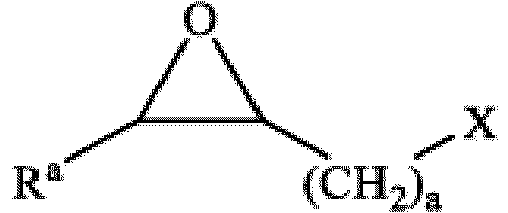 a 1, 2, 3, 4 oder 5 ist;X Alkyl, F, Cl, Br, I ist; undRa H, Alkyl, Aryl oder Cyclyl ist; undwobei die feste Katalysatorkomponente eine Teilchengröße von etwa 5 Mikrometern bis etwa 70 Mikrometern (auf einer 50 Vol.-% Basis) und vorzugsweise eine BET-Oberfläche von etwa 100 m2/g bis etwa 500 m2/g aufweist.
 - Feste Katalysatorkomponente nach Anspruch 1, die ferner umfasst:
einen unterstützenden Donor, wobei der unterstützende Donor sich vom internen Elektronendonor unterscheidet, wobei der unterstützende Donor umfasst: einen Ether, ein Succinat, einen Monoarylester, einen Polycarbonsäureester, einen Polyhydroxyester, einen heterocyclischen Polycarbonsäureester, ein Acrylat, einen Ester einer anorganischen Säure, einen alicyclischen Polycarbonsäureester oder eine hydroxy-substituierte Carbonsäureesterverbindung mit 2 bis 30 Kohlenstoffatomen; vorzugsweise wobei der unterstützende Donor einen Monoester allein oder in Kombination mit einem Dialkylether oder einem Acrylat umfasst und der interne Elektronendonor einen Diarylester umfasst. - Feste Katalysatorkomponente nach Anspruch 1 oder 2, wobei die Organosiliciumverbindung Si-O- oder O-Si-O-Gruppen enthält und vorzugsweise ein Silan, Siloxan oder Polysiloxan der Formel (II) ist:
RnSi(OR')4-n (II)
wobei:jedes R H, Alkyl oder Aryl ist;jedes R' H, Alkyl, Aryl oder ein SiRn(OR')3-n ist; undn 0, 1, 2 oder 3 ist. - Feste Katalysatorkomponente, nach einem der vorhergehenden Ansprüche, wobei die organische Phosphorverbindung einen Phosphatsäureester umfasst, vorzugsweise dargestellt durch

- Festkatalysatorkomponente nach einem der vorhergehenden Ansprüche, wobei der interne Elektronendonor aus der Gruppe ausgewählt ist, die aus linearen oder cyclischen Diethern und aromatischen Nicht-Phthalatdiestern besteht, die vorzugsweise durch eine der folgenden Formeln dargestellt werden:


 jedes von R1 bis R34 unabhängig H, F, Cl, Br, I, Alkyl, Cycloalkyl, Cycloalkylalkyl, Aryl, Aralkyl, Heterocyclyl, Heterocyclylalkyl, Heteroaryl oder Heteroarylalkyl ist; undq eine ganze Zahl von 0 bis 12 ist.
 - Katalysatorsystem, das die feste Katalysatorkomponente nach einem der vorhergehenden Ansprüche ist, in Kombination mit einer Organoaluminiumverbindung und mindestens einem Selektivitätskontrollmittel, wie Dimethoxydimethylsilan, n-Propyltrimethoxysilan, Methylcyclohexyl-dimethoxysilan, Diisopropyldimethoxysilan, n-Propyltriethoxysilan, Bis(perhydroisochinolino)dimethoxysilan, 2,2,6,6-Tetramethylpiperidin oder Gemischen davon;
und optional ein die Aktivität begrenzendes Mittel, wie einen Ester einer aliphatischen C4- bis C30-Säure, einen Diether oder einen Poly(alkenglycol)ester einer aliphatischen C4- bis C30-Säure. - Verfahren zur Herstellung einer festen Katalysatorkomponente für die Olefinpolymerisation, wobei das Verfahren umfasst:a) Lösen einer Halogenid-haltigen Magnesiumverbindung, die vorzugsweise aus der Gruppe ausgewählt ist, die aus Magnesiumchlorid, Magnesiumbromid, Magnesiumiodid, Magnesiumfluorid und einem Gemisch aus zwei oder mehreren davon, in einem Gemisch besteht, wobei das Gemisch eine Epoxyverbindung, eine organische Phosphorverbindung und ein Kohlenwasserstofflösungsmittel umfasst, um eine homogene Lösung zu bilden;b) Behandeln der homogenen Lösung mit einer ersten Titanverbindung in Gegenwart einer Organosiliciumverbindung, um einen festen Niederschlag zu bilden;c) Behandeln des festen Niederschlags mit einer zweiten Titanverbindung in Gegenwart eines Nicht-Phthalat-Elektronendonors, um die feste Katalysatorkomponente zu bilden;wobei:das Verfahren frei von Carbonsäuren und Anhydriden ist;die erste Titanverbindung und die zweite Titanverbindung unabhängig voneinander dargestellt werden durch:
Ti(OR)gX4-g;
jedes R unabhängig ein C1-C4-Alkyl ist;X Br, Cl oder I ist; undg 0, 1, 2 oder 3 ist; unddie Organosiliciumverbindung O-Si-O- oder Si-O-Si-Gruppen oder beide enthält und vorzugsweise durch Formel (II) dargestellt wird:
RnSi(OR')4-n (II)
wobei:jedes R H, Alkyl oder Aryl ist;jedes R' H, Alkyl, Aryl oder ein SiRn(OR')3-n ist; undn 0, 1, 2 oder 3 ist,wie ein Polydialkylsiloxan, Tetraalkoxysilan oder ein Gemisch davon; und die organische Phosphorverbindung vorzugsweise dargestellt wird durch: wobei R1, R2 und R3 jeweils unabhängig voneinander C1-C10-Alkyl sind.
 - Verfahren nach Anspruch 7, das ferner den Schritt des Behandelns der homogenen Lösung mit einem unterstützenden Donor umfasst, wobei der unterstützende Donor von dem Nicht-Phthalat-Elektronendonor verschieden ist und Folgendes umfasst: einen Diether, ein Succinat, einen Monoarylester, einen Polycarbonsäureester, einen Polyhydroxyester, einen heterocyclischen Polycarbonsäureester, einen Ester einer anorganischen Säure, einen alicyclischen Polycarbonsäureester, eine hydroxy-substituierte Carbonsäureesterverbindung mit 2 bis 30 Kohlenstoffatomen, ein Acrylat oder Gemische davon,
wie Methylformiat, Butylformiat, Ethylacetat, Vinylacetat, Propylacetat, Octylacetat, Cyclohexylacetat, Ethylpropionat, Methylbutyrat, Ethylbutyrat, Isobutylbutyrat, Ethylvalerat, Ethylstearat, Methylchloracetat, Ethyldichloracetat, Ethylacrylat, Methylmethacrylat, Ethylcrotonsäureester, Ethylcyclohexancarbonsäureester, Methylbenzoat, Ethylbenzoat, Propylbenzoat, Butylbenzoat, Octylbenzoat, Cyclohexylbenzoat, Phenylbenzoat, Benzylbenzoat, Ethyl-p-methoxybenzoat, Methyl-p-methylbenzoat, Ethyl-p-t-butylbenzoat, Ethylnaphthoat, Methyltoluol, Ethyltoluol, Amyltoluol, Ethylethylbenzoat, Methylanisat, Ethylanisat oder Ethylethoxybenzoat. - Verfahren nach Anspruch 7 oder 8, wobei der Nicht-Phthalat-Elektronendonor umfasst: einen Aryldiester, einen Diether, ein Succinat, einen Ester einer organischen Säure, einen Ester einer Polycarbonsäure, einen Ester eines Polyhydroxyalkylesters, einen Ester einer heterocyclischen Polycarbonsäure, einen Ester einer anorganischen Säure, einen Ester einer alicyclischen Polycarbonsäure, eine hydroxy-substituierte Carbonsäureesterverbindung mit 2 bis 30 Kohlenstoffatomen oder eine Verbindung mit mindestens einer Ethergruppe und mindestens einer Ketongruppe oder Gemische davon und vorzugsweise eine Verbindung umfasst, die durch eine der folgenden Formeln dargestellt wird:

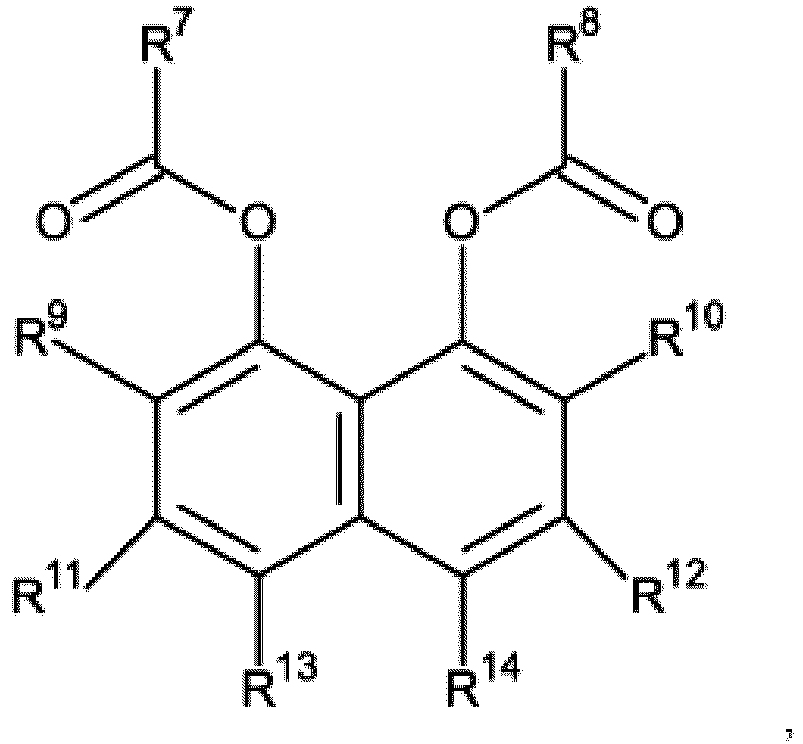

 jedes von R1 bis R34 unabhängig H, F, Cl, Br, I, Alkyl, Cycloalkyl, Cycloalkylalkyl, Aryl, Aralkyl, Heterocyclyl, Heterocyclylalkyl, Heteroaryl oder Heteroarylalkyl ist; undq eine ganze Zahl von 0 bis 12 ist.
 - Verfahren nach Anspruch 7, 8 oder 9, das ferner den Schritt der Bildung der homogenen Lösung in Gegenwart eines Aluminiumalkoxids umfasst, das vorzugsweise die Formel Al(OR')3 aufweist, wobei jedes R' individuell ein C1-C20-Kohlenwasserstoff ist, wie Aluminiumisopropoxid.
- Verfahren nach Anspruch 7, 8, 9 oder 10, wobei der Nicht-Phthalat-Elektronendonor vor oder nach der Bildung des festen Niederschlags zugegeben wird.
- Verfahren nach einem der Ansprüche 7 bis 11, wobei die Epoxyverbindung eine Glycidyl-haltige Verbindung ist, die durch die Formel dargestellt wird:
 a 1, 2, 3, 4 oder 5 ist;X Alkyl, F, Cl, Br, I ist; undRa H, Alkyl, Aryl oder Cyclyl ist,wie Ethylenoxid, Propylenoxid, 1,2-Epoxybutan, 2,3-Epoxybutan, 1,2-Epoxyhexan, 1,2-Epoxyoctan, 1,2-Epoxydecan, 1,2-Epoxydodecan; 1,2-Epoxytetradecan; 1,2-Epoxyhexadecan; 1,2-Epoxyoctadecan; 7,8-Epoxy-2-methyloctadecan; 2-Vinyl-Oxiran; 2-Methyl-2-vinyloxiran; 1,2-Epoxy-5-hexen; 1,2-Epoxy-7-octen; 1-Phenyl-2,3-epoxypropan; 1-(1-Naphthyl)-2,3-epoxypropan; 1-Cyclohexyl-3,4-epoxybutan; 1,3-Butadiendioxid; 1,2,7,8-Diepoxyoctan; Cyclopentenoxid; Cyclooctenoxid; α-Pinenoxid; 2,3-Epoxynorbornan; Limonenoxid; Cyclodecanepoxid; 2,3,5,6-Diepoxynorbornan; Styroloxid; 3-Methylstyroloxid; 1,2-Epoxybutylbenzol; 1,2-Epoxyoctylbenzol; Stilbenoxid; 3-Vinylstyroloxid; 1-(1-Methyl-1,2-epoxyethyl)-3-(1-methylvinylbenzol); 1,4-Bis(1,2-epoxypropyl)benzol; 1,3-Bis(1,2-epoxy-1-methylethyl)benzol; 1,4-Bis(1,2-epoxy-1-methylethyl)benzol; Epifluorhydrin; Epichlorhydrin; Epibromhydrin; Hexafluorpropylenoxid; 1,2-Epoxy-4-fluorbutan; 1-(2, 3-Epoxypropyl)-4-fluorbenzol; 1-(3,4-Epoxybutyl)-2-fluorbenzol; 1-(2,3-Epoxypropyl)-4-chlorbenzol ; 1-(3,4-Epoxybutyl)-3-chlorbenzol; 4-Fluor-1,2-cyclohexenoxid; 6-Chlor-2,3-epoxybicyclo[2.2.1]heptan; 4-fluorstyroloxid; 1-(1,2-Epoxypropyl)-3-trifluorbenzol; 3-Acetyl-1,2-epoxypropan; 4-Benzoyl-1,2-epoxybutan; 4-(4-Benzoyl)phenyl-1,2-epoxybutan; 4,4'-Bis(3, 4-epoxybutyl)benzophenon; 3,4-Epoxy-1-cyclohexanon; 2,3-Epoxy-5-oxobicyclo[2.2.1]heptan; 3-Acetylstyroloxid; 4-(1,2-Epoxypropyl)benzophenon; Glycidylmethylether; Butylglycidylether; 2-Ethylhexylglycidylether; Allylglycidylether; Ethyl-3,4-epoxybutylether; Glycidylphenylether; Glycidyl-4-tert-butylphenylether; Glycidyl-4-chlorphenylether; Glycidyl-4-methoxyphenylether; Glycidyl-2-phenylphenylether; Glycidyl-1-naphthylether; Glycidyl-2-phenylphenylether; Glycidyl-1-naphthylether; Glycidyl-4-indolylether; Glycidyl-N-methyl-α-chinolon-4-ylether; Ethylenglykoldiglycidylether; 1,4-Butandioldiglycidylether; 1,2-Diglycidyloxybenzol; 2,2-Bis(4-glycidyloxyphenyl)propan; Tris(4-glycidyloxyphenyl)methan; Poly(oxypropylen)triol-triglycidylether; ein Glycidylether von Phenolnovolak; 1,2-Epoxy-4-methoxycyclohexan; 2, 3-Epoxy-5, 6-dimethoxybicyclo[2.2.1]heptan; 4-Methoxystyroloxid; 1-(1,2-Epoxybutyl)-2-phenoxybenzol; Glycidylformiat; Glycidylacetat; 2,3-Epoxybutylacetat; Glycidylbutyrat; Glycidylbenzoat; Diglycidylterephthalat; Poly(glycidylacrylat); Poly(glycidylmethacrylat); ein Copolymer von Glycidylacrylat mit einem anderen Monomer; ein Copolymer von Glycidylmethacrylat mit einem anderen Monomer; 1,2-Epoxy-4-methoxycarbonylcyclohexan; 2,3-Epoxy-5-butoxycarbonylbicyclo[2.2.1]heptan; Ethyl-4-(1,2-epoxyethyl)benzoat; Methyl-3-(1,2-epoxybutyl)benzoat; Methyl-3-(1,2-epoxybutyl)-5-phenylbenzoat; N,N-Glycidyl-methylacetamid; N,N-Ethylglycidylpropionamid ; N,N-Glycidylmethylbenzamid; N-(4,5-Epoxypentyl)-N-methylbenzamid; N,N-Diglycylanilin; Bis(4-diglycidylaminophenyl)methan; Poly(N,N-glycidylmethylacrylamid); 1,2-Epoxy-3-(diphenylcarbamoyl)cyclohexan; 2,3-Epoxy-6-(dimethylcarbamoyl)bicyclo[2.2.1]heptan; 2-(Dimethylcarbamoyl)styroloxid; 4-(1,2-Epoxybut yl)-4'-(dimethylcarbamoyl)biphenyl; 4-Cyano-1,2-epoxybutan; 1-(3-Cyanophenyl)-2,3-epoxybutan; 2-Cyanostyroloxid; oder 6- Cyano-1 -(1,2-epoxy-2-phenylethyl)naphthalin.
 - Verfahren nach einem der Ansprüche 7 bis 12, wobei die Behandlung der homogenen Lösung mit der ersten Titanverbindung in Gegenwart eines organischen Esters und der Organosiliciumverbindung, eines organischen Esters und eines Aluminiumalkoxids oder eines organischen Esters, der Organosiliciumverbindung und eines Aluminiumalkoxids durchgeführt wird, um den festen Niederschlag zu bilden.
- Verfahren zum Polymerisieren oder Copolymerisieren eines olefinischen Monomers, wobei das Verfahren Folgendes umfasst: In-Kontakt-Bringen eines olefinischen Monomers mit der Katalysatorkomponente nach einem der Ansprüche 1-5 oder 7-13, um ein Polyolefinpolymer in Gegenwart einer Organoaluminiumverbindung zu bilden und mindestens ein Selektivitätskontrollmittel, das eine Silanverbindung allein oder in Kombination mit einem aktivitätsbegrenzenden Mittel umfasst, wie einem Ester einer aliphatischen C4- bis C30-Säure, einem Diether oder einem Poly(alkenglycol)ester einer aliphatischen C4- bis C30-Säure.
- Polymerisationsverfahren nach Anspruch 14, wobei Polymerteilchen mit einer Teilchenmorphologie hergestellt werden, so dass die Teilchen ein B/L3 von mehr als etwa 0,6, beispielsweise mehr als etwa 0,7, beispielsweise mehr als etwa 0,8 aufweisen.
Applications Claiming Priority (3)
| Application Number | Priority Date | Filing Date | Title |
|---|---|---|---|
| US201762585137P | 2017-11-13 | 2017-11-13 | |
| PCT/US2018/057980 WO2019094216A1 (en) | 2017-11-13 | 2018-10-29 | Catalyst components for propylene polymerization |
| PCT/US2018/059311 WO2019094347A1 (en) | 2017-11-13 | 2018-11-06 | Catalyst components for propylene polymerization |
Publications (4)
| Publication Number | Publication Date |
|---|---|
| EP3710159A1 EP3710159A1 (de) | 2020-09-23 |
| EP3710159A4 EP3710159A4 (de) | 2021-12-01 |
| EP3710159B1 true EP3710159B1 (de) | 2025-01-22 |
| EP3710159C0 EP3710159C0 (de) | 2025-01-22 |
Family
ID=66439070
Family Applications (2)
| Application Number | Title | Priority Date | Filing Date |
|---|---|---|---|
| EP18876554.9A Active EP3710159B1 (de) | 2017-11-13 | 2018-11-06 | Katalysatorkomponenten für propylenpolymerisation |
| EP18875540.9A Pending EP3710527A4 (de) | 2017-11-13 | 2018-11-13 | Polyolefinpolymerzusammensetzung |
Family Applications After (1)
| Application Number | Title | Priority Date | Filing Date |
|---|---|---|---|
| EP18875540.9A Pending EP3710527A4 (de) | 2017-11-13 | 2018-11-13 | Polyolefinpolymerzusammensetzung |
Country Status (13)
| Country | Link |
|---|---|
| US (3) | US11634520B2 (de) |
| EP (2) | EP3710159B1 (de) |
| JP (2) | JP7366912B2 (de) |
| KR (2) | KR102738897B1 (de) |
| CN (2) | CN111479627A (de) |
| AR (1) | AR113501A1 (de) |
| BR (1) | BR112020009437A2 (de) |
| CA (2) | CA3082147A1 (de) |
| CO (1) | CO2020006368A2 (de) |
| PL (1) | PL3710159T3 (de) |
| SA (2) | SA520411949B1 (de) |
| TW (1) | TWI788456B (de) |
| WO (1) | WO2019094216A1 (de) |
Families Citing this family (22)
| Publication number | Priority date | Publication date | Assignee | Title |
|---|---|---|---|---|
| WO2019094216A1 (en) * | 2017-11-13 | 2019-05-16 | W.R. Grace & Co.-Conn. | Catalyst components for propylene polymerization |
| CN114729074A (zh) | 2019-09-18 | 2022-07-08 | 格雷斯公司 | 用于聚烯烃聚合物的催化剂组合物 |
| CN114502604B (zh) * | 2019-10-04 | 2024-11-22 | Sabic环球技术有限责任公司 | 使用具有新型1,3-二醚内电子给体的齐格勒-纳塔主催化剂聚合聚丙烯的方法 |
| CN113527555B (zh) * | 2020-04-21 | 2023-04-11 | 中国石油化工股份有限公司 | 含环氧树脂的催化剂组分及其制备方法和应用 |
| JP7526587B2 (ja) * | 2020-04-28 | 2024-08-01 | 東邦チタニウム株式会社 | オレフィン類重合用固体触媒成分の製造方法 |
| CN113773423A (zh) * | 2020-06-09 | 2021-12-10 | 中国石油化工股份有限公司 | 一种制备烯烃聚合物的固体催化剂组分及其应用 |
| KR102890553B1 (ko) | 2020-06-29 | 2025-11-26 | 주식회사 엘지에너지솔루션 | 연쇄발화를 방지하는 전지 모듈 제조방법 |
| CN114426600B (zh) * | 2020-10-15 | 2024-03-26 | 中国石油化工股份有限公司 | 一种用于烯烃聚合的固体催化剂的制备方法 |
| EP4238935A4 (de) * | 2020-10-28 | 2024-10-23 | Toho Titanium Co., Ltd. | Feststoffkatalysator zur olefinpolymerisierung, verfahren zur herstellung des feststoffkatalysators |
| CN116529270B (zh) * | 2020-11-27 | 2026-05-01 | Sabic环球技术有限责任公司 | 制备用于聚合烯烃的主催化剂的固体载体的方法 |
| US20240059812A1 (en) * | 2020-12-15 | 2024-02-22 | Ptt Global Chemical Public Company Limited | Molecular weight distribution adjustment of polyethylene by external electron donor |
| CN113221474B (zh) * | 2021-03-31 | 2022-08-23 | 深圳大学 | 考虑颗粒形状的cfd-dem模拟渗流侵蚀破坏的方法 |
| US20240392047A1 (en) * | 2021-09-02 | 2024-11-28 | W.R. Grace & Co.-Conn | Catalyst component for propylene polymerization with improved catalyst performance |
| CN116023552B (zh) * | 2021-10-27 | 2024-12-06 | 中国石油化工股份有限公司 | 一种烯烃聚合反应的催化剂及催化剂体系 |
| CN116023544B (zh) * | 2021-10-27 | 2024-12-06 | 中国石油化工股份有限公司 | 用于烯烃聚合的催化剂组分及其制备方法、催化剂和烯烃聚合方法 |
| CN116023554A (zh) * | 2021-10-27 | 2023-04-28 | 中国石油化工股份有限公司 | 一种烯烃聚合反应的催化剂活性组分、固体催化剂及催化剂体系 |
| EP4424725A4 (de) * | 2021-10-27 | 2025-10-22 | China Petroleum & Chem Corp | Polypropylenmikrokugel und herstellungsverfahren dafür, 3d-druckrohmaterial und verwendung |
| CN116041577B (zh) * | 2021-10-28 | 2024-12-06 | 中国石油化工股份有限公司 | 烯烃聚合催化剂组分、催化剂体系及应用和烯烃聚合方法 |
| EP4190823A1 (de) * | 2021-12-06 | 2023-06-07 | Clariant International Ltd | Verfahren zur herstellung eines sphärischen trägers für einen ziegler-natta-katalysator |
| KR20240135041A (ko) * | 2022-01-31 | 2024-09-10 | 더블유.알. 그레이스 앤드 캄파니-콘. | 마그네슘, 티타늄, 에폭시 화합물, 및 1,2-페닐렌 디벤조에이트 기반 화합물과 같은 내부 전자 공여체를 포함하는 올레핀 중합 촉매 |
| WO2023213992A1 (en) * | 2022-05-06 | 2023-11-09 | Sabic Global Technologies B.V. | Process for preparing a propylene composition |
| US20250115687A1 (en) * | 2023-10-06 | 2025-04-10 | Formosa Plastics Corporation, U.S.A. | Production method for solid catalyst component for polymerizing olefins, and catalyst for polymerizaing olefins |
Family Cites Families (76)
| Publication number | Priority date | Publication date | Assignee | Title |
|---|---|---|---|---|
| CN1006071B (zh) | 1985-04-01 | 1989-12-13 | 中国石油化工总公司 | 用于烯烃聚合和共聚合的催化剂体系 |
| US5885924A (en) | 1995-06-07 | 1999-03-23 | W. R. Grace & Co.-Conn. | Halogenated supports and supported activators |
| US5767034A (en) | 1996-05-31 | 1998-06-16 | Intevep, S.A. | Olefin polymerization catalyst with additive comprising aluminum-silicon composition, calixarene derivatives or cyclodextrin derivatives |
| JP3871291B2 (ja) * | 1998-02-17 | 2007-01-24 | 東邦チタニウム株式会社 | オレフィン類重合用固体触媒成分の調製方法 |
| FI981717L (fi) | 1998-08-07 | 2000-02-08 | Borealis As | Katalysaattorikomponentti, joka käsittää magnesiumia, titaania, halogeenia ja elektronidonorin, sen valmistus ja käyttö |
| CN1137155C (zh) * | 1999-12-06 | 2004-02-04 | 中国石油化工集团公司 | 用于烯烃聚合或共聚合的催化剂体系 |
| CN1137156C (zh) * | 1999-12-06 | 2004-02-04 | 中国石油化工集团公司 | 用于烯烃聚合的催化剂组分、烯烃聚合催化剂及其用途 |
| SG95635A1 (en) | 2000-03-30 | 2003-04-23 | Sumitomo Chemical Co | Process for producing catalyst for ethylene polymerization and process for producing ehtylene polymer |
| DE10025727A1 (de) | 2000-05-25 | 2002-01-03 | Basell Polypropylen Gmbh | Hochfließfähige Propylenblockcopolymerisate |
| US6376417B1 (en) * | 2000-06-29 | 2002-04-23 | China Petro Chemical Corp. | Catalyst for the polymerization of propylene and its use |
| US6469112B2 (en) * | 2000-08-22 | 2002-10-22 | Engelhard Corporation | (Cycloalkyl)methyl silanes as external donors for polyolefin catalysts |
| USH2060H1 (en) * | 2000-08-22 | 2003-03-04 | Engelhard Corporation | Cyclobutyl silanes for catalysts useful for making highly isotactic olefin polymers |
| KR100844062B1 (ko) * | 2001-02-21 | 2008-07-07 | 미쓰이 가가쿠 가부시키가이샤 | 올레핀 중합용 촉매 및 이 촉매를 사용하는 올레핀중합체의 제조방법 |
| US6825146B2 (en) | 2001-05-29 | 2004-11-30 | Union Carbide Chemicals & Plastics Technology Corporation | Olefin polymerization catalyst compositions and method of preparation |
| EP1508559A4 (de) | 2002-05-24 | 2006-08-02 | Idemitsu Kosan Co | Magnesiumverbindung, feste katalysatorkomponente zur olefinpolymerisierung, katalysator zur olefinpolymerisierung und verfahren zur herstellung von polyolefin |
| US20030236365A1 (en) | 2002-06-24 | 2003-12-25 | Fina Technology, Inc. | Polyolefin production with a high performance support for a metallocene catalyst system |
| CN1229400C (zh) * | 2003-09-18 | 2005-11-30 | 中国石油化工股份有限公司 | 用于烯烃聚合的催化剂组分及其催化剂 |
| EP1668044B1 (de) | 2003-09-23 | 2014-05-07 | W.R. Grace & CO. - CONN. | Selbstlimitierende katalysatorzusammensetzung mit dicarbonsäureester als internem donator und propylenpolymerisationsverfahren |
| US7351778B2 (en) * | 2004-04-30 | 2008-04-01 | China Petroleum & Chemical Corporation | Catalyst component for olefin polymerization and catalyst comprising the same |
| US7388060B2 (en) * | 2006-01-04 | 2008-06-17 | China Petroleum & Chemical Corporation | Catalyst component for olefin (co)polymerization, preparation thereof, a catalyst comprising the same and use thereof |
| US20100249330A1 (en) | 2007-10-15 | 2010-09-30 | Basell Poliolefine Italia S.R.L. | Process for the preparation of high fluidity propylene polymers |
| ATE532800T1 (de) | 2007-11-30 | 2011-11-15 | Borealis Tech Oy | Verfahren zur herstellung eines heterophasigen propylencopolymers |
| US8344079B2 (en) * | 2007-12-31 | 2013-01-01 | Basf Corporation | Molar ratio modifications to larger polyolefin catalysts |
| US8003558B2 (en) * | 2008-07-29 | 2011-08-23 | Basf Corporation | Internal donor for olefin polymerization catalysts |
| KR20160017096A (ko) | 2008-08-21 | 2016-02-15 | 더블유.알. 그레이스 앤드 캄파니-콘. | 고 용융 유동 내충격성 프로필렌 공중합체 및 방법 |
| MX2011001970A (es) | 2008-08-21 | 2011-08-12 | Dow Global Technologies Llc | Composicion de catalizador con agente de control de selectividad mezclado y metodo de polimerizacion que la usa. |
| CN101724105B (zh) * | 2008-10-24 | 2011-10-12 | 中国石油化工股份有限公司 | 用于烯烃聚合反应的催化剂组分及其催化剂 |
| EP2350153B1 (de) | 2008-11-21 | 2013-07-31 | Borealis AG | Verfahren zum verbessern der fliessbarkeit eines heterophasischen polypropylen-pulvers |
| CN102325808B (zh) | 2008-12-31 | 2014-03-12 | 陶氏环球技术有限责任公司 | 包含取代的1,2-亚苯基芳族二酯内给体的前催化剂组合物及方法 |
| MY159688A (en) | 2008-12-31 | 2017-01-13 | W R Grace & Co -Conn | Random propylene copolymer composition, articles and process |
| CN102159596B (zh) * | 2009-03-17 | 2014-05-07 | 东邦钛株式会社 | 烯烃类聚合用固体催化剂成分及催化剂以及使用它们的烯烃类聚合物的制造方法 |
| US20120035338A1 (en) * | 2009-04-17 | 2012-02-09 | Zhong Tan | Catalyst component used for olefin polymerization, process for preparing the same, and catalyst containing the same |
| CN101993506B (zh) * | 2009-08-21 | 2012-08-29 | 中国石油化工股份有限公司 | 一种用于烯烃聚合的催化剂组分的制备方法及其催化剂 |
| EP2264099A1 (de) | 2009-05-21 | 2010-12-22 | Basell Poliolefine Italia S.R.L. | Propylenpolymerzusammensetzungen |
| US8211819B2 (en) * | 2009-12-21 | 2012-07-03 | Basf Corporation | Internal and external donor compounds for olefin polymerization catalysts |
| US8318626B2 (en) * | 2010-03-01 | 2012-11-27 | Basf Corporation | Internal and external donor compounds for olefin polymerization catalysts III |
| US20130102744A1 (en) | 2010-06-24 | 2013-04-25 | Basell Poliolefine Italia, s.r.l. | Catalyst Systems for the Polymerization of Olefins |
| US8227370B2 (en) * | 2010-11-10 | 2012-07-24 | Basf Corporation | High activity catalyst component for olefin polymerization and method of using the same |
| EP2452976A1 (de) | 2010-11-12 | 2012-05-16 | Borealis AG | Heterophasische Propylencopolymere mit verbesserten Steifheits-/Stoßfestigkeits-/Fließfähigkeitsverhältnis |
| CN103380104B (zh) | 2010-12-21 | 2016-08-10 | 格雷斯公司 | 生产高熔体流动性基于丙烯的聚合物的方法和由其生产的产品 |
| US20120157295A1 (en) | 2010-12-21 | 2012-06-21 | Linfeng Chen | Process for Producing Procatalyst Composition with Alkoxyalkyl Ester Internal Electron Donor and Product |
| US20120157645A1 (en) | 2010-12-21 | 2012-06-21 | Linfeng Chen | Procatalyst Composition with Alkoxypropyl Ester Internal Electron Donor and Polymer From Same |
| US8685879B2 (en) | 2011-04-29 | 2014-04-01 | Basf Corporation | Emulsion process for improved large spherical polypropylene catalysts |
| US8765626B2 (en) * | 2011-11-30 | 2014-07-01 | Basf Corporation | Internal donor structure for olefin polymerization catalysts and methods of making and using same |
| JP2013213074A (ja) | 2012-03-30 | 2013-10-17 | Japan Polypropylene Corp | α−オレフィン重合用固体触媒成分の製造方法および固体触媒成分 |
| US20130296510A1 (en) * | 2012-05-03 | 2013-11-07 | Zhengyang Guo | Catalysts for olefin polymerization, processes for preparation thereof and processes for olefin polymerization |
| ES2608963T3 (es) | 2012-05-21 | 2017-04-17 | Borealis Ag | Polipropileno de alto flujo con excelentes propiedades mecánicas |
| CN102875704B (zh) | 2012-09-05 | 2015-04-08 | 中国石油天然气股份有限公司 | 一种烯烃聚合催化剂及其制备方法与应用 |
| KR102126599B1 (ko) * | 2012-11-08 | 2020-06-24 | 더블유.알. 그레이스 앤드 컴파니 -씨오엔엔. | 조절된 촉매 특성을 갖는 중합 촉매의 제조 방법 및 올레핀 중합에서의 그의 용도 |
| US8933180B2 (en) * | 2013-03-14 | 2015-01-13 | Basf Corporation | Internal and external donor compounds for olefin polymerization catalysts IV |
| TWI644896B (zh) * | 2013-05-21 | 2018-12-21 | 中國石油化工科技開發有限公司 | Catalyst component, catalyst and application for olefin polymerization |
| CN104558275B (zh) | 2013-10-10 | 2017-03-29 | 中国石油化工股份有限公司 | 一种烯烃聚合用催化剂及其制备方法和应用 |
| CN104558263B (zh) | 2013-10-15 | 2017-05-31 | 中国石油化工股份有限公司 | 一种用于烯烃聚合的催化剂组分及其制备方法和催化剂 |
| CN104558282B (zh) | 2013-10-18 | 2017-02-15 | 中国石油化工股份有限公司 | 用于烯烃聚合的催化剂组分及其制备方法和用于烯烃聚合的催化剂与应用 |
| CN104558288B (zh) | 2013-10-25 | 2017-09-29 | 中国石油化工股份有限公司 | 一种烯烃聚合物及其制备方法 |
| CN103923237B (zh) * | 2013-10-31 | 2017-01-25 | 北京利和知信科技有限公司 | 用于烯烃聚合的催化剂组分及其应用 |
| WO2015081251A1 (en) * | 2013-11-26 | 2015-06-04 | W. R. Grace & Co.-Conn | Producing propylene impact copolymers and products |
| BR112016012033B1 (pt) | 2013-11-27 | 2021-02-09 | W.R. Grace & Co.-Conn | processo de polimerização para copolímeros de impacto |
| ES2571587T3 (es) | 2014-01-29 | 2016-05-26 | Borealis Ag | Composición de poliolefina de alta fluidez con rigidez y resistencia a la perforación elevadas |
| MY176619A (en) * | 2014-04-24 | 2020-08-18 | China Petroleum & Chem Corp | Catalyst component for olefin polymerization, and catalyst containing the same |
| MX2016015770A (es) | 2014-06-02 | 2017-04-25 | Sabic Global Technologies Bv | Procatalizador para la polimerizacion de olefinas que comprende un monoester y donante interno de amidobenzoato. |
| US9663595B2 (en) * | 2014-08-05 | 2017-05-30 | W. R. Grace & Co. —Conn. | Solid catalyst components for olefin polymerization and methods of making and using the same |
| US9738736B2 (en) * | 2014-08-12 | 2017-08-22 | W. R. Grace & Co.-Conn | Combined internal donor system for Ziegler-Natta polyolefin catalysts and methods of making and using same |
| US9714302B2 (en) | 2014-10-10 | 2017-07-25 | W. R. Grace & Co.—Conn. | Process for preparing spherical polymerization catalyst components for use in olefin polymerizations |
| CN105566524B (zh) | 2014-10-10 | 2018-01-23 | 中国石油化工股份有限公司 | 一种用于乙烯聚合反应的催化剂组分及其催化剂 |
| JP6370483B2 (ja) | 2014-10-27 | 2018-08-08 | ボレアリス エージー | 衝撃強さ/剛性バランスが改善され、粉体流動性が改善され、排出量が低減された収縮率が低い異相ポリプロピレン |
| EP3015504A1 (de) | 2014-10-27 | 2016-05-04 | Borealis AG | Heterophasisches Polypropylen mit verbessertem Punktions- bzw. Schlagzähigkeits-/Steifigkeitsgleichgewicht |
| CN105622789B (zh) * | 2014-11-06 | 2018-07-20 | 中国石油化工股份有限公司 | 一种烯烃聚合用的小孔径催化剂组分、制备方法及其应用 |
| US9637575B2 (en) * | 2014-12-31 | 2017-05-02 | W. R. Grace & Co. -Conn. | Catalyst system, olefin polymerization catalyst components comprising at least an internal electron donor compound, and methods of making and using the same |
| CN106496377B (zh) | 2015-09-06 | 2019-05-31 | 中国石油化工股份有限公司 | 一种用于乙烯聚合的催化剂组分及催化剂 |
| CN106866848A (zh) | 2015-12-10 | 2017-06-20 | 中国石油天然气股份有限公司 | 乙烯聚合主催化剂及其制备方法、含该主催化剂的乙烯聚合催化剂 |
| JP6714869B2 (ja) * | 2015-12-18 | 2020-07-01 | 日本ポリプロ株式会社 | α−オレフィン重合用固体触媒成分の製造方法、及びそれを用いたα−オレフィン重合体の製造方法 |
| EP3423526B1 (de) | 2016-03-04 | 2022-09-28 | Borealis AG | Hochfliessfähige heterophasische polyolefinzusammensetzung mit verbessertem steifheits- und schlagfestigkeitsgleichgewicht |
| CA3025263C (en) * | 2016-05-23 | 2024-01-09 | W.R. Grace & Co. -Conn. | Non-phthalate donor for polyolefin catalysts |
| WO2019094216A1 (en) * | 2017-11-13 | 2019-05-16 | W.R. Grace & Co.-Conn. | Catalyst components for propylene polymerization |
| MX2021013692A (es) * | 2019-05-10 | 2021-12-10 | Grace W R & Co | Componentes catalizadores activados para polimerizacion de olefina. |
-
2018
- 2018-10-29 WO PCT/US2018/057980 patent/WO2019094216A1/en not_active Ceased
- 2018-11-06 PL PL18876554.9T patent/PL3710159T3/pl unknown
- 2018-11-06 CA CA3082147A patent/CA3082147A1/en active Pending
- 2018-11-06 KR KR1020207016267A patent/KR102738897B1/ko active Active
- 2018-11-06 BR BR112020009437-4A patent/BR112020009437A2/pt not_active Application Discontinuation
- 2018-11-06 US US16/762,331 patent/US11634520B2/en active Active
- 2018-11-06 CN CN201880081259.XA patent/CN111479627A/zh active Pending
- 2018-11-06 JP JP2020544577A patent/JP7366912B2/ja active Active
- 2018-11-06 EP EP18876554.9A patent/EP3710159B1/de active Active
- 2018-11-09 TW TW107139803A patent/TWI788456B/zh active
- 2018-11-13 KR KR1020207016270A patent/KR102660279B1/ko active Active
- 2018-11-13 CN CN201880081336.1A patent/CN111479871A/zh active Pending
- 2018-11-13 US US16/762,353 patent/US11421056B2/en active Active
- 2018-11-13 CA CA3082119A patent/CA3082119C/en active Active
- 2018-11-13 JP JP2020544377A patent/JP7223017B2/ja active Active
- 2018-11-13 AR ARP180103316A patent/AR113501A1/es active IP Right Grant
- 2018-11-13 EP EP18875540.9A patent/EP3710527A4/de active Pending
-
2020
- 2020-05-11 SA SA520411949A patent/SA520411949B1/ar unknown
- 2020-05-13 SA SA520411959A patent/SA520411959B1/ar unknown
- 2020-05-26 CO CONC2020/0006368A patent/CO2020006368A2/es unknown
-
2022
- 2022-05-25 US US17/824,418 patent/US12240925B2/en active Active
Also Published As
Similar Documents
| Publication | Publication Date | Title |
|---|---|---|
| US12240925B2 (en) | Process for preparing solid catalyst components for olefin polymerization | |
| EP3204159B1 (de) | Verfahren zur herstellung kugelförmiger polymerisierungskatalysatorkomponenten zur verwendung in olefinpolymerisierungen | |
| US8344079B2 (en) | Molar ratio modifications to larger polyolefin catalysts | |
| US11891460B2 (en) | Activated catalyst components for olefin polymerization | |
| US10273321B2 (en) | Process of polymerization catalyst production with controlled catalyst properties and use of same in olefin polymerizations | |
| WO2019094347A1 (en) | Catalyst components for propylene polymerization | |
| US9403924B2 (en) | Process of production of large and spherical polymerization catalyst and use of same in olefin polymerizations | |
| US20240392047A1 (en) | Catalyst component for propylene polymerization with improved catalyst performance | |
| RU2800539C2 (ru) | Композиция полиолефинового полимера | |
| RU2793854C2 (ru) | Каталитические компоненты для полимеризации пропилена | |
| JP2025503313A (ja) | マグネシウム、チタン、エポキシ化合物および1,2-フェニレンジベンゾエートをベースとする化合物のような内部電子供与体を含むオレフィン重合触媒 |
Legal Events
| Date | Code | Title | Description |
|---|---|---|---|
| STAA | Information on the status of an ep patent application or granted ep patent |
Free format text: STATUS: THE INTERNATIONAL PUBLICATION HAS BEEN MADE |
|
| PUAI | Public reference made under article 153(3) epc to a published international application that has entered the european phase |
Free format text: ORIGINAL CODE: 0009012 |
|
| STAA | Information on the status of an ep patent application or granted ep patent |
Free format text: STATUS: REQUEST FOR EXAMINATION WAS MADE |
|
| 17P | Request for examination filed |
Effective date: 20200507 |
|
| AK | Designated contracting states |
Kind code of ref document: A1 Designated state(s): AL AT BE BG CH CY CZ DE DK EE ES FI FR GB GR HR HU IE IS IT LI LT LU LV MC MK MT NL NO PL PT RO RS SE SI SK SM TR |
|
| AX | Request for extension of the european patent |
Extension state: BA ME |
|
| DAV | Request for validation of the european patent (deleted) | ||
| DAX | Request for extension of the european patent (deleted) | ||
| A4 | Supplementary search report drawn up and despatched |
Effective date: 20211028 |
|
| RIC1 | Information provided on ipc code assigned before grant |
Ipc: C08L 23/06 20060101ALI20211022BHEP Ipc: C08F 210/00 20060101ALI20211022BHEP Ipc: C08F 110/06 20060101ALI20211022BHEP Ipc: C08F 210/06 20060101AFI20211022BHEP |
|
| STAA | Information on the status of an ep patent application or granted ep patent |
Free format text: STATUS: EXAMINATION IS IN PROGRESS |
|
| 17Q | First examination report despatched |
Effective date: 20221031 |
|
| REG | Reference to a national code |
Ref country code: DE Ref legal event code: R079 Free format text: PREVIOUS MAIN CLASS: B01J0021060000 Ipc: C08F0210060000 Ref country code: DE Ref legal event code: R079 Ref document number: 602018078752 Country of ref document: DE Free format text: PREVIOUS MAIN CLASS: B01J0021060000 Ipc: C08F0210060000 |
|
| GRAP | Despatch of communication of intention to grant a patent |
Free format text: ORIGINAL CODE: EPIDOSNIGR1 |
|
| STAA | Information on the status of an ep patent application or granted ep patent |
Free format text: STATUS: GRANT OF PATENT IS INTENDED |
|
| RIC1 | Information provided on ipc code assigned before grant |
Ipc: C08F 2/34 20060101ALI20240728BHEP Ipc: B01J 37/03 20060101ALI20240728BHEP Ipc: B01J 31/38 20060101ALI20240728BHEP Ipc: C08F 4/658 20060101ALI20240728BHEP Ipc: C08F 4/656 20060101ALI20240728BHEP Ipc: C08F 4/646 20060101ALI20240728BHEP Ipc: C08F 4/651 20060101ALI20240728BHEP Ipc: C08L 23/06 20060101ALI20240728BHEP Ipc: C08F 210/00 20060101ALI20240728BHEP Ipc: C08F 110/06 20060101ALI20240728BHEP Ipc: C08F 210/06 20060101AFI20240728BHEP |
|
| INTG | Intention to grant announced |
Effective date: 20240813 |
|
| GRAS | Grant fee paid |
Free format text: ORIGINAL CODE: EPIDOSNIGR3 |
|
| GRAA | (expected) grant |
Free format text: ORIGINAL CODE: 0009210 |
|
| STAA | Information on the status of an ep patent application or granted ep patent |
Free format text: STATUS: THE PATENT HAS BEEN GRANTED |
|
| AK | Designated contracting states |
Kind code of ref document: B1 Designated state(s): AL AT BE BG CH CY CZ DE DK EE ES FI FR GB GR HR HU IE IS IT LI LT LU LV MC MK MT NL NO PL PT RO RS SE SI SK SM TR |
|
| REG | Reference to a national code |
Ref country code: GB Ref legal event code: FG4D |
|
| REG | Reference to a national code |
Ref country code: CH Ref legal event code: EP |
|
| REG | Reference to a national code |
Ref country code: IE Ref legal event code: FG4D |
|
| REG | Reference to a national code |
Ref country code: DE Ref legal event code: R096 Ref document number: 602018078752 Country of ref document: DE |
|
| U01 | Request for unitary effect filed |
Effective date: 20250204 |
|
| U07 | Unitary effect registered |
Designated state(s): AT BE BG DE DK EE FI FR IT LT LU LV MT NL PT RO SE SI Effective date: 20250210 |
|
| PG25 | Lapsed in a contracting state [announced via postgrant information from national office to epo] |
Ref country code: RS Free format text: LAPSE BECAUSE OF FAILURE TO SUBMIT A TRANSLATION OF THE DESCRIPTION OR TO PAY THE FEE WITHIN THE PRESCRIBED TIME-LIMIT Effective date: 20250422 |
|
| PG25 | Lapsed in a contracting state [announced via postgrant information from national office to epo] |
Ref country code: ES Free format text: LAPSE BECAUSE OF FAILURE TO SUBMIT A TRANSLATION OF THE DESCRIPTION OR TO PAY THE FEE WITHIN THE PRESCRIBED TIME-LIMIT Effective date: 20250122 |
|
| PG25 | Lapsed in a contracting state [announced via postgrant information from national office to epo] |
Ref country code: IS Free format text: LAPSE BECAUSE OF FAILURE TO SUBMIT A TRANSLATION OF THE DESCRIPTION OR TO PAY THE FEE WITHIN THE PRESCRIBED TIME-LIMIT Effective date: 20250522 Ref country code: NO Free format text: LAPSE BECAUSE OF FAILURE TO SUBMIT A TRANSLATION OF THE DESCRIPTION OR TO PAY THE FEE WITHIN THE PRESCRIBED TIME-LIMIT Effective date: 20250422 |
|
| PG25 | Lapsed in a contracting state [announced via postgrant information from national office to epo] |
Ref country code: HR Free format text: LAPSE BECAUSE OF FAILURE TO SUBMIT A TRANSLATION OF THE DESCRIPTION OR TO PAY THE FEE WITHIN THE PRESCRIBED TIME-LIMIT Effective date: 20250122 |
|
| PG25 | Lapsed in a contracting state [announced via postgrant information from national office to epo] |
Ref country code: GR Free format text: LAPSE BECAUSE OF FAILURE TO SUBMIT A TRANSLATION OF THE DESCRIPTION OR TO PAY THE FEE WITHIN THE PRESCRIBED TIME-LIMIT Effective date: 20250423 |
|
| PG25 | Lapsed in a contracting state [announced via postgrant information from national office to epo] |
Ref country code: SM Free format text: LAPSE BECAUSE OF FAILURE TO SUBMIT A TRANSLATION OF THE DESCRIPTION OR TO PAY THE FEE WITHIN THE PRESCRIBED TIME-LIMIT Effective date: 20250122 |
|
| PG25 | Lapsed in a contracting state [announced via postgrant information from national office to epo] |
Ref country code: CZ Free format text: LAPSE BECAUSE OF FAILURE TO SUBMIT A TRANSLATION OF THE DESCRIPTION OR TO PAY THE FEE WITHIN THE PRESCRIBED TIME-LIMIT Effective date: 20250122 |
|
| PG25 | Lapsed in a contracting state [announced via postgrant information from national office to epo] |
Ref country code: SK Free format text: LAPSE BECAUSE OF FAILURE TO SUBMIT A TRANSLATION OF THE DESCRIPTION OR TO PAY THE FEE WITHIN THE PRESCRIBED TIME-LIMIT Effective date: 20250122 |
|
| PLBE | No opposition filed within time limit |
Free format text: ORIGINAL CODE: 0009261 |
|
| STAA | Information on the status of an ep patent application or granted ep patent |
Free format text: STATUS: NO OPPOSITION FILED WITHIN TIME LIMIT |
|
| 26N | No opposition filed |
Effective date: 20251023 |
|
| U20 | Renewal fee for the european patent with unitary effect paid |
Year of fee payment: 8 Effective date: 20251126 |
|
| PGFP | Annual fee paid to national office [announced via postgrant information from national office to epo] |
Ref country code: PL Payment date: 20251021 Year of fee payment: 8 |