EP3553087B1 - Gezielte therapie für lungenkrebs - Google Patents
Gezielte therapie für lungenkrebs Download PDFInfo
- Publication number
- EP3553087B1 EP3553087B1 EP19163809.7A EP19163809A EP3553087B1 EP 3553087 B1 EP3553087 B1 EP 3553087B1 EP 19163809 A EP19163809 A EP 19163809A EP 3553087 B1 EP3553087 B1 EP 3553087B1
- Authority
- EP
- European Patent Office
- Prior art keywords
- antibody
- sirpα
- cell
- antibodies
- cells
- Prior art date
- Legal status (The legal status is an assumption and is not a legal conclusion. Google has not performed a legal analysis and makes no representation as to the accuracy of the status listed.)
- Active
Links
Images




Classifications
-
- C—CHEMISTRY; METALLURGY
- C07—ORGANIC CHEMISTRY
- C07K—PEPTIDES
- C07K16/00—Immunoglobulins [IG], e.g. monoclonal or polyclonal antibodies
- C07K16/18—Immunoglobulins [IG], e.g. monoclonal or polyclonal antibodies against material from animals or humans
- C07K16/28—Immunoglobulins [IG], e.g. monoclonal or polyclonal antibodies against material from animals or humans against receptors, cell surface antigens or cell surface determinants
- C07K16/2803—Immunoglobulins [IG], e.g. monoclonal or polyclonal antibodies against material from animals or humans against receptors, cell surface antigens or cell surface determinants against the immunoglobulin superfamily
-
- A—HUMAN NECESSITIES
- A61—MEDICAL OR VETERINARY SCIENCE; HYGIENE
- A61K—PREPARATIONS FOR MEDICAL, DENTAL OR TOILETRY PURPOSES
- A61K39/00—Medicinal preparations containing antigens or antibodies
- A61K39/395—Antibodies; Immunoglobulins; Immune serum, e.g. antilymphocytic serum
- A61K39/39533—Antibodies; Immunoglobulins; Immune serum, e.g. antilymphocytic serum against materials from animals
- A61K39/39558—Antibodies; Immunoglobulins; Immune serum, e.g. antilymphocytic serum against materials from animals against tumor tissues, cells, antigens
-
- A—HUMAN NECESSITIES
- A61—MEDICAL OR VETERINARY SCIENCE; HYGIENE
- A61K—PREPARATIONS FOR MEDICAL, DENTAL OR TOILETRY PURPOSES
- A61K38/00—Medicinal preparations containing peptides
- A61K38/16—Peptides having more than 20 amino acids; Gastrins; Somatostatins; Melanotropins; Derivatives thereof
- A61K38/17—Peptides having more than 20 amino acids; Gastrins; Somatostatins; Melanotropins; Derivatives thereof from animals; from humans
- A61K38/1703—Peptides having more than 20 amino acids; Gastrins; Somatostatins; Melanotropins; Derivatives thereof from animals; from humans from vertebrates
- A61K38/1709—Peptides having more than 20 amino acids; Gastrins; Somatostatins; Melanotropins; Derivatives thereof from animals; from humans from vertebrates from mammals
-
- A—HUMAN NECESSITIES
- A61—MEDICAL OR VETERINARY SCIENCE; HYGIENE
- A61K—PREPARATIONS FOR MEDICAL, DENTAL OR TOILETRY PURPOSES
- A61K38/00—Medicinal preparations containing peptides
- A61K38/16—Peptides having more than 20 amino acids; Gastrins; Somatostatins; Melanotropins; Derivatives thereof
- A61K38/17—Peptides having more than 20 amino acids; Gastrins; Somatostatins; Melanotropins; Derivatives thereof from animals; from humans
- A61K38/177—Receptors; Cell surface antigens; Cell surface determinants
-
- A—HUMAN NECESSITIES
- A61—MEDICAL OR VETERINARY SCIENCE; HYGIENE
- A61K—PREPARATIONS FOR MEDICAL, DENTAL OR TOILETRY PURPOSES
- A61K39/00—Medicinal preparations containing antigens or antibodies
- A61K39/395—Antibodies; Immunoglobulins; Immune serum, e.g. antilymphocytic serum
-
- A—HUMAN NECESSITIES
- A61—MEDICAL OR VETERINARY SCIENCE; HYGIENE
- A61K—PREPARATIONS FOR MEDICAL, DENTAL OR TOILETRY PURPOSES
- A61K47/00—Medicinal preparations characterised by the non-active ingredients used, e.g. carriers or inert additives; Targeting or modifying agents chemically bound to the active ingredient
- A61K47/50—Medicinal preparations characterised by the non-active ingredients used, e.g. carriers or inert additives; Targeting or modifying agents chemically bound to the active ingredient the non-active ingredient being chemically bound to the active ingredient, e.g. polymer-drug conjugates
- A61K47/51—Medicinal preparations characterised by the non-active ingredients used, e.g. carriers or inert additives; Targeting or modifying agents chemically bound to the active ingredient the non-active ingredient being chemically bound to the active ingredient, e.g. polymer-drug conjugates the non-active ingredient being a modifying agent
- A61K47/68—Medicinal preparations characterised by the non-active ingredients used, e.g. carriers or inert additives; Targeting or modifying agents chemically bound to the active ingredient the non-active ingredient being chemically bound to the active ingredient, e.g. polymer-drug conjugates the non-active ingredient being a modifying agent the modifying agent being an antibody, an immunoglobulin or a fragment thereof, e.g. an Fc-fragment
- A61K47/6801—Drug-antibody or immunoglobulin conjugates defined by the pharmacologically or therapeutically active agent
- A61K47/6803—Drugs conjugated to an antibody or immunoglobulin, e.g. cisplatin-antibody conjugates
- A61K47/68033—Drugs conjugated to an antibody or immunoglobulin, e.g. cisplatin-antibody conjugates the drug being a maytansine
-
- A—HUMAN NECESSITIES
- A61—MEDICAL OR VETERINARY SCIENCE; HYGIENE
- A61K—PREPARATIONS FOR MEDICAL, DENTAL OR TOILETRY PURPOSES
- A61K47/00—Medicinal preparations characterised by the non-active ingredients used, e.g. carriers or inert additives; Targeting or modifying agents chemically bound to the active ingredient
- A61K47/50—Medicinal preparations characterised by the non-active ingredients used, e.g. carriers or inert additives; Targeting or modifying agents chemically bound to the active ingredient the non-active ingredient being chemically bound to the active ingredient, e.g. polymer-drug conjugates
- A61K47/51—Medicinal preparations characterised by the non-active ingredients used, e.g. carriers or inert additives; Targeting or modifying agents chemically bound to the active ingredient the non-active ingredient being chemically bound to the active ingredient, e.g. polymer-drug conjugates the non-active ingredient being a modifying agent
- A61K47/68—Medicinal preparations characterised by the non-active ingredients used, e.g. carriers or inert additives; Targeting or modifying agents chemically bound to the active ingredient the non-active ingredient being chemically bound to the active ingredient, e.g. polymer-drug conjugates the non-active ingredient being a modifying agent the modifying agent being an antibody, an immunoglobulin or a fragment thereof, e.g. an Fc-fragment
- A61K47/6835—Medicinal preparations characterised by the non-active ingredients used, e.g. carriers or inert additives; Targeting or modifying agents chemically bound to the active ingredient the non-active ingredient being chemically bound to the active ingredient, e.g. polymer-drug conjugates the non-active ingredient being a modifying agent the modifying agent being an antibody, an immunoglobulin or a fragment thereof, e.g. an Fc-fragment the modifying agent being an antibody or an immunoglobulin bearing at least one antigen-binding site
- A61K47/6851—Medicinal preparations characterised by the non-active ingredients used, e.g. carriers or inert additives; Targeting or modifying agents chemically bound to the active ingredient the non-active ingredient being chemically bound to the active ingredient, e.g. polymer-drug conjugates the non-active ingredient being a modifying agent the modifying agent being an antibody, an immunoglobulin or a fragment thereof, e.g. an Fc-fragment the modifying agent being an antibody or an immunoglobulin bearing at least one antigen-binding site the antibody targeting a determinant of a tumour cell
- A61K47/6857—Medicinal preparations characterised by the non-active ingredients used, e.g. carriers or inert additives; Targeting or modifying agents chemically bound to the active ingredient the non-active ingredient being chemically bound to the active ingredient, e.g. polymer-drug conjugates the non-active ingredient being a modifying agent the modifying agent being an antibody, an immunoglobulin or a fragment thereof, e.g. an Fc-fragment the modifying agent being an antibody or an immunoglobulin bearing at least one antigen-binding site the antibody targeting a determinant of a tumour cell the tumour determinant being from lung cancer cell
-
- A—HUMAN NECESSITIES
- A61—MEDICAL OR VETERINARY SCIENCE; HYGIENE
- A61K—PREPARATIONS FOR MEDICAL, DENTAL OR TOILETRY PURPOSES
- A61K47/00—Medicinal preparations characterised by the non-active ingredients used, e.g. carriers or inert additives; Targeting or modifying agents chemically bound to the active ingredient
- A61K47/50—Medicinal preparations characterised by the non-active ingredients used, e.g. carriers or inert additives; Targeting or modifying agents chemically bound to the active ingredient the non-active ingredient being chemically bound to the active ingredient, e.g. polymer-drug conjugates
- A61K47/51—Medicinal preparations characterised by the non-active ingredients used, e.g. carriers or inert additives; Targeting or modifying agents chemically bound to the active ingredient the non-active ingredient being chemically bound to the active ingredient, e.g. polymer-drug conjugates the non-active ingredient being a modifying agent
- A61K47/68—Medicinal preparations characterised by the non-active ingredients used, e.g. carriers or inert additives; Targeting or modifying agents chemically bound to the active ingredient the non-active ingredient being chemically bound to the active ingredient, e.g. polymer-drug conjugates the non-active ingredient being a modifying agent the modifying agent being an antibody, an immunoglobulin or a fragment thereof, e.g. an Fc-fragment
- A61K47/6835—Medicinal preparations characterised by the non-active ingredients used, e.g. carriers or inert additives; Targeting or modifying agents chemically bound to the active ingredient the non-active ingredient being chemically bound to the active ingredient, e.g. polymer-drug conjugates the non-active ingredient being a modifying agent the modifying agent being an antibody, an immunoglobulin or a fragment thereof, e.g. an Fc-fragment the modifying agent being an antibody or an immunoglobulin bearing at least one antigen-binding site
- A61K47/6851—Medicinal preparations characterised by the non-active ingredients used, e.g. carriers or inert additives; Targeting or modifying agents chemically bound to the active ingredient the non-active ingredient being chemically bound to the active ingredient, e.g. polymer-drug conjugates the non-active ingredient being a modifying agent the modifying agent being an antibody, an immunoglobulin or a fragment thereof, e.g. an Fc-fragment the modifying agent being an antibody or an immunoglobulin bearing at least one antigen-binding site the antibody targeting a determinant of a tumour cell
- A61K47/6869—Medicinal preparations characterised by the non-active ingredients used, e.g. carriers or inert additives; Targeting or modifying agents chemically bound to the active ingredient the non-active ingredient being chemically bound to the active ingredient, e.g. polymer-drug conjugates the non-active ingredient being a modifying agent the modifying agent being an antibody, an immunoglobulin or a fragment thereof, e.g. an Fc-fragment the modifying agent being an antibody or an immunoglobulin bearing at least one antigen-binding site the antibody targeting a determinant of a tumour cell the tumour determinant being from a cell of the reproductive system: ovaria, uterus, testes, prostate
-
- A—HUMAN NECESSITIES
- A61—MEDICAL OR VETERINARY SCIENCE; HYGIENE
- A61P—SPECIFIC THERAPEUTIC ACTIVITY OF CHEMICAL COMPOUNDS OR MEDICINAL PREPARATIONS
- A61P11/00—Drugs for disorders of the respiratory system
-
- A—HUMAN NECESSITIES
- A61—MEDICAL OR VETERINARY SCIENCE; HYGIENE
- A61P—SPECIFIC THERAPEUTIC ACTIVITY OF CHEMICAL COMPOUNDS OR MEDICINAL PREPARATIONS
- A61P35/00—Antineoplastic agents
-
- A—HUMAN NECESSITIES
- A61—MEDICAL OR VETERINARY SCIENCE; HYGIENE
- A61P—SPECIFIC THERAPEUTIC ACTIVITY OF CHEMICAL COMPOUNDS OR MEDICINAL PREPARATIONS
- A61P43/00—Drugs for specific purposes, not provided for in groups A61P1/00-A61P41/00
-
- C—CHEMISTRY; METALLURGY
- C07—ORGANIC CHEMISTRY
- C07K—PEPTIDES
- C07K16/00—Immunoglobulins [IG], e.g. monoclonal or polyclonal antibodies
- C07K16/18—Immunoglobulins [IG], e.g. monoclonal or polyclonal antibodies against material from animals or humans
- C07K16/28—Immunoglobulins [IG], e.g. monoclonal or polyclonal antibodies against material from animals or humans against receptors, cell surface antigens or cell surface determinants
- C07K16/2839—Immunoglobulins [IG], e.g. monoclonal or polyclonal antibodies against material from animals or humans against receptors, cell surface antigens or cell surface determinants against the integrin superfamily
- C07K16/2842—Immunoglobulins [IG], e.g. monoclonal or polyclonal antibodies against material from animals or humans against receptors, cell surface antigens or cell surface determinants against the integrin superfamily against integrin beta1-subunit-containing molecules, e.g. CD29, CD49
-
- C—CHEMISTRY; METALLURGY
- C07—ORGANIC CHEMISTRY
- C07K—PEPTIDES
- C07K16/00—Immunoglobulins [IG], e.g. monoclonal or polyclonal antibodies
- C07K16/18—Immunoglobulins [IG], e.g. monoclonal or polyclonal antibodies against material from animals or humans
- C07K16/28—Immunoglobulins [IG], e.g. monoclonal or polyclonal antibodies against material from animals or humans against receptors, cell surface antigens or cell surface determinants
- C07K16/2896—Immunoglobulins [IG], e.g. monoclonal or polyclonal antibodies against material from animals or humans against receptors, cell surface antigens or cell surface determinants against molecules with a "CD"-designation, not provided for elsewhere
-
- C—CHEMISTRY; METALLURGY
- C07—ORGANIC CHEMISTRY
- C07K—PEPTIDES
- C07K16/00—Immunoglobulins [IG], e.g. monoclonal or polyclonal antibodies
- C07K16/18—Immunoglobulins [IG], e.g. monoclonal or polyclonal antibodies against material from animals or humans
- C07K16/28—Immunoglobulins [IG], e.g. monoclonal or polyclonal antibodies against material from animals or humans against receptors, cell surface antigens or cell surface determinants
- C07K16/30—Immunoglobulins [IG], e.g. monoclonal or polyclonal antibodies against material from animals or humans against receptors, cell surface antigens or cell surface determinants from tumour cells
- C07K16/3023—Lung
-
- A—HUMAN NECESSITIES
- A61—MEDICAL OR VETERINARY SCIENCE; HYGIENE
- A61K—PREPARATIONS FOR MEDICAL, DENTAL OR TOILETRY PURPOSES
- A61K39/00—Medicinal preparations containing antigens or antibodies
- A61K2039/505—Medicinal preparations containing antigens or antibodies comprising antibodies
-
- A—HUMAN NECESSITIES
- A61—MEDICAL OR VETERINARY SCIENCE; HYGIENE
- A61K—PREPARATIONS FOR MEDICAL, DENTAL OR TOILETRY PURPOSES
- A61K39/00—Medicinal preparations containing antigens or antibodies
- A61K2039/505—Medicinal preparations containing antigens or antibodies comprising antibodies
- A61K2039/507—Comprising a combination of two or more separate antibodies
-
- C—CHEMISTRY; METALLURGY
- C07—ORGANIC CHEMISTRY
- C07K—PEPTIDES
- C07K2317/00—Immunoglobulins specific features
- C07K2317/30—Immunoglobulins specific features characterized by aspects of specificity or valency
- C07K2317/33—Crossreactivity, e.g. for species or epitope, or lack of said crossreactivity
-
- C—CHEMISTRY; METALLURGY
- C07—ORGANIC CHEMISTRY
- C07K—PEPTIDES
- C07K2317/00—Immunoglobulins specific features
- C07K2317/70—Immunoglobulins specific features characterized by effect upon binding to a cell or to an antigen
- C07K2317/76—Antagonist effect on antigen, e.g. neutralization or inhibition of binding
Definitions
- Targeted therapies such as antibodies and specific ligands have proven effective at fighting cancer, especially in cases where conventional therapy fails. Even more encouraging is that antibodies for cancer generally operate in a distinct mechanism from traditional chemotherapy or radiotherapy, so they can often be combined with traditional therapies to generate an additive or synergistic effect.
- Lung carcinoma is the leading cause of cancer-related death worldwide. About 85% of cases are related to cigarette smoking. Symptoms can include cough, chest discomfort or pain, weight loss, and, less commonly, hemoptysis; however, many patients present with metastatic disease without any clinical symptoms. The diagnosis is typically made by chest x-ray or CT and confirmed by biopsy. Depending on the stage of the disease, treatment includes surgery, chemotherapy, radiation therapy, or a combination. For the past several decades, the prognosis for a lung cancer patient has been poor, particularly for patients with stage IV (metastatic) disease.
- stage IV metastatic
- Respiratory epithelial cells require prolonged exposure to cancer-promoting agents and accumulation of multiple genetic mutations before becoming neoplastic (an effect called field carcinogenesis).
- secondary or additional mutations in genes that stimulate cell growth K-ras, MYC
- EGFR growth factor receptor signaling
- p53 APC
- Other mutations that may be responsible include the EML-4-ALK translocation and mutations in ROS-1, BRAF, and PI3KCA.
- Driver mutations can cause or contribute to lung cancer among smokers, these mutations are particularly likely to be a cause of lung cancer among nonsmokers.
- CT shows many characteristic anatomic patterns and appearances that may strongly suggest the diagnosis.
- CT also can guide core needle biopsy of accessible lesions and is useful for staging. If a lesion found on a plain x-ray is highly likely to be lung cancer, PET-CT may be done. This study combines anatomic imaging from CT with functional imaging from PET. The PET images can help differentiate inflammatory and malignant processes.
- NSCLC has 4 stages, I through IV (using the TNM system).
- TNM staging is based on tumor size, tumor and lymph node location, and the presence or absence of distant metastases.
- the 5-yr survival rate of patients with NSCLC varies by stage, from 60 to 70% for patients with stage I disease to ⁇ 1% for patients with stage IV disease.
- SCLC of any stage is typically initially responsive to treatment, but responses are usually short-lived.
- Chemotherapy with or without radiation therapy, is given depending on the stage of disease. In many patients, chemotherapy prolongs survival and improves quality of life enough to warrant its use.
- Surgery generally plays no role in treatment of SCLC, although it may be curative in the rare patient who has a small focal tumor without spread (such as a solitary pulmonary nodule) who underwent surgical resection before the tumor was identified as SCLC.
- Chemotherapy regimens of etoposide and a platinum compound are commonly used, as are other drugs, such as irinotecan, topotecan, vinca alkaloids (vinblastine, vincristine, vinorelbine), alkylating agents (cyclophosphamide, ifosfamide), doxorubicin, taxanes (docetaxel, paclitaxel), and gemcitabine.
- drugs such as irinotecan, topotecan, vinca alkaloids (vinblastine, vincristine, vinorelbine), alkylating agents (cyclophosphamide, ifosfamide), doxorubicin, taxanes (docetaxel, paclitaxel), and gemcitabine.
- irinotecan vinca alkaloids
- vincristine vincristine
- vinorelbine alkylating agents
- doxorubicin doxorubicin
- taxanes docetax
- Treatment for NSCLC typically involves assessment of eligibility for surgery followed by choice of surgery, chemotherapy, radiation therapy, or a combination of modalities as appropriate, depending on tumor type and stage.
- a targeted therapeutic agent directed to a lung cancer cell surface marker including without limitation CD24, CD166, CD56, CD326, CD298, CD29, CD63, CD9, CD164, CD99, CD46, CD59, CD57, CD165, EpCAM, etc.
- the marker is one of CD56, CD44, CD99 and EpCam.
- the targeted therapeutic agent is combined with a CD47 blocking agent, e.g. soluble SIRP ⁇ monomer or multimer, an anti-CD47 antibody, small molecule, etc.
- the cancer is SCLC.
- Reducing growth of cancer cells includes, but is not limited to, reducing proliferation of cancer cells, and reducing the incidence of a non-cancerous cell becoming a cancerous cell. Whether a reduction in cancer cell growth has been achieved can be readily determined using any known assay, including, but not limited to, [ 3 H]-thymidine incorporation; counting cell number over a period of time; detecting and/or measuring a marker associated with SCLC, etc.
- Whether a substance, or a specific amount of the substance, is effective in treating cancer can be assessed using any of a variety of known diagnostic assays for cancer, including, but not limited to biopsy, contrast radiographic studies, CAT scan, and detection of a tumor marker associated with cancer in the blood of the individual.
- the substance can be administered systemically or locally, usually systemically.
- an agent e.g. a chemotherapeutic drug that reduces cancer cell growth
- a method of delivering a drug to a cancer cell comprising administering a drug-antibody complex to a subject, wherein the antibody is specific for a cancer-associated polypeptide, and the drug is one that reduces cancer cell growth, a variety of which are known in the art.
- Targeting can be accomplished by coupling (e.g., linking, directly or via a linker molecule, either covalently or non-covalently, so as to form a drug-antibody complex) a drug to an antibody specific for a cancer-associated polypeptide.
- Methods of coupling a drug to an antibody are well known in the art and need not be elaborated upon herein.
- a bi-specific antibody may be used.
- a bi-specific antibody in which one antigen binding domain is directed against CD47 and the other antigen binding domain is directed against a cancer cell marker, such as CD24, CD166, CD56, CD326, CD298, CD29, CD63, CD9, CD164, CD99, CD46, CD59, CD57, CD165, EpCAM, etc. may be used.
- a cancer cell marker such as CD24, CD166, CD56, CD326, CD298, CD29, CD63, CD9, CD164, CD99, CD46, CD59, CD57, CD165, EpCAM, etc.
- antibody or “antibody moiety” is intended to include any polypeptide chain-containing molecular structure that has a specific shape which fits to and recognizes an epitope, where one or more non-covalent binding interactions stabilize the complex between the molecular structure and the epitope.
- hybridomas may be formed by isolating the stimulated immune cells, such as those from the spleen of the inoculated animal. These cells are then fused to immortalized cells, such as myeloma cells or transformed cells, which are capable of replicating indefinitely in cell culture, thereby producing an immortal, immunoglobulin-secreting cell line.
- the immortal cell line utilized is preferably selected to be deficient in enzymes necessary for the utilization of certain nutrients.
- Many such cell lines (such as myelomas) are known to those skilled in the art, and include, for example: thymidine kinase (TK) or hypoxanthine-guanine phosphoriboxyl transferase (HGPRT). These deficiencies allow selection for fused cells according to their ability to grow on, for example, hypoxanthine aminopterinthymidine medium (HAT).
- TK thymidine kinase
- HGPRT hypoxanthine-guanine phosphoriboxyl transferase
- Antibodies which have a reduced propensity to induce a violent or detrimental immune response in humans (such as anaphylactic shock), and which also exhibit a reduced propensity for priming an immune response which would prevent repeated dosage with the antibody therapeutic or imaging agent (e.g., the human-anti-murine-antibody "HAMA" response), are preferred for use in the invention. These antibodies are preferred for all administrative routes. Thus, humanized, chimeric, or xenogenic human antibodies, which produce less of an immune response when administered to humans, are preferred for use in the present invention.
- Chimeric antibodies may be made by recombinant means by combining the murine variable light and heavy chain regions (VK and VH), obtained from a murine (or other animal-derived) hybridoma clone, with the human constant light and heavy chain regions, in order to produce an antibody with predominantly human domains.
- VK and VH murine variable light and heavy chain regions
- the production of such chimeric antibodies is well known in the art, and may be achieved by standard means (as described, e.g., in U.S. Pat. No. 5,624,659 ).
- Humanized antibodies are engineered to contain even more human-like immunoglobulin domains, and incorporate only the complementarity-determining regions of the animal-derived antibody.
- polyclonal or monoclonal antibodies may be produced from animals which have been genetically altered to produce human immunoglobulins.
- the transgenic animal may be produced by initially producing a "knock-out" animal which does not produce the animal's natural antibodies, and stably transforming the animal with a human antibody locus (e.g., by the use of a human artificial chromosome). Only human antibodies are then made by the animal. Techniques for generating such animals, and deriving antibodies therefrom, are described in U.S. Pat. Nos. 6,162,963 and 6,150,584 . Such fully human xenogenic antibodies are a preferred antibody for use in the compositions of the present invention.
- single chain antibodies can be produced from phage libraries containing human variable regions. See U.S. Pat. No. 6,174,708 .
- immunoglobulin fragments comprising the epitope binding site (e.g., Fab', F(ab') 2 , or other fragments) are useful as antibody moieties in the present invention.
- Such antibody fragments may be generated from whole immunoglobulins by ficin, pepsin, papain, or other protease cleavage. "Fragment,” or minimal immunoglobulins may be designed utilizing recombinant immunoglobulin techniques.
- Fv immunoglobulins for use in the present invention may be produced by linking a variable light chain region to a variable heavy chain region via a peptide linker (e.g., poly-glycine or another sequence which does not form an alpha helix or beta sheet motif).
- a peptide linker e.g., poly-glycine or another sequence which does not form an alpha helix or beta sheet motif.
- Fv fragments are heterodimers of the variable heavy chain domain (V H ) and the variable light chain domain (V L ).
- the heterodimers of heavy and light chain domains that occur in whole IgG, for example, are connected by a disulfide bond.
- Recombinant Fvs in which V H and V L are connected by a peptide linker are typically stable, see, for example, Huston et al., Proc. Natl. Acad, Sci. USA 85:5879 5883 (1988 ) and Bird et al., Science 242:423 426 (1988 ).
- These are single chain Fvs which have been found to retain specificity and affinity and have been shown to be useful for imaging tumors and to make recombinant immunotoxins for tumor therapy.
- Derivatized polypeptides with added chemical linkers detectable moieties such as fluorescent dyes, enzymes, substrates, chemiluminescent moieties, specific binding moieties such as streptavidin, avidin, or biotin, or drug conjugates may be utilized in the compositions of the present invention.
- polypeptide reagents are coupled or conjugated to one or more therapeutic, cytotoxic, or imaging moieties.
- cytotoxic moiety simply means a moiety which inhibits cell growth or promotes cell death when proximate to or absorbed by the cell.
- Suitable cytotoxic moieties in this regard include radioactive isotopes (radionuclides), chemotoxic agents such as differentiation inducers and small chemotoxic drugs, toxin proteins, and derivatives thereof.
- Agents may be conjugated to a polypeptide reagent by any suitable technique, with appropriate consideration of the need for pharmokinetic stability and reduced overall toxicity to the patient.
- a therapeutic agent may be coupled to a suitable moiety either directly or indirectly (e.g. via a linker group).
- a direct reaction is possible when each possesses a functional group capable of reacting with the other.
- a nucleophilic group such as an amino or sulfhydryl group
- a carbonyl-containing group such as an anhydride or an acid halide, or with an alkyl group containing a good leaving group (e.g., a halide).
- a suitable chemical linker group may be used.
- a linker group can function as a spacer to distance a polypeptide reagent from an agent in order to avoid interference with binding capabilities.
- a linker group can also serve to increase the chemical reactivity of a substituent on a moiety or a polypeptide reagent, and thus increase the coupling efficiency.
- An increase in chemical reactivity may also facilitate the use of moieties, or functional groups on moieties, which otherwise would not be possible.
- Suitable linkage chemistries include maleimidyl linkers and alkyl halide linkers (which react with a sulfhydryl on the antibody moiety) and succinimidyl linkers (which react with a primary amine on the antibody moiety).
- Several primary amine and sulfhydryl groups are present on immunoglobulins, and additional groups may be designed into recombinant immunoglobulin molecules. It will be evident to those skilled in the art that a variety of bifunctional or polyfunctional reagents, both homo- and hetero-functional (such as those described in the catalog of the Pierce Chemical Co., Rockford, III.), may be employed as a linker group.
- Coupling may be effected, for example, through amino groups, carboxyl groups, sulfhydryl groups or oxidized carbohydrate residues.
- cytotoxic moieties may be coupled to a polypeptide reagent through a an oxidized carbohydrate group at a glycosylation site, as described in U.S. Pat. Nos. 5,057,313 and 5,156,840 .
- Yet another alternative method of coupling a polypeptide reagent to a cytotoxic or therapeutic moiety is by the use of a non-covalent binding pair, such as streptavidin/biotin, or avidin/biotin.
- a non-covalent binding pair such as streptavidin/biotin, or avidin/biotin.
- one member of the pair is covalently coupled to the anti-CD47, CV1, etc. moiety and the other member of the binding pair is covalently coupled to the therapeutic, cytotoxic, or imaging moiety.
- a cytotoxic moiety is more potent when free from the binding portion of a polypeptide reagent
- linker groups A number of different cleavable linker groups have been described. The mechanisms for the intracellular release of a cytotoxic moiety agent from these linker groups include cleavage by reduction of a disulfide bond (e.g., U.S. Pat. No. 4,489,710 ), by irradiation of a photolabile bond (e.g., U.S. Pat. No.
- conjugates with more than one moiety may be prepared in a variety of ways. For example, more than one moiety may be coupled directly to a polypeptide molecule, or linkers which provide multiple sites for attachment (e.g., dendrimers) can be used. Alternatively, a carrier with the capacity to hold more than one cytotoxic or imaging moiety can be used.
- a carrier may bear the agents in a variety of ways, including covalent bonding either directly or via a linker group, and non-covalent associations.
- Suitable covalent-bond carriers include proteins such as albumins (e.g., U.S. Pat. No. 4,507,234 ), peptides, and polysaccharides such as aminodextran (e.g., U.S. Pat. No. 4,699,784 ), each of which have multiple sites for the attachment of moieties.
- a carrier may also bear an agent by non-covalent associations, such as non-covalent bonding or by encapsulation, such as within a liposome vesicle (e.g., U.S. Pat. Nos.
- Encapsulation carriers are especially useful for imaging moiety conjugation to antibody moieties for use in the invention, as a sufficient amount of the imaging moiety (dye, magnetic resonance contrast reagent, etc.) for detection may be more easily associated with the antibody moiety.
- encapsulation carriers are also useful in chemotoxic therapeutic embodiments, as they can allow the therapeutic compositions to gradually release a chemotoxic moiety over time while concentrating it in the vicinity of the tumor cells.
- radionuclides for use as cytotoxic moieties are radionuclides which are suitable for pharmacological administration.
- radionuclides include 123 I, 125 I, 131 I, 90 Y, 211 At, 67 Cu, 186 Re, 188 Re, 212 Pb, and 212 Bi.
- Iodine and astatine isotopes are more preferred radionuclides for use in the therapeutic compositions of the present invention, as a large body of literature has been accumulated regarding their use.
- Preferred chemotoxic agents include small-molecule drugs such as carboplatin, cisplatin, vincristine, taxanes such as paclitaxel and doceltaxel, hydroxyurea, gemcitabine, vinorelbine, irinotecan, tirapazamine, matrilysin, methotrexate, pyrimidine and purine analogs, and other suitable small toxins known in the art.
- Preferred chemotoxin differentiation inducers include phorbol esters and butyric acid. Chemotoxic moieties may be directly conjugated to the antibody moiety via a chemical linker, or may be encapsulated in a carrier, which is in turn coupled to the antibody.
- Preferred toxin proteins for use as cytotoxic moieties include ricins A and B, abrin, diphtheria toxin, bryodin 1 and 2, momordin, trichokirin, cholera toxin, gelonin, Pseudomonas exotoxin, Shigella toxin, pokeweed antiviral protein, and other toxin proteins known in the medicinal biochemistry arts.
- ricins A and B abrin, diphtheria toxin, bryodin 1 and 2, momordin, trichokirin, cholera toxin, gelonin, Pseudomonas exotoxin, Shigella toxin, pokeweed antiviral protein, and other toxin proteins known in the medicinal biochemistry arts.
- these toxin agents may elicit undesirable immune responses in the patient, especially if injected intravascularly, it is preferred that they be encapsulated in a carrier for coupling to the antibody.
- a targeted therapeutic agent, or combination of targeted therapeutic agents may be administered separately or together; and will generally be administered within the same general time frame, e.g. within a week, within 3-4 days, within 1 day or simultaneously with each other.
- the agent or agents are mixed, prior to administration, with a non-toxic, pharmaceutically acceptable carrier substance.
- a non-toxic, pharmaceutically acceptable carrier substance usually, this will be an aqueous solution, such as normal saline or phosphate-buffered saline (PBS), Ringer's solution, lactate-Ringer's solution, or any isotonic physiologically acceptable solution for administration by the chosen means.
- PBS normal saline or phosphate-buffered saline
- Ringer's solution such as normal saline or phosphate-buffered saline (PBS), Ringer's solution, lactate-Ringer's solution, or any isotonic physiologically acceptable solution for administration by the chosen means.
- PBS normal saline or phosphate-buffered saline
- Ringer's solution such as normal saline or phosphate-buffered saline (PBS), Ringer's solution, lactate-Ringer's solution, or
- the agents may be stabilized against aggregation and polymerization with amino acids and non-ionic detergents, polysorbate, and polyethylene glycol.
- additional stabilizers may include various physiologically-acceptable carbohydrates and salts.
- polyvinylpyrrolidone may be added in addition to the amino acid.
- Suitable therapeutic immunoglobulin solutions which are stabilized for storage and administration to humans are described in U.S. Pat. No. 5,945,098 .
- Other agents such as human serum albumin (HSA), may be added to the therapeutic or imaging composition to stabilize the antibody conjugates.
- HSA human serum albumin
- compositions of the invention may be administered using any medically appropriate procedure, e.g., intravascular (intravenous, intraarterial, intracapillary) administration, injection into the tumor, etc.
- Intravascular injection may be by intravenous or intraarterial injection.
- the effective amount of the therapeutic compositions to be given to a particular patient will depend on a variety of factors, several of which will be different from patient to patient.
- a competent clinician will be able to determine an effective amount of a therapeutic composition to administer to a patient to retard the growth and promote the death of tumor cells. Dosage of the agents will depend on the treatment of the tumor, route of administration, the nature of the therapeutics, sensitivity of the tumor to the therapeutics, etc.
- a clinician can determine the maximum safe dose for an individual, depending on the route of administration. For instance, an intravenously administered dose may be more than an locally administered dose, given the greater body of fluid into which the therapeutic composition is being administered. Similarly, compositions which are rapidly cleared from the body may be administered at higher doses, or in repeated doses, in order to maintain a therapeutic concentration. Utilizing ordinary skill, the competent clinician will be able to optimize the dosage of a particular therapeutic or imaging composition in the course of routine clinical trials.
- an effective dosage will be 0.001 to 100 milligrams of antibody per kilogram subject body weight.
- the ratio of anti-CD47 to the second agent may range from 1:100; 1:50; 1:10; 1:5; 1:2; 1:1; 2:1; 5:1; 10:1; 50:1; 100:1.
- the agents can be administered to the subject in a series of more than one administration.
- regular periodic administration e.g., every 2-3 days
- antibody moieties which do not provoke HAMA or other immune responses are preferred.
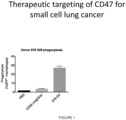
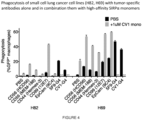
- High-affinity SIRP ⁇ variants enhance macrophage destruction of small cell lung cancer.
- Human macrophage differentiation Leukocyte reduction system chambers were obtained from anonymous blood donors at the Stanford Blood Center. Monocytes were purified on an AutoMACS (Miltenyi) using CD14+ microbeads or CD14+ whole blood microbeads (Miltenyi) according to the manufacturer's instructions. Purified CD14+ monocytes were plated on 15 cm tissue culture dishes at a density of 10 million monocytes per plate. Monocytes were differentiated to macrophages by culture in IMDM supplemented with 10% Human AB serum (Invitrogen), 1x GlutaMax (Invitrogen), and 100 U/mL penicillin and 100 ug/mL streptomycin for approximately 7-10 days.
- IMDM Human AB serum
- 1x GlutaMax Invitrogen
- In vitro phagocytosis assays were performed as previously described. Briefly, SCLC cancer cells were removed from plates and washed with serum-free IMDM. GFP-luciferase+ cells or cells labeled with calcein AM (Invitrogen) were used as target cells. Macrophages were washed twice with HBSS, then incubated with 1x TrypLE for approximately 20 minutes in humidified incubators at 37°C. Macrophages were removed from plates using cell lifters (Corning), then washed twice with serum-free IMDM. Phagocytosis reactions were carried out using 50,000 macrophages and 100,000 tumor cells.
- Phagocytosis was evaluated as the percentage of calcein-AM + macrophages using FlowJo v9.4.10 (Tree Star) and was normalized to the maximal response by each independent donor where indicated. Statistical significance was determined and data were fit to sigmoidal dose-response curves using Prism 5 (Graphpad).
- Additional reagents used in phagocytosis include the high-affinity SIRP ⁇ variant CV1 monomer, which was produced as previously described and used at a concentration of 1 ⁇ M for blocking.
- Antibodies to identified SCLC antigens were used in phagocytosis assays at a concentration of 10 ⁇ g/mL, including anti-CD56 (NCAM) clone HCD56 (BioLegend), anti-CD56 (NCAM) clone MEM-188 (BioLegend), anti-CD24 clone ML5 (Biolegend), anti-CD29 clone TS2/16 (BioLegend), anti-CD99 clone 12E7 (Abcam).
- lorvotuzumab was made recombinantly using the heavy and light chain variable region sequences available in the KEGG database (Drug: D09927). Lorvotuzumab variable regions were cloned into pFUSE-CHIg-hG1 and pFUSE2-CLIg-hK (Invivogen) for expression. Lorvotuzumab was produced recombinantly by transient transfection of 293F cells (Invitrogen) using 293fectin (Invitrogen), followed by purification over a HiTrap Protein A column (GE Healthcare). Purified antibody was eluted with 100 mM citrate buffer (pH 3.0) and neutralized with 1/10 th volume of Tris buffer (pH 8.0). Antibody was desalted using a PD-10 column (GE Healthcare).
- Sorting of macrophage populations after phagocytosis 2.5 million human macrophages were combined with 5 million GFP + NCI-H82 cells and 10 ⁇ g/mL anti-CD47 antibody (clone Hu5F9-G4) in serum-free medium and incubated for two hours. Macrophages were identified by staining with anti-CD45, and macrophages populations were sorted on a FACSAria II cell sorter (BD Biosciences). Cells from sorted populations were centrifuged onto microscope slides then stained with Modified Wright-Giemsa stain (Sigma-Aldrich) according to the manufacturer's instructions and imaged on a DM5500 B upright light microscope (Leica).
- mice Nod.Cg-Prkdc scid IL2rg tm1Wjl /SzJ (NSG) mice were used for all in vivo experiments. Mice were engrafted with tumors at approximately 6-10 weeks of age, and experiments were performed with age and sex-matched cohorts. Mice were maintained in a barrier facility under the care of the Stanford Veterinary Services Center and handled according to protocols approved by the Stanford University Administrative Panel on Laboratory Animal Care.
- NCI-H82 cells were subcutaneously engrafted into the flanks of NSG mice. Tumors were allowed to grow for 8 days, then mice were randomized into treatment groups with PBS or 250 ⁇ g anti-CD47 antibody (clone Hu5F9-G4). Treatment was administered every other day by intraperitoneal injection. Tumor growth was monitored by tumor dimension measurements that were used to calculate tumor volumes according to the ellipsoid formula ( ⁇ /6 ⁇ length ⁇ width 2 ).
- mice 3 ⁇ 10 6 GFP-luciferase + H29 cells were subcutaneously engrafted with 25% Matrigel (BD Biosciences) into the flanks of NSG mice. Tumors were allowed to grow for 15 days, then mice were randomized into treatment with into treatment groups with PBS or 250 ⁇ g anti-CD47 antibody (clone Hu5F9-G4). Treatment was administered every other day by intraperitoneal injection. Tumor growth was monitored by bioluminescence imaging and tumor volume measurements as described above. Statistical significance of tumor growth was determined by Mann-Whitney test. Survival was analyzed by Mantel-Cox test. Pilot in vivo experiments with H82 cells and H29 cells were performed with smaller cohorts of mice with similar results.
- Matrigel BD Biosciences
- Bioluminescence imaging Mice bearing GFP-luciferase+ tumors were imaged as previously described. Briefly, anesthetized mice were injected with 200 ⁇ L D-luciferin (firefly) potassium salt (Biosynth) reconstituted at 16.67 mg/mL in sterile PBS. Bioluminescence imaging was performed using an IVIS Spectrum (Caliper Life Sciences) over 20 minutes to record maximal radiance. Peak total flux values were assessed from the anatomical region of interest using Living Image 4.0 (Caliper Life Sciences) and were used for analysis.
- IVIS Spectrum Caliper Life Sciences
Landscapes
- Health & Medical Sciences (AREA)
- Life Sciences & Earth Sciences (AREA)
- Chemical & Material Sciences (AREA)
- Immunology (AREA)
- Medicinal Chemistry (AREA)
- Engineering & Computer Science (AREA)
- Bioinformatics & Cheminformatics (AREA)
- General Health & Medical Sciences (AREA)
- Organic Chemistry (AREA)
- Animal Behavior & Ethology (AREA)
- Public Health (AREA)
- Veterinary Medicine (AREA)
- Pharmacology & Pharmacy (AREA)
- Epidemiology (AREA)
- Proteomics, Peptides & Aminoacids (AREA)
- Cell Biology (AREA)
- Biochemistry (AREA)
- Molecular Biology (AREA)
- Genetics & Genomics (AREA)
- Biophysics (AREA)
- Gastroenterology & Hepatology (AREA)
- Zoology (AREA)
- Microbiology (AREA)
- Pulmonology (AREA)
- Oncology (AREA)
- Mycology (AREA)
- Nuclear Medicine, Radiotherapy & Molecular Imaging (AREA)
- Chemical Kinetics & Catalysis (AREA)
- General Chemical & Material Sciences (AREA)
- Marine Sciences & Fisheries (AREA)
- Reproductive Health (AREA)
- Biomedical Technology (AREA)
- Medicines Containing Antibodies Or Antigens For Use As Internal Diagnostic Agents (AREA)
- Peptides Or Proteins (AREA)
- Medicines That Contain Protein Lipid Enzymes And Other Medicines (AREA)
- Medicines Containing Material From Animals Or Micro-Organisms (AREA)
Claims (9)
- Gezielter Wirkstoff, der die Bindung von CD47 an SIRPα selektiv blockiert, zur Verwendung bei der Behandlung von kleinzelligem Lungenkrebs bei einem Patienten, indem Folgendes verabreicht wird:(i) der gezielte Wirkstoff, der die Bindung von CD47 an SIRPα selektiv blockiert, in Kombination mit(ii) einem monoklonalen Antikörper, der an ein oder mehrere Zelloberflächenantigene auf Lungenkrebszellen des Patienten spezifisch bindet, wobei es sich bei dem Antikörper um ein vollständiges Immunglobulin handelt, und wobei der Wirkstoff, der die Bindung von CD47 an SIRPα selektiv blockiert, Folgendes ist:(a) ein Antikörper, der an CD47 spezifisch bindet,(b) ein Antikörper, der an SIRPα spezifisch bindet, oder(c) ein lösliches SIRPα-Polypeptid,und wobei das eine oder die mehreren Zelloberflächenantigene auf Lungenkrebszellen aus EpCAM, CD56, CD99 und CD44 ausgewählt sind.
- Monoklonaler Antikörper, der an ein oder mehrere Zelloberflächenantigene auf Lungenkrebszellen spezifisch bindet, zur Verwendung bei der Behandlung von kleinzelligem Lungenkrebs bei einem Patienten, indem Folgendes verabreicht wird:(i) der monoklonale Antikörper, der an ein oder mehrere Zelloberflächenantigene auf Lungenkrebszellen spezifisch bindet, in Kombination mit(ii) einem gezielten Wirkstoff, der an SIRPα bindendes CD47 auf Lungenkrebszellen des Patienten selektiv blockiert,wobei der Wirkstoff, der die Bindung von CD47 an SIRPα selektiv blockiert, Folgendes ist:(a) ein Antikörper, der an CD47 spezifisch bindet,(b) ein Antikörper, der an SIRPα spezifisch bindet, oder(c) ein lösliches SIRPα-Polypeptid,und wobei das eine oder die mehreren Zelloberflächenantigene auf Lungenkrebszellen aus EpCAM, CD56, CD99 und CD44 ausgewählt sind.
- Gezielter Wirkstoff zur Verwendung nach Anspruch 1 oder Antikörper zur Verwendung nach Anspruch 2, wobei es sich bei dem Wirkstoff, der die Bindung von CD47 an SIRPα selektiv blockiert, um einen Antikörper handelt, der spezifisch bindet an:(i) CD47 oder(ii) SIRPα.
- Gezielter Wirkstoff zur Verwendung nach Anspruch 1 oder Antikörper zur Verwendung nach einem der Ansprüche 2, wobei es sich bei dem Wirkstoff, der die Bindung von CD47 an SIRPα selektiv blockiert, um ein lösliches SIRPα-Polypeptid handelt.
- Gezielter Wirkstoff zur Verwendung nach einem der Ansprüche 1, 3 und 4 oder Antikörper zur Verwendung nach einem der Ansprüche 2-4, wobei die Behandlung gleichzeitiges Verabreichen der Kombination von Wirkstoffen umfasst.
- Gezielter Wirkstoff zur Verwendung nach einem der Ansprüche 1, 3 und 4 oder Antikörper zur Verwendung nach einem der Ansprüche 2-4, wobei die Behandlung Verabreichen der Kombination von Wirkstoffen nacheinander umfasst.
- Gezielter Wirkstoff zur Verwendung nach einem der Ansprüche 1, 3 und 4 oder Antikörper zur Verwendung nach einem der Ansprüche 2-4, wobei die Behandlung Verabreichen der Kombination von Wirkstoffen in überlappenden Dosierungsplänen umfasst.
- Gezielter Wirkstoff zur Verwendung nach einem der Ansprüche 1 und 3-7 oder Antikörper zur Verwendung nach einem der Ansprüche 2-7, wobei es sich bei dem Patienten um einen Menschen handelt.
- Gezielter Wirkstoff zur Verwendung oder Antikörper zur Verwendung nach Anspruch 8, wobei das eine oder die mehreren Zelloberflächenantigene auf Lungenkrebszellen aus EpCAM und CD44 ausgewählt sind.
Applications Claiming Priority (3)
| Application Number | Priority Date | Filing Date | Title |
|---|---|---|---|
| US201461925143P | 2014-01-08 | 2014-01-08 | |
| EP15735468.9A EP3092006B1 (de) | 2014-01-08 | 2015-01-08 | Gezielte therapie für kleinzelligen lungenkrebs |
| PCT/US2015/010650 WO2015105995A2 (en) | 2014-01-08 | 2015-01-08 | Targeted therapy for small cell lung cancer |
Related Parent Applications (1)
| Application Number | Title | Priority Date | Filing Date |
|---|---|---|---|
| EP15735468.9A Division EP3092006B1 (de) | 2014-01-08 | 2015-01-08 | Gezielte therapie für kleinzelligen lungenkrebs |
Publications (3)
| Publication Number | Publication Date |
|---|---|
| EP3553087A1 EP3553087A1 (de) | 2019-10-16 |
| EP3553087C0 EP3553087C0 (de) | 2025-01-01 |
| EP3553087B1 true EP3553087B1 (de) | 2025-01-01 |
Family
ID=53524469
Family Applications (2)
| Application Number | Title | Priority Date | Filing Date |
|---|---|---|---|
| EP15735468.9A Active EP3092006B1 (de) | 2014-01-08 | 2015-01-08 | Gezielte therapie für kleinzelligen lungenkrebs |
| EP19163809.7A Active EP3553087B1 (de) | 2014-01-08 | 2015-01-08 | Gezielte therapie für lungenkrebs |
Family Applications Before (1)
| Application Number | Title | Priority Date | Filing Date |
|---|---|---|---|
| EP15735468.9A Active EP3092006B1 (de) | 2014-01-08 | 2015-01-08 | Gezielte therapie für kleinzelligen lungenkrebs |
Country Status (10)
| Country | Link |
|---|---|
| US (2) | US11046763B2 (de) |
| EP (2) | EP3092006B1 (de) |
| JP (3) | JP6560682B2 (de) |
| CN (1) | CN106456748A (de) |
| AU (3) | AU2015204766B2 (de) |
| CA (1) | CA2935774C (de) |
| ES (2) | ES3012974T3 (de) |
| PL (1) | PL3553087T3 (de) |
| SG (1) | SG11201605585SA (de) |
| WO (1) | WO2015105995A2 (de) |
Families Citing this family (35)
| Publication number | Priority date | Publication date | Assignee | Title |
|---|---|---|---|---|
| EP3247464B1 (de) | 2015-01-21 | 2019-09-18 | The Board of Trustees of the Leland Stanford Junior University | Verwendung von tlr agonisten und anti-cd47 mitteln zur stimulierung der phagozytose von krebszellen |
| EP3262166A4 (de) | 2015-02-24 | 2018-08-15 | The Regents of The University of California | Durch bindung ausgelöste, transkriptionelle schaltungen und verfahren zur verwendung davon |
| ES2894335T5 (es) | 2015-08-26 | 2024-06-27 | Univ Leland Stanford Junior | Reducción mejorada de células objetivo con bloqueo de CD47 y un agonista coestimulador inmune |
| KR102988978B1 (ko) * | 2015-12-11 | 2026-07-10 | 더 보드 어브 트러스티스 어브 더 리랜드 스탠포드 주니어 유니버시티 | Cd47 및 egfr의 이중 표적화를 이용한 암의 치료 |
| CN107149682B (zh) * | 2016-03-04 | 2022-01-04 | 复旦大学 | 一种靶向cd47的免疫检查点抑制剂药物组合物及其制备方法 |
| KR20240016445A (ko) * | 2016-04-15 | 2024-02-06 | 더 보드 어브 트러스티스 어브 더 리랜드 스탠포드 주니어 유니버시티 | 암의 치료에서 항-cd47 제제의 치료적으로 효과적인 용량을 결정하고 달성하는 방법 |
| WO2017193059A1 (en) * | 2016-05-06 | 2017-11-09 | The Regents Of The University Of California | Systems and methods for targeting cancer cells |
| KR101953617B1 (ko) * | 2016-07-15 | 2019-05-23 | 한국과학기술연구원 | 신규 나노케이지 및 그의 용도 |
| WO2018014068A1 (en) * | 2016-07-19 | 2018-01-25 | Teva Pharmaceuticals Australia Pty Ltd | Attenuated type i ifn cd47 combination therapy |
| JP7241677B2 (ja) * | 2016-07-19 | 2023-03-17 | テバ・ファーマシューティカルズ・オーストラリア・ピーティワイ・リミテッド | 抗cd47併用療法 |
| CA3034093A1 (en) | 2016-08-23 | 2018-03-01 | The Regents Of The University Of California | Proteolytically cleavable chimeric polypeptides and methods of use thereof |
| JOP20190009A1 (ar) | 2016-09-21 | 2019-01-27 | Alx Oncology Inc | أجسام مضادة ضد بروتين ألفا منظم للإشارات وطرق استخدامها |
| EP3532497B1 (de) | 2016-10-26 | 2024-07-24 | The Board of Trustees of the Leland Stanford Junior University | Modifizierte immunoglobulinbandregionen zur verringerung der hämagglutination |
| EP3538551A4 (de) | 2016-11-10 | 2020-11-11 | Fortis Therapeutics, Inc. | Cd46-specifische effektorzellen und verwendungen davon |
| WO2018118887A1 (en) | 2016-12-22 | 2018-06-28 | Wake Forest University Health Sciences | Sirp-gamma targeted agents for use in the treatment of cancer |
| WO2018165015A1 (en) * | 2017-03-09 | 2018-09-13 | The Board Of Trustees Of The Leland Stanford Junior University | Treatment of pediatric brain tumors with targeting of cd47 pathway |
| MX2020001309A (es) | 2017-08-02 | 2020-08-20 | Phanes Therapeutics Inc | Anticuerpos anti-cd47 y sus usos. |
| CN109422811A (zh) * | 2017-08-29 | 2019-03-05 | 信达生物制药(苏州)有限公司 | 抗cd47抗体及其用途 |
| CN107488231B (zh) * | 2017-09-15 | 2020-10-30 | 四川大学 | 抗cd56抗体及其用途 |
| AR113862A1 (es) | 2017-12-01 | 2020-06-17 | Seattle Genetics Inc | Anticuerpos anti-cd47 y sus usos para tratar cáncer |
| EP3752190B1 (de) * | 2018-02-12 | 2022-07-06 | Forty Seven, Inc. | Anti-krebs behandlum mit anti-cd47- und anti-cd20-antikörpern |
| WO2019183266A1 (en) | 2018-03-21 | 2019-09-26 | ALX Oncology Inc. | Antibodies against signal-regulatory protein alpha and methods of use |
| CN110305212A (zh) | 2018-03-27 | 2019-10-08 | 信达生物制药(苏州)有限公司 | 抗cd47抗体及其用途 |
| CR20200566A (es) | 2018-05-25 | 2021-02-19 | Alector Llc | Anticuerpos anti-sirpa y metodos de utilización de los mismos |
| CN112566938B (zh) | 2018-06-03 | 2025-04-01 | 拉姆卡普生物测试有限公司 | 针对ceacam5和cd47的双特异性抗体 |
| WO2019241403A1 (en) * | 2018-06-13 | 2019-12-19 | The Board Of Trustees Of The Leland Stanford Junior University | Compositions and methods for inducing phagocytosis |
| SG11202102851XA (en) | 2018-09-27 | 2021-04-29 | Celgene Corp | SIRPa BINDING PROTEINS AND METHODS OF USE THEREOF |
| WO2020198353A1 (en) * | 2019-03-26 | 2020-10-01 | Forty Seven, Inc. | Multispecific agents for treatment of cancer |
| AU2020350205A1 (en) | 2019-09-18 | 2022-05-12 | Lamkap Bio Alpha AG | Bispecific antibodies against CEACAM5 and CD3 |
| WO2021213511A1 (en) * | 2020-04-24 | 2021-10-28 | Virtuoso Binco, Inc. | Bispecific antibodies for treating cd47-associated diseases |
| JP2023534765A (ja) | 2020-08-07 | 2023-08-10 | フォーティス セラピューティクス,インク. | 免疫複合体を標的とするcd46およびその使用方法 |
| KR20230143177A (ko) * | 2021-02-08 | 2023-10-11 | 안텐진 바이올로직스 리미티드 | 신규한 항-cd24 항체 |
| CN118574850A (zh) * | 2021-10-27 | 2024-08-30 | 维尔托索宾科公司 | 用于治疗cd47相关疾病的多特异性抗体 |
| WO2023165602A1 (en) * | 2022-03-04 | 2023-09-07 | Zai Lab (Us) Llc | Combinational use of anti-cd47 antibody |
| WO2025264856A1 (en) * | 2024-06-19 | 2025-12-26 | Whitehead Institute For Biomedical Research | Antibody combinations for macrophage stimulation |
Family Cites Families (45)
| Publication number | Priority date | Publication date | Assignee | Title |
|---|---|---|---|---|
| US4489710A (en) | 1981-06-23 | 1984-12-25 | Xoma Corporation | Composition and method for transplantation therapy |
| US4429008B1 (en) | 1981-12-10 | 1995-05-16 | Univ California | Thiol reactive liposomes |
| US5156840A (en) | 1982-03-09 | 1992-10-20 | Cytogen Corporation | Amine-containing porphyrin derivatives |
| US4671958A (en) | 1982-03-09 | 1987-06-09 | Cytogen Corporation | Antibody conjugates for the delivery of compounds to target sites |
| JPS59116229A (ja) | 1982-12-24 | 1984-07-05 | Teijin Ltd | 細胞毒性複合体を活性成分とする癌治療用剤およびその製造法 |
| US4873088A (en) | 1983-09-06 | 1989-10-10 | Liposome Technology, Inc. | Liposome drug delivery method and composition |
| US4625014A (en) | 1984-07-10 | 1986-11-25 | Dana-Farber Cancer Institute, Inc. | Cell-delivery agent |
| US4542225A (en) | 1984-08-29 | 1985-09-17 | Dana-Farber Cancer Institute, Inc. | Acid-cleavable compound |
| US4638045A (en) | 1985-02-19 | 1987-01-20 | Massachusetts Institute Of Technology | Non-peptide polyamino acid bioerodible polymers |
| US4699784A (en) | 1986-02-25 | 1987-10-13 | Center For Molecular Medicine & Immunology | Tumoricidal methotrexate-antibody conjugate |
| US5057313A (en) | 1986-02-25 | 1991-10-15 | The Center For Molecular Medicine And Immunology | Diagnostic and therapeutic antibody conjugates |
| US6150584A (en) | 1990-01-12 | 2000-11-21 | Abgenix, Inc. | Human antibodies derived from immunized xenomice |
| US6673986B1 (en) | 1990-01-12 | 2004-01-06 | Abgenix, Inc. | Generation of xenogeneic antibodies |
| US5945098A (en) | 1990-02-01 | 1999-08-31 | Baxter International Inc. | Stable intravenously-administrable immune globulin preparation |
| AU6445894A (en) | 1993-03-19 | 1994-10-11 | Duke University | Method of treatment of tumors with an antibody binding to tenascin |
| US5747654A (en) | 1993-06-14 | 1998-05-05 | The United States Of America As Represented By The Department Of Health And Human Services | Recombinant disulfide-stabilized polypeptide fragments having binding specificity |
| UA40577C2 (uk) | 1993-08-02 | 2001-08-15 | Мерк Патент Гмбх | Біспецифічна молекула, що використовується для лізису пухлинних клітин, спосіб її одержання, моноклональне антитіло (варіанти), фармацевтичний препарат, фармацевтичний набір (варіанти), спосіб видалення пухлинних клітин |
| US5985660A (en) | 1994-06-15 | 1999-11-16 | Systemix, Inc. | Method of identifying biological response modifiers involved in dendritic and/or lymphoid progenitor cell proliferation and/or differentiation |
| AU3272695A (en) | 1994-08-12 | 1996-03-07 | Immunomedics Inc. | Immunoconjugates and humanized antibodies specific for b-cell lymphoma and leukemia cells |
| US5989830A (en) | 1995-10-16 | 1999-11-23 | Unilever Patent Holdings Bv | Bifunctional or bivalent antibody fragment analogue |
| FR2741892B1 (fr) | 1995-12-04 | 1998-02-13 | Pasteur Merieux Serums Vacc | Procede de preparation d'une banque multicombinatoire de vecteurs d'expression de genes d'anticorps, banque et systemes d'expression d'anticorps "coliclonaux" obtenus |
| US20040097448A1 (en) * | 2002-11-19 | 2004-05-20 | Isis Pharmaceuticals Inc. | Modulation of CD24 expression |
| US20090047213A1 (en) * | 2003-04-14 | 2009-02-19 | Young David S F | Cytotoxicity mediation of cells evidencing surface expression of CD59 |
| US20040213792A1 (en) | 2003-04-24 | 2004-10-28 | Clemmons David R. | Method for inhibiting cellular activation by insulin-like growth factor-1 |
| US20050180979A1 (en) * | 2004-02-13 | 2005-08-18 | Micromet Ag | Anti-EpCAM immunoglobulins |
| JP2007008895A (ja) * | 2005-07-04 | 2007-01-18 | Chugai Pharmaceut Co Ltd | 抗cd47抗体とインテグリンリガンドとの併用 |
| US20070244046A1 (en) * | 2006-03-29 | 2007-10-18 | Margarita Gutova | Identification and characterization of cancer stem cells and methods of use |
| US8377448B2 (en) | 2006-05-15 | 2013-02-19 | The Board Of Trustees Of The Leland Standford Junior University | CD47 related compositions and methods for treating immunological diseases and disorders |
| KR20080002341A (ko) | 2006-06-30 | 2008-01-04 | 재단법인서울대학교산학협력재단 | Cd24를 표적으로 하는 암 억제방법 |
| WO2008059491A1 (en) * | 2006-11-13 | 2008-05-22 | The Medical Research, Infrastructure, And Health Services Fund Of The Tel Aviv Medical Center | Methods of treating cancer using sirna molecules directed against cd24 |
| PT3056515T (pt) * | 2008-01-15 | 2019-07-19 | Univ Leland Stanford Junior | Métodos para manipulação da fagocitose mediada por cd47 |
| CA2711370C (en) | 2008-01-15 | 2017-06-13 | The Board Of Trustees Of The Leland Stanford Junior University | Markers of acute myeloid leukemia stem cells |
| EP2111869A1 (de) | 2008-04-23 | 2009-10-28 | Stichting Sanquin Bloedvoorziening | Zusammensetzungen und Verfahren zur Stärkung des Immunsystems |
| KR20110028450A (ko) | 2008-06-16 | 2011-03-18 | 이뮤노젠 아이엔씨 | 새로운 상승 효과 |
| BRPI0923442A2 (pt) * | 2008-12-19 | 2016-01-12 | Novartis Ag | polipeptídeos solúveis para uso em tratamento de distúrbio autoimunes e inflamatórios. |
| SG168430A1 (en) | 2009-07-22 | 2011-02-28 | Agency Science Tech & Res | Molecular signature of human lung cancer initiating cells |
| CA2761120A1 (en) * | 2009-05-06 | 2010-11-11 | Biotest Ag | Uses of immunoconjugates targeting cd138 |
| SI2477648T1 (sl) * | 2009-09-15 | 2022-09-30 | The Board Of Trustees Of The Leland Stanford Junior University | Sinergijska terapija proti CD47 za krvne rake |
| RU2012115480A (ru) * | 2009-09-18 | 2013-10-27 | Микромет Аг | РЕЖИМ ДОЗИРОВАНИЯ ПРИ ВВЕДЕНИИ БИСПЕЦИФИЧЕСКОГО АНТИТЕЛА EpCAMxCD3 |
| MX2012004406A (es) * | 2009-10-21 | 2012-05-08 | Immunogen Inc | Nuevo regimen de dosificacion y metodo de tratamiento. |
| TW201125583A (en) | 2009-12-23 | 2011-08-01 | Bioalliance Cv | Anti-EpCAM antibodies that induce apoptosis of cancer cells and methods using same |
| AU2011252851B2 (en) | 2010-05-14 | 2016-10-06 | The Board Of Trustees Of The Leland Stanford Junior University | Humanized and chimeric monoclonal antibodies to CD47 |
| WO2012036094A1 (ja) | 2010-09-17 | 2012-03-22 | 独立行政法人産業技術総合研究所 | 肺癌鑑別マーカー |
| WO2012178173A1 (en) * | 2011-06-24 | 2012-12-27 | Centrose, Llc | Extracellular targeted drug conjugates |
| ME03512B (de) | 2012-02-06 | 2020-04-20 | Inhibrx Inc | Cd47-antikörper und verfahren zur verwendung davon |
-
2015
- 2015-01-08 US US15/107,852 patent/US11046763B2/en active Active
- 2015-01-08 PL PL19163809.7T patent/PL3553087T3/pl unknown
- 2015-01-08 SG SG11201605585SA patent/SG11201605585SA/en unknown
- 2015-01-08 ES ES19163809T patent/ES3012974T3/es active Active
- 2015-01-08 WO PCT/US2015/010650 patent/WO2015105995A2/en not_active Ceased
- 2015-01-08 CN CN201580012596.XA patent/CN106456748A/zh active Pending
- 2015-01-08 ES ES15735468T patent/ES2728668T3/es active Active
- 2015-01-08 JP JP2016543230A patent/JP6560682B2/ja active Active
- 2015-01-08 CA CA2935774A patent/CA2935774C/en active Active
- 2015-01-08 AU AU2015204766A patent/AU2015204766B2/en not_active Ceased
- 2015-01-08 EP EP15735468.9A patent/EP3092006B1/de active Active
- 2015-01-08 EP EP19163809.7A patent/EP3553087B1/de active Active
-
2019
- 2019-07-19 JP JP2019133213A patent/JP7316862B2/ja active Active
-
2020
- 2020-11-05 AU AU2020264334A patent/AU2020264334B2/en not_active Ceased
-
2021
- 2021-05-21 US US17/327,363 patent/US20210277115A1/en active Pending
- 2021-10-01 JP JP2021162482A patent/JP7716299B2/ja active Active
-
2024
- 2024-09-12 AU AU2024219648A patent/AU2024219648A1/en not_active Abandoned
Non-Patent Citations (8)
| Title |
|---|
| AMERICAN CANCER SOCIETY: "What Is Lung Cancer? | Types of Lung Cancer", 5 April 2022 (2022-04-05), pages 1 - 3, XP055909068, Retrieved from the Internet <URL:https://www.cancer.org/cancer/lung-cancer/about/what-is.html> [retrieved on 20220405] * |
| DETCHOKUL S ET AL: "Tetraspanins as regulators of the tumour microenvironment: implications for metastasis and therapeutic strategies", BRITISH JOURNAL OF PHARMACOLOGY, WILEY-BLACKWELL, UK, vol. 171, no. 24, 1 December 2014 (2014-12-01), pages 5462 - 5490, XP071056901, ISSN: 0007-1188, DOI: 10.1111/BPH.12260 * |
| JAISWAL S ET AL: "Macrophages as mediators of tumor immunosurveillance", TRENDS IN IMMUNOLOGY, ELSEVIER LTD. TRENDS JOURNALS, GB, vol. 31, no. 6, 1 June 2010 (2010-06-01), pages 212 - 219, XP027079216, ISSN: 1471-4906, [retrieved on 20100601], DOI: 10.1016/J.IT.2010.04.001 * |
| LUO ZHUANG; ET AL: "Prognostic value of CD44 expression in non-small cell lung cancer: a systematic review", INTERNATIONAL JOURNAL OF CLINICAL AND EXPERIMENTAL PATHOLOGY, vol. 7, no. 7, 1 July 2014 (2014-07-01), pages 3632 - 3646, XP055909360 * |
| P A BAEUERLE ET AL: "EpCAM (CD326) finding its role in cancer", BRITISH JOURNAL OF CANCER, vol. 96, no. 3, 9 January 2007 (2007-01-09), pages 417 - 423, XP055160516, ISSN: 0007-0920, DOI: 10.1038/sj.bjc.6603494 * |
| WOLFF ANTONIO C ET AL: "AMERICAN SOCIETY OF CLINICAL ONCOLOGY/COLLEGE OF AMERICAN PATHOLOGISTS GUIDELINE RECOMMENDATIONS FOR HUMAN EPIDERMAL GROWTH FACTOR RECEPTOR 2 TESTING IN BREAST CANCER", ARCHIVES OF PATHOLOGY & LABORATORY MEDICINE, COLLEGE OF AMERICAN PATHOLOGISTS, US, vol. 131, no. 1, 1 January 2007 (2007-01-01), pages 18 - 43, XP008077476, ISSN: 0003-9985 * |
| XIANFENG FANG ET AL: "CD24: from A to Z", CELLULAR & MOLECULAR IMMUNOLOGY, vol. 7, no. 2, 1 March 2010 (2010-03-01), London, pages 100 - 103, XP055287496, ISSN: 1672-7681, DOI: 10.1038/cmi.2009.119 * |
| ZHAO WENXIU; ET AL: "Embryonic stem cell markers.", MOLECULES (BASEL, SWITZERLAND), vol. 17, no. 6, 25 May 2012 (2012-05-25), pages 6196 - 6236, XP055909367 * |
Also Published As
| Publication number | Publication date |
|---|---|
| JP6560682B2 (ja) | 2019-08-14 |
| JP2017502048A (ja) | 2017-01-19 |
| SG11201605585SA (en) | 2016-08-30 |
| AU2015204766B2 (en) | 2020-08-13 |
| ES3012974T3 (en) | 2025-04-10 |
| JP7316862B2 (ja) | 2023-07-28 |
| AU2024219648A1 (en) | 2024-10-03 |
| AU2020264334A1 (en) | 2020-11-26 |
| PL3553087T3 (pl) | 2025-04-28 |
| US20160333093A1 (en) | 2016-11-17 |
| CN106456748A (zh) | 2017-02-22 |
| JP2019196383A (ja) | 2019-11-14 |
| ES2728668T3 (es) | 2019-10-28 |
| EP3092006B1 (de) | 2019-03-20 |
| WO2015105995A3 (en) | 2015-11-12 |
| US20210277115A1 (en) | 2021-09-09 |
| AU2015204766A1 (en) | 2016-07-14 |
| JP2021193150A (ja) | 2021-12-23 |
| CA2935774A1 (en) | 2015-07-16 |
| EP3553087C0 (de) | 2025-01-01 |
| AU2020264334B2 (en) | 2024-06-13 |
| JP7716299B2 (ja) | 2025-07-31 |
| EP3092006A4 (de) | 2017-09-20 |
| WO2015105995A2 (en) | 2015-07-16 |
| CA2935774C (en) | 2023-06-27 |
| US11046763B2 (en) | 2021-06-29 |
| EP3553087A1 (de) | 2019-10-16 |
| EP3092006A2 (de) | 2016-11-16 |
Similar Documents
| Publication | Publication Date | Title |
|---|---|---|
| AU2020264334B2 (en) | Targeted therapy for small cell lung cancer | |
| US20230068235A1 (en) | Methods for determining and achieving therapeutically effective doses of anti-cd47 agents in treatment of cancer | |
| CA2771336C (en) | Synergistic anti-cd47 therapy for hematologic cancers | |
| JP2017535246A (ja) | 新規の抗mfi2抗体および使用方法 | |
| JP2019506136A (ja) | 新規抗emr2抗体及び使用方法 | |
| US20210213055A1 (en) | Compositions and methods for inducing phagocytosis | |
| JP2019511199A (ja) | 新規の抗upk1b抗体及び使用方法 | |
| TW201725217A (zh) | 新穎抗-tnfsf9抗體及使用方法 | |
| Schuurmans et al. | In-vivo analysis determining neuroblastoma targeting potential of aGD2-SIRPα fusion antibodies for local CD47 blockade | |
| HK40088027A (en) | Synergistic anti-cd47 therapy for hematologic cancers | |
| HK40107887A (en) | Methods for determining and achieving therapeutically effective doses of anti-cd47 agents in treatment of cancer | |
| HK40080891A (en) | Methods for determining and achieving therapeutically effective doses of anti-cd47 agents in treatment of cancer |
Legal Events
| Date | Code | Title | Description |
|---|---|---|---|
| PUAI | Public reference made under article 153(3) epc to a published international application that has entered the european phase |
Free format text: ORIGINAL CODE: 0009012 |
|
| STAA | Information on the status of an ep patent application or granted ep patent |
Free format text: STATUS: THE APPLICATION HAS BEEN PUBLISHED |
|
| AC | Divisional application: reference to earlier application |
Ref document number: 3092006 Country of ref document: EP Kind code of ref document: P |
|
| AK | Designated contracting states |
Kind code of ref document: A1 Designated state(s): AL AT BE BG CH CY CZ DE DK EE ES FI FR GB GR HR HU IE IS IT LI LT LU LV MC MK MT NL NO PL PT RO RS SE SI SK SM TR |
|
| STAA | Information on the status of an ep patent application or granted ep patent |
Free format text: STATUS: REQUEST FOR EXAMINATION WAS MADE |
|
| 17P | Request for examination filed |
Effective date: 20200417 |
|
| RBV | Designated contracting states (corrected) |
Designated state(s): AL AT BE BG CH CY CZ DE DK EE ES FI FR GB GR HR HU IE IS IT LI LT LU LV MC MK MT NL NO PL PT RO RS SE SI SK SM TR |
|
| STAA | Information on the status of an ep patent application or granted ep patent |
Free format text: STATUS: EXAMINATION IS IN PROGRESS |
|
| 17Q | First examination report despatched |
Effective date: 20200929 |
|
| GRAP | Despatch of communication of intention to grant a patent |
Free format text: ORIGINAL CODE: EPIDOSNIGR1 |
|
| STAA | Information on the status of an ep patent application or granted ep patent |
Free format text: STATUS: GRANT OF PATENT IS INTENDED |
|
| INTG | Intention to grant announced |
Effective date: 20240802 |
|
| GRAS | Grant fee paid |
Free format text: ORIGINAL CODE: EPIDOSNIGR3 |
|
| GRAA | (expected) grant |
Free format text: ORIGINAL CODE: 0009210 |
|
| STAA | Information on the status of an ep patent application or granted ep patent |
Free format text: STATUS: THE PATENT HAS BEEN GRANTED |
|
| AC | Divisional application: reference to earlier application |
Ref document number: 3092006 Country of ref document: EP Kind code of ref document: P |
|
| AK | Designated contracting states |
Kind code of ref document: B1 Designated state(s): AL AT BE BG CH CY CZ DE DK EE ES FI FR GB GR HR HU IE IS IT LI LT LU LV MC MK MT NL NO PL PT RO RS SE SI SK SM TR |
|
| REG | Reference to a national code |
Ref country code: GB Ref legal event code: FG4D |
|
| REG | Reference to a national code |
Ref country code: CH Ref legal event code: EP |
|
| REG | Reference to a national code |
Ref country code: DE Ref legal event code: R096 Ref document number: 602015090792 Country of ref document: DE |
|
| REG | Reference to a national code |
Ref country code: IE Ref legal event code: FG4D |
|
| U01 | Request for unitary effect filed |
Effective date: 20250130 |
|
| U07 | Unitary effect registered |
Designated state(s): AT BE BG DE DK EE FI FR IT LT LU LV MT NL PT RO SE SI Effective date: 20250206 |
|
| U20 | Renewal fee for the european patent with unitary effect paid |
Year of fee payment: 11 Effective date: 20250207 |
|
| REG | Reference to a national code |
Ref country code: ES Ref legal event code: FG2A Ref document number: 3012974 Country of ref document: ES Kind code of ref document: T3 Effective date: 20250410 |
|
| PGFP | Annual fee paid to national office [announced via postgrant information from national office to epo] |
Ref country code: ES Payment date: 20250204 Year of fee payment: 11 |
|
| PGFP | Annual fee paid to national office [announced via postgrant information from national office to epo] |
Ref country code: IE Payment date: 20250102 Year of fee payment: 11 |
|
| PGFP | Annual fee paid to national office [announced via postgrant information from national office to epo] |
Ref country code: NO Payment date: 20250108 Year of fee payment: 11 |
|
| PGFP | Annual fee paid to national office [announced via postgrant information from national office to epo] |
Ref country code: GR Payment date: 20250320 Year of fee payment: 11 Ref country code: CH Payment date: 20250201 Year of fee payment: 11 |
|
| PGFP | Annual fee paid to national office [announced via postgrant information from national office to epo] |
Ref country code: GB Payment date: 20250102 Year of fee payment: 11 |
|
| REG | Reference to a national code |
Ref country code: GR Ref legal event code: EP Ref document number: 20250400543 Country of ref document: GR Effective date: 20250409 |
|
| PGFP | Annual fee paid to national office [announced via postgrant information from national office to epo] |
Ref country code: TR Payment date: 20250108 Year of fee payment: 11 |
|
| REG | Reference to a national code |
Ref country code: SK Ref legal event code: T3 Ref document number: E 46115 Country of ref document: SK |
|
| PGFP | Annual fee paid to national office [announced via postgrant information from national office to epo] |
Ref country code: PL Payment date: 20250109 Year of fee payment: 11 |
|
| PG25 | Lapsed in a contracting state [announced via postgrant information from national office to epo] |
Ref country code: IS Free format text: LAPSE BECAUSE OF FAILURE TO SUBMIT A TRANSLATION OF THE DESCRIPTION OR TO PAY THE FEE WITHIN THE PRESCRIBED TIME-LIMIT Effective date: 20250501 |
|
| PG25 | Lapsed in a contracting state [announced via postgrant information from national office to epo] |
Ref country code: HR Free format text: LAPSE BECAUSE OF FAILURE TO SUBMIT A TRANSLATION OF THE DESCRIPTION OR TO PAY THE FEE WITHIN THE PRESCRIBED TIME-LIMIT Effective date: 20250101 |
|
| PGFP | Annual fee paid to national office [announced via postgrant information from national office to epo] |
Ref country code: SK Payment date: 20250103 Year of fee payment: 11 |
|
| PGFP | Annual fee paid to national office [announced via postgrant information from national office to epo] |
Ref country code: CZ Payment date: 20250103 Year of fee payment: 11 |
|
| PG25 | Lapsed in a contracting state [announced via postgrant information from national office to epo] |
Ref country code: SM Free format text: LAPSE BECAUSE OF FAILURE TO SUBMIT A TRANSLATION OF THE DESCRIPTION OR TO PAY THE FEE WITHIN THE PRESCRIBED TIME-LIMIT Effective date: 20250101 |
|
| PG25 | Lapsed in a contracting state [announced via postgrant information from national office to epo] |
Ref country code: MC Free format text: LAPSE BECAUSE OF FAILURE TO SUBMIT A TRANSLATION OF THE DESCRIPTION OR TO PAY THE FEE WITHIN THE PRESCRIBED TIME-LIMIT Effective date: 20250101 |
|
| PLBE | No opposition filed within time limit |
Free format text: ORIGINAL CODE: 0009261 |
|
| STAA | Information on the status of an ep patent application or granted ep patent |
Free format text: STATUS: NO OPPOSITION FILED WITHIN TIME LIMIT |
|
| 26N | No opposition filed |
Effective date: 20251002 |
|
| PG25 | Lapsed in a contracting state [announced via postgrant information from national office to epo] |
Ref country code: CY Free format text: LAPSE BECAUSE OF FAILURE TO SUBMIT A TRANSLATION OF THE DESCRIPTION OR TO PAY THE FEE WITHIN THE PRESCRIBED TIME-LIMIT Effective date: 20250101 |
|
| PG25 | Lapsed in a contracting state [announced via postgrant information from national office to epo] |
Ref country code: RS Free format text: LAPSE BECAUSE OF FAILURE TO SUBMIT A TRANSLATION OF THE DESCRIPTION OR TO PAY THE FEE WITHIN THE PRESCRIBED TIME-LIMIT Effective date: 20250101 |
|
| PG25 | Lapsed in a contracting state [announced via postgrant information from national office to epo] |
Ref country code: CZ Free format text: LAPSE BECAUSE OF NON-PAYMENT OF DUE FEES Effective date: 20260108 |