EP2925347B1 - Thrombin solution and methods of use thereof - Google Patents
Thrombin solution and methods of use thereof Download PDFInfo
- Publication number
- EP2925347B1 EP2925347B1 EP13820993.7A EP13820993A EP2925347B1 EP 2925347 B1 EP2925347 B1 EP 2925347B1 EP 13820993 A EP13820993 A EP 13820993A EP 2925347 B1 EP2925347 B1 EP 2925347B1
- Authority
- EP
- European Patent Office
- Prior art keywords
- thrombin
- solution
- thrombin solution
- lyophilization
- refers
- Prior art date
- Legal status (The legal status is an assumption and is not a legal conclusion. Google has not performed a legal analysis and makes no representation as to the accuracy of the status listed.)
- Active
Links
Images
Classifications
-
- C—CHEMISTRY; METALLURGY
- C12—BIOCHEMISTRY; BEER; SPIRITS; WINE; VINEGAR; MICROBIOLOGY; ENZYMOLOGY; MUTATION OR GENETIC ENGINEERING
- C12N—MICROORGANISMS OR ENZYMES; COMPOSITIONS THEREOF; PROPAGATING, PRESERVING, OR MAINTAINING MICROORGANISMS; MUTATION OR GENETIC ENGINEERING; CULTURE MEDIA
- C12N9/00—Enzymes; Proenzymes; Compositions thereof; Processes for preparing, activating, inhibiting, separating or purifying enzymes
- C12N9/96—Stabilising an enzyme by forming an adduct or a composition; Forming enzyme conjugates
-
- A—HUMAN NECESSITIES
- A61—MEDICAL OR VETERINARY SCIENCE; HYGIENE
- A61J—CONTAINERS SPECIALLY ADAPTED FOR MEDICAL OR PHARMACEUTICAL PURPOSES; DEVICES OR METHODS SPECIALLY ADAPTED FOR BRINGING PHARMACEUTICAL PRODUCTS INTO PARTICULAR PHYSICAL OR ADMINISTERING FORMS; DEVICES FOR ADMINISTERING FOOD OR MEDICINES ORALLY; BABY COMFORTERS; DEVICES FOR RECEIVING SPITTLE
- A61J3/00—Devices or methods specially adapted for bringing pharmaceutical products into particular physical or administering forms
-
- A—HUMAN NECESSITIES
- A61—MEDICAL OR VETERINARY SCIENCE; HYGIENE
- A61K—PREPARATIONS FOR MEDICAL, DENTAL OR TOILETRY PURPOSES
- A61K38/00—Medicinal preparations containing peptides
- A61K38/16—Peptides having more than 20 amino acids; Gastrins; Somatostatins; Melanotropins; Derivatives thereof
- A61K38/43—Enzymes; Proenzymes; Derivatives thereof
- A61K38/46—Hydrolases (3)
- A61K38/48—Hydrolases (3) acting on peptide bonds (3.4)
- A61K38/482—Serine endopeptidases (3.4.21)
- A61K38/4833—Thrombin (3.4.21.5)
-
- A—HUMAN NECESSITIES
- A61—MEDICAL OR VETERINARY SCIENCE; HYGIENE
- A61K—PREPARATIONS FOR MEDICAL, DENTAL OR TOILETRY PURPOSES
- A61K47/00—Medicinal preparations characterised by the non-active ingredients used, e.g. carriers or inert additives; Targeting or modifying agents chemically bound to the active ingredient
- A61K47/02—Inorganic compounds
-
- A—HUMAN NECESSITIES
- A61—MEDICAL OR VETERINARY SCIENCE; HYGIENE
- A61K—PREPARATIONS FOR MEDICAL, DENTAL OR TOILETRY PURPOSES
- A61K47/00—Medicinal preparations characterised by the non-active ingredients used, e.g. carriers or inert additives; Targeting or modifying agents chemically bound to the active ingredient
- A61K47/06—Organic compounds, e.g. natural or synthetic hydrocarbons, polyolefins, mineral oil, petrolatum or ozokerite
- A61K47/08—Organic compounds, e.g. natural or synthetic hydrocarbons, polyolefins, mineral oil, petrolatum or ozokerite containing oxygen, e.g. ethers, acetals, ketones, quinones, aldehydes, peroxides
- A61K47/10—Alcohols; Phenols; Salts thereof, e.g. glycerol; Polyethylene glycols [PEG]; Poloxamers; PEG/POE alkyl ethers
-
- A—HUMAN NECESSITIES
- A61—MEDICAL OR VETERINARY SCIENCE; HYGIENE
- A61K—PREPARATIONS FOR MEDICAL, DENTAL OR TOILETRY PURPOSES
- A61K47/00—Medicinal preparations characterised by the non-active ingredients used, e.g. carriers or inert additives; Targeting or modifying agents chemically bound to the active ingredient
- A61K47/06—Organic compounds, e.g. natural or synthetic hydrocarbons, polyolefins, mineral oil, petrolatum or ozokerite
- A61K47/08—Organic compounds, e.g. natural or synthetic hydrocarbons, polyolefins, mineral oil, petrolatum or ozokerite containing oxygen, e.g. ethers, acetals, ketones, quinones, aldehydes, peroxides
- A61K47/12—Carboxylic acids; Salts or anhydrides thereof
-
- A—HUMAN NECESSITIES
- A61—MEDICAL OR VETERINARY SCIENCE; HYGIENE
- A61K—PREPARATIONS FOR MEDICAL, DENTAL OR TOILETRY PURPOSES
- A61K47/00—Medicinal preparations characterised by the non-active ingredients used, e.g. carriers or inert additives; Targeting or modifying agents chemically bound to the active ingredient
- A61K47/06—Organic compounds, e.g. natural or synthetic hydrocarbons, polyolefins, mineral oil, petrolatum or ozokerite
- A61K47/26—Carbohydrates, e.g. sugar alcohols, amino sugars, nucleic acids, mono-, di- or oligo-saccharides; Derivatives thereof, e.g. polysorbates, sorbitan fatty acid esters or glycyrrhizin
-
- A—HUMAN NECESSITIES
- A61—MEDICAL OR VETERINARY SCIENCE; HYGIENE
- A61K—PREPARATIONS FOR MEDICAL, DENTAL OR TOILETRY PURPOSES
- A61K47/00—Medicinal preparations characterised by the non-active ingredients used, e.g. carriers or inert additives; Targeting or modifying agents chemically bound to the active ingredient
- A61K47/30—Macromolecular organic or inorganic compounds, e.g. inorganic polyphosphates
- A61K47/42—Proteins; Polypeptides; Degradation products thereof; Derivatives thereof, e.g. albumin, gelatin or zein
-
- A—HUMAN NECESSITIES
- A61—MEDICAL OR VETERINARY SCIENCE; HYGIENE
- A61K—PREPARATIONS FOR MEDICAL, DENTAL OR TOILETRY PURPOSES
- A61K9/00—Medicinal preparations characterised by special physical form
- A61K9/14—Particulate form, e.g. powders, Processes for size reducing of pure drugs or the resulting products, Pure drug nanoparticles
- A61K9/19—Particulate form, e.g. powders, Processes for size reducing of pure drugs or the resulting products, Pure drug nanoparticles lyophilised, i.e. freeze-dried, solutions or dispersions
-
- C—CHEMISTRY; METALLURGY
- C12—BIOCHEMISTRY; BEER; SPIRITS; WINE; VINEGAR; MICROBIOLOGY; ENZYMOLOGY; MUTATION OR GENETIC ENGINEERING
- C12N—MICROORGANISMS OR ENZYMES; COMPOSITIONS THEREOF; PROPAGATING, PRESERVING, OR MAINTAINING MICROORGANISMS; MUTATION OR GENETIC ENGINEERING; CULTURE MEDIA
- C12N9/00—Enzymes; Proenzymes; Compositions thereof; Processes for preparing, activating, inhibiting, separating or purifying enzymes
- C12N9/14—Hydrolases (3)
- C12N9/48—Hydrolases (3) acting on peptide bonds (3.4)
- C12N9/50—Proteinases, e.g. Endopeptidases (3.4.21-3.4.25)
- C12N9/64—Proteinases, e.g. Endopeptidases (3.4.21-3.4.25) derived from animal tissue
- C12N9/6421—Proteinases, e.g. Endopeptidases (3.4.21-3.4.25) derived from animal tissue from mammals
- C12N9/6424—Serine endopeptidases (3.4.21)
- C12N9/6429—Thrombin (3.4.21.5)
-
- C—CHEMISTRY; METALLURGY
- C12—BIOCHEMISTRY; BEER; SPIRITS; WINE; VINEGAR; MICROBIOLOGY; ENZYMOLOGY; MUTATION OR GENETIC ENGINEERING
- C12Y—ENZYMES
- C12Y304/00—Hydrolases acting on peptide bonds, i.e. peptidases (3.4)
- C12Y304/21—Serine endopeptidases (3.4.21)
- C12Y304/21005—Thrombin (3.4.21.5)
-
- F—MECHANICAL ENGINEERING; LIGHTING; HEATING; WEAPONS; BLASTING
- F26—DRYING
- F26B—DRYING SOLID MATERIALS OR OBJECTS BY REMOVING LIQUID THEREFROM
- F26B5/00—Drying solid materials or objects by processes not involving the application of heat
- F26B5/04—Drying solid materials or objects by processes not involving the application of heat by evaporation or sublimation of moisture under reduced pressure, e.g. in a vacuum
- F26B5/06—Drying solid materials or objects by processes not involving the application of heat by evaporation or sublimation of moisture under reduced pressure, e.g. in a vacuum the process involving freezing
-
- A—HUMAN NECESSITIES
- A61—MEDICAL OR VETERINARY SCIENCE; HYGIENE
- A61P—SPECIFIC THERAPEUTIC ACTIVITY OF CHEMICAL COMPOUNDS OR MEDICINAL PREPARATIONS
- A61P7/00—Drugs for disorders of the blood or the extracellular fluid
- A61P7/04—Antihaemorrhagics; Procoagulants; Haemostatic agents; Antifibrinolytic agents
Definitions
- the invention relates to the field of pharmaceutical solutions, and more specifically to methods for lyophilization of an aqueous thrombin solution, thrombin solutions for use in such lyophilization methods, and solid thrombin compositions produced by such methods.
- Thrombin is a proteolytic enzyme formed from prothrombinin plasma during the clotting process.
- Thrombin is widely used in clinical applications as a coagulation factor to staunch bleeding of wounds by conversion of fibrinogen to fibrin. It is a common component of surgical dressings, and has been used in combination with fibrinogen and other coagulation proteins in two-component hemostatic systems such as fibrin glues, adhesives, and sealants.
- lyophilization typically refers to the process of freezing a mixture and then reducing the concentration of water e.g. by sublimation to levels which do not support biological or chemical reactions.
- the porous and spongy solid material resulting from the lyophilization process is referred to as a cake. It is desirable for such solid thrombin compositions to have low water content ( e.g. less than about 3%), to retain structural and functional stability for long periods), preferably at room temperature, and to retain a high percentage of thrombin activity upon reconstitution as compared to the activity of thrombin in the solution prior to lyophilization.
- background art thrombin solutions are described in EP 813598B1 ; US 5,605,884 ; US 4,877,608 ; US 2010/0074865 ; US 5,733,873 ; EP 1766003 ; and US 2010/0168018 .
- the background art thrombin solutions vary considerably in the number and types of excipients present, and in the concentrations of the individual excipients.
- cryoprotectants or stabilizers are commonly used in thrombin solutions to protect the thrombin from denaturation or activity loss due to freezing stress, to stabilize the protein in subsequent production steps, and to extend the shelf life.
- cryoprotectants include saccharides such as sucrose, lactose, and trehalose; sugar alcohols such as mannitol; and surfactants such as polyethylene glycol, TritonX-100, TWEEN-20, and TWEEN-80.
- mannitol and sucrose are also used as bulking agents which help to provide a cake having a strong physical strcture. Use of bulking agents is especially important for formulation with a low solid material content (per volume).
- HSA Human Serum Albumin
- EP 813598B1 discloses a simple thrombin formulation for lyophilization, containing 40 mM gluconic acid, 20 mM tri-sodium citrate and 150 mM NaCl; US 5,605,884 and US 4,877,608 disclose formulations containing up to 10% saccharides such as sucrose, mannitol or maltose; US 2010/0074865 discloses formulation containing 5.7% lactose, 3.1% trehalose and 0.001% TWEEN-80; and US 5,733,873 discloses formulations including 0.001-0.025% polysorbate 80 (TWEEN-80) with or without 0.1% PEG 4000 and 2% mannitol.
- TWEEN-80 polysorbate 80
- NaCl sodium chloride
- EP 1766003 discloses that NaCl can be problematic because it lowers the glass transition temperature, thereby necessitating a low temperature of primary drying and a prolonged drying cycle time.
- US 2010/0168018 discloses a formulation without NaCl, or with NaCl present in trace amounts.
- US 2011/045034 A1 discusses an improved dry cross-linked gelatin sponge comprising a layer of an active ingredient, to methods of its preparation and uses thereof.
- the invention in some embodiments thereof, relates to methods for lyophilization of an aqueous thrombin solution, thrombin solutions for use in such lyophilization methods, and solid thrombin compositions produced by such methods, as defined by the appended claims.
- the solutions and methods disclosed herein enable solid thrombin compositions to be prepared using lyophilization methods which are shorter than known methods for lyophilization of thrombin solutions, for example, 37% shorter, thereby increasing lyophilization capacity and cost-effectiveness.
- the lyophilization methods described herein result in solid thrombin compositions having a relatively low water content and/or which are highly stable at room temperature over relatively long periods of time, and/or which exhibit a high thrombin activity recovery upon reconstitution.
- the method comprises use of an optimal aqueous thrombin formulation.
- a method for lyophilization of an aqueous thrombin solution comprising providing the aqueous thrombin solution comprising about 1 to less than about 4.6% (w/v) saccharide or sugar alcohol; at least about 0.7 to lower than about 1.75 % (w/v) sodium chloride; about 0.2 to about 3% albumin; calcium chloride; and sodium acetate; and lyophilizing the aqueous thrombin solution, as defined in the appended claims.
- aqueous thrombin solution stabilizes the thrombin structure thereby preserving its activity during lyophilization. Also, calcium is required to support thrombin-hemostatic activity.
- a porous and spongy solid material referred to as a cake (also referred to herein as a solid thrombin composition) is obtained.
- the aqueous thrombin solution comprises about 200 to about 2000 IU/ml thrombin; about 0.3 to about 1.5% (w/v) calcium chloride; and about 0.14 to about 1% (w/v) sodium acetate.
- the aqueous thrombin solution comprises about 1.6 to less than about 4.6% (w/v) saccharide or sugar alcohol; about 0.7 to about 1.7% (w/v) sodium chloride; higher than about 0.2 to lower than about 3% albumin; about 0.3 to about 1.2% (w/v) calcium chloride; and about 0.14 to about 0.7% (w/v) sodium acetate.
- the saccharide or sugar alcohol is present at a concentration of 2% (w/v); albumin is present at a concentration of about 0.6% (w/v); sodium chloride is present at a concentration of about 0.76% (w/v); calcium chloride is present at a concentration of about 0.6% (w/v) and sodium acetate is present at a concentration of about 0.27% (w/v).
- the aqueous thrombin solution consists essentially of thrombin; saccharide or sugar alcohol; sodium chloride; albumin; calcium chloride; and sodium acetate.
- the saccharide comprises a monosaccharide (optionally selected from the group consisting of glucose, fructose, galactose, xylose and ribose) and/or disaccharide (optionally selected from the group consisting of sucrose, maltose and lactose).
- the disaccharide comprises sucrose and/or maltose, optionally at a concentration of about 2% (w/v).
- the sugar alcohol comprises a monosaccharide-derived sugar alcohol, optionally selected from the group consisting of mannitol, sorbitol, and xylitol.
- the monosaccharide-derived sugar comprises mannitol, optionally at a concentration of about 2% (w/v).
- the sugar alcohol is a disaccharide-derived sugar alcohol, optionally selected from the group consisting of maltitol, isomalt, and lactitol.
- the aqueous thrombin solution comprises a single saccharide (either monosaccharide or disaccharide) or sugar alcohol. In some embodiments, the aqueous thrombin solution is devoid of more than one kind of saccharide or sugar alcohol. In some embodiments, the aqueous thrombin solution is devoid of histidine. The aqueous thrombin solution is devoid of polyethylene glycol.
- the method further comprises, prior to lyophilization, adjusting the pH of the aqueous thrombin solution to a pH in the range of about 5.5 to about 9.
- the height of the aqueous thrombin solution in a lyophilization vessel is no greater than about 10 mm, such as, for example, about 10 mm, about 9 mm, about 8 mm, about 7 mm, or about 6 mm. In some exemplary embodiments, the height is about 8 mm.
- the total lyophilization time is no greater than about 35 hours, such as for example, about 35 hours, about 34 hours, about 33 hours, about 32 hours, about 31 hours, about 30 hours, or about 29 hours. In some exemplary embodiments, the total lyophilization time is no greater than about 30 hours.
- control solution has a composition which is different than the composition described herein.
- the control composition can be different from the composition of the invention by comprising additional or other types of excipients and/or in the concentrations of the individual excipients.
- the total lyophilization time as compared to that using known prior art solutions is reduced by about 37%.
- lyophilizing comprises: i) subjecting the aqueous thrombin solution to a freezing procedure to produce a frozen thrombin solution; ii) subjecting the frozen thrombin solution of step i) to a primary drying procedure; and iii) subjecting the product of step ii) to a secondary drying procedure.
- the freezing procedure is carried out at a freezing temperature of about -45°C to about -55°C.
- lypophilization is carried out on a lyophilizer shelf and the freezing procedure comprises maintaining the lyophilizer shelf at a freezing temperature (also referred to herein as a freezing soak) of about -45°C to about -55°C, such as, for example, about -50°C.
- the freezing procedure is carried out at a pressure of about 1 atmosphere.
- the freezing temperature is maintained for no longer than about 5 hours.
- the freezing temperature such as the temperature of the lyophilizer shelf, is reached over a period (also referred to herein as a freezing ramp) of no greater than about 2.5 hours.
- the primary drying procedure is carried out at about -12°C to about -18°C.
- the primary drying procedure comprises maintaining the lyophilizer shelf at a primary drying temperature (also referred to herein as a primary drying soak) of about -12°C to about -18°C, such as about -12°C, about -13°C, about -14°C, about - 15°C, about -16°C, about -17°C, or about -18°C, at a pressure of about 10 Pa (100 ⁇ Bar) to about 16 Pa (160 ⁇ Bar).
- the primary drying temperature is about -15°C.
- the primary drying temperature such as the temperature of the lyophilizer shelf, is reached over a period (also referred to herein as a primary drying ramp) of about 80 to about 90 minutes.
- the primary drying temperature and pressure are maintained for no longer than about 13 hours, such as, for example, about 13 hours, about 12 hours, or about 11 hours.
- the secondary drying procedure is carried out at about 20°C to about 30°C.
- the secondary drying procedure comprises maintaining the lyophilizer shelf at a secondary drying temperature (also referred to herein as a secondary drying soak) of about 20°C to about 30°C (such as, for example, about 25°C) and a pressure of less than about 5 Pa (50 ⁇ Bar), such as, for example, less than about 2 Pa (20 ⁇ Bar).
- the temperature of the secondary drying temperature is reached over a period (also referred to as a secondary drying ramp) of about 60 to about 90 minutes.
- the secondary drying temperature and pressure are maintained for no longer than about 11 hours (such as, for example, about 9.5 to about 11 hours).
- the method further comprises, prior to the secondary drying procedure, an intermediate drying procedure, carried out at about 5 to about 15°C.
- the secondary drying procedure comprises maintaining the lyophilizer shelf at an intermediate drying temperature (also referred to herein as an intermediate drying soak) of about 5 to about 15°C, such as, for example about 10°C.
- the pressure during the intermediate drying procedure is about 12 Pa (120 ⁇ Bar).
- the intermediate drying temperature is maintained for no longer than about 13 hours.
- lyophilization on a lyophilizer shelf comprises:
- steps a) and b) are carried out at atmospheric pressure.
- a solid thrombin composition obtainable according to any of the methods described herein.
- the solid thrombin composition has a water content of not more than about 3% (w/w) and a thrombin activity recovery of at least 95%.
- the solid thrombin composition has a water content of not more than about 1.5% (w/w) and a thrombin activity recovery of at least 98%.
- the solid thrombin composition is stable for at least 2 years under non-freezing storage conditions, such as at room temperature.
- the solid thrombin composition comprises about 19.5% to about 78% (w/w of total composition) mannitol, about 1% to about 20% (w/w of total composition) sodium acetate; about 2% to about 53% (w/w of total composition) albumin; about 2.5% to about 31% (w/w of total compositoin) calcium chloride; and about 6% to about 45% (w/w total composition) sodium chloride.
- the solid thrombin composition comprises about 22% to about 66% (w/w of total composition) mannitol, about 1.5% to about 10% (w/w of total composition) sodium acetate; about 2.5% to about 43% (w/w of total composition) albumin; about 4% to about 17% (w/w of total composition) calcium chloride; and about 9.5% to about 25% (w/w of total composition) sodium chloride.
- an aqueous thrombin solution comprising about 1 to less than about 4.6 % (w/v) saccharide or sugar alcohol; at least about 0.7 to lower than about 1.75 % (w/v) sodium chloride; about 0.2 to about 3% (w/v) albumin; about 200 to about 2000 IU/ml thrombin; about 0.3 to about 1.5% (w/v) calcium chloride; and about 0.14 to about 1% (w/v) sodium acetate; wherein the aqueous thrombin solution is devoid of polyethylene glycol.
- the aqueous thrombin solution comprises about 1.6 to less than about 4.6% (w/v) saccharide or sugar alcohol; about 0.7 to about 1.7% (w/v) sodium chloride; higher than about 0.2 to lower than about 3% albumin; about 0.3 to about 1.2% (w/v) calcium chloride; and about 0.14 to about 0.7% (w/v) sodium acetate.
- the saccharide or sugar alcohol is present at a concentration of about 2% (w/v); the albumin is present at a concentration of about 0.6% (w/v), the sodium chloride is present at a concentration of about 0.76% (w/v), the calcium chloride is present at a concentration of about 0.6% (w/v) and the sodium acetate is present at a concentration of about 0.27% (w/v).
- the aqueous thrombin solution consists essentially of thrombin; saccharide or sugar alcohol; sodium chloride; albumin; calcium chloride; and sodium acetate.
- the saccharide is a monosaccharide, such as a monosaccharide selected from the group consisting of glucose, fructose, galactose, xylose and ribose.
- the saccharide is a disaccharide, such as a disaccharide selected from the group consisting of sucrose, maltose and lactose.
- the sugar alcohol comprises a monosaccharide-derived sugar alcohol, such as a monosaccharide-derived sugar alcohol is selected from the group consisting of mannitol, sorbitol, and xylitol. In some embodiments, the monosaccharide-derived sugar alcohol comprises mannitol, optionally at a concentration of about 2% (w/v).
- the aqueous thrombin solution comprises a single saccharide or sugar alcohol (such as one of sucrose alone, maltose alone, or mannitol).
- the aqueous thrombin solution is devoid of more than one kind of saccharide or sugar alcohol.
- the aqueous thrombin solution is devoid of histidine.
- the aqueous thrombin solution is devoid of polyethylene glycol.
- the aqueous thrombin has a pH in the range of about 5.5 to about 9.
- the height of the aqueous thrombin solution in a lyophilization vessel is no greater than about 10 mm (such as, for example, about 8 mm). In some such embodiments, a total lyophililzation time is no greater than about 35 hours. In some embodiments, the temperature of the lyophilizer shelf is brought to the freezing temperature over a period of no greater than about 2.5 hours.
- the primary drying procedure comprises maintaining the lyophilizer shelf at a primary drying temperature of about -12°C to about -18°C (such as, for example, about -15°C) at a pressure of about 10 Pa (100 ⁇ Bar) to about 16 Pa (160 ⁇ Bar).
- the temperature of the lyophilizer shelf is brought to the primary drying temperature over a period (also referred to herein as a primary drying ramp) of about 80 to about 90 minutes.
- the primary drying temperature and pressure are maintained for no longer than about 13 hours (such as, for example, about 11 to about 13 hours).
- the secondary drying procedure comprises maintaining the lyophilizer shelf of step ii) at a secondary drying temperature of about 20°C to about 30°C at a pressure of less than about 5 Pa (50 ⁇ Bar) (such as, for example, less than about 2 Pa (20 ⁇ Bar)).
- the temperature of the lyophilizer shelf is brought to the secondary drying temperature over a period of about 60 to about 90 minutes.
- the secondary drying temperature and pressure are maintained for no longer than about 11 hours (such as, for example, about 9.5 to about 11 hours).
- the lyophilizer shelf of step ii) is maintained at an intermediate drying temperature of about 5 to about 15°C (such as, for example, about 10°C).
- the lyophilizer shelf of step ii) is maintained at the intermediate drying temperature at a pressure of 12 Pa (120 ⁇ Bar),
- the intermediate drying temperature is maintained for no longer than about 13 hours.
- lyophilization on a lyophilizer shelf comprises:
- steps a) and b) are carried out at atmospheric pressure.
- a solid thrombin composition obtainable according any of the methods described herein.
- the solid thrombin composition has a water content of not more than about 3% (w/w) and a thrombin activity recovery of at least 95%.
- the thrombin composition has a water content of not more than about 1.5% (w/w) and a thrombin activity recovery of at least 98%.
- the solid thrombin composition is stable for at least 2 years under non-freezing storage conditions (such as at room temperature).
- the solid thrombin composition comprises about 19.5% to about 78% (w/w of total composition) mannitol, about 1% to about 20% (w/w of total composition) sodium acetate; about 2% to about 53% (w/w of total composition) albumin; about 2.5% to about 31% (w/w of total composition) calcium chloride; and about 6% to about 45% (w/w of total composition) sodium chloride.
- the solid thrombin composition comprises about 22% to about 66% (w/w of total composition) mannitol, about 1.5% to about 10% (w/w of total composition) sodium acetate; about 2.5% to about 43% (w/w of total composition) albumin; about 4% to about 17% (w/w of total composition) calcium chloride; and about 9.5% to about 25% (w/w of total composition) sodium chloride.
- cake or “solid cake” refers to a porous and spongy structure-like composition resulting from the lyophilization process.
- the term "collapse" with regard to a cake refers to the point at which the cake can no longer support its own structure.
- solid composition refers to a composition having a water content of equal to or less than about 3% (w/w) water such as equal to or less than 1.5%, based on the total weight of the solid composition.
- thrombin activity recovery refers to the thrombin activity in the solid composition upon reconstitution, as compared to the initial thrombin activity in the aqueous thrombin solution prior to lyophilization. Typically, the activity recovery is presented in percentage.
- the term "stable" with regard to a lyophilized/solid thrombin composition is, for example, a composition that can substantially support its own structure without collapse of the cake, and/or a composition which retains at least 80% of its activity (such as 90%, 95% or higher) for at least 2 years at non freezing temperature storage conditions e.g. at a temperature of 2-8°C and up to room temperature such as less than 25°C.
- the solid composition is stable for 2 years when stored at room temperature.
- collapse is most evidently characterized by the loss of cake structure during drying. Collapse usually results in a structure whose volume is significantly smaller than the volume of the formulation used to prepare the cake.
- a reduction of the mean pore size and porosity as well as an increase in bulk density can be observed.
- lyophilization typically refers to the process of freezing a solution and then reducing the concentration of water e.g. by sublimation to levels which do not support biological or chemical reactions.
- the resulting lyophilized composition may be stored for a relatively long period of time. Following storage, the lyophilized composition can be used as a powder or can be reconstituted by the addition of various volumes of an aqueous solution. The volume added during reconstitution can be similar to the volume of the solution before lyophilization, lower or higher.
- Solid thrombin compositions obtained using the solutions and methods described herein have a low water content following lyophilization, as compared to known thrombin compositions, are stable during storage at room temperature over relatively long time periods, and show a high percentage of thrombin activity recovery upon reconstitution.
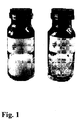
- Fig. 1 shows the visual appearance of a cake obtained following an exemplary short lyophilization cycle as described herein.
- the invention in some embodiments thereof, relates to methods for lyophilization of an aqueous thrombin solution, thrombin solutions for use in such lyophilization methods, and solid thrombin compositions produced by such methods.
- thrombin solutions vary considerably in the number and types of excipients present, and in the concentrations of the individual excipients.
- the thrombin stock solution used for preparing the aqueous thrombin solutions described in the Examples below comprised about 3,500 IU/ml thrombin, about 200 mM NaCl, with stabilizers 2% mannitol and 0.2% human serum albumin (HSA) (unless indicated otherwise).
- the stock solution was prepared from Factor II (pro-thrombin) of human plasma that was activated and purified by sequential use of diethylaminoethyl (DEAE) cellulose anion exchange resin and SP cation exchanger resin, essentially as described in US Patent 5143838 .
- DEAE diethylaminoethyl
- Lyophilization was carried out on a lyophilizer shelf of a Christ Epsilion 2-8D freeze drier (Christ, Germany) in 8 ml siliconized glass vials (Schott, Germany). Each vial was filled with 2 ml aqueous thrombin solution. The height of the solution in each vial was approximately 8 mm.
- the term "soak" with regard to a freezing or drying process refers to maintaining the composition being lyophilized at a constant temperature and pressure for a specified period of time in order to effect freezing or drying, respectively.
- the term "ramp" with regard to a freezing or drying process refers to a step in which the temperature and pressure of the composition being lyophilized is gradually changed over a specified period of time in order to bring the composition to a specified freezing or drying temperature and pressure respectively.
- Lyophilization was carried out on a lyophilzer shelf of a Christ Epsilion 2-8D freeze drier (Christ, Germany) in LYOGUARD® cups (GORE®). Each vial was filled with 52 ml aqueous thrombin solution. The height of the solution in each vial was approximately 17 mm.
- Water content determination was carried out using the volumetric Karl Fischer Titration method (KFT), which is based on the US Pharmacopoeia assay (USP 27, ⁇ 921>, P. 2398-2399). Prior to the titration, the water was extracted from the lyophilized composition by adding dried methanol to the vial containing the lyophilized composition and shaking the vial. A sample from the supernatant were removed for the titration.
- KFT volumetric Karl Fischer Titration method
- Thrombin activity of aqueous thrombin solutions was determined using a Clotting Time assay by measuring thrombin clotting activity in the different solutions according to the modified European Pharmacopeia Assay (0903/1997) procedure. Briefly, standard solutions of thrombin (4, 6, 8 and 10 IU/ml) or the test solutions were incubated for 2 minutes at 37°C. Then, 40 ⁇ l of each test solution or standard solution was mixed with 160 ⁇ l fibrinogen solution (0.1%; Enzyme research; cat No FIB1 2800L) and clotting time was measured. A calibration curve of log clotting times vs. log thrombin concentration was plotted using the standards.
- Thrombin activity in the different test solutions was determined by the clotting time obtained (calculated automatically by a clotting machine (Diagnostica Stago STart Coagulation Analyzer) interpolated from the calibration curve and multiplied by the dilution factor).
- Thrombin activity was measured as described above in the test solutions prior to lyophilization, and in the solid thrombin composition obtained by lyophilization, after reconstitution with purified water to the original volume. The recovered activity was calculated by dividing the activity obtained in the solid thrombin composition following reconstitution by the activity obtained in the thrombin solution before lyophilization and multiplying by 100.
- Solid thrombin compositions obtained by subjecting different aqueous thrombin solutions to a short lyophilization cycle were evaluated by the following parameters: water content of the solid compositions, thrombin activity recovery following reconstitution of the solid compositions, and structural appearance of the cake (by visual inspection).
- a cake having a "good structural appearance" is defined as a cake having a volume similar to that of the aqueous thrombin solution prior to lyophilization, is a monolithic block, has uniform porosity throughout the solid composition, and having no apparent wet areas.
- aqueous thrombin solutions comprising different ingredients, e.g. different saccharides, salts, and excipients at different concentrations were prepared from the thrombin stock solution described in the "MATERIALS AND METHODS" section, and the solutions were then lyophilized using the short lyophilization cycle, as detailed in Tables 1, 2 or 3.
- Example 1 Use of different saccharides and concentrations or a sugar alcohol in a thrombin solution subjected to a short lyophilization cycle
- Disaccharides saccharide and maltose
- mannitol sugar alcohol
- Mannitol was tested at concentrations of 1.6%, 2.1%, 2.6% and 4.6% (w/v) by addition of mannitol to the diluted stock solution as described below; and sucrose and maltose were tested at a concentration of 2% (w/v).
- the thrombin stock solution described above was diluted 1:3.5 with a solution providing the following final compositions: 0.6% human serum albumin, 20 mM sodium acetate (0.27%), 130 mM NaCl (0.76%) and 0.6% CaCl 2 in water at pH 7.0, and the tested saccharide or sugar alcohol was added to the solution in the concentrations listed above.
- the solution was supplemented to the listed concentration (following dilution of the stock, the solution comprised about 0.6% mannitol).
- human serum albumin present in the thrombin stock solution was also present in all test solutions as a "background ingredient" in a concentration of approx. 0.06%. Also, the stock solution comprised 0.6% mannitol.
- the prepared aqueous thrombin solutions were lyophilized using the short lyophilization cycle as described in Table 2 above, to obtain solid thrombin compositions.
- the water content of each solid composition, and thrombin activity recovery following reconstitution of the lyophilized composition were measured. The results are presented in Table 4 below.
- Table 4 Saccharide/sugar alcohol Tested Water content in the solid composition (%) Thrombin Activity Recovery (%) Sucrose 2% 0.4 96 Maltose 2% 0.6 95 Mannitol 1.6% 0.6 100 Mannitol 2.1% ND 100 Mannitol 2.6% 0.6 98 Mannitol 4.6% 1.7 100
- an aqueous thrombin solution for use in a short lyophilization cycle advantageously comprises about 1.6% to less than about 4.6% saccharides or sugar alcohols in order to obtain a solid and stable (structurally and functionally) thrombin composition.
- Example 2 Use of different concentrations of Human Serum Albumin in a thrombin solution subjected to a short lyophilization cycle
- HSA was tested at the following concentrations: 0.2%, 0.6%, 3% and 10%.
- the solutions were prepared from the thrombin stock solution by 1:3.5 dilution with a solution providing the following final composition: 2.6% mannitol, 20 mM sodium acetate (0.27%), 130 mM NaCl (0.76%) and 0.6% CaCl 2 in water at pH 7.0.
- human serum albumin was present in all test solutions at a concentration of approx. 0.06%, (in addition to the added HSA concentrations listed above).
- the prepared aqueous thrombin solutions were lyophilized using the short lyophilization cycle described in Table 2 above, wherein the solution had a height of about 8 mm in the lyophilization vessel, to obtain solid thrombin compositions.
- the water content of each solid composition, and thrombin activity recovery following reconstitution of the solid composition were measured. The results are presented in Table 5 below.
- Table 5 HSA concentration (%) Water content in the solid composition (%) Thrombin activity recovery (%) 0.2 3.0 100 0.6 0.6 98 3 ND 89 10 (reference example) 0.3 28
- thrombin solutions containing 0.6% HSA resulted in a solid composition having both relatively low water content and a high recovery of thrombin activity upon reconstitution.
- thrombin solutions with lower HSA concentrations resulted in solid compositions with increased water content, while solutions with higher HSA concentrations resulted in a lower recovery of thrombin activity upon reconstitution.
- optimal thrombin solutions advantagously comprise HSA at a concentration of higher than about 0.2% to lower than about 3%.
- Example 3 Use of different salts and concentrations in a thrombin solution subjected to a short lyophilization cycle
- the solutions contained, in addition to the different concentrations of NaCl, 2% mannitol, 0.6% HSA, 20 mM sodium acetate (0.27%), and 0.6% CaCl 2 at pH 7.0.
- the solutions were lyophilized using a short cycle similar to that described in Table 2 above, wherein the height of the solution in the lyophilization vessel was about 8 mm, wherein the primary drying soak was an hour longer than described in Table 2.
- the water content was inversely proportional to NaCl concentration up to 150 mM.
- a cake prepared from a solution comprising 90 mM NaCl had a poor appearance, being shrunken compared to the volume of the solution from which it was prepared, and having a granular consistency, with nonuniform porosity throughout the solid composition.
- advantagously optimal thrombin solutions comprise NaCl at a concentration of at least 120 mM (0.7% w/v) to lower than 300 mM (1.75% w/v).
- KCl instead of NaCl in the thrombin solution was assessed. Since NaCl is present in the thrombin stock solution used to prepare the test solutions, it cannot be completely removed and thus the solution was supplemented with 65 mM KCl (bringing the solution to a final salt concentration of about 125 mM). Also, an additional thrombin solution was tested, comprising the stock solution supplemented with NaCl, bringing the solution to a final salt concentration of 130 mM).
- Solutions supplemented with NaCl or with KCl were prepared by diluting stock solution 1:3.5, to provide a NaCl concentration of 60 mM. A first solution was then supplemented to an NaCl concentration of 130 mM; and a second solution was supplemented with 65 mM KCl.
- the stock solution was diluted so as to provide the following final composition: 2.6% mannitol, 20 mM sodium acetate (0.27%), and 0.6% CaCl 2 in water at pH 7.0.
- KCl is absent from the thrombin solution.
- thrombin solutions were prepared by diluting the thrombin stock solution described above 1:3.5 with a solution comprising the ingredients listed in each solution 1-3. Mannitol and human serum albumin were present in all three test solutions in a concentration of approx. 0.6% and 0.06%, respectively, as background ingredients
- the solutions were lyophilized using the short lyophilization cycles described in Table 1 or Table 2 above (wherein the height of the solution in the lyophilization vessel was about 8 mm). Water content of the solid thrombin composition, and thrombin activity recovery after reconstitution of the solid thrombin composition were measured, as described above.
- Fig. 1 shows the visual appearance of a solid thrombin composition obtained following a short lyophilization of the aqueous thrombin solution described herein (solution 1; #1 in Fig. 1 ); and a solid thrombin composition obtained following a short lyophilization of a solution according to EP 1766003B1 (solution 2; #2 in Fig. 1 ).
- the solid composition shown in Fig. 1 was obtained using the cycle as described in Table 1. Similar results were obtained when the cycle as described in Table 2 was used.
- Table 9 Thrombin Solution Tested Water Content in the solid composition (%) Average water content (%) ⁇ SD Thrombin activity recovery (%) Average thrombin activity recovery (%) ⁇ SD Cycle of Table 1 Cycle of Table 2 Cycle of Table 1 Cycle of Table 2 Solution 1 0.8 0.6 0.7 ⁇ 0.14 100 98 99 ⁇ 1.4 Solution 2 3.2 4.1 3.65 ⁇ 0.64 92 96 94 ⁇ 2.8 Solution 3 1.6 3.3 2.45 ⁇ 1.2 93 91 92 ⁇ 1.4
- Example 5 Use of the solutions described herein in a short lyophilization cycle with height of solution in lyophilization vessel of 17 mm (reference example)
- a first thrombin solution as described herein comprising 2% mannitol, 0.6% human serum albumin, 20 mM sodium acetate (0.27%), 130 mM sodium chloride (0.76%) and 40 mM CaCl 2 (0.6%) in distilled water at pH 7.0; and a second solution, similar to the first solution, but comprising a sodium chloride concentration of lower than 120 mM (0.7%) sodium chloride (lower than 0.76%) were lyophilized.
- the first solution was lyophilized using the short lyophilization cycles described in Table 3 above; and the second solution (with the lower sodium chloride concentration) was lyophilized in a lyophilizatin cycle having a duration of 108 hours (wherein the height of each solution in the lyophilization vessel was about 17 mm).
- the results show that the thrombin solution according to the invention enabled to shorten the duration of the lyophilization cycle by about 37%.
- the thrombin solution described herein advantageously enables use of a short lyophilization cycle that yields a solid composition having low water content and the high thrombin activity recovery as compared to known thrombin solutions.
Landscapes
- Health & Medical Sciences (AREA)
- Chemical & Material Sciences (AREA)
- Life Sciences & Earth Sciences (AREA)
- Engineering & Computer Science (AREA)
- General Health & Medical Sciences (AREA)
- Medicinal Chemistry (AREA)
- Bioinformatics & Cheminformatics (AREA)
- Public Health (AREA)
- Veterinary Medicine (AREA)
- Animal Behavior & Ethology (AREA)
- Pharmacology & Pharmacy (AREA)
- Epidemiology (AREA)
- Organic Chemistry (AREA)
- Genetics & Genomics (AREA)
- Zoology (AREA)
- Wood Science & Technology (AREA)
- Biochemistry (AREA)
- Molecular Biology (AREA)
- General Engineering & Computer Science (AREA)
- Proteomics, Peptides & Aminoacids (AREA)
- Biomedical Technology (AREA)
- General Chemical & Material Sciences (AREA)
- Oil, Petroleum & Natural Gas (AREA)
- Chemical Kinetics & Catalysis (AREA)
- Microbiology (AREA)
- Biotechnology (AREA)
- Inorganic Chemistry (AREA)
- Gastroenterology & Hepatology (AREA)
- Immunology (AREA)
- Mechanical Engineering (AREA)
- Medicines That Contain Protein Lipid Enzymes And Other Medicines (AREA)
- Enzymes And Modification Thereof (AREA)
- Medicinal Preparation (AREA)
- Materials For Medical Uses (AREA)
- Peptides Or Proteins (AREA)
Priority Applications (2)
| Application Number | Priority Date | Filing Date | Title |
|---|---|---|---|
| EP20191369.6A EP3760221A1 (en) | 2012-12-03 | 2013-11-28 | Solid thrombin composition |
| PL13820993T PL2925347T3 (pl) | 2012-12-03 | 2013-11-28 | Roztwór trombiny i sposoby jego zastosowania |
Applications Claiming Priority (3)
| Application Number | Priority Date | Filing Date | Title |
|---|---|---|---|
| IL22339612 | 2012-12-03 | ||
| US201361753542P | 2013-01-17 | 2013-01-17 | |
| PCT/IL2013/000088 WO2014087394A1 (en) | 2012-12-03 | 2013-11-28 | Thrombin solution and methods of use thereof |
Related Child Applications (1)
| Application Number | Title | Priority Date | Filing Date |
|---|---|---|---|
| EP20191369.6A Division EP3760221A1 (en) | 2012-12-03 | 2013-11-28 | Solid thrombin composition |
Publications (2)
| Publication Number | Publication Date |
|---|---|
| EP2925347A1 EP2925347A1 (en) | 2015-10-07 |
| EP2925347B1 true EP2925347B1 (en) | 2020-08-26 |
Family
ID=50825810
Family Applications (2)
| Application Number | Title | Priority Date | Filing Date |
|---|---|---|---|
| EP13820993.7A Active EP2925347B1 (en) | 2012-12-03 | 2013-11-28 | Thrombin solution and methods of use thereof |
| EP20191369.6A Pending EP3760221A1 (en) | 2012-12-03 | 2013-11-28 | Solid thrombin composition |
Family Applications After (1)
| Application Number | Title | Priority Date | Filing Date |
|---|---|---|---|
| EP20191369.6A Pending EP3760221A1 (en) | 2012-12-03 | 2013-11-28 | Solid thrombin composition |
Country Status (13)
| Country | Link |
|---|---|
| US (5) | US9212357B2 (pl) |
| EP (2) | EP2925347B1 (pl) |
| JP (2) | JP6526565B2 (pl) |
| KR (1) | KR102101611B1 (pl) |
| CN (2) | CN104822387A (pl) |
| AU (1) | AU2013353636B2 (pl) |
| BR (2) | BR122022012099B1 (pl) |
| CA (1) | CA2892083A1 (pl) |
| IL (1) | IL239043B (pl) |
| MX (1) | MX358132B (pl) |
| PL (1) | PL2925347T3 (pl) |
| RU (1) | RU2670956C9 (pl) |
| WO (1) | WO2014087394A1 (pl) |
Families Citing this family (7)
| Publication number | Priority date | Publication date | Assignee | Title |
|---|---|---|---|---|
| US9212357B2 (en) | 2012-12-03 | 2015-12-15 | Omrix Biopharmaceuticals Ltd. | Thrombin solution and methods of use thereof |
| TW201702385A (zh) * | 2015-03-13 | 2017-01-16 | 崇謹 孫 | 穩定凝血酶之方法及其組合物 |
| IL242984A0 (en) * | 2015-12-08 | 2016-02-29 | Omrix Biopharmaceuticals Ltd | Thrombin microcapsules, their preparation and how to use them |
| US10159720B2 (en) | 2015-12-08 | 2018-12-25 | Omrix Biopharmaceuticals Ltd | Thrombin microcapsules, preparation and uses thereof |
| US10420134B2 (en) | 2016-02-02 | 2019-09-17 | Cisco Technology, Inc. | System and method to facilitate subframe scheduling in a split medium access control radio access network environment |
| CN109010906B (zh) * | 2018-08-16 | 2021-05-14 | 陈明远 | 一种促进术后伤口局部止血及促进术后创面上皮化的生物胶水及其工作方法 |
| IL263679A (en) * | 2018-12-12 | 2019-03-31 | Omrix Biopharmaceuticals Ltd | Kits, methods, and compositions for preventing tissue adhesion |
Family Cites Families (25)
| Publication number | Priority date | Publication date | Assignee | Title |
|---|---|---|---|---|
| JPS63243032A (ja) * | 1987-03-27 | 1988-10-07 | Green Cross Corp:The | トロンビンの加熱処理方法 |
| US5605884A (en) | 1987-10-29 | 1997-02-25 | Rhone-Poulenc Rorer Pharmaceuticals Inc. | Factor VIII formulations in high ionic strength media |
| US4877608A (en) | 1987-11-09 | 1989-10-31 | Rorer Pharmaceutical Corporation | Pharmaceutical plasma protein formulations in low ionic strength media |
| JP2715104B2 (ja) * | 1988-08-18 | 1998-02-18 | 株式会社ミドリ十字 | トロンビン乾燥製剤 |
| DE3843126C3 (de) | 1988-12-22 | 1994-10-06 | Octapharma Ag | Verfahren zur Herstellung eines hochreinen Thrombinkonzentrates |
| ES2154650T3 (es) | 1992-10-02 | 2001-04-16 | Genetics Inst | Composicion que comprende una formulacion con factor de coagulacion viii, procedimiento para su preparacion y uso de un tensioactivo como estabilizador. |
| CN1100655A (zh) * | 1992-11-19 | 1995-03-29 | 迟斌元 | 一种含有缓冲剂和凝血酶的药物组合物 |
| JP3028274B2 (ja) * | 1994-09-30 | 2000-04-04 | 持田製薬株式会社 | トロンビン固形製剤の安定化方法 |
| GB9503750D0 (en) | 1995-02-24 | 1995-04-12 | Common Services Agency | Thrombin preparation |
| KR20050084954A (ko) * | 2002-11-14 | 2005-08-29 | 자이단호진 가가쿠오요비겟세이료호겐쿠쇼 | 트롬빈-고정화 생체흡수성 합성 부직포 |
| EP1927658B1 (en) | 2004-06-22 | 2012-10-10 | Zymogenetics, Inc. | Thrombin compositions |
| DE602005009191D1 (de) * | 2004-06-22 | 2008-10-02 | Zymogenetics Inc | Thrombinzusammensetzungen |
| ES2226587B1 (es) * | 2004-10-22 | 2005-12-16 | Probitas Pharma, S.A. | Composicion de trombina estable. |
| CA2612937C (en) * | 2005-07-22 | 2014-05-06 | Amgen Inc. | Concentrated protein lyophilates, methods, and uses |
| WO2007029159A1 (en) * | 2005-09-05 | 2007-03-15 | Ranbaxy Laboratories Limited | A process for the preparation of lyophilized sodium bicarbonate |
| PT2097068E (pt) | 2006-11-24 | 2013-10-23 | Cadila Healthcare Ltd | Formulações de conjugados de peg-interferão alfa |
| WO2008076407A2 (en) * | 2006-12-15 | 2008-06-26 | Lifebond Ltd. | Gelatin-transglutaminase hemostatic dressings and sealants |
| CN101214374A (zh) * | 2007-01-05 | 2008-07-09 | 兆科药业(合肥)有限公司 | 具有促凝血与止血功能的制剂 |
| CN101970021B (zh) * | 2008-03-03 | 2015-01-28 | 奥姆里克斯生物药品有限公司 | 包含活性成分的明胶海绵、其制备及用途 |
| EP2331158B1 (en) * | 2008-09-22 | 2013-09-11 | Omrix Biopharmaceuticals Ltd. | Implantable device comprising a substrate pre-coated with stabilized fibrin |
| NZ593190A (en) | 2008-11-07 | 2013-01-25 | Baxter Int | Factor viii formulations |
| EP3269805A1 (en) | 2010-04-20 | 2018-01-17 | Octapharma AG | New stabilizing agent for pharmaceutical proteins |
| AU2011260274B2 (en) * | 2010-06-01 | 2015-07-02 | Baxter Healthcare S.A. | Process for making dry and stable hemostatic compositions |
| IL207586A0 (en) | 2010-08-12 | 2010-12-30 | Omrix Biopharmaceuticals Ltd | A fibrin based therapeutic preparation and use thereof |
| US9212357B2 (en) | 2012-12-03 | 2015-12-15 | Omrix Biopharmaceuticals Ltd. | Thrombin solution and methods of use thereof |
-
2013
- 2013-03-04 US US13/783,592 patent/US9212357B2/en active Active
- 2013-11-28 CA CA2892083A patent/CA2892083A1/en not_active Abandoned
- 2013-11-28 EP EP13820993.7A patent/EP2925347B1/en active Active
- 2013-11-28 BR BR122022012099-7A patent/BR122022012099B1/pt active IP Right Grant
- 2013-11-28 CN CN201380063192.4A patent/CN104822387A/zh active Pending
- 2013-11-28 BR BR112015013071-2A patent/BR112015013071B1/pt not_active IP Right Cessation
- 2013-11-28 CN CN201910179940.4A patent/CN110251468A/zh active Pending
- 2013-11-28 KR KR1020157017715A patent/KR102101611B1/ko active Active
- 2013-11-28 MX MX2015006986A patent/MX358132B/es active IP Right Grant
- 2013-11-28 RU RU2015126540A patent/RU2670956C9/ru active
- 2013-11-28 EP EP20191369.6A patent/EP3760221A1/en active Pending
- 2013-11-28 JP JP2015544613A patent/JP6526565B2/ja active Active
- 2013-11-28 WO PCT/IL2013/000088 patent/WO2014087394A1/en not_active Ceased
- 2013-11-28 PL PL13820993T patent/PL2925347T3/pl unknown
- 2013-11-28 AU AU2013353636A patent/AU2013353636B2/en active Active
-
2015
- 2015-05-27 IL IL239043A patent/IL239043B/en active IP Right Grant
- 2015-11-09 US US14/935,743 patent/US10479987B2/en active Active
-
2018
- 2018-05-24 JP JP2018099435A patent/JP2018162254A/ja active Pending
-
2019
- 2019-10-08 US US16/595,999 patent/US11225652B2/en active Active
-
2021
- 2021-12-09 US US17/546,447 patent/US11993797B2/en active Active
-
2024
- 2024-04-19 US US18/640,385 patent/US20240376459A1/en active Pending
Non-Patent Citations (1)
| Title |
|---|
| None * |
Also Published As
Similar Documents
| Publication | Publication Date | Title |
|---|---|---|
| US11993797B2 (en) | Thrombin solution and methods of use thereof | |
| KR100491281B1 (ko) | 저당함량을가지는안정한알부민무함유재조합인자Vlll의제제 | |
| CA2482448C (en) | Preservation of bioactive materials by freeze dried foam | |
| EP2825216B1 (en) | Dry haemostatic composition | |
| RU2481823C2 (ru) | Стабилизированные составы, содержащие фактор ix и трегалозу | |
| EP1974741A1 (en) | Dried blood factor composition stabilised by trehalose | |
| US7253262B2 (en) | Dried blood factor composition comprising trehalose | |
| HK1214958B (en) | Thrombin solution and methods of use thereof | |
| KR102223275B1 (ko) | 트롬빈 용액 및 이의 사용 방법 | |
| HK1117766A (en) | Dried blood factor composition stabilised by trehalose |
Legal Events
| Date | Code | Title | Description |
|---|---|---|---|
| PUAI | Public reference made under article 153(3) epc to a published international application that has entered the european phase |
Free format text: ORIGINAL CODE: 0009012 |
|
| 17P | Request for examination filed |
Effective date: 20150604 |
|
| AK | Designated contracting states |
Kind code of ref document: A1 Designated state(s): AL AT BE BG CH CY CZ DE DK EE ES FI FR GB GR HR HU IE IS IT LI LT LU LV MC MK MT NL NO PL PT RO RS SE SI SK SM TR |
|
| AX | Request for extension of the european patent |
Extension state: BA ME |
|
| DAX | Request for extension of the european patent (deleted) | ||
| REG | Reference to a national code |
Ref country code: HK Ref legal event code: DE Ref document number: 1214958 Country of ref document: HK |
|
| STAA | Information on the status of an ep patent application or granted ep patent |
Free format text: STATUS: EXAMINATION IS IN PROGRESS |
|
| 17Q | First examination report despatched |
Effective date: 20190322 |
|
| GRAP | Despatch of communication of intention to grant a patent |
Free format text: ORIGINAL CODE: EPIDOSNIGR1 |
|
| STAA | Information on the status of an ep patent application or granted ep patent |
Free format text: STATUS: GRANT OF PATENT IS INTENDED |
|
| INTG | Intention to grant announced |
Effective date: 20200320 |
|
| GRAS | Grant fee paid |
Free format text: ORIGINAL CODE: EPIDOSNIGR3 |
|
| GRAA | (expected) grant |
Free format text: ORIGINAL CODE: 0009210 |
|
| STAA | Information on the status of an ep patent application or granted ep patent |
Free format text: STATUS: THE PATENT HAS BEEN GRANTED |
|
| AK | Designated contracting states |
Kind code of ref document: B1 Designated state(s): AL AT BE BG CH CY CZ DE DK EE ES FI FR GB GR HR HU IE IS IT LI LT LU LV MC MK MT NL NO PL PT RO RS SE SI SK SM TR |
|
| REG | Reference to a national code |
Ref country code: GB Ref legal event code: FG4D |
|
| REG | Reference to a national code |
Ref country code: CH Ref legal event code: EP Ref country code: CH Ref legal event code: NV Representative=s name: E. BLUM AND CO. AG PATENT- UND MARKENANWAELTE , CH |
|
| REG | Reference to a national code |
Ref country code: DE Ref legal event code: R096 Ref document number: 602013072009 Country of ref document: DE |
|
| REG | Reference to a national code |
Ref country code: AT Ref legal event code: REF Ref document number: 1305714 Country of ref document: AT Kind code of ref document: T Effective date: 20200915 |
|
| REG | Reference to a national code |
Ref country code: IE Ref legal event code: FG4D |
|
| REG | Reference to a national code |
Ref country code: LT Ref legal event code: MG4D |
|
| PG25 | Lapsed in a contracting state [announced via postgrant information from national office to epo] |
Ref country code: PT Free format text: LAPSE BECAUSE OF FAILURE TO SUBMIT A TRANSLATION OF THE DESCRIPTION OR TO PAY THE FEE WITHIN THE PRESCRIBED TIME-LIMIT Effective date: 20201228 Ref country code: BG Free format text: LAPSE BECAUSE OF FAILURE TO SUBMIT A TRANSLATION OF THE DESCRIPTION OR TO PAY THE FEE WITHIN THE PRESCRIBED TIME-LIMIT Effective date: 20201126 Ref country code: LT Free format text: LAPSE BECAUSE OF FAILURE TO SUBMIT A TRANSLATION OF THE DESCRIPTION OR TO PAY THE FEE WITHIN THE PRESCRIBED TIME-LIMIT Effective date: 20200826 Ref country code: HR Free format text: LAPSE BECAUSE OF FAILURE TO SUBMIT A TRANSLATION OF THE DESCRIPTION OR TO PAY THE FEE WITHIN THE PRESCRIBED TIME-LIMIT Effective date: 20200826 Ref country code: NO Free format text: LAPSE BECAUSE OF FAILURE TO SUBMIT A TRANSLATION OF THE DESCRIPTION OR TO PAY THE FEE WITHIN THE PRESCRIBED TIME-LIMIT Effective date: 20201126 Ref country code: SE Free format text: LAPSE BECAUSE OF FAILURE TO SUBMIT A TRANSLATION OF THE DESCRIPTION OR TO PAY THE FEE WITHIN THE PRESCRIBED TIME-LIMIT Effective date: 20200826 Ref country code: GR Free format text: LAPSE BECAUSE OF FAILURE TO SUBMIT A TRANSLATION OF THE DESCRIPTION OR TO PAY THE FEE WITHIN THE PRESCRIBED TIME-LIMIT Effective date: 20201127 Ref country code: FI Free format text: LAPSE BECAUSE OF FAILURE TO SUBMIT A TRANSLATION OF THE DESCRIPTION OR TO PAY THE FEE WITHIN THE PRESCRIBED TIME-LIMIT Effective date: 20200826 |
|
| REG | Reference to a national code |
Ref country code: NL Ref legal event code: MP Effective date: 20200826 |
|
| PG25 | Lapsed in a contracting state [announced via postgrant information from national office to epo] |
Ref country code: RS Free format text: LAPSE BECAUSE OF FAILURE TO SUBMIT A TRANSLATION OF THE DESCRIPTION OR TO PAY THE FEE WITHIN THE PRESCRIBED TIME-LIMIT Effective date: 20200826 Ref country code: NL Free format text: LAPSE BECAUSE OF FAILURE TO SUBMIT A TRANSLATION OF THE DESCRIPTION OR TO PAY THE FEE WITHIN THE PRESCRIBED TIME-LIMIT Effective date: 20200826 Ref country code: LV Free format text: LAPSE BECAUSE OF FAILURE TO SUBMIT A TRANSLATION OF THE DESCRIPTION OR TO PAY THE FEE WITHIN THE PRESCRIBED TIME-LIMIT Effective date: 20200826 Ref country code: IS Free format text: LAPSE BECAUSE OF FAILURE TO SUBMIT A TRANSLATION OF THE DESCRIPTION OR TO PAY THE FEE WITHIN THE PRESCRIBED TIME-LIMIT Effective date: 20201226 |
|
| PG25 | Lapsed in a contracting state [announced via postgrant information from national office to epo] |
Ref country code: SM Free format text: LAPSE BECAUSE OF FAILURE TO SUBMIT A TRANSLATION OF THE DESCRIPTION OR TO PAY THE FEE WITHIN THE PRESCRIBED TIME-LIMIT Effective date: 20200826 Ref country code: RO Free format text: LAPSE BECAUSE OF FAILURE TO SUBMIT A TRANSLATION OF THE DESCRIPTION OR TO PAY THE FEE WITHIN THE PRESCRIBED TIME-LIMIT Effective date: 20200826 Ref country code: EE Free format text: LAPSE BECAUSE OF FAILURE TO SUBMIT A TRANSLATION OF THE DESCRIPTION OR TO PAY THE FEE WITHIN THE PRESCRIBED TIME-LIMIT Effective date: 20200826 Ref country code: CZ Free format text: LAPSE BECAUSE OF FAILURE TO SUBMIT A TRANSLATION OF THE DESCRIPTION OR TO PAY THE FEE WITHIN THE PRESCRIBED TIME-LIMIT Effective date: 20200826 Ref country code: DK Free format text: LAPSE BECAUSE OF FAILURE TO SUBMIT A TRANSLATION OF THE DESCRIPTION OR TO PAY THE FEE WITHIN THE PRESCRIBED TIME-LIMIT Effective date: 20200826 |
|
| REG | Reference to a national code |
Ref country code: AT Ref legal event code: UEP Ref document number: 1305714 Country of ref document: AT Kind code of ref document: T Effective date: 20200826 |
|
| REG | Reference to a national code |
Ref country code: ES Ref legal event code: FG2A Ref document number: 2828498 Country of ref document: ES Kind code of ref document: T3 Effective date: 20210526 |
|
| REG | Reference to a national code |
Ref country code: DE Ref legal event code: R097 Ref document number: 602013072009 Country of ref document: DE |
|
| PG25 | Lapsed in a contracting state [announced via postgrant information from national office to epo] |
Ref country code: AL Free format text: LAPSE BECAUSE OF FAILURE TO SUBMIT A TRANSLATION OF THE DESCRIPTION OR TO PAY THE FEE WITHIN THE PRESCRIBED TIME-LIMIT Effective date: 20200826 |
|
| PG25 | Lapsed in a contracting state [announced via postgrant information from national office to epo] |
Ref country code: MC Free format text: LAPSE BECAUSE OF FAILURE TO SUBMIT A TRANSLATION OF THE DESCRIPTION OR TO PAY THE FEE WITHIN THE PRESCRIBED TIME-LIMIT Effective date: 20200826 Ref country code: SK Free format text: LAPSE BECAUSE OF FAILURE TO SUBMIT A TRANSLATION OF THE DESCRIPTION OR TO PAY THE FEE WITHIN THE PRESCRIBED TIME-LIMIT Effective date: 20200826 |
|
| PLBE | No opposition filed within time limit |
Free format text: ORIGINAL CODE: 0009261 |
|
| STAA | Information on the status of an ep patent application or granted ep patent |
Free format text: STATUS: NO OPPOSITION FILED WITHIN TIME LIMIT |
|
| PG25 | Lapsed in a contracting state [announced via postgrant information from national office to epo] |
Ref country code: LU Free format text: LAPSE BECAUSE OF NON-PAYMENT OF DUE FEES Effective date: 20201128 |
|
| 26N | No opposition filed |
Effective date: 20210527 |
|
| REG | Reference to a national code |
Ref country code: BE Ref legal event code: MM Effective date: 20201130 |
|
| PG25 | Lapsed in a contracting state [announced via postgrant information from national office to epo] |
Ref country code: SI Free format text: LAPSE BECAUSE OF FAILURE TO SUBMIT A TRANSLATION OF THE DESCRIPTION OR TO PAY THE FEE WITHIN THE PRESCRIBED TIME-LIMIT Effective date: 20200826 |
|
| PG25 | Lapsed in a contracting state [announced via postgrant information from national office to epo] |
Ref country code: IE Free format text: LAPSE BECAUSE OF NON-PAYMENT OF DUE FEES Effective date: 20201128 |
|
| PG25 | Lapsed in a contracting state [announced via postgrant information from national office to epo] |
Ref country code: TR Free format text: LAPSE BECAUSE OF FAILURE TO SUBMIT A TRANSLATION OF THE DESCRIPTION OR TO PAY THE FEE WITHIN THE PRESCRIBED TIME-LIMIT Effective date: 20200826 Ref country code: MT Free format text: LAPSE BECAUSE OF FAILURE TO SUBMIT A TRANSLATION OF THE DESCRIPTION OR TO PAY THE FEE WITHIN THE PRESCRIBED TIME-LIMIT Effective date: 20200826 Ref country code: CY Free format text: LAPSE BECAUSE OF FAILURE TO SUBMIT A TRANSLATION OF THE DESCRIPTION OR TO PAY THE FEE WITHIN THE PRESCRIBED TIME-LIMIT Effective date: 20200826 |
|
| PG25 | Lapsed in a contracting state [announced via postgrant information from national office to epo] |
Ref country code: MK Free format text: LAPSE BECAUSE OF FAILURE TO SUBMIT A TRANSLATION OF THE DESCRIPTION OR TO PAY THE FEE WITHIN THE PRESCRIBED TIME-LIMIT Effective date: 20200826 |
|
| PG25 | Lapsed in a contracting state [announced via postgrant information from national office to epo] |
Ref country code: BE Free format text: LAPSE BECAUSE OF NON-PAYMENT OF DUE FEES Effective date: 20201130 |
|
| PGFP | Annual fee paid to national office [announced via postgrant information from national office to epo] |
Ref country code: PL Payment date: 20221006 Year of fee payment: 10 |
|
| PG25 | Lapsed in a contracting state [announced via postgrant information from national office to epo] |
Ref country code: PL Free format text: LAPSE BECAUSE OF NON-PAYMENT OF DUE FEES Effective date: 20231128 |
|
| PGFP | Annual fee paid to national office [announced via postgrant information from national office to epo] |
Ref country code: FR Payment date: 20250930 Year of fee payment: 13 |
|
| REG | Reference to a national code |
Ref country code: CH Ref legal event code: U11 Free format text: ST27 STATUS EVENT CODE: U-0-0-U10-U11 (AS PROVIDED BY THE NATIONAL OFFICE) Effective date: 20251201 |
|
| PGFP | Annual fee paid to national office [announced via postgrant information from national office to epo] |
Ref country code: DE Payment date: 20250930 Year of fee payment: 13 |
|
| PGFP | Annual fee paid to national office [announced via postgrant information from national office to epo] |
Ref country code: GB Payment date: 20251001 Year of fee payment: 13 |
|
| PGFP | Annual fee paid to national office [announced via postgrant information from national office to epo] |
Ref country code: AT Payment date: 20251027 Year of fee payment: 13 |
|
| PGFP | Annual fee paid to national office [announced via postgrant information from national office to epo] |
Ref country code: IT Payment date: 20251022 Year of fee payment: 13 |
|
| PGFP | Annual fee paid to national office [announced via postgrant information from national office to epo] |
Ref country code: CH Payment date: 20251201 Year of fee payment: 13 |
|
| PGFP | Annual fee paid to national office [announced via postgrant information from national office to epo] |
Ref country code: ES Payment date: 20251211 Year of fee payment: 13 |