EP2896085B1 - Li-s-batterie mit hoher zyklenstabilität und verfahren zu deren betreiben - Google Patents
Li-s-batterie mit hoher zyklenstabilität und verfahren zu deren betreiben Download PDFInfo
- Publication number
- EP2896085B1 EP2896085B1 EP13762815.2A EP13762815A EP2896085B1 EP 2896085 B1 EP2896085 B1 EP 2896085B1 EP 13762815 A EP13762815 A EP 13762815A EP 2896085 B1 EP2896085 B1 EP 2896085B1
- Authority
- EP
- European Patent Office
- Prior art keywords
- carbon
- anode
- cathode
- battery according
- weight
- Prior art date
- Legal status (The legal status is an assumption and is not a legal conclusion. Google has not performed a legal analysis and makes no representation as to the accuracy of the status listed.)
- Active
Links
Images
Classifications
-
- H—ELECTRICITY
- H01—ELECTRIC ELEMENTS
- H01M—PROCESSES OR MEANS, e.g. BATTERIES, FOR THE DIRECT CONVERSION OF CHEMICAL ENERGY INTO ELECTRICAL ENERGY
- H01M10/00—Secondary cells; Manufacture thereof
- H01M10/05—Accumulators with non-aqueous electrolyte
- H01M10/052—Li-accumulators
-
- H—ELECTRICITY
- H01—ELECTRIC ELEMENTS
- H01M—PROCESSES OR MEANS, e.g. BATTERIES, FOR THE DIRECT CONVERSION OF CHEMICAL ENERGY INTO ELECTRICAL ENERGY
- H01M10/00—Secondary cells; Manufacture thereof
- H01M10/05—Accumulators with non-aqueous electrolyte
- H01M10/056—Accumulators with non-aqueous electrolyte characterised by the materials used as electrolytes, e.g. mixed inorganic/organic electrolytes
-
- H—ELECTRICITY
- H01—ELECTRIC ELEMENTS
- H01M—PROCESSES OR MEANS, e.g. BATTERIES, FOR THE DIRECT CONVERSION OF CHEMICAL ENERGY INTO ELECTRICAL ENERGY
- H01M10/00—Secondary cells; Manufacture thereof
- H01M10/05—Accumulators with non-aqueous electrolyte
- H01M10/056—Accumulators with non-aqueous electrolyte characterised by the materials used as electrolytes, e.g. mixed inorganic/organic electrolytes
- H01M10/0564—Accumulators with non-aqueous electrolyte characterised by the materials used as electrolytes, e.g. mixed inorganic/organic electrolytes the electrolyte being constituted of organic materials only
- H01M10/0565—Polymeric materials, e.g. gel-type or solid-type
-
- H—ELECTRICITY
- H01—ELECTRIC ELEMENTS
- H01M—PROCESSES OR MEANS, e.g. BATTERIES, FOR THE DIRECT CONVERSION OF CHEMICAL ENERGY INTO ELECTRICAL ENERGY
- H01M10/00—Secondary cells; Manufacture thereof
- H01M10/05—Accumulators with non-aqueous electrolyte
- H01M10/056—Accumulators with non-aqueous electrolyte characterised by the materials used as electrolytes, e.g. mixed inorganic/organic electrolytes
- H01M10/0564—Accumulators with non-aqueous electrolyte characterised by the materials used as electrolytes, e.g. mixed inorganic/organic electrolytes the electrolyte being constituted of organic materials only
- H01M10/0566—Liquid materials
- H01M10/0568—Liquid materials characterised by the solutes
-
- H—ELECTRICITY
- H01—ELECTRIC ELEMENTS
- H01M—PROCESSES OR MEANS, e.g. BATTERIES, FOR THE DIRECT CONVERSION OF CHEMICAL ENERGY INTO ELECTRICAL ENERGY
- H01M10/00—Secondary cells; Manufacture thereof
- H01M10/42—Methods or arrangements for servicing or maintenance of secondary cells or secondary half-cells
- H01M10/44—Methods for charging or discharging
-
- H—ELECTRICITY
- H01—ELECTRIC ELEMENTS
- H01M—PROCESSES OR MEANS, e.g. BATTERIES, FOR THE DIRECT CONVERSION OF CHEMICAL ENERGY INTO ELECTRICAL ENERGY
- H01M10/00—Secondary cells; Manufacture thereof
- H01M10/42—Methods or arrangements for servicing or maintenance of secondary cells or secondary half-cells
- H01M10/44—Methods for charging or discharging
- H01M10/448—End of discharge regulating measures
-
- H—ELECTRICITY
- H01—ELECTRIC ELEMENTS
- H01M—PROCESSES OR MEANS, e.g. BATTERIES, FOR THE DIRECT CONVERSION OF CHEMICAL ENERGY INTO ELECTRICAL ENERGY
- H01M4/00—Electrodes
- H01M4/02—Electrodes composed of, or comprising, active material
- H01M4/04—Processes of manufacture in general
- H01M4/0402—Methods of deposition of the material
- H01M4/0421—Methods of deposition of the material involving vapour deposition
- H01M4/0423—Physical vapour deposition
- H01M4/0426—Sputtering
-
- H—ELECTRICITY
- H01—ELECTRIC ELEMENTS
- H01M—PROCESSES OR MEANS, e.g. BATTERIES, FOR THE DIRECT CONVERSION OF CHEMICAL ENERGY INTO ELECTRICAL ENERGY
- H01M4/00—Electrodes
- H01M4/02—Electrodes composed of, or comprising, active material
- H01M4/04—Processes of manufacture in general
- H01M4/0402—Methods of deposition of the material
- H01M4/0421—Methods of deposition of the material involving vapour deposition
- H01M4/0428—Chemical vapour deposition
-
- H—ELECTRICITY
- H01—ELECTRIC ELEMENTS
- H01M—PROCESSES OR MEANS, e.g. BATTERIES, FOR THE DIRECT CONVERSION OF CHEMICAL ENERGY INTO ELECTRICAL ENERGY
- H01M4/00—Electrodes
- H01M4/02—Electrodes composed of, or comprising, active material
- H01M4/13—Electrodes for accumulators with non-aqueous electrolyte, e.g. for lithium-accumulators; Processes of manufacture thereof
- H01M4/134—Electrodes based on metals, Si or alloys
-
- H—ELECTRICITY
- H01—ELECTRIC ELEMENTS
- H01M—PROCESSES OR MEANS, e.g. BATTERIES, FOR THE DIRECT CONVERSION OF CHEMICAL ENERGY INTO ELECTRICAL ENERGY
- H01M4/00—Electrodes
- H01M4/02—Electrodes composed of, or comprising, active material
- H01M4/13—Electrodes for accumulators with non-aqueous electrolyte, e.g. for lithium-accumulators; Processes of manufacture thereof
- H01M4/136—Electrodes based on inorganic compounds other than oxides or hydroxides, e.g. sulfides, selenides, tellurides, halogenides or LiCoFy
-
- H—ELECTRICITY
- H01—ELECTRIC ELEMENTS
- H01M—PROCESSES OR MEANS, e.g. BATTERIES, FOR THE DIRECT CONVERSION OF CHEMICAL ENERGY INTO ELECTRICAL ENERGY
- H01M4/00—Electrodes
- H01M4/02—Electrodes composed of, or comprising, active material
- H01M4/36—Selection of substances as active materials, active masses, active liquids
- H01M4/38—Selection of substances as active materials, active masses, active liquids of elements or alloys
-
- H—ELECTRICITY
- H01—ELECTRIC ELEMENTS
- H01M—PROCESSES OR MEANS, e.g. BATTERIES, FOR THE DIRECT CONVERSION OF CHEMICAL ENERGY INTO ELECTRICAL ENERGY
- H01M4/00—Electrodes
- H01M4/02—Electrodes composed of, or comprising, active material
- H01M4/36—Selection of substances as active materials, active masses, active liquids
- H01M4/38—Selection of substances as active materials, active masses, active liquids of elements or alloys
- H01M4/386—Silicon or alloys based on silicon
-
- H—ELECTRICITY
- H01—ELECTRIC ELEMENTS
- H01M—PROCESSES OR MEANS, e.g. BATTERIES, FOR THE DIRECT CONVERSION OF CHEMICAL ENERGY INTO ELECTRICAL ENERGY
- H01M4/00—Electrodes
- H01M4/02—Electrodes composed of, or comprising, active material
- H01M4/36—Selection of substances as active materials, active masses, active liquids
- H01M4/38—Selection of substances as active materials, active masses, active liquids of elements or alloys
- H01M4/387—Tin or alloys based on tin
-
- H—ELECTRICITY
- H01—ELECTRIC ELEMENTS
- H01M—PROCESSES OR MEANS, e.g. BATTERIES, FOR THE DIRECT CONVERSION OF CHEMICAL ENERGY INTO ELECTRICAL ENERGY
- H01M4/00—Electrodes
- H01M4/02—Electrodes composed of, or comprising, active material
- H01M4/62—Selection of inactive substances as ingredients for active masses, e.g. binders, fillers
- H01M4/621—Binders
- H01M4/622—Binders being polymers
-
- H—ELECTRICITY
- H01—ELECTRIC ELEMENTS
- H01M—PROCESSES OR MEANS, e.g. BATTERIES, FOR THE DIRECT CONVERSION OF CHEMICAL ENERGY INTO ELECTRICAL ENERGY
- H01M4/00—Electrodes
- H01M4/02—Electrodes composed of, or comprising, active material
- H01M4/62—Selection of inactive substances as ingredients for active masses, e.g. binders, fillers
- H01M4/621—Binders
- H01M4/622—Binders being polymers
- H01M4/623—Binders being polymers fluorinated polymers
-
- H—ELECTRICITY
- H01—ELECTRIC ELEMENTS
- H01M—PROCESSES OR MEANS, e.g. BATTERIES, FOR THE DIRECT CONVERSION OF CHEMICAL ENERGY INTO ELECTRICAL ENERGY
- H01M4/00—Electrodes
- H01M4/02—Electrodes composed of, or comprising, active material
- H01M4/62—Selection of inactive substances as ingredients for active masses, e.g. binders, fillers
- H01M4/624—Electric conductive fillers
- H01M4/625—Carbon or graphite
-
- H—ELECTRICITY
- H01—ELECTRIC ELEMENTS
- H01M—PROCESSES OR MEANS, e.g. BATTERIES, FOR THE DIRECT CONVERSION OF CHEMICAL ENERGY INTO ELECTRICAL ENERGY
- H01M4/00—Electrodes
- H01M4/02—Electrodes composed of, or comprising, active material
- H01M4/64—Carriers or collectors
- H01M4/66—Selection of materials
- H01M4/663—Selection of materials containing carbon or carbonaceous materials as conductive part, e.g. graphite, carbon fibres
-
- H—ELECTRICITY
- H01—ELECTRIC ELEMENTS
- H01M—PROCESSES OR MEANS, e.g. BATTERIES, FOR THE DIRECT CONVERSION OF CHEMICAL ENERGY INTO ELECTRICAL ENERGY
- H01M50/00—Constructional details or processes of manufacture of the non-active parts of electrochemical cells other than fuel cells, e.g. hybrid cells
- H01M50/40—Separators; Membranes; Diaphragms; Spacing elements inside cells
- H01M50/409—Separators, membranes or diaphragms characterised by the material
- H01M50/411—Organic material
- H01M50/414—Synthetic resins, e.g. thermoplastics or thermosetting resins
-
- H—ELECTRICITY
- H01—ELECTRIC ELEMENTS
- H01M—PROCESSES OR MEANS, e.g. BATTERIES, FOR THE DIRECT CONVERSION OF CHEMICAL ENERGY INTO ELECTRICAL ENERGY
- H01M10/00—Secondary cells; Manufacture thereof
- H01M10/42—Methods or arrangements for servicing or maintenance of secondary cells or secondary half-cells
- H01M2010/4292—Aspects relating to capacity ratio of electrodes/electrolyte or anode/cathode
-
- Y—GENERAL TAGGING OF NEW TECHNOLOGICAL DEVELOPMENTS; GENERAL TAGGING OF CROSS-SECTIONAL TECHNOLOGIES SPANNING OVER SEVERAL SECTIONS OF THE IPC; TECHNICAL SUBJECTS COVERED BY FORMER USPC CROSS-REFERENCE ART COLLECTIONS [XRACs] AND DIGESTS
- Y02—TECHNOLOGIES OR APPLICATIONS FOR MITIGATION OR ADAPTATION AGAINST CLIMATE CHANGE
- Y02E—REDUCTION OF GREENHOUSE GAS [GHG] EMISSIONS, RELATED TO ENERGY GENERATION, TRANSMISSION OR DISTRIBUTION
- Y02E60/00—Enabling technologies; Technologies with a potential or indirect contribution to GHG emissions mitigation
- Y02E60/10—Energy storage using batteries
-
- Y—GENERAL TAGGING OF NEW TECHNOLOGICAL DEVELOPMENTS; GENERAL TAGGING OF CROSS-SECTIONAL TECHNOLOGIES SPANNING OVER SEVERAL SECTIONS OF THE IPC; TECHNICAL SUBJECTS COVERED BY FORMER USPC CROSS-REFERENCE ART COLLECTIONS [XRACs] AND DIGESTS
- Y02—TECHNOLOGIES OR APPLICATIONS FOR MITIGATION OR ADAPTATION AGAINST CLIMATE CHANGE
- Y02P—CLIMATE CHANGE MITIGATION TECHNOLOGIES IN THE PRODUCTION OR PROCESSING OF GOODS
- Y02P70/00—Climate change mitigation technologies in the production process for final industrial or consumer products
- Y02P70/50—Manufacturing or production processes characterised by the final manufactured product
Definitions
- a Li-S battery which has improved cycle stability and near-perfect charging efficiency relative to prior art Li-S batteries.
- Li-metal anodes are used in previous embodiments of Li-S batteries. These lead to high capacity and are easy to produce, but there are some disadvantages associated with it. Li-metal is very reactive and can lead to a safety problem (so-called "thermal run-away" from the melting point of 181 ° C for metallic lithium) in the production and use of the cells. Further, Li metal tends to undergo dendritic growth in cycling, thereby greatly increasing the surface area and increasing the reactivity.
- cycle stability is typically limited to 100 to a maximum of 200 cycles when metallic lithium is used, primarily due to the dendritic growth of lithium.
- graphite anodes have been used in Li batteries.
- the stability and safety could thus be significantly improved, but at the expense of a lower capacity of the batteries.
- graphite anodes are not suitable for various reasons.
- An example of this is the intercalation of solvent of the sulfur electrolyte, which leads to the destruction of the graphite anode.
- Li-S cells based on Li metal anodes are also known in which a particularly expensive coating of lithium was used ( US 7,358,012 B2 ).
- the US 2011/200883 A1 discloses an apparatus including a cathode having a porous carbon-based structure wherein a lithiated sulfur-based material is disposed in the pores of the structure and including an anode comprising silicon nanowires.
- the EP 2306 563 A1 discloses a battery having an anode containing an electrode active material, a fibrillated PTFE binder and an amorphous resin.
- the object is achieved by the Li-S battery according to claim 1 and the method for operating the Li-S battery according to the invention according to claim 15.
- the dependent claims show advantageous developments.
- the batteries according to the invention have an almost perfect charging efficiency, which remains virtually unchanged at the maximum possible value even with more than 1000 charging / discharging cycles.
- Li-S battery has a simple construction and a relatively low weight. Further, the battery has a higher area capacity and higher gravimetric capacity compared to prior art Li-S batteries. There can be capacity values of ⁇ 1050 mAh / g and even ⁇ 1500 mAh / g and a surface capacity of> 4 mAh / cm 2 .
- the battery has a high long-term stability, since the cathode of the Li-S battery contains fibrillar plastic and / or highly porous carbon and thus withstands high mechanical forces.
- This matrix structure for sulfur and sulfur-containing species has a high internal surface area and large pore volume for adsorption of polysulfides as well as deposition / contacting of a thin layer of S and / or Li 2 S. As a result, a volume expansion of the active material is compensated by free pore volume.
- the Li-S battery according to the invention has a better than the prior art rate behavior and also improved stability.
- a cathode, as may be contained in the Li-S battery according to the invention is, for example from the DE 10 2012 203 019.0 known.
- the disclosure content of which is also made the subject of the present application.
- the cathode can be configured as a film, preferably with a thickness of 20-1000 ⁇ m, more preferably with a thickness of 50-500 ⁇ m, in particular with a thickness of 80-300 ⁇ m.
- the cathode is applied to an electrically conductive substrate, preferably a metal and / or carbon material, but may also be deposited separately, i. without being applied to a substrate to be used in the Li-S battery according to the invention.
- the electrochemically active cathode material is at least partially applied to the surface of the electrically conductive carbon material or the electrically conductive carbon material is applied to the surface of the active cathode material.
- the coating of the anode is a conformal coating, in particular a PVD and / or CVD coating, particularly preferably a PE-CVD coating.
- the coating with PE-CVD has the advantage that a more homogeneous coating takes place compared to a magnetron coating.
- the conductive substrate of the anode may be in fibrillar form, preferably in the form of a three-dimensional fibrillar network, more preferably in the form of fibers, nanofibers or nanotubes or random webs and / or nonwovens of the fiber types described above.
- the fibers and / or the fibers or nanofibers or nanotubes of the anode underlying the entanglement or nonwoven may have a diameter of 1 nm to 500 ⁇ m, preferably of 10 nm to 200 ⁇ m, more preferably of 100 nm to 100 ⁇ m from 1 to 100 ⁇ m, more preferably from 5 to 50 ⁇ m, particularly preferably from 10 to 20 ⁇ m.
- the thickness of the coating of the anode can be in the range from 0.1 to 50 ⁇ m, preferably from 0.5 to 20 ⁇ m, particularly preferably from 0.5 to 2 ⁇ m.
- the fibrillar, conductive substrate of the anode may contain or consist of a material selected from the group consisting of carbon, graphite, graphene, diamond like carbon (DLC), carbon black and carbon nanotubes.
- the anode contains silicon and / or tin in a total amount, based on the total mass of the anode, from 0.1 to 90 wt .-%, preferably from 20 to 80 wt .-%, particularly preferably from 40 to 70 wt. %.
- the anode is lithiated. This may be accomplished by pressing a lithium metal foil on the anode (e.g., Si anode) and lithiation after about 4 to 12 hours exposure time.
- a lithium metal foil on the anode e.g., Si anode
- the anode may have a total thickness of 10 to 1000 microns, preferably from 20 to 500 microns, more preferably from 50 to 120 microns.
- the battery of the invention comprising an electrolyte containing lithium nitrate has a more constant charging efficiency over a battery which does not contain lithium nitrate in the electrolyte.
- At least one separator is arranged between the cathode and the anode, wherein the separator particularly preferably contains or consists of a permeable film of a thermoplastic material, in particular PE, PP and / or PET.
- the anode and the cathode are matched with respect to their capacity and / or their possible charge / discharge rate.
- the anode is significantly oversized in terms of its capacity per electrode area compared to the cathode, ie the anode is designed to be larger in terms of their capacity compared to the cathode. This is particularly advantageous in the case of long cycle times, since this allows a gentle mode of operation of the anode. Overall, this improves the overall cell performance.
- the anode capacitance (measured in the half cell) is 75% higher than that of the cathode (also measured in half cell). As a result, the anode is not fully loaded during charging / discharging and the volume changes and voltages are reduced.
- the battery of the invention may be operated in use at high discharge rates and / or charge rates of at least 150-170 mA / g sulfur. For example, discharge rates of up to 836 mA / g sulfur have been achieved.
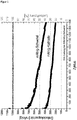
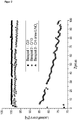
- Fig. 1 the discharge capacity per gram of sulfur and per gram of cathode of an exemplary Li-S battery according to the invention in comparison with a battery of the prior art as well as Fig. 2 the effect of lithium nitrate in the electrolyte on the charging efficiency of one of exemplary Li-S batteries according to the invention.
- FIG. 1 describes the charging efficiency and the discharge capacity of a Li-S battery of Example 1.
- the measured charge efficiency and the discharge capacity are given as a function of the number of discharge cycles. It can be seen that the charging efficiency remains almost constant at 1000 mAh / g (and thus almost 100% CE) over 1400 cycles, whereas in the prior art battery a significant decrease in charge efficiency over the course of the cycles is observed.
- the capacity of the battery of Example 1 decreases continuously over the 1400 charge cycles but to a lesser extent compared to the prior art. After 1400 cycles, the capacity based on the mass of sulfur is still 380 mAh / g.
- Li-S cells usually lose their capacity drastically after about 200 cycles (mainly due to degradation / dendrites on the anode side).
- FIG. 2 describes the Coulomb efficiency of Li-S batteries containing lithium nitrate in the electrolyte or containing no lithium nitrate in the electrolyte. It becomes clear that lithium nitrate in the electrolyte causes a stabilizing effect on the charging efficiency of the battery, so that the charging efficiency can be kept constant for a plurality of charging and discharging cycles.
- fibrillar carbon anode 0.74 mg containing Si as a magnetron sputtered coating (coating thickness: 4 ⁇ m) from SGL Carbon SE (trade name GDL 10AA) Anode diameter: 10 mm Total mass with current conductor: 7.5 mg
- Celgard® 2500 porous PP film with a thickness of 25 ⁇ m and a mean pore diameter of 64nm and an average porosity of 55%)
Landscapes
- Chemical & Material Sciences (AREA)
- Chemical Kinetics & Catalysis (AREA)
- Electrochemistry (AREA)
- General Chemical & Material Sciences (AREA)
- Engineering & Computer Science (AREA)
- Manufacturing & Machinery (AREA)
- Materials Engineering (AREA)
- Inorganic Chemistry (AREA)
- Physics & Mathematics (AREA)
- Condensed Matter Physics & Semiconductors (AREA)
- General Physics & Mathematics (AREA)
- Dispersion Chemistry (AREA)
- Battery Electrode And Active Subsutance (AREA)
- Secondary Cells (AREA)
- Cell Separators (AREA)
Description
- Es wird eine Li-S-Batterie bereitgestellt, welche eine verbesserte Zyklenstabilität und gleichzeitig nahezu perfekte Ladeeffizienz im Verhältnis zu Li-S-Batterien aus dem Stand der Technik aufweist.
- Bei bisherigen Ausführungsformen von Li-S-Batterien werden in der Regel Li-Metall-Anoden eingesetzt. Diese führen zu hohen Kapazitäten und sind leicht herstellbar, allerdings sind einige Nachteile damit verbunden. Li-Metall ist sehr reaktiv und kann bei der Produktion und bei der Verwendung der Zellen zu einer Sicherheitsproblematik (sog. "thermal run-away" ab dem Schmelzpunkt von 181° C für metallisches Lithium) führen. Ferner neigt Li-Metall zu dentritischem Wachstum bei der Zyklierung, dadurch kommt es zu einer starken Erhöhung der Oberfläche und zur Steigerung der Reaktivität.
- Außerdem können durch die aufgewachsenen Dendriten Kurzschlüsse in der Zelle verursacht werden, was zur Zerstörung der Zelle, sowie zu zusätzlichen Sicherheitsproblemen führt. Letztlich ist die Zyklenstabilität in der Regel bei Verwendung von metallischem Lithium, vor allem aufgrund des dendritischen Wachstums von Lithium, auf 100 bis maximal 200 Zyklen begrenzt.
- Um dieses Problem zu lösen wurden bisher Graphit-Anoden in Li-Batterien eingesetzt. Die Stabilität und Sicherheit konnte somit entscheidend verbessert werden, allerdings auf Kosten einer geringeren Kapazität der Batterien. Für eine Schwefelbatterie ergibt sich das Problem, dass Graphitanoden aus verschiedenen Gründen nicht in Frage kommen. Als Beispiel hierfür ist die Interkalation von Lösungsmittel des Schwefelelektrolyten zu nennen, die zur Zerstörung der Graphitanode führt.
- Erste Ansätze zeigen das Potential auf, die Lithiumanode durch Legierungsanoden (Si, Sn) mit sehr hoher Kapazität zu ersetzen. Diese Legierungsanoden lösen zwar prinzipiell die Probleme, die Li-Dendriten mit sich bringen, sind bisher aber auch nicht besonders zyklenstabil. Problematisch hierbei ist die starke Ausdehnung von Si (und Sn), welche durch die Lithiierung hervorgerufen wird. Die Ausdehnung beträgt beispielsweise 320% für Si und 260% für Sn (Zhang, W.-J., Journal of Power Sources, 196:13-24, 2011).
- Gute Si und Sn-Anoden zu produzieren (vor allem für Li-Ionen-Zellen) ist Gegenstand aktueller Forschung. Publikationen zu Si und Sn in Li-S-Zellen zeigen die prinzipielle Anwendbarkeit dieser Legierungsanoden, aber belegen die Zykleninstabilität dieser Systeme. Der Grund für die Zykleninstabilität sind in der Regel Degradationseffekte auf Anoden- und auch Kathodenseite.
- Schwierigkeiten ergeben sich auch aus der Lithiierung entweder der Anode oder der Kathode. So konnte nur eine sehr geringe Teillithiierung und damit geringe Kapazität, erreicht werden, falls Kupfer als Trägersubstrat und Stromableiter für ein Anodenmaterial (z. B. Siliziumdünnschicht) verwendet wurde (Elazari, R. et al., Electrochemistry Communications, 14:21-24, 2012). Für eine Anode aus Silizium-Nanodraht konnte ebenfalls nur eine sehr geringe Kapazität erreicht werden (Yang, Y. et al., Nano Letters, 10:1486-1491, 2010).
- Ferner konnte bei der Verwendung einer Kathode aus Kohlenstoff-Schwefel-Kompositmaterial und einer lithiierten Anode aus Kohlenstoff-Silizium-Kompositmaterial eine hohe Kapazität von ca. 300 mAh/g erreicht werden, aber nur eine geringe Stabilität erzielt werden.
- Es sind auch Li-S-Zellen auf der Basis von Li-Metall-Anoden bekannt, in welchen eine besonders aufwendige Beschichtungen von Lithium verwendet wurde (
US 7,358,012 B2 ). - Die
US 2011/200883 A1 offenbart eine Vorrichtung, die eine Kathode mit einer poröse kohlenstoffbasierte Struktur enthält, wobei in den Poren der Struktur ein lithiiertes schwefelbasiertes Material angeordnet ist, und die eine Anode enthält, die Silizium-Nanodrähte aufweist. - Die
EP 2306 563 A1 offenbart eine Batterie, welche eine Anode aufweist, die ein Elektrodenaktivmaterial, einen Binder mit fibrilliertem PTFE und ein amorphes Harz enthält. - Ausgehend hiervon war es die Aufgabe der vorliegenden Erfindung, Li-S-Batterien bereitzustellen, welche sowohl eine hohe Kapazität als auch eine hohe Zyklenstabilität aufweisen, ein Verfahren zum Betrieb einer erfindungsgemäßen Li-S-Batterie bereitzustellen und Verwendungen der erfindungsgemäßen Li-S-Batterie bereitzustellen.
- Die Aufgabe wird gelöst durch die Li-S-Batterie gemäß Anspruch 1 und das Verfahren zum Betreiben der erfindungsgemäßen Li-S-Batterie gemäß Anspruch 15. Die abhängigen Ansprüche zeigen vorteilhafte Weiterbildungen auf.
- Es wird somit eine Li-S-Batterie bereitgestellt, umfassend
- a) eine Kathode enthaltend ein elektrisch leitfähiges Kohlenstoffmaterial, ein elektrochemisch aktives Kathodenmaterial, welches Schwefel enthält oder daraus besteht und zumindest teilweise fibrillären Kunststoff;
- b) eine Anode enthaltend ein leitendes Substrat, welches zumindest bereichsweise mit Silizium und/oder Zinn beschichtet ist;
- c) einen zwischen Kathode und Anode angeordneten Lithium-haltigen Flüssigelektrolyten, Gel-Elektrolyten und/oder Festelektrolyten.
- Überraschenderweise wurde festgestellt, dass die erfindungsgemäßen Batterien eine nahezu perfekte Ladeffizienz aufweisen, die auch bei über 1000 Lade-/Entlade-Zyklen quasi unverändert auf dem maximal möglichen Wert bleibt.
- Ein weiterer wesentlicher Vorteil der Li-S-Batterie ist, dass sie einen einfachen Aufbau und ein verhältnismäßig geringes Gewicht aufweist. Ferner weist die Batterie eine höhere Flächenkapazität und höhere gravimetrische Kapazität im Vergleich zu Li-S-Batterien aus dem Stand der Technik auf. Es können Kapazitätswerte von ≥ 1050 mAh/g und sogar ≥ 1500 mAh/g und eine Flächenkapazität von > 4 mAh/cm2 erreicht werden.
- Ferner weist die Batterie eine hohe Langzeitstabilität auf, da die Kathode der Li-S-Batterie fibrillären Kunststoff und/oder hochporösen Kohlenstoff enthält und damit hohen mechanischen Kräfteeinwirkungen standhält. Diese Matrixstruktur für Schwefel und schwefelhaltige Spezies weist eine hohe innere Oberfläche und großes Porenvolumen zur Adsorption von Polysulfiden sowie Abscheidung/Kontaktierung einer dünnen Schicht von S und/oder Li2S auf. Hierdurch kann eine Volumenexpansion des Aktivmaterials durch freies Porenvolumen kompensiert wird.
- Zusammenfassend weist die erfindungsgemäße Li-S-Batterie ein gegenüber dem Stand der Technik verbessertes Ratenverhalten und auch eine verbesserte Stabilität auf.
- Eine Kathode, wie sie in der erfindungsgemäßen Li-S-Batterie enthalten sein kann, ist z.B. aus der
DE 10 2012 203 019.0 bekannt. Bezüglich möglicher Ausgestaltungen der Kathode sowie möglicher Herstellungsverfahren wird auf diese Patentanmeldung verwiesen, deren Offenbarungsgehalt insofern auch zum Gegenstand der vorliegenden Anmeldung gemacht wird. - In einer bevorzugten Ausgestaltungsform der Erfindung ist die Batterie dadurch gekennzeichnet, dass die Kathode, bezogen auf das Gesamtgewicht der Kathode,
- a) 40-90 Gew.-%, bevorzugt 50-80 Gew.-%, besonders bevorzugt 60-75 Gew.-% elektrochemisch aktives Kathodenmaterial;
- b) 1-55 Gew.-%, bevorzugt 5-35 Gew.-%, besonders bevorzugt 10-25 Gew.-%, elektrisch leitfähiges Kohlenstoffmaterial; und/oder
- c) 2-50 Gew.-%, bevorzugt 3-20 Gew.-%, besonders bevorzugt 5-10 Gew.-%, Kunststoff;
- Die Kathode der erfindungsgemäßen Batterie kann ferner
- a) ein elektrochemisch aktives Kathodenmaterial enthaltend Schwefel oder eine Lithium-Schwefel-Verbindung, bevorzugt Li2S;
- b) als elektrisch leitfähigen Kohlenstoffmaterial porösen Kohlenstoff, Ruß, Graphen, Graphit, Diamond Like Carbon (DLC), Graphite-Like-Carbon (GLC), Kohlenstofffasern, Kohlenstoffnanoröhren und/oder Kohlenstoffhohlkugeln, und/oder
- c) als teilweise fibrillären Kunststoff teilweise fibrilläres Polytetrafluorethylen;
enthalten. - In einer bevorzugten Ausgestaltungsform weisen
- a) die Kohlenstoffnanoröhren einen Durchmesser von 0,1 bis 100 nm, bevorzugt von 1 bis 50 nm, besonders bevorzugt von 5 bis 25 nm; und/oder
- b) die Kohlenstofffasern einen Durchmesser von 1 bis 100 µm, bevorzugt von 5 bis 50 µm, besonders bevorzugt von 10 bis 20 µm;
- Die Kathode kann als Folie, bevorzugt mit einer Dicke von 20-1000 µm, besonders bevorzugt mit einer Dicke von 50-500 µm, insbesondere mit einer Dicke von 80-300 µm, ausgestaltet sein. Optional ist die Kathode auf ein elektrisch leitfähiges Substrat, bevorzugt auf ein Metall und/oder Kohlenstoffmaterial, aufgebracht, kann aber auch separat, d.h. ohne auf einem Substrat aufgebracht zu sein, in der erfindungsgemäßen Li-S-Batterie eingesetzt werden.
- Bevorzugt ist das elektrochemisch aktive Kathodenmaterial zumindest bereichsweise auf die Oberfläche des elektrisch leitfähigen Kohlenstoffmaterials aufgebracht oder das elektrisch leitfähige Kohlenstoffmaterial auf die Oberfläche des aktiven Kathodenmaterials aufgebracht.
- In einer weiteren bevorzugten Ausgestaltungsform der erfindungsgemäßen Li-S-Batterie ist die Beschichtung der Anode eine konformale Beschichtung, insbesondere eine PVD- und/oder CVD-Beschichtung, besonders bevorzugt eine PE-CVD-Beschichtung. Die Beschichtung mit PE-CVD hat den Vorteil, dass gegenüber einer Magnetronbeschichtung eine homogenere Beschichtung stattfindet.
- Das leitende Substrat der Anode kann in fibrillärer Form vorliegen, bevorzugt in Form eines dreidimensionalen fibrillären Netzwerks, besonders bevorzugt in Form von Fasern, Nanofasern oder Nanotubes oder Wirrgelegen und/oder Vliesen aus den zuvor beschriebenen Fasertypen.
- Liegt die Anode in fibrillärer Form vor, wurde bei der Herstellung der Beschichtung eine verbesserte Durchdringung verglichen mit einer Magnetronbeschichtung beobachtet. Dies trifft vor allem für eine Beschichtung über PE-CVD zu, wobei hier eine homogene Beschichtung über die gesamte Tiefe der fibrillären Anode bzw. des fibrillären, dreidimensionalen Netzwerks erreicht werden kann.
- In dieser Hinsicht können die Fasern und/oder die den Wirrgelegen oder Vliesen zugrundeliegenden Fasern bzw. Nanofasern oder Nanotubes der Anode einen Durchmesser 1 nm bis 500 µm, bevorzugt von 10 nm bis 200 µm, weiter bevorzugt von 100 nm bis 100 µm, weiter bevorzugt von 1 bis 100 µm, weiter bevorzugt von 5 bis 50 µm, besonders bevorzugt von 10 bis 20 µm aufweisen.
- Die Dicke der Beschichtung der Anode kann im Bereich von 0,1 bis 50 µm, bevorzugt von 0,5 bis 20 µm, besonders bevorzugt von 0,5 bis 2 µm liegen. Das fibrilläre, leitende Substrat der Anode kann ein Material ausgewählt aus der Gruppe bestehend aus Kohlenstoff, Graphit, Graphen, Diamond Like Carbon (DLC), Ruß und Kohlenstoffnanoröhren enthalten oder daraus bestehen.
- Bevorzugt enthält die Anode Silizium und/oder Zinn in einer Gesamtmenge, bezogen auf die Gesamtmasse der Anode, von 0,1 bis 90 Gew.-%, bevorzugt von 20 bis 80 Gew.-%, besonders bevorzugt von 40 bis 70 Gew.-%.
- In einer weiteren bevorzugten Ausgestaltungsform ist die Anode lithiiert. Dies kann dadurch bewerkstelligt worden sein, dass eine Lithiummetallfolie auf die Anode (z.B. Si-Anode) gepresst worden ist und nach ca. 4 bis 12 Stunden Einwirkzeit die Lithiierung stattgefunden hat.
- Die Anode kann eine Gesamtdicke von 10 bis 1000 µm, bevorzugt von 20 bis 500 µm, besonders bevorzugt von 50 bis 120 µm aufweisen.
- Bevorzugt ist der Elektrolyt der erfindungsgemäßen Batterie ausgewählt aus der Gruppe bestehend aus Lösungen oder Suspensionen von mindestens einem Lithiumsalz in mindestens einem cyclischen oder nichtcyclischen Ether, besonders bevorzugt Lösungen oder Suspensionen von
- a) Lithium-bis(trifluormethansulfonyl)imid (LiTFSI),
- b) Lithiumtrifluormethansulfonat; und/oder
- c) Lithiumnitrat;
in- i) Dimethoxyethan (DME);
- ii) Tetraethylenglycoldimethylether (TEGDME, IUPAC: 2,5,8,11,14-Pentaoxapentadecan); und/oder
- iii) 1,3-Dioxolan (DOL).
- Es wurde gefunden, dass die erfindungsgemäße Batterie enthaltend einen Elektrolyt, welcher Lithiumnitrat enthält, eine konstantere Ladeeffizienz gegenüber einer Batterie aufweist, welche kein Lithiumnitrat im Elektrolyten enthält.
- Weiterhin bevorzugt ist, dass mindestens ein Separator zwischen Kathode und Anode angeordnet ist, wobei der Separator besonders bevorzugt eine permeable Folie aus einem thermoplastischen Material, insbesondere PE, PP und/oder PET, enthält oder daraus besteht.
- In einer weiteren bevorzugten Ausgestaltungsform der erfindungsgemäßen Batterie sind Anode und Kathode hinsichtlich ihrer Kapazität und/oder ihrer möglichen Lade-/Entladerate aufeinander abgestimmt.
Besonders bevorzugt wird die Anode hinsichtlich ihrer Kapazität pro Elektrodenfläche gegenüber der Kathode deutlich überdimensioniert d.h. die Anode wird hinsichtlich ihrer Kapazität im Vergleich zur Kathode größer ausgelegt. Dies ist insbesondere bei langen Zyklenzeiten von Vorteil, da hierdurch eine schonende Betriebsweise der Anode ermöglicht wird. Dies verbessert somit insgesamt die Performance der Gesamtzelle.In den Anwendungsbeispielen ist die Kapazität der Anode (gemessen in der Halbzelle) 75 % höher als die der Kathode (ebenfalls in Halbzelle gemessen). In der Folge wird die Anode beim Laden / Entladen nicht voll belastet und die Volumenänderungen und Spannungen verringert. - Darüberhinaus wird ein Verfahren zum Betreiben einer Batterie gemäß einem der vorhergehenden Ansprüche bereitgestellt, welches dadurch gekennzeichnet ist, dass die Batterie
- a) maximal bis zu einer verbleibenden Klemmspannung von 1,3 bis 1,7 V, bevorzugt 1,4 bis 1,6 V, insbesondere 1,45 bis 1,55 V entladen; und/oder
- b) bis zu einer maximalen Klemmspannung von 2,4 bis 2,8 V, bevorzugt von 2,5 bis 2,7 V, insbesondere von 2,55 bis 2,65 V geladen;
- Die erfindungsgemäße Batterie kann im Gebrauch mit hohen Entladungsraten und/oder Ladungsraten von mindestens 150-170 mA/g Schwefel betrieben werden. Es sind beispielsweise Entladungsraten von bis zu 836 mA/g Schwefel erreicht worden.
- Anhand der nachfolgenden Figuren und Beispiele soll der erfindungsgemäße Gegenstand näher erläutert werden, ohne diesen auf die hier dargestellten spezifischen Ausführungsformen einschränken zu wollen.
- Dabei zeigt die
Fig. 1 die Entladungskapazität pro Gramm Schwefel und pro Gramm Kathode einer beispielhaften, erfindungsgemäßen Li-S-Batterie im Vergleich mit einer Batterie aus dem Stand der Technik sowieFig. 2 den Einfluss von Lithiumnitrat im Elektrolyten auf die Ladeeffizienz einer von beispielhaften, erfindungsgemäßen Li-S-Batterien. -
Figur 1 beschreibt die Ladeeffizienz und die Entladekapazität einer Li-S-Batterie aus Beispiel 1. Angegeben ist die gemessene Ladeeffizienz und die Entladekapazität in Abhängigkeit von der Zahl der Entladezyklen. Es wird deutlich, dass die Ladeeffizienz über 1400 Zyklen nahezu konstant bei 1000 mAh/g (und somit bei nahezu 100% CE) bleibt, während bei der Batterie aus dem Stand der Technik eine deutliche Abnahme der Ladeeffizienz im Verlauf der Zyklen zu beobachten ist. Die Kapazität der Batterie aus Beispiel 1 nimmt über die 1400 Ladezyklen zwar kontinuierlich, aber im Vergleich zum Stand der Technik im geringen Maße, ab. Nach 1400 Zyklen beträgt die Kapazität bezogen auf die Masse des Schwefels noch 380
mAh/g. Nach Stand der Technik verlieren Li-S-Zellen in der Regel nach ca. 200 Zyklen drastisch an Kapazität (vor allem wegen Degradation / Dendriten auf Anodenseite). -
Figur 2 beschreibt die Coulomb-Effizienz von Li-S-Batterien, welche Lithiumnitrat im Elektrolyten enthalten oder kein Lithiumnitrat im Elektrolyten enthalten. Es wird deutlich, dass Lithiumnitrat im Elektrolyt einen stabilisierenden Effekt auf die Ladeeffizienz der Batterie bewirkt, so dass die Ladeeffizienz für mehrere Lade- und Entladezyklen konstant gehalten werden kann. - fibrilläre Kohlenstoff-Anode 0,74 mg enthaltend Si als Magnetron-gesputterte Beschichtung (Beschichtungsdicke: 4 µm) der Firma SGL Carbon SE (Handelsname GDL 10AA)
Anodendurchmesser: 10 mm
Gesamtmasse mit Stromableiter: 7,5 mg - Kathode enthaltend
- 53,3 Gew.-% Schwefel (= 1,3 mg)
- 26,7 Gew.-% Kohlenstoffhohlkugeln
- 10 Gew.-% Polytetrafluorethylen (PTFE)
- 10 Gew.-% Kohlenstoffnanorohre (CNT)
- 36 µl 1 M LiTFSI, 0,25M LiNO3 in DME:DOL (1:1 vol)
- CR2016 Coincell (Knopfzelle der Größe (Formfaktor) 2016 (20 mm Durchmesser 1,6 mm Höhe)
- Celgard® 2500 (poröse PP-Folie mit einer Dicke von 25µm und einem mittleren Porendurchmesser von 64nm sowie einer durchschnittlichen Porosität von 55%)
- Erste drei Zyklen bei einem Ent-/Ladestrom von 167 mA/g-Schwefel, dann bei einem Ent-/Ladestrom von 836 mA/g-Schwefel
- SGL GDL 10AA fibrilläre Kohlenstoff-Anode 0,74 mg enthaltend Si als Magnetron-gesputterte Beschichtung (Beschichtungsdicke: 4 µm)
Anodendurchmesser: 10 mm
Gesamtmasse mit Stromableiter: 7,5 mg - Kathode enthaltend
- 53,3 Gew.-% Schwefel (= 1,1 mg)
- 26,7 Gew.-% Kohlenstoffhohlkugeln
- 10 Gew.-% Polytetrafluorethylen (PTFE)
- 10 Gew.-% Kohlenstoffnanorohre (CNT)
- 40 µl 1 M LiTFSI, 0,25M LiNO3 in DME:DOL (1:1 vol)
-
- CR2016 Coincell
- Celgard® 2500
- Lade- /Entladestrom 167 mA/g Schwefel
- SGL GDL 10AA fibrilläre Kohlenstoff-Anode 0,74 mg enthaltend Si als Magnetron-gesputterte Beschichtung (Beschichtungsdicke: 4 µm) Anodendurchmesser: 10 mm
Gesamtmasse mit Stromableiter: 7,5 mg - Kathode enthaltend
- 53,3 Gew.-% Schwefel (= 1,9 mg)
- 26,7 Gew.-% Kohlenstoffhohlkugeln
- 10 Gew.-% Polytetrafluorethylen (PTFE)
- 10 Gew.-% Kohlenstoffnanorohre (CNT)
- 45 µl 1M LiTFSI in DME:DOL (1:1 vol)
-
- CR2016 Coincell
- Celgard® 2500
- Drei Zyklen bei Ent-/Ladestrom von 84 mA/g-Schwefel, danach Ent-/Ladestrom bei 418 mA/g-Schwefel
Claims (15)
- Li-S-Batterie, umfassenda) eine Kathode enthaltend ein elektrisch leitfähiges Kohlenstoffmaterial und ein elektrochemisch aktives Kathodenmaterial, welches Schwefel enthält oder daraus bestehtb) eine Anode enthaltend ein leitendes Substrat, welches zumindest bereichsweise mit Silizium und/oder Zinn beschichtet ist; undc) einen zwischen Kathode und Anode angeordneten Lithium-haltigen Flüssigelektrolyten, Gel-Elektrolyten und/oder Festelektrolyten;dadurch gekennzeichnet, dass die Kathode zumindest teilweise fibrillären Kunststoff enthält.
- Batterie gemäß Anspruch 1, dadurch gekennzeichnet, dass die Kathode, bezogen auf das Gesamtgewicht der Kathode,a) 40-90 Gew.-%, bevorzugt 50-80 Gew.-%, besonders bevorzugt 60-75 Gew.-% elektrochemisch aktives Kathodenmaterial;b) 1-55 Gew.-%, bevorzugt 5-35 Gew.-%, besonders bevorzugt 10-25 Gew.-%, elektrisch leitfähiges Kohlenstoffmaterial; und/oderc) 0,5-30 Gew.-%, bevorzugt 1-10 Gew.-%, besonders bevorzugt 2-5 Gew.-%, Kunststoff;enthält.
- Batterie gemäß einem der vorhergehenden Ansprüche, dadurch gekennzeichnet, dass die Kathodea) ein elektrochemisch aktives Kathodenmaterial enthaltend Schwefel oder eine Lithium-Schwefel-Verbindung, bevorzugt Li2S;b) als elektrisch leitfähiges Kohlenstoffmaterial porösen Kohlenstoff, Ruß, Graphen, Graphit, Diamond Like Carbon (DLC), Graphite-Like-Carbon (GLC), Kohlenstofffasern, Kohlenstoffnanoröhren und/oder Kohlenstoffhohlkugeln, und/oderc) als fibrillären Kunststoff fibrilläres Polytetrafluorethylen;enthält.
- Batterie gemäß dem vorhergehenden Anspruch, dadurch gekennzeichnet, dassa) die Kohlenstoffnanoröhren einen Durchmesser von 0,1 bis 100 nm, bevorzugt von 1 bis 50 nm, besonders bevorzugt von 5 bis 25 nm aufweisen; und/oderb) die Kohlenstofffasern einen Durchmesser von 1 bis 100 µm, bevorzugt von 5 bis 50 µm, besonders bevorzugt von 10 bis 20 µm;aufweisen.
- Batterie gemäß einem der vorhergehenden Ansprüche, dadurch gekennzeichnet, dass die Kathode als Folie, bevorzugt mit einer Dicke von 20-1000 µm, besonders bevorzugt mit einer Dicke von 50-500 µm, insbesondere mit einer Dicke von 80-300 µm, ausgestaltet ist und optional auf ein elektrisch leitfähiges Substrat, bevorzugt auf ein Metall und/oder Kohlenstoffmaterial, aufgebracht ist.
- Batterie gemäß einem der vorhergehenden Ansprüche, dadurch gekennzeichnet, dass das elektrochemisch aktive Kathodenmaterial zumindest bereichsweise auf die Oberfläche des elektrisch leitfähigen Kohlenstoffmaterials aufgebracht ist oder das elektrisch leitfähige Kohlenstoffmaterial auf die Oberfläche des aktiven Kathodenmaterials aufgebracht ist.
- Batterie gemäß einem der vorhergehenden Ansprüche, dadurch gekennzeichnet, dass die Beschichtung der Anodea) eine PVD- und/oder CVD-Beschichtung ist, besonders bevorzugt eine PE-CVD-Beschichtung; und/oderb) eine Dicke im Bereich von 0,1 bis 50 µm, bevorzugt von 0,5 bis 20 µm, besonders bevorzugt von 0,5 bis 2 µm aufweist.
- Batterie gemäß einem der vorhergehenden Ansprüche, dadurch gekennzeichnet, dass das leitende Substrat der Anode in fibrillärer Form vorliegt, bevorzugt in Form eines dreidimensionalen fibrillären Netzwerks, besonders bevorzugt in Form von Fasern, Wirrgelegen und/oder Vliesen.
- Batterie gemäß dem vorhergehenden Anspruch, dadurch gekennzeichnet, dass die Fasern und/oder die den Wirrgelegen oder Vliesen zugrundeliegenden Fasern der Anode einen Durchmesser von 1 nm bis 500 µm, bevorzugt von 10 nm bis 200 µm, weiter bevorzugt von 100 nm bis 100 µm, weiter bevorzugt von 1 bis 100 µm, weiter bevorzugt von 5 bis 50 µm, besonders bevorzugt von 10 bis 20 µm aufweisen.
- Batterie gemäß einem der Ansprüche 8 oder 9, dadurch gekennzeichnet, dass das fibrilläre, leitende Substrat der Anode ein Material ausgewählt aus der Gruppe bestehend aus Kohlenstoff, Graphit, Graphen, Diamond Like Carbon (DLC), Ruß und Kohlenstoffnanoröhren enthält oder daraus besteht.
- Batterie gemäß einem der vorhergehenden Ansprüche, dadurch gekennzeichnet, dass die Anodea) Silizium und/oder Zinn in einer Gesamtmenge, bezogen auf die Gesamtmasse der Anode, von 0,1 bis 90 Gew.-%, bevorzugt von 20 bis 80. Gew.-%, besonders bevorzugt von 40 bis 70 Gew.-% enthält; und/oderb) lithiiert ist; und/oderc) eine Gesamtdicke von 10 bis 1000 µm, bevorzugt von 20 bis 500 µm, besonders bevorzugt von 50 bis 120 µm aufweist.
- Batterie gemäß einem der vorhergehenden Ansprüche, dadurch gekennzeichnet, dass der Elektrolyt ausgewählt ist aus der Gruppe bestehend aus Lösungen oder Suspensionen von mindestens einem Lithiumsalz in mindestens einem cyclischen oder nichtcyclischen Ether, bevorzugt Lösungen oder Suspensionen vona) Lithium-bis(trifluormethansulfonyl)imid (LiTFSI),b) Lithiumtrifluormethansulfonat; und/oderc) Lithiumnitrat;in Dimethoxyethan (DME), Tetraethylengycoldimethylether (TEGDME), und/oder 1,3-Dioxolan (DOL).
- Batterie gemäß einem der vorhergehenden Ansprüche, dadurch gekennzeichnet, dass mindestens ein Separator zwischen Kathode und Anode angeordnet ist, wobei der Separator bevorzugt eine permeable Folie aus einem thermoplastischen Material, insbesondere PE, PP und/oder PET, enthält oder daraus besteht.
- Batterie nach einem der vorhergehenden Ansprüche, dadurch gekennzeichnet dass die Kapazität der Anode bezüglich der Kapazität der Kathode überdimensioniert ist, bevorzugt um mindestens 10%, weiter bevorzugt mindestens 50%, besonders bevorzugt mindestens 70% überdimensioniert ist.
- Verfahren zum Betreiben einer Batterie gemäß einem der vorhergehenden Ansprüche, dadurch gekennzeichnet, dass die Batteriea) maximal bis zu einer verbleibenden Klemmspannung von 1,3 bis 1,7 V, bevorzugt 1,4 bis 1,6 V, insbesondere 1,45 bis 1,55 Ventladen; und/oderb) bis zu einer maximalen Klemmspannung von 2,4 bis 2,8 V, bevorzugt von 2,5 bis 2,7 V, insbesondere von 2,55 bis 2,65 V geladen;wird.
Applications Claiming Priority (2)
| Application Number | Priority Date | Filing Date | Title |
|---|---|---|---|
| DE102012018622.3A DE102012018622A1 (de) | 2012-09-14 | 2012-09-14 | Li-S-Batterie mit hoher Zyklenstabilität und Verfahren zu deren Betreiben |
| PCT/EP2013/068977 WO2014041108A1 (de) | 2012-09-14 | 2013-09-13 | Li-s-batterie mit hoher zyklenstabilität und verfahren zu deren betreiben |
Publications (2)
| Publication Number | Publication Date |
|---|---|
| EP2896085A1 EP2896085A1 (de) | 2015-07-22 |
| EP2896085B1 true EP2896085B1 (de) | 2017-11-08 |
Family
ID=49182251
Family Applications (1)
| Application Number | Title | Priority Date | Filing Date |
|---|---|---|---|
| EP13762815.2A Active EP2896085B1 (de) | 2012-09-14 | 2013-09-13 | Li-s-batterie mit hoher zyklenstabilität und verfahren zu deren betreiben |
Country Status (7)
| Country | Link |
|---|---|
| US (1) | US9768466B2 (de) |
| EP (1) | EP2896085B1 (de) |
| JP (1) | JP6392225B2 (de) |
| KR (1) | KR102069017B1 (de) |
| CN (1) | CN104704651B (de) |
| DE (1) | DE102012018622A1 (de) |
| WO (1) | WO2014041108A1 (de) |
Families Citing this family (21)
| Publication number | Priority date | Publication date | Assignee | Title |
|---|---|---|---|---|
| DE102012018622A1 (de) | 2012-09-14 | 2014-03-20 | Fraunhofer-Gesellschaft zur Förderung der angewandten Forschung e.V. | Li-S-Batterie mit hoher Zyklenstabilität und Verfahren zu deren Betreiben |
| DE102013209982B4 (de) | 2013-05-28 | 2023-02-16 | Technische Universität Dresden | Alkalimetall-Schwefel-Batterie sowie Verfahren zu deren Betreibung |
| CA2943419C (fr) * | 2014-04-15 | 2023-03-07 | Myunghun CHO | Procede de charge / decharge electrochimique d'une batterie lithium-soufre (li-s) et dispositif de mise en oeuvre dudit procede |
| JP2015230850A (ja) * | 2014-06-05 | 2015-12-21 | 株式会社リコー | リチウム硫黄2次電池 |
| DE102014211421A1 (de) * | 2014-06-13 | 2015-12-17 | Fraunhofer-Gesellschaft zur Förderung der angewandten Forschung e.V. | Verfahren zur Herstellung von Alkalimetallsulfid-Nanopartikeln, Alkalimetallsulfid-Nanopartikel, Verwendung der Alkalimetallsulfid-Nanopartikel sowie Alkalimetall-Schwefel-Batterie |
| CN106558727B (zh) * | 2015-09-28 | 2020-03-13 | 中南大学 | 一种锂硫电池 |
| KR102050836B1 (ko) | 2015-12-08 | 2019-12-03 | 주식회사 엘지화학 | 리튬이차전지용 전해질 및 이를 포함하는 리튬이차전지 |
| KR20170082280A (ko) * | 2016-01-06 | 2017-07-14 | 주식회사 엘지화학 | 질산계 화합물을 포함하는 리튬-황 전지용 양극 및 이를 구비한 리튬-황 전지 |
| CN106229487A (zh) * | 2016-08-25 | 2016-12-14 | 北京化工大学 | 一种碳热还原硫酸锂制备锂硫电池炭/硫化锂复合正极材料的方法 |
| KR20190125740A (ko) | 2018-04-30 | 2019-11-07 | 주식회사 엘지화학 | 리튬-황 전지용 전해액 및 이를 포함하는 리튬-황 전지 |
| IT201800005943A1 (it) * | 2018-06-01 | 2019-12-01 | Dispositivo elettrochimico a commutazione automatica per l’accumulo ad alta energia e ad alta potenza | |
| DE102018222129A1 (de) | 2018-12-18 | 2020-06-18 | Fraunhofer-Gesellschaft zur Förderung der angewandten Forschung e.V. | Kathodeneinheit und Verfahren zum Herstellen einer Kathodeneinheit |
| MY204961A (en) | 2019-01-17 | 2024-09-25 | Sceye Sa | Lis battery with low solvating electrolyte |
| CN110148729B (zh) * | 2019-05-28 | 2022-03-11 | 合肥国轩高科动力能源有限公司 | 一种碳包覆氧化亚硅材料的制备方法及应用 |
| CN111370627B (zh) * | 2020-03-27 | 2022-09-23 | 中国人民解放军军事科学院防化研究院 | 一种金属锂电极与无机固体电解质陶瓷隔膜直接复合方法 |
| CA3172496A1 (en) | 2020-04-08 | 2021-10-14 | Graphenix Development, Inc. | Anodes for lithium-based energy storage devices |
| US20260085161A1 (en) | 2022-08-09 | 2026-03-26 | W. L. Gore & Associates, Inc. | Ultra-high molecular weight polyethylene (uhmwpe) particles and filled articles produced therewith |
| KR102857427B1 (ko) | 2022-11-10 | 2025-09-08 | 삼성에스디아이 주식회사 | 전고체 이차전지 |
| DE102023102404A1 (de) | 2023-02-01 | 2024-08-01 | Albemarle Germany Gmbh | Verfahren zur Herstellung von an Kohlenstoffverunreinigung reduziertem/Kohlenstoffverunreinigung freiem Lithiumsulfid, das Kohlenstoffverunreinigung reduzierte/Kohlenstoffverunreinigung freie Lithiumsulfid sowie dessen Verwendung zur Herstellung von Festelektrolyten und Feststoffbatterien |
| DE102023114082A1 (de) | 2023-05-30 | 2024-12-05 | Albemarle Germany Gmbh | Verfahren zur Herstellung von an Kohlenstoffverunreinigung reduziertem/Kohlenstoffverunreinigung freiem Lithiumsulfid, das an Kohlenstoffverunreinigung reduzierte/Kohlenstoffverunreinigung freie Lithiumsulfid sowie dessen Verwendung zur Synthese von Festkörperelektrolyten und Herstellung von Feststoffbatterien |
| CN116936939B (zh) * | 2023-08-09 | 2024-08-09 | 广东工业大学 | 基于转化型正极的无穿梭效应锌-硅电池及其制备方法 |
Family Cites Families (23)
| Publication number | Priority date | Publication date | Assignee | Title |
|---|---|---|---|---|
| JPS6372065A (ja) * | 1986-09-12 | 1988-04-01 | Toshiba Battery Co Ltd | 非水溶媒二次電池 |
| US6030720A (en) * | 1994-11-23 | 2000-02-29 | Polyplus Battery Co., Inc. | Liquid electrolyte lithium-sulfur batteries |
| US6955866B2 (en) * | 1998-09-03 | 2005-10-18 | Polyplus Battery Company | Coated lithium electrodes |
| KR100378007B1 (ko) * | 2000-11-22 | 2003-03-29 | 삼성에스디아이 주식회사 | 리튬-황 전지용 양극 및 그를 포함하는 리튬-황 전지 |
| CN100349311C (zh) | 2003-01-06 | 2007-11-14 | 三星Sdi株式会社 | 可再充电锂电池的负极活性材料和可再充电锂电池 |
| US20050250011A1 (en) * | 2004-04-02 | 2005-11-10 | Maxwell Technologies, Inc. | Particle packaging systems and methods |
| JP2005071698A (ja) * | 2003-08-21 | 2005-03-17 | Sanyo Electric Co Ltd | 非水電解質二次電池 |
| JP4212458B2 (ja) | 2003-11-19 | 2009-01-21 | 三洋電機株式会社 | リチウム二次電池 |
| US7358012B2 (en) * | 2004-01-06 | 2008-04-15 | Sion Power Corporation | Electrolytes for lithium sulfur cells |
| US20070258192A1 (en) | 2006-05-05 | 2007-11-08 | Joel Schindall | Engineered structure for charge storage and method of making |
| EP2076936B1 (de) * | 2006-10-25 | 2018-07-18 | Oxis Energy Limited | Eine lithium-schwefel batterie mit hoher spezifischer energie und eine methode diese zu handhaben |
| JP2008130229A (ja) * | 2006-11-16 | 2008-06-05 | National Institute Of Advanced Industrial & Technology | リチウム二次電池 |
| CN102089907A (zh) * | 2008-07-17 | 2011-06-08 | 旭硝子株式会社 | 非水电解质电池用负极复合材料 |
| FR2935546B1 (fr) * | 2008-09-02 | 2010-09-17 | Arkema France | Materiau composite d'electrode, electrode de batterie constituee dudit materiau et batterie au lithium comprenant une telle electrode. |
| KR101331382B1 (ko) | 2008-10-17 | 2013-11-20 | 가부시키가이샤 도요다 지도숏키 | 황 변성 폴리아크릴로니트릴, 그 제조 방법, 및 그 용도 |
| CN102763250A (zh) | 2009-10-29 | 2012-10-31 | 小利兰·斯坦福大学托管委员会 | 用于先进的可充电电池组的器件、系统和方法 |
| WO2011146445A2 (en) * | 2010-05-17 | 2011-11-24 | Arthur Boren | Carbon nanotube augmented electrodes with silicon |
| US20120115259A1 (en) * | 2010-11-10 | 2012-05-10 | Keon Jae Lee | Method for fabricating flexible electronic device and electronic device fabricated thereby |
| KR101256070B1 (ko) * | 2010-11-25 | 2013-04-18 | 삼성에스디아이 주식회사 | 리튬 이차 전지용 양극 활물질 및 이를 포함하는 리튬 이차 전지 |
| US9882202B2 (en) | 2010-11-26 | 2018-01-30 | Ulvac, Inc. | Positive electrode for lithium-sulfur secondary battery and method of forming the same |
| US20120229096A1 (en) | 2011-03-08 | 2012-09-13 | GM Global Technology Operations LLC | Method of depositing silicon on carbon nanomaterials and forming an anode for use in lithium ion batteries |
| DE102012203019A1 (de) | 2012-02-28 | 2013-08-29 | Technische Universität Dresden | Kathode für Lithium-haltige Batterien und lösungsmittelfreies Verfahren zu deren Herstellung |
| DE102012018622A1 (de) | 2012-09-14 | 2014-03-20 | Fraunhofer-Gesellschaft zur Förderung der angewandten Forschung e.V. | Li-S-Batterie mit hoher Zyklenstabilität und Verfahren zu deren Betreiben |
-
2012
- 2012-09-14 DE DE102012018622.3A patent/DE102012018622A1/de not_active Ceased
-
2013
- 2013-09-13 CN CN201380047864.2A patent/CN104704651B/zh not_active Expired - Fee Related
- 2013-09-13 WO PCT/EP2013/068977 patent/WO2014041108A1/de not_active Ceased
- 2013-09-13 JP JP2015531564A patent/JP6392225B2/ja not_active Expired - Fee Related
- 2013-09-13 EP EP13762815.2A patent/EP2896085B1/de active Active
- 2013-09-13 KR KR1020157006875A patent/KR102069017B1/ko not_active Expired - Fee Related
- 2013-09-13 US US14/428,346 patent/US9768466B2/en not_active Expired - Fee Related
Non-Patent Citations (1)
| Title |
|---|
| None * |
Also Published As
| Publication number | Publication date |
|---|---|
| CN104704651A (zh) | 2015-06-10 |
| US9768466B2 (en) | 2017-09-19 |
| WO2014041108A1 (de) | 2014-03-20 |
| CN104704651B (zh) | 2017-10-10 |
| KR102069017B1 (ko) | 2020-01-22 |
| DE102012018622A1 (de) | 2014-03-20 |
| JP6392225B2 (ja) | 2018-09-19 |
| US20150249260A1 (en) | 2015-09-03 |
| EP2896085A1 (de) | 2015-07-22 |
| JP2015531977A (ja) | 2015-11-05 |
| KR20150087182A (ko) | 2015-07-29 |
Similar Documents
| Publication | Publication Date | Title |
|---|---|---|
| WO2014041108A1 (de) | Li-s-batterie mit hoher zyklenstabilität und verfahren zu deren betreiben | |
| EP2896082B1 (de) | Alkali-chalkogen-batterie mit geringer selbstentladung und hoher zyklenfestigkeit und leistung | |
| EP2769427B1 (de) | Aktivmaterial für batterien | |
| EP3785314B1 (de) | Partikelförmiges siliciumhaltiges aktivmaterial, negative elektrode, lithium-ionen-batteriezelle, fahrzeug sowie verfahren zur herstellung von aktivmaterial und elektrode | |
| DE102017107191A1 (de) | Vorlithiierte Lithium-ionen-Batteriezelle | |
| US20080100264A1 (en) | Lithium-sulphur battery with a high specific energy and a method of operating same | |
| DE102014202180A1 (de) | Elektrolytzusammensetzungen für Lithium-Schwefel-Batterien | |
| DE102019213584A1 (de) | Anodenmaterial und Verfahren zu dessen Herstellung | |
| EP2166598A2 (de) | Elektrode und Separatormaterial für Lithium-Ionen-Zellen sowie Verfahren zu deren Herstellung | |
| DE102022100865A1 (de) | Energiespeicherzellen mit schnellen Lade- und Entladekapazitäten | |
| DE102012212788A1 (de) | Negative Elektroden für Lithium-Ionen-Batterien und ihre Herstellung | |
| DE102016220685A1 (de) | Elektrode mit elektrisch leitendem Netzwerk auf Aktivmaterialstrukturen | |
| DE102013209982B4 (de) | Alkalimetall-Schwefel-Batterie sowie Verfahren zu deren Betreibung | |
| DE102022101539A1 (de) | Anodenaktivmaterialschicht | |
| EP3635807B1 (de) | Elektrolyt für eine alkali-schwefel-batterie, alkali-schwefel-batterie denselben enthaltend, und verwendung des elektrolyten | |
| WO2013007420A1 (de) | Elektrode, verfahren zum herstellen einer elektrode und energiespeicher umfassend eine elektrode | |
| DE19809743B4 (de) | Polymerelektrolyt-Lithiumbatterie, enthaltend ein Kaliumsalz | |
| WO2022022958A1 (de) | Kathodenaktivmaterial und lithiumionen-batterie mit dem kathodenaktivmaterial | |
| EP4292149A1 (de) | Verfahren zum herstellen einer anode für eine lithiumionenbatterie sowie lithiumionenbatterie | |
| DE112019000379T5 (de) | Ionenabscheidungslenkung zur hemmung von dendritenbildung und -wachstum in einer metall-ionen-batteriezelle | |
| EP2793303B1 (de) | Lithium-Ionen-Zelle mit optimierter Elektrodenkinetik | |
| DE102020132661A1 (de) | Kathodenaktivmaterial und Lithiumionen-Batterie mit dem Kathodenaktivmaterial | |
| WO2024251327A1 (de) | Verfahren zum erzeugen eines porösen ableiters und lithiumionenbatterie | |
| WO2024160319A1 (de) | Elektrode für eine lithiumionenbatterie umfassend einen hybridelektrolyten und lithiumionenbatterie | |
| DE102014220964A1 (de) | Batterie ohne Ableiterfolie |
Legal Events
| Date | Code | Title | Description |
|---|---|---|---|
| PUAI | Public reference made under article 153(3) epc to a published international application that has entered the european phase |
Free format text: ORIGINAL CODE: 0009012 |
|
| 17P | Request for examination filed |
Effective date: 20150319 |
|
| AK | Designated contracting states |
Kind code of ref document: A1 Designated state(s): AL AT BE BG CH CY CZ DE DK EE ES FI FR GB GR HR HU IE IS IT LI LT LU LV MC MK MT NL NO PL PT RO RS SE SI SK SM TR |
|
| AX | Request for extension of the european patent |
Extension state: BA ME |
|
| DAX | Request for extension of the european patent (deleted) | ||
| 17Q | First examination report despatched |
Effective date: 20160415 |
|
| GRAP | Despatch of communication of intention to grant a patent |
Free format text: ORIGINAL CODE: EPIDOSNIGR1 |
|
| RIC1 | Information provided on ipc code assigned before grant |
Ipc: H01M 4/136 20100101ALI20170531BHEP Ipc: H01M 4/66 20060101ALI20170531BHEP Ipc: H01M 10/42 20060101ALN20170531BHEP Ipc: H01M 10/056 20100101ALI20170531BHEP Ipc: H01M 4/04 20060101AFI20170531BHEP Ipc: H01M 4/62 20060101ALI20170531BHEP Ipc: H01M 10/052 20100101ALI20170531BHEP Ipc: H01M 4/38 20060101ALI20170531BHEP Ipc: H01M 10/44 20060101ALI20170531BHEP Ipc: H01M 4/134 20100101ALI20170531BHEP |
|
| INTG | Intention to grant announced |
Effective date: 20170613 |
|
| GRAS | Grant fee paid |
Free format text: ORIGINAL CODE: EPIDOSNIGR3 |
|
| GRAA | (expected) grant |
Free format text: ORIGINAL CODE: 0009210 |
|
| AK | Designated contracting states |
Kind code of ref document: B1 Designated state(s): AL AT BE BG CH CY CZ DE DK EE ES FI FR GB GR HR HU IE IS IT LI LT LU LV MC MK MT NL NO PL PT RO RS SE SI SK SM TR |
|
| REG | Reference to a national code |
Ref country code: GB Ref legal event code: FG4D Free format text: NOT ENGLISH |
|
| REG | Reference to a national code |
Ref country code: CH Ref legal event code: EP Ref country code: AT Ref legal event code: REF Ref document number: 944955 Country of ref document: AT Kind code of ref document: T Effective date: 20171115 |
|
| REG | Reference to a national code |
Ref country code: IE Ref legal event code: FG4D Free format text: LANGUAGE OF EP DOCUMENT: GERMAN |
|
| REG | Reference to a national code |
Ref country code: DE Ref legal event code: R096 Ref document number: 502013008775 Country of ref document: DE |
|
| REG | Reference to a national code |
Ref country code: NL Ref legal event code: MP Effective date: 20171108 |
|
| REG | Reference to a national code |
Ref country code: LT Ref legal event code: MG4D |
|
| PG25 | Lapsed in a contracting state [announced via postgrant information from national office to epo] |
Ref country code: LT Free format text: LAPSE BECAUSE OF FAILURE TO SUBMIT A TRANSLATION OF THE DESCRIPTION OR TO PAY THE FEE WITHIN THE PRESCRIBED TIME-LIMIT Effective date: 20171108 Ref country code: NO Free format text: LAPSE BECAUSE OF FAILURE TO SUBMIT A TRANSLATION OF THE DESCRIPTION OR TO PAY THE FEE WITHIN THE PRESCRIBED TIME-LIMIT Effective date: 20180208 Ref country code: FI Free format text: LAPSE BECAUSE OF FAILURE TO SUBMIT A TRANSLATION OF THE DESCRIPTION OR TO PAY THE FEE WITHIN THE PRESCRIBED TIME-LIMIT Effective date: 20171108 Ref country code: NL Free format text: LAPSE BECAUSE OF FAILURE TO SUBMIT A TRANSLATION OF THE DESCRIPTION OR TO PAY THE FEE WITHIN THE PRESCRIBED TIME-LIMIT Effective date: 20171108 Ref country code: ES Free format text: LAPSE BECAUSE OF FAILURE TO SUBMIT A TRANSLATION OF THE DESCRIPTION OR TO PAY THE FEE WITHIN THE PRESCRIBED TIME-LIMIT Effective date: 20171108 Ref country code: SE Free format text: LAPSE BECAUSE OF FAILURE TO SUBMIT A TRANSLATION OF THE DESCRIPTION OR TO PAY THE FEE WITHIN THE PRESCRIBED TIME-LIMIT Effective date: 20171108 |
|
| PG25 | Lapsed in a contracting state [announced via postgrant information from national office to epo] |
Ref country code: HR Free format text: LAPSE BECAUSE OF FAILURE TO SUBMIT A TRANSLATION OF THE DESCRIPTION OR TO PAY THE FEE WITHIN THE PRESCRIBED TIME-LIMIT Effective date: 20171108 Ref country code: RS Free format text: LAPSE BECAUSE OF FAILURE TO SUBMIT A TRANSLATION OF THE DESCRIPTION OR TO PAY THE FEE WITHIN THE PRESCRIBED TIME-LIMIT Effective date: 20171108 Ref country code: LV Free format text: LAPSE BECAUSE OF FAILURE TO SUBMIT A TRANSLATION OF THE DESCRIPTION OR TO PAY THE FEE WITHIN THE PRESCRIBED TIME-LIMIT Effective date: 20171108 Ref country code: BG Free format text: LAPSE BECAUSE OF FAILURE TO SUBMIT A TRANSLATION OF THE DESCRIPTION OR TO PAY THE FEE WITHIN THE PRESCRIBED TIME-LIMIT Effective date: 20180208 Ref country code: IS Free format text: LAPSE BECAUSE OF FAILURE TO SUBMIT A TRANSLATION OF THE DESCRIPTION OR TO PAY THE FEE WITHIN THE PRESCRIBED TIME-LIMIT Effective date: 20180308 Ref country code: GR Free format text: LAPSE BECAUSE OF FAILURE TO SUBMIT A TRANSLATION OF THE DESCRIPTION OR TO PAY THE FEE WITHIN THE PRESCRIBED TIME-LIMIT Effective date: 20180209 |
|
| PG25 | Lapsed in a contracting state [announced via postgrant information from national office to epo] |
Ref country code: EE Free format text: LAPSE BECAUSE OF FAILURE TO SUBMIT A TRANSLATION OF THE DESCRIPTION OR TO PAY THE FEE WITHIN THE PRESCRIBED TIME-LIMIT Effective date: 20171108 Ref country code: DK Free format text: LAPSE BECAUSE OF FAILURE TO SUBMIT A TRANSLATION OF THE DESCRIPTION OR TO PAY THE FEE WITHIN THE PRESCRIBED TIME-LIMIT Effective date: 20171108 Ref country code: SK Free format text: LAPSE BECAUSE OF FAILURE TO SUBMIT A TRANSLATION OF THE DESCRIPTION OR TO PAY THE FEE WITHIN THE PRESCRIBED TIME-LIMIT Effective date: 20171108 Ref country code: CY Free format text: LAPSE BECAUSE OF FAILURE TO SUBMIT A TRANSLATION OF THE DESCRIPTION OR TO PAY THE FEE WITHIN THE PRESCRIBED TIME-LIMIT Effective date: 20171108 Ref country code: CZ Free format text: LAPSE BECAUSE OF FAILURE TO SUBMIT A TRANSLATION OF THE DESCRIPTION OR TO PAY THE FEE WITHIN THE PRESCRIBED TIME-LIMIT Effective date: 20171108 |
|
| REG | Reference to a national code |
Ref country code: DE Ref legal event code: R097 Ref document number: 502013008775 Country of ref document: DE |
|
| PG25 | Lapsed in a contracting state [announced via postgrant information from national office to epo] |
Ref country code: IT Free format text: LAPSE BECAUSE OF FAILURE TO SUBMIT A TRANSLATION OF THE DESCRIPTION OR TO PAY THE FEE WITHIN THE PRESCRIBED TIME-LIMIT Effective date: 20171108 Ref country code: SM Free format text: LAPSE BECAUSE OF FAILURE TO SUBMIT A TRANSLATION OF THE DESCRIPTION OR TO PAY THE FEE WITHIN THE PRESCRIBED TIME-LIMIT Effective date: 20171108 Ref country code: PL Free format text: LAPSE BECAUSE OF FAILURE TO SUBMIT A TRANSLATION OF THE DESCRIPTION OR TO PAY THE FEE WITHIN THE PRESCRIBED TIME-LIMIT Effective date: 20171108 Ref country code: RO Free format text: LAPSE BECAUSE OF FAILURE TO SUBMIT A TRANSLATION OF THE DESCRIPTION OR TO PAY THE FEE WITHIN THE PRESCRIBED TIME-LIMIT Effective date: 20171108 |
|
| PLBE | No opposition filed within time limit |
Free format text: ORIGINAL CODE: 0009261 |
|
| STAA | Information on the status of an ep patent application or granted ep patent |
Free format text: STATUS: NO OPPOSITION FILED WITHIN TIME LIMIT |
|
| REG | Reference to a national code |
Ref country code: FR Ref legal event code: PLFP Year of fee payment: 6 |
|
| PG25 | Lapsed in a contracting state [announced via postgrant information from national office to epo] |
Ref country code: MT Free format text: LAPSE BECAUSE OF FAILURE TO SUBMIT A TRANSLATION OF THE DESCRIPTION OR TO PAY THE FEE WITHIN THE PRESCRIBED TIME-LIMIT Effective date: 20171108 |
|
| 26N | No opposition filed |
Effective date: 20180809 |
|
| PG25 | Lapsed in a contracting state [announced via postgrant information from national office to epo] |
Ref country code: SI Free format text: LAPSE BECAUSE OF FAILURE TO SUBMIT A TRANSLATION OF THE DESCRIPTION OR TO PAY THE FEE WITHIN THE PRESCRIBED TIME-LIMIT Effective date: 20171108 |
|
| PG25 | Lapsed in a contracting state [announced via postgrant information from national office to epo] |
Ref country code: MC Free format text: LAPSE BECAUSE OF FAILURE TO SUBMIT A TRANSLATION OF THE DESCRIPTION OR TO PAY THE FEE WITHIN THE PRESCRIBED TIME-LIMIT Effective date: 20171108 |
|
| REG | Reference to a national code |
Ref country code: CH Ref legal event code: PL |
|
| REG | Reference to a national code |
Ref country code: BE Ref legal event code: MM Effective date: 20180930 |
|
| REG | Reference to a national code |
Ref country code: IE Ref legal event code: MM4A |
|
| PG25 | Lapsed in a contracting state [announced via postgrant information from national office to epo] |
Ref country code: LU Free format text: LAPSE BECAUSE OF NON-PAYMENT OF DUE FEES Effective date: 20180913 |
|
| PG25 | Lapsed in a contracting state [announced via postgrant information from national office to epo] |
Ref country code: IE Free format text: LAPSE BECAUSE OF NON-PAYMENT OF DUE FEES Effective date: 20180913 |
|
| PG25 | Lapsed in a contracting state [announced via postgrant information from national office to epo] |
Ref country code: BE Free format text: LAPSE BECAUSE OF NON-PAYMENT OF DUE FEES Effective date: 20180930 Ref country code: CH Free format text: LAPSE BECAUSE OF NON-PAYMENT OF DUE FEES Effective date: 20180930 Ref country code: LI Free format text: LAPSE BECAUSE OF NON-PAYMENT OF DUE FEES Effective date: 20180930 |
|
| REG | Reference to a national code |
Ref country code: AT Ref legal event code: MM01 Ref document number: 944955 Country of ref document: AT Kind code of ref document: T Effective date: 20180913 |
|
| PG25 | Lapsed in a contracting state [announced via postgrant information from national office to epo] |
Ref country code: AT Free format text: LAPSE BECAUSE OF NON-PAYMENT OF DUE FEES Effective date: 20180913 |
|
| PG25 | Lapsed in a contracting state [announced via postgrant information from national office to epo] |
Ref country code: TR Free format text: LAPSE BECAUSE OF FAILURE TO SUBMIT A TRANSLATION OF THE DESCRIPTION OR TO PAY THE FEE WITHIN THE PRESCRIBED TIME-LIMIT Effective date: 20171108 |
|
| PG25 | Lapsed in a contracting state [announced via postgrant information from national office to epo] |
Ref country code: PT Free format text: LAPSE BECAUSE OF FAILURE TO SUBMIT A TRANSLATION OF THE DESCRIPTION OR TO PAY THE FEE WITHIN THE PRESCRIBED TIME-LIMIT Effective date: 20171108 |
|
| PG25 | Lapsed in a contracting state [announced via postgrant information from national office to epo] |
Ref country code: HU Free format text: LAPSE BECAUSE OF FAILURE TO SUBMIT A TRANSLATION OF THE DESCRIPTION OR TO PAY THE FEE WITHIN THE PRESCRIBED TIME-LIMIT; INVALID AB INITIO Effective date: 20130913 Ref country code: MK Free format text: LAPSE BECAUSE OF NON-PAYMENT OF DUE FEES Effective date: 20171108 |
|
| PG25 | Lapsed in a contracting state [announced via postgrant information from national office to epo] |
Ref country code: AL Free format text: LAPSE BECAUSE OF FAILURE TO SUBMIT A TRANSLATION OF THE DESCRIPTION OR TO PAY THE FEE WITHIN THE PRESCRIBED TIME-LIMIT Effective date: 20171108 |
|
| P01 | Opt-out of the competence of the unified patent court (upc) registered |
Effective date: 20230524 |
|
| PGFP | Annual fee paid to national office [announced via postgrant information from national office to epo] |
Ref country code: DE Payment date: 20250919 Year of fee payment: 13 |
|
| PGFP | Annual fee paid to national office [announced via postgrant information from national office to epo] |
Ref country code: GB Payment date: 20250923 Year of fee payment: 13 |
|
| PGFP | Annual fee paid to national office [announced via postgrant information from national office to epo] |
Ref country code: FR Payment date: 20250924 Year of fee payment: 13 |