EP2699602B1 - Bispecific anti-igf-1r and anti-erbb3 antibodies - Google Patents
Bispecific anti-igf-1r and anti-erbb3 antibodies Download PDFInfo
- Publication number
- EP2699602B1 EP2699602B1 EP12773950.6A EP12773950A EP2699602B1 EP 2699602 B1 EP2699602 B1 EP 2699602B1 EP 12773950 A EP12773950 A EP 12773950A EP 2699602 B1 EP2699602 B1 EP 2699602B1
- Authority
- EP
- European Patent Office
- Prior art keywords
- seq
- amino acid
- acid sequence
- erbb3
- domain
- Prior art date
- Legal status (The legal status is an assumption and is not a legal conclusion. Google has not performed a legal analysis and makes no representation as to the accuracy of the status listed.)
- Active
Links
Images
























































Classifications
-
- C—CHEMISTRY; METALLURGY
- C07—ORGANIC CHEMISTRY
- C07K—PEPTIDES
- C07K16/00—Immunoglobulins [IG], e.g. monoclonal or polyclonal antibodies
- C07K16/18—Immunoglobulins [IG], e.g. monoclonal or polyclonal antibodies against material from animals or humans
- C07K16/28—Immunoglobulins [IG], e.g. monoclonal or polyclonal antibodies against material from animals or humans against receptors, cell surface antigens or cell surface determinants
-
- C—CHEMISTRY; METALLURGY
- C07—ORGANIC CHEMISTRY
- C07K—PEPTIDES
- C07K16/00—Immunoglobulins [IG], e.g. monoclonal or polyclonal antibodies
- C07K16/18—Immunoglobulins [IG], e.g. monoclonal or polyclonal antibodies against material from animals or humans
- C07K16/28—Immunoglobulins [IG], e.g. monoclonal or polyclonal antibodies against material from animals or humans against receptors, cell surface antigens or cell surface determinants
- C07K16/2863—Immunoglobulins [IG], e.g. monoclonal or polyclonal antibodies against material from animals or humans against receptors, cell surface antigens or cell surface determinants against receptors for growth factors, growth regulators
-
- A—HUMAN NECESSITIES
- A61—MEDICAL OR VETERINARY SCIENCE; HYGIENE
- A61K—PREPARATIONS FOR MEDICAL, DENTAL OR TOILETRY PURPOSES
- A61K39/00—Medicinal preparations containing antigens or antibodies
- A61K39/395—Antibodies; Immunoglobulins; Immune serum, e.g. antilymphocytic serum
-
- A—HUMAN NECESSITIES
- A61—MEDICAL OR VETERINARY SCIENCE; HYGIENE
- A61P—SPECIFIC THERAPEUTIC ACTIVITY OF CHEMICAL COMPOUNDS OR MEDICINAL PREPARATIONS
- A61P35/00—Antineoplastic agents
-
- C—CHEMISTRY; METALLURGY
- C07—ORGANIC CHEMISTRY
- C07K—PEPTIDES
- C07K16/00—Immunoglobulins [IG], e.g. monoclonal or polyclonal antibodies
- C07K16/18—Immunoglobulins [IG], e.g. monoclonal or polyclonal antibodies against material from animals or humans
- C07K16/28—Immunoglobulins [IG], e.g. monoclonal or polyclonal antibodies against material from animals or humans against receptors, cell surface antigens or cell surface determinants
- C07K16/2869—Immunoglobulins [IG], e.g. monoclonal or polyclonal antibodies against material from animals or humans against receptors, cell surface antigens or cell surface determinants against hormone receptors
-
- C—CHEMISTRY; METALLURGY
- C07—ORGANIC CHEMISTRY
- C07K—PEPTIDES
- C07K16/00—Immunoglobulins [IG], e.g. monoclonal or polyclonal antibodies
- C07K16/18—Immunoglobulins [IG], e.g. monoclonal or polyclonal antibodies against material from animals or humans
- C07K16/28—Immunoglobulins [IG], e.g. monoclonal or polyclonal antibodies against material from animals or humans against receptors, cell surface antigens or cell surface determinants
- C07K16/30—Immunoglobulins [IG], e.g. monoclonal or polyclonal antibodies against material from animals or humans against receptors, cell surface antigens or cell surface determinants from tumour cells
-
- C—CHEMISTRY; METALLURGY
- C07—ORGANIC CHEMISTRY
- C07K—PEPTIDES
- C07K16/00—Immunoglobulins [IG], e.g. monoclonal or polyclonal antibodies
- C07K16/18—Immunoglobulins [IG], e.g. monoclonal or polyclonal antibodies against material from animals or humans
- C07K16/32—Immunoglobulins [IG], e.g. monoclonal or polyclonal antibodies against material from animals or humans against translation products of oncogenes
-
- C—CHEMISTRY; METALLURGY
- C07—ORGANIC CHEMISTRY
- C07K—PEPTIDES
- C07K16/00—Immunoglobulins [IG], e.g. monoclonal or polyclonal antibodies
- C07K16/40—Immunoglobulins [IG], e.g. monoclonal or polyclonal antibodies against enzymes
-
- C—CHEMISTRY; METALLURGY
- C07—ORGANIC CHEMISTRY
- C07K—PEPTIDES
- C07K16/00—Immunoglobulins [IG], e.g. monoclonal or polyclonal antibodies
- C07K16/46—Hybrid immunoglobulins
- C07K16/468—Immunoglobulins having two or more different antigen binding sites, e.g. multifunctional antibodies
-
- A—HUMAN NECESSITIES
- A61—MEDICAL OR VETERINARY SCIENCE; HYGIENE
- A61K—PREPARATIONS FOR MEDICAL, DENTAL OR TOILETRY PURPOSES
- A61K39/00—Medicinal preparations containing antigens or antibodies
- A61K2039/505—Medicinal preparations containing antigens or antibodies comprising antibodies
-
- C—CHEMISTRY; METALLURGY
- C07—ORGANIC CHEMISTRY
- C07K—PEPTIDES
- C07K2317/00—Immunoglobulins specific features
- C07K2317/30—Immunoglobulins specific features characterized by aspects of specificity or valency
- C07K2317/31—Immunoglobulins specific features characterized by aspects of specificity or valency multispecific
-
- C—CHEMISTRY; METALLURGY
- C07—ORGANIC CHEMISTRY
- C07K—PEPTIDES
- C07K2317/00—Immunoglobulins specific features
- C07K2317/30—Immunoglobulins specific features characterized by aspects of specificity or valency
- C07K2317/33—Crossreactivity, e.g. for species or epitope, or lack of said crossreactivity
-
- C—CHEMISTRY; METALLURGY
- C07—ORGANIC CHEMISTRY
- C07K—PEPTIDES
- C07K2317/00—Immunoglobulins specific features
- C07K2317/30—Immunoglobulins specific features characterized by aspects of specificity or valency
- C07K2317/35—Valency
-
- C—CHEMISTRY; METALLURGY
- C07—ORGANIC CHEMISTRY
- C07K—PEPTIDES
- C07K2317/00—Immunoglobulins specific features
- C07K2317/50—Immunoglobulins specific features characterized by immunoglobulin fragments
- C07K2317/52—Constant or Fc region; Isotype
-
- C—CHEMISTRY; METALLURGY
- C07—ORGANIC CHEMISTRY
- C07K—PEPTIDES
- C07K2317/00—Immunoglobulins specific features
- C07K2317/50—Immunoglobulins specific features characterized by immunoglobulin fragments
- C07K2317/56—Immunoglobulins specific features characterized by immunoglobulin fragments variable (Fv) region, i.e. VH and/or VL
- C07K2317/565—Complementarity determining region [CDR]
-
- C—CHEMISTRY; METALLURGY
- C07—ORGANIC CHEMISTRY
- C07K—PEPTIDES
- C07K2317/00—Immunoglobulins specific features
- C07K2317/60—Immunoglobulins specific features characterized by non-natural combinations of immunoglobulin fragments
-
- C—CHEMISTRY; METALLURGY
- C07—ORGANIC CHEMISTRY
- C07K—PEPTIDES
- C07K2317/00—Immunoglobulins specific features
- C07K2317/60—Immunoglobulins specific features characterized by non-natural combinations of immunoglobulin fragments
- C07K2317/62—Immunoglobulins specific features characterized by non-natural combinations of immunoglobulin fragments comprising only variable region components
- C07K2317/622—Single chain antibody (scFv)
-
- C—CHEMISTRY; METALLURGY
- C07—ORGANIC CHEMISTRY
- C07K—PEPTIDES
- C07K2317/00—Immunoglobulins specific features
- C07K2317/70—Immunoglobulins specific features characterized by effect upon binding to a cell or to an antigen
- C07K2317/76—Antagonist effect on antigen, e.g. neutralization or inhibition of binding
-
- C—CHEMISTRY; METALLURGY
- C07—ORGANIC CHEMISTRY
- C07K—PEPTIDES
- C07K2317/00—Immunoglobulins specific features
- C07K2317/90—Immunoglobulins specific features characterized by (pharmaco)kinetic aspects or by stability of the immunoglobulin
- C07K2317/92—Affinity (KD), association rate (Ka), dissociation rate (Kd) or EC50 value
-
- C—CHEMISTRY; METALLURGY
- C07—ORGANIC CHEMISTRY
- C07K—PEPTIDES
- C07K2317/00—Immunoglobulins specific features
- C07K2317/90—Immunoglobulins specific features characterized by (pharmaco)kinetic aspects or by stability of the immunoglobulin
- C07K2317/94—Stability, e.g. half-life, pH, temperature or enzyme-resistance
Definitions
- Tumor cells express receptors for growth factors and cytokines that stimulate proliferation of the cells. Antibodies to such receptors can be effective in blocking the stimulation of cell proliferation mediated by growth factors and cytokines and can thereby inhibit tumor cell proliferation and tumor growth.
- Commercially available therapeutic antibodies that target receptors on cancer cells include, for example, trastuzumab which targets the HER2 receptor (also known as ErbB2) for the treatment of breast cancer, and cetuximab which targets the epidermal growth factor receptor (EGFR, also known as HER1 or ErbB1) for the treatment of colorectal cancer and head and neck cancer.
- trastuzumab which targets the HER2 receptor (also known as ErbB2) for the treatment of breast cancer
- cetuximab which targets the epidermal growth factor receptor (EGFR, also known as HER1 or ErbB1) for the treatment of colorectal cancer and head and neck cancer.
- EGFR epidermal growth factor receptor
- Monoclonal antibodies have significantly advanced our ability to treat cancers, yet clinical studies have shown that many patients do not adequately respond to monospecific therapy. This is in part due to the multigenic nature of cancers, where cancer cells rely on multiple and often redundant pathways for proliferation.
- Bi- or multi- specific antibodies capable of blocking multiple growth and survival pathways at once have a potential to better meet the challenge of blocking cancer growth, and indeed many of them are advancing in clinical development.
- bispecific antibodies present significant design challenges, due to the greatly increased number of variables that need to be considered in their design and optimization, as well as to their structural differences from naturally occurring antibodies.
- Monoclonal antibodies such as trastuzumab, cetuximab, bevacizumab and panitumumab have significantly improved patient outcomes in the clinic, and over two hundred therapeutic monoclonal antibodies are currently being tested in clinical development.
- tumors driven by single oncogenes are not the norm, and treatment often results in activation of resistance mechanisms, which in turn also require targeted intervention.
- IGF-1R restores sensitivity to trastuzumab.
- Combination of targeted agents has been attempted in the clinic, but so far they have had limited clinical success and in combination can be prohibitively expensive.
- bispecific antibodies were typically designed in empirical fashion. Further, the pharmaceutical properties of these bispecific antibodies were almost invariably inferior to those of monoclonal antibodies. These factors present a major challenge to the development of bispecific anti-cancer therapies.
- Significant added benefit from targeting multiple cancer survival pathways can be derived from increased work up front to identify and engineer a bispecific antibody with optimal characteristics. This requires an iterative approach consisting of computational simulation to identify optimal targeting strategies and design specifications, engineering of inhibitors that possess these characteristics, and experimental validation of the therapeutic hypothesis.
- This engineering framework into two categories: selection of appropriate molecular format with robust pharmaceutical properties and computational simulation to identify the best targets and optimal therapeutic design characteristics, e.g ., in an IgG-like bispecific antibody ( Fig. 8 ).
- One of the main advantages of antibodies is their ability to bind tightly to virtually any extracellular target. This property is driven by two features of antibody variable regions (VRs): the large flat surface of six complementarity determining regions (CDRs) and the fact that antibodies have two binding arms that can target two molecules simultaneously.
- VRs antibody variable regions
- CDRs complementarity determining regions
- bispecific antibodies dual target binding results in tighter affinity because once one arm of the antibody is bound to an extracellular target, the second arm is restricted to a narrow region above the plasma membrane (about 100 angstroms), and is, therefore, concentrated near the cell surface. This results in a much faster secondary binding event that is not limited by diffusion. The acceleration of a secondary binding event is called.
- antibodies may possess multiple effector functions mediated by their Fc domain: antibody-dependent cellular cytotoxicity (ADCC) and antibody-dependent cellular phagocytosis (ADCP) that in humans are determined by interactions with activating Fc ⁇ RI, Fc ⁇ RIIa/c, Fc ⁇ RIIIa and inhibitory Fc ⁇ RIIb receptors; complement-dependent cytotoxicity (CDC) that is triggered by antibody binding to the components of the complement system; and long half-life that is mediated via active recycling by the neonatal Fc receptor (FcRn). All of these functions can be tuned to optimize the effectiveness of an anti-cancer therapy and are may be retained to advantage in a bispecific protein.
- ADCC antibody-dependent cellular cytotoxicity
- ADCP antibody-dependent cellular phagocytosis
- CDC complement-dependent cytotoxicity
- FcRn neonatal Fc receptor
- variable fragment composed of the variable heavy (VH) and variable light (VL) domains of an IgG antibody
- VH variable heavy
- VL variable light
- Fv variable fragment
- VH variable heavy
- VL variable light
- scFv single chain construct
- a majority of current bispecific formats feature one or several scFv modules attached to the N- or C-terminus of an IgG heavy chain or IgG light chain via a low complexity linker.
- Another bispecific antibody format is dual variable domain immunoglobulin (DVD-Ig).
- DVD-Ig consists of a first IgG heavy chain with a second VH domain linked to its N-terminus by a short linker, and a first IgG light chain with a second VL domain similarly linked to its N-terminus.
- the second VH/VL domains form a pair with specificity for one antigen while the first VH/VL form a separate binding site with specificity for a different antigen.
- Bivalent formats of IgG-like antibodies have one potential limitation; they can cross-link cell surface antigens, some of which are activated by dimerization, triggering undesirable signaling events in an uncontrolled manner.
- MetMab a one armed anti-c-Met therapeutic antibody created by incorporating asymmetric "knobs and holes" into the Fc fragment, has been shown to be effective in models of pancreatic cancer and is being investigated in multiple clinical trials.
- This "knobs and holes" format has been recently extended to incorporate an antibody fragment targeting EGFR, giving rise to a functionally monovalent bispecific protein targeting EGFR/ErbB1 and c-Met/HGFR. Gunasekaran et al.
- bispecific antibody design Another important component of a bispecific antibody design is the optimization of pharmaceutical properties. To be clinically useful, a therapeutic protein must be stable, remain soluble over an extended period of time and possess a robust manufacturability profile. Bispecific antibodies are typically less stable than monoclonal antibodies, and initially may not possess adequate pharmaceutical properties for development. They can be stabilized through molecular engineering, through downstream formulation activities, or, as most commonly practiced, through the combination of both approaches.
- variable domains of heavy chains are reported to be glycosylated and over 5% of germline genes contain asparagine-glycine deamidation motifs.
- Deamidation rates in antibodies can be reliably estimated using the method proposed by Robinson that suggests that structurally constrained loops do not form a succinimide intermediate efficiently and therefore are stable.
- NXS and NXT canonical N-linked glycosylation motif
- X is any aa but proline
- O-linked sites which are liabilities in that they can also negatively impact pharmaceutical properties, are more difficult to recognize.
- O-linked modifications of variable domains of antibody light chains have been reported, mostly in the proximity of GS rich sequence motifs.
- Many approaches to improve the affinity and stability of a candidate protein at the discovery stage exist including structure-guided design, focused library screening and yeast display; therefore, we find it beneficial to remove such potential liabilities at risk in the early proof-of-concept proteins.
- immunogenicity of antibodies and antibody-like proteins can be dependent on their aggregation stability.
- the "humanness" and the stability in an antibody module, such as scFv can be co-engineered via a knowledge-based approach.
- US 2011/044980 discloses a variety of Dual Variable Domain (DVD) antibodies having a specific antibody format, among which an IGF1R/ErbB3 bispecific DVD antibody. US 2011/044980 does not disclose a DVD comprising a scFV.
- DVD Dual Variable Domain
- Computational simulation is a valuable tool for guiding drug development decisions, both in the laboratory and in the clinic.
- Population pharmacokinetic modeling is a mature example of the use of models to optimize dose scheduling and clinical trial designs.
- Advances in multiplex, high-throughput quantitative protein measurement technologies have enabled observation of the complex dynamics that occur in cellular signaling networks. These data permit the creation of network models which capture the mechanistic behaviors of biological systems that are relevant to diseases such as cancer. By simulating potential therapeutics through network modeling it is possible to design more effective therapeutics at an accelerated pace and more accurately predict design parameters.
- polyvalent bispecific antibodies which antibodies are proteins comprising two pairs of polypeptide chains, each pair of said two pairs comprising a heavy chain joined to a light chain by at least one heavy-light chain bond; wherein (a) each pair comprises at least one anti-IGF-1R binding site and at least one anti-ErbB3 binding site; and (b) each pair comprises a first binding site that comprises an N-terminal portion of the heavy chain of the PBA and an N-terminal portion of the light chain of the PBA, and a second binding site that is a C-terminal scFv that is entirely comprised by the heavy chain of the PBA, said C-terminal scFv containing a heavy chain VR joined to a light chain VR by an scFv linker; and the anti-IGF-1R binding site is linked to the anti-ErbB3 binding site through a heavy chain immunoglobulin (HC Ig) constant region (CR) comprised by the heavy chain of the PBA, and the two pairs
- HC Ig heavy chain
- the anti-IGF-1R binding site comprises a heavy chain variable (VH) domain comprising a set of three VH Complementarity Determining Regions (CDRs) comprising either (a) VHCDR1 (aa numbers 26-35), VHCDR2 (aa numbers 51-66), and VHCDR3 (aa numbers 99-111), of a heavy chain having an aa sequence comprising the aa sequence of (set forth in) a SEQ ID NO selected from the group consisting of SEQ ID NO:1, SEQ ID NOs:8-31 and SEQ ID NOs:384-385; or (b) a set of three VH Complementarity Determining Regions (CDRs) comprising VHCDR1 comprising SEQ ID NO:302, VHCDR2 comprising SEQ ID NO:303 and VHCDR3 comprising SEQ ID NO:304, and a light chain variable (VL) domain comprising a set of three VLCDRs comprising either (c) VLCDR1 (a) VHCDR
- VECDR1, VLCDR2 and VLCDR3 comprise variable aas, which independently represent any aa set forth at the corresponding position in Fig. 2 , with the proviso that the PBA (i) does not comprise both the anti-IGF-1R SF module and the anti-ErbB3 C8 module; or (ii) comprises at least one CDR or FR that differs in one or more aas from a CDR or FR, respectively, of the SF or C8 module.
- the anti-ErbB3 binding site comprises a VH domain comprising a set of three VH CDRs comprising either (e) VHCDR1 (aa numbers 26-35), VHCDR2 (aa numbers 51-66) and VHCDR3 (aa numbers 99-111) of a heavy chain having an aa sequence comprising the aa sequence of a SEQ ID NOselected from the group consisting of SEQ ID NOs:4-5, SEQ ID NOs: 134-165, and SEQ ID NO:388, or (f) a set of three VH CDRs comprising VHCDR1 comprising SEQ ID NO:309, VHCDR2 comprising SEQ ID NO:310 and VHCDR3 comprising SEQ ID NO:311, and a light chain variable (VL) domain comprising a set of three VLCDRs comprising either (g) VLCDR1 (aa numbers 23-33), VLCDR2 (aa numbers 49-55) and VLCDR3 (aa numbers 88-98),
- the sequences of the VLCDR1, VLCDR2 and VLCDR3 comprise variable aas, which independently represent any aa set forth at the corresponding position in Fig. 4 , wherein the PBA (i) does not comprise both the anti-IGF-1R module comprising a light chain comprising SEQ ID NO:35 and a heavy chain comprising SEQ ID NO:11 and the b) an anti-ErbB3 C8 module comprising a light chain comprising SEQ ID NO:175 and a heavy chain comprising SEQ ID NO:145.
- the anti-IGF-1R VLCDR3 comprises SEQ ID NO:308 or the anti-ErbB3 VLCDR3 comprises SEQ ID NO:315.
- the two pairs of polypeptide chains are have essentially identical sequences. At least one of at least one bonds between the HC Ig CRs bonds is a disulfide bond and may be a disulfide bond or a van der Waals bond or at least one of said at least one heavy-light chain bonds is a disulfide bond and may be a disulfide bond or a van der Waals bond.
- the anti-ErbB3 binding site is the C-terminal scFv and in certain embodiments, the anti-IGF-1R binding site is the C-terminal scFv.
- the anti-IGF-1R binding site, the HC Ig CR and the anti-ErbB3 binding site of a PBA may comprise the heavy chain of that pair, which is comprised by a single, contiguous polypeptide chain.
- a PBA may (i) inhibit growth of tumor cells in vitro at a concentration of 1 ⁇ M or less, or 100 nM or less, or 10 nM or less, or 1 nM or less, or ii) inhibits either or both of heregulin and IGF1 induced signal transduction with an IC50 of 10nM or less or 1nM or less or 100 pM or less, or a maximal percent inhibition of at least 70% or at least 80% or at least 90%, as indicated by inhibition of phosphorylation of either or both of pErbB3 and pIGF-1R. Growth inhibition may be measured with a CTG assay in DU145 cells in culture. Inhibition of signal transduction may be determined in BxPC-3 cells in culture following stimulation with IGF-1 at 80 ng/ml and heregulin at 20 ng/ml for 15 minutes.
- each HC Ig CR of a PBA comprises a CH3 domain that mediates conjunction with the CH3 domain of the other pair.
- Each HC Ig CR may also comprise a CH2 domain, a hinge, and a CH1 domain.
- the CH1 domain of a PBA is linked at its C-terminus to the N-terminus of a hinge, which is linked at its C-terminus to the N-terminus of a CH2 domain, which is linked at its C-terminus to the N-terminus of a CH3 domain.
- Each first binding site may comprise a first VH domain
- each CH1 domain of a PBA may be linked at its N-terminus to the C-terminus of the first VH domain.
- Each CH3 domain of a PBA may be linked at its C-terminus to the N-terminus of the scFv.
- Each CH3 domain of a PBA may be linked at its C terminus to the N-terminus of a connecting linker, which is linked at its C-terminus to the N-terminus of the scFv.
- Each light chain may comprise a first VL domain that associates with the first VH domain to form the first binding site.
- Each first VL domain may be linked at its C-terminus to the N-terminus of a CL domain.
- Each first binding site may be an anti-IGF-1R binding site and each scFv may be an anti-ErbB3 scFv.
- Each first binding site may be an anti-ErbB3 binding site and each scFv may be an anti-IGF-1R scFv.
- the HC Ig CR of a PBA may be an IgG CR, e . g ., an IgG1 or IgG2 CR.
- the anti-IGF-1R VHCDR1, VHCDR2, VHCDR3 of a PBA comprise the aa sequence of the corresponding CDRs of SEQ ID NO:8 and the anti-IGF-1R VLCDR1, VLCDR2 and VLCDR3 of the PBA comprise the aa sequence of the corresponding CDRs of SEQ ID NO:32.
- the anti-IGF-1R VHCDR1, VHCDR2, VHCDR3 of a PBA comprise the aa sequence of the corresponding CDRs of SEQ ID NO:9 and the anti-IGF-1R VLCDR1, VLCDR2 and VLCDR3 of the PBA comprise the aa sequence of the corresponding CDRs of SEQ ID NO:33.
- the anti-IGF-1R VHCDR1, VHCDR2, VHCDR3 of a PBA comprise the aa sequence of the corresponding CDRs of SEQ ID NO:10 and the anti-IGF-1R VLCDR1, VLCDR2 and VLCDR3 of the PBA comprise the aa sequence of the corresponding CDRs of SEQ ID NO:34.
- the anti-IGF-1R VHCDR1, VHCDR2, VHCDR3 of a PBA comprise the aa sequence of the corresponding CDRs of SEQ ID NO:11 and the anti-IGF-1R VLCDR1, VLCDR2 and VLCDR3 of the PBA comprise the aa sequence of the corresponding CDRs of SEQ ID NO:35.
- the anti-IGF-1R VHCDR1, VHCDR2, VHCDR3 of a PBA comprise the aa sequence of the corresponding CDRs of SEQ ID NO:8 and the anti-IGF-1R VLCDR1, VLCDR2 and VLCDR3 of the PBA comprise the aa sequence of the corresponding CDRs of SEQ ID NO:33.
- the anti-IGF-1R VHCDR1, VHCDR2, VHCDR3 of a PBA comprise the aa sequence of the corresponding CDRs of SEQ ID NO:10 and the anti-IGF-1R VLCDR1, VLCDR2 and VLCDR3 of the PBA comprise the aa sequence of the corresponding CDRs of SEQ ID NO:32.
- the anti-ErbB3 VHCDR1, VHCDR2, VHCDR3 of a PBA comprise the aa sequence of the corresponding CDRs of SEQ ID NO:134 and the anti-ErbB3 VLCDR1, VLCDR2 and VLCDR3 of the PBA comprise the aa sequence of the corresponding CDRs of SEQ ID NO:166.
- the anti-ErbB3 VHCDR1, VHCDR2, VHCDR3 of a PBA comprise the aa sequence of the corresponding CDRs of SEQ ID NO:135 and the anti-ErbB3 VLCDR1, VLCDR2 and VLCDR3 of the PBA comprise the aa sequence of the corresponding CDRs of SEQ ID NO:167.
- the anti-ErbB3 VHCDR1, VHCDR2, VHCDR3 of a PBA comprise the aa sequence of the corresponding CDRs of SEQ ID NO:136 and the anti-ErbB3 VLCDR1, VLCDR2 and VLCDR3 of the PBA comprise the aa sequence of the corresponding CDRs of SEQ ID NO:168.
- the anti-ErbB3 VHCDR1, VHCDR2, VHCDR3 of a PBA comprise the aa sequence of the corresponding CDRs of SEQ ID NO:137 and the anti-ErbB3 VLCDR1, VLCDR2 and VLCDR3 of the PBA comprise the aa sequence of the corresponding CDRs of SEQ ID NO:169.
- the anti-ErbB3 VHCDR1, VHCDR2, VHCDR3 of a PBA comprise the aa sequence of the corresponding CDRs of SEQ ID NO:138 and the anti-ErbB3 VLCDR1, VLCDR2 and VLCDR3 of the PBA comprise the aa sequence of the corresponding CDRs of SEQ ID NO:170.
- the anti-ErbB3 VHCDR1, VHCDR2, VHCDR3 of a PBA comprise the aa sequence of the corresponding CDRs of SEQ ID NO:139 and the anti-ErbB3 VLCDR1, VLCDR2 and VLCDR3 of the PBA comprise the aa sequence of the corresponding CDRs of SEQ ID NO:171.
- the anti-ErbB3 VHCDR1, VHCDR2, VHCDR3 of a PBA comprise the aa sequence of the corresponding CDRs of SEQ ID NO:140 and the anti-ErbB3 VLCDR1, VLCDR2 and VLCDR3 of the PBA comprise the aa sequence of the corresponding CDRs of SEQ ID NO:172.
- the anti-ErbB3 VHCDR1, VHCDR2, VHCDR3 of a PBA comprise the aa sequence of the corresponding CDRs of SEQ ID NO:141 and the anti-ErbB3 VLCDR1, VLCDR2 and VLCDR3 of the PBA comprise the aa sequence of the corresponding CDRs of SEQ ID NOs: 173.
- the anti- ErbB3 VHCDR1, VHCDR2, VHCDR3 of a PBA comprise the aa sequence of the corresponding CDRs of SEQ ID NO:142 and the anti-ErbB3 VLCDR1, VLCDR2 and VLCDR3 of the PBA comprise the aa sequence of the corresponding CDRs of SEQ ID NO:174.
- the anti- ErbB3 VHCDR1, VHCDR2, VHCDR3 of a PBA comprise the aa sequence of the corresponding CDRs of SEQ ID NO:143 and the anti-ErbB3 VLCDR1, VLCDR2 and VLCDR3 of the PBA comprise the aa sequence of the corresponding CDRs of SEQ ID NO:175.
- the anti- ErbB3 VHCDR1, VHCDR2, VHCDR3 of a PBA comprise the aa sequence of the corresponding CDRs of SEQ ID NO:136 and the anti-ErbB3 VLCDR1, VLCDR2 and VLCDR3 of the PBA comprise the aa sequence of the corresponding CDRs of SEQ ID NO:169.
- the anti-IGF-1R VHCDR1, VHCDR2, VHCDR3 of a PBA comprise the aa sequence of the corresponding CDRs of SEQ ID NO:8 and the anti-IGF-1R VLCDR1, VLCDR2 and VLCDR3 of the PBA comprise the aa sequence of the corresponding CDRs of SEQ ID NO:32; and (a) the anti-ErbB3 VHCDR1, VHCDR2, VHCDR3 of the PBA comprise the aa sequence of the corresponding CDRs of SEQ ID NO:134 and the anti-ErbB3 VLCDR1, VLCDR2 and VLCDR3 of the PBA comprise the aa sequence of the corresponding CDRs of SEQ ID NO:166; or (b) the anti-ErbB3 VHCDR1, VHCDR2, VHCDR3 of the PBA comprise the aa sequence of the corresponding CDRs of SEQ ID NO:135 and the anti-ErbB3 VECDR1, VLCDR2 and VLC
- the anti-IGF-1R VHCDR1, VHCDR2, VHCDR3 of a PBA comprise the aa sequence of the corresponding CDRs of SEQ ID NO:9 and the anti-IGF-1R VLCDR1, VLCDR2 and VLCDR3 of the PBA comprise the aa sequence of the corresponding CDRs of SEQ ID NO:33; and (a) the anti-ErbB3 VHCDR1, VHCDR2, VHCDR3 of the PBA comprise the aa sequence of the corresponding CDRs of SEQ ID NO:134 and the anti-ErbB3 VLCDR1, VLCDR2 and VLCDR3 of the PBA comprise the aa sequence of the corresponding CDRs of SEQ ID NO:166; or (b) the anti-ErbB3 VHCDR1, VHCDR2, VHCDR3 of the PBA comprise the aa sequence of the corresponding CDRs of SEQ ID NO:135 and the anti-ErbB3 VLCDR1, VLCDR2 and VLC
- the anti-IGF-1R VHCDR1, VHCDR2, VHCDR3 of a PBA comprise the aa sequence of the corresponding CDRs of SEQ ID NO:10 and the anti-IGF-1R VLCDR1, VLCDR2 and VLCDR3 of the PBA comprise the aa sequence of the corresponding CDRs of SEQ ID NO:34; and (a) the anti-ErbB3 VHCDR1, VHCDR2, VHCDR3 of the PBA comprise the aa sequence of the corresponding CDRs of SEQ ID NO:134 and the anti-ErbB3 VLCDR1, VLCDR2 and VLCDR3 of the PBA comprise the aa sequence of the corresponding CDRs of SEQ ID NO:166; or (b) the anti-ErbB3 VHCDR1, VHCDR2, VHCDR3 of the PBA comprise the aa sequence of the corresponding CDRs of SEQ ID NO:135 and the anti-ErbB3 VLCDR1, VLCDR2 and VLC
- the anti-IGF-1R VHCDR1, VHCDR2, VHCDR3 of a PBA comprise the aa sequence of the corresponding CDRs of SEQ ID NO:11 and the anti-IGF-1R VLCDR1, VLCDR2 and VLCDR3 of the PBA comprise the aa sequence of the corresponding CDRs of SEQ ID NO:35; and (a) the anti-ErbB3 VHCDR1, VHCDR2, VHCDR3 of the PBA comprise the aa sequence of the corresponding CDRs of SEQ ID NO:134 and the anti-ErbB3 VLCDR1, VLCDR2 and VLCDR3 of the PBA comprise the aa sequence of the corresponding CDRs of SEQ ID NO:166; or (b) the anti-ErbB3 VHCDR1, VHCDR2, VHCDR3 of the PBA comprise the aa sequence of the corresponding CDRs of SEQ ID NO:135 and the anti-ErbB3 VLCDR1, VLCDR2 and VLCLCDR3 of
- the anti-IGF-1R VHCDR1, VHCDR2, VHCDR3 of a PBA comprise the aa sequence of the corresponding CDRs of SEQ ID NO:8 and the anti-IGF-1R VLCDR1, VLCDR2 and VLCDR3 of the PBA comprise the aa sequence of the corresponding CDRs of SEQ ID NO:33; and (a) the anti-ErbB3 VHCDR1, VHCDR2, VHCDR3 of the PBA comprise the aa sequence of the corresponding CDRs of SEQ ID NO:134 and the anti-ErbB3 VLCDR1, VLCDR2 and VLCDR3 of the PBA comprise the aa sequence of the corresponding CDRs of SEQ ID NO:166; or (b) the anti-ErbB3 VHCDR1, VHCDR2, VHCDR3 of the PBA comprise the aa sequence of the corresponding CDRs of SEQ ID NO:135 and the anti-ErbB3 VLCDR1, VLCDR2 and VLC
- the anti-IGF-1R VHCDR1, VHCDR2, VHCDR3 of a PBA comprise the aa sequence of the corresponding CDRs of SEQ ID NO:10 and the anti-IGF-1R VLCDR1, VLCDR2 and VLCDR3 of the PBA comprise the aa sequence of the corresponding CDRs of SEQ ID NO:32; and (a) the anti-ErbB3 VHCDR1, VHCDR2, VHCDR3 of the PBA comprise the aa sequence of the corresponding CDRs of SEQ ID NO:134 and the anti-ErbB3 VLCDR1, VLCDR2 and VLCDR3 of the PBA comprise the aa sequence of the corresponding CDRs of SEQ ID NO:166; or (b) the anti-ErbB3 VHCDR1, VHCDR2, VHCDR3 of the PBA comprise the aa sequence of the corresponding CDRs of SEQ ID NO:135 and the anti-ErbB3 VLCDR1, VLCDR2 and VLC
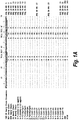
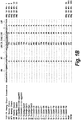
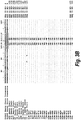
- each anti-IGF-1R binding site of a PBA comprises a VH domain comprising the sequence of SEQ ID NO:1, wherein the sequence comprises variable aas, which independently represent any aa set forth at the corresponding position in Fig. 1 and/or each anti-IGF-1R binding site of a PBA comprises a VL domain comprising the sequence of SEQ ID NO:2 (or 3), wherein the sequence comprises variable aas, which independently represent any aa set forth at the corresponding position in Fig. 2 .
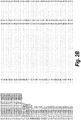
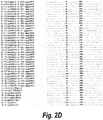
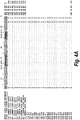
- each anti-ErbB3 binding site of a PBA comprises a VH domain comprising the sequence of SEQ ID NO:4 (or 5), wherein the sequence comprises variable aas, which independently represent any aa set forth at the corresponding position in Fig. 3 and/or each anti-ErbB3 binding site of a PBA comprises a VL domain comprising the sequence of SEQ ID NO:6 (or 7), wherein the sequence comprises variable aas, which independently represent any aa set forth at the corresponding position in Fig. 4 .
- each anti-IGF-1R binding site of a PBA comprises a VH domain comprising the sequence of SEQ ID NO:1 and a VL domain comprising the sequence of SEQ ID NO:2 (or 3) and each anti-ErbB3 binding site of the PBA comprises a VH domain comprising the sequence of SEQ ID NO:4 (or 5) and a VL domain comprising the sequence of SEQ ID NO:6 (or 7).
- each anti-IGF-1R binding site of a PBA comprises a VH domain comprising the aa sequence of SEQ ID NO:1, wherein X1 is not T, X2 is not V, X6 is not R, X8 is not D or X10 is not I, or a VL domain comprising the aa sequence of SEQ ID NO:3 or each anti-ErbB3 binding site of a PBA comprises a VH domain comprising the aa sequence of SEQ ID NO:5 or a VL domain comprising the sequence of SEQ ID NO:7.
- each anti-IGF-1R binding site of a PBA comprises a VH domain comprising the aa sequence of SEQ ID NO:1, wherein X1 is not T, X2 is not V, X6 is not R, X8 is not D or X10 is not I, a VL domain comprising the sequence of SEQ ID NO:3; and each anti-ErbB3 binding site of the PBA comprises a VH domain comprising the aa sequence of SEQ ID NO:5 and a VL domain comprising the sequence of SEQ ID NO:7.
- each anti-IGF-1R binding site of a PBA comprises a VH domain comprising an aa sequence selected from the group consisting of SEQ ID NOs: 8-31 and/or a VL domain comprising an aa sequence selected from the group consisting of SEQ ID NOs: 32-133 and/or each anti-ErbB3 binding site comprises a VH aa sequence selected from the group consisting of SEQ ID NOs: 134-165; and/or a VL aa sequence selected from the group consisting of SEQ ID NOs: 166-200.
- each first VH domain comprises an aa sequence selected from the group comprising SEQ ID NOs: 8-31
- each first VL domain comprises an aa sequence selected from the group consisting of SEQ ID NOs: 32-133
- each second VH domain comprises an aa sequence selected from the group consisting of SEQ ID NOs: 134-165 and each second VL domain comprises an aa sequence selected from the group comprising SEQ ID NOs: 166-200
- each first VH domain comprises an aa sequence selected from the group comprising SEQ ID NOs: 134-165
- each first VL domain comprises an aa sequence selected from the group consisting of SEQ ID NOs: 166-200
- each second VH domain comprises an aa sequence selected from the group comprising SEQ ID NOs: 8-31 and each second VL domain consisting of an aa sequence selected from the group comprising SEQ ID NOs: 32-133.
- each anti-IGF-1R VH domain of a PBA comprises the aa sequence of SEQ ID NO:8 and each anti-IGF-1R VL domain of the PBA comprises the aa sequence of SEQ ID NO:32.
- each anti-IGF-1R VH domain of a PBA comprises the aa sequence of SEQ ID NO:9 and each anti-IGF-1R VL domain of the PBA comprises the aa sequence of SEQ ID NO:33.
- each anti-IGF-1R VH domain of a PBA comprises the aa sequence of SEQ ID NO:10 and each anti-IGF-1R VL domain of the PBA comprises the aa sequence of SEQ ID NO:34.
- each anti-IGF-1R VH domain of a PBA comprises the aa sequence of SEQ ID NO:11 and each anti-IGF-1R VL domain of the PBA comprises the aa sequence of SEQ ID NO:35.
- each anti-IGF-1R VH domain of a PBA comprises the aa sequence of SEQ ID NO:8 and each anti-IGF-1R VL domain of the PBA comprises the aa sequence of SEQ ID NO:33.
- each anti-IGF-1R VH domain of a PBA comprises the aa sequence of SEQ ID NO:10 and each anti-IGF-1R VL domain of the PBA comprises the aa sequence of SEQ ID NO:32.
- each anti-ErbB3 VH domain of a PBA comprises the aa sequence of SEQ ID NO:134 and each anti-ErbB3 VL domain of the PBA comprises the aa sequence of SEQ ID NO:166.
- each anti-ErbB3 VH domain of a PBA comprises the aa sequence of SEQ ID NO:135 and the anti- ErbB3 VL domain of the PBA comprise the aa sequence of SEQ ID NO:167.
- each anti-ErbB3 VH domain of a PBA comprises the aa sequence of SEQ ID NO:136 and each anti-ErbB3 VL domain of the PBA comprises the aa sequence of SEQ ID NO:168.
- each anti-ErbB3 VH domain of a PBA comprises the aa sequence of SEQ ID NO:137 and each anti-ErbB3 VL domain of the PBA comprises the aa sequence of SEQ ID NO:169.
- each anti-ErbB3 VH domain of a PBA comprises the aa sequence of SEQ ID NO:138 and each anti-ErbB3 VL domain of the PBA comprises the aa sequence of SEQ ID NO:170.
- each anti-ErbB3 VH domain of a PBA comprises the aa sequence of SEQ ID NO:139 and each anti-ErbB3 VL domain of the PBA comprises the aa sequence of SEQ ID NO:171.
- each anti-ErbB3 VH domain of a PBA comprises the aa sequence of SEQ ID NO:140 and each anti-ErbB3 VL domain of the PBA comprises the aa sequence of SEQ ID NO:172.
- each anti-ErbB3 VH domain of a PBA comprises the aa sequence of SEQ ID NO:141 and each anti-ErbB3 VL domain of the PBA comprises the aa sequence of SEQ ID NO:173.
- each anti- ErbB3 VH domain of a PBA comprises the aa sequence of SEQ ID NO:142 and each anti-ErbB3 VL domain of the PBA comprises the aa sequence of SEQ ID NO:174.
- each anti- ErbB3 VH domain of a PBA comprises the aa sequence of SEQ ID NO:143 and each anti-ErbB3 VL domain of the PBA comprises the aa sequence of SEQ ID NO:175.
- each anti- ErbB3 VH domain of a PBA comprises the aa sequence of SEQ ID NO:136 and each anti-ErbB3 VL domain of the PBA comprises the aa sequence of SEQ ID NOs: 169.
- each anti-IGF-1R VH domain of a PBA comprises the aa sequence of SEQ ID NO:8 and each anti-IGF-1R VL domain of the PBA comprises the aa sequence of SEQ ID NO:32; and (a) each anti-ErbB3 VH domain of the PBA comprises the aa sequence of SEQ ID NO:134 and each anti-ErbB3 VL domain of the PBA comprises the aa sequence of SEQ ID NO:166; or (b) each anti-ErbB3 VH domain of the PBA comprises the aa sequence of SEQ ID NO:135 and the anti- ErbB3 VL domain of the PBA comprise the aa sequence of SEQ ID NO:167; or (c) each anti-ErbB3 VH domain of the PBA comprises the aa sequence of SEQ ID NO:136 and each anti-ErbB3 VL domain of the PBA comprises the aa sequence of SEQ ID NO:168; or (d) each anti-ErbB3 V
- each anti-IGF-1R VH domain of a PBA comprises the aa sequence of SEQ ID NO:9 and each anti-IGF-1R VL domain of the PBA comprises the aa sequence of SEQ ID NO:33; and (a) each anti-ErbB3 VH domain of the PBA comprises the aa sequence of SEQ ID NO:134 and each anti-ErbB3 VL domain of the PBA comprises the aa sequence of SEQ ID NO:166; or (b) each anti-ErbB3 VH domain of the PBA comprises the aa sequence of SEQ ID NO:135 and the anti- ErbB3 VL domain of the PBA comprise the aa sequence of SEQ ID NO:167; or (c) each anti-ErbB3 VH domain of the PBA comprises the aa sequence of SEQ ID NO:136 and each anti-ErbB3 VL domain of the PBA comprises the aa sequence of SEQ ID NO:168; or (d) each anti-ErbB3 V
- each anti-IGF-1R VH domain comprises the aa sequence of SEQ ID NO:10 and each anti-IGF-1R VL domain comprises the aa sequence of SEQ ID NO:34; and (a) each anti-ErbB3 VH domain of the PBA comprises the aa sequence of SEQ ID NO:134 and each anti-ErbB3 VL domain of the PBA comprises the aa sequence of SEQ ID NO:166; or (b) each anti-ErbB3 VH domain of the PBA comprises the aa sequence of SEQ ID NO:135 and the anti- ErbB3 VL domain of the PBA comprise the aa sequence of SEQ ID NO:167; or (c) each anti-ErbB3 VH domain of the PBA comprises the aa sequence of SEQ ID NO:136 and each anti-ErbB3 VL domain of the PBA comprises the aa sequence of SEQ ID NO:168; or (d) each anti-ErbB3 VH domain of the PBA comprises the aa sequence of
- each anti-IGF-1R VH domain of a PBA comprises the aa sequence of SEQ ID NO:11 and each anti-IGF-1R VL domain of the PBA comprises the aa sequence of SEQ ID NO:35; and (a) each anti-ErbB3 VH domain of the PBA comprises the aa sequence of SEQ ID NO:134 and each anti-ErbB3 VL domain of the PBA comprises the aa sequence of SEQ ID NO:166; or (b) each anti-ErbB3 VH domain of the PBA comprises the aa sequence of SEQ ID NO:135 and the anti- ErbB3 VL domain of the PBA comprise the aa sequence of SEQ ID NO:167; or (c) each anti-ErbB3 VH domain of the PBA comprises the aa sequence of SEQ ID NO:136 and each anti-ErbB3 VL domain of the PBA comprises the aa sequence of SEQ ID NO:168; or (d) each anti-ErbB3 V
- each anti-IGF-1R VH domain of the PBA comprises the aa sequence of SEQ ID NO:8 and each anti-IGF-1R VL domain of the PBA comprises the aa sequence of SEQ ID NO:33; and (a) each anti-ErbB3 VH domain of the PBA comprises the aa sequence of SEQ ID NO:134 and each anti-ErbB3 VL domain of the PBA comprises the aa sequence of SEQ ID NO:166; or (b) each anti-ErbB3 VH domain of the PBA comprises the aa sequence of SEQ ID NO:135 and the anti- ErbB3 VL domain of the PBA comprise the aa sequence of SEQ ID NO:167; or (c) each anti-ErbB3 VH domain of the PBA comprises the aa sequence of SEQ ID NO:136 and each anti-ErbB3 VL domain of the PBA comprises the aa sequence of SEQ ID NO:168; or (d) each anti-ErbB3 VH
- each anti-IGF-1R VH domain of a PBA comprises the aa sequence of SEQ ID NO:10 and each anti-IGF-1R VL domain of the PBA comprises the aa sequence of SEQ ID NO:32; and (a) each anti-ErbB3 VH domain of the PBA comprises the aa sequence of SEQ ID NO:134 and each anti-ErbB3 VL domain of the PBA comprises the aa sequence of SEQ ID NO:166; or (b) each anti-ErbB3 VH domain of the PBA comprises the aa sequence of SEQ ID NO:135 and the anti- ErbB3 VL domain of the PBA comprise the aa sequence of SEQ ID NO:167; or (c) each anti-ErbB3 VH domain of the PBA comprises the aa sequence of SEQ ID NO:136 and each anti-ErbB3 VL domain of the PBA comprises the aa sequence of SEQ ID NO:168; or (d) each anti-ErbB3 V
- each heavy chain of a PBA comprises an aa sequence selected from the group consisting of SF-G1-P1 (SEQ ID NO:212); SF-G1-M1.3 (SEQ ID NO:214); SF-G1-M27 (SEQ ID NO:216); SF-G1-P6 (SEQ ID NO:218); SF-G1-B69 (SEQ ID NO:220); P4-G1-C8 (SEQ ID NO:222); P4-G1-P1 (SEQ ID NO:224); P4-G1-M1.3 (SEQ ID NO:226); P4-G1-M27 (SEQ ID NO:228); P4-G1-P6 (SEQ ID NO:230); P4-G1-B69 (SEQ ID NO:232); M78-G1-C8 (SEQ ID NO:234); M78-G1-P1 (SEQ ID NO:236); M78-G1-M1.3 (SEQ ID NO:
- each heavy chain of a PBA comprises an aa sequence differing in at least one aa addition, deletion or substitution from an aa sequence selected from the group consisting of SF-G1-P1 (SEQ ID NO:212); SF-G1-M1.3 (SEQ ID NO:214); SF-G1-M27 (SEQ ID NO:216); SF-G1-P6 (SEQ ID NO:218); SF-G1-B69 (SEQ ID NO:220); P4-G1-C8 (SEQ ID NO:222); P4-G1-P1 (SEQ ID NO:224); P4-G1-M1.3 (SEQ ID NO:226); P4-G1-M27 (SEQ ID NO:228); P4-G1-P6 (SEQ ID NO:230); P4-G1-B69 (SEQ ID NO:232); M78-G1-C8 (SEQ ID NO:234); M78-G1-P1 (SEQ ID NO:212);
- each heavy chain of a PBA, bound to the other heavy chain of the PBA by at least one bond comprises an aa sequence that is at least 90% identical to one of the following aa sequences or differs from one of the following aa sequences in 1-30 aa substitutions, deletions and/or additions: SF-G1-P1 (SEQ ID NO:212); SF-G1-M1.3 (SEQ ID NO:214); SF-G1-M27 (SEQ ID NO:216); SF-G1-P6 (SEQ ID NO:218); SF-G1-B69 (SEQ ID NO:220); P4-G1-C8 (SEQ ID NO:222); P4-G1-P1 (SEQ ID NO:224); P4-G1-M1.3 (SEQ ID NO:226); P4-G1-M27 (SEQ ID NO:228); P4-G1-P6 (SEQ ID NO:230); P4-G1-
- each heavy chain of a PBA comprises an aa sequence that is at least 95% identical to one of the following aa sequence or differs from one of the following aa sequences in 1-10 aa substitutions, deletions and/or additions: SF-G1-P1 (SEQ ID NO:212); SF-G1-M1.3 (SEQ ID NO:214); SF-G1-M27 (SEQ ID NO:216); SF-G1-P6 (SEQ ID NO:218); SF-G1-B69 (SEQ ID NO:220); P4-G1-C8 (SEQ ID NO:222); P4-G1-P1 (SEQ ID NO:224); P4-G1-M1.3 (SEQ ID NO:226); P4-G1-M27 (SEQ ID NO:228); P4-G1-P6 (SEQ ID NO:230); P4-G1-B69 (SEQ ID NO:232); M78-G1-C
- Exemplary PBA include the following: (a) an SF-G1-P1 PBA comprising: two heavy chains, each comprising a heavy chain aa sequence of SEQ ID NO:212; and two light chains, each comprising a light chain sequence of SEQ ID N0:202; (b) An SF-G1-M1.3 PBA comprising: two heavy chains, each comprising a heavy chain aa sequence of SEQ ID NO:214; and two light chains, each comprising a light chain aa sequence of SEQ ID NO:202; (c) an SF-G1-M27 PBA comprising: two heavy chains, each comprising a heavy chain aa sequence of SEQ ID NO:216; and two light chains, each comprising a light chain aa sequence of SEQ ID NO:202; (d) an SF-G1-P6 PBA comprising: two heavy chains, each comprising a heavy chain aa sequence of SEQ ID NO:218; and two light chains, each comprising a light chain aa
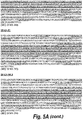
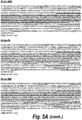
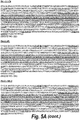
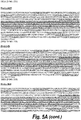
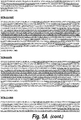
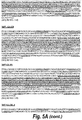
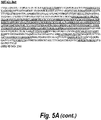
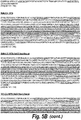
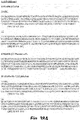
- an anti-IGF-1R monoclonal antibody comprises a first sequence comprising in amino to carboxy order a VLCDR1 sequence, a VLCDR2 sequence and a VLCDR3 sequence of SF kappa light chain as indicated by dotted underlining in Fig. 5A , SEQ ID NO:202, antibody further comprising a second sequence comprising in amino to carboxy order a VHCDR1 sequence, a VHCDR2 sequence and a VHCDR3 sequence of SF heavy chain as indicated by the first three dotted underlined sequences respectively in Fig. 5A , SEQ ID NO:210, wherein the first sequence and the second sequence are non-overlapping.
- an anti- IGF-1R monoclonal antibody comprises in amino to carboxy order a VLCDR1 sequence, a VLCDR2 sequence and a VLCDR3 sequence of P4 kappa light chain as indicated by dotted underlining in Fig. 5A , SEQ ID NO:204, antibody further comprising in amino to carboxy order a VHCDR1 sequence, a VHCDR2 sequence and a VHCDR3 sequence of P4 heavy chain as indicated by the first three dotted underlined sequences respectively in Fig. 5A , SEQ ID NO:222.
- an anti- IGF-1R monoclonal antibody comprises in amino to carboxy order a VLCDR1 sequence, a VLCDR2 sequence and a VLCDR3 sequence of M78 kappa light chain as indicated by dotted underlining in Fig. 5A , SEQ ID NO:206, antibody further comprising in amino to carboxy order a VHCDR1 sequence, a VHCDR2 sequence and a VHCDR3 sequence of M78 heavy chain as indicated by the first three dotted underlined sequences respectively in Fig. 5A , SEQ ID NO:234.
- an anti- IGF-1R monoclonal antibody comprising in amino to carboxy order a VLCDR1 sequence, a VLCDR2 sequence and a VLCDR3 sequence of M57 kappa light chain as indicated by dotted underlining in Fig. 5A , SEQ ID NO:208, antibody further comprising in amino to carboxy order a VHCDR1 sequence, a VHCDR2 sequence and a VHCDR3 sequence of M57 heavy chain as indicated by the first three dotted underlined sequences respectively in Fig. 5A , SEQ ID NO:246.
- an anti-IGF-1R antibody comprises a VH domain comprising a set of three VH CDRs comprising VHCDR1, VHCDR2, VHCDR3, and/or a VL domain comprising a set of three VL CDRs comprising VLCDR1, VLCDR2 and VLCDR3, CDRs comprising the sequences of SEQ ID NOs: 302, 303, 304, 305, 306, and 307, respectively, and each CDR further comprising an amino terminus and a carboxy terminus, wherein the CDRs of each set of CDRs are arranged in the antibody in a linear amino to carboxy order of CDR1, CDR2, and CDR3, wherein the CDRs comprise variable aas, which independently represent any aa set forth at the corresponding position in Fig.
- VHCDR1, VHCDR2, VHCDR3, VLCDR1, VLCDR2 and VLCDR3 of an anti-IGF-1R antibody comprise the sequences of SEQ ID NOs: 302, 303, 304, 305, 306, and 308, respectively.
- VHCDR1, VHCDR2 and VHCDR3 domains of an anti-IGF-1R antibody comprise the corresponding aa sequences of any one of SEQ ID NOs: 8-10 and 12-31
- VLCDR1, VLCDR2 and VLCDR3 domains of the anti-IGF-1R antibody comprise the corresponding aa sequences of any one of SEQ ID NOs: 32-34 and 36-133.
- the VHCDR1, VHCDR2, VHCDR3 of an anti-IGF-1R antibody comprise the aa sequence of the corresponding CDRs of SEQ ID NO:8 and the VLCDR1, VLCDR2 and VLCDR3 of the anti-IGF-1R antibody comprise the aa sequence of the corresponding CDRs of SEQ ID NO:32; or (b) the VHCDR1, VHCDR2, VHCDR3 of the anti-IGF-1R antibody comprise the aa sequence of the corresponding CDRs of SEQ ID NO:9 and the VLCDR1, VLCDR2 and VLCDR3 of the anti-IGF-1R antibody comprise the aa sequence of the corresponding CDRs of SEQ ID NO:33; or (c) the VHCDR1, VHCDR2, VHCDR3 of the anti-IGF-1R antibody comprise the aa sequence of the corresponding CDRs of SEQ ID NO:10 and the VLCDR1, VLCDR2 and VLCDR3 of the anti-IGF-1R
- the VH domain of an anti-IGF-1R antibody comprises the aa sequence of SEQ ID NO:1, which sequence comprises variable aas, which independently represent any aa set forth at the corresponding position in Fig. 1 ;
- the VL domain of the anti-IGF-1R antibody comprises the aa sequence of SEQ ID NO:2 (or 3), which sequence comprises variable aas, which independently represent any aa set forth at the corresponding position in Fig. 2 ;
- the VH domain of the anti-IGF-1R antibody comprises the aa sequence of SEQ ID NO:1 and the VL domain of the anti-IGF-1R antibody comprises the aa sequence of SEQ ID NO:2 or 3.
- the VH domain of an anti-IGF-1R antibody comprises an aa sequence selected from the group consisting of SEQ ID NOs: 8-10 and 12-31 and the VL domain comprises an aa sequence selected from the group consisting of SEQ ID NOs: 32-34 and 36-133.
- the VH domain of an anti-IGF-1R antibody comprises an aa sequence that is at least 90% identical to, or which differs in 1-30 aa aa substitutions, additions or deletions from, an aa sequence of any of SEQ ID NOs: 8-10 and 12-31
- the VL domain of the anti-IGF-1R antibody comprises an aa sequence that is at least 90% identical to, or which differs in 1-30 aa aa substitutions, additions or deletions from, an aa sequence of an aa sequence of any of SEQ ID NOs: 32-34 and 36-133.
- the VH domain of an anti-IGF-1R antibody comprises an aa sequence that is at least 95% identical to, or which differs in 1-10 aa aa substitutions, additions or deletions from, an aa sequence of any of SEQ ID NOs: 8-10 and 12-31
- the VL domain comprises an aa sequence that is at least 95% identical to, or which differs in 1-10 aa aa substitutions, additions or deletions from, an aa sequence of an aa sequence of any of SEQ ID NOs: 32-34 and 36-133.
- An anti-IGF-1R antibody may be an IgG1 antibody, e.g., an isolated and/or a monoclonal IgG1 antibody.
- an anti-IGF-1R antibody is a protein comprising two pairs of polypeptide chains, each pair comprising a heavy chain and a light chain; wherein (a) each heavy chain comprises an aa sequence of SEQ ID NOs: 359, 360 or 361; and/or (b) each light chain comprises an aa sequence of SEQ ID NOs: 204, 206 or 208.
- an anti-IGF-1R antibody is a protein comprising two pairs of polypeptide chains, each pair comprising a heavy chain and a light chain; wherein (a) each heavy chain comprises an aa sequence that is at least 90% identical to, or which differs in 1-30 aa aa substitutions, additions or deletions from, an aa sequence of any of SEQ ID NOs:359, 360 or 361, and/or (b) each light chain comprises an aa sequence that is at least 90% identical to, or which differs in 1-30 aa aa substitutions, additions or deletions from, an aa sequence of an aa sequence of any of SEQ ID NOs: 204, 206 or 208.
- each heavy chain of an anti-IGF-1R antibody comprises an aa sequence that is at least 95% identical to, or which differs in 1-10 aa aa substitutions, additions or deletions from, an aa sequence of any of SEQ ID NOs:359, 360 or 361, and/or (b) each light chain comprises an aa sequence that is at least 95% identical to, or which differs in 1-10 aa aa substitutions, additions or deletions from, an aa sequence of an aa sequence of any of SEQ ID NOs: 204, 206 or 208.
- Exemplary antibodies also described herein include (a) an anti-IGF-R1 monoclonal IgG1 antibody P4 comprising two heavy chains, each comprising a heavy chain aa sequence of SEQ ID NO:359 and two light chains, each comprising a light chain aa sequence of SEQ ID NO:204; (b) an anti-IGF-R1 monoclonal IgG1 antibody M78 comprising two heavy chains, each comprising a heavy chain aa sequence of SEQ ID NO:360 and two light chains, each comprising a light chain aa sequence of SEQ ID NO:206; (c) an anti-IGF-R1 monoclonal IgG1 antibody M57 comprising two heavy chains, each comprising a heavy chain aa sequence of SEQ ID NO:361 and two light chains, each comprising a light chain aa sequence of SEQ ID NO:208; (d) an anti-IGF-R1 monoclonal IgG1 antibody M57/M78 comprising two heavy chains, each comprising
- Anti-IGF-1R antibodies may comprise one or more additional binding sites, e.g., an anti-ErbB3 binding site.
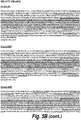
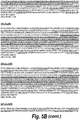
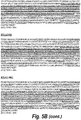
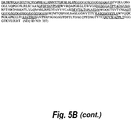
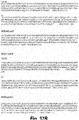
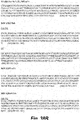
- an anti-ErbB3 comprises in amino to carboxy order a VLCDR1 sequence, a VLCDR2 sequence and a VLCDR3 sequence of P1 lambda light chain as indicated by dotted underlining in Fig. 5B , SEQ ID NO:258, antibody further comprising in amino to carboxy order a VHCDR1 sequence, a VHCDR2 sequence and a VHCDR3 sequence of P1 heavy chain as indicated by the first three dotted underlined sequences respectively in Fig. 5B , SEQ ID NO:268.
- an anti-ErbB3 monoclonal antibody comprises in amino to carboxy order a VLCDR1 sequence, a VLCDR2 sequence and a VLCDR3 sequence of M27 lambda light chain as indicated by dotted underlining in Fig. 5B , SEQ ID NO:260, antibody further comprising in amino to carboxy order a VHCDR1 sequence, a VHCDR2 sequence and a VHCDR3 sequence of M27 heavy chain as indicated by the first three dotted underlined sequences respectively in Fig. 5B , SEQ ID NO:274.
- an anti-ErbB3 monoclonal antibody comprises in amino to carboxy order a VLCDR1 sequence, a VLCDR2 sequence and a VLCDR3 sequence of M7 lambda light chain as indicated by dotted underlining in Fig. 5B , SEQ ID NO:262, antibody further comprising in amino to carboxy order a VHCDR1 sequence, a VHCDR2 sequence and a VHCDR3 sequence of M7 heavy chain as indicated by the first three dotted underlined sequences respectively in Fig. 5B , SEQ ID NO:280.
- an anti-ErbB3 monoclonal antibody comprises in amino to carboxy order a VLCDR1 sequence, a VLCDR2 sequence and a VLCDR3 sequence of B72 lambda light chain as indicated by dotted underlining in Fig. 5B , SEQ ID NO:264, antibody further comprising in amino to carboxy order a VHCDR1 sequence, a VHCDR2 sequence and a VHCDR3 sequence of B72 heavy chain as indicated by the first three dotted underlined sequences respectively in Fig. 5B , SEQ ID NO:286.
- an anti-ErbB3 monoclonal antibody comprises in amino to carboxy order a VLCDR1 sequence, a VLCDR2 sequence and a VLCDR3 sequence of B60 lambda light chain as indicated by dotted underlining in Fig. 5B , SEQ ID NO:266, antibody further comprising in amino to carboxy order a VHCDR1 sequence, a VHCDR2 sequence and a VHCDR3 sequence of B60 heavy chain as indicated by the first three dotted underlined sequences respectively in Fig. 5B , SEQ ID NO:292.
- an isolated anti-ErbB3 antibody binding specifically to human ErbB3 comprises a VH domain comprising a set of three VH CDRs comprising VHCDR1, VHCDR2, VHCDR3, and/or a VL domain comprising a set of three VL CDRs comprising VLCDR1, VLCDR2 and VLCDR3, CDRs comprising the sequences of SEQ ID NOs: 309, 310, 311, 312, 313, and 314, respectively, and each CDR further comprises an amino terminus and a carboxy terminus, wherein the CDRs of each set of CDRs are arranged in the antibody in a linear amino to carboxy order of CDR1, CDR2, and CDR3, wherein the CDRs comprise variable aas, which independently represent any aa set forth at the corresponding position in Fig.
- VHCDR1, VHCDR2, VHCDR3, VLCDR1, VLCDR2 and VLCDR3 of an anti-ErbB3 antibody comprise the sequences of SEQ ID NOs: 309, 310, 311, 312, 313, and 315, respectively.
- VHCDR1, VHCDR2 and VHCDR3 domains of an anti-ErbB3 antibody comprise the corresponding aa sequences of any one of SEQ ID NOs: 134-142 and 144-165
- VLCDR1, VLCDR2 and VLCDR3 domains of the antibody comprise the corresponding aa sequences of any one of SEQ ID NOs: 166-174 and 176-200.
- the VHCDR1, VHCDR2, VHCDR3 of an anti-ErbB3 antibody comprise the aa sequence of the corresponding CDRs of SEQ ID NO:134 and the VLCDR1, VLCDR2 and VLCDR3 of the anti-ErbB3 antibody comprise the aa sequence of the corresponding CDRs of SEQ ID NO:166.
- the VHCDR1, VHCDR2, VHCDR3 of an anti-ErbB3 antibody comprise the aa sequence of the corresponding CDRs of SEQ ID NO:13 and the VLCDR1, VLCDR2 and VLCDR3 of the anti-ErbB3 antibody comprise the aa sequence of the corresponding CDRs of SEQ ID NO:167.
- the VHCDR1, VHCDR2, VHCDR3 of an anti-ErbB3 antibody comprise the aa sequence of the corresponding CDRs of SEQ ID NO:136 and the VLCDR1, VLCDR2 and VLCDR3 of the anti-ErbB3 antibody comprise the aa sequence of the corresponding CDRs of SEQ ID NO:168.
- the VHCDR1, VHCDR2, VHCDR3 of an anti-ErbB3 antibody comprise the aa sequence of the corresponding CDRs of SEQ ID NO:137 and the VLCDR1, VLCDR2 and VLCDR3 of the anti-ErbB3 antibody comprise the aa sequence of the corresponding CDRs of SEQ ID NO:169.
- the VHCDR1, VHCDR2, VHCDR3 of an anti-ErbB3 antibody comprise the aa sequence of the corresponding CDRs of SEQ ID NO:138 and the VLCDR1, VLCDR2 and VLCDR3 of the anti-ErbB3 antibody comprise the aa sequence of the corresponding CDRs of SEQ ID NO:170.
- the VHCDR1, VHCDR2, VHCDR3 of the anti-ErbB3 antibody comprise the aa sequence of the corresponding CDRs of SEQ ID NO: 139 and the VLCDR1, VLCDR2 and VLCDR3 of the anti-ErbB3 antibody comprise the aa sequence of the corresponding CDRs of SEQ ID NO:171.
- the VHCDR1, VHCDR2, VHCDR3 of an anti-ErbB3 antibody comprise the aa sequence of the corresponding CDRs of SEQ ID NO:140 and the VLCDR1, VLCDR2 and VLCDR3 of the antibody comprise the aa sequence of the corresponding CDRs of SEQ ID NO:172.
- the VHCDR1, VHCDR2, VHCDR3 of an anti-ErbB3 antibody comprise the aa sequence of the corresponding CDRs of SEQ ID NO:141 and the VLCDR1, VLCDR2 and VLCDR3 of the anti-ErbB3 antibody comprise the aa sequence of the corresponding CDRs of SEQ ID NOs: 173.
- the VHCDR1, VHCDR2, VHCDR3 of an anti-ErbB3 antibody comprise the aa sequence of the corresponding CDRs of SEQ ID NO:142 and the VLCDR1, VLCDR2 and VLCDR3 of the anti-ErbB3 antibody comprise the aa sequence of the corresponding CDRs of SEQ ID NO:174.
- the VHCDR1, VHCDR2, VHCDR3 of an anti-ErbB3 antibody comprise the aa sequence of the corresponding CDRs of SEQ ID NO:136 and the VLCDR1, VLCDR2 and VLCDR3 of the anti-ErbB3 antibody comprise the aa sequence of the corresponding CDRs of SEQ ID NO:169.
- the VH domain of an anti-ErbB3 antibody comprises the aa sequence of SEQ ID NO:4 (or 5), which sequence comprises variable aas, which independently represent any aa set forth at the corresponding position in Fig. 3 and/or the VL domain of the anti-ErbB3 antibody comprises the aa sequence of SEQ ID NO:6 (or 7), which sequence comprises variable aas, which independently represent any aa set forth at the corresponding position in Fig. 4 .
- the VH domain of an anti-ErbB3 antibody comprises an aa sequence selected from the group consisting of SEQ ID NOs: 134-142 and 144-165 and/or the VL domain of the anti-ErbB3 antibody comprises an aa sequence selected from the group consisting of SEQ ID NOs: 166-174 and 176-200.
- the VH domain of an anti-ErbB3 antibody comprises an aa sequence that is at least 90% identical to, or which differs in 1-30 aa aa substitutions, additions or deletions from, an aa sequence of any of SEQ ID NOs: 134-142 and 144-165
- the VL domain of the anti-ErbB3 antibody comprises an aa sequence that is at least 90% identical to, or which differs in 1-30 aa aa substitutions, additions or deletions from, an aa sequence of an aa sequence of any of SEQ ID NOs: 166-174 and 176-200.
- the VH domain of an anti-ErbB3 antibody comprises an aa sequence that is at least 95% identical to, or which differs in 1-10 aa aa substitutions, additions or deletions from, an aa sequence of any of SEQ ID NOs: 134-142 and 144-165
- the VL domain comprises an aa sequence that is at least 95% identical to, or which differs in 1-10 aa aa substitutions, additions or deletions from, an aa sequence of an aa sequence of any of SEQ ID NOs: 166-174 and 176-200.
- An anti-ErbB3 antibody may be an IgG1 antibody, e.g. , an isolated monoclonal IgG1 antibody.
- an anti-ErbB3 antibody is a protein comprising two pairs of polypeptide chains, each pair comprising a heavy chain and a light chain; wherein (a) each heavy chain comprises an aa sequence of SEQ ID NOs: 362, 363, 364, 365 or 366; and/or (b) each light chain comprises an aa sequence of SEQ ID NOs: 258, 260, 262, 264 or 266.
- an anti-ErbB3 antibody is a protein comprising two pairs of polypeptide chains, each pair comprising a heavy chain and a light chain; wherein (a) each heavy chain comprises an aa sequence that is at least 90% identical to, or which differs in 1-30 aa aa substitutions, additions or deletions from, an aa sequence of any of SEQ ID NOs: 362, 363, 364, 365 or 366, and/or (b) each light chain comprises an aa sequence that is at least 90% identical to, or which differs in 1-30 aa aa substitutions, additions or deletions from, an aa sequence of an aa sequence of any of SEQ ID NOs: 258, 260, 262, 264 or 266.
- an anti-ErbB3 antibody is a protein comprising two pairs of polypeptide chains, each pair comprising a heavy chain and a light chain; wherein (a) each heavy chain comprises an aa sequence that is at least 95% identical to, or which differs in 1-10 aa aa substitutions, additions or deletions from, an aa sequence of any of SEQ ID NOs: 362, 363, 364, 365 or 366, and (b) each light chain comprises an aa sequence that is at least 95% identical to, or which differs in 1-10 aa a substitutions, additions or deletions from, an aa sequence of an aa sequence of any of SEQ ID NOs: 258, 260, 262, 264 or 266.
- An anti-ErbB3 antibody may comprise one or more other binding sites, e.g., an anti-IGF-1R binding site.
- Exemplary anti-ErbB3 antibodies also described herein include: (a) an anti-ErbB3 monoclonal IgG1 antibody P1 comprising two heavy chains, each comprising a heavy chain aa sequence of SEQ ID NO:362 and two light chains, each comprising a light chain aa sequence of SEQ ID NO:258; (b) an anti-ErbB3 monoclonal IgG1 antibody M27 comprising two heavy chains, each comprising a heavy chain aa sequence of SEQ ID NO:363 and two light chains, each comprising a light chain aa sequence of SEQ ID NO:260; (c) an anti-ErbB3 monoclonal IgG1 antibody M7 comprising two heavy chains, each comprising a heavy chain aa sequence of SEQ ID NO:364 and two light chains, each comprising a light chain aa sequence of SEQ ID NO:262; (d) an anti-ErbB3 monoclonal IgG1 antibody B72 comprising two heavy chains,
- scFvs which may be monoclonal scFvs.
- Exemplary scFvs also described herein include (a) anti-IGF-R1 scFv antibody P4 comprising an aa sequence of SEQ ID NO:367; (b) anti-IGF-R1 scFv antibody M57 comprising an aa sequence of SEQ ID NO:368; (c) anti-IGF-R1 scFv antibody M78 comprising an aa sequence of SEQ ID NO:369; (d) anti-ErbB3 scFv antibody C8 comprising an aa sequence of SEQ ID NO:370; (e) anti-ErbB3 scFv antibody P1 comprising an aa sequence of SEQ ID NO:371; (f) anti-ErbB3 scFv antibody M1.3 comprising an aa sequence of SEQ ID NO:372; (g) anti-ErbB3 scFv antibody M
- compositions comprising a PBA and a pharmaceutically acceptable carrier.
- nucleic acid molecules comprising at least one coding sequence, at least one coding sequence encoding an antibody or a chain thereof, as set forth herein.
- the nucleic acid molecule may comprise either or both of a promoter nucleotide sequence and an enhancer nucleotide sequence, which nucleotide sequence is operably linked to the at least one coding sequence and promotes or enhances the expression of the antibody.
- vectors e.g. , vectors comprising one or more nucleic acid molecules provided herein, as well as host cells comprising one or more vectors provided herein.
- anti-IGF-1R+anti-ErbB3 PBAs wherein the PBA has a half-life of at least 45 hours in a Cynomolgus monkey, when the PBA is administred intraveniously at doses equal to or higher than 5mg/kg.
- a PBA has a half-life that is statistically significantly longer ( e.g., by 50%, 2 fold or more) in an organism that is a mouse or a cynomolgus monkey than the half-life of another polyvalent bispecific ab in the same organism, binding to the same epitopes, wherein the orientation of antigen binding specificities is reversed between of the fab and of the scfv.
- PBAs may suppress heregulin-induced pAKT signaling in a cell, e.g., a cancer cel, by at least 10%, 20%, 30%, 40%, 50%, 60%, 70%, 75%, 80%, 85%, 90%, 95%, 97%, 98%, 99% or 100%.
- PBAs may suppress IGF-1-induced pAKT signaling in a cell, e.g., a cancer cell, by at least 10%, 20%, 30%, 40%, 50%, 60%, 70%, 75%, 80%, 85%, 90%, 95%, 97%, 98%, 99% or 100%.
- PBAs may suppress insulin-induced pAKT signaling in a cell, e.g., a cancer cell, by at least 10%, 20%, 30%, 40%, 50%, 60%, 70%, 75%, 80%, 85%, 90%, 95%, 97%, 98%, 99% or 100%.
- PBAs may suppress the IGF-2-induced pAKT signaling in a cell, e.g., a cancer cell, by at least 10%, 20%, 30%, 40%, 50%, 60%, 70%, 75%, 80%, 85%, 90%, 95%%, 97%, 98%, 99% or 100%.
- a PBA may inhibit mTOR activation (phosphorylation) in a tumor cell in vivo or in vitro to a greater extent than monospecific anti-IGF-1R Ab# A or than a monospecific anti-IGF-1R Ab that binds to the same epitope on IGF-1R as the PBA.
- PBAs may reduce mTOR protein levels in a tumor cell in vivo or in vitro to a greater extent than monospecific anti-IGF-1R Ab# A, or than a monospecific anti-IGF-1R Ab that binds to the same epitope on IGF-1R as the PBA.
- a PBA reduces mTOR activation or mTOR protein levels in a tumor cell in vivo or in vitro by a factor of at least 50%, or by 2, 3, 4 or 5 fold or greater than 5 fold relative to monospecific anti-IGF-1R Ab# A or relative to a monospecific anti-IGF-1R Ab that binds to the same epitope on IGF-1R as the PBA.
- a PBA is more effective at inhibiting tumor growth in a human xenograft model in nu/nu mice than is an equimolar amount of an anti-IGF-1R IgG.
- the xenograft models comprise human DU145, BxPC-3, SK-ES-1, or Caki-1 cell xenografts.
- a polyvalent bispecific antibody is more effective at inhibiting tumor growth in a human xenograft model in nu/nu mice than is a combination of an equimolar amount of an anti-IGF-1R IgG combined with an equimolar amount of an anti-ErbB3 IgG.
- SEQ ID NO: 1 is an aa consensus sequence derived from exemplary IGF-1R VH sequences.
- SEQ ID NO: 2 is an aa consensus sequence derived from exemplary IGF-1R VL sequences.
- SEQ ID NO: 3 is an aa consensus sequence derived from exemplary IGF-1R VL sequences, which excludes the VL sequence of the IGF-1R binding site of 16F.
- SEQ ID NO: 4 is an aa consensus sequence derived from exemplary ErbB3 VH sequences.
- SEQ ID NO: 5 is an aa consensus sequence derived from exemplary ErbB3 VH sequences, which excludes the VH of the ErbB3 binding site of 16F.
- SEQ ID NO: 6 is an aa consensus sequence derived from exemplary ErbB3 VL sequences.
- SEQ ID NO: 7 is an aa consensus sequence derived from exemplary ErbB3 VL sequences, which excludes the VL sequence of the ErbB3 binding site of 16F.
- SEQ ID NO s:8-31 are the IGF-1R VH aa sequences of Fig. 1 .
- SEQ ID NO s:32-133 are the IGF-1R VL aa sequences of Fig. 2 .
- SEQ ID NO s : 134-165 are the ErbB3 VH aa sequences of Fig. 3 .
- SEQ ID NO s : 166-200 are the ErbB3 VL aa sequences of Fig. 4 .
- SEQ ID NO s : 201-256 are the nucleotide sequence (odd numbers) and aa sequences (even numbers) of the mature light and heavy chains of anti-IGF-1R/anti-ErbB3 IgG1(scFv) 2 provided in Fig. 5A , the sequence ID numbers of which are as follows.
- Kappa light chains SF (SEQ ID NOs:201 and 202); P4 (SEQ ID NOs:203 and 204); M78 (SEQ ID NOs:205 and 206); and M57 (SEQ ID NOs:207 and 208).
- Heavy chain scFv fusions (hybrids): SF-G1-C8 (i.e., 16F; SEQ ID NOs:209 and 210); SF-G1-P1 (SEQ ID NOs:211 and 212); SF-G1-M1.3 (SEQ ID NOs:213 and 214); SF-G1-M27 (SEQ ID NOs:215 and 216); SF-G1-P6 (SEQ ID NOs:217 and 218); SF-G1-B69 (SEQ ID NOs:219 and 220); P4-G1-C8 (SEQ ID NOs:221 and 222); P4-G1-P1 (SEQ ID NOs:223 and
- SEQ ID NO s:257-296 are the nucleotide sequence (odd numbers) and aa sequences (even numbers) of the mature light and heavy chains of anti-ErbB3/anti-IGF-1R IgG1(scFv) 2 provided in Fig. 5B , the sequence ID numbers of which are as follows.
- Heavy chain scFv fusions (hybrids): P1-G1-P4 (SEQ ID NOs:267 and 268); P1-G1-M57 (SEQ ID NOs:269 and 270); P1-G1-M78 (SEQ ID NOs:271 and 272); M27-G1-P4 (SEQ ID NOs:273 and 274); M27-G1-M57 (SEQ ID NOs:275 and 276); M27-G1-M78 (SEQ ID NOs:277 and 278); M7-G1-P4 (SEQ ID NOs:279 and 280); M7-G1-M57 ((SEQ ID NOs:281 and 282); M7-G1-M78 (SEQ ID NOs:283 and 284); B72-G1-P4 (SEQ ID NOs:285 and 286); B72-G1-M57 (SEQ ID NOs:287 and 288); B72-G1
- SEQ ID NO s : 297 and 298 are the nucleotide and aa sequences of the light chain of 16F with a signal sequence, as shown in Fig. 7B .
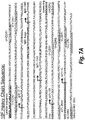
- SEQ ID NO s : 299 and 300 are the nucleotide and aa sequences of the heavy chain of 16F with a signal sequence, as shown in Fig. 7A .
- SEQ ID NO: 301 is a portion of an exemplary heavy chain domain, wherein a lysine was inserted between the C-terminus of the CH3 domain and the N-terminus of the linker SLSLSPGKGGGGS (SEQ ID NO:301 - the additional lysine is underlined).
- SEQ ID NO s : 302-304 are consensus sequences of anti-IGF-1R VHCDR1, VHCDR2 and VHCDR3 domains, respectively, which are the CDR sequences of the VH consensus sequence of SEQ ID NO:1 and shown in Fig. 1 .
- SEQ ID NO s : 305-307 are consensus sequences of an anti-IGF-1R VLCDR1, VLCDR2 and VLCDR3, respectively, which are the CDR sequences of the VL consensus sequence of SEQ ID NO:2 and shown in Fig. 2 .
- SEQ ID NO: 308 is a consensus sequence of an anti-IGF-1R VLCDR3, which is the CDR3 sequence of the VL consensus sequence of SEQ ID NO:3 and shown in Fig. 2 .
- SEQ ID NO s : 209-311 are consensus sequences of anti-ErbB3 VHCDR1, VHCDR2 and VHCDR3 domains, respectively, which are the CDR sequences of the VH consensus sequence of SEQ ID NO:4 and shown in Fig. 3 .
- SEQ ID NO s : 312-314 are consensus sequences of anti-ErbB3 VLCDR1, VLCDR2 and VLCDR3 domains, respectively, which are the CDR sequences of the VL consensus sequence of SEQ ID NO:6 and shown in Fig. 4 .
- SEQ ID NO: 315 is a consensus sequence of an anti-ErbB3 VLCDR3, which is the CDR3 sequence of the VL consensus sequence of SEQ ID NO:7 and shown in Fig.
- SEQ ID NO: 316 is the aa sequence of the heavy chain of the anti-ErbB3/anti-IGF-IR IgG2 tetravalent bispecific protein ELI-7.
- SEQ ID NO: 317 is the aa sequence of the light chain of the anti-ErbB3/anti-IGF-1R IgG2 tetravalent bispecific protein ELI-7.
- SEQ ID NO: 318 is the aa sequence of the heavy chain of the anti-IGF-1R/anti-ErbB3 tetravalent bispecific protein ILE-10.
- SEQ ID NO: 319 is the aa sequence of the heavy chain of the anti-IGF-1R/anti-ErbB3 tetravalent bispecific protein ILE-12.
- SEQ ID NO: 320 is the aa sequence of the light chain of the anti-IGF-1R/anti-ErbB3 tetravalent bispecific proteins ILE-10 and ILE-12.
- SEQ ID NO s : 321-335 are the aa sequences of Fab heavy chains (Fab HC), Fab light chains (Fab LC) and scFvs from the anti-IGF-1R antibodies of Table 1, which sequences are of Fig. 37 .
- SEQ ID NO s : 356 and 357 are the nucleotide and aa sequences for the M7-IgG2-M78 polyvalent bispecific antibody shown in Fig. 5B .
- SEQ ID NO s : 358-360 are aa sequences of SF, P4, M78, and M57 anti-IGF-1R IgG1 monoclonal antibody heavy chains shown in Fig. 6A .
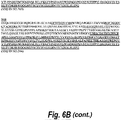
- SEQ ID NO s : 362-366 are aa sequences of P1, M27, M7, B72, and B60 anti-ErbB3 IgG1 monoclonal antibody heavy chains shown in Fig. 6B .
- SEQ ID NO s : 367-369 are aa sequences of P4, M57, and M78 anti-IGF-1R scFv monoclonal antibodies shown in Fig. 6C .
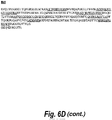
- SEQ ID NO s : 370-375 are aa sequences of C8, P1, M1.3, M27, P6, and B69 anti-ErbB3 scFv monoclonal antibodies shown in Fig. 6D .
- SEQ ID NO s : 376-379 are aa sequences of the heavy chains P4M-G1-M1.3, P4M-G1-C8, P33M-G1-M1.3, and P33M-G1-C8, respectively.
- SEQ ID NO s : 380 and 381 are aa sequences of P33M kappa light chain and P4M kappa light chain, respectively.
- SEQ ID NO s:382 and 383 are aa sequences of the anti-IGF-1R scFv M76 and the anti-ErbB3 scFv P6L, respectively.
- the VH and VL domains of binding site M76 consist of the aa sequences of SEQ ID NOs:31 and 133, respectively.
- SEQ ID NO s : 384 and 385 are aa sequences of the VH domain of the anti-IGF-1R binding site modules P4M and P33M, respectively.
- SEQ ID NO s : 386 and 387 are aa sequences of the VL domain of the anti-IGF-1R binding site modules P4M and P33M, respectively.
- SEQ ID NO: 388 is the aa of the VH domain of the anti-ErbB3 binding site module P6L.
- the VL domain consists of the aa sequence of SEQ ID NO:173.
- SEQ ID NO s : 389 and 390 are aa sequences of the anti-IGF-1R heavy chains P4M-G1-P6L and P33M-G1-P6L, respectively.
- SEQ ID NO: 391 is the aa sequence of the anti-ErbB3 heavy chain P1-G1-M76.
- SEQ ID NO: 392 is the aa sequence of the beginning of the CH1 portion of the hybrid heavy chains of Fig. Figs. 5A and 5B .
- SEQ ID NO: 393 and 394 are aa sequences of the beginning of the CL domain in the anti-IGF-1R and ErbB3 VL domains of the light chains of Fig. Figs. 5A and 5B , respectively.
- SEQ ID NO s : 395-402 are the aa sequence of exemplary Gly-Ser polypeptide linkers.
- SEQ ID NO: 403 is the aa sequence of a hexa-histidine tag.
- SEQ ID NO: 404 is the aa sequence of the IgG2 constant domain (including CH1, Hinge, CH2, and CH3 regions).
- SEQ ID NO s : 405-408 are the aa sequence of the heavy chains of SF-G1-P1, SF-G1-M27, M57-G1-C8, M7-G1-M78 heavy chains, respectively, including the leader sequence (the N-terminal 19 aas of each sequence).
- SEQ ID NO: 409 is the nucleotide sequence of the M7-G1-M78 heavy chain, including the leader sequence.
- SEQ ID NOs:410-411 are the aa and nucleotide sequences of the P4-G1-M1.3 heavy chain, respectively, including the leader sequence (the N-terminal 19 aas of the aa sequence).
- SEQ ID NO s : 412-413 are the aa and nucleotide sequences of the P4-G1-C8 heavy chain, respectively, including the leader sequence (the N-terminal 19 aas of the aa sequence).
- SEQ ID NO s : 414-415 are the aa and nucleotide sequences of the M7 Lambda Light Chain, respectively, including the leader sequence (the N-terminal 21 aas of the aa sequence).
- SEQ ID NO s:416-417 are the aa and nucleotide sequences of the P4 Kappa Light Chain, respectively, including the leader sequence (the N-terminal 20 aas of the aa sequence).
- SEQ ID NO: 418 is the aa sequence of the IgG1 module with Hinge, CH2, and CH3 regions (the C-terminal 231 aas of the sequence).
- SEQ ID NO s:419-424 are nucleotide sequences of the heavy chains P4M-G1-M1.3, P4M-G1-C8, P4M-G1-P6L, P33M-G1-M1.3, P33M-G1-C8, and P33M-G1-P6L respectively.
- SEQ ID NO: 425 is the nucleotide sequence of the P1-G1-M76 anti-ErbB3-G1/anti-EGF-1R bispecific antibody.
- SEQ ID NO s : 426 and 427 are nucleotide sequences of the P33M Kappa and P4M Kappa light chains, respectively.
- SEQ ID NO: 428 is the nucleotide sequence of the M76 anti-IGF-1R scFv.
- SEQ ID NO: 429 is the nucleotide sequence of the P6L anti-ErbB3 scFv.
- bispecific antibodies e.g ., polyvalent bispecific antibodies (“PBAs") that bind specifically to human IGF-1R and to human ErbB3.
- PBAs polyvalent bispecific antibodies
- These proteins are potent inhibitors of tumor cell proliferation and of signal transduction through either or both of IGF-1R and ErbB3.
- the proteins may be used for treating a cell proliferative disorder, e.g ., a cancer.
- Agent refers to an active molecule, e.g., a therapeutic protein, e.g ., a drug.
- a substitution refers to the replacement of one specific aa ("aa”) in a protein with another aa.
- a substitution may be a conservative substitution, as defined below.
- Anti-ErbB3 binding site refers to a binding site that binds specifically to human ErbB3.
- Anti-IGF-1R binding site refers to a binding site that binds specifically to human IGF-1R.
- Antigen binding site refers to a binding site that comprises the VH and/or VL domain of an antibody, or at least one CDR thereof.
- an antigen binding site may comprise, consist essentially of, or consist of a VHCDR3 alone or together with a VHCDR2 and optionally a VHCDR1.
- an antigen binding site comprises a VH domain and a VL domain, which may be present on the same polypeptide or on two different polypeptides, e . g ., the VH domain is present on a heavy chain and a VL domain is present on a light chain.
- Antigen-binding portion of an antibody refers to one or more fragments of an antibody that retain the ability to specifically bind to an antigen (e . g ., IGF-1R or ErbB3). It has been shown that the antigen-binding function of an antibody can be retained by fragments of a full-length antibody.
- binding fragments encompassed within the term "antigen-binding portion" of an antibody include (i) a Fab fragment, a monovalent fragment consisting of the VL, VH, CL and CH1 domains; (ii) a F(ab') 2 fragment, a bivalent fragment comprising two Fab fragments linked by a disulfide bridge at the hinge region; (iii) an Fd fragment consisting of the VH and CH1 domains; (iv) an Fv fragment consisting of the VL and VH domains of a single arm of an antibody, (v) a dAb fragment which consists of a VH domain; and (vi) an isolated complementarity determining region (CDR).
- a Fab fragment a monovalent fragment consisting of the VL, VH, CL and CH1 domains
- F(ab') 2 fragment a bivalent fragment comprising two Fab fragments linked by a disulfide bridge at the hinge region
- VL and VH are two domains of an Fv fragment
- VL and VH are coded for by separate genes, they can be joined, using recombinant methods, by a synthetic linker that enables them to be made as a single protein chain in which the VL and VH regions pair to form monovalent proteins, known as single chain Fvs (scFvs) see U.S. Pat. No. 5,892,019 .
- single chain Fvs single chain Fvs
- Such single chain antibodies are also intended to be encompassed within the term "antigen-binding portion" of an antibody.
- Other forms of single chain antibodies, such as diabodies are also encompassed.
- Diabodies are bivalent, bispecific antibodies in which VH and VL domains are expressed on a single polypeptide chain, but using a linker that is too short to allow for pairing between the two domains on the same chain, thereby forcing the domains to pair with complementary domains of another chain and creating two antigen binding sites.
- Binding affinity refers to the strength of a binding interaction and includes both the actual binding affinity as well as the apparent binding affinity.
- the actual binding affinity is a ratio of the association rate over the disassociation rate.
- the apparent affinity can include, for example, the avidity resulting from a polyvalent interaction.
- Dissociation constant (K d ) is typically the reciprocal of the binding affinity, and may be conveniently measured using a surface plasmon resonance assay ( e .
- Binding moiety refers to the portion, region, or site of a binding polypeptide or, when so specified, of a heavy or light chain thereof, that is directly involved in mediating the specific binding of an antibody to a target molecule (i.e. an antigen).
- exemplary binding domains include an antigen binding site, a receptor binding domain of a ligand, a ligand binding domain of a receptor or an enzymatic domain.
- the binding domain comprises or consists of an antigen binding site ( e . g ., comprising a variable heavy (VH) chain sequence and variable light (VL) chain sequence or six CDRs from an antibody placed into alternative framework regions ( e .
- a binding site may be comprised essentially only of a VH or a VL chain sequence.
- a binding site may be entirely from one species, e.g ., it has only sequences that derive from the germline sequences of one species.
- a binding site may be human (i.e., from the human species), mouse, or rat.
- a binding site may also be humanized, i.e., the CDRs are from one species and the frameworks (FRs) are from another species.
- a binding site may have CDRs that were derived from a mouse antibody and FRs that are from the human species.
- Certain humanized binding sites comprise mutations in one or more CDR to make the CDRs look more like the CDRs of the donor antibody.
- Certain humanized antibodies may also comprise mutations in one or more FR. Generally mutations in a binding site may enhance the affinity of binding of the binding site to its target antigen, and/or they may stabilize the binding site, e.g ., to extend its half-life.
- CDR or “complementarity determining region” refers to the noncontiguous antigen combining sites found within the VR of both heavy and light chain polypeptides. These particular regions have been described by Kabat et al., J. Biol. Chem. 252, 6609-6616 (1977 ) and Kabat et al., Sequences of protein of immunological interest. (1991 ), and by Chothia et al., J. Mol. Biol. 196:901-917 (1987 ) and by MacCallum et al., J. Mol. Biol. 262:732-745 (1996 ) where the definitions include overlapping or subsets of aa residues when compared against each other.
- CDR is as defined by Kabat. Table 3.
- CDR definitions CDR Definitions Kabat 1 Chothia 2 MacCallum 3 VHCDR1 31-35 26-32 30-35 VHCDR2 50-65 53-55 47-58 VHCDR3 95-102 96-101 93-101 VLCDR1 24-34 26-32 30-36 VLCDR2 50-56 50-52 46-55 VLCDR3 89-97 91-96 89-96 1 Residue numbering follows the nomenclature of Kabat et al., 1991, supra 2 Residue numbering follows the nomenclature of Chothia et al., supra 3 Residue numbering follows the nomenclature of MacCallum et al., supra
- CH1 domain refers to the heavy chain immunoglobulin constant domain located between the VH domain and the hinge. It spans EU positions 118-215.
- a CH1 domain may be a naturally occurring CH1 domain, or a naturally occurring CH1 domain in which one or more aas have been substituted, added or deleted, provided that the CH1 domain has the desired biological properties.
- a desired biological activity may be a natural biological activity, an enhanced biological activity or a reduced biological activity relative to the naturally occurring sequence.
- CH2 domain refers to the heavy chain immunoglobulin constant domain that is located between the hinge and the CH3 domain. It spans EU positions 231-340.
- a CH2 domain may be a naturally occurring CH2 domain, or a naturally occurring CH2 domain in which one or more aas have been substituted, added or deleted, provided that the CH2 domain has the desired biological properties.
- a desired biological activity may be a natural biological activity, an enhanced biological activity or a reduced biological activity relative to the naturally occurring sequence.
- CH3 domain refers to the heavy chain immunoglobulin constant domain that is located C-terminally of the CH2 domain and spans approximately 110 residues from the N-terminus of the CH2 domain, e.g ., about positions 341-446b (EU numbering system).
- a CH3 domain may be a naturally occurring CH3 domain, or a naturally occurring CH3 domain in which one or more aas ("aas") have been substituted, added or deleted, provided that the CH3 domain has the desired biological properties.
- a desired biological activity may be a natural biological activity, an enhanced biological activity or a reduced biological activity relative to the naturally occurring sequence.
- a CH3 domain may or may not comprise a C-terminal lysine.
- CH4 domain refers to the heavy chain immunoglobulin constant domain that is located C-terminally of the CH3 domain in IgM and IgE antibodies.
- a CH4 domain may be a naturally occurring CH4 domain, or a naturally occurring CH4 domain in which one or more aas have been substituted, added or deleted, provided that the CH4 domain has the desired biological properties.
- a desired biological activity may be a natural biological activity, an enhanced biological activity or a reduced biological activity relative to the naturally occurring sequence.
- CL domain refers to the light chain immunoglobulin constant domain that is located C-terminally to the VH domain. It spans about Kabat positions 107A-216.
- a CL domain may be a naturally occurring CL domain, or a naturally occurring CL domain in which one or more aas have been substituted, added or deleted, provided that the CL domain has the desired biological properties.
- a desired biological activity may be a natural biological activity, an enhanced biological activity or a reduced biological activity relative to the naturally occurring sequence.
- a CL domain may or may not comprise a C-terminal lysine.
- Constant substitution or “conservative aa substitution” refers to the replacement of one or more aa residues in a protein or a peptide with, for each particular pre-substitution aa residue, a specific replacement aa that is known to be unlikely to alter either the confirmation or the function of a protein or peptide in which such a particular aa residue is substituted for by such a specific replacement aa.
- Such conservative substitutions typically involve replacing one aa with another that is similar in charge and/or size to the first aa, and include replacing any of isoleucine (I), valine (V), or leucine (L) for each other, substituting aspartic acid (D) for glutamic acid (E) and vice versa; glutamine (Q) for asparagine (N) and vice versa; and serine (S) for threonine (T) and vice versa.
- Other substitutions are known in the art to be conservative in particular sequence or structural environments. For example, glycine (G) and alanine (A) can frequently be substituted for each other to yield a conservative substitution, as can be alanine and valine (V).
- Methionine (M) which is relatively hydrophobic, can frequently conservatively substitute for or be conservatively substituted by leucine or isoleucine, and sometimes valine. Lysine (K) and arginine (R) are frequently interchangeable in locations in which the significant feature of the aa residue is its charge and the differing pK's of these two basic aa residues are not expected to be significant. The effects of such substitutions can be calculated using substitution score matrices such PAM120, PAM-200, and PAM-250. Other such conservative substitutions, for example, substitutions of entire regions having similar hydrophobicity characteristics ( e . g ., transmembrane domains), are well known.
- a CR domain on a light chain of an immunoglobulin is referred to interchangeably as a "CL,” “light chain CR domain,” “CL region” or “CL domain.”
- a constant domain on a heavy chain (e . g ., hinge, CH1, CH2 or CH3 domains) of an immunoglobulin is referred to interchangeably as a "CH,” “heavy chain constant domain,” “CH” region or “CH domain.”
- a variable domain on an immunoglobulin light chain is referred to interchangeably as a "VL,” “light chain variable domain,” “VL region” or “VL domain.”
- a variable domain on an immunoglobulin heavy chain is referred to interchangeably as a "VH,” “heavy chain variable domain,” “VH region” or “VH domain.”
- Domain refers to a region, e.g., an independently folding, globular region or a non-globular region (e . g ., a linker domain), of a heavy or light chain polypeptide which may comprise peptide loops ( e . g ., 1 to 4 peptide loops) that may be stabilized, for example, by a ⁇ -pleated sheet and/or an intrachain disulfide bond.
- the constant and VRs of immunoglobulin heavy and light chains are typically folded into domains.
- each one of the CH1, CH2, CH3, CH4, CL, VH and VL domains typically form a loop structure.
- EC 50 or “EC50” refers to the concentration of a molecule, e.g ., a PBA, that provides 50% of the maximal effect of the protein on a particular system such as a binding assay or a signal transduction pathway.
- ErbB3 and HER3 refer to ErbB3 protein, as described in U.S. Pat. No. 5,480,968 .
- the human ErbB3 protein sequence is shown in Fig. 4 and SEQ ID NO:4 of U.S. Pat. No. 5,480,968 , wherein the first 19 aas correspond to the leader sequence that is cleaved from the mature protein.
- ErbB3 is a member of the ErbB family of receptors, other members of which include ErbB1 (EGFR), ErbB2 (HER2/Neu) and ErbB4.
- ErbB3 itself lacks tyrosine kinase activity, but is itself phorphorylated upon dimerization of ErbB3 with another ErbB family receptor, e.g ., ErbB1, ErbB2 and ErbB4, which are receptor tyrosine kinases.
- Ligands for the ErbB family include heregulin (HRG), betacellulin (BTC), epidermal growth factor (EGF), heparin-binding epidermal growth factor (HB-EGF), transforming growth factor alpha (TGF- ⁇ ), amphiregulin (AR), epigen (EPG) and epiregulin (EPR).
- HRG heregulin
- BTC betacellulin
- EGF epidermal growth factor
- HB-EGF heparin-binding epidermal growth factor
- TGF- ⁇ transforming growth factor alpha
- AR amphiregulin
- EPG epigen
- EPR epiregulin
- EU indicates that aa positions in a heavy chain CR, including aa positions in the CH1, hinge, CH2, and CH3 domains, are numbered herein according to the EU index numbering system (see Kabat et al., in “Sequences of Proteins of Immunological Interest", U.S. Dept. Health and Human Services, 5th edition, 1991 ).
- Fab refers to the antigen binding portion of an antibody, comprising two chains: a first chain that comprises a VH domain and a CH1 domain and a second chain that comprises a VL domain and a CL domain.
- a Fab is typically described as the N-terminal fragment of an antibody that was treated with papain and comprises a portion of the hinge region, it is also used herein as referring to a binding domain wherein the heavy chain does not comprise a portion of the hinge.
- Fc region refers to the portion of a single immunoglobulin heavy chain beginning in the hinge region just upstream of the papain cleavage site (i.e. residue 216 in IgG, taking the first residue of heavy chain CR to be 114) and ending at the C-terminus of the antibody. Accordingly, a complete Fc region comprises at least a hinge, a CH2 domain, and a CH3 domain. Two Fc regions that are dimerized are referred to as "Fc” or "Fc dimer.”
- An Fc region may be a naturally occurring Fc region, or a naturally occurring Fc region in which one or more aas have been substituted, added or deleted, provided that the Fc region has the desired biological properties.
- a desired biological activity may be a natural biological activity, an enhanced biological activity or a reduced biological activity relative to the naturally occurring sequence.
- FR region includes the aa residues that are part of the VR, but are not part of the CDRs ( e . g ., using the Kabat definition of CDRs). Therefore, a VR framework is between about 100-120 aas in length but includes only those aas outside of the CDRs.
- the framework regions for the light chain are similarly separated by each of the light chain VR CDRs.
- the framework region boundaries are separated by the respective CDR termini as described above.
- the CDRs are as defined by Kabat.
- “Full-length antibody” is an antibody that comprises one or more heavy chains and one or more light chains.
- Each heavy chain is comprised of a heavy chain VR (abbreviated herein as VH) and a heavy chain CR.
- the heavy chain CR is comprised of three domains CH1, CH2, and CH3, and optionally a fourth domain, CH4.
- Each light chain is comprised of a light chain VR (abbreviated herein as VL) and a light chain CR.
- the light chain CR is comprised of one domain, CL.
- the VH and VL regions can be further subdivided into regions of hypervariability, termed complementarity determining regions (CDR), interspersed with regions that are more conserved, termed framework regions (FR).
- CDR complementarity determining regions
- Each VH and VL is typically composed of three CDRs and four FRs, arranged from amino- terminus to carboxy-terminus in the following order: FR1, CDR1, FR2, CDR2, FR3, CDR3, and FR4.
- Immunoglobulin proteins can be of any type class (e . g ., IgG, IgE, IgM, IgD, IgA and IgY) or, subclass ( e . g ., IgG 1, IgG2, IgG 3, IgG4, IgAl and IgA2) or subclass.
- Gly-Ser linker or “Gly-Ser peptide” refers to a peptide that consists of glycine and serine residues.
- n is a number between 1 and 5
- n is a number between 6 and 10
- n is a number between 11 and 15,
- n is a number between 16 and 20
- n is a number between 21 and 25, or n is a number between 26 and 30.
- Heavy chain immunoglobulin CR or “HC Ig CR” may comprise a CH1 domain and an Fc region, which Fc region may comprise a hinge, a CH2 domain, a CH3 domain and/or a CH4 domain.
- a light chain immunoglobulin CR may comprise a CL domain.
- Hinge or “hinge region” or “hinge domain” refers to the flexible portion of a heavy chain located between the CH1 domain and the CH2 domain. It is approximately 25 aas long, and is divided into an "upper hinge,” a “middle hinge,” and a “lower hinge.”
- a hinge may be a naturally occurring hinge, or a naturally occurring hinge in which one or more aas have been substituted, added or deleted, provided that the hinge has the desired biological properties.
- a desired biological activity may be a natural biological activity, an enhanced biological activity or a reduced biological activity relative to the naturally occurring sequence.
- IC 50 refers to the concentration of a molecule, e.g ., a PBA, that provides a 50% inhibition of a maximal activity (e . g ., a response to a stimulus or a constitutive activity), i.e., a concentration that reduces the activity to a level halfway between the maximal activity and the baseline.
- the IC 50 value may be converted to an absolute inhibition constant (Ki) using, e.g., the Cheng-Prusoff equation.
- the IC50 may be indistinguishable from the EC50.
- IGF-1R insulin-like growth factor 1
- IGF-1R insulin-like growth factor 1
- IGF-2 insulin-like growth factor 2
- IGF1-R is a receptor tyrosine kinase, which upon activation by IGF-1 or IGF-2 is auto-phosphorylated.
- Genbank Accession No. NP_000866 Genbank Accession No. NP_000866 and is assigned Gene ID: 3480.
- IgG-(scFv) 2 indicates a tetravalent PBA consisting of an IgG having two N-terminal Fab binding sites each comprised of an IgG heavy chain and an IgG light chain, wherein the C-terminus of each heavy chain is linked to an scFv having a binding site comprised of a VH domain and a VL domain.
- the immunoglobulin CRs are those of an IgG1
- the PBA is referred to as an "IgGl-(scFv) 2 .”
- Exemplary IgGl-(scFv) 2 PBAs are those where the four binding sites comprise two essentially identical anti-IGF-1R binding sites and two essentially identical anti-ErbB3 binding sites.
- immunoglobulin CRs When the immunoglobulin CRs are those of IgG2, the protein is referred to as an "IgG2-(scFv) 2 .”
- An exemplary "IgG2-(scFv) 2 protein is ELI-7.
- the immunoglobulin CRs are partially from an IgG1 and partially from another isotype of IgG, e . g ., an IgG2, the protein is referred to as e.g ., an "IgG1/2-(scFv) 2 .”
- immunoglobulin CR or “Ig CR” refers to the parts of an immunoglobulin, (i.e., an antibody,) outside of its variable domains.
- an immunoglobulin CR comprises a "heavy chain immunoglobulin CR” and a "light chain immunoglobulin CR.”
- “Inhibition" of a biological activity by a binding protein refers to any reproducibly detectable decrease in biological activity mediated by the binding protein. In some embodiments, inhibition provides a statistically significant decrease in biological activity, e . g ., a decrease of about 5%, 10%, 20%, 30%, 40%, 50%, 60%, 70%, 80%, 90%, or 100% in biological activity relative to the biological activity determined in he absence of the binding protein.
- isolated in reference to polynucleotides, polypeptides or proteins, means that the polynucleotide, polypeptide or protein is substantially removed from polynucleotides, polypeptides, proteins or other macromolecules with which it, or its analogues, occurs in nature.
- isolated is not intended to require a specific degree of purity, typically, the protein will be at least about 75% pure, more preferably at least about 80% pure, more preferably at least about 85% pure, more preferably at least about 90% pure, more preferably still at least about 95% pure, and most preferably at least about 99% pure.
- Kabat index numbering system see Kabat et al., 1991., op. cit.
- Linked to refers to direct or indirect linkage or connection of, in context, aas or nucleotides.
- An “indirect linkage” refers to a linkage that is mediated through a linker or a domain, comprising, e . g ., one or more aas or nucleotides.
- a “direct linkage” or “linked directly” when referring to two polypeptide segments refers to the presence of covalent bond between the two polypeptide segments, e.g ., the two polypeptide segments are joined contiguously without intervening sequences.
- Linker refers to one or more aas connecting two domains or regions together.
- a linker may be flexible to allow the domains being connected by the linker to form a proper three dimensional structure thereby allowing them to have the required biological activity.
- a linker connecting the VH and the VL of an scFv is referred to herein as an "scFv linker.”
- a linker connecting the N-terminus of a VH domain or the C-terminus of the CH3 domain to a second VH domain, e.g ., that of an scFv is referred to as a "connecting linker.”
- Module refers to a structurally and/or functionally distinct part of a PBA, such a binding site (e . g ., an scFv domain or a Fab domain) and the Ig constant domain. Modules provided herein can be rearranged (by recombining sequences encoding them, either by recombining nucleic acids or by complete or fractional de novo synthesis of new polynucleotides) in numerous combinations with other modules to produce a wide variety of PBAs, e . g ., as disclosed herein.
- an "SF” module refers to the binding site "SF,” i.e., comprising at least the CDRs of the SF VH and SF VL domains.
- a “C8” module refers to the binding site "C8.”
- PBA refers to a polyvalent bispecific antibody, an artificial hybrid protein comprising at least two different binding moieties or domains and thus at least two different binding sites ( e . g ., two different antibody binding sites), wherein one or more of the pluralities of the binding sites are covalently linked, e . g ., via peptide bonds, to each other.
- a preferred PBA described herein is an anti-IGF-1R+anti-ErbB3 PBA, which is a polyvalent bispecific antibody that comprises one or more first binding sites binding specifically to an IGF-1R protein, e . g ., a human IGF-1R protein, and one or more second binding sites binding specifically to an ErbB3 protein, e .
- An anti-IGF-1R+anti-ErbB3 PBA is so named regardless of the relative orientations of the anti-IGF-1R and anti-ErbB3 binding sites in the molecule, whereas when the PBA name comprises two antigens separated by a slash (/) the antigen to the left of the slash is amino terminal to the antigen tot the right of the slash.
- a PBA may be a bivalent binding protein, a trivalent binding protein, a tetravalent binding protein or a binding protein with more than 4 binding sites.
- An exemplary PBA is a tetravalent bispecific antibody, i.e., an antibody that has 4 binding sites, but binds to only two different antigens or epitopes.
- Exemplary bispecific antibodies are tetravalent "anti-IGF-1R/anti-ErbB3" PBAs and "anti-ErbB3 /anti- IGF-1R” PBAs.
- the N-terminal binding sites of a tetravalent PBA are Fabs and the C-terminal binding sites are scFvs.
- Percent identical or “% identical” refers to two or more nucleic acid or polypeptide sequences or subsequences that are the same (100% identical) or have a specified percentage of nucleotide or aa residues that are the same, when the two sequences are aligned for maximum correspondence and compared. To align for maximum correspondence, gaps may be introduced into one of the sequences being compared. The aa residues or nucleotides at corresponding positions are then compared and quantified. When a position in the first sequence is occupied by the same residue as the corresponding position in the second sequence, then the sequences are identical at that position. The percent identity between the two sequences is a function of the number of identical positions shared by the sequences ( e .
- % identity # of identical positions/total # of positions ( e . g ., overlapping positions) x 100).
- the two sequences are the same length.
- the determination that one sequence is a measured % identical with another sequence can be determined using a mathematical algorithm.
- a nonlimiting example of a mathematical algorithm utilized for such comparison of two sequences is incorporated in the ALIGN program (version 2.0) which is part of the GCG sequence alignment software package.
- ALIGN program version 2.0
- a PAM120 weight residue table, a gap length penalty of 12, and a gap penalty of 4 may be used. Additional algorithms for sequence analysis are well known in the art and many are available online.
- Portion or “fragment” ( e . g ., of a domain) of a reference moiety refers to a discrete part of the whole reference moiety ( e . g ., domain, e . g ., a naturally occurring domain) that is at least, or at most 10% 20%, 30%, 40%, 50%, 60%, 70%, 80%, 90%, 95%, 98%, or 99% of the size of the reference moiety.
- scFv linker refers to a peptide or polypeptide domain interposed between the VL and VH domains of an scFv. scFv linkers preferably allow orientation of the VL and VH domains in a antigen binding conformation.
- an scFv linker comprises or consists of a peptide or polypeptide linker that only comprises glycines and serines (a "Gly-Ser linker").
- an scFv linker comprises a disulfide bond.
- scFv protein refers to a binding protein that consists of a single polypeptide comprising one light chain variable domain (VL), and one heavy chain variable domain (VH), wherein each variable domain is derived from the same or different antibodies.
- scFv proteins typically comprise an scFv linker interposed between the VH domain and the VL domain. ScFv proteins are known in the art and are described, e . g ., in U.S. Pat. No. 5,892,019 .
- Similarity or “percent similarity” in the context of two or more polypeptide sequences refer to two or more sequences or subsequences that have a specified percentage of aa residues that are the same or conservatively substituted when compared and aligned for maximum correspondence.
- a first aa sequence can be considered similar to a second aa sequence when the first aa sequence is at least 50%, 60%, 70%, 75%, 80%, 90%, or even 95% identical, or conservatively substituted, to the second aa sequence when compared to an equal number of aas as the number contained in the first sequence, or when compared to an alignment of polypeptides that has been aligned by a computer similarity program known in the art.
- These terms are also applicable to two or more polynucleotide sequences.
- Specific binding means that the binding site(s) exhibit(s) immunospecific binding to the target epitope(s).
- a binding site that binds specifically to an epitope exhibits appreciable affinity for a target epitope and, generally, does not exhibit cross-reactivity with other epitopes in that it does not exhibit appreciable affinity to any unrelated epitope and preferably does not exhibit affinity for any unrelated epitope that is equal to, greater than, or within two orders of magnitude lower than the affinity for the target epitope.
- "Appreciable" or preferred binding includes binding with a dissociation constant (Kd) of 10 -8 , 10 -9 M, 10 -10 , 10 -11 , 10 -12 M, 10 -13 M or an even lower Kd value.
- Kd dissociation constant
- Dissociation constants with values of about 10 -7 M, and even as low as about 10 -8 M, are at the high end of dissociation constants suitable for therapeutic antibodies. Binding affinities may be indicated by a range of dissociation constants, for example, 10 -6 to 10 -12 M, 10 -7 to 10 -12 M, 10 -8 to 10 -12 M or better (i.e., or lower value dissociation constant).
- Dissociation constants in the nanomolar (10 -9 M) to picomolar (10 -12 M) range or lower are typically most useful for therapeutic antibodies.
- Suitable dissociation constants are Kds of 50 nM or less (i.e., a binding affinity of 50 nM or higher - e . g ., a Kd of 45 nM) or Kds of 40 nM, 30 nM, 20 nM, 10 nM, 1 nm, 100 pM, 10 pM or 1 pM or less.
- Specific or selective binding can be determined according to any art-recognized means for determining such binding, including, for example, according to Scatchard analysis and/or competitive binding assays.
- PBAs polyvalent bispecific antibodies
- PBAs polyvalent bispecific antibodies
- PBAs may be isolated monoclonal antibodies.
- PBAs according to the invention comprise at least two anti-IGF-1R binding sites and at least two anti-ErbB3 binding sites.
- the anti-IGF-1R binding site binds specifically to a human IGF-1R and the anti-ErbB3 binding site binds specifically to human ErbB3.
- the PBA comprises two heavy-light chain pairs that associate with each other to form a single protein, wherein each heavy-light chain pair comprises an anti-IGF-1R binding site and an anti-ErbB3 binding site.
- the anti-IGF-1R binding site and the anti-ErbB3 binding site of a first heavy-light chain pair are connected through an immunoglobulin CR that associates with the immunoglobulin CR of another heavy-light chain pair ( e . g ., by disulfide bonds) to form, e . g ., a single IgG-like protein.
- a preferred PBA as described herein has advantageous properties, such as the ability to inhibit tumor cell proliferation and to reduce or stabilize tumor growth equivalently to or more potently than either its isolated anti-IGF-1R binding moiety or its isolated anti-ErbB3 binding moiety, and in certain embodiments, the ability to inhibit either or both of tumor invasiveness and tumor metastasis.
- An exemplary PBA described herein can inhibit either or both of IGF-1R and ErbB3 mediated signal transduction, such as IGF-1R, ErbB3 and AKT phosphorylation, equivalently to or more potently than either its isolated anti-IGF-1R binding moiety or its isolated anti-ErbB3 binding moiety.
- An exemplary PBA will (i) inhibit growth of tumor cells, e . g ., by at least 10%, 20%, 30%, 40%, 50%, 60%, 70%, 80%, 90% or more; or (ii) inhibit IGF-1r, ErbB3 or Akt phosphorylation, e . g ., by at least 10%, 20%, 30%, 40%, 50%, 60%, 70%, 80%, 90% or more, e .
- An exemplary PBA will (iii) be stable, e.g ., be at least 80% monomeric in a solution after 1, 2, 3, 4, 5 or more days at 4°C, room temperature or 37°C, or (iv) have a Tm ( e . g ., as determined by DSF) of at least 50°C, 55°C, 60°C, 65°C or more, or both (iii) and (iv).
- the PBAs described herein may be used, e . g ., for treating a subject having a cancer.
- the immunoglobulin CR of a PBA may comprise the CR of an IgG heavy chain, which may comprise an Fc region.
- An immunoglobulin constant domain may exist as a heavy-light chain pair, the heavy chain Fc region of which may comprise a CH3 domain that associates ( e . g ., by disulfide bonds) with the CH3 domain of another such heavy-light chain pair.
- the immunoglobulin CR moiety may also comprise a CH2 domain, a hinge and/or a CH1 domain.
- each of a CH1, hinge, CH2, or CH3 domain of a PBA may be a naturally occurring (or wild type) domain, or it may differ from a naturally occurring domain by one or more aa substitutions ( e . g ., conservative substitutions), additions or deletions, provided that the particular domain retains its desired biological activity, such as either or both of CH3 and CL association activity.
- the CH1, hinge, CH2 and CH3 domains are preferably in N- to C-terminal order as they occur naturally, i.e., CH1, hinge, CH2, CH3. These domains may be connected, or linked, to each other directly or indirectly.
- An indirect linkage is a linkage that is mediated through a linker of one or more aas.
- each CH domain is directly linked to its adjacent domains. Accordingly, in one embodiment, a CH1 domain is linked at its C-terminus to the N-terminus of a hinge domain, which is linked at its C-terminus to the N-terminus of a CH2 domain, which is linked at its C-terminus to the N-terminus of a CH3 domain.
- PBAs comprise at least two anti-IGF-1R and at least two anti-ErbB3 binding sites, each of which bind specifically to IGF-1R or ErbB3, respectively.
- a binding site may be a Fab domain, an scFv, or a fragment of a single domain antibody.
- the anti-IGF-1R binding sites may be Fabs and the anti-ErbB3 binding sites may be scFvs.
- the anti-IGF-1R binding sites may be scFvs and the anti-ErbB3 binding sites may be Fabs.
- one anti-ErbB3 binding site is a Fab and another anti-ErbB3 binding site is an scFv; in another embodiment, one anti-IGF-1R binding site is a Fab and another anti-IGF-1R binding site is an scFv.
- a first and a second Fab are linked to the N-terminus and C-terminus of the immunoglobulin CR domain, respectively.
- a first and a second scFv are linked to the N-terminus and C-terminus of the immunoglobulin CR domain, respectively.
- at least one Fab domain is linked to the N-terminus of the immunoglobulin CR ( e .
- scFv is linked to the C-terminus of the immunoglobulin CR.
- at least one scFv is linked to the N-terminus of the immunoglobulin CR and at least one Fab is linked to the C-terminus of the immunoglobulin CR.
- Exemplary arrangements of Fab and scFv and anti-IGF-1R and anti-ErbB3 bispecific antibodies are of Table 4.
- Table 4 Exemplary anti-IGF-1R and anti-ErbB3 arrangements in PBAs Linkage to the N-terminus of the immunoglobulin CR anti-IGF-1R scFv Anti-IGF-1R Fab Anti-ErbB3 scFv Anti-ErbB3 Fab Linkage to the C-terminus of the immunoglobulin CR Anti-IGF-1R scFv yes Anti-IGF-1R Fab Anti-ErbB3 scFv yes Anti-ErbB3 Fab
- the immunoglobulin CR of a PBA comprises a CH1 domain that is linked to a first heavy chain variable domain (VH) domain.
- VH variable domain
- the CH1 domain may be linked at the N-terminus to the C-terminus of a first VH domain.
- the immunoglobulin CR of a PBA comprises a CH3 that is linked to a second VH domain.
- first and second binding sites of an IgG based (e . g ., derived from or comprising at least part of the CR of and IgG) PBA provided herein, the "first" binding site refers to the binding site that is located N-terminally to the immunoglobulin CR moeity, whereas the "second" binding site is the binding site that is located C-terminally to the immunoglobulin CR moeity.
- a CH3 domain can be linked at its C-terminus to the N-terminus of a second VH domain.
- the CH3 domain may be linked at its C terminus to the N-terminus of a linker, which linker is linked at its C-terminus to the N-terminus of the second VH domain.
- a linker may be useful to provide flexibility between the constant immunoglobulin region and the second VH domain, such that a proper three-dimensional structure may be obtained to allow the protein to have a biological activity.
- a PBA comprises two binding sites that are antigen-binding sites as typically found in antibodies (i.e., it comprises two Fabs).
- Such PBAs usually comprise two light chains, wherein each light chain comprises a light chain variable (VL) domain that associates with ( e . g ., by disulfide binding) the VH domain of each of two heavy chains, to form two binding sites.
- VL domain may be linked to a constant light chain (CL) domain and form a light chain Fab region.
- CL constant light chain
- a VL domain may be linked at its C-terminus to the N-terminus of a CL domain.
- the PBA has two different light chains, referred to as a first and a second light chain, wherein the first and the second light chains comprise a first and a second VL domain, respectively, and optionally a first and a second CL domain, respectively, and associate ( e .g., dimerize) with the first and the second VH domain and optionally a first and a second CH1 domain, respectively.
- the VH domain of each scFv is linked to an scFv linker, which is linked to a VL domain, and a VH domain and a VL domain associate with each other to form an antigen binding site.
- a VH domain is linked at its C-terminus to the N-terminus of an scFv linker, which is linked at its C-terminus to the N-terminus of a VL domain.
- the N-terminus of the immunoglobulin CR is linked to a first VH domain, which is linked to a first scFv linker, which is linked to a first VL domain, and the first VH domain and the first VL domain form the first binding site; and the C-terminus of the immunoglobulin CR is linked to a second VH domain, which is linked to a second scFv linker, which is linked to a second VL domain, and the second VH domain and the second VL domain form the second binding site and two such immunoglobulin CRs are dimerized or otherwise associated ( e . g ., by at least one bond, e . g ., a disulfide bond or a van der Waals bond) to form a single tetravalent protein.
- the immunoglobulin CR is a human immunoglobulin CR, i.e., it essentially consists of an aa sequence obtained from the human immunoglobulin repertoire.
- the immunoglobulin CR may be that of any immunoglobulin isotype, class or subclass.
- an immunoglobulin CR is an IgG CR, such as an IgG1, IgG2, IgG3 or IgG4 CR.
- the CR is a hybrid that is made up of at least two different classes or subclasses or types of immunoglobulins.
- an immunoglobulin CR may have one domain from IgG1 and one or more other domains from an IgG4 protein.
- a domain within the immunoglobulin CR may be mostly from one isotype of immunoglobulin, but may have one or more aa mutation(s) ( e . g ., substitution, addition or deletion) e . g ., to provide the mutated immunoglobulin CR an attribute from another type or class of immunoglobulin CR.
- a PBA has an IgG-(scFv) 2 structure.
- Such proteins comprise an IgG antibody having two first binding sites, to which is linked an scFv having a second binding site, e . g ., to each of the two C-termini of the IgG protein.
- An exemplary IgG-(scFv) 2 is an IgG1-(scFv) 2 , wherein the IgG is an IgG1.
- a PBA comprises a heavy chain having the structure represented by scFv-Fc-scFv and the PBA may have the structure (scFv-Fc-scFv) 2 .
- the Fc may be an Fc region comprising a hinge, a CH2 and a CH3 domain. In certain embodiments, such proteins do not comprise a CH1 or a CL domain.
- a PBA comprises two identical heavy-light chain pairs that form an IgG like molecule, wherein each pair comprises one binding moiety that is an anti-IGF-1R Fab and another binding moiety that is an anti-ErbB3 scFv and wherein the two binding moieties are connected through an immunoglobulin CR, which comprises in N-terminal to C-terminal order a hinge domain, a CH2 domain and a CH3 domain.
- the scFv may be linked to the CH3 domain via a linker.
- a PBA comprises two identical heavy chains that form a dimer and two identical light chains, wherein each light chain associates with a heavy chain, and wherein each heavy chain comprises: a first VH domain that is linked at its C-terminus to the N-terminus of a CH1 domain, which CH1 domain is linked at its C-terminus to the N-terminus of a hinge domain, which hinge domain is linked at its C-terminus to the N-terminus of a CH2 domain, which CH2 domain is linked at its C-terminus to the N-terminus of a CH3 domain, which CH3 domain is linked at its C-terminus to the N-terminus of a linker, which linker is linked at its C-terminus to the N-terminus of a second VH domain, which second VH domain is linked at its C-terminus to the N-terminus of an scFv linker, which scFv linker is linked at its C-terminus to the N-terminus of a second VL
- the first binding site is an anti-IGF-1R binding site and the second binding site is an anti-ErbB3 binding site. In another embodiment, the first binding site is an anti-ErbB3 binding site and the second binding site is an anti-IGF-1R binding site.
- a PBA comprises an IGF-1R binding site comprising a VHCDR3 consisting of the consensus sequence of SEQ ID NO:304, and optionally a VHCDR1 and/or VHCDR2 consisting of the consensus sequences of SEQ ID NOs:302 and 303, respectively (see Fig. 1 ). Also described herein, the last (C-terminal) X aa of SEQ ID NO:304 is not I.
- a PBA may also comprise an anti-IGF-1R binding site comprising a VLCDR3 consisting of the consensus sequence of SEQ ID NO:307 or 308, and optionally either or both of a VLCDR1 and a VLCDR2 consisting of the sequences of SEQ ID NOs:305 and 306, respectively (see Fig. 2 ). Also described herein, a PBA comprises an anti-IGF-1R binding site comprising a VHCDR1, VHCDR2, VHCDR3, VLCDR1, VLCDR2 and VLCDR3 consisting of the consensus sequences of SEQ ID NOs:302, 303, 304, 305, 306, and 307 (or 308), respectively.
- a PBA comprises an anti-ErbB3 binding site comprising a VHCDR3 consisting of the consensus sequence of SEQ ID NO:311, and optionally a VHCDR1 and/or a VHCDR2 consisting of the sequences of SEQ ID NOs:309 and 310, respectively (see Fig. 3 ).
- a PBA may also comprise an anti-IGF-1R binding site comprising a VLCDR3 consisting of the consensus sequence of SEQ ID NO:314 or 315, and optionally a VLCDR1 and/or VLCDR2 consisting of the sequences of SEQ ID NOs:312 and 313, respectively (see Fig. 4 ).
- a PBA comprises an anti-IGF-1R binding site comprising a VHCDR1, VHCDR2, VHCDR3, VLCDR1, VLCDR2 and VLCDR3 consisting of the sequences of SEQ ID NOs:309, 310, 311, 312, 313, and 314 (or 315), respectively.
- sequences of SEQ ID Nos:302-315 are set forth below:
- Each aa "X” followed by a numeral is a variable aa, which independently represents any aa, such as any aa located at a corresponding position in Fig. Figs. 1 , 2 , 3 or 4 .
- Exemplary aas for X1-X2 of SEQ ID NO:302 X1-X2 of SEQ ID NO:303 and X1-X3 of SEQ ID NO:304 are provided at the corresponding positions in the aa sequences in Fig. 1 .
- Exemplary aas for X1-X2 of SEQ ID NO:306, X1-X3 of SEQ ID NO:307 and X1-X2 of SEQ ID NO:308 are provided at the corresponding positions in the aa sequences in Fig. 2 .
- Exemplary aas for X1-X2 of SEQ ID NO:310 and X1-X4 of SEQ ID NO:311 are provided at the corresponding positions in the aa sequences in Fig. 3 .
- Exemplary aas for X1-X5 of SEQ ID NO:314 or X1-X4 of SEQ ID NO:315 are provided at the corresponding positions in the aa sequences in Fig. 4 .
- An exemplary PBA comprises an anti-IGF-1R binding site comprising a VHCDR1, VHCDR2, VHCDR3, VLCDR1, VLCDR2 and VLCDR3 consisting of the sequences of SEQ ID NOs:302, 303, 304, 305, 306, and 307 (or 308), respectively, and the anti-ErbB3 binding site comprising a VHCDR1, VHCDR2, VHCDR3, VLCDR1, VLCDR2 and VLCDR3 consisting of the sequences of SEQ ID NOs:309, 310, 311, 312, 313, and 314 (or 315), respectively.
- Exemplary PBAs comprise one or more CDRs from one or more of the VRs provided in Fig. Figs. 1-4 .
- an anti-IGF-1R binding site comprises 1, 2 or 3 CDRs of one of the VH domains of Fig. 1 and/or 1, 2 or 3 CDRs of one of the VL domains of Fig. 2 .
- an anti-IGF-1R binding moiety may comprise CDR1, CDR2 and/or CDR3 from SEQ ID NO:11 and/or CDR1, CDR2 and/or CDR3 from SEQ ID NO:35 (CDRs of 16F).
- an anti-IGF-1R binding moiety comprises a combination of CDRs of Fig. Figs.
- Exemplary PBAs comprise an anti-IGF-1R binding entity comprising a VH domain comprising the VHCDR1, VHCDR2 and VHCDR3 aa sequences of a sequence in Fig. 1 , e . g ., one of SEQ ID Nos:8, 9, 10 and 11 (the location of these CDRs is shown in Fig. 1 ).
- PBAs may also comprise an anti-IGF-1R binding entity comprising a VL domain comprising the VLCDR1, VLCDR2 and VLCDR3 aa sequences of one of SEQ ID Nos:32, 33, 34 and 35 (the location of these CDRs is shown in Fig. 2 ).
- PBAs comprise an anti-IGF-1R binding entity comprising a VH domain comprising the VHCDR1, VHCDR2 and VHCDR3 aa sequences of one of SEQ ID Nos:8, 9, 10 and 11 and a VL domain comprising the VLCDR1, VLCDR2 and VLCDR3 aa sequences of one of SEQ ID Nos:32, 33, 34 and 35.
- an anti-IGF-1R binding domain comprises a VH domain comprising the VHCDR1, VHCDR2 and VHCDR3 aa sequences of SEQ ID No:8 and a VL domain comprising the VLCDR1, VLCDR2 and VLCDR3 aa sequences of SEQ ID No:32.
- an anti-IGF-1R binding domain comprises a VH domain comprising the VHCDR1, VHCDR2 and VHCDR3 aa sequences of SEQ ID No:9 and a VL domain comprising the VLCDR1, VLCDR2 and VLCDR3 aa sequences of SEQ ID No:33.
- an anti-IGF-1R binding domain comprises a VH domain comprising the VHCDR1, VHCDR2 and VHCDR3 aa sequences of SEQ ID No: 10 and a VL domain comprising the VLCDR1, VLCDR2 and VLCDR3 aa sequences of SEQ ID No:34.
- an anti-IGF-1R binding domain comprises a VH domain comprising the VHCDR1, VHCDR2 and VHCDR3 aa sequences of SEQ ID No:11 and a VL domain comprising the VLCDR1, VLCDR2 and VLCDR3 aa sequences of SEQ ID No:35.
- an anti-IGF-1R binding domain comprises a VH domain comprising the VHCDR1, VHCDR2 and VHCDR3 aa sequences of SEQ ID No:8 and a VL domain comprising the VLCDR1, VLCDR2 and VLCDR3 aa sequences of SEQ ID No:33.
- an anti-IGF-1R binding domain comprises a VH domain comprising the VHCDR1, VHCDR2 and VHCDR3 aa sequences of SEQ ID No: 10 and a VL domain comprising the VLCDR1, VLCDR2 and VLCDR3 aa sequences of SEQ ID No:32.
- an anti-ErbB3 binding site comprises 1, 2 or 3 CDRs of one of the VH domains of Fig. 3 and/or 1, 2 or 3 CDRs of one of the VL domains of Fig. 4 .
- an anti-ErbB3 binding moiety may comprise CDR1, CDR2 and/or CDR3 from SEQ ID NO:143 and/or CDR1, CDR2 and/or CDR3 from SEQ ID NO:175 (CDRs of 16F).
- an anti-ErbB3 binding moiety comprises a combination of CDRs of Fig. Figs.
- Exemplary PBAs comprise an anti-ErbB3 binding entity comprising a VH domain comprising the VHCDR1, VHCDR2 and VHCDR3 aa sequences of a sequence in Fig. 3 , e.g., one of SEQ ID Nos: 134-143 (the location of these CDRs are provided in Fig. 3 ).
- PBAs may also comprise an anti-ErbB3 binding entity comprising a VL domain comprising the VLCDR1, VLCDR2 and VLCDR3 aa sequences of one of SEQ ID Nos:166-175 (the location of these CDRs are provided in Fig. 4 ).
- PBAs comprise an anti-ErbB3 binding entity comprising a VH domain comprising the VHCDR1, VHCDR2 and VHCDR3 aa sequences of one of SEQ ID Nos:134-143 and a VL domain comprising the VLCDR1, VLCDR2 and VLCDR3 aa sequences of one of SEQ ID NOs:166-175.
- an anti-ErbB3 binding domain comprises a VH domain comprising the VHCDR1, VHCDR2 and VHCDR3 aa sequences of SEQ ID No:134 and a VL domain comprising the VLCDR1, VLCDR2 and VLCDR3 aa sequences of SEQ ID No:166.
- an anti-ErbB3 binding domain comprises a VH domain comprising the VHCDR1, VHCDR2 and VHCDR3 aa sequences of SEQ ID No:135 and a VL domain comprising the VLCDR1, VLCDR2 and VLCDR3 aa sequences of SEQ ID No:167.
- an anti-ErbB3 binding domain comprises a VH domain comprising the VHCDR1, VHCDR2 and VHCDR3 aa sequences of SEQ ID No:136 and a VL domain comprising the VLCDR1, VLCDR2 and VLCDR3 aa sequences of SEQ ID No:168.
- an anti-ErbB3 binding domain comprises a VH domain comprising the VHCDR1, VHCDR2 and VHCDR3 aa sequences of SEQ ID No:137 and a VL domain comprising the VLCDR1, VLCDR2 and VLCDR3 aa sequences of SEQ ID No:169.
- an anti-ErbB3 binding domain comprises a VH domain comprising the VHCDR1, VHCDR2 and VHCDR3 aa sequences of SEQ ID No:138 and a VL domain comprising the VLCDR1, VLCDR2 and VLCDR3 aa sequences of SEQ ID No: 170.
- an anti-ErbB3 binding domain comprises a VH domain comprising the VHCDR1, VHCDR2 and VHCDR3 aa sequences of SEQ ID No:139 and a VL domain comprising the VLCDR1, VLCDR2 and VLCDR3 aa sequences of SEQ ID No:171.
- an anti-ErbB3 binding domain comprises a VH domain comprising the VHCDR1, VHCDR2 and VHCDR3 aa sequences of SEQ ID No: 140 and a VL domain comprising the VLCDR1, VLCDR2 and VLCDR3 aa sequences of SEQ ID No: 172.
- an anti-ErbB3 binding domain comprises a VH domain comprising the VHCDR1, VHCDR2 and VHCDR3 aa sequences of SEQ ID No:141 and a VL domain comprising the VLCDR1, VLCDR2 and VLCDR3 aa sequences of SEQ ID No: 173.
- an anti-ErbB3 binding domain comprises a VH domain comprising the VHCDR1, VHCDR2 and VHCDR3 aa sequences of SEQ ID No: 142 and a VL domain comprising the VLCDR1, VLCDR2 and VLCDR3 aa sequences of SEQ ID No: 174.
- an anti-ErbB3 binding domain comprises a VH domain comprising the VHCDR1, VHCDR2 and VHCDR3 aa sequences of SEQ ID No: 143 and a VL domain comprising the VLCDR1, VLCDR2 and VLCDR3 aa sequences of SEQ ID No: 175.
- an anti-ErbB3 binding domain comprises a VH domain comprising the VHCDR1, VHCDR2 and VHCDR3 aa sequences of SEQ ID No:136 and a VL domain comprising the VLCDR1, VLCDR2 and VLCDR3 aa sequences of SEQ ID No:169.
- Binding sites may also comprise one or more CDRs of the VRs of Fig. Figs. 1-4 , wherein 1, 2 or 3 aas have been changed, e . g ., substituted, added or deleted, provided that the binding sites are still able to bind specifically to their target.
- an anti-IGF-1R binding site comprises a VH domain comprising the following consensus sequence:
- This consensus sequence was obtained by aligning the VH sequences of 24 high affinity anti-IGF-1R binding sites. The alignment is shown in Fig. 1 .
- each of aas X1-X11 of SEQ ID NO: independently represents any aa. In other embodiments, each of aas X1-X11 of SEQ ID NO:1 independently represents any aa set forth at those positions in any of the sequences in Fig. 1 .
- X1 is T
- X2 is V
- X3 is S
- X4 is S
- X5 is S
- X6 R
- X7 is A
- X8 D
- X9 I
- X10 is I
- X11 T (SF heavy chain 16F; SEQ ID NO:11).
- Exemplary IGF-1R VH sequences are set forth as SEQ ID NOs:8-31.
- a VH domain of an anti-IGF-1R binding site comprises the consensus sequence of SEQ ID NO:1 with the proviso that (i.e., wherein) the sequence is not that of SF heavy chain 16F, e . g ., by differing from it in at least one aa.
- a VH domain of an anti-IGF-1R binding site comprises the consensus sequence of SEQ ID NO:1 with the proviso that (i.e., wherein) X1 is not T, X2 is not V, X6 is not R, X8 is not D or X10 is not I.
- Exemplary anti-IGF-1R VH sequences are set forth as SEQ ID NOs:8-10 and 12-31.
- an anti-IGF-1R binding site comprises a VL domain comprising the following consensus sequence:
- This consensus sequence was obtained by aligning the VL sequences of about 100 high affinity anti-IGF-1R binding sites. The alignment is shown in Fig. 2 .
- each of aas X1-X10 of SEQ ID NO:2 independently represents any aa. In other embodiments, each of aas X1-X10 of SEQ ID NO:2 independently represents any aa set forth at those positions in any of the sequences in Fig. 2 .
- X1 is M
- X2 is T
- X3 is A
- X4 is L
- X5 is D
- X6 is F
- X7 is A
- X8 is F
- X9 T
- X10 is F (SF kappa light chain 16F; SEQ ID NO:35).
- Exemplary IGF-1R VL sequences are set forth as SEQ ID NOs:32-133.
- a VL domain of an anti-IGF-1R binding site comprises the consensus sequence of SEQ ID NO:2, with the proviso that (i.e., wherein) the sequence is not that of SF light chain 16F, e . g ., by differing from it in at least one aa.
- a VL domain of an anti-IGF-1R binding site comprises the consensus sequence of SEQ ID NO:2 with the proviso that (i.e., wherein) X2 is not T, X6 is not F or X8 is not F.
- X2 may be an L
- X6 may be an F and/or X8 may be an F, as of the following consensus sequence:
- a VL domain of an anti-IGF-1R binding site comprises the consensus sequence of SEQ ID NO:3, wherein each of aas X1-X7 of SEQ ID NO:3 independently represents any aa. In other embodiments, each of aas X1-X7 of SEQ ID NO:3 independently represents any aa set forth at those positions in any of the sequences in Fig. 2 .
- Exemplary IGF-1R VL sequences are set forth as SEQ ID NOs:32-34 and 36-133.
- an anti-ErbB3 binding site comprises a VH domain comprising the following consensus sequence:
- This consensus sequence was obtained by aligning the VH sequences of 32 high affinity anti-IGF-1R binding sites. The alignment is shown in Fig. 3 .
- each of aas X1-X12 of SEQ ID NO:4 independently represents any aa. In other embodiments, each of aas X1-X12 of SEQ ID NO:4 independently represents any aa set forth at those positions in any of the sequences in Fig. 3 .
- X1 is Q
- X2 is Q
- X3 is G
- X4 is A
- X5 is N
- X6 is I
- X7 is P
- X8 is V
- X9 Y
- X10 is N
- X11 is V
- X12 is E (C8 heavy chain 16F; SEQ ID NO:143).
- Exemplary ErbB3 VH sequences are set forth as SEQ ID NOs:134-165.
- a VH domain of an anti-ErbB3 binding site comprises the consensus sequence of SEQ ID NO:4, with the proviso that (i.e., wherein) the sequence is not that of C8 heavy chain 16F, e . g ., by differing from it in at least one aa.
- a VH domain of an anti- ErbB3 binding site comprises the consensus sequence of SEQ ID NO:4 with the proviso that (i.e., wherein) aa X7 is not P or X8 is not V.
- X7 may be an A
- X8 may be an L, as of the following consensus sequence:
- a VH domain of an anti-ErbB3 binding site comprises the consensus sequence of SEQ ID NO:5, wherein each of aas X1-X10 of SEQ ID NO:5 independently represents any aa. In other embodiments, each of aas X1-X10 of SEQ ID NO:5 independently represents any aa set forth at those positions in any of the sequences in Fig. 3 .
- Exemplary ErbB3 VH sequences are set forth as SEQ ID NOs:134-142 and 144-165.
- an anti-ErbB3 binding site comprises a VL domain comprising the following consensus sequence:
- This consensus sequence was obtained by aligning the VL sequences of 35 high affinity anti-IGF-1R binding sites. The alignment is shown in Fig. 4 .
- each of aas X1-X9 of SEQ ID NO:6 independently represents any aa. In other embodiments, each of aas X1-X10 of SEQ ID NO:6 independently represents any aa set forth at those positions in any of the sequences in Fig. 4 .
- X1 is Y
- X2 is T
- X3 is S
- X4 is N
- X5 is S
- X6 is S
- X7 is N
- X8 H
- X9 is L (C8 lambda light chain 16F; SEQ ID NO:175).
- Exemplary ErbB3 VL sequences are set forth as SEQ ID NOs:166-200.
- a VL domain of an anti-ErbB3 binding site comprises the consensus sequence of SEQ ID NO:6, with the proviso that (i.e., wherein) the sequence is not that of C8 lambda light chain 16F, e . g ., by differing from it in at least one aa.
- a VL domain of an anti- ErbB3 binding site comprises the consensus sequence of SEQ ID NO:6 with the proviso that (i.e., wherein) X6 is not S.
- X6 may be P, as of the following consensus sequence:
- a VL domain of an anti-ErbB3 binding site comprises the consensus sequence of SEQ ID NO:7, each of aas X1-X8 of SEQ ID NO:7 independently represents any aa. In other embodiments, each of aas X1-X8 of SEQ ID NO:7 independently represents any aa set forth at those positions in any of the sequences in Fig. 4 .
- Exemplary ErbB3 VL sequences are set forth as SEQ ID NOs:166-174 and 176-200.
- Exemplary anti-IGF-1R VH domains include the M57 VH domain (SEQ ID NO:8), M78 VH domain (SEQ ID NO:9), P4 VH domain (SEQ ID NO:10) and SF VH domain (SEQ ID NOs:11).
- Exemplary anti-IGF-1R VL domains include the M57 VL domain (SEQ ID NO:32), M78 VL domain (SEQ ID NO:33), P4 VL domain (SEQ ID NO:34) and SF VL domain (SEQ ID NO:35).
- Exemplary anti-ErbB3 VH domains include the B60 VH domain (SEQ ID NO:134), B72 VH domain (SEQ ID NO:135), M27 VH domain (SEQ ID NO:136), M7 VH domain (SEQ ID NO:137), P1 VH domain (SEQ ID NO:138), M27 VH domain (SEQ ID NO:139), B69 VH domain (SEQ ID NO:140), P6 VH domain (SEQ ID NO:141), M1.3 VH domain (SEQ ID NO:142), and C8 VH domain (SEQ ID NO:143).
- Exemplary anti-ErbB3 VL domains include the B60 VL domain (SEQ ID NO:166), B72 VL domain (SEQ ID NO:167), M27 VL domain (SEQ ID NO:168), M7 VL domain (SEQ ID NO:169), P1 VL domain (SEQ ID NO:170), M27 VL domain (SEQ ID NO:171), B69 VL domain (SEQ ID NO:172), P6 VH domain (SEQ ID NO:173), M1.3 VL domain (SEQ ID NO:174), and C8 VL domain (SEQ ID NO:175).
- Binding sites may comprise a VH and a VL domain having the same module name (e . g ., "M57,” M78" and "P4"), i.e., which are the VH and VL domains of an antibody of binding site thereof originally isolated, or they can be mixed and matched.
- anti-IGF-1R binding moieties may comprise: (i) the VH domain of module M57 (SEQ ID NO:8) and the VL domain of module M57 (SEQ ID NO:32); the VH domain of module M78 (SEQ ID NO:9) and the VL domain of module M78 (SEQ ID NO:33); (iii) the VH domain of module P4 (SEQ ID NO:10) and the VL domain of module P4 (SEQ ID NO:34) or (iv) the VH domain of module SF (SEQ ID NO:11) and the VL domain of module SF (SEQ ID NO:35).
- An anti-ErbB3 binding moieties may comprise: (i) the VH domain of module B60 (SEQ ID NO:134) and the VL domain of module B60 (SEQ ID NO:166); (ii) the VH domain of module B72 (SEQ ID NO:135) and the VL domain of module B72 (SEQ ID NO:167); (iii) the VH domain of module M27 (SEQ ID NO:136) and the VL domain of module M27 (SEQ ID NO:168); (iv) the VH domain of module M7 (SEQ ID NO:137) and the VL domain of module M7 (SEQ ID NO:169); (v) the VH domain of module P1 (SEQ ID NO:138) and the VL domain of module P1 (SEQ ID NO:170); (vi) the VH domain of module M27 (SEQ ID NO:139) and the VL domain of module M27 (SEQ ID NO:171); (vii) the VH domain of module B69 (SEQ ID NO:140
- Binding moieties of PBAs may also comprise mixed and matched VH and VL domains, i.e., a binding moiety may comprise a VH domain from one module and a VL domain from another module.
- a binding moiety may comprise a VH domain from one module and a VL domain from another module.
- an IGF-1R binding moiety may comprise the VH domain of module M57 (SEQ ID NO:8) and the VL domain of module M78 (SEQ ID NO:33) or the VH domain of module P4 (SEQ ID NO:10) and the VL domain of module M57 (SEQ ID NO:32).
- An anti-ErbB3 binding moiety may comprise the VH domain of module M27 (SEQ ID NO:136) and the VL domain of module M7 (SEQ ID NO:169; see, e . g ., Example 7).
- Mixed chain binding moieties that bind with high affinity to their targets are preferred.
- a PBA may also comprise aa sequences falling within more than one of the IGF-1R VH (SEQ ID NO:1), IGF-1R VL (SEQ ID NO:2), ErbB3 VH (SEQ ID NO:4) and ErbB3 VL (SEQ ID NO:6) consensus sequences described herein, provided that the PBA specifically binds to IGF-1R and ErbB3.
- a PBA may comprise any of:
- a PBA may also comprise aa sequences falling within more than one of the IGF-1R VH (SEQ ID NO:1), IGF-1R VL (SEQ ID NO:2), ErbB3 VH (SEQ ID NO:4) and ErbB3 VL (SEQ ID NO:6) consensus sequences described herein, provided that the PBA specifically binds to IGF-1R and ErbB3, with the proviso that (i.e., wherein) the PBA is not 16F.
- a PBA may comprise aa sequences falling within more than one of the IGF-1R VH (SEQ ID NO:1), IGF-1R VL (SEQ ID NO:3), ErbB3 VH (SEQ ID NO:5) and ErbB3 VL (SEQ ID NOs:7) consensus sequences described herein, provided that they specifically bind to IGF-1R and ErbB3.
- a PBA may comprise:
- Exemplary PBAs comprise an anti-IGF-1R binding entity comprising a VH domain comprising an aa sequence in Fig. 1 , e . g ., the aa sequence of one of SEQ ID Nos:8, 9, 10 and 11.
- PBAs may also comprise an anti-IGF-1R binding entity comprising a VL domain comprising an aa sequence in Fig. 2 , e . g ., the aa sequence of one of SEQ ID Nos:32, 33, 34 and 35.
- PBAs comprise an anti-IGF-1R binding entity comprising a VH domain comprising the aa sequence of one of SEQ ID Nos:8, 9, 10 and 11 and a VL domain comprising the aa sequence of one of SEQ ID Nos:32, 33, 34 and 35.
- an anti-IGF-1R binding domain comprises a VH domain comprising the aa sequence of SEQ ID No:8 and a VL domain comprising the aa sequence of SEQ ID No:32.
- an anti-IGF-1R binding domain comprises a VH domain comprising the aa sequence of SEQ ID No:9 and a VL domain comprising the aa sequence of SEQ ID No:33.
- an anti-IGF-1R binding domain comprises a VH domain comprising the aa sequence of SEQ ID No: 10 and a VL domain comprising the aa sequence of SEQ ID No:34.
- an anti-IGF-1R binding domain comprises a VH domain comprising the aa sequence of SEQ ID No:11 and a VL domain comprising the aa sequence of SEQ ID No:35.
- an anti-IGF-1R binding domain comprises a VH domain comprising the aa sequence of SEQ ID No:8 and a VL domain comprising the aa sequence of SEQ ID No:33.
- an anti-IGF-1R binding domain comprises a VH domain comprising the aa sequence of SEQ ID No: 10 and a VL domain comprising the aa sequence of SEQ ID No:32.
- Exemplary PBAs comprise an anti-ErbB3 binding entity comprising a VH domain comprising the aa sequence of one of SEQ ID Nos:134-143.
- PBAs may also comprise an anti-ErbB3 binding entity comprising a VL domain comprising the aa sequence of one of SEQ ID Nos:166-175.
- PBAs comprise an anti-ErbB3 binding entity comprising a VH domain comprising the aa sequence of one of SEQ ID Nos:134-143 and a VL domain comprising the aa sequence of one of SEQ ID NOs:166-175.
- an anti-ErbB3 binding domain comprises a VH domain comprising the aa sequence of SEQ ID No: 134 and a VL domain comprising the aa sequence of SEQ ID No:166.
- an anti-ErbB3 binding domain comprises a VH domain comprising the aa sequence of SEQ ID No: 135 and a VL domain comprising the aa sequence of SEQ ID No:167.
- an anti-ErbB3 binding domain comprises a VH domain comprising the aa sequence of SEQ ID No: 136 and a VL domain comprising the aa sequence of SEQ ID No:168.
- an anti-ErbB3 binding domain comprises a VH domain comprising the aa sequence of SEQ ID No: 137 and a VL domain comprising the aa sequence of SEQ ID No:169.
- an anti-ErbB3 binding domain comprises a VH domain comprising the aa sequence of SEQ ID No:138 and a VL domain comprising the aa sequence of SEQ ID No: 170.
- an anti-ErbB3 binding domain comprises a VH domain comprising the aa sequence of SEQ ID No: 139 and a VL domain comprising the aa sequence of SEQ ID No: 171.
- an anti-ErbB3 binding domain comprises a VH domain comprising the aa sequence of SEQ ID No: 140 and a VL domain comprising the aa sequence of SEQ ID No: 172.
- an anti-ErbB3 binding domain comprises a VH domain comprising the aa sequence of SEQ ID No:141 and a VL domain comprising the aa sequence of SEQ ID No: 173.
- an anti-ErbB3 binding domain comprises a VH domain comprising the aa sequence of SEQ ID No: 142 and a VL domain comprising the aa sequence of SEQ ID No: 174.
- an anti-ErbB3 binding domain comprises a VH domain comprising the aa sequence of SEQ ID No: 143 and a VL domain comprising the aa sequence of SEQ ID No: 175.
- an anti-ErbB3 binding domain comprises a VH domain comprising the aa sequence of SEQ ID No: 136 and a VL domain comprising the aa sequence of SEQ ID No:169.
- a PBA comprises a heavy chain comprising an immunoglobulin CR comprising, consisting essentially of, or consisting of the CH1 domain, hinge, CH2 domain and CH3 domain of an IgG1 (referred to as an "IgG1 CR").
- Exemplary PBAs comprise an IgG1 CR and one or more of the following aa sequences: an IGF-1R VH domain comprising a consensus sequence of SEQ ID NO:1; an IGF-1R VL domain comprising a consensus sequence of SEQ ID NO:2; an ErbB3 VH domain comprising the consensus sequence of SEQ ID NO:4; and an ErbB3 VL domain comprising the consensus sequence of SEQ ID NO:6, and comprise PBAs comprising heavy and light chain aa sequences of Fig. Figs. 5A , 5B , 7A and 7B .
- PBAs comprise a heavy chain comprising an IgG1 CR and one or more of the following aa sequences: an IGF-1R VH domain comprising a consensus sequence of SEQ ID NO:1; an IGF-1R VL domain comprising a consensus sequence of SEQ ID NO:3; an ErbB3 VH domain comprising the consensus sequence of SEQ ID NO:5; and an ErbB3 VL domain comprising the consensus sequence of SEQ ID NO:7, and comprise PBAs comprising heavy and light chain aa sequences of Fig. Figs. 5A and 5B , but excluding 16 heavy and light chains.
- PBAs that comprise a carboxy terminus that would otherwise end with a lysine or an arginine may have their carboxy terminal aa clipped by a carboxypeptidase.
- a protein would otherwise have "VEIK" at its carboxy terminus
- 1, 2, 3, 4 5 or more aas may be added to the carboxy terminus to prevent removal of the lysine.
- these additional aa may originate from the CL domain.
- aa "RT” may be added at the carboxy terminus (see, e . g ., P1-G1-P4; SEQ ID NO:268).
- Anti-IGF-1R/ErbB3 PBAs may comprise a heavy chain comprising an aa sequence selected from the group consisting of heavy chain fusions (hybrids): SF-G1-C8 (i.e., 16F; SEQ ID NO:210); SF-G1-P1 (SEQ ID NO:212); SF-G1-M1.3 (SEQ ID NO:214); SF-G1-M27 (SEQ ID NO:216); SF-G1-P6 (SEQ ID NO:218); SF-G1-B69 (SEQ ID NO:220); P4-G1-C8 (SEQ ID NO:222); P4-G1-P1 (SEQ ID NO:224); P4-G1-M1.3 (SEQ ID NO:226); P4-G1-M27 (SEQ ID NO:228); P4-G1-P6 (SEQ ID NO:230); P4-G1-B69 (SEQ ID NO:232); M78-
- Anti-IGF-1R/ErbB3 PBAs may comprise a light chain comprising an aa sequence selected from the group consisting of Kappa light chains: SF (SEQ ID NO:202); P4 (SEQ ID NO:204); M78 (SEQ ID NO:206); and M57 (SEQ ID NO:208).
- Anti-ErbB3/IGF-1R PBAs may comprise a heavy chain comprising an aa sequence selected from the group consisting of heavy chain fusions (hybrids): P1-G1-P4 (SEQ ID NO:268); P1-G1-M57 (SEQ ID NO:270); P1-G1-M78 (SEQ ID NO:272); M27-G1-P4 (SEQ ID NO:274); M27-G1-M57 (SEQ ID NO:276); M27-G1-M78 (SEQ ID NO:278); M7-G1-P4 (SEQ ID NO:280); M7-G1-M57 ((SEQ ID NO:282); M7-G1-M78 (SEQ ID NO:284); B72-G1-P4 (SEQ ID NO:286); B72-G1-M57 (SEQ ID NO:288); B72-G1-M78 (SEQ ID NO:290); B60-G1-
- Anti-ErbB3/IGF-1R PBAs may comprise a light chain comprising an aa sequence selected from the group consisting of lambda light chains: P1 (SEQ ID NO:258), M27 (SEQ ID NO:260), M7 (SEQ ID NO:262), B72 (SEQ ID NO:264), and B60 (SEQ ID NO:266).
- a heavy chain may be paired with a light chain that comprises a VL domain of the same module as the VH domain of the heavy chain.
- heavy chains and light chains may also be mixed and matched, provided that the binding sites retain high affinity binding to their target.
- Exemplary IGF-1R+ErbB3 PBAs comprising IgG1 CRs
- IGF-1R+ErbB3 PBAs comprising IgG1 CRs are here set forth below in Table 5, each of which names is followed by (in parentheses, in order) heavy chain SEQ ID NOand light chain SEQ ID NO.
- IgG-like PBAs comprise two essentially identical heavy chains and two essentially identical light chains.
- IGF-1R+ErbB3 PBAs comprising IgG1 CRs SF-G1-P1 (SEQ ID NO:212 and SEQ ID NO:202) SF-G1-M1.3 (SEQ ID NO:214 and SEQ ID NO:202) SF-G1-M27 (SEQ ID NO:216 and SEQ ID NO:202) SF-G1-P6 (SEQ ID NO:218 and SEQ ID NO:202) SF-G1-B69 (SEQ ID NO:220 and SEQ ID NO:202) P4-G1-C8 (SEQ ID NO:222 and SEQ ID NO:204) P4-G1-P1 (SEQ ID NO:224 and SEQ ID NO:204) P4-G1-M1.3 (SEQ ID NO:226 and SEQ ID NO:204) P4-G1-M27 (SEQ ID NO:228 and SEQ ID NO:204) P4-G1-P6 (SEQ ID NO:230 and S
- P4M-G1-M1.3 (SEQ ID NO:376 and SEQ ID NO:381) P4M-G1-C8 (SEQ ID NO:377 and SEQ ID NO:381) P33M-G1-M1.3 (SEQ ID NO:378 and SEQ ID NO:380) P33M-G1-C8 (SEQ ID NO:379 and SEQ ID NO:380) P4M-G1-P6L (SEQ ID NO:389 and SEQ ID NO:381) P33M-G1-P6L (SEQ ID NO:390 and SEQ ID NO:380) P1-G1-M76 (SEQ ID NO:391 and SEQ ID NO:258)
- a PBA comprises two identical heavy chains and two identical light chains, wherein the sequence of each of the heavy chains comprises, consists essentially of, or consists of SEQ ID NO:210 or 300, and wherein the sequence of each of the light chains domains comprise, consist essentially of, or consist of SEQ ID NO:202 or 298.
- PBAs may also comprise a heavy chain and/or a light chain that comprise an aa sequence that differs from SEQ ID NO:202 or 298 or SEQ ID NO:210 or 300, respectively, in exactly or in at most 1, 2, 3, 4, 5, 6, 7, 8, 9, 10, 15, 20, 25, 30, 50, 100, 200, or 300 aas, provided that the PBA has the desired biological characteristic(s), as further described herein.
- a PBA comprises an aa sequence that differs from SEQ ID NO:210 or 300 by the addition of a lysine (K) at the end of the CH3 domain, i.e., creating the sequence ... SLSLSPGKGGGGS.... (SEQ ID NO:301).
- a PBA may also comprise an aa sequence that differs from SEQ ID NO:210 or 300 by comprising one or more of the following aa substitutions in the CH3 domain: S239D, N297Q, S298A ,T299A, T299C, T299K, A330L, I332E, E333A, K334A, E356D, M358L, N434A, N343K (EU numbering; see Fig. 7A ).
- PBAs may also comprise two identical heavy chains and two identical light chains, wherein the sequence of each of the heavy chains and of each of the light chains comprises, consists essentially of, or consists of a sequence of Fig. 5A or 5B (i.e., any even SEQ ID-numbered sequence selected from SEQ ID NOs:202-296).
- PBAs may also comprise a heavy chain and/or a light chain comprising an aa sequence that differs from a sequence in Fig. 5A or 5B in exactly or in at most 1, 2, 3, 4, 5, 6, 7, 8, 9, 10, 15, 20, 25, 30, 50, 100, 200, or 300 aas, provided that the PBA has the desired biological characteristic(s), as further described herein.
- a PBA may comprise an aa sequence that differs from an aa sequence of Fig. 5A or 5B , by the addition (or deletion) of a lysine at the end of a CH3 domain, and/or by comprising one or more of the following aa substitutions in the CH3 domain: S239D, N297Q, S298A ,T299A, T299C, T299K, A330L, I332E, E333A, K334A, E356D, M358L, N434A, N343K (see Fig. 7A ).
- One or more aa differences may be present in one or both of the two VH domains or in one or both of the two VL domains, e . g ., in one or more CDR or in one or more framework region (FR).
- One or more aa differences may also be present in one or more of the immunoglobulin CR domains, e . g ., in the CH1 domain, the CL domain, the hinge, the CH2 domain and/or the CH3 domain.
- Particular aa changes that may be made to an immunoglobulin CR are further described herein.
- Aa changes may also be present in the linker that connects the C-terminus of the CH3 domain to the N-terminus of the scFv and/or the scFv linker that connects the C-terminus of the VH domain of the scFv to the N-terminus of the VL domain of the scFv. Exemplary modifications that may be made to a connecting linker and an scFv linker are discussed further herein.
- PBAs may also be used:
- a PBA comprises an aa sequence that differs from an aa sequence (such as an aa of Fig. Figs. 5 or 6 ) set forth herein
- the PBA is not 16F (i.e., does not comprise two heavy chains consisting of SEQ ID NO:210 and two light chains consisting of SEQ ID NO:202).
- a PBA comprises two heavy-light chain pairs that associate with each other, wherein each heavy-light chain pair comprises an anti-IGF-1R binding site and an anti-ErbB3 binding site, and wherein the heavy-light chain pairs differ from each other.
- the heavy-light chain pairs may differ in one or more aas ( e . g ., in exactly or in at most 1, 2, 3, 4, 5, 6, 7, 8, 9, 10, 15, 20, 30, 40, 50, or up to 100 aas).
- a first heavy-light chain pair may comprise a heavy chain CR and a second heavy-light chain pair may comprise a second heavy CR, wherein the first and the second heavy chain CRs have aa differences that favor their association with each other ( e . g ., "knobs and holes").
- a polyvalent protein comprises more than four binding sites.
- a hexavalent binding protein may comprise an IgG-(scFv) 2 , i.e., a protein comprising two binding sites that are part of the IgG, one scFvs is attached to the C-terminus of the each of the CH3 domains of the IgG, and further comprising either another Fab or scFv, linked, e . g ., through a linker, to the N-terminus of the IgG protein or to the C-terminus of each of the scFvs.
- An octavalent binding protein may comprise the same structure as a hexavalent binding protein, further comprising two additional binding sites.
- a PBA may comprise one binding site that is derived from a binding protein or antibody that is known in the art, such as those further described herein.
- a PBA may comprise one or more CDRs from an anti-IGF-1R antibody selected from the group consisting of CP-751,871; IMC-A12; ANTI-IGF-1R Ab# A; BIIB-G11; and C06, whose heavy and light chain aa sequences are of Fig. 37 .
- an anti-IGF-1R binding site for use in a PBA may comprise a VHCDR3 and/or VLCDR3 domain and optionally the VHCDR1, VLCDR1, VHCDR2 and/or VLCDR2 of any one of SEQ ID NOs:321-335.
- a PBA comprises an anti-IGF-1R binding site comprising 1, 2, 3, 4, 5, or 6 CDRs comprising an aa sequence that differs from the corresponding one of one of SEQ ID NOs:321-335 by 1, 2 or 3 aa additions, deletions or substitutions, provided that the binding site binds specifically to its target (antigen).
- a PBA comprises an anti-IGF-1R binding site comprising 1, 2, 3, 4, 5 or 6 CDRs comprising an aa sequence that is at least 70%, 80%, 90% or 95% identical or similar to the corresponding CDR of one of SEQ ID NOs:321-335. Also described herein, a PBA comprises a VH and/or a VL chain comprising an aa sequence of any one of SEQ ID NOs:321-335.
- a PBA comprises a VH and/or VL chain that comprises an aa sequence that differs from any one of SEQ ID NOs:321-335 in at most 1, 2, 3, 4, 5, 10, 15, 20, 25 or 30 aa deletions, additions or substitutions, or which is at least 70%, 80%, 85%, 90%, 95%, 97%, 98%, or 99% identical to a sequence in SEQ ID NOs:321-335, provided that the binding site binds specifically to its target.
- a PBA comprises a binding site comprising a light chain and/or a heavy chain comprising an aa sequence of SEQ ID NOs:321-335, or which differs from it in at most 1, 2, 3, 4, 5, 10, 15, 20, 25, 30, 40, 50, 60, 70, 80, 90 or 100 aa deletions, additions or substitutions, or which is at least 70%, 80%, 85%, 90%, 95%, 97%, 98%, or 99% identical to a sequence in SEQ ID NOs:321-335, provided that the binding site retains specific binding to its target.
- a PBA may comprise (i) a VH domain and a VL domain; (ii) a heavy chain and a light chain; or (iii) an scFv comprising the VH and VL chains, from an antibody selected from the group of antibodies consisting of CP-751,871; IMC-A12; ANTI-IGF-1R Ab# A; BIIB-G11; and C06.
- Such a PBA may comprise an anti-ErbB3 binding site that is described herein.
- a PBA may comprise one or more CDRs from a anti-ErbB3 antibody, e . g ., anti-ErbB3 Ab# A ; H3 ( US Pat No 7,332,580 ), MM Ab#3; MM Ab#14; MM Ab#17 or MM Ab#19, whose heavy and light chain aa sequences are of Fig. 38 .
- an anti-ErbB3 binding site for use in a PBA may comprise a VHCDR3 and/or VLCDR3 domain and optionally a VHCDR1, VLCDR1, VHCDR2 and/or VLCDR2 of any one of SEQ ID NOs:336-353.
- a PBA comprises an anti-ErbB3 binding site comprising 1, 2, 3, 4, 5, or 6 CDRs comprising an aa sequence that differs from the corresponding one of one of SEQ ID NOs:336-353 by 1, 2 or 3 aa additions, deletions or substitutions, provided that the binding site binds specifically to its target.
- a PBA comprises an anti-ErbB3 binding site comprising 1, 2, 3, 4, 5 or 6 CDRS comprising an aa sequence that is at least 70%, 80%, 90% or 95% identical or similar to the corresponding CDR of one of SEQ ID NOs:336-353.
- a PBA comprises a VH and/or a VL chain comprising an aa sequence of any one of SEQ ID NOs:336-353.
- a PBA comprises a VH and/or VL chain that comprises an aa sequence that differs from any one of SEQ ID NOs:336-353 in at most 1, 2, 3, 4, 5, 10, 15, 20, 25 or 30 aa deletions, additions or substitutions, provided that the binding site retains specific binding to its target, or which is at least 70%, 80%, 85%, 90%, 95%, 97%, 98%, or 99% identical to a sequence in SEQ ID NOs:336-353.
- a PBA comprises a binding site comprising a light chain and/or a heavy chain comprising an aa sequence of SEQ ID NOs:336-353, or which differs from it in at most 1, 2, 3, 4, 5, 10, 15, 20, 25, 30, 40, 50, 60, 70, 80, 90 or 100 aa deletions, additions or substitutions, or which is at least 70%, 80%, 85%, 90%, 95%, 97%, 98%, or 99% identical to a sequence in SEQ ID NOs:336-353, provided that the binding site binds specifically to its target,.
- a PBA may comprise (i) a VH domain and a VL domain; (ii) a heavy chain and a light chain; or (iii) an scFv comprising the VH and VL chains, from an antibody selected from the group of antibodies consisting of anti-ErbB3 Ab# A; H3 ( US Pat No 7,332,585 ), MM Ab#3; MM Ab#14; MM Ab#17 and MM Ab#19.
- anti-ErbB3 binding sites or portions thereof, such as CDRs, V domains or chains
- anti-ErbB3 antibodies 1B4C3 catalog # sc-23865, Santa Cruz Biotechnology
- 2D1D12 U3 Pharma AG
- 20040197332 and are produced by hybridoma cell lines DSM ACC 2527 or DSM ACC 2517 (deposited at DSMZ), AV-203 (SEQ ID NO:190 (heavy chain) and SEQ ID NO:206 (light chain) in WO 2011/136911 , Aveo Pharmaceuticals) or 8B8 (produced by ATCC® hybridoma #HB-12070TM, and described in WO 1997/035885 ) those described in US Pat No 7,846,440 , the monoclonal antibody Mab 205.10.2 (SEQ ID NO:8 (heavy chain) and SEQ ID NO:10 (light chain) in US Pat Pub No. 20110171222 , Roche Glycart), the murine anti-ErbB3 antibody described in US Pat Pub No.
- PBAs may comprise an anti-IGF-1R binding site that is described herein.
- PBAs may also comprise a binding site that binds to the same epitope on human IGF-1R or human ErbB3 as the binding moieties provided herein, e.g ., it may compete with binding moieties having sequences as of Fig. Figs. 5A and 5B .
- Binding moieties encompassed herein may also compete for binding to antigen with a binding moiety described herein, e.g ., it may compete with binding moieties having sequences as of Fig. Figs. 5A and 5B .
- a binding protein comprising a binding moiety that competes with a binding moiety described herein for binding to a target antigen or epitope may be a binding moiety that is capable of displacing the binding moiety described herein when added to an ELISA before or after the binding moiety described herein.
- PBAs provided herein do not include PBAs that are of PCT/US2010/052712 , in other embodiments PBAs provided herein do not include variable domains of PBAs that are of PCT/US2010/052712 .
- a PBA comprises two heavy chains, wherein each comprises an immunoglobulin CR.
- the polyvalent binding domain may also comprise two light chains, wherein each light chain comprises a CL domain.
- the immunoglobulin CR may be from a human Ig, e.g ., a human IgG1, IgG2, IgG3 or IgG4, or from more than one isotype of immunoglobulin.
- one domain may be from an IgG1, and other domains may be from other IgG isotypes.
- a portion of one domain is from one IgG isotype and the other domains are from another IgG isotype.
- a heavy chain immunoglobulin CR which may comprise one or more of a CH1 domain, a hinge, a CH2 domain, a CH3 domain, and a CH4 domain, may comprise or consist of an aa sequence that is at least 70%, 75%, 80%, 85%, 90%, 95%, 97%, 98% or 99% identical to a heavy chain immunoglobulin CR in a naturally occurring or wild type constant domain of a particular IgG isotype, e.g ., IgG1, or a CR of one of the aa sequences set forth herein.
- a CL domain may also comprise or consist of a an aa sequence that is at least 70%, 75%, 80%, 85%, 90%, 95%, 97%, 98% or 99% identical to a CL domain in a naturally occurring or wild type kappa or lambda light chain or a CL domain in one of the aa sequences set forth herein.
- a heavy chain immunoglobulin CR which may comprise one or more of a CH1 domain, a hinge, a CH2 domain, a CH3 domain, and a CH4 domain, may comprise exactly or at most 1, 2, 3, 4, 5, 6, 7, 8, 9, 10, 11-15, 16-20, 21-25, 26-30, 31-35, 36-40, 41-45, 46-50, 50-100 or more aa substitutions, additions and/or deletions relative to the same heavy chain immunoglobulin CR in a naturally occurring or wild type constant domain of a particular IgG isotype, e.g ., IgG1, or relative to a heavy chain immunoglobulin CR set forth herein, e.g ., in Fig. Figs. 5-7 .
- a CL domain may comprise exactly or at most 1, 2, 3, 4, 5, 6, 7, 8, 9, 10, 11-15, 16-20, 21-25, 26-30, 31-35, 36-40, 41-45, 46-50, 50-100 or more aa substitutions, additions and/or deletions relative to a CL domain in a naturally occurring or wild type kappa or lambda light chain or a CL domain set forth herein.
- Each domain of a CR i.e., a CH1 domain, hinge, CH2 domain, CH3 domain and CL domain may comprise one or more ( e . g ., 1, 2, 3, 4, 5, 6, 7, 8, 9, 10 or more) aa substitutions, additions and/or deletions relative to a naturally occurring or wild-type constant domain of a particular IgG isotype, e.g ., IgG1, or a constant domain set forth herein.
- Each domain of a CR i.e., a CH1 domain, hinge, CH2 domain, CH3 domain and CL domain may comprise an aa sequence that is at least 70%, 75%, 80%, 85%, 90%, 95%, 97%, 98% or 99% identical to the same domain in a naturally occurring or wild type constant domain of a particular IgG isotype, e.g., IgG1, or a domain set forth herein.
- Aa substitutions, additions or deletions may be spatially positioned relative to each other by an interval of at least 1 aa position or more, for example, at least 2, 3, 4, 5, 6, 7, 8, 9, or 10 aa positions or more.
- engineered aas are spatially positioned apart from each other by an interval of at least 5, 10, 15, 20, or 25 aa positions or more.
- PBAs comprise a CR, e.g., an Fc region or domain thereof, comprising an aa sequence set forth herein.
- PBAs comprise a CR, e . g ., an Fc region or domain thereof, comprising an aa sequence set forth herein, wherein 1 or more aas have been deleted, added or substituted, or comprising an aa sequence that is at least about 80%, 90%, 95%, 97%, 98% or 99% identical to a sequence set forth herein.
- aas 356 and 358 in the CH3 domain of SEQ ID NO:300 or any other aa sequence in Fig. Figs. 5 and 6 may be substituted, e . g ., E356D and M358L, to mirror the wild type IgG1 CH3 sequence.
- Any constant domain variant that represents any haplotype is also encompassed herein.
- the Fc portion of an antibody mediates several important effector functions e . g ., cytokine induction, ADCC, phagocytosis, complement dependent cytotoxicity (CDC) and half-life/ clearance rate of antibody and antigen-antibody complexes. In some cases these effector functions are desirable for a therapeutic antibody but in other cases might be unnecessary or even deleterious, depending on the therapeutic objectives.
- Neonatal Fc receptors are the critical components determining the circulating half-life of antibodies.
- at least one aa residue is replaced in the CR of the antibody, for example the Fc region of the antibody, such that effector functions of the antibody are altered.
- the dimerization of two identical heavy chains of an immunoglobulin is mediated by the dimerization of CH3 domains and is stabilized by the disulfide bonds within the hinge region.
- a PBA retains one or more of, and preferably all of the following attributes: antibody-dependent cellular cytotoxicity (ADCC) and antibody-dependent cellular phagocytosis (ADCP) that in humans are determined by interactions with activating Fc ⁇ RI, Fc ⁇ RIIa/c, Fc ⁇ RIIIa and inhibitory Fc ⁇ RIIb receptors; complement-dependent cytotoxicity (CDC) that is triggered by antibody binding to the components of the complement system; and long half-life that is mediated via active recycling by the neonatal Fc receptor (FcRn). All of these functions can be tuned to optimize the effectiveness of an anti-cancer therapy and are preferably retained in a PBA.
- ADCC antibody-dependent cellular cytotoxicity
- ADCP antibody-dependent cellular phagocytosis
- CDC complement-dependent cytotoxicity
- FcRn neonatal Fc receptor
- a constant immunoglobulin region comprises an aa substitution, deletion or addition at an aa position that is within the "15 Angstrom Contact Zone" of an Fc.
- the 15 Angstrom Zone includes residues located at EU positions 243 to 261, 275 to 280, 282-293, 302 to 319, 336 to 348, 367, 369, 372 to 389, 391, 393, 408, and 424-440 of a full-length, wild-type Fc moiety.
- a binding protein (e . g ., a PBA, an anti-IgG-1R binding site and an anti-ErbB3 binding site) comprises an aa change (e . g ., an aa substitution, addition or deletion) in an Fc domain that alters one or more antigen-independent effector functions of the domain, e . g ., the circulating half-life of a protein comprising the domain.
- exemplary antibodies exhibit either increased or decreased binding to FcRn when compared to antibodies lacking such aa changes and, therefore, have an increased or decreased half-life in serum, respectively.
- a binding protein with altered FcRn binding comprises at least one Fc domain having one or more aa changes within the "FcRn binding loop" of an Fc domain.
- the FcRn binding loop is comprised of aa residues 280-299 (EU) of a wild-type, full-length, Fc.
- a binding protein having altered FcRn binding affinity comprises at least one Fc domain having one or more aa substitutions within the 15 ⁇ FcRn "contact zone.”
- the term 15 ⁇ FcRn "contact zone” includes residues at the following positions of a wild-type, full-length Fc domain: 243-261, 275-280, 282-293, 302-319, 336-348, 367, 369, 372-389, 391, 393, 408, 424, 425-440 (EU).
- a binding protein having altered FcRn binding affinity comprises at least one Fc domain (e.g , one or two Fc moieties) having one or more aa changes at an aa position corresponding to any one of the following EU positions: 256, 277-281, 283-288, 303-309, 313, 338, 342, 376, 381, 384, 385, 387, 434 ( e . g ., N434A or N434K), and 438.
- Exemplary aa changes that alter FcRn binding activity are disclosed in International PCT Publication No. WO05/047327 .
- a binding protein comprises an Fc variant comprising an aa change that alters the antigen-dependent effector functions of the polypeptide, in particular ADCC or complement activation, e . g ., as compared to a wild type Fc region.
- said antibodies exhibit altered binding to an Fc gamma receptor ( e . g ., CD16).
- Fc gamma receptor e . g ., CD16
- Such antibodies exhibit either increased or decreased binding to Fc ⁇ Rs when compared to wild type polypeptides and, therefore, mediate enhanced or reduced effector function, respectively.
- Fc variants with improved affinity for Fc ⁇ Rs are anticipated to enhance effector function, and such proteins may have useful applications in methods of treating mammals where target molecule destruction is desired, e.g ., in tumor therapy.
- a binding protein comprises at least one altered antigen-dependent effector function selected from the group consisting of opsonization, phagocytosis, complement dependent cytotoxicity, antigen-dependent cellular cytotoxicity (ADCC), or effector cell modulation as compared to a binding protein comprising a wild type Fc region.
- a binding protein exhibits altered binding to an activating Fc ⁇ R (e . g ., Fc ⁇ RI, Fc ⁇ RIIa, or Fc ⁇ RIIIa).
- a binding protein exhibits altered binding affinity to an inhibitory Fc ⁇ R (e . g ., Fc ⁇ RIIb).
- a binding protein having increased Fc ⁇ R binding affinity comprises at least one Fc domain having an aa change at an aa position corresponding to one or more of the following positions: 239, 268, 298, 332, 334, and 378 (EU).
- a binding protein having decreased Fc ⁇ R binding affinity comprises at least one Fc domain having an aa substitution at an aa position corresponding to one or more of the following positions: 234, 236, 239, 241, 251, 252, 261, 265, 268, 293, 294, 296, 298, 299, 301, 326, 328, 332, 334, 338, 376, 378, and 435 (EU).
- a binding protein having increased complement binding affinity comprises an Fc domain having an aa change at an aa position corresponding to one or more of the following positions: 251, 334, 378, and 435 (EU).
- a binding protein having decreased complement binding affinity comprises an Fc domain having an aa substitution at an aa position corresponding to one or more of the following positions: 239, 294, 296, 301, 328, 333, and 376 (EU).
- Exemplary aa changes that alter Fc ⁇ R or complement binding activity are disclosed in International PCT Publication No. WO05/063815 .
- a binding protein may comprise one or more of the following specific Fc region substitutions: S239D, S239E, M252T, H268D, H268E, I332D, I332E, N434A, and N434K (EU).
- a binding protein may also comprise an aa substitution that alters the glycosylation of the binding protein.
- an immunoglobulin CR of a binding protein may comprise an Fc domain having a mutation leading to reduced glycosylation (e . g ., N- or O-linked glycosylation) or may comprise an altered glycoform of the wild-type Fc domain ( e . g ., a low fucose or fucose-free glycan).
- An "engineered glycoform” refers to a carbohydrate composition that is covalently attached to an Fc region, wherein said carbohydrate composition differs chemically from that of a parent Fc region.
- Engineered glycoforms may be useful for a variety of purposes, including but not limited to enhancing or reducing effector function.
- Engineered glycoforms may be generated by a variety of methods known in the art ( US 6,602, 684 ; US Pat Pub No. 2010-0255013 ; US Pat Pub No. 20030003097 ; WO 00/61739A1 ; WO 01/29246A1 ; WO 02/31140A1 ; WO 02/30954A1 ) ; (PotelligentTM technology (Biowa, Inc., Princeton, NJ); and GlycoMAbTM glycosylation engineering technology (Glycart Biotechnology AG, Zurich, Switzerland).
- an aa change e.g ., an aa substitution results in an Fc region comprising reduced glycosylation of the N-linked glycan normally found at aa position 297 (EU).
- the Fc region may also comprise a low fucose or fucose free glycan at aa position 297 (EU).
- the binding protein has an aa substitution near or within a glycosylation motif, for example, an N-linked glycosylation motif that contains the aa sequence NXT or NXS.
- a binding protein comprises an aa substitution at an aa position corresponding to 297 or 299 of Fc (EU). Exemplary aa substitutions that reduce or alter glycosylation are disclosed in International PCT Publication No. WO05/018572 and US Pat Pub No. 20070111281 .
- a binding protein comprises at least one Fc domain having one or more engineered cysteine residues or analog thereof that are located at the solvent-exposed surface.
- the engineered cysteine residue or analog thereof does not interfere with the desired biological activity of the binding protein.
- the alteration does not interfere with the ability of the Fc to bind to Fc receptors (e . g ., Fc ⁇ RI, Fc ⁇ RII, or Fc ⁇ RIII) or complement proteins ( e . g . , C1q), or to trigger immune effector function ( e . g ., antibody-dependent cytotoxicity (ADCC), phagocytosis, or complement-dependent cytotoxicity (CDCC)).
- the antibodies comprise an Fc domain comprising at least one engineered free cysteine residue or analog thereof that is substantially free of disulfide bonding with a second cysteine residue.
- the antibodies may comprise an Fc domain having engineered cysteine residues or analogs thereof at one or more of the following positions in the CH3 domain: 349-371, 390, 392, 394-423, 441-446, and 446b (EU).
- the antibodies may comprise an Fc variant having engineered cysteine residues or analogs thereof at any one of the following positions: 350, 355, 359, 360, 361, 389, 413, 415, 418, 422, 441, 443, and EU position 446b.
- Desired effector functions may also be obtained by choosing an Fc from a particular immunoglobulin class or subclass, or by combining particular regions from particular immoglobulin classes or subclasses, e.g ., IgG1, IgG2, etc.
- an effectorless Fc may be constructed by combining the hinge and CH2 domain of IgG4 and the CH3 domain of IgG1.
- Fab-arm exchange in proteins comprising an IgG4 hinge may be reduced by the substitution S228P in the hinge.
- An immunoglobulin CR may also be modified by making changes, e.g ., in the CH3 domains, referred to in the art as "knobs-into-holes" and described, e . g ., in U.S. Pat. No. 7,183,076 ).
- the Fc portions of two heavy chains are engineered to give one a protruding "knob,” and the other a complementary "hole,” thereby favoring the association of the heavy chains.
- Linkers may be used to connect two domains or regions together, e . g ., a variable domain to a constant domain, a variable domain to a variable domain and a constant domain to a constant domain.
- a linker connecting the VH domain of an scFv to the VL domain of the scFv is referred to as an "scFv linker.”
- a linker connecting an scFv to a constant domain, e . g ., a CH3 domain, is referred to as a "connecting linker.”
- Linkers are preferably of sufficient length to allow the proper folding of the domains or regions being connected.
- a linker may be 1-10, 10-20, 20-30, 30-40, 40-50, 50-60, 60-70, 70-80, 80-90 or at least 90-100 aas long.
- a linker is biologically inert, e . g ., mostly incapable of inducing a biological response, e . g ., an immune response.
- a polypeptide linker may comprise or consist of a Gly-Ser linker.
- Gly-Ser linker refers to a peptide that consists of glycine and serine residues.
- An exemplary Gly-Ser linker comprises an aa sequence having the formula (Gly 4 Ser) n (SEQ ID NO:395), wherein n is a positive integer (e.g., 1, 2, 3, 4, 5, 6, 7, 8, 9, 10, 11, 12, 13, 14, 15, 16, 17, 18, 19, or 20).
- a connecting linker comprises or consists of (Gly 4 Ser) 3 (SEQ ID NO:396) or (Gly 4 Ser) 4 (SEQ ID NO:397) or (Gly 4 Ser) 5 (SEQ ID NO:398).
- an scFv linker comprises or consists of (Gly 4 Ser) 3 or (Gly 4 Ser) 4 (SEQ ID NO:397) or (Gly 4 Ser) 5 (SEQ ID NO:398).
- a linker may also comprise one or more additional aas located N-terminally or C-terminally to the (Gly 4 Ser) n sequence.
- an scFv linker may comprise 3 aas, e.g ., AST located N-terminally to the (Gly 4 Ser) n (SEQ ID NO:399) sequence (see, e.g ., in the heavy chain sequence of 16F of Fig. 7 and as SEQ ID NO:300. In that sequence, the scFv linker consists of the aa sequence AST (Gly 4 Ser) 3 (SEQ ID NO:400).
- a PBA inhibits growth of tumor cells in vitro.
- an anti-ErbB3/anti-IGF-1R IgG2(scfv)2 PBA inhibited proliferation of two different tumor cell lines in 2D cultures, whereas either binding site alone did not significantly inhibit their proliferation.
- PBAs inhibit in vitro tumor cell proliferation more potently (e . g ., as measured by percent inhibition over a 6 day culture, e.g ., the culture described in Example 3(C)), than either of the binding sites alone.
- Proliferation by a PBA may be inhibited by at least 10%, 20%, 30%, 40%, 50%, 60%, 70&, 80%, 90% or more, relative to proliferation of the cells in the absence of the PBA.
- a PBA inhibits in vivo tumor cell proliferation.
- an anti-ErbB3/anti-IGF-1R IgG2(scfv)2 PBA inhibited proliferation of two different tumor cell lines in a mouse model of cancer to a higher degree relative to that by the individual binding sites.
- PBAs inhibit in vivo tumor cell proliferation more potently (e . g ., as measured by comparing tumor size at the end of the experiment, e.g ., that described in Example 3(D)), than either of the binding sites alone.
- Tumor growth by a PBA may be inhibited by at least 10%, 20%, 30%, 40%, 50%, 60%, 70%, 80%, 90% or more, relative to tumor growth in the absence of the PBA.
- Compared to either of the binding sites alone refers to a comparison with one or the other of the binding sites of a PBA, when that binding site comprises the same VRs as the those of the binding site in the PBA, and is, e . g ., in the form of an antibody, e.g ., an IgG1 antibody (as shown, e . g ., in the Examples).
- a PBA inhibits signal transduction mediated through either or both of IGF-1R and ErbB3.
- IGF-1R and ErbB3 As shown in Examples 3(B), 4 and 5(C), various PBAs inhibited signal transduction through IGF-1R and ErbB3, as measured by inhibition of phosphorylation of IGF-1R, ErbB3 and AKT.
- PBAs can inhibit signal transduction to a similar or higher degree or extent relative to a prior art anti-IGF-1R antibody (ANTI-IGF-1R Ab# A - SEQ ID NO:327 for the HC and SEQ ID NO:328 for the LC) or anti-ErbB3 antibody (anti-ErbB3 Ab# A - SEQ ID NO:336 for HC and 337 for LC) or a combination thereof.
- the percent reduction of levels of any one or combination of two or three of pIGF-1R, pErbB3 and pAKT is comparable to ( e . g ., within 1%, 5%, or 10%), greater than ( e .
- the inhibition of phosphorylation (e . g ., % inhibition) at the end of the experiment, e.g., as described in the Examples, is comparable to, or higher, or lower than, that of a prior art anti-IGF-1R or anti-ErbB3 antibody or combination thereof.
- a PBA inhibits phosphorylation of IGF-1R, ErbB3 and/or AKT by at least 30%, 40%, 50%, 60%, 70%, 80%, 85%, 90%, 95%, 98%, 99% or more, relative to phosphorylation in the absence of the PBA, when determined, e . g ., at the end of the experiment, e . g ., as of the Examples.
- Preferred PBAs inhibit IGF-1R and/or ErbB3 signal transduction, e . g ., measured by inhibition of phosphorylation of IGF-1R and ErbB3, nearly completely, e . g ., by at least 90%, 91%, 92%, 93%, 94%, 95%, 96%, 97%, 98%, 99% or 99.5%.
- Inhibition of a) ligand mediated phosphorylation of ErbB3, and b) IGF-1- or IGF-2-mediated phosphorylation of IGF-1R respectively can be demonstrated by the ability of a PBA to reproducibly decrease the level of phosphorylation of a) ErbB3 induced by an ErbB family ligand ( e . g ., heregulin), b) IGF-1R induced by an IGF-1R ligand (i.e., IGF-1 or IGF-2), or c) AKT induced by an IGF-1R ligand or an ErbB3 ligand, each relative to the phosphorylation in control cells that are not contacted with the PBA.
- an ErbB3 induced by an ErbB family ligand e . g ., heregulin
- IGF-1R induced by an IGF-1R ligand i.e., IGF-1 or IGF-2
- AKT induced by an IGF-1R lig
- the cell which expresses ErbB3 and/or IGF-1R can be a naturally occurring cell or a cell of a cell line or can be recombinantly produced by introducing nucleic acid encoding ErbB3 and/or IGF-1R into a host cell.
- the PBA inhibits an ErbB family ligand mediated phosphorylation of ErbB3 by at least about 5%, 10%, 20%, 30%, 40%, 50%, 60%, 70%, 80%, 85%, 90%, 91%, 92%, 93%, 94%, 95%, 96%, 97%, 98% or 99%, or more, as determined, for example, by Western blotting followed by probing with an anti-phosphotyrosine antibody as described in the Examples infra.
- the PBA inhibits IGF-1- or IGF-2-mediated phosphorylation of IGF-1R by at least about 5%, 10%, 20%, 30%, 40%, 50%, 60%, 70%, 80%, 85%, 90%, 91%, 92%, 93%, 94%, 95%, 96%, 97%, 98% or 99%, or more, as determined, for example, by Western blotting followed by probing with an anti-phosphotyrosine antibody as described in the Examples infra.
- PBAs may suppress heregulin-induced pAKT signaling in a cell, e.g ., a cancer cel, by at least 10%, 20%, 30%, 40%, 50%, 60%, 70%, 75%, 80%, 85%, 90%, 95%, 97%, 98%, 99% or 100%.
- PBAs may suppress IGF-1-induced pAKT signaling in a cell, e.g ., a cancer cell, by at least 10%, 20%, 30%, 40%, 50%, 60%, 70%, 75%, 80%, 85%, 90%, 95%, 97%, 98%, 99% or 100%.
- PBAs may suppress insulin-induced pAKT signaling in a cell, e.g ., a cancer cell, by at least 10%, 20%, 30%, 40%, 50%, 60%, 70%, 75%, 80%, 85%, 90%, 95%, 97%, 98%, 99% or 100%.
- PBAs may suppress the IGF-2-induced pAKT signaling in a cell, e.g ., a cancer cell, by at least 10%, 20%, 30%, 40%, 50%, 60%, 70%, 75%, 80%, 85%, 90%, 95%%, 97%, 98%, 99% or 100%. Inhibition of pAKT signaling may be determined as further described herein, e.g ., in the Examples.
- PBAs may inhibit ligand induced phosphorylation of IGF-1R by at least 70% or 80%, ligand induced phosphorylation of ErbB3 by at least 70% or 80% and optionally ligand induced phosphorylation of AKT by at least 30% or 40%. PBAs may also inhibit ligand induced phosphorylation of IGF-1R by at least 85%, ligand induced phosphorylation of ErbB3 by at least 85% and optionally ligand induced phosphorylation of AKT by at least 75%.
- PBAs inhibit ligand induced phosphorylation of IGF-1R by at least 50% and ligand induced phosphorylation of ErbB3 by at least 90%, and optionally ligand induced phosphorylation of AKT by at least 30%, 40%, 50%, 60%, 70%, 80% or 90%.
- PBAs may also be defined by the EC50 (i.e. the concentration of PBA at which 50% of maximum inhibition is obtained) of their inhibition of phosphorylation of one or more of IGF-1R, ErbB3 and AKT, which EC50s may be determined as further described herein.
- PBAs disclosed herein may inhibit phosphorylation of IGF-1R with an EC50 of 10 -9 M, 10 -10 M or lower. They may inhibit phosphorylation of ErbB3 with an EC50 of 10 -9 M, 10 -10 M or lower. They may inhibit phosphorylation of AKT with an EC50 of 10 -7 M, 10 -1 M, 10 -9 M, 10 -10 M or lower.
- Some PBAs disclosed herein inhibit phosphorylation of IGF-1R by at least 80% or 85% with an EC50 of 10 -9 M, 10 -10 M or lower; inhibit phosphorylation of ErbB3 by at least 80% or 85% with an EC50 of 10 -9 M, 10 -10 M or lower; and optionally inhibit phosphorylation of AKT by at least 55% or 65% or 75% with an EC50 of 10 -7 M, 10 -8 M, 10 -9 M, 10 -10 M or lower. In some cases, essentially complete blockage of either or both of phosphorylation of IGF-1R and phosphorylation of ErbB3 will be obtainable with a PBA herein disclosed.
- a PBA provided herein binds to cells expressing one or both of its targets (i.e., antigen(s) bound by the PBA) with an EC50 of from about 0.02nM or lower to about 10 nM, or with a Kd of about 10 -8 M, 10 -9 M, 10 -10 M, 10 -11 M, or 10 -12 M, or lower; each as measured, e . g ., by flow cytometry using such cells expressing one or both of the target antigens of the PBA.
- targets i.e., antigen(s) bound by the PBA
- a PBA provided herein binds to its target(s) (e,g., either or both of human IGF-1R and human ErbB3) with a Kd of about 10 -6 M, 10 -7 M, 10 -8 M, 10 -9 M, 10 -10 M, 10 -11 M, or 10 -12 M, or lower, as measured, e . g ., by or by surface Plasmon resonance using a BIAcore apparatus.
- an anti-ErbB3/anti-IGF-1R IgG2(scfv) 2 PBA provided herein was shown to bind to ADRr and MCF7 cells with a Kd of 2.5 and 2.1 nM, respectively (see Example 3A).
- Example 5(A) shows that several other PBAs bind to BxPC-3 cells with an EC50 of about 2-5 nM.
- Example 5(B) shows that several PBAs bind to ErbB3 with an EC50 of about 0.2-0.4 nM.
- Other PBAs bind to BxPC-3 cells with an EC50 ranging from 0.02nM ( e . g ., P4-G1-P6) to about 1 nM or to about 2 nM.
- a PBA binds an antigen (e . g ., either ErbB3 or IGF-1R) with a dissociation constant (Kd) of 50 nM or less (i.e., a binding affinity at least as high as that indicated by a Kd of 50 nM) ( e . g ., a Kd of 40 nM or 30 nM or 20 nM or 10 nM or 1 nm, or 100 pM or 10 pM or 1 pM or less).
- a PBA binds an antigen (either ErbB3 or IGF-1R) with Kd of 8 nM or better ( e .
- the binding protein, binding moiety or binding site binds an antigen ( e .
- Kd dissociation constant
- PBAs may inhibit the binding of a ligand to IGF-1R and/or ErbB3.
- PBAs may inhibit binding of a ligand to IGF-1R and/or ErbB3 by at least 70%, 80%, 90%, 95%, 97%, 98% or 99%, as measured, e.g ., on cells or in vitro.
- Certain PBAs inhibit the level of binding of a ligand to IGF-1R and/or ErbB3 when the ligand is added before or after the PBA.
- a solution comprising PBAs at a concentration of 0.3, 0.5, 1, 2, 3, 4, 5, 6, 7, 8, 9, 10, 11, 12, 13, 14, 15 mg/ml or more (or ranges of concentrations between any of these two numbers) comprises more than 70%, 75%, 80%, 85%, 90%, 95%, 96%, 97%, 98% or 99% of PBAs in unaggregated form (referred to in this context as monomers) as determined e . g ., by Size Exclusion Chromatography (SEC) e . g ., following, a stability test as described below.
- SEC Size Exclusion Chromatography
- the percentage of monomers may be determined in a solution after one of the following stability tests: a) incubation at 4 °C for 1, 2, 3, 4, 5, or 6 days, or 1, 2, 3 or more weeks; b) incubation at room temperature for 1, 2, 3, 4, 5, or 6 days, or 1, 2, 3 or more weeks; c) incubation at 37 °C for 1, 2, 3, 4, 5, or 6 days, or 1, 2, 3 or more weeks; d) 1, 2, 3, 4 or 5 cycles of freeze/thaw, and e) agitation, e . g ., gentle agitation on the orbital shaker at room temperature, e . g ., for 1, 2, 3, 4, 5 or more hours.
- a PBA exhibits a stability after 1, 2, 3, 4 or 5 days of incubation in serum at 37°C of at least 70%, 75%, 80%, 85%, 90%, 95%, 96%, 97%, 98% or 99%, relative to its stability at day 0, where the stability of a protein is determined by, e . g ., measuring its ability to bind to one or more of its target antigens after incubation, as determined, e . g ., by ELISA (see, e . g ., Example 7).
- a PBA has a melting temperature (Tm) as determined e . g ., by Differential Scanning Fluorimetry (DSF) of at least 50°C, 55°C, 60°C, 61°C, 62°C, 63°C, 64°C, 65°C, 66°C, 67°C, 68°C, 69°C or 70°C, as described in the Examples.
- Tm melting temperature
- a PBA effectively inhibits signal transduction through IGF-1R and/or ErbB3 when the ligand is present at a high or a low concentration.
- a PBA suppresses basal signaling, e . g ., suppresses the level of pAKT present in a cell in the absence of ligand induction.
- a PBA may also down-regulate IGF-1R and/or ErbB3, e.g., phosphorylated and/or non phoshorylated receptor, on the cell surface, e.g ., by at least 10%, 20%, 30%, 40%, 50%, 60%, 70%, 80%, 90% or more, relative to a cell that was not exposed to the PBA.
- a PBA may also inhibit insulin signaling in cells, e.g ., by at least 10%, 20%, 30%, 40%, 50%, 60%, 70%, 80%, 90% or more, relative to a cell that was not exposed to the PBA.
- PBAs may have a stability of at least 1, 2, 3, 4, 5, 6, 7, 8, 9, or 10 days in mouse or human serum. PBAs may have a half-life of at least 10 hours, 20 hours, 30 hours, 40 hours, 45 hours, 50 hours, 60 hours, 70 hours, 80 hours, 90 hours, 100 hours, 110 hours, 115 hours or more in Cynomolgus monkeys when injected with either 5 or 25 mg/kg mice.
- a PBA has a half-life that is statistically significantly longer, e.g ., at least 10%, 20%, 30%, 40%, 50%, 60%, 70%, 80%, 90%, 95%, 100% (i.e., 2 fold), 150% or 200% longer, in an organism that is a mouse or a cynomolgus monkey than the half-life of another polyvalent bispecific ab in the same organism, binding to the same epitopes, wherein the orientation of antigen binding specificities is reversed between of the fab and of the scfv.
- a PBA represses the protein level of mTOR or the level of phospho-mTOR, or reduces or inhibits mTOR activation (i.e., reduces levels of pmTOR), e.g ., by about 50%, by 2 fold, 3 fold, 4 fold, 5 fold, or more relative to a monospecific anti-IGF-1R antibody that binds to the same epitope on IGF-1R as the PBA does.
- PBAs may have a combination of two or more of the characteristics set forth herein.
- a PBA may inhibit ligand induced phosphorylation of IGF-1R by at least 80% and ligand induced phosphorylation of ErbB3 by at least 80%, and also exhibit one or more of the following characteristics: (i) a Tm, as determined by DSF, of at least 60°C or 65°C; (ii) be at least 80%, 90% or 95% monomeric in PBS at 10 mg/mL after 5 days at at room temperature; (iii) and have a stability of at least 70%, 80% or 90% after 5 days of incubation in serum at 37°C.
- PBAs have a Tm of at least 60°C and serum stability of at least 90%. In other embodiments, PBAs (i) inhibit growth of tumor cells, e . g ., by at least 10%, 20%, 30%, 40%, 50%, 60%, 70%, 80%, 90% or more; (ii) inhibit signal transduction mediated through IGF-1R and/or ErbB3, e .
- (iii) are stable, e.g ., be at least 80% monomeric in a solution after 1, 2, 3, 4, 5 or more days at 4°C, room temperature or 37°C, and/or (iv) have a Tm, as determined by DSF, of at least 50°C, 55°C, 60°C, 65°C or more; e . g ., to a similar extent or more efficiently or potently than either binding entity alone or together.
- Standard assays may be used for determining the biological activity and characteristics of anti-IGF-1R+anti-ErbB3 PBAs.
- Exemplary assays for the following tests are provided herein in the Examples: (a) assays for determining the binding affinity or Kd of a binding site to its target; (b) assays for determining the ability of a binding protein to bind to a cell; (c) essays for determining the ability of a binding protein to inhibit signal transduction, by measuring inhibition of phosphorylation of IGF-1R, ErbB3 or AKT; (d) assays for determining the ability of a PBA to inhibit cell proliferation in vitro ; (e) assays for determining the effect of a PBA on tumor cells in vivo ; and (f) assays for determining the stability of a PBA.
- monovalent and bivalent monospecific antibodies that are either 1) bivalent IgG antibodies that can be made by co-expression of at least one nucleic acid molecule encoding the heavy chain and at least one nucleic acid molecule, which may be the same as or different from the molecule encoding the heavy chain, that encodes the light chain of the antibody, or 2) monovalent single chain Fv (scFv) antibodies that can be made by expression of at least one nucleic acid molecule encoding the scFv; each expressed in a suitable expression system, as described herein, including commercially available expression systems and others that are well known in the art. These antibodies may be monoclonal.
- anti-IGF-1R antibodies which bind specifically to human IGF-1R.
- an IGF-1R binding protein comprises a heavy chain and a light chain that associate with each other to form a binding moiety, e . g ., an antibody, or an antigen binding domain thereof.
- the description provided herein applies to anti-IGF-1R antibodies, but also to anti-IGF-1R binding moieties that are comprised in PBAs. Conversely, the description of anti-IGF-1R binding moieties applies to anti-IGF-1R antibodies or to antigen binding sites thereof.
- an anti-IGF-1R binding protein comprises 1, 2, 3, 4, 5, or 6 CDRs selected from the group consisting of a VHCDR1 aa sequence that is encompassed in the consensus sequence of SEQ ID NO:302, a VHCDR2 aa sequence that is encompassed in the consensus sequence of SEQ ID NO:303, a VHCDR3 aa sequence that is encompassed in the consensus sequence of SEQ ID NO:304, the VLCDR1 aa sequence of SEQ ID NO:305, a VLCDR2 aa sequence that is encompassed in the consensus sequence of SEQ ID NO:306, and a VLCDR3 aa sequence that is encompassed in the consensus sequence of SEQ ID NO:307 (or 308).
- an anti-IGF-1R binding protein may comprise 1, 2, 3, 4, 5, or 6 CDRs selected from the group consisting of a VHCDR1, VHCDR2 and VHCDR3 aa sequences in one of the aa sequences of Fig. 1 , e.g ., any one of SEQ ID NOs:8-31, and a VLCDR1, VLCDR2 and VLCDR3 aa sequence in one of the aa sequences of Fig. 2 , e . g ., one of SEQ ID NOs:32-133.
- an anti-IGF-1R binding protein comprises a VH domain comprising 1, 2, or 3, 4, 5, or 6 CDRs selected from the group consisting of a VHCDR1, VHCDR2 or VHCDR3 aa sequence of SEQ ID NO: 11 and a VLCDR1, VLCDR2 and VLCDR3 aa sequence of SEQ ID NO:35 (CDRs of 16F). Also described herein, an anti-IGF-1R binding protein comprises a VH domain comprising 1, 2, 3, 4, 5, or 6 CDRs selected from the group consisting of a VHCDR1, VHCDR2 and VHCDR3 aa sequences of a sequence in Fig.
- VLCDR1, VLCDR2 and VLCDR3 aa sequence that is of a sequence in Fig. 2 e.g ., SEQ ID NOs:32-34 and 36-133.
- an anti-IGF-1R binding protein comprises a VH domain comprising an aa sequence that is encompassed by the consensus sequence of SEQ ID NO:1 and /or a VL domain comprising an aa sequence that is encompassed by the consensus sequence of SEQ ID NO:2.
- Exemplary VH aa sequences are those of Fig. 1 , e.g ., SEQ ID NOs:8-31.
- Exemplary VL aa sequences are those of Fig. 2 , e.g ., SEQ ID NO:32-133.
- an anti-IGF-1R binding protein comprises a VH aa sequence comprising SEQ ID NO:11 and/or a VL aa sequence comprising SEQ ID NO:35 (variable domains of 16F).
- an anti-IGF-1R binding protein comprises a VH domain comprising an aa sequence that is encompassed by the consensus sequence of SEQ ID NO:1 and /or a VL domain comprising an aa sequence that is encompassed by the consensus sequence of SEQ ID NO:3.
- VH aa sequences are those set forth as SEQ ID NOs:8-10 and 12-31.
- VL aa sequences are those set forth as SEQ ID NOs:32-34 and 36-133.
- anti-IGF-1R antibodies that bind specifically to IGF-1R, wherein the VH domain comprises an aa sequence that is at least 70%, 75%, 80%, 85%, 90%, 95%, 97%, 98% or 99% identical to the aa sequence of a VH aa sequence of Fig. 1 , e.g ., SEQ ID NOs:8-31, and/or wherein the VL domain comprises an aa sequence that is at least 70%, 75%, 80%, 85%, 90%, 95%, 97%, 98% or 99% identical to the aa sequence of a VL aa sequence of Fig. 2 , e.g ., SEQ ID NOs:32-133. Also described herein, the VH sequence of SEQ ID NO:11 and/or VL sequence of SEQ ID NO:35 is excluded.
- anti-IGF-1R antibodies that bind specifically to IGF-1R, wherein the VH domain comprises an aa sequence that differs in 1, 2, 3, 4, 5, 6, 7, 8, 9, 10, or in 1-5, 6-10, 11-15, 16-20, 21-25, 26-30, 31-35, 36-40, 41-45, 46-50 or 50-100 aa substitutions, additions or deletions from, an aa sequence of Fig.
- VL domain comprises an aa sequence that differs in 1, 2, 3, 4, 5, 6, 7, 8, 9, 10, or in 1-5, 6-10, 11-15, 16-20, 21-25, 26-30, 31-35, 36-40, 41-45, 46-50 or 50-100 aa aa substitutions, additions or deletions from, an aa sequence of Fig. 2 , e.g ., SEQ ID NOs:32-133.
- VH sequence of SEQ ID NO:11 and/or VL sequence of SEQ ID NO:35 is excluded.
- Anti-IGF-1R antibodies may have the structure of an antibody, e . g ., a full length antibody, or an antigen binding fragment thereof.
- an anti-IGF-1R binding protein may comprise a heavy chain and a light chain, wherein the heavy chain comprises a in N- to C-terminal order: a VH domain, a CH1 domain, a hinge, a CH2 domain, a CH3 domain, and optionally a CH4 domain, and wherein the light comprises in N- to C-terminal order: a VL domain and a CL domain.
- the constant domains are preferably human and may be from IgG1, IgG2, IgG3, IgG4 or a combination thereof.
- the constant domains may be naturally occurring sequences or mutated sequences, wherein one or more aa substitution, addition or deletion has been made to the naturally occurring sequence(s).
- An anti-IGF-1R binding protein may comprise a heavy chain comprising an aa sequence selected from the group consisting of SF heavy chain (SEQ ID NO:358); P4 heavy chain (SEQ ID NO:359); M78 heavy chain (SEQ ID NO:360) and M57 heavy chain (SEQ ID NO:361) ( Fig. 6A ).
- An anti-IGF-1R binding protein may also comprise a light chain comprising an aa sequence selected from the group consisting of SF kappa light chain (SEQ ID NO:202); P4 kappa light chain (SEQ ID NO:204); M78 kappa light chain (SEQ ID NO:206); and M57 kappa light chain (SEQ ID NO:208) ( Fig. 5A ).
- An anti-IGF-1R binding protein may comprise a heavy chain comprising an aa sequence selected from the group consisting of SF heavy chain (SEQ ID NO:358); P4 heavy chain (SEQ ID NO:359); M78 heavy chain (SEQ ID NO:360) and M57 heavy chain (SEQ ID NO:361) and a light chain comprising an aa sequence selected from the group consisting of SF kappa light chain (SEQ ID NO:202); P4 kappa light chain (SEQ ID NO:204); M78 kappa light chain (SEQ ID NO:206); and M57 kappa light chain (SEQ ID NO:208).
- IGF-1R antibodies comprise a heavy chain and a light chain having aa sequences having the same name, e.g ., an SF heavy chain and an SF light chain, a P4 heavy chain and a P4 light chain, a M78 heavy chain and a M78 light chain, and a M57 heavy chain and a M57 light chain.
- heavy and light chains may also be mixed and matched.
- an M57 heavy chain can be paired with a M7 light chain
- a P4 heavy chain can be paired with an M57 light chain.
- anti-IGF-1R IgG antibodies SF (heavy chain SEQ ID NO:358, kappa light chain SEQ ID NO:202); P4 (heavy chain SEQ ID NO:359, kappa light chain SEQ ID NO:204) M78 (heavy chain SEQ ID NO:360, kappa light chain SEQ ID NO:206) and M57 (heavy chain SEQ ID NO:361, kappa light chain SEQ ID NO:208); all of the IgG1 isotype.
- an anti-IGF-1R binding protein comprises a heavy chain comprising an aa sequence that is at least 70%, 75%, 80%, 85%, 90%, 95%, 97%, 98% or 99% identical to an aa sequence of SEQ ID NOs:358, 359, 360 and 361 and/or a light chain comprising an aa sequence that is at least 70%, 75%, 80%, 85%, 90%, 95%, 97%, 98% or 99% identical to an aa sequence of SEQ ID NOs:202, 204, 206 and 208.
- an IGF-1R binding protein comprises a heavy chain comprising an aa sequence that that differs in 1, 2, 3, 4, 5, 6, 7, 8, 9, 10, or in 1-5, 6-10, 11-15, 16-20, 21-25, 26-30, 31-35, 36-40, 41-45, 46-50 or 50-100 aa substitutions, additions or deletions from an aa sequence of SEQ ID NOs:358, 359, 360 and 361 and/or a light chain comprises an aa sequence that differs in 1, 2, 3, 4, 5, 6, 7, 8, 9, 10, or in 1-5, 6-10, 11-15, 16-20, 21-25, 26-30, 31-35, 36-40, 41-45, 46-50 or 50-100 aa substitutions, additions or deletions from an aa sequence selected from the group consisting of SEQ ID NOs:202, 204, 206 and 208.
- Anti-ErbB3 proteins may ligand-inhibit phosphorylation of ErbB3, proliferation of tumor cells and/or inhibition of tumor growth in vivo.
- the anti-IGF-1R binding moieties may comprise, or be linked to, 1, 2, 3, 4 or more other binding sites, which may be in the form of a Fab, an scFv or other form of binding site.
- an anti-IGF-1R binding protein may comprise an anti-ErbB3 binding site, e.g ., an anti-ErbB3 scFv.
- an ErbB3 binding protein comprises a heavy chain and a light chain that associate with each other and form a binding protein, e.g ., an antibody, or an antigen binding domain thereof.
- a binding protein e.g ., an antibody, or an antigen binding domain thereof.
- the description provided below applies to anti-ErbB3 antibodies, but also to anti-ErbB3 binding sites that are comprised in PBAs. Conversely, the description of anti-ErbB3 binding sites applies to anti-ErbB3 antibodies or antigen binding sites thereof.
- an anti-ErbB3 binding protein comprises 1, 2, 3, 4, 5, or 6 CDRs selected from the group consisting of the VHCDR1 aa sequence of SEQ ID NO:309, a VHCDR2 aa sequence that is encompassed in the consensus sequence of SEQ ID NO:310, a VHCDR3 aa sequence that is encompassed in the consensus sequence of SEQ ID NO:311, the VLCDR1 aa sequence that is of SEQ ID NO:312, the VLCDR2 aa sequence that is of SEQ ID NO:313, and a VLCDR3 aa sequence that is encompassed in the consensus sequence of SEQ ID NO:314 (or 315).
- an anti-ErbB3 binding protein may comprise 1, 2, 3, 4, 5, or 6 CDRs selected from the group consisting of a VHCDR1, VHCDR2 and VHCDR3 aa sequence of a sequence in Fig. 3 , e . g ., in any one of SEQ ID NOs:134-165, and a VLCDR1, VLCDR2 and VLCDR3 aa sequence of a sequence in Fig. 4 , e.g ., in SEQ ID NOs:166-200.
- an anti-ErbB3 binding protein comprises a VH domain comprising 1, 2, or 3, 4, 5, or 6 CDRs selected from the group consisting of a VHCDR1, VHCDR2 or VHCDR3 aa sequence of SEQ ID NO:143 and a VLCDR1, VLCDR2 and VLCDR3 aa sequence of SEQ ID NO:175 (CDRs of 16F). Also described herein, an anti-ErbB3 binding protein comprises a VH domain comprising 1, 2, 3, 4, 5, or 6 CDRs selected from the group consisting of a VHCDR1, VHCDR2 or VHCDR3 aa sequence of Fig. 3 , e .
- an anti-ErbB3 binding protein comprises a VH domain comprising an aa sequence that is encompassed by the consensus sequence of SEQ ID NO:4 and /or a VL domain comprising an aa sequence that is encompassed by the consensus sequence of SEQ ID NO:6.
- Exemplary VH aa sequences are those of Fig. 3 , e . g ., SEQ ID NOs:34-165.
- Exemplary VL aa sequences are those of Table 4, e.g ., SEQ ID NO:166-200.
- an anti-ErbB3 binding protein comprises a VH aa sequence comprising SEQ ID NO:143 and/or a VL aa sequence comprising SEQ ID NO:175 (variable domains of 16F).
- an anti-ErbB3 binding protein comprises a VH domain comprising an aa sequence that is encompassed by the consensus sequence of SEQ ID NO:5 and /or a VL domain comprising an aa sequence that is encompassed by the consensus sequence of SEQ ID NO:7.
- Exemplary VH aa sequences are those set forth as SEQ ID NOs:134-142 and 145-165.
- Exemplary VL aa sequences are those set forth as SEQ ID NOs:166-174 and 176-200.
- anti-ErbB3 antibodies that bind specifically to ErbB3, wherein the VH domain comprises an aa sequence that is at least 70%, 75%, 80%, 85%, 90%, 95%, 97%, 98% or 99% identical to the aa sequence of a VH aa sequence of Fig. 3 , e . g ., SEQ ID NOs:134-165, and/or wherein the VL domain comprises an aa sequence that is at least 70%, 75%, 80%, 85%, 90%, 95%, 97%, 98% or 99% identical to the aa sequence of a VL aa sequence of Fig. 4 , e . g ., SEQ ID NOs:166-200. Also described herein, the VH sequence of SEQ ID NO:143 and/or VL sequence of SEQ ID NO:175 is excluded.
- anti-ErbB3 antibodies that bind specifically to ErbB3, wherein the VH domain comprises an aa sequence that differs in 1, 2, 3, 4, 5, 6, 7, 8, 9, 10, or less of from 1-5, 6-10, 11-15, 16-20, 21-25, 26-30, 31-35, 36-40, 41-45, 46-50 or 50-100 aa substitutions, additions or deletions from, the aa sequence of Fig. 3 , e .
- VL domain comprises an aa sequence that differs in 1, 2, 3, 4, 5, 6, 7, 8, 9, 10, or less of from 1-5, 6-10, 11-15, 16-20, 21-25, 26-30, 31-35, 36-40, 41-45, 46-50 or 50-100 aa substitutions, additions or deletions from, the aa sequence of Fig. 4 , e.g ., SEQ ID NOs:166-200.
- VH sequence of SEQ ID NO:143 and/or VL sequence of SEQ ID NO:175 is excluded.
- Anti-ErbB3 antibodies may have the structure of an antibody, e.g ., a holo-antibody (full length antibody) or an antigen binding fragment thereof.
- an anti-ErbB3 binding protein may comprise a heavy chain and a light chain, wherein the heavy chain comprises a in N- to C-terminal order: a VH domain, a CH1 domain, a hinge, a CH2 domain, a CH3 domain, and optionally a CH4 domain, and wherein the light comprises in N- to C-terminal order: a VL domain and a CL domain.
- the constant domains are preferably human and may be from IgG1, IgG2, IgG3, IgG4 or a combination thereof.
- the constant domains may be naturally occurring sequences or mutated sequences, wherein one or more aa substitution, addition or deletion has been made to the naturally occurring sequence(s).
- An anti-ErbB3 binding protein may comprise a heavy chain comprising an aa sequence selected from the group consisting of P1 heavy chain (SEQ ID NO:362); M27 heavy chain (SEQ ID NO:363); M7 heavy chain (SEQ ID NO:364) B72 heavy chain (SEQ ID NO:365) and B60 (SEQ ID NO:366) ( Fig. 5B ).
- An anti-ErbB3 binding protein may also comprise a light chain comprising an aa sequence selected from the group consisting of P1 lambda light chain (SEQ ID NO:258); M27 lambda light chain (SEQ ID NO:260); M7 lambda light chain (SEQ ID NO:262); B72 lambda light chain (SEQ ID NO:264) and B60 lambda light chain (SEQ ID NO:266) ( Fig. 5B ).
- An anti-ErbB3 binding protein may comprise a heavy chain comprising an aa sequence selected from the group consisting of P1 heavy chain (SEQ ID NO:362); M27 heavy chain (SEQ ID NO:363); M7 heavy chain (SEQ ID NO:364) B72 heavy chain (SEQ ID NO:365) and B60 (SEQ ID NO:366) and a light chain comprising an aa sequence selected from the group consisting of P1 lambda light chain (SEQ ID NO:258); M27 lambda light chain (SEQ ID NO:260); M7 lambda light chain (SEQ ID NO:262); B72 lambda light chain (SEQ ID NO:264) and B60 lambda light chain (SEQ ID NO:266).
- IGF-1R antibodies comprise a heavy chain and a light chain having aa sequences having the same name, e.g ., an P1 heavy chain and an P1 light chain, a M27 heavy chain and a M27 light chain, a M7 heavy chain and M7 light chain, a B72 heavy chain and a B72 light chain, and a B60 heavy chain and a B60 light chain.
- heavy and light chains may also be mixed and matched.
- an M57 heavy chain can be paired with a M7 light chain
- a P4 heavy chain can be paired with an M57 light chain.
- anti-ErbB3 antibodies P1 (heavy chain SEQ ID NO:362, lambda light chain SEQ ID NO:258); M27 (heavy chain SEQ ID NO:363, lambda light chain SEQ ID NO:260); M7 (heavy chain SEQ ID NO:364, lambda light chain SEQ ID NO:262); B72 (heavy chain SEQ ID NO:365, lambda light chain SEQ ID NO:264); and B60 (heavy chain SEQ ID NO:366, lambda light chain SEQ ID NO:266); all of the IgG1 isotype.
- an anti-ErbB3 binding protein comprises a heavy chain comprising an aa sequence that is at least 70%, 75%, 80%, 85%, 90%, 95%, 97%, 98% or 99% identical to an aa sequence of SEQ ID NOs:362,363, 364, 365 and 366 and/or a light chain comprising an aa sequence that is at least 70%, 75%, 80%, 85%, 90%, 95%, 97%, 98% or 99% identical to an aa sequence of SEQ ID NOs:258, 260, 262, 264 and 266.
- an ErbB3 binding protein comprises a heavy chain comprising an aa sequence that that differs in 1, 2, 3, 4, 5, 6, 7, 8, 9, 10, or in 1-5, 6-10, 11-15, 16-20, 21-25, 26-30, 31-35, 36-40, 41-45, 46-50 or 50-100 aa substitutions, additions or deletions from an aa sequence of SEQ ID NOs:362,363, 364, 365 and 366 and/or a light chain comprises an aa sequence that differs in 1, 2, 3, 4, 5, 6, 7, 8, 9, 10, or in 1-5, 6-10, 11-15, 16-20, 21-25, 26-30, 31-35, 36-40, 41-45, 46-50 or 50-100 aa substitutions, additions or deletions from an aa sequence selected from the group consisting of SEQ ID NOs:258, 260, 262, 264 and 266.
- Anti-ErbB3 proteins may ligand-inhibit phosphorylation of ErbB3, proliferation of tumor cells and/or inhibition of tumor growth in vivo.
- the anti-ErbB3 binding moieties may comprise, or be linked to, 1, 2, 3, 4 or more other binding sites, which may be in the form of a Fab, an scFv or other form of binding site.
- an anti-ErbB3 binding protein may comprise an anti-IGF-1R binding site, e . g ., an anti-IGF-1R scFv.
- scFvs e.g ., isolated monoclonal scFvs.
- Exemplary scFvs are anti-IGF-1R scFvs and anti-ErbB3 scFvs.
- Exemplary scFvs are polypeptides comprising a VH domain and a VL domain that are linked together by an scFv linker. The VH and VL chains of an scFv are joined together by an scFv linker that is interposed between the VH and VL chains.
- scFv linkers may consist of a contiguous aa sequence of 10-30 aa, such as15 to 20 aa.
- Exemplary scFv linkers are Gly-Ser linkers (SEQ ID NO:399), which may be (Gly 4 Ser) n (SEQ ID NO:401), wherein n is 1, 2, 3, 4, 5, 6, 7, 8, 9 or 10.
- Preferred scFv linkers comprise (Gly 4 Ser) 3 (SEQ ID NO:396) or (Gly 4 Ser) 4 (SEQ ID NO:397).
- scFv linkers comprise 1-5 aa in addition to (Gly 4 Ser) 3 (SEQ ID NO:396) or (Gly 4 Ser) 4 (SEQ ID NO:397), e.g ., AST, and may comprise the following aa sequence: AST(Gly 4 Ser) 3 (SEQ ID NO:400) or AST(Gly 4 Ser) 4 (SEQ ID NO:402).
- An anti-IGF-1R scFv antibody may comprise a VH domain comprising a set of three VHCDRs comprising VHCDR1, VHCDR2 and VHCDR3, and a VL domain comprising a set of three VLCDRs comprising VLCDR1, VLCDR2 and VLCDR3, said CDRs comprising the aa sequences of SEQ ID NOs:302, 303 or 304, 305, 306 or 307 (or 308), respectively, and wherein each CDR further comprises an amino terminus and a carboxy terminus, wherein the CDRs of each set of CDRs are arranged in the variable domain in a linear amino to carboxy order of CDR1, CDR2 and CDR3, and wherein X aa in SEQ ID NOs:302, 304, 305, 306, 307 (or 308) represent variable aa, which may be any aa located in the corresponding position in Fig.
- Anti-IGF-1R scFvs may comprise a VHCDR1, VHCDR2 and VHCDR3 of a VH domain consisting of an aa sequence of the group of VH aa sequences in Fig. 1 , e . g ., consisting of SEQ ID NOs:8-31, and/or a VLCDR1, VLCDR2 and VLCDR3 of a VL domain consisting of an aa sequence of the group of VL aa sequences in Fig. 2 , e.g ., consisting of SEQ ID NOs:32-133.
- an anti-IGF-1R scFv does not comprise all six CDRs of 16F or does not comprise either the VH domain of 16F and/or the VL domain of 16F.
- an scFv comprises VH and VL aa sequences that differ from those in 16F in at least one aa.
- Anti-IGF-1R scFv antibodies may comprise a VH domain comprising the aa sequence of SEQ ID NO:1 and/or a VL domain comprising the aa sequence set forth SEQ ID NO:2 (or 3), wherein the X aas in SEQ ID NOs:1, 2 and 3 are variable aa which may be any aa at the corresponding position in Fig. 1 (for the VH domain) and Fig. 2 (for the VL domain).
- Anti-IGF-1R scFv antibodies may comprise a VH domain comprising an aa sequence of Fig.
- a VL domain comprising an aa sequence of Fig. 2 , e.g ., selected from the group consisting of SEQ ID NOs:32-133.
- Exemplary anti-IGF-1R scFvs comprise a VH domain consisting of, or at least comprising the VHCDR1, VHCDR2 and VHCDR3 aa sequences of, an aa sequence selected from the group of VH aa sequences consisting of SEQ ID Nos:8, 9, 10 and 11 (the location of these CDRs is shown in Fig. 1 ).
- Anti-IGF-1R scFvs may also comprise a VL domain consisting of, or at least comprising the VLCDR1, VLCDR2 and VLCDR3 aa sequences of, an aa sequence selected from the group of VL aa sequences consisting of SEQ ID Nos:32, 33, 34 and 35 (the location of these CDRs is shown in Fig. 2 ).
- anti-IGF-1R scFvs comprise a VH domain consisting of, or at least comprising the VHCDR1, VHCDR2 and VHCDR3 aa sequences of, an aa sequence selected from the group of VH aa sequences consisting of SEQ ID Nos:8, 9, 10 and 11 and a VL domain consisting of, or at least comprising the VLCDR1, VLCDR2 and VLCDR3 aa sequences of, an aa sequence selected from the group of VL aa sequences consisting of SEQ ID Nos:32, 33, 34 and 35.
- an anti-IGF-1R scFv comprises a VH domain comprising the VH domain consisting of, or at least comprising the VHCDR1, VHCDR2 and VHCDR3 aa sequences of, SEQ ID No:8 and a VL domain consisting of, or at least comprising the VLCDR1, VLCDR2 and VLCDR3 aa sequences of, an aa sequence consisting of SEQ ID No:32 (M57 module).
- an anti-IGF-1R scFv comprises a VH domain comprising the VH domain consisting of, or at least comprising the VHCDR1, VHCDR2 and VHCDR3 aa sequences of, SEQ ID No:9 and a VL domain consisting of, or at least comprising the VLCDR1, VLCDR2 and VLCDR3 aa sequences of, an aa sequence consisting of SEQ ID No:33 (module M78).
- an anti-IGF-1R scFv comprises a VH domain comprising the VH domain consisting of, or at least comprising the VHCDR1, VHCDR2 and VHCDR3 aa sequences of, SEQ ID No: 10 and a VL domain consisting of, or at least comprising the VLCDR1, VLCDR2 and VLCDR3 aa sequences of, an aa sequence consisting of SEQ ID No:34 (module P4).
- an anti-IGF-1R scFv comprises a VH domain comprising the VH domain consisting of, or at least comprising the VHCDR1, VHCDR2 and VHCDR3 aa sequences of, SEQ ID No:8 and a VL domain consisting of, or at least comprising the VLCDR1, VLCDR2 and VLCDR3 aa sequences of, an aa sequence consisting of SEQ ID No:33 (module M57/M78).
- an anti-IGF-1R scFv comprises a VH domain comprising the VH domain consisting of, or at least comprising the VHCDR1, VHCDR2 and VHCDR3 aa sequences of, SEQ ID No: 10 and a VL domain consisting of, or at least comprising the VLCDR1, VLCDR2 and VLCDR3 aa sequences of, an aa sequence consisting of SEQ ID No:32 (module P4/M57).
- An anti-ErbB3 scFv antibody may comprise a VH domain comprising a set of three VHCDRs comprising VHCDR1, VHCDR2 and VHCDR3, and a VL domain comprising a set of three VLCDRs comprising VLCDR1, VLCDR2 and VLCDR3, said CDRs comprising the aa sequences of SEQ ID NOs:309, 310 or 311, 312, 313 or 314 (or 315), respectively, and wherein each CDR further comprises an amino terminus and a carboxy terminus, wherein the CDRs of each set of CDRs are arranged in the variable domain in a linear amino to carboxy order of CDR1, CDR2 and CDR3, and wherein X aa in 309, 310 or 311, 312, 313 or 314 (or 315) represent variable aa, which may be any aa located in the corresponding position in Fig.
- Anti- ErbB3 scFvs may comprise a VHCDR1, VHCDR2 and VHCDR3 of a VH domain consisting of an aa sequence of the group of VH aa sequences in Fig. 3 , e . g ., consisting of SEQ ID NOs:134-165 and/or a VLCDR1, VLCDR2 and VLCDR3 of a VL domain consisting of an aa sequence of the group of VL aa sequences in Fig. 4 , e.g ., consisting of SEQ ID NOs:166-200.
- an anti-ErbB3 scFv does not comprise all six CDRs of 16F or does not comprise either the VH domain of 16F and/or the VL domain of 16F.
- an scFv comprises VH and VL aa sequences that differ from those in 16F in at least one aa.
- Anti-ErbB3 scFv antibodies may comprise a VH domain comprising the aa sequence of SEQ ID NO:4 (or 5) and/or a VL domain comprising the aa sequence set forth SEQ ID NO:6 (or 7), wherein the X aas in SEQ ID NOs:4, 5, 6 and 7 are variable aa which may be any aa at the corresponding position in Fig. 3 (for the VH domain) and Fig. 4 (for the VL domain).
- Anti-ErbB3 scFv antibodies may comprise a VH domain comprising an aa sequence in Fig. 3 , e .
- a VL domain comprising an aa sequence in Fig. 4 , e.g ., selected from the group consisting of SEQ ID NOs:166-200.
- Exemplary anti- ErbB3 scFvs comprise a VH domain consisting of, or at least comprising the VHCDR1, VHCDR2 and VHCDR3 aa sequences of, an aa sequence selected from the group of VH aa sequences consisting of SEQ ID Nos:134-143 (the location of these CDRs is shown in Fig. 3 ).
- Anti-ErbB3 scFvs may also comprise a VL domain consisting of, or at least comprising the VLCDR1, VLCDR2 and VLCDR3 aa sequences of, an aa sequence selected from the group of VL aa sequences consisting of SEQ ID Nos:166-175 (the location of these CDRs is shown in Fig. 4 ).
- anti-ErbB3 scFvs comprise a VH domain consisting of, or at least comprising the VHCDR1, VHCDR2 and VHCDR3 aa sequences of, an aa sequence selected from the group of VH aa sequences consisting of SEQ ID Nos:134-143 and a VL domain consisting of, or at least comprising the VLCDR1, VLCDR2 and VLCDR3 aa sequences of, an aa sequence selected from the group of VL aa sequences consisting of SEQ ID Nos:166-175.
- an anti-ErbB3 scFv comprises a VH domain comprising the VH domain consisting of, or at least comprising the VHCDR1, VHCDR2 and VHCDR3 aa sequences of, SEQ ID No: 134 and a VL domain consisting of, or at least comprising the VLCDR1, VLCDR2 and VLCDR3 aa sequences of, an aa sequence consisting of SEQ ID No:166 (module B60).
- an anti-ErbB3 scFv comprises a VH domain comprising the VH domain consisting of, or at least comprising the VHCDR1, VHCDR2 and VHCDR3 aa sequences of, SEQ ID No: 135 and a VL domain consisting of, or at least comprising the VLCDR1, VLCDR2 and VLCDR3 aa sequences of, an aa sequence consisting of SEQ ID No:167 (B72).
- an anti-ErbB3 scFv comprises a VH domain comprising the VH domain consisting of, or at least comprising the VHCDR1, VHCDR2 and VHCDR3 aa sequences of, SEQ ID No:136 and a VL domain consisting of, or at least comprising the VLCDR1, VLCDR2 and VLCDR3 aa sequences of, an aa sequence consisting of SEQ ID No:168 (module M27).
- an anti-ErbB3 scFv comprises a VH domain comprising the VH domain consisting of, or at least comprising the VHCDR1, VHCDR2 and VHCDR3 aa sequences of, SEQ ID No:137 and a VL domain consisting of, or at least comprising the VLCDR1, VLCDR2 and VLCDR3 aa sequences of, an aa sequence consisting of SEQ ID No:169 (M7 module).
- an anti-ErbB3 scFv comprises a VH domain comprising the VH domain consisting of, or at least comprising the VHCDR1, VHCDR2 and VHCDR3 aa sequences of, SEQ ID No:138 and a VL domain consisting of, or at least comprising the VLCDR1, VLCDR2 and VLCDR3 aa sequences of, an aa sequence consisting of SEQ ID No: 170 (P1 module).
- an anti-ErbB3 scFv comprises a VH domain comprising the VH domain consisting of, or at least comprising the VHCDR1, VHCDR2 and VHCDR3 aa sequences of, SEQ ID No:139 and a VL domain consisting of, or at least comprising the VLCDR1, VLCDR2 and VLCDR3 aa sequences of, an aa sequence consisting of SEQ ID No: 171 (M27 module).
- an anti-ErbB3 scFv comprises a VH domain comprising the VH domain consisting of, or at least comprising the VHCDR1, VHCDR2 and VHCDR3 aa sequences of, SEQ ID No: 140 and a VL domain consisting of, or at least comprising the VLCDR1, VLCDR2 and VLCDR3 aa sequences of, an aa sequence consisting of SEQ ID No: 172 (B69 module).
- an anti-ErbB3 scFv comprises a VH domain comprising the VH domain consisting of, or at least comprising the VHCDR1, VHCDR2 and VHCDR3 aa sequences of, SEQ ID No:141 and a VL domain consisting of, or at least comprising the VLCDR1, VLCDR2 and VLCDR3 aa sequences of, an aa sequence consisting of SEQ ID No: 173 (P6 module).
- an anti-ErbB3 scFv comprises a VH domain comprising the VH domain consisting of, or at least comprising the VHCDR1, VHCDR2 and VHCDR3 aa sequences of, SEQ ID No: 142 and a VL domain consisting of, or at least comprising the VLCDR1, VLCDR2 and VLCDR3 aa sequences of, an aa sequence consisting of SEQ ID No: 174 (M1.3 module).
- an anti-ErbB3 scFv comprises a VH domain comprising the VH domain consisting of, or at least comprising the VHCDR1, VHCDR2 and VHCDR3 aa sequences of, SEQ ID No: 143 and a VL domain consisting of, or at least comprising the VLCDR1, VLCDR2 and VLCDR3 aa sequences of, an aa sequence consisting of SEQ ID No: 175 (C8 module).
- an anti-ErbB3 scFv comprises a VH domain comprising the VH domain consisting of, or at least comprising the VHCDR1, VHCDR2 and VHCDR3 aa sequences of, SEQ ID No:136 and a VL domain consisting of, or at least comprising the VLCDR1, VLCDR2 and VLCDR3 aa sequences of, an aa sequence consisting of SEQ ID No:169 (M27/M7 module).
- Exemplary scFvs are anti-IGF-1R scFv antibodies P4 (SEQ ID NO:367), M57(SEQ ID NO:368), M78, (SEQ ID NO:369), and M76 (SEQ ID NO:382); as well as anti-ErbB3 scFv antibodies C8 (SEQ ID NO:370), P1 (SEQ ID NO:371), M1.3 (SEQ ID NO:372), M27 (SEQ ID NO:373), P6 (SEQ ID NO:374), B69 (SEQ ID NO:375) and P6L (SEQ ID NO:383).
- scFvs may also comprise a CDR, a variable domain or their full length aa that differs from a CDR, variable domain, or full length scFv, respectively, set forth herein in one or more aa additions, deletions or substitutions, while retaining their binding properties.
- a CDR may differ in 1 or 2 aa from a CDR sequence provided herein;
- a variable domain may differ in 1, 2, 3, 4, 5, 6, 7, 8, 9 or 10 aa from a variable domain sequence provided herein;
- an scFv may differ in 1, 2, 3, 4, 5, 6, 7, 8, 9, 10, 20, 30, 40 or 50 aa from an scFv, respectively, provided herein.
- An scFv may also comprise a CDR, a variable domain or its full length aa sequence that is at least 70%, 80%, 85%, 90%, 95%, 97%, 98%, or 99% identical to a sequence of a CDR, variable domain or full length scFv sequence provided herein.
- an scFv comprises an aa sequence that is at least 70%, 80%, 85%, 90%, 95%, 97%, 98%, or 99% identical to an aa sequence selected from the group of scFv sequences consisting of SEQ ID NO:367, 368, 369, 370, 372, 373, 374, and 375.
- scFvs comprise 1, 2, 3, 4, 5, 6, 7, 8, 9 or 10 aas at the amino terminus or carboxy terminus of the VL domain.
- carboxy terminus of an scFv of interest would be an aa that can be clipped off by an enzyme, such as a carboxypeptidase ( e . g ., a lysine or an arginine), one or more aa may be added to prevent the aa from being clipped.
- the aa "RT” from the CL domain may be added to the carboxy terminus "VEIK” in anti-IGF-1R scFvs, as shown, e.g ., in SEQ ID NOs:367-369.
- nucleic acids e . g ., DNA or RNA
- exemplary nucleotide sequences provided herein are those encoding the aa sequences of Fig. Figs. 1-7 , such as the nucleotide sequences of the Appendix, or portions thereof, such as portions that encode 1, 2, 3, 4 or 5 domains.
- nucleotide sequences that are at least 50%, 60%, 70%, 75%, 80%, 85%, 90%, 95%, 97%, 98%, or 99% identical to a nucleotide sequence encoding an aa sequence set forth herein, e.g ., the nucleotide sequences set forth herein are also encompassed. Such nucleotide sequences may encode a protein set forth herein or may encode a protein that is at least 70%, 75%, 80%, 85%, 90%, 95%, 97%, 98% or 99% identical or similar to a protein set forth herein or a portion thereof ( e . g ., a domain), such as an aa sequence of any one of Fig. Figs. 1-7 .
- a nucleotide sequence encoding the heavy chain of 16F with a leader sequence (aa sequence SEQ ID NO:300) is set forth as SEQ ID NO:299.
- a nucleotide sequence encoding the light chain of 16F with a leader sequence (aa sequence SEQ ID NO:298) is set forth as SEQ ID NO:297.
- a nucleic acid encodes the heavy and/or the light chain of an antibody that comprises a leader sequence (or signal peptide).
- a leader sequence is that shown in Fig. 7 for 16F.
- antibodies e.g ., those shown in Fig. Figs. 5 and 6 , linked to a leader sequence, such as that shown in Fig. 7 , and nucleic acids encoding such.
- a nucleic acid is linked to a sequence that enhances or promotes the expression of the nucleotide sequence in a cell to produce a protein.
- Such nucleic acids may be encompassed within a vector, e.g ., an expression vector.
- a signal sequence e.g ., the one of Fig. 7A , which signal sequence is frequently deleted to form a mature protein.
- cells e.g ., a host cell comprising a nucleic acid or a vector provided herein.
- the antibodies described herein may be produced by recombinant means. Methods for recombinant production are widely known in the state of the art and comprise protein expression in prokaryotic and eukaryotic cells with subsequent isolation of the antibody and usually purification to a pharmaceutically acceptable purity.
- Methods for recombinant production are widely known in the state of the art and comprise protein expression in prokaryotic and eukaryotic cells with subsequent isolation of the antibody and usually purification to a pharmaceutically acceptable purity.
- nucleic acids encoding the respective polypeptides e.g ., light and heavy chains
- Expression is performed in appropriate prokaryotic or eukaryotic host cells like CHO cells, NSO cells, SP2/0 cells, HEK293 cells, COS cells, PER.C6 cells, yeast, or E.coli cells, and the binding protein is recovered from the cells (supernatant or cells after lysis).
- prokaryotic or eukaryotic host cells like CHO cells, NSO cells, SP2/0 cells, HEK293 cells, COS cells, PER.C6 cells, yeast, or E.coli cells
- the binding protein is recovered from the cells (supernatant or cells after lysis).
- General methods for recombinant production of antibodies are well-known in the art.
- the antibodies may be suitably separated from the culture medium by conventional immunoglobulin purification procedures such as, for example, protein A-Sepharose, hydroxylapatite chromatography, gel electrophoresis, dialysis, or affinity chromatography.
- DNA and RNA encoding the antibodies are readily isolated and sequenced using conventional procedures.
- the hybridoma cells can serve as a source of such DNA and RNA.
- the DNA may be inserted into expression vectors, which are then transfected into host cells such as HEK 293 cells, CHO cells, or myeloma cells that do not otherwise produce immunoglobulin protein, to obtain the synthesis of recombinant antibodies in the host cells.
- Aa sequence variants (e . g ., mutants) of the antibodies may be prepared by introducing appropriate nucleotide changes into the antibody DNA, or by nucleotide synthesis.
- “Host cell” denotes any kind of cellular system which can be engineered to generate the antibodies described herein.
- HEK293 cells and CHO cells are used as host cells, in another CHO or NSO cells are used.
- control sequences that are suitable for prokaryotes include a promoter, optionally an operator sequence, and a ribosome binding site.
- Eukaryotic cells are known to utilize promoters, enhancers and polyadenylation signals.
- a nucleic acid is "operably linked" when it is placed in a functional relationship with another nucleic acid sequence.
- DNA for a pre-sequence or secretory leader is operably linked to DNA for a polypeptide if it is expressed as a pre-protein that participates in the secretion of the polypeptide;
- a promoter or enhancer is operably linked to a coding sequence if it affects the transcription of the sequence; or
- a ribosome binding site is operably linked to a coding sequence if it is positioned so as to facilitate translation.
- "operably linked” means that the DNA sequences being linked are contiguous, and, in the case of a secretory leader, contiguous and in reading frame. However, enhancers do not have to be contiguous. Linking is accomplished by ligation at convenient restriction sites. If such sites do not exist, the synthetic oligonucleotide adaptors or linkers are used in accordance with conventional practice.
- Purification of antibodies may be performed in order to eliminate cellular components or other contaminants, e.g ., other cellular nucleic acids or proteins, by standard techniques, including alkaline/SDS treatment, CsCl banding, column chromatography, agarose gel electrophoresis, and others well known in the art.
- Different methods are well established and widespread used for protein purification, such as affinity chromatography with microbial proteins (e . g ., protein A or protein G affinity chromatography), ion exchange chromatography ( e . g ., cation exchange (carboxymethyl resins), anion exchange (amino ethyl resins) and mixed-mode exchange), thiophilic adsorption ( e .
- an anti-IGF-1R+anti-ErbB3 PBA an anti-IGF-1R antibody and an anti-ErbB3 antibody
- the antibodies disclosed herein can be used for treating a disease or disorder associated with ErbB3 and/or IGF-1R dependent signaling, including a variety of cancers.
- a method for inhibiting proliferation of a tumor cell expressing IGF-1R and ErbB3 comprising contacting the tumor cell with an anti-IGF-1R+anti-ErbB3 bispecific (optionally polyvalent) antibody, such that proliferation of the tumor cell is inhibited, slowed down, or stopped or such that the tumor cell dies.
- a method for treating a subject having a proliferative disease comprises administering to a subject in need thereof a therapeutically effective amount of one or more antibodies described herein, such as an anti-IGF-1R+anti-ErbB3 bispecific antibody.
- a method for (or a bispecific antibody e.g ., in a medicament for) treating a tumor expressing IGF-1R and ErbB3 in a patient comprising administering an effective amount of an antibody as described herein (e . g ., effective to slow or stop tumor growth, or to shrink a tumor or to slow or stop tumor invasiveness or tumor metastasis).
- an antibody as described herein e. g ., effective to slow or stop tumor growth, or to shrink a tumor or to slow or stop tumor invasiveness or tumor metastasis.
- Any tumor expressing IGF-1R and ErbB3 may be treated, including tumors of the following cancers: lung cancer, sarcoma, colorectal cancer, pancreatic cancer, prostate cancer, renal cell carcinoma, head and neck squamous cell carcinoma (HNSCC), melanoma and breast cancer.
- HNSCC head and neck squamous cell carcinoma
- tumors include: non-small cell lung cancer, Ewing's sarcoma, tamoxifen-resistant estrogen-receptor-positive breast cancer, trastuzumab-resistant or lapatinib-resistant HER2-positive metastatic breast cancer, gefitinib-resistant or erlotinib-resistant lung cancer, cetuximab-resistant or panitumumab-resistant colorectal cancer, cetuximab-resistant head and neck squamous cell carcinoma (HNSCC), and erlotinib-resistant pancreatic cancer.
- non-small cell lung cancer Ewing's sarcoma
- tamoxifen-resistant estrogen-receptor-positive breast cancer trastuzumab-resistant or lapatinib-resistant HER2-positive metastatic breast cancer
- gefitinib-resistant or erlotinib-resistant lung cancer cetuximab-resistant or panitumumab-resistant colorectal cancer
- kits comprising one or more antibodies disclosed herein.
- the kits may include a label indicating the intended use of the contents of the kit and optionally including instructions for use of the kit in treating a disease or disorder associated with ErbB3 and/or IGF-1R dependent signaling, e . g ., treating a tumor.
- the term label includes any writing, marketing materials or recorded material supplied on or with the kit, or which otherwise accompanies the kit.
- a method of treating a tumor herein provided can further comprise administering a second anti-cancer agent in combination with the antibody.
- novel pharmaceutical compositions comprising an antibody disclosed herein, together with a second anti-cancer agent, typically a biologic agent, together with at least one pharmaceutically acceptable carrier or excipient.
- compositions for treatment of a tumor in a patient, as well as methods of use of each such composition to treat a tumor in a patient.
- the compositions provided herein contain one or more of the antibodies disclosed herein, formulated together with a pharmaceutically acceptable carrier.
- pharmaceutically acceptable carrier includes any and all solvents, dispersion media, coatings, antibacterial and antifungal agents, isotonic and absorption delaying agents, and the like that are physiologically compatible.
- the carrier is suitable for intravenous, intramuscular, subcutaneous, parenteral, spinal or epidermal administration ( e . g ., by injection or infusion).
- the antibody may be coated in a material to protect it from the action of acids and other natural conditions that may inactivate proteins.
- compositions may be administered alone or in combination therapy, i.e ., combined with other agents.
- the combination therapy can include an antibody of the present disclosure with at least one additional therapeutic agent, such as an anti-cancer agent.
- Pharmaceutical compositions can also be administered in conjunction with another anti-cancer treatment modality, such as radiation therapy and/or surgery.
- composition of the present disclosure can be administered by a variety of methods known in the art. As will be appreciated by the skilled artisan, the route and/or mode of administration will vary depending upon the desired results.
- the antibody may be administered to a patient in an appropriate carrier, for example, in liposomes, or a diluent.
- suitable diluents include saline and aqueous buffer solutions.
- Liposomes include water-in-oil-in-water CGF emulsions as well as conventional liposomes.
- Pharmaceutically acceptable carriers include sterile aqueous solutions or dispersions and sterile powders for the extemporaneous preparation of sterile injectable solutions or dispersion.
- sterile aqueous solutions or dispersions and sterile powders for the extemporaneous preparation of sterile injectable solutions or dispersion.
- the use of such media and agents for pharmaceutically active substances is known in the art. Except insofar as any excipient, diluent or agent is incompatible with the active compound, use thereof in the pharmaceutical compositions provided herein is contemplated.
- Supplementary active compounds e.g., additional anti-cancer agents
- compositions typically must be sterile and stable under the conditions of manufacture and storage.
- the composition can be formulated as a solution, microemulsion, liposome, or other ordered structure suitable to high drug concentration.
- the carrier can be a solvent or dispersion medium containing, for example, water, ethanol, polyol (for example, glycerol, propylene glycol, and liquid polyethylene glycol, and the like), and suitable mixtures thereof.
- Saline solutions and aqueous dextrose and glycerol solutions can be employed as liquid carriers, particularly for injectable solutions.
- the composition if desired, can also contain minor amounts of wetting or solubility enhancing agents, stabilizers, preservatives, or pH buffering agents.
- isotonic agents for example, sodium chloride, sugars, polyalcohols such as mannitol, sorbitol, glycerol, propylene glycol, and liquid polyethylene glycol in the composition.
- Prolonged absorption of the injectable compositions can be brought about by including in the composition an agent that delays absorption, for example, monostearate salts and gelatin.
- HRG refers to the isoform of heregulin known as heregulin 1 beta 1 (sometimes referred to as HRG1-B, HRG- ⁇ 1, neuregulin 1, NRG1, neuregulin 1 beta 1, NRG1-b1, or HRG ECD) e.g ., R&D Systems, 377-HB-050/CF.
- IGF-1 refers to insulin-like growth factor 1, e.g ., R&D Systems, 291-GI-O50/CF.
- mouse anti-human-IGF-1R monoclonal antibody mAb391 (IgG1, R & D Systems MAB391) is used as an anti-IGF-1R IgG antibody control.
- Example 1 Rational engineering of antibody therapeutics targeting multiple signaling pathways
- the ErbB pathway has long been the focus of cancer research due to the high expression of the ErbB receptors in specific cancer types: HER2/ErbB2 is gene amplified in some breast cancers, and EGFR/ErbB1 is highly expressed in colon cancers and NSCLC.
- HER2/ErbB2 is gene amplified in some breast cancers
- EGFR/ErbB1 is highly expressed in colon cancers and NSCLC.
- monoclonal antibody agents e . g ., cetuximab and trastuzumab
- small molecule tyrosine kinase inhibitors e . g ., , erlotinib, , lapatinib.
- the complexity of the ErbB network combined with the ability to measure the abundance and activation state of key components, lends the network to computational modeling.
- computational modeling a number of biological phenomena can be well described, such as the dimerization-dependence of receptor trafficking, control of signal amplification through feedback loops and ligand-dependence of signal propagation.
- a network model was built to describe the activation of the PI3K/AKT pathway in response to the ligands betacellulin and heregulin, which selectively activate EGFR/ErbB1 or ErbB3 heterodimers, respectively.
- the mechanistic model represented the processes of: ligand binding; receptor dimerization; receptor trafficking and signal propagation, with a series of reactions defined by mass-action kinetics.
- mechanistic models In order to make reliable predictions, mechanistic models have to be first trained using temporal and dose-dependent experiments that capture key dynamic events, specifically the activation of the ErbB receptors and PI3K/AKT pathway. Network components with the greatest influence were identified by sensitivity analysis, where each component of the network is subtly perturbed and the relative contribution to the downstream output is assessed ( Fig. 9B ).
- mechanistic modeling can be also used to determine optimal therapeutic design characteristics.
- optimization simulations of a therapeutic monoclonal antibody explored several design characteristics, such as binding to ErbB3, preventing heregulin binding, and blockade of dimerization, with a special focus on blocking ligand-induced EGFR/ErbB3 dimerization.
- Simulation was used to determine the affinity required to achieve maximal inhibition of AKT phosphorylation through simulation of inhibitors within a range of dissociation rate constants. From this simulation, a 1 nanomolar affinity was predicted to be sufficient for maximal inhibitor potency, with higher affinity inhibitors displaying only limited improvement ( Fig. 9C ).
- a bispecific antibody designed to inhibit two cell surface growth factor receptors (IGF-1R, ERBB3) with a single binding moiety directed towards each target
- bispecific proteins bind their targets in a manner dependent on the affinity for each target, avidity-enhanced crosslinking ability and the relative abundance of each target; the added complexity of a bispecific interacting with a biological system creates an even greater opportunity to utilize mechanistic modeling to guide engineering efforts.
- Designing a bispecific optimized for potent inhibition also requires knowledge of the affinity of competing ligands and dimerization partners, if such exist, as well as the relative strength of each target in activating common downstream signaling cascades and subsequent cell growth and survival mechanisms.
- the desirable apparent Kd can be achieved through multiple rounds of affinity and avidity improvements, and the simulation model can guide engineering efforts towards the most suitable molecular format and streamlined optimization route. Simulation can be used to explore the performance of a bispecific protein concept for permutations of target affinity, avidity and target expression levels.
- This phenomenon is specific to both the relative expression of the targets and the relative affinities of the bispecific antibody towards the targets: inhibition of ErbB3is less affected by the expression of IGF-1R as the bispecific antibody is simulated to bind to ErbB3with a higher affinity than IGF-1R ( Fig. 10B ).
- this receptor level-dependent behavior can seriously limit overall efficacy, as depicted in the simulated effect on a downstream intracellular readout common to both pathways, AKT: poor inhibition of pAKT is predicted when ErbB3is under-expressed as IGF-1R is not sufficiently inhibited ( Fig. 10C ). Simulation of this model system reveals that the performance of bispecific inhibitors towards each target can be highly dependent on the relative expression of both targets; information that can be useful for therapeutic design.
- IgG-like bispecific antibodies have two binding moieties towards each target and therefore exhibit same-target avidity in addition to cross-target avidity, improving the effective binding affinity for each target.
- Simulation of the IgG-like bispecific antibody that has monovalent binding affinities equal to the bivalent bispecific protein shows that this format is less dependent on cross-target avidity for performance:
- the region of optimal potency is broader than the monovalent bispecific. Therefore, if the goal is to treat a broad patient population the model prediction would be to use an IgG-like bispecific design.
- affinity maturation of antibody function in improving the region of optimal potency can also be examined through simulation. Simulating downstream target inhibition across the receptor space by a non-optimal tetravalent bispecific identifies areas of poor inhibition, particularly when IGF-1R is more highly expressed. Increasing the monovalent binding affinity of the bispecific towards IGF-1R by 10-fold through lowering the dissociation rate predicts the improvement affinity maturation would achieve. The downstream target is inhibited significantly more potently both where the IGF-1R is more highly expressed and where the ErbB3is more highly expressed indicating that affinity maturation towards one target is enhancing the potency towards the second target through cross-target avidity.
- IgG-like bispecific therapeutic protein that showed potent inhibition of growth-factor induced signaling and tumor inhibition in xenograft models validating the design criteria.
- This protein comprised an IgG antibody framework directed at IGF-1R and two C-terminally fused scFv modules directed at ErbB3, but was not suitable for downstream development, as it contained unstabilized scFv modules that do not have sufficient intrinsic stability.
- yeast surface display and micro scale biophysical characterization was used.
- Structure-guided scFv variants were designed where stability enhancing mutations were introduced, motifs conferring potential CMC liabilities were mutated, atypical framework aas were removed or replaced, and variation in low diversity portions of the CDRs was introduced. Since yeast cells have eukaryotic posttranslational modification and polypeptide export machinery, surface expression levels that were reported to predict thermal stability and soluble secretion efficiency were monitored. In addition a thermal challenge "cook-and-bind" protocol was developed.
- scFvs fused to the yeast surface were challenged and clones were selected based on the residual affinity measured by a flow cytometry ( Fig. 11B ).
- Thermostable scFv modules that showed over 10-fold improvement in Kd on the yeast surface were produced as soluble proteins and those showing improved antigen binding, inhibition of growth factor signaling, and acceptable stability were selected.
- These optimized scFv modules were C-terminally fused to the IGF-R1 antibody.
- the resulting IgG-like proteins were expressed in a transient expression system, purified using protein A chromatography, and profiled using biophysical, biochemical, and cell signaling assays.
- biophysical, biochemical, and cell signaling assays were found to be most informative at the 1 to 5 microgram scale.
- Micro-scale triage composed of differential scanning fluorescence profiling and thermal inactivation assays allow the selection of bispecifics with improved serum and aggregation stabilities.
- Differential scanning fluorescence profiling and thermal inactivation assays give complementary information on the rate of unfolding and the rate of aggregation for the least stable protein domain.
- Example 2 Preparation, expression and purification of IgG tetravalent bispecific proteins
- ELI-7 anti-ErbB3-anti-IGF-1R IgG2 tetravalent bispecific proteins
- ELI-7 anti-ErbB3-anti-IGF-1R IgG2 tetravalent bispecific proteins
- ILE-10 ILE-10
- ILE-12 ILE-12
- ELI-7 is an anti-ErbB3/anti-IGF-1R IgG2 tetravalent bispecific protein comprising an anti-ErbB3 IgG2 antibody, to which an anti-IGF-1R scFv is linked to each of the C-termini of the heavy chains of the IgG2 protein.
- ILE-10 and ILE-12 are anti-IGF-1R/anti-ErbB3 IgG2 tetravalent bispecific proteins comprising an anti-IGF-1R IgG2 antibody, to which an anti-ErbB3 scFv is linked to each of the C-termini of the heavy chains of the IgG2 protein.
- ELI-7 anti-IGF-1R VH sequence
- ILE-10 and ILE-12 differ only in the sequence of the ErbB3 scFv.
- ILE-10 and ELI-7 comprise the same anti-IGF-1R and anti-ErbB3 VH sequences, and differ in that ILE-10 has an IGF-1R Fab and an ErbB3 scFv (“ILE") and ELI-7 has the opposite configuration ("ELI").
- the control antibodies are monospecific and each comprises a binding site homologous to ones found in the bispecific antibodies.
- Anti-IGF-1R module Anti-ErbB3 module Orientation ELI-7 5-7 2-3 ErbB3 - IGF-1R ILE-10 5-7 2-3 IGF-1R-ErbB3 ILE-12 5-7 2-21 IGF-1R-ErbB3 Anti-IGF-1R Ab module 5-7 5-7 - - Anti-ErbB3 Ab module 2-3 - 2-3 - Anti-ErbB3 Ab module 2-21 - 2-21 -
- Heavy chain of ELI-7 SEQ ID NO:316.
- Light chain of ELI-7 SEQ ID NO:317.
- Heavy chain of ILE-10 SEQ ID NO:318.
- Heavy chain of ILE-12 SEQ ID NO:319.
- Light chain of ILE-10 and IL-12 SEQ ID NO:320.
- fusion proteins The nucleic acids encoding the proteins (referred to as "fusion proteins") are cloned as single proteins into the expression plasmids using standard recombinant DNA techniques.
- An expression vector employed is pMP 10K (SELEXIS).
- Expression plasmids are linearized, purified using QIAquick® purification kit (QIAGEN), and co-transfected into CHO cells using LipofectamineTM LTX (Invitrogen). Transfected cells are recovered with F12Hams medium containing 10% FBS for 2 days without selection pressure, then with selection pressure for 4 days. After 4 days, they are changed into serum-free medium (Hyclone) containing glutamine with selection pressure. After a week, cells are checked for expression and scaled up to desired volume.
- All proteins are purified using a combination of three chromatography steps: protein A affinity, cation exchange and anion exchange. Each is carried out in accordance with the manufacturer's instructions.
- the protein A affinity step is used to selectively and efficiently bind the fusion proteins out of harvested cell culture fluids (HCCF). This removes >95% of product impurities in a single step with high yields and high throughput. The portion of desired molecular form for fusion proteins after this step was in the range of 60 to 98 percent.
- MABSELECT from GE is used as the Protein A affinity resin.
- SPFF sulphopropyl fast flow
- GE an agarose based resin
- the portion of desired molecular form for fusion proteins after this step was in the range of 90 to 99 percent.
- QSFF Quaternary-amine sepharose fast flow
- the purified material was concentrated and dialyzed into PBS.
- the final yield for the fusion proteins after this step was is in the range of 20 mg-100 mg/L.
- Example 3 Binding and biological activity of anti-ErbB3+anti-IGF-1R IgG tetravalent bispecific proteins
- This Example shows that an anti-IGF-1R + anti-ErbB3 IgG tetravalent bispecific protein (ELI-7) binds with high affinity to IGF-1R and to ErbB3 (as also shown for two similar proteins ILE-10 and ILE-12), potently inhibits 1) signal transduction from the IGF-1R and ErbB3 receptors, 2) AKT phosphorylation, and 3) tumor cell proliferation in vitro and in vivo. Results were obtained essentially as follows.
- 1 x 10 5 MCF7 cells or 1 x 10 5 ADRr cells are incubated at room temperature for 2 hours with each of ELI-7, ILE-10 and ILE-12, two anti-ErbB3 antibodies and one anti-IGF-1R antibody at 2uM, followed by 12 subsequent 3-fold dilutions. Then using goat anti-HSA-Alexa647 conjugated antibody as the detection antibody, cells are incubated on ice for 40 minutes. Cell binding dissociation constants (measures of binding affinities) of the antibodies on MCF7 and ADRr cells are assessed by FACS and apparent dissociation constants are determined for each protein. The following results were obtained (see also Figs.
- IgG-bispecifics i.e. ELI-7, ILE-10, ILE-12 bound to both cell types, in some cases with greater binding at low concentrations, indicating avid binding and the ability to bind to each receptor.
- the IgG-bispecifics had a similar Kd to the equivalent monoclonal antibody component.
- ELI-7 and ILE-7 to antagonize IGF-1R and ErbB3 and inhibit activation (phosphorylation) of downstream components, IGF-1R, ErbB3 and Akt; phosphorylation is examined.
- 3.5x 10 4 BxPC-3 cells are pre-incubated for 1 hour with an antibody at 0.3 ⁇ M, followed by 9 subsequent 3-fold dilutions to give a 10-point curve.
- Cells are treated with IGF-1 at 80 ng/ml and heregulin at 20 ng/ml for 15 minutes.
- Phosphorylation of IGF-1R to yield phospho-IGF-1R is measured by ELISA (R & D Systems; Cat.# DYC1770) to evaluate the ability of the agents to inhibit pIGF-1R formation.
- Phosphorylation of ErbB3 is measured by ELISA (R & D Systems; Cat.#DYC1769) to evaluate the ability of the agents to inhibit pErbB3 formation.
- Phosphorylation of AKT is measured by ELISA using the following antibodies: anti-AKT, clone SKB1 (Millipore, Cat.#05-591); biotinylated anti-phospho-AKT (Ser 473 -specific; Cell Signaling Technology Cat.#5102).
- ILE-7 is a trivalent protein having the same binding sites as ELI-7 and described in PCT/US2010/052712 .
- Figs. 15A-15C show the results that were obtained essentially as described above for ILE-7 and ELI-7. The results that were obtained are also summarized in the table below.
- Table 8 Inhibition of phosphorylation of ErbB3, IGF-1R and AKT by ELI-7 Ki (nM) ELI-7 ILE-7 pAKT 6.3 1.3 pErbB3 1.3 0.6 pIGF-1R 14.1 0.8
- ELI-7 The effect of ELI-7 on tumor cell proliferation is examined in vitro using a CTG assay, which is a luminescence-based assay that measures the amount of cellular ATP present (Promega; Cat.# PR-G7572), indicated as Relative Light Units (RLU).
- 500 cells per well of DU145 cells are incubated for 6 days in medium with 80 ng/ml IGF-1 and 20 ng/ml HRG and containing a 3-fold dilution of inhibitors starting at 2uM.
- the control consists of DU145 cells incubated without growth factors or antibodies.
- This example shows that ELI-7 inhibits tumor growth in mouse models of cancer in two different models.
- mice 600ug of ELI-7 or 500ug of each HSA-linked trivalent control protein (ILE-3, ILE-7, and ILE-9; described in PCT/US2010/052712 ) was injected via tail vein into each mouse (4 mice per inhibitor and time point). Blood was drawn at various time points thereafter (mice were first sacrificed and then blood was drawn by cardiac puncture). Time points for ELI-7 are: 0.5, 4, 24, 72, 120, 168 and 240 hours. Time points for trivalent control proteins are: 0.5, 4, 8, 24, 28, 72, and 120 hours.
- ELI-7 blood concentration is measured using an anti-human IgG ELISA kit (Bethyl labs Cat.# E80-104) according to the manufacturer's instructions.
- concentration in the blood is measured using an ELISA kit that detects IGF-1R and ErbB3 binding specifically, plates are coated with His-tagged human IGF-1R, incubated with the trivalent proteins or ELI-7, then detected with a human ErbB3-Fc (R&D Systems) and an anti-Fc-HRP detection reagent.
- Pharmacokinetic properties (half-life and Cmax) for each protein are calculated using a one-compartment model.
- Table 10 Predicted dose for equal exposure Table 10 Dose (ug) ELI-7 600 ILE-7 800 anti-IGF-1R IgG (module 5-7) 300 anti-ErbB3 IgG (module 2-3) 500
- ELI-7 The effect of ELI-7 on human pancreatic cancer xenograft tumor growth in mouse models was then assessed by injecting 5 x 10 6 BxPC-3 cells (resuspended in a 1:1 mixture of PBS and growth factor-reduced matrigel; BD Biosciences Cat.# 354230) into the subcutaneous space in the flank of each mouse. Tumors were allowed to develop for 7 - 10 days (until they reached a volume of approximately 100-200 mm 3 ), and then tumor size was measured for each mouse (pi/6 x length x width 2 , where width is the smallest measurement). Mice were then size-matched and then randomly assigned into treatment groups.
- ELI-7 a trivalent control protein (ILE-7), an anti-ErbB3 antibody, an anti-IGF-1R antibody or a PBS control was then injected every 3 days until the completion of the study.
- ELI-7 The effect of ELI-7 on human prostate cancer xenograft tumor growth in a mouse model was assessed by injecting 5 x 10 6 DU145 cells (resuspended in a 1:1 mixture of PBS and growth factor-reduced matrigel; BD Biosciences Cat.# 354230) into the subcutaneous space in the flank of each mouse. Tumors were allowed to develop for 7 - 10 days (until each reached a volume of approximately 100-200 mm 3 ), and then tumor size was measured for each mouse (pi/6 x length x width 2 , where width is the smallest measurement). Mice were then tumor-size-matched and then randomly assigned into the treatment groups.
- ELI-7 a trivalent control protein (ILE-7), an anti-ErbB3 antibody, an anti-IGF-1R antibody or a PBS control was then injected every 3 days until the completion of the study.
- Figs. 20A and 20B show that ELI-7 significantly inhibited xenograft tumor growth of DU145 cells, whereas the control anti-IGF-1R and anti-ErbB3 antibodies did not: the final tumor volume was 50% lower in ELI-7 treated tumors compared to the PBS control (p values determined by student's T-test). Day 0 refers to the first day of dosing.
- ELI-7 displayed similar potency across the BxPC-3 cells lines with modified receptor levels as indicated by their IC50 values and overlapping confidence intervals (see Table 11), indicating that ELI-7 has broad activity against a range of receptor profiles ( Fig. 21 ).
- Table 11 Relative receptor levels and pAkt IC50 values for four BxPC-3 cell lines: Engineered BxPC-3 cell line % of control receptor level pAkt IC50 95% Confidence Interval Sigma-Aldrich Catalog # BxPC-3-non-targeted control IGF-1R and ErbB3 levels unchanged 3.6nM 0.9 - 14.7nM SHC002V BxPC-3-IGF-1R-mod.1 IGF-1R level reduced by 37% 6.4nM 2.9 - 14.1nM SHCLNV-NM_000875-TRCN0000039673 BxPC-3-ErbB3-mod.1 ErbB3 level reduced by 48% 3.3nM 1.4 - 8.0nM SHCLNV-NM_001982-TRCN0000230091 BxPC-3-ErbB3-mod.2 ErbB3 level reduced by 88% 7.6nM 1.2-50.0nM SHCLNV-NM_001982-TRCN0000018327
- Example 4 Biological activity of an anti-IGF-1R/anti-ErbB3 tetravalent bispecific protein with enhanced activities (16F) relative to ELI-7
- the proof of concept protein (ELI-7) described in Examples 2 and 3 was further improved to increase its binding affinity to IGF-1R and ErbB3, biological activity, stability and solubility; as described in Example 1.
- the following changes were made: (i) the orientation was switched from anti-ErbB3 as the IgG component to anti-IGF-1R as the IgG component; (ii) an anti-ErbB3 binding moiety binding to a different epitope was used; (iii) its CDR3 VH region was affinity matured; (iv) the anti-IGF-1R IgG component was mutated to stabilize it (stabilizing mutations) and (v) its backbone was switched from IgG2 to IgG1.
- the resulting protein is 16F, whose aa sequences are of Fig. 7 .
- the potency of inhibition of signal transduction through ErbB3 and through inhibition of AKT phosphorylation is measured essentially as described in Example 3 for 16F, ELI-7 and a combination of ANTI-IGF-1R Ab# A (ganitumab; SEQ ID 327 + SEQ ID 328) and anti-ErbB3 Ab# A (SEQ ID 336 + SEQ ID 337). These measurements are carried out in BxPC-3 cells in the presence of HRG and IGF1.
- 16F the re-engineered bispecific, i.e., 16F
- 16F is more thermal and serum stable than ELI-7.
- 16F is less prone to aggregation: (i) 16F is stable at 19 mg/ml in PBS at 4°C, with only about 2% aggregation in 33 days; (ii) no significant change in % monomers was observed after 3 freeze thaw cycles; (iii) no significant change in % monomers was observed after shaking at 4°C for one day; and (iv) no significant change in % monomers was observed on incubation at 37°C for 6 days.
- the effectiveness of 16F (SF-G1-C8) in inhibiting the phosphorylation IGF-1R, ErbB3 or AKT was compared to that of the Anti-IGF-1R Ab#B (cixutumumab; SEQ ID 324 + SEQ ID 325), Anti-ErbB3 Ab# A (SEQ ID 336 + SEQ ID 337) or Anti-IGF-1R Ab#B + Anti-ErbB3 Ab# A in two different cell lines (BxPC-3 and DU145).
- BxPC-3 and DU145 cells are maintained in RPMI-1640 medium supplemented with 10% fetal bovine serum, Penicillin/Streptomycin and L-glutamine.
- 3.5 x 10 4 cells are plated in complete medium in 96-well tissue culture plates. The following day, complete medium is replaced with serum-free medium, and cells are incubated overnight at 37°C.
- Cells are pretreated for 1 hour with the indicated doses of antibody, and then stimulated for 15 minutes with 100ng/ml IGF-1 (Calbiochem) and 30ng/ml HRG (R&D Systems). Cells are washed with PBS and lysed in MPer buffer supplemented with protease and phosphatase inhibitors.
- ELISAs for phospho-IGF-1R phospho-IGF-1R
- phospho-ErbB3 phospho-ErbB3
- R&D Systems manufacturer's protocols
- An ELISA for phospho-AKT is performed with the following reagents: anti-AKT capture antibody (Millipore), anti-pAKT (Ser473) detection antibody (Cell Signaling), and streptavidin-HRP (R&D Systems).
- SUPERSIGNAL ELISA PICO chemiluminescent substrate (Pierce) is added and plates read on a PerkinElmer EnVision® plate reader. Luminescence values are plotted and IC50 values calculated using Graphpad Prism 5 software.
- Example 5 Binding and biological activity of additional anti-IGF-1R/anti-ErbB3 IgG tetravalent bispecific antibodies comprising the SF module
- Each of these PBAs was assembled by combining three modules, essentially as shown in Figure 8 .
- Each PBA comprises a pair of heavy chain fusion polypeptides (each comprising at least a part of each of the three modules), each member of the heavy chain pair being bound to the other and each further being bound to one of a pair of light chains.
- the three modules assembled into each PBA are:
- the heavy chains being fusion polypeptides comprise the heavy chain portion of the N-terminal Fab module, an IgG CR module and the C-terminal scFv module.
- each PBA that was built comprises a fusion protein comprising a pair of essentially identical heavy chain polypeptides, each comprising a combination, in N-terminal to C-terminal (amino to carboxy) order, of each Fab module named in the left column with an IgG1 CR (G1) and with any one scFv module named in the right column of the same Table.
- the aa sequences of the heavy and light chains of these additional PBAs are of Fig.
- Binding of SF-G1-P1, SF-G1-P6, SF-G1-M27, SF-G1-B69, SF-G1-M1.3 and SF-G1-C8 (16F) to BxPC-3 was measured essentially as follows.
- BxPC-3 cells are maintained in RPMI-1640 medium supplemented with 10% fetal bovine serum, Penicillin/Streptomycin and L-glutamine. Medium was removed and the BxPC-3 cells were washed with PBS. Trypsin is added until the cells detached from the plate, and then neutralized with medium + 10% serum. The cells are spun down and resuspended in FACS buffer (1X PBS + 2% Serum + 0.1% Azide). Aggregates are broken down into single cells by pipetting up and down and putting the cells through a cell strainer. The cells are spun down and resuspended in FACS buffer at a density of 2 x 10 6 cells / ml. In a 96 well conical bottom plate, 50ul of cell suspension is aliquotted per well to give 10 5 cells / well.
- Antibodies are diluted to 1uM in FACS buffer, and 10 3-fold dilutions are done, with a final well consisting of FACS buffer only (no primary antibody). 50ul of antibodies are added to 50ul of cells so that the highest final antibody concentration is 500nM in the first well. Cells and antibodies are incubated at room temperature with gentle agitation for 2 hrs. The plates are spun at 1,500 RPM for 5 min, and the supernatant is removed. Pellets are washed three times in FACS buffer. After the final wash the FACS buffer is removed, and 50ul of ant-Fc-DyLight 649 secondary antibody (Abcam) added at 1:100 in FACS buffer.
- FACS buffer only no primary antibody
- 96-well REACTI-BIND plates (Pierce) are coated with 50ul of ErbB3-His (ErbB3 with a C-terminal hexa-histidine tag - 2ug/ml in PBS) ("hexa-histidine” disclosed as SEQ ID NO:403) and incubated overnight at 4°C. The next day plates are washed with PBS + 0.05% Tween-20 (PBS-T) and blocked for 1hr. at room temperature with 100ul of Protein-Free Blocking Buffer (Pierce). Plates are washed with PBS-T and 50ul of each bispecific antibody is added in duplicate.
- PBS-T Protein-Free Blocking Buffer
- Concentrations start at 500nM (in PBS-T) and include ten additional two-fold dilutions and one blank (PBS-T only). Plates are incubated at room temperature for two hours and then washed with PBS-T. 50ul of anti-Fc-HRP (Jackson Labs) is added at 1:40,000 in PBS-T, and plates are incubated in the dark for 1hr. at room temperature. Plates are again washed with PBS-T and 100ul of TMB substrate (Thermo Scientific, TMB and peroxide solution mixed 1:1) added. The plates are incubated for 5-15 minutes at room temperature until a blue color develops, and the reaction is stopped with 100ul of STOP solution (Cell Signaling Technology). The absorbance was read at 450nm on a PerkinElmer Envision plate reader, and binding curves were generated with GraphPad PRISM, using a log (agonist) vs response (three parameter) non-linear regression curve fit.
- BxPC-3 cells are maintained in RPMI-1640 media supplemented with 10% fetal bovine serum, Penicillin/Streptomycin and L-glutamine.
- 3.5 x 10 4 cells are plated in complete medium in 96-well tissue culture plates. The following day, complete medium is replaced with serum-free medium, and cells incubated overnight at 37°C.
- Cells are pretreated for 1 hour with the indicated doses of drug, and then stimulated for 15 minutes with 100ng/ml IGF1 (Calbiochem) and 30ng/ml HRG (R&D Systems). Cells are washed with PBS and lysed in MPer buffer ("Mammalian Protein Extraction Reagent" Pierce Thermo Scientific) supplemented with protease and phosphatase inhibitors.
- ELISAs for phospho-IGF1R phospho-ErbB3 (pErbB3) and phospho-AKT (pAKT) are preformed as described in Example 4, above.
- Relative luminescence units RLU were plotted and IC50 values calculated using Graphpad Prism 5 software.
- SF-G1-P1, SF-G1-P6, SF-G1-M27, SF-G1-B69, SF-G1-M1.3 are stable in serum, are thermally stable, and are stable at low pH.
- the proteins are incubated in mouse serum (Sigma) at a final concentration of 2.5uM for either 0 hr or 72 hrs at 37°C.
- the samples are then assayed using the colorimetric ELISA binding assay described above, and binding curves are generated with GraphPad Prism. Absorbance values are normalized to 0 hr at the inflection point of each curve to determine the percent binding retained after 72 hrs in serum at 37°C.
- EC90 values were calculated for each PBA using the binding curves generated in the ELISA binding experiment described above.
- Each PBA is prepared at 5X its EC90 value in PBS and transferred to PCR plates (Bio-Rad) at 50ul per well. The plates are spun down and placed in the ICYCLER IQ gradient PCR machine (Biorad) to heat the antibodies for 1 hr from 47-72°C. Aliquots of each antibody are also kept at 25°C and 37°C for 1 hr. The plates are then spun down at 2,000 RPM for 5 minutes, and supernatants are diluted five-fold in PBS-T to their EC90 concentration. The samples are then assayed using the colorimetric ELISA binding assay described above, and absorbances are normalized to 25°C. Binding curves were generated with GraphPad Prism to determine T 50 values.
- T 50 values vary from 46.7°C to 62.6°C.
- Table 20 T 50 values for each bispecific antibody incubated at 25-72°C for 1 hr Bispecific Antibody T 50 SF-G1-C8 62.1°C SF-G1-P1 46.7°C SF-G1-P6 62.4°C SF-G1-M27 56°C SF-G1-B69 62.6°C SF-G1-M1.3 46.7°C
- the temperature at which the PBAs unfold was determined by Differential Scanning Fluorimetry (DSF).
- DSF assay is performed in the IQ5 Real Time Detection System (Bio-Rad). 20 ⁇ l solutions of 15uM bispecific antibody, 1x Sypro Orange (Invitrogen Life Technologies), and 1x PBS were added to the wells of a 96 well plate. The plate was heated from 20°C to 90°C with a heating rate of 1°C/min. Data was transferred to GraphPad Prism for analysis.
- Table 21 T m values for each bispecific antibody, as determined by DSF Bispecific Antibody T m SF-G1-C8 69°C SF-G1-P1 54°C SF-G1-P6 61°C SF-G1-M27 55°C SF-G1-B69 61°C SF-G1-M1.3 64°C
- SF-G1-C8 stock solution is diluted into 0.1 M acetic acid (pH 3.0) and incubated for 1 hour. The solution is then neutralized with 1M Tris Base, dialyzed against PBS and concentrated. The dialysate is tested by SEC (Size Exclusion Chromatography) and colorimetric ELISA against a sample of SF-G1-C8 neutralized immediately after protein A purification. SEC is performed using Agilent 1100 Series HPLC system. 50ug of SF-G1-C8 is injected on a TSK Super SW3000 gel column (Tosoh Biosciences, P/N 18675). PBS is used as running and equilibration buffer at a flow rate of 0.35 ml/min. The ELISA is performed as described above, coating the plates with either recombinant IGF1R-His or ErbB3-His.
- SF-G1-C8 For determining the stability of SF-G1-C8 for an extended time at 4°C, SF-G1-C8 (19mg/ml) was incubated in PBS at 4°C for either 1, 6 or 33 days and subjected to SEC. Percent monomer was determined by SEC as described above. The results indicate that SF-G1-C8 displays 98% stability after 33 days at 4°C.
- Binding of PBAs to BxPC-3 cells is determined as follows. BxPC-3 cells are maintained in RPMI-1640 media supplemented with 10% fetal bovine serum, Penicillin/Streptomycin and L-glutamine. Medium is removed and the BxPC-3 cells are washed with PBS. Trypsin is added until the cells detached from the plate, and is then neutralized with media + 10% serum. The cells are spun down and resuspended in FACS buffer (1X PBS + 2% Serum + 0.1% azide). Aggregates are broken down into single cells by pipetting up and down and putting the cells through a cell strainer. The cells are spun down and resuspended in FACS buffer at a density of 1 x 10 6 cells / ml. In a 96 well conical bottom plate, 50ul of cell suspension is aliquotted per well to give 5 x 10 4 cells / well.
- PBAs are diluted to 2uM in FACS buffer, and 10 3-fold dilutions are done, with a final well consisting of FACS buffer only (no primary antibody). 50ul of the serially diluted antibodies are added to 50ul of cells so that the highest final antibody concentration is 1uM in the first well. Cells and antibodies are incubated at room temperature with gentle agitation for 2 hrs. The plates are spun at 1,500 RPM for 5 min, and the supernatant removed. Pellets are washed three times in FACS buffer. After the final wash the FACS buffer is removed, and 50ul of anti-Fc-DyLight 649 secondary antibody (Abcam) is added at 1:100 in FACS buffer.
- Abcam anti-Fc-DyLight 649 secondary antibody
- Inhibition of cell signaling by PBAs is determined essentially as follows. BxPC-3 cells are maintained in RPMI-1640 media supplemented with 10% fetal bovine serum, Penicillin/Streptomycin and L-glutamine. 3.5 x 10 4 cells are plated in complete medium in 96-well tissue culture plates. The following day, complete medium is replaced with serum-free medium, and cells are incubated overnight at 37°C. Cells are pretreated for 1 hour with the indicated doses of drug, and then stimulated for 15 minutes with 100ng/ml IGF1 (Calbiochem) and 30ng/ml HRG (R&D Systems). Cells are washed with PBS and lysed in MPer buffer supplemented with protease and phosphatase inhibitors.
- ILE-10 14F or 14f
- ELI-7 5F or 5f
- the level of inhibition of ligand-induced signal transduction by the PBAs was compared to that obtained with prior art anti-IGF-1R (anti-ErbB3 Ab# A - SEQ ID NO:336 for HC and 337 for LC) and prior art anti-ErbB3 (ANTI-IGF-1R Ab# A - SEQ ID NO:327 for the HC and SEQ ID NO:328 for the LC) antibodies.
- prior art anti-IGF-1R anti-ErbB3 Ab# A - SEQ ID NO:336 for HC and 337 for LC
- prior art anti-ErbB3 ANTI-IGF-1R Ab# A - SEQ ID NO:327 for the HC and SEQ ID NO:328 for the LC
- Serum stability results ( Fig. 36 ), indicate that the PBAs display some differences in serum stability. The lowest stability was about 65% and the hightest stability was about 100%. Those that have a number of about 1 (or above) are considered to have about 100% stability.
- M27/M7 refers to a binding site having an M27 heavy chain and an M7 light chain.
- Bispecific Antibody Tm (°C) B60-G1-P4 66.5 B60-G1-M57 67.8 B60-G1-M78 67.5 M27-G1-P4 66.5 M27-G1-M57 67.2 M27-G1-M78 66.8 M27/M7-G1-P4 66.5 M27/M7-G1-M57 68.5 M27/M7-G1-M78 67.5 M57-G1-M1.3 64.5 M57-G1-P6 65.5 M57-G1-C8 66.5 M78-G1-M1.3 68.5 M78-G1-P6 66.5 M78-G1-C8 - P4-G1-M1.3 62.5 P4-G1-P6 63.5 P4-G1-C8 66.5 M7-G1-M57 70.5 M7-G1-M78 67.5 M7-G1-P4 66.5
- Example 9 Potent inhibition of dual IGF1- and HRG-stimulated signaling by anti-EGF1R-anti+ErbB3 BPAs
- Results were obtained essentially as follows. 35,000 BxPC-3 cells are plated in 10% serum overnight at 37 °C. The following day, cells are starved in media containing 0.5% serum and incubated overnight at 37 °C. Cells were pretreated for one hour with the indicated concentrations of Ab, and then stimulated for 15 minutes with 30ng/ml HRG1b1-ECD + 100ng/ml IGF1. In this Example, and in Examples 10-13 and 21, control anti-IGF1R and anti-ErbB3 mAb are ANTI-IGF-1R Ab# A and anti-ErbB3 Ab# A, respectively. Cells are lysed in M-Per buffer (+ protease/phosphatase inhibitors) and run on ELISA for pAKT.
- pAKT ELISA assay plates are coated with anti-AKT (Millipore), blocked with PBS+2%BSA, incubated with lysates and standards, and detected with a biotinylated anti-pAKT (Ser473) and streptavidin-HRP.
- ELISA pico chemiluminescent substrate is added and plates are read on a Perkin-Elmer Envision plate reader. All IC50 curves and calculated values are generated in Graphpad Prism.
- Results were obtained essentially as follows. BxPC-3 cells are infected with lentivirus expressing a control hairpin, or with shRNA specific to IGF1R or ErbB3 (Sigma) that reduces expression of these proteins by about 50%. Knockdown is confirmed by FACS and Western blot analysis. Cells are plated and treated as described in Example 9. Levels of pAKT are determined as described in Example 9.
- BxPC-3 (Vector Control) M7-M78 89.8 1.1E-09 BxPC-3 (Vector Control) P4-M1.3 87.9 7.1E-10 BxPC-3 (Vector Control) P4-C8 78.3 1.4E-09 BxPC-3 (Vector Control) SF-C8 68.8 3.5E-09 BxPC-3 (Vector Control) ANTI-IGF-1R Ab# A (Ganitumab; SEQ ID 327 + SEQ ID 328) 38.2 2.1E-08 BxPC-3 (Vector Control) ANTI-ErbB3 Ab# A (SEQ ID 336 + SEQ ID 337) 47.2 2.5E-09 BxPC-3 (Vector Control) ANTI-IGF-1R Ab# A + ANTI-ErbB3 Ab# A 90.6 3.3E-09 BxPC-3 (50% IGF1
- Anti-EGF1R+anti-ErbB3 PBAs are potent inhibitors of low dose or high dose IGF1- or HRG-induced signaling
- BxPC-3 cells are plated in 10% serum overnight at 37 °C. The following day, cells are starved in media containing 0.5% serum and incubated overnight at 37 °C. Cells are pretreated for one hour with the indicated concentrations of PBA, and then stimulated for 15 minutes with either low (40ng/ml) or high (400ng/ml) IGF1, or low (20ng/ml) or high (200ng/ml) HRG1b1-ECD.
- ELISA for pErbB3, pIGF1R, and tIGF1R are from commercial sources (R & D Systems).
- pAKT ELISA assay plates are coated with anti-AKT (Millipore), blocked with PBS+2%BSA, incubated with lysates and standards, and detected with a biotinylated anti-pAKT (Ser473) and streptavidin-HRP.
- ELISA pico chemiluminescent substrate is added and plates are read on a Perkin-Elmer Envision plate reader. All IC50 curves and calculated values are generated in Graphpad Prism.
- ANTI-IGF-1R Ab# A (ganitumab; SEQ ID NO:327 + SEQ ID NO:328) M7-G1-M78 P4-G1-C8 P4-G1-M1.3 SF-G1-C8 IGF1 40ng/ml pIGF1R 7.80E-10 1.00E-09 1.10E-10 1.20E-10 5.10E-10 IGF1 400ng/ml pIGF1R 2.50E-10 2.40E-09 8.80E-11 9.90E-11 4.40E-10 IGF1 40ng/ml pAKT 7.40E-09 3.80E-10 3.80E-10 1.40E-10 1.30E-09 IGF1 400ng/ml pAKT 9.10E-09 6.40E-10 3.40E-10 2.10E-10 5.90E-10 Ligand Ligand Conc.
- Results were obtained essentially as follows. 35,000 BxPC-3 cells are plated in 10% serum overnight at 37°C. The following day, cells are starved in media containing 0.5% serum and incubated overnight at 37°C. Cells are pretreated for either 15 minutes or 24 hours in the presence of the indicated concentration of Ab, but in the absence of ligand stimulation. Cells are lysed in M-Per buffer (+ protease/phosphatase inhibitors) and run on ELISA for pAKT, as described in Example 9.
- Results were obtained essentially as follows. 35,000 BxPC-3 cells are plated in 10% serum overnight at 37°C. The following day, cells are starved in media containing 0.5% serum and incubated overnight at 37°C. Cells are then incubated for 24 hours in media containing 0.5% serum and the indicated concentrations of antibody (starting at a high dose of 5E-07M with subsequent 3-fold dilutions). Cells are lysed and total IGF1R is measured by ELISA using a commercial kit from R&D Systems. Percent downregulation is calculated from Prism using the following formula: 100*((fit.max-min.observed)/(fit.max-no stimulation).
- Example 14 Anti-EGF1R+anti-ErbB3 BPAs inhibit both IGF1 and IGF2 mediated signaling
- results were obtained essentially as follows. 500,000 DU145 and Mia PaCa-2 cells per well are plated in 12-well plates overnight in 10% serum. On day 2 cells are serum starved overnight. On day 3 antibody pre-incubations are performed for 1 hr (250nM P4-G1-M1.3 or P4-G1-C8) and growth factors (IGF1 or IGF2 at 100ng/ml) are added for 15 minutes prior to lysis. All cells are washed with PBS and lysed in 100ul of MPer buffer supplemented with protease and phosphatase inhibitors.
- B-Actin was used at 1:5,000, Phospho-Akt at 1:2,000, and all others at 1:1,000. The following day membranes are washed 3 x 5 minutes each with TBS-T and then incubated with anti-Rabbit IgG - DyLight800 (Cell Signaling) at 1:15,000 in 5% milk in TBS-T for 1 hour at room temperature. Membranes are then washed 3 x 5 minutes each with TBS-T and scanned using the Licor Odyssey system (Licor Biosciences). Integrated intensities are calculated and normalized to Beta-Actin levels.
- results were obtained essentially as follows. 500,000 DU145 cells per well are plated in 12-well plates overnight in 10% serum. On day 2 cells are serum starved overnight. On day 3 Ab pre-incubations are performed for 1 hr (500nM P4-G1-M1.3) and growth factors (IGF1 at 100ng/ml or Insulin at 5ug/ml) are added for 15 minutes prior to lysis. Lysates and Western blots are prepared as described in Example 14.
- Example 16 Anti-EGF1R+anti-ErbB3 BPAs downregulate total receptor levels of ErbB3 and IGF1R
- This Example shows that anti-EGF1R+anti-ErbB3 BPAs downregulate ErbB3 and IGF1R levels on cells that are either induced by IGF1 and HRG or not induced.
- Example 17 Anti-EGF1R+anti-ErbB3 BPAs display stability in human, mouse and monkey serum
- This Example shows that anti-EGF1R+anti-ErbB3 BPAs are stable in human, mouse and monkey serum.
- results were obtained essentially as follows. PBAs are incubated in either pooled human serum (Innovative Research), mouse serum (Sigma) or Cynomolgous monkey serum (Innovative Research) at a final concentration of 2.5uM for either 0 days or 5 days at 37°C. The samples are then assayed using a colorimetric ELISA binding assay. 96-well Reacti-bind plates (Pierce, Fisher cat. No. PI-15041) are coated with 50ul of the protein corresponding to the antibody's scFv (either ErbB3-His or IGF1R-His (R&D Systems, cat. No.
- Example 18 Anti-EGF1R+anti-ErbB3 BPAs display cross-reactivity with human, mouse, rat and monkey IGF1R and ErbB3
- Results were obtained essentially as follows. 96-well Reacti-bind® plates (Pierce, Fisher cat. No. PI-15041) are coated with 50ul of species specific ErbB3-His or IGF-1R-His (R&D Systems, cat. No. 348-RB and 305-GR, respectively) at 2ug/ml in PBS and incubated overnight at 4°C. The next day plates are washed with PBS + 0.05% Tween-20 (PBS-T) and blocked for 1hr. at room temperature with 100ul of Protein-Free Blocking Buffer (Pierce). Plates are washed with PBS-T and 50ul of each PBA is added in duplicate.
- Concentrations start at 500nM (in PBS-T) and included ten additional two-fold dilutions and one blank (PBS-T only). Plates are incubated at room temperature for two hours and then washed with PBS-T. 50ul of anti-Fc-HRP (Jackson Labs) is added at 1:40,000 in PBS-T, and plates are incubated in the dark for 1hr. at room temperature. Plates are again washed with PBS-T and 100ul of TMB substrate (Thermo Scientific, TMB and peroxide solution mixed 1:1) is added. The plates are incubated for 5-15 minutes at room temperature until a blue color develops, and the reaction is stopped with 100ul of STOP solution (Cell Signaling Technology). The absorbance is read at 450nm on a PerkinElmer Envision plate reader, and binding curves are generated using GraphPad Prism.
- This Example shows that anti-EGF1R+anti-ErbB3 BPAs block the binding of both IGF1 and IGF2 to IGF1R.
- ELISA plates are coated with IGF1R-His and blocked as described in Example 18. Following the blocking step, plates are washed and incubated with IGF1 (100ng/ml) or IGF2 (100ng/ml) (EMD Chemicals) for 1 hour at room temperature. Plates are washed with PBS-T, and 100ul of each Ab is added in duplicate. Concentrations start at 500nM (in PBS-T) and include ten additional two-fold dilutions and one blank (PBS-T only). Plates are incubated at room temperature for 1 hour and then washed with PBS-T.
- This Example provides pharmacokinetic properties of anti-EGF1R+anti-ErbB3 BPAs in mice and Cynomolgus monkeys.
- mice are dosed by IV bolus with P4-G1-M1.3 or M7-G1-M78 at either 100ug/mouse or 500ug/mouse and bleeds are taken at 0.25, 1, 4, 8, 24, 48, 72, 96 and 168 hours. Four mice are bled per timepoint. IV infusion of Cynomolgus Monkeys (WIL Research Laboratories) is performed with P4-C8 and P4-M1.3. Two monkeys in each group are dosed at either 5mg/kg or 25mg/kg and bled at 0.08, 1, 4, 8, 24, 48, 72, 96 and 168 hours.
- ELISA binding assay and modeling analysis Reacti-bind® 96-well plates (Pierce, Fisher cat. No. PI-15041) are coated with 50ul of IGF1R (No Tag) at 2ug/ml in PBS and incubated overnight at 4 °C. Plates are washed with PBS-0.05% Tween-20 (PBS-T) and blocked for 1hr at room temperature with 100ul of Pierce Protein-Free Blocking Buffer. Plates are again washed with PBS-T. 100ul of samples and standards are added to plates and incubate for 2hrs at room temperature. For standard curves the antibodies are diluted to 12ug/ml in PBS-T, then 10 additional 3-fold dilutions with the final well blank.
- Serum samples are diluted at 1:50 in PBS-T with 10 additional 3-fold dilutions and a final well blank. Plates are washed with PBS-T and 100ul of ErbB3-His added at 1ug/ml in PBS-T for 1hr at room temperature. Plates are washed and 100ul anti-His-HRP (Abcam) is added at 1:10,000 in PBS-T and incubated (covered) for 1hr. at room temperature. Plates are again washed with PBS-T and 100ul of TMB substrate (Thermo Scientific, TMB and peroxide solution mixed 1:1) was added.
- TMB substrate Thermo Scientific, TMB and peroxide solution mixed 1:1
- the plates are incubated for 5-15 minutes at room temperature until a blue color develops, and the reaction is stopped with 100ul of STOP solution (Cell Signaling Technology).
- STOP solution Cell Signaling Technology
- the absorbance is read at 450nm on a PerkinElmer Envision plate reader, and the data analysis is performed using MATLAB (Mathworks - www.mathworks.com) and WinNonLin (Pharsight -www.pharsight.com) according to standard protocols.
- mice (Table 30), indicate that the BPAs M7-G1-M78 and P4-G1-M1.3 have a half life in mice that ranges from 3.33 to 41.90 hours on average, depending on the BPA and on the concentration of BPA administered to the mouse.
- mice (Table 31), indicate that the half live of P4-G1-C8 and P4-G1-M1.3 is 51 and 61 hours, respectively, for 5 mg/kg, and 115 and 78 hours, respectively, for 25 mg/kg of PBA.
- PBAs having the orientation anti-IGF1R-anti-ErbB3 are more stable than a PBA having the opposite conformation (i.e., in which the anti-ErbB3 is a full length Ab and the anti-IGF1R portion is made up of two scFvs).
- Example 21 P4-G1-M1.3 displays in vitro inhibition of ligand-induced receptor activation and Akt/mTOR/ERK signaling over time
- BxPC-3 cells are maintained in RPMI-1640 media supplemented with 10% fetal bovine serum, Penicillin/Streptomycin and L-glutamine.
- 3.5 x 10 4 cells are plated in complete medium in 96-well tissue culture plates. The following day, complete medium is replaced with serum-free medium, and cells are incubated overnight at 37°C.
- Cells are either pretreated for 1 hour with 1 ⁇ M of P4-G1-M1.3 or kept in serum-free medium without inhibitor, and then all cells are stimulated for 5, 15, 30, 60 or 120 minutes with 100ng/ml IGF1 (Calbiochem) and 70ng/ml HRG (R&D Systems). Cells are washed with PBS and lysed in MPer buffer supplemented with protease and phosphatase inhibitors.
- ELISAs for phospho-IGF1R phospho-ErbB3 (pErbB3) and phospho-AKT (pAKT) are performed as described in Example 4, above.
- ELISAs for phospho-ERK pERK, Cell Signaling Technology catalog #7246
- phospho-S6 pS6, R&D Systems catalog #DYC3918
- phospho-mTOR phospho-mTOR
- This Example shows that the inhibition of insulin and IGF2 signaling by anti-EGF1R+anti-ErbB3 PBAs is mediated by IGF1R-insulin receptor heterodimers.
- results were obtained essentially as follows. 500,000 BxPC-3 and A673 cells per well are plated in 12-well plates overnight in 10% serum. On day 2 cells are serum starved overnight. On day 3 antibody pre-incubations are performed for 1 hr (500nM P4-G1-M1.3) and growth factors (IGF1, IGF2 at 100ng/ml or Insulin at 5ug/ml) are added for 15 minutes prior to lysis.
- Example 23 PBA P4-G1-M1.3 displays superior reductions of mTOR activation and mTOR protein levels relative to an anti-IGF-1R mAb
- mice with human tumor cell line xenografts were prepared and various treatments administered essentially as described above in Example 3D.
- Five end-of-study tumors were harvested from the PBS control group, the highest dose group of P4-G1-M1.3 (500ug/mouse q3d), and the highest dose group of anti-IGF1R Ab# A (ganitumab; SEQ ID NO:327 + SEQ ID NO:328) (368ug/mouse q3d), and prepared essentially as follows. Lysates are generated by tissue pulverization and lysis in TER1 buffer (Invitrogen).
- Total protein is quantified by the BCA method, and equivalent total protein is run on 4-12% SDS-PAGE gels. Gels are transferred to nitrocellulose using standard methods. Western blotting is performed using: anti-mTOR and anti-phospho-mTOR (Ser2448) primary antibodies (all from Cell Signaling Technology). Secondary antibody used is anti-Rabbit IgG - DyeLight800 (Cell Signaling Technology). Blots are developed using the Li-Cor Odyssey system. Normalization to ⁇ -Actin is performed by dividing the intensity of the target band by its associated ⁇ -Actin control band.
- P4-G1-M1.3 displays superior control of mTOR activity, relative to anti-IGF-1R Ab# A in end-of-study BxPC-3 tumors Samples Levels of mTOR relative to buffer control Levels of phospho-mTOR relative to buffer control Buffer control 1.0 1.0 P4-G1-M1.3 2.4 1.1 ANTI-IGF-1R Ab# A (ganitumab; SEQ ID NO:327+SEQ ID NO:328) 10.5 2.3
- Example 24 P4-G1-M1.3 downregulates receptors and inhibits PI3K/Akt/mTOR signaling in Caki-1 and BxPC-3 xenograft models
- the profiling of tumors from a Caki-1 xenograftstudy was conducted essentially as follows. Mice with human tumor cell line xenografts were prepared and various treatments administered essentially as described above in Example 3D. For the Caki-1 xenograft study, 3 groups were established, each containing 5 mice. These included control, P4-G1-M1.3 (600 ⁇ g), and anti-IGF-1R Ab# A (291 ⁇ g dose 1, 320 ⁇ g dose 2). Antibodies were dosed twice, IP, at a three day interval. Everolimus was dosed PO, qd. Tumors were harvested 24 hours after the second antibody dose.
- Tumors were initially weighed and pulverized in a CryoPrep tissue pulverizer (Model CP-02, Covaris).
- Tissue Extraction Reagent 1 (TER1, Life TechnologiesTM) containing protease and phosphatase inhibitors was added to the tumor at a ratio of 1ml TER1 per 100mg of tissue.
- Samples were incubated on ice for 30 minutes to solubilize tissue and put through a QIAshredderTM column (Qiagen) according to the manufacturers protocol.
- QIAshredderTM column Qiagen
- a BCA assay (Pierce) was performed to determine protein concentration according to the manufacturer's protocol.
- Example 25 P4-G1-M1.3 blocks IGF-1 and IGF-2 binding to receptors.
- This Example shows by means of an ELISA assay that P4-G1-M1.3 effectively blocks the binding of IGF-1 and IGF-2 to IGF-1R.
- 96-well Reacti-bind® plates (Pierce) were coated with 50 ⁇ l of IGF-1R-His (R&D Systems cat. No. 305-GR; 2 ⁇ g/ml in PBS) and incubated overnight at 4°C. The next day plates were washed with PBS + 0.05% Tween-20 (PBS-T) and blocked for 1hr. at room temperature with 100 ⁇ l of Protein-Free Blocking Buffer (Pierce). Plates were washed with PBS-T and 100 ⁇ l of P4-G1-M1.3 was added in duplicate. Antibody concentration started at 500nM (in PBS-T) and included ten additional two-fold dilutions and one blank (PBS-T only).
- the plates were incubated for 5-15 minutes at room temperature until a blue color developed, and the reaction was stopped with 100ul of STOP solution (Cell Signaling Technology). The absorbance was read at 450nm on a PerkinElmer Envision plate reader, and binding curves were generated using GraphPad Prism®.
- Example 26 P4-G1-M1.3 and P4-G1-C8 in DU145, BxPC-3, SK-ES-1, and Caki-1 tumor xenograft models
- P4-G1-C8 and P4-G1-M1.3 suppress tumor growth of DU145 prostate cancer cells in vivo.
- P4-G1-C8 and P4-G1-M1.3 suppress tumor growth of BxPC-3 pancreatic cancer cells in vivo better than an anti-IGF-1R IgG.
- P4-G1-M1.3 suppresses tumor growth of SK-ES-1 Ewing's sarcoma cancer cells in vivo
- P4-G1-M1.3 suppresses tumor growth of Caki-1 renal cell carcinoma cancer cells in vivo and displays superior suppression compared to the combination of an anti-IGF-1R IgG and an anti-ErbB3 IgG.
- This Example describes the computational methodology used to fit mathematical modeling to experimental data to estimate the pharmacokinetics (PK) parameters of M1.3-G1-P4.
- the PK parameters of M1.3-G1-P4 were inferred via implementation of the intravenous (IV) bolus target mediated drug disposition (TMDD) model.
- Dc and Dp are the concentrations of the drug in the central and peripheral compartments
- Vc and Vp are the volumes of the central and peripheral compartments
- R and D:R denote the concentrations of the free target receptor and drug-receptor complex in the central compartment.
- C ld , C l , k in , k out , k on , k off and k el respectively represent the rate constants of transport across compartments, drug clearance from the central compartment, receptor synthesis, receptor degradation, drug-receptor association, drug-receptor dissociation, and drug-receptor clearance from the central compartment.
- the IV TMDD model describes the dynamics processes of drug binding to the target receptor and drug clearance in the central compartment as well as the process of drug transport from the central to the peripheral compartment when the drug of interest is directly injected in the central compartment (blood). Fitting TMDD model to experimental data obtained from mice blood enables estimating the PK properties of M1.3-G1-P4.
- the M1.3-G1-P4 PK parameters are listed in Table 24 below. Table 24.
- PK parameters of M1.3-G1-P4 inferred from fitting of IV TMDD modeling to PK data obtained from mice blood C ld C l k in k out k on k off k el Vc Vt (h -1 ) (h -1 ) (ng mL -1 h -1 ) (h -1 ) (ng mL -1 h -1 ) (h -1 ) (h -1 ) mL mL M1.3-G1-P4 0.203 0.030 1020.44 0.0415 0.06 0.01 0.0001 1.386 57.745
Landscapes
- Health & Medical Sciences (AREA)
- Chemical & Material Sciences (AREA)
- Organic Chemistry (AREA)
- Immunology (AREA)
- Life Sciences & Earth Sciences (AREA)
- Medicinal Chemistry (AREA)
- General Health & Medical Sciences (AREA)
- Biophysics (AREA)
- Genetics & Genomics (AREA)
- Biochemistry (AREA)
- Molecular Biology (AREA)
- Proteomics, Peptides & Aminoacids (AREA)
- Oncology (AREA)
- Engineering & Computer Science (AREA)
- Pharmacology & Pharmacy (AREA)
- Veterinary Medicine (AREA)
- Public Health (AREA)
- Animal Behavior & Ethology (AREA)
- Cell Biology (AREA)
- Neurology (AREA)
- Biomedical Technology (AREA)
- Endocrinology (AREA)
- Bioinformatics & Cheminformatics (AREA)
- Chemical Kinetics & Catalysis (AREA)
- General Chemical & Material Sciences (AREA)
- Nuclear Medicine, Radiotherapy & Molecular Imaging (AREA)
- Microbiology (AREA)
- Mycology (AREA)
- Epidemiology (AREA)
- Peptides Or Proteins (AREA)
- Medicines Containing Antibodies Or Antigens For Use As Internal Diagnostic Agents (AREA)
- Preparation Of Compounds By Using Micro-Organisms (AREA)
- Micro-Organisms Or Cultivation Processes Thereof (AREA)
- Medicines That Contain Protein Lipid Enzymes And Other Medicines (AREA)
Priority Applications (3)
| Application Number | Priority Date | Filing Date | Title |
|---|---|---|---|
| EP17158234.9A EP3214096A3 (en) | 2011-04-19 | 2012-04-19 | Monospecific and bispecific anti-igf-1r and anti-erbb3 antibodies |
| PL12773950T PL2699602T3 (pl) | 2011-04-19 | 2012-04-19 | Bispecyficzne przeciwciała anty-IGF-1R i anty-ErbB3 |
| HRP20170713TT HRP20170713T1 (hr) | 2011-04-19 | 2012-04-19 | Bispecifično anti-igf-1r i anti-erbb3 antitijelo |
Applications Claiming Priority (5)
| Application Number | Priority Date | Filing Date | Title |
|---|---|---|---|
| US201161477089P | 2011-04-19 | 2011-04-19 | |
| US201161539297P | 2011-09-26 | 2011-09-26 | |
| US201161558192P | 2011-11-10 | 2011-11-10 | |
| US201261619244P | 2012-04-02 | 2012-04-02 | |
| PCT/US2012/034244 WO2012145507A2 (en) | 2011-04-19 | 2012-04-19 | Monospecific and bispecific anti-igf-1r and anti-erbb3 antibodies |
Related Child Applications (1)
| Application Number | Title | Priority Date | Filing Date |
|---|---|---|---|
| EP17158234.9A Division EP3214096A3 (en) | 2011-04-19 | 2012-04-19 | Monospecific and bispecific anti-igf-1r and anti-erbb3 antibodies |
Publications (2)
| Publication Number | Publication Date |
|---|---|
| EP2699602A2 EP2699602A2 (en) | 2014-02-26 |
| EP2699602B1 true EP2699602B1 (en) | 2017-03-01 |
Family
ID=47021510
Family Applications (2)
| Application Number | Title | Priority Date | Filing Date |
|---|---|---|---|
| EP12773950.6A Active EP2699602B1 (en) | 2011-04-19 | 2012-04-19 | Bispecific anti-igf-1r and anti-erbb3 antibodies |
| EP17158234.9A Withdrawn EP3214096A3 (en) | 2011-04-19 | 2012-04-19 | Monospecific and bispecific anti-igf-1r and anti-erbb3 antibodies |
Family Applications After (1)
| Application Number | Title | Priority Date | Filing Date |
|---|---|---|---|
| EP17158234.9A Withdrawn EP3214096A3 (en) | 2011-04-19 | 2012-04-19 | Monospecific and bispecific anti-igf-1r and anti-erbb3 antibodies |
Country Status (20)
| Country | Link |
|---|---|
| US (4) | US8476409B2 (enExample) |
| EP (2) | EP2699602B1 (enExample) |
| JP (2) | JP5588086B2 (enExample) |
| KR (2) | KR20140138353A (enExample) |
| CN (2) | CN105884900A (enExample) |
| AU (2) | AU2012245491C1 (enExample) |
| BR (1) | BR112013027021A2 (enExample) |
| CA (1) | CA2833643A1 (enExample) |
| DK (1) | DK2699602T3 (enExample) |
| ES (1) | ES2625818T3 (enExample) |
| HK (1) | HK1223383A1 (enExample) |
| HR (1) | HRP20170713T1 (enExample) |
| HU (1) | HUE034276T2 (enExample) |
| IL (1) | IL228957A0 (enExample) |
| MX (2) | MX336197B (enExample) |
| PL (1) | PL2699602T3 (enExample) |
| PT (1) | PT2699602T (enExample) |
| SI (1) | SI2699602T1 (enExample) |
| TW (1) | TWI631136B (enExample) |
| WO (1) | WO2012145507A2 (enExample) |
Families Citing this family (49)
| Publication number | Priority date | Publication date | Assignee | Title |
|---|---|---|---|---|
| NZ579644A (en) | 2007-02-16 | 2012-05-25 | Merrimack Pharmaceuticals Inc | Antibodies against erbb3 and uses thereof |
| JP2013507926A (ja) * | 2009-10-14 | 2013-03-07 | メリマック ファーマシューティカルズ インコーポレーティッド | IGF−1R及びErbB3シグナル伝達を標的とする二重特異的結合剤及びその使用 |
| US8895001B2 (en) | 2010-03-11 | 2014-11-25 | Merrimack Pharmaceuticals, Inc. | Use of ErbB3 inhibitors in the treatment of triple negative and basal-like breast cancers |
| MX336197B (es) * | 2011-04-19 | 2016-01-11 | Merrimack Pharmaceuticals Inc | Anicuerpos anti-igf-1r y anti-erbb3 monoespecificos y biespecificos. |
| CN104684579A (zh) * | 2012-04-02 | 2015-06-03 | 梅里麦克制药股份有限公司 | 单特异性的和双特异性的抗-IGF-1R 和抗-ErbB3 抗体的剂量和施用 |
| US9717724B2 (en) | 2012-06-13 | 2017-08-01 | Ipsen Biopharm Ltd. | Methods for treating pancreatic cancer using combination therapies |
| AU2013202947B2 (en) | 2012-06-13 | 2016-06-02 | Ipsen Biopharm Ltd. | Methods for treating pancreatic cancer using combination therapies comprising liposomal irinotecan |
| CN104341504B (zh) * | 2013-08-06 | 2017-10-24 | 百奥泰生物科技(广州)有限公司 | 双特异性抗体 |
| WO2015100459A2 (en) | 2013-12-27 | 2015-07-02 | Merrimack Pharmaceuticals, Inc. | Biomarker profiles for predicting outcomes of cancer therapy with erbb3 inhibitors and/or chemotherapies |
| WO2015130554A2 (en) * | 2014-02-20 | 2015-09-03 | Merrimack Pharmaceuticals, Inc. | Dosage and administration of anti-igf-1r, anti-erbb3 bispecific antibodies, uses thereof and methods of treatment therewith |
| CN106459204B (zh) * | 2014-04-25 | 2021-02-02 | 皮埃尔法布雷医药公司 | Igf-1r抗体及其作为定位载体用于治疗癌症的用途 |
| US10717783B2 (en) * | 2014-12-22 | 2020-07-21 | Zeren Gao | Bispecific tetravalent antibodies and methods of making and using thereof |
| US11318131B2 (en) | 2015-05-18 | 2022-05-03 | Ipsen Biopharm Ltd. | Nanoliposomal irinotecan for use in treating small cell lung cancer |
| US20180169230A1 (en) * | 2015-05-29 | 2018-06-21 | Merrimack Pharmaceuticals, Inc. | Combination cancer therapies |
| US10184006B2 (en) | 2015-06-04 | 2019-01-22 | Merrimack Pharmaceuticals, Inc. | Biomarkers for predicting outcomes of cancer therapy with ErbB3 inhibitors |
| SG10201913073YA (en) | 2015-08-20 | 2020-03-30 | Ipsen Biopharm Ltd | Combination therapy using liposomal irinotecan and a parp inhibitor for cancer treatment |
| EP3791876A1 (en) | 2015-08-21 | 2021-03-17 | Ipsen Biopharm Ltd. | Methods for treating metastatic pancreatic cancer using combination therapies comprising liposomal irinotecan and oxaliplatin |
| ES3036518T3 (en) | 2015-10-16 | 2025-09-19 | Ipsen Biopharm Ltd | Stabilizing camptothecin pharmaceutical compositions |
| MA43416A (fr) | 2015-12-11 | 2018-10-17 | Regeneron Pharma | Méthodes pour ralentir ou empêcher la croissance de tumeurs résistantes au blocage de l'egfr et/ou d'erbb3 |
| WO2017127545A1 (en) | 2016-01-19 | 2017-07-27 | Merrimack Pharmaceuticals, Inc. | Dosage and administration of combination therapies comprising istiratumab, uses and methods of treatment |
| CN109310755A (zh) * | 2016-02-02 | 2019-02-05 | 卡德门企业有限公司 | Pd-l1和kdr的双特异性结合蛋白 |
| US10723857B1 (en) * | 2016-04-15 | 2020-07-28 | United States Of America As Represented By The Administrator Of National Aeronautics And Space Administration | Polyimide aerogels with reduced shrinkage from isothermal aging |
| WO2018045256A1 (en) * | 2016-09-02 | 2018-03-08 | Merrimack Pharmaceuticals, Inc. | Combination of an erbb3 inhibitor, topoisomerase i inhibitor, and an alkylating agent to treat cancer |
| JP6825284B2 (ja) * | 2016-09-21 | 2021-02-03 | カシオ計算機株式会社 | イメージ作成装置、イメージ作成方法、及び、プログラム |
| RU2761953C2 (ru) | 2016-11-02 | 2021-12-14 | Ипсен Биофарм Лтд. | Лечение рака желудка с применением комбинационных видов терапии, содержащих липосомальный иринотекан, оксалиплатин, 5-фторурацил (и лейковорин) |
| LT3628049T (lt) * | 2017-05-04 | 2023-08-25 | Acceleron Pharma Inc. | Tgf-beta ii tipo receptoriaus sulieti baltymai ir jų panaudojimo būdai |
| CN107602702A (zh) | 2017-09-22 | 2018-01-19 | 生标(上海)医疗器械科技有限公司 | 一种同时靶向人p185和血管内皮生长因子的抗体及其应用 |
| GB201804094D0 (en) * | 2018-03-14 | 2018-04-25 | Ultrahuman Thirteen Ltd | ERBB3 Binding agents |
| US10654944B2 (en) | 2018-04-10 | 2020-05-19 | Y-Biologics Inc. | Cell engaging binding molecules |
| CA3109139A1 (en) | 2018-08-30 | 2020-03-05 | HCW Biologics, Inc. | Methods of treating aging-related disorders |
| WO2020047333A1 (en) | 2018-08-30 | 2020-03-05 | HCW Biologics, Inc. | Single-chain chimeric polypeptides and uses thereof |
| CN112996805A (zh) | 2018-08-30 | 2021-06-18 | Hcw生物科技公司 | 多链嵌合多肽和其用途 |
| AU2020294797B2 (en) | 2019-06-21 | 2025-12-18 | Immunitybio, Inc. | Multi-chain chimeric polypeptides and uses thereof |
| JP2022545835A (ja) | 2019-08-28 | 2022-10-31 | ホライゾン セラピューティクス アイルランド デジグネイテッド アクティビティ カンパニー | 甲状腺眼症の治療方法 |
| CN116670163A (zh) | 2020-02-11 | 2023-08-29 | Hcw生物科技公司 | 治疗年龄相关疾病和炎性疾病的方法 |
| CA3169243A1 (en) | 2020-02-11 | 2021-08-19 | HCW Biologics, Inc. | Methods of activating regulatory t cells |
| WO2021163299A1 (en) | 2020-02-11 | 2021-08-19 | HCW Biologics, Inc. | Chromatography resin and uses thereof |
| CN113512116B (zh) * | 2020-04-10 | 2022-09-20 | 苏州普乐康医药科技有限公司 | 一种抗igf-1r抗体及其应用 |
| AU2021262794B2 (en) | 2020-04-29 | 2026-06-18 | Immunitybio, Inc. | Anti-CD26 proteins and uses thereof |
| US12024545B2 (en) | 2020-06-01 | 2024-07-02 | HCW Biologics, Inc. | Methods of treating aging-related disorders |
| WO2021247003A1 (en) | 2020-06-01 | 2021-12-09 | HCW Biologics, Inc. | Methods of treating aging-related disorders |
| IL298608A (en) | 2020-06-01 | 2023-01-01 | Hcw Biologics Inc | Methods for treating disorders related to aging |
| CN118043351A (zh) * | 2021-08-31 | 2024-05-14 | 上海医药集团股份有限公司 | 靶向Siglec15的抗原结合蛋白及其用途 |
| AU2023228683B2 (en) | 2022-03-02 | 2025-12-04 | Immunitybio, Inc. | Method of treating pancreatic cancer |
| US12594323B2 (en) | 2022-04-13 | 2026-04-07 | Immunitybio, Inc. | Methods of reducing neuroinflammation |
| WO2026043909A1 (en) | 2024-08-19 | 2026-02-26 | HCW Biologics, Inc. | Single-chain chimeric polypeptides and uses thereof |
| US20260132185A1 (en) | 2024-08-19 | 2026-05-14 | HCW Biologics, Inc. | Multi-chain chimeric polypeptides and uses thereof |
| WO2026152120A2 (en) | 2025-01-13 | 2026-07-16 | HCW Biologics, Inc. | Chimeric polypeptides and uses thereof |
| CN120623322B (zh) * | 2025-08-14 | 2025-12-05 | 成都蓉生药业有限责任公司 | 一种人IgG Fc变体、基因片段、表达载体、宿主细胞、IgG抗体及人IgG Fc变体制备方法和应用 |
Family Cites Families (41)
| Publication number | Priority date | Publication date | Assignee | Title |
|---|---|---|---|---|
| JP3101690B2 (ja) | 1987-03-18 | 2000-10-23 | エス・ビィ・2・インコーポレイテッド | 変性抗体の、または変性抗体に関する改良 |
| US5892019A (en) | 1987-07-15 | 1999-04-06 | The United States Of America, As Represented By The Department Of Health And Human Services | Production of a single-gene-encoded immunoglobulin |
| US5183884A (en) | 1989-12-01 | 1993-02-02 | United States Of America | Dna segment encoding a gene for a receptor related to the epidermal growth factor receptor |
| DK0896586T4 (en) | 1996-03-27 | 2015-08-24 | Genentech Inc | ErbB3 antibodies. |
| US20020062010A1 (en) | 1997-05-02 | 2002-05-23 | Genentech, Inc. | Method for making multispecific antibodies having heteromultimeric and common components |
| JP4334141B2 (ja) | 1998-04-20 | 2009-09-30 | グリカート バイオテクノロジー アクチェンゲゼルシャフト | 抗体依存性細胞傷害性を改善するための抗体のグリコシル化操作 |
| EP2275540B1 (en) | 1999-04-09 | 2016-03-23 | Kyowa Hakko Kirin Co., Ltd. | Method for controlling the activity of immunologically functional molecule |
| CA2388245C (en) | 1999-10-19 | 2012-01-10 | Kyowa Kirin Co., Ltd. | The use of serum-free adapted rat cells for producing heterologous polypeptides |
| JPWO2002030954A1 (ja) | 2000-10-06 | 2004-02-19 | 協和醗酵工業株式会社 | 抗体を精製する方法 |
| CN103333860B (zh) | 2000-10-06 | 2015-07-08 | 协和发酵麒麟株式会社 | 产生抗体组合物的细胞 |
| NZ527302A (en) * | 2001-01-05 | 2006-10-27 | Abgenix Inc | Antibodies to insulin-like growth factor I receptor |
| EP1383800A4 (en) | 2001-04-02 | 2004-09-22 | Idec Pharma Corp | RECOMBINANT ANTIBODIES CO-EXPRESSED WITH GNTIII |
| EP1283053A1 (en) | 2001-08-09 | 2003-02-12 | Max-Planck-Gesellschaft zur Förderung der Wissenschaften e.V. | Inhibitors of HER3 activity |
| PL213948B1 (pl) | 2001-10-25 | 2013-05-31 | Genentech Inc | Kompozycje zawierajace glikoproteine, czasteczka kwasu nukleinowego kodujaca te glikoproteine, komórka gospodarza, sposób wytwarzania glikoproteiny, kompozycja do zastosowania do leczenia, zastosowanie kompozycji i zestaw zawierajacy kompozycje |
| US7332580B2 (en) | 2002-04-05 | 2008-02-19 | The Regents Of The University Of California | Bispecific single chain Fv antibody molecules and methods of use thereof |
| US7332585B2 (en) | 2002-04-05 | 2008-02-19 | The Regents Of The California University | Bispecific single chain Fv antibody molecules and methods of use thereof |
| EP2365001A3 (en) * | 2003-05-01 | 2012-03-28 | Imclone LLC | Fully human antibodies directed against the human insulin-like growth factor-1 receptor |
| AU2004266159A1 (en) | 2003-08-22 | 2005-03-03 | Biogen Idec Ma Inc. | Improved antibodies having altered effector function and methods for making the same |
| WO2005063815A2 (en) | 2003-11-12 | 2005-07-14 | Biogen Idec Ma Inc. | Fcϝ receptor-binding polypeptide variants and methods related thereto |
| WO2005047327A2 (en) | 2003-11-12 | 2005-05-26 | Biogen Idec Ma Inc. | NEONATAL Fc RECEPTOR (FcRn)-BINDING POLYPEPTIDE VARIANTS, DIMERIC Fc BINDING PROTEINS AND METHODS RELATED THERETO |
| EP1888649A2 (en) | 2005-05-09 | 2008-02-20 | GlycArt Biotechnology AG | Antigen binding molecules having modified fc regions and altered binding to fc receptors |
| EA015992B1 (ru) * | 2006-03-17 | 2012-01-30 | Байоджен Айдек Эмэй Инк. | Стабилизированное антитело и многовалентная антигенсвязывающая молекула на его основе, способы получения и использования вышеназванного стабилизированного антитела |
| AU2007353412A1 (en) * | 2006-11-21 | 2008-11-20 | Fox Chase Cancer Center | Anti-EGFR family antibodies, bispecific anti-EGFR family antibodies and methods of use thereof |
| NZ579644A (en) * | 2007-02-16 | 2012-05-25 | Merrimack Pharmaceuticals Inc | Antibodies against erbb3 and uses thereof |
| ES2707551T3 (es) * | 2007-03-02 | 2019-04-04 | Amgen Inc | Métodos y composiciones para tratar enfermedades tumorales |
| CA2697922A1 (en) * | 2007-08-28 | 2009-03-12 | Biogen Idec Ma Inc. | Compositions that bind multiple epitopes of igf-1r |
| JP5639039B2 (ja) | 2008-04-11 | 2014-12-10 | メリマック ファーマシューティカルズ インコーポレーティッド | ヒト血清アルブミンリンカーおよびそのコンジュゲート |
| KR20110044905A (ko) | 2008-08-15 | 2011-05-02 | 메리맥 파마슈티컬즈, 인크. | 치료제에 대한 세포의 반응을 예측하는 방법 및 시스템 |
| JP2012525432A (ja) | 2009-04-29 | 2012-10-22 | トレリス バイオサイエンス リミテッド ライアビリティー カンパニー | ヘレグリン共役型her3と免疫反応性の改善された抗体 |
| SG176219A1 (en) * | 2009-05-27 | 2011-12-29 | Hoffmann La Roche | Tri- or tetraspecific antibodies |
| TW201109438A (en) * | 2009-07-29 | 2011-03-16 | Abbott Lab | Dual variable domain immunoglobulins and uses thereof |
| AU2010284018C1 (en) | 2009-08-21 | 2015-10-15 | Merrimack Pharmaceuticals, Inc. | Antibodies against the ectodomain of ErbB3 and uses thereof |
| MX2012002651A (es) | 2009-09-01 | 2012-05-22 | Abbott Lab | Inmunoglobulinas de dominio variable doble y usos de las mismas. |
| JP2013507926A (ja) * | 2009-10-14 | 2013-03-07 | メリマック ファーマシューティカルズ インコーポレーティッド | IGF−1R及びErbB3シグナル伝達を標的とする二重特異的結合剤及びその使用 |
| PH12012501157A1 (en) | 2009-12-22 | 2012-10-29 | Roche Glycart Ag | Anti-her3 antibodies and uses thereof |
| KR101764453B1 (ko) | 2010-04-09 | 2017-08-02 | 아베오 파마슈티컬즈, 인크. | 항-erbb3 항체 |
| ME02637B (me) * | 2010-08-20 | 2017-06-20 | Novartis Ag | Antitela za receptor 3 faktora rasta epiderma (her3) |
| MX336197B (es) * | 2011-04-19 | 2016-01-11 | Merrimack Pharmaceuticals Inc | Anicuerpos anti-igf-1r y anti-erbb3 monoespecificos y biespecificos. |
| CN104684579A (zh) | 2012-04-02 | 2015-06-03 | 梅里麦克制药股份有限公司 | 单特异性的和双特异性的抗-IGF-1R 和抗-ErbB3 抗体的剂量和施用 |
| WO2015130554A2 (en) * | 2014-02-20 | 2015-09-03 | Merrimack Pharmaceuticals, Inc. | Dosage and administration of anti-igf-1r, anti-erbb3 bispecific antibodies, uses thereof and methods of treatment therewith |
| WO2017127545A1 (en) * | 2016-01-19 | 2017-07-27 | Merrimack Pharmaceuticals, Inc. | Dosage and administration of combination therapies comprising istiratumab, uses and methods of treatment |
-
2012
- 2012-04-19 MX MX2013012201A patent/MX336197B/es unknown
- 2012-04-19 PL PL12773950T patent/PL2699602T3/pl unknown
- 2012-04-19 ES ES12773950.6T patent/ES2625818T3/es active Active
- 2012-04-19 SI SI201230955A patent/SI2699602T1/sl unknown
- 2012-04-19 EP EP12773950.6A patent/EP2699602B1/en active Active
- 2012-04-19 WO PCT/US2012/034244 patent/WO2012145507A2/en not_active Ceased
- 2012-04-19 HU HUE12773950A patent/HUE034276T2/en unknown
- 2012-04-19 US US13/451,135 patent/US8476409B2/en active Active
- 2012-04-19 PT PT127739506T patent/PT2699602T/pt unknown
- 2012-04-19 BR BR112013027021A patent/BR112013027021A2/pt not_active Application Discontinuation
- 2012-04-19 EP EP17158234.9A patent/EP3214096A3/en not_active Withdrawn
- 2012-04-19 KR KR1020147031817A patent/KR20140138353A/ko not_active Ceased
- 2012-04-19 TW TW101114063A patent/TWI631136B/zh not_active IP Right Cessation
- 2012-04-19 CA CA2833643A patent/CA2833643A1/en not_active Abandoned
- 2012-04-19 KR KR1020137030562A patent/KR101517320B1/ko not_active Expired - Fee Related
- 2012-04-19 AU AU2012245491A patent/AU2012245491C1/en not_active Ceased
- 2012-04-19 JP JP2014506549A patent/JP5588086B2/ja not_active Expired - Fee Related
- 2012-04-19 MX MX2016000234A patent/MX346486B/es unknown
- 2012-04-19 CN CN201510472421.9A patent/CN105884900A/zh active Pending
- 2012-04-19 CN CN201280028639.XA patent/CN103703026B/zh not_active Expired - Fee Related
- 2012-04-19 HR HRP20170713TT patent/HRP20170713T1/hr unknown
- 2012-04-19 DK DK12773950.6T patent/DK2699602T3/en active
-
2013
- 2013-02-27 US US13/778,984 patent/US9556274B2/en not_active Expired - Fee Related
- 2013-10-17 IL IL228957A patent/IL228957A0/en unknown
-
2014
- 2014-04-09 JP JP2014080445A patent/JP6214453B2/ja not_active Expired - Fee Related
-
2015
- 2015-09-17 US US14/857,344 patent/US9527914B2/en not_active Expired - Fee Related
-
2016
- 2016-08-26 US US15/248,562 patent/US9938346B2/en active Active
- 2016-10-10 HK HK16111680.4A patent/HK1223383A1/zh unknown
-
2017
- 2017-08-16 AU AU2017216490A patent/AU2017216490A1/en not_active Abandoned
Non-Patent Citations (1)
| Title |
|---|
| None * |
Also Published As
Similar Documents
| Publication | Publication Date | Title |
|---|---|---|
| US9938346B2 (en) | Monospecific and bispecific anti-IGF-1R and anti-ErbB3 antibodies | |
| TW201138821A (en) | Bispecific antibodies | |
| EP4421093A1 (en) | Antigen-binding protein comprising two fc domains and use thereof | |
| US20240352132A1 (en) | Antigen-binding molecule specifically binding to hgfr and egfr, and pharmaceutical use thereof | |
| CN118355030A (zh) | 抗EGFR抗体、抗cMET抗体、抗VEGF抗体、多特异性抗体及其用途 | |
| KR20220156526A (ko) | 조작된 항-her2 이중특이성 단백질 | |
| JP2025508827A (ja) | 抗cd28×抗psma抗体 | |
| WO2020132356A1 (en) | Antigen binding formats for receptor complexes | |
| KR20250120344A (ko) | 트랜스페린 수용체 결합 단백질 | |
| HK1192889A (en) | Bispecific anti-igf-1r and anti-erbb3 antibodies | |
| HK1192889B (en) | Bispecific anti-igf-1r and anti-erbb3 antibodies | |
| HK40119369A (en) | ANTI-SIRPα ANTIBODY AND APPLICATION THEREOF | |
| JP2026507191A (ja) | Muc1抗体及び使用方法 | |
| HK40076375B (en) | ANTI-SIRPα ANTIBODY AND APPLICATION THEREOF |
Legal Events
| Date | Code | Title | Description |
|---|---|---|---|
| PUAI | Public reference made under article 153(3) epc to a published international application that has entered the european phase |
Free format text: ORIGINAL CODE: 0009012 |
|
| AK | Designated contracting states |
Kind code of ref document: A2 Designated state(s): AL AT BE BG CH CY CZ DE DK EE ES FI FR GB GR HR HU IE IS IT LI LT LU LV MC MK MT NL NO PL PT RO RS SE SI SK SM TR |
|
| AX | Request for extension of the european patent |
Extension state: BA ME |
|
| 17P | Request for examination filed |
Effective date: 20140506 |
|
| RAX | Requested extension states of the european patent have changed |
Extension state: ME Payment date: 20140506 Extension state: BA Payment date: 20140506 |
|
| RBV | Designated contracting states (corrected) |
Designated state(s): AL AT BE BG CH CY CZ DE DK EE ES FI FR GB GR HR HU IE IS IT LI LT LU LV MC MK MT NL NO PL PT RO RS SE SI SK SM TR |
|
| REG | Reference to a national code |
Ref country code: HK Ref legal event code: DE Ref document number: 1192889 Country of ref document: HK |
|
| 17Q | First examination report despatched |
Effective date: 20150811 |
|
| RIC1 | Information provided on ipc code assigned before grant |
Ipc: A61P 35/00 20060101ALI20160729BHEP Ipc: C07K 16/28 20060101AFI20160729BHEP Ipc: A61K 39/395 20060101ALI20160729BHEP |
|
| GRAP | Despatch of communication of intention to grant a patent |
Free format text: ORIGINAL CODE: EPIDOSNIGR1 |
|
| INTG | Intention to grant announced |
Effective date: 20160921 |
|
| GRAS | Grant fee paid |
Free format text: ORIGINAL CODE: EPIDOSNIGR3 |
|
| GRAA | (expected) grant |
Free format text: ORIGINAL CODE: 0009210 |
|
| AK | Designated contracting states |
Kind code of ref document: B1 Designated state(s): AL AT BE BG CH CY CZ DE DK EE ES FI FR GB GR HR HU IE IS IT LI LT LU LV MC MK MT NL NO PL PT RO RS SE SI SK SM TR |
|
| AX | Request for extension of the european patent |
Extension state: BA ME |
|
| REG | Reference to a national code |
Ref country code: GB Ref legal event code: FG4D |
|
| REG | Reference to a national code |
Ref country code: CH Ref legal event code: EP Ref country code: AT Ref legal event code: REF Ref document number: 871223 Country of ref document: AT Kind code of ref document: T Effective date: 20170315 |
|
| REG | Reference to a national code |
Ref country code: IE Ref legal event code: FG4D |
|
| REG | Reference to a national code |
Ref country code: DE Ref legal event code: R096 Ref document number: 602012029282 Country of ref document: DE |
|
| REG | Reference to a national code |
Ref country code: HR Ref legal event code: TUEP Ref document number: P20170713 Country of ref document: HR Ref country code: RO Ref legal event code: EPE |
|
| REG | Reference to a national code |
Ref country code: CH Ref legal event code: NV Representative=s name: NOVAGRAAF INTERNATIONAL SA, CH |
|
| REG | Reference to a national code |
Ref country code: NL Ref legal event code: FP |
|
| REG | Reference to a national code |
Ref country code: FR Ref legal event code: PLFP Year of fee payment: 6 |
|
| REG | Reference to a national code |
Ref country code: DK Ref legal event code: T3 Effective date: 20170531 |
|
| REG | Reference to a national code |
Ref country code: PT Ref legal event code: SC4A Ref document number: 2699602 Country of ref document: PT Date of ref document: 20170612 Kind code of ref document: T Free format text: AVAILABILITY OF NATIONAL TRANSLATION Effective date: 20170529 |
|
| REG | Reference to a national code |
Ref country code: SE Ref legal event code: TRGR |
|
| REG | Reference to a national code |
Ref country code: LT Ref legal event code: MG4D Ref country code: NO Ref legal event code: T2 Effective date: 20170301 |
|
| REG | Reference to a national code |
Ref country code: HR Ref legal event code: T1PR Ref document number: P20170713 Country of ref document: HR |
|
| REG | Reference to a national code |
Ref country code: ES Ref legal event code: FG2A Ref document number: 2625818 Country of ref document: ES Kind code of ref document: T3 Effective date: 20170720 |
|
| PG25 | Lapsed in a contracting state [announced via postgrant information from national office to epo] |
Ref country code: LT Free format text: LAPSE BECAUSE OF FAILURE TO SUBMIT A TRANSLATION OF THE DESCRIPTION OR TO PAY THE FEE WITHIN THE PRESCRIBED TIME-LIMIT Effective date: 20170301 Ref country code: GR Free format text: LAPSE BECAUSE OF FAILURE TO SUBMIT A TRANSLATION OF THE DESCRIPTION OR TO PAY THE FEE WITHIN THE PRESCRIBED TIME-LIMIT Effective date: 20170602 |
|
| PG25 | Lapsed in a contracting state [announced via postgrant information from national office to epo] |
Ref country code: RS Free format text: LAPSE BECAUSE OF FAILURE TO SUBMIT A TRANSLATION OF THE DESCRIPTION OR TO PAY THE FEE WITHIN THE PRESCRIBED TIME-LIMIT Effective date: 20170301 Ref country code: BG Free format text: LAPSE BECAUSE OF FAILURE TO SUBMIT A TRANSLATION OF THE DESCRIPTION OR TO PAY THE FEE WITHIN THE PRESCRIBED TIME-LIMIT Effective date: 20170601 Ref country code: LV Free format text: LAPSE BECAUSE OF FAILURE TO SUBMIT A TRANSLATION OF THE DESCRIPTION OR TO PAY THE FEE WITHIN THE PRESCRIBED TIME-LIMIT Effective date: 20170301 |
|
| PG25 | Lapsed in a contracting state [announced via postgrant information from national office to epo] |
Ref country code: EE Free format text: LAPSE BECAUSE OF FAILURE TO SUBMIT A TRANSLATION OF THE DESCRIPTION OR TO PAY THE FEE WITHIN THE PRESCRIBED TIME-LIMIT Effective date: 20170301 Ref country code: CZ Free format text: LAPSE BECAUSE OF FAILURE TO SUBMIT A TRANSLATION OF THE DESCRIPTION OR TO PAY THE FEE WITHIN THE PRESCRIBED TIME-LIMIT Effective date: 20170301 Ref country code: SK Free format text: LAPSE BECAUSE OF FAILURE TO SUBMIT A TRANSLATION OF THE DESCRIPTION OR TO PAY THE FEE WITHIN THE PRESCRIBED TIME-LIMIT Effective date: 20170301 |
|
| PG25 | Lapsed in a contracting state [announced via postgrant information from national office to epo] |
Ref country code: SM Free format text: LAPSE BECAUSE OF FAILURE TO SUBMIT A TRANSLATION OF THE DESCRIPTION OR TO PAY THE FEE WITHIN THE PRESCRIBED TIME-LIMIT Effective date: 20170301 Ref country code: IS Free format text: LAPSE BECAUSE OF FAILURE TO SUBMIT A TRANSLATION OF THE DESCRIPTION OR TO PAY THE FEE WITHIN THE PRESCRIBED TIME-LIMIT Effective date: 20170701 |
|
| REG | Reference to a national code |
Ref country code: DE Ref legal event code: R097 Ref document number: 602012029282 Country of ref document: DE |
|
| PLBE | No opposition filed within time limit |
Free format text: ORIGINAL CODE: 0009261 |
|
| STAA | Information on the status of an ep patent application or granted ep patent |
Free format text: STATUS: NO OPPOSITION FILED WITHIN TIME LIMIT |
|
| PG25 | Lapsed in a contracting state [announced via postgrant information from national office to epo] |
Ref country code: MC Free format text: LAPSE BECAUSE OF FAILURE TO SUBMIT A TRANSLATION OF THE DESCRIPTION OR TO PAY THE FEE WITHIN THE PRESCRIBED TIME-LIMIT Effective date: 20170301 |
|
| 26N | No opposition filed |
Effective date: 20171204 |
|
| REG | Reference to a national code |
Ref country code: HU Ref legal event code: AG4A Ref document number: E034276 Country of ref document: HU |
|
| REG | Reference to a national code |
Ref country code: HK Ref legal event code: GR Ref document number: 1192889 Country of ref document: HK |
|
| REG | Reference to a national code |
Ref country code: HR Ref legal event code: ODRP Ref document number: P20170713 Country of ref document: HR Payment date: 20180410 Year of fee payment: 7 |
|
| REG | Reference to a national code |
Ref country code: FR Ref legal event code: PLFP Year of fee payment: 7 |
|
| PGFP | Annual fee paid to national office [announced via postgrant information from national office to epo] |
Ref country code: NL Payment date: 20180426 Year of fee payment: 7 Ref country code: LU Payment date: 20180427 Year of fee payment: 7 |
|
| PGFP | Annual fee paid to national office [announced via postgrant information from national office to epo] |
Ref country code: IE Payment date: 20180427 Year of fee payment: 7 Ref country code: FI Payment date: 20180427 Year of fee payment: 7 Ref country code: NO Payment date: 20180427 Year of fee payment: 7 Ref country code: HR Payment date: 20180410 Year of fee payment: 7 Ref country code: DE Payment date: 20180427 Year of fee payment: 7 Ref country code: CH Payment date: 20180502 Year of fee payment: 7 Ref country code: PT Payment date: 20180403 Year of fee payment: 7 Ref country code: ES Payment date: 20180503 Year of fee payment: 7 Ref country code: DK Payment date: 20180426 Year of fee payment: 7 |
|
| PGFP | Annual fee paid to national office [announced via postgrant information from national office to epo] |
Ref country code: AT Payment date: 20180405 Year of fee payment: 7 Ref country code: SI Payment date: 20180405 Year of fee payment: 7 Ref country code: RO Payment date: 20180403 Year of fee payment: 7 Ref country code: FR Payment date: 20180425 Year of fee payment: 7 Ref country code: IT Payment date: 20180423 Year of fee payment: 7 Ref country code: BE Payment date: 20180427 Year of fee payment: 7 Ref country code: TR Payment date: 20180404 Year of fee payment: 7 Ref country code: PL Payment date: 20180412 Year of fee payment: 7 |
|
| PG25 | Lapsed in a contracting state [announced via postgrant information from national office to epo] |
Ref country code: MT Free format text: LAPSE BECAUSE OF NON-PAYMENT OF DUE FEES Effective date: 20170419 |
|
| PGFP | Annual fee paid to national office [announced via postgrant information from national office to epo] |
Ref country code: HU Payment date: 20180410 Year of fee payment: 7 Ref country code: SE Payment date: 20180427 Year of fee payment: 7 |
|
| PGFP | Annual fee paid to national office [announced via postgrant information from national office to epo] |
Ref country code: GB Payment date: 20180427 Year of fee payment: 7 |
|
| REG | Reference to a national code |
Ref country code: AT Ref legal event code: UEP Ref document number: 871223 Country of ref document: AT Kind code of ref document: T Effective date: 20170301 |
|
| PG25 | Lapsed in a contracting state [announced via postgrant information from national office to epo] |
Ref country code: CY Free format text: LAPSE BECAUSE OF NON-PAYMENT OF DUE FEES Effective date: 20170301 |
|
| REG | Reference to a national code |
Ref country code: DE Ref legal event code: R119 Ref document number: 602012029282 Country of ref document: DE |
|
| REG | Reference to a national code |
Ref country code: HR Ref legal event code: PBON Ref document number: P20170713 Country of ref document: HR Effective date: 20190419 |
|
| REG | Reference to a national code |
Ref country code: NO Ref legal event code: MMEP |
|
| PG25 | Lapsed in a contracting state [announced via postgrant information from national office to epo] |
Ref country code: MK Free format text: LAPSE BECAUSE OF FAILURE TO SUBMIT A TRANSLATION OF THE DESCRIPTION OR TO PAY THE FEE WITHIN THE PRESCRIBED TIME-LIMIT Effective date: 20170301 |
|
| REG | Reference to a national code |
Ref country code: CH Ref legal event code: PL |
|
| REG | Reference to a national code |
Ref country code: DK Ref legal event code: EBP Effective date: 20190430 |
|
| REG | Reference to a national code |
Ref country code: SE Ref legal event code: EUG |
|
| REG | Reference to a national code |
Ref country code: NL Ref legal event code: MM Effective date: 20190501 |
|
| REG | Reference to a national code |
Ref country code: AT Ref legal event code: MM01 Ref document number: 871223 Country of ref document: AT Kind code of ref document: T Effective date: 20190419 |
|
| REG | Reference to a national code |
Ref country code: BE Ref legal event code: MM Effective date: 20190430 |
|
| GBPC | Gb: european patent ceased through non-payment of renewal fee |
Effective date: 20190419 |
|
| PG25 | Lapsed in a contracting state [announced via postgrant information from national office to epo] |
Ref country code: LU Free format text: LAPSE BECAUSE OF NON-PAYMENT OF DUE FEES Effective date: 20190419 |
|
| PG25 | Lapsed in a contracting state [announced via postgrant information from national office to epo] |
Ref country code: HR Free format text: LAPSE BECAUSE OF NON-PAYMENT OF DUE FEES Effective date: 20190419 Ref country code: PT Free format text: LAPSE BECAUSE OF NON-PAYMENT OF DUE FEES Effective date: 20191021 Ref country code: SE Free format text: LAPSE BECAUSE OF NON-PAYMENT OF DUE FEES Effective date: 20190420 Ref country code: NO Free format text: LAPSE BECAUSE OF NON-PAYMENT OF DUE FEES Effective date: 20190430 Ref country code: DE Free format text: LAPSE BECAUSE OF NON-PAYMENT OF DUE FEES Effective date: 20191101 Ref country code: LI Free format text: LAPSE BECAUSE OF NON-PAYMENT OF DUE FEES Effective date: 20190430 Ref country code: NL Free format text: LAPSE BECAUSE OF NON-PAYMENT OF DUE FEES Effective date: 20190501 Ref country code: HU Free format text: LAPSE BECAUSE OF NON-PAYMENT OF DUE FEES Effective date: 20190420 Ref country code: CH Free format text: LAPSE BECAUSE OF NON-PAYMENT OF DUE FEES Effective date: 20190430 Ref country code: FI Free format text: LAPSE BECAUSE OF NON-PAYMENT OF DUE FEES Effective date: 20190419 Ref country code: RO Free format text: LAPSE BECAUSE OF NON-PAYMENT OF DUE FEES Effective date: 20190419 Ref country code: GB Free format text: LAPSE BECAUSE OF NON-PAYMENT OF DUE FEES Effective date: 20190419 Ref country code: AT Free format text: LAPSE BECAUSE OF NON-PAYMENT OF DUE FEES Effective date: 20190419 |
|
| PG25 | Lapsed in a contracting state [announced via postgrant information from national office to epo] |
Ref country code: BE Free format text: LAPSE BECAUSE OF NON-PAYMENT OF DUE FEES Effective date: 20190430 Ref country code: SI Free format text: LAPSE BECAUSE OF NON-PAYMENT OF DUE FEES Effective date: 20190420 |
|
| PG25 | Lapsed in a contracting state [announced via postgrant information from national office to epo] |
Ref country code: IE Free format text: LAPSE BECAUSE OF NON-PAYMENT OF DUE FEES Effective date: 20190419 Ref country code: IT Free format text: LAPSE BECAUSE OF NON-PAYMENT OF DUE FEES Effective date: 20190419 Ref country code: DK Free format text: LAPSE BECAUSE OF NON-PAYMENT OF DUE FEES Effective date: 20190430 |
|
| PG25 | Lapsed in a contracting state [announced via postgrant information from national office to epo] |
Ref country code: FR Free format text: LAPSE BECAUSE OF NON-PAYMENT OF DUE FEES Effective date: 20190430 |
|
| PG25 | Lapsed in a contracting state [announced via postgrant information from national office to epo] |
Ref country code: AL Free format text: LAPSE BECAUSE OF FAILURE TO SUBMIT A TRANSLATION OF THE DESCRIPTION OR TO PAY THE FEE WITHIN THE PRESCRIBED TIME-LIMIT Effective date: 20170301 |
|
| REG | Reference to a national code |
Ref country code: ES Ref legal event code: FD2A Effective date: 20200831 |
|
| PG25 | Lapsed in a contracting state [announced via postgrant information from national office to epo] |
Ref country code: ES Free format text: LAPSE BECAUSE OF NON-PAYMENT OF DUE FEES Effective date: 20190420 |
|
| PG25 | Lapsed in a contracting state [announced via postgrant information from national office to epo] |
Ref country code: TR Free format text: LAPSE BECAUSE OF NON-PAYMENT OF DUE FEES Effective date: 20190419 |
|
| PG25 | Lapsed in a contracting state [announced via postgrant information from national office to epo] |
Ref country code: PL Free format text: LAPSE BECAUSE OF NON-PAYMENT OF DUE FEES Effective date: 20190419 |