EP2285359B1 - Feste arzneimittelformulierung mit verzögerter freisetzung - Google Patents
Feste arzneimittelformulierung mit verzögerter freisetzung Download PDFInfo
- Publication number
- EP2285359B1 EP2285359B1 EP09741812A EP09741812A EP2285359B1 EP 2285359 B1 EP2285359 B1 EP 2285359B1 EP 09741812 A EP09741812 A EP 09741812A EP 09741812 A EP09741812 A EP 09741812A EP 2285359 B1 EP2285359 B1 EP 2285359B1
- Authority
- EP
- European Patent Office
- Prior art keywords
- spp
- alkyl
- solid pharmaceutical
- pharmaceutical preparation
- polyvinylpyrrolidone
- Prior art date
- Legal status (The legal status is an assumption and is not a legal conclusion. Google has not performed a legal analysis and makes no representation as to the accuracy of the status listed.)
- Active
Links
- 0 CC(C(OC(*)C(N(C)C(*)C(OC(*)C(N(C)C(*)C(OC1*=C)=O)=O)=O)=O)=O)N(C)C1=O Chemical compound CC(C(OC(*)C(N(C)C(*)C(OC(*)C(N(C)C(*)C(OC1*=C)=O)=O)=O)=O)=O)N(C)C1=O 0.000 description 1
Images


Classifications
-
- A—HUMAN NECESSITIES
- A61—MEDICAL OR VETERINARY SCIENCE; HYGIENE
- A61K—PREPARATIONS FOR MEDICAL, DENTAL OR TOILETRY PURPOSES
- A61K47/00—Medicinal preparations characterised by the non-active ingredients used, e.g. carriers or inert additives; Targeting or modifying agents chemically bound to the active ingredient
- A61K47/30—Macromolecular organic or inorganic compounds, e.g. inorganic polyphosphates
- A61K47/32—Macromolecular compounds obtained by reactions only involving carbon-to-carbon unsaturated bonds, e.g. carbomers, poly(meth)acrylates, or polyvinyl pyrrolidone
-
- A—HUMAN NECESSITIES
- A61—MEDICAL OR VETERINARY SCIENCE; HYGIENE
- A61K—PREPARATIONS FOR MEDICAL, DENTAL OR TOILETRY PURPOSES
- A61K9/00—Medicinal preparations characterised by special physical form
- A61K9/20—Pills, tablets, discs, rods
-
- A—HUMAN NECESSITIES
- A61—MEDICAL OR VETERINARY SCIENCE; HYGIENE
- A61K—PREPARATIONS FOR MEDICAL, DENTAL OR TOILETRY PURPOSES
- A61K9/00—Medicinal preparations characterised by special physical form
- A61K9/0012—Galenical forms characterised by the site of application
- A61K9/0053—Mouth and digestive tract, i.e. intraoral and peroral administration
- A61K9/0056—Mouth soluble or dispersible forms; Suckable, eatable, chewable coherent forms; Forms rapidly disintegrating in the mouth; Lozenges; Lollipops; Bite capsules; Baked products; Baits or other oral forms for animals
-
- A—HUMAN NECESSITIES
- A61—MEDICAL OR VETERINARY SCIENCE; HYGIENE
- A61K—PREPARATIONS FOR MEDICAL, DENTAL OR TOILETRY PURPOSES
- A61K31/00—Medicinal preparations containing organic active ingredients
- A61K31/33—Heterocyclic compounds
- A61K31/395—Heterocyclic compounds having nitrogen as a ring hetero atom, e.g. guanethidine or rifamycins
- A61K31/41—Heterocyclic compounds having nitrogen as a ring hetero atom, e.g. guanethidine or rifamycins having five-membered rings with two or more ring hetero atoms, at least one of which being nitrogen, e.g. tetrazole
- A61K31/415—1,2-Diazoles
- A61K31/4152—1,2-Diazoles having oxo groups directly attached to the heterocyclic ring, e.g. antipyrine, phenylbutazone, sulfinpyrazone
-
- A—HUMAN NECESSITIES
- A61—MEDICAL OR VETERINARY SCIENCE; HYGIENE
- A61K—PREPARATIONS FOR MEDICAL, DENTAL OR TOILETRY PURPOSES
- A61K31/00—Medicinal preparations containing organic active ingredients
- A61K31/33—Heterocyclic compounds
- A61K31/395—Heterocyclic compounds having nitrogen as a ring hetero atom, e.g. guanethidine or rifamycins
- A61K31/495—Heterocyclic compounds having nitrogen as a ring hetero atom, e.g. guanethidine or rifamycins having six-membered rings with two or more nitrogen atoms as the only ring heteroatoms, e.g. piperazine or tetrazines
-
- A—HUMAN NECESSITIES
- A61—MEDICAL OR VETERINARY SCIENCE; HYGIENE
- A61K—PREPARATIONS FOR MEDICAL, DENTAL OR TOILETRY PURPOSES
- A61K31/00—Medicinal preparations containing organic active ingredients
- A61K31/33—Heterocyclic compounds
- A61K31/395—Heterocyclic compounds having nitrogen as a ring hetero atom, e.g. guanethidine or rifamycins
- A61K31/495—Heterocyclic compounds having nitrogen as a ring hetero atom, e.g. guanethidine or rifamycins having six-membered rings with two or more nitrogen atoms as the only ring heteroatoms, e.g. piperazine or tetrazines
- A61K31/4985—Pyrazines or piperazines ortho- or peri-condensed with heterocyclic ring systems
-
- A—HUMAN NECESSITIES
- A61—MEDICAL OR VETERINARY SCIENCE; HYGIENE
- A61K—PREPARATIONS FOR MEDICAL, DENTAL OR TOILETRY PURPOSES
- A61K31/00—Medicinal preparations containing organic active ingredients
- A61K31/66—Phosphorus compounds
- A61K31/662—Phosphorus acids or esters thereof having P—C bonds, e.g. foscarnet, trichlorfon
-
- A—HUMAN NECESSITIES
- A61—MEDICAL OR VETERINARY SCIENCE; HYGIENE
- A61K—PREPARATIONS FOR MEDICAL, DENTAL OR TOILETRY PURPOSES
- A61K31/00—Medicinal preparations containing organic active ingredients
- A61K31/70—Carbohydrates; Sugars; Derivatives thereof
- A61K31/7042—Compounds having saccharide radicals and heterocyclic rings
- A61K31/7048—Compounds having saccharide radicals and heterocyclic rings having oxygen as a ring hetero atom, e.g. leucoglucosan, hesperidin, erythromycin, nystatin, digitoxin or digoxin
-
- A—HUMAN NECESSITIES
- A61—MEDICAL OR VETERINARY SCIENCE; HYGIENE
- A61K—PREPARATIONS FOR MEDICAL, DENTAL OR TOILETRY PURPOSES
- A61K38/00—Medicinal preparations containing peptides
- A61K38/04—Peptides having up to 20 amino acids in a fully defined sequence; Derivatives thereof
- A61K38/15—Depsipeptides; Derivatives thereof
-
- A—HUMAN NECESSITIES
- A61—MEDICAL OR VETERINARY SCIENCE; HYGIENE
- A61K—PREPARATIONS FOR MEDICAL, DENTAL OR TOILETRY PURPOSES
- A61K47/00—Medicinal preparations characterised by the non-active ingredients used, e.g. carriers or inert additives; Targeting or modifying agents chemically bound to the active ingredient
- A61K47/30—Macromolecular organic or inorganic compounds, e.g. inorganic polyphosphates
- A61K47/34—Macromolecular compounds obtained otherwise than by reactions only involving carbon-to-carbon unsaturated bonds, e.g. polyesters, polyamino acids, polysiloxanes, polyphosphazines, copolymers of polyalkylene glycol or poloxamers
-
- A—HUMAN NECESSITIES
- A61—MEDICAL OR VETERINARY SCIENCE; HYGIENE
- A61K—PREPARATIONS FOR MEDICAL, DENTAL OR TOILETRY PURPOSES
- A61K9/00—Medicinal preparations characterised by special physical form
- A61K9/20—Pills, tablets, discs, rods
- A61K9/2004—Excipients; Inactive ingredients
- A61K9/2022—Organic macromolecular compounds
- A61K9/2027—Organic macromolecular compounds obtained by reactions only involving carbon-to-carbon unsaturated bonds, e.g. polyvinyl pyrrolidone, poly(meth)acrylates
-
- A—HUMAN NECESSITIES
- A61—MEDICAL OR VETERINARY SCIENCE; HYGIENE
- A61K—PREPARATIONS FOR MEDICAL, DENTAL OR TOILETRY PURPOSES
- A61K9/00—Medicinal preparations characterised by special physical form
- A61K9/20—Pills, tablets, discs, rods
- A61K9/28—Dragees; Coated pills or tablets, e.g. with film or compression coating
-
- A—HUMAN NECESSITIES
- A61—MEDICAL OR VETERINARY SCIENCE; HYGIENE
- A61P—SPECIFIC THERAPEUTIC ACTIVITY OF CHEMICAL COMPOUNDS OR MEDICINAL PREPARATIONS
- A61P1/00—Drugs for disorders of the alimentary tract or the digestive system
-
- A—HUMAN NECESSITIES
- A61—MEDICAL OR VETERINARY SCIENCE; HYGIENE
- A61P—SPECIFIC THERAPEUTIC ACTIVITY OF CHEMICAL COMPOUNDS OR MEDICINAL PREPARATIONS
- A61P25/00—Drugs for disorders of the nervous system
- A61P25/04—Centrally acting analgesics, e.g. opioids
-
- A—HUMAN NECESSITIES
- A61—MEDICAL OR VETERINARY SCIENCE; HYGIENE
- A61P—SPECIFIC THERAPEUTIC ACTIVITY OF CHEMICAL COMPOUNDS OR MEDICINAL PREPARATIONS
- A61P29/00—Non-central analgesic, antipyretic or antiinflammatory agents, e.g. antirheumatic agents; Non-steroidal antiinflammatory drugs [NSAID]
-
- A—HUMAN NECESSITIES
- A61—MEDICAL OR VETERINARY SCIENCE; HYGIENE
- A61P—SPECIFIC THERAPEUTIC ACTIVITY OF CHEMICAL COMPOUNDS OR MEDICINAL PREPARATIONS
- A61P33/00—Antiparasitic agents
-
- A—HUMAN NECESSITIES
- A61—MEDICAL OR VETERINARY SCIENCE; HYGIENE
- A61P—SPECIFIC THERAPEUTIC ACTIVITY OF CHEMICAL COMPOUNDS OR MEDICINAL PREPARATIONS
- A61P33/00—Antiparasitic agents
- A61P33/10—Anthelmintics
-
- A—HUMAN NECESSITIES
- A61—MEDICAL OR VETERINARY SCIENCE; HYGIENE
- A61P—SPECIFIC THERAPEUTIC ACTIVITY OF CHEMICAL COMPOUNDS OR MEDICINAL PREPARATIONS
- A61P43/00—Drugs for specific purposes, not provided for in groups A61P1/00-A61P41/00
Definitions
- the invention relates to a solid pharmaceutical preparation with sustained release of the active ingredients, which is particularly suitable for use in animals.
- EP 0439858 A1 For example, phenytoin sustained-release tablets are described for use in animals containing as gelling agents cellulose or starch derivatives, polyvinyl pyrrolidone or polyvinyl alcohol.
- Another difficulty for the galenic arises from the fact that the active ingredient can often only be taken up in certain limited areas of the gastrointestinal tract. For example, if the drug is absorbed only in the small intestine, the formulation should release the drug as completely as possible in the small intestine. Variations in the residence time of the formulation in the gastrointestinal tract may affect bioavailability.
- the digestive tract z. B. in dogs undergoes at certain intervals a peristaltic movement, which is also referred to as "housekeeper wave” ;
- This housekeeper wave has an influence on the length of stay of the formulation in the gastrointestinal tract, because the length of stay depends on whether the housekeeper wave has just begun or only later. Dwell times in the stomach also depend significantly on the type and amount of food consumed and even on the size of the stomach jaw opening.
- matrix tablet containing a polymer such as.
- cellulose ethers hydroxypropyl cellulose or hydroxypropylmethyl cellulose
- hydrophilic gel since such tablets can be prepared with the usual in the pharmaceutical industry machines and are also insensitive to the manufacturing conditions. Even if z. For example, when a dog chews such a tablet, the fragments swell because of the gel-forming polymer and the immediate, rapid release of the drug is thereby delayed.
- sustained-release tablets for dogs should have a release time of up to 24 hours, as the residence time in the gastrointestinal tract (GITT) is at least 24 hours for about 80% of the tablets.
- GITT gastrointestinal tract
- McInnes et al. investigated two different matrix tablets with different in vitro release rates on fed and fasted dogs. They could not find a simple correlation between in vitro and in vivo release in their studies. This underlines that it is not easy to develop a sustained-release tablet which, on the one hand, releases all the active ingredient before excretion with the faeces and, on the other hand, allows without any disadvantages that more than one tablet can be administered.
- the present invention therefore aims to develop a sustained release tablet which dissolves as completely as possible in the gastrointestinal tract and releases the active ingredient as completely as possible within a certain time, regardless of whether the animal has eaten or is sober. This is also important because the pet owner or veterinarian could lose confidence in the product if he finds unresolved parts of the tablet in the faeces.
- the aim was to find a matrix system which releases preferably at least 80% of the total active substance in 1 to 6 hours and in which aqueous environment of the gastrointestinal tract no clumping occurs when two or more tablets are administered.
- the production should be possible, if possible, easily with conventional machines of the pharmaceutical industry.
- Depsipeptides may be mentioned as a preferred group of anthelmintic agents:
- Depsipeptides are similar to peptides and differ from them in that one or more ⁇ -amino acid building blocks are replaced by ⁇ -hydroxycarboxylic acid building blocks.
- Preferably used according to the invention are cyclic depsipeptides having 18 to 24 ring atoms, in particular having 24 ring atoms.
- the depsipeptides with 18 ring atoms include compounds of the general formula (I): in which R 1 , R 3 and R 5 independently of one another represent hydrogen straight-chain or branched alkyl having up to 8 carbon atoms, hydroxyalkyl, alkanoyloxyalkyl, alkoxyalkyl, aryloxyalkyl, mercaptoalkyl, alkylthioalkyl, alkylsulphinylalkyl, alkylsulphonylalkyl, carboxyalkyl, alkoxycarbonylalkyl, Arylalkoxycarbonylalkyl, carbamoylalkyl, aminoalkyl, alkylaminoalkyl, dialkylaminoalkyl, guanidinoalkyl, which may optionally be substituted by one or two benzyloxycarbonyl radicals or by one, two, three or four alkyl radicals, alkoxycarbonylaminoalkyl, 9-fluor
- R 2 , R 4 and R 6 independently represent hydrogen, straight-chain or branched alkyl having up to 8 carbon atoms, hydroxyalkyl, mercaptoalkyl, alkanoyloxyalkyl, alkoxyalkyl, aryloxyalkyl, alkylthioalkyl, alkylsulfinylalkyl, alkylsulfonylalkyl, carboxyalkyl, alkoxycarbonylalkyl, arylalkoxycarbonylalkyl, carbamoylalkyl, aminoalkyl, alkylaminoalkyl , Dialkylaminoalkyl, alkoxycarbonylaminoalkyl, alkenyl, cycloalkyl, cycloalkylalkyl optionally substituted aryl or arylalkyl wherein as substituents may be mentioned halogen, hydroxy, alkyl, alkoxy, and their optical isomers and racemates.
- R 1 , R 3 and R 5 independently of one another represent straight-chain or branched C 1 -C 8 -alkyl, in particular methyl, ethyl, propyl, isopropyl, butyl, isobutyl, sec-butyl, tert-butyl, pentyl, isopentyl, sec Pentyl, hexyl, isohexyl, sec-hexyl, heptyl, isoheptyl, sec-heptyl, tert-heptyl, octyl, isooctyl, sec-octyl, hydroxy-C 1 -C 6 -alkyl, in particular hydroxymethyl, 1 -Hydroxyethyl, C 1 -C 4 -alkanoyloxy-C 1 -C 6 -alkyl, in particular acetoxymethyl, 1-acetoxye
- R 1 , R 3 and R 5 independently of one another represent straight-chain or branched C 1 -C 8 -alkyl, in particular methyl, ethyl, propyl, isopropyl, butyl, isobutyl, sec-butyl, pentyl, isopentyl, sec-pentyl, hexyl , Isohexyl, sec-hexyl, heptyl, isoheptyl, sec-heptyl, octyl, isooctyl, sec-octyl, hydroxy-C 1 -C 6 -alkyl, in particular hydroxymethyl, 1-hydroxyethyl, C 1 -C 4 -alkanoyloxy C 1 -C 6 -alkyl, in particular acetoxymethyl, 1-acetoxyethyl, C 1 -C 4 -alkoxy-C 1 -C 6 -alkyl, in particular methoxymethyl
- R 2 , R 4 and R 6 independently of one another represent straight-chain or branched C 1 -C 8 -alkyl, in particular methyl, ethyl, propyl, isopropyl, butyl, isobutyl, sec-butyl, tert-butyl, pentyl, isopentyl, sec Pentyl, hexyl, isohexyl, sec-hexyl, heptyl, isoheptyl, sec-heptyl, tert-heptyl, octyl, isooctyl, sec-octyl, hydroxy-C1-C6-alkyl, especially hydroxymethyl, aryl-C C 1 -C 4 -alkyloxy-C 1 -C 6 -alkyl, in particular benzyloxymethyl, 1-benzyloxyethyl, carboxy-C 1 -C 6 -alkyl, in particular carboxymethyl
- R 1 , R 3 and R 5 independently of one another represent straight-chain or branched C 1 -C 8 -alkyl, in particular methyl, ethyl, propyl, isopropyl, butyl, isobutyl, sec-butyl, pentyl, isopentyl, sec-pentyl, hexyl , Isohexyl, sec-hexyl, heptyl, isoheptyl, sec-heptyl, octyl, isooctyl, sec-octyl C 1 -C 8 , in particular allyl, C 3 -C 7 -cycloalkyl-C 1 -C 4 -alkyl, in particular cyclohexylmethyl, phenyl-C 1 -C 4 -alkyl, in particular phenylmethyl,
- R 2 , R 4 and R 6 independently of one another represent straight-chain or branched C 1 -C 8 -alkyl, in particular methyl, ethyl, propyl, isopropyl, butyl, isobutyl, sec-butyl, pentyl, isopentyl, sec-pentyl, hexyl , Isohexyl, sec-hexyl, heptyl, isoheptyl, sec-heptyl, octyl, isooctyl, sec-octyl, C 2 -C 8 -alkenyl, in particular vinyl, allyl, C 3 -C 7 -cycloalkyl-C 1 - C 4 alkyl, in particular cyclohexylmethyl, phenyl-C 1 -C 4 alkyl, in particular phenylmethyl which may optionally be substituted by one or more identical or different radicals given above, and their optical is
- R 1 to R 6 have the following meaning: R 1 R 2 R 3 R 4 R 5 R 6 -CHMeCH 2 Me -cyclohexyl -CHMeCH 2 Me -Me -CHMeCH 2 Me -Me -CHMeCH 2 Me -cyclohexyl -CHMeCH 2 Me -Me -CHMeCH 2 Me -cyclohexyl -CHMeCH 2 Me -CH 2 -Phe -CHMeCH 2 Me -Me -CHMeCH 2 Me -Me -CHMeCH 2 Me -CH 2 -Phe -CHMeCH 2 Me -Me -CHMeCH 2 Me -CH 2 -Phe -CHMeCH 2 Me -Me -CHMeCH 2 Me -CH 2 -Phe -CHMeCH 2 Me -Me -CHMeCH 2 Me -CH 2 -Phe -CHMeCH 2 Me
- depsipeptide is the EP 0 382 173 known compound PF 1022 of the following formula (IIa) called:
- R 1 , R 2 , R 3 , R 4 independently of one another are hydrogen, C 1 -C 10 -alkyl or aryl, in particular phenyl, which are optionally substituted by hydroxyl, C 1 -C 10 -alkoxy or halogen.
- the cyclic depsipeptides with 24 ring atoms also include compounds of the general formula (IId) in which R 1a , R 2a , R 11a and R 12a independently of one another are C 1-8 -alkyl, C 1-8 -haloalkyl, C 3-6 -cycloalkyl, aralkyl, aryl, R 3a , R 5a , R 7a , R 9a independently of one another represent hydrogen or straight-chain or branched C 1-8 -alkyl which is optionally substituted by hydroxy, C 1-4 -alkoxy, carboxy, carboxamide, Imidazolyl, indolyl, guanidino, -SH or C 1-4 -alkylthio, and also represents aryl or aralkyl which may be substituted by halogen, hydroxy, C 1-4 -alkyl, C 1-4 -alkoxy, R 4a , R 6a , R 8a , R 10
- R 1a , R 2a , R 11a and R 12a independently of one another represent methyl, ethyl, propyl, isopropyl, n-, s-, t-butyl or phenyl which is optionally substituted by halogen, C 1-4 -alkyl, OH, C 1-4 alkoxy, as well as benzyl or phenylethyl, which may optionally be substituted by the radicals indicated for phenyl;
- R 3a to R 10a have the meaning given above.
- R 1a , R 2a , R 11a and R 12a independently of one another are methyl, ethyl, propyl, isopropyl or n-, s-, t-butyl, R 3a , R 5a , R 7a , R 9a is hydrogen, straight-chain or branched C 1-8 -alkyl, in particular methyl, ethyl, propyl, i-propyl, n-, s-, t-butyl, which is optionally C 1 -4- alkoxy, especially methoxy, ethoxy, imidazolyl, indolyl or C 1-4 alkylthio, in particular methylthio, ethylthio may be substituted, furthermore phenyl, benzyl or phenethyl, which may be optionally substituted by halogen, in particular chlorine.
- R 4a , R 6a , R 8a , R 10a independently of one another are hydrogen, methyl, ethyl, n-propyl, n-butyl, vinyl, cyclohexyl, which may optionally be substituted by methoxy, ethoxy, imidazolyl, indolyl, methylthio, ethylthio, and for isopropyl, s-butyl furthermore stand for optionally halogen-substituted phenyl, benzyl or phenylethyl.
- the compounds of formula (IId) may also be prepared according to the in EP-A-382 173 . DE-A 4 317 432 . DE-A 4 317 457 . DE-A 4 317 458 . EP-A-634408 . EP-A-718293 . EP-A-872,481 . EP-A-685 469 . EP-A-626,375 . EP-A-664,297 . EP-A-669343 . EP-A-787 141 . EP-A-865 498 . EP-A-903 347 can be obtained.
- Very particularly preferred depsipeptides according to the invention are PF 1022 A (see formula (IIa)) and emodepside (PF 1022-221, compound of formula (IIb) in which both Z radicals represent the morpholinyl radical).
- the INN emodepside stands for the compound with the systematic name: cyclo [(R) -lactoyl- N- methyl-L-leucyl- ( R ) -3- ( p- morpholinophenyl) lactoyl- N- methyl-L-leucyl- ( R ) -lactoyl- N- methyl-L-leucyl- ( R ) -3- ( p- morpholinophenyl) lactoyl- N- methyl-L-leucyl.
- praziquantel As further anthelmintic active ingredients are praziquantel or epsiprantel in question. Both have long been known as active substances against endoparasites (see, eg. US 4,661,489 for epsiprantel and US 4,001,411 for praziquantel). Praziquantel containing products are for. B. under the name Droncit® commercially available. In the context of this invention, the use of praziquantel is preferred.
- the depsipeptides can be used in combination with praziquantel or epsiprantel, with praziquantel being preferred as a combination partner.
- depsipeptides mentioned above as preferred are accordingly also preferred or particularly preferred in the combinations.
- the solid pharmaceutical preparations according to the invention contain a combination of praziquantel and PF 1022 A.
- the solid pharmaceutical preparations according to the invention contain a combination of praziquantel and emodepside.
- avermectins dihydroavermectins (ivermectins) or milbemycins. These have anthelmintic effect, but also show a more or less strong action against ectoparasites, for example against insects or mites.
- Avermectins in the narrower sense are in particular the eight avermectin components A 1a , A 1b , A 2a , A 2b , B 1a , B 1b , B 2a and B 2b .
- the mixture designated Abamectin is used which essentially contains the avermectins B 1 .
- z. B. doramectin and selamectin to the avermectins.
- the hydrogenation product of abamectin is referred to as ivermectin, it is accordingly the 22,23-dihydroavermectins B 1 .
- milbemycins may be mentioned milbemycin B41 D, nemadectin, moxidectin.
- the solid pharmaceutical preparations according to the invention contain a combination of praziquantel, emodepside and one of the above macrocyclic lactones.
- praziquantel emodepside
- emodepside one of the above macrocyclic lactones.
- most preferred in this embodiment is ivermectin.
- Non-opioid analgesics or opioid analgesics are examples of drugs.
- opioid analgesics include meloxicam, carprofen and metamizole.
- opioid analgesics include bupremorphine and fentanyl.
- metamizole N-methyl-N- (2,3-dimethyl-5-oxo-1-phenyl-3-pyrazolin-4-yl) aminomethanesulfonic acid, also called dipyrone called
- dipyrone dipyrone
- Other pharmaceutically acceptable salts may also be used.
- Metamizole is actually considered to be a prodrug that has four main metabolites. Two of them are effective, most notably 4-N-methylaminoantipyrine (4-MAA) and aminoantipyrine (4-AA).
- phosphonic acid derivatives can be used as active pharmaceutical ingredients, which are usually organic compounds which are suitable as metabolic stimulants and tonics, in particular for farm animals and domestic animals.
- active pharmaceutical ingredients which are usually organic compounds which are suitable as metabolic stimulants and tonics, in particular for farm animals and domestic animals.
- Preferred examples which may be mentioned are the long-known compounds Toldimfos and in particular butaphosphane (used, for example, in the product Catosal®) which serve, inter alia, to supplement minerals (phosphorus).
- active compounds can be present in stereoisomeric forms or as stereoisomer mixtures, e.g. as enantiomers or racemates. Both the stereoisomer mixtures and the pure stereoisomers can be used according to the invention.
- salts of the active compounds with pharmaceutically acceptable acids or bases and also solvates, in particular hydrates, of the active substances or their salts.
- the preparations according to the invention are tablets.
- the formulations contain retarding polymers which are water-swellable polymers. Since the water-swellable polymers form gels in the presence of water, they may also be referred to as "gel-forming polymers". According to the invention as water-swellable Polymeric polyvinylpyrrolidones or derivatives thereof, also the use of mixtures of polyvinylpyrrolidones and polyvinylpyrrolidone derivatives is conceivable. However, the use of polyvinylpyrrolidones is particularly preferred.
- polyvinylpyrrolidones in combination with other suitable polymers, for example Kollidon® SR from BASF.
- This is a mixture containing spray-dried polyvinyl acetate (having a weight average molecular weight of about 450,000) and soluble polyvinylpyrrolidone (Povidone K 30) in an 8: 2 ratio.
- Copovidone for example Kollidon VA 64 from BASF
- a suitable polyvinylpyrrolidone derivative may be mentioned as an example of a suitable polyvinylpyrrolidone derivative. It is a copolymer of vinylpyrrolidone and vinyl acetate in the ratio 6: 4.
- Polyvinyl pyrrolidones are commercially available hydrophilic polymers suitable for use in sustained-release solid pharmaceutical preparations.
- Various PVP types are commercially available. Lower molecular weight PVPs are commonly used as binders for tablets. In an aqueous medium swell PVP and erode. However, it was found that PVP-containing tablets do not form a sticky gel layer, such. B. cellulose ethers. According to our in vitro tests, tablets containing PVP do not stick even in an aqueous environment. When multiple tablets are administered, the risk of goblet formation in the gastrointestinal tract is low. By using PVP with different molecular weights, one can vary the release kinetics within a defined range.
- polyvinylpyrrolidones or polyvinylpyrrolidone derivatives used are preferably water-soluble. These are usually linear non-crosslinked polyvinylpyrrolidone or polyvinylpyrrolidone derivatives.
- polyvinylpyrrolidones or polyvinylpyrrolidone derivatives have a K value of at least 17.
- the K value of the polyvinylpyrrolidones or polyvinylpyrrolidone derivatives is related to viscosity and molecular weight and can be determined by methods known per se. In case of doubt, the information on the K value from the European Pharmacopeia (Ph. Eur.) Is used.
- the finished formulation contains 15 to 40 wt .-% t preferably 25 to 35 wt .-% of polyvinylpyrrolidone or polyvinylpyrrolidone derivative or to the mixture thereof.
- a polyvinylpyrrolidone and / or polyvinyl and / or polyvinylpyrrolidone derivative having a lower chain length and one with a higher chain length are used.
- the release characteristics can be adjusted particularly well, since relatively short release is achieved with short-chain polyvinylpyrrolidone or polyvinylpyrrolidone derivatives, while longer-chain polyvinylpyrrolidone or polyvinylpyrrolidone derivatives lead to a slower release.
- the ratio of longer-chain to short-chain polyvinylpyrrolidone or polyvinylpyrrolidone derivative can vary in a range of 1:10 parts by weight to the exclusive use of the longer-chain polyvinylpyrrolidone or polyvinylpyrrolidone derivative.
- the exact ratio should be adjusted according to the diffusion behavior of the active ingredient used.
- Well water-soluble agents such. Metamizole diffuses easily out of the gel. In this case, a suitable release kinetics can be achieved without short-chain polyvinylpyrrolidone or polyvinylpyrrolidone derivative or with relatively small amounts thereof.
- the weight ratio of long-chain to short-chain polyvinylpyrrolidone or polyvinylpyrrolidone derivative is therefore in a preferred embodiment in the range of at least 5: 1 to the exclusive use of long-chain polyvinylpyrrolidone, preferably the weight ratio is at least 10: 1.
- the weight ratio of long-chain to short-chain polyvinylpyrrolidone or polyvinylpyrrolidone derivative in the range of 1: 1 to 5: 1, preferably 2: 1 to 4: 1.
- the short-chain polyvinylpyrrolidone or polyvinylpyrrolidone derivative has a K value of 17 to 30, preferably about 25.
- the longer-chain polyvinylpyrrolidone or polyvinylpyrrolidone derivative has a K value of more than 40, preferably 60 to 120, more preferably about 90.
- water-soluble adjuvants can be used, such as. As polyethylene glycol, lactose (especially as lactose monohydrate) or polyhydric alcohols, eg. As mannitol, sorbitol, xylitol or mixtures of the abovementioned excipients; These adjuvants are optionally contained in amounts of usually 1 to 20% (m / m), preferably 5 to 15% (m / m).
- disintegrants such as starch, crosslinked sodium carboxymethylcellulose (croscarmellose sodium), sodium starch glycolate, crosslinked polyvinylpyrrolidone (crospovidones, such as ® Kollidon CL)
- the release characteristics of the preparations according to the invention can be further varied.
- the use of the abovementioned water-soluble auxiliaries is then not absolutely necessary.
- a preferred disintegrant is croscarmellose sodium.
- Another preferred disintegrant is crospovidone. If disintegrants are used, they are usually contained in amounts of up to 5% (m / m), preferably 0.1 to 3% (m / m), particularly preferably 0.5 to 1.5% (m / m).
- Suitable fillers for solid preparations are customary fillers, for example carbonates such as calcium carbonate, bicarbonates, common salt, aluminum oxides, silicas, clays, phosphates (especially calcium phosphates) or organic fillers such as lactose or microcrystalline cellulose.
- Anhydrous calcium hydrogen phosphate is preferably used.
- microcrystalline cellulose is also possible to combine different fillers with one another.
- the total amount of filler (s) is usually 5 to 80% (m / m), preferably 10 to 70% (m / m), particularly preferably 20 to 60% (m / m).
- the solid pharmaceutical preparations according to the invention may also contain adjuvants in addition to the active substance (s) and the other ingredients mentioned above, such as for example: lubricants, for example colloidal silicon dioxide such as Aerosil ®, hydrogenated vegetable oils, stearic acid, talc or mixtures thereof are optionally used in amounts of usually 0.1 to 2% (m / m), preferably 0.5 to 1% (m / m). Lubricants such as magnesium stearate are optionally contained in amounts of usually 0.3 to 2% (m / m), preferably 0.5 to 1.5% (m / m).
- lubricants for example colloidal silicon dioxide such as Aerosil ®, hydrogenated vegetable oils, stearic acid, talc or mixtures thereof are optionally used in amounts of usually 0.1 to 2% (m / m), preferably 0.5 to 1% (m / m).
- Lubricants such as magnesium stearate are optionally contained in amounts of usually 0.3 to 2% (m /
- flavors and / or flavors are added according to a preferred embodiment.
- dry liver powders of beef, poultry, sheep or pig, preferably from poultry and pork, as well as other flavoring preparations are suitable.
- flavoring substances are suitable in which there are mixtures of proteins, fats and carbohydrates which are specifically processed, in particular be mentioned Artificial Beef Flavor ® from Pharma Chemie (Syracuse, Kansas, USA).
- Artificial Beef Flavor ® is a pork liver extract to which additional proteins are added.
- dry liver powder can also be used.
- the flavorings are used in an amount of 1-40% by weight, based on the total weight of the finished formulation, preferably 5-30% by weight, in particular 10-25% by weight. The percentages are weight percent of the finished formulation.
- the preparations of the invention may, for. Example, be prepared by mixing the ingredients or granulated and then pressed into tablets. Preference is given to wet granulation processes. Aroma or flavoring agents, disintegrants, lubricants and lubricants are preferably admixed after the granulation, and the mixture is subsequently tabletted.
- the in vitro release of the preparations according to the invention can be determined in conventional release apparatuses with the paddle test according to US Pharmacopeia (USP) under sink conditions.
- Sink conditions is a common term in the pharmaceutical industry, it implies that the type and amount of the release medium used should be chosen so that the threefold amount of the active substance concerned would dissolve therein.
- the maximum volume of release medium is 900 ml.
- the medium contains as essential component water to which a surfactant may be added to improve the solubility.
- Common buffers are used to adjust the pH at which the drug in question is most stable.
- the aim in the formulations according to the invention is an at least 80%, preferably at least 85%, in particular at least 90%, in vitro release of the active compound in 1 to 6 hours, preferably in 1 to 5 hours, particularly preferred in 1.5 to 5 hours. Measured at 37 ° C and 75 U / min.
- the release medium has pH 3.0 (disodium hydrogen phosphate dihydrate / citric acid monohydrate buffer) and 0.5% sodium lauryl sulfate added.
- the volume is 500 ml.
- the sinking conditions must be observed.
- 900ml of medium is needed.
- the preparations according to the invention are suitable for use in humans and in animal husbandry and animal breeding in livestock, breeding, zoo, laboratory, experimental and hobby animals.
- the livestock and breeding animals include mammals such as e.g. Cattle, horses, sheep, pigs, goats, camels, water buffalo, donkeys, rabbits, fallow deer, reindeer, fur animals such as e.g. Mink, chinchilla, raccoon, birds, e.g. Chickens, geese, turkeys, ducks, ostriches.
- mammals such as e.g. Cattle, horses, sheep, pigs, goats, camels, water buffalo, donkeys, rabbits, fallow deer, reindeer, fur animals such as e.g. Mink, chinchilla, raccoon, birds, e.g. Chickens, geese, turkeys, ducks, ostriches.
- Laboratory and experimental animals include mice, rats, guinea pigs, golden hamsters, dogs and cats.
- Hobby animals include dogs and cats. Particularly preferred is the application in cats and especially dogs.
- the preparations contain anthelmintic active substances, as described above. They are then suitable for controlling pathogenic endoparasites which occur in humans and in animal husbandry and animal breeding in livestock, breeding, zoo, laboratory, experimental and hobby animals. Depending on the active ingredient used, they are effective against all or individual stages of development of the pests and against resistant and normally sensitive species.
- pathogenic endoparasites it is intended to reduce disease, fatalities and impairments (for example, in the production of meat, milk, wool, hides, eggs, honey, etc.) so that the use of the active ingredients makes possible a more economical and easier animal husbandry.
- Pathogenic endoparasites include cestodes, trematodes, nematodes, acantocephals:
- Pseudophyllidea eg: Diphyllobothrium spp., Spirometra spp., Schistocephalus spp., Ligula spp., Bothridium spp., Diphlogonoporus spp.
- Cyclophyllidea eg: Mesocestoides spp., Anoplocephala spp., Paranoplocephala spp., Moniezia spp., Thysanosomsa spp., Thysaniezia spp., Avitellina spp., Stilesia spp., Cittotaenia spp., Andyra spp., Bertiella spp.
- Taenia spp. Echinococcus spp., Hydatigera spp., Davainea spp., Raillietina spp., Hymenolepis spp., Echinolepis spp., Echinocotyle spp., Diorchis spp., Dipylidium spp., Joyeuxiella spp., Diplopylidium spp.
- Echinochasmus spp. Hypoderaeum spp., Fasciola spp., Fasciolides spp., Fasciolopsis spp., Cyclocoelum spp., Typhlocoelum spp., Paramphistomum spp., Calicophoron spp, Cotylophoron spp., Gigantocotyle spp., Fischoederius spp., Gastrothylacus spp., Notocotylus spp., Catatropis spp., Plagiorchis spp., Prosthogonimus spp., Dicrocoelium spp., Eurytrema spp., Troglotrema spp., Paragonimus spp., Collyriclum spp., Nanophyetus spp., Opisthorchis spp., Clonorchis
- Globocephalus spp. Syngamus spp., Cyathostoma spp., Metastrongylus spp., Dictyocaulus spp., Muellerius spp., Protostrongylus spp., Neostrongylus spp., Cystocaulus spp., Pneumostrongylus spp., Spicocaulus spp., Elaphostrongylus spp.
- Parelaphostrongylus spp. Crenosoma spp., Paracrenosoma spp., Angiostrongylus spp., Aelurostrongylus spp., Filaroides spp., Parafilaroides spp., Trichostrongylus spp., Haemonchus spp., Ostertagia spp., Marshallagia spp., Cooperia spp., Nematodirus spp , Hyostrongylus spp., Obeliscoides spp., Amidostomum spp., Ollulanus spp.
- Oxyuris spp. Enterobius spp., Passalurus spp., Syphacia spp., Aspiculuris spp., Heterakis spp.
- Ascaridia From the order of Ascaridia, for example: Ascaris spp., Toxascaris spp., Toxocara spp., Parascaris spp., Anisakis spp., Ascaridia spp.
- Spirurida for example: Gnathostoma spp., Physaloptera spp., Thelazia spp., Gongylonema spp., Habronema spp., Parabronema spp., Draschia spp., Dracunculus spp.
- Filariida From the order of Filariida, for example: Stephanofilaria spp., Parafilaria spp., Setaria spp., Loa spp., Dirofilaria spp., Litomosoides spp., Brugia spp., Wuchereria spp., Onchocerca spp.
- agents according to the invention against: Toxocara cati, Toxascaris leonina, Ancylostoma tubaeforme, Dipylidium caninum, Taenia taeniaeformis and Echinococcus multilocularis.
- Analgesics such as metamizole can z.
- post-traumatic pain e.g., blunt trauma, distorsions
- perioperative pain e.g., postoperative pain
- postoperative pain e.g., tumor pain
- osteoarthritic pain e.g., tendopathies
- abdominal soft tissue pain e.g., geriatric toothache.
- the application can be both prophylactic and therapeutic.
- anhydrous calcium hydrogen phosphate, povidone 90 (and optionally copovidone 64), and a portion of the total amount of povidone 25 and microcrystalline cellulose are mixed, then emodepside and praziquantel are blended.
- the mixture is granulated with an aqueous solution of the second part of Povidone 25 and dried in a fluidized bed granulator at temperatures below 110 ° C.
- the granules are sieved and mixed with Artificial Beef Flavor, Sodium Croscarmellose, Anhydrous Colloidal Silica and Magnesium Stearate.
- the material thus obtained can be pressed into tablets.
- Tablets made according to the formulation of the comparative example achieved release of> 80% of the drug within 12 hours in the USP release test. In dogs, not completely dissolved tablets or remnants of tablets were found in the faeces. When several tablets were administered, sticking and clumping occurred.
- Measuring conditions 37 ° C, 75 rpm, pH 3.0 aqueous medium (disodium hydrogen phosphate dihydrate / citric acid monohydrate buffer), 0.5% sodium lauryl sulfate.
- aqueous medium sodium hydrogen phosphate dihydrate / citric acid monohydrate buffer
- 0.5% sodium lauryl sulfate for the small and medium sized tablets 500 ml of release medium was used for the large 900 ml.
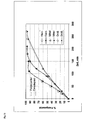
- Fig. 1 shows that over 90% release is achieved in all tablets after 1 to 5 hours.
- the drug to be tested was administered to fasted dogs.
- the plasma level of the active substance (s) was determined at different times.
- Fig. 2 shows the results after administration of a tablet according to Example 2. It can be seen in both praziquantel and especially in emodepside a significantly delayed decrease in plasma concentration.
- Fig. 3 shows the plasma levels of metamizole after administration, where the indicated metamizole concentration [4-MAA + 4-AA] is a calculated value, which is the sum of the serum concentrations of the two major active metabolites 4-MAA and 4-AA, taking into account the Molecular weight of these two metabolites is determined.
- Fig. 4 shows the mean concentration of metamizole [4-MAA + 4-AA] in the serum of fasted dogs after oral administration of one or two metamizole tablets according to Ex. 4. It can be seen that the plasma levels correlate fairly well with the administered dose.
Landscapes
- Health & Medical Sciences (AREA)
- Life Sciences & Earth Sciences (AREA)
- Veterinary Medicine (AREA)
- Chemical & Material Sciences (AREA)
- General Health & Medical Sciences (AREA)
- Medicinal Chemistry (AREA)
- Public Health (AREA)
- Pharmacology & Pharmacy (AREA)
- Animal Behavior & Ethology (AREA)
- Epidemiology (AREA)
- Bioinformatics & Cheminformatics (AREA)
- Engineering & Computer Science (AREA)
- Chemical Kinetics & Catalysis (AREA)
- Organic Chemistry (AREA)
- Nuclear Medicine, Radiotherapy & Molecular Imaging (AREA)
- General Chemical & Material Sciences (AREA)
- Proteomics, Peptides & Aminoacids (AREA)
- Inorganic Chemistry (AREA)
- Gastroenterology & Hepatology (AREA)
- Molecular Biology (AREA)
- Immunology (AREA)
- Pain & Pain Management (AREA)
- Tropical Medicine & Parasitology (AREA)
- Zoology (AREA)
- Nutrition Science (AREA)
- Physiology (AREA)
- Biomedical Technology (AREA)
- Rheumatology (AREA)
- Neurosurgery (AREA)
- Neurology (AREA)
- Pharmaceuticals Containing Other Organic And Inorganic Compounds (AREA)
- Medicinal Preparation (AREA)
- Acyclic And Carbocyclic Compounds In Medicinal Compositions (AREA)
Description
- Die Erfindung betrifft eine feste Arzneimittelzubereitung mit verzögerter Freisetzung der Wirkstoffe, die sich insbesondere zur Anwendung bei Tieren eignet.
- In der Tiermedizin und insbesondere für Katzen und Hunde sind Arzneimittel mit verzögerter Freisetzung ("controlled release"-Formulierungen, Retardformulierungen) nicht üblich, obwohl für die Anwendung beim Menschen zahlreiche auf verschiedenen Techniken basierende Retard-Arzneimittel verfügbar sind. Einer der Hauptgründe dafür ist, dass Tiere, vor allem Katzen und Hunde, sich vom Menschen hinsichtlich der Verweilzeiten im Gastrointestinaltrakt (gastrointestinal transit times [GITT]), Nahrungsmitteleinflüssen, Einfluß der Freßgewohnheiten, Art, Größe, pH-Wert im Magen, Darmenzyme, Permeabilität des Gastrointestinaltraktes und der Bereiche, in denen Wirkstoffe absorbiert werden, unterscheiden [S.C. Sutton, Adv. Drug delivery reviews, 56 (2004) 1383 - 1398]. Physiologische Unterschiede zwischen Hunden und Menschen sind in der Literatur ausführlich beschrieben [Dressman, Pharm Res., 3 (1986) 123 - 131; Schneider et al., J. Med. Chem., 42 (1999) 5072]. Wenn ein Tier eine übliche Retardtablette bei der oralen Aufnahme zerkaut oder sonstwie zerkleinert, wird der Wirkstoff sehr schnell freigesetzt und der eigentliche Zweck der Retardtablette wird nicht erreicht. Die Aufnahme des Wirkstoffs oder - anders ausgedrückt - das pharmakokinetische Profil kann erheblich durch das Zerkauen der Tablette durch das Tier verändert werden. Ziel ist es für solche Fälle eine Formulierung zu entwickeln, bei der die Zerkleinerung einen möglichst geringen Einfluss auf die Aufnahme des Wirkstoffs hat. Die Entwicklung einer solchen Formulierung für die Anwendung beim Tier stellt daher für den Fachmann ein schwieriges technisches Problem dar. Dabei ist auch zu beachten, dass die mechanische Belastung z. B. in einem Hundemagen wesentlich höher ist als beim Menschen.
- In
WO 2004/014346 werden Carprofen-Tabletten mit verzögerter Freisetzung beschrieben, in denen die hydrophilen Polymere Methocel (Hydroxypropylmethylcellulose "HPMC"), Polyox und Carbopol eingesetzt werden. Die Tabletten beruhen auf dem Prinzip, dass sie Mikropartikel enthalten, die selbst "controlled-release" Eigenschaften haben. Solche Formulierungen sind aufwendig in der Herstellung, außerdem bleibt unklar, ob ein geeignetes Freisetzungsprofil im Gastrointestinaltrakt des Tieres ohne Einbußen bei der Bioverfügbarkeit erreicht werden kann. - In
EP 0439858 A1 werden Phenytoin-Tabletten mit verzögerter Freisetzung zur Anwendung an Tieren beschrieben, welche als Gelbildner Zellulose- oder Stärkederivate, Polyvinylpyrrolidon oder Polyvinylalkohol enthalten. - Eine weitere Schwierigkeit für den Galeniker besteht darin, dass die Verweilzeiten im Magen und im Verdauungstrakt erheblich schwanken können. Die Verweilzeiten im Gastrointestinaltrakt nüchterner und gefütterter Beagle-Hunde variieren erheblich [siehe z. B. die Figuren 7 und 8 in Sutton a.a.O.]. Sutton gibt an, dass etwa 80% der Tabletten eine Verweildauer im Verdauungstrakt von über 24 Stunden hatten. Daraus schließt er, dass mit Retardformulierungen, die eine in vitro Freisetzungsdauer von weniger als 24 Stunden aufweisen, üblicherweise die gesamte Dosis vom Hund aufgenommen werden kann und nicht vorzeitig ausgeschieden wird. Weiterhin hängt die Verweildauer im Magen auch von der Größe des Arzneimittels und der Art und Rasse des betreffenden Tieres ab [siehe z. B. Fix et al., Pharm. Res., 10 (1993) 1087 -1089]. Ziel ist es eine Formulierung zu entwickeln, die sich für die Anwendung bei verschiedenen Tierarten und -rassen eignet.
- Eine weitere Schwierigkeit für den Galeniker ergibt sich daraus, dass der Wirkstoff oft nur in bestimmten begrenzten Bereichen des Gastrointestinaltraktes überhaupt aufgenommen werden kann. Wird der Wirkstoff beispielsweise nur im Dünndarm absorbiert, sollte die Formulierung den Wirkstoff auch möglichst vollständig im Dünndarm freisetzen. Schwankungen der Verweildauer der Formulierung im Gastrointestinaltrakt können die Bioverfügbarkeit beeinflussen. Den Verdauungstrakt z. B. bei Hunden durchläuft in bestimmten Zeitabständen eine peristaltische Bewegung, die auch als "housekeeper wave" bezeichnet wird; diese housekeeper wave hat einen Einfluss auf die Verweildauer der Formulierung im Gastrointestinaltrakt, denn die Verweildauer hängt davon ab, ob die housekeeper wave gerade begonnen hat oder erst später einsetzt. Verweilzeiten im Magen hängen auch erheblich von Art und Menge der aufgenommenen Nahrung und sogar von der Größe der Magenpförtneröffnung ab.
- Diese Schwierigkeiten mögen dazu beigetragen haben, dass bis heute nach unserer Kenntnis keine oralen Arzneimittel mit kontrollierter Freisetzung für Hunde auf dem Markt sind. Jedenfalls ist die Entwicklung einer Formulierung mit kontrollierter Freisetzung, die sich z. B. für Katzen und/oder Hunde eignet, eine schwierige Aufgabe, deren Lösung der Literatur nicht ohne weiteres entnommen werden kann.
- Zahlreiche Möglichkeiten eine verzögerte Freisetzung zu erreichen sind bekannt. Üblicherweise bevorzugt der Fachmann Matrixtabletten, die ein Polymer wie z. B. Celluloseether (Hydroxypropylcellulose oder Hydroxypropylmethylcellulose) enthalten, das ein hydrophiles Gel bildet, da solche Tabletten mit den in der pharmazeutischen Industrie üblichen Maschinen hergestellt werden können und auch unempfindlich bezüglich der Herstellungsbedingungen sind. Selbst wenn z. B. ein Hund eine solche Tablette zerkaut, quellen die Bruchstücke wegen dem gelbildenden Polymer auf und die unmittelbare rasche Freisetzung des Wirkstoffs wird dadurch verzögert.
- Tiere wie z. B. Hunde können je nach Art unterschiedlich groß sein und ihr Gewicht variiert. Genau auf die jeweilige Größe abgestimmte Dosierungen sind daher kaum im Markt vorhanden, da dies in Herstellung und Vertrieb viel zu aufwendig wäre. Daher werden in der Regel die für kleinere Tiere bestimmten Tabletten auch größeren Tieren verabreicht. In solchen Fällen müssen den größeren Tieren zwei oder mehr Tabletten verabreicht werden. Verwendet man die oben beschriebene übliche Technik der hydrophilen Matrixtabletten, die gelbildende Polymere wie Celluloseether enthalten, quellen die Tabletten im wässrigen Milieu des Gastrointestinaltraktes auf und bilden eine Gelhülle. Wir fanden bei unseren Untersuchungen, dass die Gelschichten solcher Tabletten miteinander verkleben und größere Klumpen im Gastrointestinaltrakt bilden. Die Oberfläche eines solchen Klumpens ist wesentlich kleiner als die Summe der Oberflächen der einzelnen gequollenen Tabletten. Das führt dazu, dass die Freisetzungsrate des Klumpens wesentlich geringer ist als die der einzelnen Tabletten. Die in vivo Wirkstofffreisetzung aus den Gelmatrices ist dann nicht mehr reproduzierbar.
- Gemäß den Empfehlungen aus dem Stand der Technik sollte bei Retardtabletten für Hunde eine Freisetzungsdauer von bis zu 24 Stunden akzeptabel sein, da die Verweilzeit im Gastrointestinaltrakt (GITT) für etwa 80% der Tabletten mindestens 24 Stunden beträgt. Unerwarteterweise stellten wir aber Folgendes fest: Selbst wenn man nüchternen Hunden Tabletten auf Celluloseether-Basis verabreicht, die in vitro > 80% des Wirkstoffs während etwa 12 Stunden freisetzen, findet man in den Faeces Tabletten, die nur teilweise gequollen sind und einen trockenen Kern aufweisen. Dies führt zu einer Verringerung der Bioverfügbarkeit. Die Probleme verstärken sich noch, wenn mehrere Tabletten verabreicht werden, was in der Praxis bei größeren Tieren üblich ist, um die richtige Dosierung zu erreichen. In diesem Fall findet man in den Faeces auch Klumpen von verklebten Tabletten.
- McInnes et al., (Pharm Res., Oct 2007) untersuchten zwei verschiedene Matrixtabletten mit unterschiedlichen in vitro Freisetzungsraten an gefütterten und nüchternen Hunden. Sie konnten in ihren Untersuchungen keine einfache Korrelation zwischen der in vitro und in vivo Freisetzung finden. Dies unterstreicht, dass es nicht einfach ist, eine Tablette mit verzögerter Freisetzung zu entwickeln, die einerseits den gesamten Wirkstoff vor Ausscheidung mit den Faeces freisetzt und die andererseits ohne Nachteile zulässt, dass mehr als eine Tablette verabreicht werden kann.
- Die vorliegende Erfindung zielt daher darauf ab, eine Tablette mit verzögerter Freisetzung zu entwickeln, die sich im Gastrointestinaltrakt möglichst vollständig auflöst und den Wirkstoff möglichst vollständig innerhalb einer bestimmten Zeit freisetzt, und zwar unabhängig davon, ob das Tier gefressen hat oder nüchtern ist. Dies ist auch deswegen wichtig, weil der Tierhalter oder der Tierarzt das Vertrauen in das Produkt verlieren könnte, wenn er nicht aufgelöste Teile der Tablette in den Faeces findet. Insbesondere wurde angestrebt, ein Matrixsystem zu finden, das vorzugsweise mindestens 80% des gesamten Wirkstoffs in 1 bis 6 Stunden freisetzt und bei dem im wässrigen Milieu des Gastrointestinaltraktes keine Verklumpung auftritt, wenn zwei oder mehr Tabletten verabreicht werden. Schließlich sollte die Herstellung nach Möglichkeit einfach mit üblichen Maschinen der pharmazeutischen Industrie möglich sein.
- Die Erfindung betrifft eine feste Arzneimittelzubereitung mit verzögerter Freisetzung, enhaltend:
- a. mindestens einen pharmazeutisch aktiven Wirkstoff,
- b. 15 bis 40 Gew.-% Polyvinylpyrrolidon und/oder Polyvinylpyrrolidon-Derivat, bei dem es sich um ein Copolymer aus Vinylpyrrolidon und Vinylacetat im Verhältnis 6:4 handelt, wobei es sich bei dem Polyvinylpyrrolidon und/oder Polyvinylpyrrolidon-Derviät um ein Gemisch
- i. eines kurzkettigen Polyvinylpyrrolidons, oder Polyvinylpyrrolidon-Derivats mit einem K-Wert von 17 bis 30 und
- ii. eines längerkettigen Polyvinylpyrrolidons oder Polyvinylpyrrolidon-Derivats mit einem K-Wert von über 40 handelt,
- c. mindestens einen Füllstoff.
- Als pharmazeutisch aktive Wirkstoffe kommen grundsätzlich alle geeigneten pharmazeutisch wirksamen chemischen Verbindungen in Frage.
- Gemäß einer bevorzugten Ausführungsform sind dies anthelmintische Wirkstoffe.
- Als eine bevorzugte Gruppe anthelmintischer Wirkstoffe seien Depsipeptide genannt:
- Depsipeptide sind den Peptiden ähnlich und unterscheiden sich von diesen darin, dass ein oder mehrere α-Aminosäurebausteine durch α-Hydroxycarbonsäurebausteine ersetzt sind. Erfindungsgemäß bevorzugt eingesetzt werden cyclische Depsipeptide mit 18 bis 24 Ringatomen, insbesondere mit 24 Ringatomen.
- Zu den Depsipeptiden mit 18 Ringatomen zählen Verbindungen der allgemeinen Formel (I):

R1, R3 und R5 unabhängig voneinander für Wasserstoff geradkettiges oder verzweigtes Alkyl mit bis zu 8 Kohlenstoffatomen, Hydroxyalkyl, Alkanoyloxyalkyl, Alkoxyalkyl, Aryloxyalkyl, Mercaptoalkyl, Alkylthioalkyl, Alkylsulfinylalkyl, Alkylsulfonylalkyl, Carboxyalkyl, Alkoxycarbonylalkyl, Arylalkoxycarbonylalkyl, Carbamoylalkyl, Aminoalkyl, Alkylaminoalkyl, Dialkylaminoalkyl, Guanidinoalkyl, das gegebenenfalls durch einen oder zwei Benzyloxycarbonylreste oder durch einen, zwei, drei oder vier Alkylreste substituiert sein kann, Alkoxycarbonylaminoalkyl, 9-Fluorenylmethoxycarbonyl(Fmoc)aminoalkyl, Alkenyl, Cycloalkyl, Cycloalkylalkyl sowie gegebenenfalls substituiertes Arylalkyl, wobei als Substituenten genannt seien Halogen, Hydroxy, Alkyl und Alkoxy, stehen, - R2, R4 und R6 unabhängig voneinander für Wasserstoff, geradkettiges oder verzweigtes Alkyl mit bis zu 8 Kohlenstoffatomen, Hydroxyalkyl, Mercaptoalkyl, Alkanoyloxyalkyl, Alkoxyalkyl, Aryloxyalkyl, Alkylthioalkyl, Alkylsulfinylalkyl, Alkylsulfonylalkyl, Carboxyalkyl, Alkoxycarbonylalkyl, Arylalkoxycarbonylalkyl, Carbamoylalkyl, Aminoalkyl, Alkylaminoalkyl, Dialkylaminoalkyl, Alkoxycarbonylaminoalkyl, Alkenyl, Cycloalkyl, Cycloalkylalkyl gegebenenfalls substituiertes Aryl oder Arylalkyl wobei als Substituenten genannt seien Halogen, Hydroxy, Alkyl, Alkoxy, stehen, sowie deren optische Isomere und Racemate.
- Bevorzugt sind Verbindungen der Formel (I),

R1, R3 und R5 unabhängig voneinander für geradkettiges oder verzweigtes C1-C8-Alkyl, insbesondere Methyl, Ethyl, Propyl, Isopropyl, Butyl, Isobutyl, sec.-Butyl, tert.-Butyl, Pentyl, Isopentyl, sec.-Pentyl, Hexyl, Isohexyl, sec.-Hexyl, Heptyl, Isoheptyl, sec.-Heptyl, tert.-Heptyl, Oktyl, Isooktyl, sec.-Oktyl, Hydroxy-C1-C6-alkyl, insbesondere Hydroxymethyl, 1-Hydroxyethyl, C1-C4-Alkanoyloxy-C1-C6-alkyl, insbesondere Acetoxymethyl, 1-Acetoxyethyl, C1-C4-Alkoxy-C1-C6-alkyl, insbesondere Methoxymethyl, 1-Methoxyethyl, Aryl- C1-C4-alkyloxy-C1-C6-alkyl, insbesondere Benzyloxymethyl, 1-Benzyloxy-ethyl, Mercapto- C1-C6-alkyl, insbesondere Mercaptomethyl, C1-C4-Alkylthio-C1-C6-alkyl, insbesondere Methylthioethyl, C1-C4-Alkylsulfinyl-C1-C6-alkyl, insbesondere Methylsulfinylethyl, C1-C4-Alkylsulfonyl-C1-C6-alkyl, insbesondere Methylsulfonylethyl, Carboxy-C1-C6-alkyl, insbesondere Carboxymethyl, Carboxyethyl, C1-C4-Alkoxycarbonyl-C1-C6-alkyl, insbesondere Methoxycarbonylmethyl, Ethoxycarbonylethyl, C1-C4-Arylalkoxycarbonyl-C1-C6-alkyl, insbesondere Benzyloxycarbonylmethyl, Carbamoyl- C1-C6-alkyl, insbesondere Carbamoylmethyl, Carbamoylethyl, Amino-C1-C6-alkyl, insbesondere Aminopropyl, Aminobutyl, C1-C4-Alkylamino-C1-C6-alkyl, insbesondere Methylaminopropyl, Methylaminobutyl, C1-C4-Dialkylamino-C1-C6-alkyl, insbesondere Dimethylaminopropyl, Dimethylaminobutyl, Guanido- C1-C6-alkyl, insbesondere Guanidopropyl, C1-C4-Alkoxycarbonylamino-C1-C6-alkyl, insbesondere tert.-Butoxycarbonylaminopropyl, tert.-Butoxycarbonylaminobutyl, 9-Fluorenylmethoxycarbonyl(Fmoc)amino-C1-C6-alkyl, insbesondere 9-Fluorenyl-methoxycarbonyl-(Fmoc)aminopropyl, 9-Fluorenylmethoxycarbonyl(Fmoc)aminobutyl, C2-C8-Alkenyl, insbesondere Vinyl, Allyl, Butenyl, C3-C7-Cycloalkyl, insbesondere Cyclopentyl, Cyclohexyl, Cycloheptyl, C3-C7-Cycloalkyl- C1-C4-alkyl, insbesondere Cyclopentylmethyl, Cyclohexylmethyl, Cycloheptylmethyl, Phenyl- C1-C4-alkyl, insbesondere Phenylmethyl das gegebenenfalls durch Reste aus der Reihe Halogen, insbesondere Fluor, Chlor Brom oder Iod, Hydroxy, C1-C4-Alkoxy, insbesondere Methoxy oder Ethoxy, C1-C4-Alkyl, insbesondere Methyl, substituiert sein kann,
R2, R4 und R6 unabhängig voneinander für geradkettiges oder verzweigtes C1-C8-Alkyl, insbesondere Methyl, Ethyl, Propyl, Isopropyl, Butyl, Isobutyl, sec.-Butyl, tert.-Butyl, Pentyl, Isopentyl, sec.-Pentyl, Hexyl, Isohexyl, sec.-Hexyl, Heptyl, Isoheptyl, sec.-Heptyl, tert.-Heptyl, Oktyl, Isooktyl, sec.-Oktyl, Hydroxy-C1-C6-alkyl, insbesondere Hydroxymethyl, 1-Hydroxyethyl, C1-C4-Alkanoyloxy- C1-C6-alkyl, insbesondere Acetoxymethyl, 1-Acetoxyethyl, C1-C4-Alkoxy-C1-C6-alkyl, insbesondere Methoxymethyl, 1-Methoxyethyl, Aryl- C1-C4-alkyloxy- C1-C6-alkyl, insbesondere Benzyloxymethyl, 1-Benzyloxy-ethyl, Mercapto- C1-C6-alkyl, insbesondere Mercaptomethyl, C1-C4-Alkylthio-C1-C6-alkyl, insbesondere Methylthioethyl, C1-C4-Alkylsulfinyl- C1-C6-alkyl, insbesondere Methylsulfinylethyl, C1-C4-Alkylsulfonyl- C1-C6-alkyl, insbesondere Methylsulfonylethyl, Carboxy- C1-C6-alkyl, insbesondere Carboxymethyl, Carboxyethyl, C1-C4-Alkoxycarbonyl-C1-C6-alkyl, insbesondere Methoxycarbonylmethyl, Ethoxycarbonylethyl, C1-C4-Arylalkoxycarbonyl- C1-C6-alkyl, insbesondere Benzyloxycarbonylmethyl, Carbamoyl- C1-C6-alkyl, insbesondere Carbamoylmethyl, Carbamoylethyl, Amino- C1-C6-alkyl, insbesondere Aminopropyl, Aminobutyl, C1-C4-Alkylamino-C1-C6-alkyl, insbesondere Methylaminopropyl, Methylaminobutyl, C1-C4-Dialkylamino-C1-C6-alkyl, insbesondere Dimethylaminopropyl, Dimethylaminobutyl, C2-C8-Alkenyl, insbesondere Vinyl, Allyl, Butenyl, C3-C7-Cycloalkyl, insbesondere Cyclopentyl, Cyclohexyl, Cycloheptyl, C3-C7-Cycloalkyl- C1-C4-alkyl, insbesondere Cyclopentylmethyl, Cyclohexylmethyl, Cycloheptylmethyl, Phenyl, Phenyl-C1-C4-alkyl, insbesondere Phenylmethyl das gegebenenfalls durch Reste aus der Reihe Halogen, insbesondere Fluor, Chlor Brom oder Iod, Hydroxy, C1-C4-Alkoxy, insbesondere Methoxy oder Ethoxy, C1-C4-Alkyl, insbesondere Methyl, substituiert sein kann, sowie deren optische Isomere und Racemate. - R1, R3 und R5 unabhängig voneinander für geradkettiges oder verzweigtes C1-C8-Alkyl, insbesondere Methyl, Ethyl, Propyl, Isopropyl, Butyl, Isobutyl, sec.-Butyl, Pentyl, Isopentyl, sec.-Pentyl, Hexyl, Isohexyl, sec.-Hexyl, Heptyl, Isoheptyl, sec.-Heptyl, Oktyl, Isooktyl, sec.-Oktyl, Hydroxy- C1-C6-alkyl, insbesondere Hydroxymethyl, 1-Hydroxyethyl, C1-C4-Alkanoyloxy-C1-C6-alkyl, insbesondere Acetoxymethyl, 1-Acetoxyethyl, C1-C4-Alkoxy-C1-C6-alkyl, insbesondere Methoxymethyl, 1-Methoxyethyl, Aryl-C1-C4-alkyloxy-C1-C6-alkyl, insbesondere Benzyloxymethyl, 1-Benzyloxyethyl, C1-C4-Alkoxycarbonylamino-C1-C6-alkyl, insbesondere tert.-Butoxycarbonylaminopropyl, tert.-Butoxycarbonylaminobutyl, C2-C8-Alkenyl, insbesondere Vinyl, Allyl, C3-C7-Cycloalkyl, insbesondere Cyclopentyl, Cyclohexyl, Cycloheptyl, C3-C7-Cycloalkyl-C1-C4-alkyl, insbesondere Cyclopentylmethyl, Cyclohexylmethyl, Cycloheptylmethyl, Phenyl-C1-C4-alkyl, insbesondere Phenylmethyl das gegebenenfalls durch einen oder mehrere gleiche oder verschiedene der oben angegebenen Reste substituiert sein kann,
- R2, R4 und R6 unabhängig voneinander für geradkettiges oder verzweigtes C1-C8-Alkyl, insbesondere Methyl, Ethyl, Propyl, Isopropyl, Butyl, Isobutyl, sec.-Butyl, tert.-Butyl, Pentyl, Isopentyl, sec.-Pentyl, Hexyl, Isohexyl, sec.-Hexyl, Heptyl, Isoheptyl, sec.-Heptyl, tert.-Heptyl, Oktyl, Isooktyl, sec.-Oktyl, Hydroxy-C1-C6-alkyl, insbesondere Hydroxymethyl, Aryl- C1-C4-alkyloxy-C1-C6-alkyl, insbesondere Benzyloxymethyl, 1-Benzyloxyethyl, Carboxy- C1-C6-alkyl, insbesondere Carboxymethyl, Carboxyethyl, C1-C4-Alkoxycarbonyl- C1-C6-alkyl, insbesondere Methoxycarbonylmethyl, Ethoxycarbonylethyl, C1-C4-Aryl-alkoxycarbonyl-C1-C6-alkyl, insbesondere Benzyloxycarbonylmethyl, C1-C4-Alkylamino-C1-C6-alkyl, insbesondere Methylaminopropyl, Methylaminobutyl, C1-C4-Dialkylamino-C1-C6-alkyl, insbesondere Dimethylaminopropyl, Dimethylaminobutyl, C2-C8-Alkenyl, insbesondere Vinyl, Allyl, Butenyl, C3-C7-Cycloalkyl, insbesondere Cyclopentyl, Cyclohexyl, Cycloheptyl, C3-C7-Cycloalkyl- C1-C4-alkyl, insbesondere Cyclopentylmethyl, Cyclohexylmethyl, Cycloheptyl-methyl, Phenyl, Phenyl- C1-C4-alkyl, insbesondere Phenylmethyl das gegebenenfalls durch einen oder mehrere gleiche oder verschiedene der oben angegebenen Reste substituiert sein kann, sowie deren optische Isomere und Racemate.
- R1, R3 und R5 unabhängig voneinander für geradkettiges oder verzweigtes C1-C8-Alkyl, insbesondere Methyl, Ethyl, Propyl, Isopropyl, Butyl, Isobutyl, sec.-Butyl, Pentyl, Isopentyl, sec.-Pentyl, Hexyl, Isohexyl, sec.-Hexyl, Heptyl, Isoheptyl, sec.-Heptyl, Oktyl, Isooktyl, sec.-Oktyl C1-C8, insbesondere Allyl, C3-C7-Cycloalkyl- C1-C4-alkyl, insbesondere Cyclohexylmethyl, Phenyl-C1-C4-alkyl, insbesondere Phenylmethyl,
- R2, R4 und R6 unabhängig voneinander für geradkettiges oder verzweigtes C1-C8-Alkyl, insbesondere Methyl, Ethyl, Propyl, Isopropyl, Butyl, Isobutyl, sec.-Butyl, Pentyl, Isopentyl, sec.-Pentyl, Hexyl, Isohexyl, sec.-Hexyl, Heptyl, Isoheptyl, sec.-Heptyl, Oktyl, Isooktyl, sec.-Oktyl, C2-C8-Alkenyl, insbesondere Vinyl, Allyl, C3-C7-Cycloalkyl-C1-C4-alkyl, insbesondere Cyclohexylmethyl, Phenyl-C1-C4-alkyl, insbesondere Phenylmethyl das gegebenenfalls durch einen oder mehrere gleiche oder verschiedene der oben angegebenen Reste substituiert sein kann, sowie deren optische Isomere und Racemate.
- Im einzelnen seien folgende Verbindungen der allgemeinen Formel (I) genannt, in welcher die Reste R1 bis R6 die folgende Bedeutung haben:

R1 R2 R3 R4 R5 R6 -CHMeCH2Me -Cyclohexyl -CHMeCH2Me -Me -CHMeCH2Me -Me -CHMeCH2Me -Cyclohexyl -CHMeCH2Me -Me -CHMeCH2Me -Cyclohexyl -CHMeCH2Me -CH2-Phe -CHMeCH2Me -Me -CHMeCH2Me -Me -CHMeCH2Me -CH2-Phe -CHMeCH2Me -Me -CHMeCH2Me -CH2-Phe -CHMeCH2Me -(CH2)3-Me -CHMeCH2Me -Me -CHMeCH2Me -Me -CHMeCH2Me -(CH2)3-Me -CHMeCH2Me -Me -CHMeCH2Me -(CH2)3-Me -CHMe2 -CH2-Phe -CHMeCH2Me -Me -CHMeCH2Me -Me -CH2-Phe -CHMe2 -CH2-Phe -CHMe2 -CHMeCH2Me -CHMe2 -CH2CHMe2 -CH2-Phe -CH2CHMe2 -Me -CH2CHMe2 -CH2-Phe -(CH2)3-Me -Me -CHMeCH2Me -Me -CHMeCH2Me -Me -CHMe2 -Me -CHMe2 -Me -CHMe2 -Me -CH2-Me -Me -CH2-Me -Me -CH2-Me -Me -(CH2)2-Me -Me -(CH2)2-Me -Me -(CH2)2-Me -Me -(CH2)3-Me -Me -(CH2)3-Me -Me -(CH2)3-Me -Me -CH2-CH=CH2 -Me -CH2-CH=CH2 -Me -(CH2)-CH=CH2 -Me -CHMeCH2Me -Me -CHMeCH2Me -Me -CHMeCH2Me -CH2-Me -CHMeCH2Me -Me -CHMeCH2Me -Me -CHMeCH2Me -(CH2)2-Me -CHMeCH2Me -Me -CHMeCH2Me -Me -CHMeCH2Me -(CH2)3-Me -CHMeCH2Me -Me -CHMeCH2Me -Me -CH2Me -Me -CHMeCH2Me -Me -CHMeCH2Me -Me -(CH2)2-Me -Me -Cyclohexyl -Me -Cyclohexyl -Me -Cyclohexyl -Me -CH2CHMe2 -Cyclohexyl -CH2CHMe2 -Me -CH2CHMe2 -Cyclohexyl -CH2CHMe2 -Cyclohexyl -CH2CHMe2 -Me -CH2CHMe2 -Me -CHMeCH2Me -CHMe2 -CHMeCH2Me -CHMe2 -CHMeCH2Me -Me -CH2-Phe -Me -CH2-Phe -Me -CH2-Phe -Me -Cyclohexyl -Me -Cyclohexyl -Me -Cyclohexyl -Me -CHMe2 -CHMe2 -CHMe -Me -CHMe2 -Me -CHMe2 -CHMe2 -CHMe2 -CHMe2 -CHMe2 -Me -CH2-Me -CHMe2 -CH2Me -Me -CH2-Me -Me -CH2-Me -CHMe2 -CHMe2 -CHMe2 -CH2-Me -Me -(CH2)2-Me -CHMe2 -(CH2)2-Me -Me -(CH2)2-Me -Me -(CH2)2-Me -CHMe2 -(CH2)2-Me -CHMe2 -(CH2)2-Me -Me -(CH2)3-Me -CHMe2 -(CH2)3-Me -Me -(CH2)3-Me -Me -(CH2)3-Me -CHMe2 -(CH2)3-Me -CHMe2 -(CH2)3-Me -Me -CH2-CH=CH2 -CHMe2 -CH2-CH=CH2 -Me -CH2-CH=CH2 -Me -CH2-CH=CH2 -CHMe2 -CH2-CH=CH2 -CHMe2 -CH2-CH=CH2 -Me -Me -Me -CHMeCH2Me -Me -CH2-Me -Me -Me -Me -CHMeCH2Me -Me -(CH2)3-Me -Me Me = Methyl; Phe = Phenyl - Weiterhin sei als Depsipeptid die aus
EP 0 382 173 bekannte Verbindung PF 1022 der folgenden Formel (IIa) genannt:
- Außerdem seien als Depsipeptide die aus der
PCT-Anmeldung WO 93/19053 - Insbesondere seien aus
WO 93/19053 
Z für N-Morpholinyl, Amino, Mono- oder Dimethylamino steht. - Außerdem seien Verbindungen der folgenden Formel (IIc) genannt:

R1, R2, R3, R4 unabhängig voneinander für Wasserstoff, C1-C10-Alkyl oder Aryl, insbesondere Phenyl stehen, die gegebenenfalls substituiert sind durch Hydroxy, C1-C10-Alkoxy oder Halogen. - Die Verbindungen der allgemeinen Formeln (I) sowie (IIa), (IIb) und (IIc) sind bekannt und können nach den in
EP-A-382 173 DE-A 4 317 432 ,DE-A 4 317 457 ,DE-A 4 317 458 ,EP-A-634 408 EP-A-718 293 EP-A-872 481 EP-A-685 469 EP-A-626 375 EP-A-664 297 EP-A-669 343 EP-A-787 141 EP-A-865 498 EP-A-903 347 - Zu den cyclischen Depsipeptiden mit 24 Ringatomen zählen auch Verbindungen der allgemeinen Formel (IId)

R1a, R2a , R11a und R12a unabhängig voneinander für C1-8-Alkyl, C1-8-Halogenalkyl, C3-6-Cycloalkyl, Aralkyl, Aryl stehen,
R3a, R5a, R7a, R9a unabhängig voneinander für Wasserstoff oder geradkettiges oder verzweigtes C1-8-Alkyl steht, das gegebenenfalls durch Hydroxy, C1-4-Alkoxy, Carboxy,

R4a, R6a, R8a, R10a unabhängig voneinander für Wasserstoff, geradkettiges C1-5-Alkyl, C2-6-Alkenyl, C3-7-Cycloalkyl, die gegebenenfalls durch Hydroxy, C1-4-Alkoxy, Carboxy, Carboxamid, Imidazolyl, Indolyl, Guanidino, SH oder C1-4-Alkylthio substituiert sein können, sowie für Aryl oder Aralkyl die durch Halogen, Hydroxy, C1-4-Alkyl, C1-4-Alkoxy substituiert sein können, stehen sowie deren optische Isomere und Racemate. - R1a, R2a, R11a und R12a unabhängig voneinander für Methyl, Ethyl, Propyl, Isopropyl, n-, s-, t-Butyl oder Phenyl, das gegebenenfalls substituiert ist durch Halogen, C1-4-Alkyl, OH, C1-4-Alkoxy, sowie für Benzyl oder Phenylethyl stehen, die gegebenenfalls durch die bei Phenyl angegebenen Reste substituiert sein können;
- R3a bis R10a die oben angegebene Bedeutung haben.
- R1a, R2a, R11a und R12a unabhängig voneinander für Methyl, Ethyl, Propyl, Isopropyl oder n-, s-, t-Butyl stehen,
R3a, R5a, R7a, R9a für Wasserstoff, geradkettiges oder verzweigtes C1-8-Alkyl, insbesondere Methyl, Ethyl, Propyl, i-Propyl, n-, s-, t-Butyl, die gegebenenfalls durch C1-4-Alkoxy, insbesondere Methoxy, Ethoxy, Imidazolyl, Indolyl oder C1-4-Alkylthio, insbesondere Methylthio, Ethylthio substituiert sein können, ferner für Phenyl, Benzyl oder Phenethyl stehen, die gegebenenfalls durch Halogen insbesondere Chlor substituiert sein können.
R4a, R6a, R8a, R10a unabhängig voneinander für Wasserstoff, Methyl, Ethyl, n-Propyl, n-Butyl, Vinyl, Cyclohexyl, die gegebenenfalls durch Methoxy, Ethoxy, Imidazolyl, Indolyl, Methylthio, Ethylthio substituiert sein können, sowie für Isopropyl, s-Butyl ferner für gegebenenfalls halogensubstituiertes Phenyl, Benzyl oder Phenylethyl stehen. - Die Verbindungen der Formel (IId) können ebenfalls nach den in
EP-A-382 173 DE-A 4 317 432 ,DE-A 4 317 457 ,DE-A 4 317 458 ,EP-A-634 408 EP-A-718 293 EP-A-872 481 EP-A-685 469 EP-A-626 375 EP-A-664 297 EP-A-669 343 EP-A-787 141 EP-A-865 498 EP-A-903 347 - Erfindungsgemäß ganz besonders bevorzugte Depsipeptide sind PF 1022 A (siehe Formel (IIa)) und Emodepside (PF 1022-221, Verbindung der Formel (IIb) worin beide Reste Z für den Morpholinylrest stehen). Der INN Emodepside steht für die Verbindung mit dem systematischen Namen: Cyclo[(R)-lactoyl-N-methyl-L-leucyl-(R)-3-(p-morpholinophenyl)lactoyl-N-methyl-L-leucyl-(R)-lactoyl-N-methyl-L-leucyl-(R)-3-(p-morpholinophenyl)lactoyl-N-methyl-L-leucyl.
- Als weitere anthelmintische Wirkstoffe kommen Praziquantel oder Epsiprantel in Frage. Beide sind als Wirkstoffe gegen Endoparasiten lange bekannt (siehe z. B.
US 4 661 489 für Epsiprantel undUS 4 001 411 für Praziquantel). Praziquantel enthaltende Produkte sind z. B. unter der Bezeichnung Droncit® im Handel erhältlich. Im Rahmen dieser Erfindung ist die Verwendung von Praziquantel bevorzugt. - Gemäß einer besonders bevorzugten Ausführungsform können die Depsipeptide in Kombination mit Praziquantel oder Epsiprantel eingesetzt werden, wobei Praziquantel als Kombinationspartner bevorzugt ist.
- Die vorstehend als bevorzugt genannten Depsipeptide sind entsprechend auch in den Kombinationen bevorzugt bzw. besonders bevorzugt.
- Gemäß einer ganz besonders bevorzugten Ausführungsform enthalten die erfindungsgemäßen festen Arzneimittelzubereitungen eine Kombination von Praziquantel und PF 1022 A.
- Gemäß einer weiteren ganz besonders bevorzugten Ausführungsform enthalten die erfindungsgemäßen festen Arzneimittelzubereitungen eine Kombination von Praziquantel und Emodepside.
- Als weitere Wirkstoffe kommen Makrocyclische Lactone in Frage, und zwar insbesondere Avermectine, Dihydroavermectine (Ivermectine) oder Milbemycine. Diese haben anthelmintische Wirkung, zeigen aber auch eine mehr oder weniger starke Wirkung gegen Ectoparasiten, beispielsweise gegen Insekten oder Milben.
- Avermectine im engeren Sinne sind insbesondere die acht Avermectin-Komponenten A1a, A1b, A2a, A2b, B1a, B1b, B2a und B2b. In der Praxis wird beispielsweise das mit Abamectin bezeichnete Gemisch eingesetzt, das im wesentlichen die Avermectine B1 enthält. Weiterhin werden z. B. Doramectin und Selamectin zu den Avermectinen gerechnet.
- Das Hydrierungsprodukt des Abamectins wird als Ivermectin bezeichnet, es handelt sich entsprechend um die 22,23-Dihydroavermectine B1.
- Als Milbemycine seien genannt Milbemycin B41 D, Nemadectin, Moxidectin.
- Gemäß einer weiteren ganz besonders bevorzugten Ausführungsform enthalten die erfindungsgemäßen festen Arzneimittelzubereitungen eine Kombination von Praziquantel, Emodepside und einem der oben genannten Makrocyclischen Lactone. Von diesen ganz besonders bevorzugt ist in dieser Ausführungsform Ivermectin.
- Als eine weitere Gruppe von Wirkstoffen kommen Analgetika in Frage wie z. B. Nichtopioid-Analgetika oder Opiod-Analgetika. Als Nichtopioid-Analgetika seien beispielsweise Meloxicam, Carprofen und Metamizol genannt. Als Opioid-Analgetika seien beispielsweise genannt Bupremorphin und Fentanyl.
- Als bevorzugtes Beispiel sei Metamizol (N-Methyl-N-(2,3-dimethyl-5-oxo-1-phenyl-3-pyrazolin-4-yl)aminomethansulfonsäure, auch als Dipyrone bezeichnet) genannt, das in der Regel in Form seines Natriumsalzes eingesetzt wird. Andere pharmazeutisch verträgliche Salze können ebenfalls verwendet werden. Metamizol ist genau genommen als Prodrug anzusehen, das vier Hauptmetaboliten hat. Zwei davon sind wirksam, und zwar vor allem 4-N-Methylaminoantipyrin (4-MAA) und Aminoantipyrin (4-AA).
- Weiterhin als Arzneimittelwirkstoffe einsetzbar sind pharmakologisch verträgliche Phosphonsäurederivate, wobei es sich üblicherweise um organische Verbindungen handelt, die sich als Stoffwechselstimulantien und Tonika insbesondere für Nutz- und Haustiere eignen. Als bevorzugte Beispiele seien die bereits lange bekannten Verbindungen Toldimfos und insbesondere Butaphosphan (z. B. verwendet in dem Produkt Catosal®) genannt, die unter anderem der Ergänzung von Mineralstoffen (Phosphor) dienen.
- Wirkstoffe können je nach Struktur in stereoisomeren Formen oder als Stereoisomerengemische vorliegen, z.B. als Enantiomere oder Racemate. Sowohl die Stereoisomerengemische als auch die reinen Stereoisomeren können erfindungsgemäß verwendet werden.
- Weiterhin können gegebenenfalls verwendet werden: Salze der Wirkstoffe mit pharmazeutisch annehmbaren Säuren oder Basen und auch Solvate, insbesondere Hydrate, der Wirkstoffe oder ihrer Salze.
- Gemäß einer bevorzugten Ausführungsform handelt es sich bei den erfindungsgemäßen Zubereitungen um Tabletten.
- Die Zubereitungen enthalten retardierende Polymere, bei denen es sich um wasserquellbare Polymere handelt. Da die wasserquellbaren Polymeren in Gegenwart von Wasser Gele bilden, kann man sie auch als "gelbildende Polymere" bezeichnen. Erfindungsgemäß werden als wasserquellbare Polymere Polyvinylpyrrolidone oder deren Derivate eingesetzt, auch der Einsatz von Mischungen von Polyinylpyrrolidonen und Polyvinylpyrrolidon-Derivaten ist denkbar. Besonders bevorzugt ist jedoch der Einsatz von Polyvinylpyrrolidonen.
- Denkbar ist auch der Einsatz von Polyvinylpyrrolidonen in Kombination mit anderen geeigneten Polymeren, als Beispiel sei Kollidon® SR der Fa. BASF genannt. Dabei handelt es sich um eine Mischung, die sprühgetrocknetes Polyvinylacetat (mit einem gewichtsmittleren Molekulargewicht von etwa 450 000) und lösliches Polyvinylpyrrolidon (Povidon K 30) im Verhältnis 8 : 2 enthält.
- Als Beispiel für ein geeignetes Polyvinylpyrrolidon-Derivat sei Copovidon (z. B. Kollidon VA 64 der Fa. BASF) genannt. Dabei handelt es sich um ein Copolymer aus Vinylpyrrolidon und Vinylacetat im Verhältnis 6:4.
- Polyvinylpyrrolidone (Povidone, PVP) sind im Handel erhältliche hydrophile Polymere, die sich für die Verwendung in festen Arzneimittelzubereitungen mit verzögerter Freisetzung eignen. Verschiedene PVP-Arten sind im Handel erhältlich. PVP mit niedrigerem Molekulargewicht werden üblicherweise als Bindemittel für Tabletten eingesetzt. Im wässrigen Milieu quellen PVP und erodieren. Es zeigte sich aber, dass PVP-haltige Tabletten keine klebrige Gelschicht bilden, wie z. B. Celluloseether. Gemäß unseren in vitro Versuchen verkleben Tabletten enthaltend PVP auch im wässrigen Milieu nicht. Bei Verabreichung mehrerer Tabletten ist das Risiko einer Klumpenbildung im Gastrointestinaltrakt gering. Indem man PVP mit verschiedenen Molekulargewichten verwendet, kann man die Freisetzungskinetik in einem definierten Bereich variieren.
- Die eingesetzten Polyvinylpyrrolidone oder Polyvinylpyrrolidon-Derivate sind vorzugsweise wasserlöslich. Hierbei handelt es sich in der Regel um lineare nicht quervernetzte Polyvinylpyrrolidone oder Polyvinylpyrrolidon-Derivate.
- Die Polyvinylpyrrolidone oder Polyvinylpyrrolidon-Derivate weisen einen K-Wert von mindestens 17 auf.
- Der K-Wert der Polyvinylpyrrolidone oder Polyvinylpyrrolidon-Derivate steht in Beziehung zur Viskosität und zum Molekulargewicht und kann nach an sich bekannten Methoden bestimmt werden. Im Zweifel werden die Angaben zum K-Wert aus der European Pharmacopeia (Ph. Eur.) verwendet.
- Es werden Polyvinylpyrrolidone und/oder Polyvinylpyrrolidon-Derivate mit einem K-Wert von 17 bis 90, besonders bevorzugt 25 bis 90 eingesetzt.
- Die fertige Formulierung enthält 15 bis 40 Gew.-% t bevorzugt 25 bis 35 Gew.-% an Polyvinylpyrrolidon oder Polyvinylpyrrolidon-Derivat oder an deren Gemisch.
- Gemäß der Erfindung werden ein Polyvinylpyrrolidon und/oder Polyvinyl- und/oder Polyvinylpyrrolidon-Derivat mit einer geringeren Kettenlänge und eines mit einer höheren Kettenlänge eingesetzt. Auf diese Weise lässt sich die Freisetzungscharakteristik besonders gut einstellen, da mit kurzkettigen Polyvinylpyrrolidonen oder Polyvinylpyrrolidon-Derivaten eine relativ schnelle Freisetzung erreicht wird, während längerkettige Polyvinylpyrrolidone oder Polyvinylpyrrolidon-Derivate zu einer langsameren Freisetzung führen. Üblicherweise kann das Verhältnis von längerkettigem zu kurzkettigem Polyvinylpyrrolidon oder Polyvinylpyrrolidon-Derivat in einem Bereich von 1:10 Gewichtsteilen bis hin zum ausschließlichen Einsatz des längerkettigen Polyvinylpyrrolidons oder Polyvinylpyrrolidon-Derivats variieren. Das genaue Verhältnis sollte entsprechend dem Diffusionsverhalten des verwendeten Wirkstoffs eingestellt werden. Gut wasserlösliche Wirkstoffe wie z. B. Metamizol diffundieren leicht aus dem Gel heraus. In diesem Fall kann eine geeignete Freisetzungskinetik ohne kurzkettiges Polyvinylpyrrolidon oder Polyvinylpyrrolidon-Derivat oder mit relativ geringen Mengen davon erreicht werden. Das Gewichtsverhältnis von langkettigem zu kurzkettigem Polyvinylpyrrolidon oder Polyvinylpyrrolidon-Derivat liegt daher gemäß einer bevorzugten Ausführungsform im Bereich von mindestens 5:1 bis zum ausschließlichen Einsatz des langkettigen Polyvinylpyrrolidons, bevorzugt liegt das Gewichtsverhältnis bei mindestens 10:1.
- Weniger gut wasserlösliche Wirkstoffe wie Emodepside oder Praziquantel diffundieren langsamer aus dem Gel heraus und werden im Wesentlichen mit der Erosion des Gels freigesetzt. Hier ist daher ein höherer Anteil an kurzkettigem Polyvinylpyrrolidon oder Polyvinylpyrrolidon-Derivat empfehlenswert, um die gewünschte Freisetzungskinetik zu erreichen. Gemäß einer weiteren bevorzugten Ausführungsform liegt daher das Gewichtsverhältnis von langkettigem zu kurzkettigem Polyvinylpyrrolidon oder Polyvinylpyrrolidon-Derivat im Bereich von 1:1 bis 5:1, bevorzugt 2:1 bis 4:1.
- Das kurzkettige Polyvinylpyrrolidon oder Polyvinylpyrrolidon-Derivat hat einen K-Wert von 17 bis 30, bevorzugt etwa 25.
- Das längerkettige Polyvinylpyrrolidon oder Polyvinylpyrrolidon-Derivat hat einen K-Wert von über 40, vorzugsweise 60 bis 120, besonders bevorzugt etwa 90.
- Details bezüglich der oben genannten Polyvinylpyrrolidone, Polyvinylpyrrolidon-Derivate und bestimmter Mischungen können dem folgenden Buch entnommen werden: V. Bühler, "Kollidon, Polyvinylpyrrolidone for the pharmaceutical industry,", 9 th revised edition, BASF Pharma Ingredients, Germany, 2008.
- Zur Einstellung der Freisetzungsrate der erfindungsgemäßen Zubereitungen können wasserlösliche Hilfsstoffe eingesetzt werden, wie z. B. Polyethylenglykol, Lactose (insbesondere als Lactose-Monohydrat) oder mehrwertige Alkohole, z. B. Mannitol, Sorbitol, Xylitol oder Mischungen der vorstehend genannten Hilfstoffe; diese Hilfsstoffe sind gegebenenfalls in Mengen von üblicherweise 1 bis 20 % (m/m), bevorzugt 5 bis 15% (m/m) enthalten.
- Bevorzugt kann durch Einarbeitung von Sprengmitteln, wie z.B. Stärke, quervernetzte Natrium-Carboxymethylcellulose (Croscarmellose-Natrium), Natriumstärkeglycolat, vernetztes Polyvinylpyrrolidon (Crospovidone, wie z. B. ®Kollidon CL), die Freisetzungscharakteristik der erfindungsgemäßen Zubereitungen weiter variiert werden. Die Verwendung der vorstehend genannten wasserlöslichen Hilfsstoffe ist dann nicht unbedingt erforderlich. Ein bevorzugtes Sprengmittel ist Croscarmellose-Natrium, Ein weiteres bevorzugtes Sprengmittel ist Crospovidone. Sofern Sprengmittel verwendet werden, sind diese üblicherweise in Mengen bis 5% (m/m), bevorzugt 0,1 bis 3% (m/m), besonders bevorzugt 0,5 bis 1,5 % (m/m) enthalten.
- Insgesamt lässt sich durch die oben beschriebenen Maßnahmen eine gut reproduzierbare Bioverfügbarkeit erreichen und das Risiko in den Faeces unzersetzte oder teilweise zersetzte Tabletten zu finden ist sehr gering.
- Als Füllstoffe kommen für feste Zubereitungen (z. B. Tabletten) übliche Füllstoffe in Frage, wie zum Beispiel Carbonate wie Calciumcarbonat, Hydrogencarbonate, Kochsalz, Aluminiumoxide, Kieselsäuren, Tonerden, Phosphate (vor allem Calciumphosphate) oder organische Füllstoffe wie Lactose oder mikrokristalline Cellulose. Bevorzugt wird wasserfreies Calciumhydrogenphosphat eingesetzt. Ebenfalls bevorzugt ist mikrokristalline Cellulose. Es können auch verschiedene Füllstoffe miteinander kombiniert werden. Die Gesamtmenge an Füllstoff(en) liegt üblicherweise bei 5 bis 80% (m/m), bevorzugt 10 bis 70 % (m/m), besonders bevorzugt 20 bis 60 % (m/m).
- Weiterhin können die erfindungsgemäßen festen Arzneimittelzubereitungen neben dem oder den Wirkstoffen und den anderen vorstehend genannten Inhaltsstoffen auch Hilfsstoffe enthalten, wie zum Beispiel: Gleitmittel, z.B. kolloidales Siliciumdioxid wie Aerosil®, hydrierte pflanzliche Öle, Stearinsäure, Talkum oder deren Mischungen sind gegebenenfalls in Mengen von üblicherweise 0,1 bis 2% (m/m), bevorzugt 0,5 bis 1% (m/m) enthalten. Schmiermittel wie z.B. Magnesiumstearat sind gegebenenfalls in Mengen von üblicherweise 0,3 bis 2% (m/m), bevorzugt 0,5 bis 1,5 % (m/m) enthalten.
- Zur Verbesserung der Palatabilität werden gemäß einer bevorzugten Ausführungsform Aromen und/oder Geschmacksstoffe zugegeben.
- Als Fleischaroma sind Trockenleberpulver aus Rind, Geflügel, Schaf oder Schwein bevorzugt aus Geflügel und Schwein, sowie andere Aromenzubereitungen geeignet. Gemäß einer bevorzugten Ausführungsform sind Geschmacks- bzw. Aromastoffe geeignet, bei denen es sich um Mischungen aus Proteinen, Fetten und Kohlenhydraten handelt, die speziell aufgearbeitet werden, insbesondere sei genannt Artificial Beef Flavor® der Firma Pharma Chemie (Syracuse, Nebraska, USA). Artificial Beef Flavor® ist ein Schweineleberextrakt, dem weitere Proteine zugesetzt werden. Gemäß einer weiteren bevorzugten Ausführungsform kann auch Trockenleberpulver eingesetzt werden. In den erfindungsgemäßen Arzneimittelformulierungen werden die Geschmacks- bzw. Aromastoffe in einer Menge von 1 - 40 Gew.-%, bezogen auf das Gesamtgewicht der fertigen Formulierung, vorzugsweise 5-30 Gew.-%, insbesondere 10-25 Gew.-% eingesetzt. Die Prozentangaben sind dabei Gewichtsprozent der fertigen Formulierung.
- Die erfindungsgemäßen Zubereitungen können z. B. hergestellt werden, indem man die Bestandteile mischt oder granuliert und dann zu Tabletten verpresst. Bevorzugt sind Nassgranulierverfahren. Vorzugsweise werden Aroma bzw. Geschmackstoffe, Sprengmittel, Gleit- und Schmiermittel nach der Granulation zugemischt und die Mischung anschließend tablettiert.
- Die in vitro-Freisetzung der erfindungsgemäßen Zubereitungen kann in herkömmlichen Freisetzungsapparaturen bestimmt werden, und zwar mit dem "Paddle-Test" gemäß US Pharmacopeia (USP) unter Sink-Bedingungen. "Sink-Bedingungen" ist ein in der Pharmazie üblicher Begriff, er beinhaltet, dass Art und Menge des verwendeten Freisetzungsmediurns so gewählt werden, dass sich die dreifache Menge des betreffenden Wirkstoffs darin lösen würde. Das maximale Volumen an Freisetzungsmedium beträgt 900 ml. Das Medium enthält als wesentliche Komponente Wasser, dem ggf. zur Verbesserung der Löslichkeit ein Tensid zugesetzt wird. Mit üblichen Puffern wird der pH eingestellt, bei dem der betreffende Wirkstoff am stabilsten ist. Ziel ist es bei den erfindungsgemäßen Formulierungen eine mindestens 80 %ige, bevorzugt mindestens 85%ige, insbesondere mindestens 90%ige in vitro Freisetzung des Wirkstoffs in 1 bis 6 Stunden, bevorzugt in 1 bis 5 Stunden, besonders bevorzugt in 1,5 bis 5 Stunden zu erreichen. Gemessen wird bei 37°C und 75 U/min. Im Fall der Freisetzung von Depsipeptiden, wie Emodepsid, aus Depsipeptid-haltigen Formulierungen hat das Freisetzungsmedium pH 3.0 (Dinatriumhydrogenphosphat-Dihydrat/Citronensäure-Monohydrat-Puffer) und es wurden 0,5 % Natriumlaurylsulfat zugesetzt. Für Formulierungen die pro Einheit bis zu 10 mg Emodepsid enthalten, ist das Volumen 500 ml. Für Einheiten (z. B. Tabletten) mit höherem Emodepsid-Gehalt müssen die Sinkbedingungen eingehalten werden. So werden für 30mg-Einheiten 900 ml Medium benötigt.
- Im Fall von Zubereitungen mit Metamizol sind die Bedingungen zur Bestimmung der in vitro Freisetzung wie folgt: pH 6,8 (Phosphatpuffer, Standardfreisetzungsmedium nach USP), 900 ml.
- Die erfindungsgemäßen Zubereitungen eignen sich zur Anwendung bei Menschen und in der Tierhaltung und Tierzucht bei Nutz-, Zucht-, Zoo-, Labor-, Versuchs- und Hobbytieren.
- Zu den Nutz- und Zuchttieren gehören Säugetiere wie z.B. Rinder, Pferde, Schafe, Schweine, Ziegen, Kamele, Wasserbüffel, Esel, Kaninchen, Damwild, Rentiere, Pelztiere wie z.B. Nerze, Chinchilla, Waschbär, Vögel wie z.B. Hühner, Gänse, Puten, Enten, Strauße.
- Zu Labor- und Versuchstieren gehören Mäuse, Ratten, Meerschweinchen, Goldhamster, Hunde und Katzen.
- Zu den Hobbytieren gehören Hunde und Katzen. Besonders bevorzugt ist die Anwendung bei Katzen und insbesondere Hunden.
- Gemäß einer bevorzugten Ausführungsform enthalten die Zubereitungen anthelmintische Wirkstoffe , wie weiter oben beschrieben. Sie eignen sie sich dann zur Bekämpfung von pathogenen Endoparasiten die bei Menschen und in der Tierhaltung und Tierzucht bei Nutz-, Zucht-, Zoo-, Labor-, Versuchs- und Hobbytieren vorkommen. Je nach eingesetztem Wirkstoff sind sie dabei gegen alle oder einzelne Entwicklungsstadien der Schädlinge sowie gegen resistente und normal sensible Arten wirksam. Durch die Bekämpfung der pathogenen Endoparasiten sollen Krankheit, Todesfälle und Leistungsminderungen (z.B. bei der Produktion von Fleisch, Milch, Wolle, Häuten, Eiern, Honig usw.) vermindert werden, so dass durch den Einsatz der Wirkstoffe eine wirtschaftlichere und einfachere Tierhaltung möglich ist. Zu den pathogenen Endoparasiten zählen Cestoden, Trematoden, Nematoden, Acantocephalen:
- Aus der Ordnung der Pseudophyllidea z.B.: Diphyllobothrium spp., Spirometra spp., Schistocephalus spp., Ligula spp., Bothridium spp., Diphlogonoporus spp.
- Aus der Ordnung der Cyclophyllidea z.B.: Mesocestoides spp., Anoplocephala spp., Paranoplocephala spp., Moniezia spp., Thysanosomsa spp., Thysaniezia spp., Avitellina spp., Stilesia spp., Cittotaenia spp., Andyra spp., Bertiella spp., Taenia spp., Echinococcus spp., Hydatigera spp., Davainea spp., Raillietina spp., Hymenolepis spp., Echinolepis spp., Echinocotyle spp., Diorchis spp., Dipylidium spp., Joyeuxiella spp., Diplopylidium spp.
- Aus der Unterklasse der Monogenea z.B.: Gyrodactylus spp., Dactylogyrus spp., Polystoma spp..
- Aus der Unterklasse der Digenea z.B.: Diplostomum spp., Posthodiplostomum spp., Schistosoma spp., Trichobilharzia spp., Omithobilharzia spp., Austrobilharzia spp., Gigantobilharzia spp., Leucochloridium spp., Brachylaima spp., Echinostoma spp., Echinoparyphium spp., Echinochasmus spp., Hypoderaeum spp., Fasciola spp., Fasciolides spp., Fasciolopsis spp., Cyclocoelum spp., Typhlocoelum spp., Paramphistomum spp., Calicophoron spp-, Cotylophoron spp., Gigantocotyle spp., Fischoederius spp., Gastrothylacus spp., Notocotylus spp., Catatropis spp., Plagiorchis spp., Prosthogonimus spp., Dicrocoelium spp., Eurytrema spp., Troglotrema spp., Paragonimus spp., Collyriclum spp., Nanophyetus spp., Opisthorchis spp., Clonorchis spp. Metorchis spp., Heterophyes spp., Metagonimus spp.
- Aus der Ordnung der Enoplida z.B.: Trichuris spp., Capillaria spp., Trichomosoides spp., Trichinella spp.
- Aus der Ordnung der Rhabditia z.B.: Micronema spp., Strongyloides spp.
- Aus der Ordnung der Strongylida z.B.: Stronylus spp., Triodontophorus spp., Oesophagodontus spp., Trichonema spp., Gyalocephalus spp., Cylindropharynx spp., Poteriostomum spp., Cyclococercus spp., Cylicostephanus spp., Oesophagostomum spp., Chabertia spp., Stephanurus spp., Ancylostoma spp., Uncinaria spp., Bunostomum spp.
- Globocephalus spp., Syngamus spp., Cyathostoma spp., Metastrongylus spp., Dictyocaulus spp., Muellerius spp., protostrongylus spp., Neostrongylus spp., Cystocaulus spp., Pneumostrongylus spp., Spicocaulus spp., Elaphostrongylus spp. Parelaphostrongylus spp., Crenosoma spp., Paracrenosoma spp., Angiostrongylus spp., Aelurostrongylus spp., Filaroides spp., Parafilaroides spp., Trichostrongylus spp., Haemonchus spp., Ostertagia spp., Marshallagia spp., Cooperia spp., Nematodirus spp., Hyostrongylus spp., Obeliscoides spp., Amidostomum spp., Ollulanus spp.
- Aus der Ordnung der Oxyurida z.B.: Oxyuris spp., Enterobius spp., Passalurus spp., Syphacia spp., Aspiculuris spp., Heterakis spp.
- Aus der Ordnung der Ascaridia z.B.: Ascaris spp., Toxascaris spp., Toxocara spp., Parascaris spp., Anisakis spp., Ascaridia spp.
- Aus der Ordnung der Spirurida z.B.: Gnathostoma spp., Physaloptera spp., Thelazia spp., Gongylonema spp., Habronema spp., Parabronema spp., Draschia spp., Dracunculus spp.
- Aus der Ordnung der Filariida z.B.: Stephanofilaria spp., Parafilaria spp., Setaria spp., Loa spp., Dirofilaria spp., Litomosoides spp., Brugia spp., Wuchereria spp., Onchocerca spp.
- Aus der Ordnung der Gigantorhynchida z.B.: Filicollis spp., Moniliformis spp., Macracanthorhynchus spp., Prosthenorchis spp.
- Besonders bevorzugt ist die Anwendung der erfindungsgemäßen Mittel gegen: Toxocara cati, Toxascaris leonina, Ancylostoma tubaeforme, Dipylidium caninum, Taenia taeniaeformis und Echinococcus multilocularis.
- Auch bei anderen Wirkstoffen eignen sich die Zubereitungen grundsätzlich zur Behandlung der Indikationen, für welche sich die jeweiligen Wirkstoffe bekanntermaßen per se eignen.
- Analgetika wie Metamizol können z. B. für die Behandlung leichter sowie mittelschwerer bis schwerer Schmerzzustände eingesetzt werden, wie beispielsweise: Posttraumatischer Schmerz (z.B. stumpfes Trauma, Distorsionen), perioperativer Schmerz, postoperativer Schmerz, Tumorschmerz, osteoarthritischer Schmerz, Tendopathien, abdominaler Weichteilschmerz, geriatrischer Zahnschmerz.
- Die Anwendung kann sowohl prophylaktisch als auch therapeutisch erfolgen.
- Zur Herstellung der folgenden Beispiele werden wasserfreies Calciumhydrogenphosphat, Povidone 90 (sowie gegebenenfalls Copovidon 64), und ein Teil der Gesamtmenge an Povidone 25 und mikrokristalline Cellulose gemischt, dann werden Emodepsid und Praziquantel eingemischt. Die Mischung wird mit einer wässrigen Lösung des zweiten Teils an Povidone 25 granuliert und in einem Wirbelschichtgranulator bei Temperaturen unterhalb von 110°C getrocknet. Das Granulat wird gesiebt und mit Artificial Beef Flavour, Natrium-Croscarmellose, wasserfreiem kolloidalem Siliciumdioxid und Magnesiumstearat gemischt.
- Das so erhaltene Material kann zu Tabletten gepresst werden.
-
3,00 mg Emodepside 15,00 mg Praziquantel 19,20 mg wasserfreies Calciumhydrogenphosphat 37,80 mg mikrokristalline Cellulose 31,50 mg Artificial beef flavour (PC 0125, Pharma Chemie Inc., Syracuse/USA) 36,00 mg Povidone 90 (Polyvinylpyrrolidon mit K-Wert 90) 12,90 mg Povidone 25 (Polyvinylpyrrolidon mit K-Wert 25) 0,90 mg wasserfreies kolloidales Siliciumdioxid 1,20 mg quervernetzte Natrium-Carboxymethylcellulose (Natrium-Croscarmellose) 1,50 mg Magnesiumstearat -
10,00 mg Emodepside 50,00 mg Praziquantel 64,00 mg wasserfreies Calciumhydrogenphosphat 126,00 mg mikrokristalline Cellulose 105,00 mg Artificial beef flavour (PC 0125, Pharma Chemie Inc., Syracuse/USA) 120,00 mg Povidone 90 (Polyvinylpyrrolidon mit K-Wert 90) 43,00 mg Povidone 25 (Polyvinylpyrrolidon mit K-Wert 25) 3,00 mg wasserfreies kolloidales Siliciumdioxid 4,00 mg quervernetzte Natrium-Carboxymethylcellulose (Natrium-Crosearmellose) 5,00 mg Magnesiumstearat -
10,00 mg Emodepside 50,00 mg Praziquantel 64,00 mg wasserfreies Calciumhydrogenphosphat 126,00 mg mikrokristalline Cellulose 37,50 mg Artificial beef flavour (PC 0125, Pharma Chemie Inc., Syracuse/USA) 40,00 mg Povidone 90 (Polyvinylpyrrolidon mit K-Wert 90) 42,00 mg Povidone 25 (Polyvinylpyrrolidon mit K-Wert 25) 2,00 mg wasserfreies kolloidales Siliciumdioxid 4,00 mg quervernetzte Natrium-Carboxymethylcellulose (Natrium-Croscarmellose®) 3,75 mg Magnesiumstearat -
500,00 mg Metamizol-Natrium 300,00 mg mikrokristalline Cellulose 300,00 mg Povidone 90 (Polyvinylpyrrolidon mit K-Wert 90) 10,00 mg wasserfreies kolloidales Siliciumdioxid 10,00 mg Magnesiumstearat -
1000,00 mg Metamizol-Natrium 600,00 mg mikrokristalline Cellulose 600,00 mg Povidone 90 (Polyvinylpyrrolidon mit K-Wert 90) 20,00 mg wasserfreies kolloidales Siliciumdioxid 20,00 mg Magnesiumstearat 278,00 mg Trockenlebermehl -
10,00 mg Emodepside 50,00 mg Praziquantel 64,00 mg wasserfreies Calciumhydrogenphosphat 126,00 mg mikrokristalline Cellulose 105,00 mg Artificial beef flavour (PC 0125, Pharma Chemie Inc., Syracuse/USA) 90,00 mg Povidone 90 (Polyvinylpyrrolidon mit K-Wert 90) 30,00 mg Copovidon 64 (Kollidon® VA 64 der Fa. BASF, Copolymerisat von Vinylpyrrolidon und Vinylacetat im Verhältnis 6 : 4) 43,00 mg Povidone 25 (Polyvinylpyrrolidon mit K-Wert 25) 3,00 mg wasserfreies kolloidales Siliciumdioxid 4,00 mg quervernetzte Natrium-Carboxymethylcellulose (Natrium-Croscarmellose) 5,00 mg Magnesiumstearat -
10,00 mg Emodepside 50,00 mg Praziquantel 64,00 mg wasserfreies Calciumhydrogenphosphat 126,00 mg mikrokristalline Cellulose 105,00 mg Artificial beef flavour (PC 0125, Pharma Chemie Inc., Syracuse/USA) 30,00 mg Povidone 90 (Polyvinylpyrrolidon mit K-Wert 90) 90,00 mg Copovidon 64 (Kollidon® VA 64 der Fa. BASF, Copolymerisat von Vinylpyrrolidon und Vinylacetat im Verhältnis 6 : 4) 43,00 mg Povidone 25 (Polyvinylpyrrolidon mit K-Wert 25) 3,00 mg wasserfreies kolloidales Siliciumdioxid 4,00 mg quervernetzte Natrium-Carboxymethylcellulose (Natrium-Croscarmellose) 5,00 mg Magnesiumstearat -
5,00 mg Emodepside 50,00 mg Praziquantel 30,00 mg wasserfreies Calciumhydrogenphosphat 63,00 mg mikrokristalline Cellulose 35,00 mg Artificial beef flavour 92,00 mg Hydroxypropylcellulose -M (HPC-M, Fa. Nisso, Japan) 1,00 mg wasserfreies kolloidales Siliciumdioxid 3,00 mg Magnesiumstearat - Nach der Rezeptur des Vergleichsbeispiels hergestellte Tabletten erreichten in dem USP-Freisetzungstest eine Freisetzung von > 80% des Wirkstoffs innerhalb von 12 Stunden. Bei Versuchen mit Hunden waren nicht vollständig aufgelöste Tabletten bzw. Tablettenreste im Kot zu finden. Bei Verabreichung mehrerer Tabletten kam es zum Verkleben und Verklumpen.
- Die in vitro-Freisetzung der erfindungsgemäßen Zubereitungen wurde mit dem "Paddle-Test" gemäß US Pharmacopeia (USP) unter Sink-Bedingungen bestimmt.
-
Fig. 1 zeigt die Ergebnisse für verschiedene Emodepsid/Praziquantel-Tabletten: - "Klein" steht für die Tabletten gemäß Beispiel 1
- "Mittel" steht für Tabletten gemäß Beispiel 2
- "Groß" steht für größere Tabletten mit 30 mg Emodepsid und 150 mg Praziquantel pro Tablette. Die Tabletten haben dieselbe prozentuale Zusammensetzung wie diejenigen der Beispiele 1 und 2.
- Meßbedingungen: 37°C, 75 U/min, wäßriges Medium mit pH 3.0 (Dinatriumhydrogenphosphat-Dihydrat/Citronensäure-Monohydrat-Puffer), 0,5 % Natriumlaurylsulfat. Für die kleinen und mittleren Tabletten wurden 500 ml Freisetzungsmedium verwendet für die großen 900 ml.
-
Fig. 1 zeigt, dass eine über 90 %ige Freisetzung bei allen Tabletten nach 1 bis 5 Stunden erreicht wird. - Das zu untersuchende Arzneimittel wurde nüchternen Hunden verabreicht. Der Plasmaspiegel des Wirkstoffs bzw. der Wirkstoffe wurde zu verschiedenen Zeitpunkten bestimmt.
-
Fig. 2 zeigt die Ergebnisse nach Gabe einer Tablette gemäß Beispiel 2. Man erkennt bei sowohl bei Praziquantel als auch inbesondere bei Emodepsid ein deutlich verzögertes Absinken der Plasmakonzentration. - 6 Hunde (Körpergewicht von 9,9 - 11,1 kg) wurden in zwei Gruppen zu je 3 Hunden aufgeteilt. Einer Gruppe wurde Metamizol in Form der handelsüblichen Injektionsformulierung Metapyrin® in einer Dosis von 500 mg/Hund intravenös verabreicht. Der zweiten Gruppe wurde Metamizol in Form der Formulierung aus Beispiel 4 ebenfalls in der Dosierung 500 mg/Hund oral verabreicht. Die Hunde waren bei der Applikation nüchtern.
-
Fig. 3 zeigt die Plasmaspiegel an Metamizol nach Applikation, wobei es sich bei der angegebenen Metamizolkonzentration [4-MAA + 4-AA] um einen errechneten Wert handelt, der aus der Summe der Serumkonzentrationen der beiden aktiven Hauptmetaboliten 4-MAA und 4-AA unter Berücksichtigung der Molmasse dieser beiden Metaboliten bestimmt wird. -
Fig. 4 zeigt die mittlere Metamizol-Konzentration [4-MAA + 4-AA] im Serum nüchterner Hunde nach oraler Gabe von einer bzw. zwei Metamizol-Tabletten gemäß Bsp. 4. Man erkennt, dass die Plasmaspiegel recht gut mit der verabreichten Dosis korrelieren.
Claims (14)
- Feste Arzneimittelzubereitung mit verzögerter Freisetzung, enhaltend:a. mindestens einen pharmazeutisch aktiven Wirkstoff,b. 15 bis 40 Gew.-% Polyvinylpyrrolidon und/oder Polyvinylpyrrolidon-Derivat, bei dem es sich um ein Copolymer aus Vinylpyrrolidon und Vinylacetat im Verhältnis 6:4 handelt, wobei es sich bei dem Polyvinylpyrrolidon und/oder Polyvinylpyrrolidon-Derviat um ein Gemischi. eines kurzkettigen Polyvinylpyrrolidons oder Polyvinylpyrrolidon-Derivats mit einem K-Wert von 17 bis 30 undii. eines längerkettigen Polyvinylpyrrolidons oder Polyvinylpyrrolidon-Derivats mit einem K-Wert von über 40 handelt,c. mindestens einen Füllstoff.
- Feste Arzneimittelzubereitung gemäß einem der vorstehenden Ansprüche, zusätzlich enthaltend ein Sprengmittel.
- Feste Arzneimittelzubereitung gemäß Anspruch 2, enthaltend das Sprengmittel in Mengen bis 5% (m/m).
- Feste Arzneimittelzubereitung gemäß einem der vorstehenden Ansprüche, enthaltend als Depsipeptid eine Verbindung der allgemeinen Formel (I):

R1, R3 und R5 unabhängig voneinander für Wasserstoff geradkettiges oder verzweigtes Alkyl mit bis zu 8 Kohlenstoffatomen, Hydroxyalkyl, Alkanoyloxyalkyl, Alkoxyalkyl, Aryloxyalkyl, Mercaptoalkyl, Alkylthioalkyl, Alkylsulfinylalkyl, Alkylsulfonylalkyl, Carboxyalkyl, Alkoxycarbonylalkyl, Arylalkoxycarbonylalkyl, Carbamoylalkyl, Aminoalkyl, Alkylaminoalkyl, Dialkylaminoalkyl, Guanidinoalkyl, das gegebenenfalls durch einen oder zwei Benzyloxycarbonylreste oder durch einen, zwei, drei oder vier Alkylreste substituiert sein kann, Alkoxycarbonylaminoalkyl, 9-Fluorenylmethoxycarbonyl(Fmoc)aminoalkyl, Alkenyl, Cycloalkyl, Cycloalkylalkyl sowie gegebenenfalls substituiertes Arylalkyl, wobei als Substituenten genannt seien Halogen, Hydroxy, Alkyl und Alkoxy, stehen,
R2, R4 und R6 unabhängig voneinander für Wasserstoff, geradkettiges oder verzweigtes Alkyl mit bis zu 8 Kohlenstoffatomen, Hydroxyalkyl, Mercaptoalkyl, Alkanoyloxyalkyl, Alkoxyalkyl, Aryloxyalkyl, Alkylthioalkyl, Alkylsulfinylalkyl, Alkylsulfonylalkyl, Carboxyalkyl, Alkoxycarbonylalkyl, Arylalkoxycarbonylalkyl, Carbamoylalkyl, Aminoalkyl, Alkylaminoalkyl, Dialkylaminoalkyl, Alkoxycarbonylaminoalkyl, Alkenyl, Cycloalkyl, Cycloalkylalkyl gegebenenfalls substituiertes Aryl oder Arylalkyl wobei als Substituenten genannt seien Halogen, Hydroxy, Alkyl, Alkoxy, stehen,
oder die Verbindung PF 1022 der folgenden Formel (IIa)

Z für N-Morpholinyl, Amino, Mono- oder Dimethylamino steht oder
eine Verbindung der folgenden Formel (IIc):
R1, R2, R3, R4 unabhängig voneinander für Wasserstoff, C1-C10-Alkyl oder Aryl, insbesondere Phenyl stehen, die gegebenenfalls substituiert sind durch Hydroxy, C1-C10-Alkoxy oder Halogen
oder eine Verbindung der allgemeinen Formel (IId)
R1a, R2a, R11a und R12a unabhängig voneinander für C1-8-Alkyl, C1-8-Halogenalkyl, C3-6-Cycloalkyl, Aralkyl, Aryl stehen,
R3a, R5a, R7a, R9a unabhängig voneinander für Wasserstoff oder geradkettiges oder verzweigtes C1-8-Alkyl steht, das gegebenenfalls durch Hydroxy, C1-4-Alkoxy, Carboxy,

R4a , R6a , R8a, R10a unabhängig voneinander für Wasserstoff, geradkettiges C1-5-Alkyl, C2-6-Alkenyl, C3-7-Cycloalkyl, die gegebenenfalls durch Hydroxy, C1-4-Alkoxy, Carboxy, Carboxamid, Imidazolyl, Indolyl, Guanidino, SH oder C1-4-Alkylthio substituiert sein können, sowie für Aryl oder Aralkyl die durch Halogen, Hydroxy, C1-4-Alkyl, C1-4-Alkoxy substituiert sein können, stehen sowie deren optische Isomere und Racemate. - Feste Arzneimittelzubereitung gemäß Anspruch 4, enthaltend Emodepsid
- Feste Arzneimittelzubereitung gemäß Anspruch 5, enthaltend Emodepsid und Praziquantel.
- Feste Arzneimittelzubereitung gemäß einem der Ansprüche 1 bis 3, enthaltend ein Analgetikum.
- Feste Arzneimittelzubereitung gemäß Anspruch 7, enthaltend Metamizol.
- Feste Arzneimittelzubereitung gemäß einem der Ansprüche 1 bis 6, enthaltend ein Makrocyclisches Lacton.
- Feste Arzneimittelzubereitung gemäß Anspruch 9, enthaltend Ivermectin.
- Feste Arzneimittelzubereitung gemäß einem der Ansprüche 1 bis 3, enthaltend ein pharmakologisch verträgliches Phosphonsäurederivat ausgewählt aus Toldimfos und Butaphosphan.
- Feste Arzneimittelzubereitung gemäß Anspruch 11, enthaltend Butaphosphan.
- Feste Arzneimittelzubereitung gemäß einem der Ansprüche 4, 5 oder 6, dadurch gekennzeichnet, dass sie 80% des Depsipeptids im Paddle-Test gemäß US Pharmacopeia bei 37°C und 75 Umderhungen pro Minute als Freisetzungsmedium unter Sink-Bedingungen innerhalb von 1 bis 6 Stunden freisetzt, wobei als Freisetzungsmedium Dinatriumhydrogenphosphat-Dihydrat/Citronensäure-Monohydrat-Puffer pH 3.0 mit 0,5 % Natriumlaurylsulfat eingesetzt wird.
- Feste Arzneimittelzubereitung gemäß Anspruch 8 dadurch gekennzeichnet, dass sie 80% des Metamizols im Paddle-Test gemäß US Pharmacopeia bei 37°C und 75 Umdrehungen pro Minute unter Sink-Bedingungen innerhalb von 1 bis 6 Stunden freisetzt, wobei als Freisetzungsmedium Phosphatpuffer pH 6,8 (Standardfreisetzungsmedium nach USP) eingesetzt wird.
Priority Applications (1)
| Application Number | Priority Date | Filing Date | Title |
|---|---|---|---|
| PL09741812T PL2285359T3 (pl) | 2008-05-07 | 2009-04-23 | Stały preparat środka leczniczego o opóźnionym uwalnianiu |
Applications Claiming Priority (2)
| Application Number | Priority Date | Filing Date | Title |
|---|---|---|---|
| DE102008022520A DE102008022520A1 (de) | 2008-05-07 | 2008-05-07 | Feste Arzneimittelformulierung mit verzögerter Freisetzung |
| PCT/EP2009/002951 WO2009135593A2 (de) | 2008-05-07 | 2009-04-23 | Feste arzneimittelformulierung mit verzögerter freisetzung |
Publications (2)
| Publication Number | Publication Date |
|---|---|
| EP2285359A2 EP2285359A2 (de) | 2011-02-23 |
| EP2285359B1 true EP2285359B1 (de) | 2012-09-05 |
Family
ID=40846135
Family Applications (1)
| Application Number | Title | Priority Date | Filing Date |
|---|---|---|---|
| EP09741812A Active EP2285359B1 (de) | 2008-05-07 | 2009-04-23 | Feste arzneimittelformulierung mit verzögerter freisetzung |
Country Status (29)
| Country | Link |
|---|---|
| US (2) | US20110046072A1 (de) |
| EP (1) | EP2285359B1 (de) |
| JP (1) | JP5539966B2 (de) |
| KR (1) | KR101663501B1 (de) |
| CN (1) | CN102215824B (de) |
| AR (1) | AR071620A1 (de) |
| AU (1) | AU2009243759B2 (de) |
| BR (1) | BRPI0912428A2 (de) |
| CA (1) | CA2723553C (de) |
| CL (1) | CL2009001016A1 (de) |
| CO (1) | CO6311067A2 (de) |
| DE (1) | DE102008022520A1 (de) |
| DK (1) | DK2285359T3 (de) |
| DO (1) | DOP2010000331A (de) |
| EC (1) | ECSP10010588A (de) |
| ES (1) | ES2393169T3 (de) |
| IL (1) | IL208486A0 (de) |
| MX (1) | MX2010012025A (de) |
| MY (1) | MY159492A (de) |
| NI (1) | NI201000189A (de) |
| NZ (1) | NZ589017A (de) |
| PE (1) | PE20091949A1 (de) |
| PL (1) | PL2285359T3 (de) |
| PT (1) | PT2285359E (de) |
| RU (1) | RU2548733C9 (de) |
| TW (1) | TWI441644B (de) |
| UA (1) | UA103025C2 (de) |
| UY (1) | UY31788A (de) |
| WO (1) | WO2009135593A2 (de) |
Families Citing this family (12)
| Publication number | Priority date | Publication date | Assignee | Title |
|---|---|---|---|---|
| KR102258769B1 (ko) * | 2011-10-14 | 2021-06-01 | 지엘팜텍주식회사 | 장용소화효소제 및 그 제조방법 |
| CN108187028A (zh) * | 2011-12-21 | 2018-06-22 | 拜耳知识产权有限责任公司 | 包含无定形艾默德斯的制剂 |
| KR101400791B1 (ko) * | 2012-10-04 | 2014-05-29 | 주식회사대성미생물연구소 | 동물용 복합 기능성 항생제 조성물 |
| WO2014095845A1 (de) | 2012-12-19 | 2014-06-26 | Bayer Animal Health Gmbh | Tabletten mit verbesserter akzeptanz und guter lagerstabilität |
| CA3013751C (en) * | 2015-03-03 | 2023-08-08 | Kindred Biosciences, Inc. | Compositions and methods for treatment and prevention of pyrexia in horses |
| CA2981489A1 (en) * | 2015-04-02 | 2016-10-06 | Merial, Inc. | Anthelmintic combinations and methods of use thereof |
| CN107835818B (zh) | 2015-05-20 | 2022-04-29 | 勃林格殷格翰动物保健美国公司 | 驱虫缩酚酸肽化合物 |
| KR20220003663A (ko) | 2015-12-28 | 2022-01-10 | 뵈링거 잉겔하임 애니멀 헬스 유에스에이 인코포레이티드 | 구충성 뎁시펩티드 화합물 |
| CN109310640A (zh) * | 2016-06-09 | 2019-02-05 | Ds 制药动物健康株式会社 | 用于动物的缓释制剂组合物 |
| EP3541789A1 (de) | 2016-11-16 | 2019-09-25 | Boehringer Ingelheim Animal Health USA Inc. | Anthelmintische depsipeptidverbindungen |
| CN108888598A (zh) * | 2018-08-01 | 2018-11-27 | 江西成必信生物科技有限公司 | 口服易吸收的布他磷及其制备方法 |
| JP7268340B2 (ja) | 2018-12-06 | 2023-05-08 | コニカミノルタ株式会社 | 3dプリンター成形用樹脂組成物及びそれを用いた成形体とその製造方法 |
Family Cites Families (47)
| Publication number | Priority date | Publication date | Assignee | Title |
|---|---|---|---|---|
| DE2362539C2 (de) | 1973-12-17 | 1986-05-07 | Merck Patent Gmbh, 6100 Darmstadt | 2-Acyl-4-oxo-1,2,3,6,7,11b-hexahydro-4H-pyrazino[2,1-a]isochinoline, Verfahren zu ihrer Herstellung und diese Verbindungen enthaltende Arzneimittel |
| DE3472678D1 (de) | 1983-07-18 | 1988-08-18 | Beecham Group Plc | Benzazepine and benzoxazepine derivatives |
| NO176766C (no) * | 1989-02-07 | 1995-05-24 | Meiji Seika Kaisha | Fremgangsmåte for fremstilling av en forbindelse med anthelmintaktivitet |
| US5120548A (en) * | 1989-11-07 | 1992-06-09 | Merck & Co., Inc. | Swelling modulated polymeric drug delivery device |
| NL9000238A (nl) * | 1990-01-31 | 1991-08-16 | Aesculaap Bv | Veterinair fenytoinepreparaat. |
| DE4139963A1 (de) * | 1991-12-04 | 1993-06-09 | Basf Ag, 6700 Ludwigshafen, De | Redispergierbares dispersionspulver aus n-vinylpyrrolidon-vinylacetat-copolymerisat, dessen herstellung und verwendung |
| CA2132199C (en) | 1992-03-17 | 2000-01-18 | Hitoshi Nishiyama | Depsipeptide derivative, production thereof and use thereof |
| SE501389C2 (sv) * | 1992-04-24 | 1995-01-30 | Leiras Oy | Farmaceutiskt preparat och förfarande för dess framställning |
| DE4317458A1 (de) * | 1992-06-11 | 1993-12-16 | Bayer Ag | Verwendung von cyclischen Depsipeptiden mit 18 Ringatomen zur Bekämpfung von Endoparasiten, neue cyclische Depsipeptide mit 18 Ringatomen und Verfahren zu ihrer Herstellung |
| AU666563B2 (en) * | 1992-08-07 | 1996-02-15 | Wisconsin Alumni Research Foundation | Preparation of 19-nor-vitamin D compounds |
| DE69332081T2 (de) * | 1992-09-18 | 2003-02-06 | Yamanouchi Pharmaceutical Co., Ltd. | Hydrogelzubereitung mit verzögerter freisetzung |
| CN1073560C (zh) | 1993-02-19 | 2001-10-24 | 明治制果株式会社 | 环缩酚酸肽pf1022衍生物 |
| DE4317432A1 (de) | 1993-05-26 | 1994-12-01 | Bayer Ag | Octacyclodepsipeptide mit endoparasitizider Wirkung |
| DE4317457A1 (de) | 1993-05-26 | 1994-12-01 | Bayer Ag | Octacyclodepsipeptide mit endoparasitizider Wirkung |
| US5646244A (en) | 1993-09-06 | 1997-07-08 | Fujisawa Pharmaceutical Co., Ltd. | Cyclodepsipeptide compound |
| DE4401389A1 (de) | 1994-01-19 | 1995-07-20 | Bayer Ag | Verwendung von cyclischen Depsipeptiden mit 12 Ringatomen zur Bekämpfung von Endoparasiten, neue cyclische Depsipeptide mit 12 Ringatomen und Verfahren zu ihrer Herstellung |
| DE4406025A1 (de) | 1994-02-24 | 1995-08-31 | Bayer Ag | Milchsäure-haltige cyclische Depsipeptide mit 18 Ringatomen als endoparasitizide Mittel und Verfahren zu ihrer Herstellung |
| US5747446A (en) * | 1994-03-22 | 1998-05-05 | Beth Israel Deaconess Medical Center | Modified polypeptides with increased biological activity |
| EP0758244B2 (de) * | 1994-05-06 | 2008-02-13 | Pfizer Inc. | Azithromycin enthaltende arzneiverabreichungsformen mit gesteuerter wirkstoffabgabe |
| DE4437198A1 (de) | 1994-10-18 | 1996-04-25 | Bayer Ag | Verfahren zur Sulfonylierung, Sulfenylierung und Phosphorylierung von cyclischen Depsipeptiden |
| CN1071323C (zh) | 1995-06-30 | 2001-09-19 | 藤泽药品工业株式会社 | 缩肽衍生物或其盐的制造方法 |
| DE19531684A1 (de) * | 1995-08-29 | 1997-03-06 | Bayer Ag | Verfahren zur Herstellung von Arzneimittelzubereitungen mit kontrollierter Freisetzung |
| NZ318515A (en) | 1995-09-22 | 2000-05-26 | Bayer Ag | Cyclodepsipeptide PF1022 derivatives and compositions thereof |
| DE19545639A1 (de) | 1995-12-07 | 1997-06-12 | Bayer Ag | Verfahren zur Herstellung von substituierten Arylmilchsäure-haltigen Cyclodepsipeptiden mit 24 Ringatomen |
| AUPP279698A0 (en) * | 1998-04-03 | 1998-04-30 | Sunscape Developments Limited | Sustained release formulation |
| IT1303693B1 (it) * | 1998-11-03 | 2001-02-23 | Formenti Farmaceutici Spa | Composizioni a rilascio controllato di metamizolo. |
| DE19920415A1 (de) * | 1999-05-04 | 2000-11-09 | Hexal Ag | Metamizol enthaltende, kontrolliert freisetzende pharmazeutische Zusammensetzung |
| UY26615A1 (es) * | 2000-03-16 | 2001-10-25 | Pfizer Prod Inc | Inhibidor de la glucogeno fosforilasa. |
| DE10031044A1 (de) * | 2000-06-26 | 2002-01-03 | Bayer Ag | Endoparasitizide Mittel zur freiwilligen oralen Aufnahme durch Tiere |
| AU2002320360B2 (en) * | 2001-07-10 | 2005-05-26 | Teva Pharmaceutical Industries Ltd. | Drug delivery system for zero order, zero order-biphasic, ascending or descending drug delivery |
| US20030190343A1 (en) * | 2002-03-05 | 2003-10-09 | Pfizer Inc. | Palatable pharmaceutical compositions for companion animals |
| DE10212864B4 (de) * | 2002-03-22 | 2005-12-22 | Beiersdorf Ag | Polymermatrizes umfassend ein Mischsystem zur Löslichkeitsvermittlung von pharmazeutischen Wirkstoffen, Verfahren zu deren Herstellung und deren Verwendung |
| US20040037869A1 (en) * | 2002-08-16 | 2004-02-26 | Douglas Cleverly | Non-animal product containing veterinary formulations |
| UA81028C2 (en) * | 2003-04-02 | 2007-11-26 | Boehringer Ingelheim Int | Pharmaceutical compositions for hepatitis c viral protease inhibitors |
| TR200300510A2 (tr) * | 2003-04-18 | 2004-11-22 | Sanovel �La� Sanay� Ve T�Caret A.�. | Dağılan alendronat mikropartikül formülasyonu |
| US20050053658A1 (en) * | 2003-09-09 | 2005-03-10 | Venkatesh Gopi M. | Extended release systems for macrolide antibiotics |
| US7396819B2 (en) * | 2003-08-08 | 2008-07-08 | Virbac Corporation | Anthelmintic formulations |
| DE10351448A1 (de) * | 2003-11-04 | 2005-06-09 | Bayer Healthcare Ag | Geschmackstoffhaltige Arzneimittelformulierungen mit verbesserten pharmazeutischen Eigenschaften |
| MXPA06006118A (es) * | 2003-12-01 | 2006-08-11 | Lifecycle Pharma As | Composiciones farmaceuticas que comprenden lercanidipina. |
| DE10358525A1 (de) * | 2003-12-13 | 2005-07-07 | Bayer Healthcare Ag | Endoparasitizide Mittel zur topischen Applikation |
| DE102004055316A1 (de) * | 2004-11-16 | 2006-05-18 | Bayer Healthcare Ag | Verhinderung vertikaler Endoparasiten-Infektionen |
| AR055106A1 (es) * | 2005-08-05 | 2007-08-08 | Osmotica Pharmaceutical Argent | Composicion farmaceutica solida de liberacion extendida que contiene carbidopa y levodopa |
| US8158152B2 (en) * | 2005-11-18 | 2012-04-17 | Scidose Llc | Lyophilization process and products obtained thereby |
| HRP20110271T1 (hr) * | 2006-04-28 | 2011-05-31 | Grnenthal Gmbh | Farmaceutska kombinacija koja sadrži 3-(3-dimetilamino-1-etil-2-metil-propil)-fenol i nsaid (nesteroidni antiinflamatorni lijek) |
| JP5271081B2 (ja) * | 2006-07-26 | 2013-08-21 | 旭化成ケミカルズ株式会社 | 球形素顆粒およびその製造方法 |
| DE102006044694A1 (de) * | 2006-09-22 | 2008-03-27 | Krewel Meuselbach Gmbh | Perorale feste Schmerzmittelzubereitung |
| DE102007012644A1 (de) * | 2007-03-16 | 2008-09-18 | Bayer Healthcare Ag | Stabilisierung von Vitamin B12 |
-
2008
- 2008-05-07 DE DE102008022520A patent/DE102008022520A1/de not_active Withdrawn
-
2009
- 2009-04-23 PL PL09741812T patent/PL2285359T3/pl unknown
- 2009-04-23 UA UAA201014638A patent/UA103025C2/ru unknown
- 2009-04-23 CN CN200980116218.0A patent/CN102215824B/zh active Active
- 2009-04-23 RU RU2010149561/15A patent/RU2548733C9/ru active
- 2009-04-23 BR BRPI0912428A patent/BRPI0912428A2/pt not_active IP Right Cessation
- 2009-04-23 WO PCT/EP2009/002951 patent/WO2009135593A2/de not_active Ceased
- 2009-04-23 NZ NZ589017A patent/NZ589017A/xx unknown
- 2009-04-23 MY MYPI2010005142A patent/MY159492A/en unknown
- 2009-04-23 EP EP09741812A patent/EP2285359B1/de active Active
- 2009-04-23 DK DK09741812.3T patent/DK2285359T3/da active
- 2009-04-23 PT PT09741812T patent/PT2285359E/pt unknown
- 2009-04-23 MX MX2010012025A patent/MX2010012025A/es active IP Right Grant
- 2009-04-23 US US12/990,389 patent/US20110046072A1/en not_active Abandoned
- 2009-04-23 CA CA2723553A patent/CA2723553C/en active Active
- 2009-04-23 AU AU2009243759A patent/AU2009243759B2/en active Active
- 2009-04-23 KR KR1020107027245A patent/KR101663501B1/ko active Active
- 2009-04-23 JP JP2011507811A patent/JP5539966B2/ja active Active
- 2009-04-23 ES ES09741812T patent/ES2393169T3/es active Active
- 2009-04-27 PE PE2009000568A patent/PE20091949A1/es not_active Application Discontinuation
- 2009-04-28 UY UY0001031788A patent/UY31788A/es not_active Application Discontinuation
- 2009-04-28 CL CL2009001016A patent/CL2009001016A1/es unknown
- 2009-05-04 AR ARP090101599A patent/AR071620A1/es not_active Application Discontinuation
- 2009-05-06 TW TW098114933A patent/TWI441644B/zh active
-
2010
- 2010-10-05 IL IL208486A patent/IL208486A0/en active IP Right Grant
- 2010-11-04 EC EC2010010588A patent/ECSP10010588A/es unknown
- 2010-11-04 CO CO10137282A patent/CO6311067A2/es not_active Application Discontinuation
- 2010-11-05 NI NI201000189A patent/NI201000189A/es unknown
- 2010-11-05 DO DO2010000331A patent/DOP2010000331A/es unknown
-
2014
- 2014-04-18 US US14/256,921 patent/US20150150985A1/en not_active Abandoned
Also Published As
Similar Documents
| Publication | Publication Date | Title |
|---|---|---|
| RU2548733C9 (ru) | Твердое лекарственное средство с замедленным высвобождением действующих веществ | |
| EP1296655B1 (de) | Endoparasitizide mittel zur freiwilligen oralen aufnahme durch tiere | |
| DE10358525A1 (de) | Endoparasitizide Mittel zur topischen Applikation | |
| EP2793861B1 (de) | Zubereitungen enthaltend amorphes emodepsid | |
| EP2299995A1 (de) | Kombination von amidin-derivaten mit cyclischen depsipeptiden | |
| EP1259250A1 (de) | Endoparasitizide mittel | |
| DE102005011779A1 (de) | Endoparasitizide Mittel | |
| NZ625817B2 (en) | Preparations containing amorphous emodepside | |
| EP4507694A1 (de) | Weiche kaubare veterinärmedizinische darreichungsform |
Legal Events
| Date | Code | Title | Description |
|---|---|---|---|
| PUAI | Public reference made under article 153(3) epc to a published international application that has entered the european phase |
Free format text: ORIGINAL CODE: 0009012 |
|
| AK | Designated contracting states |
Kind code of ref document: A2 Designated state(s): AT BE BG CH CY CZ DE DK EE ES FI FR GB GR HR HU IE IS IT LI LT LU LV MC MK MT NL NO PL PT RO SE SI SK TR |
|
| AX | Request for extension of the european patent |
Extension state: AL BA RS |
|
| 17P | Request for examination filed |
Effective date: 20110706 |
|
| RBV | Designated contracting states (corrected) |
Designated state(s): AT BE BG CH CY CZ DE DK EE ES FI FR GB GR HR HU IE IS IT LI LT LU LV MC MK MT NL NO PL PT RO SE SI SK TR |
|
| DAX | Request for extension of the european patent (deleted) | ||
| GRAP | Despatch of communication of intention to grant a patent |
Free format text: ORIGINAL CODE: EPIDOSNIGR1 |
|
| GRAS | Grant fee paid |
Free format text: ORIGINAL CODE: EPIDOSNIGR3 |
|
| GRAA | (expected) grant |
Free format text: ORIGINAL CODE: 0009210 |
|
| AK | Designated contracting states |
Kind code of ref document: B1 Designated state(s): AT BE BG CH CY CZ DE DK EE ES FI FR GB GR HR HU IE IS IT LI LT LU LV MC MK MT NL NO PL PT RO SE SI SK TR |
|
| REG | Reference to a national code |
Ref country code: GB Ref legal event code: FG4D Free format text: NOT ENGLISH |
|
| REG | Reference to a national code |
Ref country code: CH Ref legal event code: EP |
|
| REG | Reference to a national code |
Ref country code: AT Ref legal event code: REF Ref document number: 573761 Country of ref document: AT Kind code of ref document: T Effective date: 20120915 |
|
| REG | Reference to a national code |
Ref country code: IE Ref legal event code: FG4D Free format text: LANGUAGE OF EP DOCUMENT: GERMAN |
|
| RAP2 | Party data changed (patent owner data changed or rights of a patent transferred) |
Owner name: BAYER INTELLECTUAL PROPERTY GMBH |
|
| REG | Reference to a national code |
Ref country code: DE Ref legal event code: R096 Ref document number: 502009004624 Country of ref document: DE Effective date: 20121025 |
|
| REG | Reference to a national code |
Ref country code: RO Ref legal event code: EPE |
|
| REG | Reference to a national code |
Ref country code: PT Ref legal event code: SC4A Free format text: AVAILABILITY OF NATIONAL TRANSLATION Effective date: 20121112 Ref country code: DK Ref legal event code: T3 |
|
| REG | Reference to a national code |
Ref country code: SE Ref legal event code: TRGR |
|
| REG | Reference to a national code |
Ref country code: NL Ref legal event code: T3 |
|
| REG | Reference to a national code |
Ref country code: ES Ref legal event code: FG2A Ref document number: 2393169 Country of ref document: ES Kind code of ref document: T3 Effective date: 20121219 |
|
| REG | Reference to a national code |
Ref country code: NO Ref legal event code: T2 Effective date: 20120905 |
|
| PG25 | Lapsed in a contracting state [announced via postgrant information from national office to epo] |
Ref country code: HR Free format text: LAPSE BECAUSE OF FAILURE TO SUBMIT A TRANSLATION OF THE DESCRIPTION OR TO PAY THE FEE WITHIN THE PRESCRIBED TIME-LIMIT Effective date: 20120905 Ref country code: FI Free format text: LAPSE BECAUSE OF FAILURE TO SUBMIT A TRANSLATION OF THE DESCRIPTION OR TO PAY THE FEE WITHIN THE PRESCRIBED TIME-LIMIT Effective date: 20120905 Ref country code: LT Free format text: LAPSE BECAUSE OF FAILURE TO SUBMIT A TRANSLATION OF THE DESCRIPTION OR TO PAY THE FEE WITHIN THE PRESCRIBED TIME-LIMIT Effective date: 20120905 |
|
| REG | Reference to a national code |
Ref country code: PL Ref legal event code: T3 |
|
| REG | Reference to a national code |
Ref country code: LT Ref legal event code: MG4D Effective date: 20120905 |
|
| PG25 | Lapsed in a contracting state [announced via postgrant information from national office to epo] |
Ref country code: SI Free format text: LAPSE BECAUSE OF FAILURE TO SUBMIT A TRANSLATION OF THE DESCRIPTION OR TO PAY THE FEE WITHIN THE PRESCRIBED TIME-LIMIT Effective date: 20120905 Ref country code: LV Free format text: LAPSE BECAUSE OF FAILURE TO SUBMIT A TRANSLATION OF THE DESCRIPTION OR TO PAY THE FEE WITHIN THE PRESCRIBED TIME-LIMIT Effective date: 20120905 |
|
| REG | Reference to a national code |
Ref country code: GR Ref legal event code: EP Ref document number: 20120402791 Country of ref document: GR Effective date: 20130205 |
|
| PG25 | Lapsed in a contracting state [announced via postgrant information from national office to epo] |
Ref country code: EE Free format text: LAPSE BECAUSE OF FAILURE TO SUBMIT A TRANSLATION OF THE DESCRIPTION OR TO PAY THE FEE WITHIN THE PRESCRIBED TIME-LIMIT Effective date: 20120905 Ref country code: IS Free format text: LAPSE BECAUSE OF FAILURE TO SUBMIT A TRANSLATION OF THE DESCRIPTION OR TO PAY THE FEE WITHIN THE PRESCRIBED TIME-LIMIT Effective date: 20130105 |
|
| PG25 | Lapsed in a contracting state [announced via postgrant information from national office to epo] |
Ref country code: SK Free format text: LAPSE BECAUSE OF FAILURE TO SUBMIT A TRANSLATION OF THE DESCRIPTION OR TO PAY THE FEE WITHIN THE PRESCRIBED TIME-LIMIT Effective date: 20120905 |
|
| REG | Reference to a national code |
Ref country code: HU Ref legal event code: AG4A Ref document number: E015683 Country of ref document: HU |
|
| PLBE | No opposition filed within time limit |
Free format text: ORIGINAL CODE: 0009261 |
|
| STAA | Information on the status of an ep patent application or granted ep patent |
Free format text: STATUS: NO OPPOSITION FILED WITHIN TIME LIMIT |
|
| PG25 | Lapsed in a contracting state [announced via postgrant information from national office to epo] |
Ref country code: BG Free format text: LAPSE BECAUSE OF FAILURE TO SUBMIT A TRANSLATION OF THE DESCRIPTION OR TO PAY THE FEE WITHIN THE PRESCRIBED TIME-LIMIT Effective date: 20121205 |
|
| 26N | No opposition filed |
Effective date: 20130606 |
|
| REG | Reference to a national code |
Ref country code: DE Ref legal event code: R097 Ref document number: 502009004624 Country of ref document: DE Effective date: 20130606 |
|
| PG25 | Lapsed in a contracting state [announced via postgrant information from national office to epo] |
Ref country code: CY Free format text: LAPSE BECAUSE OF FAILURE TO SUBMIT A TRANSLATION OF THE DESCRIPTION OR TO PAY THE FEE WITHIN THE PRESCRIBED TIME-LIMIT Effective date: 20120905 Ref country code: MC Free format text: LAPSE BECAUSE OF FAILURE TO SUBMIT A TRANSLATION OF THE DESCRIPTION OR TO PAY THE FEE WITHIN THE PRESCRIBED TIME-LIMIT Effective date: 20120905 |
|
| REG | Reference to a national code |
Ref country code: CH Ref legal event code: PL |
|
| REG | Reference to a national code |
Ref country code: IE Ref legal event code: MM4A |
|
| PG25 | Lapsed in a contracting state [announced via postgrant information from national office to epo] |
Ref country code: LI Free format text: LAPSE BECAUSE OF NON-PAYMENT OF DUE FEES Effective date: 20130430 Ref country code: CH Free format text: LAPSE BECAUSE OF NON-PAYMENT OF DUE FEES Effective date: 20130430 |
|
| PG25 | Lapsed in a contracting state [announced via postgrant information from national office to epo] |
Ref country code: IE Free format text: LAPSE BECAUSE OF NON-PAYMENT OF DUE FEES Effective date: 20130423 |
|
| PG25 | Lapsed in a contracting state [announced via postgrant information from national office to epo] |
Ref country code: MT Free format text: LAPSE BECAUSE OF FAILURE TO SUBMIT A TRANSLATION OF THE DESCRIPTION OR TO PAY THE FEE WITHIN THE PRESCRIBED TIME-LIMIT Effective date: 20120905 |
|
| PG25 | Lapsed in a contracting state [announced via postgrant information from national office to epo] |
Ref country code: TR Free format text: LAPSE BECAUSE OF FAILURE TO SUBMIT A TRANSLATION OF THE DESCRIPTION OR TO PAY THE FEE WITHIN THE PRESCRIBED TIME-LIMIT Effective date: 20120905 |
|
| PG25 | Lapsed in a contracting state [announced via postgrant information from national office to epo] |
Ref country code: LU Free format text: LAPSE BECAUSE OF NON-PAYMENT OF DUE FEES Effective date: 20130423 Ref country code: MK Free format text: LAPSE BECAUSE OF FAILURE TO SUBMIT A TRANSLATION OF THE DESCRIPTION OR TO PAY THE FEE WITHIN THE PRESCRIBED TIME-LIMIT Effective date: 20120905 |
|
| REG | Reference to a national code |
Ref country code: FR Ref legal event code: PLFP Year of fee payment: 8 |
|
| REG | Reference to a national code |
Ref country code: FR Ref legal event code: PLFP Year of fee payment: 9 |
|
| REG | Reference to a national code |
Ref country code: DE Ref legal event code: R081 Ref document number: 502009004624 Country of ref document: DE Owner name: BAYER ANIMAL HEALTH GMBH, DE Free format text: FORMER OWNER: BAYER ANIMAL HEALTH GMBH, 51373 LEVERKUSEN, DE Ref country code: DE Ref legal event code: R081 Ref document number: 502009004624 Country of ref document: DE Owner name: BAYER INTELLECTUAL PROPERTY GMBH, DE Free format text: FORMER OWNER: BAYER ANIMAL HEALTH GMBH, 51373 LEVERKUSEN, DE |
|
| REG | Reference to a national code |
Ref country code: NL Ref legal event code: PD Owner name: BAYER INTELLECTUAL PROPERTY GMBH; DE Free format text: DETAILS ASSIGNMENT: CHANGE OF OWNER(S), ASSIGNMENT; FORMER OWNER NAME: BAYER ANIMAL HEALTH GMBH Effective date: 20170320 |
|
| REG | Reference to a national code |
Ref country code: GB Ref legal event code: 732E Free format text: REGISTERED BETWEEN 20170518 AND 20170524 |
|
| REG | Reference to a national code |
Ref country code: AT Ref legal event code: PC Ref document number: 573761 Country of ref document: AT Kind code of ref document: T Owner name: BAYER INTELLECTUAL PROPERTY GMBH, DE Effective date: 20170517 |
|
| REG | Reference to a national code |
Ref country code: FR Ref legal event code: PLFP Year of fee payment: 10 |
|
| REG | Reference to a national code |
Ref country code: DE Ref legal event code: R081 Ref document number: 502009004624 Country of ref document: DE Owner name: BAYER ANIMAL HEALTH GMBH, DE Free format text: FORMER OWNER: BAYER INTELLECTUAL PROPERTY GMBH, 40789 MONHEIM, DE Ref country code: DE Ref legal event code: R081 Ref document number: 502009004624 Country of ref document: DE Owner name: ELANCO ANIMAL HEALTH GMBH, DE Free format text: FORMER OWNER: BAYER INTELLECTUAL PROPERTY GMBH, 40789 MONHEIM, DE |
|
| REG | Reference to a national code |
Ref country code: HU Ref legal event code: FH1C Free format text: FORMER REPRESENTATIVE(S): DR. FEHERVARI FLORA, DANUBIA SZABADALMI ES JOGI IRODA KFT., HU Representative=s name: DANUBIA SZABADALMI ES JOGI IRODA KFT., HU |
|
| REG | Reference to a national code |
Ref country code: GB Ref legal event code: 732E Free format text: REGISTERED BETWEEN 20211007 AND 20211013 |
|
| REG | Reference to a national code |
Ref country code: NO Ref legal event code: CHAD Owner name: BAYER ANIMAL HEALTH GMBH, DE |
|
| REG | Reference to a national code |
Ref country code: BE Ref legal event code: PD Owner name: BAYER ANIMAL HEALTH GMBH; DE Free format text: DETAILS ASSIGNMENT: CHANGE OF OWNER(S), ASSIGNMENT; FORMER OWNER NAME: BAYER INTELLECTUAL PROPERTY GMBH Effective date: 20211011 Ref country code: NL Ref legal event code: PD Owner name: BAYER ANIMAL HEALTH GMBH; DE Free format text: DETAILS ASSIGNMENT: CHANGE OF OWNER(S), ASSIGNMENT; FORMER OWNER NAME: BAYER INTELLECTUAL PROPERTY GMBH Effective date: 20211018 |
|
| REG | Reference to a national code |
Ref country code: ES Ref legal event code: PC2A Owner name: BAYER ANIMAL HEALTH GMBH Effective date: 20211126 |
|
| REG | Reference to a national code |
Ref country code: AT Ref legal event code: PC Ref document number: 573761 Country of ref document: AT Kind code of ref document: T Owner name: BAYER ANIMAL HEALTH GMBH, DE Effective date: 20211102 |
|
| REG | Reference to a national code |
Ref country code: NL Ref legal event code: QB Free format text: DETAILS LICENCE OR PLEDGE: LICENCE, NEW LICENCE REGISTRATION Name of requester: VETOQUINOL SA Effective date: 20220928 |
|
| REG | Reference to a national code |
Ref country code: GB Ref legal event code: 732E Free format text: REGISTERED BETWEEN 20221103 AND 20221109 |
|
| REG | Reference to a national code |
Ref country code: GB Ref legal event code: 732E Free format text: REGISTERED BETWEEN 20221222 AND 20221228 |
|
| REG | Reference to a national code |
Ref country code: BE Ref legal event code: QB Free format text: DETAILS LICENCE: LICENCE, NEW LICENCE REGISTRATION Name of requester: VETOQUINOL SA Effective date: 20221027 |
|
| REG | Reference to a national code |
Ref country code: ES Ref legal event code: GD2A Effective date: 20230327 |
|
| REG | Reference to a national code |
Ref country code: ES Ref legal event code: GD2A Effective date: 20230510 |
|
| P01 | Opt-out of the competence of the unified patent court (upc) registered |
Effective date: 20230527 |
|
| REG | Reference to a national code |
Ref country code: NO Ref legal event code: CHAD Owner name: ELANCO ANIMAL HEALTH GMBH, DE |
|
| REG | Reference to a national code |
Ref country code: NL Ref legal event code: HC Owner name: ELANCO ANIMAL HEALTH GMBH; DE Free format text: DETAILS ASSIGNMENT: CHANGE OF OWNER(S), CHANGE OF OWNER(S) NAME; FORMER OWNER NAME: BAYER ANIMAL HEALTH GMBH Effective date: 20240304 |
|
| REG | Reference to a national code |
Ref country code: BE Ref legal event code: PD Owner name: BAYER ANIMAL HEALTH GMBH; DE Free format text: DETAILS ASSIGNMENT: CHANGE OF OWNER(S), OTHER; FORMER OWNER NAME: BAYER INTELLECTUAL PROPERTY GMBH Effective date: 20240208 Ref country code: BE Ref legal event code: HC Owner name: ELANCO ANIMAL HEALTH GMBH; DE Free format text: DETAILS ASSIGNMENT: CHANGE OF OWNER(S), CHANGE OF OWNER(S) NAME; FORMER OWNER NAME: BAYER ANIMAL HEALTH GMBH Effective date: 20240208 |
|
| REG | Reference to a national code |
Ref country code: DE Ref legal event code: R081 Ref document number: 502009004624 Country of ref document: DE Owner name: ELANCO ANIMAL HEALTH GMBH, DE Free format text: FORMER OWNER: BAYER ANIMAL HEALTH GMBH, 51373 LEVERKUSEN, DE |
|
| REG | Reference to a national code |
Ref country code: AT Ref legal event code: HC Ref document number: 573761 Country of ref document: AT Kind code of ref document: T Owner name: ELANCO ANIMAL HEALTH GMBH, DE Effective date: 20240617 |
|
| REG | Reference to a national code |
Ref country code: ES Ref legal event code: PC2A Owner name: ELANCO ANIMAL HEALTH GMBH Effective date: 20241015 |
|
| PGFP | Annual fee paid to national office [announced via postgrant information from national office to epo] |
Ref country code: DE Payment date: 20250319 Year of fee payment: 17 Ref country code: PL Payment date: 20250403 Year of fee payment: 17 |
|
| PGFP | Annual fee paid to national office [announced via postgrant information from national office to epo] |
Ref country code: ES Payment date: 20250502 Year of fee payment: 17 |
|
| PGFP | Annual fee paid to national office [announced via postgrant information from national office to epo] |
Ref country code: HU Payment date: 20250423 Year of fee payment: 17 |
|
| PGFP | Annual fee paid to national office [announced via postgrant information from national office to epo] |
Ref country code: RO Payment date: 20250416 Year of fee payment: 17 Ref country code: AT Payment date: 20250321 Year of fee payment: 17 |
|
| PGFP | Annual fee paid to national office [announced via postgrant information from national office to epo] |
Ref country code: SE Payment date: 20260319 Year of fee payment: 18 |
|
| PGFP | Annual fee paid to national office [announced via postgrant information from national office to epo] |
Ref country code: GB Payment date: 20260319 Year of fee payment: 18 |
|
| PGFP | Annual fee paid to national office [announced via postgrant information from national office to epo] |
Ref country code: NO Payment date: 20260320 Year of fee payment: 18 Ref country code: DK Payment date: 20260319 Year of fee payment: 18 |
|
| PGFP | Annual fee paid to national office [announced via postgrant information from national office to epo] |
Ref country code: IT Payment date: 20260319 Year of fee payment: 18 Ref country code: BE Payment date: 20260319 Year of fee payment: 18 |
|
| PGFP | Annual fee paid to national office [announced via postgrant information from national office to epo] |
Ref country code: NL Payment date: 20260319 Year of fee payment: 18 |
|
| PGFP | Annual fee paid to national office [announced via postgrant information from national office to epo] |
Ref country code: FR Payment date: 20260320 Year of fee payment: 18 |
|
| PGFP | Annual fee paid to national office [announced via postgrant information from national office to epo] |
Ref country code: PT Payment date: 20260323 Year of fee payment: 18 Ref country code: CZ Payment date: 20260330 Year of fee payment: 18 |
|
| PGFP | Annual fee paid to national office [announced via postgrant information from national office to epo] |
Ref country code: GR Payment date: 20260320 Year of fee payment: 18 |