EP2264063B1 - Sclerostin bindender antikörper - Google Patents
Sclerostin bindender antikörper Download PDFInfo
- Publication number
- EP2264063B1 EP2264063B1 EP10008795.6A EP10008795A EP2264063B1 EP 2264063 B1 EP2264063 B1 EP 2264063B1 EP 10008795 A EP10008795 A EP 10008795A EP 2264063 B1 EP2264063 B1 EP 2264063B1
- Authority
- EP
- European Patent Office
- Prior art keywords
- sclerostin
- antibody
- bone
- seq
- cdr
- Prior art date
- Legal status (The legal status is an assumption and is not a legal conclusion. Google has not performed a legal analysis and makes no representation as to the accuracy of the status listed.)
- Active
Links
Images












Classifications
-
- C—CHEMISTRY; METALLURGY
- C07—ORGANIC CHEMISTRY
- C07K—PEPTIDES
- C07K16/00—Immunoglobulins [IGs], e.g. monoclonal or polyclonal antibodies
- C07K16/18—Immunoglobulins [IGs], e.g. monoclonal or polyclonal antibodies against material from animals or humans
- C07K16/22—Immunoglobulins [IGs], e.g. monoclonal or polyclonal antibodies against material from animals or humans against growth factors ; against growth regulators
-
- C—CHEMISTRY; METALLURGY
- C07—ORGANIC CHEMISTRY
- C07K—PEPTIDES
- C07K16/00—Immunoglobulins [IGs], e.g. monoclonal or polyclonal antibodies
- C07K16/18—Immunoglobulins [IGs], e.g. monoclonal or polyclonal antibodies against material from animals or humans
- C07K16/28—Immunoglobulins [IGs], e.g. monoclonal or polyclonal antibodies against material from animals or humans against receptors, cell surface antigens or cell surface determinants
-
- A—HUMAN NECESSITIES
- A61—MEDICAL OR VETERINARY SCIENCE; HYGIENE
- A61K—PREPARATIONS FOR MEDICAL, DENTAL OR TOILETRY PURPOSES
- A61K39/00—Medicinal preparations containing antigens or antibodies
- A61K39/395—Antibodies; Immunoglobulins; Immune serum, e.g. antilymphocytic serum
-
- A—HUMAN NECESSITIES
- A61—MEDICAL OR VETERINARY SCIENCE; HYGIENE
- A61K—PREPARATIONS FOR MEDICAL, DENTAL OR TOILETRY PURPOSES
- A61K39/00—Medicinal preparations containing antigens or antibodies
- A61K39/395—Antibodies; Immunoglobulins; Immune serum, e.g. antilymphocytic serum
- A61K39/39533—Antibodies; Immunoglobulins; Immune serum, e.g. antilymphocytic serum against materials from animals
-
- A—HUMAN NECESSITIES
- A61—MEDICAL OR VETERINARY SCIENCE; HYGIENE
- A61K—PREPARATIONS FOR MEDICAL, DENTAL OR TOILETRY PURPOSES
- A61K39/00—Medicinal preparations containing antigens or antibodies
- A61K39/395—Antibodies; Immunoglobulins; Immune serum, e.g. antilymphocytic serum
- A61K39/39533—Antibodies; Immunoglobulins; Immune serum, e.g. antilymphocytic serum against materials from animals
- A61K39/3955—Antibodies; Immunoglobulins; Immune serum, e.g. antilymphocytic serum against materials from animals against proteinaceous materials, e.g. enzymes, hormones, lymphokines
-
- A—HUMAN NECESSITIES
- A61—MEDICAL OR VETERINARY SCIENCE; HYGIENE
- A61K—PREPARATIONS FOR MEDICAL, DENTAL OR TOILETRY PURPOSES
- A61K45/00—Medicinal preparations containing active ingredients not provided for in groups A61K31/00 - A61K41/00
- A61K45/06—Mixtures of active ingredients without chemical characterisation, e.g. antiphlogistics and cardiaca
-
- A—HUMAN NECESSITIES
- A61—MEDICAL OR VETERINARY SCIENCE; HYGIENE
- A61K—PREPARATIONS FOR MEDICAL, DENTAL OR TOILETRY PURPOSES
- A61K47/00—Medicinal preparations characterised by the non-active ingredients used, e.g. carriers or inert additives; Targeting or modifying agents chemically bound to the active ingredient
- A61K47/50—Medicinal preparations characterised by the non-active ingredients used, e.g. carriers or inert additives; Targeting or modifying agents chemically bound to the active ingredient the non-active ingredient being chemically bound to the active ingredient, e.g. polymer-drug conjugates
- A61K47/51—Medicinal preparations characterised by the non-active ingredients used, e.g. carriers or inert additives; Targeting or modifying agents chemically bound to the active ingredient the non-active ingredient being chemically bound to the active ingredient, e.g. polymer-drug conjugates the non-active ingredient being a modifying agent
- A61K47/56—Medicinal preparations characterised by the non-active ingredients used, e.g. carriers or inert additives; Targeting or modifying agents chemically bound to the active ingredient the non-active ingredient being chemically bound to the active ingredient, e.g. polymer-drug conjugates the non-active ingredient being a modifying agent the modifying agent being an organic macromolecular compound, e.g. an oligomeric, polymeric or dendrimeric molecule
- A61K47/59—Medicinal preparations characterised by the non-active ingredients used, e.g. carriers or inert additives; Targeting or modifying agents chemically bound to the active ingredient the non-active ingredient being chemically bound to the active ingredient, e.g. polymer-drug conjugates the non-active ingredient being a modifying agent the modifying agent being an organic macromolecular compound, e.g. an oligomeric, polymeric or dendrimeric molecule obtained otherwise than by reactions only involving carbon-to-carbon unsaturated bonds, e.g. polyureas or polyurethanes
- A61K47/60—Medicinal preparations characterised by the non-active ingredients used, e.g. carriers or inert additives; Targeting or modifying agents chemically bound to the active ingredient the non-active ingredient being chemically bound to the active ingredient, e.g. polymer-drug conjugates the non-active ingredient being a modifying agent the modifying agent being an organic macromolecular compound, e.g. an oligomeric, polymeric or dendrimeric molecule obtained otherwise than by reactions only involving carbon-to-carbon unsaturated bonds, e.g. polyureas or polyurethanes the organic macromolecular compound being a polyoxyalkylene oligomer, polymer or dendrimer, e.g. PEG, PPG, PEO or polyglycerol
-
- A—HUMAN NECESSITIES
- A61—MEDICAL OR VETERINARY SCIENCE; HYGIENE
- A61P—SPECIFIC THERAPEUTIC ACTIVITY OF CHEMICAL COMPOUNDS OR MEDICINAL PREPARATIONS
- A61P1/00—Drugs for disorders of the alimentary tract or the digestive system
- A61P1/02—Stomatological preparations, e.g. drugs for caries, aphtae, periodontitis
-
- A—HUMAN NECESSITIES
- A61—MEDICAL OR VETERINARY SCIENCE; HYGIENE
- A61P—SPECIFIC THERAPEUTIC ACTIVITY OF CHEMICAL COMPOUNDS OR MEDICINAL PREPARATIONS
- A61P1/00—Drugs for disorders of the alimentary tract or the digestive system
- A61P1/04—Drugs for disorders of the alimentary tract or the digestive system for ulcers, gastritis or reflux esophagitis, e.g. antacids, inhibitors of acid secretion, mucosal protectants
-
- A—HUMAN NECESSITIES
- A61—MEDICAL OR VETERINARY SCIENCE; HYGIENE
- A61P—SPECIFIC THERAPEUTIC ACTIVITY OF CHEMICAL COMPOUNDS OR MEDICINAL PREPARATIONS
- A61P1/00—Drugs for disorders of the alimentary tract or the digestive system
- A61P1/16—Drugs for disorders of the alimentary tract or the digestive system for liver or gallbladder disorders, e.g. hepatoprotective agents, cholagogues, litholytics
-
- A—HUMAN NECESSITIES
- A61—MEDICAL OR VETERINARY SCIENCE; HYGIENE
- A61P—SPECIFIC THERAPEUTIC ACTIVITY OF CHEMICAL COMPOUNDS OR MEDICINAL PREPARATIONS
- A61P15/00—Drugs for genital or sexual disorders; Contraceptives
-
- A—HUMAN NECESSITIES
- A61—MEDICAL OR VETERINARY SCIENCE; HYGIENE
- A61P—SPECIFIC THERAPEUTIC ACTIVITY OF CHEMICAL COMPOUNDS OR MEDICINAL PREPARATIONS
- A61P15/00—Drugs for genital or sexual disorders; Contraceptives
- A61P15/12—Drugs for genital or sexual disorders; Contraceptives for climacteric disorders
-
- A—HUMAN NECESSITIES
- A61—MEDICAL OR VETERINARY SCIENCE; HYGIENE
- A61P—SPECIFIC THERAPEUTIC ACTIVITY OF CHEMICAL COMPOUNDS OR MEDICINAL PREPARATIONS
- A61P17/00—Drugs for dermatological disorders
-
- A—HUMAN NECESSITIES
- A61—MEDICAL OR VETERINARY SCIENCE; HYGIENE
- A61P—SPECIFIC THERAPEUTIC ACTIVITY OF CHEMICAL COMPOUNDS OR MEDICINAL PREPARATIONS
- A61P19/00—Drugs for skeletal disorders
-
- A—HUMAN NECESSITIES
- A61—MEDICAL OR VETERINARY SCIENCE; HYGIENE
- A61P—SPECIFIC THERAPEUTIC ACTIVITY OF CHEMICAL COMPOUNDS OR MEDICINAL PREPARATIONS
- A61P19/00—Drugs for skeletal disorders
- A61P19/02—Drugs for skeletal disorders for joint disorders, e.g. arthritis, arthrosis
-
- A—HUMAN NECESSITIES
- A61—MEDICAL OR VETERINARY SCIENCE; HYGIENE
- A61P—SPECIFIC THERAPEUTIC ACTIVITY OF CHEMICAL COMPOUNDS OR MEDICINAL PREPARATIONS
- A61P19/00—Drugs for skeletal disorders
- A61P19/08—Drugs for skeletal disorders for bone diseases, e.g. rachitism, Paget's disease
-
- A—HUMAN NECESSITIES
- A61—MEDICAL OR VETERINARY SCIENCE; HYGIENE
- A61P—SPECIFIC THERAPEUTIC ACTIVITY OF CHEMICAL COMPOUNDS OR MEDICINAL PREPARATIONS
- A61P19/00—Drugs for skeletal disorders
- A61P19/08—Drugs for skeletal disorders for bone diseases, e.g. rachitism, Paget's disease
- A61P19/10—Drugs for skeletal disorders for bone diseases, e.g. rachitism, Paget's disease for osteoporosis
-
- A—HUMAN NECESSITIES
- A61—MEDICAL OR VETERINARY SCIENCE; HYGIENE
- A61P—SPECIFIC THERAPEUTIC ACTIVITY OF CHEMICAL COMPOUNDS OR MEDICINAL PREPARATIONS
- A61P25/00—Drugs for disorders of the nervous system
-
- A—HUMAN NECESSITIES
- A61—MEDICAL OR VETERINARY SCIENCE; HYGIENE
- A61P—SPECIFIC THERAPEUTIC ACTIVITY OF CHEMICAL COMPOUNDS OR MEDICINAL PREPARATIONS
- A61P25/00—Drugs for disorders of the nervous system
- A61P25/08—Antiepileptics; Anticonvulsants
-
- A—HUMAN NECESSITIES
- A61—MEDICAL OR VETERINARY SCIENCE; HYGIENE
- A61P—SPECIFIC THERAPEUTIC ACTIVITY OF CHEMICAL COMPOUNDS OR MEDICINAL PREPARATIONS
- A61P25/00—Drugs for disorders of the nervous system
- A61P25/30—Drugs for disorders of the nervous system for treating abuse or dependence
- A61P25/32—Alcohol-abuse
-
- A—HUMAN NECESSITIES
- A61—MEDICAL OR VETERINARY SCIENCE; HYGIENE
- A61P—SPECIFIC THERAPEUTIC ACTIVITY OF CHEMICAL COMPOUNDS OR MEDICINAL PREPARATIONS
- A61P29/00—Non-central analgesic, antipyretic or antiinflammatory agents, e.g. antirheumatic agents; Non-steroidal antiinflammatory drugs [NSAID]
-
- A—HUMAN NECESSITIES
- A61—MEDICAL OR VETERINARY SCIENCE; HYGIENE
- A61P—SPECIFIC THERAPEUTIC ACTIVITY OF CHEMICAL COMPOUNDS OR MEDICINAL PREPARATIONS
- A61P3/00—Drugs for disorders of the metabolism
-
- A—HUMAN NECESSITIES
- A61—MEDICAL OR VETERINARY SCIENCE; HYGIENE
- A61P—SPECIFIC THERAPEUTIC ACTIVITY OF CHEMICAL COMPOUNDS OR MEDICINAL PREPARATIONS
- A61P3/00—Drugs for disorders of the metabolism
- A61P3/02—Nutrients, e.g. vitamins, minerals
-
- A—HUMAN NECESSITIES
- A61—MEDICAL OR VETERINARY SCIENCE; HYGIENE
- A61P—SPECIFIC THERAPEUTIC ACTIVITY OF CHEMICAL COMPOUNDS OR MEDICINAL PREPARATIONS
- A61P3/00—Drugs for disorders of the metabolism
- A61P3/04—Anorexiants; Antiobesity agents
-
- A—HUMAN NECESSITIES
- A61—MEDICAL OR VETERINARY SCIENCE; HYGIENE
- A61P—SPECIFIC THERAPEUTIC ACTIVITY OF CHEMICAL COMPOUNDS OR MEDICINAL PREPARATIONS
- A61P3/00—Drugs for disorders of the metabolism
- A61P3/08—Drugs for disorders of the metabolism for glucose homeostasis
- A61P3/10—Drugs for disorders of the metabolism for glucose homeostasis for hyperglycaemia, e.g. antidiabetics
-
- A—HUMAN NECESSITIES
- A61—MEDICAL OR VETERINARY SCIENCE; HYGIENE
- A61P—SPECIFIC THERAPEUTIC ACTIVITY OF CHEMICAL COMPOUNDS OR MEDICINAL PREPARATIONS
- A61P37/00—Drugs for immunological or allergic disorders
-
- A—HUMAN NECESSITIES
- A61—MEDICAL OR VETERINARY SCIENCE; HYGIENE
- A61P—SPECIFIC THERAPEUTIC ACTIVITY OF CHEMICAL COMPOUNDS OR MEDICINAL PREPARATIONS
- A61P43/00—Drugs for specific purposes, not provided for in groups A61P1/00-A61P41/00
-
- A—HUMAN NECESSITIES
- A61—MEDICAL OR VETERINARY SCIENCE; HYGIENE
- A61P—SPECIFIC THERAPEUTIC ACTIVITY OF CHEMICAL COMPOUNDS OR MEDICINAL PREPARATIONS
- A61P5/00—Drugs for disorders of the endocrine system
- A61P5/14—Drugs for disorders of the endocrine system of the thyroid hormones, e.g. T3, T4
-
- A—HUMAN NECESSITIES
- A61—MEDICAL OR VETERINARY SCIENCE; HYGIENE
- A61P—SPECIFIC THERAPEUTIC ACTIVITY OF CHEMICAL COMPOUNDS OR MEDICINAL PREPARATIONS
- A61P5/00—Drugs for disorders of the endocrine system
- A61P5/14—Drugs for disorders of the endocrine system of the thyroid hormones, e.g. T3, T4
- A61P5/16—Drugs for disorders of the endocrine system of the thyroid hormones, e.g. T3, T4 for decreasing, blocking or antagonising the activity of the thyroid hormones
-
- A—HUMAN NECESSITIES
- A61—MEDICAL OR VETERINARY SCIENCE; HYGIENE
- A61P—SPECIFIC THERAPEUTIC ACTIVITY OF CHEMICAL COMPOUNDS OR MEDICINAL PREPARATIONS
- A61P5/00—Drugs for disorders of the endocrine system
- A61P5/18—Drugs for disorders of the endocrine system of the parathyroid hormones
-
- A—HUMAN NECESSITIES
- A61—MEDICAL OR VETERINARY SCIENCE; HYGIENE
- A61P—SPECIFIC THERAPEUTIC ACTIVITY OF CHEMICAL COMPOUNDS OR MEDICINAL PREPARATIONS
- A61P7/00—Drugs for disorders of the blood or the extracellular fluid
-
- A—HUMAN NECESSITIES
- A61—MEDICAL OR VETERINARY SCIENCE; HYGIENE
- A61P—SPECIFIC THERAPEUTIC ACTIVITY OF CHEMICAL COMPOUNDS OR MEDICINAL PREPARATIONS
- A61P7/00—Drugs for disorders of the blood or the extracellular fluid
- A61P7/06—Antianaemics
-
- C—CHEMISTRY; METALLURGY
- C07—ORGANIC CHEMISTRY
- C07K—PEPTIDES
- C07K14/00—Peptides having more than 20 amino acids; Gastrins; Somatostatins; Melanotropins; Derivatives thereof
- C07K14/435—Peptides having more than 20 amino acids; Gastrins; Somatostatins; Melanotropins; Derivatives thereof from animals; from humans
- C07K14/76—Albumins
-
- C—CHEMISTRY; METALLURGY
- C07—ORGANIC CHEMISTRY
- C07K—PEPTIDES
- C07K14/00—Peptides having more than 20 amino acids; Gastrins; Somatostatins; Melanotropins; Derivatives thereof
- C07K14/435—Peptides having more than 20 amino acids; Gastrins; Somatostatins; Melanotropins; Derivatives thereof from animals; from humans
- C07K14/79—Transferrins, e.g. lactoferrins, ovotransferrins
-
- C—CHEMISTRY; METALLURGY
- C07—ORGANIC CHEMISTRY
- C07K—PEPTIDES
- C07K16/00—Immunoglobulins [IGs], e.g. monoclonal or polyclonal antibodies
-
- C—CHEMISTRY; METALLURGY
- C07—ORGANIC CHEMISTRY
- C07K—PEPTIDES
- C07K16/00—Immunoglobulins [IGs], e.g. monoclonal or polyclonal antibodies
- C07K16/18—Immunoglobulins [IGs], e.g. monoclonal or polyclonal antibodies against material from animals or humans
-
- C—CHEMISTRY; METALLURGY
- C12—BIOCHEMISTRY; BEER; SPIRITS; WINE; VINEGAR; MICROBIOLOGY; ENZYMOLOGY; MUTATION OR GENETIC ENGINEERING
- C12N—MICROORGANISMS OR ENZYMES; COMPOSITIONS THEREOF; PROPAGATING, PRESERVING, OR MAINTAINING MICROORGANISMS; MUTATION OR GENETIC ENGINEERING; CULTURE MEDIA
- C12N15/00—Mutation or genetic engineering; DNA or RNA concerning genetic engineering, vectors, e.g. plasmids, or their isolation, preparation or purification; Use of hosts therefor
- C12N15/09—Recombinant DNA-technology
- C12N15/63—Introduction of foreign genetic material using vectors; Vectors; Use of hosts therefor; Regulation of expression
-
- A—HUMAN NECESSITIES
- A61—MEDICAL OR VETERINARY SCIENCE; HYGIENE
- A61K—PREPARATIONS FOR MEDICAL, DENTAL OR TOILETRY PURPOSES
- A61K39/00—Medicinal preparations containing antigens or antibodies
- A61K2039/505—Medicinal preparations containing antigens or antibodies comprising antibodies
-
- C—CHEMISTRY; METALLURGY
- C07—ORGANIC CHEMISTRY
- C07K—PEPTIDES
- C07K14/00—Peptides having more than 20 amino acids; Gastrins; Somatostatins; Melanotropins; Derivatives thereof
- C07K14/435—Peptides having more than 20 amino acids; Gastrins; Somatostatins; Melanotropins; Derivatives thereof from animals; from humans
- C07K14/475—Growth factors; Growth regulators
- C07K14/51—Bone morphogenetic factor; Osteogenins; Osteogenic factor; Bone-inducing factor
-
- C—CHEMISTRY; METALLURGY
- C07—ORGANIC CHEMISTRY
- C07K—PEPTIDES
- C07K2317/00—Immunoglobulins specific features
- C07K2317/20—Immunoglobulins specific features characterized by taxonomic origin
- C07K2317/24—Immunoglobulins specific features characterized by taxonomic origin containing regions, domains or residues from different species, e.g. chimeric, humanized or veneered
-
- C—CHEMISTRY; METALLURGY
- C07—ORGANIC CHEMISTRY
- C07K—PEPTIDES
- C07K2317/00—Immunoglobulins specific features
- C07K2317/30—Immunoglobulins specific features characterized by aspects of specificity or valency
- C07K2317/33—Crossreactivity, e.g. for species or epitope, or lack of said crossreactivity
-
- C—CHEMISTRY; METALLURGY
- C07—ORGANIC CHEMISTRY
- C07K—PEPTIDES
- C07K2317/00—Immunoglobulins specific features
- C07K2317/30—Immunoglobulins specific features characterized by aspects of specificity or valency
- C07K2317/34—Identification of a linear epitope shorter than 20 amino acid residues or of a conformational epitope defined by amino acid residues
-
- C—CHEMISTRY; METALLURGY
- C07—ORGANIC CHEMISTRY
- C07K—PEPTIDES
- C07K2317/00—Immunoglobulins specific features
- C07K2317/50—Immunoglobulins specific features characterized by immunoglobulin fragments
- C07K2317/56—Immunoglobulins specific features characterized by immunoglobulin fragments variable (Fv) region, i.e. VH and/or VL
- C07K2317/565—Complementarity determining region [CDR]
-
- C—CHEMISTRY; METALLURGY
- C07—ORGANIC CHEMISTRY
- C07K—PEPTIDES
- C07K2317/00—Immunoglobulins specific features
- C07K2317/70—Immunoglobulins specific features characterized by effect upon binding to a cell or to an antigen
- C07K2317/76—Antagonist effect on antigen, e.g. neutralization or inhibition of binding
-
- C—CHEMISTRY; METALLURGY
- C07—ORGANIC CHEMISTRY
- C07K—PEPTIDES
- C07K2317/00—Immunoglobulins specific features
- C07K2317/90—Immunoglobulins specific features characterized by (pharmaco)kinetic aspects or by stability of the immunoglobulin
- C07K2317/92—Affinity (KD), association rate (Ka), dissociation rate (Kd) or EC50 value
-
- C—CHEMISTRY; METALLURGY
- C07—ORGANIC CHEMISTRY
- C07K—PEPTIDES
- C07K2319/00—Fusion polypeptide
- C07K2319/30—Non-immunoglobulin-derived peptide or protein having an immunoglobulin constant or Fc region, or a fragment thereof, attached thereto
Definitions
- the present invention relates generally to as antibodies capable of binding to sclerostin or fragments thereof.
- the first phase occurs in both men and women and proceeds to attainment of a peak bone mass. This first phase is achieved through linear growth of the endochondral growth plates and radial growth due to a rate of periosteal apposition.
- the second phase begins around age 30 for trabecular bone (flat bones such as the vertebrae and pelvis) and about age 40 for cortical bone ( e.g., long bones found in the limbs) and continues to old age.
- This phase is characterized by slow bone loss and occurs in both men and women.
- a third phase of bone loss also occurs, most likely due to postmenopausal estrogen deficiencies. During this phase alone, women may lose an additional bone mass from the cortical bone and from the trabecular compartment ( see Riggs, supra ).
- Osteoporosis is a debilitating disease in humans and is characterized by marked decreases in skeletal bone mass and mineral density, structural deterioration of bone, including degradation of bone microarchitecture and corresponding increases in bone fragility (i.e., decreases in bone strength), and susceptibility to fracture in afflicted individuals.
- Osteoporosis in humans is generally preceded by clinical osteopenia (bone mineral density that is greater than one standard deviation but less than 2.5 standard deviations below the mean value for young adult bone), a condition found in approximately 25 million people in the United States.
- osteoporosis defined as bone mineral content greater than 2.5 standard deviations below that of mature young adult bone.
- the frequency of osteoporosis in the human population increases with age.
- osteoporosis is predominant in women who, in the United States, comprise 80% of the osteoporosis patient pool.
- the increased fragility and susceptibility to fracture of skeletal bone in the aged is aggravated by the greater risk of accidental falls in this population.
- Fractured hips, wrists, and vertebrae are among the most common injuries associated with osteoporosis. Hip fractures in particular are extremely uncomfortable and expensive for the patient, and for women, correlate with high rates of mortality and morbidity.
- osteoporosis has been regarded as an increase in the risk of fracture due to decreased bone mass
- few of the presently available treatments for skeletal disorders can increase the bone density of adults, and most of the presently available treatments work primarily by inhibiting further bone resorption rather than stimulating new bone formation.
- Estrogen is now being prescribed to retard bone loss.
- use of estrogen is believed to increase the risk of breast and endometrial cancer.
- Calcitonin, osteocalcin with vitamin K, or high doses of dietary calcium, with or without vitamin D have also been suggested for postmenopausal women. High doses of calcium, however, often have undesired gastrointestinal side effects, and serum and urinary calcium levels must be continuously monitored ( e.g., Khosla and Riggs, Mayo Clin. Proc. 70:978982, 1995 ).
- Sclerostin the product of the SOST gene, is absent in sclerosteosis, a skeletal disease characterized by bone overgrowth and strong dense bones ( Brunkow et al., Am. J. Hum. Genet., 68:577-589, 2001 ; Balemans et al., Hum. Mol. Genet., 10:537-543, 2001 ).
- the amino acid sequence of human sclerostin is reported by Brunkow et al. ibid and is disclosed herein as SEQ ID NO:1.
- WO 2005/014650 , WO2005/003158 and WO00/32773 are concerned with antibodies specific for sclerostin and methods for increasing bone mineralization.
- Warmington et al (2004) Journal of Bone and Mineral Research, 19: S56-S57 is concerned with sclerostin antagonism in adult rodents.
- compositions and methods that can be used to increase at least one of bone formation, bone mineral density, bone mineral content, bone mass, bone ) quality and bone strength, and that therefore may be used to treat a wide variety of conditions in which an increase in at least one of bone formation, bone mineral density, bone mineral content, bone mass, bone quality and bone strength is desirable.
- the present invention also offers other related advantages described herein.
- the invention relates to antibodies, that specifically bind to sclerostin.
- the antibodies comprise the following CDR sequences: CDR-H1: DYIMH (SEQ ID NO:269); CDR-H2: YINPYNDDTEYNEKFKG (SEQ ID NO:270); CDR-H3: SIYYYDAPFAY (SEQ ID NO:271); CDR-L1: RASQDISSYLN (SEQ ID NO:239); CDR-L2: STSRLNS (SEQ ID NO:240); and CDR-L3: QQDIKHPT (SEQ ID NO:241).
- the antibodies can be characterized by their ability to cross-block the binding of at least one antibody disclosed herein to sclerostin and/or to be cross-blocked from binding sclerostin by at least one antibody disclosed herein.
- the antibodies can also be characterized by their binding pattern to human sclerostin peptides in a "human sclerostin peptide epitope competition binding assay" as disclosed herein.
- the invention relates as antibodies, that can increase at least one of bone formation, bone mineral density, bone mineral content, bone mass, bone quality and bone strength in a mammal.
- the invention relates to antibodies, that can block the inhibitory effect of sclerostin in a cell based mineralization assay.
- the disclosure also relates to an immunogenic portion of human sclerostin, comprising amino acids 86-111 of SEQ ID NO:1; the immunogenic portion may consist essentially of contiguous amino acids CGPARLLPNAIGRGKWWRPSGPDFRC (SEQ ID NO:6).
- the disclosure further relates to an immunogenic portion of rat sclerostin, comprising amino acids 92-109 of SEQ ID NO:98; the immunogenic portion may consist essentially of contiguous amino acids PNAIGRVKWWRPNGPDFR (SEQ ID NO:96).
- the disclosure still further relates to an immunogenic portion of rat sclerostin, comprising amino acids 99-120 of SEQ ID NO:98; the immunogenic portion may consist essentially of contiguous amino acids KWWRPNGPDFRCIPDRYRAQRV (SEQ ID NO:97).
- the disclosure further relates to an isolated antibody, that cross-blocks the binding of at least one of antibodies 1-24 (Ab-1 to Ab-24) to a sclerostin protein.
- the sclerostin binding agent may also be cross-blocked from binding to sclerostin by at least one of antibodies 1-24 (Ab-1 to Ab-24).
- the isolated antibody, or an antigen-binding fragment thereof may be a polyclonal antibody, a monoclonal antibody, a humanized antibody, a human antibody, or a chimeric antibody.
- the disclosure further relates to an isolated antibody, that is cross-blocked from binding to sclerostin by at least one of antibodies 1-24 (Ab-1 to Ab-24); the isolated antibody, or an antigen binding fragment thereof, may be a polyclonal antibody, a monoclonal antibody, a humanized antibody, a human antibody, or a chimeric antibody.
- the disclosure further relates to an isolated antibody that exhibits a similar binding pattern to human sclerostin peptides in a "human sclerostin peptide epitope competition binding assay" as that exhibited by at least one of the antibodies Ab-A, Ab-B, Ab-C or Ab-D; the isolated antibody, or an antigen binding fragment thereof, may be a polyclonal antibody, a monoclonal antibody, a humanized antibody, a human antibody, or a chimeric antibody.
- the invention still further relates to the claimed antibody for use in a method of increasing at least one of low bone formation, low bone mineral density, low bone mineral content, low bone mass, and low bone strength in a mammalian subject which comprises providing to a subject in need of such treatment an amount of the antibody sufficient to increase at least one of bone formation, bone mineral density, bone mineral content, bone mass, and bone strength.
- antibodies that specifically bind to human sclerostin.
- the antibodies have an ability to cross-block the binding of at least one antibody disclosed herein to human sclerostin and/or to be cross-blocked from binding human sclerostin by at least one antibody disclosed herein.
- an isolated antibody or an antigen-binding fragment thereof, that can increase at least one of bone formation, bone mineral density, bone mineral content, bone mass, bone quality and bone strength in a mammal.
- an isolated antibody or an antigen-binding fragment thereof, that can block the inhibitory effect of sclerostin in a cell based mineralization assay.
- an antibody that specifically binds to human sclerostin and has at least one CDR sequence selected from SEQ ID NOs: 39, 40, 41, 42, 43, 44, 45, 46, 47, 48, 49, 50, 51, 52, 53, 54, 55, 56, 57, 58, 59, 60, 61, 62, 78, 79, 80, 81, 99, 100, 101, 102, 103, 104, 105, 106, 107, 108, 109, 110, 111, 112, 113, 114, 115, 116, 237, 238, 239, 240, 241, 242, 243, 244, 245, 246, 247, 248, 249, 250, 251, 252, 253, 254, 255, 256, 257, 258, 259, 260, 261, 262, 263, 264, 265, 266, 267, 268, 269, 270, 271, 272, 273, 274, 275, 276, 277, 278, 279, 280,
- an antibody that specifically binds to human sclerostin and has at least one CDR sequence selected from SEQ ID NOs:39, 40, 41, 42, 43, 44, 45, 46, 47, 48, 49, 50, 51, 52, 53, 54, 55, 56, 57, 58, 59, 60, 61, 62, 78, 79, 80, 81, 99, 100, 101, 102, 103, 104, 105, 106, 107, 108, 109, 110, 111, 112, 113, 114, 115, 116, 237, 238, 239, 240, 241, 242, 243, 244, 245, 246, 247, 248, 249, 250, 251, 252, 253, 254, 255, 256, 257, 258, 259, 260, 261, 262, 263, 264, 265, 266, 267, 268, 269, 270, 271, 272, 273, 274, 275, 276, 277, 278, 279, 280,
- regions of human sclerostin which are important for the in vivo activity of the protein.
- the present disclosure relates to regions of the human sclerostin protein that contain epitopes recognized by antibodies that also bind to full length sclerostin, and methods of making and using these epitopes.
- the disclosure also provides antibodies that specifically bind to sclerostin or portions of sclerostin, and methods for using such antibodies.
- the antibodies are useful to block or impair binding of human sclerostin to one or more ligand.
- Recombinant human sclerostin/SOST is commercially available from R&D Systems (Minneapolis, MN, USA; 2006 cat# 1406-ST-025). Additionally, recombinant mouse sclerostin/SOST is commercially available from R&D Systems (Minneapolis, MN, USA; 2006 cat# 1589-ST-025). Research grade sclerostin binding monoclonal antibodies are commercially available from R&D Systems (Minneapolis, MN, USA; mouse monoclonal: 2006 cat# MAB1406; rat monoclonal: 2006 cat# MAB1589).
- U.S. Patent Nos. 6,395,511 and 6,803,453 and U.S. Patent Publications 20040009535 and 20050106683 refer to anti-sclerostin antibodies generally.
- human sclerostin is intended to include the protein of SEQ ID NO:1 and allelic variants thereof.
- Sclerostin can be purified from 293T host cells that have been transfected by a gene encoding sclerostin by elution of filtered supernatant of host cell culture fluid using a Heparin HP column, using a salt gradient. The preparation and further purification using cation exchange chromatography are described in Examples 1 and 2.
- antibody refers to an intact antibody, or a binding fragment thereof.
- An antibody may comprise a complete antibody molecule (including polyclonal, monoclonal, chimeric, humanized, or human versions having full length heavy and/or light chains), or comprise an antigen binding fragment thereof.
- Antibody fragments include F(ab') 2 , Fab, Fab', Fv, Fc, and Fd fragments, and can be incorporated into single domain antibodies, single-chain antibodies, maxibodies, minibodies, intrabodies, diabodies, triabodies, tetrabodies, v-NAR and bis-scFv (See e.g .,, Hollinger and Hudson, 2005, Nature Biotechnology, 23, 9, 1126-1136 ).
- Antibody polypeptides are also disclosed in U.S. Patent No. 6,703,199 , including fibronectin polypeptide monobodies.
- Other antibody polypeptides are disclosed in U.S. Patent Publication 2005/0238646 , which are single-chain polypeptides.
- Antigen binding fragments derived from an antibody can be obtained, for example, by proteolytic hydrolysis of the antibody, for example, pepsin or papain digestion of whole antibodies according to conventional methods.
- antibody fragments can be produced by enzymatic cleavage of antibodies with pepsin to provide a 5S fragment termed F(ab') 2 .
- This fragment can be further cleaved using a thiol reducing agent to produce 3.5S Fab' monovalent fragments.
- the cleavage reaction can be performed using a blocking group for the sulfhydryl groups that result from cleavage of disulfide linkages.
- an enzymatic cleavage using papain produces two monovalent Fab fragments and an Fc fragment directly.
- These methods are described, for example, by Goldenberg, U.S. Patent No. 4,331,647 , Nisonoff et al., Arch. Biochem. Biophys. 89:230, 1960 ; Porter, Biochem. J. 73:119, 1959 ; Edelman et al., in Methods in Enzymology 1:422 (Academic Press 1967 ); and by Andrews, S.M. and Titus, J.A. in Current Protocols in Immunology (Coligan J.E., et al., eds), John Wiley & Sons, New York (2003).
- antibody fragment may also be any synthetic or genetically engineered protein.
- antibody fragments include isolated fragments consisting of the light chain variable region, "Fv" fragments consisting of the variable regions of the heavy and light chains, recombinant single chain polypeptide molecules in which light and heavy variable regions are connected by a peptide linker (scFv proteins).
- CDRs complementarity determining regions
- Such polynucleotides are prepared, for example, by using the polymerase chain reaction to synthesize the variable region using mRNA of antibody producing cells as a template (see, for example, Larrick et al., Methods: A Companion to Methods in Enzymology 2:106, 1991 ; Courtenay Luck, "Genetic Manipulation of Monoclonal Antibodies,” in Monoclonal Antibodies: Production, Engineering and Clinical Application, Ritter et al.
- the claimed antibody comprises six CDR's as described herein.
- the antibody further may comprise at least one variable region domain of
- the V region dimer comprises at least one V H and at least one V L chain that may be non-covalently associated (hereinafter referred to as F V ). If desired, the chains may be covalently coupled either directly, for example via a disulfide bond between the two variable domains, or through a linker, for example a peptide linker, to form a single chain Fv (scF V ).
- variable region domain may be a naturally occurring variable domain or an engineered version thereof.
- engineered version is meant a variable region domain that has been created using recombinant DNA engineering techniques.
- engineered versions include those created, for example, from a specific antibody variable region by insertions, deletions, or changes in or to the amino acid sequences of the specific antibody.
- Particular examples include engineered variable region domains containing at least one CDR and optionally one or more framework amino acids from a first antibody and the remainder of the variable region domain from a second antibody.
- variable region domain may be covalently attached at a C-terminal amino acid to at least one other antibody domain or a fragment thereof.
- a VH domain that is present in the variable region domain may be linked to an immunoglobulin CH1 domain, or a fragment thereof.
- a V L domain may be linked to a C K domain or a fragment thereof.
- the antibody may be a Fab fragment wherein the antigen binding domain contains associated V H and V L domains covalently linked at their C-termini to a CH1 and C K domain, respectively.
- the CH1 domain may be extended with further amino acids, for example to provide a hinge region or a portion of a hinge region domain as found in a Fab' fragment, or to provide further domains, such as antibody CH2 and CH3 domains.
- CDRs may be incorporated into known antibody framework regions (IgG1, IgG2, etc.), or conjugated to a suitable vehicle to enhance the half-life thereof.
- suitable vehicles include, but are not limited to Fc, polyethylene glycol (PEG), albumin, transferrin, and the like. These and other suitable vehicles are known in the art.
- conjugated CDR peptides may be in monomeric, dimeric, tetrameric, or other form.
- one or more water-soluble polymer is bonded at one or more specific position, for example at the amino terminus, of an antibody.
- an antibody comprises one or more water soluble polymer attachments, including, but not limited to, polyethylene glycol, polyoxyethylene glycol, or polypropylene glycol. See, e.g., U.S. Pat. Nos. 4,640,835 , 4,496,689 , 4,301,144 , 4,670,417 , 4,791,192 and 4,179,337 .
- a derivative antibody comprises one or more of monomethoxy-polyethylene glycol, dextran, cellulose, or other carbohydrate based polymers, poly-(N-vinyl pyrrolidone)-polyethylene glycol, propylene glycol homopolymers, a polypropylene oxide/ethylene oxide co-polymer, polyoxyethylated polyols ( e.g., glycerol) and polyvinyl alcohol, as well as mixtures of such polymers.
- one or more water-soluble polymer is randomly attached to one or more side chains.
- PEG can act to improve the therapeutic capacity for a binding agent, such as an antibody. Certain such methods are discussed, for example, in U.S. Pat. No. 6,133,426 .
- an antibody described herein may have at least one amino acid substitution, providing that the antibody retains binding specificity. Therefore, modifications to the antibody structures are encompassed within the scope of the disclosure. These may include amino acid substitutions, which may be conservative or non-conservative, that do not destroy the sclerostin binding capability of an antibody. Conservative amino acid substitutions may encompass non-naturally occurring amino acid residues, which are typically incorporated by chemical peptide synthesis rather than by synthesis in biological systems. These include peptidomimetics and other reversed or inverted forms of amino acid moieties. A conservative amino acid substitution may also involve a substitution of a native amino acid residue with a normative residue such that there is little or no effect on the polarity or charge of the amino acid residue at that position.
- Non-conservative substitutions may involve the exchange of a member of one class of amino acids or amino acid mimetics for a member from another class with different physical properties (e.g. size, polarity, hydrophobicity, charge). Such substituted residues may be introduced into regions of the human antibody that are homologous with non-human antibodies, or into the non-homologous regions of the molecule.
- test variants containing a single amino acid substitution at each desired amino acid residue.
- the variants can then be screened using activity assays known to those skilled in the art.
- Such variants could be used to gather information about suitable variants. For example, if one discovered that a change to a particular amino acid residue resulted in destroyed, undesirably reduced, or unsuitable activity, variants with such a change may be avoided. In other words, based on information gathered from such routine experiments, one skilled in the art can readily determine the amino acids where further substitutions should be avoided either alone or in combination with other mutations.
- polypeptide structure A skilled artisan will be able to determine suitable variants of the polypeptide as set forth herein using well-known techniques.
- one skilled in the art may identify suitable areas of the molecule that may be changed without destroying activity by targeting regions not believed to be important for activity.
- even areas that may be important for biological activity or for structure may be subject to conservative amino acid substitutions without destroying the biological activity or without adversely affecting the polypeptide structure.
- One skilled in the art can also analyze the three-dimensional structure and amino acid sequence in relation to that structure in similar polypeptides. In view of such information, one skilled in the art may predict the alignment of amino acid residues of an antibody with respect to its three dimensional structure. In certain embodiments, one skilled in the art may choose not to make radical changes to amino acid residues predicted to be on the surface of the protein, since such residues may be involved in important interactions with other molecules.
- One method of predicting secondary structure is based upon homology modeling. For example, two polypeptides or proteins which have a sequence identity of greater than 30%, or similarity greater than 40% often have similar structural topologies.
- the recent growth of the protein structural database (PDB) has provided enhanced predictability of secondary structure, including the potential number of folds within a polypeptide's or protein's structure. See Holm et al., Nucl. Acid. Res., 27(1):244-247 (1999 ). It has been suggested ( Brenner et al., Curr. Op. Struct. Biol., 7(3):369-376 (1997 )) that there are a limited number of folds in a given polypeptide or protein and that once a critical number of structures have been resolved, structural prediction will become dramatically more accurate.
- Additional methods of predicting secondary structure include “threading” ( Jones, D., Curr. Opin. Struct. Biol., 7(3):377-87 (1997 ); Sippl et al., Structure, 4(1):15-19 (1996 )), “profile analysis” ( Bowie et al., Science, 253:164-170 (1991 ); Gribskov et al., Meth. Enzym., 183:146-159 (1990 ); Gribskov et al., Proc. Nat. Acad. Sci., 84(13):4355-4358 (1987 )), and “evolutionary linkage” (See Holm, supra (1999), and Brenner, supra (1997)).
- variants of antibodies include glycosylation variants wherein the number and/or type of glycosylation site has been altered compared to the amino acid sequences of a parent polypeptide.
- variants comprise a greater or a lesser number of N-linked glycosylation sites than the native protein.
- An N-linked glycosylation site is characterized by the sequence: Asn-X-Ser or Asn-X-Thr, wherein the amino acid residue designated as X may be any amino acid residue except proline.
- the substitution of amino acid residues to create this sequence provides a potential new site for the addition of an N-linked carbohydrate chain. Alternatively, substitutions which eliminate this sequence will remove an existing N-linked carbohydrate chain.
- N-linked carbohydrate chains wherein one or more N-linked glycosylation sites (typically those that are naturally occurring) are eliminated and one or more new N-linked sites are created.
- Additional preferred antibody variants include cysteine variants wherein one or more cysteine residues are deleted from or substituted for another amino acid (e.g., serine) as compared to the parent amino acid sequence. Cysteine variants may be useful when antibodies must be refolded into a biologically active conformation such as after the isolation of insoluble inclusion bodies. Cysteine variants generally have fewer cysteine residues than the native protein, and typically have an even number to minimize interactions resulting from unpaired cysteines.
- amino acid substitutions can be used to identify important residues of antibodies to sclerostin, or to increase or decrease the affinity of the antibodies to sclerostin described herein.
- preferred amino acid substitutions are those which: (1) reduce susceptibility to proteolysis, (2) reduce susceptibility to oxidation, (3) alter binding affinity for forming protein complexes, (4) alter binding affinities, and/or (4) confer or modify other physiochemical or functional properties on such polypeptides.
- Single or multiple amino acid substitutions e.g. conservative amino acid substitutions may be made in the naturally-occurring sequence (in certain embodiments, in the portion of the polypeptide outside the domain(s) forming intermolecular contacts).
- a conservative amino acid substitution typically may not substantially change the structural characteristics of the parent sequence (e.g., a replacement amino acid should not tend to break a helix that occurs in the parent sequence, or disrupt other types of secondary structure that characterizes the parent sequence).
- a replacement amino acid should not tend to break a helix that occurs in the parent sequence, or disrupt other types of secondary structure that characterizes the parent sequence.
- Examples of art-recognized polypeptide secondary and tertiary structures are described in Proteins, Structures and Molecular Principles (Creighton, Ed., W. H. Freeman and Company, New York (1984 )); Introduction to Protein Structure (C. Branden and J. Tooze, eds., Garland Publishing, New York, N.Y. (1991 )); and Thornton et al. Nature 354:105 (1991 ).
- Antibodies of the invention may be chemically bonded with polymers, lipids, or other moieties.
- the antibodies may comprise at least one of the CDRs described herein incorporated into a biocompatible framework structure.
- the biocompatible framework structure comprises a polypeptide or portion thereof that is sufficient to form a conformationally stable structural support, or framework, or scaffold, which is able to display the CDRs, a variable region, etc.) in a localized surface region.
- Such structures can be a naturally occurring polypeptide or polypeptide "fold" (a structural motif), or can have one or more modifications, such as additions, deletions or substitutions of amino acids, relative to a naturally occurring polypeptide or fold.
- These scaffolds can be derived from a polypeptide of any species (or of more than one species), such as a human, other mammal, other vertebrate, invertebrate, plant, bacteria or virus.
- biocompatible framework structures are based on protein scaffolds or skeletons other than immunoglobulin domains.
- those based on fibronectin, ankyrin, lipocalin, neocarzinostain, cytochrome b, CP1 zinc finger, PST1, coiled coil, LACI-D1, Z domain and tendramisat domains are known (See e.g., , Nygren and Uhlen, 1997, Current Opinion in Structural Biology, 7, 463-469 ).
- the antibodies of the invention include the humanized antibodies described herein.
- Humanized antibodies such as those described herein can be produced using techniques known to those skilled in the art ( Zhang, W., et al., Molecular Immunology. 42(12):1445-1451, 2005 ; Hwang W. et al., Methods. 36(1):35-42, 2005 ; Dall'Acqua WF, et al., Methods 36(1):43-60, 2005 ; and Clark, M., Immunology Today. 21(8):397-402, 2000 ).
- An antibody that comprises CDR H1, CDR H2, CDR H3, CDR L1, CDR L2 and CDR L3 as described above, may be obtained by expression from a host cell containing DNA coding for these sequences.
- a DNA coding for each CDR sequence may be determined on the basis of the amino acid sequence of the CDR and synthesized together with any desired antibody variable region framework and constant region DNA sequences using oligonucleotide synthesis techniques, site-directed mutagenesis and polymerase chain reaction (PCR) techniques as appropriate.
- DNA coding for variable region frameworks and constant regions is widely available to those skilled in the art from genetic sequences databases such as GenBank®.
- Each of the above-mentioned CDRs will be typically located in a variable region framework at positions 31-35 (CDR-H1), 50-65 (CDR-H2) and 95-102 (CDR-H3) of the heavy chain and positions 24-34 (CDR-L1), 50-56 (CDR-L2) and 89-97 (CDR-L3) of the light chain according to the Kabat numbering system ( Kabat et al., 1987 in Sequences of Proteins of Immunological Interest, U.S. Department of Health and Human Services, NIH, USA ).
- the DNA encoding an antibody of the invention or fragment thereof may be propagated and expressed according to any of a variety of well-known procedures for nucleic acid excision, ligation, transformation, and transfection using any number of known expression vectors.
- expression of an antibody fragment may be preferred in a prokaryotic host, such as Escherichia coli ( see, e.g., Pluckthun et al., 1989 Methods Enzymol. 178:497-515 ).
- expression of the antibody or a fragment thereof may be preferred in a eukaryotic host cell, including yeast (e.g., Saccharomyces cerevisiae, Schizosaccharomyces pombe, and Pichia pastoris ), animal cells (including mammalian cells) or plant cells.
- yeast e.g., Saccharomyces cerevisiae, Schizosaccharomyces pombe, and Pichia pastoris
- animal cells including mammalian cells
- suitable animal cells include, but are not limited to, myeloma (such as a mouse NSO line), COS, CHO, or hybridoma cells.
- plant cells include tobacco, corn, soybean, and rice cells.
- One or more replicable expression vectors containing DNA encoding an antibody variable and/or constant region may be prepared and used to transform an appropriate cell line, for example, a non-producing myeloma cell line, such as a mouse NSO line or a bacteria, such as E. coli, in which production of the antibody will occur.
- an appropriate cell line for example, a non-producing myeloma cell line, such as a mouse NSO line or a bacteria, such as E. coli, in which production of the antibody will occur.
- the DNA sequence in each vector should include appropriate regulatory sequences, particularly a promoter and leader sequence operatively linked to the variable domain sequence.
- Particular methods for producing antibodies in this way are generally well-known and routinely used. For example, basic molecular biology procedures are described by Maniatis et al.
- DNA sequencing can be performed as described in Sanger et al. (PNAS 74:5463, (1977 )) and the Amersham International plc sequencing handbook, and site directed mutagenesis can be carried out according to methods known in the art ( Kramer et al., Nucleic Acids Res. 12:9441, (1984 ); Kunkel Proc. Natl. Acad. Sci. USA 82:488 92 (1985 ); Kunkel et al., Methods in Enzymol.
- affinity maturation protocols can be used including maintaining the CDRs ( Yang et al., J. Mol. Biol., 254, 392-403, 1995 ), chain shuffling ( Marks et al., Bio/Technology, 10, 779-783, 1992 ), use of mutation strains of E. coli. ( Low et al., J. Mol. Biol., 250, 350 368, 1996 ), DNA shuffling ( Patten et al., Curr. Opin. Biotechnol., 8, 724-733, 1997 ), phage display ( Thompson et al., J. Mol.
- Antibodies may be obtained by conventional immunization and cell fusion procedures as described herein and known in the art. Monoclonal antibodies may be generated using a variety of known techniques. In general, monoclonal antibodies that bind to specific antigens may be obtained by methods known to those skilled in the art (see, for example, Kohler et al., Nature 256:495, 1975 ; Coligan et al. (eds.), Current Protocols in Immunology, 1:2.5.12.6.7 (John Wiley & Sons 1991 ); U.S. Patent Nos.
- Antibody fragments may be derived therefrom using any suitable standard technique such as proteolytic digestion, or optionally, by proteolytic digestion (for example, using papain or pepsin) followed by mild reduction of disulfide bonds and alkylation. Alternatively, such fragments may also be generated by recombinant genetic engineering techniques as described herein.
- Monoclonal antibodies can be obtained by injecting an animal, for example, a rat, hamster, a rabbit, or preferably a mouse, including for example a transgenic or a knock-out, as known in the art, with an immunogen comprising human sclerostin of SEQ ID NO:1, or a fragment thereof, according to methods known in the art and described herein.
- the presence of specific antibody production may be monitored after the initial injection and/or after a booster injection by obtaining a serum sample and detecting the presence of an antibody that binds to human sclerostin or peptide using any one of several immunodetection methods known in the art and described herein.
- lymphoid cells most commonly cells from the spleen or lymph node, are removed to obtain B-lymphocytes.
- the B lymphocytes are then fused with a drug-sensitized myeloma cell fusion partner, preferably one that is syngeneic with the immunized animal and that optionally has other desirable properties (e.g., inability to express endogenous Ig gene products, e.g., P3X63 - Ag 8.653 (ATCC No. CRL 1580); NSO, SP20) to produce hybridomas, which are immortal eukaryotic cell lines.
- a drug-sensitized myeloma cell fusion partner preferably one that is syngeneic with the immunized animal and that optionally has other desirable properties (e.g., inability to express endogenous Ig gene products, e.g., P3X63 - Ag 8.653 (ATCC No. CRL 1580); NSO, SP20) to produce hybridomas,
- the lymphoid (e.g., spleen) cells and the myeloma cells may be combined for a few minutes with a membrane fusion-promoting agent, such as polyethylene glycol or a nonionic detergent, and then plated at low density on a selective medium that supports the growth of hybridoma cells but not unfused myeloma cells.
- a preferred selection media is HAT (hypoxanthine, aminopterin, thymidine). After a sufficient time, usually about one to two weeks, colonies of cells are observed. Single colonies are isolated, and antibodies produced by the cells may be tested for binding activity to human sclerostin, using any one of a variety of immunoassays known in the art and described herein.
- the hybridomas are cloned ( e.g., by limited dilution cloning or by soft agar plaque isolation) and positive clones that produce an antibody specific to sclerostin are selected and cultured.
- the monoclonal antibodies from the hybridoma cultures may be isolated from the supernatants of hybridoma cultures.
- An alternative method for production of a murine monoclonal antibody is to inject the hybridoma cells into the peritoneal cavity of a syngeneic mouse, for example, a mouse that has been treated ( e.g., pristane-primed) to promote formation of ascites fluid containing the monoclonal antibody.
- Monoclonal antibodies can be isolated and purified by a variety of well-established techniques.
- Such isolation techniques include affinity chromatography with Protein-A Sepharose, size-exclusion chromatography, and ion-exchange chromatography (see, for example, Coligan at pages 2.7.1-2.7.12 and pages 2.9.1-2.9.3; Baines et al., "Purification of Immunoglobulin G (IgG),” in Methods in Molecular Biology, Vol. 10, pages 79-104 (The Humana Press, Inc. 1992 )).
- Monoclonal antibodies may be purified by affinity chromatography using an appropriate ligand selected based on particular properties of the antibody (e.g., heavy or light chain isotype, binding specificity, etc.).
- a suitable ligand immobilized on a solid support, include Protein A, Protein G, an anticonstant region (light chain or heavy chain) antibody, an anti-idiotype antibody, and a TGF-beta binding protein, or fragment or variant thereof.
- An antibody of the present invention may be a human monoclonal antibody.
- Human monoclonal antibodies may be generated by any number of techniques with which those having ordinary skill in the art will be familiar. Such methods include, but are not limited to, Epstein Barr Virus (EBV) transformation of human peripheral blood cells (e.g., containing B lymphocytes), in vitro immunization of human B cells, fusion of spleen cells from immunized transgenic mice carrying inserted human immunoglobulin genes, isolation from human immunoglobulin V region phage libraries, or other procedures as known in the art and based on the disclosure herein.
- EBV Epstein Barr Virus
- human monoclonal antibodies may be obtained from transgenic mice that have been engineered to produce specific human antibodies in response to antigenic challenge.
- human immunoglobulin transgenes may be mini-gene constructs, or transloci on yeast artificial chromosomes, which undergo B cell-specific DNA rearrangement and hypermutation in the mouse lymphoid tissue.
- Human monoclonal antibodies may be obtained by immunizing the transgenic mice, which may then produce human antibodies specific for sclerostin. Lymphoid cells of the immunized transgenic mice can be used to produce human antibody-secreting hybridomas according to the methods described herein. Polyclonal sera containing human antibodies may also be obtained from the blood of the immunized animals.
- Another method for generating human antibodies includes immortalizing human peripheral blood cells by EBV transformation. See, e.g., U.S. Patent No. 4,464,456 .
- Such an immortalized B cell line (or lymphoblastoid cell line) producing a monoclonal antibody that specifically binds to sclerostin can be identified by immunodetection methods as provided herein, for example, an ELISA, and then isolated by standard cloning techniques.
- the stability of the lymphoblastoid cell line producing an anti-sclerostin antibody may be improved by fusing the transformed cell line with a murine myeloma to produce a mouse-human hybrid cell line according to methods known in the art (see, e.g., Glasky et al., Hybridoma 8:377-89 (1989 )).
- Still another method to generate human monoclonal antibodies is in vitro immunization, which includes priming human splenic B cells with human sclerostin, followed by fusion of primed B cells with a heterohybrid fusion partner. See, e.g., Boerner et al., 1991 J. Immunol. 147:86-95 .
- a B cell that is producing an anti-human sclerostin antibody is selected and the light chain and heavy chain variable regions are cloned from the B cell according to molecular biology techniques known in the art ( WO 92/02551 ; US patent 5,627,052 ; Babcook et al., Proc. Natl. Acad. Sci. USA 93:7843-48 (1996 )) and described herein.
- B cells from an immunized animal may be isolated from the spleen, lymph node, or peripheral blood sample by selecting a cell that is producing an antibody that specifically binds to sclerostin.
- B cells may also be isolated from humans, for example, from a peripheral blood sample.
- Methods for detecting single B cells that are producing an antibody with the desired specificity are well known in the art, for example, by plaque formation, fluorescence-activated cell sorting, in vitro stimulation followed by detection of specific antibody, and the like.
- Methods for selection of specific antibody-producing B cells include, for example, preparing a single cell suspension of B cells in soft agar that contains human sclerostin. Binding of the specific antibody produced by the B cell to the antigen results in the formation of a complex, which may be visible as an immunoprecipitate.
- the specific antibody genes may be cloned by isolating and amplifying DNA or mRNA according to methods known in the art and described herein.
- phage display An additional method for obtaining antibodies is by phage display. See, e.g., Winter et al., 1994 Annu. Rev. Immunol. 12:433-55 ; Burton et al., 1994 Adv. Immunol. 57:191-280 .
- Human or murine immunoglobulin variable region gene combinatorial libraries may be created in phage vectors that can be screened to select Ig fragments (Fab, Fv, sFv, or multimers thereof) that bind specifically to TGF-beta binding protein or variant or fragment thereof. See, e.g., U.S. Patent No. 5,223,409 ; Huse et al., 1989 Science 246:1275-81 ; Sastry et al., Proc.
- a library containing a plurality of polynucleotide sequences encoding Ig variable region fragments may be inserted into the genome of a filamentous bacteriophage, such as M13 or a variant thereof, in frame with the sequence encoding a phage coat protein.
- a fusion protein may be a fusion of the coat protein with the light chain variable region domain and/or with the heavy chain variable region domain.
- immunoglobulin Fab fragments may also be displayed on a phage particle ( see, e.g., U.S. Patent No. 5,698,426 ).
- Heavy and light chain immunoglobulin cDNA expression libraries may also be prepared in lambda phage, for example, using ⁇ lmmunoZapTM(H) and ⁇ ImmunoZapTM(L) vectors (Stratagene, La Jolla, California). Briefly, mRNA is isolated from a B cell population, and used to create heavy and light chain immunoglobulin cDNA expression libraries in the ⁇ ImmunoZap(H) and ⁇ ImmunoZap(L) vectors. These vectors may be screened individually or co expressed to form Fab fragments or antibodies (see Huse et al., supra; see also Sastry et al., supra ). Positive plaques may subsequently be converted to a non-lytic plasmid that allows high level expression of monoclonal antibody fragments from E . coli.
- variable regions of a gene expressing a monoclonal antibody of interest may be amplified using nucleotide primers.
- primers may be synthesized by one of ordinary skill in the art, or may be purchased from commercially available sources. ( See, e.g ., Stratagene (La Jolla, California), which sells primers for mouse and human variable regions including, among others, primers for V Ha , V Hb , V Hc , V Hd , C Hl , V L and C L regions.)
- These primers may be used to amplify heavy or light chain variable regions, which may then be inserted into vectors such as ImmunoZAPTMH or ImmunoZAPTML (Stratagene), respectively.
- vectors may then be introduced into E. coli, yeast, or mammalian based systems for expression. Large amounts of a single chain protein containing a fusion of the V H and V L domains may be produced using these methods (see Bird et al., Science 242:423 426, 1988 ).
- the specific antibody genes may be cloned by isolating and amplifying DNA or mRNA therefrom according to standard procedures as described herein.
- the antibodies produced therefrom may be sequenced and the CDRs identified and the DNA coding for the CDRs may be manipulated as described previously to generate other antibodies according to the invention.
- the antibodies specifically bind to sclerostin.
- the term "specifically binds” refers to the ability of an antibody to bind to sclerostin, preferably human sclerostin, with greater affinity than it binds to an unrelated control protein.
- the control protein is hen egg white lysozyme.
- the antibody binds to sclerostin with an affinity that is at least, 50, 100, 250, 500, 1000, or 10,000 times greater than the affinity for a control protein.
- An antibody may have a binding affinity for human sclerostin of less than or equal to 1 x 10 -7 M, less than or equal to 1 x 10 -8 M, less than or equal to 1 x 10 -9 M, less than or equal to 1 x 10 -10 M, less than or equal to 1 x 10 -11 M, or less than or equal to 1 x 10 -12 M.
- affinity may be determined by an affinity ELISA assay.
- affinity may be determined by a BIAcore assay.
- affinity may be determined by a kinetic method.
- affinity may be determined by an equilibrium/solution method. Such methods are described in further detail herein or known in the art.
- Sclerostin antibodies preferably modulate sclerostin function in the cell-based assay described herein and/or the in vivo assay described herein and/or bind to one or more of the epitopes described herein and/or cross-block the binding of one of the antibodies described herein and/or are cross-blocked from binding sclerostin by one of the antibodies described herein. Accordingly, such antibodies can be identified using the assays described herein.
- Antibodies may be generated by first identifying antibodies that bind to one more of the epitopes provided herein and/or neutralize in the cell-based and/or in vivo assays described herein and/or cross-block the antibodies described herein and/or are cross-blocked from binding sclerostin by one of the antibodies described herein.
- the CDR regions from these antibodies are then used to insert into appropriate biocompatible frameworks to generate sclerostin binding agents.
- the non-CDR portion of the binding agent may be composed of amino acids, or may be a non-protein molecule.
- the assays described herein allow the characterization of binding agents.
- the binding agents of the present invention are antibodies as defined herein.
- proteins may undergo a variety of posttranslational modifications.
- the type and extent of these modifications often depends on the host cell line used to express the protein as well as the culture conditions.
- modifications may include variations in glycosylation, methionine oxidation, diketopiperizine formation, aspartate isomerization and asparagine deamidation.
- a frequent modification is the loss of a carboxy-terminal basic residue (such as lysine or arginine) due to the action of carboxypeptidases (as described in Harris, RJ. Journal of Chromatography 705:129-134, 1995 ).
- Antibodies referred to as Ab-A, Ab-B, Ab-C, Ab-D and Ab-1 are described below.
- HC refers to the heavy chain
- LC refers to the light chain.
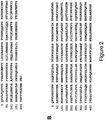
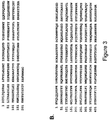
- CDRs are box shaded and the constant (C) regions are shown in bold italics.
- Antibody D (also referred to herein as Ab-D and Mab-D) is a mouse antibody which exhibits high affinity binding to sclerostin.
- the BIAcore binding pattern of Ab-D is shown in Figure 18 .
- Nucleic acid sequence encoding the mature form (signal peptide removed) of Ab-D LC is as follows:
- the amino acid sequence of Ab-D LC including signal peptide is as follows:
- amino acid sequence of the mature form (signal peptide removed) of Ab-D HC heavy chain is as follows:
- the nucleic acid sequence encoding the mature form (signal peptide removed) of Ab-D HC is:
- the amino acid sequence of Ab-D HC including signal peptide is:
- the nucleic acid sequence of Ab-D HC including signal peptide encoding sequence is:
- the CDR (complementarity determining region) sequences in the variable region of the heavy chain of Ab-D are as follows:
- the light chain variable region CDR sequences of Ab-D are:
- Antibody C (also referred to herein as Ab-C and Mab-C) is a mouse antibody which exhibits high affinity binding to sclerostin.
- the BIAcore binding pattern of Ab-C is shown in Figure 17 .
- the amino acid sequence of the mature form (signal peptide removed) of Ab-C Light Chain is as follows:
- the nucleic acid sequence encoding the mature form (signal peptide removed) of Ab-C LC is:
- the amino acid sequence of Ab-C LC including signal peptide is:
- the nucleic acid sequence of Ab-C LC including signal peptide encoding sequence is:
- the amino acid sequence of the mature form (signal peptide removed) of Ab-C HC is:
- the nucleic acid sequence encoding the mature form (signal peptide removed) of Ab-C HC is as follows:
- the amino acid sequence of Ab-C HC including signal peptide is:
- the nucleic acid sequence of Ab-C HC including signal peptide encoding sequence is:
- the CDR (complementarity determining region) sequences in the variable region of the heavy chain of Ab-C are as follows:
- the light chain variable region CDR sequences of Ab-C are:
- Antibody A (also referred to herein as Ab-A and Mab-A) is a rabbit-mouse chimeric antibody which exhibits high affinity binding to sclerostin.
- the BIAcore binding pattern of Ab-A is shown in Figure 15 .
- the amino acid sequence of Ab-A LC including signal peptide is:
- the nucleic acid sequence of Ab-A LC including signal peptide encoding sequence is:
- the amino acid sequence of the mature form (signal peptide removed) of Ab-A HC is:
- the amino acid sequence of the Ab-A HC including signal peptide is:
- the CDR (complementarity determining region) sequences in the variable region of the heavy chain of Ab-A are as follows:
- the light chain variable region CDR sequences of Ab-A are:
- Ab-A was humanized, and is referred to as Antibody 1 (also referred to herein as Ab-1), having the following sequences:
- the nucleic acid sequence of the Ab-1 LC variable region including signal peptide encoding sequence is
- the amino acid sequence of Ab-1 LC variable region including signal peptide is:
- the nucleic acid sequence of Ab-1 HC variable region including signal peptide encoding sequence is: Amino acid sequence of Ab-1 HC variable region including signal peptide
- the CDR (complementarity determining region) sequences in the variable region of the heavy chain of Ab-1 are as follows:
- the light chain variable region CDR sequences of Ab-1 are:
- Antibody B (also referred to herein as Ab-B and Mab-B) is a mouse antibody which exhibits high affinity binding to sclerostin.
- the BIAcore binding pattern of Ab-B is shown in Figure 16 .
- the amino acid sequence of the mature form (signal peptide removed) of the Ab-B LC is:
- the nucleic acid sequence encoding the mature form (signal peptide removed) of Ab-B LC is:
- the amino acid sequence of Ab-B LC including signal peptide is:
- the nucleic acid sequence of Ab-B LC including signal peptide encoding sequence is:
- the CDR (complementarity determining region) sequences in the variable region of the heavy chain of Ab-B are as follows:
- the light chain variable region CDR sequences of Ab-B are:
- Antibodies disclosed herein bind to regions of human sclerostin which are important for the in vivo activity of the protein. Binding of an antibody to sclerostin can be correlated with increases in, for example, the bone mineral density achieved by use of the antibody in vivo such as described in Examples 5 and 9 (mice) and Example 12 (monkey). Increases in at least one of bone formation, bone mineral content, bone mass, bone quality and bone strength can also be achieved by use of the antibody in vivo such as described in Examples 5 and 9 (mice) and Example 12 (monkey).
- an antibody for practicing the invention may be generated with the disclosed CDR sequences in an appropriate framework, wherein the antibody retains the ability to bind specifically to sclerostin, and can be expected to achieve increases in, for example, bone mineral density.
- Such antibodies are useful in the treatment of human or animal conditions that are caused by, associated with, or result in at least one of low bone formation, low bone mineral density, low bone mineral content, low bone mass, low bone quality and low bone strength.
- CDRs complementarity-determining regions
- the sequences of the Antibody 2 (also referred to as Ab-2) LC and HC are as follows:
- Nucleic acid sequence encoding the mature form (signal peptide removed) of the Ab-2 LC Amino acid sequence of the Ab-2 LC including signal peptide: Nucleic acid sequence of the Ab-2 LC including signal peptide encoding sequence:
- the sequences of the Antibody 3 (also referred to herein as Ab-3) LC and HC are as follows:
- the sequences of the Antibody 4 (also referred to herein as Ab-4) LC and HC are as follows:
- Ab-4 was humanized to generate Ab-5.
- the sequences of the Antibody 5 (also referred to herein as Ab-5) LC and HC are as follows:
- the CDR (complementarity determining region) sequences in the variable region of the heavy chain of Ab-5 are as follows:
- the light chain variable region CDR sequences of Ab-5 are:
- Antibody 6 also referred to herein as Ab-6
- LC and HC are as follows:
- the sequences of the Antibody 7 (also referred to herein as Ab-7) LC and HC are as follows:
- Antibody 8 also referred to herein as Ab-8
- LC and HC are as follows:
- the sequences of the Antibody 9 (also referred to herein as Ab-9) LC and HC are as follows:
- the sequences of the Antibody 10 (also referred to herein as Ab-10) LC and HC are as follows:
- the sequences of the Antibody 11 (also referred to herein as Ab-11) LC and HC are as follows:
- the sequences of the Antibody 12 (also referred to herein as Ab-12) LC and HC are as follows:
- the sequences of the Antibody 13 (also referred to herein as Ab-13) LC and HC are as follows:
- Ab-13 was humanized to generate Ab-14.
- the sequences of the Antibody 14 (also referred to herein as Ab-14) LC and HC are as follows:
- the CDR sequences in the variable region of the heavy chain of Ab-14 are:
- the light chain variable region CDR sequences of Ab-14 are:
- Ab-3 was humanized to generate Ab-15.
- the sequences of the Antibody 15 (also referred to herein as Ab-15) LC and HC are as follows:
- the CDR sequences in the variable region of the heavy chain of Ab-15 are:
- the light chain variable region CDR sequences of Ab-15 are:
- Ab-11 was humanized to generate Ab-16.
- the sequences of the Antibody 16 (also referred to herein as Ab-16) LC and HC are as follows:
- the CDR sequences in the variable region of the heavy chain of Ab-16 are:
- the light chain variable region CDR sequences of Ab-16 are:
- Antibodies 17-22 also referred to herein as Ab-17, Ab-18, Ab-19, Ab-20, Ab-21, and Ab-22.
- the Kappa Constant region for all VK regions of Ab-17, Ab-19, and Ab-21 is as follows:
- the Heavy Constant Region for all VH regions of antibodies 17, 19 and 21 is as follows:
- the boxed-shaded amino acids represent complement-determining regions (CDRs) and the underlined amino acids represent signal peptide.
- Ab-17 was humanized to generate Ab-18.
- Ab-19 was humanized to generate Antibody 20 (also referred to herein as Ab-20) and Antibody 23 (also referred to herein as Ab-23).
- the CDR (complementarity determining region) sequences in the variable region of the heavy chain of Ab-23 are as follows:
- the light chain variable region CDR sequences of Ab-23 are:
- Ab-21 was humanized to yield Ab-22.
- the light chain human kappa constant region is as follows: and the heavy chain human gamma-4 constant region is as follows:
- the hinge region contains the Ser-241-Pro mutation to improve hinge stability ( Angal S et al, (1993), Mol Immunol, 30(1), 105-108 ).
- Antibody 24 also referred to herein as Ab-24
- LC and HC are as follows:
- the CDR sequences in the variable region of the light chain of Ab-24 are as follows:
- the CDR sequences in the variable region of the heavy chain of Ab-24 are as follows:
- An oligopeptide or polypeptide may have an amino acid sequence that is at least 75%, 76%, 77%, 78%, 79%, 80%, 81%, 82%, 83%, 84%, 85%, 86%, 87%, 88%, 89%, 90%, 91%, 92%, 93%, 94%, 95%, 96%, 97%, 98% or 99% identical to least one of the CDR's of Table 1 above; and/or to a CDR of a sclerostin binding agent that cross-blocks the binding of at least one of antibodies Ab-A, Ab-B, Ab-C, Ab-D, Ab-1, Ab-2, Ab-3, Ab-4, Ab-5, Ab-6, Ab-7, Ab-8, Ab-9, Ab-10, Ab-11, Ab-12, Ab-13, Ab-14, Ab-15, Ab-16, Ab-17, Ab-18, Ab-19, Ab-20, Ab-21, Ab-22, Ab-23, and Ab-24 to sclerostin, and/or is cross-blocked from binding to sclerostin
- a sclerostin neutralizing binding agent and/or to a CDR of a sclerostin binding agent that binds to a Loop 2 epitope; and/or to a CDR of a sclerostin binding agent that binds to a T20.6 epitope; and/or to a CDR of a sclerostin binding agent that binds to a "T20.6 derivative (cystine-knot + 4 arms)" epitope.
- Sclerostin binding agent polypeptides and antibodies are within the scope of the disclosure if they have amino acid sequences that are at least 85%, 86%, 87%, 88%, 89%, 90%, 91%, 92%, 93%, 94%, 95%, 96%, 97%, 98% or 99% identical to a variable region of at least one of antibodies Ab-A, Ab-B, Ab-C, Ab-D, Ab-1, Ab-2, Ab-3, Ab-4, Ab-5, Ab-6, Ab-7, Ab-8, Ab-9, Ab-10, Ab-11, Ab-12, Ab-13, Ab-14, Ab-15, Ab-16, Ab-17, Ab-18, Ab-19, Ab-20, Ab-21, Ab-22, Ab-23, and Ab-24, and cross-block the binding of at least one of antibodies Ab-A, Ab-B, Ab-C, Ab-D, Ab-1, Ab-2, Ab-3, Ab-4, Ab-5, Ab-6, Ab-7, Ab-8, Ab-9, Ab-10, Ab-11, Ab-12, Ab-13, Ab-14, Ab-15, Ab-16, Ab-17
- a sclerostin neutralizing binding agent binds to a Loop 2 epitope; and/or bind to a T20.6 epitope; and/or bind to a "T20.6 derivative (cystine-knot + 4 arms)" epitope.
- Polynucleotides encoding sclerostin binding agents are within the scope of the disclosure if they have polynucleotide sequences that are at least 85%, 86%, 87%, 88%, 89%, 90%, 91%, 92%, 93%, 94%, 95%, 96%, 97%, 98% or 99% identical to a polynucleotide encoding a variable region of at least one of antibodies Ab-A, Ab-B, Ab-C, Ab-D, Ab-1, Ab-2, Ab-3, Ab-4, Ab-5, Ab-6, Ab-7, Ab-8, Ab-9, Ab-10, Ab-11, Ab-12, Ab-13, Ab-14, Ab-15, Ab-16, Ab-17, Ab-18, Ab-19, Ab-20, Ab-21, Ab-22, Ab-23, and Ab-24, and wherein the encoded sclerostin binding agents cross-block the binding of at least one of antibodies Ab-A, Ab-B, Ab-C, Ab-D, Ab-1, Ab-2, Ab-3, Ab-4, Ab-5
- a sclerostin neutralizing binding agent binds to a Loop 2 epitope; and/or bind to a T20.6 epitope; and/or bind to a "T20.6 derivative (cystine-knot + 4 arms)" epitope.
- Antibodies according to the invention may have a binding affinity for human sclerostin of less than or equal to 1 x 10 -7 M, less than or equal to 1 x 10 -8 M, less than or equal to 1 x 10 -9 M, less than or equal to 1 x 10 -10 M, less than or equal to 1 x 10 -11 M, or less than or equal to 1 x 10 -12 M.
- the affinity of a binding agent such as an antibody or binding partner, as well as the extent to which a binding agent (such as an antibody) inhibits binding, can be determined by one of ordinary skill in the art using conventional techniques, for example those described by Scatchard et al. (Ann. N.Y. Acad. Sci. 51:660-672 (1949 )) or by surface plasmon resonance (SPR; BIAcore, Biosensor, Piscataway, NJ).
- SPR surface plasmon resonance
- target molecules are immobilized on a solid phase and exposed to ligands in a mobile phase running along a flow cell.
- the local refractive index changes, leading to a change in SPR angle, which can be monitored in real time by detecting changes in the intensity of the reflected light.
- the rates of change of the SPR signal can be analyzed to yield apparent rate constants for the association and dissociation phases of the binding reaction. The ratio of these values gives the apparent equilibrium constant (affinity) ( see, e.g., Wolff et al., Cancer Res. 53:2560-65 (1993 )).
- An antibody according to the present invention may belong to any immunoglobin class, for example IgG, IgE, IgM, IgD, or IgA. It may be obtained from or derived from an animal, for example, fowl ( e.g., chicken) and mammals, which includes but is not limited to a mouse, rat, hamster, rabbit, or other rodent, cow, horse, sheep, goat, camel, human, or other primate. The antibody may be an internalizing antibody. Production of antibodies is disclosed generally in U.S. Patent Publication No. 2004/0146888 A1 .
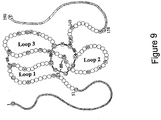
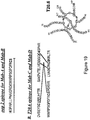
- Mature form human sclerostin is a 190 amino acid glycoprotein with a cystine-knot structure ( Figures 8 and 9 ).
- the protein is characterized as having three loops designated as Loop 1, Loop 2 and Loop 3.
- Human sclerostin was subjected to proteolytic digestion to produce fragments. Briefly, using different proteases, including trypsin, aspN, and lysC, fragments with various cleavage sites and sizes were generated. The sequences and mass for various human sclerostin peptides were determined. Antibody protection was evaluated to determine the effect on accessibility for proteolysis, including clipped site masking and peptide shifting. Finally, a BIAcore-based "human sclerostin peptide epitope competition assay" was performed.
- T20.6 epitope is a complex of four separate peptide sequences which are joined by the three disulfide bonds of the cystine-knot region. Two of the peptides are joined by two disulfide bonds. The other two peptides are linked by one disulfide bond that, schematically, bisects the first two polypeptides.
- the T20.6 epitope that was generated by trypsin digestion retains the cystine-knot structure of the native polypeptide and is recognized by antibodies Ab-C and Ab-D.
- a derivative of epitope T20.6 consists of the cystine-knot region and amino acids 58-64, 73-81, 112-117 and 138-141 in sequence position with reference to SEQ ID NO:1. This derivative epitope is shown in Figure 21 .
- An epitope comprising the cystine-knot region may have one or more amino acids that is present in the T20.6 epitope ( Figure 19B ) but not present in the T20.6 derivative epitope ( Figure 21 ).
- a Loop 2 epitope comprises amino acids 86-111 of SEQ ID NO:1 (C4GPARLLPNAIGRGKWWRPSGPDFRC5, SEQ ID NO:6).
- the Loop 2-containing structure is defined at one end by a disulfide bond between cysteine at position 86 (C4) and cysteine at position 144 (C8), and at the other end by a disulfide bond between cysteine at position 111 (C5) and cysteine at position 57 (C1).
- the peptides generated by aspN cleavage of human sclerostin are shown in Figure 12 .
- these peptides are designated as AspN14.6, AspN18.6, and AspN22.7-23.5, and are also referred to herein as N14.6, N18.6, and N22.7-23.5, respectively.
- One group of antibodies exhibits a specific pattern of binding to certain epitopes as evidenced by a Biacore-based "human sclerostin peptide epitope competition binding assay.” Briefly, the antibody is preincubated with the epitope to be tested, at concentrations that will saturate the epitope-binding sites on the antibody. The antibody is then exposed to sclerostin bound to a chip surface. After the appropriate incubation and washing procedures, a pattern of competitive binding is established. As shown in Figure 18 , exemplary antibody Ab-D bound to sclerostin molecules attached to the surface of the chip.
- Preincubation of antibody Ab-D with sclerostin decreased the binding of the antibody to the sclerostin on the chip to close to zero.
- Preincubation with a peptide consisting of epitope T19.2 showed that T19.2 did not compete with sclerostin for antibody binding.
- preincubation with any one of the epitopes designated T20, T20.6, T21-22, or N22.7-23.5 abolished a large proportion of the binding of antibody to sclerostin on the chip.
- preincubation of the antibody with any one of the epitopes designated T19.2, N14.6 or N18.6 did not abolish the ability of the antibody to bind to sclerostin.
- a second exemplary antibody with this binding profile is Ab-C.
- Antibody Ab-D therefore is exemplary and representative of a group of antibodies that bind to the epitopes T20, T20.6, T21-22, and N22.7-23.5, and have minimal detectable binding to epitopes T19.2, N14.6 and N18.6, as measured by the ability to block antibody binding to sclerostin.
- Antibodies having this characteristic binding pattern may or may not share amino acid sequence in one or more regions of the antibody molecule.
- Antibody similarity is determined functionally such as by the ability to bind to sclerostin following preincubation with each of the epitopes described above.
- the antibody will exhibit binding to each of the polypeptides T20, T20.6, T21-22 and N22.7-23.5 whereby this binding will specifically compete out at least 50% of the antibody's binding to sclerostin that would otherwise occur in the absence of preincubation with sclerostin or a sclerostin peptide.
- the antibody will also exhibit little or no detectable binding to polypeptides T19.2, N14.6 and N18.6, resulting in a reduction of 30% or less of the binding that would occur in the absence of preincubation with sclerostin or a sclerostin peptide.
- the antibody binding pattern of Figure 18 suggests that the epitope space to which antibody Ab-D and other antibodies having the epitope binding pattern of Ab-D bind consists of a polypeptide comprising the cystine-knot region of sclerostin.
- an exemplary T20.6 epitope comprises four peptide chains attached via three separate disulfide bonds.
- Peptide chain SAKPVTELVC3SGQC4GPAR (SEQ ID NO:3) is attached to peptide chain LVASC7KC8KRLTR (SEQ ID NO:5) by disulfide bonds from C3 to C7, and from C4 to C8.
- Peptide chain DVSEYSCIRELHFTR (SEQ ID NO:2) is attached to peptide chain WWRPSGPDFRC5IPDRYR (SEQ ID NO:4) by a disulfide bond from C1 to C5.
- polypeptides of SEQ ID NOs:3 and 5 remain associated with the polypeptides of SEQ ID NOs:2 and 4 through a steric construct whereby the C1-C5 bond crosses the plane of the C4-C8 and C3-C7 bonds and is located between them, as illustrated in Figure 19B .
- an exemplary derivative epitope of T20.6 comprises four peptide chains attached via three separate disulfide bonds.
- Peptide chain SAKPVTELVC3SGQC4 (SEQ ID NO:70) is attached to peptide chain LVASC7KC8 (SEQ ID NO:71) by disulfide bonds from C3 to C7, and from C4 to C8.
- Peptide chain C1RELHFTR (SEQ ID NO:72) is attached to peptide chain C5IPDRYR (SEQ ID NO:73) by a disulfide bond from C1 to C5.
- the polypeptides of SEQ ID NOs:70 and 71 remain associated with the polypeptides of SEQ ID NOs:72 and 73 through a steric construct whereby the C1-C5 bond crosses the plane of the C4-C8 and C3-C7 bonds and is located between them, as illustrated in Figure 21 .
- Antibody Ab-A is exemplary and representative of a second group of antibodies that have a characteristic binding pattern to human sclerostin peptides that is distinct from that obtained for antibodies Ab-C and Ab-D.
- Ab-A and the group of antibodies it represents bind to the N22.7-23.5 epitope and have minimal detectable binding to epitopes T19.2, T20, T20.6, T21-22, N14.6 or N18.6, as measured by the ability to block antibody binding to sclerostin ( Fig 15 ).
- a second exemplary antibody with this binding profile ( Fig. 16 ) is Ab-B.
- Antibodies having this characteristic binding pattern may or may not share amino acid sequence in one or more regions of the antibody molecule.
- Antibody similarity is determined functionally such as by the ability to bind to sclerostin following preincubation with each of the epitopes described above.
- similar to is meant, for example, the antibody will exhibit binding to the N22.7-23.5 polypeptide whereby this binding will specifically compete out at least 50% of the antibody's binding to sclerostin that would otherwise occur in the absence of preincubation with sclerostin or a sclerostin peptide.
- the antibody will also exhibit little or no detectable binding to polypeptides T19.2, T20, T20.6, T21-22, N14.6 and N18.6, resulting in a reduction of 30% or less of the binding that would occur in the absence of preincubation with sclerostin or a sclerostin peptide.
- the antibody binding pattern of Figure 15 suggests that the epitope space to which antibody Ab-A and other antibodies having the epitope binding pattern of Ab-A bind consists of a polypeptide comprising the Loop 2 region of sclerostin.
- the Loop 2 region can be described as a linear peptide, but it acquires a tertiary structure when it is present in native sclerostin or a cystine-knot-containing portion of sclerostin in which the native disulfide bond structure is maintained.
- the linear or tertiary structure of the Loop 2 epitope can affect antibody binding thereto, as discussed in the Examples.
- a Loop 2 region can comprise the following amino acid sequence: C4GPARLLPNAIGRGKWWRPSGPDFRC5 (SEQ ID NO:6).
- C4 refers to a cysteine residue located at position 86 with reference to SEQ ID NO:1.
- C5 refers to a cysteine residue located at position 111 with reference to SEQ ID NO:1.
- C4 is linked to a cysteine at position 144 (C8) by a disulfide bond
- C5 is linked to a cysteine at position 57 (C1) by a disulfide bond.
- Epitopes derived from the Loop 2 region include CGPARLLPNAIGRGKWWRPS (SEQ ID NO:63); GPARLLPNAIGRGKWWRPSG (SEQ ID NO:64); PARLLPNAIGRGKWWRPSGP (SEQ ID NO:65); ARLLPNAIGRGKWWRPSGPD (SEQ ID NO:66); RLLPNAIGRGKWWRPSGPDF (SEQ ID NO:67); LLPNAIGRGKWWRPSGPDFR (SEQ ID NO:68); and LPNAIGRGKWWRPSGPDFRC (SEQ ID NO:69)
- cross-block means the ability of an antibody to interfere with the binding of other antibodies to sclerostin.
- the extent to which an antibody is able to interfere with the binding of another to sclerostin, and therefore whether it can be said to cross-block can be determined using competition binding assays.
- One particularly suitable quantitative assay uses a Biacore machine which can measure the extent of interactions using surface plasmon resonance technology.
- Another suitable quantitative cross-blocking assay uses an ELISA-based approach to measure competition between antibodies in terms of their binding to sclerostin.
- the Biacore machine for example the Biacore 3000
- the Biacore machine is operated in line with the manufacturer's recommendations.
- sclerostin is coupled to a CM5 Biacore chip using standard amine coupling chemistry to generate a sclerostin-coated surface.
- a CM5 Biacore chip using standard amine coupling chemistry to generate a sclerostin-coated surface.
- 200-800 resonance units of sclerostin would be coupled to the chip (an amount that gives easily measurable levels of binding but that is readily saturable by the concentrations of test reagent being used).
- the two antibodies (termed A* and B*) to be assessed for their ability to cross-block each other are mixed at a one to one molar ratio of binding sites in a suitable buffer to create the test mixture.
- concentrations on a binding site basis the molecular weight of an antibody is assumed to be the total molecular weight of the antibody divided by the number of sclerostin binding sites on that antibody.
- each antibody in the test mix should be high enough to readily saturate the binding sites for that antibody on the sclerostin molecules captured on the Biacore chip.
- the antibodies in the mixture are at the same molar concentration (on a binding basis) and that concentration would typically be between 1.00 and 1.5 micromolar (on a binding site basis).
- Antibody A* and antibody B* in these solutions should be in the same buffer and at the same concentration as in the test mix.
- test mixture is passed over the sclerostin-coated Biacore chip and the total amount of binding recorded.
- the chip is then treated in such a way as to remove the bound antibodies without damaging the chip-bound sclerostin. Typically this is done by treating the chip with 30 mM HCl for 60 seconds.
- the maximum theoretical binding of the mixture of antibody A* and antibody B* is next calculated, and is the sum of the binding of each antibody when passed over the sclerostin surface alone. If the actual recorded binding of the mixture is less than this theoretical maximum then the two antibodies are cross-blocking each other.
- a cross-blocking antibody is one which will bind to sclerostin in the above Biacore cross-blocking assay such that during the assay and in the presence of a second antibody the recorded binding is between 80% and 0.1% ( e.g. 80% to 4%) of the maximum theoretical binding, specifically between 75% and 0.1% ( e.g. 75% to 4%) of the maximum theoretical binding, and more specifically between 70% and 0.1% ( e.g. 70% to 4%) of maximum theoretical binding (as just defined above) of the two antibodies or binding agents in combination.
- the Biacore assay described above is a primary assay used to determine if antibodies cross-block each other. On rare occasions particular antibodies may not bind to sclerostin coupled via amine chemistry to a CM5 Biacore chip (this usually occurs when the relevant binding site on sclerostin is masked or destroyed by the coupling to the chip). In such cases cross-blocking can be determined using a tagged version of Sclerostin, for example N-terminal His-tagged Sclerostin (R & D Systems, Minneapolis, MN, USA; 2005 cat# 1406-ST-025).
- an anti-His antibody would be coupled to the Biacore chip and then the His-tagged Sclerostin would be passed over the surface of the chip and captured by the anti-His antibody.
- the cross blocking analysis would be carried out essentially as described above, except that after each chip regeneration cycle, new His-tagged sclerostin would be loaded back onto the anti-His antibody coated surface.
- C-terminal His-tagged sclerostin could alternatively be used.
- various other tags and tag binding protein combinations that are known in the art could be used for such a cross-blocking analysis (e.g . HA tag with anti-HA antibodies; FLAG tag with anti-FLAG antibodies; biotin tag with streptavidin).
- the following generally describes an ELISA assay for determining whether an anti-sclerostin antibody cross-blocks or is capable of cross-blocking. For convenience, reference is made to two antibodies (Ab-X and Ab-Y).
- the general principal of the assay is to have an anti-sclerostin antibody coated onto the wells of an ELISA plate. An excess amount of a second, potentially cross-blocking, anti-sclerostin antibody is added in solution ( i.e. not bound to the ELISA plate). A limited amount of sclerostin is then added to the wells. The coated antibody and the antibody in solution compete for binding of the limited number of sclerostin molecules. The plate is washed to remove sclerostin that has not been bound by the coated antibody and to also remove the second, solution phase antibody as well as any complexes formed between the second, solution phase antibody and sclerostin.
- the amount of bound sclerostin is then measured using an appropriate sclerostin detection reagent.
- An antibody in solution that is able to cross-block the coated antibody will be able to cause a decrease in the number of sclerostin molecules that the coated antibody can bind relative to the number of sclerostin molecules that the coated antibody can bind in the absence of the second, solution phase, antibody.
- Ab-X is chosen to be the immobilized antibody
- it is coated onto the wells of the ELISA plate, after which the plates are blocked with a suitable blocking solution to minimize non-specific binding of reagents that are subsequently added.
- An excess amount of Ab-Y is then added to the ELISA plate such that the moles of Ab-Y sclerostin binding sites per well are at least 10 fold higher than the moles of Ab-X sclerostin binding sites that were used, per well, during the coating of the ELISA plate.
- Sclerostin is then added such that the moles of sclerostin added per well are at least 25-fold lower than the moles of Ab-X sclerostin binding sites that were used for coating each well.
- the ELISA plate is washed and a sclerostin detection reagent is added to measure the amount of sclerostin specifically bound by the coated anti-sclerostin antibody (in this case Ab-X).
- the background signal for the assay is defined as the signal obtained in wells with the coated antibody (in this case Ab-X), second solution phase antibody (in this case Ab-Y), sclerostin buffer only ( i.e. no sclerostin) and sclerostin detection reagents.
- the positive control signal for the assay is defined as the signal obtained in wells with the coated antibody (in this case Ab-X), second solution phase antibody buffer only ( i.e. no second solution phase antibody), sclerostin and sclerostin detection reagents.
- the ELISA assay needs to be run in such a manner so as to have the positive control signal be at least 6 times the background signal.
- the cross-blocking assay needs to be run in two formats:
- Ab-X and Ab-Y are defined as cross-blocking if, either in format 1 or in format 2, the solution phase anti-sclerostin antibody is able to cause a reduction of between 60% and 100%, specifically between 70% and 100%, and more specifically between 80% and 100%, of the sclerostin detection signal ( i.e. the amount of sclerostin bound by the coated antibody) as compared to the sclerostin detection signal obtained in the absence of the solution phase anti-sclerostin antibody ( i.e. the positive control wells).
- the sclerostin detection signal i.e. the amount of sclerostin bound by the coated antibody
- Example 7 An example of such an ELISA-based cross blocking assay can be found in Example 7 ("ELISA-based cross-blocking assay").
- Mineralization by osteoblast-lineage cells in culture is used as an in vitro model of bone formation. Mineralization takes from about one to six weeks to occur beginning with the induction of osteoblast-lineage cell differentiation by one or more differentiation agents.
- the overall sequence of events involves cell proliferation, differentiation, extracellular matrix production, matrix maturation and finally deposition of mineral, which refers to crystallization and/or deposition of calcium phosphate. This sequence of events starting with cell proliferation and differentiation, and ending with deposition of mineral is referred to herein as mineralization.
- Measurement of calcium (mineral) is the output of the assay.
- MC3T3-E1 cells Sudo H, Kodama H-A, Amagai Y, Yamamoto S, Kasai S. 1983. In vitro differentiation and calcification in a new clonal osteogenic cell line derived from newborn mouse calvaria. J. Cell Biol. 96:191-198 ) and subclones of the original cell line can form mineral in culture upon growth in the presence of differentiating agents. Such subclones include MC3T3-E1-BF ( Smith E, Redman R, Logg C, Coetzee G, Kasahara N, Frenkel B. 2000. Glucocorticoids inhibit developmental stage-specific osteoblast cell cycle. J. Biol. Chem. 275:19992-20001 ).
- sclerostin can inhibit one or more of the sequence of events leading up to and including mineral deposition (i.e. sclerostin inhibits mineralization).
- Anti-sclerostin antibodies that are able to neutralize sclerostin's inhibitory activity allow for mineralization of the culture in the presence of sclerostin such that there is a statistically significant increase in deposition of calcium phosphate (measured as calcium) as compared to the amount of calcium measured in the sclerostin-only (i.e. no antibody) treatment group.
- the antibodies used in the cell based mineralization assay experiments shown in Figures 22 , 23 and 24 have molecular weights of about 145 Kd and have 2 sclerostin binding sites per antibody molecule.
- the amount of sclerostin used in the assay needs to be the minimum amount of sclerostin that causes at least a 70%, statistically significant, reduction in deposition of calcium phosphate (measured as calcium) in the sclerostin-only group, as compared to the amount of calcium measured in the no sclerostin group.
- An anti-sclerostin neutralizing antibody is defined as one that causes a statistically significant increase in deposition of calcium phosphate (measured as calcium) as compared to the amount of calcium measured in the sclerostin-only ( i.e. no antibody) treatment group.
- the amount of anti-sclerostin antibody used in the assay needs to be such that there is an excess of moles of sclerostin binding sites per well as compared to the number of moles of sclerostin per well.
- the fold excess that may be required can be 24, 18, 12, 6, 3, or 1.5, and one of skill is familiar with the routine practice of testing more than one concentration of binding agent.
- a very potent anti-sclerostin neutralizing antibody will be able to neutralize sclerostin even when there is less than a 6-fold excess of moles of sclerostin binding sites per well as compared to the number of moles of sclerostin per well.
- a less potent anti-sclerostin neutralizing antibody or anti-sclerostin neutralizing binding agent will be able to neutralize sclerostin only at a 12, 18 or 24 fold excess.
- Sclerostin antibodies within this full range of potencies are suitable as neutralizing sclerostin antibodies. Exemplary cell based mineralization assays are described in detail in Example 8.
- Anti-sclerostin antibodies that can neutralize human sclerostin may be of use in the treatment of human conditions/disorders that are caused by, associated with, or result in at least one of low bone formation, low bone mineral density, low bone mineral content, low bone mass, low bone quality and low bone strength.
- Increases in various parameters associated with, or that result from, the stimulation of new bone formation can be measured as an output from in vivo testing of sclerostin antibodies in order to identify those antibodies that are able to neutralize sclerostin and thus able to cause stimulation of new bone formation.
- Such parameters include various serum anabolic markers [ e.g . osteocalcin, P1NP (n-terminal propeptide of type 1 procollagen)], histomorphometric markers of bone formation (e.g. osteoblast surface/bone surface; bone formation rate/bone surface; trabecular thickness), bone mineral density, bone mineral content, bone mass, bone quality and bone strength.
- a sclerostin neutralizing antibody is defined as one capable of causing a statistically significant increase, as compared to vehicle treated animals, in any parameter associated with, or that results from, the stimulation of new bone formation.
- Such in vivo testing can be performed in any suitable mammal (e.g. mouse, rat, monkey).
- An example of such in vivo testing can be found in Example 5 ( "In vivo testing of anti-sclerostin monoclonal antibodies").
- sclerostin is not 100% identical across mammalian species (e.g . mouse sclerostin is not 100% identical to human sclerostin), it will be appreciated by one skilled in the art that a sclerostin antibody that can neutralize, in vivo, the sclerostin of a certain species ( e.g. mouse) and that also can bind human sclerostin in vitro is very likely to be able to neutralize human sclerostin in vivo.
- such anti-human sclerostin antibody may be of use in the treatment of human conditions/disorders that are caused by, associated with, or result in at least one of low bone formation, low bone mineral density, low bone mineral content, low bone mass, low bone quality and low bone strength.
- Mice in which homologous recombination had been used to delete the mouse sclerostin gene and insert the human sclerostin gene in its place i.e. human sclerostin gene knock-in mice or human SOST knock-in mice
- compositions comprising one of the above described antibodies such as at least one of antibody Ab-A, Ab-B, Ab-C, Ab-D and Ab-1 to Ab-24 to human sclerostin, along with a pharmaceutically or physiologically acceptable carrier, excipient, or diluent.
- Pharmaceutical compositions and methods of treatment are disclosed in copending Application Serial No. 10/868,497, filed June 16, 2004 , which claims priority to Serial No. 60/478,977 .
- compositions disclosed herein may be delivered via oral administration to an animal.
- these compositions may be formulated with an inert diluent or with an assimilable edible carrier, or they may be enclosed in hard- or soft-shell gelatin capsule, or they may be compressed into tablets, or they may be incorporated directly with the food of the diet.
- solutions of the active compounds as free base or pharmacologically acceptable salts may be prepared in water suitably mixed with a surfactant, such as hydroxypropylcellulose.
- Dispersions may also be prepared in glycerol, liquid polyethylene glycols, and mixtures thereof and in oils. Under ordinary conditions of storage and use, these preparations generally will contain a preservative to prevent the growth of microorganisms.
- Illustrative pharmaceutical forms suitable for injectable use include sterile aqueous solutions or dispersions and sterile powders for the extemporaneous preparation of sterile injectable solutions or dispersions (for example, see U.S. Patent No. 5,466,468 ).
- the form must be sterile and must be fluid to the extent that easy syringability exists. It must be stable under the conditions of manufacture and storage and must be preserved against the contaminating action of microorganisms, such as bacteria and fungi.
- the carrier can be a solvent or dispersion medium containing, for example, water, ethanol, polyol (e.g., glycerol, propylene glycol, and liquid polyethylene glycol, and the like), suitable mixtures thereof, and/or vegetable oils.
- polyol e.g., glycerol, propylene glycol, and liquid polyethylene glycol, and the like
- suitable mixtures thereof e.g., vegetable oils
- vegetable oils e.g., glycerol, propylene glycol, and liquid polyethylene glycol, and the like
- Proper fluidity may be maintained, for example, by the use of a coating, such as lecithin, by the maintenance of the required particle size in the case of dispersion and/or by the use of surfactants.
- the prevention of the action of microorganisms can be facilitated by various antibacterial and antifungal agents, for example, parabens, chlorobutanol, phenol, sorbic acid, thimerosal
- isotonic agents for example, sugars or sodium chloride.
- Prolonged absorption of the injectable compositions can be brought about by the use in the compositions of agents delaying absorption, for example, aluminum monostearate and gelatin.
- aqueous solutions For parenteral administration in an aqueous solution, the solution should be suitably buffered if necessary and the liquid diluent first rendered isotonic with sufficient saline or glucose.
- aqueous solutions are especially suitable for intravenous, intramuscular, subcutaneous and intraperitoneal administration.
- a sterile aqueous medium that can be employed will be known to those of skill in the art in light of the present disclosure.
- one dosage may be dissolved in 1 ml of isotonic NaCl solution and either added to 1000 ml of hypodermoclysis fluid or injected at the proposed site of infusion, (see for example, Remington's Pharmaceutical Sciences, 15th ed., pp.
- compositions disclosed herein may be formulated in a neutral or salt form.
- Illustrative pharmaceutically-acceptable salts include the acid addition salts (formed with the free amino groups of the protein) and which are formed with inorganic acids such as, for example, hydrochloric or phosphoric acids, or such organic acids as acetic, oxalic, tartaric, mandelic, and the like. Salts formed with the free carboxyl groups can also be derived from inorganic bases such as, for example, sodium, potassium, ammonium, calcium, or ferric hydroxides, and such organic bases as isopropylamine, trimethylamine, histidine, procaine and the like. Upon formulation, solutions will be administered in a manner compatible with the dosage formulation and in such amount as is therapeutically effective.
- the carriers can further comprise any and all solvents, dispersion media, vehicles, coatings, diluents, antibacterial and antifungal agents, isotonic and absorption delaying agents, buffers, carrier solutions, suspensions, colloids, and the like.
- solvents dispersion media, vehicles, coatings, diluents, antibacterial and antifungal agents, isotonic and absorption delaying agents, buffers, carrier solutions, suspensions, colloids, and the like.
- the use of such media and agents for pharmaceutical active substances is well known in the art. Except insofar as any conventional media or agent is incompatible with the active ingredient, its use in the therapeutic compositions is contemplated. Supplementary active ingredients can also be incorporated into the compositions.
- pharmaceutically-acceptable refers to molecular entities and compositions that do not produce an allergic or similar untoward reaction when administered to a human.
- compositions of the present invention are used for the introduction of the compositions of the present invention into suitable host cells/organisms.
- the compositions of the present invention may be formulated for delivery either encapsulated in a lipid particle, a liposome, a vesicle, a nanosphere, or a nanoparticle or the like.
- compositions of the present invention can be bound, either covalently or non-covalently, to the surface of such carrier vehicles.
- liposomes are formed from phospholipids that are dispersed in an aqueous medium and spontaneously form multilamellar concentric bilayer vesicles (also termed multilamellar vesicles (MLVs)).
- MLVs multilamellar vesicles
- Nanocapsules can generally entrap compounds in a stable and reproducible way (see, for example, Quintanar-Guerrero et al., Drug Dev. Ind. Pharm. 24(12):1113-28, 1998 ).
- ultrafine particles sized around 0.1 ⁇ m
- Such particles can be made as described, for example, by Couvreur et al., Crit. Rev. Ther. Drug Carrier Syst. 5(1):1-20, 1988 ; zur Muhlen et al., Eur. J. Pharm. Biopharm. 45(2): 149-55, 1998 ; Zambaux et al., J. Controlled Release 50(1-3):31-40, 1998 ; and U.S. Patent No. 5,145,684 .
- compositions of the present invention may be placed within containers, along with packaging material that provides instructions regarding the use of such pharmaceutical compositions.
- instructions will include a tangible expression describing the reagent concentration, as well as within certain embodiments, relative amounts of excipient ingredients or diluents (e.g., water, saline or PBS) that may be necessary to reconstitute the pharmaceutical composition.
- the dose administered may range from 0.01 mg/kg to 100 mg/kg of body weight.
- the amount and frequency of administration will depend, of course, on such factors as the nature and severity of the indication being treated, the desired response, the condition of the patient, and so forth.
- the compositions may be administered by a variety of techniques, as noted above.
- Increases in bone mineral content and/or bone mineral density may be determined directly through the use of X-rays (e.g., Dual Energy X-ray Absorptometry or "DEXA”), or by inference through the measurement of 1) markers of bone formation and/or osteoblast activity, such as, but not limited to, osteoblast specific alkaline phosphatase, osteocalcin, type 1 procollagen C' propeptide (PICP), total alkaline phosphatase ( see Comier, Curr. Opin. in Rheu.
- X-rays e.g., Dual Energy X-ray Absorptometry or "DEXA”
- markers of bone formation and/or osteoblast activity such as, but not limited to, osteoblast specific alkaline phosphatase, osteocalcin, type 1 procollagen C' propeptide (PICP), total alkaline phosphatase ( see Comier, Curr. Opin. in Rheu.
- serum procollagen 1 N-terminal propeptide P1NP
- markers of bone resorption and/or osteoclast activity including, but not limited to, pyridinoline, deoxypryridinoline, N-telopeptide, urinary hydroxyproline, plasma tartrate-resistant acid phosphatases, and galactosyl hydroxylysine; ( see Comier, id ), serum TRAP 5b (tartrate-resistant acid phosphatase isoform 5b) and serum cross-linked C-telopeptide (sCTXI).
- the amount of bone mass may also be calculated from body weights or by using other methods (see Guinness-Hey, Metab. Bone Dis.
- compositions of the present invention include a wide variety of causes of osteopenia, osteoporosis and bone loss.
- Representative examples of such conditions include achondroplasia, cleidocranial dysostosis, enchondromatosis, fibrous dysplasia, Gaucher's Disease, hypophosphatemic rickets, Marfan's syndrome, multiple hereditary exotoses, neurofibromatosis, osteogenesis imperfecta, osteopetrosis, osteopoikilosis, sclerotic lesions, pseudoarthrosis, and pyogenic osteomyelitis, periodontal disease, anti-epileptic drug induced bone loss, primary and secondary hyperparathyroidism, familial hyperparathyroidism syndromes, weightlessness induced bone loss, osteoporosis in men, postmenopausal bone loss, osteoarthritis, renal osteodystrophy, infiltrative disorders of bone, oral bone loss, osteonecrosis of the jaw, juvenile Paget'
- compositions of the present invention may also be useful for improving outcomes in orthopedic procedures, dental procedures, implant surgery, joint replacement, bone grafting, bone cosmetic surgery and bone repair such as fracture healing, nonunion healing, delayed union healing and facial reconstruction.
- One or more compositions may be administered before, during and/or after the procedure, replacement, graft, surgery or repair.
- the invention also provides a diagnostic kit comprising at least one anti-sclerostin antibody according to the present invention.
- a diagnostic kit comprising at least one anti-sclerostin antibody according to the present invention.
- such a kit may optionally comprise one or more of the following:
- the binding agent(s) itself can be labeled with one or more of a detectable marker(s), e.g. a chemiluminescent, enzymatic, fluorescent, or radioactive moiety.
- a detectable marker e.g. a chemiluminescent, enzymatic, fluorescent, or radioactive moiety.
- Recombinant human sclerostin/SOST is commercially available from R&D Systems (Minneapolis, MN, USA; 2006 cat# 1406-ST-025). Additionally, recombinant mouse sclerostin/SOST is commercially available from R&D Systems (Minneapolis, MN, USA; 2006 cat# 1589-ST-025).
- the different species of sclerostin can be expressed transiently in serum-free suspension adapted 293T or 293EBNA cells. Transfections can be performed as 500 mL or 1L cultures. The following reagents and materials are available from Gibco BRL (now Invitrogen, Carlsbad, CA). Catalog numbers are listed in parentheses: serum-free DMEM (21068-028); DMEM/F12 (3:1) (21068/11765); 1X Insulin-Transferrin-Selenium Supplement (51500-056); 1X Pen Strep Glut (10378-016); 2mM 1-Glutamine (25030-081); 20 mM HEPES (15630-080); 0.01% Pluronic F68 (24040-032). Briefly, the cell inoculum (5.0-10.0 X 10 5 cells/mL X culture volume) is centrifuged at 2,500 RPM for 10 minutes at 4°C to remove the conditioned medium.
- Gibco BRL now Invitrogen, Carlsbad,
- the cells are resuspended in serum-free DMEM and centrifuged again at 2,500 RPM for 10 minutes at 4°C. After aspirating the wash solution, the cells are resuspended in growth medium [DMEM/F12 (3:1) + 1X Insulin-Transferrin-Selenium Supplement + 1X Pen Strep Glut + 2mM L-Glutamine + 20 mM HEPES + 0.01% Pluronic F68] in a 1L or 3L spinner flask culture. The spinner flask culture is maintained on magnetic stir plate at 125 RPM which is placed in a humidified incubator maintained at 37°C and 5% CO 2 .
- the mammalian expression plasmid DNA e.g.
- pcDNA3.1, pCEP4, Invitrogen Life Technologies, Carlsbad, CA containing the complete coding region (and stop codon) of sclerostin with a Kozak consensus sequence (e.g., CCACC) directly 5' of the start site ATG, is complexed to the transfection reagent in a 50 mL conical tube.
- a Kozak consensus sequence e.g., CCACC
- the DNA-transfection reagent complex can be prepared in 5-10% of the final culture volume in serum-free DMEM or OPTI-MEM.
- the transfection reagents that can be used for this purpose include X-tremeGene RO-1539 (Roche Applied Science, Indianapolis, IN), FuGene6 (Roche Applied Science, Indianapolis, IN), Lipofectamine 2000 (Invitrogen, Carlsbad, CA) and 293fectin (Invitrogen, Carlsbad, CA). 1-5 ⁇ g plasmid DNA/mL culture is first added to serum-free DMEM, followed by 1-5 ⁇ l transfection reagent/mL culture.
- the complexes can be incubated at room temperature for approximately 10-30 minutes and then added to the cells in the spinner flask.
- the transfection/expression can be performed for 4-7 days, after which the conditioned medium (CM) is harvested by centrifugation at 4,000 RPM for 60 minutes at 4°C.
- CM conditioned medium
- Recombinant sclerostin was purified from mammalian host cells as follows. All purification processes were carried out at room temperature. One purification scheme was used to purify various species of sclerostin, including murine and human sclerostin. The purification scheme used affinity chromatography followed by cation exchange chromatography.
- CM mammalian host cell conditioned medium
- Beckman J6-M1 centrifuge at 4000 rpm for 1hour at 4°C to remove cell debris.
- the CM supernatant was then filtered through a sterile 0.2 ⁇ m filter. (At this point the sterile filtered CM may be optionally stored frozen until purification.) If the CM was frozen, it was thawed at the following temperatures, or combination thereof: 4°C, room temperature or warm water. Following thawing the CM was filtered through a sterile 0.2 ⁇ m filter and optionally concentrated by tangential flow ultrafiltration (TFF) using a 10 kD molecular weight cut-off membrane.
- TMF tangential flow ultrafiltration
- CM concentrate was filtered through a sterile 0.2 ⁇ m filter and then loaded onto a Heparin High Performance (Heparin HP) column (GE Healthcare, formerly Amersham Biosciences) equilibrated in PBS.
- Heparin HP Heparin High Performance
- the filtered CM supernatant may be loaded directly onto the Heparin HP column equilibrated in PBS.
- the Heparin HP column was washed with PBS until the absorbance at 280 nm of the flow-through returned to baseline (i.e., absorbance measured before loading CM supernatant).
- the sclerostin was then eluted from the column using a linear gradient from 150 mM to 2M sodium chloride in PBS.
- the absorbance at 280 nm of the eluate was monitored and fractions containing protein were collected.
- the fractions were then assayed by Coomassie-stained SDS-PAGE to identify fractions containing a polypeptide that migrates at the size of glycosylated sclerostin.
- the appropriate fractions from the column were combined to make the Heparin HP pool.
- the sclerostin eluted from the Heparin HP column was further purified by cation exchange chromatography using SP High Performance (SPHP) chromatography media (GE Healthcare, formerly Amersham Biosciences).
- SPHP SP High Performance
- the Heparin HP pool was buffer exchanged into PBS by dialysis using 10,000 MWCO membranes (Pierce Slide-A-Lyzer).
- the dialyzed Heparin HP pool was then loaded onto an SPHP column equilibrated in PBS. After loading, the column was washed with PBS until the absorbance at 280 nm of the flow-through returned to baseline.
- the sclerostin was then eluted from the SPHP column using a linear gradient from 150 mM to 1 M sodium chloride in PBS.
- the absorbance at 280 nm of the eluate was monitored and the eluted sclerostin was collected in fractions.
- the fractions were then assayed by Coomassie-stained SDS-PAGE to identify fractions containing a polypeptide that migrates at the size of glycosylated sclerostin.
- the appropriate fractions from the column were combined to make the SPHP pool.
- the SPHP pool was formulated in PBS by dialysis using 10,000 MWCO membranes (Pierce Slide-A-Lyzer). If concentration of sclerostin was necessary, a centrifugal device (Amicon Centricon or Centriprep) with a 10,000 MWCO membrane was used. Following formulation the sclerostin was filtered through a sterile 0.2 ⁇ m filter and stored at 4°C or frozen.
- a series of overlapping peptides (each peptide being approximately 20-25 amino acids long) were synthesized based on the known amino acid sequence of rat sclerostin (SEQ ID NO:98).
- the peptides were designed such that they all contained a reduced cysteine residue; an additional cysteine was included at the C-terminus of each peptide which did not already contain one in its sequence. This enabled the peptides to be bound to the assay plates by covalent coupling, using commercially available sulfhydryl binding plates (Costar), at a concentration of 1 ⁇ g/ml, in phosphate buffered saline (PBS: pH 6.5) containing 1 mM EDTA.
- PBS phosphate buffered saline
- Antibodies to be tested were diluted to 1 ⁇ g/ml in PBS containing 0.5% fish skin gelatin and incubated with the peptide-coated plates for 1 hour at room temperature. Excess antibody was removed by three washes with PBS, 0.5% Tween 20. The plates were then incubated with an appropriate secondary antibody conjugated to horseradish peroxidase (diluted appropriately in PBS containing 0.5% Tween 20) and capable of binding to the antibody of interest. The plates were then washed three times: once with PBS containing 0.5% Tween 20, and twice with PBS. Finally the plates were incubated with a horseradish peroxidase chromogenic substrate (TMB-Stable Stop, RDI) for 5 minutes at room temperature, the color development was stopped with acid, and the plates' optical density measured at 450nm.
- TMB-Stable Stop, RDI horseradish peroxidase chromogenic substrate
- a high-affinity neutralizing antibody (Ab-19) bound to two overlapping peptide sequences: PNAIGRVKWWRPNGPDFR (SEQ ID NO:96) and KWWRPNGPDFRCIPDRYRAQRV (SEQ ID NO:97).
- Mature form (signal peptide removed) human sclerostin is a 190 amino acid protein ( Figure 8 ).
- Figure 9 shows a schematic of the general structure of sclerostin with an N-terminal arm (from the N-terminal Q to Cysteine1) and a C-terminal arm (from Cysteine8 to the terminal Y). Sandwiched in between these two arms there is the cystine-knot structure and three loops which are designated Loop1, Loop2 and Loop 3.
- the four disulfide bonds in sclerostin are Cys1 at sequence position 57 linked to Cys5 at sequence position 111 (referred to as C1-C5), Cys2 at sequence position 71 linked to Cys6 at sequence position 125 (referred to as C2-C6), Cys3 at sequence position 82 linked to Cys7 at sequence position 142 (referred to as C3-C7), Cys4 at sequence position 86 linked to Cys8 at sequence position 144 (referred to as C4-C8).
- the eight-membered ring structure is formed via C3-C7 and C4-C8 disulfide bonding.
- This ring structure together with the C1-C5 disulfide bond penetrating through the ring, forms a typical cystine-knot.
- C2-C6 which is not part of the cystine-knot, brings two large loop structures, loop 1 (residues 57 to 82) and loop 3 (residues 111 to 142) close together.
- Loop 2 goes from C4 (residue 86) to C5 (residue 111).
- the general approach for characterizing the epitopes bound by anti-sclerostin monoclonal antibodies involved fragmenting human Sclerostin into peptides with different proteases, determining the sequence of the various human sclerostin peptides, isolating these peptides and testing each of them for their ability to bind to a particular monoclonal antibody using a Biacore-based "human sclerostin peptide epitope competition binding assay.” The resulting data permitted the location of the binding epitope to be determined.
- HPLC peptide mapping was performed using a reverse-phase C8 column (2.1 mm i.d. x 15 cm length).
- HPLC peptide mapping was performed with a linear gradient from 0.05% trifloroacetic acid (mobile phase A) to 90% acetonitrile in 0.05% trifuoroacetic acid. Columns were developed over 50 minutes at a flow rate of 0.2 ml/min.
- Mature form human sclerostin was digested with trypsin, which cleaves after arginine and lysine, or with AspN. About 200 ⁇ g of sclerostin at 0.5-1.0 mg/ml was incubated in PBS (pH 7.2) for 20 hrs at 37°C with 8 ⁇ g of either trypsin or AspN.
- Fig. 10A HPLC chromatography of the trypsin digests yielded several major peaks. Sequence analysis was conducted on the peptide peaks recovered from HPLC after trypsin digestion. On-line ESI LC-MS analysis of the peptide digest was also performed to determine the precise mass of the peptides that were separated by HPLC. The identity of the peptides present in the peptide peaks was thus determined ( Fig. 11 ).
- Figure 13 shows the alignment of various peptide sequences (T19.2, T20, T20.6, T21-22) along the sclerostin sequence. The number following each T ( e.g., T19.2) reflects the retention time.
- T19.2 contains two peptides (one from loop 1 and one from loop 3) linked by the C2-C6 disulfide bond.
- T20 contains two peptides held together by the cystine-knot structure, with intact loops 1 and 3 held together by the C2-C6 disulfide and with most of loop 2 absent.
- T20.6 contains four sequences held together by the cystine-knot structure, but is missing part of loop 1 and 3 (the T19.2 part) and is missing most of loop 2.
- T21-22 is almost identical to T20 but has 3 additional amino acids in the loop 2 region.
- AspN14.6 contains three short peptides from both the N- and C-terminal arms of sclerostin, while AspN18.6 is a larger peptide from the N-terminal arm of sclerostin.
- AspN22.7-23.5 contains a single peptide fragment of 104 amino acids the encompasses all eight cysteines (the four disulfide bonds), the cystine-knot and all of loops 1, 2 and 3.
- the strategy for characterizing the epitopes was to use these various trypsin and AspN generated human sclerostin peptides and determine which peptides could still be bound by the various Antibodies (Ab-A, Ab-B, Ab-C and Ab-D). Specifically this was tested in a Biacore-based "human sclerostin peptide epitope competition binding assay" where the binding of a particular monoclonal antibody to human sclerostin immobilized on the Biacore chip was determine in the presence or absence of each of the various isolated trypsin and AspN HPLC peptide fractions.
- the particular monoclonal antibody was able to bind the human sclerostin on the chip and produce a resonance unit, RU, response.
- Immobilization of mature form human sclerostin to a BIAcore sensor chip (CM5) surface was performed according to manufacturer's instructions. Briefly, carboxyl groups on the sensor chip surfaces were activated by injecting 60 ⁇ L of a mixture containing 0.2 M N-ethyl-N'-(dimethylaminopropyl) carbodiimide (EDC) and 0.05 M N-hydroxysuccinimide (NHS). Human sclerostin was diluted in 10 mM sodium acetate, pH 4.0 at a concentration of 20 ⁇ g/mL followed by injecting over the activated CM5 surface. Excess reactive groups on the surfaces were deactivated by injecting 60 ⁇ L of 1 M ethanolamine. Final immobilized levels were ⁇ 5000 resonance units (RU) for the human sclerostin surface. A blank, mock-coupled reference surface was also prepared on the sensor chips.
- EDC N-ethyl-N'-(dimethylaminopropyl)
- IX Phosphate-buffered saline without calcium chloride or magnesium chloride was from Gibco/Invitrogen, Carlsbad, CA.
- Bovine serum albumin, fraction V, IgG-free was from Sigma-Aldrich, St. Louis, MO.
- Each Mab (2 nM) was separately incubated with 20 nM human sclerostin or a particular human sclerostin peptide (note: there are 3 unlinked peptides in AspN14.6) in sample buffer (1X PBS + 0.005% P-20 + 0.1 mg/mL BSA) before injection over the immobilized human sclerostin surface.
- the sclerostin peptide binding pattern for two representative antibodies were virtually identical ( Fig. 15 and Fig. 16 ) and showed that both of these Antibodies could only bind the AspN22.7-23.5 peptide.
- the unique difference between AspN22.7-23.5 and all the other sclerostin peptides is that AspN22.7-23.5 contains an intact loop 2. This shows that Ab-A and Ab-B bind the loop 2 region of sclerostin thus defining the loop 2 epitope ( Fig. 19A ).
- the sclerostin peptide binding pattern for Ab-C and Ab-D were virtually identical to each other ( Fig. 17 and Fig.
- the general principle of this assay is that binding of a Mab to sclerostin can result in protection of certain specific protease cleavage sites and this information can be used to determine the region of sclerostin to where the Mab binds.
- Figure 20 shows the HPLC peptide maps for a human sclerostin Ab-D complex ( Fig 20A : human sclerostin was preincubated at a 1:1 molar ratio with Ab-D prior to digestion with trypsin as described above) and human sclerostin alone ( Fig 20B : human sclerostin was digested with trypsin as described above).
- the peptide peaks of T19.2 and T20.6 in Figure 20A showed a clear reduction in their respective peak height, as compared to Figure 20B . This reduction in peak heights was accompanied by an increase in peak height for peptides T20 and T21-22.
- mice Four week-old BDF1 male mice were obtained from Charles River Laboratories (Raleigh, NC) and housed in clean caging, five animals per cage. Room temperature was maintained between 68 and 72°F, and relative humidity was maintained between 34 and 73%. The laboratory housing the cages had a 12-hour light/dark cycle and met all AAALAC specifications. Clinical observations of all mice on study occurred once daily.
- Purified anti-sclerostin monoclonal antibodies (Ab-A Fig.1 ; Ab-B Fig.2 ; Ab-C Fig.3 ; Ab-D Fig.4 ) were diluted in sterile Dulbecco's phosphate buffered saline. Mice were injected with anti-sclerostin Antibodies or PBS vehicle subcutaneously at 21 ⁇ l per gram body weight, two times per week (Monday and Thursday) at 25 mg/kg.
- Bone mineral density was determined weekly at the proximal tibial metaphysis and lumbar vertebrae by peripheral Dual Energy X-ray Absorptometry (pDEXA) with the PIXImus2 system from GE/Lunar Medical Systems, Madison, WI.
- a 25mm 2 region of interest (ROI) was placed to include the proximal articular surface, the epiphysis, and the proximal end on the metaphysis of the tibia.
- a region of interest (ROI) was placed to include the lumbar vertebrae (L1-L5). The proximal tibia and lumbar regions were analyzed to determine total bone mineral density. Group means were reported ⁇ Standard Deviation and compared to the vehicle treatment group for statistical analysis.
- Human sclerostin was coupled to a CM5 Biacore chip using standard amine coupling chemistry to generate a sclerostin coated surface. 300 resonance units of sclerostin were coupled to the surface.
- the antibodies to be tested were diluted to a concentration of 200ug/ml in HBS-EP buffer (being 10 mM HEPES pH 7.4, 150 mM NaCl, 3 mM EDTA, 0.005% (v/v) Surfactant P20) and then mixed in a one to one molar ratio (on a binding site basis) to generate the test mixture.
- This test mixture thus contained each antibody at a concentration of 100ug/ml (1.3um on a binding site basis).
- Separate solutions containing each of the antibodies in the test mix alone were also prepared. These solutions contained the individual antibodies in HBS-EP buffer at a concentration of 100ug/ml (1.3um on a binding site basis).
- the table below show the results from cross-blocking assays on a range of different antibodies.
- the values in each square of the table represent the amount of binding (in RU) seen when the antibodies (at 1.3 ⁇ M on a binding site basis) or buffer indicated in the top row of the table were mixed with the antibodies (at 1.3uM on a binding site basis) or buffer indicated in the first column of the table.
- Buffer Ab-4 Ab-13 Ab-A Ab-3 Ab-19
- Liquid volumes used in this example would be those typically used in 96-well plate ELISAs (e.g. 50-200 ⁇ l/well).
- Ab-X and Ab-Y, in this example are assumed to have molecular weights of about 145 Kd and to have 2 sclerostin binding sites per antibody molecule.
- An anti-sclerostin antibody (Ab-X) is coated ( e.g. 50 ⁇ . of 1 ⁇ g/ml) onto a 96-well ELISA plate [ e.g. Corning 96 Well EIA/RIA Flat Bottom Microplate (Product # 3590), Corning Inc., Acton, MA] for at least one hour.
- the antibody solution is removed, the plate is washed once or twice with wash solution (e.g., PBS and 0.05% Tween 20) and is then blocked using an appropriate blocking solution (e.g., PBS, 1% BSA, 1% goat serum and 0.5% Tween 20) and procedures known in the art.
- Blocking solution is then removed from the ELISA plate and a second anti-sclerostin antibody (Ab-Y), which is being tested for it's ability to cross-block the coated antibody, is added in excess ( e.g. 50 ⁇ l of 10 ⁇ g/ml) in blocking solution to the appropriate wells of the ELISA plate. Following this, a limited amount (e.g.
- sclerostin detection reagent e.g., biotinylated anti-sclerostin polyclonal antibody that has been pre-complexed with an appropriate amount of a streptavidin-horseradish peroxidase (HRP) conjugate
- HRP streptavidin-horseradish peroxidase
- the plate is then washed at least 4 times with wash solution and is developed with an appropriate reagent [e.g. HRP substrates such as TMB (colorimetric) or various HRP luminescent substrates].
- the background signal for the assay is defined as the signal obtained in wells with the coated antibody (in this case Ab-X), second solution phase antibody (in this case Ab-Y), sclerostin buffer only ( i.e. no sclerostin) and sclerostin detection reagents.
- the positive control signal for the assay is defined as the signal obtained in wells with the coated antibody (in this case Ab-X), second solution phase antibody buffer only ( i.e. no second solution phase antibody), sclerostin and sclerostin detection reagents.
- the ELISA assay needs to be run in such a manner so as to have the positive control signal be at least 6 times the background signal.
- the cross-blocking assay needs to be run in two formats:
- Ab-X and Ab-Y are defined as cross-blocking if, either in format 1 or in format 2, the solution phase anti-sclerostin antibody is able to cause a reduction of between 60% and 100%, specifically between 70% and 100%, and more specifically between 80% and 100%, of the sclerostin detection signal ( i.e. the amount of sclerostin bound by the coated antibody) as compared to the sclerostin detection signal obtained in the absence of the solution phase anti-sclerostin antibody ( i.e. the positive control wells).
- the sclerostin detection signal i.e. the amount of sclerostin bound by the coated antibody
- a tagged version of sclerostin such as a N-terminal His-tagged Sclerostin (R&D Systems, Minneapolis, MN, USA; 2005 cat# 1406-ST-025)
- an appropriate type of sclerostin detection reagent would include an HRP labeled anti-His antibody.
- N-terminal His-tagged Sclerostin one could also use C-terminal His-tagged Sclerostin.
- tags and tag binding protein combinations that are known in the art could be used in this ELISA-based cross-blocking assay (e.g., HA tag with anti-HA antibodies; FLAG tag with anti-FLAG antibodies; biotin tag with streptavidin).
- Mineralization by osteoblast-lineage cells in culture is used as an in vitro model of bone formation. Mineralization takes from about one to six weeks to occur beginning with the induction of osteoblast-lineage cell differentiation by one or more differentiation agents.
- the overall sequence of events involves cell proliferation, differentiation, extracellular matrix production, matrix maturation and finally deposition of mineral, which refers to crystallization and/or deposition of calcium phosphate. This sequence of events starting with cell proliferation and differentiation, and ending with deposition of mineral is referred to herein as mineralization.
- Measurement of calcium (mineral) is the output of the assay.
- Deposition of mineral has a strong biophysical characteristic, in that once mineral "seeds" begin to form, the total amount of mineral that will be deposited in the entire culture can sometimes be deposited quite rapidly, such as within a few days thereafter.
- the timing and extent of mineral deposition in culture is influenced, in part, by the particular osteoblast-lineage cells/cell-line being used, the growth conditions, the choice of differentiation agents and the particular lot number of serum used in the cell culture media. For osteoblast-lineage cell/cell-line mineralization cultures, at least eight to fifteen serum lots from more than one supplier should be tested in order to identify a particular serum lot that allows for mineralization to take place.
- MC3T3-E1 cells Sudo H et al., In vitro differentiation and calcification in a new clonal osteogenic cell line derived from newborn mouse calvaria. J. Cell Biol. 96:191-198 ) and subclones of the original cell line can form mineral in culture upon growth in the presence of differentiating agents.
- Such subclones include MC3T3-E1-BF ( Smith E, Redman R, Logg C, Coetzee G, Kasahara N, Frenkel B. 2000. Glucocorticoids inhibit developmental stage-specific osteoblast cell cycle. J Biol Chem 275:19992-20001 ).
- MC3T3-E1-BF cells were used for the mineralization assay. Ascorbic acid and B-glycerophosphate were used to induce MC3T3-E1-BF cell differentiation leading to mineral deposition.
- the specific timing, and extent, of mineral deposition may vary depending, in part, on the particular serum lot number being used. Control experiments will allow such variables to be accounted for, as is well know in the art of cell culture experimentation generally.
- sclerostin inhibited one or more of the sequence of events leading up to and including mineral deposition i.e., sclerostin inhibited mineralization.
- Anti-sclerostin antibodies that were able to neutralize sclerostin's inhibitory activity allowed for mineralization of the culture in the presence of sclerostin such that there was a statistically significant increase in deposition of calcium phosphate (measured as calcium) as compared to the amount of calcium measured in the sclerostin-only (i.e., no antibody) treatment group.
- a 1-way-ANOVA followed by Dunnett's comparison was used to determine differences between groups.
- Figure 23 shows a very similar result using recombinant human sclerostin and two humanized anti-sclerostin Mabs.
- Figure 24 also shows a very similar result using recombinant human sclerostin and mouse and humanized anti-sclerostin Mabs as indicated.
- the antibodies used for the experiments shown in Fig 22 , 23 and 24 have molecular weights of about 145 Kd and have 2 sclerostin binding sites per antibody molecule.
- Expansion Medium (Alpha-MEM/10%FBS/PenStrepGlu) was prepared as follows: A 500 ml bottle of FBS was thawed and filter sterilized through a 0.22 micron filter.
- Differentiation Medium (Alpha-MEM/10%FBS/PenStrepGlu, + 50 ⁇ g/ml ascorbic acid, + 10 mM beta-glycerophosphate) was prepared as follows: 100 mls of Differentiation Medium was prepared by supplementing 100 mls of Expansion Medium with ascorbic acid and beta-glycerophosphate as follows: Stock conc (see below) Volume Final Conc. Ascorbic acid 10 mg/ml 0.5 mls 100 ⁇ g/ml (50ug/ml + 50 ⁇ g/ml) ⁇ -glycerophosphate 1 M 1.0 mls 10 mM
- Differentiation Medium was made by supplementing Expansion Medium only on the day that the Differentiation media was going to be used for cell culture.
- the final concentration of ascorbic acid in Differentiation medium is 100 ⁇ g/ml because Alpha-MEM already contains 50 ⁇ g/ml ascorbic acid.
- Ascorbic acid stock solution (10 mg/ml) was made and aliquoted for freezing at -80°C. Each aliquot was only used once ( i.e. not refrozen).
- Beta-glycerophosphate stock solution (I M) was made and aliquoted for freezing at -20°C. Each aliquot was frozen and thawed a maximum of 5 times before being discarded.
- Cell culture was performed at 37°C and 5% CO 2 .
- a cell bank was generated for the purposes of screening for sclerostin neutralizing antibodies.
- the cell bank was created as follows: One vial of frozen MC3T3-E1-BF cells was thawed by agitation in a 37°C water bath. The thawed cells were put into 10 mls of Expansion Medium (Alpha-MEM/10%FBS/PenStrepGlu) in a 50 ml tube and gently spun down for 5 minutes. The cells were then resuspended in 4 mls of Alpha-MEM/10%FBS/PenStrepGlu. After determining the number of cells using trypan blue and hemacytometer, 1 x 10 6 cells were plated in 50 mls Alpha-MEM/10%FBS/PenStrepGlu media in one T175 flask.
- Expansion Medium Alpha-MEM/10%FBS/PenStrepGlu
- the cells were trypsinized with trypsin/EDTA (0.05% Trypsin; 0.53 mM EDTA), gently spun down for 5 minutes and then resuspended in 5 mls Alpha-MEM/10%FBS/PenStrepGlu. After determining the number of cells using trypan blue and hemacytometer, cells were plated at 1 x 10 6 cells in 50 mls Alpha-MEM/10%FBS/PenStrepGlu media per one T175 flask. The number of T175 flasks used for plating at this point depended upon the total cell number available and the desired number of flasks that were to be taken forward to the next passage. Extra cells were frozen down at 1-2x10 6 live cells/ml in 90%FBS/10%DMSO.
- the cells were trypsinized with trypsin/EDTA (0.05% Trypsin; 0.53 mM EDTA), gently spun down for 5 minutes and then resuspended in 5 mls Alpha-MEM/10%FBS/PenStrepGlu. After determining the number of cells using trypan blue and hemacytometer, cells were plated at 1 x 10 6 cells in 50 mls Alpha-MEM/10%FBS/PenStrepGlu media per one T175 flask. The number of T175 flasks used for plating at this point depended upon the total cell number available and the desired number of flasks that were to be taken forward to the next passage. Extra cells were frozen down at 1-2x10 6 live cells/ml in 90%FBS/10%DMSO.
- the cells were trypsinized with trypsin/EDTA (0.05% Trypsin; 0.53 mM EDTA), gently spun down for 5 minutes and then resuspended in 5 mls Alpha-MEM/10%FBS/PenStrepGlu. After determining the number of cells using trypan blue and hemacytometer, cells were plated at 1 x 10 6 cells in 50 mls Alpha-MEM/10%FBS/PenStrepGlu media per one T175 flask. The number of T175 flasks used for plating at this point depended upon the total cell number available and the desired number of flasks that were to be taken forward to the next passage. Extra cells were frozen down at 1-2x10 6 live cells/ml in 90%FBS/10%DMSQ.
- the cells When this passage was confluent (about 3-4 days), the cells were trypsinized with trypsin/EDTA (0.05% Trypsin; 0.53 mM EDTA), gently spun down for 5 minutes and then resuspended in 5 mls Alpha-MEM/10%FBS/PenStrepGlu. After determining the number of cells using trypan blue and hemacytometer, the cells were frozen down at 1-2x10 6 live cells/ml in 90%FBS/10%DMSO. This "final passage" of frozen cells was the passage that was used for the screening assay.
- Cell culture was performed at 37°C and 5% CO 2 . It is desirable to minimize temperature and % CO 2 fluctuations during the mineralization cell culture procedure. This can be achieved by minimizing the time that plates spend out of the incubator during feeding and also by minimizing the number of times the incubator door is opened and closed during the mineralization cell culture procedure. In this regard having a tissue culture incubator that is dedicated exclusively for the mineralization cell culture (and thus not opened and closed more than is necessary) can be helpful.
- the starting day for plating the cells is indicated to be a Wednesday. If a different day of the week is used as the starting day for plating the cells, that day will trigger the daily schedule for removing and adding media during the entire process as indicated below. For example, if the cells are plated on a Tuesday, media should not be removed and added on the first Friday and Saturday, nor on the second Friday and Saturday. With a Tuesday start, the plates would be prepared for the calcium assay on the final Sunday.
- CPC Calcium (CPC) Liquicolor
- sclerostin inhibits one or more of the sequence of events leading up to and including mineral deposition (i.e. sclerostin inhibits mineralization).
- sclerostin inhibits one or more of the sequence of events leading up to and including mineral deposition
- the recombinant sclerostin was added to the media starting on the first Thursday and every feeding day thereafter.
- an anti-sclerostin monoclonal antibody (Mab) was being tested for the ability to neutralize sclerostin, i.e. allow for mineralization by neutralizing sclerostin's ability to inhibit mineralization
- the Mab was added to the media starting on the first Thursday and every feeding day thereafter. According to the protocol, this was accomplished as follows: the Mab was preincubated with the recombinant sclerostin in Differentiation media for 45-60 minutes at 37°C and then this media was used for feeding the cells.
- MC3T3-E1-BF cells Described above is a 12-day mineralization protocol for MC3T3-E1-BF cells. Using the same reagents and feeding protocol, the original MC3T3-E1 cells ( Sudo H, Kodama H-A, Amagai Y, Yamamoto S, Kasai S. 1983. In vitro differentiation and calcification in a new clonal osteogenic cell line derived from newborn mouse calvaria.
- C.B-17 scid mice Injection of the CD45RB high subset of CD4+ T cells into C.B-17 scid mice results in chronic intestinal inflammation with characteristics similar to those of human inflammatory bowel disease (IBD). Diarrhoea and wasting disease is noted 3-5 weeks after cell transfer with severe leukocyte infiltration into the colon accompanied by epithelial cell hyperplasia and granuloma formation. C.B-17 scid mice which receive the reciprocal subset of CD4+ cells, those which express CD45RB low , do not exhibit colitis and have a weight gain indistinguishable from uninjected scid mice.
- IBD inflammatory bowel disease
- the CD4+ CD45RB high T cell transfer model of colitis is accompanied by a reduction in bone mineral density (BMD), thought to be primarily through inflammatory mechanisms rather than dietary malabsorption ( Byrne, F. R. et al., Gut 54:78-86, 2005 ).
- BMD bone mineral density
- Spleens were taken from female balb/c mice and disrupted through a 70 ⁇ m cell strainer.
- the CD4+ population was then enriched by negative selection with Dynabeads using antibodies against B220, MAC-1, CD8 and I-A d .
- the enriched population was then stained with FITC conjugated anti-CD4 and PE conjugated anti-CD45RB and fractionated into CD4+CD45RB high and CD4+CD45RB low populations by two-color sorting on a Moflo (Dakocytomation).
- the CD45RB high and CD45RB low populations were defined as the brightest staining 40% and the dullest staining 20% of CD4+ cells respectively.
- 5 x 10 5 cells were then injected i.p. into C.B-17 scid mice on day 0 and the development of colitis was monitored through the appearance of soft stools or diarrhoea and weight loss. Bone mineral density measurements were taken at the termination of the study (day 88).
- Ab-A IgG was dosed at 10mg/kg s.c. from the day prior to CD4+CD45RB high cell transfer and compared with mice which received the negative control antibody 101.4 also dosed at 10mg/kg s.c.. The antibodies were dosed weekly thereafter. A group of mice which received non-pathogenic CD4+CD45RB low cells and were dosed with 10mg/kg 101.4 was studied as a control. At the termination of the study (day 88) the bone mineral density was measured and sections of the colon taken for analysis of cell infiltration and assessment of histological damage.
- mice which received CD4+CD45RB low non-pathogenic cells mice which received CD4+ CD45RB high T cells and the negative control antibody 101.4 had reduced bone mineral density, as shown in Figure 25 .
- no reduction in BMD was noted after treatment with Ab-A.
- vertebrae and femur measurements of BMD were significantly higher in mice receiving CD4+ CD45RB hlgh T cells and treated with Ab-A than mice receiving CD4+ CD45RB high T cells and treated with 101.4 (P ⁇ 0.001 by Bonferroni multiple comparison test).
- 10 pM, 30 pM, or 100 pM of the antibody was mixed with various concentrations of human sclerostin, ranging in concentration from 0.1 pM to 1 nM, and equilibrated at room temperature for over 8 hours in PBS with 0.1 mg/ml BSA and 0.005% P20. The mixtures were then passed over the human sclerostin coated beads. The amount of bead-bound anti-sclerostin antibody was quantified using fluorescent Cy5-labeled goat anti-mouse-IgG or fluorescent Cy5-labeled goat anti-human-IgG antibodies (Jackson Immuno Research, West Grove, PA) for the mouse or human antibody samples, respectively.
- the amount of fluorescent signal measured was was proportional to the concentration of free anti-sclerostin antibody in each reaction mixture at equilibrium.
- the dissociation equilibrium constant (K D ) was obtained from nonlinear regression of the competition curves using a n-curve one-site homogeneous binding model provided in the KinExA Pro software. Results of the KinExA assays for the selected antibodies are summarized in the table below.
- Antibodies Antigen K D 95% confidence interval Ab-13 Human Sclerostin 0.6 0.4 ⁇ 0.8 pM Ab-4 Human Sclerostin 3 1.8 ⁇ 4 pM Ab-19 Human Sclerostin 3 1.7 ⁇ 4 pM Ab-14 Human Sclerostin 1 0.5 ⁇ 2 pM Ab-5 Human Sclerostin 6 4.3 ⁇ 8 pM Ab-23 Human Sclerostin 4 2.1 ⁇ 8 pM
- the BIAcore technology monitors the binding between biomolecules in real time and without the requirement for labelling.
- One of the interactants termed the ligand
- the analyte flows in solution over the captured surface.
- the sensor detects the change in mass on the sensor surface as the analyte binds to the ligand to form a complex on the surface. This corresponds to the association process.
- the dissociation process is monitored when the analyte is replaced by buffer.
- the ligand is the anti-sclerostin antibody and the analyte is sclerostin.
- CM5 search grade
- Uppsala Sweden. Chips were stored at 4 °C.
- EDC Ethyl-3-(3-dimethylaminopropyl) carbodiimide hydrochloride
- N-Hydroxysuccinimide (NHS). Made up to 11.5 mg/mL in distilled water and stored in 200 ⁇ L aliquots at-70 °C.
- Running buffer for immobilising capture antibody HBS-EP (being 0.01 M HEPES pH 7.4, 0.15 M NaCl, 3 mM EDTA, 0.005 % Surfactant P20). Catalogue Number: BR-1001-88, Biacore AB, Uppsala, Sweden. Buffer stored at 4 °C.
- Immobilisation buffer Acetate 5.0 (being 10 mM sodium acetate pH 5.0). Catalogue number: BR-1003-51, Biacore AB, Uppsala, Sweden. Buffer stored at 4 °C.
- Running buffer for binding assay HBS-EP (being 0.01 M HEPES pH 7.4, 0.15 M NaCl, 3 mM EDTA, 0.005 % Surfactant P20, Catalogue Number: BR-1001-88, Biacore AB, Uppsala, Sweden) with CM-Dextran added at 1 mg/mL (Catalogue Number 27560, Fluka BioChemika, Buchs, Switzerland). Buffer stored at 4 °C.
- the assay format was capture of the anti-sclerostin antibody by immobilised anti-human IgG-Fc then titration of the sclerostin over the captured surface.
- BIA Biamolecular Interaction Analysis
- BIAcore AB Biamolecular Interaction Analysis
- Affinipure F(ab') 2 Fragment goat anti-human IgG, Fc fragment specific was immobilised on a CM5 Sensor Chip via amine coupling chemistry to a capture level of ⁇ 4000 response units (RUs).
- a 10 ⁇ l injection of the anti-sclerostin antibody at ⁇ 5 ⁇ g/mL was used for capture by the immobilised anti-human IgG-Fc.
- Antibody capture levels were typically 100-200 RU.
- Sclerostin was titrated over the captured anti-sclerostin antibody at various concentrations at a flow rate of 30 ⁇ L/min.
- the surface was regenerated by two 10 ⁇ L injections of 40 mM HCl, followed by a 5 ⁇ L injection of 5 mM NaOH at a flowrate of 10 ⁇ L/min.
- PTH 1-34 was dosed everyday, monoclonal antibodies (Mabs) were dosed twice (first dose at the beginning of the study and second dose at the one month time point).
- Mabs monoclonal antibodies
- pQCT peripheral quantitative computed tomography
- DXA dual energy X-ray absorptiometry
- pQCT and DXA scans yielded data on various bone parameters (including bone mineral density (BMD) and bone mineral content) across numerous skeletal sites (including tibial metaphysis and diaphysis, radial metaphysis and diaphysis, femur neck, lumbar vertebrae).
- BMD bone mineral density
- skeletal sites including tibial metaphysis and diaphysis, radial metaphysis and diaphysis, femur neck, lumbar vertebrae.
- OC, P1NP anabolic serum biomarker data
- Serum bone formation markers (P1NP, osteocalcin) were increased (p ⁇ 0.05 vs vehicle (VEH)) at various time points and doses, but particularly in the 30 mg/kg groups for Ab-23 and Ab-5. Histomorphometric analysis revealed dramatic increases (p ⁇ 0.05 vs VEH) in bone formation rates in cancellous bone at lumbar vertebra and proximal tibia (up to 5-fold increase), as well as at the endocortical surface of the femur midshaft (up to 10-fold increase) at the higher doses of Ab-23 and Ab-5. Trabecular thickness was increased with high dose Ab-23 and Ab-5 in lumbar vertebrae (>60%, p ⁇ 0.05 vs VEH).
- areal BMD as percent change from baseline, was increased (p ⁇ 0.05 vs VEH) at the femur neck, ultra-distal radius (Ab-23, 30 mg/kg), and lumbar vertebrae (Ab-5, 30 mg/kg).
- the increases in areal BMD at the lumbar vertebrae were accompanied by increases in vertebral strength (97% increase in vertebral maximal load for Ab-23, 30 mg/kg; p ⁇ 0.05 vs VEH); baseline values for lumbar areal BMD prior to Mab dosing were statistically similar across all groups.
- short-term administration of sclerostin-neutralizing Mabs in cynomolgous monkeys resulted, in part, in increases in bone formation, BMD and vertebral bone strength.
Landscapes
- Health & Medical Sciences (AREA)
- Chemical & Material Sciences (AREA)
- Life Sciences & Earth Sciences (AREA)
- Organic Chemistry (AREA)
- Medicinal Chemistry (AREA)
- General Health & Medical Sciences (AREA)
- Engineering & Computer Science (AREA)
- Bioinformatics & Cheminformatics (AREA)
- Veterinary Medicine (AREA)
- Public Health (AREA)
- Animal Behavior & Ethology (AREA)
- Pharmacology & Pharmacy (AREA)
- General Chemical & Material Sciences (AREA)
- Chemical Kinetics & Catalysis (AREA)
- Nuclear Medicine, Radiotherapy & Molecular Imaging (AREA)
- Genetics & Genomics (AREA)
- Physical Education & Sports Medicine (AREA)
- Molecular Biology (AREA)
- Biochemistry (AREA)
- Biophysics (AREA)
- Immunology (AREA)
- Proteomics, Peptides & Aminoacids (AREA)
- Orthopedic Medicine & Surgery (AREA)
- Diabetes (AREA)
- Rheumatology (AREA)
- Zoology (AREA)
- Endocrinology (AREA)
- Epidemiology (AREA)
- Biomedical Technology (AREA)
- Gastroenterology & Hepatology (AREA)
- Microbiology (AREA)
- Hematology (AREA)
- Toxicology (AREA)
- Mycology (AREA)
- Wood Science & Technology (AREA)
- General Engineering & Computer Science (AREA)
- Biotechnology (AREA)
- Obesity (AREA)
- Neurosurgery (AREA)
- Neurology (AREA)
Claims (18)
- Sklerostin-bindender Antikörper, welcher die folgenden CDR-Sequenzen umfasst:CDR-H1: DYIMH (SEQ ID NO: 269);CDR-H2: YINPYNDDTEYNEKFKG (SEQ ID N0:270);CDR-H3: SIYYYDAPFAY (SEQ ID NO: 271);CDR-L1: RASQDISSYLN (SEQ ID NO: 239);CDR-L2: STSRLNS (SEQ ID NO: 240); undCDR-L3: QQDIKHPT (SEQ ID NO: 241).
- Sklerostin-bindender Antikörper nach Anspruch 1 mit (a) einer schweren Kette, die eine Polypeptidsequenz mit mindestens 85% Identität zur Sequenz von SEQ ID NO: 366 umfasst, und/oder (b) einer leichten Kette, die eine Polypeptidsequenz mit mindestens 85% Identität zur Sequenz von SEQ ID NO: 364 umfasst.
- Sklerostin-bindender Antikörper nach Anspruch 1 oder 2, welcher eine konstante Region leichter Kette und/oder schwerer Kette, bevorzugt die konstante Region von humanem IgG4 oder humanem IgG2, umfasst.
- Sklerostin-bindender Antikörper nach Anspruch 1, welcher schwere Ketten von SEQ ID NO: 345 oder 396 und leichte Ketten von SEQ ID NO: 341 aufweist.
- Sklerostin-bindender Antikörper nach Anspruch 1, welcher schwere Ketten von SEQ ID NO: 331 und leichte Ketten von SEQ ID NO: 341 aufweist.
- Sklerostin-bindender Antikörper nach Anspruch 1, wobei der Antikörper ein Antikörperfragment, optional ein F(ab')2-, Fab-, Fab'- oder Fv-Fragment ist.
- Sklerostin-bindender Antikörper nach Anspruch 1, welcher ein humanisierter Antikörper oder ein chimärischer Antikörper ist.
- Sklerostin-bindender Antikörper nach einem der vorhergehenden Ansprüche, wobei der Antikörper eine Bindungsaffinität (Kd) für humanes Sklerostin, gemessen durch Oberflächenplasmonenresonanz, von kleiner oder gleich 1 x 10⁻⁹ M, kleiner oder gleich 1 x 10⁻¹⁰ M, kleiner oder gleich 1 x 10-11 M oder kleiner oder gleich 1 x 10-12 M aufweist.
- Sklerostin-bindender Antikörper nach einem der vorhergehenden Ansprüche, wobei der Antikörper (a) mindestens eines von Knochenbildung, mineralischer Dichte von Knochen, Mineralstoffgehalt von Knochen, Knochenmasse, Knochenqualität und Knochenfestigkeit bei einem Säugetier steigern kann; oder (b) die hemmende Wirkung von Sklerostin in einem zellbasierten Mineralisierungsassay blockieren kann.
- Polynukleotidsequenz, die den sklerostin-bindenden Antikörper nach einem der Ansprüche 1 bis 9 codiert.
- Klonierungs- oder Expressionsvektor mit einer oder mehreren Polynukleotidsequenzen nach Anspruch 10, wobei der Vektor optional mindestens eine in SEQ ID NO: 308, 310, 312, 342, 344, 346, 348, 349, 365 und 367 gegebene Sequenz umfasst.
- Wirtszelle, die einen oder mehrere Klonierungs- oder Expressionsvektoren nach Anspruch 11 umfasst.
- Prozess für die Herstellung des sklerostin-bindenden Antikörpers nach einem der Ansprüche 1 bis 9, welcher das Kultivieren der Wirtszelle nach Anspruch 12 und das Isolieren des sklerostin-bindenden Antikörpers umfasst.
- Pharmazeutische Zusammensetzung, welche einen sklerostin-bindenden Antikörper nach einem der Ansprüche 1 bis 9 kombiniert mit einem oder mehreren von: einem pharmazeutisch zulässigen Exzipienten, Diluenten und Träger umfasst und optional zusätzlich andere Wirkstoffe umfasst.
- Sklerostin-bindender Antikörper nach einem der Ansprüche 1 bis 9 oder pharmazeutische Zusammensetzung nach Anspruch 14 zur Verwendung bei der Behandlung von Osteopenie, Osteoporose oder Knochenverlust verursacht durch Achondroplasie, kleidokranialer Dysostose, Enchondromatose, fibröser Dysplasie, Morbus Gaucher, hypophosphatämischer Rachitis, Marfan-Syndrom, multiplen hereditären Exostosen, Neurofibromatose, Osteogenesis imperfecta, Osteopoikilose, sklerotischen Läsionen, Pseudoarthrose, pyogener Osteomyelitis, Parodontose, durch Antiepileptika induziertem Knochenverlust, primärem und sekundärem Hyperparathyreoidismus, familiären Hyperparathyreoidismussyndromen, durch Schwerelosigkeit induziertem Knochenverlust, Osteoporose bei Männern, postmenopausalem Knochenverlust, Osteoarthritis, renaler Osteodystrophy, infiltrativen Knochenerkrankungen, oralem Knochenverlust, Osteonekrose des Kieferknochens, jugendlicher Paget-Erkrankung, Melorheostose, metabolischen Knochenerkrankungen, Mastozytose, Sichelzellenanämie/-erkrankung, organtransplantationsbedingtem Knochenverlust, nierentransplantationsbedingtem Knochenverlust, systemischem Lupus erythematosus, ankylosierender Spondylitis, Epilepsie, juvenilen Arthritiden, Thalassämie, Mucopolysaccharidosen, Morbus Fabry, Turner-Syndrom, Down-Syndrom, Klinefelter-Syndrom, Lepra, Morbus Perthes, adoleszenter idiopathischer Skoliose, frühkindlich einsetzender entzündlicher Multi-System-Erkrankung, Winchester-Syndrom, Morbus Menkes, Morbus Wilson, ischämischer Knochenerkrankung (wie etwa Morbus Legg-Calve-Perthes, regionaler migratorischer Osteoporose), anämischen Zuständen, durch Steroide bedingten Zuständen, glucocorticoid-induziertem Knochenverlust, heparin-induziertem Knochenverlust, Knochenmarkserkrankungen, Skorbut, Fehlernährung, Calciummangel, Alkoholismus, chronischer Lebererkrankung, postmenopausalem Zustand, chronischen Entzündungszuständen, rheumatoider Arthritis, entzündlicher Darmerkrankung, Colitis ulcerosa, entzündlicher Colitis, Morbus Crohn, Oligomenorrhoe, Amenorrhoe, Schwangerschaft, Diabetes mellitus, Schilddrüsenüberfunktion, Schilddrüsenerkrankungen, Nebenschilddrüsenerkrankungen, Morbus Cushing, Akromegalie, Hypogonadismus, Immobilisierung oder Nichtnutzung, reflex-sympathetischem Dystrophiesyndrom, regionaler Osteoporose, Osteomalazie, Knochenverlust in Verbindung mit Gelenkersatz, HIV-bedingtem Knochenverlust, Knochenverlust bedingt durch Verlust von Wachstumshormon, Knochenverlust bedingt durch zystische Fibrose, chemotherapie-bedingtem Knochenverlust, tumor-induziertem Knochenverlust, krebsbedingtem Knochenverlust, hormon-ablativem Knochenverlust, multiplem Myelom, arzneimittel-induziertem Knochenverlust, Anorexia nervosa, Erkrankung bedingt durch Verlust von fazialem Knochen, Erkrankung bedingt durch cranialen Knochenverlust, Erkrankung bedingt durch Knochenverlust des Kieferknochens, Erkrankung bedingt durch Knochenverlust des Schädels, Knochenverlust bedingt durch Alterung, Gesichtsknochenverlust bedingt durch Alterung, Cranialknochenverlust bedingt durch Alterung, Kieferknochenverlust bedingt durch Alterung, Schädelknochenverlust bedingt durch Alterung und Knochenverlust bedingt durch Raumfahrt.
- Sklerostin-bindender Antikörper nach einem der Ansprüche 1 bis 9 oder pharmazeutische Zusammensetzung nach Anspruch 14 zur Verwendung bei der Behandlung oder Prophylaxe von Osteoporose.
- Antikörper nach einem der Ansprüche 1 bis 9 oder pharmazeutische Zusammensetzung nach Anspruch 14 zur Verwendung bei einem Verfahren zum Steigern mindestens eines von: Knochenbildung, Mineralstoffgehalt von Knochen, Knochenmasse, mineralischer Dichte von Knochen und Knochenfestigkeit bei einem Säugetier, um einen Zustand zu behandeln, bei dem eine Steigerung mindestens eines von: Knochenbildung, Mineralstoffgehalt von Knochen, Knochenmasse, mineralischer Dichte von Knochen und Knochenfestigkeit erwünscht ist.
- Antikörper nach einem der Ansprüche 1 bis 9 oder pharmazeutische Zusammensetzung nach Anspruch 14 zur Verwendung bei einem Verfahren zum Verbessern des Ergebnisses bei einem Säugetier, das sich einem oder mehreren von: einem orthopädischen Eingriff, einem zahnmedizinischen Eingriff, Implantatchirurgie, Gelenkersatz, Knochentransplantation, kosmetischer Knochenchirurgie und Knochenreparatur wie etwa Frakturheilung, fehlender Knochenverwachsung, verzögerter Knochenverwachsung und Gesichtsrekonstruktion unterzieht, wobei das Verfahren das Verabreichen des Antikörpers oder der Zusammensetzung an das Säugetier vor, während und/oder nach dem Eingriff, dem Ersatz, der Transplantation, der Operation oder Reparatur umfasst.
Applications Claiming Priority (6)
| Application Number | Priority Date | Filing Date | Title |
|---|---|---|---|
| US67758305P | 2005-05-03 | 2005-05-03 | |
| US77684706P | 2006-02-24 | 2006-02-24 | |
| US78224406P | 2006-03-13 | 2006-03-13 | |
| US79264506P | 2006-04-17 | 2006-04-17 | |
| US11/411,003 US7592429B2 (en) | 2005-05-03 | 2006-04-25 | Sclerostin-binding antibody |
| EP06751903.3A EP1891101B8 (de) | 2005-05-03 | 2006-04-28 | Sklerostinbindende mittel |
Related Parent Applications (2)
| Application Number | Title | Priority Date | Filing Date |
|---|---|---|---|
| EP06751903.3 Division | 2006-04-28 | ||
| EP06751903.3A Division EP1891101B8 (de) | 2005-05-03 | 2006-04-28 | Sklerostinbindende mittel |
Publications (2)
| Publication Number | Publication Date |
|---|---|
| EP2264063A1 EP2264063A1 (de) | 2010-12-22 |
| EP2264063B1 true EP2264063B1 (de) | 2018-06-27 |
Family
ID=36992590
Family Applications (7)
| Application Number | Title | Priority Date | Filing Date |
|---|---|---|---|
| EP10014362.7A Revoked EP2325199B1 (de) | 2005-05-03 | 2006-04-28 | Agentien, die an Sclerostin binden |
| EP20100014375 Withdrawn EP2336163A1 (de) | 2005-05-03 | 2006-04-28 | Agentien, die an Sclerostin binden |
| EP21188463.0A Ceased EP3985015A1 (de) | 2005-05-03 | 2006-04-28 | Sclerostinbindende wirkstoffe |
| EP10008795.6A Active EP2264063B1 (de) | 2005-05-03 | 2006-04-28 | Sclerostin bindender antikörper |
| EP20100014374 Withdrawn EP2325200A1 (de) | 2005-05-03 | 2006-04-28 | Agentien, die an Sclerostin binden |
| EP06751903.3A Active EP1891101B8 (de) | 2005-05-03 | 2006-04-28 | Sklerostinbindende mittel |
| EP19211623.4A Active EP3670528B1 (de) | 2005-05-03 | 2006-04-28 | Sclerostinbindende wirkstoffe |
Family Applications Before (3)
| Application Number | Title | Priority Date | Filing Date |
|---|---|---|---|
| EP10014362.7A Revoked EP2325199B1 (de) | 2005-05-03 | 2006-04-28 | Agentien, die an Sclerostin binden |
| EP20100014375 Withdrawn EP2336163A1 (de) | 2005-05-03 | 2006-04-28 | Agentien, die an Sclerostin binden |
| EP21188463.0A Ceased EP3985015A1 (de) | 2005-05-03 | 2006-04-28 | Sclerostinbindende wirkstoffe |
Family Applications After (3)
| Application Number | Title | Priority Date | Filing Date |
|---|---|---|---|
| EP20100014374 Withdrawn EP2325200A1 (de) | 2005-05-03 | 2006-04-28 | Agentien, die an Sclerostin binden |
| EP06751903.3A Active EP1891101B8 (de) | 2005-05-03 | 2006-04-28 | Sklerostinbindende mittel |
| EP19211623.4A Active EP3670528B1 (de) | 2005-05-03 | 2006-04-28 | Sclerostinbindende wirkstoffe |
Country Status (42)
Families Citing this family (222)
| Publication number | Priority date | Publication date | Assignee | Title |
|---|---|---|---|---|
| US20040009535A1 (en) | 1998-11-27 | 2004-01-15 | Celltech R&D, Inc. | Compositions and methods for increasing bone mineralization |
| US6395511B1 (en) * | 1998-11-27 | 2002-05-28 | Darwin Discovery, Ltd. | Nucleic acids encoding a novel family of TGF-β binding proteins from humans |
| AU2003221841A1 (en) | 2002-04-03 | 2003-10-27 | Celltech R And D, Inc. | Association of polymorphisms in the sost gene region with bone mineral density |
| US7893218B2 (en) | 2003-06-16 | 2011-02-22 | Stowers Institute For Medical Research | Antibodies that specifically bind SOST peptides |
| WO2003106657A2 (en) * | 2002-06-14 | 2003-12-24 | Stowers Institute For Medical Research | Wise/sost nucleic acid sequences and amino acid sequences |
| US7585501B2 (en) | 2002-06-14 | 2009-09-08 | Stowers Institute For Medical Research | Compositions and methods for treating kidney disease |
| EA015166B1 (ru) | 2003-06-16 | 2011-06-30 | Ю-Си-Би Мэньюфэкчуринг, Инк. | Иммуногенные пептиды склеростина (sost), индуцирующие образование специфических антител |
| US8461155B2 (en) * | 2003-09-22 | 2013-06-11 | University Of Connecticut | Sclerostin and the inhibition of WNT signaling and bone formation |
| ITMI20050739A1 (it) * | 2005-04-22 | 2006-10-23 | Effebi Spa | Piastrina di connsessione valvola-attuatore |
| US8003108B2 (en) * | 2005-05-03 | 2011-08-23 | Amgen Inc. | Sclerostin epitopes |
| US7592429B2 (en) | 2005-05-03 | 2009-09-22 | Ucb Sa | Sclerostin-binding antibody |
| ITTO20050905A1 (it) * | 2005-12-23 | 2007-06-24 | Univ Degli Studi Torino | Leganti sintetici capaci di legare l'ocratossina e relativi usi |
| WO2008061013A2 (en) * | 2006-11-10 | 2008-05-22 | Amgen Inc. | Antibody-based diagnostics and therapeutics |
| EP2094731A2 (de) * | 2006-11-10 | 2009-09-02 | UCB Pharma S.A. | Antikörper gegen humanes sklerostin |
| FI3345607T3 (fi) * | 2006-12-29 | 2022-11-30 | Menetelmiä luun kasvun muuttamiseksi antamalla SOST- tai WISE-antagonistia tai antagonistia | |
| RS53157B (sr) | 2007-03-20 | 2014-06-30 | Eli Lilly And Company | Antitela na sklerostin |
| US20130195881A1 (en) * | 2007-04-27 | 2013-08-01 | Sanjaya Singh | Potent, stable and non-immunosuppressive anti-cd4 antibodies |
| US7977313B2 (en) * | 2007-04-27 | 2011-07-12 | Affinergy, Inc. | Methods and compositions for promoting localization of pharmaceutically active agents to bone |
| US20110097318A1 (en) * | 2007-08-31 | 2011-04-28 | Amgen Inc. | Solid-State Protein Formulation |
| US7981415B2 (en) * | 2007-09-07 | 2011-07-19 | Cisthera, Inc. | Humanized PAI-1 antibodies |
| CL2008002775A1 (es) * | 2007-09-17 | 2008-11-07 | Amgen Inc | Uso de un agente de unión a esclerostina para inhibir la resorción ósea. |
| EP2205280B1 (de) * | 2007-09-27 | 2019-09-04 | Amgen Inc. | Pharmazeutische formulierungen |
| AR068767A1 (es) | 2007-10-12 | 2009-12-02 | Novartis Ag | Anticuerpos contra esclerostina, composiciones y metodos de uso de estos anticuerpos para tratar un trastorno patologico mediado por esclerostina |
| EP2219602A1 (de) | 2007-11-15 | 2010-08-25 | Amgen, Inc | Wässrige formulierung von mit antioxidantien stabilisiertem erythropoese-stimulierendem protein zur parenteralen verabreichung |
| EP2628486A3 (de) | 2007-12-14 | 2013-10-30 | Amgen, Inc. | Verfahren zur Behandlung von Knochenbrüchen mit Anti-Sclerostin-Antikörpern |
| CA2721052C (en) | 2008-04-11 | 2023-02-21 | Chugai Seiyaku Kabushiki Kaisha | Antigen-binding molecule capable of binding to two or more antigen molecules repeatedly |
| JP5646457B2 (ja) * | 2008-04-29 | 2014-12-24 | アッヴィ・インコーポレイテッド | 二重可変ドメイン免疫グロブリン及びその使用 |
| JP5723769B2 (ja) * | 2008-06-03 | 2015-05-27 | アッヴィ・インコーポレイテッド | 二重可変ドメイン免疫グロブリン及びその使用 |
| NZ589434A (en) * | 2008-06-03 | 2012-11-30 | Abbott Lab | Dual variable domain immunoglobulins and uses thereof |
| MX2010014574A (es) * | 2008-07-08 | 2011-04-27 | Abbott Lab | Inmunoglobulinas de dominio variable dual para prostaglandina e2 y usos de las mismas. |
| BRPI1008692B8 (pt) * | 2009-02-17 | 2021-05-25 | Ucb Biopharma Sprl | anticorpo antagonista tendo especificidade para ox40 humano, sequência de dna isolado, vetor de clonagem ou de expressão, célula hospedeira, processo para a produção do referido anticorpo, composição farmacêutica, uso do 5 referido anticorpo e proteína de fusão |
| WO2010115932A1 (en) | 2009-04-08 | 2010-10-14 | Novartis Ag | Combination for the treatment of bone loss |
| MX2011011670A (es) * | 2009-05-01 | 2011-11-18 | Abbott Lab | Inmunoglobulinas de dominio variable dual y usos de las mismas. |
| US9775819B2 (en) | 2009-09-16 | 2017-10-03 | R.P. Scherer Technologies, Llc | Oral solid dosage form containing nanoparticles and process of formulating the same using fish gelatin |
| BR112012008833A2 (pt) * | 2009-10-15 | 2015-09-08 | Abbott Lab | imunoglobulinas de dominio variavel duplo e usos das mesmas |
| CA2778105C (en) | 2009-10-23 | 2019-04-02 | Amgen Inc. | Vial adapter and system |
| UY32979A (es) * | 2009-10-28 | 2011-02-28 | Abbott Lab | Inmunoglobulinas con dominio variable dual y usos de las mismas |
| SG184473A1 (en) | 2010-04-07 | 2012-11-29 | Abbvie Inc | Tnf-alpha binding proteins |
| AU2011239935A1 (en) | 2010-04-16 | 2012-11-08 | Novartis Ag | Methods and compositions for improving implant osseointegration |
| SMT202000095T1 (it) | 2010-05-14 | 2020-03-13 | Amgen Inc | Formulazioni di anticorpi anti-sclerostina ad alta concentrazione |
| US11167011B2 (en) | 2010-06-07 | 2021-11-09 | Enzo Biochem, Inc. | Methods for treating bone loss using sclerostin peptides |
| US9403882B2 (en) | 2010-06-07 | 2016-08-02 | Joshua Rabbani | Sulfation of Wnt pathway proteins |
| US9493541B2 (en) | 2010-06-07 | 2016-11-15 | Joshua Rabbani | Antibodies specific for sulfated sclerostin |
| US9617323B2 (en) | 2010-06-07 | 2017-04-11 | Joshua Rabbani | Sulfonated sclerostin, antibodies, epitopes and methods for identification and use therefor |
| CA2800919C (en) | 2010-06-07 | 2019-01-15 | Amgen Inc. | Drug delivery device |
| SG188190A1 (en) | 2010-08-03 | 2013-04-30 | Abbott Lab | Dual variable domain immunoglobulins and uses thereof |
| JP2013539364A (ja) | 2010-08-26 | 2013-10-24 | アッヴィ・インコーポレイテッド | 二重可変ドメイン免疫グロブリンおよびその使用 |
| TWI636994B (zh) | 2010-10-27 | 2018-10-01 | 安美基公司 | Dkk1抗體及使用方法 |
| WO2012061374A2 (en) * | 2010-11-02 | 2012-05-10 | Abbott Laboratories | Dual variable domain immunoglobulins and uses thereof |
| HUE044038T2 (hu) | 2010-11-05 | 2019-09-30 | Novartis Ag | Spondilitisz ankilopoetika kezelési eljárásai anti-IL-17 alkalmazásával |
| BR112013013354A2 (pt) | 2010-11-30 | 2020-10-06 | Chugai Seiyaku Kabushiki Kaisha | molécula de ligação ao antígeno capaz de se ligar a uma pluralidade de moléculas de antígeno repetidamente |
| BR112013016235B1 (pt) * | 2010-12-22 | 2020-03-31 | Cephalon Australia Pty Ltd | Anticorpo isolado, uso de um anticorpo, ácido nucleico, célula transformada e composição farmacêutica |
| US9133272B2 (en) | 2011-03-01 | 2015-09-15 | Amgen Inc. | Bispecific binding agents |
| AU2012236962B2 (en) * | 2011-03-25 | 2017-05-11 | Amgen Inc. | Anti-sclerostin antibody crystals and formulations thereof |
| WO2012135315A1 (en) | 2011-03-31 | 2012-10-04 | Amgen Inc. | Vial adapter and system |
| RS60835B1 (sr) | 2011-04-19 | 2020-10-30 | Amgen Inc | Metoda za lečenje osteoporoze |
| AU2012245231B2 (en) | 2011-04-20 | 2016-10-13 | Amgen Inc. | Autoinjector apparatus |
| AU2012248470B2 (en) | 2011-04-25 | 2016-10-27 | Daiichi Sankyo Company, Limited | Anti-B7-H3 antibody |
| EP2702408A1 (de) | 2011-04-29 | 2014-03-05 | Novartis AG | Verfahren zur behandlung von plattenepithelkarzinom, zugehörige anwendungen |
| ES2667554T3 (es) * | 2011-08-04 | 2018-05-11 | Amgen Inc. | Método para el tratamiento de los defectos de espacio óseo |
| EA030868B1 (ru) | 2011-10-14 | 2018-10-31 | Эмджен Инк. | Инжектор и способ его сборки |
| HK1200464A1 (en) | 2011-10-24 | 2015-08-07 | Abbvie Inc. | Immunobinders directed against tnf |
| RU2014121043A (ru) | 2011-10-24 | 2015-12-10 | Эббви Инк. | Биспецифические иммуносвязывающие средства, направленные против tnf и il-17 |
| SG11201401791WA (en) | 2011-10-24 | 2014-08-28 | Abbvie Inc | Immunobinders directed against sclerostin |
| UA112203C2 (uk) | 2011-11-11 | 2016-08-10 | Юсб Фарма С.А. | Злитий білок біоспецифічного антитіла, який зв'язується з ox40 людини та сироватковим альбуміном людини |
| AU2012362898B2 (en) | 2011-12-28 | 2017-11-09 | Amgen, Inc. | Method of treating alveolar bone loss through the use of anti-sclerostin antibodies |
| US9120870B2 (en) | 2011-12-30 | 2015-09-01 | Abbvie Inc. | Dual specific binding proteins directed against IL-13 and IL-17 |
| PL2825553T3 (pl) | 2012-03-14 | 2018-12-31 | Regeneron Pharmaceuticals, Inc. | Wieloswoiste cząsteczki wiążące antygen i ich zastosowanie |
| US9925260B2 (en) * | 2012-07-05 | 2018-03-27 | Ucb Pharma S.A. | Treatment for bone diseases |
| MY171664A (en) | 2012-11-01 | 2019-10-22 | Abbvie Inc | Anti-dll4/vegf dual variable domain immunoglobulins and uses thereof |
| EP3072548B1 (de) | 2012-11-21 | 2019-03-06 | Amgen, Inc | Arzneimittelabgabevorrichtung |
| UY35148A (es) * | 2012-11-21 | 2014-05-30 | Amgen Inc | Immunoglobulinas heterodiméricas |
| WO2014118705A1 (en) | 2013-01-31 | 2014-08-07 | Novartis Ag | Methods of treating chronic kidney disease-mineral and bone disorder using sclerostin antagonists |
| WO2014144817A2 (en) | 2013-03-15 | 2014-09-18 | Amgen Inc. | Inhibitory polypeptides specific to wnt inhibitors |
| EP3593839A1 (de) | 2013-03-15 | 2020-01-15 | Amgen Inc. | Arzneimittelkassette |
| AU2014227732A1 (en) | 2013-03-15 | 2015-09-17 | Abbvie Inc. | Dual specific binding proteins directed against IL-1 beta and IL-17 |
| MD20180107A2 (ro) | 2013-03-18 | 2019-06-30 | Biocerox Products B.V. | Anticorpi anti-CD134 (OX40) umanizaţi şi utilizarea acestora |
| US9598486B2 (en) * | 2013-03-20 | 2017-03-21 | Genzyme Corporation | Methods for treating osteogenesis imperfecta |
| CA2897825C (en) | 2013-03-22 | 2022-05-24 | Scott R. Gibson | Injector and method of assembly |
| WO2014155278A2 (en) | 2013-03-26 | 2014-10-02 | Novartis Ag | Methods of treating autoimmune diseases using il-17 antagonists |
| WO2015035215A1 (en) | 2013-09-05 | 2015-03-12 | Amgen Inc. | Fc-containing molecules exhibiting predictable, consistent, and reproducible glycoform profiles |
| US11097055B2 (en) | 2013-10-24 | 2021-08-24 | Amgen Inc. | Injector and method of assembly |
| AU2014340174B2 (en) | 2013-10-24 | 2019-09-12 | Amgen Inc. | Drug delivery system with temperature-sensitive control |
| WO2015087187A1 (en) | 2013-12-10 | 2015-06-18 | Rinat Neuroscience Corp. | Anti-sclerostin antibodies |
| US10994112B2 (en) | 2014-02-05 | 2021-05-04 | Amgen Inc. | Drug delivery system with electromagnetic field generator |
| CN110642944B (zh) * | 2014-03-07 | 2021-06-11 | 神州细胞工程有限公司 | 一种中和人感染h7n9甲型流感病毒的抗体及其用途 |
| CA2944767C (en) | 2014-04-04 | 2022-07-12 | Mayo Foundation For Medical Education And Research | Isotyping immunoglobulins using accurate molecular mass |
| CA3193070A1 (en) | 2014-05-07 | 2015-11-12 | Amgen Inc. | Autoinjector with shock reducing elements |
| AU2015259053B2 (en) | 2014-05-16 | 2020-12-24 | Amgen Inc. | Assay for detecting Th1 and Th2 cell populations |
| JP6817074B2 (ja) | 2014-06-03 | 2021-01-20 | アムジエン・インコーポレーテツド | 制御可能な薬物送達システム及び使用方法 |
| JP6766040B2 (ja) | 2014-10-14 | 2020-10-07 | アムジエン・インコーポレーテツド | 視覚および可聴インジケータを備える薬剤注射装置 |
| EP3209332B1 (de) | 2014-10-23 | 2021-05-26 | Amgen Inc. | Verringerung der viskosität von pharmazeutischen formulierungen |
| WO2016094881A2 (en) | 2014-12-11 | 2016-06-16 | Abbvie Inc. | Lrp-8 binding proteins |
| MA41142A (fr) | 2014-12-12 | 2017-10-17 | Amgen Inc | Anticorps anti-sclérostine et utilisation de ceux-ci pour traiter des affections osseuses en tant qu'élements du protocole de traitement |
| JP2017538512A (ja) | 2014-12-19 | 2017-12-28 | アムジエン・インコーポレーテツド | ライブボタンまたはユーザインタフェースフィールドを含む薬物送達装置 |
| EP3848072A1 (de) | 2014-12-19 | 2021-07-14 | Amgen Inc. | Medikamentenabgabevorrichtung mit näherungssensor |
| AR103173A1 (es) | 2014-12-22 | 2017-04-19 | Novarits Ag | Productos farmacéuticos y composiciones líquidas estables de anticuerpos il-17 |
| WO2016133947A1 (en) | 2015-02-17 | 2016-08-25 | Amgen Inc. | Drug delivery device with vacuum assisted securement and/or feedback |
| ES2905870T3 (es) | 2015-02-27 | 2022-04-12 | Amgen Inc | Dispositivo de suministro de fármacos que tiene un mecanismo de protección de aguja con un umbral de resistencia ajustable al movimiento de la protección de aguja |
| HUE052528T2 (hu) | 2015-03-13 | 2021-05-28 | Jiangsu Hengrui Medicine Co | Anti szklerosztin antitest, antigénkötõ fragmens és annak orvosi használata |
| TW201710286A (zh) | 2015-06-15 | 2017-03-16 | 艾伯維有限公司 | 抗vegf、pdgf及/或其受體之結合蛋白 |
| CA2987641A1 (en) | 2015-07-06 | 2017-01-12 | Regeneron Pharmaceuticals, Inc. | Multispecific antigen-binding molecules and uses thereof |
| EP3340999A4 (de) | 2015-08-28 | 2019-06-12 | The General Hospital Corporation | Agonistische anti-tumor-nekrosefaktorrezeptor-2-antikörper |
| WO2017039786A1 (en) | 2015-09-02 | 2017-03-09 | Amgen Inc. | Syringe assembly adapter for a syringe |
| EP3386573B1 (de) | 2015-12-09 | 2019-10-02 | Amgen Inc. | Autoinjektor mit signalhaube |
| US11154661B2 (en) | 2016-01-06 | 2021-10-26 | Amgen Inc. | Auto-injector with signaling electronics |
| EP4043492A1 (de) | 2016-03-01 | 2022-08-17 | Yissum Research Development Company of the Hebrew University of Jerusalem Ltd. | Gegen humanen poliovirus-rezeptor (pvr) spezifische antikörper |
| GB201604124D0 (en) | 2016-03-10 | 2016-04-27 | Ucb Biopharma Sprl | Pharmaceutical formulation |
| US11200298B2 (en) | 2016-03-15 | 2021-12-14 | Amgen Inc. | Reducing probability of glass breakage in drug delivery devices |
| LT3219727T (lt) * | 2016-03-17 | 2021-02-10 | Tillotts Pharma Ag | Anti-tnf alfa antikūnai ir jų funkciniai fragmentai |
| US11352446B2 (en) | 2016-04-28 | 2022-06-07 | Regeneron Pharmaceuticals, Inc. | Methods of making multispecific antigen-binding molecules |
| WO2017189089A1 (en) | 2016-04-29 | 2017-11-02 | Amgen Inc. | Drug delivery device with messaging label |
| US11389588B2 (en) | 2016-05-02 | 2022-07-19 | Amgen Inc. | Syringe adapter and guide for filling an on-body injector |
| EP3455142B1 (de) | 2016-05-13 | 2023-08-09 | Amgen Inc. | Ampullenhülsenanordnung |
| US11238150B2 (en) | 2016-05-16 | 2022-02-01 | Amgen Inc. | Data encryption in medical devices with limited computational capability |
| WO2017209899A1 (en) | 2016-06-03 | 2017-12-07 | Amgen Inc. | Impact testing apparatuses and methods for drug delivery devices |
| WO2018004842A1 (en) | 2016-07-01 | 2018-01-04 | Amgen Inc. | Drug delivery device having minimized risk of component fracture upon impact events |
| AU2017310412A1 (en) | 2016-08-08 | 2019-02-21 | Amgen Inc. | Method of improving connective tissue attachment using anti-sclerostin antibodies |
| US20190328965A1 (en) | 2016-08-17 | 2019-10-31 | Amgen Inc. | Drug delivery device with placement detection |
| CN109642899B (zh) * | 2016-08-31 | 2024-03-08 | 荣研化学株式会社 | 使用由不同的方式固定化抗原的抗原负载不溶性载体粒子的抗体测定法、抗体测定用试剂 |
| WO2018081234A1 (en) | 2016-10-25 | 2018-05-03 | Amgen Inc. | On-body injector |
| EP3538553A4 (de) | 2016-11-08 | 2020-11-25 | University of Miami | Anti-secretogranin iii (scg3)-antikörper und verwendungen davon |
| JP2020502218A (ja) | 2016-12-21 | 2020-01-23 | メレオ バイオファーマ 3 リミテッド | 骨形成不全症の処置における抗スクレロスチン抗体の使用 |
| WO2018115880A1 (en) * | 2016-12-21 | 2018-06-28 | Mereo Biopharma 3 Limited | Use of anti-sclerostin antibodies in the treatment of osteogenesis imperfecta |
| MX2019008432A (es) | 2017-01-17 | 2019-11-18 | Amgen Inc | Dispositivos de inyeccion y metodos relacionados de uso y ensamblaje. |
| US11608374B2 (en) | 2017-01-30 | 2023-03-21 | Chugai Seiyaku Kabushiki Kaisha | Anti-sclerostin antibodies and methods of use |
| CA3052204A1 (en) | 2017-02-17 | 2018-08-23 | Amgen Inc. | Insertion mechanism for drug delivery device |
| EP3582825A1 (de) | 2017-02-17 | 2019-12-25 | Amgen Inc. | Wirkstofffreisetzungsvorrichtung mit steriler fluidströmung und zugehöriges verfahren zur montage |
| JP7377596B2 (ja) | 2017-02-22 | 2023-11-10 | アムジエン・インコーポレーテツド | 低粘度、高濃度エボロクマブ製剤及びそれらの製造方法 |
| JP2020508803A (ja) | 2017-03-06 | 2020-03-26 | アムジエン・インコーポレーテツド | 作動防止特徴部を備える薬物送達デバイス |
| AU2018230546B2 (en) | 2017-03-07 | 2024-03-21 | Amgen Inc. | Needle insertion by overpressure |
| CA3052310A1 (en) | 2017-03-09 | 2018-09-13 | Amgen Inc. | Insertion mechanism for drug delivery device |
| JP7672196B2 (ja) | 2017-03-14 | 2025-05-07 | アムジエン・インコーポレーテツド | 細胞培養において産生される抗体の総非フコシル化グリコフォームの調節 |
| KR20240042212A (ko) | 2017-03-28 | 2024-04-01 | 암겐 인코포레이티드 | 플런저 로드 및 주사기 조립 시스템 및 방법 |
| KR102769634B1 (ko) * | 2017-04-27 | 2025-02-19 | 테사로, 인코포레이티드 | 림프구 활성화 유전자-3 (lag-3)에 대한 항체 작용제 및 그의 용도 |
| US12103979B2 (en) | 2017-04-28 | 2024-10-01 | Amgen Inc. | N-acetylated and non-acetylated dipeptides containing arginine to reduce the viscosity of viscous compositions of therapeutic polypeptides |
| WO2018226515A1 (en) | 2017-06-08 | 2018-12-13 | Amgen Inc. | Syringe assembly for a drug delivery device and method of assembly |
| AU2018282077B2 (en) | 2017-06-08 | 2023-11-23 | Amgen Inc. | Torque driven drug delivery device |
| JP7195276B2 (ja) | 2017-06-22 | 2022-12-23 | アムジエン・インコーポレーテツド | デバイス起動による衝突/衝撃の低減 |
| EP3641861A1 (de) | 2017-06-23 | 2020-04-29 | Amgen Inc. | Elektronische arzneimittelabgabevorrichtung mit einer durch eine schaltungsanordnung aktivierten kappe |
| WO2019014014A1 (en) | 2017-07-14 | 2019-01-17 | Amgen Inc. | NEEDLE INSERTION-RETRACTING SYSTEM HAVING DOUBLE TORSION SPRING SYSTEM |
| IL271173B2 (en) | 2017-07-21 | 2024-04-01 | Amgen Inc | Gas permeable sealing member for drug container and methods of assembly |
| EP4085942A1 (de) | 2017-07-25 | 2022-11-09 | Amgen Inc. | Arzneimittelabgabevorrichtung mit getriebemodul und verwandtes verfahren zur montage |
| MA49676A (fr) | 2017-07-25 | 2020-06-03 | Amgen Inc | Dispositif d'administration de médicament doté d'un système d'accès à un récipient et procédé d'assemblage associé |
| UA127219C2 (uk) | 2017-07-27 | 2023-06-14 | Джянгсу Хенгруй Медісін Ко., Лтд. | Фармацевтична композиція, що містить анти-sost антитіло, та її застосування |
| SG11202000785VA (en) | 2017-08-01 | 2020-02-27 | Amgen Inc | Systems and methods for performing a real-time glycan assay of a sample |
| EP3662287B1 (de) | 2017-08-01 | 2024-02-28 | Amgen Inc. | Systeme und verfahren zur echtzeit probenvorbereitung von polypetides zur analyse mittels massenspektrometrie |
| WO2019032482A2 (en) | 2017-08-09 | 2019-02-14 | Amgen Inc. | HYDRAULIC-PNEUMATIC PRESSURE CHAMBER DELIVERY SYSTEM |
| WO2019036181A1 (en) | 2017-08-18 | 2019-02-21 | Amgen Inc. | BODY INJECTOR WITH STERILE ADHESIVE PATCH |
| US11103636B2 (en) | 2017-08-22 | 2021-08-31 | Amgen Inc. | Needle insertion mechanism for drug delivery device |
| US11788093B2 (en) | 2017-09-07 | 2023-10-17 | University Of Florida Research Foundation, Inc. | Chimeric antigen receptor t-cells expressing interleukin-8 receptor |
| EP3681528B1 (de) | 2017-09-13 | 2025-07-23 | Mayo Foundation for Medical Education and Research | Identifizierung und überwachung des apoptosehemmers von makrophagen |
| WO2019055632A1 (en) | 2017-09-13 | 2019-03-21 | Mayo Foundation For Medical Education And Research | IDENTIFICATION AND MONITORING OF IMMUNOGLOBULIN CHAINS J |
| EP3691717B1 (de) | 2017-10-04 | 2023-02-08 | Amgen Inc. | Durchflussadapter für arzneimittelabgabevorrichtung |
| EP3691716B1 (de) | 2017-10-06 | 2023-11-29 | Amgen Inc. | Arzneimittelabgabevorrichtung mit verriegelungsvorrichtung und zugehöriges montageverfahren |
| EP3694578B1 (de) | 2017-10-09 | 2025-09-24 | Amgen Inc. | Arzneimittelabgabevorrichtung mit antriebsanordnung sowie zugehöriges verfahren zur montage |
| EP3703779A1 (de) | 2017-11-03 | 2020-09-09 | Amgen Inc. | Systeme und ansätze zur sterilisation einer arzneimittelabgabevorrichtung |
| MA50569A (fr) | 2017-11-06 | 2020-09-16 | Amgen Inc | Ensembles de remplissage-finition et procédés associés |
| US20200261648A1 (en) | 2017-11-06 | 2020-08-20 | Amgen Inc. | Drug delivery device with placement and flow sensing |
| EP3706826A1 (de) | 2017-11-10 | 2020-09-16 | Amgen Inc. | Kolben für wirkstofffreisetzungsvorrichtungen |
| MA50903A (fr) | 2017-11-16 | 2021-05-12 | Amgen Inc | Auto-injecteur avec détection de décrochage et de point d'extrémité |
| SG11202003004RA (en) | 2017-11-16 | 2020-04-29 | Amgen Inc | Door latch mechanism for drug delivery device |
| IL277106B2 (en) | 2018-03-13 | 2024-03-01 | Amgen Inc | Sequential digestion of polypeptides for mass spectrometric analysis |
| EP4321870B1 (de) | 2018-03-13 | 2025-07-30 | Amgen Inc. | Verfahren zur herstellung von trypsinresistenten polypeptiden für massenspektrometrische analyse |
| EP3775251A1 (de) | 2018-03-26 | 2021-02-17 | Amgen Inc. | Gesamte afucosylierte glycoformen von in einer zellkultur produzierten antikörpern |
| CN119241705A (zh) * | 2018-03-30 | 2025-01-03 | 安姆根有限公司 | C末端抗体变体 |
| EP3788075A1 (de) | 2018-04-30 | 2021-03-10 | Regeneron Pharmaceuticals, Inc. | Antikörper und bispezifische antigenbindende moleküle, die her2 und/oder aplp2 binden, konjugate und verwendungen davon |
| US10835685B2 (en) | 2018-05-30 | 2020-11-17 | Amgen Inc. | Thermal spring release mechanism for a drug delivery device |
| US11083840B2 (en) | 2018-06-01 | 2021-08-10 | Amgen Inc. | Modular fluid path assemblies for drug delivery devices |
| GB201810746D0 (en) | 2018-06-29 | 2018-08-15 | Mereo Biopharma 3 Ltd | Use of sclerostin antagonist |
| PE20211091A1 (es) | 2018-07-02 | 2021-06-14 | Amgen Inc | Proteina de union al antigeno anti-steap1 |
| WO2020023451A1 (en) | 2018-07-24 | 2020-01-30 | Amgen Inc. | Delivery devices for administering drugs |
| US12303677B2 (en) | 2018-07-24 | 2025-05-20 | Amgen Inc. | Hybrid drug delivery devices with optional grip portion and related method of preparation |
| CA3103681A1 (en) | 2018-07-24 | 2020-01-30 | Amgen Inc. | Delivery devices for administering drugs |
| WO2020023336A1 (en) | 2018-07-24 | 2020-01-30 | Amgen Inc. | Hybrid drug delivery devices with grip portion |
| CA3103105A1 (en) | 2018-07-31 | 2020-02-06 | Amgen Inc. | Fluid path assembly for a drug delivery device |
| EP3833327A1 (de) | 2018-08-10 | 2021-06-16 | Amgen Inc. | Verfahren zur herstellung einer pharmazeutischen antikörperformulierung |
| KR20210061350A (ko) * | 2018-08-20 | 2021-05-27 | 더 제너럴 하스피탈 코포레이션 | 길항성 항-종양 괴사 인자 수용체 슈퍼패밀리 폴리펩티드 |
| WO2020068623A1 (en) | 2018-09-24 | 2020-04-02 | Amgen Inc. | Interventional dosing systems and methods |
| IL281469B2 (en) | 2018-09-28 | 2024-08-01 | Amgen Inc | Muscle wire escapement activation assembly for a drug delivery device |
| JP2022503983A (ja) | 2018-10-02 | 2022-01-12 | アムジエン・インコーポレーテツド | 内力伝達を伴う薬物送達用の注入システム |
| EP3860686A1 (de) | 2018-10-05 | 2021-08-11 | Amgen Inc. | Medikamentenabgabevorrichtung mit dosisindikator |
| KR102848295B1 (ko) | 2018-10-15 | 2025-08-20 | 암젠 인크 | 댐핑 메커니즘을 갖는 약물 전달 장치 |
| EA202191038A1 (ru) | 2018-10-15 | 2021-07-06 | Эмджен Инк. | Способ платформенной сборки для устройства доставки лекарственного средства |
| WO2020092467A1 (en) | 2018-10-30 | 2020-05-07 | Board Of Regents, The University Of Texas System | Anti-cd79b antibodies and chimeric antigen receptors and methods of use thereof |
| TWI831847B (zh) | 2018-11-01 | 2024-02-11 | 美商安進公司 | 部分針頭縮回之藥物遞送裝置及其操作方法 |
| MA54057A (fr) | 2018-11-01 | 2022-02-09 | Amgen Inc | Dispositifs d'administration de médicament à rétraction partielle d'élément d'administration de médicament |
| EP3873566B1 (de) | 2018-11-01 | 2024-11-27 | Amgen Inc. | Vorrichtung zur verabreichung von medikamenten mit teilweisem rückzug des medikamentenabgabeelements |
| JP7769544B2 (ja) | 2018-12-14 | 2025-11-13 | アムジエン・インコーポレーテツド | 勾配によるタンパク質濃度定量を伴う使用のためのシステム適合性方法 |
| JP7483731B2 (ja) | 2019-02-14 | 2024-05-15 | アムジエン・インコーポレーテツド | 試料の調製及びその試料のリアルタイムアッセイの実施のためのシステム及び方法 |
| JP7530376B2 (ja) | 2019-02-20 | 2024-08-07 | アムジエン・インコーポレーテツド | タンパク質の安定性を決定する方法 |
| MX2021010414A (es) | 2019-03-04 | 2021-09-14 | Amgen Inc | Reversibilidad in vivo de especies de alto peso molecular. |
| CN109897105B (zh) * | 2019-03-22 | 2022-05-20 | 天承南运(天津)科技有限公司 | Ev71病毒的单克隆抗体、其制备方法及其检测试纸条 |
| AU2020245573B2 (en) | 2019-03-27 | 2025-11-20 | Amgen Inc. | Methods of fingerprinting therapeutic proteins via a two-dimensional (2D) nuclear magnetic resonance technique at natural abundance for formulated biopharmaceutical products |
| MX2021012557A (es) | 2019-04-24 | 2021-11-12 | Amgen Inc | Conjuntos y metodos de verificacion de esterilizacion de jeringuillas. |
| WO2020247790A1 (en) | 2019-06-05 | 2020-12-10 | Amgen Inc. | Methods of identifying attributes of therapeutic proteins |
| US20220275073A1 (en) | 2019-08-12 | 2022-09-01 | Amgen Inc. | Anti-Sclerostin Antibody Formulations |
| EP4017560A2 (de) | 2019-08-23 | 2022-06-29 | Amgen, Inc | Arzneimittelabgabevorrichtung mit konfigurierbaren nadelschutzeingriffskomponenten und zugehörige verfahren |
| CN110499287B (zh) * | 2019-08-30 | 2021-07-23 | 博雅干细胞科技有限公司 | 简易制备胎盘间充质干细胞外泌体的方法 |
| CA3152547A1 (en) | 2019-09-26 | 2021-04-01 | Amgen Inc. | Methods of producing antibody compositions |
| CA3181566A1 (en) * | 2020-04-30 | 2021-11-04 | Board Of Regents, The University Of Texas System | Anti-cd79b antibodies and chimeric antigen receptors and methods of use thereof |
| CN111537737B (zh) * | 2020-05-18 | 2023-05-12 | 巴迪泰(广西)生物科技有限公司 | 降钙素原与c-反应蛋白联合检测试剂盒 |
| US20230273126A1 (en) | 2020-06-04 | 2023-08-31 | Amgen Inc. | Assessment of cleaning procedures of a biotherapeutic manufacturing process |
| AU2021343495A1 (en) | 2020-09-18 | 2023-04-27 | Amgen Inc. | Methods of processing a sample for peptide mapping analysis |
| JP7641667B2 (ja) * | 2020-09-28 | 2025-03-07 | アンジティア バイオメディスンズ リミテッド | 抗スクレロスチン構築体及びその使用 |
| JP2023548767A (ja) | 2020-10-15 | 2023-11-21 | アムジエン・インコーポレーテツド | 抗体製造方法における相対不対グリカン |
| US20240010672A1 (en) | 2020-11-05 | 2024-01-11 | Amgen Inc. | Materials and methods for protein processing |
| KR102255372B1 (ko) | 2020-11-24 | 2021-05-25 | (주)발맥스기술 | 간편 제작 설치 가능 bog 열교환장치 |
| BR112023024278A2 (pt) | 2021-05-21 | 2024-01-30 | Amgen Inc | Método de otimizar uma receita de enchimento para um recipiente de fármacos |
| WO2022261021A1 (en) | 2021-06-07 | 2022-12-15 | Amgen Inc. | Using fucosidase to control afucosylation level of glycosylated proteins |
| EP4413377A1 (de) | 2021-10-05 | 2024-08-14 | Amgen Inc. | Fc-gamma-rezeptor-ii-bindung und glycangehalt |
| TW202325853A (zh) | 2021-11-09 | 2023-07-01 | 美商安進公司 | 治療性蛋白之生產 |
| WO2023179791A1 (en) * | 2022-03-24 | 2023-09-28 | Angitia Biomedicines Limited | Treatment of musculoskeletal disorders |
| WO2023215725A1 (en) | 2022-05-02 | 2023-11-09 | Fred Hutchinson Cancer Center | Compositions and methods for cellular immunotherapy |
| AU2024256160A1 (en) | 2023-04-20 | 2025-10-02 | Amgen Inc. | Methods of determining relative unpaired glycan content |
| WO2024259275A1 (en) | 2023-06-14 | 2024-12-19 | Bristol-Myers Squibb Company | Near real time sialic acid quantitation of glycoproteins |
| WO2025019728A1 (en) | 2023-07-19 | 2025-01-23 | Amgen Inc. | Methods of buffer preparation for a therapeutic protein formulation |
| WO2025038600A1 (en) | 2023-08-14 | 2025-02-20 | Amgen Inc. | Methods for reducing yellow color |
| WO2025101602A1 (en) | 2023-11-07 | 2025-05-15 | Amgen Inc. | Methods of analyzing amino acid content of a therapeutic protein |
| WO2025101820A1 (en) | 2023-11-08 | 2025-05-15 | Fred Hutchinson Cancer Center | Compositions and methods for cellular immunotherapy |
| WO2025149667A1 (en) | 2024-01-12 | 2025-07-17 | Pheon Therapeutics Ltd | Antibody drug conjugates and uses thereof |
| WO2025255028A1 (en) | 2024-06-03 | 2025-12-11 | Amgen Inc. | High-throughput liquid chromatography-mass spectrometry-based peptide mapping |
Family Cites Families (122)
| Publication number | Priority date | Publication date | Assignee | Title |
|---|---|---|---|---|
| US32011A (en) | 1861-04-09 | Coffee-pot | ||
| US4179337A (en) | 1973-07-20 | 1979-12-18 | Davis Frank F | Non-immunogenic polypeptides |
| JPS6023084B2 (ja) | 1979-07-11 | 1985-06-05 | 味の素株式会社 | 代用血液 |
| US4331647A (en) * | 1980-03-03 | 1982-05-25 | Goldenberg Milton David | Tumor localization and therapy with labeled antibody fragments specific to tumor-associated markers |
| US4376110A (en) * | 1980-08-04 | 1983-03-08 | Hybritech, Incorporated | Immunometric assays using monoclonal antibodies |
| US4411993A (en) * | 1981-04-29 | 1983-10-25 | Steven Gillis | Hybridoma antibody which inhibits interleukin 2 activity |
| US4427115A (en) * | 1981-10-19 | 1984-01-24 | Laipply Thomas C | One piece alcohol preparation device |
| US4640835A (en) | 1981-10-30 | 1987-02-03 | Nippon Chemiphar Company, Ltd. | Plasminogen activator derivatives |
| USRE32011E (en) * | 1981-12-14 | 1985-10-22 | Scripps Clinic And Research Foundation | Ultrapurification of factor VIII using monoclonal antibodies |
| JPS58117537A (ja) | 1982-01-06 | 1983-07-13 | Toray Ind Inc | 感光性樹脂組成物 |
| JPS5955608A (ja) * | 1982-09-24 | 1984-03-30 | Hitachi Ltd | 増幅器 |
| US4543439A (en) * | 1982-12-13 | 1985-09-24 | Massachusetts Institute Of Technology | Production and use of monoclonal antibodies to phosphotyrosine-containing proteins |
| US4496689A (en) | 1983-12-27 | 1985-01-29 | Miles Laboratories, Inc. | Covalently attached complex of alpha-1-proteinase inhibitor with a water soluble polymer |
| US6054561A (en) * | 1984-02-08 | 2000-04-25 | Chiron Corporation | Antigen-binding sites of antibody molecules specific for cancer antigens |
| DE3417525C1 (de) * | 1984-05-11 | 1986-01-09 | Matter + Siegmann Ag, Wohlen | Vorrichtung zur quantitativen und qualitativen Erfassung von kohlenwasserstoffhaltigen Schwebeteilchen in Gasen |
| US4902614A (en) * | 1984-12-03 | 1990-02-20 | Teijin Limited | Monoclonal antibody to human protein C |
| EP0206448B1 (de) | 1985-06-19 | 1990-11-14 | Ajinomoto Co., Inc. | Hämoglobin, das an ein Poly(alkenylenoxid) gebunden ist |
| US4791192A (en) | 1986-06-26 | 1988-12-13 | Takeda Chemical Industries, Ltd. | Chemically modified protein with polyethyleneglycol |
| US5223409A (en) * | 1988-09-02 | 1993-06-29 | Protein Engineering Corp. | Directed evolution of novel binding proteins |
| US5571714A (en) | 1988-12-22 | 1996-11-05 | Celtrix Pharmaceuticals, Inc. | Monoclonal antibodies which bind both transforming growth factors β1 and β2 and methods of use |
| US5530101A (en) * | 1988-12-28 | 1996-06-25 | Protein Design Labs, Inc. | Humanized immunoglobulins |
| US5549910A (en) * | 1989-03-31 | 1996-08-27 | The Regents Of The University Of California | Preparation of liposome and lipid complex compositions |
| US5177197A (en) | 1990-02-27 | 1993-01-05 | Ludwig Institute For Cancer Research | Isolated nucleotide sequence expressing human transforming growth factor-β1-binding protein |
| US5466468A (en) * | 1990-04-03 | 1995-11-14 | Ciba-Geigy Corporation | Parenterally administrable liposome formulation comprising synthetic lipids |
| GB9015198D0 (en) * | 1990-07-10 | 1990-08-29 | Brien Caroline J O | Binding substance |
| JP3218637B2 (ja) * | 1990-07-26 | 2001-10-15 | 大正製薬株式会社 | 安定なリポソーム水懸濁液 |
| CA2090126C (en) * | 1990-08-02 | 2002-10-22 | John W. Schrader | Methods for the production of proteins with a desired function |
| JP2958076B2 (ja) * | 1990-08-27 | 1999-10-06 | 株式会社ビタミン研究所 | 遺伝子導入用多重膜リポソーム及び遺伝子捕捉多重膜リポソーム製剤並びにその製法 |
| US5877397A (en) * | 1990-08-29 | 1999-03-02 | Genpharm International Inc. | Transgenic non-human animals capable of producing heterologous antibodies of various isotypes |
| US5698426A (en) * | 1990-09-28 | 1997-12-16 | Ixsys, Incorporated | Surface expression libraries of heteromeric receptors |
| JPH04141095A (ja) | 1990-10-02 | 1992-05-14 | Chemo Sero Therapeut Res Inst | 組換え抗hiv改変抗体および改変抗体の調製方法 |
| US5070108A (en) * | 1990-10-12 | 1991-12-03 | Trustees Of The University Of Pennsylvania | Methods of treating osteoporosis, increasing bone mineral content and preventing the occurrence of compression fractures in a mammal |
| CA2094608A1 (en) | 1990-10-22 | 1992-04-23 | John D. Taylor | Dna construct for providing rna therapy |
| US5145684A (en) * | 1991-01-25 | 1992-09-08 | Sterling Drug Inc. | Surface modified drug nanoparticles |
| US5399363A (en) * | 1991-01-25 | 1995-03-21 | Eastman Kodak Company | Surface modified anticancer nanoparticles |
| TW205553B (de) * | 1991-04-25 | 1993-05-11 | Chugai Pharmaceutical Co Ltd | |
| US5864027A (en) * | 1993-06-07 | 1999-01-26 | Genentech, Inc. | HIV envelope polypeptides |
| US5543158A (en) * | 1993-07-23 | 1996-08-06 | Massachusetts Institute Of Technology | Biodegradable injectable nanoparticles |
| US5453492A (en) * | 1993-07-28 | 1995-09-26 | La Jolla Cancer Research Foundation | 60 kDa transforming growth factor-β-binding protein and its use to detect or purify TGF-β |
| US5837458A (en) * | 1994-02-17 | 1998-11-17 | Maxygen, Inc. | Methods and compositions for cellular and metabolic engineering |
| US5605793A (en) * | 1994-02-17 | 1997-02-25 | Affymax Technologies N.V. | Methods for in vitro recombination |
| EP0756628B1 (de) | 1994-04-29 | 2007-11-14 | Curis, Inc. | Morphogene protein-spezifische zelloberflächenrezeptoren und ihre verwendungen |
| DE4427221A1 (de) | 1994-08-01 | 1996-02-08 | Gsf Forschungszentrum Umwelt | Retrovirus-induzierte Osteoklasten-Modulation für die Osteoporose-Therapie |
| US5846770A (en) | 1994-11-22 | 1998-12-08 | Genetics Institute, Inc. | DNA molecules encoding human chordin |
| US6057421A (en) * | 1994-11-30 | 2000-05-02 | Immpheron, Inc. | Variable heavy and light chain regions of murine monoclonal antibody 1F7 |
| US5795587A (en) * | 1995-01-23 | 1998-08-18 | University Of Pittsburgh | Stable lipid-comprising drug delivery complexes and methods for their production |
| IE80468B1 (en) * | 1995-04-04 | 1998-07-29 | Elan Corp Plc | Controlled release biodegradable nanoparticles containing insulin |
| WO1996039486A1 (en) * | 1995-06-05 | 1996-12-12 | Human Genome Sciences, Inc. | Human ccn-like growth factor |
| US5738868A (en) * | 1995-07-18 | 1998-04-14 | Lipogenics Ltd. | Liposome compositions and kits therefor |
| JP4124486B2 (ja) * | 1996-05-22 | 2008-07-23 | ビベンティア バイオテック インコーポレイテッド | ガン細胞を特異的に検出する抗原結合フラグメント、このフラグメントをコードするヌクレオチド、ならびにガンの予防および検出のためのその使用 |
| US6133426A (en) * | 1997-02-21 | 2000-10-17 | Genentech, Inc. | Humanized anti-IL-8 monoclonal antibodies |
| US6541212B2 (en) * | 1997-03-10 | 2003-04-01 | The Regents Of The University Of California | Methods for detecting prostate stem cell antigen protein |
| US5989909A (en) | 1997-09-26 | 1999-11-23 | Millennium Biotherapeutics, Inc. | Huchordin and uses thereof |
| WO1998046588A2 (en) * | 1997-04-11 | 1998-10-22 | Neorx Corporation | Compounds and therapies for the prevention of vascular and non-vascular pathologies |
| EP0985039B1 (de) * | 1997-06-12 | 2008-02-20 | Novartis International Pharmaceutical Ltd. | Künstliche antikörperpolypeptide |
| US6075007A (en) | 1997-07-17 | 2000-06-13 | Regeneron Pharmaceuticals, Inc. | Modified noggin polypeptide and compositions |
| JP2001512016A (ja) | 1997-08-01 | 2001-08-21 | ジェンセット | 筋肉およびその他中胚葉組織中で発現される分泌タンパク質の5’est |
| US6815201B2 (en) * | 1997-09-08 | 2004-11-09 | The Public Health Research Institute Of The City Of New York, Inc. | HIV-1 gp120 V1/V2 domain epitopes capable of generating neutralizing antibodies |
| GB9818881D0 (en) * | 1998-08-28 | 1998-10-21 | Glaxo Group Ltd | Compounds |
| US6544485B1 (en) * | 2001-01-29 | 2003-04-08 | Sharper Image Corporation | Electro-kinetic device with enhanced anti-microorganism capability |
| US20040009535A1 (en) | 1998-11-27 | 2004-01-15 | Celltech R&D, Inc. | Compositions and methods for increasing bone mineralization |
| US6395511B1 (en) * | 1998-11-27 | 2002-05-28 | Darwin Discovery, Ltd. | Nucleic acids encoding a novel family of TGF-β binding proteins from humans |
| EP1151002A4 (de) | 1999-01-29 | 2002-05-02 | Imclone Systems Inc | Antikörper spezifisch für kdr und ihre verwendungen |
| US20090087878A9 (en) * | 1999-05-06 | 2009-04-02 | La Rosa Thomas J | Nucleic acid molecules associated with plants |
| JP2003501087A (ja) | 1999-06-09 | 2003-01-14 | ジェネンテック・インコーポレーテッド | 腫瘍の治療のための組成物と方法 |
| JP4141095B2 (ja) | 1999-10-29 | 2008-08-27 | 三洋電機株式会社 | 半導体装置とその製造方法 |
| MXPA02008506A (es) | 2000-03-02 | 2002-12-13 | Amgen Inc | Moleculas semejantes a chordin-2 y sus usos. |
| AU2001265198A1 (en) * | 2000-06-01 | 2001-12-11 | Amgen Inc. | Cystine-knot polypeptides: cloaked-2 molecules and uses thereof |
| AU2001272482A1 (en) | 2000-06-19 | 2002-01-02 | F.Hoffmann-La Roche Ag | Osteolevin gene polymorphisms |
| CA2632702A1 (en) | 2000-09-01 | 2002-03-28 | Genentech, Inc. | Secreted and transmembrane polypeptides and nucleic acids encoding the same |
| IL155002A0 (en) | 2000-10-12 | 2003-10-31 | Genentech Inc | Reduced-viscosity concentrated protein formulations |
| US20030133939A1 (en) * | 2001-01-17 | 2003-07-17 | Genecraft, Inc. | Binding domain-immunoglobulin fusion proteins |
| CA2374027A1 (en) * | 2001-03-13 | 2002-09-13 | The Minister Of National Defence | Cloning, expression, sequencing, and functional enhancement of monoclonal scfv antibody against venezuelan equine encephalitis virus(vee) |
| DE10145772A1 (de) * | 2001-09-17 | 2003-04-10 | Bayer Cropscience Ag | DELTA·1·-Pyrroline |
| WO2003025019A1 (en) * | 2001-09-20 | 2003-03-27 | Alexion Pharmaceuticals, Inc. | Anti-pdgf antibodies and methods for producing engineered antibodies |
| AUPR837201A0 (en) | 2001-10-19 | 2001-11-15 | BUKILIC, Aleksandar | Method and apparatus for cleaning and disinfecting a toothbrush |
| BR0214680A (pt) | 2001-12-06 | 2006-05-30 | Biocontrol Systems Inc | coleta de amostra e sistema de teste |
| US20030186915A1 (en) * | 2002-02-11 | 2003-10-02 | Yang Pan | Regulatory polynucleotides and uses thereof |
| WO2003073991A2 (en) * | 2002-03-01 | 2003-09-12 | Celltech R & D, Inc. | Methods to increase or decrease bone density |
| AU2003221841A1 (en) | 2002-04-03 | 2003-10-27 | Celltech R And D, Inc. | Association of polymorphisms in the sost gene region with bone mineral density |
| FR2838379B1 (fr) | 2002-04-12 | 2005-06-24 | Valeo Climatisation | Dispositif de purification de l'air de l'habitacle d'un vehicule automobile |
| WO2003106657A2 (en) | 2002-06-14 | 2003-12-24 | Stowers Institute For Medical Research | Wise/sost nucleic acid sequences and amino acid sequences |
| US7893218B2 (en) * | 2003-06-16 | 2011-02-22 | Stowers Institute For Medical Research | Antibodies that specifically bind SOST peptides |
| WO2004098491A2 (en) | 2002-11-01 | 2004-11-18 | The Government Of The United States Of America As Represented By The Secretary Of The Department Of Health And Human Services | METHOD OF PREVENTING INFECTIONS FROM BIOTERRORISM AGENTS WITH IMMUNOSTIMULATORY CpG OLIGONUCLEOTIDES |
| DE10255152A1 (de) | 2002-11-26 | 2004-06-03 | Von Langen Ursula Lang | Schadstoffsauger |
| US7642238B2 (en) | 2002-12-05 | 2010-01-05 | Shaughnessy John D | Molecular determinants of myeloma bone disease and uses thereof |
| US20040141875A1 (en) * | 2003-01-15 | 2004-07-22 | Rajiv Doshi | System and method for treating microorganisms within motor vehicle heating, ventilation, and air conditioning units |
| SI1608399T1 (sl) * | 2003-03-14 | 2012-05-31 | Usb Mfg Inc A Company Inc Under The Laws Of The State Of Delaware | Kompleks sklerostina in noggina ali chordina in sredstva ki modulirajo tvorbo navedenega kompleksa |
| US20050158303A1 (en) | 2003-04-04 | 2005-07-21 | Genentech, Inc. | Methods of treating IgE-mediated disorders comprising the administration of high concentration anti-IgE antibody formulations |
| CU23403A1 (es) * | 2003-04-23 | 2009-08-04 | Centro Inmunologia Molecular | Anticuerpos recombinantes y fragmentos que reconocen el gangliósido n-glicolil gm3 y su uso para diagnóstico y tratamiento de tumores |
| EA015166B1 (ru) | 2003-06-16 | 2011-06-30 | Ю-Си-Би Мэньюфэкчуринг, Инк. | Иммуногенные пептиды склеростина (sost), индуцирующие образование специфических антител |
| WO2005018912A1 (de) * | 2003-07-21 | 2005-03-03 | Alpla-Werke Alwin Lehner Gmbh & Co. Kg | Verfahren zur herstellung eines preformlings für kunststoffflaschen |
| US8461155B2 (en) | 2003-09-22 | 2013-06-11 | University Of Connecticut | Sclerostin and the inhibition of WNT signaling and bone formation |
| WO2005058961A2 (en) * | 2003-12-12 | 2005-06-30 | Amgen Inc. | Antibodies specific for human galanin, and uses thereof |
| US20050267233A1 (en) | 2004-05-25 | 2005-12-01 | Joshi Ashok V | Anti-microbial handle system |
| AU2005267722B2 (en) | 2004-08-04 | 2009-10-08 | Amgen Inc. | Antibodies to Dkk-1 |
| US8003108B2 (en) | 2005-05-03 | 2011-08-23 | Amgen Inc. | Sclerostin epitopes |
| US7592429B2 (en) * | 2005-05-03 | 2009-09-22 | Ucb Sa | Sclerostin-binding antibody |
| US8541177B2 (en) | 2006-01-13 | 2013-09-24 | A Chan Holding B.V. | Treatment and diagnosis of abnormal bone density with an inhibitor of the glypican-sclerostin interaction |
| EP2094731A2 (de) | 2006-11-10 | 2009-09-02 | UCB Pharma S.A. | Antikörper gegen humanes sklerostin |
| WO2008061013A2 (en) | 2006-11-10 | 2008-05-22 | Amgen Inc. | Antibody-based diagnostics and therapeutics |
| FI3345607T3 (fi) | 2006-12-29 | 2022-11-30 | Menetelmiä luun kasvun muuttamiseksi antamalla SOST- tai WISE-antagonistia tai antagonistia | |
| NZ578235A (en) | 2007-02-02 | 2012-05-25 | Novartis Ag | Modulators of sclerostin binding partners for treating bone-related disorders |
| RS53157B (sr) | 2007-03-20 | 2014-06-30 | Eli Lilly And Company | Antitela na sklerostin |
| CL2008002775A1 (es) * | 2007-09-17 | 2008-11-07 | Amgen Inc | Uso de un agente de unión a esclerostina para inhibir la resorción ósea. |
| AR068767A1 (es) | 2007-10-12 | 2009-12-02 | Novartis Ag | Anticuerpos contra esclerostina, composiciones y metodos de uso de estos anticuerpos para tratar un trastorno patologico mediado por esclerostina |
| EP2567709B1 (de) | 2007-11-02 | 2017-12-27 | Novartis AG | Moleküle und Verfahren zum Modulieren eines Lipoproteinrezeptor-assoziierten Proteins 6 (LRP6) mit geringer Dichte |
| EP2628486A3 (de) | 2007-12-14 | 2013-10-30 | Amgen, Inc. | Verfahren zur Behandlung von Knochenbrüchen mit Anti-Sclerostin-Antikörpern |
| NZ589434A (en) | 2008-06-03 | 2012-11-30 | Abbott Lab | Dual variable domain immunoglobulins and uses thereof |
| WO2010100179A2 (en) | 2009-03-05 | 2010-09-10 | Novartis Ag | Self-forming gel system for sustained drug delivery |
| WO2010100200A2 (en) | 2009-03-05 | 2010-09-10 | Novartis Ag | Lyophilised antibody formulation |
| WO2010115932A1 (en) | 2009-04-08 | 2010-10-14 | Novartis Ag | Combination for the treatment of bone loss |
| WO2010130830A2 (en) | 2009-05-15 | 2010-11-18 | Ablynx N.V. | Amino acid sequences directed against sclerostin and polypeptides comprising the same for the treatment of bone diseases and disorders |
| SMT202000095T1 (it) * | 2010-05-14 | 2020-03-13 | Amgen Inc | Formulazioni di anticorpi anti-sclerostina ad alta concentrazione |
| WO2012028683A1 (en) | 2010-09-02 | 2012-03-08 | Novartis Ag | Antibody gel system for sustained drug delivery |
| TWI636994B (zh) | 2010-10-27 | 2018-10-01 | 安美基公司 | Dkk1抗體及使用方法 |
| US9133272B2 (en) * | 2011-03-01 | 2015-09-15 | Amgen Inc. | Bispecific binding agents |
| AU2012236962B2 (en) * | 2011-03-25 | 2017-05-11 | Amgen Inc. | Anti-sclerostin antibody crystals and formulations thereof |
| ES2667554T3 (es) * | 2011-08-04 | 2018-05-11 | Amgen Inc. | Método para el tratamiento de los defectos de espacio óseo |
| AU2012362898B2 (en) * | 2011-12-28 | 2017-11-09 | Amgen, Inc. | Method of treating alveolar bone loss through the use of anti-sclerostin antibodies |
| UY35148A (es) * | 2012-11-21 | 2014-05-30 | Amgen Inc | Immunoglobulinas heterodiméricas |
| CN119241705A (zh) * | 2018-03-30 | 2025-01-03 | 安姆根有限公司 | C末端抗体变体 |
-
2006
- 2006-04-25 US US11/411,003 patent/US7592429B2/en active Active
- 2006-04-28 MX MX2013011425A patent/MX358705B/es unknown
- 2006-04-28 DK DK10014362.7T patent/DK2325199T3/da active
- 2006-04-28 RS RS20130358A patent/RS52919B/sr unknown
- 2006-04-28 NO NO20201120A patent/NO346914B1/no unknown
- 2006-04-28 ME MEP-2015-373A patent/ME02247B/de unknown
- 2006-04-28 PT PT192116234T patent/PT3670528T/pt unknown
- 2006-04-28 HU HUE10014362A patent/HUE025530T2/en unknown
- 2006-04-28 RS RS20211488A patent/RS62685B1/sr unknown
- 2006-04-28 CN CN200680024330.8A patent/CN101287756B/zh active Active
- 2006-04-28 MX MX2007013759A patent/MX2007013759A/es active IP Right Grant
- 2006-04-28 NZ NZ591636A patent/NZ591636A/xx unknown
- 2006-04-28 SG SG10201403400UA patent/SG10201403400UA/en unknown
- 2006-04-28 KR KR1020137029088A patent/KR20130126752A/ko not_active Ceased
- 2006-04-28 CA CA2607197A patent/CA2607197C/en active Active
- 2006-04-28 DK DK06751903.3T patent/DK1891101T3/da active
- 2006-04-28 ES ES06751903T patent/ES2412857T3/es active Active
- 2006-04-28 MY MYPI20061977A patent/MY163480A/en unknown
- 2006-04-28 HR HRP20130803TT patent/HRP20130803T1/hr unknown
- 2006-04-28 PL PL19211623T patent/PL3670528T3/pl unknown
- 2006-04-28 DK DK19211623.4T patent/DK3670528T3/da active
- 2006-04-28 PT PT100143627T patent/PT2325199E/pt unknown
- 2006-04-28 EP EP10014362.7A patent/EP2325199B1/de not_active Revoked
- 2006-04-28 EP EP20100014375 patent/EP2336163A1/de not_active Withdrawn
- 2006-04-28 EP EP21188463.0A patent/EP3985015A1/de not_active Ceased
- 2006-04-28 LT LTEP19211623.4T patent/LT3670528T/lt unknown
- 2006-04-28 AU AU2006242431A patent/AU2006242431B2/en active Active
- 2006-04-28 GE GEAP200612335A patent/GEP20166454B/en unknown
- 2006-04-28 WO PCT/US2006/016441 patent/WO2006119107A2/en not_active Ceased
- 2006-04-28 NZ NZ563539A patent/NZ563539A/en unknown
- 2006-04-28 BR BRPI0610197A patent/BRPI0610197B8/pt active IP Right Grant
- 2006-04-28 RS RS20150373A patent/RS54049B1/sr unknown
- 2006-04-28 HU HUE19211623A patent/HUE057097T2/hu unknown
- 2006-04-28 CN CN201310191210.9A patent/CN103435698B/zh active Active
- 2006-04-28 UA UAA201202580A patent/UA123695C2/uk unknown
- 2006-04-28 PL PL06751903T patent/PL1891101T3/pl unknown
- 2006-04-28 EP EP10008795.6A patent/EP2264063B1/de active Active
- 2006-04-28 EA EA200702402A patent/EA021539B1/ru not_active IP Right Cessation
- 2006-04-28 ES ES10014362.7T patent/ES2537278T3/es active Active
- 2006-04-28 EP EP20100014374 patent/EP2325200A1/de not_active Withdrawn
- 2006-04-28 JP JP2008510083A patent/JP5462484B2/ja active Active
- 2006-04-28 PL PL10014362T patent/PL2325199T3/pl unknown
- 2006-04-28 ES ES19211623T patent/ES2902548T3/es active Active
- 2006-04-28 CN CN201410042536.XA patent/CN103819558B/zh active Active
- 2006-04-28 CN CN201710738235.4A patent/CN107446043A/zh active Pending
- 2006-04-28 KR KR1020157026845A patent/KR101653122B1/ko active Active
- 2006-04-28 AU AU2006242476A patent/AU2006242476B2/en active Active
- 2006-04-28 PT PT67519033T patent/PT1891101E/pt unknown
- 2006-04-28 CA CA2947080A patent/CA2947080A1/en not_active Abandoned
- 2006-04-28 SI SI200631933T patent/SI2325199T1/sl unknown
- 2006-04-28 ME MEP-2013-358A patent/ME02085B/me unknown
- 2006-04-28 SI SI200631623T patent/SI1891101T1/sl unknown
- 2006-04-28 GE GEAP200610403A patent/GEP20125594B/en unknown
- 2006-04-28 SI SI200632414T patent/SI3670528T1/sl unknown
- 2006-04-28 KR KR1020077028092A patent/KR101450888B1/ko active Active
- 2006-04-28 KR KR1020147006101A patent/KR101624809B1/ko active Active
- 2006-04-28 ES ES10008795.6T patent/ES2689143T3/es active Active
- 2006-04-28 BR BR122020023315-0A patent/BR122020023315B1/pt active IP Right Grant
- 2006-04-28 HR HRP20211904TT patent/HRP20211904T1/hr unknown
- 2006-04-28 EP EP06751903.3A patent/EP1891101B8/de active Active
- 2006-04-28 EP EP19211623.4A patent/EP3670528B1/de active Active
- 2006-04-28 EA EA201400933A patent/EA037044B1/ru unknown
- 2006-05-02 PE PE2006000459A patent/PE20070317A1/es active IP Right Grant
- 2006-05-02 UY UY0001038207A patent/UY38207A/es active IP Right Grant
- 2006-05-02 UY UY29514A patent/UY29514A1/es not_active Application Discontinuation
- 2006-05-03 GT GT200600186A patent/GT200600186A/es unknown
- 2006-05-03 TW TW111132950A patent/TWI888751B/zh active
- 2006-05-03 TW TW101141376A patent/TW201323438A/zh unknown
- 2006-05-03 TW TW109138424A patent/TWI778444B/zh active
- 2006-05-03 AR ARP060101798A patent/AR053266A1/es active IP Right Grant
- 2006-05-03 TW TW095115748A patent/TWI494320B/zh active
- 2006-05-03 TW TW106129848A patent/TWI712613B/zh active
-
2007
- 2007-10-31 TN TNP2007000406A patent/TNSN07406A1/en unknown
- 2007-11-01 MX MX2018005512A patent/MX2018005512A/es unknown
- 2007-11-01 IL IL187106A patent/IL187106A/en active Protection Beyond IP Right Term
- 2007-11-02 ZA ZA2007/09480A patent/ZA200709480B/en unknown
- 2007-11-15 CR CR9524A patent/CR9524A/es unknown
- 2007-11-23 NO NO20076046A patent/NO345294B1/no active Protection Beyond IP Right Term
- 2007-11-29 MA MA30433A patent/MA29528B1/fr unknown
-
2008
- 2008-11-24 US US12/276,889 patent/US7872106B2/en active Active
-
2010
- 2010-11-19 US US12/950,094 patent/US8383801B2/en active Active
-
2012
- 2012-11-30 US US13/691,344 patent/US9296812B2/en active Active
-
2013
- 2013-01-15 US US13/741,887 patent/US8637643B2/en active Active
- 2013-02-27 IL IL224967A patent/IL224967B/en active IP Right Grant
- 2013-02-27 IL IL224968A patent/IL224968B/en active IP Right Grant
- 2013-07-26 JP JP2013155968A patent/JP5409952B2/ja active Active
- 2013-07-26 JP JP2013155969A patent/JP5391360B2/ja active Active
- 2013-08-21 CY CY20131100711T patent/CY1114350T1/el unknown
- 2013-11-28 JP JP2013245908A patent/JP5789652B2/ja active Active
-
2015
- 2015-06-03 HR HRP20150597TT patent/HRP20150597T1/hr unknown
- 2015-06-03 CY CY20151100488T patent/CY1116525T1/el unknown
- 2015-08-20 PH PH12015501848A patent/PH12015501848A1/en unknown
-
2016
- 2016-02-15 US US15/043,925 patent/US10562964B2/en active Active
-
2019
- 2019-10-23 US US16/661,669 patent/US11939372B2/en active Active
-
2020
- 2020-03-11 HU HUS2000007C patent/HUS2000007I1/hu unknown
- 2020-03-16 FR FR20C1010C patent/FR20C1010I2/fr active Active
- 2020-03-16 NL NL301034C patent/NL301034I2/nl unknown
- 2020-03-16 LU LU00151C patent/LUC00151I2/fr unknown
- 2020-04-02 LT LTPA2020506C patent/LTC1891101I2/lt unknown
- 2020-05-04 CY CY2020009C patent/CY2020009I1/el unknown
-
2021
- 2021-03-24 NO NO2021014C patent/NO2021014I1/no unknown
- 2021-12-02 CY CY20211101057T patent/CY1124802T1/el unknown
-
2023
- 2023-01-31 NO NO20230084A patent/NO348331B1/no unknown
-
2024
- 2024-02-15 US US18/442,575 patent/US20240270835A1/en active Pending
Non-Patent Citations (1)
| Title |
|---|
| None * |
Also Published As
Similar Documents
| Publication | Publication Date | Title |
|---|---|---|
| JP7361086B2 (ja) | スクレロスチンエピトープ | |
| EP2264063B1 (de) | Sclerostin bindender antikörper | |
| HK1146068B (en) | Sclerostin binding antibody | |
| HK1108705B (en) | Sclerostin binding agents | |
| HK1152954A (en) | Sclerostin binding agents | |
| HK1149276B (en) | Sclerostin binding antibodies | |
| HK1146068A (en) | Sclerostin binding antibody | |
| HK1149021A (en) | Sclerostin epitopes | |
| HK1153762B (en) | Sclerostin epitopes | |
| HK1149771B (en) | Sclerostin epitopes | |
| HK1145330A (en) | Sclerostin epitopes | |
| HK1151544A (en) | Sclerostin binding agents | |
| HK1149276A (en) | Sclerostin binding antibodies | |
| HK1145330B (en) | Sclerostin epitopes | |
| HK1149021B (en) | Sclerostin epitopes | |
| HK1153762A (en) | Sclerostin epitopes | |
| HK1149771A (en) | Sclerostin epitopes |
Legal Events
| Date | Code | Title | Description |
|---|---|---|---|
| PUAI | Public reference made under article 153(3) epc to a published international application that has entered the european phase |
Free format text: ORIGINAL CODE: 0009012 |
|
| 17P | Request for examination filed |
Effective date: 20100824 |
|
| AC | Divisional application: reference to earlier application |
Ref document number: 1891101 Country of ref document: EP Kind code of ref document: P |
|
| AK | Designated contracting states |
Kind code of ref document: A1 Designated state(s): AT BE BG CH CY CZ DE DK EE ES FI FR GB GR HU IE IS IT LI LT LU LV MC NL PL PT RO SE SI SK TR |
|
| AX | Request for extension of the european patent |
Extension state: AL BA HR MK YU |
|
| REG | Reference to a national code |
Ref country code: HK Ref legal event code: DE Ref document number: 1146068 Country of ref document: HK |
|
| 17Q | First examination report despatched |
Effective date: 20130226 |
|
| GRAP | Despatch of communication of intention to grant a patent |
Free format text: ORIGINAL CODE: EPIDOSNIGR1 |
|
| STAA | Information on the status of an ep patent application or granted ep patent |
Free format text: STATUS: GRANT OF PATENT IS INTENDED |
|
| INTG | Intention to grant announced |
Effective date: 20170628 |
|
| GRAJ | Information related to disapproval of communication of intention to grant by the applicant or resumption of examination proceedings by the epo deleted |
Free format text: ORIGINAL CODE: EPIDOSDIGR1 |
|
| STAA | Information on the status of an ep patent application or granted ep patent |
Free format text: STATUS: EXAMINATION IS IN PROGRESS |
|
| INTC | Intention to grant announced (deleted) | ||
| GRAP | Despatch of communication of intention to grant a patent |
Free format text: ORIGINAL CODE: EPIDOSNIGR1 |
|
| STAA | Information on the status of an ep patent application or granted ep patent |
Free format text: STATUS: GRANT OF PATENT IS INTENDED |
|
| RAP1 | Party data changed (applicant data changed or rights of an application transferred) |
Owner name: UCB PHARMA, S.A. |
|
| INTG | Intention to grant announced |
Effective date: 20180110 |
|
| GRAS | Grant fee paid |
Free format text: ORIGINAL CODE: EPIDOSNIGR3 |
|
| GRAA | (expected) grant |
Free format text: ORIGINAL CODE: 0009210 |
|
| STAA | Information on the status of an ep patent application or granted ep patent |
Free format text: STATUS: THE PATENT HAS BEEN GRANTED |
|
| AC | Divisional application: reference to earlier application |
Ref document number: 1891101 Country of ref document: EP Kind code of ref document: P |
|
| AK | Designated contracting states |
Kind code of ref document: B1 Designated state(s): AT BE BG CH CY CZ DE DK EE ES FI FR GB GR HU IE IS IT LI LT LU LV MC NL PL PT RO SE SI SK TR |
|
| AX | Request for extension of the european patent |
Extension state: AL BA HR MK YU |
|
| REG | Reference to a national code |
Ref country code: GB Ref legal event code: FG4D |
|
| REG | Reference to a national code |
Ref country code: AT Ref legal event code: REF Ref document number: 1012243 Country of ref document: AT Kind code of ref document: T Effective date: 20180715 |
|
| REG | Reference to a national code |
Ref country code: IE Ref legal event code: FG4D |
|
| REG | Reference to a national code |
Ref country code: DE Ref legal event code: R096 Ref document number: 602006055716 Country of ref document: DE |
|
| REG | Reference to a national code |
Ref country code: CH Ref legal event code: NV Representative=s name: OFFICE ERNEST T. FREYLINGER S.A., CH |
|
| PG25 | Lapsed in a contracting state [announced via postgrant information from national office to epo] |
Ref country code: BG Free format text: LAPSE BECAUSE OF FAILURE TO SUBMIT A TRANSLATION OF THE DESCRIPTION OR TO PAY THE FEE WITHIN THE PRESCRIBED TIME-LIMIT Effective date: 20180927 Ref country code: LT Free format text: LAPSE BECAUSE OF FAILURE TO SUBMIT A TRANSLATION OF THE DESCRIPTION OR TO PAY THE FEE WITHIN THE PRESCRIBED TIME-LIMIT Effective date: 20180627 Ref country code: FI Free format text: LAPSE BECAUSE OF FAILURE TO SUBMIT A TRANSLATION OF THE DESCRIPTION OR TO PAY THE FEE WITHIN THE PRESCRIBED TIME-LIMIT Effective date: 20180627 Ref country code: SE Free format text: LAPSE BECAUSE OF FAILURE TO SUBMIT A TRANSLATION OF THE DESCRIPTION OR TO PAY THE FEE WITHIN THE PRESCRIBED TIME-LIMIT Effective date: 20180627 |
|
| REG | Reference to a national code |
Ref country code: NL Ref legal event code: MP Effective date: 20180627 |
|
| REG | Reference to a national code |
Ref country code: ES Ref legal event code: FG2A Ref document number: 2689143 Country of ref document: ES Kind code of ref document: T3 Effective date: 20181108 |
|
| REG | Reference to a national code |
Ref country code: LT Ref legal event code: MG4D |
|
| PG25 | Lapsed in a contracting state [announced via postgrant information from national office to epo] |
Ref country code: GR Free format text: LAPSE BECAUSE OF FAILURE TO SUBMIT A TRANSLATION OF THE DESCRIPTION OR TO PAY THE FEE WITHIN THE PRESCRIBED TIME-LIMIT Effective date: 20180928 Ref country code: LV Free format text: LAPSE BECAUSE OF FAILURE TO SUBMIT A TRANSLATION OF THE DESCRIPTION OR TO PAY THE FEE WITHIN THE PRESCRIBED TIME-LIMIT Effective date: 20180627 |
|
| REG | Reference to a national code |
Ref country code: AT Ref legal event code: MK05 Ref document number: 1012243 Country of ref document: AT Kind code of ref document: T Effective date: 20180627 |
|
| PG25 | Lapsed in a contracting state [announced via postgrant information from national office to epo] |
Ref country code: NL Free format text: LAPSE BECAUSE OF FAILURE TO SUBMIT A TRANSLATION OF THE DESCRIPTION OR TO PAY THE FEE WITHIN THE PRESCRIBED TIME-LIMIT Effective date: 20180627 |
|
| PG25 | Lapsed in a contracting state [announced via postgrant information from national office to epo] |
Ref country code: CZ Free format text: LAPSE BECAUSE OF FAILURE TO SUBMIT A TRANSLATION OF THE DESCRIPTION OR TO PAY THE FEE WITHIN THE PRESCRIBED TIME-LIMIT Effective date: 20180627 Ref country code: RO Free format text: LAPSE BECAUSE OF FAILURE TO SUBMIT A TRANSLATION OF THE DESCRIPTION OR TO PAY THE FEE WITHIN THE PRESCRIBED TIME-LIMIT Effective date: 20180627 Ref country code: SK Free format text: LAPSE BECAUSE OF FAILURE TO SUBMIT A TRANSLATION OF THE DESCRIPTION OR TO PAY THE FEE WITHIN THE PRESCRIBED TIME-LIMIT Effective date: 20180627 Ref country code: IS Free format text: LAPSE BECAUSE OF FAILURE TO SUBMIT A TRANSLATION OF THE DESCRIPTION OR TO PAY THE FEE WITHIN THE PRESCRIBED TIME-LIMIT Effective date: 20181027 Ref country code: AT Free format text: LAPSE BECAUSE OF FAILURE TO SUBMIT A TRANSLATION OF THE DESCRIPTION OR TO PAY THE FEE WITHIN THE PRESCRIBED TIME-LIMIT Effective date: 20180627 Ref country code: PL Free format text: LAPSE BECAUSE OF FAILURE TO SUBMIT A TRANSLATION OF THE DESCRIPTION OR TO PAY THE FEE WITHIN THE PRESCRIBED TIME-LIMIT Effective date: 20180627 Ref country code: EE Free format text: LAPSE BECAUSE OF FAILURE TO SUBMIT A TRANSLATION OF THE DESCRIPTION OR TO PAY THE FEE WITHIN THE PRESCRIBED TIME-LIMIT Effective date: 20180627 |
|
| REG | Reference to a national code |
Ref country code: DE Ref legal event code: R097 Ref document number: 602006055716 Country of ref document: DE |
|
| PLBE | No opposition filed within time limit |
Free format text: ORIGINAL CODE: 0009261 |
|
| STAA | Information on the status of an ep patent application or granted ep patent |
Free format text: STATUS: NO OPPOSITION FILED WITHIN TIME LIMIT |
|
| PG25 | Lapsed in a contracting state [announced via postgrant information from national office to epo] |
Ref country code: DK Free format text: LAPSE BECAUSE OF FAILURE TO SUBMIT A TRANSLATION OF THE DESCRIPTION OR TO PAY THE FEE WITHIN THE PRESCRIBED TIME-LIMIT Effective date: 20180627 |
|
| 26N | No opposition filed |
Effective date: 20190328 |
|
| PG25 | Lapsed in a contracting state [announced via postgrant information from national office to epo] |
Ref country code: SI Free format text: LAPSE BECAUSE OF FAILURE TO SUBMIT A TRANSLATION OF THE DESCRIPTION OR TO PAY THE FEE WITHIN THE PRESCRIBED TIME-LIMIT Effective date: 20180627 |
|
| REG | Reference to a national code |
Ref country code: BE Ref legal event code: MM Effective date: 20190430 |
|
| PG25 | Lapsed in a contracting state [announced via postgrant information from national office to epo] |
Ref country code: LU Free format text: LAPSE BECAUSE OF NON-PAYMENT OF DUE FEES Effective date: 20190428 Ref country code: MC Free format text: LAPSE BECAUSE OF FAILURE TO SUBMIT A TRANSLATION OF THE DESCRIPTION OR TO PAY THE FEE WITHIN THE PRESCRIBED TIME-LIMIT Effective date: 20180627 |
|
| PG25 | Lapsed in a contracting state [announced via postgrant information from national office to epo] |
Ref country code: BE Free format text: LAPSE BECAUSE OF NON-PAYMENT OF DUE FEES Effective date: 20190430 |
|
| PG25 | Lapsed in a contracting state [announced via postgrant information from national office to epo] |
Ref country code: TR Free format text: LAPSE BECAUSE OF FAILURE TO SUBMIT A TRANSLATION OF THE DESCRIPTION OR TO PAY THE FEE WITHIN THE PRESCRIBED TIME-LIMIT Effective date: 20180627 |
|
| PG25 | Lapsed in a contracting state [announced via postgrant information from national office to epo] |
Ref country code: IE Free format text: LAPSE BECAUSE OF NON-PAYMENT OF DUE FEES Effective date: 20190428 |
|
| PG25 | Lapsed in a contracting state [announced via postgrant information from national office to epo] |
Ref country code: PT Free format text: LAPSE BECAUSE OF FAILURE TO SUBMIT A TRANSLATION OF THE DESCRIPTION OR TO PAY THE FEE WITHIN THE PRESCRIBED TIME-LIMIT Effective date: 20181029 |
|
| PG25 | Lapsed in a contracting state [announced via postgrant information from national office to epo] |
Ref country code: CY Free format text: LAPSE BECAUSE OF FAILURE TO SUBMIT A TRANSLATION OF THE DESCRIPTION OR TO PAY THE FEE WITHIN THE PRESCRIBED TIME-LIMIT Effective date: 20180627 |
|
| PG25 | Lapsed in a contracting state [announced via postgrant information from national office to epo] |
Ref country code: HU Free format text: LAPSE BECAUSE OF FAILURE TO SUBMIT A TRANSLATION OF THE DESCRIPTION OR TO PAY THE FEE WITHIN THE PRESCRIBED TIME-LIMIT; INVALID AB INITIO Effective date: 20060428 |
|
| PGFP | Annual fee paid to national office [announced via postgrant information from national office to epo] |
Ref country code: FR Payment date: 20250321 Year of fee payment: 20 |
|
| PGFP | Annual fee paid to national office [announced via postgrant information from national office to epo] |
Ref country code: GB Payment date: 20250320 Year of fee payment: 20 |
|
| PGFP | Annual fee paid to national office [announced via postgrant information from national office to epo] |
Ref country code: DE Payment date: 20250325 Year of fee payment: 20 |
|
| PGFP | Annual fee paid to national office [announced via postgrant information from national office to epo] |
Ref country code: ES Payment date: 20250507 Year of fee payment: 20 |
|
| PGFP | Annual fee paid to national office [announced via postgrant information from national office to epo] |
Ref country code: IT Payment date: 20250326 Year of fee payment: 20 |
|
| PGFP | Annual fee paid to national office [announced via postgrant information from national office to epo] |
Ref country code: CH Payment date: 20250501 Year of fee payment: 20 |