EP2242131A1 - Zusammengesetztes metalloxid und wiederaufladbare natriumbatterie - Google Patents
Zusammengesetztes metalloxid und wiederaufladbare natriumbatterie Download PDFInfo
- Publication number
- EP2242131A1 EP2242131A1 EP09709219A EP09709219A EP2242131A1 EP 2242131 A1 EP2242131 A1 EP 2242131A1 EP 09709219 A EP09709219 A EP 09709219A EP 09709219 A EP09709219 A EP 09709219A EP 2242131 A1 EP2242131 A1 EP 2242131A1
- Authority
- EP
- European Patent Office
- Prior art keywords
- metal oxide
- mixed metal
- positive electrode
- sodium secondary
- secondary battery
- Prior art date
- Legal status (The legal status is an assumption and is not a legal conclusion. Google has not performed a legal analysis and makes no representation as to the accuracy of the status listed.)
- Withdrawn
Links
Images

Classifications
-
- H—ELECTRICITY
- H01—ELECTRIC ELEMENTS
- H01M—PROCESSES OR MEANS, e.g. BATTERIES, FOR THE DIRECT CONVERSION OF CHEMICAL ENERGY INTO ELECTRICAL ENERGY
- H01M4/00—Electrodes
- H01M4/02—Electrodes composed of, or comprising, active material
- H01M4/36—Selection of substances as active materials, active masses, active liquids
- H01M4/48—Selection of substances as active materials, active masses, active liquids of inorganic oxides or hydroxides
- H01M4/50—Selection of substances as active materials, active masses, active liquids of inorganic oxides or hydroxides of manganese
-
- C—CHEMISTRY; METALLURGY
- C01—INORGANIC CHEMISTRY
- C01G—COMPOUNDS CONTAINING METALS NOT COVERED BY SUBCLASSES C01D OR C01F
- C01G49/00—Compounds of iron
- C01G49/0018—Mixed oxides or hydroxides
- C01G49/0072—Mixed oxides or hydroxides containing manganese
-
- C—CHEMISTRY; METALLURGY
- C01—INORGANIC CHEMISTRY
- C01G—COMPOUNDS CONTAINING METALS NOT COVERED BY SUBCLASSES C01D OR C01F
- C01G53/00—Compounds of nickel
- C01G53/40—Complex oxides containing nickel and at least one other metal element
- C01G53/42—Complex oxides containing nickel and at least one other metal element containing alkali metals, e.g. LiNiO2
- C01G53/44—Complex oxides containing nickel and at least one other metal element containing alkali metals, e.g. LiNiO2 containing manganese
- C01G53/50—Complex oxides containing nickel and at least one other metal element containing alkali metals, e.g. LiNiO2 containing manganese of the type (MnO2)n-, e.g. Li(NixMn1-x)O2 or Li(MyNixMn1-x-y)O2
-
- H—ELECTRICITY
- H01—ELECTRIC ELEMENTS
- H01M—PROCESSES OR MEANS, e.g. BATTERIES, FOR THE DIRECT CONVERSION OF CHEMICAL ENERGY INTO ELECTRICAL ENERGY
- H01M10/00—Secondary cells; Manufacture thereof
- H01M10/05—Accumulators with non-aqueous electrolyte
- H01M10/054—Accumulators with insertion or intercalation of metals other than lithium, e.g. with magnesium or aluminium
-
- H—ELECTRICITY
- H01—ELECTRIC ELEMENTS
- H01M—PROCESSES OR MEANS, e.g. BATTERIES, FOR THE DIRECT CONVERSION OF CHEMICAL ENERGY INTO ELECTRICAL ENERGY
- H01M10/00—Secondary cells; Manufacture thereof
- H01M10/42—Methods or arrangements for servicing or maintenance of secondary cells or secondary half-cells
- H01M10/4235—Safety or regulating additives or arrangements in electrodes, separators or electrolyte
-
- H—ELECTRICITY
- H01—ELECTRIC ELEMENTS
- H01M—PROCESSES OR MEANS, e.g. BATTERIES, FOR THE DIRECT CONVERSION OF CHEMICAL ENERGY INTO ELECTRICAL ENERGY
- H01M4/00—Electrodes
- H01M4/02—Electrodes composed of, or comprising, active material
- H01M4/13—Electrodes for accumulators with non-aqueous electrolyte, e.g. for lithium-accumulators; Processes of manufacture thereof
- H01M4/131—Electrodes based on mixed oxides or hydroxides, or on mixtures of oxides or hydroxides, e.g. LiCoOx
-
- H—ELECTRICITY
- H01—ELECTRIC ELEMENTS
- H01M—PROCESSES OR MEANS, e.g. BATTERIES, FOR THE DIRECT CONVERSION OF CHEMICAL ENERGY INTO ELECTRICAL ENERGY
- H01M4/00—Electrodes
- H01M4/02—Electrodes composed of, or comprising, active material
- H01M4/36—Selection of substances as active materials, active masses, active liquids
- H01M4/48—Selection of substances as active materials, active masses, active liquids of inorganic oxides or hydroxides
- H01M4/50—Selection of substances as active materials, active masses, active liquids of inorganic oxides or hydroxides of manganese
- H01M4/505—Selection of substances as active materials, active masses, active liquids of inorganic oxides or hydroxides of manganese of mixed oxides or hydroxides containing manganese for inserting or intercalating light metals, e.g. LiMn2O4 or LiMn2OxFy
-
- H—ELECTRICITY
- H01—ELECTRIC ELEMENTS
- H01M—PROCESSES OR MEANS, e.g. BATTERIES, FOR THE DIRECT CONVERSION OF CHEMICAL ENERGY INTO ELECTRICAL ENERGY
- H01M4/00—Electrodes
- H01M4/02—Electrodes composed of, or comprising, active material
- H01M4/36—Selection of substances as active materials, active masses, active liquids
- H01M4/48—Selection of substances as active materials, active masses, active liquids of inorganic oxides or hydroxides
- H01M4/52—Selection of substances as active materials, active masses, active liquids of inorganic oxides or hydroxides of nickel, cobalt or iron
-
- H—ELECTRICITY
- H01—ELECTRIC ELEMENTS
- H01M—PROCESSES OR MEANS, e.g. BATTERIES, FOR THE DIRECT CONVERSION OF CHEMICAL ENERGY INTO ELECTRICAL ENERGY
- H01M4/00—Electrodes
- H01M4/02—Electrodes composed of, or comprising, active material
- H01M4/36—Selection of substances as active materials, active masses, active liquids
- H01M4/48—Selection of substances as active materials, active masses, active liquids of inorganic oxides or hydroxides
- H01M4/52—Selection of substances as active materials, active masses, active liquids of inorganic oxides or hydroxides of nickel, cobalt or iron
- H01M4/525—Selection of substances as active materials, active masses, active liquids of inorganic oxides or hydroxides of nickel, cobalt or iron of mixed oxides or hydroxides containing iron, cobalt or nickel for inserting or intercalating light metals, e.g. LiNiO2, LiCoO2 or LiCoOxFy
-
- H—ELECTRICITY
- H01—ELECTRIC ELEMENTS
- H01M—PROCESSES OR MEANS, e.g. BATTERIES, FOR THE DIRECT CONVERSION OF CHEMICAL ENERGY INTO ELECTRICAL ENERGY
- H01M4/00—Electrodes
- H01M4/02—Electrodes composed of, or comprising, active material
- H01M4/36—Selection of substances as active materials, active masses, active liquids
- H01M4/58—Selection of substances as active materials, active masses, active liquids of inorganic compounds other than oxides or hydroxides, e.g. sulfides, selenides, tellurides, halogenides or LiCoFy; of polyanionic structures, e.g. phosphates, silicates or borates
- H01M4/5825—Oxygenated metallic salts or polyanionic structures, e.g. borates, phosphates, silicates, olivines
-
- H—ELECTRICITY
- H01—ELECTRIC ELEMENTS
- H01M—PROCESSES OR MEANS, e.g. BATTERIES, FOR THE DIRECT CONVERSION OF CHEMICAL ENERGY INTO ELECTRICAL ENERGY
- H01M50/00—Constructional details or processes of manufacture of the non-active parts of electrochemical cells other than fuel cells, e.g. hybrid cells
- H01M50/40—Separators; Membranes; Diaphragms; Spacing elements inside cells
- H01M50/409—Separators, membranes or diaphragms characterised by the material
- H01M50/449—Separators, membranes or diaphragms characterised by the material having a layered structure
- H01M50/451—Separators, membranes or diaphragms characterised by the material having a layered structure comprising layers of only organic material and layers containing inorganic material
-
- C—CHEMISTRY; METALLURGY
- C01—INORGANIC CHEMISTRY
- C01P—INDEXING SCHEME RELATING TO STRUCTURAL AND PHYSICAL ASPECTS OF SOLID INORGANIC COMPOUNDS
- C01P2002/00—Crystal-structural characteristics
- C01P2002/70—Crystal-structural characteristics defined by measured X-ray, neutron or electron diffraction data
- C01P2002/72—Crystal-structural characteristics defined by measured X-ray, neutron or electron diffraction data by d-values or two theta-values, e.g. as X-ray diagram
-
- H—ELECTRICITY
- H01—ELECTRIC ELEMENTS
- H01M—PROCESSES OR MEANS, e.g. BATTERIES, FOR THE DIRECT CONVERSION OF CHEMICAL ENERGY INTO ELECTRICAL ENERGY
- H01M50/00—Constructional details or processes of manufacture of the non-active parts of electrochemical cells other than fuel cells, e.g. hybrid cells
- H01M50/40—Separators; Membranes; Diaphragms; Spacing elements inside cells
- H01M50/409—Separators, membranes or diaphragms characterised by the material
- H01M50/411—Organic material
- H01M50/414—Synthetic resins, e.g. thermoplastics or thermosetting resins
-
- H—ELECTRICITY
- H01—ELECTRIC ELEMENTS
- H01M—PROCESSES OR MEANS, e.g. BATTERIES, FOR THE DIRECT CONVERSION OF CHEMICAL ENERGY INTO ELECTRICAL ENERGY
- H01M50/00—Constructional details or processes of manufacture of the non-active parts of electrochemical cells other than fuel cells, e.g. hybrid cells
- H01M50/40—Separators; Membranes; Diaphragms; Spacing elements inside cells
- H01M50/409—Separators, membranes or diaphragms characterised by the material
- H01M50/411—Organic material
- H01M50/414—Synthetic resins, e.g. thermoplastics or thermosetting resins
- H01M50/417—Polyolefins
-
- H—ELECTRICITY
- H01—ELECTRIC ELEMENTS
- H01M—PROCESSES OR MEANS, e.g. BATTERIES, FOR THE DIRECT CONVERSION OF CHEMICAL ENERGY INTO ELECTRICAL ENERGY
- H01M50/00—Constructional details or processes of manufacture of the non-active parts of electrochemical cells other than fuel cells, e.g. hybrid cells
- H01M50/40—Separators; Membranes; Diaphragms; Spacing elements inside cells
- H01M50/409—Separators, membranes or diaphragms characterised by the material
- H01M50/411—Organic material
- H01M50/414—Synthetic resins, e.g. thermoplastics or thermosetting resins
- H01M50/426—Fluorocarbon polymers
-
- H—ELECTRICITY
- H01—ELECTRIC ELEMENTS
- H01M—PROCESSES OR MEANS, e.g. BATTERIES, FOR THE DIRECT CONVERSION OF CHEMICAL ENERGY INTO ELECTRICAL ENERGY
- H01M50/00—Constructional details or processes of manufacture of the non-active parts of electrochemical cells other than fuel cells, e.g. hybrid cells
- H01M50/40—Separators; Membranes; Diaphragms; Spacing elements inside cells
- H01M50/489—Separators, membranes, diaphragms or spacing elements inside the cells, characterised by their physical properties, e.g. swelling degree, hydrophilicity or shut down properties
-
- H—ELECTRICITY
- H01—ELECTRIC ELEMENTS
- H01M—PROCESSES OR MEANS, e.g. BATTERIES, FOR THE DIRECT CONVERSION OF CHEMICAL ENERGY INTO ELECTRICAL ENERGY
- H01M50/00—Constructional details or processes of manufacture of the non-active parts of electrochemical cells other than fuel cells, e.g. hybrid cells
- H01M50/40—Separators; Membranes; Diaphragms; Spacing elements inside cells
- H01M50/489—Separators, membranes, diaphragms or spacing elements inside the cells, characterised by their physical properties, e.g. swelling degree, hydrophilicity or shut down properties
- H01M50/491—Porosity
-
- Y—GENERAL TAGGING OF NEW TECHNOLOGICAL DEVELOPMENTS; GENERAL TAGGING OF CROSS-SECTIONAL TECHNOLOGIES SPANNING OVER SEVERAL SECTIONS OF THE IPC; TECHNICAL SUBJECTS COVERED BY FORMER USPC CROSS-REFERENCE ART COLLECTIONS [XRACs] AND DIGESTS
- Y02—TECHNOLOGIES OR APPLICATIONS FOR MITIGATION OR ADAPTATION AGAINST CLIMATE CHANGE
- Y02E—REDUCTION OF GREENHOUSE GAS [GHG] EMISSIONS, RELATED TO ENERGY GENERATION, TRANSMISSION OR DISTRIBUTION
- Y02E60/00—Enabling technologies; Technologies with a potential or indirect contribution to GHG emissions mitigation
- Y02E60/10—Energy storage using batteries
-
- Y—GENERAL TAGGING OF NEW TECHNOLOGICAL DEVELOPMENTS; GENERAL TAGGING OF CROSS-SECTIONAL TECHNOLOGIES SPANNING OVER SEVERAL SECTIONS OF THE IPC; TECHNICAL SUBJECTS COVERED BY FORMER USPC CROSS-REFERENCE ART COLLECTIONS [XRACs] AND DIGESTS
- Y02—TECHNOLOGIES OR APPLICATIONS FOR MITIGATION OR ADAPTATION AGAINST CLIMATE CHANGE
- Y02E—REDUCTION OF GREENHOUSE GAS [GHG] EMISSIONS, RELATED TO ENERGY GENERATION, TRANSMISSION OR DISTRIBUTION
- Y02E60/00—Enabling technologies; Technologies with a potential or indirect contribution to GHG emissions mitigation
- Y02E60/30—Hydrogen technology
- Y02E60/50—Fuel cells
Definitions
- the present invention relates to a mixed metal oxide and a sodium secondary battery.
- a mixed metal oxide is being used as a positive electrode active material of a secondary battery.
- secondary batteries a lithium secondary battery has already been put into commercial use as a small power source for cellular phones, notebook computers and the like. Furthermore, because of its applicability as a large power source, for example, as a power source for vehicles such as electric vehicle and hybrid electric vehicle or as a power source for distributed power storages, the demand therefor is on the rise.
- a large amount of scarce metal elements such as lithium and cobalt are contained in the raw material of the positive electrode active material, and there is concern about supply of the raw material to meet the growing demand for a large power source.
- the sodium secondary battery is being studied as a secondary battery capable of eliminating the concern about supply.
- the sodium secondary battery can be fabricated using a material which has a plentiful supply and which is inexpensive, and its commercial application is expected to allow for a large supply of large power sources.
- Patent Document 1 a positive electrode active material obtained by calcining a raw material containing Na, Mn and Co in a compositional ratio (Na:Mn:Co) of 0.7:0.5:0.5 is specifically described as the positive electrode active material for sodium secondary batteries.
- Patent Document 1 Japanese Unexamined Patent Publication No. 2007-287661 (Example 1)
- An object of the present invention is to provide a sodium secondary battery having a larger discharge capacity after repeating charge/discharge as compared with conventional techniques, and a mixed metal oxide usable as the positive electrode active material therefor.
- the present inventors have continued intensive studies to attain the above-described object and accomplished the present invention. That is, the present invention provides the following inventions.
- a sodium secondary battery capable of reducing the amount used of a scarce metal element such as lithium and cobalt and moreover, ensuring a larger discharge capacity after repeating charge/discharge as compared with conventional techniques, and a mixed metal oxide usable as the positive electrode active material therefor can be provided.
- the present invention is very useful in industry.
- the mixed metal oxide of the present invention is characterized by comprising Na, Mn and M 1 wherein M 1 is Fe or Ni, with a Na:Mn:M 1 molar ratio being a:(1-b):b wherein a is a value falling within the range of more than 0.5 and less than 1, and b is a value falling within the range of from 0.001 to 0.5.
- a is preferably a value falling within the range of from 0.6 to 0.8.
- b is a value falling within the range of from 0.001 to 0.5, this means that the amount of the Mn component (by mol) is equal to or larger than the amount of the M 1 component (by mol).
- the mixed metal oxide of the present invention includes a mixed metal oxide represented by the following formula (1): Na a Mn 1-b M 1 b O 2 (1) wherein M 1 , a and b each have the same meaning as above.
- M 1 is Fe.
- a is preferably a value falling within the range of from 0.6 to 0.8.
- M 1 is preferably Ni from the standpoint of more elevating the average discharge voltage of the obtained sodium secondary battery and increasing the energy density of the battery.
- a is preferably a value falling within the range of from 0.6 to 0.8.
- b is preferably a value falling within the range of from 0.03 to 0.3.
- the mixed metal oxide of the present invention can be produced by calcining a metal-containing compound mixture having a composition capable of giving the mixed metal oxide of the present invention after calcination. More specifically, metal-containing compounds comprising corresponding metal elements are weighed to obtain a predetermined composition and mixed, and the obtained mixture is calcined, whereby the mixed metal oxide can be produced.
- an oxide or a compound capable of becoming an oxide when decomposed and/or oxidized at a high temperature such as hydroxide, carbonate, nitrate, halide and oxalate
- the sodium compound is preferably Na 2 CO 3 , NaHCO 3 or Na 2 O 2 and in view of handleability, more preferably Na 2 CO 3 .
- the manganese compound is preferably MnO 2
- the iron compound is preferably Fe 3 O 4
- the nickel compound is preferably NiO.
- metal-containing compounds In the mixing of metal-containing compounds, an apparatus usually used in industry, such as ball mill, V-type mixer and stirrer, can be used. The mixing here may be either dry mixing or wet mixing. A metal-containing compound mixture having a predetermined composition may be obtained also by a precipitation method.
- the mixture of the above-described metal-containing compounds is calcined, for example, by keeping at a temperature in the range of from 600°C to 1,600°C over 0.5 hours to 100 hours, whereby the mixed metal oxide of the present invention is obtained.
- the calcination temperature range is preferably from 600°C to 900°C, more preferably from 650°C to 850°C.
- the above-described calcination may be carried out after preliminarily calcining the mixture by keeping at a temperature in the range of from 400°C to 1,600°C to convert the compound into an oxide or remove crystal water.
- the atmosphere in which the preliminary calcination is carried out may be an inert gas atmosphere, an oxidizing atmosphere or a reducing atmosphere. After the preliminary calcination, pulverization may also be carried out.
- the atmosphere in the calcination may be any of, for example, an inert atmosphere such as nitrogen and argon; an oxidizing atmosphere such as air, oxygen, oxygen-containing nitrogen and oxygen-containing argon; and a reducing atmosphere such as hydrogen-containing nitrogen comprising from 0.1 vol% to 10 vol% of hydrogen and hydrogen-containing argon comprising from 0.1 vol% to 10 vol% of hydrogen.
- an inert atmosphere such as nitrogen and argon
- an oxidizing atmosphere such as air, oxygen, oxygen-containing nitrogen and oxygen-containing argon
- a reducing atmosphere such as hydrogen-containing nitrogen comprising from 0.1 vol% to 10 vol% of hydrogen and hydrogen-containing argon comprising from 0.1 vol% to 10 vol% of hydrogen.
- the calcination may be carried out after incorporating an appropriate amount of carbon into the mixture of metal-containing compounds.
- the calcination is carried out in an oxidizing atmosphere such as air.
- the halide By using a halide such as fluoride or chloride in an appropriate amount as the metal-containing compound, the crystallinity of the mixed metal oxide produced and the average particle diameter of particles constituting the mixed metal oxide can be controlled.
- the halide sometimes plays a role as the reaction accelerator (flux).
- the flux include NaF, MnF 3 , FeF 2 , NiF 1 , NaCl, MaCl 2 , FeCl 2 , FeCl 3 , NiCl 2 , Na 2 CO 3 , NaHCO 3 , NH 4 Cl, NH 4 I, B 2 O 3 and H 3 BO 3 .
- These can be used as a raw material (metal-containing compound) of the mixture or can be used to be added in an appropriate amount to the mixture.
- such a flux may be a hydrate.
- the mixed metal oxide of the present invention as a positive electrode active material for sodium secondary batteries, it is sometimes preferred to adjust the particle size by optionally subjecting the mixed metal oxide obtained as above to, for example, pulverization by means of a ball mill, a jet mill or the like, washing or classification. Also, calcination may be carried out two or more times.
- the particle of the mixed metal oxide may be surface-treated, for example, by coating the surface with an inorganic substance comprising Si, Al, Ti, Y or the like.
- the crystal structure of the mixed metal oxide of the present invention is preferably not a tunnel structure.
- the mixed metal oxide of the present invention can be used as a positive electrode active material for sodium secondary batteries, solely or after applying a surface treatment such as coating.
- the positive electrode active material comprises the mixed metal oxide of the present invention.
- the obtained secondary battery can have a large discharge capacity after repeating charge/discharge as compared with conventional techniques.
- the internal resistance of the obtained sodium secondary battery can be made small and the overvoltage during charge/discharge can be reduced. Thanks to reduction in the overvoltage during charge/discharge, the high current discharge performance of the secondary battery can be more enhanced. Also, the stability of the battery when the secondary battery is overcharged can be enhanced.
- a positive electrode for sodium secondary batteries of the present invention comprises the positive electrode active material of the present invention.
- the positive electrode for sodium secondary batteries of the present invention can be produced by loading, on a positive electrode current collector, a positive electrode mixture comprising the positive electrode active material of the present invention, an electrically conductive material and a binder.
- Examples of the electrically conductive material include a carbonaceous material, such as natural graphite, artificial graphite, coke, and carbon black.
- Examples of the binder include a thermoplastic resin, and specific examples thereof include a fluororesin, such as polyvinylidene fluoride (hereinafter referred to as "PVDF"), polytetrafluoroethylene, ethylene tetrafluoride-propylene hexafluoride-vinylidene fluoride-based copolymer, propylene hexafluoride-vinylidene fluoride-based copolymer, and ethylene tetrafluoride-perfluorovinyl ether-based copolymer; and a polyolefin resin, such as polyethylene and polypropylene.
- Examples of the positive electrode current collector include Al, Ni and stainless steel.
- the method for loading a positive electrode mixture on a positive electrode current collector includes a method of pressure-molding the mixture, and a method of forming the positive electrode mixture into a paste by using an organic solvent or the like, applying and drying the paste on a positive electrode current collector, and fixing the mixture by pressing or the like.
- a slurry comprising a positive electrode active material, an electrically conductive material, a binder and an organic solvent is prepared.
- organic solvent examples include an amine-based solvent, such as N,N-dimethylaminopropylamine and diethyltriamine; an ether-based solvent, such as ethylene oxide and tetrahydrofuran; a ketone-based solvent, such as methyl ethyl ketone; an ester-based solvent, such as methyl acetate; and an aprotic polar solvent, such as dimethylacetamide and N-methyl-2-pyrrolidone.
- the method for applying a positive electrode mixture on a positive electrode current collector include a slit die coating method, a screen coating method, a curtain coating method, a knife coating method, a gravure coating method, and an electrostatic spraying method.
- a sodium secondary battery of the present invention has the positive electrode for sodium secondary batteries of the present invention.
- the sodium secondary battery of the present invention can be produced, for example, by stacking the positive electrode for sodium secondary batteries of the present invention, a separator, and a negative electrode comprising a negative electrode current collector having loaded thereon a negative electrode mixture, in this order; winding the stack to yield an electrode group; housing the electrode group in a battery can; and then impregnating the electrode group with an electrolytic solution composed of an organic solvent comprising an electrolyte.
- Examples of the shape of the electrode group include a shape that gives a cross section of a circular shape, an elliptical shape, an oval shape, a rectangular shape, a corner-rounded rectangular shape or the like, when the electrode group is cut in the direction perpendicular to the winding axis.
- Examples of the shape of the battery include a paper shape, a coin shape, a cylinder shape, and a square shape.
- a negative electrodes usable in the sodium secondary battery of the present invention include an electrode capable of storing and releasing sodium ions such as a member obtained by loading, on a negative electrode current collector, a negative electrode mixture comprising a negative electrode active material, sodium metal and a sodium alloy.
- the negative electrode active material includes a carbonaceous material capable of storing and releasing sodium ions, such as natural graphite, artificial graphite, coke, carbon black, pyrolytic carbons, carbon fiber and calcined organic polymer compound.
- the shape of the carbonaceous material may be any of a flake, such as that of natural graphite, a sphere, such as that of mesocarbon microbead, a fiber, such as that of graphitized carbon fiber, or an aggregate of fine powder.
- the carbonaceous material may also work as an electrically conductive material.
- a chalcogen compound such as oxide and sulfide, capable of storing and releasing sodium ions at a lower potential than a positive electrode may also be used.
- the negative electrode mixture may comprise a binder and an electrically conductive material, if necessary.
- the negative electrode of the sodium secondary battery of the present invention may be configured to comprise a mixture of a carbonaceous material and a binder.
- the binder includes a thermoplastic resin, and specific examples thereof include PVDF, thermoplastic polyimide, carboxymethyl cellulose, polyethylene and polypropylene.
- Examples of the negative electrode current collector include Cu, Ni and stainless steel, and Cu is preferred because Cu is difficult to be an alloy with sodium, and is easily formed into a thin film.
- Examples of the method for loading a negative electrode mixture on a negative electrode current collector are the same as in the case of a positive electrode, and include a method of pressure-molding the mixture, and a method of forming the negative electrode mixture into a paste by using a solvent or the like, applying and drying the paste on a negative electrode current collector, and fixing the mixture by pressing.
- a separator usable in the sodium secondary battery of the present invention a member having a form, such as porous film, nonwoven fabric and woven fabric, and made of a material of a polyolefin resin, such as polyethylene and polypropylene, a fluororesin or a nitrogen-containing aromatic polymer can be used.
- a single-layer or multilayer separator using two or more of these materials may also be used.
- Examples of the separator include separators described in Japanese Unexamined Patent Publication Nos. 2000-30686 and 10-324758.
- a thickness of the separator is preferably smaller as long as the mechanical strength can be maintained, from the standpoint of increase in the volumetric energy density of a battery and decrease in internal resistance thereof. In general, a thickness of the separator is preferably about 5 to 200 ⁇ m, more preferably about 5 to 40 ⁇ m.
- the separator preferably has a porous film comprising a thermoplastic resin.
- the separator is located between a positive electrode and a negative electrode.
- the separator preferably plays a role by which the current is blocked to prevent an overcurrent from flowing (to shutdown).
- the shutdown is achieved by shutting fine pores of the porous film of the separator when the temperature exceeds a usual use temperature. Even when the temperature in the battery rises to a certain high temperature after the shutdown, it is preferable that the separator maintain the shutdown state without being ruptured due to the temperature, in other words, have high heat resistance.
- This separator includes a porous film having a heat-resistant material such as a porous laminated film in which a heat-resistant porous layer and a porous film are stacked each other, preferably a porous laminated film in which a heat-resistant porous layer comprising a heat-resistant resin and a porous film comprising a thermoplastic resin are stacked each other.
- a porous film having a heat-resistant material such as a porous laminated film in which a heat-resistant porous layer comprising a heat-resistant resin and a porous film comprising a thermoplastic resin are stacked each other.
- a thickness of the separator is usually from 5 ⁇ m to 40 ⁇ m, preferably 20 ⁇ m or less. Assuming that a thickness of the heat-resistant porous layer is A ( ⁇ m) and a thickness of the porous film is B ( ⁇ m), the value of A/B is preferably from 0.1 to 1.
- the permeability of the separator is, in terms of Gurley permeability, preferably from 50 to 300 seconds/100 ml, more preferably from 50 to 200 seconds/100 ml.
- a void content of the separator is usually from 30 to 80 vol%, and preferably from 40 to 70 vol%.
- the heat-resistant porous layer preferably comprises a heat-resistant resin.
- a thickness of the heat-resistant porous layer is preferably from 1 ⁇ m to 10 ⁇ m, more preferably from 1 ⁇ m to 5 ⁇ m, and particularly preferably from 1 ⁇ m to 4 ⁇ m to be a thinner heat-resistant porous layer.
- the heat-resistant porous layer has fine pores, and the size (diameter) of the pore is usually 3 ⁇ m or less, preferably 1 ⁇ m or less.
- the heat-resistant porous layer may comprise a filler described later.
- the heat-resistant porous layer may be formed from an inorganic powder.
- the heat-resistant resin compriseed in the heat-resistant porous layer includes polyamide, polyimide, polyamideimide, polycarbonate, polyacetal, polysulfone, polyphenylene sulfide, polyether ketone, aromatic polyester, polyethersulfone and polyetherimide. From the standpoint of further enhancing the heat resistance, polyamide, polyimide, polyamideimide, polyethersulfone and polyetherimide are preferred; and polyamide, polyimide and polyamideimide are more preferred.
- the heat-resistant resin is more preferably a nitrogen-containing aromatic polymer, such as aromatic polyamide (para-oriented aromatic polyamide, meta-oriented aromatic polyamide), aromatic polyimide and aromatic polyamideimide, still more preferably an aromatic polyamide, and yet still more preferably a para-oriented aromatic polyamide (hereinafter, referred to as "para-aramide").
- the heat-resistant resin also includes poly-4-methylpentene-1, and a cyclic olefin-based polymer.
- the thermal film rupture temperature depends on the types of heat-resistant resin, and is selected and used on the basis of the situation and the purpose of the use thereof.
- the thermal film rupture temperature is usually 160°C or more.
- the thermal film rupture temperature can be controlled to about 400°C in the case of using the above-described nitrogen-containing aromatic polymer, to about 250°C in the case of using poly-4-methylpentene-1, and to about 300°C in the case of using a cyclic olefin-based polymer, as the heat-resistant resin, respectively.
- the thermal film rupture temperature can be controlled to, for example, 500°C or more in the case of using a heat-resistant porous layer formed from an inorganic powder.
- the para-aramide is obtained by condensation polymerization of a para-oriented aromatic diamine and a para-oriented aromatic dicarboxylic acid halide, and is substantially composed of a repeating unit where the amide bond is bonded at the para-position or equivalently oriented position of the aromatic ring (for example, the oriented position extending coaxially or in parallel to the opposite direction, such as 4,4'-biphenylene, 1,5-naphthalene, and 2,6-naphthalene).
- the para-aramide includes a para-aramide having a para-oriented-type and quasi-para-oriented-type structures.
- the aromatic polyimide is preferably a wholly aromatic polyimide produced by condensation polymerization of an aromatic diacid anhydride and an aromatic diamine.
- the diacid anhydride include pyromellitic dianhydride, 3,3',4,4'-diphenylsulfonetetracarboxylic dianhydride, 3,3',4,4'-benzophenonetetracarboxylic dianhydride, 2,2'-bis(3,4-dicarboxyphenyl)hexafluoropropane, and 3,3',4,4'-biphenyltetracarboxylic dianhydride.
- diamine examples include oxydianiline, para-phenylenediamine, benzophenonediamine, 3,3'-methylenedianiline, 3,3'-diaminobenzophenone, 3,3'-diaminodiphenylsulfone, and 1,5'-naphthalenediamine.
- a polyimide soluble in a solvent may be suitably used.
- examples of such a polyimide include a polyimide as a polycondensate of 3,3',4,4'-diphenylsulfonetetracarboxylic dianhydride with an aromatic diamine.
- aromatic polyamideimide examples include those obtained by condensation polymerization of an aromatic dicarboxylic acid and an aromatic diisocyanate, and those obtained by condensation polymerization of an aromatic diacid anhydride and an aromatic diisocyanate.
- aromatic dicarboxylic acid examples include isophthalic acid and terephthalic acid.
- aromatic diacid anhydride examples include trimellitic anhydride.
- aromatic diisocyanate examples include 4,4'-diphenylmethane diisocyanate, 2,4-tolylene diisocyanate, 2,6-tolylene diisocyanate, ortho-tolylene diisocyanate and m-xylylene diisocyanate.
- the heat-resistant porous layer may comprise one or more types of fillers.
- the filler that may be contained in the heat-resistant porous layer may be any one selected from an organic powder, an inorganic powder and a mixture thereof.
- the average particle diameter of the particle constituting the filler is preferably from 0.01 ⁇ m to 1 ⁇ m.
- Examples of the shape of the filler include an approximately spherical shape, a plate shape, a columnar shape, an acicular particle, a whisker shape and a fibrous shape, and any particles of these shapes may be used.
- the filler is preferably an approximately spherical particle due to ease in forming uniform pores.
- the approximately spherical particles include particles having an aspect ratio (longer diameter of particle/shorter diameter of particle) in the range of from 1 to 1.5. The aspect ratio of particles can be determined using an electron microscope.
- the organic powder as the filler includes a powder composed of an organic material, such as a homopolymer of or a copolymer of two or more kinds of styrene, vinyl ketone, acrylonitrile, methyl methacrylate, ethyl methacrylate, glycidyl methacrylate, glycidyl acrylate and methyl acrylate; a fluororesin, such as polytetrafluoroethylene, tetrafluoroethylene-hexafluoropropylene copolymer, tetrafluoroethylene-ethylene copolymer and polyvinylidene fluoride; a melamine resin; a urea resin; a polyolefin; and polymethacrylate.
- the organic powders may be used solely, or in admixture of two or more. Among the organic powders, a polytetrafluoroethylene powder is preferred in view of chemical stability.
- the inorganic powder as the filler examples include a powder composed of an inorganic material, such as metal oxide, metal nitride, metal carbide, metal hydroxide, carbonate and sulfate.
- a powder composed of an inorganic material having a small conductivity can be preferably used.
- Specific examples thereof include a powder composed of alumina, silica, titanium dioxide, barium sulfate, or calcium carbonate.
- the inorganic powders may be used solely, or in admixture of two or more.
- an alumina powder is preferred in view of chemical stability.
- all of the particles constituting the filler be an alumina particle, and more preferred that all of the particles constituting the filler be an alumina particle, and a part or all thereof are an approximately spherical alumina particle.
- the above inorganic powder can be used, optionally along with a binder if required.
- the content of the filler in the heat-resistant porous layer varies depending on the specific gravity of the material of the filler.
- the weight of the filler is usually from 5 to 95 parts by weight, preferably from 20 to 95 parts by weight, and more preferably from 30 to 90 parts by weight, assuming that the total weight of the heat-resistant porous layer is 100 parts by weight.
- the porous film preferably has fine pores, and can shutdown.
- the porous film comprises a thermoplastic resin.
- a thickness of the porous film is usually from 3 to 30 ⁇ m, preferably from 3 to 25 ⁇ m.
- the porous film has fine pores similarly to the heat-resistant porous layer, and the size of the pore is usually 3 ⁇ m or less, preferably 1 ⁇ m or less.
- a void content of the porous film is usually from 30 to 80 vol%, preferably from 40 to 70 vol%.
- the thermoplastic resin contained in the porous film includes a resin that is softened at from 80 to 180°C, and a thermoplastic resin which does not dissolve in the electrolytic solution of a nonaqueous electrolyte secondary battery may be selected.
- a thermoplastic resin include a polyolefin resin, such as polyethylene and polypropylene, and a thermoplastic polyurethane resin. A mixture of two or more of these resins may be used.
- the thermoplastic resin preferably contains polyethylene.
- the polyethylene specifically includes a polyethylene, such as a low-density polyethylene, a high-density polyethylene and a linear polyethylene, and also includes an ultrahigh molecular-weight polyethylene having a molecular weight of one million or more.
- the thermoplastic resin preferably comprises at least an ultrahigh molecular-weight polyethylene.
- the thermoplastic resin contain a wax composed of a polyolefin of low molecular-weight (weight average molecular weight of 10,000 or less).
- porous film comprising a heat-resistant material which differs from that of the above-described porous laminated film
- a porous film formed from a heat-resistant resin and/or an inorganic powder and a porous film in which a heat-resistant resin and/or an inorganic powder is dispersed in a thermoplastic resin film of polyolefin resin, thermoplastic polyurethane resin or the like.
- the heat-resistant resin and the inorganic powder include ones described above.
- examples of the electrolyte include NaClO 4 , NaPF 6 , NaAsF 6 , NaSbF 6 , NaBF 4 , NaCF 3 SO 3 , NaN(SO 2 CF 3 ) 2 , sodium salt of lower aliphatic carboxylate, and NaAlCl 4 .
- a mixture of two or more thereof may be used.
- an electrolyte comprising, at least one selected from the group consisting of NaPF 6 , NaAsF 6 , NaSbF 6 , NaBF 4 , NaCF 3 SO 3 and NaN(SO 2 CF 3 ) 2 , which comprise fluorine, is preferably used.
- examples of the organic solvent which can be used, include carbonates, such as propylene carbonate, ethylene carbonate, dimethyl carbonate, diethyl carbonate, ethyl methyl carbonate, isopropyl methyl carbonate, vinylene carbonate, 4-trifluoromethyl-1,3-dioxolan-2-one, and 1,2-di(methoxycarbonyloxy)ethane; ethers, such as 1,2-dimethoxyethane, 1,3-dimethoxypropane, pentafluoropropylmethyl ether, 2,2,3,3-tetrafluoropropyldifluoromethyl ether, tetrahydrofuran, and 2-methyltetrahydrofuran; esters, such as methyl formate, methyl acetate, and ⁇ -butyrolactone; nitrites, such as acetonitrile and butyronitrile; amides,
- a solid electrolyte may also be used in place of the electrolytic solution.
- the solid electrolyte which can be used include an organic solid electrolyte, such as polyethylene oxide-based polymer, and polymer comprising at least one or more of polyorganosiloxane chains or polyoxyalkylene chains.
- a so-called gel-type electrolyte holding a nonaqueous electrolyte solution in a polymer can also be used.
- An in organic solid electrolyte such as Na 2 S-SiS 2 , Na 2 S-GeS 2 , NaTi 2 (PO 4 ) 3 , NaFe 2 (PO 4 ) 3 , Na 2 (SO 4 ) 3 , Fe 2 (SO 4 ) 2 (PO 4 ) and Fe 2 (MoO 4 ) 3 may also be used.
- a solid electrolyte When such a solid electrolyte is used, safety can be enhanced in some cases.
- the solid electrolyte sometimes works as a separator, and in this case, a separator may not be necessary.
- a mixed metal oxide as a positive electrode active material, an acetylene black (produced by Denki Kagaku Kogyo Kabushiki Kaisha) as an electrically conductive material, and PVDF (PolyVinylidine DiFluoride Polyflon, produced by Kureha Corporation) as a binder were weighed so that a composition of positive electrode active material : electrically conductive material : binder may be 85:10:5 (by weight).
- NMP N-methyl-2-pyrrolidone
- PVDF N-methyl-2-pyrrolidone
- the obtained slurry was applied on a 40 ⁇ m-thick aluminum foil as a current collector by using an applicator to a thickness of 100 ⁇ m of the slurry, and the aluminum foil having the applied slurry was placed in a drier and thoroughly dried by removing NMP to yield an electrode sheet.
- This electrode sheet was punched with a diameter of 1.5 cm by an electrode punch, and sufficiently fixed under pressure by a hand press to yield a positive electrode sheet.
- the positive electrode sheet was placed in a recess of the bottom part of a coin cell (manufactured by Hohsen Corp.) by arranging the aluminum foil to face downward, and combined with a 1 M NaClO 4 /propylene carbonate as an electrolyte, a polypropylene porous film (thickness; 20 ⁇ m) as a separator, and a sodium metal (produced by Aldrich Chemical Company, Inc.) as a negative electrode to produce a battery. Assembling of the battery was performed in a glove box under an argon atmosphere.
- the measurement was performed under the following conditions by using a powder X-ray diffraction measuring apparatus, Model RINT2500TTR, manufactured by Rigaku Corporation.
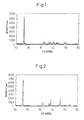
- Fig. 1 shows the powder X-ray diffraction pattern of Mixed Metal Oxide C1 of Comparative Example 1.
- a battery was produced by using Mixed Metal Oxide C1 of Comparative Example 1 as the positive electrode active material for sodium secondary batteries, and subjected to a constant current charge/discharge test under the following conditions.
- the charge was performed by CC (constant current) charge at a 0.1 C rate (a rate that requires 10 hours for full charge) up to 4.0 V.
- the discharge was performed by CC discharge at the same rate as the charge rate, and the current was cut off at a voltage of 1.5 V.
- Charge/discharge for the next and subsequent cycles was performed at the same rate as the charge rate above, and the current was cut off at a charge voltage of 4.0 V and a discharge voltage of 1.5 V similarly to the 1st cycle.
- Fig. 2 shows the powder X-ray diffraction pattern of Mixed Metal Oxide C2 of Comparative Example 2.
- a battery was produced by using Mixed Metal Oxide C2 of Comparative Example 2 as the positive electrode active material for sodium secondary batteries, and subjected to a constant current charge/discharge test under the same conditions as in Comparative Example 1. Charge/discharge of this battery was repeated 10 cycles. The discharge capacity for 10th cycle was 104 mAh/g, and the discharge capacity maintenance rate for 10th cycle was 76% based on the discharge capacity for 1st cycle. The results are shown in Table 1.
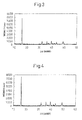
- Fig. 3 shows the powder X-ray diffraction pattern of Mixed Metal Oxide E1 of Example 1.
- a battery was produced by using Mixed Metal Oxide E1 of Example 1 as the positive electrode active material for sodium secondary batteries, and subjected to a constant current charge/discharge test under the same conditions as in Comparative Example 1. Charge/discharge of this battery was repeated 10 cycles. The discharge capacity for 10th cycle was 130 mAh/g, and the discharge capacity maintenance rate for 10th cycle was 84% based on the discharge capacity for 1st cycle. It is understood that the performance as a sodium secondary batty is greatly enhanced only by incorporating a slight amount of Fe. The results are shown in Table 1.
- Example 2 Mixed Metal Oxide E2 of Example 2 was obtained in the same manner as in Example 1 except for using the metal-containing compounds in amounts of obtaining an Na:Mn:Fe molar ratio of 0.7:0.90:0.10.
- Fig. 4 shows the powder X-ray diffraction pattern of Mixed Metal Oxide E2 of Example 2.
- a battery was produced by using Mixed Metal Oxide E2 of Example 2 as the positive electrode active material for sodium secondary batteries, and subjected to a constant current charge/discharge test under the same conditions as in Comparative Example 1. Charge/discharge of this battery was repeated 10 cycles. The discharge capacity for 10th cycle was 124 mAh/g, and the discharge capacity maintenance rate for 10th cycle was 81% based on the discharge capacity for 1st cycle. The results are shown in Table 1.
- Example 3 Mixed Metal Oxide E3 of Example 3 was obtained in the same manner as in Example 1 except for using the metal-containing compounds in amounts of obtaining an Na:Mn:Fe molar ratio of 0.7:0.75:0.25.
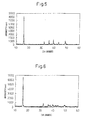
- Fig. 5 shows the powder X-ray diffraction pattern of Mixed Metal Oxide E3 of Example 3.
- a battery was produced by using Mixed Metal Oxide E3 of Example 3 as the positive electrode active material for sodium secondary batteries, and subjected to a constant current charge/discharge test under the same conditions as in Comparative Example 1. Charge/discharge of this battery was repeated 10 cycles. The discharge capacity for 10th cycle was 120 mAh/g, and the discharge capacity maintenance rate for 10th cycle was 85% based on the discharge capacity for 1st cycle. The results are shown in Table 1.
- Fig. 6 shows the powder X-ray diffraction pattern of Mixed Metal Oxide E4 of Example 4.
- a battery was produced by using Mixed Metal Oxide E4 of Example 4 as the positive electrode active material for sodium secondary batteries, and subjected to a constant current charge/discharge test under the same conditions as in Comparative Example 1. Charge/discharge of this battery was repeated 10 cycles. The discharge capacity for 10th cycle was 123 mAh/g, and the discharge capacity maintenance rate for 10th cycle was 76% based on the discharge capacity for 1st cycle. The results are shown in Table 1.
- Example 5 Mixed Metal Oxide E5 of Example 5 was obtained in the same manner as in Example 4 except for using the metal-containing compounds in amounts of obtaining an Na:Mn:Ni molar ratio of 0.7:0.95:0.05.
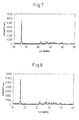
- Fig. 7 shows the powder X-ray diffraction pattern of Mixed Metal Oxide E5 of Example 5.
- a battery was produced by using Mixed Metal Oxide E5 of Example 5 as the positive electrode active material for sodium secondary batteries, and subjected to a constant current charge/discharge test under the same conditions as in Comparative Example 1. Charge/discharge of this battery was repeated 10 cycles. The discharge capacity for 10th cycle was 129 mAh/g, and the discharge capacity maintenance rate for 10th cycle was 82% based on the discharge capacity for 1st cycle. The results are shown in Table 1.
- Example 6 Mixed Metal Oxide E6 of Example 6 was obtained in the same manner as in Example 4 except for using the metal-containing compounds in amounts of obtaining an Na:Mn:Ni molar ratio of 0.7:0.90:0.10.
- Fig. 8 shows the powder X-ray diffraction pattern of Mixed Metal Oxide E6 of Example 6.
- a battery was produced by using Mixed Metal Oxide E6 of Example 6 as the positive electrode active material for sodium secondary batteries and subjected to a constant current charge/discharge test under the same conditions as in Comparative Example 1. Charge/discharge of this battery was repeated 10 cycles. The discharge capacity for 10th cycle was 128 mAh/g, and the discharge capacity maintenance rate for 10th cycle was 83% based on the discharge capacity for 1st cycle. The results are shown in Table 1.
- Example 7 Mixed Metal Oxide E7 of Example 7 was obtained in the same manner as in Example 4 except for using the metal-containing compounds in amounts of obtaining an Na:Mn:Ni molar ratio of 0.7:0.75:0.25.
- Fig. 9 shows the powder X-ray diffraction pattern of Mixed Metal Oxide E7 of Example 7.
- a battery was produced by using Mixed Metal Oxide E7 of Example 7 as the positive electrode active material for sodium secondary batteries and subjected to a constant current charge/discharge test under the same conditions as in Comparative Example 1. Charge/discharge of this battery was repeated 10 cycles. The discharge capacity for 10th cycle was 119 mAh/g, and the discharge capacity maintenance rate for 10th cycle was 82% based on the discharge capacity for 1st cycle. The results are shown in Table 1.
- Production Example 1 production of porous laminated film
- alumina powder (Alumina C, produced by Nippon Aerosil Co., Ltd., average particle diameter: 0.02 ⁇ m) and 2 g of a second alumina powder (Sumicorundum AA03, produced by Sumitomo Chemical Co., Ltd., average particle diameter: 0.3 ⁇ m), as a filler in total of 4 g, were added and mixed.
- the resulting mixture was subjected to a nanomizer three times, filtered with a 1,000-mesh metal screen, and defoamed under reduced pressure to produce a slurry of applying for heat-resistant porous layer.
- the amount of the alumina powder (filler) was 67 wt%, based on the total weight of the para-aramide and alumina powder.
- a polyethylene porous film (film thickness of 12 ⁇ m, air permeability of 140 seconds/100 ml, average pore diameter of 0.1 ⁇ m, void content of 50%) was used.
- the polyethylene porous film above was fixed on a 100 ⁇ m-thick PET film, and the slurry of applying for heat-resistant porous layer was applied on the porous film by a bar coater manufactured by Tester Sangyo Co,. Ltd.
- the coated porous film on the PET film was, while maintaining the integrity, dipped in water, which is a poor solvent, to precipitate a para-aramide porous film (heat-resistant porous layer).
- the solvent was dried and the PET film was removed to yield a porous laminated film in which a heat-resistant porous layer and a porous film were stacked each other.
- the thickness of the porous laminate film was 16 ⁇ m, and the thickness of the para-aramide porous layer (heat-resistant porous layer) was 4 ⁇ m.
- the air permeability of the porous laminate film was 180 second/100 ml, and the void content was 50%.
- the cross-section of the heat-resistant porous layer in the porous laminated film was observed by a scanning electron microscope (SEM), as a result, the heat-resistant porous layer was found to have relatively small pores of approximately 0.03 ⁇ m to 0.06 ⁇ m and relatively large pores of approximately 0.1 ⁇ m to 1 ⁇ m. Evaluations of the porous laminated film were performed as in the following (A) to (C).
- the thicknesses of the porous laminated film and the porous film were measured in accordance with JIS standards (K7130-1992).
- the thickness of the heat-resistant porous layer was determined by subtracting the thickness of the porous film from the thickness of the porous laminated film.
- the air permeability of the porous laminated film was measured based on JIS P8117 by a digital-timer type Gurley densometer manufactured by Yasuda Seiki Seisakusho, Ltd.
- the obtained porous laminated film sample was cut into a square shape which is 10 cm on each side, and the weight W (g) and the thickness D (cm) were measured.
- the sodium secondary batteries can more successfully prevent thermal film rupture.
Landscapes
- Chemical & Material Sciences (AREA)
- Chemical Kinetics & Catalysis (AREA)
- Electrochemistry (AREA)
- General Chemical & Material Sciences (AREA)
- Inorganic Chemistry (AREA)
- Engineering & Computer Science (AREA)
- Organic Chemistry (AREA)
- Manufacturing & Machinery (AREA)
- Materials Engineering (AREA)
- Crystallography & Structural Chemistry (AREA)
- Secondary Cells (AREA)
- Battery Electrode And Active Subsutance (AREA)
Applications Claiming Priority (3)
| Application Number | Priority Date | Filing Date | Title |
|---|---|---|---|
| JP2008023673A JP5309581B2 (ja) | 2008-02-04 | 2008-02-04 | 正極活物質用粉末、正極活物質およびナトリウム二次電池 |
| JP2008026153 | 2008-02-06 | ||
| PCT/JP2009/051784 WO2009099061A1 (ja) | 2008-02-04 | 2009-02-03 | 複合金属酸化物およびナトリウム二次電池 |
Publications (1)
| Publication Number | Publication Date |
|---|---|
| EP2242131A1 true EP2242131A1 (de) | 2010-10-20 |
Family
ID=40952136
Family Applications (1)
| Application Number | Title | Priority Date | Filing Date |
|---|---|---|---|
| EP09709219A Withdrawn EP2242131A1 (de) | 2008-02-04 | 2009-02-03 | Zusammengesetztes metalloxid und wiederaufladbare natriumbatterie |
Country Status (5)
| Country | Link |
|---|---|
| US (1) | US9142860B2 (de) |
| EP (1) | EP2242131A1 (de) |
| KR (1) | KR20100120138A (de) |
| CN (1) | CN101933179B (de) |
| WO (1) | WO2009099061A1 (de) |
Cited By (3)
| Publication number | Priority date | Publication date | Assignee | Title |
|---|---|---|---|---|
| EP2683018A4 (de) * | 2011-03-02 | 2014-08-20 | Sumitomo Electric Industries | Schmelzsalzbatterie |
| GB2540626A (en) * | 2015-07-24 | 2017-01-25 | Sharp Kk | Sodium transition metal oxide compounds for na-ion batteries |
| EP3605673A4 (de) * | 2017-03-29 | 2020-12-09 | Sumitomo Chemical Company Limited | Elektrodenaktivmaterial für natriumsekundärbatterie, elektrode für natriumsekundärbatterie, natriumsekundärbatterie und verfahren zur herstellung von verbundmetalloxid |
Families Citing this family (24)
| Publication number | Priority date | Publication date | Assignee | Title |
|---|---|---|---|---|
| JP2010080424A (ja) * | 2008-08-27 | 2010-04-08 | Sumitomo Chemical Co Ltd | 電極活物質およびその製造方法 |
| WO2010120560A1 (en) * | 2009-03-31 | 2010-10-21 | Battelle Memorial Institute | Supercapacitor materials and devices |
| JP4937405B1 (ja) * | 2009-12-28 | 2012-05-23 | 住友化学株式会社 | リチウム複合金属酸化物の製造方法 |
| JP5870930B2 (ja) * | 2010-11-05 | 2016-03-01 | 学校法人東京理科大学 | 複合金属酸化物、当該複合金属酸化物の製造方法、ナトリウム二次電池用正極活物質、ナトリウム二次電池用正極、及びナトリウム二次電池 |
| JP5765705B2 (ja) * | 2011-03-28 | 2015-08-19 | 学校法人東京理科大学 | 複合金属酸化物、ナトリウム二次電池用正極活物質、ナトリウム二次電池用正極、及びナトリウム二次電池 |
| GB2503897A (en) * | 2012-07-10 | 2014-01-15 | Faradion Ltd | Nickel doped compound for use as an electrode material in energy storage devices |
| GB2503898A (en) * | 2012-07-10 | 2014-01-15 | Faradion Ltd | Nickel doped compound for use as an electrode material in energy storage devices |
| US20150333325A1 (en) | 2012-11-19 | 2015-11-19 | Iucf-Hyu(Industry-University Cooperation Foundation Hanyang University) | Manufacturing method of positive active material precursor for sodium rechargeable batteries, positive active material precursor for sodium rechargeable batteries made by the same, and manufacturing method of positive active material for sodium rechargeable batteries, positive active material for sodium rechargeable batteries made by the same |
| CN104904047A (zh) * | 2012-11-19 | 2015-09-09 | 汉阳大学校产学协力团 | 钠二次电池用正极活性材料及其制备方法 |
| WO2014077663A1 (ko) * | 2012-11-19 | 2014-05-22 | 한양대학교 산학협력단 | 나트륨 이차전지용 양극활물질 및 이의 제조 방법 |
| CN103840149A (zh) * | 2012-11-27 | 2014-06-04 | 中国科学院物理研究所 | 钠离子二次电池及其用的层状含锰氧化物活性物质、正极和活性物质的制备方法 |
| CN104854035A (zh) * | 2012-12-14 | 2015-08-19 | 松下知识产权经营株式会社 | 复合金属氧化物、复合金属氧化物的制造方法和钠二次电池 |
| KR102144996B1 (ko) | 2013-09-30 | 2020-08-18 | 삼성전자주식회사 | 양극활물질, 및 이를 포함하는 양극 및 나트륨이차전지 |
| KR102192082B1 (ko) | 2013-10-18 | 2020-12-16 | 삼성전자주식회사 | 음극 활물질, 상기 음극 활물질을 포함하는 음극 및 상기 음극을 포함하는 리튬 이차전지 |
| KR102149334B1 (ko) | 2013-10-21 | 2020-08-28 | 삼성전자주식회사 | 양극활물질, 및 이를 포함하는 양극 및 나트륨이차전지 |
| CN106575744B (zh) * | 2014-08-08 | 2019-04-12 | 住友电气工业株式会社 | 用于钠离子二次电池的正极和钠离子二次电池 |
| US9660263B2 (en) | 2014-12-23 | 2017-05-23 | Sharp Kabushiki Kaisha | Layered oxide materials for batteries |
| US9653731B2 (en) | 2014-12-23 | 2017-05-16 | Sharp Kabushiki Kaisha | Layered oxide materials for batteries |
| TWI570989B (zh) * | 2015-08-21 | 2017-02-11 | 財團法人工業技術研究院 | 電解液組合物、與鈉二次電池 |
| US20190123323A1 (en) * | 2017-10-24 | 2019-04-25 | Sumitomo Chemical Company, Limited | Composition |
| CN108110236A (zh) * | 2017-12-14 | 2018-06-01 | 东北大学 | 一种钠离子电池正极材料及其制备方法 |
| WO2020059902A1 (ko) * | 2018-09-19 | 2020-03-26 | 전자부품연구원 | 실리콘산화물 코팅층이 형성된 양극 소재, 그를 포함하는 양극과 나트륨이온전지 및 그의 제조 방법 |
| CN113078308B (zh) * | 2021-06-04 | 2021-08-24 | 蜂巢能源科技有限公司 | 一种无钴无镍正极材料、其制备方法以及电池 |
| WO2025098246A1 (zh) * | 2023-11-09 | 2025-05-15 | 合同会社Ttl | 钠二次电池及其制造方法 |
Family Cites Families (52)
| Publication number | Priority date | Publication date | Assignee | Title |
|---|---|---|---|---|
| JPH01260767A (ja) | 1988-04-08 | 1989-10-18 | Showa Denko Kk | 二次電池 |
| JPH03291863A (ja) | 1990-04-10 | 1991-12-24 | Showa Denko Kk | 二次電池 |
| US5558961A (en) | 1994-06-13 | 1996-09-24 | Regents, University Of California | Secondary cell with orthorhombic alkali metal/manganese oxide phase active cathode material |
| JPH1025117A (ja) | 1996-07-09 | 1998-01-27 | Japan Metals & Chem Co Ltd | 水酸化ニッケルの製造方法 |
| JPH1081520A (ja) | 1996-09-02 | 1998-03-31 | Nippon Chem Ind Co Ltd | Mn−Co系複合水酸化物、その製造方法及びリチウム二次電池用正極活物質用原料 |
| JP3842348B2 (ja) | 1996-09-02 | 2006-11-08 | 日本化学工業株式会社 | Ni−Mn系複合水酸化物の製造方法 |
| JP4038868B2 (ja) | 1997-03-26 | 2008-01-30 | 住友化学株式会社 | パラアラミド系多孔質フィルムおよびそれを用いた電池用セパレーターとリチウム二次電池 |
| JP3439082B2 (ja) * | 1997-07-16 | 2003-08-25 | 三洋電機株式会社 | 非水電解質二次電池 |
| TW460505B (en) | 1998-04-27 | 2001-10-21 | Sumitomo Chemical Co | Separator for nonaqueous electrolyte battery and lithium secondary battery made from the same |
| JP3175730B2 (ja) | 1998-04-27 | 2001-06-11 | 住友化学工業株式会社 | 非水電解質電池セパレーターとリチウム二次電池 |
| JPH11317226A (ja) | 1998-04-30 | 1999-11-16 | Mitsubishi Materials Corp | リチウム二次電池用正極活物質およびその製造方法 |
| JP3032757B1 (ja) | 1999-02-18 | 2000-04-17 | 株式会社東芝 | 非水電解液二次電池 |
| JP3649996B2 (ja) | 2000-05-24 | 2005-05-18 | 三洋電機株式会社 | 非水電解質二次電池用正極活物質 |
| TWI315591B (en) * | 2000-06-14 | 2009-10-01 | Sumitomo Chemical Co | Porous film and separator for battery using the same |
| JP5140896B2 (ja) * | 2000-06-14 | 2013-02-13 | 住友化学株式会社 | 多孔質フィルムおよびそれを用いた電池用セパレータ |
| JP2002025555A (ja) * | 2000-07-05 | 2002-01-25 | Toyota Central Res & Dev Lab Inc | マグネシウム二次電池正極活物質用マグネシウム複合酸化物、その製造方法およびそれを用いたマグネシウム二次電池 |
| CN100372158C (zh) | 2001-04-06 | 2008-02-27 | 威伦斯技术公司 | 钠离子电池 |
| US6921609B2 (en) * | 2001-06-15 | 2005-07-26 | Kureha Chemical Industry Co., Ltd. | Gradient cathode material for lithium rechargeable batteries |
| JP4620926B2 (ja) | 2002-03-19 | 2011-01-26 | 戸田工業株式会社 | 非水電解質二次電池用正極活物質の製造法 |
| JP2004362934A (ja) | 2003-06-04 | 2004-12-24 | Sony Corp | 正極材料および電池 |
| KR101245535B1 (ko) | 2004-03-31 | 2013-03-21 | 스미또모 가가꾸 가부시키가이샤 | 비수 전해질 2차 전지용 양극 활성 물질 |
| JP2008511960A (ja) | 2004-09-03 | 2008-04-17 | ユーシカゴ・アーゴン・リミテッド・ライアビリティ・カンパニー | リチウム電池用のマンガン酸化物複合電極 |
| US7635536B2 (en) | 2004-09-03 | 2009-12-22 | Uchicago Argonne, Llc | Manganese oxide composite electrodes for lithium batteries |
| JP4929674B2 (ja) | 2004-10-27 | 2012-05-09 | 住友化学株式会社 | 球状ニッケル酸リチウム粒子の製造方法および球状の複合酸化物粒子の製造方法 |
| TW200624385A (en) | 2004-10-27 | 2006-07-16 | Sumitomo Chemical Co | Nickel hydroxide powder and method for making same |
| JP5085032B2 (ja) * | 2004-11-26 | 2012-11-28 | 国立大学法人九州大学 | 非水電解質二次電池用正極活物質 |
| KR101250136B1 (ko) * | 2004-11-26 | 2013-04-04 | 고쿠리쓰다이가쿠호진 규슈다이가쿠 | 비수 전해질 2 차 전지용 양극 활성 물질 |
| KR100672506B1 (ko) | 2004-12-22 | 2007-01-24 | 엘지전자 주식회사 | 프로젝터의 투사 장치 |
| WO2006082719A1 (ja) | 2005-02-07 | 2006-08-10 | Sanyo Electric Co., Ltd. | 正極および非水電解質二次電池 |
| JP4739769B2 (ja) | 2005-02-07 | 2011-08-03 | 三洋電機株式会社 | 非水電解質二次電池 |
| JP4739770B2 (ja) | 2005-02-07 | 2011-08-03 | 三洋電機株式会社 | 非水電解質二次電池 |
| JP4854982B2 (ja) | 2005-04-15 | 2012-01-18 | Agcセイミケミカル株式会社 | リチウム二次電池正極用のリチウム含有複合酸化物の製造方法 |
| CN1719639A (zh) * | 2005-05-13 | 2006-01-11 | 北京化工大学 | 一种高锂离子含量层状锰酸锂正极材料的制备方法 |
| JP5082300B2 (ja) | 2005-05-27 | 2012-11-28 | 住友化学株式会社 | 活性炭及びその製造方法 |
| CN101184691A (zh) | 2005-05-27 | 2008-05-21 | 住友化学株式会社 | 双电层电容器 |
| US20090050841A1 (en) | 2005-07-21 | 2009-02-26 | Sumitomo Chemical Company, Limited | Positive electrode active material for non-aqueous electrolyte secondary battery |
| JP2007053081A (ja) * | 2005-07-21 | 2007-03-01 | Sumitomo Chemical Co Ltd | 非水電解質二次電池用正極活物質 |
| JP4963806B2 (ja) | 2005-07-29 | 2012-06-27 | 三洋電機株式会社 | 非水電解質二次電池 |
| JP2007073424A (ja) | 2005-09-08 | 2007-03-22 | Sanyo Electric Co Ltd | 非水電解質二次電池 |
| JP2007112674A (ja) * | 2005-10-21 | 2007-05-10 | National Institute Of Advanced Industrial & Technology | アルカリマンガン複合酸化物及びその製造方法 |
| JP2007188703A (ja) | 2006-01-12 | 2007-07-26 | Matsushita Electric Ind Co Ltd | 非水電解質二次電池 |
| JP2007234512A (ja) | 2006-03-03 | 2007-09-13 | Sanyo Electric Co Ltd | 非水電解質二次電池 |
| JP5142544B2 (ja) * | 2006-03-20 | 2013-02-13 | 三洋電機株式会社 | 非水電解質二次電池 |
| JP5095121B2 (ja) | 2006-04-28 | 2012-12-12 | パナソニック株式会社 | 非水電解質二次電池用セパレータおよび非水電解質二次電池 |
| JP5521266B2 (ja) | 2006-11-21 | 2014-06-11 | 住友化学株式会社 | 正極活物質用粉末および正極活物質 |
| JP4827931B2 (ja) | 2006-12-27 | 2011-11-30 | 三洋電機株式会社 | 非水電解質二次電池およびその製造方法 |
| JP5094144B2 (ja) | 2007-01-31 | 2012-12-12 | 日立マクセルエナジー株式会社 | リチウム二次電池用正極活物質とその製造方法、リチウム二次電池用正極、およびリチウム二次電池 |
| US7846585B2 (en) | 2007-06-29 | 2010-12-07 | Uchicago Argonne, Llc | Silver manganese vanadium oxide electrodes for lithium batteries |
| JP4595987B2 (ja) | 2007-10-25 | 2010-12-08 | トヨタ自動車株式会社 | 正極活物質 |
| KR101135491B1 (ko) | 2009-02-13 | 2012-04-13 | 삼성에스디아이 주식회사 | 리튬 이차 전지용 양극 및 이를 포함하는 리튬 이차 전지 |
| KR20110136001A (ko) | 2010-06-13 | 2011-12-21 | 삼성에스디아이 주식회사 | 리튬 이차전지용 양극 활물질의 제조 방법 및 이를 이용한 리튬 이차전지 |
| US8298701B2 (en) | 2011-03-09 | 2012-10-30 | Aquion Energy Inc. | Aqueous electrolyte energy storage device |
-
2009
- 2009-02-03 EP EP09709219A patent/EP2242131A1/de not_active Withdrawn
- 2009-02-03 KR KR20107017298A patent/KR20100120138A/ko not_active Abandoned
- 2009-02-03 CN CN200980103861.XA patent/CN101933179B/zh active Active
- 2009-02-03 US US12/865,993 patent/US9142860B2/en active Active
- 2009-02-03 WO PCT/JP2009/051784 patent/WO2009099061A1/ja not_active Ceased
Non-Patent Citations (1)
| Title |
|---|
| See references of WO2009099061A1 * |
Cited By (5)
| Publication number | Priority date | Publication date | Assignee | Title |
|---|---|---|---|---|
| EP2683018A4 (de) * | 2011-03-02 | 2014-08-20 | Sumitomo Electric Industries | Schmelzsalzbatterie |
| EP3018739A1 (de) * | 2011-03-02 | 2016-05-11 | Sumitomo Electric Industries, Ltd. | Schmelzsalzbatterie |
| GB2540626A (en) * | 2015-07-24 | 2017-01-25 | Sharp Kk | Sodium transition metal oxide compounds for na-ion batteries |
| EP3605673A4 (de) * | 2017-03-29 | 2020-12-09 | Sumitomo Chemical Company Limited | Elektrodenaktivmaterial für natriumsekundärbatterie, elektrode für natriumsekundärbatterie, natriumsekundärbatterie und verfahren zur herstellung von verbundmetalloxid |
| US11233236B2 (en) | 2017-03-29 | 2022-01-25 | Sumitomo Chemical Company, Limited | Electrode active material for sodium secondary battery, electrode for sodium secondary battery, sodium secondary battery and method for producing composite metal oxide |
Also Published As
| Publication number | Publication date |
|---|---|
| CN101933179A (zh) | 2010-12-29 |
| CN101933179B (zh) | 2014-05-28 |
| US9142860B2 (en) | 2015-09-22 |
| KR20100120138A (ko) | 2010-11-12 |
| WO2009099061A1 (ja) | 2009-08-13 |
| US20110003192A1 (en) | 2011-01-06 |
Similar Documents
| Publication | Publication Date | Title |
|---|---|---|
| US9142860B2 (en) | Mixed metal oxide and sodium secondary battery | |
| US10122014B2 (en) | Mixed metal oxide and sodium secondary battery | |
| EP2216298A1 (de) | Komplexes metalloxid und natrium-sekundärbatterie | |
| KR101708951B1 (ko) | 복합 금속 산화물, 전극 및 나트륨 이차 전지 | |
| US8795894B2 (en) | Positive electrode active material, sodium secondary battery, and production method of olivine-type phosphate | |
| US20100266900A1 (en) | Sodium-manganese mixed metal oxide, production method thereof and sodium secondary battery | |
| EP2242132A1 (de) | Wiederaufladbare natriumbatterie | |
| JP5515306B2 (ja) | 複合金属酸化物およびナトリウム二次電池 | |
| EP2323204A1 (de) | Elektrodenaktives material und verfahren zu seiner herstellung | |
| JP5391709B2 (ja) | 複合金属酸化物およびナトリウム二次電池 | |
| US8790831B2 (en) | Powder for positive electrode active material, positive active electrode active material, and sodium secondary battery | |
| JP2009224320A (ja) | ナトリウム二次電池 | |
| JP2009259601A (ja) | ナトリウムイオン二次電池用電極活物質およびその製造方法 |
Legal Events
| Date | Code | Title | Description |
|---|---|---|---|
| PUAI | Public reference made under article 153(3) epc to a published international application that has entered the european phase |
Free format text: ORIGINAL CODE: 0009012 |
|
| 17P | Request for examination filed |
Effective date: 20100804 |
|
| AK | Designated contracting states |
Kind code of ref document: A1 Designated state(s): AT BE BG CH CY CZ DE DK EE ES FI FR GB GR HR HU IE IS IT LI LT LU LV MC MK MT NL NO PL PT RO SE SI SK TR |
|
| AX | Request for extension of the european patent |
Extension state: AL BA RS |
|
| DAX | Request for extension of the european patent (deleted) | ||
| STAA | Information on the status of an ep patent application or granted ep patent |
Free format text: STATUS: THE APPLICATION HAS BEEN WITHDRAWN |
|
| 18W | Application withdrawn |
Effective date: 20130904 |