EP2066345B1 - Making influenza virus vaccines without using eggs - Google Patents
Making influenza virus vaccines without using eggs Download PDFInfo
- Publication number
- EP2066345B1 EP2066345B1 EP07825694.8A EP07825694A EP2066345B1 EP 2066345 B1 EP2066345 B1 EP 2066345B1 EP 07825694 A EP07825694 A EP 07825694A EP 2066345 B1 EP2066345 B1 EP 2066345B1
- Authority
- EP
- European Patent Office
- Prior art keywords
- virus
- mdck
- cells
- eggs
- hemagglutinin
- Prior art date
- Legal status (The legal status is an assumption and is not a legal conclusion. Google has not performed a legal analysis and makes no representation as to the accuracy of the status listed.)
- Active
Links
Images

Classifications
-
- A—HUMAN NECESSITIES
- A61—MEDICAL OR VETERINARY SCIENCE; HYGIENE
- A61K—PREPARATIONS FOR MEDICAL, DENTAL OR TOILETRY PURPOSES
- A61K39/00—Medicinal preparations containing antigens or antibodies
- A61K39/12—Viral antigens
- A61K39/145—Orthomyxoviridae, e.g. influenza virus
-
- A—HUMAN NECESSITIES
- A61—MEDICAL OR VETERINARY SCIENCE; HYGIENE
- A61K—PREPARATIONS FOR MEDICAL, DENTAL OR TOILETRY PURPOSES
- A61K39/00—Medicinal preparations containing antigens or antibodies
- A61K39/12—Viral antigens
-
- A—HUMAN NECESSITIES
- A61—MEDICAL OR VETERINARY SCIENCE; HYGIENE
- A61P—SPECIFIC THERAPEUTIC ACTIVITY OF CHEMICAL COMPOUNDS OR MEDICINAL PREPARATIONS
- A61P31/00—Antiinfectives, i.e. antibiotics, antiseptics, chemotherapeutics
- A61P31/12—Antivirals
- A61P31/14—Antivirals for RNA viruses
- A61P31/16—Antivirals for RNA viruses for influenza or rhinoviruses
-
- A—HUMAN NECESSITIES
- A61—MEDICAL OR VETERINARY SCIENCE; HYGIENE
- A61P—SPECIFIC THERAPEUTIC ACTIVITY OF CHEMICAL COMPOUNDS OR MEDICINAL PREPARATIONS
- A61P37/00—Drugs for immunological or allergic disorders
- A61P37/02—Immunomodulators
- A61P37/04—Immunostimulants
-
- C—CHEMISTRY; METALLURGY
- C07—ORGANIC CHEMISTRY
- C07K—PEPTIDES
- C07K14/00—Peptides having more than 20 amino acids; Gastrins; Somatostatins; Melanotropins; Derivatives thereof
- C07K14/005—Peptides having more than 20 amino acids; Gastrins; Somatostatins; Melanotropins; Derivatives thereof from viruses
- C07K14/08—RNA viruses
- C07K14/085—Picornaviridae, e.g. coxsackie virus, echovirus, enterovirus
- C07K14/10—Hepatitis A virus
-
- C—CHEMISTRY; METALLURGY
- C12—BIOCHEMISTRY; BEER; SPIRITS; WINE; VINEGAR; MICROBIOLOGY; ENZYMOLOGY; MUTATION OR GENETIC ENGINEERING
- C12N—MICROORGANISMS OR ENZYMES; COMPOSITIONS THEREOF; PROPAGATING, PRESERVING, OR MAINTAINING MICROORGANISMS; MUTATION OR GENETIC ENGINEERING; CULTURE MEDIA
- C12N7/00—Viruses; Bacteriophages; Compositions thereof; Preparation or purification thereof
-
- C—CHEMISTRY; METALLURGY
- C12—BIOCHEMISTRY; BEER; SPIRITS; WINE; VINEGAR; MICROBIOLOGY; ENZYMOLOGY; MUTATION OR GENETIC ENGINEERING
- C12N—MICROORGANISMS OR ENZYMES; COMPOSITIONS THEREOF; PROPAGATING, PRESERVING, OR MAINTAINING MICROORGANISMS; MUTATION OR GENETIC ENGINEERING; CULTURE MEDIA
- C12N7/00—Viruses; Bacteriophages; Compositions thereof; Preparation or purification thereof
- C12N7/02—Recovery or purification
-
- G—PHYSICS
- G01—MEASURING; TESTING
- G01N—INVESTIGATING OR ANALYSING MATERIALS BY DETERMINING THEIR CHEMICAL OR PHYSICAL PROPERTIES
- G01N33/00—Investigating or analysing materials by specific methods not covered by groups G01N1/00 - G01N31/00
- G01N33/48—Biological material, e.g. blood, urine; Haemocytometers
- G01N33/50—Chemical analysis of biological material, e.g. blood, urine; Testing involving biospecific ligand binding methods; Immunological testing
- G01N33/53—Immunoassay; Biospecific binding assay; Materials therefor
- G01N33/569—Immunoassay; Biospecific binding assay; Materials therefor for microorganisms, e.g. protozoa, bacteria, viruses
- G01N33/56983—Viruses
-
- A—HUMAN NECESSITIES
- A61—MEDICAL OR VETERINARY SCIENCE; HYGIENE
- A61K—PREPARATIONS FOR MEDICAL, DENTAL OR TOILETRY PURPOSES
- A61K39/00—Medicinal preparations containing antigens or antibodies
- A61K2039/505—Medicinal preparations containing antigens or antibodies comprising antibodies
-
- A—HUMAN NECESSITIES
- A61—MEDICAL OR VETERINARY SCIENCE; HYGIENE
- A61K—PREPARATIONS FOR MEDICAL, DENTAL OR TOILETRY PURPOSES
- A61K39/00—Medicinal preparations containing antigens or antibodies
- A61K2039/51—Medicinal preparations containing antigens or antibodies comprising whole cells, viruses or DNA/RNA
- A61K2039/525—Virus
- A61K2039/5252—Virus inactivated (killed)
-
- A—HUMAN NECESSITIES
- A61—MEDICAL OR VETERINARY SCIENCE; HYGIENE
- A61K—PREPARATIONS FOR MEDICAL, DENTAL OR TOILETRY PURPOSES
- A61K39/00—Medicinal preparations containing antigens or antibodies
- A61K2039/51—Medicinal preparations containing antigens or antibodies comprising whole cells, viruses or DNA/RNA
- A61K2039/525—Virus
- A61K2039/5254—Virus avirulent or attenuated
-
- C—CHEMISTRY; METALLURGY
- C12—BIOCHEMISTRY; BEER; SPIRITS; WINE; VINEGAR; MICROBIOLOGY; ENZYMOLOGY; MUTATION OR GENETIC ENGINEERING
- C12N—MICROORGANISMS OR ENZYMES; COMPOSITIONS THEREOF; PROPAGATING, PRESERVING, OR MAINTAINING MICROORGANISMS; MUTATION OR GENETIC ENGINEERING; CULTURE MEDIA
- C12N2760/00—MICROORGANISMS OR ENZYMES; COMPOSITIONS THEREOF; PROPAGATING, PRESERVING, OR MAINTAINING MICROORGANISMS; MUTATION OR GENETIC ENGINEERING; CULTURE MEDIA ssRNA viruses negative-sense
- C12N2760/00011—Details
- C12N2760/16011—Orthomyxoviridae
- C12N2760/16034—Use of virus or viral component as vaccine, e.g. live-attenuated or inactivated virus, VLP, viral protein
-
- C—CHEMISTRY; METALLURGY
- C12—BIOCHEMISTRY; BEER; SPIRITS; WINE; VINEGAR; MICROBIOLOGY; ENZYMOLOGY; MUTATION OR GENETIC ENGINEERING
- C12N—MICROORGANISMS OR ENZYMES; COMPOSITIONS THEREOF; PROPAGATING, PRESERVING, OR MAINTAINING MICROORGANISMS; MUTATION OR GENETIC ENGINEERING; CULTURE MEDIA
- C12N2760/00—MICROORGANISMS OR ENZYMES; COMPOSITIONS THEREOF; PROPAGATING, PRESERVING, OR MAINTAINING MICROORGANISMS; MUTATION OR GENETIC ENGINEERING; CULTURE MEDIA ssRNA viruses negative-sense
- C12N2760/00011—Details
- C12N2760/16011—Orthomyxoviridae
- C12N2760/16051—Methods of production or purification of viral material
- C12N2760/16052—Methods of production or purification of viral material relating to complementing cells and packaging systems for producing virus or viral particles
-
- C—CHEMISTRY; METALLURGY
- C12—BIOCHEMISTRY; BEER; SPIRITS; WINE; VINEGAR; MICROBIOLOGY; ENZYMOLOGY; MUTATION OR GENETIC ENGINEERING
- C12N—MICROORGANISMS OR ENZYMES; COMPOSITIONS THEREOF; PROPAGATING, PRESERVING, OR MAINTAINING MICROORGANISMS; MUTATION OR GENETIC ENGINEERING; CULTURE MEDIA
- C12N2760/00—MICROORGANISMS OR ENZYMES; COMPOSITIONS THEREOF; PROPAGATING, PRESERVING, OR MAINTAINING MICROORGANISMS; MUTATION OR GENETIC ENGINEERING; CULTURE MEDIA ssRNA viruses negative-sense
- C12N2760/00011—Details
- C12N2760/16011—Orthomyxoviridae
- C12N2760/16111—Influenzavirus A, i.e. influenza A virus
- C12N2760/16134—Use of virus or viral component as vaccine, e.g. live-attenuated or inactivated virus, VLP, viral protein
-
- C—CHEMISTRY; METALLURGY
- C12—BIOCHEMISTRY; BEER; SPIRITS; WINE; VINEGAR; MICROBIOLOGY; ENZYMOLOGY; MUTATION OR GENETIC ENGINEERING
- C12N—MICROORGANISMS OR ENZYMES; COMPOSITIONS THEREOF; PROPAGATING, PRESERVING, OR MAINTAINING MICROORGANISMS; MUTATION OR GENETIC ENGINEERING; CULTURE MEDIA
- C12N2760/00—MICROORGANISMS OR ENZYMES; COMPOSITIONS THEREOF; PROPAGATING, PRESERVING, OR MAINTAINING MICROORGANISMS; MUTATION OR GENETIC ENGINEERING; CULTURE MEDIA ssRNA viruses negative-sense
- C12N2760/00011—Details
- C12N2760/16011—Orthomyxoviridae
- C12N2760/16111—Influenzavirus A, i.e. influenza A virus
- C12N2760/16151—Methods of production or purification of viral material
-
- C—CHEMISTRY; METALLURGY
- C12—BIOCHEMISTRY; BEER; SPIRITS; WINE; VINEGAR; MICROBIOLOGY; ENZYMOLOGY; MUTATION OR GENETIC ENGINEERING
- C12N—MICROORGANISMS OR ENZYMES; COMPOSITIONS THEREOF; PROPAGATING, PRESERVING, OR MAINTAINING MICROORGANISMS; MUTATION OR GENETIC ENGINEERING; CULTURE MEDIA
- C12N2760/00—MICROORGANISMS OR ENZYMES; COMPOSITIONS THEREOF; PROPAGATING, PRESERVING, OR MAINTAINING MICROORGANISMS; MUTATION OR GENETIC ENGINEERING; CULTURE MEDIA ssRNA viruses negative-sense
- C12N2760/00011—Details
- C12N2760/16011—Orthomyxoviridae
- C12N2760/16211—Influenzavirus B, i.e. influenza B virus
- C12N2760/16234—Use of virus or viral component as vaccine, e.g. live-attenuated or inactivated virus, VLP, viral protein
-
- C—CHEMISTRY; METALLURGY
- C12—BIOCHEMISTRY; BEER; SPIRITS; WINE; VINEGAR; MICROBIOLOGY; ENZYMOLOGY; MUTATION OR GENETIC ENGINEERING
- C12N—MICROORGANISMS OR ENZYMES; COMPOSITIONS THEREOF; PROPAGATING, PRESERVING, OR MAINTAINING MICROORGANISMS; MUTATION OR GENETIC ENGINEERING; CULTURE MEDIA
- C12N2760/00—MICROORGANISMS OR ENZYMES; COMPOSITIONS THEREOF; PROPAGATING, PRESERVING, OR MAINTAINING MICROORGANISMS; MUTATION OR GENETIC ENGINEERING; CULTURE MEDIA ssRNA viruses negative-sense
- C12N2760/00011—Details
- C12N2760/16011—Orthomyxoviridae
- C12N2760/16211—Influenzavirus B, i.e. influenza B virus
- C12N2760/16251—Methods of production or purification of viral material
Definitions
- This invention is in the field of manufacturing vaccines for protecting against influenza virus.
- the current process for preparing seasonal vaccines against human influenza virus infection involves the following steps [1,2]: (a) isolation of circulating virus strains; (b) antigenic and genetic analysis of isolated viruses; (c) selection of viral strains for use during the coming season; (d) preparation of high-growth seed strains by reassortment or the use of reverse genetics; (e) release of seed strains to vaccine manufacturers; (f) evaluation by the manufacturers of the strains' suitability for industrial production; and (g) growth of the seed strains to produce virus from which vaccines are then manufactured.
- Steps (a) to (e) of this process are performed by the FDA and government-approved international influenza centres, typically under the auspices of the World Health Organisation; steps (f) and (g) are performed by the manufacturers themselves.
- Step (d) transitions a virus from one that is naturally adapted for infecting humans into one that will grow to high titers under industrial growth conditions.
- this step typically involves creating a 6:2 reassortant strain that includes the HA- and NA-encoding genome segments from the strains selected in (c) and the remaining six genome segments from a strain that grows efficiently in chicken eggs, and this strain is usually A/PR/8/34.
- the reassortment procedure is then followed by repeated passaging of the strain in embryonated eggs to allow for egg adaptation and growth enhancement.
- prototype strains with good growth characteristics are usually obtained by direct and repeated passaging in embryonated eggs without attempting to generate reassortants.
- step (g) the steps performed prior to release to vaccine manufacturers involve passaging influenza virus through eggs. Even if the viruses are grown by a manufacturer in step (g) on a cell substrate, rather than on eggs, the virus will still have been passaged through eggs at some stage between isolation from in step (a) and receipt by a manufacturer in step (e).
- step (a) involves exposing a substrate to a patient sample, such that any virus in the sample will infect the substrate.
- the substrate can then amplify the amount of virus present, and the amplified viruses are then available for further study.
- This step may take place in eggs or in mammalian cells.
- Cells known for use in primary isolation include MRC-5 cells [3], Vero cells [4,5], MDCK cells [6], HepG2 cells [7], LLC-MK2 cells [8], etc. In general, though, chicken eggs continue to be used to isolate reference strains for the manufacture of influenza vaccine.
- Reference 10 proposes that vaccines should be grown in cell culture using either a (i) a high growth strain of a passaged clinical isolate or (ii) a reassortant derived from at least one naturally-occurring mammalian influenza virus strain, provided that the isolate or reassortant has not been passaged in avian eggs.
- a seed virus that has already been selected or manipulated for growth in the cell culture of choice.
- Reference 11 compares viruses passaged through eggs with those passaged through MDCK cells, but specifically selects the former for vaccine manufacture.
- Reference 12 suggests that seed viruses for pandemic influenza vaccines could be prepared by propagating the pandemic strain directly onto mammalian cell culture instead of via embryonated eggs, but notes that egg passaging was obligatory for inter-pandemic manufacture.
- the reason for this obligatory egg passaging is that it has been believed to act as a 'filter' for adventitious agents: regulatory agencies have accepted that a series of passages in an avian system, between the original clinical isolation from a human and the final vaccine for administration to a human, will prevent mammalian-type adventitious agents from co-replicating with the influenza virus.
- the invention aims to provide further procedures useful in manufacturing influenza vaccines, in which the use of eggs is reduced, and preferably is avoided altogether. In one particular aspect, the invention aims to provide further and improved procedures useful in influenza virus isolation.
- Human influenza viruses bind to receptor oligosaccharides having a Sia( ⁇ 2,6)Gal terminal disaccharide (sialic acid linked ⁇ -2,6 to galactose), but eggs instead have receptor oligosaccharides with a Sia( ⁇ 2,3)Gal terminal disaccharide. Growth of human influenza viruses in eggs provides selection pressure on hemagglutinin away from Sia( ⁇ 2,6)Gal binding towards Sia( ⁇ 2,3)Gal binding.
- Vero cells Like eggs, Vero cells express predominantly Sia( ⁇ 2,3)Gal receptors [15]. In contrast, MDCK cells and PER.C6 cells express both Sia( ⁇ 2,3)Gal and Sia( ⁇ 2,6)Gal. Reference 16 reports transfection of MDCK cells to overexpress ⁇ -2,6-sialyltransferase in order to favour selection of Sia( ⁇ 2,6)Gal binding. Even without such manipulations, however, it is possible to grow influenza viruses on MDCK cells without shifting them towards Sia( ⁇ 2,3)Gal binding.
- the invention can use cells that express both Sia( ⁇ 2,3)Gal and Sia( ⁇ 2,6)Gal, but can produce influenza viruses that have a binding preference for oligosaccharides with a Sia( ⁇ 2,6)Gal terminal disaccharide compared to oligosaccharides with a Sia( ⁇ 2,3)Gal terminal disaccharide.
- influenza viruses used for infection in step (i) have a binding preference for oligosaccharides with a Sia( ⁇ 2,6)Gal terminal disaccharide compared to oligosaccharides with a Sia( ⁇ 2,3)Gal terminal disaccharide. This binding preference is retained during step (ii) and step (iii), such that the influenza virus produced in step (iii) has a binding preference for oligosaccharides with a Sia( ⁇ 2,6)Gal terminal disaccharide compared to oligosaccharides with a Sia( ⁇ 2,3)Gal terminal disaccharide.
- influenza viruses used for infection in step (ii) have a binding preference for oligosaccharides with a Sia( ⁇ 2,6)Gal terminal disaccharide compared to oligosaccharides with a Sia( ⁇ 2,3)Gal terminal disaccharide. This binding preference is retained during step (iii) and step (iv), such that the influenza virus produced in step (iv) has a binding preference for oligosaccharides with a Sia( ⁇ 2,6)Gal terminal disaccharide compared to oligosaccharides with a Sia( ⁇ 2,3)Gal terminal disaccharide.
- a virus has a binding preference for oligosaccharides with a Sia( ⁇ 2,6)Gal terminal disaccharide compared to oligosaccharides with a Sia( ⁇ 2,3)Gal terminal disaccharide
- various assays can be used.
- reference 13 describes a solid-phase enzyme-linked assay for influenza virus receptor-binding activity which gives sensitive and quantitative measurements of affinity constants.
- Reference 14 used a solid-phase assay in which binding of viruses to two different sialylglycoproteins was assessed (ovomucoid, with Sia( ⁇ 2,3)Gal determinants; and pig ⁇ 2 -macroglobulin, which Sia( ⁇ 2,6)Gal determinants), and also describes an assay in which the binding of virus was assessed against two receptor analogs: free sialic acid (Neu5Ac) and 3'-sialyllactose (Neu5Ac ⁇ 2-3Gal ⁇ 1-4Glc).
- Reference 15 reports an assay using a glycan array which was able to clearly differentiate receptor preferences for ⁇ 2,3 or ⁇ 2,6 linkages.
- Reference 16 reports an assay based on agglutination of human erythrocytes enzymatically modified to contain either Sia( ⁇ 2,6)Gal or Sia( ⁇ 2,3)Gal. Depending on the type of assay, it may be performed directly with the virus itself, or can be performed indirectly with hemagglutinin purified from the virus.
- the current process for manufacturing influenza viruses involves the preparation of reference reagents for each strain, namely (i) an anti-HA sera and (ii) purified whole virions. These calibrated reagents are used in a SRID assay to determine the level of HA in bulk antigens produced by manufacturers, thereby allowing them to dilute the bulks to give vaccines with the desired amount of HA per dose.
- the invention provides reference materials based on viruses that have not been adapted to egg-based growth.
- the invention provides in claim 1 a process for preparing an antiserum from a non-human animal, comprising steps of: (i) administering to the non-human animal a purified influenza virus hemagglutinin; and then (ii) recovering from the non-human animal serum containing antibodies that recognise the hemagglutinin, characterised in that the hemagglutinin used in step (i) is from a virus grown in a mammalian cell line.
- the hemagglutinin used in step (i) is preferably from a virus that has never been grown in eggs.
- the hemagglutinin may have a binding preference for oligosaccharides with a Sia( ⁇ 2,6)Gal terminal disaccharide compared to oligosaccharides with a Sia( ⁇ 2,3)Gal terminal disaccharide.
- Preferred hemagglutinin used to raise the antiserum is glycosylated with glycans obtainable from growth in a mammalian cell line (e.g. the cell lines described herein), such as MDCK.
- Antisera may be generated for influenza A viruses and influenza B viruses.
- the animal is preferably a mammal, such as a goat or more preferably a sheep.
- Antisera can be conveniently prepared in sheep by extracting HA from purified virus by treatment with bromelain, followed by purification by sedimentation on a sucrose gradient.
- a dose of about 50 ⁇ g hemagglutinin is administered intramuscularly to a sheep in combination with Freund's complete adjuvant (FCA).
- FCA Freund's complete adjuvant
- a 10 ⁇ g dose can be given two weeks later, and then 2-4 further doses at weekly intervals.
- serum can be collected. Prior to use, it may be diluted (e.g. with PBS buffer containing sodium azide) and filled into containers.
- the serum may be exposed to an acidic pH (e.g. pH 5 for two hours) in order to meet foot and mouth disease regulations.
- the invention also provides in claim 2 a process for preparing an antiserum from a non-human animal, comprising steps of: (i) growing influenza virus in a mammalian cell line; (ii) purifying hemagglutinin antigen from virus grown in step (i); (iii) administering the purified hemagglutinin from step (ii) to the non-human animal; and then (iv) recovering from the non-human animal serum containing antibodies that recognise the hemagglutinin.
- a gel including this antiserum Disclosed herein is a gel including this antiserum.
- a process as described above for preparing an antiserum from an animal may include the further step of mixing the antiserum with a gel.
- the gel is suitable for performing a SRID assay e.g. it is an agarose gel.
- the invention discloses a process for preparing an antigen reference material, comprising steps of: (i) growing influenza virus in a cell line; (ii) purifying viruses grown in step (i); and (iii) inactivating the virus, characterised in that the influenza virus used in step (i) has never been grown in eggs.
- the process may include a further step of: (iv) lyophilising the inactivated virus.
- the virus used in step (i) has never been grown in eggs.
- its hemagglutinin may have a binding preference for oligosaccharides with a Sia( ⁇ 2,6)Gal terminal disaccharide compared to oligosaccharides with a Sia( ⁇ 2,3)Gal terminal disaccharide.
- the reference material is free from egg-derived materials (e.g . free from ovalbumin, free from ovomucoid, free from chicken DNA). Glycoproteins in the reference material will be glycosylated with glycans obtainable from growth in a mammalian cell line (e.g. the cell lines described herein), such as MDCK. Reference materials may be generated for influenza A viruses and influenza B viruses.
- Reference materials are usually used in pairs, and so the invention also discloses a kit comprising: (i) antiserum obtainable by these processes and (ii) antigen reference material obtainable by these processes.
- the invention also provides in claim 8 a process for preparing the kit, comprising the steps of: (i) making an antiserum as described above; (ii) making an antigen reference material as described above; and (iii) combining the products of steps (i) and (ii) into a kit.
- the antigen and antiserum are suitable and intended for use in SRID assays, and the invention discloses a single radial immunodiffusion assay for influenza virus hemagglutinin, characterised in that the assay uses antiserum obtainable by these processes and/or antigen reference material obtainable by these processes.
- the SRID assay will involve steps of preparing a gel including the antiserum, applying the antigen reference material (reconstituted, where necessary, in an aqueous medium) to the gel (typically into a well), and then permitting the antigen to diffuse radially into the gel.
- the antigen may be treated with a detergent, such as a Zwittergent detergent, prior to use.
- Viruses prepared or isolated by techniques of the invention
- Preferred influenza A viruses of the invention include fewer than 6 (i.e. 0, 1, 2, 3, 4 or 5) viral segments from a PR/8/34 influenza virus. Preferably they include no PR/8/34 segments. If any PR/8/34 segment(s) is/are present then this/these will not include the PR/8/34 HA segment and usually will not include the PR/8/34 NA segment. Thus preferred viruses are those in which at least one of segments NP, M, NS, PA, PB1 and/or PB2 is not derived from PR/8/34.
- At least one of segments NP, M, PA, PB1 and/or PB2 is not derived from PR/8/34.
- the invention can improve over existing vaccines by adding to the normal HA and NA antigens one or more further epitope-containing antigens that is/are representative of a circulating strain.
- preferred influenza A viruses include fewer than 6 (i.e. 0, 1, 2, 3, 4 or 5) viral segments from an AA/6/60 influenza virus (A/Ann Arbor/6/60). Preferably they include no AA/6/60 segments. If any AA/6/60 segment(s) is/are present then this/these will not include the AA/6/60 HA segment and usually will not include the AA/6/60 NA segment. Thus preferred viruses are those in which at least one of segments NP, M, NS, PA, PB1 and/or PB2 is not derived from AA/6/60. More preferably, at least one of segments NP, M, PA, PB1 and/or PB2 is not derived from AA/6/60.
- Preferred influenza B viruses include fewer than 6 (i.e. 0, 1, 2, 3, 4 or 5) viral segments from an AA/1/66 influenza virus (B/Ann Arbor/1/66). Preferably they include no AA/1/66 segments. If any AA/1/66 segment(s) is/are present then this/these will not include the AA/1/66 HA segment and usually will not include the AA/1/66 NA segment. Thus preferred viruses are those in which at least one of segments NP, M, NS, PA, PB1 and/or PB2 is not derived from AA/1/66. More preferably, at least one of segments NP, M, PA, PB1 and/or PB2 is not derived from AA/1/66.
- Preferred influenza viruses of the invention include hemagglutinin with a binding preference for oligosaccharides with a Sia( ⁇ 2,6)Gal terminal disaccharide compared to oligosaccharides with a Sia( ⁇ 2,3)Gal terminal disaccharide. This binding preference is discussed in more detail above.
- Preferred influenza viruses of the invention include seed viruses, viruses isolated from patient samples using MDCK cells, reassortant viruses, etc .
- glycoproteins including hemagglutinin
- the glycoproteins will comprise glycoforms that are not seen in viruses grown in chicken eggs e.g. they may have non-avian sugar linkages, including mammalian sugar linkages.
- the invention involves the use of cell lines that support influenza virus replication, and avoids the use of eggs.
- the cell line will typically be of mammalian origin. Suitable mammalian cells of origin include, but are not limited to, hamster, cattle, primate (including humans and monkeys) and dog cells, although the use of primate cells is not preferred. Various cell types may be used, such as kidney cells, fibroblasts, retinal cells, lung cells, etc. Examples of suitable hamster cells are the cell lines having the names BHK21 or HKCC. Suitable monkey cells are e.g. African green monkey cells, such as kidney cells as in the Vero cell line [21-23]. Suitable dog cells are e.g. kidney cells, as in the CLDK and MDCK cell lines.
- suitable cell lines include, but are not limited to: MDCK; CHO; CLDK; HKCC; 293T; BHK; Vero; MRC-5; PER.C6 [24]; FRhL2; WI-38; etc.
- Suitable cell lines are widely available e.g. from the American Type Cell Culture (ATCC) collection [25], from the Coriell Cell Repositories [26], or from the European Collection of Cell Cultures (ECACC).
- ATCC American Type Cell Culture
- ECACC European Collection of Cell Cultures
- the ATCC supplies various different Vero cells under catalog numbers CCL-81, CCL-81.2, CRL-1586 and CRL-1587, and it supplies MDCK cells under catalog number CCL-34.
- PER.C6 is available from the ECACC under deposit number 96022940. Any of these cell types can be used for growth, reassortment and/or passaging according to the invention.
- the most preferred cell lines are those with mammalian-type glycosylation.
- virus can be grown on avian cell lines [ e.g. refs. 27-29], including cell lines derived from ducks (e.g. duck retina) or hens e.g. chicken embryo fibroblasts (CEF), etc., but the use of mammalian cells means that vaccines can be free from avian DNA and egg proteins (such as ovalbumin and ovomucoid), thereby reducing allergenicity.
- the most preferred cell lines for growing influenza viruses are MDCK cell lines [30-33], derived from Madin Darby canine kidney.
- the original MDCK cell line is available from the ATCC as CCL-34, but derivatives of this cell line may also be used.
- reference 30 discloses a MDCK cell line that was adapted for growth in suspension culture ('MDCK 33016' or '33016-PF', deposited as DSM ACC 2219; see also refs. 34 & 35).
- reference 36 discloses a MDCK-derived cell line that grows in suspension in serum-free culture ('B-702', deposited as FERM BP-7449).
- Reference 37 discloses non-tumorigenic MDCK cells, including 'MDCK-S' (ATCC PTA-6500), 'MDCK-SF101' (ATCC PTA-6501), 'MDCK-SF102' (ATCC PTA-6502) and MDCK-SF103' (ATCC PTA-6503).
- Reference 38 discloses MDCK cell lines with high susceptibility to infection, including 'MDCK.5F1' cells (ATCC CRL-12042) Any of these MDCK cell lines can be used with the invention.
- Virus may be grown on cells in adherent culture or in suspension. Microcarrier cultures can also be used. In some embodiments, the cells may thus be adapted for growth in suspension.
- Cell lines are preferably grown in serum-free culture media and/or protein free media.
- a medium is referred to as a serum-free medium when it has no additives from serum of human or animal origin.
- the cells growing in such cultures naturally contain proteins themselves, but a protein-free medium is understood to mean one in which multiplication of the cells occurs with exclusion of (without addition to the culture medium of) proteins, growth factors, other protein additives and non-serum proteins, but can optionally include (in the culture medium) proteins such as trypsin or other proteases that may be necessary for viral growth.
- Cell lines supporting influenza virus replication are preferably grown below 37°C [39] (e.g. 30-36°C, or at about 30°C, 31°C, 32°C, 33°C, 34°C, 35°C, 36°C) during viral replication.
- MDCK cells may be grown (before, during or after the isolation step) at these temperatures, particularly during viral replication.
- Methods for propagating influenza virus in cultured cells generally includes the steps of inoculating a culture of cells with an inoculum of the strain to be grown, cultivating the infected cells for a desired time period for virus propagation, such as for example as determined by virus titer or antigen expression (e.g . between 24 and 168 hours after inoculation) and collecting the propagated virus.
- the cultured cells are inoculated with a virus (measured by PFU or TCID 50 ) to cell ratio of 1:500 to 1:1, preferably 1:100 to 1:5, more preferably 1:50 to 1:10.
- the virus is added to a suspension of the cells or is applied to a monolayer of the cells, and the virus is absorbed on the cells for at least 60 minutes but usually less than 300 minutes, preferably between 90 and 240 minutes at 25°C to 40°C, preferably 28°C to 37°C.
- the infected cell culture e.g . monolayers
- the harvested fluids are then either inactivated or stored frozen.
- Cultured cells may be infected at a multiplicity of infection ("m.o.i.") of about 0.0001 to 10, preferably 0.002 to 5, more preferably to 0.001 to 2.
- the cells are infected at a m.o.i of about 0.01.
- Infected cells may be harvested 30 to 60 hours post infection.
- the cells are harvested 34 to 48 hours post infection.
- the cells are harvested 38 to 40 hours post infection.
- Proteases typically trypsin
- the proteases can be added at any suitable stage during the culture e.g. before inoculation, at the same time as inoculation, or after inoculation [39].
- a cell line is not passaged from a master working cell bank beyond 40 population-doubling levels.
- the viral inoculum and the viral culture are preferably free from (i.e. will have been tested for and given a negative result for contamination by) herpes simplex virus, respiratory syncytial virus, parainfluenza virus 3, SARS coronavirus, adenovirus, rhinovirus, reoviruses, polyomaviruses, birnaviruses, circoviruses, and/or parvoviruses [40].
- preferred MDCK cell lines used with the sixth aspect are free from ( i.e.
- herpes simplex viruses will have been tested for and given a negative result for infection by) herpes simplex viruses, respiratory syncytial viruses, parainfluenza virus 3, SARS coronavirus, adenoviruses, rhinoviruses, reoviruses, polyomaviruses, birnaviruses, circoviruses, and/or parvoviruses. Absence of herpes simplex viruses is particularly preferred.
- a MDCK cell line used with the invention preferably contains no marker for G418 resistance ( cf. reference 16). Thus the cell line may be sensitive to G418 treatment.
- the cell line used with the invention preferably contains no exogenous plasmids ( cf. reference 16), except for any that may be required for reverse genetics techniques.
- composition comprising X may consist exclusively of X or may include something additional e.g. X + Y.
- a process comprising a step of mixing two or more components does not require any specific order of mixing.
- components can be mixed in any order. Where there are three components then two components can be combined with each other, and then the combination may be combined with the third component, etc.
- animal (and particularly bovine) materials are used in the culture of cells, they should be obtained from sources that are free from transmissible spongiform encaphalopathies (TSEs), and in particular free from bovine spongiform encephalopathy (BSE). Overall, it is preferred to culture cells in the total absence of animal-derived materials.
- TSEs transmissible spongiform encaphalopathies
- BSE bovine spongiform encephalopathy
- a compound is administered to the body as part of a composition then that compound may alternatively be replaced by a suitable prodrug.
- Clinical specimens containing influenza A and/or B virus subtypes were obtained from children and adults during the 2006-2007 northern hemisphere influenza season.
- the susceptibility and reliability of the MDCK 33016 cell-line (DSM ACC 2219) grown in serum-free suspension culture was compared with the established MDCK CCL 34 cell-line (ATCC) and with chicken eggs, by determination of hemagglutinin (HA) titers, polymerase chain reaction (PCR), and virus titration. 248 influenza positive samples were identified by diagnostic polymerase chain reaction (PCR).
- HA hemagglutinin
- PCR real-time polymerase chain reaction
- virus titration Replication accuracy in the cells was assessed by sequencing the HA gene in the original clinical specimens and also in isolates from the second passage in MDCK cells and the chicken eggs.
- Virus titers obtained from isolates grown in suspension MDCK 33016 cells were compared to those from MDCK 33016 cells adhered on plates.
- amino acid substitutions were identified in no isolates.
- nearly all egg-passaged viruses contained one or more amino acid substitutions, predominately in the HA1 gene. Mutations in the antibody binding site of the HA gene, observed following passage in eggs, may result in modifications to the antigenicity of the influenza virus.
- the first harvest from each cell was further inoculated into eggs, for reference purposes.
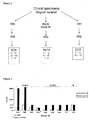
- the number of successful virus isolations, using each approach, is shown in the boxes in Figure 1 , with the number of different viral types injected also shown. All three virus subtypes isolated from the MDCK 33016 cells, gained reasonable HA (>32) and virus titer (>1x10 6 ) after the second passage in eggs, with both titers increasing with further passages ( Figure 2 ).
- MDCK 33016 cells growing in suspension were superior to the adherent cell line (CCL-34) for isolation of influenza virus from clinical swabs for all three subtypes.
- the suspension cell line showed a higher sensitivity for positive influenza swab material as demonstrated by the recovery rate (Table 1).
- HA sequences were compared between different passages in MDCK 33016 cells and eggs to the original isolate (Table 2), and no mutations were found for influenza A strains isolated in MDCK 33016 cells even after 5 passages, whereas influenza A strains isolated in eggs showed mutations in the antibody binding site of the HA protein after 2 passages. No mutations were found for influenza B strains isolated in MDCK 33016 cells or eggs.
- the MDCK 33016 suspension cell-line is an ideal system for the isolation and replication of wild-type influenza strains, as it offers a greater isolation capacity compared with chicken eggs. Furthermore, due to the high replication accuracy, the use of cell-based isolates for the production of a human influenza vaccine may lead to a more authentic vaccine. Improved match between the circulating wild-type strains and those contained in the vaccine should offer greater protection against influenza for the vaccinee.
- the receptor preferences of original isolated viruses, of egg-grown viruses and of MDCK-grown viruses were investigated.
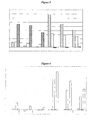
- Figure 4 shows the results of a representative study.
- the labelled peaks show binding to the SNA or MAA lectins.
- the original virus (4A) and the virus grown on MDCK 33016 (4B) have distinct peaks for SNA & MAA, whereas the SNA & MAA peaks substantially overlap for egg-grown virus (4C).
- Binding specificity was also examined in further experiments using 3-SL and 6-SLN. An example result is shown in Figure 5 . Binding on the left of the graph indicates an avian receptor preference, whereas binding on the right indicates a human receptor preference. As visible in Figure 5 , the cell-isolated virus strongly favours human receptors.
- Figure 6 shows data using a Stuttgart isolate (A/H1N1) after 2 or 5 passages in eggs or in MDCK 33016 grown in suspension.
- the MDCK-passaged viruses show a strong preference for 6-SLN.
- Various strains of influenza A and B virus were isolated in MDCK cells and then passaged up to five times through one of the following substrates: eggs; MDCK cells CCL-34; MDCK cells 33016; Vero cells; or HEK 293-T cells.
- the HA gene of the viruses were sequenced after each passage and HA titres were measured.
- the HA sequence for some strains was stable during passage through eggs and through MDCK 33016, for others it was not.
- the HA sequence of A/H1N1/Nordrhein Nonetheless/1/05 acquired a mutation D203N at antibody binding site D after 2 passages through eggs, and after 2 more passages it additionally acquired a R329K.
- the sequence was unaltered in viruses passaged in parallel through MDCK 33016.
Landscapes
- Health & Medical Sciences (AREA)
- Life Sciences & Earth Sciences (AREA)
- Chemical & Material Sciences (AREA)
- Virology (AREA)
- Immunology (AREA)
- Medicinal Chemistry (AREA)
- General Health & Medical Sciences (AREA)
- Engineering & Computer Science (AREA)
- Organic Chemistry (AREA)
- Microbiology (AREA)
- Bioinformatics & Cheminformatics (AREA)
- Genetics & Genomics (AREA)
- Pharmacology & Pharmacy (AREA)
- Animal Behavior & Ethology (AREA)
- Public Health (AREA)
- Veterinary Medicine (AREA)
- Wood Science & Technology (AREA)
- Zoology (AREA)
- Biomedical Technology (AREA)
- Biochemistry (AREA)
- Mycology (AREA)
- Epidemiology (AREA)
- Biotechnology (AREA)
- Molecular Biology (AREA)
- Pulmonology (AREA)
- General Engineering & Computer Science (AREA)
- Urology & Nephrology (AREA)
- Hematology (AREA)
- Communicable Diseases (AREA)
- Chemical Kinetics & Catalysis (AREA)
- Nuclear Medicine, Radiotherapy & Molecular Imaging (AREA)
- General Chemical & Material Sciences (AREA)
- Analytical Chemistry (AREA)
- Pathology (AREA)
- Tropical Medicine & Parasitology (AREA)
- Food Science & Technology (AREA)
- Physics & Mathematics (AREA)
- Cell Biology (AREA)
- General Physics & Mathematics (AREA)
- Oncology (AREA)
Priority Applications (3)
| Application Number | Priority Date | Filing Date | Title |
|---|---|---|---|
| EP25165998.3A EP4585610A3 (en) | 2006-09-11 | 2007-09-11 | Making influenza virus vaccines without using eggs |
| EP18187826.5A EP3456348B1 (en) | 2006-09-11 | 2007-09-11 | Making influenza virus vaccines without using eggs |
| EP12156030.4A EP2497495B3 (en) | 2006-09-11 | 2007-09-11 | Making influenza virus vaccines without using eggs |
Applications Claiming Priority (3)
| Application Number | Priority Date | Filing Date | Title |
|---|---|---|---|
| US84372006P | 2006-09-11 | 2006-09-11 | |
| US93627907P | 2007-06-18 | 2007-06-18 | |
| PCT/IB2007/003536 WO2008032219A2 (en) | 2006-09-11 | 2007-09-11 | Making influenza virus vaccines without using eggs |
Related Child Applications (4)
| Application Number | Title | Priority Date | Filing Date |
|---|---|---|---|
| EP18187826.5A Division EP3456348B1 (en) | 2006-09-11 | 2007-09-11 | Making influenza virus vaccines without using eggs |
| EP12156030.4A Division-Into EP2497495B3 (en) | 2006-09-11 | 2007-09-11 | Making influenza virus vaccines without using eggs |
| EP12156030.4A Division EP2497495B3 (en) | 2006-09-11 | 2007-09-11 | Making influenza virus vaccines without using eggs |
| EP25165998.3A Division EP4585610A3 (en) | 2006-09-11 | 2007-09-11 | Making influenza virus vaccines without using eggs |
Publications (2)
| Publication Number | Publication Date |
|---|---|
| EP2066345A2 EP2066345A2 (en) | 2009-06-10 |
| EP2066345B1 true EP2066345B1 (en) | 2015-02-25 |
Family
ID=39184185
Family Applications (4)
| Application Number | Title | Priority Date | Filing Date |
|---|---|---|---|
| EP07825694.8A Active EP2066345B1 (en) | 2006-09-11 | 2007-09-11 | Making influenza virus vaccines without using eggs |
| EP25165998.3A Pending EP4585610A3 (en) | 2006-09-11 | 2007-09-11 | Making influenza virus vaccines without using eggs |
| EP12156030.4A Active EP2497495B3 (en) | 2006-09-11 | 2007-09-11 | Making influenza virus vaccines without using eggs |
| EP18187826.5A Active EP3456348B1 (en) | 2006-09-11 | 2007-09-11 | Making influenza virus vaccines without using eggs |
Family Applications After (3)
| Application Number | Title | Priority Date | Filing Date |
|---|---|---|---|
| EP25165998.3A Pending EP4585610A3 (en) | 2006-09-11 | 2007-09-11 | Making influenza virus vaccines without using eggs |
| EP12156030.4A Active EP2497495B3 (en) | 2006-09-11 | 2007-09-11 | Making influenza virus vaccines without using eggs |
| EP18187826.5A Active EP3456348B1 (en) | 2006-09-11 | 2007-09-11 | Making influenza virus vaccines without using eggs |
Country Status (12)
| Country | Link |
|---|---|
| US (3) | US20100010199A1 (enExample) |
| EP (4) | EP2066345B1 (enExample) |
| JP (7) | JP5954921B2 (enExample) |
| KR (1) | KR20090057015A (enExample) |
| AU (1) | AU2007297178B2 (enExample) |
| BR (1) | BRPI0716536A2 (enExample) |
| CA (2) | CA2663196A1 (enExample) |
| EA (1) | EA200970271A1 (enExample) |
| ES (3) | ES3031467T3 (enExample) |
| MX (1) | MX2009002408A (enExample) |
| NZ (1) | NZ575271A (enExample) |
| WO (1) | WO2008032219A2 (enExample) |
Families Citing this family (41)
| Publication number | Priority date | Publication date | Assignee | Title |
|---|---|---|---|---|
| DE10144906B4 (de) | 2001-09-12 | 2013-11-28 | Novartis Vaccines And Diagnostics Gmbh | Verfahren zur großtechnischen Herstellung von Impfstoffen |
| US11707520B2 (en) | 2005-11-03 | 2023-07-25 | Seqirus UK Limited | Adjuvanted vaccines with non-virion antigens prepared from influenza viruses grown in cell culture |
| PL1945252T3 (pl) | 2005-11-04 | 2013-11-29 | Seqirus Uk Ltd | Szczepionki zawierające oczyszczone antygeny powierzchniowe otrzymane z wirusów grypy hodowanych w hodowli komórkowej i skwalen jako adiuwant |
| CN101553252A (zh) * | 2006-12-06 | 2009-10-07 | 诺华有限公司 | 包含来自于四株流感病毒的抗原的疫苗 |
| GB0905570D0 (en) * | 2009-03-31 | 2009-05-13 | Novartis Ag | Combined vaccines |
| JP2012507272A (ja) * | 2008-11-05 | 2012-03-29 | グラクソスミスクライン バイオロジカルズ ソシエテ アノニム | 新規な方法 |
| WO2010092477A1 (en) * | 2009-02-10 | 2010-08-19 | Novartis Ag | Influenza vaccines with increased amounts of h3 antigen |
| EP2396032B1 (en) | 2009-02-10 | 2016-09-28 | Seqirus UK Limited | Influenza vaccines with reduced amounts of squalene |
| WO2010092476A1 (en) * | 2009-02-10 | 2010-08-19 | Novartis Ag | Influenza vaccine regimens for pandemic-associated strains |
| CA2787099A1 (en) | 2009-03-30 | 2010-10-14 | Anice C. Lowen | Influenza virus hemagglutinin polypeptides containing stem domains, vaccines and uses thereof |
| CA2763816A1 (en) * | 2009-04-27 | 2010-11-04 | Novartis Ag | Adjuvanted vaccines for protecting against influenza |
| AU2010254136B2 (en) | 2009-05-26 | 2016-09-29 | Mount Sinai School Of Medicine | Monoclonal antibodies against influenza virus generated by cyclical administration and uses thereof |
| JP5823379B2 (ja) | 2009-05-29 | 2015-11-25 | ノバルティス アーゲー | インフルエンザウイルスヘマグルチニンについてのアッセイ |
| WO2010144797A2 (en) | 2009-06-12 | 2010-12-16 | Vaccine Technologies, Incorporated | Influenza vaccines with enhanced immunogenicity and uses thereof |
| US9217157B2 (en) | 2009-07-27 | 2015-12-22 | Icahn School Of Medicine At Mount Sinai | Recombinant influenza viruses and uses thereof |
| CA2805505C (en) | 2009-07-30 | 2021-08-03 | Mount Sinai School Of Medecine | Chimeric influenza viruses having reduced ability to reassort with other influenza viruses and uses thereof |
| GB0919117D0 (en) * | 2009-10-30 | 2009-12-16 | Glaxosmithkline Biolog Sa | Process |
| US9701723B2 (en) | 2010-02-18 | 2017-07-11 | Icahn School Of Medicine At Mount Sinai | Vaccines for use in the prophylaxis and treatment of influenza virus disease |
| CN102939103A (zh) | 2010-03-30 | 2013-02-20 | 西奈山医学院 | 流感病毒疫苗及其应用 |
| CN101804203A (zh) * | 2010-05-10 | 2010-08-18 | 洛阳普莱柯生物工程有限公司 | 一种大规模生产伪狂犬病毒疫苗的方法 |
| US9517205B2 (en) * | 2010-08-20 | 2016-12-13 | Seqirus UK Limited | Soluble needle arrays for delivery of influenza vaccines |
| WO2012033236A1 (ko) * | 2010-09-06 | 2012-03-15 | 에스케이케미칼 주식회사 | 무혈청 배양 및 부유 배양에 적응된 mdck 세포주 및 상기 세포를 사용하여 백신용 바이러스를 제조하는 방법 |
| US9821051B1 (en) | 2010-10-28 | 2017-11-21 | Seqirus UK Limited | Reducing hospitalization in elderly influenza vaccine recipients |
| JP5999817B2 (ja) | 2011-02-25 | 2016-10-05 | ノバルティス アーゲー | 外因性の内部陽性対照 |
| KR20140068205A (ko) | 2011-09-20 | 2014-06-05 | 마운트 시나이 스쿨 오브 메디슨 | 인플루엔자 바이러스 백신 및 이의 용도 |
| CN102586195B (zh) * | 2011-12-01 | 2013-09-04 | 哈药集团生物疫苗有限公司 | 一种利用Vero传代细胞制备禽流感病毒及其灭活疫苗的方法 |
| JP2016539314A (ja) | 2011-12-12 | 2016-12-15 | ノバルティス アーゲー | インフルエンザウイルス血球凝集素のためのアッセイ法 |
| KR20150104117A (ko) | 2012-12-18 | 2015-09-14 | 이칸 스쿨 오브 메디슨 엣 마운트 시나이 | 인플루엔자 바이러스 백신 및 그의 용도 |
| WO2014159960A1 (en) | 2013-03-14 | 2014-10-02 | Icahn School Of Medicine At Mount Sinai | Antibodies against influenza virus hemagglutinin and uses thereof |
| KR101370512B1 (ko) * | 2013-06-07 | 2014-03-06 | 재단법인 목암생명공학연구소 | 무단백 배지에서 부유 배양되는 mdck 유래 세포주 및 상기 세포주를 이용하여 바이러스를 증식시키는 방법 |
| US9579374B2 (en) | 2013-12-04 | 2017-02-28 | The Johns Hopkins University | Method for rapidly designing pharmaceutical preparations for preventing viral infection |
| US10736956B2 (en) | 2015-01-23 | 2020-08-11 | Icahn School Of Medicine At Mount Sinai | Influenza virus vaccination regimens |
| WO2017218624A1 (en) | 2016-06-15 | 2017-12-21 | Icahn School Of Medicine At Mount Sinai | Influenza virus hemagglutinin proteins and uses thereof |
| WO2018187706A2 (en) | 2017-04-07 | 2018-10-11 | Icahn School Of Medicine At Mount Sinai | Anti-influenza b virus neuraminidase antibodies and uses thereof |
| KR102453351B1 (ko) | 2017-07-05 | 2022-10-07 | 에스케이바이오사이언스(주) | 인플루엔자 백신용 바이러스 씨드 스톡의 제조 방법 |
| WO2019086463A1 (en) | 2017-10-30 | 2019-05-09 | Baxalta GmbH | Environmentally compatible detergents for inactivation of lipid-enveloped viruses |
| EP3810634A4 (en) | 2018-06-21 | 2022-07-27 | Icahn School of Medicine at Mount Sinai | Mosaic influenza virus hemagglutinin polypeptides and uses thereof |
| EP3959216A4 (en) | 2019-04-24 | 2023-01-11 | Icahn School of Medicine at Mount Sinai | ANTI-INFLUENZA B VIRUS NEURAMINIDASE ANTIBODIES AND USES THEREOF |
| CN110237246B (zh) * | 2019-07-25 | 2022-11-15 | 北京鼎持生物技术有限公司 | 一种全悬浮细胞培养禽流感(h9)灭活疫苗的方法 |
| WO2025019631A1 (en) | 2023-07-19 | 2025-01-23 | Icahn School Of Medicine At Mount Sinai | Immunogenic compositions containing inactivated influenza a virus and cpg oligonucleotide adjuvant and uses thereof |
| CN120888511B (zh) * | 2025-09-28 | 2025-12-23 | 成都欧林生物科技股份有限公司 | 一种qmc流感毒种及其制备方法和应用 |
Family Cites Families (120)
| Publication number | Priority date | Publication date | Assignee | Title |
|---|---|---|---|---|
| US3988430A (en) * | 1975-02-10 | 1976-10-26 | Hoffmann-La Roche Inc. | Immunoassay of antipyrine |
| US4315906A (en) * | 1979-05-21 | 1982-02-16 | New England Nuclear Corporation | Cold insoluble globulin, its purification and use |
| SE8205892D0 (sv) | 1982-10-18 | 1982-10-18 | Bror Morein | Immunogent membranproteinkomplex, sett for framstellning och anvendning derav som immunstimulerande medel och sasom vaccin |
| IL73534A (en) | 1983-11-18 | 1990-12-23 | Riker Laboratories Inc | 1h-imidazo(4,5-c)quinoline-4-amines,their preparation and pharmaceutical compositions containing certain such compounds |
| US5916588A (en) | 1984-04-12 | 1999-06-29 | The Liposome Company, Inc. | Peptide-containing liposomes, immunogenic liposomes and methods of preparation and use |
| US6090406A (en) | 1984-04-12 | 2000-07-18 | The Liposome Company, Inc. | Potentiation of immune responses with liposomal adjuvants |
| US4680338A (en) | 1985-10-17 | 1987-07-14 | Immunomedics, Inc. | Bifunctional linker |
| US5011828A (en) | 1985-11-15 | 1991-04-30 | Michael Goodman | Immunostimulating guanine derivatives, compositions and methods |
| GB8703696D0 (en) | 1987-02-18 | 1987-03-25 | Oxford J S | Influenza vaccine |
| US5057540A (en) | 1987-05-29 | 1991-10-15 | Cambridge Biotech Corporation | Saponin adjuvant |
| US4912094B1 (en) | 1988-06-29 | 1994-02-15 | Ribi Immunochem Research Inc. | Modified lipopolysaccharides and process of preparation |
| NZ230423A (en) | 1988-08-25 | 1993-08-26 | Liposome Co Inc | A dosage form comprising an antigen and a multilamellar liposome comprising dimyristolyphosphatidylcholine (dmpc) and cholesterol |
| US5238944A (en) | 1988-12-15 | 1993-08-24 | Riker Laboratories, Inc. | Topical formulations and transdermal delivery systems containing 1-isobutyl-1H-imidazo[4,5-c]quinolin-4-amine |
| US4929624A (en) | 1989-03-23 | 1990-05-29 | Minnesota Mining And Manufacturing Company | Olefinic 1H-imidazo(4,5-c)quinolin-4-amines |
| JPH0832638B2 (ja) | 1989-05-25 | 1996-03-29 | カイロン コーポレイション | サブミクロン油滴乳剤を含んで成るアジュバント製剤 |
| US5100662A (en) * | 1989-08-23 | 1992-03-31 | The Liposome Company, Inc. | Steroidal liposomes exhibiting enhanced stability |
| US4988815A (en) | 1989-10-26 | 1991-01-29 | Riker Laboratories, Inc. | 3-Amino or 3-nitro quinoline compounds which are intermediates in preparing 1H-imidazo[4,5-c]quinolines |
| US5658731A (en) | 1990-04-09 | 1997-08-19 | Europaisches Laboratorium Fur Molekularbiologie | 2'-O-alkylnucleotides as well as polymers which contain such nucleotides |
| EP0582581B1 (en) | 1991-03-01 | 1999-05-06 | Minnesota Mining And Manufacturing Company | 1-SUBSTITUTED, 2-SUBSTITUTED 1H-IMIDAZO[4,5-c]QUINOLIN-4-AMINES |
| US5389640A (en) | 1991-03-01 | 1995-02-14 | Minnesota Mining And Manufacturing Company | 1-substituted, 2-substituted 1H-imidazo[4,5-c]quinolin-4-amines |
| US5268376A (en) | 1991-09-04 | 1993-12-07 | Minnesota Mining And Manufacturing Company | 1-substituted 1H-imidazo[4,5-c]quinolin-4-amines |
| US5266575A (en) | 1991-11-06 | 1993-11-30 | Minnesota Mining And Manufacturing Company | 2-ethyl 1H-imidazo[4,5-ciquinolin-4-amines |
| MA22842A1 (fr) | 1992-03-27 | 1993-10-01 | Smithkline Beecham Biolog | Procede de preparation de compositions de vaccin. |
| IL105325A (en) | 1992-04-16 | 1996-11-14 | Minnesota Mining & Mfg | Immunogen/vaccine adjuvant composition |
| NZ253137A (en) | 1992-06-25 | 1996-08-27 | Smithkline Beecham Biolog | Vaccine comprising antigen and/or antigenic composition, qs21 (quillaja saponaria molina extract) and 3 de-o-acylated monophosphoryl lipid a. |
| US5589174A (en) * | 1992-09-17 | 1996-12-31 | Takara Shuzo Co., Ltd. | Anti-human influenza virus antibody |
| US5395937A (en) | 1993-01-29 | 1995-03-07 | Minnesota Mining And Manufacturing Company | Process for preparing quinoline amines |
| EP0689454B2 (en) | 1993-03-23 | 2005-02-23 | SMITHKLINE BEECHAM BIOLOGICALS s.a. | Vaccine compositions containing 3-o deacylated monophosphoryl lipid a |
| CZ288182B6 (en) | 1993-07-15 | 2001-05-16 | Minnesota Mining & Mfg | Imidazo[4,5-c]pyridine-4-amines and pharmaceutical preparations based thereon |
| US5352784A (en) | 1993-07-15 | 1994-10-04 | Minnesota Mining And Manufacturing Company | Fused cycloalkylimidazopyridines |
| AU5543294A (en) | 1993-10-29 | 1995-05-22 | Pharmos Corp. | Submicron emulsions as vaccine adjuvants |
| GB9326174D0 (en) | 1993-12-22 | 1994-02-23 | Biocine Sclavo | Mucosal adjuvant |
| GB9326253D0 (en) | 1993-12-23 | 1994-02-23 | Smithkline Beecham Biolog | Vaccines |
| US6207646B1 (en) | 1994-07-15 | 2001-03-27 | University Of Iowa Research Foundation | Immunostimulatory nucleic acid molecules |
| US6429199B1 (en) | 1994-07-15 | 2002-08-06 | University Of Iowa Research Foundation | Immunostimulatory nucleic acid molecules for activating dendritic cells |
| US6239116B1 (en) | 1994-07-15 | 2001-05-29 | University Of Iowa Research Foundation | Immunostimulatory nucleic acid molecules |
| US5824536A (en) | 1994-08-23 | 1998-10-20 | St. Jude Children's Research Hospital | Influenza virus replicated in mammalian cell culture and vaccine production |
| AUPM873294A0 (en) | 1994-10-12 | 1994-11-03 | Csl Limited | Saponin preparations and use thereof in iscoms |
| US5482936A (en) | 1995-01-12 | 1996-01-09 | Minnesota Mining And Manufacturing Company | Imidazo[4,5-C]quinoline amines |
| GB9503863D0 (en) | 1995-02-25 | 1995-04-19 | Smithkline Beecham Biolog | Vaccine compositions |
| UA56132C2 (uk) | 1995-04-25 | 2003-05-15 | Смітклайн Бічем Байолоджікалс С.А. | Композиція вакцини (варіанти), спосіб стабілізації qs21 відносно гідролізу (варіанти), спосіб приготування композиції вакцини |
| DE19612966B4 (de) * | 1996-04-01 | 2009-12-10 | Novartis Vaccines And Diagnostics Gmbh & Co. Kg | MDCK-Zellen und Verfahren zur Vermehrung von Influenzaviren |
| DE19612967A1 (de) | 1996-04-01 | 1997-10-02 | Behringwerke Ag | Verfahren zur Vermehrung von Influenzaviren in Zellkultur, sowie die durch das Verfahren erhältlichen Influenzaviren |
| AU753688B2 (en) | 1997-03-10 | 2002-10-24 | Ottawa Civic Loeb Research Institute | Use of nucleic acids containing unmethylated CpG dinucleotide as an adjuvant |
| US6818222B1 (en) | 1997-03-21 | 2004-11-16 | Chiron Corporation | Detoxified mutants of bacterial ADP-ribosylating toxins as parenteral adjuvants |
| TW570803B (en) | 1997-04-09 | 2004-01-11 | Duphar Int Res | Influenza vaccine |
| US6080725A (en) | 1997-05-20 | 2000-06-27 | Galenica Pharmaceuticals, Inc. | Immunostimulating and vaccine compositions employing saponin analog adjuvants and uses thereof |
| GB9725084D0 (en) | 1997-11-28 | 1998-01-28 | Medeva Europ Ltd | Vaccine compositions |
| HUP0101619A3 (en) | 1998-04-09 | 2003-11-28 | Smithkline Beecham Biolog | Adjuvant compositions |
| DK1075276T3 (da) | 1998-05-07 | 2008-02-11 | Corixa Corp | Adjuvanssammensætning og fremgangsmåder til dens anvendelse |
| US6562798B1 (en) | 1998-06-05 | 2003-05-13 | Dynavax Technologies Corp. | Immunostimulatory oligonucleotides with modified bases and methods of use thereof |
| US6110929A (en) | 1998-07-28 | 2000-08-29 | 3M Innovative Properties Company | Oxazolo, thiazolo and selenazolo [4,5-c]-quinolin-4-amines and analogs thereof |
| GB9817052D0 (en) | 1998-08-05 | 1998-09-30 | Smithkline Beecham Biolog | Vaccine |
| US6544785B1 (en) | 1998-09-14 | 2003-04-08 | Mount Sinai School Of Medicine Of New York University | Helper-free rescue of recombinant negative strand RNA viruses |
| AT408615B (de) | 1998-09-15 | 2002-01-25 | Immuno Ag | Neue influenzavirus-impfstoffzusammensetzung |
| DE122007000087I1 (de) | 1998-10-16 | 2008-03-27 | Glaxosmithkline Biolog Sa | Adjuvanzsysteme und impfstoffe |
| US20030130212A1 (en) | 1999-01-14 | 2003-07-10 | Rossignol Daniel P. | Administration of an anti-endotoxin drug by intravenous infusion |
| US6551600B2 (en) | 1999-02-01 | 2003-04-22 | Eisai Co., Ltd. | Immunological adjuvant compounds compositions and methods of use thereof |
| DE60013773T2 (de) | 1999-02-03 | 2005-11-10 | Biosante Pharmaceuticals, Inc. | Methoden zur Herstellung von therapeutischen Kalziumphosphat Partikeln |
| JP4800485B2 (ja) | 1999-03-26 | 2011-10-26 | バイカル インコーポレイテッド | ポリヌクレオチドベースのワクチンに対する免疫応答を増強するためのアジュバント組成物および方法 |
| PT1820853E (pt) | 1999-04-06 | 2012-01-03 | Wisconsin Alumni Res Found | Vírus recombinante da gripe para vacinas e terapia genética |
| US6331539B1 (en) | 1999-06-10 | 2001-12-18 | 3M Innovative Properties Company | Sulfonamide and sulfamide substituted imidazoquinolines |
| EP1194580B2 (en) | 1999-07-14 | 2010-08-25 | Mount Sinai School of Medicine of New York University | In vitro reconstitution of segmented negative-strand rna viruses |
| BR0014285A (pt) | 1999-09-24 | 2002-05-21 | Smithkline Beecham Biolog | Adjuvantes compreendendo um éster ou éter de alquila de polioxietileno e pelo menos um tensoativo não-iÈnico |
| AR025750A1 (es) | 1999-09-24 | 2002-12-11 | Smithkline Beecham Biolog | Vacunas |
| PL355163A1 (en) | 1999-09-24 | 2004-04-05 | Smithkline Beecham Biologicals S.A. | Use of combination of polyoxyethylene sorbitan ester and octoxynol as adjuvant and its use in vaccines |
| TR200200797T2 (tr) | 1999-09-25 | 2002-10-21 | University Of Iowa Research Foundation | İmmünostimülatör nükleik asitler |
| GB9923176D0 (en) | 1999-09-30 | 1999-12-01 | Smithkline Beecham Biolog | Novel composition |
| US7521220B2 (en) * | 1999-11-26 | 2009-04-21 | Crucell Holland B.V. | Production of vaccines |
| WO2001095935A1 (en) | 2000-01-20 | 2001-12-20 | Ottawa Health Research Institute | Immunostimulatory nucleic acids for inducing a th2 immune response |
| WO2001064846A1 (fr) | 2000-03-03 | 2001-09-07 | Juridical Foundation The Chemo-Sero-Therapeutic Research Institute | Cellule utilisable pour culture sans serum et culture en suspension, et procede de production de virus pour vaccin utilisant cette cellule |
| CN100489107C (zh) | 2000-04-28 | 2009-05-20 | 圣朱德儿童研究医院 | 用于产生感染性流感病毒的dna转染系统 |
| ES2334641T3 (es) | 2000-09-01 | 2010-03-15 | Novartis Vaccines And Diagnostics, Inc. | Derivados aza heterociclicos y su uso terapeutico. |
| PL211125B1 (pl) | 2000-09-11 | 2012-04-30 | Novartis Vaccines & Diagnostic | Pochodne chinolinonu jako inhibitory kinazy tyrozynowej, kompozycje je zawierające i ich zastosowanie |
| JP2004509970A (ja) | 2000-09-26 | 2004-04-02 | ハイブリドン・インコーポレイテッド | 位置的化学変化による免疫刺激オリゴヌクレオチドアナログの免疫刺激活性の調節 |
| GB0024089D0 (en) | 2000-10-02 | 2000-11-15 | Smithkline Beecham Biolog | Novel compounds |
| US6667312B2 (en) | 2000-12-08 | 2003-12-23 | 3M Innovative Properties Company | Thioether substituted imidazoquinolines |
| US6664264B2 (en) | 2000-12-08 | 2003-12-16 | 3M Innovative Properties Company | Thioether substituted imidazoquinolines |
| US6677348B2 (en) | 2000-12-08 | 2004-01-13 | 3M Innovative Properties Company | Aryl ether substituted imidazoquinolines |
| US6664265B2 (en) | 2000-12-08 | 2003-12-16 | 3M Innovative Properties Company | Amido ether substituted imidazoquinolines |
| UA74852C2 (en) | 2000-12-08 | 2006-02-15 | 3M Innovative Properties Co | Urea-substituted imidazoquinoline ethers |
| US6664260B2 (en) | 2000-12-08 | 2003-12-16 | 3M Innovative Properties Company | Heterocyclic ether substituted imidazoquinolines |
| US6660735B2 (en) | 2000-12-08 | 2003-12-09 | 3M Innovative Properties Company | Urea substituted imidazoquinoline ethers |
| US6660747B2 (en) | 2000-12-08 | 2003-12-09 | 3M Innovative Properties Company | Amido ether substituted imidazoquinolines |
| US6677347B2 (en) | 2000-12-08 | 2004-01-13 | 3M Innovative Properties Company | Sulfonamido ether substituted imidazoquinolines |
| WO2002067983A1 (en) | 2001-02-23 | 2002-09-06 | Glaxosmithkline Biologicals S.A. | Novel vaccine |
| US20040071734A1 (en) | 2001-02-23 | 2004-04-15 | Nathalie Garcon | Novel vaccine |
| MXPA03008154A (es) | 2001-03-09 | 2004-11-12 | Id Biomedical Corp Quebec | Novedoso adyuvante de vacuna de proteosoma-liposacarido. |
| TWI228420B (en) | 2001-05-30 | 2005-03-01 | Smithkline Beecham Pharma Gmbh | Novel vaccine composition |
| ATE478681T1 (de) * | 2001-07-02 | 2010-09-15 | Aimsco Ltd | Verwendung von polyklonalen anti-hiv ziegenseren als therapeutisches mittel |
| US7361352B2 (en) * | 2001-08-15 | 2008-04-22 | Acambis, Inc. | Influenza immunogen and vaccine |
| DE10144906B4 (de) * | 2001-09-12 | 2013-11-28 | Novartis Vaccines And Diagnostics Gmbh | Verfahren zur großtechnischen Herstellung von Impfstoffen |
| DE10144903A1 (de) * | 2001-09-12 | 2003-03-27 | Chiron Behring Gmbh & Co | Vermehrung von Viren in Zellkultur |
| WO2003035836A2 (en) | 2001-10-24 | 2003-05-01 | Hybridon Inc. | Modulation of immunostimulatory properties of oligonucleotide-based compounds by optimal presentation of 5' ends |
| FR2832423B1 (fr) | 2001-11-22 | 2004-10-08 | Vivalis | Systeme d'expression de proteines exogenes dans un systeme aviaire |
| US7321033B2 (en) | 2001-11-27 | 2008-01-22 | Anadys Pharmaceuticals, Inc. | 3-B-D-ribofuranosylthiazolo [4,5-d] pyrimidine nucleosides and uses thereof |
| KR100718371B1 (ko) | 2001-11-27 | 2007-05-14 | 애나디스 파마슈티칼스, 인코포레이티드 | 3-β-D-리보푸라노실티아졸로[4,5-d]피리디민누클레오시드 및 이의 용도 |
| US6677349B1 (en) | 2001-12-21 | 2004-01-13 | 3M Innovative Properties Company | Sulfonamide and sulfamide substituted imidazoquinolines |
| FR2836924B1 (fr) | 2002-03-08 | 2005-01-14 | Vivalis | Lignees de cellules aviaires utiles pour la production de substances d'interet |
| US7071216B2 (en) | 2002-03-29 | 2006-07-04 | Chiron Corporation | Substituted benz-azoles and methods of their use as inhibitors of Raf kinase |
| US6743920B2 (en) | 2002-05-29 | 2004-06-01 | 3M Innovative Properties Company | Process for imidazo[4,5-c]pyridin-4-amines |
| ATE477251T1 (de) | 2002-08-23 | 2010-08-15 | Novartis Vaccines & Diagnostic | Pyrrolverbindungen als glykogen synthase kinase 3 inhibitoren |
| AU2003300021A1 (en) | 2002-12-27 | 2004-07-29 | Chiron Corporation | Thiosemicarbazones as anti-virals and immunopotentiators |
| US8193185B2 (en) | 2003-01-21 | 2012-06-05 | Novartis Vaccines And Diagnostics, Inc. | Use of tryptanthrin compounds for immune potentiation |
| GB0301554D0 (en) | 2003-01-23 | 2003-02-26 | Molecularnature Ltd | Immunostimulatory compositions |
| ES2423800T3 (es) | 2003-03-28 | 2013-09-24 | Novartis Vaccines And Diagnostics, Inc. | Uso de compuestos orgánicos para la inmunopotenciación |
| RU2236257C1 (ru) | 2003-09-15 | 2004-09-20 | Косяков Константин Сергеевич | Синтетический иммуноген для терапии и профилактики злоупотреблений наркотическими и психоактивными веществами |
| EP1528101A1 (en) | 2003-11-03 | 2005-05-04 | ProBioGen AG | Immortalized avian cell lines for virus production |
| DE202005022108U1 (de) * | 2004-03-09 | 2013-11-12 | Novartis Vaccines And Diagnostics, Inc. | Influenza-Virus-Impfstoffe |
| WO2005097181A1 (en) | 2004-04-05 | 2005-10-20 | Pfizer Products Inc. | Microfluidized oil-in-water emulsions and vaccine compositions |
| WO2005113756A1 (en) | 2004-05-14 | 2005-12-01 | Glaxosmithkline Biologicals S.A. | Method |
| US20080254067A1 (en) | 2004-05-20 | 2008-10-16 | Id Biomedical Corporation | Process for the Production of an Influenza Vaccine |
| WO2006002422A2 (en) | 2004-06-24 | 2006-01-05 | Novartis Vaccines And Diagnostics Inc. | Compounds for immunopotentiation |
| PL2236155T3 (pl) | 2004-09-09 | 2012-10-31 | Novartis Ag | Zmniejszenie potencjalnego zagrożenia jatrogennego związanego ze szczepionkami przeciwko grypie |
| CN103555670B (zh) | 2004-12-23 | 2015-08-12 | 米迪缪尼有限公司 | 用于病毒增殖的非致瘤性mdck细胞系 |
| DK1831357T3 (da) | 2004-12-24 | 2012-12-10 | Abbott Biologicals Bv | Genvinding af influenzavirus |
| US7691368B2 (en) | 2005-04-15 | 2010-04-06 | Merial Limited | Vaccine formulations |
| CA2613283A1 (en) | 2005-06-21 | 2007-01-04 | Medimmune Vaccines, Inc. | Methods and compositions for expressing a heterologous protease |
| US8703095B2 (en) | 2005-07-07 | 2014-04-22 | Sanofi Pasteur S.A. | Immuno-adjuvant emulsion |
| ES2359214T5 (es) | 2005-11-01 | 2014-10-08 | Novartis Vaccines And Diagnostics Gmbh | Vacunas virales derivadas de células con niveles reducidos de ADN celular residual por tratamiento con beta-propiolactona |
-
2007
- 2007-09-11 WO PCT/IB2007/003536 patent/WO2008032219A2/en not_active Ceased
- 2007-09-11 ES ES18187826T patent/ES3031467T3/es active Active
- 2007-09-11 EP EP07825694.8A patent/EP2066345B1/en active Active
- 2007-09-11 AU AU2007297178A patent/AU2007297178B2/en not_active Expired - Fee Related
- 2007-09-11 US US12/440,816 patent/US20100010199A1/en not_active Abandoned
- 2007-09-11 NZ NZ575271A patent/NZ575271A/en not_active IP Right Cessation
- 2007-09-11 EP EP25165998.3A patent/EP4585610A3/en active Pending
- 2007-09-11 MX MX2009002408A patent/MX2009002408A/es not_active Application Discontinuation
- 2007-09-11 EP EP12156030.4A patent/EP2497495B3/en active Active
- 2007-09-11 CA CA002663196A patent/CA2663196A1/en not_active Abandoned
- 2007-09-11 EP EP18187826.5A patent/EP3456348B1/en active Active
- 2007-09-11 ES ES12156030T patent/ES2694805T7/es active Active
- 2007-09-11 EA EA200970271A patent/EA200970271A1/ru unknown
- 2007-09-11 BR BRPI0716536-6A2A patent/BRPI0716536A2/pt not_active IP Right Cessation
- 2007-09-11 KR KR1020097005302A patent/KR20090057015A/ko not_active Ceased
- 2007-09-11 ES ES07825694.8T patent/ES2536401T3/es active Active
- 2007-09-11 JP JP2009527227A patent/JP5954921B2/ja active Active
- 2007-09-11 CA CA3016948A patent/CA3016948A1/en not_active Abandoned
-
2015
- 2015-11-05 US US14/933,965 patent/US20160193321A1/en not_active Abandoned
-
2016
- 2016-02-08 JP JP2016021859A patent/JP2016074747A/ja not_active Withdrawn
-
2017
- 2017-03-02 JP JP2017038957A patent/JP2017101073A/ja active Pending
-
2018
- 2018-09-20 JP JP2018176400A patent/JP7260270B2/ja active Active
-
2020
- 2020-02-21 JP JP2020028399A patent/JP2020073616A/ja not_active Withdrawn
-
2021
- 2021-12-29 JP JP2021215388A patent/JP7427648B2/ja active Active
-
2023
- 2023-04-28 JP JP2023074617A patent/JP2023093728A/ja not_active Withdrawn
- 2023-09-25 US US18/473,468 patent/US20240050553A1/en active Pending
Also Published As
Similar Documents
| Publication | Publication Date | Title |
|---|---|---|
| EP2066345B1 (en) | Making influenza virus vaccines without using eggs | |
| US12318442B2 (en) | Preparation of influenza virus vaccine antigens | |
| EP2032163B1 (en) | Adjuvant-sparing multi-dose influenza vaccination regimen | |
| US20120027813A1 (en) | Adjuvanted influenza vaccines for pediatric use | |
| USH2284H1 (en) | Vaccines for protecting against influenza | |
| US20200172877A1 (en) | Influenza virus reassortment | |
| US10030231B2 (en) | Influenza virus reassortment | |
| CN101511385A (zh) | 不使用蛋制备流感病毒疫苗 | |
| HK40127522A (en) | Making influenza virus vaccines without using eggs | |
| HK40003840B (en) | Making influenza virus vaccines without using eggs | |
| HK40003840A (en) | Making influenza virus vaccines without using eggs | |
| HK40003839A (en) | Improvements in preparation of influenza virus vaccine antigens | |
| HK1236411A1 (en) | Influenza vaccines with reduced amounts of squalene | |
| HK1129205B (en) | Adjuvant-sparing multi-dose influenza vaccination regimen | |
| AU2015258263A1 (en) | Influenza virus reassortment method |
Legal Events
| Date | Code | Title | Description |
|---|---|---|---|
| PUAI | Public reference made under article 153(3) epc to a published international application that has entered the european phase |
Free format text: ORIGINAL CODE: 0009012 |
|
| 17P | Request for examination filed |
Effective date: 20090331 |
|
| AK | Designated contracting states |
Kind code of ref document: A2 Designated state(s): AT BE BG CH CY CZ DE DK EE ES FI FR GB GR HU IE IS IT LI LT LU LV MC MT NL PL PT RO SE SI SK TR |
|
| AX | Request for extension of the european patent |
Extension state: AL BA HR MK RS |
|
| DAX | Request for extension of the european patent (deleted) | ||
| REG | Reference to a national code |
Ref country code: HK Ref legal event code: DE Ref document number: 1131349 Country of ref document: HK |
|
| 17Q | First examination report despatched |
Effective date: 20100209 |
|
| GRAJ | Information related to disapproval of communication of intention to grant by the applicant or resumption of examination proceedings by the epo deleted |
Free format text: ORIGINAL CODE: EPIDOSDIGR1 |
|
| GRAP | Despatch of communication of intention to grant a patent |
Free format text: ORIGINAL CODE: EPIDOSNIGR1 |
|
| INTG | Intention to grant announced |
Effective date: 20141105 |
|
| GRAS | Grant fee paid |
Free format text: ORIGINAL CODE: EPIDOSNIGR3 |
|
| GRAA | (expected) grant |
Free format text: ORIGINAL CODE: 0009210 |
|
| AK | Designated contracting states |
Kind code of ref document: B1 Designated state(s): AT BE BG CH CY CZ DE DK EE ES FI FR GB GR HU IE IS IT LI LT LU LV MC MT NL PL PT RO SE SI SK TR |
|
| REG | Reference to a national code |
Ref country code: GB Ref legal event code: FG4D |
|
| REG | Reference to a national code |
Ref country code: CH Ref legal event code: EP |
|
| REG | Reference to a national code |
Ref country code: IE Ref legal event code: FG4D |
|
| REG | Reference to a national code |
Ref country code: DE Ref legal event code: R096 Ref document number: 602007040389 Country of ref document: DE Effective date: 20150409 |
|
| REG | Reference to a national code |
Ref country code: AT Ref legal event code: REF Ref document number: 711360 Country of ref document: AT Kind code of ref document: T Effective date: 20150415 |
|
| REG | Reference to a national code |
Ref country code: ES Ref legal event code: FG2A Ref document number: 2536401 Country of ref document: ES Kind code of ref document: T3 Effective date: 20150525 |
|
| REG | Reference to a national code |
Ref country code: NL Ref legal event code: VDEP Effective date: 20150225 |
|
| REG | Reference to a national code |
Ref country code: AT Ref legal event code: MK05 Ref document number: 711360 Country of ref document: AT Kind code of ref document: T Effective date: 20150225 |
|
| REG | Reference to a national code |
Ref country code: LT Ref legal event code: MG4D |
|
| PG25 | Lapsed in a contracting state [announced via postgrant information from national office to epo] |
Ref country code: SE Free format text: LAPSE BECAUSE OF FAILURE TO SUBMIT A TRANSLATION OF THE DESCRIPTION OR TO PAY THE FEE WITHIN THE PRESCRIBED TIME-LIMIT Effective date: 20150225 Ref country code: LT Free format text: LAPSE BECAUSE OF FAILURE TO SUBMIT A TRANSLATION OF THE DESCRIPTION OR TO PAY THE FEE WITHIN THE PRESCRIBED TIME-LIMIT Effective date: 20150225 Ref country code: FI Free format text: LAPSE BECAUSE OF FAILURE TO SUBMIT A TRANSLATION OF THE DESCRIPTION OR TO PAY THE FEE WITHIN THE PRESCRIBED TIME-LIMIT Effective date: 20150225 |
|
| PG25 | Lapsed in a contracting state [announced via postgrant information from national office to epo] |
Ref country code: IS Free format text: LAPSE BECAUSE OF FAILURE TO SUBMIT A TRANSLATION OF THE DESCRIPTION OR TO PAY THE FEE WITHIN THE PRESCRIBED TIME-LIMIT Effective date: 20150625 Ref country code: GR Free format text: LAPSE BECAUSE OF FAILURE TO SUBMIT A TRANSLATION OF THE DESCRIPTION OR TO PAY THE FEE WITHIN THE PRESCRIBED TIME-LIMIT Effective date: 20150526 Ref country code: AT Free format text: LAPSE BECAUSE OF FAILURE TO SUBMIT A TRANSLATION OF THE DESCRIPTION OR TO PAY THE FEE WITHIN THE PRESCRIBED TIME-LIMIT Effective date: 20150225 Ref country code: LV Free format text: LAPSE BECAUSE OF FAILURE TO SUBMIT A TRANSLATION OF THE DESCRIPTION OR TO PAY THE FEE WITHIN THE PRESCRIBED TIME-LIMIT Effective date: 20150225 |
|
| PG25 | Lapsed in a contracting state [announced via postgrant information from national office to epo] |
Ref country code: NL Free format text: LAPSE BECAUSE OF FAILURE TO SUBMIT A TRANSLATION OF THE DESCRIPTION OR TO PAY THE FEE WITHIN THE PRESCRIBED TIME-LIMIT Effective date: 20150225 |
|
| PG25 | Lapsed in a contracting state [announced via postgrant information from national office to epo] |
Ref country code: RO Free format text: LAPSE BECAUSE OF FAILURE TO SUBMIT A TRANSLATION OF THE DESCRIPTION OR TO PAY THE FEE WITHIN THE PRESCRIBED TIME-LIMIT Effective date: 20150225 Ref country code: SK Free format text: LAPSE BECAUSE OF FAILURE TO SUBMIT A TRANSLATION OF THE DESCRIPTION OR TO PAY THE FEE WITHIN THE PRESCRIBED TIME-LIMIT Effective date: 20150225 Ref country code: EE Free format text: LAPSE BECAUSE OF FAILURE TO SUBMIT A TRANSLATION OF THE DESCRIPTION OR TO PAY THE FEE WITHIN THE PRESCRIBED TIME-LIMIT Effective date: 20150225 Ref country code: DK Free format text: LAPSE BECAUSE OF FAILURE TO SUBMIT A TRANSLATION OF THE DESCRIPTION OR TO PAY THE FEE WITHIN THE PRESCRIBED TIME-LIMIT Effective date: 20150225 Ref country code: CZ Free format text: LAPSE BECAUSE OF FAILURE TO SUBMIT A TRANSLATION OF THE DESCRIPTION OR TO PAY THE FEE WITHIN THE PRESCRIBED TIME-LIMIT Effective date: 20150225 |
|
| REG | Reference to a national code |
Ref country code: DE Ref legal event code: R097 Ref document number: 602007040389 Country of ref document: DE |
|
| PG25 | Lapsed in a contracting state [announced via postgrant information from national office to epo] |
Ref country code: PL Free format text: LAPSE BECAUSE OF FAILURE TO SUBMIT A TRANSLATION OF THE DESCRIPTION OR TO PAY THE FEE WITHIN THE PRESCRIBED TIME-LIMIT Effective date: 20150225 |
|
| PLBE | No opposition filed within time limit |
Free format text: ORIGINAL CODE: 0009261 |
|
| STAA | Information on the status of an ep patent application or granted ep patent |
Free format text: STATUS: NO OPPOSITION FILED WITHIN TIME LIMIT |
|
| 26N | No opposition filed |
Effective date: 20151126 |
|
| PG25 | Lapsed in a contracting state [announced via postgrant information from national office to epo] |
Ref country code: SI Free format text: LAPSE BECAUSE OF FAILURE TO SUBMIT A TRANSLATION OF THE DESCRIPTION OR TO PAY THE FEE WITHIN THE PRESCRIBED TIME-LIMIT Effective date: 20150225 |
|
| REG | Reference to a national code |
Ref country code: HK Ref legal event code: WD Ref document number: 1131349 Country of ref document: HK |
|
| PG25 | Lapsed in a contracting state [announced via postgrant information from national office to epo] |
Ref country code: MC Free format text: LAPSE BECAUSE OF FAILURE TO SUBMIT A TRANSLATION OF THE DESCRIPTION OR TO PAY THE FEE WITHIN THE PRESCRIBED TIME-LIMIT Effective date: 20150225 Ref country code: LU Free format text: LAPSE BECAUSE OF FAILURE TO SUBMIT A TRANSLATION OF THE DESCRIPTION OR TO PAY THE FEE WITHIN THE PRESCRIBED TIME-LIMIT Effective date: 20150911 |
|
| REG | Reference to a national code |
Ref country code: CH Ref legal event code: PL |
|
| REG | Reference to a national code |
Ref country code: IE Ref legal event code: MM4A |
|
| PG25 | Lapsed in a contracting state [announced via postgrant information from national office to epo] |
Ref country code: CH Free format text: LAPSE BECAUSE OF NON-PAYMENT OF DUE FEES Effective date: 20150930 Ref country code: IE Free format text: LAPSE BECAUSE OF NON-PAYMENT OF DUE FEES Effective date: 20150911 Ref country code: LI Free format text: LAPSE BECAUSE OF NON-PAYMENT OF DUE FEES Effective date: 20150930 |
|
| REG | Reference to a national code |
Ref country code: FR Ref legal event code: PLFP Year of fee payment: 10 |
|
| PG25 | Lapsed in a contracting state [announced via postgrant information from national office to epo] |
Ref country code: MT Free format text: LAPSE BECAUSE OF FAILURE TO SUBMIT A TRANSLATION OF THE DESCRIPTION OR TO PAY THE FEE WITHIN THE PRESCRIBED TIME-LIMIT Effective date: 20150225 |
|
| PG25 | Lapsed in a contracting state [announced via postgrant information from national office to epo] |
Ref country code: HU Free format text: LAPSE BECAUSE OF FAILURE TO SUBMIT A TRANSLATION OF THE DESCRIPTION OR TO PAY THE FEE WITHIN THE PRESCRIBED TIME-LIMIT; INVALID AB INITIO Effective date: 20070911 Ref country code: BG Free format text: LAPSE BECAUSE OF FAILURE TO SUBMIT A TRANSLATION OF THE DESCRIPTION OR TO PAY THE FEE WITHIN THE PRESCRIBED TIME-LIMIT Effective date: 20150225 |
|
| PG25 | Lapsed in a contracting state [announced via postgrant information from national office to epo] |
Ref country code: CY Free format text: LAPSE BECAUSE OF FAILURE TO SUBMIT A TRANSLATION OF THE DESCRIPTION OR TO PAY THE FEE WITHIN THE PRESCRIBED TIME-LIMIT Effective date: 20150225 |
|
| REG | Reference to a national code |
Ref country code: DE Ref legal event code: R082 Ref document number: 602007040389 Country of ref document: DE Representative=s name: MUELLER-BORE & PARTNER PATENTANWAELTE PARTG MB, DE Ref country code: DE Ref legal event code: R081 Ref document number: 602007040389 Country of ref document: DE Owner name: SEQIRUS UK LIMITED, MAIDENHEAD, GB Free format text: FORMER OWNER: NOVARTIS AG, 4056 BASEL, CH |
|
| PG25 | Lapsed in a contracting state [announced via postgrant information from national office to epo] |
Ref country code: TR Free format text: LAPSE BECAUSE OF FAILURE TO SUBMIT A TRANSLATION OF THE DESCRIPTION OR TO PAY THE FEE WITHIN THE PRESCRIBED TIME-LIMIT Effective date: 20150225 |
|
| REG | Reference to a national code |
Ref country code: FR Ref legal event code: PLFP Year of fee payment: 11 |
|
| REG | Reference to a national code |
Ref country code: GB Ref legal event code: 732E Free format text: REGISTERED BETWEEN 20170831 AND 20170906 |
|
| REG | Reference to a national code |
Ref country code: ES Ref legal event code: PC2A Owner name: SEQIRUS UK LIMITED Effective date: 20171017 |
|
| REG | Reference to a national code |
Ref country code: BE Ref legal event code: FP Effective date: 20150513 Ref country code: BE Ref legal event code: PD Owner name: SEQIRUS UK LIMITED; GB Free format text: DETAILS ASSIGNMENT: CHANGE OF OWNER(S), AFFECTATION / CESSION; FORMER OWNER NAME: NOVARTIS AG Effective date: 20170606 |
|
| REG | Reference to a national code |
Ref country code: FR Ref legal event code: TP Owner name: SEQIRUS UK LIMITED, GB Effective date: 20171227 |
|
| PG25 | Lapsed in a contracting state [announced via postgrant information from national office to epo] |
Ref country code: PT Free format text: LAPSE BECAUSE OF FAILURE TO SUBMIT A TRANSLATION OF THE DESCRIPTION OR TO PAY THE FEE WITHIN THE PRESCRIBED TIME-LIMIT Effective date: 20150225 |
|
| REG | Reference to a national code |
Ref country code: FR Ref legal event code: PLFP Year of fee payment: 12 |
|
| P01 | Opt-out of the competence of the unified patent court (upc) registered |
Effective date: 20230530 |
|
| PGFP | Annual fee paid to national office [announced via postgrant information from national office to epo] |
Ref country code: DE Payment date: 20250702 Year of fee payment: 19 |
|
| PGFP | Annual fee paid to national office [announced via postgrant information from national office to epo] |
Ref country code: IT Payment date: 20250825 Year of fee payment: 19 |
|
| PGFP | Annual fee paid to national office [announced via postgrant information from national office to epo] |
Ref country code: BE Payment date: 20250703 Year of fee payment: 19 Ref country code: GB Payment date: 20250703 Year of fee payment: 19 |
|
| PGFP | Annual fee paid to national office [announced via postgrant information from national office to epo] |
Ref country code: FR Payment date: 20250703 Year of fee payment: 19 |
|
| PGFP | Annual fee paid to national office [announced via postgrant information from national office to epo] |
Ref country code: ES Payment date: 20251017 Year of fee payment: 19 |