EP2017299A1 - Stabilisator und Herstellungsverfahren dafür, thermoplastische Polymerzusammensetzung damit und Verfahren zur Stabilisierung von thermoplastischem Polymer - Google Patents
Stabilisator und Herstellungsverfahren dafür, thermoplastische Polymerzusammensetzung damit und Verfahren zur Stabilisierung von thermoplastischem Polymer Download PDFInfo
- Publication number
- EP2017299A1 EP2017299A1 EP08160516A EP08160516A EP2017299A1 EP 2017299 A1 EP2017299 A1 EP 2017299A1 EP 08160516 A EP08160516 A EP 08160516A EP 08160516 A EP08160516 A EP 08160516A EP 2017299 A1 EP2017299 A1 EP 2017299A1
- Authority
- EP
- European Patent Office
- Prior art keywords
- bisphenol
- stabilizer
- formula
- based compound
- thermoplastic polymer
- Prior art date
- Legal status (The legal status is an assumption and is not a legal conclusion. Google has not performed a legal analysis and makes no representation as to the accuracy of the status listed.)
- Granted
Links
Images
Classifications
-
- C—CHEMISTRY; METALLURGY
- C07—ORGANIC CHEMISTRY
- C07C—ACYCLIC OR CARBOCYCLIC COMPOUNDS
- C07C69/00—Esters of carboxylic acids; Esters of carbonic or haloformic acids
- C07C69/02—Esters of acyclic saturated monocarboxylic acids having the carboxyl group bound to an acyclic carbon atom or to hydrogen
-
- C—CHEMISTRY; METALLURGY
- C08—ORGANIC MACROMOLECULAR COMPOUNDS; THEIR PREPARATION OR CHEMICAL WORKING-UP; COMPOSITIONS BASED THEREON
- C08K—Use of inorganic or non-macromolecular organic substances as compounding ingredients
- C08K5/00—Use of organic ingredients
- C08K5/04—Oxygen-containing compounds
- C08K5/13—Phenols; Phenolates
- C08K5/134—Phenols containing ester groups
-
- C—CHEMISTRY; METALLURGY
- C07—ORGANIC CHEMISTRY
- C07C—ACYCLIC OR CARBOCYCLIC COMPOUNDS
- C07C39/00—Compounds having at least one hydroxy or O-metal group bound to a carbon atom of a six-membered aromatic ring
- C07C39/12—Compounds having at least one hydroxy or O-metal group bound to a carbon atom of a six-membered aromatic ring polycyclic with no unsaturation outside the aromatic rings
- C07C39/15—Compounds having at least one hydroxy or O-metal group bound to a carbon atom of a six-membered aromatic ring polycyclic with no unsaturation outside the aromatic rings with all hydroxy groups on non-condensed rings, e.g. phenylphenol
- C07C39/16—Bis-(hydroxyphenyl) alkanes; Tris-(hydroxyphenyl)alkanes
-
- C—CHEMISTRY; METALLURGY
- C07—ORGANIC CHEMISTRY
- C07C—ACYCLIC OR CARBOCYCLIC COMPOUNDS
- C07C67/00—Preparation of carboxylic acid esters
- C07C67/03—Preparation of carboxylic acid esters by reacting an ester group with a hydroxy group
Definitions
- the present invention relates to a stabilizer, a method of manufacturing the same, a thermoplastic polymer composition using the stabilizer, and a method of stabilizing a thermoplastic polymer.
- a stabilizer that is purified at a high purity so that impurities are not contained is available commercially and used.
- a bisphenol monoester that is purified so as to be almost completely pure using a purification method disclosed in Japanese Patent Laying-Open No. 04-327558 is available commercially and used as a stabilizer.
- An object of the present invention is to provide a stabilizer capable of further improving process stability of a thermoplastic polymer compared with the conventional one by compounding the stabilizer into the thermoplastic polymer, and a method of manufacturing the same.
- the stabilizer of the present invention contains, as a main component, a bisphenol monoester represented by the following Formula (1): wherein each R 1 and R 2 independently represents an alkyl group having 1 to 5 carbon atoms, R 3 represents a hydrogen atom or an alkyl group having 1 to 3 carbon atoms, and R 4 represents a hydrogen atom or a methyl group, and a bisphenol-based compound represented by the following Formula (2): wherein R 1 to R 3 are the same as described above, and is characterized in that the area of the bisphenol-based compound represented by the Formula (2) is 0.15 to 70 when the area of the bisphenol monoester represented by the Formula (1) is set to be 100 in a chromatograph obtained by liquid chromatography analysis of the stabilizer.
- Formula (1) wherein each R 1 and R 2 independently represents an alkyl group having 1 to 5 carbon atoms, R 3 represents a hydrogen atom or an alkyl group having 1 to 3 carbon atoms, and R 4 represents a hydrogen atom or a methyl group
- the total amount of the bisphenol monoester represented by the Formula (1) and the bisphenol-based compound represented by the Formula (2) per 100 parts by weight of the stabilizer is preferably 95 parts by weight or more.
- the present invention also relates to a method of manufacturing the above-described stabilizer of the present invention including the steps of mixing the bisphenol monoester represented by the Formula (1) and the bisphenol-based compound represented by the Formula (2), and adjusting the amounts of the bisphenol monoester represented by the Formula (1) and the bisphenol-based compound represented by the Formula (2) so that the area of the bisphenol-based compound represented by the Formula (2), to be mixed, is 0.15 to 70 when the area of the bisphenol monoester represented by the Formula (1) is set to be 100 in a chromatograph obtained by liquid chromatography analysis of the obtained mixture.
- 0.1 to 45 parts by weight of the bisphenol-based compound represented by the Formula (2) is preferably mixed into 100 parts by weight of the bisphenol monoester represented by the Formula (1).
- the present invention also relates to a method of manufacturing the above-described stabilizer of the present invention including the step of carrying out esterification reaction of the bisphenol-based compound represented by the following Formula (2): and a carboxylic acid-based compound represented by the following Formula (3): wherein R 4 is the same as described above, R represents a hydroxy group, a halogen atom, an alkoxy group having 1 to 4 carbon atoms, or a group represented by the following Formula (4): wherein R 4 is the same as described above, wherein 0.3 to 0.6 mol of the carboxylic acid-based compound represented by the Formula (3) is used with respect to 1 mol of the bisphenol-based compound represented by the Formula (2).
- the present invention also provides a thermoplastic polymer composition containing 0.01 to 5 parts by weight of the stabilizer with respect to 100 parts by weight of the thermoplastic polymer.
- the present invention further provides a method of stabilizing a thermoplastic polymer containing 0.01 to 5 parts by weight of the stabilizer according to the present invention with respect to 100 parts by weight of the thermoplastic polymer.
- a stabilizer can be provided that can improve the process stability of a thermoplastic polymer synergistically by compounding the stabilizer into the thermoplastic polymer compared with the case of using the bisphenol monoester represented by the Formula (1) and the bisphenol-based compound represented by the Formula (2) separately. Further, by using such a stabilizer of the present invention, a thermoplastic polymer composition in which the process stability is improved compared with the conventional one, and also a method of stabilizing the thermoplastic polymer that can improve the process stability compared with the conventional one, can be provided.
- the stabilizer of the present invention contains a bisphenol monoester represented by the following Formula (1).
- R 1 and R 2 independently represents an alkyl group having 1 to 5 carbon atoms.
- the alkyl group include a methyl group, an ethyl group, an n-propyl group, an isopropyl group, an n-butyl group, an isobutyl group, a sec-butyl group, a tert-butyl group, an n-pentyl goup, a tert-pentyl group and the like.
- R 1 is preferably an alkyl group having a tertiary carbon, that is, a tert-butyl group or a tert-pentyl group.
- R 3 represents a hydrogen atom or an alkyl group having 1 to 3 carbon atoms.
- the alkyl group include a methyl group, an ethyl group, an n-propyl group, and an isopropyl group, and among these, a methyl group is particularly preferable.
- R 4 represents a hydrogen atom or a methyl group.
- the bisphenol monoester represented by Formula (1) can be manufactured by reaction of the bisphenol-based compound represented by the following Formula (2): wherein R 1 to R 3 are the same as described above, with carboxylic acid or its derivatives.
- the bisphenol monoester is preferably purified, for example, through a purification method disclosed in Japanese Patent Laying-Open No. 04-327558 (Patent Document 3) (that is, crystallization in a mixed solvent of a first solvent selected from aromatic hydrocarbons having 6 to 12 carbon atoms and a second solvent selected from alcohols having 1 to 8 carbon atoms and aliphatic nitriles having 2 to 3 carbon atoms) after the above-described reaction.
- aromatic hydrocarbons having 6 to 12 carbon atoms which are the first solvent used in the purification, include benzene, toluene, xylene, ethylbenzene, cumene, cymene, chlorobenzene and the like. Any of these aromatic hydrocarbons selected from the above-described aromatic hydrocarbons may be used alone, or two types or more thereof may be used in combination. Among these, toluene or xylene is preferably used, and xylene is particularly preferable,
- Examples of the alcohols having I to 8 carbon atoms which are the second solvent used in the purification, include methanol, ethanol, n-propanol, isopropanol, n-butanol, isobutanol, tert-butanol, n-pentanol, n-octanol, 2-ethylhexanol, cyclohexanol and the like.
- examples of the aliphatic nitriles having 2 to 3 carbon atoms include acetonitrile and propionitrile. Any of these alcohols and aliphatic nitriles selected from the above-described alcohols and aliphatic nitriles may be used alone, or two types or more of them may be used in combination.
- the bisphenol monoester available commercially may be, of course, used as the bisphenol monoester represented by the Formula (1) in the stabilizer of the present invention, and specifically, Sumilizer (trademark) GS (F) (manufactured by Sumitomo Chemical Co., Ltd.), Sumilizer (trademark) GS (manufactured by Sumitomo Chemical Co., Ltd.), Sumilizer (trademark) GM (manufactured by Sumitomo Chemical Co., Ltd.), and the like can be preferably used.
- the stabilizer of the present invention contains the bisphenol-based compound represented by the following Formula (2) in addition to the above-described bisphenol monoester.
- This bisphenol-based compound is used also as a raw material when the bisphenol monoester represented by the Formula (1) described above is manufactured.
- R 1 to R 3 are the same as R 1 to R 3 in the Formula (1), respectively.
- bisphenol-based compound used in the stabilizer of the present invention examples include 2,2-ethylidenebis(4,6-di-tert-pentylphenol),
- the bisphenol-based compound represented by the Formula (2) can be manufactured by condensing a corresponding 2,4-dialkylphenol with aldehydes for example.
- the above-described bisphenol-based compound is preferably purified, for example, through crystallization in a mixed solvent of a first solvent selected from aromatic hydrocarbons having 6 to 12 carbon atoms and a second solvent selected from alcohols having 1 to 8 carbon atoms and aliphatic nitriles having 2 to 3 carbon atoms after the above-described condensation reaction.
- a bisphenol-based compound available commercially may be, of course, used as the bisphenol-based compound.
- the stabilizer of the present invention contains the bisphenol monoester represented by the Formula (1) and the bisphenol-based compound represented by the Formula (2) so that the area of the bisphenol-based compound represented by the Formula (2) is 0.15 to 70 when the area of bisphenol monoester represented by the Formula (1) is set to be 100 in the chromatograph obtained by liquid chromatography analysis. Because the area of the above-described bisphenol-based compound is in the above-described range, the process stability of the thermoplastic polymer can be improved. Moreover, the content of the above-described bisphenol-based compound is preferably in a range of 0.15 to 50 with respect to 100 of the area of the above-described bisphenol monoester, and particularly preferably in a range of 0.18 to 40.
- additives may be, of course, added to the stabilizer of the present invention in a range of which the effect of the present invention is not hindered.
- additives include an ultraviolet absorber, a light stabilizer, an antioxidant, a metal inactivator, a nucleating agent, a lubricant, an antistatic agent, a fire retardant, a filler, a pigment, a plasticizer, an anti-blocking agent, a surfactant, a processing aid, a foaming agent, an emulsifier, a brightener, a neutralizing agent such as calcium stearate and hydrotalcite, a binder and the like.
- the total amount of the bisphenol monoester represented by the Formula (1) and the bisphenol-based compound represented by the Formula (2) is preferably 90 parts by eight or more per 100 parts by weight of the stabilizer even if the additives as described above are added, and more preferably 95 parts by weight or more.
- the total amount of the above-described bisphenol monoester and the above-described bisphenol-based compound is less than 90 parts by weight, there is a fear that the process stabilizing effect becomes insufficient.
- the form of the stabilizer of the present invention is not particularly limited. However, it is normally preferable that the form is a powder form, a granule form, a pellet form, a flake form and the like.
- the method of manufacturing the stabilizer of the present invention is not particularly limited as long as the stabilizer is a mixture of the bisphenol monoester represented by the Formula (1) and the bisphenol-based compound represented by the Formula (2) (and the above-described appropriate additives, when needed).
- the stabilizer can be preferably manufactured through a method of obtaining a bisphenol monoester represented by the Formula (1) containing the bisphenol-based compound represented by the Formula (2), including the step of carrying out esterification reaction of a carboxylic acid-based compound represented by the following Formula (3): wherein R 4 is the same as described above, R represents a hydroxy group, a halogen atom, an alkoxy group having I to 4 carbon atoms, or a group represented by the following Formula (4): wherein R 4 is the same as described above, with the bisphenol-based compound represented by the Formula (2) in a method described in Japanese Patent Laying-Open No.
- the present invention also provides such a method of manufacturing the stabilizer of the present invention.
- the carboxylic compound represented by the Formula(3) is used in an amount of 0.3 to 0.6 mol, and preferably 0.4 to 0.6 mol, with respect to 1 mol of the bisphenol-based compound represented by the Formula (2).
- the present invention also provides a method of manufacturing a stabilizer, in which the bisphenol monoester represented by the Formula (1) and the bisphenol-based compound represented by the Formula (2) are mixed, and the amounts of the bisphenol monoester represented by the Formula (1) and the bisphenol-based compound represented by the Formula (2), to be mixed, are adjusted so that the area of the bisphenol-based compound represented by the Formula (2) is 0.15 to 70 when the area of bisphenol monoester represented by the Formula (1) is set to be 100 in the chromatograph obtained by liquid chromatography analysis of the obtained mixture.
- the stabilizer of the present invention is manufactured by mixing the bisphenol-based compound represented by the Formula (2) that has been isolated and purified, and the bisphenol monoester represented by the Formula (1) with a mixer such as a Henschel mixer, a super mixer, and a high-speed mixer.
- the bisphenol-based compound represented by the Formula (2) is preferably mixed in an amount of 0.1 to 45 parts by weight, and more preferably 0.5 to 25 parts by weight, with respect to 100 parts by weight of the bisphenol monoester represented by the Formula(1).
- Examples of the method of mixing the above-described appropriate additives into the stabilizer of the present invention include, for example, a method of mixing the bisphenol monoester represented by the Formula (1), the bisphenol-based compound represented by the Formula (2), and the additives with a mixer such as a container rotary mixer and a stirring type mixer, and a method of dissolving or dispersing the bisphenol monoester represented by the Formula (1), the bisphenol-based compound represented by the Formula (2), and the additives into one or more types of solvent selected from aromatic hydrocarbons having 6 to 12 carbon atoms, alcohols having 1 to 8 carbon atoms, and aliphatic nitriles having 2 to 3 carbon atoms, and then removing the solvent under reduced pressure.
- a mixer such as a container rotary mixer and a stirring type mixer
- the stabilizer of the present invention may be mixed as described above.
- the stabilizer is preferably molded into a granule form since it is difficult to generate dusts and the like.
- Specific examples include a method of obtaining a granule form stabilizer by mixing the bisphenol monoester represented by the Formula (1) and the bisphenol-based compound represented by the Formula (2) together with the above-described appropriate additives when needed (below, there is a case that this mixture is referred to as "the mixture") and granulating the mixture, a method of obtaining a flake form stabilizer by compressing and granulating the mixture with a compression granulator such as a roller compactor, a method of obtaining a pellet form stabilizer by melt-extruding the mixture with a single screw extruder or a multi-screw extruder or extruding the mixture with a semi-drying extruder such as a disk pelleter, and the like.
- the present invention can provide a stabilizer that can improve the process stability of the thermoplastic polymer synergistically by compounding the stabilizer into the thermoplastic polymer compared with the case of using the bisphenol monoester represented by the Formula (1) and the bisphenol-based compound represented by the Formula (2) separately.
- the improvement of the process stability can be evaluated by kneading and mixing the thermoplastic polymer composition compounded with the stabilizer of the present invention, molding the mixture into a pellet from, and then measuring the melt flow rate (MFR) value of the pellet using a melt indexer.
- MFR melt flow rate
- thermoplastic polymer into which the stabilizer of the present invention is compounded, is not particularly limited, and examples thereof include a polypropylene-based resin such as a polypropylene homopolymer, a propylene-ethylene copolymer, and a propylene-ethylene- ⁇ olefin terpolymer; a polyethylene-based resin such as high-density polyethylene (HD-PE), low-density polyethylene (LD-PE), and linear low-density polyethylene (LLDPE), a ethylene-vinylacetate copolymer, and an ethylene-MMA copolymer; a methylpentene polymer; a polystyrene-based resin such as polystyrene, an acrylonitrile-styrene copolymer, a styrene-butadiene copolymer, a styrene-acrylonitrile-butadiene terpolymer, and a high-impact polys
- a polyethylene-based resin, a polypropylene-based resin, and a polystyrene-based resin are preferable due to good molding processiability, and a polypropylene-based resin and the polystyrene resin are particularly preferable.
- the polypropylene-based resin means polyolefin containing a structural unit originated from propylene, and specific examples include a crystalline propylene homopolymer, a propylene-ethylene random copolymer, a propylene-a-olefin random copolymer, a propylene-ethylene- ⁇ -olefin copolymer, a polypropylene-based block copolymer containing a polypropylene homopolymer component or a copolymer component mainly containing propylene, and a copolymer component of propylene and ethylene and/or ⁇ -olefin, and the like.
- thermoplastic polymer in the case of using a polypropylene-based resin as the thermoplastic polymer in the present invention, one type of the polypropylene-based resin may be used, or two or more types may be blended and used.
- the ⁇ -olefin is normally ⁇ -olefin having 4 to 12 carbon atoms, and examples include 1-butene, 1-pentene, 1-hexene, 4-methyl-1-pentene, 1-octene, 1-decene and the like.
- the ⁇ -olefin is more preferably 1-butene, 1-hexene, and 1-octene.
- propylene-a-olefin random copolymer examples include a propylene-1-butene random copolymer, a propylene-1-hexene random copolymer, a propylene-1-octene random copolymer and the like.
- propylene-ethylene- ⁇ -olefin copolymer examples include a propylene-ethylene-1-butene copolymer, a propylene-ethylene-1-hexene copolymer, a propylene-ethylene-1-octene copolymer and the like.
- Examples of a copolymer component mainly containing propylene in the polypropylene-based block copolymer containing a polypropylene homopolymer component or a copolymer component mainly containing propylene, and a copolymer component of propylene and ethylene and/or ⁇ -olefin include, for example, a propylene-ethylene copolymer component, a propylene-1-butene copolymer component, a propylene-1-hexene copolymer component and the like.
- Examples of the copolymer component of propylene and ethylene and/or ⁇ -olefin include, for example, a propylene-ethylene copolymer component, a propylene-ethylene-1-butene copolymer component, a propylene-ethylene-1-hexene copolymer component, a propylene-ethylene-1-octene copolymer component, a propylene-1-butene copolymer component, a propylene-1-hexene copolymer component, a propylene-1-octene copolymer component and the like.
- the content of ethylene and/or ⁇ -olefin having 4 to 12 carbon atoms in the copolymer component of propylene and ethylene and/or ⁇ -olefin is normally 0.01 to 20% by weight.
- examples of the polypropylene-based block copolymer containing a polypropylene homopolymer component or a copolymer component mainly containing propylene, and a copolymer component of propylene and ethylene and/or ⁇ -olefin include, for example, a propylene-ethylene block copolymer, a (propylene)-(propylene-ethylene) block copolymer, a (propylene)-(propylen-thylene-1-butene) block copolymer, a (propylene)-(propylene-ethylene-1-hexene) block copolymer, a (propylene)-(propylene-1-butene) block copolymer, a (propylene)-(propylene-1-hexene) block copolymer, a (propylene-ethylene)-(propylene-ethylene-1-butene) block copolymer, a (propylene-ethylene)-(propylene
- the polypropylene-based resin as the thermoplastic polymer in the present invention, it is preferable to use a crystalline propylene homopolymer and a polypropylene-based block copolymer containing a polypropylene homopolymer component or a copolymer component mainly containing propylene, and a copolymer component of propylene and ethylene and/or ⁇ -olefin having 4 to 12 carbon atoms.
- a polypropylene-based block copolymer containing a polypropylene homopolymer component or a copolymer component mainly containing propylene, and a copolymer component of propylene and ethylene and/or ⁇ -olefin having 4 to 12 carbon atoms is used.
- the stabilizer of the present invention is preferably compounded in an amount of 0.01 to 5 parts by weight, and more preferably 0.01 to 2 parts by weight, with respect to 100 parts by weight of the above-described thermoplastic polymer.
- the compounded amount of the stabilizer of the present invention is less than 0.01 parts by weight with respect to 100 parts by weight of the thermoplastic polymer, there is a risk that the process stabilizing effect becomes insufficient, and in the case where the compounded amount of the stabilizer of the present invention exceeds 5 parts by weight with respect to 100 parts by weight of the thermoplastic polymer, a bleeding phenomenon in which the stabilizer appears on the surface of polymer tends to easily occur.
- the method of compounding the stabilizer of the present invention into a thermoplastic polymer is not particularly limited and can be a known method.
- Examples include a method of dry blending a thermoplastic polymer and a stabilizer and then melt-extruding the mixture with an extruder, a method of obtaining a thermoplastic polymer in which a stabilizer is compounded by adding a solution, in which the stabilizer is dissolved into a solvent such as cyclohexane, to a polymer solution, in which a solution polymerization is completed, to remove the solvent, and the like.
- the present invention also provides a thermoplastic polymer composition containing the thermoplastic polymer and 0.01 to 5 parts by weight of the above-described stabilizer of the present invention with respect to 100 parts by weight of the thermoplastic polymer.
- a thermoplastic polymer composition of the present invention the process stability is improved compared with the conventional one as described above.
- the present invention furthermore provides a method of stabilizing the thermoplastic polymer, in which the stabilizer of the present invention is compounded in an amount of 0.01 to 5 parts by weight with respect to 100 parts by weight of the thermoplastic polymer. According to such a method of stabilizing the thermoplastic polymer of the present invention, the process stability of the thermoplastic polymer can be improved compared with the above-described conventional one.
- a Stabilizer A of a powder form was prepared by mixing 99.92 g of 2,4-di-tert-pentyl-6-[1-(3,5-di-tert-pentyl-2-hydroxyphenyl)ethyl]phenylacrylate (Sumilizer GS(F) manufactured by Sumitomo Chemical Co., Ltd.) as a bisphenol monoester and 0.08 g of 2,2'-ethylidenebis(4,6-di-tert-pentylphenol) as a bisphenol-based compound with a mortar.
- the area of the bisphenol-based compound with respect to 100 of the area of bisphenol monoester was 0.17.
- the liquid chromatography analysis was performed using Sumipax A-210EC (3 mm ⁇ ⁇ 15 cm, diameter of filler: 5 ⁇ m) as a column, and a mixed solution of water and acetonitrile as a mobile phase, through a method of measuring a retention time using an UV detector at 280 nm under a condition in which a state was held for 20 minutes after the ratio of acetonitrile in the mobile phase was increased by every 75 to 0.42%/minute and then the ratio became 100%.
- a Stabilizer B of a powder form was prepared in the same manner as in Example 1, except that 99.9 g of a bisphenol monoester and 0.1 g of a bisphenol-based compound were used.
- stabilizer B was subjected to liquid chromatography analysis in the same manner as in Example 1, the area of the bisphenol with respect to 100 of the area of the bisphenol monoester was 0.19.
- a Stabilizer C of a powder form was prepared in the same manner as in Example 1, except that 99.5 g of a bisphenol monoester and 0.5 g of a bisphenol-based compound were used.
- stabilizer C was subjected to liquid chromatography analysis in the same manner as in Example 1, the area of the bisphenol with respect to 100 of the area of bisphenol monoester was 0.77.
- a Stabilizer D of a powder form was prepared in the same manner as in Example 1, except that 98 g of a bisphenol monoester and 2 g of a bisphenol-based compound were used.
- stabilizer D was subjected to liquid chromatography analysis in the same manner as in Example 1, the area of the bisphenol with respect to 100 of the area of bisphenol monoester was 3.68.
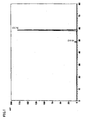
- Fig. 1 shows a liquid chromatograph of Stabilizer D obtained in Example 4.
- two peaks (a peak 1 and a peak 2) can be observed at two points of a retention time of 48.642 minute and 58.325 minute in the liquid chromatograph of Stabilizer D.
- the area, height, and area % of these two peaks are shown in Table 1.
- a Stabilizer E of a powder form was prepared in the same manner as in Example 1, except that 80 g of a bisphenol monoester and 20 g of a bisphenol-based compound were used.
- stabilizer E was subjected to liquid chromatography analysis in the same manner as in Example 1, the area of the bisphenol with respect to 100 of the area of the bisphenol monoester was 36.2.
- a Stabilizer F of a powder form was prepared in the same manner as in Example 1, except that 70 g of a bisphenol monoester and 30 g of a bisphenol-based compound were used.
- stabilizer F was subjected to liquid chromatography analysis in the same manner as in Example 1, the area of the bisphenol with respect to 100 of the area of the bisphenol monoester was 60.6.
- a Stabilizer G of a powder form was prepared in the same manner as in Example 1, except that 99.95 g of a bisphenol monoester and 0.05 g of a bisphenol-based compound were used.
- stabilizer G was subjected to liquid chromatography analysis in the same manner as in Example 1, the area of the bisphenol with respect to 100 of the area of the bisphenol monoester was 0.12.
- Example 2 0.2 part by weight of Stabilizer A obtained in Example 1 and 0.05 part by weight of calcium stearate were dry-blended into 100 parts by weight of a propylene-ethylene block copolymer (MI : 9 to 10 g / 10 minutes) (230°C, 2.16 kg) (manufactured by Sumitomo Chemical Co., Ltd.) as a thermoplastic polymer, kneaded and mixtured at 210°C at a screw rotational frequency of 50 rpm using a single screw extruder having a diameter of 30 mm (VS30-28 type extruder manufactured by Tanabe Plastic Co., Ltd.), to obtain pellets made of a propylene composition.
- MI propylene-ethylene block copolymer
- 230°C, 2.16 kg manufactured by Sumitomo Chemical Co., Ltd.
- Example 7 The examples were performed in the same manner as in Example 7, except that Stabilizers B to G obtained in Examples 2 to 5 and Comparative Example1 were used instead of Stabilizer A used in Example 7.
- the results of MFR measured are shown in Table 3.
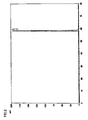
- Fig. 2 shows a liquid chromatograph of Sumilizer GS (F) used in Comparative Example 3. As shown in Fig. 2 , only one peak (a peak 3) can be observed at a point of the retention time of 58.260 minute in the liquid chromatograph of Sumilizer GS (F). The area, height, and area % of this peak are shown in Table 2. Further, the result of a MFR measured is shown in Table 3 (in Table 3, the name of the stabilizer is described as "GS").
- Example 7 The example was performed in the same manner as in Example 7, except that 2,2'-ethylidenebis(4,6-di-tert-pentylphenol) was used instead of Stabilizer A used in Example 7.
- the result of a MFR measured is shown in Table 3 (in Table 3, the name of the stabilizer is described as "EB").
- Example 7 The example was performed in the same manner as in Example 7, except that a stabilizer was not compounded.
- the result of a MFR measured is shown in Table 3.
- a Stabilizer H of a powder form was prepared in the same manner as in Example 1, except that 99.92 g of 2-tert-butyl-6-[1-(3-tert-butyl-2-hydroxy-5-methylphenyl)methyl]-4-methylphenylacrylat e(Sumilizer GM manufactured by Sumitomo Chemical Co., Ltd.) as a bisphenol monoester and 0.08 g of 2,2'-methylenebis(6-tert-butyl-4-Methylphenol) as the bisphenol compound were used.
- the area of the bisphenol with respect to 100 of the area of the bisphenol monoester was 0.21.
- a Stabilizer I of a powder form was prepared in the same manner as in Example 13, except that 98.0 g of a bisphenol monoester and 2.0 g of a bisphenol compound were used.
- stabilizer I was subjected to liquid chromatography analysis in the same manner as in Example 1, the area of the bisphenol with respect to 100 of the area of the bisphenol monoester was 3.56.
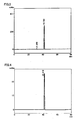
- Fig. 3 shows a liquid chromatograph of Stabilizer I obtained in Example 14. As shown in Fig. 3 , two peaks (a peak 1 and a peak 2) can be observed at two points of a retention time of 31.966 minute and 42.193 minute in the liquid chromatograph of Stabilizer I. The area, height, and area % of these two peaks are shown in Table 4.
- a Stabilizer J of a powder form was prepared in the same manner as in Example 13, except that 80.0 g of a bisphenol monoester and 20.0 g of a bisphenol compound were used.
- stabilizer J was subjected to liquid chromatography analysis in the same manner as in Example 1, the area of the bisphenol with respect to 100 of the area of the bisphenol monoester was 42.7.
- a Stabilizer K of a powder form was prepared in the same manner as in Example 13, except that 99.95 g of a bisphenol monoester and 0.05 g of a bisphenol compound were used.
- stabilizer K was subjected to liquid chromatography analysis in the same manner as in Example 1, the area of the bisphenol with respect to 100 of the area of the bisphenol monoester was 0.14.
- Example 6 The examples were performed in the same manner as in Example 7, except that Stabilizers H to K obtained in Examples 13 to 15 and Comparative Example 6 were used instead of Stabilizer A used in Example 7. The results of MFR measured are shown in Table 6.
- Fig. 4 shows a liquid chromatograph of Sumilizer GM used in Comparative Example 7. As shown in Fig. 4 , only one peak can be observed at a point of the retention time of 41.918 minute in the liquid chromatograph of Sumilizer GM. The area, height, and area % of this peak are shown in Table 5. Further, the result of a MFR measured is shown in Table 6 (in Table 6, the name of the stabilizer is described as "GM").
- Example 7 The example was performed in the same manner as in Example 7, except that 2,2'-methylenebis(6-tert-butyl-4-methylphenol) was used instead of Stabilizer A used in Example 7.
- the result of a MFR measured is shown in Table 6 (in Table 6, the name of the stabilizer is described as "MDP").
Landscapes
- Chemical & Material Sciences (AREA)
- Organic Chemistry (AREA)
- Health & Medical Sciences (AREA)
- Chemical Kinetics & Catalysis (AREA)
- Medicinal Chemistry (AREA)
- Polymers & Plastics (AREA)
- Compositions Of Macromolecular Compounds (AREA)
- Organic Low-Molecular-Weight Compounds And Preparation Thereof (AREA)
Applications Claiming Priority (1)
| Application Number | Priority Date | Filing Date | Title |
|---|---|---|---|
| JP2007189738 | 2007-07-20 |
Publications (2)
| Publication Number | Publication Date |
|---|---|
| EP2017299A1 true EP2017299A1 (de) | 2009-01-21 |
| EP2017299B1 EP2017299B1 (de) | 2011-11-23 |
Family
ID=39951514
Family Applications (1)
| Application Number | Title | Priority Date | Filing Date |
|---|---|---|---|
| EP08160516A Not-in-force EP2017299B1 (de) | 2007-07-20 | 2008-07-16 | Stabilisator und Herstellungsverfahren dafür, thermoplastische Polymerzusammensetzung damit und Verfahren zur Stabilisierung von thermoplastischem Polymer |
Country Status (7)
| Country | Link |
|---|---|
| US (1) | US8536258B2 (de) |
| EP (1) | EP2017299B1 (de) |
| JP (2) | JP5004135B2 (de) |
| KR (1) | KR101525241B1 (de) |
| CN (2) | CN101628990B (de) |
| AT (1) | ATE534697T1 (de) |
| TW (1) | TWI447158B (de) |
Cited By (3)
| Publication number | Priority date | Publication date | Assignee | Title |
|---|---|---|---|---|
| CN101906252A (zh) * | 2009-06-04 | 2010-12-08 | 住友化学株式会社 | 热塑性聚合物组合物以及其生产方法 |
| EP2261199A1 (de) * | 2009-06-12 | 2010-12-15 | Sumitomo Chemical Company, Limited | Verfahren zur Herstellung von granular Substanz |
| EP2447314A1 (de) * | 2010-10-29 | 2012-05-02 | Sumitomo Chemical Company, Limited | Formgebungsverfahren eines Polymerstabilisators |
Families Citing this family (14)
| Publication number | Priority date | Publication date | Assignee | Title |
|---|---|---|---|---|
| JP5287610B2 (ja) * | 2008-08-29 | 2013-09-11 | 住友化学株式会社 | ポリマー安定剤及びポリマー組成物の製造方法 |
| JP5100628B2 (ja) * | 2008-12-22 | 2012-12-19 | 住友化学株式会社 | 粒状ポリマー安定剤及びその製造方法 |
| JP2011032460A (ja) * | 2009-07-07 | 2011-02-17 | Sumitomo Chemical Co Ltd | 熱可塑性ポリマー組成物 |
| JP5521565B2 (ja) * | 2010-01-19 | 2014-06-18 | 三菱エンジニアリングプラスチックス株式会社 | ポリカーボネート樹脂組成物 |
| TW201200554A (en) * | 2010-04-14 | 2012-01-01 | Sumitomo Chemical Co | Thermoplastic polymer composition and processing stabilizer |
| EP2559735A1 (de) * | 2010-04-14 | 2013-02-20 | Sumitomo Chemical Company Limited | Thermoplastische polymerzusammensetzung und verarbeitungsstabilisator dafür |
| US20130041086A1 (en) * | 2010-04-14 | 2013-02-14 | Sumitomo Chemical Company, Limited | Thermoplastic polymer composition and stabiliser composition |
| CN102844381B (zh) * | 2010-04-14 | 2015-07-29 | 住友化学株式会社 | 热塑性聚合物组合物和稳定剂组合物 |
| JP5781806B2 (ja) * | 2010-06-14 | 2015-09-24 | 住友化学株式会社 | 熱可塑性ポリマー組成物 |
| JP5712068B2 (ja) * | 2010-06-28 | 2015-05-07 | 住友化学株式会社 | 熱可塑性ポリマー組成物および加工安定化剤 |
| WO2012002372A1 (ja) * | 2010-06-28 | 2012-01-05 | 住友化学株式会社 | 熱可塑性ポリマー組成物および加工安定化剤 |
| JP5712070B2 (ja) * | 2010-06-28 | 2015-05-07 | 住友化学株式会社 | 熱可塑性ポリマー組成物および加工安定化剤 |
| JP5712069B2 (ja) * | 2010-06-28 | 2015-05-07 | 住友化学株式会社 | 熱可塑性ポリマー組成物および加工安定化剤 |
| JP7403297B2 (ja) * | 2019-12-10 | 2023-12-22 | 株式会社ブリヂストン | 組成物及びポリマー成形体 |
Citations (9)
| Publication number | Priority date | Publication date | Assignee | Title |
|---|---|---|---|---|
| US3984372A (en) * | 1974-05-06 | 1976-10-05 | The Goodyear Tire & Rubber Company | Polymer compositions containing esters of polyphenolic compounds as built-in antioxidants |
| GB2042512A (en) * | 1978-12-06 | 1980-09-24 | Asahi Chemical Ind | Monoester, compound of 2,2'-alkylidene bis (4,6-di-substituted phenol) |
| EP0144477A1 (de) * | 1983-12-13 | 1985-06-19 | Sumitomo Chemical Company, Limited | Verfahren zum Herstellen von Bisphenolderivaten |
| EP0322166A1 (de) * | 1987-12-23 | 1989-06-28 | Sumitomo Chemical Company, Limited | Phenolverbindung und ihre Verwendung als Stabilisator für Butadienpolymere |
| JPH0388841A (ja) | 1989-08-31 | 1991-04-15 | Sumitomo Chem Co Ltd | 安定化されたスチレン―ブタジエンブロック共重合体組成物 |
| US5128398A (en) * | 1987-12-23 | 1992-07-07 | Sumitomo Chemical Company, Limited | Phenolic compound and its use as stabilizer for butadiene polymer |
| JPH04264051A (ja) | 1991-02-18 | 1992-09-18 | Sumitomo Chem Co Ltd | ビスフェノールモノエステルの製造法 |
| JPH04327558A (ja) | 1991-04-25 | 1992-11-17 | Sumitomo Chem Co Ltd | ビスフェノールモノエステルの精製法 |
| EP1306363A1 (de) * | 2000-08-03 | 2003-05-02 | Tokuyama Corporation | Adamantylester-monomerzusammensetzung |
Family Cites Families (8)
| Publication number | Priority date | Publication date | Assignee | Title |
|---|---|---|---|---|
| US4774274A (en) * | 1986-06-25 | 1988-09-27 | Sumitomo Chemical Company, Limited | Thermally stabilized butadiene resins containing a hindered phenolic acrylate or methacrylate |
| EP0421932A1 (de) | 1989-10-06 | 1991-04-10 | Ciba-Geigy Ag | Stabilisiertes organisches Material |
| CA2060787C (en) * | 1991-02-18 | 2002-07-02 | Kikumitsu Inoue | Production of bisphenol monoester |
| JP3721805B2 (ja) | 1997-10-30 | 2005-11-30 | 住友化学株式会社 | ポリブタジエン組成物 |
| JP4572445B2 (ja) * | 2000-05-29 | 2010-11-04 | 住友化学株式会社 | 高分子組成物 |
| EP1306636B1 (de) | 2001-10-02 | 2006-12-20 | Fritz Dr.-Ing. Schoppe | Verfahren und Vorrichtung zur gleichmässigen Erhitzung eines Staubkörnergemisches in einer Strömung heisser Gase |
| JP4327558B2 (ja) | 2003-10-30 | 2009-09-09 | 富士重工業株式会社 | エンジン発電機 |
| JP2006176419A (ja) | 2004-12-21 | 2006-07-06 | Sumitomo Chemical Co Ltd | ビスフェノールモノエステルの製造方法 |
-
2008
- 2008-07-16 EP EP08160516A patent/EP2017299B1/de not_active Not-in-force
- 2008-07-16 AT AT08160516T patent/ATE534697T1/de active
- 2008-07-16 US US12/219,145 patent/US8536258B2/en not_active Expired - Fee Related
- 2008-07-16 TW TW097126890A patent/TWI447158B/zh not_active IP Right Cessation
- 2008-07-17 JP JP2008186221A patent/JP5004135B2/ja active Active
- 2008-07-17 KR KR1020080069422A patent/KR101525241B1/ko not_active Expired - Fee Related
- 2008-07-18 CN CN2008101377866A patent/CN101628990B/zh not_active Expired - Fee Related
- 2008-07-18 CN CN201310576670.3A patent/CN103724660B/zh not_active Expired - Fee Related
-
2012
- 2012-03-21 JP JP2012063730A patent/JP5415581B2/ja active Active
Patent Citations (10)
| Publication number | Priority date | Publication date | Assignee | Title |
|---|---|---|---|---|
| US3984372A (en) * | 1974-05-06 | 1976-10-05 | The Goodyear Tire & Rubber Company | Polymer compositions containing esters of polyphenolic compounds as built-in antioxidants |
| GB2042512A (en) * | 1978-12-06 | 1980-09-24 | Asahi Chemical Ind | Monoester, compound of 2,2'-alkylidene bis (4,6-di-substituted phenol) |
| EP0144477A1 (de) * | 1983-12-13 | 1985-06-19 | Sumitomo Chemical Company, Limited | Verfahren zum Herstellen von Bisphenolderivaten |
| EP0322166A1 (de) * | 1987-12-23 | 1989-06-28 | Sumitomo Chemical Company, Limited | Phenolverbindung und ihre Verwendung als Stabilisator für Butadienpolymere |
| JPH01168643A (ja) | 1987-12-23 | 1989-07-04 | Sumitomo Chem Co Ltd | フェノール系化合物およびこれを有効成分とするブタジエン系ポリマー用安定剤 |
| US5128398A (en) * | 1987-12-23 | 1992-07-07 | Sumitomo Chemical Company, Limited | Phenolic compound and its use as stabilizer for butadiene polymer |
| JPH0388841A (ja) | 1989-08-31 | 1991-04-15 | Sumitomo Chem Co Ltd | 安定化されたスチレン―ブタジエンブロック共重合体組成物 |
| JPH04264051A (ja) | 1991-02-18 | 1992-09-18 | Sumitomo Chem Co Ltd | ビスフェノールモノエステルの製造法 |
| JPH04327558A (ja) | 1991-04-25 | 1992-11-17 | Sumitomo Chem Co Ltd | ビスフェノールモノエステルの精製法 |
| EP1306363A1 (de) * | 2000-08-03 | 2003-05-02 | Tokuyama Corporation | Adamantylester-monomerzusammensetzung |
Cited By (8)
| Publication number | Priority date | Publication date | Assignee | Title |
|---|---|---|---|---|
| CN101906252A (zh) * | 2009-06-04 | 2010-12-08 | 住友化学株式会社 | 热塑性聚合物组合物以及其生产方法 |
| EP2258758A1 (de) * | 2009-06-04 | 2010-12-08 | Sumitomo Chemical Company, Limited | Thermoplastische Polymerzusammensetzung und Herstellungsverfahren dafür |
| US8524819B2 (en) | 2009-06-04 | 2013-09-03 | Sumitomo Chemical Company, Limited | Thermoplastic polymer composition and production method thereof |
| EP2261199A1 (de) * | 2009-06-12 | 2010-12-15 | Sumitomo Chemical Company, Limited | Verfahren zur Herstellung von granular Substanz |
| CN101921406A (zh) * | 2009-06-12 | 2010-12-22 | 住友化学株式会社 | 生产颗粒物的方法 |
| US8262954B2 (en) | 2009-06-12 | 2012-09-11 | Sumitomo Chemical Company, Limited | Method of producing granular substance |
| EP2447314A1 (de) * | 2010-10-29 | 2012-05-02 | Sumitomo Chemical Company, Limited | Formgebungsverfahren eines Polymerstabilisators |
| CN102532598A (zh) * | 2010-10-29 | 2012-07-04 | 住友化学株式会社 | 聚合物稳定剂的成型方法 |
Also Published As
| Publication number | Publication date |
|---|---|
| CN101628990A (zh) | 2010-01-20 |
| JP2009046665A (ja) | 2009-03-05 |
| CN101628990B (zh) | 2013-12-18 |
| CN103724660B (zh) | 2016-08-17 |
| KR20090009717A (ko) | 2009-01-23 |
| TW200906936A (en) | 2009-02-16 |
| JP5415581B2 (ja) | 2014-02-12 |
| US8536258B2 (en) | 2013-09-17 |
| ATE534697T1 (de) | 2011-12-15 |
| CN103724660A (zh) | 2014-04-16 |
| EP2017299B1 (de) | 2011-11-23 |
| US20090030127A1 (en) | 2009-01-29 |
| JP2012126917A (ja) | 2012-07-05 |
| KR101525241B1 (ko) | 2015-06-02 |
| JP5004135B2 (ja) | 2012-08-22 |
| TWI447158B (zh) | 2014-08-01 |
Similar Documents
| Publication | Publication Date | Title |
|---|---|---|
| EP2017299B1 (de) | Stabilisator und Herstellungsverfahren dafür, thermoplastische Polymerzusammensetzung damit und Verfahren zur Stabilisierung von thermoplastischem Polymer | |
| CN101450900B (zh) | 双酚单酯化合物 | |
| CN107254085B (zh) | 一种具有高抗氧化性能的聚烯烃助剂组合物 | |
| CN101353444B (zh) | 双酚a单酯系稳定剂组合物及含其的热塑性聚合物组合物 | |
| EP1253169B1 (de) | Degradierungsverzögerer für Harzmateriale, chlorierteswasserbeständige Harzzusammensetzung und Methode zur Verzögerung der Degradierung | |
| CN102844365B (zh) | 颗粒状树脂添加剂组合物 | |
| WO2020218574A1 (ja) | ポリオレフィン樹脂組成物及びその製造方法 | |
| CN101124277B (zh) | 树脂用母料 | |
| CN101193963A (zh) | 铝颜料配合树脂组合物 | |
| KR20160132013A (ko) | 가공 안정제 | |
| KR101831118B1 (ko) | 산화 방지제 | |
| US20120108840A1 (en) | Molding method of polymer stabilizer | |
| US20100314787A1 (en) | Method of producing granular substance | |
| JP2012087310A (ja) | 樹脂用マスターバッチ | |
| WO2015159441A1 (ja) | 酸化防止剤 |
Legal Events
| Date | Code | Title | Description |
|---|---|---|---|
| PUAI | Public reference made under article 153(3) epc to a published international application that has entered the european phase |
Free format text: ORIGINAL CODE: 0009012 |
|
| AK | Designated contracting states |
Kind code of ref document: A1 Designated state(s): AT BE BG CH CY CZ DE DK EE ES FI FR GB GR HR HU IE IS IT LI LT LU LV MC MT NL NO PL PT RO SE SI SK TR |
|
| AX | Request for extension of the european patent |
Extension state: AL BA MK RS |
|
| 17P | Request for examination filed |
Effective date: 20090102 |
|
| 17Q | First examination report despatched |
Effective date: 20090127 |
|
| R17C | First examination report despatched (corrected) |
Effective date: 20090227 |
|
| AKX | Designation fees paid |
Designated state(s): AT BE BG CH CY CZ DE DK EE ES FI FR GB GR HR HU IE IS IT LI LT LU LV MC MT NL NO PL PT RO SE SI SK TR |
|
| GRAP | Despatch of communication of intention to grant a patent |
Free format text: ORIGINAL CODE: EPIDOSNIGR1 |
|
| GRAS | Grant fee paid |
Free format text: ORIGINAL CODE: EPIDOSNIGR3 |
|
| GRAA | (expected) grant |
Free format text: ORIGINAL CODE: 0009210 |
|
| AK | Designated contracting states |
Kind code of ref document: B1 Designated state(s): AT BE BG CH CY CZ DE DK EE ES FI FR GB GR HR HU IE IS IT LI LT LU LV MC MT NL NO PL PT RO SE SI SK TR |
|
| REG | Reference to a national code |
Ref country code: GB Ref legal event code: FG4D |
|
| REG | Reference to a national code |
Ref country code: CH Ref legal event code: EP |
|
| REG | Reference to a national code |
Ref country code: IE Ref legal event code: FG4D |
|
| REG | Reference to a national code |
Ref country code: DE Ref legal event code: R096 Ref document number: 602008011522 Country of ref document: DE Effective date: 20120126 |
|
| REG | Reference to a national code |
Ref country code: NL Ref legal event code: VDEP Effective date: 20111123 |
|
| LTIE | Lt: invalidation of european patent or patent extension |
Effective date: 20111123 |
|
| PG25 | Lapsed in a contracting state [announced via postgrant information from national office to epo] |
Ref country code: LT Free format text: LAPSE BECAUSE OF FAILURE TO SUBMIT A TRANSLATION OF THE DESCRIPTION OR TO PAY THE FEE WITHIN THE PRESCRIBED TIME-LIMIT Effective date: 20111123 Ref country code: IS Free format text: LAPSE BECAUSE OF FAILURE TO SUBMIT A TRANSLATION OF THE DESCRIPTION OR TO PAY THE FEE WITHIN THE PRESCRIBED TIME-LIMIT Effective date: 20120323 Ref country code: NO Free format text: LAPSE BECAUSE OF FAILURE TO SUBMIT A TRANSLATION OF THE DESCRIPTION OR TO PAY THE FEE WITHIN THE PRESCRIBED TIME-LIMIT Effective date: 20120223 |
|
| PG25 | Lapsed in a contracting state [announced via postgrant information from national office to epo] |
Ref country code: SI Free format text: LAPSE BECAUSE OF FAILURE TO SUBMIT A TRANSLATION OF THE DESCRIPTION OR TO PAY THE FEE WITHIN THE PRESCRIBED TIME-LIMIT Effective date: 20111123 Ref country code: PT Free format text: LAPSE BECAUSE OF FAILURE TO SUBMIT A TRANSLATION OF THE DESCRIPTION OR TO PAY THE FEE WITHIN THE PRESCRIBED TIME-LIMIT Effective date: 20120323 Ref country code: SE Free format text: LAPSE BECAUSE OF FAILURE TO SUBMIT A TRANSLATION OF THE DESCRIPTION OR TO PAY THE FEE WITHIN THE PRESCRIBED TIME-LIMIT Effective date: 20111123 Ref country code: GR Free format text: LAPSE BECAUSE OF FAILURE TO SUBMIT A TRANSLATION OF THE DESCRIPTION OR TO PAY THE FEE WITHIN THE PRESCRIBED TIME-LIMIT Effective date: 20120224 Ref country code: NL Free format text: LAPSE BECAUSE OF FAILURE TO SUBMIT A TRANSLATION OF THE DESCRIPTION OR TO PAY THE FEE WITHIN THE PRESCRIBED TIME-LIMIT Effective date: 20111123 Ref country code: HR Free format text: LAPSE BECAUSE OF FAILURE TO SUBMIT A TRANSLATION OF THE DESCRIPTION OR TO PAY THE FEE WITHIN THE PRESCRIBED TIME-LIMIT Effective date: 20111123 Ref country code: BE Free format text: LAPSE BECAUSE OF FAILURE TO SUBMIT A TRANSLATION OF THE DESCRIPTION OR TO PAY THE FEE WITHIN THE PRESCRIBED TIME-LIMIT Effective date: 20111123 Ref country code: LV Free format text: LAPSE BECAUSE OF FAILURE TO SUBMIT A TRANSLATION OF THE DESCRIPTION OR TO PAY THE FEE WITHIN THE PRESCRIBED TIME-LIMIT Effective date: 20111123 |
|
| PG25 | Lapsed in a contracting state [announced via postgrant information from national office to epo] |
Ref country code: CY Free format text: LAPSE BECAUSE OF FAILURE TO SUBMIT A TRANSLATION OF THE DESCRIPTION OR TO PAY THE FEE WITHIN THE PRESCRIBED TIME-LIMIT Effective date: 20111123 |
|
| PG25 | Lapsed in a contracting state [announced via postgrant information from national office to epo] |
Ref country code: CZ Free format text: LAPSE BECAUSE OF FAILURE TO SUBMIT A TRANSLATION OF THE DESCRIPTION OR TO PAY THE FEE WITHIN THE PRESCRIBED TIME-LIMIT Effective date: 20111123 Ref country code: BG Free format text: LAPSE BECAUSE OF FAILURE TO SUBMIT A TRANSLATION OF THE DESCRIPTION OR TO PAY THE FEE WITHIN THE PRESCRIBED TIME-LIMIT Effective date: 20120223 Ref country code: SK Free format text: LAPSE BECAUSE OF FAILURE TO SUBMIT A TRANSLATION OF THE DESCRIPTION OR TO PAY THE FEE WITHIN THE PRESCRIBED TIME-LIMIT Effective date: 20111123 Ref country code: DK Free format text: LAPSE BECAUSE OF FAILURE TO SUBMIT A TRANSLATION OF THE DESCRIPTION OR TO PAY THE FEE WITHIN THE PRESCRIBED TIME-LIMIT Effective date: 20111123 Ref country code: EE Free format text: LAPSE BECAUSE OF FAILURE TO SUBMIT A TRANSLATION OF THE DESCRIPTION OR TO PAY THE FEE WITHIN THE PRESCRIBED TIME-LIMIT Effective date: 20111123 |
|
| PG25 | Lapsed in a contracting state [announced via postgrant information from national office to epo] |
Ref country code: PL Free format text: LAPSE BECAUSE OF FAILURE TO SUBMIT A TRANSLATION OF THE DESCRIPTION OR TO PAY THE FEE WITHIN THE PRESCRIBED TIME-LIMIT Effective date: 20111123 Ref country code: IT Free format text: LAPSE BECAUSE OF FAILURE TO SUBMIT A TRANSLATION OF THE DESCRIPTION OR TO PAY THE FEE WITHIN THE PRESCRIBED TIME-LIMIT Effective date: 20111123 Ref country code: RO Free format text: LAPSE BECAUSE OF FAILURE TO SUBMIT A TRANSLATION OF THE DESCRIPTION OR TO PAY THE FEE WITHIN THE PRESCRIBED TIME-LIMIT Effective date: 20111123 |
|
| REG | Reference to a national code |
Ref country code: AT Ref legal event code: MK05 Ref document number: 534697 Country of ref document: AT Kind code of ref document: T Effective date: 20111123 |
|
| PLBE | No opposition filed within time limit |
Free format text: ORIGINAL CODE: 0009261 |
|
| STAA | Information on the status of an ep patent application or granted ep patent |
Free format text: STATUS: NO OPPOSITION FILED WITHIN TIME LIMIT |
|
| 26N | No opposition filed |
Effective date: 20120824 |
|
| REG | Reference to a national code |
Ref country code: DE Ref legal event code: R097 Ref document number: 602008011522 Country of ref document: DE Effective date: 20120824 |
|
| PG25 | Lapsed in a contracting state [announced via postgrant information from national office to epo] |
Ref country code: AT Free format text: LAPSE BECAUSE OF FAILURE TO SUBMIT A TRANSLATION OF THE DESCRIPTION OR TO PAY THE FEE WITHIN THE PRESCRIBED TIME-LIMIT Effective date: 20111123 |
|
| PG25 | Lapsed in a contracting state [announced via postgrant information from national office to epo] |
Ref country code: MC Free format text: LAPSE BECAUSE OF NON-PAYMENT OF DUE FEES Effective date: 20120731 |
|
| REG | Reference to a national code |
Ref country code: CH Ref legal event code: PL |
|
| GBPC | Gb: european patent ceased through non-payment of renewal fee |
Effective date: 20120716 |
|
| REG | Reference to a national code |
Ref country code: FR Ref legal event code: ST Effective date: 20130329 |
|
| PG25 | Lapsed in a contracting state [announced via postgrant information from national office to epo] |
Ref country code: GB Free format text: LAPSE BECAUSE OF NON-PAYMENT OF DUE FEES Effective date: 20120716 Ref country code: LI Free format text: LAPSE BECAUSE OF NON-PAYMENT OF DUE FEES Effective date: 20120731 Ref country code: ES Free format text: LAPSE BECAUSE OF FAILURE TO SUBMIT A TRANSLATION OF THE DESCRIPTION OR TO PAY THE FEE WITHIN THE PRESCRIBED TIME-LIMIT Effective date: 20120305 Ref country code: CH Free format text: LAPSE BECAUSE OF NON-PAYMENT OF DUE FEES Effective date: 20120731 Ref country code: FR Free format text: LAPSE BECAUSE OF NON-PAYMENT OF DUE FEES Effective date: 20120731 |
|
| REG | Reference to a national code |
Ref country code: IE Ref legal event code: MM4A |
|
| PG25 | Lapsed in a contracting state [announced via postgrant information from national office to epo] |
Ref country code: FI Free format text: LAPSE BECAUSE OF FAILURE TO SUBMIT A TRANSLATION OF THE DESCRIPTION OR TO PAY THE FEE WITHIN THE PRESCRIBED TIME-LIMIT Effective date: 20111123 |
|
| PG25 | Lapsed in a contracting state [announced via postgrant information from national office to epo] |
Ref country code: IE Free format text: LAPSE BECAUSE OF NON-PAYMENT OF DUE FEES Effective date: 20120716 Ref country code: MT Free format text: LAPSE BECAUSE OF FAILURE TO SUBMIT A TRANSLATION OF THE DESCRIPTION OR TO PAY THE FEE WITHIN THE PRESCRIBED TIME-LIMIT Effective date: 20111123 |
|
| PGFP | Annual fee paid to national office [announced via postgrant information from national office to epo] |
Ref country code: DE Payment date: 20130711 Year of fee payment: 6 |
|
| PG25 | Lapsed in a contracting state [announced via postgrant information from national office to epo] |
Ref country code: TR Free format text: LAPSE BECAUSE OF FAILURE TO SUBMIT A TRANSLATION OF THE DESCRIPTION OR TO PAY THE FEE WITHIN THE PRESCRIBED TIME-LIMIT Effective date: 20111123 |
|
| PG25 | Lapsed in a contracting state [announced via postgrant information from national office to epo] |
Ref country code: LU Free format text: LAPSE BECAUSE OF NON-PAYMENT OF DUE FEES Effective date: 20120716 |
|
| PG25 | Lapsed in a contracting state [announced via postgrant information from national office to epo] |
Ref country code: HU Free format text: LAPSE BECAUSE OF FAILURE TO SUBMIT A TRANSLATION OF THE DESCRIPTION OR TO PAY THE FEE WITHIN THE PRESCRIBED TIME-LIMIT Effective date: 20080716 |
|
| REG | Reference to a national code |
Ref country code: DE Ref legal event code: R119 Ref document number: 602008011522 Country of ref document: DE |
|
| PG25 | Lapsed in a contracting state [announced via postgrant information from national office to epo] |
Ref country code: DE Free format text: LAPSE BECAUSE OF NON-PAYMENT OF DUE FEES Effective date: 20150203 |
|
| REG | Reference to a national code |
Ref country code: DE Ref legal event code: R119 Ref document number: 602008011522 Country of ref document: DE Effective date: 20150203 |