EP2000394A2 - Aufzeichnungseinrichtung und aufzeichnungsverfahren - Google Patents
Aufzeichnungseinrichtung und aufzeichnungsverfahren Download PDFInfo
- Publication number
- EP2000394A2 EP2000394A2 EP06730521A EP06730521A EP2000394A2 EP 2000394 A2 EP2000394 A2 EP 2000394A2 EP 06730521 A EP06730521 A EP 06730521A EP 06730521 A EP06730521 A EP 06730521A EP 2000394 A2 EP2000394 A2 EP 2000394A2
- Authority
- EP
- European Patent Office
- Prior art keywords
- recording
- accident
- vehicle
- impact
- section
- Prior art date
- Legal status (The legal status is an assumption and is not a legal conclusion. Google has not performed a legal analysis and makes no representation as to the accuracy of the status listed.)
- Withdrawn
Links
Images




Classifications
-
- G—PHYSICS
- G07—CHECKING-DEVICES
- G07C—TIME OR ATTENDANCE REGISTERS; REGISTERING OR INDICATING THE WORKING OF MACHINES; GENERATING RANDOM NUMBERS; VOTING OR LOTTERY APPARATUS; ARRANGEMENTS, SYSTEMS OR APPARATUS FOR CHECKING NOT PROVIDED FOR ELSEWHERE
- G07C5/00—Registering or indicating the working of vehicles
- G07C5/08—Registering or indicating performance data other than driving, working, idle, or waiting time, with or without registering driving, working, idle or waiting time
- G07C5/0841—Registering performance data
- G07C5/085—Registering performance data using electronic data carriers
-
- G—PHYSICS
- G01—MEASURING; TESTING
- G01D—MEASURING NOT SPECIALLY ADAPTED FOR A SPECIFIC VARIABLE; ARRANGEMENTS FOR MEASURING TWO OR MORE VARIABLES NOT COVERED IN A SINGLE OTHER SUBCLASS; TARIFF METERING APPARATUS; MEASURING OR TESTING NOT OTHERWISE PROVIDED FOR
- G01D9/00—Recording measured values
- G01D9/005—Solid-state data loggers
Definitions
- the present invention relates to a recording device installed in a vehicle and a recording method, and more particularly to a recording device and a recording method for collecting data necessary for investigating a situation in which an accident occurred.
- a flight recorder installed on an airplane As a typical device for recording information at occurrence of an accident, a flight recorder installed on an airplane is known, but recently, a device has come to be known which is installed in a vehicle (e.g. an automotive vehicle or a train) for collecting vehicle information for use in analysis of the cause of a traffic accident.
- a vehicle e.g. an automotive vehicle or a train
- Patent Literature 1 discloses a recording device configured to record the driving operations of a driver and the behavior of a vehicle for each time period of e.g. 10 seconds, and stop recording upon reception of an impact exceeding a predetermined level.
- Patent Literature 2 discloses a recording device configured to be capable of recording and storing, in a collision accident, video images of the surroundings of a vehicle and the inside of the compartment of the same before and after occurrence of a collision. Specifically, the recorded video images are updated for each time period of 10 to 60 seconds, and the recording operation and updating are stopped 2 to 30 seconds after an impact is sensed.
- Patent Literature 3 discloses a technique in which recording of video images in a nonvolatile memory of a recording device is started upon the start of the engine of an automotive vehicle, and the video recording is stopped when an impact exceeding a predetermined level is sensed or when a predetermined time period has elapsed after the impact is sensed.
- the recording device starts deleting stored video signals in chronological order, oldest first, when recording capacity is used up, or alternatively the recording device records video images over a desired time period and erases these after the lapse of the desired time period.
- Patent Literature 1 since recording is stopped when the recording device receives an impact exceeding the predetermined level, it is impossible to obtain post-accident information. For example, a case can be imagined in which the course of an automotive vehicle is changed by collision with another automotive vehicle, which leads to a further serious accident. In this case, if information of a situation immediately after occurrence of the accident is not recorded, it is impossible to investigate the accident.
- Patent Literature 2 and Patent Literature 3 video images recorded immediately before and after an accident are stored, and the accident is investigated based on the video images. In some cases, however, analysis cannot be performed well enough due to an ambient environment or weather.
- the present invention has been made in view of the above circumstances, and hence an object thereof is to provide a recording device which is capable of collecting information that makes it possible to investigate an accident.
- Another object of the present invention is to provide a recording method of collecting information that makes it possible to perform an accident investigation.
- a recording device installed in a vehicle, as shown in FIG. 1 , which comprises a recording section 11 that records vehicle information indicative of current conditions of the vehicle at predetermined recording intervals, an accident level-determining section 12 that determines whether or not an accident has occurred, based on a magnitude of an impact on the vehicle detected by an impact-detecting section 20, and a recording control section 13 that is operable when it is determined that an accident has occurred, to cause the recording section 11 to record the vehicle information at the recording intervals shorter than those before the accident.
- the recording section 11 records vehicle information indicative of current conditions of the vehicle at predetermined recording intervals
- the accident level-determining section 12 determines whether or not an accident has occurred, based on the magnitude of an impact on the vehicle detected by the impact-detecting section 20, and when it is determined that an accident has occurred, the recording control section 13 causes the recording section 11 to record the vehicle information at the recording intervals shorter than those before the accident.
- a recording device installed in a vehicle, comprising a recording section that records vehicle information indicative of current conditions of the vehicle at predetermined recording intervals, an accident level-determining section that determines whether or not an accident has occurred, based on a magnitude of an impact on the vehicle detected by an impact-detecting section, and a recording control section that sets the recording interval before it is determined that an accident has occurred according to a speed of the vehicle.
- the recording section records vehicle information indicative of current conditions of the vehicle at predetermined recording intervals
- the accident level-determining section determines whether or not an accident has occurred, based on the magnitude of an impact on the vehicle detected by the impact-detecting section
- the recording control section sets the recording interval before it is determined that an accident has occurred according to the speed of the vehicle.
- a recording method comprising the steps of recording vehicle information indicative of current conditions of a vehicle in a recording section at predetermined recording intervals, determining whether or not an accident has occurred, based on a magnitude of an impact on the vehicle detected by an impact-detecting section, and recording the vehicle information in the recording section at the recording intervals shorter than those before the accident when it is determined that that accident has occurred.
- vehicle information indicative of current conditions of the vehicle is recorded in the recording section at predetermined recording intervals, whether or not an accident has occurred is determined based on the magnitude of an impact on the vehicle detected by the impact-detecting section, and when it is determined that that accident has occurred, the vehicle information is recorded in the recording section at the recording intervals shorter than those before the accident.
- vehicle information indicative of both the conditions of the vehicle before occurrence of an accident and the current conditions of the same after occurrence of the accident are both recorded, so that it is possible to investigate the cause of the accident based on various factors of the situation. Further, since the recoding interval after occurrence of the accident is set shorter than that before occurrence of the accident, it is possible to record an increased amount of information obtained immediately after occurrence of the accident, which is important to investigate the behavior of the shocked vehicle, in the recording section having a limited capacity.
- the recording interval before it is determined that an accident has occurred is set to vehicle speed such that the recording interval becomes longer as the vehicle speed is slower, so that it is possible to record an increased amount of information obtained immediately after occurrence of the accident, which is important to investigate the behavior of the shocked vehicle, in the recording section having a limited capacity. In this case, wasteful recording can be avoided, which also makes it possible to prolong the service life of the recording section.
- FIG. 1 is a schematic configuration diagram of a recording device installed in a vehicle.
- the recording device 10 is installed on a body of an automotive vehicle or the like, and is comprised of a recording section 11, an accident level-determining section 12, and a recording control section 13.
- the recording section 11 is implemented e.g. by a FeRAM (Ferroelectric Random Access Memory), and records vehicle information indicative of current conditions of the vehicle at predetermined recording intervals (e.g. every second).
- vehicle information includes a radiator temperature, a status of an engine, a degree of acceleration, a magnitude of an impact, opening/closing of doors, ON/OFF of wipers, a shift position, ON/OFF of headlights and direction indicator lamps, brake pressure, brake locked or not, occurrence or non-occurrence of a slip, a degree of access pedal opening, vehicle speed, engine rotational speed, a steering angle, and position information.
- the accident level-determining section 12 determines whether or not an accident has occurred, based on the magnitude of an impact on the vehicle detected by the impact-detecting section 20.
- the recording control section 13 controls recording of vehicle information in the recording section 11. If the accident level-determining section 12 determines that an accident has occurred, the recording control section 13 causes the recording section 11 to record vehicle information at shorter recording intervals than those before the accident. For example, assuming that the recording interval is set to 1 second before the accident, the recording interval after the accident is set e.g. to 0.1 seconds. Further, overwriting of vehicle information recorded over a predetermined time period before occurrence of the accident is inhibited. If it is determined that no accident has occurred, the recording control section 13 causes the recording section 11 to record vehicle information at the same recording intervals as those before detection of the impact. Then, when the recording capacity is used up, the recording control section 13 causes the recording section 11 to record new vehicle information by sequentially overwriting items of the stored vehicle information in chronological order, oldest first.
- the recording section 11 records vehicle information at time intervals of 1 second under the control of the recording control section 13 e.g. immediately after new vehicle registration.
- the recording section 11 records new vehicle information by sequentially overwriting items of the stored vehicle information in chronological order, oldest first. If an impact on the vehicle is detected by the impact-detecting section 20, the accident level-determining section 12 of the recording device 10 determines, based on the magnitude of the impact, whether or not an accident has occurred. If no accident has occurred, the recording control section 13 causes the recording section 11 to record vehicle information at the same recording intervals (1 second) as those before detection of the impact. Then, when the remaining recording capacity of the recording section 11 is used up, the recording control section 13 causes the recording section 11 to record new vehicle information by sequentially overwriting items of the stored vehicle information in chronological order, oldest first.
- the recording control section 13 sets the recording interval of the recording section 11 to a shorter time period of e.g. 1 second than that before the accident. At the same time, the recording control section 13 inhibits overwriting of vehicle information recorded over a predetermined time period before the accident, so as to save the information obtained immediately before the accident.
- the recording device 10 is thus configured to be capable of recording vehicle information indicative of the actual conditions of the vehicle both before and after occurrence of the accident, so that it is possible to investigate based on the various factors of the situation how the accident is caused. Further, since the recoding interval after occurrence of the accident is set shorter than that before occurrence of the accident, it is possible to record an increased amount of information obtained immediately after occurrence of the accident, which is important to investigate the behavior of the vehicle having received an impact, in the recording section 11 having a limited capacity.
- the recording control section 13 sets the recording interval after occurrence of the accident to a shorter time period than that before occurrence of the accident
- the recording interval before occurrence of the accident may be set according to vehicle speed such that the recording interval becomes longer as the vehicle speed is slower, so as to make it possible to record an increased amount of information obtained immediately after occurrence of the accident, which is important to investigate the behavior of the shocked vehicle, in the recording section 11 having a limited capacity. Since wasteful recording can be avoided, it is also possible to prolong the service life of the recording section. This will be described in detail hereinafter.
- the recording device (hereinafter referred to as the drive recorder) is installed in an automotive vehicle.
- FIG. 2 is a schematic view of the automotive vehicle on which the drive recorder is installed.
- the drive recorder 100 is installed on a vehicle body 200 of the automotive vehicle. Further, impact sensors 110 for detecting an impact are arranged at a plurality of locations.
- FIG. 3 is a configuration diagram of an example of the drive recorder.
- the drive recorder 100 is comprised of a CPU (Central Processing Unit) 101, a FeRAM 102, a ROM 103 (Read Only Memory) 103, and an I/F (interface) 104, all of which are interconnected via a bus 105.
- a CPU Central Processing Unit
- FeRAM Fe RAM
- ROM 103 Read Only Memory
- I/F interface
- the CPU 101 controls the overall operation of the drive recorder 100 according to programs stored in the ROM 103.
- the FeRAM 102 records various kinds of vehicle information under the control of the CPU 101.
- the ROM 103 stores programs and the like executed by the CPU 101.
- the I/F 104 is connected, via an in-vehicle bus 113, to devices, such as the impact sensors 110-1, 110-2, ..., 110-n that detect an impact, an electronic controller 111, and a GPS (Global Positioning System) 112 for acquiring position information (a position, a traveling direction, and the like), which are provided outside the drive recorder 100.
- devices such as the impact sensors 110-1, 110-2, ..., 110-n that detect an impact, an electronic controller 111, and a GPS (Global Positioning System) 112 for acquiring position information (a position, a traveling direction, and the like), which are provided outside the drive recorder 100.
- GPS Global Positioning System
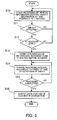
- FIG. 4 is a flowchart showing the operation of the drive recorder according to the first embodiment.
- the CPU 101 starts recording vehicle information in the FeRAM 102 immediately after new vehicle registration (step S1).
- the vehicle information from the impact sensors 110-1 to 110-n, the electronic controller 111, and the GPS 112 connected to the in-vehicle bus 113 is recorded in the FeRAM 102, via the I/F 104.
- the vehicle information includes a radiator temperature, conditions of the engine, a degree of acceleration, a magnitude of an impact, opening/closing of the doors, ON/OFF of the wipers, a shift position, ON/OFF of the headlights and the direction indicator lamps, brake pressure, brake locked or not, occurrence or non-occurrence of a slip, a degree of access pedal opening, vehicle speed, engine rotational speed, a steering angle, and position information.
- a CCD Charge Coupled Device
- Such vehicle information is recorded in the FeRAM 102 at the time intervals of 1 second under the control of the CPU 101, irrespective of whether the automotive vehicle is at a stop or traveling.
- the step S1 is repeatedly carried out before an impact is detected by one of the impact sensors 110-1 to 110-n after the start of recording of the vehicle information (step S2).
- the CPU 101 determines, based on the magnitude of the impact, whether or not the impact is at an accident level (step S3). If the detected impact is not at the accident level, it is judged that the impact has not been caused by an accident, and the steps S1 to S3 are repeatedly carried. If the detected impact is at the accident level, the CPU 101 judges that an accident has occurred, and inhibits overwriting of information recorded over e.g. 10 minutes before the accident was detected, to thereby protect the information obtained immediately before occurrence of the accident (step S4).
- the recording interval set for recording of the vehicle information in the FeRAM 102 is changed from 1 second to 0.1 seconds (step S5).
- the vehicle information is recorded at the time intervals of 0.1 seconds after the accident.
- Information obtained after the accident is also recorded in an area where overwritable information recorded before ten minutes before the accident is stored, and the step S5 is repeatedly carried out until the FeRAM 102 is filled with (step S6).
- the CPU 101 terminates the writing and outputs data (step S7).
- the FeRAM 102 may be placed in a write protect state so as to prevent the data from being tampered with.
- information indicative of the state may be displayed e.g. on a display for displaying conditions of the engine of the automotive vehicle. Further, even if supply of power from a battery to the drive recorder 100 is stopped, data recorded in the FeRAM 102 is saved.
- the use of the vehicle information recorded as described above makes it possible to investigate an accident based on the vehicle information recorded before and after occurrence of the accident, so that whether the accident was caused by human error or mechanical trouble can be analyzed in detail. Further, it is possible to investigate how the accident was caused based on various conditions of the situation, without performing accident analysis based on image information alone.
- the recording interval after occurrence of the accident is set to a time period of 0.1 seconds which is shorter than the recording interval (1 second) before occurrence of the accident, it is possible to record an increased amount of information obtained immediately after occurrence of the accident, which is important to investigate the behavior of the shocked vehicle, in the FeRAM 102 having a limited capacity. Even if an accident occurs when the vehicle is at a stop, it is possible to use vehicle information recorded upon occurrence of the accident, for insurance negotiation or the like.
- the FeRAM 102 since the FeRAM 102 is used as a recording memory, it is possible to cope with instantaneous writing performed at time intervals of 0.1 seconds. Further, the FeRAM 102 has a rewrite endurance of 10 12-14 , which makes it possible to continue rewriting/writing of records over a long time period of approximately 10 years. What is more, the FeRAM 102 is more resistant to impact and smaller in volume than an HDD (Hard Disk Drive), and therefore the memory can be easily protected from impact and heat.
- HDD Hard Disk Drive
- the drive recorder according to the second embodiment is characterized in that a recording interval after an accident is set according to vehicle speed. It should be noted that the drive recorder is identical in construction to that shown in FIG. 3 . In the following, the operation of the drive recorder according to the second embodiment will be described with reference to FIG. 3 .
- FIG. 5 is a flowchart showing the operation of the drive recorder according to the second embodiment.
- Steps S10 to S13 are identical to the steps S1 to S4 in FIG. 4 showing the operation of the drive recorder according to the first embodiment.
- the recording interval for recording vehicle information is set to a shorter time period than that before the accident in a step S14.
- the recording interval is not uniformly set to a fixed time period of 0.1 seconds, but it is set according to the vehicle speed at a time when an impact was detected.
- the recording interval is set shorter as the speed is higher, and set longer as the speed is lower. This is because even if the recording interval is reduced when the vehicle speed is low, it is impossible to obtain useful information.
- the CPU 101 sets the recording intervals, e.g. based on speed information on the automotive vehicle acquired from the electronic controller 111, such that vehicle information is recorded each time the automotive vehicle travels a distance of 2 to 3 m.
- FIG. 6 is a diagram showing distances each traveled at a speed over a time period.
- the recording interval should be set to a time period of 0.3 to 0.5 seconds when the vehicle speed is lower than 20 km/h, to a time period of 0.15 to 0.29 seconds when the vehicle speed is not lower than 20 km/h and lower than 50 km/h, to a time period of 0.06 to 0.14 seconds when the vehicle speed is not lower than 50 km/h and lower than 100 km/h, and to a time period not longer than 0.1 seconds when the vehicle speed is not lower than 100 km/h.
- the drive recorder according to the second embodiment can provide not only the same advantageous effects as provided by the drive recorder according to the first embodiment, but also an advantageous effect of being capable of recording detailed behavior of an automotive vehicle immediately after occurrence of an accident each time the automotive vehicle travels a distance of 2 to 3 m. Further, the recording interval can be set to a longer time period as the vehicle speed is lower, and therefore it is possible to avoid wasteful recording to thereby prolong the service life of the FeRAM 102.
- the drive recorder according to the third embodiment is characterized in that not only the recording interval after an accident, but also the recording interval before the accident is set according to vehicle speed. It should be noted that the drive recorder is identical in construction to that shown in FIG. 3 . In the following, the operation of the drive recorder according to the third embodiment will be described with reference to FIG. 3 .
- FIG. 7 is a flowchart showing the operation of the drive recorder according to the third embodiment.
- the CPU 101 starts recording vehicle information in the FeRAM 102 immediately after new vehicle registration (step S20).
- the CPU 101 changes the recording interval according to the vehicle speed (step S21).
- the recording interval is set shorter as the vehicle speed is higher, and set longer as the vehicle speed is lower. This is because even if the recording interval is reduced when the vehicle speed is low, it is impossible to obtain useful information.
- the CPU 101 sets the recording interval, e.g. based on speed information of the automotive vehicle acquired from the electronic controller 111, such that vehicle information is recorded each time the automotive vehicle travels a distance of 3 to 5 m.
- FIG. 8 is a diagram showing distances each traveled at a speed over a time period.
- the recording interval should be set to a time period not longer than 1 second when the vehicle speed is not higher than 10 km/h, to a time period not longer than 0.8 seconds when the vehicle speed is not higher than 20 km/h, to a time period not longer than 0.6 seconds when the vehicle speed is not higher than 40 km/h, to a time period not longer than 0.4 seconds when the vehicle speed is not higher than 50 km/h, to a time period not longer than 0.25 seconds when the vehicle speed is not higher than 90 km/h, and to a time period of 0.1 seconds when the vehicle speed is not lower than 90 km/h. Further, the recording interval should be set to a time period of e.g. 30 seconds when the vehicle is at a stop.
- steps S22 to S27 are identical to the steps S11 to S16 in FIG. 5 showing the operation of the drive recorder according to the second embodiment.
- the drive recorder according to the third embodiment can provide not only the same advantageous effects as provided by the drive recorder according to either of the first and second embodiments, but also an advantageous effect of being capable of setting the recording interval to a longer time period when the vehicle speed is low before an accident, to make it possible to record an increased amount of information obtained immediately after occurrence of an accident, which is important for investigation of the behavior of the shocked automotive vehicle, in the FeRAM 102 having a limited capacity. Further, since wasteful recording can be avoided, it is possible to prolong the service life of the FeRAM 102.
- the recording interval is set according to the vehicle speed after an accident
- the recording intervals may be set to a fixed time period of 0.1 seconds.
- FIG. 9 is a flowchart showing the operation of the drive recorder according to the fourth embodiment.
- Steps S30 to S34 are identical to the steps S1 to S5 in FIG. 4 showing the operation of the drive recorder according to the first embodiment.
- the drive recorder according to the fourth embodiment is characterized in that when the automotive vehicle receives an impact again after occurrence of an accident (step S35), a portion having received the impact is recorded in the FeRAM 102 (step S36). It should be noted that when the automotive vehicle does not receive an impact again, the same processing as in the drive recorder according to the first embodiment is carried out.
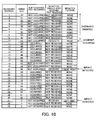
- FIG. 10 is a diagram showing part of vehicle information recorded in the FeRAM.
- vehicle information is continuously recorded in the FeRAM 102 at recording intervals set in the step S34. If any impact is detected again, a portion having received an impact is recorded in the step S36, as illustrated in each of record addresses "20" and "31" by way of example, without changing either the current recording interval or the overwrite-inhibited area, irrespective of the magnitude of the impact.
- Example of accident investigation In this accident, the automotive vehicle was contacted from behind first, which caused a slip. As a result, the vehicle slipped out of a lane in which it is traveling and came into contact with another vehicle coming from the front. Further, thereafter, the vehicle turned around to receive an impact from the left, and stopped.
- the drive recorder according to the fourth embodiment can provide not only the same advantageous effects as provided by the drive recorder according to the first embodiment, but also an advantageous effect of being capable of investigating an situation of the accident even when an automotive vehicle receives an impact a plurality of times.
- the recording interval before an accident and the recording interval after the accident which is shorter than that before the accident, are set to respective fixed time periods (1 second and 0.1 seconds)
- the recording intervals may be set according to a vehicle speed before or after the accident, similarly to the drive recorder according to the second or third embodiment.
- a radio-controlled clock may be provided so as to record the time of the radio-controlled clock as vehicle information.
- the drive recorder By referring to this time and the position information of the GPS 112, it is possible to utilize the drive recorder to analyze an incident such as a hit-and-run case. More specifically, when a hit-and-run case occurs, an impact is detected by the impact sensors 101-1 to 101-n, and the CPU 101 determines that the detected impact is at the accident level. Pieces of information on the time and the position are recorded in the FeRAM 102, so that it is possible to identify when and where the hit-and-run case occurred. It is preferred that when the writing after reception of the impact is completed, writing in the FeRAM 102 is inhibited so as to prevent the written data from being tampered.
- sensors each for detecting human weight may be provided in the respective seats of a vehicle so as to record information indicative of the sensed human weight as vehicle information. This makes it possible to verify when or whether a human was thrown out from the vehicle.
- the FeRAM is employed
- another nonvolatile memory such as a flash memory
- the use of the FeRAM is preferable.
- data may be acquired using a DRAM or the like (for example, an amount of information corresponding to 1 M bytes is acquired, and when the DRAM is filled with the information, data is delivered to an HDD) and written in the HDD after the lapse of a predetermined time period.
- an indicator lamp may be provided on an instrument panel before a driver's seat such that the indicator lamp is lit to indicate necessity of memory replacement when it becomes impossible to record any more data in the FRAM after occurrence of an accident-level situation.
- the recording devices according to the embodiments of the present invention are each applied to an automotive vehicle, the present invention is also applicable to a train, a ship, and an airplane.
Landscapes
- Physics & Mathematics (AREA)
- General Physics & Mathematics (AREA)
- Time Recorders, Dirve Recorders, Access Control (AREA)
Applications Claiming Priority (1)
| Application Number | Priority Date | Filing Date | Title |
|---|---|---|---|
| PCT/JP2006/306573 WO2007110958A1 (ja) | 2006-03-29 | 2006-03-29 | 記録装置及び記録方法 |
Publications (2)
| Publication Number | Publication Date |
|---|---|
| EP2000394A2 true EP2000394A2 (de) | 2008-12-10 |
| EP2000394A9 EP2000394A9 (de) | 2009-03-04 |
Family
ID=38540898
Family Applications (1)
| Application Number | Title | Priority Date | Filing Date |
|---|---|---|---|
| EP06730521A Withdrawn EP2000394A2 (de) | 2006-03-29 | 2006-03-29 | Aufzeichnungseinrichtung und aufzeichnungsverfahren |
Country Status (5)
| Country | Link |
|---|---|
| US (1) | US20090024274A1 (de) |
| EP (1) | EP2000394A2 (de) |
| JP (1) | JPWO2007110958A1 (de) |
| CN (1) | CN101443228A (de) |
| WO (1) | WO2007110958A1 (de) |
Cited By (7)
| Publication number | Priority date | Publication date | Assignee | Title |
|---|---|---|---|---|
| WO2009133429A1 (en) * | 2008-04-30 | 2009-11-05 | Sabanci Universitesi | Traffic accident analysis sytem |
| FR2977356A1 (fr) * | 2011-06-29 | 2013-01-04 | Continental Automotive France | Procede et dispositif pour la sauvegarde des informations de supervision d'un vehicule en cas d'accident. |
| ITTV20150066A1 (it) * | 2015-05-15 | 2016-11-15 | Texa Spa | Dispositivo registratore di dati di eventi autoveicolistici |
| EP3487125A1 (de) * | 2017-11-20 | 2019-05-22 | The Boeing Company | Fahrzeugüberwachungssystem mit dynamischer variation der datenerfassung |
| WO2019158412A1 (de) * | 2018-02-14 | 2019-08-22 | Robert Bosch Gmbh | Datenrekorder für ein fahrzeug und korrespondierende vorrichtung für ein fahrzeug |
| EP3624069A4 (de) * | 2017-05-10 | 2020-04-08 | JVC Kenwood Corporation | Aufzeichnungssteuerungsvorrichtung, aufzeichnungsvorrichtung, aufzeichnungssteuerungsverfahren und aufzeichnungssteuerungsprogramm |
| WO2021001095A1 (de) * | 2019-06-29 | 2021-01-07 | Robert Bosch Gmbh | Sensoreinheit für ein fahrzeug sowie ein fahrzeug mit einer solchen sensoreinheit |
Families Citing this family (27)
| Publication number | Priority date | Publication date | Assignee | Title |
|---|---|---|---|---|
| JP2009122946A (ja) * | 2007-11-14 | 2009-06-04 | Fujitsu Ten Ltd | 情報記憶装置 |
| TWI338640B (en) * | 2008-10-28 | 2011-03-11 | Wistron Corp | Image recording systems and related recording methods for recording moving image of the vehicle, and machine readable medium thereof |
| JP5322680B2 (ja) * | 2009-02-06 | 2013-10-23 | 富士通テン株式会社 | ドライブレコーダ |
| DE102010048672B4 (de) * | 2010-04-21 | 2023-08-10 | Volkswagen Ag | Verfahren zur Dokumentation eines Ist-Zustandes eines Steuergerätes und Steuergerät |
| JP5769437B2 (ja) * | 2011-02-10 | 2015-08-26 | 矢崎エナジーシステム株式会社 | 移動体用情報記録装置 |
| TW201244468A (en) * | 2011-04-25 | 2012-11-01 | Mitac Int Corp | Method for dynamically adjusting video frame number and vehicle recording system |
| CN102682499A (zh) * | 2012-05-09 | 2012-09-19 | 浙江吉利汽车研究院有限公司杭州分公司 | 一种车辆行驶全景记录仪 |
| JP5979064B2 (ja) * | 2013-04-02 | 2016-08-24 | 横河電機株式会社 | 記録計 |
| US9424607B2 (en) * | 2013-09-20 | 2016-08-23 | Elwha Llc | Systems and methods for insurance based upon status of vehicle software |
| US10169821B2 (en) | 2013-09-20 | 2019-01-01 | Elwha Llc | Systems and methods for insurance based upon status of vehicle software |
| DE102014208638A1 (de) * | 2014-05-08 | 2015-11-12 | Continental Teves Ag & Co. Ohg | Fahrerassistenzsystem und Verfahren zur automatisierten Protokollierung von Protokolldaten |
| FR3025035B1 (fr) * | 2014-08-22 | 2016-09-09 | Jtekt Europe Sas | Calculateur pour vehicule, tel qu’un calculateur de direction assistee, pourvu d’un enregistreur d’evenements integre |
| US9823859B2 (en) * | 2014-11-06 | 2017-11-21 | Western Digital Technologies, Inc. | Mechanical shock mitigation for data storage |
| JP6536603B2 (ja) * | 2017-03-03 | 2019-07-03 | 株式会社Jvcケンウッド | 記録装置、記録方法、及びプログラム |
| WO2018092495A1 (ja) * | 2016-11-18 | 2018-05-24 | 株式会社Jvcケンウッド | 記録装置、記録方法、再生方法及びプログラム |
| JP6569698B2 (ja) * | 2017-04-17 | 2019-09-04 | 株式会社Jvcケンウッド | 記録制御装置、記録装置、ナビゲーション装置、記録方法、及びプログラム |
| US10019857B1 (en) * | 2017-05-18 | 2018-07-10 | Ford Global Technologies, Llc | Hit-and-run detection |
| US10089869B1 (en) * | 2017-05-25 | 2018-10-02 | Ford Global Technologies, Llc | Tracking hit and run perpetrators using V2X communication |
| US11580021B2 (en) * | 2017-06-02 | 2023-02-14 | Audi Ag | Method and device for situation-dependent storage of data of a system |
| CN109367507B (zh) * | 2018-09-20 | 2021-10-15 | 南京维思科汽车科技有限公司 | 一种安全系统管理装置和管理方法 |
| US11407381B2 (en) | 2019-08-07 | 2022-08-09 | Keep Technologies, Inc. | Multi-device vehicle intrusion detection |
| CN110796765A (zh) * | 2019-11-12 | 2020-02-14 | 新石器慧通(北京)科技有限公司 | 一种数据存储方法及装置 |
| JP7066670B2 (ja) * | 2019-12-09 | 2022-05-13 | 本田技研工業株式会社 | 車両制御システム |
| KR102871973B1 (ko) | 2021-02-22 | 2025-10-17 | 삼성전자주식회사 | 스토리지 장치 및 이를 포함하는 스토리지 시스템 |
| US12694727B2 (en) | 2021-03-23 | 2026-07-28 | Oshkosh Corporation | Vehicle data collection system and methods |
| US12287910B2 (en) | 2021-09-09 | 2025-04-29 | Toyota Motor North America, Inc. | Transport limitation for data reads |
| US12054157B2 (en) * | 2021-09-09 | 2024-08-06 | Toyota Motor North America, Inc. | Hardware timer data expiration |
Family Cites Families (14)
| Publication number | Priority date | Publication date | Assignee | Title |
|---|---|---|---|---|
| DE3405757A1 (de) * | 1983-02-26 | 1984-10-04 | Edmund 7016 Gerlingen Zottnik | Unfalldatenschreiber |
| JPH06237463A (ja) | 1993-02-12 | 1994-08-23 | Matsushita Electron Corp | 画像記憶システム |
| JPH08153298A (ja) * | 1994-11-28 | 1996-06-11 | Kubota Corp | 車載用映像記録装置 |
| US5638273A (en) * | 1995-03-29 | 1997-06-10 | Remote Control Systems, Inc. | Vehicle data storage and analysis system and methods |
| JPH08287386A (ja) * | 1995-04-17 | 1996-11-01 | Takata Kk | 車両事故通報システム |
| JPH09123876A (ja) | 1995-10-30 | 1997-05-13 | Hitachi Ltd | 乗用車の挙動及び運転動作の記録装置 |
| JPH11245853A (ja) * | 1998-02-27 | 1999-09-14 | Matsushita Electric Ind Co Ltd | ドライビング情報蓄積機能付き事故緊急通報装置 |
| JP2000025659A (ja) | 1998-07-15 | 2000-01-25 | Matsushita Electron Corp | 衝突映像記録装置 |
| JP2001247005A (ja) * | 2000-02-01 | 2001-09-11 | Takata Corp | 車両安全装置 |
| JP2002166803A (ja) * | 2000-11-30 | 2002-06-11 | Canon Inc | 車両用通信システム、車両用通信装置、車両、通信方法、及びコンピュータ読み取り可能な記憶媒体 |
| JP3861811B2 (ja) * | 2001-01-04 | 2006-12-27 | 株式会社日立製作所 | 運転情報処理装置 |
| FR2823048B1 (fr) * | 2001-03-30 | 2003-07-04 | Claude Bendavid | Dispositif pour la memorisation d'une sequence visuelle a la suite de l'emission d'un signal d'alarme a bord d'un vehicule |
| JP3798996B2 (ja) * | 2002-06-19 | 2006-07-19 | 圭寿 藤沼 | 車輌事故状況自動収集システム |
| JP2005266914A (ja) * | 2004-03-16 | 2005-09-29 | Nec System Technologies Ltd | 運転状態記録解析システム、車載システム、及び解析装置 |
-
2006
- 2006-03-29 EP EP06730521A patent/EP2000394A2/de not_active Withdrawn
- 2006-03-29 WO PCT/JP2006/306573 patent/WO2007110958A1/ja not_active Ceased
- 2006-03-29 CN CNA200680054061XA patent/CN101443228A/zh active Pending
- 2006-03-29 JP JP2008507340A patent/JPWO2007110958A1/ja active Pending
-
2008
- 2008-09-25 US US12/238,000 patent/US20090024274A1/en not_active Abandoned
Non-Patent Citations (1)
| Title |
|---|
| See references of WO2007110958A1 * |
Cited By (8)
| Publication number | Priority date | Publication date | Assignee | Title |
|---|---|---|---|---|
| WO2009133429A1 (en) * | 2008-04-30 | 2009-11-05 | Sabanci Universitesi | Traffic accident analysis sytem |
| FR2977356A1 (fr) * | 2011-06-29 | 2013-01-04 | Continental Automotive France | Procede et dispositif pour la sauvegarde des informations de supervision d'un vehicule en cas d'accident. |
| ITTV20150066A1 (it) * | 2015-05-15 | 2016-11-15 | Texa Spa | Dispositivo registratore di dati di eventi autoveicolistici |
| EP3624069A4 (de) * | 2017-05-10 | 2020-04-08 | JVC Kenwood Corporation | Aufzeichnungssteuerungsvorrichtung, aufzeichnungsvorrichtung, aufzeichnungssteuerungsverfahren und aufzeichnungssteuerungsprogramm |
| US10868997B2 (en) | 2017-05-10 | 2020-12-15 | Jvckenwood Corporation | Recording control device, recording apparatus, recording control method, and recording control program |
| EP3487125A1 (de) * | 2017-11-20 | 2019-05-22 | The Boeing Company | Fahrzeugüberwachungssystem mit dynamischer variation der datenerfassung |
| WO2019158412A1 (de) * | 2018-02-14 | 2019-08-22 | Robert Bosch Gmbh | Datenrekorder für ein fahrzeug und korrespondierende vorrichtung für ein fahrzeug |
| WO2021001095A1 (de) * | 2019-06-29 | 2021-01-07 | Robert Bosch Gmbh | Sensoreinheit für ein fahrzeug sowie ein fahrzeug mit einer solchen sensoreinheit |
Also Published As
| Publication number | Publication date |
|---|---|
| US20090024274A1 (en) | 2009-01-22 |
| CN101443228A (zh) | 2009-05-27 |
| JPWO2007110958A1 (ja) | 2009-08-06 |
| EP2000394A9 (de) | 2009-03-04 |
| WO2007110958A1 (ja) | 2007-10-04 |
Similar Documents
| Publication | Publication Date | Title |
|---|---|---|
| EP2000394A9 (de) | Aufzeichnungseinrichtung und aufzeichnungsverfahren | |
| JP4743054B2 (ja) | 車両のドライブレコーダ | |
| US7180407B1 (en) | Vehicle video collision event recorder | |
| US9098388B2 (en) | Apparatus and method for recording an image for a vehicle using on board diagnostic information | |
| US6246933B1 (en) | Traffic accident data recorder and traffic accident reproduction system and method | |
| JP4511587B2 (ja) | 車両の遠隔診断システムためのデータ通信装置 | |
| EP3543962B1 (de) | Vorrichtung zur aufzeichnung von fahrinformationen, verarbeitungssystem für fahrinformationsanzeige, verfahren zur aufzeichnung von fahrinformationen, anzeigeverarbeitungsverfahren und programm | |
| US20090281689A1 (en) | Electronic control system for vehicles | |
| JP2012169754A (ja) | 移動体用情報記録装置 | |
| JP5696636B2 (ja) | 情報処理装置、データ記録方法 | |
| JP2005500931A (ja) | 車両に設置された警報信号の発信に追従して映像シーケンスを蓄積する装置 | |
| CN109410363B (zh) | 用于检测车辆的意外、事故和/或欺诈的方法和系统 | |
| JP3706084B2 (ja) | 車両用データ記録装置 | |
| WO2013084446A1 (ja) | ドライブレコーダ、および表示装置 | |
| JP5544886B2 (ja) | 車載情報蓄積装置 | |
| JP2011250193A (ja) | ドライブレコーダー | |
| KR100469574B1 (ko) | 항법 장치 | |
| JPH07249137A (ja) | 車両用データ記録装置 | |
| JP2006291730A (ja) | 車両用診断装置 | |
| JP2001222731A (ja) | ドライブレコーダ | |
| JP3683388B2 (ja) | 車両事故記録装置 | |
| JP5846815B2 (ja) | ドライブレコーダ | |
| KR20080102258A (ko) | 기록 장치 및 기록 방법 | |
| KR101090438B1 (ko) | 플래시 메모리 기반의 차량 정보 저장 방법 및 장치 | |
| US20020107912A1 (en) | Motor vehicle drive recorder system which records motor vehicle data proximate an event declared by a motor veicle occupant |
Legal Events
| Date | Code | Title | Description |
|---|---|---|---|
| PUAI | Public reference made under article 153(3) epc to a published international application that has entered the european phase |
Free format text: ORIGINAL CODE: 0009012 |
|
| 17P | Request for examination filed |
Effective date: 20080929 |
|
| AK | Designated contracting states |
Kind code of ref document: A2 Designated state(s): FR |
|
| PUAB | Information related to the publication of an a document modified or deleted |
Free format text: ORIGINAL CODE: 0009199EPPU |
|
| RIN1 | Information on inventor provided before grant (corrected) |
Inventor name: NAGAI, KOUICHI |
|
| DAX | Request for extension of the european patent (deleted) | ||
| RBV | Designated contracting states (corrected) |
Designated state(s): FR |
|
| STAA | Information on the status of an ep patent application or granted ep patent |
Free format text: STATUS: THE APPLICATION IS DEEMED TO BE WITHDRAWN |
|
| 18D | Application deemed to be withdrawn |
Effective date: 20101001 |