EP1992687B1 - Lignées de cellules aviaires utiles pour la production de substances d'intérêt - Google Patents
Lignées de cellules aviaires utiles pour la production de substances d'intérêt Download PDFInfo
- Publication number
- EP1992687B1 EP1992687B1 EP08163979.1A EP08163979A EP1992687B1 EP 1992687 B1 EP1992687 B1 EP 1992687B1 EP 08163979 A EP08163979 A EP 08163979A EP 1992687 B1 EP1992687 B1 EP 1992687B1
- Authority
- EP
- European Patent Office
- Prior art keywords
- cells
- cell line
- avian
- virus
- medium
- Prior art date
- Legal status (The legal status is an assumption and is not a legal conclusion. Google has not performed a legal analysis and makes no representation as to the accuracy of the status listed.)
- Expired - Lifetime
Links
- 241000271566 Aves Species 0.000 title claims abstract description 49
- 239000000126 substance Substances 0.000 title description 10
- 239000002609 medium Substances 0.000 claims abstract description 54
- 210000002966 serum Anatomy 0.000 claims abstract description 44
- 230000001464 adherent effect Effects 0.000 claims abstract description 42
- 239000003102 growth factor Substances 0.000 claims abstract description 41
- 238000000034 method Methods 0.000 claims abstract description 31
- 239000007640 basal medium Substances 0.000 claims abstract description 7
- 210000004027 cell Anatomy 0.000 claims description 273
- 241000700605 Viruses Species 0.000 claims description 77
- 210000000130 stem cell Anatomy 0.000 claims description 45
- 102000004127 Cytokines Human genes 0.000 claims description 24
- 108090000695 Cytokines Proteins 0.000 claims description 24
- 230000000694 effects Effects 0.000 claims description 23
- 238000000338 in vitro Methods 0.000 claims description 21
- 108010017842 Telomerase Proteins 0.000 claims description 19
- 239000001963 growth medium Substances 0.000 claims description 19
- 210000002950 fibroblast Anatomy 0.000 claims description 18
- 239000000725 suspension Substances 0.000 claims description 15
- 230000002062 proliferating effect Effects 0.000 claims description 13
- 210000001671 embryonic stem cell Anatomy 0.000 claims description 12
- 241001430294 unidentified retrovirus Species 0.000 claims description 12
- 238000012258 culturing Methods 0.000 claims description 11
- 230000008569 process Effects 0.000 claims description 11
- 239000006144 Dulbecco’s modified Eagle's medium Substances 0.000 claims description 9
- 101710177504 Kit ligand Proteins 0.000 claims description 9
- 102100020880 Kit ligand Human genes 0.000 claims description 9
- LAQPKDLYOBZWBT-NYLDSJSYSA-N (2s,4s,5r,6r)-5-acetamido-2-{[(2s,3r,4s,5s,6r)-2-{[(2r,3r,4r,5r)-5-acetamido-1,2-dihydroxy-6-oxo-4-{[(2s,3s,4r,5s,6s)-3,4,5-trihydroxy-6-methyloxan-2-yl]oxy}hexan-3-yl]oxy}-3,5-dihydroxy-6-(hydroxymethyl)oxan-4-yl]oxy}-4-hydroxy-6-[(1r,2r)-1,2,3-trihydrox Chemical compound O[C@H]1[C@H](O)[C@H](O)[C@H](C)O[C@H]1O[C@H]([C@@H](NC(C)=O)C=O)[C@@H]([C@H](O)CO)O[C@H]1[C@H](O)[C@@H](O[C@]2(O[C@H]([C@H](NC(C)=O)[C@@H](O)C2)[C@H](O)[C@H](O)CO)C(O)=O)[C@@H](O)[C@@H](CO)O1 LAQPKDLYOBZWBT-NYLDSJSYSA-N 0.000 claims description 8
- 102000004889 Interleukin-6 Human genes 0.000 claims description 8
- HPFXACZRFJDURI-KTKRTIGZSA-N N-oleoylglycine Chemical compound CCCCCCCC\C=C/CCCCCCCC(=O)NCC(O)=O HPFXACZRFJDURI-KTKRTIGZSA-N 0.000 claims description 8
- DAEPDZWVDSPTHF-UHFFFAOYSA-M sodium pyruvate Chemical compound [Na+].CC(=O)C([O-])=O DAEPDZWVDSPTHF-UHFFFAOYSA-M 0.000 claims description 8
- 102000002260 Alkaline Phosphatase Human genes 0.000 claims description 7
- 108020004774 Alkaline Phosphatase Proteins 0.000 claims description 7
- 108010005939 Ciliary Neurotrophic Factor Proteins 0.000 claims description 7
- 102100031614 Ciliary neurotrophic factor Human genes 0.000 claims description 7
- 108090000723 Insulin-Like Growth Factor I Proteins 0.000 claims description 7
- 102000004218 Insulin-Like Growth Factor I Human genes 0.000 claims description 7
- 108090001005 Interleukin-6 Proteins 0.000 claims description 7
- 230000002238 attenuated effect Effects 0.000 claims description 7
- 108090000379 Fibroblast growth factor 2 Proteins 0.000 claims description 6
- 102100024785 Fibroblast growth factor 2 Human genes 0.000 claims description 6
- 102000003815 Interleukin-11 Human genes 0.000 claims description 6
- 108090000177 Interleukin-11 Proteins 0.000 claims description 6
- 102100032352 Leukemia inhibitory factor Human genes 0.000 claims description 5
- 108090000581 Leukemia inhibitory factor Proteins 0.000 claims description 5
- 230000003247 decreasing effect Effects 0.000 claims description 5
- 238000010790 dilution Methods 0.000 claims description 5
- 239000012895 dilution Substances 0.000 claims description 5
- 230000009257 reactivity Effects 0.000 claims description 5
- 241001529453 unidentified herpesvirus Species 0.000 claims description 5
- 102100037792 Interleukin-6 receptor subunit alpha Human genes 0.000 claims description 4
- 201000005505 Measles Diseases 0.000 claims description 4
- 208000005647 Mumps Diseases 0.000 claims description 4
- 241000702244 Orthoreovirus Species 0.000 claims description 4
- 241000710799 Rubella virus Species 0.000 claims description 4
- 102100038126 Tenascin Human genes 0.000 claims description 4
- 108010008125 Tenascin Proteins 0.000 claims description 4
- 230000000721 bacterilogical effect Effects 0.000 claims description 4
- 239000003797 essential amino acid Substances 0.000 claims description 4
- 235000020776 essential amino acid Nutrition 0.000 claims description 4
- 238000011081 inoculation Methods 0.000 claims description 4
- 108040006858 interleukin-6 receptor activity proteins Proteins 0.000 claims description 4
- 208000010805 mumps infectious disease Diseases 0.000 claims description 4
- 229940054269 sodium pyruvate Drugs 0.000 claims description 4
- 241000701161 unidentified adenovirus Species 0.000 claims description 4
- 241000712461 unidentified influenza virus Species 0.000 claims description 4
- 239000011782 vitamin Substances 0.000 claims description 4
- 229930003231 vitamin Natural products 0.000 claims description 4
- 235000013343 vitamin Nutrition 0.000 claims description 4
- 229940088594 vitamin Drugs 0.000 claims description 4
- 241000700662 Fowlpox virus Species 0.000 claims description 2
- 241000712079 Measles morbillivirus Species 0.000 claims description 2
- 241000711386 Mumps virus Species 0.000 claims description 2
- 244000309466 calf Species 0.000 claims 4
- 241000178270 Canarypox virus Species 0.000 claims 1
- 230000000750 progressive effect Effects 0.000 abstract description 14
- 230000012010 growth Effects 0.000 abstract description 10
- 238000002360 preparation method Methods 0.000 abstract description 4
- 102220575132 Leucine-rich repeat transmembrane protein FLRT1_S86N_mutation Human genes 0.000 description 23
- 208000015181 infectious disease Diseases 0.000 description 19
- 230000009471 action Effects 0.000 description 18
- 230000035755 proliferation Effects 0.000 description 18
- 108090000623 proteins and genes Proteins 0.000 description 16
- 238000004519 manufacturing process Methods 0.000 description 15
- 239000004033 plastic Substances 0.000 description 12
- 241000287828 Gallus gallus Species 0.000 description 11
- 239000006228 supernatant Substances 0.000 description 11
- 210000001161 mammalian embryo Anatomy 0.000 description 10
- 230000003612 virological effect Effects 0.000 description 9
- 241001465754 Metazoa Species 0.000 description 8
- 210000001519 tissue Anatomy 0.000 description 8
- 238000004448 titration Methods 0.000 description 8
- 230000004069 differentiation Effects 0.000 description 7
- 235000013601 eggs Nutrition 0.000 description 7
- 230000014509 gene expression Effects 0.000 description 7
- 238000001727 in vivo Methods 0.000 description 7
- 238000011534 incubation Methods 0.000 description 7
- 239000008188 pellet Substances 0.000 description 7
- 230000010076 replication Effects 0.000 description 7
- YBJHBAHKTGYVGT-ZKWXMUAHSA-N (+)-Biotin Chemical compound N1C(=O)N[C@@H]2[C@H](CCCCC(=O)O)SC[C@@H]21 YBJHBAHKTGYVGT-ZKWXMUAHSA-N 0.000 description 6
- 206010028980 Neoplasm Diseases 0.000 description 6
- -1 SSEA-3 Chemical compound 0.000 description 6
- 239000000203 mixture Substances 0.000 description 6
- 239000012679 serum free medium Substances 0.000 description 6
- 241000713826 Avian leukosis virus Species 0.000 description 5
- 108091003079 Bovine Serum Albumin Proteins 0.000 description 5
- 230000001413 cellular effect Effects 0.000 description 5
- 230000000120 cytopathologic effect Effects 0.000 description 5
- 230000007423 decrease Effects 0.000 description 5
- 239000012894 fetal calf serum Substances 0.000 description 5
- 230000004048 modification Effects 0.000 description 5
- 238000012986 modification Methods 0.000 description 5
- 239000002245 particle Substances 0.000 description 5
- 210000001988 somatic stem cell Anatomy 0.000 description 5
- 108091035539 telomere Proteins 0.000 description 5
- 102000055501 telomere Human genes 0.000 description 5
- 210000003411 telomere Anatomy 0.000 description 5
- 108091005804 Peptidases Proteins 0.000 description 4
- 102000035195 Peptidases Human genes 0.000 description 4
- 230000004913 activation Effects 0.000 description 4
- 238000001994 activation Methods 0.000 description 4
- 230000009089 cytolysis Effects 0.000 description 4
- 238000010494 dissociation reaction Methods 0.000 description 4
- 230000005593 dissociations Effects 0.000 description 4
- 210000002969 egg yolk Anatomy 0.000 description 4
- 210000002257 embryonic structure Anatomy 0.000 description 4
- 238000012423 maintenance Methods 0.000 description 4
- 230000000877 morphologic effect Effects 0.000 description 4
- 238000000746 purification Methods 0.000 description 4
- 108020003175 receptors Proteins 0.000 description 4
- 102000005962 receptors Human genes 0.000 description 4
- 230000000392 somatic effect Effects 0.000 description 4
- 229960005486 vaccine Drugs 0.000 description 4
- 102100025064 Cellular tumor antigen p53 Human genes 0.000 description 3
- WSFSSNUMVMOOMR-UHFFFAOYSA-N Formaldehyde Chemical compound O=C WSFSSNUMVMOOMR-UHFFFAOYSA-N 0.000 description 3
- 102000043276 Oncogene Human genes 0.000 description 3
- 108700020796 Oncogene Proteins 0.000 description 3
- 241000709664 Picornaviridae Species 0.000 description 3
- 230000006978 adaptation Effects 0.000 description 3
- 239000000654 additive Substances 0.000 description 3
- 238000013459 approach Methods 0.000 description 3
- 230000006399 behavior Effects 0.000 description 3
- 229960002685 biotin Drugs 0.000 description 3
- 235000020958 biotin Nutrition 0.000 description 3
- 239000011616 biotin Substances 0.000 description 3
- 238000004113 cell culture Methods 0.000 description 3
- 230000036978 cell physiology Effects 0.000 description 3
- 230000004663 cell proliferation Effects 0.000 description 3
- 210000000805 cytoplasm Anatomy 0.000 description 3
- 239000013604 expression vector Substances 0.000 description 3
- 230000007774 longterm Effects 0.000 description 3
- 239000000463 material Substances 0.000 description 3
- 230000035772 mutation Effects 0.000 description 3
- 238000010899 nucleation Methods 0.000 description 3
- 210000004940 nucleus Anatomy 0.000 description 3
- 230000002018 overexpression Effects 0.000 description 3
- 230000002269 spontaneous effect Effects 0.000 description 3
- 241000725585 Chicken anemia virus Species 0.000 description 2
- 102100039385 Histone deacetylase 11 Human genes 0.000 description 2
- 108700038332 Histone deacetylase 11 Proteins 0.000 description 2
- 241000711450 Infectious bronchitis virus Species 0.000 description 2
- 108010038501 Interleukin-6 Receptors Proteins 0.000 description 2
- 241000829100 Macaca mulatta polyomavirus 1 Species 0.000 description 2
- 241001529936 Murinae Species 0.000 description 2
- 241000286209 Phasianidae Species 0.000 description 2
- 102000004160 Phosphoric Monoester Hydrolases Human genes 0.000 description 2
- 108090000608 Phosphoric Monoester Hydrolases Proteins 0.000 description 2
- 241000700584 Simplexvirus Species 0.000 description 2
- FAPWRFPIFSIZLT-UHFFFAOYSA-M Sodium chloride Chemical compound [Na+].[Cl-] FAPWRFPIFSIZLT-UHFFFAOYSA-M 0.000 description 2
- 239000007983 Tris buffer Substances 0.000 description 2
- 108700025716 Tumor Suppressor Genes Proteins 0.000 description 2
- 208000036142 Viral infection Diseases 0.000 description 2
- 230000004075 alteration Effects 0.000 description 2
- 230000003321 amplification Effects 0.000 description 2
- 230000019552 anatomical structure morphogenesis Effects 0.000 description 2
- 239000003242 anti bacterial agent Substances 0.000 description 2
- 229940088710 antibiotic agent Drugs 0.000 description 2
- 210000000625 blastula Anatomy 0.000 description 2
- 201000011510 cancer Diseases 0.000 description 2
- 230000022131 cell cycle Effects 0.000 description 2
- 210000000349 chromosome Anatomy 0.000 description 2
- 230000009260 cross reactivity Effects 0.000 description 2
- 230000006378 damage Effects 0.000 description 2
- 210000002242 embryoid body Anatomy 0.000 description 2
- 230000006870 function Effects 0.000 description 2
- 230000002068 genetic effect Effects 0.000 description 2
- 210000004602 germ cell Anatomy 0.000 description 2
- 210000002149 gonad Anatomy 0.000 description 2
- 230000003394 haemopoietic effect Effects 0.000 description 2
- 238000003306 harvesting Methods 0.000 description 2
- 210000003494 hepatocyte Anatomy 0.000 description 2
- 230000002779 inactivation Effects 0.000 description 2
- 230000006698 induction Effects 0.000 description 2
- 230000002458 infectious effect Effects 0.000 description 2
- 238000002347 injection Methods 0.000 description 2
- 239000007924 injection Substances 0.000 description 2
- 229940100601 interleukin-6 Drugs 0.000 description 2
- 238000003199 nucleic acid amplification method Methods 0.000 description 2
- PHEDXBVPIONUQT-RGYGYFBISA-N phorbol 13-acetate 12-myristate Chemical compound C([C@]1(O)C(=O)C(C)=C[C@H]1[C@@]1(O)[C@H](C)[C@H]2OC(=O)CCCCCCCCCCCCC)C(CO)=C[C@H]1[C@H]1[C@]2(OC(C)=O)C1(C)C PHEDXBVPIONUQT-RGYGYFBISA-N 0.000 description 2
- 229920001184 polypeptide Polymers 0.000 description 2
- 102000004196 processed proteins & peptides Human genes 0.000 description 2
- 108090000765 processed proteins & peptides Proteins 0.000 description 2
- 102000004169 proteins and genes Human genes 0.000 description 2
- RXWNCPJZOCPEPQ-NVWDDTSBSA-N puromycin Chemical compound C1=CC(OC)=CC=C1C[C@H](N)C(=O)N[C@H]1[C@@H](O)[C@H](N2C3=NC=NC(=C3N=C2)N(C)C)O[C@@H]1CO RXWNCPJZOCPEPQ-NVWDDTSBSA-N 0.000 description 2
- 230000006798 recombination Effects 0.000 description 2
- 238000005215 recombination Methods 0.000 description 2
- 230000003252 repetitive effect Effects 0.000 description 2
- 230000008943 replicative senescence Effects 0.000 description 2
- 230000003307 reticuloendothelial effect Effects 0.000 description 2
- 239000000243 solution Substances 0.000 description 2
- UCSJYZPVAKXKNQ-HZYVHMACSA-N streptomycin Chemical compound CN[C@H]1[C@H](O)[C@@H](O)[C@H](CO)O[C@H]1O[C@@H]1[C@](C=O)(O)[C@H](C)O[C@H]1O[C@@H]1[C@@H](NC(N)=N)[C@H](O)[C@@H](NC(N)=N)[C@H](O)[C@H]1O UCSJYZPVAKXKNQ-HZYVHMACSA-N 0.000 description 2
- 230000035882 stress Effects 0.000 description 2
- 230000001629 suppression Effects 0.000 description 2
- 238000012360 testing method Methods 0.000 description 2
- 238000001890 transfection Methods 0.000 description 2
- 230000009466 transformation Effects 0.000 description 2
- LENZDBCJOHFCAS-UHFFFAOYSA-N tris Chemical compound OCC(N)(CO)CO LENZDBCJOHFCAS-UHFFFAOYSA-N 0.000 description 2
- 230000001228 trophic effect Effects 0.000 description 2
- 210000004881 tumor cell Anatomy 0.000 description 2
- 239000013598 vector Substances 0.000 description 2
- 230000009385 viral infection Effects 0.000 description 2
- 230000002747 voluntary effect Effects 0.000 description 2
- QRXMUCSWCMTJGU-UHFFFAOYSA-L (5-bromo-4-chloro-1h-indol-3-yl) phosphate Chemical compound C1=C(Br)C(Cl)=C2C(OP([O-])(=O)[O-])=CNC2=C1 QRXMUCSWCMTJGU-UHFFFAOYSA-L 0.000 description 1
- QRXMUCSWCMTJGU-UHFFFAOYSA-N 5-bromo-4-chloro-3-indolyl phosphate Chemical compound C1=C(Br)C(Cl)=C2C(OP(O)(=O)O)=CNC2=C1 QRXMUCSWCMTJGU-UHFFFAOYSA-N 0.000 description 1
- 229940123373 Adenovirus E1A gene Drugs 0.000 description 1
- 241000272525 Anas platyrhynchos Species 0.000 description 1
- 241001519465 Avian metapneumovirus Species 0.000 description 1
- 241000701397 Avihepadnavirus Species 0.000 description 1
- 102000016989 Ciliary Neurotrophic Factor Receptor Human genes 0.000 description 1
- 108010000063 Ciliary Neurotrophic Factor Receptor Proteins 0.000 description 1
- 102000029816 Collagenase Human genes 0.000 description 1
- 108060005980 Collagenase Proteins 0.000 description 1
- 241000711573 Coronaviridae Species 0.000 description 1
- 102000016736 Cyclin Human genes 0.000 description 1
- 108050006400 Cyclin Proteins 0.000 description 1
- 108020004414 DNA Proteins 0.000 description 1
- 230000004543 DNA replication Effects 0.000 description 1
- IAZDPXIOMUYVGZ-UHFFFAOYSA-N Dimethylsulphoxide Chemical compound CS(C)=O IAZDPXIOMUYVGZ-UHFFFAOYSA-N 0.000 description 1
- 241000725618 Duck hepatitis B virus Species 0.000 description 1
- 102000012199 E3 ubiquitin-protein ligase Mdm2 Human genes 0.000 description 1
- 241000196324 Embryophyta Species 0.000 description 1
- 241000710188 Encephalomyocarditis virus Species 0.000 description 1
- YQYJSBFKSSDGFO-UHFFFAOYSA-N Epihygromycin Natural products OC1C(O)C(C(=O)C)OC1OC(C(=C1)O)=CC=C1C=C(C)C(=O)NC1C(O)C(O)C2OCOC2C1O YQYJSBFKSSDGFO-UHFFFAOYSA-N 0.000 description 1
- 102000010834 Extracellular Matrix Proteins Human genes 0.000 description 1
- 108010037362 Extracellular Matrix Proteins Proteins 0.000 description 1
- 241000710831 Flavivirus Species 0.000 description 1
- 241000710198 Foot-and-mouth disease virus Species 0.000 description 1
- 241001411198 Fowl aviadenovirus A Species 0.000 description 1
- 241000701047 Gallid alphaherpesvirus 2 Species 0.000 description 1
- 241001531946 Gallid herpesvirus Species 0.000 description 1
- 241001663880 Gammaretrovirus Species 0.000 description 1
- 229930182566 Gentamicin Natural products 0.000 description 1
- CEAZRRDELHUEMR-URQXQFDESA-N Gentamicin Chemical compound O1[C@H](C(C)NC)CC[C@@H](N)[C@H]1O[C@H]1[C@H](O)[C@@H](O[C@@H]2[C@@H]([C@@H](NC)[C@@](C)(O)CO2)O)[C@H](N)C[C@@H]1N CEAZRRDELHUEMR-URQXQFDESA-N 0.000 description 1
- WQZGKKKJIJFFOK-GASJEMHNSA-N Glucose Natural products OC[C@H]1OC(O)[C@H](O)[C@@H](O)[C@@H]1O WQZGKKKJIJFFOK-GASJEMHNSA-N 0.000 description 1
- SXRSQZLOMIGNAQ-UHFFFAOYSA-N Glutaraldehyde Chemical compound O=CCCCC=O SXRSQZLOMIGNAQ-UHFFFAOYSA-N 0.000 description 1
- 241000711549 Hepacivirus C Species 0.000 description 1
- 241000700721 Hepatitis B virus Species 0.000 description 1
- 241000713772 Human immunodeficiency virus 1 Species 0.000 description 1
- 241000713340 Human immunodeficiency virus 2 Species 0.000 description 1
- 241000620147 Human mastadenovirus C Species 0.000 description 1
- 241000711920 Human orthopneumovirus Species 0.000 description 1
- 241000712431 Influenza A virus Species 0.000 description 1
- 241001500350 Influenzavirus B Species 0.000 description 1
- 241001500343 Influenzavirus C Species 0.000 description 1
- 102000010781 Interleukin-6 Receptors Human genes 0.000 description 1
- 241000713666 Lentivirus Species 0.000 description 1
- 241000124008 Mammalia Species 0.000 description 1
- 241000351643 Metapneumovirus Species 0.000 description 1
- 241000699729 Muridae Species 0.000 description 1
- 101000716728 Mus musculus Kit ligand Proteins 0.000 description 1
- 229930193140 Neomycin Natural products 0.000 description 1
- 241000886676 Ovine atadenovirus D Species 0.000 description 1
- 229930182555 Penicillin Natural products 0.000 description 1
- JGSARLDLIJGVTE-MBNYWOFBSA-N Penicillin G Chemical compound N([C@H]1[C@H]2SC([C@@H](N2C1=O)C(O)=O)(C)C)C(=O)CC1=CC=CC=C1 JGSARLDLIJGVTE-MBNYWOFBSA-N 0.000 description 1
- 241000700667 Pigeonpox virus Species 0.000 description 1
- 241000711902 Pneumovirus Species 0.000 description 1
- 208000000474 Poliomyelitis Diseases 0.000 description 1
- 241001505332 Polyomavirus sp. Species 0.000 description 1
- 108010059712 Pronase Proteins 0.000 description 1
- 102000001253 Protein Kinase Human genes 0.000 description 1
- 108700020978 Proto-Oncogene Proteins 0.000 description 1
- 102000052575 Proto-Oncogene Human genes 0.000 description 1
- 241000569181 Quailpox virus Species 0.000 description 1
- 108091081062 Repeated sequence (DNA) Proteins 0.000 description 1
- 241001113283 Respirovirus Species 0.000 description 1
- 108050002653 Retinoblastoma protein Proteins 0.000 description 1
- 241000283984 Rodentia Species 0.000 description 1
- 241000702670 Rotavirus Species 0.000 description 1
- 241000710801 Rubivirus Species 0.000 description 1
- 241000710924 Togaviridae Species 0.000 description 1
- 108091023040 Transcription factor Proteins 0.000 description 1
- 102000040945 Transcription factor Human genes 0.000 description 1
- 108090000631 Trypsin Proteins 0.000 description 1
- 102000004142 Trypsin Human genes 0.000 description 1
- 102000044209 Tumor Suppressor Genes Human genes 0.000 description 1
- 241001081488 Turkey aviadenovirus B Species 0.000 description 1
- 241000385708 Turkeypox virus Species 0.000 description 1
- 208000035896 Twin-reversed arterial perfusion sequence Diseases 0.000 description 1
- 241000710772 Yellow fever virus Species 0.000 description 1
- 240000008042 Zea mays Species 0.000 description 1
- 210000001789 adipocyte Anatomy 0.000 description 1
- 238000013019 agitation Methods 0.000 description 1
- SHGAZHPCJJPHSC-YCNIQYBTSA-N all-trans-retinoic acid Chemical compound OC(=O)\C=C(/C)\C=C\C=C(/C)\C=C\C1=C(C)CCCC1(C)C SHGAZHPCJJPHSC-YCNIQYBTSA-N 0.000 description 1
- 230000002424 anti-apoptotic effect Effects 0.000 description 1
- 230000001028 anti-proliverative effect Effects 0.000 description 1
- 238000003556 assay Methods 0.000 description 1
- 230000001580 bacterial effect Effects 0.000 description 1
- 230000003115 biocidal effect Effects 0.000 description 1
- 238000001574 biopsy Methods 0.000 description 1
- 210000001172 blastoderm Anatomy 0.000 description 1
- 230000000903 blocking effect Effects 0.000 description 1
- 239000003183 carcinogenic agent Substances 0.000 description 1
- 108700021031 cdc Genes Proteins 0.000 description 1
- 230000006037 cell lysis Effects 0.000 description 1
- 210000000170 cell membrane Anatomy 0.000 description 1
- 230000010094 cellular senescence Effects 0.000 description 1
- 238000012512 characterization method Methods 0.000 description 1
- 239000013043 chemical agent Substances 0.000 description 1
- 239000002962 chemical mutagen Substances 0.000 description 1
- 238000006243 chemical reaction Methods 0.000 description 1
- 229960002424 collagenase Drugs 0.000 description 1
- 230000000052 comparative effect Effects 0.000 description 1
- 230000000295 complement effect Effects 0.000 description 1
- 239000000356 contaminant Substances 0.000 description 1
- 230000001186 cumulative effect Effects 0.000 description 1
- 230000001419 dependent effect Effects 0.000 description 1
- 230000003831 deregulation Effects 0.000 description 1
- 238000001514 detection method Methods 0.000 description 1
- 238000011161 development Methods 0.000 description 1
- 230000018109 developmental process Effects 0.000 description 1
- 229960001760 dimethyl sulfoxide Drugs 0.000 description 1
- 108010007093 dispase Proteins 0.000 description 1
- 210000002308 embryonic cell Anatomy 0.000 description 1
- 210000000002 embryonic disk Anatomy 0.000 description 1
- 230000002449 erythroblastic effect Effects 0.000 description 1
- 210000003527 eukaryotic cell Anatomy 0.000 description 1
- 230000001747 exhibiting effect Effects 0.000 description 1
- 238000002474 experimental method Methods 0.000 description 1
- 239000013613 expression plasmid Substances 0.000 description 1
- 210000002744 extracellular matrix Anatomy 0.000 description 1
- 239000000945 filler Substances 0.000 description 1
- 239000012634 fragment Substances 0.000 description 1
- 239000012737 fresh medium Substances 0.000 description 1
- 238000012239 gene modification Methods 0.000 description 1
- 231100000722 genetic damage Toxicity 0.000 description 1
- 230000005017 genetic modification Effects 0.000 description 1
- 235000013617 genetically modified food Nutrition 0.000 description 1
- 239000008103 glucose Substances 0.000 description 1
- ZDXPYRJPNDTMRX-UHFFFAOYSA-N glutamine Natural products OC(=O)C(N)CCC(N)=O ZDXPYRJPNDTMRX-UHFFFAOYSA-N 0.000 description 1
- 210000003714 granulocyte Anatomy 0.000 description 1
- 230000036541 health Effects 0.000 description 1
- 210000003958 hematopoietic stem cell Anatomy 0.000 description 1
- 208000005252 hepatitis A Diseases 0.000 description 1
- 210000005260 human cell Anatomy 0.000 description 1
- 230000006872 improvement Effects 0.000 description 1
- 239000000411 inducer Substances 0.000 description 1
- 230000001939 inductive effect Effects 0.000 description 1
- 230000010354 integration Effects 0.000 description 1
- 229940074383 interleukin-11 Drugs 0.000 description 1
- 230000003834 intracellular effect Effects 0.000 description 1
- 238000002955 isolation Methods 0.000 description 1
- 238000011031 large-scale manufacturing process Methods 0.000 description 1
- 230000003902 lesion Effects 0.000 description 1
- 239000007788 liquid Substances 0.000 description 1
- 210000002540 macrophage Anatomy 0.000 description 1
- 239000003550 marker Substances 0.000 description 1
- 101150024228 mdm2 gene Proteins 0.000 description 1
- 239000002207 metabolite Substances 0.000 description 1
- 230000009456 molecular mechanism Effects 0.000 description 1
- 230000000869 mutational effect Effects 0.000 description 1
- 239000013642 negative control Substances 0.000 description 1
- 229960004927 neomycin Drugs 0.000 description 1
- FSVCQIDHPKZJSO-UHFFFAOYSA-L nitro blue tetrazolium dichloride Chemical compound [Cl-].[Cl-].COC1=CC(C=2C=C(OC)C(=CC=2)[N+]=2N(N=C(N=2)C=2C=CC=CC=2)C=2C=CC(=CC=2)[N+]([O-])=O)=CC=C1[N+]1=NC(C=2C=CC=CC=2)=NN1C1=CC=C([N+]([O-])=O)C=C1 FSVCQIDHPKZJSO-UHFFFAOYSA-L 0.000 description 1
- 239000002777 nucleoside Substances 0.000 description 1
- 125000003835 nucleoside group Chemical group 0.000 description 1
- 239000002773 nucleotide Substances 0.000 description 1
- 125000003729 nucleotide group Chemical group 0.000 description 1
- 235000021048 nutrient requirements Nutrition 0.000 description 1
- 231100000590 oncogenic Toxicity 0.000 description 1
- 230000002246 oncogenic effect Effects 0.000 description 1
- 238000005457 optimization Methods 0.000 description 1
- 210000000056 organ Anatomy 0.000 description 1
- 230000001590 oxidative effect Effects 0.000 description 1
- 244000052769 pathogen Species 0.000 description 1
- 230000001717 pathogenic effect Effects 0.000 description 1
- 230000037361 pathway Effects 0.000 description 1
- 229940049954 penicillin Drugs 0.000 description 1
- 239000002644 phorbol ester Substances 0.000 description 1
- 239000008363 phosphate buffer Substances 0.000 description 1
- 230000035479 physiological effects, processes and functions Effects 0.000 description 1
- 230000035790 physiological processes and functions Effects 0.000 description 1
- 239000013612 plasmid Substances 0.000 description 1
- 238000007747 plating Methods 0.000 description 1
- 239000002243 precursor Substances 0.000 description 1
- 239000000047 product Substances 0.000 description 1
- 108060006633 protein kinase Proteins 0.000 description 1
- 229950010131 puromycin Drugs 0.000 description 1
- 230000005855 radiation Effects 0.000 description 1
- 230000007115 recruitment Effects 0.000 description 1
- 230000022983 regulation of cell cycle Effects 0.000 description 1
- 238000011160 research Methods 0.000 description 1
- 229930002330 retinoic acid Natural products 0.000 description 1
- 201000005404 rubella Diseases 0.000 description 1
- 150000003839 salts Chemical class 0.000 description 1
- 238000005070 sampling Methods 0.000 description 1
- 230000035945 sensitivity Effects 0.000 description 1
- 238000004904 shortening Methods 0.000 description 1
- MFBOGIVSZKQAPD-UHFFFAOYSA-M sodium butyrate Chemical compound [Na+].CCCC([O-])=O MFBOGIVSZKQAPD-UHFFFAOYSA-M 0.000 description 1
- 239000011780 sodium chloride Substances 0.000 description 1
- 238000009331 sowing Methods 0.000 description 1
- 241000894007 species Species 0.000 description 1
- 238000003756 stirring Methods 0.000 description 1
- 229960005322 streptomycin Drugs 0.000 description 1
- 239000000758 substrate Substances 0.000 description 1
- 238000004114 suspension culture Methods 0.000 description 1
- 230000008685 targeting Effects 0.000 description 1
- 238000002560 therapeutic procedure Methods 0.000 description 1
- 230000001131 transforming effect Effects 0.000 description 1
- 229960001727 tretinoin Drugs 0.000 description 1
- 230000001960 triggered effect Effects 0.000 description 1
- 230000010415 tropism Effects 0.000 description 1
- 239000012588 trypsin Substances 0.000 description 1
- 230000029812 viral genome replication Effects 0.000 description 1
- 230000009278 visceral effect Effects 0.000 description 1
- 229940051021 yellow-fever virus Drugs 0.000 description 1
- DGVVWUTYPXICAM-UHFFFAOYSA-N β‐Mercaptoethanol Chemical compound OCCS DGVVWUTYPXICAM-UHFFFAOYSA-N 0.000 description 1
Images


Classifications
-
- C—CHEMISTRY; METALLURGY
- C12—BIOCHEMISTRY; BEER; SPIRITS; WINE; VINEGAR; MICROBIOLOGY; ENZYMOLOGY; MUTATION OR GENETIC ENGINEERING
- C12N—MICROORGANISMS OR ENZYMES; COMPOSITIONS THEREOF; PROPAGATING, PRESERVING, OR MAINTAINING MICROORGANISMS; MUTATION OR GENETIC ENGINEERING; CULTURE MEDIA
- C12N5/00—Undifferentiated human, animal or plant cells, e.g. cell lines; Tissues; Cultivation or maintenance thereof; Culture media therefor
- C12N5/06—Animal cells or tissues; Human cells or tissues
- C12N5/0602—Vertebrate cells
- C12N5/0603—Embryonic cells ; Embryoid bodies
- C12N5/0606—Pluripotent embryonic cells, e.g. embryonic stem cells [ES]
-
- C—CHEMISTRY; METALLURGY
- C12—BIOCHEMISTRY; BEER; SPIRITS; WINE; VINEGAR; MICROBIOLOGY; ENZYMOLOGY; MUTATION OR GENETIC ENGINEERING
- C12N—MICROORGANISMS OR ENZYMES; COMPOSITIONS THEREOF; PROPAGATING, PRESERVING, OR MAINTAINING MICROORGANISMS; MUTATION OR GENETIC ENGINEERING; CULTURE MEDIA
- C12N2500/00—Specific components of cell culture medium
- C12N2500/90—Serum-free medium, which may still contain naturally-sourced components
-
- C—CHEMISTRY; METALLURGY
- C12—BIOCHEMISTRY; BEER; SPIRITS; WINE; VINEGAR; MICROBIOLOGY; ENZYMOLOGY; MUTATION OR GENETIC ENGINEERING
- C12N—MICROORGANISMS OR ENZYMES; COMPOSITIONS THEREOF; PROPAGATING, PRESERVING, OR MAINTAINING MICROORGANISMS; MUTATION OR GENETIC ENGINEERING; CULTURE MEDIA
- C12N2500/00—Specific components of cell culture medium
- C12N2500/90—Serum-free medium, which may still contain naturally-sourced components
- C12N2500/92—Medium free of human- or animal-derived components
-
- C—CHEMISTRY; METALLURGY
- C12—BIOCHEMISTRY; BEER; SPIRITS; WINE; VINEGAR; MICROBIOLOGY; ENZYMOLOGY; MUTATION OR GENETIC ENGINEERING
- C12N—MICROORGANISMS OR ENZYMES; COMPOSITIONS THEREOF; PROPAGATING, PRESERVING, OR MAINTAINING MICROORGANISMS; MUTATION OR GENETIC ENGINEERING; CULTURE MEDIA
- C12N2500/00—Specific components of cell culture medium
- C12N2500/90—Serum-free medium, which may still contain naturally-sourced components
- C12N2500/95—Protein-free medium and culture conditions
-
- C—CHEMISTRY; METALLURGY
- C12—BIOCHEMISTRY; BEER; SPIRITS; WINE; VINEGAR; MICROBIOLOGY; ENZYMOLOGY; MUTATION OR GENETIC ENGINEERING
- C12N—MICROORGANISMS OR ENZYMES; COMPOSITIONS THEREOF; PROPAGATING, PRESERVING, OR MAINTAINING MICROORGANISMS; MUTATION OR GENETIC ENGINEERING; CULTURE MEDIA
- C12N2510/00—Genetically modified cells
- C12N2510/02—Cells for production
Definitions
- the present disclosure describes a method for obtaining avian cell lines, including avian stem cells, comprising progressive or total weaning of growth factors, serum and / or feeder. These spontaneously established lines are adherent or non-adherent cells capable of proliferating indefinitely in a basic culture medium.
- the invention relates to cells derived from such lines which are particularly useful for the production of vaccines and substances of interest.
- stem cells In contrast to previously differentiated primary cells, stem cells do not exhibit a readily recognizable characteristic morphological differentiation state (fibroblast, adipocyte, macrophage, etc.), but are rather characterized by a state of proliferation and non-differentiation. This condition results in different behaviors such as rapid in vitro proliferation , characteristic morphology, the presence of different markers, varying growth factor requirements, and ability to respond to particular induction differentiation stimuli. They are not sensitive to replicative senescence, a critical period for a large number of differentiated primary cells, including fibroblasts, for example.
- telomeres are repetitive sequences located at the end of chromosomes. The shortening of these repetitive nucleotide structures is the consequence of DNA replication in a semi conservative mode. In the absence of the enzyme telomerase, in charge of adding the repeated sequences to the end of the chromosomes, a point of no return is reached as to the size of the telomeres, point beyond which is triggered a molecular mechanism yet unknown activation of genes involved in cell cycle control.
- telomere can be seen as a central actor of cellular immortality, because it maintains the length of the telomeres and therefore makes the cell insensitive to this loss generated by successive divisions.
- telomere activity In a developing organism and during the life of this organism, only a few cell types, some of which have a permanent expression of telomerase. This activity also appears to be one of the characteristics of stem cells, both somatic (CSS) and germinal level. This property of expression, expression maintenance or 'wake up' expression of telomerase activity is also often associated with the immortality of a cell maintained in vitro. To date, many cancer cells are also detected positive for telomerase activity. This activity would be partly responsible for the uncontrolled proliferation capacity of tumor cells in vivo.
- telomere activity is, in all cases, an excellent marker of stem cell character as well as germline lineage and the ability of a cell to become immortal. Two criteria are therefore used: the activity of telomerase and the size of telomeres.
- the problem is to be able to maintain cells in culture in an economic environment while avoiding pitfalls such as differentiation and cellular senescence.
- a first step drives the proliferating cell to the Hayflick limit, which according to the cell types is between 10 and 50 passages.
- a first spontaneous mutational event then takes place which allows the cell to cross this first block, an event that often affects the p53, pRb, .... cells.
- the cells therefore continue to proliferate until a second block occurs which is in general raised by new mutations in other genes and by the activation of telomerase, often observed.
- immortalizing genes adenovirus E1A gene, SV40 polyome T ', etc.
- gene fragments also made it possible to obtain lines from cells. already differentiated primary.
- These elements can be introduced into the cells by simple vector transfection allowing the expression of the immortalizing part, but also introduced via genetically modified viruses or retroviruses to express these immortalizing elements.
- the origin of the immortalizers can be avian or not, viral or not.
- the tropism for avian cells may be related to the original virus or also modified.
- the TDF-2A line of duck fibroblasts is thus obtained by introducing a first immortalizing gene and then an anti-apoptotic gene (Guilhot et al., 1993; US6,255,108 ).
- Other methods have been developed, such as over-expression of p53 (Foster et al. U.S. Patent No. 5,830,723 ).
- stem cell populations notably somatic stem cells, which can grow indefinitely in media of basic culture.
- hematopoietic stem cells which are mostly non-adherent cells
- the majority of the cells obtained according to the techniques of the art mentioned above (fibroblasts, hepatocytes, etc.) have an adherent phenotype.
- the industrial use of cells, as a viral replication support favors non-adherent cells. This phenotype is interesting both for reasons of ease of manipulation that avoids the use of proteolytic enzyme dissociation that for the high densities reached by non-adherent cells cultured in vitro.
- the present invention describes obtaining lines that can become spontaneously non-adherent or for which non-adherence has been achieved by weaning the feeder mat. Due to their growth in suspension, these lines are perfectly adapted to an industrial use for the production of substances of interest in bioreactors.
- the cells resulting from the lines obtained in step c) are capable of proliferating for at least 50 days, 100 days, 150 days, 300 days or preferably at least 600 days.
- the 600 days are not a time limit because the resulting cell lines are still alive after much longer periods of time. Therefore, these lines are considered to be able to grow indefinitely in a basic culture medium devoid of exogenous growth factors, serum and / or inactivated feeder.
- line is meant any population of cells capable of indefinitely proliferating in in vitro culture, keeping little or the same morphological and phenotypic characteristics.
- the cells resulting from the lines according to the invention may be avian stem cells, in particular somatic avian stem cells.
- the stem cells according to the invention can be used to derive differentiated cell lines. Indeed, these stem cells have the property of being pluripotent, that is to say they have the potential to be induced in multiple differentiation pathways, characterized by different specific markers.
- These cells may also be precursor cells, which correspond to cells of a partially differentiated adult or embryonic tissue as opposed to a stem cell and which is capable of dividing and giving more differentiated cells.
- differentiated cell is meant any cell of a specialized adult or embryonic tissue, having specific markers or fulfilling specific physiological functions. It is possible, in a particular aspect of the invention, particularly for particular isolates or clones derived from a particular isolate obtained during establishment, that these stem cells can contribute to the germ line. In this case, these stem cells established in lines would be embryonic stem cells.
- the invention is obtained via a method as defined above, and specified hereinafter in which the established lines are adherent stem cells which also proliferate in the absence of the inactivated feeder mat.
- step b) consists of weaning the components of the medium (growth factors only or growth factors then serum or serum and growth factors).
- the invention is obtained via a method as defined above and specified below, in which the established lines are non-adherent stem cells which proliferate in suspension in a medium devoid of exogenous growth factors.
- step b) consists of a gradual or total weaning of the feeder belt in addition to possibly weaning of the other components of the medium (growth factors and serum).
- the invention is obtained via a method as defined above and specified hereinafter, in which the established lines are non-adherent stem cells which proliferate in suspension in a medium also free of serum (aseric medium ).
- the invention is obtained via a method as defined above and specified hereinafter, in which the established lines are non-adherent stem cells which proliferate in suspension in a medium free of exogenous growth factors and of serum.
- step b) consists of progressive or total weaning of the growth factors, optionally followed by progressive weaning of the serum.
- step b) consists of progressive or total weaning of growth factors and serum, optionally followed by weaning of the feeder mat.
- established lines may be cells that proliferate in serum-depleted medium, particularly in serum-free medium.
- depleted serum is meant a gradual decrease in serum concentration spread over time. This method allows a selection of clones that adapt to these new conditions more and more drastic until stable lines are obtained which are able to grow in serum depleted medium or completely serum free.
- the method described above may further comprise a step in which the cells obtained in step c) are selected in culture media used for large scale production so as to obtain clones suitable for production. vaccines for human or animal therapy.
- the cells of the invention have all the characteristics mentioned above.
- the invention is obtained via a method for obtaining avian lines mentioned above and specified hereinafter, in which the cells resulting from the lines obtained in step c) are modified to allow better use. in vitro, such as longer life span or higher growth densities or lower nutrient requirements.
- the cells from the established lines are modified to produce a substance of interest, in particular a polypeptide of interest, an antibody or an attenuated virus.
- Said cells may be modified with any technique within the reach of those skilled in the art, in particular homologous, directed and / or conditional recombination (Cre-Lox system or FLP-FRT), by transformation with any vector, plasmid, especially at the help from retroviruses.
- the medium used in step a) may comprise at least one factor selected from cytokines, in particular LIF, IL-11, IL-6, IL-6R, CNTF, Oncostatin and other factors such as SCF, IGF-1 and bFGF.
- cytokines in particular LIF, IL-11, IL-6, IL-6R, CNTF, Oncostatin and other factors such as SCF, IGF-1 and bFGF.
- the inactivated feeder mat used in step a) preferably consists of fibroblasts, including mouse fibroblasts established in the line.
- fibroblasts are in particular STO cells which may or may not be modified or transfected with expression vectors (Pain et al., 1996).
- the cells used in step a) are cells obtained by suspending cells from fertilized egg blastoderm discs in a culture medium comprising at least one cytokine, b-FGF, and SCF. Said cells are seeded on a carpet of feeder cells, incubated and then removed.
- Step b) consists of a progressive weaning of each growth factor added in the medium of step a), in particular a cytokine, b-FGF, and SCF, comprising a passage in a new medium without at least one said factors and to repeat different successive passages until the medium is deprived of all of said factors.
- Progressive weaning means a factor-by-factor suppression in the culture medium.
- the weaning in step b) may consist in reducing the concentration of one or more factors progressively or in culturing the avian stem cells directly in a medium lacking one or more factors or even without all of said factors.
- Step b) may also include weaning the serum.
- the weaning can be progressive by decreasing the serum concentration during each pass, for example from 10% to 7.5% and then 3.75% and 2% to reach 0% (aseric medium). Alternatively, we can proceed to a drastic weaning.
- Step b) may also include weaning the feeder mat.
- Weaning the feeder mat can also be gradual by decreasing the number of inactivated feeder cells on each pass. Alternatively, we can proceed to a drastic weaning.
- weaning can vary. For example, we can start with the weaning of growth factors and continue with the weaning of the feeder mat.
- the invention relates to established cell lines and cells derived from said lines that can be obtained from the method described above, said cells being capable of proliferating for at least 50 days, 100 days, 150 days, 300 days. days, or preferably at least 600 days in a medium devoid of exogenous growth factor, serum and / or feeder.
- the invention also relates to cell lines and cells derived from such lines described above, characterized in that they are avian stem cells, in particular avian embryonic stem cells.
- stem cells can be adherent while proliferating in the absence of the inactivated feeder pad.
- these stem cells are non-adherent and proliferate in suspension in a basic medium mentioned above.
- these cells are genetically modified so as to produce a substance of interest, in particular a polypeptide of interest, an antibody or an attenuated virus.
- Said cells may, for example, support the replication of live or attenuated viruses, in particular the viruses selected from the group of adenoviruses, hepadnaviruses, herpesviruses, orthomyxoviruses, papovaviruses, paramyxoviruses, picornaviruses, poxviruses, reoviruses and retrovirus.
- viruses selected from the group of adenoviruses, hepadnaviruses, herpesviruses, orthomyxoviruses, papovaviruses, paramyxoviruses, picornaviruses, poxviruses, reoviruses and retrovirus.
- the viruses replicated on these cells belong to the orthomyxovirus family, in particular the influenza virus or to the paramyxovirus family, in particular the measles, mumps and rubella viruses.
- the invention relates to the cell lines described above.
- the invention relates to the cell lines resulting from step c) of the method described above characterized in that they are avian stem cells capable of growing indefinitely in a basal medium devoid of exogenous growth factors, depleted in serum or lacking serum and / or nourishing mats.
- the cells obtained at the end of step c) can be genetically modified.
- the application also describes a cell culture comprising cells derived from the cell lines described above, in particular avian stem cells or avian embryonic stem cells and a basal medium free of exogenous growth factors, depleted in serum or devoid of serum and / or inactivated feeder mat.
- the invention relates to cell lines characterized in that said cells replicate live or attenuated viruses, in particular viruses taken from the group of adenoviruses, hepadnaviruses, herpesviruses, orthomyxoviruses, papovaviruses, paramyxoviruses , picornaviruses, poxviruses, reoviruses and retroviruses.
- viruses taken from the group of adenoviruses, hepadnaviruses, herpesviruses, orthomyxoviruses, papovaviruses, paramyxoviruses , picornaviruses, poxviruses, reoviruses and retroviruses.
- the cell lines and the cells described above are used for the production of viruses belonging to the family of orthomyxoviruses, in particular the influenza virus and for the production of viruses belonging to the family of paramyxoviruses, in particular the viruses of measles, mumps and rubella.
- Example 1 Variable origin of the living material used
- strain S86N a commercial strain intended for the production of Label chicken
- CNRs strain intended for the production of Label chicken
- Marens a genetically and phenotypically well-characterized local strain
- the White Leghorn strain more intended for the production of eggs for consumption and reference strain of research laboratories, etc.
- Valo some eggs
- 'SPF' eggs SPF Specific Pathogen Free
- the eggs are open, the yolk is separated from the white when opened.
- Embryos are taken from the yolk either directly using a Pasteur pipette or using a small filter paper (Whatmann paper 3M), previously cut in the form of a perforated ring at the using a drill. The diameter of the perforation being about 5 mm.
- These small rings are sterilized in dry heat for about 30 minutes in the oven. This small ring of paper is deposited on the surface yellow and centered at the level of the embryo which is thus surrounded by the paper ring. The latter is then cut with small scissors and the whole taken is placed in a petri dish, filled with PBS or a physiological liquid. The embryo thus driven by the ring is cleaned of the excess of yolk in the medium and the embryonic disk, thus rid of excess yolk, is taken with a Pasteur pipette.
- the embryos are put in a tube containing physiological medium (PBSIX, Tris Glucose, medium, ).
- physiological medium PBSIX, Tris Glucose, medium, .
- the embryos are then mechanically dissociated and seeded on a feeder in defined culture medium.
- a mixture of nucleosides may also be added, this mixture being constituted as previously described (Pain et al., 1996).
- the basic media tested under these same conditions and which give similar results are Ham F12, Glasgow MEM and DMEM, the latter supplemented with biotin at a final concentration of 8 mg / l.
- the biotin concentration is 0.2 mg / l in MacCoy medium, 0.0773 mg / l in Ham F12 and 0 in commercial DMEM and GMEM media.
- Growth factors and cytokines added in the culture medium are favorably recombinant factors and cytokines including mouse SCF at a final concentration of 1 ng / ml, IGF-1 at a final concentration of 1 to 5 ng / ml, the CNTF at a final concentration of 1 ng / ml, IL-6 at a final concentration of 1 ng / ml, and the soluble IL-6 receptor at a final concentration of 0.5 ng / ml to 1 ng / ml.
- some other factors may be added during the first runs. For example, until passage 3 or 10, bFGF can be added to the medium at a final concentration of 1 ng / ml and IL-11 at a final concentration of 1 ng / ml.
- Inoculation is carried out in this medium on the inactivated feeder composed of mouse fibroblasts established in line, the STO cells.
- these cells were transfected with simple expression vectors allowing expression of growth factors such as avian SCF, constitutively in STO cells.
- this feeder produces the factor in a soluble and / or attached form in the plasma membrane of the cells.
- the medium After the initial inoculation of the cells directly into this medium, the medium is partially changed the next day, then partially or totally during the following days, depending on the adhesion rate observed for the primary cells. After about 4 to 7 days depending on the case, the initial culture is dissociated and passed into new boxes in the same initial medium on the inactivated feeder. After three to five passages, the cells are cultured on an inactivated feeder of STO cells not transfected or transfected with an expression vector coding for antibiotic resistance, such as the neomycin, hygromycin, puromycin, . After about twenty passages, the cells are gradually weaned in growth factors and cytokines. Progressive weaning means a factor-by-factor suppression in the culture medium.
- the SCF is removed first and then, two or three passages later, the IGF-1. If the cells do not show morphological alterations or variations in their average proliferation rate, the other factors, such as CNTF, IL-6, are then removed. This weaning can be equally drastic. Then all the factors are removed at one time. The cells are then observed and only passed several days later if their proliferation rate is changed. This last solution is generally that which is practiced.
- Very long periods of time are periods of the order of several weeks with a minimum of 50 days, preferably longer than 200 to 400 days, without limitations in time. Times greater than 600 days are observed.
- all cells that are adherent are dissociated with a proteolytic enzyme of dissociation, such as pronase, collagenase, dispase, trypsin, etc.
- a proteolytic enzyme of bacterial origin is used, in order to avoid any potential contaminant of animal origin.
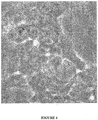
- These cells have the characteristics of embryonic stem cells with a specific morphology illustrated, for example, by the photo of the Figure 4 ie a small size, an important nucleocytoplasmic ratio, a nucleus with at least one well visible nucleolus and a very weak cytoplasm. These cells are characterized by a growth in more or less compact masses.
- Adherent and non-adherent cells exhibit cross-reactivity with a number of antibodies, as previously described in Pain et al., 1996 and in patents US 6,114,168 and EP 787,180 .
- the endogenous telomerase activity component is also present and is an important element of the 'strain' nature of these cells.
- Table 1 illustrates some of the characteristics of these isolates. Name Species beginning "Stop" days Passage Generation S86N 16 Chicken S86N 26-01-2000 05-08-2001 559 207 692 WL3 Chicken WL 28-06-2000 09-08-2001 403 153 333 Valo4 Valo chicken 26-09-2000 07-02-2002 401 135 317 S86N 45 Chicken S86N 29-01-2001 12-11-2001 287 118 329
- stop does not correspond to the end of cell proliferation but to a voluntary stopping of cell cultures by the experimenter.
- stem cells including somatic and embryonic stem cells, are their ability to proliferate in vitro for considerable periods of time.
- the culture medium is changed and replaced by new medium a few hours before their passage.
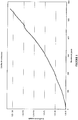
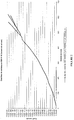
- the curve presented in figure 1 illustrates a pattern of growth and establishment of cells.
- Example 4 doubling time and average division time
- an average division time can be calculated. For all the independent isolates obtained, the proliferation rate increases slightly during successive passages thus changing the average time of division during the establishment of the cells.
- the cells are initially seeded on an inactivated feeder mat (called 'feeder') and are regularly passed at a constant initial seed density of 1 to 2 x 10 6 cells per 100 mm dish.
- Table 2 shows the doubling time (d) and the mean time of division (TMD in hours) for 3 established cell types as a function of culture time. It can be seen that the average doubling time decreases during establishment.
- the mean division time (TMD) is then obtained in hours by dividing 24 hours by d. * Valo cells are passed during this establishment on plastic support without presence of feeder. The doubling time decreases then re-increases, when the cells become accustomed to this new environment.
- the culture media used are conventional culture media comprising a base (DMEM, GMEM, HamF12, McCoy, etc.) supplemented with various additives such as non-essential amino acids, vitamins, sodium pyruvate.
- This complex medium comprises fetal calf serum, which remains a central element of the culture, although components of different origins of which plant components can be progressively used.
- a process for controlling and habituating cells to relatively low proportions of fetal calf serum is presented. It is thus possible to maintain cells in high proliferation (division time> 1) with low serum percentages (2% for example in the case of S86N 16 cells).
- Example 6 Withdrawal of cells in a feeder belt
- cytokines cytokines and trophic factors.
- Cytokines are mainly cytokines whose action passes through a receptor that associates with the gp130 protein.
- LIF interleukin 11, interleukin 6, CNTF, oncostatin, cardiotrophin
- a similar mode of action with recruitment to the receptor of a specific chain and the association of the latter with the gp130 protein in monomeric or sometimes heterodimeric form.
- the combination of a soluble form of the receptors, a form described inter alia for the interleukin 6 and CNTF receptors makes it possible to increase the proliferative effect observed. It has been previously shown that the addition of at least one of these cytokines seemed necessary for obtaining embryonic stem cells.
- the trophic factors are mainly SCF, IGF-1, bFGF, which are also used at the beginning of the culture, as previously described. Their presence is also necessary to obtain and amplify the cells.
- a high density seeding directly in a bacteriological box makes it possible to obtain, after a few passages, embryonic cells which detach from their substrate and which proliferate in suspension in the form of small regular aggregates.
- This proliferation is encouraged on several passages by simple dilution, mechanical dissociation and non-use of proteolytic enzyme.
- the agitation of the cultures is generally practiced but does not represent a discriminating element for obtaining non-adherent cells.
- these cells have a characteristic morphology of stem cells ie a small size, an important nucleocytoplasmic ratio, a nucleus with at least one well visible nucleolus and a very weak cytoplasm.
- These cells are characterized by growth in small aggregates more or less compact. These non-adherent cells exhibit cross-reactivity with a certain number of antibodies, as previously described in Pain et al., 1996. These cells are also positive for endogenous telomerase activity (as shown in Example 10 for EB1, EB4 and EB5 cells). In the non-adherent phase, the cells exhibit a significant proliferation in different media. The initial density of seeding as well as the supply of fresh medium very regularly ensures high densities that can go beyond 1 x 10 6 cells per ml. Table 5 summarizes the main characteristics of some isolates (parental cells, initial passage of suspension, number of days maintained in suspension culture, number of passages and generations obtained before a voluntary cessation of interviews).
- the passage for suspension can vary from one isolate to another (see isolate EB1 and EB14) as well as the proliferation rate (see isolate EB3 and EB14).
- Table 5 ⁇ / b> Name Parental cells
- Stem cells maintained for long periods of culture are characterized with the same criteria as those described above (Pain et al., 1996). It is thus possible to detect endogenously alkaline phosphatase activity, illustrated by the photo of the figure 5 , endogenous telomerase activity and reactivity with certain specific antibodies such as SSEA-1 (TEC-01) and EMA-1 antibodies.
- telomerase activity is detectable for S86N16 cells, S86N45 cells as well as for EB1, EB4 and EB5 cells derived therefrom in non-adherent form (see Table 6 ).
- Chicken Embryonic Fibroblasts (CEF) maintained in primary culture are considered negative.
- the threshold of an OD ⁇ 0.2 is the threshold recommended by the kit as the negative threshold. All analyzes were performed on an equivalent of 2000 cells.
- Stem cells maintained in long-term growth are transfected with different expression plasmids. It has been shown that avian stem cells can be transfected (Pain et al., 1999). In particular, the non-adherent cells are transfected and various sorting systems make it possible to identify the cells stably transfected (cell sorting, limiting dilution, etc.). These modifications can occur at the undifferentiated stage of the stem cell. This modification obtained, the cell is then induced to differentiate spontaneously or by addition of differentiation inducer.
- retinoic acid can be used at concentrations of 10 -8 M to 10 -6 M, or dimethysulfoxide at concentrations of 1 to 2% final or sodium butyrate at concentrations of 10 -4 to 10 -8 M, or phorbol ester (TPA, PMA, ...) or lipopolysaccharrides (LPS) at concentrations of 1 to 5 ⁇ g / ml final.
- the cells can form embryoid bodies in suspension, embryoid bodies that can be adhered to plastic after dissociation or not the cells that constitute them. These differentiated cells then proliferate but have a more limited capacity for proliferation in the long term. By targeting genetic modification to a gene that influences cell proliferation, these differentiated cells can be made capable of proliferating in the long term.
- Adherent and non-adherent cells are infectable by different viruses and retroviruses including avian viruses and retroviruses. These cells can thus serve as replication support for the production of viral stocks intended for the production of live and attenuated or inactivated human and veterinary vaccines as the case may be.
- viruses of interest mention may be made of those of the adenovirus family (such as Human Adenovirus C, Fowl Adenovirus A, Ovine adenovirus D, Turkey Adenovirus B), circovirids (such as Chicken Anemia Virus, CAV), certain coronaviruses, such as avian infectious bronchitis virus (IBV), flaviviruses (such as Yellow fever virus and hepatitis C virus), hepadnaviruses (such as Hepatitis B virus and Avihepadnavirus such as Duck hepatitis B virus); herpesviruses (such as Gallid herpesvirus, HSV (Herpes simplex virus) and Human herpesviruses 1, 3 and 5), orthomyxoviruses (such as influenza virus: Influenzaavirus A, Influenzavirus B and Influenzavirus C), papovaviruses (such as polyomavirus and more particularly Simian virus 40), paramyxoviruses (such as mea
- Example 13 Protocol of infection of a non-adherent avian cell line (EB1) with a virus
- the EB1 or EB14 cells are seeded in a medium, preferably MacCoy's 5A, HAMF12, DMEM, or any other medium of interest, containing 5% serum at a concentration of 0.2 10 6 cells / ml for an initial volume. 50 ml in general. They are kept in culture at 39 ° C. and 7.5% CO 2 , with stirring. New medium is added daily during the 3 to 4 days of amplification to reach a cell concentration of 1 to 3 x 10 6 cells / ml for a final culture volume of 100 to 250 ml.
- a medium preferably MacCoy's 5A, HAMF12, DMEM, or any other medium of interest, containing 5% serum at a concentration of 0.2 10 6 cells / ml for an initial volume. 50 ml in general. They are kept in culture at 39 ° C. and 7.5% CO 2 , with stirring. New medium is added daily during the 3 to 4 days of amplification to reach a cell concentration of 1 to
- the cells in suspension are removed and centrifuged for 10 minutes at approximately 1000 rpm.
- the pellet is resuspended in 20 to 50 ml of 1X PBS (phosphate buffer salt).
- the cells are then counted, centrifuged and the pelleted cells are taken up in serum-free medium at a final concentration of 3 to 5.10 6 cells / ml.
- Several tubes are then prepared under these conditions containing from 3 to 5 ⁇ 10 6 cells per tube.
- the known virus stock of titer is thawed rapidly at 37 ° C and diluted in serum-free medium at a level of 10x to 1000x the concentration required for final infection.
- the cells are infected with the virus of interest to a me (multiplicity of infection) of 0.01 to 0.5 depending on the types of virus, which makes add between 0.1 and 10% volume / volume of virus suspension at cell pellet. After incubation for 1 hour at the optimum temperature for the virus, usually 33-37 ° C, the cells are centrifuged again and the medium removed with caution. This step is often necessary to limit the effect of the initial virus in the subsequent process.
- One of the Possibilities is to directly dilute the cells without centrifuging them again with medium with serum (5% of serum) at a final concentration of 0.2 to 1.10 6 cells / ml and put back into incubation.
- the medium containing the cells or cellular debris is harvested.
- the viruses only the pellet or the supernatant can be interesting and contain the viral particles.
- the cells are harvested and centrifuged.
- the collected supernatant is centrifuged again for 5 to 10 minutes at 2500 rpm, and stored at -80 ° C. before purification of the particles.
- An aliquot is taken for the realization of the titration.
- the cell pellet is taken up in 5 ml of serum-free medium, sonicated, and centrifuged for 5 to 10 minutes at 2500 rpm.
- the supernatant obtained is stored at -80 ° C. until purification and titration of an aliquot.
- the viral infection and production efficiencies are compared between different conditions.
- titrations are generally carried out by the lysis plaque technique.
- Example 14 Protocol for Infection of an Adhered Avian Cell Lines (S86N45) with a Virus
- the cells are inoculated 48 hours before infection in T150 flasks at a concentration of between 0.03 and 0.06 10 6 cells / cm 2 in a medium, preferably MacCoy's 5A medium, HAMF12, DMEM, or any other interesting medium containing 5% serum. They are maintained at 39 ° C and 7.5% CO 2 .
- the known virus stock of titer is thawed rapidly at 37 ° C and diluted in serum-free medium at a level of 10x to 1000x the concentration required for final infection.
- the cells are infected with the virus of interest to a me (multiplicity of infection) of 0.01 to 0.5 depending on the types of virus, which makes add between 0.1 and 10% volume / volume of virus suspension at cell pellet.
- the infection is usually performed in a minimum of medium (from 5 to 10 ml for a bottle of 75 cm 2 ) in a medium at 0% serum.
- the cells After 1 hour of incubation at the optimal temperature for the virus, generally from 33 to 37 ° C., 20 ml of 5% medium are added to the flasks. In a particular case, the cells can be washed with PBS to remove particles that would not be attached to the cells. In the case of a cytopathic virus, cells are observed daily after infection to follow the appearance of cell lysis range, indicative of the smooth course of infection.
- the medium containing the supernatant, the cells and the cell debris are harvested. According to the viruses, only the pellet or the supernatant can be interesting and contain the viral particles.
- the cells are harvested and centrifuged. The collected supernatant is centrifuged again for 5 to 10 minutes at 2500 rpm, and stored at -80 ° C. before purification of the particles. An aliquot is taken for the realization of the titration.
- the cell pellet is taken up in 5 ml of serum-free medium, sonicated, and centrifuged for 5 to 10 minutes at 2500 rpm. The supernatant obtained is stored at -80 ° C. until purification and titration of an aliquot.
- the viral infection and production efficiencies are compared between different conditions.
- titrations are generally carried out by the technique of lysis plaques.
- the non-adherent EB1 stem cells passing through are amplified and then infected at a pH of 0.1 by a recombinant avipox producing a protein of interest.
- the cells After infection, the cells are kept spinner for the 4 days of infection. An aliquot is taken from the second day and then the next two days to follow the evolution of the viral titre both at the level of the supernatant and at the level of intracellular content, after lysis of cellular content. Titration was performed by the lysis plaque technique.
- Table 7 illustrates the results obtained. These results demonstrate the very satisfactory replication of recombinant avipox on EB1 stem cells. Thus, the infectious titre progresses throughout the culture and the course of the infection to reach a maximum after 4 days of incubation. 7.2 PFU / cell (PFU: Plating Forming Unit). This titre is at least equivalent to that obtained for this same recombinant avipox on primary cells of chicken embryos.
Landscapes
- Health & Medical Sciences (AREA)
- Life Sciences & Earth Sciences (AREA)
- Engineering & Computer Science (AREA)
- Biomedical Technology (AREA)
- Wood Science & Technology (AREA)
- Chemical & Material Sciences (AREA)
- Gynecology & Obstetrics (AREA)
- Biotechnology (AREA)
- Organic Chemistry (AREA)
- Bioinformatics & Cheminformatics (AREA)
- Genetics & Genomics (AREA)
- Reproductive Health (AREA)
- Developmental Biology & Embryology (AREA)
- Zoology (AREA)
- Biochemistry (AREA)
- Microbiology (AREA)
- General Engineering & Computer Science (AREA)
- General Health & Medical Sciences (AREA)
- Cell Biology (AREA)
- Micro-Organisms Or Cultivation Processes Thereof (AREA)
- Preparation Of Compounds By Using Micro-Organisms (AREA)
- Feeding And Watering For Cattle Raising And Animal Husbandry (AREA)
- Farming Of Fish And Shellfish (AREA)
- Peptides Or Proteins (AREA)
- Coloring Foods And Improving Nutritive Qualities (AREA)
Applications Claiming Priority (3)
| Application Number | Priority Date | Filing Date | Title |
|---|---|---|---|
| FR0202945A FR2836924B1 (fr) | 2002-03-08 | 2002-03-08 | Lignees de cellules aviaires utiles pour la production de substances d'interet |
| EP03725273A EP1483369B1 (fr) | 2002-03-08 | 2003-03-07 | Lignées de cellules aviaires utiles pour la production de substances d'intérêt |
| PCT/FR2003/000735 WO2003076601A1 (fr) | 2002-03-08 | 2003-03-07 | Lignées de cellules aviaires utiles pour la production de substances d'intérêt |
Related Parent Applications (1)
| Application Number | Title | Priority Date | Filing Date |
|---|---|---|---|
| EP03725273A Division EP1483369B1 (fr) | 2002-03-08 | 2003-03-07 | Lignées de cellules aviaires utiles pour la production de substances d'intérêt |
Publications (3)
| Publication Number | Publication Date |
|---|---|
| EP1992687A2 EP1992687A2 (fr) | 2008-11-19 |
| EP1992687A3 EP1992687A3 (fr) | 2009-03-25 |
| EP1992687B1 true EP1992687B1 (fr) | 2019-06-26 |
Family
ID=27763651
Family Applications (2)
| Application Number | Title | Priority Date | Filing Date |
|---|---|---|---|
| EP08163979.1A Expired - Lifetime EP1992687B1 (fr) | 2002-03-08 | 2003-03-07 | Lignées de cellules aviaires utiles pour la production de substances d'intérêt |
| EP03725273A Expired - Lifetime EP1483369B1 (fr) | 2002-03-08 | 2003-03-07 | Lignées de cellules aviaires utiles pour la production de substances d'intérêt |
Family Applications After (1)
| Application Number | Title | Priority Date | Filing Date |
|---|---|---|---|
| EP03725273A Expired - Lifetime EP1483369B1 (fr) | 2002-03-08 | 2003-03-07 | Lignées de cellules aviaires utiles pour la production de substances d'intérêt |
Country Status (14)
| Country | Link |
|---|---|
| US (4) | US20040058441A1 (enExample) |
| EP (2) | EP1992687B1 (enExample) |
| JP (2) | JP5025888B2 (enExample) |
| CN (2) | CN100562567C (enExample) |
| AT (1) | ATE408004T1 (enExample) |
| AU (1) | AU2003227820B2 (enExample) |
| CA (1) | CA2478125C (enExample) |
| DE (1) | DE60323468D1 (enExample) |
| DK (1) | DK1483369T3 (enExample) |
| ES (1) | ES2312775T3 (enExample) |
| FR (1) | FR2836924B1 (enExample) |
| PT (1) | PT1483369E (enExample) |
| SI (1) | SI1483369T1 (enExample) |
| WO (1) | WO2003076601A1 (enExample) |
Families Citing this family (121)
| Publication number | Priority date | Publication date | Assignee | Title |
|---|---|---|---|---|
| US7445924B2 (en) * | 2000-11-23 | 2008-11-04 | Bavarian Nordic A/S | Modified Vaccinia Ankara virus variant and cultivation method |
| US20060191026A1 (en) | 2005-02-18 | 2006-08-24 | Origen Therapeutics, Inc. | Tissue specific expression of antibodies in chickens |
| US7145057B2 (en) | 2002-02-01 | 2006-12-05 | Origen Therapeutics, Inc. | Chimeric bird from embryonic stem cells |
| FR2836924B1 (fr) | 2002-03-08 | 2005-01-14 | Vivalis | Lignees de cellules aviaires utiles pour la production de substances d'interet |
| AU2003264144C1 (en) * | 2002-09-05 | 2009-12-17 | Bavarian Nordic A/S | Method for the cultivation of primary cells and for the amplification of viruses under serum free conditions |
| AU2003296974A1 (en) * | 2002-12-13 | 2004-07-14 | Aventis Pasteur, Inc. | Production of alvac on avian embryonic stem cells |
| EP1500699A1 (en) * | 2003-07-22 | 2005-01-26 | Vivalis | Production of vaccinia virus with adherent or non adherent avian cell lines |
| KR101121971B1 (ko) | 2003-07-22 | 2012-03-09 | 비바리스 | 부착성 또는 비부착성 조류 세포주를 이용한폭스바이러스의 생산 |
| EP1678292A4 (en) * | 2003-09-18 | 2008-05-07 | Univ Emory | IMPROVED MVA VACCINES |
| US20090104226A1 (en) | 2004-05-21 | 2009-04-23 | Novartis Vaccines And Diagnostics Inc. | Alphavirus Vectors for Respiratory Pathogen Vaccines |
| RS51665B (sr) | 2004-09-09 | 2011-10-31 | Novartis Vaccines And Diagnostics Gmbh. | Smanjenje potencijalnih jatrogenih rizika povezanih sa vakcinama protiv gripa |
| AU2005314563B2 (en) | 2004-11-03 | 2011-06-30 | Seqirus UK Limited | Influenza vaccination |
| FR2878860A1 (fr) * | 2004-12-08 | 2006-06-09 | Vivalis Sa | Lignees de cellules souches humaines derivees de cellules es et utilisations pour la production de vaccins et de proteines recombinantes |
| AU2011253998B2 (en) * | 2005-04-11 | 2014-04-24 | Valneva | Process of manufacturing viral vaccines in suspension avian embryonic derived stem cell lines |
| FR2884255B1 (fr) * | 2005-04-11 | 2010-11-05 | Vivalis | Utilisation de lignees de cellules souches aviaires ebx pour la production de vaccin contre la grippe |
| ATE494906T1 (de) | 2005-11-01 | 2011-01-15 | Novartis Vaccines & Diagnostic | Von zellen stammende virale impfstoffe mit geringen mengen an rest-zell-dna |
| WO2007052055A1 (en) | 2005-11-04 | 2007-05-10 | Novartis Vaccines And Diagnostics Srl | Adjuvanted vaccines with non-virion antigens prepared from influenza viruses grown in cell culture |
| CA2628424A1 (en) | 2005-11-04 | 2007-05-10 | Novartis Vaccines And Diagnostics S.R.L. | Adjuvanted influenza vaccines including cytokine-inducing agents |
| KR20080069232A (ko) | 2005-11-04 | 2008-07-25 | 노바티스 백신즈 앤드 다이아그노스틱스 에스.알.엘. | 스플리트 인플루엔자 백신에 대한 보조제로서 유리 수성상계면활성제를 갖는 에멀젼 |
| NZ594482A (en) | 2005-11-04 | 2012-11-30 | Novartis Vaccines & Diagnostic | Influenza vaccines with reduced amount of oil-in-water emulsion as adjuvant |
| ES2377884T3 (es) | 2005-11-04 | 2012-04-02 | Novartis Vaccines And Diagnostics S.R.L. | Vacunas contra la gripe que incluyen combinaciones de adyuvantes particulados e inmunopotenciadores |
| PL2478916T3 (pl) | 2006-01-27 | 2020-11-16 | Seqirus UK Limited | Szczepionki przeciw grypie zawierające hemaglutyninę i białka macierzy |
| FR2898909A1 (fr) | 2006-03-24 | 2007-09-28 | Agronomique Inst Nat Rech | Combinaison de marqueurs de cellules aviaires |
| WO2007110776A1 (en) | 2006-03-24 | 2007-10-04 | Novartis Vaccines And Diagnostics Gmbh & Co Kg | Storage of influenza vaccines without refrigeration |
| GB0614460D0 (en) | 2006-07-20 | 2006-08-30 | Novartis Ag | Vaccines |
| WO2008017704A1 (en) | 2006-08-09 | 2008-02-14 | Vivalis | Method of production of transgenic avian using embryonic stem cells |
| NZ575271A (en) | 2006-09-11 | 2011-09-30 | Novartis Ag | Making influenza virus vaccines without using eggs |
| JP2011506264A (ja) | 2006-12-06 | 2011-03-03 | ノバルティス アーゲー | インフルエンザウイルスの4つの株に由来する抗原を含むワクチン |
| CN100443588C (zh) * | 2006-12-11 | 2008-12-17 | 中国农业科学院北京畜牧兽医研究所 | 静宁鸡胚成纤维细胞系及其培养方法 |
| EP1985305A1 (en) | 2007-04-24 | 2008-10-29 | Vivalis | Duck embryonic derived stem cell lines for the production of viral vaccines |
| EP1995309A1 (en) * | 2007-05-21 | 2008-11-26 | Vivalis | Recombinant protein production in avian EBx® cells |
| PT2185191E (pt) | 2007-06-27 | 2012-11-27 | Novartis Ag | Vacinas contra a gripe com baixo teor de aditivos |
| BRPI0811787B1 (pt) * | 2007-07-03 | 2018-10-09 | Transgene Sa | usos de uma célula imortalizada e processo para imortalizar uma célula aviária |
| US20090028831A1 (en) * | 2007-07-23 | 2009-01-29 | University Of Kentucky Research Foundation | Stem cell regulator, compositions and methods of use |
| GB0810305D0 (en) | 2008-06-05 | 2008-07-09 | Novartis Ag | Influenza vaccination |
| EP2235532B1 (en) | 2007-12-24 | 2013-04-24 | Novartis AG | Assays for adsorbed influenza vaccines |
| US8506966B2 (en) | 2008-02-22 | 2013-08-13 | Novartis Ag | Adjuvanted influenza vaccines for pediatric use |
| KR20140096162A (ko) | 2008-02-25 | 2014-08-04 | 백스터 인터내셔널 인코포레이티드 | 연속 세포주 제조 방법 |
| JP5518041B2 (ja) | 2008-03-18 | 2014-06-11 | ノバルティス アーゲー | インフルエンザウイルスワクチン抗原の調製における改良 |
| US8716016B2 (en) * | 2008-04-23 | 2014-05-06 | Board Of Trustees Of Michigan State University | Immortal avian cell line and methods of use |
| EP2379598B1 (en) | 2009-01-19 | 2015-03-11 | Innate Pharma | Anti-kir3d antibodies |
| JP2012517416A (ja) | 2009-02-10 | 2012-08-02 | ノバルティス アーゲー | 増加した量のh3抗原を含むインフルエンザワクチン |
| WO2010092476A1 (en) | 2009-02-10 | 2010-08-19 | Novartis Ag | Influenza vaccine regimens for pandemic-associated strains |
| EA023662B1 (ru) | 2009-02-10 | 2016-06-30 | Новартис Аг | Вакцины против гриппа со сниженным количеством сквалена |
| DE102010018462A1 (de) | 2009-04-27 | 2011-04-07 | Novartis Ag | Impfstoffe zum Schutz gegen Influenza |
| EP4183412B1 (en) | 2009-07-15 | 2024-08-14 | GlaxoSmithKline Biologicals SA | Rsv f protein compositions and methods for making same |
| CN102695523A (zh) | 2009-09-10 | 2012-09-26 | 诺华有限公司 | 针对呼吸道疾病的组合疫苗 |
| GB0918830D0 (en) | 2009-10-27 | 2009-12-09 | Glaxosmithkline Biolog Niederl | Process |
| GB0919117D0 (en) * | 2009-10-30 | 2009-12-16 | Glaxosmithkline Biolog Sa | Process |
| CA2725435C (en) | 2009-12-15 | 2023-01-03 | University Of Saskatchewan | Vaccines for inclusion body hepatitis |
| WO2011095596A1 (en) | 2010-02-04 | 2011-08-11 | Vivalis | Fed-batch process using concentrated cell culture medium for the efficient production of biologics in eb66 cells |
| FR2956409A1 (fr) | 2010-02-15 | 2011-08-19 | Univ Claude Bernard Lyon | Procedes pour optimiser la production virale par l'inactivation ou l'inhibition du gene hipk2 et cellules modifiees pour la production virale |
| CA2792469A1 (en) | 2010-03-08 | 2011-09-15 | Novartis Ag | Methods of testing for intracellular pathogens |
| US9744228B2 (en) | 2010-04-07 | 2017-08-29 | Norvartis Ag | Method for generating a parvovirus B19 virus-like particle |
| US9441032B2 (en) | 2010-04-07 | 2016-09-13 | Agency For Science, Technology And Research | Binding molecules against Chikungunya virus and uses thereof |
| EP2374816B1 (en) | 2010-04-07 | 2016-09-28 | Agency For Science, Technology And Research | Binding molecules against Chikungunya virus and uses thereof |
| JP6072677B2 (ja) | 2010-05-06 | 2017-02-01 | ノバルティス アーゲー | 微生物の不活化のための有機ペルオキシド化合物 |
| JP5876036B2 (ja) | 2010-05-21 | 2016-03-02 | ノバルティス アーゲー | インフルエンザウイルス再集合方法 |
| CA2801151A1 (en) | 2010-06-01 | 2011-12-08 | Novartis Ag | Concentration of vaccine antigens with lyophilization |
| PL2575872T3 (pl) | 2010-06-01 | 2021-02-22 | Seqirus UK Limited | Zatężanie antygenów szczepionkowych grypy bez liofilizacji |
| CA2804501C (en) | 2010-07-06 | 2021-01-26 | Novartis Ag | Noro virus derived immunogenic compositions and methods |
| GB201011502D0 (en) | 2010-07-08 | 2010-08-25 | Glaxosmithkline Biolog Sa | Novel process |
| CA2808965C (en) | 2010-08-20 | 2020-01-07 | Theraject, Inc. | Soluble needle arrays for delivery of influenza vaccines |
| CA3150342A1 (en) | 2010-09-07 | 2012-03-15 | Technion Research & Development Foundation Limited | Novel methods and culture media for culturing pluripotent stem cells |
| FR2967072B1 (fr) | 2010-11-05 | 2013-03-29 | Univ Dundee | Procede pour ameliorer la production de virus et semences vaccinales influenza |
| WO2012095514A1 (en) | 2011-01-14 | 2012-07-19 | Vivalis | Recombinant protein production system |
| ES3018416T3 (es) | 2011-01-26 | 2025-05-16 | Glaxosmithkline Biologicals Sa | Régimen de inmunización del VRS |
| RS56748B1 (sr) | 2011-05-13 | 2018-03-30 | Glaxosmithkline Biologicals Sa | Pre-fuzioni rsv f antigeni |
| JP2014522842A (ja) | 2011-07-06 | 2014-09-08 | ノバルティス アーゲー | 免疫原性組み合わせ組成物およびその使用 |
| US11058762B2 (en) | 2011-07-06 | 2021-07-13 | Glaxosmithkline Biologicals Sa | Immunogenic compositions and uses thereof |
| TWI575070B (zh) | 2011-07-12 | 2017-03-21 | 傳斯堅公司 | Hbv聚合酶突變體 |
| TW201318637A (zh) | 2011-09-29 | 2013-05-16 | Transgene Sa | 免疫療法組成物及用於治療c型肝炎病毒感染之療程(一) |
| WO2013045668A2 (en) | 2011-09-29 | 2013-04-04 | Transgene Sa | Immunotherapy composition and regimen for treating hepatitis c virus infection |
| US20140348863A1 (en) | 2011-10-12 | 2014-11-27 | Alessia Bianchi | Cmv antigens and uses thereof |
| GB201216121D0 (en) | 2012-09-10 | 2012-10-24 | Novartis Ag | Sample quantification by disc centrifugation |
| EP2768528A1 (en) | 2011-10-20 | 2014-08-27 | Novartis AG | Adjuvanted influenza b virus vaccines for pediatric priming |
| EP2660316A1 (en) | 2012-05-02 | 2013-11-06 | Helmholtz-Zentrum für Infektionsforschung GmbH | Avian cell line and its use in production of protein |
| EP2869842A1 (en) | 2012-07-06 | 2015-05-13 | Novartis AG | Immunogenic compositions and uses thereof |
| WO2014009433A1 (en) | 2012-07-10 | 2014-01-16 | Transgene Sa | Mycobacterium resuscitation promoting factor for use as adjuvant |
| SG11201500171YA (en) | 2012-07-10 | 2015-02-27 | Transgene Sa | Mycobacterial antigen vaccine |
| GB201218195D0 (en) | 2012-10-10 | 2012-11-21 | Istituto Zooprofilattico Sperimentale Delle Venezie | Composition |
| KR20150085843A (ko) | 2012-11-20 | 2015-07-24 | 글락소스미스클라인 바이오로지칼즈 에스.에이. | Rsv f 융합전 삼합체 |
| US20140255447A1 (en) * | 2013-03-05 | 2014-09-11 | Biomune Company | Production of avian embryo cells |
| FR3008992A1 (fr) * | 2013-07-25 | 2015-01-30 | Agronomique Inst Nat Rech | Procede de selection d'une lignee cellulaire permissive pour la replication de virus aviaires |
| EP3092000A1 (en) | 2014-01-09 | 2016-11-16 | Transgene SA | Fusion of heterooligomeric mycobacterial antigens |
| EP2974739A1 (en) | 2014-07-15 | 2016-01-20 | Novartis AG | RSVF trimerization domains |
| EP3031822A1 (en) | 2014-12-08 | 2016-06-15 | Novartis AG | Cytomegalovirus antigens |
| US11118238B2 (en) | 2014-12-17 | 2021-09-14 | Fundación Para La Investigación Mèdica Aplicada | Nucleic acid constructs and gene therapy vectors for use in the treatment of Wilson's disease and other conditions |
| CN107208105A (zh) | 2014-12-17 | 2017-09-26 | 基础应用医学研究基金会 | 用于治疗威尔森病的核酸构建体和基因治疗载体 |
| EP3047856A1 (en) | 2015-01-23 | 2016-07-27 | Novartis AG | Cmv antigens and uses thereof |
| KR20180035807A (ko) | 2015-06-26 | 2018-04-06 | 세퀴러스 유케이 리미티드 | 항원적으로 매치된 인플루엔자 백신 |
| AU2016290603B2 (en) | 2015-07-07 | 2022-06-02 | Seqirus UK Limited | Influenza potency assays |
| CN110506060B (zh) | 2017-03-30 | 2024-05-07 | 昆士兰大学 | 嵌合分子及其用途 |
| CN117821509A (zh) | 2017-04-03 | 2024-04-05 | 编码治疗公司 | 组织选择性转基因表达 |
| WO2019040994A1 (en) | 2017-09-01 | 2019-03-07 | The Australian National University | IMMUNOREGULATOR MOLECULES AND USES THEREOF |
| CN118345115A (zh) | 2017-12-01 | 2024-07-16 | 编码治疗公司 | 工程化的dna结合蛋白 |
| EP3794127A1 (en) | 2018-05-14 | 2021-03-24 | Vivet Therapeutics | Gene therapy vectors comprising s/mar sequences |
| CN112384627A (zh) | 2018-05-30 | 2021-02-19 | 生物医学研究所 | 通过利用内源激活诱导性胞嘧啶脱氨酶改造b淋巴细胞 |
| EP3820884B1 (en) | 2018-07-13 | 2025-09-03 | Valneva SE | Method for rescuing and producing a virus in avian cells |
| AU2019356165A1 (en) | 2018-10-12 | 2021-05-27 | Vivet Therapeutics | Codon-optimized transgene for the treatment of progressive familiar intrahepatic cholestasis type 3 (PFIC3) |
| SG11202104634UA (en) | 2018-11-07 | 2021-06-29 | Vivet Therapeutics | Codon-optimized abcb11 transgene for the treatment of progressive familial intrahepatic cholestasis type 2 (pfic2) |
| CA3118936A1 (en) | 2018-11-16 | 2020-05-22 | Encoded Therapeutics, Inc. | Compositions and methods for treating wilson's disease |
| BR112021009793A2 (pt) * | 2018-11-23 | 2021-08-17 | Valneva Se | produtos alimentícios que compreendem células-tronco aviárias |
| US12467038B2 (en) | 2019-05-22 | 2025-11-11 | Hadasit Medical Research Services And Development Ltd. | Methods of culturing human pluripotent cells |
| SG11202113048SA (en) | 2019-05-29 | 2021-12-30 | Encoded Therapeutics Inc | Compositions and methods for selective gene regulation |
| WO2021001377A1 (en) | 2019-07-02 | 2021-01-07 | Fundacion Para La Investigacion Medica Aplicada | cPLA2e INDUCING AGENTS AND USES THEREOF |
| MX2022000879A (es) | 2019-07-21 | 2022-05-02 | Glaxosmithkline Biologicals Sa | Vacuna viral terapeutica. |
| EP4004018A1 (en) | 2019-07-24 | 2022-06-01 | GlaxoSmithKline Biologicals SA | Modified human cytomegalovirus proteins |
| AU2020344163A1 (en) * | 2019-09-10 | 2022-03-31 | Vital Meat | Avian stem cells for the production of a food product |
| EP4061930A1 (en) | 2019-11-18 | 2022-09-28 | Seqirus Pty Ltd | Method for producing reassortant influenza viruses |
| CA3181024A1 (en) | 2020-08-06 | 2022-02-10 | Fundacion Para La Investigacion Medica Aplicada | Viral particles for use in treating tauopathies such as alzheimer's diseases by gene therapy |
| US20230265456A1 (en) | 2020-08-10 | 2023-08-24 | Fundacion Para La Investigacion Medica Aplicada | Gene therapy vector expressing cyp27a1 for the treatment of cerebrotendinous xanthomatosis |
| IL301255A (en) | 2020-10-09 | 2023-05-01 | UCB Biopharma SRL | Nucleic acid structures, viral vectors and viral particles |
| US20240091382A1 (en) | 2020-12-23 | 2024-03-21 | Vivet Therapeutics | Minimal bile acid inducible promoters for gene therapy |
| EP4032547A1 (en) | 2021-01-20 | 2022-07-27 | GlaxoSmithKline Biologicals S.A. | Hsv1 fce derived fragements for the treatment of hsv |
| IL312340A (en) | 2021-10-28 | 2024-06-01 | UCB Biopharma SRL | Nucleic acid constructs, viral vectors and viral particles |
| US20250101067A1 (en) | 2022-01-28 | 2025-03-27 | Glaxosmithkline Biologicals Sa | Modified human cytomegalovirus proteins |
| CN114480286B (zh) * | 2022-02-16 | 2024-05-31 | 上海健士拜生物科技有限公司 | 无血清悬浮型lmh细胞系及其制备方法和应用 |
| CN116656628A (zh) * | 2023-07-31 | 2023-08-29 | 深圳市卫光生物制品股份有限公司 | 一种痘病毒载体疫苗的制备方法 |
| EP4567102A1 (en) | 2023-12-05 | 2025-06-11 | Suprême | Methods for isolating embryonic stem cells from avian embryonic cells |
| CN118956737A (zh) * | 2024-07-17 | 2024-11-15 | 广州沃亘生物科技有限公司 | 一种长期维持df-1细胞活力的培养基及其用途 |
Citations (1)
| Publication number | Priority date | Publication date | Assignee | Title |
|---|---|---|---|---|
| US5656479A (en) * | 1992-05-15 | 1997-08-12 | North Carolina State University | Avian embryonic stem cells |
Family Cites Families (34)
| Publication number | Priority date | Publication date | Assignee | Title |
|---|---|---|---|---|
| US4388298A (en) | 1982-07-14 | 1983-06-14 | The United States Of America As Represented By The Secretary Of Agriculture | Propagation of hemorrhagic enteritis virus in a turkey cell line and vaccine produced |
| WO1990001541A1 (en) | 1988-08-04 | 1990-02-22 | Amrad Corporation Limited | In vitro propagation of embryonic stem cells |
| US5162215A (en) * | 1988-09-22 | 1992-11-10 | Amgen Inc. | Method of gene transfer into chickens and other avian species |
| US5388680A (en) | 1990-10-09 | 1995-02-14 | Intellicall, Inc. | Coin handling system with an improved coin chute |
| DE69230037T2 (de) | 1991-07-12 | 2000-01-05 | Pfizer Inc., New York | Kontinuierliche zellinie sowie impfstoff gegen geflügelinfektion mit kokkidien |
| JPH05227947A (ja) | 1992-01-14 | 1993-09-07 | Rikagaku Kenkyusho | 鳥類原始生殖細胞の分離方法 |
| AU3597093A (en) | 1992-01-27 | 1993-09-01 | Embrex Inc. | Gene transfer in poultry by introduction of embryo cells (in ovo) |
| WO1994003585A1 (en) | 1992-08-04 | 1994-02-17 | Commonwealth Scientific And Industrial Research Organisation | A method for maintaining embryonic stem cells and avian factor useful for same |
| US5453357A (en) * | 1992-10-08 | 1995-09-26 | Vanderbilt University | Pluripotential embryonic stem cells and methods of making same |
| US5589458A (en) * | 1992-11-13 | 1996-12-31 | Thomas Jefferson University | Compounds that inhibit T cell proliferation and methods for using the same |
| FR2726003B1 (fr) | 1994-10-21 | 2002-10-18 | Agronomique Inst Nat Rech | Milieu de culture de cellules embryonnaires totipotentes aviaires, procede de culture de ces cellules, et cellules embryonnaires totipotentes aviaires |
| US5989805A (en) | 1995-10-27 | 1999-11-23 | Board Of Trustees Operating Michigan State University | Immortal avian cell line to grow avian and animal viruses to produce vaccines |
| FR2749022B1 (fr) | 1996-05-23 | 2001-06-01 | Rhone Merieux | Cellules aviaires immortelles |
| US5691200A (en) | 1996-07-03 | 1997-11-25 | The United States Of America As Represented By The Secretary Of Agriculture | Method to produce granulocyte colony stimulating factor from immortalized avian T lymphocytes and method to produce immortalized cells |
| US5830723A (en) | 1996-08-13 | 1998-11-03 | Regents Of The University Of Minnesota | Method for immortalizing chicken cells |
| US5672485A (en) | 1996-08-13 | 1997-09-30 | Regents Of The University Of Minnesota | Immortalized cell lines for virus growth |
| US6103529A (en) | 1996-10-10 | 2000-08-15 | Life Technologies, Inc. | Animal cell culture media comprising peptides derived from rice |
| PT841392E (pt) | 1996-11-12 | 2004-11-30 | Univ Auburn | Vacina viva atenuada de neospora |
| ATE312167T1 (de) * | 1997-08-04 | 2005-12-15 | Univ Massachusetts | Herstellung embryonischer vogel keimzellinien durch verlängerte kultivierung von pgcs, verwendung desselben zur klonierung und chimerisierung |
| DE69831958T2 (de) * | 1997-08-04 | 2006-07-27 | University of Massachusetts, a Public Institution of Higher Education of The Commonwealth of Massachusetts, Amherst | Primordiale keimzellinie aus vögeln und verfahren zu deren langzeitkultivierung |
| US6406909B1 (en) | 1998-07-10 | 2002-06-18 | Chugai Seiyaku Kabushiki Kaisha | Serum-free medium for culturing animal cells |
| ATE378398T1 (de) * | 1999-02-11 | 2007-11-15 | Hanmi Pharm Ind Co Ltd | Pluripotente embryonale keimzellinie aus vögeln |
| DE60037819T2 (de) * | 1999-08-27 | 2009-01-08 | Invitrogen Corp., Carlsbad | Metallbindende verbindungen und deren verwendung in zusammensetzungen für zellkulturmedien |
| DE19947407C2 (de) | 1999-10-01 | 2002-08-01 | Bayerische Motoren Werke Ag | Datenbussystem für Kraftfahrzeuge |
| WO2002086073A2 (en) * | 2001-04-20 | 2002-10-31 | Memorial Sloan-Kettering Cancer Center | Generation of differentiated tissue from nuclear transfer embryonic stem cells and methods of use |
| FR2836924B1 (fr) | 2002-03-08 | 2005-01-14 | Vivalis | Lignees de cellules aviaires utiles pour la production de substances d'interet |
| DK1520008T3 (da) | 2002-07-09 | 2012-10-15 | Baxter Int | Medium frit for dyreprotein til dyrkning af celler |
| KR101121971B1 (ko) | 2003-07-22 | 2012-03-09 | 비바리스 | 부착성 또는 비부착성 조류 세포주를 이용한폭스바이러스의 생산 |
| EP1500699A1 (en) | 2003-07-22 | 2005-01-26 | Vivalis | Production of vaccinia virus with adherent or non adherent avian cell lines |
| KR100552844B1 (ko) * | 2003-12-31 | 2006-02-21 | 동부아남반도체 주식회사 | 반도체 소자의 제조 방법 |
| FR2884255B1 (fr) | 2005-04-11 | 2010-11-05 | Vivalis | Utilisation de lignees de cellules souches aviaires ebx pour la production de vaccin contre la grippe |
| WO2007135133A1 (en) | 2006-05-19 | 2007-11-29 | Vivalis | Avian cell lines derived from primordial germ cells useful for the production of substances of interest |
| WO2008017704A1 (en) | 2006-08-09 | 2008-02-14 | Vivalis | Method of production of transgenic avian using embryonic stem cells |
| EP1985305A1 (en) | 2007-04-24 | 2008-10-29 | Vivalis | Duck embryonic derived stem cell lines for the production of viral vaccines |
-
2002
- 2002-03-08 FR FR0202945A patent/FR2836924B1/fr not_active Expired - Lifetime
-
2003
- 2003-03-07 CA CA2478125A patent/CA2478125C/fr not_active Expired - Fee Related
- 2003-03-07 CN CNB038101203A patent/CN100562567C/zh not_active Expired - Fee Related
- 2003-03-07 AU AU2003227820A patent/AU2003227820B2/en not_active Expired
- 2003-03-07 DE DE60323468T patent/DE60323468D1/de not_active Expired - Lifetime
- 2003-03-07 WO PCT/FR2003/000735 patent/WO2003076601A1/fr not_active Ceased
- 2003-03-07 CN CN2009101796309A patent/CN101676388B/zh not_active Expired - Lifetime
- 2003-03-07 ES ES03725273T patent/ES2312775T3/es not_active Expired - Lifetime
- 2003-03-07 AT AT03725273T patent/ATE408004T1/de active
- 2003-03-07 DK DK03725273T patent/DK1483369T3/da active
- 2003-03-07 EP EP08163979.1A patent/EP1992687B1/fr not_active Expired - Lifetime
- 2003-03-07 PT PT03725273T patent/PT1483369E/pt unknown
- 2003-03-07 JP JP2003574808A patent/JP5025888B2/ja not_active Expired - Fee Related
- 2003-03-07 SI SI200331354T patent/SI1483369T1/sl unknown
- 2003-03-07 EP EP03725273A patent/EP1483369B1/fr not_active Expired - Lifetime
- 2003-07-24 US US10/625,847 patent/US20040058441A1/en not_active Abandoned
-
2009
- 2009-01-08 US US12/350,781 patent/US20090239297A1/en not_active Abandoned
-
2010
- 2010-03-03 US US12/717,096 patent/US9382513B2/en not_active Expired - Fee Related
-
2011
- 2011-08-09 US US13/206,056 patent/US20110294209A1/en not_active Abandoned
-
2012
- 2012-02-09 JP JP2012026135A patent/JP5784521B2/ja not_active Expired - Lifetime
Patent Citations (1)
| Publication number | Priority date | Publication date | Assignee | Title |
|---|---|---|---|---|
| US5656479A (en) * | 1992-05-15 | 1997-08-12 | North Carolina State University | Avian embryonic stem cells |
Also Published As
| Publication number | Publication date |
|---|---|
| CA2478125C (fr) | 2013-05-07 |
| US20110294209A1 (en) | 2011-12-01 |
| JP2012110344A (ja) | 2012-06-14 |
| US20120070893A9 (en) | 2012-03-22 |
| CN1649999A (zh) | 2005-08-03 |
| DE60323468D1 (de) | 2008-10-23 |
| JP5025888B2 (ja) | 2012-09-12 |
| AU2003227820A1 (en) | 2003-09-22 |
| CN101676388B (zh) | 2013-09-04 |
| HK1142094A1 (en) | 2010-11-26 |
| EP1992687A2 (fr) | 2008-11-19 |
| EP1483369B1 (fr) | 2008-09-10 |
| FR2836924A1 (fr) | 2003-09-12 |
| JP5784521B2 (ja) | 2015-09-24 |
| US20090239297A1 (en) | 2009-09-24 |
| WO2003076601A1 (fr) | 2003-09-18 |
| US20040058441A1 (en) | 2004-03-25 |
| WO2003076601A8 (fr) | 2005-05-12 |
| CN100562567C (zh) | 2009-11-25 |
| EP1992687A3 (fr) | 2009-03-25 |
| SI1483369T1 (sl) | 2008-12-31 |
| ES2312775T3 (es) | 2009-03-01 |
| CN101676388A (zh) | 2010-03-24 |
| DK1483369T3 (da) | 2008-12-01 |
| US9382513B2 (en) | 2016-07-05 |
| AU2003227820B2 (en) | 2008-04-03 |
| PT1483369E (pt) | 2008-12-17 |
| FR2836924B1 (fr) | 2005-01-14 |
| US20100221825A1 (en) | 2010-09-02 |
| ATE408004T1 (de) | 2008-09-15 |
| CA2478125A1 (fr) | 2003-09-18 |
| JP2005525803A (ja) | 2005-09-02 |
| EP1483369A1 (fr) | 2004-12-08 |
Similar Documents
| Publication | Publication Date | Title |
|---|---|---|
| EP1483369B1 (fr) | Lignées de cellules aviaires utiles pour la production de substances d'intérêt | |
| ES2345820T3 (es) | Produccion de poxvirus con estirpes de celulas aviares adherentes o no adherentes. | |
| CA2203148C (fr) | Milieu de culture de cellules embryonnaires totipotentes aviaires, depourvu d'acide retinoique actif | |
| JP2017525351A (ja) | 多能性幹細胞の培養用培地 | |
| WO1997044443A1 (fr) | Cellules aviaires immortelles | |
| EP1500699A1 (en) | Production of vaccinia virus with adherent or non adherent avian cell lines | |
| EP1363995B1 (fr) | Utilisation d'une composition comprenant de la n-acétyl-cystéine pour le conditionnement de cellules souches | |
| EP3024927B1 (fr) | Procede de sélection d'une lignee cellulaire permissive pour la replication de virus aviaires | |
| HK1142094B (en) | Avian cell lines for the production of useful substances | |
| EP1824966A1 (fr) | Lignees de cellules souches humaines derivees de cellules es et utilisations pour la production de vaccins et de proteines recombinantes | |
| US20080085554A1 (en) | Culture Medium for Culturing Feeder Cells for Embryonic Stem Cells Culture and the Prepared Feeder Cells | |
| CN117957311A (zh) | 视网膜色素上皮细胞的扩增 | |
| HK1091229B (en) | Production of poxviruses with adherent or non adherent avian cell lines |
Legal Events
| Date | Code | Title | Description |
|---|---|---|---|
| PUAI | Public reference made under article 153(3) epc to a published international application that has entered the european phase |
Free format text: ORIGINAL CODE: 0009012 |
|
| AC | Divisional application: reference to earlier application |
Ref document number: 1483369 Country of ref document: EP Kind code of ref document: P |
|
| AK | Designated contracting states |
Kind code of ref document: A2 Designated state(s): AT BE BG CH CY CZ DE DK EE ES FI FR GB GR HU IE IT LI LU MC NL PT RO SE SI SK TR |
|
| PUAL | Search report despatched |
Free format text: ORIGINAL CODE: 0009013 |
|
| AK | Designated contracting states |
Kind code of ref document: A3 Designated state(s): AT BE BG CH CY CZ DE DK EE ES FI FR GB GR HU IE IT LI LU MC NL PT RO SE SI SK TR |
|
| RIN1 | Information on inventor provided before grant (corrected) |
Inventor name: PAIN, BERTRAND Inventor name: GUEHENNEUX, FABIENNE |
|
| RIN1 | Information on inventor provided before grant (corrected) |
Inventor name: PAIN, BERTRAND Inventor name: GUEHENNEUX, FABIENNE |
|
| 17Q | First examination report despatched |
Effective date: 20090921 |
|
| 17P | Request for examination filed |
Effective date: 20090824 |
|
| AKX | Designation fees paid |
Designated state(s): AT BE BG CH CY CZ DE DK EE ES FI FR GB GR HU IE IT LI LU MC NL PT RO SE SI SK TR |
|
| RAP1 | Party data changed (applicant data changed or rights of an application transferred) |
Owner name: VALNEVA |
|
| RAP1 | Party data changed (applicant data changed or rights of an application transferred) |
Owner name: VALNEVA |
|
| STAA | Information on the status of an ep patent application or granted ep patent |
Free format text: STATUS: EXAMINATION IS IN PROGRESS |
|
| RAP1 | Party data changed (applicant data changed or rights of an application transferred) |
Owner name: VALNEVA |
|
| REG | Reference to a national code |
Ref country code: DE Ref legal event code: R079 Ref document number: 60352119 Country of ref document: DE Free format text: PREVIOUS MAIN CLASS: C12N0005060000 Ipc: C12N0005073500 |
|
| GRAP | Despatch of communication of intention to grant a patent |
Free format text: ORIGINAL CODE: EPIDOSNIGR1 |
|
| STAA | Information on the status of an ep patent application or granted ep patent |
Free format text: STATUS: GRANT OF PATENT IS INTENDED |
|
| RIC1 | Information provided on ipc code assigned before grant |
Ipc: C12N 5/10 20060101ALI20181220BHEP Ipc: C12N 5/0735 20100101AFI20181220BHEP |
|
| INTG | Intention to grant announced |
Effective date: 20190122 |
|
| GRAS | Grant fee paid |
Free format text: ORIGINAL CODE: EPIDOSNIGR3 |
|
| GRAA | (expected) grant |
Free format text: ORIGINAL CODE: 0009210 |
|
| STAA | Information on the status of an ep patent application or granted ep patent |
Free format text: STATUS: THE PATENT HAS BEEN GRANTED |
|
| AC | Divisional application: reference to earlier application |
Ref document number: 1483369 Country of ref document: EP Kind code of ref document: P |
|
| AK | Designated contracting states |
Kind code of ref document: B1 Designated state(s): AT BE BG CH CY CZ DE DK EE ES FI FR GB GR HU IE IT LI LU MC NL PT RO SE SI SK TR |
|
| REG | Reference to a national code |
Ref country code: GB Ref legal event code: FG4D Free format text: NOT ENGLISH |
|
| REG | Reference to a national code |
Ref country code: CH Ref legal event code: EP |
|
| REG | Reference to a national code |
Ref country code: DE Ref legal event code: R096 Ref document number: 60352119 Country of ref document: DE |
|
| REG | Reference to a national code |
Ref country code: AT Ref legal event code: REF Ref document number: 1148298 Country of ref document: AT Kind code of ref document: T Effective date: 20190715 |
|
| REG | Reference to a national code |
Ref country code: IE Ref legal event code: FG4D Free format text: LANGUAGE OF EP DOCUMENT: FRENCH |
|
| REG | Reference to a national code |
Ref country code: NL Ref legal event code: MP Effective date: 20190626 |
|
| PG25 | Lapsed in a contracting state [announced via postgrant information from national office to epo] |
Ref country code: FI Free format text: LAPSE BECAUSE OF FAILURE TO SUBMIT A TRANSLATION OF THE DESCRIPTION OR TO PAY THE FEE WITHIN THE PRESCRIBED TIME-LIMIT Effective date: 20190626 Ref country code: SE Free format text: LAPSE BECAUSE OF FAILURE TO SUBMIT A TRANSLATION OF THE DESCRIPTION OR TO PAY THE FEE WITHIN THE PRESCRIBED TIME-LIMIT Effective date: 20190626 |
|
| PG25 | Lapsed in a contracting state [announced via postgrant information from national office to epo] |
Ref country code: GR Free format text: LAPSE BECAUSE OF FAILURE TO SUBMIT A TRANSLATION OF THE DESCRIPTION OR TO PAY THE FEE WITHIN THE PRESCRIBED TIME-LIMIT Effective date: 20190927 Ref country code: BG Free format text: LAPSE BECAUSE OF FAILURE TO SUBMIT A TRANSLATION OF THE DESCRIPTION OR TO PAY THE FEE WITHIN THE PRESCRIBED TIME-LIMIT Effective date: 20190926 |
|
| REG | Reference to a national code |
Ref country code: AT Ref legal event code: MK05 Ref document number: 1148298 Country of ref document: AT Kind code of ref document: T Effective date: 20190626 |
|
| PG25 | Lapsed in a contracting state [announced via postgrant information from national office to epo] |
Ref country code: RO Free format text: LAPSE BECAUSE OF FAILURE TO SUBMIT A TRANSLATION OF THE DESCRIPTION OR TO PAY THE FEE WITHIN THE PRESCRIBED TIME-LIMIT Effective date: 20190626 Ref country code: CZ Free format text: LAPSE BECAUSE OF FAILURE TO SUBMIT A TRANSLATION OF THE DESCRIPTION OR TO PAY THE FEE WITHIN THE PRESCRIBED TIME-LIMIT Effective date: 20190626 Ref country code: AT Free format text: LAPSE BECAUSE OF FAILURE TO SUBMIT A TRANSLATION OF THE DESCRIPTION OR TO PAY THE FEE WITHIN THE PRESCRIBED TIME-LIMIT Effective date: 20190626 Ref country code: EE Free format text: LAPSE BECAUSE OF FAILURE TO SUBMIT A TRANSLATION OF THE DESCRIPTION OR TO PAY THE FEE WITHIN THE PRESCRIBED TIME-LIMIT Effective date: 20190626 Ref country code: NL Free format text: LAPSE BECAUSE OF FAILURE TO SUBMIT A TRANSLATION OF THE DESCRIPTION OR TO PAY THE FEE WITHIN THE PRESCRIBED TIME-LIMIT Effective date: 20190626 Ref country code: SK Free format text: LAPSE BECAUSE OF FAILURE TO SUBMIT A TRANSLATION OF THE DESCRIPTION OR TO PAY THE FEE WITHIN THE PRESCRIBED TIME-LIMIT Effective date: 20190626 Ref country code: PT Free format text: LAPSE BECAUSE OF FAILURE TO SUBMIT A TRANSLATION OF THE DESCRIPTION OR TO PAY THE FEE WITHIN THE PRESCRIBED TIME-LIMIT Effective date: 20191028 |
|
| PG25 | Lapsed in a contracting state [announced via postgrant information from national office to epo] |
Ref country code: IT Free format text: LAPSE BECAUSE OF FAILURE TO SUBMIT A TRANSLATION OF THE DESCRIPTION OR TO PAY THE FEE WITHIN THE PRESCRIBED TIME-LIMIT Effective date: 20190626 Ref country code: ES Free format text: LAPSE BECAUSE OF FAILURE TO SUBMIT A TRANSLATION OF THE DESCRIPTION OR TO PAY THE FEE WITHIN THE PRESCRIBED TIME-LIMIT Effective date: 20190626 |
|
| PG25 | Lapsed in a contracting state [announced via postgrant information from national office to epo] |
Ref country code: TR Free format text: LAPSE BECAUSE OF FAILURE TO SUBMIT A TRANSLATION OF THE DESCRIPTION OR TO PAY THE FEE WITHIN THE PRESCRIBED TIME-LIMIT Effective date: 20190626 |
|
| PG25 | Lapsed in a contracting state [announced via postgrant information from national office to epo] |
Ref country code: DK Free format text: LAPSE BECAUSE OF FAILURE TO SUBMIT A TRANSLATION OF THE DESCRIPTION OR TO PAY THE FEE WITHIN THE PRESCRIBED TIME-LIMIT Effective date: 20190626 |
|
| REG | Reference to a national code |
Ref country code: DE Ref legal event code: R097 Ref document number: 60352119 Country of ref document: DE |
|
| PLBE | No opposition filed within time limit |
Free format text: ORIGINAL CODE: 0009261 |
|
| STAA | Information on the status of an ep patent application or granted ep patent |
Free format text: STATUS: NO OPPOSITION FILED WITHIN TIME LIMIT |
|
| 26N | No opposition filed |
Effective date: 20200603 |
|
| PG25 | Lapsed in a contracting state [announced via postgrant information from national office to epo] |
Ref country code: SI Free format text: LAPSE BECAUSE OF FAILURE TO SUBMIT A TRANSLATION OF THE DESCRIPTION OR TO PAY THE FEE WITHIN THE PRESCRIBED TIME-LIMIT Effective date: 20190626 |
|
| PG25 | Lapsed in a contracting state [announced via postgrant information from national office to epo] |
Ref country code: MC Free format text: LAPSE BECAUSE OF FAILURE TO SUBMIT A TRANSLATION OF THE DESCRIPTION OR TO PAY THE FEE WITHIN THE PRESCRIBED TIME-LIMIT Effective date: 20190626 |
|
| REG | Reference to a national code |
Ref country code: CH Ref legal event code: PL |
|
| REG | Reference to a national code |
Ref country code: BE Ref legal event code: MM Effective date: 20200331 |
|
| PG25 | Lapsed in a contracting state [announced via postgrant information from national office to epo] |
Ref country code: LU Free format text: LAPSE BECAUSE OF NON-PAYMENT OF DUE FEES Effective date: 20200307 |
|
| PG25 | Lapsed in a contracting state [announced via postgrant information from national office to epo] |
Ref country code: CH Free format text: LAPSE BECAUSE OF NON-PAYMENT OF DUE FEES Effective date: 20200331 Ref country code: IE Free format text: LAPSE BECAUSE OF NON-PAYMENT OF DUE FEES Effective date: 20200307 Ref country code: LI Free format text: LAPSE BECAUSE OF NON-PAYMENT OF DUE FEES Effective date: 20200331 |
|
| PG25 | Lapsed in a contracting state [announced via postgrant information from national office to epo] |
Ref country code: BE Free format text: LAPSE BECAUSE OF NON-PAYMENT OF DUE FEES Effective date: 20200331 |
|
| PGFP | Annual fee paid to national office [announced via postgrant information from national office to epo] |
Ref country code: GB Payment date: 20220321 Year of fee payment: 20 Ref country code: DE Payment date: 20220322 Year of fee payment: 20 |
|
| PG25 | Lapsed in a contracting state [announced via postgrant information from national office to epo] |
Ref country code: CY Free format text: LAPSE BECAUSE OF FAILURE TO SUBMIT A TRANSLATION OF THE DESCRIPTION OR TO PAY THE FEE WITHIN THE PRESCRIBED TIME-LIMIT Effective date: 20190626 |
|
| PGFP | Annual fee paid to national office [announced via postgrant information from national office to epo] |
Ref country code: FR Payment date: 20220322 Year of fee payment: 20 |
|
| REG | Reference to a national code |
Ref country code: DE Ref legal event code: R071 Ref document number: 60352119 Country of ref document: DE |
|
| REG | Reference to a national code |
Ref country code: GB Ref legal event code: PE20 Expiry date: 20230306 |
|
| PG25 | Lapsed in a contracting state [announced via postgrant information from national office to epo] |
Ref country code: GB Free format text: LAPSE BECAUSE OF EXPIRATION OF PROTECTION Effective date: 20230306 |