EP1985309B1 - Nanopartikel enthaltend einen wasserlöslichen nicht-peptidischen niedermolekularen arzneistoff - Google Patents
Nanopartikel enthaltend einen wasserlöslichen nicht-peptidischen niedermolekularen arzneistoff Download PDFInfo
- Publication number
- EP1985309B1 EP1985309B1 EP06833624.7A EP06833624A EP1985309B1 EP 1985309 B1 EP1985309 B1 EP 1985309B1 EP 06833624 A EP06833624 A EP 06833624A EP 1985309 B1 EP1985309 B1 EP 1985309B1
- Authority
- EP
- European Patent Office
- Prior art keywords
- molecular weight
- low
- peptide
- soluble
- water
- Prior art date
- Legal status (The legal status is an assumption and is not a legal conclusion. Google has not performed a legal analysis and makes no representation as to the accuracy of the status listed.)
- Not-in-force
Links
- 239000002105 nanoparticle Substances 0.000 title claims description 170
- 229940079593 drug Drugs 0.000 title claims description 103
- 239000003814 drug Substances 0.000 title claims description 103
- 108090000765 processed proteins & peptides Proteins 0.000 title claims description 66
- 229920001400 block copolymer Polymers 0.000 claims description 83
- -1 poly(lactic acid) Polymers 0.000 claims description 73
- 229920001223 polyethylene glycol Polymers 0.000 claims description 59
- 229920000747 poly(lactic acid) Polymers 0.000 claims description 57
- 238000002360 preparation method Methods 0.000 claims description 43
- 239000002202 Polyethylene glycol Substances 0.000 claims description 42
- 229920001606 poly(lactic acid-co-glycolic acid) Polymers 0.000 claims description 22
- ZBCBWPMODOFKDW-UHFFFAOYSA-N diethanolamine Chemical compound OCCNCCO ZBCBWPMODOFKDW-UHFFFAOYSA-N 0.000 claims description 20
- 239000000203 mixture Substances 0.000 claims description 20
- 229910021645 metal ion Inorganic materials 0.000 claims description 19
- 238000002156 mixing Methods 0.000 claims description 16
- ZMANZCXQSJIPKH-UHFFFAOYSA-N Triethylamine Chemical compound CCN(CC)CC ZMANZCXQSJIPKH-UHFFFAOYSA-N 0.000 claims description 15
- 229920003171 Poly (ethylene oxide) Polymers 0.000 claims description 13
- 150000003384 small molecules Chemical class 0.000 claims description 13
- PAYRUJLWNCNPSJ-UHFFFAOYSA-N Aniline Chemical compound NC1=CC=CC=C1 PAYRUJLWNCNPSJ-UHFFFAOYSA-N 0.000 claims description 10
- ROSDSFDQCJNGOL-UHFFFAOYSA-N Dimethylamine Chemical compound CNC ROSDSFDQCJNGOL-UHFFFAOYSA-N 0.000 claims description 10
- QUSNBJAOOMFDIB-UHFFFAOYSA-N Ethylamine Chemical compound CCN QUSNBJAOOMFDIB-UHFFFAOYSA-N 0.000 claims description 10
- NTYJJOPFIAHURM-UHFFFAOYSA-N Histamine Chemical compound NCCC1=CN=CN1 NTYJJOPFIAHURM-UHFFFAOYSA-N 0.000 claims description 10
- BAVYZALUXZFZLV-UHFFFAOYSA-N Methylamine Chemical compound NC BAVYZALUXZFZLV-UHFFFAOYSA-N 0.000 claims description 10
- YNAVUWVOSKDBBP-UHFFFAOYSA-N Morpholine Chemical compound C1COCCN1 YNAVUWVOSKDBBP-UHFFFAOYSA-N 0.000 claims description 10
- JGFZNNIVVJXRND-UHFFFAOYSA-N N,N-Diisopropylethylamine (DIPEA) Chemical compound CCN(C(C)C)C(C)C JGFZNNIVVJXRND-UHFFFAOYSA-N 0.000 claims description 10
- NQRYJNQNLNOLGT-UHFFFAOYSA-N Piperidine Chemical compound C1CCNCC1 NQRYJNQNLNOLGT-UHFFFAOYSA-N 0.000 claims description 10
- KYQCOXFCLRTKLS-UHFFFAOYSA-N Pyrazine Chemical compound C1=CN=CC=N1 KYQCOXFCLRTKLS-UHFFFAOYSA-N 0.000 claims description 10
- JUJWROOIHBZHMG-UHFFFAOYSA-N Pyridine Chemical compound C1=CC=NC=C1 JUJWROOIHBZHMG-UHFFFAOYSA-N 0.000 claims description 10
- SMWDFEZZVXVKRB-UHFFFAOYSA-N Quinoline Chemical compound N1=CC=CC2=CC=CC=C21 SMWDFEZZVXVKRB-UHFFFAOYSA-N 0.000 claims description 10
- VHRGRCVQAFMJIZ-UHFFFAOYSA-N cadaverine Chemical compound NCCCCCN VHRGRCVQAFMJIZ-UHFFFAOYSA-N 0.000 claims description 10
- NAQMVNRVTILPCV-UHFFFAOYSA-N hexane-1,6-diamine Chemical compound NCCCCCCN NAQMVNRVTILPCV-UHFFFAOYSA-N 0.000 claims description 10
- 238000002347 injection Methods 0.000 claims description 10
- 239000007924 injection Substances 0.000 claims description 10
- AWJUIBRHMBBTKR-UHFFFAOYSA-N isoquinoline Chemical compound C1=NC=CC2=CC=CC=C21 AWJUIBRHMBBTKR-UHFFFAOYSA-N 0.000 claims description 10
- 235000010482 polyoxyethylene sorbitan monooleate Nutrition 0.000 claims description 10
- 229920000053 polysorbate 80 Polymers 0.000 claims description 10
- KIDHWZJUCRJVML-UHFFFAOYSA-N putrescine Chemical compound NCCCCN KIDHWZJUCRJVML-UHFFFAOYSA-N 0.000 claims description 10
- ATHGHQPFGPMSJY-UHFFFAOYSA-N spermidine Chemical compound NCCCCNCCCN ATHGHQPFGPMSJY-UHFFFAOYSA-N 0.000 claims description 10
- PFNFFQXMRSDOHW-UHFFFAOYSA-N spermine Chemical compound NCCCNCCCCNCCCN PFNFFQXMRSDOHW-UHFFFAOYSA-N 0.000 claims description 10
- 239000004094 surface-active agent Substances 0.000 claims description 10
- IMNIMPAHZVJRPE-UHFFFAOYSA-N triethylenediamine Chemical compound C1CN2CCN1CC2 IMNIMPAHZVJRPE-UHFFFAOYSA-N 0.000 claims description 10
- GETQZCLCWQTVFV-UHFFFAOYSA-N trimethylamine Chemical compound CN(C)C GETQZCLCWQTVFV-UHFFFAOYSA-N 0.000 claims description 10
- XFNJVJPLKCPIBV-UHFFFAOYSA-N trimethylenediamine Chemical compound NCCCN XFNJVJPLKCPIBV-UHFFFAOYSA-N 0.000 claims description 10
- 238000004519 manufacturing process Methods 0.000 claims description 8
- 239000002904 solvent Substances 0.000 claims description 8
- 238000001990 intravenous administration Methods 0.000 claims description 6
- PSHKMPUSSFXUIA-UHFFFAOYSA-N n,n-dimethylpyridin-2-amine Chemical compound CN(C)C1=CC=CC=N1 PSHKMPUSSFXUIA-UHFFFAOYSA-N 0.000 claims description 6
- NFDXQGNDWIPXQL-UHFFFAOYSA-N 1-cyclooctyldiazocane Chemical compound C1CCCCCCC1N1NCCCCCC1 NFDXQGNDWIPXQL-UHFFFAOYSA-N 0.000 claims description 5
- FPXSBUFYJKLUNR-UHFFFAOYSA-N 1-n,1-n,2-n,2-n-tetramethylnaphthalene-1,2-diamine Chemical compound C1=CC=CC2=C(N(C)C)C(N(C)C)=CC=C21 FPXSBUFYJKLUNR-UHFFFAOYSA-N 0.000 claims description 5
- RUFPHBVGCFYCNW-UHFFFAOYSA-N 1-naphthylamine Chemical compound C1=CC=C2C(N)=CC=CC2=C1 RUFPHBVGCFYCNW-UHFFFAOYSA-N 0.000 claims description 5
- HZAXFHJVJLSVMW-UHFFFAOYSA-N 2-Aminoethan-1-ol Chemical compound NCCO HZAXFHJVJLSVMW-UHFFFAOYSA-N 0.000 claims description 5
- WGTASENVNYJZBK-UHFFFAOYSA-N 3,4,5-trimethoxyamphetamine Chemical compound COC1=CC(CC(C)N)=CC(OC)=C1OC WGTASENVNYJZBK-UHFFFAOYSA-N 0.000 claims description 5
- RPNUMPOLZDHAAY-UHFFFAOYSA-N Diethylenetriamine Chemical compound NCCNCCN RPNUMPOLZDHAAY-UHFFFAOYSA-N 0.000 claims description 5
- PIICEJLVQHRZGT-UHFFFAOYSA-N Ethylenediamine Chemical compound NCCN PIICEJLVQHRZGT-UHFFFAOYSA-N 0.000 claims description 5
- PCNDJXKNXGMECE-UHFFFAOYSA-N Phenazine Natural products C1=CC=CC2=NC3=CC=CC=C3N=C21 PCNDJXKNXGMECE-UHFFFAOYSA-N 0.000 claims description 5
- 239000005700 Putrescine Substances 0.000 claims description 5
- CZPWVGJYEJSRLH-UHFFFAOYSA-N Pyrimidine Chemical compound C1=CN=CN=C1 CZPWVGJYEJSRLH-UHFFFAOYSA-N 0.000 claims description 5
- GSEJCLTVZPLZKY-UHFFFAOYSA-N Triethanolamine Chemical compound OCCN(CCO)CCO GSEJCLTVZPLZKY-UHFFFAOYSA-N 0.000 claims description 5
- DKNWSYNQZKUICI-UHFFFAOYSA-N amantadine Chemical compound C1C(C2)CC3CC2CC1(N)C3 DKNWSYNQZKUICI-UHFFFAOYSA-N 0.000 claims description 5
- 229960003805 amantadine Drugs 0.000 claims description 5
- 229940039407 aniline Drugs 0.000 claims description 5
- 239000012973 diazabicyclooctane Substances 0.000 claims description 5
- HPNMFZURTQLUMO-UHFFFAOYSA-N diethylamine Chemical compound CCNCC HPNMFZURTQLUMO-UHFFFAOYSA-N 0.000 claims description 5
- 229960001340 histamine Drugs 0.000 claims description 5
- 229940113083 morpholine Drugs 0.000 claims description 5
- PBMFSQRYOILNGV-UHFFFAOYSA-N pyridazine Chemical compound C1=CC=NN=C1 PBMFSQRYOILNGV-UHFFFAOYSA-N 0.000 claims description 5
- UMJSCPRVCHMLSP-UHFFFAOYSA-N pyridine Natural products COC1=CC=CN=C1 UMJSCPRVCHMLSP-UHFFFAOYSA-N 0.000 claims description 5
- SBYHFKPVCBCYGV-UHFFFAOYSA-N quinuclidine Chemical compound C1CC2CCN1CC2 SBYHFKPVCBCYGV-UHFFFAOYSA-N 0.000 claims description 5
- 229940063673 spermidine Drugs 0.000 claims description 5
- 229940063675 spermine Drugs 0.000 claims description 5
- 239000007921 spray Substances 0.000 claims description 5
- PTFCDOFLOPIGGS-UHFFFAOYSA-N Zinc dication Chemical compound [Zn+2] PTFCDOFLOPIGGS-UHFFFAOYSA-N 0.000 claims description 4
- 239000002246 antineoplastic agent Substances 0.000 claims description 4
- 229940041181 antineoplastic drug Drugs 0.000 claims description 4
- 125000003178 carboxy group Chemical group [H]OC(*)=O 0.000 claims description 4
- 229910052742 iron Inorganic materials 0.000 claims description 4
- XEEYBQQBJWHFJM-UHFFFAOYSA-N iron Substances [Fe] XEEYBQQBJWHFJM-UHFFFAOYSA-N 0.000 claims description 4
- 238000000034 method Methods 0.000 claims description 4
- 229940021182 non-steroidal anti-inflammatory drug Drugs 0.000 claims description 4
- JPVYNHNXODAKFH-UHFFFAOYSA-N Cu2+ Chemical compound [Cu+2] JPVYNHNXODAKFH-UHFFFAOYSA-N 0.000 claims description 3
- WAEMQWOKJMHJLA-UHFFFAOYSA-N Manganese(2+) Chemical compound [Mn+2] WAEMQWOKJMHJLA-UHFFFAOYSA-N 0.000 claims description 3
- PXHVJJICTQNCMI-UHFFFAOYSA-N Nickel Chemical compound [Ni] PXHVJJICTQNCMI-UHFFFAOYSA-N 0.000 claims description 3
- 229920001213 Polysorbate 20 Polymers 0.000 claims description 3
- 229920001219 Polysorbate 40 Polymers 0.000 claims description 3
- 239000004147 Sorbitan trioleate Substances 0.000 claims description 3
- PRXRUNOAOLTIEF-ADSICKODSA-N Sorbitan trioleate Chemical compound CCCCCCCC\C=C/CCCCCCCC(=O)OC[C@@H](OC(=O)CCCCCCC\C=C/CCCCCCCC)[C@H]1OC[C@H](O)[C@H]1OC(=O)CCCCCCC\C=C/CCCCCCCC PRXRUNOAOLTIEF-ADSICKODSA-N 0.000 claims description 3
- 239000004480 active ingredient Substances 0.000 claims description 3
- 239000004599 antimicrobial Substances 0.000 claims description 3
- 229910001423 beryllium ion Inorganic materials 0.000 claims description 3
- PWOSZCQLSAMRQW-UHFFFAOYSA-N beryllium(2+) Chemical compound [Be+2] PWOSZCQLSAMRQW-UHFFFAOYSA-N 0.000 claims description 3
- 239000004359 castor oil Substances 0.000 claims description 3
- 235000019438 castor oil Nutrition 0.000 claims description 3
- 150000001840 cholesterol esters Chemical class 0.000 claims description 3
- 229910001429 cobalt ion Inorganic materials 0.000 claims description 3
- XLJKHNWPARRRJB-UHFFFAOYSA-N cobalt(2+) Chemical compound [Co+2] XLJKHNWPARRRJB-UHFFFAOYSA-N 0.000 claims description 3
- 229910001431 copper ion Inorganic materials 0.000 claims description 3
- ZEMPKEQAKRGZGQ-XOQCFJPHSA-N glycerol triricinoleate Natural products CCCCCC[C@@H](O)CC=CCCCCCCCC(=O)OC[C@@H](COC(=O)CCCCCCCC=CC[C@@H](O)CCCCCC)OC(=O)CCCCCCCC=CC[C@H](O)CCCCCC ZEMPKEQAKRGZGQ-XOQCFJPHSA-N 0.000 claims description 3
- 229910001437 manganese ion Inorganic materials 0.000 claims description 3
- 229910001453 nickel ion Inorganic materials 0.000 claims description 3
- ZPIRTVJRHUMMOI-UHFFFAOYSA-N octoxybenzene Chemical compound CCCCCCCCOC1=CC=CC=C1 ZPIRTVJRHUMMOI-UHFFFAOYSA-N 0.000 claims description 3
- 125000002467 phosphate group Chemical group [H]OP(=O)(O[H])O[*] 0.000 claims description 3
- WTJKGGKOPKCXLL-RRHRGVEJSA-N phosphatidylcholine Chemical compound CCCCCCCCCCCCCCCC(=O)OC[C@H](COP([O-])(=O)OCC[N+](C)(C)C)OC(=O)CCCCCCCC=CCCCCCCCC WTJKGGKOPKCXLL-RRHRGVEJSA-N 0.000 claims description 3
- 235000010486 polyoxyethylene sorbitan monolaurate Nutrition 0.000 claims description 3
- 150000003180 prostaglandins Chemical class 0.000 claims description 3
- 235000019337 sorbitan trioleate Nutrition 0.000 claims description 3
- 229960000391 sorbitan trioleate Drugs 0.000 claims description 3
- QAOWNCQODCNURD-UHFFFAOYSA-L sulfate group Chemical group S(=O)(=O)([O-])[O-] QAOWNCQODCNURD-UHFFFAOYSA-L 0.000 claims description 3
- 239000002260 anti-inflammatory agent Substances 0.000 claims description 2
- 239000000041 non-steroidal anti-inflammatory agent Substances 0.000 claims description 2
- HVUMOYIDDBPOLL-XWVZOOPGSA-N Sorbitan monostearate Chemical compound CCCCCCCCCCCCCCCCCC(=O)OC[C@@H](O)[C@H]1OC[C@H](O)[C@H]1O HVUMOYIDDBPOLL-XWVZOOPGSA-N 0.000 claims 1
- 235000011076 sorbitan monostearate Nutrition 0.000 claims 1
- 239000001587 sorbitan monostearate Substances 0.000 claims 1
- 229940035048 sorbitan monostearate Drugs 0.000 claims 1
- CSCPPACGZOOCGX-UHFFFAOYSA-N Acetone Chemical compound CC(C)=O CSCPPACGZOOCGX-UHFFFAOYSA-N 0.000 description 51
- 239000004626 polylactic acid Substances 0.000 description 46
- 239000002245 particle Substances 0.000 description 34
- 239000000243 solution Substances 0.000 description 28
- 238000005538 encapsulation Methods 0.000 description 23
- VQODGRNSFPNSQE-DVTGEIKXSA-N betamethasone phosphate Chemical compound C1CC2=CC(=O)C=C[C@]2(C)[C@]2(F)[C@@H]1[C@@H]1C[C@H](C)[C@@](C(=O)COP(O)(O)=O)(O)[C@@]1(C)C[C@@H]2O VQODGRNSFPNSQE-DVTGEIKXSA-N 0.000 description 19
- 229950006991 betamethasone phosphate Drugs 0.000 description 19
- ZMXDDKWLCZADIW-UHFFFAOYSA-N N,N-Dimethylformamide Chemical compound CN(C)C=O ZMXDDKWLCZADIW-UHFFFAOYSA-N 0.000 description 15
- 229960002537 betamethasone Drugs 0.000 description 14
- UREBDLICKHMUKA-DVTGEIKXSA-N betamethasone Chemical compound C1CC2=CC(=O)C=C[C@]2(C)[C@]2(F)[C@@H]1[C@@H]1C[C@H](C)[C@@](C(=O)CO)(O)[C@@]1(C)C[C@@H]2O UREBDLICKHMUKA-DVTGEIKXSA-N 0.000 description 14
- 206010061218 Inflammation Diseases 0.000 description 13
- 239000007864 aqueous solution Substances 0.000 description 13
- 229960005354 betamethasone sodium phosphate Drugs 0.000 description 13
- PLCQGRYPOISRTQ-LWCNAHDDSA-L betamethasone sodium phosphate Chemical compound [Na+].[Na+].C1CC2=CC(=O)C=C[C@]2(C)[C@]2(F)[C@@H]1[C@@H]1C[C@H](C)[C@@](C(=O)COP([O-])([O-])=O)(O)[C@@]1(C)C[C@@H]2O PLCQGRYPOISRTQ-LWCNAHDDSA-L 0.000 description 13
- 210000004027 cell Anatomy 0.000 description 13
- 230000004054 inflammatory process Effects 0.000 description 13
- 210000004185 liver Anatomy 0.000 description 13
- 239000011572 manganese Substances 0.000 description 12
- 241000700159 Rattus Species 0.000 description 11
- 238000009825 accumulation Methods 0.000 description 10
- 238000013268 sustained release Methods 0.000 description 10
- 239000012730 sustained-release form Substances 0.000 description 10
- 238000001000 micrograph Methods 0.000 description 9
- GMVPRGQOIOIIMI-DWKJAMRDSA-N prostaglandin E1 Chemical compound CCCCC[C@H](O)\C=C\[C@H]1[C@H](O)CC(=O)[C@@H]1CCCCCCC(O)=O GMVPRGQOIOIIMI-DWKJAMRDSA-N 0.000 description 9
- GMVPRGQOIOIIMI-UHFFFAOYSA-N (8R,11R,12R,13E,15S)-11,15-Dihydroxy-9-oxo-13-prostenoic acid Natural products CCCCCC(O)C=CC1C(O)CC(=O)C1CCCCCCC(O)=O GMVPRGQOIOIIMI-UHFFFAOYSA-N 0.000 description 8
- 229960000711 alprostadil Drugs 0.000 description 8
- 238000006243 chemical reaction Methods 0.000 description 8
- XEYBRNLFEZDVAW-UHFFFAOYSA-N prostaglandin E2 Natural products CCCCCC(O)C=CC1C(O)CC(=O)C1CC=CCCCC(O)=O XEYBRNLFEZDVAW-UHFFFAOYSA-N 0.000 description 8
- XLYOFNOQVPJJNP-UHFFFAOYSA-N water Substances O XLYOFNOQVPJJNP-UHFFFAOYSA-N 0.000 description 8
- 230000003247 decreasing effect Effects 0.000 description 7
- 230000000694 effects Effects 0.000 description 7
- 208000009386 Experimental Arthritis Diseases 0.000 description 6
- 230000015572 biosynthetic process Effects 0.000 description 6
- PYWVYCXTNDRMGF-UHFFFAOYSA-N rhodamine B Chemical compound [Cl-].C=12C=CC(=[N+](CC)CC)C=C2OC2=CC(N(CC)CC)=CC=C2C=1C1=CC=CC=C1C(O)=O PYWVYCXTNDRMGF-UHFFFAOYSA-N 0.000 description 6
- 239000000126 substance Substances 0.000 description 6
- 230000008685 targeting Effects 0.000 description 6
- JIAARYAFYJHUJI-UHFFFAOYSA-L zinc dichloride Chemical compound [Cl-].[Cl-].[Zn+2] JIAARYAFYJHUJI-UHFFFAOYSA-L 0.000 description 6
- 210000004369 blood Anatomy 0.000 description 5
- 239000008280 blood Substances 0.000 description 5
- 150000001875 compounds Chemical class 0.000 description 5
- JJTUDXZGHPGLLC-UHFFFAOYSA-N lactide Chemical compound CC1OC(=O)C(C)OC1=O JJTUDXZGHPGLLC-UHFFFAOYSA-N 0.000 description 5
- 238000000746 purification Methods 0.000 description 5
- 239000000725 suspension Substances 0.000 description 5
- 238000000108 ultra-filtration Methods 0.000 description 5
- RTZKZFJDLAIYFH-UHFFFAOYSA-N Diethyl ether Chemical compound CCOCC RTZKZFJDLAIYFH-UHFFFAOYSA-N 0.000 description 4
- 239000000654 additive Substances 0.000 description 4
- 239000002671 adjuvant Substances 0.000 description 4
- 239000012867 bioactive agent Substances 0.000 description 4
- 230000004700 cellular uptake Effects 0.000 description 4
- 239000003937 drug carrier Substances 0.000 description 4
- 238000002296 dynamic light scattering Methods 0.000 description 4
- 230000002349 favourable effect Effects 0.000 description 4
- 239000000047 product Substances 0.000 description 4
- 150000003431 steroids Chemical class 0.000 description 4
- WEVYAHXRMPXWCK-UHFFFAOYSA-N Acetonitrile Chemical compound CC#N WEVYAHXRMPXWCK-UHFFFAOYSA-N 0.000 description 3
- YMWUJEATGCHHMB-UHFFFAOYSA-N Dichloromethane Chemical compound ClCCl YMWUJEATGCHHMB-UHFFFAOYSA-N 0.000 description 3
- LFQSCWFLJHTTHZ-UHFFFAOYSA-N Ethanol Chemical compound CCO LFQSCWFLJHTTHZ-UHFFFAOYSA-N 0.000 description 3
- XEKOWRVHYACXOJ-UHFFFAOYSA-N Ethyl acetate Chemical compound CCOC(C)=O XEKOWRVHYACXOJ-UHFFFAOYSA-N 0.000 description 3
- WSFSSNUMVMOOMR-UHFFFAOYSA-N Formaldehyde Chemical compound O=C WSFSSNUMVMOOMR-UHFFFAOYSA-N 0.000 description 3
- OKKJLVBELUTLKV-UHFFFAOYSA-N Methanol Chemical compound OC OKKJLVBELUTLKV-UHFFFAOYSA-N 0.000 description 3
- 239000002585 base Substances 0.000 description 3
- 239000007795 chemical reaction product Substances 0.000 description 3
- 238000002523 gelfiltration Methods 0.000 description 3
- 238000004128 high performance liquid chromatography Methods 0.000 description 3
- 239000003960 organic solvent Substances 0.000 description 3
- 239000011541 reaction mixture Substances 0.000 description 3
- 238000003786 synthesis reaction Methods 0.000 description 3
- 239000011592 zinc chloride Substances 0.000 description 3
- 235000005074 zinc chloride Nutrition 0.000 description 3
- 206010002091 Anaesthesia Diseases 0.000 description 2
- IAZDPXIOMUYVGZ-UHFFFAOYSA-N Dimethylsulphoxide Chemical compound CS(C)=O IAZDPXIOMUYVGZ-UHFFFAOYSA-N 0.000 description 2
- KCXVZYZYPLLWCC-UHFFFAOYSA-N EDTA Chemical compound OC(=O)CN(CC(O)=O)CCN(CC(O)=O)CC(O)=O KCXVZYZYPLLWCC-UHFFFAOYSA-N 0.000 description 2
- AEMRFAOFKBGASW-UHFFFAOYSA-N Glycolic acid Chemical compound OCC(O)=O AEMRFAOFKBGASW-UHFFFAOYSA-N 0.000 description 2
- KFZMGEQAYNKOFK-UHFFFAOYSA-N Isopropanol Chemical compound CC(C)O KFZMGEQAYNKOFK-UHFFFAOYSA-N 0.000 description 2
- 241001465754 Metazoa Species 0.000 description 2
- 208000034530 PLAA-associated neurodevelopmental disease Diseases 0.000 description 2
- 229920001214 Polysorbate 60 Polymers 0.000 description 2
- 229930006000 Sucrose Natural products 0.000 description 2
- CZMRCDWAGMRECN-UGDNZRGBSA-N Sucrose Chemical compound O[C@H]1[C@H](O)[C@@H](CO)O[C@@]1(CO)O[C@@H]1[C@H](O)[C@@H](O)[C@H](O)[C@@H](CO)O1 CZMRCDWAGMRECN-UGDNZRGBSA-N 0.000 description 2
- 238000004220 aggregation Methods 0.000 description 2
- 230000002776 aggregation Effects 0.000 description 2
- 230000037005 anaesthesia Effects 0.000 description 2
- 230000003110 anti-inflammatory effect Effects 0.000 description 2
- 230000000845 anti-microbial effect Effects 0.000 description 2
- 239000003795 chemical substances by application Substances 0.000 description 2
- 238000009833 condensation Methods 0.000 description 2
- 230000005494 condensation Effects 0.000 description 2
- 229920001577 copolymer Polymers 0.000 description 2
- 238000000502 dialysis Methods 0.000 description 2
- 238000001914 filtration Methods 0.000 description 2
- 239000010419 fine particle Substances 0.000 description 2
- 238000001641 gel filtration chromatography Methods 0.000 description 2
- 210000000548 hind-foot Anatomy 0.000 description 2
- 230000002209 hydrophobic effect Effects 0.000 description 2
- 125000002887 hydroxy group Chemical group [H]O* 0.000 description 2
- 238000003018 immunoassay Methods 0.000 description 2
- 238000010253 intravenous injection Methods 0.000 description 2
- 150000002500 ions Chemical class 0.000 description 2
- JVTAAEKCZFNVCJ-UHFFFAOYSA-N lactic acid Chemical compound CC(O)C(O)=O JVTAAEKCZFNVCJ-UHFFFAOYSA-N 0.000 description 2
- 238000011694 lewis rat Methods 0.000 description 2
- KWGKDLIKAYFUFQ-UHFFFAOYSA-M lithium chloride Chemical compound [Li+].[Cl-] KWGKDLIKAYFUFQ-UHFFFAOYSA-M 0.000 description 2
- 210000003141 lower extremity Anatomy 0.000 description 2
- 229910052751 metal Inorganic materials 0.000 description 2
- 239000002184 metal Substances 0.000 description 2
- 239000003094 microcapsule Substances 0.000 description 2
- 229940037525 nasal preparations Drugs 0.000 description 2
- 239000008194 pharmaceutical composition Substances 0.000 description 2
- 239000000825 pharmaceutical preparation Substances 0.000 description 2
- 229940127557 pharmaceutical product Drugs 0.000 description 2
- 229920000642 polymer Polymers 0.000 description 2
- 238000006116 polymerization reaction Methods 0.000 description 2
- 229920001184 polypeptide Polymers 0.000 description 2
- 239000002244 precipitate Substances 0.000 description 2
- 102000004196 processed proteins & peptides Human genes 0.000 description 2
- 150000003839 salts Chemical class 0.000 description 2
- 239000001509 sodium citrate Substances 0.000 description 2
- NLJMYIDDQXHKNR-UHFFFAOYSA-K sodium citrate Chemical compound O.O.[Na+].[Na+].[Na+].[O-]C(=O)CC(O)(CC([O-])=O)C([O-])=O NLJMYIDDQXHKNR-UHFFFAOYSA-K 0.000 description 2
- 239000003381 stabilizer Substances 0.000 description 2
- 239000005720 sucrose Substances 0.000 description 2
- 230000001629 suppression Effects 0.000 description 2
- 238000005303 weighing Methods 0.000 description 2
- HDTRYLNUVZCQOY-UHFFFAOYSA-N α-D-glucopyranosyl-α-D-glucopyranoside Natural products OC1C(O)C(O)C(CO)OC1OC1C(O)C(O)C(O)C(CO)O1 HDTRYLNUVZCQOY-UHFFFAOYSA-N 0.000 description 1
- RYHBNJHYFVUHQT-UHFFFAOYSA-N 1,4-Dioxane Chemical compound C1COCCO1 RYHBNJHYFVUHQT-UHFFFAOYSA-N 0.000 description 1
- RKDVKSZUMVYZHH-UHFFFAOYSA-N 1,4-dioxane-2,5-dione Chemical compound O=C1COC(=O)CO1 RKDVKSZUMVYZHH-UHFFFAOYSA-N 0.000 description 1
- FPQQSJJWHUJYPU-UHFFFAOYSA-N 3-(dimethylamino)propyliminomethylidene-ethylazanium;chloride Chemical compound Cl.CCN=C=NCCCN(C)C FPQQSJJWHUJYPU-UHFFFAOYSA-N 0.000 description 1
- 208000000575 Arteriosclerosis Obliterans Diseases 0.000 description 1
- 108091003079 Bovine Serum Albumin Proteins 0.000 description 1
- 229920002134 Carboxymethyl cellulose Polymers 0.000 description 1
- LIRCDOVJWUGTMW-ZWNOBZJWSA-N Chloramphenicol succinate Chemical compound OC(=O)CCC(=O)OC[C@@H](NC(=O)C(Cl)Cl)[C@H](O)C1=CC=C([N+]([O-])=O)C=C1 LIRCDOVJWUGTMW-ZWNOBZJWSA-N 0.000 description 1
- JWCSIUVGFCSJCK-CAVRMKNVSA-N Disodium Moxalactam Chemical compound N([C@]1(OC)C(N2C(=C(CSC=3N(N=NN=3)C)CO[C@@H]21)C(O)=O)=O)C(=O)C(C(O)=O)C1=CC=C(O)C=C1 JWCSIUVGFCSJCK-CAVRMKNVSA-N 0.000 description 1
- 101000629400 Homo sapiens Mesoderm-specific transcript homolog protein Proteins 0.000 description 1
- BGSOJVFOEQLVMH-UHFFFAOYSA-N Hydrocortisone phosphate Natural products O=C1CCC2(C)C3C(O)CC(C)(C(CC4)(O)C(=O)COP(O)(O)=O)C4C3CCC2=C1 BGSOJVFOEQLVMH-UHFFFAOYSA-N 0.000 description 1
- 239000004354 Hydroxyethyl cellulose Substances 0.000 description 1
- 229920000663 Hydroxyethyl cellulose Polymers 0.000 description 1
- 229920002153 Hydroxypropyl cellulose Polymers 0.000 description 1
- HEFNNWSXXWATRW-UHFFFAOYSA-N Ibuprofen Chemical compound CC(C)CC1=CC=C(C(C)C(O)=O)C=C1 HEFNNWSXXWATRW-UHFFFAOYSA-N 0.000 description 1
- 229910021578 Iron(III) chloride Inorganic materials 0.000 description 1
- 102100026821 Mesoderm-specific transcript homolog protein Human genes 0.000 description 1
- 206010028980 Neoplasm Diseases 0.000 description 1
- 208000030831 Peripheral arterial occlusive disease Diseases 0.000 description 1
- 239000004698 Polyethylene Substances 0.000 description 1
- HDTRYLNUVZCQOY-WSWWMNSNSA-N Trehalose Natural products O[C@@H]1[C@@H](O)[C@@H](O)[C@@H](CO)O[C@@H]1O[C@@H]1[C@H](O)[C@@H](O)[C@@H](O)[C@@H](CO)O1 HDTRYLNUVZCQOY-WSWWMNSNSA-N 0.000 description 1
- 108010059993 Vancomycin Proteins 0.000 description 1
- JXLYSJRDGCGARV-WWYNWVTFSA-N Vinblastine Natural products O=C(O[C@H]1[C@](O)(C(=O)OC)[C@@H]2N(C)c3c(cc(c(OC)c3)[C@]3(C(=O)OC)c4[nH]c5c(c4CCN4C[C@](O)(CC)C[C@H](C3)C4)cccc5)[C@@]32[C@H]2[C@@]1(CC)C=CCN2CC3)C JXLYSJRDGCGARV-WWYNWVTFSA-N 0.000 description 1
- UFUVLHLTWXBHGZ-MGZQPHGTSA-N [(2r,3r,4s,5r,6r)-6-[(1s,2s)-2-chloro-1-[[(2s,4r)-1-methyl-4-propylpyrrolidine-2-carbonyl]amino]propyl]-4,5-dihydroxy-2-methylsulfanyloxan-3-yl] dihydrogen phosphate Chemical compound CN1C[C@H](CCC)C[C@H]1C(=O)N[C@H]([C@H](C)Cl)[C@@H]1[C@H](O)[C@H](O)[C@@H](OP(O)(O)=O)[C@@H](SC)O1 UFUVLHLTWXBHGZ-MGZQPHGTSA-N 0.000 description 1
- VJHCJDRQFCCTHL-UHFFFAOYSA-N acetic acid 2,3,4,5,6-pentahydroxyhexanal Chemical compound CC(O)=O.OCC(O)C(O)C(O)C(O)C=O VJHCJDRQFCCTHL-UHFFFAOYSA-N 0.000 description 1
- DPXJVFZANSGRMM-UHFFFAOYSA-N acetic acid;2,3,4,5,6-pentahydroxyhexanal;sodium Chemical compound [Na].CC(O)=O.OCC(O)C(O)C(O)C(O)C=O DPXJVFZANSGRMM-UHFFFAOYSA-N 0.000 description 1
- 230000000996 additive effect Effects 0.000 description 1
- HDTRYLNUVZCQOY-LIZSDCNHSA-N alpha,alpha-trehalose Chemical compound O[C@@H]1[C@@H](O)[C@H](O)[C@@H](CO)O[C@@H]1O[C@@H]1[C@H](O)[C@@H](O)[C@H](O)[C@@H](CO)O1 HDTRYLNUVZCQOY-LIZSDCNHSA-N 0.000 description 1
- 229920000469 amphiphilic block copolymer Polymers 0.000 description 1
- 238000004458 analytical method Methods 0.000 description 1
- 239000003125 aqueous solvent Substances 0.000 description 1
- 230000002917 arthritic effect Effects 0.000 description 1
- 206010003246 arthritis Diseases 0.000 description 1
- 230000036765 blood level Effects 0.000 description 1
- 201000011510 cancer Diseases 0.000 description 1
- 235000010948 carboxy methyl cellulose Nutrition 0.000 description 1
- 229920003123 carboxymethyl cellulose sodium Polymers 0.000 description 1
- 229940063834 carboxymethylcellulose sodium Drugs 0.000 description 1
- 229950008138 carmellose Drugs 0.000 description 1
- UIMOJFJSJSIGLV-JNHMLNOCSA-N carumonam Chemical compound O=C1N(S(O)(=O)=O)[C@H](COC(=O)N)[C@@H]1NC(=O)C(=N/OCC(O)=O)\C1=CSC(N)=N1 UIMOJFJSJSIGLV-JNHMLNOCSA-N 0.000 description 1
- 229960000662 carumonam Drugs 0.000 description 1
- DKOQGJHPHLTOJR-WHRDSVKCSA-N cefpirome Chemical compound N([C@@H]1C(N2C(=C(C[N+]=3C=4CCCC=4C=CC=3)CS[C@@H]21)C([O-])=O)=O)C(=O)\C(=N/OC)C1=CSC(N)=N1 DKOQGJHPHLTOJR-WHRDSVKCSA-N 0.000 description 1
- 229960000466 cefpirome Drugs 0.000 description 1
- 238000004113 cell culture Methods 0.000 description 1
- 238000005119 centrifugation Methods 0.000 description 1
- 229960004357 chloramphenicol succinate Drugs 0.000 description 1
- HVYWMOMLDIMFJA-DPAQBDIFSA-N cholesterol group Chemical group [C@@H]1(CC[C@H]2[C@@H]3CC=C4C[C@@H](O)CC[C@]4(C)[C@H]3CC[C@]12C)[C@H](C)CCCC(C)C HVYWMOMLDIMFJA-DPAQBDIFSA-N 0.000 description 1
- 229960002291 clindamycin phosphate Drugs 0.000 description 1
- 238000007796 conventional method Methods 0.000 description 1
- BGSOJVFOEQLVMH-VWUMJDOOSA-N cortisol phosphate Chemical compound O=C1CC[C@]2(C)[C@H]3[C@@H](O)C[C@](C)([C@@](CC4)(O)C(=O)COP(O)(O)=O)[C@@H]4[C@@H]3CCC2=C1 BGSOJVFOEQLVMH-VWUMJDOOSA-N 0.000 description 1
- GVJHHUAWPYXKBD-UHFFFAOYSA-N d-alpha-tocopherol Natural products OC1=C(C)C(C)=C2OC(CCCC(C)CCCC(C)CCCC(C)C)(C)CCC2=C1C GVJHHUAWPYXKBD-UHFFFAOYSA-N 0.000 description 1
- 229960004833 dexamethasone phosphate Drugs 0.000 description 1
- VQODGRNSFPNSQE-CXSFZGCWSA-N dexamethasone phosphate Chemical compound C1CC2=CC(=O)C=C[C@]2(C)[C@]2(F)[C@@H]1[C@@H]1C[C@@H](C)[C@@](C(=O)COP(O)(O)=O)(O)[C@@]1(C)C[C@@H]2O VQODGRNSFPNSQE-CXSFZGCWSA-N 0.000 description 1
- DCOPUUMXTXDBNB-UHFFFAOYSA-N diclofenac Chemical compound OC(=O)CC1=CC=CC=C1NC1=C(Cl)C=CC=C1Cl DCOPUUMXTXDBNB-UHFFFAOYSA-N 0.000 description 1
- 229960001259 diclofenac Drugs 0.000 description 1
- XEYBRNLFEZDVAW-ARSRFYASSA-N dinoprostone Chemical compound CCCCC[C@H](O)\C=C\[C@H]1[C@H](O)CC(=O)[C@@H]1C\C=C/CCCC(O)=O XEYBRNLFEZDVAW-ARSRFYASSA-N 0.000 description 1
- 150000002016 disaccharides Chemical class 0.000 description 1
- 201000010099 disease Diseases 0.000 description 1
- 208000037265 diseases, disorders, signs and symptoms Diseases 0.000 description 1
- 238000006073 displacement reaction Methods 0.000 description 1
- 239000002552 dosage form Substances 0.000 description 1
- IWSDONQXKSHBRN-UHFFFAOYSA-N ethene;3-(iminomethylideneamino)-n,n-dimethylpropan-1-amine Chemical compound C=C.CN(C)CCCN=C=N IWSDONQXKSHBRN-UHFFFAOYSA-N 0.000 description 1
- ZPAKPRAICRBAOD-UHFFFAOYSA-N fenbufen Chemical compound C1=CC(C(=O)CCC(=O)O)=CC=C1C1=CC=CC=C1 ZPAKPRAICRBAOD-UHFFFAOYSA-N 0.000 description 1
- 229960001395 fenbufen Drugs 0.000 description 1
- 239000012091 fetal bovine serum Substances 0.000 description 1
- 239000000835 fiber Substances 0.000 description 1
- 239000000706 filtrate Substances 0.000 description 1
- 239000007850 fluorescent dye Substances 0.000 description 1
- 238000009472 formulation Methods 0.000 description 1
- 229940083124 ganglion-blocking antiadrenergic secondary and tertiary amines Drugs 0.000 description 1
- 150000004676 glycans Chemical class 0.000 description 1
- 229950000785 hydrocortisone phosphate Drugs 0.000 description 1
- VWQWXZAWFPZJDA-CGVGKPPMSA-N hydrocortisone succinate Chemical compound O=C1CC[C@]2(C)[C@H]3[C@@H](O)C[C@](C)([C@@](CC4)(O)C(=O)COC(=O)CCC(O)=O)[C@@H]4[C@@H]3CCC2=C1 VWQWXZAWFPZJDA-CGVGKPPMSA-N 0.000 description 1
- 229950006240 hydrocortisone succinate Drugs 0.000 description 1
- 229920001477 hydrophilic polymer Polymers 0.000 description 1
- 229920001600 hydrophobic polymer Polymers 0.000 description 1
- 235000019447 hydroxyethyl cellulose Nutrition 0.000 description 1
- 239000001863 hydroxypropyl cellulose Substances 0.000 description 1
- 235000010977 hydroxypropyl cellulose Nutrition 0.000 description 1
- 229960001680 ibuprofen Drugs 0.000 description 1
- 230000003834 intracellular effect Effects 0.000 description 1
- 239000002563 ionic surfactant Substances 0.000 description 1
- FBAFATDZDUQKNH-UHFFFAOYSA-M iron chloride Chemical compound [Cl-].[Fe] FBAFATDZDUQKNH-UHFFFAOYSA-M 0.000 description 1
- RBTARNINKXHZNM-UHFFFAOYSA-K iron trichloride Chemical compound Cl[Fe](Cl)Cl RBTARNINKXHZNM-UHFFFAOYSA-K 0.000 description 1
- DKYWVDODHFEZIM-UHFFFAOYSA-N ketoprofen Chemical compound OC(=O)C(C)C1=CC=CC(C(=O)C=2C=CC=CC=2)=C1 DKYWVDODHFEZIM-UHFFFAOYSA-N 0.000 description 1
- 229960000991 ketoprofen Drugs 0.000 description 1
- 239000004310 lactic acid Substances 0.000 description 1
- 235000014655 lactic acid Nutrition 0.000 description 1
- 229960000433 latamoxef Drugs 0.000 description 1
- 229960002373 loxoprofen Drugs 0.000 description 1
- WORCCYVLMMTGFR-UHFFFAOYSA-M loxoprofen sodium Chemical compound [Na+].C1=CC(C(C([O-])=O)C)=CC=C1CC1C(=O)CCC1 WORCCYVLMMTGFR-UHFFFAOYSA-M 0.000 description 1
- 210000002540 macrophage Anatomy 0.000 description 1
- 230000014759 maintenance of location Effects 0.000 description 1
- 125000000956 methoxy group Chemical group [H]C([H])([H])O* 0.000 description 1
- 229920000609 methyl cellulose Polymers 0.000 description 1
- 239000001923 methylcellulose Substances 0.000 description 1
- 235000010981 methylcellulose Nutrition 0.000 description 1
- 239000011859 microparticle Substances 0.000 description 1
- 210000001616 monocyte Anatomy 0.000 description 1
- 150000002772 monosaccharides Chemical class 0.000 description 1
- 239000002736 nonionic surfactant Substances 0.000 description 1
- 239000003921 oil Substances 0.000 description 1
- 239000008177 pharmaceutical agent Substances 0.000 description 1
- 239000002504 physiological saline solution Substances 0.000 description 1
- 229920000573 polyethylene Polymers 0.000 description 1
- 229920001282 polysaccharide Polymers 0.000 description 1
- 239000005017 polysaccharide Substances 0.000 description 1
- 229960004786 prednisolone phosphate Drugs 0.000 description 1
- JDOZJEUDSLGTLU-VWUMJDOOSA-N prednisolone phosphate Chemical compound O=C1C=C[C@]2(C)[C@H]3[C@@H](O)C[C@](C)([C@@](CC4)(O)C(=O)COP(O)(O)=O)[C@@H]4[C@@H]3CCC2=C1 JDOZJEUDSLGTLU-VWUMJDOOSA-N 0.000 description 1
- APGDTXUMTIZLCJ-CGVGKPPMSA-N prednisolone succinate Chemical compound O=C1C=C[C@]2(C)[C@H]3[C@@H](O)C[C@](C)([C@@](CC4)(O)C(=O)COC(=O)CCC(O)=O)[C@@H]4[C@@H]3CCC2=C1 APGDTXUMTIZLCJ-CGVGKPPMSA-N 0.000 description 1
- 229950004597 prednisolone succinate Drugs 0.000 description 1
- BDERNNFJNOPAEC-UHFFFAOYSA-N propan-1-ol Chemical compound CCCO BDERNNFJNOPAEC-UHFFFAOYSA-N 0.000 description 1
- 108090000623 proteins and genes Proteins 0.000 description 1
- 102000004169 proteins and genes Human genes 0.000 description 1
- 238000000425 proton nuclear magnetic resonance spectrum Methods 0.000 description 1
- 238000001226 reprecipitation Methods 0.000 description 1
- 239000007858 starting material Substances 0.000 description 1
- 238000003756 stirring Methods 0.000 description 1
- 235000000346 sugar Nutrition 0.000 description 1
- 150000005846 sugar alcohols Chemical class 0.000 description 1
- 150000008163 sugars Chemical class 0.000 description 1
- 239000006228 supernatant Substances 0.000 description 1
- 230000002459 sustained effect Effects 0.000 description 1
- KSBAEPSJVUENNK-UHFFFAOYSA-L tin(ii) 2-ethylhexanoate Chemical compound [Sn+2].CCCCC(CC)C([O-])=O.CCCCC(CC)C([O-])=O KSBAEPSJVUENNK-UHFFFAOYSA-L 0.000 description 1
- 235000010384 tocopherol Nutrition 0.000 description 1
- 229960001295 tocopherol Drugs 0.000 description 1
- 229930003799 tocopherol Natural products 0.000 description 1
- 239000011732 tocopherol Substances 0.000 description 1
- 229920000428 triblock copolymer Polymers 0.000 description 1
- MYPYJXKWCTUITO-LYRMYLQWSA-N vancomycin Chemical compound O([C@@H]1[C@@H](O)[C@H](O)[C@@H](CO)O[C@H]1OC1=C2C=C3C=C1OC1=CC=C(C=C1Cl)[C@@H](O)[C@H](C(N[C@@H](CC(N)=O)C(=O)N[C@H]3C(=O)N[C@H]1C(=O)N[C@H](C(N[C@@H](C3=CC(O)=CC(O)=C3C=3C(O)=CC=C1C=3)C(O)=O)=O)[C@H](O)C1=CC=C(C(=C1)Cl)O2)=O)NC(=O)[C@@H](CC(C)C)NC)[C@H]1C[C@](C)(N)[C@H](O)[C@H](C)O1 MYPYJXKWCTUITO-LYRMYLQWSA-N 0.000 description 1
- 229960003165 vancomycin Drugs 0.000 description 1
- MYPYJXKWCTUITO-UHFFFAOYSA-N vancomycin Natural products O1C(C(=C2)Cl)=CC=C2C(O)C(C(NC(C2=CC(O)=CC(O)=C2C=2C(O)=CC=C3C=2)C(O)=O)=O)NC(=O)C3NC(=O)C2NC(=O)C(CC(N)=O)NC(=O)C(NC(=O)C(CC(C)C)NC)C(O)C(C=C3Cl)=CC=C3OC3=CC2=CC1=C3OC1OC(CO)C(O)C(O)C1OC1CC(C)(N)C(O)C(C)O1 MYPYJXKWCTUITO-UHFFFAOYSA-N 0.000 description 1
- 229960003048 vinblastine Drugs 0.000 description 1
- JXLYSJRDGCGARV-XQKSVPLYSA-N vincaleukoblastine Chemical compound C([C@@H](C[C@]1(C(=O)OC)C=2C(=CC3=C([C@]45[C@H]([C@@]([C@H](OC(C)=O)[C@]6(CC)C=CCN([C@H]56)CC4)(O)C(=O)OC)N3C)C=2)OC)C[C@@](C2)(O)CC)N2CCC2=C1NC1=CC=CC=C21 JXLYSJRDGCGARV-XQKSVPLYSA-N 0.000 description 1
- OGWKCGZFUXNPDA-XQKSVPLYSA-N vincristine Chemical compound C([N@]1C[C@@H](C[C@]2(C(=O)OC)C=3C(=CC4=C([C@]56[C@H]([C@@]([C@H](OC(C)=O)[C@]7(CC)C=CCN([C@H]67)CC5)(O)C(=O)OC)N4C=O)C=3)OC)C[C@@](C1)(O)CC)CC1=C2NC2=CC=CC=C12 OGWKCGZFUXNPDA-XQKSVPLYSA-N 0.000 description 1
- 229960004528 vincristine Drugs 0.000 description 1
- OGWKCGZFUXNPDA-UHFFFAOYSA-N vincristine Natural products C1C(CC)(O)CC(CC2(C(=O)OC)C=3C(=CC4=C(C56C(C(C(OC(C)=O)C7(CC)C=CCN(C67)CC5)(O)C(=O)OC)N4C=O)C=3)OC)CN1CCC1=C2NC2=CC=CC=C12 OGWKCGZFUXNPDA-UHFFFAOYSA-N 0.000 description 1
- GVJHHUAWPYXKBD-IEOSBIPESA-N α-tocopherol Chemical compound OC1=C(C)C(C)=C2O[C@@](CCC[C@H](C)CCC[C@H](C)CCCC(C)C)(C)CCC2=C1C GVJHHUAWPYXKBD-IEOSBIPESA-N 0.000 description 1
Images
Classifications
-
- A—HUMAN NECESSITIES
- A61—MEDICAL OR VETERINARY SCIENCE; HYGIENE
- A61K—PREPARATIONS FOR MEDICAL, DENTAL OR TOILETRY PURPOSES
- A61K9/00—Medicinal preparations characterised by special physical form
- A61K9/48—Preparations in capsules, e.g. of gelatin, of chocolate
- A61K9/50—Microcapsules having a gas, liquid or semi-solid filling; Solid microparticles or pellets surrounded by a distinct coating layer, e.g. coated microspheres, coated drug crystals
- A61K9/51—Nanocapsules; Nanoparticles
- A61K9/5107—Excipients; Inactive ingredients
- A61K9/513—Organic macromolecular compounds; Dendrimers
- A61K9/5146—Organic macromolecular compounds; Dendrimers obtained otherwise than by reactions only involving carbon-to-carbon unsaturated bonds, e.g. polyethylene glycol, polyamines, polyanhydrides
- A61K9/5153—Polyesters, e.g. poly(lactide-co-glycolide)
-
- A—HUMAN NECESSITIES
- A61—MEDICAL OR VETERINARY SCIENCE; HYGIENE
- A61K—PREPARATIONS FOR MEDICAL, DENTAL OR TOILETRY PURPOSES
- A61K31/00—Medicinal preparations containing organic active ingredients
- A61K31/557—Eicosanoids, e.g. leukotrienes or prostaglandins
- A61K31/5575—Eicosanoids, e.g. leukotrienes or prostaglandins having a cyclopentane, e.g. prostaglandin E2, prostaglandin F2-alpha
-
- A—HUMAN NECESSITIES
- A61—MEDICAL OR VETERINARY SCIENCE; HYGIENE
- A61K—PREPARATIONS FOR MEDICAL, DENTAL OR TOILETRY PURPOSES
- A61K31/00—Medicinal preparations containing organic active ingredients
- A61K31/56—Compounds containing cyclopenta[a]hydrophenanthrene ring systems; Derivatives thereof, e.g. steroids
-
- A—HUMAN NECESSITIES
- A61—MEDICAL OR VETERINARY SCIENCE; HYGIENE
- A61K—PREPARATIONS FOR MEDICAL, DENTAL OR TOILETRY PURPOSES
- A61K33/00—Medicinal preparations containing inorganic active ingredients
- A61K33/24—Heavy metals; Compounds thereof
-
- A—HUMAN NECESSITIES
- A61—MEDICAL OR VETERINARY SCIENCE; HYGIENE
- A61K—PREPARATIONS FOR MEDICAL, DENTAL OR TOILETRY PURPOSES
- A61K33/00—Medicinal preparations containing inorganic active ingredients
- A61K33/24—Heavy metals; Compounds thereof
- A61K33/26—Iron; Compounds thereof
-
- A—HUMAN NECESSITIES
- A61—MEDICAL OR VETERINARY SCIENCE; HYGIENE
- A61K—PREPARATIONS FOR MEDICAL, DENTAL OR TOILETRY PURPOSES
- A61K33/00—Medicinal preparations containing inorganic active ingredients
- A61K33/24—Heavy metals; Compounds thereof
- A61K33/30—Zinc; Compounds thereof
-
- A—HUMAN NECESSITIES
- A61—MEDICAL OR VETERINARY SCIENCE; HYGIENE
- A61K—PREPARATIONS FOR MEDICAL, DENTAL OR TOILETRY PURPOSES
- A61K33/00—Medicinal preparations containing inorganic active ingredients
- A61K33/24—Heavy metals; Compounds thereof
- A61K33/32—Manganese; Compounds thereof
-
- A—HUMAN NECESSITIES
- A61—MEDICAL OR VETERINARY SCIENCE; HYGIENE
- A61K—PREPARATIONS FOR MEDICAL, DENTAL OR TOILETRY PURPOSES
- A61K33/00—Medicinal preparations containing inorganic active ingredients
- A61K33/24—Heavy metals; Compounds thereof
- A61K33/34—Copper; Compounds thereof
-
- A—HUMAN NECESSITIES
- A61—MEDICAL OR VETERINARY SCIENCE; HYGIENE
- A61K—PREPARATIONS FOR MEDICAL, DENTAL OR TOILETRY PURPOSES
- A61K45/00—Medicinal preparations containing active ingredients not provided for in groups A61K31/00 - A61K41/00
- A61K45/06—Mixtures of active ingredients without chemical characterisation, e.g. antiphlogistics and cardiaca
-
- A—HUMAN NECESSITIES
- A61—MEDICAL OR VETERINARY SCIENCE; HYGIENE
- A61K—PREPARATIONS FOR MEDICAL, DENTAL OR TOILETRY PURPOSES
- A61K9/00—Medicinal preparations characterised by special physical form
- A61K9/0012—Galenical forms characterised by the site of application
- A61K9/0019—Injectable compositions; Intramuscular, intravenous, arterial, subcutaneous administration; Compositions to be administered through the skin in an invasive manner
-
- A—HUMAN NECESSITIES
- A61—MEDICAL OR VETERINARY SCIENCE; HYGIENE
- A61K—PREPARATIONS FOR MEDICAL, DENTAL OR TOILETRY PURPOSES
- A61K9/00—Medicinal preparations characterised by special physical form
- A61K9/0012—Galenical forms characterised by the site of application
- A61K9/0019—Injectable compositions; Intramuscular, intravenous, arterial, subcutaneous administration; Compositions to be administered through the skin in an invasive manner
- A61K9/0024—Solid, semi-solid or solidifying implants, which are implanted or injected in body tissue
-
- A—HUMAN NECESSITIES
- A61—MEDICAL OR VETERINARY SCIENCE; HYGIENE
- A61K—PREPARATIONS FOR MEDICAL, DENTAL OR TOILETRY PURPOSES
- A61K9/00—Medicinal preparations characterised by special physical form
- A61K9/14—Particulate form, e.g. powders, Processes for size reducing of pure drugs or the resulting products, Pure drug nanoparticles
- A61K9/19—Particulate form, e.g. powders, Processes for size reducing of pure drugs or the resulting products, Pure drug nanoparticles lyophilised, i.e. freeze-dried, solutions or dispersions
-
- A—HUMAN NECESSITIES
- A61—MEDICAL OR VETERINARY SCIENCE; HYGIENE
- A61K—PREPARATIONS FOR MEDICAL, DENTAL OR TOILETRY PURPOSES
- A61K9/00—Medicinal preparations characterised by special physical form
- A61K9/48—Preparations in capsules, e.g. of gelatin, of chocolate
- A61K9/50—Microcapsules having a gas, liquid or semi-solid filling; Solid microparticles or pellets surrounded by a distinct coating layer, e.g. coated microspheres, coated drug crystals
- A61K9/51—Nanocapsules; Nanoparticles
- A61K9/5192—Processes
-
- A—HUMAN NECESSITIES
- A61—MEDICAL OR VETERINARY SCIENCE; HYGIENE
- A61P—SPECIFIC THERAPEUTIC ACTIVITY OF CHEMICAL COMPOUNDS OR MEDICINAL PREPARATIONS
- A61P19/00—Drugs for skeletal disorders
- A61P19/02—Drugs for skeletal disorders for joint disorders, e.g. arthritis, arthrosis
-
- A—HUMAN NECESSITIES
- A61—MEDICAL OR VETERINARY SCIENCE; HYGIENE
- A61P—SPECIFIC THERAPEUTIC ACTIVITY OF CHEMICAL COMPOUNDS OR MEDICINAL PREPARATIONS
- A61P29/00—Non-central analgesic, antipyretic or antiinflammatory agents, e.g. antirheumatic agents; Non-steroidal antiinflammatory drugs [NSAID]
-
- A—HUMAN NECESSITIES
- A61—MEDICAL OR VETERINARY SCIENCE; HYGIENE
- A61P—SPECIFIC THERAPEUTIC ACTIVITY OF CHEMICAL COMPOUNDS OR MEDICINAL PREPARATIONS
- A61P31/00—Antiinfectives, i.e. antibiotics, antiseptics, chemotherapeutics
-
- A—HUMAN NECESSITIES
- A61—MEDICAL OR VETERINARY SCIENCE; HYGIENE
- A61P—SPECIFIC THERAPEUTIC ACTIVITY OF CHEMICAL COMPOUNDS OR MEDICINAL PREPARATIONS
- A61P31/00—Antiinfectives, i.e. antibiotics, antiseptics, chemotherapeutics
- A61P31/04—Antibacterial agents
-
- A—HUMAN NECESSITIES
- A61—MEDICAL OR VETERINARY SCIENCE; HYGIENE
- A61P—SPECIFIC THERAPEUTIC ACTIVITY OF CHEMICAL COMPOUNDS OR MEDICINAL PREPARATIONS
- A61P35/00—Antineoplastic agents
-
- A—HUMAN NECESSITIES
- A61—MEDICAL OR VETERINARY SCIENCE; HYGIENE
- A61P—SPECIFIC THERAPEUTIC ACTIVITY OF CHEMICAL COMPOUNDS OR MEDICINAL PREPARATIONS
- A61P43/00—Drugs for specific purposes, not provided for in groups A61P1/00-A61P41/00
-
- A—HUMAN NECESSITIES
- A61—MEDICAL OR VETERINARY SCIENCE; HYGIENE
- A61K—PREPARATIONS FOR MEDICAL, DENTAL OR TOILETRY PURPOSES
- A61K47/00—Medicinal preparations characterised by the non-active ingredients used, e.g. carriers or inert additives; Targeting or modifying agents chemically bound to the active ingredient
- A61K47/30—Macromolecular organic or inorganic compounds, e.g. inorganic polyphosphates
- A61K47/34—Macromolecular compounds obtained otherwise than by reactions only involving carbon-to-carbon unsaturated bonds, e.g. polyesters, polyamino acids, polysiloxanes, polyphosphazines, copolymers of polyalkylene glycol or poloxamers
-
- A—HUMAN NECESSITIES
- A61—MEDICAL OR VETERINARY SCIENCE; HYGIENE
- A61K—PREPARATIONS FOR MEDICAL, DENTAL OR TOILETRY PURPOSES
- A61K47/00—Medicinal preparations characterised by the non-active ingredients used, e.g. carriers or inert additives; Targeting or modifying agents chemically bound to the active ingredient
- A61K47/30—Macromolecular organic or inorganic compounds, e.g. inorganic polyphosphates
- A61K47/36—Polysaccharides; Derivatives thereof, e.g. gums, starch, alginate, dextrin, hyaluronic acid, chitosan, inulin, agar or pectin
- A61K47/38—Cellulose; Derivatives thereof
Definitions
- the present invention relates to drug-containing nanoparticles, and in particular, to nanoparticles that contain a water-soluble, non-peptide, low-molecular weight drug, as further defined in the claims.
- the nanoparticles of the present invention have favorable targeting and sustained-release properties, cause reduced accumulation of the drug in the liver, and have an improved long-circulating property.
- Patent Document 1 describes PLGA microcapsules containing physiologically active polypeptides, and a production method thereof.
- Patent Document 2 describes PLGA nanoparticles for intravascular administration containing various drugs.
- Patent Document 3 discloses a sustained-release formulation including PLGA microcapsules encapsulating water-insoluble or hardly water-soluble polyvalent metal salts of physiologically active, water-soluble peptide compounds.
- Patent Document 4 International Patent Publication No. WO 2003/101493
- Patent Document 5 International Patent Publication No. WO 2004/84871
- Patent Document 5 also filed by the present applicant describes a preparation including PLGA or PLA nanoparticles encapsulating a water-soluble, non-peptide, low-molecular weight pharmaceutical agent hydrophobicized by a metal ion and having a surfactant adsorbed on the surface thereof.
- the fine particles disclosed in Patent Document 4 can encapsulate only low amounts of the drug.
- the particles also tend to burst at an early stage of administration and cannot therefore achieve ideal sustained-release performance.
- the nanoparticles disclosed in Patent Document 5 tend to accumulate in the liver when intravenously administered despite their improved encapsulation rate of drug and decreased early burst.
- Block copolymers composed of poly(lactic acid) or poly(lactic-co-glycolic acid) and polyethylene glycol are described in different publications.
- Japanese Laid-Open Patent Publication No. Sho 58-191714 (Patent Document 6) describes a block copolymer composed of polyethylene glycol, a hydrophilic polymer, and poly(lactic acid), a hydrophobic polymer.
- Japanese Laid-Open Patent Publication No. Hei 9-157368 Patent Document 7) describes a purification method of a triblock copolymer including poly(lactic acid)-polyethylene glycol-poly(lactic acid).
- Patent Document 8 Japanese Patent Publication Laid-Open No. Hei 2-78629
- Patent Document 9 describes a pharmaceutical composition including a copolymer of a copolymer of lactic acid and/or glycolic acid and polyethylene glycol, with a polypeptide added thereto.
- Patent Document 9 describes a solution containing a protein along with a poly(lactic acid)-polyethylene glycol copolymer.
- nanoparticles are not known that are obtained by hydrophobicizing a water-soluble, non-peptide, low-molecular weight drug by a metal ion, and reacting the hydrophobicized drug with a poly(lactic acid)-polyethylene glycol block copolymer or a poly(lactic-co-glycolic acid)-polyethylene glycol block copolymer.
- WO 2005/107813 relates to a delivery system for the intracellular delivery of bioactive agents comprising bioactive agents and a polymeric drug carrier with said bioactive agents entrapped therein in the aqueous solution, wherein the polymeric drug carrier is prepared by a polymeric composition comprising (a) an amphiphilic block copolymer consisting of a hydrophilic block and a hydrophobic block in which said hydrophobic block has a terminal hydroxyl group that is substituted with a tocopherol or cholesterol group and (b) a polylactic acid derivative having at least one carboxyl group at the end of the polymer; and wherein said bioactive agents entrapped in the polymeric drug carrier are allowed to be delivered into a cell in a greater quantity when the drug carrier contact with said cell.
- nanoparticles that contain a water-soluble, non-peptide, low-molecular weight drug and that can effectively target the water-soluble, non-peptide, low-molecular weight drug to the target site, achieve ideal sustained-release of the drug, and cause reduced side effects by causing reduced accumulation of the drug in the liver.
- the present inventors have found that particular drug-containing nanoparticles obtained in a particular manner have favorable targeting and sustained-release properties, cause reduced accumulation of the drug in the liver, and have an improved long-circulating property.
- the nanoparticles are obtained by hydrophobicizing a water-soluble, non-peptide, low-molecular weight drug by a metal ion, and encapsulating the hydrophobicized drug in nanoparticles of a poly(lactic acid)-polyethylene glycol block copolymer or a poly(lactic-co-glycolic acid)-polyethylene glycol block copolymer, as further defined in the claims. It is this finding that led to the present invention.
- the present invention provides nanoparticles that contain a water-soluble, non-peptide, low-molecular weight drug and that have favorable targeting and sustained-release properties, cause reduced side effects by causing reduced accumulation of the drug in the liver, and have an improved long-circulating property.
- the present invention also provides intravenous preparations, local injection preparations, nasal preparations, ophthalmic preparations, inhalation preparations, spray preparations and other parenteral preparations that contain the nanoparticles as an active ingredient.
- the present invention comprises the following:
- the nanoparticle of the present invention containing a water-soluble, non-peptide, low-molecular weight drug is obtainable by hydrophobicizing a water-soluble, non-peptide, low-molecular weight drug with a metal ion, and reacting the hydrophobicized drug with a poly(lactic acid)-polyethylene glycol block copolymer or a poly(lactic-co-glycolic acid)-polyethylene glycol block copolymer to encapsulate the drug in the nanoparticle, as further defined in the claims.
- the nanoparticles containing a water-soluble, non-peptide, low-molecular weight drug provided in accordance with the present invention have improved targeting of the water-soluble, non-peptide, low-molecular weight drug and sustained-release properties, cause reduced side effects by causing reduced accumulation of the drug in the liver, and have an improved long-circulating property.
- the nanoparticles of the present invention facilitate the targeting and sustained release of water-soluble, non-peptide, low-molecular weight drugs, a technical task that has not been effectively fulfilled by conventional techniques.
- the nanoparticles of the present invention also reduce the side effects caused by the accumulation of these drugs in the liver, and improve the blood levels of the drugs.
- the nanoparticles containing a water-soluble, non-peptide, low-molecular weight drug can be obtained by hydrophobicizing a water-soluble, non-peptide, low-molecular weight drug by a metal ion, reacting the hydrophobicized drug with a poly(lactic acid)-polyethylene glycol block copolymer or a poly(lactic-co-glycolic acid)-polyethylene glycol block copolymer, and a poly(lactic acid) or a poly(lactic-co-glycolic acid) copolymer, and mixing a basic low-molecular weight compound.
- a surfactant may also be added to the above-described nanoparticles containing a water-soluble, non-peptide, low-molecular weight drug to stabilize the resulting nanoparticles and prevent aggregation of the particles.
- nanoparticles containing a water-soluble, non-peptide, low-molecular weight drug provided by the way described above can be administered in the form of a parenteral preparation, such as an intravenous preparation, a local injection preparation, a nasal preparation, an ophthalmic preparation, an inhalation preparation and a spray preparation.
- a parenteral preparation such as an intravenous preparation, a local injection preparation, a nasal preparation, an ophthalmic preparation, an inhalation preparation and a spray preparation.
- the nanoparticles containing a water-soluble, non-peptide, low-molecular weight drug can be produced in the following manner.
- a water-soluble, non-peptide, low-molecular weight drug is mixed with a metal ion in an organic solvent or an aqueous organic solvent to hydrophobicize the drug.
- a poly(lactic acid)-polyethylene glycol block copolymer or a poly(lactic-co-glycolic acid)-polyethylene glycol block copolymer is added and the mixture is stirred. The resulting mixture is then dispersed in water to form nanoparticles.
- a solution obtained by dissolving the poly(lactic acid)-polyethylene glycol block copolymer or the poly(lactic-co-glycolic acid)-polyethylene glycol block copolymer in the solvent, an aqueous solution of the water-soluble, non-peptide, low-molecular weight drug, and an aqueous solution of the metal ion may be simultaneously added and mixed together to form nanoparticles.
- the nanoparticles according to the present invention further contain a poly(lactic acid) or a poly(lactic-co-glycolic acid) copolymer, and a basic low-molecular weight compound, as also described further below.
- the metal ion may be any of zinc ion, iron ion, copper ion, nickel ion, beryllium ion, manganese ion and cobalt ion.
- zinc ion and iron ion are preferably used in the form of zinc chloride and iron chloride, respectively.
- the solvent used in the above-described reaction is preferably an organic solvent, such as acetone, acetonitrile, ethanol, methanol, propanol, dimethylformamide, dimethylsulfoxide and dioxane, or an aqueous solvent thereof.
- organic solvent such as acetone, acetonitrile, ethanol, methanol, propanol, dimethylformamide, dimethylsulfoxide and dioxane, or an aqueous solvent thereof.
- acetone and dimethylformamide are particularly preferred.
- the water-soluble, non-peptide, low-molecular weight drug preferably includes a phosphate group, a sulfate group or a carboxyl group that binds to the metal ion to facilitate the hydrophobicization of the drug. Also, the drug preferably has a molecular weight of 1,000 or less.
- water-soluble anti-inflammatory steroids While a variety of water-soluble, non-peptide, low-molecular weight drugs may be used in the present invention, water-soluble anti-inflammatory steroids, nonsteroidal anti-inflammatory drugs, prostaglandin or derivatives thereof, anti-microbial drugs or anticancer drugs are preferably used.
- anti-inflammatory steroids such as betamethasone phosphate, dexamethasone phosphate, prednisolone phosphate, hydrocortisone phosphate, prednisolone succinate and hydrocortisone succinate
- nonsteroidal anti-inflammatory drugs such as loxoprofen sodium, ibuprofen, ketoprofen, diclofenac and fenbufen
- prostaglandin E 1 prostaglandin E 2 and derivatives thereof
- antimicrobial drugs such as vancomycin, chloramphenicol succinate, latamoxef, cefpirome, clindamycin phosphate and carumonam
- anticancer drugs such as vincristine and vinblastine.
- the poly(lactic acid)-polyethylene glycol block copolymer (PLA-PEG) or the poly(lactic-co-glycolic acid)-polyethylene glycol block copolymer (PLGA-PEG) can be produced by reacting PLA or PLGA (referred to as "block A") with PEG (referred to as "block B") in the presence of a condensation agent such as ethylene dimethylaminopropyl carbodiimide.
- a condensation agent such as ethylene dimethylaminopropyl carbodiimide.
- similar commercially available block copolymers may also be used.
- the block copolymer may be any of the following types: A-B, A-B-A and B-A-B. These block copolymers preferably have a weight average molecular weight of 3,000 to 20,000.
- a poly(lactic acid) or a poly(lactic-co-glycolic acid) copolymer are further added to the nanoparticles containing a water-soluble, non-peptide, low-molecular weight drug. Increasing the ratio of the poly(lactic acid) or the poly(lactic-co-glycolic acid) copolymer is likely to lead to an increased nanoparticle size and a decreased amount of the drug encapsulated by the nanoparticles.
- the nanoparticles according to the present invention contain a basic low-molecular weight compound.
- a basic low-molecular weight compound may be added to increase the encapsulation rate, or the amount of the drug encapsulated by the nanoparticles, up to about 10%.
- Examples of such basic low-molecular weight compounds include (dimethylamino)pyridine, pyridine, piperidine, pyrimidine, pyrazine, pyridazine, quinoline, quinuclidine, isoquinoline, bis(dimethylamino)naphthalene, naphthylamine, morpholine, amantadine, aniline, spermine, spermidine, hexamethylenediamine, putrescine, cadaverine, phenethylamine, histamine, diazabicyclooctane, diisopropylethylamine, monoethanolamine, diethanolamine, triethanolamine, ethylamine, diethylamine, triethylamine, methylamine, dimethylamine, trimethylamine, triethylenediamine, diethylenetriamine, ethylenediamine and trimethylenediamine.
- secondary and tertiary amines are preferred with diethanolamine being particularly preferred.
- a surfactant may then be added to the resulting nanoparticles containing a water-soluble, non-peptide, low-molecular weight drug to stabilize the nanoparticles and prevent aggregation of the particles. This makes the nanoparticles suitable in making preparations containing the nanoparticles.
- surfactant examples include phosphatidylcholine, polyoxyethylene (20) sorbitan monooleate, polyoxyethylene (20) sorbitan monolaurate, polyoxyethylene (20) sorbitan monostearate, polyoxyethylene (20) sorbitan monopalmitate, polyoxyethylene (20) sorbitan trioleate, polyoxyethylene (80) octylphenyl ether, polyoxyethylene (20) cholesterol ester, lipid-polyethylene glycol, polyoxyethylene hydrogenated castor oil, and fatty acid-polyethylene glycol copolymer.
- One or two or more selected from these surfactants are preferably used.
- the nanoparticles containing a water-soluble, non-peptide, low-molecular weight drug provided in accordance with the present invention have a particle size in the range of 20 to 300 nm, and preferably in the range of 50 to 200 nm.
- the particle size can be determined depending on the type of the target site targeted by a particular drug.
- the nanoparticles having a particle size of 50 to 200 nm are preferably injected intravenously.
- the particle size can be adjusted by varying the amount of the solvent to dissolve the PLA-PEG or PLGA-PEG block copolymer, the solvent being preferably acetone. Increasing the amount of acetone leads to a decreased particle size of the nanoparticles. Also, the nanoparticles having a larger particle size can encapsulate a larger amount of the drug.
- nanoparticles of the present invention containing a water-soluble, non-peptide, low-molecular weight drug prepared in the above-described manner are separated from the solution or the suspension containing the nanoparticles by a proper purification technique, such as centrifugation, ultrafiltration, gel filtration, filtration by filter and fiber dialysis.
- the separated nanoparticles are freeze-dried and stored.
- a stabilizer and/or a disperser is/are preferably added to the separated nanoparticles so that the freeze-dried preparation can be resuspended prior to administration.
- stabilizers and dispersers include sucrose, trehalose and carboxymethylcellulose sodium.
- the nanoparticles containing a water-soluble, non-peptide, low-molecular weight drug provided in accordance with the present invention can be used in various pharmaceutical products provided in the form of parenteral preparations such as intravenous preparations, local injection preparations, nasal preparations, ophthalmic preparations, inhalation preparations and spray preparations.
- parenteral preparations such as intravenous preparations, local injection preparations, nasal preparations, ophthalmic preparations, inhalation preparations and spray preparations.
- the features and advantages of the nanoparticles of the present invention can be most effectively exploited when they are prepared as an intravenous preparation.
- bases and other additives are also used in preparing the above-described parenteral preparations.
- Specific examples of the base and the additive include physiological saline; sugars, such as monosaccharides, disaccharides, sugar alcohols and polysaccharides; polymer additives, such as hydroxyethylcellulose, hydroxypropylcellulose and methylcellulose; and ionic or nonionic surfactants. These bases and the additives are properly selected depending of the dosage form.
- PLA Methyldimethylaminopropylcarbodiimide hydrochloride, or EDC
- a condensation agent ethyldimethylaminopropylcarbodiimide hydrochloride, or EDC
- 152 mg of dimethylaminopyridine were dissolved in 20 mL of dimethylformamide (DMF). The solution was stirred at room temperature for 16 hours. Subsequently, the reaction mixture was subjected to dialysis against water at 4°C for 16 hours (MWCO 10000, SpectraPor7, Funakoshi Corp.), followed by ultrafiltration (YM-50, MWCO 50000, Amicon).
- the filtrate was freeze-dried to obtain a PLA-PEG block copolymer.
- the PLA-PEG block copolymer was qualitatively analyzed by gel filtration chromatography (GPC). Using a different PLA (Mn 3600, Wako Pure Chemical Industries Ltd.) and a different terminal amino-modified PEG (Mp 5000, NOF Corp.) at the same molar ratio as the above reaction, a reaction was carried out in the same manner as the above reaction.
- the peak observed in the GPC chart of the reaction product was shifted to the high-molecular-weight side relative to the peaks observed in the GPC charts of PLA or PEG alone or a mixture of PLA and PEG, indicating that the product was a PLA-PEG block copolymer.
- the GPC chart of the reaction product did not show the peak corresponding to PEG, indicating that unreacted PEG was removed by purification.
- a PLGA-PEG block copolymer was also synthesized by carrying out a similar reaction in which PLA was replaced by PLGA (Mn 4900, Wako Pure Chemical Industries Ltd.).
- Example 2 Production of PLA-PEG block copolymer nanoparticles encapsulating a steroid
- One hundred milligrams of a PLA-PEG block copolymer or 100 mg of a mixture of the PLA-PEG block copolymer and PLA were dissolved in 2 to 6 mL acetone.
- 27 uL (375 mg/mL) of an aqueous solution of betamethasone phosphate was added, immediately followed by 133 ⁇ L of a 1M aqueous zinc chloride solution.
- the mixture was allowed to stand at room temperature for 30 minutes. Using a pipette, the mixture was then added to 40 mL water under stirring. This caused the formation of nanoparticles.
- nanoparticle suspension 1 mL of a 0.5 M aqueous sodium citrate solution and 100 ⁇ L (200 mg/mL) of an aqueous solution of Tween 80 (polyoxyethylene (20) sorbitan monooleate) were added. Subsequently, the nanoparticles were purified from the suspension by ultrafiltration (YM-50, MWCO 50000, Amicon), followed by gel filtration (PD-10, Amersham), followed by filtration through a filter (1.2 ⁇ m).
- Tween 80 prior to purification does not change the particle size of the nanoparticles during the purification. However, the nanoparticles aggregated in the absence of Tween 80.
- the particle size of the resulting nanoparticles was measured by a dynamic light scattering particle size analyzer and the amount of betamethasone phosphate encapsulated by the nanoparticles (encapsulation rate) was determined by HPLC.
- the encapsulation rate, or the amount of betamethasone phosphate encapsulated by the nanoparticles was 1 to 6 %.
- the encapsulation rate, or the amount of betamethasone phosphate encapsulated by the nanoparticles of the PLA-PEG block copolymer increased as the particle size increased.
- the encapsulation rate of betamethasone phosphate decreased as the mixing ratio of PLA was increased relative to the PLA-PEG block copolymer.
- PLA-PEG PLA (ratio by weight) 100:0 70:30 60:40 30:70 10:90 Particle size Dw (nm) 91 112 134 168 187
- rhodamine a fluorescent dye
- a PLA-PEG block copolymer a PLA-PEG block copolymer in acetone.
- nanoparticles encapsulating rhodamine were prepared and purified.
- Macrophage-like RAW cells (mouse leukemic monocytes) were inoculated at 10 x 10 4 cells/well and were cultured overnight in a MEM medium containing 10% fetal bovine serum. Subsequently, the nanoparticles encapsulating rhodamine prepared above were added to the medium and the cell culture was incubated for 2 hours at 37°C. The cells were washed with PBS, fixed in 4% formaldehyde and observed with a fluorescent microscope.
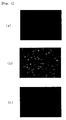
- Fig. 1 is a fluorescent micrograph of nanoparticle-free cells.
- Fig. 2 is a fluorescent micrograph of cells to which the nanoparticles described in Example 2 of International Patent Publication No. WO 2004/84871 have been added.
- Fig. 3 is a fluorescent micrograph of cells to which the nanoparticles described herein have been added.
- the nanoparticles prepared using PLA were significantly taken up by the cells, whereas the nanoparticles prepared using the PLA-PEG block copolymer were hardly taken up by the cells. It has thus been demonstrated that the herein described nanoparticles using the PLA-PEG block copolymer show reduced uptake by macrophages.
- Example 4 Change in the accumulation and retention of betamethasone phosphate in the inflammation site in adjuvant arthritis rats
- DIFCO incomplete Freund's adjuvant solution
- Butyricum Dessicated was subcutaneously injected into the left hind paw of 7-week-old Lewis rats, weighing 130 to 160 g, under anesthesia with ether. The animals were divided into groups so that there is no significant difference in the volume of the left hind leg between the groups. 10 to 14 days after administration of M. Butyricum, each group was intravenously administered a single dose of the nanoparticles encapsulating betamethasone phosphate (equivalent to 50 ⁇ g betamethasone). As a control, another group was intravenously administered a single dose of the PLA nanoparticles encapsulating betamethasone phosphate (nanoparticles described in Example 2 of International Patent Publication No. WO2004/84871 ).
- the liver and the inflamed leg were excised and homogenized and betamethasone was quantified by immunoassay. Similarly, the blood concentration of betamethasone was determined by immunoassay.
- the nanoparticles 1 and 2 are the same as those shown in Table 3.
- Nanoparticles 3 (reference): Nanoparticles sized 80 nm and prepared using PLA (Mn 3600)-PEG (Mp 5000).
- betamethasone accumulated intensely in the liver, but only slightly in the inflamed leg in rats receiving the nanoparticles prepared using PLA (nanoparticles described in Example 2 of International Patent Publication No. WO 2004/84871 ).
- the accumulation of betamethasone decreased in the liver but increased in the inflamed leg in rats that received the PLA-PEG block copolymer nanoparticles prepared as described herein, as compared to the rats administered the above nanoparticles.
- betamethasone In rats receiving the PLA-PEG block copolymer nanoparticles described herein, significant amounts of betamethasone were remaining in the inflamed leg after 4 days.
- the analysis of the blood concentration of betamethasone revealed that, after 30 minutes, little betamethasone was remaining in the blood of rats receiving the nanoparticles prepared using PLA alone (nanoparticles described in Example 2 of International Patent Publication No. WO 2004/84871 ), whereas the blood concentration of betamethasone was very high in rats receiving the PLA-PEG block copolymer nanoparticles prepared as disclosed herein.
- DIFCO incomplete Freund's adjuvant solution
- Butyricum Dessicated was subcutaneously injected into the left hind paw of 7-week-old Lewis rats, weighing 130 to 160 g, under anesthesia with ether. The animals were divided into groups so that there is no significant difference in the volume of the left hind leg between the groups. 14 days after administration of M. Butyricum, one group was intravenously administered a single dose of the nanoparticles described herein, encapsulating betamethasone phosphate (equivalent to 50 ⁇ g betamethasone).
- the ability of the nanoparticles to suppress arthritic inflammation was analyzed by the water displacement technique by measuring the volume of the left hind legs before and after the administration of the nanoparticles.
- Each inflammation rate is the average of 4 rats.
- the nanoparticles 3 are the same as the nanoparticles 3 shown in Table 5.
- the PLA nanoparticles (nanoparticles described in Example 2 of International Patent Publication No. WO 2004/84871 ) exhibited stronger ability to suppress inflammation than the aqueous betamethasone phosphate solution.
- the PLA-PEG block copolymer nanoparticles prepared as described herein exhibited even stronger ability to suppress inflammation than the PLA nanoparticles.
- the ratios of lactide to PEG used are shown in Table 7, along with the molecular weights of the resulting PLA-PEG block copolymers and the ratios of PLA/PEG (by weight) in the PLA-PEG block copolymers.
- Example 7 Production of PLA-PEG block copolymer nanoparticles encapsulating a steroid
- the PLA-PEG block copolymer synthesized in Example 6 and PLA were combined to make a total weight of 50 mg.
- the weighed compounds were dissolved with 1mL acetone.
- a solution of 7.5mg diethanolamine in 500 ⁇ L acetone was added, followed by 68 ⁇ L of a 1M aqueous zinc chloride solution.
- the mixture was lightly stirred.
- 28.6 ⁇ L of an aqueous solution of betamethasone sodium phosphate (350 mg/mL) was immediately added. The mixture was thoroughly stirred and then allowed to stand at room temperature for about 30 minutes.
- the resulting solution was concentrated by ultrafiltration (YM-50, Amicon), followed by addition of 20 mL of an aqueous solution of Tween 80 (1 mg/mL), followed by concentration again (This was repeated twice). Subsequently, the mixture was centrifuged at 1000 rpm for 5 minutes to remove agglomerates. The particle size was measured by a dynamic light-scattering (DLS) particle size analyzer and the encapsulation rate, or the amount of betamethasone sodium phosphate (BSP) encapsulated by the nanoparticles, was determined by HPLC.
- DLS dynamic light-scattering
- the BSP encapsulation rate of nanoparticles prepared using varying amounts of diethanolamine is shown in Table 8.
- the mixing ratio of PLA to the block copolymer and the particle size and the BSP encapsulation rate of nanoparticles prepared by varying the mixing ratio of PLA are shown in Tables 9 and 10.
- Table 9 Particle size and BSP encapsulation rate of nanoparticles prepared by varying the mixing ratio of PLA to block copolymer (determined using block copolymer No. 1 in Table 7)
- Table 10 Particle size and BSP encapsulation rate of nanoparticles prepared by varying the mixing ratio of PLA to block copolymer (determined using block copolymer No. 2 in Table 7)
- the nanoparticles prepared by varying the amount of diethanolamine had a particle size of about 100 to 120 nm.
- the results of Table 8 indicate that the BSP encapsulation rate was affected by the amount of diethanolamine: the encapsulation rate increased as the amount of diethanolamine was increased.
- Example 8 Production of PLA-PEG block copolymer nanoparticles encapsulating prostaglandin E1 (PGE1)
- the PLA-PEG block copolymer synthesized in Example 6 and PLA were combined to make a total weight of 25 mg.
- the weighed compounds were dissolved with 250 ⁇ L acetone.
- 250 ⁇ L of a solution of prostaglandin E1 (PEG1) in acetone (20 mg/mL) was added, followed by a solution of 7.9mg diethanolamine in 250 ⁇ L acetone.
- 25 ⁇ L of a 500mM solution of ferric chloride in acetone was immediately added. The mixture was stirred and then allowed to stand at room temperature for about 10 minutes.
- the resulting solution was concentrated by ultrafiltration (YM-50, Amicon), followed by addition of a 50mM aqueous EDTA solution (pH 7), followed by concentration again (This was repeated twice).
- the PGE1 encapsulation rate of nanoparticles prepared using varying amounts of diethanolamine is shown in Table 11.
- the nanoparticles prepared by varying the amount of diethanolamine had a particle size of about 100 to 120 nm.
- the results of Table 11 indicate that the PGE1 encapsulation rate was affected by the amount of diethanolamine: the encapsulation rate increased as the amount of diethanolamine was increased.
- Nanoparticles of the present invention containing betamethasone phosphate equivalent to 40 ⁇ g betamethasone were intravenously administered in a single dose.
- the nanoparticles 4 of the present invention were prepared by mixing the block copolymer synthesized according to Example 7 and PLA (Mn 26000) at a ratio of 16:84 (by weight).
- the PLA-PEG block copolymer nanoparticles obtained in Example 2 encapsulating betamethasone phosphate were added to an aqueous sucrose solution and the solution was freeze-dried.
- 0.5% carmellose or injection water was added from a separate vial to form an intravenous injection.
- the nanoparticles of the present invention containing a water-soluble, non-peptide, low-molecular weight drug can effectively target the water-soluble, non-peptide, low-molecular weight drug to the target site, achieve ideal sustained-release of the drug, have reduced side effects by causing reduced accumulation of the drug in the liver, and have an improved long-circulating property. Therefore, the nanoparticles of the present invention are useful pharmaceutical products that find a wide range of industrial applications.
Landscapes
- Health & Medical Sciences (AREA)
- Chemical & Material Sciences (AREA)
- Medicinal Chemistry (AREA)
- Veterinary Medicine (AREA)
- Pharmacology & Pharmacy (AREA)
- Life Sciences & Earth Sciences (AREA)
- Animal Behavior & Ethology (AREA)
- General Health & Medical Sciences (AREA)
- Public Health (AREA)
- Epidemiology (AREA)
- Engineering & Computer Science (AREA)
- Bioinformatics & Cheminformatics (AREA)
- Inorganic Chemistry (AREA)
- Biomedical Technology (AREA)
- Chemical Kinetics & Catalysis (AREA)
- Organic Chemistry (AREA)
- Nuclear Medicine, Radiotherapy & Molecular Imaging (AREA)
- General Chemical & Material Sciences (AREA)
- Physics & Mathematics (AREA)
- Dermatology (AREA)
- Optics & Photonics (AREA)
- Nanotechnology (AREA)
- Neurosurgery (AREA)
- Rheumatology (AREA)
- Communicable Diseases (AREA)
- Oncology (AREA)
- Pain & Pain Management (AREA)
- Immunology (AREA)
- Orthopedic Medicine & Surgery (AREA)
- Physical Education & Sports Medicine (AREA)
- Medicinal Preparation (AREA)
- Pharmaceuticals Containing Other Organic And Inorganic Compounds (AREA)
Claims (13)
- Ein Nanopartikel, enthaltend einen wasserlöslichen, nicht-peptidischen niedermolekularen Arzneistoff, wobei das Nanopartikel durch Hydrophobierung eines wasserlöslichen, nicht-peptidischen niedermolekularen Arnzeistoffs mit einem Metallion und Umsetzen des hydrophobierten Arzneistoffs mit einem Polymilchsäure-Polyethylenglykol-Blockcopolymer oder einem Poly(lactid-co-glycolid)-Polyethylenglykol-Blockcopolymer, und einer Polymilchsäure oder einem Poly(lactid-co-glycolid)-Copolymer erhältlich ist, und ferner umfassend eine basische niedermolekulare Verbindung, welche damit gemischt ist.
- Das Nanopartikel, enthaltend einen wasserlöslichen, nicht-peptidischen niedermolekularen Arzneistoff gemäß Anspruch 1, ferner umfassend ein oberflächenaktives Mittel.
- Das Nanopartikel, enthaltend einen wasserlöslichen, nicht-peptidischen niedermolekularen Arzneistoff gemäß Anspruch 1 oder 2, wobei das Nanopartikel einen Durchmesser in einem Bereich von 20 bis 300 nm, und vorzugsweise in einem Bereich von 50 bis 200 nm aufweist.
- Das Nanopartikel, enthaltend einen wasserlöslichen, nicht-peptidischen niedermolekularen Arzneistoff gemäß Anspruch 1, wobei das Metallion eines oder zwei oder mehrere von Zinkion, Eisenion, Kupferion, Nickelion, Berylliumion, Manganion oder Kobaltion ist.
- Das Nanopartikel, enthaltend einen wasserlöslichen, nicht-peptidischen niedermolekularen Arzneistoff gemäß Anspruch 1, wobei der wasserlösliche, nicht-peptidische niedermolekulare Arzneistoff eine Phosphatgruppe, eine Sulfatgruppe oder eine Carboxylgruppe zur Hydrophobierung durch das Metallion enthält.
- Das Nanopartikel, enthaltend einen wasserlöslichen, nicht-peptidischen niedermolekularen Arzneistoff gemäß Anspruch 1 oder 5, wobei der wasserlösliche, nicht-peptidische niedermolekulare Arzneistoff ein entzündungshemmendes Steroid, ein nichtsteroidaler entzündungshemmender Arzneistoff, Prostaglandin oder ein Derivat davon, ein antimikrobieller Arzneistoff oder ein Arzneistoff gegen Krebs ist.
- Das Nanopartikel, enthaltend einen wasserlöslichen, nicht-peptidischen niedermolekularen Arzneistoff gemäß Anspruch 1, wobei das Polymilchsäure-Polyethylenglykol-Blockcopolymer oder das Poly(lactid-co-glycolid)-Polyethylenglykol-Blockcopolymer ein Gewichtsmittel des Molekulargewichts in einem Bereich von 3.000 bis 20.000 aufweist.
- Das Nanopartikel, enthaltend einen wasserlöslichen, nicht-peptidischen niedermolekularen Arzneistoff gemäß Anspruch 1, wobei die basische niedermolekulare Verbindung eine oder zwei oder mehrere ausgewählt aus (Dimethylamino)pyridin, Pyridin, Piperidin, Pyrimidin, Pyrazin, Pyridazin, Chinolin, Chinuclidin, Isochinolin, Bis(Dimethylamino)naphthalin, Naphthylamin, Morpholin, Amantadin, Anilin, Spermin, Spermidin, Hexamethylendiamin, Putrescin, Cadaverin, Phenethylamin, Histamin, Diazabicyclooctan, Diisopropylethylamin, Monoethanolamin, Diethanolamin, Triethanolamin, Ethylamin, Diethylamin, Triethylamin, Methylamin, Dimethylamin, Trimethylamin, Triethylendiamin, Diethylentriamin, Ethylendiamin und Trimethylendiamin ist.
- Das Nanopartikel, enthaltend einen wasserlöslichen, nicht-peptidischen niedermolekularen Arzneistoff gemäß Anspruch 2, wobei das oberflächenaktive Mittel eines oder zwei oder mehrere ausgewählt aus Phosphatidylcholin, Polyoxyethylen-(20)-sorbitanmonooleat, Polyoxyethylen-(20)-sorbitanmonolaurat, Polyoxyethylen-(20)-sorbitanmonostearat, Polyoxyethylen-(20)-sorbitanmonopalmitat, Polyoxyethylen-(20)-sorbitantrioleat, Polyoxyethylen-(80)-octylphenylether, Polyoxyethylen-(20)-cholesterinester, Lipid-Polyethylenglykol, Polyoxyethylen-hydriertem Rizinusöl und Fettsäure-Polyethylenglykol-Copolymer ist.
- Eine parenterale Zubereitung, enthaltend als einen Wirkstoff das Nanopartikel, enthaltend einen wasserlöslichen, nicht-peptidischen niedermolekularen Arzneistoff gemäß einem der Ansprüche 1 bis 9.
- Die parenterale Zubereitung gemäß Anspruch 10, wobei die Zubereitung eine intravenöse Zubereitung, eine Zubereitung zur lokalen Injektion, eine nasale Zubereitung, eine ophthalmische Zubereitung, eine Zubereitung zur Inhalation oder eine Sprayzubereitung ist.
- Ein Verfahren zur Herstellung des Nanopartikels, enthaltend einen wasserlöslichen, nicht-peptidischen niedermolekularen Arzneistoff gemäß Anspruch 1, wobei das Verfahren die Schritte umfasst:Mischen eines wasserlöslichen, nicht-peptidischen niedermolekularen Arzneistoffs mit einem Metallion in einem Lösungsmittel, um einen hydrophobierten Arzneistoff herzustellen;Mischen eines Polymilchsäure-Polyethylenglykol-Blockcopolymers oder eines Poly(lactid-co-glycolid)-Polyethylenglykol-Blockcopolymers, und einer Polymilchsäure oder eines Poly(lactid-co-glycolid)-Copolymers mit der entstandenen Mischung; undferner Zumischen einer basischen niedermolekularen Verbindung.
- Das Verfahren zur Herstellung des Nanopartikels, enthaltend einen wasserlöslichen, nicht-peptidischen niedermolekularen Arzneistoff gemäß Anspruch 12, wobei die basische niedermolekulare Verbindung eine oder zwei oder mehrere ausgewählt aus (Dimethylamino)pyridin, Pyridin, Piperidin, Pyrimidin, Pyrazin, Pyridazin, Chinolin, Chinuclidin, Isochinolin, Bis(dimethylamino)naphthalin, Naphthylamin, Morpholin, Amantadin, Anilin, Spermin, Spermidin, Hexamethylendiamin, Putrescin, Cadaverin, Phenethylamin, Histamin, Diazabicyclooctan, Diisopropylethylamin, Monoethanolamin, Diethanolamin, Triethanolamin, Ethylamin, Diethylamin, Triethylamin, Methylamin, Dimethylamin, Trimethylamin, Triethylendiamin, Diethylentriamin, Ethylendiamin und Trimethylendiamin ist.
Applications Claiming Priority (2)
| Application Number | Priority Date | Filing Date | Title |
|---|---|---|---|
| JP2005372001 | 2005-12-26 | ||
| PCT/JP2006/323820 WO2007074604A1 (ja) | 2005-12-26 | 2006-11-29 | 水溶性非ペプチド性低分子薬物含有ナノ粒子 |
Publications (3)
| Publication Number | Publication Date |
|---|---|
| EP1985309A1 EP1985309A1 (de) | 2008-10-29 |
| EP1985309A4 EP1985309A4 (de) | 2012-08-29 |
| EP1985309B1 true EP1985309B1 (de) | 2016-11-23 |
Family
ID=38217825
Family Applications (1)
| Application Number | Title | Priority Date | Filing Date |
|---|---|---|---|
| EP06833624.7A Not-in-force EP1985309B1 (de) | 2005-12-26 | 2006-11-29 | Nanopartikel enthaltend einen wasserlöslichen nicht-peptidischen niedermolekularen arzneistoff |
Country Status (4)
| Country | Link |
|---|---|
| US (1) | US8916206B2 (de) |
| EP (1) | EP1985309B1 (de) |
| JP (1) | JP5131971B2 (de) |
| WO (1) | WO2007074604A1 (de) |
Families Citing this family (24)
| Publication number | Priority date | Publication date | Assignee | Title |
|---|---|---|---|---|
| US8916206B2 (en) | 2005-12-26 | 2014-12-23 | Ltt Bio-Pharma Co., Ltd. | Nanoparticles containing water-soluble non-peptide low-molecular weight drug |
| CN101678113B (zh) * | 2007-05-14 | 2012-05-30 | 日本株式会社Ltt生物医药 | 缓释性的含有带负电荷基团的低分子药物的纳米粒子 |
| MX2007011001A (es) * | 2007-09-07 | 2009-03-09 | World Trade Imp Export Wtie Ag | Composicion farmaceutica compuesta por la combinacion de un antiinflamatorio esteroideo y un relajante muscular indicada para el control y tratamiento de enfermedades inflamatorias musculoesqueleticas que se acompañan de contractura muscular. |
| JP2012501966A (ja) | 2008-06-16 | 2012-01-26 | バインド バイオサイエンシズ インコーポレイテッド | ビンカアルカロイド含有治療用ポリマーナノ粒子並びにその製造方法及び使用方法 |
| WO2010005726A2 (en) | 2008-06-16 | 2010-01-14 | Bind Biosciences Inc. | Therapeutic polymeric nanoparticles with mtor inhibitors and methods of making and using same |
| EA020954B1 (ru) | 2008-06-16 | 2015-03-31 | Бинд Терапьютикс, Инк. | Загруженные лекарственным средством полимерные наночастицы, фармацевтическая композиция и способ лечения рака |
| US8563041B2 (en) | 2008-12-12 | 2013-10-22 | Bind Therapeutics, Inc. | Therapeutic particles suitable for parenteral administration and methods of making and using same |
| ES2776126T3 (es) * | 2008-12-15 | 2020-07-29 | Pfizer | Nanopartículas de circulación prolongada para la liberación sostenida de agentes terapéuticos |
| WO2011017297A2 (en) | 2009-08-03 | 2011-02-10 | The University Of North Carolina At Chapel Hill | Biodegradable delivery system complexes for the delivery of bioactive compounds |
| JP2011084541A (ja) * | 2009-10-19 | 2011-04-28 | Ltt Bio-Pharma Co Ltd | 低分子薬物含有ナノ粒子 |
| CN102811743B (zh) | 2009-12-11 | 2015-11-25 | 佰恩德治疗股份有限公司 | 冻干治疗颗粒的稳定制剂 |
| WO2011084518A2 (en) * | 2009-12-15 | 2011-07-14 | Bind Biosciences, Inc. | Therapeutic polymeric nanoparticles comprising corticosteroids and methods of making and using same |
| WO2011084521A2 (en) * | 2009-12-15 | 2011-07-14 | Bind Biosciences, Inc. | Therapeutic polymeric nanoparticles comprising epothilone and methods of making and using same |
| EA201290499A1 (ru) | 2009-12-15 | 2013-01-30 | Байнд Байосайенсиз, Инк. | Композиции терапевтических полимерных наночастиц с высокой температурой стеклования и высокомолекулярными сополимерами |
| JP2013543844A (ja) * | 2010-10-22 | 2013-12-09 | バインド セラピューティックス インコーポレイテッド | 高分子コポリマーを含む治療用ナノ粒子 |
| JP5780775B2 (ja) * | 2011-02-18 | 2015-09-16 | 株式会社Lttバイオファーマ | プロスタグランジンi2誘導体を含有するナノ粒子 |
| JP2013053103A (ja) * | 2011-09-05 | 2013-03-21 | Ltt Bio-Pharma Co Ltd | 薬物を封入した肝臓集積性ナノ粒子 |
| WO2013090804A2 (en) * | 2011-12-14 | 2013-06-20 | The Johns Hopkins University | Nanoparticles with enhanced mucosal penetration or decreased inflammation |
| EP2895156B1 (de) | 2012-09-17 | 2019-05-08 | Pfizer Inc. | Verfahren zur herstellung therapeutischer nanopartikel |
| PT3311845T (pt) | 2013-09-16 | 2020-04-02 | Astrazeneca Ab | Nanopartículas poliméricas terapêuticas e métodos para fabrico e uso das mesmas |
| ES2834927T3 (es) | 2014-03-14 | 2021-06-21 | Pfizer | Nanopartículas terapéuticas que comprenden un agente terapéutico y procedimientos de fabricación y uso de las mismas |
| US10022360B2 (en) | 2014-03-17 | 2018-07-17 | Merck Sharp & Dohme Corp. | Polymeric nanoparticles and methods of making and using same |
| KR20170046146A (ko) * | 2014-08-13 | 2017-04-28 | 더 존스 홉킨스 유니버시티 | 각막 동종이식 거부 및 신혈관 형성의 예방을 위한 글루코 코르티코이드-로딩된 나노입자 |
| BR112022010952A2 (pt) | 2019-12-05 | 2022-09-06 | West Virginia Univ Board Of Governors On Behalf Of West Virginia Univ | Nanosferas de plga carregadas de proteína |
Family Cites Families (40)
| Publication number | Priority date | Publication date | Assignee | Title |
|---|---|---|---|---|
| US2938916A (en) * | 1957-07-30 | 1960-05-31 | Merck & Co Inc | Zinc salts of steroid phosphates |
| US3746728A (en) * | 1971-09-10 | 1973-07-17 | Smith Kline French Lab | Phosphatide derivatives of prostaglandins |
| DE2629135A1 (de) | 1976-06-29 | 1978-01-12 | Nattermann A & Cie | Neue phospholipid-derivate von prostaglandinen und verfahren zu ihrer herstellung |
| DE3378250D1 (en) | 1982-04-22 | 1988-11-24 | Ici Plc | Continuous release formulations |
| JPS60100516A (ja) * | 1983-11-04 | 1985-06-04 | Takeda Chem Ind Ltd | 徐放型マイクロカプセルの製造法 |
| US5271945A (en) * | 1988-07-05 | 1993-12-21 | Takeda Chemical Industries, Ltd. | Sustained release microcapsule for water soluble drug |
| JP2827287B2 (ja) * | 1988-07-05 | 1998-11-25 | 武田薬品工業株式会社 | 水溶性薬物含有徐放型マイクロカプセル |
| JPH064540B2 (ja) | 1988-09-14 | 1994-01-19 | 多木化学株式会社 | 医用組成物 |
| JP2849608B2 (ja) | 1990-10-12 | 1999-01-20 | 裕 水島 | プロスタグランジン類縁体 |
| CA2196184C (en) | 1994-09-09 | 2009-06-09 | Yasutaka Igari | Sustained release preparation containing metal salt of a peptide |
| JP3862304B2 (ja) | 1994-09-09 | 2006-12-27 | 武田薬品工業株式会社 | 徐放性製剤 |
| AU4755696A (en) | 1995-01-05 | 1996-07-24 | Board Of Regents Acting For And On Behalf Of The University Of Michigan, The | Surface-modified nanoparticles and method of making and using same |
| US6143211A (en) * | 1995-07-21 | 2000-11-07 | Brown University Foundation | Process for preparing microparticles through phase inversion phenomena |
| TW367324B (en) * | 1995-08-16 | 1999-08-21 | Ono Pharmaceutical Co | Prostaglandin derivatives |
| JP2802912B2 (ja) | 1995-08-16 | 1998-09-24 | 小野薬品工業株式会社 | プロスタグランジンe1エステル、それらを含有するリポソーム製剤、およびそれらを含有する医薬 |
| KR100227541B1 (ko) * | 1995-08-25 | 1999-11-01 | 우에노 도시오 | 프로스타글란딘 유도체 |
| JPH09124593A (ja) | 1995-08-25 | 1997-05-13 | Ono Pharmaceut Co Ltd | プロスタグランジンe1エステル、それらを含有するリポソーム製剤、およびそれらを含有する医薬 |
| JPH09151136A (ja) | 1995-11-30 | 1997-06-10 | Chemo Sero Therapeut Res Inst | 蛋白質徐放性微小球体の製造方法 |
| JPH09208494A (ja) * | 1995-11-30 | 1997-08-12 | Kanebo Ltd | 微粒子製剤 |
| JPH09157368A (ja) | 1995-12-01 | 1997-06-17 | Kanebo Ltd | ポリ乳酸−ポリエチレングリコール−ポリ乳酸三元ブロック共重合体の精製方法 |
| US6264970B1 (en) * | 1996-06-26 | 2001-07-24 | Takeda Chemical Industries, Ltd. | Sustained-release preparation |
| JP4317599B2 (ja) * | 1996-06-26 | 2009-08-19 | 武田薬品工業株式会社 | 徐放性製剤 |
| JP4900984B2 (ja) * | 1997-07-15 | 2012-03-21 | 武田薬品工業株式会社 | 徐放性製剤の製造法 |
| US6288113B1 (en) | 1997-08-27 | 2001-09-11 | Welfide Corporation | Angiogenesis promoters |
| US5989463A (en) * | 1997-09-24 | 1999-11-23 | Alkermes Controlled Therapeutics, Inc. | Methods for fabricating polymer-based controlled release devices |
| JPH11279184A (ja) | 1998-03-25 | 1999-10-12 | Asahi Glass Co Ltd | エノールホスフェート誘導体およびその製造方法 |
| CA2380326C (en) | 1999-08-04 | 2008-03-18 | The Procter & Gamble Company | Novel 2-decarboxy-2-phosphinico prostaglandin f analogs |
| CA2395132A1 (en) * | 2000-01-05 | 2001-07-12 | Imarx Therapeutics, Inc. | Pharmaceutical formulations for the delivery of drugs having low aqueous solubility |
| JP5160005B2 (ja) * | 2000-12-28 | 2013-03-13 | 武田薬品工業株式会社 | 徐放性製剤 |
| JP2002348234A (ja) | 2001-05-28 | 2002-12-04 | Purotekku:Kk | 薬物封入無機物微粒子、その製造法及び薬物封入無機物微粒子製剤 |
| JP2003342196A (ja) * | 2002-05-31 | 2003-12-03 | Mukku:Kk | 静脈注射用組成物、その製造法およびその製剤 |
| US20030228366A1 (en) * | 2002-06-11 | 2003-12-11 | Chung Shih | Reconstitutable compositions of biodegradable block copolymers |
| JP2006521367A (ja) * | 2003-03-26 | 2006-09-21 | 株式会社Lttバイオファーマ | ターゲッティングと徐放を目的とした静脈注射用ナノ粒子 |
| US20080226704A1 (en) | 2004-03-23 | 2008-09-18 | Makoto Kigoshi | Method of Producing Coated Fine Particles |
| US20050214377A1 (en) * | 2004-03-24 | 2005-09-29 | Sanjay Mistry | Microparticles for cell delivery |
| CN1964744B (zh) * | 2004-05-06 | 2015-06-17 | 株式会社三养生物制药 | 基于包含两亲性嵌段共聚物和聚乳酸衍生物的聚合物药物载体的生物活性剂传递系统 |
| JP2006248992A (ja) | 2005-03-10 | 2006-09-21 | Tokyo Institute Of Technology | ホスホリルコリン類の製造方法 |
| US8916206B2 (en) | 2005-12-26 | 2014-12-23 | Ltt Bio-Pharma Co., Ltd. | Nanoparticles containing water-soluble non-peptide low-molecular weight drug |
| CN101678113B (zh) * | 2007-05-14 | 2012-05-30 | 日本株式会社Ltt生物医药 | 缓释性的含有带负电荷基团的低分子药物的纳米粒子 |
| CN102216310A (zh) * | 2008-11-18 | 2011-10-12 | 日本株式会社Ltt生物医药 | 新型前列腺素e1衍生物以及包封了该前列腺素e1衍生物的纳米粒子 |
-
2006
- 2006-11-29 US US12/159,023 patent/US8916206B2/en not_active Expired - Fee Related
- 2006-11-29 EP EP06833624.7A patent/EP1985309B1/de not_active Not-in-force
- 2006-11-29 WO PCT/JP2006/323820 patent/WO2007074604A1/ja not_active Ceased
- 2006-11-29 JP JP2007551870A patent/JP5131971B2/ja not_active Expired - Fee Related
Non-Patent Citations (1)
| Title |
|---|
| None * |
Also Published As
| Publication number | Publication date |
|---|---|
| JPWO2007074604A1 (ja) | 2009-06-04 |
| JP5131971B2 (ja) | 2013-01-30 |
| US8916206B2 (en) | 2014-12-23 |
| US20090317479A1 (en) | 2009-12-24 |
| EP1985309A4 (de) | 2012-08-29 |
| WO2007074604A1 (ja) | 2007-07-05 |
| EP1985309A1 (de) | 2008-10-29 |
Similar Documents
| Publication | Publication Date | Title |
|---|---|---|
| EP1985309B1 (de) | Nanopartikel enthaltend einen wasserlöslichen nicht-peptidischen niedermolekularen arzneistoff | |
| KR101513318B1 (ko) | 서방성의 음하전기를 갖는 저분자 약물 함유 나노 입자 | |
| US9872848B2 (en) | Stable formulations for lyophilizing therapeutic particles | |
| US20170035694A1 (en) | Therapeutic polymeric nanoparticles comprising corticosteroids and methods of making and using same | |
| US20140248358A1 (en) | Therapeutic Nanoparticles Comprising a Therapeutic Agent and Methods of Making and Using Same | |
| EP2792348B1 (de) | Zusammensetzung einer wässrigen lösung aus polymernanopartikeln sowie verfahren zur herstellung davon | |
| CN104415338B (zh) | 主动靶向型抗肿瘤药物及其制备方法 | |
| JP2006521367A (ja) | ターゲッティングと徐放を目的とした静脈注射用ナノ粒子 | |
| EP2679227A1 (de) | Nanopartikelhaltiges prostaglandin-i2-derivat | |
| EP3119395B1 (de) | Polymernanopartikel sowie verfahren zur herstellung und verwendung davon | |
| EP3137069A1 (de) | Nanopartikelformulierung mit farnesylthiosalicylsäure (salirasib) | |
| JP2011084541A (ja) | 低分子薬物含有ナノ粒子 | |
| Song et al. | Preparation and characteristics of novel Jerusalem artichoke polysaccharides-based polymeric micelles for poorly water-soluble drug delivery | |
| EP4537813A1 (de) | Zusammensetzung zur prävention oder behandlung von entzündlichen erkrankungen mit poly(organophosphazen)-polymer | |
| WO2024002385A1 (zh) | 棘霉素类抗生素胶束及其制备方法和用途 | |
| KR20240099264A (ko) | 항암제를 포함하는 조성물 및 이의 제조방법 및 용도 | |
| JP2008162904A (ja) | 気管支喘息治療剤 | |
| 김동환 | Preparation and characterization of self-assembled nanoparticles based on low-molecular-weight heparin and stearylamine conjugates for controlled delivery of docetaxel |
Legal Events
| Date | Code | Title | Description |
|---|---|---|---|
| PUAI | Public reference made under article 153(3) epc to a published international application that has entered the european phase |
Free format text: ORIGINAL CODE: 0009012 |
|
| 17P | Request for examination filed |
Effective date: 20080716 |
|
| AK | Designated contracting states |
Kind code of ref document: A1 Designated state(s): AT BE BG CH CY CZ DE DK EE ES FI FR GB GR HU IE IS IT LI LT LU LV MC NL PL PT RO SE SI SK TR |
|
| DAX | Request for extension of the european patent (deleted) | ||
| A4 | Supplementary search report drawn up and despatched |
Effective date: 20120731 |
|
| RIC1 | Information provided on ipc code assigned before grant |
Ipc: A61K 47/34 20060101AFI20120725BHEP Ipc: A61K 47/02 20060101ALI20120725BHEP Ipc: A61K 9/51 20060101ALI20120725BHEP Ipc: A61K 31/56 20060101ALI20120725BHEP Ipc: A61K 9/52 20060101ALI20120725BHEP Ipc: A61P 31/04 20060101ALI20120725BHEP Ipc: A61P 29/00 20060101ALI20120725BHEP Ipc: A61K 9/00 20060101ALI20120725BHEP Ipc: A61K 45/00 20060101ALI20120725BHEP Ipc: A61K 31/5575 20060101ALI20120725BHEP Ipc: A61P 35/00 20060101ALI20120725BHEP |
|
| 17Q | First examination report despatched |
Effective date: 20150415 |
|
| GRAP | Despatch of communication of intention to grant a patent |
Free format text: ORIGINAL CODE: EPIDOSNIGR1 |
|
| INTG | Intention to grant announced |
Effective date: 20160331 |
|
| GRAS | Grant fee paid |
Free format text: ORIGINAL CODE: EPIDOSNIGR3 |
|
| GRAJ | Information related to disapproval of communication of intention to grant by the applicant or resumption of examination proceedings by the epo deleted |
Free format text: ORIGINAL CODE: EPIDOSDIGR1 |
|
| GRAL | Information related to payment of fee for publishing/printing deleted |
Free format text: ORIGINAL CODE: EPIDOSDIGR3 |
|
| INTC | Intention to grant announced (deleted) | ||
| GRAR | Information related to intention to grant a patent recorded |
Free format text: ORIGINAL CODE: EPIDOSNIGR71 |
|
| GRAA | (expected) grant |
Free format text: ORIGINAL CODE: 0009210 |
|
| INTG | Intention to grant announced |
Effective date: 20161013 |
|
| AK | Designated contracting states |
Kind code of ref document: B1 Designated state(s): AT BE BG CH CY CZ DE DK EE ES FI FR GB GR HU IE IS IT LI LT LU LV MC NL PL PT RO SE SI SK TR |
|
| REG | Reference to a national code |
Ref country code: GB Ref legal event code: FG4D |
|
| REG | Reference to a national code |
Ref country code: FR Ref legal event code: PLFP Year of fee payment: 11 |
|
| REG | Reference to a national code |
Ref country code: CH Ref legal event code: EP |
|
| REG | Reference to a national code |
Ref country code: IE Ref legal event code: FG4D |
|
| REG | Reference to a national code |
Ref country code: AT Ref legal event code: REF Ref document number: 847269 Country of ref document: AT Kind code of ref document: T Effective date: 20161215 |
|
| REG | Reference to a national code |
Ref country code: DE Ref legal event code: R096 Ref document number: 602006051036 Country of ref document: DE |
|
| PG25 | Lapsed in a contracting state [announced via postgrant information from national office to epo] |
Ref country code: LV Free format text: LAPSE BECAUSE OF FAILURE TO SUBMIT A TRANSLATION OF THE DESCRIPTION OR TO PAY THE FEE WITHIN THE PRESCRIBED TIME-LIMIT Effective date: 20161123 |
|
| REG | Reference to a national code |
Ref country code: LT Ref legal event code: MG4D |
|
| REG | Reference to a national code |
Ref country code: NL Ref legal event code: MP Effective date: 20161123 |
|
| REG | Reference to a national code |
Ref country code: AT Ref legal event code: MK05 Ref document number: 847269 Country of ref document: AT Kind code of ref document: T Effective date: 20161123 |
|
| PG25 | Lapsed in a contracting state [announced via postgrant information from national office to epo] |
Ref country code: GR Free format text: LAPSE BECAUSE OF FAILURE TO SUBMIT A TRANSLATION OF THE DESCRIPTION OR TO PAY THE FEE WITHIN THE PRESCRIBED TIME-LIMIT Effective date: 20170224 Ref country code: SE Free format text: LAPSE BECAUSE OF FAILURE TO SUBMIT A TRANSLATION OF THE DESCRIPTION OR TO PAY THE FEE WITHIN THE PRESCRIBED TIME-LIMIT Effective date: 20161123 Ref country code: LT Free format text: LAPSE BECAUSE OF FAILURE TO SUBMIT A TRANSLATION OF THE DESCRIPTION OR TO PAY THE FEE WITHIN THE PRESCRIBED TIME-LIMIT Effective date: 20161123 Ref country code: NL Free format text: LAPSE BECAUSE OF FAILURE TO SUBMIT A TRANSLATION OF THE DESCRIPTION OR TO PAY THE FEE WITHIN THE PRESCRIBED TIME-LIMIT Effective date: 20161123 |
|
| PG25 | Lapsed in a contracting state [announced via postgrant information from national office to epo] |
Ref country code: FI Free format text: LAPSE BECAUSE OF FAILURE TO SUBMIT A TRANSLATION OF THE DESCRIPTION OR TO PAY THE FEE WITHIN THE PRESCRIBED TIME-LIMIT Effective date: 20161123 Ref country code: ES Free format text: LAPSE BECAUSE OF FAILURE TO SUBMIT A TRANSLATION OF THE DESCRIPTION OR TO PAY THE FEE WITHIN THE PRESCRIBED TIME-LIMIT Effective date: 20161123 Ref country code: PL Free format text: LAPSE BECAUSE OF FAILURE TO SUBMIT A TRANSLATION OF THE DESCRIPTION OR TO PAY THE FEE WITHIN THE PRESCRIBED TIME-LIMIT Effective date: 20161123 Ref country code: AT Free format text: LAPSE BECAUSE OF FAILURE TO SUBMIT A TRANSLATION OF THE DESCRIPTION OR TO PAY THE FEE WITHIN THE PRESCRIBED TIME-LIMIT Effective date: 20161123 Ref country code: PT Free format text: LAPSE BECAUSE OF FAILURE TO SUBMIT A TRANSLATION OF THE DESCRIPTION OR TO PAY THE FEE WITHIN THE PRESCRIBED TIME-LIMIT Effective date: 20170323 Ref country code: BE Free format text: LAPSE BECAUSE OF NON-PAYMENT OF DUE FEES Effective date: 20161130 |
|
| REG | Reference to a national code |
Ref country code: CH Ref legal event code: PL |
|
| PG25 | Lapsed in a contracting state [announced via postgrant information from national office to epo] |
Ref country code: LI Free format text: LAPSE BECAUSE OF NON-PAYMENT OF DUE FEES Effective date: 20161130 Ref country code: CZ Free format text: LAPSE BECAUSE OF FAILURE TO SUBMIT A TRANSLATION OF THE DESCRIPTION OR TO PAY THE FEE WITHIN THE PRESCRIBED TIME-LIMIT Effective date: 20161123 Ref country code: EE Free format text: LAPSE BECAUSE OF FAILURE TO SUBMIT A TRANSLATION OF THE DESCRIPTION OR TO PAY THE FEE WITHIN THE PRESCRIBED TIME-LIMIT Effective date: 20161123 Ref country code: DK Free format text: LAPSE BECAUSE OF FAILURE TO SUBMIT A TRANSLATION OF THE DESCRIPTION OR TO PAY THE FEE WITHIN THE PRESCRIBED TIME-LIMIT Effective date: 20161123 Ref country code: CH Free format text: LAPSE BECAUSE OF NON-PAYMENT OF DUE FEES Effective date: 20161130 Ref country code: SK Free format text: LAPSE BECAUSE OF FAILURE TO SUBMIT A TRANSLATION OF THE DESCRIPTION OR TO PAY THE FEE WITHIN THE PRESCRIBED TIME-LIMIT Effective date: 20161123 Ref country code: RO Free format text: LAPSE BECAUSE OF FAILURE TO SUBMIT A TRANSLATION OF THE DESCRIPTION OR TO PAY THE FEE WITHIN THE PRESCRIBED TIME-LIMIT Effective date: 20161123 |
|
| REG | Reference to a national code |
Ref country code: IE Ref legal event code: MM4A |
|
| REG | Reference to a national code |
Ref country code: DE Ref legal event code: R097 Ref document number: 602006051036 Country of ref document: DE |
|
| PG25 | Lapsed in a contracting state [announced via postgrant information from national office to epo] |
Ref country code: BG Free format text: LAPSE BECAUSE OF FAILURE TO SUBMIT A TRANSLATION OF THE DESCRIPTION OR TO PAY THE FEE WITHIN THE PRESCRIBED TIME-LIMIT Effective date: 20170223 Ref country code: BE Free format text: LAPSE BECAUSE OF FAILURE TO SUBMIT A TRANSLATION OF THE DESCRIPTION OR TO PAY THE FEE WITHIN THE PRESCRIBED TIME-LIMIT Effective date: 20161123 |
|
| PG25 | Lapsed in a contracting state [announced via postgrant information from national office to epo] |
Ref country code: MC Free format text: LAPSE BECAUSE OF FAILURE TO SUBMIT A TRANSLATION OF THE DESCRIPTION OR TO PAY THE FEE WITHIN THE PRESCRIBED TIME-LIMIT Effective date: 20161123 Ref country code: LU Free format text: LAPSE BECAUSE OF NON-PAYMENT OF DUE FEES Effective date: 20161130 |
|
| PLBE | No opposition filed within time limit |
Free format text: ORIGINAL CODE: 0009261 |
|
| STAA | Information on the status of an ep patent application or granted ep patent |
Free format text: STATUS: NO OPPOSITION FILED WITHIN TIME LIMIT |
|
| 26N | No opposition filed |
Effective date: 20170824 |
|
| REG | Reference to a national code |
Ref country code: FR Ref legal event code: PLFP Year of fee payment: 12 |
|
| PG25 | Lapsed in a contracting state [announced via postgrant information from national office to epo] |
Ref country code: IE Free format text: LAPSE BECAUSE OF NON-PAYMENT OF DUE FEES Effective date: 20161129 Ref country code: SI Free format text: LAPSE BECAUSE OF FAILURE TO SUBMIT A TRANSLATION OF THE DESCRIPTION OR TO PAY THE FEE WITHIN THE PRESCRIBED TIME-LIMIT Effective date: 20161123 |
|
| PG25 | Lapsed in a contracting state [announced via postgrant information from national office to epo] |
Ref country code: CY Free format text: LAPSE BECAUSE OF FAILURE TO SUBMIT A TRANSLATION OF THE DESCRIPTION OR TO PAY THE FEE WITHIN THE PRESCRIBED TIME-LIMIT Effective date: 20161123 Ref country code: HU Free format text: LAPSE BECAUSE OF FAILURE TO SUBMIT A TRANSLATION OF THE DESCRIPTION OR TO PAY THE FEE WITHIN THE PRESCRIBED TIME-LIMIT; INVALID AB INITIO Effective date: 20061129 |
|
| PG25 | Lapsed in a contracting state [announced via postgrant information from national office to epo] |
Ref country code: TR Free format text: LAPSE BECAUSE OF FAILURE TO SUBMIT A TRANSLATION OF THE DESCRIPTION OR TO PAY THE FEE WITHIN THE PRESCRIBED TIME-LIMIT Effective date: 20161123 Ref country code: IS Free format text: LAPSE BECAUSE OF FAILURE TO SUBMIT A TRANSLATION OF THE DESCRIPTION OR TO PAY THE FEE WITHIN THE PRESCRIBED TIME-LIMIT Effective date: 20161123 |
|
| PGFP | Annual fee paid to national office [announced via postgrant information from national office to epo] |
Ref country code: GB Payment date: 20211119 Year of fee payment: 16 Ref country code: FR Payment date: 20211122 Year of fee payment: 16 Ref country code: DE Payment date: 20211118 Year of fee payment: 16 |
|
| PGFP | Annual fee paid to national office [announced via postgrant information from national office to epo] |
Ref country code: IT Payment date: 20211119 Year of fee payment: 16 |
|
| REG | Reference to a national code |
Ref country code: DE Ref legal event code: R119 Ref document number: 602006051036 Country of ref document: DE |
|
| GBPC | Gb: european patent ceased through non-payment of renewal fee |
Effective date: 20221129 |
|
| PG25 | Lapsed in a contracting state [announced via postgrant information from national office to epo] |
Ref country code: IT Free format text: LAPSE BECAUSE OF NON-PAYMENT OF DUE FEES Effective date: 20221129 Ref country code: GB Free format text: LAPSE BECAUSE OF NON-PAYMENT OF DUE FEES Effective date: 20221129 Ref country code: DE Free format text: LAPSE BECAUSE OF NON-PAYMENT OF DUE FEES Effective date: 20230601 |
|
| PG25 | Lapsed in a contracting state [announced via postgrant information from national office to epo] |
Ref country code: FR Free format text: LAPSE BECAUSE OF NON-PAYMENT OF DUE FEES Effective date: 20221130 |