EP1976975B1 - In vitro expansion of postpartum derived cells in roller bottles - Google Patents
In vitro expansion of postpartum derived cells in roller bottles Download PDFInfo
- Publication number
- EP1976975B1 EP1976975B1 EP06840316A EP06840316A EP1976975B1 EP 1976975 B1 EP1976975 B1 EP 1976975B1 EP 06840316 A EP06840316 A EP 06840316A EP 06840316 A EP06840316 A EP 06840316A EP 1976975 B1 EP1976975 B1 EP 1976975B1
- Authority
- EP
- European Patent Office
- Prior art keywords
- cells
- bottles
- rpm
- roller
- days
- Prior art date
- Legal status (The legal status is an assumption and is not a legal conclusion. Google has not performed a legal analysis and makes no representation as to the accuracy of the status listed.)
- Not-in-force
Links
Images


Classifications
-
- C—CHEMISTRY; METALLURGY
- C12—BIOCHEMISTRY; BEER; SPIRITS; WINE; VINEGAR; MICROBIOLOGY; ENZYMOLOGY; MUTATION OR GENETIC ENGINEERING
- C12N—MICROORGANISMS OR ENZYMES; COMPOSITIONS THEREOF; PROPAGATING, PRESERVING, OR MAINTAINING MICROORGANISMS; MUTATION OR GENETIC ENGINEERING; CULTURE MEDIA
- C12N5/00—Undifferentiated human, animal or plant cells, e.g. cell lines; Tissues; Cultivation or maintenance thereof; Culture media therefor
- C12N5/06—Animal cells or tissues; Human cells or tissues
- C12N5/0602—Vertebrate cells
- C12N5/0603—Embryonic cells ; Embryoid bodies
- C12N5/0605—Cells from extra-embryonic tissues, e.g. placenta, amnion, yolk sac, Wharton's jelly
Definitions
- This relates generally to the growth and expansion of mammalian cells.
- this relates to methods for the in vitro growth and expansion of postpartum-derived cells in containers such as roller bottles.
- anchorage-dependent cells include many normal diploid cell strains, as well as most primary cell lines.
- Options for large-scale production of such cells include roller bottles, fiber beds and hollow fiber systems, multi-plate or stacked-plate culture systems, cell cubes, and microcarriers, each of which has advantages and disadvantages.
- Roller bottle-based methods of cell culture are probably the most commonly used method for growing anchorage-dependent and anchorage-preferred cells.
- Roller bottles are essentially cylindrical vessels, of glass or plastic, which are at least partially filled with a growth medium.
- Most modern roller bottles are made of a disposable plastic material.
- the bottles are placed on an apparatus that turns, causing the bottles to continuously "roll” or revolve at a typically constant speed of between about 5 and 250 revolutions per hour. The rolling motion allows the cells, which attach to the inside surfaces of the bottle, to bathe in the medium while having ample exchange of gases with the atmosphere in the bottles.
- Roller bottles are available in various sizes, each size providing a fixed amount of surface area and volume. Many bottles are available in the 1 - 2 liter volume range. Two common sized commercial roller bottles provide 850 cm 2 and 1050 cm 2 , respectively. For some applications, large size can be a limitation because roller bottles that are too large are difficult to handle where microbiological safety is critical. More recently roller bottles with expanded inner surfaces have become commercially available to help address the issue. Handling of roller bottle cultures, such as manipulations for subculture should be minimized where possible.
- Roller bottle-based culture systems provide many advantages including relatively low cost for equipment and set-up, relative ease of set-up, and ability to scale up or down according to needs.
- the bottles which are typically clear, allow for visual and microscopic inspection of the cells and the growth. Contaminated samples are easy to spot and can be discarded.
- the potential drawbacks include the relatively high level of skill required for seeding, transfers, harvest of cells or biologics produced, and other ongoing manipulation of the cells.
- the costs associated with ongoing operations may be high because of the skill level required.
- the risk of contamination is relatively high because of the amount of manipulation required.
- roller bottles are used still, even for the commercial production of some biologics.
- Some of these considerations can be influenced by the inoculation parameters (such as rotational speed, media volume), culture conditions such as the rotational speed of the bottles, as well as the seeding density of the initial culture, the volume of medium used relative to the surface area and/or shape of the bottle, and the length of time the culture is incubated.
- the characteristics of the cells grown under scaled-up roller bottle conditions be those of the desired cell type in terms of surface markers, gene expression, viability (over 70 to 80%), and the like.
- the methods preferably comprise using a rotational speed of about 0.65-0.9 rpm, using at least about 300 ml of growth medium in an 850 square centimeter culture bottle; using a seeding density of less than about 2,500 cells per square centimeter; and incubating for between about 5.5 to 6.5 days.
- postpartum cells are umbilicus-derived cells
- presently preferred postpartum cells are those which are substantially similar, or even identical to ATCC NOS PTA-6067 and PTA-6068.
- Figure 1 Calculated optimal rotational speed (1.0 rpm), media volume (112 ml), seeding density (2,500 cells/cm sq.), and days in culture (6.27 days) to achieve the maximal population doublings (3.04).
- the black line on each graph represents the plotted values of the factor levels (low to high along the x-axis) vs. population doublings (minimal to maximal along the y-axis).
- the blue line represents the single maximum y-axis value for all four graphs.
- the red line represents the point on the x-axis that the plotted value of the factors levels vs. population doublings value (black line) intersects the single maximum y-axis value (blue line) thus defining the optimal factor level.
- Figure 2 Calculated optimal rotational speed (0.92 rpm), media volume (300 ml), seeding density (2,500 cells/cm sq.), and days in culture (5 days) to achieve the minimal hours per population doubling (29.71).
- the black line on each graph represents the plotted values of the factor levels (low to high along the x-axis) vs. hours per population doublings (minimal to maximal along the y-axis).
- the blue line represents the single maximum y-axis value for all four graphs.
- the red line represents the point on the x-axis that the plotted value of the factors levels vs. hours per population doublings value (black line) intersects the single minimum y-axis value (blue line) thus defining the optimal factor level.
- Figure 3 Calculated optimal rotational speed (0.98 rpm), media volume (300 ml), seeding density (10,000 cells/cm sq.), and days in culture (6.67 days) to achieve the maximal harvest density (cell/cm sq.) (3.59E+04).
- the black line on each graph represents the plotted values of the factor levels (low to high along the x-axis) vs. maximal harvest density (minimal to maximal along the y-axis).
- the blue line represents the single maximum y-axis value for all four graphs.
- the red line represents the point on the x-axis that the plotted value of the factors levels vs. maximal harvest density (black line) intersects the single maximum y-axis value (blue line) thus defining the optimal factor level.
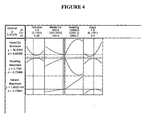
- Figure 4 Calculated optimal rotational speed (0.705 rpm), media volume (300 ml), seeding density (2,500 cells/cm sq.), and days in culture (6.1 days) to achieve the minimum hours/ population doubling (38.07 hours), maximum population doublings (3.17), and maximum harvest density (cell/ cm sq.)(1.8E+04).
- the black lines on each graph represent the plotted values of the factor levels (low to high along the x-axis) vs. response values (minimal to maximal along the y-axis).
- the blue line represents the single maximum, or minimal, y-axis value for all four graphs.
- the red line represents the point on the x-axis that the plotted value of the factors levels vs. response value (black line) intersects the single maximum y-axis value for population doublings and harvest density and the minimum y-axis value for hours per population doubling (blue line) thus defining the optimal factor levels.
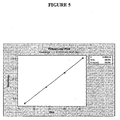
- Figure 5 Population Doublings vs. Days in Culture of umbilical cell line 050604B expanded from passage six to passage nine under optimized roller bottle culture conditions
- the invention provides methods of maximizing the amount of anchorage-dependent cells available for harvest from a population of cells grown in a roller bottle culture system, the growth rate of such a culture and the total number of doublings of such a culture.
- the invention provides methods for simultaneously maximizing all three of the foregoing parameters. Cells and populations of cells produced by the foregoing methods are also provided herein
- roller bottle culture systems are known in the art of cell culture.
- roller bottle culture systems comprise at least a cell line of interest, growth medium, roller bottles, an apparatus for rotating the bottles, and means for harvesting the cells.
- the growth medium preferably comprises a basal medium, for example, Dulbecco's Modified Eagle's Medium (DMEM), Advanced DMEM, Ham's F12, or combinations thereof, for example 1:1 DMEM:F12.
- DMEM Dulbecco's Modified Eagle's Medium
- the medium can be supplemented with serum, for example in some embodiments the medium is supplemented with fetal bovine serum (FBS) or new born calf scrum (NCS).
- FBS fetal bovine serum
- NCS new born calf scrum
- the scrum content can range in concentration from 0 (a scrum-free media) to 20% of the total volume of the medium.
- Growth factors for example, platelet derived growth factor BB (PDGF-BB), basic fibroblast growth factor (bFGF), and others, or combinations of such may be used to supplement the growth medium.
- PDGF-BB platelet derived growth factor BB
- bFGF basic fibroblast growth factor
- serum-containing or serum-free media can be with or without growth factor supplementation.
- Roller bottle culture systems typically further comprise means for controlling the temperature during the incubation, as well as means for aseptically handling the cultures, for example during initial seeding of the bottles with cells, or during subsequent transfers.
- Harvesting of the cells may be achieved through enzymatic treatment such as with trypsin, trypsin-EDTA, dispase, and col lagenase, or other enzymes or combinations of enzymes with or without other components.
- Other commercial products such as but not limited to TrypLE TM Express (Gibco, Inc.) can be utilized.
- the cells also can be harvested by manual operations including, for example, batch centrifugation, or harvesting can be automated.
- the methods of maximizing the amount of cells available for harvest preferably are applied to postpartum-derived cells, particularly cells derived from the placenta or umbilicus.
- Cells of the type preferred here are described in U.S. Patent Application Nos: 10/877,446 (placenta-derived cells) and 10/877,012 (umbilicus-derived cells), each filed June 25, 2004.
- cells of the types available from the American Type Culture Collection as ATCC Accession Nos. PTA-6067; PTA-6068; PTA-6074; PTA-6075; or PTA-6079.
- Particularly preferred for the present methods directed to maximized or optimized methods for culturing umbilical-derived cells are ATCC Accession Nos. PTA-6067 and PTA-6068.
- the invention provides methods of maximizing the number of population doublings achievable for a population of cells grown in a roller bottle culture system.
- the cells are postpartum-derived cells, and even more preferably the cells are umbilicus-derived cells.
- the cells are ATCC Accession No: PTA-6067 or PTA-6068.
- the independent variables which have been used to maximize the number of population doublings achievable in a roller bottle culture are rotational speed, seeding density of the cells into the bottles, time of incubation, and volume of medium placed in the bottle.
- rotational speed seeding density of the cells into the bottles
- time of incubation time of incubation
- volume of medium placed in the bottle volume of medium placed in the bottle.
- these independent variables have been tested, for reasons of practicality, within certain ranges. The skilled artisan will appreciate that other values outside of the tested ranges could be routinely tested using the same methodology, and these values may prove to offer incremental gains in the number of population doublings.
- Maximal response of the dependent variable, here the number of population doublings achieved is measured as a function of these parameters and embodiments not specifically exemplified herein are contemplated as part of this disclosure.
- RSM response surface methodology
- the independent variables tested can reproducibly affect the maximal number of population doublings.
- the statistical analysis of the data allows the skilled artisan to determine the optimal value for each of the four independent variables to maximize the number of doublings.
- the bottles are filled about 300 ml of growth medium.
- the seeding is at an even lower end of the tested range - the seeding is done with about 2500 cells per square centimeter.
- the seeding bottles are rotated during attachment and growth.
- the rotational speed is set at between 0.65 to 0.9 rpm.
- the rotation is between 0.75 and 1 rpm.
- the bottles are rotated at 0.8 to 1 rpm. Rotation near or about I rpm is preferred as can be seen in Figure 1 .
- the filled and seeded roller bottles are rotated and incubated for 5.5 to 6.5 days to achieve maximal doublings.
- Figure 1 reflects, incubation for 6.2 to 6.3 days is also preferred.
- the independent variable can be selected as a set of parameters to maximize the number of population doublings.
- a roller bottle culture system that comprises a fill volume of about 112 ml of growth medium, and a seeding density of about 2500 cells per square centimeter, which is rotated at a speed of about 1 rpm for an incubation of about 6.2 days will provide the maximal population doublings achievable in such a system.
- roller bottles preferred for use are typically coated with an agent that aids in the attachment of the cells to the inner surface of the roller bottles, such as gelatin, extracellular matrix molecules (such as gelatin, laminin, vitronectin, fibronectin, collagen types I, IV, and VI), or the like. While for many of the embodiments exemplified, a gelatin coating was used, other coating are deemed suitable and the skilled artisan will appreciate that commercially-available coated bottles are completely compatible with the methods taught herein. One example of such commercially available coated bottles are those coated with CellBIND ® (available from Corning ® as catalog number 3907). The use of CellBIND ® bottles and a comparison with gelatin-coated bottles is exemplified in Example 4 below. It is envisioned that various coating agents will be found acceptable for attachment and growth of cells in accordance with the methods provided herein.
- an agent that aids in the attachment of the cells to the inner surface of the roller bottles such as gelatin, extracellular matrix molecules (such as gelatin, laminin, vitro
- the invention provides methods of minimizing the number of hours/population doubling (see Figure 2 ), or alternatively expressed, maximizing the population doubling rate for a population of cells grown in a roller bottle culture system.
- the population doubling rate is the number of population doublings per unit time, and is a reciprocal of the hours per population doubling. Achieving maximal population doubling rate reduces the amount of time required to produce a needed number of cell for therapeutic applications and increases the total throughput of a culture system of limited capacity.
- the cells are postpartum-derived cells, and even more preferably the cells are umbilicus-derived cells. In a presently preferred embodiment the cells are ATCC Accession No: PTA-6067 or PTA-6068.
- the independent variables which have been used to maximize the number of population doublings achievable in a roller bottle culture are the same as for achieving the maximal number of population doublings: rotational speed, seeding density of the cells into the bottles, time of incubation, and volume of medium placed in the bottle.
- Maximal response of the dependent variable, here the population doubling rate, is measured and computed as a function of these parameters.
- roller bottlcs arc filled about 100-300 ml of growth medium, preferably about 300 ml are used, as can be seen from Figure 2 .
- the bottles are seeded with about 2500 to about 10,000 cells per square centimeter. In a presently preferred embodiment, the lower end of that range is used, for example seeding is with less than about 3000 cells per square centimeter. Still more preferred arc embodiments where the seeding is at about 2500 cells per square centimeter.
- the seeded bottles are rotated during attachment and growth.
- the rotational speed is set at between about 0.5 to 1 rpm, as can be seen from Figure 2 .
- the rotation is between about 0.75 and 1 rpm. More preferably, the bottles are rotated at about 0.8 to 1 rpm. Rotation near or about 0.9 -1.0 rpm is presently preferred, as shown in the figure.
- the filled and seeded roller bottles are rotated and incubated for about 5 to 7 days, with an incubation time of about 5 to about 6 days preferred.
- Figure 2 shows that incubation for about 5 days is also preferred.
- the independent variables can be selected as a set of parameters to maximize the population doubling rate, based on the results shown in Figure 2 .
- a roller bottle culture system that comprises a fill volume of about 300 ml of growth medium, and a seeding density of about 2500 cells per square centimeter, which is rotated at a speed of about 0.9 rpm for an incubation of about 5 days will provide the maximal population doubling rate achievable in such a system.
- the invention provides methods of maximizing the density of anchorage-dependent cells available for harvest from a population of cells grown in a roller bottle culture system.
- the cells are postpartum-derived cells, and even more preferably the cells are umbilicus-derived cells.
- the cells are ATCC Accession No: PTA-6067 or PTA-6068.
- the invention provides methods of maximizing the density of the cell population for harvest for a population of cells grown in a roller bottle culture system.
- Harvest density is expressed as the number of cells per square centimeter (of internal surface area in a roller bottle).
- the independent variables which have been used to maximize the harvest density in a roller bottle culture are the same as those for maximizing the other responses discussed herein, i.e rotational speed, seeding density of the cells into the bottles, time of incubation, and volume of medium placed in the bottle. Maximal response of the harvest density is measured and computed as a function of these parameters.
- Regression analysis, and particularly RSM was employed here as above to help maximize the dependent variable as a function of the four independent variables.
- roller bottles arc filled about 100-300 ml of growth medium, preferably about 300 ml are used, as can be seen from Figure 3 .
- the bottles are seeded with about 2500 to about 10,000 cells per square centimeter, preferably the seeding density is selected from the lower end of that range, such as a value less than about 3000 cells per square centimeter. More preferred are those embodiments wherein seeding density is at about 2500 cells per square centimeter.
- the seeded bottles are rotated throughout attachment and growth at a speed between about 0.5 to 1 rpm, as shown in Figure 3 .
- rotation is between about 0.75 and 1 rpm. More preferably, the bottles are rotated at about 0.8 to 1 rpm. Rotation near or about 0.9-1.0 rpm is presently preferred, for example 0.98 rpm, as shown in the figure.
- the filled and seeded roller bottles are rotated and incubated for about 5 to 7 days, with an incubation time of about 6 to about 7 days preferred.
- Figure 3 shows that incubation for about 5.8 to less than about 6 days or for about 6.5 to about 6.7 days is also preferred.
- the invention provides methods of simultaneously minimizing the number of hours/population doubling, while maximizing the number of population doublings and the harvest density (in cells per square centimeter) for a population of cells grown in a roller bottle culture system.
- Such optimization of the culture conditions makes the roller bottle culture system more useful for generating the number of cells required for a therapeutic application and increases the total throughput of a culture system of limited capacity.
- the cells are postpartum-derived cells, and even more preferably the cells are umbilicus-derived cells.
- the cells are ATCC Accession No: PTA-6067 or PTA-6068.
- the independent variables which have been adjusted to help simultaneously maximize the number of population doublings achievable, the rate of population doublings and the final harvest density of the cells in a roller bottle culture are the same as detailed above for maximizing the individual aspects: i.e. rotational speed, seeding density of the cells into the bottles, time of incubation, and volume of medium placed in the bottle. Maximal response of the dependent variables is measured and calculated as a function of these independent parameters.
- regression analysis and particularly RSM was utilized to help simultaneously maximize the three dependent variables as a function of the four independent variables.
- roller bottles are filled about 100-300 ml of growth medium, preferably about 300 ml are used, as can be seen with reference to Figure 4 .
- the bottles arc seeded with about 2500 to about 10,000 cells per square centimeter. In a presently preferred embodiment, the lower end of that range is used, for example seeding is with less than about 3000 cells per square centimeter. Still more preferred are embodiments where the seeding is at about 2500 cells per square centimeter. Even lower seeding density is used is other embodiments.
- the seeded bottles are rotated during attachment and growth at speeds between about 0.5 to 1 rpm. With further reference to Figure 4 , in can be seen that preferably, the rotation is between about 0.6 and 0.9 rpm. More preferably, the bottles are rotated at about 0.65 to 0.93 rpm. Also preferred are culture systems wherein the rotation is near or about 0.85 - 0.9 rpm as can be seen in the figure.
- the filled and seeded roller bottles are rotated and incubated for about 5 to 7 days, with an incubation time of about 5.5 to about 6.5 days preferred.
- Figure 4 shows that incubation for about 6 days is also preferred, such as 5.9, 6.0, 6.1 or 6.2 days.
- the independent variables can be selected as a set of parameters to maximize the population doubling rate, based on the results shown in Figure 4 .
- a roller bottle culture system that comprises a fill volume of about 300 ml of growth medium, and a seeding density of about 2500 cells per square centimeter, which is rotated at a speed of about 0.7 rpm for an incubation of about 6.1 days will provide the optimal population doubling rate, total number of doublings and harvest density for the cells achievable in such a system.
- the invention provides postpartum cells, preferably umibilicus-derived cells, that are produced are produced by any of the methods of the invention, for example the maximized methods or optimized.
- the cells are produced in populations for use as cell therapeutics, or to provide useful cellular product or byproducts, such as useful cellular factors, or proteins.
- cell therapeutic compositions comprising cells cultured by the methods provided herein.
- the cells that are cultured according to the methods provided are characterized as having substantially the same cell surface marker profile or gcnc expression profile as the starting cells.
- the cellular characteristics do not change when scaling up the culture conditions to increase quantities.
- the morphology, cell surface markers, and expression of hallmark genes that help distinguish or denote the therapeutic cell should remain substantially unchanged if not identical.
- the cells provided in accordance with the invention and the methods taught therein are substantially unchanged, or preferably identical in such characteristics as the same cells grown under laboratory conditions ad scale.
- the preferred umbilicus-derived cells retain substantially the same the cell surface marker profile of the cells from which they are grown.
- the cells produced according to the methods provided herein express more than one of surface markers for CD10, CD13, CD44, CD73, CD90, PDGFr-alpha, and HLA-ABC. More preferably they express all of these markers.
- the cells also preferably do not express more than one of the cell surface markers for CD31, CD34, CD45, CD117, CD141, and HLA-DRDPDQ. More preferably the cells do not express any of the foregoing.
- the cells express an identical cell surface marker profile with respect to each of CD10, CD13, CD44, CD73, CD90, PDGFr-alpha, HLA-ABC, CD31, CD34, CD45, CD117, CD141, and HLA-DRDPDQ.
- preferred cells are positive for expression of CD10, CD13, CD44, CD73, CD90, PDGFr-alpha, and HLA-ABC, but negative for expression of CD31, CD34, CD45, CD117, CD141, and HLA-DRDPDQ.
- a cell surface marker protein can be detected through use of a fluorescently-labeled antibody the cell is deemed positive and if the cell surface marker cannot be detected via fluorescent antibody, the cell is deemed negative for that marker.
- Table 7 provides a summary of the preferred cell surface markers for the umbilicus-derived cells of the invention.
- the cells produced in accordance with the methods of the invention preferably retain substantially the same, or even identical gene expression profile, particularly for genes whose expression help to characterize the cell, or serve as hallmarks indicative of that cell line.
- the umbilicus-derived cells of the invention are noted for the expression genes for reticulon, LDL-R, IL-8, and GAPDH.
- the cells provided are substantially similar, or even identical in various embodiments with respect to their expression of these genes.
- Cells The cells used were from umbilicus-derived cell line ATCC Accession Nos. PTA-6067 and/or PTA-6068.
- the growth medium used during the optimization experiments was Dulbccco's Modified Eagle Medium (DMEM) with low glucose, 15% Fetal Bovine Serum, 1% Penicillin-Streptomycin, and 1 ppm 2-Mercaptoethanol.
- DMEM Dulbccco's Modified Eagle Medium
- Bottles 850 cm sq bottles were used (e.g. Corning ® catalog number 430851)
- Gelatin Coating Twenty (20) ml of 2% gelatin solution were added to each 850 cm sq bottle. The bottles were placed on the roller system for 20 minutes at 1 rpm. The excess gelatin solution was removed by aspiration and the bottles washed with 20 ml Phosphate Buffered Saline (PBS).
- PBS Phosphate Buffered Saline
- Table 1 Experiments as provided in Table 1 were set up in accordance with the above procedures.
- Table 2 Box-Behnken Response Surface Experimental Design to evaluate the factors and factor interactions that significantly effect cell yield as calculated by Minitab 14.0 statistical software. The highest and lowest factor levels for rotational speed (low 0.5 rpm, high 1.0 rpm), media volume (low 100ml, high 500ml), seeding density (low 2,500 cell/cm sq., high 10,000 cells/cm sq.) and days in culture (low 5 days, high 7days) are user-defined and the mid point is calculated.
- the cells used were umbilicus-derived cells identified as CBAT 050604B P6 (passage 6).
- DMEM Dulbecco's Modified Eagle Medium
- Bottles The bottles used were 850 cm sq culture bottles (e.g. Corning ® catalog number 430851).
- Gelatin Coating Twenty milliliters of 2% gelatin solution were added to each 850 cm sq bottle. The bottles were placed on the roller system for 20 minutes. The gelatin solution was removed by aspiration and each bottle was washed with 20 ml PBS.
- Cell Seeding 5.0E+06 P9 umbilical-derived cells (# 050604B) were thawed from a single cryogenic vial and washed to remove DMSO. Cells (2.12E+06) were seeded into a single 850 cm sq roller bottle pre-filled with 300 ml media and pre-gassed for 1 minute with compressed air containing 5% CO 2 , 95% atmospheric gas.
- Cells used for characterization experiments were umbilicus-derived cells at passage 6 (050604B P6)
- DMEM Dulbecco's Modified Eagle Medium
- Fetal Bovine Serum 15% Fetal Bovine Serum
- Penicillin-Streptomycin 2-Mercaptoethanol was used as the growth medium.
- Bottles 850 cm sq bottles (e.g. Corning ® catalog number 430851)
- Gelatin Coating Twenty (20) ml of 2% gelatin solution was added to each 850 cm sq bottle. The bottles were placed on the roller system for 20 minutes. The gelatin solution was removed by aspiration and each bottle was washed with 20 ml PBS.
- Umbilicus-derived cells at passage 9 (5.0E+06 P9) were thawed from a single cryogenic vial and washed to remove DMSO. Cells (2.12E+06) were seeded into 850 cm sq roller bottles pre-filled with 300 ml media and pre-gassed for 1 minute with compressed air containing 5% CO 2 , 95% atmospheric gas.
- Antibody Staining for Flow Cytometry Analysis Cells were and re-suspended in 3% (v/v) FBS in PBS at a cell concentration of 1x10⁷ per milliliter. Antibody is added as per manufacture's specifications and incubated with cells in the dark for 30 minutes at 4 °C. After incubation, cells were washed with PBS and centrifuged to remove unbound antibody. Cells were re-suspended in 500 microliter PBS and analyzed by flow cytometry.
- Flow Cytometry analysis was performed with a FACScaliburTM (Becton Dickinson San Jose, CA) instrument.
- Antibodies The following antibodies were used: Antibody Manufacture Catalog Number CD10 BD Pharmingen (San Diego, CA) 555375 CD13 BD Pharmingen (San Diego, CA) 555394 CD31 BD Pharmingen (San Diego, CA) 555446 CD34 BD Pharmingen (San Diego, CA) 555821 CD44 BD Pharmingen (San Diego, CA) 555478 CD45RA BD Pharmingen (San Diego, CA) 555489 CD73 BD Pharmingen (San Diego, CA) 550257 CD90 BD Pharmingen (San Diego, CA) 555596 CD117 BD Biosciences (San Jose, CA) 340529 CD141 BD Pharmingen (San Diego, CA) 559781 PDGFr-alpha BD Pharmingen (San Diego, CA) 556002 HLA-A, B, C BD Pharmingen (San Diego, CA) 555553 HLA-DR, DP, DQ
- signature genes oxidized LDL receptor, interleukin-8, rcnin and rcticulon
- PCR was performed on cDNA samples using Assays-on-DemandTM gene expression products: oxidized LDL receptor (Hs00234028), renin (Hs00166915), reticulon (Hs00382515) CXC ligand 3 (Hs00171061), GCP-2 (Hs00605742) IL-8 (Hs00174103) and GAPDH (Applied Biosystems, Foster City, CA) were mixed with cDNA and TaqMan Universal PCR master mix according to the manufacturer's instructions (Applied Biosystems, Foster City, CA) using a 7000 sequence detection system with ABI prism 7000 SDS software (Applied Biosystems, Foster City, CA). Thermal cycle conditions were initially 50°C for 2 min and 95°C for 10 min followed by 40 cycles of 95°C for 15 sec and 60°C for I min.
- Table 8 Expression of cell surface proteins expressed by Umb 050604B cells expanded with static TC flask methods or with the optimized roller bottle method as analyzed by flow cytometry.
- Cell Surface Marker Static TC Flasks Roller Bottles CD 10 (+) (+) CD 13 (+) (+) CD 31 (-) (-) CD 34 (-) (-) CD 44 (+) (+) CD 45 (-) (-) CD 73 (+) (+) CD 90 (+) (+) CD 117 (-) (-) CD 141 (-) (-) PDGFr-alpha (+) (+) (+) HLA-ABC (+) (+) HLA-DRDPDQ (-) (-)
- Table 9 Comparison of CT values for genes expressed by cells (Umb 050604B) expanded in static plastic with those grown TC flasks in the optimized roller bottle conditions.
- CT Values CT Values-Normalized Cell Line reticulon LDL-R IL-8 GAPDH reticulon LDL-R IL-8 Umb-static culture 27.79 32 28.7 27.02 0.972 0.844 0.941 Umb-roller bottles 24.22 27.37 19.91 20.49 0.846 0.749 1.029
- DMEM Dulbecco's Modified Eagle Medium
- Bottles Corning ® 850 cm sq bottles (catalog number 430851), CellBIND ® Corning ® 850 cm sq bottles (catalog number 3907)
- Gelatin Coating 20 ml of 2% gelatin solution was added to Corning ® 850 cm sq bottles (catalog number 430851) and placed on the roller system for 20 minutes. The gelatin solution was removed by aspiration and washed with 20 ml PBS. CellBIND ® Corning ® 850 cm sq bottles are not coated.
Landscapes
- Health & Medical Sciences (AREA)
- Life Sciences & Earth Sciences (AREA)
- Engineering & Computer Science (AREA)
- Biomedical Technology (AREA)
- Bioinformatics & Cheminformatics (AREA)
- Zoology (AREA)
- Organic Chemistry (AREA)
- Gynecology & Obstetrics (AREA)
- Biotechnology (AREA)
- Reproductive Health (AREA)
- Developmental Biology & Embryology (AREA)
- Genetics & Genomics (AREA)
- Chemical & Material Sciences (AREA)
- Wood Science & Technology (AREA)
- Cell Biology (AREA)
- Microbiology (AREA)
- Biochemistry (AREA)
- General Engineering & Computer Science (AREA)
- General Health & Medical Sciences (AREA)
- Pregnancy & Childbirth (AREA)
- Micro-Organisms Or Cultivation Processes Thereof (AREA)
- Medicines Containing Material From Animals Or Micro-Organisms (AREA)
Applications Claiming Priority (2)
| Application Number | Priority Date | Filing Date | Title |
|---|---|---|---|
| US75155005P | 2005-12-19 | 2005-12-19 | |
| PCT/US2006/062315 WO2007073552A1 (en) | 2005-12-19 | 2006-12-19 | In vitro expansion of postpartum derived cells in roller bottles |
Publications (2)
| Publication Number | Publication Date |
|---|---|
| EP1976975A1 EP1976975A1 (en) | 2008-10-08 |
| EP1976975B1 true EP1976975B1 (en) | 2012-08-01 |
Family
ID=37882293
Family Applications (1)
| Application Number | Title | Priority Date | Filing Date |
|---|---|---|---|
| EP06840316A Not-in-force EP1976975B1 (en) | 2005-12-19 | 2006-12-19 | In vitro expansion of postpartum derived cells in roller bottles |
Country Status (7)
| Country | Link |
|---|---|
| US (1) | US8741638B2 (https=) |
| EP (1) | EP1976975B1 (https=) |
| JP (1) | JP5179376B2 (https=) |
| CN (1) | CN101410511B (https=) |
| AU (1) | AU2006327073B2 (https=) |
| ES (1) | ES2391034T3 (https=) |
| WO (1) | WO2007073552A1 (https=) |
Families Citing this family (43)
| Publication number | Priority date | Publication date | Assignee | Title |
|---|---|---|---|---|
| US7311905B2 (en) * | 2002-02-13 | 2007-12-25 | Anthrogenesis Corporation | Embryonic-like stem cells derived from post-partum mammalian placenta, and uses and methods of treatment using said cells |
| US9592258B2 (en) | 2003-06-27 | 2017-03-14 | DePuy Synthes Products, Inc. | Treatment of neurological injury by administration of human umbilical cord tissue-derived cells |
| EP2399990B1 (en) | 2003-06-27 | 2015-07-22 | DePuy Synthes Products, Inc. | Cells derived from post-partum umbilical cord for use in treatment of disease of the heart and circulatory system |
| US9572840B2 (en) | 2003-06-27 | 2017-02-21 | DePuy Synthes Products, Inc. | Regeneration and repair of neural tissue using postpartum-derived cells |
| US8790637B2 (en) | 2003-06-27 | 2014-07-29 | DePuy Synthes Products, LLC | Repair and regeneration of ocular tissue using postpartum-derived cells |
| US8491883B2 (en) * | 2003-06-27 | 2013-07-23 | Advanced Technologies And Regenerative Medicine, Llc | Treatment of amyotrophic lateral sclerosis using umbilical derived cells |
| US7875272B2 (en) | 2003-06-27 | 2011-01-25 | Ethicon, Incorporated | Treatment of stroke and other acute neuraldegenerative disorders using postpartum derived cells |
| US8518390B2 (en) | 2003-06-27 | 2013-08-27 | Advanced Technologies And Regenerative Medicine, Llc | Treatment of stroke and other acute neural degenerative disorders via intranasal administration of umbilical cord-derived cells |
| US20060153815A1 (en) * | 2004-12-21 | 2006-07-13 | Agnieszka Seyda | Tissue engineering devices for the repair and regeneration of tissue |
| US20060171930A1 (en) * | 2004-12-21 | 2006-08-03 | Agnieszka Seyda | Postpartum cells derived from umbilical cord tissue, and methods of making, culturing, and using the same |
| US20060166361A1 (en) * | 2004-12-21 | 2006-07-27 | Agnieszka Seyda | Postpartum cells derived from placental tissue, and methods of making, culturing, and using the same |
| CA2589041C (en) | 2004-12-23 | 2019-08-20 | DePuy Synthes Products, Inc. | Postpartum cells derived from umbilical cord tissue, and methods of making and using the same |
| EP1835924B1 (en) | 2004-12-23 | 2013-08-21 | Ethicon, Incorporated | Treatment of parkinson's disease and related disorders using postpartum derived cells |
| NZ597304A (en) | 2005-10-13 | 2013-06-28 | Anthrogenesis Corp | Immunomodulation using placental stem cells |
| WO2007070870A1 (en) * | 2005-12-16 | 2007-06-21 | Ethicon, Inc. | Compositions and methods for inhibiting adverse immune response in histocompatibility-mismatched transplantation |
| US8741638B2 (en) | 2005-12-19 | 2014-06-03 | DePuy Synthes Products, LLC | In vitro expansion of postpartum-derived cells in roller bottles |
| US9125906B2 (en) | 2005-12-28 | 2015-09-08 | DePuy Synthes Products, Inc. | Treatment of peripheral vascular disease using umbilical cord tissue-derived cells |
| EP1979050B1 (en) * | 2005-12-28 | 2017-04-19 | DePuy Synthes Products, Inc. | Treatment of peripheral vascular disease using postpartum-derived cells |
| PL2471907T3 (pl) | 2005-12-29 | 2019-07-31 | Celularity, Inc. | Populacje komórek macierzystych łożyska |
| CN101595212B (zh) | 2006-10-12 | 2014-04-30 | 伊西康公司 | 肾源细胞及在组织修复和再生中的使用方法 |
| US8562972B2 (en) | 2006-10-23 | 2013-10-22 | Anthrogenesis Corporation | Methods and compositions for treatment of bone defects with placental cell populations |
| CN101611139B (zh) * | 2006-11-13 | 2012-07-04 | 伊西康公司 | 利用微载体的产后来源的细胞的体外扩增 |
| NZ612888A (en) | 2007-02-12 | 2015-02-27 | Anthrogenesis Corp | Treatment of inflammatory diseases using placental stem cells |
| RU2536242C2 (ru) | 2007-09-28 | 2014-12-20 | Антродженезис Корпорейшн | Угнетение опухолей с помощью плацентарного перфузата человека и выделенных из плаценты человека вспомогательных натуральных клеток-киллеров |
| ES2525718T3 (es) * | 2007-10-05 | 2014-12-29 | DePuy Synthes Products, LLC | Reparación y regeneración de tejido renal mediante células derivadas de tejido de cordón umbilical humano |
| US8236538B2 (en) * | 2007-12-20 | 2012-08-07 | Advanced Technologies And Regenerative Medicine, Llc | Methods for sterilizing materials containing biologically active agents |
| KR20200011604A (ko) | 2008-08-20 | 2020-02-03 | 안트로제네시스 코포레이션 | 개선된 세포 조성물 및 그의 제조 방법 |
| CA2734237C (en) | 2008-08-20 | 2019-07-02 | Anthrogenesis Corporation | Treatment of stroke using isolated placental cells |
| CA2734446C (en) | 2008-08-22 | 2017-06-20 | Anthrogenesis Corporation | Methods and compositions for treatment of bone defects with placental cell populations |
| US10179900B2 (en) | 2008-12-19 | 2019-01-15 | DePuy Synthes Products, Inc. | Conditioned media and methods of making a conditioned media |
| JP5518893B2 (ja) | 2008-12-19 | 2014-06-11 | アドバンスト・テクノロジーズ・アンド・リジェネレイティブ・メディスン・エルエルシー | 肺ならびに肺の疾患および障害の治療 |
| EP2411504B1 (en) | 2009-03-26 | 2017-05-10 | DePuy Synthes Products, Inc. | Human umbilical cord tissue cells as therapy for alzheimer's disease |
| US8906306B2 (en) * | 2009-04-09 | 2014-12-09 | Roche Molecular Systems, Inc. | Fluid transfer control for real-time PCR |
| US20110177564A1 (en) | 2010-01-15 | 2011-07-21 | Massachusetts Institute Of Technology | Bioprocess and microbe engineering for total carbon utilization in biofuel production |
| DK3284818T3 (da) | 2010-01-26 | 2022-06-20 | Celularity Inc | Behandling af knoglerelateret kræft ved hjælp af placenta stamceller |
| DK2556145T3 (en) | 2010-04-07 | 2016-11-07 | Anthrogenesis Corp | Angiogenesis using placental stem cells |
| EP2555783A1 (en) | 2010-04-08 | 2013-02-13 | Anthrogenesis Corporation | Treatment of sarcoidosis using placental stem cells |
| MX342995B (es) | 2010-07-13 | 2016-10-21 | Anthrogenesis Corp | Métodos de generar células asesinas naturales. |
| WO2012092485A1 (en) | 2010-12-31 | 2012-07-05 | Anthrogenesis Corporation | Enhancement of placental stem cell potency using modulatory rna molecules |
| ES2707579T3 (es) | 2011-06-01 | 2019-04-04 | Celularity Inc | Tratamiento del dolor usando citoblastos placentarios |
| JP5853512B2 (ja) * | 2011-09-08 | 2016-02-09 | 大日本印刷株式会社 | 細胞培養容器とその製造方法 |
| US20140170748A1 (en) | 2012-12-14 | 2014-06-19 | DePuy Synthes Products, LLC | Nutrient Enriched Media for hUTC Growth |
| AU2014215458A1 (en) | 2013-02-05 | 2015-08-13 | Anthrogenesis Corporation | Natural killer cells from placenta |
Family Cites Families (147)
| Publication number | Priority date | Publication date | Assignee | Title |
|---|---|---|---|---|
| US4352883A (en) | 1979-03-28 | 1982-10-05 | Damon Corporation | Encapsulation of biological material |
| US5266476A (en) * | 1985-06-18 | 1993-11-30 | Yeda Research & Development Co., Ltd. | Fibrous matrix for in vitro cell cultivation |
| US5902741A (en) | 1986-04-18 | 1999-05-11 | Advanced Tissue Sciences, Inc. | Three-dimensional cartilage cultures |
| US5460939A (en) | 1986-04-18 | 1995-10-24 | Advanced Tissue Sciences, Inc. | Temporary living skin replacement |
| US5863531A (en) | 1986-04-18 | 1999-01-26 | Advanced Tissue Sciences, Inc. | In vitro preparation of tubular tissue structures by stromal cell culture on a three-dimensional framework |
| US5266480A (en) | 1986-04-18 | 1993-11-30 | Advanced Tissue Sciences, Inc. | Three-dimensional skin culture system |
| US4963489A (en) | 1987-04-14 | 1990-10-16 | Marrow-Tech, Inc. | Three-dimensional cell and tissue culture system |
| JPS642643A (en) | 1987-06-26 | 1989-01-06 | Bio Material Yunibaasu:Kk | Artificial skin |
| JPH0191775A (ja) * | 1987-10-01 | 1989-04-11 | Snow Brand Milk Prod Co Ltd | 接着性動物細胞の培養方法 |
| NZ226750A (en) | 1987-10-29 | 1990-09-26 | Amrad Corp Ltd | Immortalisation of neural precursor cells by introducing a retrovirus vector containing a myc-oncogene |
| US5004681B1 (en) | 1987-11-12 | 2000-04-11 | Biocyte Corp | Preservation of fetal and neonatal hematopoietic stem and progenitor cells of the blood |
| US5192553A (en) | 1987-11-12 | 1993-03-09 | Biocyte Corporation | Isolation and preservation of fetal and neonatal hematopoietic stem and progenitor cells of the blood and methods of therapeutic use |
| GB8803697D0 (en) | 1988-02-17 | 1988-03-16 | Deltanine Research Ltd | Clinical developments using amniotic membrane cells |
| US20030032178A1 (en) | 1988-08-04 | 2003-02-13 | Williams Robert Lindsay | In vitro propagation of embryonic stem cells |
| US5437994A (en) | 1989-06-15 | 1995-08-01 | Regents Of The University Of Michigan | Method for the ex vivo replication of stem cells, for the optimization of hematopoietic progenitor cell cultures, and for increasing the metabolism, GM-CSF secretion and/or IL-6 secretion of human stromal cells |
| US5840580A (en) | 1990-05-01 | 1998-11-24 | Becton Dickinson And Company | Phenotypic characterization of the hematopoietic stem cell |
| US5342761A (en) | 1990-10-01 | 1994-08-30 | Research Development Foundation | Oncofetal gene, gene product and uses therefor |
| US5811094A (en) | 1990-11-16 | 1998-09-22 | Osiris Therapeutics, Inc. | Connective tissue regeneration using human mesenchymal stem cell preparations |
| US5486359A (en) | 1990-11-16 | 1996-01-23 | Osiris Therapeutics, Inc. | Human mesenchymal stem cells |
| US5286632A (en) | 1991-01-09 | 1994-02-15 | Jones Douglas H | Method for in vivo recombination and mutagenesis |
| US6399369B1 (en) | 1991-07-08 | 2002-06-04 | Neurospheres Holdings Ltd. | Multipotent neural stem cell cDNA libraries |
| EP0552380A4 (en) | 1991-08-08 | 1995-01-25 | Kao Corp | Cell culture support, production thereof, and production of cell cluster using same |
| WO1994000484A1 (en) | 1992-06-22 | 1994-01-06 | Young Henry E | Scar inhibitory factor and use thereof |
| US5320962A (en) | 1992-07-22 | 1994-06-14 | Duke University | DNA encoding the human A1 adenosine receptor |
| US5589376A (en) | 1992-07-27 | 1996-12-31 | California Institute Of Technology | Mammalian neural crest stem cells |
| JP3490443B2 (ja) | 1992-10-29 | 2004-01-26 | ジ・オーストラリアン・ナショナル・ユニバーシティ | 血管形成阻害性抗体 |
| US5670483A (en) | 1992-12-28 | 1997-09-23 | Massachusetts Insititute Of Technology | Stable macroscopic membranes formed by self-assembly of amphiphilic peptides and uses therefor |
| IL110589A0 (en) | 1993-08-10 | 1994-11-11 | Bioph Biotech Entw Pharm Gmbh | Growth/differentiation factor of the TGF- beta family |
| US6686198B1 (en) | 1993-10-14 | 2004-02-03 | President And Fellows Of Harvard College | Method of inducing and maintaining neuronal cells |
| US6432711B1 (en) | 1993-11-03 | 2002-08-13 | Diacrin, Inc. | Embryonic stem cells capable of differentiating into desired cell lines |
| US5456835A (en) | 1993-11-08 | 1995-10-10 | Hemasure, Inc. | Device and process for removing free hemoglobin from blood |
| US6703017B1 (en) | 1994-04-28 | 2004-03-09 | Ixion Biotechnology, Inc. | Reversal of insulin-dependent diabetes by islet-producing stem cells, islet progenitor cells and islet-like structures |
| US6001647A (en) | 1994-04-28 | 1999-12-14 | Ixion Biotechnology, Inc. | In vitro growth of functional islets of Langerhans and in vivo uses thereof |
| US5834308A (en) | 1994-04-28 | 1998-11-10 | University Of Florida Research Foundation, Inc. | In vitro growth of functional islets of Langerhans |
| US5843780A (en) | 1995-01-20 | 1998-12-01 | Wisconsin Alumni Research Foundation | Primate embryonic stem cells |
| US5736396A (en) | 1995-01-24 | 1998-04-07 | Case Western Reserve University | Lineage-directed induction of human mesenchymal stem cell differentiation |
| US5906934A (en) | 1995-03-14 | 1999-05-25 | Morphogen Pharmaceuticals, Inc. | Mesenchymal stem cells for cartilage repair |
| US5869079A (en) | 1995-06-02 | 1999-02-09 | Oculex Pharmaceuticals, Inc. | Formulation for controlled release of drugs by combining hydrophilic and hydrophobic agents |
| US6200606B1 (en) | 1996-01-16 | 2001-03-13 | Depuy Orthopaedics, Inc. | Isolation of precursor cells from hematopoietic and nonhematopoietic tissues and their use in vivo bone and cartilage regeneration |
| US5842477A (en) | 1996-02-21 | 1998-12-01 | Advanced Tissue Sciences, Inc. | Method for repairing cartilage |
| DK0888452T3 (da) | 1996-03-15 | 2004-06-14 | Munin Corp | Human CYR61, et ekstracellulært matrix-signalmolekyle |
| US5730933A (en) | 1996-04-16 | 1998-03-24 | Depuy Orthopaedics, Inc. | Radiation sterilization of biologically active compounds |
| AU2808397A (en) | 1996-04-26 | 1997-11-19 | Case Western Reserve University | Skin regeneration using mesenchymal stem cells |
| US6358737B1 (en) | 1996-07-31 | 2002-03-19 | Board Of Regents, The University Of Texas System | Osteocyte cell lines |
| US6787355B1 (en) | 1996-08-26 | 2004-09-07 | Mcgill University | Multipotent neural stem cells from peripheral tissues and uses thereof |
| US5919702A (en) | 1996-10-23 | 1999-07-06 | Advanced Tissue Science, Inc. | Production of cartilage tissue using cells isolated from Wharton's jelly |
| CA2312847C (en) | 1997-12-02 | 2014-09-30 | Zen Bio, Inc. | Differentiation of adipose stromal cells into osteoblasts and uses thereof |
| US6059968A (en) | 1998-01-20 | 2000-05-09 | Baxter International Inc. | Systems for processing and storing placenta/umbilical cord blood |
| US6291240B1 (en) | 1998-01-29 | 2001-09-18 | Advanced Tissue Sciences, Inc. | Cells or tissues with increased protein factors and methods of making and using same |
| AU749675B2 (en) | 1998-03-13 | 2002-07-04 | Mesoblast International Sarl | Uses for human non-autologous mesenchymal stem cells |
| CN1297354A (zh) | 1998-03-16 | 2001-05-30 | 西托维亚公司 | 二肽卡斯帕酶抑制剂及其用途 |
| US6171610B1 (en) | 1998-04-24 | 2001-01-09 | University Of Massachusetts | Guided development and support of hydrogel-cell compositions |
| WO1999056759A1 (en) | 1998-05-07 | 1999-11-11 | University Of South Florida | Bone marrow cells as a source of neurons for brain and spinal cord repair |
| PT1082410E (pt) | 1998-05-29 | 2007-11-09 | Osiris Therapeutics Inc | Células estaminais mesenquimatosas humanas cd45+ e/ou fibroblastos+ |
| US6323188B1 (en) | 1998-07-01 | 2001-11-27 | Donald L. Weissman | Treatment and prevention of cardiovascular diseases, heart attack, and stroke, primary and subsequent, with help of aspirin and certain vitamins |
| US20040037818A1 (en) | 1998-07-30 | 2004-02-26 | Brand Stephen J. | Treatment for diabetes |
| US5958767A (en) | 1998-08-14 | 1999-09-28 | The Children's Medical Center Corp. | Engraftable human neural stem cells |
| US6284245B1 (en) | 1998-08-25 | 2001-09-04 | Diacrin, Inc. | Neural retinal cells and retinal pigment epithelium cells and their use in treatment of retinal disorders |
| CA2359821A1 (en) | 1999-02-04 | 2000-08-10 | Mcgill University | Platform for the differentiation of cells |
| JP2002538779A (ja) | 1999-02-10 | 2002-11-19 | キュリス インコーポレイテッド | 膵臓細胞前駆細胞、それらに関する方法及び利用 |
| US20030007954A1 (en) | 1999-04-12 | 2003-01-09 | Gail K. Naughton | Methods for using a three-dimensional stromal tissue to promote angiogenesis |
| JP2002542349A (ja) | 1999-04-16 | 2002-12-10 | ダブリューエム・マーシュ・ライス・ユニバーシティー | ポリ(プロピレンフマラート)−ジアクリレートマクロマーで交差結合された生体分解性のポリ(プロピレンフマラート)ネットワーク |
| US6287340B1 (en) | 1999-05-14 | 2001-09-11 | Trustees Of Tufts College | Bioengineered anterior cruciate ligament |
| US6372494B1 (en) | 1999-05-14 | 2002-04-16 | Advanced Tissue Sciences, Inc. | Methods of making conditioned cell culture medium compositions |
| US6355699B1 (en) | 1999-06-30 | 2002-03-12 | Ethicon, Inc. | Process for manufacturing biomedical foams |
| US6333029B1 (en) | 1999-06-30 | 2001-12-25 | Ethicon, Inc. | Porous tissue scaffoldings for the repair of regeneration of tissue |
| US6429013B1 (en) | 1999-08-19 | 2002-08-06 | Artecel Science, Inc. | Use of adipose tissue-derived stromal cells for chondrocyte differentiation and cartilage repair |
| US6555374B1 (en) | 1999-08-19 | 2003-04-29 | Artecel Sciences, Inc. | Multiple mesodermal lineage differentiation potentials for adipose tissue-derived stromal cells and uses thereof |
| US6331313B1 (en) | 1999-10-22 | 2001-12-18 | Oculex Pharmaceticals, Inc. | Controlled-release biocompatible ocular drug delivery implant devices and methods |
| US20030129745A1 (en) | 1999-10-28 | 2003-07-10 | Robl James M. | Gynogenetic or androgenetic production of pluripotent cells and cell lines, and use thereof to produce differentiated cells and tissues |
| US20030082155A1 (en) | 1999-12-06 | 2003-05-01 | Habener Joel F. | Stem cells of the islets of langerhans and their use in treating diabetes mellitus |
| US20020164307A1 (en) | 1999-12-06 | 2002-11-07 | Habener Joel F. | Stem cells of the islets of langerhans and their use in treating diabetes mellitus |
| US20010046489A1 (en) | 1999-12-06 | 2001-11-29 | Habener Joel E. | Stem cells of the islets of langerhans and their use in treating diabetes mellitus |
| WO2001053503A1 (en) | 2000-01-18 | 2001-07-26 | Cornell Research Foundation, Inc. | Neural progenitor cells from hippocampal tissue and a method for isolating and purifying them |
| US7544509B2 (en) | 2000-01-24 | 2009-06-09 | Mcgill University | Method for preparing stem cell preparations |
| US6610535B1 (en) | 2000-02-10 | 2003-08-26 | Es Cell International Pte Ltd. | Progenitor cells and methods and uses related thereto |
| AU3499801A (en) | 2000-02-11 | 2001-08-20 | Schepens Eye Res Inst | Isolation and transplantation of retinal stem cells |
| ES2292564T3 (es) | 2000-02-11 | 2008-03-16 | Philadelphia Health And Education Corporation | Diferenciacion de celulas de la medula osea en celulas neuronales y usos asociados. |
| EP1263930A4 (en) | 2000-03-09 | 2004-07-21 | Saneron Ccel Therapeutics Inc | HUMAN CORD BLOOD BLOOD AS A SOURCE FOR NEURAL TISSUE FOR HEALING THE BRAIN AND BACK MARK |
| US6436704B1 (en) | 2000-04-10 | 2002-08-20 | Raven Biotechnologies, Inc. | Human pancreatic epithelial progenitor cells and methods of isolation and use thereof |
| US6673606B1 (en) | 2000-04-12 | 2004-01-06 | The Children's Hospital Of Philadelphia | Therapeutic uses for mesenchymal stromal cells |
| CA2408701A1 (en) | 2000-05-12 | 2001-11-22 | University Of Utah Research Foundation | Compositions and methods for tissue dedifferentiation and regeneration |
| US8273570B2 (en) | 2000-05-16 | 2012-09-25 | Riken | Process of inducing differentiation of embryonic cell to cell expressing neural surface marker using OP9 or PA6 cells |
| US7049072B2 (en) | 2000-06-05 | 2006-05-23 | University Of South Florida | Gene expression analysis of pluri-differentiated mesenchymal progenitor cells and methods for diagnosing a leukemic disease state |
| US6759039B2 (en) | 2000-06-30 | 2004-07-06 | Amcyte, Inc. | Culturing pancreatic stem cells having a specified, intermediate stage of development |
| US6984522B2 (en) | 2000-08-03 | 2006-01-10 | Regents Of The University Of Michigan | Isolation and use of solid tumor stem cells |
| CA2424062A1 (en) | 2000-09-29 | 2002-04-04 | Derek Van Der Kooy | Primitive neural stem cells and method for differentiation of stem cells to neural cells |
| AU2002230669A1 (en) | 2000-11-06 | 2002-05-15 | The Salk Institute For Biological Studies | Postmortem stem cells |
| AU2001297880B2 (en) | 2000-11-30 | 2007-05-31 | Stemron Inc. | Isolated homozygous stem cells differentiated cells derived therefrom and materials and methods for making and using same |
| EP2305795B1 (en) | 2000-12-06 | 2019-07-03 | Celularity, Inc. | Method of collecting placental stem cells |
| US7311905B2 (en) | 2002-02-13 | 2007-12-25 | Anthrogenesis Corporation | Embryonic-like stem cells derived from post-partum mammalian placenta, and uses and methods of treatment using said cells |
| US6599323B2 (en) | 2000-12-21 | 2003-07-29 | Ethicon, Inc. | Reinforced tissue implants and methods of manufacture and use |
| CA2365376C (en) | 2000-12-21 | 2006-03-28 | Ethicon, Inc. | Use of reinforced foam implants with enhanced integrity for soft tissue repair and regeneration |
| US7449180B2 (en) | 2001-02-06 | 2008-11-11 | John Kisiday | Macroscopic scaffold containing amphiphilic peptides encapsulating cells |
| EP2316918B1 (en) | 2001-02-14 | 2015-07-01 | Anthrogenesis Corporation | Post-partum mammalian placenta, its use and placental stem cells therefrom |
| ES2432493T3 (es) | 2001-02-14 | 2013-12-03 | Anthrogenesis Corporation | Placenta de mamífero post-parto, su uso y células madre de la misma |
| EP1385935A4 (en) | 2001-03-29 | 2004-09-15 | Ixion Biotechnology Inc | METHOD FOR TRANSDIFFERENTIATION OF NON-PANCREATIC STEM CELLS IN THE PANCREAS DIFFERENTIATION PATHWAY |
| US20030211605A1 (en) | 2001-05-01 | 2003-11-13 | Lee Sang-Hun | Derivation of midbrain dopaminergic neurons from embryonic stem cells |
| US20030022369A1 (en) | 2001-05-18 | 2003-01-30 | Helen Fillmore | Differentiation of specialized dermal and epidermal cells into neuronal cells |
| EP1401282A4 (en) | 2001-05-25 | 2005-03-30 | Cythera Inc | DIFFERENTIATION OF STEM CELLS |
| AU2002324645C1 (en) | 2001-08-08 | 2008-11-06 | Levesque Biosciences, Inc. | Compositions and methods for isolation, propagation, and differentiation of human stem cells and uses thereof |
| US20030211603A1 (en) | 2001-08-14 | 2003-11-13 | Earp David J. | Reprogramming cells for enhanced differentiation capacity using pluripotent stem cells |
| AU2002313817A1 (en) | 2001-08-27 | 2003-03-10 | Advanced Cell Technology, Inc. | Trans-differentiation and re-differentiation of somatic cells and production of cells for cell therapies |
| US20030104997A1 (en) | 2001-09-05 | 2003-06-05 | Black Ira B. | Multi-lineage directed induction of bone marrow stromal cell differentiation |
| CA2463914A1 (en) | 2001-10-18 | 2003-04-24 | Ixion Biotechnology, Inc. | Conversion of liver stem and progenitor cells to pancreatic functional cells |
| US7129034B2 (en) | 2001-10-25 | 2006-10-31 | Cedars-Sinai Medical Center | Differentiation of whole bone marrow |
| KR20050044393A (ko) | 2001-11-09 | 2005-05-12 | 아르테셀 사이언스, 인크. | 지방 조직 유래된 스트로마 세포의 내분비 췌장 분화 및이의 용도 |
| JP3728750B2 (ja) | 2001-11-22 | 2005-12-21 | ニプロ株式会社 | 培養皮膚及びその製造方法 |
| AU2002341725A1 (en) | 2001-12-06 | 2003-07-09 | The Regents Of The University Of California | Method for differentiating islet precursor cells into beta cells |
| CA2470539C (en) | 2001-12-07 | 2011-10-04 | Geron Corporation | Islet cells from human embryonic stem cells |
| JP3934539B2 (ja) | 2001-12-12 | 2007-06-20 | 独立行政法人科学技術振興機構 | 胎盤等由来の成体又は生後組織の前駆細胞 |
| US20030113910A1 (en) | 2001-12-18 | 2003-06-19 | Mike Levanduski | Pluripotent stem cells derived without the use of embryos or fetal tissue |
| EP1458854B1 (en) | 2001-12-21 | 2010-04-14 | Mount Sinai Hospital | Cellular compositions and methods of making and using them |
| US7101546B2 (en) | 2001-12-21 | 2006-09-05 | Amcyte, Inc. | In situ maturation of cultured pancreatic stem cells having a specified, intermediate stage of development |
| US7357895B2 (en) | 2002-01-04 | 2008-04-15 | Osteotech, Inc. | Method for sterilizing bioactive materials |
| EP1471970A4 (en) | 2002-01-14 | 2006-08-02 | Univ Illinois | NOVEL MULTIPOTENT STEM CELLS OF MAMMALIAN ORIGIN, METHODS OF PREPARATION AND METHODS OF ADMINISTRATION OF SAID CELLS |
| US20030162290A1 (en) | 2002-01-25 | 2003-08-28 | Kazutomo Inoue | Method for inducing differentiation of embryonic stem cells into functioning cells |
| WO2003070189A2 (en) | 2002-02-15 | 2003-08-28 | Cornell Research Foundation, Inc. | Enhancing neurotrophin-induced neurogenesis by endogenous neural progenitor cells by concurrent overexpression of brain derived neurotrophic factor and an inhibitor of a pro-gliogenic bone morphogenetic protein |
| US7736892B2 (en) | 2002-02-25 | 2010-06-15 | Kansas State University Research Foundation | Cultures, products and methods using umbilical cord matrix cells |
| US20030161818A1 (en) | 2002-02-25 | 2003-08-28 | Kansas State University Research Foundation | Cultures, products and methods using stem cells |
| US7150990B2 (en) | 2002-03-06 | 2006-12-19 | Reprocell, Inc. | Self-renewing pluripotent hepatic stem cells |
| US7498171B2 (en) | 2002-04-12 | 2009-03-03 | Anthrogenesis Corporation | Modulation of stem and progenitor cell differentiation, assays, and uses thereof |
| JP4136434B2 (ja) | 2002-04-17 | 2008-08-20 | 進 清野 | インスリン産生細胞の誘導 |
| US20030235563A1 (en) | 2002-04-19 | 2003-12-25 | Strom Stephen C. | Placental derived stem cells and uses thereof |
| US20040029269A1 (en) | 2002-05-07 | 2004-02-12 | Goldman Steven A | Promoter-based isolation, purification, expansion, and transplantation of neuronal progenitor cells, oligodendrocyte progenitor cells, or neural stem cells from a population of embryonic stem cells |
| WO2003094965A2 (en) | 2002-05-08 | 2003-11-20 | Neuronova Ab | Modulation of neural stem cells with s1p or lpa receptor agonists |
| AU2003247514A1 (en) | 2002-06-11 | 2003-12-22 | Roy Ogle | Meningeal-derived stem cells |
| US7285415B2 (en) | 2002-07-11 | 2007-10-23 | The Regents Of The University Of California | Oligodendrocytes derived from human embryonic stem cells for remyelination and treatment of spinal cord injury |
| US7390659B2 (en) | 2002-07-16 | 2008-06-24 | The Trustees Of Columbia University In The City Of New York | Methods for inducing differentiation of embryonic stem cells and uses thereof |
| EP1551955A4 (en) | 2002-07-16 | 2006-11-29 | Yissum Res Dev Co | METHOD FOR IMPLANTING MESENCHYMAL STEM CELLS FOR TISSUE PAIRING AND FORMATION |
| US20040063202A1 (en) | 2002-08-28 | 2004-04-01 | Petersen Bryon E. | Neurogenesis from hepatic stem cells |
| US9969977B2 (en) | 2002-09-20 | 2018-05-15 | Garnet Biotherapeutics | Cell populations which co-express CD49c and CD90 |
| EP2277992A3 (en) | 2003-02-11 | 2011-03-02 | John E. Davies | Progenitor cells from Wharton's jelly of human umbilical cord |
| US7875272B2 (en) | 2003-06-27 | 2011-01-25 | Ethicon, Incorporated | Treatment of stroke and other acute neuraldegenerative disorders using postpartum derived cells |
| EP2399990B1 (en) | 2003-06-27 | 2015-07-22 | DePuy Synthes Products, Inc. | Cells derived from post-partum umbilical cord for use in treatment of disease of the heart and circulatory system |
| US8039258B2 (en) | 2004-09-28 | 2011-10-18 | Ethicon, Inc. | Tissue-engineering scaffolds containing self-assembled-peptide hydrogels |
| US20060153815A1 (en) | 2004-12-21 | 2006-07-13 | Agnieszka Seyda | Tissue engineering devices for the repair and regeneration of tissue |
| US20060171930A1 (en) | 2004-12-21 | 2006-08-03 | Agnieszka Seyda | Postpartum cells derived from umbilical cord tissue, and methods of making, culturing, and using the same |
| US20060166361A1 (en) | 2004-12-21 | 2006-07-27 | Agnieszka Seyda | Postpartum cells derived from placental tissue, and methods of making, culturing, and using the same |
| CA2589041C (en) | 2004-12-23 | 2019-08-20 | DePuy Synthes Products, Inc. | Postpartum cells derived from umbilical cord tissue, and methods of making and using the same |
| EP1835924B1 (en) | 2004-12-23 | 2013-08-21 | Ethicon, Incorporated | Treatment of parkinson's disease and related disorders using postpartum derived cells |
| WO2007070870A1 (en) | 2005-12-16 | 2007-06-21 | Ethicon, Inc. | Compositions and methods for inhibiting adverse immune response in histocompatibility-mismatched transplantation |
| US8741638B2 (en) | 2005-12-19 | 2014-06-03 | DePuy Synthes Products, LLC | In vitro expansion of postpartum-derived cells in roller bottles |
| EP1979050B1 (en) | 2005-12-28 | 2017-04-19 | DePuy Synthes Products, Inc. | Treatment of peripheral vascular disease using postpartum-derived cells |
| PL2471907T3 (pl) | 2005-12-29 | 2019-07-31 | Celularity, Inc. | Populacje komórek macierzystych łożyska |
| CN101595212B (zh) | 2006-10-12 | 2014-04-30 | 伊西康公司 | 肾源细胞及在组织修复和再生中的使用方法 |
| CN101611139B (zh) | 2006-11-13 | 2012-07-04 | 伊西康公司 | 利用微载体的产后来源的细胞的体外扩增 |
-
2006
- 2006-12-19 US US11/612,872 patent/US8741638B2/en active Active
- 2006-12-19 JP JP2008547732A patent/JP5179376B2/ja not_active Expired - Fee Related
- 2006-12-19 AU AU2006327073A patent/AU2006327073B2/en not_active Ceased
- 2006-12-19 WO PCT/US2006/062315 patent/WO2007073552A1/en not_active Ceased
- 2006-12-19 CN CN200680053021.3A patent/CN101410511B/zh not_active Expired - Fee Related
- 2006-12-19 ES ES06840316T patent/ES2391034T3/es active Active
- 2006-12-19 EP EP06840316A patent/EP1976975B1/en not_active Not-in-force
Also Published As
| Publication number | Publication date |
|---|---|
| WO2007073552A1 (en) | 2007-06-28 |
| US8741638B2 (en) | 2014-06-03 |
| AU2006327073A1 (en) | 2007-06-28 |
| JP5179376B2 (ja) | 2013-04-10 |
| AU2006327073B2 (en) | 2012-08-30 |
| CN101410511A (zh) | 2009-04-15 |
| CN101410511B (zh) | 2015-02-25 |
| US20070141700A1 (en) | 2007-06-21 |
| EP1976975A1 (en) | 2008-10-08 |
| ES2391034T3 (es) | 2012-11-20 |
| JP2009519728A (ja) | 2009-05-21 |
Similar Documents
| Publication | Publication Date | Title |
|---|---|---|
| EP1976975B1 (en) | In vitro expansion of postpartum derived cells in roller bottles | |
| CN101611139B (zh) | 利用微载体的产后来源的细胞的体外扩增 | |
| Gilbertson et al. | Scaled‐up production of mammalian neural precursor cell aggregates in computer‐controlled suspension bioreactors | |
| KR102151588B1 (ko) | hUTC 성장을 위한 영양 강화 배지 | |
| US12338461B2 (en) | Three-dimensional culture method for large-scale preparation of stem cells | |
| JP2010508851A5 (https=) | ||
| CN106414722B (zh) | 红系细胞的体外扩增 | |
| CN104694470B (zh) | 一种干细胞无血清培养基 | |
| HU197766B (en) | Process for producing cell lines independent of serum | |
| CA1093994A (en) | Adaptation of cell lines to suspension culture | |
| US20220395537A1 (en) | Methods of stem cell culture for obtaining products, and implementations thereof | |
| Reid | [12] Cloning | |
| US20060035375A1 (en) | Method for selectively culturing epithelial or carcinoma cells | |
| CN116376821A (zh) | 一种提高脐带间充质干细胞外泌体表达量的方法 | |
| Rourou et al. | Development of an in situ detachment protocol of Vero cells grown on Cytodex1 microcarriers under animal component-free conditions in stirred bioreactor | |
| CN111690686B (zh) | 一种miRNA高表达在促进脐带间充质干细胞体外增殖和成骨分化方面的应用 | |
| US20250205287A1 (en) | Method for establishing a mesenchymal stem cell seed bank by mixing tissues from different donor sources | |
| CN120330136B (zh) | 一种干细胞克隆培养方法及无血清培养基 | |
| Müthing et al. | Microcarrier cultivation of bovine aortic endothelial cells in spinner vessels and a membrane stirred bioreactor | |
| JP2026504735A (ja) | 付着細胞の細胞培養法 | |
| JP2026504736A (ja) | 培養方法 | |
| Splan et al. | Microcarrier-based Xeno-free expansion of human mesenchymal stromal cells in a single-use stirred-tank bioreactor | |
| Fok et al. | Shear-Controlled Single-Step Mouse Embryonic Stem Cell Expansion and EB-Based | |
| CN111206015A (zh) | 一种利用fact ⅲ微载体体外扩增精原干细胞的三维动态培养方法 |
Legal Events
| Date | Code | Title | Description |
|---|---|---|---|
| PUAI | Public reference made under article 153(3) epc to a published international application that has entered the european phase |
Free format text: ORIGINAL CODE: 0009012 |
|
| 17P | Request for examination filed |
Effective date: 20080721 |
|
| AK | Designated contracting states |
Kind code of ref document: A1 Designated state(s): AT BE BG CH CY CZ DE DK EE ES FI FR GB GR HU IE IS IT LI LT LU LV MC NL PL PT RO SE SI SK TR |
|
| 17Q | First examination report despatched |
Effective date: 20090408 |
|
| GRAP | Despatch of communication of intention to grant a patent |
Free format text: ORIGINAL CODE: EPIDOSNIGR1 |
|
| REG | Reference to a national code |
Ref country code: DE Ref legal event code: R079 Ref document number: 602006031193 Country of ref document: DE Free format text: PREVIOUS MAIN CLASS: C12N0005060000 Ipc: C12N0005070000 |
|
| DAX | Request for extension of the european patent (deleted) | ||
| RIC1 | Information provided on ipc code assigned before grant |
Ipc: C12N 5/07 20100101AFI20120130BHEP |
|
| GRAS | Grant fee paid |
Free format text: ORIGINAL CODE: EPIDOSNIGR3 |
|
| GRAA | (expected) grant |
Free format text: ORIGINAL CODE: 0009210 |
|
| AK | Designated contracting states |
Kind code of ref document: B1 Designated state(s): AT BE BG CH CY CZ DE DK EE ES FI FR GB GR HU IE IS IT LI LT LU LV MC NL PL PT RO SE SI SK TR |
|
| REG | Reference to a national code |
Ref country code: GB Ref legal event code: FG4D |
|
| REG | Reference to a national code |
Ref country code: AT Ref legal event code: REF Ref document number: 568730 Country of ref document: AT Kind code of ref document: T Effective date: 20120815 Ref country code: CH Ref legal event code: EP Ref country code: CH Ref legal event code: NV Representative=s name: E. BLUM & CO. AG PATENT- UND MARKENANWAELTE VSP |
|
| REG | Reference to a national code |
Ref country code: IE Ref legal event code: FG4D |
|
| REG | Reference to a national code |
Ref country code: DE Ref legal event code: R096 Ref document number: 602006031193 Country of ref document: DE Effective date: 20120927 |
|
| REG | Reference to a national code |
Ref country code: ES Ref legal event code: FG2A Ref document number: 2391034 Country of ref document: ES Kind code of ref document: T3 Effective date: 20121120 |
|
| REG | Reference to a national code |
Ref country code: NL Ref legal event code: VDEP Effective date: 20120801 |
|
| REG | Reference to a national code |
Ref country code: AT Ref legal event code: MK05 Ref document number: 568730 Country of ref document: AT Kind code of ref document: T Effective date: 20120801 |
|
| REG | Reference to a national code |
Ref country code: LT Ref legal event code: MG4D Effective date: 20120801 |
|
| PG25 | Lapsed in a contracting state [announced via postgrant information from national office to epo] |
Ref country code: AT Free format text: LAPSE BECAUSE OF FAILURE TO SUBMIT A TRANSLATION OF THE DESCRIPTION OR TO PAY THE FEE WITHIN THE PRESCRIBED TIME-LIMIT Effective date: 20120801 Ref country code: IS Free format text: LAPSE BECAUSE OF FAILURE TO SUBMIT A TRANSLATION OF THE DESCRIPTION OR TO PAY THE FEE WITHIN THE PRESCRIBED TIME-LIMIT Effective date: 20121201 Ref country code: LT Free format text: LAPSE BECAUSE OF FAILURE TO SUBMIT A TRANSLATION OF THE DESCRIPTION OR TO PAY THE FEE WITHIN THE PRESCRIBED TIME-LIMIT Effective date: 20120801 Ref country code: CY Free format text: LAPSE BECAUSE OF FAILURE TO SUBMIT A TRANSLATION OF THE DESCRIPTION OR TO PAY THE FEE WITHIN THE PRESCRIBED TIME-LIMIT Effective date: 20120801 Ref country code: FI Free format text: LAPSE BECAUSE OF FAILURE TO SUBMIT A TRANSLATION OF THE DESCRIPTION OR TO PAY THE FEE WITHIN THE PRESCRIBED TIME-LIMIT Effective date: 20120801 |
|
| PG25 | Lapsed in a contracting state [announced via postgrant information from national office to epo] |
Ref country code: BE Free format text: LAPSE BECAUSE OF FAILURE TO SUBMIT A TRANSLATION OF THE DESCRIPTION OR TO PAY THE FEE WITHIN THE PRESCRIBED TIME-LIMIT Effective date: 20120801 Ref country code: GR Free format text: LAPSE BECAUSE OF FAILURE TO SUBMIT A TRANSLATION OF THE DESCRIPTION OR TO PAY THE FEE WITHIN THE PRESCRIBED TIME-LIMIT Effective date: 20121102 Ref country code: PT Free format text: LAPSE BECAUSE OF FAILURE TO SUBMIT A TRANSLATION OF THE DESCRIPTION OR TO PAY THE FEE WITHIN THE PRESCRIBED TIME-LIMIT Effective date: 20121203 Ref country code: SE Free format text: LAPSE BECAUSE OF FAILURE TO SUBMIT A TRANSLATION OF THE DESCRIPTION OR TO PAY THE FEE WITHIN THE PRESCRIBED TIME-LIMIT Effective date: 20120801 Ref country code: SI Free format text: LAPSE BECAUSE OF FAILURE TO SUBMIT A TRANSLATION OF THE DESCRIPTION OR TO PAY THE FEE WITHIN THE PRESCRIBED TIME-LIMIT Effective date: 20120801 Ref country code: LV Free format text: LAPSE BECAUSE OF FAILURE TO SUBMIT A TRANSLATION OF THE DESCRIPTION OR TO PAY THE FEE WITHIN THE PRESCRIBED TIME-LIMIT Effective date: 20120801 Ref country code: PL Free format text: LAPSE BECAUSE OF FAILURE TO SUBMIT A TRANSLATION OF THE DESCRIPTION OR TO PAY THE FEE WITHIN THE PRESCRIBED TIME-LIMIT Effective date: 20120801 |
|
| PG25 | Lapsed in a contracting state [announced via postgrant information from national office to epo] |
Ref country code: NL Free format text: LAPSE BECAUSE OF FAILURE TO SUBMIT A TRANSLATION OF THE DESCRIPTION OR TO PAY THE FEE WITHIN THE PRESCRIBED TIME-LIMIT Effective date: 20120801 |
|
| PG25 | Lapsed in a contracting state [announced via postgrant information from national office to epo] |
Ref country code: RO Free format text: LAPSE BECAUSE OF FAILURE TO SUBMIT A TRANSLATION OF THE DESCRIPTION OR TO PAY THE FEE WITHIN THE PRESCRIBED TIME-LIMIT Effective date: 20120801 Ref country code: CZ Free format text: LAPSE BECAUSE OF FAILURE TO SUBMIT A TRANSLATION OF THE DESCRIPTION OR TO PAY THE FEE WITHIN THE PRESCRIBED TIME-LIMIT Effective date: 20120801 Ref country code: DK Free format text: LAPSE BECAUSE OF FAILURE TO SUBMIT A TRANSLATION OF THE DESCRIPTION OR TO PAY THE FEE WITHIN THE PRESCRIBED TIME-LIMIT Effective date: 20120801 Ref country code: EE Free format text: LAPSE BECAUSE OF FAILURE TO SUBMIT A TRANSLATION OF THE DESCRIPTION OR TO PAY THE FEE WITHIN THE PRESCRIBED TIME-LIMIT Effective date: 20120801 |
|
| PG25 | Lapsed in a contracting state [announced via postgrant information from national office to epo] |
Ref country code: SK Free format text: LAPSE BECAUSE OF FAILURE TO SUBMIT A TRANSLATION OF THE DESCRIPTION OR TO PAY THE FEE WITHIN THE PRESCRIBED TIME-LIMIT Effective date: 20120801 |
|
| PLBE | No opposition filed within time limit |
Free format text: ORIGINAL CODE: 0009261 |
|
| STAA | Information on the status of an ep patent application or granted ep patent |
Free format text: STATUS: NO OPPOSITION FILED WITHIN TIME LIMIT |
|
| 26N | No opposition filed |
Effective date: 20130503 |
|
| PG25 | Lapsed in a contracting state [announced via postgrant information from national office to epo] |
Ref country code: BG Free format text: LAPSE BECAUSE OF FAILURE TO SUBMIT A TRANSLATION OF THE DESCRIPTION OR TO PAY THE FEE WITHIN THE PRESCRIBED TIME-LIMIT Effective date: 20121101 Ref country code: MC Free format text: LAPSE BECAUSE OF NON-PAYMENT OF DUE FEES Effective date: 20121231 |
|
| REG | Reference to a national code |
Ref country code: DE Ref legal event code: R097 Ref document number: 602006031193 Country of ref document: DE Effective date: 20130503 |
|
| REG | Reference to a national code |
Ref country code: IE Ref legal event code: MM4A |
|
| PG25 | Lapsed in a contracting state [announced via postgrant information from national office to epo] |
Ref country code: IE Free format text: LAPSE BECAUSE OF NON-PAYMENT OF DUE FEES Effective date: 20121219 |
|
| PG25 | Lapsed in a contracting state [announced via postgrant information from national office to epo] |
Ref country code: TR Free format text: LAPSE BECAUSE OF FAILURE TO SUBMIT A TRANSLATION OF THE DESCRIPTION OR TO PAY THE FEE WITHIN THE PRESCRIBED TIME-LIMIT Effective date: 20120801 |
|
| PG25 | Lapsed in a contracting state [announced via postgrant information from national office to epo] |
Ref country code: LU Free format text: LAPSE BECAUSE OF NON-PAYMENT OF DUE FEES Effective date: 20121219 |
|
| REG | Reference to a national code |
Ref country code: ES Ref legal event code: FD2A Effective date: 20140602 |
|
| PG25 | Lapsed in a contracting state [announced via postgrant information from national office to epo] |
Ref country code: ES Free format text: LAPSE BECAUSE OF FAILURE TO SUBMIT A TRANSLATION OF THE DESCRIPTION OR TO PAY THE FEE WITHIN THE PRESCRIBED TIME-LIMIT Effective date: 20081220 Ref country code: HU Free format text: LAPSE BECAUSE OF FAILURE TO SUBMIT A TRANSLATION OF THE DESCRIPTION OR TO PAY THE FEE WITHIN THE PRESCRIBED TIME-LIMIT Effective date: 20061219 |
|
| REG | Reference to a national code |
Ref country code: FR Ref legal event code: PLFP Year of fee payment: 11 |
|
| REG | Reference to a national code |
Ref country code: FR Ref legal event code: PLFP Year of fee payment: 12 |
|
| PGFP | Annual fee paid to national office [announced via postgrant information from national office to epo] |
Ref country code: DE Payment date: 20211102 Year of fee payment: 16 Ref country code: GB Payment date: 20211028 Year of fee payment: 16 Ref country code: FR Payment date: 20211115 Year of fee payment: 16 |
|
| PGFP | Annual fee paid to national office [announced via postgrant information from national office to epo] |
Ref country code: IT Payment date: 20211110 Year of fee payment: 16 Ref country code: CH Payment date: 20211116 Year of fee payment: 16 |
|
| REG | Reference to a national code |
Ref country code: DE Ref legal event code: R119 Ref document number: 602006031193 Country of ref document: DE |
|
| REG | Reference to a national code |
Ref country code: CH Ref legal event code: PL |
|
| GBPC | Gb: european patent ceased through non-payment of renewal fee |
Effective date: 20221219 |
|
| PG25 | Lapsed in a contracting state [announced via postgrant information from national office to epo] |
Ref country code: LI Free format text: LAPSE BECAUSE OF NON-PAYMENT OF DUE FEES Effective date: 20221231 Ref country code: GB Free format text: LAPSE BECAUSE OF NON-PAYMENT OF DUE FEES Effective date: 20221219 Ref country code: DE Free format text: LAPSE BECAUSE OF NON-PAYMENT OF DUE FEES Effective date: 20230701 Ref country code: CH Free format text: LAPSE BECAUSE OF NON-PAYMENT OF DUE FEES Effective date: 20221231 |
|
| PG25 | Lapsed in a contracting state [announced via postgrant information from national office to epo] |
Ref country code: FR Free format text: LAPSE BECAUSE OF NON-PAYMENT OF DUE FEES Effective date: 20221231 |
|
| PG25 | Lapsed in a contracting state [announced via postgrant information from national office to epo] |
Ref country code: IT Free format text: LAPSE BECAUSE OF NON-PAYMENT OF DUE FEES Effective date: 20221219 |