EP1952476B1 - Use of an inhibitor of reduction of life cycle of a redox shuttle additive for a non-aqueous electrolyte and a secondary battery - Google Patents
Use of an inhibitor of reduction of life cycle of a redox shuttle additive for a non-aqueous electrolyte and a secondary battery Download PDFInfo
- Publication number
- EP1952476B1 EP1952476B1 EP06799386A EP06799386A EP1952476B1 EP 1952476 B1 EP1952476 B1 EP 1952476B1 EP 06799386 A EP06799386 A EP 06799386A EP 06799386 A EP06799386 A EP 06799386A EP 1952476 B1 EP1952476 B1 EP 1952476B1
- Authority
- EP
- European Patent Office
- Prior art keywords
- redox shuttle
- electrolyte
- weight
- carbon atoms
- shuttle additive
- Prior art date
- Legal status (The legal status is an assumption and is not a legal conclusion. Google has not performed a legal analysis and makes no representation as to the accuracy of the status listed.)
- Active
Links
Images

Classifications
-
- H—ELECTRICITY
- H01—ELECTRIC ELEMENTS
- H01M—PROCESSES OR MEANS, e.g. BATTERIES, FOR THE DIRECT CONVERSION OF CHEMICAL ENERGY INTO ELECTRICAL ENERGY
- H01M10/00—Secondary cells; Manufacture thereof
- H01M10/05—Accumulators with non-aqueous electrolyte
- H01M10/056—Accumulators with non-aqueous electrolyte characterised by the materials used as electrolytes, e.g. mixed inorganic/organic electrolytes
- H01M10/0564—Accumulators with non-aqueous electrolyte characterised by the materials used as electrolytes, e.g. mixed inorganic/organic electrolytes the electrolyte being constituted of organic materials only
- H01M10/0566—Liquid materials
- H01M10/0567—Liquid materials characterised by the additives
-
- H—ELECTRICITY
- H01—ELECTRIC ELEMENTS
- H01M—PROCESSES OR MEANS, e.g. BATTERIES, FOR THE DIRECT CONVERSION OF CHEMICAL ENERGY INTO ELECTRICAL ENERGY
- H01M10/00—Secondary cells; Manufacture thereof
- H01M10/05—Accumulators with non-aqueous electrolyte
-
- H—ELECTRICITY
- H01—ELECTRIC ELEMENTS
- H01M—PROCESSES OR MEANS, e.g. BATTERIES, FOR THE DIRECT CONVERSION OF CHEMICAL ENERGY INTO ELECTRICAL ENERGY
- H01M10/00—Secondary cells; Manufacture thereof
- H01M10/05—Accumulators with non-aqueous electrolyte
- H01M10/052—Li-accumulators
-
- H—ELECTRICITY
- H01—ELECTRIC ELEMENTS
- H01M—PROCESSES OR MEANS, e.g. BATTERIES, FOR THE DIRECT CONVERSION OF CHEMICAL ENERGY INTO ELECTRICAL ENERGY
- H01M10/00—Secondary cells; Manufacture thereof
- H01M10/05—Accumulators with non-aqueous electrolyte
- H01M10/056—Accumulators with non-aqueous electrolyte characterised by the materials used as electrolytes, e.g. mixed inorganic/organic electrolytes
- H01M10/0564—Accumulators with non-aqueous electrolyte characterised by the materials used as electrolytes, e.g. mixed inorganic/organic electrolytes the electrolyte being constituted of organic materials only
-
- Y—GENERAL TAGGING OF NEW TECHNOLOGICAL DEVELOPMENTS; GENERAL TAGGING OF CROSS-SECTIONAL TECHNOLOGIES SPANNING OVER SEVERAL SECTIONS OF THE IPC; TECHNICAL SUBJECTS COVERED BY FORMER USPC CROSS-REFERENCE ART COLLECTIONS [XRACs] AND DIGESTS
- Y02—TECHNOLOGIES OR APPLICATIONS FOR MITIGATION OR ADAPTATION AGAINST CLIMATE CHANGE
- Y02E—REDUCTION OF GREENHOUSE GAS [GHG] EMISSIONS, RELATED TO ENERGY GENERATION, TRANSMISSION OR DISTRIBUTION
- Y02E60/00—Enabling technologies; Technologies with a potential or indirect contribution to GHG emissions mitigation
- Y02E60/10—Energy storage using batteries
-
- Y—GENERAL TAGGING OF NEW TECHNOLOGICAL DEVELOPMENTS; GENERAL TAGGING OF CROSS-SECTIONAL TECHNOLOGIES SPANNING OVER SEVERAL SECTIONS OF THE IPC; TECHNICAL SUBJECTS COVERED BY FORMER USPC CROSS-REFERENCE ART COLLECTIONS [XRACs] AND DIGESTS
- Y02—TECHNOLOGIES OR APPLICATIONS FOR MITIGATION OR ADAPTATION AGAINST CLIMATE CHANGE
- Y02P—CLIMATE CHANGE MITIGATION TECHNOLOGIES IN THE PRODUCTION OR PROCESSING OF GOODS
- Y02P70/00—Climate change mitigation technologies in the production process for final industrial or consumer products
- Y02P70/50—Manufacturing or production processes characterised by the final manufactured product
Definitions
- the present invention relates to an inhibitor of the reduction of life cycle of a redox shuttle additive having an overcharge-preventing effect, and a non-aqueous electrolyte and secondary battery comprising the same.
- a lithium secondary battery which is currently used, is obtained by using materials capable of lithium ion intercalation/deintercalation as a cathode and an anode, and by injecting a non-aqueous electrolyte between the cathode and the anode.
- Such a lithium secondary battery generates electric energy via oxidation and reduction reactions induced by the lithium ion intercalation/deintercalation at the cathode and the anode.
- lithium secondary batteries have safety problems such as firing and explosion, which result from the use of the non-aqueous electrolyte, and such problems become more severe with an increase in the capacity density of the batteries.
- the batteries are overcharged to a voltage exceeding the conventional operational voltage, the cathode release an excess amount of lithium, which then produce dendrites on the anode to make the cathode and the anode thermally unstable, thus causing rapid exothermic reactions, including decomposition of the electrolyte. Due to such exothermic reactions, firing and bursting phenomena caused by thermal runaway occur in the batteries, thus causing a problem in the safety of the batteries.
- the methods that use electronic circuits are methods of mechanically interrupting an electric current by promoting the generation of gas when overcharge takes place. These methods have problems in that much cost is incurred and various limitations arise in processes for designing and fabricating the batteries.
- the methods that use chemical reactions include a method to shutdown by fusing the separator, and a method in which an appropriate redox shuttle additive, i.e., an oxidation-reduction reagent that undergoes oxidation-reduction cycling, is added to the electrolyte.
- an appropriate redox shuttle additive i.e., an oxidation-reduction reagent that undergoes oxidation-reduction cycling
- the redox shuttle additive serves to raise the temperature within the battery in an early stage using heat generated from oxidative exothermic reactions so as to shutdown the pores of the separator, thus inhibiting overcharge reactions. Also, the redox shuttle additive protects a battery by consuming an overcharged electric current on the cathode surface upon overcharge and enables the battery to be reused out of the overcharge state.
- Japanese Laid-Open Patent No. Hei 7-302614 discloses, as a redox shuttle additive, a compound comprising an alkyl group or methoxy group as an electron donor linked to a benzene ring.
- a redox shuttle additive a compound comprising an alkyl group or methoxy group as an electron donor linked to a benzene ring.
- US Patent No. 5,709,968 discloses a compound comprising a halogen compound linked to said benzene compound, but this compound has a shortcoming in that it has a short lifespan when it is used as a redox shuttle additive, because it is highly reactive.
- US-A-2004 121239 , JP-A-2002-260725 , US-A-5879834 , KR-A-2002 0008705 and US-A-2005/0130035 all disclose secondary batteries comprising a cathode, an anode, a separator and a non-aqueous electrolyte. They disclose, as the solvent of the electrolyte, compounds such as vinylene carbonate and ethylene carbonate.
- Another object of the present invention is to provide a secondary battery having high safety and excellent cycle characteristics and electrical capacities when overcharged, as well as a non-aqueous electrolyte which can be used in said secondary battery.
- the present invention provides the use in a non-aqueous electrolyte comprising a non-aqueous solvent, an electrolyte salt and 0.1-20 parts by weight, based on 100 parts by weight of the total electrolyte, of a redox shuttle additive that undergoes oxidation-reduction cycling, of 0.1-10 parts by weight, based on 100 parts by weight of the total electrolyte, of an inhibitor of the reduction of the life cycle of the redox shuttle additive selected from a vinylene carbonate, an ethylene carbonate, a cyclic sulfite and an unsaturated sultone.
- the non-aqueous electrolyte is included in a secondary battery further comprising a cathode, an anode and a separator.
- the anode has thereon a film formed by the inhibitor.
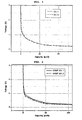
- FIG. 1 is a graphic diagram showing the relationship between the capacity and voltage at the anode upon charge of batteries fabricated in Examples 1 and 2 of the present invention.
- FIG. 2 is a graphic diagram showing the relationship between the capacity and voltage at the anode upon the charge of batteries fabricated in Comparative Examples 1 and 2 of the present invention.
- FIG. 3 is a graphic diagram showing the relationship between time and voltage according to the charge and discharge of batteries fabricated in Examples 2 to 4 of the present invention.
- FIG. 4 is a graphic diagram showing the relationship between time and voltage according to the charge and discharge of batteries fabricated in Comparative Examples 2 to 4 of the present invention.
- a redox shuttle additive which is added to an electrolyte to prevent overcharge in a secondary battery, protects the battery by consuming an overcharge current on the cathode surface and enables the battery to be reused out of overcharge conditions.
- the present inventors have found that, because the redox shuttle additive in the electrolyte reacts with the anode, the life cycle of the redox shuttle additive of maintaining the safety of the battery through oxidation-reduction cycling upon overcharge is not sustained for a long time, and particularly, as the reaction between the redox shuttle additive and the anode increases, the life cycle of the redox shuttle additive decreases.
- the present inventors have found that, when at least one compound selected from the group consisting of vinylene carbonates, ethylene carbonates, cyclic sulfites and unsaturated sultones is added to the electrolyte, the reaction between the redox shuttle additive and the anode can be inhibited, and the reduction of life cycle of the redox shuttle additive that undergoes oxidation-reduction cycling can be inhibited.
- a protective film can be formed on the surface of the anode, and thus the anode can also be protected. Also, the stability of the battery upon overcharge can be improved by increasing the life cycle of the redox shuttle additive in the electrolyte.
- vinylene carbonates in the present invention compounds represented by following Formula 1 can be used, and preferred examples of vinylene carbonates include vinylene carbonate, fluorovinylene carbonate, methylvinylene carbonate, fluoromethylvinylene carbonate, ethylvinylene carbonate, propylvinylene carbonate, butylvinylene carbonate, dimethylvinylene carbonate, diethylvinylene carbonate, dipropylvinylene carbonate and the like:
- R 1 and R 2 each independently represents hydrogen, halogen, or an alkyl group having 1 ⁇ 12 carbon atoms.
- ethylene carbonates compounds represented by following Formula 2 can be used, and preferred examples of ethylene carbonates include fluoroethylene carbonate, vinylethylene carbonate, prophenylethylene carbonate, 4,4-divinylethylene carbonate, 4,5-divinylethylene carbonate, 4-methyl-4-vinylethylene carbonate, 4-fluoro-4-vinylethylene carbonate, 4-methyl-5-vinylethylene carbonate, 4-ethyl-4-vinylethylene carbonate and the like:
- R 3 to R 6 each independently represents hydrogen, halogen, an alkenyl group having 2 ⁇ 12 carbon atoms, or an alkyl group having 1 ⁇ 12 carbon atoms, and at least one of R 3 to R 6 is halogen or an alkenyl group having 2 ⁇ 12 carbon atoms.
- cyclic sulfites compounds represented by following Formula 3 can be used, and preferred examples of cyclic sulfites include ethylene sulfite, methylethylene sulfite, ethylethylene sulfite, 4,5-dimethylethylene sulfite, 4,5-diethylethylene sulfite, 4,5-dimethylpropylene sulfite, 4,5-diethylpropylene sulfite, 4,6-dimethylpropylene sulfite, 4,6-diethylpropylene sulfite and the like:
- R 7 to R 10 each independently represents hydrogen, halogen, or an alkyl group having 1 ⁇ 12 carbon atoms, and n is an integer ranging from 1 to 3.
- unsaturated sultones compounds represented by following Formula 4 can be used, and preferred examples thereof include ethene sultone, 1,3-propene sultone, 1,4-butene sultone, 1-methyl-1,3-propene sultone, and the like:
- R 11 to R 14 each independently represents hydrogen, halogen, or an alkyl group having 1 ⁇ 12 carbon atoms, and n is an integer ranging from 0 to 3.
- said vinylene carbonates, ethylene carbonates, cyclic sulfites and unsaturated sultones which are used in the present invention, are compounds capable of protecting the anode by forming a film on the surface of the anode.
- an aromatic compound represented by following Formula 5 can be used:
- R 15 to R 20 each independently represents hydrogen, halogen, aryl, an alkyl group having 1 ⁇ 12 carbon atoms, or an alkoxy group having 1 ⁇ 12 carbon atoms, and at least two of R 15 to R 20 are an alkoxy group having 1 ⁇ 12 carbon atoms.
- At least one aromatic compound selected from dimethoxybenzenes in which two radicals of R 14 to R 19 in Formula 5 above represent a methoxy group, and the remaining radicals each independently represents hydrogen, halogen, aryl or an alkyl group having 1 ⁇ 12 carbon atoms.
- the aromatic compound include 2,5-ditertbutyl-1,4-dimethoxybenzene, 1,4-difluoro-2,5-dimethoxybenzene, 1,2-difluoro-4,5-dimethoxybenzene, and the like.
- the inhibitor of the reduction of life cycle of the redox shuttle additive which is at least one compound selected from the group consisting of vinylene carbonates, ethylene carbonates, cyclic sulfites and unsaturated sultones, is used in an amount of 0.1-10 parts by weight based on 100 parts by weight of the total electrolyte containing the redox shuttle additive. If the inhibitor is used in an amount of less than 0.1 parts by weight, the effect of inhibiting the reduction of life cycle of the redox shuttle additive will be insignificant, and an excellent overcharge-preventing effect by the redox shuttle additive cannot be obtained. On the other hand, if the inhibitor is added in an amount of more than 10 parts by weight, the life cycle characteristic of the battery will be undesirably decreased.
- the non-aqueous electrolyte comprises: said inhibitor of the reduction of life cycle of a redox shuttle additive, which is at least one compound selected from the group consisting of vinylene carbonates, ethylene carbonates, cyclic sulfites and unsaturated sultones; the redox shuttle additive; a non-aqueous solvent; and an electrolyte salt.
- At least one aromatic compound selected from compounds represented by above Formula 5, and preferably dimethoxybenzenes, can be used.
- the redox shuttle additive is contained in an amount of 0.1-20 parts by weight based on 100 parts by weight of the total electrolyte. If the content of the redox shuttle additive in the electrolyte is less than 0.1 parts by weight, the effect of the redox shuttle, i.e., an oxidation-reduction cycle, becomes weak, so that the overcharge-preventing effect thereof will be insignificant, and if the content exceeds 20 parts by weight, the life cycle characteristic of the battery will be decreased.
- the non-aqueous solvent which is contained in the electrolyte, is not specifically limited, as long as it is conventionally used as a non-aqueous solvent for non-aqueous electrolytes.
- cyclic carbonate, linear carbonate, lactone, ether, ester and/or ketone can be used as the non-aqueous solvent.
- Examples of said cyclic carbonate include ethylene carbonate (EC), propylene carbonate (PC), butylene carbonate (BC) and the like, and examples of said linear carbonate include diethyl carbonate (DEC), dimethyl carbonate (DMC), dipropyl carbonate (DPC), ethyl methyl carbonate (EMC), methyl propylene carbonate (MPC) and the like.
- Examples of said lactone include gamma-butyrolactone (GBL), and examples of said ether include dibutylether, tetrahydrofuran, 2-methyltetrahydrofuran, 1,4-dioxane, 1,2-dimethoxyethane and the like.
- examples of said ester include methyl acetate, ethyl acetate, methyl propionate, methyl pivalate and the like
- examples of said ketone include polymethylvinyl ketone.
- the electrolyte salt which is used in the electrolyte, is not specifically limited, as long as it is conventionally used as an electrolyte salt for non-aqueous electrolytes.
- Non-limiting examples of the electrolyte salt include salts having a structure such as A + B - , in which A + includes alkaline metal cation such as Li + , Na + or K + , or combinations thereof, and B - includes anion such as PF 6 - , BF 4 - , Cl - , Br - , r, ClO 4 - , ASF 6 - , CH 3 CO 2 - , CF 3 SO 3 - , N(CF 3 SO 2 ) 2 - or C(CF 2 SO 2 ) 3 - , or combinations thereof.
- lithium salts are preferable.
- These electrolyte salts can be used alone or in a mixture of two or more thereof.
- the secondary battery comprises: a cathode; an anode; a separator; and said non-aqueous electrolyte.
- the secondary battery can be fabricated by interposing a porous separator between the cathode and the anode and injecting said electrolyte into the resulting structure, according to a conventional method known in the art to which the present invention pertains.
- the method of fabricating the secondary battery is not specifically limited.
- the secondary battery may comprise: a cathode; an anode having thereon a film formed by said inhibitor of the reduction of life cycle of a redox shuttle additive; a separator; and an electrolyte containing the redox shuttle additive.
- anode active material a carbon material, a lithium metal or an alloy thereof, which can absorb and release lithium ions, can be used.
- a metal oxide such as TiO 2 or SnO 2 , which can intercalate and deintercalate lithium ions and has a potential of less than 2V for lithium.
- a carbon material such as graphite is preferred.
- separator which can be used in the present invention, it is possible to use a porous separator, examples of which include polypropylene-based, polyethylene-based, and polyolefin-based porous separators.
- the appearance of the secondary battery according to the present invention is not specifically limited and can be a cylindrical shape using a can, a prismatic shape, a pouch shape or a coin shape.
- EC ethylene carbonate
- EMC ethyl methyl carbonate
- a polyolefin-based separator was interposed between the prepared cathode and anode, into which said electrolyte was then injected, thus fabricating a 323456-size pouch-type lithium secondary battery.
- EC ethylene carbonate
- EMC ethyl methyl carbonate
- EC ethylene carbonate
- EMC ethyl methyl carbonate
- EC ethylene carbonate
- EMC ethyl methyl carbonate
- An electrolyte and a battery were prepared in the same manner as in Example 4, except that 5 parts by weight of vinyl ethylene carbonate was added instead of vinylene carbonate and 1,3-propene sultone.
- An electrolyte and a battery were prepared in the same manner as in Example 4, except that 5 parts by weight of ethylene sulfite was added instead of vinylene carbonate and 1,3-propene sultone.
- EC ethylene carbonate
- EMC ethyl methyl carbonate
- EC ethylene carbonate
- EMC ethyl methyl carbonate
- EC ethylene carbonate
- EMC ethyl methyl carbonate
- EC ethylene carbonate
- EMC ethyl methyl carbonate
- the batteries fabricated in Examples 1 and 2 were tested by charging the batteries at 1/20 C for 40 hours, and then discharging the charged batteries at 1/20 C to 2.4 V. The test results are shown in FIG. 1 . Also, the batteries fabricated in Comparative Examples 1 and 2 were tested according to the same method as described above, and the test results are shown in FIG. 2 .
- FIG. 2 it can be seen that, in the case where the redox shuttle additive was added (Comparative Example 2) and the case where the redox shuttle additive was not added (Comparative Example 1), there was a difference in the voltage versus capacity therebetween, that is, the voltage versus capacity of Comparative Example 2 was lower than that of Comparative Example 1, suggesting that there was a reaction between the redox shuttle additive and the anode.
- FIG. 1 relating to the use of the electrolytes containing the vinylene carbonate and propylene sultone, similar graphs were shown without regard to the addition of the redox shuttle additive, suggesting that the reaction between the redox shuttle additive and the anode was inhibited.
- the charge and discharge of the batteries fabricated in Examples 2 to 4 were conducted in the following conditions, and the relationship between time and voltage for the batteries was shown in FIG. 3 .
- the charge was conducted at a current intensity of 21.25 mA (0.05C) for 40 hours, and the discharge was conducted at a current intensity of 21.25 mA (0.05C) to 2.4 V.
- the batteries fabricated in Examples 2 to 6 had a greatly increased number of cycles which resisted overcharge, compared to those of the batteries fabricated in Comparative Examples 2 to 4. This suggests that the battery according to the present invention has improved safety upon overcharge, and the reduction in the performance thereof is inhibited.
- At least one compound selected from the group consisting of vinylene carbonates, ethylene carbonates, cyclic sulfites and unsaturated sultones is added to an electrolyte, such that the reaction between a redox shuttle additive in the electrolyte and an anode can be inhibited and the life cycle of the redox shuttle additive that undergoes oxidation-reduction cycling can be improved. Also, by virtue of the redox shuttle additive having improved life cycle, a secondary battery of the present invention can ensure excellent stability upon overcharge and, at the same time, can minimize the reduction in performance, caused by the use of additives.
Landscapes
- Chemical & Material Sciences (AREA)
- General Chemical & Material Sciences (AREA)
- Engineering & Computer Science (AREA)
- Manufacturing & Machinery (AREA)
- Chemical Kinetics & Catalysis (AREA)
- Electrochemistry (AREA)
- Inorganic Chemistry (AREA)
- Physics & Mathematics (AREA)
- Condensed Matter Physics & Semiconductors (AREA)
- General Physics & Mathematics (AREA)
- Secondary Cells (AREA)
- Battery Electrode And Active Subsutance (AREA)
- Heterocyclic Compounds Containing Sulfur Atoms (AREA)
- Organic Low-Molecular-Weight Compounds And Preparation Thereof (AREA)
Applications Claiming Priority (2)
| Application Number | Priority Date | Filing Date | Title |
|---|---|---|---|
| KR20050100000 | 2005-10-24 | ||
| PCT/KR2006/004315 WO2007049888A1 (en) | 2005-10-24 | 2006-10-23 | Inhibitor of reduction of life cycle of redox shuttle additive and non-aqueous electrolyte and secondary battery comprising the same |
Publications (3)
| Publication Number | Publication Date |
|---|---|
| EP1952476A1 EP1952476A1 (en) | 2008-08-06 |
| EP1952476A4 EP1952476A4 (en) | 2009-03-18 |
| EP1952476B1 true EP1952476B1 (en) | 2010-09-15 |
Family
ID=37967966
Family Applications (1)
| Application Number | Title | Priority Date | Filing Date |
|---|---|---|---|
| EP06799386A Active EP1952476B1 (en) | 2005-10-24 | 2006-10-23 | Use of an inhibitor of reduction of life cycle of a redox shuttle additive for a non-aqueous electrolyte and a secondary battery |
Country Status (8)
| Country | Link |
|---|---|
| US (2) | US8481216B2 (cg-RX-API-DMAC7.html) |
| EP (1) | EP1952476B1 (cg-RX-API-DMAC7.html) |
| JP (2) | JP5323487B2 (cg-RX-API-DMAC7.html) |
| KR (1) | KR100812056B1 (cg-RX-API-DMAC7.html) |
| CN (1) | CN101297433B (cg-RX-API-DMAC7.html) |
| DE (1) | DE602006016979D1 (cg-RX-API-DMAC7.html) |
| TW (1) | TWI396316B (cg-RX-API-DMAC7.html) |
| WO (1) | WO2007049888A1 (cg-RX-API-DMAC7.html) |
Families Citing this family (32)
| Publication number | Priority date | Publication date | Assignee | Title |
|---|---|---|---|---|
| JP5317390B2 (ja) * | 2006-02-09 | 2013-10-16 | 三洋電機株式会社 | 非水電解質二次電池 |
| JP5095179B2 (ja) * | 2006-11-10 | 2012-12-12 | 株式会社東芝 | 非水電解質電池、リチウムチタン複合酸化物および電池パック |
| CN101779325B (zh) * | 2007-08-16 | 2013-11-13 | 株式会社Lg化学 | 非水电解质锂二次电池 |
| CN101803099B (zh) * | 2007-09-12 | 2016-06-29 | 株式会社Lg化学 | 非水性电解质锂二次电池 |
| EP2206189B1 (en) * | 2007-09-19 | 2014-10-22 | Lg Chem, Ltd. | Non-aqueous electrolyte lithium secondary battery |
| KR20100137447A (ko) * | 2008-02-12 | 2010-12-30 | 쓰리엠 이노베이티브 프로퍼티즈 컴파니 | 고전압 캐소드용 산화환원 셔틀 |
| JP2009218065A (ja) * | 2008-03-10 | 2009-09-24 | Hitachi Ltd | リチウム二次電池及びその製造方法 |
| US8968940B2 (en) * | 2010-05-25 | 2015-03-03 | Uchicago Argonne, Llc | Redox shuttles for high voltage cathodes |
| CN103098284A (zh) * | 2010-09-10 | 2013-05-08 | 巴斯夫欧洲公司 | 生产具有低水含量的溶剂混合物 |
| US20130216910A1 (en) | 2010-11-09 | 2013-08-22 | 3M Innovative Properties Company | High capacity alloy anodes and lithium-ion electrochemical cells containing same |
| JP2012138327A (ja) * | 2010-12-28 | 2012-07-19 | Hitachi Ltd | 非水電解液及びこれを用いた非水二次電池 |
| CN102208683B (zh) * | 2011-05-16 | 2013-09-25 | 湖州创亚动力电池材料有限公司 | 一种改善锂离子二次电池高温存储性能的电解液 |
| CN103988355B (zh) | 2011-12-08 | 2017-03-08 | 巴斯夫欧洲公司 | 电化学电池及其用途 |
| US9160032B2 (en) | 2011-12-08 | 2015-10-13 | Basf Se | Electrochemical cells and use thereof |
| KR20140110916A (ko) * | 2011-12-08 | 2014-09-17 | 바스프 에스이 | 혼합물 및 이의 리튬 이온 배터리에서의 용도 |
| US9774057B2 (en) | 2011-12-08 | 2017-09-26 | Basf Se | Mixtures and use thereof in lithium ion batteries |
| US9966625B2 (en) * | 2012-02-28 | 2018-05-08 | Uchicago Argonne, Llc | Organic non-aqueous cation-based redox flow batteries |
| JP5664685B2 (ja) * | 2012-03-27 | 2015-02-04 | Tdk株式会社 | 非水電解質溶液およびリチウムイオン二次電池 |
| JP5931572B2 (ja) * | 2012-04-27 | 2016-06-08 | 旭化成株式会社 | 非水系二次電池用レドックスシャトル剤、非水系二次電池用電解液及び非水系二次電池 |
| JP5977573B2 (ja) * | 2012-04-27 | 2016-08-24 | 旭化成株式会社 | 非水系二次電池 |
| WO2013166074A1 (en) * | 2012-05-01 | 2013-11-07 | Altairnano, Inc. | Improved lithium titanate cell |
| WO2014012980A1 (en) | 2012-07-20 | 2014-01-23 | Basf Se | Electrochemical cells |
| US20140134501A1 (en) * | 2012-11-12 | 2014-05-15 | Novolyte Technologies, Inc. | Non-Aqueous Electrolytic Solutions And Electrochemical Cells Comprising Same |
| US20160056418A1 (en) * | 2014-08-21 | 2016-02-25 | Ford Global Technologies, Llc | Li-ion monoblock battery for stop/start applications |
| JP6597629B2 (ja) | 2014-10-21 | 2019-10-30 | 日本電気株式会社 | 二次電池およびその製造方法 |
| CN105161757B (zh) * | 2015-07-24 | 2017-08-22 | 张家港市国泰华荣化工新材料有限公司 | 一种含有氧化还原型防过充添加剂的锂离子电池电解液 |
| US10374239B2 (en) | 2016-12-29 | 2019-08-06 | Uchicago Argonne, Llc | Aqueous pyridinium cation-based redox flow batteries |
| US10553890B2 (en) | 2017-06-23 | 2020-02-04 | Uchicago Argonne, Llc | Aqueous redox flow batteries |
| US10622676B2 (en) | 2017-06-29 | 2020-04-14 | Uchicago Argonne, Llc | Functional organic salt for lithium-ion batteries |
| EP3651240A4 (en) * | 2017-07-07 | 2021-03-10 | Murata Manufacturing Co., Ltd. | SECONDARY BATTERY, BATTERY PACK, ELECTRIC VEHICLE, POWER STORAGE SYSTEM, ELECTRIC TOOL AND ELECTRONIC DEVICE |
| US10424805B2 (en) | 2017-08-15 | 2019-09-24 | Uchicago Argonne, Llc | Benzothiophene-based redox molecules for flow battery |
| US11271237B2 (en) | 2019-07-29 | 2022-03-08 | Uchicago Argonne, Llc | Organic redox molecules for flow batteries |
Family Cites Families (26)
| Publication number | Priority date | Publication date | Assignee | Title |
|---|---|---|---|---|
| US4857423A (en) | 1987-11-30 | 1989-08-15 | Eic Labotatories, Inc. | Overcharge protection of secondary, non-aqueous batteries |
| JP3809657B2 (ja) | 1994-03-07 | 2006-08-16 | ソニー株式会社 | 非水電解液二次電池 |
| JP3669024B2 (ja) | 1995-05-26 | 2005-07-06 | ソニー株式会社 | 非水電解液二次電池 |
| CA2156800C (en) | 1995-08-23 | 2003-04-29 | Huanyu Mao | Polymerizable aromatic additives for overcharge protection in non-aqueous rechargeable lithium batteries |
| US5882812A (en) | 1997-01-14 | 1999-03-16 | Polyplus Battery Company, Inc. | Overcharge protection systems for rechargeable batteries |
| GB9717220D0 (en) * | 1997-08-15 | 1997-10-22 | Aea Technology Plc | Eklectrolyte for a rechargeable cell |
| JP3823683B2 (ja) * | 1999-05-24 | 2006-09-20 | 宇部興産株式会社 | 非水電解液およびそれを用いたリチウム二次電池 |
| JP4411691B2 (ja) | 1999-06-30 | 2010-02-10 | パナソニック株式会社 | 非水電解液二次電池および非水電解液二次電池の充電制御システムおよびこれを用いた機器 |
| WO2001029920A1 (en) * | 1999-10-18 | 2001-04-26 | The Regents Of The University Of California | Shutdown and redox shuttle additives for batteries |
| JP4762411B2 (ja) * | 2000-06-26 | 2011-08-31 | パナソニック株式会社 | 二次電池用非水電解液およびこれを用いた非水電解液二次電池 |
| KR100326468B1 (ko) | 2000-07-25 | 2002-02-28 | 김순택 | 리튬 설퍼 전지용 전해액 |
| HU228326B1 (en) * | 2001-01-24 | 2013-03-28 | Ube Industries | Nonaqueous electrolytic solution and lithium secondary batteries |
| JP4352622B2 (ja) | 2001-03-06 | 2009-10-28 | 宇部興産株式会社 | 非水電解液およびそれを用いたリチウム二次電池 |
| CN1282272C (zh) | 2001-07-12 | 2006-10-25 | 株式会社杰士汤浅 | 非水系二次电池 |
| JP3797197B2 (ja) * | 2001-11-01 | 2006-07-12 | 株式会社ジーエス・ユアサコーポレーション | 非水電解質二次電池 |
| JP4281895B2 (ja) | 2001-12-28 | 2009-06-17 | 三井化学株式会社 | 非水電解液およびそれを用いたリチウム二次電池 |
| JP4127355B2 (ja) * | 2002-01-18 | 2008-07-30 | 三菱化学株式会社 | 非水系電解液及びそれを用いたリチウム二次電池 |
| JP4229615B2 (ja) * | 2002-01-24 | 2009-02-25 | 三菱化学株式会社 | 非水系電解液及びそれを用いたリチウム二次電池 |
| KR100661680B1 (ko) * | 2002-07-25 | 2006-12-26 | 가부시끼가이샤 도시바 | 비수전해질 이차 전지 |
| JP4056346B2 (ja) * | 2002-09-30 | 2008-03-05 | 三洋電機株式会社 | 非水電解質二次電池 |
| JP2004158213A (ja) * | 2002-11-01 | 2004-06-03 | Toshiba Corp | 非水電解質二次電池の製造方法 |
| JP2004281218A (ja) * | 2003-03-14 | 2004-10-07 | Yuasa Corp | 非水電解質及び非水電解質電池 |
| JP4283598B2 (ja) * | 2003-05-29 | 2009-06-24 | Tdk株式会社 | 非水電解質溶液及びリチウムイオン2次電池 |
| JP4690643B2 (ja) * | 2003-09-25 | 2011-06-01 | 株式会社東芝 | 非水電解質二次電池 |
| JP4580662B2 (ja) * | 2004-02-27 | 2010-11-17 | 三井化学株式会社 | 非水電解質および非水電解質二次電池 |
| DE602005025200D1 (de) | 2004-04-01 | 2011-01-20 | 3M Innovative Properties Co | Redox-shuttle für eine wiederaufladbare lithiumionenzelle |
-
2006
- 2006-10-20 KR KR1020060102449A patent/KR100812056B1/ko active Active
- 2006-10-23 JP JP2008536514A patent/JP5323487B2/ja active Active
- 2006-10-23 EP EP06799386A patent/EP1952476B1/en active Active
- 2006-10-23 CN CN2006800397700A patent/CN101297433B/zh active Active
- 2006-10-23 DE DE602006016979T patent/DE602006016979D1/de active Active
- 2006-10-23 WO PCT/KR2006/004315 patent/WO2007049888A1/en not_active Ceased
- 2006-10-24 US US11/552,317 patent/US8481216B2/en active Active
- 2006-10-24 TW TW095139158A patent/TWI396316B/zh active
-
2013
- 2013-03-05 US US13/785,512 patent/US8673507B2/en active Active
- 2013-05-01 JP JP2013096541A patent/JP5738342B2/ja active Active
Also Published As
| Publication number | Publication date |
|---|---|
| KR20070044361A (ko) | 2007-04-27 |
| US8481216B2 (en) | 2013-07-09 |
| TWI396316B (zh) | 2013-05-11 |
| CN101297433A (zh) | 2008-10-29 |
| JP5323487B2 (ja) | 2013-10-23 |
| CN101297433B (zh) | 2011-12-21 |
| KR100812056B1 (ko) | 2008-03-07 |
| JP5738342B2 (ja) | 2015-06-24 |
| TW200731599A (en) | 2007-08-16 |
| US8673507B2 (en) | 2014-03-18 |
| WO2007049888A1 (en) | 2007-05-03 |
| EP1952476A1 (en) | 2008-08-06 |
| JP2009514149A (ja) | 2009-04-02 |
| EP1952476A4 (en) | 2009-03-18 |
| DE602006016979D1 (de) | 2010-10-28 |
| US20130216898A1 (en) | 2013-08-22 |
| US20070092802A1 (en) | 2007-04-26 |
| JP2013219035A (ja) | 2013-10-24 |
Similar Documents
| Publication | Publication Date | Title |
|---|---|---|
| EP1952476B1 (en) | Use of an inhibitor of reduction of life cycle of a redox shuttle additive for a non-aqueous electrolyte and a secondary battery | |
| EP2237360B1 (en) | Overcharge protection by coupling redox shuttle chemicals with radical polymerization additives | |
| US7691538B2 (en) | Nonaqueous electrolyte secondary battery | |
| JP5258353B2 (ja) | 非水電解質二次電池 | |
| KR100898857B1 (ko) | 비수전해액 및 이를 이용한 이차 전지 | |
| EP2168199B1 (en) | Non-aqueous electrolyte and electrochemical device comprising the same | |
| US20040185347A1 (en) | Non-aqueous electrolyte and a lithium secondary battery comprising the same | |
| US20100227219A1 (en) | Non-aqueous electrolyte and lithium secondary battery comprising same | |
| US20100190064A1 (en) | Nonaqueous electrolyte secondary battery | |
| JP2024508935A (ja) | 二次電池用電解液及びそれを含む二次電池 | |
| JP4893038B2 (ja) | 非水電解質二次電池 | |
| KR20130073926A (ko) | 실라잔 계열 화합물을 포함하는 고용량 및 장수명 이차 전지 | |
| EP1716616B1 (en) | Non-aqueous electrolyte for battery | |
| JP2011181438A (ja) | 非水電解質二次電池 | |
| HK1146156B (en) | Overcharge protection by coupling redox shuttle chemistry with radical polymerization additives |
Legal Events
| Date | Code | Title | Description |
|---|---|---|---|
| PUAI | Public reference made under article 153(3) epc to a published international application that has entered the european phase |
Free format text: ORIGINAL CODE: 0009012 |
|
| 17P | Request for examination filed |
Effective date: 20080424 |
|
| AK | Designated contracting states |
Kind code of ref document: A1 Designated state(s): DE FR |
|
| DAX | Request for extension of the european patent (deleted) | ||
| RBV | Designated contracting states (corrected) |
Designated state(s): DE FR |
|
| A4 | Supplementary search report drawn up and despatched |
Effective date: 20090216 |
|
| 17Q | First examination report despatched |
Effective date: 20090610 |
|
| RIN1 | Information on inventor provided before grant (corrected) |
Inventor name: JEON, JOO-MI Inventor name: OH BYUNG-HOON Inventor name: YU, SUNG-HOON Inventor name: AHN SOON-HO |
|
| RIC1 | Information provided on ipc code assigned before grant |
Ipc: H01M 10/0567 20100101ALI20100201BHEP Ipc: H01M 10/052 20100101AFI20100201BHEP Ipc: H01M 10/0564 20100101ALI20100201BHEP |
|
| RTI1 | Title (correction) |
Free format text: USE OF AN INHIBITOR OF REDUCTION OF LIFE CYCLE OF A REDOX SHUTTLE ADDITIVE FOR A NON-AQUEOUS ELECTROLYTE AND A SECONDARY BATTERY |
|
| GRAP | Despatch of communication of intention to grant a patent |
Free format text: ORIGINAL CODE: EPIDOSNIGR1 |
|
| RIN1 | Information on inventor provided before grant (corrected) |
Inventor name: JEON, JOO-MI Inventor name: YU, SUNG-HOON Inventor name: AHN SOON-HO Inventor name: OH BYUNG-HOON |
|
| GRAS | Grant fee paid |
Free format text: ORIGINAL CODE: EPIDOSNIGR3 |
|
| GRAA | (expected) grant |
Free format text: ORIGINAL CODE: 0009210 |
|
| AK | Designated contracting states |
Kind code of ref document: B1 Designated state(s): DE FR |
|
| REF | Corresponds to: |
Ref document number: 602006016979 Country of ref document: DE Date of ref document: 20101028 Kind code of ref document: P |
|
| PLBE | No opposition filed within time limit |
Free format text: ORIGINAL CODE: 0009261 |
|
| STAA | Information on the status of an ep patent application or granted ep patent |
Free format text: STATUS: NO OPPOSITION FILED WITHIN TIME LIMIT |
|
| 26N | No opposition filed |
Effective date: 20110616 |
|
| REG | Reference to a national code |
Ref country code: DE Ref legal event code: R097 Ref document number: 602006016979 Country of ref document: DE Effective date: 20110616 |
|
| REG | Reference to a national code |
Ref country code: FR Ref legal event code: PLFP Year of fee payment: 11 |
|
| REG | Reference to a national code |
Ref country code: FR Ref legal event code: PLFP Year of fee payment: 12 |
|
| REG | Reference to a national code |
Ref country code: FR Ref legal event code: PLFP Year of fee payment: 13 |
|
| REG | Reference to a national code |
Ref country code: DE Ref legal event code: R081 Ref document number: 602006016979 Country of ref document: DE Owner name: LG ENERGY SOLUTION LTD., KR Free format text: FORMER OWNER: LG CHEM. LTD., SEOUL, KR Ref country code: DE Ref legal event code: R081 Ref document number: 602006016979 Country of ref document: DE Owner name: LG ENERGY SOLUTION, LTD., KR Free format text: FORMER OWNER: LG CHEM. LTD., SEOUL, KR |
|
| P01 | Opt-out of the competence of the unified patent court (upc) registered |
Effective date: 20230408 |
|
| REG | Reference to a national code |
Ref country code: DE Ref legal event code: R081 Ref document number: 602006016979 Country of ref document: DE Owner name: LG ENERGY SOLUTION, LTD., KR Free format text: FORMER OWNER: LG ENERGY SOLUTION LTD., SEOUL, KR |
|
| PGFP | Annual fee paid to national office [announced via postgrant information from national office to epo] |
Ref country code: DE Payment date: 20240920 Year of fee payment: 19 |
|
| PGFP | Annual fee paid to national office [announced via postgrant information from national office to epo] |
Ref country code: FR Payment date: 20250925 Year of fee payment: 20 |