EP1858932B1 - Verfahren zur herstellung von verpastbaren polymeren - Google Patents
Verfahren zur herstellung von verpastbaren polymeren Download PDFInfo
- Publication number
- EP1858932B1 EP1858932B1 EP06707025A EP06707025A EP1858932B1 EP 1858932 B1 EP1858932 B1 EP 1858932B1 EP 06707025 A EP06707025 A EP 06707025A EP 06707025 A EP06707025 A EP 06707025A EP 1858932 B1 EP1858932 B1 EP 1858932B1
- Authority
- EP
- European Patent Office
- Prior art keywords
- emulsifier
- particle
- polymer
- polymerization
- vinyl chloride
- Prior art date
- Legal status (The legal status is an assumption and is not a legal conclusion. Google has not performed a legal analysis and makes no representation as to the accuracy of the status listed.)
- Revoked
Links
- 229920000642 polymer Polymers 0.000 title claims description 30
- 238000004519 manufacturing process Methods 0.000 title claims description 6
- 239000002245 particle Substances 0.000 claims description 42
- 238000000034 method Methods 0.000 claims description 37
- 239000003995 emulsifying agent Substances 0.000 claims description 28
- 238000006116 polymerization reaction Methods 0.000 claims description 26
- 230000008569 process Effects 0.000 claims description 26
- BZHJMEDXRYGGRV-UHFFFAOYSA-N Vinyl chloride Chemical compound ClC=C BZHJMEDXRYGGRV-UHFFFAOYSA-N 0.000 claims description 19
- 238000009826 distribution Methods 0.000 claims description 19
- 239000000178 monomer Substances 0.000 claims description 15
- 230000002902 bimodal effect Effects 0.000 claims description 14
- 239000000203 mixture Substances 0.000 claims description 13
- 239000004815 dispersion polymer Substances 0.000 claims description 10
- 239000011164 primary particle Substances 0.000 claims description 5
- 239000007957 coemulsifier Substances 0.000 claims description 4
- 230000000087 stabilizing effect Effects 0.000 claims description 4
- 238000007334 copolymerization reaction Methods 0.000 claims description 3
- 239000006185 dispersion Substances 0.000 description 20
- 229920001944 Plastisol Polymers 0.000 description 15
- 239000004999 plastisol Substances 0.000 description 15
- 229920000126 latex Polymers 0.000 description 14
- XLYOFNOQVPJJNP-UHFFFAOYSA-N water Substances O XLYOFNOQVPJJNP-UHFFFAOYSA-N 0.000 description 13
- 125000004432 carbon atom Chemical group C* 0.000 description 11
- 239000011541 reaction mixture Substances 0.000 description 8
- 239000004816 latex Substances 0.000 description 7
- CSKKAINPUYTTRW-UHFFFAOYSA-N tetradecoxycarbonyloxy tetradecyl carbonate Chemical compound CCCCCCCCCCCCCCOC(=O)OOC(=O)OCCCCCCCCCCCCCC CSKKAINPUYTTRW-UHFFFAOYSA-N 0.000 description 7
- KUWCMTFKTVOJID-UHFFFAOYSA-N 1,2-icosanediol Chemical compound CCCCCCCCCCCCCCCCCCC(O)CO KUWCMTFKTVOJID-UHFFFAOYSA-N 0.000 description 6
- 150000008055 alkyl aryl sulfonates Chemical class 0.000 description 6
- RTZKZFJDLAIYFH-UHFFFAOYSA-N ether Substances CCOCC RTZKZFJDLAIYFH-UHFFFAOYSA-N 0.000 description 6
- 239000003999 initiator Substances 0.000 description 6
- 239000000047 product Substances 0.000 description 6
- 238000010626 work up procedure Methods 0.000 description 6
- 230000008901 benefit Effects 0.000 description 5
- 238000001035 drying Methods 0.000 description 5
- 239000000843 powder Substances 0.000 description 5
- 238000002360 preparation method Methods 0.000 description 5
- 238000001694 spray drying Methods 0.000 description 5
- 229910052783 alkali metal Inorganic materials 0.000 description 4
- 150000001340 alkali metals Chemical class 0.000 description 4
- -1 ammonium alkyl sulfates Chemical group 0.000 description 4
- 150000003863 ammonium salts Chemical class 0.000 description 4
- 229920001577 copolymer Polymers 0.000 description 4
- 239000004014 plasticizer Substances 0.000 description 4
- 229920000915 polyvinyl chloride Polymers 0.000 description 4
- 239000004800 polyvinyl chloride Substances 0.000 description 4
- 238000010521 absorption reaction Methods 0.000 description 3
- 239000000654 additive Substances 0.000 description 3
- 238000002474 experimental method Methods 0.000 description 3
- 150000002191 fatty alcohols Chemical class 0.000 description 3
- 230000005012 migration Effects 0.000 description 3
- 238000013508 migration Methods 0.000 description 3
- 238000002156 mixing Methods 0.000 description 3
- 238000003756 stirring Methods 0.000 description 3
- QGZKDVFQNNGYKY-UHFFFAOYSA-O Ammonium Chemical compound [NH4+] QGZKDVFQNNGYKY-UHFFFAOYSA-O 0.000 description 2
- KAKZBPTYRLMSJV-UHFFFAOYSA-N Butadiene Chemical compound C=CC=C KAKZBPTYRLMSJV-UHFFFAOYSA-N 0.000 description 2
- BJQHLKABXJIVAM-UHFFFAOYSA-N Diethylhexyl phthalate Natural products CCCCC(CC)COC(=O)C1=CC=CC=C1C(=O)OCC(CC)CCCC BJQHLKABXJIVAM-UHFFFAOYSA-N 0.000 description 2
- 239000004606 Fillers/Extenders Substances 0.000 description 2
- MHAJPDPJQMAIIY-UHFFFAOYSA-N Hydrogen peroxide Chemical compound OO MHAJPDPJQMAIIY-UHFFFAOYSA-N 0.000 description 2
- PPBRXRYQALVLMV-UHFFFAOYSA-N Styrene Chemical compound C=CC1=CC=CC=C1 PPBRXRYQALVLMV-UHFFFAOYSA-N 0.000 description 2
- 239000002253 acid Substances 0.000 description 2
- 150000007513 acids Chemical class 0.000 description 2
- 230000002411 adverse Effects 0.000 description 2
- 239000003513 alkali Substances 0.000 description 2
- 125000000217 alkyl group Chemical group 0.000 description 2
- 230000009286 beneficial effect Effects 0.000 description 2
- 238000010924 continuous production Methods 0.000 description 2
- 239000002270 dispersing agent Substances 0.000 description 2
- 238000004821 distillation Methods 0.000 description 2
- 239000000839 emulsion Substances 0.000 description 2
- 238000007720 emulsion polymerization reaction Methods 0.000 description 2
- 238000010438 heat treatment Methods 0.000 description 2
- BXWNKGSJHAJOGX-UHFFFAOYSA-N hexadecan-1-ol Chemical compound CCCCCCCCCCCCCCCCO BXWNKGSJHAJOGX-UHFFFAOYSA-N 0.000 description 2
- 230000006872 improvement Effects 0.000 description 2
- 238000001000 micrograph Methods 0.000 description 2
- GLDOVTGHNKAZLK-UHFFFAOYSA-N octadecan-1-ol Chemical compound CCCCCCCCCCCCCCCCCCO GLDOVTGHNKAZLK-UHFFFAOYSA-N 0.000 description 2
- 150000002978 peroxides Chemical class 0.000 description 2
- 230000009467 reduction Effects 0.000 description 2
- 238000003860 storage Methods 0.000 description 2
- BJQHLKABXJIVAM-BGYRXZFFSA-N 1-o-[(2r)-2-ethylhexyl] 2-o-[(2s)-2-ethylhexyl] benzene-1,2-dicarboxylate Chemical compound CCCC[C@H](CC)COC(=O)C1=CC=CC=C1C(=O)OC[C@H](CC)CCCC BJQHLKABXJIVAM-BGYRXZFFSA-N 0.000 description 1
- ZACVGCNKGYYQHA-UHFFFAOYSA-N 2-ethylhexoxycarbonyloxy 2-ethylhexyl carbonate Chemical compound CCCCC(CC)COC(=O)OOC(=O)OCC(CC)CCCC ZACVGCNKGYYQHA-UHFFFAOYSA-N 0.000 description 1
- RPBWMJBZQXCSFW-UHFFFAOYSA-N 2-methylpropanoyl 2-methylpropaneperoxoate Chemical compound CC(C)C(=O)OOC(=O)C(C)C RPBWMJBZQXCSFW-UHFFFAOYSA-N 0.000 description 1
- XZIIFPSPUDAGJM-UHFFFAOYSA-N 6-chloro-2-n,2-n-diethylpyrimidine-2,4-diamine Chemical compound CCN(CC)C1=NC(N)=CC(Cl)=N1 XZIIFPSPUDAGJM-UHFFFAOYSA-N 0.000 description 1
- NLHHRLWOUZZQLW-UHFFFAOYSA-N Acrylonitrile Chemical compound C=CC#N NLHHRLWOUZZQLW-UHFFFAOYSA-N 0.000 description 1
- 239000004803 Di-2ethylhexylphthalate Substances 0.000 description 1
- LFQSCWFLJHTTHZ-UHFFFAOYSA-N Ethanol Chemical compound CCO LFQSCWFLJHTTHZ-UHFFFAOYSA-N 0.000 description 1
- VGGSQFUCUMXWEO-UHFFFAOYSA-N Ethene Chemical compound C=C VGGSQFUCUMXWEO-UHFFFAOYSA-N 0.000 description 1
- 239000005977 Ethylene Substances 0.000 description 1
- DGAQECJNVWCQMB-PUAWFVPOSA-M Ilexoside XXIX Chemical compound C[C@@H]1CC[C@@]2(CC[C@@]3(C(=CC[C@H]4[C@]3(CC[C@@H]5[C@@]4(CC[C@@H](C5(C)C)OS(=O)(=O)[O-])C)C)[C@@H]2[C@]1(C)O)C)C(=O)O[C@H]6[C@@H]([C@H]([C@@H]([C@H](O6)CO)O)O)O.[Na+] DGAQECJNVWCQMB-PUAWFVPOSA-M 0.000 description 1
- YIVJZNGAASQVEM-UHFFFAOYSA-N Lauroyl peroxide Chemical compound CCCCCCCCCCCC(=O)OOC(=O)CCCCCCCCCCC YIVJZNGAASQVEM-UHFFFAOYSA-N 0.000 description 1
- 239000006057 Non-nutritive feed additive Substances 0.000 description 1
- 239000002202 Polyethylene glycol Substances 0.000 description 1
- DBMJMQXJHONAFJ-UHFFFAOYSA-M Sodium laurylsulphate Chemical compound [Na+].CCCCCCCCCCCCOS([O-])(=O)=O DBMJMQXJHONAFJ-UHFFFAOYSA-M 0.000 description 1
- ULUAUXLGCMPNKK-UHFFFAOYSA-N Sulfobutanedioic acid Chemical class OC(=O)CC(C(O)=O)S(O)(=O)=O ULUAUXLGCMPNKK-UHFFFAOYSA-N 0.000 description 1
- 150000001252 acrylic acid derivatives Chemical class 0.000 description 1
- 125000002252 acyl group Chemical group 0.000 description 1
- 150000001447 alkali salts Chemical class 0.000 description 1
- 125000000129 anionic group Chemical group 0.000 description 1
- 125000003118 aryl group Chemical group 0.000 description 1
- 125000004429 atom Chemical group 0.000 description 1
- 238000010923 batch production Methods 0.000 description 1
- 150000001735 carboxylic acids Chemical class 0.000 description 1
- 238000005266 casting Methods 0.000 description 1
- 125000002091 cationic group Chemical group 0.000 description 1
- 229960000541 cetyl alcohol Drugs 0.000 description 1
- 238000000576 coating method Methods 0.000 description 1
- 230000000052 comparative effect Effects 0.000 description 1
- 150000001875 compounds Chemical class 0.000 description 1
- 125000000753 cycloalkyl group Chemical group 0.000 description 1
- XJOBOFWTZOKMOH-UHFFFAOYSA-N decanoyl decaneperoxoate Chemical compound CCCCCCCCCC(=O)OOC(=O)CCCCCCCCC XJOBOFWTZOKMOH-UHFFFAOYSA-N 0.000 description 1
- 239000012933 diacyl peroxide Substances 0.000 description 1
- 235000014113 dietary fatty acids Nutrition 0.000 description 1
- 235000019329 dioctyl sodium sulphosuccinate Nutrition 0.000 description 1
- 238000007598 dipping method Methods 0.000 description 1
- SYNISXGCUQLMQF-UHFFFAOYSA-L disodium;2,2-didecyl-3-sulfobutanedioate Chemical compound [Na+].[Na+].CCCCCCCCCCC(C([O-])=O)(C(C([O-])=O)S(O)(=O)=O)CCCCCCCCCC SYNISXGCUQLMQF-UHFFFAOYSA-L 0.000 description 1
- YHAIUSTWZPMYGG-UHFFFAOYSA-L disodium;2,2-dioctyl-3-sulfobutanedioate Chemical compound [Na+].[Na+].CCCCCCCCC(C([O-])=O)(C(C([O-])=O)S(O)(=O)=O)CCCCCCCC YHAIUSTWZPMYGG-UHFFFAOYSA-L 0.000 description 1
- GVGUFUZHNYFZLC-UHFFFAOYSA-N dodecyl benzenesulfonate;sodium Chemical compound [Na].CCCCCCCCCCCCOS(=O)(=O)C1=CC=CC=C1 GVGUFUZHNYFZLC-UHFFFAOYSA-N 0.000 description 1
- 230000008030 elimination Effects 0.000 description 1
- 238000003379 elimination reaction Methods 0.000 description 1
- 150000002148 esters Chemical class 0.000 description 1
- 150000002170 ethers Chemical class 0.000 description 1
- CWINGZLCRSDKCL-UHFFFAOYSA-N ethoxycarbonyloxy ethyl carbonate Chemical compound CCOC(=O)OOC(=O)OCC CWINGZLCRSDKCL-UHFFFAOYSA-N 0.000 description 1
- LYCAIKOWRPUZTN-UHFFFAOYSA-N ethylene glycol Natural products OCCO LYCAIKOWRPUZTN-UHFFFAOYSA-N 0.000 description 1
- 239000000194 fatty acid Substances 0.000 description 1
- 229930195729 fatty acid Natural products 0.000 description 1
- 150000004665 fatty acids Chemical class 0.000 description 1
- 239000012467 final product Substances 0.000 description 1
- QWVBGCWRHHXMRM-UHFFFAOYSA-N hexadecoxycarbonyloxy hexadecyl carbonate Chemical compound CCCCCCCCCCCCCCCCOC(=O)OOC(=O)OCCCCCCCCCCCCCCCC QWVBGCWRHHXMRM-UHFFFAOYSA-N 0.000 description 1
- 238000000265 homogenisation Methods 0.000 description 1
- 229920001519 homopolymer Polymers 0.000 description 1
- WGCNASOHLSPBMP-UHFFFAOYSA-N hydroxyacetaldehyde Natural products OCC=O WGCNASOHLSPBMP-UHFFFAOYSA-N 0.000 description 1
- 230000001771 impaired effect Effects 0.000 description 1
- 239000002563 ionic surfactant Substances 0.000 description 1
- 150000002734 metacrylic acid derivatives Chemical class 0.000 description 1
- GOQYKNQRPGWPLP-UHFFFAOYSA-N n-heptadecyl alcohol Natural products CCCCCCCCCCCCCCCCCO GOQYKNQRPGWPLP-UHFFFAOYSA-N 0.000 description 1
- 239000002736 nonionic surfactant Substances 0.000 description 1
- MXXDSLLVYZMTFA-UHFFFAOYSA-N octadecyl benzenesulfonate;sodium Chemical compound [Na].CCCCCCCCCCCCCCCCCCOS(=O)(=O)C1=CC=CC=C1 MXXDSLLVYZMTFA-UHFFFAOYSA-N 0.000 description 1
- 238000010422 painting Methods 0.000 description 1
- 125000005385 peroxodisulfate group Chemical group 0.000 description 1
- 125000000864 peroxy group Chemical group O(O*)* 0.000 description 1
- 239000000546 pharmaceutical excipient Substances 0.000 description 1
- 229920001223 polyethylene glycol Polymers 0.000 description 1
- 238000007639 printing Methods 0.000 description 1
- 238000003672 processing method Methods 0.000 description 1
- 238000003908 quality control method Methods 0.000 description 1
- 238000011084 recovery Methods 0.000 description 1
- 238000000518 rheometry Methods 0.000 description 1
- 229910052708 sodium Inorganic materials 0.000 description 1
- 239000011734 sodium Substances 0.000 description 1
- BTURAGWYSMTVOW-UHFFFAOYSA-M sodium dodecanoate Chemical compound [Na+].CCCCCCCCCCCC([O-])=O BTURAGWYSMTVOW-UHFFFAOYSA-M 0.000 description 1
- 229940080264 sodium dodecylbenzenesulfonate Drugs 0.000 description 1
- 229940082004 sodium laurate Drugs 0.000 description 1
- 235000019333 sodium laurylsulphate Nutrition 0.000 description 1
- 229940045845 sodium myristate Drugs 0.000 description 1
- 229950005425 sodium myristyl sulfate Drugs 0.000 description 1
- 229940045870 sodium palmitate Drugs 0.000 description 1
- YWQIGRBJQMNGSN-UHFFFAOYSA-M sodium;1,4-dioxo-1,4-di(tridecoxy)butane-2-sulfonate Chemical compound [Na+].CCCCCCCCCCCCCOC(=O)CC(S([O-])(=O)=O)C(=O)OCCCCCCCCCCCCC YWQIGRBJQMNGSN-UHFFFAOYSA-M 0.000 description 1
- HEBRGEBJCIKEKX-UHFFFAOYSA-M sodium;2-hexadecylbenzenesulfonate Chemical compound [Na+].CCCCCCCCCCCCCCCCC1=CC=CC=C1S([O-])(=O)=O HEBRGEBJCIKEKX-UHFFFAOYSA-M 0.000 description 1
- PFIOPNYSBSJFJJ-UHFFFAOYSA-M sodium;2-octylbenzenesulfonate Chemical compound [Na+].CCCCCCCCC1=CC=CC=C1S([O-])(=O)=O PFIOPNYSBSJFJJ-UHFFFAOYSA-M 0.000 description 1
- MWZFQMUXPSUDJQ-KVVVOXFISA-M sodium;[(z)-octadec-9-enyl] sulfate Chemical compound [Na+].CCCCCCCC\C=C/CCCCCCCCOS([O-])(=O)=O MWZFQMUXPSUDJQ-KVVVOXFISA-M 0.000 description 1
- AIMUHNZKNFEZSN-UHFFFAOYSA-M sodium;decane-1-sulfonate Chemical compound [Na+].CCCCCCCCCCS([O-])(=O)=O AIMUHNZKNFEZSN-UHFFFAOYSA-M 0.000 description 1
- DAJSVUQLFFJUSX-UHFFFAOYSA-M sodium;dodecane-1-sulfonate Chemical compound [Na+].CCCCCCCCCCCCS([O-])(=O)=O DAJSVUQLFFJUSX-UHFFFAOYSA-M 0.000 description 1
- JIBIRKJWPLYULV-UHFFFAOYSA-M sodium;heptadecane-1-sulfonate Chemical compound [Na+].CCCCCCCCCCCCCCCCCS([O-])(=O)=O JIBIRKJWPLYULV-UHFFFAOYSA-M 0.000 description 1
- PNGBYKXZVCIZRN-UHFFFAOYSA-M sodium;hexadecane-1-sulfonate Chemical compound [Na+].CCCCCCCCCCCCCCCCS([O-])(=O)=O PNGBYKXZVCIZRN-UHFFFAOYSA-M 0.000 description 1
- GGXKEBACDBNFAF-UHFFFAOYSA-M sodium;hexadecanoate Chemical compound [Na+].CCCCCCCCCCCCCCCC([O-])=O GGXKEBACDBNFAF-UHFFFAOYSA-M 0.000 description 1
- KBAFDSIZQYCDPK-UHFFFAOYSA-M sodium;octadecane-1-sulfonate Chemical compound [Na+].CCCCCCCCCCCCCCCCCCS([O-])(=O)=O KBAFDSIZQYCDPK-UHFFFAOYSA-M 0.000 description 1
- AYFACLKQYVTXNS-UHFFFAOYSA-M sodium;tetradecane-1-sulfonate Chemical compound [Na+].CCCCCCCCCCCCCCS([O-])(=O)=O AYFACLKQYVTXNS-UHFFFAOYSA-M 0.000 description 1
- JUQGWKYSEXPRGL-UHFFFAOYSA-M sodium;tetradecanoate Chemical compound [Na+].CCCCCCCCCCCCCC([O-])=O JUQGWKYSEXPRGL-UHFFFAOYSA-M 0.000 description 1
- UPUIQOIQVMNQAP-UHFFFAOYSA-M sodium;tetradecyl sulfate Chemical compound [Na+].CCCCCCCCCCCCCCOS([O-])(=O)=O UPUIQOIQVMNQAP-UHFFFAOYSA-M 0.000 description 1
- 229940035044 sorbitan monolaurate Drugs 0.000 description 1
- 239000007921 spray Substances 0.000 description 1
- 150000003467 sulfuric acid derivatives Chemical class 0.000 description 1
- 239000004094 surface-active agent Substances 0.000 description 1
- NMOALOSNPWTWRH-UHFFFAOYSA-N tert-butyl 7,7-dimethyloctaneperoxoate Chemical compound CC(C)(C)CCCCCC(=O)OOC(C)(C)C NMOALOSNPWTWRH-UHFFFAOYSA-N 0.000 description 1
- 238000000108 ultra-filtration Methods 0.000 description 1
Images

Classifications
-
- B—PERFORMING OPERATIONS; TRANSPORTING
- B01—PHYSICAL OR CHEMICAL PROCESSES OR APPARATUS IN GENERAL
- B01J—CHEMICAL OR PHYSICAL PROCESSES, e.g. CATALYSIS OR COLLOID CHEMISTRY; THEIR RELEVANT APPARATUS
- B01J8/00—Chemical or physical processes in general, conducted in the presence of fluids and solid particles; Apparatus for such processes
- B01J8/08—Chemical or physical processes in general, conducted in the presence of fluids and solid particles; Apparatus for such processes with moving particles
- B01J8/10—Chemical or physical processes in general, conducted in the presence of fluids and solid particles; Apparatus for such processes with moving particles moved by stirrers or by rotary drums or rotary receptacles or endless belts
-
- C—CHEMISTRY; METALLURGY
- C08—ORGANIC MACROMOLECULAR COMPOUNDS; THEIR PREPARATION OR CHEMICAL WORKING-UP; COMPOSITIONS BASED THEREON
- C08F—MACROMOLECULAR COMPOUNDS OBTAINED BY REACTIONS ONLY INVOLVING CARBON-TO-CARBON UNSATURATED BONDS
- C08F14/00—Homopolymers and copolymers of compounds having one or more unsaturated aliphatic radicals, each having only one carbon-to-carbon double bond, and at least one being terminated by a halogen
- C08F14/02—Monomers containing chlorine
- C08F14/04—Monomers containing two carbon atoms
- C08F14/06—Vinyl chloride
-
- C—CHEMISTRY; METALLURGY
- C08—ORGANIC MACROMOLECULAR COMPOUNDS; THEIR PREPARATION OR CHEMICAL WORKING-UP; COMPOSITIONS BASED THEREON
- C08F—MACROMOLECULAR COMPOUNDS OBTAINED BY REACTIONS ONLY INVOLVING CARBON-TO-CARBON UNSATURATED BONDS
- C08F2/00—Processes of polymerisation
- C08F2/12—Polymerisation in non-solvents
- C08F2/16—Aqueous medium
-
- B—PERFORMING OPERATIONS; TRANSPORTING
- B01—PHYSICAL OR CHEMICAL PROCESSES OR APPARATUS IN GENERAL
- B01J—CHEMICAL OR PHYSICAL PROCESSES, e.g. CATALYSIS OR COLLOID CHEMISTRY; THEIR RELEVANT APPARATUS
- B01J2219/00—Chemical, physical or physico-chemical processes in general; Their relevant apparatus
- B01J2219/00002—Chemical plants
- B01J2219/00027—Process aspects
- B01J2219/00029—Batch processes
Definitions
- the present invention relates to a one-stage batch process for the preparation of pastable polymers, especially vinyl chloride homo- and copolymers by the microsuspension process, which in admixture with plasticizers to PVC pastes, also called plastisols, lead with very low viscosities and low emulsifier.
- the vinyl chloride polymers produced by the continuous emulsion polymerization process result in high viscosity low viscosity plastisols and low shear high viscosity (e.g. DE 1017369 . DE 1029563 . DD 145171 . DE 2714948 . DE 1065612 . DE 2625149 ).
- low paste viscosity especially in the low shear range, is beneficial for productivity and product quality.
- the vinyl chloride polymers produced by the continuous process also have very high emulsifier concentrations, which adversely affect properties such as water absorption, migration behavior, transparency in films, etc. in the products produced therefrom.
- ammonium and Akalisalze of fatty acids or surfactants such as Alkalialkylsulfonate / sulfates, Alkalialkylarylsulfonate and sulfosuccinic can be used in combination with fatty alcohols or ethoxylated fatty alcohols.
- the polymers obtained by this process lead to low-viscosity pastes with relatively high emulsifier contents.
- the often observed dilatancy of the pastes makes it difficult to process the pastes in the higher shear range.
- a disadvantage of the multi-stage process is the high technological and analytical effort in the implementation of the process.
- the quality of the bimodal latex is determined by the quality of the seed latices. Shifts in the particle size and mass fraction of a particle population in the seed latices P 1 and P2 are reflected in Shifts in the particle size or in the proportion of particle populations to each other in the bimodal latex and thus in the rheological properties of the plastisols.
- a high investment expenditure with regard to the metering technique (emulsifier, initiator, monomers) and a high analytical effort is necessary in the determination of the particle sizes of the particle populations P1 and P2.
- the present invention has for its object to provide an economically efficient one-step process for the preparation of pastable polymers and copolymers of vinyl chloride by discontinuous polymerization in microsuspension, which leads after drying and mixing the polymers obtained with plasticizers to extremely low viscosity plastisols with low emulsifier.
- the object is achieved according to the invention by a one-step process for the preparation of pastable polymers of ethylenically unsaturated monomers by means of discontinuous polymerization or copolymerization in a microsuspension process using a dispersing device according to the rotor-stator principle and the further features of claim 1.
- the advantages achieved by the invention are, in particular, that it is possible to dispense with expensive preparation of seed latices and their use, and that no additives which are incompatible with the resulting polymer, for example paraffins which cause negative processing properties, are used in the polymerization.
- a significantly lower amount of emulsifier (s) can be used for stabilizing the monomer droplets or the polymer dispersion without the stability of the latex formed being impaired (stirring stability at 3000 revolutions / min ⁇ 30 min).
- Another advantage of the method according to the invention is that not the entire amount of monomer or comonomer must be metered by the homogenizer in the polymerization but can be added directly "in the shot” in the reactor. This results in shorter dosing times and higher space-time yields.
- the process on which the invention is based leads to polymer dispersions having almost equal volume-related proportions of the differently sized particle populations in the dispersion.
- the resulting from drying of the polymers with plasticizers plastisols have a significantly lower paste viscosity compared to plastisols from microsuspension process with a broad particle size distribution.
- additives to reduce the paste viscosity such. Thinner or extender, can be dispensed with.
- the method according to the invention offers the possibility of adjusting the parameters pressure and shear gap width in the dispersing device to a defined volume-related To adjust distribution of the particle populations P1 and P2 and thus "tailor" rheological properties of the plastisols.
- the average volume-related particle diameter of the particle population P 1 is 0.05-1.0 ⁇ m, preferably 0.2-0.8 ⁇ m, particularly preferably 0.4-0.7 ⁇ m, and the average volume-related particle diameter of the particle population P2 1.5- 20 microns, preferably 2.0 - 5.0 microns, more preferably 2.5 - 4 microns.
- the distance between the maxima of the particle populations P1 and P2 is preferably 2-5 ⁇ m.
- the volume ratio of the particle populations P1 and P2 in the bimodal distribution in the resulting dispersion is in the range of between 90:10 and 10:90, preferably in the range of 60:40 and 40:60.
- a further advantage of the present process is that the emulsifier / co-emulsifier amounts required for stabilizing the polymer dispersion, in each case ⁇ 0.8% by weight, are significantly below the usual level of microsuspension polymers of 1.0-1.5% in each case. Despite the low emulsifier / Coemulgatorgehaltes the dispersion is readily pumpable and storage stable (stirring stability of the dispersion with stirring at 3000 revolutions / min ⁇ 30 min.)
- the products produced from the polymers are characterized by a very low water absorption.
- transparent products in particular films, they also have a particularly high transparency.
- the low tendency to "fogging" induced by the low emulsifier contents is advantageous.
- the polymer dispersion prepared by the process according to the invention can be stabilized with the customary anionic, cationic or nonionic emulsifiers, without there being any limitation with respect to the emulsifiers used.
- ionogenic emulsifiers can be used, for example alkali metal or ammonium salts of carboxylic acids having 10 to 20 carbon atoms, such as sodium laurate, sodium myristate or sodium palmitate.
- primary and secondary alkali metal or ammonium alkyl sulfates e.g. Sodium lauryl sulfate, sodium myristyl sulfate and sodium oleyl sulfate.
- Suitable alkali or ammonium salts of alkylsulfonic acids which are used as emulsifier components are those whose alkyl radicals contain 10 to 20 carbon atoms, preferably 14 to 17 carbon atoms, and are branched or unbranched.
- alkyl radicals preferably 10 to 20 carbon atoms, preferably 14 to 17 carbon atoms, and are branched or unbranched.
- sodium decylsulfonate, sodium dodecylsulfonate, sodium myristylsulfonate, sodium palmitylsulfonate, sodium stearylsulfonate, sodium heptadecylsulfonate are used.
- alkali metal and ammonium salts of alkylarylsulfonic acids which can be used as the emulsifier component, those whose alkyl chain contains 8 to 18 carbon atoms, preferably 10 to 13 carbon atoms, and is branched or unbranched can be used.
- alkyl chain contains 8 to 18 carbon atoms, preferably 10 to 13 carbon atoms, and is branched or unbranched can be used.
- Examples include: Natriul-tetrapropylenbenzenesulfonate, sodium dodecylbenzenesulfonate, sodium octadecylbenzenesulfonate, sodium octylbenzenesulfonate and sodium hexadecylbenzenesulfonate.
- alkali metal and ammonium salts of sulfosuccinic acid esters which can be used as emulsifier component it is possible to use those whose alcohol content contains 6 to 14 carbon atoms, preferably 8 to 10 carbon atoms, and is branched or unbranched.
- sulfosuccinic acid esters which can be used as emulsifier component
- those whose alcohol content contains 6 to 14 carbon atoms, preferably 8 to 10 carbon atoms, and is branched or unbranched for example: sodium dioctylsulfosuccinate, sodium di-2-ethylhexylsulfosuccinate, sodium didecylsulfosuccinate, sodium ditridecylsulfosuccinate.
- nonionic emulsifiers fatty alcohols having 12 to 20 carbon atoms, e.g. Cetyl alcohol, stearyl alcohol or fatty alcohol-ethylene oxide-propylene oxide addition products, or alkylphenol polyethylene glycol ethers such as. Nonylphenolpolyethylenglycolether be used.
- emulsifiers into consideration.
- Additional excipients may also be added to the emulsifiers mentioned, for example esters, such as sorbitan monolaurate and carboxylic acid glycol ester.
- the initiators which can be used in this process correspond to the known organic and inorganic peroxides.
- the use of the initiators is not subject to any limitation according to the invention, any suitable initiator can be used.
- alkyl peroxydicarbonate whose alkyl radicals contain 2 to 20 carbon atoms
- the inorganic peroxides used are preferably ammonium and alkali peroxodisulfates or hydrogen peroxide.
- Comonomers which can be used are styrene, butadiene, acrylonitrile, acrylates and methacrylates, ethylene and a mixture of the compounds mentioned.
- a dispersant according to the rotor-stator principle provides, in particular, for the process parameters pressure and gap width of the dispersing tool to be adjusted to one another such that a bimodal flow passes directly through the disperser when the water / monomer / comonomer / emulsifier / initiator mixture passes through Particle size distribution of emulsifier stabilized monomer droplets in water results.
- Subsequent polymerization gives a polymer dispersion having a bimodal particle size distribution.
- the particle size distribution of the polymer dispersion is determined decisively by the particle size distribution of the monomer droplets obtained after dispersion in water.
- the inventive method is characterized by the use of a disperser according to the rotor-stator principle.
- the pressure and shear gap width of the dispersing tool can be varied differentiated, so that the desired result can be achieved
- the emulsion / dispersion obtained after passing through the dispersing tool has a bimodal particle size distribution of the monomer droplets, whereby larger and smaller monomer droplets (droplets in which the polymerization then takes place) are stable.
- the adjustment of the process parameters on the disperser can be carried out by a person skilled in the art by simply trying out and checking the result described here.
- Suitable particle sizes are in the range from 0.05 to 1.0 ⁇ m for the smaller population (P1), the main population is preferably in the range of 0.2-0.8 mm, particularly preferably 0.4-0.7, for the larger population (P2).
- the diameters of the particles are in the range of 1.5 to 20 microns, the largest proportion of the population is preferably in the range 2.0 -5.0 microns, more preferably between 2.5 - 4.0 microns.
- the particle size distribution can be adjusted by the process parameters of the dispersant and depends to some extent on the desired viscosity of the plastisol to be produced from the polymer.
- the ratio of particle diameters of the primary particles and rheology of the pastable polymers is known to those skilled in the art.
- the desired size and population ratios of the particles can be varied according to the desired viscosity values in the paste.
- the bimodal distribution of the particle sizes leads to a reduction in the viscosity of the resulting dispersion and thus to a significantly improved processability of the polymer pastes.
- polymer dispersions with bimodal particle size distribution prepared by the process described according to the invention are also used in the further work-up, such as, for example, in the B. ultrafiltration and spray drying, are stable, so that no further addition of stabilizing emulsifiers must be made.
- the reaction mixture is heated to the polymerization temperature of 52 ° C.
- the polymerization time is about 8 h.
- the demonomerized dispersion is worked up via a spray dryer to polyvinyl chloride powder.
- the spray-drying conditions are adjusted so that the grain size of the powder contains ⁇ 1% by weight of particles> 63 ⁇ m.
- the reaction mixture is heated to the polymerization temperature of 52 ° C.
- the polymerization time is about 8 h.
- Example 1 The workup of the dispersion is carried out as in Example 1.
- the paste viscosity of the powder is shown in Table 1.
- This mixture is at 25 ° C for 15 min. stirred long and then pressed through a rotor-stator homogenizer with 10.5 bar and a gap width of 0.5 mm in a 15 m 3 stirred autoclave.
- the dispersing time is 30 minutes at a throughput of 18 m 3 / h. 2500 kg of vinyl chloride are metered into the stirred autoclave before heating the reaction mixture.
- the reaction mixture is heated to the polymerization temperature of 52 ° C.
- the polymerization time is about 8 h.
- Example 1 The workup of the dispersion is carried out as in Example 1, The paste viscosity of the powder is shown in Table 1.
- the reaction mixture is heated to the polymerization temperature of 52 ° C.
- the polymerization time is about 8 h.
- Example 1 The workup of the dispersion is carried out as in Example 1.
- the paste viscosity of the powder is shown in Table 1.
- the reaction mixture is heated to the polymerization temperature of 52 ° C.
- the polymerization time is about 8 h.
- the reaction mixture is heated to the polymerization temperature of 52 ° C.
- the polymerization time is about 8 h.
Landscapes
- Chemical & Material Sciences (AREA)
- Chemical Kinetics & Catalysis (AREA)
- Organic Chemistry (AREA)
- Health & Medical Sciences (AREA)
- Medicinal Chemistry (AREA)
- Polymers & Plastics (AREA)
- Addition Polymer Or Copolymer, Post-Treatments, Or Chemical Modifications (AREA)
- Polymerisation Methods In General (AREA)
- Processes Of Treating Macromolecular Substances (AREA)
- Compositions Of Macromolecular Compounds (AREA)
Description
- Die vorliegende Erfindung betrifft ein einstufiges diskontinuierliches Verfahren zur Herstellung von verpastbaren Polymeren, insbesondere Vinylchlorid Homo- und Copolymeren nach dem Mikrosuspensionsverfahren, die in Abmischung mit Weichmachern zu PVC-Pasten, auch Plastisole genannt, mit sehr niedrigen Viskositäten und geringen Emulgatorgehalten führen.
- Es ist bekannt, dass Vinylchlorid-Homo- und Copolymere zur Herstellung von Plastisolen nach dem kontinuierlichen und diskontinuierlichen Verfahren herstellbar sind.
Die Verarbeitbarkeit von Plastisolen wird von der Pastenviskosität entscheidend beeinflusst. Für die meisten Anwendungen (Beschichtungsverfahren wie z.B. Streichen, Drucken sowie Tauch- und Gießverarbeitung) ist eine niedrige Pastenviskosität für die Erhöhung der Produktivität von Vorteil. Weitere Vorteile niedriger Pastenviskosität sind der Verzicht oder die Reduktion von emittierenden Verarbeitungshilfsmitteln in weichmacherarmen Einstellungen. - Die nach dem kontinuierlichen Emulsionspolymerisationsverfahren hergestellten Vinylchloridpolymere führen zu Plastisolen mit niedriger Viskosität im hohen Scherbereich und mit hoher Viskosität im niedrigen Scherbereich (z. B.
DE 1017369 ,DE 1029563 ,DD 145171 DE 2714948 ,DE 1065612 ,DE 2625149 ). Für viele der oben genannten Verarbeitungsverfahren ist jedoch eine niedrige Pastenviskosität gerade im niedrigen Scherbereich für die Produktivität und Produktqualität von Vorteil. Die nach dem kontinuierlichen Verfahren hergestellten Vinylchloridpolymere weisen zudem sehr hohe Emulgatorkonzentrationen auf, die sich bei den daraus hergestellten Produkten nachteilig auf Eigenschaften wie Wasseraufnahme, Migrationsverhalten, Transparenz bei Folien usw. auswirken. - Bei der diskontinuierlichen Emulsionspolymerisation kann mit deutlich geringerem Emulgatorgehalt polymerisiert werden. Damit wird eine Verbesserung der durch hohe Emulgatorgehalte induzierten negativen Eigenschaften wie Wasseraufnahme, Migrationsverhalten und Transparenz bei Folien erzielt (
DE 1964029 ,BE 656985 DE 2429326 ). Jedoch führen die nach diesem Verfahren hergestellten Vinylchloridpolymere stets zu Produkten mit enger Verteilung der Primärteilchengrößen, aber auch zu Plastisolen mit deutlich höherer Pastenviskosität als beim kontinuierlichen Verfahren. - Bekannt ist auch die Herstellung von verpastbaren Vinylchloridpolymerisaten nach dem Mikrosuspensionsverfahren wie es zum Beispiel in
DE 1069387 ,DD 143078 DE 3526251 beschrieben wird. Bei diesem Verfahren wird das mittels starker Scherung (Homogenisierung) vordispergierte Monomer-Wasser-Gemisch unter Verwendung von ionogenen und nichtionogenen, oberflächenaktiven Stoffen und Initiatoren zu Polymerdispersionen mit der für dieses Verfahren typischen breiten Teilchengrößenverteilung polymerisiert. Als Emulgatoren können dabei Ammonium- und Akalisalze von Fettsäuren oder Tenside wie z.B. Alkalialkylsulfonate/sulfate, Alkalialkylarylsulfonate und Sulfobernsteinsäureester in Kombination mit Fettalkoholen oder ethoxylierten Fettalkoholen verwendet werden. - Die durch dieses Verfahren erhaltenen Polymere führen zu niedrigviskosen Pasten mit relativ hohen Emulgatorgehalten. Die oft beobachtete Dilatanz der Pasten erschwert die Verarbeitung der Pasten im höheren Scherbereich.
- Es ist bereits bekannt, dass durch die Erzeugung bimodaler Polymerlatices, hergestellt über Emulsions- oder Mikrosuspensionspolymerisation, eine Verbesserung der rheologischen Eigenschaften von Plastisolen erzielt werden kann (
US 6245848 ,US 6297316 ,US 4245070 ). - Bei den genannten Verfahren ist es allerdings nötig, in einer ersten Stufe den Saatlatex P1 und in einer zweiten Stufe den Saatlatex P2 herzustellen (Teilchengröße P1 ≠ P2). Anschließend wird in Gegenwart der beiden Teilchenpopulationen P1 und P2 durch Zugabe der entsprechenden Saatlatices und Vinylchlorid nach Polymerisation ein Latex mit bimodaler Teilchengröße erhalten. Auch ist die Verbesserung der rheologischen Eigenschaften durch das Abmischen von Polymerlatices mit unterschiedlicher Teilchengröße und anschließender Trocknung bereits beschrieben (
US 6245848 ). - Nachteilig bei den mehrstufigen Verfahren ist der hohe technologische sowie analytische Aufwand bei der Umsetzung des Verfahrens. Die Qualität des bimodalen Latex wird entscheidend von der Qualität der Saatlatices bestimmt. Verschiebungen in der Teilchengröße und im Massenanteil einer Teilchenpopulation in den Saatlatices P 1 bzw. P2 spiegeln sich in Verschiebungen der Teilchengröße bzw. im Anteil der Teilchenpopulationen zueinander im bimodalen Latex und somit in den rheologischen Eigenschaften der Plastisole wider. Für die reproduzierbare Herstellung und Qualitätskontrolle der Saatlatices ist ein hoher Investitionsaufwand bezüglich der Dosiertechnik (Emulgator, Initiator, Monomere) und ein hoher Analytikaufwand bei der Bestimmung der Teilchengrößen der Teilchenpopulationen P1 und P2 nötig.
- Des weiteren sind Verfahren zur Herstellung von niedrigviskosem Vinylchlorid-Homo- und Copolymeren mittels Mikrosuspensionsfahrweise unter Zugabe von bis zu 1 % Paraffinen (Paraffine mit > 8C-Atomen) bekannt (
DD 220317 - Der vorliegenden Erfindung liegt die Aufgabe zugrunde, ein wirtschaftlich effizientes einstufiges Verfahren zur Herstellung von verpastbaren Polymeren und Copolymeren des Vinylchlorids durch diskontinuierliche Polymerisation in Mikrosuspensionsfahrweise zu schaffen, welches nach Trocknung und Vermischung der gewonnenen Polymere mit Weichmachern zu extrem niedrigviskosen Plastisolen mit geringen Emulgatorkonzentrationen führt.
- Die Aufgabe wird erfingdungsgemäß gelöst durch ein einstufiges Verfahren zur Herstellung von verpastbaren Polymeren aus ethylenisch ungesättigten Monomeren mittels diskontinuierlicher Polymerisation oder Copolymerisation in einem Mikrosuspensionsverfahren unter Einsatzes einer Dispergiereinrichtung nach dem Rotor-Stator-Prinzip und den weiteren Merkmalen des Anspruch 1.
- Durch die einstufige diskontinuierliche Polymerisation oder Copolymerisation in Mikrosuspensionsfahrweise unter Einsatzes einer Dispergiereinrichtung nach dem Rotor-Stator-Prinzip, durch Optimierung des Homogenisierdruckes und der Scherspaltbreite des Homogenisierwerkzeuges wird direkt eine bimodale Primärteilchenverteilung der erhaltenen Polymerdispersion erzielt (Populationen der Primärteilchen: P1 im Bereich von 0.05 - 1.0 µm; P2 im Bereich von 1.5 - 20 µm) welche nach Trocknung und Vermischung mit Weichmachern zu extrem niedrigviskosen, emulgatorarmen Plastisolen führt.
- Die mit der Erfindung erzielten Vorteile bestehen insbesondere darin, dass auf eine aufwendige Herstellung von Saatlatices und deren Einsat2 verzichtet werden kann sowie keine mit dem entstehenden Polymer unverträglichen Additive wie zum Beispiel Paraffine, die negative Verarbeitungseigenschaften hervorrufen, in der Polymerisation Anwendung finden. Darüber hinaus kann eine deutlich geringere Menge an Emulgator(en) zur Stabilisierung der Monomertröpfchen bzw. der Polymerdispersion eingesetzt werden, ohne dass dabei die Stabilität des gebildeten Latex leidet (Rührstabilität bei 3000 Umdrehungen/min ≥ 30 min).
- Ein weiterer Vorteil des Verfahrens liegt erfindungsgemäß darin, dass nicht die gesamte Monomer- bzw. Comonomermenge durch die Homogenisiereinrichtung in den Polymerisationskessel dosiert werden muss sondern direkt "im Schuss" in den Reaktor zugegeben werden kann. Daraus resultieren kürzere Dosierzeiten und höhere Raum-Zeit-Ausbeuten.
- Das der Erfindung zugrunde liegende Verfahren führt zu Polymerdispersionen mit nahezu gleichen volumenbezogenen Anteilen der verschieden großen Teilchenpopulationen in der Dispersion. Die daraus nach Trocknung der Polymeren mit Weichmachern erhaltenen Plastisole weisen eine deutlich niedrigere Pastenviskosität im Vergleich zu Plastisolen aus Mikrosuspensionsverfahren mit breiter Teilchengrößenverteilung auf. Auf den Zusatz von Additiven zur Verringerung der Pastenviskosität, wie z.B. Verdünner oder Extender, kann verzichtet werden.
- Das Verfahren bietet erfindungsgemäß die Möglichkeit über die Anpassung der Parameter Druck und Scherspaltbreite in der Dispergiervorrichtung eine definierte volumenbezogene Verteilung der Teilchenpopulationen P1 und P2 einzustellen und damit rheologische Eigenschaften der Plastisole "maßzuschneidern".
- Um die mit dem erfindungsgemäßen Verfahren verbundenen Vorteile optimal nutzen zu können, beträgt der mittlere volumenbezogene Teilchendurchmessser der Teilchenpopulation P 1 0.05 -1.0 µm, bevorzugt 0.2 - 0.8 µm, besonders bevorzugt 0.4 - 0.7 µm, und der mittlere volumenbezogene Teilchendurchmessser der Teilchenpopulation P2 1.5-20 µm, bevorzugt 2.0 - 5.0 µm, besonders bevorzugt 2.5 - 4 µm. Der Abstand der Maxima der Teilchenpopulationen P1 und P2 liegt bevorzugt bei 2 - 5 µm.
- Das Volumenverhältnis der Teilchenpopulationen P1 und P2 bei der bimodalen Verteilung liegt in der erhaltenen Dispersion im Bereich von zwischen 90 : 10 und 10 : 90, bevorzugt im Bereich von 60 : 40 und 40 : 60.
- Ein weiterer Vorteil des vorliegenden Verfahrens ist, dass die zur Stabilisierung der Polymerdispersion benötigten Emulgator/Coemulgatormengen mit jeweils ≤ 0.8 Gew.- %, deutlich unter dem für Mikrosuspensionspolymerisate üblichen Niveau von jeweils 1.0 - 1.5 % liegt. Trotz des geringen Emulgator/Coemulgatorgehaltes ist die Dispersion problemlos pumpbar und lagerstabil (Rührstabilität der Dispersion bei Rührung mit 3000 Umdrehungen/min ≥ 30 min.)
- Die aus den Polymeren hergestellten Produkte zeichnen sich durch eine sehr geringe Wasseraufnahme aus. Im Falle von transparenten Produkten, insbesondere Folien, weisen diese auch eine besonders hohe Transparenz auf Bei Anwendungen insbesondere im Automobilbereich ist die durch die niedrigen Emulgatorgehalte induzierte geringe Tendenz zum "Fogging" von Vorteil.
- Die gemäß dem erfindungsgemäßen Verfahren hergestellte Polymerdispersion kann mit den üblichen anionischen, kationischen oder nichtionischen Emulgatoren stabilisiert werden, ohne dass es bezüglich der eingesetzten Emulgatoren eine erfindungsgemäße Beschränkung gibt.
- Es können insbesondere ionogene Emulgatoren zum Einsatz kommen wie z.B. Alkalimetall- bzw. Ammonium-Salze von Carbonsäuren mit 10 bis 20 Kohlenstoffatomen, wie Natriumlaurat, Natriummyristat oder Natriumpalminat.
- Weiterhin eignen sich primäre und sekundäre Alkalimetall- bzw. Ammonium-Alkylsulfate, z.B. Natrium-laurylsulfat, Natrium-myristylsulfat und Natrium-oleylsulfat.
- Als Alkali- oder Animoniumsalz von Alkylsulfonsäuren, die als Emulgatorkomponente eingesetzt werden, kommen solche in Frage, deren Alkylreste 10 bis 20 Kohlenstoffatome, vorzugsweise 14 bis 17 Kohlenstoffatome enthalten und verzweigt oder unverzweigt sind. Es kommen beispielsweise zum Einsatz: Natrium-decylsulfonat, Natrium-dodecylsulfonat, Natrium-myristylsulfonat, Natrium-palmitylsulfonat, Natrium-stearylsulfonat, Natrium-heptadecylsulfonat.
- Als Alkali- und Ammoniumsalze von Alkylarylsulfonsäuren, die als Emulgatorkomponente verwendet werden können, lassen sich solche heranziehen, deren Alkylkette 8 bis 18 Kohlenstoffatome, vorzugsweise 10 bis 13 Kohlenstoffatome, enthält und verzweigt oder unverzweigt ist. Als Beispiele seien genannt: Natriul-tetrapropylenbenzolsulfonat, Natriumdodecylbenzolsulfonat, Natrium-octadecylbenzolsulfonat, Natrium-octylbenzolsulfonat sowie Natrium-hexadecylbenzolsulfonat.
- Als Alkali- und Ammoniumsalze von Sulfobersteinsäureestern, die als Emulgatorkomponente Verwendung finden können, lassen sich solche einsetzen, deren Alkoholanteil 6 bis 14 Kohlenstoffatome, vorzugsweise 8 bis 10 Kohlenstoffatome, enthält und verzweigt oder unverzweigt ist. Es kommen beispielsweise in Frage: Natrium-dioctylsulfosuccinat, Natrium-di-2-ethylhexylsulfosuccinat, Natrium-didecylsulfosuccinat, Natrium-ditridecylsulfosuccinat.
- Als nichtionische Emulgatoren können Fettalkohole mit 12 bis 20 Kohlenstoffatomen wie z.B. Cetylalkohol, Stearylalkohol oder Fettalkohol-Ethylenoxid-Propylenoxid-Additionsprodukte, oder aber Alkylphenolpolyethylenglycolether wie z.B. Nonylphenolpolyethylenglycolether verwendet werden.
- Weiterhin kommen Gemische aus Emulgatoren in Betracht. Zu den genannten Emulgatoren können auch zusätzliche Hilfsstoffe beigegeben werden, z.B. Ester, wie Sorbitanmonolaurat und Carbonsäureglykolester.
- Die in diesem Verfahren verwendbaren Initiatoren entsprechen den bekannten organischen und anorganischen Peroxiden. Auch die Verwendung der Initiatoren unterliegt keiner erfindungsgemäßen Beschränkung, es kann jeder geeignete Initiator eingesetzt werden.
- Bevorzugt wird ein Alkylperoxydicarbonat, dessen Alkylreste 2 bis 20 C-Atome enthält z.B. Diethylperoxydicarbonat, Di-(2-Ethylhexyl)peroxydicarbonat, Dicetylperoxydicarbonat, Dimyristylperoxydicarbonat, oder ein Diacylperoxid, dessen Acylrest 4 bis 20 C-Atome enthält z.B Diisobutyrylperoxid, Dilauroylperoxid, Didecanoylperoxid, oder ein Alkyl-, Cycloalkyl-, Aryl- oder Alkylaryl-Perester z.B. Cumylperoxyneodecanoat, t-Butylperoxyneodecanoat, wobei der Peracylrest 4 bis 20 C-Atomle enthält, oder ein Gemisch der genannten Peroxyverbindungen verwendet.
- Als anorganische Peroxide werden bevorzugt Ammonium- und Alkaliperoxodisulfate oder Wasserstoffperoxid verwendet.
- Als Comonomere können Styrol, Butadien, Acrylnitril, Acryl- und Methacrylsäureester, Ethylen sowie ein Gemisch der genannten Verbindungen zum Einsatz kommen.
- Der erfindungsgemäße Einsatz eines Dispergators nach dem Rotor-Stator-Prinzip sieht insbesondere vor, dass die Prozessparameter Druck und Spaltenbreite des Dispergierwerkzeuges so aufeinander eingestellt werden, dass direkt beim Durchlaufen der Wasser/Monomer/Comonomer/Emulgator/Initiator-Mischung durch den Dispergator eine bimodale Teilchengrößenverteilung der mittels Emulgator stabilisierten Monomertröpfchen in Wasser resultiert. Durch anschließende Polymerisation erhält man eine Polymerdispersion mit bimodaler Teilchengrößenverteilung. Die Teilchengrößenverteilung der Polymerdispersion wird dabei maßgeblich von der Teilchengrößenverteilung der nach Dispergierung erhaltenen Monomertröpfchen in Wasser bestimmt.
- Das erfindungsgemäße Verfahren zeichnet sich durch die Verwendung eines Dispergators nach dem Rotor-Stator-Prinzip aus. Hier kann der Druck und Scherspaltenbreite des Dispergierwerkzeuges differenziert variiert werden, so dass das gewünschte Ergebnis erzielt werden kann
- Bei geeigneter Einstellung der Prozessparameter am Dispergator weist die nach Durchlauf durch das Dispergierwerkzeug erhaltene Emulsion/Dispersion eine bimodale Teilchengrößenverteilung der Monomertröpchen auf, wobei größere und kleinere Monomertröpfchen (Tröpfchen, in denen dann die Polymerisation stattfindet) stabil vorliegen. Die Einstellung der Prozessparameter am Dispergator kann ein Fachmann durch einfaches Ausprobieren und Überprüfen des hier beschriebenen Ergebnisses durchführen.
- Geeignete Teilchengrößen (Durchmesser) liegen für die kleinere Population (P1) im Bereich von 0,05 bis 1,0 µm, bevorzugt ist die Hauptpopulation im Bereich von 0.2 - 0.8 mm, besonders bevorzugt 0.4 -0.7, für die größere Population (P2) liegen die Durchmesser der Teilchen im Bereich von 1,5 bis 20 µm, der größte Anteil der Population liegt bevorzugt im Bereich 2.0 -5.0 µm, besonders bevorzugt zwischen 2.5 - 4.0 µm.
- Die Teilchengrößenverteilung lässt sich durch die Prozessparameter des Dispergators einstellen und richtet sich in gewissem Umfang nach der gewünschten Viskosität des aus dem Polymer herzustellenden Plastisols. Das Verhältnis von Teilchendurchmessern der Primärpartikel und Rheologie der verpastbaren Polymeren ist dem Fachmann bekannt. Die gewünschte Größe und die Populationsverhältnisse der Partikel kann gemäß den gewünschten Viskositätswerten in der Paste variiert werden.
- Die bimodale Verteilung der Teilchengrößen führt zu einer Verringerung der Viskosität der erhaltenen Dispersion und somit zu einer deutlich verbesserten Verarbeitbarkeit der Polymerpasten.
- Es hat sich gezeigt, dass die nach dem erfindungsgemäß beschrieben Verfahren hergestellten Polymerdispersionen mit bimodaler Teilchengrößenverteilung auch bei der weiteren Aufarbeitung, wie z. B. Ultrafiltration und Sprühtrocknung, stabil sind, so dass keine weitere Zugabe von stabilisierenden Emulgatoren erfolgen muss.
- Aufgrund der niedrigen Pastenviskosität der aus den erfindungsgemäß hergestellten Polymeren bereiteten Plastisolen besteht die Möglichkeit des Verzichts der Zugabe von viskositätserniedrigenden Additiven wie z.B. Verdünner oder aber Extender. Dadurch wird die Verarbeitung der Plastisole zum Endprodukt erheblich vereinfacht und kostengünstiger.
-
-
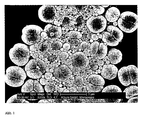
Abb.1 : Mikroskopische Aufnahme der Polymerdispersion aus Beispiel 1
DieAbbildung 1 zeigt eine mikroskopische Aufnahme der Polymerdisperion erhalten aus der Polymerisation Beispiel 1. Die mikroskopische Aufnahme zeigt die bimodale Verteilung der Polymerdispersion mit den beiden Teilchenpopulationen P 1 und P2. -
Abb.2 : Differentiale Teilchengrößenverteilung der Polymerdispersionen
DieAbbildung 2 zeigt die gemessenen differentialen Teilchengrößenverteilungen der erhaltenen Polymerdispersionen. Die Polymerisationen wurden entsprechend der hier beschriebenen Beispiele durchgeführt. - In einem 15 m3-Rührbehälter werden 4400 kg entmineralisiertes Wasser vorgelegt. Hierzu werden
55 kg Alkylarylsulfonat 55 kg Stearyl-mono-ethylenglykolether 5,5 kg Dimyristyl-peroxodicarbonat 5500 kg Vinylchlorid - Im Autoklaven wird die Reaktionsmischung auf die Polymerisationstemperatur von 52 °C aufgeheizt. Die Polymerisationszeit beträgt ca. 8 h.
- Die entmonomerisierte Dispersion wird über einen Sprühtrockner zu Polyvinylchlorid-Pulver aufgearbeitet. Die Sprühtrocknungs-Bedingungen werden so eingestellt, dass die Körnung des Pulvers < 1 Gew. % an Teilchen > 63 µm enthält.
- Zur Bestimmung des rheologischen Verhaltens in einer Paste werden jeweils 100 Teile des so erhaltenen Polyvinylchlorids und 60 Teile Diethylhexylphthalat vermischt und die Pastenviskositäten nach 2 Stunden Lagerzeit bis D = 1.5 s-1 und 45 s-1 bestimmt (Tabelle 1).
- In einem 15 m3-Rührbehälter werden 4400 kg entmineralisiertes Wasser vorgelegt. Hierzu werden
35 kg Alkylarylsulfonat 35 kg Stearyl-mono-ethylenglykolether 5,5 kg Dimyristyl-peroxodicarbonat 5500 kg Vinylchlorid - Im Autoklaven wird die Reaktionsmischung auf die Polymerisationstemperatur von 52 °C aufgeheizt. Die Polymerisationszeit beträgt ca. 8 h.
- Die Aufarbeitung der Dispersion erfolgt wie in Beispiel 1. Die Pastenviskosität des Pulvers ist Tabelle 1 zu entnehmen.
- In einem 15 m3-Rührbehälter werden 4400 kg entmineralisiertes Wasser vorgelegt. Hierzu werden
35 kg Alkylarylsulfonat 35 kg Stearyl-mono-ethylenglykolether 5,5 kg Dimyristyl-peroxodicarbonat 3.000 kg Vinylchlorid - gegeben. Diese Mischung wird bei 25 °C 15 min. lang gerührt und anschließend über einen Rotor-Stator-Homogenisierer mit 10.5 bar und einer Spaltbreite von 0.5 mm in einen 15 m3 Rührautoklaven gedrückt. Dabei beträgt die Dispergierzeit 30 min bei einem Durchsatz von 18 m3/h. 2500 kg Vinylchlorid werden vor Aufheizen der Reaktionsmischung in den Rührautoklaven dosiert.
- Im Autoklaven wird die Reaktionsmischung auf die Polymerisationstemperatur von 52 °C aufgeheizt. Die Polymerisationszeit beträgt ca. 8 h.
- Die Aufarbeitung der Dispersion erfolgt wie in Beispiel 1, Die Pastenviskosität des Pulvers ist Tabelle 1 zu entnehmen.
- In einem 15 m3-Rührbehälter werden 4400 kg entmineralisiertes Wasser vorgelegt. Hierzu werden
55 kg Alkylarylsulfonat 55 kg Stearyl-mono-ethylenglykolether 5.5 kg Dimyristyl-peroxodicarbonat 5500 kg Vinylchlorid - Im Autoklaven wird die Reaktionsmischung auf die Polymerisationstemperatur von 52 °C aufgeheizt. Die Polymerisationszeit beträgt ca. 8 h.
- Die Aufarbeitung der Dispersion erfolgt wie in Beispiel 1. Die Pastenviskosität des Pulvers ist Tabelle 1 zu entnehmen.
- In einem 15 m3-Rührbehälter werden 4400 kg entmineralisiertes Wasser vorgelegt. Hierzu werden
35 kg Alkylarylsulfonat 35 kg Stearyl-mono-ethylenglykolether 5.5 kg Dimyristyl-peroxodicarbonat 5500 kg Vinylchlorid - Im Autoklaven wird die Reaktionsmischung auf die Polymerisationstemperatur von 52 °C aufgeheizt. Die Polymerisationszeit beträgt ca. 8 h.
- Es fällt eine große Menge Koagulat an, so dass eine Aufarbeitung der Dispersion über Sprühtrocknung nicht zu realisieren ist.
- In einem 15 m3-Rührbehälter werden 4400 kg entmineralisiertes Wasser vorgelegt. Hierzu werden
35 kg Alkylarylsulfonat 35 kg Stearyl-mono-ethylenglykolether 5.5 kg Dimyristyl-peroxodicarbonat 3000 kg Vinylchlorid - Im Autoklaven wird die Reaktionsmischung auf die Polymerisationstemperatur von 52 °C aufgeheizt. Die Polymerisationszeit beträgt ca. 8 h.
- Es fällt eine große Menge Koagulat an, so dass eine Aufarbeitung der Dispersion über Sprühtrocknung nicht zu realisieren ist.
Tabelle 1 Pastenviskositäten PVC/DEHP = 100/60 und mittlere volumenbezogene Teilchengrößen Mv (P1) und (P2) (siehe auch Abb.2 )Beispiel/Vergleichsversuch Pa·s Mv (P1) Mv (P2) D = 1.5 s-1 D = 45 s-1 [µm] [µm] 1 1,8 2,2 0.48 2.3 2 1,9 2,4 0.51 2.7 3 2,0 2,2 0.52 2.8 A 3,0 3,2 0.50 - B - - - - C - - - -
Claims (4)
- Einstufiges Verfahren zur Herstellung von verpastbaren Polymeren aus ethylenisch ungesättigten Monomeren mittels diskontinuierlicher Polymerisation oder Copolymerisation in einem Mikrosuspensionsverfahren unter Einsatzes einer Dispergiereinrichtung nach dem Rotor-Stator-Prinzip, wobei zur Stabilisierung der Polymerdispersion Emulgator/Coemulgatormengen mit jeweils ≤ 0.8 Gew.% eingesetzt werden, dadurch gekennzeichnet, dass Dispergierdruck und Scherspaltbreite des Dispergierwerkzeuges so aufeinander eingestellt werden, dass eine bimodale Primärteilchenverteilung der Polymerdispersion erzeugt wird und der mittlere volumenbezogene Teilchendurchmesser der Teilchenpopulation P1 0.05 - 1.0 µm und der mittlere volumenbezogene Teilchendurchmesser der Teilchenpopulation P2 1.5 - 20 µm beträgt und das Volumenverhältnis der Teilchenpopulationen P1 und P2 der bimodalen Verteilung zwischen 90 : 10 und 10 : 90 liegt.
- Verfahren gemäß Anspruch 1, wobei das verpastbare Polymer ein Polymeres des Vinylchlorids oder von Mischungen des Vinylchlorids mit bis zu 30 Gewichtsprozent copolymerisierbaren Monomeren ist.
- Verfahren gemäß einem der Ansprüche 1 oder 2, dadurch gekennzeichnet, dass emulgator/coemulgatorarme Mischungen mit Emulgator/Coemulgatormengen von jeweils bevorzugt zwischen 0.4 - 0.8 Gew.% polymerisiert werden.
- Verfahren gemäß einem der Ansprüche 1 bis 3, dadurch gekennzeichnet, dass nur 30 - 80 % der Monomermenge über die Dispergiereinrichtung in den Polymerisationsreaktor überführt und der verbleibende Anteil direkt in den Polymerisationskessel dosiert wird.
Priority Applications (3)
| Application Number | Priority Date | Filing Date | Title |
|---|---|---|---|
| SI200631529T SI1858932T1 (sl) | 2005-03-18 | 2006-02-17 | Postopek za proizvodnjo polimerov, ki se jih da dobiti v obliki paste |
| EP06707025A EP1858932B1 (de) | 2005-03-18 | 2006-02-17 | Verfahren zur herstellung von verpastbaren polymeren |
| PL06707025T PL1858932T3 (pl) | 2005-03-18 | 2006-02-17 | Sposób wytwarzania polimerów nadających się do wytwarzania past |
Applications Claiming Priority (3)
| Application Number | Priority Date | Filing Date | Title |
|---|---|---|---|
| EP05005927A EP1702936A1 (de) | 2005-03-18 | 2005-03-18 | Verfahren zur Herstellung von verpastbaren Polymeren |
| PCT/EP2006/001428 WO2006097172A1 (de) | 2005-03-18 | 2006-02-17 | Verfahren zur herstellung von verpastbaren polymeren |
| EP06707025A EP1858932B1 (de) | 2005-03-18 | 2006-02-17 | Verfahren zur herstellung von verpastbaren polymeren |
Publications (2)
| Publication Number | Publication Date |
|---|---|
| EP1858932A1 EP1858932A1 (de) | 2007-11-28 |
| EP1858932B1 true EP1858932B1 (de) | 2012-12-19 |
Family
ID=34934344
Family Applications (2)
| Application Number | Title | Priority Date | Filing Date |
|---|---|---|---|
| EP05005927A Withdrawn EP1702936A1 (de) | 2005-03-18 | 2005-03-18 | Verfahren zur Herstellung von verpastbaren Polymeren |
| EP06707025A Revoked EP1858932B1 (de) | 2005-03-18 | 2006-02-17 | Verfahren zur herstellung von verpastbaren polymeren |
Family Applications Before (1)
| Application Number | Title | Priority Date | Filing Date |
|---|---|---|---|
| EP05005927A Withdrawn EP1702936A1 (de) | 2005-03-18 | 2005-03-18 | Verfahren zur Herstellung von verpastbaren Polymeren |
Country Status (13)
| Country | Link |
|---|---|
| US (1) | US20090105431A1 (de) |
| EP (2) | EP1702936A1 (de) |
| KR (1) | KR101293068B1 (de) |
| CN (1) | CN101142240B (de) |
| CA (1) | CA2600314C (de) |
| EA (1) | EA014290B1 (de) |
| ES (1) | ES2399099T3 (de) |
| PL (1) | PL1858932T3 (de) |
| PT (1) | PT1858932E (de) |
| SI (1) | SI1858932T1 (de) |
| TW (1) | TWI378104B (de) |
| UA (1) | UA92167C2 (de) |
| WO (1) | WO2006097172A1 (de) |
Families Citing this family (6)
| Publication number | Priority date | Publication date | Assignee | Title |
|---|---|---|---|---|
| CN100509943C (zh) * | 2007-05-11 | 2009-07-08 | 沈阳化工股份有限公司 | 一种聚氯乙烯糊树脂的制备方法 |
| KR101283823B1 (ko) * | 2010-07-02 | 2013-07-08 | 주식회사 엘지화학 | 염화비닐계 중합체의 제조방법 |
| KR101445240B1 (ko) | 2012-11-02 | 2014-09-29 | 한화케미칼 주식회사 | 염화비닐계 수지 및 이의 제조방법 |
| CN105440219B (zh) * | 2015-12-30 | 2018-04-27 | 江苏康宁化学有限公司 | 聚氯乙烯糊树脂及其制备方法 |
| KR102132753B1 (ko) * | 2016-10-31 | 2020-07-13 | 주식회사 엘지화학 | 염화비닐계 중합체 및 이의 제조방법 |
| EP3538564B1 (de) * | 2016-11-08 | 2021-07-28 | DDP Specialty Electronic Materials US, LLC | Gesteuerte partikelgrössenverteilung |
Family Cites Families (12)
| Publication number | Priority date | Publication date | Assignee | Title |
|---|---|---|---|---|
| BE561492A (de) * | 1956-10-09 | |||
| HU173513B (hu) * | 1975-04-30 | 1979-05-28 | Rhone Poulenc Ind | Sposob polimerizacii vinilkhlorida v sshitojj mikrosuspensii |
| DD143078A1 (de) * | 1979-04-17 | 1980-07-30 | Mohr Karl Heinz | Verfahren zur herstellung von homo-oder copolymerisaten des vinylchlorids |
| DD220317A1 (de) | 1983-12-30 | 1985-03-27 | Buna Chem Werke Veb | Verfahren zur herstellung von vinylchlorid homo- und copolymerisaten |
| DE3526251A1 (de) * | 1985-07-23 | 1987-01-29 | Huels Chemische Werke Ag | Verfahren zur herstellung von verpastbaren vinylchlorid-polymerisaten |
| US5000872A (en) * | 1987-10-27 | 1991-03-19 | Canadian Occidental Petroleum, Ltd. | Surfactant requirements for the low-shear formation of water continuous emulsions from heavy crude oil |
| US5290890A (en) * | 1992-12-23 | 1994-03-01 | The Geon Company | Process for making PVC resin having improved initial color and clarity |
| FR2752844B1 (fr) * | 1996-08-27 | 1998-10-30 | Atochem Elf Sa | Latex bipopule de polymeres a base de chlorure de vinyle, ses procedes d'obtention et son application dans des plastisols a rheologie amelioree |
| FR2752846B1 (fr) * | 1996-08-27 | 1998-10-30 | Atochem Elf Sa | Latex bipopule a base de polymeres de chlorure de vinyle, ayant un taux eleve de population de fines particules, ses procedes de fabrication et ses applications |
| NO310365B1 (no) * | 1997-07-18 | 2001-06-25 | Norsk Hydro As | PVC-blanding, anvendelse av denne og metode for dens fremstilling |
| GB9808934D0 (en) * | 1998-04-27 | 1998-06-24 | Evc Tech Ag | Polyvinyl chloride, processes for its production, and compositions containing it |
| DE10126266A1 (de) * | 2001-05-29 | 2002-12-05 | Basf Ag | Emulgatorgemisch für die Emulsionspolymerisation |
-
2005
- 2005-03-18 EP EP05005927A patent/EP1702936A1/de not_active Withdrawn
-
2006
- 2006-02-17 CA CA2600314A patent/CA2600314C/en not_active Expired - Lifetime
- 2006-02-17 PL PL06707025T patent/PL1858932T3/pl unknown
- 2006-02-17 PT PT67070250T patent/PT1858932E/pt unknown
- 2006-02-17 UA UAA200711517A patent/UA92167C2/ru unknown
- 2006-02-17 EA EA200702006A patent/EA014290B1/ru not_active IP Right Cessation
- 2006-02-17 US US11/908,988 patent/US20090105431A1/en not_active Abandoned
- 2006-02-17 KR KR1020077023999A patent/KR101293068B1/ko not_active Expired - Lifetime
- 2006-02-17 CN CN2006800087102A patent/CN101142240B/zh not_active Expired - Lifetime
- 2006-02-17 ES ES06707025T patent/ES2399099T3/es not_active Expired - Lifetime
- 2006-02-17 SI SI200631529T patent/SI1858932T1/sl unknown
- 2006-02-17 WO PCT/EP2006/001428 patent/WO2006097172A1/de not_active Ceased
- 2006-02-17 EP EP06707025A patent/EP1858932B1/de not_active Revoked
- 2006-03-01 TW TW095106852A patent/TWI378104B/zh active
Also Published As
| Publication number | Publication date |
|---|---|
| CN101142240B (zh) | 2012-07-04 |
| ES2399099T3 (es) | 2013-03-25 |
| TWI378104B (en) | 2012-12-01 |
| CN101142240A (zh) | 2008-03-12 |
| TW200704647A (en) | 2007-02-01 |
| KR101293068B1 (ko) | 2013-08-06 |
| SI1858932T1 (sl) | 2013-03-29 |
| UA92167C2 (ru) | 2010-10-11 |
| EP1702936A1 (de) | 2006-09-20 |
| CA2600314A1 (en) | 2006-09-21 |
| WO2006097172A1 (de) | 2006-09-21 |
| EA014290B1 (ru) | 2010-10-29 |
| PL1858932T3 (pl) | 2013-05-31 |
| CA2600314C (en) | 2013-09-17 |
| PT1858932E (pt) | 2013-02-27 |
| EA200702006A1 (ru) | 2008-02-28 |
| KR20070112871A (ko) | 2007-11-27 |
| EP1858932A1 (de) | 2007-11-28 |
| US20090105431A1 (en) | 2009-04-23 |
Similar Documents
| Publication | Publication Date | Title |
|---|---|---|
| DE69911801T2 (de) | Redispergierbares pulver und seine wässrige dispersion, herstellungsverfahren und verwendung | |
| EP0567819B1 (de) | Wässrige Polymerisatdispersion | |
| EP2488557B1 (de) | Verfahren zur kontinuierlichen emulsionspolymerisation | |
| EP2433971B1 (de) | Verfahren zur Herstellung eines Polyvinylchlorid (PVC) Harzes | |
| EP0910586A1 (de) | Verfahren zur herstellung einer wässrigen polymerisatdispersion | |
| DE4307683A1 (de) | Verfahren zur Herstellung einer wäßrigen Polymerisatdispersion | |
| DE2461083A1 (de) | Verfahren zur mikrosuspensionspolymerisation von vinylhalogeniden | |
| EP0090142B2 (de) | Verfahren zur Herstellung von verpastbaren Polymeren des Vinylchlorids | |
| EP1858932B1 (de) | Verfahren zur herstellung von verpastbaren polymeren | |
| EP0915106B1 (de) | Verfahren zur Herstellung von Homo- und Mischpolymerisaten des Vinylchlorids | |
| DE2629655A1 (de) | Verfahren zur herstellung von vinylchloridpolymerisaten | |
| DE60307255T2 (de) | Co-dosierung von organischen initiatoren und schutzcolloiden während polymerisationsreaktionen | |
| DE3701579C2 (de) | ||
| EP2834276B1 (de) | Verfahren zur herstellung von vinylesterpolymeren mit gezielt einstellbarer dispersität bei geringer polydispersität | |
| DE102012017655B4 (de) | Verfahren zur Herstellung einer Vinylchloridharzpaste mit verbesserter Polymerisationswärmekontrolle | |
| EP0108884B1 (de) | Verfahren zur Herstellung von verpastbaren Polymeren des Vinylchlorids | |
| DE19757494A1 (de) | Verfahren zur Herstellung einer wäßrigen Polymerisatdispersion | |
| EP1511782A1 (de) | Verfahren zur herstellung einer wässrigen polymerisatdispersion | |
| DE1495871B1 (de) | Verfahren zur Herstellung von Vinylchloridpolymerisaten | |
| DE2341518C3 (de) | ||
| DE3526251A1 (de) | Verfahren zur herstellung von verpastbaren vinylchlorid-polymerisaten | |
| DE112012003654T5 (de) | Hochfunktionelles Additiv zur Polymerisation und Verfahren zum Herstellen von Vinylchloridkeimen unter Verwendung desselben | |
| DE3743142A1 (de) | Verfahren zur emulsionspolymerisation von pfropfcopolymeren | |
| DD146140A3 (de) | Verfahren zur herstellung von vinylchloridpolymeren |
Legal Events
| Date | Code | Title | Description |
|---|---|---|---|
| PUAI | Public reference made under article 153(3) epc to a published international application that has entered the european phase |
Free format text: ORIGINAL CODE: 0009012 |
|
| 17P | Request for examination filed |
Effective date: 20070809 |
|
| AK | Designated contracting states |
Kind code of ref document: A1 Designated state(s): AT BE BG CH CY CZ DE DK EE ES FI FR GB GR HU IE IS IT LI LT LU LV MC NL PL PT RO SE SI SK TR |
|
| RIN1 | Information on inventor provided before grant (corrected) |
Inventor name: TRAEGER, MICHAEL Inventor name: MUELLER, KURT Inventor name: BANKHOLT, HEINZ Inventor name: GEHRKE, JAN-STEPHAN Inventor name: STIENEKER, AXEL |
|
| 17Q | First examination report despatched |
Effective date: 20080310 |
|
| DAX | Request for extension of the european patent (deleted) | ||
| REG | Reference to a national code |
Ref country code: DE Ref legal event code: R079 Ref document number: 502006012334 Country of ref document: DE Free format text: PREVIOUS MAIN CLASS: C08F0014060000 Ipc: B01J0008100000 |
|
| GRAP | Despatch of communication of intention to grant a patent |
Free format text: ORIGINAL CODE: EPIDOSNIGR1 |
|
| RIC1 | Information provided on ipc code assigned before grant |
Ipc: B01J 8/10 20060101AFI20120529BHEP Ipc: C08F 14/06 20060101ALI20120529BHEP Ipc: C08F 2/16 20060101ALI20120529BHEP |
|
| GRAS | Grant fee paid |
Free format text: ORIGINAL CODE: EPIDOSNIGR3 |
|
| GRAA | (expected) grant |
Free format text: ORIGINAL CODE: 0009210 |
|
| AK | Designated contracting states |
Kind code of ref document: B1 Designated state(s): AT BE BG CH CY CZ DE DK EE ES FI FR GB GR HU IE IS IT LI LT LU LV MC NL PL PT RO SE SI SK TR |
|
| REG | Reference to a national code |
Ref country code: GB Ref legal event code: FG4D Free format text: NOT ENGLISH |
|
| REG | Reference to a national code |
Ref country code: CH Ref legal event code: EP |
|
| REG | Reference to a national code |
Ref country code: AT Ref legal event code: REF Ref document number: 589071 Country of ref document: AT Kind code of ref document: T Effective date: 20130115 |
|
| REG | Reference to a national code |
Ref country code: RO Ref legal event code: EPE |
|
| REG | Reference to a national code |
Ref country code: DE Ref legal event code: R096 Ref document number: 502006012334 Country of ref document: DE Effective date: 20130214 |
|
| REG | Reference to a national code |
Ref country code: SE Ref legal event code: TRGR |
|
| REG | Reference to a national code |
Ref country code: PT Ref legal event code: SC4A Free format text: AVAILABILITY OF NATIONAL TRANSLATION Effective date: 20130219 |
|
| REG | Reference to a national code |
Ref country code: ES Ref legal event code: FG2A Ref document number: 2399099 Country of ref document: ES Kind code of ref document: T3 Effective date: 20130325 |
|
| REG | Reference to a national code |
Ref country code: NL Ref legal event code: T3 |
|
| PG25 | Lapsed in a contracting state [announced via postgrant information from national office to epo] |
Ref country code: GR Free format text: LAPSE BECAUSE OF FAILURE TO SUBMIT A TRANSLATION OF THE DESCRIPTION OR TO PAY THE FEE WITHIN THE PRESCRIBED TIME-LIMIT Effective date: 20130320 |
|
| REG | Reference to a national code |
Ref country code: PL Ref legal event code: T3 |
|
| REG | Reference to a national code |
Ref country code: EE Ref legal event code: FG4A Ref document number: E007793 Country of ref document: EE Effective date: 20130318 |
|
| REG | Reference to a national code |
Ref country code: SK Ref legal event code: T3 Ref document number: E 13851 Country of ref document: SK |
|
| PG25 | Lapsed in a contracting state [announced via postgrant information from national office to epo] |
Ref country code: BG Free format text: LAPSE BECAUSE OF FAILURE TO SUBMIT A TRANSLATION OF THE DESCRIPTION OR TO PAY THE FEE WITHIN THE PRESCRIBED TIME-LIMIT Effective date: 20130319 Ref country code: IS Free format text: LAPSE BECAUSE OF FAILURE TO SUBMIT A TRANSLATION OF THE DESCRIPTION OR TO PAY THE FEE WITHIN THE PRESCRIBED TIME-LIMIT Effective date: 20130419 |
|
| PLBI | Opposition filed |
Free format text: ORIGINAL CODE: 0009260 |
|
| PG25 | Lapsed in a contracting state [announced via postgrant information from national office to epo] |
Ref country code: MC Free format text: LAPSE BECAUSE OF NON-PAYMENT OF DUE FEES Effective date: 20130228 |
|
| REG | Reference to a national code |
Ref country code: CH Ref legal event code: PL |
|
| PLAX | Notice of opposition and request to file observation + time limit sent |
Free format text: ORIGINAL CODE: EPIDOSNOBS2 |
|
| 26 | Opposition filed |
Opponent name: SOLVAY SA Effective date: 20130919 |
|
| PG25 | Lapsed in a contracting state [announced via postgrant information from national office to epo] |
Ref country code: LI Free format text: LAPSE BECAUSE OF NON-PAYMENT OF DUE FEES Effective date: 20130228 Ref country code: DK Free format text: LAPSE BECAUSE OF FAILURE TO SUBMIT A TRANSLATION OF THE DESCRIPTION OR TO PAY THE FEE WITHIN THE PRESCRIBED TIME-LIMIT Effective date: 20121219 Ref country code: CH Free format text: LAPSE BECAUSE OF NON-PAYMENT OF DUE FEES Effective date: 20130228 |
|
| PG25 | Lapsed in a contracting state [announced via postgrant information from national office to epo] |
Ref country code: CY Free format text: LAPSE BECAUSE OF FAILURE TO SUBMIT A TRANSLATION OF THE DESCRIPTION OR TO PAY THE FEE WITHIN THE PRESCRIBED TIME-LIMIT Effective date: 20121219 |
|
| REG | Reference to a national code |
Ref country code: IE Ref legal event code: MM4A |
|
| REG | Reference to a national code |
Ref country code: DE Ref legal event code: R026 Ref document number: 502006012334 Country of ref document: DE Effective date: 20130919 |
|
| REG | Reference to a national code |
Ref country code: HU Ref legal event code: AG4A Ref document number: E017809 Country of ref document: HU |
|
| PG25 | Lapsed in a contracting state [announced via postgrant information from national office to epo] |
Ref country code: IE Free format text: LAPSE BECAUSE OF NON-PAYMENT OF DUE FEES Effective date: 20130217 |
|
| PLAF | Information modified related to communication of a notice of opposition and request to file observations + time limit |
Free format text: ORIGINAL CODE: EPIDOSCOBS2 |
|
| REG | Reference to a national code |
Ref country code: DE Ref legal event code: R082 Ref document number: 502006012334 Country of ref document: DE Representative=s name: GODEMEYER BLUM LENZE PARTNERSCHAFT, PATENTANWA, DE Ref country code: DE Ref legal event code: R082 Ref document number: 502006012334 Country of ref document: DE Representative=s name: GODEMEYER BLUM LENZE PATENTANWAELTE, PARTNERSC, DE Ref country code: DE Ref legal event code: R082 Ref document number: 502006012334 Country of ref document: DE Representative=s name: GODEMEYER BLUM LENZE - WERKPATENT, DE |
|
| REG | Reference to a national code |
Ref country code: AT Ref legal event code: MM01 Ref document number: 589071 Country of ref document: AT Kind code of ref document: T Effective date: 20130217 |
|
| PLBB | Reply of patent proprietor to notice(s) of opposition received |
Free format text: ORIGINAL CODE: EPIDOSNOBS3 |
|
| PG25 | Lapsed in a contracting state [announced via postgrant information from national office to epo] |
Ref country code: AT Free format text: LAPSE BECAUSE OF NON-PAYMENT OF DUE FEES Effective date: 20130217 |
|
| RDAF | Communication despatched that patent is revoked |
Free format text: ORIGINAL CODE: EPIDOSNREV1 |
|
| REG | Reference to a national code |
Ref country code: FR Ref legal event code: PLFP Year of fee payment: 10 |
|
| PGFP | Annual fee paid to national office [announced via postgrant information from national office to epo] |
Ref country code: NL Payment date: 20150218 Year of fee payment: 10 |
|
| APAH | Appeal reference modified |
Free format text: ORIGINAL CODE: EPIDOSCREFNO |
|
| APBM | Appeal reference recorded |
Free format text: ORIGINAL CODE: EPIDOSNREFNO |
|
| APBP | Date of receipt of notice of appeal recorded |
Free format text: ORIGINAL CODE: EPIDOSNNOA2O |
|
| PGFP | Annual fee paid to national office [announced via postgrant information from national office to epo] |
Ref country code: FI Payment date: 20150211 Year of fee payment: 10 Ref country code: LU Payment date: 20150225 Year of fee payment: 10 Ref country code: IT Payment date: 20150225 Year of fee payment: 10 Ref country code: SK Payment date: 20150212 Year of fee payment: 10 Ref country code: CZ Payment date: 20150212 Year of fee payment: 10 Ref country code: PT Payment date: 20150211 Year of fee payment: 10 Ref country code: RO Payment date: 20150127 Year of fee payment: 10 Ref country code: HU Payment date: 20150218 Year of fee payment: 10 Ref country code: DE Payment date: 20150107 Year of fee payment: 10 Ref country code: LT Payment date: 20150123 Year of fee payment: 10 Ref country code: ES Payment date: 20150225 Year of fee payment: 10 Ref country code: EE Payment date: 20150211 Year of fee payment: 10 |
|
| PGFP | Annual fee paid to national office [announced via postgrant information from national office to epo] |
Ref country code: SI Payment date: 20150127 Year of fee payment: 10 Ref country code: GB Payment date: 20150218 Year of fee payment: 10 Ref country code: PL Payment date: 20150127 Year of fee payment: 10 Ref country code: SE Payment date: 20150218 Year of fee payment: 10 Ref country code: FR Payment date: 20150219 Year of fee payment: 10 |
|
| PGFP | Annual fee paid to national office [announced via postgrant information from national office to epo] |
Ref country code: BE Payment date: 20150218 Year of fee payment: 10 |
|
| APBU | Appeal procedure closed |
Free format text: ORIGINAL CODE: EPIDOSNNOA9O |
|
| REG | Reference to a national code |
Ref country code: DE Ref legal event code: R064 Ref document number: 502006012334 Country of ref document: DE Ref country code: DE Ref legal event code: R103 Ref document number: 502006012334 Country of ref document: DE |
|
| RDAG | Patent revoked |
Free format text: ORIGINAL CODE: 0009271 |
|
| STAA | Information on the status of an ep patent application or granted ep patent |
Free format text: STATUS: PATENT REVOKED |
|
| 27W | Patent revoked |
Effective date: 20151030 |
|
| GBPR | Gb: patent revoked under art. 102 of the ep convention designating the uk as contracting state |
Effective date: 20151030 |
|
| REG | Reference to a national code |
Ref country code: PT Ref legal event code: MP4A Effective date: 20160330 |
|
| REG | Reference to a national code |
Ref country code: SK Ref legal event code: MC4A Ref document number: E 13851 Country of ref document: SK Effective date: 20151030 |
|
| REG | Reference to a national code |
Ref country code: EE Ref legal event code: MF4A Ref document number: E007793 Country of ref document: EE Effective date: 20160330 |
|
| PGFP | Annual fee paid to national office [announced via postgrant information from national office to epo] |
Ref country code: LV Payment date: 20151221 Year of fee payment: 11 |
|
| REG | Reference to a national code |
Ref country code: AT Ref legal event code: MA03 Ref document number: 589071 Country of ref document: AT Kind code of ref document: T Effective date: 20151030 |
|
| REG | Reference to a national code |
Ref country code: SI Ref legal event code: KO00 Effective date: 20161013 |
|
| REG | Reference to a national code |
Ref country code: SE Ref legal event code: ECNC |