EP1611643B1 - Koaxialkabelverbinder und Kabelbaumeinheit mit dem Koaxialkabelverbinder - Google Patents
Koaxialkabelverbinder und Kabelbaumeinheit mit dem Koaxialkabelverbinder Download PDFInfo
- Publication number
- EP1611643B1 EP1611643B1 EP04759630A EP04759630A EP1611643B1 EP 1611643 B1 EP1611643 B1 EP 1611643B1 EP 04759630 A EP04759630 A EP 04759630A EP 04759630 A EP04759630 A EP 04759630A EP 1611643 B1 EP1611643 B1 EP 1611643B1
- Authority
- EP
- European Patent Office
- Prior art keywords
- cable holder
- cable
- exposed portion
- coaxial cable
- gripping
- Prior art date
- Legal status (The legal status is an assumption and is not a legal conclusion. Google has not performed a legal analysis and makes no representation as to the accuracy of the status listed.)
- Expired - Lifetime
Links
- 239000004020 conductor Substances 0.000 claims abstract description 163
- 239000012212 insulator Substances 0.000 claims abstract description 61
- 230000000295 complement effect Effects 0.000 claims description 4
- 238000012790 confirmation Methods 0.000 description 6
- 238000009413 insulation Methods 0.000 description 4
- 239000000463 material Substances 0.000 description 3
- 239000011347 resin Substances 0.000 description 3
- 229920005989 resin Polymers 0.000 description 3
- 230000002159 abnormal effect Effects 0.000 description 2
- 230000008878 coupling Effects 0.000 description 2
- 238000010168 coupling process Methods 0.000 description 2
- 238000005859 coupling reaction Methods 0.000 description 2
- 239000002184 metal Substances 0.000 description 2
- 238000000034 method Methods 0.000 description 2
- 238000005476 soldering Methods 0.000 description 2
- 230000000694 effects Effects 0.000 description 1
- 239000011888 foil Substances 0.000 description 1
- 230000036544 posture Effects 0.000 description 1
- 230000008054 signal transmission Effects 0.000 description 1
- 238000004804 winding Methods 0.000 description 1
Images


Classifications
-
- H—ELECTRICITY
- H01—ELECTRIC ELEMENTS
- H01R—ELECTRICALLY-CONDUCTIVE CONNECTIONS; STRUCTURAL ASSOCIATIONS OF A PLURALITY OF MUTUALLY-INSULATED ELECTRICAL CONNECTING ELEMENTS; COUPLING DEVICES; CURRENT COLLECTORS
- H01R4/00—Electrically-conductive connections between two or more conductive members in direct contact, i.e. touching one another; Means for effecting or maintaining such contact; Electrically-conductive connections having two or more spaced connecting locations for conductors and using contact members penetrating insulation
- H01R4/24—Connections using contact members penetrating or cutting insulation or cable strands
- H01R4/2416—Connections using contact members penetrating or cutting insulation or cable strands the contact members having insulation-cutting edges, e.g. of tuning fork type
- H01R4/242—Connections using contact members penetrating or cutting insulation or cable strands the contact members having insulation-cutting edges, e.g. of tuning fork type the contact members being plates having a single slot
- H01R4/2425—Flat plates, e.g. multi-layered flat plates
- H01R4/2429—Flat plates, e.g. multi-layered flat plates mounted in an insulating base
- H01R4/2433—Flat plates, e.g. multi-layered flat plates mounted in an insulating base one part of the base being movable to push the cable into the slot
-
- H—ELECTRICITY
- H01—ELECTRIC ELEMENTS
- H01R—ELECTRICALLY-CONDUCTIVE CONNECTIONS; STRUCTURAL ASSOCIATIONS OF A PLURALITY OF MUTUALLY-INSULATED ELECTRICAL CONNECTING ELEMENTS; COUPLING DEVICES; CURRENT COLLECTORS
- H01R9/00—Structural associations of a plurality of mutually-insulated electrical connecting elements, e.g. terminal strips or terminal blocks; Terminals or binding posts mounted upon a base or in a case; Bases therefor
- H01R9/03—Connectors arranged to contact a plurality of the conductors of a multiconductor cable, e.g. tapping connections
- H01R9/05—Connectors arranged to contact a plurality of the conductors of a multiconductor cable, e.g. tapping connections for coaxial cables
-
- H—ELECTRICITY
- H01—ELECTRIC ELEMENTS
- H01R—ELECTRICALLY-CONDUCTIVE CONNECTIONS; STRUCTURAL ASSOCIATIONS OF A PLURALITY OF MUTUALLY-INSULATED ELECTRICAL CONNECTING ELEMENTS; COUPLING DEVICES; CURRENT COLLECTORS
- H01R9/00—Structural associations of a plurality of mutually-insulated electrical connecting elements, e.g. terminal strips or terminal blocks; Terminals or binding posts mounted upon a base or in a case; Bases therefor
- H01R9/03—Connectors arranged to contact a plurality of the conductors of a multiconductor cable, e.g. tapping connections
- H01R9/05—Connectors arranged to contact a plurality of the conductors of a multiconductor cable, e.g. tapping connections for coaxial cables
- H01R9/053—Connectors arranged to contact a plurality of the conductors of a multiconductor cable, e.g. tapping connections for coaxial cables using contact members penetrating insulation
Definitions
- the present invention relates to a coaxial cable connector that connects a coaxial cable, and a harness unit that uses the coaxial cable connector.
- a coaxial cable comprising a central conductor, an inner insulating member that surrounds the central conductor, an outer conductor that surrounds the inner insulating member for shielding the central conductor, and an outer insulating member that surrounds the outer conductor has been used in various fields.
- the coaxial cable is used to connect various kinds of measuring apparatuses in research organizations, and is used to connect electronic appliances at home.
- the BNC connector comprises an inner member that is connected to the coaxial cable, and an outer ring that is rotatably fitted to the outside of the inner member and has slanted notches to be engaged with an external terminal.
- a central conductor exposed portion with a predetermined length is formed, in which only the central conductor is left and the inner insulating member, the outer conductor, and the outer insulating member at the outside of the central conductor are removed from the surface. Further, an outer conductor exposed portion with a predetermined length is formed continuing from the rear end of the central conductor exposed portion, in which the central conductor, the inner insulating member, and the outer conductor are left and only the external insulating member is removed from the surface.
- a central terminal of the BNC connector is pressed against the central conductor of the full peel-off portion. While the central terminal is inserted into a coaxial cable connection cylinder at the rear end of the inner member of the BNC connector, the outer conductor of the outer conductor exposed portion is disentangled, and this disentangled portion is roughly covered on the outside of the cylinder. Thereafter, a caulking member set in advance on an original diameter portion is moved, and the front end of the caulking member is covered on the outside of the disentangled outer conductor. The rear end is crushed, and is bitten into the original diameter portion. Thus, a complex work is necessary.
- the BNC connector can be connected to only one coaxial cable.
- Coaxial connector cables that can be combined with a plurality of coaxial cables are disclosed in JP-A-5-135825 ), and JP-U-4-14858 ). While these coaxial cable connectors can connect a plurality of coaxial cables, each coaxial cable connector requires a soldering of a outer conductor to a cable supporting member. Consequently, the outer conductors of a plurality of coaxial cables are integrally combined, and are made electrically common. As a result, when a shield of one coaxial cable is degraded, the shields of all the other coaxial cables are also degraded.
- GB-A-2 254 495 discloses a connector for detachably connecting a shielded coaxial cable with a printed circuit board or the like.
- the connector has a first housing for receiving therein an end portion of the shielded cable and a second housing for receiving the first housing.
- An insulation piercing contact cuts through an insulation cover and contacts the core conductor.
- a pressing contact secures an end of the shield of the cable.
- a pair of conductive fittings is mounted by soldering on conductive patterns provided on the plate member. Each of the fittings has a first retainer portion for retaining the second housing and a second retainer portion for contacting the insulation piercing contact and a pressing contact.
- EP-A-0 590 796 describes an electrical connector for terminating both the signal and a coaxial cable.
- the signal pins for the coaxial cable include contact portions with angled connection sections.
- Ground contacts for contacting the shielding braid of a cable are laterally off set.
- the described contacts are slotted plate members having upper cutting edges for severing the insulation.
- a coaxial cable connector comprising, a first cable holder a second cable holder which can be engaged to said first cable holder by pressing, a housing to which an assembly by engaging said first cable holder and said second cable holder, at least one gripping conductors and gripping conductor extensions extending therefrom which are located in said first cable holder in an insulated condition, and, a plurality of contact elements and external cable connection terminals connected thereto which are located in said housing in an insulated condition, wherein, each cable holder has grooves for receiving an inner insulator exposed portion and an outer conductor exposed portion of the coaxial cable formed at one end thereof, said gripping conductors each grips said outer conductor exposed portion of the coaxial cable, said gripping conductor extensions each engages with a corresponding contact element, and a central conductor of the coaxial cable in the outer conductor exposed portion engages with a corresponding contact
- the coaxial cable connector having the above structure, it is possible to easily fit the coaxial cable by engagement based on pressing, and the central conductor and the outer conductor of the coaxial cable are connected to external cable connection terminal in an insulated condition. Therefore, even when a plurality of coaxial cables are fitted, it is possible to separately secure individual shieldings.
- said first cable holder comprises:
- the first contact element and the second contact element have cuts formed on plate members that are mounted on the block body of the housing respectively.
- the gripping conductor extension has projections that stretch perpendicularly in a longitudinal direction, and the projections are engaged with holes formed on the first cable holder, and are held at predetermined positions.
- the gripping conductor has projections that stretch perpendicularly in a longitudinal direction, and the projections are engaged with holes formed on the first cable holder, and are held at predetermined positions.
- the gripping conductor has a pressed portion that is pressed and deformed, and a base portion to which one side of the pressed portion is integrally connected, the gripping conductor extension is connected to a first end of the base portion near the front end of the coaxial cable, and staged projections that bite into the original-diameter end portion and are capable of gripping the original-diameter portion are formed on a second end of the base portion far from the front end of the coaxial cable.
- a coaxial cable harness unit is formed by using any one of the embodiments of the coaxial cable connectors.
- a reference symbol 101 denotes a block body of the first cable holder 100
- a reference symbol 201 denotes a block body of the second cable holder 200
- a reference symbol 301 denotes a block body of the housing 300.
- the opposite side, that is, the lower side in Fig. 1 will be called a rear end.
- the upward-facing surfaces of the block body 101 of the first cable holder 100, the block body 201 of the second cable holder 200, and the block body 301 of the housing 300 will be called first surfaces respectively.
- the opposite surfaces will be called second surfaces. Reference symbols of these surfaces are omitted.
- Fig. 2 shows a processing state of the front ends of two coaxial cables 10a and 10b respectively that are fitted to the coaxial cable connector 1.
- the coaxial cables 10a and 10b comprise central conductors 11a and 11b, inner insulating members 12a and 12b that surround the outside of the central conductors 11a and 11b, outer conductors 13a and 13b that surround the outside of the inner insulating members 12a and 12b, and external insulating members 14 and 14b that surround the outside of the outer conductors 13a and 13b, respectively.
- Each of the central conductors 11a and 11b is made of one conductor.
- the outer conductors 13a and 13b are mesh conductors. It is also possible to form the outer conductors 13a and 13b by using a lateral winding conductor, a metal pipe, metal foil, a metal-deposited film, or the like.
- Inner insulator exposed portions 15a and 15b that have the outer insulating members 14a and 14b peel-off from the surface respectively are formed to have a predetermined length L1 from the front end.
- Outer conductor exposed portions 16a and 16b that have only the outer insulating members 14a and 14b peel-off from the surface respectively are formed to continue from the rear end of the inner insulator exposed portions 15a and 15b, to have a predetermined length L2.
- Portions having the original diameters that have none of the portions of the coaxial cables 10a 10b peel-off and continue from the rear end of the outer conductor exposed portions 16a and 16b are called original-diameter end portions 17a and 17b respectively.
- the first cable holder 100 is formed with first inner insulator exposed portion receiving grooves 110a and 110b that receive approximately half of the cross-sectional portion of the inner insulator exposed portions 15a and 15b of the coaxial cables 10a and 10b respectively.
- the first cable holder 100 is further formed with first outer conductor exposed portion receiving grooves 120a and 120b that continue from the rear end of the first inner insulator exposed portion receiving grooves 110a and 110b, and receive approximately half of the cross-sectional portion of the outer conductor exposed portions 16a and 16b of the coaxial cables 10a and 10b respectively.
- the first cable holder 100 is further formed with first original-diameter end portion receiving grooves 130a and 130b that continue from the rear end of the first outer conductor exposed portion receiving grooves 120a and 120b, and receive approximately half of the cross-sectional portion of the original-diameter end portions 17a and 17b of the coaxial cables 10a and 10b respectively.
- Each of the first inner insulator exposed portion receiving grooves 110a and 110b has a length approximately equal to the length L1 shown in Fig. 2 .
- Each of the first outer conductor exposed portion receiving grooves 120a and 120b has a length approximately equal to the length L2 shown in Fig. 2 .
- Each of the first inner insulator exposed portion receiving grooves 110a and 110b has an approximately arcuate cross section.
- the front end of each of the first inner insulator exposed portion receiving grooves 110a and 110b is closed with a front end wall 102.
- confirmation holes 111a and 111b are formed on the bottoms of the grooves to pierce through the second surface side. An operator can confirm through these confirmation holes 111a and 111b whether the coaxial cables 10a and 10b are disposed at predetermined positions such that the front ends of the inner insulator exposed portions 15a and 15b are brought into contact with the front end wall 102 respectively.
- first contact element through-holes 112a and 112b through which first contact elements 330a and 330b that are fitted on the housing 300 pass when a cable holder assembly 400 (refer to Fig. 5 ), which is an engagement of the first cable holder 100 and the second cable holder 200, is engaged with the housing 300.
- Each of the first outer conductor exposed portion receiving grooves 120a and 120b has a U-shaped cross section on a flat bottom.
- Gripping conductors 140a and 140b that grip the outer conductor exposed portions 16a and 16b of the coaxial cables 10a and 10b respectively are disposed on the first outer conductor exposed portion receiving grooves 120a and 120b.
- Gripping conductor extensions 150a and 150b are integrally connected to the front end of the gripping conductors 140a and 140b, and extend to the front end respectively.
- the gripping conductor extensions 150a and 150b are disposed in gripping conductor extension receiving grooves 160a and 160b that are formed on the first surface of the block body 101 between the two first inner insulator exposed portion receiving grooves 110a and 110b.
- second contact element through-holes 161a and 161b through which second contact elements 340a and 340b that are fitted on the housing 300 pass when the cable holder assembly 400 (refer to Fig. 5 ), which is the engagement of the first cable holder 100 and the second cable holder 200, is engaged with the housing 300, such that the second contact element through-holes 161a and 161b are orthogonal with the gripping conductor extension receiving grooves 160a and 160b respectively.
- Fig. 3 shows the gripping conductors 140a and 140b, and the gripping conductor extensions 150a and 150b that are integrally fitted to them.
- the gripping conductors 140a and 140b have pressed portions 141a and 141b that are pressed and deformed when the first cable holder 100 and the second cable holder 200 are engaged together, and base portions 142a and 142b that are connected to one side of the pressed portions 141a and 141b respectively and are mounted on the bottoms of the first outer conductor exposed portion receiving grooves 120a and 120b.
- Projections 143a and 143b are fitted on the base portions 142a and 142b, and projections 151a and 151b are fitted on the gripping conductor extensions 150a and 150b, respectively. These projections are engaged with corresponding holes (not shown) that are formed on the block body 110, so that the gripping conductors 140a and 140b and the gripping conductor extensions 150a and 150b are set at predetermined positions.
- Staged projections 144a and 144b are formed on the ends of the rear end of the base portions 142a and 142b respectively. At the time of engaging the first cable holder 100 and the second cable holder 200 together, the projections 144a and 144b bite into the original-diameter end portions 17a and 17b of the coaxial cables 10a and 10b, and grip the original-diameter end portions 17a and 17b.
- the first original-diameter end portion receiving grooves 130a and 130b have approximately arc-shaped cross sections respectively.
- Bottom projections 131a and 131b are provided on the bottoms of the first original-diameter end portion receiving grooves 130a and 130b respectively.
- First side projections 132a and 132b and second side projections 133a and 133b are formed at upper ends of mutually opposite side walls.
- These projections have a function of biting into the original-diameter end portions 17a and 17b of the coaxial cables 10a and 10b and gripping the original-diameter end portions 17a and 17b, at the time of engaging the first cable holder 100 and the second cable holder 200 together.
- the first side projections 132a and 132b and the second side projections 133a and 133b also have a function of temporarily fixing the coaxial cables 10a and 10b thereby to prevent them from moving at a first setting of the coaxial cables.
- First projections 103a and 103b and second projections 104a and 104b are formed on the external sides of the first inner insulator exposed portion receiving grooves 110a and 110b respectively, and third projections 105a and 105b are formed on the upper sides respectively.
- Fourth projections 106a and 106b and fifth projections 107a and 107b are formed on the external sides of the original-diameter end portion receiving grooves 130a and 130b respectively.
- the second cable holder 200 is formed with second inner insulator exposed portion receiving grooves 210a and 210b that receive approximately the remaining half of the cross-sectional portion of the inner insulator exposed portions 15a and 15b of the coaxial cables 10a and 10b respectively.
- the second cable holder 200 is further formed with second outer conductor exposed portion receiving grooves 220a and 220b that continue from the rear end of the second inner insulator exposed portion receiving grooves 210a and 210b, and receive approximately the remaining half of the cross-sectional portion of the outer conductor exposed portions 16a and 16b of the coaxial cables 10a and 10b respectively.
- the first cable holder 200 is further formed with second original-diameter end portion receiving grooves 230a and 230b that continue from the rear end of the second outer conductor exposed portion receiving grooves 220a and 220b, and receive approximately the remaining half of the cross-sectional portion of the original-diameter end portions 17a and 17b of the coaxial cables 10a and 10b respectively.
- Each of the second inner insulator exposed portion receiving grooves 210a and 210b has a length approximately equal to the length L1 shown in Fig. 2 .
- Each of the second outer conductor exposed portion receiving grooves 220a and 220b has a length approximately equal to the length L2 shown in Fig. 2 .
- the second cable holder 200 is reversed such that the first surface thereof is brought into contact with the first surface of the first cable holder 100, and the second cable holder 200 is engaged with the first cable holder 100. Therefore, in Fig. 1 , reference symbols that have “a” are shown at the right side, and reference symbols that have “b” are shown at the left side, opposite to those of the first cable holder 100.
- Each of the second inner insulator exposed portion receiving grooves 210a and 210b has an approximately arcuate cross section.
- the front end of each of the second inner insulator exposed portion receiving grooves 210a and 210b is closed with front end walls 202a and 202b respectively.
- confirmation holes 211a and 211b are formed on the bottoms of the grooves to pierce through the second surface side.
- An operator can also confirm through these confirmation holes 211a and 211b whether the coaxial cables 10a and 10b are disposed at predetermined positions such that the front ends of the inner insulator exposed portions 15a and 15b are brought into contact with the front end walls 202a and 202b respectively.
- first contact element through-holes 212a and 212b through which first contact elements 330a and 330b that are fitted on the housing 300 pass when the cable holder assembly (refer to Fig. 5 ), which is the engagement of the first cable holder 100 and the second cable holder 200, is engaged with the housing 300.
- second contact element through-holes 250a and 250b through which the second contact elements 340a and 340b that are fitted on the housing 300 pass when the cable holder assembly (refer to Fig. 5 ), which is the engagement of the first cable holder 100 and the second cable holder 200, is engaged with the housing 300.
- Each of the second outer conductor exposed portion receiving grooves 220a and 220b has basically a cross section of approximately an arcuate shape.
- the second outer conductor exposed portion receiving grooves 220a and 220b further have clearance grooves 221a and 221b respectively so that the pressed portions 141a and 141b of the gripping conductors 140a and 140b can suitably bend at the time of engaging the first cable holder 100 and the second cable holder 200 together.
- the second original-diameter end portion receiving grooves 230a and 230b have approximately arc-shaped cross sections respectively.
- Bottom projections 231a and 231b are provided on the bottoms of the second original-diameter end portion receiving grooves 230a and 230b respectively. These projections have a function of biting into the original-diameter end portions 17a and 17b of the coaxial cables 10a and 10b and gripping the original-diameter end portions 17a and 17b, at the time of engaging the first cable holder 100 and the second cable holder 200 together.
- First projections 203a (not shown in Fig. 1 ) and 203b, second projections 204a (not shown in Fig. 1 ) and 204b, third projections 205a and 205b, and cuts 206a and 206b are formed on the external sides of the second inner insulator exposed portion receiving grooves 210a and 210b of the second cable holder 200 respectively.
- first arms 241a and 241b, second arms 242a and 242b, and third arms 243a and 243b are provided on the external sides of the second outer conductor exposed portion receiving grooves 220a and 220b and the second original-diameter end portion receiving grooves 230a and 230b respectively.
- the front ends of these arms cross-linked with bars 244a and 244b respectively.
- the first arms 241a and 241b are provided with fourth projections 207a (not shown in Fig. 1 ) and 207b respectively.
- the bars 244a and 244b are provided with fifth projections 208a (not shown in Fig. 1 ) and 208b respectively.
- a first chamber 310 is provided at the front end, and a second chamber 320 is provided at the rear end, of the block body 301 of the housing 300 respectively.
- the first contact elements 330a and 330b and the second contact elements 340a and 340b are fitted within the first chamber 310. A method of fitting the contact elements will be explained below.
- Fig. 4 is a perspective view of the first contact elements 330a and 330b and the second contact elements 340a and 340b.
- First contact element connection members 350a and 350b and second contact element connection members 360a and 360b are fitted to the lower ends of the first contact elements 330a and 330b and the second contact elements 340a and 340b respectively.
- the first contact element connection members 350a and 350b and the second contact element connection members 360a and 360b extend to the front end, and their front ends are bent upward respectively.
- External cable connecting terminals 370a, 370b, 380a, and 380b are fitted to the front ends of these connection members.
- the first contact elements 330a and 330b and the second contact elements 340a and 340b are engaged with grooves 311a, 311b, 312a, and 312b that are formed on the bottom of the first chamber 310 respectively.
- the external cable connection terminals 370a, 370b, 380a, and 380b pass through holes (not shown) formed in advance on an end wall 302 of the block body 301, and reach a connection chamber (not shown) into which other connectors formed at the front end of the end wall 302 are inserted.
- the first contact elements 330a and 330b and the second contact elements 340a and 340b are positioned and their postures are held in this way.
- the first contact elements 330a and 330b and the second contact elements 340a and 340b are formed with cuts 332a, 332b, 342a, and 342b that lead toward the bottom of the block body 301 from the upper end in the drawing, on plate members 331a, 331b, 341a, and 341b respectively.
- Thin acuminate cutting edges 333a, 333b, 343a, and 343b are formed at the upper ends of the plate members 331a, 331b, 341a, and 341b respectively.
- the first contact elements 330a and 330b and the second contact elements 340a and 340b are mutually the same, and the external cable connection terminals 370a, 370b, 380a, and 380b are also mutually the same.
- the first contact element connection members 350a and 350b and the second contact element connection members 360a and 360b have mutually different lengths as shown in the drawing, and the short connection members and the long connection members are alternately arranged. With this arrangement, it is possible to narrow the width while preventing the occurrence of a short-circuiting.
- first grooves 303a and 303b (not shown in Fig. 1 ) of which upper sides are closed in the drawing
- second grooves 304a and 304b (not shown in Fig. 1 ) of which upper sides are opened in the drawing
- third grooves 305a and 305b (not shown in Fig. 1 ) of which upper sides are closed in the drawing, respectively.
- First bottom projections 321a and 321b and second bottom projections 322a and 322b are formed on the bottom wall of the second chamber 320 respectively.
- Large cuts 306a and 306b are formed to separate the first chamber 310 from the second chamber 320.
- a process of connecting the coaxial cables 10a and 10b to the coaxial cable connector 1 that has the first cable holder 100, the second cable holder 200, and the housing 300 that are formed as explained above will be explained next.
- the inner insulator exposed portions 15a and 15b and the outer conductor exposed portions 16a and 16b of the coaxial cables 10a and 10b prepared as shown in Fig. 2 are pressed into the first inner insulator exposed portion receiving grooves 110a and 110b and the first outer conductor exposed portion receiving grooves 120a and 120b of the first cable holder 100 respectively to match each other, and are set.
- first side projections 132a and 132b and the second side projections 133a and 133b within the first original-diameter end portion receiving grooves 130a and 130b of the first cable holder 100 bite into the original-diameter end portions 17a and 17b of the coaxial cables 10a and 10b respectively. Therefore, these projections are fixed temporarily, and the coaxial cables 10a and 10b are not removed.
- the second cable holder 200 is reversed, and is covered on the first cable holder 100.
- the bars 244a and 244b of the second cable holder 200 are expanded in a width direction, these bars slide down along the external sides of the fourth projections 106a and 106b and the fifth projections 107a and 107b of the first cable holder 100 respectively.
- the bars 244a and 244b enter the lower side of the fourth projections 106a and 106b and the fifth projections 107a and 107b of the first cable holder 100 in Fig. 1 , and the engagement is completed.
- the projections 131a and 131b of the first original-diameter end portion receiving grooves 130a and 130b of the first cable holder 100, and the projections 231a and 231b of the second original-diameter end portion receiving grooves 230a and 230b of the second cable holder 200 bite into the original-diameter end portions 17a and 17b of the coaxial cables 10a and 10b respectively. Consequently, the coaxial cables 10a and 10b are held strongly.
- Fig. 5 shows a state that the first cable holder 100 and the second cable holder 200 have been engaged together in the manner as described above.
- the engagement of the first cable holder 100 and the second cable holder 200 is called a cable holder assembly 400.
- the cable holder assembly 400 is engaged with the housing 300.
- the cable holder assembly 400 shown in Fig. 5 is reversed, and is engaged with the housing 300.
- the second cable holder 200 becomes beneath the housing 300, and is pressed into the housing 300.
- the third projections 105a and 105b of the first cable holder 100 are temporarily engaged with the third grooves 305a and 305b of the housing 300 respectively.
- the first projections 203a and 203b, the second projections 204a and 204b, and the third projections 205a and 205b of the second cable holder 200 are engaged with the first grooves 303a and 303b, the second grooves 304a and 304b, and the third grooves 305a and 305b of the housing 300 respectively.
- the second projections 204a and 204b of the second cable holder 200, and the second grooves 304a and 304b of the housing 300 play the role of positioning elements.
- first projections 103a and 103b and the second projections 104a and 104b of the first cable holder 100 are engaged with the first grooves 305a and 305b of the housing 300, following the first projections 203a and 203b and the third projections 205a and 205b of the second cable holder 200.
- the first projections 203a and 203b and the third projections 205a and 205b of the second cable holder 200 are at the position of the same longitudinal direction as that of the first projections 103a and 103b and the second projections 104a and 104b of the first cable holder 100.
- the first projections 203a and 203b and the third projections 205a and 205b of the second cable holder 200 achieve a second temporarily fixing work, following the temporarily fixing based on the third projections 105a and 105b of the first cable holder 100. Therefore, substantial engagement is effected between the first projections 103a and 103b and the second projections 104a and 104b of the first cable holder 100, and the first grooves 303a and 303b, and the third grooves 305a and 305b of the housing 300 respectively.
- the third grooves 305a and 305b have large widths in a longitudinal direction so that both the third projections 105a and 105b of the first cable holder 100 and the third projections 205a and 205b of the second cable holder 200 are engaged with these groves.
- the fourth projections 207a and 207b of the second cable holder 200 are engaged with the fourth grooves 307a and 307b of the housing 300, thereby to carry out the positioning.
- the fifth projections 208a and 208b are engaged with the fifth grooves 308a and 308b of the housing 300 respectively.
- the first bottom projections 321a and 321b and the second bottom projections 322a and 322b are formed on the bottom wall of the second chamber 320 such that these projections are engaged with the concavities formed between the first arms 241a and 241b and the second arms 142a and 242b, and with the concavities formed between the second arms 142a and 242b and the third arms 243a and 243b respectively.
- the first contact element 330a passes though the first contact element through-hole 212a formed on the second inner insulator exposed portion receiving groove 210a of the second cable holder 200, and the first contact element through-hole 112a formed on the first inner insulator exposed portion receiving groove 110a of the first cable holder 100 respectively.
- the cutting edge 333a of the first contact element 330a cuts through the inner insulating member 12a of the inner insulator exposed portion 15a of the coaxial cable 10a, and the central conductor 11a is engaged with the cut 332a.
- the first contact element 330b passes though the first contact element through-hole 212b formed on the second inner insulator exposed portion receiving groove 210b of the second cable holder 200, and the first contact element through-hole 112b formed on the first inner insulator exposed portion receiving groove 110b of the first cable holder 100 respectively.
- the cutting edge 333b of the first contact element 330b cuts through the inner insulating member 12b of the inner insulator exposed portion 15b of the coaxial cable 10b, and the central conductor 11b is engaged with the cut 332b.
- the second contact element 340a passes though the second contact element through-hole 250a formed on the second inner insulator exposed portion receiving groove 210a of the second cable holder 200, and the second contact element through-hole 161a formed on the first inner insulator exposed portion receiving groove 110a of the first cable holder 100. At this time, the gripping conductor extension 150a is engaged with the cut 342a of the second contact element 340a.
- the second contact element 340b passes though the second contact element through-hole 250b formed on the second inner insulator exposed portion receiving groove 210b of the second cable holder 200, and the second contact element through-hole 161b formed on the first inner insulator exposed portion receiving groove 110b of the first cable holder 100.
- the gripping conductor extension 150b is engaged with the cut 342b of the second contact element 340b.
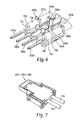
- Fig. 6 shows a state that the central conductors 12a and 12b are engaged with the cuts 332a and 332b of the first contact elements 330a and 330b respectively, and the gripping conductor extensions 150a and 150b are engaged with the cuts 342a and 342b of the second contact elements 340a and 340b respectively.
- Fig. 7 shows a coaxial cable harness unit 500 that is completed by having the cable holder assembly 400 engaged with the housing 300.
- the coaxial cable harness unit 500 completed in this way is coupled with a connector of other cable or a connector provided in the device having terminals that are complementarily engaged with the external cable connection terminals 370a, 370b, 380a, and 380b within a connection chamber (not shown) of the housing 300.
- the coaxial cable connector and the coaxial cable harness unit according to the present invention have been explained above. While the two coaxial cables are fitted, the routes from the respective signal transmission central conductors till the external cable connection terminals for the central conductors are disposed on the insulating resin material so that the routes are insulated. At the same time, the routes from the respective outer conductors till the external cable connection terminals for the outer conductors are also disposed on the insulating resin material so that the routes are insulated. As the outer conductors are not coupled together, it is possible to maintain the independence of the outer conductors. Therefore, even when the potential of one outer conductor becomes abnormal, this abnormal condition is not transmitted to all the other outer conductors.
- coaxial cable harness embodiments described herein it is possible to easily fit the coaxial cable by engagement based on pressing, and the central conductor and the outer conductor of the coaxial cable are connected to external cable connection terminal in an insulated condition. Therefore, even when a plurality of coaxial cables are fitted, it is possible to separately secure individual shieldings.
- coaxial cable harness embodiments described herein a coaxial cable harness unit that utilizes any one of the above coaxial cable connectors is provided. Therefore, it is possible to easily connect the connector to the cable, and it is possible to secure excellent shields.
Landscapes
- Coupling Device And Connection With Printed Circuit (AREA)
- Multi-Conductor Connections (AREA)
- Connections By Means Of Piercing Elements, Nuts, Or Screws (AREA)
- Details Of Connecting Devices For Male And Female Coupling (AREA)
Claims (7)
- Koaxialkabelverbinder, aufweisend:- einen ersten Kabelhalter (100);- einen zweiten Kabelhalter (200), der durch Pressen an dem ersten Kabelhalter verrastet werden kann;- ein Gehäuse (300), an welches eine Einheit (400) verrastet werden kann, die durch Verrasten des ersten Kabelhalters (100) und des zweiten Kabelhalters (200) hergestellt wird;- mindestens einen Klemmleiter (140a, 140b) und eine davon abstehende Klemmleiterverlängerung (150a, 150b), die in einem isolierten Zustand in dem ersten Kabelhalter angeordnet sind; und- mehrere Kontaktelemente (330a, 330b, 340a, 340b) und damit verbundene externe Kabelanschlussklemmen (370a, 370b, 380a, 380b), die in einem isolierten Zustand in dem Gehäuse (300) angeordnet sind,wobei- jeder Kabelhalter (100, 200) Nuten (110a, 210b, 220a, 220b) aufweist, die derart konfiguriert sind, dass sie einen freiliegenden Innenisolierungsabschnitt (15a, 15b) und einen freiliegenden Außenleiterabschnitt (16a, 16b) eines Koaxialkabels (10a, 10b) aufnehmen, die an einem Ende davon geformt sind.- der Klemmleiter (140a, 140b) derart konfiguriert ist, dass er den freiliegenden Außenleiterabschnitt (16a, 16b) des Koaxialkabels (10a, 10b) klemmt,- die Klemmleiterverlängerungen (150a, 150b) derart konfiguriert sind, dass sie mit dem entsprechenden Kontaktelement (340a, 340b) in Eingriff stehen, und das entsprechende Kontaktelement (330a, 330b) derart konfiguriert ist, dass es mit einem Zentralleiter (11a, 11b) des freiliegenden Innenisolierungsabschnitts (15a, 15b) des Koaxialkabels (10a, 10b) in Eingriff steht, und- die zur Aufnahme des freiliegenden Außenleiterabschnitts vorgesehene zweite Nut (220a, 220b) derart konfiguriert ist, dass sie den Klemmleiter (140a, 140b) in Verformung presst und dadurch den freiliegenden Außenleiterabschnitt (16a, 16b) des Koaxialkabels (10a, 10b) klemmt, wenn die erste Fläche des ersten Kabelhalters (100) gegen die erste Fläche des zweiten Kabelhalters (200) gepresst wird, um sich gegenüberzuliegen, sodass sie miteinander in Eingriff stehen.
- Koaxialkabelverbinder nach Anspruch 1, wobei:- der erste Kabelhalter (100) aufweist:- einen Blockkörper (101);- mindestens eine erste Nut (110a, 110b) zur Aufnahme des freiliegenden Innenisolierungsabschnitts, die auf einer ersten Fläche des Blockkörpers (101) geformt und derart konfiguriert ist, dass sie etwa die Hälfte eines Querschnittsabschnitts des freiliegenden Innenisolierungsabschnitts (15a, 15b) des Koaxialkabels (10a, 10b) aufnimmt;- mindestens eine erste Nut (120a, 120b) zur Aufnahme des freiliegenden Außenleiterabschnitts, die von einem hinteren Ende der ersten Nut (110a, 110b) zur Aufnahme des freiliegenden Innenisolierungsabschnitts aus als Fortsetzung geformt ist und derart konfiguriert ist, dass sie etwa die Hälfte eines Querschnittsabschnitts des freiliegenden Außenleiterabschnitts (16a, 16b) des Koaxialkabels (10a, 10b) aufnimmt;- mindestens eine erste Nut (130a, 130b) zur Aufnahme des Endabschnitts mit Originaldurchmesser, die von einem hinteren Ende der ersten Nut (120a, 120b) zur Aufnahme des freiliegenden Außenleiterabschnitts aus als Fortsetzung geformt ist und derart konfiguriert ist, dass sie etwa die Hälfte eines Querschnittsabschnitts eines Endabschnitts mit Originaldurchmesser (17a, 17b) aufnimmt;- wobei der Klemmleiter (140a, 140b) in der ersten Nut (120a, 120b) zur Aufnahme des freiliegenden Außenleiterabschnitts angeordnet ist und die Klemmleiterverlängerung (150a, 150b) derart konfiguriert ist, dass sie von diesem Klemmleiter (140a, 140b) aus parallel zur ersten Nut (120a, 120b) zur Aufnahme des freiliegenden Außenleiterabschnitts in Richtung der Vorderseite des Koaxialkabels (10a, 10b) verläuft,- der zweite Kabelhalter (200) aufweist:- einen Blockkörper (201);- mindestens eine zweite Nut (210a, 210b) zur Aufnahme des freiliegenden Innenisolierungsabschnitts, deren Zahl der der ersten Nut (110a, 110b) zur Aufnahme des freiliegenden Innenisolierungsabschnitts entspricht, die auf einer ersten Fläche des Blockkörpers (201) geformt und derart konfiguriert ist, dass sie etwa die Hälfte eines Querschnittsabschnitts des freiliegenden Innenisolierungsabschnitts (15a, 15b) des Koaxialkabels (10a, 10b) aufnimmt;- mindestens eine zweite Nut (220a, 220b) zur Aufnahme des freiliegenden Außenleiterabschnitts, die von einem hinteren Ende der zweiten Nut (210a, 210b) zur Aufnahme des freiliegenden Innenisolierungsabschnitts aus als Fortsetzung geformt ist und derart konfiguriert ist, dass sie etwa die Hälfte eines Querschnittsabschnitts des freiliegenden Außenleiterabschnitts (16a, 16b) des Koaxialkabels (10a, 10b) aufnimmt; und- mindestens eine zweite Nut (230a, 230b) zur Aufnahme des Endabschnitts mit Originaldurchmesser, die von einem hinteren Ende der zweiten Nut (220a, 220b) zur Aufnahme des freiliegenden Außenleiterabschnitts aus als Fortsetzung geformt ist und derart konfiguriert ist, dass sie etwa die Hälfte eines Querschnittsabschnitts eines Endabschnitts mit Originaldurchmesser (17a, 17b) des Koaxialkabels (10a, 10b) aufnimmt;- wobei nach dem Positionieren des freiliegenden Außenleiterabschnitts (16a, 16b) des Koaxialkabels (10a, 10b) derart, dass er an eine Position des Klemmleiters (140a, 140b) des ersten Kabelhalters (100) angepasst ist, die erste Fläche des ersten Kabelhalters (100) gegen die erste Fläche des zweiten Kabelhalters (200) gepresst wird, damit diese sich derart gegenüberliegen, dass sie miteinander in Eingriff stehen,- das Gehäuse (300) aufweist:- einen Blockkörper (301), woran die Einheit (400) durch Verrastung des ersten Kabelhalters (100) und des zweiten Kabelhalters (200) durch Pressen verrastet wird;- mindestens ein erstes Kontaktelement (330a, 330b), dessen Zahl der der ersten Nute (110a, 110b) zur Aufnahme des freiliegenden Innenisolierungsabschnitts des ersten Kabelhalters (100) entspricht, das auf einer ersten Fläche des Blockkörpers (301) befestigt ist und in der Lage ist, beim Verrasten mit dem Zentralleiter (11a, 11b) des freiliegenden Innenisolierungsabschnitts (15a, 15b) des Koaxialkabels (10a, 10b) in Eingriff zu stehen; und- mindestens ein zweites Kontaktelement (340a, 340b), dessen Zahl der der ersten Nute (110a, 110b) zur Aufnahme des freiliegenden Innenisolierungsabschnitts des ersten Kabelhalters (100) entspricht, das auf der ersten Fläche des Blockkörpers (301) befestigt ist und in der Lage ist, bei Verrasten mit der Klemmleiterverlängerung (150a, 150b) in Eingriff zu stehen, die auf dem ersten Kabelhalter (100) vorgesehen ist,- wobei das erste Kontaktelement (330a, 330b) über ein isoliertes Verbindungselement (350a, 350b) für das erste Kontaktelement (330a, 330b) mit einer isolierten externen Kabelanschlussklemme (370a, 370b) für den Zentralleiter (11a, 11b) verbunden ist, und das zweite Kontaktelement (340a, 340b) über ein isoliertes Verbindungselement (360a, 360b) für das zweite Kontaktelement (340a, 340b) mit einer isolierten externen Kabelanschlussklemme (380a, 380b) für den Außenleiter (13a, 13b) verbunden ist,- wobei der erste Kabelhalter (100) und der zweite Kabelhalter (200) mit komplementären Einrasteinheiten (106a, 106b, 107a, 107b, 244a, 244b) jeweils zum gegenseitigen Verrasten der zwei Kabelhalter (100, 200) versehen sind, und mindestens einer vom ersten Kabelhalter (100) und zweiten Kabelhalter (200) und das Gehäuse (300) mit komplementären Einrasteinheiten (103a, 103b, 104a, 104b, 303a, 303b, 208a, 208b, 308a, 308b) jeweils zum gegenseitigen Verrasten der Kabelhaltereinheit (400) und des Gehäuses (300) versehen sind.
- Koaxialkabelverbinder nach Anspruch 2, wobei das erste Kontaktelement (330a, 330b) und das zweite Kontaktelement (340a, 340b) Einschnitte (332a, 332b, 342a, 342b) aufweisen, die auf Plattenelementen (331a, 331b, 341a, 341b) geformt sind, die jeweils auf dem Blockkörper (301) des Gehäuses (300) befestigt sind.
- Koaxialkabelverbinder nach einem der Ansprüche 1 bis 3, wobei die Klemmleiterverlängerung (150a, 150b) Vorsprünge (151a, 151b) aufweist, die senkrecht in einer Längsrichtung verlaufen, und die Vorsprünge (151a, 151b) mit Löchern in Eingriff stehen, die auf dem ersten Kabelhalter (100) geformt sind, und in vorbestimmten Positionen gehalten werden.
- Koaxialkabelverbinder nach einem der Ansprüche 1 bis 4, wobei der Klemmleiter (140a, 140b) Vorsprünge (143a, 143b) aufweist, die senkrecht in einer Längsrichtung verlaufen, und die Vorsprünge (143a, 143b) mit Löchern in Eingriff stehen, die auf dem ersten Kabelhalter (100) geformt sind, und in vorbestimmten Positionen gehalten werden.
- Koaxialkabelverbinder nach einem der Ansprüche 1 bis 5, wobei der Klemmleiter (140a, 140b) einen gepressten Abschnitt (141a, 141b), der gepresst und verformt wird, und einen Basisabschnitt (142a, 142b) aufweist, mit dem eine Seite des gepressten Abschnitts (141a, 141b) integral verbunden ist, die Klemmleiterverlängerung (150a, 150b) mit einem ersten Ende des Basisabschnitts (142a, 142b) in der Nähe des vorderen Endes des Koaxialkabels (10a, 10b) verbunden ist, und gestufte Vorsprünge (144a, 144b), die in den Endabschnitt mit Originaldurchmesser eingreifen und in der Lage sind, den Endabschnitt mit Originaldurchmesser (17a, 17b) zu greifen, auf einem zweiten Ende des Basisabschnitts (142a, 142b) geformt sind, das von dem vorderen Ende des Koaxialkabels (10a, 10b) entfernt ist.
- Koaxialkabelbaum (500), der mit einem der Koaxialkabelverbinder nach einem der Ansprüche 1 bis 6 gebildet wurde.
Applications Claiming Priority (2)
| Application Number | Priority Date | Filing Date | Title |
|---|---|---|---|
| JP2003106832A JP4401098B2 (ja) | 2003-04-10 | 2003-04-10 | 同軸ケーブル用コネクタおよび該同軸ケーブル用コネクタを利用したハーネス体 |
| PCT/US2004/008104 WO2004095645A1 (en) | 2003-04-10 | 2004-03-16 | Coaxial cable connector, and harness unit that utilizes the coaxial cable connector |
Publications (2)
| Publication Number | Publication Date |
|---|---|
| EP1611643A1 EP1611643A1 (de) | 2006-01-04 |
| EP1611643B1 true EP1611643B1 (de) | 2008-07-02 |
Family
ID=33307915
Family Applications (1)
| Application Number | Title | Priority Date | Filing Date |
|---|---|---|---|
| EP04759630A Expired - Lifetime EP1611643B1 (de) | 2003-04-10 | 2004-03-16 | Koaxialkabelverbinder und Kabelbaumeinheit mit dem Koaxialkabelverbinder |
Country Status (8)
| Country | Link |
|---|---|
| US (1) | US7354294B2 (de) |
| EP (1) | EP1611643B1 (de) |
| JP (1) | JP4401098B2 (de) |
| KR (1) | KR101033063B1 (de) |
| CN (1) | CN100380740C (de) |
| AT (1) | ATE400074T1 (de) |
| DE (1) | DE602004014748D1 (de) |
| WO (1) | WO2004095645A1 (de) |
Families Citing this family (6)
| Publication number | Priority date | Publication date | Assignee | Title |
|---|---|---|---|---|
| JP5070021B2 (ja) * | 2007-12-05 | 2012-11-07 | 矢崎総業株式会社 | コネクタ |
| JP2010080262A (ja) * | 2008-09-26 | 2010-04-08 | Murata Mfg Co Ltd | L型同軸コネクタ及びその製造方法 |
| US8215884B2 (en) | 2008-12-16 | 2012-07-10 | Lockheed Martin Corporation | Connector for use in high vibration environment |
| JP2011005944A (ja) * | 2009-06-25 | 2011-01-13 | Nifco Inc | 車載用ケーブルホルダー |
| EP4324056A4 (de) * | 2021-04-12 | 2025-06-04 | Conductix, Inc. | Intern gefederter shunt |
| TWI785892B (zh) * | 2021-11-17 | 2022-12-01 | 固威電機股份有限公司 | 熔絲管裝置及具有該熔絲管裝置的負載可切熔絲鏈開關 |
Family Cites Families (23)
| Publication number | Priority date | Publication date | Assignee | Title |
|---|---|---|---|---|
| US4902242A (en) * | 1989-05-31 | 1990-02-20 | Amp Incorporated | Panel mount, cable terminable connector with die cast housing and drawn shell |
| JP2906469B2 (ja) | 1989-08-20 | 1999-06-21 | オムロン株式会社 | シールド線用コネクタ |
| JPH0414858A (ja) | 1990-05-08 | 1992-01-20 | Mitsubishi Electric Corp | 電子部品のリード端子構造 |
| JPH086368Y2 (ja) | 1991-03-29 | 1996-02-21 | トーマス アンド ベッツ コーポレーション | コネクタ |
| JP3217095B2 (ja) | 1991-11-08 | 2001-10-09 | ミネソタ マイニング アンド マニュファクチャリング カンパニー | 多心同軸ケーブル用電気コネクタ |
| US5419718A (en) | 1992-09-02 | 1995-05-30 | The Whitaker Corporation | Mixed coaxial connector |
| JPH078961U (ja) * | 1993-07-14 | 1995-02-07 | 日本エー・エム・ピー株式会社 | 同軸ケーブル用コネクタ |
| JPH0785909A (ja) * | 1993-09-17 | 1995-03-31 | Kel Corp | 圧接コネクタ |
| JPH0922746A (ja) * | 1995-07-05 | 1997-01-21 | Keyence Corp | 電気機器の結線構造、端子構造および結線装置 |
| JP3636393B2 (ja) * | 1995-10-31 | 2005-04-06 | ミネソタ マイニング アンド マニュファクチャリング カンパニー | 分岐コネクタ装置 |
| US5718607A (en) | 1996-03-01 | 1998-02-17 | Molex Incorporated | System for terminating the shield of a high speed cable |
| US5761805A (en) * | 1996-03-28 | 1998-06-09 | The Whitaker Corporation | Method of making a high density electrical connector |
| US5766033A (en) * | 1996-03-28 | 1998-06-16 | The Whitaker Corporation | High density electrical connector |
| JP3330530B2 (ja) * | 1997-10-22 | 2002-09-30 | 矢崎総業株式会社 | 合体コネクタ |
| JP3421555B2 (ja) * | 1997-11-07 | 2003-06-30 | 矢崎総業株式会社 | 同軸ケーブル用コネクタの接続構造及びその接続方法 |
| JPH11354173A (ja) * | 1998-06-09 | 1999-12-24 | Yazaki Corp | 圧接コネクタ |
| JP4067181B2 (ja) | 1998-06-15 | 2008-03-26 | スリーエム カンパニー | 圧接結線用コネクタとその圧接方法 |
| US6019625A (en) * | 1998-08-28 | 2000-02-01 | Sumitomo Denso Inc. | Retractable electrical connector structure and method for assembling and connecting a retractable electrical connector structure |
| US6273745B1 (en) * | 2000-04-05 | 2001-08-14 | Wing-Span Enterprise Co., Ltd. | Cable connector |
| JP3520986B2 (ja) * | 2000-12-08 | 2004-04-19 | タイコエレクトロニクスアンプ株式会社 | 電気コネクタ |
| JP2004342414A (ja) * | 2003-05-14 | 2004-12-02 | Sumitomo Wiring Syst Ltd | コネクタ |
| JP4100319B2 (ja) * | 2003-10-08 | 2008-06-11 | 住友電装株式会社 | 自動車用のスプライス吸収構造 |
| JP4124760B2 (ja) * | 2003-12-22 | 2008-07-23 | モレックス インコーポレーテッド | 同軸ケーブル用コネクタ及びケーブル保持具 |
-
2003
- 2003-04-10 JP JP2003106832A patent/JP4401098B2/ja not_active Expired - Fee Related
-
2004
- 2004-03-16 WO PCT/US2004/008104 patent/WO2004095645A1/en not_active Ceased
- 2004-03-16 DE DE602004014748T patent/DE602004014748D1/de not_active Expired - Lifetime
- 2004-03-16 US US10/549,960 patent/US7354294B2/en not_active Expired - Fee Related
- 2004-03-16 CN CNB2004800095843A patent/CN100380740C/zh not_active Expired - Fee Related
- 2004-03-16 EP EP04759630A patent/EP1611643B1/de not_active Expired - Lifetime
- 2004-03-16 KR KR1020057019046A patent/KR101033063B1/ko not_active Expired - Fee Related
- 2004-03-16 AT AT04759630T patent/ATE400074T1/de not_active IP Right Cessation
Also Published As
| Publication number | Publication date |
|---|---|
| CN100380740C (zh) | 2008-04-09 |
| CN1771629A (zh) | 2006-05-10 |
| JP4401098B2 (ja) | 2010-01-20 |
| WO2004095645A1 (en) | 2004-11-04 |
| KR20050123142A (ko) | 2005-12-29 |
| KR101033063B1 (ko) | 2011-05-06 |
| JP2004311356A (ja) | 2004-11-04 |
| US20070155230A1 (en) | 2007-07-05 |
| ATE400074T1 (de) | 2008-07-15 |
| DE602004014748D1 (de) | 2008-08-14 |
| US7354294B2 (en) | 2008-04-08 |
| EP1611643A1 (de) | 2006-01-04 |
Similar Documents
| Publication | Publication Date | Title |
|---|---|---|
| US5145409A (en) | Miniature electrical connector | |
| EP0428162B1 (de) | Elektrischer Verbinder und Zusammenbauverfahren | |
| JPH05275129A (ja) | ケーブルクランプ装置 | |
| EP0265179A2 (de) | Stecker und Buchsenverbinder mit isolierungsdurchdringenden Kontakten | |
| JPS6130390B2 (de) | ||
| EP1611643B1 (de) | Koaxialkabelverbinder und Kabelbaumeinheit mit dem Koaxialkabelverbinder | |
| EP0473115B1 (de) | Elektrischer Miniaturstecker | |
| EP1014513B1 (de) | Leiterplatte für Modularstecker | |
| JPH07192785A (ja) | 平形ケーブル用端子及びそれを用いる平形ケーブル用電気コネクタ | |
| EP0475319B1 (de) | Elektrischer Verbinder | |
| GB2268842A (en) | Contact blank and shielded electrical connectors | |
| EP0475387B1 (de) | Elektrischer Miniaturstecker | |
| US6305967B1 (en) | Connector assembly having means for penetrating the insulation and establishing electrical connection with the wires | |
| JP3012935B2 (ja) | コネクタ | |
| US5171166A (en) | Miniature electrical contact terminal | |
| JPH11243614A (ja) | ケーブルコアを接続するための装置 | |
| US6095848A (en) | Electrical power outlet and switch | |
| US4725247A (en) | Cable splicing assembly | |
| JPH08227738A (ja) | 電気接続箱の接続構造 | |
| US4519663A (en) | Wire plug assembly | |
| JP3546676B2 (ja) | 電線接続構造 | |
| PL172672B1 (pl) | Jednoczesciowy zestyk przylaczeniowy PL | |
| US5722535A (en) | Coaxial conversion connector | |
| AU749119B2 (en) | Electrical power outlet | |
| KR100509530B1 (ko) | 차량용 커넥터의 터미널 가이드 |
Legal Events
| Date | Code | Title | Description |
|---|---|---|---|
| PUAI | Public reference made under article 153(3) epc to a published international application that has entered the european phase |
Free format text: ORIGINAL CODE: 0009012 |
|
| 17P | Request for examination filed |
Effective date: 20050930 |
|
| AK | Designated contracting states |
Kind code of ref document: A1 Designated state(s): AT BE BG CH CY CZ DE DK EE ES FI FR GB GR HU IE IT LI LU MC NL PL PT RO SE SI SK TR |
|
| AX | Request for extension of the european patent |
Extension state: AL LT LV MK |
|
| DAX | Request for extension of the european patent (deleted) | ||
| 17Q | First examination report despatched |
Effective date: 20060502 |
|
| GRAP | Despatch of communication of intention to grant a patent |
Free format text: ORIGINAL CODE: EPIDOSNIGR1 |
|
| RTI1 | Title (correction) |
Free format text: COAXIAL CABLE CONNECTOR AND HARNESS UNIT THAT UTILIZES THE COAXIAL CABLE CONNECTOR |
|
| GRAS | Grant fee paid |
Free format text: ORIGINAL CODE: EPIDOSNIGR3 |
|
| GRAA | (expected) grant |
Free format text: ORIGINAL CODE: 0009210 |
|
| AK | Designated contracting states |
Kind code of ref document: B1 Designated state(s): AT BE BG CH CY CZ DE DK EE ES FI FR GB GR HU IE IT LI LU MC NL PL PT RO SE SI SK TR |
|
| REG | Reference to a national code |
Ref country code: GB Ref legal event code: FG4D |
|
| REG | Reference to a national code |
Ref country code: CH Ref legal event code: EP |
|
| REF | Corresponds to: |
Ref document number: 602004014748 Country of ref document: DE Date of ref document: 20080814 Kind code of ref document: P |
|
| REG | Reference to a national code |
Ref country code: IE Ref legal event code: FG4D |
|
| PG25 | Lapsed in a contracting state [announced via postgrant information from national office to epo] |
Ref country code: SI Free format text: LAPSE BECAUSE OF FAILURE TO SUBMIT A TRANSLATION OF THE DESCRIPTION OR TO PAY THE FEE WITHIN THE PRESCRIBED TIME-LIMIT Effective date: 20080702 |
|
| PG25 | Lapsed in a contracting state [announced via postgrant information from national office to epo] |
Ref country code: NL Free format text: LAPSE BECAUSE OF FAILURE TO SUBMIT A TRANSLATION OF THE DESCRIPTION OR TO PAY THE FEE WITHIN THE PRESCRIBED TIME-LIMIT Effective date: 20080702 |
|
| NLV1 | Nl: lapsed or annulled due to failure to fulfill the requirements of art. 29p and 29m of the patents act | ||
| PG25 | Lapsed in a contracting state [announced via postgrant information from national office to epo] |
Ref country code: ES Free format text: LAPSE BECAUSE OF FAILURE TO SUBMIT A TRANSLATION OF THE DESCRIPTION OR TO PAY THE FEE WITHIN THE PRESCRIBED TIME-LIMIT Effective date: 20081013 Ref country code: PT Free format text: LAPSE BECAUSE OF FAILURE TO SUBMIT A TRANSLATION OF THE DESCRIPTION OR TO PAY THE FEE WITHIN THE PRESCRIBED TIME-LIMIT Effective date: 20081202 |
|
| PG25 | Lapsed in a contracting state [announced via postgrant information from national office to epo] |
Ref country code: FI Free format text: LAPSE BECAUSE OF FAILURE TO SUBMIT A TRANSLATION OF THE DESCRIPTION OR TO PAY THE FEE WITHIN THE PRESCRIBED TIME-LIMIT Effective date: 20080702 Ref country code: BG Free format text: LAPSE BECAUSE OF FAILURE TO SUBMIT A TRANSLATION OF THE DESCRIPTION OR TO PAY THE FEE WITHIN THE PRESCRIBED TIME-LIMIT Effective date: 20081002 Ref country code: AT Free format text: LAPSE BECAUSE OF FAILURE TO SUBMIT A TRANSLATION OF THE DESCRIPTION OR TO PAY THE FEE WITHIN THE PRESCRIBED TIME-LIMIT Effective date: 20080702 |
|
| PG25 | Lapsed in a contracting state [announced via postgrant information from national office to epo] |
Ref country code: BE Free format text: LAPSE BECAUSE OF FAILURE TO SUBMIT A TRANSLATION OF THE DESCRIPTION OR TO PAY THE FEE WITHIN THE PRESCRIBED TIME-LIMIT Effective date: 20080702 |
|
| PG25 | Lapsed in a contracting state [announced via postgrant information from national office to epo] |
Ref country code: EE Free format text: LAPSE BECAUSE OF FAILURE TO SUBMIT A TRANSLATION OF THE DESCRIPTION OR TO PAY THE FEE WITHIN THE PRESCRIBED TIME-LIMIT Effective date: 20080702 Ref country code: DK Free format text: LAPSE BECAUSE OF FAILURE TO SUBMIT A TRANSLATION OF THE DESCRIPTION OR TO PAY THE FEE WITHIN THE PRESCRIBED TIME-LIMIT Effective date: 20080702 |
|
| PLBE | No opposition filed within time limit |
Free format text: ORIGINAL CODE: 0009261 |
|
| STAA | Information on the status of an ep patent application or granted ep patent |
Free format text: STATUS: NO OPPOSITION FILED WITHIN TIME LIMIT |
|
| PG25 | Lapsed in a contracting state [announced via postgrant information from national office to epo] |
Ref country code: CZ Free format text: LAPSE BECAUSE OF FAILURE TO SUBMIT A TRANSLATION OF THE DESCRIPTION OR TO PAY THE FEE WITHIN THE PRESCRIBED TIME-LIMIT Effective date: 20080702 Ref country code: SK Free format text: LAPSE BECAUSE OF FAILURE TO SUBMIT A TRANSLATION OF THE DESCRIPTION OR TO PAY THE FEE WITHIN THE PRESCRIBED TIME-LIMIT Effective date: 20080702 Ref country code: RO Free format text: LAPSE BECAUSE OF FAILURE TO SUBMIT A TRANSLATION OF THE DESCRIPTION OR TO PAY THE FEE WITHIN THE PRESCRIBED TIME-LIMIT Effective date: 20080702 |
|
| 26N | No opposition filed |
Effective date: 20090403 |
|
| PG25 | Lapsed in a contracting state [announced via postgrant information from national office to epo] |
Ref country code: IT Free format text: LAPSE BECAUSE OF FAILURE TO SUBMIT A TRANSLATION OF THE DESCRIPTION OR TO PAY THE FEE WITHIN THE PRESCRIBED TIME-LIMIT Effective date: 20080702 |
|
| PG25 | Lapsed in a contracting state [announced via postgrant information from national office to epo] |
Ref country code: MC Free format text: LAPSE BECAUSE OF NON-PAYMENT OF DUE FEES Effective date: 20090331 |
|
| REG | Reference to a national code |
Ref country code: CH Ref legal event code: PL |
|
| GBPC | Gb: european patent ceased through non-payment of renewal fee |
Effective date: 20090316 |
|
| REG | Reference to a national code |
Ref country code: FR Ref legal event code: ST Effective date: 20091130 |
|
| REG | Reference to a national code |
Ref country code: IE Ref legal event code: MM4A |
|
| PG25 | Lapsed in a contracting state [announced via postgrant information from national office to epo] |
Ref country code: LI Free format text: LAPSE BECAUSE OF NON-PAYMENT OF DUE FEES Effective date: 20090331 Ref country code: SE Free format text: LAPSE BECAUSE OF FAILURE TO SUBMIT A TRANSLATION OF THE DESCRIPTION OR TO PAY THE FEE WITHIN THE PRESCRIBED TIME-LIMIT Effective date: 20081002 Ref country code: IE Free format text: LAPSE BECAUSE OF NON-PAYMENT OF DUE FEES Effective date: 20090316 Ref country code: CH Free format text: LAPSE BECAUSE OF NON-PAYMENT OF DUE FEES Effective date: 20090331 |
|
| PG25 | Lapsed in a contracting state [announced via postgrant information from national office to epo] |
Ref country code: GB Free format text: LAPSE BECAUSE OF NON-PAYMENT OF DUE FEES Effective date: 20090316 Ref country code: FR Free format text: LAPSE BECAUSE OF NON-PAYMENT OF DUE FEES Effective date: 20091123 |
|
| PG25 | Lapsed in a contracting state [announced via postgrant information from national office to epo] |
Ref country code: PL Free format text: LAPSE BECAUSE OF FAILURE TO SUBMIT A TRANSLATION OF THE DESCRIPTION OR TO PAY THE FEE WITHIN THE PRESCRIBED TIME-LIMIT Effective date: 20080702 |
|
| PG25 | Lapsed in a contracting state [announced via postgrant information from national office to epo] |
Ref country code: GR Free format text: LAPSE BECAUSE OF FAILURE TO SUBMIT A TRANSLATION OF THE DESCRIPTION OR TO PAY THE FEE WITHIN THE PRESCRIBED TIME-LIMIT Effective date: 20081003 |
|
| PG25 | Lapsed in a contracting state [announced via postgrant information from national office to epo] |
Ref country code: LU Free format text: LAPSE BECAUSE OF NON-PAYMENT OF DUE FEES Effective date: 20090316 |
|
| PG25 | Lapsed in a contracting state [announced via postgrant information from national office to epo] |
Ref country code: HU Free format text: LAPSE BECAUSE OF FAILURE TO SUBMIT A TRANSLATION OF THE DESCRIPTION OR TO PAY THE FEE WITHIN THE PRESCRIBED TIME-LIMIT Effective date: 20090103 |
|
| PG25 | Lapsed in a contracting state [announced via postgrant information from national office to epo] |
Ref country code: TR Free format text: LAPSE BECAUSE OF FAILURE TO SUBMIT A TRANSLATION OF THE DESCRIPTION OR TO PAY THE FEE WITHIN THE PRESCRIBED TIME-LIMIT Effective date: 20080702 |
|
| PG25 | Lapsed in a contracting state [announced via postgrant information from national office to epo] |
Ref country code: CY Free format text: LAPSE BECAUSE OF FAILURE TO SUBMIT A TRANSLATION OF THE DESCRIPTION OR TO PAY THE FEE WITHIN THE PRESCRIBED TIME-LIMIT Effective date: 20080702 |
|
| PGFP | Annual fee paid to national office [announced via postgrant information from national office to epo] |
Ref country code: DE Payment date: 20130314 Year of fee payment: 10 |
|
| REG | Reference to a national code |
Ref country code: DE Ref legal event code: R119 Ref document number: 602004014748 Country of ref document: DE |
|
| REG | Reference to a national code |
Ref country code: DE Ref legal event code: R119 Ref document number: 602004014748 Country of ref document: DE Effective date: 20141001 |
|
| PG25 | Lapsed in a contracting state [announced via postgrant information from national office to epo] |
Ref country code: DE Free format text: LAPSE BECAUSE OF NON-PAYMENT OF DUE FEES Effective date: 20141001 |