EP1569661B1 - Antisense-entwurf - Google Patents
Antisense-entwurf Download PDFInfo
- Publication number
- EP1569661B1 EP1569661B1 EP03773575A EP03773575A EP1569661B1 EP 1569661 B1 EP1569661 B1 EP 1569661B1 EP 03773575 A EP03773575 A EP 03773575A EP 03773575 A EP03773575 A EP 03773575A EP 1569661 B1 EP1569661 B1 EP 1569661B1
- Authority
- EP
- European Patent Office
- Prior art keywords
- lna
- oxy
- nucleotide units
- beta
- alpha
- Prior art date
- Legal status (The legal status is an assumption and is not a legal conclusion. Google has not performed a legal analysis and makes no representation as to the accuracy of the status listed.)
- Expired - Lifetime
Links
Images










Classifications
-
- C—CHEMISTRY; METALLURGY
- C12—BIOCHEMISTRY; BEER; SPIRITS; WINE; VINEGAR; MICROBIOLOGY; ENZYMOLOGY; MUTATION OR GENETIC ENGINEERING
- C12N—MICROORGANISMS OR ENZYMES; COMPOSITIONS THEREOF; PROPAGATING, PRESERVING, OR MAINTAINING MICROORGANISMS; MUTATION OR GENETIC ENGINEERING; CULTURE MEDIA
- C12N15/00—Mutation or genetic engineering; DNA or RNA concerning genetic engineering, vectors, e.g. plasmids, or their isolation, preparation or purification; Use of hosts therefor
- C12N15/09—Recombinant DNA-technology
- C12N15/11—DNA or RNA fragments; Modified forms thereof; Non-coding nucleic acids having a biological activity
- C12N15/113—Non-coding nucleic acids modulating the expression of genes, e.g. antisense oligonucleotides; Antisense DNA or RNA; Triplex- forming oligonucleotides; Catalytic nucleic acids, e.g. ribozymes; Nucleic acids used in co-suppression or gene silencing
-
- A—HUMAN NECESSITIES
- A61—MEDICAL OR VETERINARY SCIENCE; HYGIENE
- A61K—PREPARATIONS FOR MEDICAL, DENTAL OR TOILETRY PURPOSES
- A61K31/00—Medicinal preparations containing organic active ingredients
- A61K31/70—Carbohydrates; Sugars; Derivatives thereof
- A61K31/7088—Compounds having three or more nucleosides or nucleotides
-
- C—CHEMISTRY; METALLURGY
- C07—ORGANIC CHEMISTRY
- C07H—SUGARS; DERIVATIVES THEREOF; NUCLEOSIDES; NUCLEOTIDES; NUCLEIC ACIDS
- C07H19/00—Compounds containing a hetero ring sharing one ring hetero atom with a saccharide radical; Nucleosides; Mononucleotides; Anhydro-derivatives thereof
- C07H19/02—Compounds containing a hetero ring sharing one ring hetero atom with a saccharide radical; Nucleosides; Mononucleotides; Anhydro-derivatives thereof sharing nitrogen
- C07H19/04—Heterocyclic radicals containing only nitrogen atoms as ring hetero atom
- C07H19/06—Pyrimidine radicals
-
- C—CHEMISTRY; METALLURGY
- C07—ORGANIC CHEMISTRY
- C07H—SUGARS; DERIVATIVES THEREOF; NUCLEOSIDES; NUCLEOTIDES; NUCLEIC ACIDS
- C07H19/00—Compounds containing a hetero ring sharing one ring hetero atom with a saccharide radical; Nucleosides; Mononucleotides; Anhydro-derivatives thereof
- C07H19/02—Compounds containing a hetero ring sharing one ring hetero atom with a saccharide radical; Nucleosides; Mononucleotides; Anhydro-derivatives thereof sharing nitrogen
- C07H19/04—Heterocyclic radicals containing only nitrogen atoms as ring hetero atom
- C07H19/16—Purine radicals
-
- C—CHEMISTRY; METALLURGY
- C07—ORGANIC CHEMISTRY
- C07H—SUGARS; DERIVATIVES THEREOF; NUCLEOSIDES; NUCLEOTIDES; NUCLEIC ACIDS
- C07H21/00—Compounds containing two or more mononucleotide units having separate phosphate or polyphosphate groups linked by saccharide radicals of nucleoside groups, e.g. nucleic acids
- C07H21/02—Compounds containing two or more mononucleotide units having separate phosphate or polyphosphate groups linked by saccharide radicals of nucleoside groups, e.g. nucleic acids with ribosyl as saccharide radical
-
- C—CHEMISTRY; METALLURGY
- C07—ORGANIC CHEMISTRY
- C07H—SUGARS; DERIVATIVES THEREOF; NUCLEOSIDES; NUCLEOTIDES; NUCLEIC ACIDS
- C07H21/00—Compounds containing two or more mononucleotide units having separate phosphate or polyphosphate groups linked by saccharide radicals of nucleoside groups, e.g. nucleic acids
- C07H21/04—Compounds containing two or more mononucleotide units having separate phosphate or polyphosphate groups linked by saccharide radicals of nucleoside groups, e.g. nucleic acids with deoxyribosyl as saccharide radical
-
- C—CHEMISTRY; METALLURGY
- C12—BIOCHEMISTRY; BEER; SPIRITS; WINE; VINEGAR; MICROBIOLOGY; ENZYMOLOGY; MUTATION OR GENETIC ENGINEERING
- C12N—MICROORGANISMS OR ENZYMES; COMPOSITIONS THEREOF; PROPAGATING, PRESERVING, OR MAINTAINING MICROORGANISMS; MUTATION OR GENETIC ENGINEERING; CULTURE MEDIA
- C12N15/00—Mutation or genetic engineering; DNA or RNA concerning genetic engineering, vectors, e.g. plasmids, or their isolation, preparation or purification; Use of hosts therefor
- C12N15/09—Recombinant DNA-technology
- C12N15/11—DNA or RNA fragments; Modified forms thereof; Non-coding nucleic acids having a biological activity
- C12N15/111—General methods applicable to biologically active non-coding nucleic acids
-
- C—CHEMISTRY; METALLURGY
- C12—BIOCHEMISTRY; BEER; SPIRITS; WINE; VINEGAR; MICROBIOLOGY; ENZYMOLOGY; MUTATION OR GENETIC ENGINEERING
- C12N—MICROORGANISMS OR ENZYMES; COMPOSITIONS THEREOF; PROPAGATING, PRESERVING, OR MAINTAINING MICROORGANISMS; MUTATION OR GENETIC ENGINEERING; CULTURE MEDIA
- C12N15/00—Mutation or genetic engineering; DNA or RNA concerning genetic engineering, vectors, e.g. plasmids, or their isolation, preparation or purification; Use of hosts therefor
- C12N15/09—Recombinant DNA-technology
- C12N15/11—DNA or RNA fragments; Modified forms thereof; Non-coding nucleic acids having a biological activity
- C12N15/113—Non-coding nucleic acids modulating the expression of genes, e.g. antisense oligonucleotides; Antisense DNA or RNA; Triplex- forming oligonucleotides; Catalytic nucleic acids, e.g. ribozymes; Nucleic acids used in co-suppression or gene silencing
- C12N15/1137—Non-coding nucleic acids modulating the expression of genes, e.g. antisense oligonucleotides; Antisense DNA or RNA; Triplex- forming oligonucleotides; Catalytic nucleic acids, e.g. ribozymes; Nucleic acids used in co-suppression or gene silencing against enzymes
-
- C—CHEMISTRY; METALLURGY
- C12—BIOCHEMISTRY; BEER; SPIRITS; WINE; VINEGAR; MICROBIOLOGY; ENZYMOLOGY; MUTATION OR GENETIC ENGINEERING
- C12N—MICROORGANISMS OR ENZYMES; COMPOSITIONS THEREOF; PROPAGATING, PRESERVING, OR MAINTAINING MICROORGANISMS; MUTATION OR GENETIC ENGINEERING; CULTURE MEDIA
- C12N2310/00—Structure or type of the nucleic acid
- C12N2310/10—Type of nucleic acid
- C12N2310/11—Antisense
-
- C—CHEMISTRY; METALLURGY
- C12—BIOCHEMISTRY; BEER; SPIRITS; WINE; VINEGAR; MICROBIOLOGY; ENZYMOLOGY; MUTATION OR GENETIC ENGINEERING
- C12N—MICROORGANISMS OR ENZYMES; COMPOSITIONS THEREOF; PROPAGATING, PRESERVING, OR MAINTAINING MICROORGANISMS; MUTATION OR GENETIC ENGINEERING; CULTURE MEDIA
- C12N2310/00—Structure or type of the nucleic acid
- C12N2310/30—Chemical structure
- C12N2310/31—Chemical structure of the backbone
- C12N2310/315—Phosphorothioates
-
- C—CHEMISTRY; METALLURGY
- C12—BIOCHEMISTRY; BEER; SPIRITS; WINE; VINEGAR; MICROBIOLOGY; ENZYMOLOGY; MUTATION OR GENETIC ENGINEERING
- C12N—MICROORGANISMS OR ENZYMES; COMPOSITIONS THEREOF; PROPAGATING, PRESERVING, OR MAINTAINING MICROORGANISMS; MUTATION OR GENETIC ENGINEERING; CULTURE MEDIA
- C12N2310/00—Structure or type of the nucleic acid
- C12N2310/30—Chemical structure
- C12N2310/32—Chemical structure of the sugar
- C12N2310/323—Chemical structure of the sugar modified ring structure
- C12N2310/3231—Chemical structure of the sugar modified ring structure having an additional ring, e.g. LNA, ENA
-
- C—CHEMISTRY; METALLURGY
- C12—BIOCHEMISTRY; BEER; SPIRITS; WINE; VINEGAR; MICROBIOLOGY; ENZYMOLOGY; MUTATION OR GENETIC ENGINEERING
- C12N—MICROORGANISMS OR ENZYMES; COMPOSITIONS THEREOF; PROPAGATING, PRESERVING, OR MAINTAINING MICROORGANISMS; MUTATION OR GENETIC ENGINEERING; CULTURE MEDIA
- C12N2310/00—Structure or type of the nucleic acid
- C12N2310/30—Chemical structure
- C12N2310/34—Spatial arrangement of the modifications
- C12N2310/341—Gapmers, i.e. of the type ===---===
-
- C—CHEMISTRY; METALLURGY
- C12—BIOCHEMISTRY; BEER; SPIRITS; WINE; VINEGAR; MICROBIOLOGY; ENZYMOLOGY; MUTATION OR GENETIC ENGINEERING
- C12N—MICROORGANISMS OR ENZYMES; COMPOSITIONS THEREOF; PROPAGATING, PRESERVING, OR MAINTAINING MICROORGANISMS; MUTATION OR GENETIC ENGINEERING; CULTURE MEDIA
- C12N2310/00—Structure or type of the nucleic acid
- C12N2310/30—Chemical structure
- C12N2310/34—Spatial arrangement of the modifications
- C12N2310/344—Position-specific modifications, e.g. on every purine, at the 3'-end
-
- C—CHEMISTRY; METALLURGY
- C12—BIOCHEMISTRY; BEER; SPIRITS; WINE; VINEGAR; MICROBIOLOGY; ENZYMOLOGY; MUTATION OR GENETIC ENGINEERING
- C12N—MICROORGANISMS OR ENZYMES; COMPOSITIONS THEREOF; PROPAGATING, PRESERVING, OR MAINTAINING MICROORGANISMS; MUTATION OR GENETIC ENGINEERING; CULTURE MEDIA
- C12N2320/00—Applications; Uses
- C12N2320/30—Special therapeutic applications
-
- C—CHEMISTRY; METALLURGY
- C12—BIOCHEMISTRY; BEER; SPIRITS; WINE; VINEGAR; MICROBIOLOGY; ENZYMOLOGY; MUTATION OR GENETIC ENGINEERING
- C12N—MICROORGANISMS OR ENZYMES; COMPOSITIONS THEREOF; PROPAGATING, PRESERVING, OR MAINTAINING MICROORGANISMS; MUTATION OR GENETIC ENGINEERING; CULTURE MEDIA
- C12N2320/00—Applications; Uses
- C12N2320/50—Methods for regulating/modulating their activity
- C12N2320/51—Methods for regulating/modulating their activity modulating the chemical stability, e.g. nuclease-resistance
Definitions
- the present invention relates to pharmaceuticals comprising antisense oligonucleotides, and novel oligonucleotides having improved antisense properties.
- the first LNA monomer was based on the 2'-O-CH 2 -4' bicyclic structure. Due to the configuration of this structure it is called: beta-D-oxy-LNA. This oxy-LNA has since then showed promising biological applications ( Braasch & Corey, Biochemistry, 2002, 41(14), 4503-19 ; Childs et al. PNAS, 2002, 99(17), 11091-96 ; Crinelli et al., Nucl. Acid.
- the alpha-L-oxy-LNA can be incorporated in complex chimerae comprising DNA/RNA residues and be adapted in the oligo structure and increase the binding.
- This property of being incorporated in oligonucleotides containing several other monomeric classes and act co-operatively is a property that the alpha-L-oxy-LNA shares with the parent oxy-LNA.
- a segment of 4 consecutive alpha-L-T monomers can be incorporated in conjunction with a segment of 4 consecutive oxy-LNA-T monomers ( Rajwanshi et al., Chem. Commun., 1999, 2073-74 ).
- alpha-L-oxy-LNA monomers Me C, A, T-monomers
- the alpha-L-oxy-LNA monomers were incorporated into oligonucleotides with alternating alpha-L-oxy-LNA and DNA monomers (mix-mers) and in fully modified alpha-L-oxy-LNA oligomers.
- the stability was compared to oxy-LNA and to DNA and it was found that alpha-L-oxy-LNA monomers displaced the same protection pattern as oxy-LNA ( S ⁇ rensen, et al., J.Amer.Chem.Soc., 2002, 124(10), 2164-76 ).
- This morphological difference is originated in the difference in the preferred sugar conformations of the deoxyriboses and the riboses.
- the furanose ring of deoxyribose exists at room temperature in an equilibrium between C2'- endo (S-type) and C3'- endo ( N -type) conformation with an energy barrier of ⁇ 2 kcal/mol ( Figure 3 ).
- the S-type conformation is slightly lowered in energy ( ⁇ 0.6 kcal/mol) compared to the N-type and explains why DNA is found in the S-type conformation.
- the conformation leads to the B-form helix.
- the preference is for the N-type that leads to the A-form helix.
- the A-form helix is associated with higher hybridisation stability.
- the oxy-LNA and the LNA analogues are locked in the N-conformation and consequently the oligonucleotides they are forming will be RNA-like.
- the alpha-L-oxy-LNA is locked in a S-type and therefore the oligonucleotides that it will form will be more DNA like ( S ⁇ rensen et al., J. Amer. Chem. Soc., 2002, 124(10), 2164-76 ; Rajwanshi et al., Angew. Chem. Int. Ed., 2000; 39:1656-1659 ).
- Molecular strategies are being developed to modulate unwanted gene expression that either directly causes, participates in, or aggravates a disease state.
- One such strategy involves inhibiting gene expression with oligonucleotides complementary in sequence to the messenger RNA of a target gene.
- the messenger RNA strand is a copy of the coding DNA strand and is therefore, as the DNA strand, called the sense strand.
- Oligonucleotides that hybridise to the sense strand are called antisense oligonucleotides. Binding of these strands to mRNA interferes with the translation process and consequently with gene expression.
- Zamecnik and co-workers originally described the Antisense strategy and the principle has since then attracted a lot of interest ( Zamecnik & Stephenson, PNAS, 1978, 75(1), 280-4 ; Bennet & Cowset, Biochim. Biophys. Acta, 1999, 1489, 19-30 ; Crooke, 1998, Biotechnol. Genet.
- RNase H is an intra cellular enzyme that cleaves the RNA strand in RNA/DNA duplexes. Therefore, in the search for efficient Antisense oligonucleotides, it has been an important hallmark to prepare oligonucleotides that can activate RNase H.
- the prerequisite for an oligonucleotide in this regard is therefore that the oligo is DNA-like and as stated above most high affinity DNA analogues induces RNA-like oligonucleotides. Therefore, to compensate for the lack of RNase H substrate ability of most DNA analogues (like e.g.
- the oligonucleotides must have segments/consecutive stretches of DNA and/or phosphorothioates. Depending on the design of the segments of such oligonucleotides they are usually called Gap-mers, if the DNA segment is flanked by the segments of the DNA analogue, Head-mers, if the segment of the DNA analogue is located in the 5' region of the oligonucleotide, and Tail-mers, if the segment of the DNA analogue is located in the 3' region of the oligonucleotide.
- the DNA analogues like LNA, can be placed In any combination design ( Childs et al. PNAS, 2002, 99(17), 11091-96 ; Crinelli et al., Nud. Acid. Res., 2002, 30(11), 2435-43 ; Elayadi et al., Biochemistry, 2002, 1, 9973-9981 ; Kurreck et al., Nucl. Add. Res., 2002, 30(9), 1911-1918 ; Alayadi & Corey, Curr. opinion in Inves. Drugs., 2001, 2(4), 558-61 ; Braasch & Corey, Chem. & Biol., 2000, 55, 1-7 ).
- alpha-L-oxy-LNA has a DNA-like locked conformation and it has been demonstrated that alpha-L-oxy-LNA can activate RNase H ( S ⁇ rensen et al., J. Amer. Chem. Soc., 2002, 124(10), 2164-76 ).
- RNase H S ⁇ rensen et al., J. Amer. Chem. Soc., 2002, 124(10), 2164-76 .
- the cleavage rate of RNase H is much lower compared to DNA in the disclosed designs and thus, the oligonucleotides in the disclosed designs have not been shown to be efficient Antisense reagents.
- the present inventors have found a novel class of pharmaceuticals which can be used in antisense therapy. Also, the inventors disclose novel oligonucleotides with improved antisense properties.
- the novel oligonucleotides are composed of at least one or alpha-L-oxy/LNA.
- the oligonucleotides comprising LNA may also include DNA and/or RNA nucleotides.
- the invention relates to an oligonucleotide which has the formula (in 5' to 3' order): A-B-C-D, In which A represents a sequence of locked nucleotide units; B represents a sequence of non-locked nucleotide units, preferably at least one unit has a 2'-deoxy pentofuranose sugar moiety, in which sequence 1 or 2 nucleotide units are substituted with alpha-L-oxy-LNA units; C represents a sequence of locked nucleotide units; and D represents a non-locked nucleotide unit or a sequence of non-locked nucleotide units.
- A has a length of 2-6 (preferably 3,4 or 5) nucleotide units; B has a length of 4-12 (preferably 6, 7, 8, 9, 10 or 11) nucleotide units; C has a length of 1-5 (preferably 2, 3, or 4) nucleotide units; D has a lenght of 1-3 (preferably 1-2) nucleotide units; and that the overall length of the construct is 8-26 (preferably 12-21) nucleotide units.
- A has a length of 4 nucleotide units; B has a length of 7-9, preferably 8, nucleotide units; C has a length of 3 nucleotide units; D has a length of 1 nucleotide unit; and the overall length of the construct Is 15-17 (preferably 16) nucleotide units. It is further preferred that the locked nucleotide units in A and C are beta-D-oxy-LNA units or derivatives thereof.
- the present inventors have demonstrated that ⁇ -L-oxy-LNA surprisingly provides the possibility for the design of improved Antisense oligonucleotides that are efficient substrates for RNase H. These novel designs are not previously described and the guidelines developed broaden the design possibilities of potent Antisense oligonucleotides. Also comprised in this invention is the disclosure of Antisense oligonucleotides having other improved properties than the capability of being RNase H substrates.
- the oligonucleotides comprise any combination of LNA-relatives with DNA/RNA, and their analogues, as well as oxy-LNA.
- the design of more potent Antisense reagents is a combination of several features.
- novel oligonucleotide designs are increased enzymatic stability, increased cellular uptake, and efficient ability tomatie RNase H. Also important is the relation between the length and the potency of the oligonucleotides (e.g. a 15-mer having the same potency as a 21-mer is regarded to be much more optimal).
- the potency of the novel oligonucleotides comprised in this Invention is tested in cellular in vitro assays and In vivo assays.It is furthermore showed that the novel designs also improves the In vivo properties such as better pharmacokinetic/pharrmacological properties and toxicity profiles.
- the antisense construct can be in the form of a salt or in the form of prodrug or salts of such prodrug.
- the invention thus relates to pharmaceutical compositions in which an active ingredient is a pharmaceutically acceptable salt, prodrug (such as an ester) or salts of such prodrug of the above oligonucleotide construct.
- an active ingredient is a pharmaceutically acceptable salt, prodrug (such as an ester) or salts of such prodrug of the above oligonucleotide construct.
- Both amino- and thio-LNA can be either alpha or beta configuration.
- locked or non-locked nucleotide units are oxy-LNA (such as alpha-L or beta-D), thio/amino LNA (such as alpha-L or beta-D), a nucleotide unit which has a 2'-deoxy- erythro -pentofuranosyl sugar moiety (such as a DNA nucleotide), a nucleotide unit which has a ribo-pentofuranosyl sugar moiety (such as a RNA nucleotide); and derivatives thereof.
- oxy-LNA such as alpha-L or beta-D
- thio/amino LNA such as alpha-L or beta-D
- a nucleotide unit which has a 2'-deoxy- erythro -pentofuranosyl sugar moiety such as a DNA nucleotide
- a nucleotide unit which has a ribo-pentofuranosyl sugar moiety such as a
- the invention relates to a pharmaceutical composition in which the antisense oligonucleotide construct of formula A-B-C-D as referred to herein comprises two adjacently located nucleotide sequences A and B, where A represents a sequence of nucleotide units comprising (I) at least one locked nucleotide unit selected from the group consisting of thio-LNA, amino-LNA (both in either alpha-L or beta-D configuration) and derivatives thereof, or (ii) at least two consecutively located locked nucleotide units of which at least one is selected from the group consisting of alpha-L-oxy-LNA and derivatives thereof; and B represents one nucleotide unit or a sequence of nucleotide units, with the proviso that at least one nucleotide unit in B has a 2'-deoxy- erythro -pentofuranosyl sugar moiety or a ribo-pentofuranosyl sugar moiety ; wherein B
- Sequence A can additionally comprise at least one further locked nucleotide unit as 2, 3, 4 or 5 units), preferably selected independently from the group consisting of amino-LNA, thio-LNA (both in either alpha-L or beta-D configuration), alpha-L-oxy-LNA and derivatives thereof.
- the invention relates to a pharmaceutical composition
- a pharmaceutical composition comprising an oligonucleotide construct which contains three adjacently located nucleotide sequences, A, B and C, In the following order (5' to 3'):
- the oligonucleotide constructs of the invention of formula A-B-C-D may comprises two adjacently located nucleotide sequences, A and B, where A represents a sequence of nucleotide units comprising at least one locked nucleotide unit selected from the group consisting of amino-LNA, thio-LNA (both in either alpha-L or beta-D) configuration, and derivatives thereof; and B represents a sequence of nucleotide units, with the proviso that at least one nucleotide unit in B has a 2'-deoxy-erythropentofuranosyl sugar moiety or a ribo-pentofuranosyl moiety wherein 1 or 2 nucleotide units in B are substituted with alpha-L-oxy LNA units; especially constructs in which B represents a sequence of nucleotide units, said sequence contains a subsequence of at least three nucleotide units having 2'-deoxy-erythro-
- nucleotide sequences A and B are as defined as above
- C represents a sequence of nucleotide units, which comprises at least one locked nucleotide unit selected from the group consisting of amino-LNA, thio-LNA (both in either alpha-L or beta-D configuration) and derivatives thereof.
- A has a length of 2-10 (preferably 2-8, such as 3, 4, 5, 6, 7) nucleotide units; B has a length of 1-10 (preferably 5-8, such as 6 or 7) nucleotide units; and C (if present) has a length of 2-10 (preferably 2-8, such as 3, 4,5, 6, or 7) nucleotide units; so that the overall length of the construct is 6-30, (preferably 10-20, more preferably 12-18, such as 13, 14, 15, 16 or 17) nucleotide units.
- a preferred embodiment of the above construct according to the invention is a construct in which A represents a sequence of nucleotide units comprising at least two consecutively located locked nucleotide units (such as 3, 4, 5, 6, 7, 8, 9 or 10 units), at least one of said locked nucleotide units being selected from the group consisting of amino-LNA, thio-LNA and derivatives thereof; C represents a sequence of nucleotide units comprising at least two consecutively located locked nucleotide units (such as 3, 4, 5, 6, 7, 8, 9 or 10 units), at least one of said locked nucleotide units being selected from the group consisting of amino-LNA, thio-LNA (in all configurations) and derivatives thereof and/or B represents a sequence of nucleotide units (such as 3, 4, 5, 6, 7, 8, 9 or 10 units), which sequence in addition to the nucleotide unit(s) having 2'-deoxy-erythro-pentofuranosyl sugar moiety(les) and/or ribo-pentofura
- An other embodiment of the invention relates to an oligonucleotide construct of formulas A-B-C-D as referred to herein which contains three adjacently located nucleotide sequences, A, B and C, in the following order (5' to 3'): A-B-C or C-B-A, in which A represents a sequence comprising at least two consecutively located locked nucleotide units, at least one of which is an alpha-L-oxy-LNA unit, and which sequence optionally contains one or more (such as 2, 3, 4 or 5) non-locked nucleotide units (such as deoxyribonucleotide units, ribonucleotide units or derivatives thereof) and/or optionally contains one or more (such as 2, 3, 4 or 5) locked nucleotide units, such as a unit selected from the group consisting of oxy-LNA, thio-LNA, amino-LNA (all in either alpha or beta configuration) and derivatives thereof; B represents a sequence of non locked nucle
- C represents a sequence comprising at least two consecutively located locked nucleotide units, at least one of which is an alpha-L-oxy-LNA unit, and which sequence optionally contains one or more (such as 2, 3, 4 or 5) non-locked nucleotide units (such as deoxyribonucleotide units, ribonucleotide units or derivatives thereof) and/or optionally contains one or more (such as 2, 3, 4 or 5) locked nucleotide units, such as a unit selected from the group consisting of oxy-LNA, thio-LNA, amino-LNA (all in either alpha or beta configuration) and derivatives thereof.
- locked nucleotide units such as a unit selected from the group consisting of oxy-LNA, thio-LNA, amino-LNA (all in either alpha or beta configuration) and derivatives thereof.
- A has a length of 2-10 (preferably 2, 3, 4, 5, 6, 7, or 8) nucleotide units; B has a length of i-10 (preferably 5, 6, 7, or 8) nucleotide units; C has a length of 2-10 (preferably 2, 3, 4, 5, 6, 7, or 8) nucleotide units; so that the overall length of the construct is 8-30 (preferably 10, 11, 12, 13, 14, 15, 16, 17, 18, 19 or 20) nucleotide units.
- A represents a sequence of nucleotide units comprising at least three consecutively located locked nucleotide units, at least one of said locked nucleotide units being selected from the group consisting of alpha-L-oxy-LNA and derivatives thereof
- C represents a sequence of nucleotide units comprising at least three consecutively located locked nucleotide units, at least one of said locked nucleotide units being selected from the group consisting of alpha-L-oxy-LNA and derivatives thereof
- B represents a sequence of nucleotide units (such as 3, 4, 5, 6, 7, 8, 9 or 10 units), which sequence
- nucleotide unit(s) having 2'-deoxy- erythro -pentofuranosyl sugar moiety(les) and/or ribo-pentofuranosyl moiety(les) comprises nucleotide units which are selected independently from the group consisting of
- the oligonucleotide constructs according to the invention can contain naturally occurring phosphordiester internucleoside linkages, as well as other internucleoside linkages as defined in this specification.
- Examples on internucleoside linkages are linkages selected from the group consisting of -O-P(O) 2 -O- , -O-P(O,S)-O-, -O-P(S) 2 -O-, -NR H -P(O) 2 -O-, -O-P(O,NR H )-O-, -O-PO(R")-O-, -O-PO(CH 3 )-O-, and -O-PO(NHR N )-O-, where R H is selected from hydrogen and C 1-4 -alkyl, and R" is selected from C 1-6 -alkyl and phenyl.
- the invention relates to an oligonucleotide construct which comprises at least one locked nucleotide unit selected from the group consisting of amino-LNA, thio-LNA (both In either alpha-L or beta-D configuration), alpha-L-oxy-LNA, and derivatives thereof; wherein at least one of the linkages between the nucleotide units is different from the natural occurring phosphordiester (-O-P(O) 2 -O-) linker.
- An embodiment of the oligonucleotide constructs according to the invention relates to such constructs that are able to mediate enzymatic inactivation (at least partly) of the target nucleic acid (eg. a RNA molecule) for the construct.
- the target nucleic acid eg. a RNA molecule
- Constructs that mediate RNase H cutting of the target are within the scope of the present invention.
- the present invention relates to constructs that are able to recruit RNase, especially constructs in which sequence B represents a sequence of nucleotide units that makes the construct able to recruit RNase H when hybridised to a target nucleic acid (such as RNA, mRNA).
- the invention also relates to a pharmaceutical composition which comprises a least one antisense oligonucleotide construct of the invention as an active ingredient.
- the pharmaceutical composition according to the invention optionally comprises a pharmaceutical carrier, and that the pharmaceutical composition optionally comprises further antisense compounds, chemotherapeutic compounds, antiinflammatory compounds and/or antiviral compounds.
- compositions of the present invention may be administered in a number of ways depending upon whether local or systemic treatment is desired and upon the area to be treated. Administration may be (a) oral (b) pulmonary, e.g., by inhalation or insufflation of powders or aerosols, including by nebulizer; intratracheal, intranasal, (c) topical including epidermal, transdermal, ophthalmic and to mucous membranes including vaginal and rectal delivery; or (d) parenteral including intravenous, intraarterial, subcutaneous, intraperitoneal or intramuscular injection or infusion; or intracranial, e.g., intrathecal or intraventricular, administration.
- pulmonary e.g., by inhalation or insufflation of powders or aerosols, including by nebulizer
- intratracheal intranasal
- topical including epidermal, transdermal, ophthalmic and to mucous membranes including vaginal and rectal delivery
- compositions and formulations for topical administration may include transdermal patches, ointments, lotions, creams, gels, drops, sprays, suppositories, liquids and powders.
- Conventional pharmaceutical carriers, aqueous, powder or oily bases, thickeners and the like may be necessary or desirable.
- Coated condoms, gloves and the like may also be useful.
- Preferred topical formulations include those in which the oligonucleotides of the invention are in admixture with a topical delivery agent such as lipids, liposomes, fatty acids, fatty acid esters, steroids, chelating agents and surfactants.
- compositions and formulations for oral administration include but is not restricted to powders or granules, microparticulates, nanoparticulates, suspensions or solutions in water or non-aqueous media, capsules, gel capsules, sachets, tablets or minitablets.
- Compositions and formulations for parenteral, intrathecal or intraventricular administration may include sterile aqueous solutions which may also contain buffers, diluents and other suitable additives such as, but not limited to, penetration enhancers, carrier compounds and other pharmaceutically acceptable carriers or excipients.
- compositions of the present invention include, but are not limited to, solutions, emulsions, and liposome-containing formulations. These compositions may be generated from a variety of components that include, but are not limited to, preformed liquids, self- emulsifying solids and self-emulsifying semisolids.
- the pharmaceutical formulations of the present invention may be prepared according to conventional techniques well known in the pharmaceutical industry. Such techniques include the step of bringing into association the active ingredients with the pharmaceutical carrier(s) or excipient(s). In general the formulations are prepared by uniformly and intimately bringing into association the active ingredients with liquid carriers or finely divided solid carriers or both, and then, if necessary, shaping the product.
- compositions of the present invention may be formulated into any of many possible dosage forms such as, but not limited to, tablets, capsules, gel capsules, liquid syrups, soft gels and suppositories.
- the compositions of the present invention may also be formulated as suspensions in aqueous, non-aqueous or mixed media.
- Aqueous suspensions may further contain substances which increase the viscosity of the suspension including, for example, sodium carboxymethylcellulose, sorbitol and/or dextran.
- the suspension may also contain stabilizers.
- the antisense nucleotide constructs of the invention encompass, in their brodest scope, any pharmaceutically acceptable salts, esters, or salts of such esters. Furthermore encompasses the invention any other compound, which, upon administration to an animal or a human, is capable of directly or indirectly providing the biologically active metabolite or residue thereof.
- the invention therefore also encompasses prodrugs of the compounds of the invention and pharmaceutically acceptable salts of such prodrugs, and other bioequivalents.
- prodrug indicates a therapeutic agent that is prepared in an inactive form and that is converted to an active form, a drug, within the body or cells thereof.
- the pharmaceutically acceptable salts include but are not limited to salts formed with cations; acid addition salts formed with inorganic acids salts formed with organic acids such as, and salts formed from elemental anions.
- the present invention employs various penetration enhancers to effect the efficient delivery of nucleic acids, particularly oligonucleotides, to the skin of animals or humans.
- nucleic acids particularly oligonucleotides
- Most drugs are present in solution in both ionized and nonionized forms. However, usually only lipid soluble or lipophilic drugs readily cross cell membranes. It has been discovered that even non-lipophilic drugs may cross cell membranes if the membrane to be crossed is treated with a penetration enhancer. In addition to aiding the diffusion of non-lipophilic drugs across cell membranes, penetration enhancers also enhance the permeability of lipophilic drugs.
- compositions of the invention include a pharmaceutical carrier that may contain a variety of components that provide a variety of functions, including regulation of drug concentration, regulation of solubility, chemical stabilization, regulation of viscosity, absorption enhancement, regulation of pH, and the like.
- the pharmaceutical carrier may comprise a suitable liquid vehicle or excipient and an optional auxiliary additive or additives.
- the liquid vehicles and excipients are conventional and commercially available. Illustrative thereof are distilled water, physiological saline, aqueous solutions of dextrose, and the like.
- the pharmaceutical composition preferably includes a buffer such as a phosphate buffer, or other organic acid salt.
- micro-emulsions may be employed.
- oligonucleotides may be encapsulated in liposomes for therapeutic delivery.
- the present invention provides pharmaceutical compositions containing (a) one or more antisense compounds and (b) one or more other chemotherapeutic agents which function by a non-antisense mechanism.
- chemotherapeutic agents may be used individually (e.g., mithramycin and oligonucleotide), sequentially (e.g., mithramycin and oligonucleotide for a period of time followed by another agent and oligonucleotide), or in combination with one or more other such chemotherapeutic agents or in combination with radiotherapy.
- Anti-inflammatory drugs including but not limited to nonsteroidal anti- inflammatory drugs and corticosteroids, and antiviral drugs, may also be combined in compositions of the invention. Two or more combined compounds may be used together or sequentially.
- compositions of the invention may contain one or more antisense compounds, particularly oligonucleotides, targeted to a first nucleic acid and one or more additional antisense compounds targeted to a second nucleic acid target. Two or more combined compounds may be used together or sequentially.
- Dosing is dependent on severity and responsiveness of the disease state to be treated, and the course of treatment lasting from several days to several months, or until a cure is effected or a diminution of the disease state is achieved.
- Optimal dosing schedules can be calculated from measurements of drug accumulation in the body of the patient.
- Optimum dosages may vary depending on the relative potency of individual oligonucleotides. Generally it can be estimated based on EC50s found to be effective in in vitro and in vivo animal models. In general, dosage is from 0.01 ug to 25 g per kg of body weight, and may be given once or more daily, weekly, monthly or yearly, or even once every 2 to 10 years. The repetition rates for dosing can be estimated based on measured residence times and concentrations of the drug in bodily fluids or tissues. Following successful treatment, it may be desirable to have the patient undergo maintenance therapy to prevent the recurrence of the disease state.
- the LNA containing antisense compounds of the present invention can be utilized for diagnostics, therapeutics, prophylaxis and as research reagents and kits.
- an animal or a human suspected of having a disease or disorder, which can be treated by modulating the expression of a gene by administering antisense compounds in accordance with this invention.
- the LNA containing antisense compounds of the present invention may be used in methods of treating an animal and humans, suspected of having or being prone to a disease or condition, associated with expression of a target gene by administering a therapeutically or prophylactically effective amount of one or more of the antisense compounds or compositions of the invention. Examples of such a diseases are for example different types of cancer, infectious and inflammatory diseases.
- the present invention relates to a method of synthesis of a pharmaceutical compositions, a oligonucleotides or a construct according to the present invention.
- nucleotide sequence or “sequence” comprises a plurality (ie. more than one) nucleosides (or derivatives thereof), in which sequence each two adjacent nucleosides (or derivatives thereof) are linked by an internucleoside linker.
- length of a sequence are defined by a range (such as from 2-10 nucleotide units), the range are understood to comprise all integers In that range, i.e. "a sequence of 2-10 nucleotide units” comprises sequences having 2, 3, 4, 5, 6, 7, 8, 9, or 10 nucleotide units.
- oligonucleotide means a successive chain of nucleoside units (i.e. glycosides of heterocyclic bases) connected via internucleoside linkages.
- unit is understood a monomer
- At least one comprises the integers larger than or equal to 1, such as 1, 2, 3, 4, 5, 6, 7, 8, 9, 10, 11, 12, 13, 14, 15, 16, 17 and so forth.
- locked nucleotide comprises nucleotides in which the 2' deoxy ribose sugar moiety is modified by introduction of a structure containing a heteroatom bridging from the 2' to the 4' carbon atoms.
- the term includes nucleotides having the following substructures (the oxygen at the 3' and 5' ends illustrates examples of the starting point of the internucleoside linkages):
- one or more H atoms can be replaced with substituents, such as one or more substituents selected from the group consisting of halogen atoms (Cl, F, Br, I), Nitro, C1-6 alkyl or C1-6 alkoxy, both optionally halogenated.
- substituents such as one or more substituents selected from the group consisting of halogen atoms (Cl, F, Br, I), Nitro, C1-6 alkyl or C1-6 alkoxy, both optionally halogenated.
- C 1-6 -alkyl means a linear, cyclic or branched hydrocarbon group having 1 to 6 carbon atoms, such as methyl, ethyl, propyl, iso -propyl, butyl, tert -butyl, iso -butyl, pentyl, cyclopentyl, hexyl, cyclohexyl, in particular methyl, ethyl, propyl, iso -propyl, tert -butyl, iso -butyl and cyclohexyl.
- C 1-6 -alkoxy means -O-(C1-6-alkyl).
- non-locked nucleotide comprises nucleotides that do not contain a bridging structure in the ribose sugar moiety.
- the term comprises DNA and RNA nucleotide monomers (phosphorylated adenosine, guanosine, uridine, cytidine, deoxyadenosine, deoxyguanosine, deoxythymidine, deoxycytidine) and derivatives thereof as well as other nucleotides having a 2'-deoxy- erythro -pentofuranosyl sugar moiety or a ribo-pentofuranosyl moiety.
- thio-LNA comprises a locked nucleotide in which X in the above formulas represents S, and n is 1.
- Thio-LNA can be in both beta-D and alpha-L-configuration.
- amino-LNA comprises a locked nucleotide in which X in the above formulas represents -NR-, and n is 1. Amino-LNA can be in both beta-D and alpha-L-configuration.
- Oxy-LNA comprises a locked nucleotide in which X in the above formulas represents O and n is 1. Oxy-LNA can be in both beta-D and alpha-L-configuration.
- derivatives of the above locked LNA's comprise nucleotides in which n is an other integer than 1.
- nucleotide in addition to the bridging of the furan ring, can be further derivatized.
- the base of the nucleotide in addition to adenine, guanine, cytosine, uracil and thymine, can be a derivative thereof, or the base can be substituted with other bases.
- bases includes heterocyclic analogues and tautomers thereof.
- nucleobases are xanthine, diaminopurine, 8-oxo- N 6 -methyladenine, 7-deazaxanthine, 7-deazaguanine, N 4 ,N 4 -ethanocytosin, N 6 ,N 6 -ethano-2,6-diaminopurine, 5-methylcytosine, 5-( C 3 - C 6 )-alkynylcytosine, 5-fluorouracil, 5-bromouracil, pseudoisocytosine, 2-hydroxy-5-methyl-4-triazolopyridin, isocytosine, isoguanin, inosine, N 6 -alylpurines, N 6 -acylpurines, N 6 - benzylpurine, N 6 -halopurine, N 6 -vinylpurine, N 6 - acetylenic purine, N 6 -acyl purine, N 6 -hydroxyalkyl purine,
- Suitable protecting groups are well known to those skilled in the art, and included trimethylsilyl, dimethylhexylsilyl, t -butyldimenthylsilyl, and t- butyldiphenylsilyl, trityl, alkyl groups, acyl groups such as acetyl and propionyl, methanesulfonyl, and p-toluenesulfonyl.
- Preferred bases include cytosine, methyl cytosine, uracil, thymine, adenine and guanine.
- both locked and non-locked nucleotides can be derivatised on the ribose moiety.
- a 2' substituent can be introduced, such as a substituent selected from the group consisting of halogen (such as fluor), C1-C9 alkoxy (such as methoxy, ethoxy, n-propoxy or i-propoxy), C1-C9 aminoalkoxy (such as aminomethoxy and aminoethoxy), allyloxy, imidazolealkoxy, and polyethyleneglycol, or a 5' substituent (such as a substituent as defined above for the 2' position) can be introduced.
- halogen such as fluor
- C1-C9 alkoxy such as methoxy, ethoxy, n-propoxy or i-propoxy
- C1-C9 aminoalkoxy such as aminomethoxy and aminoethoxy
- allyloxy imidazolealkoxy
- polyethyleneglycol or a 5' substituent (such
- nucleoside linkage and "linkage between the nucleotide units” (which is used interchangeably) are to be understood the divalent linker group that forms the covalent linking of two adjacent nucleosides, between the 3' carbon atom on the first nucleoside and the 5' carbon atom on the second nucleoside (said nucleosides being 3',5' dideoxy),
- the nucleotides units may also contain a 3'-Terminal group or a 5'-terminal group, preferably -OH.
- the an oligonucleotide construct in order to elicit RNase H enzyme cleavage of a target nucleic acid (such as target mRNA), must include a segment or subsequence that is of DNA type. This means that at least some nucleotide units of the oligonucleotide construct (or a subsequence thereof) must have 2'-deoxy- erythro -pentofuranosyl sugar moieties.
- a subsequence having more than three consecutive, linked 2'-deoxy-erythro-pentofuranosyl containing nucleotide units likely is necessary in order to elicit RNase H activity upon hybridisation of an oligonucleotide construct of the invention with a target nucleic acid, such as a RNA.
- a sequence which is able to recruit RNase H contains more than three consecutively located nucleotides having 2'-deoxy- erythro -pentofuranosyl sugar moieties, such as 4,5, 6, 7, 8 or more units.
- such a subsequence of consecutively located nucleotides having 2'-deoxy- erythro -pentofuranosyl sugar moieties can by spiked (ie. one or more (such as 1, 2, 3, 4, or more) nucleotides being replaced) with other nucleotides, preferably alpha-L-oxy, thio- or amino-LNA units or derivatives thereof.
- salts examples include the iodide, acetate, phenylacetate, trifluoroacetate, acrylate, ascorbate, benzoate, chlorobenzoate, dinitrobenzoate, hydroxybenzoate, methoxybenzoate, methylbenzoate, o-acetoxybenzoate, naphthalene-2-benzoate, bromide, isobutyrate, phenylbutyrate, g-hydroxybutyrate, b-hydroxybutyrate, butyne-1,4-dioate, hexyne-1,4-dioate, hexyne-1,6-dioate, caproate, caprylate, chloride, cinnamate, citrate, decanoate, formate, fumarate, glycollate, heptanoate, hippurate, lactate, malate, maleate, hydroxymaleate, malonate, mandelate, mesylate, nicotinate
- Oligonucleotides were synthesized using the phosphoramidite approach on an Expedite 8900/MOSS synthesizer ( M ultiple O lionucleotide S ynthesis S ystem) at 1 ⁇ M scale.
- the oligonucleotides were cleaved from the solid support using aqueous ammonia for 1 h at room temperature, and further deprotected for 4 h at 65°C.
- the crudes were purified by reverse phase HPLC. After the removal of the DMT-group, the oligonucleotides were characterized by AE-HPLC or RP-HPLC, and the structure further confirmed by ESI.
- SVPD snake venom phosphodiesterase
- Amersham Pharmacia assays were performed using 26 ⁇ g/mL oligonucleotide, 0.3 ⁇ g/mL enzyme at 37°C in a buffer of 50 mM Tris-HCl, 10 mM MgCl 2 , pH 8. The enzyme was shown to maintain its activity under these conditions for at least 2 h. Aliquots of the enzymatic digestion were removed at the indicated times, quenched by heat denaturation for 3 min and stored at -20°C until analysis by RP-HPLC.
- SVPD snake venom phosphodiesterase
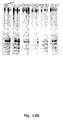
- S1 endonuclease (Amersham Pharmacia) assays were performed using 1.5 ⁇ mol oligonucleotide and 16 U/mL enzyme at 37°C in a buffer of 30 mM NaOAc, 100 mM NaCl, 1 mM ZnSO 4 , pH 4.6. The enzyme was shown to maintain its activity under these conditions for at least 2 h. Aliquots of the enzymatic digestion were removed at the indicated times, quenched by freezing-drying, and stored at -20°C until analysis by either RP-HPLC and ES-MS or polyacrylamide electrophoresis.
- the X1/5 Hela cell line (ECACC Ref. No: 95051229), which is stably transfected with a "tet-off" luciferase system, was used. In the absence of tetracycline the luciferase gene is expressed constitutively. The expression can be measured as light in a luminometer, when the luciferase substrate, luciferin has been added.
- the X1/5 Hela cell line was grown in Minimun Essential Medium Eagle (Sigma M2279) supplemented with 1x Non Essential Amino Acid (Sigma M7145), 1x Glutamax I (Invitrogen 35050-038), 10 % FBS calf serum, 25 ⁇ g/ml Gentamicin (Sigma G1397), 500 ⁇ g/ml G418 (Invitrogen 10131-027) and 300 ⁇ g/ml Hygromycin B (invitrogen 10687-010).
- the X1/5 Hela cells were seeded at a density of 8000 cells per well in a white 96 well plate (Nunc 136101) the day before the transfection.
- the cells were washed one time with OptiMEM (Invitrogen) followed by addition of 40 ⁇ l of OptiMEM with 2 ⁇ g/ml of Lipofectamine2000 (Invitrogen). The cells were incubated for 7 minutes before addition of the oligonucleotides. 10 ⁇ l of oligonucleotide solutions were added and the cells were incubated for 4 hours at 37°C and 5 % CO 2 . After the 4 hours of incubation the cells were washed once in OptiMEM and growth medium was added (100 ⁇ l). The luciferase expression was measure the next day.
- Luciferase expression was measured with the Steady-Glo luciferase assay system from Promega. 100 ⁇ l of the Steady-Glo reagent was added to each well and the plate was shaken for 30s at 700rpm. The plate was read in Luminoskan Ascent instrument from ThermoLabsystems after 8min of incubation to complete total lysis of the cells. The luciferase expression is measured as R elative L ight U nits per seconds (RLU/s). The data was processed in the Ascent software (v2.6) and graphs were drawn in SigmaPlot2001.
- RNA was incubated in the presence of a 10-fold excess of various complementary oligonucleotides in 1 x TMK-glutamate buffer (20 mM Tris acetate, 10 mM magnesium acetate and 200 mM potassium glutamate, pH 7.25) supplied with 1 mM DTT in a reaction volume of 40 ⁇ l.
- the reactions were preincubated for 3 minutes at 65°C followed by 15 minutes at 37°C before addition of RNase H (Promega, Cat.# 4285). 0.2 U of RNase H was added, and samples were withdrawn (6 ⁇ l) to formamide dye (3 ⁇ l) on ice at the time points 0, 10, 20 and 30 minutes after RNase H addition.
- Cell Culture Cell lines 15PC3 (human prostate cancer) and X1/5 (HeLa cells stably transfected with a Tet-Off luciferase construct) were used, 15PC3 were kindly donated by F. Baas, Neurozintuigen lab, Amsterdam, The Netherlands, X1/5 were purchased from ECACC. 15PC3 were maintained in DMEM + 10% FCS + glutamax + gentamicin and X1/5 were maintained in DMEM + 10% FCS + glutamax + gentamicin + hygromycin + G418 and both cell lines were passaged twice weekly. Transfection: Cells were seeded at 150000 cells pr. well in 12-well plates the day before transfection.
- Lipofectamine 2000 (GIBCO BRL) was mixed with OptiMem and 300 ⁇ l of the mixture was added to each well and incubated for 7 min. before addition of 100 ⁇ l oligo diluted in OptiMem.
- the optimal Lipofectamine 2000 was determined, for X1/5, the optimal Lipofectamine concentration was 2 ⁇ g/ml and for 15PC3 the optimal concentration was 10 ⁇ g/ml.
- the cells were washed in OptiMem (GIBCO BRL) and 300 ⁇ l OptiMem was added to each well.
- Transfections were performed in 6 well culture plates on microscope glass coverslips with FAM-labeled oligonucleotides at 400nM. Transfections were done with either DAC30 (Eurogentec) or Lipofectamine 2000 as liposomal transfection agents for 5h in serum free DMEM at 37°C. Immediately after the transfection period, the cells were washed with PBS and fixed with 4% paraformaldehyde.
- Prostate cancer cell line 15PC3 and pancreatic carcinoma cell line MiaPacaII were maintained by serial passage in Dulbecco's modified Eagle's medium (DMEM). Cells were grown at 37°C and 5% CO 2 . Media were supplemented with 10% fetal calf serum, 2 mM L-glutamine, 100 U/mL penicillin and 100 ⁇ g/mL streptomycin.
- DMEM Dulbecco's modified Eagle's medium
- Cell transfections were performed with 15PC3 cells plated in 6 well culture plates. The cells were plated (70% confluent) the day before transfection. The transfections were usually performed using lipofectamine 2000 (Invitrogen) according to the manufacturer's instructions, except for using serum free DMEM. Cells were transfected for 5 hours. Afterwards the medium was replaced with fresh DMEM. We also compared Lipofectamine 2000 with DAC30 (Eurogentec). When DAC30 was used the protocol described in Ten Asbroek et al. (NAR 28, 1133-1138 ) was followed. For Fluorescence studies the cells were plated on glass cover slips in 6 well culture plates. Transfections were performed as described above but using FAM labeled oligonucleotides.
- the cells were fixed on the glass in 4% paraformaldehyde and sealed on microscope glass in Vectashield mounting medium (Vector Laboratories Inc.). Fluorescence microscopy was done with a Vanox Microscope and appropriate filtres.
- Tritium labeling of oligonucleotides was performed using the heat exchange method described by Graham et al. ( Graham, M.J., Freier, S.M., Crooke, R.M., Ecker, D.J., Maslova, R.N., and Lesnik, E.A. (1993). Tritium labeling of antisense oligonucleotides was carried out by exchange with tritiated water. Nucleic Acids Res., 21: 3737-3743 ).
- the radioactivity in the different organs was corrected for serum present at the time of sampling as determined by the distribution of 125 I-BSA (personal communication K. Kruijt, University of Leiden, the Netherlands).
- the oligonucleotides were either administrated by bolus injection in the lower vena cava (circulation for 30 minutes) or using Alzet osmotic minipumps (see in vivo experiment section), for a prolonged systemic circulation.
- Tissue samples were dissolved in 5 M NaOH at 65°C and subsequently mixed with 10 volumes of Ultima Gold scintillation fluid. Serum and urine can be counted by mixing directly with Ultima gold.
- Osmotic pumps Alzet 1002 (DURECT Corporation, Cupertino, CA) lot no.10045-02 Dosage for 2776, 2778 (alpha-L-oxy-LNA), 2742 and 2744 (beta-D-oxy-LNA): 1 and 2.5 mg/kg/day. Control: physiological saline. Temperature and animal ID was monitored using: ELAM chips (IPTT 200) using a DAS 5002 chip reader (BMDS, Seaford, Delaware). Serum samples were taken for ASAT/ALAT and Alkaline Phosphatase determination.
- Aspartate aminotransferase (ASAT) and alanine aminotransferase (ALAT) levels and alkaline phosphatase in serum were determined using standard diagnostic procedures with the H747 (Hitachi/Roche) with the appropriate kits (Roche Diagnostics).
- the ALAT/ASAT and Alkaline phosphatase Levels were determined approx 20 hours post extraction of serum from the animal.
- the uptake efficiency of FAM-labeled oligonucleotide containing beta-D-amino-LNA was measured as the mean fluorescence intensity of the transfected cells by FACS analysis. Two different transfection agents were tested (Lipofectamine 2000 and DAC30) in two different cell lines (MiaPacaII and 15PC3). Table 1. Oligonucleotides containing beta-D-amino-LNA used in cellular uptake and subcellular distribution experiments. Residue c is methyl-c both for DNA and LNA.
- DAC30 Lipofectamine 2000 Ref oligonucleotides % % % % cells uptake cells uptake 2753 T N C N C N g s t s c s a s t s c s g s c s t s C N C N T N C-FAM - - 100 100 2752 T N s C N s C N s g s t s c s a s t s c s g s c s t s C N s C N s T N s c-FAM 30 30 100 100 2740 T s C s C s g s t s c s a s t s c s g s c s t s C s C s T s c-FAM 80 30 100 100 100
- Oligonucleotides both fully thiolated (PS, 2752) and partially thiolated (PO in the flanks and PS in the gap, 2753) containing beta-D-amino-LNA listed in table 1 were transfected with good efficiency, see table 1. Both transfection agents, DAC30 and Lipofectamine, presented good transfection efficiency; however, Lipofectamine was superior. Lipofectamine showed 100% efficiency in all cases: for both oligonucleotides (2753 and 2752) and in both cell lines. Moreover, no significant differences in assisted transfection efficiency were observed between 2752 and 2753.
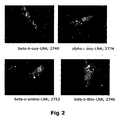
- the FAM-labeled oligonucleotide 2752 was also used to assay the subcellular distribution of oligonucleotides containing beta-D-amino-LNA, see figure 2 . Most of the staining was detected as nuclear fluorescence that appeared as bright spherical structures (the nucleoli is also stained) in a diffuse nucleoplasmic background, as well as some cytoplasmic staining in bright punctate structures. The observed distribution patterns were similar for 15PC3 and MiaPacaII. The subcellular distribution of beta-D-amino-LNA was comparable to the one observed with beta-D-oxy-LNA, 2740.
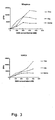
- the uptake efficiency was also measured with tritium-labeled oligonucleotide 2754 (see table 3 and figure 3 ) at different concentrations 100, 200, 300 and 400 nM, using Lipofectamine2000 as transfection agent, both in MiaPacaII and 15PC3 cells, and compared with the equivalent beta-D-oxy-LNA, 2742 (see table 3). 2754 shows lower uptake than 2742.
- Antisense activity assay Luciferase target
- beta-D-oxy-LNA does not elicit RNaseH activity, which is the most common mode of action for an antisense oligonucleotide targeting the down-stream region of the mRNA.
- this disadvantage can be overcome by creating chimeric oligonucleotides composed of beta-D-oxy-LNA and a DNA gap positioned in the middle of the sequence.
- a gapmer is based on a central stretch of 4-12 DNA (gap) typically flanked by 1 to 6 residues of 2'- O modified nucleotides (beta-D-oxy-LNA in our case, flanks).
- oligonucleotides which contain beta-D-amino-LNA in a gapmer design, and compare them with beta-D-oxy-LNA/DNA gapmers.
- the oligonucleotides from table 2 were prepared.
- gapmers 16nt in length and a gap of 7nt, which contain 4 residues of beta-D-amino-LNA in one flank and 4 residues of beta-D-oxy-LNA in the other flank, and a thiolated gap.
- the FAM group was shown not to affect the antisense ability of the oligonucleotides.
- oligonucleotide which targets a motif of the mRNA of the Firefly Luciferase, contains two mismatches in the flanks. Two C residues of the 5'-end LNA flank were substituted for two Ts for synthetic reasons. At that point in time, only the T residues were available. Therefore and in order to be able to establish a correct comparison, the corresponding beta-D-oxy-LNA control was also included in the assay. No FAM labeling was necessary in this case.
- oligonucleotide with beta-D-amino-LNA presents good antisense activity at 50 nM oligonucleotide concentration.
- the inclusion of beta-D-amino-LNA in the flanks of an oligonucleotide results in good down-regulation.
- the antisense activity of an oligonucleotide containing beta-D-amino-LNA is at least as good as the parent all beta-D-oxy-LNA gapmer.
- Antisense activity assay Ha-Ras target
- the oligonucleotides were designed to target a motif of the mRNA of Ha-Ras. Different mismatch controls were also included, 2756 is fully thiolated and 2757 presents thiolation only in the gap, see table 3. Moreover, the corresponding beta-D-oxy-LNA gapmers (see table 3, 2742 is all PS, 2744 is the corresponding mismatch control; 2743 has PS in the gap, 2745 is the corresponding mismatch control) were also Table 3. Oligonucleotides containing beta-D-amino-LNA and beta-D-oxy-LNA used in the antisense activity experiments. Residue c is methyl-c both for DNA and LNA.
- the Ras family of mammalian proto-oncogenes includes three well-known isoforms termed Ha-Ras (Ha-Ras), Ki-Ras (K-Ras) and N-Ras.
- the ras proto-oncogenes encode a group of plasma membrane associated G-proteins that bind guanine nucleotides with high affinity and activates several effectors including raf-1, PI3-K etc. that are known to activate several distinct signaling cascades involved in the regulation of cellular survival, proliferation and differentiation.
- raf-1 bind guanine nucleotides with high affinity
- PI3-K etc. that are known to activate several distinct signaling cascades involved in the regulation of cellular survival, proliferation and differentiation.
- the Ras family is regarded as important targets in development of anticancer drugs, and it has been found that the Ras proteins are either over-expressed or mutated (often leading to constitutive active Ras proteins) in approximately 25 % of all human cancers.
- the ras gene mutations in most cancer types are frequently limited to only one of the ras genes and are dependent on tumor type and tissue. Mutations in the Ha-Ras gene are mainly restricted to urinary tract and bladder cancer.
- beta-D-amino-LNA in the flanks of an oligonucleotide results in good down-regulation levels.
- oligonucleotides with beta-D-amino-LNA present good antisense activity at two different concentrations, 400 and 800 nM.
- No significant difference in down-regulation can be seen between oligonucleotides 2755 and 2754, which present a different degree in thiolation.
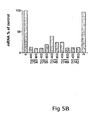
- We can conclude that the antisense activity of an oligonucleotide containing beta-D-amino-LNA is at least as good as the parent beta-D-oxy-LNA gapmer. From figure 6 , a wider range of concentration was tested. There is a potent down-regulation between 50-400 nM for 2754.
- oligonucleotides containing beta-D-amino-LNA (tritiated 2754) was also studied, both after i.v. injection and using Alzet osmotic minipumps.
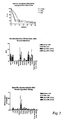
- 2754 was administered to xenografted mice with 15PC3 tumors on the left side and MiaPacaII tumors on the right side as an intraveneous injection, and the analysis was carried out after 30 min circulation. From figure 7 , the serum clearance for 2754 is very rapid, and the biodistribution looks very similar to the biodistribution pattern presented by the reference containing beta-D-oxy-LNA; the kidney and the liver (to lesser extent) are the main sites of uptake, when corrected for tissue weight.
- a group of 4 nude mice xenografted with 15PC3 tumors on the left side and MiaPacaII tumors on the right side were treated for 72 h with Alzet osmotic minipumps with a 2.5 mg/Kg/day dosage of tritiated 2754.
- the radioactivity present in the different tissues was measured.
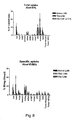
- Figure 8 shows the distribution of 2754 in the tissues as a total uptake and as a specific uptake. It seems that the tissue takes up significantly better amino-LNA than beta-D-oxy LNA.
- the main sites of uptake were liver, muscle, kidney, skin, bone and heart. When corrected for tissue weight, kidney, heart and liver (lungs and muscle in a lower extent) were the main uptake sites.
- Rnase H is a ubiquitous cellular enzyme that specifically degrades the RNA strand of DNA/RNA hybrids, and thereby inactivates the mRNA toward further cellular metabolic processes.
- the inhibitory potency of some antisense agents seems to correlate with their ability to elicit ribonuclease H (RNaseH) degradation of the RNA target, which is considered a potent mode of action of antisense oligonucleotides.
- RNaseH ribonuclease H
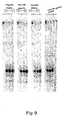
- understanding the mechanisms of catalytic function and substrate recognition for the RNaseH is critical in the design of potential antisense molecules. It was our aim to evaluate the RNaseH activity of gapmers containing beta-D-amino-LNA. From figure 9 , we can appreciate a good cleavage activity for an oligonucleotide containing beta-D-amino-LNA, as in table 2.
- beta-D-thio-LNA was also evaluated against a 3'-exonuclease (SVPD).
- the oligonucleotide is synthesized on deoxynucleoslde-support (t).
- t deoxynucleoslde-support
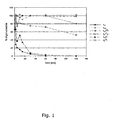
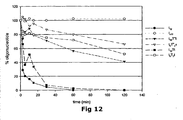
- the study was carried out with oligothymidylates by blocking the 3'-end with beta-D-thio-LNA. From figure 10 , we can see that the incorporation of just one T-monomer of 2'-beta-D-thio-LNA (T S ) has a significant effect in the nucleolytic resistance of the oligonucleotide towards SVPD. After 2h digestion more than 80% of the oligonucleotide remains, while the corresponding beta-D-oxy-LNA oligonucleotide is digested by the exonuclease, see figure 10 .
- the efficiency of FAM-Iabelled oligonucleotide uptake was measured as the mean fluorescence intensity of the transfected cells by FACS analysis. The transfection without lipid showed distinct differences between the tested oligonucleotides. The uptake as measured from mean fluorescence intensity of transfected cells was dose dependent. Gapmers (16nt in length and gap of 7nt) containing beta-D-thio-LNA in the flanks were analysed and compared with the corresponding beta-D-oxy-LNA gapmers. Beta-D-thio-LNA (one flank with beta-D-thio-LNA and the other one with oxy-LNA, as in table 5) showed higher uptake than oligonucleotides containing only oxy-LNA.
- beta-D-thio-LNA oligonucleotides both all-PO gapmer and gapmer with PS-gap and PO-flanks
- the beta-D-thio-LNA oligonucleotides had good uptake efficiency.
- the all-PO gapmer containing beta-D-thio-LNA was far superior to other all-PO oligonucleotides tested so far, as it can be appreciated from figure 11 .
- the uptake efficiency of FAM-labeled oligonucleotide containing beta-D-thio-LNA was measured as the mean fluorescence intensity of the transfected cells by FACS analysis. Two different transfection agents were tested (Lipofectamine 2000 and DAC30) in two different cell lines (MiaPacaII and 15PC3). Table 4. Oligonucleotides containing beta-D-thio-LNA used in cellular uptake and subcellular distribution experiments. Residue c is methyl-c both for DNA and LNA.
- Oligonucleotides both fully thiolated (PS, 2746) and partially thiolated (PO in the flanks and PS in the gap, 2747) containing beta-D-thio-LNA listed in table 4 were transfected with good efficiency, see table 4. Both transfection agents, DAC30 and Lipofectamine, presented good transfection efficiency; however, Lipofectamine was superior. Lipofectamine showed 100% efficiency in all cases: for both oligonucleotides (2746 and 2747) and in both cell lines. Moreover, no significant differences in assisted transfection efficiency were observed between 2746 and 2747.
- the FAM-labeled oligonucleotide 2746 was also used to assay the subcellular distribution of oligonucleotides containing beta-D-thio-LNA, see figure 2 . Most of the staining was detected as nuclear fluorescence that appeared as bright spherical structures (the nucleoli is also stained) in a diffuse nucleoplasmic background, as well as some cytoplasmic staining in bright punctate structures. The observed distribution patterns were similar for 15PC3 and MiaPacaII. The subcellular distribution of beta-D-thio-LNA was comparable to the one observed with beta-D-oxy-LNA, 2740.
- the uptake efficiency was also measured with tritium-labeled oligonucleotide 2748 (see table 6 and figure 3 ) at different concentrations 100, 200, 300 and 400 nM, using Lipofectamine2000 as transfection agent, both in MiaPacaII and 15PC3 cells, and compared with the equivalent beta-D-oxy-LNA, 2742 (see table 6). 2748 shows superior uptake than 2742.
- Antisense activity assay Luciferase target
- the oligonucleotide which is directed against a motif of the mRNA of the firefly luciferase, contains two mismatches in the flanks. Two C residues of the 5'-end LNA flank were substituted for two Ts for synthetic reasons. At that point in time, only the T residues were available. Therefore and in order to be able to establish a correct comparison, the corresponding oxy-LNA control was also included in the assay. No FAM labeling was necessary in this case.
- Table 5 Oligonucleotide containing beta-D-thio-LNA used in the antisense activity assay and the corresponding oxy-LNA control (Capital letters for LNA and small letters for DNA, T S is beta-D-thio-LNA).
- Residue c is methyl-c both for LNA.
- the oligonucleotide with beta-D-thio-LNA presents good antisense activity at 50 nM oligonucleotide concentration. Therefore, the inclusion of beta-D-thio-LNA in the flanks of an oligonucleotide results in good down-regulation, and is at least as good as the parent all beta-D-oxy-LNA gapmer.
- Antisense activity assay Ha-Ras target
- the oligonucleotides were designed to target a motif of the mRNA of Ha-Ras. Different mismatch controls were also included, 2750 is fully thiolated and 2751 presents thiolation only in the gap, see table 6. Moreover, the corresponding beta-D-oxy-LNA gapmers (see table 6, 2742 is all PS, 2744 is the corresponding mismatch control; 2743 has PS in the gap, 2745 is the corresponding mismatch control) were also Table 6. Oligonucleotides containing beta-D-thio-LNA and beta-D-oxy-LNA used in the antisense activity experiments. Residue c is methyl-c both for DNA and LNA.
- beta-o-thio-LNA in the flanks of an oligonucleotide results in good down-regulation levels. From figure 5 , we can see that oligonucleotides with beta-D-thio-LNA present good antisense activity at two different concentrations, 400 and 800 nM. No significant difference in down-regulation can be seen between oligonucleotides 2749 and 2748, which present a different degree in thiolation. However, 2749 presents better levels of down-regulation, both at 400 and 800 nM. We can conclude that the antisense activity of an oligonucleotide containing beta-D-thio-LNA lies in the range of the parent beta-D-oxy-LNA gapmer.
- oligonucleotides containing beta-D-thio-LNA (tritiated 2748) was also studied, both after i.v. injection and using Alzet osmotic minipumps.
- 2748 was administered to xenografted mice with 15PC3 tumors on the left side and MiaPacaII tumors on the right side as an intraveneous injection, and the analysis was carried out after 30 min circulation. From figure 7 , the serum clearance for 2748 is very rapid, and the biodistribution looks very similar to the biodistribution pattern presented by the reference containing beta-D-oxy-LNA; the kidney and the liver (to lesser extent) are the main sites of uptake, when corrected for tissue weight.
- FIG. 8 shows the distribution of 2748 in the tissues as a total uptake and as a specific uptake.
- the main sites of uptake were liver, muscle, kidney, skin and bone. When corrected for tissue weight, kidney and liver were the main uptake sites.
- alpha-L-oxy-LNA The stabilization properties of alpha-L-oxy-LNA were also evaluated.
- the study was carried out with oligothymidylates by blocking the 3'-end with alpha-L-oxy-LNA.
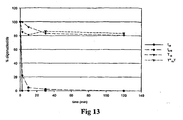
- the oligonucleotide is synthesized on deoxynucleoside-support (t). From figure 12 , we can see that the introduction of just one alpha-L-T (T°) at the 3'-end of the oligonucleotide represents already a gain of 40% stability (after 2h digestion) with respect to the oxy-version, for which there was actually no gain. The addition of two modifications contributes even more to the stability of the oligonucleotide.
- beta-D-oxy-LNA, beta-D-amino-LNA, beta-D-thio-LNA and alpha-L-oxy-LNA stabilize oligonucleotides against nucleases.
- An order of efficiency in stabilization can be established: DNA phosphorothioates ⁇ oxy-LNA ⁇ ⁇ -L-oxy-LNA ⁇ beta-D-amino-LNA ⁇ beta-D-thio-LNA.
- the efficiency of FAM-labelled oligonucleotide uptake was measured as the mean fluorescence intensity of the transfected cells by FACS analysis. The uptake as measured from mean fluorescence intensity of transfected cells was dose dependent. Gapmers (16nt in length and gap of 7nt) containing ⁇ -L-oxy-LNA in the flanks were analysed and compared with the corresponding beta-D-oxy-LNA gapmer. ⁇ -L-oxy-LNA (in both flanks) showed higher uptake than the oligonucleotide containing only beta-D-oxy-LNA. Both all-PO and gapmer with PS-gap had good uptake efficiency; especially the all-PO gapmer was far superior than other all PO oligonucleotides tested so far, see figure 14 for FACS analysis.
- the uptake efficiency of FAM-labeled oligonucleotides containing alpha-L-oxy-LNA was measured as the mean fluorescence intensity of the transfected cells by FACS analysis. Two different transfection agents were tested (Lipofectamine 2000 and DAC30) in two different cancer cell lines (MiaPacaII and 15PC3). Table 7. Oligonucleotides containing alpha-L-oxy-LNA used in cellular uptake and subcellular distribution experiments. Residue c is methyl-c both for DNA and LNA.
- Oligonucleotides both fully thiolated (PS, 2774) and partially thiolated (PO in the flanks and PS in the gap, 2773) containing alpha-L-oxy-LNA listed in table 7 were transfected with good efficiency, see table 7. Both transfection agents, DAC30 and Lipofectamine, presented good transfection efficiency; however, Lipofectamine was superior. Lipofectamine showed 100% efficiency in all cases: for both oligonucleotides (2773 and 2774) and in both cell lines. Moreover, no significant differences in assisted transfection efficiency were observed between 2773 and 2774.
- the FAM-labeled oligonucleotide 2774 was also used to assay the subcellular distribution of oligonucleotides containing alpha-L-oxy-LNA, see figure 2 . Most of the staining was detected as nuclear fluorescence that appeared as bright spherical structures (the nucleoli is also stained) in a diffuse nucleoplasmic background, as well as some cytoplasmic staining in bright punctate structures. The observed distribution patterns were similar for 15PC3 and MiaPacaII. The subcellular distribution of alpha-L-oxy-LNA was comparable to the one observed with beta-D-oxy-LNA, 2740.
- oligonucleotides were tested and compared with the corresponding FAM-labelled molecules, and no significant difference was appreciated between the free and FAM-labelled ones. Therefore, we included oligonucleotides from the Unassisted Cellular Uptake assay in the Luciferase assay study, assuming that the antisense activity will not be affected by the presence of the FAM group. From figure 16 , the oligonucleotide with alpha-L-oxy-LNA in the junctions shows potent antisense activity. It is actually 5-fold better than the corresponding all oxy-LNA gapmer (gap of 7nt), and slightly better than a gapmer with an optimised 9nt gap with oxy-LNA.
- the second design presents at least as good down-regulation levels as the observed for beta-D-oxy-LNA gapmers.
- alpha-L-oxy-LNA reveals to be a potent tool enabling the construction of different gapmers, which show good antisense activity.
- the placement of alpha-L-oxy-LNA in the junctions results in a very potent oligonucleotide.
- the length of the construct is usually designed to range from 15-25 nucleotide units, in order to ensure that optimal identification and binding takes place with a unique sequence in the mammalian genome and not with similar genetically redundant elements.
- Statistical analyses specify 11-15 base paired human sequences as the theoretical lower limits for sufficient recognition of a single genomic region. In practice, however, a longer oligonucleotide is commonly used to compensate for low melting transitions, especially for thiolated oligonucleotides that have lower affinity.
- affinity is achieved by the introduction of oxy-LNA or novel LNA relatives, the design of potent and short antisense oligonucleotides ( ⁇ 15nt) should be enabled.
- the alpha-L-oxy-LNA can play an important role in enabling the design of short molecules by maintaining the required high-affinity, but also an optimal gap size. 12 and 14mers against a motif of the mRNA of the firefly luciferase were evaluated. The results are shown in figure 16 . The presence of alpha-L-oxy-LNA in the flanks of a 12 (gap of 7nt) and 14 mer (gap of 8nt) correspond to good levels of down-regulation. From figure 16 . In conclusion, alpha-L-oxy-LNA is a potent tool in enabling the design of short antisense oligonucleotides with significant down-regulation levels.
- beta-D-oxy-LNA residue design 4-3-1-3-5
- the design shows significant down-regulation at 50nM oligonucleotide concentration, see figure 16 .
- the placement of alpha-L-oxy-LNA in the junctions and one alpha-L-oxy-LNA in the middle of the gap also shows down-regulation, see figure 16 .
- the interruption of the gap with two beta-D-oxy-LNAs (design 4-1-1-5-1-1-3 ) relates also with a loss in antisense activity.
- alpha-L-oxy-LNA reveals to be a potent tool enabling the construction of different mixmers, which are able to present high levels of antisense activity.
- Antisense activity assay Ha-Ras target
- the oligonucleotides were designed to target a motif of the mRNA of Ha-Ras. Different mismatch controls were also included, 2778 is fully thiolated and 2777 presents thiolation only in the gap, see table 9. Moreover, the corresponding beta-D-oxy-LNA gapmers (see table 9, 2742 is all PS, 2744 is the corresponding mismatch control; 2743 has PS in the gap, 2745 is the corresponding mismatch control) were also tested. Table 9. Oligonucleotides containing alpha-L-oxy-LNA and beta-D-oxy-LNA used in the antisense activity experiments. Residue c is methyl-c both for DNA and LNA.
- alpha-L-oxy-LNA in the flanks of an oligonucleotide results in good down-regulation levels. From figure 6 , we can see that the oligonucleotide 2776 with alpha-L-oxy-LNA present good antisense activity at a different range of concentrations, 50 nM-400 nM. No significant difference in down-regulation can be seen between 2776 and 2742. We can conclude that the antisense activity of an oligonucleotide containing alpha-L-oxy-LNA is at least as good as the parent beta-D-oxy-LNA gapmer.
- Nude mice were injected s.c. with MiaPaca II cells (right flank) and 15PC3 cells (left flank) one week prior to the start of oligonucleotide treatment to allow xenograft growth.
- the anti Ha-Ras oligonucleotides (2742 and 2776, table 10) and control oligonucleotides (2744 and 2778, table 10) were administrated for 14 days using Alzet osmotic minipumps (model 1002) implanted dorsally. Two dosages were used: 1 and 2.5 mg/Kg/day. During treatment the tumor growth was monitored.
- oligonucleotide containing alpha-L-oxy-LNA are as potent, or maybe even better, as the one containing beta-D-oxy-LNA in tumor growth inhibition in the concentration range tested.
- Table 10 Oligonucleotides containing alpha-L-oxy-LNA and beta-D-oxy-LNA used in the in vivo experiment. Residue c is methyl-c both for DNA and LNA.
- ASAT aspartate aminotransferase
- ALAT alanine aminotransferase
- Alkaline phosphatase Alkaline phosphatase in the serum were determined, in order to study the possible effects of this 14-day treatment in the nude mice.
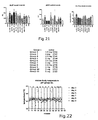
- Serum samples were taken from each mouse after the 14-day experiment. From figure 21 , ALAT levels in the serum varied between 250-500 U/L. ASAT levels were in the range of 80-150 U/L. The mice did not seem externally to be sick, and no big changes in behavior were observed.
- the body temperature of the mice was also monitored ( figure 22 ). The body temperature did not change significantly during the treatment, not even at high dose 2,5 mg/Kg/day, which is an indication that no major toxicity effects are occurring. In some cases, the body temperature of the mice was a bit higher, divided in two groups. These effects cannot be explained by the fact of one oligonucleotide behaving differently or one dosage being too high.
- Design 3-9-3-1 has a deoxynucleoside residue at the 3'-end, see table 11 and figure 23 . It shows significant levels of down-regulation, in the same range than an optimised (9nt) fully thiolated gapmer. Moreover, only partial thiolation is needed for these mixmers to work as good as the fully thiolated gapmer, see figure 24 .
- Table 11 Special beta-D-oxy-LNA constructs (Capital letters for LNA and small letters for DNA). Residue c is methyl-c for LNA.
- oligonucleotides containing novel LNA monomers (beta-D-amino-, beta-D-thio- and alpha-L-LNA) and bearing a deoxynucleoside residue at the 3'-end were tested in different assays, see tables 3, 6, 9 and 10 for more detail.
Landscapes
- Chemical & Material Sciences (AREA)
- Health & Medical Sciences (AREA)
- Life Sciences & Earth Sciences (AREA)
- Engineering & Computer Science (AREA)
- Organic Chemistry (AREA)
- Genetics & Genomics (AREA)
- Molecular Biology (AREA)
- Biochemistry (AREA)
- Biotechnology (AREA)
- General Health & Medical Sciences (AREA)
- Biomedical Technology (AREA)
- Zoology (AREA)
- Wood Science & Technology (AREA)
- General Engineering & Computer Science (AREA)
- Bioinformatics & Cheminformatics (AREA)
- Plant Pathology (AREA)
- Microbiology (AREA)
- Biophysics (AREA)
- Physics & Mathematics (AREA)
- Medicinal Chemistry (AREA)
- Pharmacology & Pharmacy (AREA)
- Epidemiology (AREA)
- Animal Behavior & Ethology (AREA)
- Public Health (AREA)
- Veterinary Medicine (AREA)
- Virology (AREA)
- Pharmaceuticals Containing Other Organic And Inorganic Compounds (AREA)
- Medicines That Contain Protein Lipid Enzymes And Other Medicines (AREA)
- Enzymes And Modification Thereof (AREA)
Claims (23)
- Oligonukleotid mit der Formel (in der Reihenfolge von 5' nach 3'):A-B-C-D, bei demA einer Sequenz verschlossener Nukleotideinheiten entspricht,B einer Sequenz nicht verschlossener Nukleotideinheiten entspricht, bei der ein oder zwei Nukleotideinheiten durch alpha-L-oxy-LNA-Einheiten substituiert sind,C einer Sequenz verschlossener Nukleotideinheiten entspricht undD einer nicht verschlossenen Nukleotideinheit oder einer Sequenz nicht verschlossener Nukleotideinheiten entspricht.
- Konstrukt gemäß Anspruch 1, wobei A eine Länge von 2 bis 6 Nukleotideinheiten aufweist.
- Konstrukt gemäß Anspruch 2, wobei A eine Länge von 3, 4 oder 5 Nukleotideinheiten aufweist.
- Konstrukt gemäß einem der Ansprüche 1 bis 3, wobei B eine Länge von 4 bis 12 aufweist.
- Konstrukt gemäß Anspruch 4, wobei B eine Länge von 6, 7, 8, 9, 10 oder 11 Nukleotideinheiten aufweist.
- Konstrukt gemäß einem der Ansprüche 1 bis 5, wobei B wenigstens einen 2'-Deoxy-pentofuranose-Zuckerrest enthält.
- Konstrukt gemäß Anspruch 6, wobei B eine Teilsequenz von wenigstens drei Nukleotideinheiten mit 2'-Deoxy-erythro-pentofuranosyl-Zuckerresten enthält und die besagte Teilsequenz mit einer alpha-L-oxy-LNA-Einheit versehen sein kann.
- Konstrukt gemäß Anspruch 7, wobei B eine Teilsequenz von 4, 5, 6, 7, 8, 9 oder 10 Nukleotideinheiten mit 2'-Deoxy-erythro-pentofuranosyl-Zuckerresten enthält und die besagte Teilsequenz mit einer alpha-L-oxy-LNA-Einheit versehen sein kann.
- Konstrukt gemäß einem der Ansprüche 1 bis 8, wobei C eine Länge von 1 bis 5 Nukleotideinheiten aufweist.
- Konstrukt gemäß Anspruch 9, wobei C eine Länge von 2, 3 oder 4 Nukleotideinheiten aufweist.
- Konstrukt gemäß einem der Ansprüche 1 bis 10, wobei D eine Länge von 1 bis 3 Nukleotideinheiten aufweist.
- Konstrukt gemäß Anspruch 11, wobei D eine Länge von 1 oder 2 Nukleotideinheiten aufweist.
- Konstrukt gemäß einem der Ansprüche 1 bis 12, wobei die Gesamtlänge des Konstruktes 8 bis 26 Nukleotideinheiten beträgt.
- Konstrukt gemäß Anspruch 13, wobei die Gesamtlänge des Konstruktes 12 bis 21 Nukleotideinheiten beträgt.
- Konstrukt gemäß einem der Ansprüche 1 bis 14, wobeiA eine Länge von 2 bis 6 Nukleotideinheiten,B eine Länge von 4 bis 12 Nukleotideinheiten,C eine Länge von 1 bis 5 Nukleotideinheiten undD eine Länge von 1 bis 3 Nukleotideinheiten aufweisen undwobei die Gesamtlänge des Konstruktes 8 bis 26 Nukleotideinheiten beträgt.
- Konstrukt gemäß einem der Ansprüche 1 bis 15, wobeiA eine Länge von 4 Nukleotideinheiten,B eine Länge von 7 bis 9 Nukleotideinheiten,C eine Länge von 3 Nukleotideinheiten undD eine Länge von 1 Nukleotideinheit aufweisen und wobei die Gesamtlänge des Konstruktes 15 bis 17 Nukleotideinheiten beträgt.
- Konstrukt gemäß Anspruch 16, wobei die Gesamtlänge 16 Nukleotideinheiten beträgt.
- Konstrukt gemäß einem der Ansprüche 1 bis 17, bei dem die verschlossenen Nukleotideinheiten in A und C beta-D-oxy-LNA-Einheiten sind.
- Konstrukt gemäß einem der Ansprüche 1 bis 18, wobei die Nukleosidzwischenverbindungen unabhängig voneinander aus der Gruppe ausgewählt sind, die -O-P(O)2-O-, -O-P(O,S)-O-, -O-P(S)2-O-, -NRH-P(O)2-O-, -O-P(O,NRH)-O-, -O-PO(R")-O-, -O-PO(CH3)-O- und -O-PO(NHRN)-O- enthält, wobei RH unter Wasserstoff und C1-6-Alkylresten ausgewählt ist und R" unter C1-6-Alkyl- und Phenylresten ausgewählt ist.
- Konstrukt gemäß einem der Ansprüche 1 bis 19, bei dem B wenigstens eine Nukleotidzwischenverbindung aufweist, die keine -O-P(O)2-O-Verbindung ist.
- Konstrukt gemäß Anspruch 20, wobei B wenigstens eine Phosphorothionatverbindung aufweist.
- Konstrukt gemäß einem der Ansprüche 1 bis 21, bei dem B einer Sequenz von Nukleotideinheiten entspricht, die es dem Konstrukt ermöglicht, RNase H zu binden, wenn dieses an einer Zielnukleinsäure hybridisiert ist.
- Pharmazeutische Zusammensetzung, die wenigstens ein gegensinniges Oligonukleotidkonstrukt gemäß einem der Ansprüche 1 bis 22 als aktiven Wirkstoff und ein pharmazeutisches Trägermaterial aufweist.
Priority Applications (5)
| Application Number | Priority Date | Filing Date | Title |
|---|---|---|---|
| EP09169370.5A EP2141233B1 (de) | 2002-11-18 | 2003-11-18 | Antisense-Entwurf |
| EP17170205.3A EP3222722B1 (de) | 2002-11-18 | 2003-11-18 | Antisense-entwurf |
| DK09169370.5T DK2141233T3 (en) | 2002-11-18 | 2003-11-18 | Antisense Design |
| EP14163184.6A EP2752488B1 (de) | 2002-11-18 | 2003-11-18 | Antisense-Entwurf |
| EP10182316.9A EP2284269B1 (de) | 2002-11-18 | 2003-11-18 | Antisense-Entwurf |
Applications Claiming Priority (5)
| Application Number | Priority Date | Filing Date | Title |
|---|---|---|---|
| DK200201774 | 2002-11-18 | ||
| DKPA200201774 | 2002-11-18 | ||
| DK200301540 | 2003-10-20 | ||
| DKPA200301540 | 2003-10-20 | ||
| PCT/DK2003/000788 WO2004046160A2 (en) | 2002-11-18 | 2003-11-18 | Amino-lna, thio-lna and alpha-l-oxy-ln |
Related Child Applications (4)
| Application Number | Title | Priority Date | Filing Date |
|---|---|---|---|
| EP10182316.9A Division EP2284269B1 (de) | 2002-11-18 | 2003-11-18 | Antisense-Entwurf |
| EP14163184.6A Division EP2752488B1 (de) | 2002-11-18 | 2003-11-18 | Antisense-Entwurf |
| EP17170205.3A Division EP3222722B1 (de) | 2002-11-18 | 2003-11-18 | Antisense-entwurf |
| EP09169370.5A Division EP2141233B1 (de) | 2002-11-18 | 2003-11-18 | Antisense-Entwurf |
Publications (2)
| Publication Number | Publication Date |
|---|---|
| EP1569661A2 EP1569661A2 (de) | 2005-09-07 |
| EP1569661B1 true EP1569661B1 (de) | 2009-09-09 |
Family
ID=32327766
Family Applications (5)
| Application Number | Title | Priority Date | Filing Date |
|---|---|---|---|
| EP10182316.9A Expired - Lifetime EP2284269B1 (de) | 2002-11-18 | 2003-11-18 | Antisense-Entwurf |
| EP03773575A Expired - Lifetime EP1569661B1 (de) | 2002-11-18 | 2003-11-18 | Antisense-entwurf |
| EP17170205.3A Expired - Lifetime EP3222722B1 (de) | 2002-11-18 | 2003-11-18 | Antisense-entwurf |
| EP14163184.6A Revoked EP2752488B1 (de) | 2002-11-18 | 2003-11-18 | Antisense-Entwurf |
| EP09169370.5A Expired - Lifetime EP2141233B1 (de) | 2002-11-18 | 2003-11-18 | Antisense-Entwurf |
Family Applications Before (1)
| Application Number | Title | Priority Date | Filing Date |
|---|---|---|---|
| EP10182316.9A Expired - Lifetime EP2284269B1 (de) | 2002-11-18 | 2003-11-18 | Antisense-Entwurf |
Family Applications After (3)
| Application Number | Title | Priority Date | Filing Date |
|---|---|---|---|
| EP17170205.3A Expired - Lifetime EP3222722B1 (de) | 2002-11-18 | 2003-11-18 | Antisense-entwurf |
| EP14163184.6A Revoked EP2752488B1 (de) | 2002-11-18 | 2003-11-18 | Antisense-Entwurf |
| EP09169370.5A Expired - Lifetime EP2141233B1 (de) | 2002-11-18 | 2003-11-18 | Antisense-Entwurf |
Country Status (10)
| Country | Link |
|---|---|
| US (15) | US9045518B2 (de) |
| EP (5) | EP2284269B1 (de) |
| AT (1) | ATE442152T1 (de) |
| AU (2) | AU2003281969B2 (de) |
| CA (2) | CA2994089A1 (de) |
| DE (1) | DE60329220D1 (de) |
| DK (5) | DK2284269T3 (de) |
| ES (1) | ES2607471T3 (de) |
| HK (1) | HK1244504A1 (de) |
| WO (1) | WO2004046160A2 (de) |
Cited By (10)
| Publication number | Priority date | Publication date | Assignee | Title |
|---|---|---|---|---|
| US10538764B2 (en) | 2014-06-16 | 2020-01-21 | University Of Southampton | Reducing intron retention |
| US10683503B2 (en) | 2017-08-25 | 2020-06-16 | Stoke Therapeutics, Inc. | Antisense oligomers for treatment of conditions and diseases |
| US10696969B2 (en) | 2014-10-03 | 2020-06-30 | Cold Spring Harbor Laboratory | Targeted augmentation of nuclear gene output |
| US10941405B2 (en) | 2015-10-09 | 2021-03-09 | University Of Southampton | Modulation of gene expression and screening for deregulated protein expression |
| US11083745B2 (en) | 2015-12-14 | 2021-08-10 | Cold Spring Harbor Laboratory | Antisense oligomers for treatment of autosomal dominant mental retardation-5 and Dravet Syndrome |
| US11096956B2 (en) | 2015-12-14 | 2021-08-24 | Stoke Therapeutics, Inc. | Antisense oligomers and uses thereof |
| US11814622B2 (en) | 2020-05-11 | 2023-11-14 | Stoke Therapeutics, Inc. | OPA1 antisense oligomers for treatment of conditions and diseases |
| US12060558B2 (en) | 2018-05-04 | 2024-08-13 | Stoke Therapeutics, Inc. | Methods and compositions for treatment of cholesteryl ester storage disease |
| WO2025008641A3 (en) * | 2023-07-06 | 2025-03-13 | Imperial College Innovations Limited | Rna molecule |
| US12577561B2 (en) | 2019-02-27 | 2026-03-17 | Stoke Therapeutics, Inc. | Antisense oligomers for treatment of conditions and diseases |
Families Citing this family (319)
| Publication number | Priority date | Publication date | Assignee | Title |
|---|---|---|---|---|
| US20030166282A1 (en) * | 2002-02-01 | 2003-09-04 | David Brown | High potency siRNAS for reducing the expression of target genes |
| EP1478656B1 (de) * | 2002-02-01 | 2009-09-16 | Life Technologies Corporation | Oligonukleotidzusammensetzungen mit verbesserter effizienz |
| US20060009409A1 (en) | 2002-02-01 | 2006-01-12 | Woolf Tod M | Double-stranded oligonucleotides |
| ES2649817T3 (es) | 2002-04-05 | 2018-01-15 | Roche Innovation Center Copenhagen A/S | Compuestos oligom¿¿ricos para la modulaci¿®n de la expresi¿®n de HIF-1¿Á |
| US20040248094A1 (en) * | 2002-06-12 | 2004-12-09 | Ford Lance P. | Methods and compositions relating to labeled RNA molecules that reduce gene expression |
| US20040219565A1 (en) | 2002-10-21 | 2004-11-04 | Sakari Kauppinen | Oligonucleotides useful for detecting and analyzing nucleic acids of interest |
| EP2284269B1 (de) | 2002-11-18 | 2017-08-09 | Roche Innovation Center Copenhagen A/S | Antisense-Entwurf |
| US7480382B2 (en) * | 2003-09-30 | 2009-01-20 | Microsoft Corporation | Image file container |
| ES2344566T3 (es) | 2003-12-23 | 2010-08-31 | Santaris Pharma A/S | Compuestos oligomericos para la modulacion de bcl-2. |
| BRPI0515726A8 (pt) | 2004-11-09 | 2017-09-12 | Santaris Pharma As | Oligonucleotídeos de lna potentes para a inibição de expressão de hif-1a |
| US9447138B2 (en) | 2004-11-09 | 2016-09-20 | Roche Innovation Center Copenhagen A/S | Potent LNA oligonucleotides for the inhibition of HIF-1a expression |
| US20070099196A1 (en) * | 2004-12-29 | 2007-05-03 | Sakari Kauppinen | Novel oligonucleotide compositions and probe sequences useful for detection and analysis of micrornas and their target mRNAs |
| CN103301475B (zh) * | 2005-12-28 | 2016-08-03 | 斯克里普斯研究所 | 药物组合物和表达载体以及调节基因表达的方法和核酸分子的应用 |
| AU2012216487B2 (en) * | 2006-04-03 | 2015-05-14 | Roche Innovation Center Copenhagen A/S | Pharmaceutical composition comprising anti-miRNA antisense oligonucleotides |
| EA201100811A1 (ru) | 2006-04-03 | 2012-06-29 | Сантарис Фарма А/С | Фармацевтическая композиция |
| CA3042781C (en) * | 2006-04-03 | 2021-10-19 | Roche Innovation Center Copenhagen A/S | Pharmaceutical composition comprising anti-mirna antisense oligonucleotides |
| EP2505646A1 (de) * | 2006-05-05 | 2012-10-03 | Isis Pharmaceuticals, Inc. | Verbindungen und Verfahren zur Modulation der Expression von CRP |
| EP2076597A2 (de) * | 2006-10-09 | 2009-07-08 | Santaris Pharma A/S | Rna-antagonistenverbindungen zur modulation von pcsk9 |
| EP2410053B2 (de) | 2006-10-18 | 2020-07-15 | Ionis Pharmaceuticals, Inc. | Antisense-verbindungen |
| EA200900741A1 (ru) * | 2006-11-27 | 2010-04-30 | Айзис Фармасьютикалз, Инк. | Способы лечения гиперхолестеринемии |
| US8093222B2 (en) | 2006-11-27 | 2012-01-10 | Isis Pharmaceuticals, Inc. | Methods for treating hypercholesterolemia |
| US8580756B2 (en) | 2007-03-22 | 2013-11-12 | Santaris Pharma A/S | Short oligomer antagonist compounds for the modulation of target mRNA |
| US8470791B2 (en) | 2007-03-22 | 2013-06-25 | Santaris Pharma A/S | RNA antagonist compounds for the inhibition of Apo-B100 expression |
| US9347061B2 (en) | 2007-03-24 | 2016-05-24 | Genzyme Corporation | Administering antisense oligonucleotides complementary to human apolipoprotein B |
| DK2152879T3 (da) | 2007-05-01 | 2013-02-18 | Santaris Pharma As | RNA antagonistforbindelser til modulering af beta-catenin |
| AU2008250033A1 (en) | 2007-05-11 | 2008-11-20 | Enzon Pharmaceuticals, Inc. | RNA antagonist compounds for the modulation of HER3 |
| DK2170917T3 (da) * | 2007-05-30 | 2012-10-08 | Isis Pharmaceuticals Inc | N-Substituerede bicycliske nukleinsyreanaloge med aminomethylenbro |
| AU2008272918B2 (en) † | 2007-07-05 | 2012-09-13 | Isis Pharmaceuticals, Inc. | 6-disubstituted bicyclic nucleic acid analogs |
| JP5723154B2 (ja) | 2007-09-19 | 2015-05-27 | アプライド バイオシステムズ リミテッド ライアビリティー カンパニー | RNAiにおけるオフターゲット表現型の影響を減少させるためのSiRNA配列非依存性修飾フォーマットおよびその安定化型 |
| DK2205737T3 (da) | 2007-10-04 | 2013-05-21 | Santaris Pharma As | Mikromirer |
| NZ585327A (en) | 2007-11-26 | 2012-10-26 | Santaris Pharma As | Lna antagonists targeting the androgen receptor |
| US8450290B2 (en) | 2007-11-26 | 2013-05-28 | Enzon Pharmaceuticals, Inc. | Methods for treating androgen receptor dependent disorders including cancers |
| US7863437B2 (en) | 2007-12-03 | 2011-01-04 | Enzon Pharmaceuticals, Inc. | RNA antagonist compounds for the modulation of PIK3CA expression |
| EP2268811A1 (de) | 2008-03-07 | 2011-01-05 | Santaris Pharma A/S | Pharmazeutische zusammensetzungen zur behandlung von krankheiten in verbindung mit microrna |
| US8846639B2 (en) | 2008-04-04 | 2014-09-30 | Isis Pharmaceutical, Inc. | Oligomeric compounds comprising bicyclic nucleosides and having reduced toxicity |
| US8492357B2 (en) | 2008-08-01 | 2013-07-23 | Santaris Pharma A/S | Micro-RNA mediated modulation of colony stimulating factors |
| MY188457A (en) * | 2008-10-03 | 2021-12-10 | Opko Curna Llc | Treatment of apolipoprotein-a1 related diseases by inhibition of natural antisense transcript to apolipoprotein-a1 |
| KR20110091796A (ko) | 2008-12-04 | 2011-08-12 | 오피케이오 큐알엔에이, 엘엘씨 | 종양 억제 유전자에 대한 천연 안티센스 전사체의 억제에 의해 종양 억제 유전자 관련된 질환의 치료 |
| WO2010065671A2 (en) | 2008-12-04 | 2010-06-10 | Curna, Inc. | Treatment of vascular endothelial growth factor (vegf) related diseases by inhibition of natural antisense transcript to vegf |
| CA2745329C (en) | 2008-12-04 | 2022-07-12 | Opko Curna, Llc | Treatment of erythropoietin (epo) related diseases by inhibition of natural antisense transcript to epo |
| HUE026280T2 (en) | 2009-02-12 | 2016-06-28 | Curna Inc | Treatment of brain-derived neurotrophic factor (BDNF) -related diseases by inhibition of natural antisense transcripts associated with BDNF \ t |
| MX2011009751A (es) | 2009-03-16 | 2011-09-29 | Opko Curna Llc | Tratamiento de enfermedades relacionadas con factor nuclear (eritroide derivado 2) tipo 2 (nrf2) por inhibicion del transcrito antisentido natural a nrf2. |
| EP2408796B1 (de) | 2009-03-16 | 2020-04-22 | Ionis Pharmaceuticals, Inc. | Targeting Apolipoprotein B für die Reduktion von Apolipoprotein C-III |
| US9708604B2 (en) | 2009-03-17 | 2017-07-18 | Curna, Inc. | Treatment of delta-like 1 homolog (DLK1) related diseases by inhibition of natural antisense transcript to DLK1 |
| US9034837B2 (en) | 2009-04-24 | 2015-05-19 | Roche Innovation Center Copenhagen A/S | Pharmaceutical compositions for treatment of HCV patients that are poor-responders to interferon |
| ES2609655T3 (es) | 2009-05-06 | 2017-04-21 | Curna, Inc. | Tratamiento de enfermedades relacionadas con tristetraprolina (TTP) mediante inhibición de transcrito antisentido natural para TTP |
| CN102459596B (zh) | 2009-05-06 | 2016-09-07 | 库尔纳公司 | 通过针对脂质转运和代谢基因的天然反义转录物的抑制治疗脂质转运和代谢基因相关疾病 |
| EP2427554B1 (de) | 2009-05-08 | 2016-11-16 | CuRNA, Inc. | Behandlung von dystrophin-bedingten erkrankungen mittels hemmung des natürlichen antisense-transkripts gegen die dmd-familie |
| DK2432881T3 (en) | 2009-05-18 | 2018-02-26 | Curna Inc | TREATMENT OF REPROGRAMMING FACTOR-RELATED DISEASES BY INHIBITING NATURAL ANTISENSE TRANSCRIPTS TO A REPROGRAMMING FACTOR |
| KR101703695B1 (ko) | 2009-05-22 | 2017-02-08 | 큐알엔에이, 인크. | 전사 인자 e3(tfe3)에 대한 천연 안티센스 전사체의 억제에 의해 tfe3 및 인슐린 수용체 기질 2(irs2)의 치료 |
| KR101704988B1 (ko) | 2009-05-28 | 2017-02-08 | 큐알엔에이, 인크. | 항바이러스 유전자에 대한 천연 안티센스 전사체의 억제에 의한 항바이러스 유전자 관련된 질환의 치료 |
| WO2010142805A1 (en) | 2009-06-12 | 2010-12-16 | Santaris Pharma A/S | New potent anti apob antisense compounds |
| ES2629339T3 (es) | 2009-06-16 | 2017-08-08 | Curna, Inc. | Tratamiento de enfermedades relacionadas con la paraoxonasa 1 (pon1) por inhibición de transcrito antisentido natural a pon1 |
| WO2010148050A2 (en) | 2009-06-16 | 2010-12-23 | Curna, Inc. | Treatment of collagen gene related diseases by inhibition of natural antisense transcript to a collagen gene |
| ES2618894T3 (es) | 2009-06-24 | 2017-06-22 | Curna, Inc. | Tratamiento de enfermedades relacionadas con el receptor del factor de necrosis tumoral 2 (tnfr2) por inhibición del transcrito natural antisentido para tnfr2 |
| CN102482672B (zh) | 2009-06-26 | 2016-11-09 | 库尔纳公司 | 通过抑制唐氏综合征基因的天然反义转录物治疗唐氏综合征基因相关疾病 |
| US8563528B2 (en) | 2009-07-21 | 2013-10-22 | Santaris Pharma A/S | Antisense oligomers targeting PCSK9 |
| KR101801407B1 (ko) | 2009-07-24 | 2017-11-24 | 큐알엔에이, 인크. | 시르투인 (sirt)에 대한 천연 안티센스 전사체의 억제에 의한 시르투인 관련된 질환의 치료 |
| CA2769665A1 (en) | 2009-08-05 | 2011-02-10 | Opko Curna, Llc | Treatment of insulin gene (ins) related diseases by inhibition of natural antisense transcript to an insulin gene (ins) |
| US9044493B2 (en) | 2009-08-11 | 2015-06-02 | Curna, Inc. | Treatment of Adiponectin related diseases by inhibition of natural antisense transcript to an Adiponectin |
| CN102482670B (zh) | 2009-08-21 | 2018-06-15 | 库尔纳公司 | 通过抑制‘hsp70-相互作用蛋白的c末端’(chip)的天然反义转录物而治疗chip相关疾病 |
| CN102482671B (zh) | 2009-08-25 | 2017-12-01 | 库尔纳公司 | 通过抑制‘含有iq模体的gtp酶激活蛋白’(iqgap)的天然反义转录物而治疗iqgap相关疾病 |
| NO2480669T3 (de) | 2009-09-25 | 2018-04-07 | ||
| ES2651308T3 (es) * | 2009-10-16 | 2018-01-25 | Glaxo Group Limited | Inhibidores antisentido de HBV |
| US9364495B2 (en) | 2009-10-20 | 2016-06-14 | Roche Innovation Center Copenhagen A/S | Oral delivery of therapeutically effective LNA oligonucleotides |
| WO2011054811A1 (en) | 2009-11-03 | 2011-05-12 | Santaris Pharma A/S | Rna antagonists targeting hsp27 combination therapy |
| CA2782366A1 (en) | 2009-12-16 | 2011-07-14 | Opko Curna, Llc | Treatment of membrane bound transcription factor peptidase, site 1 (mbtps1) related diseases by inhibition of natural antisense transcript to mbtps1 |
| EP2515947B1 (de) | 2009-12-23 | 2021-10-06 | CuRNA, Inc. | Behandlung von durch das uncoupling protein 2 (ucp2) bedingten erkrankungen mittels hemmung des natürlichen antisense-transkripts für ucp2 |
| US8940708B2 (en) | 2009-12-23 | 2015-01-27 | Curna, Inc. | Treatment of hepatocyte growth factor (HGF) related diseases by inhibition of natural antisense transcript to HGF |
| US8921334B2 (en) | 2009-12-29 | 2014-12-30 | Curna, Inc. | Treatment of nuclear respiratory factor 1 (NRF1) related diseases by inhibition of natural antisense transcript to NRF1 |
| ES2585829T3 (es) | 2009-12-29 | 2016-10-10 | Curna, Inc. | Tratamiento de las enfermedades relacionadas con la proteína tumoral 63 (p63) por inhibición de transcripción antisentido natural a p63 |
| CA2785727C (en) | 2009-12-31 | 2020-01-07 | Curna, Inc. | Treatment of insulin receptor substrate 2 (irs2) related diseases by inhibition of natural antisense transcript to irs2 and transcription factor e3 (tfe3) |
| US8946181B2 (en) | 2010-01-04 | 2015-02-03 | Curna, Inc. | Treatment of interferon regulatory factor 8 (IRF8) related diseases by inhibition of natural antisense transcript to IRF8 |
| RU2612161C2 (ru) | 2010-01-06 | 2017-03-02 | Курна, Инк. | Лечение заболеваний, связанных с геном развития поджелудочной железы, путем ингибирования природного антисмыслового транскрипта к гену развития поджелудочной железы |
| NO2524039T3 (de) | 2010-01-11 | 2018-04-28 | ||
| ES2671877T3 (es) | 2010-01-25 | 2018-06-11 | Curna, Inc. | Tratamiento de enfermedades relacionadas con la RNASA (H1) mediante inhibición del transcrito antisentido natural a RNASA H1 |
| WO2011103528A2 (en) | 2010-02-22 | 2011-08-25 | Opko Curna Llc | Treatment of pyrroline-5-carboxylate reductase 1 (pycr1) related diseases by inhibition of natural antisense transcript to pycr1 |
| CN102869777B (zh) | 2010-04-02 | 2018-11-02 | 库尔纳公司 | 通过抑制集落刺激因子3(csf3)的天然反义转录物而治疗csf3相关疾病 |
| WO2011127337A2 (en) | 2010-04-09 | 2011-10-13 | Opko Curna Llc | Treatment of fibroblast growth factor 21 (fgf21) related diseases by inhibition of natural antisense transcript to fgf21 |
| RU2693462C2 (ru) | 2010-05-03 | 2019-07-03 | Курна, Инк. | Лечение заболеваний, связанных с сиртуином (sirt), путем ингибирования природного антисмыслового транскрипта к сиртуину (sirt) |
| TWI586356B (zh) | 2010-05-14 | 2017-06-11 | 可娜公司 | 藉由抑制par4天然反股轉錄本治療par4相關疾病 |
| DK2576784T3 (en) | 2010-05-26 | 2018-02-26 | Curna Inc | TREATMENT OF METHIONIN SULPHOXIDE REDUCTASE A (MSRA) RELATED DISEASES BY INHIBITION OF NATURAL ANTISENCE TRANSCRIPTION TO MSRA |
| WO2011150005A2 (en) | 2010-05-26 | 2011-12-01 | Opko Curna Llc | Treatment of atonal homolog 1 (atoh1) related diseases by inhibition of natural antisense transcript to atoh1 |
| CN109112126B (zh) | 2010-06-23 | 2024-06-14 | 库尔纳公司 | 通过抑制电压门控钠通道α亚基(SCNA)的天然反义转录物而治疗SCNA相关疾病 |
| WO2012007477A1 (en) | 2010-07-12 | 2012-01-19 | Santaris Pharma A/S | Anti hcv oligomers |
| CN103068982B (zh) | 2010-07-14 | 2017-06-09 | 库尔纳公司 | 通过抑制盘状大同系物(dlg)的天然反义转录物而治疗dlg相关疾病 |
| GB201012418D0 (en) | 2010-07-23 | 2010-09-08 | Santaris Pharma As | Process |
| WO2012034942A1 (en) | 2010-09-13 | 2012-03-22 | Santaris Pharma A/S | Compounds for the modulation of aurora kinase b expression |
| US8993533B2 (en) | 2010-10-06 | 2015-03-31 | Curna, Inc. | Treatment of sialidase 4 (NEU4) related diseases by inhibition of natural antisense transcript to NEU4 |
| CN103180445B (zh) | 2010-10-22 | 2018-02-16 | 库尔纳公司 | 通过抑制α‑L‑艾杜糖醛酸酶(IDUA)的天然反义转录物而治疗IDUA相关疾病 |
| US9920317B2 (en) | 2010-11-12 | 2018-03-20 | The General Hospital Corporation | Polycomb-associated non-coding RNAs |
| EP2646553A4 (de) | 2010-11-12 | 2015-01-07 | Santaris Pharma As | Zusammensetzungen und verfahren zur behandlung androgenrezeptorabhängiger erkrankungen einschliesslich krebs |
| EP3702460A1 (de) | 2010-11-12 | 2020-09-02 | The General Hospital Corporation | Polycombassoziierte nichtcodierende rnas |
| WO2012068340A2 (en) | 2010-11-18 | 2012-05-24 | Opko Curna Llc | Antagonat compositions and methods of use |
| WO2012066092A1 (en) | 2010-11-19 | 2012-05-24 | Santaris Pharma A/S | Compounds for the modulation of aurora kinase a expression |
| WO2012066093A1 (en) | 2010-11-19 | 2012-05-24 | Santaris Pharma A/S | Compounds for the modulation of pdz-binding kinase (pbk) expression |
| US8987225B2 (en) | 2010-11-23 | 2015-03-24 | Curna, Inc. | Treatment of NANOG related diseases by inhibition of natural antisense transcript to NANOG |
| EP2652151A2 (de) | 2010-12-15 | 2013-10-23 | Miragen Therapeutics | Microrna-hemmer mit blockierten nukleotiden |
| US10017764B2 (en) | 2011-02-08 | 2018-07-10 | Ionis Pharmaceuticals, Inc. | Oligomeric compounds comprising bicyclic nucleotides and uses thereof |
| WO2012110457A2 (en) | 2011-02-14 | 2012-08-23 | Santaris Pharma A/S | Compounds for the modulation of osteopontin expression |
| WO2012143427A1 (en) | 2011-04-19 | 2012-10-26 | Santaris Pharma A/S | Anti polyomavirus compounds |
| WO2012170771A1 (en) | 2011-06-09 | 2012-12-13 | Curna, Inc. | Treatment of frataxin (fxn) related diseases by inhibition of natural antisense transcript to fxn |
| US20140303235A1 (en) | 2011-08-11 | 2014-10-09 | Isis Pharmaceuticals, Inc. | Linkage modified gapped oligomeric compounds and uses thereof |
| KR101991980B1 (ko) | 2011-09-06 | 2019-06-21 | 큐알엔에이, 인크. | 소형 분자로 전압-개폐된 나트륨 채널 (SCNxA)의 알파 아단위에 관련된 질환의 치료 |
| HK1200484A1 (zh) | 2011-09-14 | 2015-08-07 | Translate Bio Ma, Inc. | 多聚寡核苷酸化合物 |
| EP2763703B1 (de) | 2011-10-06 | 2018-02-14 | Miragen Therapeutics, Inc. | Steuerung von energiehomöostasen im ganzen körper durch mikro-rna regulierung |
| EP2766482B1 (de) | 2011-10-11 | 2016-12-07 | The Brigham and Women's Hospital, Inc. | Mikro-rnas in neurodegenerativen erkrankungen |
| ES2694592T3 (es) | 2012-03-15 | 2018-12-21 | Curna, Inc. | Tratamiento de enfermedades relacionadas con el factor neurotrófico derivado del cerebro (BDNF) por inhibición del transcrito antisentido natural de BDNF |
| EP3336189A1 (de) | 2012-04-20 | 2018-06-20 | Ionis Pharmaceuticals, Inc. | Oligomere verbindungen mit bicyclischen nukleotiden und verwendungen davon |
| US10174315B2 (en) | 2012-05-16 | 2019-01-08 | The General Hospital Corporation | Compositions and methods for modulating hemoglobin gene family expression |
| US10837014B2 (en) | 2012-05-16 | 2020-11-17 | Translate Bio Ma, Inc. | Compositions and methods for modulating SMN gene family expression |
| CN104540946A (zh) | 2012-05-16 | 2015-04-22 | Rana医疗有限公司 | 用于调节utrn表达的组合物和方法 |
| JP2015523854A (ja) | 2012-05-16 | 2015-08-20 | ラナ セラピューティクス インコーポレイテッド | Smn遺伝子ファミリー発現を調節するための組成物及び方法 |
| EA201492120A1 (ru) | 2012-05-16 | 2015-10-30 | Рана Терапьютикс, Инк. | Композиции и способы для модулирования экспрессии atp2a2 |
| CN104583402A (zh) | 2012-05-16 | 2015-04-29 | Rana医疗有限公司 | 用于调节mecp2表达的组合物和方法 |
| EP2864482A4 (de) | 2012-06-21 | 2016-02-10 | Miragen Therapeutics Inc | Oligonukleotidbasierte inhibitoren mit blockiertem nukleinsäuremotiv |
| US20150247141A1 (en) | 2012-09-14 | 2015-09-03 | Rana Therapeutics, Inc. | Multimeric oligonucleotide compounds |
| US9695418B2 (en) | 2012-10-11 | 2017-07-04 | Ionis Pharmaceuticals, Inc. | Oligomeric compounds comprising bicyclic nucleosides and uses thereof |
| CA2889044A1 (en) | 2012-11-15 | 2014-05-22 | Roche Innovation Center Copenhagen A/S | Anti apob antisense conjugate compounds |
| BR112015012051A2 (pt) | 2012-11-26 | 2017-12-12 | Roche Innovation Ct Copenhagen As | composições e métodos para modulação de expressão de fgfr3 |
| CA2893801A1 (en) | 2013-01-30 | 2014-08-07 | F. Hoffmann-La Roche Ag | Lna oligonucleotide carbohydrate conjugates |
| US20160130582A1 (en) | 2013-05-24 | 2016-05-12 | Roche Innovation Center Copenhagen A/S | Oligonucleotide modulators of b-cell cll/lymphoma 11a (bcl11a) and uses thereof |
| MX367083B (es) | 2013-06-27 | 2019-08-05 | Roche Innovation Ct Copenhagen As | Oligomeros antisentido y conjugados con diana en la proteina-convertasa subtilisina/kexina tipo 9(pcsk9). |
| CA2921556A1 (en) * | 2013-08-16 | 2015-02-19 | Rana Therapeutics, Inc. | Compositions and methods for modulating rna |
| EP3052632A4 (de) | 2013-10-04 | 2017-03-29 | Rana Therapeutics, Inc. | Zusammensetzungen und verfahren zur behandlung von amyotropher lateralsklerose (als) |
| GB201408623D0 (en) | 2014-05-15 | 2014-07-02 | Santaris Pharma As | Oligomers and oligomer conjugates |
| WO2016024205A1 (en) | 2014-08-15 | 2016-02-18 | Pfizer Inc. | Oligomers targeting hexanucleotide repeat expansion in human c9orf72 gene |
| WO2016040589A1 (en) | 2014-09-12 | 2016-03-17 | Alnylam Pharmaceuticals, Inc. | Polynucleotide agents targeting complement component c5 and methods of use thereof |
| AU2015329974B2 (en) | 2014-10-10 | 2019-06-20 | F. Hoffmann-La Roche Ag | GaINAc phosphoramidites, nucleic acid conjugates thereof and their use |
| WO2016061487A1 (en) | 2014-10-17 | 2016-04-21 | Alnylam Pharmaceuticals, Inc. | Polynucleotide agents targeting aminolevulinic acid synthase-1 (alas1) and uses thereof |
| EP3904519A1 (de) | 2014-10-30 | 2021-11-03 | Genzyme Corporation | Polynukleotidwirkstoffe mit abzielung auf serpinc1 (at3) und verfahren zur verwendung davon |
| WO2016070060A1 (en) | 2014-10-30 | 2016-05-06 | The General Hospital Corporation | Methods for modulating atrx-dependent gene repression |
| EP3020813A1 (de) | 2014-11-16 | 2016-05-18 | Neurovision Pharma GmbH | Antisense-Oligonukleotide als Inhibitoren der TGF-R-Signalgebung |
| DK3234131T3 (da) | 2014-12-16 | 2020-06-29 | Roche Innovation Ct Copenhagen As | Fremgangsmåde til screening af kiral toksicitet |
| HK1249108A1 (zh) | 2015-01-20 | 2018-10-26 | 米拉根医疗股份有限公司 | Mir-92抑制剂及其用途 |
| ES2893114T3 (es) | 2015-02-04 | 2022-02-08 | Bristol Myers Squibb Co | Métodos para seleccionar moléculas terapéuticas |
| CA2975525A1 (en) | 2015-02-04 | 2016-08-11 | F. Hoffmann-La Roche Ag | Tau antisense oligomers and uses thereof |
| US20180023081A1 (en) * | 2015-02-04 | 2018-01-25 | Bristol-Myers Squibb Company | Lna oligonucleotides with alternating flanks |
| WO2016130943A1 (en) | 2015-02-13 | 2016-08-18 | Rana Therapeutics, Inc. | Hybrid oligonucleotides and uses thereof |
| US10900036B2 (en) | 2015-03-17 | 2021-01-26 | The General Hospital Corporation | RNA interactome of polycomb repressive complex 1 (PRC1) |
| WO2016164746A1 (en) | 2015-04-08 | 2016-10-13 | Alnylam Pharmaceuticals, Inc. | Compositions and methods for inhibiting expression of the lect2 gene |
| WO2016205323A1 (en) | 2015-06-18 | 2016-12-22 | Alnylam Pharmaceuticals, Inc. | Polynucleotde agents targeting hydroxyacid oxidase (glycolate oxidase, hao1) and methods of use thereof |
| KR20180043819A (ko) | 2015-08-24 | 2018-04-30 | 로슈 이노베이션 센터 코펜하겐 에이/에스 | Lna-g 방법 |
| WO2017068087A1 (en) | 2015-10-22 | 2017-04-27 | Roche Innovation Center Copenhagen A/S | Oligonucleotide detection method |
| WO2017067970A1 (en) | 2015-10-22 | 2017-04-27 | Roche Innovation Center Copenhagen A/S | In vitro toxicity screening assay |
| HK1258434A1 (zh) | 2015-11-12 | 2019-11-08 | F. Hoffmann-La Roche Ag | 来自灵长类物种的标准化神经元细胞测定试验 |
| CA3013683C (en) | 2016-03-14 | 2021-07-13 | F. Hoffmann-La Roche Ag | Oligonucleotides for reduction of pd-l1 expression |
| WO2017178656A1 (en) | 2016-04-14 | 2017-10-19 | Roche Innovation Center Copenhagen A/S | TRITYL-MONO-GalNAc COMPOUNDS AND THEIR USE |
| EP3472347B1 (de) | 2016-06-17 | 2023-01-04 | F. Hoffmann-La Roche AG | In-vitro-screeningtests für nephrotoxizität |
| AU2017285350A1 (en) | 2016-06-17 | 2018-12-20 | F. Hoffmann-La Roche Ag | Nucleic acid molecules for reduction of PAPD5 or PAPD7 mRNA for treating hepatitis B infection |
| US11105794B2 (en) | 2016-06-17 | 2021-08-31 | Hoffmann-La Roche Inc. | In vitro nephrotoxicity screening assay |
| RU2019101298A (ru) | 2016-07-01 | 2020-08-03 | Ф. Хоффманн-Ля Рош Аг | Антисмысловые олигонуклеотиды для модулирования экспрессии htra1 |
| WO2018087200A1 (en) | 2016-11-11 | 2018-05-17 | Roche Innovation Center Copenhagen A/S | Therapeutic oligonucleotides capture and detection |
| EP3568479A1 (de) | 2017-01-13 | 2019-11-20 | Roche Innovation Center Copenhagen A/S | Antisense-oligonukleotide zur modulierung der nfkb1-expression |
| US20190345496A1 (en) | 2017-01-13 | 2019-11-14 | Roche Innovation Center Copenhagen A/S | Antisense oligonucleotides for modulating relb expression |
| EP3568478A1 (de) | 2017-01-13 | 2019-11-20 | Roche Innovation Center Copenhagen A/S | Antisense-oligonukleotide zur modulierung der rel-expression |
| WO2018130581A1 (en) | 2017-01-13 | 2018-07-19 | Roche Innovation Center Copenhagen A/S | Antisense oligonucleotides for modulating rela expression |
| WO2018130584A1 (en) | 2017-01-13 | 2018-07-19 | Roche Innovation Center Copenhagen A/S | Antisense oligonucleotides for modulating nfkb2 expression |
| US20190055564A1 (en) | 2017-06-01 | 2019-02-21 | F. Hoffmann-La Roche Ag | Antisense oligonucleotides for modulating htra1 expression |
| WO2019030313A2 (en) | 2017-08-11 | 2019-02-14 | Roche Innovation Center Copenhagen A/S | OLIGONUCLEOTIDES FOR MODULATION OF UBE3C EXPRESSION |
| WO2019038228A1 (en) | 2017-08-22 | 2019-02-28 | Roche Innovation Center Copenhagen A/S | OLIGONUCLEOTIDES FOR MODULATION OF TOM1 EXPRESSION |
| CN111226114A (zh) | 2017-10-13 | 2020-06-02 | 罗氏创新中心哥本哈根有限公司 | 用部分立体限定的寡核苷酸子文库鉴定反义寡核苷酸改进的立体限定硫代磷酸酯寡核苷酸变体的方法 |
| KR20200030594A (ko) | 2017-10-16 | 2020-03-20 | 에프. 호프만-라 로슈 아게 | B형 간염 감염을 치료하기 위한 PAPD5 및 PAPD7 mRNA의 감소용 핵산 분자 |
| WO2019115416A2 (en) | 2017-12-11 | 2019-06-20 | Roche Innovation Center Copenhagen A/S | Oligonucleotides for modulating fndc3b expression |
| WO2019115417A2 (en) | 2017-12-12 | 2019-06-20 | Roche Innovation Center Copenhagen A/S | Oligonucleotides for modulating rb1 expression |
| CA3085211A1 (en) | 2017-12-21 | 2019-06-27 | F. Hoffmann-La Roche Ag | Companion diagnostic for htra1 rna antagonists |
| US20200339982A1 (en) | 2017-12-22 | 2020-10-29 | Roche Innovation Center Copenhagen A/S | Oligonucleotides comprising a phosphorodithioate internucleoside linkage |
| CN111448316B (zh) | 2017-12-22 | 2025-02-14 | 罗氏创新中心哥本哈根有限公司 | 新的硫代亚磷酰胺 |
| CN111448317B (zh) | 2017-12-22 | 2025-07-04 | 罗氏创新中心哥本哈根有限公司 | 包含二硫代磷酸酯核苷间键的缺口聚物寡核苷酸 |
| CN111699258A (zh) | 2018-01-10 | 2020-09-22 | 哥本哈根罗氏创新中心 | 用于调控pias4表达的寡核苷酸 |
| US20210095275A1 (en) | 2018-01-12 | 2021-04-01 | Roche Innovation Center Copenhagen A/S | Oligonucleotides for modulating gsk3b expression |
| WO2019140236A1 (en) | 2018-01-12 | 2019-07-18 | Bristol-Myers Squibb Company | Antisense oligonucleotides targeting alpha-synuclein and uses thereof |
| MY203356A (en) | 2018-01-12 | 2024-06-25 | Bristol Myers Squibb Co | Antisense oligonucleotides targeting alpha-synuclein and uses thereof |
| EP3737759A1 (de) | 2018-01-12 | 2020-11-18 | Roche Innovation Center Copenhagen A/S | Alpha-synnuclein-antisense-oligonukleotide und verwendungen davon |
| WO2019141656A1 (en) | 2018-01-17 | 2019-07-25 | Roche Innovation Center Copenhagen A/S | Oligonucleotides for modulating erc1 expression |
| EP3740573A1 (de) | 2018-01-18 | 2020-11-25 | Roche Innovation Center Copenhagen A/S | Gegen srebp1 gerichtete antisense-oligonukleotide |
| WO2019145386A1 (en) | 2018-01-26 | 2019-08-01 | Roche Innovation Center Copenhagen A/S | Oligonucleotides for modulating csnk1d expression |
| BR112020016170A2 (pt) | 2018-02-09 | 2020-12-15 | Genentech, Inc. | Oligonucleotídeos terapêutico e antissenso, conjugado, sal farmaceuticamente aceitável, composição farmacêutica, método in vitro ou in vivo para modular a expressão de tmem106b, método para tratar ou prevenir uma doença, uso do oligonucleotídeo e uso ou método |
| WO2019165067A1 (en) | 2018-02-21 | 2019-08-29 | Bristol-Myers Squibb Company | Camk2d antisense oligonucleotides and uses thereof |
| MA52661A (fr) | 2018-04-05 | 2021-02-17 | Centre Leon Berard | Utilisation d'inhibiteurs de fubp1 dans le traitement d'une infection par le virus de l'hépatite b |
| JP2021522815A (ja) | 2018-05-07 | 2021-09-02 | ロシュ イノベーション センター コペンハーゲン エーエス | 超並列シーケンシングを用いるlnaオリゴヌクレオチド治療法の品質管理法 |
| US20210371860A1 (en) | 2018-05-08 | 2021-12-02 | Roche Innovation Center Copenhagen A/S | Oligonucleotides for modulating myh7 expression |
| JP2021524450A (ja) | 2018-05-18 | 2021-09-13 | エフ.ホフマン−ラ ロシュ アーゲーF. Hoffmann−La Roche Aktiengesellschaft | マイクロrna関連疾患の処置のための薬学的組成物 |
| WO2019224172A1 (en) | 2018-05-25 | 2019-11-28 | Roche Innovation Center Copenhagen A/S | Novel process for making allofuranose from glucofuranose |
| EP3802824A1 (de) | 2018-06-05 | 2021-04-14 | F. Hoffmann-La Roche AG | Oligonukleotide zur modulierung der atxn2-expression |
| WO2020007702A1 (en) | 2018-07-02 | 2020-01-09 | Roche Innovation Center Copenhagen A/S | Antisense oligonucleotides targeting bcl2l11 |
| WO2020007772A1 (en) | 2018-07-02 | 2020-01-09 | Roche Innovation Center Copenhagen A/S | Antisense oligonucleotides targeting gbp-1 |
| WO2020007700A1 (en) | 2018-07-02 | 2020-01-09 | Roche Innovation Center Copenhagen A/S | Antisense oligonucleotides targeting spi1 |
| TWI862501B (zh) | 2018-07-03 | 2024-11-21 | 瑞士商赫孚孟拉羅股份公司 | 用於調制 Tau 表現之寡核苷酸 |
| WO2020007826A1 (en) | 2018-07-05 | 2020-01-09 | Roche Innovation Center Copenhagen A/S | Antisense oligonucleotides targeting mbtps1 |
| WO2020007889A1 (en) | 2018-07-05 | 2020-01-09 | Roche Innovation Center Copenhagen A/S | Antisense oligonucleotides targeting stat1 |
| WO2020011653A1 (en) | 2018-07-09 | 2020-01-16 | Roche Innovation Center Copenhagen A/S | Antisense oligonucleotides targeting kynu |
| WO2020011743A1 (en) | 2018-07-09 | 2020-01-16 | Roche Innovation Center Copenhagen A/S | Antisense oligonucleotides targeting mafb |
| WO2020011869A2 (en) | 2018-07-11 | 2020-01-16 | Roche Innovation Center Copenhagen A/S | Antisense oligonucleotides targeting tlr2 |
| WO2020011745A2 (en) | 2018-07-11 | 2020-01-16 | Roche Innovation Center Copenhagen A/S | Antisense oligonucleotides targeting cers6 |
| WO2020011744A2 (en) | 2018-07-11 | 2020-01-16 | Roche Innovation Center Copenhagen A/S | Antisense oligonucleotides targeting cers5 |
| BR112021000538A2 (pt) | 2018-07-13 | 2021-04-06 | F. Hoffmann-La Roche Ag | Oligonucleotídeos para modular a expressão de rtel1 |
| CA3098267A1 (en) | 2018-07-31 | 2020-02-06 | Roche Innovation Center Copenhagen A/S | Oligonucleotides comprising a phosphorotrithioate internucleoside linkage |
| BR112021001756A2 (pt) | 2018-07-31 | 2021-05-11 | Roche Innovation Center Copenhagen A/S | oligonucleotídeos, oligonucleotídeo gapmer, sal farmaceuticamente aceitável, conjugado, composição farmacêutica, usos de um oligonucleotídeo, método para o tratamento ou profilaxia de uma doença, processo para a fabricação de um oligonucleotídeo e invenção |
| US11911484B2 (en) | 2018-08-02 | 2024-02-27 | Dyne Therapeutics, Inc. | Muscle targeting complexes and uses thereof for treating myotonic dystrophy |
| US12018087B2 (en) | 2018-08-02 | 2024-06-25 | Dyne Therapeutics, Inc. | Muscle-targeting complexes comprising an anti-transferrin receptor antibody linked to an oligonucleotide and methods of delivering oligonucleotide to a subject |
| EP3830259A4 (de) | 2018-08-02 | 2022-05-04 | Dyne Therapeutics, Inc. | Auf muskel abzielende komplexe und ihre verwendungen zur behandlung von fazioskapulohumeraler muskeldystrophie |
| US12370264B1 (en) | 2018-08-02 | 2025-07-29 | Dyne Therapeutics, Inc. | Complexes comprising an anti-transferrin receptor antibody linked to an oligonucleotide and method of delivering oligonucleotide to a subject |
| US12097263B2 (en) | 2018-08-02 | 2024-09-24 | Dyne Therapeutics, Inc. | Muscle targeting complexes and uses thereof for treating myotonic dystrophy |
| WO2020038971A1 (en) | 2018-08-23 | 2020-02-27 | Roche Innovation Center Copenhagen A/S | Antisense oligonucleotides targeting vcan |
| WO2020038973A1 (en) | 2018-08-23 | 2020-02-27 | Roche Innovation Center Copenhagen A/S | Antisense oligonucleotides targeting sptlc1 |
| EP3841220A1 (de) | 2018-08-23 | 2021-06-30 | Roche Innovation Center Copenhagen A/S | Mikrorna-134-biomarker |
| WO2020038976A1 (en) | 2018-08-23 | 2020-02-27 | Roche Innovation Center Copenhagen A/S | Antisense oligonucleotides targeting usp8 |
| US20220160870A1 (en) | 2018-08-28 | 2022-05-26 | Roche Innovation Center Copenhagen A/S | Neoantigen engineering using splice modulating compounds |
| EP3620519A1 (de) | 2018-09-04 | 2020-03-11 | F. Hoffmann-La Roche AG | Verwendung von isolierten extrazellulären vesikeln aus milch zur oralen verabreichung von oligonukleotiden |
| JP2022512877A (ja) | 2018-11-01 | 2022-02-07 | エフ.ホフマン-ラ ロシュ アーゲー | Tia1を標的とするアンチセンスオリゴヌクレオチド |
| WO2020104492A1 (en) | 2018-11-22 | 2020-05-28 | Roche Innovation Center Copenhagen A/S | Pyridinium salts as activators in the synthesis of stereodefined oligonucleotides |
| WO2020109344A1 (en) | 2018-11-29 | 2020-06-04 | F. Hoffmann-La Roche Ag | Occular administration device for antisense oligonucleotides |
| WO2020109343A1 (en) | 2018-11-29 | 2020-06-04 | F. Hoffmann-La Roche Ag | Combination therapy for treatment of macular degeneration |
| JP2022514648A (ja) | 2018-12-21 | 2022-02-14 | ベーリンガー インゲルハイム インターナショナル ゲゼルシャフト ミット ベシュレンクテル ハフツング | Card9を標的とするアンチセンスオリゴヌクレオチド |
| CN113365607A (zh) | 2019-01-25 | 2021-09-07 | 豪夫迈·罗氏有限公司 | 用于口服药物递送的脂质囊泡 |
| WO2020169696A1 (en) | 2019-02-20 | 2020-08-27 | Roche Innovation Center Copenhagen A/S | Novel phosphoramidites |
| MX2021009950A (es) | 2019-02-20 | 2021-09-21 | Roche Innovation Ct Copenhagen As | Oligonucleotidos gapmeros de fosfonoacetato. |
| JP7503072B2 (ja) | 2019-02-26 | 2024-06-19 | ロシュ イノベーション センター コペンハーゲン エーエス | オリゴヌクレオチドの製剤化方法 |
| WO2020178258A1 (en) | 2019-03-05 | 2020-09-10 | F. Hoffmann-La Roche Ag | Intracellular targeting of molecules |
| KR20210141554A (ko) | 2019-03-21 | 2021-11-23 | 코디악 바이오사이언시즈, 인크. | 세포외 소포 접합체 및 이의 용도 |
| JP7725370B2 (ja) | 2019-04-03 | 2025-08-19 | ブリストル-マイヤーズ スクイブ カンパニー | Angptl2アンチセンスオリゴヌクレオチドおよびその使用 |
| US11286485B2 (en) | 2019-04-04 | 2022-03-29 | Hoffmann-La Roche Inc. | Oligonucleotides for modulating ATXN2 expression |
| WO2020201339A1 (en) | 2019-04-04 | 2020-10-08 | F. Hoffmann-La Roche Ag | Oligonucleotides for modulating atxn2 expression |
| CN113661168A (zh) | 2019-04-16 | 2021-11-16 | 罗氏创新中心哥本哈根有限公司 | 用于制备核苷酸p(v)单体的新方法 |
| EP3962918A1 (de) | 2019-04-30 | 2022-03-09 | Roche Innovation Center Copenhagen A/S | Neuartiges verfahren zur herstellung von rheniumchelatierten mag3-oligonukleotiden |
| KR20220024192A (ko) | 2019-05-31 | 2022-03-03 | 알리고스 테라퓨틱스 인코포레이티드 | 변형된 갭머 올리고뉴클레오타이드 및 사용 방법 |
| WO2020245233A1 (en) | 2019-06-06 | 2020-12-10 | F. Hoffmann-La Roche Ag | Antisense oligonucleotides targeting atxn3 |
| CA3147365A1 (en) | 2019-08-14 | 2021-02-18 | Joanne LIM | Extracellular vesicle-nlrp3 antagonist |
| CN114729356A (zh) | 2019-08-14 | 2022-07-08 | 科迪亚克生物科学公司 | 靶向stat6的细胞外囊泡-aso构建体 |
| EP4013872A1 (de) | 2019-08-14 | 2022-06-22 | Codiak BioSciences, Inc. | Extrazelluläre vesikel mit auf kras abzielenden antisense-oligonukleotiden |
| EP4013878A1 (de) | 2019-08-14 | 2022-06-22 | Codiak BioSciences, Inc. | Extrazelluläre vesikel mit aso-konstrukten gegen cebp/beta |
| CN120771302A (zh) | 2019-08-14 | 2025-10-14 | 隆萨销售股份公司 | 与分子连接的细胞外囊泡及其用途 |
| CN114729327A (zh) | 2019-08-14 | 2022-07-08 | 科迪亚克生物科学公司 | 具有stat3反义寡核苷酸的细胞外囊泡 |
| EP4034247A1 (de) | 2019-09-25 | 2022-08-03 | Codiak BioSciences, Inc. | Sting-agonisten mit exosomen zur behandlung von neuroimmunologischen erkrankungen |
| JP7634542B2 (ja) | 2019-12-19 | 2025-02-21 | エフ. ホフマン-ラ ロシュ アーゲー | B型肝炎ウイルス感染症を処置するためのsept9阻害剤の使用 |
| CN114867856A (zh) | 2019-12-19 | 2022-08-05 | 豪夫迈·罗氏有限公司 | Saraf抑制剂用于治疗乙型肝炎病毒感染的用途 |
| WO2021122910A1 (en) | 2019-12-19 | 2021-06-24 | F. Hoffmann-La Roche Ag | Use of sbds inhibitors for treating hepatitis b virus infection |
| WO2021122921A1 (en) | 2019-12-19 | 2021-06-24 | F. Hoffmann-La Roche Ag | Use of cops3 inhibitors for treating hepatitis b virus infection |
| JP2023506540A (ja) | 2019-12-19 | 2023-02-16 | エフ. ホフマン-ラ ロシュ エージー. | B型肝炎ウイルス感染を処置するためのscamp3阻害剤の使用 |
| WO2021123086A1 (en) | 2019-12-20 | 2021-06-24 | F. Hoffmann-La Roche Ag | Enhanced oligonucleotides for inhibiting scn9a expression |
| EP4081639A1 (de) | 2019-12-24 | 2022-11-02 | F. Hoffmann-La Roche AG | Pharmazeutische kombination eines therapeutischen oligonucleotids gegen hbv und eines tlr7-agonisten zur behandlung von hbv |
| EP4081217A1 (de) | 2019-12-24 | 2022-11-02 | F. Hoffmann-La Roche AG | Pharmazeutische kombination von antivirusmitteln, die hbv und/oder einen immunmodulator zur behandlung von hbv steuern |
| JP7858532B2 (ja) | 2020-01-10 | 2026-05-14 | ダイン セラピューティクス,インコーポレーテッド | 筋肉標的複合体および筋肉の健康に関連する遺伝子のモジュレーションのためのその使用 |
| WO2021158810A1 (en) | 2020-02-05 | 2021-08-12 | Bristol-Myers Squibb Company | Oligonucleotides for splice modulation of camk2d |
| EP4110916A1 (de) | 2020-02-28 | 2023-01-04 | F. Hoffmann-La Roche AG | Oligonukleotide zum modulieren von cd73-exon-7-spleissen |
| WO2021184021A1 (en) | 2020-03-13 | 2021-09-16 | Codiak Biosciences, Inc. | Extracellular vesicle-aso constructs targeting pmp22 |
| WO2021184020A1 (en) | 2020-03-13 | 2021-09-16 | Codiak Biosciences, Inc. | Methods of treating neuroinflammation |
| EP4121534A1 (de) | 2020-03-18 | 2023-01-25 | Alnylam Pharmaceuticals, Inc. | Zusammensetzungen und verfahren zur behandlung von patienten mit einer heterozygoten alaninglyoxylat-aminotransferase-genvariante (agxt) |
| CN115698290A (zh) | 2020-05-11 | 2023-02-03 | 基因泰克公司 | 用于治疗神经系统疾病的补体组分4抑制剂以及使用它们的相关组合物、系统和方法 |
| CN115605592A (zh) | 2020-05-11 | 2023-01-13 | 基因泰克公司(Us) | 用于治疗神经系统疾病的补体组分c1r抑制剂以及相关的组合物、系统和使用它们的方法 |
| CN115551519A (zh) | 2020-05-11 | 2022-12-30 | 基因泰克公司 | 用于治疗神经系统疾病的补体组分c1s抑制剂以及相关的组合物、系统和使用它们的方法 |
| WO2021229036A1 (en) | 2020-05-13 | 2021-11-18 | F. Hoffmann-La Roche Ag | Oligonucleotide agonists targeting progranulin |
| US20230193269A1 (en) | 2020-05-22 | 2023-06-22 | Boehringer Ingelheim International Gmbh | Oligonucleotides for splice modulation of card9 |
| EP4162047A1 (de) | 2020-06-09 | 2023-04-12 | Roche Innovation Center Copenhagen A/S | Guanosinanaloga zur verwendung in therapeutischen polynukleotiden |
| AR122731A1 (es) | 2020-06-26 | 2022-10-05 | Hoffmann La Roche | Oligonucleótidos mejorados para modular la expresión de fubp1 |
| WO2022018155A1 (en) | 2020-07-23 | 2022-01-27 | F. Hoffmann-La Roche Ag | Lna oligonucleotides for splice modulation of stmn2 |
| US11638761B2 (en) | 2021-07-09 | 2023-05-02 | Dyne Therapeutics, Inc. | Muscle targeting complexes and uses thereof for treating Facioscapulohumeral muscular dystrophy |
| US11969475B2 (en) | 2021-07-09 | 2024-04-30 | Dyne Therapeutics, Inc. | Muscle targeting complexes and uses thereof for treating facioscapulohumeral muscular dystrophy |
| EP4185696A1 (de) | 2020-07-23 | 2023-05-31 | F. Hoffmann-La Roche AG | Oligonukleotide, die auf rna-bindende proteinstellen abzielen |
| US11633498B2 (en) | 2021-07-09 | 2023-04-25 | Dyne Therapeutics, Inc. | Muscle targeting complexes and uses thereof for treating myotonic dystrophy |
| JP2023538630A (ja) | 2020-08-21 | 2023-09-08 | エフ. ホフマン-ラ ロシュ アーゲー | B型肝炎ウイルス感染症を処置するためのa1cf阻害剤の使用 |
| JP2023542889A (ja) | 2020-09-17 | 2023-10-12 | キュー-ステート バイオサイエンシーズ, インコーポレイテッド | 複数の標的を介して疼痛を処置するための治療用組成物 |
| WO2022076596A1 (en) | 2020-10-06 | 2022-04-14 | Codiak Biosciences, Inc. | Extracellular vesicle-aso constructs targeting stat6 |
| KR20230108728A (ko) | 2020-11-18 | 2023-07-18 | 아이오니스 파마수티컬즈, 인코포레이티드 | 앤지오텐시노겐 발현을 조절하기 위한 화합물 및 방법 |
| TW202237843A (zh) | 2020-12-03 | 2022-10-01 | 瑞士商赫孚孟拉羅股份公司 | 靶向atxn3之反義寡核苷酸 |
| WO2022117745A1 (en) | 2020-12-03 | 2022-06-09 | F. Hoffmann-La Roche Ag | Antisense oligonucleotides targeting atxn3 |
| KR20230117182A (ko) | 2020-12-04 | 2023-08-07 | 다인 세라퓨틱스, 인크. | 항체-올리고뉴클레오티드 복합체 및 그의 용도 |
| EP4259642A1 (de) | 2020-12-08 | 2023-10-18 | F. Hoffmann-La Roche AG | Synthese von phosphordithioat-oligonukleotiden |
| CR20230308A (es) | 2020-12-11 | 2023-09-08 | Civi Biopharma Inc | Entrega oral de conjugados antisentido que tienen por blanco a pcsk9 |
| EP4263831A1 (de) | 2020-12-18 | 2023-10-25 | F. Hoffmann-La Roche AG | Antisense oligonukleotide zum targeting von progranulin |
| CN116670282A (zh) | 2020-12-22 | 2023-08-29 | 豪夫迈·罗氏有限公司 | 靶向xbp1的寡核苷酸 |
| AU2021414227A1 (en) | 2020-12-31 | 2023-07-06 | Dyne Therapeutics, Inc. | Muscle targeting complexes and uses thereof for treating myotonic dystrophy |
| TW202246500A (zh) | 2021-02-02 | 2022-12-01 | 瑞士商赫孚孟拉羅股份公司 | 用於抑制 rtel1 表現之增強型寡核苷酸 |
| EP4294456A1 (de) | 2021-02-17 | 2023-12-27 | Lonza Sales AG | Extrazelluläre vesikel, die über einen optimierten linker mit einem biologisch aktiven molekül verbunden sind und eine verankerungseinheit |
| JP2024512236A (ja) | 2021-02-17 | 2024-03-19 | ロンザ セールス アーゲー | 細胞外ベシクル-nlrp3アンタゴニスト |
| CA3213989A1 (en) | 2021-04-01 | 2022-10-06 | Conlin O'NEIL | Extracellular vesicle compositions |
| CA3222546A1 (en) | 2021-06-08 | 2022-12-15 | F. Hoffmann-La Roche Ag | Oligonucleotide progranulin agonists |
| EP4105328A1 (de) | 2021-06-15 | 2022-12-21 | Max-Planck-Gesellschaft zur Förderung der Wissenschaften e.V. | Antisense-oligonukleotide zur prävention von nierenfunktionsstörungen, die durch endotheliale dysfunktion gefördert werden, durch unterdrückung von ephrin-b2 |
| JP2024528659A (ja) | 2021-07-19 | 2024-07-30 | アルナイラム ファーマシューティカルズ, インコーポレイテッド | 非原発性高シュウ酸尿症疾患または障害を有するまたは発症するリスクがある対象を治療するための方法および組成物 |
| EP4388094A1 (de) | 2021-08-16 | 2024-06-26 | Vib Vzw | Oligonukleotide zur modulation der synaptogyrin-3-expression |
| JP2024535888A (ja) | 2021-09-20 | 2024-10-02 | アルナイラム ファーマシューティカルズ, インコーポレイテッド | インヒビンサブユニットベータe(inhbe)モジュレーター組成物およびその使用方法 |
| CN118019848A (zh) | 2021-09-29 | 2024-05-10 | 豪夫迈·罗氏有限公司 | Rna编辑 |
| WO2023078883A1 (en) | 2021-11-03 | 2023-05-11 | F. Hoffmann-La Roche Ag | Oligonucleotides for modulating apolipoprotein e4 expression |
| AU2022384619A1 (en) | 2021-11-11 | 2024-04-11 | F. Hoffmann-La Roche Ag | Pharmaceutical combinations for treatment of hbv |
| CN118434858A (zh) | 2021-12-07 | 2024-08-02 | 豪夫迈·罗氏有限公司 | 靶向actl6b的反义寡核苷酸 |
| CN119095603A (zh) | 2021-12-17 | 2024-12-06 | 豪夫迈·罗氏有限公司 | 用于调节rtel1和fubp1的寡核苷酸的组合 |
| EP4448763A1 (de) | 2021-12-17 | 2024-10-23 | F. Hoffmann-La Roche AG | Oligonukleotid-gba-agonisten |
| JP2024547071A (ja) | 2021-12-20 | 2024-12-26 | エフ. ホフマン-ラ ロシュ アーゲー | トレオース核酸アンチセンスオリゴヌクレオチドおよびその方法 |
| WO2023122762A1 (en) | 2021-12-22 | 2023-06-29 | Camp4 Therapeutics Corporation | Modulation of gene transcription using antisense oligonucleotides targeting regulatory rnas |
| WO2023141507A1 (en) | 2022-01-20 | 2023-07-27 | Genentech, Inc. | Antisense oligonucleotides for modulating tmem106b expression |
| AR128558A1 (es) | 2022-02-21 | 2024-05-22 | Hoffmann La Roche | Oligonucleótido antisentido |
| IL316143A (en) | 2022-04-15 | 2024-12-01 | Dyne Therapeutics Inc | Muscle targeting complexes and formulations for the treatment of myotonic dystrophy |
| JP2025516554A (ja) | 2022-05-10 | 2025-05-30 | エフ. ホフマン-ラ ロシュ アーゲー | Cfp-elk1遺伝子間領域を標的とするアンチセンスオリゴヌクレオチド |
| PE20250394A1 (es) | 2022-05-18 | 2025-02-11 | Hoffmann La Roche | Oligonucleotidos mejorados que actuan sobre sitios de proteina de union a arn |
| KR20250022763A (ko) | 2022-06-10 | 2025-02-17 | 캠프4 테라퓨틱스 코포레이션 | 조절 rna를 표적으로 하는 안티센스 올리고뉴클레오타이드를 사용하여 프로그래뉼린 발현을 조절하는 방법 |
| WO2023242324A1 (en) | 2022-06-17 | 2023-12-21 | F. Hoffmann-La Roche Ag | Antisense oligonucleotides for targeting progranulin |
| CN120659627A (zh) | 2022-07-29 | 2025-09-16 | 瑞泽恩制药公司 | 用于转铁蛋白受体(tfr)介导的脑和肌肉递送的组合物和方法 |
| EP4332221A1 (de) | 2022-08-29 | 2024-03-06 | Roche Innovation Center Copenhagen A/S | Threose-nukleinsäure-antisense-oligonukleotide und verfahren dafür |
| JP2025529283A (ja) | 2022-09-06 | 2025-09-04 | エフ. ホフマン-ラ ロシュ アーゲー | 眼への投与のための二本鎖rna分子 |
| AU2023371614A1 (en) | 2022-11-04 | 2025-05-15 | Regeneron Pharmaceuticals, Inc. | Calcium voltage-gated channel auxiliary subunit gamma 1 (cacng1) binding proteins and cacng1-mediated delivery to skeletal muscle |
| US20260166072A1 (en) | 2022-11-04 | 2026-06-18 | Genkardia Inc. | Oligonucleotide-based therapeutics targeting cyclin d2 for the treatment of heart failure |
| AU2023379457A1 (en) | 2022-11-14 | 2025-05-15 | Regeneron Pharmaceuticals, Inc. | Compositions and methods for fibroblast growth factor receptor 3-mediated delivery to astrocytes |
| EP4627084A1 (de) | 2022-12-01 | 2025-10-08 | Camp4 Therapeutics Corporation | Modulation der syngap1-gentranskription unter verwendung von gegen regulatorische rnas gerichteten antisense-oligonukleotiden |
| WO2024126654A1 (en) | 2022-12-14 | 2024-06-20 | F. Hoffmann-La Roche Ag | Antisense oligonucleotides targeting actl6b |
| EP4654982A1 (de) | 2023-01-27 | 2025-12-03 | Regeneron Pharmaceuticals, Inc. | Modifizierte rhabdovirus-glycoproteine und verwendungen davon |
| WO2024160756A1 (en) | 2023-01-30 | 2024-08-08 | Vib Vzw | Suppressors of tauopathies |
| WO2024175588A1 (en) | 2023-02-21 | 2024-08-29 | Vib Vzw | Oligonucleotides for modulating synaptogyrin-3 expression |
| WO2024175586A2 (en) | 2023-02-21 | 2024-08-29 | Vib Vzw | Inhibitors of synaptogyrin-3 expression |
| CN121263524A (zh) | 2023-05-04 | 2026-01-02 | 豪夫迈·罗氏有限公司 | 能够上调葡糖脑苷脂酶表达的寡核苷酸 |
| KR20260026070A (ko) | 2023-06-16 | 2026-02-25 | 에프. 호프만-라 로슈 아게 | Jak1 발현 조절을 위한 이중 가닥 올리고뉴클레오티드 |
| AR134762A1 (es) | 2023-12-21 | 2026-04-01 | Hoffmann La Roche | Oligonucleótido antisentido |
| WO2025252669A1 (en) | 2024-06-03 | 2025-12-11 | Evotec International Gmbh | Modified oligonucleotides for reducing atxn3 expression |
| WO2025255388A1 (en) | 2024-06-05 | 2025-12-11 | Camp4 Therapeutics Corporation | Modulation of syngap1 gene transcription using antisense oligonucleotides targeting regulatory rnas |
| WO2025264554A1 (en) | 2024-06-17 | 2025-12-26 | Pepgen Inc. | Antisense oligonucleotide conjugates targeting peripheral myelin protein 22 (pmp22) and methods of use thereof |
| WO2026041784A1 (en) | 2024-08-23 | 2026-02-26 | Vib Vzw | Oligonucleotides for modulating synaptogyrin-3 expression |
| EP4711455A1 (de) | 2024-09-11 | 2026-03-18 | Aarhus Universitet | Oligonukleotid aus kleiner künstlicher rna (smartrna) zur modulation der proteinexpression |
| WO2026132147A1 (en) | 2024-12-20 | 2026-06-25 | F. Hoffmann-La Roche Ag | Antisense oligonucleotides targeting downstream of the transcripts 3' terminus |
| WO2026151811A1 (en) | 2025-01-07 | 2026-07-16 | Camp4 Therapeutics Corporation | Compositions and methods for treating urea cycle disorders |
Family Cites Families (36)
| Publication number | Priority date | Publication date | Assignee | Title |
|---|---|---|---|---|
| US5955589A (en) | 1991-12-24 | 1999-09-21 | Isis Pharmaceuticals Inc. | Gapped 2' modified oligonucleotides |
| US5623065A (en) | 1990-08-13 | 1997-04-22 | Isis Pharmaceuticals, Inc. | Gapped 2' modified oligonucleotides |
| ATE515510T1 (de) | 1991-12-24 | 2011-07-15 | Isis Pharmaceuticals Inc | Durch dna-abschnitte unterbrochene modifizierte oligonukleotide |
| US6884787B2 (en) * | 2001-07-14 | 2005-04-26 | Isis Pharmaceuticals, Inc. | Antisense modulation of transforming growth factor-beta 3 expression |
| US5801154A (en) | 1993-10-18 | 1998-09-01 | Isis Pharmaceuticals, Inc. | Antisense oligonucleotide modulation of multidrug resistance-associated protein |
| US5898031A (en) * | 1996-06-06 | 1999-04-27 | Isis Pharmaceuticals, Inc. | Oligoribonucleotides for cleaving RNA |
| JP3756313B2 (ja) | 1997-03-07 | 2006-03-15 | 武 今西 | 新規ビシクロヌクレオシド及びオリゴヌクレオチド類縁体 |
| EP1015469B2 (de) | 1997-09-12 | 2015-11-18 | Exiqon A/S | Bi- und tri-zyklische - nukleosid, nukleotid und oligonukleotid-analoga |
| BRPI0008131B8 (pt) * | 1999-02-12 | 2021-05-25 | Daiichi Sankyo Co Ltd | composto ou um sal deste, análogo de oligonucleotídeo, composição farmacêutica, sonda para um gene,iniciador para começar a amplificação, uso de um análogo de oligonucleotídeo ou de um sal deste farmacologicamente aceitável, agente antisentido, e, agente antígeno |
| AU777049B2 (en) * | 1999-03-18 | 2004-09-30 | Qiagen Gmbh | Xylo-LNA analogues |
| ATE356824T1 (de) | 1999-05-04 | 2007-04-15 | Santaris Pharma As | L-ribo-lna analoge |
| US20040002153A1 (en) | 1999-07-21 | 2004-01-01 | Monia Brett P. | Modulation of PTEN expression via oligomeric compounds |
| US6020199A (en) | 1999-07-21 | 2000-02-01 | Isis Pharmaceuticals Inc. | Antisense modulation of PTEN expression |
| US6617442B1 (en) | 1999-09-30 | 2003-09-09 | Isis Pharmaceuticals, Inc. | Human Rnase H1 and oligonucleotide compositions thereof |
| AU7406600A (en) * | 1999-10-04 | 2001-05-10 | Exiqon A/S | A method of increasing the specificity of oxy-lna oligonucleotides |
| AU7406700A (en) | 1999-10-04 | 2001-05-10 | Exiqon A/S | Design of high affinity rnase h recruiting oligonucleotide |
| WO2001048190A2 (en) | 1999-12-23 | 2001-07-05 | Exiqon A/S | Therapeutic uses of lna-modified oligonucleotides |
| EP1334109B1 (de) | 2000-10-04 | 2006-05-10 | Santaris Pharma A/S | Verbesserte synthese von purin-blockierten nukleinsäure-analoga |
| EP1251183A3 (de) | 2001-04-18 | 2003-12-10 | Exiqon A/S | Verbesserte Helfersonden zur Detektion einer Zielsequenz mittels Fangoligonukleotid |
| US20030125241A1 (en) | 2001-05-18 | 2003-07-03 | Margit Wissenbach | Therapeutic uses of LNA-modified oligonucleotides in infectious diseases |
| US7888324B2 (en) | 2001-08-01 | 2011-02-15 | Genzyme Corporation | Antisense modulation of apolipoprotein B expression |
| US7407943B2 (en) | 2001-08-01 | 2008-08-05 | Isis Pharmaceuticals, Inc. | Antisense modulation of apolipoprotein B expression |
| ES2649817T3 (es) | 2002-04-05 | 2018-01-15 | Roche Innovation Center Copenhagen A/S | Compuestos oligom¿¿ricos para la modulaci¿®n de la expresi¿®n de HIF-1¿Á |
| AU2003222743B2 (en) | 2002-05-08 | 2008-12-11 | Roche Innovation Center Copenhagen A/S | Synthesis of locked nucleic acid derivatives |
| AU2003294281B2 (en) | 2002-11-13 | 2010-05-20 | Kastle Therapeutics, Llc | Antisense modulation of apolipoprotein B expression |
| EP2284269B1 (de) | 2002-11-18 | 2017-08-09 | Roche Innovation Center Copenhagen A/S | Antisense-Entwurf |
| CA2515623A1 (en) | 2003-02-10 | 2004-08-19 | Santaris Pharma A/S | Oligomeric compounds for the modulation of survivin expression |
| US7713738B2 (en) | 2003-02-10 | 2010-05-11 | Enzon Pharmaceuticals, Inc. | Oligomeric compounds for the modulation of survivin expression |
| ES2344566T3 (es) | 2003-12-23 | 2010-08-31 | Santaris Pharma A/S | Compuestos oligomericos para la modulacion de bcl-2. |
| BRPI0515726A8 (pt) | 2004-11-09 | 2017-09-12 | Santaris Pharma As | Oligonucleotídeos de lna potentes para a inibição de expressão de hif-1a |
| DE602007009487D1 (de) | 2006-01-27 | 2010-11-11 | Isis Pharmaceutical Inc | 6-modifizierte bicyclische nukleinsäureanaloga |
| US8470791B2 (en) | 2007-03-22 | 2013-06-25 | Santaris Pharma A/S | RNA antagonist compounds for the inhibition of Apo-B100 expression |
| AU2008272918B2 (en) | 2007-07-05 | 2012-09-13 | Isis Pharmaceuticals, Inc. | 6-disubstituted bicyclic nucleic acid analogs |
| CA2889044A1 (en) | 2012-11-15 | 2014-05-22 | Roche Innovation Center Copenhagen A/S | Anti apob antisense conjugate compounds |
| CA2893801A1 (en) | 2013-01-30 | 2014-08-07 | F. Hoffmann-La Roche Ag | Lna oligonucleotide carbohydrate conjugates |
| KR20160083876A (ko) | 2013-11-14 | 2016-07-12 | 로슈 이노베이션 센터 코펜하겐 에이/에스 | ApoB 안티센스 접합체 화합물 |
-
2003
- 2003-11-18 EP EP10182316.9A patent/EP2284269B1/de not_active Expired - Lifetime
- 2003-11-18 DK DK10182316.9T patent/DK2284269T3/en active
- 2003-11-18 DE DE60329220T patent/DE60329220D1/de not_active Expired - Lifetime
- 2003-11-18 EP EP03773575A patent/EP1569661B1/de not_active Expired - Lifetime
- 2003-11-18 DK DK09169370.5T patent/DK2141233T3/en active
- 2003-11-18 EP EP17170205.3A patent/EP3222722B1/de not_active Expired - Lifetime
- 2003-11-18 DK DK03773575T patent/DK1569661T3/da active
- 2003-11-18 CA CA2994089A patent/CA2994089A1/en not_active Abandoned
- 2003-11-18 EP EP14163184.6A patent/EP2752488B1/de not_active Revoked
- 2003-11-18 AU AU2003281969A patent/AU2003281969B2/en not_active Expired
- 2003-11-18 US US10/535,472 patent/US9045518B2/en active Active
- 2003-11-18 DK DK14163184.6T patent/DK2752488T3/da active
- 2003-11-18 US US10/717,434 patent/US7687617B2/en not_active Expired - Lifetime
- 2003-11-18 CA CA2506576A patent/CA2506576C/en not_active Expired - Lifetime
- 2003-11-18 ES ES09169370.5T patent/ES2607471T3/es not_active Expired - Lifetime
- 2003-11-18 EP EP09169370.5A patent/EP2141233B1/de not_active Expired - Lifetime
- 2003-11-18 DK DK17170205.3T patent/DK3222722T3/da active
- 2003-11-18 WO PCT/DK2003/000788 patent/WO2004046160A2/en not_active Ceased
- 2003-11-18 AT AT03773575T patent/ATE442152T1/de not_active IP Right Cessation
-
2011
- 2011-04-20 AU AU2011201821A patent/AU2011201821B2/en not_active Expired
-
2013
- 2013-03-12 US US13/797,913 patent/US9428534B2/en not_active Expired - Fee Related
- 2013-03-12 US US13/797,919 patent/US20140288290A1/en not_active Abandoned
- 2013-03-15 US US13/841,646 patent/US20140194614A1/en not_active Abandoned
- 2013-11-06 US US14/073,680 patent/US20140128591A1/en not_active Abandoned
- 2013-11-06 US US14/073,722 patent/US20140128586A1/en not_active Abandoned
-
2015
- 2015-10-13 US US14/882,366 patent/US20160168575A1/en not_active Abandoned
- 2015-10-13 US US14/882,369 patent/US20160168576A1/en not_active Abandoned
-
2016
- 2016-08-15 US US15/237,307 patent/US9708614B2/en not_active Expired - Fee Related
-
2017
- 2017-06-09 US US15/619,134 patent/US9994850B2/en not_active Expired - Lifetime
- 2017-06-09 US US15/618,892 patent/US9951333B2/en not_active Expired - Lifetime
- 2017-06-09 US US15/618,650 patent/US9890383B2/en not_active Expired - Lifetime
-
2018
- 2018-01-05 US US15/863,667 patent/US20180237778A1/en not_active Abandoned
- 2018-01-05 US US15/863,635 patent/US20180237777A1/en not_active Abandoned
- 2018-03-20 HK HK18103884.3A patent/HK1244504A1/en unknown
Cited By (15)
| Publication number | Priority date | Publication date | Assignee | Title |
|---|---|---|---|---|
| US11891605B2 (en) | 2014-06-16 | 2024-02-06 | University Of Southampton | Reducing intron retention |
| US10538764B2 (en) | 2014-06-16 | 2020-01-21 | University Of Southampton | Reducing intron retention |
| US10696969B2 (en) | 2014-10-03 | 2020-06-30 | Cold Spring Harbor Laboratory | Targeted augmentation of nuclear gene output |
| US11702660B2 (en) | 2015-10-09 | 2023-07-18 | University Of Southampton | Modulation of gene expression and screening for deregulated protein expression |
| US10941405B2 (en) | 2015-10-09 | 2021-03-09 | University Of Southampton | Modulation of gene expression and screening for deregulated protein expression |
| US11083745B2 (en) | 2015-12-14 | 2021-08-10 | Cold Spring Harbor Laboratory | Antisense oligomers for treatment of autosomal dominant mental retardation-5 and Dravet Syndrome |
| US11096956B2 (en) | 2015-12-14 | 2021-08-24 | Stoke Therapeutics, Inc. | Antisense oligomers and uses thereof |
| US10913947B2 (en) | 2017-08-25 | 2021-02-09 | Stoke Therapeutics, Inc. | Antisense oligomers for treatment of conditions and diseases |
| US11873490B2 (en) | 2017-08-25 | 2024-01-16 | Stoke Therapeutics, Inc. | Antisense oligomers for treatment of conditions and diseases |
| US10683503B2 (en) | 2017-08-25 | 2020-06-16 | Stoke Therapeutics, Inc. | Antisense oligomers for treatment of conditions and diseases |
| US12060558B2 (en) | 2018-05-04 | 2024-08-13 | Stoke Therapeutics, Inc. | Methods and compositions for treatment of cholesteryl ester storage disease |
| US12577561B2 (en) | 2019-02-27 | 2026-03-17 | Stoke Therapeutics, Inc. | Antisense oligomers for treatment of conditions and diseases |
| US11814622B2 (en) | 2020-05-11 | 2023-11-14 | Stoke Therapeutics, Inc. | OPA1 antisense oligomers for treatment of conditions and diseases |
| US12338437B2 (en) | 2020-05-11 | 2025-06-24 | Stoke Therapeutics, Inc. | OPA1 antisense oligomers for treatment of conditions and diseases |
| WO2025008641A3 (en) * | 2023-07-06 | 2025-03-13 | Imperial College Innovations Limited | Rna molecule |
Also Published As
Similar Documents
| Publication | Publication Date | Title |
|---|---|---|
| US9890383B2 (en) | Antisense design | |
| AU2017232083B2 (en) | Amino-LNA, thio-LNA and alpha-L-oxy-LN | |
| AU2013201763B2 (en) | Amino-LNA, thio-LNA and alpha-L-oxy-LN |
Legal Events
| Date | Code | Title | Description |
|---|---|---|---|
| PUAI | Public reference made under article 153(3) epc to a published international application that has entered the european phase |
Free format text: ORIGINAL CODE: 0009012 |
|
| 17P | Request for examination filed |
Effective date: 20050620 |
|
| AK | Designated contracting states |
Kind code of ref document: A2 Designated state(s): AT BE BG CH CY CZ DE DK EE ES FI FR GB GR HU IE IT LI LU MC NL PT RO SE SI SK |
|
| AX | Request for extension of the european patent |
Extension state: AL LT LV MK |
|
| DAX | Request for extension of the european patent (deleted) | ||
| RIN1 | Information on inventor provided before grant (corrected) |
Inventor name: WESTERGAARD, MAJKEN Inventor name: KOCH, TROELS Inventor name: CHRISTENSEN, SIGNE M. Inventor name: PEDERSEN, DANIEL SEJER Inventor name: FRIEDEN, MIRIAM Inventor name: ROSENBOHM, CHRITOPH Inventor name: THRUE, CHARLOTTE ALBAEK Inventor name: HANSEN, HENRIK FRYDENLUND Inventor name: MIKKELSEN, NIKOLAJ DAM |
|
| 17Q | First examination report despatched |
Effective date: 20060215 |
|
| 17Q | First examination report despatched |
Effective date: 20060215 |
|
| GRAP | Despatch of communication of intention to grant a patent |
Free format text: ORIGINAL CODE: EPIDOSNIGR1 |
|
| RAP1 | Party data changed (applicant data changed or rights of an application transferred) |
Owner name: SANTARIS PHARMA A/S |
|
| GRAS | Grant fee paid |
Free format text: ORIGINAL CODE: EPIDOSNIGR3 |
|
| RIN1 | Information on inventor provided before grant (corrected) |
Inventor name: HANSEN, HENRIK FRYDENLUND Inventor name: MIKKELSEN, NIKOLAJ DAM Inventor name: THRUE, CHARLOTTE ALBAEK Inventor name: ROSENBOHM, CHRITOPH Inventor name: FRIEDEN, MIRIAM Inventor name: WESTERGAARD, MAJKEN Inventor name: CHRISTENSEN, SIGNE M. Inventor name: PEDERSEN, DANIEL SEJER Inventor name: KOCH, TROELS |
|
| GRAA | (expected) grant |
Free format text: ORIGINAL CODE: 0009210 |
|
| AK | Designated contracting states |
Kind code of ref document: B1 Designated state(s): AT BE BG CH CY CZ DE DK EE ES FI FR GB GR HU IE IT LI LU MC NL PT RO SE SI SK |
|
| REG | Reference to a national code |
Ref country code: GB Ref legal event code: FG4D |
|
| REG | Reference to a national code |
Ref country code: CH Ref legal event code: EP |
|
| REG | Reference to a national code |
Ref country code: IE Ref legal event code: FG4D |
|
| RBV | Designated contracting states (corrected) |
Designated state(s): AT BE BG CH CY CZ DE DK EE ES FI FR GB GR HU IE IT LI LU MC NL PT RO SE SI SK TR |
|
| REF | Corresponds to: |
Ref document number: 60329220 Country of ref document: DE Date of ref document: 20091022 Kind code of ref document: P |
|
| RIN2 | Information on inventor provided after grant (corrected) |
Inventor name: THRUE, CHARLOTTE ALBAEK Inventor name: ROSENBOHM, CHRISTOPH Inventor name: KOCH, TROELS Inventor name: HANSEN, HENRIK FRYDENLUND Inventor name: FRIEDEN, MIRIAM Inventor name: CHRISTENSEN, SIGNE M. Inventor name: WESTERGAARD, MAJKEN Inventor name: MIKKELSEN, NIKOLAJ DAM Inventor name: PEDERSEN, DANIEL SEJER |
|
| REG | Reference to a national code |
Ref country code: GB Ref legal event code: S117 Free format text: REQUEST FILED; REQUEST FOR CORRECTION UNDER SECTION 117 FILED ON 12 NOVEMBER 2009 |
|
| REG | Reference to a national code |
Ref country code: DK Ref legal event code: T3 |
|
| PG25 | Lapsed in a contracting state [announced via postgrant information from national office to epo] |
Ref country code: FI Free format text: LAPSE BECAUSE OF FAILURE TO SUBMIT A TRANSLATION OF THE DESCRIPTION OR TO PAY THE FEE WITHIN THE PRESCRIBED TIME-LIMIT Effective date: 20090909 Ref country code: SE Free format text: LAPSE BECAUSE OF FAILURE TO SUBMIT A TRANSLATION OF THE DESCRIPTION OR TO PAY THE FEE WITHIN THE PRESCRIBED TIME-LIMIT Effective date: 20090909 |
|
| NLV1 | Nl: lapsed or annulled due to failure to fulfill the requirements of art. 29p and 29m of the patents act | ||
| PG25 | Lapsed in a contracting state [announced via postgrant information from national office to epo] |
Ref country code: SI Free format text: LAPSE BECAUSE OF FAILURE TO SUBMIT A TRANSLATION OF THE DESCRIPTION OR TO PAY THE FEE WITHIN THE PRESCRIBED TIME-LIMIT Effective date: 20090909 Ref country code: NL Free format text: LAPSE BECAUSE OF FAILURE TO SUBMIT A TRANSLATION OF THE DESCRIPTION OR TO PAY THE FEE WITHIN THE PRESCRIBED TIME-LIMIT Effective date: 20090909 |
|
| PG25 | Lapsed in a contracting state [announced via postgrant information from national office to epo] |
Ref country code: CY Free format text: LAPSE BECAUSE OF FAILURE TO SUBMIT A TRANSLATION OF THE DESCRIPTION OR TO PAY THE FEE WITHIN THE PRESCRIBED TIME-LIMIT Effective date: 20090909 |
|
| PG25 | Lapsed in a contracting state [announced via postgrant information from national office to epo] |
Ref country code: EE Free format text: LAPSE BECAUSE OF FAILURE TO SUBMIT A TRANSLATION OF THE DESCRIPTION OR TO PAY THE FEE WITHIN THE PRESCRIBED TIME-LIMIT Effective date: 20090909 Ref country code: RO Free format text: LAPSE BECAUSE OF FAILURE TO SUBMIT A TRANSLATION OF THE DESCRIPTION OR TO PAY THE FEE WITHIN THE PRESCRIBED TIME-LIMIT Effective date: 20090909 Ref country code: CZ Free format text: LAPSE BECAUSE OF FAILURE TO SUBMIT A TRANSLATION OF THE DESCRIPTION OR TO PAY THE FEE WITHIN THE PRESCRIBED TIME-LIMIT Effective date: 20090909 Ref country code: PT Free format text: LAPSE BECAUSE OF FAILURE TO SUBMIT A TRANSLATION OF THE DESCRIPTION OR TO PAY THE FEE WITHIN THE PRESCRIBED TIME-LIMIT Effective date: 20100111 Ref country code: ES Free format text: LAPSE BECAUSE OF FAILURE TO SUBMIT A TRANSLATION OF THE DESCRIPTION OR TO PAY THE FEE WITHIN THE PRESCRIBED TIME-LIMIT Effective date: 20091220 |
|
| PG25 | Lapsed in a contracting state [announced via postgrant information from national office to epo] |
Ref country code: SK Free format text: LAPSE BECAUSE OF FAILURE TO SUBMIT A TRANSLATION OF THE DESCRIPTION OR TO PAY THE FEE WITHIN THE PRESCRIBED TIME-LIMIT Effective date: 20090909 |
|
| PG25 | Lapsed in a contracting state [announced via postgrant information from national office to epo] |
Ref country code: BE Free format text: LAPSE BECAUSE OF FAILURE TO SUBMIT A TRANSLATION OF THE DESCRIPTION OR TO PAY THE FEE WITHIN THE PRESCRIBED TIME-LIMIT Effective date: 20090909 Ref country code: MC Free format text: LAPSE BECAUSE OF NON-PAYMENT OF DUE FEES Effective date: 20091130 Ref country code: AT Free format text: LAPSE BECAUSE OF FAILURE TO SUBMIT A TRANSLATION OF THE DESCRIPTION OR TO PAY THE FEE WITHIN THE PRESCRIBED TIME-LIMIT Effective date: 20090909 |
|
| REG | Reference to a national code |
Ref country code: CH Ref legal event code: PL |
|
| PLBE | No opposition filed within time limit |
Free format text: ORIGINAL CODE: 0009261 |
|
| STAA | Information on the status of an ep patent application or granted ep patent |
Free format text: STATUS: NO OPPOSITION FILED WITHIN TIME LIMIT |
|
| 26N | No opposition filed |
Effective date: 20100610 |
|
| PG25 | Lapsed in a contracting state [announced via postgrant information from national office to epo] |
Ref country code: CH Free format text: LAPSE BECAUSE OF NON-PAYMENT OF DUE FEES Effective date: 20091130 Ref country code: IE Free format text: LAPSE BECAUSE OF NON-PAYMENT OF DUE FEES Effective date: 20091118 Ref country code: GR Free format text: LAPSE BECAUSE OF FAILURE TO SUBMIT A TRANSLATION OF THE DESCRIPTION OR TO PAY THE FEE WITHIN THE PRESCRIBED TIME-LIMIT Effective date: 20091210 Ref country code: LI Free format text: LAPSE BECAUSE OF NON-PAYMENT OF DUE FEES Effective date: 20091130 |
|
| PG25 | Lapsed in a contracting state [announced via postgrant information from national office to epo] |
Ref country code: IT Free format text: LAPSE BECAUSE OF FAILURE TO SUBMIT A TRANSLATION OF THE DESCRIPTION OR TO PAY THE FEE WITHIN THE PRESCRIBED TIME-LIMIT Effective date: 20090909 Ref country code: BG Free format text: LAPSE BECAUSE OF FAILURE TO SUBMIT A TRANSLATION OF THE DESCRIPTION OR TO PAY THE FEE WITHIN THE PRESCRIBED TIME-LIMIT Effective date: 20091130 |
|
| PG25 | Lapsed in a contracting state [announced via postgrant information from national office to epo] |
Ref country code: LU Free format text: LAPSE BECAUSE OF NON-PAYMENT OF DUE FEES Effective date: 20091118 |
|
| PG25 | Lapsed in a contracting state [announced via postgrant information from national office to epo] |
Ref country code: HU Free format text: LAPSE BECAUSE OF FAILURE TO SUBMIT A TRANSLATION OF THE DESCRIPTION OR TO PAY THE FEE WITHIN THE PRESCRIBED TIME-LIMIT Effective date: 20100310 |
|
| REG | Reference to a national code |
Ref country code: GB Ref legal event code: S117 Free format text: CORRECTIONS ALLOWED; REQUEST FOR CORRECTION UNDER SECTION 117 FILED ON 12 NOVEMBER 2009 ALLOWED ON 14 SEPTEMBER 2010 |
|
| PG25 | Lapsed in a contracting state [announced via postgrant information from national office to epo] |
Ref country code: TR Free format text: LAPSE BECAUSE OF FAILURE TO SUBMIT A TRANSLATION OF THE DESCRIPTION OR TO PAY THE FEE WITHIN THE PRESCRIBED TIME-LIMIT Effective date: 20090909 |
|
| REG | Reference to a national code |
Ref country code: FR Ref legal event code: PLFP Year of fee payment: 13 |
|
| REG | Reference to a national code |
Ref country code: FR Ref legal event code: PLFP Year of fee payment: 14 |
|
| REG | Reference to a national code |
Ref country code: FR Ref legal event code: PLFP Year of fee payment: 15 |
|
| REG | Reference to a national code |
Ref country code: FR Ref legal event code: PLFP Year of fee payment: 16 |
|
| PGFP | Annual fee paid to national office [announced via postgrant information from national office to epo] |
Ref country code: FR Payment date: 20221020 Year of fee payment: 20 |
|
| PGFP | Annual fee paid to national office [announced via postgrant information from national office to epo] |
Ref country code: GB Payment date: 20221012 Year of fee payment: 20 Ref country code: DK Payment date: 20221026 Year of fee payment: 20 Ref country code: DE Payment date: 20221012 Year of fee payment: 20 |
|
| REG | Reference to a national code |
Ref country code: DE Ref legal event code: R071 Ref document number: 60329220 Country of ref document: DE |
|
| REG | Reference to a national code |
Ref country code: DK Ref legal event code: EUP Expiry date: 20231118 |
|
| REG | Reference to a national code |
Ref country code: GB Ref legal event code: PE20 Expiry date: 20231117 |
|
| PG25 | Lapsed in a contracting state [announced via postgrant information from national office to epo] |
Ref country code: GB Free format text: LAPSE BECAUSE OF EXPIRATION OF PROTECTION Effective date: 20231117 |
|
| PG25 | Lapsed in a contracting state [announced via postgrant information from national office to epo] |
Ref country code: GB Free format text: LAPSE BECAUSE OF EXPIRATION OF PROTECTION Effective date: 20231117 |