EP1310172A1 - Verfahren zur Herstellung von Metallformat-Ameisensäure-Mischungen - Google Patents
Verfahren zur Herstellung von Metallformat-Ameisensäure-Mischungen Download PDFInfo
- Publication number
- EP1310172A1 EP1310172A1 EP02024989A EP02024989A EP1310172A1 EP 1310172 A1 EP1310172 A1 EP 1310172A1 EP 02024989 A EP02024989 A EP 02024989A EP 02024989 A EP02024989 A EP 02024989A EP 1310172 A1 EP1310172 A1 EP 1310172A1
- Authority
- EP
- European Patent Office
- Prior art keywords
- formic acid
- catalyst
- metal
- carried out
- bar
- Prior art date
- Legal status (The legal status is an assumption and is not a legal conclusion. Google has not performed a legal analysis and makes no representation as to the accuracy of the status listed.)
- Granted
Links
Images
Classifications
-
- C—CHEMISTRY; METALLURGY
- C07—ORGANIC CHEMISTRY
- C07C—ACYCLIC OR CARBOCYCLIC COMPOUNDS
- C07C51/00—Preparation of carboxylic acids or their salts, halides or anhydrides
- C07C51/10—Preparation of carboxylic acids or their salts, halides or anhydrides by reaction with carbon monoxide
-
- A—HUMAN NECESSITIES
- A23—FOODS OR FOODSTUFFS; TREATMENT THEREOF, NOT COVERED BY OTHER CLASSES
- A23K—FODDER
- A23K20/00—Accessory food factors for animal feeding-stuffs
- A23K20/10—Organic substances
- A23K20/105—Aliphatic or alicyclic compounds
-
- B—PERFORMING OPERATIONS; TRANSPORTING
- B01—PHYSICAL OR CHEMICAL PROCESSES OR APPARATUS IN GENERAL
- B01D—SEPARATION
- B01D3/00—Distillation or related exchange processes in which liquids are contacted with gaseous media, e.g. stripping
- B01D3/14—Fractional distillation or use of a fractionation or rectification column
- B01D3/141—Fractional distillation or use of a fractionation or rectification column where at least one distillation column contains at least one dividing wall
-
- C—CHEMISTRY; METALLURGY
- C07—ORGANIC CHEMISTRY
- C07C—ACYCLIC OR CARBOCYCLIC COMPOUNDS
- C07C51/00—Preparation of carboxylic acids or their salts, halides or anhydrides
- C07C51/42—Separation; Purification; Stabilisation; Use of additives
- C07C51/43—Separation; Purification; Stabilisation; Use of additives by change of the physical state, e.g. crystallisation
- C07C51/44—Separation; Purification; Stabilisation; Use of additives by change of the physical state, e.g. crystallisation by distillation
Definitions
- the invention relates to a process for the preparation of metal formate-formic acid mixtures, the metal formates by reacting metal hydroxides with Carbon monoxide (CO) can be obtained in the presence of a catalyst.
- Educts are those Hydroxides of alkali metals and / or alkaline earth metals, especially sodium (Na), potassium (K) and / or calcium (Ca).
- Metal formate-formic acid mixtures have, for. B. great importance as fertilizer and Animal feed additive. When using it as an animal feed additive, make sure that the Metal formates react with formic acid to form formic acid disalts can, so that then no formic acid is released from the mixture. potassium itself is also used as an oilfield chemical (drilling fluid).
- US 3,262,973 describes a process for the preparation of alkali metal and ammonium formates, starting from alkali metal and ammonium hydroxide and carbon monoxide in an alcoholic solution which may contain water.
- alcohols used are C 1 -C 4 -alkanols, cyclohexanol, furfuryl alcohol and benzyl alcohol.
- Either pure carbon monoxide or a gas mixture containing carbon monoxide can be used, so that the process can also be used to separate CO from gas mixtures.
- alkali metal and ammonium formates - in contrast to the alkali metal and ammonium hydroxides - are not soluble in the alcoholic solution, an alkali metal or ammonium formate precipitate forms, which is decanted, filtered or centrifuged from the mother liquor, which can be recycled. can be separated.
- the process can be carried out batchwise or continuously.
- the reaction temperatures are variable over a wide range. In general, they are at normal pressure between 0 ° C and the boiling point of the alcohol used. Temperatures of 10 to 30 ° C. are preferred.
- the examples describe the reaction of 8 to 10% by weight ethanolic NaOH or KOH solution.
- the object of the invention is to provide a method by which metal formate-formic acid mixtures are inexpensive to manufacture on an industrial scale can, the metal formates the formates of alkali metals and / or alkaline earth metals are, in particular the formates of Na, K and / or Ca.
- the process according to the invention allows the inexpensive production of metal formate-formic acid mixtures on an industrial scale.
- the reaction of the hydroxides of alkali metals and / or alkaline earth metals with CO or a CO-containing gas in the presence of a catalyst in a water-containing solution to the corresponding metal formate (s) is generally carried out at temperatures from 20 to 250 ° C, preferably from 30 to 160 ° C, particularly preferably from 90 to 120 ° C, and pressures from 1 to 50 bar, preferably from 3 to 40 bar, particularly preferably from 8 to 20 bar.
- the reaction can be carried out either continuously or batchwise. Prefers is the continuous implementation. In general, the reaction is carried out so that the Metal hydroxide is converted almost quantitatively to metal formate. The end of the reaction can be determined, for example, by determining the proportion of metal hydroxide in the solution by titration. The reaction is advantageously carried out until the proportion of the metal hydroxide in the reaction solution is below 0.1% by weight, preferably below 0.04% by weight, particularly preferably less than 0.01% by weight.
- the reaction can be carried out in any type of reaction vessel. It is preferred in a stirred tank with a gassing device, in a bubble column or a loop reactor.
- a gassing device in a bubble column or a loop reactor.
- the metal hydroxides are generally used as an aqueous solution.
- the concentration of these metal hydroxide solutions is generally 25 to 50% by weight, preferably 45 to 50% by weight, particularly preferably 48.5 to 50% by weight.
- the aqueous solution can also contain several metal hydroxides.
- the purity of the metal hydroxide solutions used there are generally no special requirements. In general technical metal hydroxide solutions are therefore used. These can, for example with a content of sodium ions and carbonate ions ⁇ 0.1% by weight, or one Content of chloride ions and sulfate ions ⁇ 25 mg / kg metal hydroxide.
- the process according to the invention can also be carried out using pure metal hydroxide solutions carry out.
- the hydroxides of sodium, potassium and / or calcium are preferred, in particular potassium hydroxide is preferred.
- CO can be used both as a single component and in a mixture with other gases.
- gases which are inert under the reaction conditions, for example N 2 and the noble gases.
- the proportion of CO in the gas mixture is at least 5% by volume, preferably at least 10% by volume, particularly preferably at least 25% by volume, very particularly preferably at least 50% by volume.
- the CO partial pressure the reaction is generally from 1 to 60 bar, preferably from 20 to 55 bar, particularly preferably 40 to 55 bar.
- Pure CO or a CO-containing gas mixture is preferred used with a CO content of at least 50 vol%, particularly preferred pure CO is used.
- CO or the CO-containing gas mixture can enter the reactor both from above and from below, thus be fed in cocurrent or countercurrent. It is also possible to CO to be injected directly into the metal hydroxide or catalyst line and to feed CO in between, so via a side feed.
- At least one catalyst from the group consisting of alcohol and formic acid ester is used as the catalyst.
- all catalysts in which the metal hydroxides dissolve well are suitable.
- Suitable catalysts are, for example, saturated linear C 1 -C 4 -alkanols, unsaturated linear C 3 -C 4 -alkanols, saturated branched C 3 -C 4 -alkanols and unsaturated branched C 4 -alkanols, and their formic acid esters. If an alcohol is used in a mixture with a formic acid ester as a catalyst, the formic acid ester of this alcohol is usually used.
- Saturated linear C 1 -C 4 -alkanols and saturated branched C 3 -C 4 -alkanols are preferred; methanol is particularly preferably used.
- the catalyst is generally used in a concentration of 2 to 40% by weight, preferably 10 to 25% by weight, particularly preferably 15 to 20% by weight, based on the total reaction solution.
- the metal formates obtained after step a) are generally in a concentration from 10 to 90% by weight, preferably from 30 to 80% by weight, particularly preferably from 40 to 70% by weight in the reaction solution.
- reaction procedure ensures that it does not crystallize or Precipitation of metal formate occurs, so that the reaction mixture persists the reaction is in the form of a solution.
- Precipitated substances and constipation caused by them in lines can otherwise lead to expensive and time-consuming downtimes to lead. This is avoided in the method according to the invention.
- water and catalyst are removed from the reaction solution away. Because water and the catalyst have the lowest boiling points in the through Step a) have obtained reaction solution, they can be easily distilled off separate off, the distillation taking place in an arbitrarily designed distillation column into which the reaction mixture is transferred after completion of step a). It more than one distillation column can also be used. In this case they are Distillation columns interconnected.
- Water and catalyst can be used both simultaneously, possibly as an azeotrope also cut off one after the other.
- the catalyst and the water overhead are the first Distillation column separated together and further separated in a further column.
- the metal formate melt is over the bottom of the first distillation column deducted.
- the catalyst is at the top of the distillation column and water and metal formate are added to the bottom of the distillation column withdrawn and separated from one another in a second column.
- a dividing wall column is used.
- catalyst, Metal formate and water can be separated in a single step.
- the use of a dividing wall column is preferred since it is particularly inexpensive.
- the metal formate in the bottom of a distillation column falls as Metal formate melt.
- the water content of the metal formate melt is in general below 2% by weight, preferably below 0.5% by weight, particularly preferably ⁇ 0.1% by weight %.
- the catalyst is preferred, optionally as an aqueous solution, in whole or in part returned to the reactor. All or part of the water can be used to make a solution of the metal hydroxide reused or fed to other treatment facilities become.
- the distillation is generally carried out at a pressure of 0.2 to 15 bar, preferably 1 up to 5 bar, particularly preferably from 1 to 3 bar.
- the distillation temperature is generally 50 to 220 ° C, preferably 60 to 150 ° C, particularly preferred at 90 to 120 ° C.
- the metal formate melt obtained in the bottom of the distillation column which in general under normal pressure a temperature of 100 to 255 ° C, preferably a temperature from 120 to 180 ° C, particularly preferably from 140 to 160 ° C, is now in any designed mixer, optionally to a temperature of 110 to 120 ° C, preferably brought to a temperature of 115 ° C to 120 ° C and in the mixer
- Formic acid at temperatures from 8 ° C to 120 ° C, preferably at temperatures from 50 ° C to 120 ° C, particularly preferably at temperatures from 90 ° C to 120 ° C, very particularly preferably at temperatures of 100 ° C to 120 ° C, mixed.
- the upper limit for the Temperature results from the decomposition temperature of formic acid of 120 ° C, the Lower limit due to the melting point of formic acid of 8 ° C.
- the pressure during the Mixing is generally from 0.5 to 10 bar, preferably from 1 to 5 bar, particularly preferably from 1 to 2 bar.
- the formic acid used is generally in the form of an aqueous solution with a concentration from 80 to 99.9% by weight, preferably from 94 to 99.9% by weight, particularly preferably from 98 to 99.99% by weight. Technical purity is sufficient; pure (aqueous) formic acid can also be used.
- the mixer should be made of an acid-resistant material consist, for example, of austenitic chrome-nickel steel or high-alloy Stainless steels.
- the high-alloy stainless steels are preferred.
- Any stirred tank, extruder or static mixer can be used as a mixer - with or without heat exchange devices - use the mixing with the help of Reaction mixing pumps, mixing nozzles or fluidized beds.
- Static are preferred Mixers - with or without heat exchange devices - used.
- the mixing process can also according to the methods described in WO 96/35657.
- step c) can also be carried out before step b) carry out.
- the time sequence a), b), c) is preferred.
- step c) The formic acid concentration, temperature and pressure during the mixing process are independent of whether step c) is carried out before or after step b).
- the reaction solution removed from the reactor after carrying out step a) Mixer fed, optionally to temperatures of 110 to 120 ° C, preferably up Temperatures of 115 to 120 ° C, brought and in one of the mixers described above mixed with formic acid.
- the temperature during the mixing process is generally from 8 to 120 ° C, preferably from 50 to 120 ° C, particularly preferably from 90 to 120 ° C, most preferably from 100 to 120 ° C.
- the pressure is 0.5 to 10 bar, preferably at 1 to 5 bar, particularly preferably at 1 to 2 bar.
- This reaction mixture is then fed to a separation unit in which water and catalyst and any low-boiling components present in the formic acid Contaminants such as formaldehyde are distilled off.
- the catalyst is preferred partially or completely returned to the reactor as an aqueous solution.
- the water can be reuse in whole or in part for the preparation of metal hydroxide solutions.
- the separated formic acid impurities are discarded.
- the separation unit is also one of the above-mentioned acid-resistant materials contains.
- Any distillation column can be used as the separation unit. It can however, more than one distillation column can also be used. In this case they are Distillation columns interconnected. A dividing wall column is preferred used, which is particularly inexpensive.
- the temperature of the metal formate-formic acid mixtures obtained after steps a) to c) is set to storage temperature.
- Storage temperature is understood in Within the scope of this invention, temperatures from 0 to 40 ° C., preferably from 20 to 30 ° C., particularly preferably from 20 to 25 ° C. All common commercial heat exchangers are used available heat exchanger suitable; for example, a fluidized bed is used.
- the metal formate-formic acid mixtures brought to storage temperature in this way are then the warehouse or shipping in solid form, d. H. for example as crystals or granules.
- drying is carried out in accordance with that described in WO 96/35657 Procedure, including desiccant to the metal formate-formic acid mixture can be added. Sometimes the mixture also becomes an anti-baking agent (anti-caking agent) added.
- the residual water content in the metal formate-formic acid mixture is generally less than 0.5% by weight.
- the individual process steps are timed Sequence a), b) and c) performed.
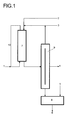
- CO or a CO-containing gas mixture is over an inlet 1 led from below in countercurrent into a reactor 7 and unreacted CO is removed from the top of the reactor and wholly or partly via a line 10 returned to the reactor 7.
- a catalyst stream is a via a feed line 3 aqueous metal hydroxide solution mixed in a feed line 2 and from above into the Reactor 7 out.
- the reaction is generally carried out at a temperature of 20 to 250 ° C, preferably from 30 to 160 ° C, particularly preferably from 90 to 120 ° C, carried out.
- the CO partial pressure is generally 1 to 60 bar, preferably 20 to 55 bar, particularly preferably at 40 to 55 bar.
- a loop reactor is preferred as reactor 7 used.
- Part of the reaction solution is continuously removed from the reactor 7 and into a Separation unit 9 transferred. If a distillation column is used as separation unit 9, then the catalyst is withdrawn overhead and returned in full or in part to the reactor 7. Water is removed from the separation unit 9 via the drain 4. This derivative represents either a side draw of a dividing wall column or the bottom draw of the upper one Column with an interconnection of 2 columns. The valuable product metal formate falls at the bottom of the column as a melt and is removed from there and into one Mixer 8 transferred.
- the mixer 8 is continuously supplied with formic acid via a feed line 5 with a concentration of ⁇ 80% by weight, preferably ⁇ 94% by weight. particularly preferred ⁇ 98% by weight, added.
- the product of value, the metal formate-formic acid mixture is removed from the mixer 8 via a discharge line 6. While in the distillation column 9 generally temperatures from 50 to 220 ° C, preferably from 60 to 150 ° C, particularly preferably from 90 to 120 ° C and pressures from 0.2 to 15 bar, preferred from 1 to 5 bar, particularly preferably from 1 to 3 bar, the temperature is in Mixer 8 from 8 to 120 ° C, preferably from 50 to 120 ° C, particularly preferably from 90 to 120 ° C, very particularly preferably from 100 to 120 ° C, and the pressure from 0.5 to 10 bar, preferably from 1 to 5 bar, particularly preferably from 1 to 2 bar.
- the metal formate-formic acid mixture is then passed through a heat exchanger to a storage temperature of 0 to 40 ° C, preferably 20 to 30 ° C, particularly preferred from 20 to 25 ° C and brought to storage or shipping in solid form (not ) Shown.
- a fluidized bed for example, is used as the heat exchanger.
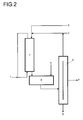
- the reactor 7 is part of the reaction solution is continuously removed and transferred to a mixer 8.
- Formic acid is fed into the mixer 8 via a feed line 5, the formic acid in a concentration of ⁇ 80% by weight, preferably ⁇ 94% by weight. particularly preferred ⁇ 98% by weight, aqueous solution is present.
- the temperature during the mixing process in the mixer 8 is generally 8 up to 120 ° C, preferably from 50 to 120 ° C, particularly preferably from 90 to 120 ° C, very particularly preferably from 100 to 120 ° C, and the pressure 0.5 to 10 bar, preferably from 1 to 5 bar, particularly preferably 1 to 2 bar.
- the mixture thus obtained becomes continuous transferred to a distillation column 9, which consists of material resistant to formic acid. Distillation is generally preferred at temperatures from 50 to 140 ° C from 80 to 120 ° C, particularly preferably from 90 to 120 ° C, performed.
- the pressure in the Distillation column 9 is generally 0.2 to 15 bar, preferably 1 to 5 bar, particularly preferably at 1 to 3 bar.
- the catalyst is continuously over the head of the The distillation column is withdrawn and preferably all or part of the reactor 7 is returned.
- the water is removed from the side part of the distillation column 4 and either reused in whole or in part for the preparation of aqueous metal hydroxide solutions or completely or partially fed to other treatment facilities. At the swamp the desired metal formate-formic acid mixture is obtained in the column.
- a storage temperature of 0 to via a heat exchanger 40 ° C preferably from 20 to 30 ° C, particularly preferably from 20 to 25 ° C, brought and the Warehouse or shipping supplied in solid form.
- a heat exchanger Fluid bed used as a heat exchanger Fluid bed used.
Landscapes
- Chemical & Material Sciences (AREA)
- Organic Chemistry (AREA)
- Engineering & Computer Science (AREA)
- Life Sciences & Earth Sciences (AREA)
- Oil, Petroleum & Natural Gas (AREA)
- Chemical Kinetics & Catalysis (AREA)
- Polymers & Plastics (AREA)
- Crystallography & Structural Chemistry (AREA)
- Animal Husbandry (AREA)
- Zoology (AREA)
- Food Science & Technology (AREA)
- Organic Low-Molecular-Weight Compounds And Preparation Thereof (AREA)
- Catalysts (AREA)
- Vaporization, Distillation, Condensation, Sublimation, And Cold Traps (AREA)
- Low-Molecular Organic Synthesis Reactions Using Catalysts (AREA)
Abstract
Description
- Fig. 1
- eine schematische Darstellung einer Anlage zur Herstellung von Metallformiat-Ameisensäure-Mischungen für den kontinuierlichen Betrieb, wobei Schritt c) nach Schritt b) durchgeführt wird.
- Fig. 2
- eine schematische Darstellung einer Anlage zur Herstellung von Metallformiat-Ameisensäure-Mischungen für den kontinuierlichen Betrieb, wobei Schritt c) vor Schritt b) durchgeführt wird.
- 1
- Einlass für CO;
- 2
- Zuleitung für die wäßrige Metallhydroxid-Lösung;
- 3
- Zuleitung für den Katalysator;
- 4
- Ableitung für Wasser;
- 5
- Zuleitung für die Ameisensäure;
- 6
- Ableitung für das Produkt;
- 7
- Reaktor;
- 8
- Mischer;
- 9
- Trenneinheit;
- 10
- Leitung.
Claims (10)
- Verfahren zur Herstellung von Metallformiat-Ameisensäure-Mischungen enthaltend folgende Schritte:wobei in Schritt a) als Metallhydroxide die Hydroxide von Alkalimetallen und/oder Erdalkalimetallen eingesetzt werden und Schritt c) auch zeitlich vor Schritt b) durchgeführt werden kann.a) Umsetzung von mindestens einem Metallhydroxid mit Kohlenmonoxid (CO) oder einem CO-haltigen Gas in Gegenwart eines Katalysators in einer wasserhaltigen Lösung zu dem oder den entsprechenden Metallformiat(en);b) destillative Abtrennung des Wassers und des Katalysators;c) Zumischen von Ameisensäure;d) gegebenenfalls Einstellen der Temperatur der nach den Schritten a) bis c) erhaltenen Metallformiat-Ameisensäure-Mischung auf Lagertemperatur;
- Verfahren gemäß Anspruch 1, dadurch gekennzeichnet, dass als Metallhydroxide die Hydroxide von Natrium, Kalium und/oder Calcium eingesetzt werden.
- Verfahren gemäß Anspruch 1 oder 2, dadurch gekennzeichnet, dass als Katalysator in Schritt a) mindestens ein Katalysator aus der Gruppe Alkohol und Ameisensäureester eingesetzt wird.
- Verfahren gemäß Anspruch 3, dadurch gekennzeichnet, dass der Katalysator mindestens ein Katalysator aus der Gruppe linearer C1-C4-, verzweigter C3-C4-Alkanol und deren Ameisensäureester ist.
- Verfahren gemäß Anspruch 4, dadurch gekennzeichnet, dass der Katalysator Methanol ist.
- Verfahren nach einem der Ansprüche 1 bis 5, dadurch gekennzeichnet, dass die Umsetzung in Schritt a) in einem Rührkessel mit Begasungseinrichtung, in einer Blasensäule oder einem Schlaufenreaktor durchgeführt wird.
- Verfahren nach einem der Ansprüche 1 bis 6, dadurch gekennzeichnet, dass das Zumischen in Schritt c) in einem Rührkessel, Extruder oder Mischer - mit oder ohne Wärmetauscheinrichtungen - erfolgt und der Mischvorgang mit Hilfe einer Reaktionsmischpumpe, einer Mischdüse oder eines Wirbelbettes erfolgt.
- Verfahren nach einem der Ansprüche 1 bis 7, dadurch gekennzeichnet, dass Schritt a) bei Temperaturen von 20 bis 250°C und einem Druck von 1 bis 50 bar durchgeführt wird.
- Verfahren nach einem der Ansprüche 1 bis 8, dadurch gekennzeichnet, dass Schritt b) bei Temperaturen von 50 bis 220°C und einem Druck von 0,2 bis 15 bar durchgeführt wird.
- Verfahren nach einem der Ansprüche 1 bis 9, dadurch gekennzeichnet, dass Schritt c) bei Temperaturen von 8 bis 120°C und einem Druck von 0,5 bis 10 bar durchgeführt wird, und/oder dass die Lagertemperatur in Schritt d) eine Temperatur von 0 bis 40°C ist.
Applications Claiming Priority (2)
| Application Number | Priority Date | Filing Date | Title |
|---|---|---|---|
| DE10154757A DE10154757A1 (de) | 2001-11-09 | 2001-11-09 | Verfahren zur Herstellung von Metallformiat-Ameisensäure-Mischungen |
| DE10154757 | 2001-11-09 |
Publications (2)
| Publication Number | Publication Date |
|---|---|
| EP1310172A1 true EP1310172A1 (de) | 2003-05-14 |
| EP1310172B1 EP1310172B1 (de) | 2005-08-31 |
Family
ID=7704964
Family Applications (1)
| Application Number | Title | Priority Date | Filing Date |
|---|---|---|---|
| EP02024989A Expired - Lifetime EP1310172B1 (de) | 2001-11-09 | 2002-11-07 | Verfahren zur Herstellung von Metallformat-Ameisensäure-Mischungen |
Country Status (9)
| Country | Link |
|---|---|
| US (1) | US20030092939A1 (de) |
| EP (1) | EP1310172B1 (de) |
| JP (1) | JP2004002280A (de) |
| CN (1) | CN1281571C (de) |
| AT (1) | ATE303074T1 (de) |
| DE (2) | DE10154757A1 (de) |
| DK (1) | DK1310172T3 (de) |
| ES (1) | ES2246369T3 (de) |
| NO (1) | NO20025379L (de) |
Cited By (2)
| Publication number | Priority date | Publication date | Assignee | Title |
|---|---|---|---|---|
| WO2005044771A3 (de) * | 2003-11-06 | 2005-07-28 | Basf Ag | Verfahren zur herstellung von ameisensauren formiaten |
| CN103951558A (zh) * | 2014-04-10 | 2014-07-30 | 中国科学院福建物质结构研究所 | 一种气相甲醇羰基化生产甲酸甲酯的装置、工艺和催化剂在线评价方法 |
Families Citing this family (12)
| Publication number | Priority date | Publication date | Assignee | Title |
|---|---|---|---|---|
| DE10237379A1 (de) | 2002-08-12 | 2004-02-19 | Basf Ag | Verfahren und Vorrichtung zur Herstellung von ameisensauren Formiaten und deren Verwendung |
| DE10237380A1 (de) | 2002-08-12 | 2004-02-19 | Basf Ag | Verfahren und Vorrichtung zur Herstellung von ameisensauren Formlaten und deren Verwendung |
| DE10351733A1 (de) * | 2003-11-06 | 2005-06-09 | Basf Ag | Verfahren zur Herstellung von ameisensauren Formiaten |
| CN104387255B (zh) * | 2014-11-11 | 2017-01-25 | 湖北瑞富阳化工科技有限公司 | 一种甲酸钙的制备方法 |
| JP6534444B2 (ja) * | 2014-11-18 | 2019-06-26 | ヨットバッハ ゲーエムベーハー | 反応混合物からギ酸塩を得るためのプロセス |
| KR101985444B1 (ko) * | 2016-09-30 | 2019-06-03 | 한국화학연구원 | 개미산염 수용액으로부터 고농도 개미산 및 고순도 황산염의 회수방법, 및 회수 장치 |
| CN106833560A (zh) * | 2016-12-28 | 2017-06-13 | 中国石油天然气集团公司 | 一种用于油气开采的有机盐及其制备方法和应用 |
| CN108558639B (zh) * | 2018-05-04 | 2021-01-12 | 厦门市汇创源科技有限公司 | 一种甲酸钙的制备方法 |
| CN111302927B (zh) * | 2020-02-14 | 2022-12-30 | 武汉东晟捷能科技有限公司 | 一种连续生产甲酸的方法 |
| WO2021187057A1 (ja) * | 2020-03-17 | 2021-09-23 | 日東電工株式会社 | ギ酸塩の製造方法及びギ酸塩製造システム |
| US20240018082A1 (en) * | 2022-06-27 | 2024-01-18 | Twelve Benefit Corporation | Metal formate production |
| CN119490400B (zh) * | 2025-01-16 | 2025-04-18 | 山东科润达石油科技有限公司 | 一种油田化学助剂用甲酸钾的制备方法 |
Citations (3)
| Publication number | Priority date | Publication date | Assignee | Title |
|---|---|---|---|---|
| US3262973A (en) * | 1963-11-20 | 1966-07-26 | Standard Oil Co | Preparation of alkali metal formates in alcoholic medium |
| US4237318A (en) * | 1977-04-09 | 1980-12-02 | Basf Aktiengesellschaft | Manufacture of aqueous methanolic solution of sodium formate |
| WO1996035657A1 (en) * | 1995-05-12 | 1996-11-14 | Norsk Hydro A.S. | Method for manufacture of products containing disalts of formic acid |
Family Cites Families (2)
| Publication number | Priority date | Publication date | Assignee | Title |
|---|---|---|---|---|
| JPS556622B2 (de) * | 1973-08-13 | 1980-02-18 | ||
| US4157246A (en) * | 1978-01-27 | 1979-06-05 | Exxon Research & Engineering Co. | Hydrothermal alkali metal catalyst recovery process |
-
2001
- 2001-11-09 DE DE10154757A patent/DE10154757A1/de not_active Withdrawn
-
2002
- 2002-11-07 US US10/289,111 patent/US20030092939A1/en not_active Abandoned
- 2002-11-07 EP EP02024989A patent/EP1310172B1/de not_active Expired - Lifetime
- 2002-11-07 DK DK02024989T patent/DK1310172T3/da active
- 2002-11-07 ES ES02024989T patent/ES2246369T3/es not_active Expired - Lifetime
- 2002-11-07 DE DE50204071T patent/DE50204071D1/de not_active Expired - Fee Related
- 2002-11-07 AT AT02024989T patent/ATE303074T1/de not_active IP Right Cessation
- 2002-11-08 NO NO20025379A patent/NO20025379L/no not_active Application Discontinuation
- 2002-11-08 CN CNB021464553A patent/CN1281571C/zh not_active Expired - Fee Related
- 2002-11-08 JP JP2002325011A patent/JP2004002280A/ja not_active Withdrawn
Patent Citations (3)
| Publication number | Priority date | Publication date | Assignee | Title |
|---|---|---|---|---|
| US3262973A (en) * | 1963-11-20 | 1966-07-26 | Standard Oil Co | Preparation of alkali metal formates in alcoholic medium |
| US4237318A (en) * | 1977-04-09 | 1980-12-02 | Basf Aktiengesellschaft | Manufacture of aqueous methanolic solution of sodium formate |
| WO1996035657A1 (en) * | 1995-05-12 | 1996-11-14 | Norsk Hydro A.S. | Method for manufacture of products containing disalts of formic acid |
Cited By (2)
| Publication number | Priority date | Publication date | Assignee | Title |
|---|---|---|---|---|
| WO2005044771A3 (de) * | 2003-11-06 | 2005-07-28 | Basf Ag | Verfahren zur herstellung von ameisensauren formiaten |
| CN103951558A (zh) * | 2014-04-10 | 2014-07-30 | 中国科学院福建物质结构研究所 | 一种气相甲醇羰基化生产甲酸甲酯的装置、工艺和催化剂在线评价方法 |
Also Published As
| Publication number | Publication date |
|---|---|
| DE50204071D1 (de) | 2005-10-06 |
| JP2004002280A (ja) | 2004-01-08 |
| NO20025379L (no) | 2003-05-12 |
| EP1310172B1 (de) | 2005-08-31 |
| CN1281571C (zh) | 2006-10-25 |
| DK1310172T3 (da) | 2005-11-14 |
| CN1417188A (zh) | 2003-05-14 |
| ATE303074T1 (de) | 2005-09-15 |
| DE10154757A1 (de) | 2003-05-22 |
| US20030092939A1 (en) | 2003-05-15 |
| NO20025379D0 (no) | 2002-11-08 |
| ES2246369T3 (es) | 2006-02-16 |
Similar Documents
| Publication | Publication Date | Title |
|---|---|---|
| DE60013421T2 (de) | Verfahren zur entfernung von schwefelwasserstoff aus gasen | |
| EP1310172B1 (de) | Verfahren zur Herstellung von Metallformat-Ameisensäure-Mischungen | |
| EP0634386B1 (de) | Verfahren zur Herstellung von Dimethylcarbonat | |
| EP1530560A1 (de) | Verfahren und vorrichtung zur herstellung von ameisensauren formiaten und deren verwendung | |
| DE69711531T2 (de) | Verbessertes Verfahren zur Herstellung von Ureum und Vorrichtung dafür | |
| DE69905811T2 (de) | Verbessertes Nitrierungsverfahren | |
| DE69623377T2 (de) | Verfahren zur Kondensation von Cyanwasserstoff mit einem Aldehyd | |
| EP0238575B1 (de) | Verfahren zur gewinnung von vanillin | |
| EP1768764B1 (de) | Verfahren zur reinigung von co2-gasströmen | |
| DE60033877T2 (de) | Verfahren zur Herstellung von Dimethylsulfoxid | |
| CH631956A5 (de) | Verfahren zur herstellung von 2,5-dichlorphenol. | |
| DE1468732B2 (de) | Verfahren zur herstellung einer unter ueblichen bedingungen in harnstoff ueberfuehrbaren loesung von kohlendioxid und ammoniak | |
| DE3237653C2 (de) | Verfahren zur Herstellung von Harnstoff | |
| DE69500241T2 (de) | Verfahren zur Rückgewinnung von Ethylenoxid | |
| DE69411254T2 (de) | Verfahren zum kontinuierlichen Herstellen von Dimethylcarbonat | |
| DE1593357A1 (de) | Verfahren zur Entfernung von Acrolein aus Acrylnitril | |
| DE69507208T2 (de) | Verfahren zur Herstellung von Alkanolaminen | |
| DE2455678C3 (de) | Verfahren zur Herstellung von Tetramethyläthylendiamin | |
| DE2315350C3 (de) | Verfahren zur Oxidation von aliphatischen und cycloaliphatischen C5-C12-Kohlenwasserstoffen | |
| DE69204493T2 (de) | Verfahren zur Reinigung von Dimethylcarbonat. | |
| DE3411094C2 (de) | Dehydratisierendes Zersetzungsverfahren zur Herstellung von Carbonylverbindungen | |
| EP0617003A1 (de) | Verfahren zur Herstellung von Methylformiat | |
| EP1575931B1 (de) | Verfahren zur herstellung von trioxan | |
| DE2953595C2 (de) | Verfahren zur Rückgewinnung von Brom aus einer Flüssigkeit | |
| WO1996026178A1 (de) | Verfahren zur kontinuierlichen herstellung von methylformiat |
Legal Events
| Date | Code | Title | Description |
|---|---|---|---|
| PUAI | Public reference made under article 153(3) epc to a published international application that has entered the european phase |
Free format text: ORIGINAL CODE: 0009012 |
|
| AK | Designated contracting states |
Designated state(s): AT BE BG CH CY CZ DE DK EE ES FI FR GB GR IE IT LI LU MC NL PT SE SK TR |
|
| AX | Request for extension of the european patent |
Extension state: AL LT LV MK RO SI |
|
| 17P | Request for examination filed |
Effective date: 20030603 |
|
| AKX | Designation fees paid |
Designated state(s): AT BE BG CH CY CZ DE DK EE ES FI FR GB GR IE IT LI LU MC NL PT SE SK TR |
|
| 17Q | First examination report despatched |
Effective date: 20041011 |
|
| GRAP | Despatch of communication of intention to grant a patent |
Free format text: ORIGINAL CODE: EPIDOSNIGR1 |
|
| GRAS | Grant fee paid |
Free format text: ORIGINAL CODE: EPIDOSNIGR3 |
|
| GRAA | (expected) grant |
Free format text: ORIGINAL CODE: 0009210 |
|
| AK | Designated contracting states |
Kind code of ref document: B1 Designated state(s): AT BE BG CH CY CZ DE DK EE ES FI FR GB GR IE IT LI LU MC NL PT SE SK TR |
|
| PG25 | Lapsed in a contracting state [announced via postgrant information from national office to epo] |
Ref country code: IT Free format text: LAPSE BECAUSE OF FAILURE TO SUBMIT A TRANSLATION OF THE DESCRIPTION OR TO PAY THE FEE WITHIN THE PRESCRIBED TIME-LIMIT;WARNING: LAPSES OF ITALIAN PATENTS WITH EFFECTIVE DATE BEFORE 2007 MAY HAVE OCCURRED AT ANY TIME BEFORE 2007. THE CORRECT EFFECTIVE DATE MAY BE DIFFERENT FROM THE ONE RECORDED. Effective date: 20050831 Ref country code: SK Free format text: LAPSE BECAUSE OF FAILURE TO SUBMIT A TRANSLATION OF THE DESCRIPTION OR TO PAY THE FEE WITHIN THE PRESCRIBED TIME-LIMIT Effective date: 20050831 Ref country code: GB Free format text: LAPSE BECAUSE OF FAILURE TO SUBMIT A TRANSLATION OF THE DESCRIPTION OR TO PAY THE FEE WITHIN THE PRESCRIBED TIME-LIMIT Effective date: 20050831 Ref country code: IE Free format text: LAPSE BECAUSE OF FAILURE TO SUBMIT A TRANSLATION OF THE DESCRIPTION OR TO PAY THE FEE WITHIN THE PRESCRIBED TIME-LIMIT Effective date: 20050831 Ref country code: TR Free format text: LAPSE BECAUSE OF FAILURE TO SUBMIT A TRANSLATION OF THE DESCRIPTION OR TO PAY THE FEE WITHIN THE PRESCRIBED TIME-LIMIT Effective date: 20050831 Ref country code: EE Free format text: LAPSE BECAUSE OF FAILURE TO SUBMIT A TRANSLATION OF THE DESCRIPTION OR TO PAY THE FEE WITHIN THE PRESCRIBED TIME-LIMIT Effective date: 20050831 |
|
| REG | Reference to a national code |
Ref country code: CH Ref legal event code: EP Ref country code: GB Ref legal event code: FG4D Free format text: NOT ENGLISH |
|
| REG | Reference to a national code |
Ref country code: IE Ref legal event code: FG4D Free format text: LANGUAGE OF EP DOCUMENT: GERMAN |
|
| REF | Corresponds to: |
Ref document number: 50204071 Country of ref document: DE Date of ref document: 20051006 Kind code of ref document: P |
|
| PGFP | Annual fee paid to national office [announced via postgrant information from national office to epo] |
Ref country code: CZ Payment date: 20051025 Year of fee payment: 4 |
|
| PG25 | Lapsed in a contracting state [announced via postgrant information from national office to epo] |
Ref country code: CY Free format text: LAPSE BECAUSE OF FAILURE TO SUBMIT A TRANSLATION OF THE DESCRIPTION OR TO PAY THE FEE WITHIN THE PRESCRIBED TIME-LIMIT Effective date: 20051107 |
|
| REG | Reference to a national code |
Ref country code: SE Ref legal event code: TRGR |
|
| PGFP | Annual fee paid to national office [announced via postgrant information from national office to epo] |
Ref country code: AT Payment date: 20051111 Year of fee payment: 4 |
|
| REG | Reference to a national code |
Ref country code: DK Ref legal event code: T3 |
|
| PGFP | Annual fee paid to national office [announced via postgrant information from national office to epo] |
Ref country code: DK Payment date: 20051115 Year of fee payment: 4 |
|
| PG25 | Lapsed in a contracting state [announced via postgrant information from national office to epo] |
Ref country code: MC Free format text: LAPSE BECAUSE OF NON-PAYMENT OF DUE FEES Effective date: 20051130 Ref country code: BG Free format text: LAPSE BECAUSE OF FAILURE TO SUBMIT A TRANSLATION OF THE DESCRIPTION OR TO PAY THE FEE WITHIN THE PRESCRIBED TIME-LIMIT Effective date: 20051130 Ref country code: GR Free format text: LAPSE BECAUSE OF FAILURE TO SUBMIT A TRANSLATION OF THE DESCRIPTION OR TO PAY THE FEE WITHIN THE PRESCRIBED TIME-LIMIT Effective date: 20051130 Ref country code: LU Free format text: LAPSE BECAUSE OF NON-PAYMENT OF DUE FEES Effective date: 20051130 |
|
| PGFP | Annual fee paid to national office [announced via postgrant information from national office to epo] |
Ref country code: ES Payment date: 20051219 Year of fee payment: 4 |
|
| REG | Reference to a national code |
Ref country code: ES Ref legal event code: FG2A Ref document number: 2246369 Country of ref document: ES Kind code of ref document: T3 |
|
| PG25 | Lapsed in a contracting state [announced via postgrant information from national office to epo] |
Ref country code: PT Free format text: LAPSE BECAUSE OF FAILURE TO SUBMIT A TRANSLATION OF THE DESCRIPTION OR TO PAY THE FEE WITHIN THE PRESCRIBED TIME-LIMIT Effective date: 20060222 |
|
| REG | Reference to a national code |
Ref country code: IE Ref legal event code: FD4D |
|
| GBV | Gb: ep patent (uk) treated as always having been void in accordance with gb section 77(7)/1977 [no translation filed] |
Effective date: 20050831 |
|
| ET | Fr: translation filed | ||
| PLBE | No opposition filed within time limit |
Free format text: ORIGINAL CODE: 0009261 |
|
| STAA | Information on the status of an ep patent application or granted ep patent |
Free format text: STATUS: NO OPPOSITION FILED WITHIN TIME LIMIT |
|
| 26N | No opposition filed |
Effective date: 20060601 |
|
| PG25 | Lapsed in a contracting state [announced via postgrant information from national office to epo] |
Ref country code: AT Free format text: LAPSE BECAUSE OF NON-PAYMENT OF DUE FEES Effective date: 20061107 |
|
| PG25 | Lapsed in a contracting state [announced via postgrant information from national office to epo] |
Ref country code: LI Free format text: LAPSE BECAUSE OF NON-PAYMENT OF DUE FEES Effective date: 20061130 Ref country code: CH Free format text: LAPSE BECAUSE OF NON-PAYMENT OF DUE FEES Effective date: 20061130 Ref country code: DK Free format text: LAPSE BECAUSE OF NON-PAYMENT OF DUE FEES Effective date: 20061130 |
|
| REG | Reference to a national code |
Ref country code: DK Ref legal event code: EBP |
|
| REG | Reference to a national code |
Ref country code: CH Ref legal event code: PL |
|
| PG25 | Lapsed in a contracting state [announced via postgrant information from national office to epo] |
Ref country code: CZ Free format text: LAPSE BECAUSE OF NON-PAYMENT OF DUE FEES Effective date: 20061107 |
|
| PGFP | Annual fee paid to national office [announced via postgrant information from national office to epo] |
Ref country code: DE Payment date: 20071101 Year of fee payment: 6 Ref country code: NL Payment date: 20071104 Year of fee payment: 6 |
|
| REG | Reference to a national code |
Ref country code: ES Ref legal event code: FD2A Effective date: 20061108 |
|
| PGFP | Annual fee paid to national office [announced via postgrant information from national office to epo] |
Ref country code: FI Payment date: 20071114 Year of fee payment: 6 |
|
| PGFP | Annual fee paid to national office [announced via postgrant information from national office to epo] |
Ref country code: SE Payment date: 20071106 Year of fee payment: 6 |
|
| PG25 | Lapsed in a contracting state [announced via postgrant information from national office to epo] |
Ref country code: ES Free format text: LAPSE BECAUSE OF NON-PAYMENT OF DUE FEES Effective date: 20061108 |
|
| PGFP | Annual fee paid to national office [announced via postgrant information from national office to epo] |
Ref country code: FR Payment date: 20071108 Year of fee payment: 6 |
|
| PGFP | Annual fee paid to national office [announced via postgrant information from national office to epo] |
Ref country code: BE Payment date: 20071130 Year of fee payment: 6 |
|
| BERE | Be: lapsed |
Owner name: *BASF A.G. Effective date: 20081130 |
|
| EUG | Se: european patent has lapsed | ||
| PG25 | Lapsed in a contracting state [announced via postgrant information from national office to epo] |
Ref country code: NL Free format text: LAPSE BECAUSE OF NON-PAYMENT OF DUE FEES Effective date: 20090601 Ref country code: FI Free format text: LAPSE BECAUSE OF NON-PAYMENT OF DUE FEES Effective date: 20081107 |
|
| NLV4 | Nl: lapsed or anulled due to non-payment of the annual fee |
Effective date: 20090601 |
|
| REG | Reference to a national code |
Ref country code: FR Ref legal event code: ST Effective date: 20090731 |
|
| PG25 | Lapsed in a contracting state [announced via postgrant information from national office to epo] |
Ref country code: BE Free format text: LAPSE BECAUSE OF NON-PAYMENT OF DUE FEES Effective date: 20081130 |
|
| PG25 | Lapsed in a contracting state [announced via postgrant information from national office to epo] |
Ref country code: DE Free format text: LAPSE BECAUSE OF NON-PAYMENT OF DUE FEES Effective date: 20090603 |
|
| PG25 | Lapsed in a contracting state [announced via postgrant information from national office to epo] |
Ref country code: SE Free format text: LAPSE BECAUSE OF NON-PAYMENT OF DUE FEES Effective date: 20081108 |
|
| PG25 | Lapsed in a contracting state [announced via postgrant information from national office to epo] |
Ref country code: FR Free format text: LAPSE BECAUSE OF NON-PAYMENT OF DUE FEES Effective date: 20081130 |