EP1106707A2 - Verfahren zur Erzeugung von Weissblech hoher Korrosionsfestigkeit - Google Patents
Verfahren zur Erzeugung von Weissblech hoher Korrosionsfestigkeit Download PDFInfo
- Publication number
- EP1106707A2 EP1106707A2 EP00126368A EP00126368A EP1106707A2 EP 1106707 A2 EP1106707 A2 EP 1106707A2 EP 00126368 A EP00126368 A EP 00126368A EP 00126368 A EP00126368 A EP 00126368A EP 1106707 A2 EP1106707 A2 EP 1106707A2
- Authority
- EP
- European Patent Office
- Prior art keywords
- tin
- steel sheet
- tinplate
- corrosion resistance
- steel
- Prior art date
- Legal status (The legal status is an assumption and is not a legal conclusion. Google has not performed a legal analysis and makes no representation as to the accuracy of the status listed.)
- Granted
Links
Images


Classifications
-
- C—CHEMISTRY; METALLURGY
- C25—ELECTROLYTIC OR ELECTROPHORETIC PROCESSES; APPARATUS THEREFOR
- C25D—PROCESSES FOR THE ELECTROLYTIC OR ELECTROPHORETIC PRODUCTION OF COATINGS; ELECTROFORMING; APPARATUS THEREFOR
- C25D3/00—Electroplating: Baths therefor
- C25D3/02—Electroplating: Baths therefor from solutions
- C25D3/30—Electroplating: Baths therefor from solutions of tin
-
- C—CHEMISTRY; METALLURGY
- C23—COATING METALLIC MATERIAL; COATING MATERIAL WITH METALLIC MATERIAL; CHEMICAL SURFACE TREATMENT; DIFFUSION TREATMENT OF METALLIC MATERIAL; COATING BY VACUUM EVAPORATION, BY SPUTTERING, BY ION IMPLANTATION OR BY CHEMICAL VAPOUR DEPOSITION, IN GENERAL; INHIBITING CORROSION OF METALLIC MATERIAL OR INCRUSTATION IN GENERAL
- C23C—COATING METALLIC MATERIAL; COATING MATERIAL WITH METALLIC MATERIAL; SURFACE TREATMENT OF METALLIC MATERIAL BY DIFFUSION INTO THE SURFACE, BY CHEMICAL CONVERSION OR SUBSTITUTION; COATING BY VACUUM EVAPORATION, BY SPUTTERING, BY ION IMPLANTATION OR BY CHEMICAL VAPOUR DEPOSITION, IN GENERAL
- C23C2/00—Hot-dipping or immersion processes for applying the coating material in the molten state without affecting the shape; Apparatus therefor
- C23C2/04—Hot-dipping or immersion processes for applying the coating material in the molten state without affecting the shape; Apparatus therefor characterised by the coating material
- C23C2/08—Tin or alloys based thereon
-
- C—CHEMISTRY; METALLURGY
- C23—COATING METALLIC MATERIAL; COATING MATERIAL WITH METALLIC MATERIAL; CHEMICAL SURFACE TREATMENT; DIFFUSION TREATMENT OF METALLIC MATERIAL; COATING BY VACUUM EVAPORATION, BY SPUTTERING, BY ION IMPLANTATION OR BY CHEMICAL VAPOUR DEPOSITION, IN GENERAL; INHIBITING CORROSION OF METALLIC MATERIAL OR INCRUSTATION IN GENERAL
- C23G—CLEANING OR DE-GREASING OF METALLIC MATERIAL BY CHEMICAL METHODS OTHER THAN ELECTROLYSIS
- C23G1/00—Cleaning or pickling metallic material with solutions or molten salts
- C23G1/02—Cleaning or pickling metallic material with solutions or molten salts with acid solutions
- C23G1/08—Iron or steel
- C23G1/081—Iron or steel solutions containing H2SO4
Definitions
- tinplate For the production of containers for food from tinplate, such as Beverage cans, tinplate are required, which is a tasteless preservation as well as high storage stability. Such containers are particularly useful in the case of beverage cans in a deep drawing and ironing process (also draw wall ironing process or DWI process for short) and painted on the inside. To do this nowadays common water-based paints are used, which are spin-sprayed be applied. For the storage stability, in addition to the painting quality is also the Corrosion resistance of the tinplate used is important.
- German Offenlegungsschrift No. 28 13 838 describes a process for producing a tinned product in which a thin protective coating based on tin is electrolytically deposited on a cold-rolled sheet made of mild steel and then the steel sheet provided with its protective coating is heated to a temperature above the tin. Melting point of 232 ° C is heated to remelt the tin of this protective coating. The sheet is then cooled again, so that the tin of the protective coating is completely converted into an iron-tin alloy, which has approximately the composition of FeSn 2 . With these process steps, a solidified protective layer is achieved which adheres to the steel sheet and consists entirely of an Fe-Sn alloy without free tin. With this known method, a tin-plated sheet is obtained which has a comparatively high corrosion resistance and in which the tin coating is kept so thin that comparatively little tin is required for the coating.
- the invention has for its object a tinplate with even higher Provide corrosion resistance and a process for producing tinplate high Show corrosion resistance.
- This tinplate which is referred to below as "Special tinned" tinplate is called, has a boundary layer made of tin and Iron is made without the formation of an alloy layer and is distinguished from itself due to its high corrosion resistance and good tin adhesion.
- Special tinned tinplate has a cold-rolled steel phase with a carbon content from 10 to 500 ppm, preferably 40 to 100 ppm, and is a prerequisite for achieving this of SRV values ⁇ 10, preferably ⁇ 5.
- a cold-rolled steel strip is annealed in a continuous annealing furnace so that it has an oxide coating of ⁇ 100 C / m 2 .
- oxide coating of this order of magnitude, the final SRV value is independent of the polarity of the strip during subsequent degreasing, which takes place before galvanic tinning.
- the sulfuric acid pickling takes place without the use of electricity at temperature values in the range from 50 to 100 ° C with a pickling time of 1 to 3 seconds using a Acid concentration from 8 to 16% by weight.
- the belt speed is in the range from 200 to 800 m / min.
- Normally tinned tinplate has up to 3 g / m 2 SRV values of approx.> 10 for standard tin layers.
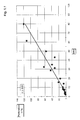
- the SRV values for specially tinned tinplate are considerably lower. If the interior of the can is defective, the perforation rate for tin-coated tinplate is 3 to 4 times lower than for tin-plated tinplate, cf. Figure 2.
- the paint quality deteriorates as the paint quality deteriorates the perforation rate of a collective of 500 doses after six months of storage for the less good tinplate quality with an SRV value of> 10.
- Special tinned tinplate is an increase to one with poor painting quality Perforation rate of 0.8% can be observed, whereas this for the less good tinplate is 2.9%.
- special tin-coated As already mentioned, tinplate is then reduced by a factor of 3 to 4 Perforation rates determined than for tinplate with an SRV value> 10. Die The paint quality is assessed by impedance spectroscopy and detection of the electrical barrier effect of the lacquer by determining the phase angle.
- Low Painting quality e.g. due to poor application of paint or insufficient Cleaning the inside of the can after ironing can be justified Impedance analysis due to significant deviations from the ideal value of 90 °. The smaller the Phase angle, the lower the painting quality.
- special tinned tinplate also has improved tin adhesion to the steel surface.
- the tin adhesion to steel is recorded on a sheet of metal degreased with alcohol by rubbing a paper towel ("Profix" all-purpose towels from "TEMCA GmbH, Nuremberg") along a distance of 300 to 400 mm with a width of 40 to 50 mm under the influence of contact pressure of 0.05 N / mm 2 and a drawing speed of 0.5 m / min.
- the tin abrasion can be quantified by the difference in the paper weight before and after rubbing.
- the improved bond adhesion is confirmed in practical tests in the manufacture of beverage cans.
- the service life of ironing rings, which are used to transform a sheet metal blank into a can shape, is 30% higher for special tin-plated tinplate than for normal tinplate.
- This tin / iron boundary layer consists of a non-stoichiometric composition of iron and tin atoms and thus differs significantly from the tin-iron alloy intermediate layers which are used in the conventional tinning processes (for example as described in DE 28 13 838) Remelting of the tin layer occurs at temperatures above the tin melting point (232 ° C).
- These iron-tin alloy layers which are formed in the known tinning processes by melting, have significantly greater layer thicknesses in the range of 100 nm and consist of an iron-tin alloy which approximately has the stoichiometric composition of FeSn 2 .
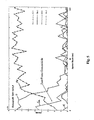
- FIG. 5 shows an Auger spectrum of steel sheet tinned according to the invention in the region of the tin / iron boundary layer. This spectrum was recorded after the tin layer in an alkaline potassium iodate solution (40 to 60 g / l NaOH; 7 to 15 g / l KIO 3 ) at a temperature of 50 ° C for a period of 30 to 80 seconds from the steel surface was replaced. The tin / iron interface does not come off in this process. An average thickness of the boundary layer of approximately 20 nm can be seen from the spectrum of FIG. The line labeled Sn shows the course of the tin concentration, which is proportional to the intensity of the Auger spectrum of FIG. 5. The abscissa of the Auger spectrum from FIG.
- FIG. 5 shows the sputter depth measured from the surface (zero point of the abscissa) in the direction of the steel sheet.
- the line labeled Fe in the spectrum of FIG. 5 shows the concentration of iron in the region of the boundary layer, which is proportional to the intensity of the Auger spectrum of the iron.
- the curve denoted by O in FIG. 5 shows the concentration profile of bound oxygen and the line denoted by C shows the concentration of carbon in the region of the boundary layer.
- the SRV values of the special tin-plated tinplate are significantly lower than those of the conventional one Tinplate of ⁇ 10, preferably less than 5, with tolerance ranges of approx. +/- 2 over the entire DWI surface can be realized.
- the improved surface brightness enables also a color of the tinplate that is appealing from an optical point of view preferably used for all types of containers, but especially for beverage cans is.
Landscapes
- Chemical & Material Sciences (AREA)
- Engineering & Computer Science (AREA)
- Chemical Kinetics & Catalysis (AREA)
- Materials Engineering (AREA)
- Metallurgy (AREA)
- Organic Chemistry (AREA)
- Mechanical Engineering (AREA)
- Electrochemistry (AREA)
- General Chemical & Material Sciences (AREA)
- Electroplating Methods And Accessories (AREA)
- Preventing Corrosion Or Incrustation Of Metals (AREA)
- Coating With Molten Metal (AREA)
- Solid-Phase Diffusion Into Metallic Material Surfaces (AREA)
Abstract
Description
Claims (13)
- Verfahren zur Erzeugung von Weißblech hoher Korrosionsfestigkeit, dadurch gekennzeichnet,a) daß als Ausgangsmaterial ein Stahlblech mit einem Kohlenstoffgehalt von 10 bis 500 ppm verwendet wird,b) daß das Stahlblech unter Verwendung von Öl mit Viskositätswerten im Bereich von 30 bis 70 mm2/s ( Messung bei T= 50 Grad Celsius) kaltgewalzt wird,c) daß das Stahlblech rekristallisierend geglüht wird.d) daß die zu beschichtende Oberfläche des Stahlbandes mit Mineralsäure gebeizt wird.e) daß die gebeizte Oberfläche in einem Zinnbad hoher Reinheit galvanisiert wird, wobei zwischen Zinnschicht und Stahlblech eine Zinn/Stahl-Grenzschicht (Diffusionsschicht) gebildet wird.
- Verfahren nach Anspruch 1, dadurch gekennzeichnet, daß als Ausgangsmaterial Stahlblech mit einem Kohlenstoffgehalt von 10 bis 100 ppm verwendet wird.
- Verfahren nach Anspruch 1, dadurch gekennzeichnet, daß während der galvanischen Verzinnung Niederschläge aus Zinnoxid durch ein Filtrationsverfahren entfernt werden.
- Verfahren nach Anspruch loder 2, dadurch gekennzeichnet, daß ein kaltgewalztes Stahlblech verwendet wird, welches an seiner zu beschichtenden Oberfläche einen Kohlenstoffgehalt von maximal 1,5 mg/m2 aufweist.
- Verfahren nach einem der vorhergehenden Ansprüche, dadurch gekennzeichnet daß das Kaltwalzen des Stahlbleches unter einer Schmiermittel-Viskosität von 35 - 55 mm2/s erfolgt.
- Verfahren nach einem der vorhergehenden Ansprüche, dadurch gekennzeichnet, daß das Stahlblech eine Rauhigkeit Ra von 0,8 bis 1,4 µm aufweist.
- Verfahren nach einem der vorhergehenden Ansprüche, dadurch gekennzeichnet, daß das Beizen bei Temperaturen von mindestens 50°C erfolgt.
- Verfahren nach einem der vorhergehenden Ansprüche, dadurch gekennzeichnet, daß das Beizen über eine Zeitdauer von 1 bis 3 Sekunden und einer Säurekonzentration von 8 bis 16 Gew.% bei Bandgeschwindigkeiten von 200 bis 800 m/min erfolgt.
- Stahlblech, dessen Oberfläche mit einer Zinnschicht versiegelt ist, dadurch gekennzeichnet, daß zwischen der Stahlblech-Oberfläche und der Zinnschicht eine nicht-kristalline Diffusionsschicht ausgebildet ist, welche aus ungebundenen Eisen- und Zinnatomen besteht.
- Stahlblech nach Anspruch 9, dadurch gekennzeichnet, daß die Diffusionsschicht eine Dicke von < 30 nm aufweist.
- Stahlblech nach einem der Ansprüche 9 oder 10, dadurch gekennzeichnet, daß das Stahlblech einen Kohlenstoffgehalt von 10 bis 500 ppm aufweist.
- Stahlblech nach einem der Ansprüche 9 bis 10, dadurch gekennzeichnet, daß sich die Diffusionsschicht bei der Entzinnung in einer alkalischen Kaliumjodat-Lösung (40 bis 60 g/l NaOH; 7 bis 15 g/l KIO3) bei einer Temperatur von 50°C über einen Zeitraum von 30 bis 80 Sekunden nicht von der Stahloberfläche ablöst.
- Stahlblech nach einem der Ansprüche 9 bis 11, dadurch gekennzeichnet, daß bei dem mit der Zinnschicht versiegelten Stahlblech bei einem Verfahren zur Messung der Korrosionsbeständigkeit von Weißblech mit folgenden Schritten:ein Oberflächenreaktionswert (SRV-Wert) von kleiner als 10, vorzugsweise kleiner als 5 bestimmt wird.a) mehrere Weißblechproben (Kalibrierproben) mit bekannten, unterschiedlichen Verzinnungsqualitäten werden entfettet und entzinnt,b) jeder Kalibrierprobe wird einmalig ein in Abhängigkeit von einer früher festgestellten Korrosionsbeständigkeit verschiedenhoher Wert (Oberflächenreaktionswert (SRV) zugeordnet,c) die entzinnten Kalibrierproben werden nacheinander in einen sauren Elektrolyten eingebracht und kathodisch polarisiert,d) das sich nach einer vorbestimmten Verweildauer (t) einstellende Oberflächenpotentional wird erfaßt und dieses dem dieser Kalibrierprobe zugehörigen Oberflächenreaktionswert zugeordnet,e) eine zu prüfende Weißblechprobe (Prüfprobe) wird in gleicher Weise entfettet, entzinnt und in demselben sauren Elektrolyten, der vorher zur Polarisierung der Kalibrierproben diente, unter gleichen Prüfbedingungen kathodisch polarisiert,f) nach einer der Verweildauer der Kalibrierproben entsprechenden Verweildauer wird das sich bei der Prüfprobe einstellende Oberflächenpotential erfaßt undg) unter Zugrundelegung der zuvor bei den Kalibrierproben festgestellten Oberflächenpotentiale und der diesen zugeordneten Oberflächenreaktionswerte wird der bei der Prüfprobe vorhandene Oberflächenreaktionswert bestimmt;
Applications Claiming Priority (4)
| Application Number | Priority Date | Filing Date | Title |
|---|---|---|---|
| DE1999159748 DE19959748C1 (de) | 1999-12-11 | 1999-12-11 | Verfahren zur Messung der Korrosionsbeständigkeit von Weißblech |
| DE19959748 | 1999-12-11 | ||
| DE19959749 | 1999-12-11 | ||
| DE19959749A DE19959749C2 (de) | 1999-12-11 | 1999-12-11 | Verfahren zur Erzeugung von Weißblech hoher Korrosionsfestigkeit |
Publications (3)
| Publication Number | Publication Date |
|---|---|
| EP1106707A2 true EP1106707A2 (de) | 2001-06-13 |
| EP1106707A3 EP1106707A3 (de) | 2003-10-29 |
| EP1106707B1 EP1106707B1 (de) | 2009-07-22 |
Family
ID=26055789
Family Applications (1)
| Application Number | Title | Priority Date | Filing Date |
|---|---|---|---|
| EP00126368A Expired - Lifetime EP1106707B1 (de) | 1999-12-11 | 2000-12-02 | Verfahren zur Erzeugung von Weissblech hoher Korrosionsfestigkeit |
Country Status (5)
| Country | Link |
|---|---|
| EP (1) | EP1106707B1 (de) |
| AT (1) | ATE437247T1 (de) |
| DE (1) | DE50015695D1 (de) |
| DK (1) | DK1106707T3 (de) |
| ES (1) | ES2327095T3 (de) |
Family Cites Families (10)
| Publication number | Priority date | Publication date | Assignee | Title |
|---|---|---|---|---|
| FR673621A (fr) * | 1928-04-20 | 1930-01-17 | Rasselsteiner Eisenwerks Ges A | Procédé permettant de simplifier et d'accélérer la fabrication du ferblanc |
| US2215278A (en) * | 1938-01-21 | 1940-09-17 | Cleveland Graphite Bronze Co | Tin coating process |
| US2587605A (en) * | 1947-12-09 | 1952-03-04 | United States Steel Corp | Manufacture of tin plate |
| DE1123536B (de) * | 1953-06-06 | 1962-02-08 | Stahl Und Walzwerke Rasselstei | Verfahren zur Herstellung feuerverzinnter Weissbleche oder -baender fuer Konservendosen |
| US3058856A (en) * | 1958-05-16 | 1962-10-16 | United States Steel Corp | Method of making tin-plate |
| US3684679A (en) * | 1969-06-05 | 1972-08-15 | John R Smith | Apparatus for testing the corrosion resistance of tinplate |
| US4015950A (en) * | 1974-01-29 | 1977-04-05 | Agence Nationale De Valorisation De La Recherche (Anvar) | Surface treatment process for steels and article |
| LU77061A1 (de) * | 1977-04-01 | 1979-01-18 | ||
| JPS61249603A (ja) * | 1985-04-26 | 1986-11-06 | Nippon Steel Corp | 表面性状のすぐれたオ−ステナイト系ステンレス薄鋼板の製造方法 |
| JPH02169111A (ja) * | 1989-07-24 | 1990-06-29 | Nippon Steel Corp | オーステナイト系ステンレス鋼薄板の冷間圧延方法 |
-
2000
- 2000-12-02 ES ES00126368T patent/ES2327095T3/es not_active Expired - Lifetime
- 2000-12-02 AT AT00126368T patent/ATE437247T1/de not_active IP Right Cessation
- 2000-12-02 EP EP00126368A patent/EP1106707B1/de not_active Expired - Lifetime
- 2000-12-02 DK DK00126368T patent/DK1106707T3/da active
- 2000-12-02 DE DE50015695T patent/DE50015695D1/de not_active Expired - Fee Related
Also Published As
| Publication number | Publication date |
|---|---|
| EP1106707B1 (de) | 2009-07-22 |
| ES2327095T3 (es) | 2009-10-26 |
| DE50015695D1 (de) | 2009-09-03 |
| DK1106707T3 (da) | 2009-09-14 |
| EP1106707A3 (de) | 2003-10-29 |
| ATE437247T1 (de) | 2009-08-15 |
Similar Documents
| Publication | Publication Date | Title |
|---|---|---|
| DE69520350T2 (de) | Galvanisiertes stahlblech und verfahren zur herstellung | |
| DE3851652T2 (de) | Stahlbleche mit einer dünnen Zinnbeschichtung, die einen ausgezeichneten Korrosionswiderstand und eine ausgezeichnete Schweissbarkeit haben. | |
| DE19953318B4 (de) | Chromplattierte Teile und Chromplattierungsverfahren | |
| DE2737296C3 (de) | Verfahren zur Herstellung von beschichtetem Stahlblech und dessen Verwendung | |
| DE3031501C2 (de) | ||
| DE2922790C2 (de) | Mit Mangan beschichteter Stahl und Verfahren zu seiner Herstellung | |
| DE2946668A1 (de) | Verzinktes stahlblech | |
| DE4009914A1 (de) | Hitze- und korrosionsresistenter galvanischer ueberzug | |
| DE3417844A1 (de) | Mit eisen-zinklegierung elektrogalvanisiertes stahlblech mit einer mehrzahl von eisen-zinklegierung-beschichtungen | |
| DE3726518C2 (de) | ||
| DE3121878A1 (de) | Mit hydratisiertem chromoxid ueberzogener bandstahl fuer geschweisste blechdosen und andere behaelter | |
| DE69201881T2 (de) | Mit einer Nickellegierung plattiertes Stahlblech mit hervorragenden Eigenschaften in Bezug auf Pressbarkeit und Phosphatierung sowie Verfahren zu dessen Herstellung. | |
| DE69809486T2 (de) | Mit einer zinkhaltigen Schicht versehenes Stahlblech und Verfahren zu seiner Herstellung | |
| DE2813838C2 (de) | Verfahren zum Herstellen eines verzinnten Produktes in Form kaltgewalzten Bleches aus Flußstahl | |
| DE2600636B2 (de) | Chromatisiertes Stahlblech und Verfahren zur Herstellung von ehromatisiertem, galvanisch verzinktem Stahlblech | |
| DE3414048A1 (de) | Verfahren zum herstellen von mit einer zink-nickel-legierung galvanisierten stahlteilen | |
| DE3024932C2 (de) | ||
| DE3332129T1 (de) | Verfahren zum ueberziehen von stahlstreifen mit einer nickellegierung | |
| DE3043116A1 (de) | Stahlbleche fuer die herstellung von geschweissten und ueberzogenen behaeltern | |
| DE69011461T2 (de) | Verfahren zur Herstellung eines Stahlbleches, das beschichtet ist mit Haftung einer Zn-Mg-Legierung, die sowohl einen höheren Plattierungs- als einen höheren Korrosionswiderstand aufweist, und damit plattiertes Stahlblech. | |
| DE69919660T2 (de) | Geglühtes Stahlblech und Verfahren zu dessen Herstellung | |
| DE3812692A1 (de) | Verfahren zur vorbereitung von werkstuecken aus titan oder titanlegierungen | |
| DE68919135T2 (de) | Mit einer Zn-Ni-Legierung plattiertes Stahlblech mit verbesserter Adhäsion bei Schlagwirkung und Verfahren zu dessen Herstellung. | |
| DE19542313A1 (de) | Hitzebeständiges und korrosionsfestes, lamellares, metallplattiertes Stahlmaterial mit gleichmäßiger Verarbeitbarkeit und Korrosionsschutz | |
| DE112007003527T5 (de) | Nach dem Galvanisieren wärmebehandeltes Stahlblech mit exzellentem Adhäsionsvermögen der galvanisch abgeschiedenen Schicht und Verfahren zu dessen Herstellung |
Legal Events
| Date | Code | Title | Description |
|---|---|---|---|
| PUAI | Public reference made under article 153(3) epc to a published international application that has entered the european phase |
Free format text: ORIGINAL CODE: 0009012 |
|
| AK | Designated contracting states |
Kind code of ref document: A2 Designated state(s): AT BE CH CY DE DK ES FI FR GB GR IE IT LI LU MC NL PT SE TR |
|
| AX | Request for extension of the european patent |
Free format text: AL;LT;LV;MK;RO;SI |
|
| RIN1 | Information on inventor provided before grant (corrected) |
Inventor name: BECKER, ROLF Inventor name: OBERHOFFER, DR. HELMUT Inventor name: SAUER, DR. REINER Inventor name: THRAN, DIETMAR |
|
| RIN1 | Information on inventor provided before grant (corrected) |
Inventor name: BECKER, ROLF Inventor name: SAUER, DR. REINER Inventor name: THRAN, DIETMAR Inventor name: OBERHOFFER, DR. HELMUT |
|
| PUAL | Search report despatched |
Free format text: ORIGINAL CODE: 0009013 |
|
| AK | Designated contracting states |
Kind code of ref document: A3 Designated state(s): AT BE CH CY DE DK ES FI FR GB GR IE IT LI LU MC NL PT SE TR |
|
| AX | Request for extension of the european patent |
Extension state: AL LT LV MK RO SI |
|
| RIC1 | Information provided on ipc code assigned before grant |
Ipc: 7G 01N 17/02 B Ipc: 7C 25D 3/30 B Ipc: 7C 23C 2/08 A |
|
| 17P | Request for examination filed |
Effective date: 20031007 |
|
| RAP1 | Party data changed (applicant data changed or rights of an application transferred) |
Owner name: RASSELSTEIN GMBH |
|
| AKX | Designation fees paid |
Designated state(s): AT BE CH CY DE DK ES FI FR GB GR IE IT LI LU MC NL PT SE TR |
|
| 17Q | First examination report despatched |
Effective date: 20060818 |
|
| GRAP | Despatch of communication of intention to grant a patent |
Free format text: ORIGINAL CODE: EPIDOSNIGR1 |
|
| GRAS | Grant fee paid |
Free format text: ORIGINAL CODE: EPIDOSNIGR3 |
|
| GRAA | (expected) grant |
Free format text: ORIGINAL CODE: 0009210 |
|
| AK | Designated contracting states |
Kind code of ref document: B1 Designated state(s): AT BE CH CY DE DK ES FI FR GB GR IE IT LI LU MC NL PT SE TR |
|
| REG | Reference to a national code |
Ref country code: GB Ref legal event code: FG4D Free format text: NOT ENGLISH |
|
| REG | Reference to a national code |
Ref country code: CH Ref legal event code: NV Representative=s name: LUCHS & PARTNER PATENTANWAELTE Ref country code: CH Ref legal event code: EP |
|
| REG | Reference to a national code |
Ref country code: IE Ref legal event code: FG4D |
|
| REF | Corresponds to: |
Ref document number: 50015695 Country of ref document: DE Date of ref document: 20090903 Kind code of ref document: P |
|
| REG | Reference to a national code |
Ref country code: DK Ref legal event code: T3 |
|
| REG | Reference to a national code |
Ref country code: SE Ref legal event code: TRGR |
|
| REG | Reference to a national code |
Ref country code: GR Ref legal event code: EP Ref document number: 20090402312 Country of ref document: GR |
|
| REG | Reference to a national code |
Ref country code: ES Ref legal event code: FG2A Ref document number: 2327095 Country of ref document: ES Kind code of ref document: T3 |
|
| PG25 | Lapsed in a contracting state [announced via postgrant information from national office to epo] |
Ref country code: FI Free format text: LAPSE BECAUSE OF FAILURE TO SUBMIT A TRANSLATION OF THE DESCRIPTION OR TO PAY THE FEE WITHIN THE PRESCRIBED TIME-LIMIT Effective date: 20090722 |
|
| REG | Reference to a national code |
Ref country code: IE Ref legal event code: FD4D |
|
| PG25 | Lapsed in a contracting state [announced via postgrant information from national office to epo] |
Ref country code: PT Free format text: LAPSE BECAUSE OF FAILURE TO SUBMIT A TRANSLATION OF THE DESCRIPTION OR TO PAY THE FEE WITHIN THE PRESCRIBED TIME-LIMIT Effective date: 20091122 |
|
| PG25 | Lapsed in a contracting state [announced via postgrant information from national office to epo] |
Ref country code: IE Free format text: LAPSE BECAUSE OF FAILURE TO SUBMIT A TRANSLATION OF THE DESCRIPTION OR TO PAY THE FEE WITHIN THE PRESCRIBED TIME-LIMIT Effective date: 20090722 |
|
| PLBE | No opposition filed within time limit |
Free format text: ORIGINAL CODE: 0009261 |
|
| STAA | Information on the status of an ep patent application or granted ep patent |
Free format text: STATUS: NO OPPOSITION FILED WITHIN TIME LIMIT |
|
| PGFP | Annual fee paid to national office [announced via postgrant information from national office to epo] |
Ref country code: IT Payment date: 20091229 Year of fee payment: 10 |
|
| 26N | No opposition filed |
Effective date: 20100423 |
|
| BERE | Be: lapsed |
Owner name: RASSELSTEIN G.M.B.H. Effective date: 20091231 |
|
| REG | Reference to a national code |
Ref country code: NL Ref legal event code: V1 Effective date: 20100701 |
|
| EUG | Se: european patent has lapsed | ||
| PG25 | Lapsed in a contracting state [announced via postgrant information from national office to epo] |
Ref country code: MC Free format text: LAPSE BECAUSE OF NON-PAYMENT OF DUE FEES Effective date: 20100701 |
|
| REG | Reference to a national code |
Ref country code: CH Ref legal event code: PL |
|
| REG | Reference to a national code |
Ref country code: DK Ref legal event code: EBP |
|
| GBPC | Gb: european patent ceased through non-payment of renewal fee |
Effective date: 20091202 |
|
| REG | Reference to a national code |
Ref country code: FR Ref legal event code: ST Effective date: 20100831 |
|
| PG25 | Lapsed in a contracting state [announced via postgrant information from national office to epo] |
Ref country code: LI Free format text: LAPSE BECAUSE OF NON-PAYMENT OF DUE FEES Effective date: 20091231 Ref country code: BE Free format text: LAPSE BECAUSE OF NON-PAYMENT OF DUE FEES Effective date: 20091231 Ref country code: NL Free format text: LAPSE BECAUSE OF NON-PAYMENT OF DUE FEES Effective date: 20100701 Ref country code: CH Free format text: LAPSE BECAUSE OF NON-PAYMENT OF DUE FEES Effective date: 20091231 Ref country code: FR Free format text: LAPSE BECAUSE OF NON-PAYMENT OF DUE FEES Effective date: 20091231 |
|
| PG25 | Lapsed in a contracting state [announced via postgrant information from national office to epo] |
Ref country code: DE Free format text: LAPSE BECAUSE OF NON-PAYMENT OF DUE FEES Effective date: 20100701 |
|
| PG25 | Lapsed in a contracting state [announced via postgrant information from national office to epo] |
Ref country code: GB Free format text: LAPSE BECAUSE OF NON-PAYMENT OF DUE FEES Effective date: 20091202 |
|
| PG25 | Lapsed in a contracting state [announced via postgrant information from national office to epo] |
Ref country code: DK Free format text: LAPSE BECAUSE OF NON-PAYMENT OF DUE FEES Effective date: 20100104 |
|
| REG | Reference to a national code |
Ref country code: ES Ref legal event code: FD2A Effective date: 20110401 |
|
| PG25 | Lapsed in a contracting state [announced via postgrant information from national office to epo] |
Ref country code: LU Free format text: LAPSE BECAUSE OF NON-PAYMENT OF DUE FEES Effective date: 20091202 |
|
| PG25 | Lapsed in a contracting state [announced via postgrant information from national office to epo] |
Ref country code: SE Free format text: LAPSE BECAUSE OF NON-PAYMENT OF DUE FEES Effective date: 20091203 Ref country code: AT Free format text: LAPSE BECAUSE OF NON-PAYMENT OF DUE FEES Effective date: 20091202 |
|
| PG25 | Lapsed in a contracting state [announced via postgrant information from national office to epo] |
Ref country code: ES Free format text: LAPSE BECAUSE OF NON-PAYMENT OF DUE FEES Effective date: 20110322 |
|
| PG25 | Lapsed in a contracting state [announced via postgrant information from national office to epo] |
Ref country code: TR Free format text: LAPSE BECAUSE OF FAILURE TO SUBMIT A TRANSLATION OF THE DESCRIPTION OR TO PAY THE FEE WITHIN THE PRESCRIBED TIME-LIMIT Effective date: 20090722 |
|
| PG25 | Lapsed in a contracting state [announced via postgrant information from national office to epo] |
Ref country code: CY Free format text: LAPSE BECAUSE OF FAILURE TO SUBMIT A TRANSLATION OF THE DESCRIPTION OR TO PAY THE FEE WITHIN THE PRESCRIBED TIME-LIMIT Effective date: 20090722 Ref country code: ES Free format text: LAPSE BECAUSE OF NON-PAYMENT OF DUE FEES Effective date: 20091203 |
|
| PG25 | Lapsed in a contracting state [announced via postgrant information from national office to epo] |
Ref country code: IT Free format text: LAPSE BECAUSE OF NON-PAYMENT OF DUE FEES Effective date: 20101202 |