EP1041151B1 - Luciferase and method for assaying intracellular atp by using the same - Google Patents
Luciferase and method for assaying intracellular atp by using the same Download PDFInfo
- Publication number
- EP1041151B1 EP1041151B1 EP98961523A EP98961523A EP1041151B1 EP 1041151 B1 EP1041151 B1 EP 1041151B1 EP 98961523 A EP98961523 A EP 98961523A EP 98961523 A EP98961523 A EP 98961523A EP 1041151 B1 EP1041151 B1 EP 1041151B1
- Authority
- EP
- European Patent Office
- Prior art keywords
- luciferase
- amino acid
- surfactant
- firefly
- glutamic acid
- Prior art date
- Legal status (The legal status is an assumption and is not a legal conclusion. Google has not performed a legal analysis and makes no representation as to the accuracy of the status listed.)
- Expired - Lifetime
Links
- 108060001084 Luciferase Proteins 0.000 title claims description 142
- 239000005089 Luciferase Substances 0.000 title claims description 123
- 238000000034 method Methods 0.000 title claims description 52
- 230000003834 intracellular effect Effects 0.000 title claims description 28
- 108090000331 Firefly luciferases Proteins 0.000 claims description 72
- 239000004094 surface-active agent Substances 0.000 claims description 71
- 150000001413 amino acids Chemical group 0.000 claims description 57
- 235000001014 amino acid Nutrition 0.000 claims description 35
- 229940024606 amino acid Drugs 0.000 claims description 35
- 239000003153 chemical reaction reagent Substances 0.000 claims description 29
- WHUUTDBJXJRKMK-UHFFFAOYSA-N Glutamic acid Natural products OC(=O)C(N)CCC(O)=O WHUUTDBJXJRKMK-UHFFFAOYSA-N 0.000 claims description 28
- 235000013922 glutamic acid Nutrition 0.000 claims description 25
- 239000004220 glutamic acid Substances 0.000 claims description 25
- 108090000623 proteins and genes Proteins 0.000 claims description 24
- 241000254054 Luciola cruciata Species 0.000 claims description 23
- 241000254064 Photinus pyralis Species 0.000 claims description 23
- 238000004020 luminiscence type Methods 0.000 claims description 20
- 241000254158 Lampyridae Species 0.000 claims description 18
- 244000005700 microbiome Species 0.000 claims description 13
- 230000035772 mutation Effects 0.000 claims description 13
- KDXKERNSBIXSRK-UHFFFAOYSA-N Lysine Natural products NCCCCC(N)C(O)=O KDXKERNSBIXSRK-UHFFFAOYSA-N 0.000 claims description 11
- 239000004472 Lysine Substances 0.000 claims description 8
- 241000254060 Aquatica lateralis Species 0.000 claims description 7
- 239000002773 nucleotide Substances 0.000 claims description 7
- 125000003729 nucleotide group Chemical group 0.000 claims description 7
- 238000012258 culturing Methods 0.000 claims description 6
- 238000010353 genetic engineering Methods 0.000 claims description 5
- 238000004519 manufacturing process Methods 0.000 claims description 5
- AGPKZVBTJJNPAG-WHFBIAKZSA-N L-isoleucine Chemical compound CC[C@H](C)[C@H](N)C(O)=O AGPKZVBTJJNPAG-WHFBIAKZSA-N 0.000 claims description 4
- 235000004279 alanine Nutrition 0.000 claims description 4
- 239000003093 cationic surfactant Substances 0.000 claims description 4
- 239000002563 ionic surfactant Substances 0.000 claims description 4
- 239000002736 nonionic surfactant Substances 0.000 claims description 4
- 239000004475 Arginine Substances 0.000 claims description 3
- ODKSFYDXXFIFQN-BYPYZUCNSA-P L-argininium(2+) Chemical compound NC(=[NH2+])NCCC[C@H]([NH3+])C(O)=O ODKSFYDXXFIFQN-BYPYZUCNSA-P 0.000 claims description 3
- HNDVDQJCIGZPNO-YFKPBYRVSA-N L-histidine Chemical compound OC(=O)[C@@H](N)CC1=CN=CN1 HNDVDQJCIGZPNO-YFKPBYRVSA-N 0.000 claims description 3
- KDXKERNSBIXSRK-YFKPBYRVSA-N L-lysine Chemical compound NCCCC[C@H](N)C(O)=O KDXKERNSBIXSRK-YFKPBYRVSA-N 0.000 claims description 3
- 239000003945 anionic surfactant Substances 0.000 claims description 3
- ODKSFYDXXFIFQN-UHFFFAOYSA-N arginine Natural products OC(=O)C(N)CCCNC(N)=N ODKSFYDXXFIFQN-UHFFFAOYSA-N 0.000 claims description 3
- HNDVDQJCIGZPNO-UHFFFAOYSA-N histidine Natural products OC(=O)C(N)CC1=CN=CN1 HNDVDQJCIGZPNO-UHFFFAOYSA-N 0.000 claims description 3
- AGPKZVBTJJNPAG-UHFFFAOYSA-N isoleucine Natural products CCC(C)C(N)C(O)=O AGPKZVBTJJNPAG-UHFFFAOYSA-N 0.000 claims description 3
- 229960000310 isoleucine Drugs 0.000 claims description 3
- 238000012216 screening Methods 0.000 claims description 3
- 125000000291 glutamic acid group Chemical group N[C@@H](CCC(O)=O)C(=O)* 0.000 claims 5
- 125000003295 alanine group Chemical group N[C@@H](C)C(=O)* 0.000 claims 2
- 210000004027 cell Anatomy 0.000 description 27
- 238000000605 extraction Methods 0.000 description 27
- 239000000523 sample Substances 0.000 description 26
- 239000000243 solution Substances 0.000 description 25
- 241000588724 Escherichia coli Species 0.000 description 18
- SEQKRHFRPICQDD-UHFFFAOYSA-N N-tris(hydroxymethyl)methylglycine Chemical compound OCC(CO)(CO)[NH2+]CC([O-])=O SEQKRHFRPICQDD-UHFFFAOYSA-N 0.000 description 18
- 229960000686 benzalkonium chloride Drugs 0.000 description 18
- CADWTSSKOVRVJC-UHFFFAOYSA-N benzyl(dimethyl)azanium;chloride Chemical compound [Cl-].C[NH+](C)CC1=CC=CC=C1 CADWTSSKOVRVJC-UHFFFAOYSA-N 0.000 description 18
- 238000006243 chemical reaction Methods 0.000 description 17
- 108020004414 DNA Proteins 0.000 description 16
- 239000013612 plasmid Substances 0.000 description 15
- YNJBWRMUSHSURL-UHFFFAOYSA-N trichloroacetic acid Chemical compound OC(=O)C(Cl)(Cl)Cl YNJBWRMUSHSURL-UHFFFAOYSA-N 0.000 description 15
- 230000000694 effects Effects 0.000 description 13
- 229920001184 polypeptide Polymers 0.000 description 11
- 102000004196 processed proteins & peptides Human genes 0.000 description 11
- 108090000765 processed proteins & peptides Proteins 0.000 description 11
- 108090000790 Enzymes Proteins 0.000 description 10
- 102000004190 Enzymes Human genes 0.000 description 10
- 238000007792 addition Methods 0.000 description 10
- 229940088598 enzyme Drugs 0.000 description 10
- UZMAPBJVXOGOFT-UHFFFAOYSA-N Syringetin Natural products COC1=C(O)C(OC)=CC(C2=C(C(=O)C3=C(O)C=C(O)C=C3O2)O)=C1 UZMAPBJVXOGOFT-UHFFFAOYSA-N 0.000 description 9
- 239000007997 Tricine buffer Substances 0.000 description 9
- KCFYHBSOLOXZIF-UHFFFAOYSA-N dihydrochrysin Natural products COC1=C(O)C(OC)=CC(C2OC3=CC(O)=CC(O)=C3C(=O)C2)=C1 KCFYHBSOLOXZIF-UHFFFAOYSA-N 0.000 description 9
- 238000005516 engineering process Methods 0.000 description 8
- 238000006467 substitution reaction Methods 0.000 description 8
- 230000005764 inhibitory process Effects 0.000 description 7
- 239000012528 membrane Substances 0.000 description 7
- 230000035945 sensitivity Effects 0.000 description 7
- 238000010561 standard procedure Methods 0.000 description 7
- JKMHFZQWWAIEOD-UHFFFAOYSA-N 2-[4-(2-hydroxyethyl)piperazin-1-yl]ethanesulfonic acid Chemical compound OCC[NH+]1CCN(CCS([O-])(=O)=O)CC1 JKMHFZQWWAIEOD-UHFFFAOYSA-N 0.000 description 6
- 239000007995 HEPES buffer Substances 0.000 description 6
- CSNNHWWHGAXBCP-UHFFFAOYSA-L Magnesium sulfate Chemical compound [Mg+2].[O-][S+2]([O-])([O-])[O-] CSNNHWWHGAXBCP-UHFFFAOYSA-L 0.000 description 6
- UREZNYTWGJKWBI-UHFFFAOYSA-M benzethonium chloride Chemical compound [Cl-].C1=CC(C(C)(C)CC(C)(C)C)=CC=C1OCCOCC[N+](C)(C)CC1=CC=CC=C1 UREZNYTWGJKWBI-UHFFFAOYSA-M 0.000 description 6
- 230000007423 decrease Effects 0.000 description 6
- 238000005259 measurement Methods 0.000 description 6
- 239000000047 product Substances 0.000 description 6
- DGVVWUTYPXICAM-UHFFFAOYSA-N β‐Mercaptoethanol Chemical compound OCCS DGVVWUTYPXICAM-UHFFFAOYSA-N 0.000 description 6
- IGXWBGJHJZYPQS-SSDOTTSWSA-N D-Luciferin Chemical compound OC(=O)[C@H]1CSC(C=2SC3=CC=C(O)C=C3N=2)=N1 IGXWBGJHJZYPQS-SSDOTTSWSA-N 0.000 description 5
- CYCGRDQQIOGCKX-UHFFFAOYSA-N Dehydro-luciferin Natural products OC(=O)C1=CSC(C=2SC3=CC(O)=CC=C3N=2)=N1 CYCGRDQQIOGCKX-UHFFFAOYSA-N 0.000 description 5
- BJGNCJDXODQBOB-UHFFFAOYSA-N Fivefly Luciferin Natural products OC(=O)C1CSC(C=2SC3=CC(O)=CC=C3N=2)=N1 BJGNCJDXODQBOB-UHFFFAOYSA-N 0.000 description 5
- DDWFXDSYGUXRAY-UHFFFAOYSA-N Luciferin Natural products CCc1c(C)c(CC2NC(=O)C(=C2C=C)C)[nH]c1Cc3[nH]c4C(=C5/NC(CC(=O)O)C(C)C5CC(=O)O)CC(=O)c4c3C DDWFXDSYGUXRAY-UHFFFAOYSA-N 0.000 description 5
- 238000012217 deletion Methods 0.000 description 5
- 230000037430 deletion Effects 0.000 description 5
- 238000001514 detection method Methods 0.000 description 5
- 239000002609 medium Substances 0.000 description 5
- 238000002360 preparation method Methods 0.000 description 5
- 239000000758 substrate Substances 0.000 description 5
- KCXVZYZYPLLWCC-UHFFFAOYSA-N EDTA Chemical compound OC(=O)CN(CC(O)=O)CCN(CC(O)=O)CC(O)=O KCXVZYZYPLLWCC-UHFFFAOYSA-N 0.000 description 4
- FAPWRFPIFSIZLT-UHFFFAOYSA-M Sodium chloride Chemical compound [Na+].[Cl-] FAPWRFPIFSIZLT-UHFFFAOYSA-M 0.000 description 4
- BFNBIHQBYMNNAN-UHFFFAOYSA-N ammonium sulfate Chemical compound N.N.OS(O)(=O)=O BFNBIHQBYMNNAN-UHFFFAOYSA-N 0.000 description 4
- 229910052921 ammonium sulfate Inorganic materials 0.000 description 4
- 235000011130 ammonium sulphate Nutrition 0.000 description 4
- 229960003872 benzethonium Drugs 0.000 description 4
- 230000002068 genetic effect Effects 0.000 description 4
- 230000002209 hydrophobic effect Effects 0.000 description 4
- 239000000203 mixture Substances 0.000 description 4
- 235000018102 proteins Nutrition 0.000 description 4
- 102000004169 proteins and genes Human genes 0.000 description 4
- 238000000746 purification Methods 0.000 description 4
- PEDCQBHIVMGVHV-UHFFFAOYSA-N Glycerine Chemical compound OCC(O)CO PEDCQBHIVMGVHV-UHFFFAOYSA-N 0.000 description 3
- 241000238631 Hexapoda Species 0.000 description 3
- 239000000284 extract Substances 0.000 description 3
- 229910052943 magnesium sulfate Inorganic materials 0.000 description 3
- -1 polytetrafluoroethylene Polymers 0.000 description 3
- 210000001236 prokaryotic cell Anatomy 0.000 description 3
- 235000002639 sodium chloride Nutrition 0.000 description 3
- 239000000126 substance Substances 0.000 description 3
- LWIHDJKSTIGBAC-UHFFFAOYSA-K tripotassium phosphate Chemical compound [K+].[K+].[K+].[O-]P([O-])([O-])=O LWIHDJKSTIGBAC-UHFFFAOYSA-K 0.000 description 3
- XLYOFNOQVPJJNP-UHFFFAOYSA-N water Substances O XLYOFNOQVPJJNP-UHFFFAOYSA-N 0.000 description 3
- 241000186046 Actinomyces Species 0.000 description 2
- IJGRMHOSHXDMSA-UHFFFAOYSA-N Atomic nitrogen Chemical compound N#N IJGRMHOSHXDMSA-UHFFFAOYSA-N 0.000 description 2
- 241000894006 Bacteria Species 0.000 description 2
- 229920000858 Cyclodextrin Polymers 0.000 description 2
- 241000196324 Embryophyta Species 0.000 description 2
- QNAYBMKLOCPYGJ-REOHCLBHSA-N L-alanine Chemical compound C[C@H](N)C(O)=O QNAYBMKLOCPYGJ-REOHCLBHSA-N 0.000 description 2
- TWRXJAOTZQYOKJ-UHFFFAOYSA-L Magnesium chloride Chemical compound [Mg+2].[Cl-].[Cl-] TWRXJAOTZQYOKJ-UHFFFAOYSA-L 0.000 description 2
- JLVVSXFLKOJNIY-UHFFFAOYSA-N Magnesium ion Chemical compound [Mg+2] JLVVSXFLKOJNIY-UHFFFAOYSA-N 0.000 description 2
- 241001465754 Metazoa Species 0.000 description 2
- 239000002033 PVDF binder Substances 0.000 description 2
- NBIIXXVUZAFLBC-UHFFFAOYSA-N Phosphoric acid Chemical compound OP(O)(O)=O NBIIXXVUZAFLBC-UHFFFAOYSA-N 0.000 description 2
- 239000004698 Polyethylene Substances 0.000 description 2
- 108020004511 Recombinant DNA Proteins 0.000 description 2
- DBMJMQXJHONAFJ-UHFFFAOYSA-M Sodium laurylsulphate Chemical compound [Na+].CCCCCCCCCCCCOS([O-])(=O)=O DBMJMQXJHONAFJ-UHFFFAOYSA-M 0.000 description 2
- 239000007983 Tris buffer Substances 0.000 description 2
- AVKUERGKIZMTKX-NJBDSQKTSA-N ampicillin Chemical compound C1([C@@H](N)C(=O)N[C@H]2[C@H]3SC([C@@H](N3C2=O)C(O)=O)(C)C)=CC=CC=C1 AVKUERGKIZMTKX-NJBDSQKTSA-N 0.000 description 2
- 229960000723 ampicillin Drugs 0.000 description 2
- 229960001950 benzethonium chloride Drugs 0.000 description 2
- 239000000872 buffer Substances 0.000 description 2
- 229940041514 candida albicans extract Drugs 0.000 description 2
- 238000005119 centrifugation Methods 0.000 description 2
- 230000000052 comparative effect Effects 0.000 description 2
- 239000012531 culture fluid Substances 0.000 description 2
- 238000012136 culture method Methods 0.000 description 2
- VHJLVAABSRFDPM-QWWZWVQMSA-N dithiothreitol Chemical compound SC[C@@H](O)[C@H](O)CS VHJLVAABSRFDPM-QWWZWVQMSA-N 0.000 description 2
- 238000001914 filtration Methods 0.000 description 2
- 239000012530 fluid Substances 0.000 description 2
- 235000013305 food Nutrition 0.000 description 2
- 239000012634 fragment Substances 0.000 description 2
- 239000012478 homogenous sample Substances 0.000 description 2
- 230000001771 impaired effect Effects 0.000 description 2
- 239000007788 liquid Substances 0.000 description 2
- 229910001425 magnesium ion Inorganic materials 0.000 description 2
- 235000019341 magnesium sulphate Nutrition 0.000 description 2
- 239000003471 mutagenic agent Substances 0.000 description 2
- 231100000707 mutagenic chemical Toxicity 0.000 description 2
- 230000003505 mutagenic effect Effects 0.000 description 2
- YBYRMVIVWMBXKQ-UHFFFAOYSA-N phenylmethanesulfonyl fluoride Chemical compound FS(=O)(=O)CC1=CC=CC=C1 YBYRMVIVWMBXKQ-UHFFFAOYSA-N 0.000 description 2
- 238000005185 salting out Methods 0.000 description 2
- HFHDHCJBZVLPGP-UHFFFAOYSA-N schardinger α-dextrin Chemical compound O1C(C(C2O)O)C(CO)OC2OC(C(C2O)O)C(CO)OC2OC(C(C2O)O)C(CO)OC2OC(C(O)C2O)C(CO)OC2OC(C(C2O)O)C(CO)OC2OC2C(O)C(O)C1OC2CO HFHDHCJBZVLPGP-UHFFFAOYSA-N 0.000 description 2
- 238000012163 sequencing technique Methods 0.000 description 2
- 238000002741 site-directed mutagenesis Methods 0.000 description 2
- 229910052708 sodium Inorganic materials 0.000 description 2
- 239000011734 sodium Substances 0.000 description 2
- 239000011780 sodium chloride Substances 0.000 description 2
- 239000007787 solid Substances 0.000 description 2
- 239000002904 solvent Substances 0.000 description 2
- LENZDBCJOHFCAS-UHFFFAOYSA-N tris Chemical compound OCC(N)(CO)CO LENZDBCJOHFCAS-UHFFFAOYSA-N 0.000 description 2
- 238000002525 ultrasonication Methods 0.000 description 2
- 239000012138 yeast extract Substances 0.000 description 2
- LQLQRFGHAALLLE-UHFFFAOYSA-N 5-bromouracil Chemical compound BrC1=CNC(=O)NC1=O LQLQRFGHAALLLE-UHFFFAOYSA-N 0.000 description 1
- 229920001817 Agar Polymers 0.000 description 1
- 241000402202 Arachnocampa luminosa Species 0.000 description 1
- 244000063299 Bacillus subtilis Species 0.000 description 1
- 235000014469 Bacillus subtilis Nutrition 0.000 description 1
- CPELXLSAUQHCOX-UHFFFAOYSA-M Bromide Chemical compound [Br-] CPELXLSAUQHCOX-UHFFFAOYSA-M 0.000 description 1
- 241000195493 Cryptophyta Species 0.000 description 1
- 102000016928 DNA-directed DNA polymerase Human genes 0.000 description 1
- 108010014303 DNA-directed DNA polymerase Proteins 0.000 description 1
- ZGTMUACCHSMWAC-UHFFFAOYSA-L EDTA disodium salt (anhydrous) Chemical compound [Na+].[Na+].OC(=O)CN(CC([O-])=O)CCN(CC(O)=O)CC([O-])=O ZGTMUACCHSMWAC-UHFFFAOYSA-L 0.000 description 1
- 241000194032 Enterococcus faecalis Species 0.000 description 1
- 241000943303 Enterococcus faecalis ATCC 29212 Species 0.000 description 1
- 241000588722 Escherichia Species 0.000 description 1
- VGGSQFUCUMXWEO-UHFFFAOYSA-N Ethene Chemical compound C=C VGGSQFUCUMXWEO-UHFFFAOYSA-N 0.000 description 1
- 239000005977 Ethylene Substances 0.000 description 1
- 241000233866 Fungi Species 0.000 description 1
- 244000068988 Glycine max Species 0.000 description 1
- 235000010469 Glycine max Nutrition 0.000 description 1
- AVXURJPOCDRRFD-UHFFFAOYSA-N Hydroxylamine Chemical compound ON AVXURJPOCDRRFD-UHFFFAOYSA-N 0.000 description 1
- DGAQECJNVWCQMB-PUAWFVPOSA-M Ilexoside XXIX Chemical compound C[C@@H]1CC[C@@]2(CC[C@@]3(C(=CC[C@H]4[C@]3(CC[C@@H]5[C@@]4(CC[C@@H](C5(C)C)OS(=O)(=O)[O-])C)C)[C@@H]2[C@]1(C)O)C)C(=O)O[C@H]6[C@@H]([C@H]([C@@H]([C@H](O6)CO)O)O)O.[Na+] DGAQECJNVWCQMB-PUAWFVPOSA-M 0.000 description 1
- 229910021578 Iron(III) chloride Inorganic materials 0.000 description 1
- ROHFNLRQFUQHCH-YFKPBYRVSA-N L-leucine Chemical compound CC(C)C[C@H](N)C(O)=O ROHFNLRQFUQHCH-YFKPBYRVSA-N 0.000 description 1
- ROHFNLRQFUQHCH-UHFFFAOYSA-N Leucine Natural products CC(C)CC(N)C(O)=O ROHFNLRQFUQHCH-UHFFFAOYSA-N 0.000 description 1
- 239000006137 Luria-Bertani broth Substances 0.000 description 1
- 102000016943 Muramidase Human genes 0.000 description 1
- 108010014251 Muramidase Proteins 0.000 description 1
- 108010062010 N-Acetylmuramoyl-L-alanine Amidase Proteins 0.000 description 1
- 239000000020 Nitrocellulose Substances 0.000 description 1
- IOVCWXUNBOPUCH-UHFFFAOYSA-N Nitrous acid Chemical compound ON=O IOVCWXUNBOPUCH-UHFFFAOYSA-N 0.000 description 1
- 239000001888 Peptone Substances 0.000 description 1
- 108010080698 Peptones Proteins 0.000 description 1
- 206010035226 Plasma cell myeloma Diseases 0.000 description 1
- 239000004952 Polyamide Substances 0.000 description 1
- 229920001213 Polysorbate 20 Polymers 0.000 description 1
- 229920001214 Polysorbate 60 Polymers 0.000 description 1
- 206010036790 Productive cough Diseases 0.000 description 1
- 241000589517 Pseudomonas aeruginosa Species 0.000 description 1
- 241001427617 Pyrophorus Species 0.000 description 1
- 108020005091 Replication Origin Proteins 0.000 description 1
- PHIIYDSPMYGDAF-UHFFFAOYSA-N S(=O)(=O)(O)O.C(CCCCCCCCCCC)[K] Chemical compound S(=O)(=O)(O)O.C(CCCCCCCCCCC)[K] PHIIYDSPMYGDAF-UHFFFAOYSA-N 0.000 description 1
- 240000004808 Saccharomyces cerevisiae Species 0.000 description 1
- NWGKJDSIEKMTRX-AAZCQSIUSA-N Sorbitan monooleate Chemical compound CCCCCCCC\C=C/CCCCCCCC(=O)OC[C@@H](O)[C@H]1OC[C@H](O)[C@H]1O NWGKJDSIEKMTRX-AAZCQSIUSA-N 0.000 description 1
- HVUMOYIDDBPOLL-XWVZOOPGSA-N Sorbitan monostearate Chemical compound CCCCCCCCCCCCCCCCCC(=O)OC[C@@H](O)[C@H]1OC[C@H](O)[C@H]1O HVUMOYIDDBPOLL-XWVZOOPGSA-N 0.000 description 1
- 241000191967 Staphylococcus aureus Species 0.000 description 1
- CZMRCDWAGMRECN-UGDNZRGBSA-N Sucrose Chemical compound O[C@H]1[C@H](O)[C@@H](CO)O[C@@]1(CO)O[C@@H]1[C@H](O)[C@@H](O)[C@H](O)[C@@H](CO)O1 CZMRCDWAGMRECN-UGDNZRGBSA-N 0.000 description 1
- 229930006000 Sucrose Natural products 0.000 description 1
- QAOWNCQODCNURD-UHFFFAOYSA-L Sulfate Chemical compound [O-]S([O-])(=O)=O QAOWNCQODCNURD-UHFFFAOYSA-L 0.000 description 1
- LSNNMFCWUKXFEE-UHFFFAOYSA-N Sulfurous acid Chemical compound OS(O)=O LSNNMFCWUKXFEE-UHFFFAOYSA-N 0.000 description 1
- 229920004897 Triton X-45 Polymers 0.000 description 1
- 241000700605 Viruses Species 0.000 description 1
- 240000008042 Zea mays Species 0.000 description 1
- 235000005824 Zea mays ssp. parviglumis Nutrition 0.000 description 1
- 235000002017 Zea mays subsp mays Nutrition 0.000 description 1
- SMEGJBVQLJJKKX-HOTMZDKISA-N [(2R,3S,4S,5R,6R)-5-acetyloxy-3,4,6-trihydroxyoxan-2-yl]methyl acetate Chemical compound CC(=O)OC[C@@H]1[C@H]([C@@H]([C@H]([C@@H](O1)O)OC(=O)C)O)O SMEGJBVQLJJKKX-HOTMZDKISA-N 0.000 description 1
- 229940081735 acetylcellulose Drugs 0.000 description 1
- 239000002253 acid Substances 0.000 description 1
- 238000005377 adsorption chromatography Methods 0.000 description 1
- 238000001042 affinity chromatography Methods 0.000 description 1
- 238000002299 affinity electrophoresis Methods 0.000 description 1
- 239000008272 agar Substances 0.000 description 1
- 238000000246 agarose gel electrophoresis Methods 0.000 description 1
- 238000013019 agitation Methods 0.000 description 1
- 229910000147 aluminium phosphate Inorganic materials 0.000 description 1
- MWWQKLKFKPWECK-UHFFFAOYSA-N aminomethanetriol;hydrochloride Chemical compound Cl.NC(O)(O)O MWWQKLKFKPWECK-UHFFFAOYSA-N 0.000 description 1
- 238000004458 analytical method Methods 0.000 description 1
- 210000004102 animal cell Anatomy 0.000 description 1
- 125000000129 anionic group Chemical group 0.000 description 1
- 238000000137 annealing Methods 0.000 description 1
- OCBHHZMJRVXXQK-UHFFFAOYSA-M benzyl-dimethyl-tetradecylazanium;chloride Chemical compound [Cl-].CCCCCCCCCCCCCC[N+](C)(C)CC1=CC=CC=C1 OCBHHZMJRVXXQK-UHFFFAOYSA-M 0.000 description 1
- 238000005415 bioluminescence Methods 0.000 description 1
- 230000029918 bioluminescence Effects 0.000 description 1
- 239000008280 blood Substances 0.000 description 1
- 210000004369 blood Anatomy 0.000 description 1
- 238000012219 cassette mutagenesis Methods 0.000 description 1
- 230000003197 catalytic effect Effects 0.000 description 1
- 229920002301 cellulose acetate Polymers 0.000 description 1
- 229960001927 cetylpyridinium chloride Drugs 0.000 description 1
- YMKDRGPMQRFJGP-UHFFFAOYSA-M cetylpyridinium chloride Chemical compound [Cl-].CCCCCCCCCCCCCCCC[N+]1=CC=CC=C1 YMKDRGPMQRFJGP-UHFFFAOYSA-M 0.000 description 1
- 239000003795 chemical substances by application Substances 0.000 description 1
- 238000004587 chromatography analysis Methods 0.000 description 1
- 238000010367 cloning Methods 0.000 description 1
- 239000013065 commercial product Substances 0.000 description 1
- 235000005822 corn Nutrition 0.000 description 1
- 239000002537 cosmetic Substances 0.000 description 1
- 238000005520 cutting process Methods 0.000 description 1
- 239000003599 detergent Substances 0.000 description 1
- 238000007865 diluting Methods 0.000 description 1
- 238000010790 dilution Methods 0.000 description 1
- 239000012895 dilution Substances 0.000 description 1
- ZPWVASYFFYYZEW-UHFFFAOYSA-L dipotassium hydrogen phosphate Chemical compound [K+].[K+].OP([O-])([O-])=O ZPWVASYFFYYZEW-UHFFFAOYSA-L 0.000 description 1
- 229910000396 dipotassium phosphate Inorganic materials 0.000 description 1
- 235000019797 dipotassium phosphate Nutrition 0.000 description 1
- NCHHNDHUZPFYTL-UHFFFAOYSA-L disodium;dodecanoyl phosphate Chemical compound [Na+].[Na+].CCCCCCCCCCCC(=O)OP([O-])([O-])=O NCHHNDHUZPFYTL-UHFFFAOYSA-L 0.000 description 1
- 239000012153 distilled water Substances 0.000 description 1
- 239000003814 drug Substances 0.000 description 1
- 230000008030 elimination Effects 0.000 description 1
- 238000003379 elimination reaction Methods 0.000 description 1
- 229940032049 enterococcus faecalis Drugs 0.000 description 1
- 230000007613 environmental effect Effects 0.000 description 1
- 238000006911 enzymatic reaction Methods 0.000 description 1
- 210000000416 exudates and transudate Anatomy 0.000 description 1
- 210000003608 fece Anatomy 0.000 description 1
- 239000000835 fiber Substances 0.000 description 1
- 239000000499 gel Substances 0.000 description 1
- 238000001641 gel filtration chromatography Methods 0.000 description 1
- 238000007429 general method Methods 0.000 description 1
- 239000001963 growth medium Substances 0.000 description 1
- 238000010438 heat treatment Methods 0.000 description 1
- 238000004128 high performance liquid chromatography Methods 0.000 description 1
- 229910052588 hydroxylapatite Inorganic materials 0.000 description 1
- 238000010191 image analysis Methods 0.000 description 1
- 239000008235 industrial water Substances 0.000 description 1
- 238000004255 ion exchange chromatography Methods 0.000 description 1
- RBTARNINKXHZNM-UHFFFAOYSA-K iron trichloride Chemical compound Cl[Fe](Cl)Cl RBTARNINKXHZNM-UHFFFAOYSA-K 0.000 description 1
- RUTXIHLAWFEWGM-UHFFFAOYSA-H iron(3+) sulfate Chemical compound [Fe+3].[Fe+3].[O-]S([O-])(=O)=O.[O-]S([O-])(=O)=O.[O-]S([O-])(=O)=O RUTXIHLAWFEWGM-UHFFFAOYSA-H 0.000 description 1
- 229910000360 iron(III) sulfate Inorganic materials 0.000 description 1
- 238000009630 liquid culture Methods 0.000 description 1
- 229960000274 lysozyme Drugs 0.000 description 1
- 239000004325 lysozyme Substances 0.000 description 1
- 235000010335 lysozyme Nutrition 0.000 description 1
- 230000002101 lytic effect Effects 0.000 description 1
- UEGPKNKPLBYCNK-UHFFFAOYSA-L magnesium acetate Chemical compound [Mg+2].CC([O-])=O.CC([O-])=O UEGPKNKPLBYCNK-UHFFFAOYSA-L 0.000 description 1
- 239000011654 magnesium acetate Substances 0.000 description 1
- 235000011285 magnesium acetate Nutrition 0.000 description 1
- 229940069446 magnesium acetate Drugs 0.000 description 1
- 229910001629 magnesium chloride Inorganic materials 0.000 description 1
- 235000011147 magnesium chloride Nutrition 0.000 description 1
- 229940099596 manganese sulfate Drugs 0.000 description 1
- 239000011702 manganese sulphate Substances 0.000 description 1
- 235000007079 manganese sulphate Nutrition 0.000 description 1
- SQQMAOCOWKFBNP-UHFFFAOYSA-L manganese(II) sulfate Chemical compound [Mn+2].[O-]S([O-])(=O)=O SQQMAOCOWKFBNP-UHFFFAOYSA-L 0.000 description 1
- 239000003550 marker Substances 0.000 description 1
- 239000000463 material Substances 0.000 description 1
- 235000013372 meat Nutrition 0.000 description 1
- 229910021645 metal ion Inorganic materials 0.000 description 1
- MYWUZJCMWCOHBA-VIFPVBQESA-N methamphetamine Chemical compound CN[C@@H](C)CC1=CC=CC=C1 MYWUZJCMWCOHBA-VIFPVBQESA-N 0.000 description 1
- 238000003801 milling Methods 0.000 description 1
- 201000000050 myeloid neoplasm Diseases 0.000 description 1
- 229920001220 nitrocellulos Polymers 0.000 description 1
- 229910052757 nitrogen Inorganic materials 0.000 description 1
- 210000000056 organ Anatomy 0.000 description 1
- 239000003960 organic solvent Substances 0.000 description 1
- XYJRXVWERLGGKC-UHFFFAOYSA-D pentacalcium;hydroxide;triphosphate Chemical compound [OH-].[Ca+2].[Ca+2].[Ca+2].[Ca+2].[Ca+2].[O-]P([O-])([O-])=O.[O-]P([O-])([O-])=O.[O-]P([O-])([O-])=O XYJRXVWERLGGKC-UHFFFAOYSA-D 0.000 description 1
- 235000019319 peptone Nutrition 0.000 description 1
- 239000002504 physiological saline solution Substances 0.000 description 1
- 229920002647 polyamide Polymers 0.000 description 1
- 229920000573 polyethylene Polymers 0.000 description 1
- 229920000056 polyoxyethylene ether Polymers 0.000 description 1
- 229940051841 polyoxyethylene ether Drugs 0.000 description 1
- 229920000259 polyoxyethylene lauryl ether Polymers 0.000 description 1
- 239000000256 polyoxyethylene sorbitan monolaurate Substances 0.000 description 1
- 235000010486 polyoxyethylene sorbitan monolaurate Nutrition 0.000 description 1
- 229920000053 polysorbate 80 Polymers 0.000 description 1
- 229920001343 polytetrafluoroethylene Polymers 0.000 description 1
- 239000004810 polytetrafluoroethylene Substances 0.000 description 1
- 229920002981 polyvinylidene fluoride Polymers 0.000 description 1
- 229910000160 potassium phosphate Inorganic materials 0.000 description 1
- 239000008057 potassium phosphate buffer Substances 0.000 description 1
- 235000011009 potassium phosphates Nutrition 0.000 description 1
- 238000001556 precipitation Methods 0.000 description 1
- 238000001742 protein purification Methods 0.000 description 1
- 210000004915 pus Anatomy 0.000 description 1
- 150000003242 quaternary ammonium salts Chemical class 0.000 description 1
- 108091008146 restriction endonucleases Proteins 0.000 description 1
- 150000003839 salts Chemical class 0.000 description 1
- 239000012488 sample solution Substances 0.000 description 1
- 239000013535 sea water Substances 0.000 description 1
- 239000010865 sewage Substances 0.000 description 1
- 239000007974 sodium acetate buffer Substances 0.000 description 1
- 239000002689 soil Substances 0.000 description 1
- 241000894007 species Species 0.000 description 1
- 210000003802 sputum Anatomy 0.000 description 1
- 208000024794 sputum Diseases 0.000 description 1
- 239000012086 standard solution Substances 0.000 description 1
- 239000007858 starting material Substances 0.000 description 1
- 230000003068 static effect Effects 0.000 description 1
- 239000008223 sterile water Substances 0.000 description 1
- 238000003756 stirring Methods 0.000 description 1
- 239000005720 sucrose Substances 0.000 description 1
- 239000006228 supernatant Substances 0.000 description 1
- 238000010361 transduction Methods 0.000 description 1
- 230000026683 transduction Effects 0.000 description 1
- 230000009466 transformation Effects 0.000 description 1
- 229940066528 trichloroacetate Drugs 0.000 description 1
- 239000012137 tryptone Substances 0.000 description 1
- 229910021642 ultra pure water Inorganic materials 0.000 description 1
- 239000012498 ultrapure water Substances 0.000 description 1
- 241001515965 unidentified phage Species 0.000 description 1
- 210000002700 urine Anatomy 0.000 description 1
- 239000011782 vitamin Substances 0.000 description 1
- 235000013343 vitamin Nutrition 0.000 description 1
- 229940088594 vitamin Drugs 0.000 description 1
- 229930003231 vitamin Natural products 0.000 description 1
- 235000015099 wheat brans Nutrition 0.000 description 1
- 210000005253 yeast cell Anatomy 0.000 description 1
Images


Classifications
-
- C—CHEMISTRY; METALLURGY
- C12—BIOCHEMISTRY; BEER; SPIRITS; WINE; VINEGAR; MICROBIOLOGY; ENZYMOLOGY; MUTATION OR GENETIC ENGINEERING
- C12N—MICROORGANISMS OR ENZYMES; COMPOSITIONS THEREOF; PROPAGATING, PRESERVING, OR MAINTAINING MICROORGANISMS; MUTATION OR GENETIC ENGINEERING; CULTURE MEDIA
- C12N9/00—Enzymes; Proenzymes; Compositions thereof; Processes for preparing, activating, inhibiting, separating or purifying enzymes
- C12N9/0004—Oxidoreductases (1.)
- C12N9/0069—Oxidoreductases (1.) acting on single donors with incorporation of molecular oxygen, i.e. oxygenases (1.13)
-
- C—CHEMISTRY; METALLURGY
- C12—BIOCHEMISTRY; BEER; SPIRITS; WINE; VINEGAR; MICROBIOLOGY; ENZYMOLOGY; MUTATION OR GENETIC ENGINEERING
- C12Q—MEASURING OR TESTING PROCESSES INVOLVING ENZYMES, NUCLEIC ACIDS OR MICROORGANISMS; COMPOSITIONS OR TEST PAPERS THEREFOR; PROCESSES OF PREPARING SUCH COMPOSITIONS; CONDITION-RESPONSIVE CONTROL IN MICROBIOLOGICAL OR ENZYMOLOGICAL PROCESSES
- C12Q1/00—Measuring or testing processes involving enzymes, nucleic acids or microorganisms; Compositions therefor; Processes of preparing such compositions
- C12Q1/66—Measuring or testing processes involving enzymes, nucleic acids or microorganisms; Compositions therefor; Processes of preparing such compositions involving luciferase
Definitions
- the present invention relates to novel luciferase having resistance to a surfactant and a method for measuring intracellular ATP using the same.
- Intracellular ATP is routinely measured for determining the presence of cells in a sample or the number of cells in the fields of food sanitation, biology, clinical examinations, medical science, ultrapure water, and environmental science.
- a general method for measuring intracellular ATP comprises the steps of adding an ATP extraction reagent containing a surfactant as an effective component to a sample containing cells, extracting intracellular ATP, adding a luminescence reagent containing luciferase into the sample, and then measuring the total amount of light emitted.
- Luciferase is an enzyme that catalyzes luminescence reaction of luciferin, which is a substrate, in the presence of ATP and magnesium ion. Luciferase used in a method for measuring intracellular ATP includes those derived from firefly species, such as GENJI firefly (Luciola cruciata), HEIKE firefly (Luciola lateralis), North American firefly and Russian firefly, etc.
- Intracellular ATP can be extracted by adding an ATP extraction reagent to a sample containing cells and then stirring the sample.
- the reaction agent is added so that the concentration of a surfactant becomes 0.05% or more of the mixture of the sample and the extraction reagent.
- concentration of the surfactant is 0.05% or more, this inhibits significantly the enzyme reaction in the process of measuring ATP concentration by bioluminescence.
- a surfactant at such a high concentration lowers luciferase activity.
- North American firefly luciferase activity decreases to about 20% in the presence of 0.1% benzalkonium chloride (See Table 1).
- a method wherein cyclodextrin or its derivative is used is a known method for suppressing the inhibition of luminescence reaction by a surfactant ( Japanese Patent Application Laid-Open No. 6-504200 ).
- a method for measuring intracellular ATP wherein intracellular ATP is extracted by allowing a sample to contact with a surfactant and subsequently ATP is measured by luciferin-luciferase bioluminescent reaction method
- a method for measuring intracellular ATP characterized by the application of the bioluminescent reaction method after allowing a sample, from which ATP is extracted, to contact with cyclodextrin Japanese Patent Application Laid-Open Publication No. 7-203995 ) is also known.
- the purpose of the invention is to provide a novel luciferase having anti-surfactant resistance, whose activity is not impaired by the presence of a surfactant at a high concentration.
- the other purpose of the invention is to provide a method, comprising the steps of extracting intracellular ATP using a surfactant and measuring intracellular ATP by bioluminescent reaction using a luciferase, which can lower the inhibition of bioluminescent reaction due to a surfactant without a decrease in efficiency in extracting intracellular ATP.
- the term "suppress” is used to describe significant reduction of the inhibition of the luminescence reaction by a surfactant and the complete elimination of this inhibition.
- the present invention relates to a luciferase having anti-surfactant resistance.
- the luciferase having resistance to a surfactant includes a luciferase, wherein an amino acid at the 490-position, or an amino acid corresponding to the amino acid at 490-position of GENJI firefly or HEIKE firefly is substituted by an amino acid other than glutamic acid, e.g., lysine, in the amino acid sequence of a wild-type firefly luciferase.
- the luciferase having resistance to a surfactant includes a polypeptide consisting of (a) or (b):
- the present invention relates to a luceferase gene encoding the luciferase having resistance to a surfactant.
- the present invention relates to a recombinant vector containing the luceiferase gene encoding the luciferase having resistance to a surfactant.
- the present invention also relates to a transformant containing the recombinant vector.
- the present invention relates to a method for producing the luciferase, comprising the steps of culturing the recombinant in a medium, and collecting luciferase with resistance to a surfactant from the culture product.
- the present invention relates to a method for measuring intracellular ATP, comprising the steps of a first step wherein ATP is extracted in the presence of a surfactant from cells in a sample; a second step wherein a luminescence reagent containing luciferase is added to the extracted ATP solution so as to cause light emission; and a third step wherein the light emission is measured, and characterized in that luciferase having resistance to a surfactant is used.
- Luciferase having resistance to a surfactant according to the present invention is as described below.
- the term "having resistance to a surfactant" corresponds to any one of the following features.
- luciferase having resistance to a surfactant is referred to as "surfactant - resistant luciferase.”
- the term "activity" means the catalytic activity of bioluminescent reaction.
- any surfactant can be used in the present invention so far as it can be used in the measurement system for intracellular ATP.
- These surfactants include an anionic surfactant, cationic surfactant, ampholytic surfactant, non-ionic surfactant.
- a specific reagent is benzalkonium chloride or benzetonium chloride containing quaternary ammonium salt as a major component.
- the luciferase of the present invention can be prepared from luminescence organs of luminescent organisms.
- the luminescent organisms include luminescent insects and luminescent bacteria.
- the luminescent insects include those belonging to the order Cleoptera, such as those belonging to the family firefly and the family Pyrophorus. Specific examples include GENJI firefly, HEIKE firefly, North American firefly, Russian firefly, Pynophorus plagiophthalamus, Arachnocampa luminosa, and Rail worm.
- the luciferase of the present invention is obtained by cloning a luciferase gene from the luminescent organism and allowing the gene to express using an appropriate vector - host system.
- the luciferase of the present invention can be obtained by introducing mutation such as additions, deletions, and substitutions into an amino acid sequence of well-known luciferase.
- Well-known genetic engineering techniques can be used to introduce mutation into an amino acid sequence.
- a mutation such as an addition, deletion, or substitution is introduced into a nucleotide sequence of a luciferase gene derived from the abovementioned luminescent organism or a well-known luciferase gene by genetic engineering techniques so as to generate a mutant luciferase gene.
- the mutant gene is incorporated into an appropriate host-vector system, thereby generating a recombinant microorganism.
- the recombinant microorganisms producing the luciferase of the present invention are selected by screening.
- the selected recombinant microorganisms are cultured in a medium.
- the luciferase can be collected from the culture product.
- mutant luciferase surfactant-resistant luciferase obtained by introduction of a mutation into an amino acid sequence
- the mutant luciferase is for example, luciferase wherein an amino acid corresponding to an amino acid at the 490-position of the GENJI firefly luciferase or the HEIKE firefly luciferase, is substituted by an amino acid other than glutamic acid in an amino acid sequence of a wild-type firefly luciferase.
- the amino acid other than glutamic acid is a basic amino acid. Specific examples include lysine, arginine, and histidine.
- an amino acid corresponding to the amino acid at the 490-position of the GENJI or the HEIKE firefly luciferase means an amino acid corresponding to the amino acid at the 490-position of the GENJI or HEIKE firefly luciferase when the determined amino acid sequence of luciferase is compared to an amino acid sequence of the GENJI or HEIKE firefly luciferase.
- the amino acid at the 490-position is glutamic acid.
- an amino acid corresponding to the amino acid at the 490-position of the GENJI or the HEIKE firefly luciferase corresponds to the glutamic acid at the 488-position.
- mutant luciferase is a polypeptide comprising an amino acid sequence shown in SEQ ID NO:4 or 6, or said amino acid sequence wherein one or more amino acids are added, deleted or substituted.
- the mutant luciferase is produced by introducing mutation such as additions, deletions, and substitutions into a nucleotide sequence of known luciferase and allowing an appropriate vector-host system to express the gene.
- the known luciferase genes includes, but are not limited to, a firefly luciferase gene, more specifically a wild-type HEIKE firefly luciferase gene ( Japanese Patent Application Laid-Open No. 2-171189 ) and a thermostable HEIKE firefly luciferase gene ( Japanese Patent Application Laid-Open No. 5-244942 ).
- recombinant E.coli may be cultured by solid culture methods, preferably liquid culture methods.
- a culture medium of the present invention contains one or more nitrogen sources, such as yeast extract, tryptone, peptone, meat extract, corn steep liquor or exudate of soy bean or wheat bran, to which one or more of inorganic salts, such as sodium chloride, potassium phosphate, dipotassium phosphate, magnesium sulfate, magnesium chloride, ferric chloride, ferric sulfate or manganese sulfate are added. If necessary sugar and vitamins are added to this medium. Further the initial pH of the medium is preferably adjusted within pH 7 to 9.
- the culture is performed at a temperature within 30°C to 42°C, preferably at around 37°C for 3 to 24 hours, preferably for 5 to 8 hours.
- Preferable culture methods include aeration-agitation submerged culture, shaking culture, and static culture.
- lytic enzymes such as lysozyme, ultrasonication, or milling. Fused protein is discharged out of the cell. Subsequently insoluble substances are removed by filtration or centrifugation, so that a crude enzyme solution containing mutant luciferase can be obtained.
- the above crude enzyme solution can be used as authetic protein matter, or alternatively it can further be purified to higher purity by standard protein purification techniques. These techniques including sulfate salting out, organic solvent precipitation, ion exchange chromatography, hydrophobic chromatography, gel filtration chromatography, adsorption chromatography, affinity chromatography, and electrophoresis can be used solely or in combination.
- surfactant-resistant luciferase of the present invention allows the addition of a surfactant at a high concentration in the extraction process for intracellular ATP.
- Example 1 Surfactant resistance of natural type luciferase derived from various fire fly species.
- Luciferase derived from GENJI and HEIKE fireflies was prepared according to the following methods. 1 mM ethylene diamine-4-acetate-2-sodium and 2mM phenylmethylsulfonylfluoride were added to 25mM Tris (hydroxy) aminomethane-hydrochloric acid buffer. Further ammonium sulfate was added to this solution so as to achieve 10% saturation. Tail portions of the various firefly species were added to this mixture at pH 7.8, and then disrupted using Hiskotoron (produced by Nichionrikakikaiseisakusho) . The resulting solution was centrifuged at 12,000 r.p.m. for 20 minutes to obtain supernatants as starting materials for purification.
- the purification was conducted by the process comprising salting out of ammonium sulfate, Ultrogel Ac A34 (produced by LKB) column, and hydroxy-apatite HPLC (produced byTOSHOH, TSK gel HA-1000) column. Finally an electrophoretically homogenous sample was obtained.
- the luciferase derived from North American firefly is a commercial product (Sigma, L-9506).
- a luciferase sample was properly diluted using enzyme-diluted solution (1mM EDTA, 1mM 2-mercaptoethanol, 1% BSA, 50mM HEPES, (pH7.5)).
- enzyme-diluted solution (1mM EDTA, 1mM 2-mercaptoethanol, 1% BSA, 50mM HEPES, (pH7.5)
- substrate solution 1.mM luciferin, 40mM ATP, 300mM MgSO 4 . 7H 2 O, 50mM HEPES, (pH 7.5)
- the light emission was measured using BLE-201 Luminescence reader (produced by Aloka Co., Ltd.) under the following conditions.
- 1MLU mega light unit
- Enzyme samples were obtained by preparing luciferase samples derived from various firefly species using enzyme-diluted solution (1mM EDTA, 1mM 2-mercaptoethanol, 5% glycerol, 50mM HEPES, (pH7.5)) to achieve 0.5 MLU/ml concentration.
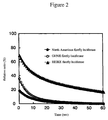
- Figure 2 shows the results. Along the vertical axis in this figure, the relative ratio of the light emission was plotted with the initial amount of light emitted considered to be 100% upon use of 25mM Tricine (pH 7.75) instead of 0.4% benzalkonium chloride.
- North American firefly luciferase was low in the initial light emission and the light emission decayed rapidly. This was caused by the low surfactant-resistance of the North American firefly luciferase. This can lead to low sensitivity and accuracy in measuring such values.
- GENJI firefly luciferase showed an initial light emission higher than that of North American firefly luciferase. That is, GENJI firefly luciferase was shown to have a surfactant resistance superior to that of North American firefly luciferase.
- HEIKE firefly luciferase showed an initial light emission higher than that of GENJI firefly luciferase and the emission decayed slowly. Therefore, HEIKE firefly luciferase has good surfactant resistance, superior to that of GENJI firefly luciferase.
- HLK mutant luciferase
- a mutant luciferase gene was produced by site-directed mutagenesis using PCR.
- a plasmid pHLf7-217Leu described in Japanese Patent Application Laid-Open No. 5-244942 was used as a template for PCR reaction.
- the pHLf7-217Leu was a recombinant plasmid prepared by inserting a thermostable HEIKE firefly luciferase gene, in which an amino acid corresponding to Ala at the 217-position was substituted for a Leu-encoding gene, into a plasmid pUC119.
- E.coli JM101 to which the recombinant plasmid pHLf7-217Leu had been introduced, has been named E.coli JM101 (pHLf7-217Leu) and was deposited on April 22, 1992 as FERM BP-3840 with the National Institute of Bioscience and Human-Technology, Agency of Industrial Science and Technology (1-3, Higashi 1-chome, Tsukuba-shi, Ibaraki-ken, Japan).
- the primer for PCR reaction was an oligonuceltide having a nucleotide sequence shown in SEQ ID No: 1 or 2.
- the DNA polymerase was a KOD dash polymerase (produced by TOYOBO).
- a PCR reaction cycle (94°C for 30 seconds, 50°C for 2 seconds, and 74°C for 3 minutes) was repeated for 30 times according to the examples attached to KOD dash polymerase.
- the PCR product was ligated into a circular recombinant plasmid pHLfLK using standard techniques.
- E.coli JM109 (pHLfLK) (see Figure 1).
- E. coli JM109 (pHLfLK) was deposited as FERM BP-6147 on October 16, 1997) with the National Institute of Bioscience and Human-Technology, Agency of Industrial Science and Technology, Japan.
- the polypeptide shown in SEQ ID NO:4 was named the mutant luciferase HLK.
- a mutant luciferase gene was prepared using the plasmid pHLf7-217Ile described in Japanese Patent Application Laid-Open No. 5-244942 .
- the plasmid pHLf7-217Ile was a recombinant plasmid prepared by inserting a thermostable HEIKE firefly luciferase gene, in which an amino acid corresponding to Ala at the 217-position was substituted for a Ile-encoding gene, into a plasmid pUC119.
- the transformant strain obtained using this plasmid was deposited on April 22, 1992 as FERM BP-3841 with the National Institute of Bioscience and Human-Technology, Agency of Industrial Science and Technology, Japan.
- E.coli JM109 The resulting recombinant plasmid has been named pHLfIK and the plasmid-introduced E.coli JM109 strain has been named E.coli JM109 (pHLfIK).
- E.coli JM109 (pHLfIK) was deposited on October 16, 1997 as FERM BP-6146 with the National Institute of Bioscience and Human-Technology, Agency of Industrial Science and Technology, Japan.
- mutant luciferase gene contained in the pHLfIK is shown in SEQ ID NO: 5, and the amino acid sequence of a polypeptide encoded by this gene is shown in SEQ ID NO: 6.
- the mutant luciferase gene the genetic portion corresponding to alanine at the 217-position of wild-type HEIKE firefly luciferase was substituted by a gene encoding isoleucine, the genetic portion corresponding to glutamic acid at the 490-position of the same was substituted by a gene encoding lysine (see Fig. 1).
- a polypeptide shown in SEQ ID NO:6 was named the mutant HIK firefly.
- E.coli JM109 pHLfLK
- E.coli JM109 pHLfIK
- LB media 1% Bacto-trypton (W/V), 0.5% yeast extract (W/V), 0.5% NaCl (W/V), ampicillin (50 ⁇ g/ml), 1.4% agar (W/V)
- W/V Bacto-trypton
- W/V 0.5% yeast extract
- W/V 0.5% NaCl
- ampicillin 50 ⁇ g/ml
- 1.4% agar W/V
- the resulting culture fluid was centrifuged at 8000 r.p.m. for 10 minutes.
- the precipitated cells were suspended in 0.1M potassium phosphate buffer at pH 7.8 (0.1M ammonium sulfate, 1mM EDTA) were disrupted by ultrasonication.
- crude enzyme solution was obtained by centrifugation at 12000 r.p.m. for 10 minutes.
- the obtained enzyme solution was purified using the above purification techniques such that it becomes an electrophoretically homogenous sample.
- FIG. 3 shows the results obtained by the use of 0.4% benzalkonium chloride (25mM Tricine (pH 7.75)).
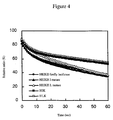
- Figure 4 shows the results obtained by the use of 0.8% benzethonium chloride (25mM Tricine (pH 7.75)).
- HEIKE I mutant in this figure is thermostable HEIKE firefly luciferase (described in Japanese Patent Application Laid-Open No. 5-244942 ) wherein Ala at the 217-position of wild-type HEIKE firefly luciferase is substituted for Ile.
- HEIKE L mutant is thermostable HEIKE firefly luciferase ( Japanese Patent Application Laid-Open No. 5-244942 ) wherein Ala at the 217 position of wild-type HEIKE luciferase is substituted by Leu.
- HIK is a mutant wherein Glu at the 490-position of HEIKE I mutant is substituted by Lys, that is, the mutant luciferase HIK prepared in Example 3.
- HLK is a mutant wherein Glu at the 490-position of HEIKE L mutant is substituted by Lys, that is, the mutant luciferase HLK prepared in Example 3.
- Fig. 3 which shows the results for benzalkonium chloride
- the emission of HIK decayed more slowly than that of the HEIKE I mutant.
- Comparison of HLK and HEIKE L mutant reveals that HLK had initial light emission improved by about 20%, and slower decay in the light emission. Therefore, the substitution of an amino acid at the 490-position resulted in improved surfactant-resistance of a luciferase.
- HIK showed decay in emission more slowly than that of HEIKE I mutant. Further HLK showed slower decay in light emission than that of HEIKE L mutant. Therefore, the substitution of an amino acid at the 490-position resulted in improved surfactant resistance.
- Table 1 shows the light emission measured using Berthold Lumat LB-9501 under measuring conditions (5 seconds of waiting time, 3 seconds of measuring time).
- the emission rate (remaining activity) was calculated by dividing the light emission measured in the presence of 0.4% benzalkonium chloride by a control value.
- the control value was the light emission upon use of 25mM Tricine at pH 7.75 instead of 0.4% benzalkonium chloride.
- North American firefly luciferase showed an emission rate as low as 21.6%, suggesting a large decrease in sensitivity.
- the emission rates for GENJI and HEIKE firefly luciferase were 41.0% and 76.3%, respectively, suggesting that the sensitivity of these firefly luciferases were less affected than that of North American firefly luciferase.
- mutant luciferase HIK and HLK were 89.3% and 101.7%, respectively. These rates were far greater than those of wild-type HEIKE firefly luciferase and thermostable HEIKE firefly luciferase. Particularly the emission rate of HLK was almost 100%. That is, HLK can yield the same light emission regardless of the presence or absence of a surfactant. Therefore, the sensitivity of HLK is totally unaffected by the use of a surfactant, allowing measurement with high accuracy.
- Benzalkonium chloride and various luciferases were contacted with each other for 10 minutes. Then the benzalkonium chloride concentration (IC50), at which activity is inactivated by 50% was determined. Equal amounts of luciferase solution prepared at this concentration and 0.01 to 0.1% benzalkonium chloride were mixed, and then allowed to stand for 10 minutes at room temperature. Subsequently, 100 ⁇ l of substrate solution was added to the mixture. Immediately after addition, the light emission was measured using Berthold Lumat LB-9501. IC50s obtained were as shown in Table 2.
- IC 50 for various luciferase Luciferase type IC 50 (%) North American firefly 0.014 GENJI firefly luciferase 0.016 HEIKE firefly luciferase 0.026 HEIKE I mutant 0.028 HEIKE L mutant 0.028 HIK 0.032 HLK 0.035
- North American firefly luciferase showed the lowest IC 50 among the three types of wild-type luciferase. That is, North American firefly luciferase was shown to have the lowest resistance to a surfactant.
- HEIKE firefly luciferase showed the highest IC 50 among the wild-type luciferase.
- HLK and HIK showed IC 50 higher than those of wild-type HEIKE firefly luciferase and thermostable HEIKE firefly luciferase, suggesting that the resistance was improved by the substitution of an amino acid at the 490-position.
- HLK showed IC 50 higher than that of HIK, indicating that HLK possesses the best surfactant-resistance.
- TCA extraction method wherein intracellular ATP is extracted using trichloroacetic acid (TCA) and the amount of ATP extracted is measured using luciferin-luciferase luminescence reaction.
- TCA extraction method is excellent in extraction efficiency. Further in TCA extraction method no inhibition of luminescence reaction is caused by TCA because emission is measured after the sample containing TCA is diluted 1:100. Because of this dilution, however, TCA extraction method is complicated and can cause a decrease in the measuring sensitivity.
- the amount of luciferase to be added was prepared such that the light emission produced when 100 ⁇ l of 2x10 -8 M ATP standard solution was added to 100 ⁇ l of the luminescence reagent would be the same amount of the light emission produced when a luminescence reagent attached to Luciferase LU (Kikkoman Corporation) was used.
- HEIKE firefly luciferase Unlike North American firefly luciferase and GENJI firefly luciferase, HEIKE firefly luciferase showed emission 60 to 70% of that in TCA extraction method. HEIKE firefly luciferase was shown to possess surfactant-resistance higher than those of North American firefly luciferase and GENJI firefly luciferase.
- thermostable HEIKE firefly luciferase Light emissions from HEIKE L mutant, and HEIKE I mutant which is thermostable HEIKE firefly luciferase were each equivalent to around 40% of that in TCA extraction method, and largely lower than that of wild-type HEIKE firefly luciferase.
- Each of the light emission from HIK and HLK, which is surfactant-resistant luciferase of the present invention, respectively was more intense than that from wild-type HEIKE luciferase and thermostable luciferase. Further the light emission in this case was equivalent to 60 to 80% of that in TCA extraction method.
- HIK and HLK are mutants wherein Glu at the 490-position of HEIKE I and HEIKE L mutants are substituted for Lys, respectively. That is, the introduction of said mutation into the amino acid at the 490-position improved resistance to a surfactant.
- the sensitivity of HIK and HLK is less affected by ATP extraction reagent even at such a high concentration employed in this examination, suggesting the use of HIK and HLK enable highly accurate measurement.
- a novel surfactant-resistant luciferase according to the present invention for measuring intracellular ATP allows the detection without a decrease in luciferase activity even in the presence of a surfactant at a high concentration.
Landscapes
- Chemical & Material Sciences (AREA)
- Life Sciences & Earth Sciences (AREA)
- Organic Chemistry (AREA)
- Health & Medical Sciences (AREA)
- Wood Science & Technology (AREA)
- Zoology (AREA)
- Engineering & Computer Science (AREA)
- Bioinformatics & Cheminformatics (AREA)
- Genetics & Genomics (AREA)
- Proteomics, Peptides & Aminoacids (AREA)
- General Health & Medical Sciences (AREA)
- Biotechnology (AREA)
- Molecular Biology (AREA)
- Biochemistry (AREA)
- General Engineering & Computer Science (AREA)
- Microbiology (AREA)
- Biophysics (AREA)
- Physics & Mathematics (AREA)
- Analytical Chemistry (AREA)
- Medicinal Chemistry (AREA)
- Biomedical Technology (AREA)
- Immunology (AREA)
- Measuring Or Testing Involving Enzymes Or Micro-Organisms (AREA)
- Enzymes And Modification Thereof (AREA)
Applications Claiming Priority (3)
| Application Number | Priority Date | Filing Date | Title |
|---|---|---|---|
| JP36102297 | 1997-12-26 | ||
| JP36102297 | 1997-12-26 | ||
| PCT/JP1998/005864 WO1999033997A1 (en) | 1997-12-26 | 1998-12-24 | Luciferase and method for assaying intracellular atp by using the same |
Publications (3)
| Publication Number | Publication Date |
|---|---|
| EP1041151A1 EP1041151A1 (en) | 2000-10-04 |
| EP1041151A4 EP1041151A4 (en) | 2002-09-18 |
| EP1041151B1 true EP1041151B1 (en) | 2007-09-12 |
Family
ID=18471867
Family Applications (1)
| Application Number | Title | Priority Date | Filing Date |
|---|---|---|---|
| EP98961523A Expired - Lifetime EP1041151B1 (en) | 1997-12-26 | 1998-12-24 | Luciferase and method for assaying intracellular atp by using the same |
Country Status (6)
| Country | Link |
|---|---|
| US (2) | US6812012B1 (enExample) |
| EP (1) | EP1041151B1 (enExample) |
| JP (1) | JP3749628B2 (enExample) |
| AU (1) | AU1688399A (enExample) |
| DE (1) | DE69838434T2 (enExample) |
| WO (1) | WO1999033997A1 (enExample) |
Families Citing this family (30)
| Publication number | Priority date | Publication date | Assignee | Title |
|---|---|---|---|---|
| US7083911B2 (en) * | 2001-02-16 | 2006-08-01 | Promega Corporation | Method for detection of ATP |
| EP2218790A3 (en) * | 2002-09-06 | 2010-08-25 | Promega Corporation | Kits for detecting transferase enzymatic activity |
| AU2003300008B2 (en) | 2002-12-23 | 2007-04-05 | Promega Corporation | Improved luciferase-based assays |
| US7494781B1 (en) * | 2003-05-12 | 2009-02-24 | Charm Sciences, Inc. | Sensitive method for detecting low levels of ATP |
| US7132249B1 (en) | 2003-05-12 | 2006-11-07 | Charm Sciences, Inc. | Method of determining allergenic food on surfaces |
| EP1508618B1 (en) * | 2003-08-19 | 2012-07-25 | Kurashiki Boseki Kabushiki Kaisha | Extracting apparatus |
| DK1763584T3 (da) * | 2004-07-02 | 2009-08-03 | Promega Corp | Sammensætninger og fremgangsmåde til ekstraktionen og detektionen af mikrobiel ATP |
| US7556933B2 (en) * | 2004-10-01 | 2009-07-07 | Luminultra Technologies Ltd. | Reagent system and process for adenosine triphosphate monitoring |
| JP5240970B2 (ja) * | 2005-06-08 | 2013-07-17 | キッコーマン株式会社 | 界面活性剤存在下で安定なコレステロールオキシダーゼ |
| BRPI0614851A2 (pt) * | 2005-08-19 | 2011-04-19 | Commw Scient Ind Res Org | luciferases de arachnocampa |
| JP4999341B2 (ja) | 2005-09-06 | 2012-08-15 | 株式会社バイオエネックス | 変異型ホタルルシフェラーゼ、遺伝子、組換えベクター、形質転換体、及び変異型ホタルルシフェラーゼの製造方法 |
| US7807429B2 (en) * | 2006-02-13 | 2010-10-05 | Connecticut College | Isolated luciferase gene of L. italica |
| US7851177B2 (en) * | 2006-07-31 | 2010-12-14 | Biotechnologias Del Agua Ltda | Method for detecting presence of acidophilic microorganisms in bioleaching solution |
| US20080057531A1 (en) * | 2006-08-07 | 2008-03-06 | Oregon Health And Science University | Systems, kits, and methods for detecting cariogenic bacteria and assessing risk of dental caries |
| US8524447B2 (en) | 2007-03-27 | 2013-09-03 | The New Industry Research Organization | Fluorescently labeled fusion protein for assaying adenosine triphosphate |
| JP5188771B2 (ja) | 2007-09-26 | 2013-04-24 | 株式会社日立製作所 | 変異型ホタルルシフェラーゼ |
| EP2221386B1 (en) | 2007-11-20 | 2012-06-20 | Kikkoman Corporation | Composition for analysis of nucleic acid |
| US20100116735A1 (en) * | 2008-11-13 | 2010-05-13 | Yu F Philip | Method of monitoring and controlling biological activity in boiler condensate and feedwater systems |
| JP2011120559A (ja) | 2008-12-26 | 2011-06-23 | Kikkoman Corp | ホタルルシフェラーゼ、その遺伝子、およびホタルルシフェラーゼの製造法 |
| US9298722B2 (en) * | 2009-07-16 | 2016-03-29 | Novell, Inc. | Optimal sequential (de)compression of digital data |
| JP6688499B2 (ja) * | 2014-10-27 | 2020-04-28 | 国立大学法人 鹿児島大学 | 安定性が増加したウミシイタケ(Renillareniformis)由来ルシフェラーゼ変異体 |
| NZ741377A (en) | 2015-10-09 | 2022-02-25 | Deka Products Lp | Fluid pumping and bioreactor system |
| JP6493316B2 (ja) | 2016-06-21 | 2019-04-03 | 東亜ディーケーケー株式会社 | 変異型甲虫ルシフェラーゼ、遺伝子、組換えベクター、形質転換体、及び変異型甲虫ルシフェラーゼの製造方法 |
| US11261478B2 (en) | 2016-10-13 | 2022-03-01 | Promega Corporation | Thermal stable luciferase with improved resistance to inhibition by luciferin break-down products |
| US11299705B2 (en) | 2016-11-07 | 2022-04-12 | Deka Products Limited Partnership | System and method for creating tissue |
| CN115087743B (zh) | 2020-02-14 | 2026-04-14 | 龟甲万株式会社 | 用于测定样本中的atp、以及amp和/或adp的液体组合物 |
| US20240069022A1 (en) | 2021-01-15 | 2024-02-29 | Asahi Kasei Kabushiki Kaisha | Method and kit for detecting presence and/or amount of bacteria of enterobacteriaceae in food/drink sample, environmental sample, or biological sample |
| JP7625621B2 (ja) | 2021-01-15 | 2025-02-03 | 旭化成株式会社 | 飲食品検体、環境検体、又は生体検体中の細菌の有無及び/又は存在量を検出するための方法及びキット |
| JPWO2024019165A1 (enExample) | 2022-07-22 | 2024-01-25 | ||
| JPWO2024158050A1 (enExample) | 2023-01-27 | 2024-08-02 |
Family Cites Families (8)
| Publication number | Priority date | Publication date | Assignee | Title |
|---|---|---|---|---|
| US4904775A (en) | 1988-05-16 | 1990-02-27 | E. R. Squibb & Sons, Inc. | Heteroaroylhydrazide derivatives of monocyclic beta-lactam antibiotics |
| JPH07112434B2 (ja) * | 1988-12-22 | 1995-12-06 | キッコーマン株式会社 | ルシフェラーゼ遺伝子 |
| GB9100551D0 (en) * | 1991-01-10 | 1991-02-20 | Amersham Int Plc | Method and reagent for eliminating analytical interference in enzymatic analysis from substances used for extraction of intracellular metabolites |
| JP3048466B2 (ja) | 1991-06-27 | 2000-06-05 | キッコーマン株式会社 | 耐熱性ホタルルシフェラーゼ、耐熱性ホタルルシフェラーゼ遺伝子、新規な組み換え体dna、及び耐熱性ホタルルシフェラーゼの製造法 |
| US5229285A (en) | 1991-06-27 | 1993-07-20 | Kikkoman Corporation | Thermostable luciferase of firefly, thermostable luciferase gene of firefly, novel recombinant dna, and process for the preparation of thermostable luciferase of firefly |
| JPH07203995A (ja) * | 1994-01-26 | 1995-08-08 | Toa Denpa Kogyo Kk | 細胞内atpの測定方法 |
| GB9417793D0 (en) * | 1994-09-05 | 1994-10-26 | Celsis Ltd | Bioluminescence and assay reagents |
| US6074859A (en) * | 1997-07-08 | 2000-06-13 | Kikkoman Corporation | Mutant-type bioluminescent protein, and process for producing the mutant-type bioluminescent protein |
-
1998
- 1998-12-21 JP JP36310898A patent/JP3749628B2/ja not_active Expired - Fee Related
- 1998-12-24 AU AU16883/99A patent/AU1688399A/en not_active Abandoned
- 1998-12-24 US US09/581,241 patent/US6812012B1/en not_active Expired - Lifetime
- 1998-12-24 DE DE69838434T patent/DE69838434T2/de not_active Expired - Lifetime
- 1998-12-24 WO PCT/JP1998/005864 patent/WO1999033997A1/ja not_active Ceased
- 1998-12-24 EP EP98961523A patent/EP1041151B1/en not_active Expired - Lifetime
-
2004
- 2004-04-22 US US10/829,250 patent/US7560245B2/en not_active Expired - Fee Related
Also Published As
| Publication number | Publication date |
|---|---|
| DE69838434D1 (de) | 2007-10-25 |
| EP1041151A1 (en) | 2000-10-04 |
| JPH11239493A (ja) | 1999-09-07 |
| AU1688399A (en) | 1999-07-19 |
| WO1999033997A1 (en) | 1999-07-08 |
| US20040235077A1 (en) | 2004-11-25 |
| EP1041151A4 (en) | 2002-09-18 |
| DE69838434T2 (de) | 2008-06-05 |
| JP3749628B2 (ja) | 2006-03-01 |
| US6812012B1 (en) | 2004-11-02 |
| US7560245B2 (en) | 2009-07-14 |
Similar Documents
| Publication | Publication Date | Title |
|---|---|---|
| US7560245B2 (en) | Luciferase and methods for measuring intracellular ATP using the same | |
| RU2192467C2 (ru) | Люциферазы | |
| US7419813B2 (en) | Fructosyl peptide oxidase | |
| US5885815A (en) | Candida isoleucyl-tRNA synthetase proteins, nucleic acids and strains comprising same | |
| KR102594240B1 (ko) | 신규한 루시퍼라제 및 이를 이용하는 방법 | |
| Trasnea et al. | Cooperation between two periplasmic copper chaperones is required for full activity of the cbb3‐type cytochrome c oxidase and copper homeostasis in Rhodobacter capsulatus | |
| CN109312328B (zh) | 突变型甲虫荧光素酶、基因、重组载体、转化体,以及突变型甲虫荧光素酶的制备方法 | |
| US20150111280A1 (en) | Novel glucose dehydrogenase | |
| Oba et al. | Identification and characterization of a luciferase isotype in the Japanese firefly, Luciola cruciata, involving in the dim glow of firefly eggs | |
| CN101397550A (zh) | 变异型萤火虫荧光素酶 | |
| KR102018248B1 (ko) | 생물발광 강도가 증폭된 변이 가우시아 루시퍼라아제 | |
| US20210171919A1 (en) | Luciferase variant | |
| JP7385134B2 (ja) | 変異型甲虫ルシフェラーゼ、遺伝子、組換えベクター、形質転換体、及び変異型甲虫ルシフェラーゼの製造方法 | |
| JP5234474B1 (ja) | 新規l−アミノ酸オキシダーゼ、l−リジンの測定方法、キット及び酵素センサ | |
| WO2011105627A1 (en) | Firefly luciferase | |
| US20040115662A1 (en) | Novel fructosyl amino acid oxidase | |
| JPWO2012043601A1 (ja) | アマドリアーゼ改変体 | |
| CN1711353B (zh) | 修饰的肌氨酸氧化酶,制备方法及其试剂组合物 | |
| JP6160094B2 (ja) | ジアホラーゼ組成物 | |
| WO2019187695A1 (ja) | エタノールアミンリン酸リアーゼ組成物 | |
| JP4168319B2 (ja) | 安定なリポプロテインリパーゼ | |
| JP5564640B2 (ja) | 発光性渦鞭毛藻由来青色発光酵素を用いた細胞内遺伝子転写活性測定法 | |
| JP2014143943A (ja) | Nad依存型グルコースデヒドロゲナーゼ組成物 | |
| JP2010183842A (ja) | 新規耐熱性dnaポリメラーゼ | |
| JP2014510514A (ja) | 星虫由来ルシフェラーゼ |
Legal Events
| Date | Code | Title | Description |
|---|---|---|---|
| PUAI | Public reference made under article 153(3) epc to a published international application that has entered the european phase |
Free format text: ORIGINAL CODE: 0009012 |
|
| 17P | Request for examination filed |
Effective date: 20000717 |
|
| AK | Designated contracting states |
Kind code of ref document: A1 Designated state(s): DE GB NL |
|
| A4 | Supplementary search report drawn up and despatched |
Effective date: 20020806 |
|
| AK | Designated contracting states |
Kind code of ref document: A4 Designated state(s): DE GB NL |
|
| 17Q | First examination report despatched |
Effective date: 20050228 |
|
| 17Q | First examination report despatched |
Effective date: 20050228 |
|
| GRAP | Despatch of communication of intention to grant a patent |
Free format text: ORIGINAL CODE: EPIDOSNIGR1 |
|
| GRAS | Grant fee paid |
Free format text: ORIGINAL CODE: EPIDOSNIGR3 |
|
| GRAA | (expected) grant |
Free format text: ORIGINAL CODE: 0009210 |
|
| AK | Designated contracting states |
Kind code of ref document: B1 Designated state(s): DE GB NL |
|
| REG | Reference to a national code |
Ref country code: GB Ref legal event code: FG4D |
|
| REF | Corresponds to: |
Ref document number: 69838434 Country of ref document: DE Date of ref document: 20071025 Kind code of ref document: P |
|
| PLBE | No opposition filed within time limit |
Free format text: ORIGINAL CODE: 0009261 |
|
| STAA | Information on the status of an ep patent application or granted ep patent |
Free format text: STATUS: NO OPPOSITION FILED WITHIN TIME LIMIT |
|
| 26N | No opposition filed |
Effective date: 20080613 |
|
| PGFP | Annual fee paid to national office [announced via postgrant information from national office to epo] |
Ref country code: NL Payment date: 20171115 Year of fee payment: 20 |
|
| PGFP | Annual fee paid to national office [announced via postgrant information from national office to epo] |
Ref country code: GB Payment date: 20171220 Year of fee payment: 20 |
|
| PGFP | Annual fee paid to national office [announced via postgrant information from national office to epo] |
Ref country code: DE Payment date: 20171220 Year of fee payment: 20 |
|
| REG | Reference to a national code |
Ref country code: DE Ref legal event code: R071 Ref document number: 69838434 Country of ref document: DE |
|
| REG | Reference to a national code |
Ref country code: NL Ref legal event code: MK Effective date: 20181223 |
|
| REG | Reference to a national code |
Ref country code: GB Ref legal event code: PE20 Expiry date: 20181223 |
|
| PG25 | Lapsed in a contracting state [announced via postgrant information from national office to epo] |
Ref country code: GB Free format text: LAPSE BECAUSE OF EXPIRATION OF PROTECTION Effective date: 20181223 |