EP1011983B1 - Image transfer method - Google Patents
Image transfer method Download PDFInfo
- Publication number
- EP1011983B1 EP1011983B1 EP98946067A EP98946067A EP1011983B1 EP 1011983 B1 EP1011983 B1 EP 1011983B1 EP 98946067 A EP98946067 A EP 98946067A EP 98946067 A EP98946067 A EP 98946067A EP 1011983 B1 EP1011983 B1 EP 1011983B1
- Authority
- EP
- European Patent Office
- Prior art keywords
- medium
- image
- ink
- transferring
- onto
- Prior art date
- Legal status (The legal status is an assumption and is not a legal conclusion. Google has not performed a legal analysis and makes no representation as to the accuracy of the status listed.)
- Expired - Lifetime
Links
- 238000000034 method Methods 0.000 title claims description 85
- 238000012546 transfer Methods 0.000 title claims description 42
- 230000008569 process Effects 0.000 claims description 35
- 238000007639 printing Methods 0.000 claims description 27
- 230000002745 absorbent Effects 0.000 claims description 15
- 239000002250 absorbent Substances 0.000 claims description 15
- 238000003825 pressing Methods 0.000 claims description 8
- 239000000758 substrate Substances 0.000 claims description 8
- 238000000151 deposition Methods 0.000 claims 1
- 239000000976 ink Substances 0.000 description 71
- 239000000565 sealant Substances 0.000 description 10
- 239000000463 material Substances 0.000 description 8
- XLYOFNOQVPJJNP-UHFFFAOYSA-N water Substances O XLYOFNOQVPJJNP-UHFFFAOYSA-N 0.000 description 8
- 230000008901 benefit Effects 0.000 description 6
- 238000010586 diagram Methods 0.000 description 6
- 239000003086 colorant Substances 0.000 description 5
- 238000004519 manufacturing process Methods 0.000 description 5
- 239000000123 paper Substances 0.000 description 5
- 230000000007 visual effect Effects 0.000 description 5
- 239000003973 paint Substances 0.000 description 4
- 238000002360 preparation method Methods 0.000 description 4
- 238000005488 sandblasting Methods 0.000 description 4
- 239000007921 spray Substances 0.000 description 4
- 125000000391 vinyl group Chemical group [H]C([*])=C([H])[H] 0.000 description 4
- 229920002554 vinyl polymer Polymers 0.000 description 4
- 239000000853 adhesive Substances 0.000 description 3
- 239000011111 cardboard Substances 0.000 description 3
- 239000004744 fabric Substances 0.000 description 3
- 238000005065 mining Methods 0.000 description 3
- 229920003023 plastic Polymers 0.000 description 3
- 239000004033 plastic Substances 0.000 description 3
- NIXOWILDQLNWCW-UHFFFAOYSA-N acrylic acid group Chemical group C(C=C)(=O)O NIXOWILDQLNWCW-UHFFFAOYSA-N 0.000 description 2
- 229910001651 emery Inorganic materials 0.000 description 2
- 239000011521 glass Substances 0.000 description 2
- 239000004816 latex Substances 0.000 description 2
- 229920000126 latex Polymers 0.000 description 2
- 239000002184 metal Substances 0.000 description 2
- 229910052751 metal Inorganic materials 0.000 description 2
- 239000000049 pigment Substances 0.000 description 2
- 239000002023 wood Substances 0.000 description 2
- 244000137852 Petrea volubilis Species 0.000 description 1
- 230000001070 adhesive effect Effects 0.000 description 1
- 239000000919 ceramic Substances 0.000 description 1
- 230000008859 change Effects 0.000 description 1
- 150000001875 compounds Chemical class 0.000 description 1
- 238000004590 computer program Methods 0.000 description 1
- 238000010276 construction Methods 0.000 description 1
- 238000012937 correction Methods 0.000 description 1
- 230000001419 dependent effect Effects 0.000 description 1
- 238000011161 development Methods 0.000 description 1
- 238000001035 drying Methods 0.000 description 1
- 230000000694 effects Effects 0.000 description 1
- 238000007646 gravure printing Methods 0.000 description 1
- 238000010438 heat treatment Methods 0.000 description 1
- 238000003384 imaging method Methods 0.000 description 1
- 239000007788 liquid Substances 0.000 description 1
- 238000001459 lithography Methods 0.000 description 1
- 230000007257 malfunction Effects 0.000 description 1
- 230000007246 mechanism Effects 0.000 description 1
- 239000000203 mixture Substances 0.000 description 1
- 238000012986 modification Methods 0.000 description 1
- 230000004048 modification Effects 0.000 description 1
- TWNQGVIAIRXVLR-UHFFFAOYSA-N oxo(oxoalumanyloxy)alumane Chemical compound O=[Al]O[Al]=O TWNQGVIAIRXVLR-UHFFFAOYSA-N 0.000 description 1
- 238000012545 processing Methods 0.000 description 1
- 230000001681 protective effect Effects 0.000 description 1
- 238000007788 roughening Methods 0.000 description 1
- 238000005070 sampling Methods 0.000 description 1
- 238000007650 screen-printing Methods 0.000 description 1
- 239000002966 varnish Substances 0.000 description 1
Images


Classifications
-
- B—PERFORMING OPERATIONS; TRANSPORTING
- B41—PRINTING; LINING MACHINES; TYPEWRITERS; STAMPS
- B41M—PRINTING, DUPLICATING, MARKING, OR COPYING PROCESSES; COLOUR PRINTING
- B41M5/00—Duplicating or marking methods; Sheet materials for use therein
- B41M5/025—Duplicating or marking methods; Sheet materials for use therein by transferring ink from the master sheet
-
- B—PERFORMING OPERATIONS; TRANSPORTING
- B41—PRINTING; LINING MACHINES; TYPEWRITERS; STAMPS
- B41M—PRINTING, DUPLICATING, MARKING, OR COPYING PROCESSES; COLOUR PRINTING
- B41M5/00—Duplicating or marking methods; Sheet materials for use therein
- B41M5/025—Duplicating or marking methods; Sheet materials for use therein by transferring ink from the master sheet
- B41M5/03—Duplicating or marking methods; Sheet materials for use therein by transferring ink from the master sheet by pressure
-
- B—PERFORMING OPERATIONS; TRANSPORTING
- B41—PRINTING; LINING MACHINES; TYPEWRITERS; STAMPS
- B41M—PRINTING, DUPLICATING, MARKING, OR COPYING PROCESSES; COLOUR PRINTING
- B41M5/00—Duplicating or marking methods; Sheet materials for use therein
- B41M5/025—Duplicating or marking methods; Sheet materials for use therein by transferring ink from the master sheet
- B41M5/0256—Duplicating or marking methods; Sheet materials for use therein by transferring ink from the master sheet the transferable ink pattern being obtained by means of a computer driven printer, e.g. an ink jet or laser printer, or by electrographic means
-
- B—PERFORMING OPERATIONS; TRANSPORTING
- B44—DECORATIVE ARTS
- B44C—PRODUCING DECORATIVE EFFECTS; MOSAICS; TARSIA WORK; PAPERHANGING
- B44C1/00—Processes, not specifically provided for elsewhere, for producing decorative surface effects
- B44C1/16—Processes, not specifically provided for elsewhere, for producing decorative surface effects for applying transfer pictures or the like
- B44C1/165—Processes, not specifically provided for elsewhere, for producing decorative surface effects for applying transfer pictures or the like for decalcomanias; sheet material therefor
- B44C1/17—Dry transfer
-
- Y—GENERAL TAGGING OF NEW TECHNOLOGICAL DEVELOPMENTS; GENERAL TAGGING OF CROSS-SECTIONAL TECHNOLOGIES SPANNING OVER SEVERAL SECTIONS OF THE IPC; TECHNICAL SUBJECTS COVERED BY FORMER USPC CROSS-REFERENCE ART COLLECTIONS [XRACs] AND DIGESTS
- Y10—TECHNICAL SUBJECTS COVERED BY FORMER USPC
- Y10S—TECHNICAL SUBJECTS COVERED BY FORMER USPC CROSS-REFERENCE ART COLLECTIONS [XRACs] AND DIGESTS
- Y10S428/00—Stock material or miscellaneous articles
- Y10S428/914—Transfer or decalcomania
Definitions
- the present invention relates generally to the art of applying printed images to objects and specifically to the use of an ink-jet type printer for transferring a computer image onto a target object at an ambient temperature using an intermediate medium.
- Techniques for printing images and words on objects are numerous and include the processes of letterpress, lithography, gravure and screen printing.
- considerations of quality, quantity, complexity of the reproduction, number of colors, characteristics of the target object or medium, and cost must be evaluated and balanced.
- the layperson is capable of creating and printing high quality images and documents which include high resolution color.
- Printers to be attached to computers generally are either a laser type printer or an ink-jet type printer.
- the laser type printers use heat to bond a toner to the surface of the medium, typically paper, passing through the printer.
- the ink-jet type printers selectively spray the inks onto the medium, again typically paper, passing through the printer. Both types of printers are capable of high resolution in the order of 600-1200 dots per inch or better. Some types of printers, especially laser types, are capable of a resolution which is much higher.
- one of the other previously mentioned printing processes In order to print upon a medium which will not pass through a computer printer, one of the other previously mentioned printing processes must be used.
- the other printing processes also have their own disadvantages which include additional time and cost. This is especially true in the initial stages of the printing process known as the set-up. If the quantity of objects to be printed is sufficiently large, the increased investment of time and resources for set-up may, and most likely will, warrant the use of one of the traditional printing processes. However, if the quantity of objects to be printed is small, the high initial set-up investment may make overall printing cost per object too high.
- FR-A-2 407 085 discloses a method of transferring an ink image from a first medium onto a second planar medium by applying pressure after having printed said image on a surface of the first medium.
- the present invention relates generally to the art of applying printed images to objects and specifically to the use of an ink type printer for transferring a computer image onto a target object using an intermediate medium.
- the method of transferring requires only ambient temperature and hand pressure. However, in some instances it may be desirable to provide more than hand pressure. But no elevated temperature is required for the use of the present invention.
- the present invention comprises a process wherein a digitized image is selected on a computer device for printing on an ink-type printer.
- the image is printed with water-based inks and the non-absorbent medium has properties that receive the water-based inks in a precise image pattern.
- Use of transparency film for laser type printers or other translucent or opaque films having similar compositions provides these properties.
- the side of the first medium which receives the ink image is the front side.
- the film is then applied to a second medium and pressure is applied to the back of the first medium such that the ink image is substantially transferred to the second medium.
- the pressure used to transfer the ink image from the first medium to the second medium can be accomplished by burnishing, rollers, stamps or any other means of applying pressure which provides for a substantial vertical pressure applied to the back side of the first medium.
- a high density transferred image can be accomplished by repeating the process one or more times with care being given to precisely overlay the ink images.
- a high density transferred image can be accomplished with one act of transferring if one selects the appropriate non-absorbent medium and the appropriate settings of the computer image, as discussed below.
- the second medium can be comprised of virtually any material such as wood, plastic, glass, metal, ceramic, acrylic, vinyl, self-adhesive vinyl, paint, paper, cardboard.
- the second medium surface must be suitable for receiving the ink image. If the surface of the second medium is not naturally suitable, it may need to be prepared either by marring or by applying an appropriate substrate. The preparation of the surface need only be in the portion of the surface which is to receive the ink image.
- a sealant can be applied over the transferred image to protect the ink image.
- Various types of ink can be used in the ink type printer including water soluble ink, non-water soluble ink, high pigment density ink, and ink with sealant.
- Sources for images to be selected on the computer include the use of a scanner, the use of a digital camera, downloading an image from a remote source (such as a disk or network), and creating a new image on the computer.
- a remote source such as a disk or network
- the image Prior to printing the selected computer image, the image can be manipulated. Manipulation of the image can include adjusting brightness, colors, orientation, size, background, foreground, shape and various other visual effects.
- a variety of image manipulation computer programs are available to those skilled in the art. Among these are Adobe PageMaker, Adobe Photoshop, Adobe Illustrator, 3M Graphic Maker Ink Jet Software (Minnesota Mining and Manufacturing Company (3M)), and many others.
- the ability to manipulate the image is important to the ability to control the image received by the non-absorbent medium for its transfer on the second medium.
- An object of the present invention is to provide an image transferring process which allows for the use of a computer and ink-jet type printer to print and transfer an image onto virtually any surface.
- Another object of the present invention is to provide an image transferring process which allows for transferring an image onto a target surface with no temperature elevation during the process.
- a further object of the present invention is to provide an image transferring process which allows for transferring an image onto surface which can not be passed through a typical ink-jet type printer.
- Another object of the present invention is to provide an image transferring process which allows for preparation of a medium which typically is not a suitable surface for receiving a printed image.
- Still another object of the present invention is provide an image transferring process which allows for transferring computer selected images onto virtually any surface in a manner which is fast, effective and economical even when used for printing small quantities.
- FIG. 1 a flow chart diagram of the image transferring method (10) of the present invention is shown.
- a general discussion of the process will be discussed followed by a more detailed discussion of the various steps.
- the first step of the image transferring method of the present invention is to prepare the surface (12) of the object or item which ultimately is to receive the image. This step (12) may not always be necessary and will be discussed in greater detail below.
- the image to be transferred must be selected on a computer (14).
- the image is manipulated or modified on the computer (16).
- the two most common types of image manipulation (16) are reversing the image and adjusting the brightness of the image.
- the image is printed onto a non-absorbent medium (18), such as a film transparency made for use with a laser type printer, hereinafter referred to as "laser transparency film.”
- a non-absorbent medium such as a film transparency made for use with a laser type printer, hereinafter referred to as "laser transparency film.”
- the printing on the laser transparency film is done, however, utilizing an ink type printer connected to the computer. Using a laser type printer will not work with the present invention.
- the printer must be of the type which essentially sprays the ink or inks onto the medium passing through the printer.
- the laser transparency film is a non-absorbent medium having properties which allow it to receive the ink image in a precise image pattern. Any translucent or opaque film having similar properties may be used.
- the laser transparency film also known as the transfer medium, includes a front side and a back side.
- the ink image is positioned on the front side of the transparency film.
- Using a non-absorbent medium allows the ink image to remain on the surface of the transfer medium. It may sound unusual and surprising that a laser transparency film is being used in an ink type printer, but despite warnings not to do this on at least the 3M brand of laser transparency films, that is precisely what is being done in this case.
- the transparency film, or transfer medium, with the ink image on the front side is then placed front side down onto the object or item, also called the target object, which is to receive the image.
- the image is then substantially transferred (20) from the transfer medium to the target object by applying pressure on the back side of the transparency film.
- the transparency film is then carefully removed from the target object.
- the transfer occurs without application of heat.
- Mere ambient temperature with hand or manual tool pressure is sufficient to transfer the image from the transfer medium to the target object or second medium.
- the method of present invention avoids the necessity of heated transfer. This provides several advantages to those using the present invention. No excess energy is required for the transfer. No heat is present, allowing transfer with danger of burns to human skin or damage to other items including the second medium or target object which itself can be heat-sensitive.
- the avoidance of heat removes a complicating factor to the transfer step that makes the method of the present invention more convenient, less costly, safer, and more versatile than methods known in the art that involve or require heated transfer of image.
- the present method is a "cold transfer process" in that it does not require heat to work.
- the target object is then inspected to see if the image is satisfactory (22). If the image is not satisfactory, then the image may be removed from the target object (24). Removal of the image typically only requires that the target object be washed with water because most of the inks used in ink type printers are water soluble. If the image is acceptable the image is allowed to dry. If it is determined that another image should be applied (26), the steps of printing the image (18) and transferring the image (20) are repeated. Applying another image is essentially just applying another coat of ink which provides for brighter and more defined colors in the image.
- a sealant can be applied (28).
- the type of sealant is dependent upon the type of material used as the target object.
- the sealant provides a layer of protection as well as providing the opportunity to select various finished looks such as flat, semi-gloss, gloss and satin.
- the best known sealant for most plastics is Krylon #1312 spray, also referred to as KAMAR Varnish, available from Krylon Products Group, Specialty Division, of the Sherman Williams Company of Solon, Ohio.
- the image can be protected by an adhesive laminate that is clear and protects the image. Commercial sources for such over laminates include Minnesota Mining and Manufacturing Company (3M).
- the surface of the target object may need to be prepared.
- the surface of the target object In order to properly receive the ink image, the surface of the target object must either be absorbent, porous, or sufficiently abrasive. All target object surfaces must be clean (32) and dry (33). Whether the surface of the target object needs additional preparation depends upon the type material of which the medium is made.
- the target object, or second medium is made of a material such as wood, paper, cardboard or another similarly absorbent material
- the surface need not be prepared other than to be clean (32) and dry (22).
- the target object is made of a material such as plastic, glass, acrylic, metal, vinyl, self-adhesive vinyl, or another similarly non-absorbent, smooth material
- the surface must be prepared such that it will properly receive the ink image. Obviously, it is only necessary to further prepare the portion of the surface which will actually receive the ink image.
- One method of preparing the surface is to roughen or mar the surface (34) of the target object. By roughening or marring the surface of the target object, the surface will become abrasive and will then properly receive the ink image.
- One method of marring the surface is sand blasting (35). In one method of the present invention, the marring occurs using a 150 grit aluminum oxide in the sand blasting process. The sand blasting process can benefit from construction of a suitable container for the sand blasting, according to methods known in the art.
- Another method of marring the surface is to use sand paper (36). Still another method of marring the surface is to use an emery cloth or emery board (37). A still further method is burnishing the surface with a rough roller.
- a suitable substrate is any substrate that will adhere to the surface of the target object and is sufficiently absorbent, porous, or abrasive such that it will properly receive the ink image.
- the substrate is transparent and provides for a slightly abrasive surface after applied.
- Another common but excellent substrate is latex paint. Different colors of latex paint can be utilized to add another visual dimension to the transferred image.
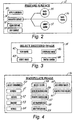
- FIG. 3 the various sources of images to be selected (14) are shown. Prior to printing an image, it must either be acquired or created.
- An image can be acquired from many sources including the use of a scanner (42), the use of a digital camera (44) or by downloading an image (46) from another source such as a disk, hard drive, cd-rom, application program or network.
- An image can also be created (48) on the computer using any one of the many word processing, graphics, paint, draw programs available or virtually any other program which allows the user the option of printing. These programs are well known to one skilled in the art. When the image is actually selected, it need not necessarily be viewed.
- Fig. 4 the various methods of manipulating an image (16) are shown. Many of the programs discussed above are capable of performing the following manipulations. As discussed above, the two most common manipulations are brightness adjustment (50) and reversal of the image (51). Adjusting the brightness of the image (50) can be done for visual effect but is more often used to lighten the image. By lightening the image, less ink is sprayed onto the transfer medium. If too much ink is used on the transfer medium, the risk of having the image smear as it is transferred onto the target object is increased. It is better to apply two thinner coats of ink than to apply one heavy coat. Reversal of the image (51) is used simply so that the image will be correctly oriented after the image is transferred from the transfer medium to the target object. This is typically necessary when the image to be transferred includes text.
- brightness adjustment 50
- reversal of the image (51) is used simply so that the image will be correctly oriented after the image is transferred from the transfer medium to the target object. This is typically necessary when the image to be
- alignment guides can be added outside of the image which can be used to help align images when multiple coats are applied.
- Alignment guides can be virtually any shape but in a preferred embodiment comprise small dots on opposite sides of the image.
- the printer used in the printing step (18) must be an ink-jet type printer which sprays out the ink such as printers which use Hewlett Packard InkJet Cartridges or Canon BubbleJet Cartridges.
- the inks used in ink type printers are in liquid form (64) and are water soluble (65).
- a high pigment density ink (67) could be used. This type of ink would allow for brighter colors without the need of applying a heavy coat or multiple coats.
- ink with a higher viscosity such as an ink in gel form
- inks in the ink-jet type printer can be pigmented thermal inkjet inks, pigmented piezo inkjet inks, or dye-based inkjet inks.
- a number of commercial sources for these inks are known, including Hewlett Packard Corporation, Encad Corporation, Canon Corporation, Minnesota Mining and Manufacturing Company (3M), and others.
- One advantage of the present invention is ability to use the transfer method of the present invention with a variety of inkjet inks and printheads in a number of ink type printers. For example, one can use the transfer method on desktop inkjet printers or floor mounted printers that print images up to about 50 inches wide. These "large format" printers produce images which also benefit from the transfer without application of heat to a second medium.
- Two other types of ink may be used to reduce the need for applying the sealant coat in the final step.
- a non-water soluble ink could be used which is less likely to deteriorate without a protective sealant.
- an ink with an included sealant (68) could be used. These types of inks would self seal as they dry. It is even possible that these inks could be washed off prior to the time they dry but before becoming permanent after drying. These two types of ink greatly enhance the method of the present invention when the material of the target object is cloth which is difficult to seal.
- Fig. 6 the types of pressure which can be applied during the transfer process (20) are shown.
- the application of pressure to the back side of the transfer medium greatly assists in the substantial transfer of the image from the transfer medium to the target object, essentially another medium.
- the important aspect of applying pressure is that it must be substantially vertical or perpendicular to the transfer medium. Applying pressure which tends to slide across the transfer medium will likely cause the ink image to smear.
- the preferred method of applying pressure (70) is by using a burnishing tool (72). Rollers (75) and stamps (76) can also be used to apply pressure.
- the transfer process (20) operates at ambient temperature, usually room temperature. If the transfer process (20) is to occur in outdoor conditions, then one must consider the change in temperature on the ink being transferred and the effect of ambient temperature upon the target object. However, any application of heat to an outdoor target object should not exceed normally room temperatures (less than about 75°-80° F) because of the advantages to be gained from avoiding elevated heating of the transfer medium or second medium, as discussed above.
- Those using the method of this invention can produce imaged three-dimensional objects, where all three dimensions provide shape to the object.
- the transfer process operates on any suitable three-dimensional object that has been prepared as discussed above. Because of the types of pressure to be applied during the transfer process (20), the three-dimensional object should not have compound curves that could interfere with the transfer step using pressure. However, a three-dimensional object with flat surfaces and/or simple curves can be imaged using the present invention.
Landscapes
- Engineering & Computer Science (AREA)
- General Engineering & Computer Science (AREA)
- Ink Jet (AREA)
- Ink Jet Recording Methods And Recording Media Thereof (AREA)
- Decoration By Transfer Pictures (AREA)
- Printing Methods (AREA)
- Thermal Transfer Or Thermal Recording In General (AREA)
- Duplication Or Marking (AREA)
Priority Applications (1)
| Application Number | Priority Date | Filing Date | Title |
|---|---|---|---|
| EP01107408A EP1127710B1 (en) | 1997-09-12 | 1998-09-11 | Image transfer method |
Applications Claiming Priority (3)
| Application Number | Priority Date | Filing Date | Title |
|---|---|---|---|
| US08/928,896 US6153038A (en) | 1996-03-12 | 1997-09-12 | Method for transferring an image from a first medium to a second medium at ambient temperature |
| US928896 | 1997-09-12 | ||
| PCT/US1998/019194 WO1999012743A1 (en) | 1997-09-12 | 1998-09-11 | Image transfer method |
Related Child Applications (1)
| Application Number | Title | Priority Date | Filing Date |
|---|---|---|---|
| EP01107408A Division EP1127710B1 (en) | 1997-09-12 | 1998-09-11 | Image transfer method |
Publications (2)
| Publication Number | Publication Date |
|---|---|
| EP1011983A1 EP1011983A1 (en) | 2000-06-28 |
| EP1011983B1 true EP1011983B1 (en) | 2002-04-17 |
Family
ID=25456963
Family Applications (2)
| Application Number | Title | Priority Date | Filing Date |
|---|---|---|---|
| EP98946067A Expired - Lifetime EP1011983B1 (en) | 1997-09-12 | 1998-09-11 | Image transfer method |
| EP01107408A Expired - Lifetime EP1127710B1 (en) | 1997-09-12 | 1998-09-11 | Image transfer method |
Family Applications After (1)
| Application Number | Title | Priority Date | Filing Date |
|---|---|---|---|
| EP01107408A Expired - Lifetime EP1127710B1 (en) | 1997-09-12 | 1998-09-11 | Image transfer method |
Country Status (11)
| Country | Link |
|---|---|
| US (1) | US6153038A (enExample) |
| EP (2) | EP1011983B1 (enExample) |
| JP (1) | JP2001515808A (enExample) |
| KR (1) | KR20010023897A (enExample) |
| CN (1) | CN1269751A (enExample) |
| AU (1) | AU732752B2 (enExample) |
| BR (1) | BR9811451A (enExample) |
| CA (1) | CA2302337A1 (enExample) |
| DE (2) | DE69804978T2 (enExample) |
| IL (1) | IL134790A (enExample) |
| WO (1) | WO1999012743A1 (enExample) |
Cited By (1)
| Publication number | Priority date | Publication date | Assignee | Title |
|---|---|---|---|---|
| US10029816B2 (en) | 2010-05-26 | 2018-07-24 | Avery Dennison Retail Information Services, Llc | Pressure sensitive labels for use in a cold transfer method and process for making |
Families Citing this family (31)
| Publication number | Priority date | Publication date | Assignee | Title |
|---|---|---|---|---|
| US6569277B1 (en) * | 1998-07-06 | 2003-05-27 | Melinda Earl Gibbs | Art object and method of creation |
| US7291233B2 (en) * | 1998-12-01 | 2007-11-06 | Graphic Report Snc Di Brigato A. & C. | Process for applying a transferable image on a wall |
| JP3949328B2 (ja) * | 1999-11-02 | 2007-07-25 | 富士フイルム株式会社 | 画像形成方法 |
| ATE304453T1 (de) | 2000-02-08 | 2005-09-15 | 3M Innovative Properties Co | Verbesserte verfahren für kalten bildtransfer |
| AU4905701A (en) * | 2000-02-08 | 2001-08-20 | 3M Innovative Properties Company | Ink fixing materials and methods of fixing ink |
| US20020052439A1 (en) | 2000-08-08 | 2002-05-02 | 3M Innovative Properties Company | Ink receptive compositions and articles for image transfer |
| US6874421B2 (en) | 2001-04-20 | 2005-04-05 | 3M Innovative Properties Company | Ink jet transfer printing process |
| US20020178940A1 (en) * | 2001-04-20 | 2002-12-05 | Kitchin Jonathan P. | Ink jet transfer printing process |
| FI115392B (fi) * | 2001-06-01 | 2005-04-29 | Perlos Oyj | Menetelmä kolmiulotteisten pintojen kuviointiin |
| ES2249360T3 (es) * | 2001-07-06 | 2006-04-01 | Nordland Papier Gmbh | Procedimiento para la determinacion de la calidad del papel para fotograbado a media tinta autotipico. |
| US6679968B2 (en) * | 2001-07-19 | 2004-01-20 | K Laser Technology, Inc. | Laser laminar structure and method of manufacturing the same |
| US6902054B2 (en) * | 2001-08-27 | 2005-06-07 | Mckean Patrick Steven | Media jewel case |
| US20030098906A1 (en) * | 2001-10-22 | 2003-05-29 | 3M Innovative Properties Company | Ink jet transfer printing process |
| CA2469379A1 (en) * | 2001-12-20 | 2003-07-03 | Jamey Gaston | Surface enhancement and modification system |
| US20030131927A1 (en) * | 2002-01-17 | 2003-07-17 | Hatcher Johnie F. | Mold transfer system |
| US20030203165A1 (en) * | 2002-04-30 | 2003-10-30 | Nobles Joy Sharon | Computer generated decorative graphic article for application to a surface |
| US7221785B2 (en) * | 2002-05-21 | 2007-05-22 | Agilent Technologies, Inc. | Method and system for measuring a molecular array background signal from a continuous background region of specified size |
| JP2004216860A (ja) * | 2002-12-24 | 2004-08-05 | Yoshio Sugino | 転写方法および転写用粘着剤 |
| RU2332306C2 (ru) * | 2003-10-09 | 2008-08-27 | Зауерэссиг Гмбх Унд Ко. | Способ изготовления инструмента для выдавливания защитных элементов на поверхностях материала носителя |
| ES2294373T3 (es) * | 2003-10-09 | 2008-04-01 | SAUERESSIG GMBH & CO. | Metodo para la produccion de un util de estampacion para estampar elemntos de seguridad en superficies de materiales portadores, asi como material portador con, al menos, un elemento de seguridad. |
| EP1766598A2 (en) * | 2004-06-08 | 2007-03-28 | Avery Dennison Corporation | Method of providing printable decorative labels for customization of portable electronic devices |
| US20070001558A1 (en) * | 2005-06-30 | 2007-01-04 | Bush Industries, Inc. | Digitally printed furniture and methods for manufacture thereof |
| JP4568203B2 (ja) * | 2005-10-05 | 2010-10-27 | 株式会社リコー | 画像形成装置 |
| US20070261782A1 (en) * | 2006-05-09 | 2007-11-15 | Frye Robert D | Method for sublimating a decoration on the surface of an object |
| TW200840724A (en) * | 2007-04-09 | 2008-10-16 | Jorn Corp | Cold transfer printing sticker and manufacturing method thereof |
| US20100330346A1 (en) * | 2009-06-26 | 2010-12-30 | Philip Leapold Charles Fischer | Article with an Image Displayed Thereon and Method of Transferring Images onto Articles |
| CN103373102A (zh) * | 2012-04-26 | 2013-10-30 | 重庆太极实业(集团)股份有限公司 | 一种在阿胶胶体上印字的方法 |
| US8894196B2 (en) * | 2012-10-26 | 2014-11-25 | Xerox Corporation | Decorative concrete surfaces |
| CN105691022A (zh) * | 2014-11-28 | 2016-06-22 | 杨宣茂 | 一种冷转印方法及其冷转印膜 |
| US10682837B2 (en) * | 2017-06-09 | 2020-06-16 | The Proctor & Gamble Company | Method and compositions for applying a material onto articles |
| WO2019099183A1 (en) | 2017-11-17 | 2019-05-23 | The Procter & Gamble Company | Methods for applying a material onto articles |
Family Cites Families (42)
| Publication number | Priority date | Publication date | Assignee | Title |
|---|---|---|---|---|
| US3854975A (en) * | 1971-06-30 | 1974-12-17 | Addressograph Multigraph | Pressure fixing of toners |
| DE7809199U1 (de) * | 1977-03-30 | 1978-08-31 | Gracay (Frankreich) | Verankerungsvorrichtung für zahnärztliche Prothesen |
| FR2407085A2 (fr) * | 1977-10-28 | 1979-05-25 | Mecanorma Sa | Dispositif pour le transfert a sec de signes en encre |
| US4380874A (en) * | 1978-05-15 | 1983-04-26 | Scott Machine Development Corporation | Sign-making method |
| GB1603257A (en) * | 1978-05-31 | 1981-11-25 | Int Hona Nv | Dry transfer system |
| US4258095A (en) * | 1978-11-13 | 1981-03-24 | Minnesota Mining And Manufacturing Company | Reduced gloss in pressure-fixing of toner powder |
| BR8108687A (pt) * | 1980-07-10 | 1982-06-01 | Schlaepfer & Co Ag | Aplicacao de materiais, polimeros a substratos |
| US4373984A (en) * | 1980-07-16 | 1983-02-15 | Voorwood Company | Machine for applying transfer foil to a shaped edge of a substrate |
| US4342614A (en) * | 1981-03-03 | 1982-08-03 | Minnesota Mining And Manufacturing Company | Pressure applicator for graphic transfer |
| US4356764A (en) * | 1981-05-04 | 1982-11-02 | Minnesota Mining And Manufacturing Company | Pressure rollers for toner fusing station |
| JPS59171658A (ja) * | 1983-03-19 | 1984-09-28 | Canon Inc | 記録方法 |
| DE3310120A1 (de) * | 1983-03-21 | 1984-09-27 | Schulzen, Herbert, 6208 Bad Schwalbach | Verfahren zum bedrucken eines substrates nach dem transferdruckverfahren |
| US4820559A (en) * | 1983-08-01 | 1989-04-11 | Minnesota Mining And Manufacturing Company | Graphics transfer medium |
| US4773953A (en) * | 1985-02-20 | 1988-09-27 | Hare Donald S | Method for applying a creative design to a fabric from a Singapore Dammar resin coated transfer sheet |
| US4785313A (en) * | 1985-12-16 | 1988-11-15 | Canon Kabushiki Kaisha | Recording medium and image formation process using the same |
| EP0266430B1 (en) * | 1986-04-11 | 1995-03-01 | Dai Nippon Insatsu Kabushiki Kaisha | Image formation on object |
| JPH0797696B2 (ja) * | 1986-07-05 | 1995-10-18 | 株式会社豊田自動織機製作所 | ハイブリツドic基板と回路パタ−ン形成方法 |
| US4758952A (en) * | 1986-11-24 | 1988-07-19 | P & S Industries, Inc. | Process for heat transfer printing |
| US4842613A (en) * | 1987-11-27 | 1989-06-27 | Terence Brook Purser | Technique for printing disperse dyes on glass or ceramic surfaces |
| US4908633A (en) * | 1987-12-28 | 1990-03-13 | Sharp Kabushiki Kaisha | Photosensitive microcapsule recorder with transfer sheet transported at an angle relative to the axial direction of the pressure rollers |
| US5023038A (en) * | 1989-09-11 | 1991-06-11 | Eastman Kodak Company | Method and apparatus for texturizing toner image bearing receiving sheets and product produced thereby |
| EP0461796A1 (en) * | 1990-06-04 | 1991-12-18 | Arthur W. Maynard | Method and apparatus for forming a transfer film having a design thereon available for transfer onto a substrate |
| US5248363A (en) * | 1990-07-09 | 1993-09-28 | Nathan Hale | Transfer media produced by a thermal transfer printing process |
| US5488907C1 (en) * | 1990-07-09 | 2001-11-27 | Sawgrass Systems Inc | Permanent heat activated transfer printing process and composition |
| US5559708A (en) * | 1990-10-15 | 1996-09-24 | Aluminum Company Of America | Computer controlled flexible manufacturing of aluminum articles |
| US5160536A (en) * | 1991-04-18 | 1992-11-03 | Acushnet Company | Printing ink for golf balls |
| US5236527A (en) * | 1992-01-09 | 1993-08-17 | Idesco Corp. | Method for making labelled padlocks |
| US5486228A (en) * | 1992-07-31 | 1996-01-23 | Binney & Smith Inc. | Washable color changing compositions |
| DE69321789T2 (de) * | 1992-08-12 | 1999-06-10 | Seiko Epson Corp., Tokio/Tokyo | Verfahren und Vorrichtung für Tintenstrahlaufzeichnung |
| US5587405A (en) * | 1992-09-14 | 1996-12-24 | Yoshino Kogyosho Co., Ltd. | Ink compositions |
| EP0716633B1 (en) * | 1993-09-03 | 1999-12-08 | Rexam Graphics Inc. | Ink jet imaging process and recording element |
| US5766398A (en) * | 1993-09-03 | 1998-06-16 | Rexam Graphics Incorporated | Ink jet imaging process |
| JP3332591B2 (ja) * | 1993-10-01 | 2002-10-07 | キヤノン株式会社 | 転写媒体、インク転写画像形成方法及び記録物 |
| DE69403748T2 (de) * | 1993-10-15 | 1998-01-02 | Agfa Gevaert Nv | Verfahren zum Verbinden einer Tintenaufnahmeschicht auf einem vorgegebenen Substrat |
| GB9324740D0 (en) * | 1993-12-02 | 1994-01-19 | Johnson Matthey Plc | Transfer manufacture |
| NL9400325A (nl) * | 1994-03-03 | 1995-10-02 | Sallmetall Bv | Werkwijze voor het aanbrengen van een afbeelding op een plaat van thermoplastische kunststof, alsmede daarmee verkregen product. |
| US5582669A (en) * | 1994-05-10 | 1996-12-10 | Polaroid Corporation | Method for providing a protective overcoat on an image carrying medium utilizing a heated roller and a cooled roller |
| GB2289866A (en) * | 1994-06-03 | 1995-12-06 | British Ceramic Res Ass | Method for forming curable decal |
| US5497699A (en) * | 1994-11-29 | 1996-03-12 | Mather; Clifford L. | Method of silk screen printing on a rough surface such as a football |
| TW300204B (enExample) * | 1995-08-25 | 1997-03-11 | Avery Dennison Corp | |
| WO1997033752A1 (en) * | 1996-03-12 | 1997-09-18 | Brooker Dennis B | Method for transferring a digitized computer image |
| GB9609443D0 (en) * | 1996-05-04 | 1996-07-10 | Brittains Tr Limited | Transfers |
-
1997
- 1997-09-12 US US08/928,896 patent/US6153038A/en not_active Expired - Lifetime
-
1998
- 1998-09-11 DE DE69804978T patent/DE69804978T2/de not_active Expired - Fee Related
- 1998-09-11 AU AU93163/98A patent/AU732752B2/en not_active Ceased
- 1998-09-11 CA CA002302337A patent/CA2302337A1/en not_active Abandoned
- 1998-09-11 KR KR1020007002581A patent/KR20010023897A/ko not_active Ceased
- 1998-09-11 CN CN98808992A patent/CN1269751A/zh active Pending
- 1998-09-11 EP EP98946067A patent/EP1011983B1/en not_active Expired - Lifetime
- 1998-09-11 JP JP2000510601A patent/JP2001515808A/ja not_active Withdrawn
- 1998-09-11 BR BR9811451-4A patent/BR9811451A/pt not_active Application Discontinuation
- 1998-09-11 WO PCT/US1998/019194 patent/WO1999012743A1/en not_active Ceased
- 1998-09-11 IL IL13479098A patent/IL134790A/en not_active IP Right Cessation
- 1998-09-11 EP EP01107408A patent/EP1127710B1/en not_active Expired - Lifetime
- 1998-09-11 DE DE69832732T patent/DE69832732T2/de not_active Expired - Fee Related
Cited By (1)
| Publication number | Priority date | Publication date | Assignee | Title |
|---|---|---|---|---|
| US10029816B2 (en) | 2010-05-26 | 2018-07-24 | Avery Dennison Retail Information Services, Llc | Pressure sensitive labels for use in a cold transfer method and process for making |
Also Published As
| Publication number | Publication date |
|---|---|
| AU9316398A (en) | 1999-03-29 |
| DE69832732D1 (de) | 2006-01-12 |
| CA2302337A1 (en) | 1999-03-18 |
| IL134790A (en) | 2002-09-12 |
| DE69832732T2 (de) | 2006-07-27 |
| IL134790A0 (en) | 2001-04-30 |
| EP1011983A1 (en) | 2000-06-28 |
| KR20010023897A (ko) | 2001-03-26 |
| BR9811451A (pt) | 2000-08-15 |
| JP2001515808A (ja) | 2001-09-25 |
| AU732752B2 (en) | 2001-04-26 |
| EP1127710A1 (en) | 2001-08-29 |
| DE69804978D1 (de) | 2002-05-23 |
| EP1127710B1 (en) | 2005-12-07 |
| DE69804978T2 (de) | 2002-08-29 |
| WO1999012743A1 (en) | 1999-03-18 |
| CN1269751A (zh) | 2000-10-11 |
| US6153038A (en) | 2000-11-28 |
Similar Documents
| Publication | Publication Date | Title |
|---|---|---|
| EP1011983B1 (en) | Image transfer method | |
| US6578476B2 (en) | Print product on demand | |
| JP2000515819A (ja) | 画像を表示する表示装置および方法 | |
| US20040153204A1 (en) | System and method for producing simulated oil paintings | |
| CN104339911B (zh) | 记录介质、记录物以及该记录介质和记录物的制造方法 | |
| AU2001261672A1 (en) | Print product on demand | |
| JP4076358B2 (ja) | 高輝度メタリック印刷シュリンクラベル | |
| US6569277B1 (en) | Art object and method of creation | |
| US20070019049A1 (en) | Insert molded print product on demand | |
| US20060246266A1 (en) | Ultra thin graphics and methods | |
| JP2005007864A (ja) | 画像保護フィルム並びにこれを用いた画像保護方法及びオーバーコート記録物 | |
| EP0900149A1 (en) | Decalcomania | |
| WO1997033752A1 (en) | Method for transferring a digitized computer image | |
| MXPA00002461A (en) | Image transfer method | |
| JP3327736B2 (ja) | インクジェット被記録媒体 | |
| JP4075182B2 (ja) | インクジェット記録体 | |
| JP7784163B2 (ja) | 装飾鏡の製造方法及び装飾鏡 | |
| KR100443309B1 (ko) | 디스플레이유닛및이미지를디스플레이시키는방법 | |
| JP2003094834A (ja) | 感熱転写シート | |
| JP3870330B2 (ja) | インクジェット記録シート | |
| JP5486098B2 (ja) | 画像を表示する方法 | |
| KR200353374Y1 (ko) | Uv플로터를 이용한 실사거울/실사유리 | |
| JPH0259347A (ja) | マット加工用転写材とその製造方法 | |
| JPH06270370A (ja) | 化粧シ−ト | |
| JP2009090510A (ja) | インクジェット用受け紙とその製造方法 |
Legal Events
| Date | Code | Title | Description |
|---|---|---|---|
| PUAI | Public reference made under article 153(3) epc to a published international application that has entered the european phase |
Free format text: ORIGINAL CODE: 0009012 |
|
| 17P | Request for examination filed |
Effective date: 20000407 |
|
| AK | Designated contracting states |
Kind code of ref document: A1 Designated state(s): DE FR GB NL SE |
|
| 17Q | First examination report despatched |
Effective date: 20000920 |
|
| GRAG | Despatch of communication of intention to grant |
Free format text: ORIGINAL CODE: EPIDOS AGRA |
|
| GRAG | Despatch of communication of intention to grant |
Free format text: ORIGINAL CODE: EPIDOS AGRA |
|
| GRAG | Despatch of communication of intention to grant |
Free format text: ORIGINAL CODE: EPIDOS AGRA |
|
| GRAH | Despatch of communication of intention to grant a patent |
Free format text: ORIGINAL CODE: EPIDOS IGRA |
|
| GRAH | Despatch of communication of intention to grant a patent |
Free format text: ORIGINAL CODE: EPIDOS IGRA |
|
| REG | Reference to a national code |
Ref country code: GB Ref legal event code: IF02 |
|
| GRAA | (expected) grant |
Free format text: ORIGINAL CODE: 0009210 |
|
| AK | Designated contracting states |
Kind code of ref document: B1 Designated state(s): DE FR GB NL SE |
|
| REF | Corresponds to: |
Ref document number: 69804978 Country of ref document: DE Date of ref document: 20020523 |
|
| PG25 | Lapsed in a contracting state [announced via postgrant information from national office to epo] |
Ref country code: SE Free format text: LAPSE BECAUSE OF FAILURE TO SUBMIT A TRANSLATION OF THE DESCRIPTION OR TO PAY THE FEE WITHIN THE PRESCRIBED TIME-LIMIT Effective date: 20020717 |
|
| PGFP | Annual fee paid to national office [announced via postgrant information from national office to epo] |
Ref country code: NL Payment date: 20020819 Year of fee payment: 5 |
|
| ET | Fr: translation filed | ||
| PLBE | No opposition filed within time limit |
Free format text: ORIGINAL CODE: 0009261 |
|
| STAA | Information on the status of an ep patent application or granted ep patent |
Free format text: STATUS: NO OPPOSITION FILED WITHIN TIME LIMIT |
|
| 26N | No opposition filed |
Effective date: 20030120 |
|
| PG25 | Lapsed in a contracting state [announced via postgrant information from national office to epo] |
Ref country code: NL Free format text: LAPSE BECAUSE OF NON-PAYMENT OF DUE FEES Effective date: 20040401 |
|
| NLV4 | Nl: lapsed or anulled due to non-payment of the annual fee |
Effective date: 20040401 |
|
| PGFP | Annual fee paid to national office [announced via postgrant information from national office to epo] |
Ref country code: FR Payment date: 20060918 Year of fee payment: 9 |
|
| PGFP | Annual fee paid to national office [announced via postgrant information from national office to epo] |
Ref country code: GB Payment date: 20060925 Year of fee payment: 9 |
|
| PGFP | Annual fee paid to national office [announced via postgrant information from national office to epo] |
Ref country code: DE Payment date: 20061031 Year of fee payment: 9 |
|
| GBPC | Gb: european patent ceased through non-payment of renewal fee |
Effective date: 20070911 |
|
| PG25 | Lapsed in a contracting state [announced via postgrant information from national office to epo] |
Ref country code: DE Free format text: LAPSE BECAUSE OF NON-PAYMENT OF DUE FEES Effective date: 20080401 |
|
| REG | Reference to a national code |
Ref country code: FR Ref legal event code: ST Effective date: 20080531 |
|
| PG25 | Lapsed in a contracting state [announced via postgrant information from national office to epo] |
Ref country code: FR Free format text: LAPSE BECAUSE OF NON-PAYMENT OF DUE FEES Effective date: 20071001 |
|
| PG25 | Lapsed in a contracting state [announced via postgrant information from national office to epo] |
Ref country code: GB Free format text: LAPSE BECAUSE OF NON-PAYMENT OF DUE FEES Effective date: 20070911 |