EP0985032B2 - Ribosome complexes as selection particles for in vitro display and evolution of proteins - Google Patents
Ribosome complexes as selection particles for in vitro display and evolution of proteins Download PDFInfo
- Publication number
- EP0985032B2 EP0985032B2 EP98924468A EP98924468A EP0985032B2 EP 0985032 B2 EP0985032 B2 EP 0985032B2 EP 98924468 A EP98924468 A EP 98924468A EP 98924468 A EP98924468 A EP 98924468A EP 0985032 B2 EP0985032 B2 EP 0985032B2
- Authority
- EP
- European Patent Office
- Prior art keywords
- mrna
- protein
- peptide
- dna
- pcr
- Prior art date
- Legal status (The legal status is an assumption and is not a legal conclusion. Google has not performed a legal analysis and makes no representation as to the accuracy of the status listed.)
- Expired - Lifetime
Links
Images









Classifications
-
- C—CHEMISTRY; METALLURGY
- C12—BIOCHEMISTRY; BEER; SPIRITS; WINE; VINEGAR; MICROBIOLOGY; ENZYMOLOGY; MUTATION OR GENETIC ENGINEERING
- C12N—MICROORGANISMS OR ENZYMES; COMPOSITIONS THEREOF; PROPAGATING, PRESERVING, OR MAINTAINING MICROORGANISMS; MUTATION OR GENETIC ENGINEERING; CULTURE MEDIA
- C12N15/00—Mutation or genetic engineering; DNA or RNA concerning genetic engineering, vectors, e.g. plasmids, or their isolation, preparation or purification; Use of hosts therefor
- C12N15/09—Recombinant DNA-technology
- C12N15/10—Processes for the isolation, preparation or purification of DNA or RNA
- C12N15/1034—Isolating an individual clone by screening libraries
- C12N15/1041—Ribosome/Polysome display, e.g. SPERT, ARM
-
- C—CHEMISTRY; METALLURGY
- C07—ORGANIC CHEMISTRY
- C07K—PEPTIDES
- C07K16/00—Immunoglobulins [IG], e.g. monoclonal or polyclonal antibodies
Definitions
- a current focus of interest in molecular biology and biotechnology is in the display of large libraries of proteins and peptides and in means of searching them by affinity selection.
- the key to genetic exploitation of a selection method is a physical link between individual molecules of the library (phenotype) and the genetic information encoding them (genotype).
- a number of cell-based methods are available, such as on the surfaces of phages (1), bacteria (2) and animal viruses (3).
- phage display in which proteins or peptides are expressed individually on the surface of phage as fusions to a coat protein, while the same phage particle carries the DNA encoding the protein or peptide. Selection of the phage is achieved through a specific binding reaction involving recognition of the protein or peptide, enabling the particular phage to be isolated and cloned and the DNA for the protein or peptide to be recovered and propagated or expressed.
- a particularly desirable application of display technology is the selection of antibody combining sites from combinatorial libraries (4).
- Screening for high affinity antibodies to specific antigens has been widely carried out by phage display of antibody fragments (4).
- Combinations of the variable (V) regions of heavy (H) and light (L) chains are displayed on the phage surface and recombinant phage are selected by binding to immobilised antigen.
- Single-chain (sc) Fv fragments in which the V H and V L domains are linked by a flexible linker peptide, have been widely used to construct such libraries.
- Another type of single chain antibody fragment is termed V H /K, in which the V H domain is linked to the complete light chain, i.e. V H -linker-V L -C L (10).
- Antibody V H and V L region genes are readily obtained by PCR and can be recombined at random to produce large libraries of fragments (21). Such libraries may be obtained from normal or immune B lymphocytes of any mammalian species or constructed artificially from cloned gene fragments with synthetic H-CDR3 regions (third complementarity determining region of the heavy chain) generated in vitro (22). Single chain antibody libraries are potentially of a size of >10 10 members.
- Libraries can also be generated by mutagenesis of cloned DNA fragments encoding specific V H /V L combinations and screened for mutants having improved properties of affinity or specificity. Mutagenesis is carried out preferably on the CDR regions, and particularly on the highly variable H-CDR3, where the potential number of variants which could be constructed from a region of 10 amino acids is 20 10 or 10 13 .
- semi-random nucleotide sequences (as in a library) are attached to an 'expression unit' and transcribed in vitro; the resulting mRNAs are translated in vitro such that polysomes are produced; polysomes are selected by binding to a substance of interest and then disrupted; the released mRNA is recovered and used to construct cDNA.
- Two critical parts of the method are the stalling of the ribosome to produce stable complexes, for which cycloheximide is used, and the recovery of the mRNA, for which the bound polysomes are disrupted to release mRNA and the mRNA is then separately recovered. The latter is an integral part of the method as described by Kawasaki and adopted by all others until now.
- section VII of the patents (16) deals with the disruption of the polysomes by removal of magnesium, etc; no other method for recovery of RNA or cDNA is suggested other than ribosomal disruption.
- claim 1 refers to translating mRNA in such a way as to maintain polysomes with polypeptide chains attached, then contacting to a substance of interest, and finally isolating mRNA from the polysomes of interest.
- cDNA is constructed subsequent to isolating mRNA from the polysomes that specifically bind to the substance of interest.
- step (g) comprises disrupting said polysomes to release said mRNA and step (h) comprises recovering said mRNA, thereby isolating a nucleotide sequence which encodes a polypeptide of interest. Similarly, this is repeated again in claim 29 (e) ... isolating mRNA from the polysomes that specifically react with the substance of interest.
- claim 1 (g) also requires disrupting said polysomes to release mRNA; (h) is recovering said mRNA; and (i) is constructing cDNA from said recovered mRNA.
- Kawasaki did not reduce the method to practice in these filings and provided no results. Accordingly, the method was not optimised and he was unaware of the inefficiency of the system as he described it, in particular that due to the method of recovery of mRNA by polysome disruption.
- prokaryotic polysome display is the international published application WO 95/11922 by Affymax Technologies (18) and the associated publication of Mattheakis et al. (14). Both relate to affinity screening of polysomes displaying nascent peptides, while the patent filing also claims screening of antibody libraries similarly displayed on polysomes. They refer to libraries of polysomes, specifically generated in the E. coli S30 system in which transcription and translation are coupled. To produce a population of stalled polysomes, agents such as rifampicin or chloramphenicol, which block prokaryotic translation, are added. The means of recovering the genetic information following selection of stalled ribosomes is again by elution of the mRNA.
- step 4 namely elution of mRNA from the ribosome complexes prior to cDNA synthesis.
- the main example in the patent and the publication is of screening a large peptide library with 10 12 members by polysome display and selection of epitopes by a specific antibody. The polysomes were selected in antibody-coated microplate wells. The bound mRNA was liberated with an elution buffer containing 20mM EDTA and was then phenol extracted and ethanol precipitated in the presence of glycogen and the pellet resuspended in H 2 O.
- ribosome display method was described by Roberts and Szostak (23), in which the nascent protein is caused to bind covalently to its mRNA through a puromycin link.
- selection is carried out on these protein-mRNA fusions after dissociation of the ribosome. It thus differs significantly from the other methods described here since it does not involve selection of protein-ribosome-mRNA particles. Its efficiency is only 20-40 fold.
- the invention provides a method of displaying nascent proteins or peptides as complexes with eukaryotic ribosomes and the mRNA encoding the protein or peptide following transcription and translation in vitro, of further selecting complexes carrying a particular nascent protein or peptide by means of binding to a ligand, antigen or antibody, and of subsequently recovering the genetic information encoding the protein or peptide from the selected ribosome complex by reverse transcription and polymerase chain reaction (RT-PCR).
- the RT-PCR recovery step is carried out directly on the intact ribosome complex, without prior dissociation to release the mRNA, thus contributing to maximal efficiency and sensitivity.
- the steps of display, selection and recovery can be repeated in consecutive cycles.
- the method is exemplified using single-chain antibody constructs as antibody-ribosome-mRNA complexes (ARMs). It is suitable for the construction of very large display libraries, e.g. comprising over 10 12 complexes, and of efficiently recovering the DNA encoding individual proteins after affinity selection.We provide evidence of highly efficient enrichment, e.g.10 4 - 10 5 -fold per cycle, and examples demonstrating its utility in the display and selection of single chain antibody fragments from libraries, antibody engineering, selection of human antibodies and selection of proteins from mRNA libraries.
- ARMs antibody-ribosome-mRNA complexes
- the method is shown in Figure 1 .
- the method is also termed 'ARM display', since the selection particles consist of antibody-ribosome-mRNA complexes.
- the antibody is in the form of the single-chain fragment V H /K described above, but the method is in principle equally applicable to any single chain form, such as scFv.
- the method differs in a number of particulars from those described above, leading to greater than expected improvements in efficiency, sensitivity and enrichment.
- the coupled transcription/translation system used here is a rabbit reticulocyte extract (Promega) which provides efficient utilisation of DNA. In particular, it avoids the separate isolation of mRNA as described in ref. 15, which is costly in materials and time.
- the deletion of the stop codon from the encoding DNA is more productive as a means of stalling the ribosome than the use of inhibitors, because it ensures that all mRNA's are read to the 3' end, rather than being stopped at random points in the translation process.
- the stabilising effect of deletion of the stop codon can be explained by the requirement for release factors which recognise the stop codon and normally terminate translation by causing release of the nascent polypeptide chain (19).
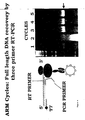
- cDNA can be generated and amplified by single-step reverse transcription - polymerase chain reaction (RT-PCR) on the ribosome-bound mRNA, thus avoiding completely the isolation and subsequent recovery of mRNA by procedures that are costly in terms of material and time.
- RT-PCR reverse transcription - polymerase chain reaction
- the ARM libraries are generated wholly by in vitro techniques (PCR) and do not require bacterial transformation, their size is limited mainly by the numbers of ribosomes which can be brought into the reaction mixture ( ⁇ 10 4 per ml in the rabbit reticulocyte kit, according to manufacturer's information) and the amount of DNA which can be handled conveniently per reaction. Hence the production of large libraries becomes much easier than in the phage display method, where the limiting factor is bacterial transformation.
- An important application is in the selection of proteins from large libraries of mutants; the library can be generated through PCR mutation either randomly or in a site-directed fashion and mutants with required specificity selected by antigen-binding.
- the present invention also provides a novel method for obtaining antibodies from libraries made from immunised mice, bypassing hybridoma technology.
- ribosome display method described herein is also applicable to any protein or peptide which, having been translated in vitro, remains bound to the ribosome and its encoding mRNA.
- examples showing the applicability of ARM display to antibodies we also demonstrate this more general application through translation of an mRNA library obtained directly from normal tissues for selection of individual polypeptide chains (Example 14).
- This version of ribosome display thus meets the need for a simple in vitro display system for proteins or peptides. It is capable of a very large library size, combined with ease and efficiency of selection and recovery of genetic information; it is also less demanding of special conditions, more sensitive and capable of greater levels of enrichment than methods described hitherto.
- the combination of a eukaryotic system with efficient mRNA recovery provides a system with a far greater efficiency than would have been predicted by those practiced in the art.
- V H /K three-domain single-chain fragments termed V H /K, in which the heavy chain variable domain (V H ) is linked to the complete light chain (K) (10).
- V H heavy chain variable domain
- K complete light chain
- DB3 R is a mutant in which tryptophan H100 was substituted by arginine, a modification which leads to an increased affinity for progesterone.
- DB3 R expressed from E. coli bound strongly to progesterone (Ka ⁇ 10 9 M -1 ) but had a much lower affinity for testosterone and none detectable for BSA.
- a library of mutants generated at position H35 (designated DB3 H35 ) bound progesterone weakly or not at all.
- PCR was performed using appropriate templates together with (i) an upstream T7 primer, containing the T7 promoter, protein initiation sequence and degenerate sequence complementary to mouse antibody 5' sequences, and (ii) a downstream primer (D1), lacking a stop codon ( Figure 2A ).
- standard PCR was carried out in solution containing 1x PCR reaction buffer (Boehringer Mannheim UK, Lewes.
- V H /K PCR constructs (1ng - 1 ⁇ g) either purified by QIAquick (QIAGEN) or unpurified, were added to 20 ⁇ l of the TNT T7 quick coupled transcription/ translation system (Promega UK Ltd, Southampton. Hants SO16 7NS, UK) containing 0.02mM methionine and the mixture incubated at 30° for 60min. The protocol can be scaled down to 10 ⁇ l. After translation the mixture was diluted with an equal volume of cold phosphate-buffered saline and cooled on ice for 2 min. (For optimisation of conditions, see the description in Examples 4 and 5 below).
- the upstream T7 primer including the T7 promoter and protein initiation signal. can be modified with improved yield.
- the modified sequence is [SEQ ID 5] 5'-gcagctaatacgactcactataggaacagaccaccatgsaggtcmarctcgagwagcwgg, as shown in Figure 2B .
- Magnetic beads (Dynal, UK) were coupled to bovine serum albumin [BSA], progesterone-11 ⁇ -BSA, testosterone-3-BSA (Sigma-Aldrich Co. Ltd., Poole, Dorset, UK) or purified rat anti-mouse ⁇ antibody (gift of Dr G Butcher) according to manufacturer's instructions. 2-3 ⁇ l of antigen- or anti- ⁇ -conjugated magnetic beads were added to the translation mixture and transferred to 4° for a further 60 min, with gentle vibration to prevent settling.
- BSA bovine serum albumin
- progesterone-11 ⁇ -BSA testosterone-3-BSA
- testosterone-3-BSA Sigma-Aldrich Co. Ltd., Poole, Dorset, UK
- purified rat anti-mouse ⁇ antibody gift of Dr G Butcher
- the beads were recovered by magnetic particle concentrator (Dynal MPC), washed 3 times with 50 ⁇ l cold, sterilised phosphate buffered saline (PBS), pH7.4, containing 0.1% BSA and 5mM magnesium acetate, and once with PBS alone.
- PBS sterilised phosphate buffered saline
- the beads were treated at 37°C for 25 min with DNase I (Promega or Boehringer Mannheim) in 50 ⁇ l Dnase I buffer (40mM Tris-HCl, pH7.5, 6mM MgCl 2 , 10mM NaCl, 10mM CaCl 2 ) containing 10 units of enzyme, followed by three washes with 50 ⁇ l PBS containing 1% tween-20, 5mM magnesium acetate and resuspension in 10 ⁇ l of diethylpyrocarbonate-treated water.
- DNase I Promega or Boehringer Mannheim
- RT-PCR was performed by adding 2 ⁇ l of the above bead suspension to 23 ⁇ l of the RT-PCR mixture (Titan One-tube RT-PCR System, Boehringer Mannheim, or Access RT-PCR system, Promega UK Ltd) containing 1 ⁇ M of each primer.
- the primers were the upstream T7 primer described above and a new downstream primer, D2, sequence 5'-cgtgagggtgctgctcatg-3', designed to hybridise at least 60 nt upstream of the 3'-end of ribosome-bound mRNA ( Figure 2A ).
- the PCR products produced as above were either gel-purified or added directly to the TNT transcription/translation system.
- the RT-PCR downstream primer D3 sequence [SEQ ID 11] 5'-ggggtagaagttgttcaagaag-3', was designed to hybridise upstream of D2 ( Figure 2A ); similarly in the third cycle the primer D4, [SEQ ID 12] 5'-ctggatggtgggaagatgg-3', hybridising upstream of D3, was used ( Figure 2A ).
- the recovered DNA becomes progressively shorter in each cycle, but a full length V H /K can be regenerated in any cycle by recombinational PCR. Moreover, the shortening only affects the constant domain of the light chain, not the antigen-binding region.
- each cycle required a new downstream primer (D2, D3, D4) due to the fact that the 3' end of the mRNA is covered by the ribosome and inaccessible to primer. While this avoids the need to separate the mRNA from the ribosome, it also causes as noted a shortening of the recovered cDNA in each cycle.
- EVOU a new primer which incorporates D2 and extends downstream. restoring most of the 3' cDNA sequence and which can be used in every cycle.
- the primers are the upstream T7 primer and the downstream primer D2, sequence [SEQ ID 14] 5'-cgtgagggtgctgctcatg-3', designed to hybridise at least 60 nt upstream of the 3' end of ribosome-bound mRNA, plus the primer EVOU which incorporates D2, as in Figure 2B .
- the PCR products produced as above were either gel-purified or added directly to the TNT transcription/translation system.
- the combination of D2 and EVOU primers was used in the RT-PCR at the each subsequent cycle.
- the recovered DNA is thus the same length in each cycle. ( Figure 4 ).
- the ribosome is stalled and the stable complex (nascent protein-ribosome-mRNA) forms because of the absence of a stop codon at the 3' end of the message. Since the ribosome is stalled at the 3' end of the mRNA. the latter should be inaccessible to a 3' primer and/or to reverse transcriptase necessitating the use of an upstream primer in the recovery of cDNA. This is confirmed by the experiment in Figure 3 .
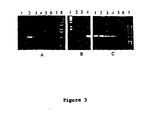
- DB3 R V H /K was translated in vitro and ARMs exposed to magnetic beads coupled either to progesterone-11 ⁇ -BSA, testosterone-3-BSA or BSA alone. After RT-PCR, a single DNA fragment was detected only from progesterone-11 ⁇ -BSA coupled beads ( Figure 5A , tracks 2,4,6), consistent with the known specificity of DB3 R V H /K. The recovered fragment was further confirmed as DB3 R by sequencing.
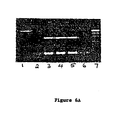
- Inhibition by free steroids can be used to demonstrate the correct folding and functional activity of the ARM complex ( Figure 6 ).
- the inhibition of DB3 V H /K expressed as an ARM, using different steroidal inhibitors, is indistinguishable from that of native DB3 and recombinant V H /K.
- the 50% inhibition by progesterone-11 ⁇ -HMS at 1ng (2.5nM) indicates an affinity very close to that of DB3 (data not shown).
- the free steroid inibitors were added to the DB3 ARM mixture in order to block binding to the progesterone-coated beads. They are progesterone-11 ⁇ -hemisuccinate (HMS) (P11), progesterone-3-carboxymethyloxime (P3); progesterone-6-HMS (P6) and progesterone-21-HMS (P21).
- HMS progesterone-11 ⁇ -hemisuccinate
- P3 progesterone-3-carboxymethyloxime
- P6 progesterone-6-HMS
- P21 progesterone-21-HMS
- EXAMPLE 3A OPTIMAL DTT CONCENTRATIONS FOR ARM DISPLAY
- protein disulphide isomerase PDI which is stated as being important for folding of antibody domains in the prokaryotic E. coli S30 system (15), is not required for eukaryotic ribosome display in the rabbit reticulocyte system.
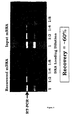
- mRNA for DB3 VH/K was prepared separately by transcription in vitro.
- the cDNA recovered after the processes of translation, ARM complex selection on progesterone beads and RT-PCR on the complexes was compared with that recovered directly from the unmanipulated input mRNA.
- the left hand 4 tracks show a titration of the cDNA obtained after recovery from the ARM cycle, while the right hand 4 tracks show that obtained from the input mRNA. Densitometry shows that about 60% of the possible cDNA is actually recovered after ARM selection.
- EXAMPLE 7 SENSITIVITY OF THE ARM CYCLE FOR INPUT DNA ( Figure 10)
- An essential parameter in the efficiency of the system is the sensitivity for input DNA, i.e. how little DNA can be used per cycle.
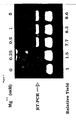
- This experiment in which DNA input was titrated, shows that a band can be recovered with an input as low as 10pg
- the running amount used routinely is 1-10ng (tracks 2 and 3).
- the sensitivity of the prokaryotic methods by titration is not reported, but the amount used in the Mattheakis method (14) is 440ng and by Hanes and Pluckthun (15) is 10 ⁇ gm. It is quite likely that the additional steps employed by the latter, namely recovery of mRNA prior to translation and again prior to reverse transcription, add greatly to the DNA requirement. This can be a critical element in the use of the method to search large libraries.
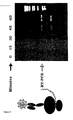
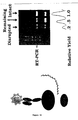
- the track labelled Intact shows our recovery after one cycle; the track labelled Disrupted is recovery by the disruption method; and track labelled Remaining is what is left behind on the ribosome after disruption.
- the relative yields were compared by densitometry and showed that recovery performed with the mRNA attached to the ribosome is 5x more efficient than ribosome disruption when applied to the eukaryotic system, and that with the disruption procedure a considerable proportion of the mRNA remains attached to the ribosome and is thus effectively lost.
- the recovery of cDNA by RT-PCR on the ribosome complex is an important contribution to the increased efficiency of the invention over prior art.
- An important aspect of the invention is its capacity for gradually modifying proteins in vitro, taking advantage of the introduction of random point mutations by the several polymerase reactions included in the cycle followed by ligand-based selection, i.e. protein evolution.
- a very high rate of mutation might render the system nonfunctional by damaging protein structure or combining site specificity.
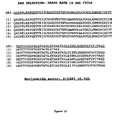
- the result in figure 12 shows an error rate of 0.54%, which is low enough to maintain structure but high enough steadily to introduce useful mutations to evolve improved protein capabilities, such as antibody binding site affinity.
- EXAMPLE 10 SELECTION OF AN INDIVIDUAL ANTIBODY COMBINING SITE FROM ARM DISPLAY LIBRARIES IN A SINGLE CYCLE. ( Figures 5 and 13).
- DB3 R was mixed with random DB3 H35 mutants which bind progesterone weakly or not at all (in the mutants, the H35 codon AAC was mutated to C/G T/A/G A).
- the DB3 H35 mutant library alone was displayed as ARM complexes, no DNA band was recoverable after selection with progesterone-11 ⁇ -BSA beads ( Figure 5B , track 3; Figure 5C , track 6); translation of DB3 H35 was demonstrated by the band obtained with beads coated with rat anti- ⁇ antibody ( Figure 5B , track 4).
- EXAMPLE 12 CHANGING ANTIBODY SPECIFICITY BY MUTAGENESIS AND ARM SELECTION FROM A MUTANT LIBRARY (ANTIBODY ENGINEERING) ( Figures 15-18)
- the mutant library was then displayed as ARM complexes and selected in one cycle by binding to testosterone-3-BSA beads.
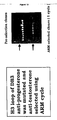
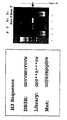
- the recovered cDNA was cloned; individual clones now mostly showed positive binding to testosterone-BSA with strong recovery reflecting good binding (lower part of the gel). This demonstrates that the ARM display method is effective in selective enrichment of mutant clones with new antigen-binding properties and that the ARM system can be used for rapid analysis of binding activity of antibody clones.
- Figure 17 shows the analysis of individual clones expressed as ARM complexes in vitro and tested for binding to progesterone-BSA and testosterone-BSA beads. Out of 5 clones analysed, 3 bound preferentially to testosterone. demonstrating the conversion in specificity from solely progesterone-binding (DB3 R ) to preferential binding of testosterone (clones 1-3).
- the source of such a library can be human lymphocytes from naturally immune or actively immunised individuals.
- human lymphocytes in order to respond to human antigens, many of which are important therapeutic targets, the human lymphocytes must develop in a nontolerising environment. This can be achieved through the use of transgenic mice, which have acquired the genes encoding human heavy and light chains in their genomes through embryo manipulation; the ability of these mice to make endogenous mouse antibody has been eliminated by introduction of knock-out deletions (20). Such mice respond to immunisation with human antigens by production of human antibodies (20).
- mice carrying a human heavy chain translocus comprising 5 V H genes, the complete D-J region and the C ⁇ and C ⁇ genes, together with a light chain translocus carrying 8 V L genes, the entire J region and the C ⁇ gene.
- the mice were immunised with progesterone-11 ⁇ -HMS-BSA and after 8 weeks the spleens were removed.
- a V H /K DNA library was prepared by RT-PCR amplification of the expressed V H and light chain genes followed by random combination through the standard V H /K linker sequence, using recombinational PCR; the stop codon was deleted from the 3' end of the light chain.
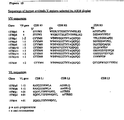
- the library was expressed in vitro as ARM complexes and selected using progesterone-BSA or testosterone-BSA coupled magnetic beads. Recovered cDNA was cloned and sequenced ( Figure 19 ). The sequences enabled human VH and VL genes to be identified and the CDR3 regions of the heavy chain to be compared. While there is repetitive selection of two human VH/VL combinations (VH4/Vk1-12 and VH1-2/Vk4-01) there is considerable diversity in the H3 sequences. However, one of the steroid contact residues identified from crystallography in the VH CDR2 of anti-steroid antibodies (W50, the first CDR2 residue) ) is universally present and a relevant aromatic is also often present around residue 100.
- ribosome display should be applicable to any protein which retains a selectable functionality, such as a binding site or an epitope, when bound in nascent form on the ribosome.
- a selectable functionality such as a binding site or an epitope
- This example demonstrates the use of ribosome display (1) to select a gene encoding an expressed protein starting with an mRNA extract obtained from mammalian cells, (2) to select a specific mRNA as a ribosome complex using an antibody attached to beads as the selecting agent, and (3) to recover the relevant gene by RT-PCR carried out on the ribosome-bound mRNA.
- mRNA was extracted by Pharmacia mRNA purification kit and directly expressed in vitro using the Promega TNT transcription/translation system. No attempt was made to remove the stop codon, but instead the reaction was stopped after 1 hour by cooling on ice. The translation mixture was exposed to monoclonal rat anti- ⁇ antibody linked to magnetic beads.
- Bound mRNA was converted to cDNA and amplified by RT-PCR using specific primers for the ⁇ chain and, as negative controls, for ⁇ light chain and IgG heavy chain.
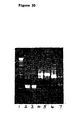
- the results are shown in Figure 20 .
- the cDNA bands in tracks 2, 4 and 6 were obtained directly from the mRNA library and show that mRNA for human ⁇ and ⁇ light chains and heavy chain respectively were present.
- a strong ⁇ light chain band was recovered after RT-PCR (track 4), with no band for ⁇ light chain (track 3) and a weak band for heavy chain (track 7), thus demonstrating the specific selection and recovery of ⁇ chain cDNA.
- this is the first experiment to show the selection of a protein from a natural library (i.e. derived from a normal tissue) by ribosome display.
Landscapes
- Chemical & Material Sciences (AREA)
- Life Sciences & Earth Sciences (AREA)
- Health & Medical Sciences (AREA)
- Genetics & Genomics (AREA)
- Organic Chemistry (AREA)
- Engineering & Computer Science (AREA)
- Wood Science & Technology (AREA)
- General Health & Medical Sciences (AREA)
- Biomedical Technology (AREA)
- Molecular Biology (AREA)
- Bioinformatics & Cheminformatics (AREA)
- Biophysics (AREA)
- General Engineering & Computer Science (AREA)
- Biotechnology (AREA)
- Biochemistry (AREA)
- Zoology (AREA)
- Physics & Mathematics (AREA)
- Crystallography & Structural Chemistry (AREA)
- Bioinformatics & Computational Biology (AREA)
- Plant Pathology (AREA)
- Proteomics, Peptides & Aminoacids (AREA)
- Microbiology (AREA)
- Medicinal Chemistry (AREA)
- Immunology (AREA)
- Peptides Or Proteins (AREA)
- Preparation Of Compounds By Using Micro-Organisms (AREA)
- Measuring Or Testing Involving Enzymes Or Micro-Organisms (AREA)
- Medicines That Contain Protein Lipid Enzymes And Other Medicines (AREA)
- Immobilizing And Processing Of Enzymes And Microorganisms (AREA)
Applications Claiming Priority (7)
| Application Number | Priority Date | Filing Date | Title |
|---|---|---|---|
| GB9710829 | 1997-05-28 | ||
| GBGB9710829.4A GB9710829D0 (en) | 1997-05-28 | 1997-05-28 | Selection particles for in vitro display and evolution of antibody combining sites |
| GB9724850 | 1997-11-26 | ||
| GBGB9724850.4A GB9724850D0 (en) | 1997-11-26 | 1997-11-26 | Selection particles for in vitro display and evolution of antibody combining sites |
| GBGB9804195.7A GB9804195D0 (en) | 1998-02-28 | 1998-02-28 | Selection particles for in vitro display and evolution of antibody combining sites |
| GB9804195 | 1998-02-28 | ||
| PCT/GB1998/001564 WO1998054312A1 (en) | 1997-05-28 | 1998-05-28 | Ribosome complexes as selection particles for in vitro display and evolution of proteins |
Publications (3)
| Publication Number | Publication Date |
|---|---|
| EP0985032A1 EP0985032A1 (en) | 2000-03-15 |
| EP0985032B1 EP0985032B1 (en) | 2003-09-24 |
| EP0985032B2 true EP0985032B2 (en) | 2009-06-03 |
Family
ID=27268863
Family Applications (1)
| Application Number | Title | Priority Date | Filing Date |
|---|---|---|---|
| EP98924468A Expired - Lifetime EP0985032B2 (en) | 1997-05-28 | 1998-05-28 | Ribosome complexes as selection particles for in vitro display and evolution of proteins |
Country Status (10)
| Country | Link |
|---|---|
| US (1) | US6620587B1 (enExample) |
| EP (1) | EP0985032B2 (enExample) |
| JP (1) | JP4060892B2 (enExample) |
| AT (1) | ATE250668T1 (enExample) |
| CA (1) | CA2291721C (enExample) |
| DE (1) | DE69818458T3 (enExample) |
| DK (1) | DK0985032T4 (enExample) |
| ES (1) | ES2209145T5 (enExample) |
| PT (1) | PT985032E (enExample) |
| WO (1) | WO1998054312A1 (enExample) |
Families Citing this family (77)
| Publication number | Priority date | Publication date | Assignee | Title |
|---|---|---|---|---|
| EP1092046A4 (en) * | 1998-07-02 | 2003-02-19 | Invitro Diagnostics Inc | METHODS, COMPOSITIONS AND DEVICE FOR MANUFACTURING NUCLEIC ACIDS HAVING SELECTIVE AFFINITY FOR A TARGET MOLECULE |
| DE19932688B4 (de) | 1999-07-13 | 2009-10-08 | Scil Proteins Gmbh | Design von Beta-Faltblatt-Proteinen des gamma-II-kristallins antikörperähnlichen |
| GB9917027D0 (en) * | 1999-07-20 | 1999-09-22 | Affibody Technology Sweeden Ab | In vitro selection and optional identification of polypeptides using solid support carriers |
| SG121902A1 (en) | 2000-01-11 | 2006-05-26 | Maxygen Inc | Integrated systems for diversity generation and screening |
| WO2001075097A2 (en) * | 2000-03-31 | 2001-10-11 | Cambridge Antibody Technology Limited | Improvements to ribosome display |
| EP1652919A1 (en) * | 2000-03-31 | 2006-05-03 | Cambridge Antibody Technology LTD | Improvements to ribosome display |
| US7129326B2 (en) | 2000-04-14 | 2006-10-31 | Genencor International, Inc. | Methods for selective targeting |
| EP1360500B1 (en) | 2000-04-14 | 2010-01-13 | Genencor International, Inc. | Methods for selective targeting |
| NZ528250A (en) | 2001-03-07 | 2006-09-29 | Childrens Medical Center | Method to screen peptide display libraries using minicell display |
| US7727713B2 (en) * | 2001-06-20 | 2010-06-01 | Nuevolution A/S | Templated molecules and methods for using such molecules |
| US20060234231A1 (en) * | 2001-06-20 | 2006-10-19 | Nuevolution A/S | Microarrays displaying encoded molecules |
| DE10145226A1 (de) * | 2001-09-13 | 2003-04-10 | Lifebits Ag | Herstellung von trägergebundenen Molekülen |
| DE10147074A1 (de) * | 2001-09-25 | 2003-05-08 | Beru Ag | Verfahren zum Betreiben einer aus mehreren Heizelementen bestehenden mehrstufigen elektrischen Heizung |
| DE20200926U1 (de) * | 2002-01-23 | 2002-04-18 | Hegenscheidt-MFD GmbH & Co. KG, 41812 Erkelenz | Festwalzgerät einer Festwalzmaschine für Kurbelwellen |
| US20050221318A1 (en) * | 2002-03-15 | 2005-10-06 | Gouliaev Alex H | Building block forming a c-c bond upon reaction |
| DE60324778D1 (de) | 2002-03-15 | 2009-01-02 | Nuevolution As | Eine verbesserte methode zur synthese von matritzenabhängigen molekülen |
| AU2003218630A1 (en) * | 2002-03-15 | 2003-09-29 | Nuevolution A/S | A building block capable of functional entity transfer to nucleophil |
| EP1487850A2 (en) * | 2002-03-15 | 2004-12-22 | Nuevolution A/S | A building block forming a c-c or a c-hetero atom bond upon reaction |
| US10731151B2 (en) | 2002-03-15 | 2020-08-04 | Nuevolution A/S | Method for synthesising templated molecules |
| AU2003247266A1 (en) * | 2002-08-01 | 2004-02-23 | Nuevolution A/S | Multi-step synthesis of templated molecules |
| AU2003260786B2 (en) | 2002-09-06 | 2008-03-13 | Isogenica Limited | In vitro peptide expression libraray |
| CN102838654B (zh) | 2002-10-30 | 2016-05-18 | 纽韦卢森公司 | 合成双功能复合物的方法 |
| CN102584951A (zh) | 2002-11-25 | 2012-07-18 | 金克克国际有限公司 | 皮肤或毛发结合肽 |
| DE60330406D1 (de) * | 2002-12-19 | 2010-01-14 | Nuevolution As | Durch quasizufallsstrukturen und funktionen geführte synthesemethode |
| US20070026397A1 (en) | 2003-02-21 | 2007-02-01 | Nuevolution A/S | Method for producing second-generation library |
| US20060269920A1 (en) * | 2003-02-21 | 2006-11-30 | Nuevolution A/S | Method for obtaining structural information about an encoded molecule |
| ATE431430T1 (de) * | 2003-03-19 | 2009-05-15 | Discerna Ltd | Gewinnung von dna |
| DK1608748T3 (da) * | 2003-03-20 | 2009-06-29 | Nuevolution As | Ligeringskodning af små molekyler |
| DE10324447A1 (de) | 2003-05-28 | 2004-12-30 | Scil Proteins Gmbh | Generierung künstlicher Bindungsproteine auf der Grundlage von Ubiquitin |
| GB0316314D0 (en) * | 2003-07-12 | 2003-08-13 | Univ Belfast | Method |
| ATE447626T1 (de) | 2003-09-18 | 2009-11-15 | Nuevolution As | Methode zur gewinnung struktureller informationen kodierter moleküle und zur selektion von verbindungen |
| US20090239211A1 (en) * | 2004-02-17 | 2009-09-24 | Nuevolution A/S | Method For Enrichment Involving Elimination By Mismatch Hybridisation |
| WO2005090566A2 (en) * | 2004-03-22 | 2005-09-29 | Nuevolution A/S | Ligational encoding using building block oligonucleotides |
| US20050250112A1 (en) * | 2004-05-07 | 2005-11-10 | Padmabandu Gothami A | Nucleic acids, compositions, methods, and kits for detecting mycoplasma and acholeplasma species |
| US9006393B1 (en) | 2004-08-26 | 2015-04-14 | Patricia L. Clark | Molecular constructs and uses thereof in ribosomal translational events |
| DE102004049479A1 (de) | 2004-10-11 | 2006-04-13 | Scil Proteins Gmbh | Proteinkonjugate zur Verwendung in Therapie, Diagnose und Chromatographie |
| LT3018206T (lt) | 2005-12-01 | 2021-12-10 | Nuevolution A/S | Fermentiniai kodavimo būdai, skirti didelių bibliotekų efektyviai sintezei |
| GB0605584D0 (en) | 2006-03-20 | 2006-04-26 | Olink Ab | Method for analyte detection using proximity probes |
| US7910695B2 (en) | 2006-06-29 | 2011-03-22 | The Invention Science Fund I, Llc | Methods for arbitrary peptide synthesis |
| US7879975B2 (en) * | 2006-06-29 | 2011-02-01 | The Invention Science Fund I, Llc | Methods for arbitrary peptide synthesis |
| US7777002B2 (en) * | 2006-06-29 | 2010-08-17 | The Invention Science Fund I, Llc | Methods for arbitrary peptide synthesis |
| US7879974B2 (en) * | 2006-06-29 | 2011-02-01 | The Invention Science Fund I, Llc | Methods for arbitrary peptide synthesis |
| US7923533B2 (en) * | 2006-06-29 | 2011-04-12 | The Invention Science Fund I, Llc | Methods for arbitrary peptide synthesis |
| EP1925664A1 (en) | 2006-11-15 | 2008-05-28 | Scil proteins GmbH | Artificial binding proteins based on a modified alpha helical region of ubiquitin |
| US8865179B2 (en) * | 2008-01-26 | 2014-10-21 | Swey-Shen Alexchen | Aptameric IgE peptides in a protein scaffold as an allergy vaccine |
| KR20110036638A (ko) | 2008-07-25 | 2011-04-07 | 리차드 더블유. 와그너 | 단백질 스크리닝 방법 |
| MX2011003381A (es) * | 2008-09-30 | 2011-04-21 | Abbott Lab | Metodo mejorado para despliegue de arn. |
| BR112012014417B1 (pt) | 2009-12-14 | 2021-11-09 | Scil Proteins Gmbh | Proteínas ubiquitinas modificadas tendo uma atividade de ligação específica para o extradomínio b de fibronectina |
| WO2011111832A1 (ja) | 2010-03-11 | 2011-09-15 | 独立行政法人理化学研究所 | ポリペプチド配列の選択方法、並びに金属酸化物または含珪素化合物結合ペプチドおよびその利用 |
| GB201004292D0 (en) | 2010-03-15 | 2010-04-28 | Olink Ab | Assay for localised detection of analytes |
| SI2558577T1 (sl) | 2010-04-16 | 2019-05-31 | Nuevolution A/S | Bifunkcionalni kompleksi in metode za pripravo in uporabo takšnih kompleksov |
| GB201011971D0 (en) | 2010-07-15 | 2010-09-01 | Olink Ab | Methods and product |
| WO2012049316A1 (en) | 2010-10-15 | 2012-04-19 | Olink Ab | Dynamic range methods |
| EP2466310A1 (en) | 2010-12-17 | 2012-06-20 | Helmholtz Zentrum München Deutsches Forschungszentrum für Gesundheit und Umwelt GmbH | Means and methods for detecting double-strand breaks |
| DE102010056289A1 (de) | 2010-12-24 | 2012-06-28 | Geneart Ag | Verfahren zur Herstellung von Leseraster-korrekten Fragment-Bibliotheken |
| GB201101621D0 (en) | 2011-01-31 | 2011-03-16 | Olink Ab | Method and product |
| JP5948673B2 (ja) | 2011-03-10 | 2016-07-06 | ジーンフロンティア株式会社 | リポ多糖混入量を低減した蛋白質合成用組成物、該組成物を用いた蛋白質製造方法 |
| GB201107863D0 (en) | 2011-05-11 | 2011-06-22 | Olink Ab | Method and product |
| WO2012161227A1 (ja) | 2011-05-23 | 2012-11-29 | 独立行政法人理化学研究所 | 核酸構築物、核酸-蛋白質複合体、及びその利用 |
| DK2721152T3 (da) | 2011-06-15 | 2019-07-01 | Navigo Proteins Gmbh | Dimere bindingsproteiner baseret på modificerede ubiquitiner |
| GB201201547D0 (en) | 2012-01-30 | 2012-03-14 | Olink Ab | Method and product |
| JP6814634B2 (ja) | 2014-02-05 | 2021-01-20 | モレキュラー テンプレーツ, インク.Molecular Templates, Inc. | リボ毒性の一時的な減少に基づき、細胞毒性組換えポリペプチドをスクリーニングし、選択し、同定する方法 |
| WO2016062989A1 (en) * | 2014-10-22 | 2016-04-28 | Crescendo Biologics Limited | Human vh domain scaffolds |
| EP3253785B1 (en) | 2015-02-06 | 2019-04-10 | Navigo Proteins Gmbh | Novel egfr binding proteins |
| DK3322721T3 (da) | 2015-07-16 | 2022-03-14 | Navigo Proteins Gmbh | Nye immunglobulin-bindende proteiner og deres anvendelse i affinitetsoprensning |
| JP2018520675A (ja) | 2015-07-20 | 2018-08-02 | ナフィゴ プロテインズ ゲゼルシャフト ミット ベシュレンクテル ハフツングNavigo Proteins GmbH | ジユビキチン変異タンパク質をベースとした新規結合タンパク質及びその生成方法 |
| KR20180085717A (ko) | 2015-09-24 | 2018-07-27 | 에이비비트로, 엘엘씨 | 친화성-올리고뉴클레오타이드 콘쥬게이트 및 그것의 사용 |
| AU2017260274A1 (en) | 2016-05-04 | 2018-11-01 | Navigo Proteins Gmbh | Targeted compounds for the site-specific coupling of chemical moieties comprising a peptide linker |
| US11230576B2 (en) | 2016-08-11 | 2022-01-25 | Navigo Proteins Gmbh | Alkaline stable immunoglobulin-binding proteins |
| AU2017332495A1 (en) | 2016-09-24 | 2019-04-11 | Abvitro Llc | Affinity-oligonucleotide conjugates and uses thereof |
| WO2019091918A1 (en) | 2017-11-07 | 2019-05-16 | Navigo Proteins Gmbh | Fusion proteins with specificity for ed-b and long serum half-life for diagnosis or treatment of cancer |
| KR20210104106A (ko) | 2018-12-18 | 2021-08-24 | 나피고 프로타인스 게엠베하 | 암 진단 및 치료를 위한 신규 folr1 특이적 결합 단백질 |
| EP4010481A4 (en) | 2019-08-09 | 2023-09-20 | Nutcracker Therapeutics, Inc. | MICROFLUIDIC DEVICE AND METHODS OF USE |
| US12704508B2 (en) | 2021-06-02 | 2026-08-11 | Alamar Biosciences, Inc. | Nucleic acid linked immune-sandwich assay (NULISA) |
| EP4382534A1 (en) | 2022-12-06 | 2024-06-12 | Biomérieux | Synthetic peptide for use in an immunomolecular assay |
| WO2024156899A1 (en) | 2023-01-27 | 2024-08-02 | Biomerieux | Modified immuno-molecular assay for faster biomarker detection |
| WO2025111396A1 (en) | 2023-11-20 | 2025-05-30 | Alamar Biosciences, Inc. | Molecular barcode set and use thereof in multiplex proximity detection assays |
Family Cites Families (3)
| Publication number | Priority date | Publication date | Assignee | Title |
|---|---|---|---|---|
| JPH06178688A (ja) | 1992-12-11 | 1994-06-28 | Mitsui Toatsu Chem Inc | E型緑膿菌を抗原とするヒト抗体をコードする遺伝子 |
| WO1995011922A1 (en) | 1993-10-29 | 1995-05-04 | Affymax Technologies N.V. | In vitro peptide and antibody display libraries |
| WO2001075097A2 (en) | 2000-03-31 | 2001-10-11 | Cambridge Antibody Technology Limited | Improvements to ribosome display |
-
1998
- 1998-05-28 DK DK98924468T patent/DK0985032T4/da active
- 1998-05-28 CA CA2291721A patent/CA2291721C/en not_active Expired - Fee Related
- 1998-05-28 WO PCT/GB1998/001564 patent/WO1998054312A1/en not_active Ceased
- 1998-05-28 EP EP98924468A patent/EP0985032B2/en not_active Expired - Lifetime
- 1998-05-28 JP JP50038699A patent/JP4060892B2/ja not_active Expired - Fee Related
- 1998-05-28 PT PT98924468T patent/PT985032E/pt unknown
- 1998-05-28 ES ES98924468T patent/ES2209145T5/es not_active Expired - Lifetime
- 1998-05-28 AT AT98924468T patent/ATE250668T1/de active
- 1998-05-28 US US09/424,712 patent/US6620587B1/en not_active Expired - Lifetime
- 1998-05-28 DE DE69818458T patent/DE69818458T3/de not_active Expired - Lifetime
Also Published As
| Publication number | Publication date |
|---|---|
| DE69818458T2 (de) | 2004-07-08 |
| CA2291721A1 (en) | 1998-12-03 |
| WO1998054312A1 (en) | 1998-12-03 |
| US6620587B1 (en) | 2003-09-16 |
| DK0985032T4 (da) | 2009-08-31 |
| AU7666698A (en) | 1998-12-30 |
| ES2209145T5 (es) | 2009-10-30 |
| CA2291721C (en) | 2011-08-09 |
| DK0985032T3 (da) | 2004-02-02 |
| EP0985032B1 (en) | 2003-09-24 |
| ATE250668T1 (de) | 2003-10-15 |
| JP2002500514A (ja) | 2002-01-08 |
| DE69818458D1 (de) | 2003-10-30 |
| EP0985032A1 (en) | 2000-03-15 |
| DE69818458T3 (de) | 2009-12-17 |
| AU725957B2 (en) | 2000-10-26 |
| PT985032E (pt) | 2004-02-27 |
| JP4060892B2 (ja) | 2008-03-12 |
| ES2209145T3 (es) | 2004-06-16 |
Similar Documents
| Publication | Publication Date | Title |
|---|---|---|
| EP0985032B1 (en) | Ribosome complexes as selection particles for in vitro display and evolution of proteins | |
| Irving et al. | Ribosome display and affinity maturation: from antibodies to single V-domains and steps towards cancer therapeutics | |
| Schaffitzel et al. | Ribosome display: an in vitro method for selection and evolution of antibodies from libraries | |
| US5922545A (en) | In vitro peptide and antibody display libraries | |
| He et al. | Ribosome display: cell-free protein display technology | |
| US12503693B2 (en) | Integrated system for library construction, affinity binder screening and expression thereof | |
| He et al. | Ribosome display of antibodies: expression, specificity and recovery in a eukaryotic system | |
| EP0975748A1 (en) | Methods dor identifying nucleic acid molecules encoding (poly)peptides that interact with target molecules | |
| KR20110076906A (ko) | 개선된 rna 디스플레이 방법 | |
| JP7772379B2 (ja) | 抗原特異的結合ポリペプチド遺伝子ディスプレイベクターの構築方法および用途 | |
| JP2003529369A (ja) | リボソーム・ディスプレイの改良 | |
| JP2003505041A (ja) | 固体支持体担体を用いる試験管内選択及びポリペプチドの任意の同定 | |
| KR20020008117A (ko) | Rna-단백질 융합체를 이용한 단백질의 선별 | |
| WO1995011922A1 (en) | In vitro peptide and antibody display libraries | |
| Contreras-Martínez et al. | Intracellular ribosome display via SecM translation arrest as a selection for antibodies with enhanced cytosolic stability | |
| AU2003253193B2 (en) | Novel tricistronic vectors and uses therefor | |
| EP2356231A2 (en) | Compatible display vector systems | |
| EP2364359A2 (en) | Compatible display vector systems | |
| CN102361980B (zh) | 不依赖信号序列的pIX噬菌体展示 | |
| AU725957C (en) | Ribosome complexes as selection particles for in vitro display and evolution of proteins | |
| EP3717682A1 (en) | An antibody fragment library, and uses thereof | |
| CN101558156B (zh) | 内化 | |
| WO2004083428A1 (en) | In vitro cloning methods | |
| TAUSSIG | 3.2 Selection of DB3R VH/K from libraries |
Legal Events
| Date | Code | Title | Description |
|---|---|---|---|
| PUAI | Public reference made under article 153(3) epc to a published international application that has entered the european phase |
Free format text: ORIGINAL CODE: 0009012 |
|
| 17P | Request for examination filed |
Effective date: 19991206 |
|
| AK | Designated contracting states |
Kind code of ref document: A1 Designated state(s): AT BE CH CY DE DK ES FI FR GB GR IE IT LI LU MC NL PT SE |
|
| RTI1 | Title (correction) |
Free format text: RIBOSOME COMPLEXES AS SELECTION PARTICLES FOR IN VITRO DISPLAY AND EVOLUTION OF PROTEINS |
|
| 17Q | First examination report despatched |
Effective date: 20010719 |
|
| RAP1 | Party data changed (applicant data changed or rights of an application transferred) |
Owner name: DISCERNA LIMITED |
|
| GRAH | Despatch of communication of intention to grant a patent |
Free format text: ORIGINAL CODE: EPIDOS IGRA |
|
| GRAS | Grant fee paid |
Free format text: ORIGINAL CODE: EPIDOSNIGR3 |
|
| GRAA | (expected) grant |
Free format text: ORIGINAL CODE: 0009210 |
|
| AK | Designated contracting states |
Kind code of ref document: B1 Designated state(s): AT BE CH CY DE DK ES FI FR GB GR IE IT LI LU MC NL PT SE |
|
| REG | Reference to a national code |
Ref country code: GB Ref legal event code: FG4D |
|
| REG | Reference to a national code |
Ref country code: CH Ref legal event code: EP |
|
| REG | Reference to a national code |
Ref country code: IE Ref legal event code: FG4D |
|
| REF | Corresponds to: |
Ref document number: 69818458 Country of ref document: DE Date of ref document: 20031030 Kind code of ref document: P |
|
| REG | Reference to a national code |
Ref country code: CH Ref legal event code: NV Representative=s name: ARNOLD & SIEDSMA AG |
|
| REG | Reference to a national code |
Ref country code: SE Ref legal event code: TRGR |
|
| REG | Reference to a national code |
Ref country code: DK Ref legal event code: T3 Ref country code: GR Ref legal event code: EP Ref document number: 20030405055 Country of ref document: GR |
|
| PLBQ | Unpublished change to opponent data |
Free format text: ORIGINAL CODE: EPIDOS OPPO |
|
| PLBI | Opposition filed |
Free format text: ORIGINAL CODE: 0009260 |
|
| REG | Reference to a national code |
Ref country code: GB Ref legal event code: 732E |
|
| 26 | Opposition filed |
Opponent name: CAMBRIDGE ANTIBODY TECHNOLOGY LIMITED Effective date: 20040305 |
|
| REG | Reference to a national code |
Ref country code: ES Ref legal event code: FG2A Ref document number: 2209145 Country of ref document: ES Kind code of ref document: T3 |
|
| NLR1 | Nl: opposition has been filed with the epo |
Opponent name: CAMBRIDGE ANTIBODY TECHNOLOGY LIMITED MI |
|
| ET | Fr: translation filed | ||
| PLAX | Notice of opposition and request to file observation + time limit sent |
Free format text: ORIGINAL CODE: EPIDOSNOBS2 |
|
| PLAX | Notice of opposition and request to file observation + time limit sent |
Free format text: ORIGINAL CODE: EPIDOSNOBS2 |
|
| PLAX | Notice of opposition and request to file observation + time limit sent |
Free format text: ORIGINAL CODE: EPIDOSNOBS2 |
|
| PLBB | Reply of patent proprietor to notice(s) of opposition received |
Free format text: ORIGINAL CODE: EPIDOSNOBS3 |
|
| APBP | Date of receipt of notice of appeal recorded |
Free format text: ORIGINAL CODE: EPIDOSNNOA2O |
|
| APAH | Appeal reference modified |
Free format text: ORIGINAL CODE: EPIDOSCREFNO |
|
| APBQ | Date of receipt of statement of grounds of appeal recorded |
Free format text: ORIGINAL CODE: EPIDOSNNOA3O |
|
| PLAB | Opposition data, opponent's data or that of the opponent's representative modified |
Free format text: ORIGINAL CODE: 0009299OPPO |
|
| R26 | Opposition filed (corrected) |
Opponent name: MEDIMMUNE LIMITED Effective date: 20040305 |
|
| APBU | Appeal procedure closed |
Free format text: ORIGINAL CODE: EPIDOSNNOA9O |
|
| NLR1 | Nl: opposition has been filed with the epo |
Opponent name: MEDIMMUNE LIMITED |
|
| PUAH | Patent maintained in amended form |
Free format text: ORIGINAL CODE: 0009272 |
|
| STAA | Information on the status of an ep patent application or granted ep patent |
Free format text: STATUS: PATENT MAINTAINED AS AMENDED |
|
| 27A | Patent maintained in amended form |
Effective date: 20090603 |
|
| AK | Designated contracting states |
Kind code of ref document: B2 Designated state(s): AT BE CH CY DE DK ES FI FR GB GR IE IT LI LU MC NL PT SE |
|
| REG | Reference to a national code |
Ref country code: CH Ref legal event code: AEN Free format text: AUFRECHTERHALTUNG DES PATENTES IN GEAENDERTER FORM |
|
| REG | Reference to a national code |
Ref country code: CH Ref legal event code: PUE Owner name: CRESCENDO BIOLOGICS LTD. Free format text: DISCERNA LIMITED#BABRAHAM HALL#BABRAHAM, CAMBRIDGE CB2 4AT (GB) -TRANSFER TO- CRESCENDO BIOLOGICS LTD.#MEDITRINA BUILDING BABRAHAM RESEARCH CAMPUS BABRAHAM#CAMBRIDGE CB22 3AT (GB) Ref country code: CH Ref legal event code: NV Representative=s name: SERVOPATENT GMBH |
|
| NLR2 | Nl: decision of opposition |
Effective date: 20090603 |
|
| REG | Reference to a national code |
Ref country code: SE Ref legal event code: RPEO |
|
| REG | Reference to a national code |
Ref country code: DK Ref legal event code: T4 |
|
| REG | Reference to a national code |
Ref country code: GR Ref legal event code: EP Ref document number: 20090402000 Country of ref document: GR |
|
| NLR3 | Nl: receipt of modified translations in the netherlands language after an opposition procedure | ||
| REG | Reference to a national code |
Ref country code: GB Ref legal event code: 732E Free format text: REGISTERED BETWEEN 20090924 AND 20090930 |
|
| REG | Reference to a national code |
Ref country code: ES Ref legal event code: DC2A Date of ref document: 20090819 Kind code of ref document: T5 |
|
| REG | Reference to a national code |
Ref country code: PT Ref legal event code: PC4A Owner name: CRESCENDO BIOLOGICS LTD., GB Effective date: 20091203 |
|
| RAP2 | Party data changed (patent owner data changed or rights of a patent transferred) |
Owner name: CRESCENDO BIOLOGICS LTD. |
|
| NLS | Nl: assignments of ep-patents |
Owner name: CRESCENDO BIOLOGICS LTD. Effective date: 20100205 |
|
| PGFP | Annual fee paid to national office [announced via postgrant information from national office to epo] |
Ref country code: MC Payment date: 20140527 Year of fee payment: 17 |
|
| PGFP | Annual fee paid to national office [announced via postgrant information from national office to epo] |
Ref country code: FI Payment date: 20140516 Year of fee payment: 17 Ref country code: ES Payment date: 20140528 Year of fee payment: 17 Ref country code: IT Payment date: 20140530 Year of fee payment: 17 Ref country code: GR Payment date: 20140528 Year of fee payment: 17 Ref country code: PT Payment date: 20140508 Year of fee payment: 17 |
|
| PGFP | Annual fee paid to national office [announced via postgrant information from national office to epo] |
Ref country code: CY Payment date: 20140515 Year of fee payment: 17 |
|
| REG | Reference to a national code |
Ref country code: FR Ref legal event code: PLFP Year of fee payment: 18 |
|
| PGFP | Annual fee paid to national office [announced via postgrant information from national office to epo] |
Ref country code: LU Payment date: 20150521 Year of fee payment: 18 |
|
| PGFP | Annual fee paid to national office [announced via postgrant information from national office to epo] |
Ref country code: DE Payment date: 20150520 Year of fee payment: 18 Ref country code: GB Payment date: 20150519 Year of fee payment: 18 Ref country code: SE Payment date: 20150511 Year of fee payment: 18 Ref country code: CH Payment date: 20150520 Year of fee payment: 18 Ref country code: DK Payment date: 20150522 Year of fee payment: 18 |
|
| PGFP | Annual fee paid to national office [announced via postgrant information from national office to epo] |
Ref country code: NL Payment date: 20150506 Year of fee payment: 18 Ref country code: IE Payment date: 20150511 Year of fee payment: 18 Ref country code: BE Payment date: 20150518 Year of fee payment: 18 Ref country code: AT Payment date: 20150520 Year of fee payment: 18 Ref country code: FR Payment date: 20150519 Year of fee payment: 18 |
|
| REG | Reference to a national code |
Ref country code: PT Ref legal event code: MM4A Free format text: LAPSE DUE TO NON-PAYMENT OF FEES Effective date: 20151130 |
|
| PG25 | Lapsed in a contracting state [announced via postgrant information from national office to epo] |
Ref country code: MC Free format text: LAPSE BECAUSE OF NON-PAYMENT OF DUE FEES Effective date: 20150601 Ref country code: IT Free format text: LAPSE BECAUSE OF NON-PAYMENT OF DUE FEES Effective date: 20150528 Ref country code: FI Free format text: LAPSE BECAUSE OF NON-PAYMENT OF DUE FEES Effective date: 20150528 Ref country code: GR Free format text: LAPSE BECAUSE OF NON-PAYMENT OF DUE FEES Effective date: 20151208 |
|
| PG25 | Lapsed in a contracting state [announced via postgrant information from national office to epo] |
Ref country code: PT Free format text: LAPSE BECAUSE OF NON-PAYMENT OF DUE FEES Effective date: 20151130 Ref country code: CY Free format text: LAPSE BECAUSE OF NON-PAYMENT OF DUE FEES Effective date: 20150528 |
|
| REG | Reference to a national code |
Ref country code: GR Ref legal event code: ML Ref document number: 20090402000 Country of ref document: GR Effective date: 20151208 |
|
| REG | Reference to a national code |
Ref country code: ES Ref legal event code: FD2A Effective date: 20160628 |
|
| PG25 | Lapsed in a contracting state [announced via postgrant information from national office to epo] |
Ref country code: ES Free format text: LAPSE BECAUSE OF NON-PAYMENT OF DUE FEES Effective date: 20150529 |
|
| PG25 | Lapsed in a contracting state [announced via postgrant information from national office to epo] |
Ref country code: BE Free format text: LAPSE BECAUSE OF NON-PAYMENT OF DUE FEES Effective date: 20160531 |
|
| REG | Reference to a national code |
Ref country code: DE Ref legal event code: R119 Ref document number: 69818458 Country of ref document: DE |
|
| PG25 | Lapsed in a contracting state [announced via postgrant information from national office to epo] |
Ref country code: LU Free format text: LAPSE BECAUSE OF NON-PAYMENT OF DUE FEES Effective date: 20160528 |
|
| REG | Reference to a national code |
Ref country code: CH Ref legal event code: PL |
|
| REG | Reference to a national code |
Ref country code: DK Ref legal event code: EBP Effective date: 20160531 |
|
| REG | Reference to a national code |
Ref country code: NL Ref legal event code: MM Effective date: 20160601 |
|
| REG | Reference to a national code |
Ref country code: AT Ref legal event code: MM01 Ref document number: 250668 Country of ref document: AT Kind code of ref document: T Effective date: 20160528 |
|
| GBPC | Gb: european patent ceased through non-payment of renewal fee |
Effective date: 20160528 |
|
| PG25 | Lapsed in a contracting state [announced via postgrant information from national office to epo] |
Ref country code: CH Free format text: LAPSE BECAUSE OF NON-PAYMENT OF DUE FEES Effective date: 20160531 Ref country code: LI Free format text: LAPSE BECAUSE OF NON-PAYMENT OF DUE FEES Effective date: 20160531 |
|
| REG | Reference to a national code |
Ref country code: IE Ref legal event code: MM4A |
|
| PG25 | Lapsed in a contracting state [announced via postgrant information from national office to epo] |
Ref country code: SE Free format text: LAPSE BECAUSE OF NON-PAYMENT OF DUE FEES Effective date: 20160529 Ref country code: NL Free format text: LAPSE BECAUSE OF NON-PAYMENT OF DUE FEES Effective date: 20160601 Ref country code: AT Free format text: LAPSE BECAUSE OF NON-PAYMENT OF DUE FEES Effective date: 20160528 |
|
| REG | Reference to a national code |
Ref country code: FR Ref legal event code: ST Effective date: 20170131 |
|
| PG25 | Lapsed in a contracting state [announced via postgrant information from national office to epo] |
Ref country code: FR Free format text: LAPSE BECAUSE OF NON-PAYMENT OF DUE FEES Effective date: 20160531 Ref country code: DE Free format text: LAPSE BECAUSE OF NON-PAYMENT OF DUE FEES Effective date: 20161201 |
|
| PG25 | Lapsed in a contracting state [announced via postgrant information from national office to epo] |
Ref country code: DK Free format text: LAPSE BECAUSE OF NON-PAYMENT OF DUE FEES Effective date: 20160531 Ref country code: IE Free format text: LAPSE BECAUSE OF NON-PAYMENT OF DUE FEES Effective date: 20160528 Ref country code: GB Free format text: LAPSE BECAUSE OF NON-PAYMENT OF DUE FEES Effective date: 20160528 |