EP0802259B1 - Cyclodextringlycosyltransferasen zur Produktion von gamma-Cyclodextrin - Google Patents
Cyclodextringlycosyltransferasen zur Produktion von gamma-Cyclodextrin Download PDFInfo
- Publication number
- EP0802259B1 EP0802259B1 EP97106357A EP97106357A EP0802259B1 EP 0802259 B1 EP0802259 B1 EP 0802259B1 EP 97106357 A EP97106357 A EP 97106357A EP 97106357 A EP97106357 A EP 97106357A EP 0802259 B1 EP0802259 B1 EP 0802259B1
- Authority
- EP
- European Patent Office
- Prior art keywords
- cgtase
- amino acid
- starting
- sequence
- mutant
- Prior art date
- Legal status (The legal status is an assumption and is not a legal conclusion. Google has not performed a legal analysis and makes no representation as to the accuracy of the status listed.)
- Expired - Lifetime
Links
- GDSRMADSINPKSL-HSEONFRVSA-N gamma-cyclodextrin Chemical compound OC[C@H]([C@H]([C@@H]([C@H]1O)O)O[C@H]2O[C@@H]([C@@H](O[C@H]3O[C@H](CO)[C@H]([C@@H]([C@H]3O)O)O[C@H]3O[C@H](CO)[C@H]([C@@H]([C@H]3O)O)O[C@H]3O[C@H](CO)[C@H]([C@@H]([C@H]3O)O)O[C@H]3O[C@H](CO)[C@H]([C@@H]([C@H]3O)O)O[C@H]3O[C@H](CO)[C@H]([C@@H]([C@H]3O)O)O3)[C@H](O)[C@H]2O)CO)O[C@@H]1O[C@H]1[C@H](O)[C@@H](O)[C@@H]3O[C@@H]1CO GDSRMADSINPKSL-HSEONFRVSA-N 0.000 title claims description 54
- 238000004519 manufacturing process Methods 0.000 title claims description 31
- 229920000858 Cyclodextrin Polymers 0.000 title description 32
- HFHDHCJBZVLPGP-UHFFFAOYSA-N schardinger α-dextrin Chemical compound O1C(C(C2O)O)C(CO)OC2OC(C(C2O)O)C(CO)OC2OC(C(C2O)O)C(CO)OC2OC(C(O)C2O)C(CO)OC2OC(C(C2O)O)C(CO)OC2OC2C(O)C(O)C1OC2CO HFHDHCJBZVLPGP-UHFFFAOYSA-N 0.000 title description 15
- 229940080345 gamma-cyclodextrin Drugs 0.000 title description 5
- 102000000340 Glucosyltransferases Human genes 0.000 title 1
- 108010055629 Glucosyltransferases Proteins 0.000 title 1
- 108010025880 Cyclomaltodextrin glucanotransferase Proteins 0.000 claims description 155
- 125000003275 alpha amino acid group Chemical group 0.000 claims description 49
- 238000000034 method Methods 0.000 claims description 40
- 238000002703 mutagenesis Methods 0.000 claims description 34
- 231100000350 mutagenesis Toxicity 0.000 claims description 34
- 125000000539 amino acid group Chemical group 0.000 claims description 33
- 108090000623 proteins and genes Proteins 0.000 claims description 33
- 230000000694 effects Effects 0.000 claims description 27
- 108020004414 DNA Proteins 0.000 claims description 23
- 238000012217 deletion Methods 0.000 claims description 23
- 230000037430 deletion Effects 0.000 claims description 23
- 229920002472 Starch Polymers 0.000 claims description 20
- 239000008107 starch Substances 0.000 claims description 20
- 235000019698 starch Nutrition 0.000 claims description 20
- 150000001413 amino acids Chemical class 0.000 claims description 18
- 108091028043 Nucleic acid sequence Proteins 0.000 claims description 12
- 108010076504 Protein Sorting Signals Proteins 0.000 claims description 8
- 102000004169 proteins and genes Human genes 0.000 claims description 8
- 244000005700 microbiome Species 0.000 claims description 5
- 239000000758 substrate Substances 0.000 claims description 5
- 239000012634 fragment Substances 0.000 description 27
- WHGYBXFWUBPSRW-FOUAGVGXSA-N beta-cyclodextrin Chemical compound OC[C@H]([C@H]([C@@H]([C@H]1O)O)O[C@H]2O[C@@H]([C@@H](O[C@H]3O[C@H](CO)[C@H]([C@@H]([C@H]3O)O)O[C@H]3O[C@H](CO)[C@H]([C@@H]([C@H]3O)O)O[C@H]3O[C@H](CO)[C@H]([C@@H]([C@H]3O)O)O[C@H]3O[C@H](CO)[C@H]([C@@H]([C@H]3O)O)O3)[C@H](O)[C@H]2O)CO)O[C@@H]1O[C@H]1[C@H](O)[C@@H](O)[C@@H]3O[C@@H]1CO WHGYBXFWUBPSRW-FOUAGVGXSA-N 0.000 description 24
- 102000004190 Enzymes Human genes 0.000 description 23
- 108090000790 Enzymes Proteins 0.000 description 23
- 239000000047 product Substances 0.000 description 19
- 241000194110 Bacillus sp. (in: Bacteria) Species 0.000 description 18
- 241000193752 Bacillus circulans Species 0.000 description 17
- 108091034117 Oligonucleotide Proteins 0.000 description 13
- HFHDHCJBZVLPGP-RWMJIURBSA-N alpha-cyclodextrin Chemical compound OC[C@H]([C@H]([C@@H]([C@H]1O)O)O[C@H]2O[C@@H]([C@@H](O[C@H]3O[C@H](CO)[C@H]([C@@H]([C@H]3O)O)O[C@H]3O[C@H](CO)[C@H]([C@@H]([C@H]3O)O)O[C@H]3O[C@H](CO)[C@H]([C@@H]([C@H]3O)O)O3)[C@H](O)[C@H]2O)CO)O[C@@H]1O[C@H]1[C@H](O)[C@@H](O)[C@@H]3O[C@@H]1CO HFHDHCJBZVLPGP-RWMJIURBSA-N 0.000 description 12
- LFQSCWFLJHTTHZ-UHFFFAOYSA-N Ethanol Chemical compound CCO LFQSCWFLJHTTHZ-UHFFFAOYSA-N 0.000 description 11
- 241000588724 Escherichia coli Species 0.000 description 10
- 229940097362 cyclodextrins Drugs 0.000 description 10
- 230000008569 process Effects 0.000 description 10
- 108020004705 Codon Proteins 0.000 description 9
- 230000015572 biosynthetic process Effects 0.000 description 9
- 239000000203 mixture Substances 0.000 description 9
- 125000003729 nucleotide group Chemical group 0.000 description 9
- 229920002684 Sepharose Polymers 0.000 description 8
- 230000000692 anti-sense effect Effects 0.000 description 8
- 238000006243 chemical reaction Methods 0.000 description 8
- 230000035772 mutation Effects 0.000 description 8
- 239000002773 nucleotide Substances 0.000 description 8
- 239000000243 solution Substances 0.000 description 8
- 108010061982 DNA Ligases Proteins 0.000 description 6
- 102000012410 DNA Ligases Human genes 0.000 description 6
- HEMHJVSKTPXQMS-UHFFFAOYSA-M Sodium hydroxide Chemical compound [OH-].[Na+] HEMHJVSKTPXQMS-UHFFFAOYSA-M 0.000 description 6
- 239000000872 buffer Substances 0.000 description 6
- 108090000765 processed proteins & peptides Proteins 0.000 description 6
- 108091008146 restriction endonucleases Proteins 0.000 description 6
- 102000053602 DNA Human genes 0.000 description 5
- 241000178960 Paenibacillus macerans Species 0.000 description 5
- GSEJCLTVZPLZKY-UHFFFAOYSA-N Triethanolamine Chemical compound OCCN(CCO)CCO GSEJCLTVZPLZKY-UHFFFAOYSA-N 0.000 description 4
- 238000005119 centrifugation Methods 0.000 description 4
- 239000013613 expression plasmid Substances 0.000 description 4
- 238000000338 in vitro Methods 0.000 description 4
- 238000003786 synthesis reaction Methods 0.000 description 4
- FWMNVWWHGCHHJJ-SKKKGAJSSA-N 4-amino-1-[(2r)-6-amino-2-[[(2r)-2-[[(2r)-2-[[(2r)-2-amino-3-phenylpropanoyl]amino]-3-phenylpropanoyl]amino]-4-methylpentanoyl]amino]hexanoyl]piperidine-4-carboxylic acid Chemical compound C([C@H](C(=O)N[C@H](CC(C)C)C(=O)N[C@H](CCCCN)C(=O)N1CCC(N)(CC1)C(O)=O)NC(=O)[C@H](N)CC=1C=CC=CC=1)C1=CC=CC=C1 FWMNVWWHGCHHJJ-SKKKGAJSSA-N 0.000 description 3
- 241000193407 Bacillus ohbensis Species 0.000 description 3
- OKKJLVBELUTLKV-UHFFFAOYSA-N Methanol Chemical compound OC OKKJLVBELUTLKV-UHFFFAOYSA-N 0.000 description 3
- 238000012300 Sequence Analysis Methods 0.000 description 3
- JLCPHMBAVCMARE-UHFFFAOYSA-N [3-[[3-[[3-[[3-[[3-[[3-[[3-[[3-[[3-[[3-[[3-[[5-(2-amino-6-oxo-1H-purin-9-yl)-3-[[3-[[3-[[3-[[3-[[3-[[5-(2-amino-6-oxo-1H-purin-9-yl)-3-[[5-(2-amino-6-oxo-1H-purin-9-yl)-3-hydroxyoxolan-2-yl]methoxy-hydroxyphosphoryl]oxyoxolan-2-yl]methoxy-hydroxyphosphoryl]oxy-5-(5-methyl-2,4-dioxopyrimidin-1-yl)oxolan-2-yl]methoxy-hydroxyphosphoryl]oxy-5-(6-aminopurin-9-yl)oxolan-2-yl]methoxy-hydroxyphosphoryl]oxy-5-(6-aminopurin-9-yl)oxolan-2-yl]methoxy-hydroxyphosphoryl]oxy-5-(6-aminopurin-9-yl)oxolan-2-yl]methoxy-hydroxyphosphoryl]oxy-5-(6-aminopurin-9-yl)oxolan-2-yl]methoxy-hydroxyphosphoryl]oxyoxolan-2-yl]methoxy-hydroxyphosphoryl]oxy-5-(5-methyl-2,4-dioxopyrimidin-1-yl)oxolan-2-yl]methoxy-hydroxyphosphoryl]oxy-5-(4-amino-2-oxopyrimidin-1-yl)oxolan-2-yl]methoxy-hydroxyphosphoryl]oxy-5-(5-methyl-2,4-dioxopyrimidin-1-yl)oxolan-2-yl]methoxy-hydroxyphosphoryl]oxy-5-(5-methyl-2,4-dioxopyrimidin-1-yl)oxolan-2-yl]methoxy-hydroxyphosphoryl]oxy-5-(6-aminopurin-9-yl)oxolan-2-yl]methoxy-hydroxyphosphoryl]oxy-5-(6-aminopurin-9-yl)oxolan-2-yl]methoxy-hydroxyphosphoryl]oxy-5-(4-amino-2-oxopyrimidin-1-yl)oxolan-2-yl]methoxy-hydroxyphosphoryl]oxy-5-(4-amino-2-oxopyrimidin-1-yl)oxolan-2-yl]methoxy-hydroxyphosphoryl]oxy-5-(4-amino-2-oxopyrimidin-1-yl)oxolan-2-yl]methoxy-hydroxyphosphoryl]oxy-5-(6-aminopurin-9-yl)oxolan-2-yl]methoxy-hydroxyphosphoryl]oxy-5-(4-amino-2-oxopyrimidin-1-yl)oxolan-2-yl]methyl [5-(6-aminopurin-9-yl)-2-(hydroxymethyl)oxolan-3-yl] hydrogen phosphate Polymers Cc1cn(C2CC(OP(O)(=O)OCC3OC(CC3OP(O)(=O)OCC3OC(CC3O)n3cnc4c3nc(N)[nH]c4=O)n3cnc4c3nc(N)[nH]c4=O)C(COP(O)(=O)OC3CC(OC3COP(O)(=O)OC3CC(OC3COP(O)(=O)OC3CC(OC3COP(O)(=O)OC3CC(OC3COP(O)(=O)OC3CC(OC3COP(O)(=O)OC3CC(OC3COP(O)(=O)OC3CC(OC3COP(O)(=O)OC3CC(OC3COP(O)(=O)OC3CC(OC3COP(O)(=O)OC3CC(OC3COP(O)(=O)OC3CC(OC3COP(O)(=O)OC3CC(OC3COP(O)(=O)OC3CC(OC3COP(O)(=O)OC3CC(OC3COP(O)(=O)OC3CC(OC3COP(O)(=O)OC3CC(OC3COP(O)(=O)OC3CC(OC3CO)n3cnc4c(N)ncnc34)n3ccc(N)nc3=O)n3cnc4c(N)ncnc34)n3ccc(N)nc3=O)n3ccc(N)nc3=O)n3ccc(N)nc3=O)n3cnc4c(N)ncnc34)n3cnc4c(N)ncnc34)n3cc(C)c(=O)[nH]c3=O)n3cc(C)c(=O)[nH]c3=O)n3ccc(N)nc3=O)n3cc(C)c(=O)[nH]c3=O)n3cnc4c3nc(N)[nH]c4=O)n3cnc4c(N)ncnc34)n3cnc4c(N)ncnc34)n3cnc4c(N)ncnc34)n3cnc4c(N)ncnc34)O2)c(=O)[nH]c1=O JLCPHMBAVCMARE-UHFFFAOYSA-N 0.000 description 3
- 238000013459 approach Methods 0.000 description 3
- 239000008139 complexing agent Substances 0.000 description 3
- 230000008878 coupling Effects 0.000 description 3
- 238000010168 coupling process Methods 0.000 description 3
- 238000005859 coupling reaction Methods 0.000 description 3
- 238000010369 molecular cloning Methods 0.000 description 3
- 230000009466 transformation Effects 0.000 description 3
- 102000004594 DNA Polymerase I Human genes 0.000 description 2
- 108010017826 DNA Polymerase I Proteins 0.000 description 2
- 241001646716 Escherichia coli K-12 Species 0.000 description 2
- 229920005654 Sephadex Polymers 0.000 description 2
- 239000012507 Sephadex™ Substances 0.000 description 2
- 108020004682 Single-Stranded DNA Proteins 0.000 description 2
- FAPWRFPIFSIZLT-UHFFFAOYSA-M Sodium chloride Chemical compound [Na+].[Cl-] FAPWRFPIFSIZLT-UHFFFAOYSA-M 0.000 description 2
- 239000007983 Tris buffer Substances 0.000 description 2
- 239000002253 acid Substances 0.000 description 2
- 150000007513 acids Chemical class 0.000 description 2
- 230000008901 benefit Effects 0.000 description 2
- 235000011175 beta-cyclodextrine Nutrition 0.000 description 2
- 238000010668 complexation reaction Methods 0.000 description 2
- 239000012228 culture supernatant Substances 0.000 description 2
- ZGEHHVDYDNXYMW-UHFFFAOYSA-N cyclohexadec-8-en-1-one Chemical compound O=C1CCCCCCCC=CCCCCCC1 ZGEHHVDYDNXYMW-UHFFFAOYSA-N 0.000 description 2
- SUYVUBYJARFZHO-RRKCRQDMSA-N dATP Chemical compound C1=NC=2C(N)=NC=NC=2N1[C@H]1C[C@H](O)[C@@H](COP(O)(=O)OP(O)(=O)OP(O)(O)=O)O1 SUYVUBYJARFZHO-RRKCRQDMSA-N 0.000 description 2
- SUYVUBYJARFZHO-UHFFFAOYSA-N dATP Natural products C1=NC=2C(N)=NC=NC=2N1C1CC(O)C(COP(O)(=O)OP(O)(=O)OP(O)(O)=O)O1 SUYVUBYJARFZHO-UHFFFAOYSA-N 0.000 description 2
- RGWHQCVHVJXOKC-SHYZEUOFSA-J dCTP(4-) Chemical compound O=C1N=C(N)C=CN1[C@@H]1O[C@H](COP([O-])(=O)OP([O-])(=O)OP([O-])([O-])=O)[C@@H](O)C1 RGWHQCVHVJXOKC-SHYZEUOFSA-J 0.000 description 2
- HAAZLUGHYHWQIW-KVQBGUIXSA-N dGTP Chemical compound C1=NC=2C(=O)NC(N)=NC=2N1[C@H]1C[C@H](O)[C@@H](COP(O)(=O)OP(O)(=O)OP(O)(O)=O)O1 HAAZLUGHYHWQIW-KVQBGUIXSA-N 0.000 description 2
- NHVNXKFIZYSCEB-XLPZGREQSA-N dTTP Chemical compound O=C1NC(=O)C(C)=CN1[C@@H]1O[C@H](COP(O)(=O)OP(O)(=O)OP(O)(O)=O)[C@@H](O)C1 NHVNXKFIZYSCEB-XLPZGREQSA-N 0.000 description 2
- 230000002255 enzymatic effect Effects 0.000 description 2
- 108010052305 exodeoxyribonuclease III Proteins 0.000 description 2
- 238000000855 fermentation Methods 0.000 description 2
- 230000004151 fermentation Effects 0.000 description 2
- 125000002791 glucosyl group Chemical group C1([C@H](O)[C@@H](O)[C@H](O)[C@H](O1)CO)* 0.000 description 2
- 238000001727 in vivo Methods 0.000 description 2
- 238000011534 incubation Methods 0.000 description 2
- 239000000463 material Substances 0.000 description 2
- 108020004707 nucleic acids Proteins 0.000 description 2
- 102000039446 nucleic acids Human genes 0.000 description 2
- 150000007523 nucleic acids Chemical class 0.000 description 2
- 238000001556 precipitation Methods 0.000 description 2
- 239000011541 reaction mixture Substances 0.000 description 2
- 230000028327 secretion Effects 0.000 description 2
- 238000010561 standard procedure Methods 0.000 description 2
- LENZDBCJOHFCAS-UHFFFAOYSA-N tris Chemical compound OCC(N)(CO)CO LENZDBCJOHFCAS-UHFFFAOYSA-N 0.000 description 2
- XLYOFNOQVPJJNP-UHFFFAOYSA-N water Substances O XLYOFNOQVPJJNP-UHFFFAOYSA-N 0.000 description 2
- OWEGMIWEEQEYGQ-UHFFFAOYSA-N 100676-05-9 Natural products OC1C(O)C(O)C(CO)OC1OCC1C(O)C(O)C(O)C(OC2C(OC(O)C(O)C2O)CO)O1 OWEGMIWEEQEYGQ-UHFFFAOYSA-N 0.000 description 1
- WTLKTXIHIHFSGU-UHFFFAOYSA-N 2-nitrosoguanidine Chemical compound NC(N)=NN=O WTLKTXIHIHFSGU-UHFFFAOYSA-N 0.000 description 1
- 229920001450 Alpha-Cyclodextrin Polymers 0.000 description 1
- 241000304886 Bacilli Species 0.000 description 1
- 241000193830 Bacillus <bacterium> Species 0.000 description 1
- 241000194107 Bacillus megaterium Species 0.000 description 1
- 241001147761 Bacillus sp. 1-1 Species 0.000 description 1
- 244000063299 Bacillus subtilis Species 0.000 description 1
- 235000014469 Bacillus subtilis Nutrition 0.000 description 1
- 241000894006 Bacteria Species 0.000 description 1
- BTBUEUYNUDRHOZ-UHFFFAOYSA-N Borate Chemical compound [O-]B([O-])[O-] BTBUEUYNUDRHOZ-UHFFFAOYSA-N 0.000 description 1
- 108020004635 Complementary DNA Proteins 0.000 description 1
- 102000016928 DNA-directed DNA polymerase Human genes 0.000 description 1
- 108010014303 DNA-directed DNA polymerase Proteins 0.000 description 1
- 239000004593 Epoxy Substances 0.000 description 1
- PLUBXMRUUVWRLT-UHFFFAOYSA-N Ethyl methanesulfonate Chemical compound CCOS(C)(=O)=O PLUBXMRUUVWRLT-UHFFFAOYSA-N 0.000 description 1
- 239000001116 FEMA 4028 Substances 0.000 description 1
- 241000193385 Geobacillus stearothermophilus Species 0.000 description 1
- WQZGKKKJIJFFOK-GASJEMHNSA-N Glucose Natural products OC[C@H]1OC(O)[C@H](O)[C@@H](O)[C@@H]1O WQZGKKKJIJFFOK-GASJEMHNSA-N 0.000 description 1
- 108700023372 Glycosyltransferases Proteins 0.000 description 1
- 102000051366 Glycosyltransferases Human genes 0.000 description 1
- 241000588749 Klebsiella oxytoca Species 0.000 description 1
- GUBGYTABKSRVRQ-QKKXKWKRSA-N Lactose Natural products OC[C@H]1O[C@@H](O[C@H]2[C@H](O)[C@@H](O)C(O)O[C@@H]2CO)[C@H](O)[C@@H](O)[C@H]1O GUBGYTABKSRVRQ-QKKXKWKRSA-N 0.000 description 1
- GUBGYTABKSRVRQ-PICCSMPSSA-N Maltose Natural products O[C@@H]1[C@@H](O)[C@H](O)[C@@H](CO)O[C@@H]1O[C@@H]1[C@@H](CO)OC(O)[C@H](O)[C@H]1O GUBGYTABKSRVRQ-PICCSMPSSA-N 0.000 description 1
- 241000191936 Micrococcus sp. Species 0.000 description 1
- 239000000020 Nitrocellulose Substances 0.000 description 1
- 108010021757 Polynucleotide 5'-Hydroxyl-Kinase Proteins 0.000 description 1
- 102000008422 Polynucleotide 5'-hydroxyl-kinase Human genes 0.000 description 1
- 108020004511 Recombinant DNA Proteins 0.000 description 1
- BMPPMAOOKQJYIP-WMZOPIPTSA-N Tyr-Trp Chemical compound C([C@H]([NH3+])C(=O)N[C@@H](CC=1C2=CC=CC=C2NC=1)C([O-])=O)C1=CC=C(O)C=C1 BMPPMAOOKQJYIP-WMZOPIPTSA-N 0.000 description 1
- 239000008351 acetate buffer Substances 0.000 description 1
- 239000008186 active pharmaceutical agent Substances 0.000 description 1
- 238000001261 affinity purification Methods 0.000 description 1
- AVKUERGKIZMTKX-NJBDSQKTSA-N ampicillin Chemical compound C1([C@@H](N)C(=O)N[C@H]2[C@H]3SC([C@@H](N3C2=O)C(O)=O)(C)C)=CC=CC=C1 AVKUERGKIZMTKX-NJBDSQKTSA-N 0.000 description 1
- 229960000723 ampicillin Drugs 0.000 description 1
- 238000010171 animal model Methods 0.000 description 1
- 239000007864 aqueous solution Substances 0.000 description 1
- 229960004853 betadex Drugs 0.000 description 1
- 238000010804 cDNA synthesis Methods 0.000 description 1
- 230000015556 catabolic process Effects 0.000 description 1
- 238000004113 cell culture Methods 0.000 description 1
- 239000013611 chromosomal DNA Substances 0.000 description 1
- 230000002759 chromosomal effect Effects 0.000 description 1
- 238000004140 cleaning Methods 0.000 description 1
- 230000000295 complement effect Effects 0.000 description 1
- 239000002299 complementary DNA Substances 0.000 description 1
- 238000006731 degradation reaction Methods 0.000 description 1
- 230000001419 dependent effect Effects 0.000 description 1
- 238000009826 distribution Methods 0.000 description 1
- 238000010828 elution Methods 0.000 description 1
- 238000002474 experimental method Methods 0.000 description 1
- 230000002068 genetic effect Effects 0.000 description 1
- 239000008103 glucose Substances 0.000 description 1
- 108700014210 glycosyltransferase activity proteins Proteins 0.000 description 1
- 238000004128 high performance liquid chromatography Methods 0.000 description 1
- 230000002209 hydrophobic effect Effects 0.000 description 1
- 230000002779 inactivation Effects 0.000 description 1
- 238000009776 industrial production Methods 0.000 description 1
- 238000001990 intravenous administration Methods 0.000 description 1
- 239000008101 lactose Substances 0.000 description 1
- 231100000053 low toxicity Toxicity 0.000 description 1
- 238000012986 modification Methods 0.000 description 1
- 230000004048 modification Effects 0.000 description 1
- 238000002887 multiple sequence alignment Methods 0.000 description 1
- 239000003471 mutagenic agent Substances 0.000 description 1
- 231100000707 mutagenic chemical Toxicity 0.000 description 1
- 230000003505 mutagenic effect Effects 0.000 description 1
- 229920001220 nitrocellulos Polymers 0.000 description 1
- 239000003960 organic solvent Substances 0.000 description 1
- 239000013612 plasmid Substances 0.000 description 1
- 238000000746 purification Methods 0.000 description 1
- 230000009467 reduction Effects 0.000 description 1
- 239000011780 sodium chloride Substances 0.000 description 1
- 238000001179 sorption measurement Methods 0.000 description 1
- 230000009870 specific binding Effects 0.000 description 1
- 238000001228 spectrum Methods 0.000 description 1
- 239000000126 substance Substances 0.000 description 1
- 239000006228 supernatant Substances 0.000 description 1
- 238000012360 testing method Methods 0.000 description 1
- 239000005451 thionucleotide Substances 0.000 description 1
- 231100000331 toxic Toxicity 0.000 description 1
- 230000002588 toxic effect Effects 0.000 description 1
- 238000011144 upstream manufacturing Methods 0.000 description 1
Classifications
-
- C—CHEMISTRY; METALLURGY
- C12—BIOCHEMISTRY; BEER; SPIRITS; WINE; VINEGAR; MICROBIOLOGY; ENZYMOLOGY; MUTATION OR GENETIC ENGINEERING
- C12N—MICROORGANISMS OR ENZYMES; COMPOSITIONS THEREOF; PROPAGATING, PRESERVING, OR MAINTAINING MICROORGANISMS; MUTATION OR GENETIC ENGINEERING; CULTURE MEDIA
- C12N15/00—Mutation or genetic engineering; DNA or RNA concerning genetic engineering, vectors, e.g. plasmids, or their isolation, preparation or purification; Use of hosts therefor
- C12N15/09—Recombinant DNA-technology
- C12N15/11—DNA or RNA fragments; Modified forms thereof; Non-coding nucleic acids having a biological activity
- C12N15/52—Genes encoding for enzymes or proenzymes
-
- C—CHEMISTRY; METALLURGY
- C12—BIOCHEMISTRY; BEER; SPIRITS; WINE; VINEGAR; MICROBIOLOGY; ENZYMOLOGY; MUTATION OR GENETIC ENGINEERING
- C12N—MICROORGANISMS OR ENZYMES; COMPOSITIONS THEREOF; PROPAGATING, PRESERVING, OR MAINTAINING MICROORGANISMS; MUTATION OR GENETIC ENGINEERING; CULTURE MEDIA
- C12N9/00—Enzymes; Proenzymes; Compositions thereof; Processes for preparing, activating, inhibiting, separating or purifying enzymes
- C12N9/10—Transferases (2.)
- C12N9/1048—Glycosyltransferases (2.4)
- C12N9/1051—Hexosyltransferases (2.4.1)
- C12N9/1074—Cyclomaltodextrin glucanotransferase (2.4.1.19)
Definitions
- the invention relates to cyclodextrin glycosyl transferases (CGTases) EC 2.4.1.19 for the production of ⁇ -cyclodextrin, process for the production of ⁇ -cyclodextrin glycosyltransferases and their Use.
- CCTases cyclodextrin glycosyl transferases
- Cyclodextrins are usually made from starch or starch-like Substrates. Starch becomes enzymatic with CGTases Converted to cyclodextrin (CD). From thermodynamic The strength will be independent of the reason for implementation used CGTase mainly converted to ⁇ -CD when the Reaction until thermodynamic equilibrium is reached (maximum CD yield) is carried out. In the initial phase, distinguish at the beginning of the starch conversion reaction the enzymes used for conversion in the Composition of the primary product mix. Dependent on mainly by the enzyme in this initial phase formed product, ⁇ -, ⁇ - or ⁇ -CD, a distinction is made between ⁇ -, ⁇ - or ⁇ -CGTases.
- ⁇ -CGTases Suitable for industrial CD production and already Enzymes have so far only been used in bacteria proven. So far, ⁇ -CGTases have been exclusive Bacillus macerans, Bacillus stearothermophilus and Klebsiella oxytoca identified. For example, ⁇ -CGTases in Bacillus circulans, Bacillus megaterium, Bacillus ohbensis, Micrococcus sp. and not precisely classified taxonomically alkalophilic bacilli such as Bacillus sp. 38-2, 17-1, 1011, or 1-1 proven. Naturally occurring enzymes with An initially high ⁇ -CD formation activity was derived from Bacillus subtilis 313, Bacillus sp. Al-6 and Bacillus sp. 290-3 described.
- CD's can be made from the product mixtures, e.g. B. due their molecular weight differences, chromatographically are separated (described for example in US-A-4,808,232).
- CA 115: 157165 therefore proposed that ⁇ - and / or ⁇ -cyclodextrins enzymatically through the Addition of the ⁇ -CD-specific complexing agent glycosylglycyrrhizin, Convert maltose and a CGTase to ⁇ -CD.
- ⁇ -CD Another way to make ⁇ -CD is to by exchanging defined amino acid residues the ⁇ -CD specificity a ⁇ -CGTase so that the mutagenized Enzymes increasingly produce ⁇ -CD and thus become technical Production of ⁇ -CD can be used.
- Corresponding mutations are known and e.g. in DE 43 24 650 Al (corresponds to US-A-5,474,917), Biochemistry. (1994) 33 (33), pp. 9929-9936, Biochemistry. (1995) 34 (10), pp. 3368-3376 and J. Biotech. (1994) 32, pp. 283-288.
- Such CGTase - derivatives which by mutagenesis of ⁇ -CGTases have an increased ⁇ -CD - specificity and are therefore due to their product ranges in principle technical production of ⁇ -CD suitable.
- the disadvantage is that the specific activities of those used for mutagenesis Starting enzymes through the introduction of the respective Mutations are reduced.
- Amino acid residues have mutated enzymes with a increased ⁇ -CD - specificity only between 25% and 50% of the CD - formation activity of the parent enzyme (biochemistry. (1994) 33 (33), pp. 9929-9936, Biochemistry. (1995) 34 (10), Pp. 3368-3376)
- the object of the invention was to create a cyclodextrin glycosyltransferase mutant (CGTase mutant) to provide which when implementing starch or starch-like substrates to CD produced to a greater extent than the starting CGTase ⁇ -CD and still at least 60% of the total specific CGTase activity which has starting CGTase.
- CGTase mutant cyclodextrin glycosyltransferase mutant
- Another object of the invention was to produce processes of the CGTase mutants mentioned put.
- Another object of the invention was to produce processes of ⁇ -CD.
- CGTase mutants which are characterized in that their amino acid sequence from the amino acid sequence of the starting CGTase in the range from amino acid position 155 up to and including amino acid position 195 distinguishes by deleting at least one amino acid, where position 1 of the protein sequence is the beginning of the Signal peptide is the starting CGTase and the deletion is one causes higher ⁇ -CGTase activity.
- a higher ⁇ -CGTase activity means that the quotient in the product mixture which is formed when starch or starch-like substrates are reacted with CGTases Amount of ⁇ -CD formed (Amount of ⁇ -CD formed + amount of ⁇ -CD formed) gets bigger.
- the amino acid sequence of an invention preferably differs CGTase mutant from the amino acid sequence of the Starting CGTase in that in the area between amino acid position 155 and amino acid position 195 of the starting CGTase between four and eight amino acid residues are deleted, with position 1 of the protein sequence the beginning of the signal peptide Starting CGTase and the deletion is a higher ⁇ -CGTase activity the mutant against the parent CGTase.
- the amino acid sequence differs particularly preferably a CGTase mutant according to the invention from the Amino acid sequence of the starting CGTase in that in the range between Amino acid position 155 and amino acid position 195 of the starting CGTase six amino acid residues are deleted, with position 1 of the protein sequence the beginning of the signal peptide Starting CGTase and the deletion is a higher ⁇ -CGTase activity the mutant against the parent CGTase.
- position 1 of the protein sequence of the The start of the signal peptide is the starting CGTase.
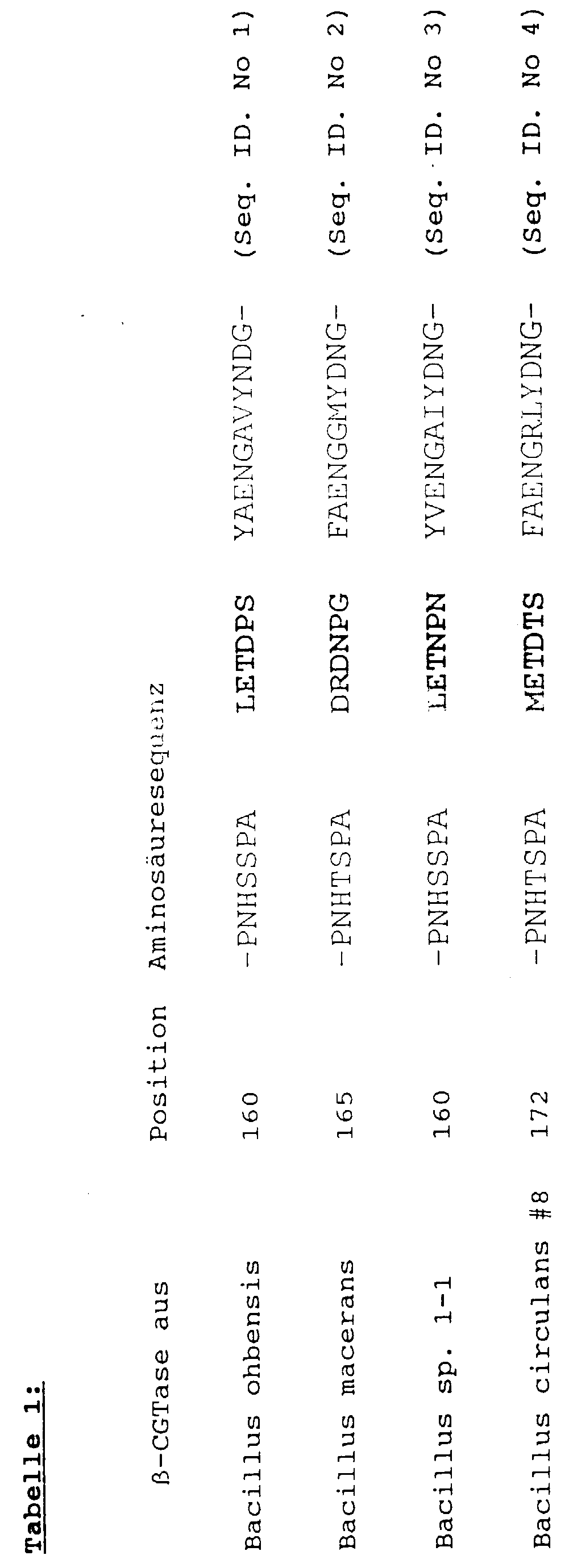
- a CGTase mutant which is thereby also particularly preferred is characterized in that the CGTases mentioned in Tab. 1 the starting CGTases are and that their amino acid sequence from the respective amino acid sequence of those listed in Table 1 Starting CGTase at least through the deletion of each bold amino acid residues, the rest Amino acid sequence of the mutant for the respective amino acid sequence the starting CGTase is homologous to the extent that the rest of the sequence Has CGTase activity.
- CGTase mutants are CGTases, those from the CGTases listed in Tab. 1 or from others CGTases by deletion of individual amino acid residues in the area between amino acid residues 155 and 195 can be obtained.
- Prefers are CGTases in which four to eight residues are mentioned in the Area are deleted.
- CGTases are particularly preferred, where the six marked in bold in Table 1 Amino acid residues in the range mentioned are deleted.
- CGTase mutants are Enzymes in which the amino acids listed in Table 1 homologous amino acids are deleted, these enzymes without have the deletion CGTase activity according to the invention.
- Examples of CGTase mutants according to the invention are furthermore enzymes in which the amino acid residues in bold in Table 1 in the range between amino acid position 155 and amino acid position 195 are deleted, the remaining amino acid sequence of the CGTase mutant according to the invention being the respective amino acid sequence of the starting CGTase from the in each case Microorganism mentioned in Table 1 is homologous to the extent that the starting enzyme has CGTase activity.
- the CGTase mutants of the invention unexpectedly have a higher ⁇ -CD specificity than that for their production used output CGTases with a non-essential at the same time Reduction of specific total CGTase activity of the mutated enzyme compared to the starting CGTase.
- the CGTase mutants according to the invention thus produce the implementation of starch or starch-like substrates CD's in a product distribution in which the quotient of ⁇ -CD and the sum of ⁇ -CD and ⁇ -CD is greater than the quotient of these Products used in the starch implementation with the respective unchanged Output CGTase is achieved.
- the number of the first amino acid is the position in Table 1 each shown reproduced amino acid sequence, wherein as position 1 the first amino acid of the signal peptide of the respective Output CGTase sequence was counted.
- Based on generally known standard methods can be the corresponding Determine the sequence area for all CGTases. This is for example using known algorithms, the multiple Sequence alignments calculate, possible.
- An example of a suitable one Computer algorithm is the program "pileup" from the commercially available sequence analysis program Wisconsin Sequence Analysis package (Genetic Computer Group, Madison).
- mutagenesis of the area shown in starting CGTases can be done using known standard methods such as also exemplified in the present application are to produce enzymes according to the invention from any CGTases. This is usually done for an output CGTase coding gene mutated such that it is for an inventive CGTase mutant encoded.
- the invention thus also relates to methods of manufacture of mutated CGTase genes, which are for CGTase mutants of the claims Coding 1 - 3, characterized in that the DNA sequence a gene coding for a starting CGTase by means of mutation methods known per se are mutated in such a way that it was encoded by the DNA sequence of the mutated gene Amino acid sequence in the range between amino acid position 155 and 195 of which encoded the unmutated gene by DNA Amino acid sequence by deleting at least one amino acid residue differs.
- the DNA sequence is preferred in the method according to the invention a gene coding for a starting CGTase by means of mutagenesis methods known per se so mutated that the amino acid sequence encoded by the DNA sequence of the mutated gene encoded by the DNA of the unmutated gene Amino acid sequence by deleting four to eight Amino acid residues in the area between amino acid position 155 and 195 differentiates.
- the is particularly preferred in the process according to the invention DNA sequence of a gene coding for a starting CGTase mutated using mutagenesis methods known per se, that the amino acid sequence encoded by the DNA sequence of the mutated gene different from that by the DNA of the unmutated gene encoded amino acid sequence by deleting six amino acid residues in the range between amino acid position 155 and 195 differs.
- the invention further relates to methods for producing ⁇ -CGTases characterized in that at least one of the described DNA sequences expressed in a microorganism becomes.
- Output CGTases can be all naturally occurring CGTases, but also CGTases obtained by mutagenesis, such as, for example CGTases, in which the product formation ratio by a other mutation not according to the invention (e.g .: as in DE 43 24 650 A1, corresponds to US-A-5,474,917, described) already was changed.
- Starting CGTases are preferably those CGTases where the product formation relationship is not due to a Another mutation according to the invention (for example: as in DE 43 24 650 Al described) has already been changed.
- the gene coding for a starting CGTase is known by means of Process isolated and the mutation according to the invention is converted into the CGTase gene by "in vivo” or “in vitro” mutagenesis techniques introduced. Such procedures are also generally known in the art.
- Such methods are particularly among "in vivo" mutagenesis methods to understand in which microorganisms that are chromosomal and / or episomally contain a gene coding for a CGTase, with a mutagen such as B. UV light, nitrosoguanidine or ethyl methyl sulfonate can be mutagenized non-specifically.
- a mutagen such as B. UV light, nitrosoguanidine or ethyl methyl sulfonate
- Such a method is described, for example, by Miller J.H. (1972) Experiments in Molecular Genetics; Cold Spring Harbor Laboratory; Cold Spring Harbor, N.Y. have been described.
- Mutants in which six codons have been deleted again preferably those Mutants are selected in which the six codons are deleted are those for the amino acid residues bolded in Table 1 or those homologous to these amino acid residues in others Code CGTases.
- mutants that have been modified so that in the Range four to eight codons are deleted.
- mutants which have been modified such that six codons have been deleted in the area mentioned, in particular Mutants that have been modified so that in the Area the six codons deleted for those in Table 1 bold or amino acid residues homologous to these encode in other CGTases, particularly preferred are.
- the invention thus also relates to DNA sequences for the invention encode ⁇ -CGTase mutants.
- the main field of application of the CGTase mutant according to the invention is their use for the production of ⁇ -CD from starch.
- the invention To do this, the CGTase mutant can be established using conventional Use manufacturing processes.
- the invention thus also relates to methods of manufacture of ⁇ -CD by converting starch using a CGTase, thereby characterized in that as CGTase at least one CGTase mutant is used according to one of claims 1 to 4.
- ⁇ -CD has both in comparison to ⁇ -CD as well as in comparison to ⁇ -CD specific benefits it for a number of applications as the only possible or most suitable CD identify.
- ⁇ -CD which is made up of six glucose units
- ⁇ -CD consisting of eight glucose units has one larger hydrophobic cavity, which is also a complexation such guest molecules allows for steric reasons cannot be complexed by ⁇ -CD.
- ⁇ -CD Compared to ⁇ -CD (solubility in water at room temperature: 18.5 g / l) ⁇ -CD has a much higher solubility (at room temperature: approx. 232.0 g / l) and is therefore for Complexation reactions from aqueous solutions are more suitable as ⁇ -CD.
- Another advantage of ⁇ -CD over ⁇ -CD and modified ⁇ -CD derivatives is the low toxicity of ⁇ -CD. Both oral and intravenous administration ⁇ -CD and ⁇ -CD derivatives in animal models are more toxic than ⁇ -CD.
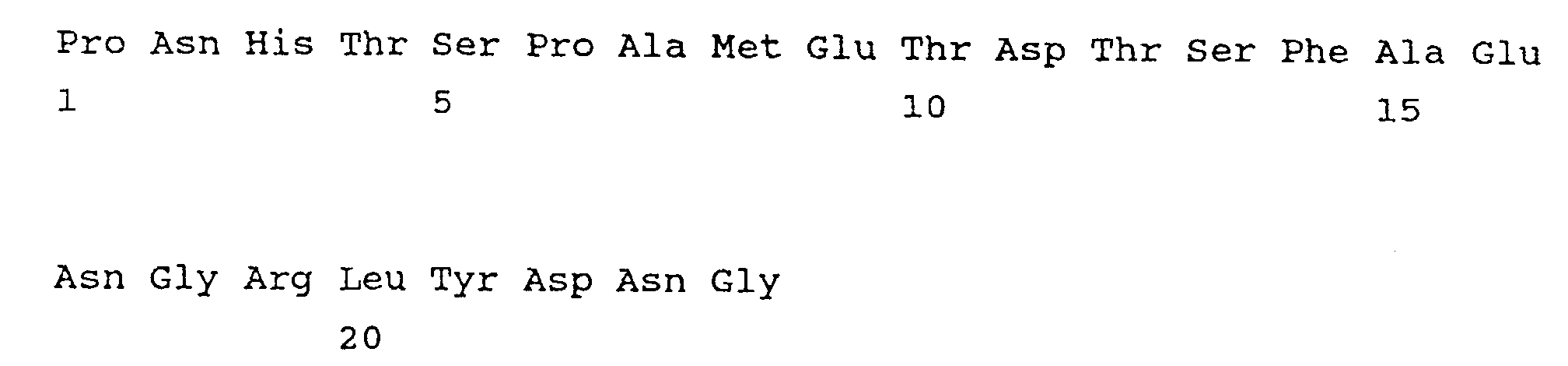
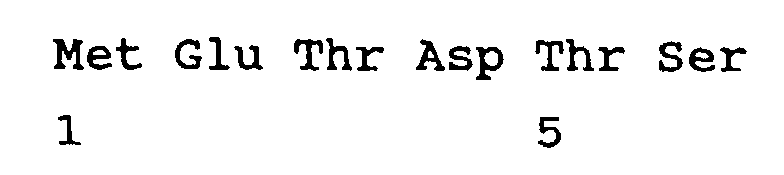
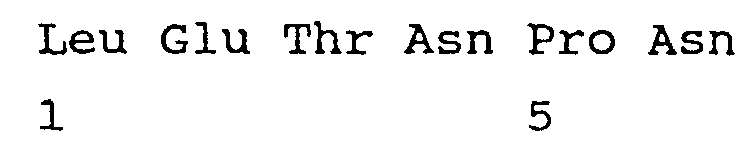
- deletion of any amino acid residues in the region of amino acid residues 155-195 according to the invention in particular the deletion of the six amino acid residues METDTS (Seq. ID No. 5) at position 179-184 in the ⁇ -CGTase from Bacillus circulans # 8 (cf. Table 1 ; Deposited with the DSMZ German Collection of Microorganisms and Cell Cultures in Braunschweig under number DSM 10559 ) is achieved by deleting the base triplets of the CGTase structural gene coding for the corresponding amino acid residues in a manner known per se to the person skilled in the art.
- the ⁇ -CGTase gene from Bacillus circulans was used for mutagenesis # 8 first in the commercially available E. coli vector pUC19 (Boehringer, Mannheim) cloned.
- E. coli vector pUC19 Boehringer, Mannheim
- chromosomal DNA from Bacillus circulans # 8 (Appl. Microbiol. Biotechnol. (1990) 33: pages 542-546) and with the restriction endonucleases HindIII and XbaI (Boehringer, Mannheim) split.
- Fragments in a size range between two and five kb were isolated and together with one with the restriction endonucleases HindIII and XbaI (Boehringer, Mannheim) cleaved pUC19 DNA and T4 DNA ligase incubated at 16 ° C for 12 hours.
- the ligation approach was for the transformation of E. coli K 12 cells with known Methods (Maniatis, Molecular Cloning, A Laboratory Manual; Cold Spring Harbor Laboratory (1982), N.Y.) competent for the Uptake of DNA was used. From such E.
- the mutagenesis of this gene was compared to that of the company Amersham (Braunschweig) commercially available 'oligonucleotides - directed in vitro mutagenesis system, version 2.1 ', based on a process developed by Eckstein (Nucl. Acids. Res. (1986) 14, pp. 9679-9698 and Nucl. Acids. Res. (1988) 16, pp. 791-802).
- the mutagenesis became exact performed according to the protocol that the mutagenesis system mentioned enclosed by Amersham. The procedure is in summarized below. Details are in the log the mutagenesis system mentioned.
- mutagenesis oligonucleotides were used for the actual mutagenesis synthesized with the desired sequence. Such oligonucleotides are, for example, from MWG (Ebersberg) available for purchase.
- the sequence of the mutagenesis oligonucleotide was chosen so that the sequence of the bases in the mutagenesis oligonucleotide inversely complementary to that Is part of the nucleotide sequence of the template DNA that is contained in the Template DNA contained, to be deleted base triplets of ⁇ -CGTase from Bacillus circulans # 8 each 15 bases upstream and surrounds downstream.
- ⁇ -CGTase gene fragment which is an amino acid fragment encodes the six amino acid residues M E T D T S (Seq. ID No. 5) are deleted.
- the mutagenesis oligonucleotide was used at the 5 'end phosphorylated by T4 polynucleotide kinase and ATP (Amersham).
- the phosphorylated mutagenesis oligonucleotide was homologated Areas of the template DNS bound. For this purpose, 5 ⁇ g single-stranded template DNA with approx. 4 pmol of the phosphorylated Mutagenesis oligonucleotide for three minutes at 70 ° C and then incubated for 30 minutes at 37 ° C.
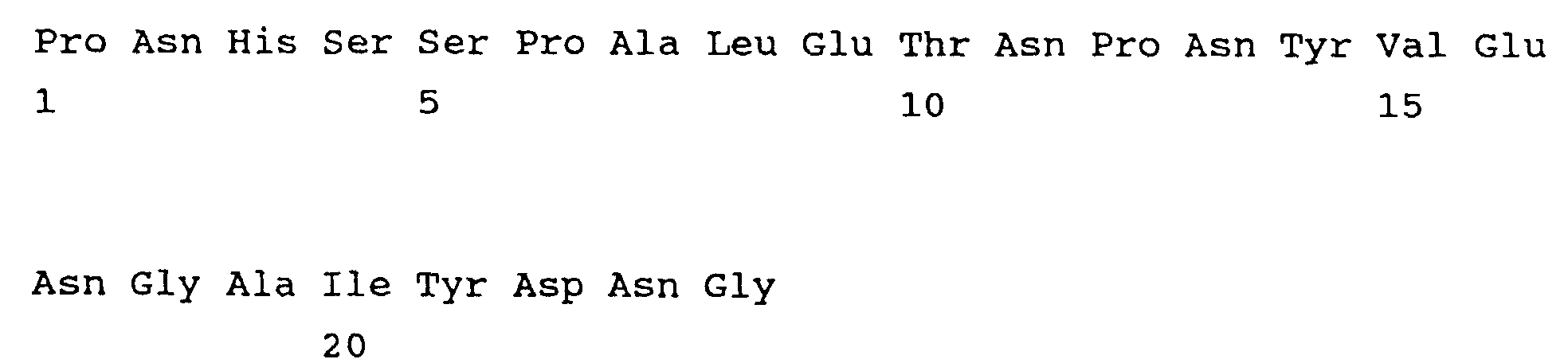
- Example 2 Mutagenesis of the ⁇ -CGTase from Bacillus sp. 1-1
- Example 3 Production of the ⁇ -CGTase from Bacillus circulans # 8 and their derivatives according to the invention in E. coli
- Example 1 For the production of the ⁇ -CGTase from Bacillus circulans # 8 and its Derivative prepared according to Example 1 were those in Example 1 described expression plasmids on a pUC19 basis E. coli secretion strain transformed. As an E. coli secretion strain E. coli WCM105 was used. This tribe became like described in EP 338410, made from E. coli DS 410.
- E. coli WCM105 cells became the appropriate derivative Contain CGTase expression plasmids in LB medium (Maniatis, Molecular Cloning, A Laboratory Manual; Cold Spring Harbor Laboratory (1982), N.Y.), which contained 10 g / l lactose and 0.1 Contains g / l ampicillin for 72 hours at 30 ° C in a water bath shaker (Speed 250 rpm) incubated. Then the Cells separated by centrifugation at 5000 x g. Of the cell-free culture supernatant contains the ⁇ -CGTase or its Derivatives.
- Example 4 Production of the ⁇ -CGTase from Bacillus sp. 1-1 and of their derivatives according to the invention in E. coli
- CD-Sepharose For the specific binding of CGTases to that on Sepharose 6B coupled ⁇ -CD (CD-Sepharose) are those according to Example 3 or 4 obtained cell-free, culture supernatants containing CGTase 0.2 ml of the CD Sepharose are added and the mixture is kept at 4 ° C. for 1.5 h incubated with gentle shaking.
- the enzyme couples to the CD Sepharose.
- the enzyme - CD-Sepharose - complex is made by Centrifugation (5 min 4000 x g) was obtained and with 2 x 10 ml 20 mM triethanolamine / Cl pH 7.2 washed.
- the ⁇ -CD contained in the solution and used for the elution must be removed.
- a commercially available PD-10 column (Sephadex G-25 M; Pharmacia) is equilibrated with 35 ml of 20 mM Tris / Cl pH 7.2 and 5 mM CaCl 2 (TC buffer).
- the solution containing ⁇ -CD is made up to a volume of 2.5 ml with TC buffer and applied to the column. Then eluted with 3.5 ml TC buffer.
- the eluate obtained contains the purified, ⁇ -CD-free CGTase.
- the resulting products were determined by HPLC on a nucleosil 10 NH 2 column (Macherey & Nagel, Düren), with defined cyclodextrins (Sigma, Kunststoff) serving as the standard.
- the amount of enzyme that forms 1 ⁇ M cyclodextrins per minute from starch under the conditions described is defined as a unit (1 U).
- the specific total CGTase activity of purified CGTases is defined as volume activity per amount of protein (U / mg).
- the CGTase - volume activity (U / ml) of an enzyme sample is as described in Example 6.
- the protein content (mg / ml) of a solution of the purified CGTase is described by M. Bradford (Anal. Biochem. (1976) 72, page 248 ff) method described.
- the necessary ones Chemicals are purchased from Bio-Rad.
- Example 8 Conversion of starch using the non-mutagenized ⁇ -CGTases from Bacillus circulans # 8 and Bacillus sp. 1-1, and the derivatives prepared according to Ex. 3 and 4.
- Comparison 1 Bacillus circulans # 8 Time (min) Wild-type CGTase Deletion mutant thereof ⁇ -CD (%) ⁇ -CD (%) ⁇ / ( ⁇ + ⁇ ) ⁇ -CD (%) ⁇ -CD (%) ⁇ -CD (%) ⁇ -CD (%) ⁇ -CD (%) ⁇ -CD (%) ⁇ / ( ⁇ + ⁇ ) 5 13 70 17th 0.2 9 58.0 33 0.49 10th 13.5 70.3 16.2 0.19 8.2 60.5 31.3 0.46 15 11.7 66.3 22.0 0.28 9.4 62.0 28.6 0.40 Comparison 2: Bacillus sp.
Landscapes
- Health & Medical Sciences (AREA)
- Life Sciences & Earth Sciences (AREA)
- Genetics & Genomics (AREA)
- Engineering & Computer Science (AREA)
- Chemical & Material Sciences (AREA)
- Zoology (AREA)
- Biomedical Technology (AREA)
- Bioinformatics & Cheminformatics (AREA)
- Wood Science & Technology (AREA)
- Organic Chemistry (AREA)
- General Engineering & Computer Science (AREA)
- Biotechnology (AREA)
- Molecular Biology (AREA)
- Microbiology (AREA)
- Biochemistry (AREA)
- General Health & Medical Sciences (AREA)
- Medicinal Chemistry (AREA)
- Physics & Mathematics (AREA)
- Biophysics (AREA)
- Plant Pathology (AREA)
- Enzymes And Modification Thereof (AREA)
- Micro-Organisms Or Cultivation Processes Thereof (AREA)
- Preparation Of Compounds By Using Micro-Organisms (AREA)
- Saccharide Compounds (AREA)
Description
- Journal of Fermentation and Bioengineering (1990) 70 (3), S. 190-192: Die Herstellung von γ-CD unter Verwendung der β-, γ-CD bildenden CGTase aus Bacillus sp. AL-6 in Gegenwart von Äthanol, welcher eine verstärkte γ-CD-Produktion bewirkt.
- CA 107:57466 beschreibt die Herstellung von γ-CD unter Verwendung der γ-CGTase aus Bacillus sp. 313.
- EP 291,067: Herstellung von γ-CD unter Verwendung der CGTase aus Bacillus macerans. Die Produktspezifität für γ-CD wird durch die Zugabe eines Komplexbildners, z.B. Cyclohexadec-8-en-1-on, erreicht.
- DE 40 09 822 (entspricht US-A-5,409,824): Produktion von γ-CD mit der γ-CGTase aus Bacillus sp. 290-3.


| Enzym | rel. Aktivität (%) | spez. Aktivität (U/mg) |
| Wildtyp CGTase aus Bacillus circulans #8 | 100 | 106 |
| davon abgeleitete Deletionsmutante | 77 | 82 |
| Wildtyp CGTase aus Bacillus sp. 1-1 | 100 | 120 |
| davon abgeleitete Deletionsmutante | 65 | 78 |
| Mutiertes Derivat (TyrTrp) der CGTase aus Bacillus sp.1-1 | 100 | 23 |
| davon abgeleitete Deletionsmutante | 73 | 17 |
| Vergleich 1: Bacillus circulans #8 | ||||||||
| Zeit (min) | Wildtyp-CGTase | Deletionsmutante davon | ||||||
| α-CD (%) | β-CD (%) | γ-CD (%) | γ/(α+β) | α-CD (%) | β-CD (%) | γ-CD (%) | γ/(α+β) | |
| 5 | 13 | 70 | 17 | 0,2 | 9 | 58,0 | 33 | 0,49 |
| 10 | 13,5 | 70,3 | 16,2 | 0,19 | 8,2 | 60,5 | 31,3 | 0,46 |
| 15 | 11,7 | 66,3 | 22,0 | 0,28 | 9,4 | 62,0 | 28,6 | 0,40 |
| Vergleich 2: Bacillus sp. 1-1 | ||||||||
| A) | ||||||||
| Zeit (min) | Wildtyp-CGTase | Deletionsmutante davon | ||||||
| α-CD (%) | β-CD (%) | γ-CD (%) | γ/(α+β) | α-CD (%) | β-CD (%) | γ-CD (%) | γ/(α+β) | |
| 5 | 0 | 100 | 0 | 0 | 0 | 68 | 32 | 0,47 |
| 10 | 0 | 88 | 12 | 0,14 | 0 | 68 | 32 | 0,47 |
| 15 | 0 | 88 | 12 | 0,14 | 0 | 67,7 | 32,3 | 0,48 |
| B) | ||||||||
| Zeit (min) | Wildtyp-CGTase | Deletionsmutante davon | ||||||
| α-CD (%) | β-CD (%) | γ-CD (%) | γ/(α+β) | α-CD (%) | β-CD (%) | γ-CD (%) | γ/(α+β) | |
| 5 | 0 | 27 | 73 | 2,7 | 0 | 0 | 100 | - |
| 10 | 0 | 31 | 69 | 2,23 | 0 | 22 | 78 | 3,54 |
| 15 | 0 | 32,5 | 67,5 | 2,08 | 0 | 16,6 | 83,4 | 5,02 |




Claims (8)
- CGTase-Mutante, welche bei der Umsetzung von Stärke oder stärkeähnlichen Substraten zu CD in höherem Ausmaß als die Ausgangs-CGTase γ-CD produziert und noch mindestens 60 % der spezifischen Gesamt-CGTase-Aktivität der Ausgangs-CGTase aufweist, dadurch gekennzeichnet,daß sich ihre Aminosäuresequenz von der Aminosäuresequenz der Ausgangs-CGTase im Bereich von Aminosäureposition 155 bis einschließlich Aminosäureposition 195 durch die Deletion mindestens einer Aminosäure unterscheidet, wobei Position 1 der Proteinsequenz der Beginn des Signalpeptids der Ausgangs-CGTase ist und die Deletion eine höhere γ-CGTase Aktivität der Mutante gegenüber der Ausgangs-CGTase bewirkt.
- CGTase-Mutante gemäß Anspruch 1, dadurch gekennzeichnet,daß im Bereich zwischen Aminosäureposition 155 und Aminosäureposition 195 der Ausgangs-CGTase zwischen vier und acht Aminosäurereste deletiert sind, wobei Position 1 der Proteinsequenz der Beginn des Signalpeptids der Ausgangs-CGTase ist und die Deletion eine höhere γ-CGTase Aktivität der Mutante gegenüber der Ausgangs-CGTase bewirkt.
- CGTase-Mutante gemäß Anspruch 1, dadurch gekennzeichnet, daß im Bereich zwischen Aminosäureposition 155 und Aminosäureposition 195 der Ausgangs-CGTase sechs Aminosäurereste deletiert sind, wobei Position 1 der Proteinsequenz der Beginn des Signalpeptids der Ausgangs-CGTase ist und die Deletion eine höhere γ-CGTase Aktivität der Mutante gegenüber der Ausgangs-CGTase bewirkt.
- CGTase-Mutante gemäß Anspruch 1, dadurch gekennzeichnet, daß die in Tab. 1 genannten CGTasen die Ausgangs-CGTasen sind, und daß sich ihre Aminosäuresequenz von der jeweiligen den Aminosäuresequenz der in Tab. 1 genannten Ausgangs-CGTase zumindest durch die Deletion der in Tab. 1 jeweils fettgedruckten Aminosäurereste unterscheidet, wobei die übrige Aminosäuresequenz der Mutante zur jeweiligen Aminosäuresequenz der Ausgangs-CGTase soweit homolog ist, daß die übrige Sequenz CGTase Aktivität aufweist.
- Verfahren zur Herstellung von CGTase Genen, welche für die CGTase-Mutanten der Ansprüche 1 bis 3 kodieren, dadurch gekennzeichnet, daß die DNS-Sequenz eines für eine Ausgangs-CGTase kodierenden Gens mittels an sich bekannter Mutangenesemethoden derart mutiert wird, daß sich die durch die DNS-Sequenz des mutierten Gens kodierte Aminosäuresequenz im Bereich zwischen Aminosäureposition 155 und 195 von der durch die DNS das unmutierten Gens kodierten Aminosäuresequenz durch die Deletion mindestens eines Aminosäurerestes oder von vier bis acht Aminosäureresten, vorzugsweise von sechs Aminosäureresten unterscheidet.
- DNS-Sequenzen dadurch gekennzeichnet, daß sie für CGTase-Mutanten gemäß Anspruch 1 kodieren.
- Verfahren zur Herstellung von γ-CGTase-Mutanten dadurch gekennzeichnet, daß mindestens eine DNS-Sequenz gemäß Anspruch 6 in einem Mikroorganismus exprimiert wird.
- Verfahren zur Herstellung von gamma-CD durch Umsetzung von Stärke mit einer CGTase, dadurch gekennzeichnet, daß als CGTase mindestens eine CGTase-Mutante gemäß einem der Ansprüche 1 bis 4 eingesetzt wird.
Applications Claiming Priority (2)
| Application Number | Priority Date | Filing Date | Title |
|---|---|---|---|
| DE19615336 | 1996-04-18 | ||
| DE19615336A DE19615336A1 (de) | 1996-04-18 | 1996-04-18 | Cyclodextringlycosyltransferasen zur Produktion von gamma-Cyclodextrin |
Publications (2)
| Publication Number | Publication Date |
|---|---|
| EP0802259A1 EP0802259A1 (de) | 1997-10-22 |
| EP0802259B1 true EP0802259B1 (de) | 1999-03-31 |
Family
ID=7791647
Family Applications (1)
| Application Number | Title | Priority Date | Filing Date |
|---|---|---|---|
| EP97106357A Expired - Lifetime EP0802259B1 (de) | 1996-04-18 | 1997-04-17 | Cyclodextringlycosyltransferasen zur Produktion von gamma-Cyclodextrin |
Country Status (9)
| Country | Link |
|---|---|
| EP (1) | EP0802259B1 (de) |
| JP (1) | JP3105466B2 (de) |
| KR (1) | KR100222379B1 (de) |
| CN (1) | CN1083487C (de) |
| CA (1) | CA2199904A1 (de) |
| CZ (1) | CZ29897A3 (de) |
| DE (2) | DE19615336A1 (de) |
| DK (1) | DK0802259T3 (de) |
| HU (1) | HUP9700770A3 (de) |
Families Citing this family (5)
| Publication number | Priority date | Publication date | Assignee | Title |
|---|---|---|---|---|
| US6271010B1 (en) * | 1997-09-24 | 2001-08-07 | Novzymes A/S | Cyclomaltodextrin glucanotransferase variants |
| US6960461B2 (en) * | 2001-07-11 | 2005-11-01 | Nihon Shokuhin Kako Co., Ltd. | Gene coding for cyclodextrin glucanotransferase chiefly producing γ-cyclodextrin and use thereof |
| JP4989922B2 (ja) | 2006-06-08 | 2012-08-01 | 日本食品化工株式会社 | 変異体及びこれをコードする遺伝子 |
| CN107254497A (zh) * | 2017-06-30 | 2017-10-17 | 中国水产科学研究院黄海水产研究所 | 海洋微生物酶法制备α‑环糊精响应面设计方法及应用 |
| CN111560360B (zh) * | 2018-12-07 | 2022-03-04 | 江南大学 | 环糊精葡萄糖基转移酶突变体及其应用 |
Family Cites Families (9)
| Publication number | Priority date | Publication date | Assignee | Title |
|---|---|---|---|---|
| DE3716181A1 (de) * | 1987-05-14 | 1988-12-08 | Consortium Elektrochem Ind | Verfahren zur herstellung von cyclooctaamylose |
| DE4009822A1 (de) * | 1990-03-27 | 1991-10-02 | Consortium Elektrochem Ind | (gamma)-cgtase |
| FR2668163B1 (fr) * | 1990-10-18 | 1993-01-15 | Orsan | Procede de fabrication de beta-cyclodextrine. |
| JPH0541985A (ja) * | 1991-03-04 | 1993-02-23 | Oji Koonsutaac Kk | 変異サイクロマルトデキストリングルカノトランスフエラーゼ |
| JP3155324B2 (ja) * | 1992-02-04 | 2001-04-09 | 武司 魚住 | サイクロデキストリングルカノトランスフェラーゼ、その製造法、およびその酵素をコードする遺伝子 |
| JP3360291B2 (ja) * | 1993-02-09 | 2002-12-24 | 天野エンザイム株式会社 | γ−サイクロデキストリンの増収方法 |
| TW383336B (en) * | 1993-06-24 | 2000-03-01 | Consortium Elektrochem Ind | Cyclodextrin glycosyl transferases for the preparation of gama-cyclodextrin |
| JPH0723781A (ja) * | 1993-06-25 | 1995-01-27 | Oji Koonsutaac Kk | 改変されたCGTase及びその製造方法並びにその使用方法 |
| JP4057055B2 (ja) * | 1995-04-21 | 2008-03-05 | ノボザイムス アクティーゼルスカブ | シクロマルトデキストリングルカノトランスフェラーゼ変異体 |
-
1996
- 1996-04-18 DE DE19615336A patent/DE19615336A1/de not_active Withdrawn
-
1997
- 1997-01-09 CN CN97100343A patent/CN1083487C/zh not_active Expired - Fee Related
- 1997-01-31 CZ CZ97298A patent/CZ29897A3/cs unknown
- 1997-03-13 CA CA002199904A patent/CA2199904A1/en not_active Abandoned
- 1997-04-14 KR KR1019970013684A patent/KR100222379B1/ko not_active Expired - Fee Related
- 1997-04-17 EP EP97106357A patent/EP0802259B1/de not_active Expired - Lifetime
- 1997-04-17 DE DE59700117T patent/DE59700117D1/de not_active Expired - Fee Related
- 1997-04-17 JP JP09099964A patent/JP3105466B2/ja not_active Expired - Fee Related
- 1997-04-17 HU HU9700770A patent/HUP9700770A3/hu unknown
- 1997-04-17 DK DK97106357T patent/DK0802259T3/da active
Also Published As
| Publication number | Publication date |
|---|---|
| JP3105466B2 (ja) | 2000-10-30 |
| CA2199904A1 (en) | 1997-10-18 |
| CN1162641A (zh) | 1997-10-22 |
| DE59700117D1 (de) | 1999-05-06 |
| HU9700770D0 (en) | 1997-05-28 |
| HUP9700770A3 (en) | 2000-04-28 |
| EP0802259A1 (de) | 1997-10-22 |
| CN1083487C (zh) | 2002-04-24 |
| KR970070203A (ko) | 1997-11-07 |
| HUP9700770A2 (en) | 1997-12-29 |
| DK0802259T3 (da) | 1999-10-11 |
| CZ29897A3 (en) | 1997-11-12 |
| JPH1033187A (ja) | 1998-02-10 |
| KR100222379B1 (ko) | 1999-10-01 |
| DE19615336A1 (de) | 1997-10-23 |
Similar Documents
| Publication | Publication Date | Title |
|---|---|---|
| DE69635515T2 (de) | Varianten der cyclomaltodextrin-glucanotransferase | |
| DE69637385T2 (de) | DNS-Segmente und Verfahren zur Erhöhung von Polysaccharid-Produktion | |
| EP0630967B1 (de) | Cyclodextringlycosyltransferasen zur Produktion von gamma-Cyclodextrin | |
| DE3752096T2 (de) | Familie von auf Xanthan basierenden Polysaccharidpolymeren, welche Nichtacetylierten und/oder Nichtpyruvylierten Gum beeinhalten | |
| EP0802259B1 (de) | Cyclodextringlycosyltransferasen zur Produktion von gamma-Cyclodextrin | |
| DE3751554T2 (de) | Erzeugung von xanthangummi durch rekombinant-dns. | |
| DE69031042T2 (de) | Fermentationsprozess zur herstellung von pyrimidin | |
| DE69031803T2 (de) | Verfahren und nukleinsäuresequenzen zur expression des zellulose-synthase-operons | |
| EP0521948B1 (de) | $g(g)-CGTase | |
| EP0469523B1 (de) | Klonierung und Überexpression von Glucose-6-Phosphat-Dehydrogenase aus Leuconostoc dextranicus | |
| EP0751218B1 (de) | Saccharose-Stoffwechsel-Mutanten | |
| DE69419892T2 (de) | Fructosyltransferase, Methode zur Herstellung, und das Enzym kodierende DNA | |
| DE4324650A1 (de) | Cyclodextringlycosyltransferasen zur Produktion von gamma-Cyclodextrin | |
| JP3155324B2 (ja) | サイクロデキストリングルカノトランスフェラーゼ、その製造法、およびその酵素をコードする遺伝子 | |
| US6472192B1 (en) | Cyclodextrin glycosyl transferases for producing γ-cyclodextrin | |
| DE60029818T2 (de) | Neue verwendung von uridindiphosphat-glukose 4-epimerase | |
| EP0733704B1 (de) | Steuerbares Expressionssystem | |
| DE4018695C2 (de) | Neue Cyclodextrinase, Verfahren zu deren Herstellung und deren Verwendung | |
| KR0140244B1 (ko) | 사이클로덱스트린 생성효소 및 그를 생산하는 미생물 | |
| US20030114417A1 (en) | Gene coding for cyclodextrin glucanotransferase chiefly producing gamma-cyclodextrin and use thereof | |
| JPH07183A (ja) | コリネバクテリウムの生産するサイクロデキストリン・グルカノトランスフェラーゼの製造法及び該酵素の利用 | |
| EP1322764A2 (de) | Verfahren zur verbesserten herstellung von cyanophycin und dessen folgeprodukte | |
| JP2000217580A (ja) | アラビノフラノシダーゼ | |
| HK1053328A (en) | Gene coding for cyclodextrin glucanotransferase chiefly producing gamma-cyclodextrin and use thereof |
Legal Events
| Date | Code | Title | Description |
|---|---|---|---|
| PUAI | Public reference made under article 153(3) epc to a published international application that has entered the european phase |
Free format text: ORIGINAL CODE: 0009012 |
|
| 17P | Request for examination filed |
Effective date: 19970417 |
|
| AK | Designated contracting states |
Kind code of ref document: A1 Designated state(s): BE DE DK FI FR GB IT NL |
|
| 17Q | First examination report despatched |
Effective date: 19971031 |
|
| GRAG | Despatch of communication of intention to grant |
Free format text: ORIGINAL CODE: EPIDOS AGRA |
|
| GRAG | Despatch of communication of intention to grant |
Free format text: ORIGINAL CODE: EPIDOS AGRA |
|
| GRAH | Despatch of communication of intention to grant a patent |
Free format text: ORIGINAL CODE: EPIDOS IGRA |
|
| GRAH | Despatch of communication of intention to grant a patent |
Free format text: ORIGINAL CODE: EPIDOS IGRA |
|
| GRAA | (expected) grant |
Free format text: ORIGINAL CODE: 0009210 |
|
| AK | Designated contracting states |
Kind code of ref document: B1 Designated state(s): BE DE DK FI FR GB IT NL |
|
| ITF | It: translation for a ep patent filed | ||
| REF | Corresponds to: |
Ref document number: 59700117 Country of ref document: DE Date of ref document: 19990506 |
|
| ET | Fr: translation filed | ||
| GBT | Gb: translation of ep patent filed (gb section 77(6)(a)/1977) |
Effective date: 19990429 |
|
| REG | Reference to a national code |
Ref country code: DK Ref legal event code: T3 |
|
| PLBE | No opposition filed within time limit |
Free format text: ORIGINAL CODE: 0009261 |
|
| STAA | Information on the status of an ep patent application or granted ep patent |
Free format text: STATUS: NO OPPOSITION FILED WITHIN TIME LIMIT |
|
| 26N | No opposition filed | ||
| REG | Reference to a national code |
Ref country code: GB Ref legal event code: IF02 |
|
| PGFP | Annual fee paid to national office [announced via postgrant information from national office to epo] |
Ref country code: FI Payment date: 20070430 Year of fee payment: 11 |
|
| REG | Reference to a national code |
Ref country code: GB Ref legal event code: 732E |
|
| NLS | Nl: assignments of ep-patents |
Owner name: WACKER CHEMIE AG Effective date: 20070516 |
|
| REG | Reference to a national code |
Ref country code: FR Ref legal event code: TP |
|
| PGFP | Annual fee paid to national office [announced via postgrant information from national office to epo] |
Ref country code: DK Payment date: 20080411 Year of fee payment: 12 Ref country code: DE Payment date: 20080418 Year of fee payment: 12 |
|
| PGFP | Annual fee paid to national office [announced via postgrant information from national office to epo] |
Ref country code: BE Payment date: 20080522 Year of fee payment: 12 Ref country code: IT Payment date: 20080424 Year of fee payment: 12 |
|
| PGFP | Annual fee paid to national office [announced via postgrant information from national office to epo] |
Ref country code: NL Payment date: 20080415 Year of fee payment: 12 |
|
| PGFP | Annual fee paid to national office [announced via postgrant information from national office to epo] |
Ref country code: FR Payment date: 20080412 Year of fee payment: 12 |
|
| PGFP | Annual fee paid to national office [announced via postgrant information from national office to epo] |
Ref country code: GB Payment date: 20080421 Year of fee payment: 12 |
|
| PG25 | Lapsed in a contracting state [announced via postgrant information from national office to epo] |
Ref country code: FI Free format text: LAPSE BECAUSE OF NON-PAYMENT OF DUE FEES Effective date: 20080417 |
|
| BERE | Be: lapsed |
Owner name: *WACKER CHEMIE A.G. Effective date: 20090430 |
|
| REG | Reference to a national code |
Ref country code: DK Ref legal event code: EBP |
|
| GBPC | Gb: european patent ceased through non-payment of renewal fee |
Effective date: 20090417 |
|
| NLV4 | Nl: lapsed or anulled due to non-payment of the annual fee |
Effective date: 20091101 |
|
| REG | Reference to a national code |
Ref country code: FR Ref legal event code: ST Effective date: 20091231 |
|
| PG25 | Lapsed in a contracting state [announced via postgrant information from national office to epo] |
Ref country code: DE Free format text: LAPSE BECAUSE OF NON-PAYMENT OF DUE FEES Effective date: 20091103 |
|
| PG25 | Lapsed in a contracting state [announced via postgrant information from national office to epo] |
Ref country code: NL Free format text: LAPSE BECAUSE OF NON-PAYMENT OF DUE FEES Effective date: 20091101 |
|
| PG25 | Lapsed in a contracting state [announced via postgrant information from national office to epo] |
Ref country code: GB Free format text: LAPSE BECAUSE OF NON-PAYMENT OF DUE FEES Effective date: 20090417 Ref country code: FR Free format text: LAPSE BECAUSE OF NON-PAYMENT OF DUE FEES Effective date: 20091222 Ref country code: DK Free format text: LAPSE BECAUSE OF NON-PAYMENT OF DUE FEES Effective date: 20090430 |
|
| PG25 | Lapsed in a contracting state [announced via postgrant information from national office to epo] |
Ref country code: BE Free format text: LAPSE BECAUSE OF NON-PAYMENT OF DUE FEES Effective date: 20090430 |
|
| PG25 | Lapsed in a contracting state [announced via postgrant information from national office to epo] |
Ref country code: IT Free format text: LAPSE BECAUSE OF NON-PAYMENT OF DUE FEES Effective date: 20090417 |