EP0572629B1 - Chromogenic black-and-white photographic imaging systems - Google Patents
Chromogenic black-and-white photographic imaging systems Download PDFInfo
- Publication number
- EP0572629B1 EP0572629B1 EP93901465A EP93901465A EP0572629B1 EP 0572629 B1 EP0572629 B1 EP 0572629B1 EP 93901465 A EP93901465 A EP 93901465A EP 93901465 A EP93901465 A EP 93901465A EP 0572629 B1 EP0572629 B1 EP 0572629B1
- Authority
- EP
- European Patent Office
- Prior art keywords
- color
- silver halide
- black
- sensitized
- layer
- Prior art date
- Legal status (The legal status is an assumption and is not a legal conclusion. Google has not performed a legal analysis and makes no representation as to the accuracy of the status listed.)
- Expired - Lifetime
Links
- 238000003384 imaging method Methods 0.000 title description 4
- 239000004332 silver Substances 0.000 claims description 84
- 229910052709 silver Inorganic materials 0.000 claims description 84
- -1 silver halide Chemical class 0.000 claims description 68
- 230000007935 neutral effect Effects 0.000 claims description 36
- 238000000034 method Methods 0.000 claims description 34
- BQCADISMDOOEFD-UHFFFAOYSA-N Silver Chemical compound [Ag] BQCADISMDOOEFD-UHFFFAOYSA-N 0.000 claims description 23
- 230000008569 process Effects 0.000 claims description 23
- 230000004044 response Effects 0.000 claims description 3
- 241000238370 Sepia Species 0.000 claims description 2
- 239000000839 emulsion Substances 0.000 description 65
- 239000010410 layer Substances 0.000 description 60
- 239000006185 dispersion Substances 0.000 description 45
- 239000000975 dye Substances 0.000 description 37
- 239000000203 mixture Substances 0.000 description 28
- 239000000463 material Substances 0.000 description 24
- 108010010803 Gelatin Proteins 0.000 description 23
- 239000008273 gelatin Substances 0.000 description 23
- 229920000159 gelatin Polymers 0.000 description 23
- 235000019322 gelatine Nutrition 0.000 description 23
- 235000011852 gelatine desserts Nutrition 0.000 description 23
- 238000011161 development Methods 0.000 description 20
- 230000033458 reproduction Effects 0.000 description 19
- 230000035945 sensitivity Effects 0.000 description 18
- 239000002904 solvent Substances 0.000 description 16
- 230000015572 biosynthetic process Effects 0.000 description 13
- QIGBRXMKCJKVMJ-UHFFFAOYSA-N Hydroquinone Chemical compound OC1=CC=C(O)C=C1 QIGBRXMKCJKVMJ-UHFFFAOYSA-N 0.000 description 12
- 239000011248 coating agent Substances 0.000 description 12
- 238000000576 coating method Methods 0.000 description 12
- 238000012360 testing method Methods 0.000 description 12
- 239000012071 phase Substances 0.000 description 11
- 238000007639 printing Methods 0.000 description 9
- 238000012545 processing Methods 0.000 description 9
- 239000011347 resin Substances 0.000 description 9
- 229920005989 resin Polymers 0.000 description 9
- XLYOFNOQVPJJNP-UHFFFAOYSA-N water Substances O XLYOFNOQVPJJNP-UHFFFAOYSA-N 0.000 description 9
- 230000008859 change Effects 0.000 description 8
- 238000009472 formulation Methods 0.000 description 8
- 239000000243 solution Substances 0.000 description 8
- 239000003381 stabilizer Substances 0.000 description 7
- MHAJPDPJQMAIIY-UHFFFAOYSA-N Hydrogen peroxide Chemical compound OO MHAJPDPJQMAIIY-UHFFFAOYSA-N 0.000 description 6
- 239000003963 antioxidant agent Substances 0.000 description 6
- 229960004337 hydroquinone Drugs 0.000 description 6
- 230000009467 reduction Effects 0.000 description 6
- 230000001235 sensitizing effect Effects 0.000 description 6
- 230000003078 antioxidant effect Effects 0.000 description 5
- 230000008901 benefit Effects 0.000 description 5
- OCWYEMOEOGEQAN-UHFFFAOYSA-N bumetrizole Chemical compound CC(C)(C)C1=CC(C)=CC(N2N=C3C=C(Cl)C=CC3=N2)=C1O OCWYEMOEOGEQAN-UHFFFAOYSA-N 0.000 description 5
- 238000004364 calculation method Methods 0.000 description 5
- 239000000499 gel Substances 0.000 description 5
- 229920000728 polyester Polymers 0.000 description 5
- 230000003595 spectral effect Effects 0.000 description 5
- 239000001043 yellow dye Substances 0.000 description 5
- 150000005208 1,4-dihydroxybenzenes Chemical class 0.000 description 4
- WCUXLLCKKVVCTQ-UHFFFAOYSA-M Potassium chloride Chemical compound [Cl-].[K+] WCUXLLCKKVVCTQ-UHFFFAOYSA-M 0.000 description 4
- 229910021607 Silver chloride Inorganic materials 0.000 description 4
- 239000003086 colorant Substances 0.000 description 4
- 230000007812 deficiency Effects 0.000 description 4
- 239000011790 ferrous sulphate Substances 0.000 description 4
- 235000003891 ferrous sulphate Nutrition 0.000 description 4
- 230000006870 function Effects 0.000 description 4
- BAUYGSIQEAFULO-UHFFFAOYSA-L iron(2+) sulfate (anhydrous) Chemical compound [Fe+2].[O-]S([O-])(=O)=O BAUYGSIQEAFULO-UHFFFAOYSA-L 0.000 description 4
- 229910000359 iron(II) sulfate Inorganic materials 0.000 description 4
- AJDUTMFFZHIJEM-UHFFFAOYSA-N n-(9,10-dioxoanthracen-1-yl)-4-[4-[[4-[4-[(9,10-dioxoanthracen-1-yl)carbamoyl]phenyl]phenyl]diazenyl]phenyl]benzamide Chemical compound O=C1C2=CC=CC=C2C(=O)C2=C1C=CC=C2NC(=O)C(C=C1)=CC=C1C(C=C1)=CC=C1N=NC(C=C1)=CC=C1C(C=C1)=CC=C1C(=O)NC1=CC=CC2=C1C(=O)C1=CC=CC=C1C2=O AJDUTMFFZHIJEM-UHFFFAOYSA-N 0.000 description 4
- 229920000642 polymer Polymers 0.000 description 4
- IOLCXVTUBQKXJR-UHFFFAOYSA-M potassium bromide Chemical compound [K+].[Br-] IOLCXVTUBQKXJR-UHFFFAOYSA-M 0.000 description 4
- BWHMMNNQKKPAPP-UHFFFAOYSA-L potassium carbonate Chemical compound [K+].[K+].[O-]C([O-])=O BWHMMNNQKKPAPP-UHFFFAOYSA-L 0.000 description 4
- 230000002035 prolonged effect Effects 0.000 description 4
- HKZLPVFGJNLROG-UHFFFAOYSA-M silver monochloride Chemical compound [Cl-].[Ag+] HKZLPVFGJNLROG-UHFFFAOYSA-M 0.000 description 4
- ZAWQXWZJKKICSZ-UHFFFAOYSA-N 3,3-dimethyl-2-methylidenebutanamide Chemical compound CC(C)(C)C(=C)C(N)=O ZAWQXWZJKKICSZ-UHFFFAOYSA-N 0.000 description 3
- CWYNVVGOOAEACU-UHFFFAOYSA-N Fe2+ Chemical compound [Fe+2] CWYNVVGOOAEACU-UHFFFAOYSA-N 0.000 description 3
- KWYUFKZDYYNOTN-UHFFFAOYSA-M Potassium hydroxide Chemical compound [OH-].[K+] KWYUFKZDYYNOTN-UHFFFAOYSA-M 0.000 description 3
- SJOOOZPMQAWAOP-UHFFFAOYSA-N [Ag].BrCl Chemical compound [Ag].BrCl SJOOOZPMQAWAOP-UHFFFAOYSA-N 0.000 description 3
- 239000006096 absorbing agent Substances 0.000 description 3
- 239000008346 aqueous phase Substances 0.000 description 3
- 230000000694 effects Effects 0.000 description 3
- 238000005516 engineering process Methods 0.000 description 3
- 229910001448 ferrous ion Inorganic materials 0.000 description 3
- 229920001600 hydrophobic polymer Polymers 0.000 description 3
- 239000002516 radical scavenger Substances 0.000 description 3
- ADZWSOLPGZMUMY-UHFFFAOYSA-M silver bromide Chemical compound [Ag]Br ADZWSOLPGZMUMY-UHFFFAOYSA-M 0.000 description 3
- 239000002356 single layer Substances 0.000 description 3
- 238000003756 stirring Methods 0.000 description 3
- QTBSBXVTEAMEQO-UHFFFAOYSA-M Acetate Chemical compound CC([O-])=O QTBSBXVTEAMEQO-UHFFFAOYSA-M 0.000 description 2
- QTBSBXVTEAMEQO-UHFFFAOYSA-N Acetic acid Chemical compound CC(O)=O QTBSBXVTEAMEQO-UHFFFAOYSA-N 0.000 description 2
- IJGRMHOSHXDMSA-UHFFFAOYSA-N Atomic nitrogen Chemical compound N#N IJGRMHOSHXDMSA-UHFFFAOYSA-N 0.000 description 2
- 229920001174 Diethylhydroxylamine Polymers 0.000 description 2
- DBVJJBKOTRCVKF-UHFFFAOYSA-N Etidronic acid Chemical compound OP(=O)(O)C(O)(C)P(O)(O)=O DBVJJBKOTRCVKF-UHFFFAOYSA-N 0.000 description 2
- VTLYFUHAOXGGBS-UHFFFAOYSA-N Fe3+ Chemical compound [Fe+3] VTLYFUHAOXGGBS-UHFFFAOYSA-N 0.000 description 2
- 239000000020 Nitrocellulose Substances 0.000 description 2
- 239000004698 Polyethylene Substances 0.000 description 2
- 206010070834 Sensitisation Diseases 0.000 description 2
- QAOWNCQODCNURD-UHFFFAOYSA-N Sulfuric acid Chemical compound OS(O)(=O)=O QAOWNCQODCNURD-UHFFFAOYSA-N 0.000 description 2
- GWEVSGVZZGPLCZ-UHFFFAOYSA-N Titan oxide Chemical compound O=[Ti]=O GWEVSGVZZGPLCZ-UHFFFAOYSA-N 0.000 description 2
- FJWGYAHXMCUOOM-QHOUIDNNSA-N [(2s,3r,4s,5r,6r)-2-[(2r,3r,4s,5r,6s)-4,5-dinitrooxy-2-(nitrooxymethyl)-6-[(2r,3r,4s,5r,6s)-4,5,6-trinitrooxy-2-(nitrooxymethyl)oxan-3-yl]oxyoxan-3-yl]oxy-3,5-dinitrooxy-6-(nitrooxymethyl)oxan-4-yl] nitrate Chemical compound O([C@@H]1O[C@@H]([C@H]([C@H](O[N+]([O-])=O)[C@H]1O[N+]([O-])=O)O[C@H]1[C@@H]([C@@H](O[N+]([O-])=O)[C@H](O[N+]([O-])=O)[C@@H](CO[N+]([O-])=O)O1)O[N+]([O-])=O)CO[N+](=O)[O-])[C@@H]1[C@@H](CO[N+]([O-])=O)O[C@@H](O[N+]([O-])=O)[C@H](O[N+]([O-])=O)[C@H]1O[N+]([O-])=O FJWGYAHXMCUOOM-QHOUIDNNSA-N 0.000 description 2
- 238000000862 absorption spectrum Methods 0.000 description 2
- 238000013459 approach Methods 0.000 description 2
- QVGXLLKOCUKJST-UHFFFAOYSA-N atomic oxygen Chemical compound [O] QVGXLLKOCUKJST-UHFFFAOYSA-N 0.000 description 2
- TZCXTZWJZNENPQ-UHFFFAOYSA-L barium sulfate Chemical compound [Ba+2].[O-]S([O-])(=O)=O TZCXTZWJZNENPQ-UHFFFAOYSA-L 0.000 description 2
- 230000004888 barrier function Effects 0.000 description 2
- 229910052791 calcium Inorganic materials 0.000 description 2
- 239000011575 calcium Substances 0.000 description 2
- 238000009795 derivation Methods 0.000 description 2
- FVCOIAYSJZGECG-UHFFFAOYSA-N diethylhydroxylamine Chemical compound CCN(O)CC FVCOIAYSJZGECG-UHFFFAOYSA-N 0.000 description 2
- 238000004090 dissolution Methods 0.000 description 2
- 239000012153 distilled water Substances 0.000 description 2
- 238000002474 experimental method Methods 0.000 description 2
- 229910001447 ferric ion Inorganic materials 0.000 description 2
- 238000005286 illumination Methods 0.000 description 2
- 230000006872 improvement Effects 0.000 description 2
- 239000011229 interlayer Substances 0.000 description 2
- 238000012986 modification Methods 0.000 description 2
- 230000004048 modification Effects 0.000 description 2
- 229920001220 nitrocellulos Polymers 0.000 description 2
- 239000001301 oxygen Substances 0.000 description 2
- 229910052760 oxygen Inorganic materials 0.000 description 2
- 239000002245 particle Substances 0.000 description 2
- 229920000573 polyethylene Polymers 0.000 description 2
- 239000004848 polyfunctional curative Substances 0.000 description 2
- 229910000027 potassium carbonate Inorganic materials 0.000 description 2
- 235000011181 potassium carbonates Nutrition 0.000 description 2
- 239000001103 potassium chloride Substances 0.000 description 2
- 235000011164 potassium chloride Nutrition 0.000 description 2
- 230000008313 sensitization Effects 0.000 description 2
- ZUNKMNLKJXRCDM-UHFFFAOYSA-N silver bromoiodide Chemical compound [Ag].IBr ZUNKMNLKJXRCDM-UHFFFAOYSA-N 0.000 description 2
- 239000004094 surface-active agent Substances 0.000 description 2
- UOMQUZPKALKDCA-UHFFFAOYSA-K 2-[2-[bis(carboxylatomethyl)amino]ethyl-(carboxymethyl)amino]acetate;iron(3+) Chemical compound [Fe+3].OC(=O)CN(CC([O-])=O)CCN(CC([O-])=O)CC([O-])=O UOMQUZPKALKDCA-UHFFFAOYSA-K 0.000 description 1
- KFDNQUWMBLVQNB-UHFFFAOYSA-N 2-[2-[bis(carboxymethyl)amino]ethyl-(carboxymethyl)amino]acetic acid;sodium Chemical compound [Na].[Na].[Na].[Na].OC(=O)CN(CC(O)=O)CCN(CC(O)=O)CC(O)=O KFDNQUWMBLVQNB-UHFFFAOYSA-N 0.000 description 1
- QGZKDVFQNNGYKY-UHFFFAOYSA-O Ammonium Chemical compound [NH4+] QGZKDVFQNNGYKY-UHFFFAOYSA-O 0.000 description 1
- VHUUQVKOLVNVRT-UHFFFAOYSA-N Ammonium hydroxide Chemical compound [NH4+].[OH-] VHUUQVKOLVNVRT-UHFFFAOYSA-N 0.000 description 1
- KCXVZYZYPLLWCC-UHFFFAOYSA-N EDTA Chemical compound OC(=O)CN(CC(O)=O)CCN(CC(O)=O)CC(O)=O KCXVZYZYPLLWCC-UHFFFAOYSA-N 0.000 description 1
- WHXSMMKQMYFTQS-UHFFFAOYSA-N Lithium Chemical compound [Li] WHXSMMKQMYFTQS-UHFFFAOYSA-N 0.000 description 1
- GRYLNZFGIOXLOG-UHFFFAOYSA-N Nitric acid Chemical compound O[N+]([O-])=O GRYLNZFGIOXLOG-UHFFFAOYSA-N 0.000 description 1
- 239000004743 Polypropylene Substances 0.000 description 1
- 239000004372 Polyvinyl alcohol Substances 0.000 description 1
- GSEJCLTVZPLZKY-UHFFFAOYSA-N Triethanolamine Chemical compound OCCN(CCO)CCO GSEJCLTVZPLZKY-UHFFFAOYSA-N 0.000 description 1
- 229960000583 acetic acid Drugs 0.000 description 1
- 239000000654 additive Substances 0.000 description 1
- 239000000908 ammonium hydroxide Substances 0.000 description 1
- XYXNTHIYBIDHGM-UHFFFAOYSA-N ammonium thiosulfate Chemical compound [NH4+].[NH4+].[O-]S([O-])(=O)=S XYXNTHIYBIDHGM-UHFFFAOYSA-N 0.000 description 1
- 238000004458 analytical method Methods 0.000 description 1
- 230000003466 anti-cipated effect Effects 0.000 description 1
- 239000007864 aqueous solution Substances 0.000 description 1
- 238000004061 bleaching Methods 0.000 description 1
- 239000007844 bleaching agent Substances 0.000 description 1
- 230000005587 bubbling Effects 0.000 description 1
- 239000003638 chemical reducing agent Substances 0.000 description 1
- 239000000084 colloidal system Substances 0.000 description 1
- 238000004737 colorimetric analysis Methods 0.000 description 1
- 238000012790 confirmation Methods 0.000 description 1
- 238000012864 cross contamination Methods 0.000 description 1
- 238000013461 design Methods 0.000 description 1
- 230000009365 direct transmission Effects 0.000 description 1
- 238000002845 discoloration Methods 0.000 description 1
- 238000001035 drying Methods 0.000 description 1
- 239000012992 electron transfer agent Substances 0.000 description 1
- 125000001495 ethyl group Chemical group [H]C([H])([H])C([H])([H])* 0.000 description 1
- 125000000031 ethylamino group Chemical group [H]C([H])([H])C([H])([H])N([H])[*] 0.000 description 1
- 230000001747 exhibiting effect Effects 0.000 description 1
- 239000000835 fiber Substances 0.000 description 1
- 238000001914 filtration Methods 0.000 description 1
- 239000012362 glacial acetic acid Substances 0.000 description 1
- 239000004816 latex Substances 0.000 description 1
- 229920000126 latex Polymers 0.000 description 1
- 229910052744 lithium Inorganic materials 0.000 description 1
- INHCSSUBVCNVSK-UHFFFAOYSA-L lithium sulfate Inorganic materials [Li+].[Li+].[O-]S([O-])(=O)=O INHCSSUBVCNVSK-UHFFFAOYSA-L 0.000 description 1
- 230000000873 masking effect Effects 0.000 description 1
- 238000013178 mathematical model Methods 0.000 description 1
- 238000005259 measurement Methods 0.000 description 1
- HNQIVZYLYMDVSB-UHFFFAOYSA-N methanesulfonimidic acid Chemical compound CS(N)(=O)=O HNQIVZYLYMDVSB-UHFFFAOYSA-N 0.000 description 1
- 238000002156 mixing Methods 0.000 description 1
- 229910017604 nitric acid Inorganic materials 0.000 description 1
- 229910052757 nitrogen Inorganic materials 0.000 description 1
- 230000003647 oxidation Effects 0.000 description 1
- 238000007254 oxidation reaction Methods 0.000 description 1
- LQPLDXQVILYOOL-UHFFFAOYSA-I pentasodium;2-[bis[2-[bis(carboxylatomethyl)amino]ethyl]amino]acetate Chemical compound [Na+].[Na+].[Na+].[Na+].[Na+].[O-]C(=O)CN(CC([O-])=O)CCN(CC(=O)[O-])CCN(CC([O-])=O)CC([O-])=O LQPLDXQVILYOOL-UHFFFAOYSA-I 0.000 description 1
- 229920001467 poly(styrenesulfonates) Polymers 0.000 description 1
- 229920000515 polycarbonate Polymers 0.000 description 1
- 239000004417 polycarbonate Substances 0.000 description 1
- 229920001155 polypropylene Polymers 0.000 description 1
- 239000011970 polystyrene sulfonate Substances 0.000 description 1
- 229960002796 polystyrene sulfonate Drugs 0.000 description 1
- 229920002689 polyvinyl acetate Polymers 0.000 description 1
- 239000011118 polyvinyl acetate Substances 0.000 description 1
- 229920002451 polyvinyl alcohol Polymers 0.000 description 1
- 229920000915 polyvinyl chloride Polymers 0.000 description 1
- 239000004800 polyvinyl chloride Substances 0.000 description 1
- 235000015497 potassium bicarbonate Nutrition 0.000 description 1
- 239000011736 potassium bicarbonate Substances 0.000 description 1
- 229910000028 potassium bicarbonate Inorganic materials 0.000 description 1
- TYJJADVDDVDEDZ-UHFFFAOYSA-M potassium hydrogencarbonate Chemical compound [K+].OC([O-])=O TYJJADVDDVDEDZ-UHFFFAOYSA-M 0.000 description 1
- 238000002360 preparation method Methods 0.000 description 1
- 238000011084 recovery Methods 0.000 description 1
- 238000000985 reflectance spectrum Methods 0.000 description 1
- 230000001105 regulatory effect Effects 0.000 description 1
- 238000011160 research Methods 0.000 description 1
- HRZFUMHJMZEROT-UHFFFAOYSA-L sodium disulfite Chemical compound [Na+].[Na+].[O-]S(=O)S([O-])(=O)=O HRZFUMHJMZEROT-UHFFFAOYSA-L 0.000 description 1
- 229940001584 sodium metabisulfite Drugs 0.000 description 1
- 235000010262 sodium metabisulphite Nutrition 0.000 description 1
- AKHNMLFCWUSKQB-UHFFFAOYSA-L sodium thiosulfate Chemical compound [Na+].[Na+].[O-]S([O-])(=O)=S AKHNMLFCWUSKQB-UHFFFAOYSA-L 0.000 description 1
- 235000019345 sodium thiosulphate Nutrition 0.000 description 1
- 238000001228 spectrum Methods 0.000 description 1
- 230000007480 spreading Effects 0.000 description 1
- 239000008399 tap water Substances 0.000 description 1
- 235000020679 tap water Nutrition 0.000 description 1
- RBTVSNLYYIMMKS-UHFFFAOYSA-N tert-butyl 3-aminoazetidine-1-carboxylate;hydrochloride Chemical compound Cl.CC(C)(C)OC(=O)N1CC(N)C1 RBTVSNLYYIMMKS-UHFFFAOYSA-N 0.000 description 1
- 239000004408 titanium dioxide Substances 0.000 description 1
- 238000011282 treatment Methods 0.000 description 1
- 229960004418 trolamine Drugs 0.000 description 1
- WFKWXMTUELFFGS-UHFFFAOYSA-N tungsten Chemical compound [W] WFKWXMTUELFFGS-UHFFFAOYSA-N 0.000 description 1
- 229910052721 tungsten Inorganic materials 0.000 description 1
- 239000010937 tungsten Substances 0.000 description 1
- 238000002371 ultraviolet--visible spectrum Methods 0.000 description 1
- 238000001429 visible spectrum Methods 0.000 description 1
- 230000000007 visual effect Effects 0.000 description 1
- 238000005406 washing Methods 0.000 description 1
Images

Classifications
-
- G—PHYSICS
- G03—PHOTOGRAPHY; CINEMATOGRAPHY; ANALOGOUS TECHNIQUES USING WAVES OTHER THAN OPTICAL WAVES; ELECTROGRAPHY; HOLOGRAPHY
- G03C—PHOTOSENSITIVE MATERIALS FOR PHOTOGRAPHIC PURPOSES; PHOTOGRAPHIC PROCESSES, e.g. CINE, X-RAY, COLOUR, STEREO-PHOTOGRAPHIC PROCESSES; AUXILIARY PROCESSES IN PHOTOGRAPHY
- G03C7/00—Multicolour photographic processes or agents therefor; Regeneration of such processing agents; Photosensitive materials for multicolour processes
- G03C7/30—Colour processes using colour-coupling substances; Materials therefor; Preparing or processing such materials
Definitions
- This invention relates to the formulation of a photographic system which produces black-and-white images using a combination of cyan, magenta, and yellow dyes.
- the dyes are formed during a color development step from a mixture of cyan, magenta, and yellow dye forming couplers which, when allowed to react with oxidized color developer, form a neutral image.
- Black-and-white images formed in a photographic process are generally produced by developing silver halide in a black-and-white developer to form a silver image.
- a black-and-white developer such as hydroquinone, is commonly used to reduce the exposed silver halide to silver metal.
- the undeveloped silver halide is removed from the print by 'fixing' with aqueous sodium thiosulfate. The silver metal remaining in the print represents the image.
- U.S. 4,348,474 - Scheerer discloses a system wherein black-and-white images are formed by the use of one emulsion that is treated with three sensitizing dyes.
- U.S. 2,186,736 - Schneider discloses the use of several color components in one layer for a black-and-white image formation.
- U.S. 2,592,514 - Harsh discloses a color film in which couplers forming more than one color are present in the same layer of the color film.
- pan sensitized emulsions which contain three spectral sensitizing dyes, color dye forming couplers and one emulsion. These pan-sensitive emulsions are sometimes coated in a fast and a slow layer to form images after exposure and development of the couplers. While the above products are somewhat successful, they do not achieve a neutral image. Additionally, the tone reproduction of such materials is severely limited by the contrast range of the emulsion.
- EP-A-0 025 775 discloses photographic materials for obtaining black and white images comprising in one layer a panchromatically sensitized silver halide emulsion and a yellow, cyan and magenta dye-forming coupler.
- GB-A-1 160 525 discloses a photographic material providing a neutral-printing dye image, wherein a panchromatically sensitized silver halide emulsion comprises a mixture of cyan, yellow and magenta dye-forming couplers.
- JP-A-3/105341 discloses a colour photographic material suitable for obtaining a neutral black and white image comprising cyan, yellow and magenta dye-forming couplers in the same emulsion layer.
- EP-A-0 273 411 discloses a photographic element comprising a green sensitized emulsion layer comprising in combination a cyan, magenta and yellow dye-forming coupler.
- the invention is generally accomplished by providing a photographic element for forming images comprising at least one layer of balanced cyan, magenta, and yellow dye-forming couplers with silver halide grains comprising at least one of blue sensitized silver halide grains which are only sensitized to blue light and green sensitized silver halide grains which are only sensitized to green light, wherein said element forms a black-and-white neutral image when developed.
- a photographic element comprising at least one layer of balanced cyan, magenta, and yellow dye-forming couplers with blue sensitized silver halide grains, and at least one layer of balanced cyan, magenta, and yellow dye-forming couplers with green sensitized silver halide grains.
- a photographic element comprising at least one layer of balanced cyan, magenta, and yellow dye-forming couplers and blue sensitized silver halide grains, and green sensitized silver halide grains.
- said element comprises one layer comprising balanced cyan, magenta and yellow dye-forming couplers and blue sensitized and green sensitized silver halide grains.
- said element further comprises red sensitized silver halide grains.
- the element comprises a photographic paper, a motion picture film or an X-ray film.
- the silver halide is selected from at least one member of the group consisting of silver chloride, silver chlorobromide, silver bromide, silver bromoiodide or silver chlorobromoiodide.
- a preferred method of forming a black-and-white image comprises providing a photographic element comprising at least one layer of neutral balanced cyan, magenta, and yellow dye-forming couplers with red sensitized silver halide grains, at least one layer of neutral balanced cyan, magenta, and yellow dye-forming couplers with blue sensitized silver halide grains, and at least one layer of neutral balanced cyan, magenta, and yellow dye-forming couplers with green sensitized silver halide grains, exposing said element to a color image and developing said element.
- the invention is generally accomplished by forming multilayers consisting of mixtures of coupler dispersions and emulsions.
- multilayers consisting of mixtures of coupler dispersions and emulsions.
- there are at least two layers such that there is at least one layer in which silver halide emulsion has been sensitized to blue light, one silver halide emulsion layer sensitive to red light, and one silver halide layer emulsion sensitive to green light.
- each emulsion containing layer also contains a mixture of cyan, magenta, and yellow dye-forming couplers.
- the contrast ratios of red sensitive emulsion to green sensitive emulsion to blue sensitive emulsion in the photographic element be about 2:3:1. These contrast ratios have been found to be similar to the relative response of the eye to color lightness changes. This contrast ratio can, however, be changed to meet customer preferences, as well as to increase the range of contrasts that can be effected when black and white or color negatives varying in contrast are to be printed. In like manner, the overall contrast and tone reproduction can be customized by adjusting the silver halide and color coupler coverages such as is typically done with present color and black and white photographic film and paper systems.
- the invention has numerous advantages over the prior art.
- the photographic products of the invention eliminate the need for a separate processing system in order to form black-and-white photographs.
- the black-and-white photographic system of the invention further allows the recovery of substantially all of the silver from a black-and-white photographic image.
- Another advantage of the system is that the reproduction of lightness ratios and tone is more accurate than any other system using color couplers to form black-and-white images.
- Another advantage is that if the lightness and tone of the black-and-white image are desired to be changed, this can be accomplished by the use of conventional color filters during printing of the negative.
- a photographic print formed in accordance with the invention will respond to changes in filtration of colored light during printing in a manner that allows ready adjustment of tone and lightness. This advantage is not available in other black-and-white photographic systems where pan or ortho sensitive emulsion systems are employed.
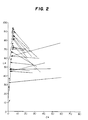
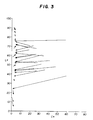
- Figure 1 shows the lightness reproduction vs. chroma of 30 different standard colors and neutral densities when Kodak Panalure M TM black and white paper is compared to Kodak Supra TM color paper when printed with the identical negative.
- the tail of the arrow represents the lightness and chroma values obtained with the color paper
- the head of the arrow and the length of the arrow illustrates the change in chroma and lightness when the negative is printed onto Kodak Panalure M black and white paper.
- Figure 2 illustrates the comparison when Kodak Polycontrast III TM black and white paper is used in place of the Kodak Panalure M paper.
- Figure 3 illustrates the changes in lightness obtained when a black and white printing paper such as that described in this invention is used in place of the Kodak Panalure M paper.
- balanced cyan, magenta, and yellow dye-forming couplers means that the couplers are balanced to provide a generally neutral image. This neutral balanced image would preferably for most uses be black and white. It is also possible in accordance with the invention technique to balance to give a sepia tone or slightly bluish tone to the image but still have a generally neutral image.
- the invention utilizes an oil-in-water dispersion containing a mixture of cyan, magenta, and yellow dye-forming couplers. It should also be obvious that separate dispersions containing cyan, magenta and yellow dye forming couplers could be used. In addition, other dispersion addenda such as coupler solvent, auxiliary coupler solvent and/or dye stabilizers can be added. Dispersion addenda such as latex polymers or hydrophobic polymers may also be added.
- the aqueous phase of the dispersion is composed of gelatin, a surfactant, and water.
- composition of the oil phase portion of the dispersion is adjusted so that when processed in a color developing bath, a neutral image is formed whose density varies only in proportion to the amount of silver developed in the process.
- the appropriate ratios of each dispersion are added to the layer so that after exposure and development a neutral image is formed.
- the coupler dispersion may in one embodiment be coated in a multilayer format much like that used in conventional color film or paper.
- the first difference is that the same neutral dye-forming coupler dispersion is coated in each emulsion containing layer.
- a neutral image is formed during color development in proportion to the amount of silver development.
- the developed and undeveloped silver are removed from the element by bleaching and fixing, or more simply, blixing (bleach-fixing).
- the second difference is that the ratios of sensitized silver halide in the element are adjusted so that the lightness of the object being reproduced in the original scene is more accurately reproduced.
- This effect is obtained by coating the spectrally sensitized silver halide layers in amounts which correspond to the eye's relative sensitivity to light. It is generally agreed that the eye's response to the red, green and blue light is in the ratio of about 2:3:1. Higher numbers indicate greater sensitivity. Therefore, in the invention element, the ratios of the amount of red sensitive emulsion to the amount of green sensitive emulsion to the amount of blue sensitive emulsion is also preferred to be about 2:3:1. However, this ratio can be adjusted to any ratio depending upon the needs and requirements of the photographic system. For example, films designed for X-ray applications which are currently coated on a blue support might choose to enhance the visual process of contrast discrimination by using ratios of 2:2:1 or 3:2:1.
- the oil in water dispersion containing a mixture of cyan, magenta, and yellow dye-forming couplers is coated in a layer that contains silver halide grains sensitized to more than one color.
- the silver halide grains are a mixture of grains sensitized to be sensitive to different light colors.
- the silver halide emulsion contains blue sensitized, green sensitized, and red sensitized silver halide grains.
- An element may only contain the blue sensitized and green sensitized silver halide grains to form an ortho sensitized element.
- the invention may be performed with the materials conventionally utilized in color papers.
- such papers comprise couplers for forming yellow, cyan, and magenta dyes. It is most common to use predominantly silver chloride emulsions with color paper, as they are suitable for fast processing. It should be apparent that other photographic systems may require the use of emulsions other than silver chloride. Such systems may in fact require silver chlorobromide, silver bromide, silver bromoiodide or silver chlorobromoiodide.
- the emulsions are sensitized to light in the wavelength to be absorbed by the particular layer where they are present. For instance, silver halide grains in the yellow layer will be most sensitive to blue light, and silver halide grains in the magenta layer will be most sensitive to green light.
- sensitizing dyes to provide such emulsions.
- the invention is considered to be able to be practiced with any of the known materials for use in color silver halide photography. Further, it is anticipated that the technique will be satisfactory for use with future materials using silver halide and dye-forming couplers that form yellow, cyan, and magenta dyes.
- Example 1 Formulation of a neutral image forming dispersion
- the oil phase of the dispersion formula is composed of a mixture of: Cyan coupler A 50.0 grams Magenta coupler B 37.1 grams Yellow coupler C 65.6 grams Coupler solvent D 62.6 grams Auxiliary solvent E 78.5 grams
- the aqueous phase of the dispersion is composed of a mixture of: Gelatin 120.0 grams Alkanol-XC Surfactant 12.0 grams Water 1574.2 grams Total 2000.0 grams
- the above preferred formula was derived from a statistically designed central composit mixture experiment in which the ratio of the components of the oil phase were systematically varied in different proportions. In all, 27 different formulations, including replicates of the center point were made and tested.
- the coupler dispersions were prepared, they were mixed with additional gelatin, water, and silver halide and coated on a resin coated paper support in a single layer format.
- the following sample format describes the structure: Coating 1 (outside the scope of the claims) Overcoat 1076. mg gel/m 2 spreading aids gel hardener Emulsion 710. mg/m2 red sensitive silver chloride 1615. mg gel/m 2 377. mg cyan coupler/m 2 280. mg magenta coupler/m 2 495. mg yellow coupler/m 2 (Coupler coverages based upon dispersion formulation above.) Gel sub 3229. mg gel/m 2 Support resin coated paper
- the samples were given a step exposure on a KODAK Model 1B sensitometer. Specifically, they were exposed for 0.1 seconds to a 3000 K tungsten light source through a 0-3 density step wedge. After exposure, the samples were processed through a standard Process RA-4 color process. The process consists of a 45-second developer, a 45-second bleach-fix, and a 90-second wash. The coated paper samples were subsequently dried with hot air.
- the RA-4 Color Developer consists of; Triethanol amine 12.41 g/l Phorwite REU 2.30 Lithium polystyrene sulfonate (30%) 0.30 N,N-diethylhydroxylamine (85%) 5.40 Lithium sulfate 2.70 Kodak color developer CD-3 5.00 DEQUEST 2010 (60%) 1.16 Potassium carbonate 21.16 Potassium bicarbonate 2.79 Potassium chloride 1.60 Potassium bromide 7.00 mg/l@ Water to make 1 liter@ pH @ 26,6°C (80F) is 10.04 +/- 0.05
- the RA-4 Bleach-fix consists of: Ammonium thiosulfate (56.5%) 127.40 g/l Sodium metabisulfite 10.00 Glacial acetic acid 10.20 Ammonium ferric EDTA (44%) 110.40 Water to make 1 liter@ pH @ 26,6°C (80F) is 5.5 +/- 0.10 Processing the exposed paper samples is done with the developer and bleach
- the densities of each step are measured to determine which exposure step produced a status A density nearest 1.0. Once determined, that exposure step has its visible absorption spectra measured. The spectrophotometric data is then converted to colorimetric data, and the corresponding a*, b*, C* and L* values are calculated.
- the metrics, a* and b* are measures of the color of an object.
- the value of a* are generally thought of as a measure of the amount of redness or greenness of an object.
- An object with a positive value for a* is increasingly red while a negative value for a* indicates the degree of greenness in the object.
- b* a positive value indicates more yellowness; while negative b* values indicate increasing blueness.
- L* An objects lightness or darkness is measured using the term L*.
- An L* value of 100 indicates that the object is perfectly white; while an L* value of 0 indicates that the object is perfectly black. Values of L* between 0 and 100 indicate intermediate lightness. Chroma, or color saturation, is calculated as C* using the equation described below. In black and white imaging systems it has little meaning since it is derived from the a* and b* terms which are both near zero indicating no color. In black and white photographs, C* is also near zero. For an object to be rendered neutral, it should have a very small values for a* and b*. In fact, the closer that a* and b* are to zero, the lesser amount of color in the object and the more neutral appearing the object will be rendered. In the examples below, L* describes the lightness of the sample patch and does not relate to the color of the patch.
- the colorimetry results for the test patch produced an a* value of -1.15 and a b* of 1.23 with a lightness L* of 38.2. Both the a* and b* values are close to zero indicating neutrality was achieved.
- the sample patch when viewed under the appropriate D5500 illumination appeared visually neutral with no evidence of a color bias.
- delt-E* [(delt-L*) 2 + (delt-a*) 2 + (delt-b*) 2 ] 1/2
- delt-E* [(delt-L*) 2 + (delt-a*) 2 + (delt-b*) 2 ] 1/2
- This equation is known as the color difference equation and was defined by the CIE in 1976. Examination of the equation shows that color difference can be determined by calculating the square root of the sums of the squares of the differences of L*, a* and b* of the two objects.
- a test scene is prepared which contains a neutral step wedge exposure and assorted other colors which include red, green, blue, cyan, magenta, yellow and other color shades.
- the color negative used to photograph the scene is developed and subsequently used to print the scene onto the black and white papers being compared.
- Two commercially available black and white printing papers are Kodak Polycontrast III paper and Kodak Panalure M paper.
- the Polycontrast III paper is an ortho sensitive paper. This means that it is spectrally sensitive in the blue and green regions of the visible spectrum.
- the Kodak Panalure M paper is pan sensitive. This means that it has sensitivity to red, green and blue light.
- the third black and white paper to be tested is the paper described below in the multilayer invention.
- the papers described above and a Kodak Ektacolor Supra TM color paper are printed onto with the color negative containing the test scene.
- the color print is developed in the standard Kodak RA-4 Color Development Process.
- the Kodak Polycontrast III and the Kodak Panalure M prints are developed in their respective recommended black and white processes.
- the chromogenic black and white paper of the invention is developed in the same Kodak RA-4 Color Development Process as is the color print above. After printing each paper and matching the density of one of the neutral patches (at approximately 0.8 density), each color and neutral patch of each print has its visible absorbtion spectra determined. These absorption spectra are then converted to their corresponding tristiumlus values and, hence, their colorimetric values are described using the equations above.
- the values for delt-E* listed in Table 1 include in their calculation, the relative changes in a* and b* for each test patch. Since it is expected that a* and b* will approach zero in a black and white print the values for delt-E* will be expectedly large.
- Formulation of a multilayer example in color paper format Layer Composition mg/m 2 Overcoat Gelatin 1346.
- Green sensitive layer Green sensitive silver Cyan coupler A) Magenta coupler (B) Yellow coupler (C) (From the neutral dye forming dispersion) Gelatin 407. 421. 313. 553. 1184. Interlayer Oxidized developer scavenger (F) Gelatin 93.6 753. Blue sensitive layer Blue sensitive silver Cyan coupler (A) Magenta coupler (B) Yellow coupler (C) (From the neutral dye forming dispersion) Gelatin 80.7 140. 104. 184. 1507. Standard color paper support (resin coated)
- the film structure illustrated above is similar to current conventional color paper. However, it is considered that for the black-and-white paper of the invention, the Interlayer and middle UV absorbing layer would preferably not be present as there is no need to prevent cross contamination of oxidized developer between layers.
- All three emulsions used in the multilayer element are silver chloro-bromide (99:1).
- This coating was made on a conventional film forming machine. After coating it was exposed and processed as described earlier. The colorimetric data was also obtained as described earlier. The results of the analysis show that at status A densities of 1.03 red, 1.04 green and 1.02 blue, the corresponding a* and b* values are 0.18 and 0.09 respectively. The related L* value is 38.5. In addition to the extremely low a* and b* values, the exposed patches appeared to be visually neutral.
- Layer Structure 1 Multilayer Format (Example 1) Layer Material Coverage (mg/M2) Overcoat gelatin 1345.0 N 21.5 D 64.6 Alkanol-XC 21.5 UV Absorber gelatin 1398.8 Tinuvin 326 113.0 Tinuvin 328 640.2 N 75.2 Red Sensitive Layer gelatin 1990.6 Red sensitive silver halide 351.7 Cyan coupler (A) 478.3 Magenta coupler (B) 252.2 Yellow coupler (C) 562.5 Stabilizer (L) 187.0 Coupler Solvent (D) 562.0 Aux.
- Layer Structure 1 shown above gives the structure and composition of the photographic element referred to in Example 1.
- Layer Structure 2 shown above shows the structure of Example 2 in which all three spectrally sensitized emulsions are contained in a single emulsion layer. This element would be referred to as being 'pansensitized'. It is formed and processed as in Example 1 to produce a pleasing black and white print.
- the emulsions used in these elements are monodisperse, they produce only a narrow range of exposure latitude when processed. This deficiency is even more exaggerated when the coverage of the emulsion is significantly reduced for reasons such as the lightness reproduction referred to above.
- An alternative approach to this correct for this deficiency is to blend two or more emulsions of different grain sizes or sensitivities which have similar spectral sensitizations. If one chooses to develop two emulsions of similar sensitizations but different grain sizes, there will be a difference in their sensitivity towards light. The larger grain will be more sensitive and the smaller grain less sensitive. Since these two or more emulsions will inherently have different sensitivities because of their respective grain size differences, the blend of at least two such emulsions will result in an effectively increased exposure latitude.
- the calculated sensitivity difference between the first and second grain is 0.23 log exposure. This difference in sensitivity was judged to be sufficient to increase the relative exposure latitude of the element without being so great as to not be exposed due to insufficient sensitivity or so large as to not be significantly different from the first emulsion in sensitivity.
- Example 1 The elements described above were prepared according to the description and formulas shown in the multilayer element described in Example 1, Layer Structure 1.
- the blended emulsions described above as Examples 3-7 were substituted for the single blue sensitive emulsion.
- the blended pair of emulsions were coated at the same coverage as the single emulsion.
- the materials prepared were exposed with a color negative which prior had been exposed to a variety of colored test objects of various lightnesses.
- the examples were then processed through the standard Kodak Ektacolor RA-4 process. The resulting prints were then judged for improved exposure latitude by experienced observers.
- the results of the judging indicate that the print showing the greatest improvement in exposure latitude is when the blend ratio of the first and second emulsions is 0.50 to 0.50 as in example print number 3.
- the prints exhibiting the least amount of exposure latitude were Examples 3 and 7.
- Example 1 An observed deficiency in the performance of the element described in Example 1 is the imbalance in the relative fade rates of the three image dyes towards light. If the rate of fade of the three dyes are not the same, the print will develop an undesirable coloration after prolonged exposure to light.
- prolonged exposure of the print to light results in a change from a neutral appearing image towards a 'bluish' image.
- the change in image hue is caused by a loss of yellow image dye at a rate greater the loss of cyan or magenta image dyes.
- Layer Structure 3 below describes the coating format in which each of these Examples 11-15 was prepared.
- Layer Structure 3 (not within the scope of the claims) Single Layer Coating Structure Layer Description Coverage (mg/M2) Overcoat Gelatin 1076 UV Absorber Gelatin 1334 Tinuvin 326 129 Tinuvin 328 732 Emulsion/Dispersion Gelatin 1614 Red Sensitive Silver Halide 699 Cyan Coupler (A) 323 Magenta Coupler (B) 172 Yellow Coupler (varies) 380 Coupler Solvent (D) 380 Aux. Coupler Solvent (E) 358 Underlaver Gelatin 3228 Resin Coated Paper Support
- Coating upon resin coated paper stock produces a photographic element suitable for direct reflection viewing.
- Resin coated paper stock represents only one type of material upon which this type of sensitized material may be coated.
- Example 1 we have produced an example of materials in Example 1 in which the support is a clear 0.18 mm polyester base. This material is suitable for backlit display viewing where the display box contains a light and a translucent diffuser.
- Polyester base sheet support thickness can be varied to meet the need of the particular application. Typically, supports of this nature are about 0.10 to 0.18 mm of thickness. Other clear supports such as acetate or cellulose nitrate may also be used.
- the print display box does not contain a translucent diffuser over the light.
- a light diffusing layer is coated between the clear photographic support of Example 16 and the sensitized layers of the element.
- the diffusing layer consists of a mixture of gelatin and titanium dioxide particles whose thickness and concentration are adjusted to provide a minimum density without becoming so translucent as to reveal the back lighting of the display box.
- Melinex TM A second type of support, commercially available from DuPont, is known as Melinex TM .
- This material is a diffuse reflective support comprised of a voided polyester filled with barium sulfate particles. It was sensitized with the element described above in Example 1 and produced a black and white print.
- support types could have included films made from polyvinyl acetate, polyvinyl chloride, polyethylene, polycarbonate, polystrene, cellulose nitrate, etc.
- films made from polyvinyl acetate, polyvinyl chloride, polyethylene, polycarbonate, polystrene, cellulose nitrate, etc.
- biaxially oriented and voided polypropylene or polyethylene supports as well as paper fiber supports which include materials known to act as water vapor or oxygen barrier layers. In the instance of oxygen barriers, it is well known that polyvinyl alcohol is highly effective.
- Example 19 Development of an Exceptionally Low Silver Halide Containing Paper
- the key to the substantial reduction in the amount of silver halide coated is the used of the 'developer-amplifier' solution in place of the standard color developer bath.
- the developer-amplifier solution contains hydrogen peroxide. The presence of the hydrogen peroxide allows the re-use of the developed silver halide by acting as an electron transfer agent between the developed silver and the color developer, thus resulting in a substantially reduced need for developed silver.
- hydroquinones the class of antioxidants known as hydroquinones. Inclusion of a hydroquinone into the oil phase of the coupler dispersion serves to act as an antioxidant and significantly reduces the yellow stain build-up upon prolonged exposure to light.
- hydroquinone chosen is 1,4-benzenediol, 2,5-di-sec-dodecyl.
- Table 7 clearly shows how the inclusion of the hydroquinone antioxidant reduces the amount of printout formed during exposure to light. It should also be noted that hydroquinones other than the example shown above would be equally as effective.
- cyan dyes formed in the chromogenic development process have electrolytic reduction potentials low enough to make the dye susceptible to leuco cyan dye formation if the oxidation potential of the bleach-fix (blix) falls below a certain minimum threshhold.
- the susceptibility of the dye to reduction is a function of the concentration of ferrous ion in the blix, the pH of the blix and the hydrophobicity of the dispersion in which the cyan dye was formed.
- Leuco cyan dye formation usually is not a problem in the development process, unless the blix becomes exhausted and is under-replenished. When the blix is under-replenished, the amount of ferrous ion generated as the ferric ion oxidizes the developed silver to form silver bromide, increases to a level where significant leuco cyan dye formation may occur. This leuco cyan dye formation is undesirable since it results in the apparent reduction of cyan contrast in the print which affects color reproduction.
- the chromogenic dispersion was prepared as described earlier. Where required, the polymer, poly-t-butyl acrylamide, is added to the oil as of the dispersion in the ratios described in the Table 8 above. Once the dispersion was prepared, it was coated, using standard coating techniques onto resin coated color paper stock with an amount of silver halide.
- a ferrous sulfate bath such as that described below, simulates the chemistry of an exhausted bleach-fix bath where the bleach (ferric ion) has been reduced by developed silver to ferrous ion, which is known as a powerful reducing agent.
- the ferrous sulfate bath used to treat the samples is prepared by dissolving 41.8g of tetra-sodium-ethylenediaminetetraacetic acid (EDTA) in 1.0 L of distilled water, then adjusting the pH to 4.0 with a 10% solution of nitric acid. The solution is then de-oxygenated by bubbling nitrogen through it for 15 minutes. Then 15.2g of ferrous sulfate (heptahydrate) is added with stirring. The pH of the solution is then raised to 5.0 with dilute ammonium hydroxide.
- EDTA tetra-sodium-ethylenediaminetetraacetic acid
Landscapes
- Physics & Mathematics (AREA)
- General Physics & Mathematics (AREA)
- Silver Salt Photography Or Processing Solution Therefor (AREA)
Applications Claiming Priority (5)
| Application Number | Priority Date | Filing Date | Title |
|---|---|---|---|
| US81031191A | 1991-12-19 | 1991-12-19 | |
| US810311 | 1991-12-19 | ||
| US07/981,566 US5362616A (en) | 1991-12-19 | 1992-11-25 | Chromogenic black-and-white photographic imaging systems |
| US981566 | 1992-11-25 | ||
| PCT/US1992/010704 WO1993012465A1 (en) | 1991-12-19 | 1992-12-07 | Chromogenic black-and-white photographic imaging systems |
Publications (2)
| Publication Number | Publication Date |
|---|---|
| EP0572629A1 EP0572629A1 (en) | 1993-12-08 |
| EP0572629B1 true EP0572629B1 (en) | 1998-11-18 |
Family
ID=27123342
Family Applications (1)
| Application Number | Title | Priority Date | Filing Date |
|---|---|---|---|
| EP93901465A Expired - Lifetime EP0572629B1 (en) | 1991-12-19 | 1992-12-07 | Chromogenic black-and-white photographic imaging systems |
Country Status (5)
| Country | Link |
|---|---|
| US (1) | US5362616A (enExample) |
| EP (1) | EP0572629B1 (enExample) |
| JP (1) | JP3222467B2 (enExample) |
| DE (1) | DE69227626T2 (enExample) |
| WO (1) | WO1993012465A1 (enExample) |
Families Citing this family (21)
| Publication number | Priority date | Publication date | Assignee | Title |
|---|---|---|---|---|
| US5418116A (en) * | 1993-12-07 | 1995-05-23 | Eastman Kodak Company | Image toning of black-and-white images formed utilizing color dye forming couplers |
| US6114080A (en) * | 1993-12-21 | 2000-09-05 | Eastman Kodak Company | Chromogenic black and white imaging for heat image separation |
| US5491053A (en) * | 1994-12-23 | 1996-02-13 | Eastman Kodak Company | Chromogenic black-and-white motion picture film |
| US5955255A (en) | 1995-10-20 | 1999-09-21 | Eastman Kodak Company | Sound recording film |
| EP0825483A1 (en) * | 1996-03-06 | 1998-02-25 | Konica Corporation | Silver halide photosensitive material for forming monochrome image and photographing unit using it |
| US5728511A (en) * | 1996-06-19 | 1998-03-17 | Oriental Photo Industrial Co., Ltd. | Silver halide photographic material and image-forming process |
| US5880515A (en) | 1996-09-30 | 1999-03-09 | Lsi Logic Corporation | Circuit isolation utilizing MeV implantation |
| US6156489A (en) * | 1996-10-09 | 2000-12-05 | Konica Corporation | Silver halide photosensitive material |
| JPH10171068A (ja) * | 1996-12-13 | 1998-06-26 | Oriental Photo Ind Co Ltd | 滑り性の改良されたハロゲン化銀写真感光材料及び画像形成方法 |
| US5856057A (en) * | 1996-12-27 | 1999-01-05 | Eastman Kodak Company | Chromogenic sound recording film |
| JPH11133530A (ja) * | 1997-10-29 | 1999-05-21 | Oriental Photo Ind Co Ltd | ハロゲン化銀写真感光材料及び画像形成方法 |
| JPH11143000A (ja) * | 1997-11-11 | 1999-05-28 | Oriental Photo Ind Co Ltd | ハロゲン化銀写真感光材料及び画像形成方法 |
| US5965338A (en) * | 1998-03-13 | 1999-10-12 | Eastman Kodak Company | Color photographic element |
| WO2001050192A1 (en) | 1999-12-31 | 2001-07-12 | Applied Science Fiction, Inc. | Digital film processing method |
| US6426178B1 (en) | 2000-08-07 | 2002-07-30 | Eastman Kodak Company | Chromogenic black and white silver halide print material |
| US6479225B1 (en) | 2001-07-30 | 2002-11-12 | Eastman Kodak Company | Chromogenic sepia silver halide print material |
| CN100399192C (zh) * | 2001-12-05 | 2008-07-02 | 富士胶片株式会社 | 卤化银彩色照相感光材料 |
| US6555304B1 (en) * | 2002-01-18 | 2003-04-29 | Eastman Kodak Company | Direct view photographic element containing a particular red record |
| US7087279B2 (en) * | 2003-07-17 | 2006-08-08 | 3M Innovative Properties Company | Adhesives and release liners with pyramidal structures |
| US20130052594A1 (en) | 2011-08-31 | 2013-02-28 | Diane M. Carroll-Yacoby | Motion picture films to provide archival images |
| JP6086740B2 (ja) * | 2013-01-28 | 2017-03-01 | ユーエムジー・エービーエス株式会社 | 樹脂成形品の傷付き性評価方法 |
Citations (1)
| Publication number | Priority date | Publication date | Assignee | Title |
|---|---|---|---|---|
| EP0273411A2 (en) * | 1986-12-26 | 1988-07-06 | Fuji Photo Film Co., Ltd. | Light-sensitive silver halide emulsion and color photographic materials using the same |
Family Cites Families (28)
| Publication number | Priority date | Publication date | Assignee | Title |
|---|---|---|---|---|
| DE492518C (de) * | 1930-02-22 | Koester Friedrich | Feuchtigkeitsschutz fuer ausser Betrieb befindliche elektrische Maschinen | |
| DE537923C (de) * | 1927-10-16 | 1931-11-10 | Adolf Bordt | Rotations-Schablonendrucker zum Drucken von stehendem Text und wechselnder Adresse |
| BE376781A (enExample) * | 1930-03-19 | |||
| BE419447A (enExample) * | 1936-01-18 | |||
| DE743341C (de) * | 1936-01-18 | 1943-12-23 | Ig Farbenindustrie Ag | Verfahren zur Herstellung photographischer Bilder |
| GB490517A (en) * | 1936-12-11 | 1938-08-11 | Ig Farbenindustrie Ag | Production of black-and-white photographic pictures |
| GB503318A (en) * | 1937-07-03 | 1939-03-30 | Ig Farbenindustrie Ag | Process of producing photographic colour pictures |
| US2628902A (en) * | 1947-04-29 | 1953-02-17 | Raibourn Paul | Process of producing colored photographs |
| FR965348A (enExample) * | 1947-05-07 | 1950-09-08 | ||
| US2689180A (en) * | 1950-12-30 | 1954-09-14 | Gen Aniline & Film Corp | Process of obtaining three-color separation records from a bipack color film |
| US3497350A (en) * | 1965-06-28 | 1970-02-24 | Eastman Kodak Co | Multicolor elements for color photography |
| FR1581244A (enExample) * | 1967-08-28 | 1969-09-12 | ||
| JPS5223565B1 (enExample) * | 1969-08-01 | 1977-06-25 | ||
| US3615509A (en) * | 1970-02-11 | 1971-10-26 | Du Pont | Photographic fixer-developer containing compounds with p-aminophenol and dyeforming nuclei |
| US4200466A (en) * | 1975-09-30 | 1980-04-29 | Konishiroku Photo Industry Co., Ltd. | Light-sensitive silver halide photographic materials |
| US4345023A (en) * | 1978-09-18 | 1982-08-17 | The Academy Of Applied Science, Inc. | Process for increasing the effective speed of photographic films and improved film structures |
| US4315069A (en) * | 1979-09-18 | 1982-02-09 | Ciba Geigy Ag | Color coupler combination |
| JPS56133733A (en) * | 1980-03-25 | 1981-10-20 | Kikuchi Kagaku Kenkyusho:Kk | Changing method for tone of black and white print |
| EP0044279A3 (en) * | 1980-07-16 | 1983-03-02 | Ciba-Geigy Ag | A method of processing monochrome silver halide material |
| DE3029209A1 (de) * | 1980-08-01 | 1982-03-18 | Agfa-Gevaert Ag, 5090 Leverkusen | Lichtempfindliches fotografisches aufzeichnungsmaterial und dessen verwendung zur herstellung fotografischer bilder |
| EP0071570A1 (en) * | 1981-06-19 | 1983-02-09 | Ciba-Geigy Ag | Process for the production of a photographic black dye image |
| US4749641A (en) * | 1986-09-15 | 1988-06-07 | Eastman Kodak Company | Imaging element containing dye masking coupler |
| JPS63110451A (ja) * | 1986-10-29 | 1988-05-14 | Konica Corp | 新規なカプラ−を含有するハロゲン化銀写真感光材料 |
| JPS6465552A (ja) * | 1987-09-05 | 1989-03-10 | コニカ株式会社 | ハロゲン化銀写真感光材料 |
| GB8729196D0 (en) * | 1987-12-15 | 1988-01-27 | Ciba Geigy Ag | Polymeric colour couplers |
| JP2879103B2 (ja) * | 1988-01-08 | 1999-04-05 | 富士写真フイルム株式会社 | ハロゲン化銀写真感光材料 |
| JPH028839A (ja) * | 1988-06-27 | 1990-01-12 | Konica Corp | ハロゲン化銀写真感光材料 |
| US5141844A (en) * | 1990-05-07 | 1992-08-25 | Eastman Kodak Company | Polymeric dye-forming couplers |
-
1992
- 1992-11-25 US US07/981,566 patent/US5362616A/en not_active Expired - Fee Related
- 1992-12-07 DE DE69227626T patent/DE69227626T2/de not_active Expired - Fee Related
- 1992-12-07 JP JP51108593A patent/JP3222467B2/ja not_active Expired - Fee Related
- 1992-12-07 WO PCT/US1992/010704 patent/WO1993012465A1/en not_active Ceased
- 1992-12-07 EP EP93901465A patent/EP0572629B1/en not_active Expired - Lifetime
Patent Citations (1)
| Publication number | Priority date | Publication date | Assignee | Title |
|---|---|---|---|---|
| EP0273411A2 (en) * | 1986-12-26 | 1988-07-06 | Fuji Photo Film Co., Ltd. | Light-sensitive silver halide emulsion and color photographic materials using the same |
Also Published As
| Publication number | Publication date |
|---|---|
| US5362616A (en) | 1994-11-08 |
| EP0572629A1 (en) | 1993-12-08 |
| JPH06505580A (ja) | 1994-06-23 |
| JP3222467B2 (ja) | 2001-10-29 |
| WO1993012465A1 (en) | 1993-06-24 |
| DE69227626D1 (de) | 1998-12-24 |
| DE69227626T2 (de) | 1999-06-17 |
Similar Documents
| Publication | Publication Date | Title |
|---|---|---|
| US5362616A (en) | Chromogenic black-and-white photographic imaging systems | |
| JP3041724B2 (ja) | 色相再現性に優れたハロゲン化銀カラー写真感光材料 | |
| EP0600377B1 (en) | Color correcting layers in chromogenic black-and-white photographic imaging systems | |
| JP2926662B2 (ja) | 色相再現性に優れたハロゲン化銀カラー写真感光材料 | |
| JPH0272350A (ja) | カラー画像形成方法 | |
| US5985529A (en) | Color motion picture print film with desaturated color space | |
| US6399288B2 (en) | Rapid processing of high contrast aerial color negative film | |
| US6077654A (en) | Color motion picture print film with desaturated color space | |
| JP3219206B2 (ja) | カラー画像形成方法 | |
| JPH03113436A (ja) | カラー反転感光材料 | |
| JPH02157750A (ja) | カラー画像形成方法 | |
| Shuto et al. | Mechanism of the Interimage-Effect in Color Reversal System and Its Application to Improve Color Reproduction | |
| JPH03241341A (ja) | 観賞用画像形成方法 | |
| JP2004069898A (ja) | カラー画像形成方法 | |
| JPH05165165A (ja) | 鑑賞用画像形成方法 | |
| JPH11231446A (ja) | ハロゲン化銀感光材料およびモノクロ画像形成ハロゲン化銀感光材料 | |
| JPH05197136A (ja) | 網グラビアの校正方法 | |
| JP2001356453A (ja) | ハロゲン化銀カラー写真感光材料及びその製造方法 | |
| JP2002122968A (ja) | カラー画像形成方法 | |
| JPH0264630A (ja) | ハロゲン化銀カラー写真感光材料 | |
| JPH02289848A (ja) | ハロゲン化銀写真感光材料 | |
| JP2003057762A (ja) | カラー画像形成方法 | |
| JPH0437743A (ja) | カラー画像形成方法 | |
| JPH02157753A (ja) | カラー画像形成方法 | |
| JPH1073894A (ja) | 白黒画像形成ハロゲン化銀感光材料及び撮影ユニット |
Legal Events
| Date | Code | Title | Description |
|---|---|---|---|
| PUAI | Public reference made under article 153(3) epc to a published international application that has entered the european phase |
Free format text: ORIGINAL CODE: 0009012 |
|
| 17P | Request for examination filed |
Effective date: 19930722 |
|
| AK | Designated contracting states |
Kind code of ref document: A1 Designated state(s): BE CH DE FR GB IT LI NL |
|
| 17Q | First examination report despatched |
Effective date: 19961219 |
|
| GRAG | Despatch of communication of intention to grant |
Free format text: ORIGINAL CODE: EPIDOS AGRA |
|
| GRAG | Despatch of communication of intention to grant |
Free format text: ORIGINAL CODE: EPIDOS AGRA |
|
| GRAH | Despatch of communication of intention to grant a patent |
Free format text: ORIGINAL CODE: EPIDOS IGRA |
|
| RBV | Designated contracting states (corrected) |
Designated state(s): CH DE FR GB LI |
|
| GRAH | Despatch of communication of intention to grant a patent |
Free format text: ORIGINAL CODE: EPIDOS IGRA |
|
| GRAA | (expected) grant |
Free format text: ORIGINAL CODE: 0009210 |
|
| AK | Designated contracting states |
Kind code of ref document: B1 Designated state(s): CH DE FR GB LI |
|
| REG | Reference to a national code |
Ref country code: CH Ref legal event code: EP |
|
| REF | Corresponds to: |
Ref document number: 69227626 Country of ref document: DE Date of ref document: 19981224 |
|
| ET | Fr: translation filed | ||
| REG | Reference to a national code |
Ref country code: CH Ref legal event code: NV Representative=s name: KIRKER & CIE SA |
|
| PGFP | Annual fee paid to national office [announced via postgrant information from national office to epo] |
Ref country code: FR Payment date: 19990423 Year of fee payment: 7 |
|
| PLBE | No opposition filed within time limit |
Free format text: ORIGINAL CODE: 0009261 |
|
| STAA | Information on the status of an ep patent application or granted ep patent |
Free format text: STATUS: NO OPPOSITION FILED WITHIN TIME LIMIT |
|
| 26N | No opposition filed | ||
| PG25 | Lapsed in a contracting state [announced via postgrant information from national office to epo] |
Ref country code: FR Free format text: LAPSE BECAUSE OF NON-PAYMENT OF DUE FEES Effective date: 20000831 |
|
| REG | Reference to a national code |
Ref country code: FR Ref legal event code: ST |
|
| REG | Reference to a national code |
Ref country code: GB Ref legal event code: IF02 |
|
| PGFP | Annual fee paid to national office [announced via postgrant information from national office to epo] |
Ref country code: GB Payment date: 20041104 Year of fee payment: 13 |
|
| PGFP | Annual fee paid to national office [announced via postgrant information from national office to epo] |
Ref country code: DE Payment date: 20041230 Year of fee payment: 13 |
|
| PGFP | Annual fee paid to national office [announced via postgrant information from national office to epo] |
Ref country code: CH Payment date: 20050107 Year of fee payment: 13 |
|
| PG25 | Lapsed in a contracting state [announced via postgrant information from national office to epo] |
Ref country code: GB Free format text: LAPSE BECAUSE OF NON-PAYMENT OF DUE FEES Effective date: 20051207 |
|
| PG25 | Lapsed in a contracting state [announced via postgrant information from national office to epo] |
Ref country code: LI Free format text: LAPSE BECAUSE OF NON-PAYMENT OF DUE FEES Effective date: 20051231 Ref country code: CH Free format text: LAPSE BECAUSE OF NON-PAYMENT OF DUE FEES Effective date: 20051231 |
|
| PG25 | Lapsed in a contracting state [announced via postgrant information from national office to epo] |
Ref country code: DE Free format text: LAPSE BECAUSE OF NON-PAYMENT OF DUE FEES Effective date: 20060701 |
|
| REG | Reference to a national code |
Ref country code: CH Ref legal event code: PL |
|
| GBPC | Gb: european patent ceased through non-payment of renewal fee |
Effective date: 20051207 |