EP0404519B1 - Verfahren zur Herstellung von einem hochsteifen Polypropylen - Google Patents
Verfahren zur Herstellung von einem hochsteifen Polypropylen Download PDFInfo
- Publication number
- EP0404519B1 EP0404519B1 EP90306680A EP90306680A EP0404519B1 EP 0404519 B1 EP0404519 B1 EP 0404519B1 EP 90306680 A EP90306680 A EP 90306680A EP 90306680 A EP90306680 A EP 90306680A EP 0404519 B1 EP0404519 B1 EP 0404519B1
- Authority
- EP
- European Patent Office
- Prior art keywords
- linear olefin
- iii
- titanium trichloride
- trichloride composition
- polymerization
- Prior art date
- Legal status (The legal status is an assumption and is not a legal conclusion. Google has not performed a legal analysis and makes no representation as to the accuracy of the status listed.)
- Expired - Lifetime
Links
- -1 polypropylene Polymers 0.000 title claims description 89
- 238000000034 method Methods 0.000 title claims description 66
- 229920001155 polypropylene Polymers 0.000 title claims description 60
- 239000004743 Polypropylene Substances 0.000 title claims description 59
- 230000008569 process Effects 0.000 title claims description 44
- 238000006116 polymerization reaction Methods 0.000 claims description 108
- 239000000203 mixture Substances 0.000 claims description 100
- 150000001336 alkenes Chemical class 0.000 claims description 94
- JRZJOMJEPLMPRA-UHFFFAOYSA-N olefin Natural products CCCCCCCC=C JRZJOMJEPLMPRA-UHFFFAOYSA-N 0.000 claims description 87
- YONPGGFAJWQGJC-UHFFFAOYSA-K titanium(iii) chloride Chemical compound Cl[Ti](Cl)Cl YONPGGFAJWQGJC-UHFFFAOYSA-K 0.000 claims description 76
- 239000003054 catalyst Substances 0.000 claims description 60
- 238000011282 treatment Methods 0.000 claims description 53
- 150000001875 compounds Chemical class 0.000 claims description 49
- QQONPFPTGQHPMA-UHFFFAOYSA-N propylene Natural products CC=C QQONPFPTGQHPMA-UHFFFAOYSA-N 0.000 claims description 49
- 125000004805 propylene group Chemical group [H]C([H])([H])C([H])([*:1])C([H])([H])[*:2] 0.000 claims description 49
- 239000012265 solid product Substances 0.000 claims description 39
- 229920000098 polyolefin Polymers 0.000 claims description 33
- 229910003074 TiCl4 Inorganic materials 0.000 claims description 31
- XJDNKRIXUMDJCW-UHFFFAOYSA-J titanium tetrachloride Chemical compound Cl[Ti](Cl)(Cl)Cl XJDNKRIXUMDJCW-UHFFFAOYSA-J 0.000 claims description 31
- 239000004215 Carbon black (E152) Substances 0.000 claims description 28
- 229930195733 hydrocarbon Natural products 0.000 claims description 28
- 239000002904 solvent Substances 0.000 claims description 28
- XUIMIQQOPSSXEZ-UHFFFAOYSA-N Silicon Chemical group [Si] XUIMIQQOPSSXEZ-UHFFFAOYSA-N 0.000 claims description 21
- 229910052710 silicon Inorganic materials 0.000 claims description 21
- WPYMKLBDIGXBTP-UHFFFAOYSA-N benzoic acid Chemical compound OC(=O)C1=CC=CC=C1 WPYMKLBDIGXBTP-UHFFFAOYSA-N 0.000 claims description 18
- 125000004429 atom Chemical group 0.000 claims description 17
- 229920001400 block copolymer Polymers 0.000 claims description 17
- 239000007795 chemical reaction product Substances 0.000 claims description 17
- 125000004432 carbon atom Chemical group C* 0.000 claims description 15
- 229920006395 saturated elastomer Polymers 0.000 claims description 14
- 239000010936 titanium Substances 0.000 claims description 14
- 238000004519 manufacturing process Methods 0.000 claims description 13
- 150000002430 hydrocarbons Chemical class 0.000 claims description 10
- 239000000178 monomer Substances 0.000 claims description 10
- 125000003118 aryl group Chemical group 0.000 claims description 8
- 229910052739 hydrogen Inorganic materials 0.000 claims description 8
- 239000001257 hydrogen Substances 0.000 claims description 8
- 125000005843 halogen group Chemical group 0.000 claims description 7
- 125000004435 hydrogen atom Chemical group [H]* 0.000 claims description 7
- 125000000217 alkyl group Chemical group 0.000 claims description 5
- 125000000753 cycloalkyl group Chemical group 0.000 claims description 4
- 239000000155 melt Substances 0.000 claims description 4
- 230000000379 polymerizing effect Effects 0.000 claims description 4
- 101100001475 Aeromonas hydrophila subsp. hydrophila (strain ATCC 7966 / DSM 30187 / BCRC 13018 / CCUG 14551 / JCM 1027 / KCTC 2358 / NCIMB 9240 / NCTC 8049) alr-1 gene Proteins 0.000 claims 1
- 150000002899 organoaluminium compounds Chemical class 0.000 claims 1
- VLKZOEOYAKHREP-UHFFFAOYSA-N n-Hexane Chemical compound CCCCCC VLKZOEOYAKHREP-UHFFFAOYSA-N 0.000 description 88
- 238000006243 chemical reaction Methods 0.000 description 34
- 230000000052 comparative effect Effects 0.000 description 24
- YNLAOSYQHBDIKW-UHFFFAOYSA-M diethylaluminium chloride Chemical compound CC[Al](Cl)CC YNLAOSYQHBDIKW-UHFFFAOYSA-M 0.000 description 21
- 238000010908 decantation Methods 0.000 description 17
- LDLDYFCCDKENPD-UHFFFAOYSA-N ethenylcyclohexane Chemical compound C=CC1CCCCC1 LDLDYFCCDKENPD-UHFFFAOYSA-N 0.000 description 17
- 239000006228 supernatant Substances 0.000 description 17
- 229920000642 polymer Polymers 0.000 description 15
- 238000005406 washing Methods 0.000 description 13
- IMNFDUFMRHMDMM-UHFFFAOYSA-N N-Heptane Chemical compound CCCCCCC IMNFDUFMRHMDMM-UHFFFAOYSA-N 0.000 description 12
- OKKJLVBELUTLKV-UHFFFAOYSA-N Methanol Chemical compound OC OKKJLVBELUTLKV-UHFFFAOYSA-N 0.000 description 9
- 238000001035 drying Methods 0.000 description 9
- 230000000694 effects Effects 0.000 description 9
- 239000000725 suspension Substances 0.000 description 9
- VGGSQFUCUMXWEO-UHFFFAOYSA-N Ethene Chemical compound C=C VGGSQFUCUMXWEO-UHFFFAOYSA-N 0.000 description 8
- 239000005977 Ethylene Substances 0.000 description 8
- UFHFLCQGNIYNRP-UHFFFAOYSA-N Hydrogen Chemical compound [H][H] UFHFLCQGNIYNRP-UHFFFAOYSA-N 0.000 description 8
- 239000002002 slurry Substances 0.000 description 8
- 239000000243 solution Substances 0.000 description 8
- 238000012685 gas phase polymerization Methods 0.000 description 7
- 239000000463 material Substances 0.000 description 7
- 239000007787 solid Substances 0.000 description 7
- VXNZUUAINFGPBY-UHFFFAOYSA-N 1-Butene Chemical compound CCC=C VXNZUUAINFGPBY-UHFFFAOYSA-N 0.000 description 6
- IJGRMHOSHXDMSA-UHFFFAOYSA-N Atomic nitrogen Chemical compound N#N IJGRMHOSHXDMSA-UHFFFAOYSA-N 0.000 description 6
- AQZGPSLYZOOYQP-UHFFFAOYSA-N Diisoamyl ether Chemical compound CC(C)CCOCCC(C)C AQZGPSLYZOOYQP-UHFFFAOYSA-N 0.000 description 6
- FHUODBDRWMIBQP-UHFFFAOYSA-N Ethyl p-anisate Chemical compound CCOC(=O)C1=CC=C(OC)C=C1 FHUODBDRWMIBQP-UHFFFAOYSA-N 0.000 description 6
- YXFVVABEGXRONW-UHFFFAOYSA-N Toluene Chemical compound CC1=CC=CC=C1 YXFVVABEGXRONW-UHFFFAOYSA-N 0.000 description 6
- 150000001338 aliphatic hydrocarbons Chemical class 0.000 description 6
- 229910001873 dinitrogen Inorganic materials 0.000 description 6
- MTZQAGJQAFMTAQ-UHFFFAOYSA-N ethyl benzoate Chemical compound CCOC(=O)C1=CC=CC=C1 MTZQAGJQAFMTAQ-UHFFFAOYSA-N 0.000 description 6
- 239000007789 gas Substances 0.000 description 6
- 230000006872 improvement Effects 0.000 description 6
- 125000002496 methyl group Chemical group [H]C([H])([H])* 0.000 description 6
- 239000012071 phase Substances 0.000 description 6
- 239000007788 liquid Substances 0.000 description 5
- 239000000843 powder Substances 0.000 description 5
- 238000002360 preparation method Methods 0.000 description 5
- 239000000047 product Substances 0.000 description 5
- 229910052719 titanium Inorganic materials 0.000 description 5
- HYWCXWRMUZYRPH-UHFFFAOYSA-N trimethyl(prop-2-enyl)silane Chemical compound C[Si](C)(C)CC=C HYWCXWRMUZYRPH-UHFFFAOYSA-N 0.000 description 5
- OFBQJSOFQDEBGM-UHFFFAOYSA-N Pentane Chemical compound CCCCC OFBQJSOFQDEBGM-UHFFFAOYSA-N 0.000 description 4
- 238000012662 bulk polymerization Methods 0.000 description 4
- XSIFPSYPOVKYCO-UHFFFAOYSA-N butyl benzoate Chemical compound CCCCOC(=O)C1=CC=CC=C1 XSIFPSYPOVKYCO-UHFFFAOYSA-N 0.000 description 4
- 238000001816 cooling Methods 0.000 description 4
- VJRUISVXILMZSL-UHFFFAOYSA-M dibutylalumanylium;chloride Chemical compound CCCC[Al](Cl)CCCC VJRUISVXILMZSL-UHFFFAOYSA-M 0.000 description 4
- 150000002170 ethers Chemical class 0.000 description 4
- 238000001914 filtration Methods 0.000 description 4
- 238000002156 mixing Methods 0.000 description 4
- TVMXDCGIABBOFY-UHFFFAOYSA-N octane Chemical compound CCCCCCCC TVMXDCGIABBOFY-UHFFFAOYSA-N 0.000 description 4
- 230000037048 polymerization activity Effects 0.000 description 4
- 238000012360 testing method Methods 0.000 description 4
- OXHSYXPNALRSME-UHFFFAOYSA-N (4-ethenylphenyl)-trimethylsilane Chemical compound C[Si](C)(C)C1=CC=C(C=C)C=C1 OXHSYXPNALRSME-UHFFFAOYSA-N 0.000 description 3
- DURPTKYDGMDSBL-UHFFFAOYSA-N 1-butoxybutane Chemical compound CCCCOCCCC DURPTKYDGMDSBL-UHFFFAOYSA-N 0.000 description 3
- KEZDVVCDQRDBDN-UHFFFAOYSA-N 1-ethenyl-4-fluoro-2-methylbenzene Chemical compound CC1=CC(F)=CC=C1C=C KEZDVVCDQRDBDN-UHFFFAOYSA-N 0.000 description 3
- ZWEHNKRNPOVVGH-UHFFFAOYSA-N 2-Butanone Chemical compound CCC(C)=O ZWEHNKRNPOVVGH-UHFFFAOYSA-N 0.000 description 3
- QTBSBXVTEAMEQO-UHFFFAOYSA-N Acetic acid Chemical compound CC(O)=O QTBSBXVTEAMEQO-UHFFFAOYSA-N 0.000 description 3
- WEVYAHXRMPXWCK-UHFFFAOYSA-N Acetonitrile Chemical compound CC#N WEVYAHXRMPXWCK-UHFFFAOYSA-N 0.000 description 3
- UHOVQNZJYSORNB-UHFFFAOYSA-N Benzene Chemical compound C1=CC=CC=C1 UHOVQNZJYSORNB-UHFFFAOYSA-N 0.000 description 3
- RTZKZFJDLAIYFH-UHFFFAOYSA-N Diethyl ether Chemical compound CCOCC RTZKZFJDLAIYFH-UHFFFAOYSA-N 0.000 description 3
- LFQSCWFLJHTTHZ-UHFFFAOYSA-N Ethanol Chemical compound CCO LFQSCWFLJHTTHZ-UHFFFAOYSA-N 0.000 description 3
- XEKOWRVHYACXOJ-UHFFFAOYSA-N Ethyl acetate Chemical compound CCOC(C)=O XEKOWRVHYACXOJ-UHFFFAOYSA-N 0.000 description 3
- MUBZPKHOEPUJKR-UHFFFAOYSA-N Oxalic acid Chemical compound OC(=O)C(O)=O MUBZPKHOEPUJKR-UHFFFAOYSA-N 0.000 description 3
- HEMHJVSKTPXQMS-UHFFFAOYSA-M Sodium hydroxide Chemical compound [OH-].[Na+] HEMHJVSKTPXQMS-UHFFFAOYSA-M 0.000 description 3
- 230000004913 activation Effects 0.000 description 3
- 150000004945 aromatic hydrocarbons Chemical class 0.000 description 3
- 238000002425 crystallisation Methods 0.000 description 3
- 230000008025 crystallization Effects 0.000 description 3
- PPQUYYAZSOKTQD-UHFFFAOYSA-M diethylalumanylium;iodide Chemical compound CC[Al](I)CC PPQUYYAZSOKTQD-UHFFFAOYSA-M 0.000 description 3
- 239000012948 isocyanate Substances 0.000 description 3
- IAHIMVFWYADCJJ-UHFFFAOYSA-N prop-1-enylcyclohexane Chemical compound CC=CC1CCCCC1 IAHIMVFWYADCJJ-UHFFFAOYSA-N 0.000 description 3
- 230000035484 reaction time Effects 0.000 description 3
- RMVRSNDYEFQCLF-UHFFFAOYSA-N thiophenol Chemical compound SC1=CC=CC=C1 RMVRSNDYEFQCLF-UHFFFAOYSA-N 0.000 description 3
- NKJOXAZJBOMXID-UHFFFAOYSA-N 1,1'-Oxybisoctane Chemical compound CCCCCCCCOCCCCCCCC NKJOXAZJBOMXID-UHFFFAOYSA-N 0.000 description 2
- JLIDRDJNLAWIKT-UHFFFAOYSA-N 1,2-dimethyl-3h-benzo[e]indole Chemical compound C1=CC=CC2=C(C(=C(C)N3)C)C3=CC=C21 JLIDRDJNLAWIKT-UHFFFAOYSA-N 0.000 description 2
- KBPLFHHGFOOTCA-UHFFFAOYSA-N 1-Octanol Chemical compound CCCCCCCCO KBPLFHHGFOOTCA-UHFFFAOYSA-N 0.000 description 2
- LIKMAJRDDDTEIG-UHFFFAOYSA-N 1-hexene Chemical compound CCCCC=C LIKMAJRDDDTEIG-UHFFFAOYSA-N 0.000 description 2
- BPIUIOXAFBGMNB-UHFFFAOYSA-N 1-hexoxyhexane Chemical compound CCCCCCOCCCCCC BPIUIOXAFBGMNB-UHFFFAOYSA-N 0.000 description 2
- BWZVCCNYKMEVEX-UHFFFAOYSA-N 2,4,6-Trimethylpyridine Chemical compound CC1=CC(C)=NC(C)=C1 BWZVCCNYKMEVEX-UHFFFAOYSA-N 0.000 description 2
- UADWUILHKRXHMM-UHFFFAOYSA-N 2-ethylhexyl benzoate Chemical compound CCCCC(CC)COC(=O)C1=CC=CC=C1 UADWUILHKRXHMM-UHFFFAOYSA-N 0.000 description 2
- 229940106004 2-ethylhexyl benzoate Drugs 0.000 description 2
- YBFYRBILSHBEHV-UHFFFAOYSA-N 2-ethylhexyl naphthalene-1-carboxylate Chemical compound C1=CC=C2C(C(=O)OCC(CC)CCCC)=CC=CC2=C1 YBFYRBILSHBEHV-UHFFFAOYSA-N 0.000 description 2
- RJTJVVYSTUQWNI-UHFFFAOYSA-N 2-ethylnaphthalene Chemical compound C1=CC=CC2=CC(CC)=CC=C21 RJTJVVYSTUQWNI-UHFFFAOYSA-N 0.000 description 2
- WWUVJRULCWHUSA-UHFFFAOYSA-N 2-methyl-1-pentene Chemical compound CCCC(C)=C WWUVJRULCWHUSA-UHFFFAOYSA-N 0.000 description 2
- BSKHPKMHTQYZBB-UHFFFAOYSA-N 2-methylpyridine Chemical compound CC1=CC=CC=N1 BSKHPKMHTQYZBB-UHFFFAOYSA-N 0.000 description 2
- YHQXBTXEYZIYOV-UHFFFAOYSA-N 3-methylbut-1-ene Chemical compound CC(C)C=C YHQXBTXEYZIYOV-UHFFFAOYSA-N 0.000 description 2
- PAYRUJLWNCNPSJ-UHFFFAOYSA-N Aniline Chemical compound NC1=CC=CC=C1 PAYRUJLWNCNPSJ-UHFFFAOYSA-N 0.000 description 2
- FERIUCNNQQJTOY-UHFFFAOYSA-N Butyric acid Chemical compound CCCC(O)=O FERIUCNNQQJTOY-UHFFFAOYSA-N 0.000 description 2
- HEDRZPFGACZZDS-UHFFFAOYSA-N Chloroform Chemical compound ClC(Cl)Cl HEDRZPFGACZZDS-UHFFFAOYSA-N 0.000 description 2
- KBEBGUQPQBELIU-CMDGGOBGSA-N Ethyl cinnamate Chemical compound CCOC(=O)\C=C\C1=CC=CC=C1 KBEBGUQPQBELIU-CMDGGOBGSA-N 0.000 description 2
- YNQLUTRBYVCPMQ-UHFFFAOYSA-N Ethylbenzene Chemical compound CCC1=CC=CC=C1 YNQLUTRBYVCPMQ-UHFFFAOYSA-N 0.000 description 2
- ZHNUHDYFZUAESO-UHFFFAOYSA-N Formamide Chemical compound NC=O ZHNUHDYFZUAESO-UHFFFAOYSA-N 0.000 description 2
- BAVYZALUXZFZLV-UHFFFAOYSA-N Methylamine Chemical compound NC BAVYZALUXZFZLV-UHFFFAOYSA-N 0.000 description 2
- LRHPLDYGYMQRHN-UHFFFAOYSA-N N-Butanol Chemical compound CCCCO LRHPLDYGYMQRHN-UHFFFAOYSA-N 0.000 description 2
- AMQJEAYHLZJPGS-UHFFFAOYSA-N N-Pentanol Chemical compound CCCCCO AMQJEAYHLZJPGS-UHFFFAOYSA-N 0.000 description 2
- UFWIBTONFRDIAS-UHFFFAOYSA-N Naphthalene Chemical compound C1=CC=CC2=CC=CC=C21 UFWIBTONFRDIAS-UHFFFAOYSA-N 0.000 description 2
- ISWSIDIOOBJBQZ-UHFFFAOYSA-N Phenol Chemical compound OC1=CC=CC=C1 ISWSIDIOOBJBQZ-UHFFFAOYSA-N 0.000 description 2
- JUJWROOIHBZHMG-UHFFFAOYSA-N Pyridine Chemical compound C1=CC=NC=C1 JUJWROOIHBZHMG-UHFFFAOYSA-N 0.000 description 2
- SMWDFEZZVXVKRB-UHFFFAOYSA-N Quinoline Chemical compound N1=CC=CC2=CC=CC=C21 SMWDFEZZVXVKRB-UHFFFAOYSA-N 0.000 description 2
- 229910003910 SiCl4 Inorganic materials 0.000 description 2
- PPBRXRYQALVLMV-UHFFFAOYSA-N Styrene Chemical compound C=CC1=CC=CC=C1 PPBRXRYQALVLMV-UHFFFAOYSA-N 0.000 description 2
- WYURNTSHIVDZCO-UHFFFAOYSA-N Tetrahydrofuran Chemical compound C1CCOC1 WYURNTSHIVDZCO-UHFFFAOYSA-N 0.000 description 2
- 150000001298 alcohols Chemical class 0.000 description 2
- 150000001299 aldehydes Chemical class 0.000 description 2
- 125000001931 aliphatic group Chemical group 0.000 description 2
- 125000003545 alkoxy group Chemical group 0.000 description 2
- 229910052782 aluminium Inorganic materials 0.000 description 2
- VSCWAEJMTAWNJL-UHFFFAOYSA-K aluminium trichloride Chemical compound Cl[Al](Cl)Cl VSCWAEJMTAWNJL-UHFFFAOYSA-K 0.000 description 2
- 150000001408 amides Chemical class 0.000 description 2
- 150000001412 amines Chemical class 0.000 description 2
- 229940071248 anisate Drugs 0.000 description 2
- DULCUDSUACXJJC-UHFFFAOYSA-N benzeneacetic acid ethyl ester Natural products CCOC(=O)CC1=CC=CC=C1 DULCUDSUACXJJC-UHFFFAOYSA-N 0.000 description 2
- UADWUILHKRXHMM-ZDUSSCGKSA-N benzoflex 181 Natural products CCCC[C@H](CC)COC(=O)C1=CC=CC=C1 UADWUILHKRXHMM-ZDUSSCGKSA-N 0.000 description 2
- UDEWPOVQBGFNGE-UHFFFAOYSA-N benzoic acid n-propyl ester Natural products CCCOC(=O)C1=CC=CC=C1 UDEWPOVQBGFNGE-UHFFFAOYSA-N 0.000 description 2
- QARVLSVVCXYDNA-UHFFFAOYSA-N bromobenzene Chemical compound BrC1=CC=CC=C1 QARVLSVVCXYDNA-UHFFFAOYSA-N 0.000 description 2
- NMJJFJNHVMGPGM-UHFFFAOYSA-N butyl formate Chemical compound CCCCOC=O NMJJFJNHVMGPGM-UHFFFAOYSA-N 0.000 description 2
- YCURFOQQPNHZAO-UHFFFAOYSA-N butyl naphthalene-1-carboxylate Chemical compound C1=CC=C2C(C(=O)OCCCC)=CC=CC2=C1 YCURFOQQPNHZAO-UHFFFAOYSA-N 0.000 description 2
- 235000013877 carbamide Nutrition 0.000 description 2
- KBEBGUQPQBELIU-UHFFFAOYSA-N cinnamic acid ethyl ester Natural products CCOC(=O)C=CC1=CC=CC=C1 KBEBGUQPQBELIU-UHFFFAOYSA-N 0.000 description 2
- RWGFKTVRMDUZSP-UHFFFAOYSA-N cumene Chemical compound CC(C)C1=CC=CC=C1 RWGFKTVRMDUZSP-UHFFFAOYSA-N 0.000 description 2
- JJSGABFIILQOEY-UHFFFAOYSA-M diethylalumanylium;bromide Chemical compound CC[Al](Br)CC JJSGABFIILQOEY-UHFFFAOYSA-M 0.000 description 2
- XBDQKXXYIPTUBI-UHFFFAOYSA-N dimethylselenoniopropionate Natural products CCC(O)=O XBDQKXXYIPTUBI-UHFFFAOYSA-N 0.000 description 2
- USIUVYZYUHIAEV-UHFFFAOYSA-N diphenyl ether Chemical compound C=1C=CC=CC=1OC1=CC=CC=C1 USIUVYZYUHIAEV-UHFFFAOYSA-N 0.000 description 2
- ZMXPNWBFRPIZFV-UHFFFAOYSA-M dipropylalumanylium;chloride Chemical compound [Cl-].CCC[Al+]CCC ZMXPNWBFRPIZFV-UHFFFAOYSA-M 0.000 description 2
- SQNZJJAZBFDUTD-UHFFFAOYSA-N durene Chemical compound CC1=CC(C)=C(C)C=C1C SQNZJJAZBFDUTD-UHFFFAOYSA-N 0.000 description 2
- 150000002148 esters Chemical class 0.000 description 2
- 125000001495 ethyl group Chemical group [H]C([H])([H])C([H])([H])* 0.000 description 2
- 239000008187 granular material Substances 0.000 description 2
- 150000004820 halides Chemical class 0.000 description 2
- 238000010438 heat treatment Methods 0.000 description 2
- ZSIAUFGUXNUGDI-UHFFFAOYSA-N hexan-1-ol Chemical compound CCCCCCO ZSIAUFGUXNUGDI-UHFFFAOYSA-N 0.000 description 2
- 230000002401 inhibitory effect Effects 0.000 description 2
- 238000001746 injection moulding Methods 0.000 description 2
- 150000002513 isocyanates Chemical class 0.000 description 2
- 150000002576 ketones Chemical class 0.000 description 2
- 230000007774 longterm Effects 0.000 description 2
- VNWKTOKETHGBQD-UHFFFAOYSA-N methane Chemical compound C VNWKTOKETHGBQD-UHFFFAOYSA-N 0.000 description 2
- BDAGIHXWWSANSR-UHFFFAOYSA-N methanoic acid Natural products OC=O BDAGIHXWWSANSR-UHFFFAOYSA-N 0.000 description 2
- HMRROBKAACRWBP-UHFFFAOYSA-N methyl naphthalene-1-carboxylate Chemical compound C1=CC=C2C(C(=O)OC)=CC=CC2=C1 HMRROBKAACRWBP-UHFFFAOYSA-N 0.000 description 2
- DDIZAANNODHTRB-UHFFFAOYSA-N methyl p-anisate Chemical compound COC(=O)C1=CC=C(OC)C=C1 DDIZAANNODHTRB-UHFFFAOYSA-N 0.000 description 2
- OLXYLDUSSBULGU-UHFFFAOYSA-N methyl pyridine-4-carboxylate Chemical compound COC(=O)C1=CC=NC=C1 OLXYLDUSSBULGU-UHFFFAOYSA-N 0.000 description 2
- 238000000465 moulding Methods 0.000 description 2
- 150000002825 nitriles Chemical class 0.000 description 2
- IXQGCWUGDFDQMF-UHFFFAOYSA-N o-Hydroxyethylbenzene Natural products CCC1=CC=CC=C1O IXQGCWUGDFDQMF-UHFFFAOYSA-N 0.000 description 2
- VECVSKFWRQYTAL-UHFFFAOYSA-N octyl benzoate Chemical compound CCCCCCCCOC(=O)C1=CC=CC=C1 VECVSKFWRQYTAL-UHFFFAOYSA-N 0.000 description 2
- YWAKXRMUMFPDSH-UHFFFAOYSA-N pentene Chemical compound CCCC=C YWAKXRMUMFPDSH-UHFFFAOYSA-N 0.000 description 2
- 150000003003 phosphines Chemical class 0.000 description 2
- 125000005538 phosphinite group Chemical group 0.000 description 2
- AQSJGOWTSHOLKH-UHFFFAOYSA-N phosphite(3-) Chemical class [O-]P([O-])[O-] AQSJGOWTSHOLKH-UHFFFAOYSA-N 0.000 description 2
- DVFZYEJUWGWKLC-UHFFFAOYSA-N propyl naphthalene-1-carboxylate Chemical compound C1=CC=C2C(C(=O)OCCC)=CC=CC2=C1 DVFZYEJUWGWKLC-UHFFFAOYSA-N 0.000 description 2
- 150000003254 radicals Chemical class 0.000 description 2
- 239000011541 reaction mixture Substances 0.000 description 2
- 239000011347 resin Substances 0.000 description 2
- 229920005989 resin Polymers 0.000 description 2
- FDNAPBUWERUEDA-UHFFFAOYSA-N silicon tetrachloride Chemical compound Cl[Si](Cl)(Cl)Cl FDNAPBUWERUEDA-UHFFFAOYSA-N 0.000 description 2
- 150000003440 styrenes Chemical class 0.000 description 2
- VZGDMQKNWNREIO-UHFFFAOYSA-N tetrachloromethane Chemical compound ClC(Cl)(Cl)Cl VZGDMQKNWNREIO-UHFFFAOYSA-N 0.000 description 2
- HNKJADCVZUBCPG-UHFFFAOYSA-N thioanisole Chemical compound CSC1=CC=CC=C1 HNKJADCVZUBCPG-UHFFFAOYSA-N 0.000 description 2
- 150000003568 thioethers Chemical class 0.000 description 2
- ORYGRKHDLWYTKX-UHFFFAOYSA-N trihexylalumane Chemical compound CCCCCC[Al](CCCCCC)CCCCCC ORYGRKHDLWYTKX-UHFFFAOYSA-N 0.000 description 2
- HVLLSGMXQDNUAL-UHFFFAOYSA-N triphenyl phosphite Chemical compound C=1C=CC=CC=1OP(OC=1C=CC=CC=1)OC1=CC=CC=C1 HVLLSGMXQDNUAL-UHFFFAOYSA-N 0.000 description 2
- RIOQSEWOXXDEQQ-UHFFFAOYSA-N triphenylphosphine Chemical compound C1=CC=CC=C1P(C=1C=CC=CC=1)C1=CC=CC=C1 RIOQSEWOXXDEQQ-UHFFFAOYSA-N 0.000 description 2
- 150000003672 ureas Chemical class 0.000 description 2
- SSGJHKHIYCJOEN-UHFFFAOYSA-N (3-ethenylphenyl)-triethylsilane Chemical compound CC[Si](CC)(CC)C1=CC=CC(C=C)=C1 SSGJHKHIYCJOEN-UHFFFAOYSA-N 0.000 description 1
- AVQQQNCBBIEMEU-UHFFFAOYSA-N 1,1,3,3-tetramethylurea Chemical compound CN(C)C(=O)N(C)C AVQQQNCBBIEMEU-UHFFFAOYSA-N 0.000 description 1
- SCYULBFZEHDVBN-UHFFFAOYSA-N 1,1-Dichloroethane Chemical compound CC(Cl)Cl SCYULBFZEHDVBN-UHFFFAOYSA-N 0.000 description 1
- BUYQJQRPRDFVGK-UHFFFAOYSA-N 1,3-dimethyl-5-prop-2-enylbenzene Chemical group CC1=CC(C)=CC(CC=C)=C1 BUYQJQRPRDFVGK-UHFFFAOYSA-N 0.000 description 1
- OCJBOOLMMGQPQU-UHFFFAOYSA-N 1,4-dichlorobenzene Chemical compound ClC1=CC=C(Cl)C=C1 OCJBOOLMMGQPQU-UHFFFAOYSA-N 0.000 description 1
- ZPRGJRXDRKNNSL-UHFFFAOYSA-N 1,4-dimethyl-2-prop-2-enylbenzene Chemical group CC1=CC=C(C)C(CC=C)=C1 ZPRGJRXDRKNNSL-UHFFFAOYSA-N 0.000 description 1
- NVLHGZIXTRYOKT-UHFFFAOYSA-N 1-chloro-2,3-dimethylbenzene Chemical group CC1=CC=CC(Cl)=C1C NVLHGZIXTRYOKT-UHFFFAOYSA-N 0.000 description 1
- CMCBDXRRFKYBDG-UHFFFAOYSA-N 1-dodecoxydodecane Chemical compound CCCCCCCCCCCCOCCCCCCCCCCCC CMCBDXRRFKYBDG-UHFFFAOYSA-N 0.000 description 1
- OEVVKKAVYQFQNV-UHFFFAOYSA-N 1-ethenyl-2,4-dimethylbenzene Chemical compound CC1=CC=C(C=C)C(C)=C1 OEVVKKAVYQFQNV-UHFFFAOYSA-N 0.000 description 1
- YNQXOOPPJWSXMW-UHFFFAOYSA-N 1-ethenyl-2-fluorobenzene Chemical compound FC1=CC=CC=C1C=C YNQXOOPPJWSXMW-UHFFFAOYSA-N 0.000 description 1
- NVZWEEGUWXZOKI-UHFFFAOYSA-N 1-ethenyl-2-methylbenzene Chemical compound CC1=CC=CC=C1C=C NVZWEEGUWXZOKI-UHFFFAOYSA-N 0.000 description 1
- XKMDZVINHIFHLY-UHFFFAOYSA-N 1-ethenyl-3,5-dimethylbenzene Chemical compound CC1=CC(C)=CC(C=C)=C1 XKMDZVINHIFHLY-UHFFFAOYSA-N 0.000 description 1
- JWVTWJNGILGLAT-UHFFFAOYSA-N 1-ethenyl-4-fluorobenzene Chemical compound FC1=CC=C(C=C)C=C1 JWVTWJNGILGLAT-UHFFFAOYSA-N 0.000 description 1
- SVIHJJUMPAUQNO-UHFFFAOYSA-N 1-methyl-2-prop-2-enylbenzene Chemical compound CC1=CC=CC=C1CC=C SVIHJJUMPAUQNO-UHFFFAOYSA-N 0.000 description 1
- WAEOXIOXMKNFLQ-UHFFFAOYSA-N 1-methyl-4-prop-2-enylbenzene Chemical compound CC1=CC=C(CC=C)C=C1 WAEOXIOXMKNFLQ-UHFFFAOYSA-N 0.000 description 1
- KJCVRFUGPWSIIH-UHFFFAOYSA-N 1-naphthol Chemical compound C1=CC=C2C(O)=CC=CC2=C1 KJCVRFUGPWSIIH-UHFFFAOYSA-N 0.000 description 1
- AOPDRZXCEAKHHW-UHFFFAOYSA-N 1-pentoxypentane Chemical compound CCCCCOCCCCC AOPDRZXCEAKHHW-UHFFFAOYSA-N 0.000 description 1
- IYDMICQAKLQHLA-UHFFFAOYSA-N 1-phenylnaphthalene Chemical compound C1=CC=CC=C1C1=CC=CC2=CC=CC=C12 IYDMICQAKLQHLA-UHFFFAOYSA-N 0.000 description 1
- QEDJMOONZLUIMC-UHFFFAOYSA-N 1-tert-butyl-4-ethenylbenzene Chemical compound CC(C)(C)C1=CC=C(C=C)C=C1 QEDJMOONZLUIMC-UHFFFAOYSA-N 0.000 description 1
- IGGDKDTUCAWDAN-UHFFFAOYSA-N 1-vinylnaphthalene Chemical compound C1=CC=C2C(C=C)=CC=CC2=C1 IGGDKDTUCAWDAN-UHFFFAOYSA-N 0.000 description 1
- 238000001644 13C nuclear magnetic resonance spectroscopy Methods 0.000 description 1
- SMZOUWXMTYCWNB-UHFFFAOYSA-N 2-(2-methoxy-5-methylphenyl)ethanamine Chemical compound COC1=CC=C(C)C=C1CCN SMZOUWXMTYCWNB-UHFFFAOYSA-N 0.000 description 1
- KPEXGBNBYYBNBL-UHFFFAOYSA-N 2-(4-ethylphenyl)ethenyl-dimethylsilane Chemical compound C(C)C1=CC=C(C=C[SiH](C)C)C=C1 KPEXGBNBYYBNBL-UHFFFAOYSA-N 0.000 description 1
- NIXOWILDQLNWCW-UHFFFAOYSA-N 2-Propenoic acid Natural products OC(=O)C=C NIXOWILDQLNWCW-UHFFFAOYSA-N 0.000 description 1
- MNNZINNZIQVULG-UHFFFAOYSA-N 2-chloroethylbenzene Chemical compound ClCCC1=CC=CC=C1 MNNZINNZIQVULG-UHFFFAOYSA-N 0.000 description 1
- QPAKEULBEYKMAE-UHFFFAOYSA-N 2-cyclohexylethenyl(trimethyl)silane Chemical compound C[Si](C)(C)C=CC1CCCCC1 QPAKEULBEYKMAE-UHFFFAOYSA-N 0.000 description 1
- BBVFPWJYBWEHOJ-UHFFFAOYSA-N 2-cyclohexylethenylsilane Chemical compound C1(CCCCC1)C=C[SiH3] BBVFPWJYBWEHOJ-UHFFFAOYSA-N 0.000 description 1
- JWIMLNDUBRKUMG-UHFFFAOYSA-N 2-cyclohexylethyl(prop-1-enyl)silane Chemical compound C1(CCCCC1)CC[SiH2]C=CC JWIMLNDUBRKUMG-UHFFFAOYSA-N 0.000 description 1
- NZRZAJMNNPDZLU-UHFFFAOYSA-N 2-cyclopentylethyl(prop-1-enyl)silane Chemical compound C1(CCCC1)CC[SiH2]C=CC NZRZAJMNNPDZLU-UHFFFAOYSA-N 0.000 description 1
- DBWWINQJTZYDFK-UHFFFAOYSA-N 2-ethenyl-1,4-dimethylbenzene Chemical compound CC1=CC=C(C)C(C=C)=C1 DBWWINQJTZYDFK-UHFFFAOYSA-N 0.000 description 1
- ZNQVEEAIQZEUHB-UHFFFAOYSA-N 2-ethoxyethanol Chemical compound CCOCCO ZNQVEEAIQZEUHB-UHFFFAOYSA-N 0.000 description 1
- CMAOLVNGLTWICC-UHFFFAOYSA-N 2-fluoro-5-methylbenzonitrile Chemical compound CC1=CC=C(F)C(C#N)=C1 CMAOLVNGLTWICC-UHFFFAOYSA-N 0.000 description 1
- QTWJRLJHJPIABL-UHFFFAOYSA-N 2-methylphenol;3-methylphenol;4-methylphenol Chemical compound CC1=CC=C(O)C=C1.CC1=CC=CC(O)=C1.CC1=CC=CC=C1O QTWJRLJHJPIABL-UHFFFAOYSA-N 0.000 description 1
- MBNVSWHUJDDZRH-UHFFFAOYSA-N 2-methylthiirane Chemical compound CC1CS1 MBNVSWHUJDDZRH-UHFFFAOYSA-N 0.000 description 1
- LDTAOIUHUHHCMU-UHFFFAOYSA-N 3-methylpent-1-ene Chemical compound CCC(C)C=C LDTAOIUHUHHCMU-UHFFFAOYSA-N 0.000 description 1
- OSWFIVFLDKOXQC-UHFFFAOYSA-N 4-(3-methoxyphenyl)aniline Chemical compound COC1=CC=CC(C=2C=CC(N)=CC=2)=C1 OSWFIVFLDKOXQC-UHFFFAOYSA-N 0.000 description 1
- TXWHLMZFUJDVTL-UHFFFAOYSA-N 4-chloro-1-ethenyl-2-ethylbenzene Chemical compound CCC1=CC(Cl)=CC=C1C=C TXWHLMZFUJDVTL-UHFFFAOYSA-N 0.000 description 1
- PMZXJPLGCUVUDN-UHFFFAOYSA-N 4-ethenyl-1,2-dimethylbenzene Chemical compound CC1=CC=C(C=C)C=C1C PMZXJPLGCUVUDN-UHFFFAOYSA-N 0.000 description 1
- WSSSPWUEQFSQQG-UHFFFAOYSA-N 4-methyl-1-pentene Chemical compound CC(C)CC=C WSSSPWUEQFSQQG-UHFFFAOYSA-N 0.000 description 1
- 239000005711 Benzoic acid Substances 0.000 description 1
- RWSOTUBLDIXVET-UHFFFAOYSA-N Dihydrogen sulfide Chemical compound S RWSOTUBLDIXVET-UHFFFAOYSA-N 0.000 description 1
- NHTMVDHEPJAVLT-UHFFFAOYSA-N Isooctane Chemical compound CC(C)CC(C)(C)C NHTMVDHEPJAVLT-UHFFFAOYSA-N 0.000 description 1
- NTIZESTWPVYFNL-UHFFFAOYSA-N Methyl isobutyl ketone Chemical compound CC(C)CC(C)=O NTIZESTWPVYFNL-UHFFFAOYSA-N 0.000 description 1
- UIHCLUNTQKBZGK-UHFFFAOYSA-N Methyl isobutyl ketone Natural products CCC(C)C(C)=O UIHCLUNTQKBZGK-UHFFFAOYSA-N 0.000 description 1
- VVQNEPGJFQJSBK-UHFFFAOYSA-N Methyl methacrylate Chemical compound COC(=O)C(C)=C VVQNEPGJFQJSBK-UHFFFAOYSA-N 0.000 description 1
- KWYHDKDOAIKMQN-UHFFFAOYSA-N N,N,N',N'-tetramethylethylenediamine Chemical compound CN(C)CCN(C)C KWYHDKDOAIKMQN-UHFFFAOYSA-N 0.000 description 1
- JLTDJTHDQAWBAV-UHFFFAOYSA-N N,N-dimethylaniline Chemical compound CN(C)C1=CC=CC=C1 JLTDJTHDQAWBAV-UHFFFAOYSA-N 0.000 description 1
- UEEJHVSXFDXPFK-UHFFFAOYSA-N N-dimethylaminoethanol Chemical compound CN(C)CCO UEEJHVSXFDXPFK-UHFFFAOYSA-N 0.000 description 1
- KVOZXXSUSRZIKD-UHFFFAOYSA-N Prop-2-enylcyclohexane Chemical compound C=CCC1CCCCC1 KVOZXXSUSRZIKD-UHFFFAOYSA-N 0.000 description 1
- OFOBLEOULBTSOW-UHFFFAOYSA-N Propanedioic acid Natural products OC(=O)CC(O)=O OFOBLEOULBTSOW-UHFFFAOYSA-N 0.000 description 1
- XBDQKXXYIPTUBI-UHFFFAOYSA-M Propionate Chemical compound CCC([O-])=O XBDQKXXYIPTUBI-UHFFFAOYSA-M 0.000 description 1
- KDYFGRWQOYBRFD-UHFFFAOYSA-N Succinic acid Natural products OC(=O)CCC(O)=O KDYFGRWQOYBRFD-UHFFFAOYSA-N 0.000 description 1
- 229910021626 Tin(II) chloride Inorganic materials 0.000 description 1
- 229910021627 Tin(IV) chloride Inorganic materials 0.000 description 1
- GSEJCLTVZPLZKY-UHFFFAOYSA-N Triethanolamine Chemical compound OCCN(CCO)CCO GSEJCLTVZPLZKY-UHFFFAOYSA-N 0.000 description 1
- 229910021552 Vanadium(IV) chloride Inorganic materials 0.000 description 1
- XTXRWKRVRITETP-UHFFFAOYSA-N Vinyl acetate Chemical compound CC(=O)OC=C XTXRWKRVRITETP-UHFFFAOYSA-N 0.000 description 1
- 229910007932 ZrCl4 Inorganic materials 0.000 description 1
- IKHGUXGNUITLKF-XPULMUKRSA-N acetaldehyde Chemical compound [14CH]([14CH3])=O IKHGUXGNUITLKF-XPULMUKRSA-N 0.000 description 1
- 235000011054 acetic acid Nutrition 0.000 description 1
- 239000002253 acid Substances 0.000 description 1
- 239000000654 additive Substances 0.000 description 1
- 230000000996 additive effect Effects 0.000 description 1
- 125000005234 alkyl aluminium group Chemical group 0.000 description 1
- NHIDGVQVYHCGEK-UHFFFAOYSA-N allylcyclopentane Chemical compound C=CCC1CCCC1 NHIDGVQVYHCGEK-UHFFFAOYSA-N 0.000 description 1
- 229940072049 amyl acetate Drugs 0.000 description 1
- PGMYKACGEOXYJE-UHFFFAOYSA-N anhydrous amyl acetate Natural products CCCCCOC(C)=O PGMYKACGEOXYJE-UHFFFAOYSA-N 0.000 description 1
- VMPVEPPRYRXYNP-UHFFFAOYSA-I antimony(5+);pentachloride Chemical compound Cl[Sb](Cl)(Cl)(Cl)Cl VMPVEPPRYRXYNP-UHFFFAOYSA-I 0.000 description 1
- 239000007864 aqueous solution Substances 0.000 description 1
- 159000000032 aromatic acids Chemical class 0.000 description 1
- 150000001491 aromatic compounds Chemical class 0.000 description 1
- 125000000751 azo group Chemical group [*]N=N[*] 0.000 description 1
- DMLAVOWQYNRWNQ-UHFFFAOYSA-N azobenzene Chemical compound C1=CC=CC=C1N=NC1=CC=CC=C1 DMLAVOWQYNRWNQ-UHFFFAOYSA-N 0.000 description 1
- HUMNYLRZRPPJDN-UHFFFAOYSA-N benzaldehyde Chemical compound O=CC1=CC=CC=C1 HUMNYLRZRPPJDN-UHFFFAOYSA-N 0.000 description 1
- 235000010233 benzoic acid Nutrition 0.000 description 1
- RWCCWEUUXYIKHB-UHFFFAOYSA-N benzophenone Chemical compound C=1C=CC=CC=1C(=O)C1=CC=CC=C1 RWCCWEUUXYIKHB-UHFFFAOYSA-N 0.000 description 1
- 239000012965 benzophenone Substances 0.000 description 1
- KCXMKQUNVWSEMD-UHFFFAOYSA-N benzyl chloride Chemical compound ClCC1=CC=CC=C1 KCXMKQUNVWSEMD-UHFFFAOYSA-N 0.000 description 1
- 230000015572 biosynthetic process Effects 0.000 description 1
- 238000000071 blow moulding Methods 0.000 description 1
- INGYCINDZZJDKV-UHFFFAOYSA-N but-3-enyl(triethyl)silane Chemical compound CC[Si](CC)(CC)CCC=C INGYCINDZZJDKV-UHFFFAOYSA-N 0.000 description 1
- QZGSLTWDWCYCME-UHFFFAOYSA-N but-3-enyl(trimethyl)silane Chemical compound C[Si](C)(C)CCC=C QZGSLTWDWCYCME-UHFFFAOYSA-N 0.000 description 1
- WNWBRRZITOZHQR-UHFFFAOYSA-N but-3-enyl-methyl-phenylsilane Chemical compound C(=C)CC[SiH](C1=CC=CC=C1)C WNWBRRZITOZHQR-UHFFFAOYSA-N 0.000 description 1
- KDYFGRWQOYBRFD-NUQCWPJISA-N butanedioic acid Chemical compound O[14C](=O)CC[14C](O)=O KDYFGRWQOYBRFD-NUQCWPJISA-N 0.000 description 1
- VLYLJGOQFRLRQK-UHFFFAOYSA-N butyl(ethyl)phosphinous acid Chemical compound CCCCP(O)CC VLYLJGOQFRLRQK-UHFFFAOYSA-N 0.000 description 1
- CJZGTCYPCWQAJB-UHFFFAOYSA-L calcium stearate Chemical compound [Ca+2].CCCCCCCCCCCCCCCCCC([O-])=O.CCCCCCCCCCCCCCCCCC([O-])=O CJZGTCYPCWQAJB-UHFFFAOYSA-L 0.000 description 1
- 235000013539 calcium stearate Nutrition 0.000 description 1
- 239000008116 calcium stearate Substances 0.000 description 1
- 229910052799 carbon Inorganic materials 0.000 description 1
- 239000012295 chemical reaction liquid Substances 0.000 description 1
- HYZXMVILOKSUKA-UHFFFAOYSA-K chloro(dimethyl)alumane;dichloro(methyl)alumane Chemical compound C[Al](C)Cl.C[Al](Cl)Cl HYZXMVILOKSUKA-UHFFFAOYSA-K 0.000 description 1
- MVPPADPHJFYWMZ-UHFFFAOYSA-N chlorobenzene Chemical compound ClC1=CC=CC=C1 MVPPADPHJFYWMZ-UHFFFAOYSA-N 0.000 description 1
- 239000011248 coating agent Substances 0.000 description 1
- 238000000576 coating method Methods 0.000 description 1
- 238000007796 conventional method Methods 0.000 description 1
- 229930003836 cresol Natural products 0.000 description 1
- JSKAPNLJCRZTQU-UHFFFAOYSA-N cyclobutyl(2-methylprop-1-enyl)silane Chemical compound C1(CCC1)[SiH2]C=C(C)C JSKAPNLJCRZTQU-UHFFFAOYSA-N 0.000 description 1
- KBGSVJXKQWCQIF-UHFFFAOYSA-N cyclohexyl-ethenyl-dimethylsilane Chemical compound C=C[Si](C)(C)C1CCCCC1 KBGSVJXKQWCQIF-UHFFFAOYSA-N 0.000 description 1
- LJOXXHKBJGDRCE-UHFFFAOYSA-N cyclopentyl(2-ethylbut-1-enyl)silane Chemical compound C1(CCCC1)[SiH2]C=C(CC)CC LJOXXHKBJGDRCE-UHFFFAOYSA-N 0.000 description 1
- ZRDPJOWNTSBDCU-UHFFFAOYSA-N cyclopentyl(2-methylprop-1-enyl)silane Chemical compound C1(CCCC1)[SiH2]C=C(C)C ZRDPJOWNTSBDCU-UHFFFAOYSA-N 0.000 description 1
- 229940117389 dichlorobenzene Drugs 0.000 description 1
- DLRHRQTUCJTIIV-UHFFFAOYSA-N diethoxy(ethyl)alumane Chemical compound CC[O-].CC[O-].CC[Al+2] DLRHRQTUCJTIIV-UHFFFAOYSA-N 0.000 description 1
- LJSQFQKUNVCTIA-UHFFFAOYSA-N diethyl sulfide Chemical compound CCSCC LJSQFQKUNVCTIA-UHFFFAOYSA-N 0.000 description 1
- HJXBDPDUCXORKZ-UHFFFAOYSA-N diethylalumane Chemical compound CC[AlH]CC HJXBDPDUCXORKZ-UHFFFAOYSA-N 0.000 description 1
- HRXSKIOIHQEGAI-UHFFFAOYSA-M diethylalumanylium;fluoride Chemical compound CC[Al](F)CC HRXSKIOIHQEGAI-UHFFFAOYSA-M 0.000 description 1
- HPNMFZURTQLUMO-UHFFFAOYSA-N diethylamine Chemical compound CCNCC HPNMFZURTQLUMO-UHFFFAOYSA-N 0.000 description 1
- CZHYKKAKFWLGJO-UHFFFAOYSA-N dimethyl phosphite Chemical compound COP([O-])OC CZHYKKAKFWLGJO-UHFFFAOYSA-N 0.000 description 1
- ZDSFBVVBFMKMRF-UHFFFAOYSA-N dimethyl-bis(prop-2-enyl)silane Chemical compound C=CC[Si](C)(C)CC=C ZDSFBVVBFMKMRF-UHFFFAOYSA-N 0.000 description 1
- VYKLWEGAUSVCDK-UHFFFAOYSA-N dimethyl-phenyl-prop-2-enylsilane Chemical compound C=CC[Si](C)(C)C1=CC=CC=C1 VYKLWEGAUSVCDK-UHFFFAOYSA-N 0.000 description 1
- XMQYIPNJVLNWOE-UHFFFAOYSA-N dioctyl hydrogen phosphite Chemical compound CCCCCCCCOP(O)OCCCCCCCC XMQYIPNJVLNWOE-UHFFFAOYSA-N 0.000 description 1
- LTYMSROWYAPPGB-UHFFFAOYSA-N diphenyl sulfide Chemical compound C=1C=CC=CC=1SC1=CC=CC=C1 LTYMSROWYAPPGB-UHFFFAOYSA-N 0.000 description 1
- POLCUAVZOMRGSN-UHFFFAOYSA-N dipropyl ether Chemical compound CCCOCCC POLCUAVZOMRGSN-UHFFFAOYSA-N 0.000 description 1
- 238000004821 distillation Methods 0.000 description 1
- DNJIEGIFACGWOD-UHFFFAOYSA-N ethanethiol Chemical compound CCS DNJIEGIFACGWOD-UHFFFAOYSA-N 0.000 description 1
- MEGHWIAOTJPCHQ-UHFFFAOYSA-N ethenyl butanoate Chemical compound CCCC(=O)OC=C MEGHWIAOTJPCHQ-UHFFFAOYSA-N 0.000 description 1
- HBWGDHDXAMFADB-UHFFFAOYSA-N ethenyl(triethyl)silane Chemical compound CC[Si](CC)(CC)C=C HBWGDHDXAMFADB-UHFFFAOYSA-N 0.000 description 1
- GCSJLQSCSDMKTP-UHFFFAOYSA-N ethenyl(trimethyl)silane Chemical compound C[Si](C)(C)C=C GCSJLQSCSDMKTP-UHFFFAOYSA-N 0.000 description 1
- JOYVQDVIEOPSEE-UHFFFAOYSA-N ethenyl-diethyl-phenylsilane Chemical compound CC[Si](CC)(C=C)C1=CC=CC=C1 JOYVQDVIEOPSEE-UHFFFAOYSA-N 0.000 description 1
- QDEZCOQKJSRQNN-UHFFFAOYSA-N ethenyl-dimethyl-phenylsilane Chemical compound C=C[Si](C)(C)C1=CC=CC=C1 QDEZCOQKJSRQNN-UHFFFAOYSA-N 0.000 description 1
- SQZFVNSRRPRBQP-UHFFFAOYSA-N ethenylcyclobutane Chemical compound C=CC1CCC1 SQZFVNSRRPRBQP-UHFFFAOYSA-N 0.000 description 1
- PTOQCUYVGKZAFS-UHFFFAOYSA-N ethenylcycloheptane Chemical compound C=CC1CCCCCC1 PTOQCUYVGKZAFS-UHFFFAOYSA-N 0.000 description 1
- BEFDCLMNVWHSGT-UHFFFAOYSA-N ethenylcyclopentane Chemical compound C=CC1CCCC1 BEFDCLMNVWHSGT-UHFFFAOYSA-N 0.000 description 1
- YIWFBNMYFYINAD-UHFFFAOYSA-N ethenylcyclopropane Chemical compound C=CC1CC1 YIWFBNMYFYINAD-UHFFFAOYSA-N 0.000 description 1
- GCPCLEKQVMKXJM-UHFFFAOYSA-N ethoxy(diethyl)alumane Chemical compound CCO[Al](CC)CC GCPCLEKQVMKXJM-UHFFFAOYSA-N 0.000 description 1
- MRCXGCJGHRYHTO-UHFFFAOYSA-N ethoxy(diethyl)phosphane Chemical compound CCOP(CC)CC MRCXGCJGHRYHTO-UHFFFAOYSA-N 0.000 description 1
- HQKSINSCHCDMLS-UHFFFAOYSA-N ethyl naphthalene-2-carboxylate Chemical compound C1=CC=CC2=CC(C(=O)OCC)=CC=C21 HQKSINSCHCDMLS-UHFFFAOYSA-N 0.000 description 1
- UAIZDWNSWGTKFZ-UHFFFAOYSA-L ethylaluminum(2+);dichloride Chemical compound CC[Al](Cl)Cl UAIZDWNSWGTKFZ-UHFFFAOYSA-L 0.000 description 1
- JLHMVTORNNQCRM-UHFFFAOYSA-N ethylphosphine Chemical compound CCP JLHMVTORNNQCRM-UHFFFAOYSA-N 0.000 description 1
- 238000011156 evaluation Methods 0.000 description 1
- 230000001747 exhibiting effect Effects 0.000 description 1
- 238000001125 extrusion Methods 0.000 description 1
- 235000019253 formic acid Nutrition 0.000 description 1
- 238000005227 gel permeation chromatography Methods 0.000 description 1
- 150000008282 halocarbons Chemical class 0.000 description 1
- 229910052736 halogen Inorganic materials 0.000 description 1
- MNWFXJYAOYHMED-UHFFFAOYSA-M heptanoate Chemical compound CCCCCCC([O-])=O MNWFXJYAOYHMED-UHFFFAOYSA-M 0.000 description 1
- GNOIPBMMFNIUFM-UHFFFAOYSA-N hexamethylphosphoric triamide Chemical compound CN(C)P(=O)(N(C)C)N(C)C GNOIPBMMFNIUFM-UHFFFAOYSA-N 0.000 description 1
- 229920006158 high molecular weight polymer Polymers 0.000 description 1
- 150000004678 hydrides Chemical class 0.000 description 1
- 239000011261 inert gas Substances 0.000 description 1
- 229940057995 liquid paraffin Drugs 0.000 description 1
- 239000007791 liquid phase Substances 0.000 description 1
- 229920002521 macromolecule Polymers 0.000 description 1
- VZCYOOQTPOCHFL-UPHRSURJSA-N maleic acid Chemical compound OC(=O)\C=C/C(O)=O VZCYOOQTPOCHFL-UPHRSURJSA-N 0.000 description 1
- 239000011976 maleic acid Substances 0.000 description 1
- 238000000691 measurement method Methods 0.000 description 1
- 230000007246 mechanism Effects 0.000 description 1
- 238000002844 melting Methods 0.000 description 1
- 230000008018 melting Effects 0.000 description 1
- AUHZEENZYGFFBQ-UHFFFAOYSA-N mesitylene Substances CC1=CC(C)=CC(C)=C1 AUHZEENZYGFFBQ-UHFFFAOYSA-N 0.000 description 1
- 125000001827 mesitylenyl group Chemical group [H]C1=C(C(*)=C(C([H])=C1C([H])([H])[H])C([H])([H])[H])C([H])([H])[H] 0.000 description 1
- 238000003801 milling Methods 0.000 description 1
- 150000005673 monoalkenes Chemical class 0.000 description 1
- MUMVIYLVHVCYGI-UHFFFAOYSA-N n,n,n',n',n",n"-hexamethylmethanetriamine Chemical compound CN(C)C(N(C)C)N(C)C MUMVIYLVHVCYGI-UHFFFAOYSA-N 0.000 description 1
- 230000003472 neutralizing effect Effects 0.000 description 1
- 229910052757 nitrogen Inorganic materials 0.000 description 1
- 229940078552 o-xylene Drugs 0.000 description 1
- 230000003287 optical effect Effects 0.000 description 1
- 150000002894 organic compounds Chemical class 0.000 description 1
- 235000006408 oxalic acid Nutrition 0.000 description 1
- 229910052760 oxygen Inorganic materials 0.000 description 1
- NFHFRUOZVGFOOS-UHFFFAOYSA-N palladium;triphenylphosphane Chemical compound [Pd].C1=CC=CC=C1P(C=1C=CC=CC=1)C1=CC=CC=C1.C1=CC=CC=C1P(C=1C=CC=CC=1)C1=CC=CC=C1.C1=CC=CC=C1P(C=1C=CC=CC=1)C1=CC=CC=C1.C1=CC=CC=C1P(C=1C=CC=CC=1)C1=CC=CC=C1 NFHFRUOZVGFOOS-UHFFFAOYSA-N 0.000 description 1
- 230000000737 periodic effect Effects 0.000 description 1
- 150000002989 phenols Chemical class 0.000 description 1
- UPDNYUVJHQABBS-UHFFFAOYSA-N phenoxy(diphenyl)phosphane Chemical compound C=1C=CC=CC=1OP(C=1C=CC=CC=1)C1=CC=CC=C1 UPDNYUVJHQABBS-UHFFFAOYSA-N 0.000 description 1
- DGTNSSLYPYDJGL-UHFFFAOYSA-N phenyl isocyanate Chemical compound O=C=NC1=CC=CC=C1 DGTNSSLYPYDJGL-UHFFFAOYSA-N 0.000 description 1
- 229910052698 phosphorus Inorganic materials 0.000 description 1
- UHZYTMXLRWXGPK-UHFFFAOYSA-N phosphorus pentachloride Chemical compound ClP(Cl)(Cl)(Cl)Cl UHZYTMXLRWXGPK-UHFFFAOYSA-N 0.000 description 1
- FAIAAWCVCHQXDN-UHFFFAOYSA-N phosphorus trichloride Chemical compound ClP(Cl)Cl FAIAAWCVCHQXDN-UHFFFAOYSA-N 0.000 description 1
- YRNAXPCUXXETST-UHFFFAOYSA-N prop-1-enylcyclopentane Chemical compound CC=CC1CCCC1 YRNAXPCUXXETST-UHFFFAOYSA-N 0.000 description 1
- BDERNNFJNOPAEC-UHFFFAOYSA-N propan-1-ol Chemical compound CCCO BDERNNFJNOPAEC-UHFFFAOYSA-N 0.000 description 1
- LYNBNVDYPNEWHG-UHFFFAOYSA-N propanesulfenic acid Chemical compound CCCSO LYNBNVDYPNEWHG-UHFFFAOYSA-N 0.000 description 1
- 235000019260 propionic acid Nutrition 0.000 description 1
- UMJSCPRVCHMLSP-UHFFFAOYSA-N pyridine Natural products COC1=CC=CN=C1 UMJSCPRVCHMLSP-UHFFFAOYSA-N 0.000 description 1
- IUVKMZGDUIUOCP-BTNSXGMBSA-N quinbolone Chemical compound O([C@H]1CC[C@H]2[C@H]3[C@@H]([C@]4(C=CC(=O)C=C4CC3)C)CC[C@@]21C)C1=CCCC1 IUVKMZGDUIUOCP-BTNSXGMBSA-N 0.000 description 1
- 238000011160 research Methods 0.000 description 1
- 230000000717 retained effect Effects 0.000 description 1
- 239000000126 substance Substances 0.000 description 1
- 229910052717 sulfur Inorganic materials 0.000 description 1
- YLQBMQCUIZJEEH-UHFFFAOYSA-N tetrahydrofuran Natural products C=1C=COC=1 YLQBMQCUIZJEEH-UHFFFAOYSA-N 0.000 description 1
- VOVUARRWDCVURC-UHFFFAOYSA-N thiirane Chemical compound C1CS1 VOVUARRWDCVURC-UHFFFAOYSA-N 0.000 description 1
- 150000003585 thioureas Chemical class 0.000 description 1
- AXZWODMDQAVCJE-UHFFFAOYSA-L tin(II) chloride (anhydrous) Chemical compound [Cl-].[Cl-].[Sn+2] AXZWODMDQAVCJE-UHFFFAOYSA-L 0.000 description 1
- HPGGPRDJHPYFRM-UHFFFAOYSA-J tin(iv) chloride Chemical compound Cl[Sn](Cl)(Cl)Cl HPGGPRDJHPYFRM-UHFFFAOYSA-J 0.000 description 1
- VZCYOOQTPOCHFL-UHFFFAOYSA-N trans-butenedioic acid Natural products OC(=O)C=CC(O)=O VZCYOOQTPOCHFL-UHFFFAOYSA-N 0.000 description 1
- 229910052723 transition metal Inorganic materials 0.000 description 1
- 150000003624 transition metals Chemical class 0.000 description 1
- XTTGYFREQJCEML-UHFFFAOYSA-N tributyl phosphite Chemical compound CCCCOP(OCCCC)OCCCC XTTGYFREQJCEML-UHFFFAOYSA-N 0.000 description 1
- RRJTYGXYWTVHDE-UHFFFAOYSA-N tributyl(ethenyl)silane Chemical compound CCCC[Si](CCCC)(CCCC)C=C RRJTYGXYWTVHDE-UHFFFAOYSA-N 0.000 description 1
- SQBBHCOIQXKPHL-UHFFFAOYSA-N tributylalumane Chemical compound CCCC[Al](CCCC)CCCC SQBBHCOIQXKPHL-UHFFFAOYSA-N 0.000 description 1
- IMFACGCPASFAPR-UHFFFAOYSA-N tributylamine Chemical compound CCCCN(CCCC)CCCC IMFACGCPASFAPR-UHFFFAOYSA-N 0.000 description 1
- TUQOTMZNTHZOKS-UHFFFAOYSA-N tributylphosphine Chemical compound CCCCP(CCCC)CCCC TUQOTMZNTHZOKS-UHFFFAOYSA-N 0.000 description 1
- BDZBKCUKTQZUTL-UHFFFAOYSA-N triethyl phosphite Chemical compound CCOP(OCC)OCC BDZBKCUKTQZUTL-UHFFFAOYSA-N 0.000 description 1
- SVGQCVJXVAMCPM-UHFFFAOYSA-N triethyl(prop-2-enyl)silane Chemical compound CC[Si](CC)(CC)CC=C SVGQCVJXVAMCPM-UHFFFAOYSA-N 0.000 description 1
- VOITXYVAKOUIBA-UHFFFAOYSA-N triethylaluminium Chemical compound CC[Al](CC)CC VOITXYVAKOUIBA-UHFFFAOYSA-N 0.000 description 1
- RXJKFRMDXUJTEX-UHFFFAOYSA-N triethylphosphine Chemical compound CCP(CC)CC RXJKFRMDXUJTEX-UHFFFAOYSA-N 0.000 description 1
- MCULRUJILOGHCJ-UHFFFAOYSA-N triisobutylaluminium Chemical compound CC(C)C[Al](CC(C)C)CC(C)C MCULRUJILOGHCJ-UHFFFAOYSA-N 0.000 description 1
- JLTRXTDYQLMHGR-UHFFFAOYSA-N trimethylaluminium Chemical compound C[Al](C)C JLTRXTDYQLMHGR-UHFFFAOYSA-N 0.000 description 1
- LFXVBWRMVZPLFK-UHFFFAOYSA-N trioctylalumane Chemical compound CCCCCCCC[Al](CCCCCCCC)CCCCCCCC LFXVBWRMVZPLFK-UHFFFAOYSA-N 0.000 description 1
- RMZAYIKUYWXQPB-UHFFFAOYSA-N trioctylphosphane Chemical compound CCCCCCCCP(CCCCCCCC)CCCCCCCC RMZAYIKUYWXQPB-UHFFFAOYSA-N 0.000 description 1
- FIQMHBFVRAXMOP-UHFFFAOYSA-N triphenylphosphane oxide Chemical compound C=1C=CC=CC=1P(C=1C=CC=CC=1)(=O)C1=CC=CC=C1 FIQMHBFVRAXMOP-UHFFFAOYSA-N 0.000 description 1
- CNWZYDSEVLFSMS-UHFFFAOYSA-N tripropylalumane Chemical compound CCC[Al](CCC)CCC CNWZYDSEVLFSMS-UHFFFAOYSA-N 0.000 description 1
- USJZIJNMRRNDPO-UHFFFAOYSA-N tris-decylalumane Chemical compound CCCCCCCCCC[Al](CCCCCCCCCC)CCCCCCCCCC USJZIJNMRRNDPO-UHFFFAOYSA-N 0.000 description 1
- JTJFQBNJBPPZRI-UHFFFAOYSA-J vanadium tetrachloride Chemical compound Cl[V](Cl)(Cl)Cl JTJFQBNJBPPZRI-UHFFFAOYSA-J 0.000 description 1
- 238000009834 vaporization Methods 0.000 description 1
- 230000008016 vaporization Effects 0.000 description 1
- 239000011800 void material Substances 0.000 description 1
- XLYOFNOQVPJJNP-UHFFFAOYSA-N water Substances O XLYOFNOQVPJJNP-UHFFFAOYSA-N 0.000 description 1
- 150000003739 xylenols Chemical class 0.000 description 1
- DUNKXUFBGCUVQW-UHFFFAOYSA-J zirconium tetrachloride Chemical compound Cl[Zr](Cl)(Cl)Cl DUNKXUFBGCUVQW-UHFFFAOYSA-J 0.000 description 1
Images

Classifications
-
- C—CHEMISTRY; METALLURGY
- C08—ORGANIC MACROMOLECULAR COMPOUNDS; THEIR PREPARATION OR CHEMICAL WORKING-UP; COMPOSITIONS BASED THEREON
- C08F—MACROMOLECULAR COMPOUNDS OBTAINED BY REACTIONS ONLY INVOLVING CARBON-TO-CARBON UNSATURATED BONDS
- C08F297/00—Macromolecular compounds obtained by successively polymerising different monomer systems using a catalyst of the ionic or coordination type without deactivating the intermediate polymer
- C08F297/06—Macromolecular compounds obtained by successively polymerising different monomer systems using a catalyst of the ionic or coordination type without deactivating the intermediate polymer using a catalyst of the coordination type
- C08F297/08—Macromolecular compounds obtained by successively polymerising different monomer systems using a catalyst of the ionic or coordination type without deactivating the intermediate polymer using a catalyst of the coordination type polymerising mono-olefins
-
- C—CHEMISTRY; METALLURGY
- C08—ORGANIC MACROMOLECULAR COMPOUNDS; THEIR PREPARATION OR CHEMICAL WORKING-UP; COMPOSITIONS BASED THEREON
- C08F—MACROMOLECULAR COMPOUNDS OBTAINED BY REACTIONS ONLY INVOLVING CARBON-TO-CARBON UNSATURATED BONDS
- C08F110/00—Homopolymers of unsaturated aliphatic hydrocarbons having only one carbon-to-carbon double bond
- C08F110/04—Monomers containing three or four carbon atoms
- C08F110/06—Propene
-
- C—CHEMISTRY; METALLURGY
- C08—ORGANIC MACROMOLECULAR COMPOUNDS; THEIR PREPARATION OR CHEMICAL WORKING-UP; COMPOSITIONS BASED THEREON
- C08F—MACROMOLECULAR COMPOUNDS OBTAINED BY REACTIONS ONLY INVOLVING CARBON-TO-CARBON UNSATURATED BONDS
- C08F210/00—Copolymers of unsaturated aliphatic hydrocarbons having only one carbon-to-carbon double bond
- C08F210/04—Monomers containing three or four carbon atoms
- C08F210/06—Propene
-
- C—CHEMISTRY; METALLURGY
- C08—ORGANIC MACROMOLECULAR COMPOUNDS; THEIR PREPARATION OR CHEMICAL WORKING-UP; COMPOSITIONS BASED THEREON
- C08F—MACROMOLECULAR COMPOUNDS OBTAINED BY REACTIONS ONLY INVOLVING CARBON-TO-CARBON UNSATURATED BONDS
- C08F297/00—Macromolecular compounds obtained by successively polymerising different monomer systems using a catalyst of the ionic or coordination type without deactivating the intermediate polymer
- C08F297/06—Macromolecular compounds obtained by successively polymerising different monomer systems using a catalyst of the ionic or coordination type without deactivating the intermediate polymer using a catalyst of the coordination type
- C08F297/08—Macromolecular compounds obtained by successively polymerising different monomer systems using a catalyst of the ionic or coordination type without deactivating the intermediate polymer using a catalyst of the coordination type polymerising mono-olefins
- C08F297/083—Macromolecular compounds obtained by successively polymerising different monomer systems using a catalyst of the ionic or coordination type without deactivating the intermediate polymer using a catalyst of the coordination type polymerising mono-olefins the monomers being ethylene or propylene
-
- Y—GENERAL TAGGING OF NEW TECHNOLOGICAL DEVELOPMENTS; GENERAL TAGGING OF CROSS-SECTIONAL TECHNOLOGIES SPANNING OVER SEVERAL SECTIONS OF THE IPC; TECHNICAL SUBJECTS COVERED BY FORMER USPC CROSS-REFERENCE ART COLLECTIONS [XRACs] AND DIGESTS
- Y10—TECHNICAL SUBJECTS COVERED BY FORMER USPC
- Y10S—TECHNICAL SUBJECTS COVERED BY FORMER USPC CROSS-REFERENCE ART COLLECTIONS [XRACs] AND DIGESTS
- Y10S526/00—Synthetic resins or natural rubbers -- part of the class 520 series
- Y10S526/904—Monomer polymerized in presence of transition metal containing catalyst at least part of which is supported on a polymer, e.g. prepolymerized catalysts
Definitions
- This invention relates to a process for producing a high-stiffness polypropylene. More particularly it relates to a process for producing a high-stiffness polypropylene having a far superior transparency.
- the polypropylene obtained according to the prior application invention has the above-mentioned high stiffness, it is translucent and hence in the field of its use applications, the commodity value has often been damaged so that improvement in the transparency has been desired.
- the stiffness of the resulting polypropylene was lower and insufficient as compared with that of polypropylene obtained according to the process of the prior application invention. Further, when the polypropylene was processed into film, a definite improvement in the transparency was observed, but a number of voids occurred in the film to damage its commodity value.
- the present inventors have made extensive research on a process for producing a high-stiffness polypropylene having solved various problems of the above-mentioned prior application invention and prior art and having an improved transparency, and as a result, have found a titanium trichloride composition having a linear olefin-non-linear olefin block copolymer contained therein, and further have found that when this titanium trichloride composition is combined with specified quantities of an organoaluminum compound and further an aromatic carboxylic acid ester and polypropylene is produced using the resulting catalyst, then the problems of the above-mentioned prior art in the aspect of production and quality are dissolved and also the polypropylene has not only a far superior transparency, but also a further improved stiffness as compared with the polypropylene obtained according to the process of the prior application invention, and thus have completed the present invention in a first aspect.
- the object of the present invention is to provide a process for producing a high-stiffness polypropylene having very small occurrence of voids and a far superior transparency.
- the present invention has the following constitutions: (1) A process for producing a high-stiffness polypropylene having a flexual modulas of at least 1765 M.Pa (18000 Kgf/cm 2 ) which comprises polymerizing propylene using a catalyst obtained by combining
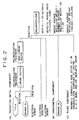
- Figs. 1 shows a flow sheet illustrating the process for producing polypropylene of the present invention.
- the titanium trichloride composition (III) used in the present invention comprises a linear olefin-non-linear olefin block copolymer (hereinafter abbreviated to a specified block copolymer) having at least one linear olefin polymer block and at least one non-linear olefin polymer block.
- a linear olefin-non-linear olefin block copolymer hereinafter abbreviated to a specified block copolymer having at least one linear olefin polymer block and at least one non-linear olefin polymer block.
- an organoaluminum compound (A 1 ) is reacted with an electron donor (B 1 ) to obtain a reaction product (I), followed by reacting the product (I) with TiCl 4 or with an organoaluminum compound (A 1 ) and TiCl 4 to obtain a solid product (II), subjecting this product (II) to a multi-stage polymerization treatment with 1 a linear olefin and 2 a non-linear olefin, each once or more times used, to form a linear olefin-non-linear olefin block copolymer, and further reacting this block copolymer with an electron donor (B 2 ) and an electron acceptor to obtain a final solid product (III) i.e. a titanium trichloride composition (III).
- polymerization treatment means that a linear olefin or a non-linear olefin is contacted with the solid product (II) under polymerizable conditions to thereby polymerize the linear olefin or the non-linear olefin.
- the solid product (II) forms a state coated with the polymers.
- the reaction of the organoaluminum compound (A 1 ) with the electron donor (B 1 ) is carried out in a solvent (D) at -20°C to +200°C, preferably -10°C to +100°C, for 30 seconds to 5 hours.
- the addition order of the organoaluminum compound (A 1 ), (B 1 ) and (D) has no particular limitation, and the respective proportions of quantities thereof used are 0.1 to 8 mols, preferably 1 to 4 mols of the electron donor (B 1 ), and 0.5 to 5 l, preferably 0.5 to 2 l of the solvent, each based on one mol of the organoaluminum compound (A 1 ).
- reaction product (I) is obtained.
- the product (I) may be subjected to the subsequent reaction, without separating it, that is, in a liquid state after completion of the reaction (hereinafter referred to often as reaction liquid (I)), as it is.
- either of the linear olefin or the non-linear olefin may be used in advance, but in the aspects of the polymerization operability at the time of using the resulting final titanium trichloride composition (III) as well as the quality of the resulting polyolefin, it is preferred to 1 first carry out the polymerization treatment with the linear olefin and 2 successively carry out the polymerization treatment with the non-linear olefin.
- the linear olefin-non-linear olefin block copolymer is formed, and the solid product (II) forms a state coated by the block copolymer.
- the multi-stage polymerization treatment is carried out using a linear olefin and a non-linear olefin each once or more times, as described, to obtain the titanium trichloride composition (III) for achieving the object of the present invention, but it is also possible to carry out the polymerization treatment twice or more, for example, by further adding 3 a linear olefin after the polymerization treatment with the non-linear olefin to carry out an additional polymerization treatment.
- reaction of the reaction product (I) or an organoaluminum compound (A 1 ) with TiCl 4 is carried out at -10°C to +200°C, preferably 0°C to 100°C for 5 minutes to 10 hours, irrespective of whether a linear olefin and a non-linear olefin are added or not added during an optional process of the reaction.
- reaction product (I) or an organoaluminum compound (A 1 ), TiCl 4 and a solvent may be carried out in an optional order, and the addition of a linear olefin and a non-linear olefin may also be carried out at any stage.
- reaction product (I) or an organoaluminum compound (A 1 ), TiCl 4 and a solvent is preferred to be completed within 5 hours, and the reaction is carried out even during the mixing. After the mixing of the total quantity, the reaction is preferred to be continued further within 5 hours.
- the quantity of the solvent is 0 to 3,000 ml based on one mol of TiCl 4
- the ratio of the number of Al atoms in the (I) or the (A 1 ) to the number of Ti atoms in TiCl 4 (Al/Ti) is 0.05 to 10, preferably 0.06 to 0.3.
- a multi-stage polymerization is carried out in either of polymerization treatment with a linear olefin or a non-linear olefin, using 0.1 g to 100 Kg of a linear olefin and 0.01 g to 100 Kg of a non-linear olefin based on 100 g of the solid product (II), under conditions of a reaction temperature of 0° to
- the titanium trichloride composition (III) of 0.1 to 49.5% by weight, and a content of the non-linear olefin polymer block therein of 0.01 to 49.5% by weight and also so as to give a ratio by weight of the linear olefin polymer block to the non-linear olefin polymer block of 2/98 to 98/2.
- the ratio by weight of the linear olefin polymer block to the non-linear olefin polymer block is preferred to be 2/98 to 98/2 in view of the balance among the effect of improving the operating properties, the voids-inhibiting effect and the effect of improving the transparency.
- the multi-stage polymerization treatment with a linear olefin and a non-linear olefin is carried out by separating and removing a liquid portion by filtering-off or decantation after completion of the reaction of the reaction product (I) or an organoaluminum compound (A 1 ) with TiCl 4 , followed by suspending the resulting solid product (II) in a solvent
- the multi-stage polymerization is carried out in either polymerization treatment with a linear olefin or a non-linear olefin, in the presence of 100 to 5,000 ml of a solvent and 0.5 to 5,000 g of an organoaluminum compound based on 100 g of the solid product (II), under the conditions of a reaction temperature of 0° to 90°C, a reaction time of one minute to 10 hours and a reaction pressure of the atmospheric pressure [0.1 MPa (0 Kgf/cm 2 G)] to 1.08 MPa 10 Kgf/cm 2
- the titanium trichloride composition (III) of 0.1 to 49.5% by weight,and a content of the non-linear olefin polymer block therein of 0.01 to 49.5% by weight and also so as to give a ratio by weight of the linear olefin polymer block to the non-linear olefin polymer block of 2/98 to 98/2.
- the reaction mixture after completion of the polymerization treatments at the respective stages may be used, as it is, for the polymerization treatment at the subsequent stage.
- the coexisting solvent, unreacted linear olefin or non-linear olefin and an organoaluminum compound may be removed by filtering off, decantation, followed by again adding a solvent and an organoaluminum compound and using the resulting mixture for the subsequent stage polymerization treatment with a non-linear olefin or a linear olefin.
- the solvent used at the time of the polymerization treatment is preferred to be an aliphatic hydrocarbon, and the organoaluminum compound may be the same as or different from that used when the reaction product (I) is obtained, or that used directly for the reaction with TiCl 4 , without reacting with an electron donor (B 1 ).
- solid product (II-A) After completion of the reaction, a liquid portion is separated and removed by filtering-off or decantation, followed by further repeatedly washing with a solvent, and the resulting solid product subjected to polymerization treatment (hereinafter referred to often as solid product (II-A)) may be used for the subsequent process in a state suspended in the solvent as it is, or may be further dried, taken out in the form of a solid substance and used.
- the solid product (II-A) is then reacted with an electron donor (B 2 ) and an electron acceptor (F). This reaction may be carried out without using any solvent, but use of an aliphatic hydrocarbon solvent affords preferred results.
- the quantities of these materials used are 0.1 to 1,000 g, preferably 0.5 to 200 g of (B 2 ), 0.1 to 1,000 g, preferably 0.2 to 500 g of (F) and 0 to 3,000 ml, preferably 100 to 1,000 ml of the solvent, each based on 100 g of the solid product (II-A).
- the reaction method includes 1 a process of simultaneously reacting an electron donor (B 2 ) and an electron acceptor (F) with the solid product (II-A), 2 a method of reacting (F) with (II-A), followed by reacting (B 2 ), 3 a method of reacting (B 2 ) with (II-A), followed by reacting (F) and 4 a method of reacting (B 2 ) with (F), followed by reacting (II-A), but any of these methods may be employed.
- reaction conditions in the case of the above methods 1 and 2, 40° to 200°C, preferably 50° to 100°C and 30 seconds to 5 hours are preferred, and in the case of the method 3, (II-A) is reacted with (B 2 ) at 0° to 50°C for one minute to 3 hours, followed by reacting with (F) under the same conditions as in the methods 1 and 2.
- (B 2 ) is reacted with (F) at 10° to 100°C for 30 minutes to 2 hours, followed by cooling down to 40°C or lower, adding (II-A) and reacting under the same conditions as in the above methods 1 and 2.
- a liquid portion is separated and removed by filtering-off or decantation, followed by further repeatedly washing with a solvent to obtain a final titanium trichloride composition (III) used in the present invention, containing a linear olefin-non-linear olefin block copolymer in a ratio by weight of a linear olefin polymer block to a non-linear olefin polymer block of 2/98 to 98/2, the content of the linear olefin polymer block therein being 0.1 to 49.5% by weight and the content of the non-linear olefin polymer block therein being 0.01 to 49.5% by weight.
- organoaluminum compound (A 1 ) used for preparing the titanium trichloride composition (III) used in the present invention in the first aspect, an organoaluminum compound expressed by the formula AlR 1 p R 2 p' X 3-(p+p') wherein R 1 and R 2 each represent a hydrocarbon radical such as an alkyl group, a cycloalkyl group, an aryl group, etc. or an alkoxy group, X represents a halogen atom and p and p' each represent an optional number satisfying an expression of 0 ⁇ p+p' ⁇ 3.
- trialkylaluminums such as trimethylaluminum, triethylaluminum, tri-n-propylaluminum, tri-n-butylaluminum, tri-i-butylaluminum, tri-n-hexylaluminum, tri-i-hexylaluminum, tri-2-methylpentylaluminum, tri-n-octylaluminum, tri-n-decylaluminum, dialkylaluminum monohalides such as diethylaluminum monochloride, di-n-propylaluminum monochloride, di-i-butylaluminum monochloride, diethylaluminum monofluoride, diethylaluminum monobromide, diethylaluminum monoiodide, dialkylaluminum hydrides such as diethylaluminum hydride, alkylaluminum sesquihalides such as methylaluminum ses
- ethers are mainly used as (B 1 ) and (B 2 ) and other electron donors are used together with ethers.
- Examples of the electron donor are organic compounds having any atom(s) of O, N, S and P i.e. ethers, alcohols, esters, aldehydes, aliphatic acids, ketones, nitriles, amines, amides, ureas, thioureas, isocyanates, azo compounds, phosphines, phosphites, phosphinites, H 2 S, thioethers, thio alcohols.
- ethers any atom(s) of O, N, S and P i.e. ethers, alcohols, esters, aldehydes, aliphatic acids, ketones, nitriles, amines, amides, ureas, thioureas, isocyanates, azo compounds, phosphines, phosphites, phosphinites, H 2 S, thioethers, thio alcohols.
- ethers such as diethyl ether, di-n-propyl ether, di-n-butyl ether, diisoamyl ether, di-n-pentyl ether, di-n-hexyl ether, di-i-hexyl ether, di-n-octyl ether, di-i-octyl ether, di-n-dodecyl ether, diphenyl ether, ethylene glycol monoethyl ether, tetra-hydrofuran, alcohols such as methanol, ethanol, propanol, butanol, pentanol, hexanol, octanol, phenol, cresol, xylenol, ethylphenol, naphthol, phenols, esters such as methyl methacrylate, ethyl acetate, butyl formate, amyl acetate, vinyl butyrate, vinyl
- the electron donor (B 1 ) for obtaining the reaction product (I) and the electron donor (B 2 ) to be reacted with the solid product (II-A) may be same or different.
- the electron acceptor (F) used in the present invention in the first aspect is those represented by halides of elements belonging to Groups III to VI of the Periodic Table. Concrete examples thereof are anhydrous aluminum chloride, SiCl 4 , SnCl 2 , SnCl 4 , TiCl 4 , ZrCl 4 , PCl 3 , PCl 5 , VCl 4 , SbCl 5 . These may be used in admixture. TiCl 4 is most preferred.
- aliphatic hydrocarbons such as n-pentane, n-hexane, n-heptane, n-octane, i-octane, etc. are used, and in place of or together with aliphatic hydrocarbons, halogenated hydrocarbons may also be used such as CCl 4 , chloroform, dichloroethane, trichloroethylene, tetrachloroethylene, etc.
- aromatic compounds are aromatic hydrocarbons e.g. naphthalene, their derivativatives such as alkyl derivatives e.g. mesitylene, durene, ethylbenzene, isopropylbenzene, 2-ethylnaphthalene, 1-phenylnaphthalene, halides such as monochlorobenzene, chlorotoluene, chloroxylene, chloroethylbenzene, dichlorobenzene, bromobenzene.
- alkyl derivatives e.g. mesitylene, durene, ethylbenzene, isopropylbenzene, 2-ethylnaphthalene, 1-phenylnaphthalene
- halides such as monochlorobenzene, chlorotoluene, chloroxylene, chloroethylbenzene, dichlorobenzene, bromobenzene.
- linear olefins such as ethylene, propylene, butene-1, pentene-1, hexene-1 are used, and particularly, ethylene and propylene are preferably used. These linear olefins are used alone or in admixture thereof.
- the non-linear olefin used for the polymerization treatment includes
- saturated ring-containing hydrocarbon monomer 1 examples include vinylcycloalkanes such as vinylcyclopropane, vinylcyclobutane, vinylcyclopentane, 3-methylvinylcyclopentane, vinylcyclohexane, 2-methylvinylcyclohexane, 3-methylvinylcyclohexane, 4-methylvinylcyclohexane, vinylcycloheptane, allylcycloalkanes such as allylcyclopentane, allylcyclohexane, and besides, saturated ring-containing hydrocarbon monomers having silicon atom in the saturated ring structure such as cyclotrimethylenevinylsilane, cyclotrimethylenemethylvinylsilane, cyclotetramethylenevinylsilane, cyclotetramethylenemethylvinylsilane, cyclopentamethylenevinylsilane, cyclopentamethylenemethylvinylsilane, cyclopentamethyleneemethylvin
- branched olefin 2 are branched olefins at 3-position such as 3-methylbutene-1, 3-methylpentene-1, 3-ethylpentene-1, branched olefins at 4-position such as 4-ethylhexene-1, 4,4-dimethylpentene-l, 4,4-dimethylhexene-1, alkenylsilanes such as vinyltrimethylsilane, vinyltriethylsilane, vinyltri-n-butylsilane, allyltrimethylsilane, allylethyldimethylsilane, allyldiethylmethylsilane, allyltriethylsilane, allyltri-n-propylsilane, 3-butenyltrimethylsilane, 3-butenyltriethylsilane, diallylsilanes such as dimethyldiallylsilane, ethylmethyldiallylsilane
- aromatic monomer 3 examples include styrene, as derivatives of styrene, alkylstyrenes such as o-methylstyrene, p-t-butylene, dialkylstyrenes such as 2,4-dimethylstyrene, 2,5-dimethylstyrene, 3,4-dimethylstyrene, 3,5-dimethylstyrene, halogen-substituted styrenes such as 2-methyl-4-fluorostyrene, 2-ethyl-4-chlorostyrene, o-fluorostyrene, p-fluoro-styrene, etc., trialkylsilylstyrenes such as p-trimethylsilylstyrene, m-triethylsilylstyrene, p-ethyldimethylsilylstyrene, allyltoluenes
- titanium trichloride composition (III) is combined with an organoaluminum (A 2 ) and an aromatic carboxylic acid ester (E) in definite quantities mentioned below to prepare the catalyst of the present invention, or preferably by further reacting an olefin with the combination obtained above to obtain a pre-activated catalyst.
- the polymerization form of the propylene polymerization using the above catalyst has no particular limitation, and not only liquid phase polymerization such as slurry polymerization and bulk polymerization, but also gas phase polymerization are adequately employed.
- a catalyst obtained by combining the titanium trichloride composition (III) with an organoaluminum compound (A 2 ) and an aromatic carboxylic acid (E) exhibits a sufficient effect, but in the case of gas phase polymerization, it is preferred to use a preactivated catalyst component having a higher activity, obtained by combining the titanium trichloride composition (III) with an organoaluminum compound in place of the titanium trichloride composition (III), followed by reacting an olefin with the resulting combination.
- an olefin For the preactivation, it is preferred to polymerize an olefin using 0.005 to 500 g of an organoaluminum, 0 to 50 l of a solvent, 0 to 1,000 ml of hydrogen and 0.01 to 5,000 g, preferably 0.05 to 3,000 g of an olefin, each based on 1 g of the titanium trichloride compositition (III), at 0° to 100°C and for one minute to 20 hours.
- an organoaluminum 0 to 50 l of a solvent, 0 to 1,000 ml of hydrogen and 0.01 to 5,000 g, preferably 0.05 to 3,000 g of an olefin, each based on 1 g of the titanium trichloride compositition (III), at 0° to 100°C and for one minute to 20 hours.
- the reaction of an olefin for the preactivation may be carried out either in an aliphatic or aromatic hydrocarbon solvent such as n-pentane, n-hexane, n-heptane, toluene or in a liquefied olefin such as liquefied propylene, liquefied butene-1, without using any solvent, or an olefin such as ethylene, propylene may be reacted in gas phase, or the reaction may be carried out making an olefin polymer or hydrogen coexistent in advance. Further, in the preactivation, it is also possible to add an aromatic carboxylic acid ester (E).
- E aromatic carboxylic acid ester
- olefin used for the preactivation examples include linear olefins such as ethylene, propylene, butene-1, pentene-1, hexene-1, heptene-1, octene-1, branched monoolefins such as 4-methyl-pentene-1, 2-methyl-pentene-1 and at least one kind of olefins may be used.
- organoaluminum compound the same as the above-mentioned (A 1 ) may be used, but preferably, the same dialkylaluminum monohalides as (A 2 ) mentioned later may be used.
- a catalyst obtained by adding a definite quantity of an aromatic carboxylic acid ester (E) to the above preactivated catalyst component slurry may be used, as it is, for propylene polymerization, or a catalyst obtained by removing coexisting solvent, unreacted olefin and an organoaluminum compound by filtering-off or decantation, followed by drying, to obtain a powder material, or a material having a solvent added to the above powder material to prepare a suspension, followed by combining an aluminum compound (A 2 ) and an aromatic carboxylic acid ester (E) with the suspension to obtain a catalyst for propylene polymerization, may be used, or a catalyst obtained by removing coexisting solvent and unreacted olefin by vaporization by means of reduced distillation, passing of an inert gas flow, followed by adding an aluminum compound (A 2 ) to the resulting powder or a suspension obtained by adding a solvent to the powder, further adding an organoaluminum compound
- the respective quantities of the above titanium trichloride composition (III), organoaluminum compound (A 2 ) and aromatic carboxylic acid ester (E) used they are used so as to give a mol ratio of the aromatic carboxylic acid ester (E) to the titanium trichloride composition (III) (E)/(III) in the range of 0.1 to 10.0 and a molar ratio of the organoaluminum compound (A 2 ) to the titanium trichloride composition (III) (Al 2 /(III)) in the range of 0.1 to 200, preferably 0.1 to 100.
- the number of mols of the titanium trichloride composition (III) substantially refers to the number of Ti gram atoms contained in (III).
- dialkylaluminum monohalides expressed by the formula AlR 10 R 11 X are preferred.
- R 10 and R 11 each represent a hydrocarbon radical such as alkyl group, cycloalkyl group, aryl group, arkaryl group or alkoxy group and X represents a halogen.
- diethylaluminum monochloride di-n-propylaluminum monochloride, di-i-butylaluminum monochloride, di-n-butylaluminum monochloride, diethylaluminum monoiodide, diethylaluminum monobromide.
- aromatic carboxylic acid ester (E) as one of the components constituting the catalyst are ethyl benzoate, propyl benzoate, butyl benzoate, octyl benzoate, 2-ethylhexyl benzoate, methyl toluylate, ethyl toluylate, 2-ethylhexyl toluylate,methyl anisate, ethyl anisate, propyl anisate, ethyl cinnamate, methyl naphthoate, propyl naphthoate, butyl naphthoate, 2-ethylhexyl naphthoate, ethyl phenylacetate.
- the thus obtained catalyst used in the present invention (in the first aspect) is used for propylene polymerization.
- the polymerization may be carried out by sluury polymerization in a hydrocarbon solvent such as n-hexane, n-heptane, n-octane, benzene, toluene or by bulk polymerization carried out in liquefied propylene or by gas phase polymerization.
- the isotactic pentad ratio (P) in relation to the melt flow rate (MFR) is in the range of 1 ⁇ P ⁇ 0.015.log MFR + 0.955.
- the higher MFR, the higher P, and usually, practical MFR is 0.05 to 200, preferably about 0.1 to 100.
- the polymerization temperature is usually 20° to 100°C, preferably 40° to 85°C. If the temperature is too low, the polymerization activity becomes low so that such temperature is not practical, while if it is too high, it is difficult to raise the isotacticity.
- the polymerization pressure is in the range of the atmospheric pressure to 5MPa (50 Kg/cm 2 G), and the polymerization time is usually about 30 minutes to 15 hours. In the polymerization, addition of a suitable quantity of hydrogen for adjusting the molecular weight and the like means are the same as those in conventional polymerization processes.
- the polypropylene obtained according to the present invention is a high stiffness polypropylene having a notably high transparency and used as various molded products according to known injection molding, vacuum molding, extrusion molding, blow molding, etc.
- the high-stiffness polypropylene obtained according to the process of the present invention exhibits a high stiffness due to the high-stiffness polypropylene-producing performance of the catalyst consisting of a combination of definite quantities of the catalyst components used in the present invention although the detailed mechanism is unclear.
- the non-linear olefin polymer block in the specified block copolymer exhibitsa nucleus-creating function at the time of melt-molding to thereby promote crystallization of polypropylene so that the transparency and crystallinity of the whole polypropylene are enhanced.
- linear olefin polymer block in the linear olefin-non-linear olefin block copolymer has a high compatibility with polypropylene, voids geneated in the film prepared from the polypropylene are very few.
- the specified block copolymer introduced into the polypropylene by way of the titanium trichloride composition (III) used in the present invention in the first aspect is a stereoregular high molecular weight polymer having a high compatibility with polypropylene, as described above, no bleed thereof onto the surface of polypropylene occurs.
- reaction solution (I) (molar ratio of diisoamyl ether/DEAC: 2.4).
- TiCl 4 (40 mols) was placed in a reactor purged with nitrogen gas, followed by heating it to 35°C, dropwise adding thereto the total quantity of the above reaction solution (I) over 180 minutes, keeping the mixture at the same temperature for 60 minutes, raising the temperature up to 80°C, further reacting for one hour, cooling down to room temperature, removing the supernatant and 4 times repeating a procedure of adding n-hexane (20 l) and removing the supernatant by decantation to obtain a solid product (II).
- the content of the propylene polymer block in the resulting titanium trichloride composition (III) was 25.0% by weight, the content of the vinylcyclohexane polymer block therein was 25.0% by weight and the Ti content therein was 12.6% by weight.
- n-hexane 40 l
- diethylaluminum monochloride 114 g
- the titanium trichloride composition (III) 1.8 Kg
- ethylene 1.8 Nm 3
- reacting it quantitative of ethylene reacted per g of the titanium trichloride composition (III): 1.0 g
- removing unreacted ethylene washing with n-hexane, filtering and drying to obtain a preactivated catalyst component.
- a polypropylene powder having an MFR of 2.0 (3 0 Kg) was fed into the vessel through the same piping, a suspension obtained by adding n-hexane to the preactivated catalyst component obtained above in the item (2) so as to give a 4.0% by weight of n-hexane suspension, at a rate of 8.77 mg atom in terms of Ti atom per hour, and diethylaluminum monochloride and methyl p-toluylate so as to give a molar ratio of 7.0 and that of 1.0, respectively, each based on Ti atom.
- gas phase polymerization of propylene was continuously carried out at 70°C over 120 hours.
- the resulting polymer was continuously withdrawn at a rate of 13.5 Kg/hr. so as to give a level of the polymer retained in the polymerization vessel, 45% by volumem.
- the withdrawn polymer was successively subjected to contact treatment with nitrogen gas containing 0.2% by volume, at 100°C for 30 minutes, followed by contact treatment with steam at 100°C for 30 minutes and further drying with nitrogen gas at 100°C to obtain polypropylene.
- Example 1 was repeated except that, in Example 1 (3), the respective catalyst components were fed so as to give hydrogen concentrations in the gas phase of the polymerization vessel, of 4.0% by volume (Example 2) and 9.7% by volume (Example 3) and so as to give a total pressure in the polymerization vessel, of 2.36 MPa (23 Kg/cm 2 G), to obtain polypropylene.
- Polypropylene was obtained in the same manner as in Comparative example 1 except that, in Example 1 (3), the hydrogen concentration in the gas phase of the polymerization vessel was changed to 4.0% by volume (Comparative example 2) and 9.7% by volume (Comparative example 3).
- Example 1 (1) the polymerization treatment with vinylcyclohexane at the second step was omitted and propylene alone was reacted to obtain a titanium trichloride composition, and using this titanium trichloride composition, a preactivated catalyst component was prepared in the same manner as in Example 1 (2). Successively, Example 1 (3) was repeated except that the above preactivated catalyst component was used and the respective catalyst components were fed so as to give a total pressure in the polymerization vessel, of 23.6 MPa (23 Kg/cm 2 G), to obtain polypropylene.
- n-hexane (4 l) and TiCl 4 (10 mols) were n-hexane (4 l) and TiCl 4 (10 mols), followed by keeping the mixture at 0°C, dropwise adding a n-hexane solution (4 l) containing diethylaluminum monochloride (8 mols), raising the temperature up to 40°C, further reacting the mixture for one hour, adding vinylcyclohexane (1.9 Kg), subjecting the mixture to polymerization treatment at the same temperature for 2 hours, thereafter removing the supernatant, three times repeating a procedure of adding n-hexane (5 l) and removing by decantation, suspending the resulting solid product subjected to the polymerization treatment in n-hexane (9 l), successively adding TiCl 4 (3.5 Kg) at room temperature, reacting the mixture at 90°C for one hour and thereafter washing with n-hexane, to obtain a titanium trichloride composition.
- Comparative example 1 was repeated except that, in Comparative example 1 (3), methyl p-toluylate as a catalyst component was not used.
- Example 1 (1) allyltrimethylsilane was used in place of vinylcyclohexane, and the quantities of propylene and allyltrimethylsilane used were varied to thereby obtain titanium trichloride compositions (III) having the polymer contents as shown in Table 1, followed by preparing preactivated catalyst components using the above titanium trichloride compositions in the same manner as in Example 1 (2). Successively, propylene polymerization was carried out in the same manner as in Example 1 (3) except that the above preactivated catalyst components were used and the respective catalyst components were fed so as to give a pressure inside the polymerization vessel, of 23.6 MPa (23 Kg/cm 2 G).
- Polypropylenes were obtained in the same manner as in Example 1 except that, in Example 1 (1), the quantity of propylene used was changed to 750 g, and 3-methylbutene-1 (2.7 Kg) was used in place of vinylcyclohexane to carry out a multi-stage polymerization treatment, and in Example 1 (3), the molar ratio of methyl p-toluylate to Ti atom was varied as shown in Table 1 and the respective catalyst components were fed so as to give a total pressures in the polymerization vessel, of 23.6 MPa (23 Kg/cm 2 G).
- n-Heptane (4 l), diethylaluminum monochloride (5.0 mols), diisoamyl ether (9.0 mols) and di-n-butyl ether (5.0 mols) were reacted at 18°C for 30 minutes, followed by dropwise dropping the resulting reaction solution into TiCl 4 (27.5 mols) at 40°C over 300 minutes, keeping the mixture at the same temperature for 1.5 hour to react it, raising the temperature up to 65°C, reacting for one hour, removing the supernatant, 6 times repeating a procedure of adding n-hexane (20 l) and removing by decantation, suspending the resulting solid product (II) (1.8 Kg) in n-hexane (40 l), adding diethylaluminum monochloride (500 g), adding propylene (1.5 Kg) at 30°C and reacting for one hour, to carry out the first step polymerization treatment.
- Example 8 was repeated except that a titanium trichloride composition was obtained without the multi-stage polymerization treatment with propylene and 4,4-dimethylpentene-l and the composition was used in place of the titanium trichloride composition (III), to obtain polypropylene.
- TiCl 4 (27.0 mols) was added to n-hexane (12 l), followed by cooling the mixture down to 1°C, further dropwise adding n-hexane (12.5 l) containing diethylaluminum monochloride (27.0 mols) at 1°C over 4 hours, thereafter keeping the mixture at the same temperature for 15 minutes to react it, successively raising the temperature up to 65°C over one hour and further reacting at the same temperature for one hour.
- Example 1 (2) was repeated except that the titanium trichloride composition (III) (1.8 Kg) obtained above in the item (1) was used in place of the titanium trichloride composition (III) in Example 1 (2), and propylene (1.3 Kg) was used in place of ethylene, to obtain a preactivated catalyst component.
- the titanium trichloride composition (III) (1.8 Kg) obtained above in the item (1) was used in place of the titanium trichloride composition (III) in Example 1 (2), and propylene (1.3 Kg) was used in place of ethylene, to obtain a preactivated catalyst component.
- n-hexane suspension of the preactivated catalyst component obtained above in the item (2) was continuously fed a 4.0% by weight n-hexane suspension of the preactivated catalyst component obtained above in the item (2), at a rate of 19.6 mg atom in terms of Ti atom/hr., and diethylaluminum monochloride and methyl p-toluylate in molar ratios of 3.0 and 1.0 relative to Ti atom, through the same piping, and separately n-hexane at a rate of 21 Kg/hr. through a separate piping.
- the resulting polymer slurry was continuously withdrawn from the polymerization vessel so as to keep the level of the slurry inside the polymerization vessel at 75% by volume, into a 50 l capacity flash tank.
- the pressure was dropped in the flash tank and unreacted propylene and hydrogen were removed, while methanol was fed at a rate of 1 Kg/hr. and the catalyst was treated at 70°C, followed by neutralizing with a NaOH aqueous solution,washing the polymer with water, separating and drying to obtain polypropylene at a rate of 10 Kg/hr.
- Example 9 was repeated except that the multi-stage polymerization treatment with propylene and p-trimethylsilylstyrene was not carried out to obtain a titanium trichloride composition corresponding to the solid product (II-A). Using this composition, slurry polymerization of propylene was carried out in the same manner as in Example 9.
- Example 10 was repeated except that, in Example 10 (1), the multi-stage polymerization treatment with ethylene and 2-methyl-4-fluorostyrene was omitted, to obtain a titanium trichloride composition. Polypropylene was then obtained in the same manner as in Example 10.
- the main effectiveness of the present invention in the first aspect consists in that a high-stiffness polypropylene, even when made up into film, having few occurrence of voids and a superior transparency is obtained stably without causing any operational problem.
- the film produced using the resulting polypropylene has an inside haze of 1.4 to 3.0% and hence has a far higher transparency than films produced using conventional polypropylenes obtained using a titanium trichloride composition containing no specified block copolymer or the polypropylene prepared according to the process of the prior application invention,either having an inside haze of about 11% to about 12%.
- the crystallization temperature, too has been elevated by about 12°C to about 14°C as compared with conventional polypropylenes and by about 8°C to about 10°C as compared with the polypropylene obtained according to the process of the prior application invention, and as a result of such improved crystallinity, the flexural elastic modulus, too, has been improved (see Examples 1-10, Comparative examples 1-4, 8 and 13-15).
Landscapes
- Chemical & Material Sciences (AREA)
- Health & Medical Sciences (AREA)
- Chemical Kinetics & Catalysis (AREA)
- Medicinal Chemistry (AREA)
- Polymers & Plastics (AREA)
- Organic Chemistry (AREA)
- Inorganic Chemistry (AREA)
- Transition And Organic Metals Composition Catalysts For Addition Polymerization (AREA)
Claims (8)
- Verfahren zur Herstellung von einem hochsteifen Polypropylen mit einem Biegemodul von mindestens 1765 MPa (18000 kgf/cm2), das die Polymerisation von Propylen unter Verwendung eines Katalysators umfaßt, der erhalten wird durch Kombinieren von:(1) einer Titantrichlorid-Zusammensetzung (III), erhalten durch Umsetzung von TiCl4 mit einer Organoaluminiumverbindung (A1) oder einem Reaktionsprodukt (I) einer Organoaluminiumverbindung (A1) mit einem Elektronendonor (B1), um ein festes Produkt (II) zu erhalten, gefolgt von der Unterwerfung des festen Produktes (II) einer mehrstufigen Polymerisationsbehandlung mit einem linearen Olefin und einem nichtlinearen Olefin, die jeweils ein oder mehrere Male verwendet werden, um ein Blockcopolymerisat aus linearem Olefin und nichtlinearem Olefin zu erzeugen mit einem Gewichtsverhältnis des Blocks aus dem Polymer des linearen Olefins darin zu dem Block aus dem Polymer des nichtlinearen Olefins von 2/98 zu 98/2, gefolgt von einer weiteren Umsetzung des Blockcopolymerisats mit einem Elektronendonor (B2) und einem Elektronenakzeptor, um die Titantrichlorid-Zusammensetzung (III) zu erhalten, die 0,1 bis 49,5 Gew.-% des Blocks aus dem Polymer des linearen Olefins und 0,01 bis 49,5 Gew.-% des Blocks aus dem Polymer des nichtlinearen Olefins enthält;(2) einer Organoaluminiumverbindung (A2); und(3) einem aromatischen Carbonsäureester (E), wobei das Molverhältnis des aromatischen Carbonsäureesters (E) zu den Grammatomen Ti in der Titantrichlorid-Zusammensetzung (III), das heißt (E)/(III), von 0,1 bis 10,0 beträgt, unddas Molverhältnis der Organoaluminiumverbindung (A2) zu den Grammatomen Ti in der Titantrichlorid-Zusammensetzung (III), das heißt (A2)/(III), 0,1 bis 200 beträgt.
- Verfahren nach Anspruch 1, wobei die Organoaluminiumverbindung (A1) die Formel AlR1 pR2 p'X3-(p+p') hat, wobei R1 und R2 jeweils eine Alkyl-, Cycloalkyl- oder Arylgruppe sind, X ein Halogenatom ist und p und p' jeweils eine wahlfreie Zahl ist, derart, daß 0<p+p'≤3 ist.
- Verfahren nach Anspruch 1 oder Anspruch 2, wobei das nichtlineare Olefin ein gesättigtes, ringhaltiges Kohlenwasserstoffmonomer der Formel
CH2=CH-R3
ist, wobei R3 ein gesättigtes, ringhaltiges Kohlenwasserstoffradikal mit 3 bis 18 Kohlenstoffatomen ist, das eine gesättigte Ringstruktur eines Kohlenwasserstoffs aufweist, welches Radikal ein Siliciumatom enthalten kann. - Verfahren nach Anspruch 1 oder Anspruch 2, wobei das nichtlineare Olefin ein verzweigtes Olefin der Formel

- Verfahren nach Anspruch 1 oder Anspruch 2, wobei das nichtlineare Olefin ein aromatisches Monomer der Formel

- Herstellungsverfahren nach Anspruch 1, wobei die Organoaluminiumverbindung (A2) ein Dialkylaluminiummonohalogenid ist.
- Verfahren nach einem der vorhergehenden Ansprüche, wobei anstelle der Titantrichlorid-Zusammensetzung (III) eine präaktivierte Katalysatorkomponente verwendet wird, die durch Kombinieren der Titantrichlorid-Zusammensetzung (III) mit von 0,005 bis 500 Gramm einer Organoaluminiumverbindung pro 1 Gramm der Titantrichlorid-Zusammensetzung (III) und dann Polymerisieren von 0.05 bis 3000 g eines Olefins unter Verwendung von 0 bis 50 Liter eines Lösungsmittels und 0 bis 1000 ml Wasserstoff pro 1 g der Titantrichlorid-Zusammensetzung (III), wobei die Polymerisation 1 Minute bis 20 Stunden lang bei 0-100°C durchgeführt wird, erhalten wird.
- Verfahren nach Anspruch 1, wobei die Beziehung zwischen dem isotaktischen Pentadverhältnis (P) und dem Schmelzefluß (MFR) des entstehenden Polypropylens dem Ausdruck:

Priority Applications (1)
| Application Number | Priority Date | Filing Date | Title |
|---|---|---|---|
| EP93108237A EP0564004B1 (de) | 1989-06-19 | 1990-06-19 | Hochstereoregelmässiges Polypropylen |
Applications Claiming Priority (4)
| Application Number | Priority Date | Filing Date | Title |
|---|---|---|---|
| JP156042/89 | 1989-06-19 | ||
| JP15604289A JPH0786124B2 (ja) | 1989-06-19 | 1989-06-19 | 高剛性ポリプロピレンの製造法 |
| JP1249439A JPH0713108B2 (ja) | 1989-09-26 | 1989-09-26 | 高立体規則性ポリプロピレン |
| JP249439/89 | 1989-09-26 |
Related Child Applications (2)
| Application Number | Title | Priority Date | Filing Date |
|---|---|---|---|
| EP93108237A Division EP0564004B1 (de) | 1989-06-19 | 1990-06-19 | Hochstereoregelmässiges Polypropylen |
| EP93108237.4 Division-Into | 1990-06-19 |
Publications (3)
| Publication Number | Publication Date |
|---|---|
| EP0404519A2 EP0404519A2 (de) | 1990-12-27 |
| EP0404519A3 EP0404519A3 (de) | 1991-04-03 |
| EP0404519B1 true EP0404519B1 (de) | 1996-08-07 |
Family
ID=26483889
Family Applications (2)
| Application Number | Title | Priority Date | Filing Date |
|---|---|---|---|
| EP90306680A Expired - Lifetime EP0404519B1 (de) | 1989-06-19 | 1990-06-19 | Verfahren zur Herstellung von einem hochsteifen Polypropylen |
| EP93108237A Expired - Lifetime EP0564004B1 (de) | 1989-06-19 | 1990-06-19 | Hochstereoregelmässiges Polypropylen |
Family Applications After (1)
| Application Number | Title | Priority Date | Filing Date |
|---|---|---|---|
| EP93108237A Expired - Lifetime EP0564004B1 (de) | 1989-06-19 | 1990-06-19 | Hochstereoregelmässiges Polypropylen |
Country Status (5)
| Country | Link |
|---|---|
| US (1) | US5077341A (de) |
| EP (2) | EP0404519B1 (de) |
| KR (1) | KR910000814A (de) |
| CA (1) | CA2018829C (de) |
| DE (2) | DE69028008T2 (de) |
Families Citing this family (20)
| Publication number | Priority date | Publication date | Assignee | Title |
|---|---|---|---|---|
| US5218052A (en) * | 1991-02-04 | 1993-06-08 | Amoco Corporation | Olefin polymerization and copolymerization process |
| ES2106873T3 (es) * | 1991-06-27 | 1997-11-16 | Idemitsu Petrochemical Co | Resina de polipropileno y su composicion. |
| US5476903A (en) * | 1991-08-14 | 1995-12-19 | Mitsui Petrochemical Industries, Ltd. | Prepolymerized catalyst, catalyst for olefin polymerization, polymerization process of olefin, and olefin polymer |
| BE1005792A3 (fr) * | 1992-05-04 | 1994-02-01 | Solvay | Systeme catalytique utilisable pour la polymerisation stereospecifique des alpha-olefines, procede pour cette polymerisation et polymeres obtenus. |
| US6184328B1 (en) * | 1994-09-07 | 2001-02-06 | Showa Denko Kabushiki Kaisha | Propylene-based polymer, method for its production, composition thereof, catalyst component for polymerization, and method for its production |
| DE69412266T2 (de) * | 1994-05-12 | 1999-02-11 | Showa Denko K.K., Tokio/Tokyo | Propylenepolymer, herstellungsverfahren, zusammensetzung davon, polmerisationskatalysatorkomponente und herstellungsverfahren |
| EP0821012B1 (de) * | 1994-05-12 | 1999-01-13 | Showa Denko Kabushiki Kaisha | Polymer auf Propylenbasis, Verfahren zu seiner Herstellung und Zusammensetzungen davon |
| US5736613A (en) * | 1994-07-15 | 1998-04-07 | Idemitsu Petrochemical Co., Ltd. | Highly rigid propylenic resin and blow molded article made therefrom |
| DE19545499A1 (de) * | 1995-12-06 | 1997-06-12 | Basf Ag | Verbesserte statistische Propylencopolymerisate |
| US6403708B2 (en) | 1996-05-27 | 2002-06-11 | Mitsui Chemicals Inc | Crystalline polypropylenes, process for preparing thereof, polypropylene compositions, and thermoformed products |
| DE69734156T2 (de) * | 1996-05-27 | 2006-07-06 | Mitsui Chemicals, Inc. | Kristallines polypropen, verfahren zu desse herstellung, zusammensetzung und artikel damit |
| CA2204464A1 (en) * | 1996-11-06 | 1998-11-05 | Ube Industries Limited | Process for polymerization of .alpha.-olefin |
| KR100497800B1 (ko) * | 1996-11-06 | 2005-11-24 | 미쯔이가가꾸가부시끼가이샤 | α-올레핀 중합반응을 위한 공정, 이에 의해 제조한 폴리-α-올레핀, 및 이 공정을 위한 촉매 성분으로서 유용한 아미노실란화합물 |
| FI990282A0 (fi) | 1999-02-12 | 1999-02-12 | Borealis As | Monivaiheinen prosessi sellaisten alfa-olefiinipolymeerien valmistamiseksi, joilla on kontrolloitu stereosäännöllisyys, sekä niistä valmistetut tuotteet |
| JP3486870B2 (ja) * | 2000-10-04 | 2004-01-13 | 卓三 岩田 | 繊維物質の活性化方法及びその装置 |
| WO2005005503A1 (ja) * | 2003-07-14 | 2005-01-20 | Mitsubishi Chemical Corporation | プロピレン系ブロック共重合体 |
| EP1829898A4 (de) * | 2004-12-13 | 2011-06-01 | Toho Titanium Co Ltd | Feste katalysatorkomponente und katalysator zur polymerisation von olefin und verfahren zur herstellung von olefinpolymer oder copolymer damit |
| EP1726603A1 (de) * | 2005-05-27 | 2006-11-29 | Borealis Technology Oy | Hochkristallines Polypropylen |
| CN109810398A (zh) * | 2017-11-21 | 2019-05-28 | 中国石油天然气股份有限公司 | 一种超高分子量等规聚丙烯树脂组合物及其制备方法 |
| JP7291479B2 (ja) * | 2018-12-27 | 2023-06-15 | 株式会社プライムポリマー | 成形体 |
Citations (1)
| Publication number | Priority date | Publication date | Assignee | Title |
|---|---|---|---|---|
| EP0395391A2 (de) * | 1989-04-25 | 1990-10-31 | Chisso Corporation | Katalysatorbestandteil für die Herstellung von kristallinen Polymeren und Verfahren zur Herstellung des Katalysators |
Family Cites Families (24)
| Publication number | Priority date | Publication date | Assignee | Title |
|---|---|---|---|---|
| SU367115A1 (ru) * | 1968-12-27 | 1973-01-23 | Способ получения блоксополимеров | |
| CH543546A (fr) * | 1971-03-23 | 1973-10-31 | Solvay | Système catalytique de polymérisation des alpha-oléfines |
| LU65954A1 (de) * | 1972-08-25 | 1974-03-07 | ||
| JPS57102907A (en) | 1980-12-18 | 1982-06-26 | Sumitomo Chem Co Ltd | High-crystallinity propylene polymer for injection molding |
| JPS5883016A (ja) * | 1981-11-13 | 1983-05-18 | Mitsui Petrochem Ind Ltd | プロピレンブロツク共重合体の製法 |
| JPS5883006A (ja) | 1981-11-13 | 1983-05-18 | Mitsui Petrochem Ind Ltd | オレフインの重合方法 |
| GB2114581B (en) * | 1981-12-17 | 1985-08-14 | Chisso Corp | Ziegler catalyst for producing polypropylene |
| JPS58201816A (ja) * | 1982-05-19 | 1983-11-24 | Chisso Corp | 高剛性成形品用プロピレンエチレンブロツク共重合体とその製造法 |
| JPS5922913A (ja) | 1982-07-15 | 1984-02-06 | Chisso Corp | 高剛性成形品用ポリプロピレン樹脂 |
| JPS6028411A (ja) * | 1983-07-26 | 1985-02-13 | Chisso Corp | 高剛性エチレン・プロピレン共重合体の製造方法 |
| JPS6096612A (ja) * | 1983-10-31 | 1985-05-30 | Chisso Corp | 難白化高溶融粘弾性エチレン・プロピレン共重合体とその製造法 |
| JPS60139710A (ja) | 1984-11-15 | 1985-07-24 | Sumitomo Chem Co Ltd | プロピレン共重合体の製造方法 |
| JPS60139428A (ja) * | 1983-12-27 | 1985-07-24 | Sumitomo Chem Co Ltd | ポリプロピレン延伸フイルム |
| JPS60139731A (ja) * | 1983-12-27 | 1985-07-24 | Sumitomo Chem Co Ltd | 結晶性プロピレン重合体組成物 |
| US4543389A (en) * | 1984-04-10 | 1985-09-24 | Shell Oil Company | Copolymerization catalyst and process for polymerizing impact resistant ethylene-propylene polymers |
| JPS6121144A (ja) * | 1984-07-09 | 1986-01-29 | Sumitomo Chem Co Ltd | ポリプロピレンシ−ト |
| JPH064684B2 (ja) | 1984-12-28 | 1994-01-19 | 出光石油化学株式会社 | 結晶性ポリプロピレン |
| JPH0717692B2 (ja) | 1985-10-28 | 1995-03-01 | 株式会社トクヤマ | ポリオレフインの製造方法 |
| JPH0697084B2 (ja) * | 1986-03-20 | 1994-11-30 | 松下電器産業株式会社 | 生ごみ処理装置 |
| JP2516199B2 (ja) * | 1986-04-23 | 1996-07-10 | 三井東圧化学株式会社 | プロピレンの連続重合方法 |
| JPH0725832B2 (ja) * | 1986-09-12 | 1995-03-22 | 三井東圧化学株式会社 | プロピレン重合法 |
| JPH075668B2 (ja) | 1987-02-04 | 1995-01-25 | チッソ株式会社 | 高結晶性ポリプロピレン |
| DE3881728T3 (de) * | 1987-03-14 | 1998-01-15 | Mitsubishi Chem Ind | Verfahren zur Herstellung eines Propylen-alpha-Olefin-Blockkopolymers. |
| JPS6466217A (en) | 1987-09-08 | 1989-03-13 | Idemitsu Petrochemical Co | Propylene polymer |
-
1990
- 1990-06-12 US US07/536,711 patent/US5077341A/en not_active Expired - Lifetime
- 1990-06-12 CA CA002018829A patent/CA2018829C/en not_active Expired - Fee Related
- 1990-06-19 DE DE69028008T patent/DE69028008T2/de not_active Expired - Fee Related
- 1990-06-19 EP EP90306680A patent/EP0404519B1/de not_active Expired - Lifetime
- 1990-06-19 KR KR1019900008986A patent/KR910000814A/ko not_active Ceased
- 1990-06-19 EP EP93108237A patent/EP0564004B1/de not_active Expired - Lifetime
- 1990-06-19 DE DE69028720T patent/DE69028720T2/de not_active Expired - Fee Related
Patent Citations (1)
| Publication number | Priority date | Publication date | Assignee | Title |
|---|---|---|---|---|
| EP0395391A2 (de) * | 1989-04-25 | 1990-10-31 | Chisso Corporation | Katalysatorbestandteil für die Herstellung von kristallinen Polymeren und Verfahren zur Herstellung des Katalysators |
Also Published As
| Publication number | Publication date |
|---|---|
| DE69028720D1 (de) | 1996-10-31 |
| CA2018829C (en) | 1996-06-11 |
| US5077341A (en) | 1991-12-31 |
| DE69028008D1 (de) | 1996-09-12 |
| EP0564004B1 (de) | 1996-09-25 |
| CA2018829A1 (en) | 1990-12-19 |
| EP0404519A2 (de) | 1990-12-27 |
| KR910000814A (ko) | 1991-01-30 |
| EP0564004A1 (de) | 1993-10-06 |
| DE69028720T2 (de) | 1997-02-27 |
| DE69028008T2 (de) | 1997-01-23 |
| EP0404519A3 (de) | 1991-04-03 |
Similar Documents
| Publication | Publication Date | Title |
|---|---|---|
| EP0404519B1 (de) | Verfahren zur Herstellung von einem hochsteifen Polypropylen | |
| EP0094818B1 (de) | Propylen-Äthylen Copolymere für geformte Gegenstände mit hohe Festigkeit und Herstellungsverfahren dieser Copolymere | |
| US4309521A (en) | Process for producing α-olefin polymers | |
| EP0135311B1 (de) | Propylen-Äthylen-Copolymer mit hoher Festigkeit und dessen Herstellungsverfahren | |
| US4460757A (en) | Process for producing α-olefin polymers | |
| EP0098077B1 (de) | Hochstarres, hoch schmelzviskoelastisches Polypropylen und Verfahren zu dessen Herstellung | |
| US4420593A (en) | Process for producing α-olefin polymers | |
| US4603184A (en) | Process for producing alpha-olefin polymers | |
| EP0395391B1 (de) | Katalysatorbestandteil für die Herstellung von kristallinen Polymeren und Verfahren zur Herstellung des Katalysators | |
| US4526931A (en) | Whitening-resistant, highly melt-viscoelastic ethylene-propylene copolymer and process for producing the same | |
| JPH02265905A (ja) | ポリプロピレンの製造方法 | |
| JPH0713108B2 (ja) | 高立体規則性ポリプロピレン | |
| JPH0780943B2 (ja) | 高剛性ポリプロピレンを製造する方法 | |
| JPH0776252B2 (ja) | オレフィン重合体製造用三塩化チタン組成物およびその製造方法 | |
| JP2706815B2 (ja) | 高剛性ポリプロピレンを製造する方法 | |
| JPH0786124B2 (ja) | 高剛性ポリプロピレンの製造法 | |
| JPH0366718A (ja) | プロピレン―オレフィンブロック共重合体の製造方法 | |
| JPH0350208A (ja) | プロピレン―オレフィンブロック共重合体の製造法 | |
| JPH0780955B2 (ja) | α―オレフィン重合体製造用三塩化チタン組成物 | |
| JPH0776250B2 (ja) | オレフィン重合用三塩化チタン組成物およびその製造方法 | |
| JPH0784489B2 (ja) | α−オレフィン重合用三塩化チタン組成物の製造方法 | |
| JPH0780958B2 (ja) | 高剛性ポリプロピレンの製造方法 | |
| JPH0780959B2 (ja) | 高剛性ポリプロピレンを製造する方法 | |
| JPH0780974B2 (ja) | プロピレン―オレフィンブロック共重合体の製造方法 | |
| JPH0780960B2 (ja) | 高剛性ポリプロピレンの製造法 |
Legal Events
| Date | Code | Title | Description |
|---|---|---|---|
| PUAI | Public reference made under article 153(3) epc to a published international application that has entered the european phase |
Free format text: ORIGINAL CODE: 0009012 |
|
| AK | Designated contracting states |
Kind code of ref document: A2 Designated state(s): BE DE FR GB IT NL |
|
| PUAL | Search report despatched |
Free format text: ORIGINAL CODE: 0009013 |
|
| AK | Designated contracting states |
Kind code of ref document: A3 Designated state(s): BE DE FR GB IT NL |
|
| 17P | Request for examination filed |
Effective date: 19910501 |
|
| 17Q | First examination report despatched |
Effective date: 19921119 |
|
| GRAH | Despatch of communication of intention to grant a patent |
Free format text: ORIGINAL CODE: EPIDOS IGRA |
|
| GRAH | Despatch of communication of intention to grant a patent |
Free format text: ORIGINAL CODE: EPIDOS IGRA |
|
| GRAA | (expected) grant |
Free format text: ORIGINAL CODE: 0009210 |
|
| AK | Designated contracting states |
Kind code of ref document: B1 Designated state(s): BE DE FR GB IT NL |
|
| XX | Miscellaneous (additional remarks) |
Free format text: TEILANMELDUNG 93108237.4 EINGEREICHT AM 19/06/90. |
|
| ITF | It: translation for a ep patent filed | ||
| REF | Corresponds to: |
Ref document number: 69028008 Country of ref document: DE Date of ref document: 19960912 |
|
| ET | Fr: translation filed | ||
| PLBE | No opposition filed within time limit |
Free format text: ORIGINAL CODE: 0009261 |
|
| STAA | Information on the status of an ep patent application or granted ep patent |
Free format text: STATUS: NO OPPOSITION FILED WITHIN TIME LIMIT |
|
| PG25 | Lapsed in a contracting state [announced via postgrant information from national office to epo] |
Ref country code: GB Free format text: LAPSE BECAUSE OF NON-PAYMENT OF DUE FEES Effective date: 19970619 |
|
| 26N | No opposition filed | ||
| GBPC | Gb: european patent ceased through non-payment of renewal fee |
Effective date: 19970619 |
|
| PG25 | Lapsed in a contracting state [announced via postgrant information from national office to epo] |
Ref country code: DE Free format text: LAPSE BECAUSE OF NON-PAYMENT OF DUE FEES Effective date: 19980303 |
|
| PGFP | Annual fee paid to national office [announced via postgrant information from national office to epo] |
Ref country code: FR Payment date: 20010611 Year of fee payment: 12 |
|
| PGFP | Annual fee paid to national office [announced via postgrant information from national office to epo] |
Ref country code: NL Payment date: 20010628 Year of fee payment: 12 |
|
| PGFP | Annual fee paid to national office [announced via postgrant information from national office to epo] |
Ref country code: BE Payment date: 20010816 Year of fee payment: 12 |
|
| PG25 | Lapsed in a contracting state [announced via postgrant information from national office to epo] |
Ref country code: BE Free format text: LAPSE BECAUSE OF NON-PAYMENT OF DUE FEES Effective date: 20020630 |
|
| BERE | Be: lapsed |
Owner name: *CHISSO CORP. Effective date: 20020630 |
|
| PG25 | Lapsed in a contracting state [announced via postgrant information from national office to epo] |
Ref country code: NL Free format text: LAPSE BECAUSE OF NON-PAYMENT OF DUE FEES Effective date: 20030101 |
|
| PG25 | Lapsed in a contracting state [announced via postgrant information from national office to epo] |
Ref country code: FR Free format text: LAPSE BECAUSE OF NON-PAYMENT OF DUE FEES Effective date: 20030228 |
|
| NLV4 | Nl: lapsed or anulled due to non-payment of the annual fee |
Effective date: 20030101 |
|
| REG | Reference to a national code |
Ref country code: FR Ref legal event code: ST |
|
| PG25 | Lapsed in a contracting state [announced via postgrant information from national office to epo] |
Ref country code: IT Free format text: LAPSE BECAUSE OF NON-PAYMENT OF DUE FEES Effective date: 20050619 |