EP0363353B1 - Benzazepines fusionnees - Google Patents
Benzazepines fusionnees Download PDFInfo
- Publication number
- EP0363353B1 EP0363353B1 EP87906614A EP87906614A EP0363353B1 EP 0363353 B1 EP0363353 B1 EP 0363353B1 EP 87906614 A EP87906614 A EP 87906614A EP 87906614 A EP87906614 A EP 87906614A EP 0363353 B1 EP0363353 B1 EP 0363353B1
- Authority
- EP
- European Patent Office
- Prior art keywords
- alkyl
- hydrogen
- hydroxy
- trans
- pharmaceutically acceptable
- Prior art date
- Legal status (The legal status is an assumption and is not a legal conclusion. Google has not performed a legal analysis and makes no representation as to the accuracy of the status listed.)
- Expired - Lifetime
Links
Classifications
-
- C—CHEMISTRY; METALLURGY
- C07—ORGANIC CHEMISTRY
- C07D—HETEROCYCLIC COMPOUNDS
- C07D223/00—Heterocyclic compounds containing seven-membered rings having one nitrogen atom as the only ring hetero atom
- C07D223/14—Heterocyclic compounds containing seven-membered rings having one nitrogen atom as the only ring hetero atom condensed with carbocyclic rings or ring systems
- C07D223/32—Heterocyclic compounds containing seven-membered rings having one nitrogen atom as the only ring hetero atom condensed with carbocyclic rings or ring systems containing carbocyclic rings other than six-membered
-
- A—HUMAN NECESSITIES
- A61—MEDICAL OR VETERINARY SCIENCE; HYGIENE
- A61P—SPECIFIC THERAPEUTIC ACTIVITY OF CHEMICAL COMPOUNDS OR MEDICINAL PREPARATIONS
- A61P25/00—Drugs for disorders of the nervous system
- A61P25/04—Centrally acting analgesics, e.g. opioids
-
- A—HUMAN NECESSITIES
- A61—MEDICAL OR VETERINARY SCIENCE; HYGIENE
- A61P—SPECIFIC THERAPEUTIC ACTIVITY OF CHEMICAL COMPOUNDS OR MEDICINAL PREPARATIONS
- A61P25/00—Drugs for disorders of the nervous system
- A61P25/18—Antipsychotics, i.e. neuroleptics; Drugs for mania or schizophrenia
-
- A—HUMAN NECESSITIES
- A61—MEDICAL OR VETERINARY SCIENCE; HYGIENE
- A61P—SPECIFIC THERAPEUTIC ACTIVITY OF CHEMICAL COMPOUNDS OR MEDICINAL PREPARATIONS
- A61P25/00—Drugs for disorders of the nervous system
- A61P25/24—Antidepressants
-
- A—HUMAN NECESSITIES
- A61—MEDICAL OR VETERINARY SCIENCE; HYGIENE
- A61P—SPECIFIC THERAPEUTIC ACTIVITY OF CHEMICAL COMPOUNDS OR MEDICINAL PREPARATIONS
- A61P25/00—Drugs for disorders of the nervous system
- A61P25/26—Psychostimulants, e.g. nicotine, cocaine
-
- A—HUMAN NECESSITIES
- A61—MEDICAL OR VETERINARY SCIENCE; HYGIENE
- A61P—SPECIFIC THERAPEUTIC ACTIVITY OF CHEMICAL COMPOUNDS OR MEDICINAL PREPARATIONS
- A61P9/00—Drugs for disorders of the cardiovascular system
- A61P9/08—Vasodilators for multiple indications
-
- C—CHEMISTRY; METALLURGY
- C07—ORGANIC CHEMISTRY
- C07D—HETEROCYCLIC COMPOUNDS
- C07D495/00—Heterocyclic compounds containing in the condensed system at least one hetero ring having sulfur atoms as the only ring hetero atoms
- C07D495/02—Heterocyclic compounds containing in the condensed system at least one hetero ring having sulfur atoms as the only ring hetero atoms in which the condensed system contains two hetero rings
- C07D495/04—Ortho-condensed systems
Definitions
- This invention relates to fused derivatives of compounds having a fused ring nucleus which includes a 2,3,4,5-tetrahydro-1H-3-benzazepine system, to methods for their preparation, to intermediates useful in their preparation, and to pharmaceutical compositions containing them.
- the compounds have valuable pharmaceutical properties in the treatment of psychoses, depression, pain and hypertension.
- This invention relates to trans isomers of compounds according to the structural formula I, and pharmaceutically acceptable salts thereof, wherein:
- a preferred subgenus is represented by structual formula I above, where all of the substituents are as defined above but with the provision that when X is OCH 3 , Y is OH, Z and R 1 are both H, R cannot be CH 3 .
- a third preferred subgenus of formula I is wherein Y is (wherein R 2 and R 3 are both alkyl or one of R 2 and R 3 is hydrogen and the other is alkyl), -NHR 1 (wherein R 1 is hydrogen or methyl), (wherein R 1 is hydrogen or methyl), (wherein R 9 is as defined above) amino or hydroxy.
- W is preferably H.
- X is hydrogen, alkyl, halogen or alkoxy; while Z is hydrogen halogen, alkyl, hydroxy or alkoxy.
- R is methyl and R 1 is hydrogen or methyl.
- Ring represents a fused benzene ring optionally substituted with halo, alkyl, or -OR 1 .
- a third preferred subgenus of compounds is those of formula la above wherein R is methyl; R 1 , R 11 and R 12 are hydrogen; X is hydrogen, methyl, methoxy, chloro or bromo; Y is hydroxy, amino, (wherein R 9 is defined as above, or -NHCH 3 ; and Z is hydrogen, halo, alkyl or -OR 1 (wherein R 1 is hydrogen or alkyl); or a pharmaceutically acceptable salt of such a compound.
- Preferred compounds of formula I include
- Particularly preferred compounds are:
- Anotheraspectofthe invention is the use of a compound offormula for the preparation of a pharmaceutical composition useful in the treatment of psychoses, pain and/or depression.
- Yet another aspect of the invention comprises a method of making a pharmaceutical composition
- a method of making a pharmaceutical composition comprising mixing a compound of formula I with a pharmaceutically acceptable carrier.
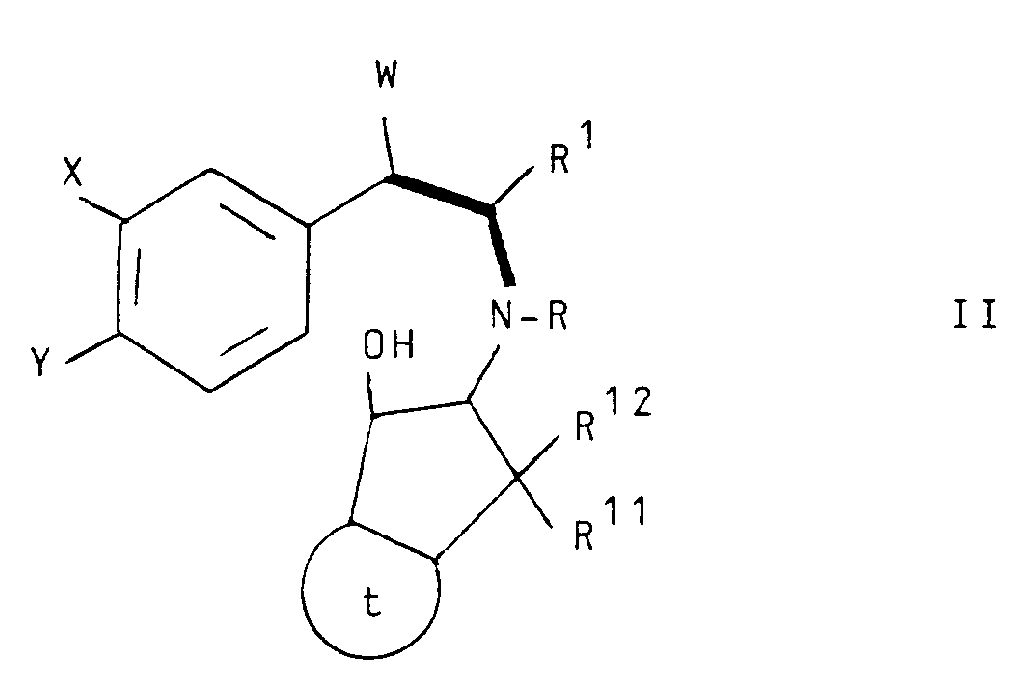
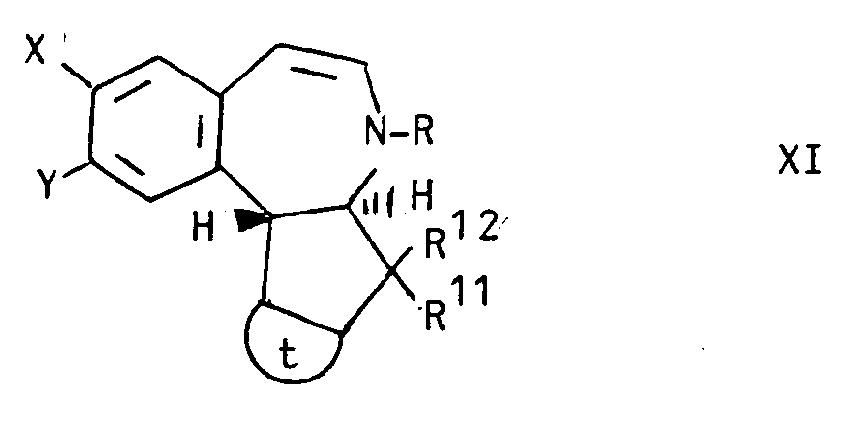
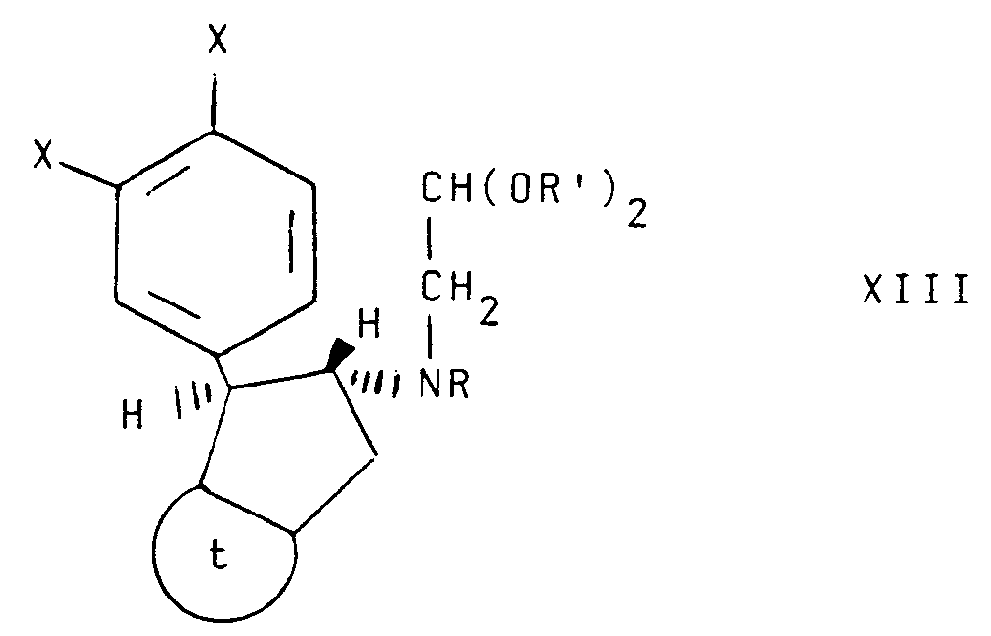
- Still another aspect of the invention comprises intermediate compounds having the formulae II, XI, XIII and XIV useful in the preparation of compounds of formula I wherein:
- Another aspect of the invention is a process for producing a compound having the structural formula I wherein:
- Compound XIV may be prepared by first reacting a compound of formula XV with a compound of XVa to produce a compound of the formula XVI which may be dehydrated to a compound of formula XVII using acidic catalysts such as toluene sulfonic acid or phosphorus oxychloride/pyridine at a temperature ranging between about 20°C and about 120°C with continuous removal of water.
- acidic catalysts such as toluene sulfonic acid or phosphorus oxychloride/pyridine
- the compound of formula XVII may be oxidized to produce a compound of formula XVIII below using m-chloroperbenzoic acid at a temperature ranging between about 0°C and about 20°C, followed by contact with an alkali metal hydroxide such as sodium hydroxide, followed by contact with a strong mineral acid.
- the compound of formula XVIII may in turn be reacted with an alkyl amine with continuous removal of water to produce a compound of formula XIX which then may be reduced in the presence of a catalyst such as zinc dust and acetic acid or NaCNBH 3 at pH 4-7, preferably in the presence of acetic acid or sodium cyanoforohydride in the presence of acetic acid to produce a compound of formula XX which may then be treated with a strong base in dimethylsulfoxide (DMSO) or a mixed solvent comprising DMSO plus a polar aprotic solvent, e.g., dimethylformamide (DMF) to produce a compound of formula XXI.
- Strong bases utilized are preferably potassium tert butoxide or sodium hydride.
- the compound of formula XXI may be contacted with a haloacetyl halide to produce a compound of formula XXII which may be exposed to light to produce the compound of formula XIV which may then be reduced to the compound of formula I.
- R, R 1 , R11, R 12 , W, X, Y and Z groups in formula I may be varied by appropriate selection of starting materials from which the compounds are synthesized or by reacting a compound of formula I with a suitable reagent to effect the desired conversion of the substituent to another R, R 1 , R 11 , R 12 , W, X, Y and Z group.
- a suitable reagent to effect the desired conversion of the substituent to another R, R 1 , R 11 , R 12 , W, X, Y and Z group.
- the latter procedure is particularly applicable for changing the substituents X.
- a chlorine substituent may be added in place of hydrogen by reaction with a chlorinating agent such as sulfuryl chloride in a nonreactive solvent.
- a hydroxymethyl substituent in the X position may be added in place of hydrogen by reaction with formaldehyde in a suitable solvent system, e.g., in a mixed solvent system consisting of dimethyoxyethane and aqueous potassium hydroxide, preferably at an elevated temperature.
- a hydroxymethyl substituent may be reduced to a methyl group by reaction with a catalyst such as palladium hydroxide in a hydrogen atmosphere under pressure.
- Methoxy substituents may be converted to hydroxy, e.g., by refluxing in a mixture of sodium hydride, DMF and ethanethiol, or by reaction with concentrated hydrobromic acid. Other substitutions may be accomplished using standard techniques.
- the compounds of formula I possess analgesic, anticholinergic, antiaggressive and general tranquilizing properties.
- the invention therefore includes pharmaceutical compositions comprising a compound of formula I in combination with a pharmaceutically acceptable carrier and methods for treating mental disorders including psychoses, schizophrenia or depression in a mammal, or for the control of pain or anxiety in a mammal by administering an effective amount of a compound of formula I to the affected mammals.
- the compounds of formula I provide a long duration of activity.
- Certain compounds of formula I wherein X and Y are hydroxy and R is hydrogen are also active as renal vasodilators. These compounds can thus be used in pharmaceutical compositions in combination with a pharmaceutically acceptable carrier and in methods for controlling hypertension by administering to a mammal a renal vasodilating effective amount of such a compound.
- Ring G may represent a fused thiophene ring.
- the sulfur atom in such fused thiophene ring may be in any of the non-fused positions of said ring.
- the compounds of formulas I and la may form pharmaceutically acceptable salts with organic and inorganic acids.
- suitable acids for salt formation are hydrochloric, sulfuric, phosphoric, acetic, citric, malonic, salicylic, malic, fumaric, succinic, ascorbic, maleic, methanesulfonic and other mineral and carboxylic acids well known to those in the art.
- the salts are prepared by contacting the free base form with a sufficient amount of the desired acid to produce a salt in the conventional manner.
- the free base forms may be regenerated by treating the salt with a suitable dilute aqueous base solution such as dilute aqueous sodium hydroxide, potassium carbonate, ammonia and sodium bicarbonate.
- the free base forms differ from their respective salt forms somewhat in certain physical properties, such as solubility in polar solvents, but the salts are otherwise equivalent to their respective free base forms for purposes of the invention.
- the compounds of formula I display pharmacological activity in test procedures designed to indicate anti-psychotic and anti-depressive activity.
- the compounds are non-toxic at pharmaceutically therapeutic doses.
- Binding of a compound to a receptor site, in vitro, is demonstrated by the specificity of binding and the saturability of the available sites.
- a methodology for characterization of D-1 and D-2 receptor binding and an interpretation of the data are described by Billard et al., Life Sciences 35, 1885 (1984) in which the binding of the benzazepine (R)-(+)-8-chioro-2,3,4,5-tetrahydro-3-methyi-5-phenyi-1H-3-benzazepin-7-oi hemimaleate (SCH 23390) to the dopamine D-1 receptor is characterized.
- a selectivity for D-1 receptor binding as compared to D-2 receptor binding is believed to confer the therapeutic advantage of avoiding troublesome and potentially irreversible neurological side effects associated with D-2 receptor occupancy.
- Tritiated SCH 23390 and tritiated spiperone were obtained as described in the Billard et al. reference supra and serially diluted in 0.05 M Tris buffer, pH 7.4, as required.
- Compounds of this invention were synthesized as disclosed herein and diluted in 0.05 M Tris buffer, pH 7.4, as required.
- mice Male Sprague-Dawley rats (200 to 250 g) from Charles River Breeding Laboratories, Mass. were used to obtain brain tissue. The rats were humanely sacrificed and their brains removed and placed on ice. Striatal tissue was excised, pooled, and homogenized (Brinkman Polytron, 10 sec) in 100 volumes (w/v) of ice cold 50 mM Tris buffer, pH 7.4 (at 25°C). The homogenate was centrifuged at 20,000 xg for 10 min. The resultant pellet was rehomogenized in Tris buffer and centrifuged again. The final pellet was resuspended in 50 mM Tris buffer pH 7.4 containing 120 mM NaCi, 5 mM KCI, 2 mM CaCl 2 , and 1 mM MgCl 2 .
- the filters were-transferred to scintillation vials, equilibated with 10 ml of scintillant (Scintosol, Isolab, Inc.) for 16 hours at 25°C and the radioactivity determined in a liquid scintillation counter.
- the comparatively small K, values of these compounds in the competitive binding assay with SCH 23390 indicate that the compounds of formula I bind strongly to the D-1 receptor site.
- the relatively high K, values for the D-2 site, for which spiperone is highly selective, indicate that the compounds are not specifically bound to that receptor site.
- inert, pharmaceutically acceptable carriers are admixed with the active compounds.
- the pharmaceutically acceptable carriers may be either solid or liquid.
- Solid form preparations include powders, tablets, dispersible granules, capsules, cachets and suppositories.
- Asolid carrier can be one or more substances which may also act as diluents, flavoring agents, solubilizers, lubricants, suspending agents, binders or tablet disintegrating agents; it may also be an encapsulating material.
- Liquid form preparations include solutions, suspensions and emulsions. As an example may be mentioned water or water-propylene glycol solutions for parenteral injection.
- solid form preparations which are intended to be converted, shortly before use, to liquid form preparations for either oral or parenteral administration.
- liquid forms include solutions, suspensions and emulsions.
- solid form preparations are most conveniently provided in unit dose form and as such are used to provide a single liquid dosage unit.
- transdermal compositions can take the form of creams, lotions and/or emulsions and can be included in a transdermal patch of the matrix or reservoir type as are conventional in the art for this purpose.
- the pharmaceutical preparation is in unit dosage form.
- the preparation is subdivided into unit doses containing appropriate quantities of the active components.
- the unit dosage form can be a packaged preparation, the package containing discrete quantities of preparation such as packeted tablets, capsules and powders in vials or ampules.
- the unit dosage form can also be a capsule, cachet or tablet itself, or it may be the appropriate number of any of these in a packaged form.
- the quantity of active compound in a unit dose preparation may be varied or adjusted from 1 mg to 100 mg according to the particular application and the potency of the active ingredient and the intended treatment. This would correspond to a dose of about 0.02 to about 2.0 mg/kg which may be divided over 1 to 3 administrations per day.
- the composition may, if desired, also contain other therapeutic agents.
- the dosages may be varied depending on the requirement of the patient, the severity of the condition being treating and the particular compound being employed. Determination of the proper dosage for a particular situation is within the skill of those in the medical art. For convenience, the total daily dosage may be divided and,administered in portions throughout the day or by means providing continuous delivery.
- the aqueous layer was made basic with solid potassium hydroxide and extracted three times with 300 mL ethyl actetate.
- the organic layer was dried (MgS0 4 ) and evaporated.
- the residue was filtered through a silica gel column, eluting first with hexane and then with 10% methanol - methylene chloride to give 5.47 grams (28%) desired amine.
- step D The crude enamine from step D was dissolved in 20 mL absolute ethanol and treated with 0.12 grams (1.91 mmol) sodium cyanoborohydride. To this was added 0.108 mL glacial acetic acid, and the mixture was stirred at room temperature for 3 hours. The reaction was quenched with 10 mL 1M HCI and stirred for 30 minutes. The reaction was made basic with 30% NaOH and extracted into 250 mL ethyl acetate. The organic layer was dried (MgS0 4 ) and evaporated to give 350 mg (53%) of the product as an oil.
Landscapes
- Health & Medical Sciences (AREA)
- Organic Chemistry (AREA)
- Chemical & Material Sciences (AREA)
- Bioinformatics & Cheminformatics (AREA)
- Engineering & Computer Science (AREA)
- Public Health (AREA)
- Animal Behavior & Ethology (AREA)
- General Health & Medical Sciences (AREA)
- Veterinary Medicine (AREA)
- Chemical Kinetics & Catalysis (AREA)
- General Chemical & Material Sciences (AREA)
- Medicinal Chemistry (AREA)
- Nuclear Medicine, Radiotherapy & Molecular Imaging (AREA)
- Pharmacology & Pharmacy (AREA)
- Life Sciences & Earth Sciences (AREA)
- Neurosurgery (AREA)
- Neurology (AREA)
- Biomedical Technology (AREA)
- Psychiatry (AREA)
- Pain & Pain Management (AREA)
- Cardiology (AREA)
- Heart & Thoracic Surgery (AREA)
- Pharmaceuticals Containing Other Organic And Inorganic Compounds (AREA)
- Nitrogen Condensed Heterocyclic Rings (AREA)
- Nitrogen And Oxygen Or Sulfur-Condensed Heterocyclic Ring Systems (AREA)
- Heterocyclic Carbon Compounds Containing A Hetero Ring Having Nitrogen And Oxygen As The Only Ring Hetero Atoms (AREA)
- Other In-Based Heterocyclic Compounds (AREA)
- Heterocyclic Carbon Compounds Containing A Hetero Ring Having Oxygen Or Sulfur (AREA)
- Organic Low-Molecular-Weight Compounds And Preparation Thereof (AREA)
- Electroluminescent Light Sources (AREA)
- Luminescent Compositions (AREA)
- Plural Heterocyclic Compounds (AREA)
- Hydrogenated Pyridines (AREA)
Claims (13)


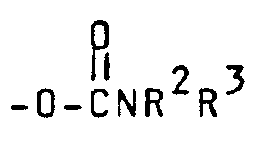


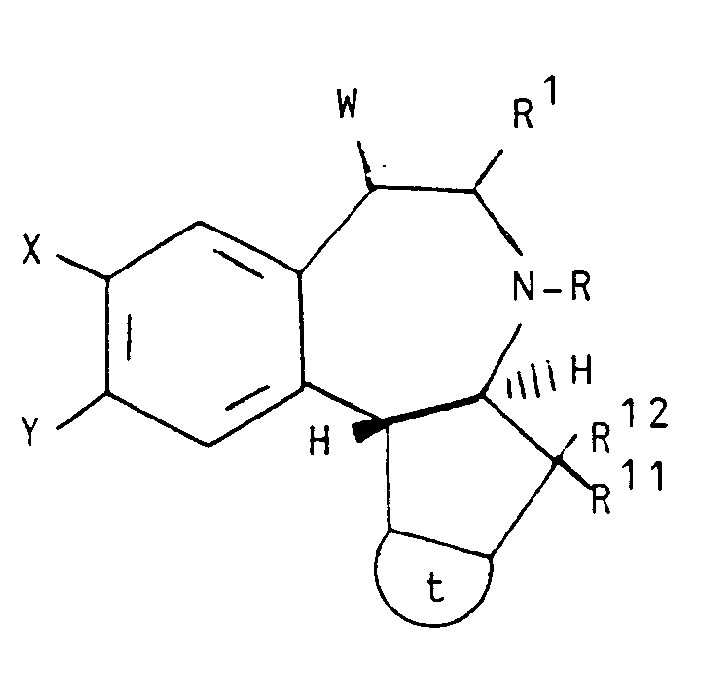


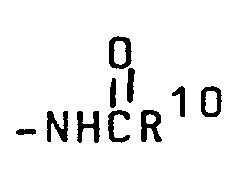
caractérisé par

Priority Applications (1)
| Application Number | Priority Date | Filing Date | Title |
|---|---|---|---|
| AT87906614T ATE78467T1 (de) | 1987-07-15 | 1987-07-15 | Kondensierte benzazepine. |
Applications Claiming Priority (2)
| Application Number | Priority Date | Filing Date | Title |
|---|---|---|---|
| PCT/US1987/001636 WO1989000561A1 (fr) | 1987-07-15 | 1987-07-15 | Benzazepines fusionnees |
| EP87110253A EP0299101B1 (fr) | 1987-07-15 | 1987-07-16 | Benzazépines condensées |
Publications (2)
| Publication Number | Publication Date |
|---|---|
| EP0363353A1 EP0363353A1 (fr) | 1990-04-18 |
| EP0363353B1 true EP0363353B1 (fr) | 1992-07-22 |
Family
ID=26108265
Family Applications (2)
| Application Number | Title | Priority Date | Filing Date |
|---|---|---|---|
| EP87906614A Expired - Lifetime EP0363353B1 (fr) | 1987-07-15 | 1987-07-15 | Benzazepines fusionnees |
| EP87110253A Expired - Lifetime EP0299101B1 (fr) | 1987-07-15 | 1987-07-16 | Benzazépines condensées |
Family Applications After (1)
| Application Number | Title | Priority Date | Filing Date |
|---|---|---|---|
| EP87110253A Expired - Lifetime EP0299101B1 (fr) | 1987-07-15 | 1987-07-16 | Benzazépines condensées |
Country Status (13)
| Country | Link |
|---|---|
| EP (2) | EP0363353B1 (fr) |
| JP (1) | JPH0678317B2 (fr) |
| AT (1) | ATE78467T1 (fr) |
| AU (1) | AU617651B2 (fr) |
| DE (1) | DE3780649T2 (fr) |
| DK (1) | DK162889C (fr) |
| ES (1) | ES2043623T3 (fr) |
| FI (1) | FI93212C (fr) |
| GR (1) | GR3006671T3 (fr) |
| HU (1) | HU203537B (fr) |
| NO (1) | NO177264C (fr) |
| WO (1) | WO1989000561A1 (fr) |
| ZA (1) | ZA875183B (fr) |
Families Citing this family (6)
| Publication number | Priority date | Publication date | Assignee | Title |
|---|---|---|---|---|
| US4973586A (en) * | 1986-01-16 | 1990-11-27 | Schering Corporation | Fused benzazepines, compositions of, and medical use thereof |
| PL168408B1 (pl) * | 1989-08-03 | 1996-02-29 | Smithkline Beecham Biolog | Sposób wytwarzania stransformowanego mikroorganizmu PL |
| FI923458A0 (fi) * | 1990-02-02 | 1992-07-31 | Schering Corp | 4,5-cykloalkano-3-benzazepin-7-ol- derivat och deras anvaendning. |
| JPH07137816A (ja) * | 1993-11-15 | 1995-05-30 | Tokai Univ | 地下空洞内貯蔵装置 |
| JP4555685B2 (ja) * | 2002-08-29 | 2010-10-06 | シェーリング コーポレイション | 肥満およびcns障害の処置のための選択的d1/d5レセプターアンタゴニスト |
| EP1646623A2 (fr) * | 2003-05-22 | 2006-04-19 | Schering Corporation | Antagonistes selectifs des recepteurs d1/d5 utilises dans le traitement de l'obesite et des troubles du systeme nerveux central |
Family Cites Families (4)
| Publication number | Priority date | Publication date | Assignee | Title |
|---|---|---|---|---|
| US3393192A (en) * | 1965-04-26 | 1968-07-16 | Schering Corp | Novel benzazepines |
| CH481110A (de) * | 1967-02-17 | 1969-11-15 | Geigy Ag J R | Verfahren zur Herstellung von 1,2,4,5-Tetrahydro-3-azepinen |
| US4680298A (en) * | 1983-05-31 | 1987-07-14 | Schering Corporation | Tricyclic anti-allergy and use as anti-inflammatory agents |
| EP0254737B1 (fr) * | 1986-01-16 | 1990-07-25 | Schering Corporation | Benzazepines fondues |
-
1987
- 1987-07-15 AU AU80378/87A patent/AU617651B2/en not_active Ceased
- 1987-07-15 WO PCT/US1987/001636 patent/WO1989000561A1/fr not_active Ceased
- 1987-07-15 ZA ZA875183A patent/ZA875183B/xx unknown
- 1987-07-15 HU HU8552A patent/HU203537B/hu not_active IP Right Cessation
- 1987-07-15 EP EP87906614A patent/EP0363353B1/fr not_active Expired - Lifetime
- 1987-07-15 DE DE8787906614T patent/DE3780649T2/de not_active Expired - Lifetime
- 1987-07-15 JP JP62506016A patent/JPH0678317B2/ja not_active Expired - Lifetime
- 1987-07-15 AT AT87906614T patent/ATE78467T1/de not_active IP Right Cessation
- 1987-07-16 EP EP87110253A patent/EP0299101B1/fr not_active Expired - Lifetime
- 1987-07-16 ES ES87110253T patent/ES2043623T3/es not_active Expired - Lifetime
-
1990
- 1990-01-12 NO NO900186A patent/NO177264C/no unknown
- 1990-01-12 DK DK009390A patent/DK162889C/da active
- 1990-01-12 FI FI900175A patent/FI93212C/fi not_active IP Right Cessation
-
1992
- 1992-12-24 GR GR920403109T patent/GR3006671T3/el unknown
Also Published As
| Publication number | Publication date |
|---|---|
| FI900175A0 (fi) | 1990-01-12 |
| ES2043623T3 (es) | 1994-01-01 |
| DE3780649T2 (de) | 1992-12-10 |
| HU203537B (en) | 1991-08-28 |
| EP0299101B1 (fr) | 1992-09-23 |
| JPH0678317B2 (ja) | 1994-10-05 |
| GR3006671T3 (fr) | 1993-06-30 |
| NO900186D0 (no) | 1990-01-12 |
| EP0363353A1 (fr) | 1990-04-18 |
| NO177264B (no) | 1995-05-08 |
| NO177264C (no) | 1995-08-16 |
| NO900186L (no) | 1990-01-12 |
| AU8037887A (en) | 1989-02-13 |
| DK9390A (da) | 1990-03-12 |
| JPH02504629A (ja) | 1990-12-27 |
| EP0299101A1 (fr) | 1989-01-18 |
| FI93212C (fi) | 1995-03-10 |
| ZA875183B (en) | 1988-04-08 |
| ATE78467T1 (de) | 1992-08-15 |
| WO1989000561A1 (fr) | 1989-01-26 |
| FI93212B (fi) | 1994-11-30 |
| DK162889B (da) | 1991-12-23 |
| DK162889C (da) | 1992-05-11 |
| DK9390D0 (da) | 1990-01-12 |
| AU617651B2 (en) | 1991-12-05 |
| DE3780649D1 (de) | 1992-08-27 |
Similar Documents
| Publication | Publication Date | Title |
|---|---|---|
| US4145434A (en) | Tetracyclic derivatives and pharmaceutical compositions of matter | |
| US5530125A (en) | Synthesis of α-substituted-aryl ethylamines | |
| AU588080B2 (en) | Fused benzazepines | |
| US4973586A (en) | Fused benzazepines, compositions of, and medical use thereof | |
| IE912031A1 (en) | 8-lower alkyl-5-cycloalkyl or 5-cycloalkenyl substituted¹benzazepines and pharmaceutical compositions containing them | |
| EP0299101B1 (fr) | Benzazépines condensées | |
| JP4109709B1 (ja) | 統合失調症の治療のためのテトラヒドロ−ピリドアゼピン−8−オン及び関連化合物 | |
| GB2207427A (en) | Benzazepine derivatives | |
| US4158059A (en) | Tension reducing 2,3,4,4a,9,136-hexahydro-dibenz[1,2;5,6]cyclohepta[3,4-c]py | |
| US5302716A (en) | Fused benzazepines | |
| AU7243291A (en) | 4,5-cycloalkano-3-benzazepin-7-ol-derivatives and their use | |
| IE871908L (en) | Fused benzazepines | |
| KR930008235B1 (ko) | 융합된 벤즈아제핀 화합물 | |
| EP0027348B1 (fr) | Dérivés de 7,8-dihydroxy-1-(sulfamylphényl)-2,3,4,5-tétrahydro-1H-3-benzazépine, procédé pour leur préparation et compositions les contenant | |
| US4271177A (en) | 2,3,3a,12b-Tetrahydro-1H-dibenzo[2,3;6,7]thiepino[4,5-c]pyrroles and pharmaceutical use thereof | |
| EP0033632A2 (fr) | 7,8-Amino, hydroxy-1-phényl-2,3,4,5-tétrahydro-1H-3-benzazépines, procédé pour leur préparation et compositions pharmaceutiques les contenant | |
| US4177275A (en) | Tension reducing 2,3,4,4a,9,13b-hexahydro-1H-dibenzo[b,f]pyrido[3,4-d]azepine derivatives | |
| IE45587B1 (en) | Biologically active tetracyclic compounds and pharmaceutical compositions containing them | |
| US4271178A (en) | 1,2,3,3a,8,12b-Hexahydro-dibenzo[b,f]pyrrolo[3,4-d]azepines and pharmaceutical use thereof | |
| HK29493A (en) | Fused benzazepines | |
| CA1074305A (fr) | Composes tetracycliques a fonction amine substituee | |
| PH27152A (en) | Fused benzazepines and its method of use |
Legal Events
| Date | Code | Title | Description |
|---|---|---|---|
| PUAI | Public reference made under article 153(3) epc to a published international application that has entered the european phase |
Free format text: ORIGINAL CODE: 0009012 |
|
| 17P | Request for examination filed |
Effective date: 19900112 |
|
| AK | Designated contracting states |
Kind code of ref document: A1 Designated state(s): AT BE CH DE FR GB IT LI LU NL SE |
|
| 17Q | First examination report despatched |
Effective date: 19910129 |
|
| GRAA | (expected) grant |
Free format text: ORIGINAL CODE: 0009210 |
|
| AK | Designated contracting states |
Kind code of ref document: B1 Designated state(s): AT BE CH DE FR GB IT LI LU NL SE |
|
| REF | Corresponds to: |
Ref document number: 78467 Country of ref document: AT Date of ref document: 19920815 Kind code of ref document: T |
|
| REF | Corresponds to: |
Ref document number: 3780649 Country of ref document: DE Date of ref document: 19920827 |
|
| ITF | It: translation for a ep patent filed | ||
| ET | Fr: translation filed | ||
| PLBE | No opposition filed within time limit |
Free format text: ORIGINAL CODE: 0009261 |
|
| STAA | Information on the status of an ep patent application or granted ep patent |
Free format text: STATUS: NO OPPOSITION FILED WITHIN TIME LIMIT |
|
| 26N | No opposition filed | ||
| EPTA | Lu: last paid annual fee | ||
| EAL | Se: european patent in force in sweden |
Ref document number: 87906614.0 |
|
| PGFP | Annual fee paid to national office [announced via postgrant information from national office to epo] |
Ref country code: FR Payment date: 19950612 Year of fee payment: 9 |
|
| PGFP | Annual fee paid to national office [announced via postgrant information from national office to epo] |
Ref country code: GB Payment date: 19950616 Year of fee payment: 9 Ref country code: AT Payment date: 19950616 Year of fee payment: 9 |
|
| PGFP | Annual fee paid to national office [announced via postgrant information from national office to epo] |
Ref country code: SE Payment date: 19950619 Year of fee payment: 9 |
|
| PGFP | Annual fee paid to national office [announced via postgrant information from national office to epo] |
Ref country code: DE Payment date: 19950620 Year of fee payment: 9 |
|
| PGFP | Annual fee paid to national office [announced via postgrant information from national office to epo] |
Ref country code: CH Payment date: 19950622 Year of fee payment: 9 Ref country code: BE Payment date: 19950622 Year of fee payment: 9 |
|
| PGFP | Annual fee paid to national office [announced via postgrant information from national office to epo] |
Ref country code: NL Payment date: 19950628 Year of fee payment: 9 |
|
| PGFP | Annual fee paid to national office [announced via postgrant information from national office to epo] |
Ref country code: LU Payment date: 19950701 Year of fee payment: 9 |
|
| PG25 | Lapsed in a contracting state [announced via postgrant information from national office to epo] |
Ref country code: LU Free format text: LAPSE BECAUSE OF NON-PAYMENT OF DUE FEES Effective date: 19960715 Ref country code: GB Effective date: 19960715 Ref country code: AT Effective date: 19960715 |
|
| PG25 | Lapsed in a contracting state [announced via postgrant information from national office to epo] |
Ref country code: SE Effective date: 19960716 |
|
| PG25 | Lapsed in a contracting state [announced via postgrant information from national office to epo] |
Ref country code: LI Effective date: 19960731 Ref country code: CH Effective date: 19960731 Ref country code: BE Effective date: 19960731 |
|
| BERE | Be: lapsed |
Owner name: SCHERING CORP. Effective date: 19960731 |
|
| PG25 | Lapsed in a contracting state [announced via postgrant information from national office to epo] |
Ref country code: NL Effective date: 19970201 |
|
| GBPC | Gb: european patent ceased through non-payment of renewal fee |
Effective date: 19960715 |
|
| REG | Reference to a national code |
Ref country code: CH Ref legal event code: PL |
|
| PG25 | Lapsed in a contracting state [announced via postgrant information from national office to epo] |
Ref country code: FR Effective date: 19970328 |
|
| NLV4 | Nl: lapsed or anulled due to non-payment of the annual fee |
Effective date: 19970201 |
|
| PG25 | Lapsed in a contracting state [announced via postgrant information from national office to epo] |
Ref country code: DE Effective date: 19970402 |
|
| EUG | Se: european patent has lapsed |
Ref document number: 87906614.0 |
|
| REG | Reference to a national code |
Ref country code: FR Ref legal event code: ST |
|
| PG25 | Lapsed in a contracting state [announced via postgrant information from national office to epo] |
Ref country code: IT Free format text: LAPSE BECAUSE OF NON-PAYMENT OF DUE FEES;WARNING: LAPSES OF ITALIAN PATENTS WITH EFFECTIVE DATE BEFORE 2007 MAY HAVE OCCURRED AT ANY TIME BEFORE 2007. THE CORRECT EFFECTIVE DATE MAY BE DIFFERENT FROM THE ONE RECORDED. Effective date: 20050715 |