EP0355431B1 - Legierung als Werkstoff für Regel- oder Heizelemente mit positivem Temperaturkoeffizienten - Google Patents
Legierung als Werkstoff für Regel- oder Heizelemente mit positivem Temperaturkoeffizienten Download PDFInfo
- Publication number
- EP0355431B1 EP0355431B1 EP89113621A EP89113621A EP0355431B1 EP 0355431 B1 EP0355431 B1 EP 0355431B1 EP 89113621 A EP89113621 A EP 89113621A EP 89113621 A EP89113621 A EP 89113621A EP 0355431 B1 EP0355431 B1 EP 0355431B1
- Authority
- EP
- European Patent Office
- Prior art keywords
- weight
- alloy
- temperature
- resistance
- nickel
- Prior art date
- Legal status (The legal status is an assumption and is not a legal conclusion. Google has not performed a legal analysis and makes no representation as to the accuracy of the status listed.)
- Expired - Lifetime
Links
- 239000000463 material Substances 0.000 title claims abstract description 30
- 238000010438 heat treatment Methods 0.000 title claims abstract description 16
- 229910045601 alloy Inorganic materials 0.000 title claims description 31
- 239000000956 alloy Substances 0.000 title claims description 31
- XEEYBQQBJWHFJM-UHFFFAOYSA-N Iron Chemical compound [Fe] XEEYBQQBJWHFJM-UHFFFAOYSA-N 0.000 claims description 62
- PXHVJJICTQNCMI-UHFFFAOYSA-N Nickel Chemical compound [Ni] PXHVJJICTQNCMI-UHFFFAOYSA-N 0.000 claims description 38
- 229910052742 iron Inorganic materials 0.000 claims description 30
- 229910052759 nickel Inorganic materials 0.000 claims description 18
- 229910017052 cobalt Inorganic materials 0.000 claims description 12
- 239000010941 cobalt Substances 0.000 claims description 12
- GUTLYIVDDKVIGB-UHFFFAOYSA-N cobalt atom Chemical compound [Co] GUTLYIVDDKVIGB-UHFFFAOYSA-N 0.000 claims description 12
- 239000000654 additive Substances 0.000 claims description 7
- 230000008859 change Effects 0.000 abstract description 2
- 239000000203 mixture Substances 0.000 description 9
- 230000009466 transformation Effects 0.000 description 7
- 238000000034 method Methods 0.000 description 5
- 230000008569 process Effects 0.000 description 5
- 238000005245 sintering Methods 0.000 description 5
- 230000007704 transition Effects 0.000 description 5
- 239000011572 manganese Substances 0.000 description 4
- BASFCYQUMIYNBI-UHFFFAOYSA-N platinum Chemical compound [Pt] BASFCYQUMIYNBI-UHFFFAOYSA-N 0.000 description 4
- PWHULOQIROXLJO-UHFFFAOYSA-N Manganese Chemical compound [Mn] PWHULOQIROXLJO-UHFFFAOYSA-N 0.000 description 3
- 230000007423 decrease Effects 0.000 description 3
- 229910052748 manganese Inorganic materials 0.000 description 3
- 229910052710 silicon Inorganic materials 0.000 description 3
- 239000010703 silicon Substances 0.000 description 3
- 229910001030 Iron–nickel alloy Inorganic materials 0.000 description 2
- 238000006243 chemical reaction Methods 0.000 description 2
- 239000002131 composite material Substances 0.000 description 2
- 239000011521 glass Substances 0.000 description 2
- 239000000155 melt Substances 0.000 description 2
- 229910052697 platinum Inorganic materials 0.000 description 2
- 229910020598 Co Fe Inorganic materials 0.000 description 1
- 229910001313 Cobalt-iron alloy Inorganic materials 0.000 description 1
- 230000008901 benefit Effects 0.000 description 1
- 238000001816 cooling Methods 0.000 description 1
- 238000011161 development Methods 0.000 description 1
- 230000000694 effects Effects 0.000 description 1
- 239000000156 glass melt Substances 0.000 description 1
- 238000002844 melting Methods 0.000 description 1
- 230000008018 melting Effects 0.000 description 1
- 238000010309 melting process Methods 0.000 description 1
- 229910052751 metal Inorganic materials 0.000 description 1
- 239000002184 metal Substances 0.000 description 1
- 238000007781 pre-processing Methods 0.000 description 1
- 238000012827 research and development Methods 0.000 description 1
- 230000000717 retained effect Effects 0.000 description 1
- XLYOFNOQVPJJNP-UHFFFAOYSA-N water Substances O XLYOFNOQVPJJNP-UHFFFAOYSA-N 0.000 description 1
Images
Classifications
-
- H—ELECTRICITY
- H01—ELECTRIC ELEMENTS
- H01C—RESISTORS
- H01C7/00—Non-adjustable resistors formed as one or more layers or coatings; Non-adjustable resistors made from powdered conducting material or powdered semi-conducting material with or without insulating material
- H01C7/02—Non-adjustable resistors formed as one or more layers or coatings; Non-adjustable resistors made from powdered conducting material or powdered semi-conducting material with or without insulating material having positive temperature coefficient
Definitions
- the invention relates to an alloy as a material for control or heating elements according to the preamble of claim 1.
- Materials for control or heating elements with a positive temperature coefficient of electrical resistance have an electrical resistance that increases with increasing temperature. After a voltage is applied, a comparatively high current flows, which then decreases with increasing heating of the resistance element. There is thus a certain self-regulation effect. For this reason, materials for resistance elements with a positive temperature coefficient of electrical resistance are often used for control or heating elements. Due to their initially low resistance, they allow a high heating rate. By limiting the current as the temperature rises due to the positive temperature coefficient of the resistor, damage to the resistor element or its surroundings can be prevented even at high heating rates.
- An electrical resistance heating element made of a material with a high positive temperature coefficient of electrical resistance is known for example from DE-OS 25 39 841. Nickel is mentioned as the material there.
- the same document discloses the use of the element for thermal switches.
- the object of the invention is to provide a material for a control and heating elements, which allows an increased heating rate with improved control behavior.
- An essential advantage of the material according to the invention for resistance elements is the special course of the resistance curve as a function of the temperature.
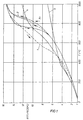
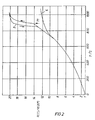
- 2 shows the corresponding resistance ratio for an alloy with the composition of 71% by weight cobalt and 29% by weight iron (3).
- the course of the resistance ratio of the materials according to the invention shows a relatively small increase up to the temperature T1 and then a steep, e.g. T. even abrupt increase. It therefore favors short heating-up times when temperatures of around 1000 ° C are to be reached.
- the material according to the invention has a cubic body-centered structure ( ⁇ ), in the range between 750 and 900 ° C. there is a transition to a cubic face-centered structure ( ⁇ ).
- the transition temperature T1 depends on the iron content in the respective alloy composition and increases with increasing iron content.
- the conversion from the face-centered cubic structure ( ⁇ ) to the body-centered cubic structure ( ⁇ ) takes place at a temperature lower than T1, which results in a hysteresis curve.
- the hysteresis decreases with increasing iron content.
- the course of the resistance ratio for the material according to the invention initially shows a relatively flat increase, which enables higher heating rates.
- the resistance then rises steeply, the current intensity and thus the heat output generated correspondingly decrease sharply. This self-regulation allows the final temperature to be reached quickly without the resistance element itself being damaged.
- the ⁇ / ⁇ conversion occurs in cobalt-iron alloys with an iron content of more than 20% by weight.
- the alloys can also contain nickel, but only to such an extent that the body-centered cubic structure is retained at room temperature.
- the permissible nickel content increases with increasing iron content.
- the maximum nickel content at which the alloy has a body-centered cubic structure at room temperature can be approximated by linear interpolation between the values of approximately 0% by weight with an iron content of 20% by weight and 15% by weight with an iron content of 35% by weight can be determined. With an iron content of 25% by weight, the nickel content can be a maximum of 5% by weight and with an iron content of 30% by weight a maximum of 10% by weight. be.
- the alloys can contain other elements, e.g. B. as processing additives with a proportion of up to 1 wt.% Contain.
- the alloys according to the invention are readily cold-formable and can be processed well into wires and strips or the like. Alloys with an iron content of more than 35% by weight, on the other hand, are becoming increasingly brittle due to the development of order.
- the alloys according to the invention can be used particularly advantageously as a material for glow plugs for diesel engines. There they can be used directly as a heating element or as a control element in connection with a heating element with a lower positive temperature coefficient.
- the table lists the ⁇ / ⁇ transformation temperature T1, the specific electrical resistance at room temperature and at 1000 ° C. and the resulting temperature factor TF both for materials according to the invention and for iron and nickel.
- Example a An alloy consisting of 79% by weight cobalt and 21% by weight iron was produced in the sintering process.
- the ⁇ / ⁇ transformation temperature is 750 ° C.
- the temperature factor TF 15 is calculated from the values of the specific resistance at room temperature and at 1000 ° C.
- Example b): For an alloy also produced in the sintering process, consisting of 77% by weight of cobalt and 23% by weight of iron, the ⁇ / ⁇ transformation temperature T1 is 780 ° C. and the temperature factor is TF 16.
- Example e A material with a composition of 71% by weight cobalt and 29% by weight iron was produced in the sintering process.
- T1 850 ° C
- TF 16.5
Landscapes
- Engineering & Computer Science (AREA)
- Microelectronics & Electronic Packaging (AREA)
- Ceramic Engineering (AREA)
- Physics & Mathematics (AREA)
- Electromagnetism (AREA)
- Resistance Heating (AREA)
- Thermistors And Varistors (AREA)
- Contacts (AREA)
Description
- Die Erfindung betrifft eine Legierung als Werkstoff für Regel- oder Heizelemente nach dem Oberbegriff des Patentanspruchs 1.
- Werkstoffe für Regel- oder Heizelemente mit einem positiven Temperaturkoeffizienten des elektrischen Widerstandes weisen einen elektrischen Widerstand auf, der mit steigender Temperatur zunimmt. Nach Anlegen einer Spannung fließt zunächst ein vergleichsweise hoher Strom, der dann mit zunehmender Erwärmung des Widerstandselementes abnimmt. Es findet somit ein gewisser Selbstregelungseffekt statt. Aus diesem Grunde werden Werkstoffe für Widerstandselemente mit einem positiven Temperaturkoeffizienten des elektrischen Widerstandes häufig für Regel- oder Heizelemente eingesetzt. Durch ihren zunächst niedrigen Widerstand erlauben sie eine hohe Aufheizrate. Durch die Strombegrenzung bei steigender Temperatur aufgrund des positiven Temperaturkoeffizienten des Widerstandes kann eine Schädigung des Widerstandselementes oder seiner Umgebung auch bei hohen Aufheizraten verhindert werden.
- Ein elektrisches Widerstandsheizelement aus einem Werkstoff mit einem hohen positiven Temperaturkoeffizienten des elektrischen Widerstandes ist zum Beispiel aus der DE-OS 25 39 841 bekannt. Als Werkstoff wird dort Nickel genannt. Zusätzlich wird in der gleichen Schrift die Verwendung des Elements für Thermoschalter offenbart.
- Weiterhin ist die Ausnutzung des Regelverhaltens von Widerstandselementen mit hohem positivem Temperaturkoeffizienten des elektrischen Widerstandes in Glühkerzen für Dieselmotoren aus mehreren Patentschriften bekannt. Anordnungen mit Widerstandselementen nach dem Stand der Technik sind zum Beispiel aus der DE-PS 28 02 625, der DE-OS 21 15 620 oder der GB-PS 254 482 sowie aus dem Artikel von H. Weil in "Bosch Techn. Berichte" 5 (1977), S. 279 - 286 bekannt. Als entsprechende Werkstoffe werden in der GB-PS 254 482 Eisen, Nickel und Platin genannt. Aus der DE-OS 2 115 620 ist die Verwendung einer Nickel-Eisen-Legierung bekannt.
Schließlich wird in "Siemens Forschungs- und Entwicklungsbericht" Band 4, Nr. 5, 1975, S. 257 - 264, Springer Verlag, F. Geyer et al.:"Magnetisch halbharte Legierungen auf Co-Fe-Ni-Basis mit 40 - 60 % Kobalt-Massengehalt" in Tabelle 1 eine Legierung beschrieben, die aus 55 Gew.% Co, 12 Gew.% Ni und 33 Gew.% Fe besteht. In dieser Veröffentlichung wird die Wärmeausdehnung unter anderem dieser Legierung als Glaseinschmelzung für Metall/Glas-Verbundwerkstoffe untersucht, wobei der Zerfall der kubisch-raumzentrierten Phase in raumzentrierte und flächenzentrierte Gefügebestandteile mittels der Messung des elektrischen Widerstandes ermittelc, wodurch Hinweise auf die verbundstoffspezifischen Probleme der Wärmeausdehnung bei Glaseinschmelzungen solcher Legierungen gewonnen werden.
Aufgabe der Erfindung ist es, einen Werkstoff für ein Regel- und Heizelemente anzugeben, der eine erhöhte Aufheizgeschwindigkeit bei gleichzeitig verbessertem Regelverhalten erlaubt. - Diese Aufgabe wird durch die Merkmale des Patentanspruchs 1 gelöst.
Weitere vorteilhafte Ausgestaltungen der Erfindungen ergeben sich aus dem nachfolgenden Anspruch 2.
Wählt man zur Darstellung der Widerstands-Charakteristik der Werkstoffe für Widerstandselemente mit positivem Temperaturkoeffizienten, den Temperaturfaktor TF = R(1000°C) / R(20°C), der das Widerstandsverhältnis bei einer Temperatur von 1000°C und bei Raumtemperatur angibt, so ergibt sich TF = 4 für Platin, TF = 7 für Nickel und TF = 12 für Eisen. Mit dem erfindungsgemäßen Werkstoff werden dagegen Temperaturfaktoren TF > 12 erzielt. Desweiteren weist bei dem erfindungsgemäßen Werkstoff die Widerstandskurve in Abhängigkeit von der Temperatur einen Verlauf auf, der kurze Aufheizzeiten begünstigt.
Anhand der in der Tabelle aufgeführten Ausführungsbeispiele und des in Fig. 1 und 2 dargestellten Widerstandsverhältnisses R(T) / R(20°C) in Abhängigkeit von der Temperatur für erfindungsgemäße Werkstoffe und für Werkstoffe nach dem Stand der Technik soll die Erfindung näher erläutert werden. - Ein wesentlicher Vorteil des erfindungsgemäßen Werkstoffes für Widerstandselemente ist der spezielle Verlauf der Widerstandskurve in Abhängigkeit von der Temperatur. In Fig. 1 ist das Widerstandsverhältnis R(T) / R(20°C) für eine Legierung, bestehend aus 79 Gew.% Kobalt und 21 Gew.% Eisen (1), sowie für eine Legierung bestehend aus 75 Gew.% Kobalt und 25 Gew.% Eisen (2) dargestellt. Fig. 2 zeigt das entsprechende Widerstandsverhältnis für eine Legierung mit der Zusammensetzung von 71 Gew.% Kobalt und 29 Gew.% Eisen (3). Der Verlauf des Widerstandsverhältnisses der erfindungsgemäßen Werkstoffe zeigt bis zur Temperatur T1 einen relativ geringen Anstieg und daran anschließend einen steilen, z. T. sogar sprungartigen Anstieg. Er begünstigt somit kurze Aufheizzeiten, wenn Temperaturen um etwa 1000°C erreicht werden sollen.
- Die Ursache für diesen besonderen Verlauf der Widerstandskurve ist in einer Phasenumwandlung zu sehen. Bei Raumtemperatur weist der erfindungsgemäße Werkstoff eine kubisch raumzentrierte Struktur (α) auf, im Bereich zwischen 750 und 900°C findet ein Ubergang zu einer kubisch flächenzentrierten Struktur (γ) statt. Die Umwandlungstemperatur T1 ist vom Eisenanteil in der jeweiligen Legierungszusammensetzung abhängig und steigt mit zunehmendem Eisengehalt an. Bei der Abkühlung erfolgt die Umwandlung von der kubisch flächenzentrierten Struktur (γ) zur kubisch raumzentrierten Struktur (α) bei einer Temperatur, die niedriger liegt als T1, wodurch eine Hysteresekurve entsteht. Die Hysterese wird mit steigendem Eisengehalt kleiner.
- In Fig. 1 und 2 ist zusätzlich zum Vergleich in Kurve 4 das Widerstandsverhältnis R(T) / R(20°C) für Eisen und in Fig. 1 in Kurve 5 dasjenige für Nickel aufgetragen, also von Werkstoffen für Widerstandselemente mit positivem Temperaturkoeffizienten nach dem Stand der Technik. Die Kurve 5 für Nickel flacht bereits bei einer Temperatur von weniger als 400°C und diejenige für Eisen bei einer Temperatur von 800°C ab. Dieses Abflachen ist auf das Erreichen der Curietemperatur zurückzuführen.
- Der Verlauf des Widerstandsverhältnisses für den erfindungsgemäßen Werkstoff weist demgegenüber zunächst einen relativ flachen Anstieg auf, wodurch höhere Aufheizraten ermöglicht werden. Bei Erreichen der α/γ -Umwandlungstemperatur T1 steigt der Widerstand dann steil an, die Stromstärke und damit die erzeugte Wärmeleistung nehmen entsprechend stark ab. Diese Selbstregelung erlaubt die schnelle Erzielung der Endtemperatur, ohne daß das Widerstandselement selbst geschädigt wird.
- Die α/γ-Umwandlung tritt bei Kobalt-Eisen-Legierungen mit einem Eisengehalt von mehr als 20 Gew.% auf. Die Legierungen können zusätzlich auch noch Nickel enthalten, jedoch nur bis zu einem solchen Anteil, daß die kubisch raumzentrierte Struktur bei Raumtemperatur erhalten bleibt. Der zulässige Nickelanteil steigt mit zunehmendem Eisenanteil an. Der maximale Nickelgehalt, bei dem die Legierung bei Raumtemperatur eine kubisch raumzentrierte Struktur aufweist, kann annähernd durch lineare Interpolation zwischen den Werten von etwa 0 Gew.-% bei einem Eisenanteil von 20 Gew.-% und 15 Gew.-% bei einem Eisenanteil von 35 Gew.-% ermittelt werden. Bei einem Eisengehalt vcn 25 Gew.% kann der Nickelanteil maximal 5 Gew.% und bei einem Eisengehalt von 30 Gew.% maximal 10 Gew.% betragen. Zusätzlich können die Legierungen andere Elemente, z. B. als Verarbeitungszusätze mit einem Anteil von bis zu 1 Gew.% enthalten.
- Die erfindungsgemäßen Legierungen sind gut kalt umformbar und können gut zu Drähten und Bändern oder dergleichen verarbeitet werden. Legierungen mit einem Eisengehalt von mehr als 35 Gew.% werden dagegen aufgrund der sich ausbildenden Ordnungseinstellung zunehmend spröde. Besonders vorteilhaft können die erfindungsgemäßen Legierungen als Werkstoff für Glühkerzen für Dieselmotore eingesetzt werden. Sie können dort direkt als Heizelement verwendet werden oder auch als Regelelement in Verbindung mit einem Heizelement mit geringerem positiven Temperaturkoeffizienten.
- Weitere vorteilhafte Anwendungsgebiete sind zum Beispiel die Verwendung als Heizelement bei Haushalts-Durchlauferhitzern oder auch die Verbindung in Thermoschaltern.
- In der Tabelle sind die α/γ-Umwandlungstemperatur T1, der spezifische elektrische Widerstand bei Raumtemperatur und bei 1000°C sowie der sich daraus ergebende Temperaturfaktor TF sowohl für erfindungsgemäße Werkstoffe, als auch für Eisen und Nickel aufgelistet.
- Beispiel a): Eine Legierung, bestehend aus 79 Gew.% Kobalt und 21 Gew.% Eisen wurde im Sinterverfahren hergestellt. Für diese Legierungszusammensetzung beträgt die α/γ-Umwandlungstemperatur 750°C. Aus den Werten des spezifischen Widerstandes bei Raumtemperatur und bei 1000°C errechnet sich der Temperaturfaktor TF = 15.
- Beispiel b): Für eine ebenfalls im Sinterverfahren hergestellte Legierung bestehend aus 77 Gew.% Kobalt und 23 Gew.% Eisen beträgt die α/γ-Umwandlungstemperatur T1 780°C und für den Temperaturfaktor ergibt sich TF = 16.
- Beispiel c): Eine Legierung mit einer Zusammensetzung von 75 Gew.% Kobalt und 25 Gew.% Eisen, die ebenfalls im Sinterverfahren hergestellt wurde, wies die folgenden Werte auf: T1 = 825°C, TF = 17,5.
Beispiel d): Eine Legierung mit der im wesentlichen gleichen Zusammensetzung wie in Beispiel c) wurde im Schmelzverfahren hergestellt. Zu diesem Zweck wurden 0,2 Gew.% Mangan und 0,1 Gew.% Silizium als Verarbeitungszusätze hinzugefügt, der Eisenanteil betrug 25 Gew.% , der Rest war Kobalt. Die α/γ-Umwandlungstemperatur T1 war unverändert gegenüber der im Sinterverfahren hergestellten Legierung aus Beispiel c). Bedingt durch die Verarbeitungszusätze erhöhte sich jedoch der spezifische Widerstand. Dadurch war auch der Temperaturfaktor TF mit dem Wert TF = 15 etwas niedriger als bei dem gesinterten Werkstoff ohne Legierungszusätze aus Beispiel c). - Beispiel e): Ein Werkstoff mit einer Zusammensetzung von 71 Gew.% Kobalt und 29 Gew.% Eisen wurde im Sinterverfahren hergestellt. Die α/γ-Umwandlungstemperatur T1 betrug 900°C, für den Temperaturkoeffizient wurde der Wert TF = 20 ermittelt. Ein Vergleich mit den vorgenannten Beispielen, die einen geringeren Eisengehalt aufweisen, zeigt, daß sowohl die α/γ-Umwandlungstemperatur T1 als auch der Temperaturfaktor TF mit zunehmendem Eisenanteil ansteigen.
- Beispiel f): Ein aus der Schmelze hergestellter Werkstoff mit einer Zusammensetzung von 25 Gew.% Eisen, 5 Gew.% Nickel, 0,2 Gew.% Mangan und 0,1 Gew.% Silizium als Verarbeitungszusätze, Rest Kobalt wies eine α/γ-Umwandlungstemperatur T1 von 810°C und einen Temperaturfaktor TF = 17 auf.
- Beispiel g): Ein aus der Schmelze hergestellter Werkstoff mit einer Zusammensetzung von 30 Gew.% Eisen, 10 Gew.% Nickel, 0,2 Gew.% Mangan und 0,1 Gew.% Silizium als Vorarbeitungszusätze, Rest Kobalt wies eine α/γ-Umwandlungstemperatur T1 von 850°C und einen Temperaturfaktor TF = 16,5 auf. Es werden somit auch bei Legierungen, die einen Nickelanteil aufweisen, hohe Temperaturkoeffizienten TF erreicht. Bei weiter steigendem Nickelanteil weisen die Legierungen jedoch auch bei Raumtemperatur bereits die kubisch flächenzentrierte Struktur auf und die spezielle Charakteristik der Widerstandskurve, die auf dem Übergang von kubisch raumzentrierter zu kubisch flächenzentrierter Struktur beruht, geht verloren.
- Die in Tab. I aufgeführten Beispiele belegen, daß mit einem erfindungsgemäßen Werkstoff ein Temperaturfaktor TF > 12 erreicht wird, d. h. ein Temperaturfaktor, der größer ist, als bei den bisher bekannten Werkstoffen für Widerstandselemente mit positivem Temperaturkoeffizienten.
-
Tabelle I Zusammensetzung spez. bei 20°C Widerstand/µΩcm bei 1000°C TF Co Fe Ni Mn Si T1/°C a) 79 21 - - - 750 6,4 98 15 b) 77 23 - - - 780 5,8 98 16 c) 75 25 - - - 825 5,7 100 17,5 d) R 25 - 0,2 0,1 825 6,7 103 15 e) 71 29 - - - 900 5,5 108 20 f) R 25 5 0,2 0,1 810 5,8 98 17 g) R 30 10 0,2 0,1 850 5,8 96 16,5 h) - - 100 - - - 6,5 i) - 100 - - - 910 12 a) - g): erfindungsgemäße Legierungen h), i): Werkstoffe nach dem Stand der Technik
Claims (2)
- Legierung als Werkstoff für Regel- oder Heizelemente, insbesondere in Glühkerzen für Dieselmotore, Haushaltsdurchlauferhitzern und Thermoschaltern, mit einem hohen positiven Temperaturkoeffizienten des elektrischen Widerstandes, wobei die Legierung, ein hohes Verhältnis der Widerstandswerte bei Temperaturen oberhalb 750° C und bei Raumtemperatur sowie einen nichtlinearen, zunächst flachen und dann steilen Anstieg des Widerstands mit der Temperatur und bei Raumtemperatur eine kubisch raumzentrierte Struktur aufweist, die bei Erwärmung im Bereich zwischen Raumtemperatur und 1000° C in eine flächenzentrierte Struktur übergeht, wobei die Legierung aus 20 bis 35 Gew.% Eisen, 0 bis 15 Gew.% Nickel, bis zu 1 Gew.% Verarbeitungszusätzen und Rest Kobalt besteht, ausgenommen die Legierung bestehend aus 55 Gew.% Co, 12 Gew.% Ni und 33% Fe.
- Legierung nach Anspruch 2, dadurch gekennzeichnet, daß der maximale Nickelgehalz durch annähernd lineare Interpolation zwischen den Werten 0 Gew.% Nickel bei einem Eisengehalt von 20 Gew,% und 15 Gew.% Nickel bei einem Eisengehalt von 35 Gew.% ermittelt wird.
Applications Claiming Priority (2)
| Application Number | Priority Date | Filing Date | Title |
|---|---|---|---|
| DE3825012 | 1988-07-22 | ||
| DE3825012A DE3825012A1 (de) | 1988-07-22 | 1988-07-22 | Werkstoff fuer ein elektrisches widerstandselement mit positivem temperaturkoeffizienten |
Publications (3)
| Publication Number | Publication Date |
|---|---|
| EP0355431A2 EP0355431A2 (de) | 1990-02-28 |
| EP0355431A3 EP0355431A3 (de) | 1991-11-06 |
| EP0355431B1 true EP0355431B1 (de) | 1997-01-15 |
Family
ID=6359357
Family Applications (1)
| Application Number | Title | Priority Date | Filing Date |
|---|---|---|---|
| EP89113621A Expired - Lifetime EP0355431B1 (de) | 1988-07-22 | 1989-07-24 | Legierung als Werkstoff für Regel- oder Heizelemente mit positivem Temperaturkoeffizienten |
Country Status (6)
| Country | Link |
|---|---|
| US (1) | US5093555A (de) |
| EP (1) | EP0355431B1 (de) |
| JP (1) | JP2961124B2 (de) |
| AT (1) | ATE147881T1 (de) |
| DE (2) | DE3825012A1 (de) |
| ES (1) | ES2099694T3 (de) |
Families Citing this family (19)
| Publication number | Priority date | Publication date | Assignee | Title |
|---|---|---|---|---|
| DE3825013A1 (de) * | 1988-07-22 | 1990-01-25 | Beru Werk Ruprecht Gmbh Co A | Gluehkerze |
| DE4010479A1 (de) * | 1990-03-31 | 1991-10-02 | Bosch Gmbh Robert | Gluehstiftkerze fuer brennkraftmaschinen |
| JP2806195B2 (ja) * | 1993-01-14 | 1998-09-30 | 株式会社デンソー | グロープラグ |
| DE4301252A1 (de) * | 1993-01-19 | 1994-07-21 | Beru Werk Ruprecht Gmbh Co A | Stabflammglühkerze |
| JP3802599B2 (ja) * | 1995-12-28 | 2006-07-26 | 日本特殊陶業株式会社 | 電熱式シーズヒータおよび自己温度制御型グロープラグ |
| DE19621689A1 (de) * | 1996-05-30 | 1997-12-04 | Ego Elektro Geraetebau Gmbh | Elektrischer Widerstands-Temperaturfühler |
| US6064039A (en) * | 1998-04-15 | 2000-05-16 | Ngk Spark Plug Co., Ltd. | Glow plug with small-diameter sheath tube enclosing heating and control coils |
| EP1214551B2 (de) * | 1999-08-27 | 2010-09-08 | Robert Bosch Gmbh | Keramische glühstiftkerze |
| DE10014526B4 (de) * | 2000-03-23 | 2006-07-27 | NGK Spark Plug Co., Ltd., Nagoya | Selbstregelnde Schnellheizstabglühkerze |
| JP2002098333A (ja) | 2000-09-26 | 2002-04-05 | Ngk Spark Plug Co Ltd | グロープラグ |
| DE10060273C1 (de) | 2000-12-05 | 2001-12-13 | Vacuumschmelze Gmbh & Co Kg | Glühstiftkerze für Brennkraftmaschinen |
| CN100516507C (zh) * | 2002-05-14 | 2009-07-22 | 日本特殊陶业株式会社 | 电热塞控制部件和电热塞 |
| DE10248812A1 (de) | 2002-10-19 | 2004-04-29 | Robert Bosch Gmbh | Regelwendelmaterial für eine Glühstiftkerze |
| WO2004062319A1 (en) * | 2003-01-02 | 2004-07-22 | Lapin Vladimir P | Monolithic self-regulating metal-ceramic heater |
| RU2311742C2 (ru) * | 2003-01-02 | 2007-11-27 | Владимир Павлович Лапин | Нагревательный элемент и способ его изготовления |
| DE10314218A1 (de) | 2003-03-28 | 2004-10-14 | Vacuumschmelze Gmbh & Co. Kg | Elektrisches Heizelement |
| DE102004025854B4 (de) * | 2004-05-24 | 2006-09-21 | Vacuumschmelze Gmbh & Co. Kg | Glühstiftkerze für Brennkraftmaschinen |
| JP4854459B2 (ja) * | 2006-10-06 | 2012-01-18 | 住友電気工業株式会社 | グロープラグ |
| DE102008043228A1 (de) * | 2008-10-28 | 2010-04-29 | Hilti Aktiengesellschaft | Brennkraftbetriebenes Setzgerät |
Family Cites Families (17)
| Publication number | Priority date | Publication date | Assignee | Title |
|---|---|---|---|---|
| GB254482A (en) * | 1925-06-05 | 1926-07-08 | Bernard Hopps | Improvements relating to ignition plugs for internal combustion engines |
| DE678324C (de) * | 1931-10-16 | 1939-07-15 | Kohle Und Eisenforschung G M B | Verwendung einer an sich bekannten Stahllegierung zur Herstellung von elektrischen Heizdraehten |
| DE739626C (de) * | 1940-01-23 | 1943-09-30 | Graetz A G | Heizeinrichtung fuer elektrische Reisegeraete |
| GB1127454A (en) * | 1965-10-11 | 1968-09-18 | Cav Ltd | Starting aids for internal combustion engines |
| DE1927334C3 (de) * | 1969-05-29 | 1978-04-20 | Vacuumschmelze Gmbh, 6450 Hanau | Hitzebeständige Nickel-Eisen-Legierung |
| DE2115620A1 (de) * | 1971-03-31 | 1972-10-12 | Robert Bosch Gmbh, 7000 Stuttgart | Flammglühstiftkerze zum Anlassen von Dieselmotoren |
| DE2539841A1 (de) * | 1975-09-08 | 1977-03-17 | Krah & Co Elektrotechnische Fa | Heizelement |
| US4168344A (en) * | 1975-11-19 | 1979-09-18 | Trw Inc. | Vitreous enamel material for electrical resistors and method of making such resistors |
| DE2802625C3 (de) * | 1978-01-21 | 1985-07-18 | BERU Ruprecht GmbH & Co KG, 7140 Ludwigsburg | Glühkerze |
| JPS56119422A (en) * | 1980-02-26 | 1981-09-19 | Jidosha Kiki Co Ltd | Fast-heated preheating plug for use in diesel engine |
| JPS57115622A (en) * | 1981-01-07 | 1982-07-19 | Hitachi Ltd | Heat resistant member in preheating plug for diesel engine |
| JPS57115623A (en) * | 1981-01-07 | 1982-07-19 | Hitachi Ltd | Heat resistant member in preheating plug for diesel engine |
| JPS5883124A (ja) * | 1981-11-13 | 1983-05-18 | Hitachi Ltd | 予熱栓用加熱抵抗体 |
| US4423309A (en) * | 1982-06-28 | 1983-12-27 | General Motors Corporation | Quick heat self regulating electric glow heater |
| JPS59231321A (ja) * | 1983-06-13 | 1984-12-26 | Ngk Spark Plug Co Ltd | 自己制御型グロ−プラグ |
| DE3713532C2 (de) * | 1987-04-22 | 1995-09-07 | Ngk Spark Plug Co | Glühkerze |
| GB2216952B (en) * | 1988-03-16 | 1991-10-02 | Wellman Automotive Products Li | Glow plugs |
-
1988
- 1988-07-22 DE DE3825012A patent/DE3825012A1/de not_active Withdrawn
-
1989
- 1989-07-21 JP JP1190418A patent/JP2961124B2/ja not_active Expired - Fee Related
- 1989-07-21 US US07/384,632 patent/US5093555A/en not_active Expired - Lifetime
- 1989-07-24 ES ES89113621T patent/ES2099694T3/es not_active Expired - Lifetime
- 1989-07-24 DE DE58909765T patent/DE58909765D1/de not_active Expired - Fee Related
- 1989-07-24 EP EP89113621A patent/EP0355431B1/de not_active Expired - Lifetime
- 1989-07-24 AT AT89113621T patent/ATE147881T1/de active
Non-Patent Citations (3)
| Title |
|---|
| PATENT ABSTRACTS OF JAPAN, Band 6, Nr. 210 (M-166)(1088), 22. Oktober 1982;& JP-A-57115622 * |
| PHYSICAL REVIEWS, Band 65, II, 1.Januar - 15.Juni 1944, Seite 347, B2, S.SIEGEL et al.: "Anamalous behavior of the electrical resistivity of some iron-cobalt alloys" * |
| SIEMENS FORSCHUNGS-UND ENTWICKLUNGSBERICHT, Band 4, Nr. 5, 1975, Seiten 257-264, Springer Verlag, F.GEYER et al.: "Magnetisch halbharte Legierungen auf Co-Fe-Ni-Basis mit 40% bis 60% Kobalt-Massengehalt" * |
Also Published As
| Publication number | Publication date |
|---|---|
| JPH02133901A (ja) | 1990-05-23 |
| ES2099694T3 (es) | 1997-06-01 |
| DE58909765D1 (de) | 1997-02-27 |
| DE3825012A1 (de) | 1990-01-25 |
| ATE147881T1 (de) | 1997-02-15 |
| JP2961124B2 (ja) | 1999-10-12 |
| EP0355431A2 (de) | 1990-02-28 |
| EP0355431A3 (de) | 1991-11-06 |
| US5093555A (en) | 1992-03-03 |
Similar Documents
| Publication | Publication Date | Title |
|---|---|---|
| DE102010024488B4 (de) | Nickelbasislegierung | |
| DE2936312C2 (de) | Verwendung einer Nickel-Legierung zur Herstellung von Zündkerzenelektroden | |
| EP0355431A2 (de) | Legierung als Werkstoff für Regel- oder Heizelemente mit positivem Temperaturkoeffizienten | |
| DE2350389A1 (de) | Verfahren zur behandlung einer kupfernickel-zinn-legierung sowie dabei erzeugte zusammensetzungen und produkte | |
| EP3011069A1 (de) | Widerstandslegierung, daraus hergestelltes bauelement und herstellungsverfahren dafür | |
| DE102007005605A1 (de) | Eisen-Nickel-Chrom-Silizium-Legierung | |
| DE60108696T2 (de) | Glühkerze | |
| DE10157749B4 (de) | Eisen-Chrom-Aluminium-Legierung | |
| EP0386730B1 (de) | Nickel-Chrom-Eisen-Legierung | |
| EP1381701B1 (de) | Eisen-chrom-aluminium-legierung | |
| EP2343389A1 (de) | Legierung auf der Basis von Nickel und deren Verwendung für Zündkerzenelektroden | |
| DE2545119A1 (de) | Selbsteinschmelzende glasartige widerstandsgemische fuer widerstandszuendkerzen | |
| DE2642567A1 (de) | Metalloxyd-varistor mit verbesserten elektrischen eigenschaften | |
| DE3426175C2 (de) | ||
| DE10014526B4 (de) | Selbstregelnde Schnellheizstabglühkerze | |
| EP0351883B1 (de) | Glühkerze | |
| EP1213540B1 (de) | Glühstiftkerze für Brennkraftmaschinen | |
| EP0367978B1 (de) | Legierung, insbesondere zur Verwendung zur Herstellung von Brillengestellen | |
| DE2243731A1 (de) | Kupferlegierung | |
| DE3116680A1 (de) | Kontaktwerkstoff aus einer kupferlegierung und verfahren zu seiner herstellung | |
| EP2154261A1 (de) | Hochtemperaturlegierung | |
| DE2622108C3 (de) | Verwendung einer Kupfer und/oder Molybdän enthaltenden Eisenlegierung für Teile mit hoher Dampfungsfahigkeit gegenüber Schwingungen | |
| CH615225A5 (de) | ||
| DE69418167T2 (de) | Thermistorelement mit negativem Temperaturkoeffizient | |
| DE102016012138A1 (de) | Temperatursensor |
Legal Events
| Date | Code | Title | Description |
|---|---|---|---|
| PUAI | Public reference made under article 153(3) epc to a published international application that has entered the european phase |
Free format text: ORIGINAL CODE: 0009012 |
|
| AK | Designated contracting states |
Kind code of ref document: A2 Designated state(s): AT BE DE ES FR GB IT NL SE |
|
| PUAL | Search report despatched |
Free format text: ORIGINAL CODE: 0009013 |
|
| AK | Designated contracting states |
Kind code of ref document: A3 Designated state(s): AT BE DE ES FR GB IT NL SE |
|
| 17P | Request for examination filed |
Effective date: 19920115 |
|
| 17Q | First examination report despatched |
Effective date: 19930625 |
|
| GRAG | Despatch of communication of intention to grant |
Free format text: ORIGINAL CODE: EPIDOS AGRA |
|
| GRAH | Despatch of communication of intention to grant a patent |
Free format text: ORIGINAL CODE: EPIDOS IGRA |
|
| GRAH | Despatch of communication of intention to grant a patent |
Free format text: ORIGINAL CODE: EPIDOS IGRA |
|
| GRAA | (expected) grant |
Free format text: ORIGINAL CODE: 0009210 |
|
| AK | Designated contracting states |
Kind code of ref document: B1 Designated state(s): AT BE DE ES FR GB IT NL SE |
|
| REF | Corresponds to: |
Ref document number: 147881 Country of ref document: AT Date of ref document: 19970215 Kind code of ref document: T |
|
| ITF | It: translation for a ep patent filed | ||
| REF | Corresponds to: |
Ref document number: 58909765 Country of ref document: DE Date of ref document: 19970227 |
|
| ET | Fr: translation filed | ||
| GBT | Gb: translation of ep patent filed (gb section 77(6)(a)/1977) |
Effective date: 19970417 |
|
| REG | Reference to a national code |
Ref country code: ES Ref legal event code: FG2A Ref document number: 2099694 Country of ref document: ES Kind code of ref document: T3 |
|
| RAP2 | Party data changed (patent owner data changed or rights of a patent transferred) |
Owner name: VACUUMSCHMELZE GMBH Owner name: BERU RUPRECHT GMBH & CO. KG |
|
| NLT2 | Nl: modifications (of names), taken from the european patent patent bulletin |
Owner name: BERU RUPRECHT GMBH & CO. KG EN VACUUMSCHMELZE GMBH |
|
| NLXE | Nl: other communications concerning ep-patents (part 3 heading xe) |
Free format text: PAT.BUL.03/97 PAGE 347:CORR.:BERU RUPRECHT GMBH & CO. KG. AND VACUUMSCHMELZE GMBH. |
|
| PLBE | No opposition filed within time limit |
Free format text: ORIGINAL CODE: 0009261 |
|
| STAA | Information on the status of an ep patent application or granted ep patent |
Free format text: STATUS: NO OPPOSITION FILED WITHIN TIME LIMIT |
|
| 26N | No opposition filed | ||
| PGFP | Annual fee paid to national office [announced via postgrant information from national office to epo] |
Ref country code: GB Payment date: 19980630 Year of fee payment: 10 |
|
| PGFP | Annual fee paid to national office [announced via postgrant information from national office to epo] |
Ref country code: ES Payment date: 19980730 Year of fee payment: 10 Ref country code: AT Payment date: 19980730 Year of fee payment: 10 |
|
| PGFP | Annual fee paid to national office [announced via postgrant information from national office to epo] |
Ref country code: SE Payment date: 19980731 Year of fee payment: 10 Ref country code: NL Payment date: 19980731 Year of fee payment: 10 Ref country code: FR Payment date: 19980731 Year of fee payment: 10 |
|
| PGFP | Annual fee paid to national office [announced via postgrant information from national office to epo] |
Ref country code: BE Payment date: 19980824 Year of fee payment: 10 |
|
| PG25 | Lapsed in a contracting state [announced via postgrant information from national office to epo] |
Ref country code: GB Free format text: LAPSE BECAUSE OF NON-PAYMENT OF DUE FEES Effective date: 19990724 Ref country code: AT Free format text: LAPSE BECAUSE OF NON-PAYMENT OF DUE FEES Effective date: 19990724 |
|
| PG25 | Lapsed in a contracting state [announced via postgrant information from national office to epo] |
Ref country code: ES Free format text: LAPSE BECAUSE OF NON-PAYMENT OF DUE FEES Effective date: 19990725 |
|
| PG25 | Lapsed in a contracting state [announced via postgrant information from national office to epo] |
Ref country code: SE Free format text: THE PATENT HAS BEEN ANNULLED BY A DECISION OF A NATIONAL AUTHORITY Effective date: 19990730 |
|
| PG25 | Lapsed in a contracting state [announced via postgrant information from national office to epo] |
Ref country code: FR Free format text: THE PATENT HAS BEEN ANNULLED BY A DECISION OF A NATIONAL AUTHORITY Effective date: 19990731 Ref country code: BE Free format text: LAPSE BECAUSE OF NON-PAYMENT OF DUE FEES Effective date: 19990731 |
|
| BERE | Be: lapsed |
Owner name: VACUUMSCHMELZE G.M.B.H. Effective date: 19990731 Owner name: BERU RUPRECHT G.M.B.H. & CO. K.G. Effective date: 19990731 |
|
| PG25 | Lapsed in a contracting state [announced via postgrant information from national office to epo] |
Ref country code: NL Free format text: LAPSE BECAUSE OF NON-PAYMENT OF DUE FEES Effective date: 20000201 |
|
| GBPC | Gb: european patent ceased through non-payment of renewal fee |
Effective date: 19990724 |
|
| EUG | Se: european patent has lapsed |
Ref document number: 89113621.0 |
|
| NLV4 | Nl: lapsed or anulled due to non-payment of the annual fee |
Effective date: 20000201 |
|
| REG | Reference to a national code |
Ref country code: FR Ref legal event code: ST |
|
| REG | Reference to a national code |
Ref country code: ES Ref legal event code: FD2A Effective date: 20000810 |
|
| PG25 | Lapsed in a contracting state [announced via postgrant information from national office to epo] |
Ref country code: IT Free format text: LAPSE BECAUSE OF NON-PAYMENT OF DUE FEES Effective date: 20050724 |
|
| PGFP | Annual fee paid to national office [announced via postgrant information from national office to epo] |
Ref country code: DE Payment date: 20050729 Year of fee payment: 17 |
|
| PG25 | Lapsed in a contracting state [announced via postgrant information from national office to epo] |
Ref country code: DE Free format text: LAPSE BECAUSE OF NON-PAYMENT OF DUE FEES Effective date: 20070201 |