EP0339330A2 - Verfahren zur Herstellung von Ethylacetat - Google Patents
Verfahren zur Herstellung von Ethylacetat Download PDFInfo
- Publication number
- EP0339330A2 EP0339330A2 EP89106117A EP89106117A EP0339330A2 EP 0339330 A2 EP0339330 A2 EP 0339330A2 EP 89106117 A EP89106117 A EP 89106117A EP 89106117 A EP89106117 A EP 89106117A EP 0339330 A2 EP0339330 A2 EP 0339330A2
- Authority
- EP
- European Patent Office
- Prior art keywords
- ethanol
- acetic acid
- ethyl acetate
- line
- acid
- Prior art date
- Legal status (The legal status is an assumption and is not a legal conclusion. Google has not performed a legal analysis and makes no representation as to the accuracy of the status listed.)
- Withdrawn
Links
- 238000000034 method Methods 0.000 title claims description 17
- 238000004519 manufacturing process Methods 0.000 title description 11
- QTBSBXVTEAMEQO-UHFFFAOYSA-M Acetate Chemical compound CC([O-])=O QTBSBXVTEAMEQO-UHFFFAOYSA-M 0.000 title 1
- XEKOWRVHYACXOJ-UHFFFAOYSA-N Ethyl acetate Chemical compound CCOC(C)=O XEKOWRVHYACXOJ-UHFFFAOYSA-N 0.000 claims abstract description 60
- LFQSCWFLJHTTHZ-UHFFFAOYSA-N Ethanol Chemical compound CCO LFQSCWFLJHTTHZ-UHFFFAOYSA-N 0.000 claims abstract description 56
- QTBSBXVTEAMEQO-UHFFFAOYSA-N Acetic acid Chemical compound CC(O)=O QTBSBXVTEAMEQO-UHFFFAOYSA-N 0.000 claims abstract description 48
- KRKNYBCHXYNGOX-UHFFFAOYSA-N citric acid Chemical compound OC(=O)CC(O)(C(O)=O)CC(O)=O KRKNYBCHXYNGOX-UHFFFAOYSA-N 0.000 claims abstract description 27
- 230000003197 catalytic effect Effects 0.000 claims abstract description 3
- XLYOFNOQVPJJNP-UHFFFAOYSA-N water Substances O XLYOFNOQVPJJNP-UHFFFAOYSA-N 0.000 claims description 10
- 238000006243 chemical reaction Methods 0.000 claims description 5
- 238000000855 fermentation Methods 0.000 claims description 4
- 230000004151 fermentation Effects 0.000 claims description 4
- 238000005373 pervaporation Methods 0.000 claims description 2
- 239000003054 catalyst Substances 0.000 claims 1
- 238000002360 preparation method Methods 0.000 claims 1
- 239000000203 mixture Substances 0.000 description 16
- 239000002253 acid Substances 0.000 description 10
- 150000007513 acids Chemical class 0.000 description 5
- 238000003860 storage Methods 0.000 description 5
- 239000003990 capacitor Substances 0.000 description 4
- 229910052500 inorganic mineral Inorganic materials 0.000 description 4
- 239000011707 mineral Substances 0.000 description 4
- QAOWNCQODCNURD-UHFFFAOYSA-N Sulfuric acid Chemical compound OS(O)(=O)=O QAOWNCQODCNURD-UHFFFAOYSA-N 0.000 description 2
- FXAGBTBXSJBNMD-UHFFFAOYSA-N acetic acid;2-hydroxypropane-1,2,3-tricarboxylic acid Chemical compound CC(O)=O.OC(=O)CC(O)(C(O)=O)CC(O)=O FXAGBTBXSJBNMD-UHFFFAOYSA-N 0.000 description 2
- 230000001476 alcoholic effect Effects 0.000 description 2
- 239000007795 chemical reaction product Substances 0.000 description 2
- 238000005886 esterification reaction Methods 0.000 description 2
- 238000001704 evaporation Methods 0.000 description 2
- 235000013305 food Nutrition 0.000 description 2
- 239000000047 product Substances 0.000 description 2
- 231100000027 toxicology Toxicity 0.000 description 2
- KYARBIJYVGJZLB-UHFFFAOYSA-N 7-amino-4-hydroxy-2-naphthalenesulfonic acid Chemical compound OC1=CC(S(O)(=O)=O)=CC2=CC(N)=CC=C21 KYARBIJYVGJZLB-UHFFFAOYSA-N 0.000 description 1
- 241000894006 Bacteria Species 0.000 description 1
- 241000219310 Beta vulgaris subsp. vulgaris Species 0.000 description 1
- WQZGKKKJIJFFOK-GASJEMHNSA-N Glucose Natural products OC[C@H]1OC(O)[C@H](O)[C@@H](O)[C@@H]1O WQZGKKKJIJFFOK-GASJEMHNSA-N 0.000 description 1
- WFJVLTYMNSEKKW-UHFFFAOYSA-N O.C(C)(=O)O.C(CC(O)(C(=O)O)CC(=O)O)(=O)O Chemical compound O.C(C)(=O)O.C(CC(O)(C(=O)O)CC(=O)O)(=O)O WFJVLTYMNSEKKW-UHFFFAOYSA-N 0.000 description 1
- 240000007594 Oryza sativa Species 0.000 description 1
- 235000007164 Oryza sativa Nutrition 0.000 description 1
- 229920000297 Rayon Polymers 0.000 description 1
- 244000061456 Solanum tuberosum Species 0.000 description 1
- 235000002595 Solanum tuberosum Nutrition 0.000 description 1
- 229930006000 Sucrose Natural products 0.000 description 1
- CZMRCDWAGMRECN-UGDNZRGBSA-N Sucrose Chemical compound O[C@H]1[C@H](O)[C@@H](CO)O[C@@]1(CO)O[C@@H]1[C@H](O)[C@@H](O)[C@H](O)[C@@H](CO)O1 CZMRCDWAGMRECN-UGDNZRGBSA-N 0.000 description 1
- 235000021536 Sugar beet Nutrition 0.000 description 1
- 240000008042 Zea mays Species 0.000 description 1
- 235000005824 Zea mays ssp. parviglumis Nutrition 0.000 description 1
- 235000002017 Zea mays subsp mays Nutrition 0.000 description 1
- 238000010924 continuous production Methods 0.000 description 1
- 235000005822 corn Nutrition 0.000 description 1
- 239000002537 cosmetic Substances 0.000 description 1
- 235000013399 edible fruits Nutrition 0.000 description 1
- 238000005516 engineering process Methods 0.000 description 1
- 230000002255 enzymatic effect Effects 0.000 description 1
- 230000032050 esterification Effects 0.000 description 1
- IDGUHHHQCWSQLU-UHFFFAOYSA-N ethanol;hydrate Chemical compound O.CCO IDGUHHHQCWSQLU-UHFFFAOYSA-N 0.000 description 1
- 239000010408 film Substances 0.000 description 1
- 239000008103 glucose Substances 0.000 description 1
- 238000010438 heat treatment Methods 0.000 description 1
- 239000004922 lacquer Substances 0.000 description 1
- 239000002649 leather substitute Substances 0.000 description 1
- 239000007788 liquid Substances 0.000 description 1
- 238000005360 mashing Methods 0.000 description 1
- 230000004060 metabolic process Effects 0.000 description 1
- 235000013379 molasses Nutrition 0.000 description 1
- 239000005445 natural material Substances 0.000 description 1
- 238000012856 packing Methods 0.000 description 1
- 235000012015 potatoes Nutrition 0.000 description 1
- 239000002244 precipitate Substances 0.000 description 1
- 239000002964 rayon Substances 0.000 description 1
- 239000000376 reactant Substances 0.000 description 1
- 238000011084 recovery Methods 0.000 description 1
- 235000009566 rice Nutrition 0.000 description 1
- 238000000926 separation method Methods 0.000 description 1
- 239000002904 solvent Substances 0.000 description 1
- 239000004458 spent grain Substances 0.000 description 1
- 239000000758 substrate Substances 0.000 description 1
- 229960004793 sucrose Drugs 0.000 description 1
- 231100000331 toxic Toxicity 0.000 description 1
- 230000002588 toxic effect Effects 0.000 description 1
- 230000002110 toxicologic effect Effects 0.000 description 1
Images
Classifications
-
- C—CHEMISTRY; METALLURGY
- C07—ORGANIC CHEMISTRY
- C07C—ACYCLIC OR CARBOCYCLIC COMPOUNDS
- C07C67/00—Preparation of carboxylic acid esters
- C07C67/08—Preparation of carboxylic acid esters by reacting carboxylic acids or symmetrical anhydrides with the hydroxy or O-metal group of organic compounds
-
- B—PERFORMING OPERATIONS; TRANSPORTING
- B61—RAILWAYS
- B61G—COUPLINGS; DRAUGHT AND BUFFING APPLIANCES
- B61G3/00—Couplings comprising mating parts of similar shape or form which can be coupled without the use of any additional element or elements
Definitions
- the present invention relates to a process for the production of ethyl acetate.
- Ethyl acetate is an important solvent in many industries such as B. in the film, lacquer, artificial leather and rayon fabrication, in the cosmetics industry and in the food industry.
- Known manufacturing processes are based on the implementation of ethanol and acetic acid under the catalytic action of strong mineral acids, mostly sulfuric acid (see DE-PS 824341).
- strong mineral acids mostly sulfuric acid (see DE-PS 824341).
- the present invention is based on the object of providing a process for the production of ethyl acetate which works without mineral acids and thus eliminates the disadvantages mentioned.
- Citric acid is a natural acid and plays an important role in human metabolism. It is made from natural material and is toxicologically harmless.
- Organically produced ethanol is understood to mean ethanol obtained by alcoholic fermentation of substrates containing glucose, such as spent grain, molasses, cane sugar, sugar beet pulp, fruit or mashing of starchy products, such as potatoes, rice or corn.
- substrates containing glucose such as spent grain, molasses, cane sugar, sugar beet pulp, fruit or mashing of starchy products, such as potatoes, rice or corn.
- Biological acetic acid is obtained by aerobic acetic acid fermentation of alcoholic liquids under the enzymatic influence of acetic bacteria (Acetobacterin).
- the process according to the invention preferably works with a 1.5 molar excess of ethanol.
- the amount of citric acid is 5 to 10% by weight based on the amount of acetic acid.
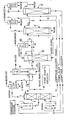
- a storage container I contains a mixture of acetic acid and citric acid. Via a line 1, the acid mixture reaches the lower half of a cylindrical reactor II filled with packing elements, for example Raschig rings, and is z. B. sprayed by means of a nozzle. Ethanol (94%) is transported from a storage container III via a line 3 into the reactor II. The inlet for line 3 in reactor II is located below the inlet for line 1. This arrangement of the lines has proven to be particularly advantageous. The ethanol passed into the lower part evaporates very quickly when heated. This results in good mixing with the citric acid-acetic acid mixture sprayed in the middle area of reactor II. The lower part of the reactor II is provided with an external heating which heats the contents of the reactor to 78 ° C.
- a line 6a leads to an aceotropic column VII.
- the water-ethanol-ethyl acetate mixture transported in line 6a is partially separated.
- Vaporized ethyl acetate is transported to a condenser VIII and from there it is fed via line 8 into the extractor 6 or via line 8a back into the column VII.
- an ethanol-water mixture flows through line 7 into a column IX, in the separation of this mixture is carried out.
- the water is drained off at the bottom of column IX.
- the evaporating ethanol is condensed by means of a condenser X and transported via line 10 into the storage vessel III. It can optionally be returned to column IX by line 10a.
- a citric acid-acetic acid-water mixture is concentrated, which is obtained in reactor II when the actual reaction is carried out.
- a line 2a leads this mixture from the bottom of the extractor II into the column XI.
- the evaporating water is condensed in a column XII and then drained off.
- the concentrated acetic acid-citric acid mixture is fed through line 11 into the acid storage container I.
- the columns 7, 9 and 11 with the condensers 8, 10 and 12 are mainly used for the recovery of ethanol and acid mixture.
- the process according to the invention can be carried out continuously as well as in batches.
- the acetic acid used has a concentration of over 10%. In practice, 30% acetic acid is suitable. A higher concentration results in a correspondingly greater effort in the production of the acetic acid.
- the process of esterification - in the illustrated embodiment in reactor II - can thereby be improved, namely accelerated and improved in terms of yield, if water is removed during the reaction.
- the reactor II is expediently set up in such a way that water is continuously withdrawn during the reaction. The method of pervaporation can be used for this.
Landscapes
- Chemical & Material Sciences (AREA)
- Organic Chemistry (AREA)
- Engineering & Computer Science (AREA)
- Mechanical Engineering (AREA)
- Organic Low-Molecular-Weight Compounds And Preparation Thereof (AREA)
- Springs (AREA)
- Low-Molecular Organic Synthesis Reactions Using Catalysts (AREA)
Abstract
Die Erfindung betrifft ein Verfahren zur Herstellung von Ethylacetat wobei Essigsäure mit Äthanol unter katalytischer Wirkung von Citronensäure umgesetzt werden.
Description
- Die vorliegende Erfindung betrifft ein Verfahren zur Herstellung von Ethylacetat.
- Ethylacetat stellt ein wichtiges Lösungsmittel in vielen Industriezweigen wie z. B. in der Film-, Lack-, Kunstleder- und Kunstseide-Fabrikation, in der Kosmetikherstellung sowie in der Lebensmittelindustrie dar. Bekannte Herstellungsverfahren beruhen auf der Umsetzung von Äthanol und Essigsäure unter Katalytischer Wirkung von starken Mineralsäuren, meist Schwefelsäure (vgl. Verfahren nach DE-PS 824341). Durch Änderung der Konzentration der Reaktionspartner, durch Temperaturerhöhung und/oder Entfernung der Endprodukte kann die Produktaus beute gesteuert werden.
- Verfahrenstechnisch vorteilhaft erwiesen sich kontinuierliche Verfahren zur Herstellung von Ethylacetat.
- Die Verwendung von Mineralsäuren wird vielfach als Nachteil der bekannten Verfahren angesehen. Sie gelangen im Herstellungsverfahren zumindest in geringen Mengen in das hergestellte Ethylacetat. Insbesondere bei Verwendung von Ethylacetat in der Lebensmittelindustrie sind selbst Spuren von Mineralsäuren unerwünscht, da die Säuren selbst toxisch sein können bzw. geschmacklich oder toxikologisch bedenkliche Reaktionen bewirken können.
- Der vorliegenden Erfindung liegt nunmehr die Aufgabe zugrunde, ein Verfahren zur Herstellung von Ethylacetat bereitzustellen, das ohne Mineralsäuren arbeitet und damit die genannten Nachteile ausschließt.
- Die Lösung dieser Aufgabe wird in überraschend einfacher Weise durch die Verwendung von Citronensäure erreicht. Citronensäure ist eine natürliche Säure und spielt im Stoffwechsel des Menschen eine bedeutende Rolle. Sie wird aus natürlichem Material gewonnen und ist toxikologisch unbedenklich.
- Aus toxikologischer Sicht ist die Herstellung von Ethylacetat gemäß den Ansprüchen 3 und 4 unter Verwendung von biologisch hergestelltem Äthanol und/oder biologisch hergestellter Essigsäure besonders vorteilhaft.
- Unter biologisch hergestelltem Äthanol ist durch alkoholische Gärung von glukosehaltigen Substraten wie Treber, Melasse, Rohrzucker, Zuckerrübenschnitzeln, Obst oder Maischen von stärkehaltigen Produkten wie Kartoffeln, Reis oder Mais gewonnenes Äthanol zu verstehen.
- Biologische Essigsäure wird durch aerobe Essigsäuregärung alkoholischer Flüssigkeiten unter enzymatischem Einfluß von Essigbakterien (Acetobacterin) gewonnen.
- Das erfindungsgemäße Verfahren arbeitet vorzugsweise mit einem 1,5 molaren Äthanol-Überschuß. Die Menge an Citronensäure liegt bei 5 bis 10 Gew.% bezogen auf die Essigsäuremenge.
- Im folgenden wird die Erfindung beispielhaft, insbesondere hinsichtlich der verfahrenstechnischen Ausführung, anhand einer Zeichnung näher erläutert:
- Ein Vorratsbehälter I beinhaltet eine Mischung aus Essigsäure und Citronensäure. Über eine Leitung 1 gelangt die Säuremischung in die untere Hälfte eines mit Füllkörpern beispielsweise Raschigringen gefüllten zylinderförmigen Reaktors II und wird dort z. B. mittels einer Düse versprüht. Aus einem Vorratsbehälter III wird Äthanol (94 %ig) über eine Leitung 3 in den Reaktor II transportiert. Der Einlaß für die Leitung 3 im Reaktor II ist unter dem Einlaß für Leitung 1 angeordnet. Diese Anordnung der Leitungen hat sich als besonders vorteilhaft erwiesen. Das in den unteren Teil geleitete Äthanol verdampft beim Erhitzen sehr schnell. Dadurch kommt es zu einer guten Vermischung mit dem im mittleren Bereich des Reaktors II versprühten Citronensäure-Essigsäure-Gemischs. Der Reaktor II ist im unteren Teil mit einer äußeren Heizung versehen, die den Inhalt des Reaktors auf 78 °C erwärmt. Im Reaktor findet die Veresterungsreaktion statt. Gleichzeitig bildet sich ein termeres aceotropes Gemisch aus Ethylacetat, Äthanol und Wasser, das durch Leitung 2 in einen Kondensator IV strömt, und dort kondensiert. Aus dem Kondensator IV tritt durch eine Leitung 4 ein Gemisch aus 83,2 % Ethylacetat, 7,8 % Wasser und 9 % Äthanol und wird in einen Extraktor VI geführt. Dort wird das Gemisch im Gegenstrom mit Wasser gewaschen; das sich aufgrund des geringeren spezifischen Gewichts im oberen Bereich des Extraktors abscheidende Ethylacetat wird durch eine Leitung 6 entnommen; dieses Ethylacetat ist 96 %ig und stellt das gewünschte Endprodukt dar. Vom Boden des Extraktors VI führt eine Leitung 6a in eine Aceotropkolonne VII. Dort wird das in der Leitung 6a transportierte Wasser-Äthanol-Ethylacetat-Gemisch teilweise getrennt. Ethylacetat verdampft, wird in einen Kondensator VIII transportiert und von dort über Leitung 8 in den Extraktor 6 geleitet oder über Leitung 8a zurück in die Kolonne VII. Aus der Aceotropkolonne VII fließt durch Leitung 7 ein Äthanol-Wasser-Gemisch in eine Kolonne IX, in der die Trennung dieses Gemisches durchgeführt wird. Das anfallende Wasser wird am Boden der Kolonne IX abgelassen. Das verdampfende Äthanol wird mittels eines Kondensators X kondensiert und über Leitung 10 in das Vorratsgefäß III transportiert. Es läßt sich gegebenenfalls mittels Leitung 10a in die Kolonne IX zurückleiten.
- In einer Kolonne XI erfolgt die Konzentrierung eines Citronensäure-Essigsäure-Wasser-Gemisches, das im Reaktor II bei Durchführung der eigentlichen Umsetzung anfällt. Eine Leitung 2a führt dieses Gemisch vom Boden des Extraktors II in die Kolonne XI. Das verdampfende Wasser wird in einer Kolonne XII kondensiert und dann abgeleitet. Das konzentrierte Essigsäure-Citronensäure-Gemisch wird durch Leitung 11 in den Säure-Vorratsbehälter I geführt.
- Die Kolonnen 7, 9 und 11 mit den Kondensatoren 8, 10 und 12 dienen hauptsächlich der Rückgewinnung von Äthanol und Säure-Gemisch. Die Aggregate 1, 2, 4, 5 und 6 betreffen hingegen die unmittelbare Herstellung von Ethylacetat.
- Bei Durchführung des erfindungsgemäßen Verfahrens mit 6,15 kg Essigsäure, 0,4 kg Citronensäure und 5,7 kg Äthanol kann in einem Produktionstakt von 8 Stunden Ethylacetat in 96 %-iger Konzentration hergestellt werden. Das in den Extraktor VI eingeleitete Gemisch besteht in diesem Fall aus 7,47 kg Ethylacetat, 0,81 kg Äthanol und 0,72 kg Wasser. Im Extraktor wird das Gemisch mit Wasser gewaschen; Ethylacetat scheidet sich oben ab und wird entnommen und zwar in einer Konzentration von 96 %. Das am Boden des Extraktors abgeführte Gemisch enthält 0,18 kg Äthanol sowie 0,17 kg Ethylacetat.
- Die Ausbeute an Ethylacetat beim beschriebenen Verfahren beträgt 92 %.
- Das erfindungsgemäße Verfahren kann kontinuierlich wie auch in Chargen ausgeführt werden. Die verwendete Essigsäure hat eine Konzentration von über 10 %. Für die Praxis ist eine 30 %-ige Essigsäure geeignet. Bei höherer Konzentration ergibt sich ein entsprechend größerer Aufwand bei der Herstellung der Essigsäure.
- Der Vorgang der Veresterung - bei dem dargestellten Ausführungsbeispiel im Reaktor II - kann dadurch verbessert, nämlich beschleunigt und in bezug auf die Ausbeute verbessert werden, wenn während der Reaktion Wasser entzogen wird. Der Reaktor II ist bei dem gezeigten Ausführungsbeispiel zweckmäßigerweise so eingerichtet, daß fortlaufend Wasser während der Reaktion entzogen wird. Hierfür kann das Verfahren der Pervaporation angewendet werden.
-
- I Vorratsbehälter für Säure
- II Reaktor
- III Vorratsbehälter für Äthanol
- IV Kondensator
- V Ventil
- VI Extraktor
- VII Azeotropkolonne
- VIII Kondensator
- IX Alkoholkolonne
- X Kondensator
- XI Kolonne zur Säure-Konzentrierung
- XII Kondensator
- 1 Leitung von I nach II
- 2 Leitung von II nach IV
- 2a Leitung von II nach XI
- 3 Leitung von III nach II
- 4 Leitung von IV nach VI
- 6 Leitung von VI zur Abfüllung bzw. nach II
- 6a Leitung von VI nach VII
- 7 Leitung von VII nach IX
- 8 Leitung von VIII nach VI
- 8a Leitung von VIII nach VII
- 9 Leitung von IX nach X
- 10 Leitung von X nach III
- 10a Leitung von X nach IX
- 11 Leitung von XI nach I
Claims (6)
1. Verfahren zur Herstellung von Ethylacetat aus Essigsäure und Äthanol, dadurch gekennzeichnet, daß es unter Zusatz katalytischer Mengen Citronensäure durchgeführt wird.
2. Verfahren nach Anspruch 1, dadurch gekennzeichnet, daß Citronensäure in einer Konzentration von 5-10 Gew.%, bezogen auf die Essigsäuremenge, verwendet wird.
3. Verfahren nach Anspruch 1 oder 2, dadurch gekennzeichnet, daß die molare Konzentration an Äthanol etwa das 1,5-fache der molaren Essigsäurekonzentration beträgt.
4. Verfahren nach einem oder mehreren der vorangehenden Ansprüche, dadurch gekennzeichnet, daß Äthanol, welches aus biologischen Gärprozessen hergestellt wurde, verwendet wird.
5. Verfahren nach einem oder mehreren der vorangehenden Ansprüche, dadurch gekennzeichnet, daß Essigsäure, die in biologischen Gärprozessen hergestellt wurden, verwendet wird.
6. Verfahren nach Anspruch 1 sowie einem oder mehreren der weiteren Ansprüche, dadurch gekennzeichnet, daß während der Reaktion von Essigsäure und Äthanol mit Zitronensäure als Katalysator Wasser entzogen wird, vorzugsweise fortlaufend, insbesondere durch Pervaporation.
Applications Claiming Priority (2)
| Application Number | Priority Date | Filing Date | Title |
|---|---|---|---|
| DE3814095A DE3814095A1 (de) | 1988-04-26 | 1988-04-26 | Verfahren zur herstellung von ethylacetat |
| DE3814095 | 1988-04-26 |
Publications (2)
| Publication Number | Publication Date |
|---|---|
| EP0339330A2 true EP0339330A2 (de) | 1989-11-02 |
| EP0339330A3 EP0339330A3 (de) | 1991-06-05 |
Family
ID=6352922
Family Applications (1)
| Application Number | Title | Priority Date | Filing Date |
|---|---|---|---|
| EP19890106117 Withdrawn EP0339330A3 (de) | 1988-04-26 | 1989-04-07 | Verfahren zur Herstellung von Ethylacetat |
Country Status (3)
| Country | Link |
|---|---|
| EP (1) | EP0339330A3 (de) |
| KR (1) | KR900015998A (de) |
| DE (1) | DE3814095A1 (de) |
Cited By (21)
| Publication number | Priority date | Publication date | Assignee | Title |
|---|---|---|---|---|
| US5623065A (en) * | 1990-08-13 | 1997-04-22 | Isis Pharmaceuticals, Inc. | Gapped 2' modified oligonucleotides |
| US5652355A (en) * | 1992-07-23 | 1997-07-29 | Worcester Foundation For Experimental Biology | Hybrid oligonucleotide phosphorothioates |
| US5700922A (en) * | 1991-12-24 | 1997-12-23 | Isis Pharmaceuticals, Inc. | PNA-DNA-PNA chimeric macromolecules |
| FR2757539A1 (fr) * | 1996-12-24 | 1998-06-26 | Bioconversion | Esters d'origine vegetale utilises comme substituts de carburants ou combustibles et leur procede de production |
| US5856455A (en) * | 1991-12-24 | 1999-01-05 | Isis Pharmaceuticals, Inc. | Gapped 2'-modified oligonucleotides |
| US5859221A (en) * | 1990-01-11 | 1999-01-12 | Isis Pharmaceuticals, Inc. | 2'-modified oligonucleotides |
| US5872232A (en) * | 1990-01-11 | 1999-02-16 | Isis Pharmaceuticals Inc. | 2'-O-modified oligonucleotides |
| US5955589A (en) * | 1991-12-24 | 1999-09-21 | Isis Pharmaceuticals Inc. | Gapped 2' modified oligonucleotides |
| US5965722A (en) * | 1991-05-21 | 1999-10-12 | Isis Pharmaceuticals, Inc. | Antisense inhibition of ras gene with chimeric and alternating oligonucleotides |
| US6005087A (en) * | 1995-06-06 | 1999-12-21 | Isis Pharmaceuticals, Inc. | 2'-modified oligonucleotides |
| US6143881A (en) * | 1992-07-23 | 2000-11-07 | University Of Massachusetts Worcester | Hybrid oligonucleotide phosphorothioates |
| US6146829A (en) * | 1991-12-24 | 2000-11-14 | Isis Pharmaceuticals, Inc. | Gapped 2' modified oligonucleotides |
| US6277603B1 (en) | 1991-12-24 | 2001-08-21 | Isis Pharmaceuticals, Inc. | PNA-DNA-PNA chimeric macromolecules |
| US6346614B1 (en) | 1992-07-23 | 2002-02-12 | Hybridon, Inc. | Hybrid oligonucleotide phosphorothioates |
| US6399754B1 (en) | 1991-12-24 | 2002-06-04 | Isis Pharmaceuticals, Inc. | Sugar modified oligonucleotides |
| US7695902B2 (en) | 1996-06-06 | 2010-04-13 | Isis Pharmaceuticals, Inc. | Oligoribonucleotides and ribonucleases for cleaving RNA |
| US7812149B2 (en) | 1996-06-06 | 2010-10-12 | Isis Pharmaceuticals, Inc. | 2′-Fluoro substituted oligomeric compounds and compositions for use in gene modulations |
| US7884086B2 (en) | 2004-09-08 | 2011-02-08 | Isis Pharmaceuticals, Inc. | Conjugates for use in hepatocyte free uptake assays |
| US8394947B2 (en) | 2004-06-03 | 2013-03-12 | Isis Pharmaceuticals, Inc. | Positionally modified siRNA constructs |
| US8604183B2 (en) | 2002-11-05 | 2013-12-10 | Isis Pharmaceuticals, Inc. | Compositions comprising alternating 2′-modified nucleosides for use in gene modulation |
| US9096636B2 (en) | 1996-06-06 | 2015-08-04 | Isis Pharmaceuticals, Inc. | Chimeric oligomeric compounds and their use in gene modulation |
-
1988
- 1988-04-26 DE DE3814095A patent/DE3814095A1/de not_active Withdrawn
-
1989
- 1989-04-07 EP EP19890106117 patent/EP0339330A3/de not_active Withdrawn
-
1990
- 1990-04-27 KR KR1019900005969A patent/KR900015998A/ko not_active Abandoned
Non-Patent Citations (1)
| Title |
|---|
| Keine Entgegenhaltungen * |
Cited By (26)
| Publication number | Priority date | Publication date | Assignee | Title |
|---|---|---|---|---|
| US5859221A (en) * | 1990-01-11 | 1999-01-12 | Isis Pharmaceuticals, Inc. | 2'-modified oligonucleotides |
| US6531584B1 (en) | 1990-01-11 | 2003-03-11 | Isis Pharmaceuticals, Inc. | 2'modified oligonucleotides |
| US5872232A (en) * | 1990-01-11 | 1999-02-16 | Isis Pharmaceuticals Inc. | 2'-O-modified oligonucleotides |
| US5623065A (en) * | 1990-08-13 | 1997-04-22 | Isis Pharmaceuticals, Inc. | Gapped 2' modified oligonucleotides |
| US5965722A (en) * | 1991-05-21 | 1999-10-12 | Isis Pharmaceuticals, Inc. | Antisense inhibition of ras gene with chimeric and alternating oligonucleotides |
| US6277603B1 (en) | 1991-12-24 | 2001-08-21 | Isis Pharmaceuticals, Inc. | PNA-DNA-PNA chimeric macromolecules |
| US6399754B1 (en) | 1991-12-24 | 2002-06-04 | Isis Pharmaceuticals, Inc. | Sugar modified oligonucleotides |
| US5955589A (en) * | 1991-12-24 | 1999-09-21 | Isis Pharmaceuticals Inc. | Gapped 2' modified oligonucleotides |
| US5856455A (en) * | 1991-12-24 | 1999-01-05 | Isis Pharmaceuticals, Inc. | Gapped 2'-modified oligonucleotides |
| US6326199B1 (en) | 1991-12-24 | 2001-12-04 | Isis Pharmaceuticals, Inc. | Gapped 2′ modified oligonucleotides |
| US5700922A (en) * | 1991-12-24 | 1997-12-23 | Isis Pharmaceuticals, Inc. | PNA-DNA-PNA chimeric macromolecules |
| US6146829A (en) * | 1991-12-24 | 2000-11-14 | Isis Pharmaceuticals, Inc. | Gapped 2' modified oligonucleotides |
| US5652355A (en) * | 1992-07-23 | 1997-07-29 | Worcester Foundation For Experimental Biology | Hybrid oligonucleotide phosphorothioates |
| US7045609B2 (en) | 1992-07-23 | 2006-05-16 | University Of Massachusetts Worcester | Hybrid oligonucleotide phosphorothioates |
| US6346614B1 (en) | 1992-07-23 | 2002-02-12 | Hybridon, Inc. | Hybrid oligonucleotide phosphorothioates |
| US6143881A (en) * | 1992-07-23 | 2000-11-07 | University Of Massachusetts Worcester | Hybrid oligonucleotide phosphorothioates |
| US6683167B2 (en) | 1992-07-23 | 2004-01-27 | University Of Massachusetts Worcester | Hybrid oligonucleotide phosphorothioates |
| US6359124B1 (en) | 1995-04-03 | 2002-03-19 | Isis Pharmaceuticals, Inc. | Antisense inhibition of ras gene with chimeric and alternating oligonucleotides |
| US6005087A (en) * | 1995-06-06 | 1999-12-21 | Isis Pharmaceuticals, Inc. | 2'-modified oligonucleotides |
| US7695902B2 (en) | 1996-06-06 | 2010-04-13 | Isis Pharmaceuticals, Inc. | Oligoribonucleotides and ribonucleases for cleaving RNA |
| US7812149B2 (en) | 1996-06-06 | 2010-10-12 | Isis Pharmaceuticals, Inc. | 2′-Fluoro substituted oligomeric compounds and compositions for use in gene modulations |
| US9096636B2 (en) | 1996-06-06 | 2015-08-04 | Isis Pharmaceuticals, Inc. | Chimeric oligomeric compounds and their use in gene modulation |
| FR2757539A1 (fr) * | 1996-12-24 | 1998-06-26 | Bioconversion | Esters d'origine vegetale utilises comme substituts de carburants ou combustibles et leur procede de production |
| US8604183B2 (en) | 2002-11-05 | 2013-12-10 | Isis Pharmaceuticals, Inc. | Compositions comprising alternating 2′-modified nucleosides for use in gene modulation |
| US8394947B2 (en) | 2004-06-03 | 2013-03-12 | Isis Pharmaceuticals, Inc. | Positionally modified siRNA constructs |
| US7884086B2 (en) | 2004-09-08 | 2011-02-08 | Isis Pharmaceuticals, Inc. | Conjugates for use in hepatocyte free uptake assays |
Also Published As
| Publication number | Publication date |
|---|---|
| EP0339330A3 (de) | 1991-06-05 |
| DE3814095A1 (de) | 1989-11-09 |
| KR900015998A (ko) | 1990-11-12 |
Similar Documents
| Publication | Publication Date | Title |
|---|---|---|
| DE3814095A1 (de) | Verfahren zur herstellung von ethylacetat | |
| EP2004590B1 (de) | Verfahren zur herstellung eines carbonsäurealkylesters | |
| CH654023A5 (de) | Verfahren zur herstellung von alkoholfreiem wein oder fruchtwein. | |
| CH398564A (de) | Verfahren zur Herstellung von Cyclohexanon | |
| DE1235887B (de) | Verfahren und Vorrichtung zur kontinuierlichen Herstellung von Benzoldicarbonsaeuren | |
| DE3783747T2 (de) | Maisquellwasser. | |
| DE2937551C2 (de) | Verfahren zur Herstellung eines Futtermittels aus Schlempe | |
| DE2003684A1 (de) | Verfahren zur Dehydratation von Maleinsaeure zu Maleinsaeureanhydrid | |
| DE2539453B2 (de) | Verfahren zur umsetzung eines mikrobiologischen substrates | |
| DE824341C (de) | Kontinuierliches Verfahren zur Herstellung niedermolekularer aliphatischer Ester | |
| DE2642533C2 (de) | Verfahren zur Herstellung von gamma- Butyrolacton aus Maleinsäureanhydrid | |
| DE2918739C2 (de) | Verfahren zur Herstellung von Polyisocyanaten mit Biuret- Struktur | |
| DE3302127C2 (de) | ||
| DE1668398A1 (de) | Verfahren zur Gewinnung von reinem Phthalsaeureanhydrid | |
| DE1618249B1 (de) | Verfahren zur Abtrennung bromhaltigen Cokatalysators aus rohem Phthalsäureanhydrid | |
| EP0008099B1 (de) | Verfahren zur Herstellung von Carbonsäureestern vicinaler Glykole | |
| DE1279010B (de) | Verfahren zur Gewinnung von AEpfelsaeure | |
| DE2843382C3 (de) | Verfahren zur Gewinnung von Cyanurchlorid in fester oder flüssiger Form | |
| DE498961C (de) | Verfahren zur Ausfuehrung chemischer Reaktionen in Loesungen | |
| DE2632898A1 (de) | Kobaltkatalysierte oxidation von gesaettigten, aliphatischen c tief 3 - c tief 7 -kohlenwasserstoffen zu essigsaeure | |
| AT229876B (de) | Verfahren zur Herstellung von sehr reinem Melamin | |
| DE714956C (de) | Verfahren zur Herstellung von Furfurol | |
| DE3502217A1 (de) | Verfahren zur gewinnung von alkohol und proteinangereicherter schlempe aus zucker-, staerke- und/oder zellulosehaltigen rohstoffen | |
| DE1667139A1 (de) | Kolonne zur Durchfuehrung organisch-chemischer Reaktionen in Gegenwart feinkoerniger Katalysatoren | |
| DE2256111C3 (de) | Verfahren und Vorrichtung zur Solventextraktion |
Legal Events
| Date | Code | Title | Description |
|---|---|---|---|
| PUAI | Public reference made under article 153(3) epc to a published international application that has entered the european phase |
Free format text: ORIGINAL CODE: 0009012 |
|
| AK | Designated contracting states |
Kind code of ref document: A2 Designated state(s): AT BE CH DE ES FR IT LI NL |
|
| PUAL | Search report despatched |
Free format text: ORIGINAL CODE: 0009013 |
|
| AK | Designated contracting states |
Kind code of ref document: A3 Designated state(s): AT BE CH DE ES FR IT LI NL |
|
| 17P | Request for examination filed |
Effective date: 19911001 |
|
| STAA | Information on the status of an ep patent application or granted ep patent |
Free format text: STATUS: THE APPLICATION IS DEEMED TO BE WITHDRAWN |
|
| 18D | Application deemed to be withdrawn |
Effective date: 19921105 |