EP0062902B1 - 2,3,4-Trinor-m-inter-phenylen-prostaglandin-Derivate, Verfahren zu deren Herstellung sowie diese Verbindungen enthaltende pharmazeutische Präparate - Google Patents
2,3,4-Trinor-m-inter-phenylen-prostaglandin-Derivate, Verfahren zu deren Herstellung sowie diese Verbindungen enthaltende pharmazeutische Präparate Download PDFInfo
- Publication number
- EP0062902B1 EP0062902B1 EP82103024A EP82103024A EP0062902B1 EP 0062902 B1 EP0062902 B1 EP 0062902B1 EP 82103024 A EP82103024 A EP 82103024A EP 82103024 A EP82103024 A EP 82103024A EP 0062902 B1 EP0062902 B1 EP 0062902B1
- Authority
- EP
- European Patent Office
- Prior art keywords
- inter
- phenylene
- general formula
- trinor
- pgi
- Prior art date
- Legal status (The legal status is an assumption and is not a legal conclusion. Google has not performed a legal analysis and makes no representation as to the accuracy of the status listed.)
- Expired
Links
Classifications
-
- C—CHEMISTRY; METALLURGY
- C07—ORGANIC CHEMISTRY
- C07D—HETEROCYCLIC COMPOUNDS
- C07D307/00—Heterocyclic compounds containing five-membered rings having one oxygen atom as the only ring hetero atom
- C07D307/77—Heterocyclic compounds containing five-membered rings having one oxygen atom as the only ring hetero atom ortho- or peri-condensed with carbocyclic rings or ring systems
- C07D307/93—Heterocyclic compounds containing five-membered rings having one oxygen atom as the only ring hetero atom ortho- or peri-condensed with carbocyclic rings or ring systems condensed with a ring other than six-membered
- C07D307/935—Not further condensed cyclopenta [b] furans or hydrogenated cyclopenta [b] furans
- C07D307/937—Not further condensed cyclopenta [b] furans or hydrogenated cyclopenta [b] furans with hydrocarbon or substituted hydrocarbon radicals directly attached in position 2, e.g. prostacyclins
-
- C—CHEMISTRY; METALLURGY
- C07—ORGANIC CHEMISTRY
- C07C—ACYCLIC OR CARBOCYCLIC COMPOUNDS
- C07C405/00—Compounds containing a five-membered ring having two side-chains in ortho position to each other, and having oxygen atoms directly attached to the ring in ortho position to one of the side-chains, one side-chain containing, not directly attached to the ring, a carbon atom having three bonds to hetero atoms with at the most one bond to halogen, and the other side-chain having oxygen atoms attached in gamma-position to the ring, e.g. prostaglandins ; Analogues or derivatives thereof
-
- C—CHEMISTRY; METALLURGY
- C07—ORGANIC CHEMISTRY
- C07C—ACYCLIC OR CARBOCYCLIC COMPOUNDS
- C07C405/00—Compounds containing a five-membered ring having two side-chains in ortho position to each other, and having oxygen atoms directly attached to the ring in ortho position to one of the side-chains, one side-chain containing, not directly attached to the ring, a carbon atom having three bonds to hetero atoms with at the most one bond to halogen, and the other side-chain having oxygen atoms attached in gamma-position to the ring, e.g. prostaglandins ; Analogues or derivatives thereof
- C07C405/0008—Analogues having the carboxyl group in the side-chains replaced by other functional groups
- C07C405/0041—Analogues having the carboxyl group in the side-chains replaced by other functional groups containing nitrogen
Definitions
- the compounds of general formula I are prostacyclin analogs with various pharmacological effects. They inhibit blood clotting, they have a disaggregating effect on blood clots, they have vasodilator, cytoprotective and ulcer healing effects.
- the invention further relates to a method for producing these compounds and pharmaceutical preparations containing these compounds.
- Prostacyclin (PG1 2 ) is an endogenous substance. It was discovered in 1976 by J.Vane et al. (Nature 1976, 263, 663; Prostaglandins 1976, 12, 685 and 897), and it was found that PGI 2 played a role in the haemostatic regulation of the circulatory system as an anti-aggregating and disaggregating agent.
- prostacyclin The chemical synthesis of prostacyclin has already been achieved by several research groups (e.g. Angewandte Chemie, International Edition 1978, 17, 293 ff., As well as the references cited there).
- prostacyclin - for example in the prophylaxis of the infarct - is severely restricted by its instability, which is due to the exocyclic enol ether configuration present in the prostacyclin molecule.
- Prostacyclin is a stable and easily storable compound in the form of its sodium salt, but under physiological conditions the PGI 2 acid released from the sodium salt is rapidly hydrolyzed to 6-keto-PGF 1 ⁇ , which does not have the effects of PGI 2 . Numerous studies have therefore been carried out to produce prostacyclin analogs which are chemically stable and which are more selective in their action than PG1 2 .
- This is attributed to the action of the phenyl group which is conjugated to the enol ether, since the ⁇ -electron system of the phenyl group reduces the reactivity of the enol ether by the conjugation.
- the rigid structure of the molecule prevents the hydrolysis that occurs in the prostacyclin, which is catalyzed by its own carboxyl group.
- the most important pharmacological activity of the compounds of the invention is that, like PGI2, they inhibit platelet aggregation and that they can dissolve agglomerates that have already formed.
- the compounds of the invention can be formulated in a manner known per se with the extenders, fillers and excipients customary in the pharmaceutical industry to give pharmaceutical preparations. These can contain parts of the effective dose or an integer multiple thereof.
- R I is C 1-4 alkyl
- R 5 contains a free amino group - after acylation with an optionally halogen-substituted C 1-4 alkanoyl, benzoyl or tosyl group containing acylating agents
- the bicyclic lactols of the general formula 11 used as starting materials according to the invention are the correspondingly substituted derivatives of 3, 3ass-4, 5, 6ass-hexahydro-2-hydroxy-4ß- (3-hydroxy-l-trans-octenyl) ) -5a-hydroxy-2H-cyclopenta [b] furans, a known prostaglandin intermediate.
- Several summary papers have been published on the preparation of these intermediates (e.g. Prostaglandin Research, 237-239, Editor P. Crabbe, Academic Press, 1977; J.S. Bindra: Prostaglandin Synthesis, Academic Press 1977,462 et seq., Also in Chapter 10).
- an acylating agent which contains a C 1-4 - which is optionally substituted by halogen.
- Acetyl chloride, tosyl chloride, benzoyl chloride or trifluoroacetic acid are preferably used as the acylating agent.
- the cyclization of the PGF 2 ⁇ derivative of the general formula IV obtained in the Wittig reaction to the 5-halogen PGI, derivative of the general formula V is carried out by treatment with a halogenating agent of the general formula E - X.
- a halogenating agent of the general formula E - X are: iodine, bromine, N-bromosuccinimide, N-iodosuccinimide, N-chlorosuccinimide, preference being given to elemental iodine and N-bromosuccinimide.
- the cyclization can be carried out with the N-halosuccinimides without an acid acceptor.
- the 5-halogen-PGI 1 derivatives of the general formula V are converted into the PGI 2 derivatives of the general formula 1 by elimination of hydrogen halide and with the formation of the 5,6-double bond by treatment with basic reagents.
- Some examples are: alkali carbonates (potassium carbonate), alkali hydrogen carbonates (sodium bicarbonate), alkali hydroxides (potassium hydroxide), but also tertiary amines, such as triethylamine, pyridine or 1, 5-diazabicyclo [4, 3, 0] non-5-ene (DBN ) or 1,5-diazabicyclo [5,4, O] undec-5-ene (DBU).
- the products obtained are purified by column chromatography on silica gel.
- R 1 in the compounds of the invention is C 1-4 alkyl
- the corresponding carboxylic acids appropriately implemented with the corresponding diazoalkanes.
- R 1 is to be alkali or primary, secondary, tertiary or quaternary ammonium
- the corresponding acids are expediently reacted with the corresponding bases or amines.
- Compounds in which R 1 is alkali can also be obtained by hydrolysis of the esters.
- Z represents a free amino group the protective group previously introduced is split off from the 16-amino group in the last process step.
- Suitable protecting groups are: C 1-4 -alkanoyl groups optionally substituted by halogen, alkoxycarbonyl, benzoyl, tosyl, benzyloxycarbonyl and p-nitrophenoxycarbonyl groups, which can easily be split off in a manner known per se.
- a C 1-4 alkyl group is to be understood as the methyl, ethyl, n and isopropyl, n, iso, sec and tert-butyl group.
- the C 1-4 alkanoyl groups optionally substituted by halogen represent alkanoyl groups which can be derived from the corresponding alkanes and which can be mono- or polysubstituted by halogen. Examples of the substituents are: fluorine, chlorine, bromine and iodine.
- the benzoyl group can be substituted by halogen or phenyl. In the trialkylsilyl groups, the alkyl groups can be the same or different. Examples of the C 4-6 alkyl groups are the straight and branched isomers of the butyl, pentyl, hexyl group.
- the alkali ion R 1 can be a sodium, potassium or lithium ion.
- Ammonium ions are to be understood as the linear or cyclic organic amines containing one or more nitrogen atoms, in which the nitrogen atom is represented by one, two, three or four C 1-4 alkyl groups or by a C 5-8 cycloalkyl group, for example the cyclopentyl, Cyclohexyl, cycloheptyl or cyclooctyl group is substituted.
- the alkyl groups bonded to the nitrogen atom can also be substituted, preferably by hydroxyl groups.
- the solution is extracted twice with 10 ml of ether, the pH of the aqueous phase is adjusted to 4-5 with 2N aqueous sodium hydrogen sulfate solution, the aqueous phase is extracted 4 times with 20 ml of ether and then twice with 20 ml of ethyl acetate, the is dried combined organic phases over sodium sulfate, filter and evaporate the solvent under reduced pressure.
- the crude product obtained (2.5 g) is dissolved in 20 ml of ether, and diazomethane solution is added dropwise at 0 ° C. while stirring until the yellow color of the added diazomethane no longer disappears.
- the methyl ester formed is checked by layer chromatography.
- aqueous phase is extracted 3 times with 50 ml of ether and then with 20 ml of ethyl acetate.
- the combined organic phases are dried over sodium sulfate, filtered and then the solvent is distilled off under reduced pressure, giving 530 mg of crude product.
- the product is chromatographed on a column filled with 100 g of silica gel (Merck Art. No. 7734, particle size 0.03-0.2 mm) with ethyl acetate, the fractions on the analytical thin layer (Merck Art. No. 5715) containing the Rf values 0.49 and 0.47 are combined.
- the solvent is distilled off under reduced pressure.
- the two product fractions together weigh 493 mg (87%).
- the Rf value of the endo or exoisomer measured by thin layer chromatography (silica gel G.Merck Art. No. 5715) with ethyl acetate is 0.49 and 0.47, respectively.
- the crude 2,3,4-trinor-1,5-inter-m-phenylene-16- (trifluoro-acetamido) -PGF 2> ⁇ -methyl ester obtained is dissolved in 5 ml of an anhydrous mixture of chloroform and tetrahydrofuran (1: 1 ) dissolved, the solution obtained cooled to -78 ° C (cold mixture of dry ice and acetone) and stirred under a protective gas atmosphere. After addition of 215.4 mg (1.21 mM) of solid N-bromosuccinimide, the reaction mixture is stirred at -78 ° C. after 10 minutes, then the cooling is stopped. The temperature of the reaction mixture is allowed to rise to room temperature and is stirred at this temperature for 30 minutes.
- reaction mixture is diluted with 50 ml of chloroform and washed 3 times with 20 ml of water.
- the organic phase is dried over sodium sulfate and, after filtering, the solvent is removed by distillation under reduced pressure.
- the crude product is chromatographed on a column filled with 60 g of silica gel (Merck Art.No. 7734, particle size 0.03-0.2 mm) with a mixture of ether and acetone (ratio 3: 1).
- the fractions corresponding to the Rf values 0.49 and 0.51 determined by thin layer chromatography (Merck Art. No. 5715, eluent: ethyl acetate) are collected and the solvent is removed by distillation. A total of 152.1 mg (85.4%) of the title compound are obtained.
- Thin layer chromatography the Z-isomer has an Rf value of 0.51, the E-isomer of 0.49 (silica gel G.Merck Art. No. 5717).
- the aqueous phase is extracted 3 times with 20 ml of ethyl acetate.
- the combined organic phases are dried over sodium sulfate and, after filtering, the solvent is removed by distillation under reduced pressure.
- the acid obtained as a residue is dissolved in 2.5 ml of ether and the solution of 195 mg (1.08 mM) of dicyclohexylamine in 1 ml of ether is added at room temperature. Then the ether is distilled off under reduced pressure, the residue is triturated with petroleum ether and then decanted. 528 mg (97%) of the title compound are obtained.
Landscapes
- Chemical & Material Sciences (AREA)
- Organic Chemistry (AREA)
- Pharmaceuticals Containing Other Organic And Inorganic Compounds (AREA)
- Organic Low-Molecular-Weight Compounds And Preparation Thereof (AREA)
Description
- Die Erfindung betrifft neue 2, 3, 4-Trinor-1, 5-inter-m-phenylen-prosta-cyclin-Derivate der allgemeinen Formel

- Rl Wasserstoff, C1-4-Alkyl, Alkali- oder prim., sec., tert. oder quart. Ammoniumkation,
- R2 und R3 unabhängig voneinander Wasserstoff, C1-4-Alkanoyl, gegebenenfalls substituiertes Benzoyl oder Äthoxyäthyl,
- R4 Wasserstoff oder C1 4-Alkyl und
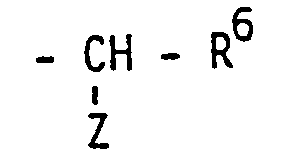
- R5 n-Hexyl, n-Heptyl, Phenoxymethyl, m-Trifluormethyl-phenoxymethyl oder eine Gruppe der allgemeinen Formel

- Z Amino, gegebenenfalls durch Halogen substituiertes C1-4-Alkanoylamino, Benzoylamino oder Tosylamino und
- R6 C4-6-Alkyl, Phenyl oder Benzyl ist.
- Die Verbindungen der allgemeinen Formel I sind Prostacyclin-Analoge mit verschiedenen pharmakologischen Wirkungen. Sie hemmen die Gerinnung der Blutplättchen, sie wirken desaggregierend auf Blutgerinnsel, sie haben eine gefäßerweiternde, eine cytoprotektive und eine ulcusheilende Wirkung.
- Die Erfindung betrifft ferner ein Verfahren zur Herstellung dieser Verbindungen und diese Verbindungen enthaltender Arzneimittelpräparate.
- Das Prostacyclin (PG12) ist eine endogene Substanz. Sie wurde 1976 von J.Vane u.a. endeckt (Nature 1976, 263, 663; Prostaglandins 1976, 12, 685 und 897), wobei festgestellt wurde, daß das PGI2 in der haemostatischen Regulierung des Kreislaufsystems als antiaggregierendes und desaggregierendes Agens eine Rolle soielt.
- Die chemische Synthese des Prostacyclins ist bereits mehreren Forschergruppen (z.B. Angewandte Chemie, International Edition 1978, 17, 293 ff., so wie die dort angeführten Referenzen) gelungen. Die praktische Anwendung des Prostacyclins - z.B. bei der Prophylaxe des Infarkts- wird jedoch durch dessen Instabilität, die auf die im Prostacyclinmolekül vorhandene exocyclische Enolätherkonfiguration zurückzuführen ist, stark eingeschränkt. Das Prostacyclin ist zwar in Form seines Natriumsalzes eine stabile und gut lagerbare Verbindung, aber unter physiologischen Bedingungen wird die aus dem Natriumsalz freigesetzte PGI2-Säure schnell zu 6-Keto-PGF1α hydrolysiert, das nicht die Wirkungen des PGI2 aufweist. Es sind daher zahlreiche Untersuchungen gemacht worden, Prostacyclin-Analoge herzustellen, die chemisch stabil und in der Wirkung möglichst selektiver sind als PG12.
- Aus der nicht vor veröffentlichten EP-A1 0 045 842 sind u.a. 2, 3, 4-Trinor-1, 5-inter-m-phenylen-prostacyclin-Derivate bekannt, die eine höhere Stabilität als PG12 aufweisen und die sich in der Kette am C12-Atom vom Prostacyclin darin unterscheiden können, daß sie am C15-Atom eine CH3-Gruppe aufweisen und/oder am C16-Atom zwei CH3-Gruppen oder eine C2H5-Gruppe und/oder anstelle des C16-C20-Alkylrestes einen gegebenenfalls substituierten Cyclohexylrest enthalten.
- Die 2, 3, 4-Trinor-1, 5-inter-m-phenylen-PGI2-Derivate der Erfindung weisen ebenfalls eine wesentlich höhere chemische Stabilität als das Prostacyclin aus (selbst bei pH = 1 beträgt die Halbwertzeit des Abbaus einige Tage). Das wird auf die Wirkung der Phenylgruppe zurückgeführt, die sich zu dem Enoläther in Konjugation befindet, da das π -Elektronensystem der Phenylgruppe durch die Konjugation die Reaktivität des Enoläthers vermindert. Außerdem wird durch die starre Struktur des Moleküls die bei dem Prostacyclin auftretende Hydrolyse verhindert, die durch die eigene Carboxylgruppe katalysiert wird.
- Die wichtigste pharmakologische Wirkung der Verbindungen der Erfindung besteht darin, daß sie - ähnlich wie PGI2 - die Aggregation der Blutplättchen hemmen und daß sie bereits gebildete Agglomerate auflösen können.
- In einem Vergleichsversuch wurde die Hemmwirkung der Verbindungen der Erfindung und des PGI2 auf ein an Blutplättchen reichem Plasma (PRP) von Mensch und Meerschweinchen gemessen. Die Messung erfolgte nach der Methode von Born. Die Aggregation wurde durch ADP ausgelöst, das in einer Konzentration von 4 µM/ml appliziert worden war. Bestimmt wurden die für eine 50 %ige und für eine 100 %ige Hemmung erforderliche Prostacyclin-Konzentration. Die Ergebnisse sind in der Tabelle I enthalten.

- Die Verbindungen der Erfindung können in an sich bekannter Weisemit den in der pharmazeutischen Industrie üblichen Streck-, Füll- und Trägerstoffen zu Arzneimittelpräparaten formuliert werden. Diese können Teile der wirksamen Dosis oder deren ganzzahliges Vielfaches enthalten.
- Als besonders vorteilhaft haben sich folgende Verbindungen erwiesen: 2, 3, 4, 17, 18, 19, 20-Heptanor-1,5- inter-m-phenylen-16-phenoxy-PGI2-methylester, 2, 3, 4, 17, 18, 19, 20-Heptanor-1, 5-inter-m-phenylen-16-(3-trifluormethyl-phenoxy)-PGIZ-methylester, 2, 3, 4-Trinor-1, 5-inter-m-phenylen-16-amino-PGI2-methylester, 2, 3, 4-Trinor-1, 5-inter-m-phenylen-16-acetamido-PGI2-methylester, 2, 3, 4-Trinor-1, 5-inter-m-phenylen-16-benzoylamino-PGI2-methylester, 2, 3, 4, 17, 18, 19, 20-Heptanor-1, 5-inter-m-phenylen-16-amino-PGI2-methylester, 2, 3, 4, 18, 19, 20-Hexanor-1, 5-inter-m-phenylen-16-amino-17-phenyl-PGI2-methylester, 5(Z)-2, 3, 4, 17, 18, 19, 20-Heptanor-1, 5-inter-m-phenylen-16-phenoxy-PGI2-Natriumsalz, 5(E)-2, 3, 4, 17, 18, 19, 20-Heptanor-1, 5- inter-m-phenylen-16-phenoxy-PGI2-Natriumsalz, 2, 3, 4, 17, 18, 19, 20-Heptanor-1, 5-inter-m-phenylen-16-(3-trifluormethyl-phenoxy)-PGI2-Natriumsalz, 5(Z)-2, 3, 4-Trinor-1, 5-inter-m-phenyten-20-methyl-PGI2-Natriumsalz, 5(E)-2, 3, 4-Trinor-1, 5-inter-m-phenylen-20-methyl-PGI2-Natriumsalz, 2, 3, 4-Trinor-1, 5-inter-m-phenylen-20- äthyl-PGI2-Natriumsalz, 2, 3, 4-Trinor-1, 5-inter-m-phenylen-16-amino-PG12-Natriumsalz, 2, 3, 4-Trinor-1, 5-inter-m-phenylen-16-acetamido-PGI2-Natriumsalz, 2, 3, 4-Trinor-1, 5-inter-m-phenylen-16-benzoylamino-PGI2-Natriumsalz, 2, 3, 4-Trinor-1, 5-inter-m-phenylen-16-tosylamino-PGI2-Natriumsalz, 2, 3, 4, 17, 18, 19, 20-Heptanor-1, 5-inter-m-phenylen-16-amino-PGI2-Natrium-salz, 2, 3, 4, 18, 19, 20-Hexanor-1, 5-inter-m-phenylen-16-amino-17-phenyl-PGI2-Natriumsalz, 5(Z)-2, 3, 4, 17, 18, 19, 20-Heptanor-1, 5-inter-m-phenylen-16-phenoxy-PGI2-Dicyclohexylaminsalz, 5(Z)-2, 3, 4, 17, 18, 19, 20-Heptanor-1, 5-inter-m-phenylen-16-phenoxy-PG12-Ammoniumsalz, 5(Z)-2, 3, 4, 17, 18, 19, 20-Heptanor-1, 5-inter-m-phenylen-16-phenoxy-PG12-Dimethylaminsalz, 5(Z)-2, 3, 4, 17, 18, 19, 20-Heptanor-1, 5-inter-m-phenylen-16-phenoxy-PGI2-Tetrabutylammoniumsalz, 5(Z)-2, 3, 4, 17, 18, 19, 20-Heptanor-1, 5-inter-m-phenylen-16-phenoxy-PGI2-tris-(hydroxymethyl)-Methylammoniumsalz.
- Die Erfindung betrifft auch die Herstellung der 2,3, 4-Trinor-1,5-in- ter-m-phenylen-PGI2-Derivate der allgemeinen Formel

- R1, R2, R3, R4, R5, Z und R6 die oben angegebene Bedeutung haben, die dadurch gekennzeichnet ist, daß man bicyclische Lactole der allgemeinen Formel II

- R4, R5, Z und R6 die oben angegebene Bedeutung haben und R2 und R3 unabhängig voneinander Wasserstoff, C1 4-Alkanoyl, gegebenenfalls substituiertes Benzoyl, Äthoxyäthyl, Tetrahydropyranyl oder Tri-C1 4-alkylsilyl bedeuten, mit einem Phosphoniumsalz der allgemeinen Formel III

- Ph Phenyl und
- X ein einwertiges Anion bedeute,
- und einer starken Base - wobei sich das entsprechende Phosphoran bildet - in einem dipolaren aprotischen Lösungsmittel umsetzt, das erhaltene Prostaglandin-Derivat der allgemeinen Formel IV

- R2, R3, R4, R5, Z und R6 die oben angegebene Bedeutung haben und R1 Wasserstoff ist,
- gewünschtenfalls nach Überführung in einen Ester, in dem RI C1-4-Alkyl ist, und - sofern der Substituent R5 eine freie Aminogruppe enthält - nach Acylierung mit einem eine gegebenenfalls halogensubstituierte C1-4-Alkanoyl-, Benzoyl- oder Tosylgruppe enthaltenden Acylierungsmittel,
- durch Behandeln mit einem Halogenierungsmittel der allgemeinen Formel
- E-X,
- worin
- X Chlor, Brom oder Jod und
- E Chlor, Brom, Jod, Acetyl, Trifluoracetyl oder den N-Succinimidrest bedeuten,
- in einem mit Wasser nicht mischbaren organischen Lösungsmittel, das auch in einem mit Wasser gebildeten Zweiphasensystem vorliegen kann, in An- oder Abwesenheit eines Säureacceptors cyclisiert und aus dem erhaltenen 5-Nalogen-PGI1-Derivat der allgemeinen Formel V

- R1, R2, R3, R4, R5, R6 und X die oben angegebene Bedeutung haben
- und
- Z eine von der freien Aminogruppe verschiedene Bedeutung hat. Durch Behandeln mit basischen Reagentien in 5, 6-Stellung Halogenwasserstoff abspaltet, wobei das erhaltene PG12-Derivat der allgemeinen Formel I gewünschtenfalls durch Verseifung, Salzbildung, Acylieren oder Desacylieren in ein anderes unter die allgemeine Formel I fallendes PGI-Derivat übergeführt werden kann.
- Bei den gemäß Erfindung als Ausgangsmaterialien verwendeten bicyclischen Lactolen der allgemeinen Formel 11 handelt es sich um die entsprechend substituierten Derivate des 3, 3aß-4, 5, 6aß-Hexahydro-2-hydroxy-4ß-(3-hydroxy-l-trans-octenyl)-5a-hydroxy-2H-cyclopenta[b]-furans, eines bekannten Prostaglandin-Zwischenproduktes. Über die Herstellung dieser Zwischenprodukte sind mehrere zusammenfassende Arbeiten erschienen (z.B. Prostaglandin Research, 237-239, Editor P. Crabbe, Academic Press, 1977; J.S. Bindra: Prostaglandin Synthesis, Academic Press 1977,462 uff., ferner in Kapitel 10).
- Die Umsetzung zwischen dem bicyclischen Lactol der allgemeinen Formel II und dem Triphnyl-m-carboxybenzyl-phosphonium-halogenid der allgemeinen Formel III in Gegenwart einer starken Base - wie Natriumhydrid, Natriumamid, Natriumethylat - unter Bildung des entsprechenden 2, 3, 4-Trinor-1, 5-inter-m-phnylen-PGF2α-Derivats der allgemeinen Formel IV erfolgt nach der Wittig-Reaktion. Hierbei bildet sich unter Einwirkung der starken Base aus dem Phosphoniumsalz der allgemeinen Formel III in situ das entsprechende Phosphoran, das dann mit dem bicyclischen Lactol der allgemeinen Formel II in Reaktion tritt. Die Umsetzung . wird in dipolaren, aprotischen Lösungsmitteln, wie Dimethylsulfoxyd, N,N-Dimethylformamid, Hexamethylphosphorsäuretriamid, durchgeführt.
- Weist das so erhaltene PGF2α-Derivat der allgemeinen Formel IV am Substituenten R5 eine freie Aminogruppe auf (Z = NH2), so kann diese vor der Weiterverarbeitung durch Behandeln mit einem Acylierungsmittel, das eine gegebenenfalls durch Halogen substituierte C1-4-Alkanoyl-, Alkoxycarbonyl-, Benzoyl-, Tosyl-, Benzyloxycarbonyl- oder p-Nitrophenoxycarbonylgruppe enthält, acyliert werden. Vorzugsweise werden als Acylierungsmittel Acetylchlorid, Tosylchlorid, Benzoylchlorid oder Trifluoressigsäure verwendet.
- Die Cyclisierung des bei der Wittig-Reaktion erhaltenen PGF2α-Deri-vats der allgemeinen Formel IV zum 5-Halogen-PGI,-Derivat der allgemeinen Formel V wird durch Behandlung mit einem Halogenierungsmittel der allgemeinen Formel E - X durchgeführt. Einige Beispiele für geeignete Halogenierungsmittel E - X sind: Jod, Brom, N-Bromsuccinimid, N-Jodsuccinimid, N-Chlorsuccinimid, wobei dem elementaren Jod und N-Bromsuccinimid der Vorzug gegeben wird. Ob die Cyclisierungsreaktion in An- oder Abwesenheit eines Säureacceptors durchgeführt wird, hängt von der Wahl des Halogenierungsmittels ab. Während es zweckmäßig ist, bei Verwendung von Halogenierungsmitteln, wie dem elementaren Jod, die Cyclisierung in Gegenwart eines Säureacceptors, wie Natriumhydrogencarbonat, durchzuführen, kann die Cyclisierung mit den N-Halogensuccinimiden ohne Säureacceptor durchgeführt werden.
- Die Überführung der 5-Halogen-PGI1-Derivate der allgemeinen Formel V durch Halogenwasserstoffabspaltung und unter Ausbildung der 5, 6-Dop-pelbindung in die PGI2-Derivate der allgemeinen Formel 1 erfolgt durch Behandlung mit basischen Reagentien. Einige Beispiele hierfür sind: Alkalicarbonate (Kaliumcarbonat), Alkalihydrogencarbonate (Natriumhydrogencarbonat), Alkalihydroxyde (Kaliumhydroxyd), aber auch tertiäre Amine, wie Triäthylamin, Pyridin oder aber 1, 5-Diazabicyclo[4, 3, 0]non-5-en (DBN) oder 1, 5-Diazabicyclo[5,4, O]undec-5-en (DBU).
- Die erhaltenen Produkte werden durch Säulenchromatographie.an Silicagel gereinigt.
- Zur Herstellung von Verbindungen, in denen R2 und R3 nicht Wasserstoff sind, kann man auch so vorgehen, in den 5-Halogen PGI1-Derivaten der allgemeinen Formel V vor der Halogenwasserstöffabspaltung die Hydroxylgruppen in 11- und 15-Stellung entsprechend schützt. Man kann aber auch die Acylierung, Benzoylierung, Äthoxyäthylierung etc. der Hydroxylgruppen in 11- und 15-Stellung in dem PGI2-Derivat der allgemeinen Formel I durchführen.
- Soll Rl in den Verbindungen der Erfindung C1-4-Alkyl sein, werden die entsprechenden Carbonsäuren zweckmäßig mit den entsprechenden Diazoalkanen umgesetzt. Soll R1 Alkali oder primäres, sekundäres, tertiäres oder quaternäres Ammonium sein, werden zweckmäßig die entsprechenden Säuren mit den entsprechenden Basen oder Aminen umgesetzt. Verbindungen in denen R1 Alkali ist, können auch durch Hydrolyse der Ester erhalten werden. Zur Herstellung von Verbindungen, in denen Z eine freie Aminogruppe bedeutet, wird die vorher eingeführte Schutzgruppe in der letzten Verfahrensstufe aus der 16-Aminogruppe abgespalten. Einige Beispiele für geeignete Schutzgruppen sind: gegebenenfalls durch Halogen substituierte C1-4-Alkanoylgruppen, Alkoxycarbonyl-, Benzoyl-, Tosyl-, Benzyloxycarbonyl- und p-Nitrophenoxycarbonylgruppen, die sich in an sich bekannter Weise leicht abspalten lassen.
- Aus Verbindungen der allgemeinen Formel II, in denen Z eine Trifluoracetylaminogruppe bedeutet, wird während der Halogenwasserstoffabspaltung durch Basen die Trifluoracetylgruppe abgespalten, wobei Verbindungen der allgemeinen Formel mit einer freien Aminogruppe erhalten werden.
- Unter einer C1-4-Alkylgruppe ist in der vorliegenden Beschreibung die Methyl-, Äthyl-, n- und Isopropyl-, n-, lso-, sec.- und tert.-Butylgruppe zu verstehen. Die gegebenenfalls durch Halogen sunstituierten C1-4-Alkanoylgruppen stellen von den entsprechenden Alkanen ableitbare Alkanoylgruppen dar, die einfach oder mehrfach halogensubstituiert sein können. Beispiele für die Substituenten sind: Fluor, Chlor, Brom und Jod. Die Benzoylgruppe kann durch Halogen oder Phenyl substituiert sein. In den Trialkylsilylgruppen können die Alkylgruppen gleich oder verschieden sein. Beispiele für die C4-6-Alkylgruppen sind die geraden und verzweigten Isomere der Butyl-, Pentyl-, Hexylgruppe.
- Das Alkaliion R1 kann ein Natrium-, Kalium- oder Lithiumion sein. Unter prim., sec., tert. und quat. Ammoniumionen sind die linearen oder cyclischen, ein oder mehrere Stickstoffatome enthaltenden organischen Amine zu verstehen, in denen das Stickstoffatom durch eine, zwei, drei oder vier C1-4-Alkylgruppen oder durch eine C5-8-Cycloalkylgruppe, z.B. die Cyclopentyl-, Cyclohexyl-, Cycloheptyl- oder Cyclooctylgruppe, substituiert ist. Die am Stickstoffatom gebundenen Alkylgruppen können ebenfalls substituiert sein, vorzugsweise durch Hydroxylgruppen.
- Die Erfindung wird durch die folgenden Beispiele näher erläutert.
- (Formel IV: R1 = CH3, R2, R3 = Tetrahydropyranyl, R4 = H, R5 = -CH2-0-Ph) 250 mg (10,41 mM) Natriumhydrid werden in einen gut getrockneten, mit Magnetrührer, Thermometer und einer Gummikappe ausgerüsteten Dreihalskolben eingewogen. Der Kolben wird mit Stickstoff ausgespült, dann mit 5 ml trockenem Dimethylsulfoxyd beschickt und mit einer Stickstoffgasflasche verbunden. Es wird ein langsamer Stickstoffstrom durch den Kolben geleitet, wobei durch einen Quecksilberverschluß in der Leitung im Kolben ein schwacher N2-Überdruck aufrechterhalten wird. Die Temperatur der Suspension wird langsam auf 60°C erhöht, wobei eine Gasentwicklung zu beobachten ist. Nach deren Aufhören (etwa 30 min) wird das Gemisch auf 70°C erhitzt und bei dieser Temperatur weitere 30 Minuten gerührt. Man erhält eine dunkelgraue Lösung, der man bei 15°C 2,45 g (5,68 mM) im Vakuum getrocknetes m-Carboxybenzyl-triphenyl-phosphoniumchlorid zufügt. Die erhaltene rote Lösung wird bei Raumtemperatur eine halbe Stunde gerührt, sodann mit der Lösung von 1,57 g (2,59 mM) 3, 3aß, 4, 5, 6, 6aß-Hexahydro-2-hydroxy-4ß-(3-tetrahydropyranyloxy-4-phenoxy-butenyl)-5a-tetrahydropyranyloxy-2H-cyclopenta[b]furan in 500 ml wasserfreiem Dimethylsulfoxyd versetzt, bei 60°C eine Stunde gerührt und dann in ein Gemisch aus 20 g Eis und 50 ml Wasser gegossen. Die Lösung extrahiert man 2 x mit 10 ml Äther, stellt den pH-Wert der wäßrigen Phase mit 2n wäßriger Natriumhydrogensulfatlösung auf 4 - 5 ein, extrahiert die wäßrige Phase 4 x mit 20 ml Äther und dann 2 x mit 20 ml Äthylacetat, trocknet die vereinigten organischen Phasen über Natriumsulfat, filtriert sie und dampft das Lösungsmittel unter vermindertem Druck ab. Das erhaltene Rohprodukt (2,5 g) wird in 20 ml Äther gelöst und bei 0°C tropfenweise unter Rühren so lange mit Diazomethanlösung versetzt, bis die gelbe Farbe des zugetropften Diazomethans nicht mehr verschwindet. Der gebildete Methylester wird schichtchromatographisch überprüft. In einem Gemisch von Benzol, Dioxan und Essigsäure (Verhältnis 20: 10: 1)auf einer Silicagel G Schicht beträgt der Rf-Wert der bei der Wittig-Reaktion entstehenden Säure 0,52, der des aus dieser bereiteten Methylesters 0,73. (Falls die Bildung des Methylesters nicht quantitativ war, wird weitere ätherische Diazomethanlösung zugesetzt.) Der rohe Methylester wird nach dem Abdestillieren des Äthers auf einer Silicagelsäule mit einem Benzol-Dioxan-Essigsäuregemisch (20: 10: 1) chromatographiert, die auf dem Schichtdiagramm dem Fleck bei Rf 0,73 entsprechenden Fraktionen werden gesammelt und eingedampft, setzt.) Der rohe Methylester wird nach dem Abdestillieren des Äthers auf einer Silicagelsäule mit einem Benzol-Dioxan-Essigsäuregemisch (20: 10: 1) chromatographiert, die auf dem Schichtdiagramm dem Fleck bei Rf 0,73 entsprechenden Fraktionen werden gesammelt und eingedampft, wobei man 1,426 g (70 %) der Titelverbindungen erhält. Rf in dem oben angegebenen System: 0,73.
- (Formel IV: R1 = CH3, R2, R3, R4 = H, R5 = -CH2-O-Ph)
- Es wird wie in Beispiel 1 verfahren, jedoch mit dem Unterschied, daß man dem Reaktionsgemisch die Lösung von 350 mg (1,29 mM) 3, 3aß, 4, 5, 6, 6aß-Hexahydro-2-hydroxy-4ß-(3-hydroxy-4-phenoxy-1-trans- butenyl)-5α-hydroxy-2H-cyclopenta[b]furan in 450 ml trockenem Dimethylsulibxyd zusetzt. Es werden 401,9 mg (77,5 %) der im Titel genannten Verbindung erhalten.
- 1H-NMR(CDCI3,δ): 6,85 - 7,5 (m, 7H, aromatisch), 7,5 - 8,05 (m, 2H,
- aromatisch), 5,25 - 6,75 (m, 4H, Olefinprotonen), 3,92 (s, 3H, OCH3).
- In analoger Weise werden hergestellt: 2, 3, 4, 17, 18, 19, 20-Heptanor-1, 5-inter-m-phenylen-16-(m-trifuormethylphenoxy)-PGF2α-Methylester, 1H-NMR(CDCI3,δ): 7,1 - 7,5 (m, 5H, aromatische Protonen), 7,5 - 8,05 (m, 3H, aromatische Protonen),
- 2, 3, 4-Trinor-1, 5-inter-m-phenylen-20-methyl-PGF2α-Methylester 1H-NMR(CDCl3,δ): 0,89 (t, 3H, CH3), 3,90 (s, 3H, -OCH3), 5,23 - 6,7
- (m, 4H, Olefinprotonen), 7,2 - 7,55 (m, 2H, aromatische Protonen), 7,6 - 8,05 (m, 2H, aromatische Protonen),
- Rf = 0,34 (Benzol, Dioxan, Essigsäure = 20: 10: 1),
- 2, 3, 4-Trinor-1, 5-inter-phenylen-20-äthyl-PGF2α-Methylester
- Rf = 0,35 (Benzol/ Dioxan/ Essigsäure = 20:10: 1).
- (Formel IV: R1 = CH3, R2, R3 = Tetrahydropyranyl, R4 = H, R5 = -CH-R6 (R6 =-CH2-Ph, Z = -NH-Ac)) Z
- Es wird wiein Beispiel 1·verfahren, jedoch mit dem Unterschied, daß man dem Reaktionsgemisch die Lösung von 1,37 g (2,59 mM) 3,3aß,4,5,6, 6aß-Hexahydro-2-hydroxy-4ß-(3-tetrahydropyranyloxy-4-acetamido-5-phe-nyl-1-trans-pentenyl)-5α-tetrahydropyranyloxy-2H-cyclopenta[b]-furan in 500 µ1 trockenem Dimethylsulfid zusetzt. Man erhält 1,426 g (70 %) Produkt. In einem Benzol-Dioxan-Essigsäure-Gemisch (20: 10: 1) an einer analytischen Silicagelschicht (Merck G) beträgt der Rf-Wert 0,05.
- Z a) Es wird wie in Beispiel 2 verfahren, jedoch mit dem Unterschied, daß man dem Reaktionsgemisch die Lösung von 0,497 g (1,29 mM) 3, 3aß, 4, 5, 6, 6aβ-Hexahydro-2-hydroxy-4ß-[3-hydroxy-4-(tert.-butoxycarbonyl- amino)-1-trans-octenyl]-5a-hydroxy-2H-cyclopenta[b]furan in 400 µl trockenem Dimethylsulfoxyd zusetzt. Man erhält 0,450 g (87 %) 2, 3, 4-Trinor-1,5-inter-m-phenylen-16-(tert:butoxycarbonylamino)-PGF20 -Methylester. Rf (Silicagel G: Äthylacetat / Benzol = 4: 1) = 0,31.
- In der gleichen Weise werden hergestellt: 2, 3, 4, 17, 18, 19, 20-Heptanor-1,5-inter-m-phenylen-16-phenyl-16-(tert.-butoxycarbonylamino)-PGF2α-Methylester. Rf = 0,35, (Äthylacetat/ Benzol = 4: 1), und 2,3,4,18,19,20-Hexanor-1,5-inter-m-phenylen-16-(tert.-butoxycarbonyl-amino)-17-phenyl-PGF2α-Methylester, Rf = 0,36 (Äthylacetat / Benzol = 4: 1).
- b) 0,450 g (0,87 mM) 2, 3, 4-Trinor-1, 5-inter-m-phenylen-16-(tert.-but-oxycarbonylamino)-PGF2α-Methylester löst man in 5 ml Essigsäure und leitet in die Lösung 1,05 Äquivalente trockenes Salzsäuregas ein. Das Ende der Reaktion wird durch Gasentwicklung (Isobutylen) angezeigt. Danach wird das Reaktionsgemisch mit 50 ml Äthylacetat verdünnt, der pH-Wert unter intensivem Rühren mit In Natronlauge auf 8 - 9 eingestellt, die wäßrige Phase abgetrennt und die organische Phase nach Trocknen über wasserfreiem Natriumsulfat zur Trockene eingedampft. Das Rohprodukt wird an einer Silicagelsäule mit einem Gemisch aus
- Isopropanol und Wasser (Verhältnis 8: I)chromatographiert. Die Fraktionen mit Rf = 0,4 (Isopropanol / Wasser = 7: 2) werden gesammelt und eingedampft. Es werden 0,291 g der Titelverbindung erhalten. In der gleichen Weise werden hergestellt: 2,3,4,17,18,19,20-Heptanor-1,5-inter-m-phenylen-16-amino-16-phenylen PGF2α-Methylester (Rf = 0,45; Isopropanol Wasser = 7: 2) und-2, 3, 4, 18, 19, 20-Hexanor-1, 5-inter-m-phenylen-16-amino-17-phenyl-PGF2α-Methylester (Rf = 0,47; Isopronanol / Wasser = 7: 2).
- (Formel IV: R1 = CH3, R2, R3, R4 = H, R = -CH-R6 (R6 =-C4H9, Z = -NH-Ac))

- 2,5 g (5,92 mM) 16-Amino-2, 3, 4-trinor-1, 5-inter-m-phenylen-PGF2a-Methylester löst :man in 3 ml wasserfreiem Pyridin, kühlt die Lösung auf 0°C und tropft 0,98 g (0,79 ml; 12,5 mM) Acetylchlorid zu. Das Reaktionsgemisch wird bei 0°C 30 Minuten gerührt und dann mit 50 ml Äthylacetat verdünnt. Die organische Phase wird mit 10 ml 1 n Salzsäure gewaschen, über wasserfreiem Magnesiumsulfat getrocknet und nach dem Filtrieren das Lösungsmittel unter vermindertem Druck abgedampft. Es werden 2,36 g (86 %) 2, 3, 4-Trinor-1, 5- inter-m-phenylen-16-acetylamino-P6F2a-Methylester erhalten. Rf = 0,7 (Isopropanol / Wasser = 7: 2).
- In der gleichen Weise werden hergestellt: 2, 3, 4-Trinor-1, 5-inter-m-phenylen-16-benzoylamino-PGF2α -Methylester
- (Rf = 0,67; Isopropanol / Wasser = 7:2) und
- 2, 3, 4-Trinor-1,5-inter-m-phenylen-16-tosylamino-PGF2α-Methylester (Rf = 0,61; Isopropanol / Wasser = 7: 2).
- 355 mg (0,81 mM) 2, 3, 4, 17, 18, 19, 20-Heptanor-1, 5-inter-m-phenylen-16-phenoxy-PGF2α-Methylester löst man in 5 ml wasserfreiem Dichlormethan und gibt zu der Lösung 4,05 ml IM Natriumhydrogencarbonatlösung. Das zweiphasige Gemisch wird bei 0°C intensiv gerührt und bei dieser Temperatur innerhalb von 15 Minuten mit 16,4 ml (1,62 mM) einer 0,0976 M Jodlösung in Dichlormethan versetzt. Nach Beendigung des Zusatzes wird das Gemisch bei Raumtemperatur 3 Stunden gerührt und dann bis zur Entfärbung mit 5 %iger wäßriger Natriumthiosulfatlösung versetzt. Die wäßrige Phase wird 3 x mit 50 ml Äther und dann mit 20 ml Äthylacetat extrahiert. Die vereinigten organischen Phasen trocknet man über Natriumsulfat, filtriert sie und destilliert dann das Lösungsmittel unter vermindertem Druck ab, wobei man 530 mg Rohprodukt erhält.
- Das Produkt wird an einer mit 100 g Silicagel (Merck Art. No. 7734, Teilchengröße 0,03 - 0,2 mm) gefüllten Säule mit Äthylacetat chromatographiert, wobei die Fraktionen auf der analytischen Dünnschicht (Merck Art. No. 5715) mit den Rf-Werten 0,49 und 0,47 vereinigt werden. Das Lösungsmittel wird unter vermindertem Druck abdestilliert. Die beiden Produktfraktionen haben zusammen ein Gewicht von 493 mg (87 %). Der dünnschichtchromatographisch (Silicagel G.Merck Art. No. 5715) mit Äthylacetat gemessene Rf-Wert des Endo- bzw. Exoisomeren beträgt 0,49 bzw. 0,47.
- In der gleichen Weise werden hergestellt: 2, 3, 4, 17, 18, 19, 20-Heptanor-1, 5-inter-m-phenylen-5-jod-16-(3-trifluor-methyl-phenoxy)-PGI1-Methylester (Rf = 0,51 und 0,48, Äthylacetat), 2, 3, 4-Trinor-1, 5-inter-m-phenylen-5-jod-16-acetylamino-PGI1-Methylester (Rf = 0,6, Isopropanol / Wasser = 7: 2), 2, 3, 4-Trinor-1, 5- inter-m-phenylen-5-jod-16-benzoylamino-PGI1-Methyl-ester (Rf =0,63, Isopropanol / Wasser = 7: 2), 2, 3, 4-Trinor-1, 5-inter-m-phenylen-5-jod-16-tosylamino-PGI1-Methylester (Rf = 0,56, Isopropanol / Wasser = 7: 2), 2, 3, 4-Trinor-1, 5-inter-m-phenylen-5-jod-20-methyl-PGI1-Methylester (Rf = 0,43 und 0,40, Äthylacetat), 2, 3, 4-Trinor-1, 5-inter-m-phenylen-5-jod-20-äthyl-PGI1-Methylester (Rf = 0,43 und 0,41, Äthylacetat), 2, 3, 4, 17, 18, 19, 20-Heptanor-1, 5-inter-m-phenylen-5-jod-11, 15-diacetoxy = 16-phenoxy-PGI1-Methylester (Rf = 0,7 und 0,72, Benzol / Äthylacetat = 1: 1).
- 2, 3, 4-Trinor-1, 5-inter-m-phenylen-5-brom-16-amino-PGI1-Methylester
- (Formel V: R1 = CH3, R2, R3, R4 = H, R5 = CH-R6 (R6 = C4H9, Z = NH2))
- 460 mg (1,1 mM) 2, 3, 4-Trinor-1,5-inter-m-phenylen-16-amino-PGF2α-Methylester löst man in 3 ml wasserfreiem Triäthylamin, kühlt die Lösung auf 0°C, gibt dann 160 µ1 (1,15 mM) wasserfreie Trifluoressigsäure zu, rührt das Reaktionsgemisch bei 0°C eine halbe Stunde und verdünnt es dann mit 50 ml Äthylacetat. Die organische Phase wird 2 x mit 10 ml 1n Oxalsäure gewaschen, über wasserfreiem Magnesiumsulfat getrocknet und nach dem Filtrieren von dem Lösungsmittel durch Destillation unter vermindertem Druck befreit.
- Der erhaltene rohe 2, 3, 4-Trinor-1, 5-inter-m-phenylen-16-(trifluor-acetamido)-PGF2>α-Methylester wird in 5 ml eines wasserfreien Gemisches von Chloroform und Tetrahydrofuran (1: 1) gelöst, die erhaltene Lösung auf -78°C gekühlt (Kältemischung aus Trockeneis und Aceton) und unter Schutzgasatmosphäre gerührt. Nach Zusatz von 215,4 mg (1,21 mM) festem N-Bromsuccinimid wird das Reaktionsgemisch bei -78°C nach 10 Minuten gerührt, dann wird die Kühlung abgesetzt. Man läßt die Temperatur des Reaktionsgemisches auf Raumtemperatur ansteigen und rührt bei dieser Temperatur 30 Minuten. Dann wird das Reaktionsgemisch mit 50 ml Chloroform verdünnt und 3 x mit 20 ml Wasser gewaschen. Die organische Phase wird über Natriumsulfat getrocknet und nach dem Filtrieren von dem Lösungsmittel durch Destillation unter vermindertem Druck befreit. Als Rückstand werden 680 mg 2, 3, 4-Trinor-1, 5-inter-m-phenylen-5-brom-16-(trifluoracetamido)-PGI1-Methylester erhalten (Rf = 0,35; Äthylacetat / Benzol = 3: 1).
- Das Rohprodukt wird mit 2 ml einer 0,03 molaren Kaliumhydrogencarbonatlösung - Lösungsmittel ein 95: 5 - Gemisch aus Wasser und Methanol - eine Stunde gerührt und dann die wäßrige Phase 5 x mit 5 ml Äthylacetat extrahiert. Die vereinigten organischen Phasen werden über Kaliumcarbonat getrocknet, filtriert und dann unter vermindertem Druck eingedampft. Es werden 395 mg (72 %) der Titelverbindung erhalten (Rf = 0,45; Isopropanol / Wasser = 7: 2).
- In der gleichen Weise werden hergestellt: 2, 3, 4, 17, 18, 19, 20-Heptanor-1, 5-inter-m-phenylen-5-brom-16-amino-16-phenyl-PGI1-Methylester (Rf = 0,49; Isopropanol / Wasser;7: 2) und 2, 3, 4, 18, 19, 20-Hexanor-1, 5- inter-m-phenylen-5-brom-16-amino-17-phenyl-PGI1-Methylester (Rf = 0,47; Isopropanol / Wasser = 7: 2).
- Zu 230,4 mg (0,40 mM) 2, 3, 4, 17, 18, 19, 20-Heptanor-1, 5-inter-m-phenylen-5-jod-16-phenoxy-PGI1-Methylester gibt man 2 ml destilliertes 1, 5-Di-azabicyclo[4, 3, 0]non-5-en, rührt das. Gemisch bei 50°C eine Stunde, verdünnt dann mit 50 ml Äther und wäscht die organische Phase 2 x mit 20 ml Wasser. Anschließend wird über Natriumsulfat getrocknet, filtriert und der Äther unter vermindertem Druck abdestilliert. Es werden 210 mg Rohprodukt erhalten.
- Das Rohprodukt wird an einer mit 60 g Silicagel (Merck Art.No. 7734, Korngröße 0,03 - 0,2 mm) gefüllten Säule mit einem Gemisch von Äther und Aceton (Verhältnis 3: 1) chromatographiert. Die Fraktionen, die den dünnschichtchromatographisch (Merck Art. No. 5715, Fließmittel: Äthylacetat) ermittelten Rf-Werten 0,49 und 0,51 entsprechen, werden gesammelt und durch Destillation vom Lösungsmittel befreit. Insgesamt werden 152,1 mg (85,4 %) der Titelverbindung erhalten. Dünnschichtchromatographie: das Z-Isomer hat einen Rf-Wert von 0,51, das E-Isomer von 0,49 (Silicagel G.Merck Art. No. 5717).
- In der gleichen Weise werden folgende Verbindungen hergestellt: 2, 3, 4, 17, 18, 19, 20-Heptanor-1, 5-inter-m-phenylen-16-(3-trifluormethyl-phenoxy)-PG12-Methylester (Rf = 0,51 und 0,53; Äthylacetat), 2, 3, 4-Trinor-1,5- inter-m-phenyten-16-amino-PGI2-Methylester (Rf = 0,45; Isopropanol / Wasser = 7: 3),
- 2, 3, 4-Trinor-1, 5-inter-m-phenylen-16-acetamido-PG12-Methylester (Rf-0,70, Isopropanol / Wasser = 8: 3),
- 2, 3, 4-Trinor-1, 5-inter-m-phenylen-16-benzoylamino-PGI2-Methylester (Rf = 0,74, Isopropanol / Wasser = 7: 3),
- 2, 3, 4, 17, 18, 19, 20-Heptanor-1, 5-inter-m-phenylen-16-amino-16-phenyl-PG12-Methylester (Rf = 0,49, Isopropanol / Wasser = 7: 3),
- 2, 3, 4, 18, 19, 20-Hexanor-1,5-inter-m-phenylen-16-amino-17-phenyl-PG12-Methylester (Rf = 0,53, Isopropanol / Wasser = 7:3).
- 338,7 mg (0,78 mM) 5(Z)-2, 3, 4, 17, 18, 19, 20-Heptanor-1, 5-inter-m-phenylen-16-phenoxy-PG12-Methylester löst man in 2 ml Methanol, gibt zu der Lösung bei Raumtemperatur 1,86 ml (0,93 mM) 0,5 molare methanolische Natronlauge, rührt das Gemisch bei Raumtemperatur 6 Stunden und destilliert dann das Methanol unter vermindertem Druck ab. Der feste Rückstand wird in Petroläther suspendiert und dann dekantiert. Es werden 340,4 mg (98 %) der Titelverbindung erhalten. Rf = 0,43 (Benzol / Dioxan / Essigsäure = 20: 10: 1) 1H-NMR(Deuteromethanol δ: 5,32 (breites s, 1 H, Protonen in 5-Stellung),
- 5,45 - 5,77 (m, 2H, Olefinprotonen), 6,9 - 7,5 (m, 6H, aromatische Protonen), 7,5 - 8,15 (m, 3H, aromatische Protonen).
- In der gleichen Weise werden die folgenden Verbindungen hergestellt: 5(E)-2, 3, 4,17, 18,19, 20-Heptanor-1, 5-inter-m-phenylen-16-phenoxy-PGI2-Natriumsalz (Rf = 0,41, Benzol / Dioxan / Essigsäure = 20:10:1), 1H-NMR (Deuteromethanol)δ =
- 5,5 - 5,7 (m, 2H, Olefinprotonen), 5,95 (breites s, 1 H, Protonen in 5-Stellung), 6,9 - 8,15 (m, 9H, aromatische Protonen), 5(E, Z)-2, 3, 4, 17, 18, 19, 20-Heptanor-1, 5-inter-m-phenylen-16-(3-trifluor-methyl-phenoxy)-PGI2-Natriumsalz (Rf = 0,47, Benzol/ Dioxan / Essigsäure = 20: 10: 1), 5(Z)-2, 3, 4-Trinor-1, 5-inter-m-phenylen-20-methyl-PGI2-Natriumsalz 1H-NMR(Deuteromethanol)δ = 0,89 (t, 3H, CH3-) 5,25 (s, 1H, Protonen in 5-Stellung),
- Rf = 0,42 (Benzol/ Dioxan/Essigsäure = 20: 10: 1), 5(E)-2, 3, 4-Trinor-1, 5-inter-m-phenylen-20-methyl-PGI2-Natriumsalz 1H-NMR(Deuteromethanol)δ = 0,89 (t, 3H, CH3-), 5,90 (s, 1 H, Protonen in 5-Stellüng),
- Rf = 0,40 (Benzol / Dioxan/ Essigsäure = 20: 10: 1),
- 5(E, Z)-2, 3, 4-Trinor-1, 5-inter-m-phenylen-20-äthyl-PGI2-Natriumsalz Rf = 0,44 und 0,41 (Benzol / Dioxan / Essigsäure = 20: 10: 1),
- 2,3,4-Trinor-1, 5-inter-m-phenylen-16-amino-PGI2-Natriumsalz Rf = 0,3 (Isopropanol / Wasser = 7: 3), 2,3,4-Trinor-1, 5-inter-m-phenylen-16-acetamido-PGI2-Natriumsalz Rf = 0,6 (Isopropanol / Wasser = 7: 3),
- 2, 3, 4-Trinor-1, 5-inter-m-phenylen-16-benzoylamino-PG12-Natriumsalz Rf = 0,61 (Isopropanol / Wasser = 7: 3),
- 2, 3, 4-Trinor-1, 5-inter-m-phenylen-16-tosylamino-PGI2-Natriumsalz Rf = 0,55 (Isopropanol / Wasser = 7: 3),
- 2, 3, 4, 17, 18, 19, 20-Heptanor-1, 5-inter-m-phenylen-16-amino-16-phenyl-PGI2-Natriumsalz, Rf = 0,36 Isopropanol / Wasser = 7: 3),
- 2, 3, 4, 18, 19, 20-Hexanor-1, 5-inter-m-phenylen-16-amino-17-phenyl-PGI2-Natriumsalz (Rf = 0,36, Isopropanol / Wasser = 7: 3).
- 399 mg (0,906 mM) 5(Z)-2, 3, 4, 17, 18, 19, 20-Heptanor-1, 5-inter-m-phenylen-16-phenoxy-PGI2-Natriumsalz löst man in 5 ml Wasser, versetzt die Lösung mit 5 ml gesättigter Kochsalzlösung sowie 20 ml Äthylacetat, kühlt das Gemisch auf 0° C ab, stellt seinen pH-Wert unter Rühren mit 1 M wäßriger Oxalsäure auf 4 - 5 ein und trennt die Phasen voneinander.
- Die wäßrige Phase wird 3 x mit 20 ml Äthylacetat extrahiert. Die vereinigten organischen Phasen werden über Natriumsulfat getrocknet und nach dem Filtrieren von dem Lösungsmittel durch Destillation unter vermindertem Druck befreit. Die als Rückstand erhaltene Säure wird in 2,5 ml Äther gelöst und die Lösung bei Raumtemperatur mit der Lösung von 195 mg (1,08 mM) Dicyclohexylamin in 1 ml Äther versetzt. Dann wird der Äther unter vermindertem Druck abdestilliert, der Rückstand mit Petroläther verrieben und dann dekantiert. Es werden 528 mg (97 %) der Titelverbindung erhalten. Rf 0,43 (Benzol / Dioxan / Essigsäure = 20: 10: 1).
- In der gleichen Weise werden die folgenden Verbindungen hergestellt: 5(Z)-2, 3, 4,17,18,19, 20-Heptanor-1, 5-inter-m-phenylen-16-phenoxy-PGI2-Ammoniumsalz, Rf = 0,59 (Benzol/ Dioxan/ Essigsäure = 20: 10: 1),
- 5(Z)-2, 3, 4, 17, 18, 19, 20-Heptanor-1, 5-inter-m-phenylen-16-phenoxy-PGI2-Dimethylaminsalz, Rf = 0,43 (Benzol/ Dioxan / Essigsäure =20: 10: 1),
- 5(Z)-2, 3, 4, 17, 18, 19, 20-Heptanor-1, 5-inter-m-phenylen-16-phenoxy-PGI2-Tetrabutylammoniumsalz, Rf = 0,43 (Benzol/ Dioxan / Essigsäure = 20: 10: 1),
- 5(Z)-2, 3, 4, 17, 18, 19, 20-Heptanor-1, 5-inter-m-phenylen-16-phenoxy-PG12-Tris-(hydroxymethyl)methylammoniumsalz, Rf = 0,59 (Benzol/ Dioxan / Essigsäure:20: 10: 1).
Claims (10)



Applications Claiming Priority (6)
| Application Number | Priority Date | Filing Date | Title |
|---|---|---|---|
| HU96481 | 1981-04-14 | ||
| HU96381 | 1981-04-14 | ||
| HU96481A HU188009B (en) | 1981-04-14 | 1981-04-14 | Process for preparing new derivatives of 2,3,4-trinor-1,5-inter-m-phenylene-pgt down 2alpha |
| HU96281 | 1981-04-14 | ||
| HU96381A HU188286B (hu) | 1981-04-14 | 1981-04-14 | ELJÁRÁS 23,4-TRINOR-M-INTER-FENILIDÉN-PGl! SZÁRMAZÉKOK ELŐÁLLÍTÁSÁRA |
| HU96281A HU189974B (hu) | 1981-04-14 | 1981-04-14 | Eljárás 2,3,4-trinor-m-iníer-fenilidén-PGI2 származékok előállítására |
Publications (2)
| Publication Number | Publication Date |
|---|---|
| EP0062902A1 EP0062902A1 (de) | 1982-10-20 |
| EP0062902B1 true EP0062902B1 (de) | 1986-01-15 |
Family
ID=27269950
Family Applications (1)
| Application Number | Title | Priority Date | Filing Date |
|---|---|---|---|
| EP82103024A Expired EP0062902B1 (de) | 1981-04-14 | 1982-04-08 | 2,3,4-Trinor-m-inter-phenylen-prostaglandin-Derivate, Verfahren zu deren Herstellung sowie diese Verbindungen enthaltende pharmazeutische Präparate |
Country Status (12)
| Country | Link |
|---|---|
| US (1) | US4451483A (de) |
| EP (1) | EP0062902B1 (de) |
| AT (1) | AT381494B (de) |
| CS (1) | CS241102B2 (de) |
| DD (1) | DD202434A5 (de) |
| DE (1) | DE3268487D1 (de) |
| DK (1) | DK165882A (de) |
| FI (1) | FI75156C (de) |
| GR (1) | GR76127B (de) |
| IL (1) | IL65387A0 (de) |
| PL (1) | PL129427B1 (de) |
| SU (1) | SU1138020A3 (de) |
Families Citing this family (8)
| Publication number | Priority date | Publication date | Assignee | Title |
|---|---|---|---|---|
| HU188559B (en) * | 1981-12-01 | 1986-04-28 | Chinoin Gyogyszer Es Vegyeszeti Termekek Gyara Rt,Hu | Process for preparing new inter-m-phenylene-prostacyclin derivatives |
| IL67332A (en) * | 1981-12-01 | 1985-12-31 | Chinoin Gyogyszer Es Vegyeszet | Inter-m-phenylene-prostacyclin analogues,process for the preparation thereof and pharmaceutical compositions containing them |
| HU190007B (en) * | 1982-05-06 | 1986-08-28 | Chinoin Gyogyszer Es Vegyeszeti Termekek Gyara Rt,Hu | Process for producing new aromatic prostacylin analogues |
| DE3317159A1 (de) * | 1982-05-27 | 1983-12-01 | Grünenthal GmbH, 5190 Stolberg | Verfahren zur herstellung von 5z-formen von 2,3,4-trinor-1,5-inter-m-phenylen- prostacyclinderivaten |
| AT381309B (de) * | 1982-05-27 | 1986-09-25 | Gruenenthal Gmbh | Verfahren zur herstellung von 5z-formen von 2,3,4 -trinor-1,5-inter-m-phenylen-prostacyclinderiva en |
| US4474804A (en) * | 1983-09-19 | 1984-10-02 | E. R. Squibb & Sons, Inc. | 7-Oxabicyclo substituted prostaglandin phenyl carboxylic acid derivatives useful as cardiovascular agents |
| DE3408699A1 (de) * | 1984-03-08 | 1985-09-12 | Schering AG, 1000 Berlin und 4709 Bergkamen | Neue carbacycline, verfahren zu ihrer herstellung und ihre verwendung als arzneimittel |
| US5661178A (en) * | 1995-09-01 | 1997-08-26 | Allergan | Method for effecting vasodilation with (1,5-inter)aryl prostaglandin derivatives |
Family Cites Families (4)
| Publication number | Priority date | Publication date | Assignee | Title |
|---|---|---|---|---|
| BE795200A (fr) * | 1972-05-10 | 1973-08-09 | Ciba Geigy | Nouveaux oxabicyclooctanes et leurs procedes de preparation |
| HU179001B (en) * | 1978-05-29 | 1982-08-28 | Chinoin Gyogyszer Es Vegyeszet | Process for preparing 5-halo-6,9alpha-oxido-prostaglandin derivatives |
| US4312810A (en) * | 1978-11-22 | 1982-01-26 | The Upjohn Company | 2,5-Inter-o-phenylene-3,4-dinor-5,9α-epoxy-9-deoxy-PGF1 compounds |
| DE3029984C2 (de) * | 1980-08-08 | 1983-12-15 | Grünenthal GmbH, 5190 Stolberg | 2-Oxabicyclo [3.3.0] octanderivate und diese enthaltende Arzneimittel |
-
1982
- 1982-03-30 IL IL65387A patent/IL65387A0/xx not_active IP Right Cessation
- 1982-04-02 FI FI821164A patent/FI75156C/fi not_active IP Right Cessation
- 1982-04-08 DE DE8282103024T patent/DE3268487D1/de not_active Expired
- 1982-04-08 AT AT0139282A patent/AT381494B/de not_active IP Right Cessation
- 1982-04-08 EP EP82103024A patent/EP0062902B1/de not_active Expired
- 1982-04-09 US US06/367,068 patent/US4451483A/en not_active Expired - Fee Related
- 1982-04-09 CS CS822561A patent/CS241102B2/cs unknown
- 1982-04-13 GR GR67910A patent/GR76127B/el unknown
- 1982-04-13 PL PL1982235949A patent/PL129427B1/pl unknown
- 1982-04-13 SU SU823424149A patent/SU1138020A3/ru active
- 1982-04-13 DK DK165882A patent/DK165882A/da not_active IP Right Cessation
- 1982-04-13 DD DD82238954A patent/DD202434A5/de not_active IP Right Cessation
Also Published As
| Publication number | Publication date |
|---|---|
| PL129427B1 (en) | 1984-05-31 |
| IL65387A0 (en) | 1982-05-31 |
| AT381494B (de) | 1986-10-27 |
| CS241102B2 (en) | 1986-03-13 |
| CS256182A2 (en) | 1985-07-16 |
| GR76127B (de) | 1984-08-03 |
| SU1138020A3 (ru) | 1985-01-30 |
| EP0062902A1 (de) | 1982-10-20 |
| DE3268487D1 (en) | 1986-02-27 |
| FI75156B (fi) | 1988-01-29 |
| ATA139282A (de) | 1986-03-15 |
| FI821164A0 (fi) | 1982-04-02 |
| FI75156C (fi) | 1988-05-09 |
| DD202434A5 (de) | 1983-09-14 |
| PL235949A1 (en) | 1983-01-03 |
| FI821164L (fi) | 1982-10-15 |
| DK165882A (da) | 1982-10-15 |
| US4451483A (en) | 1984-05-29 |
Similar Documents
| Publication | Publication Date | Title |
|---|---|---|
| DE2726619C2 (de) | ||
| EP0002234B1 (de) | Neue Prostacyclinderivate, ihre Herstellung und Anwendung | |
| CH638483A5 (de) | 2,2-difluor-6a-carba-pgi2-verbindungen. | |
| EP0270982A2 (de) | Derivate bicyclischer Aminocarbonsäuren, Verfahren und Zwischenprodukte zu deren Herstellung sowie deren Verwendung | |
| EP0034778B1 (de) | Hetero-Imino-Prostacycline und Verfahren zu ihrer Herstellung | |
| EP0062902A1 (de) | 2,3,4-Trinor-m-inter-phenylen-prostaglandin-Derivate, Verfahren zu deren Herstellung sowie diese Verbindungen enthaltende pharmazeutische Präparate | |
| DE2205144C3 (de) | Azetidino [3,2-d] thiazole und Verfahren zu ihrer Herstellung | |
| DE2330333C2 (de) | 9-Desoxy-prosta-5,9(10),13-triensäurederivate, Verfahren zu ihrer Herstellung und diese enthaltende pharmazeutischen Zubereitungen | |
| DE2705797A1 (de) | 13-azaprostaglandine | |
| DE2322655A1 (de) | Kristalline prostansaeureester | |
| DE1620733A1 (de) | Azetidinothiazolidinmethancarbonsaeureestern | |
| DE2808006C2 (de) | ||
| EP0031426B1 (de) | 7-Oxo-PGI2-derivate, Verfahren zu deren Herstellung sowie diese Verbindungen enthaltende pharmazeutische Präparate | |
| DE3338832C2 (de) | ||
| DE2145354C3 (de) | Thioester und Verfahren zu ihrer Herstellung | |
| EP0080718B1 (de) | Inter-m-Phenylen-PGI2-Derivate, Verfahren zu deren Herstellung und diese Verbindungen enthaltende pharmazeutische Präparate | |
| DE2825855B2 (de) | ||
| DE2721731C2 (de) | Verfahren zur Herstellung eines N-geschützten Cephalosporin-C-Diesters | |
| DE2654668A1 (de) | Verfahren zur herstellung von verbindungen des prostaglandintyps und nach diesem verfahren erhaltene produkte | |
| EP0133670A2 (de) | Verfahren zur Herstellung von 7-Acylamino-3-hydrocy-cephem-4-carbonsäuren und 7-Acylamino-3-hydroxy-1-de-thia-1-oxacephem-4-carbonsäuren | |
| EP0063538A2 (de) | Neue Prostaglandine und Prostacycline, Verfahren zu ihrer Herstellung und ihre Verwendung als Arzneimittel | |
| EP0063323B1 (de) | 5-Substituierte 4-Oxo-PGI1-Derivate, Verfahren zu deren Herstellung sowie diese Verbindungen enthaltende pharmazeutische Präparate | |
| DE3742437A1 (de) | 5-hydroxi-pgf(pfeil abwaerts)1(pfeil abwaerts)(pfeil abwaerts)(alpha)(pfeil abwaerts)-1,5-lacton-derivate, verfahren zu deren herstellung sowie diese verbindungen enthaltende pharmazeutische praeparate | |
| EP0268548A2 (de) | Verbesserte Ketoreduktion von Carbacyclinzwischenprodukten | |
| DE3317159C2 (de) |
Legal Events
| Date | Code | Title | Description |
|---|---|---|---|
| PUAI | Public reference made under article 153(3) epc to a published international application that has entered the european phase |
Free format text: ORIGINAL CODE: 0009012 |
|
| AK | Designated contracting states |
Designated state(s): BE CH DE FR GB IT LI NL SE |
|
| 17P | Request for examination filed |
Effective date: 19821125 |
|
| RAP1 | Party data changed (applicant data changed or rights of an application transferred) |
Owner name: CHINOIN GYOGYSZER ES VEGYESZETI TERMEKEK GYARA RT. |
|
| GRAA | (expected) grant |
Free format text: ORIGINAL CODE: 0009210 |
|
| AK | Designated contracting states |
Designated state(s): BE CH DE FR GB IT LI NL SE |
|
| REF | Corresponds to: |
Ref document number: 3268487 Country of ref document: DE Date of ref document: 19860227 |
|
| ITF | It: translation for a ep patent filed | ||
| ET | Fr: translation filed | ||
| RAP2 | Party data changed (patent owner data changed or rights of a patent transferred) |
Owner name: CHINOIN GYOGYSZER ES VEGYESZETI TERMEKEK GYARA RT. |
|
| PLBE | No opposition filed within time limit |
Free format text: ORIGINAL CODE: 0009261 |
|
| STAA | Information on the status of an ep patent application or granted ep patent |
Free format text: STATUS: NO OPPOSITION FILED WITHIN TIME LIMIT |
|
| 26N | No opposition filed | ||
| ITTA | It: last paid annual fee | ||
| PGFP | Annual fee paid to national office [announced via postgrant information from national office to epo] |
Ref country code: FR Payment date: 19920327 Year of fee payment: 11 |
|
| PGFP | Annual fee paid to national office [announced via postgrant information from national office to epo] |
Ref country code: SE Payment date: 19920331 Year of fee payment: 11 |
|
| PGFP | Annual fee paid to national office [announced via postgrant information from national office to epo] |
Ref country code: GB Payment date: 19920403 Year of fee payment: 11 |
|
| PGFP | Annual fee paid to national office [announced via postgrant information from national office to epo] |
Ref country code: DE Payment date: 19920423 Year of fee payment: 11 Ref country code: CH Payment date: 19920423 Year of fee payment: 11 Ref country code: BE Payment date: 19920423 Year of fee payment: 11 |
|
| PGFP | Annual fee paid to national office [announced via postgrant information from national office to epo] |
Ref country code: NL Payment date: 19920430 Year of fee payment: 11 |
|
| PG25 | Lapsed in a contracting state [announced via postgrant information from national office to epo] |
Ref country code: GB Effective date: 19930408 |
|
| PG25 | Lapsed in a contracting state [announced via postgrant information from national office to epo] |
Ref country code: SE Effective date: 19930409 |
|
| PG25 | Lapsed in a contracting state [announced via postgrant information from national office to epo] |
Ref country code: LI Effective date: 19930430 Ref country code: CH Effective date: 19930430 Ref country code: BE Effective date: 19930430 |
|
| BERE | Be: lapsed |
Owner name: CHINOIN GYOGYSZER ES VEGYESZETI TERMEKEK GYARA RT Effective date: 19930430 |
|
| PG25 | Lapsed in a contracting state [announced via postgrant information from national office to epo] |
Ref country code: NL Effective date: 19931101 |
|
| GBPC | Gb: european patent ceased through non-payment of renewal fee |
Effective date: 19930408 |
|
| NLV4 | Nl: lapsed or anulled due to non-payment of the annual fee | ||
| PG25 | Lapsed in a contracting state [announced via postgrant information from national office to epo] |
Ref country code: FR Effective date: 19931229 |
|
| REG | Reference to a national code |
Ref country code: CH Ref legal event code: PL |
|
| PG25 | Lapsed in a contracting state [announced via postgrant information from national office to epo] |
Ref country code: DE Effective date: 19940101 |
|
| REG | Reference to a national code |
Ref country code: FR Ref legal event code: ST |
|
| EUG | Se: european patent has lapsed |
Ref document number: 82103024.4 Effective date: 19931110 |