EP0026539B2 - Orale Kompositionen mit stabilisierten Zinnsalzen - Google Patents
Orale Kompositionen mit stabilisierten Zinnsalzen Download PDFInfo
- Publication number
- EP0026539B2 EP0026539B2 EP80200901A EP80200901A EP0026539B2 EP 0026539 B2 EP0026539 B2 EP 0026539B2 EP 80200901 A EP80200901 A EP 80200901A EP 80200901 A EP80200901 A EP 80200901A EP 0026539 B2 EP0026539 B2 EP 0026539B2
- Authority
- EP
- European Patent Office
- Prior art keywords
- tin
- fluoride
- solutions
- amine
- salts
- Prior art date
- Legal status (The legal status is an assumption and is not a legal conclusion. Google has not performed a legal analysis and makes no representation as to the accuracy of the status listed.)
- Expired
Links
- 0 *C1=NCCN1* Chemical compound *C1=NCCN1* 0.000 description 1
Classifications
-
- A—HUMAN NECESSITIES
- A61—MEDICAL OR VETERINARY SCIENCE; HYGIENE
- A61Q—SPECIFIC USE OF COSMETICS OR SIMILAR TOILETRY PREPARATIONS
- A61Q11/00—Preparations for care of the teeth, of the oral cavity or of dentures; Dentifrices, e.g. toothpastes; Mouth rinses
-
- A—HUMAN NECESSITIES
- A61—MEDICAL OR VETERINARY SCIENCE; HYGIENE
- A61K—PREPARATIONS FOR MEDICAL, DENTAL OR TOILETRY PURPOSES
- A61K8/00—Cosmetics or similar toiletry preparations
- A61K8/18—Cosmetics or similar toiletry preparations characterised by the composition
- A61K8/19—Cosmetics or similar toiletry preparations characterised by the composition containing inorganic ingredients
-
- A—HUMAN NECESSITIES
- A61—MEDICAL OR VETERINARY SCIENCE; HYGIENE
- A61K—PREPARATIONS FOR MEDICAL, DENTAL OR TOILETRY PURPOSES
- A61K8/00—Cosmetics or similar toiletry preparations
- A61K8/18—Cosmetics or similar toiletry preparations characterised by the composition
- A61K8/30—Cosmetics or similar toiletry preparations characterised by the composition containing organic compounds
- A61K8/40—Cosmetics or similar toiletry preparations characterised by the composition containing organic compounds containing nitrogen
- A61K8/41—Amines
- A61K8/416—Quaternary ammonium compounds
-
- A—HUMAN NECESSITIES
- A61—MEDICAL OR VETERINARY SCIENCE; HYGIENE
- A61K—PREPARATIONS FOR MEDICAL, DENTAL OR TOILETRY PURPOSES
- A61K8/00—Cosmetics or similar toiletry preparations
- A61K8/18—Cosmetics or similar toiletry preparations characterised by the composition
- A61K8/30—Cosmetics or similar toiletry preparations characterised by the composition containing organic compounds
- A61K8/69—Cosmetics or similar toiletry preparations characterised by the composition containing organic compounds containing fluorine
Definitions
- the invention relates to oral compositions for the prevention and control of plaque formation and dental caries, which contain tin (II) salts in a water-containing medium and whose stability is ensured over a longer period of time by stabilizing the tin salts.
- oral compositions includes in particular toothpastes, jellies, mouthwash, mouth sprays, prophylactic pastes, solutions for local application and the like.
- the tin (II) ions have a plaque-inhibiting effect; it has been demonstrated in dogs when used locally and in humans when using mouthwashes containing SnF 2 . It was also found that mouthwashes with SnF 2 in a concentration of Sn ++ of 780 or 3100 ppm reduce the formation of acid from sucrose in the bacterial deposits. SnF 2 is generally recognized by scientists as a remedy for dental caries and is an effective component of caries-inhibiting preparations.
- European patent application 11663 (Unilever Ltd.) describes a preparation for oral and dental hygiene which contains tetradecylamine, a zinc, aluminum, copper, iron, nickel, cobalt or tin compound and a base and the first-mentioned components exert a synergistic inhibitory effect on the formation of the plaque.
- US Pat. No. 4117109 (G.K. Stookey; Indiana University Foundation) a toothpaste is proposed which contains calcium pyrophosphate as an abrasive, silicon dioxide as a filler, a surface-active agent and optionally sodium fluoride as an anti-caries agent; it causes a good cleaning of the teeth with less grinding effect.
- U.S. Patent 3,932,604 (J.B.
- Barth; Colgate-Palmolive Co. relates to a dental cream with a minimum content of 15% by weight of xylitol as a moistening agent, which, if left open, does not clog the container opening;
- the xylitol also acts as a sweetener without being caries-promoting.
- the cream can also i.a. Sodium fluoride, tin (II) fluoride, abrasives and surfactants such as the sodium salt of sulfonated higher fatty acids, polyethylene oxide sorbitan monostearate, etc. contain.
- La Rochelle describes chewing pills made from a wetting agent such as xylitol, an abrasive, an adhesive made from starch, and an unsaturated vegetable oil to adjust viscosity. If it is placed in the mouth, it forms an adhesive coating on the teeth with the saliva, which can only be removed by brushing.
- the lozenge may also contain sodium fluoride, tin (11) fluoride, abrasives and surfactants.
- Gaba AG which consist of the salt of a phosphoric acid and an amine, for example N, N, N'-tris- (2- Hydroxyethyl) -N'-octadecyl-1,3-diaminopropane diorthophosphate exist.
- the preparations can also contain abrasives, binders, moisturizers and surface-active agents.
- the metabolic effects of low SnF 2 concentrations against the plaque are mainly due to the antibacterial effects of the tin (II) ions, which are likely to cause changes in the cell membrane of the bacteria. It has also been shown that the reduction in plaque under the action of tin (11) ions is associated with a decrease in inflammatory gum disease.
- tin (II) salts including the tin (II) fluoride
- decompose rapidly in oral preparations diluted with water this applies in particular to the low concentration ranges and the permissible pH values in the mouth area (pH of approx. 4.5 to 9.0), as they occur in mouthwashes, rinsing solutions, toothpastes and other mouth and dental care products.
- Freshly prepared solutions of tin (II) fluoride or of tin (II) chloride and an alkali fluoride show opalescence and cloudiness within one to 10 minutes.
- the staining of the tin (II) fluoride comprises the extemporaneous dissolution in water of solid tin (II) fluoride from hard gelatin capsules, which ensures the production of a fresh and effective mouthwash [PE Norris, J. Amer. Pharm. Ass. 20 (1959), 86].
- Fresh rinsing solutions can also be prepared extemporaneously, from SnF2 tablets, or by dilution of highly concentrated and more stable 20% SnF 2 solutions [IL Shannon et al. Coworker, J. Southern Calif. State Dent. Ass. 33 (1965), 520].
- Aqueous solutions of tin (II) fluoride with additions of sodium fluoride, glycerol or tartaric acid in suitable concentrations can be obtained in a clear, precipitation-free and aesthetically acceptable state for a limited period of time at room temperature and elevated temperature.
- concentration of titratable stannous ions proves to be greatly reduced by the additives [J. K. Lim, loc. cit. and J. Dent. Res. 50 (1971), 531].
- the problem associated with the inconsistency of the tin (II) ions has also been discussed by W.J. Griebstein (US Pat. No. 3544678) and the required stabilization of the oral compositions by formation of water-soluble tin (II) complexes with complex-forming anions of hydroxyethylnitrilodiacetic acid, m-hydroxybenzoic acid, 1,2,3-propanetricarboxylic acid and itaconic acid have been proposed.
- the compositions contain a water-soluble fluoride in the form of any inorganic or organic compound.
- organic amine hydrofluorides are also those which have already been proposed by the present inventors in 1958 as a source of fluorine ions for caries prophylaxis (US Pat. No. 3,083,143) and in some cases fall under the formulas I and II below.
- the same or similar long-chain tertiary amines with a C 12 - to C 18 -alkyl radical also have antibacterial and dental plaque-preventing properties. Therefore, they should be used as well as quaternary ammonium compounds with corresponding effects in oral care products.
- the staining of the teeth caused by these compounds is prevented by adding mellitic acid or hexahydromellitic acid (DE Offenlegungsschrift 2755847, FR Patent 2374902).
- the oral care products in liquid form usually contain a water / alcohol mixture as a carrier.
- a surfactant and / or a fluorine-providing compound can also be considered as optional components; Examples of the latter are inorganic fluorides such as sodium fluoride, tin (II) fluoride, etc. The problem of the inconsistency of the tin fluorides in aqueous media is not touched upon.
- Improved dentifrices contain xylitol, which acts as a sweetener and humectant, and - in addition to water and an abrasive - also a detergent (US Pat. No. 3,932,604).
- the large number of detergents mentioned also include compounds of the formula I below and their salts.
- the dentifrices may further contain gum resins, fluorine-containing compounds and other additives; the above-mentioned inorganic fluorides are again mentioned as examples of the fluorine-containing compounds.
- soluble amine salts to aqueous media, which are tin (II) fluoride, other tin (II) salts or mixtures of fluorine-free tin salts with fluorides of other metals, generally in a tin concentration of 0.005 to 0 , 5 wt .-%, contain, the production of durable, precipitation-free oral and dental care products.
- the concentration should advantageously be in the range from 0.04 to 0.6% by weight of SnF 2 .
- Solutions of tin (II) fluoride are stabilized by adding certain soluble amine salts in a weight ratio of Sn: amine between 1:10 and 10: 1; the two components are preferably used in equimolar concentration. This gives mixtures which remain clear, free of tin deposits for several months at room temperature and in which the effects of tin (II) fluoride against plaque and against gingivitis are not impaired.
- the present invention thus relates to oral compositions which contain tin (11) fluoride or a combination of a fluorine-free tin (II) salt with sodium fluoride, potassium fluoride, ammonium fluoride or a fluoride of other metals in a water-containing medium and a hydrofluoride of an amine as specified below Contain formulas in an amount sufficient to stabilize the tin salts.
- tin (II) fluoride preferably in a concentration of 0.05 to 0.5 wt .-% Sn, or the tin ions in the form of a fluorine-free tin salt such as tin (II) chloride, bromide, sulfate or tartrate, but in this case in combination with sodium fluoride, potassium fluoride, ammonium fluoride or fluorides of other metals.
- Suitable hydrofluorides of such amines include in DE-PS 1 198493 and US-PS 3083143 and 4 088 752.
- x, y and z are preferably an integer from 1 to 10.
- a typical example of this is N, N, N'-tris- (2-hydroxyethyl) -N'-octadecyl-1,3- diaminopropane, which is called amine fluoride 297 in the form of the dihydrofluoride and is abbreviated in AmF 297 [H. R. Mühlemann, Quintessenz 18 (1967), issues 5-8]; the dihydrofluoride of the 1,3-diaminopropane mentioned is particularly preferred.
- the freshly prepared, clear solutions are stored in the heating cabinet at 48 ° C. and checked for cloudiness and / or precipitation after 1, 4 and 22 hours and also after 8 and 20 days.
- Samples are repeatedly taken from the supernatant liquid of the centrifuged solutions, which are used to determine the tin content by atomic absorption spectrophotometry and to determine the fluorine ion concentration by means of the specific fluorine ion electrode. Each series of experiments was repeated three times. The results are shown in Table I.
- Aliphatic diamines may be chelating tin ions, but the presence of fluorine ions in the tin amine system also appears to be necessary for stabilization.
- the stabilizing effect of the amine fluoride 297 and in general the amine hydrofluoride on aqueous solutions of the tin (11) fluoride is of practical or commercial importance because it is not associated with a loss in the anti-plaque properties of the tin fluoride or the amine salts.
- the volunteers were randomly assigned to one of the following four flushing solutions. For each of the 10-day rinsing periods, the solutions were made only once and filled into opaque plastic bottles.
- the students rinsed their mouths twice a day for 30 seconds each; they were instructed to completely refrain from brushing their teeth and other oral hygiene measures.
- the teeth were professionally cleaned and tooth brushing was allowed for 3 days until the next rinsing period to be performed with a different solution.
- the rate of plaque formation was determined by the plaque index and documented by standardized color photographs.
- the metabolic activity of the plaque was estimated by pH measurements: the plaque collected at the end of each rinsing period was subjected to a 10% by weight glucose solution and the change in the pH was measured after 1, 10 and 20 minutes. Inflammation of the gums was measured with the sulcus bleeding index and by measurements of the sulcus fluid (exudate). Right. The results are shown in Table III.
- the rinsing with aged SnF 2 solution or with amine fluoride 297 alone showed no significant reduction in the plaque and was therefore in clear contrast to the rinsing with a solution containing SnF 2 stabilized with the amine fluoride 297; the photographic diagnosis confirmed the results reflected in the plaque index.
- the reduction in plaque formation was statistically highly significant; the observed potentiation of the plaque-inhibiting effect of the two components was quite unexpected, especially given the low concentrations of tin salts and amine hydrofluoride used in the rinsing solutions.
- nonionic, water-soluble ethylene oxide adducts as a solubilizer and emulsifier brings about a last improvement with regard to the stabilization of the tin ions.
- nonionic, water-soluble ethylene oxide adducts as a solubilizer and emulsifier brings about a last improvement with regard to the stabilization of the tin ions.
- polyethers in particular alkylphenolpolylglycol ethers and other products for the ethoxylation of fatty acids, fatty acid amides, fatty amines and fatty alcohols.
- Cremophor ü RH Well-known examples of this group of substances are the products of the company Badische Anilin- und Sodafabrik, Ludwigshafen am Rhein (Federal Republic of Germany), which are commercially available under the brand name Cremophor ü RH. These products are made by reacting, for example, about 40 or about 60 moles of ethylene oxide with 1 mole of hydrogenated castor oil.
- the main components of the Cremophor ® RH products are therefore esters of hydrogenated castor oil fatty acids with oxyethylated glycerin. They also contain polyglycol esters of hydrogenated castor fatty acids, as well as free oxyethylated glycerol and higher polyethylene glycols.
- the secondary OH groups of the oxystearic acid esters can be partially esterified with a further oxystearic acid molecule. Oxethylation of the secondary OH groups of the oxystearic acid molecules takes place only to a very small extent.
- ethylene oxide adducts are the Brij® products and the Tweene products from ICI America Inc., Atlas Chemicals Div., Wilmington (DE, USA) and also the Pluronic e products from Wyandotte Chemicals Co., Wyandotte ( MI, USA). Including in particular Tween ® 20, 40, 60 and 80 and 0 Piuronic F-68 are preferred.
- Freshly prepared SnF 2 solutions show opalescence and turbidity within one to 10 minutes and then white precipitations (see introduction). In any case, the solutions remained more stable in plastic bottles than in glass bottles. Storage at 40 ° C does not always have to have a negative effect: Compared to storage at room temperature, both improvements and deteriorations in appearance were observed.
- the mouthwash preparations according to Examples 1 to 4 are ready-to-use rinsing solutions which do not have to be diluted.
Landscapes
- Health & Medical Sciences (AREA)
- Life Sciences & Earth Sciences (AREA)
- Animal Behavior & Ethology (AREA)
- General Health & Medical Sciences (AREA)
- Public Health (AREA)
- Veterinary Medicine (AREA)
- Birds (AREA)
- Epidemiology (AREA)
- Chemical & Material Sciences (AREA)
- Inorganic Chemistry (AREA)
- Oral & Maxillofacial Surgery (AREA)
- Cosmetics (AREA)
- Dental Preparations (AREA)
- Pharmaceuticals Containing Other Organic And Inorganic Compounds (AREA)
- Control Of El Displays (AREA)
- Glass Compositions (AREA)
- Acyclic And Carbocyclic Compounds In Medicinal Compositions (AREA)
Description
- Gegenstand der Erfindung sind orale Kompositionen zur Vorbeugung und Bekämpfung der Plaquebildung und der Zahnkaries, welche Zinn(II)salze in einem wasserhaltigen Medium enthalten und deren Beständigkeit über eine längere Zeitdauer durch Stabilisierung der Zinnsalze gewährleistet ist. Unter die Bezeichnung orale Kompositionen fallen insbesondere Zahnpasten, Gelees, Mundwasser, Mundsprays, Prophylaxepasten, Lösungen zur Lokalapplikation und dergleichen.
- Die Zinn(II)-ionen haben eine plaquehemmende Wirkung; sie ist am Hund bei lokaler Anwendung und am Mensch bei Verwendung von SnF2 enthaltenden Mundwassern nachgewiesen worden. Es wurde auch festgestellt, dass Mundspülungen mit SnF2 in einer Konzentration an Sn++ von 780 bzw. 3100 ppm die Bildung von Säure aus Saccharose in den Bakterienablagerungen herabsetzen. SnF2 ist als Mittel gegen die Zahnkaries von der Wissenschaft allgemein anerkannt und wirksamer Bestandteil karieshemmender Zubereitungen.
- So wird in der Europäischen Patentanmeldung 11663 (Unilever Ltd.) eine Zubereitung für die Mund- und Zahnhygiene beschrieben, welche Tetradecylamin, eine Zink-, Aluminium-, Kupfer-, Eisen-, Nickel-, Kobalt- oder Zinnverbindung und eine Base enthält und deren erstgenannten Komponenten eine synergistische Hemmwirkung auf die Bildung der Plaque ausüben. In der US-Patentschrift 4117109 (G. K. Stookey; Indiana University Foundation) wird eine Zahnpaste vorgeschlagen, welche als Schleifmittel Calciumpyrophosphat, als Füllstoff Siliciumdioxid, ein oberflächenaktives Mittel und gegebenenfalls als Antikariesmittel Natriumfluorid enthält; sie bewirkt eine gute Reinigung der Zähne bei geringerer Schleifwirkung. Gegenstand des US-Patentes 3932604 (J. B. Barth; Colgate-Palmolive Co.) ist eine Dentalcreme mit einem Mindestgehalt von 15 Gew.-% an Xylitol als Anfeuchtungsmittel, wodurch die Behälteröffnung, wenn offen belassen, sich nicht verstopft; das Xylitol wirkt zudem als Süssstoff, ohne Karies-fördernd zu sein. Die Creme kann ferner u.a. Natriumfluorid, Zinn(II)-fluorid, Schleifmittel und oberflächenaktive Mittel, wie das Natriumsalz von sulfonierten höheren Fettsäuren, Polyäthylenoxid-sorbitanmonostearat usw., enthalten. In der US-Patentschrift 4157386 (P.J. La Rochelle) wird eine Kaupastille aus einem Anfeuchtungsmittel wie Xylitol, einem Schleifmittel, einem Klebstoff aus Stärke und zur Einstellung der Viskosität einem ungesättigten pflanzlichen Öl beschrieben. Wird sie in den Mund genommen, so bildet sie mit dem Speichel einen klebenden Überzug auf den Zähnen, der nur durch Bürsten entfernt werden kann. Die Pastille kann auch Natriumfluorid, Zinn(11)-fluorid, Schleifmittel und oberflächenaktive Mittel enthalten.
- In früheren Patentschriften der Anmelderin (Belgisches Patent 569 397, US-Patent 3083143 und Deutsche Auslegeschrift 1 198493 - H. Schmid und H. R. Mühlemann; Gaba AG) wird die Karies-hemmende Wirkung der Hydrofluoride organischer Amine beschrieben; sie unterdrücken nämlich die auflösende Wirkung der Säuren auf den Zahnschmelz. Eine ebenfalls ausgeprägte Hemmwirkung gegenüber der Karies enthalten orale Präparate gemäss US-Patentschrift 4088752 (H.R. Mühlemann und H. Schmid; Gaba AG), welche aus dem Salz einer Phosphorsäure und eines Amins, beispielsweise N,N,N'-tris-(2-Hydroxyäthyl)-N'-octadecyl-1,3-diaminopropan- diorthophosphat, bestehen. Die Präparate können ausserdem Schleifmittel, Bindemittel, Anfeuchtungsmittel und oberflächenaktive Mittel enthalten.
- Die metabolischen Effekte von niederen SnF2-Konzentrationen gegen die Plaque gehen hauptsächlich auf die antibakterielle Wirkung der Zinn(II)-ionen zurück, welche wahrscheinlich Veränderungen der Zellmembrane der Bakterien bewirken. Es hat sich auch gezeigt, dass die Verminderung der Plaque unter der Einwirkung der Zinn(11)-ionen mit einem Rückgang der entzündlichen Zahnfleischerkrankung einhergeht.
- In praktischer Hinsicht ist es aber ein bedeutender Nachteil, dass sich die Zinn(II)-salze, u.a. das Zinn(II)-fluorid, in mit Wasser verdünnten oralen Zubereitungen rasch zersetzen; dies gilt insbesondere für die niedrigen Konzentrationsbereiche und bei den im Mundbereich zulässigen pH-Werten (pH von ca. 4,5 bis 9,0), wie sie in den Mundwassern, Spüllösungen, Zahnpasten und anderen Mund- und Zahnpflegemitteln vorkommen. Frisch hergestellte Lösungen von Zinn(II)-fluorid oder von Zinn(II)-chlorid und einem Alkalifluorid zeigen innerhalb von einer bis 10 Minuten Opaleszenz und Trübung. Beim Stehenlassen bilden sich dann weisse Fällungen, welche sich während einer Zeitspanne von 3 bis 7 Tagen ständig vergrössern [Anon, Federal Register 39 (1974), 17245; Accepted Dental Therapeutics, 36. Aufl., Amer. Dent. Ass., Chicago (IL, USA) 1975]. Die Bildung von unlöslichen Ausfällungen wie das schwer lösliche Zinn(II)-hydroxid Sn(OH)2 wird durch Hydrolyse und Oxidation der unbeständigen zweiwertigen Zinnionen verursacht. Die Bildung von Niederschlägen aus den Lösungen von Zinn(II)-fluorid oder -chlorid vermindert in demselben Ausmass die Schutzwirkung der Zinnionen auf die Zähne und ihre plaquehemmende Wirkung [I. L. Shannon, J. Southern Calif. State Dent. Ass. 32 (1964), 67]. Anhand von Beispielen wurde über die Einbusse an titrierbaren Zinn(II)-ionen in verdünnten (0,157%) SnF2-Lösungen berichtet [J.K. Lim, J. Dent. Res. 49 (1970), 760]: Die Konzentration an Zinnionen fiel nach 1, 2, 5 und 7 Tagen um 8,1, 14,8, 36,3 bzw. 48,4%. Eine ähnliche Herabsetzung der Zinn(II)-ionen wird in alternden SnF2-Zahnpasten ebenfalls beobachtet.
- In der Herstellung von wasserhaltigen Mund-und Zahnpflegemitteln wurden bereits manche Versuche gemacht, um der Ausfällung der Zinnionen vorzubeugen. Die Methoden zur «Stabilisierung» des Zinn(II)-fluorids umfassen die extemporierte Auflösung in Wasser von festem Zinn(II)-fluorid aus harten Gelatinekapseln, wodurch die Herstellung eines frischen und wirksamen Mundspülwassers gewährleistet wird [P. E. Norris, J. Amer. Pharm. Ass. 20 (1959), 86]. Frische Spüllösungen können auch extemporiert, aus SnF2-Tabletten, oder durch Verdünnung von hochkonzentrierten und stabileren 20%igen SnF2-Lösungen hergestellt werden [I.L. Shannon u. Mitarb., J. Southern Calif. State Dent. Ass. 33 (1965), 520].
- Eine lang anhaltende Beständigkeit ist durch Einarbeitung von Zinn(II)-fluorid in wasserfreies Glycerin erreicht worden [I. L. Shannon, Caries Res. 3 (1969), 339].
- Wässrige Lösungen von Zinn(II)-fluorid mit Zusätzen von Natriumfluorid, Glycerin bzw. Weinsäure in geeigneten Konzentrationen können während einer beschränkten Zeitdauer bei Raum-und erhöhter Temperatur in klarem, niederschlagsfreiem und ästhetisch annehmbarem Zustand erhalten werden. Allerdings erweist sich die Konzentration an titrierbaren Zinn(II)-ionen als durch die Zusätze stark herabgesetzt [J. K. Lim, loc. cit. und J. Dent. Res. 50 (1971), 531].
- Das mit der Unbeständigkeit der Zinn(II)-ionen einhergehende Problem ist auch von W.J. Griebstein (US-Patent Nr. 3544678) erkannt und die erforderliche Stabilisierung der oralen Kompositionen durch Bildung von wasserlöslichen Zinn(II)-komplexen mit komplexbildenden Anionen der Hydroxyethylnitrilodiessigsäure, m-Hydroxybenzoesäure, 1,2,3-Propantricarbonsäure und Itaconsäure vorgeschlagen worden. Nebst dem Anion und einer wasserlöslichen Zinn(II)-verbindung enthalten die Kompositionen ein wasserlösliches Fluorid in Form einer beliebigen anorganischen oder organischen Verbindung. Unter den zahlreichen Beispielen von organischen Aminhydrofluoriden befinden sich auch solche, die bereits 1958 von den vorliegenden Erfindern als Fluorionenquelle zur Kariesprophylaxe vorgeschlagen worden sind (US-Patent 3083143) und zum Teil unter die nachfolgenden Formeln I und II fallen.
- Dieselben oder ähnliche langkettigen tertiären Amine mit einem C12- bis C18-Alkylrest besitzen übrigens antibakterielle und Zahnbelag verhindernde Eigenschaften. Deshalb sollen sie sowie auch entsprechend wirkende quaternäre Ammoniumverbindungen in Mundpflegemitteln verwendet werden. Die durch diese Verbindungen bewirkte Fleckenbildung der Zähne wird durch Zusatz von Mellithsäure oder Hexahydromellithsäure verhindert (DE-Offenlegungsschrift 2755847, FR-Patent 2374902). Die Mundpflegemittel in flüssiger Form enthalten als Träger gewöhnlich eine Wasser/Alkohol-Mischung. Als fakultative Komponenten kommen auch ein oberflächenaktiver Stoff und/oder eine Fluor liefernde Verbindung in Frage; Beispiele der letzteren sind anorganische Fluoride wie unter anderem Natriumfluorid, Zinn(II)-fluorid usw. Das Problem der Unbeständigkeit der Zinnfluoride in wässrigen Medien wird nicht gestreift.
- Verbesserte Zahnpflegemittel enthalten Xylit, welches als Süssstoff und Feuchthaltemittel fungiert, und - nebst Wasser und einem Schleifmittel - auch ein Detergens (US-Pat. 3932604). In der Vielzahl der genannten Detergentien kommen ebenfalls Verbindungen der nachfolgenden Formel I und ihre Salze vor. Die Zahnpflegemittel können ferner Gummiharze, fluorhaltige Verbindungen und andere Additive enthalten; als Beispiele der fluorhaltigen Verbindungen werden wiederum die oben bereits erwähnten anorganischen Fluoride angeführt.
- Gesamthaft betrachtet haben die zahlreichen Versuche zur Stabilisierung der wässrigen Lösungen von Zinn(II)-fluorid nur einen kleinen Teilerfolg erbracht, nämlich durch die «ex tempore»-Herstellung von Mundwassern. Bei den herkömmlichen Mund- und Zahnpflegemitteln, welche mindestens eine gewisse Lagerungsdauer unbeschadet ertragen sollen, ist das Problem hingegen - ausser durch die Bildung von Zinn(II)-komplexen nach W.J. Griebstein (siehe oben) - bisher ungelöst geblieben.
- Es wurde nun überraschenderweise gefunden, dass die Zugabe von löslichen Aminsalzen zu wasserhaltigen Medien, welche Zinn(II)-fluorid, andere Zinn(II)-salze oder Mischungen von fluorfreien Zinnsalzen mit Fluoriden anderer Metalle, im allgemeinen in einer Zinnkonzentration von 0,005 bis 0,5 Gew.-%, enthalten, die Herstellung von beständigen, niederschlagsfreien Mund- und Zahnpflegemitteln ermöglicht.
- Bei Verwendung von Zinn(II)-fluorid soll die Konzentration mit Vorteil im Bereich von 0,04 bis 0,6 Gew.-% SnF2 liegen. Lösungen von Zinn(II)-fluorid werden durch Zugabe gewisser löslicher Aminsalze in einem Gewichtsverhältnis von Sn: Amin zwischen 1:10 und 10:1 stabilisiert; vorzugsweise werden die beiden Komponenten in äquimolarer Konzentration eingesetzt. Dadurch werden Gemische erhalten, welche während mehrerer Monate bei Raumtemperatur klar, frei von Zinniederschlägen bleiben und in welchen die Wirkungen von Zinn(II)-fluorid gegen die Plaque und gegen die Zahnfleischentzündung nicht beeinträchtigt werden.
- Gegenstand der vorliegenden Erfindung sind also orale Kompositionen, welche in einem wasserhaltigen Medium Zinn(11)-fluorid oder eine Kombination eines fluorfreien Zinn(II)-salzes mit Natriumfluorid, Kaliumfluorid, Ammoniumfluorid oder einem Fluorid anderer Metalle und ein Hydrofluorid eines Amins der nachfolgend angegebenen Formeln in zur Stabilisierung der Zinnsalze ausreichender Menge enthalten.
- Man wird also Zinn(II)-fluorid, vorzugsweise in einer Konzentration von 0,05 bis 0,5 Gew.-% Sn, verwenden oder die Zinnionen in Form eines fluorfreien Zinnsalzes wie Zinn(II)-chlorid, -bromid, -sulfat oder -tartrat zugeben, in diesem Fall aber in Verbindung mit Natriumfluorid, Kaliumfluorid, Ammoniumfluorid oder Fluoriden anderer Metalle.
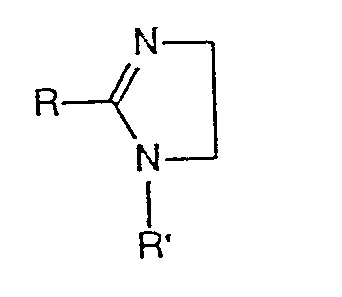
- Verwendet wird zur Stabilisierung ein Hydrofluorid eines Amins der Formel:


- Geeignete Hydrofluoride solcher Amine sind u.a. in DE-PS 1 198493 und US-PS 3083143 und 4 088 752 beschrieben worden.
- In den Aminen der Formel bedeuten x, y und z vorzugsweise eine ganze Zahl von 1 bis 10. Ein typisches Beispiel davon ist das N,N,N'-tris-(2-Hydroxyäthyl)-N'-octadecyl-1,3-diaminopropan, welches in Form des Dihydrofluorides als Aminfluorid 297 bezeichnet und in AmF 297 abgekürzt wird [H. R. Mühlemann, Quintessenz 18 (1967), Hefte 5-8]; besonders bevorzugt ist das Dihydrofluorid des erwähnten 1,3-Diaminopropans.
- Die unerwartete stabilisierende Wirkung der Aminsalze auf wässrige Lösungen von Zinn(II)-salzen wird im folgenden am Beispiel des Aminfluorids 297 gezeigt.
- Es werden in destilliertem Wasser in Konzentrationen an Fluorid von 100, 250 und 10000 ppm (auf F berechnet) aufgelöst: Sn(II)-fluorid, das Aminfluorid 297 und die Kombination von SnF2 mitAmF297.
- Die frisch hergestellten, klaren Lösungen werden im Heizschrank bei 48°C gelagert und nach 1, 4 und 22 Stunden sowie auch nach 8 und 20 Tagen auf Trübungen oder/und Ausfällung geprüft. Aus der überstehenden Flüssigkeit der zentrifugierten Lösungen werden wiederholt Proben entnommen, welche zur Bestimmung des Zinngehaltes durch atomare Absorptionsspektrophotometrie und zur Bestimmung der Fluorion-Konzentration mittels der spezifischen Fluorion-Elektrode verwendet werden. Jede Versuchsreihe wurde dreimal wiederholt. Die Ergebnisse werden in Tabelle I wiedergegeben.
- Die Stabilität von Aminfluorid 297 enthaltenden und im Heizschrank bei 48°C bzw. bei Raumtemperatur (ca. 20°C) gehaltenen SnF2-Lösungen wurde auch während einer vier Wochen dauernden Zeitspanne durch Beobachtung der Niederschlagsbildung geprüft. Die Ergebnisse werden in der Tabelle II wiedergegeben.


- Die stabilisierende Wirkung von Aminfluorid 297 auf die wässrigen Lösungen von Zinn(II)-fluorid geht aus den Tabellen 1 und 11 eindrücklich hervor. 1 bis 4 Stunden alte SnF2-Lösungen werden bereits trübe und bald danach bilden sich Niederschläge. Die Kombination des nicht ausfallenden Aminfluorids 297 mit Zinn(II)-fluorid in einer Konzentration an Fluor von 50 bis 100 ppm beugt der Bildung von Niederschlägen aus SnF2 während bis zu 20 Tagen, und dies sogar bei einer Lagerungstemperatur von 48°C, vor. Der Zinngehalt der überstehenden Flüssigkeit der zentrifugierten SnF2-Lösungen, welche kein Amin enthielten, sank graduell während 22 Stunden; er blieb hingegen konstant in den Kombinationen SnF2-AmF 297. Die Konzentrationen an Fluorionen in den überstehenden Flüssigkeiten wurden im Laufe der Zeit nicht wesentlich verändert (Tabelle 1). Die stabilisierende Wirkung von AmF 297 auf SnF2-Lösungen war in dem Heizschrank stärker ausgeprägt bei einer Fluorkonzentration von 250 ppm als bei der Fluorkonzentration von 1000 ppm. Bei Raumtemperatur konnten selbst nach 4 Wochen weder eine Trübung noch Ausfällungen beobachtet werden (Tabelle 11).
- Der Mechanismus, durch welchen die Zinnsalze stabilisiert werden, ist noch nicht aufgeklärt worden. Möglicherweise geht es auf die Bildung eines Chelates der Zinnionen durch aliphatische Diamine zurück, aber die Anwesenheit von Fluorionen in dem Zinn-Amin-System scheint auch für die Stabilisierung notwendig zu sein.
- Die stabilisierende Wirkung des Aminfluorids 297 und im allgemeinen der Aminhydrofluoride auf wässrige Lösungen des Zinn(11)-fluorids ist deshalb von praktischer bzw. gewerblicher Bedeutung, weil sie nicht etwa mit einer Einbusse bei den Antiplaqueeigenschaften des Zinnfluorides oder der Aminsalze einhergeht. Dies wurde durch eine klinische Untersuchung von 4 Lösungen für Mundspülung gezeigt, welche mit Hilfe von 16 Hygienestudenten von 20 bis 26 Jahren durchgeführt wurde. Es wurden vier aufeinanderfolgende Spülperioden zu je 10 Tagen eingehalten; vor jeder dieser Perioden wurden die Zähne der Studenten einer beruflich durchgeführten Reinigung und Polierung unterworfen. Sie wurden dann dazu angewiesen, eine peinlich genaue Mundhygiene zu führen, um dadurch ein vollkommen gesundes Zahnfleisch zu gewährleisten. Die Freiwilligen wurden nach Zufall einer der vier folgenden Spüllösungen zugeteilt. Für jede der 10 Tage dauernden Spülperioden wurden die Lösungen nur einmal hergestellt und in undurchsichtige Kunststofflaschen abgefüllt.
- Die Lösungen enthielten:
- 1. Chininchlorid (500 ppm) und ein Versüssungsmittel - Placebolösung, zur Kontrolle;
- 2. SnF2 (250 ppm F) und das Versüssungsmittel;
- 3. N,N,N'-tris(2-Hydroxyäthyl)-N'-octadecyl-1,3-diaminopropandihydrofluorid (AmF 297; 250 ppm F-) und das Versüssungsmittel; bzw.
- 4. SnF2 (250 ppm F-), AmF 297 (250 ppm F-) und das Versüssungsmittel. In dieser Lösung betrug die Konzentration an Zinnionen und an der Aminkomponente von AmF 297 nur die Hälfte jener in den Lösungen 2 und 3.
- Während der vier Spülperioden spülten die Studenten den Mund zweimal täglich während jeweils 30 Sekunden; sie hatten die Anweisung, vom Zähnebürsten und von anderen Massnahmen der Mundhygiene vollständig abzusehen. Am Ende einer jeden Spülperiode wurden die Zähne beruflich gereinigt und das Zähenbürsten wurde während 3 Tagen erlaubt, bis zum Beginn der nächsten, mit einer anderen Lösung durchzuführenden Spülperiode.
- Jeder Freiwillige hat also mit den vier Lösungen entsprechend dem lateinischen Quadratschema gespült. Die Untersuchung wurde als Doppelblindvesuch durchgeführt.
- Die Geschwindigkeit der Plaquebildung wurde durch den Plaque-Index bestimmt und durch normierte Farbphotographien belegt. Die metabolische Aktivität der Plaque wurde durch pH-Messungen abgeschätzt: Die am Ende jeder Spülperiode gesammelte Plaque wurde einer 10gew.- %igen Glucoselösung unterworfen und die Veränderung des pH-Wertes wurde nach 1, 10 und 20 Minuten gemessen. Die Zahnfleischentzündung wurde mit dem Sulcus-Blutungs-Index und durch Messungen der Sulcus-Flüssigkeit (Exsudat) be- . stimmt. Die Ergebnisse werden in der Tabelle III wiedergegeben.
-

- Die Spülung mit gealterter SnF2-Lösung oder mit Aminfluorid 297 allein zeigte keine signifikante Herabsetzung der Plaque und stand somit in klarem GegensatzzurSpülung mit einer SnF2 enthaltenden, mit dem Aminfluorid 297 stabilisierten Lösung; die photographische Diagnose bestätigte die sich in dem Plaque-Index widerspiegelnden Ergebnisse. Die bewirkte Herabsetzung der Plaquebildung war statistisch hoch signifikant; die beobachtete Potenzierung der Plaque-hemmenden Wirkung der beiden Komponenten war durchaus unerwartet, zumal in Anbetracht der in den Spüllösungen verwendeten niedrigen Konzentrationen an Zinnsalzen und an dem Aminhydrofluorid.
- Die Fähigkeit der Zahnplaque zur Säurebildung aus Glucose (Glycolyse) war nur bei der das Aminhydrofluorid enthaltenden Spüllösung signifikant herabgesetzt.
- Die Herabsetzung der Zahnfleischentzündung, durch den Sulcus-Blutungs-Index und die Messung der Zahnfleischexsudate bestimmt, erwies sich für das SnF2 und AmF 297 enthaltende Mundwasser am stärksten, sie war für die SnF2 oder AmF 297 allein enthaltenden Spüllösungen weniger ausgeprägt und statistisch nicht signifikant.
- Insgesamt zeigte der Versuch mit jungen Erwachsenen, dass die Aminhydrofluoride wässrige Lösungen von Zinn(II)-fluorid effektiv stabilisieren und dass dabei die Antiplaquewirkung von SnF2 und seine positive Wirkung gegen Zahnfleischentzündung voll erhalten bleiben und unter Umständen sogar eindrücklich potenziert werden.
- Bei der praktischen Durchführung, d.h. bei der industriellen Herstellung von gebrauchsfertigen, alle üblichen Zutaten enthaltenden Mund- und Zahnpflegemitteln, wurde noch ausserdem gefunden, dass die Zugabe von nichtionogenen, wasserlöslichen Äthylenoxid-Addukten als Lösungsvermittler und Emulgator eine letzte Verbesserung in bezug auf die Stabilisierung der Zinnionen bewirkt. Es handelt sich dabei um Polyäther, insbesondere Alkylphenolpolylglykol- äther und andere Produkte der Äthoxylierung von Fettsäuren, Fettsäureamiden, Fettaminen und Fettalkoholen.
- Bekannte Beispiele dieser Stoffgruppe sind die unter dem Markennamen Cremophorü RH im Handel befindlichen Produkte der Firma Badische Anilin- und Sodafabrik, Ludwigshafen am Rhein (Bundesrepublik Deutschland). Diese Produkte werden durch Umsetzung von beispielsweise ca. 40 oder ca. 60 Mol Äthylenoxid mit 1 Mol hydriertem Ricinusöl hergestellt. Hauptbestandteile der Cremophor® RH-Produkte sind also Ester der hydrierten Ricinusölfettsäuren mit oxäthyliertem Glycerin. Daneben enthalten sie Polyglykolester der hydrierten Ricinuslöfettsäuren sowie freies oxäthyliertes Glycerin und höhere Polyäthylenglykole. Die sekundären OH-Gruppen der Oxystearinsäureester können zum Teil mit einem weiteren Oxystearinsäuremolekül verestert sein. Eine Oxäthylierung der sekundären OH-Gruppen der Oxystearinsäuremoleküle findet nur in sehr geringem Umfang statt.
- Andere bekannte Beispiele von geeigneten Äthylenoxid-Addukten sind die Produkte Brij® und die Produkte Tweene der Firma ICI America Inc., Atlas Chemicals Div., Wilmington (DE, USA) sowie auch die Produkte Pluronice der Firma Wyandotte Chemicals Co., Wyandotte (MI, USA). Bevorzugt werden darunter insbesondere Tween® 20, 40, 60 und 80 und Piuronic0 F-68.
- Es wurden parallele Versuchsreihen mit Mundspüllösungen durchgeführt, welche einen Gehalt von 0,1 Gew.-% des Emulgators Cremophore RH enthielten und nach ihrer Herstellung 10 Tage lang bei Raumtemperatur bzw. bei 40°C gelagert wurden. Nach dieser Zeitspanne wurde die stabilisierende Wirkung durch visuelle Beurteilung des Aussehens ermittelt.
- Die Grundzusammensetzung jeder Spüllösung war folgende:

- Der Gehalt an Wirkstoffen einer jeden Lösung geht aus folgenderTabelle hervor:

- Nach 10 Tagen zeigten die drei Lösungen von Versuch 1, ob bei Raumtemperatur oder bei 40°C gelagert, einen leichten, aber deutlichen flockigen Niederschlag; die überstehenden Flüssigkeiten zeigten alle eine leichte Trübung. Mit zunehmender SnF2-Konzentration machte sich eine stärkere Entfärbung der Lösung bemerkbar. Im Gegensatz dazu konnten sämtliche Lösungen von Versuch 2 als klar bezeichnet werden.
- Es kann daraus ersehen werden, dass das Zinnfluorid durch den Emulgator allein nicht stabilisiert wird; hingegen bewirkt die Kombination des Aminsalzes und des Emulgators eine vollständige Stabilisierung des Zinn(II)-salzes in einer gebrauchsfertigen Mundspüllösung. Es konnten keine Unterschiede der Wirkung zwischen den bei Raumtemperatur und den bei 40°C gelagerten Spüllösungen festgestellt werden.
- Nach demselben Muster wie bei Tabelle IV angegeben, wurde der stabilisierende Einfluss des erwähnten Emulgators Cremophor® RH auf gebrauchsfertige Spüllösungen derselben Grundzusammensetzung untersucht, jedoch enthielten die Lösungen stets das Aminfluorid 297 und 10 Gew.-% Lycasin® 8055. Es handelt sich dabei um Hydrolyseprodukte von hydrierter Kartoffelstärke, welche durch die Firma Roquette Freres S.A., Lille (Frankreich), hergestellt werden; beispielsweise stellt das Produkt Lycasin® 8055 eine hochhydrierte Variante von Lycasin® dar. Der Zusatz von 0,1 Gew.-% Cremophore RH erwies sich in jedem Fall positiv (klare, niederschlags- und trübungsfreie Lösung). Frisch hergestellte SnF2-Lösungen zeigen nämlich innerhalb von einer bis 10 Minuten Opaleszenz und Trübung und danach weisse Fällungen (siehe Einleitung). In Kunststoffflaschen blieben die Lösungen in jedem Fall stabiler als in Glasflaschen. Die Lagerung bei 40°C muss sich nicht immer negativ auswirken: Gegenüber der Lagerung bei Raumtemperatur wurden nämlich sowohl Verbesserungen als auch Verschlechterungen des Aussehens beobachtet.
- In den folgenden Beispielen beziehen sich die Zahlenangaben auf Gewichtsteile; die %-Angaben beziehen sich ebenfalls auf Gewicht.
- Bei den Mundwasserzubereitungen gemäss den Beispielen 1 bis 4 handelt es sich um gebrauchsfertige Spüllösungen, welche nicht verdünnt werden müssen.
-

-

-

-

-


Claims (4)

Applications Claiming Priority (6)
| Application Number | Priority Date | Filing Date | Title |
|---|---|---|---|
| GB7934159 | 1979-10-02 | ||
| GB7934159 | 1979-10-02 | ||
| GB8002433 | 1980-01-24 | ||
| GB8002433 | 1980-01-24 | ||
| GB8003525 | 1980-02-01 | ||
| GB8003525 | 1980-02-01 |
Publications (4)
| Publication Number | Publication Date |
|---|---|
| EP0026539A2 EP0026539A2 (de) | 1981-04-08 |
| EP0026539A3 EP0026539A3 (en) | 1982-06-23 |
| EP0026539B1 EP0026539B1 (de) | 1985-01-02 |
| EP0026539B2 true EP0026539B2 (de) | 1989-10-18 |
Family
ID=27260770
Family Applications (1)
| Application Number | Title | Priority Date | Filing Date |
|---|---|---|---|
| EP80200901A Expired EP0026539B2 (de) | 1979-10-02 | 1980-09-25 | Orale Kompositionen mit stabilisierten Zinnsalzen |
Country Status (9)
| Country | Link |
|---|---|
| US (1) | US4828822A (de) |
| EP (1) | EP0026539B2 (de) |
| JP (1) | JPS5651409A (de) |
| AT (1) | ATE11010T1 (de) |
| CA (1) | CA1141300A (de) |
| DE (1) | DE3069906D1 (de) |
| DK (1) | DK156617C (de) |
| FI (1) | FI73882C (de) |
| NO (1) | NO153478C (de) |
Cited By (1)
| Publication number | Priority date | Publication date | Assignee | Title |
|---|---|---|---|---|
| US7063833B2 (en) | 1996-11-21 | 2006-06-20 | The Procter & Gamble Company | Method of reducing staining of stannous in dentifrice compositions |
Families Citing this family (30)
| Publication number | Priority date | Publication date | Assignee | Title |
|---|---|---|---|---|
| JPH0747531B2 (ja) * | 1986-06-27 | 1995-05-24 | ライオン株式会社 | 口腔用組成物 |
| US5328692A (en) * | 1988-05-30 | 1994-07-12 | Dominique Dana | New liquid dentifrice composition |
| US5085850A (en) * | 1990-11-09 | 1992-02-04 | Warner-Lambert Company | Anti-plaque compositions comprising a combination of morpholinoamino alcohol and metal salts |
| US5292527A (en) * | 1992-07-02 | 1994-03-08 | Bausch & Lomb Incorporated | Non-alcoholic aqueous mouthwash |
| TW414713B (en) * | 1994-05-12 | 2000-12-11 | Dentsply Gmbh | Fluoride releasing liquid dental primer product and method |
| US5665333A (en) * | 1995-01-17 | 1997-09-09 | Homola; Andrew M. | Methods, compositions, and dental delivery systems for the protection of the surfaces of teeth |
| US5961958A (en) * | 1996-07-16 | 1999-10-05 | Four Star Partners | Methods, compositions, and dental delivery systems for the protection of the surfaces of teeth |
| US6713049B1 (en) | 1999-11-12 | 2004-03-30 | The Procter & Gamble Company | Oral compositions providing optimal surface conditioning |
| US6187295B1 (en) * | 1996-11-21 | 2001-02-13 | The Procter & Gamble Company | Methods of reducing the astringency of stannous in dentifrice compositions |
| US5780015A (en) * | 1997-05-14 | 1998-07-14 | Colgate Palmolive Company | Dentifrice for the treatment of dentinal hypersensitivity having limited astringency |
| US10470985B2 (en) | 1999-11-12 | 2019-11-12 | The Procter & Gamble Company | Method of protecting teeth against erosion |
| US20040146466A1 (en) | 1999-11-12 | 2004-07-29 | The Procter & Gamble Company | Method of protecting teeth against erosion |
| MXPA02004787A (es) | 1999-11-12 | 2002-08-30 | Procter & Gamble | Composiciones bucales estanosas mejoradas. |
| DE60014144T2 (de) | 1999-11-12 | 2005-09-29 | The Procter & Gamble Company, Cincinnati | Verbesserte zweikomponente orale zusammensetzungen die zinn-derivate enthalten |
| US20050100563A1 (en) * | 2001-01-26 | 2005-05-12 | Hexamer Don L. | Antifungal compositions and methods of treatment therewith |
| US6676953B2 (en) | 2001-01-26 | 2004-01-13 | Don L. Hexamer | Antifungal composition and method for human nails |
| EP2111844A1 (de) | 2008-04-24 | 2009-10-28 | Gaba International AG | Mundpflegezusammensetzung mit aufgelöstem Zinn und Fluorid |
| MX2010011647A (es) * | 2008-04-24 | 2011-09-30 | Gaba Int Holding Ag | Composicion para el cuidado oral que comprende estaño disuelto y fluoruro. |
| EP2374446B1 (de) * | 2010-04-07 | 2013-03-20 | GABA International Holding AG | Mundpflegezusammensetzung mit Zinn(II)- und Nitrationen |
| SG190904A1 (en) * | 2010-12-21 | 2013-07-31 | Colgate Palmolive Co | Metal salt compositions |
| US10123953B2 (en) | 2012-06-21 | 2018-11-13 | The Procter & Gamble Company | Reduction of tooth staining derived from cationic antimicrobials |
| CN107427428A (zh) * | 2014-12-18 | 2017-12-01 | 加巴国际股份有限公司 | 漱口液制剂 |
| AU2015419238B2 (en) | 2015-12-30 | 2019-09-19 | Colgate-Palmolive Company | Oral care product and methods of use and manufacture thereof |
| AU2015419239B2 (en) | 2015-12-30 | 2019-09-19 | Colgate-Palmolive Company | Oral care product and methods of use and manufacture thereof |
| MX2021007103A (es) * | 2018-12-20 | 2021-08-11 | Colgate Palmolive Co | Dentifrico que contiene bicarbonato de sodio y fluoruro estannoso. |
| EP3958983A1 (de) | 2019-04-26 | 2022-03-02 | The Procter & Gamble Company | Reduktion von zahnverfärbung aus kationischen antimikrobiellen mitteln |
| US12337048B2 (en) | 2019-06-28 | 2025-06-24 | The Procter & Gamble Company | Oral care compositions comprising tin ions |
| WO2020258204A1 (en) * | 2019-06-28 | 2020-12-30 | The Procter & Gamble Company | Oral care compositions comprising tin ions |
| CN114040741A (zh) | 2019-06-28 | 2022-02-11 | 宝洁公司 | 包含锡离子的洁牙剂组合物 |
| MX394508B (es) | 2019-06-28 | 2025-03-24 | Procter & Gamble | Composiciones para el cuidado bucal que comprenden iones estaño |
Family Cites Families (33)
| Publication number | Priority date | Publication date | Assignee | Title |
|---|---|---|---|---|
| US3413326A (en) * | 1956-10-03 | 1968-11-26 | Gaba Ag | Addition compounds of amino acids and hydrofluoric acid or soluble fluorides,and method of preparing the same |
| CA969862A (en) * | 1957-01-15 | 1975-06-24 | Judson H. Sanders | Dentrifice compositions |
| BE569397A (de) * | 1957-07-13 | |||
| GB869257A (en) * | 1957-10-30 | 1961-05-31 | Baird Atomic Inc | Spectroscopic apparatus |
| US3124512A (en) * | 1958-05-29 | 1964-03-10 | Compositions for use in caries | |
| US3277118A (en) * | 1958-05-29 | 1966-10-04 | Gaba Ag | Quaternary ammonium fluorides |
| US3105013A (en) * | 1961-09-14 | 1963-09-24 | Bristol Myers Co | Fluoride dentifrices containing calcined aluminum silicate abrasives |
| CA696470A (en) * | 1962-02-15 | 1964-10-20 | The Procter & Gamble Company | Oral compositions for caries prophylaxis |
| GB1066795A (en) * | 1963-10-15 | 1967-04-26 | Hollichem Corp | Compositions comprising biocidal quaternary ammonium benzosulfimides |
| US3175951A (en) * | 1963-11-08 | 1965-03-30 | Procter & Gamble | Oral compositions for caries prophylaxis |
| US3282792A (en) * | 1964-01-09 | 1966-11-01 | Bristol Myers Co | Stabilized stannous fluoride dentifrice compositions |
| US3369046A (en) * | 1965-12-02 | 1968-02-13 | Lever Brothers Ltd | 2-hydroxy-alkyl-benzyl quaternary ammonium compounds |
| US3445567A (en) * | 1966-02-10 | 1969-05-20 | Indiana University Foundation | Stable stannous fluoride composition |
| GB1194885A (en) * | 1967-06-16 | 1970-06-17 | Prev Coat Corp | Novel Silicone-Containing Dentifrices |
| ZA695572B (en) * | 1968-08-09 | 1971-03-31 | Colgate Palmolive Co | Oral preparation |
| US3544678A (en) * | 1968-11-27 | 1970-12-01 | Procter & Gamble | Oral compositions for caries prophylaxis |
| BE754431A (de) * | 1969-08-05 | 1971-01-18 | Colgate Palmolive Co | |
| CA993796A (en) * | 1972-02-16 | 1976-07-27 | James S. Neely | Oral compositions containing l-aspartyl-l-1,4-dimethylpentylamide as a sweetening agent |
| US3932604A (en) * | 1972-12-22 | 1976-01-13 | Colgate-Palmolive Company | Humectant sweetener |
| JPS505265A (de) * | 1973-05-21 | 1975-01-20 | ||
| US3914406A (en) * | 1973-12-28 | 1975-10-21 | Menley & James Lab Ltd | Compositions and method for prevention and treatment of gingivitis |
| GB1475899A (en) * | 1974-02-25 | 1977-06-10 | Colgate Palmolive Co | Oral compositions containing quaternary ammonium compounds |
| US3970747A (en) * | 1974-03-11 | 1976-07-20 | Colgate-Palmolive Company | Humectant sweetener |
| CH598821A5 (de) * | 1974-05-31 | 1978-05-12 | Gaba Ag | |
| CH600878A5 (de) * | 1975-04-28 | 1978-06-30 | Gaba Ag | |
| US4117109A (en) * | 1976-01-22 | 1978-09-26 | Indiana University Foundation | Dentifrice preparation |
| JPS5936882B2 (ja) * | 1976-08-13 | 1984-09-06 | ライオン株式会社 | 口腔用組成物 |
| JPS5927322B2 (ja) * | 1976-09-11 | 1984-07-05 | ライオン株式会社 | う蝕予防超音波処置用の口腔組成分 |
| ZA777063B (en) * | 1976-12-27 | 1979-07-25 | Colgate Palmolive Co | Antibacterial oral composition |
| JPS6043324B2 (ja) * | 1977-10-20 | 1985-09-27 | ライオン株式会社 | 口腔用組成物 |
| US4157386A (en) * | 1978-05-18 | 1979-06-05 | Rochelle Paul J | Soft, chewable lozenge forming a sticky coating on teeth when combined with saliva in the mouth which is removable only by brushing |
| US4279888A (en) * | 1978-12-29 | 1981-07-21 | Lion Corporation | Oral composition |
| US4308252A (en) * | 1979-10-31 | 1981-12-29 | Young Dental Mfg. Co. | Dentifrice composition |
-
1980
- 1980-09-25 AT AT80200901T patent/ATE11010T1/de not_active Application Discontinuation
- 1980-09-25 EP EP80200901A patent/EP0026539B2/de not_active Expired
- 1980-09-25 DE DE8080200901T patent/DE3069906D1/de not_active Expired
- 1980-10-01 JP JP13819580A patent/JPS5651409A/ja active Granted
- 1980-10-01 CA CA000361340A patent/CA1141300A/en not_active Expired
- 1980-10-01 FI FI803124A patent/FI73882C/fi not_active IP Right Cessation
- 1980-10-01 NO NO802906A patent/NO153478C/no unknown
- 1980-10-01 DK DK414580A patent/DK156617C/da not_active IP Right Cessation
-
1987
- 1987-10-16 US US07/109,830 patent/US4828822A/en not_active Expired - Lifetime
Cited By (1)
| Publication number | Priority date | Publication date | Assignee | Title |
|---|---|---|---|---|
| US7063833B2 (en) | 1996-11-21 | 2006-06-20 | The Procter & Gamble Company | Method of reducing staining of stannous in dentifrice compositions |
Also Published As
| Publication number | Publication date |
|---|---|
| FI803124L (fi) | 1981-04-03 |
| DK156617C (da) | 1990-02-12 |
| NO153478B (no) | 1985-12-23 |
| DK156617B (da) | 1989-09-18 |
| JPS6145966B2 (de) | 1986-10-11 |
| FI73882C (fi) | 1987-12-10 |
| JPS5651409A (en) | 1981-05-09 |
| EP0026539A3 (en) | 1982-06-23 |
| DE3069906D1 (en) | 1985-02-14 |
| ATE11010T1 (de) | 1985-01-15 |
| NO153478C (no) | 1986-04-02 |
| EP0026539B1 (de) | 1985-01-02 |
| NO802906L (no) | 1981-04-03 |
| US4828822A (en) | 1989-05-09 |
| CA1141300A (en) | 1983-02-15 |
| DK414580A (da) | 1981-04-03 |
| EP0026539A2 (de) | 1981-04-08 |
| FI73882B (fi) | 1987-08-31 |
Similar Documents
| Publication | Publication Date | Title |
|---|---|---|
| EP0026539B1 (de) | Orale Kompositionen mit stabilisierten Zinnsalzen | |
| EP0038867B1 (de) | Zahnpasta | |
| DE3610179C2 (de) | Orale Zubereitung, insbesondere zur Bekämpfung von Mundgeruch | |
| DE3017417C2 (de) | ||
| EP0216189B1 (de) | Mittel zur oralen Hygiene | |
| DE2224430C3 (de) | Zahnsteinbildung verhindernde Mund- und Zahnpflegemittel | |
| DE2940460A1 (de) | Oral anzuwendende mittel fuer die kariesprophylaxe | |
| CH631074A5 (de) | Antibakterielles mundpflegemittel. | |
| EP0150374B1 (de) | Mund- und Zahnpflegemittel | |
| EP0152836B1 (de) | Mittel zur oralen Hygiene | |
| DE2161477A1 (de) | Mittel zur Verhinderung des Fleckigwerdens der Zähne | |
| DE69109851T2 (de) | Verbessertes mittel gegen zahnbelag bestehend aus einer mischung von morpholinoaminoalkohol und metallsalzen. | |
| AT390368B (de) | Stabiles zahnpflegemittel zur verhinderung von zahnbelag | |
| DE69322075T2 (de) | Zusammensetzungen | |
| CH673392A5 (de) | ||
| DE3102557A1 (de) | Keine flecken bildendes, gegen zahnfleischentzuendungen wirkendes mundpflegemittel | |
| EP0026252A1 (de) | Mittel zur oralen Hygiene | |
| DE2454136B2 (de) | Mund- und zahnpflegemittel | |
| DE2736155A1 (de) | Antibakterielles mundpflegemittel | |
| DE2755847C2 (de) | ||
| DE69108711T2 (de) | Gegen zahnbelag verbesserte mittel enthaltend eine kombination aus einem morpholinoamino-alkohol und ein antimikrobielles mittel. | |
| DE3123211A1 (de) | Mundpflegemittel | |
| DE2400955A1 (de) | Quaternaere ammoniumsalze von dihydrochalkonen und ihre verwendung in zahnputzmitteln | |
| DE1106926B (de) | Zahnpflegemittel | |
| CH646603A5 (de) | Waessrige zubereitung zum reinigen von menschlichen zaehnen. |
Legal Events
| Date | Code | Title | Description |
|---|---|---|---|
| PUAI | Public reference made under article 153(3) epc to a published international application that has entered the european phase |
Free format text: ORIGINAL CODE: 0009012 |
|
| AK | Designated contracting states |
Designated state(s): AT BE CH DE FR GB IT LU NL SE |
|
| ITCL | It: translation for ep claims filed |
Representative=s name: JACOBACCI CASETTA & PERANI S.P.A. |
|
| 17P | Request for examination filed |
Effective date: 19811005 |
|
| PUAL | Search report despatched |
Free format text: ORIGINAL CODE: 0009013 |
|
| AK | Designated contracting states |
Designated state(s): AT BE CH DE FR GB IT LU NL SE |
|
| ITF | It: translation for a ep patent filed | ||
| GRAA | (expected) grant |
Free format text: ORIGINAL CODE: 0009210 |
|
| AK | Designated contracting states |
Designated state(s): AT BE CH DE FR GB IT LI LU NL SE |
|
| REF | Corresponds to: |
Ref document number: 11010 Country of ref document: AT Date of ref document: 19850115 Kind code of ref document: T |
|
| REF | Corresponds to: |
Ref document number: 3069906 Country of ref document: DE Date of ref document: 19850214 |
|
| ET | Fr: translation filed | ||
| PLBI | Opposition filed |
Free format text: ORIGINAL CODE: 0009260 |
|
| PLBI | Opposition filed |
Free format text: ORIGINAL CODE: 0009260 |
|
| 26 | Opposition filed |
Opponent name: HENKEL KOMMANDITGESELLSCHAFT AUF AKTIEN Effective date: 19850923 |
|
| 26 | Opposition filed |
Opponent name: BLENDAX-WERKE R. SCHNEIDER GMBH & CO. Effective date: 19850930 |
|
| NLR1 | Nl: opposition has been filed with the epo |
Opponent name: BLENDAX-WERKE R. SCHNEIDER GMBH & CO. Opponent name: HENKEL KOMMANDITGESELLSCHAFT AUF AKTIEN |
|
| PUAH | Patent maintained in amended form |
Free format text: ORIGINAL CODE: 0009272 |
|
| STAA | Information on the status of an ep patent application or granted ep patent |
Free format text: STATUS: PATENT MAINTAINED AS AMENDED |
|
| 27A | Patent maintained in amended form |
Effective date: 19891018 |
|
| AK | Designated contracting states |
Kind code of ref document: B2 Designated state(s): AT BE CH DE FR GB IT LU NL SE |
|
| ITF | It: translation for a ep patent filed | ||
| NLR2 | Nl: decision of opposition | ||
| ET3 | Fr: translation filed ** decision concerning opposition | ||
| NLR3 | Nl: receipt of modified translations in the netherlands language after an opposition procedure | ||
| ITTA | It: last paid annual fee | ||
| EPTA | Lu: last paid annual fee | ||
| EAL | Se: european patent in force in sweden |
Ref document number: 80200901.9 |
|
| PGFP | Annual fee paid to national office [announced via postgrant information from national office to epo] |
Ref country code: SE Payment date: 19990812 Year of fee payment: 20 |
|
| PGFP | Annual fee paid to national office [announced via postgrant information from national office to epo] |
Ref country code: CH Payment date: 19990819 Year of fee payment: 20 |
|
| PGFP | Annual fee paid to national office [announced via postgrant information from national office to epo] |
Ref country code: FR Payment date: 19990820 Year of fee payment: 20 |
|
| PGFP | Annual fee paid to national office [announced via postgrant information from national office to epo] |
Ref country code: AT Payment date: 19990824 Year of fee payment: 20 |
|
| PGFP | Annual fee paid to national office [announced via postgrant information from national office to epo] |
Ref country code: LU Payment date: 19990909 Year of fee payment: 20 |
|
| PGFP | Annual fee paid to national office [announced via postgrant information from national office to epo] |
Ref country code: GB Payment date: 19990923 Year of fee payment: 20 |
|
| PGFP | Annual fee paid to national office [announced via postgrant information from national office to epo] |
Ref country code: BE Payment date: 19990929 Year of fee payment: 20 |
|
| PGFP | Annual fee paid to national office [announced via postgrant information from national office to epo] |
Ref country code: NL Payment date: 19990930 Year of fee payment: 20 |
|
| PGFP | Annual fee paid to national office [announced via postgrant information from national office to epo] |
Ref country code: DE Payment date: 19991129 Year of fee payment: 20 |
|
| BE20 | Be: patent expired |
Free format text: 20000925 *GABA INTERNATIONAL A.G. |
|
| PG25 | Lapsed in a contracting state [announced via postgrant information from national office to epo] |
Ref country code: LI Free format text: LAPSE BECAUSE OF EXPIRATION OF PROTECTION Effective date: 20000924 Ref country code: GB Free format text: LAPSE BECAUSE OF EXPIRATION OF PROTECTION Effective date: 20000924 Ref country code: CH Free format text: LAPSE BECAUSE OF EXPIRATION OF PROTECTION Effective date: 20000924 |
|
| PG25 | Lapsed in a contracting state [announced via postgrant information from national office to epo] |
Ref country code: NL Free format text: LAPSE BECAUSE OF EXPIRATION OF PROTECTION Effective date: 20000925 Ref country code: LU Free format text: LAPSE BECAUSE OF NON-PAYMENT OF DUE FEES Effective date: 20000925 Ref country code: AT Free format text: LAPSE BECAUSE OF EXPIRATION OF PROTECTION Effective date: 20000925 |
|
| PG25 | Lapsed in a contracting state [announced via postgrant information from national office to epo] |
Ref country code: SE Free format text: THE PATENT HAS BEEN ANNULLED BY A DECISION OF A NATIONAL AUTHORITY Effective date: 20000929 |
|
| REG | Reference to a national code |
Ref country code: CH Ref legal event code: PL |
|
| REG | Reference to a national code |
Ref country code: GB Ref legal event code: PE20 Effective date: 20000924 |
|
| EUG | Se: european patent has lapsed |
Ref document number: 80200901.9 |
|
| NLV7 | Nl: ceased due to reaching the maximum lifetime of a patent |
Effective date: 20000925 |