WO2025134918A1 - ガスバリア性フィルムの製造方法、ガスバリア性フィルム、包装材フィルム、及び包装材料 - Google Patents
ガスバリア性フィルムの製造方法、ガスバリア性フィルム、包装材フィルム、及び包装材料 Download PDFInfo
- Publication number
- WO2025134918A1 WO2025134918A1 PCT/JP2024/044016 JP2024044016W WO2025134918A1 WO 2025134918 A1 WO2025134918 A1 WO 2025134918A1 JP 2024044016 W JP2024044016 W JP 2024044016W WO 2025134918 A1 WO2025134918 A1 WO 2025134918A1
- Authority
- WO
- WIPO (PCT)
- Prior art keywords
- gas barrier
- layer
- barrier film
- film
- active energy
- Prior art date
- Legal status (The legal status is an assumption and is not a legal conclusion. Google has not performed a legal analysis and makes no representation as to the accuracy of the status listed.)
- Pending
Links
Images

Classifications
-
- B—PERFORMING OPERATIONS; TRANSPORTING
- B32—LAYERED PRODUCTS
- B32B—LAYERED PRODUCTS, i.e. PRODUCTS BUILT-UP OF STRATA OF FLAT OR NON-FLAT, e.g. CELLULAR OR HONEYCOMB, FORM
- B32B27/00—Layered products comprising a layer of synthetic resin
- B32B27/30—Layered products comprising a layer of synthetic resin comprising vinyl (co)polymers; comprising acrylic (co)polymers
-
- B—PERFORMING OPERATIONS; TRANSPORTING
- B32—LAYERED PRODUCTS
- B32B—LAYERED PRODUCTS, i.e. PRODUCTS BUILT-UP OF STRATA OF FLAT OR NON-FLAT, e.g. CELLULAR OR HONEYCOMB, FORM
- B32B37/00—Methods or apparatus for laminating, e.g. by curing or by ultrasonic bonding
-
- B—PERFORMING OPERATIONS; TRANSPORTING
- B32—LAYERED PRODUCTS
- B32B—LAYERED PRODUCTS, i.e. PRODUCTS BUILT-UP OF STRATA OF FLAT OR NON-FLAT, e.g. CELLULAR OR HONEYCOMB, FORM
- B32B9/00—Layered products comprising a layer of a particular substance not covered by groups B32B11/00 - B32B29/00
-
- B—PERFORMING OPERATIONS; TRANSPORTING
- B65—CONVEYING; PACKING; STORING; HANDLING THIN OR FILAMENTARY MATERIAL
- B65D—CONTAINERS FOR STORAGE OR TRANSPORT OF ARTICLES OR MATERIALS, e.g. BAGS, BARRELS, BOTTLES, BOXES, CANS, CARTONS, CRATES, DRUMS, JARS, TANKS, HOPPERS, FORWARDING CONTAINERS; ACCESSORIES, CLOSURES, OR FITTINGS THEREFOR; PACKAGING ELEMENTS; PACKAGES
- B65D65/00—Wrappers or flexible covers; Packaging materials of special type or form
- B65D65/38—Packaging materials of special type or form
- B65D65/40—Applications of laminates for particular packaging purposes
Definitions
- the present disclosure relates to a method for producing a gas barrier film, a gas barrier film produced by the method, a packaging film including the gas barrier film, and a packaging material produced by forming a bag from the packaging film.
- Packaging materials used for food, medicines, electronic parts, machine parts, etc. are required to have the property of preventing the intrusion of gases (water vapor, oxygen, etc.) that denature the contents, in order to prevent deterioration or spoilage of the contents and to maintain their functionality and quality. In other words, they are required to have gas barrier properties. For this reason, film materials with gas barrier properties (gas barrier films) are used for these packaging materials.
- Patent Document 1 proposes a laminated material manufactured by mixing a polyurethane resin, nitrocellulose, a silane coupling agent, and a filler with a solvent and diluent to prepare a polyurethane resin composition, providing a thin inorganic oxide film consisting mainly of a silicon oxide vapor deposition film formed by plasma chemical vapor deposition on one side of a flexible plastic substrate, and then using the polyurethane resin composition to coat the surface of the inorganic oxide thin film provided on one side of the flexible plastic substrate to form a thin coating film of the polyurethane resin composition.
- the surface of the thin coating film of the polyurethane resin composition is coated with an adhesive consisting of a two-component curing polyurethane resin that is formed by a curing reaction between a polyester polyol or polyether polyol and an isocyanate, and then laminating at least a heat-sealable resin layer via the adhesive layer.
- an adhesive consisting of a two-component curing polyurethane resin that is formed by a curing reaction between a polyester polyol or polyether polyol and an isocyanate
- a gas barrier film is produced by providing a gas barrier layer made of a material having gas barrier properties on the surface of a resin substrate.
- a thin coating film made of a polyurethane resin composition corresponds to the gas barrier layer.
- the thin coating film is formed by applying the polyurethane resin composition to the target by a wet coating method such as roll coating, and then drying with hot air to remove the solvent.
- the present disclosure has been made in consideration of the above circumstances, and has an object to provide a method for producing a gas barrier film that can exhibit excellent gas barrier properties regardless of the heat resistance of a base film. Another object of the present disclosure is to provide a gas barrier film produced by the production method, a packaging film including the gas barrier film, and a packaging material produced by making a bag from the packaging film.
- one aspect of the present disclosure provides the following invention.
- a method for producing a gas barrier film that can exhibit excellent gas barrier properties regardless of the heat resistance of a base film.
- the present disclosure also provides a gas barrier film produced by the production method, a packaging film including the gas barrier film, and a packaging material produced by making a bag from the packaging film.
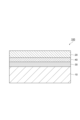
- An undercoat layer 30 is formed on the substrate layer 10.
- An inorganic oxide layer 40 is formed on the undercoat layer 30.
- An overcoat layer 20 is formed on the inorganic oxide layer 40.
- the undercoat layer 30 does not have to be provided.
- the substrate layer 10 may be a single-layer film made of a single resin, or a single-layer or laminate film made of multiple resins.
- the substrate layer 10 may be a film in which the above-mentioned various resins are laminated onto another substrate (metal, wood, paper, ceramics, etc.).
- the OPP film may be at least one type of polymer selected from homopolymer, random copolymer, and block copolymer processed into a film shape.
- a homopolymer is a polypropylene consisting of only propylene monomer.
- a random copolymer is a polypropylene in which the main monomer propylene and a small amount of a comonomer different from propylene are randomly copolymerized to form a homogeneous phase.
- a block copolymer is a polypropylene in which the main monomer propylene and the above comonomer are copolymerized in a block form or polymerized in a rubber form to form a heterogeneous phase.
- the surface of the substrate layer 10 on which the undercoat layer 30 or inorganic oxide layer 40 is formed may be subjected to a surface treatment such as chemical treatment, solvent treatment, corona treatment, low-temperature plasma treatment, or ozone treatment. This can improve the adhesion between the substrate layer and the undercoat layer or inorganic oxide layer.
- a surface treatment such as chemical treatment, solvent treatment, corona treatment, low-temperature plasma treatment, or ozone treatment. This can improve the adhesion between the substrate layer and the undercoat layer or inorganic oxide layer.
- the film constituting the base layer 10 may contain additives such as fillers, antiblocking agents, antistatic agents, plasticizers, lubricants, and antioxidants. These additives may be used alone or in combination of two or more.
- the thickness of the base layer 10 is preferably 3 to 200 ⁇ m, more preferably 5 to 120 ⁇ m, even more preferably 6 to 100 ⁇ m, and particularly preferably 10 to 30 ⁇ m.
- the underlayer 30 contains an organic polymer.
- the content of the organic polymer in the underlayer 30 may be, for example, 70% by mass or more, or 80% by mass or more.
- the organic polymer include polyacrylic resin, polyester resin, polycarbonate resin, polyol resin, polyurethane resin, polyamide resin, polyolefin resin, polyimide resin, melamine resin, and phenol resin.
- the underlayer 30 contains at least one of a polyacrylic resin, a polyol resin, a polyurethane resin, a polyamide resin, or a reaction product of these organic polymers.
- the base layer 30 may contain a silane coupling agent, an organic titanate, a modified silicone oil, etc.
- the organic polymer used in the undercoat layer 30 is preferably an organic polymer having a urethane bond formed by the reaction of a polyol having two or more hydroxyl groups at the molecular end or in the molecular chain with an isocyanate compound, or an organic polymer containing a reaction product of a polyol having two or more hydroxyl groups at the molecular end or in the molecular chain with an organic silane compound such as a silane coupling agent or its hydrolysate. Either one of these may be used, or both may be used.
- the polyols may be, for example, at least one selected from acrylic polyol, polyvinyl acetal, polystyrene polyol, polyurethane polyol, etc.
- the acrylic polyol may be obtained by polymerizing an acrylic acid derivative monomer, or may be obtained by copolymerizing an acrylic acid derivative monomer with another monomer.
- the acrylic acid derivative monomer include ethyl methacrylate, hydroxyethyl methacrylate, hydroxypropyl methacrylate, and hydroxybutyl methacrylate.
- Examples of the monomer to be copolymerized with the acrylic acid derivative monomer include styrene, etc.
- the isocyanate compound reacts with the polyol to form a urethane bond, which acts to increase the adhesion between the base layer 10 and the inorganic oxide layer 40 or the overcoat layer 20. That is, the isocyanate compound functions as a crosslinking agent or a curing agent.
- isocyanate compounds include aromatic tolylene diisocyanate (TDI), diphenylmethane diisocyanate (MDI), aromatic aliphatic xylene diisocyanate (XDI), aliphatic hexamethylene diisocyanate (HMDI), isophorone diisocyanate (IPDI), a mixture of 1-methylcyclohexane-2,4-diisocyanate and 1-methylcyclohexane-2,6-diisocyanate (HTDI, hydrogenated TDI), and cyclohexylmethane diisocyanate (HMDI, hydrogenated MDI), as well as other monomers, polymers thereof, and derivatives thereof.
- the above-mentioned isocyanate compounds may be used alone or in combination of two or more.
- Silane coupling agents include, for example, vinyltrimethoxysilane, vinyltriethoxysilane, 3-chloropropylmethyldimethoxysilane, 3-chloropropyltrimethoxysilane, 3-glycidyloxypropylmethyldimethoxysilane, 3-glycidyloxypropyltrimethoxysilane, 3-glycidyloxypropylmethyldiethoxysilane, 3-glycidyloxypropyltriethoxysilane, 3-methacryloyloxypropyltrimethoxysilane, and 3-methacryloyloxypropylmethyldimethoxysilane.
- the organic silane compound may be a hydrolyzate of these silane coupling agents.
- the organic silane compound may contain one of the above-mentioned silane coupling agents and their hydrolyzates, either alone or in combination of two or more of them.
- the thickness of the undercoat layer 30 there is no particular limit to the thickness of the undercoat layer 30, and it can be, for example, 0.005 to 5 ⁇ m. The thickness can be appropriately determined depending on the application or the desired characteristics.
- the thickness of the undercoat layer 30 is preferably 0.01 to 1 ⁇ m, and more preferably 0.01 to 0.5 ⁇ m. If the thickness of the undercoat layer 30 is 0.01 ⁇ m or more, sufficient adhesion strength between the base layer 10 and the inorganic oxide layer 40 or the overcoat layer 20 is obtained, and the gas barrier properties are also good. If the thickness of the undercoat layer 30 is 1 ⁇ m or less, it becomes easier to form a uniform coating surface, and the drying load and manufacturing costs can be suppressed.
- the inorganic oxide layer 40 can be formed by a known film formation method such as vacuum deposition, sputtering, ion plating, or plasma chemical vapor deposition (CVD).
- a known film formation method such as vacuum deposition, sputtering, ion plating, or plasma chemical vapor deposition (CVD).
- the overcoat layer 20 is a cured coating film containing an acrylic compound (a compound having an acryloyl group), and is, for example, an organic polymer film obtained by applying a solvent-free coating liquid containing a monomer and an oligomer of an acrylic compound, i.e., an active energy ray curable resin composition, and curing the coating film by irradiating the active energy ray such as EB (electron beam) or UV (ultraviolet ray).
- the overcoat layer is a cured product of an active energy ray curable resin composition having a crosslinked structure.
- the active energy ray curable resin composition contains at least a monomer (or oligomer) of an acrylic compound, and may further contain additives such as a methacrylic compound (a compound having a methacryloyl group), a photoradical generator, a silane coupling agent, etc. Note that by using EB, the above composition can be cured even if it does not contain a photoradical generator. From the viewpoint of hygiene, the above composition does not need to contain a photoradical generator.
- Acrylic compounds are generally low-cost active energy ray-curable compounds that have superior EB curing speed and UV curing speed compared to methacrylic compounds.
- the active energy ray-curable resin composition may contain one or more acrylic compounds.
- the active energy ray-curable resin composition contains an acrylic compound that satisfies the following formula (1), where N A is the number of acryloyl groups contained in one molecule, and N B is the number of hydroxyl groups. N A ⁇ 2 + N B ⁇ 3 ⁇ 5 ... (1) (Wherein, N A ⁇ 1 and N B ⁇ 0.)
- the value of formula (1) is 5 or more, the crosslinking density due to the acryloyl group is improved compared to when the value is less than 5, and it becomes easier to form a coating with a dense structure. This makes the coating less permeable to oxygen molecules, and it is easier to develop better gas barrier properties. From this perspective, it is preferable that the value of formula (1) is 6 or more, 8 or more, or 10 or more.
- the upper limit of the value of formula (1) can be, for example, 65, but from the perspective of suppressing embrittlement of the coating due to an internal structure becoming too dense and making it easier to maintain ease of handling (flexibility) as a film, the upper limit of the value of formula (1) may be 30 or less, or 15 or less.
- N A of acryloyl groups contained in one molecule of the acrylic compound can take a value of 1 to 15.
- N A may be up to 10, 2 to 6, or 3 to 6.
- the number N B of hydroxyl groups contained in one molecule of the acrylic compound can take a value of 0 to 20.
- the acrylic compound does not need to contain hydroxyl groups, but by containing hydroxyl groups, the balance of interactions caused by the hydroxyl groups inside the coating is improved, and the gas barrier properties are more likely to be improved.
- N B may be 1 to 15, or 3 to 10.
- acrylic compounds that satisfy the above formula (1) include 2-hydroxyethyl acrylate, 2-hydroxypropyl acrylate, 2-hydroxybutyl acrylate, 4-hydroxybutyl acrylate, 2-hydroxy-3-phenoxypropyl acrylate, 2-acryloyloxyethyl-2-hydroxyethyl-phthalic acid, 1-(acryloyloxy)-3-(methacryloyloxy)-2-propanol, glycerin diacrylate, 1,6-hexanediylbis(oxy)bis(2-hydroxy-3,1-propanediyl)bisacrylate, bisphenol A diglycidyl ether acrylic acid adduct, glycerin diacrylate, 1,6-hexanediylbis(oxy)bis(2-hydroxy-3,1-propanediyl)bisacrylate ...
- Phosphorus 1,3-diglycerolate diacrylate tris(2-hydroxyethyl)isocyanuric acid diacrylate, tris(2-hydroxyethyl)isocyanuric acid triacrylate, trimethylolpropane triacrylate, EO-modified trimethylolpropane triacrylate, glycerin triacrylate, pentaerythritol triacrylate, pentaerythritol tetraacrylate, EO-modified pentaerythritol tetraacrylate, dipentaerythritol pentaacrylate, dipentaerythritol hexaacrylate, EO-modified dipentaerythritol hexaacrylate, etc. can be used.
- epoxy acrylate, urethane acrylate, polyester methacrylate, etc. that satisfy formula (1) can also be used.
- acrylic compounds having an N B of 1 or more (N B ⁇ 1) examples include glycerin diacrylate, 2-hydroxyethyl acrylate, 2-hydroxypropyl acrylate, 2-hydroxybutyl acrylate, 2-hydroxy-3-phenoxypropyl acrylate, 2-acryloyloxyethyl-2-hydroxyethyl-phthalic acid, 1-(acryloyloxy)-3-(methacryloyloxy)-2-propanol, 1,6-hexanediylbis(oxy)bis(2-hydroxy-3,1-propanediyl)bisacrylate, bisphenol A diglycidyl ether acrylic acid adduct, glycerin 1,3-diglycerolate diacrylate, tris(2-hydroxyethyl)isocyanuric acid diacrylate, pentaerythritol triacrylate, and dipentaerythritol pentaacrylate.
- N B is 3 or more (N B ⁇ 3)
- glycerin 1,3-diglycerolate diacrylate or the like can be used as an acrylic compound in which N B is 3 or more (N B ⁇ 3).
- the gas barrier properties of organic polymers depend on the free volume and cohesive energy. Free volume is the gap between polymers, and the smaller the free volume, the higher the gas barrier properties. To suppress the thermal motion of the molecules, it is preferable to use a resin with a high glass transition temperature and increase the crosslink density. Many acrylic resins have a relatively low glass transition temperature.
- Cohesive energy is the energy related to the magnitude of interaction between functional groups and polar groups and the permeating gas. It is known that chloro groups, fluoro groups, hydroxyl groups, etc. are excellent for oxygen gas, with hydroxyl groups being particularly excellent. Therefore, in order to form an organic polymer film with superior gas barrier properties, it is preferable to use an acrylic compound having a hydroxyl group (hydroxyl group-containing acrylic compound) as described above.
- the molecular weight of the acrylic compound is preferably 200 or more, particularly 300 or more.
- a coating formed from an acrylic compound tends to have poor gas barrier properties, particularly oxygen barrier properties, but by using an acrylic compound with a molecular weight of 200 or more, preferably 300 or more, the internal structure of the coating becomes strong and it is easy to exhibit excellent gas barrier properties.
- the molecular weight is preferably 350 or more.
- the upper limit of the molecular weight can be 1900 or less, but from the viewpoint of coatability, the molecular weight may be 1000 or less, 700 or less, or 500 or less.
- the molecular weight is preferably 300 or more and 1,900 or less, 300 or more and 1,000 or less, 310 or more and 1,000 or less, 320 or more and 1,000 or less, 350 or more and 1,000 or less, 350 or more and 700 or less, or 350 or more and 500 or less.
- acrylic compounds with a molecular weight of 300 or more examples include 2-acryloyloxyethyl-2-hydroxyethyl-phthalic acid, 1,6-hexanediylbis(oxy)bis(2-hydroxy-3,1-propanediyl)bisacrylate, bisphenol A diglycidyl ether acrylic acid adduct, glycerin 1,3-diglycerolate diacrylate, tris(2-hydroxyethyl)isocyanuric acid diacrylate, tris(2-hydroxyethyl)isocyanuric acid triacrylate, EO-modified trimethylolpropane triacrylate, pentaerythritol tetraacrylate, EO-modified pentaerythritol tetraacrylate, dipentaerythritol pentaacrylate, dipentaerythritol hexaacrylate, and EO-modified dipentaerythritol hexaacrylate.
- acrylic compounds having an isocyanurate skeleton can be used.
- acrylic compounds having an isocyanurate skeleton such as tris(2-hydroxyethyl)isocyanuric acid diacrylate and tris(2-hydroxyethyl)isocyanuric acid triacrylate are preferably used.
- the active energy ray-curable resin composition may further contain an acrylic compound that does not satisfy the above formula (1), i.e., the value of formula (1) is less than 5 (4 or less). That is, the active energy ray-curable resin composition may contain an acrylic compound having a value of 5 or more in formula (1) and an acrylic compound having a value of less than 5 in formula (1).
- acrylic compounds having a value of less than 5 in formula (1) include phenoxyethyl acrylate, ethoxy-diethylene glycol acrylate, methoxy-triethylene glycol acrylate, methoxydipropylene glycol acrylate, butoxyethyl acrylate, butoxydiethylene glycol acrylate, butyl acrylate (butyl acrylate), isoamyl acrylate, hexyl acrylate, 2-ethylhexyl acrylate, lauryl acrylate, stearyl acrylate, methoxyethylene glycol acrylate, Methoxydiethylene glycol acrylate, methoxy PEG #200 acrylate, methoxy PEG #400 acrylate, methoxy PEG #600 acrylate, methoxy PEG #1000 acrylate, methoxy-polyethylene glycol acrylate, 2-acryloyloxyethyl succinate, 2-acryloyloxyethyl hexahydr
- At least one of the acrylic compounds used has two or more acryloyl groups.
- the active energy ray-curable resin composition may further contain a carboxy group-containing acrylic compound as the acrylic compound having a value of formula (1) of less than 5. Since a polar carboxy group is likely to strongly interact with the inorganic oxide layer, the adhesion between the overcoat layer and the inorganic oxide layer tends to be further improved.
- the active energy ray-curable resin composition can contain an acrylic compound having a value of 5 or more in formula (1), and a carboxy group-containing acrylic compound having a value of less than 5 in formula (1); however, the composition may also contain an acrylic compound having a value of 5 or more in formula (1), as well as a non-carboxy group-containing acrylic compound having a value of less than 5 in formula (1), and a carboxy group-containing acrylic compound having a value of less than 5 in formula (1).
- Carboxy group-containing acrylic compounds that can be used include, for example, the above-mentioned 2-acryloyloxyethyl succinic acid, 2-acryloyloxyethyl phthalic acid, 2-acryloyloxyethyl hexahydrophthalic acid, etc., as well as 2-carboxyethyl acrylate, ⁇ -carboxypolycaprolactone monoacrylate, etc.
- 2-acryloyloxyethyl succinic acid or 2-acryloyloxyethyl hexahydrophthalic acid is preferred, with 2-acryloyloxyethyl hexahydrophthalic acid being more preferred.
- the carboxyl group-containing acrylic compound having a value of less than 5 in formula (1) may be large enough to fill the gaps between the crosslinked structures of the acrylic compound having a value of 5 or more in formula (1). This makes it easier to obtain a synergistic effect of improving the adhesion between the overcoat layer and the inorganic oxide layer and the gas barrier properties.
- the molecular weight of the carboxyl group-containing acrylic compound is preferably less than the molecular weight of the acrylic compound having a value of 5 or more in formula (1), and specifically may be 500 or less, 400 or less, 300 or less, less than 300, or 200 or less.
- the molecular weight may be 100 or more.
- the molecular weight of the carboxyl group-containing acrylic compound is preferably 100 or more and 500 or less, 100 or more and 400 or less, 100 or more and 300 or less, 100 or more and less than 300, 100 or more and 250 or less, or 100 or more and 200 or less.
- the active energy ray-curable resin composition may further contain a methacrylic compound (a compound having a methacryloyl group) from the viewpoints of controlling reactivity, heat resistance, etc.
- Methacrylic compounds are also excellent active energy ray-curable resins that can form organic polymer films at low cost.
- any methacrylic compound with excellent EB curing and UV curing properties can be used.
- methacrylic compounds include 2-hydroxyethyl methacrylate, 2-hydroxypropyl methacrylate, 2-hydroxybutyl methacrylate, ethoxydiethylene glycol methacrylate, methoxyethylene glycol methacrylate, methoxydiethylene glycol methacrylate, methoxytriethylene glycol methacrylate, methoxydipropylene glycol methacrylate, butoxyethyl methacrylate, butoxydiethylene glycol methacrylate, butyl methacrylate, isoamyl methacrylate, hexyl methacrylate, 2-ethylhexyl methacrylate, lauryl methacrylate, stearyl methacrylate, methoxyPEG#200 methacrylate, methoxyPEG#400 methacrylate, methoxyPEG#600 methacrylate, and methoxyPEG#1000 methacrylate.
- epoxy methacrylate urethane methacrylate, polyester methacrylate, etc. can also be used.
- the content of the acrylic compounds satisfying the above formula (1) can be 10% by mass or more, and may be 30% by mass or more, or 50% by mass or more.
- the content is 10% by mass or more, the gas barrier properties are more likely to be improved compared to when the content is less than 10% by mass.
- the upper limit of the content is not particularly limited, but can be 100% by mass.
- the content can be 10 to 2000 parts by mass or 50 to 1000 parts by mass per 100 parts by mass of the acrylic compound that satisfies the above formula (1).
- the content is 10 parts by mass or more, the coatability of the composition (coating liquid) is likely to be improved, and if the content is 2000 parts by mass or less, good gas barrier properties are likely to be maintained.
- the content thereof can be 10 to 600 parts by mass relative to 100 parts by mass of the acrylic compound satisfying the above formula (1).
- the content is 10 parts by mass or more, the coatability and adhesion of the composition (coating liquid) are likely to be improved, and when the content is 600 parts by mass or less, good gas barrier properties are likely to be maintained.
- the content of the carboxy group-containing acrylic compound not satisfying formula (1) is preferably 10 to 600 parts by mass, 10 to 300 parts by mass, 20 to 300 parts by mass, 20 to 200 parts by mass, or 20 to 100 parts by mass relative to 100 parts by mass of the acrylic compound satisfying the above formula (1).
- the active energy ray-curable resin composition may contain 50% by mass or more of an acrylic compound, 70% by mass or more, or 80% by mass or more.
- the upper limit of the content is not particularly limited, but may be 100% by mass.
- the active energy ray curable resin composition may contain a photoradical generator as necessary.
- Any photoradical generator capable of generating radicals upon irradiation with EB or UV can be used.
- the photoradical generator is not particularly limited, but examples thereof include benzyl dimethyl ketal, 1-hydroxycyclohexyl phenyl ketone, diethylthioxanthone, benzophenone, 2-ethylanthraquinone, 2-hydroxy-2-methylpropiophenone, 2-methyl-[4-(methylthio)phenyl]-2-morpholino-1-propane, 2,4,6-trimethylbenzoyldiphenylphosphine oxide, camphorquinone, 9-fluorenone, and diphenyl disulfide.
- the active energy ray curable resin composition may contain a silane coupling agent as necessary.
- a silane coupling agent having an acryloyl group or a methacryloyl group is preferred.
- silane coupling agents include 3-methacryloyloxypropylmethyldimethoxysilane, 3-methacryloyloxypropyltrimethoxysilane, 3-methacryloyloxypropylmethyldiethoxysilane, 3-methacryloyloxypropyltriethoxysilane, and 3-acryloyloxypropyltrimethoxysilane.
- the thickness of the overcoat layer 20 is set according to the required gas barrier properties, and can be, for example, 0.05 to 10 ⁇ m, 0.1 to 5 ⁇ m, 0.1 to 2 ⁇ m, 0.15 to 2 ⁇ m, 0.2 to 2 ⁇ m, 0.2 to 1.5 ⁇ m, 0.2 to 1 ⁇ m, or 0.3 to 1 ⁇ m. If the thickness of the overcoat layer 20 is 0.05 ⁇ m or more, more preferably 0.1 ⁇ m or more, 0.2 ⁇ m or more, or 0.3 ⁇ m or more, sufficient gas barrier properties are likely to be obtained.
- the thickness can be 10 ⁇ m or less, more preferably 5 ⁇ m or less, 1.5 ⁇ m or less, or 1 ⁇ m or less.
- the method for producing the gas barrier film includes the steps of: forming an inorganic oxide layer on a substrate layer; A step of applying an active energy ray-curable resin composition onto the inorganic oxide layer to form a coating film; and a step of irradiating the coating film with active energy rays to cure the coating film and form an overcoat layer.
- the active energy ray-curable resin composition contains an acrylic compound that satisfies the following formula (1), where N A is the number of acryloyl groups contained in one molecule, and N B is the number of hydroxyl groups. N A ⁇ 2 + N B ⁇ 3 ⁇ 5 ... (1) (Wherein, N A ⁇ 1 and N B ⁇ 0.)
- the base layer 10 may be a commercially available product or may be produced by a known method.
- the undercoat layer 30 and the inorganic oxide layer 40 or only the inorganic oxide layer 40 are formed on the substrate layer 10.
- a coating agent for forming the undercoat layer may be applied onto the base material layer 10 by a wet coating method to form a coating film, and the coating film may be dried (to remove the solvent) and cured.
- the coating agent can be applied by a known wet coating method, such as roll coating, gravure coating, reverse coating, die coating, screen printing, and spray coating.
- the coating film can be dried by known drying methods such as hot air drying, heat roll drying, and infrared irradiation.
- the coating film can be dried at a temperature of, for example, 50 to 200° C.
- the drying time varies depending on the coating film thickness, drying temperature, and the like, but can be, for example, 1 second to 5 minutes.
- the coating film drying conditions may be appropriately determined in consideration of the ease of drying of the solvent in the coating film, the thermal stability of the substrate layer 10, and the like.
- both the base layer and the heat-sealing layer from polypropylene
- the polypropylene content in the packaging film and packaging material can be increased to 90% by mass or more. This makes the packaging film and packaging material a so-called mono-material material with excellent recyclability.
- the gas barrier films obtained in each example were evaluated as follows. The results are shown in Table 2.
- the curing property of the overcoat layer of the gas barrier film was confirmed by the tackiness when the overcoat layer was rubbed with a latex glove. If the overcoat layer did not have any rubbing marks and was not sticky, it was rated as ⁇ , and if it was sticky, it was rated as ⁇ .
- the oxygen permeability (cc/(m2 ⁇ day ⁇ atm)) of the gas barrier film obtained in each example was measured in an atmosphere of 30° C. and 70% RH (relative humidity) using an oxygen permeability measuring device (product name: OXTRAN- 2 /20, manufactured by MOCON Corporation). For examples in which the curability was rated as ⁇ , handling was difficult due to the stickiness of the overcoat layer surface, so the oxygen barrier property was not evaluated.
- Example 6 which used an acrylic compound with a hydroxyl group number N B per molecule of 3, extremely excellent oxygen barrier properties were exhibited. This is believed to be because the increase in the number of hydroxyl groups arranged inside the coating improved the effect of inhibiting the diffusion of oxygen molecules passing through the coating.
- Example 8 2-acryloyloxyethyl phthalic acid (product name: M-5400, manufactured by Toagosei Co., Ltd., the value of the above formula (1) is less than 5) (C) was used instead of B. Except for this, a gas barrier film was obtained in the same manner as in Example 7.
- Adhesion The adhesion between the overcoat layer and the inorganic oxide layer was evaluated by the "X-cut tape method" of JIS K 5400. In this method, a thin cross-shaped cut is made in the overcoat layer with a cutter, cellophane tape is applied over the cut, and the degree of the overcoat layer remaining on the film when the tape is peeled off is observed. When the overcoat layer did not peel off at all, it was evaluated as ⁇ , and when it peeled off even a little, it was evaluated as ⁇ .
Landscapes
- Engineering & Computer Science (AREA)
- Mechanical Engineering (AREA)
- Paints Or Removers (AREA)
- Laminated Bodies (AREA)
Priority Applications (1)
| Application Number | Priority Date | Filing Date | Title |
|---|---|---|---|
| JP2025558840A JP7841664B2 (ja) | 2023-12-21 | 2024-12-12 | ガスバリア性フィルムの製造方法、ガスバリア性フィルム、包装材フィルム、及び包装材料 |
Applications Claiming Priority (2)
| Application Number | Priority Date | Filing Date | Title |
|---|---|---|---|
| JP2023216075 | 2023-12-21 | ||
| JP2023-216075 | 2023-12-21 |
Publications (1)
| Publication Number | Publication Date |
|---|---|
| WO2025134918A1 true WO2025134918A1 (ja) | 2025-06-26 |
Family
ID=96137004
Family Applications (1)
| Application Number | Title | Priority Date | Filing Date |
|---|---|---|---|
| PCT/JP2024/044016 Pending WO2025134918A1 (ja) | 2023-12-21 | 2024-12-12 | ガスバリア性フィルムの製造方法、ガスバリア性フィルム、包装材フィルム、及び包装材料 |
Country Status (2)
| Country | Link |
|---|---|
| JP (1) | JP7841664B2 (https=) |
| WO (1) | WO2025134918A1 (https=) |
Citations (8)
| Publication number | Priority date | Publication date | Assignee | Title |
|---|---|---|---|---|
| JP2004027049A (ja) * | 2002-06-26 | 2004-01-29 | Toyo Ink Mfg Co Ltd | 無機酸化物被覆用活性エネルギー線硬化型ガスバリア向上樹脂組成物、それを用いたガスバリア性積層体、およびその製造方法 |
| JP2005007741A (ja) * | 2003-06-19 | 2005-01-13 | Toppan Printing Co Ltd | 積層体 |
| JP2007030184A (ja) * | 2005-07-22 | 2007-02-08 | Toppan Printing Co Ltd | ガスバリアフィルム積層体およびその製造方法 |
| JP2010228446A (ja) * | 2009-03-03 | 2010-10-14 | Fujifilm Corp | バリア性積層体、ガスバリアフィルムおよびこれらを用いたデバイス |
| JP2011056908A (ja) * | 2009-09-14 | 2011-03-24 | Fujifilm Corp | バリア性積層体およびこれを用いたガスバリアフィルム |
| JP2017144603A (ja) * | 2016-02-16 | 2017-08-24 | 凸版印刷株式会社 | ガスバリア性フィルム |
| JP2020138429A (ja) * | 2019-02-28 | 2020-09-03 | Tdk株式会社 | ガスバリア積層体及びその製造方法 |
| JP2022020129A (ja) * | 2020-07-20 | 2022-02-01 | 東レフィルム加工株式会社 | 積層体およびそれを用いた包装体 |
-
2024
- 2024-12-12 JP JP2025558840A patent/JP7841664B2/ja active Active
- 2024-12-12 WO PCT/JP2024/044016 patent/WO2025134918A1/ja active Pending
Patent Citations (8)
| Publication number | Priority date | Publication date | Assignee | Title |
|---|---|---|---|---|
| JP2004027049A (ja) * | 2002-06-26 | 2004-01-29 | Toyo Ink Mfg Co Ltd | 無機酸化物被覆用活性エネルギー線硬化型ガスバリア向上樹脂組成物、それを用いたガスバリア性積層体、およびその製造方法 |
| JP2005007741A (ja) * | 2003-06-19 | 2005-01-13 | Toppan Printing Co Ltd | 積層体 |
| JP2007030184A (ja) * | 2005-07-22 | 2007-02-08 | Toppan Printing Co Ltd | ガスバリアフィルム積層体およびその製造方法 |
| JP2010228446A (ja) * | 2009-03-03 | 2010-10-14 | Fujifilm Corp | バリア性積層体、ガスバリアフィルムおよびこれらを用いたデバイス |
| JP2011056908A (ja) * | 2009-09-14 | 2011-03-24 | Fujifilm Corp | バリア性積層体およびこれを用いたガスバリアフィルム |
| JP2017144603A (ja) * | 2016-02-16 | 2017-08-24 | 凸版印刷株式会社 | ガスバリア性フィルム |
| JP2020138429A (ja) * | 2019-02-28 | 2020-09-03 | Tdk株式会社 | ガスバリア積層体及びその製造方法 |
| JP2022020129A (ja) * | 2020-07-20 | 2022-02-01 | 東レフィルム加工株式会社 | 積層体およびそれを用いた包装体 |
Also Published As
| Publication number | Publication date |
|---|---|
| JPWO2025134918A1 (https=) | 2025-06-26 |
| JP7841664B2 (ja) | 2026-04-07 |
Similar Documents
| Publication | Publication Date | Title |
|---|---|---|
| EP3492258B1 (en) | Laminate having oxygen barrier properties and packaging material comprising laminate | |
| JP5213522B2 (ja) | 有機デバイス用ガスバリア性積層フィルム | |
| JP5743149B2 (ja) | 無溶剤型接着剤用樹脂組成物、及び接着剤 | |
| JP5966821B2 (ja) | ガスバリア積層フィルム | |
| JP5181977B2 (ja) | ガスバリア性積層フィルム | |
| JP5273219B2 (ja) | 酸素バリア性接着剤用樹脂組成物、及び接着剤 | |
| JP6260412B2 (ja) | ガスバリア性フィルム | |
| JP4941149B2 (ja) | ガスバリア性積層フィルム | |
| JP5201429B2 (ja) | 酸素バリア性接着剤用樹脂組成物、接着剤、及び積層体 | |
| JP2002264274A (ja) | 透明ガスバリア性積層フィルム | |
| JP7346871B2 (ja) | コーティング剤、これを塗工した積層体、包装材及び加工品 | |
| KR102432490B1 (ko) | 투명증착 나일론을 이용한 즉석밥용 포장재 제조방법 | |
| JP2025182023A (ja) | 積層フィルム、積層体および包装材料 | |
| JP5311028B2 (ja) | ガスバリア性積層フィルムの製造方法 | |
| JP7800782B2 (ja) | ガスバリア性フィルムの製造方法、ガスバリア性フィルム、包装材フィルム、及び包装材料 | |
| JP7816472B2 (ja) | 積層フィルム | |
| WO2023248610A1 (ja) | ガスバリア性フィルム、積層体、および包装材料 | |
| JP6807668B2 (ja) | バリア性積層フィルムおよびレトルト食品用包装体 | |
| JP7841664B2 (ja) | ガスバリア性フィルムの製造方法、ガスバリア性フィルム、包装材フィルム、及び包装材料 | |
| JP2021169163A (ja) | 積層フィルムロール、それを用いたフィルム積層体ロール | |
| JP2020163857A (ja) | 保護フィルム、それを用いたフィルム積層体およびその製造方法 | |
| WO2025164314A1 (ja) | ガスバリア性フィルムの製造方法、ガスバリア性フィルム、包装材フィルム、及び包装材料 | |
| JP2021138066A (ja) | 積層フィルム、それを用いたフィルム積層体 | |
| JP2008272944A (ja) | ガスバリア性積層フィルム | |
| JP4548073B2 (ja) | ガスバリア性透明積層体 |
Legal Events
| Date | Code | Title | Description |
|---|---|---|---|
| 121 | Ep: the epo has been informed by wipo that ep was designated in this application |
Ref document number: 24907303 Country of ref document: EP Kind code of ref document: A1 |
|
| ENP | Entry into the national phase |
Ref document number: 2025558840 Country of ref document: JP Kind code of ref document: A |
|
| WWE | Wipo information: entry into national phase |
Ref document number: 2025558840 Country of ref document: JP |