WO2025013141A1 - ポリイミド系樹脂前駆体、樹脂組成物、ポリイミド系樹脂を製造する方法、及び樹脂膜を製造する方法 - Google Patents
ポリイミド系樹脂前駆体、樹脂組成物、ポリイミド系樹脂を製造する方法、及び樹脂膜を製造する方法 Download PDFInfo
- Publication number
- WO2025013141A1 WO2025013141A1 PCT/JP2023/025335 JP2023025335W WO2025013141A1 WO 2025013141 A1 WO2025013141 A1 WO 2025013141A1 JP 2023025335 W JP2023025335 W JP 2023025335W WO 2025013141 A1 WO2025013141 A1 WO 2025013141A1
- Authority
- WO
- WIPO (PCT)
- Prior art keywords
- group
- polyimide resin
- resin
- formula
- polyimide
- Prior art date
- Legal status (The legal status is an assumption and is not a legal conclusion. Google has not performed a legal analysis and makes no representation as to the accuracy of the status listed.)
- Ceased
Links
Images
Classifications
-
- C—CHEMISTRY; METALLURGY
- C08—ORGANIC MACROMOLECULAR COMPOUNDS; THEIR PREPARATION OR CHEMICAL WORKING-UP; COMPOSITIONS BASED THEREON
- C08G—MACROMOLECULAR COMPOUNDS OBTAINED OTHERWISE THAN BY REACTIONS ONLY INVOLVING UNSATURATED CARBON-TO-CARBON BONDS
- C08G73/00—Macromolecular compounds obtained by reactions forming a linkage containing nitrogen with or without oxygen or carbon in the main chain of the macromolecule, not provided for in groups C08G12/00 - C08G71/00
- C08G73/06—Polycondensates having nitrogen-containing heterocyclic rings in the main chain of the macromolecule
Definitions
- the present disclosure relates to a polyimide resin precursor, a resin composition, a method for producing a polyimide resin, and a method for producing a resin film.
- the insulating resin layer that constitutes the semiconductor device may be formed from a resin composition that contains a polyimide precursor that forms polyimide when heated (for example, Patent Document 1).
- One aspect of the present disclosure relates to a polyimide resin precursor that can be formed by heating at low temperature into a polyimide resin that contains a structural unit having an imide group.
- a method for producing a polyimide resin comprising heating the polyimide resin precursor according to [1] to form a polyimide resin containing a structural unit having an imide group.
- a method for producing a resin film comprising heating a film containing the polyimide-based resin precursor according to [1] to form a resin film containing a polyimide-based resin containing a structural unit having an imide group.
- the method according to [4], wherein the resin film is formed by heating a film containing the polyimide-based resin precursor to 200° C. or less.
- a polyimide resin precursor is provided that can be heated at low temperature to form a polyimide resin that contains a structural unit having an imide group. By heating a resin film that contains the polyimide resin precursor at low temperature, a resin film with little coloring can be formed.
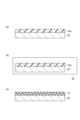
- 1A to 1C are process diagrams showing an example of a method for producing a resin film.
- 1 is a DSC curve of an amic acid ester compound.
- 1 is a 1 H NMR spectrum of an amic acid ester compound.
- 1 is a 1 H NMR spectrum of an amic acid ester compound.
- the present invention is not limited to the following examples.
- An example of a polyimide resin precursor according to the present disclosure is a polymer containing at least one of a structural unit represented by the following formula (A1) and a structural unit represented by the following formula (A2).
- X1 represents a tetravalent organic group
- R1 represents a divalent organic group
- R2 and R3 each independently represent a monovalent organic group. At least one of R2 and R3 is an aromatic group which may be substituted.
- the combinations of R1 , R2 , R3 , and X1 may be the same or different from each other.
- X2 represents a trivalent organic group
- R1 represents a divalent organic group
- R4 represents an aromatic group which may be substituted.
- the combinations of R1 , R4, and X2 may be the same or different from each other.
- Imidization proceeds by reaction between the amide group and the carboxylic acid ester group in the structural unit represented by formula (A1) or (A2), thereby forming a polyimide resin.
- a polyimide resin formed from a polyimide resin precursor mainly composed of structural units represented by formula (A1) is sometimes called a polyimide resin.
- a polyimide resin formed from a polyamide resin precursor mainly composed of structural units represented by formula (A2) is sometimes called a polyamideimide resin.
- the constitutional unit represented by formula (A1) can form, for example, a constitutional unit represented by the following formula (B1) by eliminating an alcohol compound (R 2 -OH, R 3 -OH) through imidization.
- the constitutional unit represented by formula (A2) can form, for example, a constitutional unit represented by the following formula (B2) by eliminating an alcohol compound (R 4 -OH) through imidization.
- the polyimide resin formed by imidization may contain at least one of the constitutional unit represented by formula (B1) or the constitutional unit represented by formula (B2).
- the polyimide resin precursor according to the present disclosure can form a polyimide resin containing a structural unit having an imide group by heating at a lower temperature.
- the molecular weight of the aromatic alcohol compound eliminated by imidization may be from 50 to 100,000. At least one of R2 and R3 , and R4 may be a residue of an aromatic alcohol compound having a molecular weight within these ranges.
- Examples of the aromatic group as R2 , R3 or R4 include monocyclic aromatic groups such as a phenyl group, and polycyclic aromatic groups such as a naphthyl group.
- the aromatic group as R2 , R3 or R4 may be substituted.
- substituent substituting the aromatic group examples include an alkyl group, a halogeno group, a halogenated alkyl group, an aryl group (e.g., a phenyl group), a halogenated aryl group, an alkylaryl group, a halogenated alkylaryl group, an alkoxy group, an aryloxy group, an alkoxycarbonyl group, an aryloxycarbonyl group, an alkylcarbonyloxy group and an arylcarbonyloxy group.
- X 1 in formula (A1) may be an aromatic group having multiple carbon atoms, including two first carbon atoms bonded to -COOR 2 or -COOR 3 groups, and a second carbon atom bonded to an amide group adjacent to each of the first carbon atoms or adjacent to the carbon atom adjacent to the first carbon atom.
- the first carbon atom and the second carbon atom adjacent to each other are directly bonded by a covalent bond.
- X 1 may be a tetravalent organic group having 6 to 40 carbon atoms.
- the tetravalent organic group represented by X 1 may include an optionally substituted aromatic group, an optionally substituted cyclic aliphatic group, or a combination thereof.
- X1 in formula (A1) may be a tetravalent group represented by the following formula (a1), (a2), ( a3 ) or (a4). These tetravalent groups are usually bonded to a carboxylate group ( -COOR2 group or -COOR3 group) and an amide group at the positions of the two bonds on both sides.
- R 10 represents a fluorine atom, a hydrocarbon group having 1 to 10 carbon atoms, or a fluorinated hydrocarbon group having 1 to 10 carbon atoms
- m1 represents an integer of 0 to 2
- m2 represents an integer of 0 to 3
- m3 represents an integer of 0 to 4.
- a plurality of R 10 , m1, and m2 in one tetravalent group may be the same or different.
- Z 1 represents a direct bond, a methanediyl group, a propane-2,2-diyl group, a 1,1,1,3,3,3-hexafluoropropane-2,2-diyl group, a carbonyl group, a sulfonyl group, a thio group, a carbonyloxy group, an oxy group, or a fluorene-9,9-diyl group, and k represents an integer of 0 to 2.
- a plurality of Z 1 in one tetravalent group may be the same or different.
- R 10 may be a fluorine atom, an alkyl group having 1 to 10 carbon atoms (such as a methyl group), or a fluorinated alkyl group having 1 to 10 carbon atoms (such as a trifluoromethyl group).
- X2 in formula (A2) may be an aromatic group having multiple carbon atoms, including one first carbon atom bonded to a -COOR4 group and a second carbon atom bonded to an amide group adjacent to the first carbon atom or adjacent to the carbon atom adjacent to the first carbon atom.
- the first carbon atom and the second carbon atom adjacent to each other are directly bonded by a covalent bond.
- X2 may be a trivalent organic group having 6 to 40 carbon atoms.
- the trivalent organic group represented by X2 may include an optionally substituted aromatic group, an optionally substituted cyclic aliphatic group, or a combination thereof.
- X 2 in formula (A2) may be a trivalent group represented by the following formula (a5), (a6), (a7) or (a8).
- R 10 , m1, m2 and m3 in formulas (a5) to (a8) are defined in the same manner as R 10 , m1, m2 and m3 in formulas (a1) to (a4).
- a plurality of R 10 and m3 in one trivalent group may be the same or different. These trivalent groups are usually bonded to an amide group at one bond position on one side, and bonded to a carboxylate group (-COOR 4 group) and an amide group at two bonds on the other side.
- R 1 in formulas (A1) and (A2) may be a divalent organic group having 6 to 40 carbon atoms.
- R 1 may include an optionally substituted aromatic group, an optionally substituted cyclic aliphatic group, a siloxane group, or a combination thereof.
- R 1 in formulas (A1) and (A2) may be a divalent group represented by the following formula (a10), (a11), or (a12).
- R 11 represents a fluorine atom, a hydrocarbon group having 1 to 10 carbon atoms, or a fluorinated hydrocarbon group having 1 to 10 carbon atoms
- m3 represents an integer of 0 to 4.
- a plurality of R 11s and m3s in one divalent group may be the same or different.
- m3 may be 0.
- Z 2 represents a direct bond, a methanediyl group, a propane-2,2-diyl group, a 1,1,1,3,3,3-hexafluoropropane-2,2-diyl group, a carbonyl group, a sulfonyl group, a thio group, a carbonyloxy group, an oxy group, a fluorene-9,9-diyl group, or an amide group, and k represents an integer of 0 to 2.
- a plurality of Z 2 in one divalent group may be the same or different.
- R 11 may be a fluorine atom, an alkyl group having 1 to 10 carbon atoms (e.g., a methyl group), or a fluorinated alkyl group having 1 to 10 carbon atoms (e.g., a trifluoromethyl group).
- Z3 represents an oxy group or an arylene group (e.g., a phenylene group)
- R12 represents an alkyl group having 1 to 10 carbon atoms (e.g., a methyl group)
- p and q each independently represent an integer of 1 to 10.
- a plurality of R12 in one divalent group may be the same or different.
- p and q may be integers of 1 to 3.
- the polyimide resin precursor may be a polymer containing only the structural unit represented by formula (A1) or (A2) as a repeating unit, or may be a polymer further containing a structural unit other than these.
- the polyimide resin precursor may further contain a structural unit represented by the following formula (A1') or (A2').
- R 1 , X 1 and X 2 in formula (A1') and (A2') are defined in the same way as R 1 , X 1 and X 2 in formula (A1) and (A2).
- the proportion of the structural unit represented by formula (A1) or (A2) may be, for example, 50% by mass or more and 100% by mass or less, based on the mass of the polyimide resin precursor.
- the proportion of the structural unit represented by formula (A1) or (A2) may be, for example, 55% by mass or more, 60% by mass or more, 65% by mass or more, 70% by mass or more, 75% by mass or more, 80% by mass or more, 85% by mass or more, 90% by mass or more, 95% by mass or more, 96% by mass or more, 97% by mass or more, 98% by mass or more, or 99% by mass or less, 98% by mass or less, 97% by mass or less, 96% by mass or less, 95% by mass or less, or 90% by mass or less, based on the mass of the polyimide resin precursor.
- the weight average molecular weight of the polyimide resin precursor may be 8,000 or more and 150,000 or less, 9,000 or more and 50,000 or less, or 18,000 or more and 40,000 or less.
- the weight average molecular weight here may be a value measured by gel permeation chromatography and converted into standard polystyrene.
- a polyimide resin precursor (polyimide resin precursor) having a structural unit represented by formula (A1) can be produced, for example, by a method including polycondensing a tetracarboxylic dianhydride with a diamine compound (NH 2 -R 1 -NH 2 ) to form a polyamic acid having a carboxy group, and reacting the polyamic acid with an alcohol compound (R 2 -OH, R 3 -OH) including an aromatic alcohol compound to convert at least a part of the carboxy groups in the polyamic acid to carboxylate groups.
- X 1 is usually a residue derived from the tetracarboxylic dianhydride
- R 1 is a residue derived from the diamine compound.
- a polyimide resin precursor having a structural unit represented by formula (A2) can be produced, for example, by a method including polyaddition of a tricarboxylic anhydride with a diamine compound (NH 2 -R 1 -NH 2 ) to form a polyamic acid having a carboxy group, and reacting the polyamic acid with an alcohol compound including an aromatic alcohol compound (R 4 -OH) to convert at least a portion of the carboxy groups in the polyamic acid to carboxylate groups.
- X 2 is usually a residue derived from a tricarboxylic anhydride
- R 1 is a residue derived from a diamine compound.
- FIG. 1 is a process diagram showing an example of a method for producing a resin film. The method shown in FIG. 1 includes forming a resin film 10A containing a resin composition on a substrate 20, and heating the resin film 10A to form a resin film 10 containing an imide-based resin that contains a structural unit having an imide group.
- the resin film 10A can be formed by applying a resin composition onto the substrate 20 and removing the solvent from the coating as necessary.
- the resin film 10B is heated by a heating device 30 to promote imidization, thereby forming a resin film 10 containing a polyimide resin.
- the heating device 30 can be, for example, a heating furnace.
- the heating temperature for imidization may be, for example, 200°C or less, 190°C or less, 180°C or less, or 170°C or less, or 140°C or more, or 150°C or more.
- the heating time for imidization may be, for example, 30 minutes or more and 180 minutes or less.
- the resin composition may contain other components as necessary in addition to the polyimide resin precursor.
- the resin composition may contain a solvent that dissolves or disperses the polyimide resin precursor.
- the content of the polyimide resin precursor in the resin composition may be 50% by mass or more and 100% by mass or less, based on the total mass of the components other than the solvent in the resin composition.
- the solvent may be a polar organic solvent.
- the solvent include 3-methoxy-N,N-dimethylpropionamide, N,N-dimethylformamide, N-methyl-2-pyrrolidone, N-ethyl-2-pyrrolidone, N,N-dimethylacetamide, dimethylsulfoxide, diethylene glycol dimethyl ether, cyclopentanone, gamma-butyrolactone, alpha-acetyl-gamma-butyrolactone, tetramethylurea, 1,3-dimethyl-2-imidazolinone, N-cyclohexyl-2-pyrrolidone, and 2-octanone. These can be used alone or in combination of two or more.
- the solvent content may be 30 parts by mass or more and 1,500 parts by mass or less, 100 parts by mass or more and 1,000 parts by mass or less, or 100 parts by mass or more and 860 parts by mass or less, relative to 100 parts by mass of the polyimide resin precursor.
- a resin film containing a polyimide resin formed using the resin composition according to the present disclosure can be used, for example, as an insulating resin layer constituting a semiconductor device or a hard coat layer of a display device.
- Verification Test 1 Synthesis of Amic Acid Ester Compound Amic Acid Ester Compound Ia Succinic anhydride 1 (50.0 mmol) was reacted with aniline 2 (50.0 mmol) in THF (30 mL) at 25° C. to obtain amic acid compound 3. Amic acid compound 3 (2.5 mmol) was reacted with 4-hydroxyphenyl methacrylate 4a (2.5 mmol) in the presence of EDCI (1-(3-dimethylaminopropyl)-3-ethylcarbodiimide hydrochloride (compound name), 3 mol) and BHT (dibutylhydroxytoluene, 1000 ppm) in THF (solvent) while increasing the temperature from 0° C. to 25° C.
- Amic Acid Ester Compound II (Comparative Compound) Succinic anhydride 1 (25.0 mmol) was reacted with 2-hydroxyethyl methacrylate 4b (25.0 mmol) in the presence of triethylamine (150 mmol) and BHT (dibutylhydroxytoluene, 1000 ppm) in THF (20 mL) at 25° C. to obtain dicarboxylic acid monoester compound 5.
- Dicarboxylic acid monoester compound 5 (2.0 mmol) was reacted with aniline 2 (2.0 mmol) in the presence of EDCI (1-(3-dimethylaminopropyl)-3-ethylcarbodiimide hydrochloride, 2.4 mmol) in THF (5.0 mL) while increasing the temperature from 0° C. to 25° C. to produce amic acid ester compound II.
- FIG. 2 is a DSC curve showing the relationship between the amount of heat generated and temperature.
- the amic acid ester compound II endothermic heat due to imidization was observed mainly in the region of 200° C. or higher.
- the amic acid ester compound Ia showed a melting point and endothermic heat due to imidization at a low temperature of 160° C. or lower.
- Figures 3 and 4 show the 1 H NMR spectra of the amic acid ester compounds II and Ia, respectively.
- amic acid ester compound II no signal assigned to the imide group was observed at 160° C., but a signal of the imide group was observed in the region of 7.4 to 7.5 ppm at temperatures of 200° C. or higher.
- amic acid ester compound Ia a signal of the imide group was observed at 160° C., and it was confirmed that the imidization reaction proceeded sufficiently by heating at 160° C. for 1 hour.
- polyimide resins can be formed at lower temperatures by introducing an aromatic alcohol ester group into the amic acid ester structure of a polyimide resin precursor.
- 10A resin film containing a polyimide resin precursor
- 10 resin film containing a polyimide resin
- 20 substrate.
Landscapes
- Chemical & Material Sciences (AREA)
- Health & Medical Sciences (AREA)
- Chemical Kinetics & Catalysis (AREA)
- Medicinal Chemistry (AREA)
- Polymers & Plastics (AREA)
- Organic Chemistry (AREA)
- Macromolecular Compounds Obtained By Forming Nitrogen-Containing Linkages In General (AREA)
Priority Applications (4)
| Application Number | Priority Date | Filing Date | Title |
|---|---|---|---|
| PCT/JP2023/025335 WO2025013141A1 (ja) | 2023-07-07 | 2023-07-07 | ポリイミド系樹脂前駆体、樹脂組成物、ポリイミド系樹脂を製造する方法、及び樹脂膜を製造する方法 |
| JP2025532705A JPWO2025013702A1 (https=) | 2023-07-07 | 2024-07-02 | |
| PCT/JP2024/023974 WO2025013702A1 (ja) | 2023-07-07 | 2024-07-02 | ポリイミド系樹脂前駆体、樹脂組成物、ポリイミド系樹脂を製造する方法、及び樹脂膜を製造する方法 |
| TW113124893A TW202502910A (zh) | 2023-07-07 | 2024-07-03 | 聚醯亞胺系樹脂前驅物、樹脂組成物、聚醯亞胺系樹脂的製造方法、樹脂膜的製造方法 |
Applications Claiming Priority (1)
| Application Number | Priority Date | Filing Date | Title |
|---|---|---|---|
| PCT/JP2023/025335 WO2025013141A1 (ja) | 2023-07-07 | 2023-07-07 | ポリイミド系樹脂前駆体、樹脂組成物、ポリイミド系樹脂を製造する方法、及び樹脂膜を製造する方法 |
Publications (1)
| Publication Number | Publication Date |
|---|---|
| WO2025013141A1 true WO2025013141A1 (ja) | 2025-01-16 |
Family
ID=94215228
Family Applications (2)
| Application Number | Title | Priority Date | Filing Date |
|---|---|---|---|
| PCT/JP2023/025335 Ceased WO2025013141A1 (ja) | 2023-07-07 | 2023-07-07 | ポリイミド系樹脂前駆体、樹脂組成物、ポリイミド系樹脂を製造する方法、及び樹脂膜を製造する方法 |
| PCT/JP2024/023974 Ceased WO2025013702A1 (ja) | 2023-07-07 | 2024-07-02 | ポリイミド系樹脂前駆体、樹脂組成物、ポリイミド系樹脂を製造する方法、及び樹脂膜を製造する方法 |
Family Applications After (1)
| Application Number | Title | Priority Date | Filing Date |
|---|---|---|---|
| PCT/JP2024/023974 Ceased WO2025013702A1 (ja) | 2023-07-07 | 2024-07-02 | ポリイミド系樹脂前駆体、樹脂組成物、ポリイミド系樹脂を製造する方法、及び樹脂膜を製造する方法 |
Country Status (3)
| Country | Link |
|---|---|
| JP (1) | JPWO2025013702A1 (https=) |
| TW (1) | TW202502910A (https=) |
| WO (2) | WO2025013141A1 (https=) |
Citations (9)
| Publication number | Priority date | Publication date | Assignee | Title |
|---|---|---|---|---|
| JPS6438437A (en) * | 1987-08-04 | 1989-02-08 | Asahi Chemical Ind | Low-stress polyimide resin precursor |
| JPH03115431A (ja) * | 1989-07-15 | 1991-05-16 | Ciba Geigy Ag | ポリイミド―形成組成物 |
| JP2005139302A (ja) * | 2003-11-06 | 2005-06-02 | Nippon Shokubai Co Ltd | ポリイミド前駆体およびこれを含む感光性ポリアミック酸ワニス |
| JP2014181334A (ja) * | 2013-03-21 | 2014-09-29 | Fuji Xerox Co Ltd | ポリイミド前駆体、ポリイミド前駆体組成物、ポリイミド成形体の製造方法、及び、画像形成装置 |
| JP2015096589A (ja) * | 2013-10-10 | 2015-05-21 | Jfeケミカル株式会社 | ベンゾフラン誘導体組成物、ポリイミド前駆体組成物およびポリイミド樹脂の製造方法 |
| WO2019188380A1 (ja) * | 2018-03-30 | 2019-10-03 | 株式会社カネカ | ポリアミド酸およびその製造方法、ポリアミド酸溶液、ポリイミド、ポリイミド膜、積層体およびその製造方法、ならびにフレキシブルデバイスおよびその製造方法 |
| JP2019172782A (ja) * | 2018-03-28 | 2019-10-10 | 日立化成株式会社 | マレイミド樹脂の製造方法 |
| WO2020189481A1 (ja) * | 2019-03-19 | 2020-09-24 | 富士フイルム株式会社 | 硬化性樹脂組成物、硬化膜、積層体、硬化膜の製造方法、及び、半導体デバイス |
| WO2020195993A1 (ja) * | 2019-03-22 | 2020-10-01 | 富士フイルム株式会社 | 硬化性樹脂組成物、硬化膜、積層体、硬化膜の製造方法、及び、半導体デバイス |
-
2023
- 2023-07-07 WO PCT/JP2023/025335 patent/WO2025013141A1/ja not_active Ceased
-
2024
- 2024-07-02 WO PCT/JP2024/023974 patent/WO2025013702A1/ja not_active Ceased
- 2024-07-02 JP JP2025532705A patent/JPWO2025013702A1/ja active Pending
- 2024-07-03 TW TW113124893A patent/TW202502910A/zh unknown
Patent Citations (9)
| Publication number | Priority date | Publication date | Assignee | Title |
|---|---|---|---|---|
| JPS6438437A (en) * | 1987-08-04 | 1989-02-08 | Asahi Chemical Ind | Low-stress polyimide resin precursor |
| JPH03115431A (ja) * | 1989-07-15 | 1991-05-16 | Ciba Geigy Ag | ポリイミド―形成組成物 |
| JP2005139302A (ja) * | 2003-11-06 | 2005-06-02 | Nippon Shokubai Co Ltd | ポリイミド前駆体およびこれを含む感光性ポリアミック酸ワニス |
| JP2014181334A (ja) * | 2013-03-21 | 2014-09-29 | Fuji Xerox Co Ltd | ポリイミド前駆体、ポリイミド前駆体組成物、ポリイミド成形体の製造方法、及び、画像形成装置 |
| JP2015096589A (ja) * | 2013-10-10 | 2015-05-21 | Jfeケミカル株式会社 | ベンゾフラン誘導体組成物、ポリイミド前駆体組成物およびポリイミド樹脂の製造方法 |
| JP2019172782A (ja) * | 2018-03-28 | 2019-10-10 | 日立化成株式会社 | マレイミド樹脂の製造方法 |
| WO2019188380A1 (ja) * | 2018-03-30 | 2019-10-03 | 株式会社カネカ | ポリアミド酸およびその製造方法、ポリアミド酸溶液、ポリイミド、ポリイミド膜、積層体およびその製造方法、ならびにフレキシブルデバイスおよびその製造方法 |
| WO2020189481A1 (ja) * | 2019-03-19 | 2020-09-24 | 富士フイルム株式会社 | 硬化性樹脂組成物、硬化膜、積層体、硬化膜の製造方法、及び、半導体デバイス |
| WO2020195993A1 (ja) * | 2019-03-22 | 2020-10-01 | 富士フイルム株式会社 | 硬化性樹脂組成物、硬化膜、積層体、硬化膜の製造方法、及び、半導体デバイス |
Also Published As
| Publication number | Publication date |
|---|---|
| WO2025013702A1 (ja) | 2025-01-16 |
| TW202502910A (zh) | 2025-01-16 |
| JPWO2025013702A1 (https=) | 2025-01-16 |
Similar Documents
| Publication | Publication Date | Title |
|---|---|---|
| JP6665862B2 (ja) | ポリイミド前駆体、架橋構造を有するポリイミドおよびその製造方法 | |
| US6291635B1 (en) | Fluorine-containing polybenzoxazole | |
| JP7375545B2 (ja) | 液晶配向剤、液晶配向膜、及び液晶表示素子 | |
| JP3934335B2 (ja) | ポリイミドおよびその製造方法 | |
| JP3773445B2 (ja) | 含フッ素脂環族ジアミンおよびこれを用いた重合体 | |
| JP2016222644A (ja) | 環状炭化水素骨格およびエステル基を有するテトラカルボン酸二無水物、ポリアミック酸、及びポリイミド。 | |
| JP4378948B2 (ja) | 酸無水物、液晶配向膜および液晶表示素子 | |
| JPH06136120A (ja) | 可溶性ポリイミドの製造方法 | |
| JP2949568B2 (ja) | 新規なポリイミド及びその製造方法 | |
| JPH05194747A (ja) | 硬化性樹脂及びその製造方法並びに電子部品用保護膜 | |
| WO2025013141A1 (ja) | ポリイミド系樹脂前駆体、樹脂組成物、ポリイミド系樹脂を製造する方法、及び樹脂膜を製造する方法 | |
| JP2006131892A (ja) | アルコール性水酸基を有するポリイミドおよびその製造方法 | |
| WO2016190170A1 (ja) | 環状炭化水素骨格およびエステル基を有するテトラカルボン酸二無水物、ポリアミック酸、及びポリイミド | |
| JP2004149777A (ja) | 熱硬化性基を含有する透明ポリイミドシリコーン樹脂 | |
| KR102104016B1 (ko) | 폴리아미드이미드계 수지의 제조 방법 | |
| WO2011121850A1 (ja) | ナジイミド骨格を有するポリアミドイミド及びその製造方法 | |
| JP4698165B2 (ja) | ポリアミック酸およびポリイミド | |
| JP2022133200A (ja) | ポリアミドイミド及びその前駆体、ならびにポリアミドイミドフィルム | |
| WO2017163894A1 (ja) | テトラカルボン酸二無水物、ポリアミック酸及びポリイミド | |
| JP2008163090A (ja) | テトラカルボン酸二無水物およびその製造方法並びに重合物 | |
| JP2551214B2 (ja) | 硬化性樹脂溶液組成物及びその製造方法並びに電子部品用保護膜 | |
| JP5250931B2 (ja) | フレキシブルポリイミドフィルム | |
| JP6515921B2 (ja) | 酸二無水物およびその利用 | |
| JP2020105495A (ja) | ポリイミド系樹脂の製造方法 | |
| JP2713057B2 (ja) | ポリイミド樹脂及びその製造方法 |
Legal Events
| Date | Code | Title | Description |
|---|---|---|---|
| 121 | Ep: the epo has been informed by wipo that ep was designated in this application |
Ref document number: 23945022 Country of ref document: EP Kind code of ref document: A1 |
|
| NENP | Non-entry into the national phase |
Ref country code: DE |