WO2024048214A1 - プロセスの制御方法、高炉の操業方法、溶銑の製造方法及びプロセスの制御装置 - Google Patents
プロセスの制御方法、高炉の操業方法、溶銑の製造方法及びプロセスの制御装置 Download PDFInfo
- Publication number
- WO2024048214A1 WO2024048214A1 PCT/JP2023/028830 JP2023028830W WO2024048214A1 WO 2024048214 A1 WO2024048214 A1 WO 2024048214A1 JP 2023028830 W JP2023028830 W JP 2023028830W WO 2024048214 A1 WO2024048214 A1 WO 2024048214A1
- Authority
- WO
- WIPO (PCT)
- Prior art keywords
- hot metal
- metal temperature
- blast furnace
- process control
- ratio
- Prior art date
- Legal status (The legal status is an assumption and is not a legal conclusion. Google has not performed a legal analysis and makes no representation as to the accuracy of the status listed.)
- Ceased
Links
Images




Classifications
-
- C—CHEMISTRY; METALLURGY
- C21—METALLURGY OF IRON
- C21B—MANUFACTURE OF IRON OR STEEL
- C21B5/00—Making pig-iron in the blast furnace
-
- C—CHEMISTRY; METALLURGY
- C21—METALLURGY OF IRON
- C21B—MANUFACTURE OF IRON OR STEEL
- C21B5/00—Making pig-iron in the blast furnace
- C21B5/001—Injecting additional fuel or reducing agents
- C21B5/003—Injection of pulverulent coal
-
- C—CHEMISTRY; METALLURGY
- C21—METALLURGY OF IRON
- C21B—MANUFACTURE OF IRON OR STEEL
- C21B5/00—Making pig-iron in the blast furnace
- C21B5/006—Automatically controlling the process
-
- C—CHEMISTRY; METALLURGY
- C21—METALLURGY OF IRON
- C21B—MANUFACTURE OF IRON OR STEEL
- C21B7/00—Blast furnaces
- C21B7/24—Test rods or other checking devices
-
- C—CHEMISTRY; METALLURGY
- C21—METALLURGY OF IRON
- C21B—MANUFACTURE OF IRON OR STEEL
- C21B5/00—Making pig-iron in the blast furnace
- C21B5/001—Injecting additional fuel or reducing agents
- C21B2005/005—Selection or treatment of the reducing gases
-
- C—CHEMISTRY; METALLURGY
- C21—METALLURGY OF IRON
- C21B—MANUFACTURE OF IRON OR STEEL
- C21B2300/00—Process aspects
- C21B2300/04—Modeling of the process, e.g. for control purposes; CII
Definitions
- the present disclosure relates to a process control method, a blast furnace operating method, a hot metal manufacturing method, and a process control device.
- Hot metal temperature is an important management index in the blast furnace process in the steel industry, and is mainly controlled by adjusting the pulverized coal ratio and air humidity.
- blast furnace operations have been carried out under conditions of low coke ratios and high pulverized coal ratios in order to pursue rationalization of raw material and fuel costs, and the furnace conditions tend to become unstable. Therefore, it is necessary to suppress variations in hot metal temperature.
- the blast furnace process operates with solids filled, so the heat capacity of the entire process is large, and the time constant of response to action is long. Furthermore, it may take several hours, for example, for the raw material charged in the upper part of the furnace to descend to the lower part of the furnace. Therefore, in order to control the hot metal temperature, appropriate operations based on future furnace heat predictions are required.
- Patent Document 1 discloses a technique for controlling only the hot metal temperature, and does not propose a control method that takes into consideration reducing the reducing agent ratio.
- the purpose of the present disclosure which has been made to solve the above problems, is to provide a process control method, a blast furnace operating method, a hot metal manufacturing method, and a process control method that suppress variation in hot metal temperature while reducing the reducing agent ratio in a blast furnace.
- the purpose is to provide a control device.
- a process control method includes: a response prediction step of calculating a predicted value of the future hot metal temperature using a physical model capable of calculating the internal state of the blast furnace; The deviation between the predicted value of the hot metal temperature obtained in the response prediction step and the target value is determined, and an evaluation function having a term corresponding to the deviation and a term for reducing the reducing agent ratio or the blast humidity is calculated.
- the method includes a step of determining a manipulated variable of the pulverized coal ratio and the blown moisture so as to minimize or maximize it.
- the response prediction step uses the physical model to predict the future hot metal temperature based on a predicted value of the future hot metal temperature when the current manipulated variable is held and a predicted value of the hot metal temperature when the current manipulated variable is changed. A predicted value of the hot metal temperature is determined.
- the evaluation function which is a quadratic function regarding the unknown variables, is determined, using the operation amounts of the pulverized coal ratio and the blast moisture as unknown variables, and under the constraint of a linear expression regarding the unknown variables. is used to determine the unknown variable.
- the method further includes the step of manipulating the blowing flow rate so that the predicted value of the pig iron making speed matches the target value, and manipulating the coke ratio so that the predicted value of the air permeability becomes equal to or less than the upper limit.
- a blast furnace operating method includes: Operating conditions are changed using the manipulated variables operated by the process control method of any one of (1) to (4).
- the method for producing hot metal according to an embodiment of the present disclosure includes: Hot metal is produced using the blast furnace operated by the blast furnace operating method of (5).
- a process control device includes: a storage unit that stores a physical model capable of calculating the internal state of the blast furnace; A hot metal temperature control unit that obtains a target hot metal temperature that is a target value of hot metal temperature and calculates the manipulated variables of the pulverized coal ratio and the air humidity so that the hot metal temperature becomes the target hot metal temperature,
- the hot metal temperature control section is Using the physical model to obtain a predicted value of the future hot metal temperature, The deviation between the predicted value and the target value of the hot metal temperature is determined so that an evaluation function having a term corresponding to the deviation and a term for reducing the reducing agent ratio or the blast moisture is minimized or maximized. , find the manipulated variables of the pulverized coal ratio and the air humidity.
- FIG. 1 is a diagram showing manipulated variables and control variables in a blast furnace process.
- FIG. 2 is a diagram illustrating a process control method according to an embodiment of the present disclosure.
- FIG. 3 is a diagram showing input/output information of a physical model used in the present disclosure.
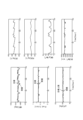
- FIG. 4 is a diagram showing the results of a control simulation based on simultaneous manipulation of the pulverized coal ratio and the air humidity.
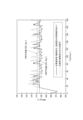
- FIG. 5 is a diagram showing the results of a control simulation using only the pulverized coal ratio (comparative example).
- FIG. 6 is a diagram for explaining the effect of reducing the reducing agent ratio (RAR).
- FIG. 7 is a diagram illustrating a configuration example of a process control device according to an embodiment of the present disclosure.
- FIG. 1 shows the basic operating variables and control variables in the blast furnace process (steps in blast furnace operation).
- a control variable is a variable that must be controlled in operation, but cannot be or is difficult to manipulate directly, and is changed through a correlated manipulated variable.
- the pulverized coal ratio or the air humidity is mainly manipulated in order to set the hot metal temperature to a target value.
- the coke ratio or the air flow rate is mainly controlled.
- the air flow rate is mainly manipulated.
- the air permeability in this embodiment, the pressure loss in the furnace, which directly affects the blow-through, is used.
- Furnace pressure loss is the difference between blast pressure and furnace top pressure (furnace top pressure).
- various indicators of ventilation such as ventilation resistance and shaft-to-face differential pressure. Therefore, as the air permeability, another air permeability index may be used instead of the furnace pressure drop, or a combination of a plurality of air permeability indices may be used.
- the process control method according to the present embodiment focuses on the pulverized coal ratio and the air humidity, which are operational variables for controlling the hot metal temperature, and controls the pulverized coal ratio and air humidity to reduce the reducing agent ratio while controlling the hot metal temperature. Determine the optimal operating amount of ratio and air humidity.
- FIG. 2 is a diagram showing the processing of the process control method according to the present embodiment.
- the process control method according to the present embodiment uses, for example, cascade control described in Reference Document 1 (Japanese Patent No. 7107444).
- control for calculating the target pulverized coal ratio (PCR) (hot metal temperature control in Figure 2) and control for calculating the pulverized coal flow rate required for the target PCR (PCR follow-up control in Figure 2) are performed. It is done continuously.
- Hot metal temperature control can obtain a target hot metal temperature, which is a target value of hot metal temperature (HMT), and calculate a target PCR using a physical model described below.
- the hot metal temperature control not only calculates the target PCR (in addition to calculating the manipulated variable of the pulverized coal ratio), but also calculates the manipulated variable of the air humidity.
- the process control method also includes iron making speed control and air permeability control.
- pig iron making speed control a target pig iron making speed which is a target value of pig iron making rate (Production rate: Prod) is acquired, and a manipulated variable of a blowing flow rate (BV) is calculated using a physical model described below.
- the air permeability control obtains the upper limit of the furnace pressure drop ( ⁇ P), and calculates the manipulated variables of the air flow rate and coke ratio using a physical model to be described later.
- the actual value (which may be an observed value or a calculated value) in a plant including a blast furnace may be fed back for updating the physical model used in each control.
- PCR pulverized coal ratio
- HMT hot metal temperature
- ⁇ P pressure drop in the furnace
- Prod iron making rate
- an individual controller in constructing a multivariable control system as shown in FIG. 2, an individual controller (hot metal temperature control , air permeability control, pig iron making speed control).
- the hot metal temperature is controlled by a cascade control that manipulates the blast moisture and the pulverized coal ratio (PCR) and pulverized coal flow rate.
- Air permeability is controlled by manipulating the air flow rate and coke ratio.
- the pig iron making speed is controlled by manipulating the air flow rate.
- a change in the blast flow rate affects the hot metal temperature. This effect is reflected by the physical model in hot metal temperature control and calculated as the manipulated variable of the pulverized coal ratio or blast moisture. is maintained near the target value.
- control system is constructed as a control system that has a disturbance removal characteristic that absorbs fluctuations caused by the manipulation of the other's manipulated variables by manipulating its own manipulated variables. can reduce the impact of The same applies to air permeability control.
- a physical model of a blast furnace based on reaction kinetics is used to predict the future hot metal temperature and iron making rate, and fine powder is adjusted so that the predicted values are close to the target values. Determine the amount of change in coal ratio and air humidity.
- Step 1 the future hot metal temperature is predicted using a physical model.
- Step 1 is a response prediction step.
- the response prediction step uses a physical model to predict the future hot metal temperature based on the predicted value of the future hot metal temperature when the current manipulated variable is held and the predicted value of the hot metal temperature when the current manipulated variable is changed. Find the predicted value of the hot metal temperature.
- the predicted value of future hot metal temperature if the current manipulated variables are held is a free response described below.
- the predicted value of the hot metal temperature when the current operating variable is changed is a step response described later in this embodiment, but is not limited to this.
- Step 2 is a manipulated variable determination step in which the deviation between the predicted value and the target value is determined, the manipulated variable for eliminating the deviation is determined, and the manipulated variable is adjusted.
- the manipulated variables are pulverized coal ratio and blast moisture.
- step 3 in order to simulate the actual operation of a blast furnace, the blast flow rate is controlled so that the predicted value of iron making rate matches the target value, and at least the coke ratio is adjusted so that the predicted value of air permeability is below the upper limit.
- the air permeability is the pressure loss in the furnace, and when the predicted value of the pressure loss in the furnace exceeds a set upper limit, the ventilation state is determined to be abnormal.
- the ventilation condition is determined to be abnormal, an operation to increase the coke ratio may be performed.
- an operation to reduce the coke ratio may be performed.
- the manipulation of the air flow rate and coke ratio in step 3 becomes a disturbance to the hot metal temperature control. As will be described later, it was verified through simulation that the influence of this disturbance could be canceled by manipulating the pulverized coal ratio and the air humidity.
- the physical model used in the present disclosure is similar to the model of the method described in Reference 2 (Michiharu Hadano et al., "Study of burning operation using an unsteady blast furnace model", Tetsu-to-Hagane, vol. 68, p. 2369). It is. In other words, it calculates the state inside the blast furnace (furnace) in an unsteady state, which is composed of a group of partial differential equations that take into account physical phenomena such as reduction of ore, heat exchange between ore and coke, and melting of ore.
- a possible physical model is used. This physical model may be referred to as an unsteady model below.
- the main ones that change over time are blast flow rate, blast oxygen flow rate, pulverized coal flow rate, blast moisture, blast temperature, coke ratio, and furnace top pressure. It is.
- These input variables are operating variables or operating factors of the blast furnace.
- the blast flow rate, the blast oxygen flow rate, and the pulverized coal flow rate are the flow rates of air, oxygen, and pulverized coal sent to the blast furnace, respectively.
- the blast humidity is the humidity of the air sent to the blast furnace.
- the blowing temperature is the temperature of the air sent to the blast furnace.
- the coke ratio is the coke ratio at the top of the furnace, and is the weight of coke used for one ton of hot metal production.
- the main output variables of the unsteady model are gas utilization rate, solution loss carbon amount (sol loss carbon amount), reducing agent ratio, pig iron making rate, hot metal temperature, and furnace pressure drop.
- the time interval of calculation is not particularly limited, it is 30 minutes in this embodiment. In this embodiment, the time difference between "t+1" and "t" in the unsteady model equation described later is 30 minutes.
- the unsteady model can be expressed by the following equations (1) and (2).
- x(t) is a state variable calculated within the unsteady model.
- State variables include, for example, coke temperature, iron temperature, ore oxidation degree, and raw material fall rate.
- y(t) is the control variables: hot metal temperature, pig iron making rate, and air permeability (furnace pressure drop).
- u(t) is the input variable described above, and is a variable that can be operated by the operator who operates the blast furnace.
- the input variables are blast flow rate BV (t), blast oxygen flow rate BVO (t), pulverized coal flow rate PCI (t), blast moisture BM (t), blast temperature BT (t), and coke ratio CR (t).
- the furnace top pressure TGP(t). It can be expressed as u(t) (BV(t), BVO(t), PCI(t), BM(t), BT(t), CR(t), TGP(t)) T .
- PCR pulverized coal ratio
- BM blast moisture
- S PCR (t) is the amount of change in hot metal temperature when the pulverized coal ratio (PCR) is manipulated by a unit amount (1 [kg/t]).
- S BM (t) is the amount of change in the blown air moisture (BM) when the blown air moisture (BM) is manipulated by a unit amount (1 [g/Nm 3 ]).
- S PCR and S BM can be determined by, for example, another physical model or a step response test in actual operation.
- reference 3 Y. Hashimoto, Online prediction of hot metal temperature using transient model and moving horizon estimation. ISIJ The simulation results described in Int. 2019, vol. 59, p. 1534) were used. .
- the deviation of the free response y f (t) from the target value y pre (t) is defined as ⁇ y.
- the square of the deviation between the predicted value of the hot metal temperature and the target value y pre (t) is expressed by the following equation (8).
- the evaluation function J used in the quadratic programming method is set to the first and second terms of equation (8), as shown in equation (9). In addition, it includes a term (third term) for reducing air humidity. Furthermore, the evaluation function J includes a fourth term for suppressing excessive operation.
- a and R are coefficients.
- the third term is introduced, and the weighting of ⁇ PCR and ⁇ BM included in the vector ⁇ is changed depending on the size of the elements of the coefficient vector a, and the manipulation of both Distribution can be adjusted.
- ⁇ is determined using equation (9) under the constraints of equations (10) to (13) below.
- PCR max and PCR min are the upper and lower limits of the target range of the pulverized coal ratio (PCR), respectively.
- ⁇ PCR max is the upper limit of the allowable change in the pulverized coal ratio (PCR).
- BM max and BM min are the upper and lower limits of the target range of the blast moisture (BM), respectively.
- ⁇ BM max is the upper limit of the allowable change amount of the air humidity (BM).
- the evaluation function J was designed to reduce the air humidity in order to reduce the reducing agent ratio.
- the unknown variable ⁇ was obtained when the evaluation function J is minimized, but the deviation between the predicted value of the hot metal temperature and the target value, the minimizing of the reducing agent ratio (or the air humidity), and the evaluation
- the evaluation function J may be designed so that it corresponds to the maximization of the function J. That is, the manipulated variables of the pulverized coal ratio and the air humidity may be determined so that the evaluation function J is minimized or maximized.
- a quasi-optimal value may be evaluated as an optimal value.
- the evaluation function J does not necessarily take the maximum or minimum value, as long as the value of the evaluation function J is near the maximum value or near the minimum value (if semi-optimization is performed), the control objective is achieved. You can treat it if you do. Therefore, the evaluation function J is minimized or maximized not only when the value of the evaluation function J is the maximum value or the minimum value, but also when the value of the evaluation function J is near the maximum value or near the minimum value. It may be possible to include cases.
- ⁇ BV which is the manipulated variable of the blast flow rate (BV) [Nm 3 /min] is determined by the following equation (14) so as to eliminate the deviation between the target value and the predicted value.
- Prod (t+T) is a predicted value of the iron making speed T steps ahead.
- T may be 4, which means a predicted value for 2 hours (30 minutes x 4) ahead.
- Prod ref is the target iron making speed (target value of the iron making speed).
- S BV is the amount of change in the iron making speed when the blowing flow rate (BV) is manipulated by a unit amount (1 [Nm 3 /min]). The SBV can be determined using another physical model or a step response test in actual operation.
- b is a coefficient and is a positive number.
- the control for determining ⁇ BV according to equation (14) corresponds to the iron making speed control in FIG. 2.
- the manipulated variables of the coke ratio (CR) and the blowing flow rate (BV) are determined by comparison with the upper limit (threshold).
- the manipulated variable is determined so as to increase the coke ratio and simultaneously decrease the blowing flow rate. This corresponds to the operation of stabilizing the unloading of raw materials in the operation of a blast furnace.
- the manipulated variable is determined so as to gradually reduce the coke ratio.
- control is performed so that the pressure loss in the furnace does not exceed the upper limit, but when the pressure loss in the furnace is below the upper limit, it becomes possible to reduce the cost of operation by gradually reducing the coke ratio.
- the value of the pressure drop in the furnace changes near the upper limit.
- Control that determines the manipulated variables of the coke ratio (CR) and the blowing flow rate (BV) by comparison with the upper limit of the pressure drop in the furnace corresponds to the air permeability control in FIG. 2 .
- FIG. 4 is a diagram showing simulation results based on the above process control.
- the blast moisture (BM) is , pulverized coal ratio (PCR), blast flow rate (BV), and coke ratio (CR) were manipulated.
- the target hot metal temperature was 1500°C.
- the target pig iron making speed was 7 [t/min]. Further, the upper limit of the pressure drop in the furnace was 100 [kPa].
- the hot metal temperature (HMT) is operated near the target value, and based on the evaluation function J shown in equation (9), the blast moisture (BM) is controlled while suppressing the variation in the hot metal temperature. It can be seen that the value is maintained near the lower limit value.
- the air humidity is close to the lower limit value, heat absorption due to the steam decomposition reaction that requires the introduction of a reducing agent is less likely to occur, leading to a reduction in the reducing agent ratio.
- the iron making rate (Prod) is controlled near the target value, and the pressure loss in the furnace ( ⁇ P) is also kept below the upper limit.
- FIG. 5 is a diagram showing simulation results obtained by control of a comparative example.
- the pulverized coal ratio (PCR) is , the blast flow rate (BV) and coke ratio (CR) were manipulated.
- the simulation conditions are the same as in FIG. 4 except for the blast moisture (BM).
- the air humidity was set at a constant value of 15.5 [g/Nm 3 ].
- FIG. 6 is a diagram for explaining the effect of reducing the reducing agent ratio (RAR), and shows the reducing agent ratio of the simulation results of FIG. 4 (process control method according to the present embodiment) and FIG. 5 (comparative example). This is a comparison of changes over time.
- the average value of the reducing agent ratio in the process control method according to the present embodiment is lower than the average value of the reducing agent ratio in the comparative example.
- the reducing agent ratio can be reduced by simultaneously controlling the pulverized coal ratio and the air humidity.
- the amount of oxygen (oxygen basic unit) [Nm 3 /t] required to be blown from the tuyere to produce 1 ton of hot metal is reduced. Therefore, the target iron making speed can be reached with a smaller air flow rate. As a result, there is a margin for pressure loss, and the coke ratio can also be reduced (see CR in Figures 3 and 4).
- FIG. 7 is a diagram illustrating a configuration example of a process control device 10 according to an embodiment.
- the process control device 10 includes a communication section 11, a storage section 12, and a control section 13.
- the control section 13 includes a hot metal temperature control section 14, an iron making speed control section 15, an air permeability control section 16, and a PCR follow-up control section 17.
- the process control device 10 executes the process control method described above.
- the process control device 10 may display information such as the operation amount on a display unit such as a liquid crystal display when operating the blown humidity, the blown air flow rate, the coke ratio, or the pulverized coal ratio.
- the communication unit 11 is configured to include a communication module for communicating with the host system.
- the host system includes a process computer that manages processes in the plant including the blast furnace.
- the communication unit 11 may include a communication module compatible with mobile communication standards such as 4G (4th Generation) and 5G (5th Generation).
- the communication unit 11 may include, for example, a communication module compatible with wired or wireless LAN standards.
- the control unit 13 can obtain information such as a target hot metal temperature, a target iron making rate, and an upper limit of pressure drop in the furnace from the host system via the communication unit 11. Further, the control unit 13 can output information on the manipulated variables that have been operated, that is, the manipulated variables that reflect the calculated manipulated variables, to the host system via the communication unit 11.
- the storage unit 12 stores the above physical model.
- the storage unit 12 also stores programs and data related to control of the blast furnace process.
- the storage unit 12 may include any storage device such as a semiconductor storage device, an optical storage device, and a magnetic storage device.
- a semiconductor storage device may include, for example, a semiconductor memory.
- the storage unit 12 may include multiple types of storage devices.
- the control unit 13 controls and manages each functional unit constituting the process control device 10 and the entire process control device 10.
- the control unit 13 may also acquire data used for control. That is, the control unit 13 may acquire the hot metal temperature, iron making rate, and air permeability of the blast furnace using observed values or calculated values.
- the control unit 13 is configured to include at least one processor such as a CPU (Central Processing Unit) to control and manage various functions.
- the control unit 13 may be composed of one processor or a plurality of processors.
- the processor that constitutes the control section 13 functions as a hot metal temperature control section 14, an ironmaking speed control section 15, an air permeability control section 16, and a PCR follow-up control section 17 by reading out and executing a program from the storage section 12. It's fine.
- the hot metal temperature control unit 14 obtains a target hot metal temperature, which is a target value of the hot metal temperature, and calculates the manipulated variables of the blast moisture and pulverized coal ratio so that the hot metal temperature becomes the target hot metal temperature.
- the hot metal temperature control section 14 is a functional section that executes "hot metal temperature control" in FIG. 2.
- the pig iron making speed control unit 15 obtains a target pig iron making speed which is a target value of the pig iron making speed, and calculates the manipulated variable of the air blowing flow rate so that the pig iron making speed becomes the target pig iron making speed.
- the pig iron making speed control section 15 is a functional section that executes the "pig making speed control" shown in FIG. 2 .
- the air permeability control unit 16 obtains the upper limit of the air permeability (in the present embodiment, the pressure loss in the furnace) and calculates at least the manipulated variable of the coke ratio so that the air permeability does not exceed the upper limit.
- the air permeability control unit 16 may further calculate the manipulated variable of the air flow rate as in this embodiment.
- the air permeability control section 16 is a functional section that executes the "air permeability control" shown in FIG.
- the PCR follow-up control unit 17 acquires the pulverized coal ratio (target PCR), which is a target value determined by the hot metal temperature control unit 14, and controls the pulverized coal flow rate (PCI) to follow the target PCR by PCR follow-up control. Calculate the amount of operation.
- target PCR pulverized coal ratio
- PCI pulverized coal flow rate
- the hot metal temperature control section 14, pig iron making speed control section 15, and air permeability control section 16 are individual controllers for controlling the hot metal temperature (HMT), pig iron making speed (Prod), and furnace pressure drop ( ⁇ P), respectively. .
- the hot metal temperature control unit 14 executes step 1 (response prediction step) using a physical model to obtain a predicted value of the hot metal temperature.
- the hot metal temperature control unit 14 executes step 2 (operation amount determination step) to determine the operation amounts of the pulverized coal ratio and the blast moisture.
- the pig iron making speed control unit 15 executes step 3 and obtains the manipulated variable of the air flow rate so as to eliminate the deviation between the target value and the predicted value of the pig iron making speed.
- the air permeability control unit 16 executes step 3 to determine the manipulated variables of the air flow rate and coke ratio so that the predicted value of the pressure loss in the furnace does not exceed the upper limit.
- the hot metal temperature control section 14, pig iron making speed control section 15, and air permeability control section 16, which are constructed as individual controllers, automatically control fluctuations based on the manipulation of operating variables by other control sections. This is a control system that has a disturbance removal characteristic that absorbs by manipulating the manipulated variables. Therefore, the hot metal temperature control section 14, pig iron making speed control section 15, and air permeability control section 16 can reduce the influence of interference of operating variables from other control sections.
- a process control method executed by the process control device 10 may be used as part of the blast furnace operating method.
- the manipulated variables manipulated in the process control method described above may be used to change operating conditions in the operation of a blast furnace.
- such a method of operating a blast furnace can be carried out as part of a manufacturing method of manufacturing hot metal.
- raw material iron ore is melted and reduced to become pig iron, which is tapped as hot metal, and the blast furnace may be operated according to this operating method.
- the process control device 10 may be realized, for example, by a computer separate from the process computer that controls the operation of the blast furnace, or may be realized by the process computer.
- a computer includes, for example, a memory, a hard disk drive (storage device), a CPU (processing unit), and a display device such as a display.
- Various functions can be realized by organically cooperating hardware such as a CPU and memory with a program.
- the storage unit 12 may be realized, for example, by a storage device.
- the control unit 13 may be realized by, for example, a CPU.
- the process control method, blast furnace operating method, hot metal manufacturing method, and process control device 10 reduce the reducing agent ratio in the blast furnace while reducing the variation in hot metal temperature. suppression can be achieved.
- the configuration of the process control device 10 shown in FIG. 7 is an example.
- the process control device 10 may not include all of the components shown in FIG. Further, the process control device 10 may include components other than those shown in FIG. For example, the process control device 10 may further include a display section.
- Process control device 11 Communication section 12 Storage section 13 Control section 14 Hot metal temperature control section 15 Iron making speed control section 16 Air permeability control section 17 PCR follow-up control section
Landscapes
- Engineering & Computer Science (AREA)
- Chemical & Material Sciences (AREA)
- Manufacturing & Machinery (AREA)
- Materials Engineering (AREA)
- Metallurgy (AREA)
- Organic Chemistry (AREA)
- Manufacture Of Iron (AREA)
- Feedback Control In General (AREA)
Priority Applications (4)
| Application Number | Priority Date | Filing Date | Title |
|---|---|---|---|
| JP2023565429A JP7687439B2 (ja) | 2022-08-31 | 2023-08-07 | プロセスの制御方法、高炉の操業方法、溶銑の製造方法及びプロセスの制御装置 |
| EP23859982.3A EP4549594A4 (en) | 2022-08-31 | 2023-08-07 | PROCESS CONTROL METHOD, BLAST FURNACE OPERATING METHOD, PROCESS FOR PRODUCING CAST IRON AND PROCESS CONTROL APPARATUS |
| KR1020257005960A KR20250041034A (ko) | 2022-08-31 | 2023-08-07 | 프로세스의 제어 방법, 고로의 조업 방법, 용선의 제조 방법 및 프로세스의 제어 장치 |
| CN202380059848.9A CN119731342A (zh) | 2022-08-31 | 2023-08-07 | 工艺的控制方法、高炉的作业方法、铁水的制造方法以及工艺的控制装置 |
Applications Claiming Priority (2)
| Application Number | Priority Date | Filing Date | Title |
|---|---|---|---|
| JP2022138752 | 2022-08-31 | ||
| JP2022-138752 | 2022-08-31 |
Publications (1)
| Publication Number | Publication Date |
|---|---|
| WO2024048214A1 true WO2024048214A1 (ja) | 2024-03-07 |
Family
ID=90099303
Family Applications (1)
| Application Number | Title | Priority Date | Filing Date |
|---|---|---|---|
| PCT/JP2023/028830 Ceased WO2024048214A1 (ja) | 2022-08-31 | 2023-08-07 | プロセスの制御方法、高炉の操業方法、溶銑の製造方法及びプロセスの制御装置 |
Country Status (5)
| Country | Link |
|---|---|
| EP (1) | EP4549594A4 (https=) |
| JP (1) | JP7687439B2 (https=) |
| KR (1) | KR20250041034A (https=) |
| CN (1) | CN119731342A (https=) |
| WO (1) | WO2024048214A1 (https=) |
Citations (7)
| Publication number | Priority date | Publication date | Assignee | Title |
|---|---|---|---|---|
| JPH06172825A (ja) * | 1992-12-07 | 1994-06-21 | Nippon Steel Corp | 高炉操業方法 |
| JP2000129319A (ja) * | 1998-10-23 | 2000-05-09 | Kawasaki Steel Corp | 高炉炉熱制御方法及び装置 |
| JP2002146414A (ja) * | 2000-11-06 | 2002-05-22 | Nippon Steel Corp | 高炉操業方法 |
| JP2012087375A (ja) * | 2010-10-20 | 2012-05-10 | Jfe Steel Corp | 高炉操業方法 |
| WO2015105107A1 (ja) * | 2014-01-07 | 2015-07-16 | 新日鐵住金株式会社 | 高炉の操業方法 |
| JP2022014169A (ja) * | 2020-07-06 | 2022-01-19 | Jfeスチール株式会社 | 操業ガイダンス方法、高炉の操業方法、溶銑の製造方法、操業ガイダンス装置 |
| JP7107444B2 (ja) | 2020-07-06 | 2022-07-27 | Jfeスチール株式会社 | 溶銑温度の制御方法、操業ガイダンス方法、高炉の操業方法、溶銑の製造方法、溶銑温度の制御装置および操業ガイダンス装置 |
Family Cites Families (4)
| Publication number | Priority date | Publication date | Assignee | Title |
|---|---|---|---|---|
| JPH11335710A (ja) | 1998-05-22 | 1999-12-07 | Sumitomo Metal Ind Ltd | 高炉炉熱予測方法 |
| JP6493447B2 (ja) * | 2016-08-02 | 2019-04-03 | Jfeスチール株式会社 | 溶銑温度予測方法、溶銑温度予測装置、高炉の操業方法、操業ガイダンス装置、溶銑温度制御方法、及び溶銑温度制御装置 |
| JP6729514B2 (ja) * | 2017-07-19 | 2020-07-22 | Jfeスチール株式会社 | 溶銑温度予測方法、溶銑温度予測装置、高炉の操業方法、操業ガイダンス装置、溶銑温度制御方法、及び溶銑温度制御装置 |
| JP6930507B2 (ja) * | 2018-08-23 | 2021-09-01 | Jfeスチール株式会社 | 溶銑温度予測方法、溶銑温度予測装置、高炉の操業方法、操業ガイダンス装置、溶銑温度制御方法、及び溶銑温度制御装置 |
-
2023
- 2023-08-07 CN CN202380059848.9A patent/CN119731342A/zh active Pending
- 2023-08-07 EP EP23859982.3A patent/EP4549594A4/en active Pending
- 2023-08-07 KR KR1020257005960A patent/KR20250041034A/ko active Pending
- 2023-08-07 WO PCT/JP2023/028830 patent/WO2024048214A1/ja not_active Ceased
- 2023-08-07 JP JP2023565429A patent/JP7687439B2/ja active Active
Patent Citations (7)
| Publication number | Priority date | Publication date | Assignee | Title |
|---|---|---|---|---|
| JPH06172825A (ja) * | 1992-12-07 | 1994-06-21 | Nippon Steel Corp | 高炉操業方法 |
| JP2000129319A (ja) * | 1998-10-23 | 2000-05-09 | Kawasaki Steel Corp | 高炉炉熱制御方法及び装置 |
| JP2002146414A (ja) * | 2000-11-06 | 2002-05-22 | Nippon Steel Corp | 高炉操業方法 |
| JP2012087375A (ja) * | 2010-10-20 | 2012-05-10 | Jfe Steel Corp | 高炉操業方法 |
| WO2015105107A1 (ja) * | 2014-01-07 | 2015-07-16 | 新日鐵住金株式会社 | 高炉の操業方法 |
| JP2022014169A (ja) * | 2020-07-06 | 2022-01-19 | Jfeスチール株式会社 | 操業ガイダンス方法、高炉の操業方法、溶銑の製造方法、操業ガイダンス装置 |
| JP7107444B2 (ja) | 2020-07-06 | 2022-07-27 | Jfeスチール株式会社 | 溶銑温度の制御方法、操業ガイダンス方法、高炉の操業方法、溶銑の製造方法、溶銑温度の制御装置および操業ガイダンス装置 |
Non-Patent Citations (2)
| Title |
|---|
| MICHIHARU HATANO E: "nvestigation of Blow-in Operation through the Blast Furnace Dynamic Model", TETSU-TO-HAGANE, vol. 68, pages 2369 |
| See also references of EP4549594A4 |
Also Published As
| Publication number | Publication date |
|---|---|
| KR20250041034A (ko) | 2025-03-25 |
| JPWO2024048214A1 (https=) | 2024-03-07 |
| EP4549594A1 (en) | 2025-05-07 |
| EP4549594A4 (en) | 2025-12-17 |
| JP7687439B2 (ja) | 2025-06-03 |
| CN119731342A (zh) | 2025-03-28 |
Similar Documents
| Publication | Publication Date | Title |
|---|---|---|
| KR102933531B1 (ko) | 조업 가이던스 방법, 고로의 조업 방법, 용선의 제조 방법, 조업 가이던스 장치 | |
| Hashimoto et al. | Practical operation guidance on thermal control of blast furnace | |
| JP7107444B2 (ja) | 溶銑温度の制御方法、操業ガイダンス方法、高炉の操業方法、溶銑の製造方法、溶銑温度の制御装置および操業ガイダンス装置 | |
| WO2021014782A1 (ja) | 学習モデル生成方法、学習モデル生成装置、高炉の溶銑温度制御方法、高炉の溶銑温度制御ガイダンス方法、及び溶銑の製造方法 | |
| CN114144532A (zh) | 工艺的控制方法、操作指导方法、高炉的操作方法、铁水的制造方法及工艺的控制装置 | |
| Hashimoto et al. | Online prediction of hot metal temperature using transient model and moving horizon estimation | |
| JP2023025646A (ja) | 制御装置、方法及びプログラム | |
| WO2024048214A1 (ja) | プロセスの制御方法、高炉の操業方法、溶銑の製造方法及びプロセスの制御装置 | |
| US20240318269A1 (en) | Hot metal temperature prediction method, operation guidance method, method of manufacturing hot metal, hot metal temperature prediction apparatus, operation guidance apparatus, blast furnace operation guidance system, blast furnace operation guidance server, and terminal apparatus | |
| JP7384326B1 (ja) | 高炉の溶銑温度予測方法、高炉の溶銑温度予測モデルの学習方法、高炉の操業方法、高炉の溶銑温度予測装置、高炉の溶銑温度予測システムおよび端末装置 | |
| JP7816497B2 (ja) | プロセスの制御方法、高炉の操業方法、溶銑の製造方法、プロセスの制御装置及びプログラム | |
| Zhang et al. | Prediction of blast furnace fuel ratio based on back‐propagation neural network and K‐Nearest neighbor algorithm | |
| JP7679812B2 (ja) | プロセスの制御方法、高炉の操業方法、溶銑の製造方法及びプロセスの制御装置 | |
| JP2022048698A (ja) | 高炉の制御装置、高炉の操業方法、及びプログラム | |
| JPS61508A (ja) | 高炉操業法 | |
| JP5635464B2 (ja) | 転炉の副原料投入量計算装置および該方法 | |
| JP7384150B2 (ja) | 操業ガイダンス方法、高炉の操業方法、溶銑の製造方法及び操業ガイダンス装置 | |
| JP2022108041A (ja) | 学習モデル生成方法、学習モデル生成装置、高炉の制御ガイダンス方法、及び溶銑の製造方法 | |
| JP7537636B2 (ja) | 焼結プロセスの制御方法、操業ガイダンス方法、焼結鉱の製造方法、焼結プロセスの制御装置、操業ガイダンス装置、焼結操業ガイダンスシステム及び端末装置 | |
| Agrawal et al. | A novel method to determine desired PCI rate for ensuring thermal stability in a blast furnace | |
| CN116806270B (zh) | 供给热量推定方法、供给热量推定装置和高炉的操作方法 | |
| JP7772284B1 (ja) | 溶銑温度制御方法、溶銑温度制御装置、操業ガイダンス方法、高炉の操業方法及び溶銑の製造方法 | |
| CN120469222A (zh) | 面向节能降碳的钢铁冶金高炉前馈-反馈控制方法 | |
| CN116377200A (zh) | 立式退火炉快冷段的控制方法、装置及电子设备 | |
| JPS63195204A (ja) | 高炉の操業方法 |
Legal Events
| Date | Code | Title | Description |
|---|---|---|---|
| ENP | Entry into the national phase |
Ref document number: 2023565429 Country of ref document: JP Kind code of ref document: A |
|
| 121 | Ep: the epo has been informed by wipo that ep was designated in this application |
Ref document number: 23859982 Country of ref document: EP Kind code of ref document: A1 |
|
| WWE | Wipo information: entry into national phase |
Ref document number: 2023859982 Country of ref document: EP |
|
| ENP | Entry into the national phase |
Ref document number: 2023859982 Country of ref document: EP Effective date: 20250128 |
|
| WWE | Wipo information: entry into national phase |
Ref document number: 202517009486 Country of ref document: IN |
|
| WWE | Wipo information: entry into national phase |
Ref document number: 202380059848.9 Country of ref document: CN |
|
| WWP | Wipo information: published in national office |
Ref document number: 202517009486 Country of ref document: IN |
|
| ENP | Entry into the national phase |
Ref document number: 20257005960 Country of ref document: KR Kind code of ref document: A |
|
| WWE | Wipo information: entry into national phase |
Ref document number: 1020257005960 Country of ref document: KR |
|
| REG | Reference to national code |
Ref country code: BR Ref legal event code: B01A Ref document number: 112025003021 Country of ref document: BR |
|
| WWP | Wipo information: published in national office |
Ref document number: 1020257005960 Country of ref document: KR |
|
| WWP | Wipo information: published in national office |
Ref document number: 202380059848.9 Country of ref document: CN |
|
| NENP | Non-entry into the national phase |
Ref country code: DE |
|
| WWP | Wipo information: published in national office |
Ref document number: 2023859982 Country of ref document: EP |
|
| ENP | Entry into the national phase |
Ref document number: 112025003021 Country of ref document: BR Kind code of ref document: A2 Effective date: 20250214 |