WO2022209674A1 - フルオロポリエーテル基含有シラン化合物 - Google Patents
フルオロポリエーテル基含有シラン化合物 Download PDFInfo
- Publication number
- WO2022209674A1 WO2022209674A1 PCT/JP2022/010375 JP2022010375W WO2022209674A1 WO 2022209674 A1 WO2022209674 A1 WO 2022209674A1 JP 2022010375 W JP2022010375 W JP 2022010375W WO 2022209674 A1 WO2022209674 A1 WO 2022209674A1
- Authority
- WO
- WIPO (PCT)
- Prior art keywords
- independently
- group
- formula
- integer
- occurrence
- Prior art date
- Legal status (The legal status is an assumption and is not a legal conclusion. Google has not performed a legal analysis and makes no representation as to the accuracy of the status listed.)
- Ceased
Links
Classifications
-
- C—CHEMISTRY; METALLURGY
- C08—ORGANIC MACROMOLECULAR COMPOUNDS; THEIR PREPARATION OR CHEMICAL WORKING-UP; COMPOSITIONS BASED THEREON
- C08G—MACROMOLECULAR COMPOUNDS OBTAINED OTHERWISE THAN BY REACTIONS ONLY INVOLVING UNSATURATED CARBON-TO-CARBON BONDS
- C08G65/00—Macromolecular compounds obtained by reactions forming an ether link in the main chain of the macromolecule
- C08G65/02—Macromolecular compounds obtained by reactions forming an ether link in the main chain of the macromolecule from cyclic ethers by opening of the heterocyclic ring
- C08G65/32—Polymers modified by chemical after-treatment
- C08G65/329—Polymers modified by chemical after-treatment with organic compounds
- C08G65/336—Polymers modified by chemical after-treatment with organic compounds containing silicon
-
- C—CHEMISTRY; METALLURGY
- C09—DYES; PAINTS; POLISHES; NATURAL RESINS; ADHESIVES; COMPOSITIONS NOT OTHERWISE PROVIDED FOR; APPLICATIONS OF MATERIALS NOT OTHERWISE PROVIDED FOR
- C09K—MATERIALS FOR MISCELLANEOUS APPLICATIONS, NOT PROVIDED FOR ELSEWHERE
- C09K3/00—Materials not provided for elsewhere
- C09K3/18—Materials not provided for elsewhere for application to surfaces to minimize adherence of ice, mist or water thereto; Thawing or antifreeze materials for application to surfaces
Definitions
- the present disclosure relates to fluoropolyether group-containing silane compounds.
- a layer obtained from a surface treatment agent containing a fluorine-containing silane compound (hereinafter also referred to as a "surface treatment layer") is applied as a so-called functional thin film to various substrates such as glass, plastic, fiber, and building materials. ing.
- a fluoropolyether group-containing silane compound having a fluoropolyether group in the molecular main chain and a hydrolyzable group bonded to an Si atom at the molecular end or terminal portion is known. (Patent document 1).
- the surface treatment layer as described above is required to have even better physical properties.
- the present disclosure provides a fluoropolyether group-containing silane compound that can contribute to the formation of a surface treatment layer having better physical properties.
- R 50 is independently at each occurrence a hydrogen atom, a halogen atom, a hydroxyl group, —O—(R 14 —O) n4 —R 14′ , or a C 1-4 alkyl group, [1 ] or the fluoropolyether group-containing silane compound according to [2].
- each R 14 is independently a C 1-4 alkylene group
- each n4 is independently an integer from 0 to 100
- each R 14′ is independently a C 1-4 alkyl group
- the C 1-4 alkyl group may have a substituent.
- each occurrence of R 11 is independently a hydrogen atom or a group represented by —(R 72 —O) n7 —R 73 ; each R 72 is independently a C 1-4 alkylene group, R 73 is a hydrogen atom, a monovalent hydrocarbon group which may contain a ring structure, n7 is an integer from 1 to 10; The fluoropolyether group-containing silane compound according to any one of [1] to [6].
- R 11 is independently at each occurrence —CH 2 O—R 11′ ;
- R 11′ is a hydrogen atom or —(R 72 —O) n7′ —R 73 , each R 72 is independently a C 1-4 alkylene group,
- R 73 is a hydrogen atom, a monovalent hydrocarbon group which may contain a ring structure, n7' is an integer from 0 to 9;
- the fluoropolyether group-containing silane compound according to any one of [1] to [7].
- [9] The fluoropolyether group-containing silane compound according to any one of [1] to [8], wherein each R 73 is independently a hydrogen atom or a C 1-4 alkyl group.
- a method for producing a fluoropolyether group-containing compound comprising the step of obtaining a compound represented by [In the formula: R F1 is represented by Rf 1 -R F -O q -; R F2 is represented by -Rf 2 p -R F -O q -; Rf 1 is a C 1-16 alkyl group optionally substituted by one or more fluorine atoms; Rf 2 is a C 1-6 alkylene group optionally substituted by one or more fluorine atoms;
- Each R F is independently of the formula:
- a method for producing a fluoropolyether group-containing compound comprising the step of obtaining a compound represented by [In the formula: R F1 is represented by Rf 1 -R F -O q -; R F2 is represented by -Rf 2 p -R F -O q -; Rf 1 is a C 1-16 alkyl group optionally substituted by one or more fluorine atoms; Rf 2 is a C 1-6 alkylene group optionally substituted by one or more fluorine atoms; R F is independently at each occurrence of the formula: - (OC 6 F 12 ) a - (OC 5 F 10 ) b - (OC 4 F 8 ) c - (OC 3 R Fa 6 ) d - (OC 2 F 4 ) e - (OC
- R F1 is represented by Rf 1 -R F -O q -
- R F2 is represented by -Rf 2 p -R F -O q -
- Rf 1 is a C 1-16 alkyl group optionally substituted by one or more fluorine atoms
- Rf 2 is a C 1-6 alkylene group optionally substituted by one or more fluorine atoms
- R F is independently at each occurrence of the formula: - (OC 6 F 12 ) a - (OC 5 F 10 ) b - (OC 4 F 8 ) c - (OC 3 R Fa 6 ) d - (OC 2 F 4 ) e - (OCF 2 ) f - is a group represented by; a, b, c, d, e and f are each independently an integer of 0 to 200, the sum
- R F1 is represented by Rf 1 -R F -O q -
- R F2 is represented by -Rf 2 p -R F -O q -
- Rf 1 is a C 1-16 alkyl group optionally substituted by one or more fluorine atoms
- Rf 2 is a C 1-6 alkylene group optionally substituted by one or more fluorine atoms
- R F is independently at each occurrence of the formula: - (OC 6 F 12 ) a - (OC 5 F 10 ) b - (OC 4 F 8 ) c - (OC 3 R Fa 6 ) d - (OC 2 F 4 ) e - (OCF 2 ) f - is a group represented by; a, b, c, d, e and f are each independently an integer of 0 to 200, the sum
- monovalent organic radical means a monovalent radical containing carbon.
- the monovalent organic group is not particularly limited, it may be a hydrocarbon group or a derivative thereof.
- a derivative of a hydrocarbon group is a group having one or more of N, O, S, Si, amide, sulfonyl, siloxane, carbonyl, carbonyloxy, etc. at the end of the hydrocarbon group or in the molecular chain.
- divalent organic group includes, but is not limited to, a divalent group in which one hydrogen atom has been eliminated from a hydrocarbon group.
- hydrocarbon group means a group containing carbon and hydrogen from which one hydrogen atom has been removed from the molecule.
- hydrocarbon groups include, but are not limited to, hydrocarbon groups having 1 to 20 carbon atoms, which may be substituted with one or more substituents, such as aliphatic hydrocarbon groups. , an aromatic hydrocarbon group, and the like.
- the above "aliphatic hydrocarbon group” may be linear, branched or cyclic, and may be saturated or unsaturated.
- Hydrocarbon groups may also contain one or more ring structures.
- Such hydrocarbon groups may have one or more of N, O, S, Si, amide, sulfonyl, siloxane, carbonyl, carbonyloxy, etc. at the terminal or in the molecular chain.
- the substituents of the "hydrocarbon group” are not particularly limited, but include, for example, halogen atoms; C 1-6 alkyl optionally substituted by one or more halogen atoms group, C 2-6 alkenyl group, C 2-6 alkynyl group, C 3-10 cycloalkyl group, C 3-10 unsaturated cycloalkyl group, 5-10 membered heterocyclyl group, 5-10 membered unsaturated heterocyclyl groups, C 6-10 aryl groups and 5-10 membered heteroaryl groups.
- alkyl groups and phenyl groups can be unsubstituted or substituted unless otherwise specified.
- Substituents of such groups are not particularly limited, but for example, one or more groups selected from halogen atoms, C 1-6 alkyl groups, C 2-6 alkenyl groups and C 2-6 alkynyl groups mentioned.
- hydrolyzable group means a group capable of undergoing a hydrolysis reaction, i.e., a group capable of being eliminated from the main skeleton of a compound by a hydrolysis reaction.
- R h1 examples include unsubstituted alkyl groups such as methyl group, ethyl group, propyl group, isopropyl group, n-butyl group and isobutyl group; substituted alkyl groups such as chloromethyl group.
- an alkyl group, particularly an unsubstituted alkyl group is preferable, and a methyl group or an ethyl group is more preferable.
- the hydrolyzable group is a methoxy group. In another aspect, the hydrolyzable group is an ethoxy group.
- the fluoropolyether group-containing silane compound of the present disclosure is a compound represented by the following formula (A1) or (A2).
- R F1 is represented by Rf 1 -R F -O q -.
- R F2 is represented by -Rf 2 p -R F -O q -.
- Rf 1 is a C 1-16 alkyl group optionally substituted by one or more fluorine atoms.
- the "C 1-16 alkyl group" in the C 1-16 alkyl group optionally substituted by one or more fluorine atoms may be linear or branched, preferably is a straight or branched C 1-6 alkyl group, especially a C 1-3 alkyl group, more preferably a straight chain C 1-6 alkyl group, especially a C 1-3 alkyl group.
- Rf 1 above is preferably a C 1-16 alkyl group substituted with one or more fluorine atoms, more preferably a CF 2 H—C 1-15 perfluoroalkylene group, still more preferably is a C 1-16 perfluoroalkyl group.
- the C 1-16 perfluoroalkyl group may be linear or branched, preferably a linear or branched C 1-6 perfluoroalkyl group, especially C 1- 3 perfluoroalkyl group, more preferably a linear C 1-6 perfluoroalkyl group, particularly a C 1-3 perfluoroalkyl group, specifically -CF 3 , -CF 2 CF 3 , or -CF 2 CF 2 CF 3 .
- Rf 2 is a C 1-6 alkylene group optionally substituted by one or more fluorine atoms.
- C 1-6 alkylene group in the C 1-6 alkylene group optionally substituted by one or more fluorine atoms may be linear or branched, preferably is a linear or branched C 1-3 alkylene group, more preferably a linear C 1-3 alkylene group.
- Rf 2 above is preferably a C 1-6 alkylene group substituted with one or more fluorine atoms, more preferably a C 1-6 perfluoroalkylene group, still more preferably C 1- 3 is a perfluoroalkylene group.
- the C 1-6 perfluoroalkylene group may be linear or branched, preferably a linear or branched C 1-3 perfluoroalkylene group, more preferably is a linear C 1-3 perfluoroalkylene group, specifically -CF 2 -, -CF 2 CF 2 -, or -CF 2 CF 2 CF 2 -.
- p is 0 or 1. In one aspect, p is zero. In another aspect, p is 1.
- q is 0 or 1 independently at each occurrence. In one aspect, q is zero. In another aspect q is 1.
- each occurrence of RF is independently a fluoropolyether group represented by the following formulae.
- the structure described as RF is bound to the structure represented by Rf 1 on the left side in formula (A1), and is bound to the structure represented by Rf 2 p on the left side in formula (A2).
- R Fa is independently at each occurrence a hydrogen atom, a fluorine atom, or a chlorine atom; a, b, c, d, e and f are each independently integers from 0 to 200, and the sum of a, b, c, d, e and f is 1 or more.
- the order of existence of each repeating unit bracketed with a, b, c, d, e or f is arbitrary in the formula.
- RFa is preferably a hydrogen atom or a fluorine atom, more preferably a fluorine atom.
- a, b, c, d, e and f may preferably each independently be an integer from 0 to 100.
- the sum of a, b, c, d, e and f is preferably 5 or more, more preferably 10 or more, and may be, for example, 15 or more or 20 or more.
- the sum of a, b, c, d, e and f is preferably 200 or less, more preferably 100 or less, even more preferably 60 or less, and may be, for example, 50 or less or 30 or less.
- repeating units may be linear or branched, but are preferably linear.
- - ( OC6F12 )- is - ( OCF2CF2CF2CF2CF2 )-, - ( OCF ( CF3 ) CF2CF2CF2 ) -, - ( OCF 2 CF (CF 3 ) CF 2 CF 2 CF 2 )-, - (OCF 2 CF 2 CF (CF 3 ) CF 2 CF 2 )-, - (OCF 2 CF 2 CF 2 CF (CF 3 ) CF 2 )-, -(OCF 2 CF 2 CF 2 CF(CF 3 ))-, etc., but preferably -(OCF 2 CF 2 CF 2 CF 2 CF 2 CF 2 )-.
- - ( OC5F10 )- is - ( OCF2CF2CF2CF2 )-, - ( OCF ( CF3 ) CF2CF2CF2 )-, - ( OCF2CF ( CF3 ) CF 2 CF 2 )-, -(OCF 2 CF 2 CF(CF 3 )CF 2 )-, -(OCF 2 CF 2 CF 2 CF(CF 3 ))-, but preferably -( OCF 2 CF 2 CF 2 CF 2 CF 2 )—.
- -( OC4F8 )- is - ( OCF2CF2CF2CF2 )-, - ( OCF ( CF3 ) CF2CF2 )-, - ( OCF2CF ( CF3 ) CF2 )- , -( OCF2CF2CF ( CF3 ))-, -(OC( CF3 ) 2CF2 )-, -( OCF2C (CF3)2 ) - , -(OCF ( CF3 )CF( Any of CF 3 ))-, -(OCF(C 2 F 5 )CF 2 )- and -(OCF 2 CF(C 2 F 5 ))-, preferably -(OCF 2 CF 2 CF 2 CF 2 )-.
- -(OC 3 F 6 )- (that is, in the above formula, R 3 Fa is a fluorine atom) is represented by -(OCF 2 CF 2 CF 2 )-, -(OCF(CF 3 )CF 2 )- and -( OCF 2 CF(CF 3 ))—, preferably —(OCF 2 CF 2 CF 2 )—.
- -(OC 2 F 4 )- may be either -(OCF 2 CF 2 )- or -(OCF(CF 3 ))-, but is preferably -(OCF 2 CF 2 )- be.
- R F is independently at each occurrence of formula (f1), (f2), (f3), (f4) or (f5): -(OC 3 F 6 ) d -(OC 2 F 4 ) e - (f1) [In the formula, d is an integer of 1 to 200, and e is 0 or 1, preferably 1.
- c and d are each independently an integer of 0 or more and 30 or less, e and f are each independently an integer of 1 or more and 200 or less, the sum of c, d, e and f is greater than or equal to 2;
- the order of existence of each repeating unit bracketed with subscript c, d, e or f is arbitrary in the formula.
- R 6 is OCF 2 or OC 2 F 4 ;
- R 7 is a group selected from OC 2 F 4 , OC 3 F 6 , OC 4 F 8 , OC 5 F 10 and OC 6 F 12 or 2 independently selected from these groups or a combination of three groups,
- g is an integer from 2 to 100;
- e is an integer of 1 or more and 200 or less
- a, b, c, d and f are each independently an integer of 0 or more and 200 or less
- a, b, c, d, e and f are at least 1, and the order of existence of each repeating unit enclosed in
- f is an integer of 1 or more and 200 or less
- a, b, c, d and e are each independently an integer of 0 or more and 200 or less
- a, b, c, d, e and f are at least 1
- the order of existence of each repeating unit enclosed in parentheses with a, b, c, d, e or f is arbitrary in the formula.
- d is preferably an integer of 5-200, more preferably 10-100, still more preferably 15-50, for example 25-35.
- (OC 3 F 6 ) in the above formula (f1) is preferably a group represented by (OCF 2 CF 2 CF 2 ) or (OCF(CF 3 )CF 2 ), more preferably (OCF 2 CF 2 CF 2 ).
- (OC 2 F 4 ) in the above formula (f1) is preferably a group represented by (OCF 2 CF 2 ) or (OCF(CF 3 )), more preferably (OCF 2 CF 2 ). It is a group represented.
- e and f are each independently an integer of preferably 5 or more and 200 or less, more preferably 10-200. Also, the sum of c, d, e and f is preferably 5 or more, more preferably 10 or more, and may be, for example, 15 or more or 20 or more.
- the above formula (f2) is preferably -(OCF 2 CF 2 CF 2 CF 2 ) c -(OCF 2 CF 2 CF 2 ) d -(OCF 2 CF 2 ) e -(OCF 2 ) It is a group represented by f- .
- formula (f2) may be a group represented by -(OC 2 F 4 ) e -(OCF 2 ) f -.
- R 6 is preferably OC 2 F 4 .
- R 7 is preferably a group selected from OC 2 F 4 , OC 3 F 6 and OC 4 F 8 , or 2 independently selected from these groups, or A combination of three groups, more preferably a group selected from OC 3 F 6 and OC 4 F 8 .
- the combination of two or three groups independently selected from OC 2 F 4 , OC 3 F 6 and OC 4 F 8 is not particularly limited, but for example -OC 2 F 4 OC 3 F 6 -, -OC 2F4OC4F8- , -OC3F6OC2F4- , -OC3F6OC3F6- , -OC3F6OC4F8- , -OC4F8OC4F _ _ _ _ _ _ _ _ 8- , -OC4F8OC3F6- , -OC4F8OC2F4- , -OC2F4OC2F4OC3F6- , -OC2F4OC2F4OC3F6- , -OC2F4OC2F4OC3F6- , -OC2F4OC2F4OC3F6- , -OC2F4OC2F4OC _ , -OC2F4OC2F4OC _
- g is an integer of preferably 3 or more, more preferably 5 or more. Said g is preferably an integer of 50 or less.
- OC 2 F 4 , OC 3 F 6 , OC 4 F 8 , OC 5 F 10 and OC 6 F 12 may be linear or branched, preferably linear. is a chain.
- the above formula (f3) is preferably -(OC 2 F 4 -OC 3 F 6 ) g - or -(OC 2 F 4 -OC 4 F 8 ) g -.
- e is preferably an integer of 1 or more and 100 or less, more preferably 5 or more and 100 or less.
- the sum of a, b, c, d, e and f is preferably 5 or more, more preferably 10 or more, for example 10 or more and 100 or less.
- f is preferably an integer of 1 or more and 100 or less, more preferably 5 or more and 100 or less.
- the sum of a, b, c, d, e and f is preferably 5 or more, more preferably 10 or more, for example 10 or more and 100 or less.
- R F is a group represented by the formula (f1).
- R F is a group represented by the formula (f2).
- R F is a group represented by the formula (f3).
- R F is a group represented by the formula (f4).
- R F is a group represented by the formula (f5).
- R F has formula (f2): - ( OC4F8 ) c- ( OC3F6 ) d- ( OC2F4 ) e- ( OCF2 ) f- It is a group represented by In the formula, c and d are each independently integers of 0 to 30, e and f are each independently 1 to 200, preferably 5 to 200, more preferably 10 to 200 The order of existence of each repeating unit which is an integer and is enclosed in parentheses with subscript e or f is arbitrary in the formula. R F can more specifically be a group represented by -(OC 2 F 4 ) e -(OCF 2 ) f -.
- the ratio of e to f (hereinafter referred to as “e/f ratio”) is 0.1 to 10, preferably 0.2 to 5, more preferably 0.2 to 2. Yes, more preferably 0.2 to 1.5, still more preferably 0.2 to 0.85.
- e/f ratio the slipperiness, friction durability and chemical resistance (for example, durability against artificial perspiration) of the hardened layer (for example, the surface treatment layer) obtained from the compound containing RF are improved. improves.
- the smaller the e/f ratio the more improved the sliding property and friction durability of the surface treatment layer.
- the stability of the compound can be further enhanced. The higher the e/f ratio, the better the stability of the compound. In this case, the value of f is 1 or greater.
- the e/f ratio is preferably 0.2 to 0.95, more preferably 0.2 to 0.9.
- the e/f ratio is preferably 0.20 or more and less than 1.0, more preferably 0.20 to 0.95, more preferably 0.20 to 0.90, More preferably 0.40 to 0.80, particularly preferably 0.50 to 0.70.
- the e/f ratio is preferably 0.20 to 0.80, more preferably 0.30 to 0.70. In another aspect, the e/f ratio is between 0.50 and 0.80.
- the e/f ratio is preferably 1.0 or more, more preferably 1.0 to 2.0.
- the e/f ratio is 0.2-1.5, preferably 0.5-1.1.
- the e/ f ratio may be less than 1.0, may be 0.95 or less, may be 0.90 or less, or may be less than 0.90 , for example, 0.8 or less, or 0.70 or less.
- the e/f ratio is preferably 0.20 or higher, more preferably 0.30 or higher, still more preferably 0.40 or higher, and particularly preferably 0.50 or higher.
- the e/f ratio is, for example, 0.20 or more and less than 1.0, for example, 0.20 or more and 0.95 or less, 0.20 or more and less than 0.90, specifically 0.40 or more and 0.80 or less, More specifically, 0.50 or more and 0.70 or less can be mentioned.
- the e/f ratio becomes too low, the hydrolyzability of the cured layer (or cured film; the same applies hereinafter) formed using the fluoropolyether group-containing silane compound of the present disclosure increases, and the cured layer becomes May be less durable. If the e/f ratio is too high, the coefficient of dynamic friction of the cured layer formed using the fluoropolyether group-containing silane compound of the present disclosure increases, and a cured layer having sufficient friction durability may not be obtained. be.
- R F is -(OC 4 F 8 ) c -(OC 3 F 6 ) d -(OC 2 F 4 ) e -(OCF 2 ) f - (f2)
- c and d are each independently integers of 0 to 30, e and f are each independently 1 to 200, preferably 5 to 200, It is more preferably an integer of 10 or more and 200 or less, and the order of existence of each repeating unit enclosed in parentheses with the subscript e or f is arbitrary in the formula)
- the e / f ratio is 0.20 more than 1.0, more preferably 0.20 to 0.95, more preferably 0.20 to 0.90, still more preferably 0.40 to 0.80, particularly preferably 0.50 ⁇ 0.70.
- R F can more specifically be a group represented by -(OC 2 F 4 ) e -(OCF 2 ) f -.
- a compound having RF as described above, the chemical durability (chemical resistance), friction durability, water repellency, oil repellency, and stain resistance ( For example, it prevents the adhesion of dirt such as fingerprints), waterproofness (prevents water from entering electronic parts, etc.), or surface slipperiness (or lubricity, such as the ability to wipe off dirt such as fingerprints, and excellent resistance to fingers). tactile sensation), etc. are improved. This is probably because the use of a compound having RF as described above reduces the coefficient of dynamic friction of the surface of the hardened layer formed from the compound.
- R F is -(OC 4 F 8 ) c -(OC 3 F 6 ) d -(OC 2 F 4 ) e -(OCF 2 ) f - (f2)
- c and d are each independently integers of 0 to 30, e and f are each independently 1 to 200, preferably 5 to 200, It is more preferably an integer of 10 or more and 200 or less, and the order of existence of each repeating unit enclosed in parentheses with subscript e or f is arbitrary in the formula)
- the e/f ratio is between 0.20 and 0.80, more preferably between 0.30 and 0.70.
- e is an integer of 10 or more and 100 or less
- f may be an integer of 11 or more and 100 or less
- e is an integer of 15 or more and 70 or less
- f is 21 or more and 95
- the following integers may be used.
- the sum of e and f is preferably 20 or more, more preferably 30 or more, and particularly preferably 40 or more.
- the sum of e and f is preferably 100 or more, more preferably 120 or more, even more preferably 130 or more, and particularly preferably 140 or more.
- the sum of e and f is preferably 200 or less, more preferably 180 or less, even more preferably 160 or less, and particularly preferably 150 or less.
- the number average molecular weights of R F1 and R F2 moieties are not particularly limited, but are for example 500 to 30,000, preferably 1,500 to 30,000, more preferably 2,500 to 30,000, and more preferably 2,500 to 30,000. It is preferably 4,000 to 30,000.
- the number average molecular weight of the R F1 and R F2 moieties may be, for example, 2,500 to 20,000, 2,500 to 15,000, 3,000 to 15,000, 2,000 to 10,000. .
- the number average molecular weights of R F1 and R F2 are values measured by 19 F-NMR.
- the R F1 and R F2 moieties have a number average molecular weight of 500 to 30,000, preferably 1,000 to 20,000, more preferably 2,000 to 15,000, even more preferably 2,000. 000 to 10,000, such as 3,000 to 6,000.
- the R F1 and R F2 moieties have a number average molecular weight of 6,000 to 30,000, preferably 6,000 to 20,000, more preferably 7,000 to 20,000, more preferably 8, 000 to 15,000, particularly preferably 9,000 to 15,000, more preferably 10,000 to 15,000.
- the number average molecular weight of the R F1 and R F2 moieties can range, for example, from 6,000 to 15,000.
- the R F1 and R F2 moieties have a number average molecular weight in the range of 6,000 to 20,000 and an e/f ratio in the range of 0.50 to 0.80;
- the R F1 and R F2 moieties have a number average molecular weight in the range of 6,000 to 15,000 and an e/f ratio in the range of 0.50 to 0.70;
- the R F1 and R F2 moieties have number average molecular weights in the range of 10,000 to 15,000 and e/f ratios in the range of 0.50 to 0.70.
- R F is preferably a group represented by -(OC 4 F 8 ) c -(OC 3 F 6 ) d -(OC 2 F 4 ) e -(OCF 2 ) f -.
- c and d are each independently integers of 0 to 30, e is an integer in the range of 20-70, and f is an integer in the range of 45-120.
- a fluoropolyether group-containing silane compound can contribute to the formation of a hardened layer (for example, a surface treatment layer) exhibiting slipperiness due to extremely high lubricity and a low coefficient of dynamic friction.
- a group represented by R F1 or R F2 and a group represented by CR Si 2 (OR 11 ) are bonded by a group represented by -X 1 -.
- the group represented by R F1 or R F2 is a group containing a fluoropolyether group that mainly provides water repellency and surface slipperiness, and is a group represented by CR Si 2 (OR 11 ). contains a silane moiety that provides bonding ability with the substrate.
- the flexibility, abrasion resistance, wet spreadability to the substrate, adhesion to the substrate, etc. of the layer can be improved.
- the left side of the structure described as X 1 is bonded to the group represented by R F1 or R F2 and the right side to the group represented by CR Si 2 (OR 11 ).
- n51 is an integer of 0-10, preferably an integer of 0-5.
- n52 is an integer of 0-10, preferably an integer of 0-5.
- n53 is an integer of 0-10, preferably an integer of 0-5.
- the order of existence of each repeating unit bracketed with n51, n52 or n53 is arbitrary in the formula, and the sum of n51, n52 and n53 is 1 or more.
- n51 is an integer of 1-10, for example, an integer of 1-6.
- n51 is an integer of 1-5. In one aspect, n51 is two.
- n51 is an integer of 3-5, such as 4 or 5.
- n51 is an integer from 1 to 10, preferably from 1 to 5; n52 and n53 are zero.
- n51 is an integer of 3-5, such as 4 or 5; n52 and n53 are 0.
- n54 is 0 or 1 independently.
- n55 is 0 or 1 independently.
- n51 is an integer of 1-10, preferably 1-5; n52 is 0; In this embodiment, n54 is 1, for example.
- n51 is an integer of 1-10, preferably 1-5; n52 is 0; In this embodiment, n54 is 0, for example.
- n54 is 0 or 1.
- n55 is 0 or 1.
- n55 is 1.
- n54 and n55 are zero.
- Each R 51 is independently a hydrogen atom or a monovalent organic group, preferably a hydrogen atom or a C 1-3 alkyl group. In one aspect, R 51 is a hydrogen atom. In one aspect, R 51 is a methyl group.
- R 52 is independently a hydrogen atom or a monovalent organic group, preferably a hydrogen atom or a C 1-3 alkyl group. In one aspect, R52 is a hydrogen atom. In one aspect, R 52 is a methyl group.
- R51 and R52 are hydrogen atoms.
- Y 51 at each occurrence is independently O, CONR 15 , NR 15 , S, or an arylene group, preferably O, CONR 15 , or NR 15 , more preferably O .
- Each occurrence of R 15 is independently a hydrogen atom, a group having an aromatic ring, a C 1-6 alkyl group, a —O—C 1-6 alkyl group or a C 3-10 cycloalkyl group, preferably It is a hydrogen atom.
- groups having an aromatic ring include a phenyl group.
- the arylene group include a C 6-10 arylene group, and specific examples include a phenylene group and a phenylene group having a substituent.
- substituents include halogens, alkyl groups (e.g., C 1-4 alkyl groups), monovalent groups derived from heterocycles (e.g., piperidine, piperazine, morpholine, dioxane, dithiane, pyrrolidine, oxazolidine, monovalent groups derived from isoxazolidine, thiazolidine, isothiazolidine, imidazolidine, or pyrazolidine), and phenoxy groups.
- alkyl groups e.g., C 1-4 alkyl groups
- monovalent groups derived from heterocycles e.g., piperidine, piperazine, morpholine, dioxane, dithiane, pyrrolidine, oxazolidine, monovalent groups derived from isoxazolidine, thiazolidine, isothiazolidine, imidazolidine, or pyrazolidine
- phenoxy groups e.g., phenoxy groups.
- Y 51 is O. In one aspect Y 51 is a phenylene group.
- Y 51 is CONR 15 .
- R 50 is independently at each occurrence a hydrogen atom, a halogen atom, a hydroxyl group, or a monovalent organic group.
- R50 is a hydrogen atom. In one aspect, R50 is a halogen atom. In one aspect, R 50 is a monovalent organic group.
- R 50 is preferably each independently a hydrogen atom, a halogen atom (eg, F, Cl, Br, I), a hydroxyl group, —O—(R 14 —O) n4 —R 14′ , or C 1- 4 alkyl groups.
- each R 14 is independently a C 1-4 alkylene group
- n4 is each independently an integer of 0 to 100, preferably an integer of 1 to 50, more preferably an integer of 1 to 40, still more preferably an integer of 1 to 10
- Each R 14′ is independently a C 1-4 alkyl group.
- the C 1-4 alkyl group may have a substituent.
- each R 50 is independently a hydrogen atom, a halogen atom, or a C 1-4 alkyl group.
- each R 50 is independently a hydrogen atom, a halogen atom (e.g., F, Cl, Br, I), a hydroxyl group, —O—(R 14 —O) n4 —R 14′ , or C 1-4 alkyl group (eg, methyl group), for example, each independently hydrogen atom, hydroxyl group, —O—(R 14 —O) n4 —R 14′ , or C 1-4 alkyl group .
- a halogen atom e.g., F, Cl, Br, I
- each R 14 is independently a C 1-4 alkylene group
- n4 is each independently an integer of 0 to 100, preferably an integer of 1 to 50, more preferably an integer of 1 to 40, still more preferably an integer of 1 to 10
- Each R 14′ is independently a C 1-4 alkyl group.
- the C 1-4 alkyl group may have a substituent.
- each occurrence of X 1 is independently represented by the following formula (X1) or (X2).
- X1 ⁇ CR 51 CR 52 ⁇ X 52 ⁇ (X1) -X 53 - (X2)
- X 51 is -(CR 50 2 ) n511 -((CH 2 ) n55 -Y 51 -(CH 2 ) n54 ) n512 - is represented by R 50 , Y 51 , n54 and n55 have the same meanings as above.
- n511 is an integer of 0-10, preferably an integer of 0-5.
- n512 is an integer of 0-10, preferably an integer of 0-5.
- the order of existence of each repeating unit bracketed with n511 or n512 is arbitrary in the formula. In one aspect, the sum of n511 and n512 is 1 or greater. In one aspect, n511 is an integer from 1-10 and n512 is zero. In other words, X 51 is represented by -(CR 50 2 ) n511 -.
- n511 is an integer of 1-10, preferably an integer of 1-5.
- n511 is an integer of 3-5, such as 4 or 5.
- n511 is an integer of 1-10, preferably 1-5;
- X 51 is preferably represented by -(CR 50 2 ) n514 -((CH 2 ) n55 -Y 51 -(CH 2 ) n54 )-(CR 50 2 ) n515 -.
- n514 is an integer of 0-10
- n515 is an integer of 0-10
- more preferably n514 is an integer of 0-5
- n515 is an integer of 0-5.
- the sum of n514 and n515 corresponds to n511.
- R 50 , n54, n55 and Y 51 have the same meanings as above.
- X 52 are each independently —(CR 50 2 ) n511′ —((CH 2 ) n55 —Y 51 —(CH 2 ) n54 ) n512′ — is represented by R 50 and Y 51 in X 52 have the same meanings as R 50 and Y 51 in X 51 respectively.
- n511' is an integer of 0-10, preferably an integer of 0-5.
- n512' is an integer of 0-10, preferably an integer of 0-5.
- the order of existence of each repeating unit bracketed with n511' or n512' is arbitrary in the formula.
- the sum of n511' and n512' is 1 or greater.
- n511' is an integer from 1-10 and n512' is zero.
- X 52 is represented by -(CR 50 2 ) n511' -.
- n511' is an integer of 1-10, preferably an integer of 1-5.
- n511' is an integer of 3-5, such as 4 or 5.
- n511' is an integer from 1 to 10, preferably from 1 to 5;
- the sum of n511, n512, n511' and n512' is 1 or more.
- X 52 is represented by -(CR 50 2 ) n514' -((CH 2 ) n55 -Y 51 -(CH 2 ) n54 )-(CR 50 2 ) n515' -.
- n514' is an integer of 0-10
- n515' is an integer of 0-10
- more preferably n514' is an integer of 0-5
- n515' is an integer of 0-5.
- n514' is an integer from 0-10 and n515' is an integer from 1-10, eg, n514' is an integer from 0-5 and n515' is an integer from 1-5.
- the sum of n514' and n515' corresponds to n511'.
- R50 and Y51 in X52 have the same meanings as R50 and Y51 in X51 .
- n511 at X51 and n511 ' at X52 is an integer of 0-10
- n512 at X51 and n512 ' at X52 is an integer of 0-10.
- n514 and n515 corresponds to the value of n511 in formula (X1)
- the total value of n514' and n515' corresponds to the value of n511' in formula (X1).
- the sum of n514, n515, n514' and n515' corresponds to the value of n51 in formula (X).
- X 51 and X 52 are single bonds.
- X 51 is -(CR 50 2 ) n511 -
- X 52 is -(CR 50 2 ) n511' -
- at least one of n511 and n511' is an integer of 1 or more .
- X 51 is represented by -(CR 50 2 ) n511 -(Y 51 ) n512 -
- each X 52 is independently -(CR 50 2 ) n511′ -(Y 51 ) n512 ' - is represented. Any one of n511, n512, n511' and n512' is an integer of 1 or more.
- X 51 is represented by -(CR 50 2 ) n511 -
- X 52 is represented by -(CR 50 2 ) n511' -(Y 51 ) n512' -
- n512' is 1 or more is an integer of
- X 52 is -(CR 50 2 ) n514' -(Y 51 )-(CR 50 2 ) n515' -.
- X 51 is represented by -(CR 50 2 ) n511 -(Y 51 ) n512 -
- X 52 is represented by -(CR 50 2 ) n511' -
- n512 is an integer of 1 or more .
- X 53 is a divalent organic group, -(CR 50 2 ) n521 -((CH 2 ) n55 -Y 51 -(CH 2 ) n54 ) n522 - is represented by R 50 , n54, n55 and Y 51 each have the same meaning as above.
- n521 is an integer of 1-10, preferably an integer of 1-5.
- n522 is an integer of 1-10, preferably an integer of 1-5.
- the order of existence of each repeating unit bracketed with n521 or n522 is arbitrary in the formula, and the sum of n521 and n522 is 1 or more.
- Formula (X2) is preferably represented by -(CR 50 2 ) n524 -((CH 2 ) n55 -Y 51 -(CH 2 ) n54 )-(CR 50 2 ) n525 -.
- n524 is an integer of 0-10
- n525 is an integer of 0-10
- more preferably n524 is an integer of 0-5
- n525 is an integer of 0-5.
- the sum of n524 and n525 corresponds to n521.
- formula (X2) is represented by -(CR 50 2 ) n524 -(Y 51 )-(CR 50 2 ) n525 -.
- R 50 and Y 51 are each as defined above.
- n525 is an integer of 1-10, preferably an integer of 1-5.
- n524 is 0 and n525 is an integer of 1-5, specifically n524 is 0 and n525 is an integer of 1-3.
- Each n4 is independently an integer of 0 to 100, preferably an integer of 1 to 50, more preferably an integer of 1 to 40, and still more preferably an integer of 1 to 10.
- Each R 14′ is independently a C 1-4 alkyl group, preferably a C 1-2 alkyl group.
- Each R 50′ is independently a hydrogen atom, a halogen atom, a hydroxyl group or a C 1-4 alkyl group, preferably a hydrogen atom, a halogen atom or a C 1-4 alkyl group, more preferably hydrogen is an atom.
- R 51 , R 52 , Y 51 , n52 and n53 each have the same meaning as above.
- n51' is an integer of 0-10, preferably an integer of 0-5.
- X 1 is —CHR 13 —[(CR 50′ 2 ) n516 —((CH 2 ) n55 —Y 51 —(CH 2 ) n54 ) n53 —(CR 50′ 2 ) n516′ ]— is represented by R 13 , R 50′ , Y 51 , n54, n55 and n53 have the same meanings as above.
- n516 is an integer of 0-10, preferably 0-5, and n516' is an integer of 0-10, preferably 0-5. The sum of n516 and n516' corresponds to n51'.
- n516 and n516' are each independently an integer from 0 to 10 and n53 is zero.
- X 1 is represented by -CHR 13 -(CR 50' 2 ) n51' -.
- n516 and n516' are each independently an integer of 1-10, preferably an integer of 1-5.
- x1 is 1, x2 is 0 , x3 is 0, another example x1 is 1, x2 is 0, x3 is 1), -(CH 2 ) x - (x is an integer of 1 to 10, preferably x is an integer of 1 to 4), —(CH 2 ) x1 —O—(CH 2 ) x2 — (x1 is an integer of 0 to 10, x2 is an integer of 0 to 10, provided that the sum of x1 and x2 is an integer of 0 to 10, for example, x1 is 0, x2 is 0, another example is x1 is 0, x2 is 1), —(CH 2 ) x1 —Ph—(CH 2 ) x2 — (Ph is a phenylene group; x1 is an integer of 0 to 10, x2 is an integer of 0 to 10, provided that the sum of x1 and x2 is an integer of 0 to 10 , preferably x1 is an integer from
- R 15 is a hydrogen atom, a group having an aromatic ring, a C 1-6 alkyl group, a —O—C 1-6 alkyl group or a C a 3-10 cycloalkyl group, preferably a hydrogen atom;
- x1 is an integer of 0 to 10
- x2 is an integer of 0 to 10, provided that the sum of x1 and x2 is an integer of 0 to 10, preferably x1 is an integer from 0 to 5, x2 is an integer from 0 to 5, for example x1 is an integer from 0 to 3, x2 is 0, another example x1 is an integer from 0 to 3, x2 is an integer from 1 to 2, or example, x1 is 0 and x2 is an integer between 1 and 2).
- R 15 is a hydrogen atom, a group having an aromatic ring, a C 1-6 alkyl group, a —O—C 1-6 alkyl group or a C 3-10 a cycloalkyl group, preferably a hydrogen atom;
- x1 is an integer of 0 to 10
- x2 is an integer of 0 to 10, provided that the sum of x1 and x2 is an integer of 0 to 10, preferably x1 is 0 to an integer of 5, x2 is an integer from 0 to 5, for example x1 is an integer from 0 to 3, x2 is 0, in another example x1 is an integer from 0 to 3, x2 is an integer from 1 to 2, in another example x1 is 0, x2 is an integer from 1 to 2).
- R Si is independently a hydroxyl group, a hydrolyzable group, a hydrogen atom, or a monovalent group containing a Si atom to which a monovalent organic group is bonded, and is represented by the following formula (S1): be.
- X 3 at each occurrence is independently a single bond, an oxygen atom, or a divalent organic group.
- X3 is a divalent organic group.
- X 3 is preferably a C 1-6 alkylene group, -(CH 2 ) z11 -O-(CH 2 ) z12 - or -(CH 2 ) z13 -phenylene-(CH 2 ) z14 -.
- Such C 1-6 alkylene groups may be linear or branched, but are preferably linear. These groups may be substituted with one or more substituents selected from, for example, fluorine atoms, C 1-6 alkyl groups, C 2-6 alkenyl groups, and C 2-6 alkynyl groups. is preferably unsubstituted.
- the above z11 is an integer of 0-6, eg an integer of 1-6
- the z12 is an integer of 0-6, eg an integer of 1-6.
- the sum of z11 and z12 is 1 or more.
- the z13 is an integer of 0 to 6, such as an integer of 1 to 6, and the z14 is an integer of 0 to 6, such as an integer of 1 to 6.
- the sum of z13 and z14 is 1 or more.
- X 3 is more preferably a C 1-6 alkylene group, such as -CH 2 CH 2 CH 2 -. In another aspect, X 3 can be -CH 2 CH 2 -.
- R b1 at each occurrence is independently a hydroxyl group or a hydrolyzable group.
- R h include unsubstituted alkyl groups such as methyl group, ethyl group, propyl group, isopropyl group, n-butyl group and isobutyl group; and substituted alkyl groups such as chloromethyl group.
- an alkyl group particularly an unsubstituted alkyl group is preferable, and a methyl group or an ethyl group is more preferable.
- R h is a methyl group, and in another aspect R h is an ethyl group.
- R c1 at each occurrence is independently a hydrogen atom or a monovalent organic group.
- Such monovalent organic groups are monovalent organic groups excluding the above hydrolyzable groups.
- the monovalent organic group is preferably a C 1-20 alkyl group, more preferably a C 1-6 alkyl group, still more preferably a methyl group.
- l1 is independently an integer from 0 to 3 at each occurrence. However, in each of formulas (A1) and (A2), at least one l1 is 1. In other words, in R Si , there is at least one R b1 in each of formulas (A1) and (A2).
- l1 is preferably an integer of 1 to 3, more preferably 2 or 3, still more preferably 3, each independently at each occurrence.
- At least one R b1 is present for each group of formula (S1).
- R Si is represented by formula (S1)
- the terminal R Si portion of formulas (A1) and (A2) hereinafter simply referred to as the “terminal portion” of formulas (A1) and (A2))
- R 11 is independently at each occurrence a hydrogen atom, a benzyl group, a methoxyphenyl group, a benzoyl group, a trityl group, —SiR 71 3 , or —(R 72 —O) n7 —R 73 .
- the composition containing the fluoropolyether group-containing silane compound of the present disclosure can have good wetting and spreading properties on a substrate.
- a layer (for example, a surface treatment layer) formed using the composition can have good wear resistance.
- Each R 71 is independently a C 1-4 alkyl group, such as a methyl group.
- a group represented by —SiR 71 3 is, for example, a trimethylsilyl group.
- Each R 72 is independently a C 1-4 alkylene group, preferably a C 1-2 alkylene group, such as -CH 2 CH 2 - or -CH 2 -.
- n7 is independently an integer of 1-10, preferably an integer of 1-6.
- Each R 73 is independently a hydrogen atom or a monovalent hydrocarbon group which may contain a ring structure.
- the monovalent hydrocarbon group containing a ring structure includes a monovalent hydrocarbon group containing a monovalent group having an aromatic ring, a cycloalkyl group, or a heterocycloalkyl group.
- Examples of the monovalent group having an aromatic ring include a phenyl group.
- Cycloalkyl groups include, for example, C 3-10 cycloalkyl groups, specifically cyclopentyl, cyclohexyl and cycloheptyl groups.
- heterocycloalkyl groups include cycloalkyl groups containing an oxygen atom.
- Examples of monovalent hydrocarbon groups containing ring structures include the following structures. It should be noted that the location marked with * below bonds to the right side of —(R 72 —O) n7 —.
- R 73 is preferably a hydrogen atom or a C 1-4 alkyl group.
- R 73 is preferably a C 1-4 alkyl group, more preferably a C 1-2 alkyl group.
- each occurrence of R 11 is independently represented by a hydrogen atom, or —(R 72 —O) n7 —R 73 .
- R 72 , n7 and R 73 each have the same meaning as above.
- each occurrence of R 11 is independently represented by —CH 2 O—R 11′ .
- R 11' is a hydrogen atom or a monovalent organic group.
- R 11′ is represented by a hydrogen atom or —(R 72 —O) n7′ —R 73 .
- R 72 and R 73 each have the same meaning as above.
- n7' is an integer of 0-9, preferably an integer of 0-5.
- R 11' is a hydrogen atom.
- R 11′ is a group represented by —(R 72 —O) n7′ —R 73 .
- R 11′ is a group represented by —(R 72 —O) n7′ —R 73 and n7′ is zero.
- the fluoropolyether group-containing silane compound represented by formula (A1) or (A2) of the present disclosure is Formula (a27) or Formula (a28): and HSiM 3 (wherein each M is independently a halogen atom (that is, I, Br, Cl, F) or a C 1-6 alkoxy group, preferably a halogen atom, more preferably Cl), optionally a compound represented by R b1 L′ (R b1 has the same meaning as defined above and L′ represents a group capable of bonding to R b1 ), and/or R c1 L It can be produced by a method comprising a step of reacting a compound represented by "(R c1 has the same meaning as defined above, and L" represents a group capable of bonding with R c1 ).
- step (I-1) is preferably carried out in a suitable solvent in the presence of a suitable catalyst.
- Suitable catalysts include, but are not particularly limited to, Pt, Pd, Rh, and the like. Such catalysts may be in any form, for example in the form of a complex.
- Suitable solvents are not particularly limited as long as they do not adversely affect the reaction. Examples include 1,3-bis(trifluoromethyl)benzene, perfluorobutylethylether, perfluorohexylmethylether, perfluorohexane, hexafluorobenzene, and the like.
- the reaction temperature in such reaction is not particularly limited, but is usually 0 to 100° C., preferably 50 to 80° C.
- the reaction time is not particularly limited, but is usually 60 to 600 minutes, preferably 120 to 300 minutes.
- the reaction pressure is not particularly limited, but is -0.2 to 1 MPa (gauge pressure), and is conveniently normal pressure.
- R F1 and R F2 have the same meanings as above.
- X 61 is a single bond or a divalent organic group
- X 62 is a single bond or a divalent organic group
- R 61 is a hydrogen atom or a monovalent organic group
- R 62 is a hydrogen atom or a monovalent organic group
- X 61 can be represented by -(CR 60 2 ) n611 -((CH 2 ) n614 -Y 61 -(CH 2 ) n613 ) n612 -
- X 62 can be represented by -(CR 60 2 ) n611' -((CH 2 ) n614' -Y 61 -(CH 2 ) n613' ) n612' -
- n611 corresponds to n511, n612 to n512, n613 to n54, n614 to n55, n611' to n511', n612' to n512', n613' to n54, and n614' to n55, respectively.
- each repeating unit bracketed with n611 or n612 is arbitrary in the formula.
- the order of existence of each repeating unit bracketed with n611' or n612' is arbitrary in the formula.
- R 60 corresponds to R 50 and Y 61 corresponds to Y 51 , respectively.
- X63 is a divalent organic group and corresponds to X53 .
- X 63 are each independently -(CR 60 2 ) n621 -((CH 2 ) n614 -Y 61 -(CH 2 ) n613 ) n622 - can be represented by n621 corresponds to n521, n622 to n522, n613 to n54, n614 to n55, respectively;
- the order of existence of each repeating unit bracketed with n621 or n622 is arbitrary in the formula.
- Each Z 23 independently represents a single bond or a divalent organic group.
- Z 23 —CH ⁇ CH 2 in formula (a27) or (a28) corresponds to X 3 in formula (S1).
- R65 is a hydrogen atom or a monovalent organic group. In one aspect, R 65 is a hydrogen atom. In one aspect, R 65 is a monovalent organic group.
- R 65 corresponds to R 11 in formulas (A1) and (A2).
- a step of obtaining a compound represented by (step (I-2)) can be produced by a method comprising
- R F1 , R F2 , X 6 and Z 23 each have the same meaning as above.
- R 63 is independently a hydrogen atom or a monovalent organic group, preferably a hydrogen atom or a C 1-4 alkyl group.
- Hal represents a halogen atom and J represents Mg, Cu, Pd or Zn.
- R 65 in formula (a27) or (a28) is a monovalent organic group
- the compound represented by formula (a27) or (a28) is represented by formula (a25) or (a26) It can be obtained by reacting a compound with, for example, a compound represented by R 65 -Y 62 .
- Y62 is a group capable of bonding with R65 .
- the above reaction can be carried out using a technique that can be usually carried out. For example, it can be reacted in the presence of Hunig's base.
- the compound represented by formula (a23) or formula (a24) is Formula (a11) or Formula (a12): and a compound represented by the formula (a13):
- a step of obtaining a compound represented by (step (I-3)) can be produced by a method comprising
- Step (I-3) can be carried out in the presence of a metal-carbene complex having olefin metathesis reaction activity.
- a metal-carbene complex having olefin metathesis reaction activity.
- a highly active Grubbs catalyst of second generation or higher such as a Grubbs second generation catalyst, is used.
- Grubbs second generation catalysts include Hoveyda-Grubbus 2nd generation catalyst, Piers second generation metathesis catalyst, nitro-Grela, UltraCat, AquaMet, and UltraNitroCat.
- the above step (I-3) is preferably carried out in a suitable solvent.
- suitable solvents are not particularly limited as long as they do not adversely affect the reaction.
- HCFC-225 eg, Asahiklin AK-225 manufactured by AGC Corporation
- mXHF 1,3-bis(trifluoromethyl)benzene
- 1,1-dichloro-2,3,3,3-tetra Fluoro-1-propene 1,2-dichloro-1,3,3,3-tetrafluoro-1-propene, 1,2-dichloro-3,3,3-trifluoro-1-propene, 1,1- Dichloro-3,3,3-trifluoro-1-propene, 1,1,2-trichloro-3,3,3-trifluoro-1-propene, 1,1,1,4,4,4-hexafluoro -2-butene
- 1,3-bistrifluoromethoxybenzene ethyl nonafluorobutyl ether, ethyl non
- reaction temperature in such a reaction is not particularly limited, it can be carried out, for example, at 0 to 100°C, or at room temperature (eg, 20 to 30°C).
- the reaction time is not particularly limited, but is usually 60 to 600 minutes, preferably 120 to 300 minutes, and the reaction pressure is not particularly limited, but is -0.2 to 1 MPa (gauge pressure). Normal pressure.
- R F1 , R F2 , X 61 , X 62 , R 61 , R 62 and R 63 have the same meanings as above.
- the fluoropolyether group-containing silane compounds of the present disclosure are Formula (a31) or Formula (a32): and the following formula (a33):
- a step of obtaining a compound represented by (step (II-1)) can be produced by a method comprising PPh 3 means triphenylphosphine, that is, -P(C 6 H 5 ) 3 .
- R 64 and R 64′ are, for example, each independently a C 1-10 alkyl group or a group having a ring structure formed by bonding with each other, wherein the ring structure is a 5- to 10-membered A group having a hetero ring, or a group having a condensed ring formed by combining with each other, including a 5- to 10-membered hetero ring as the condensed ring and a 3- to 10-membered ring other than the hetero ring is the base.
- R F1 , R F2 and X 61 have the same meanings as above.
- Suitable catalysts include, but are not limited to, diisobutylaluminum hydride, lithium aluminum hydride (LAH), and the like.
- suitable solvents include, but are not limited to, fluorine-based solvents such as HFE7200 and HFE7300; non-fluorine-based solvents such as THF and diethyl ether; and mixed solvents containing two or more of these. can. It is preferable to use two or more of the above solvents in combination.
- the above step is not particularly limited, but can be performed at -78 to 200°C, for example.
- the reaction time in the above step is not particularly limited, but may be, for example, 0.1 to 168 hours.
- the reaction pressure in the above step is not particularly limited, but is, for example, 0 to 100 MPa (gauge pressure), and is conveniently normal pressure.
- R F1 and R F2 have the same meanings as above.
- X 61 , X 62 , R 61 , R 62 and R 63 each have the same meaning as above.
- the present disclosure further provides compounds having the following structures: These compounds are compounds obtained as intermediates in the production method described above. Through these compounds, synthesis of the compound represented by formula (A1) or (A2) is facilitated.
- R F1 , R F2 , R 63 and X 6 have the same meanings as above.
- Formula (a27) or Formula (a28) A fluoropolyether group-containing compound represented by.
- R F1 , R F2 , X 6 , R 65 and Z 23 have the same meanings as above.
- X 6 in the compound represented by formula (a23), (a24), (a27), or (a28) can include the structures described for X 1 .
- the fluoropolyether group-containing silane compound can be used as a surface treatment agent.
- the surface treatment agent of the present disclosure has good ultraviolet durability, water repellency, oil repellency, antifouling properties (for example, to prevent the adhesion of stains such as fingerprints), chemical resistance, hydrolysis resistance, and an effect of suppressing slippage. , can contribute to the formation of a surface treatment layer having high friction durability, heat resistance, moisture resistance, and the like.
- the surface treatment agent contains a fluoropolyether group-containing silane compound represented by formula (A1) or formula (A2).
- the surface treatment agent comprises a fluoropolyether group-containing silane compound represented by formula (A1) or formula (A2), and a condensate obtained by condensing at least part of the fluoropolyether group-containing silane compound.
- the condensate means that the hydroxyl groups and/or hydrolyzable groups of the fluoropolyether group-containing silane compound represented by formula (A1) or formula (A2) are partially hydrated in advance by a known method. It is a partial (hydrolysis) condensate obtained by condensing decomposed hydroxyl groups.
- Surface treatment agents may optionally include hydrolysis condensation catalysts such as organic tin compounds (dibutyltin dimethoxide, dibutyltin dilaurate, etc.), organic titanium compounds (tetra n-butyl titanate, etc.), organic acids (acetic acid, methanesulfonic acid, fluorine-modified carboxylic acid, etc.) and inorganic acids (hydrochloric acid, sulfuric acid, etc.) may be added. Among these, acetic acid, tetra-n-butyl titanate, dibutyltin dilaurate, fluorine-modified carboxylic acids, and the like are particularly desirable.
- hydrolysis condensation catalysts such as organic tin compounds (dibutyltin dimethoxide, dibutyltin dilaurate, etc.), organic titanium compounds (tetra n-butyl titanate, etc.), organic acids (acetic acid, methanesulfonic acid, fluorine-
- the amount of the hydrolytic condensation catalyst added is a catalytic amount, usually 0.01 to 5 parts by mass, particularly 0.01 to 5 parts by mass, per 100 parts by mass of the fluoropolyether group-containing silane compound and/or its partial (hydrolytic) condensate. It is 1 to 1 part by mass.
- the surface treatment agent of the present disclosure comprises a fluoropolyether group-containing silane compound represented by formula (A1) and a fluoropolyether group-containing silane compound represented by formula (A2).
- the composition (for example, surface treatment agent) of this aspect can contribute to the formation of a cured layer having good friction durability.
- the cured layer formed using the composition of the present embodiment has good friction durability and good lubricity on the surface of the cured layer.
- the secondary structure of the RF portion tends to take a helical structure, and the polymer density per unit area and the cross-linking density of the silane coupling agent increase, so it is believed that the strength of the cured layer increases. be done.
- the fluoropolyether group-containing silane compound represented by formula (A1) and the fluoropolyether group-containing represented by formula (A2) are contained in the composition (e.g., surface treatment agent) of the present disclosure.
- the lower limit of the ratio (molar ratio) of the fluoropolyether group-containing silane compound represented by formula (A2) to the total of the silane compounds is preferably 0.001, more preferably 0.002, still more preferably 0.002. 005, even more preferably 0.01, particularly preferably 0.02, especially 0.05.
- the upper limit of the ratio (molar ratio) of is preferably 0.70, more preferably 0.60, more preferably 0.50, still more preferably 0.40, still more preferably 0.30, for example 0.30. 20, specifically 0.10.
- the ratio (molar ratio) of may be 0.001 or more and 0.70 or less, may be 0.001 or more and 0.60 or less, or may be 0.001 or more and 0.50 or less, 0.002 or more and 0.40 or less, 0.005 or more and 0.30 or less, or 0.01 or more and 0.20 or less, for example, 0.02 or more and 0.20 or less (specifically 0.15 or less) or 0.05 or more and 0.20 or less (specifically 0.15 or less).
- the fluoropolyether group-containing silane compound represented by formula (A1) and the fluoropolyether group-containing represented by formula (A2) are contained in the composition (e.g., surface treatment agent) of the present disclosure.
- the lower limit of the ratio (molar ratio) of the fluoropolyether group-containing silane compound represented by formula (A1) to the total of the silane compounds is preferably 0.001, more preferably 0.002, still more preferably 0.002. 005, even more preferably 0.01, particularly preferably 0.02, especially 0.05.
- the upper limit of the ratio (molar ratio) of is preferably 0.70, more preferably 0.60, more preferably 0.50, still more preferably 0.40, still more preferably 0.30, for example, 0 .20, specifically 0.10.
- the ratio (molar ratio) of may be 0.001 or more and 0.70 or less, may be 0.001 or more and 0.60 or less, or may be 0.001 or more and 0.50 or less, 0.002 or more and 0.40 or less, 0.005 or more and 0.30 or less, or 0.01 or more and 0.20 or less, for example, 0.02 or more and 0.20 or less (specifically 0.15 or less) or 0.05 or more and 0.20 or less (specifically 0.15 or less).
- the surface treatment agent may be diluted with a solvent.
- the water content contained in the solvent is preferably 20 ppm by mass or less.
- the water content can be measured using the Karl Fischer method. With such a water content, the storage stability of the surface treatment agent can be improved.
- the surface treatment agent may contain other components in addition to the fluoropolyether group-containing silane compound represented by formula (A1) or formula (A2).
- Such other components include, but are not particularly limited to, for example, a (non-reactive) fluoropolyether compound, preferably a perfluoro(poly)ether compound (hereinafter referred to as "containing (hereinafter referred to as "silicone oil”), (non-reactive) silicone compounds that can be understood as silicone oils (hereinafter referred to as "silicone oils”), catalysts, lower alcohols, transition metals, halide ions, non-covalent in the molecular structure Examples include compounds containing atoms having electron pairs.
- fluorine-containing oil examples include, but are not limited to, compounds represented by the following general formula (1) (perfluoro(poly)ether compounds).
- Rf 5 represents a C 1-16 alkyl group optionally substituted with one or more fluorine atoms (preferably a C 1-16 perfluoroalkyl group)
- Rf 6 is represents a C 1-16 alkyl group optionally substituted with one or more fluorine atoms (preferably a C 1-16 perfluoroalkyl group), a fluorine atom or a hydrogen atom
- Rf 5 and Rf 6 are , more preferably each independently a C 1-3 perfluoroalkyl group.
- a', b', c' and d' each represent the number of four types of repeating units of perfluoro(poly)ether constituting the main skeleton of the polymer, and are independently integers of 0 or more and 300 or less, , a′, b′, c′ and d′ are at least 1, preferably 1-300, more preferably 20-300.
- the order of existence of each repeating unit enclosed in parentheses with subscript a', b', c' or d' is arbitrary in the formula. It has at least one branched structure in the repeating unit.
- the repeating unit has at least one CF 3 terminal (specifically, -CF 3 , -C 2 F 5 , etc., more specifically -CF 3 ).
- Examples of repeating units having a branched structure include -(OC 4 F 8 )-, -(OCF(CF 3 )CF 2 CF 2 )-, -(OCF 2 CF(CF 3 )CF 2 )-, -( OCF2CF2CF ( CF3 ))-,-(OC(CF3) 2CF2 )-,-( OCF2C (CF3)2 ) - ,-(OCF ( CF3 )CF ( CF3 ) )-, -(OCF( C2F5 )CF2)- and -( OCF2CF ( C2F5 ))-; -( OC3F6 )- as - ( OCF ( CF3 )CF 2 )- and -(OCF 2 CF(CF 3 ))-; -(
- Examples of perfluoro(poly)ether compounds represented by the general formula (1) include compounds represented by any of the following general formulas (1a) and (1b) (one or a mixture of two or more) may be used).
- Rf 5 and Rf 6 are as described above; in formula (1a), b'' is an integer of 1 or more and 100 or less; Each is independently an integer of 1 or more and 30 or less, and each of c'' and d'' is each independently an integer of 1 or more and 300 or less.
- the fluorine-containing oil may have a number average molecular weight of 1,000 to 30,000.
- the compound represented by Formula (1a) preferably has a number average molecular weight of 2,000 to 8,000. Good friction durability can be obtained by having such a number average molecular weight.
- the compound represented by formula (1b) has a number average molecular weight of 3,000 to 8,000. In another aspect, the compound represented by formula (1b) has a number average molecular weight of 8,000 to 30,000.
- the fluorine-containing oil is, for example, 0 to 500 parts by mass, preferably 0 to 100 parts by mass, more preferably 1 to 50 parts by mass, with respect to 100 parts by mass of the fluoropolyether group-containing silane compound. More preferably, it can be contained in an amount of 1 to 5 parts by mass.
- the fluorine-containing oil is, for example, 0 to 30 mol%, preferably 0 to 20 mol%, more preferably 0 to 10%, based on the total amount of the fluoropolyether group-containing silane compound and the fluorine-containing oil. may be included in mol %.
- the fluorine-containing oil may be a compound represented by the general formula Rf'-F (wherein Rf' is a C5-16 perfluoroalkyl group). It may also be a chlorotrifluoroethylene oligomer.
- Rf′-F and a chlorotrifluoroethylene oligomer are preferable in that they have a high affinity with the perfluoro(poly)ether group-containing silane compound in which Rf is a C 1-16 perfluoroalkyl group. .
- the fluorine-containing oil contributes to improving the surface lubricity of the surface treatment layer.
- the surface treatment agent of the present disclosure contains a compound represented by formula (A1) and a fluorine-containing oil.
- the surface treatment agent of the present disclosure contains a compound represented by formula (A2) and a fluorine-containing oil.
- the surface treatment agent of the present disclosure contains a compound represented by formula (A1), a compound represented by formula (A2), and a fluorine-containing oil.
- the compound represented by formula (A2) is 0.001 to 70 with respect to the total of the compound represented by formula (A1), the compound represented by formula (A2), and the fluorine-containing oil.
- mol %, and 0.001 to 50 mol % of the fluorine-containing oil preferably 0.01 to 60 mol % of the compound represented by formula (A2), and 0.01 to 40 mol of the fluorine-containing oil %, more preferably 0.1 to 50 mol % of the compound represented by formula (A2) and 0.1 to 30 mol % of the fluorine-containing oil.
- the compound represented by formula (A1) is 0.001 to 70 with respect to the total of the compound represented by formula (A1), the compound represented by formula (A2), and the fluorine-containing oil.
- mol %, and 0.001 to 50 mol % of the fluorine-containing oil preferably 0.01 to 60 mol % of the compound represented by formula (A1) and 0.01 to 40 mol of the fluorine-containing oil.
- silicone oil for example, linear or cyclic silicone oil having 2,000 or less siloxane bonds can be used.
- Linear silicone oils may be so-called straight silicone oils and modified silicone oils.
- straight silicone oils include dimethylsilicone oil, methylphenylsilicone oil, and methylhydrogensilicone oil.
- Modified silicone oils include those obtained by modifying straight silicone oils with alkyl, aralkyl, polyether, higher fatty acid ester, fluoroalkyl, amino, epoxy, carboxyl, alcohol and the like.
- Cyclic silicone oil includes, for example, cyclic dimethylsiloxane oil.
- the silicone oil in the surface treatment agent is, for example, 0 to 50 parts by mass, preferably 0 to 50 parts by mass, based on 100 parts by mass of the fluoropolyether group-containing silane compound (the sum of these when two or more types are used, the same applies hereinafter). may be included at 0 to 5 parts by weight.
- Silicone oil contributes to improving the surface lubricity of the surface treatment layer.
- the catalyst examples include acids (eg, acetic acid, trifluoroacetic acid, etc.), bases (eg, ammonia, triethylamine, diethylamine, etc.), transition metals (eg, Ti, Ni, Sn, etc.), and the like.
- acids eg, acetic acid, trifluoroacetic acid, etc.
- bases eg, ammonia, triethylamine, diethylamine, etc.
- transition metals eg, Ti, Ni, Sn, etc.
- the catalyst promotes hydrolysis and dehydration condensation of the fluorine-containing silane compound and promotes formation of the surface treatment layer.
- lower alcohols examples include alcohol compounds having 1 to 6 carbon atoms.
- halide ions examples include chloride ions.
- Compounds containing atoms having a lone pair in the molecular structure include diethylamine, triethylamine, aniline, pyridine, hexamethylphosphoramide, N,N-diethylacetamide, N,N-diethylformamide, N,N -dimethylacetamide, N-methylformamide, N,N-dimethylformamide, N-methylpyrrolidone, tetramethylurea, dimethylsulfoxide (DMSO), tetramethylenesulfoxide, methylphenylsulfoxide, diphenylsulfoxide and the like.
- DMSO dimethylsulfoxide
- tetramethylenesulfoxide methylphenylsulfoxide
- diphenylsulfoxide and the like is preferably used.
- Other components include, in addition to the above, tetraethoxysilane, methyltrimethoxysilane, 3-aminopropyltrimethoxysilane, 3-glycidoxypropyltrimethoxysilane, methyltriacetoxysilane, and the like.
- the surface treatment agent is a compound containing an atom having an unshared electron pair in its molecular structure, a fluorine-containing oil, a silicone oil, a catalyst, a lower alcohol, a transition metal, a halide ion, and a molecular structure, which are the other components. does not include
- the compound represented by formula (A2) is, for example, 70 mol with respect to the total of the compound represented by formula (A1), the compound represented by formula (A2), and the fluorine-containing oil % or less, 60 mol% or less, 50 mol% or less, 0.001 mol% or more, 0.01 mol% or more It may be contained, and may be contained in an amount of 0.1 mol % or more.
- the compound represented by formula (A2) is contained, for example, in an amount of 1 to 70 mol% with respect to the total of the compound represented by formula (A1), the compound represented by formula (A2), and the fluorine-containing oil. may be present, or may be contained in an amount of 5 to 50 mol %.
- the composition (eg, surface treatment agent) of the present disclosure comprises a compound represented by formula (A1), a compound represented by formula (A2), and a fluorine-containing oil.
- the fluorine-containing oil is contained, for example, at 0.001 mol% or more with respect to the total of the compound represented by formula (A1), the compound represented by formula (A2), and the fluorine-containing oil. 0.01 mol% or more, 1.0 mol% or more, 50 mol% or less, or 40 mol% or less It may be contained in an amount of 30 mol % or less, or may be contained in an amount of 10 mol % or less.
- the fluorine-containing oil may be contained, for example, in an amount of 0.001 to 50 mol% with respect to the total of the compound represented by formula (A1), the compound represented by formula (A2), and the fluorine-containing oil. , 0.01 to 40 mol %.
- the compound represented by formula (A2) is 0.001 to 70 mol with respect to the total of the compound represented by formula (A1), the compound represented by formula (A2), and the fluorine-containing oil. %, and 0.001 to 50 mol% of a fluorine-containing oil, preferably 0.01 to 60 mol% of the compound represented by the formula (A2) and 0.01 to 40 mol% of the fluorine-containing oil.
- the composition (for example, surface treatment agent) of this aspect can contribute to the formation of a cured layer having good friction durability.
- the cured layer formed using the composition of the present embodiment has good friction durability and good lubricity on the surface of the cured layer.
- the secondary structure of the RF portion tends to take a helical structure, and the polymer density per unit area and the cross-linking density of the silane coupling agent increase, so it is believed that the strength of the cured layer increases. be done.
- the composition (eg, surface treatment agent) of the present disclosure comprises a compound represented by formula (A1), a compound represented by formula (A2), and a fluorine-containing oil.
- the compound represented by formula (A2) is 0.001 mol% or more and 50 mol% with respect to the total of the compound represented by formula (A1) and the compound represented by formula (A2). may be contained less than 0.1 mol% or more and less than 50 mol%, may be contained 1 mol% or more and less than 50 mol%, for example, 10 mol% or more and less than 50 mol% may be included.
- the composition (eg, surface treatment agent) of the present disclosure comprises a compound represented by Formula (A1), a compound represented by Formula (A2), and a fluorine-containing oil.
- the compound represented by formula (A1) is 0.001 mol% or more and 50 mol% with respect to the total of the compound represented by formula (A1) and the compound represented by formula (A2). may be contained less than 0.1 mol% or more and less than 50 mol%, may be contained 10 mol% or more and less than 50 mol%, for example, 20 mol% or more and less than 50 mol% , 30 mol % or more and less than 50 mol %.
- the composition (eg, surface treatment agent) of the present disclosure comprises a compound represented by Formula (A1), a compound represented by Formula (A2), and a fluorine-containing oil.
- the compound represented by formula (A2) is contained in an amount of 35 mol% or more and less than 65 mol% with respect to the total of the compound represented by formula (A1) and the compound represented by formula (A2). 40 mol % or more and less than 60 mol % may be contained.
- the surface treatment agent of the present disclosure contains a fluoropolyether group-containing silane compound represented by formula (A1) or formula (A2) and does not contain the fluorine-containing oil that is the other component (
- the content of the fluorine-containing oil is 1 part by mass or less, more specifically, 0 part by mass with respect to 100 parts by mass of the surface treatment agent).
- composition of the present disclosure can be used as a surface treatment agent for surface treatment of substrates.
- the surface treatment agent of the present disclosure can be made into pellets by impregnating a porous material, such as a porous ceramic material, metal fiber, such as steel wool, into a flocculated material.
- a porous material such as a porous ceramic material, metal fiber, such as steel wool
- the pellet can be used, for example, for vacuum deposition.
- the article of the present disclosure includes a base material and a surface treatment agent containing the fluoropolyether group-containing silane compound or the fluoropolyether group-containing silane compound of the present disclosure on the surface of the base material (hereinafter simply referred to as "this disclosure” on behalf of these and a layer (surface treatment layer) formed from a surface treatment agent of the above).
- Substrates that can be used in the present disclosure include, for example, glass, resins (natural or synthetic resins, such as common plastic materials, and may be in the form of plates, films, or other forms), metals, ceramics, It can be made of any appropriate material, such as semiconductors (silicon, germanium, etc.), fibers (fabric, non-woven fabric, etc.), fur, leather, wood, ceramics, stone, etc., building materials, and the like.
- the material forming the surface of the substrate may be a material for optical members, such as glass or transparent plastic.
- some layer (or film) such as a hard coat layer or an antireflection layer may be formed on the surface (outermost layer) of the substrate.
- the antireflection layer may be either a single antireflection layer or a multi-layer antireflection layer.
- inorganic materials that can be used in antireflection layers include SiO2 , SiO, ZrO2 , TiO2 , TiO , Ti2O3 , Ti2O5 , Al2O3 , Ta2O5 , CeO2 , MgO .
- the article to be manufactured is an optical glass component for a touch panel, a thin film using a transparent electrode such as indium tin oxide (ITO) or indium zinc oxide is provided on part of the surface of the substrate (glass).
- ITO indium tin oxide
- ITO indium zinc oxide
- the substrate may be an insulating layer, an adhesive layer, a protective layer, a decorative frame layer (I-CON), an atomized film layer, a hard coating film layer, a polarizing film, a phase retardation film, and a liquid crystal display module.
- I-CON decorative frame layer
- the shape of the base material is not particularly limited.
- the surface region of the substrate on which the layer formed by the surface treatment agent of the present disclosure is to be formed may be at least a part of the substrate surface, depending on the application and specific specifications of the article to be manufactured. It can be determined as appropriate.
- Such a base material may consist of a material that originally has hydroxyl groups at least at its surface portion.
- materials include glass, metals (particularly base metals), ceramics, and semiconductors on which a natural oxide film or thermal oxide film is formed.
- hydroxyl groups are introduced onto the surface of the base material by subjecting the base material to some pretreatment. can be increased or increased.
- pretreatment include plasma treatment (eg, corona discharge) and ion beam irradiation. Plasma treatment can introduce or increase hydroxyl groups on the substrate surface, and can also be suitably used to clean the substrate surface (remove foreign matter and the like).
- an interfacial adsorbent having a carbon-carbon unsaturated bond group is preliminarily formed on the substrate surface by a monomolecular film by the LB method (Langmuir-Blodgett method), a chemical adsorption method, or the like.
- LB method Liuir-Blodgett method
- a chemical adsorption method or the like.
- At least the surface portion of such a substrate may be made of a material containing another reactive group, such as a silicone compound having one or more Si—H groups, or an alkoxysilane.
- a layer of the surface treating agent of the present disclosure is formed on the surface of the substrate, and this layer is post-treated as necessary to form a layer from the surface treating agent of the present disclosure.
- the layer formation of the surface treatment agent of the present disclosure can be carried out by applying the above surface treatment agent to the surface of the substrate so as to coat the surface.
- a coating method is not particularly limited. For example, wet coating methods and dry coating methods can be used.
- wet coating methods include dip coating, spin coating, flow coating, spray coating, roll coating, gravure coating and similar methods.
- Examples of dry coating methods include vapor deposition (usually vacuum deposition), sputtering, CVD and similar methods.
- vapor deposition methods usually vacuum vapor deposition methods
- Specific examples of vapor deposition methods include resistance heating, electron beams, high-frequency heating using microwaves, ion beams, and similar methods.
- Examples of CVD methods include plasma-CVD, optical CVD, thermal CVD and similar methods.
- the surface treatment agents of the present disclosure may be diluted with a solvent prior to application to the substrate surface.
- the following solvents are preferably used: perfluoroaliphatic hydrocarbons having 5 to 12 carbon atoms (e.g., perfluorohexane, perfluoromethylcyclohexane and perfluoro-1,3-dimethylcyclohexane); polyfluoroaromatic hydrocarbons (eg bis(trifluoromethyl)benzene); polyfluoroaliphatic hydrocarbons (eg C 6 F 13 CH 2 CH 3 (eg Asahiklin (registered trademark) AC-6000 manufactured by AGC Corporation), 1,1,2,2,3,3,4-heptafluorocyclopentane (for example, Zeorora (registered trademark) H manufactured by Nippon Zeon Co., Ltd.) hydrofluoroethers (HFE) (e.g.,
- the surface treatment agent of the present disclosure may be subjected to the dry coating method as it is, or may be subjected to the dry coating method after being diluted with the solvent described above.
- the layer formation of the surface treatment agent is preferably carried out so that the surface treatment agent of the present disclosure is present in the layer together with a catalyst for hydrolysis and dehydration condensation.
- the catalyst may be added to the diluted solution of the surface treatment agent of the present disclosure after the surface treatment agent of the present disclosure has been diluted with a solvent, just prior to application to the substrate surface.
- the surface treatment agent of the present disclosure to which the catalyst has been added is vapor-deposited (usually, vacuum deposition) as it is, or the surface treatment agent of the present disclosure to which the catalyst is added is applied to a metal porous body such as iron or copper.
- a vapor deposition (usually vacuum vapor deposition) process may be performed using a pellet-shaped material impregnated with .
- Any suitable acid or base can be used as the catalyst.
- acid catalysts that can be used include acetic acid, formic acid, and trifluoroacetic acid.
- a basic catalyst for example, ammonia, organic amines, and the like can be used.
- a layer derived from the surface treatment agent of the present disclosure is formed on the surface of the substrate to produce the article of the present disclosure.
- the layer thus obtained has both high surface slipperiness and high friction durability.
- the layer has water repellency, oil repellency, antifouling properties (for example, to prevent the adhesion of stains such as fingerprints), and waterproof properties, depending on the composition of the surface treatment agent used. (prevents water from penetrating into electronic parts, etc.), surface lubricity (or lubricity, e.g., wiping off of fingerprints and other stains, excellent tactile sensation on fingers), etc., and is suitable as a functional thin film can be utilized.
- the present disclosure further relates to an optical material having a layer derived from the surface treatment agent of the present disclosure as the outermost layer.
- optical materials in addition to optical materials related to displays and the like as exemplified later, a wide variety of optical materials are preferably exemplified: for example, cathode ray tubes (CRT; e.g., personal computer monitors), liquid crystal displays, plasma displays, organic EL. Displays such as displays, inorganic thin film EL dot matrix displays, rear projection displays, fluorescent display tubes (VFD), field emission displays (FED; Field Emission Display), protective plates for these displays, or antireflection films on their surfaces processed.
- CTR cathode ray tubes
- LCD liquid crystal displays
- plasma displays organic EL.
- Displays such as displays, inorganic thin film EL dot matrix displays, rear projection displays, fluorescent display tubes (VFD), field emission displays (FED; Field Emission Display), protective plates for these displays, or antireflection films on their surfaces processed.
- VFD fluorescent display tubes
- FED Field Emission Display
- An article having a layer obtained by the present disclosure is not particularly limited, but can be an optical member.
- optical members include the following: lenses for eyeglasses; front protective plates, antireflection plates, polarizing plates, anti-glare plates for displays such as PDP and LCD; touch panel sheets; disc surfaces of optical discs such as Blu-ray (registered trademark) discs, DVD discs, CD-Rs, and MOs; optical fibers;
- An article having a layer obtained by the present disclosure may be an automobile interior and exterior member.
- exterior materials include: windows, light covers, exterior camera covers.
- interior materials include: instrument panel covers, navigation system touch panels, decorative interior materials.
- an article having a layer obtained by the present disclosure may be a medical device or medical material.
- the thickness of the layer is not particularly limited. In the case of optical members, the thickness of the layer is preferably in the range of 1 to 50 nm, 1 to 30 nm, preferably 1 to 15 nm, from the viewpoint of optical performance, surface slipperiness, friction durability and antifouling properties. .
- Example 2 After 0.507 g of compound 1-3 was dissolved in 5.0 mL of AK-225, 0.304 mL of Hunig's base was added. Subsequently, 80.0 ⁇ l of methoxymethyl chloride was added and stirred at 35° C. for 5 days. Subsequently, it was washed with methanol, acetone and chloroform. After concentration to dryness, 0.51 g of compound 2-1 was obtained by purifying with a silica gel column.
- Example 4 After 0.577 g of compound 3-3 was dissolved in 2.0 mL of AK-225, 148.0 ⁇ l of Hunig's base was added. Subsequently, 46.0 ⁇ l of methoxymethyl chloride was added and stirred at 37° C. for two nights. Subsequently, it was washed with methanol, acetone and chloroform. After concentration to dryness, purification with a silica gel column gave 0.554 g of compound 4-1.
- Example 6 After 0.668 g of compound 5-3 was dissolved in 3.0 mL of AK-225, 0.17 mL of Hunig's base, DMAP and 50.0 ⁇ l of methoxymethyl chloride were added, and the mixture was stirred at a bath temperature of 35° C. for 4 days. Subsequently, the reaction solution was concentrated to dryness and purified with a silica gel column to obtain 0.56 g of compound 6-1.
- ⁇ Formation of surface treatment layer> The fluoropolyether group-containing silane compounds obtained in Examples 1 to 7 and Comparative Example 1 were diluted with Novec 7200 (manufactured by 3M, ethyl perfluorobutyl ether) to a concentration of 0.06% by mass, and subjected to surface treatment. formulations were prepared. Then, using a chemically strengthened glass (Gorilla 3 manufactured by Corning Incorporated) as a substrate, the surface treatment agent prepared above was applied to the substrate using a spray coating device. The coating amount was 60 g/m 2 of the surface treatment agent. Subsequently, the substrate coated with the surface treatment agent was heat-treated at 140° C. for 30 minutes under atmospheric pressure to form a surface treatment layer.
- Novec 7200 manufactured by 3M, ethyl perfluorobutyl ether
- a fully automatic contact angle meter DropMaster 700 (manufactured by Kyowa Interface Science Co., Ltd.) was used to measure the static contact angle. Specifically, a base material having a surface treatment layer to be measured is placed horizontally, 2 ⁇ L of water is dropped from a microsyringe on the surface, and a still image is taken with a video microscope 1 second after dropping. Static contact angles were measured. The static contact angle of water was measured at five different points on the surface treatment layer of the base material, and a value obtained by calculating the average value was used.
- the fluoropolyether group-containing silane compound of the present disclosure can be suitably used to form a surface treatment layer on the surface of various substrates, particularly optical members that require friction durability.
Landscapes
- Chemical & Material Sciences (AREA)
- Engineering & Computer Science (AREA)
- Organic Chemistry (AREA)
- Combustion & Propulsion (AREA)
- Materials Engineering (AREA)
- General Chemical & Material Sciences (AREA)
- Health & Medical Sciences (AREA)
- Chemical Kinetics & Catalysis (AREA)
- Medicinal Chemistry (AREA)
- Polymers & Plastics (AREA)
- Polyethers (AREA)
- Materials Applied To Surfaces To Minimize Adherence Of Mist Or Water (AREA)
Abstract
Description
[1] 下記式(A1)または(A2):
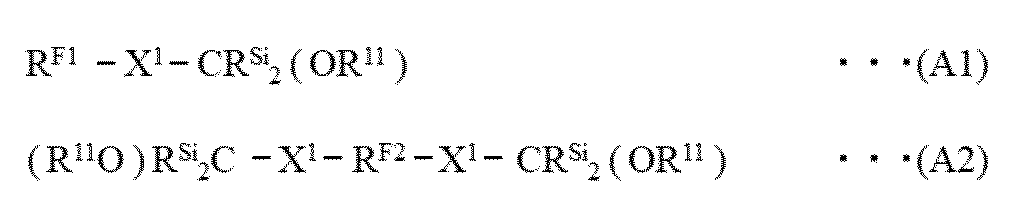
[式中:
RF1は、Rf1-RF-Oq-で表され;
RF2は、-Rf2 p-RF-Oq-で表され;
Rf1は、1個またはそれ以上のフッ素原子により置換されていてもよいC1-16アルキル基であり;
Rf2は、1個またはそれ以上のフッ素原子により置換されていてもよいC1-6アルキレン基であり;
RFは、それぞれ独立して、式:
-(OC6F12)a-(OC5F10)b-(OC4F8)c-(OC3RFa 6)d-(OC2F4)e-(OCF2)f-
で表される基であり;
a、b、c、d、eおよびfは、それぞれ独立して、0~200の整数であって、a、b、c、d、eおよびfの和は1以上であり、a、b、c、d、e、またはfを付して括弧でくくられた各繰り返し単位の存在順序は式中において任意であり;
RFaは、各出現においてそれぞれ独立して、水素原子、フッ素原子または塩素原子であり;
pは、0または1であり;
qは、独立して、0または1であり;
X1は、各出現においてそれぞれ独立して、以下の式:
-(CR50 2)n51-(CR51=CR52)n52-((CH2)n55-Y51-(CH2)n54)n53-
で表され;
R50は、各出現においてそれぞれ独立して、水素原子、ハロゲン原子、水酸基、または1価の有機基であり;
R51およびR52は、各出現においてそれぞれ独立して、水素原子、または1価の有機基であり;
Y51は、各出現においてそれぞれ独立して、O、CONR15、NR15、S、またはアリーレン基であり;
n54は、それぞれ独立して、0または1であり;
n55は、それぞれ独立して、0または1であり;
R15は、各出現においてそれぞれ独立して、水素原子、芳香環を有する基、C1-6アルキル基、-O-C1-6アルキル基またはC3-10シクロアルキル基であり;
n51は、0~10の整数であり;
n52は、0~10の整数であり;
n53は、0~10の整数であり;
n51、n52またはn53を付して括弧でくくられた各繰り返し単位の存在順序は式中において任意であり、n51、n52およびn53の合計は1以上であり;
RSiは、それぞれ独立して、下記式(S1):

X3は、各出現においてそれぞれ独立して、単結合、酸素原子、または2価の有機基であり;
Rb1は、各出現においてそれぞれ独立して、水酸基または加水分解可能な基であり;
Rc1は、各出現においてそれぞれ独立して、水素原子または1価の有機基であり;
l1は、各出現においてそれぞれ独立して、0~3の整数であり;
ただし、式(A1)および(A2)のそれぞれにおいて、少なくとも1つのl1は1であり;
R11は、各出現においてそれぞれ独立して、水素原子、ベンジル基、メトキシフェニル基、ベンゾイル基、トリチル基、-SiR71、または-(R72-O)n7-R73であり、
R71は、それぞれ独立して、C1-4アルキル基であり、
R72は、それぞれ独立して、C1-4アルキレン基であり、
n7は、それぞれ独立して、1~10の整数であり;
R73は、それぞれ独立して、水素原子、または環構造を含んでいてもよい1価の炭化水素基である。]
[2] X1は、各出現においてそれぞれ独立して、式(X1)または(X2):
-X51-CR51=CR52-X52- ・・・(X1)
-X53- ・・・(X2)
で表され;
X51は、-(CR50 2)n511-((CH2)n55-Y51-(CH2)n54)n512-
で表され;
R50は、各出現においてそれぞれ独立して、水素原子、ハロゲン原子、水酸基、または1価の有機基であり;
Y51は、各出現においてそれぞれ独立して、O、CONR15、NR15、S、またはアリーレン基であり;
n54は、それぞれ独立して、0または1であり;
n55は、それぞれ独立して、0または1であり;
R15は、各出現においてそれぞれ独立して、水素原子、芳香環を有する基、C1-6アルキル基、-O-C1-6アルキル基またはC3-10シクロアルキル基であり;
n511は、0~10の整数であり;
n512は、0~10の整数であり;
n511またはn512を付して括弧でくくられた各繰り返し単位の存在順序は式中において任意であり;
X52は、-(CR50 2)n511’-((CH2)n55-Y51-(CH2)n54)n512’-で表され;
n511’は、0~10の整数であり;
n512’は、0~10の整数であり;
n511’またはn512’を付して括弧でくくられた各繰り返し単位の存在順序は式中において任意であり;
R51およびR52は、それぞれ独立して、水素原子、または1価の有機基であり;
X53は、それぞれ独立して、
-(CR50 2)n521-((CH2)n55-Y51-(CH2)n54)n522-
で表され;
n521は、0~10の整数であり;
n522は、0~10の整数であり;
n521またはn522を付して括弧でくくられた各繰り返し単位の存在順序は式中において任意であり、n521およびn522の合計は1以上である、
[1]に記載のフルオロポリエーテル基含有シラン化合物。
[3] R50は、各出現においてそれぞれ独立して、水素原子、ハロゲン原子、水酸基、-O-(R14-O)n4-R14’、またはC1-4アルキル基である、[1]または[2]に記載のフルオロポリエーテル基含有シラン化合物。
[式中:
R14は、それぞれ独立してC1-4アルキレン基であり;
n4は、それぞれ独立して0~100の整数であり;
R14’は、それぞれ独立してC1-4アルキル基であり;
上記C1-4アルキル基は置換基を有していてもよい。]
[4] X1は、各出現においてそれぞれ独立して、
-CHR13-[(CR50’ 2)n51’-(CR51=CR52)n52-((CH2)n55-Y51-(CH2)n54)n53]-
で表される基であり、
R13は、-OH、または-O-(R14-O)n4-R14’で表され;
R14は、それぞれ独立してC1-4アルキレン基であり;
n4は、0~100の整数であり;
R14’は、C1-4アルキル基であり;
R50’は、それぞれ独立して、水素原子、ハロゲン原子、水酸基または1価の有機基であり;
n51’は、0~10の整数であり;
n52は、0~10の整数であり;
n53は、0~10の整数であり;
n51’、n52またはn53を付して括弧でくくられた各繰り返し単位の存在順序は、-(CR50’ 2)n51’-(CR51=CR52)n52-((CH2)n55-Y51-(CH2)n54)n53-内において任意であり、
R51およびR52は、それぞれ独立して、水素原子、または1価の有機基であり;
Y51は、それぞれ独立して、O、CONR15、NR15、S、またはアリーレン基であり、
R15は、各出現においてそれぞれ独立して、水素原子、芳香環を有する基、C1-6アルキル基、-O-C1-6アルキル基またはC3-10シクロアルキル基であり;
n54は、それぞれ独立して、0または1であり、
n55は、それぞれ独立して、0または1である、
[1]に記載のフルオロポリエーテル基含有シラン化合物。
[5] R50’は、水素原子である、[4]に記載のフルオロポリエーテル基含有シラン化合物。
[6] R51およびR52は、水素原子である、[1]~[5]のいずれか1つに記載のフルオロポリエーテル基含有シラン化合物。
[7] R11は、各出現においてそれぞれ独立して、水素原子、または-(R72-O)n7-R73で表される基であり、
R72は、それぞれ独立して、C1-4アルキレン基であり、
R73は、水素原子、環構造を含んでいてもよい1価の炭化水素基であり、
n7は、1~10の整数である、
[1]~[6]のいずれか1つに記載のフルオロポリエーテル基含有シラン化合物。
[8] R11は、各出現においてそれぞれ独立して、-CH2O-R11’であり、
R11’は、水素原子、または-(R72-O)n7’-R73であり、
R72は、それぞれ独立して、C1-4アルキレン基であり、
R73は、水素原子、環構造を含んでいてもよい1価の炭化水素基であり、
n7’は、0~9の整数である、
[1]~[7]のいずれか1つに記載のフルオロポリエーテル基含有シラン化合物。
[9] R73は、それぞれ独立して、水素原子、またはC1-4アルキル基である、[1]~[8]のいずれか1つに記載のフルオロポリエーテル基含有シラン化合物。
[10] n55は、1である、[1]~[9]のいずれか1つに記載のフルオロポリエーテル基含有シラン化合物。
[11] n54およびn55は、0である、[1]~[9]のいずれか1つに記載のフルオロポリエーテル基含有シラン化合物。
[12] [1]~[11]のいずれか1つに記載のフルオロポリエーテル基含有シラン化合物、および、該フルオロポリエーテル基含有シラン化合物の少なくとも一部が縮合した縮合物からなる群より選ばれる少なくとも1つを含有する、表面処理剤。
[13] [1]~[11]のいずれか1つに記載のフルオロポリエーテル基含有シラン化合物を含有する、表面処理剤。
[14] 基材と、該基材の表面に、[1]~[11]のいずれか1つに記載のフルオロポリエーテル基含有シラン化合物または[12]または[13]に記載の表面処理剤から形成された層とを含む物品。
[15] 式(a11)または式(a12):



を含む、フルオロポリエーテル基含有化合物の製造方法。
[式中:
RF1は、Rf1-RF-Oq-で表され;
RF2は、-Rf2 p-RF-Oq-で表され;
Rf1は、1個またはそれ以上のフッ素原子により置換されていてもよいC1-16アルキル基であり;
Rf2は、1個またはそれ以上のフッ素原子により置換されていてもよいC1-6アルキレン基であり;
RFは、それぞれ独立して、式:
-(OC6F12)a-(OC5F10)b-(OC4F8)c-(OC3RFa 6)d-(OC2F4)e-(OCF2)f-
で表される基であり;
a、b、c、d、eおよびfは、それぞれ独立して、0~200の整数であって、a、b、c、d、eおよびfの和は1以上であり、a、b、c、d、e、またはfを付して括弧でくくられた各繰り返し単位の存在順序は式中において任意であり;
RFaは、各出現においてそれぞれ独立して、水素原子、フッ素原子または塩素原子であり;
pは、0または1であり;
qは、独立して、0または1であり;
X61は、それぞれ独立して、-(CR60 2)n611-((CH2)n614-Y61-(CH2)n613)n612-で表され;
R60は、各出現においてそれぞれ独立して、水素原子、ハロゲン原子、または1価の有機基を表し;
Y61は、各出現においてそれぞれ独立して、O、CONR15、NR15、S、またはアリーレン基であり;
n613は、それぞれ独立して、0または1であり;
n614は、それぞれ独立して、0または1であり;
n611は、0~10の整数であり;
n612は、0~10の整数であり;
n611またはn612を付して括弧でくくられた各繰り返し単位の存在順序は式中において任意であり;
X62は、それぞれ独立して、-(CR60 2)n611’-((CH2)n614-Y61-(CH2)n613)n612’-で表され;
n611’は、0~10の整数であり;
n612’は、0~10の整数であり;
n611’またはn612’を付して括弧でくくられた各繰り返し単位の存在順序は式中において任意であり;
R15は、各出現においてそれぞれ独立して、水素原子、芳香環を有する基、C1-6アルキル基、-O-C1-6アルキル基またはC3-10シクロアルキル基であり;
R61およびR62は、各出現においてそれぞれ独立して、水素原子、または1価の有機基であり;
R63は、各出現においてそれぞれ独立して、水素原子、または1価の有機基である。]
[16] 式(a31)または式(a32):


を含む、フルオロポリエーテル基含有化合物の製造方法。
[式中:
RF1は、Rf1-RF-Oq-で表され;
RF2は、-Rf2 p-RF-Oq-で表され;
Rf1は、1個またはそれ以上のフッ素原子により置換されていてもよいC1-16アルキル基であり;
Rf2は、1個またはそれ以上のフッ素原子により置換されていてもよいC1-6アルキレン基であり;
RFは、各出現においてそれぞれ独立して、式:
-(OC6F12)a-(OC5F10)b-(OC4F8)c-(OC3RFa 6)d-(OC2F4)e-(OCF2)f-
で表される基であり;
a、b、c、d、eおよびfは、それぞれ独立して、0~200の整数であって、a、b、c、d、eおよびfの和は1以上であり、a、b、c、d、e、またはfを付して括弧でくくられた各繰り返し単位の存在順序は式中において任意であり;
RFaは、各出現においてそれぞれ独立して、水素原子、フッ素原子または塩素原子であり;
pは、0または1であり;
qは、独立して、0または1であり;
X61は、各出現においてそれぞれ独立して、-(CR60 2)n611-((CH2)n614-Y61-(CH2)n613)n612-で表され;
R60は、各出現においてそれぞれ独立して、水素原子、ハロゲン原子、または1価の有機基を表し;
Y61は、各出現においてそれぞれ独立して、O、CONR15、NR15、S、またはアリーレン基であり;
n613は、それぞれ独立して、0または1であり;
n614は、それぞれ独立して、0または1であり;
n611は、0~10の整数であり;
n612は、0~10の整数であり;
n611またはn612を付して括弧でくくられた各繰り返し単位の存在順序は式中において任意であり;
X62は、各出現においてそれぞれ独立して、-(CR60 2)n611’-((CH2)n614-Y61-(CH2)n613)n612’-で表され;
n611’は、0~10の整数であり;
n612’は、0~10の整数であり;
n611’またはn612’を付して括弧でくくられた各繰り返し単位の存在順序は式中において任意であり;
R15は、各出現においてそれぞれ独立して、水素原子、芳香環を有する基、C1-6アルキル基、-O-C1-6アルキル基、またはC3-10シクロアルキル基であり;
R61およびR62は、各出現においてそれぞれ独立して、水素原子、または1価の有機基であり;
R63は、各出現においてそれぞれ独立して、水素原子、または1価の有機基である。]
[17] 式(a23)、または式(a24):


を含む、フルオロポリエーテル基含有化合物の製造方法。
[式中:
RF1は、Rf1-RF-Oq-で表され;
RF2は、-Rf2 p-RF-Oq-で表され;
Rf1は、1個またはそれ以上のフッ素原子により置換されていてもよいC1-16アルキル基であり;
Rf2は、1個またはそれ以上のフッ素原子により置換されていてもよいC1-6アルキレン基であり;
RFは、各出現においてそれぞれ独立して、式:
-(OC6F12)a-(OC5F10)b-(OC4F8)c-(OC3RFa 6)d-(OC2F4)e-(OCF2)f-
で表される基であり;
a、b、c、d、eおよびfは、それぞれ独立して、0~200の整数であって、a、b、c、d、eおよびfの和は1以上であり、a、b、c、d、e、またはfを付して括弧でくくられた各繰り返し単位の存在順序は式中において任意であり;
RFaは、各出現においてそれぞれ独立して、水素原子、フッ素原子または塩素原子であり;
pは、0または1であり;
qは、独立して、0または1であり;
-X6-は、各出現においてそれぞれ独立して、
-X61-CR61=CR62-X62-、または
-X63-
で表され;
X61は、それぞれ独立して、
-(CR60 2)n611-((CH2)n614-Y61-(CH2)n613)n612-
で表され;
R60は、各出現においてそれぞれ独立して、水素原子、ハロゲン原子、または1価の有機基を表し;
Y61は、各出現においてそれぞれ独立して、O、CONR15、NR15、S、またはアリーレン基であり;
n613は、それぞれ独立して、0または1であり;
n614は、それぞれ独立して、0または1であり;
n611は、0~10の整数であり;
n612は、0~10の整数であり;
n611またはn612を付して括弧でくくられた各繰り返し単位の存在順序は式中において任意であり;
X62は、それぞれ独立して、-(CR60 2)n611’-((CH2)n614-Y61-(CH2)n613)n612’-で表され;
n611’は、0~10の整数であり;
n612’は、0~10の整数であり;
n611’またはn612’を付して括弧でくくられた各繰り返し単位の存在順序は式中において任意であり;
R15は、各出現においてそれぞれ独立して、水素原子、芳香環を有する基、C1-6アルキル基、-O-C1-6アルキル基、またはC3-10シクロアルキル基であり;
R61およびR62は、それぞれ独立して、水素原子、または1価の有機基であり;
X63は、それぞれ独立して、
-(CR60 2)n621-((CH2)n614-Y61-(CH2)n613)n622-
で表され;
n621は0~10の整数であり;
n622は0~10の整数であり;
n621またはn622を付して括弧でくくられた各繰り返し単位の存在順序は式中において任意であり、n621およびn622の合計は1以上であり;
R63は、各出現においてそれぞれ独立して、水素原子、または1価の有機基であり;
Halは、ハロゲン原子を表し;
Jは、Mg、Cu、PdまたはZnを表し;
Z23は、それぞれ独立して、単結合または2価の有機基を表す。]
[18] 式(a23)または式(a24):

[式中:
RF1は、Rf1-RF-Oq-で表され;
RF2は、-Rf2 p-RF-Oq-で表され;
Rf1は、1個またはそれ以上のフッ素原子により置換されていてもよいC1-16アルキル基であり;
Rf2は、1個またはそれ以上のフッ素原子により置換されていてもよいC1-6アルキレン基であり;
RFは、各出現においてそれぞれ独立して、式:
-(OC6F12)a-(OC5F10)b-(OC4F8)c-(OC3RFa 6)d-(OC2F4)e-(OCF2)f-
で表される基であり;
a、b、c、d、eおよびfは、それぞれ独立して、0~200の整数であって、a、b、c、d、eおよびfの和は1以上であり、a、b、c、d、e、またはfを付して括弧でくくられた各繰り返し単位の存在順序は式中において任意であり;
RFaは、各出現においてそれぞれ独立して、水素原子、フッ素原子または塩素原子であり;
pは、0または1であり;
qは、独立して、0または1であり;
-X6-は、各出現においてそれぞれ独立して、
-X61-CR61=CR62-X62-、または
-X63-
で表され;
X61は、それぞれ独立して、
-(CR60 2)n611-((CH2)n614-Y61-(CH2)n613)n612-
で表され;
R60は、各出現においてそれぞれ独立して、水素原子、ハロゲン原子、または1価の有機基を表し;
Y61は、各出現においてそれぞれ独立して、O、CONR15、NR15、S、またはアリーレン基であり;
n613は、それぞれ独立して、0または1であり;
n614は、それぞれ独立して、0または1であり;
n611は、0~10の整数であり;
n612は、0~10の整数であり;
n611またはn612を付して括弧でくくられた各繰り返し単位の存在順序は式中において任意であり;
X62は、それぞれ独立して、-(CR60 2)n611’-((CH2)n614-Y61-(CH2)n613)n612’-で表され;
n611’は、0~10の整数であり;
n612’は、0~10の整数であり;
n611’またはn612’を付して括弧でくくられた各繰り返し単位の存在順序は式中において任意であり;
R15は、各出現においてそれぞれ独立して、水素原子、芳香環を有する基、C1-6アルキル基、-O-C1-6アルキル基、またはC3-10シクロアルキル基であり;
R61およびR62は、それぞれ独立して、水素原子、または1価の有機基であり;
X63は、それぞれ独立して、
-(CR60 2)n621-((CH2)n614-Y61-(CH2)n613)n622-
で表され;
n621は、0~10の整数であり;
n622は、0~10の整数であり;
n621またはn622を付して括弧でくくられた各繰り返し単位の存在順序は式中において任意であり、n621およびn622の合計は1以上であり;
R63は、それぞれ独立して、水素原子、または1価の有機基である。]
[19] 式(a27)または式(a28):
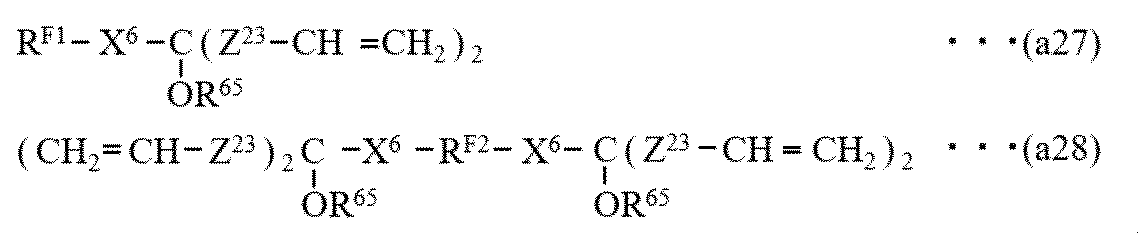
[式中:
RF1は、Rf1-RF-Oq-で表され;
RF2は、-Rf2 p-RF-Oq-で表され;
Rf1は、1個またはそれ以上のフッ素原子により置換されていてもよいC1-16アルキル基であり;
Rf2は、1個またはそれ以上のフッ素原子により置換されていてもよいC1-6アルキレン基であり;
RFは、各出現においてそれぞれ独立して、式:
-(OC6F12)a-(OC5F10)b-(OC4F8)c-(OC3RFa 6)d-(OC2F4)e-(OCF2)f-
で表される基であり;
a、b、c、d、eおよびfは、それぞれ独立して、0~200の整数であって、a、b、c、d、eおよびfの和は1以上であり、a、b、c、d、e、またはfを付して括弧でくくられた各繰り返し単位の存在順序は式中において任意であり;
RFaは、各出現においてそれぞれ独立して、水素原子、フッ素原子または塩素原子であり;
pは、0または1であり;
qは、独立して、0または1であり;
-X6-は、各出現においてそれぞれ独立して、
-X61-CR61=CR62-X62-、または
-X63-
で表され;
X61は、それぞれ独立して、
-(CR60 2)n611-((CH2)n614-Y61-(CH2)n613)n612-
で表され;
R60は、各出現においてそれぞれ独立して、水素原子、ハロゲン原子、または1価の有機基を表し;
Y61は、各出現においてそれぞれ独立して、O、CONR15、NR15、S、またはアリーレン基であり;
n613は、それぞれ独立して、0または1であり;
n614は、それぞれ独立して、0または1であり;
n611は、0~10の整数であり;
n612は、0~10の整数であり;
n611またはn612を付して括弧でくくられた各繰り返し単位の存在順序は式中において任意であり;
X62は、それぞれ独立して、-(CR60 2)n611’-((CH2)n614-Y61-(CH2)n613)n612’-で表され;
n611’は、0~10の整数であり;
n612’は、0~10の整数であり;
n611’またはn612’を付して括弧でくくられた各繰り返し単位の存在順序は式中において任意であり;
R15は、各出現においてそれぞれ独立して、水素原子、芳香環を有する基、C1-6アルキル基、-O-C1-6アルキル基、またはC3-10シクロアルキル基であり;
R61およびR62は、それぞれ独立して、水素原子、または1価の有機基であり;
X63は、
-(CR60 2)n621-((CH2)n614-Y61-(CH2)n613)n622-
で表され;
n621は、0~10の整数であり;
n622は、0~10の整数であり;
n621またはn622を付して括弧でくくられた各繰り返し単位の存在順序は式中において任意であり、n621およびn622の合計は1以上であり;
R65は、それぞれ独立して、水素原子、または1価の有機基であり;
Z23は、それぞれ独立して、単結合または2価の有機基を表す。]
本明細書において用いられる場合、「2価の有機基」としては、特に限定されるものではないが、炭化水素基からさらに1個の水素原子を脱離させた2価の基が挙げられる。
本開示のフルオロポリエーテル基含有シラン化合物は、下記式(A1)または(A2)で表される化合物である。
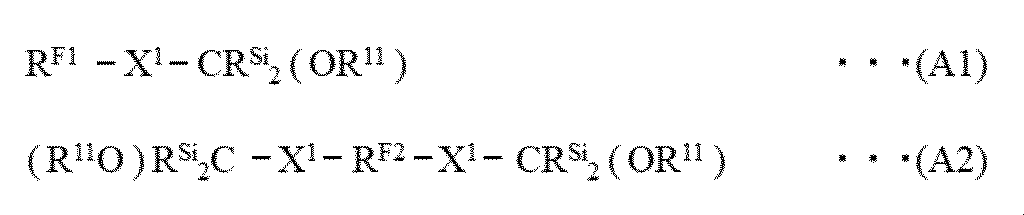
-(OC6F12)a-(OC5F10)b-(OC4F8)c-(OC3RFa 6)d-(OC2F4)e-(OCF2)f-
[式中:
RFaは、各出現においてそれぞれ独立して、水素原子、フッ素原子または塩素原子であり、
a、b、c、d、eおよびfは、それぞれ独立して、0~200の整数であって、a、b、c、d、eおよびfの和は1以上である。a、b、c、d、eまたはfを付して括弧でくくられた各繰り返し単位の存在順序は式中において任意である。]
-(OC3F6)d-(OC2F4)e- (f1)
[式中、dは、1~200の整数であり、eは0または1、好ましくは1である。]
-(OC4F8)c-(OC3F6)d-(OC2F4)e-(OCF2)f- (f2)
[式中、cおよびdは、それぞれ独立して0以上30以下の整数であり、eおよびfは、それぞれ独立して1以上200以下の整数であり、
c、d、eおよびfの和は2以上であり、
添字c、d、eまたはfを付して括弧でくくられた各繰り返し単位の存在順序は、式中において任意である。]
-(R6-R7)g- (f3)
[式中、R6は、OCF2またはOC2F4であり、
R7は、OC2F4、OC3F6、OC4F8、OC5F10およびOC6F12から選択される基であるか、あるいは、これらの基から独立して選択される2または3つの基の組み合わせであり、
gは、2~100の整数である。]
-(OC6F12)a-(OC5F10)b-(OC4F8)c-(OC3F6)d-(OC2F4)e-(OCF2)f- (f4)
[式中、eは、1以上200以下の整数であり、a、b、c、dおよびfは、それぞれ独立して0以上200以下の整数であって、a、b、c、d、eおよびfの和は少なくとも1であり、また、a、b、c、d、eまたはfを付して括弧でくくられた各繰り返し単位の存在順序は式中において任意である。]
-(OC6F12)a-(OC5F10)b-(OC4F8)c-(OC3F6)d-(OC2F4)e-(OCF2)f- (f5)
[式中、fは、1以上200以下の整数であり、a、b、c、dおよびeは、それぞれ独立して0以上200以下の整数であって、a、b、c、d、eおよびfの和は少なくとも1であり、また、a、b、c、d、eまたはfを付して括弧でくくられた各繰り返し単位の存在順序は式中において任意である。]
で表される基である。
-(OC4F8)c-(OC3F6)d-(OC2F4)e-(OCF2)f-
で表される基である。式中、cおよびdは、それぞれ独立して0以上30以下の整数であり、eおよびfは、それぞれ独立して1以上200以下、好ましくは5以上200以下、より好ましくは10以上200以下の整数であり、添字eまたはfを付して括弧でくくられた各繰り返し単位の存在順序は、式中において任意である。RFは、より具体的には、-(OC2F4)e-(OCF2)f-で表される基であり得る。
-(OC4F8)c-(OC3F6)d-(OC2F4)e-(OCF2)f- (f2)
で表される基であり(式中、cおよびdは、それぞれ独立して0以上30以下の整数であり、eおよびfは、それぞれ独立して1以上200以下、好ましくは5以上200以下、より好ましくは10以上200以下の整数であり、添字eまたはfを付して括弧でくくられた各繰り返し単位の存在順序は、式中において任意である)、e/f比は、0.20以上1.0未満であり、より好ましくは0.20~0.95であり、より好ましくは0.20~0.90、さらに好ましくは、0.40~0.80、特に好ましくは0.50~0.70である。RFは、より具体的には、-(OC2F4)e-(OCF2)f-で表される基であり得る。
上記のようなRFを有する化合物を用いることにより、該化合物を用いて形成される硬化層の化学的な耐久性(耐ケミカル性)、摩擦耐久性、撥水性、撥油性、防汚性(例えば指紋等の汚れの付着を防止する)、防水性(電子部品等への水の浸入を防止する)、または表面滑り性(または潤滑性、例えば指紋等の汚れの拭き取り性や、指に対する優れた触感)等が良好になる。これは、上記のようなRFを有する化合物を用いることによって、該化合物から形成される硬化層の表面の動摩擦係数が小さくなるためと考えられる。
-(OC4F8)c-(OC3F6)d-(OC2F4)e-(OCF2)f- (f2)
で表される基であり(式中、cおよびdは、それぞれ独立して0以上30以下の整数であり、eおよびfは、それぞれ独立して1以上200以下、好ましくは5以上200以下、より好ましくは10以上200以下の整数であり、添字eまたはfを付して括弧でくくられた各繰り返し単位の存在順序は、式中において任意である)、
e/f比は、0.20~0.80であり、より好ましくは0.30~0.70である。
RF1およびRF2部分の数平均分子量が6,000~20,000、およびe/f比が0.50~0.80の範囲にあり;
好ましくは、RF1およびRF2部分の数平均分子量が6,000~15,000、およびe/f比が0.50~0.70の範囲にあり;
より好ましくは、RF1およびRF2部分の数平均分子量が10,000~15,000、およびe/f比が0.50~0.70の範囲にある。
本態様において、好ましくは、RFは、-(OC4F8)c-(OC3F6)d-(OC2F4)e-(OCF2)f-で表される基である。ここで、例えば、cおよびdは、それぞれ独立して0以上30以下の整数であり、eは、20~70範囲にある整数であり、fは、45~120の範囲にある整数である。このようなフルオロポリエーテル基含有シラン化合物は、極めて高い潤滑性と低い動摩擦係数による滑り性を示す硬化層(例えば表面処理層)の形成に寄与し得る。
X1は、各出現においてそれぞれ独立して、以下の式(X):
-(CR50 2)n51-(CR51=CR52)n52-((CH2)n55-Y51-(CH2)n54)n53- ・・(X)
で表される。このようなX1を有することにより、式(A1)で表されるフルオロポリエーテル基含有シラン化合物および/または式(A2)で表されるフルオロポリエーテル基含有シラン化合物を用いて形成される硬化層の柔軟性、耐摩耗性、基材へのぬれ広がり性、および、基材との密着性などが良好になり得る。
なお、本明細書において、X1として記載する構造の左側がRF1またはRF2で表される基と、右側がCRSi 2(OR11)で表される基と、それぞれ結合する。
n52は、0~10の整数であり、好ましくは0~5の整数である。
n53は、0~10の整数であり、好ましくは0~5の整数である。
ただし、n51、n52またはn53を付して括弧でくくられた各繰り返し単位の存在順序は式中において任意であり、n51、n52およびn53の合計は1以上である。
一の態様において、R51は水素原子である。一の態様において、R51はメチル基である。
一の態様において、R52は水素原子である。一の態様において、R52はメチル基である。
R15は、各出現においてそれぞれ独立して、水素原子、芳香環を有する基、C1-6アルキル基、-O-C1-6アルキル基またはC3-10シクロアルキル基であり、好ましくは水素原子である。芳香環を有する基としては、例えばフェニル基を挙げることができる。
アリーレン基としては、例えば、C6-10アリーレン基を挙げることができ、具体的には、フェニレン基、置換基を有するフェニレン基を挙げることができる。置換基としては、ハロゲン、アルキル基(例えば、C1-4アルキル基)、ヘテロ環に由来する1価の基(例えば、ピぺリジン、ピぺラジン、モルホリン、ジオキサン、ジチアン、ピロリジン、オキサゾリジン、イソキサゾリジン、チアゾリジン、イソチアゾリジン、イミダゾリジン、またはピラゾリジンに由来する1価の基)、フェノキシ基を挙げることができる。
なお、Y51が環構造を有する場合、Y51と、X1の他の部位との結合位置、または、Y51と、RF1、RF2もしくはCRSi2(OR11)との結合位置は特に限定されない。
式中、R14は、それぞれ独立してC1-4アルキレン基であり、
n4は、それぞれ独立して0~100の整数であり、好ましくは、1~50の整数であり、より好ましくは、1~40の整数であり、さらに好ましくは、1~10の整数であり、
R14’は、それぞれ独立してC1-4アルキル基である。
ここで、C1-4アルキル基は置換基を有していてもよい。
R14は、それぞれ独立してC1-4アルキレン基であり、
n4は、それぞれ独立して0~100の整数であり、好ましくは、1~50の整数であり、より好ましくは、1~40の整数であり、さらに好ましくは、1~10の整数であり、
R14’は、それぞれ独立してC1-4アルキル基である。
ここで、C1-4アルキル基は置換基を有していてもよい。
-X51-CR51=CR52-X52- ・・・(X1)
-X53- ・・・(X2)
-(CR50 2)n511-((CH2)n55-Y51-(CH2)n54)n512-
で表される。
R50、Y51、n54およびn55は上記と同意義である。
n511は、0~10の整数であり、好ましくは、0~5の整数である。
n512は、0~10の整数であり、好ましくは、0~5の整数である。
n511またはn512を付して括弧でくくられた各繰り返し単位の存在順序は式中において任意である。
一の態様において、n511およびn512の合計は1以上である。
一の態様において、n511は1~10の整数であり、n512は0である。言い換えると、X51は-(CR50 2)n511-で表される。
-(CR50 2)n511’-((CH2)n55-Y51-(CH2)n54)n512’-
で表される。X52におけるR50およびY51は、X51におけるR50およびY51とそれぞれ同意義である。
n511’は、0~10の整数であり、好ましくは、0~5の整数である。
n512’は、0~10の整数であり、好ましくは、0~5の整数である。
ただし、n511’またはn512’を付して括弧でくくられた各繰り返し単位の存在順序は式中において任意である。
一の態様において、n511’およびn512’の合計は1以上である。
一の態様において、n511’は1~10の整数であり、n512’は0である。言い換えると、X52は-(CR50 2)n511’-で表される。
-X51-CR51=CR52-X52- ・・・(X1)
は、以下の式:
-[(CR50 2)n511-(CH2-Y51-(CH2)n54)n512]-CR51=CR52-[(CR50 2)n511-(CH2-Y51-(CH2)n54)n512]-
で表される。上記式におけるn511とn511’との合計値は、式(X)におけるn51の値に、n512とn512’との合計値は、式(X)におけるn53の値に、それぞれ相当する。
-X51-CR51=CR52-X52- ・・・(X1)
は、以下の式:
-[-(CR50 2)n514-(Y51)-(CR50 2)n515]-CR51=CR52-[-(CR50 2)n514’-(Y51)-(CR50 2)n515’-]-
で表される。R50、Y51、n514、n515、R51、R52、n514’およびn515’はそれぞれ上記と同意義である。n514とn515との合計値は、式(X1)におけるn511の値に、n514’とn515’との合計値は、式(X1)におけるn511’の値に、それぞれ相当する。n514、n515、n514’およびn515’の合計値は、式(X)におけるn51の値にそれぞれ相当する。
一の態様においては、X51は、-(CR50 2)n511-、X52は、-(CR50 2)n511’-で表され、n511およびn511’の少なくとも一方は1以上の整数である。
一の態様においては、X51は、-(CR50 2)n511-(Y51)n512-で表され、X52は、それぞれ独立して-(CR50 2)n511’-(Y51)n512’-で表さる。n511、n512、n511’およびn512’のいずれか1つは1以上の整数である。
一の態様においては、X51は、-(CR50 2)n511-で表され、X52が-(CR50 2)n511’-(Y51)n512’-で表され、n512’は1以上の整数である。本態様において、X52は、-(CR50 2)n514’-(Y51)-(CR50 2)n515’-である。
一の態様において、X51が-(CR50 2)n511-(Y51)n512-で表され、X52が-(CR50 2)n511’-で表され、n512は1以上の整数である。
-(CR50 2)n521-((CH2)n55-Y51-(CH2)n54)n522-
で表される。
R50、n54、n55およびY51は、それぞれ上記と同意義である。
n521は、1~10の整数であり、好ましくは、1~5の整数である。
n522は、1~10の整数であり、好ましくは、1~5の整数である。
n521またはn522を付して括弧でくくられた各繰り返し単位の存在順序は式中において任意であり、n521およびn522の合計は1以上である。
n524は0~10の整数、n525は0~10の整数、より好ましくは、n524は0~5の整数、n525は0~5の整数である。n524とn525との合計はn521に相当する。
-CHR13-[(CR50’ 2)n51’-(CR51=CR52)n52-((CH2)n55-Y51-(CH2)n54)n53]- ・・・(X’)
で表される基である。
R13は、-OH、または-O-(R14-O)n4-R14’で表される。
R14は、それぞれ独立してC1-4アルキレン基であり、好ましくは、CH2、またはCH2CH2である。
n4は、それぞれ独立して0~100の整数であり、好ましくは、1~50の整数であより好ましくは、1~40の整数であり、さらに好ましくは、1~10の整数である。
R14’は、それぞれ独立してC1-4アルキル基であり、好ましくは、C1-2アルキル基である。
R50’は、それぞれ独立して、水素原子、ハロゲン原子、水酸基、またはC1-4アルキル基であり、好ましくは水素原子、ハロゲン原子、またはC1-4アルキル基であり、より好ましくは水素原子である。
R51、R52、Y51、n52、およびn53は、それぞれ上記と同意義である。
n51’は、0~10の整数であり、好ましくは0~5の整数である。CHR13の個数とCR50’ 2の個数との合計、言い換えると、1+n51’が、式(X)におけるn51に対応する。
n51’、n52またはn53を付して括弧でくくられた各繰り返し単位の存在順序は、式(X’)における-[(CR50’ 2)n51’-(CR51=CR52)n52-((CH2)n55-Y51-(CH2)n54)n53]-で表される構造内において任意である。
-CHR13-[(CR50’ 2)n516-((CH2)n55-Y51-(CH2)n54)n53-(CR50’ 2)n516’]-
で表される。
R13、R50’、Y51、n54、n55およびn53は上記と同意義である。n516は、0~10の整数であり、好ましくは0~5の整数であり、n516’は、0~10の整数であり、好ましくは0~5の整数である。n516とn516’との合計はn51’に相当する。
一の態様において、n516およびn516’は、それぞれ独立して、0~10の整数であり、n53は0である。言い換えると、X1は-CHR13-(CR50’ 2)n51’-で表される。一の態様において、n516およびn516’は、それぞれ独立して、1~10の整数であり、好ましくは1~5の整数である。
-CHR13-[(CR50’ 2)n51’-(CR51=CR52)n52]-
で表される。
R13、R50’、R51、R52、n51’、およびn52は上記と同意義である。
-(CH2)x1-CH=CH-(CH2)x2-(x1は0~10の整数、x2は0~10の整数、ただし、x1とx2との合計は0~10の整数であり、好ましくは、x1は0~4の整数、x2は0~4の整数、例えば、x1は0かつx2は0、x1は1~4の整数かつx2は0、x1は0かつx2は1~4の整数、または、x1は1~4の整数かつx2は1~4の整数)、
-(CH2)x1-CH=CH-(CH2)x2-Ph-(CH2)x3-(Phはフェニレン基、x1は0~10の整数、x2は0~10の整数、x3は0~10の整数、ただし、x1、x2およびx3の合計は、0~10の整数であり、好ましくは、x1は1~3の整数、x2は0~5の整数、x3は0~5の整数、例えば、x1は1、x2は0、x3は0、別の例ではx1は1、x2は0、x3は1)、
-CHR13-(CH2)x1-CH=CH-(CH2)x2-(R13は、-(OCH2)x11-CH3、または、-(OCH2CH2)x11-CH3であり、x11は1~100の整数、x1は0~9の整数、x2は0~10の整数、ただし、x1およびx2の合計は0~10の整数であり、好ましくは、x1は0~4の整数、x2は0~4の整数、例えば、x1は0かつx2は0、x1は1~4の整数かつx2は0、x1は0かつx2は1~4の整数、または、x1は1~4の整数かつx2は1~4の整数)
-CHR13-(CH2)x1-CH=CH-(CH2)x2-Ph-(CH2)x3-(R13は、-(OCH2)x11-CH3、または、-(OCH2CH2)x11-CH3であり、x11は1~10の整数;Phはフェニレン基;x1は0~10の整数、x2は0~10の整数、x3は0~10の整数、好ましくは、x1は1~3の整数、x2は0~5の整数、x3は0~5の整数、ただし、x1、x2およびx3の合計は0~10の整数である。例えば、x1は1、x2は0、x3は0、別の例ではx1は1、x2は0、x3は1)、
-(CH2)x-(xは1~10の整数、好ましくは、xは1~4の整数)、
-(CH2)x1-O-(CH2)x2-(x1は0~10の整数、x2は0~10の整数、ただし、x1およびx2の合計は、0~10の整数、例えば、x1は0、x2は0、別の例ではx1は0、x2は1)、
-(CH2)x1-Ph-(CH2)x2-(Phはフェニレン基;x1は0~10の整数、x2は0~10の整数、ただし、x1およびx2の合計は0~10の整数、好ましくは、x1は0~5の整数、x2は0~5の整数、例えば、x1は0~3の整数、x2は0、別の例ではx1は0~3の整数、x2は1)、
-CHR13-(CH2)x-(xは0~10の整数、好ましくは、xは1~4の整数)、
-CHR13-(CH2)x1-O-(CH2)x2-(x1は0~10の整数、x2は0~10の整数、ただし、x1およびx2の合計は0~10の整数、好ましくは、x1は0~5の整数、x2は0~5の整数、例えば、x1は1、x2は1)、
-CHR13-(CH2)x1-Ph--(CH2)x2-(Phはフェニレン基;x1は0~10の整数、x2は0~10の整数、ただし、x1およびx2の合計は0~10の整数、好ましくは、x1は0~5の整数、x2は0~5の整数、例えば、x1は0~3の整数、x2は0、別の例ではx1は0~3の整数、x2は1)。
-CHR13-(CH2)x1-CONR15-(CH2)x2-(R15は水素原子、芳香環を有する基、C1-6アルキル基、-O-C1-6アルキル基またはC3-10シクロアルキル基であり、好ましくは水素原子であり;x1は0~10の整数、x2は0~10の整数、ただし、x1およびx2の合計は0~10の整数、好ましくは、x1は0~5の整数、x2は0~5の整数、例えば、x1は0~3の整数、x2は0、別の例ではx1は0~3の整数、x2は1~2の整数、別の例ではx1は0、x2は1~2の整数)。
-(CH2)x1-CONR15-(CH2)x2-(R15は水素原子、芳香環を有する基、C1-6アルキル基、-O-C1-6アルキル基またはC3-10シクロアルキル基であり、好ましくは水素原子であり;x1は0~10の整数、x2は0~10の整数、ただし、x1およびx2の合計は0~10の整数、好ましくは、x1は0~5の整数、x2は0~5の整数、例えば、x1は0~3の整数、x2は0、別の例ではx1は0~3の整数、x2は1~2の整数、別の例ではx1は0、x2は1~2の整数)。

上記z11は、0~6の整数、例えば1~6の整数であり、上記z12は、0~6の整数、例えば1~6の整数である。好ましくは、z11とz12との合計は1以上である。
上記z13は、0~6の整数、例えば1~6の整数であり、上記z14は、0~6の整数、例えば1~6の整数である。好ましくは、z13とz14との合計は1以上である。
-CRSi2(OR11)で表される基を有することにより、本開示のフルオロポリエーテル基含有シラン化合物を含む組成物の基材に対する濡れ広がり性が良好になり得る。該組成物を用いて形成された層(例えば表面処理層)の耐摩耗性が良好になり得る。
環構造を含む1価の炭化水素基としては、芳香環を有する1価の基、シクロアルキル基、またはヘテロシクロアルキル基を含む1価の炭化水素基を挙げることができる。
芳香環を有する1価の基としては、例えば、フェニル基を挙げることができる。
シクロアルキル基としては、例えば、C3-10シクロアルキル基、具体的には、シクロペンチル基、シクロヘキシル基、シクロヘプチル基を挙げることができる。
ヘテロシクロアルキル基としては、例えば、酸素原子を含んだシクロアルキル基を挙げることができる。

好ましくは、R11’は、水素原子、または-(R72-O)n7’-R73で表される。R72、およびR73は、それぞれ上記と同意義である。n7’は、0~9の整数であり、好ましくは、0~5の整数である。
一態様として、特に限定されないが、本開示のフルオロポリエーテル基含有シラン化合物の製造に適した方法を以下に記載する。
式(a27)または式(a28):
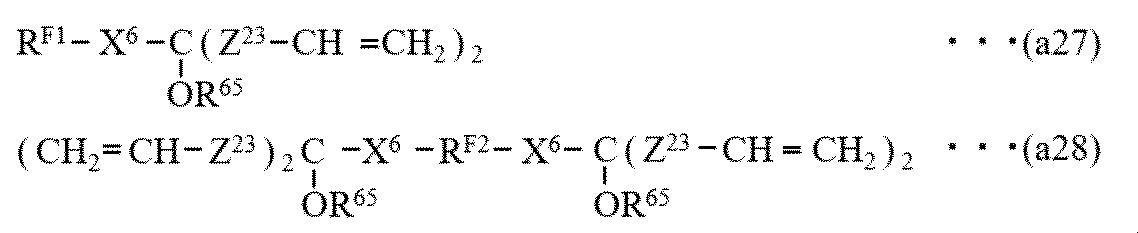
-X61-CR61=CR62-X62-、または
-X63-
で表される。
X62は、単結合、または2価の有機基であり、
R61は、水素原子、または1価の有機基であり、
R62は、水素原子、または1価の有機基であり、
それぞれ、X51、X52、R51、R52に対応する。
X61は、-(CR60 2)n611-((CH2)n614-Y61-(CH2)n613)n612-で表され得、
X62は、-(CR60 2)n611’-((CH2)n614’-Y61-(CH2)n613’)n612’-で表され得、
n611はn511に、n612はn512に、n613はn54に、n614はn55に、n611’はn511’に、n612’はn512’に、n613’はn54に、n614’はn55に、それぞれ対応する。n611またはn612を付して括弧でくくられた各繰り返し単位の存在順序は式中において任意である。n611’またはn612’を付して括弧でくくられた各繰り返し単位の存在順序は式中において任意である。R60はR50に、Y61はY51に、それぞれ対応する。
X63は、それぞれ独立して、
-(CR60 2)n621-((CH2)n614-Y61-(CH2)n613)n622-
で表され得る。
n621はn521に、n622はn522に、n613はn54に、n614はn55に、それぞれ対応し;
n621またはn622を付して括弧でくくられた各繰り返し単位の存在順序は式中において任意である。
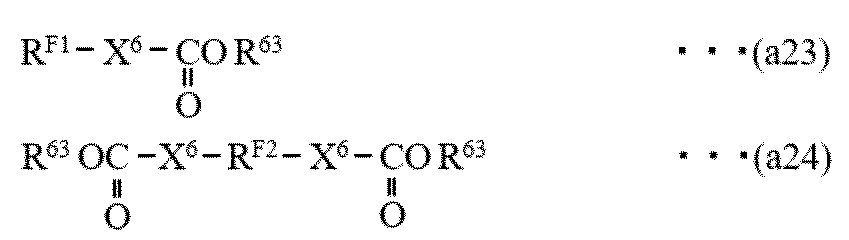

を含む方法により製造し得る。
R63は、各出現においてそれぞれ独立して、水素原子、または1価の有機基であり、好ましくは、水素原子またはC1-4アルキル基である。
式(a11)または式(a12):



を含む方法により製造し得る。式(a21)または式(a22)における-X61-CR61=CR62-X62-で表される基が、式(a23)または式(a24)における-X6-に対応する。
金属-カルベン錯体としては、Grubbs第二世代触媒等の第二世代以上の高活性なGrubbs触媒を用いる。
Grubbs第二世代触媒としては、Hoveyda-Grubbus 2 nd generation catalyst、Piers second generation metathesis catalyst、nitro-Grela、UltraCat、AquaMet,UltraNitroCatを挙げることができる。
適切な溶媒としては、反応に悪影響を及ぼさない溶媒であれば特に限定されるものではない。例えば、HCFC-225(例えば、AGC株式会社製のアサヒクリンAK-225)、1,3-ビス(トリフルオロメチル)ベンゼン(mXHF)、1,1-ジクロロ-2,3,3,3-テトラフルオロ-1-プロペン、1,2-ジクロロ-1,3,3,3-テトラフルオロ-1-プロペン、1,2-ジクロロ-3,3,3-トリフルオロ-1-プロペン、1,1-ジクロロ-3,3,3-トリフルオロ-1-プロペン、1,1,2-トリクロロ―3,3,3-トリフルオロ-1-プロペン、1,1,1,4,4,4-ヘキサフルオロ-2-ブテン、1,3-ビストリフルオロメトキシベンゼン、エチルノナフルオロブチルエーテル、エチルノナフルオロイソブチルエーテル、メチルノナフルオロブチルエーテル、メチルノナフルオロイソブチルエーテル、3-メトキシ-2-(トリフルオロメチル)ペンタン等のフッ素原子含有溶媒;ジクロロプロパン等のフッ素原子非含有溶媒等を挙げることができ、フッ素原子含有溶媒とフッ素原子非含有溶媒との双方を用いてもよい。
式(a31)または式(a32):



を含む方法により製造し得る。なお、PPh3は、トリフェニルホスフィン、即ち、-P(C6H5)3を意味する。
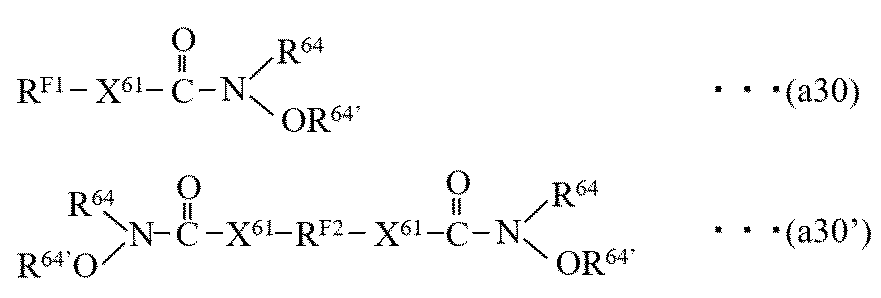


式(a27)または式(a28)において、RF1、RF2、X6、R65、Z23は、それぞれ上記と同意義である。
上記フルオロポリエーテル基含有シラン化合物は、表面処理剤として用いることができる。
表面処理剤には、必要に応じて、加水分解縮合触媒、例えば、有機錫化合物(ジブチル錫ジメトキシド、ジラウリン酸ジブチル錫など)、有機チタン化合物(テトラn-ブチルチタネートなど)、有機酸(酢酸、メタンスルホン酸、フッ素変性カルボン酸など)、無機酸(塩酸、硫酸など)を添加してもよい。これらの中では、特に酢酸、テトラn-ブチルチタネート、ジラウリン酸ジブチル錫、フッ素変性カルボン酸などが望ましい。
加水分解縮合触媒の添加量は触媒量であり、通常、フルオロポリエーテル基含有シラン化合物及び/又はその部分(加水分解)縮合物100質量部に対して0.01~5質量部、特に0.1~1質量部である。
パーフルオロヘキサン、CF3CF2CHCl2、CF3CH2CF2CH3、CF3CHFCHFC2F5、1,1,1,2,2,3,3,4,4,5,5,6,6-トリデカフルオロオクタン、1,1,2,2,3,3,4-ヘプタフルオロシクロペンタン((ゼオローラH(商品名)等)、C4F9OCH3、C4F9OC2H5、CF3CH2OCF2CHF2、C6F13CH=CH2、C6F13OCH3、キシレンヘキサフルオリド、パーフルオロベンゼン、メチルペンタデカフルオロヘプチルケトン、トリフルオロエタノール、ペンタフルオロプロパノール、ヘキサフルオロイソプロパノール、HCF2CF2CH2OH、メチルトリフルオロメタンスルホネート、トリフルオロ酢酸およびCF3O(CF2CF2O)m1(CF2O)n1CF2CF3[式中、m1およびn1は、それぞれ独立して0以上1000以下の整数であり、m1またはn1を付して括弧でくくられた各繰り返し単位の存在順序は式中において任意であり、但しm1およびn1の和は1以上である。]、1,1-ジクロロ-2,3,3,3-テトラフルオロ-1-プロペン、1,2-ジクロロ-1,3,3,3-テトラフルオロ-1-プロペン、1,2-ジクロロ-3,3,3-トリフルオロ-1-プロペン、1,1-ジクロロ-3,3,3-トリフルオロ-1-プロペン、1,1,2-トリクロロ―3,3,3-トリフルオロ-1-プロペン、1,1,1,4,4,4-ヘキサフルオロ-2-ブテンからなる群から選択されるフッ素原子含有溶媒等が挙げられる。これらの溶媒は、単独で、または、2種以上の混合物として用いることができる。
Rf5-(OC4F8)a’-(OC3F6)b’-(OC2F4)c’-(OCF2)d’-Rf6 ・・・(1)
式中、Rf5は、1個またはそれ以上のフッ素原子により置換されていてもよい炭素数1~16アルキル基(好ましくは、C1―16のパーフルオロアルキル基)を表し、Rf6は、1個またはそれ以上のフッ素原子により置換されていてもよい炭素数1~16アルキル基(好ましくは、C1-16パーフルオロアルキル基)、フッ素原子または水素原子を表し、Rf5およびRf6は、より好ましくは、それぞれ独立して、C1-3パーフルオロアルキル基である。
a’、b’、c’およびd’は、ポリマーの主骨格を構成するパーフルオロ(ポリ)エーテルの4種の繰り返し単位数をそれぞれ表し、互いに独立して0以上300以下の整数であって、a’、b’、c’およびd’の和は少なくとも1、好ましくは1~300、より好ましくは20~300である。添字a’、b’、c’またはd’を付して括弧でくくられた各繰り返し単位の存在順序は、式中において任意である。上記繰り返し単位中に少なくとも1の分岐構造を有する。すなわち、上記繰り返し単位は、少なくとも1のCF3末端(具体的には、-CF3、-C2F5等、より具体的には-CF3)を有する。分岐構造を有する繰り返し単位としては、-(OC4F8)-としては、-(OCF(CF3)CF2CF2)-、-(OCF2CF(CF3)CF2)-、-(OCF2CF2CF(CF3))-、-(OC(CF3)2CF2)-、-(OCF2C(CF3)2)-、-(OCF(CF3)CF(CF3))-、-(OCF(C2F5)CF2)-および-(OCF2CF(C2F5))-;-(OC3F6)-としては、-(OCF(CF3)CF2)-および-(OCF2CF(CF3))-;-(OC2F4)-としては、-(OCF(CF3))-を挙げることができる。
Rf5-(OCF(CF3)CF2)b’’-Rf6 ・・・(1a)
Rf5-(OC4F8)a’’-(OC3F6)b’’-(OCF(CF3))c’’-(OCF2)d’’-Rf6 ・・・(1b)
これら式中、Rf5およびRf6は上記の通りであり;式(1a)において、b’’は1以上100以下の整数であり;式(1b)において、a’’およびb’’は、それぞれ独立して1以上30以下の整数であり、c’’およびd’’はそれぞれ独立して1以上300以下の整数である。添字a’’、b’’、c’’、d’’を付して括弧でくくられた各繰り返し単位の存在順序は、式中において任意である。-(OC4F8)-、-(OC3F6)-は分岐構造を有する。
本態様において、式(A1)で表される化合物、式(A2)で表される化合物、および含フッ素オイルの合計に対して、含フッ素オイルは、例えば、0.001モル%以上含まれていてもよく、0.01モル%以上含まれていてもよく、1.0モル%以上含まれていてもよく、50モル%以下含まれていてもよく、40モル%以下含まれていてもよく、30モル%以下含まれていてもよく、10モル%以下含まれていてもよい。式(A1)で表される化合物、式(A2)で表される化合物、および含フッ素オイルの合計に対して、含フッ素オイルは、例えば、0.001~50モル%含まれていてもよく、0.01~40モル%含まれていてもよい。
本態様において、式(A1)で表される化合物、式(A2)で表される化合物、および含フッ素オイルの合計に対して、式(A2)で表される化合物が0.001~70モル%、および含フッ素オイルが0.001~50モル%含まれることが好ましく、式(A2)で表される化合物が0.01~60モル%、および含フッ素オイルが0.01~40モル%含まれることがより好ましく、式(A2)で表される化合物が0.1~50モル%、および含フッ素オイルが0.1~30モル%含まれることがさらに好ましい。
本態様の組成物(例えば、表面処理剤)は、摩擦耐久性の良好な硬化層の形成に寄与し得る。さらに、本態様の組成物を用いて形成される硬化層の摩擦耐久性が良好になり、硬化層の表面における滑り性が良好になる。また、本態様の組成物では、RF部分の二次構造がらせん構造をとりやすく、単位面積当たりのポリマー密度やシランカップリング剤の架橋密度が大きくなるため、硬化層の強度が高くなると考えられる。
本態様において、式(A1)で表される化合物、および式(A2)で表される化合物の合計に対して、式(A2)で表される化合物が、0.001モル%以上50モル%未満含まれていてもよく、0.1モル%以上50モル%未満含まれていてもよく、1モル%以上50モル%未満含まれていてもよく、例えば、10モル%以上50モル%未満含まれていてもよい。
本態様において、式(A1)で表される化合物、および式(A2)で表される化合物の合計に対して、式(A1)で表される化合物が、0.001モル%以上50モル%未満含まれていてもよく、0.1モル%以上50モル%未満含まれていてもよく、10モル%以上50モル%未満含まれていてもよく、例えば、20モル%以上50モル%未満、30モル%以上50モル%未満含まれていてもよい。
本態様において、式(A1)で表される化合物、および式(A2)で表される化合物の合計に対して、式(A2)で表される化合物が、35モル%以上65モル%未満含まれていてもよく、40モル%以上60モル%未満含まれていてもよい。
以下、本開示の物品について説明する。
CF3O-(CF2CF2O)n-(CF2O)m-CF2CH2CH=CH2(n=22,m=22)で示される末端アリル化合物 4g, 1.0mmolをAK-225 8.0mLに溶解後、ブテン酸メチル 0.5g、グラブス触媒(第二世代)42mgを添加した。室温で一晩撹拌後、クロロホルムで洗浄後、濃縮乾固した。濃縮乾固で得られた組成物をシリカゲルカラムで精製することで、化合物1-1を2.1g得た。
(化合物1-1)

(化合物1-2)

(化合物1-3)
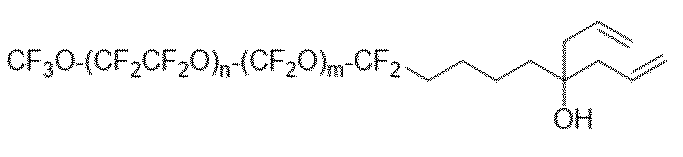
(化合物1-4)

(化合物1-5)
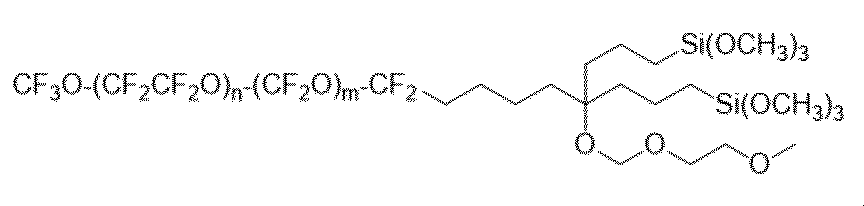
化合物1-3 0.507gをAK-225 5.0mLに溶解後、ヒューニッヒ塩基 0.304mLを添加した。続いて、メトキシメチルクロライド 80.0μlを添加し、35℃で5日間撹拌した。続いて、メタノール、アセトン、クロロホルムで洗浄した。濃縮乾固後、シリカゲルカラムで精製することで、化合物2-1を0.51g得た。
(化合物2-1)
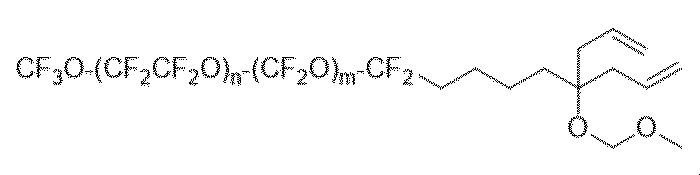
(化合物2-2)
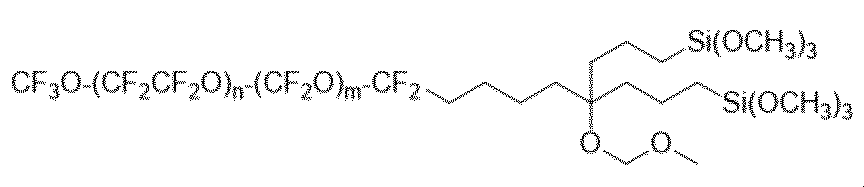
CF3O-(CF2CF2O)n-(CF2O)m-CF2CH2CH=CH2(n=22,m=22)で示される末端アリル化合物 2gをAK-225 3.0mLに溶解後、エチルアクリレート 0.544mL、グラブス触媒(第二世代) 21mgを添加した。室温で一晩撹拌後、クロロホルムで洗浄し、濃縮乾固した。シリカゲルカラムで精製することで、化合物3-1を1.86g得た。
(化合物3-1)

(化合物3-2)

(化合物3-3)
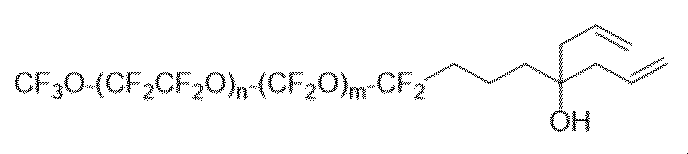
(化合物3-4)

化合物3-3 0.577gをAK-225 2.0mLに溶解後、ヒューニッヒ塩基 148.0μlを添加した。続いて、メトキシメチルクロライド 46.0μlを添加し、37℃で二晩撹拌した。続いて、メタノール、アセトン、クロロホルムで洗浄した。濃縮乾固後、シリカゲルカラムで精製することで、化合物4-1を0.554g得た。
(化合物4-1)

(化合物4-2)

CF3O-(CF2CF2O)n-(CF2O)m-CF2CH2CH=CH2(n=22,m=22)で示される末端アリル化合物 5.32gをAK-225 25.0mLに溶解後、ペンテン酸エチル 1.89mL、グラブス触媒(第二世代)0.113gを添加した。35℃で一晩撹拌後、アセトン、クロロホルムで洗浄後、濃縮乾固した。シリカゲルカラムで精製することで、化合物5-1を2.71g得た。
(化合物5-1)

(化合物5-2)

(化合物5-3)

(化合物5-4)

化合物5-3 0.668gをAK-225 3.0mLに溶解後、ヒューニッヒ塩基 0.17mL、DMAP、メトキシメチルクロライド 50.0μlを添加し、バス温度35℃で4日間撹拌した。続いて、反応溶液を濃縮乾固後、シリカゲルカラムで精製することで、化合物6-1を0.56g得た。
(化合物6-1)

(化合物6-2)

β-プロピオラクトン 3.45gをメタノール 10.0mLに溶解後、ナトリウムメトキシド 0.53gを添加した。50℃で1時間半撹拌後、濃縮乾固した。濃縮乾固で得られた組成物にジエチルエーテルと水とを加えた後、分液し、濃縮乾固することで、化合物7-1を2.2g得た。
(化合物7-1)

(化合物7-2)
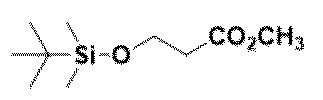
(化合物7-3)

(化合物7-4)
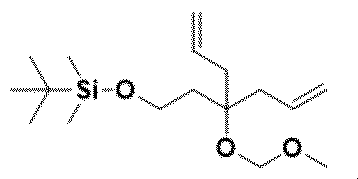
(化合物7-5)

(化合物7-6)
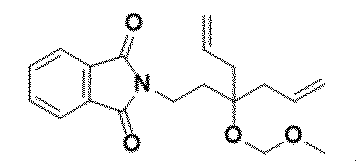
(化合物7-7)

(化合物7-8)
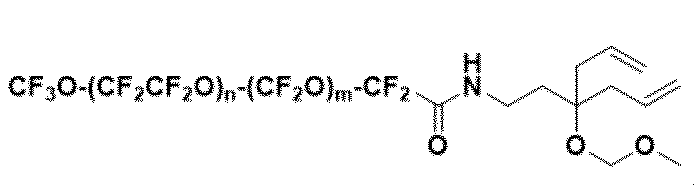
(化合物7-9)

WO2017/212850の実施例1に記載の方法に従って、化合物C-1を得た(n:m=53:47、n+m=43)。
(化合物C-1)
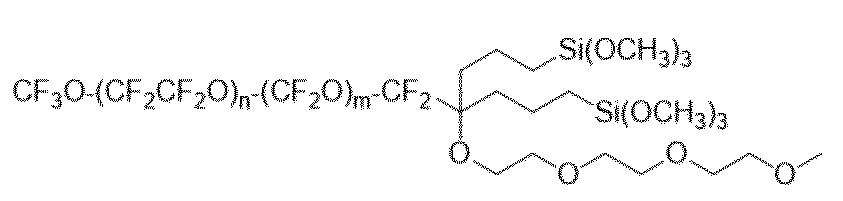
実施例1~7、比較例1で得られたフルオロポリエーテル基含有シラン化合物を、濃度0.06質量%となるようにNovec 7200(3M社製、エチルパーフルオロブチルエーテル)で希釈し、表面処理剤を調製した。その後、表面を大気圧プラズマで処理した化学強化ガラス(コーニング社製 Gorilla 3)を基材として、基材上にスプレー塗布装置を用いて上記で調製した表面処理剤を塗布した。塗布量は表面処理剤60g/m2とした。続いて、表面処理剤が塗布された基材を大気圧下、140℃で30分間加熱処理し、表面処理層を形成した。
静的接触角の測定は、全自動接触角計DropMaster700(協和界面科学社製)を用いた。具体的には、測定対象の表面処理層を有する基材を水平に静置し、その表面にマイクロシリンジから水を2μL滴下し、滴下1秒後の静止画をビデオマイクロスコープで撮影することにより静的接触角を測定した。水の静的接触角は、基材の表面処理層の異なる5点において測定し、その平均値を算出した値を用いた。
(初期評価)
初期評価(消しゴム摩擦回数0回)として、表面処理層の形成後、表面上の余剰分を拭き上げたのちに、水の静的接触角を測定した。
(消しゴム耐久性試験後の評価)
形成された表面処理層に対して、ラビングテスター(新東科学社製)を用いて、下記条件で往復回数2500回毎に水の静的接触角を測定し、10,000回まで測定した。試験環境条件は25℃、湿度40%RHであった。
消しゴム:Raber Eraser(Minoan社製)
接地面積:6mmφ
移動距離(片道):40mm
移動速度:3,600mm/分
荷重:1kg/6mmφ
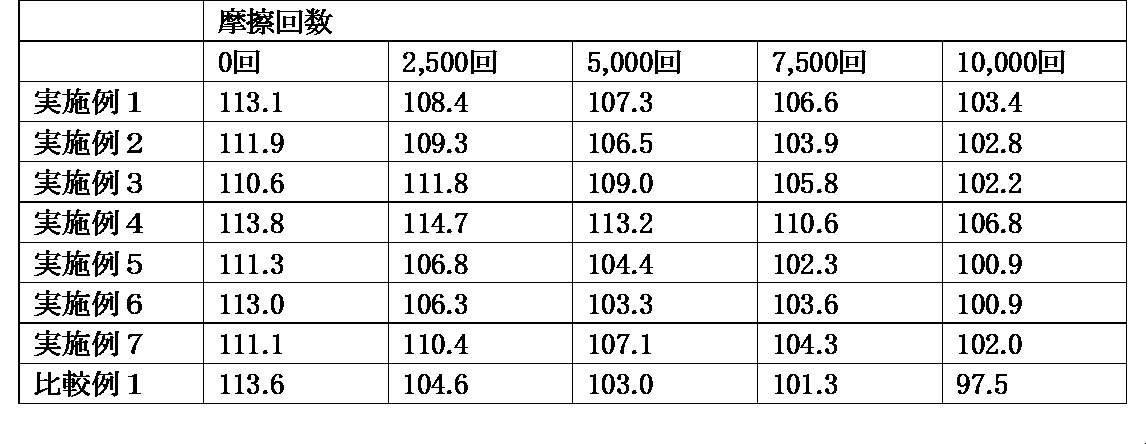
CF3O-(CF2CF2O)n-(CF2O)m-CF2COOH(n=25,m=25)で示されるカルボン酸 4.57gをメタキシレンヘキサフロライド(mXHF) 6.0mLに溶かした後、DMF 25μl、塩化チオニル 0.3mLを添加し、室温で撹拌した後、90℃で3時間撹拌した。3時間後、反応溶液を濃縮乾固することでCF--3O-(CF2CF2O)n-(CF2O)m-CF2COCl(n=25,m=25)で示される酸クロライドを得た。
上記で合成した酸クロライドにAK-225 6.0mLおよびクロロホルム1.0mLの混合溶媒に溶解させた後、N,O-ジメチルヒドロキシアミンの塩酸塩 0.205gを添加した。続いて、ピリジン 0.323mLを滴下した後、60℃で一晩撹拌した。反応溶液を塩酸で洗浄した後、水で洗浄した。続いて、メタノール、アセトンで洗浄し、濃縮乾固することで、以下の化合物1A-1を4.60g得た。
(化合物1A-1)

(化合物1A-2)
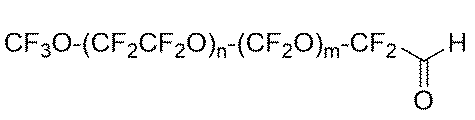
(化合物1A-3)
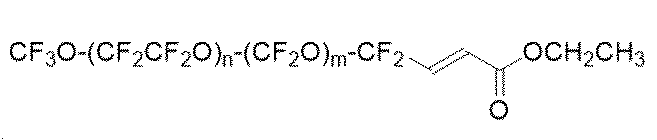
(化合物1A-4)

(化合物1A-5)
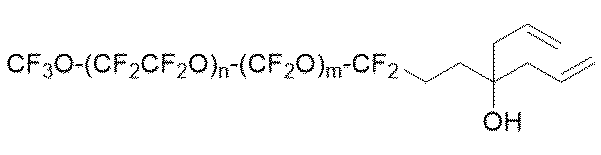
(化合物1A-6)

化合物3-3 1.27gをAK-225 3.0mL、DMF 0.7mLの混合溶媒に溶解後、イミダゾール 67.0mgを添加した。続いて、トリメチルシリルクロライド 64.0μlを添加し、室温で一晩撹拌した。続いて、飽和炭酸水素ナトリウム水溶液、水、メタノールで洗浄後、濃縮乾固することで、化合物2A-1を0.71g得た。
(化合物2A-1)

CF3O-(CF2CF2O)n-(CF2O)m-CF2CH2OH(n=25,m=25)で示されるアルコール 1.71gをAK-225 3.0mL、DMF 0.4mLの混合溶媒に溶解後、水素化ナトリウム 23mgを添加し、室温下、30分撹拌した。続いて、クロロ酢酸メチル 0.112mL、テトラブチルアンモニウムヨージド(TBAI) 15.7mgを添加し、80℃で一晩撹拌した。反応溶液に塩酸を加えて撹拌後、塩酸層を分液で除去し、水、アセトンで洗浄した。濃縮乾固後、シリカゲルカラムで精製し、化合物3A-1を0.93g得た。
(化合物3A-1)

(化合物3A-2)

(化合物3A-3)
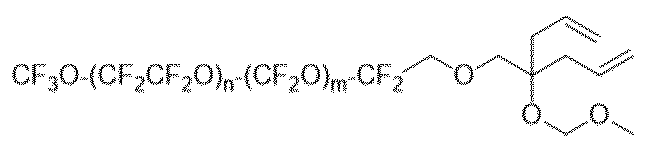
CF3O-(CF2CF2O)n-(CF2O)m-CF2CH2CH=CH2(n=22,m=22)で示される末端アリル体化合物 4.0g、p-ブロモ安息香酸メチル 0.43g、Pd(OAc)2 22.5mg、トリフェニルホスフィン 52.4mg、mXHF 6.0mL、DMF 1.0mL、トリエチルアミン 0.307mLを室温で添加し、100℃で一晩撹拌した。続いて、メタノール、アセトン、クロロホルムで洗浄し、濃縮乾固した後、シリカゲルカラムにより精製することで、化合物4A-1を1.63g得た。
(化合物4A-1)

(化合物4A-2)

(化合物4A-3)
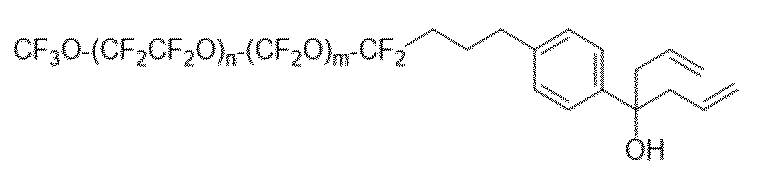
(化合物4A-4)
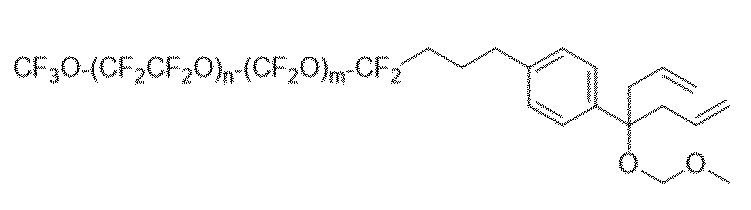
CF3O-(CF2CF2O)n-(CF2O)m-CF2CH2CH=CH2(n=22,m=22)で示される末端アリル化合物 6.2gをAK-225 12mLに溶解後、ヘキセン酸メチル 2.18mL、グラブス触媒(第二世代) 65.8mgを添加した。室温で一晩撹拌後、メタノール、アセトンで洗浄後、濃縮乾固し、シリカゲルカラムで精製することで、化合物5A-1を2.64g得た。
(化合物5A-1)

(化合物5A-2)

(化合物5A-3)

Claims (19)
- 下記式(A1)または(A2):
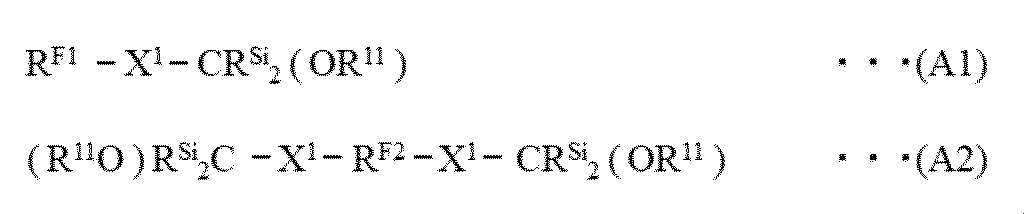
[式中:
RF1は、Rf1-RF-Oq-で表され;
RF2は、-Rf2 p-RF-Oq-で表され;
Rf1は、1個またはそれ以上のフッ素原子により置換されていてもよいC1-16アルキル基であり;
Rf2は、1個またはそれ以上のフッ素原子により置換されていてもよいC1-6アルキレン基であり;
RFは、それぞれ独立して、式:
-(OC6F12)a-(OC5F10)b-(OC4F8)c-(OC3RFa 6)d-(OC2F4)e-(OCF2)f-
で表される基であり;
a、b、c、d、eおよびfは、それぞれ独立して、0~200の整数であって、a、b、c、d、eおよびfの和は1以上であり、a、b、c、d、e、またはfを付して括弧でくくられた各繰り返し単位の存在順序は式中において任意であり;
RFaは、各出現においてそれぞれ独立して、水素原子、フッ素原子または塩素原子であり;
pは、0または1であり;
qは、独立して、0または1であり;
X1は、各出現においてそれぞれ独立して、以下の式:
-(CR50 2)n51-(CR51=CR52)n52-((CH2)n55-Y51-(CH2)n54)n53-
で表され;
R50は、各出現においてそれぞれ独立して、水素原子、ハロゲン原子、水酸基、または1価の有機基であり;
R51およびR52は、各出現においてそれぞれ独立して、水素原子、または1価の有機基であり;
Y51は、各出現においてそれぞれ独立して、O、CONR15、NR15、S、またはアリーレン基であり;
n54は、それぞれ独立して、0または1であり;
n55は、それぞれ独立して、0または1であり;
R15は、各出現においてそれぞれ独立して、水素原子、芳香環を有する基、C1-6アルキル基、-O-C1-6アルキル基またはC3-10シクロアルキル基であり;
n51は、0~10の整数であり;
n52は、0~10の整数であり;
n53は、0~10の整数であり;
n51、n52またはn53を付して括弧でくくられた各繰り返し単位の存在順序は式中において任意であり、n51、n52およびn53の合計は1以上であり;
RSiは、それぞれ独立して、下記式(S1):

X3は、各出現においてそれぞれ独立して、単結合、酸素原子、または2価の有機基であり;
Rb1は、各出現においてそれぞれ独立して、水酸基または加水分解可能な基であり;
Rc1は、各出現においてそれぞれ独立して、水素原子または1価の有機基であり;
l1は、各出現においてそれぞれ独立して、0~3の整数であり;
ただし、式(A1)および(A2)のそれぞれにおいて、少なくとも1つのl1は1であり;
R11は、各出現においてそれぞれ独立して、水素原子、ベンジル基、メトキシフェニル基、ベンゾイル基、トリチル基、-SiR71、または-(R72-O)n7-R73であり、
R71は、それぞれ独立して、C1-4アルキル基であり、
R72は、それぞれ独立して、C1-4アルキレン基であり、
n7は、それぞれ独立して、1~10の整数であり;
R73は、それぞれ独立して、水素原子、または環構造を含んでいてもよい1価の炭化水素基である。] - X1は、各出現においてそれぞれ独立して、式(X1)または(X2):
-X51-CR51=CR52-X52- ・・・(X1)
-X53- ・・・(X2)
で表され;
X51は、-(CR50 2)n511-((CH2)n55-Y51-(CH2)n54)n512-
で表され;
R50は、各出現においてそれぞれ独立して、水素原子、ハロゲン原子、水酸基、または1価の有機基であり;
Y51は、各出現においてそれぞれ独立して、O、CONR15、NR15、S、またはアリーレン基であり;
n54は、それぞれ独立して、0または1であり;
n55は、それぞれ独立して、0または1であり;
R15は、各出現においてそれぞれ独立して、水素原子、芳香環を有する基、C1-6アルキル基、-O-C1-6アルキル基またはC3-10シクロアルキル基であり;
n511は、0~10の整数であり;
n512は、0~10の整数であり;
n511またはn512を付して括弧でくくられた各繰り返し単位の存在順序は式中において任意であり;
X52は、-(CR50 2)n511’-((CH2)n55-Y51-(CH2)n54)n512’-で表され;
n511’は、0~10の整数であり;
n512’は、0~10の整数であり;
n511’またはn512’を付して括弧でくくられた各繰り返し単位の存在順序は式中において任意であり;
R51およびR52は、それぞれ独立して、水素原子、または1価の有機基であり;
X53は、それぞれ独立して、
-(CR50 2)n521-((CH2)n55-Y51-(CH2)n54)n522-
で表され;
n521は、0~10の整数であり;
n522は、0~10の整数であり;
n521またはn522を付して括弧でくくられた各繰り返し単位の存在順序は式中において任意であり、n521およびn522の合計は1以上である、
請求項1に記載のフルオロポリエーテル基含有シラン化合物。 - R50は、各出現においてそれぞれ独立して、水素原子、ハロゲン原子、水酸基、-O-(R14-O)n4-R14’、またはC1-4アルキル基である、請求項1または2に記載のフルオロポリエーテル基含有シラン化合物。
[式中:
R14は、それぞれ独立して、C1-4アルキレン基であり;
n4は、それぞれ独立して、0~100の整数であり;
R14’は、それぞれ独立して、C1-4アルキル基であり;
上記C1-4アルキル基は置換基を有していてもよい。] - X1は、各出現においてそれぞれ独立して、
-CHR13-[(CR50’ 2)n51’-(CR51=CR52)n52-((CH2)n55-Y51-(CH2)n54)n53]-
で表される基であり、
R13は、-OH、または-O-(R14-O)n4-R14’で表され;
R14は、それぞれ独立してC1-4アルキレン基であり;
n4は、0~100の整数であり;
R14’は、C1-4アルキル基であり;
R50’は、それぞれ独立して、水素原子、ハロゲン原子、水酸基または1価の有機基であり;
n51’は、0~10の整数であり;
n52は、0~10の整数であり;
n53は、0~10の整数であり;
n51’、n52またはn53を付して括弧でくくられた各繰り返し単位の存在順序は、-(CR50’ 2)n51’-(CR51=CR52)n52-((CH2)n55-Y51-(CH2)n54)n53-内において任意であり、
R51およびR52は、それぞれ独立して、水素原子、または1価の有機基であり;
Y51は、それぞれ独立して、O、CONR15、NR15、S、またはアリーレン基であり、
R15は、各出現においてそれぞれ独立して、水素原子、芳香環を有する基、C1-6アルキル基、-O-C1-6アルキル基またはC3-10シクロアルキル基であり;
n54は、それぞれ独立して、0または1であり、
n55は、それぞれ独立して、0または1である、
請求項1に記載のフルオロポリエーテル基含有シラン化合物。 - R50’は、水素原子である、請求項4に記載のフルオロポリエーテル基含有シラン化合物。
- R51およびR52は、水素原子である、請求項1~5のいずれか1項に記載のフルオロポリエーテル基含有シラン化合物。
- R11は、各出現においてそれぞれ独立して、水素原子、または-(R72-O)n7-R73で表される基であり、
R72は、それぞれ独立して、C1-4アルキレン基であり、
R73は、水素原子、環構造を含んでいてもよい1価の炭化水素基であり、
n7は、1~10の整数である、
請求項1~6のいずれか1項に記載のフルオロポリエーテル基含有シラン化合物。 - R11は、各出現においてそれぞれ独立して、-CH2O-R11’であり、
R11’は、水素原子、または-(R72-O)n7’-R73であり、
R72は、それぞれ独立して、C1-4アルキレン基であり、
R73は、水素原子、環構造を含んでいてもよい1価の炭化水素基であり、
n7’は、0~9の整数である、
請求項1~7のいずれか1項に記載のフルオロポリエーテル基含有シラン化合物。 - R73は、それぞれ独立して、水素原子、またはC1-4アルキル基である、請求項1~8のいずれか1項に記載のフルオロポリエーテル基含有シラン化合物。
- n55は、1である、請求項1~9のいずれか1項に記載のフルオロポリエーテル基含有シラン化合物。
- n54およびn55は、0である、請求項1~9のいずれか1項に記載のフルオロポリエーテル基含有シラン化合物。
- 請求項1~11のいずれか1項に記載のフルオロポリエーテル基含有シラン化合物、および、該フルオロポリエーテル基含有シラン化合物の少なくとも一部が縮合した縮合物からなる群より選ばれる少なくとも1つを含有する、表面処理剤。
- 請求項1~11のいずれか1項に記載のフルオロポリエーテル基含有シラン化合物を含有する、表面処理剤。
- 基材と、該基材の表面に、請求項1~11のいずれか1項に記載のフルオロポリエーテル基含有シラン化合物または請求項12または13に記載の表面処理剤から形成された層とを含む物品。
- 式(a11)または式(a12):



を含む、フルオロポリエーテル基含有化合物の製造方法。
[式中:
RF1は、Rf1-RF-Oq-で表され;
RF2は、-Rf2 p-RF-Oq-で表され;
Rf1は、1個またはそれ以上のフッ素原子により置換されていてもよいC1-16アルキル基であり;
Rf2は、1個またはそれ以上のフッ素原子により置換されていてもよいC1-6アルキレン基であり;
RFは、それぞれ独立して、式:
-(OC6F12)a-(OC5F10)b-(OC4F8)c-(OC3RFa 6)d-(OC2F4)e-(OCF2)f-
で表される基であり;
a、b、c、d、eおよびfは、それぞれ独立して、0~200の整数であって、a、b、c、d、eおよびfの和は1以上であり、a、b、c、d、e、またはfを付して括弧でくくられた各繰り返し単位の存在順序は式中において任意であり;
RFaは、各出現においてそれぞれ独立して、水素原子、フッ素原子または塩素原子であり;
pは、0または1であり;
qは、独立して、0または1であり;
X61は、それぞれ独立して、-(CR60 2)n611-((CH2)n614-Y61-(CH2)n613)n612-で表され;
R60は、各出現においてそれぞれ独立して、水素原子、ハロゲン原子、または1価の有機基を表し;
Y61は、各出現においてそれぞれ独立して、O、CONR15、NR15、S、またはアリーレン基であり;
n613は、それぞれ独立して、0または1であり;
n614は、それぞれ独立して、0または1であり;
n611は、0~10の整数であり;
n612は、0~10の整数であり;
n611またはn612を付して括弧でくくられた各繰り返し単位の存在順序は式中において任意であり;
X62は、それぞれ独立して、-(CR60 2)n611’-((CH2)n614-Y61-(CH2)n613)n612’-で表され;
n611’は、0~10の整数であり;
n612’は、0~10の整数であり;
n611’またはn612’を付して括弧でくくられた各繰り返し単位の存在順序は式中において任意であり;
R15は、各出現においてそれぞれ独立して、水素原子、芳香環を有する基、C1-6アルキル基、-O-C1-6アルキル基またはC3-10シクロアルキル基であり;
R61およびR62は、各出現においてそれぞれ独立して、水素原子、または1価の有機基であり;
R63は、各出現においてそれぞれ独立して、水素原子、または1価の有機基である。] - 式(a31)または式(a32):



を含む、フルオロポリエーテル基含有化合物の製造方法。
[式中:
RF1は、Rf1-RF-Oq-で表され;
RF2は、-Rf2 p-RF-Oq-で表され;
Rf1は、1個またはそれ以上のフッ素原子により置換されていてもよいC1-16アルキル基であり;
Rf2は、1個またはそれ以上のフッ素原子により置換されていてもよいC1-6アルキレン基であり;
RFは、各出現においてそれぞれ独立して、式:
-(OC6F12)a-(OC5F10)b-(OC4F8)c-(OC3RFa 6)d-(OC2F4)e-(OCF2)f-
で表される基であり;
a、b、c、d、eおよびfは、それぞれ独立して、0~200の整数であって、a、b、c、d、eおよびfの和は1以上であり、a、b、c、d、e、またはfを付して括弧でくくられた各繰り返し単位の存在順序は式中において任意であり;
RFaは、各出現においてそれぞれ独立して、水素原子、フッ素原子または塩素原子であり;
pは、0または1であり;
qは、独立して、0または1であり;
X61は、各出現においてそれぞれ独立して、-(CR60 2)n611-((CH2)n614-Y61-(CH2)n613)n612-で表され;
R60は、各出現においてそれぞれ独立して、水素原子、ハロゲン原子、または1価の有機基を表し;
Y61は、各出現においてそれぞれ独立して、O、CONR15、NR15、S、またはアリーレン基であり;
n613は、それぞれ独立して、0または1であり;
n614は、それぞれ独立して、0または1であり;
n611は、0~10の整数であり;
n612は、0~10の整数であり;
n611またはn612を付して括弧でくくられた各繰り返し単位の存在順序は式中において任意であり;
X62は、各出現においてそれぞれ独立して、-(CR60 2)n611’-((CH2)n614-Y61-(CH2)n613)n612’-で表され;
n611’は、0~10の整数であり;
n612’は、0~10の整数であり;
n611’またはn612’を付して括弧でくくられた各繰り返し単位の存在順序は式中において任意であり;
R15は、各出現においてそれぞれ独立して、水素原子、芳香環を有する基、C1-6アルキル基、-O-C1-6アルキル基、またはC3-10シクロアルキル基であり;
R61およびR62は、各出現においてそれぞれ独立して、水素原子、または1価の有機基であり;
R63は、各出現においてそれぞれ独立して、水素原子、または1価の有機基である。] - 式(a23)、または式(a24):


を含む、フルオロポリエーテル基含有化合物の製造方法。
[式中:
RF1は、Rf1-RF-Oq-で表され;
RF2は、-Rf2 p-RF-Oq-で表され;
Rf1は、1個またはそれ以上のフッ素原子により置換されていてもよいC1-16アルキル基であり;
Rf2は、1個またはそれ以上のフッ素原子により置換されていてもよいC1-6アルキレン基であり;
RFは、各出現においてそれぞれ独立して、式:
-(OC6F12)a-(OC5F10)b-(OC4F8)c-(OC3RFa 6)d-(OC2F4)e-(OCF2)f-
で表される基であり;
a、b、c、d、eおよびfは、それぞれ独立して、0~200の整数であって、a、b、c、d、eおよびfの和は1以上であり、a、b、c、d、e、またはfを付して括弧でくくられた各繰り返し単位の存在順序は式中において任意であり;
RFaは、各出現においてそれぞれ独立して、水素原子、フッ素原子または塩素原子であり;
pは、0または1であり;
qは、独立して、0または1であり;
-X6-は、各出現においてそれぞれ独立して、
-X61-CR61=CR62-X62-、または
-X63-
で表され;
X61は、それぞれ独立して、
-(CR60 2)n611-((CH2)n614-Y61-(CH2)n613)n612-
で表され;
R60は、各出現においてそれぞれ独立して、水素原子、ハロゲン原子、または1価の有機基を表し;
Y61は、各出現においてそれぞれ独立して、O、CONR15、NR15、S、またはアリーレン基であり;
n613は、それぞれ独立して、0または1であり;
n614は、それぞれ独立して、0または1であり;
n611は、0~10の整数であり;
n612は、0~10の整数であり;
n611またはn612を付して括弧でくくられた各繰り返し単位の存在順序は式中において任意であり;
X62は、それぞれ独立して、-(CR60 2)n611’-((CH2)n614-Y61-(CH2)n613)n612’-で表され;
n611’は、0~10の整数であり;
n612’は、0~10の整数であり;
n611’またはn612’を付して括弧でくくられた各繰り返し単位の存在順序は式中において任意であり;
R15は、各出現においてそれぞれ独立して、水素原子、芳香環を有する基、C1-6アルキル基、-O-C1-6アルキル基、またはC3-10シクロアルキル基であり;
R61およびR62は、それぞれ独立して、水素原子、または1価の有機基であり;
X63は、それぞれ独立して、
-(CR60 2)n621-((CH2)n614-Y61-(CH2)n613)n622-
で表され;
n621は、0~10の整数であり;
n622は、0~10の整数であり;
n621またはn622を付して括弧でくくられた各繰り返し単位の存在順序は式中において任意であり、n621およびn622の合計は1以上であり;
R63は、各出現においてそれぞれ独立して、水素原子、または1価の有機基であり;
Halは、ハロゲン原子を表し;
Jは、Mg、Cu、PdまたはZnを表し;
Z23は、それぞれ独立して、単結合または2価の有機基を表す。] - 式(a23)または式(a24):

[式中:
RF1は、Rf1-RF-Oq-で表され;
RF2は、-Rf2 p-RF-Oq-で表され;
Rf1は、1個またはそれ以上のフッ素原子により置換されていてもよいC1-16アルキル基であり;
Rf2は、1個またはそれ以上のフッ素原子により置換されていてもよいC1-6アルキレン基であり;
RFは、各出現においてそれぞれ独立して、式:
-(OC6F12)a-(OC5F10)b-(OC4F8)c-(OC3RFa 6)d-(OC2F4)e-(OCF2)f-
で表される基であり;
a、b、c、d、eおよびfは、それぞれ独立して、0~200の整数であって、a、b、c、d、eおよびfの和は1以上であり、a、b、c、d、e、またはfを付して括弧でくくられた各繰り返し単位の存在順序は式中において任意であり;
RFaは、各出現においてそれぞれ独立して、水素原子、フッ素原子または塩素原子であり;
pは、0または1であり;
qは、独立して、0または1であり;
-X6-は、各出現においてそれぞれ独立して、
-X61-CR61=CR62-X62-、または
-X63-
で表され;
X61は、それぞれ独立して、
-(CR60 2)n611-((CH2)n614-Y61-(CH2)n613)n612-
で表され;
R60は、各出現においてそれぞれ独立して、水素原子、ハロゲン原子、または1価の有機基を表し;
Y61は、各出現においてそれぞれ独立して、O、CONR15、NR15、S、またはアリーレン基であり;
n613は、それぞれ独立して、0または1であり;
n614は、それぞれ独立して、0または1であり;
n611は、0~10の整数であり;
n612は、0~10の整数であり;
n611またはn612を付して括弧でくくられた各繰り返し単位の存在順序は式中において任意であり;
X62は、それぞれ独立して、-(CR60 2)n611’-((CH2)n614-Y61-(CH2)n613)n612’-で表され;
n611’は、0~10の整数であり;
n612’は、0~10の整数であり;
n611’またはn612’を付して括弧でくくられた各繰り返し単位の存在順序は式中において任意であり;
R15は、各出現においてそれぞれ独立して、水素原子、芳香環を有する基、C1-6アルキル基、-O-C1-6アルキル基、またはC3-10シクロアルキル基であり;
R61およびR62は、それぞれ独立して、水素原子、または1価の有機基であり;
X63は、それぞれ独立して、
-(CR60 2)n621-((CH2)n614-Y61-(CH2)n613)n622-
で表され;
n621は、0~10の整数であり;
n622は、0~10の整数であり;
n621またはn622を付して括弧でくくられた各繰り返し単位の存在順序は式中において任意であり、n621およびn622の合計は1以上であり;
R63は、それぞれ独立して、水素原子、または1価の有機基である。] - 式(a27)または式(a28):
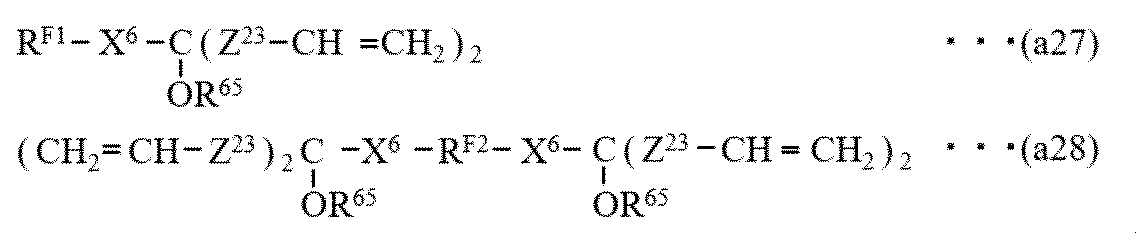
[式中:
RF1は、Rf1-RF-Oq-で表され;
RF2は、-Rf2 p-RF-Oq-で表され;
Rf1は、1個またはそれ以上のフッ素原子により置換されていてもよいC1-16アルキル基であり;
Rf2は、1個またはそれ以上のフッ素原子により置換されていてもよいC1-6アルキレン基であり;
RFは、各出現においてそれぞれ独立して、式:
-(OC6F12)a-(OC5F10)b-(OC4F8)c-(OC3RFa 6)d-(OC2F4)e-(OCF2)f-
で表される基であり;
a、b、c、d、eおよびfは、それぞれ独立して、0~200の整数であって、a、b、c、d、eおよびfの和は1以上であり、a、b、c、d、e、またはfを付して括弧でくくられた各繰り返し単位の存在順序は式中において任意であり;
RFaは、各出現においてそれぞれ独立して、水素原子、フッ素原子または塩素原子であり;
pは、0または1であり;
qは、独立して、0または1であり;
-X6-は、各出現においてそれぞれ独立して、
-X61-CR61=CR62-X62-、または
-X63-
で表され;
X61は、それぞれ独立して、
-(CR60 2)n611-((CH2)n614-Y61-(CH2)n613)n612-
で表され;
R60は、各出現においてそれぞれ独立して、水素原子、ハロゲン原子、または1価の有機基を表し;
Y61は、各出現においてそれぞれ独立して、O、CONR15、NR15、S、またはアリーレン基であり;
n613は、それぞれ独立して、0または1であり;
n614は、それぞれ独立して、0または1であり;
n611は、0~10の整数であり;
n612は、0~10の整数であり;
n611またはn612を付して括弧でくくられた各繰り返し単位の存在順序は式中において任意であり;
X62は、それぞれ独立して、-(CR60 2)n611’-((CH2)n614-Y61-(CH2)n613)n612’-で表され;
n611’は、0~10の整数であり;
n612’は、0~10の整数であり;
n611’またはn612’を付して括弧でくくられた各繰り返し単位の存在順序は式中において任意であり;
R15は、各出現においてそれぞれ独立して、水素原子、芳香環を有する基、C1-6アルキル基、-O-C1-6アルキル基、またはC3-10シクロアルキル基であり;
R61およびR62は、それぞれ独立して、水素原子、または1価の有機基であり;
X63は、
-(CR60 2)n621-((CH2)n614-Y61-(CH2)n613)n622-
で表され;
n621は、0~10の整数であり;
n622は、0~10の整数であり;
n621またはn622を付して括弧でくくられた各繰り返し単位の存在順序は式中において任意であり、n621およびn622の合計は1以上であり;
R65は、それぞれ独立して、水素原子、または1価の有機基であり;
Z23は、それぞれ独立して、単結合または2価の有機基を表す。]
Priority Applications (2)
| Application Number | Priority Date | Filing Date | Title |
|---|---|---|---|
| CN202280023635.6A CN117062854A (zh) | 2021-03-30 | 2022-03-09 | 含有氟代聚醚基的硅烷化合物 |
| KR1020237032380A KR20230148232A (ko) | 2021-03-30 | 2022-03-09 | 플루오로폴리에테르기 함유 실란 화합물 |
Applications Claiming Priority (2)
| Application Number | Priority Date | Filing Date | Title |
|---|---|---|---|
| JP2021058251 | 2021-03-30 | ||
| JP2021-058251 | 2021-03-30 |
Publications (1)
| Publication Number | Publication Date |
|---|---|
| WO2022209674A1 true WO2022209674A1 (ja) | 2022-10-06 |
Family
ID=83458867
Family Applications (1)
| Application Number | Title | Priority Date | Filing Date |
|---|---|---|---|
| PCT/JP2022/010375 Ceased WO2022209674A1 (ja) | 2021-03-30 | 2022-03-09 | フルオロポリエーテル基含有シラン化合物 |
Country Status (4)
| Country | Link |
|---|---|
| JP (4) | JP7152696B1 (ja) |
| KR (1) | KR20230148232A (ja) |
| CN (1) | CN117062854A (ja) |
| WO (1) | WO2022209674A1 (ja) |
Cited By (2)
| Publication number | Priority date | Publication date | Assignee | Title |
|---|---|---|---|---|
| CN114249886A (zh) * | 2021-12-31 | 2022-03-29 | 三棵树(上海)新材料研究有限公司 | 耐老化改性硅烷封端聚醚树脂、ms免钉胶及其制备方法 |
| JPWO2022230642A1 (ja) * | 2021-04-28 | 2022-11-03 |
Families Citing this family (1)
| Publication number | Priority date | Publication date | Assignee | Title |
|---|---|---|---|---|
| CN121925453A (zh) * | 2023-09-27 | 2026-04-24 | 大金工业株式会社 | 表面处理剂 |
Citations (10)
| Publication number | Priority date | Publication date | Assignee | Title |
|---|---|---|---|---|
| JPH10208673A (ja) * | 1997-01-20 | 1998-08-07 | Sony Corp | 防汚膜の形成方法及び表示素子用フィルター |
| JPH1180073A (ja) * | 1997-09-09 | 1999-03-23 | Matsushita Electric Ind Co Ltd | 含フッ素アルキルカルボン酸と該含フッ素アルキルカルボン酸を含有する潤滑剤層を設けた磁気記録媒体 |
| JPH1192177A (ja) * | 1997-09-18 | 1999-04-06 | Sony Corp | 撥水処理ガラス及びその製造方法 |
| JP2001207183A (ja) * | 2000-01-27 | 2001-07-31 | Matsushita Electric Ind Co Ltd | 潤滑剤組成物ならびに磁気記録媒体および磁気記録媒体の製造方法 |
| JP5248485B2 (ja) * | 2006-05-25 | 2013-07-31 | スリーエム イノベイティブ プロパティズ カンパニー | コーティング組成物 |
| CN103319996A (zh) * | 2013-05-27 | 2013-09-25 | 赛吉材料科技(上海)有限公司 | 表面处理组合物及其制备方法和表面经处理的物品 |
| WO2019039226A1 (ja) * | 2017-08-22 | 2019-02-28 | Agc株式会社 | 含フッ素エーテル化合物、含フッ素エーテル組成物、コーティング液、物品およびその製造方法 |
| WO2019049754A1 (ja) * | 2017-09-05 | 2019-03-14 | Agc株式会社 | 含フッ素化合物、組成物および物品 |
| WO2020111009A1 (ja) * | 2018-11-28 | 2020-06-04 | Agc株式会社 | 含フッ素化合物、含フッ素化合物含有組成物、コーティング液、物品及びその製造方法 |
| JP2020164849A (ja) * | 2019-03-29 | 2020-10-08 | ダイキン工業株式会社 | フルオロポリエーテル基含有化合物 |
Family Cites Families (12)
| Publication number | Priority date | Publication date | Assignee | Title |
|---|---|---|---|---|
| JP3601580B2 (ja) | 1999-05-20 | 2004-12-15 | 信越化学工業株式会社 | パーフルオロポリエーテル変性アミノシラン及び表面処理剤並びに該アミノシランの被膜が形成された物品 |
| WO2015025930A1 (ja) * | 2013-08-23 | 2015-02-26 | ダイキン工業株式会社 | パーフルオロ(ポリ)エーテル基含有カルボン酸化合物の分離方法 |
| JP5668887B1 (ja) * | 2013-08-23 | 2015-02-12 | ダイキン工業株式会社 | パーフルオロ(ポリ)エーテル基含有二官能化合物、パーフルオロ(ポリ)エーテル基含有二官能化合物を含む組成物およびこれらの製造方法 |
| JP6451279B2 (ja) * | 2014-03-31 | 2019-01-16 | 信越化学工業株式会社 | フルオロポリエーテル基含有ポリマー変性シラン、表面処理剤及び物品 |
| JP6119656B2 (ja) * | 2014-03-31 | 2017-04-26 | 信越化学工業株式会社 | フルオロポリエーテル基含有ポリマー |
| JP6274083B2 (ja) * | 2014-11-17 | 2018-02-07 | 信越化学工業株式会社 | 耐熱性を有する撥水撥油処理剤及びその製造方法並びに物品 |
| JP6260579B2 (ja) * | 2015-05-01 | 2018-01-17 | 信越化学工業株式会社 | フルオロポリエーテル基含有ポリマー変性シラン、表面処理剤及び物品 |
| KR102483565B1 (ko) * | 2016-06-10 | 2023-01-02 | 신에쓰 가가꾸 고교 가부시끼가이샤 | 플루오로폴리에터기 함유 폴리머, 표면처리제 및 물품 |
| CN120944328A (zh) * | 2016-09-08 | 2025-11-14 | 大金工业株式会社 | 含有含全氟(聚)醚基的硅烷化合物的组合物 |
| WO2018216406A1 (ja) * | 2017-05-25 | 2018-11-29 | 信越化学工業株式会社 | フルオロポリエーテル基含有ポリマー変性有機ケイ素化合物、表面処理剤及び物品 |
| KR102731264B1 (ko) * | 2017-11-21 | 2024-11-18 | 신에쓰 가가꾸 고교 가부시끼가이샤 | 플루오로폴리에테르기 함유 폴리머, 표면처리제 및 물품 |
| WO2019218339A1 (zh) * | 2018-05-16 | 2019-11-21 | 广州优尔材料科技有限公司 | 含全氟聚醚基的硅烷化合物、其制备方法、表面处理剂及物品 |
-
2022
- 2022-03-09 JP JP2022035912A patent/JP7152696B1/ja active Active
- 2022-03-09 WO PCT/JP2022/010375 patent/WO2022209674A1/ja not_active Ceased
- 2022-03-09 CN CN202280023635.6A patent/CN117062854A/zh active Pending
- 2022-03-09 KR KR1020237032380A patent/KR20230148232A/ko active Pending
- 2022-09-20 JP JP2022149323A patent/JP7440790B2/ja active Active
-
2024
- 2024-02-09 JP JP2024018612A patent/JP7716019B2/ja active Active
-
2025
- 2025-03-13 JP JP2025040237A patent/JP2025083498A/ja active Pending
Patent Citations (10)
| Publication number | Priority date | Publication date | Assignee | Title |
|---|---|---|---|---|
| JPH10208673A (ja) * | 1997-01-20 | 1998-08-07 | Sony Corp | 防汚膜の形成方法及び表示素子用フィルター |
| JPH1180073A (ja) * | 1997-09-09 | 1999-03-23 | Matsushita Electric Ind Co Ltd | 含フッ素アルキルカルボン酸と該含フッ素アルキルカルボン酸を含有する潤滑剤層を設けた磁気記録媒体 |
| JPH1192177A (ja) * | 1997-09-18 | 1999-04-06 | Sony Corp | 撥水処理ガラス及びその製造方法 |
| JP2001207183A (ja) * | 2000-01-27 | 2001-07-31 | Matsushita Electric Ind Co Ltd | 潤滑剤組成物ならびに磁気記録媒体および磁気記録媒体の製造方法 |
| JP5248485B2 (ja) * | 2006-05-25 | 2013-07-31 | スリーエム イノベイティブ プロパティズ カンパニー | コーティング組成物 |
| CN103319996A (zh) * | 2013-05-27 | 2013-09-25 | 赛吉材料科技(上海)有限公司 | 表面处理组合物及其制备方法和表面经处理的物品 |
| WO2019039226A1 (ja) * | 2017-08-22 | 2019-02-28 | Agc株式会社 | 含フッ素エーテル化合物、含フッ素エーテル組成物、コーティング液、物品およびその製造方法 |
| WO2019049754A1 (ja) * | 2017-09-05 | 2019-03-14 | Agc株式会社 | 含フッ素化合物、組成物および物品 |
| WO2020111009A1 (ja) * | 2018-11-28 | 2020-06-04 | Agc株式会社 | 含フッ素化合物、含フッ素化合物含有組成物、コーティング液、物品及びその製造方法 |
| JP2020164849A (ja) * | 2019-03-29 | 2020-10-08 | ダイキン工業株式会社 | フルオロポリエーテル基含有化合物 |
Cited By (3)
| Publication number | Priority date | Publication date | Assignee | Title |
|---|---|---|---|---|
| JPWO2022230642A1 (ja) * | 2021-04-28 | 2022-11-03 | ||
| CN114249886A (zh) * | 2021-12-31 | 2022-03-29 | 三棵树(上海)新材料研究有限公司 | 耐老化改性硅烷封端聚醚树脂、ms免钉胶及其制备方法 |
| CN114249886B (zh) * | 2021-12-31 | 2023-10-31 | 三棵树(上海)新材料研究有限公司 | 耐老化改性硅烷封端聚醚树脂、ms免钉胶及其制备方法 |
Also Published As
| Publication number | Publication date |
|---|---|
| JP7152696B1 (ja) | 2022-10-13 |
| JP2025083498A (ja) | 2025-05-30 |
| CN117062854A (zh) | 2023-11-14 |
| JP2022174280A (ja) | 2022-11-22 |
| JP2022155508A (ja) | 2022-10-13 |
| JP7716019B2 (ja) | 2025-07-31 |
| KR20230148232A (ko) | 2023-10-24 |
| JP7440790B2 (ja) | 2024-02-29 |
| JP2024040346A (ja) | 2024-03-25 |
Similar Documents
| Publication | Publication Date | Title |
|---|---|---|
| KR101992582B1 (ko) | 퍼플루오로(폴리)에테르기 함유 실란 화합물 | |
| JP7716019B2 (ja) | フルオロポリエーテル基含有シラン化合物 | |
| KR20190039759A (ko) | 퍼플루오로(폴리)에테르기 함유 화합물을 포함하는 표면 처리제 | |
| JP6844728B2 (ja) | フルオロポリエーテル基含有化合物 | |
| JP7299546B2 (ja) | 表面処理剤 | |
| JP6631717B2 (ja) | パーフルオロ(ポリ)エーテル変性アミドシラン化合物を含む組成物 | |
| JP6801804B2 (ja) | フルオロポリエーテル基含有化合物 | |
| JP2023066384A (ja) | 表面処理剤 | |
| JP6911963B2 (ja) | フルオロポリエーテル基含有化合物 | |
| JP7265212B2 (ja) | 表面処理剤 | |
| JP7319242B2 (ja) | フルオロポリエーテル基シラン含有化合物 | |
| CN110392723B (zh) | 含有含全氟(聚)醚基的硅烷化合物的表面处理剂、使用它的粒料和物品 | |
| JP7148833B1 (ja) | フルオロポリエーテル基含有シラン化合物 | |
| JP6838671B2 (ja) | フルオロポリエーテル基含有化合物 | |
| JP7189482B2 (ja) | フルオロポリエーテル基含有シラン化合物 | |
| JP6465232B2 (ja) | パーフルオロポリエーテル基含有化合物を含む表面処理剤 | |
| KR20250156627A (ko) | 불소 원자 함유 실란 화합물 |
Legal Events
| Date | Code | Title | Description |
|---|---|---|---|
| 121 | Ep: the epo has been informed by wipo that ep was designated in this application |
Ref document number: 22779897 Country of ref document: EP Kind code of ref document: A1 |
|
| ENP | Entry into the national phase |
Ref document number: 20237032380 Country of ref document: KR Kind code of ref document: A |
|
| WWE | Wipo information: entry into national phase |
Ref document number: 1020237032380 Country of ref document: KR |
|
| WWE | Wipo information: entry into national phase |
Ref document number: 202280023635.6 Country of ref document: CN |
|
| NENP | Non-entry into the national phase |
Ref country code: DE |
|
| 32PN | Ep: public notification in the ep bulletin as address of the adressee cannot be established |
Free format text: NOTING OF LOSS OF RIGHTS PURSUANT TO RULE 112(1) EPC (EPO FORM 1205A DATED 14/02/2024). |
|
| 122 | Ep: pct application non-entry in european phase |
Ref document number: 22779897 Country of ref document: EP Kind code of ref document: A1 |