WO2022181151A1 - リチウムイオン二次電池用負極、リチウムイオン二次電池、CNT-Siペーストの製造方法、リチウムイオン二次電池用負極の製造方法、リチウムイオン二次電池の製造方法 - Google Patents
リチウムイオン二次電池用負極、リチウムイオン二次電池、CNT-Siペーストの製造方法、リチウムイオン二次電池用負極の製造方法、リチウムイオン二次電池の製造方法 Download PDFInfo
- Publication number
- WO2022181151A1 WO2022181151A1 PCT/JP2022/002362 JP2022002362W WO2022181151A1 WO 2022181151 A1 WO2022181151 A1 WO 2022181151A1 JP 2022002362 W JP2022002362 W JP 2022002362W WO 2022181151 A1 WO2022181151 A1 WO 2022181151A1
- Authority
- WO
- WIPO (PCT)
- Prior art keywords
- negative electrode
- active material
- paste
- lithium ion
- electrode active
- Prior art date
- Legal status (The legal status is an assumption and is not a legal conclusion. Google has not performed a legal analysis and makes no representation as to the accuracy of the status listed.)
- Ceased
Links
Images

Classifications
-
- H—ELECTRICITY
- H01—ELECTRIC ELEMENTS
- H01M—PROCESSES OR MEANS, e.g. BATTERIES, FOR THE DIRECT CONVERSION OF CHEMICAL ENERGY INTO ELECTRICAL ENERGY
- H01M4/00—Electrodes
- H01M4/02—Electrodes composed of, or comprising, active material
- H01M4/36—Selection of substances as active materials, active masses, active liquids
- H01M4/362—Composites
- H01M4/364—Composites as mixtures
-
- H—ELECTRICITY
- H01—ELECTRIC ELEMENTS
- H01M—PROCESSES OR MEANS, e.g. BATTERIES, FOR THE DIRECT CONVERSION OF CHEMICAL ENERGY INTO ELECTRICAL ENERGY
- H01M4/00—Electrodes
- H01M4/02—Electrodes composed of, or comprising, active material
- H01M4/36—Selection of substances as active materials, active masses, active liquids
- H01M4/58—Selection of substances as active materials, active masses, active liquids of inorganic compounds other than oxides or hydroxides, e.g. sulfides, selenides, tellurides, halogenides or LiCoFy; of polyanionic structures, e.g. phosphates, silicates or borates
-
- H—ELECTRICITY
- H01—ELECTRIC ELEMENTS
- H01M—PROCESSES OR MEANS, e.g. BATTERIES, FOR THE DIRECT CONVERSION OF CHEMICAL ENERGY INTO ELECTRICAL ENERGY
- H01M10/00—Secondary cells; Manufacture thereof
- H01M10/05—Accumulators with non-aqueous electrolyte
- H01M10/052—Li-accumulators
- H01M10/0525—Rocking-chair batteries, i.e. batteries with lithium insertion or intercalation in both electrodes; Lithium-ion batteries
-
- H—ELECTRICITY
- H01—ELECTRIC ELEMENTS
- H01M—PROCESSES OR MEANS, e.g. BATTERIES, FOR THE DIRECT CONVERSION OF CHEMICAL ENERGY INTO ELECTRICAL ENERGY
- H01M4/00—Electrodes
- H01M4/02—Electrodes composed of, or comprising, active material
- H01M4/04—Processes of manufacture in general
- H01M4/0402—Methods of deposition of the material
- H01M4/0404—Methods of deposition of the material by coating on electrode collectors
-
- H—ELECTRICITY
- H01—ELECTRIC ELEMENTS
- H01M—PROCESSES OR MEANS, e.g. BATTERIES, FOR THE DIRECT CONVERSION OF CHEMICAL ENERGY INTO ELECTRICAL ENERGY
- H01M4/00—Electrodes
- H01M4/02—Electrodes composed of, or comprising, active material
- H01M4/13—Electrodes for accumulators with non-aqueous electrolyte, e.g. for lithium-accumulators; Processes of manufacture thereof
- H01M4/133—Electrodes based on carbonaceous material, e.g. graphite-intercalation compounds or CFx
-
- H—ELECTRICITY
- H01—ELECTRIC ELEMENTS
- H01M—PROCESSES OR MEANS, e.g. BATTERIES, FOR THE DIRECT CONVERSION OF CHEMICAL ENERGY INTO ELECTRICAL ENERGY
- H01M4/00—Electrodes
- H01M4/02—Electrodes composed of, or comprising, active material
- H01M4/13—Electrodes for accumulators with non-aqueous electrolyte, e.g. for lithium-accumulators; Processes of manufacture thereof
- H01M4/134—Electrodes based on metals, Si or alloys
-
- H—ELECTRICITY
- H01—ELECTRIC ELEMENTS
- H01M—PROCESSES OR MEANS, e.g. BATTERIES, FOR THE DIRECT CONVERSION OF CHEMICAL ENERGY INTO ELECTRICAL ENERGY
- H01M4/00—Electrodes
- H01M4/02—Electrodes composed of, or comprising, active material
- H01M4/13—Electrodes for accumulators with non-aqueous electrolyte, e.g. for lithium-accumulators; Processes of manufacture thereof
- H01M4/136—Electrodes based on inorganic compounds other than oxides or hydroxides, e.g. sulfides, selenides, tellurides, halogenides or LiCoFy
-
- H—ELECTRICITY
- H01—ELECTRIC ELEMENTS
- H01M—PROCESSES OR MEANS, e.g. BATTERIES, FOR THE DIRECT CONVERSION OF CHEMICAL ENERGY INTO ELECTRICAL ENERGY
- H01M4/00—Electrodes
- H01M4/02—Electrodes composed of, or comprising, active material
- H01M4/13—Electrodes for accumulators with non-aqueous electrolyte, e.g. for lithium-accumulators; Processes of manufacture thereof
- H01M4/139—Processes of manufacture
- H01M4/1393—Processes of manufacture of electrodes based on carbonaceous material, e.g. graphite-intercalation compounds or CFx
-
- H—ELECTRICITY
- H01—ELECTRIC ELEMENTS
- H01M—PROCESSES OR MEANS, e.g. BATTERIES, FOR THE DIRECT CONVERSION OF CHEMICAL ENERGY INTO ELECTRICAL ENERGY
- H01M4/00—Electrodes
- H01M4/02—Electrodes composed of, or comprising, active material
- H01M4/13—Electrodes for accumulators with non-aqueous electrolyte, e.g. for lithium-accumulators; Processes of manufacture thereof
- H01M4/139—Processes of manufacture
- H01M4/1395—Processes of manufacture of electrodes based on metals, Si or alloys
-
- H—ELECTRICITY
- H01—ELECTRIC ELEMENTS
- H01M—PROCESSES OR MEANS, e.g. BATTERIES, FOR THE DIRECT CONVERSION OF CHEMICAL ENERGY INTO ELECTRICAL ENERGY
- H01M4/00—Electrodes
- H01M4/02—Electrodes composed of, or comprising, active material
- H01M4/13—Electrodes for accumulators with non-aqueous electrolyte, e.g. for lithium-accumulators; Processes of manufacture thereof
- H01M4/139—Processes of manufacture
- H01M4/1397—Processes of manufacture of electrodes based on inorganic compounds other than oxides or hydroxides, e.g. sulfides, selenides, tellurides, halogenides or LiCoFy
-
- H—ELECTRICITY
- H01—ELECTRIC ELEMENTS
- H01M—PROCESSES OR MEANS, e.g. BATTERIES, FOR THE DIRECT CONVERSION OF CHEMICAL ENERGY INTO ELECTRICAL ENERGY
- H01M4/00—Electrodes
- H01M4/02—Electrodes composed of, or comprising, active material
- H01M4/36—Selection of substances as active materials, active masses, active liquids
-
- H—ELECTRICITY
- H01—ELECTRIC ELEMENTS
- H01M—PROCESSES OR MEANS, e.g. BATTERIES, FOR THE DIRECT CONVERSION OF CHEMICAL ENERGY INTO ELECTRICAL ENERGY
- H01M4/00—Electrodes
- H01M4/02—Electrodes composed of, or comprising, active material
- H01M4/36—Selection of substances as active materials, active masses, active liquids
- H01M4/38—Selection of substances as active materials, active masses, active liquids of elements or alloys
- H01M4/386—Silicon or alloys based on silicon
-
- H—ELECTRICITY
- H01—ELECTRIC ELEMENTS
- H01M—PROCESSES OR MEANS, e.g. BATTERIES, FOR THE DIRECT CONVERSION OF CHEMICAL ENERGY INTO ELECTRICAL ENERGY
- H01M4/00—Electrodes
- H01M4/02—Electrodes composed of, or comprising, active material
- H01M4/36—Selection of substances as active materials, active masses, active liquids
- H01M4/58—Selection of substances as active materials, active masses, active liquids of inorganic compounds other than oxides or hydroxides, e.g. sulfides, selenides, tellurides, halogenides or LiCoFy; of polyanionic structures, e.g. phosphates, silicates or borates
- H01M4/583—Carbonaceous material, e.g. graphite-intercalation compounds or CFx
-
- H—ELECTRICITY
- H01—ELECTRIC ELEMENTS
- H01M—PROCESSES OR MEANS, e.g. BATTERIES, FOR THE DIRECT CONVERSION OF CHEMICAL ENERGY INTO ELECTRICAL ENERGY
- H01M4/00—Electrodes
- H01M4/02—Electrodes composed of, or comprising, active material
- H01M4/36—Selection of substances as active materials, active masses, active liquids
- H01M4/58—Selection of substances as active materials, active masses, active liquids of inorganic compounds other than oxides or hydroxides, e.g. sulfides, selenides, tellurides, halogenides or LiCoFy; of polyanionic structures, e.g. phosphates, silicates or borates
- H01M4/583—Carbonaceous material, e.g. graphite-intercalation compounds or CFx
- H01M4/587—Carbonaceous material, e.g. graphite-intercalation compounds or CFx for inserting or intercalating light metals
-
- H—ELECTRICITY
- H01—ELECTRIC ELEMENTS
- H01M—PROCESSES OR MEANS, e.g. BATTERIES, FOR THE DIRECT CONVERSION OF CHEMICAL ENERGY INTO ELECTRICAL ENERGY
- H01M4/00—Electrodes
- H01M4/02—Electrodes composed of, or comprising, active material
- H01M4/62—Selection of inactive substances as ingredients for active masses, e.g. binders, fillers
-
- H—ELECTRICITY
- H01—ELECTRIC ELEMENTS
- H01M—PROCESSES OR MEANS, e.g. BATTERIES, FOR THE DIRECT CONVERSION OF CHEMICAL ENERGY INTO ELECTRICAL ENERGY
- H01M4/00—Electrodes
- H01M4/02—Electrodes composed of, or comprising, active material
- H01M4/62—Selection of inactive substances as ingredients for active masses, e.g. binders, fillers
- H01M4/624—Electric conductive fillers
- H01M4/625—Carbon or graphite
-
- H—ELECTRICITY
- H01—ELECTRIC ELEMENTS
- H01M—PROCESSES OR MEANS, e.g. BATTERIES, FOR THE DIRECT CONVERSION OF CHEMICAL ENERGY INTO ELECTRICAL ENERGY
- H01M4/00—Electrodes
- H01M4/02—Electrodes composed of, or comprising, active material
- H01M2004/021—Physical characteristics, e.g. porosity, surface area
-
- H—ELECTRICITY
- H01—ELECTRIC ELEMENTS
- H01M—PROCESSES OR MEANS, e.g. BATTERIES, FOR THE DIRECT CONVERSION OF CHEMICAL ENERGY INTO ELECTRICAL ENERGY
- H01M4/00—Electrodes
- H01M4/02—Electrodes composed of, or comprising, active material
- H01M2004/026—Electrodes composed of, or comprising, active material characterised by the polarity
- H01M2004/027—Negative electrodes
-
- Y—GENERAL TAGGING OF NEW TECHNOLOGICAL DEVELOPMENTS; GENERAL TAGGING OF CROSS-SECTIONAL TECHNOLOGIES SPANNING OVER SEVERAL SECTIONS OF THE IPC; TECHNICAL SUBJECTS COVERED BY FORMER USPC CROSS-REFERENCE ART COLLECTIONS [XRACs] AND DIGESTS
- Y02—TECHNOLOGIES OR APPLICATIONS FOR MITIGATION OR ADAPTATION AGAINST CLIMATE CHANGE
- Y02E—REDUCTION OF GREENHOUSE GAS [GHG] EMISSIONS, RELATED TO ENERGY GENERATION, TRANSMISSION OR DISTRIBUTION
- Y02E60/00—Enabling technologies; Technologies with a potential or indirect contribution to GHG emissions mitigation
- Y02E60/10—Energy storage using batteries
Definitions
- the present disclosure relates to a negative electrode for a lithium ion secondary battery, a lithium ion secondary battery, a method for producing a CNT-Si paste, a method for producing a negative electrode for a lithium ion secondary battery, and a method for producing a lithium ion secondary battery.
- Carbon nanotubes are attracting attention as a conductive material contained in the electrodes of lithium-ion secondary batteries. Compared to conventional conductive materials such as acetylene black, carbon nanotubes can greatly improve conductivity with a small content.
- Si-based negative electrode active materials are attracting attention as negative electrode active materials for lithium ion secondary batteries.
- a Si-based negative electrode active material can increase the capacity of a battery compared to a carbon-based negative electrode active material.
- Patent Documents 1 to 3 disclose techniques for improving the conductivity of the Si-based negative electrode active material by coating the surface of the Si-based negative electrode active material with carbon nanotubes by a dry method.
- a lithium ion secondary battery using a Si-based negative electrode active material has a problem that charge-discharge cycle characteristics tend to deteriorate. Therefore, it is conceivable to use a negative electrode active material in which a Si-based negative electrode active material and a carbon-based negative electrode active material having good charge-discharge cycle characteristics are mixed. However, in this mixture, since the conductivity between the Si-based negative electrode active material and the carbon-based negative electrode active material is low, charge-discharge cycle characteristics cannot be improved unless a large amount of carbon nanotubes is added.
- the object of the present disclosure is to suppress the amount of carbon nanotubes added and a method for producing a negative electrode for a lithium ion secondary battery, a lithium ion secondary battery, and a CNT-Si paste that can suppress deterioration in charge-discharge cycle characteristics. , a method for manufacturing a negative electrode for a lithium ion secondary battery, and a method for manufacturing a lithium ion secondary battery.
- a negative electrode for a lithium ion secondary battery which is one aspect of the present disclosure, has a negative electrode mixture layer containing a carbon-based negative electrode active material, a Si-based negative electrode active material, and carbon nanotubes.
- a carbon-based negative electrode active material a carbon-based negative electrode active material
- Si-based negative electrode active material a carbon-based negative electrode active material
- carbon nanotubes When the coverage of the carbon nanotubes on the surface is 100, the coverage of the carbon nanotubes on the surface of the carbon-based negative electrode active material is 20 or more and 50 or less.
- a lithium ion secondary battery according to one aspect of the present disclosure includes the negative electrode for a lithium ion secondary battery.
- a mixture liquid containing carbon nanotubes, a Si-based negative electrode active material, a dispersing agent, and a dispersion medium is subjected to a dispersion treatment, and the Si-based negative electrode is It is characterized by including a dispersing step of coating the carbon nanotube on the active material.
- a method for manufacturing a negative electrode for a lithium ion secondary battery which is one aspect of the present disclosure, includes kneading a carbon-based negative electrode active material and a CNT-Si paste obtained by the method for manufacturing a CNT-Si paste,
- the present invention is characterized by comprising a negative electrode mixture paste preparing step of preparing a negative electrode mixture paste and a coating step of applying the negative electrode mixture paste to a negative electrode current collector.
- a method for manufacturing a lithium ion secondary battery which is one aspect of the present disclosure, includes manufacturing a lithium ion secondary battery using the negative electrode for a lithium ion secondary battery obtained by the method for manufacturing a negative electrode for a lithium ion secondary battery. It is characterized by manufacturing.
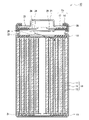
- FIG. 1 is a cross-sectional view of a lithium-ion secondary battery that is an example of an embodiment
- FIG. 1 is a cross-sectional view of a negative electrode according to an embodiment
- FIG. 1 is a cross-sectional view of a lithium-ion secondary battery that is an example of an embodiment.
- a lithium-ion secondary battery 10 shown in FIG. It includes insulating plates 18 and 19 and a battery case 15 that accommodates the above members.
- the battery case 15 is composed of a bottomed cylindrical case body 16 and a sealing member 17 that closes the opening of the case body 16 .
- the wound electrode body 14 instead of the wound electrode body 14, another form of electrode body such as a stacked electrode body in which positive and negative electrodes are alternately stacked via a separator may be applied.
- Examples of the battery case 15 include cylindrical, rectangular, coin-shaped, button-shaped, and other metal cases, and resin cases formed by laminating resin sheets (laminated batteries).
- the case body 16 is, for example, a bottomed cylindrical metal container.
- a gasket 28 is provided between the case body 16 and the sealing member 17 to ensure hermeticity inside the battery.
- the case main body 16 has an overhanging portion 22 that supports the sealing member 17, for example, a portion of the side surface overhanging inward.
- the projecting portion 22 is preferably annularly formed along the circumferential direction of the case body 16 and supports the sealing member 17 on the upper surface thereof.
- the sealing body 17 has a structure in which a filter 23, a lower valve body 24, an insulating member 25, an upper valve body 26, and a cap 27 are layered in order from the electrode body 14 side.
- Each member constituting the sealing member 17 has, for example, a disk shape or a ring shape, and each member other than the insulating member 25 is electrically connected to each other.
- the lower valve body 24 and the upper valve body 26 are connected to each other at their central portions, and an insulating member 25 is interposed between their peripheral edge portions.
- the lower valve body 24 deforms and breaks so as to push the upper valve body 26 upward toward the cap 27 side, breaking the lower valve body 24 and the upper valve body 26 .
- the current path between is interrupted.
- the upper valve body 26 is broken and the gas is discharged from the opening of the cap 27 .
- the positive electrode lead 20 attached to the positive electrode 11 extends through the through hole of the insulating plate 18 toward the sealing member 17, and the negative electrode lead 21 attached to the negative electrode 12 extends through the insulating plate. It extends to the bottom side of the case body 16 through the outside of the case body 19 .
- the positive electrode lead 20 is connected to the lower surface of the filter 23, which is the bottom plate of the sealing member 17, by welding or the like, and the cap 27, which is the top plate of the sealing member 17 electrically connected to the filter 23, serves as a positive electrode terminal.
- the negative lead 21 is connected to the inner surface of the bottom of the case body 16 by welding or the like, and the case body 16 serves as a negative terminal.
- the positive electrode 11, the negative electrode 12, the separator 13, and the electrolyte are described in detail below.
- the positive electrode 11 has, for example, a positive electrode current collector and a positive electrode mixture layer arranged on the positive electrode current collector.
- the positive electrode current collector one commonly used in the field of lithium ion secondary batteries can be used, and examples thereof include sheets and foils containing stainless steel, aluminum, aluminum alloys, titanium, and the like.
- the sheet may be porous. Porous bodies include, for example, foams, woven fabrics, non-woven fabrics, and the like.
- the thickness of the sheet and foil is not particularly limited, but is, for example, 1-500 ⁇ m.
- the positive electrode mixture layer can contain conventionally known positive electrode active materials, conductive materials, binders, and the like.
- positive electrode active materials include olivine-type lithium salts such as LiFePO 4 , chalcogen compounds such as titanium disulfide and molybdenum disulfide, manganese dioxide, and conventional lithium-containing composite metal oxides.
- a conventional lithium-containing composite metal oxide is, for example, a metal oxide containing lithium and a transition metal or a metal oxide in which a part of the transition metal in the metal oxide is replaced with a different element.
- heterogeneous elements include Na, Mg, Sc, Y, Mn, Fe, Co, Ni, Cu, Zn, Al, Cr, Pb, Sb, B, etc. Mn, Al, Co, Ni, Mg, etc. are preferred.
- the dissimilar element may be one kind or two or more kinds.
- Examples of conductive materials include carbon black, graphite, carbon fibers, and metal fibers.
- Examples of carbon black include acetylene black, ketjen black, channel black, furnace black, lamp black, and thermal black.
- a conductive material can be used individually by 1 type or in combination of 2 or more types.
- binders examples include polyethylene, polypropylene, fluorine-based binders, rubber particles, acrylic polymers, and vinyl polymers.
- fluorine-based binders examples include polytetrafluoroethylene (PTFE), polyvinylidene fluoride (PVDF), tetrafluoroethylene-hexafluoropropylene copolymer (FEP), and vinylidene fluoride-hexafluoropropylene copolymer. be done.
- a binder can be used individually by 1 type or in combination of 2 or more types.
- a microporous film made of polymer material is used.
- Polymer materials include, for example, polyethylene, polypropylene, polyvinylidene fluoride, polyvinylidene chloride, polyacrylonitrile, polyacrylamide, polytetrafluoroethylene, polysulfone, polyethersulfone, polycarbonate, polyamide, polyimide, polyether (polyethylene oxide and polypropylene oxide), cellulose (carboxymethyl cellulose and hydroxypropyl cellulose), poly(meth)acrylic acid, and poly(meth)acrylic acid ester.
- These polymer materials can be used singly or in combination of two or more.
- a multilayer film obtained by stacking these microporous films can also be used.
- the thickness of the microporous film is, for example, 15 ⁇ m to 30 ⁇ m.
- the electrolyte includes, for example, a non-aqueous solvent and an electrolyte salt.
- the electrolyte is not limited to a liquid electrolyte, and may be a solid electrolyte using a gel polymer or the like.
- non-aqueous solvents examples include cyclic carbonates and chain carbonates.
- Cyclic carbonates include, for example, ethylene carbonate, propylene carbonate, butylene carbonate, and the like.
- dimethyl carbonate, diethyl carbonate, ethyl methyl carbonate, etc. are mentioned as chain
- electrolyte salts examples include LiPF6 , LiBF4 , LiClO4, LiAsF6 , LiCF3SO3 , LiN ( SO2CF3 ) 2 , LiN ( SO2C2F5 ) 2 , and LiC ( SO2CF 3 ) 3 etc. are mentioned. These electrolyte salts may be used alone or in combination of two or more.
- FIG. 2 is a cross-sectional view of the negative electrode according to the embodiment.
- the negative electrode 12 has a negative electrode current collector 12a and a negative electrode mixture layer 12b arranged on the negative electrode current collector 12a.
- the negative electrode mixture layer 12b may be arranged on both sides of the negative electrode current collector 12a, or may be arranged on only one side.
- the negative electrode current collector 12a one commonly used in the field of lithium ion secondary batteries can be used, and examples thereof include sheets and foils containing copper, nickel, and noble metals.
- the sheet may be porous. Porous bodies include, for example, foams, woven fabrics, non-woven fabrics, and the like.
- the thickness of the sheet and foil is not particularly limited, but is, for example, 1-100 ⁇ m.
- the negative electrode mixture layer 12b includes a carbon-based negative electrode active material, a Si-based negative electrode active material, and carbon nanotubes.
- Carbon nanotubes are coated on the surface of each of the carbon-based negative electrode active material and the Si-based negative electrode active material. However, more carbon nanotubes are unevenly distributed in the Si-based negative electrode active material than in the carbon-based negative electrode active material. Since the carbon-based negative electrode active material is a material with higher conductivity than the Si-based negative electrode active material, even if the amount of carbon nanotubes adhering to the carbon-based negative electrode active material is small, the Si-based negative electrode active material and the carbon-based negative electrode active material Since the conductivity between can be ensured, deterioration of the charge-discharge cycle characteristics of the battery can be suppressed. Specifically, when the coverage of the carbon nanotubes on the surface of the Si-based negative electrode active material is 100, the coverage of the carbon nanotubes on the surface of the carbon-based negative electrode active material is 20 or more and 50 or less. preferable.
- the coverage rate was determined by SEM-EDX (Energy Dispersive X-ray spectrometry) for the area A of the carrier surface (the surface of the carbon-based negative electrode active material or the surface of the Si-based negative electrode active material) and the carbon nanotubes coated on the carrier surface. is determined by calculating the ratio of the area of area B to the total area of area A and area B.
- carbon-based negative electrode active material those commonly used in the field of lithium ion secondary batteries can be used.
- Natural graphite such as massive graphite and earthy graphite, hard carbon, soft carbon, activated carbon, and the like can be used.
- the Si-based negative electrode active material is not particularly limited as long as it can reversibly absorb and release lithium ions.
- Examples include Si particles, alloy particles containing Si, and composite particles containing Si. These may be used alone or in combination of two or more. Alloy particles containing Si include, for example, alloys containing Si and metals selected from alkali metals, alkaline earth metals, transition metals, rare earth metals, or combinations thereof.
- the composite particles containing Si include, for example, a lithium ion conductive phase and Si particles dispersed in the lithium ion conductive phase.
- the lithium ion conductive phase is, for example, at least one selected from silicon oxide phases, silicate phases and carbon phases.
- the silicate phase contains, for example, at least one element selected from lithium, sodium, potassium, rubidium, cesium, francium, beryllium, magnesium, calcium, strontium, barium, and radium in terms of high lithium ion conductivity. preferably included.
- the silicate phase is preferably a silicate phase containing lithium (hereinafter sometimes referred to as a lithium silicate phase) because of its high lithium ion conductivity.
- Composite particles in which Si particles are dispersed in a silicon oxide phase are represented, for example, by the general formula SiO x (preferably in the range of 0 ⁇ x ⁇ 2, more preferably in the range of 0.5 ⁇ x ⁇ 1.6). be done.
- Composite particles in which Si particles are dispersed in a carbon phase are, for example, represented by the general formula SixC1y (preferably in the range of 0 ⁇ x ⁇ 1 and 0 ⁇ y ⁇ 1, 0.3 ⁇ x ⁇ 0.45 and 0.7 ⁇ The range of y ⁇ 0.55 is more preferable).
- Carbon nanotubes include single-walled carbon nanotubes, double-walled carbon nanotubes, and multi-walled carbon nanotubes.
- single-walled carbon nanotubes are preferable, for example, in that they can further suppress deterioration in the charge-discharge cycle characteristics of the battery.
- a single-walled carbon nanotube (SWCNT) is a carbon nanostructure in which one layer of graphene sheets constitutes a cylindrical shape, and a double-walled carbon nanotube is a concentric stack of two graphene sheets.
- a multi-walled carbon nanotube is a carbon nanostructure in which three or more graphene sheets are concentrically laminated to form a single cylindrical shape.
- the graphene sheet refers to a layer in which carbon atoms of sp2 hybridized orbitals constituting a crystal of graphite (graphite) are positioned at vertices of a regular hexagon.
- the shape of carbon nanotubes is not limited. Such shapes include a variety of forms, including needles, cylindrical tubes, fishbone (fishbone or cup lamination), platelets and coils.
- the average length of carbon nanotubes may be, for example, 5.0 ⁇ m or more and 10 ⁇ m or less in terms of conductivity.
- the average bundle diameter of carbon nanotubes may be, for example, 0.1 ⁇ m or more and 1 ⁇ m or less from the viewpoint of conductivity.
- the average length of carbon nanotubes is calculated from the average value of the lengths of 10 carbon nanotubes measured using a scanning electron microscope (SEM).
- the average bundle diameter of carbon nanotubes is calculated from the average value obtained by measuring the bundle diameters of 10 carbon nanotubes using a SEM or transmission electron microscope (TEM).
- the content of the carbon nanotubes may be 0.004% by mass or more and 0.008% by mass or less with respect to the total amount of the negative electrode mixture layer 12b, for example, in terms of suppressing deterioration in charge-discharge cycle characteristics.
- the negative electrode mixture layer 12b may contain various additives such as a dispersant and a binder.
- the dispersing agent adjusts the dispersibility of solids such as carbon nanotubes contained in the paste to be described later.
- Conventionally known thickeners such as polyethylene oxide, anionic, cationic, nonionic or amphoteric surfactants and the like can be used.
- the dispersing agent for example, CMC or a CMC salt is preferable because it functions as a binder.
- CMC salts include ammonium salts, sodium salts, potassium salts, lithium salts and the like.
- binders examples include polyethylene, polypropylene, fluorine-based binders, rubber particles, acrylic polymers, and vinyl polymers.
- fluorine-based binders include polytetrafluoroethylene (PTFE), polyvinylidene fluoride (PVDF), tetrafluoroethylene-hexafluoropropylene copolymer (FEP), and vinylidene fluoride-hexafluoropropylene copolymer.
- Rubber particles include acrylic rubber particles, styrene-butadiene rubber (SBR) particles, acrylonitrile rubber particles, and the like.
- the negative electrode mixture layer 12b may contain a carbon material such as carbon black (CB), acetylene black (AB), or ketjen black as a conductive material.
- CB carbon black
- AB acetylene black
- ketjen black a carbon material
- a method for producing a CNT-Si paste includes a dispersion process in which a mixed liquid containing carbon nanotubes, a Si-based negative electrode active material, a dispersing agent, and a dispersion medium is subjected to a dispersion treatment, and the carbon nanotubes are coated on the Si-based negative electrode active material.
- the method for producing the CNT-Si paste desirably has a preliminary step of mixing the carbon nanotubes, the dispersing agent and the dispersion medium to obtain a CNT-containing liquid before the dispersing step.
- the carbon nanotubes, the dispersing agent, and the dispersing medium are mixed to obtain a CNT-containing liquid paste in which the carbon nanotubes are dispersed in the dispersing medium.
- a mixed liquid containing the CNT-containing liquid prepared in advance and the Si-based negative electrode active material is subjected to a dispersing treatment.
- the dispersing treatment using the CNT-containing liquid prepared in advance is more effective than the dispersion treatment by adding the carbon nanotubes and the Si-based negative electrode active material to the dispersion medium.
- the surface can be efficiently coated with carbon nanotubes.
- Water is desirable as the dispersion medium from the viewpoint of ease of recovery during drying and environmental compatibility, but organic solvents and the like are also acceptable. Water is not particularly limited, such as ultrapure water, pure water, industrial water, etc. However, when selecting a grade that is not restricted by treatment cost or usage amount, it is common to use Japanese Industrial Standard A1 class.
- the carbon nanotube and dispersing material are as described above.
- the preliminary step it is preferable to mix the carbon nanotubes, the dispersing agent, and the dispersing medium using, for example, an in-line mixer.
- an in-line mixer for example, magicLAB manufactured by IKA can be used.
- a mixed solution obtained by adding the Si-based negative electrode active material to the CNT-containing solution obtained in the preliminary step is subjected to a dispersion treatment to coat the Si-based negative electrode active material with the carbon nanotubes.
- dispersion treatment is performed on a mixed liquid in which carbon nanotubes, a dispersing agent, and a Si-based negative electrode active material are added to a dispersion medium.
- the dispersion treatment in the dispersion step is preferably selected from at least one of dispersion treatment by shearing stirring, dispersion treatment by a bead mill, and dispersion treatment by ultrasonic waves.
- the dispersion treatment by shearing stirring is preferable in that a bundle formed by entangling a plurality of carbon nanotubes can be loosened and the carbon nanotubes can be highly dispersed.
- the surface of the Si-based negative electrode active material can be efficiently coated with carbon nanotubes.
- Shearing and stirring the mixture with a shearing force (1/s) of 100000 (1/s) or more calculated from the flow rate and clearance of the paste in that the bundle of carbon nanotubes can be loosened efficiently. is preferred.
- the average bundle diameter of the carbon nanotubes can be adjusted by changing the number of times the liquid mixture is passed through, and the dispersibility of the carbon nanotubes and the coverage of the carbon nanotubes on the Si-based negative electrode active material can be adjusted.
- the number of times the mixture is passed through the high-pressure homogenizer (the number of passes) is 1 or more and 50 or less in order to improve the dispersibility of the carbon nanotubes and to increase the coverage of the carbon nanotubes on the Si-based negative electrode active material. is preferred.
- a CNT-Si dispersion paste is obtained in which the dispersion material and the Si-based negative electrode active material coated with carbon nanotubes are dispersed in the dispersion medium.
- the carbon nanotube-coated Si-based negative electrode active material of the present embodiment has a lower adhesive strength between the Si-based negative electrode active material and the carbon nanotubes than in the case of the conventional dry method. Therefore, due to the kneading treatment performed in the method for manufacturing a negative electrode for a lithium ion secondary battery described later, part of the carbon nanotubes attached to the surface of the Si-based negative electrode active material is peeled off, and the surface of the carbon-based negative electrode active material can be attached.
- a method for producing a negative electrode for a lithium ion secondary battery includes kneading a carbon-based negative electrode active material and a CNT-Si paste obtained by a method for producing a CNT-Si paste to prepare a negative electrode mixture paste. It has a paste preparation step and a coating step of applying the negative electrode mixture paste to the negative electrode current collector.
- the method for producing a negative electrode for a lithium ion secondary battery includes a preliminary kneading step of kneading a carbon-based negative electrode active material, a binder and a dispersion medium to prepare a carbon-based negative electrode active material paste before the negative electrode mixture paste preparation step. It is preferred to have
- a carbon-based negative electrode active material, a binder and a dispersion medium are kneaded to prepare a carbon-based negative electrode active material paste.
- the subsequent step of preparing the negative electrode mixture paste the previously prepared carbon-based negative electrode active material paste and the CNT-Si paste are kneaded. In this way, it is better to use the carbon-based negative electrode active material paste prepared in advance than to add the powder of the carbon-based negative electrode active material to the CNT-Si paste and knead it. can increase the dispersibility of
- the dispersion medium water is preferable as described above.
- the dispersion medium may be added in multiple batches during the pre-kneading step.
- the binder is as described above.
- a known kneader may be used for kneading in the preliminary kneading step and the negative electrode mixture paste preparation step described later.
- a batch type kneader such as a Banbury mixer or pressure kneader in which two rotor blades in a container rotate, or a twin-screw planetary mixer/kneader in which two blades rotate and rotate at the same time. can do.
- continuous screw kneaders such as single-screw kneading extruders or twin-screw kneading extruders
- spiral mixers such as kneaders using rotors with pins
- filters that confine and knead slurry in a high-speed rotating thin film by centrifugal force. A mix or the like may be used.
- the carbon-based negative electrode active material paste obtained in the preliminary kneading step and the CNT-Si paste obtained in the CNT-Si paste manufacturing method are kneaded in a kneader to prepare a negative electrode mixture paste.
- the carbon-based negative electrode active material paste obtained in the pre-kneading step, the CNT-Si paste obtained in the CNT-Si paste manufacturing method, and an emulsion binder are kneaded to prepare a negative electrode mixture paste.
- the negative electrode mixture paste is prepared by kneading the carbon-based negative electrode mixture, the CNT-Si paste, an arbitrary binder, and an arbitrary dispersion medium in a kneader.
- kneading conditions such as kneading time and kneading temperature
- the coverage of the carbon nanotubes on the surface of the carbon-based negative electrode active material is 100
- the coverage of the carbon nanotubes on the surface of the carbon-based negative electrode active material is It is preferable to knead so that it becomes 20 or more and 50 or less.
- both the Si-based negative electrode active material and the carbon-based negative electrode active material are uniformly coated with the carbon nanotubes. Therefore, it is necessary to add a large amount of carbon nanotubes to ensure conductivity between the Si-based negative electrode active material and the carbon-based negative electrode active material.
- emulsion binder for example, polyacrylic acid, polyvinylpyrrolidone, polyvinyl alcohol, etc. can be used in addition to SBR.
- the negative electrode mixture paste obtained by the negative electrode mixture paste preparation step is applied to the negative electrode current collector.
- the negative electrode mixture paste can be applied to the surface of the negative electrode current collector using, for example, a slit die coater, a reverse roll coater, a lip coater, a blade coater, a knife coater, a gravure coater, a dip coater, or the like.
- the negative electrode mixture paste applied to the negative electrode current collector may be dried close to natural drying, but in consideration of productivity, it is preferable to dry at a temperature of 100° C. to 200° C. for 10 minutes to 1 hour. desirable.
- a coating film obtained by drying the negative electrode mixture paste may be rolled. Rolling is performed several times at a predetermined linear pressure, for example, by a roll press until a predetermined thickness is obtained.
- a negative electrode for a lithium ion secondary battery in which a negative electrode mixture layer is formed on a negative electrode current collector is obtained by a series of such steps.
- the obtained negative electrode for a lithium ion secondary battery may be cut and processed into a predetermined size according to the size of the battery. Then, the lithium ion secondary battery described above can be manufactured using the negative electrode for lithium ion secondary battery.
- Example 1 [Preparation of CNT-Si paste] Carbon nanotubes having a particle size distribution diameter (D50) of 700 ⁇ m by a laser diffraction method (Microtrac MT3000), carboxymethyl cellulose (CMC) as a dispersing agent, and water as a dispersing medium were mixed at a ratio of 99:0.6:0.4. A CNT-containing liquid was prepared by mass ratio mixing for 5 minutes using an in-line mixer (IKA magicLAB). The diameter (D50) of the particle size distribution of the carbon nanotubes in the obtained CNT-containing liquid was 145 ⁇ m by a laser diffraction method (Microtrac MT3000).
- a Si-based negative electrode active material in which Si fine particles were dispersed in a lithium silicate phase represented by Li 2z SiO 2+z (0 ⁇ z ⁇ 2) was prepared. Then, the CNT-containing solution and the Si-based negative electrode active material were mixed at a mass ratio of 1:40 with water so that the solid content concentration was 50% by mass. Using Kogyo Econizer Lab 02), the liquid was passed twice at a flow rate of 14 L/h and a pressure of 30 Pa (number of passes: 2), and dispersion treatment was performed to prepare a CNT-Si paste.
- the negative electrode slurry was applied to both sides of a negative electrode core material made of copper foil, and after drying the coating film, it was rolled with a rolling roller and cut into a predetermined electrode size to produce a negative electrode.
- the content of carbon nanotubes is 0.004% by mass with respect to the total amount of the negative electrode mixture layer. Further, when the carbon nanotube coverage of the Si-based negative electrode active material was 100, the graphite carbon nanotube coverage was 20. Also, the average bundle diameter of the carbon nanotubes was 0.9 ⁇ m.
- Ethylene carbonate (EC), ethyl methyl carbonate (EMC) and dimethyl carbonate (DMC) were mixed in a volume ratio of 3:3:4.
- a non-aqueous electrolyte was prepared by dissolving lithium hexafluorophosphate (LiPF 6 ) in the mixed solvent to a concentration of 1.2 mol/liter.
- test cell After the positive electrode and the negative electrode were spirally wound with a polyolefin separator interposed therebetween, they were radially press-molded to produce a flat wound electrode body. This electrode assembly was housed in an exterior made of an aluminum laminate sheet, and after the non-aqueous electrolyte was injected, the opening of the exterior was sealed to obtain a test cell.
- Example 2 A test cell was prepared in the same manner as in Example 1, except that the number of passes in the dispersion treatment was set to 20, and the cycle test was performed.
- the carbon nanotube coverage of the Si-based negative electrode active material is 100
- the graphite carbon nanotube coverage was 20.
- the average bundle diameter of the carbon nanotubes was 0.6 ⁇ m.
- Example 3 A test cell was prepared in the same manner as in Example 1 except that the number of passes in the dispersion treatment was set to 50, and the cycle test was performed.
- the carbon nanotube coverage of the Si-based negative electrode active material is 100
- the graphite carbon nanotube coverage was 20
- the average bundle diameter of the carbon nanotubes was 0.1 ⁇ m.
- Example 4 A test cell was prepared in the same manner as in Example 1, except that the mixing time by the in-line mixer was set to 20 minutes in the preparation of the CNT-containing liquid, and the cycle test was performed.
- the average diameter of the particle size distribution of the carbon nanotubes in the CNT-containing liquid was 100 ⁇ m by the laser diffraction method.
- the carbon nanotube coverage of the graphite was 20 when the carbon nanotube coverage of the Si-based negative electrode active material was 100. Also, the average bundle diameter of the carbon nanotubes was 0.7 ⁇ m.
- Example 5 A test cell was prepared in the same manner as in Example 1, except that in the preparation of the CNT-containing liquid, the mixing time by the in-line mixer was set to 60 minutes, and the cycle test was performed.
- the average diameter of the particle size distribution of the carbon nanotubes in the CNT-containing liquid was 70 ⁇ m by the laser diffraction method. Further, when the carbon nanotube coverage of the Si-based negative electrode active material was 100, the graphite carbon nanotube coverage was 20. The carbon nanotube average bundle diameter was 0.4 ⁇ m.
- Example 6> The kneading time when preparing the graphite paste was set to 30 minutes, and the amount of carbon nanotubes added was changed so that the content of carbon nanotubes was 0.008% by mass with respect to the total amount of the negative electrode mixture layer.
- a test cell was prepared in the same manner as in Example 1 except that the above cycle test was performed. Further, when the carbon nanotube coverage of the Si-based negative electrode active material is 100, the graphite carbon nanotube coverage was 40. The carbon nanotube average bundle diameter was 0.9 ⁇ m.
- Example 7 The kneading time when preparing the graphite paste was set to 60 minutes, and the amount of carbon nanotubes added was changed so that the content of carbon nanotubes was 0.01% by mass with respect to the total amount of the negative electrode mixture layer.
- a test cell was prepared in the same manner as in Example 1 except that the above cycle test was performed. Further, when the carbon nanotube coverage of the Si-based negative electrode active material was 100, the graphite carbon nanotube coverage was 50. The carbon nanotube average bundle diameter was 0.9 ⁇ m.
- Carbon nanotubes having a particle size distribution diameter of 700 ⁇ m according to laser diffraction, carboxymethyl cellulose (CMC) as a dispersing agent, and water as a dispersing medium at a mass ratio of 99:0.6:0.4 are mixed in an in-line mixer. (IKA magicLAB) was used to prepare a CNT-containing liquid by mixing for 5 minutes. The diameter of the particle size distribution of the carbon nanotubes in the CNT-containing liquid was 145 ⁇ m by the laser diffraction method.
- the CNT-containing solution is passed through a valve-type high-pressure homogenizer (Econizer Lab 02, Sanmaru Kikai Kogyo Co., Ltd.) at a flow rate of 14 L / h and a pressure of 80 Pa for 20 times (number of passes: 20), and dispersion treatment is performed. to prepare a CNT paste.
- a valve-type high-pressure homogenizer (Econizer Lab 02, Sanmaru Kikai Kogyo Co., Ltd.) at a flow rate of 14 L / h and a pressure of 80 Pa for 20 times (number of passes: 20)
- the negative electrode slurry was applied to both sides of a negative electrode core material made of copper foil, and after drying the coating film, it was rolled with a rolling roller and cut into a predetermined electrode size to produce a negative electrode.
- the content of carbon nanotubes is 0.02% by mass with respect to the total amount of the negative electrode mixture layer. Further, when the carbon nanotube coverage of the Si-based negative electrode active material was 100, the graphite carbon nanotube coverage was 100.
- the carbon nanotube average bundle diameter was 0.05 ⁇ m.
- Example 2 a test cell was produced in the same manner as in Example 1 except that the above negative electrode was used, and the above cycle test was performed.
- ⁇ Comparative Example 2> A media ball was added to a liquid prepared by adding carbon nanotubes and a Si-based negative electrode active material to water at a mass ratio of 0.2:100, and the mixture was dried. The obtained powder was pulverized to obtain Si--CNT powder in which the surface of the Si-based negative electrode active material was coated with carbon nanotubes.
- Si-CNT powder, graphite, water as a dispersion medium, and CMC as a binder were mixed at a ratio of 10: 100: 100: 0.97.
- SBR as an emulsion binder was added to the paste 100 so that the mass ratio was 1.3, and then kneaded for 10 minutes to form a negative electrode.
- a slurry was prepared.
- the negative electrode slurry was applied to both sides of a negative electrode core material made of copper foil, and after drying the coating film, it was rolled with a rolling roller and cut into a predetermined electrode size to produce a negative electrode.
- the content of carbon nanotubes is 0.1% by mass with respect to the total amount of the negative electrode mixture layer. Further, when the carbon nanotube coverage of the Si-based negative electrode active material was 100, the graphite carbon nanotube coverage was 0. The carbon nanotube average bundle diameter was 0.02 ⁇ m.
- Example 2 a test cell was produced in the same manner as in Example 1 except that the above negative electrode was used, and the above cycle test was performed.
- Si-CNT powder, graphite, water as a dispersion medium, and CMC as a binder were mixed at a ratio of 10: 100: 100: 0.97.
- SBR as an emulsion binder was added to the paste 100 so that the mass ratio was 1.3, and then kneaded for 10 minutes to form a negative electrode.
- a slurry was prepared.
- the negative electrode slurry was applied to both sides of a negative electrode core material made of copper foil, and after drying the coating film, it was rolled with a rolling roller and cut into a predetermined electrode size to produce a negative electrode.
- the content of carbon nanotubes is 0.1% by mass with respect to the total amount of the negative electrode mixture layer. Further, when the carbon nanotube coverage of the Si-based negative electrode active material was 100, the graphite carbon nanotube coverage was 0. The carbon nanotube average bundle diameter was 0.02.
- Example 2 a test cell was produced in the same manner as in Example 1 except that the above negative electrode was used, and the above cycle test was performed.
- Comparative Example 4 A test cell was produced in the same manner as in Comparative Example 1, except that the content of carbon nanotubes was set to 0.004% by mass with respect to the total amount of the negative electrode mixture layer, and the cycle test was performed.
- Table 1 lists the evaluation results of the capacity retention rate in Examples and Comparative Examples.
- the capacity retention rates of Examples 2 to 7 and Comparative Examples 1 to 4 are shown as relative values when the capacity retention rate of Example 1 is set to 100.
- lithium ion secondary battery 11 positive electrode, 12 negative electrode, 12a negative electrode current collector, 12b negative electrode mixture layer, 13 separator, 14 electrode body, 15 battery case, 16 case body, 17 sealing body, 18, 19 insulating plate, 20 positive electrode lead, 21 negative electrode lead, 22 projecting portion, 23 filter, 24 lower valve body, 25 insulating member, 26 upper valve body, 27 cap, 28 gasket.
Landscapes
- Chemical & Material Sciences (AREA)
- Chemical Kinetics & Catalysis (AREA)
- Electrochemistry (AREA)
- General Chemical & Material Sciences (AREA)
- Engineering & Computer Science (AREA)
- Materials Engineering (AREA)
- Manufacturing & Machinery (AREA)
- Inorganic Chemistry (AREA)
- Composite Materials (AREA)
- Battery Electrode And Active Subsutance (AREA)
Priority Applications (4)
| Application Number | Priority Date | Filing Date | Title |
|---|---|---|---|
| JP2023502180A JP7843447B2 (ja) | 2021-02-25 | 2022-01-24 | リチウムイオン二次電池用負極、リチウムイオン二次電池、CNT-Siペーストの製造方法、リチウムイオン二次電池用負極の製造方法、リチウムイオン二次電池の製造方法 |
| CN202280016039.5A CN116868372A (zh) | 2021-02-25 | 2022-01-24 | 锂离子二次电池用负极、锂离子二次电池、CNT-Si糊剂的制造方法、锂离子二次电池用负极的制造方法、锂离子二次电池的制造方法 |
| EP22759193.0A EP4300621A4 (en) | 2021-02-25 | 2022-01-24 | NEGATIVE ELECTRODE FOR LITHIUM ION SECONDARY BATTERY, LITHIUM ION SECONDARY BATTERY, METHOD FOR MANUFACTURING CNT-SI PASTE, METHOD FOR MANUFACTURING NEGATIVE ELECTRODE FOR LITHIUM ION SECONDARY BATTERY, AND METHOD FOR MANUFACTURING LITHIUM ION SECONDARY BATTERY |
| US18/277,868 US20240128440A1 (en) | 2021-02-25 | 2022-01-24 | Negative electrode for lithium ion secondary battery, lithium ion secondary battery, method for manufacturing cnt-si paste, method for manufacturing negative electrode for lithium ion secondary battery, and method for manufacturing lithium ion secondary battery |
Applications Claiming Priority (2)
| Application Number | Priority Date | Filing Date | Title |
|---|---|---|---|
| JP2021-028512 | 2021-02-25 | ||
| JP2021028512 | 2021-02-25 |
Publications (1)
| Publication Number | Publication Date |
|---|---|
| WO2022181151A1 true WO2022181151A1 (ja) | 2022-09-01 |
Family
ID=83048883
Family Applications (1)
| Application Number | Title | Priority Date | Filing Date |
|---|---|---|---|
| PCT/JP2022/002362 Ceased WO2022181151A1 (ja) | 2021-02-25 | 2022-01-24 | リチウムイオン二次電池用負極、リチウムイオン二次電池、CNT-Siペーストの製造方法、リチウムイオン二次電池用負極の製造方法、リチウムイオン二次電池の製造方法 |
Country Status (5)
| Country | Link |
|---|---|
| US (1) | US20240128440A1 (https=) |
| EP (1) | EP4300621A4 (https=) |
| JP (1) | JP7843447B2 (https=) |
| CN (1) | CN116868372A (https=) |
| WO (1) | WO2022181151A1 (https=) |
Cited By (2)
| Publication number | Priority date | Publication date | Assignee | Title |
|---|---|---|---|---|
| WO2025005257A1 (ja) * | 2023-06-30 | 2025-01-02 | artience株式会社 | 二次電池電極用複合物 |
| WO2025253708A1 (ja) * | 2024-06-07 | 2025-12-11 | 住友化学株式会社 | 負極、及び二次電池 |
Families Citing this family (1)
| Publication number | Priority date | Publication date | Assignee | Title |
|---|---|---|---|---|
| CN118919680B (zh) * | 2024-07-18 | 2025-06-17 | 芜湖楚睿智能科技有限公司 | 超大电流磷酸铁锂电池及其制备方法 |
Citations (8)
| Publication number | Priority date | Publication date | Assignee | Title |
|---|---|---|---|---|
| JP2004220910A (ja) * | 2003-01-15 | 2004-08-05 | Mitsubishi Materials Corp | 負極材料及びこれを用いた負極、並びにこの負極を用いたリチウムイオン電池及びリチウムポリマー電池 |
| JP2004356078A (ja) | 2003-05-28 | 2004-12-16 | Hosokawa Funtai Gijutsu Kenkyusho:Kk | 複合粒子および複合粒子の製造方法、並びに非水電解質二次電池用負極およびこれを用いた非水電解質二次電池 |
| JP2010095797A (ja) * | 2008-10-14 | 2010-04-30 | Korea Inst Of Science & Technology | カーボンナノチューブ被覆シリコン/金属複合粒子及びその製造方法、並びにこれを利用した二次電池用負極及び二次電池 |
| JP2011198614A (ja) | 2010-03-19 | 2011-10-06 | Toyota Industries Corp | 負極材料、非水電解質二次電池および負極材料の製造方法 |
| JP2014093192A (ja) * | 2012-11-02 | 2014-05-19 | Mitsubishi Materials Corp | リチウムイオン二次電池の負極及び該負極の製造方法並びに該負極により製造された二次電池 |
| JP2016533626A (ja) | 2013-09-30 | 2016-10-27 | ルノー エス.ア.エス. | 黒鉛/ケイ素/炭素繊維複合材料を含有する電気エネルギー蓄電池用の電極 |
| JP2017076597A (ja) * | 2015-10-15 | 2017-04-20 | ジーエス エナジー コーポレーション | 二次電池用負極活物質及びその製造方法 |
| WO2020105731A1 (ja) * | 2018-11-22 | 2020-05-28 | 国立大学法人信州大学 | 二次電池用負極活物質とその製造方法、および二次電池 |
Family Cites Families (12)
| Publication number | Priority date | Publication date | Assignee | Title |
|---|---|---|---|---|
| US9362550B2 (en) * | 2011-11-25 | 2016-06-07 | Panasonic Intellectual Property Management Co., Ltd. | Negative electrode for lithium ion secondary batteries and method for producing the negative electrode, and lithium ion secondary battery |
| JP6156939B2 (ja) * | 2012-04-05 | 2017-07-05 | Necエナジーデバイス株式会社 | リチウムイオン二次電池 |
| DE102013213273A1 (de) * | 2013-02-22 | 2014-08-28 | Bayer Materialscience Aktiengesellschaft | Kohlenstoffnanoröhren-haltige Dispersion und ihre Verwendung in der Herstellung von Elektroden |
| JP2015191688A (ja) | 2014-03-27 | 2015-11-02 | 三菱マテリアル株式会社 | リチウムイオン二次電池用負極活物質及びその製造方法 |
| JP6607388B2 (ja) | 2015-12-04 | 2019-11-20 | 株式会社デンソー | リチウムイオン二次電池用正極及びその製造方法 |
| KR101968112B1 (ko) * | 2017-05-26 | 2019-04-11 | 한국화학연구원 | 이차전지 음극재 |
| JP6798449B2 (ja) | 2017-08-10 | 2020-12-09 | トヨタ自動車株式会社 | 非水電解質二次電池の製造方法 |
| JP7274265B2 (ja) * | 2018-04-26 | 2023-05-16 | 株式会社エンビジョンAescジャパン | リチウムイオン二次電池用電極製造用ペーストの製造方法、リチウムイオン二次電池用電極の製造方法およびリチウムイオン二次電池の製造方法 |
| JP7196597B2 (ja) | 2018-12-27 | 2022-12-27 | 東洋インキScホールディングス株式会社 | カーボンナノチューブ分散液およびその利用 |
| CN110571412B (zh) | 2019-05-08 | 2021-01-12 | 东莞市创明电池技术有限公司 | 锂离子电池用硅基负极材料及其制备方法和应用 |
| KR102784050B1 (ko) | 2019-08-01 | 2025-03-21 | 주식회사 엘지에너지솔루션 | 음극, 상기 음극을 포함하는 이차 전지, 및 상기 음극의 제조 방법 |
| KR102764103B1 (ko) * | 2019-08-05 | 2025-02-10 | 주식회사 엘지에너지솔루션 | 음극, 이의 제조방법 및 이를 포함하는 이차전지 |
-
2022
- 2022-01-24 US US18/277,868 patent/US20240128440A1/en active Pending
- 2022-01-24 WO PCT/JP2022/002362 patent/WO2022181151A1/ja not_active Ceased
- 2022-01-24 EP EP22759193.0A patent/EP4300621A4/en active Pending
- 2022-01-24 CN CN202280016039.5A patent/CN116868372A/zh active Pending
- 2022-01-24 JP JP2023502180A patent/JP7843447B2/ja active Active
Patent Citations (8)
| Publication number | Priority date | Publication date | Assignee | Title |
|---|---|---|---|---|
| JP2004220910A (ja) * | 2003-01-15 | 2004-08-05 | Mitsubishi Materials Corp | 負極材料及びこれを用いた負極、並びにこの負極を用いたリチウムイオン電池及びリチウムポリマー電池 |
| JP2004356078A (ja) | 2003-05-28 | 2004-12-16 | Hosokawa Funtai Gijutsu Kenkyusho:Kk | 複合粒子および複合粒子の製造方法、並びに非水電解質二次電池用負極およびこれを用いた非水電解質二次電池 |
| JP2010095797A (ja) * | 2008-10-14 | 2010-04-30 | Korea Inst Of Science & Technology | カーボンナノチューブ被覆シリコン/金属複合粒子及びその製造方法、並びにこれを利用した二次電池用負極及び二次電池 |
| JP2011198614A (ja) | 2010-03-19 | 2011-10-06 | Toyota Industries Corp | 負極材料、非水電解質二次電池および負極材料の製造方法 |
| JP2014093192A (ja) * | 2012-11-02 | 2014-05-19 | Mitsubishi Materials Corp | リチウムイオン二次電池の負極及び該負極の製造方法並びに該負極により製造された二次電池 |
| JP2016533626A (ja) | 2013-09-30 | 2016-10-27 | ルノー エス.ア.エス. | 黒鉛/ケイ素/炭素繊維複合材料を含有する電気エネルギー蓄電池用の電極 |
| JP2017076597A (ja) * | 2015-10-15 | 2017-04-20 | ジーエス エナジー コーポレーション | 二次電池用負極活物質及びその製造方法 |
| WO2020105731A1 (ja) * | 2018-11-22 | 2020-05-28 | 国立大学法人信州大学 | 二次電池用負極活物質とその製造方法、および二次電池 |
Non-Patent Citations (1)
| Title |
|---|
| See also references of EP4300621A4 |
Cited By (2)
| Publication number | Priority date | Publication date | Assignee | Title |
|---|---|---|---|---|
| WO2025005257A1 (ja) * | 2023-06-30 | 2025-01-02 | artience株式会社 | 二次電池電極用複合物 |
| WO2025253708A1 (ja) * | 2024-06-07 | 2025-12-11 | 住友化学株式会社 | 負極、及び二次電池 |
Also Published As
| Publication number | Publication date |
|---|---|
| EP4300621A4 (en) | 2025-07-09 |
| CN116868372A (zh) | 2023-10-10 |
| EP4300621A1 (en) | 2024-01-03 |
| JPWO2022181151A1 (https=) | 2022-09-01 |
| JP7843447B2 (ja) | 2026-04-10 |
| US20240128440A1 (en) | 2024-04-18 |
Similar Documents
| Publication | Publication Date | Title |
|---|---|---|
| JP5648869B2 (ja) | 電池用電極およびその利用 | |
| CN103107338B (zh) | 制造锂二次电池的方法 | |
| JP6267423B2 (ja) | リチウムイオン二次電池用の負極活物質層、リチウムイオン二次電池、リチウムイオン二次電池用の負極合剤、及びリチウムイオン二次電池用負極活物質層の製造方法 | |
| CN103765636B (zh) | 锂二次电池 | |
| WO2013038494A1 (ja) | リチウムイオン二次電池用電極、その製造方法およびリチウムイオン二次電池 | |
| JP7843447B2 (ja) | リチウムイオン二次電池用負極、リチウムイオン二次電池、CNT-Siペーストの製造方法、リチウムイオン二次電池用負極の製造方法、リチウムイオン二次電池の製造方法 | |
| JP2008047512A (ja) | 非水電解質二次電池用正極 | |
| JP7840016B2 (ja) | 電極スラリー用カーボンナノチューブ分散液、負極スラリー、非水電解質二次電池、及び、電極スラリー用カーボンナノチューブ分散液の製造方法 | |
| JP6607388B2 (ja) | リチウムイオン二次電池用正極及びその製造方法 | |
| WO2013179924A1 (ja) | リチウムイオン二次電池の電極及びこれを用いたリチウムイオン二次電池 | |
| JP7804945B2 (ja) | 非水電解質二次電池 | |
| WO2022230661A1 (ja) | 二次電池用負極、二次電池、及び二次電池用負極の製造方法 | |
| JP7602459B2 (ja) | 二次電池用負極活物質、及び二次電池 | |
| CN105914346A (zh) | 非水电解质二次电池及其制造方法 | |
| WO2022196040A1 (ja) | 非水電解質二次電池 | |
| WO2023053842A1 (ja) | 二次電池用負極及び二次電池 | |
| KR101170172B1 (ko) | 리튬 2차전지용 정극합재도료의 제작방법 및 리튬2차전지용 정극 | |
| JP2014143064A (ja) | 二次電池およびその製造方法 | |
| WO2018135253A1 (ja) | 正極活物質、正極およびリチウムイオン二次電池 | |
| JP7203331B2 (ja) | 二次電池用正極及び二次電池 | |
| JP7274265B2 (ja) | リチウムイオン二次電池用電極製造用ペーストの製造方法、リチウムイオン二次電池用電極の製造方法およびリチウムイオン二次電池の製造方法 | |
| WO2024024507A1 (ja) | 非水電解質二次電池用正極及び非水電解質二次電池 | |
| JP6939045B2 (ja) | 電気デバイス | |
| WO2023053591A1 (ja) | 二次電池用電極、二次電池用電極の製造方法、及び二次電池 | |
| CN116072836A (zh) | 锂离子电池用正极活性物质及其制造方法以及锂离子电池 |
Legal Events
| Date | Code | Title | Description |
|---|---|---|---|
| 121 | Ep: the epo has been informed by wipo that ep was designated in this application |
Ref document number: 22759193 Country of ref document: EP Kind code of ref document: A1 |
|
| ENP | Entry into the national phase |
Ref document number: 2023502180 Country of ref document: JP Kind code of ref document: A |
|
| WWE | Wipo information: entry into national phase |
Ref document number: 18277868 Country of ref document: US |
|
| WWE | Wipo information: entry into national phase |
Ref document number: 202280016039.5 Country of ref document: CN |
|
| WWE | Wipo information: entry into national phase |
Ref document number: 2022759193 Country of ref document: EP |
|
| NENP | Non-entry into the national phase |
Ref country code: DE |
|
| ENP | Entry into the national phase |
Ref document number: 2022759193 Country of ref document: EP Effective date: 20230925 |