WO2022158467A1 - 開閉部材制御装置 - Google Patents
開閉部材制御装置 Download PDFInfo
- Publication number
- WO2022158467A1 WO2022158467A1 PCT/JP2022/001706 JP2022001706W WO2022158467A1 WO 2022158467 A1 WO2022158467 A1 WO 2022158467A1 JP 2022001706 W JP2022001706 W JP 2022001706W WO 2022158467 A1 WO2022158467 A1 WO 2022158467A1
- Authority
- WO
- WIPO (PCT)
- Prior art keywords
- opening
- closing member
- control unit
- drive voltage
- motor
- Prior art date
- Legal status (The legal status is an assumption and is not a legal conclusion. Google has not performed a legal analysis and makes no representation as to the accuracy of the status listed.)
- Ceased
Links
Images



Classifications
-
- E—FIXED CONSTRUCTIONS
- E05—LOCKS; KEYS; WINDOW OR DOOR FITTINGS; SAFES
- E05F—DEVICES FOR MOVING WINGS INTO OPEN OR CLOSED POSITION; CHECKS FOR WINGS; WING FITTINGS NOT OTHERWISE PROVIDED FOR, CONCERNED WITH THE FUNCTIONING OF THE WING
- E05F15/00—Power-operated mechanisms for wings
- E05F15/40—Safety devices, e.g. detection of obstructions or end positions
- E05F15/41—Detection by monitoring transmitted force or torque; Safety couplings with activation dependent upon torque or force, e.g. slip couplings
-
- B—PERFORMING OPERATIONS; TRANSPORTING
- B60—VEHICLES IN GENERAL
- B60J—WINDOWS, WINDSCREENS, NON-FIXED ROOFS, DOORS, OR SIMILAR DEVICES FOR VEHICLES; REMOVABLE EXTERNAL PROTECTIVE COVERINGS SPECIALLY ADAPTED FOR VEHICLES
- B60J1/00—Windows; Windscreens; Accessories therefor
- B60J1/08—Windows; Windscreens; Accessories therefor arranged at vehicle sides
- B60J1/12—Windows; Windscreens; Accessories therefor arranged at vehicle sides adjustable
- B60J1/16—Windows; Windscreens; Accessories therefor arranged at vehicle sides adjustable slidable
- B60J1/17—Windows; Windscreens; Accessories therefor arranged at vehicle sides adjustable slidable vertically
-
- E—FIXED CONSTRUCTIONS
- E05—LOCKS; KEYS; WINDOW OR DOOR FITTINGS; SAFES
- E05F—DEVICES FOR MOVING WINGS INTO OPEN OR CLOSED POSITION; CHECKS FOR WINGS; WING FITTINGS NOT OTHERWISE PROVIDED FOR, CONCERNED WITH THE FUNCTIONING OF THE WING
- E05F15/00—Power-operated mechanisms for wings
- E05F15/60—Power-operated mechanisms for wings using electrical actuators
- E05F15/603—Power-operated mechanisms for wings using electrical actuators using rotary electromotors
- E05F15/665—Power-operated mechanisms for wings using electrical actuators using rotary electromotors for vertically-sliding wings
- E05F15/689—Power-operated mechanisms for wings using electrical actuators using rotary electromotors for vertically-sliding wings specially adapted for vehicle windows
-
- E—FIXED CONSTRUCTIONS
- E05—LOCKS; KEYS; WINDOW OR DOOR FITTINGS; SAFES
- E05F—DEVICES FOR MOVING WINGS INTO OPEN OR CLOSED POSITION; CHECKS FOR WINGS; WING FITTINGS NOT OTHERWISE PROVIDED FOR, CONCERNED WITH THE FUNCTIONING OF THE WING
- E05F15/00—Power-operated mechanisms for wings
- E05F15/60—Power-operated mechanisms for wings using electrical actuators
- E05F15/603—Power-operated mechanisms for wings using electrical actuators using rotary electromotors
- E05F15/665—Power-operated mechanisms for wings using electrical actuators using rotary electromotors for vertically-sliding wings
- E05F15/689—Power-operated mechanisms for wings using electrical actuators using rotary electromotors for vertically-sliding wings specially adapted for vehicle windows
- E05F15/695—Control circuits therefor
-
- H—ELECTRICITY
- H02—GENERATION; CONVERSION OR DISTRIBUTION OF ELECTRIC POWER
- H02P—CONTROL OR REGULATION OF ELECTRIC MOTORS, ELECTRIC GENERATORS OR DYNAMO-ELECTRIC CONVERTERS; CONTROLLING TRANSFORMERS, REACTORS OR CHOKE COILS
- H02P29/00—Arrangements for regulating or controlling electric motors, appropriate for both AC and DC motors
- H02P29/02—Providing protection against overload without automatic interruption of supply
- H02P29/024—Detecting a fault condition, e.g. short circuit, locked rotor, open circuit or loss of load
- H02P29/028—Detecting a fault condition, e.g. short circuit, locked rotor, open circuit or loss of load the motor continuing operation despite the fault condition, e.g. eliminating, compensating for or remedying the fault
-
- E—FIXED CONSTRUCTIONS
- E05—LOCKS; KEYS; WINDOW OR DOOR FITTINGS; SAFES
- E05Y—INDEXING SCHEME ASSOCIATED WITH SUBCLASSES E05D AND E05F, RELATING TO CONSTRUCTION ELEMENTS, ELECTRIC CONTROL, POWER SUPPLY, POWER SIGNAL OR TRANSMISSION, USER INTERFACES, MOUNTING OR COUPLING, DETAILS, ACCESSORIES, AUXILIARY OPERATIONS NOT OTHERWISE PROVIDED FOR, APPLICATION THEREOF
- E05Y2400/00—Electronic control; Electrical power; Power supply; Power or signal transmission; User interfaces
- E05Y2400/10—Electronic control
- E05Y2400/30—Electronic control of motors
- E05Y2400/304—Voltage control
-
- E—FIXED CONSTRUCTIONS
- E05—LOCKS; KEYS; WINDOW OR DOOR FITTINGS; SAFES
- E05Y—INDEXING SCHEME ASSOCIATED WITH SUBCLASSES E05D AND E05F, RELATING TO CONSTRUCTION ELEMENTS, ELECTRIC CONTROL, POWER SUPPLY, POWER SIGNAL OR TRANSMISSION, USER INTERFACES, MOUNTING OR COUPLING, DETAILS, ACCESSORIES, AUXILIARY OPERATIONS NOT OTHERWISE PROVIDED FOR, APPLICATION THEREOF
- E05Y2400/00—Electronic control; Electrical power; Power supply; Power or signal transmission; User interfaces
- E05Y2400/10—Electronic control
- E05Y2400/32—Position control, detection or monitoring
- E05Y2400/334—Position control, detection or monitoring by using pulse generators
- E05Y2400/336—Position control, detection or monitoring by using pulse generators of the angular type
-
- E—FIXED CONSTRUCTIONS
- E05—LOCKS; KEYS; WINDOW OR DOOR FITTINGS; SAFES
- E05Y—INDEXING SCHEME ASSOCIATED WITH SUBCLASSES E05D AND E05F, RELATING TO CONSTRUCTION ELEMENTS, ELECTRIC CONTROL, POWER SUPPLY, POWER SIGNAL OR TRANSMISSION, USER INTERFACES, MOUNTING OR COUPLING, DETAILS, ACCESSORIES, AUXILIARY OPERATIONS NOT OTHERWISE PROVIDED FOR, APPLICATION THEREOF
- E05Y2400/00—Electronic control; Electrical power; Power supply; Power or signal transmission; User interfaces
- E05Y2400/10—Electronic control
- E05Y2400/44—Sensors not directly associated with the wing movement
-
- E—FIXED CONSTRUCTIONS
- E05—LOCKS; KEYS; WINDOW OR DOOR FITTINGS; SAFES
- E05Y—INDEXING SCHEME ASSOCIATED WITH SUBCLASSES E05D AND E05F, RELATING TO CONSTRUCTION ELEMENTS, ELECTRIC CONTROL, POWER SUPPLY, POWER SIGNAL OR TRANSMISSION, USER INTERFACES, MOUNTING OR COUPLING, DETAILS, ACCESSORIES, AUXILIARY OPERATIONS NOT OTHERWISE PROVIDED FOR, APPLICATION THEREOF
- E05Y2400/00—Electronic control; Electrical power; Power supply; Power or signal transmission; User interfaces
- E05Y2400/10—Electronic control
- E05Y2400/52—Safety arrangements associated with the wing motor
- E05Y2400/528—Overheating or overcooling prevention
-
- E—FIXED CONSTRUCTIONS
- E05—LOCKS; KEYS; WINDOW OR DOOR FITTINGS; SAFES
- E05Y—INDEXING SCHEME ASSOCIATED WITH SUBCLASSES E05D AND E05F, RELATING TO CONSTRUCTION ELEMENTS, ELECTRIC CONTROL, POWER SUPPLY, POWER SIGNAL OR TRANSMISSION, USER INTERFACES, MOUNTING OR COUPLING, DETAILS, ACCESSORIES, AUXILIARY OPERATIONS NOT OTHERWISE PROVIDED FOR, APPLICATION THEREOF
- E05Y2900/00—Application of doors, windows, wings or fittings thereof
- E05Y2900/50—Application of doors, windows, wings or fittings thereof for vehicles
- E05Y2900/53—Type of wing
- E05Y2900/55—Windows
Definitions
- the present disclosure relates to an opening/closing member control device.
- an opening/closing member control device such as a power window control device
- a target value such as a constant speed by changing the driving voltage supplied to the motor by feedback control.
- Patent Document 1 it is determined whether or not an entrapment has occurred when the opening/closing member is closed. I am trying to get it working.
- the opening/closing member control device it is determined that an entrapment has occurred after the entrapment has actually started so as not to cause an erroneous detection that an entrapment has occurred when no entrapment has actually occurred. A certain amount of time will pass in between. Then, in the opening/closing member control device as described above, the drive voltage is increased so as to cancel the decrease in the drive speed due to the increase in the load before it is determined that the entrapment has occurred, and it is determined that the entrapment has occurred.
- the pinching load at the time increases.
- an object of the present disclosure is to provide an opening/closing member control device capable of reducing a pinching load when it is determined that pinching has occurred.
- an opening/closing member control device controls a motor that opens and closes an opening/closing member, and includes a control unit that determines whether or not an entrapment has occurred when the opening/closing member is closed.
- the control unit supplies a pre-stored drive voltage to the motor when closing the opening/closing member, and until it is determined that an entrapment has occurred even if the acquired load information fluctuates. The pre-stored drive voltage supply is maintained.
- the drive voltage stored in advance is supplied to the motor, so the drive speed of the opening/closing member is based on the drive voltage stored in advance. Even if the acquired load information fluctuates, the supply of the drive voltage stored in advance is maintained until it is determined that entrapment has occurred. Therefore, the driving voltage is not increased so as to cancel out the decrease in . Therefore, it is possible to reduce the pinching load when it is determined that pinching has occurred.
- FIG. 1 is a schematic circuit diagram of a power window device in one embodiment
- FIG. 2 is a flow diagram for explaining the driving process of the control unit in one embodiment
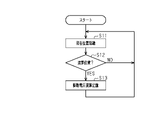
- FIG. 3 is a flow diagram for explaining storage processing of the control unit in one embodiment
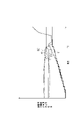
- FIG. 4 is a characteristic diagram of rotation speed versus torque for each temperature of the motor in one embodiment
- FIG. 5 is a waveform diagram for explaining the action of the power window device.
- FIG. 1 As shown in FIG. 1, a window glass 1 as an opening/closing member provided on a vehicle door D is drivingly connected to a motor M in a power window device 2 as an opening/closing member control device via a regulator or the like (not shown). The motor M is driven to open and close the window glass 1 .
- the power window device 2 includes a rotation detection sensor 3 such as a Hall IC that detects the rotational speed of the motor M.
- the power window device 2 controls the duty ratio of the drive circuit 7 based on the signal from the rotation detection sensor 3, the signal from the operation switch 4, the signal from the temperature sensor 5, the voltage of the battery 6, and the like.
- a control unit 8 for supplying a drive voltage to the motor M is provided.
- the control unit 8 includes 1) one or more processors that execute various processes according to a computer program (software), and 2) an application specific integrated circuit (ASIC) that executes at least part of the various processes. It may be configured as circuitry including one or more dedicated hardware circuits, or 3) combinations thereof.
- the processor includes a CPU and memory 9, such as RAM and ROM, which stores program code or instructions configured to cause the CPU to perform processes.
- Memory 9 or computer readable media includes any available media that can be accessed by a general purpose or special purpose computer.
- the control unit 8 Based on the load information acquired when the window glass 1 is driven, the control unit 8 causes the memory 9 to store the drive voltage corresponding to each position of the window glass 1, and supplies the drive voltage stored in the memory 9 to the motor M. to control the motor M. That is, since the load on the window glass 1 varies depending on the position of the opening and closing range, for example, the driving speed varies even if a constant driving voltage is supplied to the motor M. is supplied to the motor M. Note that the stored driving voltage referred to here is not limited to the actual voltage value such as 9.0 volts, and may be a numerical value corresponding to the actual voltage value. Further, the control unit 8 causes the memory 9 to store the driving voltage for the closing operation and the driving voltage for the opening operation.
- control unit 8 of the present embodiment causes the memory 9 to store, for example, a driving voltage that causes the window glass 1 to operate at a constant driving speed. Further, the controller 8 may store in the memory 9 a drive voltage that causes the window glass 1 to stop at a slow drive speed when it reaches the fully closed position or the fully open position.
- the control unit 8 determines whether or not a pinch has occurred when the window glass 1 is closed. Specifically, when the window glass 1 is closed, the control unit 8 of the present embodiment determines, for example, the rotation speed of the motor M in advance based on the signal from the rotation detection sensor 3, which is the acquired load information. If it is determined that the value is equal to or less than the threshold value, it is determined that entrapment has occurred. Then, when determining that a pinch has occurred, the control unit 8 supplies the motor M with a drive voltage higher than the normal drive voltage for opening the window glass 1 to open the window glass 1 .
- the normal driving voltage for the opening operation mentioned here is, for example, the driving voltage for the opening operation based on the signal from the operation switch 4 .
- control unit 8 determines whether entrainment has occurred when the window glass 1 is opened. Specifically, when opening the window glass 1, the control unit 8 of the present embodiment determines, for example, the rotation speed of the motor M in advance based on the signal from the rotation detection sensor 3, which is the acquired load information. If it is determined that it has become equal to or less than the threshold value, it is determined that entrainment has occurred. Then, when determining that entrainment has occurred, the control unit 8 supplies the motor M with a driving voltage higher than the normal driving voltage for closing the window glass 1 to close the window glass 1 .
- the normal driving voltage for the closing operation referred to here is, for example, the driving voltage for the closing operation based on the signal from the operation switch 4 .
- control unit 8 supplies the drive voltage stored in advance until it is determined that an entrapment has occurred even if the acquired load information, that is, the signal from the rotation detection sensor 3 fluctuates. to maintain
- control unit 8 supplies the drive voltage stored in advance until it is determined that entrainment has occurred even if the acquired load information, that is, the signal from the rotation detection sensor 3 fluctuates. to maintain
- the control unit 8 stores in the memory 9 the driving voltage to be used when driving the window glass 1 from the next time onward. Specifically, when the rotation speed of the motor M obtained when the window glass 1 is driven is higher or lower than the target value, the control unit 8 stores the driving voltage approaching the target value in the memory 9 .
- the target value in this embodiment is a constant rotational speed.
- control unit 8 corrects the stored driving voltage based on the obtained outside air temperature. Specifically, based on the signal from the temperature sensor 5, which is the acquired outside air temperature, the control unit 8 of the present embodiment first acquires The rotation speed of the motor M is converted to the rotation speed at the reference temperature. Then, when the converted rotation speed is larger or smaller than the target value, the control unit 8 causes the memory 9 to store the driving voltage approaching the target value.
- control unit 8 corrects the drive voltage supplied to the motor M based on the acquired outside air temperature. Specifically, based on the signal from the temperature sensor 5, which is the acquired outside air temperature, the control unit 8 of the present embodiment determines whether the outside air temperature is higher or lower than the reference temperature. The drive voltage supplied to the motor M is corrected so that the rotation speed approaches the target value.
- FIG. 4 shows the characteristics A1 to A3 of the rotation speed of the motor M with respect to the torque at each temperature.
- a characteristic A3 at ⁇ 30° C. is shown.
- the control unit 8 corrects the drive voltage to be stored and the drive voltage to be supplied as described above based on the acquired outside air temperature and the characteristics shown in FIG.
- FIG. 2 As shown in FIG. 2, when the operation switch 4 for closing the window glass 1 is operated, the control unit 8 performs the driving process from step S1 onward.
- step S1 the control unit 8 supplies a pre-stored driving voltage to the motor M, and proceeds to step S2. Specifically, the control unit 8 reads the drive voltage corresponding to each position of the window glass 1 from the memory 9, controls the duty ratio of the drive circuit 7, and outputs the drive voltage corresponding to each position of the window glass 1 to the motor. supply to M. At this time, the control unit 8 corrects the driving voltage supplied to the motor M when the obtained outside air temperature is higher or lower than the reference temperature.
- step S2 the control unit 8 determines whether or not an entrapment has occurred, and if it determines that an entrapment has occurred, the process proceeds to step S3.
- step S3 the control unit 8 supplies the motor M with a driving voltage for opening the window glass 1 for a certain interval, and ends the process. At this time, the control unit 8 supplies the motor M with a drive voltage higher than the normal drive voltage for opening the window glass 1 to open the window glass 1 .
- step S2 the control unit 8 determines whether or not an entrapment has occurred, and if it determines that an entrapment has not occurred, the process proceeds to step S4.
- step S4 the control unit 8 determines whether or not the stop condition is satisfied. If it is determined that the stop condition is not satisfied, the process proceeds to step S1, and if it is determined that the stop condition is satisfied, the process ends.
- the stop condition is satisfied, for example, when the operation switch 4 for stopping the window glass 1 is operated.
- step S11 the control unit 8 recognizes the current position of the window glass 1, and proceeds to step S12.
- step S12 the control unit 8 determines whether or not the position of the window glass 1 is at the preset calculation position.
- the process proceeds to step S13.
- the calculation positions are set, for example, at positions obtained by dividing the moving range of the window glass 1 into a number of positions at equal intervals.
- step S13 if the rotational speed of the motor M acquired when driving the window glass 1 is larger or smaller than the target value, the control unit 8 calculates a drive voltage that approaches the target value, and stores the drive voltage in the memory 9. , and proceeds to step S11. Note that the control unit 8 repeats the above-described storage processing until the window glass 1 stops, and terminates the storage processing when the window glass 1 stops.
- FIG. 5 shows the waveforms of the rotation speed B1 of the motor M, the drive voltage C1 supplied to the motor M, and the pinching load D1 with respect to time when the window glass 1 is closed in the power window device 2 of this embodiment.
- FIG. 5 shows waveforms of the rotation speed B2 of the motor M, the drive voltage C2 supplied to the motor M, and the pinching load D2 with respect to time in a conventional power window device that performs feedback control.
- the pinch load D1 on the foreign object gradually increases.
- the power window device 2 of this embodiment even if the acquired load information fluctuates, that is, even if the rotation speed B1 decreases, the previously stored drive voltage C1 is supplied until it is determined that entrapment has occurred. is maintained.
- the conventional power window device that performs feedback control when the rotation speed B2 starts to decrease, the drive voltage C2 is increased so as to cancel the decrease in the rotation speed B2.
- the entrapment load D2 increases at the timing T1 immediately after it is determined that entrapment has occurred.
- the load D1 can be kept small.
- the driving voltage C1 is supplied in the opposite direction to open the window glass 1, thereby eliminating the state in which the foreign object is entrapped. At this time, a driving voltage higher than the normal driving voltage for opening the window glass 1 is supplied to the motor M, so that the window glass 1 is quickly opened.
- the entrainment load increases at the timing when it is determined that entrainment has occurred. be done.
- the drive speed of the window glass 1, which changes depending on the outside air temperature is set as a target value in advance in this embodiment. can approach a constant speed.
- the pre-stored drive voltage is supplied to the motor M, so the window glass 1 is driven at a speed based on the pre-stored drive voltage. Even if the acquired load information fluctuates, the pre-stored drive voltage supply is maintained until it is determined that entrapment has occurred. There is no need to increase the driving voltage so as to cancel out the decrease. Therefore, it is possible to reduce the entrainment load when it is determined that entrainment has occurred.
- This embodiment can be implemented with the following modifications. This embodiment and the following modified examples can be implemented in combination with each other within a technically consistent range.
- the control unit 8 when the control unit 8 determines that a pinch has occurred, the control unit 8 supplies the motor M with a drive voltage that is higher than the normal drive voltage for opening the window glass 1.
- a normal drive voltage may be supplied to the motor M instead.
- the control unit 8 when the control unit 8 determines that entrainment has occurred, the control unit 8 supplies the motor M with a drive voltage higher than the normal drive voltage for closing the window glass 1.
- a normal drive voltage may be supplied to the motor M.
- control unit 8 corrects the drive voltage supplied to the motor M based on the acquired outside air temperature, but is not limited to this, and corrects the drive voltage supplied to the motor M based on the outside air temperature. A configuration in which correction is not performed is also possible.
- the control unit 8 stores the drive voltage to be used in the subsequent driving in the memory 9 based on the load information acquired when the window glass 1 is driven. , the drive voltage once stored may not be rewritten.
- the drive voltage stored so far is also taken into consideration.
- a new drive voltage may be stored. That is, based on the drive voltage calculated based on the load information acquired when driving the window glass 1 and the drive voltage stored up to that time, the control unit 8 determines the position to be used when driving the window glass 1 from the next time onward. The drive voltage thus obtained may be corrected so as to be stored in the memory 9 .
- control unit 8 corrects the stored drive voltage based on the obtained outside air temperature, but is not limited to this, and may be configured not to correct the stored drive voltage based on the outside air temperature. .
- the control unit 8 when the window glass 1 is opened, the control unit 8 maintains the supply of the drive voltage stored in advance until it is determined that entrainment has occurred.
- a configuration may be adopted in which the drive voltage is changed before it is determined that an error has occurred.
- the signal from the rotation detection sensor 3 such as a Hall IC is used as the load information, and based on the signal from the rotation detection sensor 3, for example, it is determined whether or not an entrapment has occurred.
- the load information may be the current value flowing through the motor M, or the information obtained by directly detecting the moving speed of the window glass 1 may be used as the load information.
- control unit 8 supplies the motor M with the drive voltage corresponding to each position of the window glass 1.
- the present invention is not limited to this. You may make it supply to M.
- the power window device 2 in which the opening/closing member is the window glass 1 is embodied.
Landscapes
- Engineering & Computer Science (AREA)
- Mechanical Engineering (AREA)
- Power Engineering (AREA)
- Power-Operated Mechanisms For Wings (AREA)
- Window Of Vehicle (AREA)
- Control Of Electric Motors In General (AREA)
Priority Applications (3)
| Application Number | Priority Date | Filing Date | Title |
|---|---|---|---|
| DE112022000717.6T DE112022000717T5 (de) | 2021-01-21 | 2022-01-19 | Öffnungs-/Schließelement-Steuerungsvorrichtung |
| CN202280010442.7A CN116829801A (zh) | 2021-01-21 | 2022-01-19 | 开闭构件控制装置 |
| US18/218,778 US12584341B2 (en) | 2021-01-21 | 2023-07-06 | Opening/closing member control device |
Applications Claiming Priority (2)
| Application Number | Priority Date | Filing Date | Title |
|---|---|---|---|
| JP2021-007812 | 2021-01-21 | ||
| JP2021007812A JP7533237B2 (ja) | 2021-01-21 | 2021-01-21 | 開閉部材制御装置 |
Related Child Applications (1)
| Application Number | Title | Priority Date | Filing Date |
|---|---|---|---|
| US18/218,778 Continuation US12584341B2 (en) | 2021-01-21 | 2023-07-06 | Opening/closing member control device |
Publications (1)
| Publication Number | Publication Date |
|---|---|
| WO2022158467A1 true WO2022158467A1 (ja) | 2022-07-28 |
Family
ID=82549424
Family Applications (1)
| Application Number | Title | Priority Date | Filing Date |
|---|---|---|---|
| PCT/JP2022/001706 Ceased WO2022158467A1 (ja) | 2021-01-21 | 2022-01-19 | 開閉部材制御装置 |
Country Status (5)
| Country | Link |
|---|---|
| US (1) | US12584341B2 (https=) |
| JP (1) | JP7533237B2 (https=) |
| CN (1) | CN116829801A (https=) |
| DE (1) | DE112022000717T5 (https=) |
| WO (1) | WO2022158467A1 (https=) |
Citations (4)
| Publication number | Priority date | Publication date | Assignee | Title |
|---|---|---|---|---|
| JP3740951B2 (ja) * | 2000-06-16 | 2006-02-01 | 松下電器産業株式会社 | 挟み込み判定装置および開閉装置 |
| JP4063094B2 (ja) * | 2002-06-28 | 2008-03-19 | アイシン精機株式会社 | 開閉体の挟み込み検知装置 |
| JP4485782B2 (ja) * | 2003-10-31 | 2010-06-23 | 株式会社東海理化電機製作所 | パワーウィンドウ装置 |
| JP6776921B2 (ja) * | 2016-07-12 | 2020-10-28 | 株式会社デンソー | 開閉部材駆動装置 |
Family Cites Families (14)
| Publication number | Priority date | Publication date | Assignee | Title |
|---|---|---|---|---|
| US6404158B1 (en) * | 1992-04-22 | 2002-06-11 | Nartron Corporation | Collision monitoring system |
| US6064165A (en) * | 1992-04-22 | 2000-05-16 | Nartron Corporation | Power window or panel controller |
| DE4444762A1 (de) * | 1994-12-19 | 1996-06-20 | Bosch Gmbh Robert | Schaltungsanordnung und Verfahren zum Betreiben eines Verstellantriebs |
| US5616997A (en) * | 1995-10-10 | 1997-04-01 | Itt Automotive Electrical Systems, Inc. | Auto up window with obstacle detection system |
| IT1310217B1 (it) * | 1999-01-15 | 2002-02-11 | Giovanni Guntero Czaloun | Morsa automatica per il bloccaggio di funi. |
| JP2002174076A (ja) | 2000-12-08 | 2002-06-21 | Omron Corp | 開閉制御装置 |
| US6782759B2 (en) * | 2001-07-09 | 2004-08-31 | Nartron Corporation | Anti-entrapment system |
| DE10297186T5 (de) * | 2001-09-13 | 2004-10-28 | Siemens Vdo Automotive Corp., Auburn Hills | Einklemmerkennungssystem |
| TW574467B (en) * | 2002-06-28 | 2004-02-01 | Aisin Seiki | Trapping detection device of opening/closing member |
| KR100628419B1 (ko) * | 2003-02-26 | 2006-09-28 | 가부시끼가이샤 도시바 | 개선된 게이트 전극을 포함하는 불휘발성 반도체 기억 장치 |
| CN102226368B (zh) * | 2011-05-12 | 2014-05-28 | 昌辉汽车电气系统(安徽)有限公司 | 一种具有自适应性的电动窗防夹控制方法 |
| JP6164449B2 (ja) * | 2013-02-28 | 2017-07-19 | アイシン精機株式会社 | 開閉体の挟み込み検知装置及び開閉体装置 |
| CN113143355A (zh) | 2015-09-04 | 2021-07-23 | 美多斯国际有限公司 | 多护罩脊柱进入系统 |
| JP6988838B2 (ja) * | 2019-01-30 | 2022-01-05 | 株式会社デンソー | 開閉体制御装置 |
-
2021
- 2021-01-21 JP JP2021007812A patent/JP7533237B2/ja active Active
-
2022
- 2022-01-19 CN CN202280010442.7A patent/CN116829801A/zh active Pending
- 2022-01-19 DE DE112022000717.6T patent/DE112022000717T5/de active Pending
- 2022-01-19 WO PCT/JP2022/001706 patent/WO2022158467A1/ja not_active Ceased
-
2023
- 2023-07-06 US US18/218,778 patent/US12584341B2/en active Active
Patent Citations (4)
| Publication number | Priority date | Publication date | Assignee | Title |
|---|---|---|---|---|
| JP3740951B2 (ja) * | 2000-06-16 | 2006-02-01 | 松下電器産業株式会社 | 挟み込み判定装置および開閉装置 |
| JP4063094B2 (ja) * | 2002-06-28 | 2008-03-19 | アイシン精機株式会社 | 開閉体の挟み込み検知装置 |
| JP4485782B2 (ja) * | 2003-10-31 | 2010-06-23 | 株式会社東海理化電機製作所 | パワーウィンドウ装置 |
| JP6776921B2 (ja) * | 2016-07-12 | 2020-10-28 | 株式会社デンソー | 開閉部材駆動装置 |
Also Published As
| Publication number | Publication date |
|---|---|
| US12584341B2 (en) | 2026-03-24 |
| CN116829801A (zh) | 2023-09-29 |
| JP2022112134A (ja) | 2022-08-02 |
| JP7533237B2 (ja) | 2024-08-14 |
| DE112022000717T5 (de) | 2023-11-16 |
| US20230349217A1 (en) | 2023-11-02 |
Similar Documents
| Publication | Publication Date | Title |
|---|---|---|
| US11536077B2 (en) | Open-close body controller | |
| US9856687B2 (en) | Vehicle window opening device | |
| US10815714B2 (en) | Opening/closing member driving device | |
| US10760319B2 (en) | Open-close body driving device | |
| WO2017179585A1 (ja) | 開閉体駆動モータ | |
| JP6988769B2 (ja) | 開閉体制御装置及びモータ | |
| WO2019163447A1 (ja) | パワーウインド制御装置 | |
| US20190375277A1 (en) | Opening/closing body drive device | |
| CN105229250A (zh) | 用于车门内的车窗的具有关闭辅助机构的防夹保护系统 | |
| JP6930137B2 (ja) | 開閉体駆動装置 | |
| WO2022158467A1 (ja) | 開閉部材制御装置 | |
| JP6930168B2 (ja) | 開閉体駆動装置 | |
| JP3835522B2 (ja) | 開閉制御装置 | |
| WO2018159816A1 (ja) | 開閉体駆動装置 | |
| JP6610397B2 (ja) | 開閉体駆動モータ | |
| JP6394900B2 (ja) | 車両窓開閉装置 | |
| JP2004076265A (ja) | パワーウインドの制御装置 | |
| JP6988740B2 (ja) | 開閉部材制御装置及び制御装置付きモータ | |
| JP6767281B2 (ja) | 挟み込み検出装置 | |
| JP7040472B2 (ja) | 開閉体制御装置 | |
| JP7081504B2 (ja) | 開閉部材制御装置 | |
| JP2782313B2 (ja) | 窓・扉開閉制御装置 | |
| JP2017226971A (ja) | 車両用開閉部材駆動装置 | |
| JP6880815B2 (ja) | 開閉体駆動モータ及び開閉体駆動システム | |
| WO2020153469A1 (ja) | 開閉部材制御装置 |
Legal Events
| Date | Code | Title | Description |
|---|---|---|---|
| 121 | Ep: the epo has been informed by wipo that ep was designated in this application |
Ref document number: 22742589 Country of ref document: EP Kind code of ref document: A1 |
|
| WWE | Wipo information: entry into national phase |
Ref document number: 202280010442.7 Country of ref document: CN |
|
| WWE | Wipo information: entry into national phase |
Ref document number: 112022000717 Country of ref document: DE |
|
| 122 | Ep: pct application non-entry in european phase |
Ref document number: 22742589 Country of ref document: EP Kind code of ref document: A1 |