WO2022145156A1 - 車両用認証システム - Google Patents
車両用認証システム Download PDFInfo
- Publication number
- WO2022145156A1 WO2022145156A1 PCT/JP2021/043564 JP2021043564W WO2022145156A1 WO 2022145156 A1 WO2022145156 A1 WO 2022145156A1 JP 2021043564 W JP2021043564 W JP 2021043564W WO 2022145156 A1 WO2022145156 A1 WO 2022145156A1
- Authority
- WO
- WIPO (PCT)
- Prior art keywords
- vehicle
- portable device
- event
- detected
- detection means
- Prior art date
- Legal status (The legal status is an assumption and is not a legal conclusion. Google has not performed a legal analysis and makes no representation as to the accuracy of the status listed.)
- Ceased
Links
Images

Classifications
-
- B—PERFORMING OPERATIONS; TRANSPORTING
- B60—VEHICLES IN GENERAL
- B60R—VEHICLES, VEHICLE FITTINGS, OR VEHICLE PARTS, NOT OTHERWISE PROVIDED FOR
- B60R25/00—Fittings or systems for preventing or indicating unauthorised use or theft of vehicles
- B60R25/20—Means to switch the anti-theft system on or off
- B60R25/24—Means to switch the anti-theft system on or off using electronic identifiers containing a code not memorised by the user
-
- B—PERFORMING OPERATIONS; TRANSPORTING
- B60—VEHICLES IN GENERAL
- B60R—VEHICLES, VEHICLE FITTINGS, OR VEHICLE PARTS, NOT OTHERWISE PROVIDED FOR
- B60R25/00—Fittings or systems for preventing or indicating unauthorised use or theft of vehicles
- B60R25/30—Detection related to theft or to other events relevant to anti-theft systems
- B60R25/31—Detection related to theft or to other events relevant to anti-theft systems of human presence inside or outside the vehicle
-
- G—PHYSICS
- G06—COMPUTING OR CALCULATING; COUNTING
- G06F—ELECTRIC DIGITAL DATA PROCESSING
- G06F21/00—Security arrangements for protecting computers, components thereof, programs or data against unauthorised activity
- G06F21/30—Authentication, i.e. establishing the identity or authorisation of security principals
- G06F21/31—User authentication
- G06F21/34—User authentication involving the use of external additional devices, e.g. dongles or smart cards
- G06F21/35—User authentication involving the use of external additional devices, e.g. dongles or smart cards communicating wirelessly
-
- G—PHYSICS
- G06—COMPUTING OR CALCULATING; COUNTING
- G06F—ELECTRIC DIGITAL DATA PROCESSING
- G06F21/00—Security arrangements for protecting computers, components thereof, programs or data against unauthorised activity
- G06F21/30—Authentication, i.e. establishing the identity or authorisation of security principals
- G06F21/44—Program or device authentication
Definitions
- the present invention has an in-vehicle unit mounted on a vehicle and a portable device that is portable to the passenger and can wirelessly transmit predetermined information to the in-vehicle unit, and is between the in-vehicle unit and the portable device. It relates to a vehicle certification system that enables wireless communication for certification.
- a portable device that can be carried by a passenger such as a driver and can transmit a vehicle-specific authentication code by radio wave, and an in-vehicle unit that can receive the transmitted authentication code, and is wirelessly transmitted from the portable device.
- Vehicle authentication systems that allow the start of the vehicle engine, provided that the authentication code is a legitimate authentication code, are widespread. In such a vehicle authentication system, there is a problem that it is not possible to take effective measures against a so-called relay attack in which a third party illegally performs communication between a portable device and an in-vehicle unit with a repeater. rice field.
- the authentication code needs to be modulated by a plurality of modulation methods, the communication between the in-vehicle unit and the portable device becomes complicated, and the signal processing becomes complicated. There was a risk that the authentication process would take a long time. In addition, there is a problem that it is not possible to reliably prevent fraudulent acts such as relay attacks.
- the present invention has been made in view of such circumstances, and an object of the present invention is to provide a vehicle authentication system capable of further improving the crime prevention effect while avoiding complicated signal processing.
- the invention according to claim 1 has an in-vehicle unit mounted on a vehicle and a portable device that is portable to a passenger and can wirelessly transmit predetermined information to the in-vehicle unit.
- a vehicle authentication system capable of wireless communication for authentication with a portable device
- a vehicle-side detecting means disposed in the in-vehicle unit and capable of detecting an event caused by a occupant's behavior
- a portable device-side detecting means that is arranged on the portable device and can detect an event caused by the behavior of a occupant and transmit it to the in-vehicle unit, an event detected by the vehicle-side detecting means, and the portable device-side detecting means.
- a determination means capable of determining whether or not the event transmitted from the vehicle is detected at the same timing, and the event detected by the vehicle side detection means by the determination means and the event transmitted from the portable device side detection means. It is characterized in that it is possible to start the drive source of the vehicle or run the vehicle on condition that it is determined that the event is detected at the same timing.
- the invention according to claim 2 is the vehicle authentication system according to claim 1, wherein the in-vehicle unit and the portable device each have time information, and the determination means synchronizes the time information with the vehicle. It is characterized in that it is possible to determine whether or not the event detected by the side detecting means and the event transmitted from the portable device side detecting means are detected at the same timing.
- the invention according to claim 3 is the vehicle authentication system according to claim 1 or 2, wherein an event caused by the behavior of the passenger detected by the vehicle side detection means and the portable device side detection means is boarding. It is characterized by consisting of an impact or vibration generated when a person gets on a vehicle.
- the invention according to claim 4 is characterized in that, in the vehicle authentication system according to claim 3, the impact or vibration occurs when the occupant sits on the seat of the vehicle.
- the invention according to claim 5 is the vehicle authentication system according to claim 3 or 4, wherein the vehicle-side detection means and the portable device-side detection means are acceleration sensors arranged in the vehicle-mounted unit and the portable device, respectively. It is characterized in that the impact or vibration can be detected.
- the invention according to claim 6 is the vehicle authentication system according to claim 1 or 2, wherein an event caused by the behavior of the passenger detected by the vehicle side detection means and the portable device side detection means is boarding. It is characterized by consisting of a voice or sound emitted by a person.
- the invention according to claim 7 is the vehicle authentication system according to claim 6, wherein the vehicle-side detection means and the portable device-side detection means are composed of microphones arranged in the vehicle-mounted unit and the portable device, respectively, and the voice. Alternatively, it is characterized in that sound can be detected.
- the invention according to claim 8 is the vehicle authentication system according to any one of claims 1 to 7, wherein the portable device is from a smartphone having a function of detecting an event caused by a occupant's behavior. It is characterized by being formed.
- the invention according to claim 9 is the vehicle authentication system according to any one of claims 1 to 8, wherein the in-vehicle unit and the portable device are an event detected by the vehicle side detection means and the portable device side.
- the drive source of the vehicle is started or the vehicle is running, provided that the event transmitted from the detection means is detected at the same timing and the authentication code wirelessly transmitted from the portable device is a legitimate authentication code. It is characterized in that it can be possible.
- the vehicle is subject to the condition that the event detected by the vehicle-side detection means and the event transmitted from the portable device-side detection means are detected at the same timing by the determination means. Since it is possible to start the drive source or run the vehicle, it is possible to further improve the crime prevention effect while avoiding complicated signal processing.
- the in-vehicle unit and the portable device each have time information, and the determination means synchronizes the time information with the event detected by the vehicle side detection means and the portable device side detection. Since it is possible to determine whether or not the event transmitted from the means is detected at the same timing, the authentication accuracy can be further improved.
- the event caused by the behavior of the occupant detected by the vehicle-side detecting means and the portable device-side detecting means comprises an impact or vibration generated when the occupant gets on the vehicle.
- the authentication is performed with the occupant seated on the seat, and the drive source of the vehicle is used. It will be possible to start or run the vehicle, and safety can be improved.
- the vehicle-side detection means and the portable device-side detection means are composed of acceleration sensors disposed on the in-vehicle unit and the portable device, respectively, and can detect impact or vibration, so that the behavior of the occupant.
- the shock or vibration generated by the above can be detected with high accuracy by the acceleration sensor, and the authentication accuracy can be improved.
- the passenger since the event caused by the behavior of the passenger detected by the vehicle-side detecting means and the portable device-side detecting means is composed of the voice or sound emitted by the passenger, the passenger makes a voice or sound. It is possible to perform authentication by generating the above, and it is possible to perform authentication without requiring a special operation.
- the vehicle-side detection means and the portable device-side detection means are composed of microphones arranged in the in-vehicle unit and the portable device, respectively, and can detect the voice or sound, so that the passenger emits the sound.
- the voice or sound can be detected accurately by the microphone, and the authentication accuracy can be improved.
- the portable device comprises a smartphone having a function of detecting an event caused by the behavior of the occupant, it is not necessary to carry an electronic key or the like dedicated to the vehicle, and it is usually used.
- a smartphone that the passenger always carries can be used for authentication.
- the in-vehicle unit and the portable device detect an event caused by the behavior of the passenger, and the authentication code wirelessly transmitted from the portable device is a legitimate authentication code. Since it is possible to start the drive source of the vehicle or run the vehicle, the crime prevention effect can be further improved.
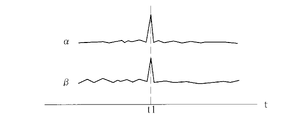
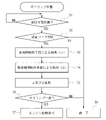
- a block diagram showing a vehicle authentication system according to an embodiment of the present invention A graph showing a signal for authentication detected by the vehicle side detection means and the portable device side detection means of the vehicle authentication system. Flow chart showing control of the vehicle authentication system
- the wireless communication system includes an in-vehicle unit 1 mounted on a vehicle such as a two-wheeled vehicle and a portable device 2 that can be carried by a passenger such as a driver.
- Wireless communication for authentication is possible between the in-vehicle unit 1 and the portable device 2, and based on the authentication, the engine that is the drive source of the vehicle can be allowed to start or the vehicle can run. It is called a keyless entry system.
- the in-vehicle unit 1 is fixed to a predetermined part of the vehicle, and is a wireless communication in which a vehicle-side detecting means 3, a determining means 5, a clock means 6 capable of acquiring time (time) information, and an antenna A1 are formed. It is configured to include means 8 and vehicle communication means 12. Further, the vehicle-mounted unit 1 is connected to the vehicle-mounted battery B via the protection circuit 11, and power is supplied from the vehicle-mounted battery B.
- the portable device 2 is composed of parts that can be carried and carried by the passenger, and can wirelessly transmit predetermined information to the in-vehicle unit 1, and also transmits time (time) information to the portable device side detecting means 4.
- An acquireable clock means 7, a memory means 14 in which a vehicle-specific authentication code is stored, a control means 10 including a microcomputer or the like, a wireless communication means 9 in which an antenna A2 is formed, and a battery D as a power source are provided. It is configured to have.
- the vehicle-mounted unit 1 and the portable device 2 are capable of wireless communication by transmitting and receiving predetermined signals by the antenna A1 of the vehicle-mounted unit 1, the antenna A2 of the portable device 2, and the wireless communication means 8 and 9.
- the wireless communication between the vehicle-mounted unit 1 and the portable device 2 may be any communication method (communication according to a general-purpose communication standard, etc.).
- the vehicle-side detection means 3 is arranged in the vehicle-mounted unit 1 and comprises a sensor capable of detecting an event caused by the behavior of a occupant.
- the vehicle-side detection means 3 comprises an acceleration sensor capable of detecting an impact or vibration.
- the portable device side detection means 4 is provided on the portable device 2 and comprises a sensor capable of detecting an event caused by the behavior of a occupant and transmitting the event to the in-vehicle unit 1.
- the shock or vibration is provided. Consists of an accelerometer capable of detecting.
- the event caused by the behavior of the occupant detected by the vehicle-side detecting means 3 and the portable device-side detecting means 4 consists of an impact or vibration generated when the occupant gets on the vehicle, and the impact thereof.
- the vibration is assumed to occur when the occupant sits on the seat of the vehicle. That is, the behavior of the occupant in this case is sitting on the seat, and the event caused by the behavior is the impact generated by sitting on the seat and transmitted to the in-vehicle unit 1 and the portable device 2. Or it means vibration.
- the detection value detected by the portable device side detection means 4 is the vehicle-specific authentication code from the antenna A2 of the wireless communication means 9 and the time information of the clock means 7 (time when an event caused by the behavior of the occupant is detected). It is configured to be wirelessly transmitted to the vehicle-mounted unit 1 together with the information). Then, the vehicle-specific authentication code, the detection value and the time information detected by the portable device side detection means 4 are received by the antenna A1 of the wireless communication means 8 in the vehicle-mounted unit 1.
- the determination means 5 is composed of a microcomputer or the like arranged in the vehicle-mounted unit 1, determines whether or not the authentication code transmitted from the portable device 2 is a legitimate authentication code, and is detected by the vehicle side detection means 3. It is possible to determine whether or not the event and the event transmitted from the portable device side detection means 4 are detected at the same timing. That is, the vehicle-mounted unit 1 and the portable device 2 according to the present embodiment have time information by the clock means 6 and 7, respectively. Then, the determination means 5 synchronizes the time information with the event detected by the vehicle side detection means 3 (impact or vibration detected on the vehicle-mounted unit 1 side when seated on the seat) and the portable device side. It is possible to determine whether or not the event transmitted from the detection means 4 (impact or vibration detected on the portable device 2 side due to sitting on the seat) is detected at the same timing.
- the vehicle-side detection means 3 including the acceleration sensor is used.
- the portable device side detection means 4 including the acceleration sensor impacts in the time of t1.
- the signal ⁇ that detects the vibration is acquired.
- the signal ⁇ is transmitted to the determination means 5, and the signal ⁇ is transmitted to the determination means 5 via the antennas A1 and A2.
- the portable device 2 transmits the authentication code stored in the memory means 14 from the antenna A2.
- the vehicle-mounted unit 1 receives the authentication code from the antenna A1 and sends it to the determination means 5.
- the determination means 5 synchronizes the time information and detects the signal ⁇ detection time (time when the vehicle side detection means 3 detects the impact or vibration) and the signal ⁇ detection time (impact or vibration is detected by the portable device side detection means 4). It is determined whether or not these detection times are the same, that is, the event detected by the vehicle-side detection means 3 and the event transmitted from the portable device-side detection means 4 are at the same timing. At the same time, it is determined whether or not the authentication code received from the portable device 2 is a legitimate authentication code.
- the vehicle-mounted unit 1 it is determined by the determination means 5 that the event detected by the vehicle-side detection means 3 and the event transmitted from the portable device-side detection means 4 have the same timing, and the event is determined from the portable device.
- the drive source (engine) of the vehicle can be started on condition that the received authentication code is a legitimate authentication code. That is, the in-vehicle unit 1 determines that the event detected by the vehicle-side detecting means 3 by the determining means 5 and the event transmitted from the portable device-side detecting means 4 have the same timing, and the portable device
- a permission signal is transmitted to the ECU (engine control unit) 13 mounted on the vehicle via the vehicle communication means 12, and the drive source (engine) is started. Is configured to allow.
- the authentication code is received from the portable device 2 even if it is not determined. Even if the authentication code is determined to be a legitimate authentication code, the permission signal is not transmitted to the ECU 13, and the start of the drive source (engine) is not permitted (prohibited).
- the steering lock of the vehicle or the like is set on condition that the event detected by the vehicle-side detecting means 3 and the event transmitted from the portable device-side detecting means 4 are determined to be at the same timing by the determining means 5. It may be configured to be released so that the vehicle can run.
- the vehicle-mounted unit 1 Before the certification, the vehicle-mounted unit 1 is in the polling state, and the power supply is intermittently performed. Then, S1 determines whether or not communication is possible with the portable device 2, and if it is determined that communication is possible, the authentication code is transmitted from the portable device 2 in S2, and the determination means 5 performs regular authentication. A comparison is made with the code. Next, in S3, the signal ⁇ (the signal that the vehicle side detection means 3 detects the impact or vibration in the time of t1) is detected by the vehicle side detection means 3, and then in S4, the signal by the portable device side detection means 4 is detected. ⁇ (a signal by which the detection means 4 on the portable device side detects an impact or vibration at the time of t1) is detected.
- the time information by the signal ⁇ and the clock means 6 and the time information by the signal ⁇ and the clock means 7 are transmitted to the determination means 5, and the time information is transmitted to the determination means 5 in S5 as shown in FIG.
- the signal ⁇ and the signal ⁇ are compared while being synchronized with each other. Then, whether or not the event detected by the vehicle-side detecting means 3 and the event transmitted from the portable device-side detecting means 4 in S6 are detected at the same timing (that is, the timing of t1 in FIG. 2 coincides).
- the wireless communication system has an in-vehicle unit 1 mounted on a vehicle such as a two-wheeled vehicle and a portable device such as a driver that can be carried by a passenger such as a driver, as shown in FIG. It is equipped with a machine 2 and enables wireless communication for authentication between the in-vehicle unit 1 and the portable device 2.
- the engine that is the drive source of the vehicle is permitted to start or the vehicle It is a so-called keyless entry system that can enable driving.
- the event caused by the behavior of the passenger detected by the vehicle-side detecting means 3 and the portable device-side detecting means 4 is composed of a voice or a sound emitted by the passenger. That is, the behavior of the passenger in this case is the act of the passenger emitting a voice or sound, and the event caused by the behavior is the voice or sound of the passenger transmitted to the in-vehicle unit 1 and the portable device 2.
- the behavior of the passenger in this case is the act of the passenger emitting a voice or sound
- the event caused by the behavior is the voice or sound of the passenger transmitted to the in-vehicle unit 1 and the portable device 2.
- the vehicle-side detecting means 3 is arranged in the vehicle-mounted unit 1 as in the previous embodiment, and includes a sensor capable of detecting an event caused by the behavior of the occupant. In the present embodiment, voice or sound is emitted. It consists of a detectable microphone. Similar to the previous embodiment, the portable device side detecting means 4 is arranged in the portable device 2 and comprises a sensor capable of detecting an event caused by the behavior of the occupant and transmitting the event to the in-vehicle unit 1. In the form, it consists of a microphone capable of detecting voice or sound.
- the detection value detected by the portable device side detection means 4 is the time information of the clock means 7 from the antenna A2 of the wireless communication means 9 (the time when the event caused by the behavior of the passenger is detected) as in the previous embodiment. It is configured to be wirelessly transmitted to the vehicle-mounted unit 1 together with the information). Then, the detection value and the time information detected by the portable device side detection means 4 are received by the antenna A1 of the wireless communication means 8 in the vehicle-mounted unit 1.
- the determination means 5 is composed of a microcomputer or the like arranged in the vehicle-mounted unit 1, determines whether or not the authentication code transmitted from the portable device 2 is a legitimate authentication code, and is detected by the vehicle side detection means 3. It is possible to determine whether or not the event and the event transmitted from the portable device side detection means 4 are detected at the same timing. That is, the vehicle-mounted unit 1 and the portable device 2 according to the present embodiment have time information by the clock means 6 and 7, respectively. Then, the determination means 5 synchronizes the time information with the event detected by the vehicle side detection means 3 (voice or sound emitted by the passenger detected on the vehicle-mounted unit 1 side) and the portable device side detection means. It is possible to determine whether or not the event transmitted from 4 (voice or sound emitted by the passenger detected on the portable device 2 side) is detected at the same timing.
- the vehicle-side detecting means 3 including the microphone is t1.
- the signal ⁇ is transmitted to the determination means 5, and the signal ⁇ is transmitted to the determination means 5 via the antennas A1 and A2.
- the authentication code is transmitted from the antenna A2 of the portable device 2 and transmitted to the determination means 5 via the antenna A1.
- the determination means 5 synchronizes the time information to detect the signal ⁇ (time when the vehicle side detecting means 3 detects the voice or sound) and the detection time of the signal ⁇ (the voice or sound is detected by the portable device side detecting means 4). It is determined whether or not these detection times are the same, that is, the event detected by the vehicle-side detection means 3 and the event transmitted from the portable device-side detection means 4 are at the same timing. At the same time, it is determined whether or not the authentication code received from the portable device 2 is legitimate.
- the vehicle-mounted unit 1 determines that the event detected by the vehicle-side detecting means 3 by the determining means 5 and the event transmitted from the portable device-side detecting means 4 have the same timing. Moreover, it is possible to start the drive source (engine) of the vehicle on condition that the authentication code received from the portable device is a legitimate authentication code.
- the vehicle-mounted unit 1 determines that the event detected by the vehicle-side detecting means 3 by the determining means 5 and the event transmitted from the portable device-side detecting means 4 have the same timing, and the portable device
- the permission signal is transmitted to the ECU (engine control unit) 13 mounted on the vehicle via the vehicle communication means 12 to permit the start of the drive source (engine). It is configured to do.
- the determination means 5 on condition that it is determined by the determination means 5 that the event detected by the vehicle side detection means 3 and the event transmitted from the portable device side detection means 4 are detected at the same timing. Since it is possible to start the drive source of the vehicle or run the vehicle, it is possible to further improve the crime prevention effect while avoiding complicated signal processing.
- the in-vehicle unit 1 and the portable device 2 each have time information, and the determination means 5 synchronizes the time information with the event detected by the vehicle side detection means 3 and the portable device. Since it is possible to determine whether or not the event transmitted from the side detecting means 4 is detected at the same timing, the authentication accuracy can be further improved.
- the event caused by the behavior of the occupant detected by the vehicle-side detecting means 3 and the portable device-side detecting means 4 consists of an impact or vibration generated when the occupant gets on the vehicle, what is the boarding operation? Authentication can be performed without the need for a separate operation.
- the impact or vibration occurs when the occupant sits on the seat of the vehicle, the authentication is performed while the occupant is seated on the seat, and the drive source of the vehicle can be started or the vehicle can run. It is possible to improve the safety.
- the vehicle-side detection means 3 and the portable device-side detection means 4 are composed of acceleration sensors arranged on the vehicle-mounted unit 1 and the portable device 2, respectively, impact or vibration can be detected, so that the passenger can detect the impact or vibration.
- the impact or vibration generated by the behavior can be detected with high accuracy by the acceleration sensor, and the authentication accuracy can be improved.
- the vehicle side detection means 3 and the portable device side detection means 4 are composed of microphones arranged in the vehicle-mounted unit 1 and the portable device 2, respectively, and can detect voice or sound, the occupant emits the sound.
- the voice or sound can be detected accurately by the microphone, and the authentication accuracy can be improved.
- the in-vehicle unit 1 and the portable device 2 detect an event caused by the behavior of the occupant, and the drive source of the vehicle is provided on the condition that the authentication code wirelessly transmitted from the portable device 2 is a legitimate authentication code. Since it is possible to start the (engine) or run the vehicle, the crime prevention effect can be further improved.
- the portable device 2 may be composed of a smartphone having a function of detecting an event caused by the behavior of a occupant. good. In this case, it is not necessary to carry an electronic key or the like dedicated to the vehicle, and a smartphone that the passenger always carries can be used for authentication. Further, since many smartphones are usually equipped with an acceleration sensor and a microphone, the acceleration sensor and the microphone can be diverted as the detection means 4 on the portable device side.
- the vehicle-mounted unit 1 may be provided with an access switch, and authentication may be started on condition that the access switch is operated. In addition, authentication may not be performed by sending and receiving an authentication code.
- the present embodiment is applied to motorcycles, it may be applied to other vehicles such as ATVs, snowmobiles, construction machines or agricultural machines, and automobiles.
- the start of the drive source of the vehicle or the running of the vehicle provided that the event detected by the vehicle-side detection means and the event transmitted from the portable device-side detection means are detected at the same timing by the determination means.
- it is a vehicle authentication system that can enable the above, it may be a system having a different appearance shape or a system to which other functions are added.
Landscapes
- Engineering & Computer Science (AREA)
- Computer Security & Cryptography (AREA)
- Theoretical Computer Science (AREA)
- Mechanical Engineering (AREA)
- Computer Hardware Design (AREA)
- Software Systems (AREA)
- Physics & Mathematics (AREA)
- General Engineering & Computer Science (AREA)
- General Physics & Mathematics (AREA)
- Computer Networks & Wireless Communication (AREA)
- Lock And Its Accessories (AREA)
Priority Applications (1)
| Application Number | Priority Date | Filing Date | Title |
|---|---|---|---|
| JP2022572940A JP7681267B2 (ja) | 2020-12-30 | 2021-11-29 | 車両用認証システム |
Applications Claiming Priority (2)
| Application Number | Priority Date | Filing Date | Title |
|---|---|---|---|
| IN202011057101 | 2020-12-30 | ||
| IN202011057101 | 2020-12-30 |
Publications (1)
| Publication Number | Publication Date |
|---|---|
| WO2022145156A1 true WO2022145156A1 (ja) | 2022-07-07 |
Family
ID=82260374
Family Applications (1)
| Application Number | Title | Priority Date | Filing Date |
|---|---|---|---|
| PCT/JP2021/043564 Ceased WO2022145156A1 (ja) | 2020-12-30 | 2021-11-29 | 車両用認証システム |
Country Status (2)
| Country | Link |
|---|---|
| JP (1) | JP7681267B2 (https=) |
| WO (1) | WO2022145156A1 (https=) |
Citations (7)
| Publication number | Priority date | Publication date | Assignee | Title |
|---|---|---|---|---|
| WO2013157136A1 (ja) * | 2012-04-20 | 2013-10-24 | トヨタ自動車株式会社 | 情報特定装置 |
| JP2017082396A (ja) * | 2015-10-22 | 2017-05-18 | 株式会社デンソー | ドライバ特定システム、電子キー |
| CN206841378U (zh) * | 2017-06-07 | 2018-01-05 | 安徽工业大学 | 一种多功能汽车车门解锁控制装置 |
| US20180096546A1 (en) * | 2016-10-04 | 2018-04-05 | Volkswagen Ag | Method for safely unlocking and/or locking a vehicle |
| JP2019183504A (ja) * | 2018-04-10 | 2019-10-24 | 株式会社デンソー | 車両用ドア制御装置 |
| JP2019217925A (ja) * | 2018-06-20 | 2019-12-26 | 本田技研工業株式会社 | プログラム、通信装置、その制御方法並びに解錠システム |
| JP2020159110A (ja) * | 2019-03-27 | 2020-10-01 | 株式会社コムテック | 車両用遠隔制御装置 |
-
2021
- 2021-11-29 WO PCT/JP2021/043564 patent/WO2022145156A1/ja not_active Ceased
- 2021-11-29 JP JP2022572940A patent/JP7681267B2/ja active Active
Patent Citations (7)
| Publication number | Priority date | Publication date | Assignee | Title |
|---|---|---|---|---|
| WO2013157136A1 (ja) * | 2012-04-20 | 2013-10-24 | トヨタ自動車株式会社 | 情報特定装置 |
| JP2017082396A (ja) * | 2015-10-22 | 2017-05-18 | 株式会社デンソー | ドライバ特定システム、電子キー |
| US20180096546A1 (en) * | 2016-10-04 | 2018-04-05 | Volkswagen Ag | Method for safely unlocking and/or locking a vehicle |
| CN206841378U (zh) * | 2017-06-07 | 2018-01-05 | 安徽工业大学 | 一种多功能汽车车门解锁控制装置 |
| JP2019183504A (ja) * | 2018-04-10 | 2019-10-24 | 株式会社デンソー | 車両用ドア制御装置 |
| JP2019217925A (ja) * | 2018-06-20 | 2019-12-26 | 本田技研工業株式会社 | プログラム、通信装置、その制御方法並びに解錠システム |
| JP2020159110A (ja) * | 2019-03-27 | 2020-10-01 | 株式会社コムテック | 車両用遠隔制御装置 |
Also Published As
| Publication number | Publication date |
|---|---|
| JPWO2022145156A1 (https=) | 2022-07-07 |
| JP7681267B2 (ja) | 2025-05-22 |
Similar Documents
| Publication | Publication Date | Title |
|---|---|---|
| Miller et al. | A survey of remote automotive attack surfaces | |
| US9710983B2 (en) | Method and system for authenticating vehicle equipped with passive keyless system | |
| US6788189B2 (en) | Vehicle antitheft device and program | |
| JP4944469B2 (ja) | 自動車の始動及び乗車の認証を行う方法 | |
| JP4334076B2 (ja) | 自動車に対する盗難防止装置および該盗難防止装置の作動方法 | |
| US10778655B2 (en) | Secure control and access of a vehicle | |
| JP6351184B2 (ja) | 車載機器制御システム、車載制御装置 | |
| KR20180067605A (ko) | 차량 탑재 장치 및 인증 시스템 | |
| JP5173935B2 (ja) | 電子キーシステム | |
| JP2017014839A (ja) | 車載機器制御システム、車載制御装置 | |
| KR20190107662A (ko) | 엔트리의 보안 방법 | |
| JP3299532B2 (ja) | 認証要素範囲判定手段を備えた電子安全システム、特に車両ロックシステム | |
| JP2019070258A (ja) | 車両用照合システム、車両用電子キーシステム | |
| JP2014094680A (ja) | 車両盗難防止装置および方法、並びにスマートエントリーシステム | |
| JP5406271B2 (ja) | 電子キー装置 | |
| JP2002269663A (ja) | 車両用セキュリティシステム | |
| JP7178010B2 (ja) | 無線通信システム | |
| JP4016877B2 (ja) | 車両盗難防止システムおよび車両盗難防止方法 | |
| JP7681267B2 (ja) | 車両用認証システム | |
| JP4144554B2 (ja) | 車両用タイヤ盗難防止装置 | |
| JP7359054B2 (ja) | 距離推定装置 | |
| EP3470275B1 (en) | Wireless communication system | |
| KR101772393B1 (ko) | 차주 인식 장치 | |
| JP2004046614A (ja) | 車両盗難追跡装置 | |
| JP4397313B2 (ja) | アラームシステム |
Legal Events
| Date | Code | Title | Description |
|---|---|---|---|
| 121 | Ep: the epo has been informed by wipo that ep was designated in this application |
Ref document number: 21915017 Country of ref document: EP Kind code of ref document: A1 |
|
| ENP | Entry into the national phase |
Ref document number: 2022572940 Country of ref document: JP Kind code of ref document: A |
|
| NENP | Non-entry into the national phase |
Ref country code: DE |
|
| 122 | Ep: pct application non-entry in european phase |
Ref document number: 21915017 Country of ref document: EP Kind code of ref document: A1 |