WO2021106713A1 - 配線板の製造方法及び配線板、並びに、成形品の製造方法及び成形品 - Google Patents
配線板の製造方法及び配線板、並びに、成形品の製造方法及び成形品 Download PDFInfo
- Publication number
- WO2021106713A1 WO2021106713A1 PCT/JP2020/042995 JP2020042995W WO2021106713A1 WO 2021106713 A1 WO2021106713 A1 WO 2021106713A1 JP 2020042995 W JP2020042995 W JP 2020042995W WO 2021106713 A1 WO2021106713 A1 WO 2021106713A1
- Authority
- WO
- WIPO (PCT)
- Prior art keywords
- wiring board
- resist
- layer
- conductor portion
- resist layer
- Prior art date
- Legal status (The legal status is an assumption and is not a legal conclusion. Google has not performed a legal analysis and makes no representation as to the accuracy of the status listed.)
- Ceased
Links
Images




Classifications
-
- H—ELECTRICITY
- H05—ELECTRIC TECHNIQUES NOT OTHERWISE PROVIDED FOR
- H05K—PRINTED CIRCUITS; CASINGS OR CONSTRUCTIONAL DETAILS OF ELECTRIC APPARATUS; MANUFACTURE OF ASSEMBLAGES OF ELECTRICAL COMPONENTS
- H05K3/00—Apparatus or processes for manufacturing printed circuits
- H05K3/02—Apparatus or processes for manufacturing printed circuits in which the conductive material is applied to the surface of the insulating support and is thereafter removed from such areas of the surface which are not intended for current conducting or shielding
- H05K3/04—Apparatus or processes for manufacturing printed circuits in which the conductive material is applied to the surface of the insulating support and is thereafter removed from such areas of the surface which are not intended for current conducting or shielding the conductive material being removed mechanically, e.g. by punching
- H05K3/046—Apparatus or processes for manufacturing printed circuits in which the conductive material is applied to the surface of the insulating support and is thereafter removed from such areas of the surface which are not intended for current conducting or shielding the conductive material being removed mechanically, e.g. by punching by selective transfer or selective detachment of a conductive layer
- H05K3/048—Apparatus or processes for manufacturing printed circuits in which the conductive material is applied to the surface of the insulating support and is thereafter removed from such areas of the surface which are not intended for current conducting or shielding the conductive material being removed mechanically, e.g. by punching by selective transfer or selective detachment of a conductive layer using a lift-off resist pattern or a release layer pattern
-
- H—ELECTRICITY
- H05—ELECTRIC TECHNIQUES NOT OTHERWISE PROVIDED FOR
- H05K—PRINTED CIRCUITS; CASINGS OR CONSTRUCTIONAL DETAILS OF ELECTRIC APPARATUS; MANUFACTURE OF ASSEMBLAGES OF ELECTRICAL COMPONENTS
- H05K3/00—Apparatus or processes for manufacturing printed circuits
- H05K3/0011—Working of insulating substrates or insulating layers
- H05K3/0014—Shaping of the substrate, e.g. by moulding
-
- B—PERFORMING OPERATIONS; TRANSPORTING
- B29—WORKING OF PLASTICS; WORKING OF SUBSTANCES IN A PLASTIC STATE IN GENERAL
- B29C—SHAPING OR JOINING OF PLASTICS; SHAPING OF MATERIAL IN A PLASTIC STATE, NOT OTHERWISE PROVIDED FOR; AFTER-TREATMENT OF THE SHAPED PRODUCTS, e.g. REPAIRING
- B29C65/00—Joining or sealing of preformed parts, e.g. welding of plastics materials; Apparatus therefor
- B29C65/02—Joining or sealing of preformed parts, e.g. welding of plastics materials; Apparatus therefor by heating, with or without pressure
-
- B—PERFORMING OPERATIONS; TRANSPORTING
- B29—WORKING OF PLASTICS; WORKING OF SUBSTANCES IN A PLASTIC STATE IN GENERAL
- B29D—PRODUCING PARTICULAR ARTICLES FROM PLASTICS OR FROM SUBSTANCES IN A PLASTIC STATE
- B29D7/00—Producing flat articles, e.g. films or sheets
-
- B—PERFORMING OPERATIONS; TRANSPORTING
- B32—LAYERED PRODUCTS
- B32B—LAYERED PRODUCTS, i.e. PRODUCTS BUILT-UP OF STRATA OF FLAT OR NON-FLAT, e.g. CELLULAR OR HONEYCOMB, FORM
- B32B37/00—Methods or apparatus for laminating, e.g. by curing or by ultrasonic bonding
- B32B37/02—Methods or apparatus for laminating, e.g. by curing or by ultrasonic bonding characterised by a sequence of laminating steps, e.g. by adding new layers at consecutive laminating stations
-
- G—PHYSICS
- G06—COMPUTING OR CALCULATING; COUNTING
- G06F—ELECTRIC DIGITAL DATA PROCESSING
- G06F3/00—Input arrangements for transferring data to be processed into a form capable of being handled by the computer; Output arrangements for transferring data from processing unit to output unit, e.g. interface arrangements
- G06F3/01—Input arrangements or combined input and output arrangements for interaction between user and computer
- G06F3/03—Arrangements for converting the position or the displacement of a member into a coded form
- G06F3/041—Digitisers, e.g. for touch screens or touch pads, characterised by the transducing means
- G06F3/044—Digitisers, e.g. for touch screens or touch pads, characterised by the transducing means by capacitive means
- G06F3/0445—Digitisers, e.g. for touch screens or touch pads, characterised by the transducing means by capacitive means using two or more layers of sensing electrodes, e.g. using two layers of electrodes separated by a dielectric layer
-
- G—PHYSICS
- G06—COMPUTING OR CALCULATING; COUNTING
- G06F—ELECTRIC DIGITAL DATA PROCESSING
- G06F3/00—Input arrangements for transferring data to be processed into a form capable of being handled by the computer; Output arrangements for transferring data from processing unit to output unit, e.g. interface arrangements
- G06F3/01—Input arrangements or combined input and output arrangements for interaction between user and computer
- G06F3/03—Arrangements for converting the position or the displacement of a member into a coded form
- G06F3/041—Digitisers, e.g. for touch screens or touch pads, characterised by the transducing means
- G06F3/044—Digitisers, e.g. for touch screens or touch pads, characterised by the transducing means by capacitive means
- G06F3/0447—Position sensing using the local deformation of sensor cells
-
- H—ELECTRICITY
- H05—ELECTRIC TECHNIQUES NOT OTHERWISE PROVIDED FOR
- H05K—PRINTED CIRCUITS; CASINGS OR CONSTRUCTIONAL DETAILS OF ELECTRIC APPARATUS; MANUFACTURE OF ASSEMBLAGES OF ELECTRICAL COMPONENTS
- H05K1/00—Printed circuits
- H05K1/02—Details
- H05K1/03—Use of materials for the substrate
- H05K1/0313—Organic insulating material
- H05K1/0353—Organic insulating material consisting of two or more materials, e.g. two or more polymers, polymer + filler, + reinforcement
-
- H—ELECTRICITY
- H05—ELECTRIC TECHNIQUES NOT OTHERWISE PROVIDED FOR
- H05K—PRINTED CIRCUITS; CASINGS OR CONSTRUCTIONAL DETAILS OF ELECTRIC APPARATUS; MANUFACTURE OF ASSEMBLAGES OF ELECTRICAL COMPONENTS
- H05K3/00—Apparatus or processes for manufacturing printed circuits
- H05K3/10—Apparatus or processes for manufacturing printed circuits in which conductive material is applied to the insulating support in such a manner as to form the desired conductive pattern
- H05K3/101—Apparatus or processes for manufacturing printed circuits in which conductive material is applied to the insulating support in such a manner as to form the desired conductive pattern by casting or moulding of conductive material
-
- H—ELECTRICITY
- H05—ELECTRIC TECHNIQUES NOT OTHERWISE PROVIDED FOR
- H05K—PRINTED CIRCUITS; CASINGS OR CONSTRUCTIONAL DETAILS OF ELECTRIC APPARATUS; MANUFACTURE OF ASSEMBLAGES OF ELECTRICAL COMPONENTS
- H05K3/00—Apparatus or processes for manufacturing printed circuits
- H05K3/10—Apparatus or processes for manufacturing printed circuits in which conductive material is applied to the insulating support in such a manner as to form the desired conductive pattern
- H05K3/12—Apparatus or processes for manufacturing printed circuits in which conductive material is applied to the insulating support in such a manner as to form the desired conductive pattern using thick film techniques, e.g. printing techniques to apply the conductive material or similar techniques for applying conductive paste or ink patterns
- H05K3/1258—Apparatus or processes for manufacturing printed circuits in which conductive material is applied to the insulating support in such a manner as to form the desired conductive pattern using thick film techniques, e.g. printing techniques to apply the conductive material or similar techniques for applying conductive paste or ink patterns by using a substrate provided with a shape pattern, e.g. grooves, banks, resist pattern
-
- H—ELECTRICITY
- H05—ELECTRIC TECHNIQUES NOT OTHERWISE PROVIDED FOR
- H05K—PRINTED CIRCUITS; CASINGS OR CONSTRUCTIONAL DETAILS OF ELECTRIC APPARATUS; MANUFACTURE OF ASSEMBLAGES OF ELECTRICAL COMPONENTS
- H05K3/00—Apparatus or processes for manufacturing printed circuits
- H05K3/10—Apparatus or processes for manufacturing printed circuits in which conductive material is applied to the insulating support in such a manner as to form the desired conductive pattern
- H05K3/20—Apparatus or processes for manufacturing printed circuits in which conductive material is applied to the insulating support in such a manner as to form the desired conductive pattern by affixing prefabricated conductor pattern
- H05K3/207—Apparatus or processes for manufacturing printed circuits in which conductive material is applied to the insulating support in such a manner as to form the desired conductive pattern by affixing prefabricated conductor pattern using a prefabricated paste pattern, ink pattern or powder pattern
-
- G—PHYSICS
- G06—COMPUTING OR CALCULATING; COUNTING
- G06F—ELECTRIC DIGITAL DATA PROCESSING
- G06F2203/00—Indexing scheme relating to G06F3/00 - G06F3/048
- G06F2203/041—Indexing scheme relating to G06F3/041 - G06F3/045
- G06F2203/04103—Manufacturing, i.e. details related to manufacturing processes specially suited for touch sensitive devices
-
- H—ELECTRICITY
- H05—ELECTRIC TECHNIQUES NOT OTHERWISE PROVIDED FOR
- H05K—PRINTED CIRCUITS; CASINGS OR CONSTRUCTIONAL DETAILS OF ELECTRIC APPARATUS; MANUFACTURE OF ASSEMBLAGES OF ELECTRICAL COMPONENTS
- H05K1/00—Printed circuits
- H05K1/02—Details
- H05K1/0284—Details of three-dimensional rigid printed circuit boards
-
- H—ELECTRICITY
- H05—ELECTRIC TECHNIQUES NOT OTHERWISE PROVIDED FOR
- H05K—PRINTED CIRCUITS; CASINGS OR CONSTRUCTIONAL DETAILS OF ELECTRIC APPARATUS; MANUFACTURE OF ASSEMBLAGES OF ELECTRICAL COMPONENTS
- H05K2201/00—Indexing scheme relating to printed circuits covered by H05K1/00
- H05K2201/01—Dielectrics
- H05K2201/0104—Properties and characteristics in general
- H05K2201/0129—Thermoplastic polymer, e.g. auto-adhesive layer; Shaping of thermoplastic polymer
-
- H—ELECTRICITY
- H05—ELECTRIC TECHNIQUES NOT OTHERWISE PROVIDED FOR
- H05K—PRINTED CIRCUITS; CASINGS OR CONSTRUCTIONAL DETAILS OF ELECTRIC APPARATUS; MANUFACTURE OF ASSEMBLAGES OF ELECTRICAL COMPONENTS
- H05K2201/00—Indexing scheme relating to printed circuits covered by H05K1/00
- H05K2201/09—Shape and layout
- H05K2201/09009—Substrate related
- H05K2201/09118—Moulded substrate
-
- H—ELECTRICITY
- H05—ELECTRIC TECHNIQUES NOT OTHERWISE PROVIDED FOR
- H05K—PRINTED CIRCUITS; CASINGS OR CONSTRUCTIONAL DETAILS OF ELECTRIC APPARATUS; MANUFACTURE OF ASSEMBLAGES OF ELECTRICAL COMPONENTS
- H05K2203/00—Indexing scheme relating to apparatus or processes for manufacturing printed circuits covered by H05K3/00
- H05K2203/05—Patterning and lithography; Masks; Details of resist
- H05K2203/0562—Details of resist
- H05K2203/0574—Stacked resist layers used for different processes
-
- H—ELECTRICITY
- H05—ELECTRIC TECHNIQUES NOT OTHERWISE PROVIDED FOR
- H05K—PRINTED CIRCUITS; CASINGS OR CONSTRUCTIONAL DETAILS OF ELECTRIC APPARATUS; MANUFACTURE OF ASSEMBLAGES OF ELECTRICAL COMPONENTS
- H05K2203/00—Indexing scheme relating to apparatus or processes for manufacturing printed circuits covered by H05K3/00
- H05K2203/05—Patterning and lithography; Masks; Details of resist
- H05K2203/0562—Details of resist
- H05K2203/0582—Coating by resist, i.e. resist used as mask for application of insulating coating or of second resist
-
- H—ELECTRICITY
- H05—ELECTRIC TECHNIQUES NOT OTHERWISE PROVIDED FOR
- H05K—PRINTED CIRCUITS; CASINGS OR CONSTRUCTIONAL DETAILS OF ELECTRIC APPARATUS; MANUFACTURE OF ASSEMBLAGES OF ELECTRICAL COMPONENTS
- H05K2203/00—Indexing scheme relating to apparatus or processes for manufacturing printed circuits covered by H05K3/00
- H05K2203/11—Treatments characterised by their effect, e.g. heating, cooling, roughening
- H05K2203/1105—Heating or thermal processing not related to soldering, firing, curing or laminating, e.g. for shaping the substrate or during finish plating
Definitions
- the present invention relates to a method for manufacturing a wiring board for a molded product, a wiring board for a molded product, and a method for manufacturing a molded product and a molded product.
- the molded product is a conductive laminate including a base material, an undercoat layer laminated on the base material, a nanocarbon layer laminated on the undercoat layer, and an overcoat layer laminated on the nanocarbon layer. It is manufactured by molding a body (see, for example, Patent Document 1).
- the undercoat layer, the nanocarbon layer, and the overcoat layer are formed by repeatedly heating and drying the coating liquid after applying the coating liquid.
- a resin having low heat resistance and a large linear expansion coefficient such as a polycarbonate resin or an ABS resin (acrylonitrile-butadiene-styrene copolymer synthetic resin)
- a base material made of the above-mentioned resin is repeatedly heated, and the base material is shrunk or distorted. There is a problem that the carbon layer may be broken.
- An object of the present invention is to provide a method for manufacturing a wiring board and a wiring board capable of suppressing the occurrence of breakage in a conductor portion.
- the method for manufacturing a wiring plate in the present invention includes a first arrangement step of arranging a first resist material on a substrate and a first method of curing the first resist material to form a first resist layer. 1. The curing step, the first forming step of forming a resin layer on the release film, the second forming step of forming a conductor portion on the resin layer, and the resin layer so as to cover the conductor portion. A second arranging step of arranging the second resist material on the top, a second curing step of curing the second resist material to form a second resist layer, the first resist layer and the above.
- a bonding step of bonding the second resist layer, a heat bonding step of heat-bonding the first resist layer and the second resist layer after the bonding step, and the release film is a method of manufacturing a wiring board including a peeling step of peeling from a resin layer.
- the method for manufacturing a wiring plate in the present invention includes a first arranging step of arranging a first resist material on a substrate, a first forming step of forming a resin layer on a release film, and the resin.
- This is a method for manufacturing a wiring board, comprising a peeling step of peeling the release film from the resin layer.
- the first resist layer has a breaking elongation at 100 ° C. of 50% or more
- the second resist layer has a breaking elongation at 100 ° C. of 50% or more. Good.
- the first resist material and the second resist material may have the same composition.
- the conductor portion includes a first conductor portion and a second conductor portion
- the wiring plate is an insulating layer interposed between the first and second conductor portions.
- the second forming step is to form the second conductor portion on the resin layer, to form the insulating layer on at least a part of the second conductor portion, and to form the insulating layer. It may include forming the first conductor portion on the resin layer and the insulating layer.
- the material constituting the substrate may be ABS resin or polycarbonate resin.
- the method for manufacturing a molded product in the present invention at least a part of the wiring plate manufactured by the above-mentioned method for manufacturing a wiring plate and the method for manufacturing a wiring plate is three-dimensionally molded to form a molded portion.
- a molding step is provided, and at least a part of the conductor portion is a method for manufacturing a molded product arranged in the molding portion.
- the method for manufacturing a molded product in the present invention is a method for manufacturing a molded product including the above method for manufacturing a wiring plate, and at least a part of the substrate is three-dimensional before the first placement step.
- a method for manufacturing a molded product which comprises a molding step of forming a molded portion by subjecting to molding, and at least a part of the conductor portion is arranged in the molded portion via the first and second resist layers. Is.
- the wiring board in the present invention includes a substrate, a first resist layer provided on the substrate, a second resist layer provided on the first resist layer, and the second resist.
- a wiring board including a conductor portion provided on the layer and an overcoat layer provided on the second resist layer so as to cover at least a part of the conductor portion.
- the first resist layer has a breaking elongation at 100 ° C. of 50% or more
- the second resist layer has a breaking elongation at 100 ° C. of 50% or more. You may.
- the first resist layer and the second resist layer may be made of materials having the same composition.
- the conductor portion includes a first conductor portion and a second conductor portion
- the wiring board is an insulating layer interposed between the first and second conductor portions.
- the first conductor portion may be formed on the second resist layer
- the second conductor portion may be formed on the second resist layer and the insulating layer. ..
- the material constituting the substrate may be ABS resin or polycarbonate resin.
- the molded product in the present invention is a molded product provided with the above-mentioned wiring board, and the said wiring board includes a molded portion in which at least a part of the wiring board is three-dimensionally molded, and the conductor portion. At least a part is a wiring board arranged in the molded portion.
- these layers are formed on the release film without forming the resin layer, the conductor portion, and the second resist layer on the substrate, and then transferred onto the substrate. No repeated heating. Therefore, according to the present invention, it is possible to suppress the occurrence of breakage in the conductor portion by suppressing the occurrence of shrinkage and strain of the substrate. Further, if the second resist layer is directly attached to the substrate, sufficient peel strength cannot be obtained and the second resist layer is peeled from the substrate. However, in the present invention, the second resist layer is peeled through the first resist layer. Since the second resist layer is transferred to the substrate, sufficient peel strength can be obtained, and the occurrence of peeling as described above can be suppressed.
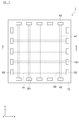
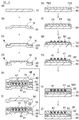
- FIG. 1 is a plan view showing a wiring board according to an embodiment of the present invention.
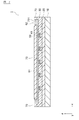
- FIG. 2 is a cross-sectional view showing a cross section taken along the line II-II of FIG.
- FIG. 3 is a plan view showing a molded product according to the embodiment of the present invention.
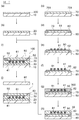
- FIG. 4 is a cross-sectional view showing a cross section taken along the line IV-IV of FIG. 5 (a) to 5 (j) are cross-sectional views showing a first manufacturing method of a wiring board according to an embodiment of the present invention.
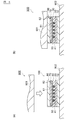
- 6 (a) and 6 (b) are cross-sectional views for explaining the thermocompression bonding step shown in FIG. 5 (i) in detail.
- 7 (a) to 7 (c) are cross-sectional views showing a molding process of the method for manufacturing a molded product according to the embodiment of the present invention.
- 8 (a) to 8 (i) are cross-sectional views showing a second manufacturing method of the wiring board according to the embodiment of the present invention.
- 9 (a) to 9 (l) are cross-sectional views showing another example of the method for producing a molded product according to the embodiment of the present invention.
- FIG. 1 is a plan view showing the wiring board 1 in the present embodiment
- FIG. 2 is a cross-sectional view showing a cross section taken along the line II-II of FIG.
- the wiring board 1 in the present embodiment corresponds to an example of the "wiring board" in the present invention.
- the wiring board 1 in the present embodiment is a wiring board for molding that is formed into a predetermined three-dimensional shape by thermoforming or vacuum forming.
- the wiring board 1 is incorporated into an electronic device or the like after being molded.
- the wiring board 1 of this embodiment is used for a capacitance type touch sensor or the like.
- a capacitance type touch sensor is exemplified as an application of the wiring board 1 and its molded product, but the present invention is not limited to this.
- the wiring board 1 includes a substrate 10, a first resist layer 20, a second resist layer 30, a first conductor portion 41, an insulating layer 50, and a second conductor portion.
- a 61 and an overcoat layer 70 are provided.
- the substrate 10 in the present embodiment corresponds to an example of the "substrate” in the present invention
- the first resist layer 20 in the present embodiment corresponds to an example of the "first resist layer” in the present invention.
- the second resist layer 30 corresponds to an example of the "second resist layer” in the present invention.
- the first conductor portion 41 in the present embodiment corresponds to an example of the "first conductor portion” in the present invention
- the second conductor portion 61 in the present embodiment is the "second conductor portion" in the present invention.
- the insulating layer 50 in the present embodiment corresponds to an example of the "insulating layer” in the present invention
- the overcoat layer 70 in the present invention corresponds to an example of the "overcoat layer” in the present invention.
- the substrate 10 has a thin plate shape and is a film for molding used for molding processes such as vacuum forming and thermoforming.
- the substrate 10 of the present embodiment is made of a thermoplastic resin that softens at about 100 ° C. to 200 ° C.
- Specific examples of the thermoplastic resin constituting the substrate 10 include a polycarbonate resin, an ABS resin, an acrylic resin, a cyclic olefin resin, a polyester resin, and a polyarylate resin.
- the substrate 10 is heated to the above-mentioned softening temperature, then formed into a predetermined three-dimensional shape by a mold or the like, and then cooled to solidify while maintaining the three-dimensional shape.
- the first resist layer 20 is formed on the substrate 10 and is solid at room temperature (for example, 27 ° C.).
- the material constituting the first resist layer 20 include resins such as polyester resin, polyurethane resin, acrylic resin, and silicone resin.
- the hot melt and the adhesive tape melt when heated to 80 ° C. or higher during molding and are peeled off from the substrate 10 or broken. Therefore, as a material constituting the first resist layer 20, the hot melt and the adhesive tape are used. Hot melt or adhesive tape cannot be used. When the hot melt and the adhesive tape are peeled off or broken in this way, the first and second conductor portions 41 and 61 and the overcoat layer 70 may be broken. Further, when the hot melt and the adhesive tape are peeled off or broken, the first and second conductor portions 41 and 61 and the overcoat layer 70 may be peeled off from the substrate 10.
- the first resist layer 20 preferably has a breaking elongation E 1 at 100 ° C. of 50% or more (E 1 ⁇ 50%). Since the first resist layer 20 has a breaking elongation of 50% or more at 100 ° C., the first resist layer 20 can more reliably follow the deformation of the substrate 10 during molding. The resist layer 20 is less likely to be peeled from the substrate 10 and the first and second conductor portions 41 and 61 and the overcoat layer 70 are less likely to be broken.
- the elongation at break of the first resist layer 20 can be measured by using a measuring method based on JIS K 7161-1 and JIS K 7161-2. Although not particularly limited, for example, the breaking elongation of a test piece made of the same material as the first resist layer 20 in a constant temperature bath in which the ambient temperature is set to 100 ° C. using a tensile test device in a constant temperature bath manufactured by Shimadzu Corporation. Should be measured.
- the glass transition temperature Tg 1 of the first resist layer 20 is preferably 100 ° C. or lower (Tg 1 ⁇ 100 ° C.). Since the first resist layer 20 softens at 100 ° C. or lower, the first resist layer 20 can more reliably follow the deformation of the substrate 10 during molding, so that the first resist layer 20 can follow. The peeling from the substrate 10 and the breakage of the first and second conductor portions 41 and 61 are more likely to occur.
- the second resist layer 30 is formed on the first resist layer 20 and is solid at room temperature.
- the same material as the material constituting the first resist layer 20 can be used.
- the material constituting the first resist layer 20 and the material constituting the second resist layer 30 have the same composition. As described above, by having the materials constituting the first and second resist layers 20 and 30 having the same composition, the adhesive strength between the first and second resist layers 20 and 30 can be further improved. Can be done.
- the second resist layer 30 preferably has a breaking elongation E 2 at 100 ° C. of 50% or more (E 2 ⁇ 50%), similarly to the first resist layer 20. Since the second resist layer 30 has a breaking elongation of 50% or more at 100 ° C., the second resist layer 30 can more reliably follow the deformation of the substrate 10 during molding, so that the second resist layer 30 can follow the deformation of the substrate 10. The resist layer 30 is less likely to be peeled from the substrate 10 and the first and second conductor portions 41 and 61 are less likely to be broken.
- the glass transition temperature Tg 2 of the second resist layer 30 is preferably 100 ° C. or lower (Tg 2 ⁇ 100 ° C.), similarly to the first resist layer 20. Since the second resist layer 30 is also softened at 100 ° C. or lower, the second resist layer 30 can more reliably follow the deformation of the substrate 10 during molding, so that the second resist layer 30 can be more reliably followed. The peeling of the 30 from the substrate 10 and the breakage of the first and second conductor portions 41 and 61 are more likely to occur.
- the material constituting the first resist layer 20 and the material constituting the second resist layer 30 may have different compositions.
- resist materials compatible with each other can be used as the material constituting the first resist layer 20 and the material constituting the second resist layer 30.
- each first conductor portion 41 is a linear wiring extending along the X direction in the figure.
- the plurality of first conductor portions 41 are arranged along the Y direction.
- the plurality of first conductor portions 41 are embedded in the second resist layer 30.
- the portion of the first conductor portion 41 that intersects with the second conductor portion 61 is covered with the insulating layer 50, and the first conductor portion 41 is covered with the insulating layer 50. It is electrically insulated from the conductor portion 61 of 2.
- the portion of the first conductor portion 41 that does not intersect with the second conductor portion 61 is covered with the overcoat layer 70.
- First connecting portions 42 are arranged at both ends of the first conductor portion 41, and the first connecting portion 42 is integrally formed with the first conductor portion 41.
- the first connecting portion 42 has a convex shape protruding in a direction away from the second resist layer 30, and is exposed from the overcoat layer 70.
- the first connection portion 42 is not particularly limited, but can be used as a connection terminal with an electronic device.
- the first conductor portion 41 is composed of conductive particles dispersed in a binder, and has a high elongation rate.
- the binder contained in the first conductor portion 41 is made of a material having a high elongation ratio, the first conductor portion 41 also has a high elongation ratio.
- an elastomer it is preferable to use an elastomer, and for example, a polyester resin, a polyurethane resin, an acrylic resin, a silicone resin, a composite of two or more of these, and the like can be used.
- a metal such as gold, silver, platinum, ruthenium, lead, tin, zinc or bismuth, a metal material made of an alloy thereof, or a non-metal material such as carbon can be used.
- the shape of the conductive particles is preferably a scaly or indefinite shape.
- the first connecting portion 42 is made of the same material as the first conductor portion 41.
- the types of the conductive particles contained in the first connecting portion 42 and the types of the conductive particles contained in the first conductor portion 41 may be different depending on the use of the wiring board 1.
- carbon may be used as the conductive particles contained in the first connecting portion 42
- silver may be used as the conductive particles contained in the first conductor portion 41.
- the insulating layer 50 is interposed between the first conductor portion 41 and the second conductor portion 61, and electrically insulates both of them.
- the material constituting the insulating layer 50 include polyester resin, polyurethane resin, acrylic resin, and silicone resin.
- the insulating layer 50 preferably has a breaking elongation E 3 at 100 ° C. of 50% or more (E 3 ⁇ 50%). Similar to the above, this is to make the insulating layer 50 more reliably follow the deformation of the substrate 10 during molding.
- the glass transition temperature Tg 3 of the insulating layer 50 is, for example, 100 ° C. or lower.
- each second conductor portion 61 is a linear wiring extending along the Y direction in the drawing.
- the plurality of second conductor portions 61 are arranged along the X direction.
- Each of the second conductor portions 61 is orthogonal to the first conductor portion 41 in a plan view.
- the second conductor portion 61 is provided on the second resist layer 30 and the insulating layer 50, and is covered with the overcoat layer 70.
- a second connecting portion 62 is arranged at both ends of the second conductor portion 61, and the second connecting portion 62 is integrally formed with the second conductor portion 61.
- the second connecting portion 62 has a convex shape protruding in a direction away from the second resist layer 30, and is exposed from the overcoat layer 70.
- the second connection portion 62 is not particularly limited, but can be used as a connection terminal with an electronic device.
- the material constituting the second conductor portion 61 and the second connecting portion 62 is not particularly limited, but a conductive material having the same elongation rate as that of the first conductor portion 41 and the second connecting portion 62 is used. be able to.
- the overcoat layer 70 is provided on the second resist layer 30 and covers the first and second conductor portions 41 and 61.
- a plurality of holes 701 penetrating from one main surface to the other main surface are formed in the overcoat layer 70, and first and second connecting portions 42 and 62 are formed inside the holes 701. Has been done.
- the material constituting the overcoat layer 70 is not particularly limited, and examples thereof include the same resin material as the insulating layer 50 described above. Further, the overcoat layer 70 preferably has a breaking elongation E 4 at 100 ° C. of 50% or more (E 4 ⁇ 50%). Similar to the above, this is to make the overcoat layer 70 more reliably follow the deformation of the substrate 10 during molding.
- the glass transition temperature Tg 4 of the overcoat layer 70 is, for example, 100 ° C. or lower.
- FIG. 3 is a plan view showing a molded product according to the embodiment of the present invention
- FIG. 4 is a cross-sectional view showing a cross section taken along the line IV-IV of FIG.
- the molded product 1a and the wiring board 1 will be described, and the same reference numerals will be given to the parts having the same configuration as the wiring board 1 and the description thereof will be omitted.
- the molded product 1a is produced by molding the wiring board 1 having the above-mentioned flat shape into a three-dimensional shape by vacuum forming, thermoforming, or the like. is there.
- the molded product 1a has a molded portion M molded into a three-dimensional shape and a non-molded portion N having a flat shape without being molded. doing.
- the molded product 1a in the present embodiment corresponds to an example of the "molded product" in the present invention
- the molded product M in the present embodiment corresponds to an example of the "molded product” in the present invention.
- the molded portion M has a rectangular planar shape and is arranged in the central portion of the molded product 1a.
- the molded portion M is composed of a bent portion M 1 that bends in the Z direction and a flat portion M 2.
- the bent portion M 1 is arranged closer along the outer periphery of the flat portion M 2, is connected to the outer periphery of the flat portion M 2. Therefore, the molded portion M has a convex outer shape protruding in the Z direction.
- the first and second conductor portions 41 and 61 are arranged in the molding portion M.
- the shapes of the first and second conductor portions 41 and 61 correspond to the three-dimensional shape of the molding portion M.
- the non-molded portion N has a frame-like planar shape and is arranged on the outer peripheral portion of the molded product 1a.
- the non-molded portion N has a flat shape as a whole, and does not have a portion having a convex shape or a portion having a concave shape.
- the molded product 1a of the present embodiment has a three-dimensional shape in which the molded portion M protrudes in the Z direction, but is not limited to this, and the shape of the molded product 1a is appropriately determined according to the application of the molded product 1a. Can be selected.
- FIGS. 6 (a) and 6 (b) are shown in FIG. 5 (i). It is sectional drawing which explains the thermocompression bonding process in detail, and FIG. 7A to FIG. 7C are sectional views which show the molding process of the manufacturing method of the molded article in this Embodiment.
- the first resist material 200 is arranged on the substrate 10.
- the above-mentioned thermoplastic resin can be used as the substrate 10, and the above-mentioned resist material can be used as the first resist material.
- the first resist material 200 is arranged on the substrate 10 by coating, for example.
- a coating method various coating methods such as a screen printing method, a spray coating method, a bar coating method, a dip method, and an inkjet method can be adopted.
- the step shown in FIG. 5A of the present embodiment corresponds to an example of the "first arrangement step" in the present invention.
- the first resist material 200 is cured to form the first resist layer 20.
- a curing method of the first resist material 200 for example, energy ray irradiation such as ultraviolet rays and infrared laser light, heating, heating and cooling, drying and the like can be adopted.
- the first resist material 200 is heated to 80 ° C. to 100 ° C. using a far-infrared heating furnace (IR furnace), whereby the first resist material 200 is used.
- IR furnace far-infrared heating furnace
- the step shown in FIG. 5B of the present embodiment corresponds to an example of the "first curing step" in the present invention.
- a release film 80 is prepared separately from the above-mentioned substrate 10, and an overcoat layer 70 is formed on the release film 80. At this time, the overcoat layer 70 is not formed on the release film 80 at the portion where the holes 701 are arranged.
- the release film 80 is a resin film that has undergone a release treatment, and is not particularly limited.
- a release treatment PET film can be used as the release film 80.
- the mold release treatment include a method of applying a mold release agent on a resin film and drying the applied mold release agent to form a mold release material layer.
- the release agent include a silicone-based release agent, a fluorine-based release agent, and the like.
- the overcoat layer 70 is formed by applying the material constituting the overcoat layer 70 described above onto the release film 80 and curing the material.
- various coating methods such as a screen printing method, a spray coating method, a bar coating method, a dip method, and an inkjet method can be adopted.
- energy ray irradiation such as ultraviolet rays and infrared laser light, heating, heating and cooling, drying and the like can be adopted.
- the overcoat layer 70 can be formed by heating the material constituting the overcoat layer 70 to 100 ° C. to 150 ° C. using, for example, an IR furnace.
- the release film 80 in the present embodiment corresponds to an example of the "release film” in the present invention
- the overcoat layer 70 in the present embodiment corresponds to an example of the "resin layer” in the present invention.
- the step shown in 5 (c) corresponds to an example of the "first forming step" in the present invention.
- a second conductor portion 61 is formed on the overcoat layer 70.
- a second connecting portion 62 is formed inside the hole 701.
- the second conductor portion 61 is formed by applying a conductive paste on the overcoat layer 70 and curing the overcoat layer 70. At this time, the conductive paste is also filled inside the holes 701 of the overcoat layer 70 and cured.
- a conductive paste include a conductive paste composed of a mixture of conductive particles, a binder, water or a solvent, and various additives.
- the solvent contained in the conductive paste include butyl cellosolve acetate, carbitol acetate, butyl carbitol acetate, dipropylene glycol monobutyl ether, diethylene glycol monoethyl ether, cyclohexanone, isophorone, and terpineol.
- the method of applying the conductive paste and the method of curing the same method as when forming the overcoat layer 70 can be used.
- the insulating layer 50 is formed on a part of the second conductor portion 61.
- the insulating layer 50 is formed on the upper surface of the second conductor portion 61 where the first conductor portion 41 is formed in the step of FIG. 5 (f) described later.
- the insulating layer 50 is made of the same material as the overcoat layer 70, and can be formed by the same coating method and curing method as the overcoat layer 70.
- the first conductor portion 41 is formed.
- the first conductor portion 41 is formed on the insulating layer 50 and the overcoat layer 70.
- the portion of the first conductor portion 41 formed on the overcoat layer 70 is not shown.
- the first connecting portion 42 is formed in the hole 701 of the overcoat layer 70.
- the first conductor portion 41 and the first connecting portion 42 are made of the same material as the second conductor portion 61 and the second connecting portion 62, and the second conductor portion 61 and the second connecting portion 62 are described above. It can be formed by the same method as that of the connecting portion 62 of the above. Further, the steps shown in FIGS. 5 (d) to 5 (f) in the present embodiment correspond to an example of the "second forming step" in the present invention.
- the second resist material 300 is placed on the first and second conductor portions 41, 61, the first and second connecting portions 42, 62, and the overcoat layer 70. To place.
- the second resist material 300 a material having the same composition as the first resist material 200 can be used. Further, the second resist material 300 can be arranged by coating in the same manner as the first resist material 200.
- the step shown in FIG. 5 (g) in the present embodiment corresponds to an example of the "second arrangement step" in the present invention.
- the second resist material 300 is cured to form the second resist layer 30.
- a method for curing the second resist material 300 the same method as the above-mentioned method for curing the first resist material 200 can be used.
- the step shown in FIG. 5 (h) in the present embodiment corresponds to an example of the "second curing step" in the present invention.
- thermocompression bonding method in the present embodiment will be described in detail with reference to FIGS. 6 (a) and 6 (b).
- thermocompression bonding machine 900 As the thermocompression bonding method in this embodiment, a thermocompression bonding machine 900 as shown in FIG. 6A can be used.
- the thermocompression bonding machine 900 has a crimping head 901 and a crimping table 902.
- the crimping head 901 includes a heater (not shown) and has a function of raising the temperature of the crimping head 901 to a predetermined temperature. Further, the crimping head 901 can press the object to be crimped placed on the crimping table 902 toward the crimping table 902 by being relatively close to the crimping table 902.
- thermocompression bonding method using this thermocompression bonding machine 900 first, as shown in FIG. 6A, an intermediate 100 produced by laminating a first resist layer 20 and a second resist layer 30 is formed. It is placed on the crimping table 902.
- the step shown in FIG. 6A of the present embodiment corresponds to an example of the "bonding step" in the present invention.
- the crimping head 901 After heating the crimping head 901 to a predetermined temperature, the crimping head 901 is pressed against the intermediate body 100. As a result, the first resist layer 20 and the second resist layer 30 are thermocompression bonded.
- the temperature of the crimping head 901 can be, for example, 100 ° C. to 150 ° C.
- the crimping time can be, for example, 10 seconds to 120 seconds.
- the first and second resist layers 20 and 30 of the intermediate 100 are heated to 80 ° C. to 130 ° C.
- the step shown in FIG. 6B of the present embodiment corresponds to an example of the "thermocompression bonding step" in the present invention.
- the release film 80 is peeled off from the overcoat layer 70 to prepare the wiring board 1.
- the step shown in FIG. 5 (j) in the present embodiment corresponds to an example of the "peeling step" in the present invention.
- the molded product 1a of the present embodiment can be manufactured by thermoforming the wiring board 1 produced as described above as shown in FIGS. 7 (a) to 7 (c).
- a mold 950 is used in the thermoforming of the present embodiment.
- the mold 950 has a convex mold 951 and a concave mold 952 that are fitted to each other, and each fitting surface 953, 954 of the convex mold 951 and the concave mold 952 has a shape corresponding to the three-dimensional shape of the molded product 1a. have.
- thermoforming method using such a mold 950 as shown in FIG. 7B, after the convex mold 951 and the concave mold 952 are heated to a predetermined temperature, the fitting surface of the convex mold 951 and the concave mold 952 is formed.
- the wiring board 1 is sandwiched between 953 and 954 from above and below.
- the temperature of the mold 950 may be a temperature at which the substrate 10 can be deformed.
- the first and second resist layers 20 and 30 of the intermediate 100 are heated to 100 ° C. to 200 ° C.
- the molded product 1a is manufactured by separating the convex type 951 and the concave type 952 from each other.
- the steps shown in FIGS. 7 (a) to 7 (c) of the present embodiment correspond to an example of the "molding step" in the present invention.
- thermoforming is exemplified as the molding method, but the molding method is not limited to this, and the molding method may be vacuum forming.
- vacuum forming the wiring board 1 is heated and softened, and then the wiring board 1 is vacuum-adsorbed to a mold having the same shape as the convex mold 951 described above. After that, the wiring board 1 is cooled while keeping its shape along the mold. As a result, the above-mentioned molded product 1a can be produced.
- a plurality of layers are placed on the release film 80 without repeatedly heating the substrate 10. After forming the coat layer 70), it is transferred onto the substrate 10. Therefore, until before the bonding step, a plurality of layers are formed separately from the substrate 10, and heat is not repeatedly applied to the substrate 10, so that shrinkage and distortion of the substrate 10 are suppressed, and the first And it is possible to suppress the occurrence of breakage of the second conductor portions 41 and 61.
- the adhesion between the second resist layer 30 and the first resist layer 20 can be improved, and at the time of molding.
- the first and second conductor portions 41 and 61, the insulating layer 50, and the overcoat layer 70 can reliably follow the deformation of the substrate 10.
- the substrate 10 even if a material having low heat resistance and a large coefficient of linear expansion such as polycarbonate resin or ABS resin is used as the substrate 10, it is possible to suppress the occurrence of shrinkage and strain of the substrate 10.
- a multi-layered conductor portion (first and second conductor portions 41, 61) is formed.
- the conductor portion is formed in multiple layers, the number of times the substrate is heated may increase, and the shrinkage and strain of the substrate may become larger.
- the present embodiment even if the total number of conductor portions increases, the number of times the release film 80 is heated only increases, and the number of times the substrate 10 is heated does not increase. It is possible to suppress the occurrence.
- the overcoat layer 70 and the first and second conductor portions 41 and 61 are adhered to the substrate 10 via the first and second resist layers 20 and 30.
- the first and second resist layers 20 and 30 can follow the deformation of the substrate 10 even under the temperature at the time of molding without losing the adhesiveness even at the temperature at the time of molding as described later. Therefore, it is possible to suppress the occurrence of peeling of the first and second resist layers 20 and 30 from the substrate 10 during molding, and it is possible to suppress the occurrence of breakage of the first and second conductor portions 41 and 61. Can be planned.
- the hot melt and adhesive tape melt at the temperature at the time of molding, so that the substrate 10 is peeled off. And the first and second conductor portions 41 and 61 are broken.
- the substrate 10 can be used. It is possible to suppress the occurrence of peeling of the first and second conductor portions 41, 61 and the overcoat layer 70, and the substrate 10, the first and second conductor portions 41, 61, and the overcoat layer 70. It is possible to suppress the occurrence of breakage.
- Second manufacturing method 8 (a) to 8 (i) are cross-sectional views showing a second manufacturing method of the wiring board 1 according to the embodiment of the present invention.
- the first resist material 200 and the second resist material 300 are different from the first manufacturing method in that they are bonded together before being cured, but the other configurations are the same as those of the first manufacturing method. Is.
- the first resist material 200 is formed on the substrate 10. This step is the same as that of FIG. 5A of the first manufacturing method.
- the overcoat layer 70, the second conductor portion 61 and the second connecting portion 62, the insulating layer 50, and the second layer are placed on the release film 80.
- the conductor portion 41 of 1, the first connecting portion 42, and the second resist material 300 are formed in this order.
- the first and second resist materials 200 and 300 in the pasted state before curing are bonded together.
- the step shown in FIG. 8 (g) corresponds to an example of the "bonding step" in the present invention.
- the first and second resist materials 200 and 300 are cured to form the first resist layer 20 and the second resist layer 30.
- the release film 80 is peeled off from the overcoat layer 70 and the second connecting portion 62 to prepare the wiring board 1. This step is the same as that of FIG. 5 (j) of the first manufacturing method.
- the wiring board 1 produced as described above is thermoformed by the above method described with reference to FIGS. 7 (a) to 7 (c) to obtain the molded product 1a of the present embodiment. Can be manufactured.
- the substrate is compared with the first manufacturing method.
- the number of times of heating for 10 is increased by 1, the number of times of heating for the substrate 10 is decreased as compared with the method of forming the first and second conductor portions and the overcoat layer on the substrate. Therefore, even when this manufacturing method is used, the occurrence of shrinkage and distortion of the substrate 10 in the wiring board 1 and the molded product 1a is suppressed, and the occurrence of breakage of the first and second conductor portions 41 and 61 is suppressed. Can be planned.
- the substrate 10 is prepared.
- the substrate 10 is molded.
- the molded portion M and the non-molded portion N are formed on the substrate 10.
- the above-mentioned thermoforming or vacuum forming can be used.
- the first resist material 200 is placed on the molded substrate 10, and as shown in FIG. 9 (d), the first resist material 200 is cured. Then, the first resist layer 20 is formed.
- the overcoat layer 70, the second conductor portion 61 and the second connecting portion 62, the insulating layer 50, and the first layer are placed on the release film 80.
- the conductor portion 41 of 1, the first connecting portion 42, and the second resist layer 30 are formed in this order.
- thermocompression bonding method the same methods as those in FIGS. 6 (a) and 6 (b) can be used.
- the release film 80 is peeled off from the overcoat layer 70 and the second connecting portion 62 to prepare the wiring board 1. This step is the same as that of FIG. 5 (j) of the first manufacturing method.
- these layers are formed on the release film 80 without repeating heating on the substrate 10, and then transferred onto the substrate 10. To do. Therefore, similarly to the first manufacturing method, it is possible to suppress the occurrence of shrinkage and distortion of the substrate 10 and to suppress the occurrence of breakage of the first and second conductor portions 41 and 61.
- the conductor portion of the above embodiment has two conductor portions 41 and 61, but the number of layers of the conductor portion is not limited to this, and may be one layer or three or more layers. .. Further, the conductor portion of the above embodiment is a linear wiring, but the planar shape of the conductor portion is not particularly limited to this, and may be any shape.
- first conductor portion 41 and the second conductor portion 61 of the above embodiment are completely electrically insulated, but are not limited to this, and are partially connected depending on the application of the molded product 1a. You may be doing it.
Landscapes
- Engineering & Computer Science (AREA)
- Microelectronics & Electronic Packaging (AREA)
- Manufacturing & Machinery (AREA)
- Theoretical Computer Science (AREA)
- General Engineering & Computer Science (AREA)
- Physics & Mathematics (AREA)
- Human Computer Interaction (AREA)
- General Physics & Mathematics (AREA)
- Mechanical Engineering (AREA)
- Non-Metallic Protective Coatings For Printed Circuits (AREA)
- Production Of Multi-Layered Print Wiring Board (AREA)
- Manufacturing Of Printed Wiring (AREA)
- Structure Of Printed Boards (AREA)
Priority Applications (3)
| Application Number | Priority Date | Filing Date | Title |
|---|---|---|---|
| CN202080082011.2A CN114762464B (zh) | 2019-11-25 | 2020-11-18 | 配线板的制造方法及配线板、和成型品的制造方法及成型品 |
| US17/779,898 US12284767B2 (en) | 2019-11-25 | 2020-11-18 | Method for manufacturing wiring board, wiring board, method for manufacturing molded object, molded object |
| JP2021561344A JP7465893B2 (ja) | 2019-11-25 | 2020-11-18 | 配線板の製造方法及び配線板、並びに、成形品の製造方法及び成形品 |
Applications Claiming Priority (2)
| Application Number | Priority Date | Filing Date | Title |
|---|---|---|---|
| JP2019212302 | 2019-11-25 | ||
| JP2019-212302 | 2019-11-25 |
Publications (1)
| Publication Number | Publication Date |
|---|---|
| WO2021106713A1 true WO2021106713A1 (ja) | 2021-06-03 |
Family
ID=76129349
Family Applications (1)
| Application Number | Title | Priority Date | Filing Date |
|---|---|---|---|
| PCT/JP2020/042995 Ceased WO2021106713A1 (ja) | 2019-11-25 | 2020-11-18 | 配線板の製造方法及び配線板、並びに、成形品の製造方法及び成形品 |
Country Status (5)
| Country | Link |
|---|---|
| US (1) | US12284767B2 (https=) |
| JP (1) | JP7465893B2 (https=) |
| CN (1) | CN114762464B (https=) |
| TW (1) | TWI746282B (https=) |
| WO (1) | WO2021106713A1 (https=) |
Families Citing this family (2)
| Publication number | Priority date | Publication date | Assignee | Title |
|---|---|---|---|---|
| CN120500917A (zh) * | 2023-01-10 | 2025-08-15 | 日本发条株式会社 | 电路基板的制造装置及电路基板的制造方法 |
| WO2026042538A1 (ja) * | 2024-08-23 | 2026-02-26 | 株式会社フジクラ | 成形品の製造方法、および成形品 |
Citations (6)
| Publication number | Priority date | Publication date | Assignee | Title |
|---|---|---|---|---|
| JPH077242A (ja) * | 1993-06-18 | 1995-01-10 | Teikoku Tsushin Kogyo Co Ltd | 平滑基板及びその製造方法 |
| JPH0739230B2 (ja) * | 1987-05-29 | 1995-05-01 | 大日本印刷株式会社 | 導電性転写シ−ト |
| JPH1051108A (ja) * | 1996-07-29 | 1998-02-20 | Kyocera Corp | 転写シート及びそれを用いた配線基板の製造方法 |
| JP2018142750A (ja) * | 2013-11-01 | 2018-09-13 | ピーピージー・インダストリーズ・オハイオ・インコーポレイテッドPPG Industries Ohio,Inc. | 導電性材料を移送する方法 |
| JP2018148150A (ja) * | 2017-03-09 | 2018-09-20 | 株式会社フジクラ | 伸縮性基板及びその製造方法 |
| JP2019137070A (ja) * | 2019-04-26 | 2019-08-22 | 大日本印刷株式会社 | 積層体ならびにそれを用いた導電性基材の製造方法および電子デバイスの製造方法 |
Family Cites Families (11)
| Publication number | Priority date | Publication date | Assignee | Title |
|---|---|---|---|---|
| US4401521A (en) * | 1980-11-28 | 1983-08-30 | Asahi Kasei Kogyo Kabushiki Kaisha | Method for manufacturing a fine-patterned thick film conductor structure |
| US6197145B1 (en) * | 1998-08-17 | 2001-03-06 | Ford Motor Company | Method of laminating a flexible circuit to a substrate |
| JP2002305334A (ja) * | 2001-04-09 | 2002-10-18 | Canon Inc | 機能性薄膜の転写方法 |
| JP2003264368A (ja) * | 2002-03-08 | 2003-09-19 | Sony Corp | 多層電気配線回路基板及びその製造方法 |
| JP2006285179A (ja) | 2005-03-09 | 2006-10-19 | Fuji Photo Film Co Ltd | 感光性永久レジストフィルム及び永久パターン形成方法 |
| JP5630637B2 (ja) * | 2010-02-26 | 2014-11-26 | 日立化成株式会社 | 感光性樹脂組成物 |
| TWI472282B (zh) * | 2012-03-09 | 2015-02-01 | Taiyo Yuden Kk | 轉移薄膜元件之方法及具備其之電路板 |
| US20160293334A1 (en) | 2015-03-31 | 2016-10-06 | Tdk Corporation | Thin film capacitor |
| WO2016208371A1 (ja) | 2015-06-26 | 2016-12-29 | 東レフィルム加工株式会社 | 導電積層体、それを用いた成型体、静電容量式タッチセンサーおよび面状発熱体、ならびに成型体の製造方法 |
| CN108778011B (zh) * | 2016-03-16 | 2021-02-12 | 东洋纺株式会社 | 可穿戴智能装置 |
| TWI703959B (zh) * | 2018-03-19 | 2020-09-11 | 日商藤倉股份有限公司 | 拉伸性配線板以及拉伸性配線板之製造方法 |
-
2020
- 2020-11-18 US US17/779,898 patent/US12284767B2/en active Active
- 2020-11-18 JP JP2021561344A patent/JP7465893B2/ja active Active
- 2020-11-18 CN CN202080082011.2A patent/CN114762464B/zh active Active
- 2020-11-18 WO PCT/JP2020/042995 patent/WO2021106713A1/ja not_active Ceased
- 2020-11-24 TW TW109141106A patent/TWI746282B/zh active
Patent Citations (6)
| Publication number | Priority date | Publication date | Assignee | Title |
|---|---|---|---|---|
| JPH0739230B2 (ja) * | 1987-05-29 | 1995-05-01 | 大日本印刷株式会社 | 導電性転写シ−ト |
| JPH077242A (ja) * | 1993-06-18 | 1995-01-10 | Teikoku Tsushin Kogyo Co Ltd | 平滑基板及びその製造方法 |
| JPH1051108A (ja) * | 1996-07-29 | 1998-02-20 | Kyocera Corp | 転写シート及びそれを用いた配線基板の製造方法 |
| JP2018142750A (ja) * | 2013-11-01 | 2018-09-13 | ピーピージー・インダストリーズ・オハイオ・インコーポレイテッドPPG Industries Ohio,Inc. | 導電性材料を移送する方法 |
| JP2018148150A (ja) * | 2017-03-09 | 2018-09-20 | 株式会社フジクラ | 伸縮性基板及びその製造方法 |
| JP2019137070A (ja) * | 2019-04-26 | 2019-08-22 | 大日本印刷株式会社 | 積層体ならびにそれを用いた導電性基材の製造方法および電子デバイスの製造方法 |
Also Published As
| Publication number | Publication date |
|---|---|
| JPWO2021106713A1 (https=) | 2021-06-03 |
| CN114762464B (zh) | 2025-03-25 |
| JP7465893B2 (ja) | 2024-04-11 |
| US20230007781A1 (en) | 2023-01-05 |
| TW202126131A (zh) | 2021-07-01 |
| US12284767B2 (en) | 2025-04-22 |
| TWI746282B (zh) | 2021-11-11 |
| CN114762464A (zh) | 2022-07-15 |
Similar Documents
| Publication | Publication Date | Title |
|---|---|---|
| JPH0696357B2 (ja) | Icカードの製造方法 | |
| JP7520910B2 (ja) | フィルムヒータ | |
| WO2021106713A1 (ja) | 配線板の製造方法及び配線板、並びに、成形品の製造方法及び成形品 | |
| US7304248B2 (en) | Multi-layer printed circuit board and method for manufacturing the same | |
| US20210037614A1 (en) | Film Heater | |
| US10716219B2 (en) | Electronic product and manufacturing method thereof | |
| US11039531B1 (en) | System and method for in-molded electronic unit using stretchable substrates to create deep drawn cavities and features | |
| CN108364872B (zh) | 电子制品及其制造方法 | |
| JP2008218907A (ja) | 回路基板及びパワーモジュール | |
| US10349522B2 (en) | Thinned electronic product and manufacturing method thereof | |
| CN107921739A (zh) | 柔性导电粘结膜 | |
| JP2004153000A (ja) | プリント基板の製造方法およびそれにより製造されるプリント基板 | |
| TWI530971B (zh) | Wings coil and its making method | |
| WO2026042538A1 (ja) | 成形品の製造方法、および成形品 | |
| JP2018060991A (ja) | 封止用フィルム、電子部品搭載基板の封止方法および封止用フィルム被覆電子部品搭載基板 | |
| CN209676640U (zh) | 多层基板 | |
| JP7520911B2 (ja) | フィルムヒータ | |
| EP3994106A1 (en) | Glazing having an electrical connector | |
| JP7054149B1 (ja) | 回路基板及びその製造方法 | |
| JP7089430B2 (ja) | 導電接続材の製造方法 | |
| JP2014222577A (ja) | フラットケーブル | |
| TW201720284A (zh) | 可撓性導電接合膜 | |
| JP2023167265A (ja) | 三次元成形用回路基板の製造方法、および三次元成形物の製造方法 | |
| JP2008016552A (ja) | 部品搭載基板およびその製造方法 | |
| JPH02107495A (ja) | Icカードおよびicカード製造方法 |
Legal Events
| Date | Code | Title | Description |
|---|---|---|---|
| 121 | Ep: the epo has been informed by wipo that ep was designated in this application |
Ref document number: 20894787 Country of ref document: EP Kind code of ref document: A1 |
|
| ENP | Entry into the national phase |
Ref document number: 2021561344 Country of ref document: JP Kind code of ref document: A |
|
| NENP | Non-entry into the national phase |
Ref country code: DE |
|
| 122 | Ep: pct application non-entry in european phase |
Ref document number: 20894787 Country of ref document: EP Kind code of ref document: A1 |
|
| WWG | Wipo information: grant in national office |
Ref document number: 202080082011.2 Country of ref document: CN |
|
| WWG | Wipo information: grant in national office |
Ref document number: 17779898 Country of ref document: US |