WO2021065208A1 - 車両遠隔支援システム、遠隔支援装置、遠隔支援方法、及び遠隔支援プログラム - Google Patents
車両遠隔支援システム、遠隔支援装置、遠隔支援方法、及び遠隔支援プログラム Download PDFInfo
- Publication number
- WO2021065208A1 WO2021065208A1 PCT/JP2020/030483 JP2020030483W WO2021065208A1 WO 2021065208 A1 WO2021065208 A1 WO 2021065208A1 JP 2020030483 W JP2020030483 W JP 2020030483W WO 2021065208 A1 WO2021065208 A1 WO 2021065208A1
- Authority
- WO
- WIPO (PCT)
- Prior art keywords
- call
- vehicle
- remote support
- waiting time
- urgency
- Prior art date
- Legal status (The legal status is an assumption and is not a legal conclusion. Google has not performed a legal analysis and makes no representation as to the accuracy of the status listed.)
- Ceased
Links
Images



Classifications
-
- H—ELECTRICITY
- H04—ELECTRIC COMMUNICATION TECHNIQUE
- H04M—TELEPHONIC COMMUNICATION
- H04M3/00—Automatic or semi-automatic exchanges
- H04M3/42—Systems providing special services or facilities to subscribers
- H04M3/50—Centralised arrangements for answering calls; Centralised arrangements for recording messages for absent or busy subscribers ; Centralised arrangements for recording messages
- H04M3/51—Centralised call answering arrangements requiring operator intervention, e.g. call or contact centers for telemarketing
- H04M3/5116—Centralised call answering arrangements requiring operator intervention, e.g. call or contact centers for telemarketing for emergency applications
-
- H—ELECTRICITY
- H04—ELECTRIC COMMUNICATION TECHNIQUE
- H04M—TELEPHONIC COMMUNICATION
- H04M3/00—Automatic or semi-automatic exchanges
- H04M3/42—Systems providing special services or facilities to subscribers
- H04M3/50—Centralised arrangements for answering calls; Centralised arrangements for recording messages for absent or busy subscribers ; Centralised arrangements for recording messages
- H04M3/51—Centralised call answering arrangements requiring operator intervention, e.g. call or contact centers for telemarketing
- H04M3/523—Centralised call answering arrangements requiring operator intervention, e.g. call or contact centers for telemarketing with call distribution or queueing
-
- G—PHYSICS
- G05—CONTROLLING; REGULATING
- G05D—SYSTEMS FOR CONTROLLING OR REGULATING NON-ELECTRIC VARIABLES
- G05D1/00—Control of position, course, altitude or attitude of land, water, air or space vehicles, e.g. using automatic pilots
- G05D1/0011—Control of position, course, altitude or attitude of land, water, air or space vehicles, e.g. using automatic pilots associated with a remote control arrangement
- G05D1/0027—Control of position, course, altitude or attitude of land, water, air or space vehicles, e.g. using automatic pilots associated with a remote control arrangement involving a plurality of vehicles, e.g. fleet or convoy travelling
-
- G—PHYSICS
- G05—CONTROLLING; REGULATING
- G05D—SYSTEMS FOR CONTROLLING OR REGULATING NON-ELECTRIC VARIABLES
- G05D1/00—Control of position, course, altitude or attitude of land, water, air or space vehicles, e.g. using automatic pilots
- G05D1/60—Intended control result
- G05D1/69—Coordinated control of the position or course of two or more vehicles
- G05D1/692—Coordinated control of the position or course of two or more vehicles involving a plurality of disparate vehicles
-
- G—PHYSICS
- G06—COMPUTING OR CALCULATING; COUNTING
- G06Q—INFORMATION AND COMMUNICATION TECHNOLOGY [ICT] SPECIALLY ADAPTED FOR ADMINISTRATIVE, COMMERCIAL, FINANCIAL, MANAGERIAL OR SUPERVISORY PURPOSES; SYSTEMS OR METHODS SPECIALLY ADAPTED FOR ADMINISTRATIVE, COMMERCIAL, FINANCIAL, MANAGERIAL OR SUPERVISORY PURPOSES, NOT OTHERWISE PROVIDED FOR
- G06Q10/00—Administration; Management
- G06Q10/06—Resources, workflows, human or project management; Enterprise or organisation planning; Enterprise or organisation modelling
- G06Q10/063—Operations research, analysis or management
- G06Q10/0631—Resource planning, allocation, distributing or scheduling for enterprises or organisations
-
- G—PHYSICS
- G06—COMPUTING OR CALCULATING; COUNTING
- G06Q—INFORMATION AND COMMUNICATION TECHNOLOGY [ICT] SPECIALLY ADAPTED FOR ADMINISTRATIVE, COMMERCIAL, FINANCIAL, MANAGERIAL OR SUPERVISORY PURPOSES; SYSTEMS OR METHODS SPECIALLY ADAPTED FOR ADMINISTRATIVE, COMMERCIAL, FINANCIAL, MANAGERIAL OR SUPERVISORY PURPOSES, NOT OTHERWISE PROVIDED FOR
- G06Q50/00—Information and communication technology [ICT] specially adapted for implementation of business processes of specific business sectors, e.g. utilities or tourism
- G06Q50/10—Services
- G06Q50/26—Government or public services
-
- G—PHYSICS
- G06—COMPUTING OR CALCULATING; COUNTING
- G06Q—INFORMATION AND COMMUNICATION TECHNOLOGY [ICT] SPECIALLY ADAPTED FOR ADMINISTRATIVE, COMMERCIAL, FINANCIAL, MANAGERIAL OR SUPERVISORY PURPOSES; SYSTEMS OR METHODS SPECIALLY ADAPTED FOR ADMINISTRATIVE, COMMERCIAL, FINANCIAL, MANAGERIAL OR SUPERVISORY PURPOSES, NOT OTHERWISE PROVIDED FOR
- G06Q50/00—Information and communication technology [ICT] specially adapted for implementation of business processes of specific business sectors, e.g. utilities or tourism
- G06Q50/40—Business processes related to the transportation industry
-
- G—PHYSICS
- G08—SIGNALLING
- G08B—SIGNALLING SYSTEMS, e.g. PERSONAL CALLING SYSTEMS; ORDER TELEGRAPHS; ALARM SYSTEMS
- G08B25/00—Alarm systems in which the location of the alarm condition is signalled to a central station, e.g. fire or police telegraphic systems
- G08B25/01—Alarm systems in which the location of the alarm condition is signalled to a central station, e.g. fire or police telegraphic systems characterised by the transmission medium
- G08B25/08—Alarm systems in which the location of the alarm condition is signalled to a central station, e.g. fire or police telegraphic systems characterised by the transmission medium using communication transmission lines
-
- H—ELECTRICITY
- H04—ELECTRIC COMMUNICATION TECHNIQUE
- H04L—TRANSMISSION OF DIGITAL INFORMATION, e.g. TELEGRAPHIC COMMUNICATION
- H04L67/00—Network arrangements or protocols for supporting network services or applications
- H04L67/01—Protocols
- H04L67/12—Protocols specially adapted for proprietary or special-purpose networking environments, e.g. medical networks, sensor networks, networks in vehicles or remote metering networks
-
- H—ELECTRICITY
- H04—ELECTRIC COMMUNICATION TECHNIQUE
- H04M—TELEPHONIC COMMUNICATION
- H04M2203/00—Aspects of automatic or semi-automatic exchanges
- H04M2203/10—Aspects of automatic or semi-automatic exchanges related to the purpose or context of the telephonic communication
- H04M2203/1016—Telecontrol
-
- H—ELECTRICITY
- H04—ELECTRIC COMMUNICATION TECHNIQUE
- H04M—TELEPHONIC COMMUNICATION
- H04M2203/00—Aspects of automatic or semi-automatic exchanges
- H04M2203/20—Aspects of automatic or semi-automatic exchanges related to features of supplementary services
- H04M2203/2072—Schedules, e.g. personal calendars
-
- H—ELECTRICITY
- H04—ELECTRIC COMMUNICATION TECHNIQUE
- H04M—TELEPHONIC COMMUNICATION
- H04M3/00—Automatic or semi-automatic exchanges
- H04M3/42—Systems providing special services or facilities to subscribers
- H04M3/50—Centralised arrangements for answering calls; Centralised arrangements for recording messages for absent or busy subscribers ; Centralised arrangements for recording messages
- H04M3/51—Centralised call answering arrangements requiring operator intervention, e.g. call or contact centers for telemarketing
- H04M3/523—Centralised call answering arrangements requiring operator intervention, e.g. call or contact centers for telemarketing with call distribution or queueing
- H04M3/5238—Centralised call answering arrangements requiring operator intervention, e.g. call or contact centers for telemarketing with call distribution or queueing with waiting time or load prediction arrangements
Definitions
- This disclosure relates to a vehicle remote support system, a remote support device, a remote support method, and a remote support program that assign an operator to each call in order to call an operator from a vehicle and provide support by the operator.
- a service has been proposed in which the operator of the support center remotely assists the vehicle when the vehicle needs assistance (see, for example, Japanese Patent No. 5550671).
- this service for example, in an autonomous vehicle, when the vehicle is stuck at the discretion of the vehicle and is stuck, when the vehicle has an accident, or when the vehicle actively seeks the support of the operator. , Call the operator from the vehicle to the support center.
- the vehicle needs to wait until the operator can handle it. For this reason, when the support center receives calls from a plurality of vehicles, the calls are scheduled and the operators are assigned in an appropriate order.
- the purpose of this disclosure is to reduce the load on the operator by suppressing unnecessary calls.
- one aspect is a vehicle remote support system including a plurality of vehicles and a remote support device, and each of the plurality of vehicles transmits a call to the remote support device.
- the remote assisting device includes a calling means, the remote assisting device includes an assigning means for scheduling calls transmitted from the plurality of vehicles and assigning them to any of the plurality of operators, and the calling means is said to be said after making the call.
- the call cancellation is transmitted to the remote support device, and the allocation means cancels the scheduling of the call corresponding to the cancellation transmitted from the vehicle. Have.
- a remote support device that constitutes a vehicle remote support system together with a plurality of vehicles, and is a receiving means for receiving a call transmitted from the plurality of vehicles and the call received by the receiving means.
- Is transmitted, and the allocation means has a configuration for canceling the scheduling of the call corresponding to the cancellation transmitted from the vehicle.
- Yet another aspect is a remote support method in which an operator is assigned to remotely support a plurality of vehicles, the step of receiving a call transmitted from the plurality of vehicles and the step of receiving the call received in the reception step.
- Yet another aspect is a remote support program that assigns an operator to remotely support a plurality of vehicles by scheduling an information processing device provided with a receiving means with a call received from the vehicle by the receiving means. , A step of assigning to any of a plurality of operators, and a step of canceling the scheduling of the call corresponding to the twist in response to the cancellation of the call received from the vehicle by the receiving means. ing.
- FIG. 1 is a block diagram showing a configuration of a vehicle remote support system according to an embodiment.
- FIG. 2 is a diagram showing the relationship between the minimum waiting time and the maximum waiting time of the embodiment and the priority.
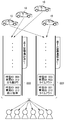
- FIG. 3 is a diagram showing a queue of a plurality of calls according to the embodiment.
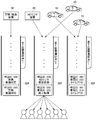
- FIG. 4 is a diagram showing an example of using two types of cues in the embodiment.
- FIG. 5 is a diagram showing an example of using three types of cues in the embodiment.
- FIG. 6 is a diagram illustrating a cancel function of the embodiment.
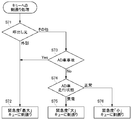
- FIG. 7 is a flowchart of the allocation process to the call queue of the embodiment.
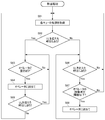
- FIG. 8 is a flowchart of the allocation process by the allocation unit of the embodiment.
- FIG. 1 is a block diagram showing the configuration of the vehicle remote support system of the embodiment.
- the vehicle remote support system 100 includes an automatic driving vehicle (hereinafter referred to as “AD vehicle”) 10, a remote support device 20, a plurality of operator terminals 30, an automatic driving (AD) center device 40, and a police / emergency device. It has 50 and. Although only one AD vehicle 10 is shown in FIG. 1, a plurality of AD vehicles 10 can use one remote support device 20 at the same time.
- the AD vehicle 10 and the remote support device 20 communicate with each other via a communication network.
- the AD vehicle 10 can be wirelessly connected to the communication network.
- the AD vehicle 10 may be connected to a communication network using a mobile phone network, or may be connected to a communication network via a public wireless LAN.
- the remote support device 20 is a device operated by a vehicle remote support service provider.
- the remote support device 20 is communicably connected to a plurality of operator terminals 30.
- a plurality of operators are reserved in the support center, and one operator terminal 30 is assigned to each operator.
- Each AD vehicle 10 can call the operator to the remote support device 20.
- the remote support device 20 assigns the operator to the call. Specifically, when the remote support device 20 receives a call, the remote support device 20 schedules the call and assigns an operator to communicate between the called AD vehicle 10 and the assigned operator's operator terminal 30. Establish. The remote support device 20 establishes communication between the called AD vehicle 10 and the operator terminal 30 assigned to the AD vehicle 10.
- the remote support device 20 also has a function as a repeater for relaying communication between the AD vehicle 10 and the operator terminal 30, but the function of this repeater is carried by a device other than the remote support device 20. May be good.
- the AD center device 40 and the police / emergency device 50 can be connected to the remote support device 20 via a communication network.
- the AD center device 40 and the police / emergency device 50 can also call the operator to the remote support device 20 in the same manner as the AD vehicle 10.
- Each operator terminal 30 reports to the remote support device 20 when it is connected to or disconnected from any of the AD vehicles 10.
- the allocation unit 22 of the remote support device 20 which of the plurality of operator terminals 30 is in operation and which is in standby, that is, which operator is vacant, and how many operators are vacant. I can figure out if it is.
- the AD vehicle 10 includes an operation unit 11, a sensing unit 13, a calling unit 12, an urgency determination unit 14, and a transmission / reception unit 15.
- the operation unit 11 is a switch, a touch panel, or the like operated by the occupant of the AD vehicle 10 to call the operator.
- the operation unit 11 outputs an operation signal corresponding to the received operation to the calling unit 12.
- the sensing unit 13 is a sensor that detects physical quantities such as light, acceleration, radio waves, sound, and rotation speed.
- the sensor that detects light includes an image sensor that constitutes a camera, and the sensor that detects radio waves includes an image sensor.
- the receiving antenna of the millimeter wave radar is also included.
- the AD vehicle 10 is provided with a plurality of sensors for detecting the internal and external conditions of the AD vehicle 10 as the sensing unit 13.
- the sensing result (presence / absence of sensing target or detected value) of each sensor is output to the calling unit 12.
- the calling unit 12 determines the situation in which the AD vehicle 10 is placed based on the sensing result by the sensing unit 13.
- the calling unit 12 may be a part of an automatic operation control unit that generates a command for each drive system for automatic operation based on the sensing result.
- the calling unit 12 performs the following recognition, judgment, calculation, and recognition as a situation judgment, for example.
- the calling unit 12 recognizes the image around the AD vehicle 10 obtained by the image sensor, the presence of obstacles, other vehicles, pedestrians, etc. around the AD vehicle 10 is recognized, and the size, moving direction, distance, etc. are determined. To do. Further, the calling unit 12 recognizes the existence of an obstacle or the like based on the detection result of the millimeter wave radar, and determines the distance or the like thereof. Further, the calling unit 12 calculates the speed of the AD vehicle 10 based on the detection value of the sensor that detects the number of rotations of the wheels. Further, the calling unit 12 recognizes that the AD vehicle 10 has collided based on the detected value of the acceleration sensor.
- the calling unit 12 determines whether or not the operator needs to be called based on the result of the situation determination. When the calling unit 12 determines that the operator's calling is necessary, the calling unit 12 generates a calling and outputs the call to the urgency determination unit 14 and the transmission / reception unit 15 together with the information on the cause of the determination.
- the calling unit 12 generates a calling based on the operation signal from the operating unit 11.
- the cause of the call may be determined according to the operation content of the operation unit 11, or the urgency determination unit 14 may determine the urgency according to the operation content of the operation unit.
- the urgency determination unit 14 may determine the urgency "high"
- the urgency determination unit 14 may determine the urgency "low”.
- the operation unit 11 is a touch panel, the occupant may be allowed to input or select the call cause.
- the calling unit 12 when the AD vehicle 10 remains stopped for a time exceeding a predetermined threshold value, the calling unit 12 outputs a call together with a calling cause that the stop time exceeds the threshold value. Further, for example, the calling unit 12 has the traveling route of the AD vehicle 10 blocked by the road parked vehicle, and it is necessary to cross the center line when trying to move forward while avoiding the road parked vehicle, and the calling unit 12 has crossed the center line. If it is determined that the safety of the case cannot be ensured, the call is output together with the cause of the call being stuck by a vehicle parked on the street.
- the calling unit 12 determines that the AD vehicle 10 has collided (or has collided).
- the call is output together with the cause of the call that the acceleration exceeds the threshold value or collides.
- the urgency determination unit 14 determines the urgency of the call based on the situation sensed by the sensing unit 13. Specifically, the urgency determination unit 14 determines the urgency of the call according to the call cause determined by the calling unit 12 based on the situation sensed by the sensing unit 13. For this purpose, the urgency determination unit 14 has an urgency table that defines the relationship between all the call causes that can be determined by the calling unit 12 and the urgency. When the urgency determination unit 14 receives a call request from the call unit 12 together with the call cause, the urgency determination unit 14 refers to the urgency table and determines the urgency corresponding to the call cause. The urgency determination unit 14 may determine the urgency level by directly using the situation sensed by the sensing unit 13. For example, the emergency determination unit 14 may immediately determine that the degree of urgency is the maximum when the acceleration sensor detects an acceleration exceeding a predetermined threshold value (for example, 100 m / s 2).
- a predetermined threshold value for example, 100 m / s 2).
- the transmission / reception unit 15 transmits the operator's call to the remote support device 20 together with the urgency determined by the urgency determination unit 14.
- the transmission / reception unit 15 is, for example, a wireless communication module for connecting to a mobile phone network of a predetermined carrier.
- the operator's call includes a vehicle ID for identifying the AD vehicle 10, a call ID for specifying the call in the AD vehicle 10, and a call cause.
- the remote support device 20 includes a transmission / reception unit 21 and an allocation unit 22.
- the transmission / reception unit 21 is a communication interface for connecting to a communication network.
- the allocation unit 22 is realized by a general-purpose processor (for example, a CPU) executing the remote support program of the present embodiment while using a memory, a storage medium, a dedicated processor, or the like as needed.
- the remote assistance program may be provided to the computer via a wired or wireless communication network, or may be stored in a non-temporary storage medium readable by the computer so that the computer reads the remote assistance program from the storage medium. It may be provided to the computer.
- the allocation unit 22 schedules a plurality of calls transmitted from the plurality of AD vehicles 10 according to a priority that increases with the waiting time of the calls, and allocates them to any of the plurality of operators.
- the priority is divided into a plurality of categories according to the length of the waiting time, and when the waiting time is smaller than the minimum waiting time, the priority becomes "low” and the waiting time exceeds the minimum waiting time. If the maximum waiting time is not reached, the priority is "medium”, and if the waiting time exceeds the maximum waiting time, the priority is "high", and the order is higher.
- FIG. 2 is a diagram showing the relationship between the minimum waiting time and the maximum waiting time of the embodiment and the priority. As shown in FIG. 2, when the elapsed time after the call is issued from the AD vehicle 10 (or after reaching the remote support system 20), that is, the standby time is 0 seconds or more and the minimum standby time LL or less. , The priority is "low" and the allocation unit 22 does not allocate the call to the operator during this period.
- the allocation unit 22 When the time has elapsed and the waiting time exceeds the minimum waiting time LL and does not reach the maximum waiting time UL, the allocation unit 22 has the operating rate of a plurality of operators equal to or less than a predetermined threshold value (for example, 60%). Occasionally assign calls to operators in order of arrival.
- a predetermined threshold value for example, 60%
- the allocation unit 22 is an operator who vacates the call in the order of arrival regardless of the operating rate of the operator. Assign to.
- the allocation unit 22 since the allocation unit 22 does not allocate the operator during the period when the priority is "low”, it is possible to suppress unnecessary calls and suppress the occupation and load of the operator. Instead of this, when the priority is "low", the allocation unit 22 uses the threshold value (for example, 30%) of the operating rate of the operator lower than the period when the priority is "medium". Operators may be assigned only when the operating rate is lower than the threshold value. This configuration also suppresses unnecessary calls.
- the threshold value for example, 30%
- the allocation unit 22 forcibly allocates an operator when there is a vacant operator regardless of the operating rate of the operator during the period when the priority is "high". In this way, by forcibly assigning an operator to a call that has passed a certain time (that is, the maximum waiting time UL), it is possible to prevent a call that the operator is not assigned forever.
- FIG. 3 is a diagram showing a queue of a plurality of calls according to the embodiment.
- the allocation unit 22 When there is a call from a plurality of AD vehicles 10, the allocation unit 22 generates a queue 221 in which the calls are arranged in the order of arrival.
- the queue 221 has a minimum standby time LL of 30 seconds and a maximum standby time UL of 120 seconds.
- the allocation unit 22 determines whether the first call of the queue 221 satisfies the call requirement, and if it meets the requirement, allocates an operator.
- the allocation unit 22 determines that this call does not satisfy the requirement, and the waiting time of the first call exceeds the minimum waiting time LL.
- the maximum standby time UL has not been reached, it is judged that the requirement is satisfied when the operating rate of the operator is equal to or less than the predetermined threshold value, and the requirement is satisfied when the operating rate is equal to or higher than the threshold value. Judge that there is no.
- the allocation unit 22 determines that the requirement is satisfied when the waiting time of the first call has already exceeded the maximum waiting time UL. When the waiting time exceeds the maximum waiting time UL, there may be no vacant operator. In this case, the allocation process is not completed and the call continues to be placed at the head of queue 221.
- the allocation unit 22 may dynamically adjust the minimum standby time LL and / or the maximum standby time UL according to the operating status of the operator. That is, when the operating rate of the operator is low, the allocation unit 22 may adjust so that the minimum waiting time LL and / or the maximum waiting time UL is short, and conversely, when the operating rate of the operator is high, the operating rate of the operator is high. The allocation unit 22 may be adjusted so that the minimum standby time LL and / or the maximum standby time UL becomes long. It should be noted that such adjustment of the minimum standby time LL and / or the maximum standby time UL can also be performed in the examples of FIGS. 4 and 5 described below.
- the allocation unit 22 deletes the call from the queue 221 and raises the order of all the calls waiting in the queue.
- the allocation unit 22 of the present embodiment has a plurality of types of queues that are applied according to the urgency of the call.
- FIG. 4 is a diagram showing an example of using two types of cues in the embodiment. As shown in FIG. 4, the allocation unit 22 has a plurality of queues in which the combination of the minimum standby time LL and the maximum standby time UL is different.
- a queue 222 having a minimum standby time LL of 10 seconds and a maximum standby time UL of 30 seconds and a queue 223 having a minimum standby time LL of 60 seconds and a maximum standby time UL of 120 seconds are It is shown.
- the allocation unit 22 selects one of a plurality of types of queues based on the urgency transmitted by the AD vehicle 10 together with the operator's call, and allocates the call to the selected queue.
- the urgency determination unit 14 selects either “large” or “small” as the urgency and provides it to the remote support device 20 together with the call.
- the allocation unit 22 allocates the call of the urgency "large” to the queue 222 in which the minimum waiting time LL and the maximum waiting time UL are both relatively short, and the call of the urgency "small” is the minimum waiting time LL and the maximum. Allocate to queue 223, which has a relatively long standby time UL.
- the urgency determination unit 14 determines that the urgency is "high” when the running condition of the AD vehicle 10 is abnormal, and determines that the urgency is "high” when the traveling condition of the AD vehicle 10 is normal. Judge as “small”. Specifically, in the example of FIG. 4, the urgency determination unit 14 recognizes that the running state is abnormal based on the call cause for the call whose call cause is "stopping" or "parking on the street”. Then, it is determined that the urgency is "high”. Further, when the call cause is "timeout" (that is, the stop time exceeds a predetermined value), the urgency determination unit 14 recognizes that the running state is normal based on the call cause. , Judge that the urgency is "low”.
- the allocation unit 22 allocates the call having the urgency of "large” to the queue 222 having a relatively short minimum waiting time LL and the maximum waiting time UL, and the allocation unit 22 has the minimum waiting time for the call having the urgency of "small”. Allocate to queue 223, which has a relatively long LL and maximum waiting time UL.
- FIG. 5 is a diagram showing an example of using three types of cues in the embodiment.
- the allocation unit 22 has three types of queues in which the combination of the minimum standby time LL and the maximum standby time UL is different. Further, in this case, the urgency determination unit 14 determines either "maximum”, "large” or "small” as the urgency.
- Queue 224 is a queue for calls with urgency "maximum”
- queue 225 is a queue for calls with urgency "large”
- queue 226 is a queue for calls with urgency "small”. ..
- the allocation unit 22 allocates the police request and the emergency request call from the police / emergency device 50 to the call queue 224 having the "maximum” urgency. Further, the allocation unit 22 allocates the call from the AD center device 40 to the queue 225 having a high urgency of "large”.
- the minimum waiting time LL of the queue 224 with the urgency "maximum" is 0 seconds, and the maximum waiting time UL is 10 seconds. That is, in the queue 224, an operator is assigned if the operator operating rate is equal to or less than a predetermined threshold value for a call having a waiting time of less than 10 seconds, and a call having a waiting time of more than 10 seconds is vacant. Force an operator to be assigned. Further, although not illustrated in FIG. 5, even when it is determined that an accident has occurred in the calling unit 12 of the AD vehicle 10, the AD vehicle 10 calls the remote support device 20 with this accident as the cause of the call. It is transmitted, and at this time, the urgency determination unit 14 determines the urgency of this call as "maximum".
- the allocation unit 22 allocates calls to each queue as follows. That is, the allocation unit 22 first acquires the first call of each queue and determines its priority. If the priority is not "high” (ie, "medium”, "low"), assign an operator if the call requirements are met, and ignore the call if the call requirements are not met. To do.
- the allocation unit 22 allocates a vacant operator for the first call of each queue when the priority is "high” (that is, the highest), and when there is no vacant operator, the allocation unit 22 allocates a vacant operator. Wait for one of the operators to become available before assigning an operator. When the operator assignment is completed for one call, the same processing is performed for the first call of the other queue if the priority is "high", and the priority is "high” for all queues. After completing the processing of the first call, the processing for the first call of each acquired queue is terminated.
- FIG. 6 is a diagram illustrating a cancel function of the embodiment.
- the AD vehicle 10 identifies the vehicle ID of the AD vehicle 10 and the corresponding call ID to the remote support device 20 and transmits a cancellation of the call (step S63).
- the remote support device 20 receives the cancellation from the AD vehicle 10
- the remote support device 20 deletes the corresponding call from the queue and cancels the scheduling of this call (step S64).
- FIG. 7 is a flowchart of the allocation process to the call queue of the embodiment.
- the call request source is determined (step S71).
- the request source of the call is external (“external” in step S71), that is, the AD center device 40 or the police / emergency device 50
- the call is assigned to the queue with the “maximum” urgency (step S72).
- the call request source is other (“other” in step S71), that is, the AD vehicle 10
- step S74 the running state of the AD vehicle 10 is determined (step S74).
- the call is assigned to the queue with the urgency of “large” (step S75).
- the traveling state of the AD vehicle 10 is normal (“normal” in step S74)
- the call is assigned to a queue with an urgency of “small” (step S76).
- the allocation unit 22 has a plurality of queues in which the combination of the minimum waiting time LL and the maximum waiting time UL is different from each other, and allocates the received call to one of the queues according to the degree of urgency. , Allows faster operator assignment for urgent calls.
- FIG. 8 is a flowchart of the allocation process by the allocation unit of the embodiment.
- the allocation unit 22 acquires the first call of each of the plurality of queues (step S81).
- the allocation unit 22 determines whether or not there is a call whose waiting time exceeds the maximum waiting time UL among those first calls (step S82).
- the allocation unit 22 determines whether the operator has a vacancy (step S83). As described above, information on whether or not each operator terminal 30 is operating has been sent to the remote support device 20, and the allocation unit 22 grasps which operator terminal is not operating. it can.
- step S83 If there is a vacancy in the operator (“Yes” in step S83), the allocation unit 22 allocates a call whose waiting time exceeds the maximum waiting time UL to the vacant operator (step S84). If the operator is full (“No” in step S83), the allocation unit 22 monitors the availability of the operator until the operator is free (step S83). When the allocation of the operator (step S84) for a certain call is completed, the allocation unit 22 determines whether there is another call whose waiting time exceeds the maximum waiting time UL (step S85).
- step S85 If there are other calls whose waiting time exceeds the maximum waiting time UL among the plurality of first calls acquired in step S81 (“Yes” in step S85), the process returns to step S83 and the allocation unit In 22, it is determined whether there is a vacancy in the operator (step S83), and an operator is assigned (step S84).
- step S81 When there is no call whose waiting time exceeds the maximum waiting time UL among the plurality of first calls acquired in step S81 (“No” in step S85), the process returns to step S81, and the allocation unit 22 again The first call of each queue is acquired (step S81).
- the allocation unit 22 determines whether or not the operating rate of the operator is equal to or less than a predetermined threshold value (step S87). ). When the operating rate of the operator is equal to or less than the threshold value (“Yes” in step S87), a vacant operator is assigned to the call (step S88).
- step S87 When the operating rate of the operator is larger than the threshold value (“No” in step S87), the process returns to step S81, and the allocation unit 22 acquires the call at the beginning of each queue (step S81).
- step S88 When an operator is assigned to a certain call (step S88), the process returns to step S86, and the allocation unit 22 exceeds the minimum waiting time LL among the plurality of first calls acquired in step S81. It is determined whether or not there is a call (step S86).
- step S86 If there is no call whose waiting time exceeds the minimum waiting time LL among the first calls (“No” in step S86), the process returns to step S81, and the allocation unit 22 again heads the queue. Acquire the call (step S81). Further, even when the operating rate of the operator exceeds the threshold value (“No” in step S87), returning to step S81, the allocation unit 22 again acquires the call at the beginning of each queue (step S81).
- the allocation unit 22 acquires the first call from each of the plurality of queues and allocates each call according to the priority. Therefore, the call with the higher priority is given priority and assigned to the operator. be able to.
- the remote support device 20 executes the cancellation process in parallel while executing the allocation process according to the flowchart of FIG.
- the remote support device 20 monitors whether or not the call cancellation is received from the AD vehicle 10 in the transmission / reception unit 21, and when the cancellation is received, interrupts the allocation process and relates to the received cancellation. Performs the process of deleting the call from the queue.
- the vehicle remote support system is not limited to the above embodiment, and various modifications can be made to the above embodiment. A modified example will be described below.
- the urgency determination unit 14 for determining the urgency of the call is provided in each AD vehicle 10, and the urgency determined together with the call is transmitted from each AD vehicle 10 to the remote support device 20.
- an urgency determination unit may be provided in the remote support device 20 instead.
- the AD vehicle 10 transmits the call cause to the remote support device 20 together with the call, and the urgency determination unit of the remote support device 20 determines the urgency of the call based on the call cause.
- the AD vehicle 10 may transmit information on the vehicle type and the traveling road to the remote support device 20 in addition to the call cause, and the urgency determination unit may transmit these vehicle types and traveling.
- the degree of urgency may be determined based on information such as roads.
- the AD vehicle 10 that is, the autonomous driving vehicle receives the support of the operator
- the AD vehicle 10 for example, a vehicle having an automatic driving level of 4 is suitable.
- the vehicle remote support system 100 can be applied to vehicles other than the autonomous driving vehicle, and may be a system that remotely supports the vehicle driven by the driver.
Landscapes
- Business, Economics & Management (AREA)
- Engineering & Computer Science (AREA)
- Marketing (AREA)
- Physics & Mathematics (AREA)
- General Physics & Mathematics (AREA)
- Human Resources & Organizations (AREA)
- Signal Processing (AREA)
- Tourism & Hospitality (AREA)
- Strategic Management (AREA)
- Economics (AREA)
- Emergency Management (AREA)
- Automation & Control Theory (AREA)
- Remote Sensing (AREA)
- Radar, Positioning & Navigation (AREA)
- Aviation & Aerospace Engineering (AREA)
- Theoretical Computer Science (AREA)
- General Health & Medical Sciences (AREA)
- Health & Medical Sciences (AREA)
- General Business, Economics & Management (AREA)
- Educational Administration (AREA)
- Development Economics (AREA)
- Primary Health Care (AREA)
- Entrepreneurship & Innovation (AREA)
- Computing Systems (AREA)
- Operations Research (AREA)
- Quality & Reliability (AREA)
- Game Theory and Decision Science (AREA)
- Medical Informatics (AREA)
- Computer Networks & Wireless Communication (AREA)
- Telephonic Communication Services (AREA)
- Alarm Systems (AREA)
- Management, Administration, Business Operations System, And Electronic Commerce (AREA)
- Mobile Radio Communication Systems (AREA)
- Traffic Control Systems (AREA)
Priority Applications (2)
| Application Number | Priority Date | Filing Date | Title |
|---|---|---|---|
| CN202080068686.1A CN114467290B (zh) | 2019-09-30 | 2020-08-07 | 车辆远程辅助系统、远程辅助装置、远程辅助方法以及存储介质 |
| US17/656,845 US11902471B2 (en) | 2019-09-30 | 2022-03-28 | Vehicle remote assistance system, remote assistance apparatus, remote assistance method, and remote assistance program |
Applications Claiming Priority (2)
| Application Number | Priority Date | Filing Date | Title |
|---|---|---|---|
| JP2019180417A JP7180579B2 (ja) | 2019-09-30 | 2019-09-30 | 車両遠隔支援システム、遠隔支援装置、遠隔支援方法、及び遠隔支援プログラム |
| JP2019-180417 | 2019-09-30 |
Related Child Applications (1)
| Application Number | Title | Priority Date | Filing Date |
|---|---|---|---|
| US17/656,845 Continuation US11902471B2 (en) | 2019-09-30 | 2022-03-28 | Vehicle remote assistance system, remote assistance apparatus, remote assistance method, and remote assistance program |
Publications (1)
| Publication Number | Publication Date |
|---|---|
| WO2021065208A1 true WO2021065208A1 (ja) | 2021-04-08 |
Family
ID=75272867
Family Applications (1)
| Application Number | Title | Priority Date | Filing Date |
|---|---|---|---|
| PCT/JP2020/030483 Ceased WO2021065208A1 (ja) | 2019-09-30 | 2020-08-07 | 車両遠隔支援システム、遠隔支援装置、遠隔支援方法、及び遠隔支援プログラム |
Country Status (4)
| Country | Link |
|---|---|
| US (1) | US11902471B2 (https=) |
| JP (1) | JP7180579B2 (https=) |
| CN (1) | CN114467290B (https=) |
| WO (1) | WO2021065208A1 (https=) |
Families Citing this family (9)
| Publication number | Priority date | Publication date | Assignee | Title |
|---|---|---|---|---|
| SE2050260A1 (en) * | 2020-03-09 | 2021-09-10 | Einride Ab | Method for controlling a fleet of autonomous/remotely operated vehicles |
| JP7351320B2 (ja) * | 2021-03-09 | 2023-09-27 | トヨタ自動車株式会社 | 車両制御システム及び車両制御方法 |
| JP7517298B2 (ja) * | 2021-10-04 | 2024-07-17 | トヨタ自動車株式会社 | 遠隔支援サーバ、遠隔支援方法及び遠隔支援プログラム |
| US12158756B1 (en) * | 2021-11-12 | 2024-12-03 | Zoox, Inc. | Remote operation queueing for autonomous vehicles |
| JP7797898B2 (ja) * | 2022-02-03 | 2026-01-14 | 日産自動車株式会社 | 情報提供方法及び情報提供装置 |
| US20240036571A1 (en) * | 2022-07-29 | 2024-02-01 | Zoox, Inc. | Teleoperations queueing for autonomous vehicles |
| CN115407696B (zh) * | 2022-08-31 | 2025-11-18 | 北京经纬恒润科技股份有限公司 | 远程驾驶方法及系统 |
| JP2025102004A (ja) * | 2023-12-26 | 2025-07-08 | トヨタ自動車株式会社 | モビリティ、遠隔サポートシステム、及び遠隔サポート方法 |
| JP2025101857A (ja) * | 2023-12-26 | 2025-07-08 | トヨタ自動車株式会社 | 遠隔サポート管理装置、遠隔サポート管理方法、及び遠隔サポート管理プログラム |
Citations (5)
| Publication number | Priority date | Publication date | Assignee | Title |
|---|---|---|---|---|
| JP2011023892A (ja) * | 2009-07-14 | 2011-02-03 | Hitachi Ltd | コールセンタ管理システム、コールセンタ管理方法、およびコールセンタ管理プログラム |
| JP2011197967A (ja) * | 2010-03-18 | 2011-10-06 | Secom Co Ltd | 車両事故通報装置 |
| JP2011204232A (ja) * | 2010-03-01 | 2011-10-13 | Denso Corp | 緊急通報システム |
| JP2013138291A (ja) * | 2011-12-28 | 2013-07-11 | Hitachi Ltd | 着信呼制御装置及び着信呼制御方法 |
| JP2015160566A (ja) * | 2014-02-28 | 2015-09-07 | 三菱自動車工業株式会社 | 緊急通報装置 |
Family Cites Families (17)
| Publication number | Priority date | Publication date | Assignee | Title |
|---|---|---|---|---|
| US5506898A (en) * | 1994-07-12 | 1996-04-09 | At&T Corp. | Expected wait-time indication arrangement |
| US20130267194A1 (en) * | 2002-06-11 | 2013-10-10 | American Vehicular Sciences Llc | Method and System for Notifying a Remote Facility of an Accident Involving a Vehicle |
| US7630487B2 (en) * | 2005-04-26 | 2009-12-08 | Cisco Technology, Inc. | Method and system for distributing calls |
| DE102008035992A1 (de) * | 2007-08-29 | 2009-03-05 | Continental Teves Ag & Co. Ohg | Ampelphasenassistent unterstützt durch Umfeldsensoren |
| US20100111288A1 (en) * | 2008-11-06 | 2010-05-06 | Afzal Hassan | Time to answer selector and advisor for call routing center |
| US8903351B2 (en) * | 2009-03-06 | 2014-12-02 | Ford Motor Company | Method and system for emergency call handling |
| US20110098016A1 (en) * | 2009-10-28 | 2011-04-28 | Ford Motor Company | Method and system for emergency call placement |
| JP5293687B2 (ja) | 2010-06-16 | 2013-09-18 | トヨタ自動車株式会社 | 異常通報システム |
| US8989697B2 (en) * | 2011-05-11 | 2015-03-24 | Qualcomm Incorporated | Priority registration for in-vehicle emergency call service |
| JP5550671B2 (ja) | 2012-03-29 | 2014-07-16 | 株式会社デンソーアイティーラボラトリ | 自律走行ロボット及び自律走行ロボットの走行制御方法 |
| CN104900005B (zh) * | 2014-03-07 | 2018-02-23 | 中国移动通信集团公司 | 一种紧急呼叫控制方法及装置 |
| JP6444604B2 (ja) | 2014-03-18 | 2018-12-26 | 株式会社デンソーテン | 通信端末、通信システム、通報方法、及び、プログラム |
| CN105677320B (zh) * | 2015-12-28 | 2019-06-21 | 小米科技有限责任公司 | 一种设置等待时长的方法和装置 |
| US10775783B2 (en) * | 2016-08-04 | 2020-09-15 | Kevin Lawler | System for asymmetric just-in-time human intervention in automated vehicle fleets |
| JP6843587B2 (ja) | 2016-10-31 | 2021-03-17 | パイオニア株式会社 | 情報処理装置、端末装置 |
| WO2018180198A1 (ja) | 2017-03-29 | 2018-10-04 | パイオニア株式会社 | 移動体装置、端末装置、情報処理システム及び情報処理方法並びに移動体装置用プログラム及び端末装置用プログラム |
| JP7010088B2 (ja) * | 2018-03-16 | 2022-01-26 | 株式会社デンソー | 車両の遠隔支援システムおよび方法 |
-
2019
- 2019-09-30 JP JP2019180417A patent/JP7180579B2/ja active Active
-
2020
- 2020-08-07 WO PCT/JP2020/030483 patent/WO2021065208A1/ja not_active Ceased
- 2020-08-07 CN CN202080068686.1A patent/CN114467290B/zh active Active
-
2022
- 2022-03-28 US US17/656,845 patent/US11902471B2/en active Active
Patent Citations (5)
| Publication number | Priority date | Publication date | Assignee | Title |
|---|---|---|---|---|
| JP2011023892A (ja) * | 2009-07-14 | 2011-02-03 | Hitachi Ltd | コールセンタ管理システム、コールセンタ管理方法、およびコールセンタ管理プログラム |
| JP2011204232A (ja) * | 2010-03-01 | 2011-10-13 | Denso Corp | 緊急通報システム |
| JP2011197967A (ja) * | 2010-03-18 | 2011-10-06 | Secom Co Ltd | 車両事故通報装置 |
| JP2013138291A (ja) * | 2011-12-28 | 2013-07-11 | Hitachi Ltd | 着信呼制御装置及び着信呼制御方法 |
| JP2015160566A (ja) * | 2014-02-28 | 2015-09-07 | 三菱自動車工業株式会社 | 緊急通報装置 |
Also Published As
| Publication number | Publication date |
|---|---|
| JP7180579B2 (ja) | 2022-11-30 |
| JP2021057819A (ja) | 2021-04-08 |
| US20220217237A1 (en) | 2022-07-07 |
| US11902471B2 (en) | 2024-02-13 |
| CN114467290B (zh) | 2024-11-01 |
| CN114467290A (zh) | 2022-05-10 |
Similar Documents
| Publication | Publication Date | Title |
|---|---|---|
| WO2021065208A1 (ja) | 車両遠隔支援システム、遠隔支援装置、遠隔支援方法、及び遠隔支援プログラム | |
| JP7215386B2 (ja) | 監視センタ、及び支援方法 | |
| US10981599B2 (en) | Automated parking system, automated parking vehicle, and automated parking method | |
| JP2018142265A (ja) | 管理装置、管理方法、及び管理プログラム | |
| US20190306779A1 (en) | Vehicle communication control method and vehicle communication device | |
| US11381943B2 (en) | System and method for performing vehicle to pedestrian communication | |
| JP2021057819A5 (https=) | ||
| US20190077630A1 (en) | System and method of initiating a hall and car call for an elevator system | |
| JP2019139483A (ja) | 出迎えシステム | |
| JP7047949B1 (ja) | エレベータ制御装置及びビルシステム | |
| EP4201778B1 (en) | Autonomous driving safety control system based on edge infrastructure and method thereof | |
| KR102572667B1 (ko) | 통신 장치 | |
| WO2013150765A1 (ja) | 通信装置、プログラムおよび通信確立方法 | |
| CN112520517B (zh) | 电梯控制系统、电梯系统及用于其的控制方法 | |
| JP4534739B2 (ja) | 車両用通信装置 | |
| JP7306132B2 (ja) | 車両用運転支援システム | |
| JP2020154631A (ja) | 遠隔制御装置及び自動運転システム | |
| EP4583503A1 (en) | Information processing method and information processing device | |
| CN110407043A (zh) | 用于电梯服务请求的通信 | |
| CN117950394A (zh) | 机器人的控制方法、装置、机器人及存储介质 | |
| JP2020087258A (ja) | 隊列走行を行う複数の車両、及び当該車両を制御する制御装置 | |
| JP7166419B1 (ja) | 乗車意思推定装置、車両制御システム、乗車意思推定プログラムおよび乗車意思推定方法 | |
| JP2020115262A (ja) | 調停装置、車両制御装置、方法、およびプログラム | |
| WO2025263400A1 (ja) | 情報処理方法、情報処理装置及びプログラム | |
| KR20230075849A (ko) | 이중 주차 차량의 제어 장치 및 그 방법 |
Legal Events
| Date | Code | Title | Description |
|---|---|---|---|
| 121 | Ep: the epo has been informed by wipo that ep was designated in this application |
Ref document number: 20871311 Country of ref document: EP Kind code of ref document: A1 |
|
| NENP | Non-entry into the national phase |
Ref country code: DE |
|
| 122 | Ep: pct application non-entry in european phase |
Ref document number: 20871311 Country of ref document: EP Kind code of ref document: A1 |