WO2020262696A1 - 機上現像型平版印刷版原版、平版印刷版の作製方法、及び、平版印刷方法 - Google Patents
機上現像型平版印刷版原版、平版印刷版の作製方法、及び、平版印刷方法 Download PDFInfo
- Publication number
- WO2020262696A1 WO2020262696A1 PCT/JP2020/025418 JP2020025418W WO2020262696A1 WO 2020262696 A1 WO2020262696 A1 WO 2020262696A1 JP 2020025418 W JP2020025418 W JP 2020025418W WO 2020262696 A1 WO2020262696 A1 WO 2020262696A1
- Authority
- WO
- WIPO (PCT)
- Prior art keywords
- group
- lithographic printing
- compound
- printing plate
- machine
- Prior art date
- Legal status (The legal status is an assumption and is not a legal conclusion. Google has not performed a legal analysis and makes no representation as to the accuracy of the status listed.)
- Ceased
Links
Images


Classifications
-
- B—PERFORMING OPERATIONS; TRANSPORTING
- B41—PRINTING; LINING MACHINES; TYPEWRITERS; STAMPS
- B41C—PROCESSES FOR THE MANUFACTURE OR REPRODUCTION OF PRINTING SURFACES
- B41C1/00—Forme preparation
- B41C1/10—Forme preparation for lithographic printing; Master sheets for transferring a lithographic image to the forme
-
- G—PHYSICS
- G03—PHOTOGRAPHY; CINEMATOGRAPHY; ANALOGOUS TECHNIQUES USING WAVES OTHER THAN OPTICAL WAVES; ELECTROGRAPHY; HOLOGRAPHY
- G03F—PHOTOMECHANICAL PRODUCTION OF TEXTURED OR PATTERNED SURFACES, e.g. FOR PRINTING, FOR PROCESSING OF SEMICONDUCTOR DEVICES; MATERIALS THEREFOR; ORIGINALS THEREFOR; APPARATUS SPECIALLY ADAPTED THEREFOR
- G03F7/00—Photomechanical, e.g. photolithographic, production of textured or patterned surfaces, e.g. printing surfaces; Materials therefor, e.g. comprising photoresists; Apparatus specially adapted therefor
- G03F7/20—Exposure; Apparatus therefor
- G03F7/2002—Exposure; Apparatus therefor with visible light or UV light, through an original having an opaque pattern on a transparent support, e.g. film printing, projection printing; by reflection of visible or UV light from an original such as a printed image
- G03F7/2014—Contact or film exposure of light sensitive plates such as lithographic plates or circuit boards, e.g. in a vacuum frame
-
- B—PERFORMING OPERATIONS; TRANSPORTING
- B41—PRINTING; LINING MACHINES; TYPEWRITERS; STAMPS
- B41C—PROCESSES FOR THE MANUFACTURE OR REPRODUCTION OF PRINTING SURFACES
- B41C1/00—Forme preparation
- B41C1/10—Forme preparation for lithographic printing; Master sheets for transferring a lithographic image to the forme
- B41C1/1008—Forme preparation for lithographic printing; Master sheets for transferring a lithographic image to the forme by removal or destruction of lithographic material on the lithographic support, e.g. by laser or spark ablation; by the use of materials rendered soluble or insoluble by heat exposure, e.g. by heat produced from a light to heat transforming system; by on-the-press exposure or on-the-press development, e.g. by the fountain of photolithographic materials
- B41C1/1016—Forme preparation for lithographic printing; Master sheets for transferring a lithographic image to the forme by removal or destruction of lithographic material on the lithographic support, e.g. by laser or spark ablation; by the use of materials rendered soluble or insoluble by heat exposure, e.g. by heat produced from a light to heat transforming system; by on-the-press exposure or on-the-press development, e.g. by the fountain of photolithographic materials characterised by structural details, e.g. protective layers, backcoat layers or several imaging layers
-
- B—PERFORMING OPERATIONS; TRANSPORTING
- B41—PRINTING; LINING MACHINES; TYPEWRITERS; STAMPS
- B41M—PRINTING, DUPLICATING, MARKING, OR COPYING PROCESSES; COLOUR PRINTING
- B41M1/00—Inking and printing with a printer's forme
- B41M1/06—Lithographic printing
-
- B—PERFORMING OPERATIONS; TRANSPORTING
- B41—PRINTING; LINING MACHINES; TYPEWRITERS; STAMPS
- B41N—PRINTING PLATES OR FOILS; MATERIALS FOR SURFACES USED IN PRINTING MACHINES FOR PRINTING, INKING, DAMPING, OR THE LIKE; PREPARING SUCH SURFACES FOR USE AND CONSERVING THEM
- B41N1/00—Printing plates or foils; Materials therefor
- B41N1/04—Printing plates or foils; Materials therefor metallic
- B41N1/08—Printing plates or foils; Materials therefor metallic for lithographic printing
- B41N1/083—Printing plates or foils; Materials therefor metallic for lithographic printing made of aluminium or aluminium alloys or having such surface layers
-
- B—PERFORMING OPERATIONS; TRANSPORTING
- B41—PRINTING; LINING MACHINES; TYPEWRITERS; STAMPS
- B41N—PRINTING PLATES OR FOILS; MATERIALS FOR SURFACES USED IN PRINTING MACHINES FOR PRINTING, INKING, DAMPING, OR THE LIKE; PREPARING SUCH SURFACES FOR USE AND CONSERVING THEM
- B41N1/00—Printing plates or foils; Materials therefor
- B41N1/12—Printing plates or foils; Materials therefor non-metallic other than stone, e.g. printing plates or foils comprising inorganic materials in an organic matrix
- B41N1/14—Lithographic printing foils
-
- G—PHYSICS
- G03—PHOTOGRAPHY; CINEMATOGRAPHY; ANALOGOUS TECHNIQUES USING WAVES OTHER THAN OPTICAL WAVES; ELECTROGRAPHY; HOLOGRAPHY
- G03F—PHOTOMECHANICAL PRODUCTION OF TEXTURED OR PATTERNED SURFACES, e.g. FOR PRINTING, FOR PROCESSING OF SEMICONDUCTOR DEVICES; MATERIALS THEREFOR; ORIGINALS THEREFOR; APPARATUS SPECIALLY ADAPTED THEREFOR
- G03F7/00—Photomechanical, e.g. photolithographic, production of textured or patterned surfaces, e.g. printing surfaces; Materials therefor, e.g. comprising photoresists; Apparatus specially adapted therefor
-
- G—PHYSICS
- G03—PHOTOGRAPHY; CINEMATOGRAPHY; ANALOGOUS TECHNIQUES USING WAVES OTHER THAN OPTICAL WAVES; ELECTROGRAPHY; HOLOGRAPHY
- G03F—PHOTOMECHANICAL PRODUCTION OF TEXTURED OR PATTERNED SURFACES, e.g. FOR PRINTING, FOR PROCESSING OF SEMICONDUCTOR DEVICES; MATERIALS THEREFOR; ORIGINALS THEREFOR; APPARATUS SPECIALLY ADAPTED THEREFOR
- G03F7/00—Photomechanical, e.g. photolithographic, production of textured or patterned surfaces, e.g. printing surfaces; Materials therefor, e.g. comprising photoresists; Apparatus specially adapted therefor
- G03F7/004—Photosensitive materials
-
- G—PHYSICS
- G03—PHOTOGRAPHY; CINEMATOGRAPHY; ANALOGOUS TECHNIQUES USING WAVES OTHER THAN OPTICAL WAVES; ELECTROGRAPHY; HOLOGRAPHY
- G03F—PHOTOMECHANICAL PRODUCTION OF TEXTURED OR PATTERNED SURFACES, e.g. FOR PRINTING, FOR PROCESSING OF SEMICONDUCTOR DEVICES; MATERIALS THEREFOR; ORIGINALS THEREFOR; APPARATUS SPECIALLY ADAPTED THEREFOR
- G03F7/00—Photomechanical, e.g. photolithographic, production of textured or patterned surfaces, e.g. printing surfaces; Materials therefor, e.g. comprising photoresists; Apparatus specially adapted therefor
- G03F7/004—Photosensitive materials
- G03F7/027—Non-macromolecular photopolymerisable compounds having carbon-to-carbon double bonds, e.g. ethylenic compounds
- G03F7/028—Non-macromolecular photopolymerisable compounds having carbon-to-carbon double bonds, e.g. ethylenic compounds with photosensitivity-increasing substances, e.g. photoinitiators
- G03F7/029—Inorganic compounds; Onium compounds; Organic compounds having hetero atoms other than oxygen, nitrogen or sulfur
-
- B—PERFORMING OPERATIONS; TRANSPORTING
- B41—PRINTING; LINING MACHINES; TYPEWRITERS; STAMPS
- B41C—PROCESSES FOR THE MANUFACTURE OR REPRODUCTION OF PRINTING SURFACES
- B41C2201/00—Location, type or constituents of the non-imaging layers in lithographic printing formes
- B41C2201/02—Cover layers; Protective layers
-
- B—PERFORMING OPERATIONS; TRANSPORTING
- B41—PRINTING; LINING MACHINES; TYPEWRITERS; STAMPS
- B41C—PROCESSES FOR THE MANUFACTURE OR REPRODUCTION OF PRINTING SURFACES
- B41C2201/00—Location, type or constituents of the non-imaging layers in lithographic printing formes
- B41C2201/12—Location, type or constituents of the non-imaging layers in lithographic printing formes characterised by non-macromolecular organic compounds
-
- B—PERFORMING OPERATIONS; TRANSPORTING
- B41—PRINTING; LINING MACHINES; TYPEWRITERS; STAMPS
- B41C—PROCESSES FOR THE MANUFACTURE OR REPRODUCTION OF PRINTING SURFACES
- B41C2201/00—Location, type or constituents of the non-imaging layers in lithographic printing formes
- B41C2201/14—Location, type or constituents of the non-imaging layers in lithographic printing formes characterised by macromolecular organic compounds, e.g. binder, adhesives
-
- B—PERFORMING OPERATIONS; TRANSPORTING
- B41—PRINTING; LINING MACHINES; TYPEWRITERS; STAMPS
- B41C—PROCESSES FOR THE MANUFACTURE OR REPRODUCTION OF PRINTING SURFACES
- B41C2210/00—Preparation or type or constituents of the imaging layers, in relation to lithographic printing forme preparation
- B41C2210/04—Negative working, i.e. the non-exposed (non-imaged) areas are removed
-
- B—PERFORMING OPERATIONS; TRANSPORTING
- B41—PRINTING; LINING MACHINES; TYPEWRITERS; STAMPS
- B41C—PROCESSES FOR THE MANUFACTURE OR REPRODUCTION OF PRINTING SURFACES
- B41C2210/00—Preparation or type or constituents of the imaging layers, in relation to lithographic printing forme preparation
- B41C2210/08—Developable by water or the fountain solution
-
- B—PERFORMING OPERATIONS; TRANSPORTING
- B41—PRINTING; LINING MACHINES; TYPEWRITERS; STAMPS
- B41C—PROCESSES FOR THE MANUFACTURE OR REPRODUCTION OF PRINTING SURFACES
- B41C2210/00—Preparation or type or constituents of the imaging layers, in relation to lithographic printing forme preparation
- B41C2210/22—Preparation or type or constituents of the imaging layers, in relation to lithographic printing forme preparation characterised by organic non-macromolecular additives, e.g. dyes, UV-absorbers, plasticisers
-
- B—PERFORMING OPERATIONS; TRANSPORTING
- B41—PRINTING; LINING MACHINES; TYPEWRITERS; STAMPS
- B41C—PROCESSES FOR THE MANUFACTURE OR REPRODUCTION OF PRINTING SURFACES
- B41C2210/00—Preparation or type or constituents of the imaging layers, in relation to lithographic printing forme preparation
- B41C2210/24—Preparation or type or constituents of the imaging layers, in relation to lithographic printing forme preparation characterised by a macromolecular compound or binder obtained by reactions involving carbon-to-carbon unsaturated bonds, e.g. acrylics, vinyl polymers
-
- G—PHYSICS
- G03—PHOTOGRAPHY; CINEMATOGRAPHY; ANALOGOUS TECHNIQUES USING WAVES OTHER THAN OPTICAL WAVES; ELECTROGRAPHY; HOLOGRAPHY
- G03F—PHOTOMECHANICAL PRODUCTION OF TEXTURED OR PATTERNED SURFACES, e.g. FOR PRINTING, FOR PROCESSING OF SEMICONDUCTOR DEVICES; MATERIALS THEREFOR; ORIGINALS THEREFOR; APPARATUS SPECIALLY ADAPTED THEREFOR
- G03F7/00—Photomechanical, e.g. photolithographic, production of textured or patterned surfaces, e.g. printing surfaces; Materials therefor, e.g. comprising photoresists; Apparatus specially adapted therefor
- G03F7/004—Photosensitive materials
- G03F7/027—Non-macromolecular photopolymerisable compounds having carbon-to-carbon double bonds, e.g. ethylenic compounds
-
- G—PHYSICS
- G03—PHOTOGRAPHY; CINEMATOGRAPHY; ANALOGOUS TECHNIQUES USING WAVES OTHER THAN OPTICAL WAVES; ELECTROGRAPHY; HOLOGRAPHY
- G03F—PHOTOMECHANICAL PRODUCTION OF TEXTURED OR PATTERNED SURFACES, e.g. FOR PRINTING, FOR PROCESSING OF SEMICONDUCTOR DEVICES; MATERIALS THEREFOR; ORIGINALS THEREFOR; APPARATUS SPECIALLY ADAPTED THEREFOR
- G03F7/00—Photomechanical, e.g. photolithographic, production of textured or patterned surfaces, e.g. printing surfaces; Materials therefor, e.g. comprising photoresists; Apparatus specially adapted therefor
- G03F7/004—Photosensitive materials
- G03F7/027—Non-macromolecular photopolymerisable compounds having carbon-to-carbon double bonds, e.g. ethylenic compounds
- G03F7/032—Non-macromolecular photopolymerisable compounds having carbon-to-carbon double bonds, e.g. ethylenic compounds with binders
-
- G—PHYSICS
- G03—PHOTOGRAPHY; CINEMATOGRAPHY; ANALOGOUS TECHNIQUES USING WAVES OTHER THAN OPTICAL WAVES; ELECTROGRAPHY; HOLOGRAPHY
- G03F—PHOTOMECHANICAL PRODUCTION OF TEXTURED OR PATTERNED SURFACES, e.g. FOR PRINTING, FOR PROCESSING OF SEMICONDUCTOR DEVICES; MATERIALS THEREFOR; ORIGINALS THEREFOR; APPARATUS SPECIALLY ADAPTED THEREFOR
- G03F7/00—Photomechanical, e.g. photolithographic, production of textured or patterned surfaces, e.g. printing surfaces; Materials therefor, e.g. comprising photoresists; Apparatus specially adapted therefor
- G03F7/004—Photosensitive materials
- G03F7/038—Macromolecular compounds which are rendered insoluble or differentially wettable
- G03F7/0388—Macromolecular compounds which are rendered insoluble or differentially wettable with ethylenic or acetylenic bands in the side chains of the photopolymer
-
- G—PHYSICS
- G03—PHOTOGRAPHY; CINEMATOGRAPHY; ANALOGOUS TECHNIQUES USING WAVES OTHER THAN OPTICAL WAVES; ELECTROGRAPHY; HOLOGRAPHY
- G03F—PHOTOMECHANICAL PRODUCTION OF TEXTURED OR PATTERNED SURFACES, e.g. FOR PRINTING, FOR PROCESSING OF SEMICONDUCTOR DEVICES; MATERIALS THEREFOR; ORIGINALS THEREFOR; APPARATUS SPECIALLY ADAPTED THEREFOR
- G03F7/00—Photomechanical, e.g. photolithographic, production of textured or patterned surfaces, e.g. printing surfaces; Materials therefor, e.g. comprising photoresists; Apparatus specially adapted therefor
- G03F7/26—Processing photosensitive materials; Apparatus therefor
- G03F7/30—Imagewise removal using liquid means
- G03F7/3035—Imagewise removal using liquid means from printing plates fixed on a cylinder or on a curved surface; from printing cylinders
Definitions
- This disclosure relates to an on-machine development type lithographic printing plate original plate, a method for producing a lithographic printing plate, and a lithographic printing method.
- a lithographic printing plate comprises a lipophilic image portion that receives ink in the printing process and a hydrophilic non-image portion that receives dampening water.
- the oil-based image part of the flat plate printing plate is the ink receiving part
- the hydrophilic non-image part is the dampening water receiving part (that is, the ink non-receiving part). )
- a lithographic printing plate original plate (also referred to as PS plate) in which a lipophilic photosensitive resin layer (also referred to as an image recording layer) is provided on a hydrophilic support has been widely used.
- PS plate a lipophilic photosensitive resin layer
- an image recording layer also referred to as an image recording layer
- a flat plate printing plate is obtained by performing plate making by a method of dissolving and removing with a solvent to expose the surface of a hydrophilic support to form a non-image portion.
- Japanese Unexamined Patent Publication No. 2013-078851 is a method for printing a lithographic printing plate original plate having an image recording layer developed by supplying at least one of printing ink and dampening water on an aluminum support.
- steps (i) to (v) are performed in the order of (i) (ii) (iii) (iv) (v) or (i) (iii) (ii) (iv) (v).
- a printing method characterized by the above is disclosed.
- the inking roller is brought into contact with the stencil printing plate original plate, the printing ink is supplied from the inking roller to the stencil printing plate original plate, and the inking roller is brought into contact with the slab printing plate original plate at the same time or after being brought into contact with the original plate. Supply printing paper.
- a substrate having a hydrophilic surface and one or more free radically polymerizable compounds and one or more infrared rays are arranged on the hydrophilic surface of the substrate.
- Infrared-sensitive image comprising an absorber, a compound A represented by a specific structure (I), and one or more compounds represented by a specific structure (II) or structure (III) as compound B.
- An initiator composition that imparts free radicals by exposing the forming layer to infrared rays, and a negative infrared-sensitive flat plate printing plate original plate containing an infrared-sensitive image-forming layer containing a main polymer binder are disclosed.
- the means for solving the above problems include the following aspects. ⁇ 1> An aluminum support and an image recording layer on the aluminum support are provided.
- the image recording layer contains an infrared absorbing polymethine dye having a HOMO of -5.2 eV or less, a polymerization initiator, and a polymerizable compound having a molecular weight of 10,000 or more, and does not contain a polymer having a molecular weight of 10,000 or more.
- the polymer having a molecular weight of 10,000 or more is such that the ratio Wp / Wm of the content Wp of the polymer having a molecular weight of 10,000 or more to the content Wm of the polymerizable compound having 7 or more functionalities is 1.00 or less.
- On-machine development type lithographic printing plate original plate including, On-machine development type lithographic printing plate original plate.
- ⁇ 3> The machine-developed lithographic printing plate original plate according to ⁇ 1> or ⁇ 2>, wherein the number of functional groups of the above 7-functional or higher-functional polymerizable compound is 11 or more.
- ⁇ 4> The machine-developed lithographic printing plate original plate according to any one of ⁇ 1> to ⁇ 3>, wherein the 7-functional or higher-functional polymerizable compound has 15 or more functional groups.
- ⁇ 5> The machine-developed planographic printing plate according to any one of ⁇ 1> to ⁇ 4>, wherein the 7-functional or higher polymerizable compound contains a compound having an ethylenically unsaturated bond value of 5.0 mmol / g or more.
- the compound having an ethylenically unsaturated bond value of 5.0 mmol / g or more has at least one structure selected from the group consisting of an adduct structure, a biuret structure, and an isocyanurate structure ⁇ 5> or ⁇ 6>
- the on-machine development type lithographic printing plate original plate ⁇ 8> The machine-developed lithographic printing plate original plate according to any one of ⁇ 1> to ⁇ 7>, wherein the image recording layer further contains a compound having one or two ethylenically unsaturated groups.
- ⁇ 9> The on-board developing type according to any one of ⁇ 1> to ⁇ 8>, wherein the contact angle with water by the aerial water droplet method on the surface of the aluminum support on the image recording layer side is 110 ° or less.
- ⁇ 10> The machine-developed lithographic printing plate original plate according to ⁇ 9>, wherein the contact angle with water by the aerial water droplet method on the surface of the aluminum support on the image recording layer side is 80 ° or less.
- ⁇ 11> The machine-developed lithographic printing plate original plate according to ⁇ 10>, wherein the contact angle with water by the aerial water droplet method on the surface of the aluminum support on the image recording layer side is 50 ° or less.
- ⁇ 12> The machine-developed lithographic printing plate original plate according to any one of ⁇ 1> to ⁇ 11>, wherein the layer on the aluminum support contains hydroxycarboxylic acid or a salt thereof.
- ⁇ 13> The machine-developed lithographic printing plate original plate according to ⁇ 12>, wherein the hydroxycarboxylic acid or a salt thereof contains a compound having two or more hydroxy groups.
- ⁇ 14> The machine-developed lithographic printing plate original plate according to ⁇ 12> or ⁇ 13>, wherein the hydroxycarboxylic acid or a salt thereof contains a compound having three or more hydroxy groups.
- ⁇ 15> The machine according to any one of ⁇ 1> to ⁇ 14>, wherein the polymer comprises a polymer having a structural unit formed of an aromatic vinyl compound and a structural unit formed of an acrylonitrile compound.
- ⁇ 16> Described in any one of ⁇ 1> to ⁇ 15>, wherein the infrared-absorbing polymethine dye contains a cyanine dye having an electron-attracting group or a heavy atom-containing group in at least one of the aromatic rings at both ends.
- the image recording layer contains an electron-accepting polymerization initiator.
- Original edition The machine-developed lithographic printing according to any one of ⁇ 1> to ⁇ 16>, wherein the LUMO value of the electron-accepting polymerization initiator-LUMO of the infrared-absorbing polymethine dye is 0.70 eV or less.
- the above-mentioned polymerization initiator contains an electron-accepting polymerization initiator.
- X represents a halogen atom and R 3 represents an aryl group.
- the image recording layer contains an electron donating type polymerization initiator.
- Original edition the HOMO value of the infrared absorbing polymethine dye and the HOMO value of the electron donating type polymerization initiator is 0.70 eV or less.
- ⁇ 20> The machine-developed lithographic printing plate original plate according to any one of ⁇ 1> to ⁇ 19>, wherein the polymer contains polymer particles.
- ⁇ 21> The machine-developed lithographic printing plate original plate according to ⁇ 20>, wherein the polymer particles contain polymer particles having a hydrophilic group.
- ⁇ 22> The machine-developed lithographic printing plate original plate according to ⁇ 21>, wherein the polymer particles have a group represented by the following formula Z as the hydrophilic group.
- Q represents a divalent linking group
- W represents a divalent group having a hydrophilic structure or a divalent group having a hydrophobic structure
- Y represents a monovalent group having a hydrophilic structure or It represents a monovalent group having a hydrophobic structure, either W or Y has a hydrophilic structure
- * represents a binding site with another structure.
- ⁇ 24> The machine-developed lithographic printing plate original plate according to ⁇ 23>, wherein the polymer particles have a polypropylene oxide structure as the polyalkylene oxide structure.
- ⁇ 25> The machine-developed lithographic printing plate original plate according to ⁇ 23> or ⁇ 24>, wherein the polymer particles have at least a polyethylene oxide structure and a polypropylene oxide structure as the polyalkylene oxide structure.
- n represents an integer from 0 to 10.
- the polymer particles have a structure obtained by at least reacting an isocyanate compound represented by the above formula (Iso) with water, and have a polyethylene oxide structure and a polypropylene oxide structure as polyoxyalkylene structures.
- ⁇ 29> The machine-developed lithographic printing plate original plate according to any one of ⁇ 1> to ⁇ 28>, wherein the image recording layer further contains a color former.
- the color former is an acid color former.
- the acid color former is a leuco dye.
- the leuco dye is a leuco dye having a phthalide structure or a fluorine structure.
- ⁇ 33> The on-board development type planographic plate according to ⁇ 32>, wherein the leuco dye having the phthalide structure or the fluorine structure is a compound represented by any of the following formulas (Le-1) to (Le-3). Print plate original plate.
- each ERG independently represents an electron donating group
- each X 1 ⁇ X 4 independently represent a hydrogen atom, a halogen atom or a dialkyl anilino group
- X 5 to X 10 independently represent a hydrogen atom, a halogen atom or a monovalent organic group
- Y 1 and Y 2 independently represent C or N, and when Y 1 is N, If X 1 is absent and Y 2 is N, then X 4 is absent, Ra 1 represents a hydrogen atom, an alkyl group or an alkoxy group, and Rb 1 to Rb 4 are independent alkyl groups. Or represents an aryl group.
- ⁇ 34> The machine according to ⁇ 32> or ⁇ 33>, wherein the leuco dye having the phthalide structure or the fluorine structure is a compound represented by any of the following formulas (Le-4) to (Le-6). Top-developed lithographic printing plate original plate.
- each ERG independently represents an electron donating group
- each X 1 ⁇ X 4 independently represent a hydrogen atom, a halogen atom or a dialkyl anilino group
- Y 1 and Y 2 independently represent C or N, and if Y 1 is N, then X 1 does not exist, and if Y 2 is N, then X 4 does not exist and Ra.
- 1 represents a hydrogen atom, an alkyl group or an alkoxy group
- Rb 1 to Rb 4 independently represent an alkyl group or an aryl group, respectively.
- the leuco dye having the phthalide structure or the fluorine structure is any one of ⁇ 32> to ⁇ 34>, which is a compound represented by any of the following formulas (Le-7) to (Le-9).
- each X 1 ⁇ X 4 is independently a hydrogen atom, a halogen atom or a dialkyl anilino group
- Y 1 and Y 2 are each independently, C or Representing N, when Y 1 is N, X 1 does not exist, when Y 2 is N, X 4 does not exist
- Ra 1 to Ra 4 are independent hydrogen atoms and alkyl, respectively.
- Rb 1 to Rb 4 independently represent an alkyl group or an aryl group
- Rc 1 and Rc 2 each independently represent an aryl group.
- ⁇ 36> The machine-developed lithographic printing plate original plate according to ⁇ 35>, wherein each of Ra 1 to Ra 4 is an alkoxy group independently.
- ⁇ 37> The machine-developed lithographic printing plate original plate according to ⁇ 35> or ⁇ 36>, wherein the leuco dye having the phthalide structure or the fluorine structure is a compound represented by the above formula (Le-5).
- ⁇ 38> The machine-developed lithographic printing plate original plate according to ⁇ 37>, wherein X 1 to X 4 are hydrogen atoms and Y 1 and Y 2 are C.
- Rb 1 and Rb 2 are independently alkyl groups.
- the infrared-absorbing polymethine dye has an organic anion in which ⁇ d in the solubility parameter of Hansen is 16 or more, ⁇ p is 16 or more and 32 or less, and ⁇ h is 60% or less of ⁇ p.
- the electron-accepting polymerization initiator contains an organic anion having ⁇ d of 16 or more, ⁇ p of 16 or more and 32 or less, and ⁇ h of 60% or less of ⁇ p in the solubility parameter of Hansen.
- ⁇ 42> The machine-developed lithographic printing plate original plate according to any one of ⁇ 1> to ⁇ 41>, wherein the image recording layer further contains a fluoroaliphatic group-containing copolymer.
- R F1 independently represents a hydrogen atom or a methyl group
- X independently represents an oxygen atom, a sulfur atom, or -N ( RF2 )-.
- m represents an integer of 1 ⁇ 6
- n represents an integer of 1 ⁇ 10
- l represents an integer of 0 ⁇ 10
- R F2 represents a hydrogen atom or an alkyl group having 1 to 4 carbon atoms.
- the fluoroaliphatic group-containing copolymer further has a structural unit formed by at least one compound selected from the group consisting of poly (oxyalkylene) acrylate and poly (oxyalkylene) methacrylate ⁇ 43.
- ⁇ 45> The machine-developed lithographic printing plate original plate according to any one of ⁇ 1> to ⁇ 41>, wherein the image recording layer is the outermost layer.
- a protective layer is provided as the outermost layer on the image recording layer.
- a protective layer is provided as the outermost layer on the image recording layer.
- ⁇ 48> The machine-developed lithographic printing plate original plate according to ⁇ 47>, wherein the discoloring compound is an infrared absorber.
- the discoloring compound contains a decomposable compound that decomposes due to infrared exposure.
- the aluminum support has an aluminum plate and an anodized film of aluminum arranged on the aluminum plate.
- the anodized film is located closer to the image recording layer than the aluminum plate.
- the anodized film has micropores extending in the depth direction from the surface on the image recording layer side.
- the average diameter of the micropores on the surface of the anodized film is more than 10 nm and 100 nm or less.
- the micropore communicates with a large-diameter hole extending from the surface of the anodized film to a depth of 10 nm to 1,000 nm and the bottom of the large-diameter hole, and has a depth of 20 nm to 2 from the communicating position. It is composed of a small-diameter hole extending to the position of 000 nm.
- the average diameter of the large-diameter pore portion on the surface of the anodized film is 15 nm to 100 nm.
- ⁇ 52> The step of exposing the machine-developed lithographic printing plate original plate according to any one of ⁇ 1> to ⁇ 51> as an image.
- a method for producing a lithographic printing plate comprising a step of supplying at least one selected from the group consisting of printing ink and dampening water on a printing machine to remove an image recording layer in a non-image area.
- a lithographic printing method including a step of printing with the obtained lithographic printing plate.
- the on-machine development type lithographic printing plate which is excellent in the printing durability of the obtained lithographic printing plate and the stability over time under a white light even when UV ink is used. Original editions can be provided. Further, according to another embodiment of the present invention, it is possible to provide a method for producing a lithographic printing plate or a lithographic printing method using the above-mentioned machine-developed lithographic printing plate original plate.
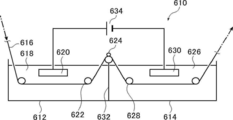
- FIG. 3 is a schematic cross-sectional view of another embodiment of an aluminum support. It is a graph which shows an example of the alternating current waveform diagram used for the electrochemical roughening process in the manufacturing method of an aluminum support. It is a side view which shows an example of the radial type cell in the electrochemical roughening treatment using alternating current in the manufacturing method of an aluminum support. It is the schematic of the anodizing treatment apparatus used for the anodizing treatment in manufacturing of an aluminum support.
- the notation that does not describe substitution or non-substitution includes those having no substituent as well as those having a substituent.
- the "alkyl group” includes not only an alkyl group having no substituent (unsubstituted alkyl group) but also an alkyl group having a substituent (substituted alkyl group).
- (meth) acrylic is a term used in a concept that includes both acrylic and methacrylic
- "(meth) acryloyl” is a term that is used as a concept that includes both acryloyl and methacryloyl. is there.
- the term "process” in the present disclosure is included in this term as long as the intended purpose of the process is achieved, not only in an independent process but also in the case where it cannot be clearly distinguished from other processes. Is done. Further, in the present disclosure, “% by mass” and “% by weight” are synonymous, and “parts by mass” and “parts by weight” are synonymous. Further, in the present disclosure, a combination of two or more preferred embodiments is a more preferred embodiment. Unless otherwise specified, the weight average molecular weight (Mw) and the number average molecular weight (Mn) in the present disclosure use columns of TSKgel GMHxL, TSKgel G4000HxL, and TSKgel G2000HxL (all trade names manufactured by THF Co., Ltd.).
- the term "lithographic printing plate original” includes not only a lithographic printing plate original but also a discarded plate original. Further, the term “lithographic printing plate” includes not only a lithographic printing plate produced by subjecting a lithographic printing plate original plate through operations such as exposure and development as necessary, but also a discarded plate. In the case of a discarded original plate, exposure and development operations are not always necessary.
- the discard plate is a planographic printing plate original plate for attaching to an unused plate cylinder when printing a part of the paper surface in a single color or two colors in, for example, color newspaper printing.
- the on-machine development type lithographic printing plate original plate (hereinafter, also simply referred to as “lithographic printing plate original plate”) according to the present disclosure has an aluminum support and an image recording layer on the aluminum support, and the image recording The layer contains an infrared absorbing polymethine dye having a HOMO of -5.2 eV or less, a polymerization initiator, and a polymerizable compound having 7 or more functionalities, and does not contain a polymer having a molecular weight of 10,000 or more, or the above.
- the polymer having a molecular weight of 10,000 or more is contained in an amount such that the ratio Wp / Wm of the content Wp of the polymer having a molecular weight of 10,000 or more to the content Wm of the polymerizable compound having 7 or more functionalities is 1.00 or less.
- the lithographic printing plate original plate according to the present disclosure can be suitably used as a negative type lithographic printing plate original plate.
- a lithographic printing plate having an excellent printable number of plates (hereinafter, also referred to as “printing resistance”) is required.
- an ink for printing an ink that is cured by irradiation with ultraviolet rays (UV) (also referred to as “ultraviolet curable ink or UV ink”) may be used.
- UV inks are highly productive because they can be instantly dried, generally have a low solvent content, or are solvent-free, so environmental pollution is likely to be reduced. Do not dry with heat, or dry with heat. Since the image can be formed in a short time, it has an advantage that the range of application such as a print target is widened.
- a lithographic printing plate original plate capable of providing a lithographic printing plate having excellent printing resistance even when UV ink is used is considered to be very useful industrially.
- the present inventor has obtained a lithographic printing plate in the lithographic printing plate original plate described in JP2013-078851A or Japanese Patent Application Laid-Open No. 2019-504780, especially when UV ink is used as the ink. It was found that the printing resistance (hereinafter, also referred to as UV printing resistance) is insufficient.
- the image recording layer contains a polymethine dye having a specific oxidation potential to increase the polymerization initiation efficiency, and further, when used in combination with a polymerizable compound having 7 or more functionalities, it has printing resistance and UV resistance. It is estimated that a lithographic printing plate with excellent printability can be obtained.
- the polymerizable compound having 7 or more functionalities has a small molecular weight unlike the polymer, and is dispersed in the image recording layer. Since there is an intermolecular distance, a large amount of the polymerizable compound is present in the image recording layer. However, it is considered that the polymerization reaction is difficult to proceed under the condition that the number of polymerization initiators is small.
- the image recording layer contains a polymer having a molecular weight of 10,000 or more
- the content ratio of the polymer to the polymerizable compound having 7 or more functions is set to 1.00 or less, so that under the condition that the number of polymerization initiation species is small, Polymerization of such a polymerizable compound is more likely to be suppressed by a polymer having a larger molecular weight than a polymer compound having seven or more functions.
- the image recording layer under the condition that the number of polymerization initiation species is small is excellent in stability over time under white light because the formation of three-dimensional crosslinks is suppressed and the developability is less likely to decrease.
- the image recording layer used in the present disclosure contains a polymer having a HOMO of -5.2 eV or less, an infrared absorbing polymer dye, a polymerization initiator, and a polymerizable compound having 7 or more functionalities, and having a molecular weight of 10,000 or more.
- the ratio Wp / Wm of the content Wp of the polymer having a molecular weight of 10,000 or more to the content Wm of the polymerizable compound having no or more than 7 functionalities is 1.00 or less, and the molecular weight is 10,000.
- the image recording layer used in the present disclosure is preferably an on-board development type image recording layer.
- the image recording layer in the planographic printing plate original plate according to the present disclosure is preferably the outermost layer from the viewpoint of inking property.
- the image recording layer contains an infrared absorbing polymethine dye having a HOMO (maximum occupied orbital) of ⁇ 5.2 eV or less (hereinafter, also referred to as “specific polymethine dye”).
- the HOMO of the specific polymethine dye is -5.2 eV or less, preferably -5.25 eV or less, and preferably -5.3 eV or less from the viewpoint of UV printing resistance and on-machine developability. More preferably, it is more preferably -6.0 eV or more and -5.3 eV or less, and particularly preferably -5.6 eV or more and -5.3 eV or less.
- the highest occupied orbital (HOMO) and the lowest empty orbital (LUMO) are calculated by the following methods.
- Quantum chemistry calculation software Gaussian09 is used, and structural optimization is performed by DFT (B3LYP / 6-31G (d)).
- the MO energy Ebare (unit: hartree) obtained by the above MO energy calculation is converted into Escaled (unit: eV) used as the values of HOMO and LUMO in the present disclosure by the following formula.
- Escaled 0.823168 x 27.2114 x Ebare-1.07634 Note that 27.2114 is simply a coefficient for converting heartree to eV, 0.823168 and ⁇ 1.07634 are adjustment coefficients, and HOMO and LUMO of the compound to be calculated are calculated values. Determine to suit.
- the specific polymethine pigment examples include pigments having a polymethine chain. Among them, cyanine pigments, pyrylium pigments, thiopyrylium pigments, azulenium pigments and the like are preferably mentioned, and cyanine pigments are preferable from the viewpoint of easy availability, solvent solubility at the time of introduction reaction and the like. Further, the specific polymethine dye may be a pigment or a dye.
- the polymethine dye has an electron-attracting group or a heavy atom-containing group on at least one of the aromatic rings at both ends from the viewpoint of UV printing resistance, stability over time under white light, and on-machine developability. It preferably contains a cyanine pigment. Further, the polymethine dye has an electron-attracting group or a heavy atom-containing group in each of the aromatic rings at both ends from the viewpoint of UV printing resistance, stability over time under white light, and on-machine developability. It is preferable to include the cyanine pigment having. Further, the polymethine dye is a cyanine dye having an electron-attracting group on at least one of the aromatic rings at both ends from the viewpoint of UV printing resistance, stability over time under white light, and on-machine developability.
- the electron-attracting group containing a heavy atom shall be treated as an electron-attracting group.
- the polymethine dye it is more preferable that at least one of the aromatic rings at both ends contains a cyanine dye having a halogen atom, a cyano group, a nitro group, a carbonyl group, an aryl group, or a vinyl group. It is more preferable that at least one of the aromatic rings contains a cyanine dye having a halogen atom, and it is particularly preferable that at least one of the aromatic rings at both ends contains a cyanine dye having a chlorine atom.
- the electron-attracting group a group having a Hammett substituent constant ⁇ para value of 0.01 or more is preferable from the viewpoint of UV printing resistance, stability over time under white light, and on-machine developability. ..
- the ⁇ para value of the electron-attracting group is more preferably 0.05 or more, more preferably 0.20 or more, from the viewpoint of UV printing resistance, stability over time under white light, and on-machine developability. It is more preferable that there is, and it is particularly preferable that it is 0.30 or more.
- Examples of groups having a ⁇ para value of 0.05 or more include halogen atoms such as fluorine atom (0.06), chlorine atom (0.30), bromine atom (0.27), and iodine atom (0.30); -CHO (0.22), - COCH 3 (0.50), - COC 6 H 5 (0.46), - CONH 2 (0.36), - COO - (0.30), - COOH (0 .41), carbonyl substituents such as -COOCH 3 (0.39), -COOC 2 H 5 (0.45); -SOCH 3 (0.49), -SO 2 CH 3 (0.72),- SO 2 C 6 H 5, -SO 2 CF 3 (0.93), - SO 2 NH 2 (0.57), - SO 2 OC 6 H 5, -SO 3 - (0.09), - SO 3 A sulfonyl or sulfinyl substituent such as H (0.50); -CN (0.01), -N (CH 3
- an electron-attracting group include, for example, a substituent having an unshared electron pair.
- substituent having an unshared electron pair include a halogen atom, a group having a carbonyl group, a group having a sulfonyl group, a group having a sulfinyl group, and a group having an ether bond.
- a halogen atom or a group having a carbonyl group is preferable, a halogen atom, an alkoxycarbonyl group or an aryloxycarbonyl group is more preferable, a halogen atom is further preferable, and a chlorine atom is particularly preferable.
- the group having a carbonyl group include an acyl group such as an acetyl group and a benzoyl group; an alkoxycarbonyl group such as a methoxycarbonyl group and a toluyloxycarbonyl group, or an aryloxycarbonyl group; an amide such as a diethylaminocarbonyl group.
- acyl group such as an acetyl group and a benzoyl group
- an alkoxycarbonyl group such as a methoxycarbonyl group and a toluyloxycarbonyl group, or an aryloxycarbonyl group
- an amide such as a diethylaminocarbonyl group.
- carboxy group is mentioned. These may be attached to the aromatic ring or heterocycle of the cyanine dye via a divalent or higher linking group.
- the "heavy atom-containing group” means a group containing an atom having an atomic weight of 28 or more.
- atoms having an atomic weight of 28 or more include silicon atom (28.09), phosphorus atom (30.97), sulfur atom (32.07), chlorine atom (35.45), germanium atom (72.61), and the like.
- Arsenic atom (74.92), selenium atom (78.96), bromine atom (79.90), tin atom (118.71), antimony atom (121.76), tellurium atom (127.60), or iodine Atoms (126.90) are preferred.
- the numerical value in parentheses is the atomic weight of each atom.
- a group containing a silicon atom, a phosphorus atom, or a halogen atom is preferable from the viewpoint of safety and availability of raw materials. It is preferable that these groups containing atoms having an atomic weight of 28 or more (that is, heavy atom-containing groups) become substituents on the aromatic ring of the cyanine dye alone or in combination with other atoms. Further, such a substituent may be bonded to the aromatic ring of the cyanine dye via a divalent or higher valent linking group.
- Examples of the group containing a silicon atom include an alkyl group such as a trimethylsilyl group, a t-butyldimethylsilyl group, and a dimethylphenylsilyl group, or a group having an aryl group on the silicon atom.
- Examples of the group containing a phosphorus atom include a group having an alkyl group such as a dimethylphosphino group and a diphenylphosphino group or an aryl group on the phosphorus atom; a phosphono group.
- the group containing a sulfur atom partially overlaps with the above-mentioned electron-attracting group, but for example, an alkylsulfonyl group such as a methylsulfonyl group or a phenylsulfonyl group or an arylsulfonyl group; an alkyl such as an ethylsulfinyl group or a toluylsulfinyl group.
- Sulfinyl group or arylsulfinyl group; sulfur acid group such as sulfo group, sulfino group, sulfeno group or salt thereof or ester derivative thereof; alkylthio group or arylthio group such as methylthio group and phenylthio group can be mentioned.
- the group containing a halogen atom include a halogen atom, a halogen-substituted alkyl group, and a halogen-substituted aryl group, which partially overlap with the above-mentioned electron-attracting group.
- Specific examples of the specific polymethine dye include those having a HOMO of -5.2 eV or less among those shown below.
- Specific examples of the cyanine dye include, for example, the compounds described in paragraphs 0017 to 0019 of JP-A-2001-133769, paragraphs 0016 to 0021 of JP-A-2002-0233360, and paragraphs of JP-A-2002-040638. Examples thereof include the compounds described in 0012 to 0037.
- Specific examples of the cyanine dye preferably include the compounds described in paragraphs 0034 to 0041 of JP-A-2002-278057 and paragraphs 0080-0083 of JP-A-2008-195018.
- cyanine dye examples include the compounds described in paragraphs 0035 to 0043 of JP-A-2007-90850 and the compounds described in paragraphs 0105 to 0113 of JP-2012-206495. Further, as specific examples of the cyanine dye, the compounds described in paragraphs 0008 to 0009 of JP-A-5-5005 and paragraphs 0022 to 0025 of JP-A-2001-222101 can also be preferably used. Further, as the specific polymethine dye, a polymethine dye that decomposes by infrared exposure (also referred to as “degradable polymethine dye”) can be preferably used. As the polymethine dye decomposed by infrared exposure, those described in Japanese Patent Publication No. 2008-544322, International Publication No. 2016/027886, International Publication No. 2017/141882, or International Publication No. 2018/0432559 are preferably used. Can be used.
- the content of the specific polymethine dye in the image recording layer is preferably 0.1% by mass to 10.0% by mass, more preferably 0.5% by mass to 5.0% by mass, based on the total mass of the image recording layer. preferable.
- the image recording layer used in the present disclosure contains a polymerization initiator.
- the polymerizable initiator is not particularly limited, and examples thereof include an electron-accepting polymerization initiator and an electron-donating polymerization initiator.
- the image recording layer preferably contains an electron-accepting polymerization initiator.
- the electron-accepting polymerization initiator used in the present disclosure is a compound that generates a polymerization initiator such as a radical or a cation by the energy of light, heat, or both, and is a known thermal polymerization initiator and has a small bond dissociation energy. A compound having a bond, a photopolymerization initiator and the like can be appropriately selected and used.
- a radical polymerization initiator is preferable, and an onium compound is more preferable.
- the electron-accepting polymerization initiator is preferably an infrared photosensitive polymerization initiator.
- the electron-accepting polymerization initiator may be used alone or in combination of two or more.
- examples of the radical polymerization initiator include (a) an organic halide, (b) a carbonyl compound, (c) an azo compound, (d) an organic peroxide, (e) a metallocene compound, (f) an azide compound, and (g). ) Hexaaryl biimidazole compounds, (i) disulfone compounds, (j) oxime ester compounds, and (k) onium compounds.
- the compounds described in paragraphs 0022 to 0023 of JP-A-2008-195018 are preferable.
- B) As the carbonyl compound for example, the compound described in paragraph 0024 of JP-A-2008-195018 is preferable.
- C) As the azo compound for example, the azo compound described in JP-A-8-108621 can be used.
- D) As the organic peroxide for example, the compound described in paragraph 0025 of JP-A-2008-195018 is preferable.
- the metallocene compound for example, the compound described in paragraph 0026 of JP-A-2008-195018 is preferable.
- Examples of the (f) azide compound include compounds such as 2,6-bis (4-azidobenzylidene) -4-methylcyclohexanone.
- Examples of the hexaarylbiimidazole compound for example, the compound described in paragraph 0027 of JP-A-2008-195018 is preferable.
- Examples of the disulfon compound include the compounds described in JP-A-61-166544 and JP-A-2002-328465.
- As the (j) oxime ester compound for example, the compounds described in paragraphs 0028 to 0030 of JP-A-2008-195018 are preferable.
- oxime ester compounds and onium compounds are preferable from the viewpoint of curability.
- an iodonium salt compound, a sulfonium salt compound or an azinium salt compound is preferable, an iodonium salt compound or a sulfonium salt compound is more preferable, and an iodonium salt compound is further preferable. Specific examples of these compounds are shown below, but the present disclosure is not limited thereto.
- a diaryl iodonium salt compound is preferable, a diphenyl iodonium salt compound substituted with an electron donating group such as an alkyl group or an alkoxyl group is more preferable, and an asymmetric diphenyl iodonium salt compound is preferable.
- a triarylsulfonium salt compound is preferable, and in particular, an electron-attracting group, for example, a triarylsulfonium salt compound in which at least a part of a group on the aromatic ring is substituted with a halogen atom is preferable, and aromatic.
- a triarylsulfonium salt compound having a total number of halogen atoms substituted on the ring of 4 or more is more preferable.
- triphenylsulfonium hexafluorophosphate
- triphenylsulfonium benzoylformate
- bis (4-chlorophenyl) phenylsulfonium benzoylformate
- bis (4-chlorophenyl) -4-methylphenylsulfonium tetrafluoro.
- Tris (4-chlorophenyl) Sulfonium 3,5-bis (methoxycarbonyl) Benzene Sulfonium
- Tris (4-chlorophenyl) Sulfonium Hexafluorophosphate
- Tris (2,4-dichlorophenyl) Sulfonium Hexafluorophos Examples include falt.
- a sulfonamide anion or a sulfonimide anion is preferable, and a sulfonimide anion is more preferable.
- a sulfonamide anion an aryl sulfonamide anion is preferable.
- a bisaryl sulfonimide anion is preferable. Specific examples of the sulfonamide anion or the sulfonamide anion are shown below, but the present disclosure is not limited thereto. In the specific examples below, Ph represents a phenyl group, Me represents a methyl group, and Et represents an ethyl group.
- the electron-accepting polymerization initiator may contain a compound represented by the following formula (II) from the viewpoint of developability and UV printing resistance in the obtained lithographic printing plate.
- X represents a halogen atom and R 3 represents an aryl group.
- X in the formula (II) include a fluorine atom, a chlorine atom, a bromine atom and an iodine atom.
- a chlorine atom or a bromine atom is preferable because it has excellent sensitivity, and a bromine atom is particularly preferable.
- R 3 from the viewpoint of excellent balance between sensitivity and storage stability, an aryl group substituted with an amide group.
- electron-accepting polymerization initiator represented by the above formula (II) include compounds represented by the following formula, but the present disclosure is not limited thereto.
- the minimum empty orbit (LUMO) of the electron-accepting polymerization initiator is preferably ⁇ 3.00 eV or less, and more preferably ⁇ 3.02 eV or less, from the viewpoint of on-machine developability and UV printing resistance. ..
- the lower limit of LUMO of the electron-accepting polymerization initiator is preferably -3.80 eV or more, and more preferably -3.60 eV or more.
- the content of the electron-accepting polymerization initiator is preferably 0.1% by mass to 50% by mass, more preferably 0.5% by mass to 30% by mass, based on the total mass of the image recording layer. It is preferably 0.8% by mass to 20% by mass, and particularly preferably 0.8% by mass.
- the electron-accepting polymerization initiator may be used alone or in combination of two or more.
- the image recording layer in the present disclosure contains the electron-accepting polymerization initiator and the specific polymerin dye from the viewpoint of UV printing resistance and stability over time under white light, and the LUMO of the electron-accepting polymerization initiator.
- Value-The LUMO value of the specific polymethine dye (value obtained by subtracting the LUMO value of the specific polymethine dye from the LUMO value of the electron-accepting polymerization initiator) is preferably 0.70 eV or less, preferably 0.70 eV to-. It is more preferably 0.10 eV.
- a negative value means that the LUMO value of the specific polymethine dye is higher than the LUMO value of the electron-accepting polymerization initiator.
- the image recording layer preferably contains an electron-donating polymerization initiator (also referred to as a "polymerization aid") as a polymerization initiator, and contains an electron-accepting polymerization initiator and an electron-donating polymerization initiator. Is more preferable.
- the electron donating type polymerization initiator in the present disclosure donates one electron by intermolecular electron transfer to an orbit where one electron is missing from the infrared absorber when the electron of the infrared absorber is excited or moved intramolecularly by infrared exposure. This is a compound that generates a polymerization-initiated species such as a radical.
- the electron-donating type polymerization initiator is preferably an electron-donating radical polymerization initiator.
- the image recording layer more preferably contains the electron donating type polymerization initiator described below, and examples thereof include the following five types.
- Alkyl or arylate complex It is considered that the carbon-heterobond is oxidatively cleaved to generate an active radical. Specifically, a borate compound is preferable.
- N-arylalkylamine compound It is considered that the CX bond on the carbon adjacent to nitrogen is cleaved by oxidation to generate an active radical.
- a hydrogen atom, a carboxyl group, a trimethylsilyl group or a benzyl group is preferable.
- N-phenylglycines which may or may not have a substituent on the phenyl group
- N-phenyliminodiacetic acid which may have a substituent on the phenyl group. It does not have to be.
- Sulfur-containing compound The above-mentioned amines in which the nitrogen atom is replaced with a sulfur atom can generate an active radical by the same action.
- phenylthioacetic acid (which may or may not have a substituent on the phenyl group) can be mentioned.
- Tin-containing compounds The above-mentioned amines in which the nitrogen atom is replaced with a tin atom can generate active radicals by the same action.
- Sulfinates Oxidation can generate active radicals. Specific examples thereof include arylsulfinic sodium.
- the image recording layer preferably contains a borate compound from the viewpoint of printing resistance.
- the borate compound is preferably a tetraaryl borate compound or a monoalkyl triaryl borate compound, and more preferably a tetraaryl borate compound from the viewpoint of print resistance and color development.
- the counter cation contained in the borate compound is not particularly limited, but is preferably an alkali metal ion or a tetraalkylammonium ion, and more preferably a sodium ion, a potassium ion, or a tetrabutylammonium ion.
- sodium tetraphenylborate is preferably mentioned as the borate compound.
- B-1 to B-11 are shown below as preferable specific examples of the electron donating type polymerization initiator, but it goes without saying that the present invention is not limited to these. Further, in the following chemical formula, Ph represents a phenyl group and Bu represents an n-butyl group.
- the maximum occupied orbital (HOMO) of the electron donating type polymerization initiator used in the present disclosure is preferably ⁇ 6.00 eV or more from the viewpoint of improving sensitivity and making plate skipping less likely to occur, preferably ⁇ 5. It is more preferably .95 eV or more, and even more preferably ⁇ 5.93 eV or more.
- the upper limit of HOMO of the electron donating polymerization initiator is preferably ⁇ 5.00 eV or less, and more preferably ⁇ 5.40 eV or less.
- the electron donating type polymerization initiator only one kind may be added, or two or more kinds may be used in combination.
- the content of the electron donating type polymerization initiator is preferably 0.01% by mass to 30% by mass, preferably 0.05% by mass, based on the total mass of the image recording layer from the viewpoint of sensitivity and printing resistance. It is more preferably to 25% by mass, and further preferably 0.1% by mass to 20% by mass.
- the image recording layer contains an onium ion and an anion in the above-mentioned electron donating type polymerization initiator
- the image recording layer is assumed to contain an electron accepting type polymerization initiator and the above-mentioned electron donating type polymerization initiator. ..
- one of the preferred embodiments in the present disclosure is an embodiment in which the electron-accepting polymerization initiator and the electron-donating polymerization initiator form a salt.
- the onium compound is a salt of an onium ion and an anion (for example, tetraphenylborate anion) in the electron donating type polymerization initiator can be mentioned.
- an iodonium borate compound in which an iodonium cation (for example, dip-tolyl iodonium cation) in the iodonium salt compound and a borate anion in the electron donating type polymerization initiator form a salt can be mentioned.
- Specific examples of the embodiment in which the electron-accepting polymerization initiator and the electron-donating polymerization initiator form a salt are shown below, but the present disclosure is not limited thereto.
- the image recording layer contains an onium ion and an anion in the above-mentioned electron donating type polymerization initiator
- the image recording layer is assumed to contain an electron accepting type polymerization initiator and the above-mentioned electron donating type polymerization initiator. ..
- the image recording layer in the present disclosure contains the electron-donating polymerization initiator and the specific polymethine dye from the viewpoint of UV printing resistance and stability over time under white light, and the HOMO of the specific polymethine dye-the electron-donating type.
- the HOMO value of the polymerization initiator (value obtained by subtracting the HOMO value of the electron donating type polymerization initiator from the HOMO value of the specific polymethine dye) is preferably 0.70 eV or less, preferably 0.70 eV to ⁇ 0. It is more preferably 10 eV.
- a negative value means that the HOMO of the electron-donating polymerization initiator is higher than that of the specific polymethine dye.
- ⁇ d in the solubility parameter of Hansen is 16 or more, ⁇ p is 16 to 32, and ⁇ h is 60 of ⁇ p from the viewpoint of improving sensitivity and making it difficult for plate skipping to occur. It is a preferred embodiment to have an organic anion of% or less.
- the electron-accepting polymerization initiator in the present disclosure has a solubility parameter of Hansen of 16 or more, ⁇ p of 16 to 32, and ⁇ h from the viewpoint of improving sensitivity and preventing plate skipping. It is a preferable embodiment to have an organic anion which is 60% or less of ⁇ p.
- ⁇ d, ⁇ p, and ⁇ h in the Hansen solubility parameter in the present disclosure are the dispersion term ⁇ d [unit: MPa 0.5 ] and the polarity term ⁇ p [unit: MPa 0.5 ] in the Hansen solubility parameter. ] Is used.
- the solubility parameter of Hansen is expressed in a three-dimensional space by dividing the solubility parameter introduced by Hildebrand into three components of a dispersion term ⁇ d, a polar term ⁇ p, and a hydrogen bond term ⁇ h. It is a thing. For more information on Hansen's solubility parameters, see Charles M. It is described in the document "Hansen Solubility Parameter; A Users Handbook (CRC Press, 2007)" by Hansen.
- ⁇ d, ⁇ p, and ⁇ h in the Hansen solubility parameter of the organic anion are derived from the chemical structure by using the computer software “Hansen Solubility Parameters in Practice (HSPiP ver. 4.1.07)”. It is an estimated value.
- Specific examples (I-1) to (I-26) of the amide anion or the sulfonamide anion are preferably mentioned, but it goes without saying that the present invention is not limited thereto.
- the image recording layer contains a polymerizable compound having 7 or more functionalities (hereinafter, also referred to as “specific polymerizable compound”).
- 7 or more functional means that the number of polymerizable groups in the molecule (also referred to as the number of functional groups) is 7 or more.
- the specific polymerizable compound has a molecular weight of less than 10,000, and the specific polymerizable compound does not include a polymer having a molecular weight of 10,000 or more, which will be described later.
- the number of functional groups of the specific polymerizable compound is preferably 11 or more, and more preferably 15 or more.
- the upper limit of the number of functional groups of the specific polymerizable compound is, for example, 50.
- the image recording layer may contain a polymerizable compound having a hexafunctionality or less.
- the specific polymerizable compound used in the present disclosure may be, for example, a radical-polymerizable compound or a cationically polymerizable compound, but is an addition-polymerizable compound having at least 7 ethylenically unsaturated bonds (ethylene). It is preferable to contain a sex unsaturated compound).
- the ethylenically unsaturated compound preferably contains a compound having at least 7 terminal ethylenically unsaturated bonds from the viewpoint of UV printing resistance and stability over time under a white light, and has a terminal ethylenically unsaturated bond.
- the specific polymerizable compound has a chemical form such as a monomer, a prepolymer, that is, a dimer, a trimer or an oligomer, or a mixture thereof.
- the monomer examples include unsaturated carboxylic acids (eg, acrylic acid, methacrylic acid, itaconic acid, crotonic acid, isocrotonic acid, maleic acid, etc.), esters or amides thereof, and preferably unsaturated carboxylic acids.
- Esters with polyhydric alcohol compounds and amides with unsaturated carboxylic acids and polyvalent amine compounds are used.
- an addition reaction product of an unsaturated carboxylic acid ester or amide having a nucleophilic substituent such as a hydroxy group, an amino group or a mercapto group with a monofunctional or polyfunctional isocyanate or an epoxy, and a monofunctional or polyfunctional group.
- a dehydration condensation reaction product with a functional carboxylic acid is also preferably used.
- an addition reaction product of an unsaturated carboxylic acid ester or amide having a polyelectron substituent such as an isocyanate group or an epoxy group with a monofunctional or polyfunctional alcohol, an amine or a thiol, and a halogen atom is also suitable.
- the monomer of the ester of the polyhydric alcohol compound and the unsaturated carboxylic acid include ethylene glycol diacrylate, 1,3-butanediol diacrylate, tetramethylene glycol diacrylate, and propylene glycol diacrylate as acrylic acid esters.
- examples thereof include trimethylolpropane triacrylate, hexanediol diacrylate, tetraethylene glycol diacrylate, pentaerythritol tetraacrylate, sorbitol triacrylate, isocyanurate ethylene oxide (EO) modified triacrylate, and polyester acrylate oligomer.
- methacrylic acid ester As methacrylic acid ester, tetramethylene glycol dimethacrylate, neopentyl glycol dimethacrylate, trimethylolpropantrimethacrylate, ethylene glycol dimethacrylate, pentaerythritol trimethacrylate, bis [p- (3-methacryloxy-2-hydroxypropoxy) phenyl] Examples thereof include dimethylmethane and bis [p- (methacrylicoxyethoxy) phenyl] dimethylmethane.
- amide monomer of the polyvalent amine compound and the unsaturated carboxylic acid examples include methylenebisacrylamide, methylenebismethacrylamide, 1,6-hexamethylenebisacrylamide, and 1,6-hexamethylenebismethacrylamide.
- examples thereof include diethylenetriaminetrisacrylamide, xylylenebisacrylamide, and xylylenebismethacrylamide.
- a urethane-based addition-polymerizable compound produced by using an addition reaction of isocyanate and a hydroxy group is also suitable from the viewpoint of UV printing resistance and stability over time under a white light.
- Examples thereof include vinyl urethane compounds containing two or more polymerizable vinyl groups in one molecule to which a monomer is added.
- CH 2 C (R M4) COOCH 2 CH (R M5) OH (M)
- RM4 and RM5 each independently represent a hydrogen atom or a methyl group.
- JP-A-51-37193, JP-A-2-32293, JP-A-2-16765, JP-A-2003-344997, or JP-A-2006-65210 Described urethane acrylates, Japanese Patent Application Laid-Open No. 58-49860, Japanese Patent Application Laid-Open No. 56-17654, Japanese Patent Application Laid-Open No. 62-39417, Japanese Patent Application Laid-Open No. 62-39418, Japanese Patent Application Laid-Open No. 2000-250211 or Japanese Patent Application Laid-Open No. 2007 Urethane compounds having an ethylene oxide-based skeleton described in JP-94138, US Pat. No. 7,153,632, JP-A-8-505598, JP-A-2007-293221, or JP-A-2007-293223.
- the urethane compounds having a hydrophilic group described in the above are also suitable.
- the specific polymerizable compound may contain a compound having an ethylenically unsaturated bond value of 5.0 mmol / g or more (hereinafter, also referred to as the specific polymerizable compound M1) from the viewpoint of enhancing printing resistance.
- the ethylenically unsaturated bond value of the specific polymerizable compound M1 is preferably 5.5 mmol / g or more, and more preferably 6.0 mmol / g or more.
- the upper limit of the ethylenically unsaturated bond value of the specific polymerizable compound M1 is, for example, 10.0 mmol / g or less, and more preferably 8.5 mmol / g or less.
- the ethylenically unsaturated bond value of the compound in the present disclosure is determined by the following method. First, for a compound having a predetermined sample amount (for example, 0.2 g), the structure of the compound is specified by using, for example, thermal decomposition GC / MS, FT-IR, NMR, TOF-SIMS, etc., and ethylenically unsaturated. Find the total amount (mmol) of the groups. The ethylenically unsaturated bond value of a compound is calculated by dividing the total amount (mmol) of the determined ethylenically unsaturated groups by the sample amount (g) of the compound.
- a predetermined sample amount for example, 0.2 g
- the structure of the compound is specified by using, for example, thermal decomposition GC / MS, FT-IR, NMR, TOF-SIMS, etc.
- X represents an n-valent organic group having a hydrogen-bonding group
- Y represents a monovalent group having two or more ethylenically unsaturated groups
- n represents an integer of two or more.
- the molecular weight of X / (molecular weight of Y ⁇ n) is 1 or less.
- the hydrogen-bonding group in X of the formula (I) is not particularly limited as long as it is a hydrogen-bondable group, and whether it is a hydrogen-bond-donating group or a hydrogen-bond-accepting group, both of them. It may be.
- the hydrogen-bonding group include a hydroxy group, a carboxy group, an amino group, a carbonyl group, a sulfonyl group, a urethane group, a urea group, an imide group, an amide group, a sulfonamide group and the like.
- the hydrogen-bonding group is at least one group selected from the group consisting of a urethane group, a urea group, an imide group, an amide group, and a sulfonamide group from the viewpoint of on-machine developability and print resistance. It is more preferable to contain at least one group selected from the group consisting of a urethane group, a urea group, an imide group, and an amide group, and more preferably than the group consisting of a urethane group, a urea group, and an imide group. It is more preferably at least one selected group, and particularly preferably containing at least one group selected from the group consisting of urethane groups and urea groups.
- X in the formula (I) is preferably an organic group having no ethylenically unsaturated bond. Further, X in the formula (I) is a monovalent to n-valent aliphatic hydrocarbon group, a monovalent to n-valent aromatic hydrocarbon group, a urethane bond, or a urea from the viewpoint of on-machine developability and printing resistance. It is preferably a group that combines two or more structures selected from the group consisting of a bond, a biuret bond, and an allophanate bond, and is preferably a monovalent to n-valent aliphatic hydrocarbon group and a monovalent to n-valent aromatic group. It is more preferable that the group is a combination of two or more structures selected from the group consisting of a hydrocarbon group, a urethane bond, a urea bond, and a biuret bond.
- X in the formula (I) is a quantified product in which a polyfunctional isocyanate compound is increased in a large amount (including an adducted body of a polyfunctional alcohol compound such as a trimethylolpropane adduct) from the viewpoint of on-machine developability and print resistance.
- the group is a group obtained by removing the terminal isocyanate group from the group, and is a group obtained by removing the terminal isocyanate group from a quantifier (including an adduct of a polyfunctional alcohol compound) in which a bifunctional isocyanate compound is abundant. Is more preferable, and a group in which the terminal isocyanate group is removed from a quantifier (including an adduct of a polyfunctional alcohol compound) in which hexamethylene diisocyanate is increased is particularly preferable.
- the molecular weight of X in the formula (I) is preferably 100 to 1,000, more preferably 150 to 800, and particularly preferably 150 to 500, from the viewpoint of on-machine developability and print resistance.
- the ethylenically unsaturated group in Y of the formula (I) is not particularly limited, and from the viewpoint of reactivity, on-machine developability, and print resistance, a vinylphenyl group, a vinyl ester group, a vinyl ether group, an allyl group, ( It is preferably at least one group selected from the group consisting of a meta) acryloxy group and a (meth) acrylamide group. From the same viewpoint as above, the ethylenically unsaturated group in Y of the formula (I) is at least one group selected from the group consisting of a vinylphenyl group, a (meth) acryloxy group, and a (meth) acrylamide group.
- the ethylenically unsaturated group in Y of the formula (I) preferably contains a (meth) acryloxy group from the viewpoint of on-machine developability and print resistance.
- Y in the formula (I) is preferably a group having three or more (meth) acryloxy groups, more preferably a group having five or more (meth) acryloxy groups, and five or more twelve. It is more preferable that the group has the following (meth) acryloxy group.
- Y in the formula (I) may have a structure represented by the following formula (Y-1) or the formula (Y-2) from the viewpoint of on-machine developability and print resistance.
- R independently represents an acrylic group or a methacrylic group, and the wavy line portion represents the bonding position with another structure.
- R is preferably an acrylic group.
- n Ys in the formula (I) are all the same group.
- the molecular weight of Y in the formula (I) is preferably 200 or more and 1,000 or less, and more preferably 250 or more and 800 or less, from the viewpoint of on-machine developability and print resistance.
- N in the formula (I) is an integer of 2 or more, and is more preferably 2 to 3 from the viewpoint of on-machine developability and print resistance.
- the molecular weight of X / (molecular weight of Y ⁇ n) is 1 or less, preferably 0.01 to 0.8, preferably 0.1 to 0.5, from the viewpoint of on-machine developability and print resistance. More preferably.
- the structure of the specific polymerizable compound M1 preferably has a structure in which the terminal isocyanate group of the quantifier (including the adduct) of the polyfunctional isocyanate compound is sealed with a compound having an ethylenically unsaturated group.
- the quantifier of the polyfunctional isocyanate compound the quantifier of the bifunctional isocyanate compound is preferable.
- the specific polymerizable compound M1 has a hydroxy group (also referred to as a hydroxyl group) at the end of the terminal isocyanate group of the multimerized product in which the polyfunctional isocyanate compound is increased in quantity from the viewpoint of on-machine developability and printing resistance. It is preferably a compound obtained by reacting a functional ethylenically unsaturated compound. Further, from the same viewpoint as above, the specific polymerizable compound M1 has a polyfunctional group having a hydroxy group at the terminal isocyanate group of the multi-layer (including the adduct of the polyfunctional alcohol compound) in which the bifunctional isocyanate compound is increased in quantity.
- the compound is obtained by reacting an ethylenically unsaturated compound.
- the specific polymerizable compound M1 is a polyfunctional ethylene having a hydroxy group at the terminal isocyanate group of a multimeric body (including an adduct body of a polyfunctional alcohol compound) in which hexamethylene diisocyanate is increased. It is particularly preferable that the compound is obtained by reacting a sex unsaturated compound.
- the polyfunctional isocyanate compound is not particularly limited, and known compounds can be used, and may be an aliphatic polyfunctional isocyanate compound or an aromatic polyfunctional isocyanate compound.
- Specific examples of the polyfunctional isocyanate compound include 1,3-bis (isocyanatomethyl) cyclohexane, isophorone diisocyanate, trimethylene diisocyanate, tetramethylene diisocyanate, pentamethylene diisocyanate, hexamethylene diisocyanate, and 1,3-.
- Cyclopentane diisocyanate, 9H-fluorene-2,7-diisocyanate, 9H-fluoren-9-on-2,7-diisocyanate, 4,4'-diphenylmethane diisocyanate, 1,3-phenylenediisocyanate, trilen-2 , 4-Diisocyanate, Trilen-2,6-Diisocyanate, 1,3-bis (isocyanatomethyl) cyclohexane, 2,2-bis (4-isocyanatophenyl) hexafluoropropane, 1,5-di Isocyanatonaphthalene, dimers of these polyisocyanates, trimmers (isocyanurate bonds) and the like are preferably mentioned.
- a biuret compound obtained by reacting the above polyisocyanate compound with a known amine compound may be used.
- the polyfunctional ethylenically unsaturated compound having a hydroxy group is preferably a trifunctional or higher functional ethylenically unsaturated compound having a hydroxy group, and is a pentafunctional or higher functional ethylenically unsaturated compound having a hydroxy group. Is more preferable.
- the polyfunctional ethylenically unsaturated compound having a hydroxy group is preferably a polyfunctional (meth) acrylate compound having a hydroxy group.
- the specific polymerizable compound M1 preferably has at least one structure selected from the group consisting of an adduct structure, a biuret structure, and an isocyanurate structure. From the same viewpoint as above, the specific polymerizable compound M1 more preferably has at least one structure selected from the group consisting of a trimethylolpropane adduct structure, a biuret structure, and an isocyanurate structure, and more preferably the trimethylolpropane adduct. It is particularly preferable to have a structure.
- the specific polymerizable compound M1 preferably has a structure represented by any of the following formulas (A-1) to (A-3), and has the following formula (A-1). It is more preferable to have the structure represented by A-1).
- RA1 represents a hydrogen atom or an alkyl group having 1 to 8 carbon atoms, and the wavy line portion represents a bond position with another structure.
- R A1 in the formula (A1) from the viewpoint of on-press development property and printing durability, a hydrogen atom, or preferably an alkyl group having 1 to 4 carbon atoms, an alkyl group having 1 to 3 carbon atoms It is more preferably present, more preferably a methyl group or an ethyl group, and particularly preferably an ethyl group.
- the specific polymerizable compound M1 is preferably a (meth) acrylate compound having a urethane group, that is, a urethane (meth) acrylate oligomer from the viewpoint of on-machine developability and print resistance.
- the specific polymerizable compound M1 may be an oligomer having a polyester bond (hereinafter, also referred to as a polyester (meth) acrylate oligomer) as long as the ethylenically unsaturated bond value is 5.0 mmol / g or more, or the epoxy residue. It may be an oligomer having a group (hereinafter, also referred to as an epoxy (meth) acrylate oligomer).
- the epoxy residues in the epoxy (meth) acrylate oligomer are as described above.
- the number of ethylenically unsaturated groups in the polyester (meth) acrylate oligomer which is the specific polymerizable compound M1 is preferably 3 or more, and more preferably 6 or more.
- the epoxy (meth) acrylate oligomer which is the specific polymerizable compound M1 a compound containing a hydroxy group in the compound is preferable.
- the number of ethylenically unsaturated groups in the epoxy (meth) acrylate oligomer is preferably 2 to 6, and more preferably 2 to 3.
- the epoxy (meth) acrylate oligomer can be obtained, for example, by reacting a compound having an epoxy group with acrylic acid.
- the molecular weight (weight average molecular weight when having a molecular weight distribution) of the specific polymerizable compound M1 may be more than 1,000, preferably 1,100 to 10,000, preferably 1,100 to 5,000. More preferred.
- the specific polymerizable compound M1 a synthetic product or a commercially available product may be used.
- Specific examples of the specific polymerizable compound M1 include, for example, the following commercially available products, but the specific polymerizable compound M1 used in the present disclosure is not limited thereto.
- the content of the specific polymerizable compound M1 in the image recording layer with respect to the total mass of the specific polymerizable compound is preferably 10% by mass to 100% by mass, preferably 50% by mass to 100% by mass. It is more preferably mass%, and even more preferably 80% by mass to 100% by mass.
- the details of the method of use such as the structure of the polymerizable compound, whether it is used alone or in combination, and the amount of addition can be arbitrarily set.
- the content Wm of the specific polymerizable compound is preferably 5% by mass to 75% by mass, more preferably 10% by mass to 70% by mass, and 15% by mass with respect to the total mass of the image recording layer. It is particularly preferably about 60% by mass.
- the content Wm2 of the polymerizable compound having 6 or less functionalities may be 10% by mass or less with respect to the total mass of the image recording layer. It is preferably 5% by mass or less, and more preferably 5% by mass or less.
- the image recording layer may contain a polymerizable compound other than the specific polymerizable compound (that is, a polymerizable compound having six functions or less).
- a polymerizable compound other than the specific polymerizable compound (that is, a polymerizable compound having six functions or less).
- the semifunctional or lower polymerizable compound a known polymerizable compound used for the image recording layer of the lithographic printing plate original plate can be used.
- the hexafunctional or lower polymerizable compound may include a compound having one or two ethylenically unsaturated bonding groups (hereinafter, also referred to as a polymerizable compound M2).
- the preferred embodiment of the ethylenically unsaturated group contained in the polymerizable compound M2 is the same as that of the ethylenically unsaturated group in the specific polymerizable compound M1.
- the polymerizable compound M2 is preferably a compound having two ethylenically unsaturated bonding groups (that is, a bifunctional polymerizable compound) from the viewpoint of suppressing a decrease in on-machine developability.
- the polymerizable compound M2 is preferably a methacrylate compound, that is, a compound having a methacryloxy group, from the viewpoint of on-machine developability and printing resistance.
- the polymerizable compound M2 preferably contains an alkyleneoxy structure or a urethane bond from the viewpoint of on-machine developability.
- the molecular weight (weight average molecular weight when having a molecular weight distribution) of the polymerizable compound M2 is preferably 50 or more and less than 1,000, more preferably 200 to 900, and 250 to 800. Is more preferable.
- n + m 10.
- polymerizable compound M2 commercially available products shown below may be used, but the polymerizable compound M2 used in the present disclosure is not limited thereto.
- Specific examples of the polymerizable compound M2 include BPE-80N (compound of (1) above) manufactured by Shin Nakamura Chemical Industry Co., Ltd., BPE-100, BPE-200, BPE-500, and CN104 manufactured by Sartmer Co., Ltd. (above). Examples thereof include ethoxylated bisphenol A dimethacrylate (compound of (1)).
- Specific examples of the polymerizable compound M2 include ethoxylated bisphenol A diacrylates such as A-BPE-10 (compound of (2) above) manufactured by Shin Nakamura Chemical Industry Co., Ltd. and A-BPE-4. Be done.
- specific examples of the polymerizable compound M2 include bifunctional methacrylates such as FST 510 manufactured by AZ Electronics.
- FST 510 is a reaction product of 1 mol of 2,2,4-trimethylhexamethylene diisocyanate and 2 mol of hydroxyethyl methacrylate, and is a solution of the compound of the above (3) in an 82% by mass of methyl ethyl ketone. is there.
- the content of the polymerizable compound M2 in the image recording layer with respect to the total mass of the hexafunctional or less polymerizable compound is preferably 10% by mass to 100% by mass, preferably 50% by mass or more. It is more preferably 100% by mass, and even more preferably 80% by mass to 100% by mass.
- the image recording layer contains a polymer having a molecular weight of 10,000 or more.
- the molecular weight of the polymer is preferably 10,000 to 300,000, more preferably 10,000 to 100,000.
- the polymer used for the image recording layer may have a molecular weight distribution.
- the weight average molecular weight (Mw) of the polymer is 10,000 or more, the content of the polymer corresponding to this is defined as the above-mentioned "polymer content Wp".
- the polymer has a weight average molecular weight (Mw) of less than 10,000 and has a polymerizable group (for example, an ethylenically unsaturated bond), the corresponding polymer is treated as a polymerizable compound.
- the polymer contained in the image recording layer in the lithographic printing plate original plate according to the present disclosure preferably contains a polymer having a structural unit formed of an aromatic vinyl compound and a structural unit formed of an acrylonitrile compound. Further, it is also one of the preferable embodiments that the polymer contained in the image recording layer in the lithographic printing plate original plate according to the present disclosure contains polyvinyl acetal. Further, from the viewpoint of UV printing resistance, stability over time under white light, and on-machine developability, some or all of the polymers contained in the image recording layer in the lithographic printing plate original plate according to the present disclosure may be. It is also one of the preferred embodiments that it is a polymer particle.
- the polymer contained in the image recording layer in the lithographic printing plate original plate according to the present disclosure preferably has a structural unit formed of an aromatic vinyl compound.
- the aromatic vinyl compound may be a compound having a structure in which a vinyl group is bonded to an aromatic ring, and examples thereof include a styrene compound and a vinylnaphthalene compound, and a styrene compound is preferable, and styrene is more preferable.
- styrene compound examples include styrene, p-methylstyrene, p-methoxystyrene, ⁇ -methylstyrene, p-methyl- ⁇ -methylstyrene, ⁇ -methylstyrene, p-methoxy- ⁇ -methylstyrene and the like. Styrene is preferred.
- vinylnaphthalene compound examples include 1-vinylnaphthalene, methyl-1-vinylnaphthalene, ⁇ -methyl-1-vinylnaphthalene, 4-methyl-1-vinylnaphthalene, 4-methoxy-1-vinylnaphthalene and the like.
- -Vinylnaphthalene is preferably mentioned.
- the structural unit formed of the aromatic vinyl compound the structural unit represented by the following formula A1 is preferably mentioned.
- Ar is preferably a benzene ring or a naphthalene ring, and more preferably a benzene ring.
- RA3 is preferably an alkyl group or an alkoxy group, more preferably an alkyl group having 1 to 4 carbon atoms or an alkoxy group having 1 to 4 carbon atoms, and it is a methyl group or a methoxy group. Is more preferable.
- n is preferably an integer of 0 to 2, more preferably 0 or 1, and even more preferably 0.
- the content of the structural unit formed by the aromatic vinyl compound in the polymer is preferably 10% by mass to 90% by mass, more preferably 20% by mass to 80% by mass, based on the total mass of the polymer. It is more preferably 35% by mass to 75% by mass, and particularly preferably 30% by mass to 60% by mass.
- the polymer contained in the image recording layer in the lithographic printing plate original plate according to the present disclosure preferably has a structural unit formed of an acrylonitrile compound.
- the acrylonitrile compound include (meth) acrylonitrile, and acrylonitrile is preferable.
- the structural unit formed by the acrylonitrile compound the structural unit represented by the following formula B1 is preferably mentioned.
- RB1 represents a hydrogen atom or an alkyl group.
- RB1 is preferably a hydrogen atom or an alkyl group having 1 to 4 carbon atoms, more preferably a hydrogen atom or a methyl group, and even more preferably a hydrogen atom.
- the content of the structural unit formed by the acrylonitrile compound in the polymer is preferably 10% by mass to 90% by mass, more preferably 20% by mass to 80% by mass, based on the total mass of the polymer. It is more preferably 20% by mass to 70% by mass, and particularly preferably 30% by mass to 60% by mass.
- the polymer contained in the image recording layer in the lithographic printing plate original plate according to the present disclosure preferably further has a structural unit formed of an N-vinyl heterocyclic compound.
- the N-vinyl heterocyclic compound include N-vinylpyrrolidone, N-vinylcarbazole, N-vinylpyrrole, N-vinylphenothiazine, N-vinylsuccinimide, N-vinylphthalimide, N-vinylcaprolactam, and N-vinylcaprolactam.
- Vinyl imidazole is mentioned, and N-vinylpyrrolidone is preferable.
- the structural unit formed by the N-vinyl heterocyclic compound the structural unit represented by the following formula C1 is preferably mentioned.
- Ar N represents a heterocyclic structure containing a nitrogen atom, a nitrogen atom in Ar N is bonded to the carbon atoms indicated by *.
- the heterocyclic structure represented by Ar N is preferably a pyrrolidone ring, a carbazole ring, a pyrrole ring, a phenothiazine ring, a succinimide ring, a phthalimide ring, a caprolactam ring, and an imidazolid ring, and is preferably a pyrrolidone ring. Is more preferable.
- the heterocyclic structure represented by Ar N may have a known substituent.
- the content of the structural unit formed by the N-vinyl heterocyclic compound in the polymer is preferably 5% by mass to 40% by mass and 10% by mass to 30% by mass with respect to the total mass of the polymer. Is more preferable.
- the polymer contained in the image recording layer in the lithographic printing plate original plate according to the present disclosure may further have a structural unit having an ethylenically unsaturated group.
- the ethylenically unsaturated group is not particularly limited, and examples thereof include a vinyl group, an allyl group, a vinylphenyl group, a (meth) acrylamide group, a (meth) acryloyloxy group, and the like, and from the viewpoint of reactivity, (meth) acryloyl It is preferably an oxy group.
- the structural unit having an ethylenically unsaturated group can be introduced into the polymer by a polymer reaction or copolymerization.
- the structural unit having an ethylenically unsaturated group is, for example, a compound having an epoxy group and an ethylenically unsaturated group (for example, a compound having an epoxy group and an ethylenically unsaturated group) with respect to a polymer into which a structural unit having a carboxy group such as methacrylate has been introduced.
- a structural unit having an active hydrogen such as a hydroxy group has been introduced.
- a compound having an ethylenically unsaturated group a compound having a carboxy group and an ethylenically unsaturated group is reacted with a polymer into which a structural unit having an epoxy group such as glycidyl (meth) acrylate is introduced.
- the structural unit having an ethylenically unsaturated group may be introduced into the polymer by using, for example, a monomer containing a partial structure represented by the following formula d1 or the following formula d2. Specifically, for example, after polymerization using at least the above-mentioned monomer, an ethylenically unsaturated group is formed on the partial structure represented by the following formula d1 or the following formula d2 by an elimination reaction using a basic compound. By doing so, a structural unit having an ethylenically unsaturated group is introduced into the polymer.
- R d represents a hydrogen atom or an alkyl group
- a d represents a halogen atom
- X d is -O- or -NR N - represents
- R N represents a hydrogen atom or an alkyl group
- R d is preferably a hydrogen atom or a methyl group.
- a d is a chlorine atom, a bromine atom, or preferably a iodine atom.
- X d is preferably —O—.
- X d is -NR N - when referring to, R N is preferably a hydrogen atom or an alkyl group having 1 to 4 carbon atoms, more preferably a hydrogen atom.
- Examples of the structural unit having an ethylenically unsaturated group include a structural unit represented by the following formula D1.
- L D1 represents a single bond or a divalent linking group
- L D2 represents an m + 1 valent linking group
- X D1 and X D2 independently represent -O- or -NR N- , respectively.
- R N represents a hydrogen atom or an alkyl group
- in each of R D1 and R D2 independently represent a hydrogen atom or a methyl group
- m represents an integer of 1 or more.
- LD1 is preferably a single bond.
- LD1 represents a divalent linking group, an alkylene group, an arylene group or a divalent group in which two or more of these are bonded is preferable, and an alkylene group or a phenylene group having 2 to 10 carbon atoms is more preferable.
- L D2 is preferably a group represented by any of the following formulas D2 to D6. In the formula D1, it is preferable that both X D1 and X D2 are ⁇ O ⁇ .
- At least one of X D1 and X D2 is -NR N - when referring to, R N is preferably a hydrogen atom or an alkyl group having 1 to 4 carbon atoms, more preferably a hydrogen atom.
- R N is preferably a hydrogen atom or an alkyl group having 1 to 4 carbon atoms, more preferably a hydrogen atom.
- RD1 is preferably a methyl group.
- at least one of m R D2 is preferably a methyl group.
- m is preferably an integer of 1 to 4, more preferably 1 or 2, and even more preferably 1.
- L D3 to L D7 represent divalent linking groups, L D5 and L D6 may be different, and * represents the binding site with X D1 in formula D1 and wavy lines. Represents the binding site with X D2 in the formula D1.
- LD3 is preferably an alkylene group, an arylene group, or a group in which two or more of these are bonded, and an alkylene group having 1 to 10 carbon atoms, a phenylene group, or a group in which two or more of these are bonded. More preferred.
- LD4 is preferably an alkylene group, an arylene group, or a group in which two or more of these are bonded, and an alkylene group having 1 to 10 carbon atoms, a phenylene group, or a group in which two or more of these are bonded. More preferred.
- LD5 is preferably an alkylene group, an arylene group, or a group in which two or more of these are bonded, and an alkylene group having 1 to 10 carbon atoms, a phenylene group, or a group in which two or more of these are bonded. More preferred.
- LD6 is preferably an alkylene group, an arylene group, or a group in which two or more of these are bonded, and an alkylene group having 1 to 10 carbon atoms, a phenylene group, or a group in which two or more of these are bonded. More preferred.
- LD7 is preferably an alkylene group, an arylene group, or a group in which two or more of these are bonded, and an alkylene group having 1 to 10 carbon atoms, a phenylene group, or a group in which two or more of these are bonded. More preferred.
- R independently represents a hydrogen atom or a methyl group.
- the content of the structural unit having an ethylenically unsaturated group in the polymer is preferably 10% by mass to 70% by mass, more preferably 20% by mass to 50% by mass, based on the total mass of the polymer. ..
- the polymer contained in the image recording layer in the lithographic printing plate original plate according to the present disclosure may contain a structural unit having an acidic group, but has an acidic group from the viewpoint of on-machine developability and ink inking property. It is preferable that it does not contain a structural unit.
- the content of the structural unit having an acidic group in the polymer is preferably 40% by mass or less, more preferably 35% by mass or less, and further preferably 30% by mass or less.
- the lower limit of the content is not particularly limited and may be 0% by mass.
- the acid value of the polymer is preferably 200 mgKOH / g or less, more preferably 180 mgKOH / g or less, and even more preferably 150 mgKOH / g or less.
- the lower limit of the acid value is not particularly limited, and may be 0 mgKOH / g.
- the acid value is determined by a measuring method based on JIS K0070: 1992.
- the polymer contained in the image recording layer in the lithographic printing plate original plate according to the present disclosure may contain a structural unit containing a hydrophobic group from the viewpoint of ink inking property.
- the hydrophobic group include an alkyl group, an aryl group, an aralkyl group and the like.
- the structural unit containing a hydrophobic group a structural unit formed of an alkyl (meth) acrylate compound, an aryl (meth) acrylate compound, or an aralkyl (meth) acrylate compound is preferable, and the structural unit is formed of an alkyl (meth) acrylate compound. The structural unit is more preferable.
- the alkyl group in the alkyl (meth) acrylate compound preferably has 1 to 10 carbon atoms.
- the alkyl group may be linear or branched, and may have a cyclic structure.
- Examples of the alkyl (meth) acrylate compound include methyl (meth) acrylate, ethyl (meth) acrylate, propyl (meth) acrylate, cyclohexyl (meth) acrylate, 2-ethylhexyl (meth) acrylate, and dicyclopentanyl (meth) acrylate. Can be mentioned.
- the aryl group in the aryl (meth) acrylate compound preferably has 6 to 20 carbon atoms, and more preferably a phenyl group. Moreover, the above-mentioned aryl group may have a known substituent.
- phenyl (meth) acrylate is preferably mentioned.
- the alkyl group in the aralkyl (meth) acrylate compound preferably has 1 to 10 carbon atoms.
- the alkyl group may be linear or branched, and may have a cyclic structure.
- the aryl group in the aralkyl (meth) acrylate compound preferably has 6 to 20 carbon atoms, and more preferably a phenyl group.
- Benzyl (meth) acrylate is preferably mentioned as the aralkyl (meth) acrylate compound.
- the content of the structural unit having a hydrophobic group in the polymer is preferably 5% by mass to 50% by mass, and more preferably 10% by mass to 30% by mass with respect to the total mass of the polymer.
- the polymer contained in the image recording layer in the lithographic printing plate original plate according to the present disclosure may further contain other structural units.
- structural units other than the above-mentioned structural units can be contained without particular limitation, and examples thereof include structural units formed of an acrylamide compound, a vinyl ether compound, and the like.
- acrylamide compounds include (meth) acrylamide, N-methyl (meth) acrylamide, N-ethyl (meth) acrylamide, N-propyl (meth) acrylamide, N-butyl (meth) acrylamide, and N, N'-dimethyl.
- Examples thereof include (meth) acrylamide, N, N'-diethyl (meth) acrylamide, N-hydroxyethyl (meth) acrylamide, N-hydroxypropyl (meth) acrylamide, N-hydroxybutyl (meth) acrylamide and the like.
- the vinyl ether compound include methyl vinyl ether, ethyl vinyl ether, propyl vinyl ether, n-butyl vinyl ether, tert-butyl vinyl ether, 2-ethylhexyl vinyl ether, n-nonyl vinyl ether, lauryl vinyl ether, cyclohexyl vinyl ether, cyclohexyl methyl vinyl ether and 4-methylcyclohexyl.
- the content of other structural units in the polymer is preferably 5% by mass to 50% by mass, more preferably 10% by mass to 30% by mass, based on the total mass of the polymer.
- the polymer contained in the image recording layer in the lithographic printing plate original plate according to the present disclosure preferably has a glass transition temperature (Tg) of 50 ° C. or higher, for example, from the viewpoint of suppressing a decrease in on-machine developability with time. It is more preferably 70 ° C. or higher, further preferably 80 ° C. or higher, and particularly preferably 90 ° C. or higher.
- the upper limit of the glass transition temperature of the polymer is preferably 200 ° C., more preferably 120 ° C. or lower, from the viewpoint of easy water penetration into the image recording layer.
- polyvinyl acetal is preferable from the viewpoint of further suppressing the decrease in on-machine developability with time.
- Polyvinyl acetal is a resin obtained by acetalizing the hydroxy group of polyvinyl alcohol with an aldehyde.
- polyvinyl butyral in which the hydroxy group of polyvinyl alcohol is acetalized (that is, butyralized) with butyraldehyde is preferable.
- the polyvinyl acetal preferably contains a structural unit represented by the following (a) by acetalizing the hydroxy group of polyvinyl alcohol with an aldehyde.
- R represents a residue of the aldehyde used for acetalization.
- R include a hydrogen atom, an alkyl group and the like, as well as an ethylenically unsaturated group described later.
- the content of the structural unit represented by (a) above (also referred to as the amount of ethylene groups in the main chain contained in the structural unit represented by (a) above, and also referred to as the degree of acetalization) is polyvinyl acetal. 50 mol% to 90 mol% is preferable, 55 mol% to 85 mol% is more preferable, and 55 mol% to 80 mol% is further more preferable with respect to the total structural unit (total ethylene group amount of the main chain).
- the degree of acetalization is the amount of ethylene groups to which acetal groups are bonded (the amount of ethylene groups in the main chain included in the structural unit represented by (a) above) divided by the total amount of ethylene groups in the main chain. It is a value showing the molar fraction obtained by the above as a percentage. The same applies to the content of each structural unit of polyvinyl acetal, which will be described later.
- the polyvinyl acetal preferably has an ethylenically unsaturated group from the viewpoint of improving printing resistance.
- the ethylenically unsaturated group contained in the polyvinyl acetal is not particularly limited, and from the viewpoint of reactivity, on-machine developability, and print resistance, a vinylphenyl group (styryl group), a vinyl ester group, a vinyl ether group, It is more preferable that it is at least one group selected from the group consisting of an allyl group, a (meth) acryloxy group, and a (meth) acrylamide group, and a vinyl group, an allyl group, a (meth) acryloxy group and the like are preferable.
- the polyvinyl acetal preferably contains a structural unit having an ethylenically unsaturated group.
- the structural unit having an ethylenically unsaturated group may be a structural unit having an acetal ring described above, or a structural unit other than the structural unit having an acetal ring.
- polyvinyl acetal is preferably a compound in which an ethylenically unsaturated group is introduced into the acetal ring. That is, it is preferable that R has an ethylenically unsaturated group in the structural unit represented by (a) above.
- the structural unit having an ethylenically unsaturated group is a structural unit other than the structural unit having an acetal ring, for example, the structural unit having an acrylate group, specifically, the structural unit represented by the following (d). There may be.
- the content of this structural unit is the same as that of all the structural units of polyvinyl acetal. It is preferably 1 mol% to 15 mol%, more preferably 1 mol% to 10 mol%.
- the polyvinyl acetal preferably further contains a structural unit having a hydroxy group from the viewpoint of on-machine developability and the like. That is, the polyvinyl acetal preferably contains a structural unit derived from vinyl alcohol. Examples of the structural unit having a hydroxy group include the structural unit represented by the following (b).
- the content (also referred to as the amount of hydroxyl groups) of the structural unit represented by (b) above is preferably 5 mol% to 50 mol%, preferably 10 mol%, based on all the structural units of polyvinyl acetal from the viewpoint of on-machine developability. It is more preferably from 40 mol%, still more preferably from 20 mol% to 40 mol%.
- the polyvinyl acetal may further contain other structural units.
- the other structural unit include a structural unit having an acetyl group, specifically, a structural unit represented by the following (c).
- the content (also referred to as the amount of acetyl group) of the structural unit represented by the above (c) is preferably 0.5 mol% to 10 mol%, preferably 0.5 mol% to 8 mol%, based on all the structural units of polyvinyl acetal. Is more preferable, and 1 mol% to 3 mol% is further preferable.
- the degree of acetalization, the amount of acrylate groups, the amount of hydroxyl groups, and the amount of acetyl groups can be determined as follows. That is, the mol content is calculated from the proton peak area ratios of the methyl or methylene moiety of acetal, the methyl moiety of the acrylate group, and the methyl moiety of the hydroxyl group and the acetyl group by 1 H NMR measurement.
- the weight average molecular weight of the polyvinyl acetal is preferably 10,000 to 150,000.
- the polyvinyl acetal Hansen solubility parameter of (also referred to as SP value) is preferably from 17.5MPa 1/2 ⁇ 20.0MPa 1/2, is 18.0MPa 1/2 ⁇ 19.5MPa 1/2 Is more preferable.
- the compound when the compound is an addition polymerization type, polycondensation type, or the like, it is shown as the total amount obtained by multiplying the SP value for each monomer unit by the molar fraction, and the compound is a low molecular weight compound having no monomer unit. If there is, it is the SP value of the entire compound.
- the SP value of the polymer may be calculated from the molecular structure of the polymer by the Hoy method described in the Polymer Handbook (fourth edition).
- polyvinyl acetals [P-1 to P-3] are listed below, but the polyvinyl acetals used in the present disclosure are not limited thereto.
- “l” is 50 mol% to 90 mol%
- “m” is 0.5 mol% to 10 mass%
- "n” is 5 mol% to 50 mol%
- “o” is 1 mol% to 1 mol%. It is 15 mol%.
- polyvinyl acetal As the polyvinyl acetal, a commercially available product can be used. Commercially available products of polyvinyl acetal include Sekisui Chemical Co., Ltd.'s Eslek BL series (specifically, Eslek BL-10, BL-1, BL-5Z, BL-7Z, etc.) and Eslek BM series (specifically). Eslek BM-1, BM-S (Z), BM-5, etc.), Eslek BH series (specifically, Eslek BH-S, BH-6, BH-3 (Z)), Eslek BX series (Eslek BX-L, etc.), Eslek KS series (Eslek KS-10, etc.) can be mentioned.
- Eslek BL series specifically, Eslek BL-10, BL-1, BL-5Z, BL-7Z, etc.
- Eslek BM series specifically. Eslek BM-1, BM-S (Z), BM-5, etc.
- the polymer particles preferably have a hydrophilic group from the viewpoint of UV printing resistance and on-machine developability.
- the hydrophilic group is not particularly limited as long as it has a hydrophilic structure, and examples thereof include an acid group such as a carboxy group, a hydroxy group, an amino group, a cyano group, and a polyalkylene oxide structure.
- an acid group such as a carboxy group, a hydroxy group, an amino group, a cyano group, and a polyalkylene oxide structure.
- a group having a polyalkylene oxide structure, a group having a polyester structure, or a sulfonic acid group is preferable, and the polyalkylene oxide structure is used. It is more preferably a group having a group or a sulfonic acid group, and further preferably a group having a polyalkylene oxide structure.
- the polymer contained in the polymer particles is preferably an addition polymerization type resin.
- the polymer contained in the polymer particles preferably has a structural unit formed of an aromatic vinyl compound and a structural unit having a cyano group, and the aromatic vinyl compound. More preferably, it is an addition polymerization type resin having a structural unit formed of the compound and a structural unit formed of the acrylonitrile compound.
- the structural unit formed from the aromatic vinyl compound and the structural unit formed from the acrylonitrile compound are synonymous with the structural unit formed from the above-mentioned aromatic vinyl compound and the structural unit formed from the acrylonitrile compound. The same is true for some preferred embodiments.
- the polyalkylene oxide structure is preferably a polyethylene oxide structure, a polypropylene oxide structure, or a poly (ethylene oxide / propylene oxide) structure from the viewpoint of on-machine developability. Further, from the viewpoint of on-machine developability and ability to suppress development residue during on-machine development, the polyalkylene oxide structure preferably has a polypropylene oxide structure, and may have a polyethylene oxide structure and a polypropylene oxide structure. More preferred. From the viewpoint of on-machine developability, the number of alkylene oxide structures in the polyalkylene oxide structure is preferably 2 or more, more preferably 5 or more, still more preferably 5 to 200, and 8 to 200. It is particularly preferably 150.
- the polymer particles preferably contain a group represented by the following formula Z as the hydrophilic group, and may contain a polymer having a group represented by the following formula Z. More preferably, it is an addition polymerization type resin having a structural unit having a group represented by the formula Z.
- -Q-W-Y formula Z In formula Z, Q represents a divalent linking group, W represents a divalent group having a hydrophilic structure or a divalent group having a hydrophobic structure, and Y represents a monovalent group having a hydrophilic structure or Represents a monovalent group having a hydrophobic structure, where either W or Y has a hydrophilic structure.
- Q is preferably a divalent linking group having 1 to 20 carbon atoms, and more preferably a divalent linking group having 1 to 10 carbon atoms. Further, Q is preferably an alkylene group, an arylene group, an ester bond, an amide bond, or a group in which two or more of these are combined, and more preferably a phenylene group, an ester bond, or an amide bond.
- the divalent group having a hydrophilic structure in W is preferably a polyalkyleneoxy group or a group in which -CH 2 CH 2 NR W- is bonded to one end of a polyalkyleneoxy group.
- R W represents a hydrogen atom or an alkyl group.
- Divalent group having a hydrophobic structure in W is, -R WA -, - O- R WA -O -, - R W N-R WA -NR W -, - OOC-R WA -O-, or, -OOC-R WA- O- is preferable.
- the RWAs are independently linear, branched or cyclic alkylene groups having 6 to 120 carbon atoms, haloalkylene groups having 6 to 120 carbon atoms, arylene groups having 6 to 120 carbon atoms, and alcoholylenes having 6 to 120 carbon atoms. It represents a group (a divalent group obtained by removing one hydrogen atom from an alkylaryl group) or an aralkylene group having 6 to 120 carbon atoms. Also, R W represents a hydrogen atom or an alkyl group.
- the monovalent group having a hydrophilic structure in Y of the above formula Z is OH, COOH, a polyalkyleneoxy group having a hydrogen atom or an alkyl group at the end, or a polyalkyleneoxy group having a hydrogen atom or an alkyl group at the end.
- the other end to the -CH 2 CH 2 N (R W ) - is preferably a group attached.
- R W represents a hydrogen atom or an alkyl group.
- the monovalent group having a hydrophobic structure in Y of the above formula Z is a linear, branched or cyclic alkyl group having 6 to 120 carbon atoms, a haloalkyl group having 6 to 120 carbon atoms, an aryl group having 6 to 120 carbon atoms, and the like. It is preferably an alkylaryl group having 6 to 120 carbon atoms, an aralkyl group having 6 to 120 carbon atoms, OR WB , COOR WB , or OOCR WB . In addition, RWB represents an alkyl group having 6 to 20 carbon atoms.
- the polymer particles having a group represented by the above formula Z are more preferably W as a divalent group having a hydrophilic structure, and Q as phenylene. It is more preferably a group, an ester bond, or an amide bond, where W is a polyalkyleneoxy group and Y is a polyalkyleneoxy group having a hydrogen atom or an alkyl group at the end.
- the polymer particles are preferably polymers having a structural unit represented by the following formula (D).
- L 1d represents an ethylene group or a propylene group
- R 1d represents a hydrogen atom, an alkyl group or an aryl group
- R 2d represents a hydrogen atom or a methyl group
- mc represents an integer of 2 to 200. Represent.
- L 1d is preferably an ethylene group or a 1,2-propylene group.
- R 1d is preferably a hydrogen atom, an alkyl group having 1 to 4 carbon atoms or a phenyl group, preferably a hydrogen atom or an alkyl group having 1 to 4 carbon atoms, and preferably a hydrogen atom or a methyl group. More preferred.
- the mc is preferably an integer of 2 to 200, more preferably an integer of 2 to 100, and even more preferably an integer of 2 to 50.
- nc represents an integer of 2 or more, and is preferably an integer of 2 to 200.
- the content of the structural unit having a hydrophilic group is preferably 1% by mass or more and less than 20% by mass, based on 1% by mass or more, based on the total mass of the polymer contained in the polymer particles. It is more preferably 18% by mass, and particularly preferably 2% by mass to 15% by mass.
- the structural unit having a hydrophilic group may be one kind alone or two or more kinds.
- the molecular weight (Mw) of the polymer contained in the polymer particles is not particularly limited, but is 10,000 or more, more preferably 10,000 to 2,000,000.
- the content of the polymer contained in the polymer particles is preferably 50% by mass or more, more preferably 60% by mass or more, and 70% by mass, based on the total mass of the polymer particles. It is particularly preferably% to 100% by mass.
- the polymer particles may contain the above-mentioned polymer alone or in combination of two or more.
- the polymer particles are selected from the group consisting of thermoplastic polymer particles, heat-reactive polymer particles, polymer particles having a polymerizable group, microcapsules containing a hydrophobic compound, and microgels (crosslinked polymer particles). It may contain particles. Among these, polymer particles or microgels having a polymerizable group are preferable from the viewpoint of UV printing resistance. In a particularly preferred embodiment, the polymer particles contain at least one ethylenically unsaturated polymerizable group. The presence of such polymer particles has the effect of enhancing the print resistance of the exposed portion and the on-machine developability of the unexposed portion. Further, the polymer particles are preferably thermoplastic polymer particles.
- thermoplastic polymer particles Research Disclosure No. 1 of January 1992.
- the thermoplastic polymer particles described in 33303, JP-A-9-123387, JP-A-9-131850, JP-A-9-171249, JP-A-9-171250, and European Patent No. 931647 are preferable.
- Specific examples of the polymer constituting the thermoplastic polymer particles include ethylene, styrene, vinyl chloride, methyl acrylate, ethyl acrylate, methyl methacrylate, ethyl methacrylate, vinylidene chloride, acrylonitrile, vinylcarbazole, and a polyalkylene structure.
- thermoplastic polymer particles examples include homopolymers or copolymers of monomers such as acrylates or methacrylates or mixtures thereof.
- a copolymer containing polystyrene, styrene and acrylonitrile, or polymethylmethacrylate can be mentioned.
- the average particle size of the thermoplastic polymer particles is preferably 0.01 ⁇ m to 3.0 ⁇ m.
- heat-reactive polymer particles examples include polymer particles having a heat-reactive group.
- the heat-reactive polymer particles form a hydrophobic region by cross-linking due to a heat reaction and the change of functional groups at that time.
- the thermally reactive group in the polymer particles having a thermally reactive group may be a functional group that undergoes any reaction as long as a chemical bond is formed, but a polymerizable group is preferable, and as an example, it is preferable.
- Eethylene unsaturated groups eg, acryloyl group, methacryloyl group, vinyl group, allyl group, etc.
- cationically polymerizable groups eg, vinyl group, vinyloxy group, epoxy group, oxetanyl group, etc.
- a radical polymerization reaction addition reaction Isocyanato group or a block thereof
- an epoxy group, a vinyloxy group, a functional group having an active hydrogen atom which is a reaction partner thereof for example, an amino group, a hydroxy group, a carboxy group, etc.
- a carboxy group for performing a condensation reaction and a Preferred examples thereof include a hydroxy group or an amino group as a reaction partner, an acid anhydride for carrying out a
- the microcapsules for example, as described in JP-A-2001-277740 and JP-A-2001-277742, at least a part of the constituent components of the image recording layer is encapsulated in the microcapsules.
- the constituent components of the image recording layer can also be contained outside the microcapsules.
- the image recording layer containing the microcapsules is preferably configured such that the hydrophobic constituents are encapsulated in the microcapsules and the hydrophilic constituents are contained outside the microcapsules.
- the microgel (crosslinked polymer particles) can contain a part of the constituent components of the image recording layer on at least one of the surface or the inside thereof.
- a reactive microgel having a radically polymerizable group on its surface is preferable from the viewpoint of the sensitivity of the obtained lithographic printing plate original plate and the printing durability of the obtained lithographic printing plate.
- a known method can be applied to microencapsulate or microgelify the constituents of the image recording layer.
- an adduct of a polyhydric phenol compound having two or more hydroxy groups in the molecule and isophorone diisocyanate from the viewpoint of printing resistance, stain resistance and storage stability of the obtained flat plate printing plate.
- the one obtained by the reaction of the polyhydric isocyanate compound and the compound having active hydrogen is preferable.
- the multivalent phenol compound a compound having a plurality of benzene rings having a phenolic hydroxy group is preferable.
- a polyol compound or a polyamine compound is preferable, a polyol compound is more preferable, and at least one compound selected from the group consisting of propylene glycol, glycerin and trimethylolpropane is further preferable.
- the resin particles obtained by the reaction of the polyhydric phenol compound having two or more hydroxy groups in the molecule, the polyhydric isocyanate compound which is an adduct of isophorone diisocyanate, and the compound having active hydrogen include The polymer particles described in paragraphs 0032 to 0905 of JP-206495 are preferably mentioned.
- the polymer particles have a hydrophobic main chain from the viewpoint of printing resistance and solvent resistance of the obtained lithographic printing plate, and i) a pendant cyano group directly bonded to the hydrophobic main chain. It is preferable to include both a constituent unit having and ii) a constituent unit having a pendant group containing a hydrophilic polyalkylene oxide segment. Acrylic resin chains are preferably mentioned as the hydrophobic main chain. Examples of the pendant cyano group, - [CH 2 CH (C ⁇ N ) -] or - [CHC (CH 3) ( C ⁇ N) -] is preferred.
- the constituent unit having the pendant cyano group can be easily derived from an ethylene-based unsaturated monomer such as acrylonitrile or methacrylonitrile, or from a combination thereof.
- an ethylene-based unsaturated monomer such as acrylonitrile or methacrylonitrile, or from a combination thereof.
- the alkylene oxide in the hydrophilic polyalkylene oxide segment ethylene oxide or propylene oxide is preferable, and ethylene oxide is more preferable.
- the number of repetitions of the alkylene oxide structure in the hydrophilic polyalkylene oxide segment is preferably 10 to 100, more preferably 25 to 75, and even more preferably 40 to 50.
- Both a constituent unit having a hydrophobic backbone and i) having a pendant cyano group directly attached to the hydrophobic backbone and ii) a constituent unit having a pendant group containing a hydrophilic polyalkylene oxide segment are preferably mentioned.
- the polymer preferably contains polymer particles having a polymerizable group, and more preferably contains polymer particles having a polymerizable group on the particle surface.
- the polymerizable group may be a cationically polymerizable group or a radically polymerizable group, but from the viewpoint of reactivity, it is preferably a radically polymerizable group.
- the polymerizable group is not particularly limited as long as it is a polymerizable group, but from the viewpoint of reactivity, an ethylenically unsaturated group is preferable, and a vinylphenyl group (styryl group), a (meth) acryloxy group, or a (meth) acryloxy group, or A (meth) acrylamide group is more preferred, and a (meth) acryloxy group is particularly preferred.
- the polymer in the polymer particles having a polymerizable group preferably has a structural unit having a polymerizable group.
- a polymerizable group may be introduced on the surface of the polymer particles by a polymer reaction.
- the polymer particles are made of a resin having a urea bond from the viewpoints of printing resistance, inking property, stability over time under white light, on-machine developability, and ability to suppress development residue during on-machine development. It is preferable to include a resin having a structure obtained by at least reacting an isocyanate compound represented by the following formula (Iso) with water, and an isocyanate compound represented by the following formula (Iso) and water. It is particularly preferable to contain a resin having a structure obtained by at least reacting with and having a polyethylene oxide structure and a polypropylene oxide structure as the polyoxyalkylene structure. Further, the particles containing the resin having a urea bond are preferably microgels.
- n represents an integer from 0 to 10.
- a compound having active hydrogen reactive with an isocyanate group such as an alcohol compound or an amine compound
- an isocyanate group such as an alcohol compound or an amine compound
- the structure of the alcohol compound, the amine compound or the like is made into a resin having a urea bond. It can also be introduced.
- the compound having active hydrogen those described in the above-mentioned microgel are preferably mentioned.
- the resin having a urea bond preferably has an ethylenically unsaturated group, and more preferably has a group represented by the following formula (PETA).
- the polymer particles are preferably 0.01 ⁇ m to 3.0 ⁇ m, more preferably 0.03 ⁇ m to 2.0 ⁇ m, and even more preferably 0.10 ⁇ m to 1.0 ⁇ m. Good resolution and stability over time can be obtained in this range.
- the average primary particle size of the polymer particles in the present disclosure is measured by a light scattering method, or an electron micrograph of the polymer particles is taken, and a total of 5,000 polymer particles are measured on the photographs. The average value shall be calculated. For non-spherical particles, the particle size value of spherical particles having the same particle area as the particle area on the photograph is used as the particle size. Further, the average particle size in the present disclosure shall be the volume average particle size unless otherwise specified.
- the polymer having a molecular weight of 10,000 or more in the image recording layer may be contained alone or may contain two or more. Further, as the polymer having a molecular weight of 10,000 or more in the image recording layer, one type of particles (preferably polymer particles) may be contained alone, or two or more types may be contained.
- the ratio Wp / Wm of the content Wp of the polymer having a molecular weight of 10,000 or more to the content Wm of the polymerizable compound having 7 or more functionalities is 1.00 or less.
- the lower limit of Wp / Wm is not particularly limited, but is preferably 0 or more. When Wp / Wm is 0, it means that the image recording layer does not contain a polymer having a molecular weight of 10,000 or more. That is, the polymer having a molecular weight of 10,000 or more in the image recording layer may be an arbitrary component.
- the ratio to the content of the polymer having a molecular weight of 10,000 or more to the content of the polymerizable compound having 7 or more functionalities is set to 1.00 or less, so that the image recording layer is contained under the condition that the number of polymerization initiation species is small.
- the polymerization of such a polymerizable compound is suppressed by a polymer having a molecular weight larger than that of a polymerizable compound having 7 or more functionalities.
- Wp / Wm is preferably 0.8 or less, more preferably 0.7 or less, and further preferably 0.5 or less.
- the image recording layer does not contain a polymer having a molecular weight of 10,000 or more, or has a polymer content Wp, from the viewpoint of UV printing resistance and stability over time under a white light. It is preferably more than 0% by mass and 35% by mass or less with respect to the total mass of the image recording layer. For the same reason as described above, the image recording layer does not contain a polymer having a molecular weight of 10,000 or more, or the content Mp of the polymer is 0% by mass with respect to the total mass of the image recording layer.
- the image recording layer may contain a binder polymer, but it is preferably not contained from the viewpoint of on-machine developability and UV printing resistance.
- the binder polymer is a polymer other than a polymer having a molecular weight of 10,000 or more, and is a polymer that is not in the form of particles. That is, the binder polymer does not correspond to the polymer having a molecular weight of 10,000 or more and the polymer particles.
- a (meth) acrylic resin, a polyvinyl acetal resin, or a polyurethane resin is preferable.
- a known binder polymer used for the image recording layer of the lithographic printing plate original plate can be preferably used.
- a binder polymer (hereinafter, also referred to as a binder polymer for on-machine development) used in a machine-developed planographic printing plate original plate will be described in detail.
- a binder polymer for on-machine development a binder polymer having an alkylene oxide chain is preferable.
- the binder polymer having an alkylene oxide chain may have a poly (alkylene oxide) moiety in the main chain or the side chain.
- graft polymer having a poly (alkylene oxide) in a side chain, or a block copolymer of a block composed of a poly (alkylene oxide) -containing repeating unit and a block composed of a (alkylene oxide) -free repeating unit.
- a polyurethane resin is preferable.
- the polymer of the main chain is (meth) acrylic resin, polyvinyl acetal resin, polyurethane resin, polyurea resin, polyimide resin, polyamide resin, epoxy resin, polystyrene resin, novolak type. Examples thereof include phenol resin, polyester resin, synthetic rubber and natural rubber, and (meth) acrylic resin is particularly preferable.
- a high molecular weight polymer chain having a polyfunctional thiol having 6 or more functionalities and 10 or less functional as a nucleus and being bonded to the nucleus by a sulfide bond, and the polymer chain having a polymerizable group examples thereof include molecular compounds (hereinafter, also referred to as star-shaped polymer compounds).
- the star-shaped polymer compound for example, the compound described in JP2012-148555 can be preferably used.
- the star-shaped polymer compound contains a polymerizable group such as an ethylenically unsaturated bond for improving the film strength of the image portion as described in JP-A-2008-195018, with a main chain or a side chain, preferably a side chain. Examples include those held in the chain.
- the polymerizable group forms crosslinks between the polymer molecules to promote curing.
- an ethylenically unsaturated group such as a (meth) acrylic group, a vinyl group, an allyl group or a styryl group or an epoxy group is preferable, and a (meth) acrylic group, a vinyl group or a styryl group is polymerizable.
- a (meth) acrylic group is particularly preferable.
- These groups can be introduced into the polymer by polymer reaction or copolymerization. For example, a reaction between a polymer having a carboxy group in the side chain and glycidyl methacrylate, or a reaction between a polymer having an epoxy group and an ethylenically unsaturated group-containing carboxylic acid such as methacrylic acid can be used. These groups may be used together.
- the weight average molecular weight (Mw) is preferably 2,000 or more, and more preferably 5,000 or more as a polystyrene conversion value by the GPC method.
- the upper limit of the molecular weight of the binder polymer may be less than 10,000 in terms of weight average molecular weight.
- hydrophilic polymers such as polyacrylic acid and polyvinyl alcohol described in JP-A-2008-195018 can be used in combination.
- a lipophilic polymer and a hydrophilic polymer can be used in combination.
- one type of binder polymer may be used alone, or two or more types may be used in combination.
- the binder polymer can be contained in the image recording layer in an arbitrary amount, but from the viewpoint of on-machine developability and UV printing resistance, the image recording layer does not contain the binder polymer or
- the content of the binder polymer is preferably more than 0% by mass and 35% by mass or less with respect to the total mass of the image recording layer, and does not contain the binder polymer or contains the binder polymer. Is more preferably more than 0% by mass and 20% by mass or less with respect to the total mass of the image recording layer, and either does not contain the binder polymer or the content of the binder polymer is the content of the image recording layer.
- binder polymer It is more preferably more than 0% by mass and 10% by mass or less with respect to the total mass, and the binder polymer is not contained, or the content of the binder polymer is based on the total mass of the image recording layer. It is particularly preferably more than 0% by mass and 5% by mass or less, and most preferably it does not contain the above binder polymer.
- the method for producing the polymer contained in the image recording layer is not particularly limited, and the polymer can be produced by a known method. For example, it is used for forming a styrene compound, an acrylonitrile compound, an N-vinyl heterocyclic compound, a compound used for forming a structural unit having an ethylenically unsaturated group, and a structural unit having an acidic group, if necessary.
- the image recording layer preferably contains a color former, and more preferably contains an acid color former. Moreover, it is preferable that the color former contains a leuco compound.
- the "color former” means a compound having the property of changing the color of the image recording layer by developing or decoloring the color by a stimulus such as light or acid.
- the "acid color former” means a compound having a property of developing or decoloring and changing the color of the image recording layer by heating in a state of receiving an electron-accepting compound (for example, a proton such as an acid). To do.
- the acid color former has a partial skeleton such as lactone, lactam, salton, spiropyrane, ester, and amide, and when it comes into contact with an electron-accepting compound, these partial skeletons are rapidly ring-opened or cleaved. Compounds are preferred.
- Such acid color formers include 3,3-bis (4-dimethylaminophenyl) -6-dimethylaminophthalide (also referred to as crystal violet lactone) and 3,3-bis (4-dimethylaminophenyl).
- the color former used in the present disclosure is preferably at least one compound selected from the group consisting of a spiropyran compound, a spirooxazine compound, a spirolactone compound, and a spirolactam compound from the viewpoint of color development. .. From the viewpoint of visibility, the hue of the dye after color development is preferably green, blue or black.
- the acid coloring agent is preferably a leuco dye from the viewpoint of color developing property and visibility of the exposed portion.
- the leuco dye is not particularly limited as long as it has a leuco structure, but preferably has a spiro structure, and more preferably has a spirolactone ring structure.
- the leuco dye is preferably a leuco dye having a phthalide structure or a fluorene structure from the viewpoint of color development and visibility of the exposed portion.
- the leuco dye having the phthalide structure or the fluorine structure is a compound represented by any of the following formulas (Le-1) to (Le-3) from the viewpoint of color development and visibility of the exposed portion. It is more preferable that the compound is represented by the following formula (Le-2).
- each ERG independently represents an electron donating group
- each X 1 ⁇ X 4 independently represent a hydrogen atom, a halogen atom or a dialkyl anilino group
- X 5 to X 10 independently represent a hydrogen atom, a halogen atom or a monovalent organic group
- Y 1 and Y 2 independently represent C or N, and when Y 1 is N, If X 1 is absent and Y 2 is N, then X 4 is absent, Ra 1 represents a hydrogen atom, an alkyl group or an alkoxy group, and Rb 1 to Rb 4 are independent alkyl groups. Or represents an aryl group.
- the electron-donating groups in the ERGs of the formulas (Le-1) to (Le-3) include amino groups, alkylamino groups, arylamino groups, and dialkylamino groups from the viewpoint of color development and visibility of the exposed area.
- a group, a monoalkyl monoarylamino group, a diarylamino group, an alkoxy group, an aryloxy group, or an alkyl group is preferable, and an amino group, an alkylamino group, an arylamino group, a dialkylamino group, or a monoalkyl monoarylamino group.
- a diarylamino group, an alkoxy group, or an aryloxy group is more preferable, a monoalkyl monoarylamino group or a diarylamino group is further preferable, and a monoalkyl monoarylamino group is particularly preferable. ..
- Formula (Le-1) ⁇ formula each X 1 ⁇ X 4 is in (Le-3) independently chromogenic, and, from the viewpoint of visibility of the exposure unit, a hydrogen atom, or, be a chlorine atom preferably , A hydrogen atom is more preferable.
- X 5 to X 10 in the formula (Le-2) or the formula (Le-3) are independently, from the viewpoint of color development and visibility of the exposed part, hydrogen atom, halogen atom, alkyl group, aryl group, respectively.
- a hydrogen atom is particularly preferable. It is preferable that at least one of Y 1 and Y 2 in the formulas (Le-1) to (Le-3) is C from the viewpoint of color development and visibility of the exposed portion, and Y 1 and Y are Y. It is more preferable that both of 2 are C.
- Ra 1 in the formulas (Le-1) to (Le-3) is preferably an alkyl group or an alkoxy group, and more preferably an alkoxy group, from the viewpoint of color development and visibility of the exposed portion. It is preferably a methoxy group, and particularly preferably a methoxy group.
- Rb 1 to Rb 4 in the formulas (Le-1) to (Le-3) are preferably hydrogen atoms or alkyl groups independently from the viewpoint of color development and visibility of the exposed part, and are alkyl. It is more preferably a group, and particularly preferably a methyl group.
- the leuco dye having a phthalide structure or a fluorine structure is a compound represented by any of the following formulas (Le-4) to (Le-6) from the viewpoint of color development and visibility of the exposed portion. It is more preferable that the compound is represented by the following formula (Le-5).
- each ERG independently represents an electron donating group
- each X 1 ⁇ X 4 independently represent a hydrogen atom, a halogen atom or a dialkyl anilino group
- Y 1 and Y 2 independently represent C or N, and if Y 1 is N, then X 1 does not exist, and if Y 2 is N, then X 4 does not exist and Ra.
- 1 represents a hydrogen atom, an alkyl group or an alkoxy group
- Rb 1 to Rb 4 independently represent an alkyl group or an aryl group, respectively.
- ERG, X 1 to X 4 , Y 1 , Y 2 , Ra 1 and Rb 1 to Rb 4 in the formulas (Le-4) to (Le-6) are the formulas (Le-1) to the formulas (Le-1) to Rb 4 , respectively.
- the leuco dye having the phthalide structure or the fluorine structure is a compound represented by any of the following formulas (Le-7) to (Le-9) from the viewpoint of color development and visibility of the exposed portion. Is more preferable, and a compound represented by the following formula (Le-8) is particularly preferable.
- each X 1 ⁇ X 4 is independently a hydrogen atom, a halogen atom or a dialkyl anilino group
- Y 1 and Y 2 are each independently, C or Representing N, when Y 1 is N, X 1 does not exist, when Y 2 is N, X 4 does not exist
- Ra 1 to Ra 4 are independent hydrogen atoms and alkyl, respectively.
- Rb 1 to Rb 4 independently represent an alkyl group or an aryl group
- Rc 1 and Rc 2 each independently represent an aryl group.
- Ra 1 to Ra 4 in the formulas (Le-7) to (Le-9) are preferably alkyl groups or alkoxy groups independently from the viewpoint of color development and visibility of the exposed portion, respectively, and are alkoxy groups. It is more preferably a group, and particularly preferably a methoxy group.
- Rb 1 to Rb 4 in the formulas (Le-7) to (Le-9) are independently substituted with a hydrogen atom, an alkyl group, or an alkoxy group from the viewpoint of color development and visibility of the exposed portion. It is preferably a group, more preferably an alkyl group, and particularly preferably a methyl group.
- Rc 1 and Rc 2 in the formulas (Le-7) to (Le-9) are independently phenyl groups or alkylphenyl groups from the viewpoint of color development and visibility of the exposed portion. It is preferably a phenyl group, more preferably a phenyl group.
- X 1 to X 4 are hydrogen atoms and Y 1 and Y 2 are C from the viewpoint of color development and visibility of the exposed portion.
- Rb 1 and Rb 2 are independently alkyl groups or aryl groups substituted with an alkoxy group.
- the alkyl group in the formulas (Le-1) to (Le-9) may be linear, have a branch, or have a ring structure. Further, the number of carbon atoms of the alkyl group in the formulas (Le-1) to (Le-9) is preferably 1 to 20, more preferably 1 to 8, and further preferably 1 to 4. It is preferably 1 or 2, and particularly preferably 1. The number of carbon atoms of the aryl group in the formulas (Le-1) to (Le-9) is preferably 6 to 20, more preferably 6 to 10, and particularly preferably 6 to 8.
- each group such as a monovalent organic group, an alkyl group, an aryl group, a dialkylanilino group, an alkylamino group and an alkoxy group in the formulas (Le-1) to (Le-9) has a substituent.
- substituents include alkyl groups, aryl groups, halogen atoms, amino groups, alkylamino groups, arylamino groups, dialkylamino groups, monoalkyl monoarylamino groups, diarylamino groups, hydroxy groups, alkoxy groups, allyloxy groups and acyl groups. Examples thereof include a group, an alkoxycarbonyl group, an aryloxycarbonyl group and a cyano group. Further, these substituents may be further substituted with these substituents.
- Examples of the leuco dye having a phthalide structure or a fluorine structure that are preferably used include the following compounds.
- Me represents a methyl group.
- ETAC, S-205, BLACK305, BLACK400, BLACK100, BLACK500, H-7001, GREEN300, NIRBLACK78, H-3035, ATP, H-1046, H-2114, GREEN-DCF, Blue-63. , GN-169, or crystal violet lactone is preferable because the film to be formed has a good visible light absorption rate.
- color formers may be used alone or in combination of two or more kinds of components.
- the content of the color former is preferably 0.5% by mass to 10% by mass, and more preferably 1% by mass to 5% by mass, based on the total mass of the image recording layer.
- the image recording layer used in the present disclosure may contain a chain transfer agent.
- the chain transfer agent contributes to the improvement of printing durability in the lithographic printing plate.
- a thiol compound is preferable, a thiol having 7 or more carbon atoms is more preferable from the viewpoint of boiling point (difficulty in volatilization), and a compound having a mercapto group on the aromatic ring (aromatic thiol compound) is further preferable.
- the thiol compound is preferably a monofunctional thiol compound.
- chain transfer agent examples include the following compounds.
- the content of the chain transfer agent is preferably 0.01% by mass to 50% by mass, more preferably 0.05% by mass to 40% by mass, and 0.1% by mass to 30% by mass with respect to the total mass of the image recording layer. % Is more preferable.
- the image recording layer may contain a low molecular weight hydrophilic compound in order to improve on-machine developability while suppressing a decrease in printing resistance.
- the low molecular weight hydrophilic compound is preferably a compound having a molecular weight of less than 1,000, more preferably a compound having a molecular weight of less than 800, and further preferably a compound having a molecular weight of less than 500.
- low molecular weight hydrophilic compound examples include, as water-soluble organic compounds, glycols such as ethylene glycol, diethylene glycol, triethylene glycol, propylene glycol, dipropylene glycol, and tripropylene glycol, ethers or ester derivatives thereof, and glycerin.
- glycols such as ethylene glycol, diethylene glycol, triethylene glycol, propylene glycol, dipropylene glycol, and tripropylene glycol, ethers or ester derivatives thereof, and glycerin.
- Polyols such as pentaerythritol and tris (2-hydroxyethyl) isocyanurate
- organic amines such as triethanolamine, diethanolamine and monoethanolamine and salts thereof
- organic sulfates such as alkyl sulfonic acid, toluene sulfonic acid and benzene sulfonic acid.
- organic sulfamic acids such as alkylsulfamic acid and salts thereof, organic sulfates such as alkylsulfuric acid and alkylether sulfuric acid and salts thereof, organic phosphonic acids such as phenylphosphonic acid and salts thereof, tartrate acid, oxalic acid, quench Examples thereof include organic carboxylic acids such as acids, malic acids, lactic acids, gluconic acids and amino acids, salts thereof, and betaines.
- the low molecular weight hydrophilic compound it is preferable to contain at least one selected from polyols, organic sulfates, organic sulfonates and betaines.
- organic sulfonates include alkyl sulfonates such as sodium n-butyl sulfonate, sodium n-hexyl sulfonate, sodium 2-ethylhexyl sulfonate, sodium cyclohexyl sulfonate, and sodium n-octyl sulfonate; 5 , 8,11-Trioxapentadecane-1-sulfonate, 5,8,11-trioxaheptadecane-1-sulfonate, 13-ethyl-5,8,11-trioxaheptadecane-1-sulfon Alkyl sulfonates containing ethylene oxide chains such as sodium acid, sodium 5,8,11,14-tetraoxatetracosan-1-sulfonate; sodium benzenesulfonate, sodium p-toluenesulfonate, p-hydroxybenzenesulfonic
- organic sulfates include sulfates of alkyl, alkenyl, alkynyl, aryl or heterocyclic monoether of polyethylene oxide.
- the number of ethylene oxide units is preferably 1 to 4, and the salt is preferably a sodium salt, a potassium salt or a lithium salt.
- Specific examples include the compounds described in paragraphs 0034 to 0038 of JP-A-2007-276454.
- betaines compounds having 1 to 5 carbon atoms of the hydrocarbon substituent on the nitrogen atom are preferable, and specific examples thereof include trimethylammonium acetate, dimethylpropylammonium acetate, and 3-hydroxy-4-trimethylammonium.
- Obutyrate, 4- (1-pyridinio) butyrate, 1-hydroxyethyl-1-imidazolioacetate, trimethylammonium methanesulfonate, dimethylpropylammonium methanesulfonate, 3-trimethylammonio-1-propanesulfonate, 3 -(1-Pyridinio) -1-propanesulfonate and the like can be mentioned.
- the low-molecular-weight hydrophilic compound has a small structure of the hydrophobic part and has almost no surface-active action, dampening water permeates the exposed part (image part) of the image recording layer and reduces the hydrophobicity and film strength of the image part. It is possible to maintain good ink acceptability and printing resistance of the image recording layer.
- the content of the low molecular weight hydrophilic compound is preferably 0.5% by mass to 20% by mass, more preferably 1% by mass to 15% by mass, and 2% by mass to 10% by mass with respect to the total mass of the image recording layer. Is more preferable. Good on-machine developability and print resistance can be obtained in this range.
- the low molecular weight hydrophilic compound may be used alone or in combination of two or more.
- the image recording layer may contain a fat-sensing agent such as a phosphonium compound, a nitrogen-containing low molecular weight compound, and an ammonium group-containing polymer in order to improve the meat-forming property.
- a fat-sensing agent such as a phosphonium compound, a nitrogen-containing low molecular weight compound, and an ammonium group-containing polymer in order to improve the meat-forming property.
- these compounds function as a surface coating agent for the inorganic layered compound, and it is possible to suppress a decrease in inking property during printing due to the inorganic layered compound.
- the fat sensitive agent it is preferable to use a phosphonium compound, a nitrogen-containing low molecular weight compound, and an ammonium group-containing polymer in combination, and the phosphonium compound, a quaternary ammonium salt, and an ammonium group-containing polymer are used in combination. Is more preferable.
- Examples of the phosphonium compound include the phosphonium compounds described in JP-A-2006-297907 and JP-A-2007-50660. Specific examples include tetrabutylphosphonium iodide, butyltriphenylphosphonium bromide, tetraphenylphosphonium bromide, 1,4-bis (triphenylphosphonio) butane-di (hexafluorophosphine), and 1,7-bis (tri). Phenylphosphonio) heptane-sulfate, 1,9-bis (triphenylphosphonio) nonane-naphthalen-2,7-disulfonate and the like can be mentioned.
- nitrogen-containing low molecular weight compounds examples include amine salts and quaternary ammonium salts.
- imidazolinium salts, benzoimidazolinium salts, pyridinium salts, quinolinium salts and the like can also be mentioned. Of these, quaternary ammonium salts and pyridinium salts are preferable.
- tetramethylammonium hexafluorophosphate
- tetrabutylammonium hexafluorophosphate
- dodecyltrimethylammonium p-toluenesulfonate
- benzyltriethylammonium hexafluorophosphate
- benzyldimethyloctylammonium hexafluorophos.
- Examples thereof include fert, benzyldimethyldodecylammonium-hexafluorophosphate, compounds described in paragraphs 0021 to 0037 of JP-A-2008-284858 and paragraphs 0030 to 0057 of JP-A-2009-90645.
- the ammonium group-containing polymer may have an ammonium group in its structure, and a polymer containing 5 mol% to 80 mol% of a (meth) acrylate having an ammonium group in the side chain as a copolymerization component is preferable.
- Specific examples include the polymers described in paragraphs 0008-0105 of JP2009-208458A.
- the ammonium salt-containing polymer preferably has a reduced specific viscosity (unit: ml / g) value in the range of 5 to 120, which is obtained according to the measurement method described in JP-A-2009-208458, and is in the range of 10 to 110. Is more preferable, and those in the range of 15 to 100 are particularly preferable.
- Mw weight average molecular weight
- the content of the oil-sensitive agent is preferably 0.01% by mass to 30.0% by mass, more preferably 0.1% by mass to 15.0% by mass, and 1% by mass with respect to the total mass of the image recording layer. % To 10% by mass is more preferable.
- the image recording layer in the present disclosure preferably contains a fluorine-containing copolymer, and more preferably a fluorine-containing copolymer having a structural unit formed of a fluorine-containing monomer.
- fluorine-containing copolymers fluoroaliphatic group-containing copolymers are preferable.
- a fluorine-containing copolymer preferably a fluoroaliphatic group-containing copolymer
- the image recording layer containing a fluorine-containing copolymer (preferably a fluoroaliphatic group-containing copolymer) has a high gradation, and is highly sensitive to laser light, for example, due to scattered light, reflected light, or the like.
- a lithographic printing plate having good fog and excellent printing resistance can be obtained.
- the fluoroaliphatic group-containing copolymer preferably has a structural unit formed of a fluoroaliphatic group-containing monomer, and among them, a compound represented by any of the following formulas (F1) and (F2). It is preferable to have a structural unit formed by.
- R F1 independently represents a hydrogen atom or a methyl group
- X independently represents an oxygen atom, a sulfur atom, or -N ( RF2 )-.
- m represents an integer of 1 ⁇ 6
- n represents an integer of 1 ⁇ 10
- l represents an integer of 0 ⁇ 10
- R F2 represents a hydrogen atom or an alkyl group having 1 to 4 carbon atoms.
- the alkyl group having 1 to 4 carbon atoms represented by RF2 in the formulas (F1) and (F2) is preferably a methyl group, an ethyl group, an n-propyl group, or an n-butyl group, preferably a hydrogen atom or a methyl group. Is more preferable. It is preferable that X in the formulas (F1) and (F2) is an oxygen atom.
- the m in the formula (F1) is preferably 1 or 2, and more preferably 2.
- N in the formula (F1) is preferably 2, 4, 6, 8, or 10, and more preferably 4 or 6.
- the l in the formula (F2) is preferably 0.
- fluoroaliphatic group-containing monomer containing the compound represented by any of the formulas (F1) and (F2) and the fluorine-containing monomer are shown below, but the fluoroaliphatic group-containing monomer and the fluorine-containing monomer are shown below. , Not limited to these.
- the fluorine-containing copolymer is composed of at least one compound selected from the group consisting of poly (oxyalkylene) acrylate and poly (oxyalkylene) methacrylate, in addition to the structural unit formed of the fluorine-containing monomer. It is preferable to have more units. Further, the fluoroaliphatic group-containing copolymer is composed of a poly (oxyalkylene) acrylate and a poly (oxy) in addition to a structural unit formed from a compound represented by any of the above formulas (F1) and (F2). It is preferable to further have a structural unit formed by at least one compound selected from the group consisting of alkylene) methacrylate.
- the polyoxyalkylene group in the poly (oxyalkylene) acrylate and the poly (oxyalkylene) methacrylate can be represented by- (OR F3 ) x- , RF3 represents an alkyl group, and x is an integer of 2 or more. Represent.
- the RF3 is preferably a linear or branched alkylene group having 2 to 4 carbon atoms. Examples of the linear or branched alkylene group having a carbon number of 2 ⁇ 4, -CH 2 CH 2 -, - CH 2 CH 2 CH 2 -, - CH (CH 3) CH 2 -, or -CH (CH 3 ) CH (CH 3 )-preferably.
- x is preferably an integer of 2 to 100.
- x "OR F3 " may be the same or different. That is, the polyoxyalkylene group may be one in which two or more kinds of "OR F3 " are regularly or irregularly bonded.
- the polyoxyalkylene group may be one in which linear or branched oxypropylene units and oxyethylene units are regularly or irregularly bonded. More specifically, the polyoxyalkylene group may be a combination of a linear or branched block of oxypropylene units and a block of oxyethylene units.
- the polyoxyalkylene group may contain one or more linking groups (for example, -CONH-Ph-NHCO-, -S-, etc., where Ph represents a phenylene group). ..
- the molecular weight of the polyoxyalkylene group is preferably 250 to 3,000.
- poly (oxyalkylene) acrylate and the poly (oxyalkylene) methacrylate a commercially available product or a synthetic product may be used.
- the poly (oxyalkylene) acrylate and the poly (oxyalkylene) methacrylate react, for example, with a hydroxypoly (oxyalkylene) compound with acrylic acid, methacrylic acid, acrylic chloride, methacrylic chloride, anhydrous acrylic acid, or the like by a known method. It can be synthesized by letting it.
- hydroxypoly (oxyalkylene) compound a commercially available product may be used, for example, ADEKA (registered trademark) Pluronic manufactured by ADEKA Corporation, ADEKA polyether manufactured by ADEKA Corporation, and Union Carbide Corporation. Examples thereof include Carbowax (registered trademark), Triton manufactured by Dow Chemical Corporation, and PEG manufactured by Daiichi Kogyo Seiyaku Co., Ltd.
- ADEKA registered trademark
- ADEKA polyether manufactured by ADEKA Corporation ADEKA Corporation
- Union Carbide Corporation examples thereof include Carbowax (registered trademark), Triton manufactured by Dow Chemical Corporation, and PEG manufactured by Daiichi Kogyo Seiyaku Co., Ltd.
- poly (oxyalkylene) acrylate and the poly (oxyalkylene) methacrylate poly (oxyalkylene) diacrylate or the like synthesized by a known method may be used.
- the image recording layer may contain, as other components, a surfactant, a polymerization inhibitor, a higher fatty acid derivative, a plasticizer, inorganic particles, an inorganic layered compound and the like. Specifically, the description in paragraphs 0114 to 0159 of JP-A-2008-284817 can be referred to.
- the image recording layer in the lithographic printing plate original plate according to the present disclosure is coated by dispersing or dissolving each of the necessary components in a known solvent, for example, as described in paragraphs 0142 to 0143 of Japanese Patent Application Laid-Open No. 2008-195018. It can be formed by preparing a liquid, applying the coating liquid on the support by a known method such as coating with a bar coater, and drying. As the solvent, a known solvent can be used.
- the solvent may be used alone or in combination of two or more.
- the solid content concentration in the coating liquid is preferably about 1% by mass to 50% by mass.
- the coating amount (solid content) of the image recording layer after coating and drying varies depending on the application, but from the viewpoint of obtaining good sensitivity and good film characteristics of the image recording layer, 0.3 g / m 2 to 3.0 g / About m 2 is preferable.
- the contact angle of the outermost layer surface of the lithographic printing plate original plate with water by the aerial water droplet method is preferably 30 ° to 80 °, preferably 30 ° to 60 °, from the viewpoint of printing resistance and ink inking property. Is more preferable, 30 ° to 50 ° is further preferable, and 30 ° to 40 ° is particularly preferable.
- the surface of the outermost layer on the side where the image recording layer is provided is the surface of the image recording layer when the image recording layer is the outermost layer, and the surface of the protective layer when the protective layer is the outermost layer.
- the method for measuring the contact angle with water by the aerial water droplet method on the outermost layer surface in the present disclosure shall be measured by the following method.
- the contact angle of water with respect to the outermost layer surface in the lithographic printing plate original plate is determined by the aerial water droplet method.
- the volume of water droplets used for the measurement is 1 ⁇ L.
- the planographic printing plate original plate according to the present disclosure may have a protective layer (sometimes referred to as an overcoat layer) as an outermost layer on the image recording layer.
- the protective layer has a function of suppressing an image formation inhibition reaction by blocking oxygen, a function of preventing the occurrence of scratches on the image recording layer, and a function of preventing ablation during high-intensity laser exposure.
- Protective layers with such properties are described, for example, in US Pat. Nos. 3,458,311 and JP-A-55-49729.
- the oxygen low-permeability polymer used for the protective layer either a water-soluble polymer or a water-insoluble polymer can be appropriately selected and used, and if necessary, two or more kinds may be mixed and used. it can.
- Specific examples thereof include polyvinyl alcohol, modified polyvinyl alcohol, polyvinylpyrrolidone, water-soluble cellulose derivatives, poly (meth) acrylonitrile, and the like.
- the modified polyvinyl alcohol an acid-modified polyvinyl alcohol having a carboxy group or a sulfo group is preferably used.
- Specific examples thereof include the modified polyvinyl alcohols described in JP-A-2005-250216 and JP-A-2006-259137.
- the protective layer preferably contains an inorganic layered compound in order to enhance oxygen blocking property.
- Inorganic laminar compound is a particle having a thin tabular shape, for example, natural mica, micas such as synthetic mica, wherein: talc represented by 3MgO ⁇ 4SiO ⁇ H 2 O, teniolite, montmorillonite, saponite, hectorite Examples include light, zirconium phosphate and the like.
- the inorganic layered compound preferably used is a mica compound.
- Examples of the mica compound include formula: A (B, C) 2-5 D 4 O 10 (OH, F, O) 2 [However, A is any of K, Na, Ca, and B and C are It is any of Fe (II), Fe (III), Mn, Al, Mg, and V, and D is Si or Al. ] Can be mentioned as a group of mica such as natural mica and synthetic mica.
- natural mica includes muscovite, paragonite, phlogopite, biotite and lepidolite.
- synthetic mica non-swelling mica such as fluorine gold mica KMg 3 (AlSi 3 O 10 ) F 2 , potassium tetrasilicon mica KMg 2.5 Si 4 O 10 ) F 2 , and Na tetrasilic mica Namg 2.
- the lattice layer causes a positive charge shortage, and in order to compensate for this, cations such as Li + , Na + , Ca 2+ , and Mg 2+ are adsorbed between the layers.
- the cations intervening between these layers are called exchangeable cations and can be exchanged with various cations.
- the bond between the layered crystal lattices is weak because the ionic radius is small, and the cations swell greatly with water.
- Swellable synthetic mica has this tendency and is particularly preferably used.
- the aspect ratio is preferably 20 or more, more preferably 100 or more, and particularly preferably 200 or more.
- the aspect ratio is the ratio of the major axis to the thickness of the particles, which can be measured, for example, from a micrograph projection of the particles. The larger the aspect ratio, the greater the effect obtained.
- the average major axis of the mica compound is preferably 0.3 ⁇ m to 20 ⁇ m, more preferably 0.5 ⁇ m to 10 ⁇ m, and particularly preferably 1 ⁇ m to 5 ⁇ m.
- the average thickness of the particles is preferably 0.1 ⁇ m or less, more preferably 0.05 ⁇ m or less, and particularly preferably 0.01 ⁇ m or less.
- the preferred embodiment is such that the thickness is about 1 nm to 50 nm and the surface size (major axis) is about 1 ⁇ m to 20 ⁇ m.
- the content of the inorganic layered compound is preferably 1% by mass to 60% by mass, more preferably 3% by mass to 50% by mass, based on the total solid content of the protective layer. Even when a plurality of types of inorganic layered compounds are used in combination, the total amount of the inorganic layered compounds is preferably the above content. Oxygen blocking property is improved in the above range, and good sensitivity can be obtained. In addition, it is possible to prevent deterioration of meat-forming property.
- the protective layer may contain known additives such as a plasticizer for imparting flexibility, a surfactant for improving coatability, and inorganic particles for controlling the slipperiness of the surface. Further, the protective layer may contain the oil-sensitive agent described in the image recording layer.
- the protective layer may contain a hydrophobic polymer.
- the hydrophobic polymer means a polymer that dissolves in less than 5 g or does not dissolve in 100 g of pure water at 125 ° C.
- examples of the hydrophobic polymer include polyethylene, polystyrene, polyvinyl chloride, polyvinylidene chloride, poly (meth) acrylate alkyl ester (for example, methyl poly (meth) acrylate, ethyl poly (meth) acrylate, and poly (meth). ) Butyl acrylate, etc.), copolymers combining raw material monomers of these resins, and the like.
- the hydrophobic polymer preferably contains a polyvinylidene chloride resin. Further, the hydrophobic polymer preferably contains a styrene-acrylic copolymer (also referred to as a styrene acrylic resin). Furthermore, the hydrophobic polymer is preferably hydrophobic polymer particles from the viewpoint of on-machine developability.
- the hydrophobic polymer may be used alone or in combination of two or more.
- the content of the hydrophobic polymer is preferably 1% by mass to 70% by mass and 5% by mass to 50% by mass with respect to the total mass of the protective layer. Is more preferable, and 10% by mass to 40% by mass is further preferable.
- the occupied area ratio of the hydrophobic polymer on the surface of the protective layer is preferably 30 area% or more, more preferably 40 area% or more, and further preferably 50 area% or more.
- the upper limit of the occupied area ratio on the surface of the protective layer of the hydrophobic polymer is, for example, 90 area%.
- the occupied area ratio of the hydrophobic polymer on the surface of the protective layer can be measured as follows.
- the surface of the protective layer is irradiated with a Bi ion beam (primary ion) at an acceleration voltage of 30 kV and emitted from the surface.
- a Bi ion beam primary ion
- the hydrophobic part is mapped, and the area of the hydrophobic part occupying 1 ⁇ m 2 is measured, and the hydrophobic part is measured.
- the occupied area ratio of the above is obtained, and this is referred to as the "occupied area ratio on the surface of the protective layer of the hydrophobic polymer".
- the hydrophobic polymer is an acrylic resin
- the measurement is carried out by the peak of C 6 H 13 O ⁇ .
- the hydrophobic polymer is polyvinylidene chloride
- the measurement is performed by the peak of C 2 H 2 Cl + .
- the occupied area ratio can be adjusted by the amount of the hydrophobic polymer added or the like.
- the protective layer may contain a discoloring compound from the viewpoint of enhancing the visibility of the exposed portion.
- a discoloring compound it becomes easy to set the brightness change ⁇ L in the lithographic printing plate original plate to 2.0 or more, which will be described later.
- the brightness change ⁇ L is more preferably 3.0 or more, further preferably 5.0 or more, particularly preferably 8.0 or more, and most preferably 10.0 or more.
- An upper limit of the brightness change ⁇ L is, for example, 20.0.
- the brightness change ⁇ L is measured by the following method.
- the "discolorable compound” refers to a compound whose absorption in the visible light region (wavelength: 400 nm or more and less than 750 nm) changes due to infrared exposure. That is, in the present disclosure, “discoloration” means that the absorption in the visible light region (wavelength: 400 nm or more and less than 750 nm) changes due to infrared exposure.
- the discoloring compounds in the present disclosure are (1) a compound in which absorption in the visible light region is increased due to infrared exposure compared to before infrared exposure, and (2) absorption in the visible light region due to infrared exposure.
- the infrared rays in the present disclosure are light rays having a wavelength of 750 nm to 1 mm, and preferably light rays having a wavelength of 750 nm to 1,400 nm.
- the discoloring compound preferably contains a compound that develops color due to infrared exposure. Further, the discoloring compound is preferably an infrared absorber. Further, the discoloring compound preferably contains a degradable compound that decomposes due to infrared exposure, and more particularly, it may contain a degradable compound that decomposes due to heat, electron transfer, or both due to infrared exposure. preferable. More specifically, the discoloring compounds in the present disclosure are decomposed by infrared exposure (more preferably, by heat, electron transfer, or both due to infrared exposure) and before infrared exposure.
- the compound has increased absorption in the visible light region, or the absorption has a shorter wavelength and has absorption in the visible light region.
- “decomposition by electron transfer” means that an electron excited from HOMO (highest occupied orbital) to LUMO (lowest empty orbital) of a discoloring compound by infrared exposure is an electron accepting group (LUMO and potential) in the molecule. It means that the electron transfers in the molecule to a group close to), and the decomposition occurs accordingly.
- the degradable compound may be a compound that absorbs and decomposes at least one part of light in the infrared wavelength range (wavelength range of 750 nm to 1 mm, preferably wavelength range of 750 nm to 1,400 nm), but may be 750 nm to 1, It is preferably a compound having maximum absorption in the wavelength range of 400 nm. More specifically, the degradable compound is preferably a compound that decomposes due to infrared exposure to produce a compound having a maximum absorption wavelength in the wavelength range of 500 nm to 600 nm.
- the degradable compound may be a cyanine dye having a group (specifically, R 1 in the following formulas 1-1 to 1-7) that is decomposed by infrared exposure from the viewpoint of enhancing the visibility of the exposed portion.
- R 1 in the following formulas 1-1 to 1-7
- the degradable compound is more preferably a compound represented by the following formula 1-1 from the viewpoint of enhancing the visibility of the exposed portion.
- R 1 represents a group represented by any of the following formulas 2 to 4, and R 11 to R 18 independently represent a hydrogen atom, a halogen atom, -R a , -OR b , and so on.
- -SR c or represents -NR d R e, in each of R a ⁇ R e independently represents a hydrocarbon group, a 1, a 2 and a plurality of R 11 ⁇ R 18 are linked monocyclic or Polycycles may be formed, where A 1 and A 2 independently represent an oxygen atom, a sulfur atom, or a nitrogen atom, and n 11 and n 12 each independently represent an integer of 0 to 5.
- n 11 and n 12 is 2 or more, n 13 and n 14 independently represent 0 or 1, L represents an oxygen atom, a sulfur atom, or -NR 10- , and R 10 represents a hydrogen atom, an alkyl group, or an aryl group, and Za represents a counterion that neutralizes the charge.
- R 20 , R 30 , R 41 and R 42 independently represent an alkyl group or an aryl group
- Zb represents a charge-neutralizing counterion
- the wavy line represents the above formula 1-.
- R 1 represents a group represented by any of the above formulas 2 to 4.
- the group represented by the formula 2 the group represented by the formula 3, and the group represented by the formula 4 will be described.
- R 20 represents an alkyl group or an aryl group, and the wavy line portion represents a binding site with a group represented by L in formula 1-1.
- the alkyl group represented by R 20 an alkyl group having 1 to 30 carbon atoms is preferable, an alkyl group having 1 to 15 carbon atoms is more preferable, and an alkyl group having 1 to 10 carbon atoms is further preferable.
- the alkyl group may be linear, have a branch, or have a ring structure.
- aryl group represented by R 20 an aryl group having 6 to 30 carbon atoms is preferable, an aryl group having 6 to 20 carbon atoms is more preferable, and an aryl group having 6 to 12 carbon atoms is further preferable.
- the R 20 is preferably an alkyl group from the viewpoint of color development.
- degradable and, from the viewpoint of coloring properties, be the alkyl group represented by R 20, is preferably a secondary alkyl group or a tertiary alkyl group, tertiary alkyl group preferable.
- the degradability, and, from the viewpoint of coloring properties, the alkyl group represented by R 20, preferably an alkyl group having 1 to 8 carbon atoms, branched alkyl groups having 3 to 10 carbon atoms It is more preferable to have a branched alkyl group having 3 to 6 carbon atoms, an isopropyl group or a tert-butyl group is particularly preferable, and a tert-butyl group is most preferable.
- the alkyl group represented by R 20 may be a substituted alkyl group substituted with a halogen atom (for example, a chloro group) or the like.
- ⁇ represents the binding site with the group represented by L in the formula 1-1.
- R 30 represents an alkyl group or an aryl group, and the wavy line portion represents a binding site with a group represented by L in formula 1-1.
- the alkyl group and aryl group represented by R 30 are the same as those of the alkyl group and aryl group represented by R 20 in Formula 2, and the preferred embodiment is also the same.
- the alkyl group represented by R 30 is preferably a secondary alkyl group or a tertiary alkyl group, and preferably a tertiary alkyl group.
- the alkyl group represented by R 30, preferably an alkyl group having 1 to 8 carbon atoms, branched alkyl groups having 3 to 10 carbon atoms It is more preferable to have a branched alkyl group having 3 to 6 carbon atoms, an isopropyl group or a tert-butyl group is particularly preferable, and a tert-butyl group is most preferable.
- the alkyl group represented by R 30 is preferably a substituted alkyl group, more preferably a fluorosubstituted alkyl group, and a perfluoroalkyl group. Is more preferable, and a trifluoromethyl group is particularly preferable.
- the aryl group represented by R 30 is preferably a substituted aryl group, and the substituent is an alkyl group (preferably an alkyl group having 1 to 4 carbon atoms) or an alkoxy. Examples thereof include a group (preferably an alkoxy group having 1 to 4 carbon atoms).
- ⁇ represents the binding site with the group represented by L in the formula 1-1.
- R 41 and R 42 independently represent an alkyl group or an aryl group
- Zb represents a charge-neutralizing counterion
- the wavy line portion is a group represented by L in Formula 1-1. Represents the binding site with.
- the alkyl group and aryl group represented by R 41 or R 42 are the same as those of the alkyl group and aryl group represented by R 20 in Formula 2, and the preferred embodiment is also the same.
- the R 41 is preferably an alkyl group from the viewpoint of decomposability and color development.
- R 42 is preferably an alkyl group from the viewpoint of decomposability and color development.
- the alkyl group represented by R 41 is preferably an alkyl group having 1 to 8 carbon atoms, and more preferably an alkyl group having 1 to 4 carbon atoms. , Methyl group is particularly preferred.
- the alkyl group represented by R 42 is preferably a secondary alkyl group or a tertiary alkyl group, and preferably a tertiary alkyl group.
- the alkyl group represented by R 42 is preferably an alkyl group having 1 to 8 carbon atoms, and is a branched alkyl group having 3 to 10 carbon atoms.
- a branched alkyl group having 3 to 6 carbon atoms an isopropyl group or a tert-butyl group is particularly preferable, and a tert-butyl group is most preferable.
- Zb in the formula 4 may be a counterion for neutralizing the charge, and the compound as a whole may be contained in Za in the formula 1-1.
- Zb is preferably a sulfonate ion, a carboxylate ion, a tetrafluoroborate ion, a hexafluorophosphate ion, a p-toluenesulfonate ion, or a perchlorate ion, and more preferably a tetrafluoroborate ion.
- ⁇ represents the binding site with the group represented by L in the formula 1-1.
- L is preferably an oxygen atom or ⁇ NR 10 ⁇ , and an oxygen atom is particularly preferable.
- R 10 in ⁇ NR 10 ⁇ is preferably an alkyl group.
- the alkyl group represented by R 10 an alkyl group having 1 to 10 carbon atoms is preferable.
- the alkyl group represented by R 10 may be linear, have a branch, or have a ring structure.
- a methyl group or a cyclohexyl group is preferable.
- R 10 in ⁇ NR 10 ⁇ is an aryl group
- an aryl group having 6 to 30 carbon atoms is preferable, an aryl group having 6 to 20 carbon atoms is more preferable, and an aryl group having 6 to 12 carbon atoms is further preferable.
- these aryl groups may have a substituent.
- R 11 ⁇ R 18 are each independently a hydrogen atom, -R a, is preferably -OR b, -SR c, or -NR d R e.
- Hydrocarbon groups represented by R a ⁇ R e is preferably a hydrocarbon group having 1 to 30 carbon atoms, more preferably a hydrocarbon group having 1 to 15 carbon atoms, further a hydrocarbon group having 1 to 10 carbon atoms preferable.
- the hydrocarbon group may be linear, have a branch, or have a ring structure.
- an alkyl group is particularly preferable.
- an alkyl group having 1 to 30 carbon atoms is preferable, an alkyl group having 1 to 15 carbon atoms is more preferable, and an alkyl group having 1 to 10 carbon atoms is further preferable.
- the alkyl group may be linear, have a branch, or have a ring structure. Specifically, for example, methyl group, ethyl group, propyl group, butyl group, pentyl group, hexyl group, heptyl group, octyl group, nonyl group, decyl group, undecyl group, dodecyl group, tridecyl group, hexadecyl group, octadecyl group.
- the alkyl group may have a substituent.
- substituents include an alkoxy group, an aryloxy group, an amino group, an alkylthio group, an arylthio group, a halogen atom, a carboxy group, a carboxylate group, a sulfo group, a sulfonate group, an alkyloxycarbonyl group, an aryloxycarbonyl group, and these. Examples include a group in which the above are combined.
- R 11 to R 14 in the formula 1-1 are each independently preferably a hydrogen atom or —R a (that is, a hydrocarbon group), more preferably a hydrogen atom or an alkyl group, and the following Except for the case of, it is more preferably a hydrogen atom.
- R 11 and R 13 bonded to the carbon atom to which L is bonded are preferably an alkyl group, and it is more preferable that both are linked to form a ring.
- the ring formed may be a monocyclic ring or a polycyclic ring.
- the ring formed include a monocycle such as a cyclopentene ring, a cyclopentadiene ring, a cyclohexene ring and a cyclohexadiene ring, and a polycycle such as an indene ring and an indole ring.
- R 12 bonded to the carbon atom to which A 1 + is bonded preferably is linked to R 15 or R 16 (preferably R 16 ) to form a ring, and R is bonded to the carbon atom to which A 2 is bonded.
- 14 is preferably linked to R 17 or R 18 (preferably R 18 ) to form a ring.
- n 13 is preferably 1 and R 16 is preferably —R a (ie, a hydrocarbon group). Further, it is preferable that R 16 is linked to R 12 bonded to the carbon atom to which A 1 + is bonded to form a ring.
- R 16 is linked to R 12 bonded to the carbon atom to which A 1 + is bonded to form a ring.
- an indolium ring, a pyrylium ring, a thiopyrylium ring, a benzoxazoline ring, or a benzoimidazoline ring is preferable, and an indolium ring is more preferable from the viewpoint of enhancing the visibility of the exposed portion. These rings may further have a substituent.
- n 14 is preferably 1 and R 18 is preferably —R a (ie, a hydrocarbon group). Further, it is preferable that R 18 is linked to R 14 bonded to the carbon atom to which A 2 is bonded to form a ring.
- R 18 is linked to R 14 bonded to the carbon atom to which A 2 is bonded to form a ring.
- an indole ring, a pyran ring, a thiopyran ring, a benzoxazole ring, or a benzimidazole ring is preferable, and an indole ring is more preferable from the viewpoint of enhancing the visibility of the exposed portion. These rings may further have a substituent.
- R 16 and R 18 in the formula 1-1 are preferably the same group, and when they form a ring, it is preferable to form a ring having the same structure except for A 1 + and A 2 .
- R 15 and R 17 in the formula 1-1 are the same group. Further, R 15 and R 17 are preferably —R a (that is, a hydrocarbon group), more preferably an alkyl group, and further preferably a substituted alkyl group.
- R 15 and R 17 are preferably substituent alkyl groups from the viewpoint of improving water solubility.
- Examples of the substituted alkyl group represented by R 15 or R 17 include a group represented by any of the following formulas (a1) to (a4).
- R W0 represents an alkylene group having 2 to 6 carbon atoms
- W is a single bond or an oxygen atom
- n W1 represents an integer of 1 ⁇ 45
- R W5 represents an alkyl group having 1 to 12 carbon atoms
- R W2 ⁇ R W4 are each independently a single bond or 1 carbon atoms It represents an alkylene group of ⁇ 12
- M represents a hydrogen atom, a sodium atom, a potassium atom, or an onium group.
- alkylene group represented by RW0 in the formula (a1) examples include an ethylene group, an n-propylene group, an isopropylene group, an n-butylene group, an isobutylene group, an n-pentylene group, an isopentylene group, and n-.
- examples thereof include a hexyl group and an isohexyl group, and an ethylene group, an n-propylene group, an isopropylene group, or an n-butylene group is preferable, and an n-propylene group is particularly preferable.
- n W1 is preferably 1 to 10, more preferably 1 to 5, and particularly preferably 1 to 3.
- alkyl group represented by RW1 examples include methyl group, ethyl group, n-propyl group, isopropyl group, n-butyl group, isobutyl group, tert-butyl group, n-pentyl group, isopentyl group and neopentyl.
- a group, an n-hexyl group, an n-octyl group, an n-dodecyl group and the like can be mentioned, and a methyl group, an ethyl group, an n-propyl group, an isopropyl group, or an n-butyl group and a tert-butyl group are preferable.
- Alkyl group represented by R W5 is the same as defined for the alkyl group represented by R W1, preferred embodiments are also the same as the preferred embodiment of the alkyl group represented by R W1.
- Me represents a methyl group
- Et represents an ethyl group
- * represents a binding site
- alkylene groups represented by RW2 to RW4 in the formulas (a2) to (a4) include a methylene group, an ethylene group, an n-propylene group, an isopropylene group, an n-butylene group, and an isobutylene group.
- an ethylene group or an n-propylene group is particularly preferable.
- the two existing Ms may be the same or different.
- examples of the onium group represented by M include an ammonium group, an iodonium group, a phosphonium group, a sulfonium group and the like.
- the CO 2 M in the formula (a2), the PO 3 M 2 in the formula (a 2), and the SO 3 M in the formula (a 4) may all have an anion structure in which M is dissociated.
- Counter cation of the anion structure may be a A 1 +, may be a cation may be included in R 1 -L in Formula 1-1.
- the group represented by the formula (a1), the formula (a2), or the formula (a4) is preferable.
- n 11 and n 12 in the formula 1-1 are the same, and an integer of 1 to 5 is preferable, an integer of 1 to 3 is more preferable, 1 or 2 is further preferable, and 2 is particularly preferable.
- a 1 and A 2 in the formula 1-1 independently represent an oxygen atom, a sulfur atom, or a nitrogen atom, and a nitrogen atom is preferable. It is preferable that A 1 and A 2 in the formula 1-1 are the same atom.
- Za in Equation 1-1 represents a counterion that neutralizes the charge. If all of R 11 to R 18 and R 1- L are charge-neutral groups, Za is a monovalent counter anion. However, R 11 to R 18 and R 1 to L may have an anion structure or a cation structure. For example, when R 11 to R 18 and R 1 to L have two or more anion structures, Za Can also be a countercation. If the cyanine dye represented by the formula 1-1 has a charge-neutral structure as a whole except for Za, Za is not necessary.
- Za is a counter anion
- sulfonate ion carboxylate ion, tetrafluoroborate ion, hexafluorophosphate ion, p-toluenesulfonate ion, perchlorate ion and the like
- tetrafluoroborate ion is preferable.
- alkali metal ion, alkaline earth metal ion, ammonium ion, pyridinium ion, sulfonium ion and the like can be mentioned, and sodium ion, potassium ion, ammonium ion, pyridinium ion or sulfonium ion is preferable, and sodium is preferable. Ions, potassium ions, or ammonium ions are more preferred.
- the degradable compound is more preferably a compound represented by the following formula 1-2 (that is, a cyanine pigment) from the viewpoint of enhancing the visibility of the exposed portion.
- R 1 represents a group represented by any of the above formulas 2 to 4, and R 19 to R 22 are independently hydrogen atom, halogen atom, -R a , -OR b , and so on.
- -CN represents -SR c, or -NR d R e
- R 23 and R 24 each independently represent a hydrogen atom, or represents a -R a, each is R a ⁇ R e independently, a hydrocarbon group
- R 19 and R 20 , R 21 and R 22 , or R 23 and R 24 may be connected to form a monocyclic or polycyclic, and L may be an oxygen atom, a sulfur atom, or a sulfur atom.
- R 10 represents a hydrogen atom, an alkyl group, or an aryl group
- R d1 to R d4 , W 1 and W 2 each independently may have a substituent.
- Za represents a counterion that neutralizes the charge.
- R 1 in Equation 1-2 is synonymous with R 1 in Equation 1-1, and so is the preferred embodiment.
- R 19 to R 22 are preferably hydrogen atoms, halogen atoms, -R a , -OR b , or -CN, respectively. More specifically, R 19 and R 21 are preferably hydrogen atom, or a -R a. Further, R 20 and R 22 are preferably hydrogen atoms, -R a , -OR b , or -CN. As —R a represented by R 19 to R 22 , an alkyl group or an alkenyl group is preferable. When all of R 19 to R 22 are ⁇ R a, it is preferable that R 19 and R 20 and R 21 and R 22 are connected to form a monocyclic or polycyclic ring. Examples of the ring formed by connecting R 19 and R 20 or R 21 and R 22 include a benzene ring and a naphthalene ring.
- R 23 and R 24 are connected to form a monocyclic or polycyclic ring.
- the ring formed by connecting R 23 and R 24 may be a monocyclic ring or a polycyclic ring.
- Specific examples of the ring formed include a monocycle such as a cyclopentene ring, a cyclopentadiene ring, a cyclohexene ring and a cyclohexadiene ring, and a polycycle such as an inden ring.
- R d1 to R d4 are preferably unsubstituted alkyl groups. Further, it is preferable that R d1 to R d4 are all the same group. Examples of the unsubstituted alkyl group include an unsubstituted alkyl group having 1 to 4 carbon atoms, and among them, a methyl group is preferable.
- W 1 and W 2 are preferably substituted alkyl groups independently from the viewpoint of increasing water solubility in the compound represented by formula 1-2.
- Examples of the substituted alkyl group represented by W 1 and W 2 include groups represented by any of the formulas (a1) to (a4) in the formula 1-1, and the preferred embodiment is also the same.
- W 1 and W 2 are independently alkyl groups having a substituent from the viewpoint of on-machine developability, and the above-mentioned substituents include- (OCH 2 CH 2 )-, a sulfo group and a sulfo group.
- a carboxy group, or a group having at least a salt of a carboxy group is preferable.
- Za represents a counterion that neutralizes the charge in the molecule. If all of R 19 to R 22 , R 23 to R 24 , R d1 to R d4 , W 1 , W 2 , and R 1 to L are charge-neutral groups, then Za is a monovalent pair. It becomes an anion. However, R 19 to R 22 , R 23 to R 24 , R d1 to R d4 , W 1 , W 2 , and R 1 to L may have an anionic structure or a cation structure, for example, R.
- Za can also be a counter cation if 19 -R 22 , R 23 -R 24 , R d1 -R d4 , W 1 , W 2 , and R 1- L have more than one anionic structure. If the compound represented by the formula 1-2 has a charge-neutral structure as a whole except for Za, Za is not necessary.
- the example when Za is a counter anion is the same as that of Za in the formula 1-1, and the preferred embodiment is also the same. Further, the case where Za is a counter cation is the same as that of Za in the formula 1-1, and the preferred embodiment is also the same.
- the cyanine dye as a degradable compound is more preferably a compound represented by any of the following formulas 1-3 to 1-7 from the viewpoint of degradability and color development.
- the compound represented by any of the formulas 1-3, 1-5, and 1-6 is preferable.
- R 1 represents a group represented by any of the above formulas 2 to 4, and R 19 to R 22 are independently hydrogen atom, halogen atom, and ⁇ R a. , -OR b, -CN, -SR c, or represents -NR d R e, each R 25 and R 26 independently represent a hydrogen atom, a halogen atom, or represents a -R a, R a ⁇ R e each independently represents a hydrocarbon group, and R 19 and R 20 , R 21 and R 22 , or R 25 and R 26 may be linked to form a monocyclic or polycyclic, and L is , Oxygen atom, sulfur atom, or -NR 10- , R 10 represents a hydrogen atom, an alkyl group, or an aryl group, and R d1 to R d4 , W 1 and W 2 are independent of each other.
- Za represents a counteri
- R 1, R 19 ⁇ R 22 in Formula 1-3 to Formula 1-7, R d1 ⁇ R d4, W 1, W 2, and L is, R 1 in Formula 1-2, R 19 ⁇ R 22, R d1 ⁇ R d4, W 1, W 2, and has the same meaning as L, and also the same preferred embodiment.
- R 25 and R 26 in Formula 1-7 are each independently preferably a hydrogen atom or an alkyl group, more preferably an alkyl group, and particularly preferably a methyl group.
- the infrared absorbing compound described in International Publication No. 2019/219560 can be preferably used.
- an acid color former as a discolorant compound.
- the acid color former those described as the acid color developer in the image recording layer can be used, and the preferred embodiment is also the same.
- the discoloring compound may be used alone or in combination of two or more kinds of components.
- the above-mentioned acid coloring agent and a known acid generating agent may be used in combination.
- the content of the discoloring compound in the protective layer is preferably 0.10% by mass to 50% by mass, more preferably 0.50% by mass to 30% by mass, based on the total mass of the protective layer. , 1.0% by mass to 20% by mass is more preferable.
- the ratio M X / M Y between the content M Y of the infrared absorber content M X and the image recording layer of the discoloring compound of the protective layer is, in terms of color development property, is 0.1 or more It is preferable, 0.2 or more is more preferable, and 0.3 or more and 3.0 or less is particularly preferable.
- the protective layer is applied by a known method.
- the coating amount of the protective layer (solid content) is preferably from 0.01g / m 2 ⁇ 10g / m 2, more preferably 0.02g / m 2 ⁇ 3g / m 2, 0.02g / m 2 ⁇ 1g / m 2 is particularly preferable.
- the aluminum support in the lithographic printing plate original plate according to the present disclosure can be appropriately selected from known aluminum supports for lithographic printing plate original plates and used.
- the aluminum support is also simply referred to as a "support”.
- an aluminum support having a hydrophilic surface (hereinafter, also referred to as “hydrophilic aluminum support”) is preferable.
- the aluminum support in the lithographic printing plate original plate according to the present disclosure has a contact angle with water on the surface of the aluminum support on the image recording layer side by the aerial water droplet method of 110 ° or less from the viewpoint of suppressing scratches and stains.
- the contact angle with water by the aerial water droplet method on the surface of the aluminum support on the image recording layer side shall be measured by the following method.
- the lithographic printing plate precursor is immersed in a solvent capable of removing the image recording layer (for example, the solvent used in the image recording layer coating solution), the image recording layer is scraped off at least one of the sponge and cotton, and the image recording layer is placed in the solvent.
- the surface of the aluminum support is exposed by dissolving in.
- a hydrophilic compound described later may be present on the surface of the aluminum support exposed by the above method. Therefore, for example, the contact angle with water on the surface may be adjusted by the hydrophilic compound remaining on the surface of the aluminum support.
- the contact angle with water on the surface of the exposed aluminum support on the image recording layer side is measured on the surface at 25 ° C. by a fully automatic contact angle meter (for example, DM-501 manufactured by Kyowa Surface Chemistry Co., Ltd.) as a measuring device. It is measured as the contact angle of water droplets (after 0.2 seconds).
- a fully automatic contact angle meter for example, DM-501 manufactured by Kyowa Surface Chemistry Co., Ltd.
- the aluminum support in the present disclosure an aluminum plate that has been roughened and anodized by a known method is preferable. That is, the aluminum support in the present disclosure preferably has an aluminum plate and an anodized film of aluminum arranged on the aluminum plate.
- the support (1) has an aluminum plate and an anodized film of aluminum arranged on the aluminum plate, and the anodized film is located closer to the image recording layer than the aluminum plate.
- the anodic oxide film has micropores extending in the depth direction from the surface on the image recording layer side, and the average diameter of the micropores on the surface of the anodic oxide film is more than 10 nm and 100 nm or less, and the anodic oxidation.
- the value of the brightness L * in the L * a * b * color system of the surface of the film on the image recording layer side is 70 to 100.
- FIG. 1 is a schematic cross-sectional view of an embodiment of the aluminum support 12a.
- the aluminum support 12a has a laminated structure in which an aluminum plate 18 and an anodized film 20a of aluminum (hereinafter, also simply referred to as “anodized film 20a”) are laminated in this order.
- the anodized film 20a in the aluminum support 12a is located closer to the image recording layer than the aluminum plate 18. That is, it is preferable that the planographic printing plate original plate according to the present disclosure has at least an anodized film, an image recording layer, and a protective layer provided as needed on the aluminum plate in this order.
- the anodized film 20a is a film formed on the surface of the aluminum plate 18 by anodizing treatment, and this film is extremely fine micropores 22a which are substantially perpendicular to the film surface and are uniformly distributed among individuals.
- the micropores 22a extend from the surface of the anodized film 20a on the image recording layer side (the surface of the anodized film 20a on the side opposite to the aluminum plate 18 side) along the thickness direction (aluminum plate 18 side).
- the average diameter (average opening diameter) of the micropores 22a in the anodized film 20a on the surface of the anodized film is preferably more than 10 nm and 100 nm or less. Among them, from the viewpoint of the balance between printing resistance, stain resistance, and image visibility, 15 nm to 60 nm is more preferable, 20 nm to 50 nm is further preferable, and 25 nm to 40 nm is particularly preferable.
- the diameter inside the pores may be wider or narrower than the surface layer. If the average diameter exceeds 10 nm, the printing resistance and image visibility are further excellent. Further, when the average diameter is 100 nm or less, the printing resistance is further excellent.
- the average diameter of the micropores 22a is 400 ⁇ 600 nm in the four images obtained by observing the surface of the anodized film 20a with a field emission scanning electron microscope (FE-SEM) at a magnification of 150,000.
- the diameter (diameter) of the micropores existing in the range of 2 is measured at 50 points and calculated as an arithmetic average value. If the shape of the micropore 22a is not circular, the diameter equivalent to the circle is used.
- the "circle equivalent diameter” is the diameter of a circle when the shape of the opening is assumed to be a circle having the same projected area as the projected area of the opening.
- the depth of the micropore 22a is not particularly limited, but is preferably 10 nm to 3000 nm, more preferably 50 nm to 2000 nm, and even more preferably 300 nm to 1600 nm.
- the depth is an average value obtained by taking a photograph (150,000 times) of the cross section of the anodized film 20a and measuring the depths of 25 or more micropores 22a.
- the shape of the micropore 22a is not particularly limited, and in FIG. 2, it is a substantially straight tubular (substantially cylindrical) shape, but it may be a conical shape whose diameter decreases in the depth direction (thickness direction).
- the shape of the bottom of the micropore 22a is not particularly limited, and may be curved (convex) or flat.
- the value of L * a * b * brightness L * in the color system of the surface of the aluminum support 12a on the image recording layer side (the surface of the anodized film 20a on the image recording layer side) is preferably 70 to 100. .. Among them, 75 to 100 is preferable, and 75 to 90 is more preferable, in that the balance between printing resistance and image visibility is more excellent.
- the brightness L * is measured using a color difference meter Specro Eye manufactured by X-Light Co., Ltd.
- the micropore communicates with the large-diameter hole extending from the surface of the anodic oxide film to a depth of 10 nm to 1,000 nm and the bottom of the large-diameter hole, and is deep from the communication position. It is composed of a small-diameter hole extending from 20 nm to 2,000 nm, and the average diameter of the large-diameter hole on the surface of the anodic oxide film is 15 nm to 100 nm, and the average diameter of the small-diameter hole at the communication position.
- a mode in which the diameter is 13 nm or less (hereinafter, the support according to the above mode is also referred to as “support (2)”) is also preferably mentioned.
- support (2) is also preferably mentioned.
- the aluminum support 12b includes an aluminum plate 18 and an anodic oxide film 20b having a micropore 22b composed of a large-diameter hole portion 24 and a small-diameter hole portion 26.
- the micropores 22b in the anodized film 20b communicate with the large-diameter hole portion 24 extending from the surface of the anodized film to a position at a depth of 10 nm to 1000 nm (depth D: see FIG. 2) and the bottom of the large-diameter hole portion 24.
- the large-diameter hole portion 24 and the small-diameter hole portion 26 will be described in detail below.
- the average diameter of the large-diameter pore portion 24 on the surface of the anodized film 20b is the same as the average diameter of the micropores 22a in the above-mentioned anodized film 20a on the surface of the anodized film, which is more than 10 nm and 100 nm or less, and the preferable range is also the same. Is.
- the method for measuring the average diameter on the surface of the anodic oxide film 20b of the large-diameter hole portion 24 is the same as the method for measuring the average diameter on the surface of the anodic oxide film of the micropores 22a in the anodic oxide film 20a.
- the bottom of the large-diameter hole portion 24 is located at a depth of 10 nm to 1,000 nm (hereinafter, also referred to as a depth D) from the surface of the anodized film. That is, the large-diameter hole portion 24 is a hole portion extending from the surface of the anodized film to a position of 10 nm to 1,000 nm in the depth direction (thickness direction).
- the depth is preferably 10 nm to 200 nm.
- the depth is an average value obtained by taking a photograph (150,000 times) of the cross section of the anodized film 20b, measuring the depths of 25 or more large-diameter hole portions 24, and averaging them.
- the shape of the large-diameter hole portion 24 is not particularly limited, and examples thereof include a substantially straight tubular shape (substantially cylindrical) and a conical shape whose diameter decreases in the depth direction (thickness direction). preferable.
- the small-diameter hole portion 26 is a hole portion that communicates with the bottom portion of the large-diameter hole portion 24 and extends further in the depth direction (thickness direction) from the communication position.
- the average diameter of the small-diameter hole portion 26 at the communication position is preferably 13 nm or less. Of these, 11 nm or less is preferable, and 10 nm or less is more preferable.
- the lower limit is not particularly limited, but it is often 5 nm or more.
- the diameter (diameter) of the (small diameter hole) is measured and obtained as an arithmetic mean value. If the large-diameter hole is deep, the upper part of the anodic oxide film 20b (the region with the large-diameter hole) is cut (for example, cut with argon gas), and then the anodic oxide film 20b is cut.
- the surface may be observed with the above FE-SEM to obtain the average diameter of the small-diameter holes.
- the diameter equivalent to a circle is used.
- the "circle equivalent diameter” is the diameter of a circle when the shape of the opening is assumed to be a circle having the same projected area as the projected area of the opening.
- the bottom portion of the small-diameter hole portion 26 is located at a position extending 20 nm to 2000 nm in the depth direction from the communication position with the large-diameter hole portion 24 described above.
- the small-diameter hole portion 26 is a hole portion that extends further in the depth direction (thickness direction) from the communication position with the large-diameter hole portion 24, and the depth of the small-diameter hole portion 26 is 20 nm to 2000 nm.
- the depth is preferably 500 nm to 1500 nm.
- the depth is an average value obtained by taking a photograph (50,000 times) of the cross section of the anodized film 20b and measuring the depths of 25 or more small-diameter holes.
- the shape of the small-diameter hole portion 26 is not particularly limited, and examples thereof include a substantially straight tubular (approximately cylindrical) shape and a conical shape whose diameter decreases in the depth direction, and a substantially straight tubular shape is preferable.
- -Roughening treatment step A step of roughening an aluminum plate-Anodization treatment step: A step of anodizing an aluminum plate that has been roughened-Pore wide treatment step: Anodizer obtained in an anodization treatment step Step of bringing an aluminum plate having an oxide film into contact with an acid aqueous solution or an alkaline aqueous solution to increase the diameter of micropores in the anodic oxide film.
- the roughening treatment step is a step of applying a roughening treatment including an electrochemical roughening treatment to the surface of the aluminum plate. This step is preferably carried out before the anodizing treatment step described later, but it may not be carried out in particular as long as the surface of the aluminum plate already has a preferable surface shape.
- the roughening treatment may be carried out only by the electrochemical roughening treatment, but is carried out by combining the electrochemical roughening treatment with the mechanical roughening treatment and / or the chemical roughening treatment. You may.
- the electrochemical roughening treatment is preferably carried out using direct current or alternating current in an aqueous solution mainly containing nitric acid or hydrochloric acid.
- the method of mechanical roughening treatment is not particularly limited, and examples thereof include the methods described in Japanese Patent Publication No. 50-40047.
- the chemical roughening treatment is also not particularly limited, and known methods can be mentioned.
- the chemical etching treatment performed after the mechanical roughening treatment smoothes the uneven edges on the surface of the aluminum plate, prevents ink from getting caught during printing, and improves the stain resistance of the printing plate. , It is performed to remove unnecessary substances such as abrasive particles remaining on the surface.
- Examples of the chemical etching treatment include etching with an acid and etching with an alkali, and as a method particularly excellent in terms of etching efficiency, a chemical etching treatment using an alkaline aqueous solution (hereinafter, also referred to as “alkali etching treatment”) can be mentioned. Be done.
- the alkaline agent used in the alkaline aqueous solution is not particularly limited, and examples thereof include caustic soda, caustic potash, sodium metasilicate, sodium carbonate, sodium aluminate, and sodium gluconate.
- the alkaline aqueous solution may contain aluminum ions.
- the concentration of the alkaline agent in the alkaline aqueous solution is preferably 0.01% by mass or more, more preferably 3% by mass or more, and preferably 30% by mass or less.
- the alkaline etching treatment When the alkaline etching treatment is performed, it is preferable to perform a chemical etching treatment (hereinafter, also referred to as "desmat treatment") using a low-temperature acidic aqueous solution in order to remove the product generated by the alkaline etching treatment.
- the acid used in the acidic aqueous solution is not particularly limited, and examples thereof include sulfuric acid, nitric acid, and hydrochloric acid.
- the temperature of the acidic aqueous solution is preferably 20 ° C to 80 ° C.
- (1) mechanical roughening treatment may be carried out before the treatment of (2) of the A aspect or (10) of the B aspect.
- the amount of the aluminum plate dissolved in the first alkali etching treatment and the fourth alkali etching treatment is preferably 0.5 g / m 2 to 30 g / m 2, and more preferably 1.0 g / m 2 to 20 g / m 2 .
- Examples of the nitric acid-based aqueous solution used in the first electrochemical roughening treatment in the A aspect include an aqueous solution used in the electrochemical roughening treatment using direct current or alternating current.
- an aqueous solution obtained by adding aluminum nitrate, sodium nitrate, ammonium nitrate or the like to an aqueous nitric acid solution of 1 to 100 g / L can be mentioned.
- the aqueous solution mainly containing hydrochloric acid used in the second electrochemical roughening treatment in the A aspect and the third electrochemical roughening treatment in the B aspect is an electrochemical rough surface using ordinary direct current or alternating current. Examples thereof include an aqueous solution used for the chemical treatment.
- an aqueous solution obtained by adding 0 g / L to 30 g / L of sulfuric acid to a 1 g / L to 100 g / L hydrochloric acid aqueous solution can be mentioned.
- nitrate ions such as aluminum nitrate, sodium nitrate and ammonium nitrate
- hydrochloric acid ions such as aluminum chloride, sodium chloride and ammonium chloride may be further added to this solution.
- FIG. 3 is a graph showing an example of an alternating waveform current waveform diagram used in the electrochemical roughening process.
- ta is the anode reaction time
- ct is the cathode reaction time
- tp is the time from 0 to the peak of the current
- Ia is the peak current on the anode cycle side
- Ic is the peak current on the cathode cycle side.
- AA is the current of the anode reaction of the aluminum plate
- CA is the current of the cathode reaction of the aluminum plate.
- the time tp from 0 to the peak of the current is preferably 1 ms to 10 ms.
- the conditions for one cycle of AC used for electrochemical roughening are that the ratio ct / ta of the anode reaction time ta and the cathode reaction time ct of the aluminum plate is 1 to 20, and the amount of electricity Qc and the anode when the aluminum plate is the anode.
- the ratio Qc / Qa of the amount of electricity Qa at the time is in the range of 0.3 to 20 and the anode reaction time ta is in the range of 5 ms to 1000 ms.
- the current density is the peak value of the trapezoidal wave, and is preferably 10 A / dm 2 to 200 A / dm 2 for both the anode cycle side Ia and the cathode cycle side Ic of the current.
- Ic / Ia is preferably 0.3 to 20.
- the total amount of electricity participating in the anode reaction of the aluminum plate at the time when the electrochemical roughening is completed is preferably 25 C / dm 2 to 1000 C / dm 2 .
- FIG. 4 is a side view showing an example of a radial cell in an electrochemical roughening treatment using alternating current.
- 50 is a main electrolytic cell
- 51 is an AC power supply
- 52 is a radial drum roller
- 53a and 53b are main poles
- 54 is an electrolytic solution supply port
- 55 is an electrolytic solution
- 56 is a slit
- 57 is an electrolytic solution passage.
- 58 is an auxiliary anode
- 60 is an auxiliary anode tank
- W is an aluminum plate.
- the arrow A1 indicates the supply direction of the electrolytic solution
- the arrow A2 indicates the discharge direction of the electrolytic solution. Is.
- the electrolysis conditions may be the same or different.
- the aluminum plate W is wound around a radial drum roller 52 immersed in the main electrolytic cell 50 and is electrolyzed by the main poles 53a and 53b connected to the AC power supply 51 during the transfer process.
- the electrolytic solution 55 is supplied from the electrolytic solution supply port 54 to the electrolytic solution passage 57 between the radial drum roller 52 and the main poles 53a and 53b through the slit 56.
- the aluminum plate W treated in the main electrolytic cell 50 is then electrolyzed in the auxiliary anode tank 60.
- An auxiliary anode 58 is arranged to face the aluminum plate W in the auxiliary anode tank 60, and the electrolytic solution 55 is supplied so as to flow in the space between the auxiliary anode 58 and the aluminum plate W.
- the amount of the aluminum plate dissolved in the second alkali etching treatment is preferably 1.0 g / m 2 or more, and more preferably 2.0 g / m 2 to 10 g / m 2 in that a predetermined printing plate original plate can be easily produced.
- the amount of the aluminum plate dissolved in the third alkali etching treatment and the fourth alkali etching treatment is preferably 0.01 g / m 2 to 0.8 g / m 2 and 0.05 g in that a predetermined printing plate original plate can be easily produced.
- / M 2 to 0.3 g / m 2 is more preferable.
- an acidic aqueous solution containing phosphoric acid, nitric acid, sulfuric acid, chromium acid, hydrochloric acid, or a mixed acid containing two or more of these acids is preferably used.
- the acid concentration of the acidic aqueous solution is preferably 0.5% by mass to 60% by mass.
- the procedure of the anodizing treatment step is not particularly limited as long as the above-mentioned micropores can be obtained, and known methods can be mentioned.
- aqueous solutions of sulfuric acid, phosphoric acid, oxalic acid and the like can be used as the electrolytic bath.
- the concentration of sulfuric acid is 100 g / L to 300 g / L.
- the conditions for the anodic oxidation treatment are appropriately set depending on the electrolytic solution used, and for example, the liquid temperature is 5 ° C. to 70 ° C. (preferably 10 ° C. to 60 ° C.), and the current density is 0.5 A / dm 2 to 60 A / dm 2.
- the pore-wide treatment is a treatment (pore diameter enlargement treatment) for enlarging the diameter (pore diameter) of micropores existing in the anodizing film formed by the above-mentioned anodizing treatment step.
- the pore-wide treatment can be carried out by bringing the aluminum plate obtained by the above-mentioned anodizing treatment step into contact with an acid aqueous solution or an alkaline aqueous solution.
- the method of contact is not particularly limited, and examples thereof include a dipping method and a spraying method.
- the planographic printing plate original plate according to the present disclosure preferably has an undercoat layer (sometimes referred to as an intermediate layer) between the image recording layer and the support.
- the undercoat layer strengthens the adhesion between the support and the image recording layer in the exposed portion, and makes it easy for the image recording layer to peel off from the support in the unexposed portion, so that the developability is not impaired. Contributes to improving.
- the undercoat layer functions as a heat insulating layer, so that the heat generated by the exposure is diffused to the support to prevent the sensitivity from being lowered.
- Examples of the compound used for the undercoat layer include polymers having an adsorptive group and a hydrophilic group that can be adsorbed on the surface of the support.
- a polymer having an adsorptive group and a hydrophilic group and further having a crosslinkable group is preferable in order to improve the adhesion to the image recording layer.
- the compound used for the undercoat layer may be a low molecular weight compound or a polymer.
- two or more kinds may be mixed and used as needed.
- the compound used for the undercoat layer is a polymer
- a copolymer of a monomer having an adsorptive group, a monomer having a hydrophilic group and a monomer having a crosslinkable group is preferable.
- Adsorbent groups that can be adsorbed on the surface of the support include phenolic hydroxy groups, carboxy groups, -PO 3 H 2 , -OPO 3 H 2 , -CONHSO 2- , -SO 2 NHSO 2- , -COCH 2 COCH 3 Is preferable.
- As the hydrophilic group a sulfo group or a salt thereof, or a salt of a carboxy group is preferable.
- the polymer may have a crosslinkable group introduced by salt formation of the polar substituent of the polymer, a substituent having a pair charge with the polar substituent and a compound having an ethylenically unsaturated bond, and the above.
- a monomer other than the above, preferably a hydrophilic monomer, may be further copolymerized.
- a phosphorus compound having a double bond reactive group is preferably used.
- Crosslinkable groups preferably ethylenically unsaturated bonding groups
- Low molecular weight or high molecular weight compounds having functional and hydrophilic groups that interact with the surface are also preferably used. More preferred are polymer polymers having an adsorptive group, a hydrophilic group and a crosslinkable group that can be adsorbed on the surface of the support described in JP-A-2005-125794 and JP-A-2006-188038.
- the content of the ethylenically unsaturated bond group in the polymer used for the undercoat layer is preferably 0.1 mmol to 10.0 mmol, more preferably 0.2 mmol to 5.5 mmol per 1 g of the polymer.
- the weight average molecular weight (Mw) of the polymer used in the undercoat layer is preferably 5,000 or more, and more preferably 10,000 to 300,000.
- the undercoat layer preferably contains a hydrophilic compound from the viewpoint of developability.
- the hydrophilic compound is not particularly limited, and a known hydrophilic compound used for the undercoat layer can be used.
- Preferred examples of the hydrophilic compound include phosphonic acids having an amino group such as carboxymethyl cellulose and dextrin, organic phosphonic acid, organic phosphoric acid, organic phosphinic acid, amino acids, and hydrochloride of amine having a hydroxy group.
- hydrophilic compound a compound having an amino group or a functional group having a polymerization prohibitive ability and a group interacting with the surface of the support (for example, 1,4-diazabicyclo [2.2.2] octane (DABCO)).
- DABCO 1,4-diazabicyclo [2.2.2] octane
- 2,3,5,6-tetrahydroxy-p-quinone, chloranyl, sulfophthalic acid, ethylenediaminetetraacetic acid (EDTA) or its salt, hydroxyethylethylenediaminetriacetic acid or its salt, dihydroxyethylethylenediaminediacetic acid or its salt, hydroxy (Ethyliminodiacetic acid or a salt thereof, etc.) is preferably mentioned.
- the hydrophilic compound preferably contains hydroxycarboxylic acid or a salt thereof from the viewpoint of suppressing scratches and stains. Further, the hydrophilic compound (preferably hydroxycarboxylic acid or a salt thereof) is preferably contained not only in the undercoat layer but also in the layer on the aluminum support from the viewpoint of suppressing scratches and stains.
- the layer on the aluminum support is preferably a layer on the side where the image recording layer is formed, and is preferably a layer in contact with the aluminum support.
- an undercoat layer or an image recording layer is preferably mentioned as a layer in contact with the aluminum support.
- a layer other than the layer in contact with the aluminum support for example, a protective layer or an image recording layer may contain a hydrophilic compound, preferably hydroxycarboxylic acid or a salt thereof.
- the image recording layer contains hydroxycarboxylic acid or a salt thereof from the viewpoint of suppressing scratches and stains.
- an embodiment in which the surface of the aluminum support on the image recording layer side is surface-treated with a composition containing at least hydroxycarboxylic acid or a salt thereof is also preferably mentioned. Be done.
- the treated hydroxycarboxylic acid or a salt thereof is detected in a layer on the image recording layer side (for example, an image recording layer or an undercoat layer) in contact with the aluminum support.
- a layer on the image recording layer side for example, an image recording layer or an undercoat layer
- the surface of the aluminum support on the image recording layer side can be made hydrophilic, and the aluminum support can also be made hydrophilic.
- the contact angle with water on the surface of the image recording layer side by the aerial water droplet method can be easily set to 110 ° or less, and the scratch stain suppressing property is excellent.
- Hydroxycarboxylic acid is a general term for organic compounds having one or more carboxy groups and one or more hydroxy groups in one molecule, and is also called hydroxy acid, oxyic acid, oxycarboxylic acid, or alcoholic acid (). Iwanami Physics and Chemistry Dictionary 5th Edition, published by Iwanami Shoten Co., Ltd. (1998)).
- the hydroxycarboxylic acid or a salt thereof is preferably represented by the following formula (HC).
- R HC (OH) mhc ( COMM HC ) nhc formula (HC)
- R HC represents a mhc + nhc valent organic group
- M HC independently represents a hydrogen atom, an alkali metal or onium
- mhc and nhc each independently represent an integer of 1 or more. When is 2 or more, M may be the same or different.
- the organic group for mhc + NHC value represented by R HC includes mhc + NHC valent hydrocarbon group.
- the hydrocarbon group may have a substituent and / or a linking group.
- a group having a mhc + nhc valence derived from an aliphatic hydrocarbon for example, an alkylene group, an alcantryyl group, an alkanetetrayl group, an alcampentile group, an alkenylene group, an arcentryyl group, an alkentetrayl group.
- Mhc + nhc valent groups derived from aromatic hydrocarbons such as groups, alkenylpentyl groups, alkynylene groups, alkyntriyl groups, alkynetetrayl groups, alkynpentyl groups, etc., such as allylene groups, allenetriyl groups, allenes. Examples thereof include a tetrayl group and an arenepentile group. Examples of the substituent other than the hydroxyl group and the carboxyl group include an alkyl group, an alkenyl group, an alkynyl group, an aralkyl group, an aryl group and the like.
- substituents include methyl group, ethyl group, propyl group, butyl group, pentyl group, hexyl group, heptyl group, octyl group, nonyl group, decyl group, undecyl group, dodecyl group, tridecyl group, hexadecyl group, Octadecyl group, eicosyl group, isopropyl group, isobutyl group, s-butyl group, t-butyl group, isopentyl group, neopentyl group, 1-methylbutyl group, isohexyl group, 2-ethylhexyl group, 2-methylhexyl group, cyclohexyl group, Cyclopentyl group, 2-norbornyl group, methoxymethyl group, methoxyethoxyethyl group, allyloxymethyl group, phenoxymethyl group, acetyloxymethyl
- the linking group is composed of at least one atom selected from the group consisting of hydrogen atom, carbon atom, oxygen atom, nitrogen atom, sulfur atom and halogen atom, and the number of atoms is preferably 1 to 50. Is. Specific examples thereof include an alkylene group, a substituted alkylene group, an arylene group and a substituted arylene group, and a plurality of these divalent groups are linked by any of an amide bond, an ether bond, a urethane bond, a urea bond and an ester bond. It may have an esterified structure.
- Examples of the alkali metal represented by MHC include lithium, sodium, potassium and the like, and sodium is particularly preferable.
- Examples of onium include ammonium, phosphonium, sulfonium and the like, and ammonium is particularly preferable.
- M HC from the viewpoint of scratch stain inhibitory, preferably an alkali metal or an onium, and more preferably an alkali metal.
- the total number of mhc and nhc is preferably 3 or more, more preferably 3 to 8, and even more preferably 4 to 6.
- the hydroxycarboxylic acid or a salt thereof preferably has a molecular weight of 600 or less, more preferably 500 or less, and particularly preferably 300 or less.
- the molecular weight is preferably 76 or more.
- Specific examples of the hydroxycarboxylic acid constituting the hydroxycarboxylic acid or the salt of the hydroxycarboxylic acid include gluconic acid, glycolic acid, lactic acid, tartron acid, and hydroxybutyric acid (2-hydroxybutyric acid, 3-hydroxybutyric acid, ⁇ -Hydroxybutyric acid, etc.), malic acid, tartaric acid, citramal acid, citric acid, isocitrate, leucic acid, mevalonic acid, pantoic acid, ricinolic acid, ricineraidic acid, cerebronic acid, quinic acid, shikimic acid, monohydroxybenzoic acid derivative (Salicylic acid, cleosortic acid (homosalicylic acid, hydroxy (methyl) benzoic
- hydroxycarboxylic acid or the hydroxycarboxylic acid constituting the salt of the hydroxycarboxylic acid a compound having two or more hydroxy groups is preferable from the viewpoint of suppressing scratches and stains, and a hydroxy group is preferable.
- a compound having 3 or more hydroxy groups is more preferable, a compound having 5 or more hydroxy groups is further preferable, and a compound having 5 to 8 hydroxy groups is particularly preferable.
- gluconic acid or shikimic acid is preferable as a substance having one carboxy group and two or more hydroxy groups.
- Citric acid or malic acid is preferable as having two or more carboxy groups and one hydroxy group.
- Tartaric acid is preferable as having two or more carboxy groups and two or more hydroxy groups.
- gluconic acid is particularly preferable as the hydroxycarboxylic acid.
- the hydrophilic compound may be used alone or in combination of two or more.
- the undercoat layer contains a hydrophilic compound, preferably hydroxycarboxylic acid or a salt thereof
- the content of the hydrophilic compound, preferably hydroxycarboxylic acid and its salt is 0.01% by mass or more based on the total mass of the undercoat layer. It is preferably 20% by mass, preferably 0.01% by mass to 50% by mass, more preferably 0.1% by mass to 40% by mass, and 1.0% by mass to 30% by mass. It is particularly preferable to have.
- the undercoat layer may contain a chelating agent, a secondary or tertiary amine, a polymerization inhibitor, or the like in order to prevent stains over time.
- the undercoat layer is applied by a known method.
- the coating amount (solid content) of the undercoat layer is preferably 0.1 mg / m 2 to 100 mg / m 2, and more preferably 1 mg / m 2 to 30 mg / m 2 .
- a lithographic printing plate can be produced by subjecting the original plate of the lithographic printing plate according to the present disclosure to an image and developing the plate.
- the method for producing a lithographic printing plate according to the present disclosure includes a step of exposing the lithographic printing plate original plate according to the present disclosure to an image (hereinafter, also referred to as an “exposure step”), and a group consisting of printing ink and dampening water. It is preferable to include a step of supplying at least one selected from the above and removing the image recording layer of the non-image portion on the printing machine (hereinafter, also referred to as “on-machine development step”).
- the lithographic printing method according to the present disclosure includes a step of exposing the lithographic printing plate original plate according to the present disclosure to an image (exposure step) and printing by supplying at least one selected from the group consisting of printing ink and dampening water. It is preferable to include a step of removing the image recording layer of the non-image portion on the machine to produce a lithographic printing plate (on-machine development step) and a step of printing with the obtained lithographic printing plate (printing step).
- exposure step a step of removing the image recording layer of the non-image portion on the machine to produce a lithographic printing plate (on-machine development step) and a step of printing with the obtained lithographic printing plate (printing step).
- the lithographic printing plate original plate according to the present disclosure can also be developed with a developing solution.
- the exposure step and the on-machine development step in the lithographic printing plate manufacturing method will be described, but the exposure step in the lithographic printing plate manufacturing method according to the present disclosure and the exposure step in the lithographic printing method according to the present disclosure are the same. It is a step, and the on-machine development step in the lithographic printing plate manufacturing method according to the present disclosure and the on-machine development step in the lithographic printing method according to the present disclosure are the same steps.
- the method for producing a lithographic printing plate according to the present disclosure preferably includes an exposure step of exposing the lithographic printing plate original plate according to the present disclosure to an image to form an exposed portion and an unexposed portion.
- the planographic printing plate original plate according to the present disclosure is preferably exposed by laser exposure through a transparent original image having a line image, a halftone dot image, or the like, or by laser light scanning with digital data or the like.
- the wavelength of the light source is preferably 750 nm to 1,400 nm.
- a solid-state laser and a semiconductor laser that emit infrared rays are suitable.
- the output is preferably 100 mW or more, the exposure time per pixel is preferably within 20 microseconds, and the irradiation energy amount is 10 mJ / cm 2 to 300 mJ / cm 2. preferable. Further, it is preferable to use a multi-beam laser device in order to shorten the exposure time.
- the exposure mechanism may be any of an inner drum method, an outer drum method, a flatbed method and the like. Image exposure can be performed by a conventional method using a platesetter or the like. In the case of on-machine development, the lithographic printing plate original plate may be mounted on the printing machine and then the image may be exposed on the printing machine.
- the method for producing a lithographic printing plate according to the present disclosure involves an on-machine development step of supplying at least one selected from the group consisting of printing ink and dampening water to remove an image recording layer in a non-image area on a printing machine. It is preferable to include it.
- the on-machine development method will be described below.
- the image-exposed lithographic printing plate original plate supplies oil-based ink and water-based components on the printing machine, and the image recording layer in the non-image area is removed to produce a lithographic printing plate.
- the flat plate printing plate original plate is mounted on the printing machine as it is without any development processing after the image exposure, or the flat plate printing plate original plate is mounted on the printing machine and then the image is exposed on the printing machine, and then When printing is performed by supplying an oil-based ink and a water-based component, in the non-image area, an uncured image recording layer is formed by either or both of the supplied oil-based ink and the water-based component in the initial stage of printing.
- the image recording layer cured by exposure forms an oil-based ink receiving portion having a lipophilic surface.
- the first supply to the printing plate may be an oil-based ink or a water-based component, but the oil-based ink is first supplied in terms of preventing contamination by the components of the image recording layer from which the water-based components have been removed. Is preferable.
- the lithographic printing plate original plate is developed on the printing machine and used as it is for printing a large number of sheets.
- the oil-based ink and the water-based component ordinary printing ink for lithographic printing and dampening water are preferably used.
- the wavelength of the light source is preferably 300 nm to 450 nm or 750 nm to 1,400 nm as the laser for image-exposing the lithographic printing plate original plate according to the present disclosure.
- a light source of 300 nm to 450 nm a lithographic printing plate original plate containing a sensitizing dye having an absorption maximum in this wavelength region in the image recording layer is preferably used, and the light source of 750 nm to 1,400 nm is preferably used as described above. Be done.
- a semiconductor laser is suitable as a light source of 300 nm to 450 nm.
- the method for producing a lithographic printing plate according to the present disclosure includes a step of exposing the lithographic printing plate original plate according to the present disclosure to an image, and a step of removing the image recording layer of the non-image portion with a developing solution to prepare a lithographic printing plate ( It may also be a method including "developer development step"). Further, the lithographic printing method according to the present disclosure includes a step of exposing the lithographic printing plate original plate according to the present disclosure to an image, and a step of removing the image recording layer of the non-image portion with a developing solution to prepare a lithographic printing plate. A method may include a step of printing with the obtained lithographic printing plate.
- the developing solution a known developing solution can be used.
- the pH of the developing solution is not particularly limited and may be a strong alkaline developing solution, but a developing solution having a pH of 2 to 11 is preferable.
- a developing solution having a pH of 2 to 11 for example, a developing solution containing at least one of a surfactant and a water-soluble polymer compound is preferable.
- a strong alkaline developer a method in which the protective layer is removed by a pre-washing step, then alkaline development is performed, the alkali is washed and removed in a post-washing step, a gum solution treatment is performed, and the drying step is performed. Can be mentioned.
- the developer-gum solution treatment can be performed at the same time. Therefore, the post-washing step is not particularly required, and the drying step can be performed after the development and the gum liquid treatment are performed with one liquid. Further, since the protective layer can be removed at the same time as the development and the gum solution treatment, the pre-washing step is not particularly required. After the development treatment, it is preferable to remove excess developer using a squeeze roller or the like and then dry.
- the lithographic printing method includes a printing step of supplying printing ink to a lithographic printing plate to print a recording medium.
- the printing ink is not particularly limited, and various known inks can be used as desired. Further, as the printing ink, oil-based ink or ultraviolet curable ink (UV ink) is preferably mentioned. Further, in the printing process, dampening water may be supplied as needed. Further, the printing step may be continuously performed in the on-machine development step or the developer development step without stopping the printing machine.
- the recording medium is not particularly limited, and a known recording medium can be used as desired.
- lithographic printing is performed before, during, and between exposure and development as necessary.
- the entire surface of the plate original may be heated.
- Heating before development is preferably performed under mild conditions of 150 ° C. or lower.
- very strong conditions for heating after development preferably in the range of 100 ° C. to 500 ° C. Within the above range, a sufficient image enhancement effect can be obtained, and problems such as deterioration of the support and thermal decomposition of the image portion can be suppressed.
- the molecular weight is the weight average molecular weight (Mw), and the ratio of the constituent repeating units is a molar percentage, except for those specified specifically.
- Mw weight average molecular weight
- the weight average molecular weight (Mw) is a value measured as a polystyrene-equivalent value by a gel permeation chromatography (GPC) method.
- GPC gel permeation chromatography
- the average particle size means a volume average particle size unless otherwise specified.
- the value of ⁇ p in the solubility parameter of Hansen the infrared absorbers HOMO and LUMO, the electron-accepting polymerization initiator LUMO, the electron-donating polymerization initiator HOMO, the average diameter of micropores, and the L of the anodic oxide film.
- the value of * and the value of the contact angle with water by the aerial water droplet method were measured by the above-mentioned methods, respectively.
- the electric amount was 450C / dm 2 in terms of the total electric quantity aluminum plate participating in the anode reaction, electrolytic treatment was carried out four times to open the energization interval 112.5C / dm 2 by 4 seconds. A carbon electrode was used as the counter electrode of the aluminum plate. Then, it was washed with water.
- Anodizing treatment was performed using an anodizing apparatus by direct current electrolysis having the structure shown in FIG.
- the electrolytic solution was subjected to anodizing treatment at a sulfuric acid concentration of 170 g / L, a temperature of 50 ° C., and a current density of 30 A / dm 2 to form an anodized film having a film amount of 2.4 g / m 3 .
- the aluminum plate 616 is conveyed as shown by an arrow in FIG.
- the aluminum plate 616 is charged to (+) by the feeding electrode 620 in the feeding tank 612 in which the electrolytic solution 618 is stored.
- the aluminum plate 616 is conveyed upward by the roller 622 in the power supply tank 612, turned downward by the nip roller 624, and then conveyed toward the electrolytic treatment tank 614 in which the electrolytic solution 626 is stored, and is conveyed by the roller 628. Turns horizontally. Then, the aluminum plate 616 is charged to (-) by the electrolytic electrode 630 to form an anodized film on the surface thereof, and the aluminum plate 616 leaving the electrolytic treatment tank 614 is conveyed to a subsequent process.
- the direction changing means is composed of the roller 622, the nip roller 624 and the roller 628, and the aluminum plate 616 is formed in the inter-tank portion between the power supply tank 612 and the electrolytic treatment tank 614, and the roller 622, the nip roller 624 and the roller By 628, it is conveyed in a chevron shape and an inverted U shape.
- the feeding electrode 620 and the electrolytic electrode 630 are connected to the DC power supply 634.
- the average diameter of the micropores, the surface was observed N 4 sheets at a magnification 150,000 ⁇ field emission scanning electron microscope (FE-SEM), the four images obtained, of 400 nm 2 ⁇ 600 nm 2
- the diameter (diameter) of the micropores existing in the range is measured at 50 points and is an average value. If the shape of the micropore is not circular, the diameter equivalent to the circle is used.
- the “circle equivalent diameter” is the diameter of a circle when the shape of the opening is assumed to be a circle having the same projected area as the projected area of the opening.
- the diameters of the micropores (large-diameter hole portion and small-diameter hole portion) existing in the range of 400 nm 2 ⁇ 600 nm 2 were measured at 50 points and averaged.
- the depth of the large-diameter hole was deep and it was difficult to measure the diameter of the small-diameter hole, the upper part of the anodized film was cut, and then various diameters were obtained.
- the depth of the micropores is determined by observing the cross section of the support (anodized film) with FE-SEM (observation of the depth of the large-diameter hole: 150,000 times). , Small-diameter hole depth observation: 50,000 times), and in the obtained image, the depths of 25 arbitrary micropores were measured and averaged. Further, the value of L * a * b * brightness L * in the color system of the surface of the anodized film (the surface of the anodized film opposite to the aluminum plate side) in the obtained aluminum support is X-light. The measurement was performed using a color difference meter Spectro Eye manufactured by Co., Ltd.
- undercoat layer coating liquid (1) having the following composition was prepared.
- An image recording layer coating liquid (1) was prepared according to the following photosensitive liquid (1) and the description in Table 1 or Table 2.
- the amount of each material added shown in Table 1 or Table 2 is the amount of solid content.
- a photosensitive liquid obtained by mixing the components shown in Table 1 or Table 2 other than the polymer particles and a polymer particle dispersion liquid are shown in Table 1 or Table 2. It was carried out by mixing and stirring immediately before coating so as to have a composition.
- Example 1 to 23 and Comparative Examples 1 to 3 ⁇ Preparation of lithographic printing plate original plate>
- An undercoat layer coating solution (1) having the above composition was applied onto the support shown in Table 1 or 2 so that the dry coating amount was 10 mg / m 2 to form an undercoat layer.
- Each image recording layer coating solution (1) having the composition shown in Table 1 or Table 2 is bar-coated on the undercoat layer, dried in an oven at 120 ° C. for 40 seconds, and an image having a dry coating amount of 1.0 g / m 2 .
- a recording layer was formed.
- the image recording layer coating liquid (1) containing the polymer particles was prepared by mixing and stirring the polymer particles immediately before coating as described above.
- the lithographic printing plate original plate produced as described above is mounted on a Magnus 800 Quantum manufactured by Kodak equipped with an infrared semiconductor laser, and has an output of 27 W, an outer drum rotation speed of 450 rpm (revolutions per minute), and a resolution of 2,400 dpi (dot per inch, 1 inch).
- the exposed image includes a solid image and a chart of AM screen (Amplitude Modulated Screening) 3% halftone dots.
- the obtained exposed original plate was attached to the cylinder of a chrysanthemum-sized Heidelberg printing machine SX-74 without developing.
- a non-woven fabric filter and a dampening water circulation tank having a capacity of 100 L containing a temperature control device were connected to the printing machine.
- Damping water S-Z1 manufactured by Fujifilm Co., Ltd.
- 2.0% dampening water 80L is charged in the circulation device, and T & K UV OFS K-HS ink GE-M (manufactured by T & K TOKA Co., Ltd.) is used as printing ink.
- the obtained planographic printing plate original plate was exposed to a Luxel PLATESETTER T-6000III manufactured by FUJIFILM Corporation equipped with an infrared semiconductor laser under the conditions of an outer surface drum rotation speed of 1,000 rpm, a laser output of 70%, and a resolution of 2,400 dpi.
- the exposed image includes a solid image, a 50% halftone dot chart of a 20 ⁇ m dot FM screen, and a non-image portion.
- the obtained exposed original plate was attached to the plate cylinder of the printing machine LITHRONE26 manufactured by Komori Corporation without developing. Komori Co., Ltd.
- the obtained flat plate printing plate original plate was used as a light source in an environment of room temperature (25 ° C.) and humidity of 50%, and an OSRAM FLR40SW fluorescent lamp manufactured by Mitsubishi Electric Corporation was used as a light source to make a pocket illuminance meter ANA-F9 type manufactured by Tokyo Photoelectric Co., Ltd.
- the flat plate printing plate original plate was set at a position of illuminance of 1000 lpx and irradiated with white light for 2 hours.
- the lithographic printing plate original plate was exposed by a Luxel PLATESETTER T-6000III manufactured by FUJIFILM Corporation equipped with an infrared semiconductor laser under the conditions of an outer surface drum rotation speed of 1000 rpm, a laser output of 70%, and a resolution of 2400 dpi.
- the exposed image included a solid image and a 50% halftone dot chart of a 20 ⁇ m dot FM screen.
- the exposed lithographic printing plate original plate was attached to the plate cylinder of the printing machine LITHRONE26 manufactured by Komori Corporation without developing.
- the measurement was performed by the SCE (specular reflection light removal) method using a spectrocolorimeter CM2600d manufactured by Konica Minolta Co., Ltd. and an operation software CM-S100W.
- the color development property was evaluated by using the L * value (brightness) of the L * a * b * color system and the difference ⁇ L between the L * value of the exposed portion and the L * value of the unexposed portion. It can be said that the larger the value of ⁇ L, the better the color development.
- Table 2 The results are shown in Table 2.
- the potential difference (dye HOMO-initiator HOMO) in the column of electron-donating polymerization initiator means the value of the infrared-absorbing polymethine dye HOMO-electron-donating polymerization initiator HOMO.
- S-1, S-4, S-6 and S-11 to S-14 used in Table 2 are specific examples of the leuco dye having the above-mentioned phthalide structure or fluorane structure, respectively, S-1, S. -4, S-6 and S-11 to S-14 are the same compounds. Details of each compound listed in Tables 1 and 2 other than those described above are shown below.
- R-1 was prepared in the same manner as in the synthesis of R-2, except that the type and amount of the monomer used were changed.
- Polymer particles 1 Polymer particles 1 obtained by the following method
- ⁇ Preparation of multivalent isocyanate compound (1) Bismastris (2-ethyl) in a suspension solution of ethyl acetate (25.31 parts) containing 17.78 parts (80 mol equivalents) of isophorone diisocyanate and 7.35 parts (20 mol equivalents) of the following polyhydric phenol compound (1).
- Hexanoate) Neostan U-600, manufactured by Nitto Kasei Co., Ltd.
- the reaction temperature was set to 50 ° C., and the mixture was stirred for 3 hours to obtain an ethyl acetate solution (50% by mass) of the polyvalent isocyanate compound (1).
- Additive 50% by mass ethyl acetate solution, manufactured by Mitsui Chemicals, Inc. to which number: 90 was added: 3.76 parts (component 3)
- Polyhydric isocyanate compound (1) (as 50% by mass ethyl acetate solution) 15.0 parts (Component 4) 65% by mass ethyl acetate solution of dipentaerythritol pentaacrylate (SR399, manufactured by Sartomer) 11.54 parts (Component 5)
- Sulfate-type surfactant Pionin A-41-) C, 10% ethyl acetate solution of Takemoto Oil & Fat Co., Ltd .: 4.42 parts
- Polymer particles 18-22 Particles 18-22 produced by the following method
- Neostan U-600 manufactured by Nitto Kasei Co., Ltd.
- Me represents a methyl group.
- Neostan U-600 manufactured by Nitto Kasei Co., Ltd. was added to the three-necked flask, and the mixture was heated and stirred for 3 hours. Then, it cooled to room temperature, and wall material C (solid content 50% by mass) was obtained.
- the lithographic printing plate original plates according to the present disclosure shown in Examples 1 to 13 have higher UV resistance and stability over time under white light than the lithographic printing plate original plates of the comparative examples. It is clear that it is excellent.
- the lithographic printing plate original plate according to the present disclosure shown in Examples 1 to 13 is also excellent in meat-forming property, on-machine developability, and development residue suppressing property during on-machine development. ..
- the planographic printing plate original plate according to the present disclosure shown in Examples 14 to 23 is also excellent in visibility.
- Undercoat layer coating liquids (2) and (3) having the following compositions were prepared, respectively.
- undercoat layer coating liquid (2)- -Polymer (UC-1) [structure below]: 0.18 parts-Surfactant (Emarex (registered trademark) 710, manufactured by Nippon Emulsion Co., Ltd.): 0.03 parts by mass-Water: 28.0 parts by mass
- Examples 24-29 ⁇ Preparation of lithographic printing plate original plate>
- the undercoat layer coating solution shown in Table 3 below was applied onto the support A so that the dry coating amount was 20 mg / m 2 to form an undercoat layer.
- An image recording layer was formed.
- the image recording layer coating liquid was prepared by mixing and stirring the polymer particles immediately before coating.
- undercoat layer coating liquid (4)- -Compound for undercoat layer (P-1) [Structure]: 0.1370 parts by mass-Sodium gluconate: 0.0700 g parts by mass-Surfactant (Emarex (registered trademark) 710, manufactured by Nippon Emulsion Co., Ltd.) : 0.00159 parts by mass, preservative (Biohope L, manufactured by Keiai Kasei Co., Ltd.): 0.00149 parts by mass, water: 3.29 parts by mass
- An image recording layer coating solution (2) having the following composition was bar-coated on the undercoat layer 2 and dried in an oven at 120 ° C. for 40 seconds to form an image recording layer 2 having a dry coating amount of 0.971 g / m 2 .
- the image recording layer coating liquid (2) was prepared by mixing and stirring the polymer particles immediately before coating.
- the obtained planographic printing plate original plate was used with a Luxel PLATESETTER T-6000III manufactured by FUJIFILM Corporation equipped with an infrared semiconductor laser, and had an outer drum rotation speed of 1,000 rpm (revolutions per minute), a laser output of 70%, and a resolution of 2, The exposure was performed under the condition of 400 dpi (dot per inch). After the exposure treatment, the lithographic printing plate obtained in an environment of a temperature of 25 ° C. and a humidity of 70% was scratched by a scratch tester.
- HEIDON scratching Intersity TESTER HEIDEN-18 was used, and a sapphire needle having a diameter of 0.1 mm was used, and the scratch load was 50 (g).
- the scratched plate was attached to the plate cylinder of a diamond IF2 printing machine manufactured by Mitsubishi Heavy Industries, Ltd. without developing.
- the “surface contact angle” shown in Table 3 represents the contact angle with water by the aerial water droplet method on the surface of the aluminum support on the image recording layer side. The contact angle was measured by the method described above. The details of the hydrophilic compounds shown in Table 3 are shown below.
- a desmat treatment was performed using an acidic aqueous solution.
- an acidic aqueous solution used for the desmat treatment, an aqueous solution of 170 g / L of sulfuric acid was used. The liquid temperature was 30 ° C. An acidic aqueous solution was sprayed onto an aluminum plate to perform a desmat treatment for 3 seconds. Then, it was washed with water.
- an electrochemical roughening treatment was performed using a hydrochloric acid concentration electrolytic solution and an alternating current.
- the temperature of the electrolytic solution was 40 ° C.
- the alternating current waveform is a sine wave with symmetrical positive and negative waveforms, and the frequency is 50 Hz.
- the amount of electricity was 300 C / dm 2 , which is the total amount of electricity stored in the anodic reaction of the aluminum plate.
- a carbon electrode was used as the counter electrode of the aluminum plate. Then, it was washed with water.
- -Alkaline etching process An aqueous solution of caustic soda having a caustic soda concentration of 5% by mass and an aluminum ion concentration of 0.5% by mass is sprayed onto an electrochemically roughened aluminum plate at a temperature of 35 ° C. and the etching amount is 0.1 g / m 2 or less. Etching treatment was performed so as to be. Then, it was washed with water.
- a desmat treatment was performed using an acidic aqueous solution.
- an acidic aqueous solution used for the desmat treatment, an aqueous solution of 170 g / L of sulfuric acid was used. The liquid temperature was 30 ° C. An acidic aqueous solution was sprayed onto an aluminum plate to perform a desmat treatment for 3 seconds. Then, it was washed with water.
- each image recording layer coating solution (1) having the composition shown in Table 4 was bar-coated, oven-dried at 120 ° C. for 40 seconds, and image recording with a dry coating amount of 1.0 g / m 2 . A layer was formed.
- the image recording layer coating liquid (1) containing the polymer particles was prepared by mixing and stirring the polymer particles immediately before coating as described above.
- a coating liquid for forming a protective layer having the following composition was bar-coated on the image recording layer, dried in an oven at 140 ° C. for 60 seconds, and a protective layer having a dry coating amount of 0.3 g / m 2 was applied.
- a protective layer having a dry coating amount of 0.3 g / m 2 was applied.
- Neostan U-600 bismuth-based polycondensation catalyst, manufactured by Nitto Kasei Co., Ltd.
- the reaction solution was cooled to room temperature (25 ° C.), and methyl ethyl ketone was added to synthesize a urethane acrylate solution having a solid content of 50% by mass.
- the weight average molecular weight of Compound M-8 was measured by the following measuring instruments and methods.
- GPC measuring device TOSOH HLC-8320 GPC, GPC flow phase: THF Inspector: Differential Refractometer (RI), Flow Velocity: 0.35 mL / min
- Columns: TSKgel SuperHZM-M, TSKgel SuperHZ4000, TSKgel SuperHZ3000, and TSKgel SuperHZ2000 were used in combination.
- the aqueous phase component was added to the oil phase component and mixed, and the obtained mixture was emulsified at 12,000 rpm for 16 minutes using a homogenizer to obtain an emulsion.
- 16.8 g of distilled water was added to the obtained emulsion, and the obtained liquid was stirred at room temperature for 180 minutes.
- the stirred liquid was heated to 45 ° C., and the mixture was stirred for 5 hours while maintaining the liquid temperature at 45 ° C. to distill off ethyl acetate from the above liquid.
- the solid content concentration was adjusted to 20% by mass with distilled water to obtain an aqueous dispersion of polymer particles R'-1.
- the volume average particle size of the polymer particles R'-1 was 165 nm as measured by a laser diffraction / scattering type particle size distribution measuring device LA-920 (manufactured by Horiba Seisakusho Co., Ltd.).
- ⁇ Additive ⁇ O-1 The following compound (chain transfer agent).
- -WR'-2 Polyvinylidene chloride aqueous dispersion, Diofan (registered trademark) A50 manufactured by Solvin.
Landscapes
- Physics & Mathematics (AREA)
- General Physics & Mathematics (AREA)
- Manufacturing & Machinery (AREA)
- Engineering & Computer Science (AREA)
- Chemical & Material Sciences (AREA)
- Thermal Sciences (AREA)
- Optics & Photonics (AREA)
- Inorganic Chemistry (AREA)
- Spectroscopy & Molecular Physics (AREA)
- Materials For Photolithography (AREA)
- Printing Plates And Materials Therefor (AREA)
- Printing Methods (AREA)
- Photosensitive Polymer And Photoresist Processing (AREA)
Priority Applications (4)
| Application Number | Priority Date | Filing Date | Title |
|---|---|---|---|
| EP20832892.2A EP3991990B1 (en) | 2019-06-28 | 2020-06-26 | On-press development type lithographic printing plate precursor, method for preparing a lithographic printing plate, and lithographic printing method |
| CN202080046510.6A CN114051454B (zh) | 2019-06-28 | 2020-06-26 | 机上显影型平版印刷版原版、平版印刷版的制作方法及平版印刷方法 |
| JP2021528303A JP7372324B2 (ja) | 2019-06-28 | 2020-06-26 | 機上現像型平版印刷版原版、平版印刷版の作製方法、及び、平版印刷方法 |
| US17/558,779 US12117729B2 (en) | 2019-06-28 | 2021-12-22 | On-press development type lithographic printing plate precursor, method for preparing lithographic printing plate, and lithographic printing method |
Applications Claiming Priority (6)
| Application Number | Priority Date | Filing Date | Title |
|---|---|---|---|
| JP2019122493 | 2019-06-28 | ||
| JP2019-122493 | 2019-06-28 | ||
| JP2019158808 | 2019-08-30 | ||
| JP2019-158808 | 2019-08-30 | ||
| JP2019-169800 | 2019-09-18 | ||
| JP2019169800 | 2019-09-18 |
Related Child Applications (1)
| Application Number | Title | Priority Date | Filing Date |
|---|---|---|---|
| US17/558,779 Continuation US12117729B2 (en) | 2019-06-28 | 2021-12-22 | On-press development type lithographic printing plate precursor, method for preparing lithographic printing plate, and lithographic printing method |
Publications (1)
| Publication Number | Publication Date |
|---|---|
| WO2020262696A1 true WO2020262696A1 (ja) | 2020-12-30 |
Family
ID=74061287
Family Applications (1)
| Application Number | Title | Priority Date | Filing Date |
|---|---|---|---|
| PCT/JP2020/025418 Ceased WO2020262696A1 (ja) | 2019-06-28 | 2020-06-26 | 機上現像型平版印刷版原版、平版印刷版の作製方法、及び、平版印刷方法 |
Country Status (5)
| Country | Link |
|---|---|
| US (1) | US12117729B2 (https=) |
| EP (1) | EP3991990B1 (https=) |
| JP (1) | JP7372324B2 (https=) |
| CN (1) | CN114051454B (https=) |
| WO (1) | WO2020262696A1 (https=) |
Cited By (2)
| Publication number | Priority date | Publication date | Assignee | Title |
|---|---|---|---|---|
| WO2022181724A1 (ja) * | 2021-02-26 | 2022-09-01 | 富士フイルム株式会社 | 機上現像型平版印刷版原版、平版印刷版の作製方法、平版印刷方法、及び、呈色剤 |
| US20230091079A1 (en) * | 2021-07-23 | 2023-03-23 | Eastman Kodak Company | Lithographic printing plate precursor and method of use |
Families Citing this family (4)
| Publication number | Priority date | Publication date | Assignee | Title |
|---|---|---|---|---|
| JP7413526B2 (ja) | 2020-05-29 | 2024-01-15 | 富士フイルム株式会社 | 機上現像型平版印刷版原版、平版印刷版の作製方法、及び、平版印刷方法 |
| WO2021241518A1 (ja) * | 2020-05-29 | 2021-12-02 | 富士フイルム株式会社 | 機上現像型平版印刷版原版、平版印刷版の作製方法、及び平版印刷方法 |
| EP4159457B1 (en) * | 2020-05-29 | 2025-12-31 | FUJIFILM Corporation | PRECURSOR OF A LITHOGRAPHIC PRINTING PLATE OF THE PRESS-DEVELOPING TYPE AND METHOD FOR MANUFACTURED A LITHOGRAPHIC PRINTING PLATE |
| CN115697718B (zh) * | 2020-05-29 | 2025-08-12 | 富士胶片株式会社 | 机上显影型平版印刷版原版、平版印刷版的制作方法及平版印刷方法 |
Citations (92)
| Publication number | Priority date | Publication date | Assignee | Title |
|---|---|---|---|---|
| US3458311A (en) | 1966-06-27 | 1969-07-29 | Du Pont | Photopolymerizable elements with solvent removable protective layers |
| JPS4841708B1 (https=) | 1970-01-13 | 1973-12-07 | ||
| JPS5040047B2 (https=) | 1971-09-06 | 1975-12-22 | ||
| JPS5137193A (https=) | 1974-09-25 | 1976-03-29 | Toyo Boseki | |
| JPS5549729B2 (https=) | 1973-02-07 | 1980-12-13 | ||
| JPS5617654B2 (https=) | 1970-12-28 | 1981-04-23 | ||
| JPS5849860B2 (ja) | 1973-12-07 | 1983-11-07 | ヘキスト アクチェンゲゼルシャフト | コウジユウゴウセイフクシヤザイリヨウ |
| JPS61166544A (ja) | 1985-01-18 | 1986-07-28 | Fuji Photo Film Co Ltd | 光可溶化組成物 |
| JPS6239417B2 (https=) | 1978-05-20 | 1987-08-22 | Hoechst Ag | |
| JPS6239418B2 (https=) | 1978-05-20 | 1987-08-22 | Hoechst Ag | |
| JPS63202497A (ja) * | 1987-02-18 | 1988-08-22 | Fuji Photo Film Co Ltd | 感光性平版印刷版用支持体の製造方法 |
| JPH0216765B2 (https=) | 1980-09-29 | 1990-04-18 | Hoechst Ag | |
| JPH0232293B2 (https=) | 1980-12-22 | 1990-07-19 | Hoechst Ag | |
| JPH02304441A (ja) | 1989-05-18 | 1990-12-18 | Fuji Photo Film Co Ltd | 感光性平版印刷版 |
| JPH055005A (ja) | 1991-04-26 | 1993-01-14 | Kyowa Hakko Kogyo Co Ltd | 光重合開始剤およびこれを含有する光重合性組成物 |
| JPH08108621A (ja) | 1994-10-06 | 1996-04-30 | Konica Corp | 画像記録媒体及びそれを用いる画像形成方法 |
| JPH08505958A (ja) | 1993-01-20 | 1996-06-25 | アグファ−ゲヴェルト ナームロゼ ベンノートチャップ | 高感度の光重合性組成物及びそれで像を得るための方法 |
| JPH09123387A (ja) | 1995-10-24 | 1997-05-13 | Agfa Gevaert Nv | 印刷機上現像を含む平版印刷版の製造方法 |
| JPH09131850A (ja) | 1995-10-24 | 1997-05-20 | Agfa Gevaert Nv | 印刷機上現像を含む平版印刷版の製造方法 |
| JPH09171249A (ja) | 1995-11-09 | 1997-06-30 | Agfa Gevaert Nv | 感熱性像形成要素およびそれを用いて印刷版を製造する方法 |
| JPH09171250A (ja) | 1995-11-09 | 1997-06-30 | Agfa Gevaert Nv | 感熱性像形成要素およびそれらを用いて印刷版を製造する方法 |
| JPH09179298A (ja) | 1995-12-22 | 1997-07-11 | Mitsubishi Chem Corp | 光重合性組成物 |
| JPH09179296A (ja) | 1995-12-22 | 1997-07-11 | Mitsubishi Chem Corp | 光重合性組成物 |
| JPH09179297A (ja) | 1995-12-22 | 1997-07-11 | Mitsubishi Chem Corp | 光重合性組成物 |
| JPH10282679A (ja) | 1997-04-08 | 1998-10-23 | Fuji Photo Film Co Ltd | ネガ型感光性平版印刷版 |
| JPH10333321A (ja) | 1997-06-03 | 1998-12-18 | Mitsubishi Chem Corp | 印刷現像感光性平版印刷版及びその製版方法 |
| JP2000171974A (ja) * | 1998-12-09 | 2000-06-23 | Fuji Photo Film Co Ltd | 光重合性組成物及びそれを用いた感光感熱記録材料 |
| JP2000250211A (ja) | 1999-03-01 | 2000-09-14 | Fuji Photo Film Co Ltd | 光重合性組成物 |
| JP2001133969A (ja) | 1999-11-01 | 2001-05-18 | Fuji Photo Film Co Ltd | ネガ型平版印刷版原版 |
| JP2001222101A (ja) | 2000-02-09 | 2001-08-17 | Mitsubishi Paper Mills Ltd | 感光性組成物および感光性平版印刷版材料 |
| JP2001277740A (ja) | 2000-01-27 | 2001-10-10 | Fuji Photo Film Co Ltd | 平版印刷版用原版 |
| JP2001277742A (ja) | 2000-01-27 | 2001-10-10 | Fuji Photo Film Co Ltd | 平版印刷版用原版 |
| JP2001342222A (ja) | 2000-03-30 | 2001-12-11 | Mitsubishi Chemicals Corp | 光硬化性組成物、低複屈折光学部材及びその製造方法 |
| JP2002023360A (ja) | 2000-07-12 | 2002-01-23 | Fuji Photo Film Co Ltd | ネガ型画像記録材料 |
| JP2002040638A (ja) | 2000-07-25 | 2002-02-06 | Fuji Photo Film Co Ltd | ネガ型画像記録材料及び画像形成方法 |
| JP2002275129A (ja) | 2001-03-14 | 2002-09-25 | Fuji Photo Film Co Ltd | ラジカル重合性化合物 |
| JP2002278057A (ja) | 2001-01-15 | 2002-09-27 | Fuji Photo Film Co Ltd | ネガ型画像記録材料及びシアニン色素 |
| JP2002287344A (ja) | 2001-03-27 | 2002-10-03 | Fuji Photo Film Co Ltd | 光重合性平版印刷版 |
| JP2002328465A (ja) | 2001-04-27 | 2002-11-15 | Fuji Photo Film Co Ltd | 平版印刷版原版 |
| JP2003064130A (ja) | 2001-08-29 | 2003-03-05 | Fuji Photo Film Co Ltd | 光重合性組成物 |
| EP0931647B1 (en) | 1998-01-23 | 2003-04-02 | Agfa-Gevaert | A heat sensitive element and a method for producing lithographic plates therewith |
| JP2003280187A (ja) | 2002-03-25 | 2003-10-02 | Fuji Photo Film Co Ltd | 光重合性組成物 |
| JP2003344997A (ja) | 2002-04-29 | 2003-12-03 | Agfa Gevaert Nv | 放射線感受性混合物およびそれを用いて製造される記録材料 |
| JP2004294935A (ja) | 2003-03-28 | 2004-10-21 | Mitsubishi Paper Mills Ltd | 感光性組成物および感光性平版印刷版材料 |
| JP2005125749A (ja) | 2003-09-30 | 2005-05-19 | Fuji Photo Film Co Ltd | 平版印刷版原版および平版印刷方法 |
| JP2005238816A (ja) | 2003-07-22 | 2005-09-08 | Fuji Photo Film Co Ltd | 平版印刷版原版および平版印刷方法 |
| JP2005250216A (ja) | 2004-03-05 | 2005-09-15 | Fuji Photo Film Co Ltd | ネガ型平版印刷版原版およびこれを用いた平版印刷版の製版方法 |
| JP2006065210A (ja) | 2004-08-30 | 2006-03-09 | Fuji Photo Film Co Ltd | 感光性平版印刷版 |
| JP2006508380A (ja) | 2002-11-28 | 2006-03-09 | コダック ポリクロウム グラフィクス ゲゼルシャフト ミット ベシュレンクテル ハフツング | 放射感応性エレメント |
| JP2006188038A (ja) | 2004-12-10 | 2006-07-20 | Fuji Photo Film Co Ltd | 平版印刷版原版および製版方法 |
| JP2006205394A (ja) * | 2005-01-25 | 2006-08-10 | Fuji Photo Film Co Ltd | 機上現像型平版印刷版原版及びそれを用いた平版印刷方法 |
| JP2006215263A (ja) | 2005-02-03 | 2006-08-17 | Fuji Photo Film Co Ltd | 平版印刷版原版 |
| JP2006243493A (ja) | 2005-03-04 | 2006-09-14 | Fuji Photo Film Co Ltd | 感光性平版印刷版 |
| JP2006239867A (ja) | 2005-02-28 | 2006-09-14 | Fuji Photo Film Co Ltd | 平版印刷版原版および平版印刷方法 |
| JP2006259137A (ja) | 2005-03-16 | 2006-09-28 | Fuji Photo Film Co Ltd | ネガ型平版印刷版原版 |
| JP2006297907A (ja) | 2005-02-28 | 2006-11-02 | Fuji Photo Film Co Ltd | 平版印刷版原版、平版印刷版原版の製造方法および平版印刷方法 |
| US7153632B1 (en) | 2005-08-03 | 2006-12-26 | Eastman Kodak Company | Radiation-sensitive compositions and imageable materials |
| JP2007050660A (ja) | 2005-08-19 | 2007-03-01 | Fujifilm Corp | 平版印刷版原版および平版印刷方法 |
| JP2007090850A (ja) | 2005-08-29 | 2007-04-12 | Fujifilm Corp | 平版印刷版原版、平版印刷方法、及び新規シアニン色素 |
| JP2007094138A (ja) | 2005-09-29 | 2007-04-12 | Fujifilm Corp | 平版印刷版原版及びその製版方法 |
| JP2007276454A (ja) | 2006-03-14 | 2007-10-25 | Fujifilm Corp | 平版印刷版原版 |
| JP2007293221A (ja) | 2006-03-31 | 2007-11-08 | Fujifilm Corp | 平版印刷版の作製方法及び平版印刷版原版 |
| JP2007293223A (ja) | 2006-03-31 | 2007-11-08 | Fujifilm Corp | 感光性組成物、平版印刷版原版及び平版印刷方法 |
| JP2008503365A (ja) | 2004-06-17 | 2008-02-07 | イーストマン コダック カンパニー | 耐溶剤性高分子バインダーを有する画像形成可能要素 |
| JP2008195018A (ja) | 2007-02-15 | 2008-08-28 | Fujifilm Corp | 平版印刷版原版および平版印刷方法 |
| JP2008256850A (ja) | 2007-04-03 | 2008-10-23 | Mitsubishi Chemicals Corp | 光重合性組成物 |
| JP2008284858A (ja) | 2007-05-21 | 2008-11-27 | Fujifilm Corp | 平版印刷版原版、及びそれを用いた印刷方法 |
| JP2008284817A (ja) | 2007-05-18 | 2008-11-27 | Fujifilm Corp | 平版印刷版原版、及びそれを用いた印刷方法 |
| JP2008544322A (ja) | 2005-06-21 | 2008-12-04 | アグフア・グラフイクス・ナームローゼ・フエンノートシヤツプ | 感熱性像形成要素 |
| JP2009090645A (ja) | 2007-09-20 | 2009-04-30 | Fujifilm Corp | 平版印刷版原版、及びそれを用いた印刷方法 |
| JP2009154525A (ja) | 2007-10-29 | 2009-07-16 | Fujifilm Corp | 平版印刷版原版 |
| JP2009208458A (ja) | 2007-06-21 | 2009-09-17 | Fujifilm Corp | 平版印刷版原版および平版印刷方法 |
| JP2012148555A (ja) | 2010-12-28 | 2012-08-09 | Fujifilm Corp | 平版印刷版原版及びその平版印刷方法 |
| JP2012158022A (ja) | 2011-01-31 | 2012-08-23 | Fujifilm Corp | 平版印刷版用支持体、および平版印刷版原版 |
| JP2012206495A (ja) | 2010-04-30 | 2012-10-25 | Fujifilm Corp | 平版印刷版原版、その製版方法、及び、多価イソシアネート化合物 |
| JP2013504084A (ja) * | 2009-09-04 | 2013-02-04 | イーストマン コダック カンパニー | 平版印刷版の単一工程処理後の乾燥方法及び装置 |
| JP2013078851A (ja) | 2011-09-30 | 2013-05-02 | Fujifilm Corp | 機上現像型の平版印刷版原版を用いる印刷方法 |
| JP2014079960A (ja) * | 2012-10-17 | 2014-05-08 | Eastman Kodak Co | 平版印刷版用組成物及び平版印刷版原版 |
| WO2016027886A1 (ja) | 2014-08-22 | 2016-02-25 | 富士フイルム株式会社 | 発色組成物、平版印刷版原版、平版印刷版の製版方法、及び、発色剤 |
| WO2017141882A1 (ja) | 2016-02-19 | 2017-08-24 | 富士フイルム株式会社 | 発色組成物、平版印刷版原版、平版印刷版の作製方法、及び発色性化合物 |
| WO2018043259A1 (ja) | 2016-08-31 | 2018-03-08 | 富士フイルム株式会社 | 発色組成物、平版印刷版原版、平版印刷版の作製方法、及び、化合物 |
| US20180207925A1 (en) * | 2015-07-23 | 2018-07-26 | Agfa Nv | A lithographic printing plate precursor comprising graphite oxide |
| WO2018159640A1 (ja) * | 2017-02-28 | 2018-09-07 | 富士フイルム株式会社 | 硬化性組成物、平版印刷版原版、平版印刷版の作製方法、及び、化合物 |
| WO2019013268A1 (ja) * | 2017-07-13 | 2019-01-17 | 富士フイルム株式会社 | 平版印刷版原版、及び、平版印刷版の作製方法 |
| JP6461447B1 (ja) * | 2017-09-29 | 2019-01-30 | 富士フイルム株式会社 | 平版印刷版原版、平版印刷版の作製方法及び平版印刷方法 |
| JP2019504780A (ja) | 2016-01-28 | 2019-02-21 | イーストマン コダック カンパニー | ネガ型平版印刷版原版及び方法 |
| WO2019044566A1 (ja) * | 2017-08-31 | 2019-03-07 | 富士フイルム株式会社 | 平版印刷版原版、平版印刷版の作製方法及び平版印刷方法 |
| JP2019064269A (ja) * | 2017-03-31 | 2019-04-25 | 富士フイルム株式会社 | 平版印刷版原版及びその製造方法、平版印刷版原版積層体、並びに、平版印刷方法 |
| JP2019122493A (ja) | 2018-01-12 | 2019-07-25 | 株式会社コロプラ | ゲームプログラム、方法、および情報処理装置 |
| JP2019158808A (ja) | 2018-03-16 | 2019-09-19 | 日立Geニュークリア・エナジー株式会社 | 原子力プラントの炭素鋼部材への貴金属の付着方法及び原子力プラントの炭素鋼部材への放射性核種の付着抑制方法 |
| JP2019169800A (ja) | 2018-03-22 | 2019-10-03 | 沖電気工業株式会社 | 収音装置、プログラム及び方法 |
| WO2019219560A1 (en) | 2018-05-14 | 2019-11-21 | Agfa Nv | A lithographic printing plate precursor |
Family Cites Families (14)
| Publication number | Priority date | Publication date | Assignee | Title |
|---|---|---|---|---|
| US6085656A (en) * | 1998-07-24 | 2000-07-11 | Presstak, Inc. | Method of lithographic imaging with reduced debris-generated performance degradation and related constructions |
| US7425406B2 (en) * | 2004-07-27 | 2008-09-16 | Fujifilm Corporation | Lithographic printing plate precursor and lithographic printing method |
| JP2007118587A (ja) * | 2005-09-27 | 2007-05-17 | Fujifilm Corp | 平版印刷版原版および平版印刷方法 |
| US8927193B2 (en) * | 2010-03-19 | 2015-01-06 | Fujifilm Corporation | Coloring photosensitive composition, lithographic printing plate precursor and plate making method |
| JP5699112B2 (ja) * | 2012-07-27 | 2015-04-08 | 富士フイルム株式会社 | 平版印刷版原版及びその製版方法 |
| WO2017150039A1 (ja) * | 2016-02-29 | 2017-09-08 | 富士フイルム株式会社 | 平版印刷版原版及び平版印刷版の製版方法 |
| JP6408191B2 (ja) * | 2016-03-30 | 2018-10-17 | 富士フイルム株式会社 | 機上現像用平版印刷版原版、平版印刷版の作製方法、及び、平版印刷方法 |
| US10960656B2 (en) | 2016-04-01 | 2021-03-30 | Eastman Kodak Company | Negatively-working lithographic printing plate precursor and method |
| EP3456547B1 (en) * | 2017-02-28 | 2020-10-28 | Fujifilm Corporation | Lithographic printing plate precursor, method of producing lithographic printing plate, and lithographic printing method |
| EP3632696B1 (en) * | 2017-05-31 | 2023-04-26 | FUJIFILM Corporation | Lithographic printing plate precursor, production method for lithographic printing plate, polymer particles, and composition |
| WO2018230412A1 (ja) * | 2017-06-12 | 2018-12-20 | 富士フイルム株式会社 | 平版印刷版原版、平版印刷版の製版方法、有機ポリマー粒子、及び、感光性樹脂組成物 |
| EP3660588B1 (en) | 2017-07-25 | 2021-08-25 | FUJIFILM Corporation | Lithographic printing plate precursor, method for producing lithographic printing plate, and color-developing composition |
| WO2020262685A1 (ja) * | 2019-06-28 | 2020-12-30 | 富士フイルム株式会社 | 平版印刷版原版、平版印刷版の作製方法、及び、平版印刷方法 |
| WO2021172453A1 (ja) * | 2020-02-28 | 2021-09-02 | 富士フイルム株式会社 | 平版印刷版原版、平版印刷版の作製方法、及び、平版印刷方法 |
-
2020
- 2020-06-26 JP JP2021528303A patent/JP7372324B2/ja active Active
- 2020-06-26 CN CN202080046510.6A patent/CN114051454B/zh active Active
- 2020-06-26 WO PCT/JP2020/025418 patent/WO2020262696A1/ja not_active Ceased
- 2020-06-26 EP EP20832892.2A patent/EP3991990B1/en active Active
-
2021
- 2021-12-22 US US17/558,779 patent/US12117729B2/en active Active
Patent Citations (92)
| Publication number | Priority date | Publication date | Assignee | Title |
|---|---|---|---|---|
| US3458311A (en) | 1966-06-27 | 1969-07-29 | Du Pont | Photopolymerizable elements with solvent removable protective layers |
| JPS4841708B1 (https=) | 1970-01-13 | 1973-12-07 | ||
| JPS5617654B2 (https=) | 1970-12-28 | 1981-04-23 | ||
| JPS5040047B2 (https=) | 1971-09-06 | 1975-12-22 | ||
| JPS5549729B2 (https=) | 1973-02-07 | 1980-12-13 | ||
| JPS5849860B2 (ja) | 1973-12-07 | 1983-11-07 | ヘキスト アクチェンゲゼルシャフト | コウジユウゴウセイフクシヤザイリヨウ |
| JPS5137193A (https=) | 1974-09-25 | 1976-03-29 | Toyo Boseki | |
| JPS6239417B2 (https=) | 1978-05-20 | 1987-08-22 | Hoechst Ag | |
| JPS6239418B2 (https=) | 1978-05-20 | 1987-08-22 | Hoechst Ag | |
| JPH0216765B2 (https=) | 1980-09-29 | 1990-04-18 | Hoechst Ag | |
| JPH0232293B2 (https=) | 1980-12-22 | 1990-07-19 | Hoechst Ag | |
| JPS61166544A (ja) | 1985-01-18 | 1986-07-28 | Fuji Photo Film Co Ltd | 光可溶化組成物 |
| JPS63202497A (ja) * | 1987-02-18 | 1988-08-22 | Fuji Photo Film Co Ltd | 感光性平版印刷版用支持体の製造方法 |
| JPH02304441A (ja) | 1989-05-18 | 1990-12-18 | Fuji Photo Film Co Ltd | 感光性平版印刷版 |
| JPH055005A (ja) | 1991-04-26 | 1993-01-14 | Kyowa Hakko Kogyo Co Ltd | 光重合開始剤およびこれを含有する光重合性組成物 |
| JPH08505958A (ja) | 1993-01-20 | 1996-06-25 | アグファ−ゲヴェルト ナームロゼ ベンノートチャップ | 高感度の光重合性組成物及びそれで像を得るための方法 |
| JPH08108621A (ja) | 1994-10-06 | 1996-04-30 | Konica Corp | 画像記録媒体及びそれを用いる画像形成方法 |
| JPH09123387A (ja) | 1995-10-24 | 1997-05-13 | Agfa Gevaert Nv | 印刷機上現像を含む平版印刷版の製造方法 |
| JPH09131850A (ja) | 1995-10-24 | 1997-05-20 | Agfa Gevaert Nv | 印刷機上現像を含む平版印刷版の製造方法 |
| JPH09171249A (ja) | 1995-11-09 | 1997-06-30 | Agfa Gevaert Nv | 感熱性像形成要素およびそれを用いて印刷版を製造する方法 |
| JPH09171250A (ja) | 1995-11-09 | 1997-06-30 | Agfa Gevaert Nv | 感熱性像形成要素およびそれらを用いて印刷版を製造する方法 |
| JPH09179296A (ja) | 1995-12-22 | 1997-07-11 | Mitsubishi Chem Corp | 光重合性組成物 |
| JPH09179297A (ja) | 1995-12-22 | 1997-07-11 | Mitsubishi Chem Corp | 光重合性組成物 |
| JPH09179298A (ja) | 1995-12-22 | 1997-07-11 | Mitsubishi Chem Corp | 光重合性組成物 |
| JPH10282679A (ja) | 1997-04-08 | 1998-10-23 | Fuji Photo Film Co Ltd | ネガ型感光性平版印刷版 |
| JPH10333321A (ja) | 1997-06-03 | 1998-12-18 | Mitsubishi Chem Corp | 印刷現像感光性平版印刷版及びその製版方法 |
| EP0931647B1 (en) | 1998-01-23 | 2003-04-02 | Agfa-Gevaert | A heat sensitive element and a method for producing lithographic plates therewith |
| JP2000171974A (ja) * | 1998-12-09 | 2000-06-23 | Fuji Photo Film Co Ltd | 光重合性組成物及びそれを用いた感光感熱記録材料 |
| JP2000250211A (ja) | 1999-03-01 | 2000-09-14 | Fuji Photo Film Co Ltd | 光重合性組成物 |
| JP2001133969A (ja) | 1999-11-01 | 2001-05-18 | Fuji Photo Film Co Ltd | ネガ型平版印刷版原版 |
| JP2001277742A (ja) | 2000-01-27 | 2001-10-10 | Fuji Photo Film Co Ltd | 平版印刷版用原版 |
| JP2001277740A (ja) | 2000-01-27 | 2001-10-10 | Fuji Photo Film Co Ltd | 平版印刷版用原版 |
| JP2001222101A (ja) | 2000-02-09 | 2001-08-17 | Mitsubishi Paper Mills Ltd | 感光性組成物および感光性平版印刷版材料 |
| JP2001342222A (ja) | 2000-03-30 | 2001-12-11 | Mitsubishi Chemicals Corp | 光硬化性組成物、低複屈折光学部材及びその製造方法 |
| JP2002023360A (ja) | 2000-07-12 | 2002-01-23 | Fuji Photo Film Co Ltd | ネガ型画像記録材料 |
| JP2002040638A (ja) | 2000-07-25 | 2002-02-06 | Fuji Photo Film Co Ltd | ネガ型画像記録材料及び画像形成方法 |
| JP2002278057A (ja) | 2001-01-15 | 2002-09-27 | Fuji Photo Film Co Ltd | ネガ型画像記録材料及びシアニン色素 |
| JP2002275129A (ja) | 2001-03-14 | 2002-09-25 | Fuji Photo Film Co Ltd | ラジカル重合性化合物 |
| JP2002287344A (ja) | 2001-03-27 | 2002-10-03 | Fuji Photo Film Co Ltd | 光重合性平版印刷版 |
| JP2002328465A (ja) | 2001-04-27 | 2002-11-15 | Fuji Photo Film Co Ltd | 平版印刷版原版 |
| JP2003064130A (ja) | 2001-08-29 | 2003-03-05 | Fuji Photo Film Co Ltd | 光重合性組成物 |
| JP2003280187A (ja) | 2002-03-25 | 2003-10-02 | Fuji Photo Film Co Ltd | 光重合性組成物 |
| JP2003344997A (ja) | 2002-04-29 | 2003-12-03 | Agfa Gevaert Nv | 放射線感受性混合物およびそれを用いて製造される記録材料 |
| JP2006508380A (ja) | 2002-11-28 | 2006-03-09 | コダック ポリクロウム グラフィクス ゲゼルシャフト ミット ベシュレンクテル ハフツング | 放射感応性エレメント |
| JP2004294935A (ja) | 2003-03-28 | 2004-10-21 | Mitsubishi Paper Mills Ltd | 感光性組成物および感光性平版印刷版材料 |
| JP2005238816A (ja) | 2003-07-22 | 2005-09-08 | Fuji Photo Film Co Ltd | 平版印刷版原版および平版印刷方法 |
| JP2005125749A (ja) | 2003-09-30 | 2005-05-19 | Fuji Photo Film Co Ltd | 平版印刷版原版および平版印刷方法 |
| JP2005250216A (ja) | 2004-03-05 | 2005-09-15 | Fuji Photo Film Co Ltd | ネガ型平版印刷版原版およびこれを用いた平版印刷版の製版方法 |
| JP2008503365A (ja) | 2004-06-17 | 2008-02-07 | イーストマン コダック カンパニー | 耐溶剤性高分子バインダーを有する画像形成可能要素 |
| JP2006065210A (ja) | 2004-08-30 | 2006-03-09 | Fuji Photo Film Co Ltd | 感光性平版印刷版 |
| JP2006188038A (ja) | 2004-12-10 | 2006-07-20 | Fuji Photo Film Co Ltd | 平版印刷版原版および製版方法 |
| JP2006205394A (ja) * | 2005-01-25 | 2006-08-10 | Fuji Photo Film Co Ltd | 機上現像型平版印刷版原版及びそれを用いた平版印刷方法 |
| JP2006215263A (ja) | 2005-02-03 | 2006-08-17 | Fuji Photo Film Co Ltd | 平版印刷版原版 |
| JP2006239867A (ja) | 2005-02-28 | 2006-09-14 | Fuji Photo Film Co Ltd | 平版印刷版原版および平版印刷方法 |
| JP2006297907A (ja) | 2005-02-28 | 2006-11-02 | Fuji Photo Film Co Ltd | 平版印刷版原版、平版印刷版原版の製造方法および平版印刷方法 |
| JP2006243493A (ja) | 2005-03-04 | 2006-09-14 | Fuji Photo Film Co Ltd | 感光性平版印刷版 |
| JP2006259137A (ja) | 2005-03-16 | 2006-09-28 | Fuji Photo Film Co Ltd | ネガ型平版印刷版原版 |
| JP2008544322A (ja) | 2005-06-21 | 2008-12-04 | アグフア・グラフイクス・ナームローゼ・フエンノートシヤツプ | 感熱性像形成要素 |
| US7153632B1 (en) | 2005-08-03 | 2006-12-26 | Eastman Kodak Company | Radiation-sensitive compositions and imageable materials |
| JP2007050660A (ja) | 2005-08-19 | 2007-03-01 | Fujifilm Corp | 平版印刷版原版および平版印刷方法 |
| JP2007090850A (ja) | 2005-08-29 | 2007-04-12 | Fujifilm Corp | 平版印刷版原版、平版印刷方法、及び新規シアニン色素 |
| JP2007094138A (ja) | 2005-09-29 | 2007-04-12 | Fujifilm Corp | 平版印刷版原版及びその製版方法 |
| JP2007276454A (ja) | 2006-03-14 | 2007-10-25 | Fujifilm Corp | 平版印刷版原版 |
| JP2007293223A (ja) | 2006-03-31 | 2007-11-08 | Fujifilm Corp | 感光性組成物、平版印刷版原版及び平版印刷方法 |
| JP2007293221A (ja) | 2006-03-31 | 2007-11-08 | Fujifilm Corp | 平版印刷版の作製方法及び平版印刷版原版 |
| JP2008195018A (ja) | 2007-02-15 | 2008-08-28 | Fujifilm Corp | 平版印刷版原版および平版印刷方法 |
| JP2008256850A (ja) | 2007-04-03 | 2008-10-23 | Mitsubishi Chemicals Corp | 光重合性組成物 |
| JP2008284817A (ja) | 2007-05-18 | 2008-11-27 | Fujifilm Corp | 平版印刷版原版、及びそれを用いた印刷方法 |
| JP2008284858A (ja) | 2007-05-21 | 2008-11-27 | Fujifilm Corp | 平版印刷版原版、及びそれを用いた印刷方法 |
| JP2009208458A (ja) | 2007-06-21 | 2009-09-17 | Fujifilm Corp | 平版印刷版原版および平版印刷方法 |
| JP2009090645A (ja) | 2007-09-20 | 2009-04-30 | Fujifilm Corp | 平版印刷版原版、及びそれを用いた印刷方法 |
| JP2009154525A (ja) | 2007-10-29 | 2009-07-16 | Fujifilm Corp | 平版印刷版原版 |
| JP2013504084A (ja) * | 2009-09-04 | 2013-02-04 | イーストマン コダック カンパニー | 平版印刷版の単一工程処理後の乾燥方法及び装置 |
| JP2012206495A (ja) | 2010-04-30 | 2012-10-25 | Fujifilm Corp | 平版印刷版原版、その製版方法、及び、多価イソシアネート化合物 |
| JP2012148555A (ja) | 2010-12-28 | 2012-08-09 | Fujifilm Corp | 平版印刷版原版及びその平版印刷方法 |
| JP2012158022A (ja) | 2011-01-31 | 2012-08-23 | Fujifilm Corp | 平版印刷版用支持体、および平版印刷版原版 |
| JP2013078851A (ja) | 2011-09-30 | 2013-05-02 | Fujifilm Corp | 機上現像型の平版印刷版原版を用いる印刷方法 |
| JP2014079960A (ja) * | 2012-10-17 | 2014-05-08 | Eastman Kodak Co | 平版印刷版用組成物及び平版印刷版原版 |
| WO2016027886A1 (ja) | 2014-08-22 | 2016-02-25 | 富士フイルム株式会社 | 発色組成物、平版印刷版原版、平版印刷版の製版方法、及び、発色剤 |
| US20180207925A1 (en) * | 2015-07-23 | 2018-07-26 | Agfa Nv | A lithographic printing plate precursor comprising graphite oxide |
| JP2019504780A (ja) | 2016-01-28 | 2019-02-21 | イーストマン コダック カンパニー | ネガ型平版印刷版原版及び方法 |
| WO2017141882A1 (ja) | 2016-02-19 | 2017-08-24 | 富士フイルム株式会社 | 発色組成物、平版印刷版原版、平版印刷版の作製方法、及び発色性化合物 |
| WO2018043259A1 (ja) | 2016-08-31 | 2018-03-08 | 富士フイルム株式会社 | 発色組成物、平版印刷版原版、平版印刷版の作製方法、及び、化合物 |
| WO2018159640A1 (ja) * | 2017-02-28 | 2018-09-07 | 富士フイルム株式会社 | 硬化性組成物、平版印刷版原版、平版印刷版の作製方法、及び、化合物 |
| JP2019064269A (ja) * | 2017-03-31 | 2019-04-25 | 富士フイルム株式会社 | 平版印刷版原版及びその製造方法、平版印刷版原版積層体、並びに、平版印刷方法 |
| WO2019013268A1 (ja) * | 2017-07-13 | 2019-01-17 | 富士フイルム株式会社 | 平版印刷版原版、及び、平版印刷版の作製方法 |
| WO2019044566A1 (ja) * | 2017-08-31 | 2019-03-07 | 富士フイルム株式会社 | 平版印刷版原版、平版印刷版の作製方法及び平版印刷方法 |
| JP6461447B1 (ja) * | 2017-09-29 | 2019-01-30 | 富士フイルム株式会社 | 平版印刷版原版、平版印刷版の作製方法及び平版印刷方法 |
| JP2019122493A (ja) | 2018-01-12 | 2019-07-25 | 株式会社コロプラ | ゲームプログラム、方法、および情報処理装置 |
| JP2019158808A (ja) | 2018-03-16 | 2019-09-19 | 日立Geニュークリア・エナジー株式会社 | 原子力プラントの炭素鋼部材への貴金属の付着方法及び原子力プラントの炭素鋼部材への放射性核種の付着抑制方法 |
| JP2019169800A (ja) | 2018-03-22 | 2019-10-03 | 沖電気工業株式会社 | 収音装置、プログラム及び方法 |
| WO2019219560A1 (en) | 2018-05-14 | 2019-11-21 | Agfa Nv | A lithographic printing plate precursor |
Non-Patent Citations (2)
| Title |
|---|
| "Iwanami Dictionary of Physics and Chemistry", 1998, IWANAMI SHOTEN, PUBLISHERS |
| CHARLES M. HANSEN: "Hansen Solubility Parameters; A Users Handbook", 2007, CRC PRESS |
Cited By (3)
| Publication number | Priority date | Publication date | Assignee | Title |
|---|---|---|---|---|
| WO2022181724A1 (ja) * | 2021-02-26 | 2022-09-01 | 富士フイルム株式会社 | 機上現像型平版印刷版原版、平版印刷版の作製方法、平版印刷方法、及び、呈色剤 |
| CN116829366A (zh) * | 2021-02-26 | 2023-09-29 | 富士胶片株式会社 | 机上显影型平版印刷版原版、平版印刷版的制作方法、平版印刷方法及呈色剂 |
| US20230091079A1 (en) * | 2021-07-23 | 2023-03-23 | Eastman Kodak Company | Lithographic printing plate precursor and method of use |
Also Published As
| Publication number | Publication date |
|---|---|
| EP3991990A1 (en) | 2022-05-04 |
| CN114051454A (zh) | 2022-02-15 |
| EP3991990A4 (en) | 2022-08-17 |
| JP7372324B2 (ja) | 2023-10-31 |
| US12117729B2 (en) | 2024-10-15 |
| JPWO2020262696A1 (https=) | 2020-12-30 |
| EP3991990B1 (en) | 2025-02-26 |
| US20220113629A1 (en) | 2022-04-14 |
| CN114051454B (zh) | 2023-12-15 |
Similar Documents
| Publication | Publication Date | Title |
|---|---|---|
| JP6621570B2 (ja) | 平版印刷版原版、及び、平版印刷版の作製方法 | |
| JP7096435B2 (ja) | 機上現像型平版印刷版原版、平版印刷版の作製方法、及び、平版印刷方法 | |
| JP7372324B2 (ja) | 機上現像型平版印刷版原版、平版印刷版の作製方法、及び、平版印刷方法 | |
| JP7282886B2 (ja) | 機上現像型平版印刷版原版、平版印刷版の作製方法、及び、平版印刷方法 | |
| JP7282885B2 (ja) | 平版印刷版原版、平版印刷版の作製方法、及び、平版印刷方法 | |
| JP6832431B2 (ja) | 平版印刷版原版、平版印刷版の作製方法、及び、発色組成物 | |
| WO2020262686A1 (ja) | 機上現像型平版印刷版原版、平版印刷版の作製方法、及び、平版印刷方法 | |
| JP7293356B2 (ja) | 機上現像型平版印刷版原版、平版印刷版の作製方法、及び、平版印刷方法 | |
| JP7640639B2 (ja) | 平版印刷版原版、平版印刷版の作製方法、及び、平版印刷方法 | |
| JP7464691B2 (ja) | 平版印刷版原版、平版印刷版の作製方法、及び、平版印刷方法 | |
| WO2022019217A1 (ja) | 機上現像型平版印刷版原版、平版印刷版の作製方法、及び、平版印刷方法 | |
| WO2020262694A1 (ja) | 平版印刷版原版、平版印刷版の作製方法、及び平版印刷方法 | |
| JP2023171431A (ja) | 平版印刷版原版、平版印刷版の作製方法、及び、平版印刷方法 | |
| JP7293377B2 (ja) | 平版印刷版原版、平版印刷版の作製方法、及び、平版印刷方法 | |
| JP7321261B2 (ja) | 平版印刷版原版、平版印刷版の作製方法、及び、平版印刷方法 | |
| JPWO2020158139A1 (ja) | 平版印刷版原版、平版印刷版の作製方法、及び、平版印刷方法 | |
| WO2020262688A1 (ja) | 平版印刷版原版、平版印刷版の作製方法、及び、平版印刷方法 | |
| WO2020262695A1 (ja) | 機上現像型平版印刷版原版、平版印刷版の作製方法、及び、平版印刷方法 | |
| WO2020262687A1 (ja) | 平版印刷版原版、平版印刷版の作製方法、及び平版印刷方法 | |
| WO2020262690A1 (ja) | 機上現像型平版印刷版原版、平版印刷版の作製方法、及び、平版印刷方法 | |
| JP7064596B2 (ja) | 機上現像型平版印刷版原版、平版印刷版の作製方法、及び、平版印刷方法 | |
| WO2021065418A1 (ja) | 平版印刷方法 | |
| JP2021133666A (ja) | 機上現像型平版印刷版原版、平版印刷版の作製方法、及び、平版印刷方法 | |
| JPWO2020027069A1 (ja) | 機上現像型平版印刷版原版、平版印刷版の作製方法、及び、平版印刷方法 | |
| JPWO2020027071A1 (ja) | 機上現像型平版印刷版原版、平版印刷版の作製方法、及び、平版印刷方法 |
Legal Events
| Date | Code | Title | Description |
|---|---|---|---|
| 121 | Ep: the epo has been informed by wipo that ep was designated in this application |
Ref document number: 20832892 Country of ref document: EP Kind code of ref document: A1 |
|
| ENP | Entry into the national phase |
Ref document number: 2021528303 Country of ref document: JP Kind code of ref document: A |
|
| NENP | Non-entry into the national phase |
Ref country code: DE |
|
| WWE | Wipo information: entry into national phase |
Ref document number: 2020832892 Country of ref document: EP |