WO2020202356A1 - 情報提供装置、情報共有システム、プログラムおよび情報提供方法 - Google Patents
情報提供装置、情報共有システム、プログラムおよび情報提供方法 Download PDFInfo
- Publication number
- WO2020202356A1 WO2020202356A1 PCT/JP2019/014265 JP2019014265W WO2020202356A1 WO 2020202356 A1 WO2020202356 A1 WO 2020202356A1 JP 2019014265 W JP2019014265 W JP 2019014265W WO 2020202356 A1 WO2020202356 A1 WO 2020202356A1
- Authority
- WO
- WIPO (PCT)
- Prior art keywords
- information
- slip
- vehicle
- providing device
- information providing
- Prior art date
- Legal status (The legal status is an assumption and is not a legal conclusion. Google has not performed a legal analysis and makes no representation as to the accuracy of the status listed.)
- Ceased
Links
Images


Classifications
-
- G—PHYSICS
- G08—SIGNALLING
- G08G—TRAFFIC CONTROL SYSTEMS
- G08G1/00—Traffic control systems for road vehicles
- G08G1/01—Detecting movement of traffic to be counted or controlled
- G08G1/0104—Measuring and analyzing of parameters relative to traffic conditions
- G08G1/0108—Measuring and analyzing of parameters relative to traffic conditions based on the source of data
- G08G1/0112—Measuring and analyzing of parameters relative to traffic conditions based on the source of data from the vehicle, e.g. floating car data [FCD]
-
- B—PERFORMING OPERATIONS; TRANSPORTING
- B60—VEHICLES IN GENERAL
- B60W—CONJOINT CONTROL OF VEHICLE SUB-UNITS OF DIFFERENT TYPE OR DIFFERENT FUNCTION; CONTROL SYSTEMS SPECIALLY ADAPTED FOR HYBRID VEHICLES; ROAD VEHICLE DRIVE CONTROL SYSTEMS FOR PURPOSES NOT RELATED TO THE CONTROL OF A PARTICULAR SUB-UNIT
- B60W30/00—Purposes of road vehicle drive control systems not related to the control of a particular sub-unit, e.g. of systems using conjoint control of vehicle sub-units
- B60W30/18—Propelling the vehicle
- B60W30/18172—Preventing, or responsive to skidding of wheels
-
- G—PHYSICS
- G08—SIGNALLING
- G08G—TRAFFIC CONTROL SYSTEMS
- G08G1/00—Traffic control systems for road vehicles
- G08G1/01—Detecting movement of traffic to be counted or controlled
- G08G1/0104—Measuring and analyzing of parameters relative to traffic conditions
- G08G1/0125—Traffic data processing
- G08G1/0129—Traffic data processing for creating historical data or processing based on historical data
-
- G—PHYSICS
- G08—SIGNALLING
- G08G—TRAFFIC CONTROL SYSTEMS
- G08G1/00—Traffic control systems for road vehicles
- G08G1/01—Detecting movement of traffic to be counted or controlled
- G08G1/0104—Measuring and analyzing of parameters relative to traffic conditions
- G08G1/0125—Traffic data processing
- G08G1/0133—Traffic data processing for classifying traffic situation
-
- G—PHYSICS
- G08—SIGNALLING
- G08G—TRAFFIC CONTROL SYSTEMS
- G08G1/00—Traffic control systems for road vehicles
- G08G1/01—Detecting movement of traffic to be counted or controlled
- G08G1/0104—Measuring and analyzing of parameters relative to traffic conditions
- G08G1/0137—Measuring and analyzing of parameters relative to traffic conditions for specific applications
- G08G1/0141—Measuring and analyzing of parameters relative to traffic conditions for specific applications for traffic information dissemination
-
- G—PHYSICS
- G08—SIGNALLING
- G08G—TRAFFIC CONTROL SYSTEMS
- G08G1/00—Traffic control systems for road vehicles
- G08G1/09—Arrangements for giving variable traffic instructions
- G08G1/0962—Arrangements for giving variable traffic instructions having an indicator mounted inside the vehicle, e.g. giving voice messages
- G08G1/0967—Systems involving transmission of highway information, e.g. weather, speed limits
- G08G1/096733—Systems involving transmission of highway information, e.g. weather, speed limits where a selection of the information might take place
- G08G1/096741—Systems involving transmission of highway information, e.g. weather, speed limits where a selection of the information might take place where the source of the transmitted information selects which information to transmit to each vehicle
-
- G—PHYSICS
- G08—SIGNALLING
- G08G—TRAFFIC CONTROL SYSTEMS
- G08G1/00—Traffic control systems for road vehicles
- G08G1/09—Arrangements for giving variable traffic instructions
- G08G1/0962—Arrangements for giving variable traffic instructions having an indicator mounted inside the vehicle, e.g. giving voice messages
- G08G1/0967—Systems involving transmission of highway information, e.g. weather, speed limits
- G08G1/096766—Systems involving transmission of highway information, e.g. weather, speed limits where the system is characterised by the origin of the information transmission
- G08G1/096775—Systems involving transmission of highway information, e.g. weather, speed limits where the system is characterised by the origin of the information transmission where the origin of the information is a central station
-
- G—PHYSICS
- G08—SIGNALLING
- G08G—TRAFFIC CONTROL SYSTEMS
- G08G1/00—Traffic control systems for road vehicles
- G08G1/09—Arrangements for giving variable traffic instructions
- G08G1/0962—Arrangements for giving variable traffic instructions having an indicator mounted inside the vehicle, e.g. giving voice messages
- G08G1/0967—Systems involving transmission of highway information, e.g. weather, speed limits
- G08G1/096766—Systems involving transmission of highway information, e.g. weather, speed limits where the system is characterised by the origin of the information transmission
- G08G1/096791—Systems involving transmission of highway information, e.g. weather, speed limits where the system is characterised by the origin of the information transmission where the origin of the information is another vehicle
-
- B—PERFORMING OPERATIONS; TRANSPORTING
- B60—VEHICLES IN GENERAL
- B60W—CONJOINT CONTROL OF VEHICLE SUB-UNITS OF DIFFERENT TYPE OR DIFFERENT FUNCTION; CONTROL SYSTEMS SPECIALLY ADAPTED FOR HYBRID VEHICLES; ROAD VEHICLE DRIVE CONTROL SYSTEMS FOR PURPOSES NOT RELATED TO THE CONTROL OF A PARTICULAR SUB-UNIT
- B60W2556/00—Input parameters relating to data
- B60W2556/45—External transmission of data to or from the vehicle
Definitions
- the present invention relates to, for example, an information providing device, an information sharing system, a program, and an information providing method for sharing information between vehicles.
- ITS Intelligent Transport Systems
- Patent Document 1 As one of the applications in such a system, a driving support system that provides road surface information to a vehicle approaching the own vehicle has been proposed (see Patent Document 1). According to Patent Document 1, when a vehicle approaching the own vehicle at a speed equal to or higher than a predetermined value is detected, the road surface condition is detected and the detected road surface condition is transmitted to the vehicle.
- the target for transmitting the road surface condition is a vehicle approaching the own vehicle.
- the detection and transmission of the road surface condition are performed in real time according to the approach of the vehicle, and the target road surface is limited to the vicinity of the current location of the vehicle. Therefore, the warning cannot be received when the vehicle is traveling alone.
- the present invention has been made in view of the above conventional example, and an object of the present invention is to provide effective information sharing by widely providing information based on the experience of the own vehicle to other vehicles.
- a receiving means for receiving detection information indicating a state detected by the vehicle from the vehicle, and A generation means for generating slip information indicating the possibility of the vehicle slipping based on the received detection information and the external environment information indicating the external environment according to the type of the vehicle.
- An information providing device is provided, which comprises a transmitting means for transmitting the slip information to a vehicle.
- effective information sharing can be achieved by providing the vehicle with information based on the experience of the own vehicle.
- the control block diagram of the vehicle which concerns on one Embodiment of this invention.
- the figure which shows an example of the communication environment of embodiment.
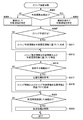
- a flow chart showing a procedure for collecting slip information.
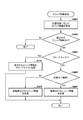
- a flow diagram showing a procedure for transmitting slip information.
- the figure which shows an example of the structure of slip information.
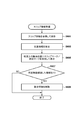
- the flow chart which shows the procedure when slip information is received.
- the vehicle includes a four-wheeled vehicle and a two-wheeled vehicle.
- the tricycle includes both a two-wheeled rear wheel and a two-wheeled front wheel in the two-wheeled vehicle.
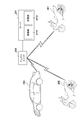
- FIG. 2 is a diagram showing an outline of a communication system according to an embodiment of the present invention.
- the vehicle 201 and the vehicle 202 are two-wheeled vehicles, and are equipped with the configuration shown in FIG. 1 according to the present embodiment.
- the vehicle 203 is a four-wheeled vehicle, and also has the configuration shown in FIG. 1 according to the present embodiment.
- These vehicles 201-203 can communicate with the server 211 and can also communicate with each other.
- the vehicle 201 can communicate with the server 211, for example, via a fixed antenna 210 buried in the basement of the road, or provided on or beside the road. Note that FIG.
- the configuration of the server 211 may be a general server, and includes, for example, a control unit 2111 including a processor and a storage unit 2112.
- the server 211 functions as an information providing device for the vehicle.
- FIG. 1 shows a block diagram of a control unit including a control unit 101 mounted on a vehicle 201 or the like.
- the vehicle 201 also has a power unit such as an engine and a drive system such as a gear, but here, only the configuration related to the present embodiment will be described.
- the control unit 101 controls the entire configuration shown in FIG. In the following description, it is assumed that the control unit 101 is mounted on the vehicle 201.
- the control unit 101 includes, for example, a processor and a memory, and by executing a program, it can communicate with the server 211 and other vehicles, and can display map information and slip information.
- the state detection unit 110 includes various sensors that detect the state of the vehicle 201.
- the slip is a state in which the wheels (tires) of the vehicle 201 slip without rolling on the road surface, and in the present embodiment, the slip is referred to as a slip including the slip of the wheels and the skid of the wheels. However, only one of them may be included.
- the slip information includes slip generation information indicating a slip actually generated and slip prediction information for predicting that a slip may occur.
- the state detection unit 110 includes various sensors for detecting slip. Slip is identified as one of the estimated vehicle behaviors based on the detected condition. Based on this, the sensor shown in Fig. 1 is an example.
- the sensor includes, for example, a skid sensor 111, a rotation speed sensor 112, an acceleration sensor 113, a skid sensor 114, a bank angle sensor 115, and a braking force sensor 116.
- the skid sensor 111 detects a skid state in which the rotation of the wheels is stopped during traveling. For example, in the case of a vehicle equipped with an anti-skid brake, a signal indicating activation of the anti-skid function may be substituted.
- the rotation speed sensor 112 detects the rotation speed of the engine per unit time.
- the acceleration sensor 113 is an acceleration sensor that can detect linear acceleration in three axial directions orthogonal to each other as well as angular acceleration around each axis. Alternatively, it may be a sensor that detects only linear acceleration or angular acceleration.
- the skid sensor 114 is a sensor for detecting the lateral slip of the vehicle. When detecting skidding based on the steering angle, speed, and yaw rate, it does not have to be an independent sensor. In that case, the angular acceleration around the yaw axis is detected by the acceleration sensor 113, and the steering angle is detected from the steering axis.
- the four-wheeled vehicle is equipped with an electronic stability control device, and the activation of the function may determine the occurrence of skidding, that is, the occurrence of slipping. Since motorcycles are not usually equipped, the skid sensor 114 is omitted or newly prepared.
- Each bank sensor 115 is a sensor unique to motorcycles. Each bank sensor 115 measures the tilt around the roll axis. The inclination can be measured by using, for example, a weight rotatably supported on the axis to be measured and a sensor that detects the rotation angle thereof.
- the control unit 101 transmits the state information detected by the state detection unit 110 to the server 211.
- the server 211 detects the occurrence of slip based on the detection results of various sensors as in the above example.
- the slip information is stored in the server 211 and provided to the vehicle traveling near the fixed antenna 210.
- the control unit 101 mounted on the vehicle may determine the occurrence of slip based on the detection results of various sensors of the state detection unit 110. In that case, the control unit 101 may make the determination periodically, for example, and may transmit slip information indicating the possibility of slip to the server 211.
- the external environment detection unit 120 detects the external environment in which the vehicle is traveling.
- the external environment detection unit 120 has a temperature sensor 121 and an external photographing camera 122.
- the temperature sensor 121 detects the temperature.
- the external photographing camera 122 is a camera that photographs the road surface and the surrounding environment, and the external environment is specified from the captured image. Therefore, image processing is required, but the image processing may be performed by the control unit 101, or the external photographing camera 122 may be provided with a processor dedicated to image processing.
- the wireless communication unit 130 may acquire weather information from the server 211 or the like and use it as the weather information.
- the external environment specified by the external environment detection unit 120 is used for generating slip prediction information indicating the possibility of slip and identifying the cause of the slip that actually occurs.
- the wireless communication unit 130 transmits and receives signals to and from other vehicles 201 and 203 and to and from the server 211 via the antenna 210 in accordance with a predetermined standard.
- the signals transmitted and received include weather information from the server 211, state and environment information (collectively referred to as detection information) detected by the state detection unit 110 and the external environment detection unit 120b to the server 211, and the like. Is done.
- the wireless communication unit 130 broadcasts and transmits these detection information, for example, periodically.
- the antenna 210 within the reach receives the detection information and transfers it to the server 211.
- the position detection unit 140 includes, for example, a GPS device, and can detect the current position. Other sensors may be used as long as they can detect the current position.
- the storage unit 150 stores various information such as slip information received from the server, a program, and the like. In this embodiment, a non-volatile storage device is used for storing information. The contents of the slip information will be described later with reference to FIG.
- the user interface unit 160 is composed of operation switches and a display unit (including a touch panel and the like). In addition to various information, a map and the like can be displayed. Further, it is possible to superimpose it on a map and display a desired mark or the like.
- FIG. 3 shows an example of slip information collection processing by the server 211.
- FIG. 3 is realized by, for example, executing a program by the control unit 2111. Further, in the present embodiment, the procedure of FIG. 3 is started when the detection information is received from the vehicle or when the timer (not shown) set at predetermined time expires as a trigger.
- the control unit 2111 of the server 211 first determines whether there is an externally captured image that can be used (S301). If the received detection information includes an image, or if an image taken by a camera near the antenna 210 that received the detection information can be used, it is determined that there is an externally captured image. When it is determined that there is an externally captured image, the external environment including the captured image is specified, and external environment information which is information indicating the external environment is generated (S303). Information used to identify the external environment includes weather information and temperature in addition to images. The specified external environment is, for example, the weather (no rainfall, snowfall, no rainfall / snowfall, etc.) from the weather information, the temperature from the temperature sensor 121, and the like.
- the weather may be represented by a code indicating the weather
- the temperature may be represented by a numerical value indicating the temperature.
- the road surface condition floating sand, wetness, snow cover, white line, manhole, etc.
- Precipitation and snowfall may also be specified by image processing.
- the identified road surface condition and weather may also be represented by a corresponding code or the like.
- the image recognition may be performed based on the degree of matching with the pattern prepared in advance, or the pattern corresponding to the road surface condition or the like may be learned by using machine learning. Precipitation and snowfall recognized by image recognition may be preferentially used for precipitation and snowfall based on meteorological information.
- the external environment is specified without the image and external environment information is generated (S305). That is, here, among the external environments specified in step S303 described above, only those based on the temperature and meteorological information are specified as the external environment. For example, it is included in the external environment in which the weather (precipitation, snowfall, no rainfall / snowfall, etc.) is specified from the weather information, and the temperature is specified from the temperature sensor 121.
- the weather precipitation, snowfall, no rainfall / snowfall, etc.
- Whether or not to perform slip prediction may be determined by referring to, for example, a preset value set in advance.
- the set value to be referred to is stored in the control unit 101 or the storage unit 150 and is referred to. If you want to generate slip information only when the actual slip occurs, you can set it so that slip prediction is not performed. If the slip prediction is fixedly determined in advance without making it an option, the determination in step S307 is unnecessary. In that case, the slip may be fixedly branched to step S311 if the slip prediction is performed, or to step S313 if the slip prediction is not performed.
- slip prediction is executed based on external environment information, and slip prediction information is generated (S311).
- Slip prediction is performed, for example, as follows. For example, if the temperature is below freezing and the road surface is determined to be wet, the road surface may be frozen. Therefore, in that case, slip prediction information due to road surface freezing is generated. For example, a specific unique code is assigned to a slip prediction caused by road surface freezing, and it is generated as slip prediction information. This also applies to other causes. Further, for example, when the road surface condition is snowy, slip prediction information caused by the snowy road is generated. Slip predictions due to icy roads and snow cover may be applied regardless of the type of two-wheeled or four-wheeled vehicle.
- the image cannot be referred to, only the weather information is referred to, and if there is a forecast of snowfall, slip prediction information due to snowfall is generated, and if the temperature after rainfall is below the freezing point, the road surface freezes.
- the cause slip prediction information may be generated.
- an externally captured image If an externally captured image is available, it will generate slip prediction information due to the manhole or pedestrian crossing if it detects a manhole or pedestrian crossing (white line) or road surface wetness in the middle of a curve or at a corner. You can. Manholes and white lines are particularly prone to slip during rainfall, so precipitation may be an additional condition for the weather. Further, when floating sand on the road is detected from the image, slip prediction information caused by the floating sand may be generated. Floating sand is particularly likely to cause slippage when the road surface is dry, so it may be an additional condition that there is no rainfall or snowfall as the weather.
- Slip prediction information caused by manholes, pedestrian crossings, and floating sand is applied to motorcycles in the present embodiment, and is not applied to four-wheeled vehicles. For example, if a priority is added to the cause of slip and the cause of giving priority that does not exceed a predetermined priority is the cause of slip prediction, the slip prediction information is transmitted only to the two-wheeled vehicle. It may be the destination. If the cause corresponding to the slip prediction cannot be identified, for example, a code indicating that there is no slip prediction information is generated instead of the slip prediction information.
- step S313 the occurrence of slip is specified based on the state information, the cause of slip is specified based on the external environment information, and slip generation information indicating the occurrence and cause of slip is generated (S313).
- the occurrence of slip is detected as follows, for example. 1. 1. If the skid state is detected, the control unit 2111 determines that slip has occurred. 2. In this case, if the engine speed rises rapidly (exceeding a predetermined rise rate), the vehicle 201 may tip over to reduce the running load and the engine speed may rise rapidly. The control unit 2111 determines that slip has occurred. For the predetermined increase rate, a value exceeding the increase rate due to the normal throttle operation may be selected. 3. 3.
- the control unit 211110 determines that slip has occurred.
- Each of the linear acceleration and the angular acceleration may be specified by synthesizing the acceleration or the angular acceleration of each axis, and the value may be compared with the threshold value to make a judgment. 4. If the yaw rate exceeds the upper limit of the yaw rate predicted from the steering angle and the speed, the control unit 2111 may determine that slip has occurred. 5. The inclination around the roll axis is measured by each bank sensor, and if the value exceeds a predetermined threshold value, the control unit 2111 may determine that slip has occurred. Since each bank sensor 115 is a sensor unique to a two-wheeled vehicle, this determination does not have to be made if the received detection information is from a four-wheeled vehicle. Of course, these judgments are examples and may be judged by other criteria.
- the cause of slip may be specified in the same manner as in step S311. In addition, if there is rainfall or snowfall, it may be the cause. In any case, a high priority may be given to the cause that is most likely to induce slip, the presence or absence of applicability may be determined in order from the cause of the high priority, and if applicable, that may be identified as the cause. However, it may be difficult to identify the cause even though the slip actually occurs.
- the cause of slip is a vehicle-specific cause such as excessive tire wear, or an external environment that is difficult to detect such as local floating sand.
- the cause may be left unknown without forcibly identifying the cause.
- the priority of the above-mentioned causes may be determined in advance, and for example, high priority may be given in the order of road surface freezing, snow cover, floating sand, manhole, pedestrian crossing (white line), rainfall, wet road surface, and the like.
- the priority may be referred to, for example, for determining the transmission destination of slip information, and for high-priority road surface freezing and snow cover, a four-wheeled vehicle may also be a transmission destination of slip information, and other than that, only a two-wheeled vehicle may be a transmission destination.
- step S315 it is determined whether or not there is information to be saved. If slip occurrence information or slip prediction information is generated, it is determined that there is information to be saved because the information is to be saved. On the other hand, if neither the slip prediction information nor the slip occurrence information can be generated, it is determined that there is no information to be saved. In that case, it branches to step S315.
- step S317 If there is information to be saved, first acquire the location information from the received detection information (S317). Then, the acquired position information is associated with the generated slip generation information or slip prediction information and stored as slip information in the storage unit 2112 of the server 211. Further, to the slip information to be saved, the date and time included in the detection information that is the source of the slip occurrence information or the slip prediction information or the date and time when the slip information is generated is added as the generation date and time. After that, the stored slip information is searched for when a predetermined time has passed from the associated generation date and time (S321), and if there is a corresponding slip information, it is deleted (S323). Note that steps S321 and S323 do not have to be performed in the procedure of FIG. 3, and may be performed periodically, for example, asynchronously with the procedure of FIG.
- FIG. 5 shows an example of the configuration of the slip information 50 stored in the storage unit 2112.
- the slip information includes a slip information record 52, which is a set of information generated by one slip generation information or slip prediction information generation process.
- the slip information record 52 is included in the regional record group 51 grouped according to the position where the slip that triggered the generation of the slip information record 52 or the position where the cause of the generation of the slip prediction information is detected.
- the area represented by the area record group 51 may be determined in advance. This may be associated with, for example, the position of the antenna 210 transmitting slip information. That is, the coverage for each antenna 210 may be determined as one area, and one area record group 51 may be configured by the slip information associated with the position included in the area.
- Each slip information record 52 includes a slip / slip prediction field 521, a position information field 522, a cause information field 523, a generation date / time field 524, and a vehicle type field 525.
- the slip / slip prediction field 521 is a code indicating whether it is slip occurrence information or slip prediction information.
- the position information field 522 is the position information acquired in step S317 of FIG.
- the cause information field 523 is a field indicating the cause identified in step S311 or S313.
- the generation date and time field 524 is the date and time when the slip occurrence information or the slip prediction information was generated.
- the vehicle type field 525 is a transmission destination for transmitting slip occurrence information or slip prediction information, and is either a four-wheeled vehicle or a two-wheeled vehicle in this example. Alternatively, it may be the type of the vehicle that is the source of the detection information that caused the slip information record to be generated. In the latter case, the slip information generated from the detection information of the two-wheeled vehicle is transmitted to the two-wheeled vehicle, and the slip information generated from the detection information of the four-wheeled vehicle is transmitted to the two-wheeled vehicle and the four-wheeled vehicle.
- a two-wheeled vehicle or a four-wheeled vehicle is set according to the priority. At this time as well, if a four-wheeled vehicle is specified, the two-wheeled vehicle may also be the transmission destination.
- the vehicle type 515 may be recorded, for example, at the time of storage in step S319.
- the slip information accumulated in the storage unit 2112 of the server 211 in the procedure of FIG. 3 is transmitted to the vehicle passing through the coverage of the antenna 210.
- the slip information provided to the vehicle is shared by the vehicle receiving it.
- FIG. 4 shows an example of a procedure in which the server 210 broadcasts to another vehicle.
- the slip information may be transmitted according to some standard. For example, it may conform to a standard such as ITS. In such a project, information such as time and position may be included as a data frame of a basic message according to the standard. In that case, the information field included in the basic message may be transmitted according to the format, and the slip information specific to the present embodiment may be transmitted using the free data area.
- control unit 2111 transmits slip information to another vehicle, for example, periodically via the antenna 210, for example.
- slip information to be transmitted is changed according to the vehicle type, a message transmitted from the vehicle is received, and the slip information according to the vehicle type included therein is transmitted.
- slip information corresponding to the position information of the antenna 210 as the transmission source is acquired (S401).
- the position information is a slip information record included in the regional record group of the region corresponding to the coverage of the antenna 210 as the transmission source.
- step S404 if it is determined to be broadcast in step S404, all slip information records of the area record group corresponding to the antenna 210 are broadcast regardless of the vehicle type (S411). As a result, slip information can be provided to the vehicle traveling in the service area of the antenna 410.
- the control unit 101 Upon receiving the slip information from the server 211, the control unit 101 saves it in the format shown in FIG. 5, for example (S601). Then, the position information is extracted from the stored slip information (S603). Then, a mark indicating that the slip has occurred or a slip is expected is displayed on the user interface unit 160 at a position on the map corresponding to the extracted position (S604).
- the vehicle type 525 if the own vehicle is a two-wheeled vehicle, the slip information that the vehicle type is a two-wheeled vehicle and a four-wheeled vehicle is obtained, and if the own vehicle is a four-wheeled vehicle, the vehicle type is four-wheeled. You may display slip information that is a car.
- step S609 if there is a slip information record for which a predetermined time has passed since it was generated (S607-YES), it is deleted (S609).
- This step may be performed asynchronously with the processing up to step S605.
- the slip information notified to the four-wheeled vehicle is a part of the slip information notified to the two-wheeled vehicle, but there may be slip information notified only to the four-wheeled vehicle.
- the vehicle that has received the slip information selectively displays the slip information corresponding to the type of the own vehicle to call the driver's attention. As a result, it is possible to prevent the driver from becoming accustomed to the warning by displaying the slip information that is less likely to slip.
- the vehicle that transmits the detection information does not have to include the position information in the detection information.
- the server 211 that has received the detection information may store the position information corresponding to the position of the antenna 210 after associating it with the slip information.
- information indicating the vehicle type is added when the slip information is stored, but when the slip information is transmitted, the transmission destination may be determined based on, for example, the cause.
- the vehicle that transmits the detection information to the server 211 is assumed to be a two-wheeled vehicle, but it may be a four-wheeled vehicle. However, in that case, it goes without saying that slips peculiar to motorcycles such as bank angle are not detected. If there is a camera that shoots the road near the antenna, the image taken by that camera may be used as external environment information.
- the slip information after a certain period of time has been deleted may be determined according to the cause of the slip. For example, if the cause is weather, it may be deleted, but if the cause is road surface condition, the cause may not be temporary. For example, manholes, white lines, and floating sand are unlikely to disappear in a short period of time, so slip information caused by them does not have to be deleted even after a certain period of time has passed. However, since the slip prediction information may be repeatedly generated each time it passes through the same position, it may be deleted after a certain period of time regardless of the cause.
- An information providing device is provided, which comprises a transmitting means for transmitting the slip information to a vehicle. With this configuration, the vehicle can share the optimum slip information according to the type of the vehicle.
- the information providing device of (1) The vehicle types include two-wheeled vehicles and four-wheeled vehicles.
- the generation means is provided with an information providing device characterized in that slip information indicating the possibility of slip due to a predetermined cause corresponding to the type of the vehicle is generated according to the type of the vehicle.
- the information providing device according to (1) or (2).
- the generation means is provided with an information providing device characterized by generating the slip information according to the type of the vehicle from which the detection information is transmitted, which is the source of generating the slip information. With this configuration, it is possible to provide appropriate slip information in a place where there is a possibility of slip.
- the information providing device determines that slip has occurred according to the behavior of the vehicle specified from the state of the vehicle included in the detection information, and if it is determined that slip has occurred, it is based on the external environment.
- An information providing device is provided, which comprises identifying the cause, slipping, and generating the slip information including the cause. With this configuration, the cause of slip can be identified from the external environment and provided to the vehicle as slip information.
- the information providing device includes wheel sliding, engine speed, acceleration, skidding, and bank angle.
- the generation means is provided with an information providing device characterized in that it determines that a slip has occurred based on at least one of a state of wheel sliding, engine speed, acceleration, skidding, and bank angle. According to the present invention, slipping can be detected with high accuracy based on the behavior of the vehicle.
- the information providing device according to any one of (1) to (5).
- the receiving means also receives the external environment information from the vehicle, and the receiving means also receives the external environment information from the vehicle.
- the external environmental information includes temperature and an external image, and includes
- the generation means is provided with an information providing device characterized by identifying the cause of slip based on at least one of the temperature and the external image.
- the information providing device is an information providing device characterized in that a road surface condition including at least one of floating sand, wetness, manhole, white line, freezing, and snow cover is specified as the external environment from the temperature and the external image. Is provided. With this configuration, slip information can be estimated from the external environment and shared between vehicles.
- the information providing device according to any one of (1) to (7).
- the generation means provides an information providing device characterized in that slip is predicted based on the external environment information and the slip information is generated based on the prediction. With this configuration, even if slip does not actually occur, the possibility can be predicted and shared between vehicles.
- the information providing device according to any one of (1) to (8).
- the external environmental information includes temperature and an external image.
- the generation means identifies the cause of slip based on at least one of temperature and an external image, or predicts slip to identify the cause, and determines slip, slip prediction, and the cause.
- An information providing device is provided, which comprises generating the slip information including the slip information. With this configuration, the cause with high accuracy can be identified by estimating the slip information from the external environment information, and it can be shared.
- the information providing device according to any one of (1) to (9) and Information sharing including a display means for receiving the slip information and displaying the slip information including the type of the vehicle corresponding to the type of the own vehicle among the received slip information in the corresponding area on the map and the vehicle having the slip information.
- the system is provided. With this configuration, it is possible to provide the vehicle with optimum slip information according to the type of vehicle.
Landscapes
- Physics & Mathematics (AREA)
- General Physics & Mathematics (AREA)
- Chemical & Material Sciences (AREA)
- Analytical Chemistry (AREA)
- Engineering & Computer Science (AREA)
- Life Sciences & Earth Sciences (AREA)
- Atmospheric Sciences (AREA)
- Automation & Control Theory (AREA)
- Transportation (AREA)
- Mechanical Engineering (AREA)
- Traffic Control Systems (AREA)
- Control Of Driving Devices And Active Controlling Of Vehicle (AREA)
Priority Applications (4)
| Application Number | Priority Date | Filing Date | Title |
|---|---|---|---|
| JP2021511730A JP7137692B2 (ja) | 2019-03-29 | 2019-03-29 | 情報提供装置、情報共有システム、プログラムおよび情報提供方法 |
| CN201980094342.5A CN113614808B (zh) | 2019-03-29 | 2019-03-29 | 信息提供装置、信息共享系统、存储介质以及信息提供方法 |
| PCT/JP2019/014265 WO2020202356A1 (ja) | 2019-03-29 | 2019-03-29 | 情報提供装置、情報共有システム、プログラムおよび情報提供方法 |
| DE112019007129.7T DE112019007129T5 (de) | 2019-03-29 | 2019-03-29 | Informationsanbietungsvorrichtung, Informationsteilungssystem, Programm undInformationsanbietungsverfahren |
Applications Claiming Priority (1)
| Application Number | Priority Date | Filing Date | Title |
|---|---|---|---|
| PCT/JP2019/014265 WO2020202356A1 (ja) | 2019-03-29 | 2019-03-29 | 情報提供装置、情報共有システム、プログラムおよび情報提供方法 |
Publications (1)
| Publication Number | Publication Date |
|---|---|
| WO2020202356A1 true WO2020202356A1 (ja) | 2020-10-08 |
Family
ID=72666650
Family Applications (1)
| Application Number | Title | Priority Date | Filing Date |
|---|---|---|---|
| PCT/JP2019/014265 Ceased WO2020202356A1 (ja) | 2019-03-29 | 2019-03-29 | 情報提供装置、情報共有システム、プログラムおよび情報提供方法 |
Country Status (4)
| Country | Link |
|---|---|
| JP (1) | JP7137692B2 (https=) |
| CN (1) | CN113614808B (https=) |
| DE (1) | DE112019007129T5 (https=) |
| WO (1) | WO2020202356A1 (https=) |
Cited By (1)
| Publication number | Priority date | Publication date | Assignee | Title |
|---|---|---|---|---|
| US20230085098A1 (en) * | 2021-09-10 | 2023-03-16 | Transportation Ip Holdings, Llc | Vehicle Network Monitoring System |
Families Citing this family (1)
| Publication number | Priority date | Publication date | Assignee | Title |
|---|---|---|---|---|
| JP7360967B2 (ja) * | 2020-02-13 | 2023-10-13 | 本田技研工業株式会社 | 情報共有装置及び情報共有システム |
Citations (6)
| Publication number | Priority date | Publication date | Assignee | Title |
|---|---|---|---|---|
| JP2004230955A (ja) * | 2003-01-28 | 2004-08-19 | Honda Motor Co Ltd | ハイブリッド車両の駆動制御装置 |
| JP2009026157A (ja) * | 2007-07-20 | 2009-02-05 | Denso Corp | スリップ情報伝達システム |
| JP2009512351A (ja) * | 2005-10-11 | 2009-03-19 | テルコーディア テクノロジーズ、 インコーポレイテッド | セルラー・ブロードキャストを利用した乗物の状態のモニタリング |
| JP2015049185A (ja) * | 2013-09-03 | 2015-03-16 | アイシン・エィ・ダブリュ株式会社 | スリップ予測システム、スリップ予測方法、及びスリップ予測プログラム |
| US20180093619A1 (en) * | 2016-10-05 | 2018-04-05 | Lg Electronics Inc. | Vehicle display apparatus and vehicle having the same |
| JP2018190410A (ja) * | 2017-05-09 | 2018-11-29 | トヨタ自動車株式会社 | 拡張現実を用いた車線案内 |
Family Cites Families (10)
| Publication number | Priority date | Publication date | Assignee | Title |
|---|---|---|---|---|
| JPH05280388A (ja) * | 1992-03-31 | 1993-10-26 | Mazda Motor Corp | 車両のスリップ制御装置 |
| JP4737853B2 (ja) | 2001-03-21 | 2011-08-03 | 株式会社東芝 | 情報システム、センター側の情報処理システムおよび車載システム |
| JP4581528B2 (ja) | 2004-07-26 | 2010-11-17 | 株式会社デンソー | 車載制御装置 |
| JP4622749B2 (ja) * | 2005-08-31 | 2011-02-02 | 株式会社デンソー | 車両用データ収集装置、車両用運転支援装置及び車両の安全運転支援システム |
| JP5668643B2 (ja) * | 2011-08-23 | 2015-02-12 | 株式会社デンソー | 地図表示システム、サーバ、及び端末 |
| EP3086303B1 (en) * | 2014-02-20 | 2022-09-28 | Aisin Corporation | Warning notification system, method and program |
| JP6229531B2 (ja) * | 2014-02-20 | 2017-11-15 | アイシン・エィ・ダブリュ株式会社 | 注意案内システム、方法およびプログラム |
| JP2017091338A (ja) * | 2015-11-13 | 2017-05-25 | 沖電気工業株式会社 | 拡張ユニット及び取引装置 |
| US10029679B2 (en) * | 2016-08-09 | 2018-07-24 | Ford Global Technologies, Llc | Controlling skidding vehicles |
| CN109050521A (zh) * | 2018-08-31 | 2018-12-21 | 华南理工大学 | 一种高速公路弯道侧翻侧滑预警系统及方法 |
-
2019
- 2019-03-29 DE DE112019007129.7T patent/DE112019007129T5/de active Pending
- 2019-03-29 JP JP2021511730A patent/JP7137692B2/ja active Active
- 2019-03-29 CN CN201980094342.5A patent/CN113614808B/zh active Active
- 2019-03-29 WO PCT/JP2019/014265 patent/WO2020202356A1/ja not_active Ceased
Patent Citations (6)
| Publication number | Priority date | Publication date | Assignee | Title |
|---|---|---|---|---|
| JP2004230955A (ja) * | 2003-01-28 | 2004-08-19 | Honda Motor Co Ltd | ハイブリッド車両の駆動制御装置 |
| JP2009512351A (ja) * | 2005-10-11 | 2009-03-19 | テルコーディア テクノロジーズ、 インコーポレイテッド | セルラー・ブロードキャストを利用した乗物の状態のモニタリング |
| JP2009026157A (ja) * | 2007-07-20 | 2009-02-05 | Denso Corp | スリップ情報伝達システム |
| JP2015049185A (ja) * | 2013-09-03 | 2015-03-16 | アイシン・エィ・ダブリュ株式会社 | スリップ予測システム、スリップ予測方法、及びスリップ予測プログラム |
| US20180093619A1 (en) * | 2016-10-05 | 2018-04-05 | Lg Electronics Inc. | Vehicle display apparatus and vehicle having the same |
| JP2018190410A (ja) * | 2017-05-09 | 2018-11-29 | トヨタ自動車株式会社 | 拡張現実を用いた車線案内 |
Cited By (2)
| Publication number | Priority date | Publication date | Assignee | Title |
|---|---|---|---|---|
| US20230085098A1 (en) * | 2021-09-10 | 2023-03-16 | Transportation Ip Holdings, Llc | Vehicle Network Monitoring System |
| US12112628B2 (en) * | 2021-09-10 | 2024-10-08 | Transportation Ip Holdings, Llc | Vehicle network monitoring system |
Also Published As
| Publication number | Publication date |
|---|---|
| JPWO2020202356A1 (https=) | 2020-10-08 |
| DE112019007129T5 (de) | 2022-02-24 |
| CN113614808B (zh) | 2022-12-27 |
| JP7137692B2 (ja) | 2022-09-14 |
| CN113614808A (zh) | 2021-11-05 |
Similar Documents
| Publication | Publication Date | Title |
|---|---|---|
| US10048700B1 (en) | Generating state information for autonomous vehicles | |
| JP6698945B2 (ja) | 危険車両予測装置、危険車両警報システムおよび危険車両予測方法 | |
| JP4287181B2 (ja) | イメージ表示方法 | |
| KR101972005B1 (ko) | 도로 위험 경고 메시지 동적 서비스 시스템 및 방법 | |
| CN104572065B (zh) | 远程车辆监控系统和方法 | |
| EP3201045B1 (en) | Proactive driver warning | |
| US20220238019A1 (en) | Safety performance evaluation apparatus, safety performance evaluation method, information processing apparatus, and information processing method | |
| US20230017377A1 (en) | On-board device, server, and autonomous driving availability determination system and method | |
| US10521749B2 (en) | Risk information processing method and server device | |
| JP2011100298A (ja) | 情報処理装置、車載装置、情報処理システム、情報処理方法、および、プログラム | |
| CN107590995B (zh) | 用于维护包括报告的影响交通事件的数据库的方法和系统 | |
| JP2008181252A (ja) | 危険情報集配信システム並びに該システムを構成する危険情報送受信装置及び危険情報集配信装置 | |
| JP2020173600A (ja) | 経路予測装置、それを備えた車載装置、経路予測システム、経路予測方法、及びコンピュータプログラム | |
| JP2024045531A (ja) | 情報処理装置、サーバ装置、情報処理方法、及びプログラム | |
| KR102402171B1 (ko) | 모바일 디바이스를 이용하여 미끄럼 사고를 감지하는 방법 및 그 시스템 | |
| JP7137692B2 (ja) | 情報提供装置、情報共有システム、プログラムおよび情報提供方法 | |
| JP7233826B1 (ja) | 緊急通行規制判断支援システムおよびプログラム、道路管理方法 | |
| JP4265503B2 (ja) | 路面情報収集システム及びそれに用いるサーバ | |
| JPWO2020202356A5 (https=) | ||
| JP2008158598A (ja) | 路面状況管理システム | |
| JP2004326560A (ja) | 走行支援用車載情報提供装置 | |
| JP2023050804A (ja) | 路面判定装置、及び、路面判定方法 | |
| JP7388000B2 (ja) | 路面摩擦係数予測システム | |
| WO2021117370A1 (ja) | 動的情報の更新装置、更新方法、情報提供システム、及びコンピュータプログラム | |
| JP7056297B2 (ja) | 情報配信システムおよび情報配信方法 |
Legal Events
| Date | Code | Title | Description |
|---|---|---|---|
| 121 | Ep: the epo has been informed by wipo that ep was designated in this application |
Ref document number: 19923270 Country of ref document: EP Kind code of ref document: A1 |
|
| ENP | Entry into the national phase |
Ref document number: 2021511730 Country of ref document: JP Kind code of ref document: A |
|
| 122 | Ep: pct application non-entry in european phase |
Ref document number: 19923270 Country of ref document: EP Kind code of ref document: A1 |
|
| WWG | Wipo information: grant in national office |
Ref document number: 202147046219 Country of ref document: IN |