WO2020166678A1 - 化粧料配合剤および化粧料並びにその製造方法 - Google Patents
化粧料配合剤および化粧料並びにその製造方法 Download PDFInfo
- Publication number
- WO2020166678A1 WO2020166678A1 PCT/JP2020/005669 JP2020005669W WO2020166678A1 WO 2020166678 A1 WO2020166678 A1 WO 2020166678A1 JP 2020005669 W JP2020005669 W JP 2020005669W WO 2020166678 A1 WO2020166678 A1 WO 2020166678A1
- Authority
- WO
- WIPO (PCT)
- Prior art keywords
- group
- cosmetic
- anion
- acid
- carbon atoms
- Prior art date
- Legal status (The legal status is an assumption and is not a legal conclusion. Google has not performed a legal analysis and makes no representation as to the accuracy of the status listed.)
- Ceased
Links
Images


Classifications
-
- A—HUMAN NECESSITIES
- A61—MEDICAL OR VETERINARY SCIENCE; HYGIENE
- A61K—PREPARATIONS FOR MEDICAL, DENTAL OR TOILETRY PURPOSES
- A61K8/00—Cosmetics or similar toiletry preparations
- A61K8/18—Cosmetics or similar toiletry preparations characterised by the composition
- A61K8/30—Cosmetics or similar toiletry preparations characterised by the composition containing organic compounds
- A61K8/40—Cosmetics or similar toiletry preparations characterised by the composition containing organic compounds containing nitrogen
- A61K8/41—Amines
- A61K8/416—Quaternary ammonium compounds
-
- A—HUMAN NECESSITIES
- A61—MEDICAL OR VETERINARY SCIENCE; HYGIENE
- A61K—PREPARATIONS FOR MEDICAL, DENTAL OR TOILETRY PURPOSES
- A61K8/00—Cosmetics or similar toiletry preparations
- A61K8/18—Cosmetics or similar toiletry preparations characterised by the composition
- A61K8/19—Cosmetics or similar toiletry preparations characterised by the composition containing inorganic ingredients
-
- A—HUMAN NECESSITIES
- A61—MEDICAL OR VETERINARY SCIENCE; HYGIENE
- A61K—PREPARATIONS FOR MEDICAL, DENTAL OR TOILETRY PURPOSES
- A61K8/00—Cosmetics or similar toiletry preparations
- A61K8/18—Cosmetics or similar toiletry preparations characterised by the composition
- A61K8/30—Cosmetics or similar toiletry preparations characterised by the composition containing organic compounds
- A61K8/33—Cosmetics or similar toiletry preparations characterised by the composition containing organic compounds containing oxygen
- A61K8/36—Carboxylic acids; Salts or anhydrides thereof
-
- A—HUMAN NECESSITIES
- A61—MEDICAL OR VETERINARY SCIENCE; HYGIENE
- A61K—PREPARATIONS FOR MEDICAL, DENTAL OR TOILETRY PURPOSES
- A61K8/00—Cosmetics or similar toiletry preparations
- A61K8/18—Cosmetics or similar toiletry preparations characterised by the composition
- A61K8/30—Cosmetics or similar toiletry preparations characterised by the composition containing organic compounds
- A61K8/33—Cosmetics or similar toiletry preparations characterised by the composition containing organic compounds containing oxygen
- A61K8/36—Carboxylic acids; Salts or anhydrides thereof
- A61K8/362—Polycarboxylic acids
-
- A—HUMAN NECESSITIES
- A61—MEDICAL OR VETERINARY SCIENCE; HYGIENE
- A61K—PREPARATIONS FOR MEDICAL, DENTAL OR TOILETRY PURPOSES
- A61K8/00—Cosmetics or similar toiletry preparations
- A61K8/18—Cosmetics or similar toiletry preparations characterised by the composition
- A61K8/30—Cosmetics or similar toiletry preparations characterised by the composition containing organic compounds
- A61K8/33—Cosmetics or similar toiletry preparations characterised by the composition containing organic compounds containing oxygen
- A61K8/36—Carboxylic acids; Salts or anhydrides thereof
- A61K8/365—Hydroxycarboxylic acids; Ketocarboxylic acids
-
- A—HUMAN NECESSITIES
- A61—MEDICAL OR VETERINARY SCIENCE; HYGIENE
- A61K—PREPARATIONS FOR MEDICAL, DENTAL OR TOILETRY PURPOSES
- A61K8/00—Cosmetics or similar toiletry preparations
- A61K8/18—Cosmetics or similar toiletry preparations characterised by the composition
- A61K8/30—Cosmetics or similar toiletry preparations characterised by the composition containing organic compounds
- A61K8/67—Vitamins
- A61K8/676—Ascorbic acid, i.e. vitamin C
-
- A—HUMAN NECESSITIES
- A61—MEDICAL OR VETERINARY SCIENCE; HYGIENE
- A61Q—SPECIFIC USE OF COSMETICS OR SIMILAR TOILETRY PREPARATIONS
- A61Q19/00—Preparations for care of the skin
-
- A—HUMAN NECESSITIES
- A61—MEDICAL OR VETERINARY SCIENCE; HYGIENE
- A61Q—SPECIFIC USE OF COSMETICS OR SIMILAR TOILETRY PREPARATIONS
- A61Q19/00—Preparations for care of the skin
- A61Q19/02—Preparations for care of the skin for chemically bleaching or whitening the skin
-
- A—HUMAN NECESSITIES
- A61—MEDICAL OR VETERINARY SCIENCE; HYGIENE
- A61Q—SPECIFIC USE OF COSMETICS OR SIMILAR TOILETRY PREPARATIONS
- A61Q5/00—Preparations for care of the hair
-
- A—HUMAN NECESSITIES
- A61—MEDICAL OR VETERINARY SCIENCE; HYGIENE
- A61Q—SPECIFIC USE OF COSMETICS OR SIMILAR TOILETRY PREPARATIONS
- A61Q5/00—Preparations for care of the hair
- A61Q5/02—Preparations for cleaning the hair
-
- A—HUMAN NECESSITIES
- A61—MEDICAL OR VETERINARY SCIENCE; HYGIENE
- A61Q—SPECIFIC USE OF COSMETICS OR SIMILAR TOILETRY PREPARATIONS
- A61Q5/00—Preparations for care of the hair
- A61Q5/12—Preparations containing hair conditioners
-
- A—HUMAN NECESSITIES
- A61—MEDICAL OR VETERINARY SCIENCE; HYGIENE
- A61K—PREPARATIONS FOR MEDICAL, DENTAL OR TOILETRY PURPOSES
- A61K2800/00—Properties of cosmetic compositions or active ingredients thereof or formulation aids used therein and process related aspects
- A61K2800/20—Chemical, physico-chemical or functional or structural properties of the composition as a whole
- A61K2800/30—Characterized by the absence of a particular group of ingredients
- A61K2800/31—Anhydrous
Definitions
- the present invention relates to a cosmetic compounding agent, a cosmetic, and a method for producing the same.
- the cuticle which is an important tissue for keeping the hair healthy by covering the surface of the hair to prevent the water from evaporating and giving the hair gloss, becomes easy to peel off. If the cuticle peels off, the hair dries out, for example, the smoothness is lost, and the hair becomes dull, which not only makes the hair soft and fingerless but also makes it easier for the hair to spread. Hair breakage is likely to occur. Therefore, water retention and moisturization are important in order to prevent troubles due to hair drying and to keep hair beautiful and healthy.
- Patent Document 3 discloses organic ammonium salts such as imidazolium salts, pyrrolidinium salts, piperidinium salts, pyridinium salts and phosphonium salts. Such organic ammonium salts have a property of retaining water, but have problems such as sufficient water/moisturizing effect when applied to hair and safety.
- Patent Documents 4 and 5 The applicant has proposed an organic salt (ionic liquid) having a hydrogen-bonding functional group in the cation or anion (Patent Documents 4 and 5), but the application to water and moisturizing effects, hair, and skin care is concrete. Not considering it.
- rough skin is mainly caused by a decrease in skin moisture.
- the skin becomes dry due to drying of air in winter, skin washing, aging, reduction of skin secretions, and the like. If the skin is left in a dry state, the elasticity and gloss of the skin are deteriorated, and so-called rough skin is likely to occur.
- it is important to prevent a decrease in the water content of the stratum corneum and maintain normal skin function.
- skin care agents for moisturizing which give appropriate water to the skin.
- Patent Document 1 Conventionally, it has been proposed to add a polyhydric alcohol, which is a moisturizing component, to a skin care agent (see Patent Document 1).
- a polyhydric alcohol which is a moisturizing component
- Patent Document 1 Conventionally, it has been proposed to add a polyhydric alcohol, which is a moisturizing component, to a skin care agent (see Patent Document 1).
- conventional skin care agents for example, may not have sufficient water/moisture retention performance in a low-humidity environment such as when dried in the winter, or may be volatile and may not maintain long-term water/moisture retention effects. Therefore, a new skin care agent that can improve these points has been desired.
- Patent Document 3 discloses organic ammonium salts such as imidazolium salts, pyrrolidinium salts, piperidinium salts, pyridinium salts and phosphonium salts. Although such an organic ammonium salt has a property of retaining water, it has problems with sufficient water and moisturizing effects and safety when applied to skin care applications.
- the applicant has proposed an organic salt (ionic liquid) having a hydrogen-bonding functional group in the cation or anion, and a water retention/humidification agent (Patent Documents 4 to 6).
- cosmetic compounding agents be those that do not volatilize and stay, retain water/moisture for a short period of time, have high affinity for hair, skin, etc., have high safety, and have excellent usability. There was no satisfactory cosmetic combination. Furthermore, when the active ingredient is dissolved, the effect of the active ingredient is required to be efficiently expressed, and it has been desired to enhance the solubility and the permeability of the active ingredient.
- the above cosmetic composition is a hair treatment agent, it has a good feeling of use, and a cosmetic composition having excellent adhesion to proteins contained in hair and thermal stability is excellent. There has been a strong demand for a cosmetic compounding agent that enhances skin affinity, penetrability, and whitening effect.
- the present invention has been made in view of the above circumstances, and when applied to hair and skin, a novel cosmetic compounding agent that imparts excellent properties such as water retention and moisturizing property to the cosmetics.
- the main object is to provide cosmetics using the same and a method for producing the same.
- the cosmetic compounding agent when it is a hair treatment agent, it has high adhesiveness to hair, excellent water retention and affinity, finger passage, flexibility, touch, acupuncture, firmness, volume up, cohesion, moisturizing, and gloss.
- a hair treatment agent which has a good feeling of use, such as smoothness and non-greasiness, and has excellent adhesion to proteins contained in hair, stability, heat stability, and solubility of active ingredients, and hair using the same. It is an object to provide a treatment composition.
- the cosmetic compounding agent when the cosmetic compounding agent is a skin care agent, it has excellent short-term and long-term water/moisturizing properties, excellent barrier properties against moisture of the skin, a moisturizing feeling, stickiness, familiarity to the skin, etc., and a good affinity to the skin. It has excellent penetrability and high safety to the skin. Further, it is an object to provide a skin care agent having a high solubility of an active ingredient, a whitening effect, and an excellent antistatic property, and a skin care composition using the same.
- the cosmetic compounding agent of the present invention is characterized by containing an organic ammonium salt having a hydrogen-bonding functional group in at least one of a cation and an anion.
- the cation is an ammonium cation.
- the ammonium cation has the following formula (I):
- each R 1 independently has one or more hydroxyl groups, the alkyl moiety is a straight chain or branched chain having 1 to 10 carbon atoms, and the alkyl moiety is a hydroxy group optionally containing an oxygen atom.
- the alkyl moiety is a linear or branched chain having 1 to 10 carbon atoms, and the alkyl moiety represents a hydroxycarboxyalkyl group which may contain an oxygen atom, and R 2 is each Independently, it is a hydrogen atom or a linear or branched alkyl group having 1 to 18 carbon atoms, and n represents an integer of 0 to 4).
- the cosmetic compounding agent is a hair treatment agent.
- the cosmetic compounding agent is a skin care agent.
- the cosmetic of the present invention contains the cosmetic compounding agent.
- the cosmetic is a hair treatment composition.
- the cosmetic is a skin care composition.
- the method for producing a cosmetic of the present invention includes a step of incorporating the cosmetic compounding agent.
- the method for producing a cosmetic of the present invention has the following formula (I):
- each R 1 independently has one or more hydroxyl groups
- the alkyl moiety is a straight chain or branched chain having 1 to 10 carbon atoms
- the alkyl moiety may have an oxygen atom.
- Each has one or more groups, the alkyl moiety is a linear or branched chain having 1 to 10 carbon atoms, and the alkyl moiety represents a hydroxycarboxyalkyl group which may contain an oxygen atom, and R 2 is each Independently, a hydrogen atom or a linear or branched alkyl group having 1 to 18 carbon atoms, at least one of which is a hydrogen atom, and n represents an integer of 0 to 4) and an ammonium cation and an anion.
- the cosmetics using the same, and the method for producing the same retains without volatilizing, retains water/moisture for a short period of time, has an affinity for hair, skin, etc., It is highly safe and has an excellent feeling of use. Furthermore, the solubility and permeability of the active ingredient can be enhanced, and the effect of the active ingredient can be efficiently expressed.
- the cosmetic compounding agent when it is a hair treatment agent, it has high adhesiveness to hair, excellent water retention, affinity, antistatic property, finger-passing, flexibility, touch, acupuncture, firmness, volume up, cohesion,
- a hair treatment agent with a good feeling of use such as moistness, gloss, smoothness, and non-stickiness, and further excellent adhesion to proteins contained in hair, stability, heat stability, and solubility of active ingredients. It is possible to provide a hair treatment composition using the same.
- the cosmetic mixture When the cosmetic mixture is a skin care agent, it has excellent short-term and long-term water/moisturizing properties, excellent barrier properties against skin moisture, and also provides a moisturizing feeling, stickiness, and a familiar feeling to the skin, as well as skin affinity and permeability. It is also excellent and safe for the skin. Further, it is possible to provide a skin care agent having a high solubility of an active ingredient, a whitening effect, and an excellent antistatic property, and a skin care composition using the same.
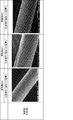
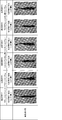
- Table 14 In the evaluation of Table 14, it is a photograph in which the appearance of the hair after air drying is observed and a SEM image of the hair surface. In the evaluation of Table 14, it is a photograph in which the appearance of the hair after air drying is observed and a SEM image of the hair surface. 17 is a photograph showing the appearance of hair after air drying in the evaluation of Table 16. It is the photograph which observed the external appearance of the hair after air drying in the evaluation of Table 17.
- Cosmetic compounding agent The cosmetic compounding agent of the present invention is mainly intended to be incorporated as a raw material in a cosmetic product.
- the cosmetic compounding agent is not particularly limited, but for example, a hair treating composition that is a product applied to hair and the like, a hair treating agent that is compounded as a raw material, a skin care composition that is a product applied to the skin, a raw material, and the like.
- the skin care agent etc. which are mix
- the hair is not particularly limited, and examples thereof include human hair such as hair, beard, eyebrows, eyelashes, nose hair, ear hair, armpit hair, and body hair.
- the cosmetic compound of the present invention can be used for these hairs. Applicable to cosmetics related to.
- the target of the skin care agent is not particularly limited, and examples thereof include skin, skin, keratin, nails, mucous membranes in the oral cavity and nasal cavity, and the cosmetic combination of the present invention is a cosmetic related to these targets. Applicable to fees.
- the cosmetic preparation of the present invention contains an organic ammonium salt having a hydrogen-bonding functional group in at least one of a cation and an anion.
- the organic ammonium salt contains an organic cation or NH 4 + having a nitrogen atom as an ionic center, and an organic anion.
- the cation of the organic ammonium salt is not particularly limited, but may be a cation having a nitrogen atom as an ionic center, for example, an ammonium cation (organic ammonium cation substituted with an organic group NR 4 + (R is at least one In addition to organic groups other than hydrogen atoms) and NH 4 + ) and ammonium cations, cations of organic ammonium salts in which the nitrogen atom of the cation is replaced by an organic group include imidazolium cations, pyridinium cations, and pyrrolidinium cations.
- an ammonium cation, an imidazolium cation, a pyridinium cation, a pyrrolidinium cation, a piperidinium cation, and a morpholinium cation are preferable, and an ammonium cation is more preferable.
- the cations exemplified here are shown as a general term including cations having a basic structure as described and those including a substituent such as a hydrogen-bonding functional group.
- the organic ammonium salt used in the present invention preferably has a cation having a hydrogen-bonding functional group.
- the hydrogen-bonding functional group is not particularly limited, and examples thereof include an oxygen-containing group, a nitrogen-containing group, a sulfur-containing group, a phosphorus-containing group, and a hydrogen atom directly bonded to nitrogen.
- the oxygen-containing group is not particularly limited, and examples thereof include a hydroxyl group, a carbonyl group, an ether group, an ester group, an aldehyde group, a carboxyl group, a carboxylate group, a urea group, a urethane group, an amide group, an oxazole group, a morpholine group, and carbamine. Examples thereof include acid groups and carbamate groups.
- the nitrogen-containing group is not particularly limited, but examples thereof include an amino group and a nitro group.
- a sulfuric acid group —O—S( ⁇ O) 2 —O—
- a sulfonyl group —S( ⁇ O) 2 O—
- -O- phosphinic acid group
- phosphorous acid group -OP(-O-)-O-
- phosphonous acid group -P(-O- )—O—
- phosphinous acid group —P—O—) pyrophosphate group [(—O—P( ⁇ O)(—O—)) 2 —O—] and the like.
- the hydrogen-bonding functional group contained in the cation is preferably a hydroxyl group, a carboxy group, a carboxylate group, an ester group, a carbonyl group, an ether group, or a hydrogen atom directly bonded to nitrogen.
- a hydroxyl group, a carboxyl group, a carboxylate group, an ether group, a hydrogen atom directly bonded to nitrogen is more preferable, a hydroxyl group, a carboxyl group, a carboxylate group, a hydrogen atom directly bonded to nitrogen is more preferable, a hydroxyl group, nitrogen.
- Particularly preferred is a hydrogen atom directly bonded to.
- the substituent having a hydrogen-bonding functional group include a hydroxyalkyl group, a carboxyalkyl group, a hydroxycarboxyalkyl group, an alkyl ester group and an alkyl ether group.
- the hydroxyalkyl group has one or more hydroxyl groups, and the alkyl moiety is preferably linear or branched having 1 to 10 carbon atoms, more preferably 1 to 6 carbon atoms, and further preferably 1 to 4 carbon atoms, Straight-chain is preferable, and the alkyl moiety may contain an oxygen atom.
- the carboxyalkyl group has one or more carboxy groups, and the alkyl moiety is preferably a straight chain or branched chain having 1 to 10 carbon atoms, more preferably 1 to 6 carbon atoms, and further preferably 1 to 5 carbon atoms.
- the straight chain is preferable, and the alkyl moiety may contain an oxygen atom.
- the hydroxycarboxyalkyl group has one or more hydroxyl groups and one or more carboxy groups, and the alkyl moiety preferably has 1 to 10 carbon atoms, more preferably 1 to 6 carbon atoms, and further preferably 1 to 5 linear groups. It is preferably branched and linear, and the alkyl moiety may contain an oxygen atom.
- the oxygen atom forms or contains, for example, an ether bond, a carbonyl group, a hydroxyl group, a carboxylate group, an ester bond, an amide bond, a urea bond or a urethane bond in the alkyl moiety. .. Therefore, in the present invention, "the alkyl moiety contains an oxygen atom” includes the case where the alkyl moiety is interrupted or the hydrogen atom is replaced by a group that also contains a hetero atom such as a nitrogen atom as an atomic group containing an oxygen atom.
- hydroxyalkyl group examples include a monohydroxyalkyl group and a polyhydroxyalkyl group, and each alkyl group may contain an oxygen atom. Specific examples thereof are not particularly limited, and examples thereof include a hydroxyalkyl group, a hydroxyalkoxyalkyl group, an alkoxyhydroxyalkyl group, and a hydroxypolyalkyleneoxyalkyl group.
- the monohydroxyalkyl group is not particularly limited, and examples thereof include a hydroxymethyl group, a 1-hydroxyethyl group, a 2-hydroxyethyl group, a 1-hydroxypropan-1-yl group, a 2-hydroxypropan-1-yl group, 3-hydroxypropan-1-yl group, 1-hydroxypropan-2-yl group, 2-hydroxypropan-2-yl group, 1-hydroxybutan-1-yl group, 2-hydroxybutan-1-yl group, 3-hydroxybutan-1-yl group, 4-hydroxybutan-1-yl group, 1-hydroxy-2-methylpropan-1-yl group, 2-hydroxy-2-methylpropan-1-yl group, 3- Hydroxy-2-methylpropan-1-yl group, 1-hydroxybutan-2-yl group, 2-hydroxybutan-2-yl group, 3-hydroxybutan-2-yl group, 4-hydroxybutan-2-yl group Group, 1-hydroxy-2-methylpropan-2-yl group, 1,1-dimethyl-2-hydroxyethyl group, 5-hydroxypentan-1-y
- the polyhydroxyalkyl group is not particularly limited, and examples thereof include di, tri, tetra, penta, hexa, hepta, or octahydroxyalkyl groups. Specific examples thereof include, but are not particularly limited to, dihydroxyethyl groups such as 1,2-dihydroxyethyl group; 1,2-dihydroxypropan-1-yl group, 2,3-dihydroxypropan-1-yl group, and the like.
- the polyhydroxyalkyl group preferably has 2 to 8 hydroxyl groups, more preferably 2 to 4 and even more preferably 2 to 3.
- the carbon number of the alkyl moiety is preferably 1 to 6, more preferably 1 to 4.
- n is preferably an integer of 1 to 2.
- branched polyhydroxyalkyl group represented by the following formula is exemplified as a preferable one.
- R 11 represents a hydrogen atom, a linear alkyl group having 1 to 4 carbon atoms, or a linear monohydroxyalkyl group having 1 to 4 carbon atoms.
- a 3,3-dihydroxy-2-ethylpropan-2-yl group, a 1,3-dihydroxy-2-hydroxymethylpropan-2-yl group and a pentahydroxyhexan-1-yl group are preferable.
- Examples of the carboxyalkyl group include a monocarboxyalkyl group and a polycarboxyalkyl group, and specific examples of these include mono, di, tri, tetra, penta, hexa, hepta, or octahydroxy.
- the thing which substituted the hydroxyl group of the alkyl group with the carboxy group (The oxygen atom may be included in the alkyl part) is mentioned.
- the monocarboxyalkyl group is not particularly limited, and examples thereof include a carboxymethyl group, a 1-carboxyethyl group, a 2-carboxyethyl group, a 1-carboxypropan-1-yl group, and a 2-carboxypropan-1-yl group.
- the hydroxycarboxyalkyl group is not particularly limited, but for example, a group obtained by substituting a part of the hydroxyl groups of the di, tri, tetra, penta, hexa, hepta, or octahydroxyalkyl groups described above with carboxy groups (alkyl The site may contain an oxygen atom).
- Examples of the monohydroxycarboxyalkyl group having one hydroxyl group and one carboxy group include, for example, 2-hydroxy-3-carboxybutan-1-yl group (carnitine), 1-hydroxyethyl-2-carboxyethyl group (serine), 2-hydroxyethyl-2-carboxyethyl group (threonine) and the like can be mentioned.
- the hydroxycarboxyalkyl group is preferably a 2-hydroxy-3-carboxybutan-1-yl group (carnitine).
- the hydroxycarboxyalkyl group preferably has an alkyl moiety having 1 to 10 carbon atoms, more preferably 1 to 6 carbon atoms, and further preferably 1 to 5 carbon atoms.
- the alkyl ester group is not particularly limited, and examples thereof include those obtained by esterifying the carboxy group of the carboxyalkyl group exemplified above.
- Examples of the monoalkyl ester group having one ester group include a 1-acetoxyethan-2-yl group (acetylcholine) and a 1-ethoxyethane-2-yl group.
- a 1-acetoxyethan-2-yl group acetylcholine
- the alkyl group is preferably linear or branched having 1 to 18 carbons, more preferably linear or branched having 1 to 12 carbons, and further preferably linear or branched having 1 to 8 carbons.
- a straight chain or branched chain having 1 to 4 carbon atoms is more preferable.
- the alkyl group is not particularly limited, and examples thereof include methyl group, ethyl group, propan-1-yl group, propan-2-yl group, butan-1-yl group, 2-methylpropan-1-yl group, butane.
- the cation of the organic ammonium salt used in the present invention preferably has an alkyl group having one or more hydrogen-bonding functional groups and/or a hydrogen atom directly bonded to nitrogen.
- at least one of the sites capable of introducing a functional group in the cation is a hydrogen-bonding functional group.
- a particularly preferred cation structure is a cation composed of an alkyl group having a hydrogen-bonding functional group and a hydrogen atom directly bonded to nitrogen.
- the hydrogen-bonding functional group is preferably a hydroxyl group.
- an ammonium cation As the cation of the organic ammonium salt, an ammonium cation, an imidazolium cation, a pyridinium cation, a pyrrolidinium cation, a piperidinium cation, and a morpholinium cation are preferable, and an ammonium cation is more preferable.
- the cation of the organic ammonium salt is preferably an ammonium cation represented by the following formula (I).
- each R 1 independently has one or more hydroxyl groups, the alkyl moiety is a straight chain or branched chain having 1 to 10 carbon atoms, and the alkyl moiety is a hydroxy group optionally containing an oxygen atom.
- each has one or more groups, the alkyl moiety is a linear or branched chain having 1 to 10 carbon atoms, and the alkyl moiety represents a hydroxycarboxyalkyl group which may contain an oxygen atom, and R 2 is each Independently, it is a hydrogen atom or a linear or branched alkyl group having 1 to 18 carbon atoms, and n represents an integer of 0 to 4.) [1] In the formula (I), n is preferably an integer of 1 to 4. [2] In the above [1], R 2 is preferably a hydrogen atom.
- R 1 is preferably a linear or branched monohydroxyalkyl group or monocarboxyalkyl group having an alkyl moiety of 1 to 10 carbon atoms.
- the carbon number of the alkyl moiety is preferably 1 to 6, more preferably 1 to 4 in the monohydroxyalkyl group, and is preferably 1 to 6 and more preferably 1 to 5 in the monocarboxyalkyl group. Among these, a monohydroxyalkyl group is preferable.
- R 2 is preferably a hydrogen atom.
- R 2 is preferably a linear or branched alkyl group having 1 to 18 carbon atoms.
- the alkyl group preferably has 1 to 18 carbon atoms, more preferably 1 to 12 carbon atoms, further preferably 1 to 8 carbon atoms, and particularly preferably 1 to 4 carbon atoms.
- at least one of R 1 has two or more hydroxyl groups, and the alkyl moiety is a linear or branched polyhydroxyalkyl group having 1 to 10 carbon atoms. Is preferred.
- the number of hydroxyl groups is preferably 2-8, more preferably 2-4, and even more preferably 2-3.
- the carbon number of the alkyl moiety is preferably 1 to 6, more preferably 1 to 4.
- n is preferably an integer of 1 to 2.
- R 2 is preferably a hydrogen atom.
- the anion of the organic ammonium salt used in the present invention is not particularly limited, but for example, a halogen anion, a sulfur anion, a phosphorus anion, a cyan anion, a boron anion, a fluorine anion, Nitrogen oxide anions, carboxylic acid anions, and the like, among them, halogen anions, sulfur anions, boron anions, carboxylic acid anions are preferable, halogen anions, sulfur anions, carboxylic acid anions are More preferably, a carboxylic acid type anion is even more preferable.
- the halogen-based anion is not particularly limited, but examples thereof include chloride ion, bromide ion, iodo ion and the like.
- the sulfur-based anion is not particularly limited, and examples thereof include sulfonate anion, hydrogen sulfonate anion, alkyl sulfonate anion (eg, methane sulfonate, ethyl sulfonate, butyl sulfonate, benzene sulfonate, p-toluene sulfonate).
- alkyl sulfonate anion eg, methane sulfonate, ethyl sulfonate, butyl sulfonate, benzene sulfonate, p-toluene sulfonate.
- the phosphorus-based anion is not particularly limited, and examples thereof include phosphate anion, hydrogen phosphate anion, dihydrogen phosphate anion, phosphonate anion, hydrogen phosphonate anion, dihydrogen phosphonate anion, phosphinate anion, and hydrogen.
- alkyl phosphate anion for example, dimethyl phosphate, diethyl phosphate, dipropyl phosphate anion, dibutyl phosphate anion, etc.
- alkyl phosphonate anion for example, methyl phosphonate anion, ethyl phosphonate anion, Propylphosphonate anion, butylphosphonate anion, methylmethylphosphonate anion, etc.
- alkylphosphinate anion for example, hexaalkylphosphate anion and the like.
- the cyan anion is not particularly limited, and examples thereof include tetracyanoborate anion, dicyanamide anion, thiocyanate anion, and isothiocyanate anion.
- the boron-based anion is not particularly limited, and examples thereof include tetrafluoroborate anions, bisoxalate borate anions, and tetraalkylborate anions such as tetraphenylborate anions.
- the fluorine-based anion is not particularly limited, and examples thereof include bis(fluorosulfonyl)imide anion, bis(perfluoroalkylsulfonyl)imide anion (eg, bis(trifluoromethylsulfonyl)imide anion, bis(pentafluoroethylsulfonyl).
- a boron-based anion whose anion contains a halogen atom or a halogen-based anion can be used, but when used as a liquid at 25° C., a halogen atom is used. Boron-based anions containing are more preferable.
- the anion is a boron-based anion containing a halogen atom or a halogen-based anion
- a bromide ion is preferable to a chloride ion
- a boron-based anion containing a halogen atom is more preferable. preferable.
- the nitrogen oxide anion is not particularly limited, and examples thereof include nitrate anion and nitrite anion.
- the carboxylic acid anion is an organic acid anion having at least one or more carboxylic acid anion (—COO ⁇ ) in the molecule, and may include an oxygen-containing group, a nitrogen-containing group, a sulfur-containing group and a phosphorus-containing group. Of these, an oxygen-containing group is preferable, a hydroxyl group and a carboxy group are more preferable among the oxygen-containing groups, and a hydroxyl group is further preferable.
- carboxylic acid anion for example, saturated aliphatic carboxylate anion, unsaturated aliphatic carboxylate anion, alicyclic carboxylate anion, aromatic carboxylate anion, saturated aliphatic hydroxycarboxylic acid anion, Examples thereof include unsaturated aliphatic hydroxycarboxylic acid anion, alicyclic hydroxycarboxylic acid anion, aromatic hydroxycarboxylic acid anion, carbonylcarboxylic acid anion, alkyl ether carboxylic acid anion, halogen carboxylic acid anion and amino acid anion. (The carbon number of the carboxylate anion listed below includes the carbon of the carboxy group)
- the saturated aliphatic carboxylic acid anion is composed of a linear or branched aliphatic saturated hydrocarbon group and one or more carboxylic acid anions, and may contain a carboxy group or a carboxylate group and has 1 to 22 carbon atoms. Is preferred. Specifically, but not limited to, for example, formic acid, acetic acid, propionic acid, butyric acid, valeric acid, caproic acid, enanthic acid, caprylic acid, pelargonic acid, capric acid, lauric acid, myristic acid, pentadecyl acid, palmitic acid.
- the unsaturated aliphatic carboxylic acid anion is composed of a linear or branched aliphatic unsaturated hydrocarbon group and one or more carboxylic acid anions, and may contain a carboxy group or a carboxylate group, and has 3 carbon atoms. -22 is preferable. Specifically, but not limited to, for example, acrylic acid, methacrylic acid, crotonic acid, palmitoleic acid, oleic acid, vaccenic acid, linoleic acid, linolenic acid, eleostearic acid, arachidonic acid, maleic acid, fumaric acid, etc. An anion in which the proton is dissociated from is mentioned.
- the alicyclic carboxylate anion is composed of a saturated or unsaturated carbon ring having no aromaticity and one or more carboxylate anions, and preferably has 6 to 20 carbon atoms.
- an alicyclic carboxylate anion having a cyclohexane ring skeleton is preferable, and specific examples thereof include, but are not particularly limited to, anions in which a proton is dissociated from cyclohexanecarboxylic acid or cyclohexanedicarboxylic acid.
- the aromatic carboxylate anion is composed of a single ring or multiple rings having aromaticity and one or more carboxylate anions, and preferably has 6 to 20 carbon atoms.
- an aromatic carboxylate anion having a benzene ring skeleton is preferable, and specifically, it is not particularly limited, but examples thereof include anions in which a proton is dissociated from benzoic acid, cinnamic acid, phthalic acid, isophthalic acid, terephthalic acid and the like.
- the saturated aliphatic hydroxycarboxylic acid anion is composed of a linear or branched aliphatic saturated hydrocarbon group, one or more carboxylate anions and one or more hydroxyl groups, and may include a carboxy group or a carboxylate group. Good, and preferably has 2 to 24 carbon atoms. Among them, a saturated aliphatic hydroxycarboxylic acid anion having 1 to 4 hydroxyl groups and 2 to 7 carbon atoms is preferable.
- glycolic acid examples thereof include, but are not limited to, glycolic acid, lactic acid, tartronic acid, glyceric acid, hydroxyacetic acid, hydroxybutyric acid, 2-hydroxydecanoic acid, 3-hydroxydecanoic acid, 12-hydroxystearic acid, dihydroxystearic acid.
- examples include anions in which protons are dissociated from cerebric acid, malic acid, tartaric acid, citramalic acid, citric acid, isocitric acid, leucic acid, mevalonic acid, pantoic acid, and the like.
- the unsaturated aliphatic hydroxycarboxylic acid anion comprises a linear or branched aliphatic unsaturated hydrocarbon group, one or more carboxylic acid anion and one or more hydroxyl group, and preferably has 3 to 22 carbon atoms. .. Specific examples thereof include, but are not particularly limited to, anions in which protons are dissociated from ricinoleic acid, ricinoleic acid, ricineraidic acid, and the like.
- the alicyclic hydroxycarboxylic acid anion comprises a saturated or unsaturated carbon ring having no aromaticity, one or more carboxylate anions and one or more hydroxyl groups, and preferably has 4 to 20 carbon atoms.
- an alicyclic hydroxycarboxylic acid anion having a 6-membered ring skeleton having 1 to 4 hydroxyl groups is preferable, and specific examples thereof include, but are not limited to, hydroxycyclohexanecarboxylic acid, dihydroxycyclohexanecarboxylic acid, and quinic acid ( 1,3,4,5-tetrahydroxycyclohexanecarboxylic acid), an anion in which a proton is dissociated from shikimic acid and the like.
- an anion in which a proton is dissociated from a cyclic lactone having a hydroxyl group can also be preferably used, and it is not particularly limited, but examples thereof include anions in which a proton is dissociated from ascorbic acid, erythorbic acid and the like.
- the aromatic hydroxycarboxylic acid anion is composed of a single ring or plural rings having aromaticity, one or more carboxylate anions and one or more hydroxyl groups, and preferably has 6 to 20 carbon atoms.
- aromatic carboxylic acid anions having a benzene ring skeleton having 1 to 3 hydroxyl groups are preferable, and specific examples thereof are not particularly limited, and examples thereof include salicylic acid, hydroxybenzoic acid, dihydroxybenzoic acid, trihydroxybenzoic acid, and hydroxy.
- An example is a dissociated anion.
- the carbonylcarboxylic acid anion is a carboxylic acid anion having a carbonyl group and having 3 to 22 carbon atoms in the molecule, and is preferably a carboxylic acid anion having 3 to 7 carbon atoms and having 1 to 2 carbonyl groups.
- a carbonylcarboxylic acid anion represented by CH 3 ((CH 2 ) p CO(CH 2 ) q )COO ⁇ (p and q represent an integer of 0 to 2) is preferable.
- Specific examples thereof include, but are not particularly limited to, anions in which protons are dissociated from levulinic acid, pyruvic acid, and the like.
- the alkyl ether carboxylate anion includes a polyoxyalkylene alkyl ether carboxylate anion and has 2 to 22 carbon atoms having an ether group in the molecule, and has 2 to 2 carbon atoms having 1 to 2 ether groups.
- Alkylcarboxylate anions of -12 are preferred.
- an alkyl ether carboxylate anion and a polyoxyethylene alkyl ether carboxylate anion represented by CH 3 (CH 2 ) r O(CH 2 ) s COO ⁇ (r and s represent an integer of 0 to 4) are preferable. ..
- Specific examples thereof include, but are not particularly limited to, anions in which protons are dissociated from methoxyacetic acid, ethoxyacetic acid, methoxybutyric acid, ethoxybutyric acid, and the like.
- halogen carboxylate anion a halogen carboxylate anion having 2 to 22 carbon atoms is preferable.
- a halogen carboxylate anion having 2 to 22 carbon atoms is preferable.
- the amino acid anion is not particularly limited, and examples thereof include glycine, alanine, glutamic acid, N-acetylglutamic acid, arginine, asparagine, aspartic acid, isoleucine, glutamine, histidine, cysteine, leucine, lysine, proline, phenylalanine, threonine, serine.
- anions are the above-mentioned halogen-based anions and sulfur.
- Preferred are a system anion, phosphorus system anion, cyan system anion, nitrogen oxide system anion, and carboxylic acid system anion.
- halogen system anion sulfur system anion, phosphoric system system, boron system anion, and carboxylic system system are preferred, and carboxylic acid system.
- a system anion and a halogen system anion are more preferred, and a carboxylic acid system anion is still more preferred.
- anions are the above-mentioned sulfur-based anions, phosphorus-based anions, cyan-based anions, nitrogen oxide-based anions, Carboxylic acid type anions and halogen type anions are preferable, and among them, sulfur type anions, phosphorus type anions and carboxylic acid type anions are more preferable, phosphorus type anions and carboxylic acid type anions are further preferable, and carboxylic acid type anions are particularly preferable.
- halogen-based anions, sulfur-based anions, phosphorus-based anions, cyan-based anions, nitrogen oxide-based anions, boron-based anions, carboxylic acid-based anions, and the like are preferable, and among them, halogen-based anions, sulfur-based anions, and phosphate-based anions.
- Anions, boron-based anions and carboxylic acid anions are preferred, halogen-based anions, sulfur-based anions, phosphate-based anions and carboxylic acid-based anions are more preferred, and carboxylic acid-based anions are even more preferred.
- a hydrophilic carboxylate anion is preferable from the viewpoint of the water-retaining/moisturizing effect, and such a carboxylate anion preferably has 8 or less carbon atoms, and more preferably 6 or less carbon atoms.
- the anion preferably has a hydrogen-bonding functional group, and the functional group preferably includes a hydrogen-bondable group such as an oxygen-containing group, a nitrogen-containing group, a sulfur-containing group, or a phosphorus-containing group.
- a hydroxyl group, an amino group, a carbonyl group, a carboxyl group, a carboxylate group, a sulfonyl group, a sulfate ester group, a phosphoric acid group, a phosphoric acid ester group is preferable, and among them, a hydroxyl group, a carboxyl group, a carboxylate group, a sulfonyl group.
- a phosphoric acid group is more preferable, a hydroxyl group, a carboxyl group and a carboxylate group are further preferable, and a hydroxyl group is particularly preferable.
- carboxylate anion having 8 or less carbon atoms formate anion, acetate anion, propionate anion, butyrate anion, valerate anion, caproate anion, enanthate anion, caprylate anion, oxalate anion, Malonate anion, succinate anion, glutarate anion, adipate anion, pimelic acid anion, suberate anion, acrylic acid anion, methacrylate anion, crotonic acid anion, cyclohexanecarboxylic acid anion, cyclohexanedicarboxylic acid anion, benzoic acid anion, Phthalate anion, isophthalate anion, terephthalate anion, glycolate anion, lactate anion, tartronic acid anion, glycerate anion, hydroxyacetate anion, hydroxybutyrate anion, cerebronate anion, malate anion, tartrate anion, citrama
- the organic ammonium salt used in the present invention is particularly preferably an organic salt having a hydrogen-bonding functional group in both the cation and the anion.
- a carboxylic acid anion although it depends on the number of substituents such as a hydroxyl group, when the saturated and unsaturated aliphatic carboxylic acid anion having one carboxylic acid anion is taken as an example, the number of carbon atoms is The number of carbon atoms is preferably 8 or more, more preferably 12 or more, still more preferably 18 or more.
- lipophilic carboxylate anion examples are not particularly limited, for example, caprylate anion, pelargonate anion, caprate anion, laurate anion, myristate anion, pentadecylate anion, palmitate anion, margarate anion.
- Stearic acid anion, isostearic acid anion, arachidate anion, henicosylate anion, behenic acid anion, palmitoleic acid anion, oleic acid anion, vaccenic acid anion, linoleic acid anion, linolenic acid anion, etc. are preferable, and oleic acid anion, linoleic acid anion.
- Anions and isostearic acid anions are more preferred.
- the organic ammonium salt used in the cosmetic preparation of the present invention it is preferable to use a natural compound for either or both of the cation and the anion from the viewpoint of safety.
- the cation include choline cation, acetylcholine cation, acetylthiocholine cation, carnitine cation, bedaine, sulfobedine, ethyl(2-methoxyethyl)dimethylammonium cation, benzylcinconidinium, carbamyl- ⁇ -methyl.
- anion examples include choline cation and the like, and as the anion, citrate anion, lactate anion, malate anion, ascorbate anion, glycolate anion, tartrate anion, quinate anion, acetate anion, butyrate anion, caproate anion, caprylate anion.
- Amino acids that can be used as both the cation and anion include glycine, alanine, glutamic acid, and N-acetylglutamic acid.
- Arginine asparagine, aspartic acid, isoleucine, glutamine, histidine, cysteine, leucine, lysine, proline, phenylalanine, threonine, serine, tryptophan, tyrosine, methionine, valine, sarcosine, aminobutyric acid, methylleucine, aminocaprylic acid, aminohexane Acids, norvaline, aminovaleric acid, aminoisobutyric acid, thyroxine, creatine, ornithine, opine, theanine, tricoromine, kainic acid, domoic acid, ibotenic acid, acromelic acid, cystine, hydroxyproline, phosphoserine, desmosine and the like can be mentioned.
- the combination of cation and anion is not particularly limited, but specifically, tris acetate, tris isostearate, tris oleate, tris linoleate, tris lactate, tris glycolate, trisuccinate, tris.
- Examples thereof include choline methanesulfonate, choline phosphate, choline hypophosphite, choline hydrochloride and the like, and particularly, those in which both cations and anions are natural type are preferable, choline acetate, choline glycolate, choline lactate. , Choline succinate, choline tartrate, choline ascorbate and the like.
- a triethanolammonium cation and a diethanolammonium cation are preferable, and a triethanolammonium cation is particularly preferable.
- the organic ammonium salt used in the present invention is a quasi-drug raw material standard (gaihara regulation), quasi-drug additive standard, Japanese Pharmacopoeia (JP), Use the compounds described in the Japanese Pharmacopoeia Standards for Quasi-drugs (External Regulations), Standards for Pharmaceutical Additives (Regulations for Drug Additives), and Officially Registered Documents for Food Additives (Food Additives) as raw materials (eg, acids, bases)
- either or both of the raw materials that compose the cation and anion are Exohara, Japanese Pharmacopoeia, External Regulations, Pharmaceutical Additions, Organic Ammonium Salts Described in Food Additions, and Organic Ammonium Described in External Regulations.
- a salt it is more preferable to use a salt.
- examples of the cation include monoethanol ammonium cation, diethanol ammonium cation, triethanol ammonium cation, 2-amino-2-hydroxymethyl-1,3-propanediol ammonium cation, and 2-amino-2-methyl-cation.
- 1-Propanol ammonium cation and 2-amino-2-methyl-1,3-propanediol ammonium cation are preferable, and 2-amino-2-hydroxymethyl-1,3-propanediol ammonium cation, 2 from the viewpoint of low odor.
- -amino-2-methyl-1,3-propanediol ammonium cation More preferred is the -amino-2-methyl-1,3-propanediol ammonium cation.
- anion acetate anion, caprylate anion, caprate anion, laurate anion, myristate anion, palmitate anion, stearate anion, oleate anion, linoleate anion, lactate anion, glycolate anion, succinate anion , Citrate anion, chloride anion, fumarate anion, phosphate anion, ascorbate anion and the like.
- amino acids that can be used for cations and anions glycine, alanine, arginine, aspartic acid, histidine, cysteine, proline, serine, tryptophan, tyrosine, methionine, aminobutyric acid, aminohexanoic acid, cystine, glutamic acid, isoleucine, Examples thereof include phenylalanine, threonine, tryptophan, methionine, valine and theanine.
- the organic ammonium salt may be in an anhydrous state (anhydrous) or may be a hydrate in which moisture in the air is absorbed.
- the hydrate refers to a compound that absorbs water when the compound is allowed to stand in air at 25° C. and has a saturated water content. Compounds that do not absorb water when left in air at 25°C are anhydrous without hydrates.
- the organic ammonium salt used in the present invention is a hydrate
- evaporation of water in the hydrate is suppressed, and the effect of retaining water and moisturizing continues for a long time. Therefore, in the organic ammonium salt used in the present invention, when water exceeding hydration water is dissolved and allowed to stand in the air and a decrease in water is observed, evaporation of hydration water is suppressed, so that the water reduction rate Will decrease over time.
- the organic ammonium salt used in the present invention may be either a liquid or a solid at 25° C., but when the anhydride and the hydrate are liquid at 25° C., an anhydride of these liquid organic ammonium salts, The hydrate and the diluent do not cause problems in use such as precipitation of crystals of organic ammonium salt or aggregation and solidification.
- the cosmetic preparation is a hair treatment agent, for example, water retention/
- the effect of the present invention such as moisturizing property, adhesive property, antistatic property (antistatic property), stabilization of hair to protein, etc. and the effect of the dissolved additive were immediately after use, and other solvent and water mixed were volatilized.
- the organic ammonium salt is non-volatile, it is possible to uniformly coat the surface of the hair as a liquid and to exert those effects more effectively and for a long time.
- the mixing molar ratio of the acid and the base forming the organic ammonium salt is preferably 1:5 to 5:1, more preferably 1:1.
- the cosmetic compounding agent is a skin care agent
- the effects of the present invention such as water retention/moisture retention, antistatic properties (antistatic properties), high affinity for skin, high solubility of active ingredients, and dissolved additives
- the organic ammonium salt is non-volatile immediately after use, even after the other solvent and water mixed are volatilized, the skin surface is evenly coated as a liquid, and these effects are more effective. It can be demonstrated for a long time.
- the cosmetic compounding agent preferably has a pH of 3 to 10, more preferably a pH of 5 to 9, and further preferably a pH of 6 to 8.
- the mixing molar ratio of the acid and the base forming the organic ammonium salt is 2:1 to 1:5, and when the pH is 5 to 9, it is 1:2 to 1:1. Yes, and 1:1 for pH 6-8.
- the effect of the organic ammonium salt or a component dissolved in the organic ammonium salt can be exerted more effectively and in a long period of time on cosmetics such as hair and skin. For example, even when applied in a small amount using a composition containing a low concentration, those effects can be sufficiently exhibited.
- it When it is liquid at 25° C., it can be used as a base, a solvent, or a carrier for the inside of an object when used with other additives (for example, a poorly soluble active ingredient).
- it has excellent permeability of not only organic ammonium salts but also dissolved active ingredients into hair and skin.
- the mixing molar ratio of the acid and the base constituting the organic ammonium salt of the cosmetic compounding agent is preferably 1:1 to 2:1, and more preferably 1:1.
- the melting point (freezing point) of the organic ammonium salt used in the present invention is preferably less than 25°C, more preferably less than -5°C, particularly preferably less than -10°C.
- the organic ammonium salt used in the present invention has excellent penetrability into objects such as hair and skin, is useful for retaining water and moisturizing, and can be used as a carrier for active ingredients.
- the organic ammonium salt used in the present invention is preferable from the viewpoint that it does not volatilize even in a low-humidity environment, retains moisture for a long period of time, and retains its water-retaining/moisturizing effect for a long time.
- the surface of the hair is negatively charged, so that the cations of the organic ammonium salt of the present invention may interact and immobilize on the surface of the hair for a long time. It is possible.
- the protein on the hair surface has a hydrogen-bonding functional group such as an oxygen-containing group, a nitrogen-containing group, a sulfur-containing group, a phosphorus-containing group, etc., which the organic ammonium salt of the present invention has, a functional group that interacts with and bonds with a hydrogen atom. Therefore, the organic ammonium salt having a hydrogen-bonding functional group in the cation and/or anion binds to and interacts with, for example, a carboxyl group, a carbonyl group, and an amino group of hair, and immobilizes well for a long time. It is possible to
- the organic ammonium salt used in the cosmetic composition of the present invention is excellent in hydrophilicity, has a small molecular size, and has a high osmotic pressure, and therefore has excellent permeability to, for example, skin and hair. Since the surface of skin or the like is negatively or positively charged and the surface of hair or the like is negatively charged, the organic ammonium salt used in the present invention is adsorbed because it has a salt structure or a hydrogen-bonding functional group. Easy to do and suitable.
- the cosmetic composition of the present invention has high water retention and is non-volatile, so that it has excellent barrier properties and can prevent drying for a long period of time.
- the barrier property is higher when the liquid has a low melting point and is liquid at 25°C.
- the cosmetic compounding agent (hair treatment agent, skin care agent) of the present invention is prepared by mixing (1) a base, an acid and a solvent, if necessary, to prepare an organic ammonium salt, and if necessary, other components.
- a cosmetic compounding agent (hair treatment agent, skin care agent), (2) without preparing an organic ammonium in advance, separately mix a base and an acid as each component, and optionally mix with a solvent and other components, By forming an organic ammonium salt in the system, it can be used as a cosmetic compounding agent (hair treatment agent, skin care agent).
- the main purpose of the cosmetic compounding agent of the present invention is to mix it as a raw material with a cosmetic product.
- the cosmetic compounding agent is not particularly limited, but for example, a hair treating composition that is a product applied to hair and the like, a hair treating agent that is compounded as a raw material, a skin care composition that is a product applied to the skin, a raw material, and the like.
- the skin care agent etc. which are mix
- the hair treatment agent of the cosmetic composition of the present invention is added as a raw material to a hair treatment composition which is a product applied to hair such as shampoo.
- the hair treatment agent of the present invention may be the organic ammonium salt described above or a hydrate thereof, but may also be a composition containing the organic ammonium salt as the above raw material.
- the content of the organic ammonium salt is preferably 0.01% by mass or more, more preferably 0.1% by mass or more, and 1.0% by mass in terms of an anhydride. % Or more is more preferable, and 10.0% by mass or more is particularly preferable.
- the aspect of the composition is not particularly limited, and examples thereof include those obtained by dissolving or dispersing the above organic ammonium salt in water or a solvent.
- the skin care agent is added as a raw material to the skin care composition which is a product applied to the skin such as lotion.
- the skin care agent of the present invention may be the organic ammonium salt described above or a hydrate thereof, but may also be a composition containing the organic ammonium salt as the above-mentioned blending component.
- the content of the organic ammonium salt is preferably 0.001% by mass or more, more preferably 0.01% by mass or more, and 0.1% by mass in terms of an anhydride.
- the above is more preferable, 1.0% by mass or more is particularly preferable, and 10.0% by mass or more is particularly preferable.
- the aspect of the composition is not particularly limited, and examples thereof include those obtained by dissolving or dispersing the above organic ammonium salt in water or a solvent.
- the cosmetic compounding agent of the present invention is prepared by preliminarily producing an organic ammonium salt, and then mixed with water, a solvent, and other components to be a cosmetic compounding agent or a cosmetic agent, and each of which is a raw material of cation and anion.
- the compound may be mixed with water, a solvent or other components to prepare a cosmetic compounding agent or a cosmetic.
- the solvent is not particularly limited, and examples thereof include water, methanol, ethanol, propanol, isopropanol, butanol, ethylene glycol, propylene glycol, 1,3-butylene glycol, diethylene glycol, dipropylene glycol, isoprene glycol, hexylene glycol, glycerin. , Benzyl alcohol, methyl acetate, ethyl acetate, isopropyl acetate, ethyl ether, acetone, toluene, hexane, heptane, acetonitrile and the like, and these may be used in combination of two or more kinds as necessary.
- the composition may include an additive and is not particularly limited, and examples thereof include a pH adjusting agent, a pigment, resin particles, a surfactant, an oil agent, a viscosity adjusting agent, a coloring agent, a preservative, a perfume, and an ultraviolet absorber (organic. Systems, including inorganic systems), natural plant extract components, seaweed extract components, herbal medicine components, antioxidants, insect repellents, and other components.
- the pH of the cosmetic composition of the present invention can be adjusted by adding a pH adjusting agent or the like, if necessary.
- the pH adjuster is not particularly limited, but a natural compound is suitable.
- a natural pH adjuster citric acid, lactic acid, malic acid, glycolic acid, tartaric acid, quinic acid, acetic acid, butyric acid, caproic acid, caprylic acid, capric acid, lauric acid, myristic acid, palmitic acid, stearic acid, Succinic acid, oleic acid, linoleic acid, adipic acid, trisodium citrate, gluconodeltalactone, gluconic acid, potassium gluconate, sodium gluconate, monosodium succinate, disodium succinate, sodium acetate, potassium hydrogen tartrate,
- Examples include various amino acids such as sodium lactate, sodium dihydrogen pyrophosphate, phosphoric acid, sodium phosphate, potassium carbonate, sodium hydrogen carbonate, alanine
- a hydrophilic one or a lipophilic anion or cation can be appropriately selected depending on other components to be mixed and used and required effects.
- a hydrophilic organic ammonium salt is preferable in terms of water retention/moisture retention and dissolution of a water-soluble active ingredient
- a lipophilic anion is preferable in terms of emollient effect and dissolution of an oil-soluble active ingredient.
- an organic ammonium salt using a cation is preferable.
- the organic ammonium salts used in the present invention those which are liquid at room temperature also function as a solvent or medium for other compositions or the above additives.
- the organic ammonium salt used in the present invention has hydrogen-bonding functional groups such as oxygen-containing groups, nitrogen-containing groups, sulfur-containing groups and phosphorus-containing groups in the cation and/or anion. , Has a stabilizing effect on the higher-order structure of proteins such as keratin contained in keratin and nails. Hair has been denatured due to changes in secondary structure, which is a higher-order structure of proteins such as keratin, and structural changes due to cleavage of bonds, causing damage to hair and impairing its texture.
- functional groups such as oxygen-containing groups, nitrogen-containing groups, sulfur-containing groups and phosphorus-containing groups in the cation and/or anion.
- the hydrogen-bonding functional group in the organic ammonium salt used in the present invention interacts with a protein such as keratin in hair, whereby it becomes possible to retain a secondary structure and suppress bond cleavage, and Since the denaturation can be suppressed, the texture after the hair treatment can be maintained. In addition, the protein stabilizing effect on the scalp becomes possible.
- the effect of the organic ammonium salt used in the present invention on proteins such as keratin in hair is that the pH is in the neutral region (hair shampoo, etc.), acidic region (hair manicure), alkaline region (hair color). Also, the effect is demonstrated.
- the hair treatment agent has the above-described effects of the organic ammonium salt of the present invention.
- the hair treatment agent When used on hair, the hair treatment agent has flexibility, finger combability, firmness, volume, and cohesion. Moisture, surface smoothness, and gloss can be imparted, and it has an excellent sensory effect such as excellent touch and less stickiness.
- the hair treatment agent of the present invention has the above effect even on damaged hair that has been damaged by drying or coloring.
- the organic ammonium salt used in the present invention has a hydrogen-bonding functional group such as an oxygen-containing group, a nitrogen-containing group, a sulfur-containing group, a phosphorus-containing group, etc. in the cation and/or anion.
- a hydrogen-bonding functional group such as an oxygen-containing group, a nitrogen-containing group, a sulfur-containing group, a phosphorus-containing group, etc. in the cation and/or anion.
- it has a good moisturizing feeling, stickiness, familiarity, etc., excellent permeability, and high safety.
- the above-mentioned quasi-drug raw material standards (gaihara regulation), Japanese Pharmacopoeia (Japanese Pharmacopoeia), Japanese Pharmacopoeia quasi-drug standards (exterior regulations), drug additive standards (drug regulations), quasi-drugs
- the compounds described in the standards for product additives and the official standard for food additives (food additive) are used as raw materials because safety has been confirmed by these standards.
- the active ingredient has a high solubility, has a whitening effect, and is excellent in antistatic properties.
- the ammonium salt used in the present invention can suppress the denaturation of the protein by interacting with the protein containing keratin, thereby maintaining the secondary structure and suppressing the bond cleavage. .. Therefore, it can be used for water/moisturizing skin, keratin, nails and mucous membranes (in the oral cavity and nasal cavity) and for stabilizing proteins.
- a structure (acid, base) having a whitening effect into the cation and/or anion of the ammonium salt of the present application to form an organic ammonium salt
- these effects can be obtained from the viewpoint of non-volatility and permeability.
- the effect can be obtained continuously and efficiently.
- ascorbic acid has low stability, but when it is converted into an ammonium salt, it is stabilized, and the effect can be further enhanced.
- Blending with Cosmetics includes the step of blending the cosmetic compounding agent of the present invention described above.
- each R 1 independently has one or more hydroxyl groups
- the alkyl moiety is a straight chain or branched chain having 1 to 10 carbon atoms
- the alkyl moiety may have an oxygen atom.
- Each has one or more groups, the alkyl moiety is a linear or branched chain having 1 to 10 carbon atoms, and the alkyl moiety represents a hydroxycarboxyalkyl group which may contain an oxygen atom, and R 2 is each Independently, a hydrogen atom or a linear or branched alkyl group having 1 to 18 carbon atoms, at least one of which is a hydrogen atom, and n represents an integer of 0 to 4) and an ammonium cation and an anion.
- a cosmetic compounding agent (hair treatment agent, skin care agent) containing an organic ammonium salt in which the base, the acid, and optionally a solvent, and other components are mixed is prepared, and the cosmetic compounding agent is necessary.
- a cosmetic hair treatment composition, skin care composition
- the base and the acid are mixed with respective components Separately, if necessary, mixed with a solvent and other components to form an organic ammonium salt in the system to form a cosmetic compound (hair treatment agent, skin care agent) or cosmetic (hair treatment composition, skin care composition) Is applicable.
- This production method comprises, as shown in (1), a base forming a cation in the above formula (I) in which at least one R 2 is a hydrogen atom (in particular, all R 2 are hydrogen atoms), and Manufacturing a cosmetic using the cosmetic compounding agent of the present invention in which the acid forming the anion is separately compounded.
- R 2 is a hydrogen atom (in particular, all of R 2 are hydrogen atoms), the base and the acid forming the organic ammonium salt are separately blended.
- n in the formula (I) is preferably an integer of 0 to 3, more preferably an integer of 1 to 3.
- R 1 may be a linear or branched monohydroxyalkyl group or monocarboxyalkyl group having an alkyl moiety of 1 to 10 carbon atoms, and at least one of R 1 has two or more hydroxyl groups.
- the alkyl moiety may be a linear or branched polyhydroxyalkyl group having 1 to 10 carbon atoms.
- the base and the acid are separately blended as the respective components without preparing an organic ammonium salt in advance to produce a cosmetic containing the organic ammonium salt. Including that.
- the base include bases obtained by removing one proton corresponding to the hydrogen atom of R 2 from the ammonium cation described in the section “1-1. Cation”. Moreover, the hydroxide of the cation in the organic ammonium salt of the present invention is also included.
- the amine compound as the base is not particularly limited, but may be NH 3 or an organic amine substituted with an organic group, for example, NR 3 (R is at least one organic group and the other is a hydrogen atom),
- Other examples include imidazole, pyridine, pyrrolidine, piperidine, pyrroline, pyrazine, triazine, isoquinoline, oxazoline, thiazoline, morpholine, guanidine, pyrimidine, piperazine, triazine, quinoline, indoline, quinoxaline, isoxazoline, amino acid and the like.
- amine compounds illustrated here are shown as a general term including amines having a basic structure as described, and compounds including a substituent such as a hydrogen-bonding functional group.
- Specific examples of the acid include an acid obtained by adding a proton to the anion described in the above section "1-2. Anion".
- the acid used in the present invention is not particularly limited, but compounds of various anions and protons can be used, and examples of the anion include sulfur anions, phosphorus anions, and nitrogen oxides. Examples include anions and carboxylate anions. Specific examples and preferred embodiments are as described above.
- Cosmetics contains the cosmetic compounding agent of the present invention described above.
- the definition of cosmetics includes a method of rubbing, spraying, or the like on the body in order to clean, beautify, enhance attractiveness, change the appearance of the human body, or keep skin or hair healthy. Refers to those that are intended to be used in, and have a mild effect on the human body. Among these, cosmetics used for hair, skin and the like are preferable, and hair treatment compositions and skin care compositions are particularly preferable.
- the hair treatment composition of the present invention is mainly intended for products to which the hair treatment agent of the present invention described above is added and which is applied to hair.
- the hair is not particularly limited, and examples thereof include human hair such as head hair, beard, eyebrows, eyelashes, nose hair, ear hair, armpit hair, and body hair.
- the hair treatment composition of the present invention is not particularly limited, and examples thereof include hair shampoo, scalp shampoo, conditioner-integrated shampoo, conditioning shampoo, color shampoo, hair soap, anti-fading shampoo, dry shampoo (non-rinse shampoo), hair rinse, Coloring rinse, hair cleansing, treatment, color treatment, non-rinse treatment, out bath treatment, conditioner, out bath product, styling agent, set lotion, hair manicure, hair oil, hair spray, hair mist, mousse, foam, hair gel, hair Creams, hair waxes, hair liquids, hair tonics, hair restorers, hair nourishing agents, hair dyes, scalp treatments, mascaras, eyelash cosmetics, eyebrows, and eyebrows.
- the hair treatment composition of the present invention in addition to the hair treatment agent and the solvent of the present invention, in consideration of the conventional formulation and common general knowledge in the above-mentioned applications, within a range that does not impair the effects of the present invention, etc.
- the ingredients of Such other components are not particularly limited and may be appropriately selected depending on the intended purpose. Examples thereof include anionic surfactants, nonionic surfactants, cationic surfactants and amphoteric surfactants.
- Surfactants cationic polymers, water-soluble polymers, viscosity modifiers, gloss imparting agents, higher alcohols, polyhydric alcohols, higher fatty acids, amidoamines, hydrocarbons, waxes, esters, silicone derivatives, physiologically active ingredients, extracts , Antioxidants, sequestering agents, preservatives, UV absorbers (including organic and inorganic), fragrances, humectants, carbons, metal oxides, minerals, salts, neutralizing agents, pH Examples include regulators, pigments, resin particles, colorants, natural plant extract components, seaweed extract components, herbal medicine components, cooling agents, insect repellents, and enzymes.
- the anionic surfactant is not particularly limited, and examples thereof include fatty acid soap, alkyl ether carboxylate, alkylene alkyl ether carboxylate, fatty acid amide ether carboxylate, acyl lactate, N-acyl glutamate (cocoyl glutamic acid).
- N-acyl alanine salt sodium lauroylalanine, sodium cocoyl alanine, etc.
- N-acylmethyl- ⁇ -alanine salt sodium lauroylmethyl- ⁇ -alanine, etc.
- N-acyl sarcosine salt sodium lauroyl sarcosine, lauroyl sarcosine triethanolamine, etc.
- N-acyl threonine salt N-acyl glycine salt, N-acyl asparagine acid salt, N-acyl serine salt, N-acyl- ⁇ -amino acid salt, alkylsulfoacetic acid salt
- Carboxylates such as alkenyl sulfoacetates, alkane sulfonates, ⁇ -olefin sulfonates (sodium tetradecene sulfonate, etc.), ⁇ -sulfo
- the cationic surfactant such as oxyalkylene sorbitan fatty acid ester and alkyl polyglycoside is not particularly limited, and examples thereof include primary amine salt, secondary amine salt, tertiary amine salt, aliphatic amide amine salt, and fat.
- amphoteric surfactant such as a benzalkonium salt, a benzethonium salt, a pyridinium salt, a cyclic quaternary ammonium salt such as an imidazolinium salt is not particularly limited, and examples thereof include an alkylbetaine-type amphoteric surfactant and amidobetaine.
- Type amphoteric surfactants (coconut oil fatty acid amide propyl betaine, lauric acid amide propyl betaine, myristic acid amide propyl betaine, palm kernel oil fatty acid amide propyl betaine etc.), sulfobetaine type amphoteric surfactants (lauryl hydroxy sulfobetaine etc.), Phosphobetaine-type amphoteric surfactant, imidazolinium betaine-type amphoteric surfactant (2-alkyl-N-carboxymethyl-N-hydroxyethylimidazolinium betaine, etc.), alkylamine oxide-type amphoteric surfactant, amino acid-type amphoteric surfactant Surfactants, phosphate ester type amphoteric surfactants and the like, the cationic polymer is not particularly limited, for example, cationized starch, cationized cellulose, cationized hydroxyethyl cellulose, cationized guar gum,
- the viscosity modifier is not particularly limited, For example, coconut oil fatty acid monoethanolamide, coconut oil fatty acid diethanolamide, lauric acid diethanolamide, coconut oil fatty acid N-methylethanolamide and other alkylalkanolamides, polyoxyethylene coconut oil fatty acid monoethanolamide and other polyoxyethylene alkylalkanols Amide, polyoxypropylene palm oil fatty acid monoisopropanolamide and other polyoxypropylene alkyl alkanolamides, the water-soluble polymer, the polysaccharide, the cationic polymer and the like, the gloss imparting agent is not particularly limited, for example, fatty acid ethylene Higher alcohols such as glycol esters (ethylene glycol distearate, etc.),
- polyethyl alcohols such as cetyl alcohol, stearyl alcohol, behenyl alcohol, etc.
- polyethyl alcohols such as cetyl alcohol, stearyl alcohol, behenyl alcohol, etc.
- higher fatty acids include, but are not particularly limited to, , Myristic acid, palmitic acid, stearic acid, behenic acid, etc.
- amidoamines are not particularly limited, for example, stearic acid dimethylaminopropylamide, etc.
- hydrocarbons are not particularly limited, for example, liquid paraffin, polyisobutene, etc.
- the wax is not particularly limited, for example, candelilla wax, carnauba wax, paraffin wax, microcrystalline wax, polyethylene wax and the like
- the ester is not particularly limited, for example, animal and vegetable oils, isopropyl myristate
- the silicone derivative such as ethylhexyl palmitate, cetyl octanoate, cetyl ethylhexanoate, isononyl isononanoate is not particularly limited, and examples thereof include dimethylpolysiloxane, methylphenylpolysiloxane, fatty acid-modified silicone, alcohol-modified silicone, amino-modified silicone.
- a physiologically active ingredient such as dimethiconol
- various extracts derived from microorganisms, such as antioxidants are not particularly limited, for example, tocopherols, dibutylhydroxytoluene, butylhydroxyanisole, gallic acid, gallic acid ester
- the metal ion sequestering agent such as a group is not particularly limited, but examples thereof include 1-hydroxyethane-1,1-diphosphonic acid, 1-hydroxyethane-1,1-diphosphonic acid tetrasodium salt, ethylenediaminetetraacetic acid and salts thereof.
- the preservative is not particularly limited, but, for example, Paraoxybenzoic acid ester (methylparaben, ethylparaben, (Cillparaben), 1,2-alkanediol (carbon chain length 6 to 14) and its derivatives, phenoxyethanol, isopropylmethylphenol, sodium benzoate, hinokitiol, etc.
- the ultraviolet absorber is not particularly limited, and examples thereof include benzo.
- Triazole-based, PABA-based, anthranilic acid-based, cinnamic acid-based, salicylic acid-based, benzophenone-based, triazine-based, etc. are not particularly limited as fragrances, and examples thereof include extracts, essential oils, resininoids, resins, floral fragrance oils and their
- a fragrance containing a fragrance component which is a natural substance such as a combination a moisturizer is not particularly limited, but for example, mucopolysaccharide, hyaluronic acid, chondroitin sulfate, glutamic acid, chitosan, etc.
- the metal oxides are not particularly limited, For example, silica, aluminum oxide (alumina), zirconium oxide, titanium oxide, magnesium oxide, indium tin oxide (ITO), cobalt blue (CoO.Al 2 O 3 ), antimony oxide, zinc oxide, cesium oxide, zirconium oxide, oxidation Yttrium, tungsten oxide, vanadium oxide, cadmium oxide, tantalum oxide, niobium oxide, tin oxide, bismuth oxide, cerium oxide, copper oxide, iron oxide, indium oxide, boron oxide, calcium oxide, barium oxide, thorium oxide, indium tin oxide
- the salts, such as magnesium silicate and ferrite are not particularly limited, but examples thereof include organic acids such as
- the salt, the neutralizing agent, and the pH adjusting agent are not particularly limited, and examples thereof include an inorganic acid, an organic acid, an alkali metal salt, and an organic base.
- the cooling agent is not particularly limited, and examples thereof include L-menthol, Insect repellents such as L-menthyl lactate, menthyl glyceryl ether, menthane diol, camphor, petroleum oil etc. are not particularly limited, for example, diethyltoluamide, etc., but the enzyme is not particularly limited, and examples thereof include protease and cellulase. , Amylase, lipase, mannanase and the like.
- the content of the hair treatment composition of the present invention in the hair treatment composition of the present invention is not particularly limited, but from the viewpoint of the effect of the present invention, the content of the organic ammonium salt converted to an anhydride is 0.01. It is preferably at least mass%, more preferably at least 0.1 mass%, further preferably at least 1.0 mass%, particularly preferably at least 10.0 mass%.
- the content of the hair treatment agent of the present invention is not particularly limited, but 0.1% by mass or more is preferable, and 0.5% by mass or more is more preferable. It is more preferably 3.0% by mass or more.
- the content of the hair treatment agent of the present invention is not particularly limited, but is preferably 0.01% by mass or more, more preferably 0.1% by mass or more, and further preferably 0.5% by mass or more. It is particularly preferably 3.0% by mass or more.
- the hair treatment composition of the present invention can be prepared by diluting it with a solvent so that the content of the hair treatment agent of the present invention falls within the above range.
- the solvent is not particularly limited, and examples thereof include water; alcohols such as methanol, ethanol, 1-propanol, 2-propanol, 1-butanol, and benzyl alcohol; alkyl ethers such as diethylene glycol monomethyl ether and diethylene glycol dimethyl ether; ethylene.
- polyhydric alcohols such as glycol, diethylene glycol, isoprene glycol, hexylene glycol, glycerin, diglycerin, 1,3-butanediol, propylene glycol, dipropylene glycol, propanediol, sorbitol and maltitol. These may be used alone or in combination of two or more. Among these, water or an aqueous solution is preferable, and water such as purified water is particularly preferable.
- the hair treatment composition of the present invention can be prepared, for example, by adding and mixing the hair treatment agent of the present invention and the other components described above to a solvent. If necessary, the solid raw materials are melted by heating, mixed, stirred, and uniformly mixed.
- the hair treatment composition of the present invention is not limited to the use of an organic ammonium salt, and it is sufficient that the hair treatment composition contains a cation and an anion constituting the organic ammonium salt, and after the organic ammonium salt used in the present invention is produced in advance.
- each compound for example, acid and base
- a mixture order with water, a solvent and other components Is not limited, and may be mixed to obtain a hair treatment composition.
- the hair treatment composition of the present invention has a short-term and long-term water/moisturizing property or antistatic property (antistatic property) due to the non-volatility of the organic ammonium salt of the present invention contained therein, and adherence to hair proteins. Due to the effects of stabilization and heat stability, when used on hair, it can give a cohesive, moisturizing, gloss and smoothness, and a good feel without stickiness can be obtained. Furthermore, a hair treatment composition having excellent solubility of the active ingredient can be obtained.
- the skin care composition of the present invention is mainly intended for products containing the skin care agent of the present invention described above and applied to the skin or the like.
- the skin and the like are not particularly limited, but examples thereof include skin, skin, keratin, nails, mucous membranes in the oral cavity and nasal cavity, and the like.
- the skin care composition is not particularly limited, and examples thereof include skin cleansing agents such as soap compositions, body soaps, hand soaps, facial cleansers; cleansing oils, cleansing liquids, cleansing lotions, cleansing creams, cleansing milks, cleansing balms, cleansings.
- Cleansing cosmetics such as gels and cleansing emulsions; basic cosmetics such as lotions, moisturizers, emulsions, beauty essences, hand creams, body lotions and body creams; powder foundations, liquid foundations, gel foundations, face powders, mousse powders.
- Make-up cosmetics such as, concealer, blusher, eye shadow, eyeliner, overcoating agent, lipstick, lip balm, makeup base; sunscreen cosmetics such as sunscreen emulsions and sunscreens; bath oil, bath milk, Bath agents such as bath essence; make-up films such as spots, acne, wound-hiding films, scalp treatments, nail cosmetics, keratin care products, oral care products, sheet masks, etc.
- the effects of the invention are exerted on the skin and the like.
- the shape of the skin care composition of the present invention is not particularly limited and may be uniform or non-uniform, for example, it may be in a liquid to solid form, or may be an emulsified composition.
- the emulsified composition is not particularly limited, and examples thereof include a water-in-oil (W/O type) emulsified composition, an oil-in-water type (O/W type) emulsified composition, and a composite emulsion (W/O/W type). , O/W/O type) and the like.
- the emulsion composition containing the skin care agent of the present invention is excellent in terms of elongation when applied to the skin, non-greasiness, moisturizing feeling, skin familiarity and skin elasticity, and an organic ammonium salt used in the present invention. Due to its non-volatility, it is particularly excellent in a persistent moisturizing sensation.
- the emulsified composition containing an organic ammonium salt having a melting point of less than 25° C. is excellent in spreadability, stickiness, moisturizing feeling, familiarity to the skin, and the like, and is particularly excellent in non-stickiness.
- the skin care composition of the present invention contains other components within a range that does not impair the effects of the present invention in consideration of the conventional formulation and common general knowledge in the above applications. Can be blended. Such other components are not particularly limited and may be appropriately selected depending on the intended purpose. Examples thereof include anionic surfactants, nonionic surfactants, cationic surfactants and amphoteric surfactants.
- the anionic surfactant is not particularly limited, and examples thereof include fatty acid soap, alkyl ether carboxylate, alkylene alkyl ether carboxylate, fatty acid amide ether carboxylate, acyl lactate, N-acyl glutamate (cocoyl glutamic acid).
- N-acyl alanine salt sodium lauroylalanine, sodium cocoyl alanine, etc.
- N-acylmethyl- ⁇ -alanine salt sodium lauroylmethyl- ⁇ -alanine, etc.
- N-acyl sarcosine salt sodium lauroyl sarcosine, lauroyl sarcosine triethanolamine, etc.
- N-acyl threonine salt N-acyl glycine salt, N-acyl asparagine acid salt, N-acyl serine salt, N-acyl- ⁇ -amino acid salt, alkylsulfoacetic acid salt
- Carboxylates such as alkenyl sulfoacetates, alkane sulfonates, ⁇ -olefin sulfonates (sodium tetradecene sulfonate, etc.), ⁇ -sulfo
- the cationic surfactant such as oxyalkylene sorbitan fatty acid ester and alkyl polyglycoside is not particularly limited, and examples thereof include primary amine salt, secondary amine salt, tertiary amine salt, aliphatic amide amine salt, and fat.
- amphoteric surfactant such as a benzalkonium salt, a benzethonium salt, a pyridinium salt, a cyclic quaternary ammonium salt such as an imidazolinium salt, is not particularly limited, and examples thereof include an alkylbetaine-type amphoteric surfactant and amidobetaine.
- Type amphoteric surfactants (coconut oil fatty acid amide propyl betaine, lauric acid amide propyl betaine, myristic acid amide propyl betaine, palm kernel oil fatty acid amide propyl betaine etc.), sulfobetaine type amphoteric surfactants (lauryl hydroxy sulfobetaine etc.), Phosphobetaine-type amphoteric surfactant, imidazolinium betaine-type amphoteric surfactant (2-alkyl-N-carboxymethyl-N-hydroxyethylimidazolinium betaine, etc.), alkylamine oxide-type amphoteric surfactant, amino acid-type amphoteric surfactant Examples thereof include surfactants and phosphoric acid ester type amphoteric surfactants.
- the oil agent is not particularly limited, and examples thereof include hydrocarbons, oils and fats, esters, fatty acids, higher alcohols, silicone oils, waxes, steroids, monomers, oligomers, and fluid polymers (polymers). Compounds), silicone oils, alcohols, glycols, glycol ethers, cellosolves, and the like, which may be liquid, gel, or solid at room temperature. These may be used alone or in combination of two or more.
- the hydrocarbons are not particularly limited, for example, liquid paraffin, paraffin, solid paraffin, light isoparaffin, light liquid isoparaffin, liquid isoparaffin, ceresin, microcrystalline wax, petrolatum, white petrolatum, mineral oil such as mineral oil, squalane.
- Synthetic oils such as alkylbenzene, polyethylene wax, polypropylene wax, hydrogenated polyisobutene, ethylene/ ⁇ -olefin/co-oligomer and ethylene/propylene polymer.
- the aromatic oil is not particularly limited, but for example, alkylbenzene such as monoalkylbenzene and dialkylbenzene, or monoalkylnaphthalene, dialkylnaphthalene, polyalkylnaphthalene, etc.
- Examples include, but are not limited to, normal paraffin, isoparaffin, polybutene, polyisobutylene, polyalphaolefins (1-octene oligomers, 1-decene oligomers, ethylene-propylene oligomers, etc.) and their hydrides, alpha-olefin and ethylene cooligomers, and the like. Can be mentioned.
- the ester oil is not particularly limited, and examples thereof include diester oils such as dibutyl sebacate, di-2-ethylhexyl sebacate, dioctyl adipate, diisodecyl adipate, ditridecyl adipate, ditridecyl glutarate, and methyl acetyl cinnolate, Alternatively, aromatic ester oils such as trioctyl trimellitate, tridecyl trimellitate, and tetraoctyl pyromellitate, further trimethylolpropane caprylate, trimethylolpropane belargonate, pentaerythritol-2-ethylhexanoate, Examples thereof include polyol ester oils such as pentaerythritol belargonate, and complex ester oils which are oligoesters of polyhydric alcohols and mixed fatty acids of dibasic acids/monobasic acids.
- the ether-based oil is not particularly limited, and examples thereof include phenyl ether oils such as monoalkyl triphenyl ether, alkyl diphenyl ether, dialkyl diphenyl ether, pentaphenyl ether, tetraphenyl ether, monoalkyl tetraphenyl ether, and dialkyl tetraphenyl ether. Can be mentioned.
- the fats and oils are not particularly limited, and examples thereof include avocado oil, almond oil, linseed oil, olive oil, cocoa oil, perilla oil, camellia oil, castor oil, sesame oil, wheat germ oil, rice germ oil, rice bran oil, sasanqua oil.
- esters include, but are not limited to, stearic acid alkyl ester, palmitic acid alkyl ester, myristic acid alkyl ester, lauric acid alkyl ester, behenic acid alkyl ester, oleic acid alkyl ester, isostearic acid alkyl ester, 12-hydroxy ester.
- the fatty acids are not particularly limited, and examples thereof include stearic acid, palmitic acid, myristic acid, lauric acid, behenic acid, oleic acid, isostearic acid, 12-hydroxystearic acid, undecylenic acid, lanolin fatty acid, erucic acid, stearoyloxy. Examples include stearic acid.
- the higher alcohols are not particularly limited, and include, for example, lauryl alcohol, cetyl alcohol, cetostearyl alcohol, stearyl alcohol, oleyl alcohol, behenyl alcohol, lanolin alcohol, hexyldecanol, myristyl alcohol, aralkyl alcohol, phytosterols, isostearyl alcohol, octyl.
- the silicone oil is not particularly limited, and examples thereof include amino-modified silicone oil, epoxy-modified silicone oil, carboxyl-modified silicone oil, polyether-modified oil, polyglycerin-modified silicone oil, dimethylpolysiloxane, dimethylsilicone, polyether-modified silicone.
- Methylphenyl silicone alkyl-modified silicone, higher fatty acid-modified silicone, methylhydrogen silicone, fluorine-modified silicone, epoxy-modified silicone, carboxy-modified silicone, carbinol-modified silicone, amino-modified silicone, methylpolysiloxane, methylphenylpolysiloxane, silicone Examples thereof include resins, dimethicone, methylhydrogenpolysiloxane, methylcyclopolysiloxane, octamethyltrisiloxane, tetramethylhexasiloxane, and highly polymerized methylpolysiloxane.
- the waxes are not particularly limited, but include, for example, owl, beeswax, hazelnut, sumacus, sugar cane wax, palm wax, montan wax, carnauba wax, candelilla wax, rice bran wax, lanolin, spermaceti wax, reduced lanolin, liquid lanolin, hard lanolin, Examples include ceresin and ozokerite.
- the steroids are not particularly limited, and examples thereof include cholesterol, dihydrocholesterol, cholesterol fatty acid ester and the like.
- the cationic polymer is not particularly limited, and examples thereof include cationized starch, cationized cellulose, cationized hydroxyethyl cellulose, cationized guar gum, cationized locust bean gum, cationized tamarind gum, cationized tara gum, and cationized fenugreek.
- Hydroxypropylcellulose, hydroxypropylmethylcellulose, dimethyldiallylammonium chloride/acrylamide copolymer polyethylene glycol, highly polymerized polyethylene glycol, polyvinyl alcohol, polyglutamic acid, carboxyvinyl polymer, acrylic acid/alkyl methacrylate copolymer, alkyl acrylate
- the viscosity modifier such as a copolymer is not particularly limited, and examples thereof include alkyl alkanolamides such as coconut oil fatty acid monoethanolamide, coconut oil fatty acid diethanolamide, lauric acid diethanolamide, and coconut oil fatty acid N-methylethanolamide.
- Polyoxyethylene alkyl alkanolamides such as polyoxyethylene coconut oil fatty acid monoethanolamide, polyoxypropylene alkylalkanolamides such as polyoxypropylene coconut oil fatty acid monoisopropanolamide, the above water-soluble polymers, polysaccharides, the above cationic polymers, etc.
- the gloss-imparting agent is not particularly limited, and examples thereof include fatty acid ethylene glycol ester (ethylene glycol distearate etc.), fatty acid polyethylene glycol ester, fatty acid monoethanolamide etc., and higher alcohols are not particularly limited.
- the polyhydric alcohol such as alcohol, stearyl alcohol and behenyl alcohol is not particularly limited, and examples thereof include glycerin, 1,3-butanediol, propylene glycol, dipropylene glycol, propanediol, sorbitol, diglycerin and triglyceride.
- Higher fatty acids such as glycerin and polyglycerin are not particularly limited, but for example, myristic acid, palmitic acid, stearic acid, behenic acid, etc., amidoamines are not particularly limited, and examples include stearic acid dimethylaminopropylamide and the like.
- the hydrocarbon is not particularly limited, for example, liquid paraffin, polyisobutene, squalane, etc.
- the wax is not particularly limited, for example, candelilla wax, carnauba wax, paraffin wax, microcrystalline wax, polyethylene wax, ester, etc.
- the class is not particularly limited, for example, animal and vegetable oils, isopropyl myristate, ethylhexyl palmitate, cetyl octanoate, cetyl ethylhexanoate, isononyl isononanoate, etc.
- Silicone derivatives are not particularly limited, for example, dimethyl poly
- the siloxane, methylphenyl polysiloxane, fatty acid-modified silicone, alcohol-modified silicone, amino-modified silicone, dimethiconol, etc. are not particularly limited as the physiologically active ingredient, but for example, when applied to the skin, some physiological activity is given to the skin.
- Natural plant extract components, seaweed extract components, herbal medicine components, etc., such as extracts are not particularly limited, for example, plants, animals, various extracts derived from microorganisms, such as antioxidants are not particularly limited, for example, , Tocopherols, dibutylhydroxytoluene, butylhydroxyanisole, gallic acid, gallic acid esters and the like are not particularly limited, but examples thereof include 1-hydroxyethane-1,1-diphosphonic acid and 1-hydroxy.
- Tartaric acid and its salts Tartaric acid and its salts, phytic acid and its salts, citric acid and its salts, maleic acid and its salts, polyacrylic acid and its salts, isoamylene-maleic acid copolymer and its salts, silicic acid and its salts, Hydroxybenzyliminodiacetic acid and its salts, a Minodiacetic acid and its salts, diethylenetriaminepentaacetic acid and its salts, nitrilotriacetic acid and its salts, methylglycine diacetic acid and its salts, L-glutamic acid diacetic acid and its salts, L-aspartic acid diacetic acid and its salts, etc.
- UV absorbers such as salts and hinokitiols are not particularly limited, but for example, benzotriazole-based, PABA-based, anthranilic acid-based, cinnamic acid-based, salicylic acid-based, benzophenone-based, triazine-based, etc.
- fragrances and humectants containing a fragrance component that is a natural substance such as extract, essential oil, resinin, resin, floral fragrance oil and combinations thereof are not particularly limited, and include, for example, mucopolysaccharide, hyaluronic acid.
- the carbons such as chondroitin sulfate, glutamic acid and chitosan are not particularly limited, but include, for example, carbon black, graphite, carbon fibers, activated carbon, bamboo charcoal, charcoal, single-walled carbon nanotubes, double-walled carbon nanotubes, multi-walled carbon nanotubes, carbon.
- the metal oxides such as nanohorn, fullerene and carbon balloon are not particularly limited, but examples thereof include silica, aluminum oxide (alumina), zirconium oxide, titanium oxide, magnesium oxide, indium tin oxide (ITO), cobalt blue (CoO).
- antimony oxide zinc oxide, cesium oxide, zirconium oxide, yttrium oxide, tungsten oxide, vanadium oxide, cadmium oxide, tantalum oxide, niobium oxide, tin oxide, bismuth oxide, cerium oxide, copper oxide, Salts such as iron, indium oxide, boron oxide, calcium oxide, barium oxide, thorium oxide, indium tin oxide, magnesium silicate, and ferrite are not particularly limited, and examples thereof include citric acid, malic acid, succinic acid, and lactic acid.
- Such an organic acid or a salt of an inorganic acid such as hydrochloric acid, sulfuric acid, nitric acid, carbonic acid, phosphoric acid, a neutralizing agent, or a pH adjuster is not particularly limited, and examples thereof include an inorganic acid, an organic acid, an alkali metal salt,
- the cooling agent such as an organic base is not particularly limited, and examples thereof include L-menthol and L-menthyl lactate.
- Menthyl glyceryl ether, menthane diol, camphor, petroleum oil, etc. are not particularly limited as insect repellents, for example, diethyltoluamide, etc., but are not particularly limited as enzymes, for example, protease, cellulase, amylase, lipase
- the dye such as mannanase is not particularly limited, but examples thereof include Sudan red, D&C red No17, D&C green No6, ⁇ -carotene, soybean oil, Sudan brown, D&C yellow No11, D&C violet No2, D&C orange No5, quinoline yellow.
- the organic pigments such as, anato and bromo acids are not particularly limited, but examples thereof include carbon black, D&C type pigments, and lakes based on cochineal carmine or barium, strontium, calcium or aluminum, and particularly inorganic pigments.
- Red iron oxide, black iron oxide, bunjou, chromium oxide, chromium hydroxide, carbon black, calamine, etc. are not particularly limited as pearl foil, for example, white pearl foil, for example, mica coated with titanium or bismuth oxychloride, colored Pearls, e.g. iron oxide-coated titanium mica, especially ferric blue or chromium oxide-coated titanium mica, organic pigment-coated titanium mica, as well as bismuth oxychloride-based pearls.
- Etc., etc. as the pearling agent, but not particularly limited, for example, ethylene glycol distearate, mica, etc., as an anti-inflammatory agent, but not particularly limited, for example, tranexamic acid, thiotaurine, hypotaurine, etc., as an antioxidant , but not particularly limited, for example, glycyrrhizin, glycyrrhizinate (e.g., dipotassium glycyrrhizinate, ammonium glycyrrhizinate), allantoin, thiotaurine, glutathione, catechin, albumin, ferritin, metallothionein, etc., whitening agents are not particularly limited, For example, L-ascorbic acid (vitamin C) and its derivative, pantothenic acid derivative, tranexamic acid and its derivative, resorcin derivative, potassium 4-methoxysalicylate.
- vitamin C L-ascorbic acid
- Salicylic acid derivatives such as um, other phenol derivatives, arbutin, placenta extract and plant extracts (such as chamomile extract, Yukinoshita extract, adlay extract, etc.), wrinkle improving agents are not particularly limited, but include, for example, retinol, retinal, retinoin.
- vitamins include, but are not limited to, vitamin A and its derivatives; vitamin B6, vitamin B6 hydrochloride, citrus root extract, ghetto leaf extract, hydrolyzed radix ginseng root extract, cornflower extract and other extracts.
- Vitamin B6 derivatives such as; nicotinic acid, nicotinic acid derivatives of nicotinamide; vitamin E and its derivatives; ⁇ -carotene and the like, but not limited to amino acids, for example, hydroxyproline, 1-serine, trimethylglycine, 1 -Arginine etc. are not particularly limited as hair-growing agents, for example, pantothenyl ethyl ether, adenosine, ⁇ -glycyrrhetinic acid, minoxidil, etc.
- Antibacterial agents are not particularly limited, but include, for example, resorcin, sulfur, salicylic acid, etc.
- the hormonal agent is not particularly limited, for example, oxytocin, corticotropin, vasopressin, secretin, gastrin, calcitonin, hinokitiol, ethinyl estradiol, and the like
- plant extracts are not particularly limited, for example, buttercup, laurel, shikon, peony. , Assemblage, birch, sage, loquat, carrot, aloe, mallow, iris, grapes, okinin, loofah, lily, saffron, senkyu, ginger, cypress, ononinis, garlic, capsicum, dwarf, seaweed, etc.
- activator are not particularly limited, for example, royal jelly, photosensitizer, cholesterol derivatives and the like, but are not particularly limited as blood circulation promoters, for example, capsaicin, zingerone, cantharisin tincture, ictamol, tannic acid, ⁇ -borneol, nicotinic acid.
- the sequestering agent such as methacrylamine, verapamil, cepharanthin, ⁇ -oryzanol and the like are not particularly limited, and examples thereof include 1-hydroxyethane-1,1-diphosphonic acid and 1-hydroxyethane-1,1-diphosphonic acid tetrasodium salt.
- the organically modified clay mineral such as trisodium acetate is not particularly limited, but examples thereof include smectite series (hectorite, bentonite, montmorillonite, etc.), kaolinite, illite, marine clay mineral (sea mud), desert rose clay mineral, pascalite. Examples include clay minerals such as those modified with a quaternary amine group or a carboxyl group.
- the skin care composition of the present invention is an emulsion containing a surfactant and an oil, elongation at the time of application to the skin, stickiness, moisturizing feeling, continuous moisturizing feeling, skin familiarity, from the viewpoint of skin elasticity
- the oil agent is not particularly limited, but for example, hydrocarbons are preferably used, mineral oil is more preferable, liquid paraffin and ceresin are further preferable.
- the content of the skin care agent of the present invention in the skin care composition of the present invention is not particularly limited, but from the viewpoint of the effect of the present invention, the content of the organic ammonium salt converted to an anhydride is 0.001% by mass.
- the above is preferable, 0.01 mass% or more is more preferable, 0.1 mass% or more is further preferable, 1.0 mass% or more is particularly preferable, and 10.0 mass% or more is particularly preferable.
- the skin care composition of the present invention can be prepared by diluting it with a solvent so that the content of the skin care agent of the present invention falls within the above range.
- the solvent is not particularly limited, and examples thereof include water; alcohols such as ethanol, 1-propanol, 2-propanol, 1-butanol, benzyl alcohol, hexenol, nonenol, and methyldecenol; alkyl ethers such as diethylene glycol monomethyl ether and diethylene glycol dimethyl ether.
- polyhydric alcohols such as glycerin, diglycerin, 1,3-butanediol, propylene glycol, dipropylene glycol, isoprene glycol, propanediol, sorbitol and maltitol. These may be used alone or in combination of two or more. Among these, water or an aqueous solution is preferable, and water such as purified water is particularly preferable.
- the skin care composition of the present invention can be prepared, for example, by adding and mixing the skin care agent of the present invention and the other components described above to a solvent. If necessary, the solid raw materials are melted by heating, mixed, stirred, and uniformly mixed.
- the skin care composition of the present invention is not limited to the use of an organic ammonium salt, but may include a cation and an anion constituting the organic ammonium salt, and after the organic ammonium salt used in the present invention is produced in advance,
- the order of mixing cations that form organic ammonium salts, amine compounds that are raw materials for anions, acidic compounds, water, solvents, and other components is The skin care composition is not limited and may be mixed to form a skin care composition.
- the skin care composition of the present invention when applied to the skin or the like, has the effect of holding water/moisture for a short period of time due to the non-volatility of the organic ammonium salt of the present invention contained therein and antistatic (antistatic property). In addition, a moisturizing feeling can be imparted, and a good feeling without stickiness can be obtained. Further, due to the safety of the organic ammonium salt, affinity for skin, penetrability, hypoallergenicity, and whitening effect, it is highly safe in skin care compositions, has good skin compatibility, has good skin elasticity, and is suitable for the skin. A skin care composition having low irritation is obtained.
- ammonium salt is also useful as a base material of a skin care composition in that the solubility of the active ingredient is high, and since it has excellent permeability to the skin and the like, it is excellent in the water-retaining/moisture-retaining effect of the skin and the like. It can also be used as a carrier. In addition to use on the skin, it can also be used on the skin, nails, oral cavity and nasal cavity where the effects of the present invention are required.
- Example A93 in which ammonium salt or a composition of ammonium salt and acid and/or base was prepared at 20 wt% in the compounding ratio shown in Table 3 -A99 and Comparative Example A3 were used to evaluate the solubility of the active ingredient.
- As the active ingredients gallic acid having a poorly soluble antioxidative effect and glutamic acid having a moisturizing effect were used.
- the preparation method A of the test sample is as follows: acid:lactic acid and base:2-amino-2-hydroxymethyl-1,3-propanediol (tromethamine) to synthesize an organic ammonium salt, and then ion-exchanged water is added.
- Preparation method B is the addition of acid:lactic acid and base:tromethamine to ion-exchanged water to prepare an organic ammonium salt aqueous solution, and then the active ingredient is added.
- Preparation method C is acid:lactic acid, base:tromethamine and effective addition to water. It was prepared by adding the components. It was confirmed by 1 H-NMR that an ammonium salt was formed by any of the preparation methods.
- the solubility of gallic acid was improved as compared with the case where only lactic acid was used in the test. Therefore, the solubility of glutamic acid was equal to or higher than that, and it was confirmed that the solubility was improved by the organic ammonium salt.
- the solubility is particularly excellent when the abundance ratio of the ammonium salt having a molar ratio of anion to cation of 1:1 (molar ratio of acid to base is 1:1) as in Examples A93, A94 and A95 is high. It could be confirmed.
- the molar ratio of acid to base in the cosmetic composition such as the hair treatment agent and the skin care agent is 1:1 mol to 2: from the viewpoint of solubility of gallic acid (3 g/100 g or more). 1 mol is preferable, and in particular, 1:1 mol is excellent in solubility from the solubility of glutamic acid (3 g/100 g or more) and gallic acid (4 g/100 g or more).
- the molar ratio of acid to base was 1:2 at pH 8.4 and 1:5 at pH 9.1.
- a molar ratio of 2:1 to 1:5 is preferably pH 3 to 10, 1:2 to 1:1 is more preferably pH 5 to 9, and 1:1 is more preferably pH 6 to 8.
- the cosmetic compounding agent of the present invention has excellent solubility of the active ingredient due to the structure of the organic ammonium salt, and in particular, the organic ammonium salt having an equimolar cation to the anionic carboxylic acid has excellent solubility. It was suggested.
- Zirconium oxide was evaluated by titanium oxide (IV) (Wako Pure Chemical Industries, Ltd.) by the same amount and operation as above (Table 5). Each of the compounds of Examples dispersed titanium oxide well, and a dispersion liquid was obtained. On the other hand, in the compound of Comparative Example A5, titanium oxide was precipitated and the dispersibility was low.
- the cosmetic compounding agent of the present invention utilizes the structural characteristics composed of cations having a large number of hydroxyl groups of hydrogen-bonding functional groups (having hydrogen bond-donating and coordinating properties) to make the hydrogen-bonding acceptability It is thought that titanium oxide was well dispersed due to the increased affinity with the oxygen atom of titanium oxide and the affinity between the hydroxy group of the quaternary ammonium salt and the coordinating metal atom of zirconium oxide and titanium oxide. To be
- the organic ammonium salt of the present invention has excellent affinity with inorganic materials such as metal or metal oxide having a hydrogen bond accepting functional group, and is useful as a cosmetic compounding agent. ..
- Metal oxide dispersibility test 2 For each of the compounds of Examples and Comparative Examples shown in Table 7, 0.25 g of each compound, 0.50 g of ion-exchanged water, and 0.10 g of zinc oxide (Ishihara Sangyo Co., Ltd.) were used as a spin-revolution mixer (Shinky Co., Ltd.). The dispersion state after mixing with ARE-310) at 2000 rpm for 1 min ⁇ 5 times was visually confirmed. The case where the zinc oxide was dispersed was evaluated as ⁇ , and the state where the zinc oxide was not dispersed and precipitated was evaluated as x. The results are shown in Table 7. All of the compounds of the Examples disperse zinc oxide well to obtain dispersions. On the other hand, in the compound of Comparative Example A7, zinc oxide immediately precipitated and was not dispersed.
- the cosmetic compounding agent of the present invention utilizes the structural characteristics composed of cations having a large number of hydroxyl groups of hydrogen-bonding functional groups (having hydrogen bond-donating and coordinating properties) to make the hydrogen-bonding acceptability It is considered that zinc oxide was well dispersed due to the increased affinity with the oxygen atom of zinc oxide and the affinity between the hydroxy group of the quaternary ammonium salt and the metal atom of the coordinating zinc oxide.
- Carbon (Carbon Nanotube) Dispersibility Test For the compounds of Examples and Comparative Examples shown in Table 8, 0.25 g of each compound, 0.75 g of ion-exchanged water, and carbon nanotubes as carbons (multilayer, 3 to 20 nm) (sum The dispersion state was visually confirmed after mixing 0.025 g of Kojunkaku Co., Ltd. with an orbital revolution mixer (Shinky Co., Ltd., ARE-310) at 2000 rpm for 1 min ⁇ 5 times. The case where the carbon nanotubes were dispersed was evaluated as ⁇ , and the state in which the carbon nanotubes were not dispersed and settled was evaluated as x. The results are shown in Table 8.
- the cosmetic preparation of the present invention has an affinity with carbons by utilizing the structural characteristics composed of cations having many hydroxyl groups of hydrogen-bonding functional groups (having hydrogen bond-donating and coordinating properties). It is considered that the carbon nanotubes having hydrogen bond accepting property of this time have high affinity with the carbon-carbon unsaturated bond ( ⁇ electron system), and the carbon nanotubes are well dispersed. From these results, it was suggested that the organic ammonium salt of the present invention has excellent affinity with carbons and is useful as a cosmetic compounding agent using such a material.
- Compound B26 As glycerin, a reagent manufactured by Wako Pure Chemical Industries, Ltd. was used. Compound B27: Ion-exchanged water was used. Compound B28: As sodium lactate, a reagent manufactured by Kanto Chemical Co., Inc. was used. Compound B29: 2-amino-2-hydroxymethyl-1,3-propanediol hydrochloride (Tris-hydrochloric acid) was synthesized with reference to the method described in JP-A-2014-131974. Compound B30: 2-amino-2-hydroxymethyl-1,3-propanediol oleate was synthesized by the method described in JP-A-2014-131974.
- Compound B31 2-amino-2-hydroxymethyl-1,3-propanediol linoleate was synthesized by the method described in JP-A-2014-131974.
- Compound B32 2-amino-2-hydroxymethyl-1,3-propanediol isostearate
- Compound B33 2-amino-2-methyl-1,3-propanediol oleate
- Compound B34 2-amino-2-methyl-1,3-propanediol linoleate
- Compound B35 2-amino-2-methyl-1,3-propanediol isostearate was synthesized by the method described in JP-A-2014-131974.
- healthy hair human hair black hair manufactured by BUREX Co., Ltd. was used. Damaged hair was produced by repeating permeation treatment and bleaching treatment on healthy hair three times.
- 0.05 g of hair was immersed in 3.0 g of 80 wt% aqueous solution of each of the compounds B1 to B26 for 60 minutes. After the immersion, the hair was taken out, and the compound was wiped with Kimwipe until the weight change disappeared, and the weight was measured (post-test hair weight B). The wiped hair was placed in a thermo-hygrostat set at 40° C. and 35-40% RH. The water content after 24 hours was measured (water content after test B), and the water decrease rate was calculated by the following formula. Similarly, the same evaluation was performed using only ion-exchanged water instead of the 80 wt% aqueous solution (Comparative Example B4).
- Moisture reduction rate (%) [(water content before test A ⁇ water content after test B)/water content before test A] ⁇ 100
- the rate of adhesion of the compound to hair was calculated using the following formula.
- Compound adhesion rate (%) [(post-test hair weight B(g)-pre-test hair weight A(g))/pre-test hair weight A(g)] ⁇ 100
- the healthy hair treated with the compounds B1 to B23 of the example has a smaller water reduction rate than the healthy hair treated with the compounds B24 to B27 of the comparative example, and is excellent in water retention of the healthy hair. did.
- the ion-exchanged water of Comparative Example B4 did not show any adhesion, and the compounds B24, B25, B26 of Comparative Examples B1, B2, B3 were 1.0% each.
- the compounds of Examples had an adhesion rate of 1.1 to 9.4%, and were confirmed to have excellent adhesion to hair, and the hydrogen bonding functional group of the organic ammonium salt and the cation structure were confirmed.
- the compound B11 of the same cation which is liquid at 25° C., had a smaller water reduction rate and a higher adhesion rate than the solid compound B12, and the liquid compound at 25° C. was excellent in water retention and adhesion.
- the compound B3 having the same anion has a smaller water reduction rate and a higher attachment rate than the compound B23, the cation composed of only hydrogen-bonding functional groups having no alkyl group in the ammonium cation is water-retentive. The adhesiveness was excellent.
- the compounds B6 and B11 having the same anion have a smaller water loss rate and a higher attachment rate than the compound B9, it seems that all the terminals are hydroxyl groups in the structure of R 1 having a hydrogen-bonding functional group.
- the compound composed of only such a hydrogen-bonding functional group was excellent in water retention and adhesion.
- the hair treatment agent containing the organic ammonium salt of the present invention has excellent adhesiveness to healthy hair, and therefore can maintain the water retention/moisture retention of healthy hair over a long period of time. .. It was also shown that the compounds that are liquid at 25°C are highly effective.
- the damaged hair treated with the compounds B1 to B4, B6, B7, B9 to B13, and B23 of the example has a smaller water loss rate than the damaged hair treated with the compounds B24 to B27 of the comparative example, It was confirmed that the water retention of the damaged hair was excellent.
- the adhesion rate to hair the ion-exchanged water of Comparative Example B8 showed no adhesion, and the adhesion rate of Comparative Examples B5 to B7 was 0.9 to 1.2%, whereas the adhesion rate of the compound of Example was 1. It was 4 to 2.8%, showing that the adhesion to hair was excellent.
- 2-amino-2-hydroxymethyl-1,3-propanediol oleate (Compound B30), 2-amino-2-hydroxymethyl-1,3-of the present invention is used.
- Propanediol linoleate (Compound B31), 2-Amino-2-hydroxymethyl-1,3-propanediol isostearate (Compound B32), 2-Amino-2-methyl-1,3-propanediol oleate (Compound B33), 2-amino-2-methyl-1,3-propanediol linoleate (Compound B34), 2-amino-2-methyl-1,3-propanediol isostearate (Compound B35)
- the adhesiveness is higher than the compounds of Comparative Examples B1 to B8.
- the compound B31 (Example) was evaluated by the method described in [3] Evaluation of skin care agent (4) Moisture blockage test, and as a result, the water evaporation inhibition rate was 48.1%. Yes, it was larger than the water vaporization suppression rate of Comparative Examples C16 to 18, suggesting that the moisture barrier property of hair is excellent.
- the preparation method A of the test sample is to synthesize an organic ammonium salt with acid:lactic acid and base:tromethamine, and then add ion-exchanged water to prepare an organic ammonium salt aqueous solution.
- the preparation method B was used.
- the healthy hair and damaged hair treated in Examples B36 to B43 have a smaller water loss rate than the healthy hair and damaged hair treated in Comparative Examples, and are excellent in water retention for healthy hair and damaged hair. It was confirmed.
- the hair adhesion rate the ion-exchanged water of Comparative Example B10 showed no adhesion, and the lactic acid of Comparative Example B9 was 1.1% in both healthy and damaged hair, whereas in Example, the adhesion rate to healthy hair was in Example. Was 1.7 to 2.8%, and the adhesion rate to damaged hair was 1.6 to 2.8%, showing that the adhesion to healthy hair and damaged hair is excellent.
- the effect of the molar ratio of 2-amino-2-hydroxymethyl-1,3-propanediol (tromethamine) as a raw material and lactic acid on the water retention of healthy hair and damaged hair was examined.
- Examples B36 to B43 the water retention was improved compared to the case where only lactic acid was used in the test, and the water retention effect by the organic ammonium salt was confirmed.
- the mixing ratio of acid and base is preferably 1:5 to 5:1 mol.
- the hair treatment agent of the present invention is excellent in water retention due to the structure of the organic ammonium salt, and in particular, the organic ammonium salt in which the cation is equimolar to the anionic carboxylic acid is excellent in water retention.
- Compound B28 sodium lactate (content in terms of anhydride) was applied to a polyurethane artificial leather, dried to volatilize water, and the applied surface became solid. Since the surface resistance value was 2 ⁇ 10 8 ⁇ , it was confirmed that Compound B11 (less than 1 ⁇ 10 8 ⁇ ) was non-volatile and had a liquid effect at 25° C. (a coating material could be uniformly coated).
- the hair treatment agent of the present invention is excellent in antistatic property and contributes to sensory properties such as hair cohesion.
- the hair bundle After rinsing, the hair bundle is towel-dried and air-dried for 1 day to obtain flexibility, finger-passing feel, touch feeling, firmness (touch with bare hands), volume up (visual observation), cohesion, moist feeling, surface smoothness, Items such as non-greasiness (feeling with bare hands) and gloss (visual inspection) were evaluated based on superiority or inferiority to the test hair bundle to which the sample was not applied. The evaluation was made into the following four stages. ⁇ : Excellent ⁇ : Good ⁇ : No change ⁇ : Poor
- the compounds B11, B12 and the compound B23 of the example were excellent in finger-passing property during washing as compared with the comparative example. Further, even after air-drying, the compounds of Examples showed good effects in all the evaluated items as compared with Comparative Examples. From these results, it was confirmed that the compounds having the cation and anion salt structures as in the Examples exhibited a good effect as a hair treatment agent. Further, the compounds B11 and B23 of the examples were superior to the compound B12 in flexibility, finger-passing property, touch feeling, cohesion, moist feeling, gloss, surface smoothness and non-stickiness.
- the quaternary ammonium salt is a liquid, the active ingredient does not precipitate when water used as a solvent is volatilized, and thus various sensory evaluations are excellent.
- the compound B11 composed of only hydrogen-bonding functional groups can immobilize the product of the present invention on hair for a longer time than the compound B23 containing an alkyl group in the quaternary ammonium cation. Therefore, the compound B11 showed a good result in the evaluation of volume increase, and the cation can be selected in response to the request of volume increase.
- 2-amino-2-hydroxymethyl-1,3-propanediol oleate (Compound B30), 2-amino-2-hydroxymethyl-1,3-propanediol linoleate (Compound B31) of the present invention
- 2-amino-2-hydroxymethyl-1,3-propanediol isostearate (compound B32), 2-amino-2-methyl-1,3-propanediol oleate (compound B33), 2-amino- 2-Methyl-1,3-propanediol linoleate (Compound B34) and 2-amino-2-methyl-1,3-propanediol isostearate (Compound B35) were used in the same manner as above to give healthy results.
- the hair treatment agent of the present invention the flexibility after rinsing the hair, finger combability, touch feeling, firmness, volume increase, cohesion, moist feeling, surface smoothness, non-greasiness, It was suggested that it was excellent in luster and had a good feel and appearance.
- An 80 wt% aqueous solution of the compounds B11, B12, B23, B26 and B27 (contents of the compounds B11, B12 and B23 converted to anhydrides) were prepared and used as samples.
- a sample of 10.0 g was uniformly applied to a hair bundle of about 10 g of damaged hair using a brush for 1 minute and left for 5 minutes. After leaving it for 5 minutes, it was rinsed with hot water at 40° C. for 30 seconds, and the finger-passage when washed off was evaluated.
- the hair bundle After rinsing, the hair bundle is towel-dried and air-dried for 1 day, and items such as firmness (feeling with bare hands), cohesion, surface smoothness, and no waviness are compared with those of the test hair bundle to which the sample is not applied. evaluated. The evaluation was made into the following four stages. ⁇ : Excellent ⁇ : Good ⁇ : No change ⁇ : Poor
- the compounds B11, B12, and B23 of the Examples are superior to the Comparative Examples in the evaluation of finger combability during washing, firmness and firmness after air-drying, cohesion, surface smoothness, and no waviness. It was confirmed that the treatment effect on damaged hair was higher than that of the comparative example. From these results, it was confirmed that the compounds having the cation and anion salt structures as in the Examples exhibited a good effect as a hair treatment agent.
- the compounds B11 and B23 of the example were superior in firmness and elasticity as compared with the compound B12. From this result, it was suggested that the quaternary ammonium salt was a liquid, did not volatilize, uniformly coated on the surface, and further penetrated into the inside.
- 2-amino-2-hydroxymethyl-1,3-propanediol oleate (Compound B30), 2-amino-2-hydroxymethyl-1,3-propanediol linoleate (Compound B31) of the present invention , 2-amino-2-hydroxymethyl-1,3-propanediol isostearate (compound B32), 2-amino-2-methyl-1,3-propanediol oleate (compound B33), 2-amino- Damage using 2-methyl-1,3-propanediol linoleate (Compound B34) and 2-amino-2-methyl-1,3-propanediol isostearate (Compound B35) in the same manner as above.
- a sensory evaluation of the hair it was more excellent in firmness/resilience, cohesion, smoothness of the surface, and suppression of waviness than the compound of Comparative Example, and was evaluated to have a good feel and appearance.
- the hair treatment agent of the present invention is excellent even in damaged hair after the rinsing of the hair, it is excellent in firmness, cohesion, smoothness of the surface, suppression of waviness, and a good feel and appearance can be obtained.
- the hair treatment agent of the present invention is excellent even in damaged hair after the rinsing of the hair, it is excellent in firmness, cohesion, smoothness of the surface, suppression of waviness, and a good feel and appearance can be obtained.
- the compound B11 was 0.5, 3.0, 10.0% by mass, and the compounds B7, B23, B26, B27, B28 were 3.0% by mass (compounds B7, B11, B23 were anhydrous. It was added so as to have a converted content) and stirred at 70 to 80° C. for 20 minutes to uniformly mix. Thereafter, the hair treatment composition was prepared by cooling to 30° C. or lower, and adding purified water of the evaporated portion so that the whole hair treatment composition would be 100% by mass and uniformly mixing. The pH of the hair treatment composition was adjusted to pH 6.0 by adding citric acid or sodium hydroxide.
- the surface of the hair after air drying was observed using a scanning electron microscope (SEM) (JCM-5000, manufactured by JEOL Ltd.). A photograph of the appearance of the hair after air drying and a SEM photograph of the hair surface are shown in FIG.
- SEM scanning electron microscope
- the healthy hair of Examples B50 to B52 treated with the shampoo agent containing 3.0% by mass of the compounds B11, B23 and B7 had good hair cohesion, moisturizing feeling and gloss, and a sticky surface on the hair. And there was good smoothness.
- the hair was spread without being cohesive in the comparative example, but the cohesion of the hair was good in the examples. From the SEM observation results, it was confirmed that the hair surface of Examples B50 to B52 was in a smooth state without peeling of the cuticle (FIG. 1).
- the evaluation results were also good for the healthy hair of Examples B53 and B54 treated with the shampoo agent containing 0.5 and 10% by mass of the compound B11.
- Comparative Example B16 treated with the shampoo agent added with Compound B27 (ion-exchanged water) had poor evaluation results, and Comparative Example B15 using Compound B26 (glycerin) and Compound B28 (sodium lactate). , B17 tended to be inferior in overall evaluation as compared with Examples B50 to B52.
- the compound having a cation and anion salt structure as in the example was mixed to exhibit a good effect as a shampoo agent. Further, compared with the compound B28 (sodium lactate), the compounds of the Examples have good sensory evaluation, and therefore, the effect of the organic ammonium salt having a hydrogen-bonding functional group in the cation and anion and being liquid at 25° C. It was suggested to be high.
- the hair treatment composition using the hair treatment agent of the present invention can give the hair a cohesiveness, moisturizing feel, luster and smoothness, and a good feel without stickiness.
- the hair treatment composition using the hair treatment agent of the present invention can impart cohesion of hair, smoothness of hair, suppression of waviness of hair even in damaged hair, and a good feel can be obtained.
- the compound B11 or B27 was added to each so as to be 3.0% by mass (the content of the compound B11 was converted to an anhydride), and stirred at 70 to 80° C. for 20 minutes to uniformly mix them. ..
- the hair treatment composition was prepared by cooling to 30° C. or lower, and adding purified water of the evaporated portion so that the total amount of the hair treatment composition was 100% by mass and uniformly mixing.
- the pH of the hair treatment composition was adjusted to pH 6.0 by adding citric acid or sodium hydroxide.
- Anionic surfactant sodium lauroylmethyl- ⁇ -alanine is Enadicol L-30AN (manufactured by Lion Corporation), cocoyl glutamate triethanolamine is Amisoft CT-12S (manufactured by Ajinomoto Co.), and sodium tetradecene sulfonate is Lipolan LJ. -441 (manufactured by Lion Corporation) was used. Evaluation by repeated treatment with healthy hair
- Example B57 any of the items of gloss, softness, and cohesion can be obtained in Example B57. , B58 (excellent), the product of the present invention can exert a higher treatment effect by interacting with the shampoo composition containing various anion activators shown in Table 16. became.
- the healthy hair of Examples B60 and B61 treated with the conditioner containing the compound B11 and the compound B23 showed good combing of hair, good cohesion of hair, and no stickiness of hair. ..
- the hair of Comparative Example B25 treated with the conditioner to which the compound B27 (ion-exchanged water) was added had a slightly poor combability and poor hair cohesion.
- Comparative Example B24 using the compound B26 (glycerin) the cohesion and stickiness of the hair were slightly poor.
- Comparative Example B26 using the compound B28 (sodium lactate) the cohesion of the hair was slightly poor and the stickiness of the hair was felt.
- the compound having the cation and anion salt structure as in the example was mixed to exhibit a good effect as a conditioner.
- the compounds of the Examples have good sensory evaluation, and therefore, the effect of the organic ammonium salt having a hydrogen-bonding functional group in the cation and anion and being liquid at 25° C. It was suggested to be high.
- the ion-exchanged water of the compound B27 of the comparative example was not seen to be attached, and the glycerin of the compound B26 was 11.0%, while the attachment rate of the compound of the example was 13.2. It is ⁇ 17.0%, which shows that the cation structure and hydrogen-bonding functional group of the hair treatment agent of the present invention have excellent adhesion to hair (eg, keratin, skin and other skin proteins (keratin) such as nails). It was 4-2. Evaluation of stabilizing effect of hair treatment agent on keratin
- 0.3 g of the treated keratin obtained in 4-1 was allowed to stand in a thermostat at 130°C for 7 days. After 7 days, the IR spectrum of the obtained keratin was measured, and the absorption effect derived from the ⁇ -helix secondary structure of amide was measured to evaluate the stabilizing effect of the hair treatment agent on the keratin structure.
- the intensity ratio of the peak derived from the ⁇ -helix secondary structure of amide is as high as 0.6 to 0.9, and the effect of stabilizing the ⁇ -helix secondary structure of keratin is high. It has been suggested.
- the hair treatment agent of the present invention since the hair treatment agent of the present invention has a stabilizing effect on keratin, it retains water and moisturizes hair, maintains health and hair quality, suppresses damage to hair due to heat from a dryer, and further, for example, It can retain water and moisture on skin proteins such as keratin and nails, and maintain health.
- the solubility of the active ingredient in the composition shown in Table 19 was evaluated.
- As the active ingredients gallic acid having a poorly soluble antioxidative effect and glutamic acid having a moisturizing effect were used. Comparative Examples B29 (glycerin aqueous solution) and B30 (ion-exchanged water) in which glutamic acid was dissolved had a solubility of ⁇ 0.08 g, while Example B64 had a high solubility of 0.24 g. A similar tendency was observed for gallic acid, and Compound B11 was able to dissolve more active ingredients. From this, the hair treatment agent of the present invention can be used as a base of a hair treatment composition, a solvent, and a carrier for the inside of hair.
- Affinity evaluation for hair The hair treated with the compounds B11, B12, B29, and B24 listed in Table 20 was immersed in a 50 wt% aqueous solution for 5 minutes, rinsed once with warm water, towel-dried, and the untreated product was dried with a dryer (about 100° C.). After drying (condition A), 10 ⁇ L of water was dropped on each hair, and the contact angle of the drop was measured.
- the Drop Angle Analyzer DSA30 (manufactured by KRUSS) was used for the contact angle measurement, and the measurement method was to fix 20 hairs after each treatment on a slide glass with Cellotape (registered trademark) so as to be even and flat, After dropping 10 ⁇ L of water from the top, the contact angle of the droplet was measured.
- the hair treated with the 50 wt% aqueous solution of the compounds B11, B12, B29, B24, and B26 in the same manner as above and the untreated product were dried using a hair iron (160° C.) at a temperature higher than that of the dryer (conditions). B), and the contact angle was measured under the same conditions as above.
- Example B66 to B68 under Condition A the contact angles were lower than those of Comparative Examples B33 and B34, and the results were excellent in affinity for hair.
- the compound B11 of Example B66 has a high affinity as it penetrates into the hair, and exerts an effect on moisturizing the hair and maintaining the health and the quality of the hair.
- Examples B69 to B71 under the condition B the contact angle was lower than any of the compounds of Comparative Examples B35 to B37, and the results were excellent in affinity for hair.
- the compounds B11 and B12 of Examples B69 and B70 had high affinity as they penetrated into hair, but the glycerin of Comparative Example B36 was volatilized and the result was the same as that of untreated. From these results, it was confirmed that the compound remains as a non-volatile organic ammonium salt even under the heating condition B and exerts the effect of moisturizing hair and maintaining hair health and hair quality.
- the organic ammonium salt of the present invention has an excellent affinity with hair, exerts an effect without volatilizing even after overheating with a dryer or the like, and causes little damage to cuticles.
- This sample was subjected to DSC measurement at a nitrogen flow of 60 ml/min, a temperature range of 30 to 210° C., and a heating rate of 10° C./min to calculate the endothermic peak area.
- the endothermic peak area ( ⁇ H) indicates a difference obtained by subtracting the endothermic peak area after the treatment from the untreated endothermic peak area.
- the evaluation was carried out under conditions A and B before the treatment (the smaller the endothermic peak area 34.5 (J/g-hair), the smaller the keratin protein, which is the main component of the hair, is crosslinked in the microfibril state inside the hair. The change in strength is small, indicating that the damage to the hair is small.
- Examples B72 to B77 were closer to the values before the treatment as compared with the endothermic peak areas of Comparative Examples B38 and B39, and the results of Example showed less damage to hair. ..
- the peak areas of Examples B72 and 75 could not be calculated because the peak derived from the compound overlapped with the endothermic peak. From the value of the endothermic peak area ( ⁇ H), it was confirmed that the organic ammonium salt of the present invention having a salt structure was superior to glycerin of Comparative Example B38 in its damage suppressing effect, and among them, those having a hydroxyl group in the anion were more preferable. Was done.
- the organic ammonium salt having a hydrogen-bonding functional group interacts with the protein in the hair, whereby the secondary structure can be retained and the bond cleavage can be suppressed. It was suggested that the denaturation of protein can be suppressed, so that the texture after hair treatment can be maintained. Furthermore, it was suggested that a protein stabilizing effect on the scalp is also possible.
- Compound C99 A reagent manufactured by Tokyo Kasei (ascorbic acid glucoside) was used.
- Compound C100 A reagent manufactured by Tokyo Kasei Co., Ltd. (sodium ascorbyl phosphate) was used.
- Compound C101 sodium ascorbyl phosphate is neutralized with hydrochloric acid, desalted, and the obtained ascorbyl phosphate is neutralized with 2-amino-2-hydroxymethyl-1,3-propanediol. The compound was obtained.
- the compounds C1 to C61 had a smaller water reduction rate and were excellent in water retention than the compounds C62 to C64 of the comparative examples. Moreover, the liquid property was maintained. Further, the compound in the hydrated state was subjected to a reduced pressure treatment to obtain an anhydride, and the appearance of the anhydrous state at 25° C. was confirmed and listed in the table.
- the compounds C1 to C61 which are organic salts having a hydrogen-bonding functional group (hydroxyl group) in the cation and/or anion, have a smaller water loss rate than the compound C64 which also has a hydrogen-bonding functional group but does not have a salt structure. It was suggested that the ammonium salt has high water retention.
- the compounds C12 to C14, C18, C19, C35, C37 and C38 having a hydrogen-bonding functional group only in the cation and the compound 39 having a hydrogen-bonding functional group only in the anion do not have a hydrogen-bonding functional group.
- the water reduction rate is smaller than that of the compounds C62 and C63 of Comparative Examples, and the organic ammonium salt having a hydrogen-bonding functional group in either the cation or the anion is excellent in water retention.
- cations and compounds C1, C2, C5, C8, C15, C20, C23, C24, C25, C26, C29, C43, C46 in which a hydrogen-bonding functional group is introduced into the anions are anions only.
- the water reduction rate is smaller than that of the compound C39 having a hydrogen-bonding functional group on the cation, and when compared with similar cations, the compounds C6 to C11 in which the hydrogen-bonding functional group is introduced into the cation and the anion have only cations. Since the water reduction rate was smaller than that of the compounds C12 to C14 having a hydrogen-bonding functional group, it was confirmed that having a hydrogen-bonding functional group in both the cation and the anion is more excellent in the water retention effect. ..
- the cation when compared with the organic salt of the same anion (lactic acid anion), the cation has one or more hydroxyalkyl groups and/or hydrogen atoms directly bonded to nitrogen, and has an alkyl group.
- the compounds C1, C2, C5, C8, C15, C20, C23, C24, C25, C26, C29, C43, C46 which may be used have a smaller water loss rate than the compound C39 composed of only an alkyl group. Therefore, the compound having a hydroxyalkyl group as a cation and a hydrogen atom directly bonded to nitrogen was excellent in water retention.
- the cation was composed only of a hydrogen atom directly bonded to the hydroxyalkyl group and/or nitrogen, rather than the compound C29 in which the cation was composed of a hydroxyalkyl group and an alkyl group.
- the compounds C1, C2, C5, C8, C15, C20, C23, C24, C25, C26, C43, C46 have a smaller water loss rate, and the cation structure is hydrogen bonded directly to the hydroxyalkyl group and/or nitrogen. It was confirmed that the water retention effect was excellent because it consisted only of atoms.
- the compounds C1, C2, C5, C8, C15, C20, C23 containing one or more hydrogen atoms directly bonded to the nitrogen rather than the compounds C25, C26 and C39 having no hydrogen atoms directly bonded to nitrogen.
- C24, C43, and C46 have a smaller water loss rate, and compounds having one or more hydrogen atoms directly bonded to nitrogen are excellent in water retention, and among them, compounds composed only of hydrogen atoms directly bonded to nitrogen. Since the compounds C1, C2, C5, C8, C15, C20, C23, C43, and C46 showed particularly excellent water retention properties than C24, the cation structure was particularly determined by the hydrogen directly bonded to the hydroxyalkyl group and nitrogen. It was suggested that the cations composed of atoms are excellent in water retention.
- a compound of an anion containing a hydroxyl group containing a hydrogen-bonding functional group, a carboxyl group, a carboxylate group, a sulfonyl group, a phosphoric acid group, and a phosphinic acid group retains water more than a halogen-based anion containing no hydrogen-bonding functional group. It was excellent in performance. Further, when compared with halogen-based anions, the water retention properties were excellent in the order of compound C12 (boron-based anion), C13 (bromide ion), and C14 (chloride ion).
- Example C62 to C99, C103 to C116 Monohydrate in Compounds C1 to C38, C40 to C49, C56 to C59 and Example C100: Compound C39, Comparative Example C4: Compound C62, Comparative Example C7: Compound C63 And Comparative Example C10: Compound C64)
- Example C62 to C99, C103 to C116 Dihydrate in Compounds C1 to C38, C40 to C49, C56 to C59 and Example C101: Compound C39, Comparative Example C5: Compound C62, Comparative Example C8: Compound C63 And Comparative Example C11: Compound C64)
- Example C62 to C99, C103 to C116 Trihydrate in Compounds C1 to C38, C40 to C49, C56 to C59 and Example C102: Compound C39, Comparative Example C6: Compound C62, Comparative Example C9: Compound C63 And Comparative Example C12: Compound C64)
- the compounds C1 to C49 and C56 to C59 of the examples had a smaller water reduction rate and were excellent in water retention than the compounds C62 to C64 of the comparative examples. Further, the correlation between the molecular structures of the cation and anion and the water retention was the same tendency as in the water retention test 1.
- the compounds C1 to C13, C15 to C18, C20 to C34, C36, C40 to C49, and C56 to C59 of the examples are the water content of the hydrate of the water retention test 2 from the water reduction rate of the 80 wt% aqueous solution of the water retention test 1.
- the rate of decrease tended to be small.
- the water content of the 80 wt% aqueous solution in the water retention test 1 before and after the test is higher than that of the hydrate (for example, 80 wt% of the compound C8 after test has a water content of 19.2%, and the water content of the compound C8 is water.
- the tendency of the rate of water loss depending on the presence or absence of hydrate formation was evaluated.
- the hydrate forming compounds C1, C2, C5, C8, C15, C20, C23, C24, C25, C26, C29, C43 , C46 has a smaller water loss rate than the anhydrous compound C39 which does not form a hydrate, and it was confirmed that the compound which forms a hydrate is excellent in water retention.
- the amount of water loss at each time (0 to 24 h, 24-96 h, 96 to 120 h, 120 to 144 h, 144 to 168 h and 168 to 192 h) was calculated. Further, water retention was evaluated by calculating the amount of water reduction (mg/h) per hour from the amount of water reduction (mg).
- the water content of the compounds C62 and C63 of the comparative example was less than 1% after 96 hours and that of the compound C64 after 192 hours, whereas the compounds C8 and C11 of the example had a water content of 15% even after 192 hours.
- the water content of not less than% was shown, and the long-term water retention effect of the organic salt compound having a hydrogen-bonding functional group was confirmed.
- the water content of the compounds C8 and C11 after 0 to 144 hours is the water content of each hydrate (compound C8:16.6%, compound C8:16.6%).
- C11: 16.1% the water content is almost equal to or more than that of the free water, and during the period 144 to 192 hours, the water content of the hydrate is smaller than the water content of the hydrate.
- the water loss per hour of 0 to 144 hours when the free water of Compounds C8 and C11 was volatilized was 0.3 mg/h, while the water loss per hour of 144 to 192 hours when the hydration water was volatilized was It was reduced to 0.2 mg/h. That is, it was suggested that hydration water has low volatility, and that the hydrate compound is excellent in long-term water retention effect.
- Moisture blocking test (barrier property) 0.01 mL/cm 2 of 80 wt% aqueous solution of compounds C8, C11, C20, C29, C43, C46, C47, C49 to C55 and C62 to C83 was put on a 5C quantitative filter paper (made by Toyo Roshi Kaisha, Ltd.) cut into 3 cm ⁇ 3 cm. Applied. Next, 20.0 g of ion-exchanged water was put into a 40 mL Pierce vial (made by AS ONE), the inner lid (rubber stopper) of the Pierce vial was removed, and the filter paper coated with each sample was placed on the Pierce vial. The outer lid was plugged. This was placed in a thermo-hygrostat set at 40° C. and 25% RH and allowed to stand for 24 hours, and the weight of ion-exchanged water in the vial was measured.
- Water evaporation amount W of filter paper coated with only deionized water (g), a sample and the amount of moisture evaporation at the coated filter paper S (g), the weight of the ion-exchanged water in their previous storage vials Wm 1 With the weight of ion-exchanged water in the vial after 2 hours at 20.0 g as Wm 2 , the water evaporation inhibition rate (%) was calculated from the following formula, and the water blocking property was evaluated. The higher the numerical value of the water occluding property, the better the water occluding property.
- Wm 1 , Wm 2 , Sm 1 , and Sm 2 in the following formulas respectively represent the following numerical values.
- Wm 1 Weight of deionized water in vial before storage (using filter paper coated with deionized water only)
- Wm 2 Weight of ion-exchanged water in vial after 24 hours (using filter paper coated with only ion-exchanged water)
- Sm 1 Weight of ion-exchanged water in vial before storage (using filter paper coated with sample)
- Sm 2 Weight of ion-exchanged water in vial after 24 hours (using filter paper coated with sample)
- Water evaporation amount W (g) Wm 1 -Wm 2
- Water evaporation S(g) Sm 1 -Sm 2
- Moisture evaporation suppression rate (%) [(W(g) ⁇ S(g))/W(g)] ⁇ 100
- Table 8 shows the results of the water occlusive property test.
- Comparative Examples C16 to C18 had a water evaporation suppression rate of 16.2 to 29.5%, whereas the compounds of Examples had a water evaporation suppression rate of 30.3 to 42.3%. It was confirmed that the compound of (3) was excellent in water occluding property.
- the filter paper coated with the compound C62 of Comparative Example C16 which is solid at room temperature showed the precipitation of crystals after the test, whereas the filter paper of the liquid example compound did not show the precipitation of crystals.
- the liquid was superior to the solid in coating property, permeability, and appearance after drying. It was also suggested that when the active ingredient is dissolved, its effect is maintained for a long period of time.
- the compound C64 of the comparative example is It was confirmed that the compound having a non-volatile salt structure is desirable for the effect of suppressing the evaporation of water, and the effect of suppressing the evaporation of water is low.
- the organic ammonium salt using a fatty acid anion having 18 carbon atoms as an anion is also excellent in terms of moisturizing feeling, non-greasiness and familiarity to the skin.
- the skin care agent of the present invention is suitable as a skin care agent because it has an excellent feeling of use when applied to the skin.
- the safety is high when the cation and anion raw materials (acid, base) of the organic ammonium salt are those described in the Sotogen like Examples 152 to 191.
- Compound C96 sodium lactate (content in terms of anhydride) was applied to a polyurethane artificial leather, dried to volatilize water, and the applied surface became solid. Since the surface resistance value was 2 ⁇ 10 8 ⁇ , it was confirmed that the compound C20 (less than 1 ⁇ 10 8 ⁇ ) has a non-volatile property and a liquid property at 25° C. (a coating material can be uniformly coated). From this, it is suggested that the skin care agent of the present invention has excellent antistatic properties and contributes to reduction of dust adhesion to the skin and clinging of clothes due to static electricity.
- Skin Irritation Test Compound C20 was subjected to a skin irritation test using a human three-dimensional cultured epidermis model “Labosite Epi Model” (manufactured by J-TEC). In the test, an aqueous solution of Compound 20 (concentration: 0.1, 1, 10, 25, 50 wt/v% aqueous solution, addition amount: 500 ⁇ L) was added to human epidermal tissue, exposure time: 24 hours, test temperature: 37° C., Test conditions: The test was conducted by leaving it to stand under the condition of a CO 2 incubator (CO 2 concentration of 5 to 10%).
- the mixture was placed in a microtube together with a dye for 2 hours at room temperature, and the absorbance (570 nm) of each IPA extract obtained was measured by a microplate reader.
- As a negative control human epidermal tissue treated with purified water in the same manner was used.
- the absorbance of the IPA extract was defined as 100% viable cell rate, and the viable cell rate of each substance was determined from the relative value of the absorbance. When the viable cell rate was higher than 50%, it was evaluated as non-irritating, and when it was 50% or less, it was evaluated as irritating.
- a certain amount of the emulsified composition was placed on the skin, and the elongation, stickiness, moisturizing sensation, continuous moisturizing sensation, skin familiarity, and skin elasticity of the emulsified composition were evaluated.
- the panel randomly selected 5 people regardless of age and sex, and calculated the average value as the evaluation value.
- the emulsion composition was evaluated on a scale of 5, and the emulsified composition was rated as 5 if it grew well, 3 if it extended, and 1 if it did not. The average value of the panel was used as the evaluation value.
- an emulsion composition was applied and evaluated on a scale of 5 based on the feel of the skin when spread, and 5 was non-sticky, 3 was slightly sticky, and 3 was sticky. It was evaluated as 1. The average value of the panel was used as the evaluation value.
- the emulsion composition is applied and evaluated on a scale of 5 based on the feel of the skin when spread, and 5 that gives a great feeling of moisturizing sensation and 3 that feels a moisturizing sensation.
- the case where no moisturizing feeling was felt was evaluated as 1.
- the average value of the panel was used as the evaluation value.
- the emulsion composition was applied, and after 2 hours from application, the skin feel was evaluated on a scale of 5 levels, and a moisturizing sensation that is much felt 5
- the case where a persistent moisturizing feeling was felt was rated as 3, and the case where a persistent moisturizing feeling was not felt was rated as 1.
- the average value of the panel was used as the evaluation value. Familiarity with the skin was evaluated on a scale of 5, with 5 being familiar and 3 being familiar and 1 being poorly familiar. The average value of the panel was used as the evaluation value.
- Dermal skin elasticity was evaluated on a scale of 5, with 5 for those who felt plump elasticity on their skin, 3 for those who felt a little elasticity and 1 for those who could not feel elasticity. The average value of the panel was used as the evaluation value.
- the gel and the emulsified composition (O/W) having different morphology from the emulsified composition (W/O) were also evaluated for the feeling of use.
- the surfactant and the oil agent were heated to 80° C. and uniformly dissolved.
- an organic ammonium salt aqueous solution was gradually added while maintaining the temperature, and the mixture was stirred and mixed at 80° C. for 3 minutes.
- Example C207 and Comparative Examples C36 and C37 it was confirmed that the compound C20 had a smaller contact angle than the compound C64 and ion-exchanged water, and was excellent in affinity with the skin and familiarity with the skin. It was also confirmed that the contact angle was significantly reduced and the affinity was improved with time. From this, it was suggested that the skin care agent of the present invention is more familiar to the skin than glycerin or ion-exchanged water.
- Example C208 (Compound C20) had a smaller contact angle of ion-exchanged water than the comparative example, suggesting that the affinity between skin and ion-exchanged water was increased.
- Example C208 (Compound C20) there was no change in the contact angle of ion-exchanged water with respect to the skin immediately after application for 10 minutes, and it was shown that the affinity with the skin was maintained for a long time. Furthermore, as a result of confirming the contact angle after 30 minutes, the numerical value after 10 minutes was retained and it was shown that the long-term retention on the skin was high without volatilization. It was confirmed that in Comparative Example C38 (Compound C64), the contact angle of ion-exchanged water increased with time after application and approached the contact angle of Comparative Example C39 (ion-exchanged water). From this, it is inferred that the volatilization of glycerin reduced the adhesion to the skin.
- the skin care agent containing the organic ammonium salt of the present invention the long-term retention on the skin due to the non-volatility of the organic ammonium salt, the affinity for the skin, moisturizing, the sustainability of the effect of the active ingredient.
- the effects of the present invention including the above can be continuously maintained. Furthermore, it is presumed that these effects are enhanced by the fact that they are liquid and are evenly coated on the surface for a long time.
- the compound C20 of the Example had a higher concentration in the extract than the compounds C64 and C97 of the Comparative Examples. It was confirmed that it has high permeability to the surface. Therefore, the skin care agent of the present invention has high permeability to the skin and can be used as a base, a solvent, a carrier, etc. of a skin care composition.
- Ascorbic acid is colored by decomposition.
- the compounds C46 and C49 of Example having ascorbic acid as a salt structure showed remarkable improvement in color as compared with the compound C98 of Comparative Example C42.
- the stabilizing effect of the ascorbic acid-based compound was confirmed.
- C46 and C49 have higher stability than the sodium salt C100, suggesting that the cation of the present invention is effective.
- the compounds C46 and C49 of the Examples gave better results than C100. That is, by introducing the cation of the present invention, a generally superior stabilizing effect is exhibited at room temperature and 50° C., compared with the ascorbic acid compound C99,100 which is generally used in cosmetics. It was suggested that it is highly useful for cosmetics such as skin care and hair care.
- the organic ammonium salt of the present invention inhibits tyrosinase activity and has a skin whitening effect. That is, it was suggested that the effect of the active ingredient is exhibited by incorporating the skeleton of the active ingredient into the organic ammonium salt of the present invention.
Landscapes
- Health & Medical Sciences (AREA)
- Life Sciences & Earth Sciences (AREA)
- Veterinary Medicine (AREA)
- Animal Behavior & Ethology (AREA)
- General Health & Medical Sciences (AREA)
- Public Health (AREA)
- Birds (AREA)
- Epidemiology (AREA)
- Emergency Medicine (AREA)
- Dermatology (AREA)
- Chemical & Material Sciences (AREA)
- Inorganic Chemistry (AREA)
- Cosmetics (AREA)
Priority Applications (6)
| Application Number | Priority Date | Filing Date | Title |
|---|---|---|---|
| JP2020572320A JP7490581B2 (ja) | 2019-02-13 | 2020-02-13 | 化粧料配合剤および化粧料並びにその製造方法 |
| CN202080013660.7A CN113423470B (zh) | 2019-02-13 | 2020-02-13 | 化妆品配合剂、化妆品及其制造方法 |
| EP20755453.6A EP3925671A4 (en) | 2019-02-13 | 2020-02-13 | COSMETIC INGREDIENT, COSMETIC AND COSMETIC MANUFACTURING PROCESS |
| US17/420,960 US20220096349A1 (en) | 2019-02-13 | 2020-02-13 | Cosmetic compounding agent, cosmetic and production method thereof |
| KR1020217021712A KR102792818B1 (ko) | 2019-02-13 | 2020-02-13 | 화장료 배합제 및 화장료, 및 그 제조 방법 |
| US18/946,484 US20250090437A1 (en) | 2019-02-13 | 2024-11-13 | Cosmetic compounding agent, cosmetic and production method thereof |
Applications Claiming Priority (4)
| Application Number | Priority Date | Filing Date | Title |
|---|---|---|---|
| JP2019-023739 | 2019-02-13 | ||
| JP2019023739 | 2019-02-13 | ||
| JP2019-115882 | 2019-06-21 | ||
| JP2019115882 | 2019-06-21 |
Related Child Applications (2)
| Application Number | Title | Priority Date | Filing Date |
|---|---|---|---|
| US17/420,960 A-371-Of-International US20220096349A1 (en) | 2019-02-13 | 2020-02-13 | Cosmetic compounding agent, cosmetic and production method thereof |
| US18/946,484 Continuation US20250090437A1 (en) | 2019-02-13 | 2024-11-13 | Cosmetic compounding agent, cosmetic and production method thereof |
Publications (1)
| Publication Number | Publication Date |
|---|---|
| WO2020166678A1 true WO2020166678A1 (ja) | 2020-08-20 |
Family
ID=72044248
Family Applications (1)
| Application Number | Title | Priority Date | Filing Date |
|---|---|---|---|
| PCT/JP2020/005669 Ceased WO2020166678A1 (ja) | 2019-02-13 | 2020-02-13 | 化粧料配合剤および化粧料並びにその製造方法 |
Country Status (6)
| Country | Link |
|---|---|
| US (2) | US20220096349A1 (https=) |
| EP (1) | EP3925671A4 (https=) |
| JP (1) | JP7490581B2 (https=) |
| KR (1) | KR102792818B1 (https=) |
| CN (1) | CN113423470B (https=) |
| WO (1) | WO2020166678A1 (https=) |
Cited By (7)
| Publication number | Priority date | Publication date | Assignee | Title |
|---|---|---|---|---|
| CN112006927A (zh) * | 2020-09-21 | 2020-12-01 | 河南英能新材料科技有限公司 | 一种含有纳米碳材料的化妆品组合物 |
| IL277528A (en) * | 2020-09-22 | 2022-04-01 | Ag Plenus Ltd | Herbicidal compounds and methods of use thereof |
| JPWO2022225046A1 (https=) * | 2021-04-23 | 2022-10-27 | ||
| JPWO2022225048A1 (https=) * | 2021-04-23 | 2022-10-27 | ||
| JPWO2022225049A1 (https=) * | 2021-04-23 | 2022-10-27 | ||
| US12005134B2 (en) | 2021-06-30 | 2024-06-11 | Abe Pharmaceutical | Composition for stimulating facial hair growth and methods of manufacturing a composition for stimulating facial hair growth |
| WO2024237236A1 (ja) | 2023-05-16 | 2024-11-21 | ミヨシ油脂株式会社 | 毛髪用有効成分 |
Families Citing this family (10)
| Publication number | Priority date | Publication date | Assignee | Title |
|---|---|---|---|---|
| CN113423800A (zh) * | 2019-02-13 | 2021-09-21 | 三吉油脂株式会社 | 包含有机铵盐的组合物 |
| JP7525254B2 (ja) * | 2019-11-14 | 2024-07-30 | ミヨシ油脂株式会社 | 有機アンモニウム塩とそれを用いた生体試料処理剤 |
| KR102387059B1 (ko) | 2021-09-24 | 2022-04-15 | 대한민국 | 기상 레이더를 위한 노이즈 제거 장치 및 방법 |
| CN114210714B (zh) * | 2021-11-05 | 2022-11-22 | 新疆冠农果茸股份有限公司 | 一种可提高废弃秸秆利用的厌氧发酵方法 |
| CN114262704B (zh) * | 2021-11-30 | 2024-11-01 | 亿利耐雀生物科技有限公司 | 一种固定化载体、d-乙酰亮氨酸脱乙酰固定化酶及制备方法 |
| CN115386095B (zh) * | 2022-07-12 | 2024-03-22 | 华熙生物科技股份有限公司 | 促渗物、护肤品组合物以及化妆品 |
| CN116284812B (zh) * | 2023-02-10 | 2025-08-05 | 华熙生物科技股份有限公司 | 一种γ-氨基丁酸-具有苯丙烯酸结构的物质的超分子、制法及其应用 |
| US11883542B1 (en) | 2023-07-20 | 2024-01-30 | King Faisal University | Chitosan film with ternary metal oxides |
| CN117282545B (zh) * | 2023-09-26 | 2025-08-26 | 中南大学 | 一种复合浮选药剂及在锂云母浮选中的应用 |
| CN118343777A (zh) * | 2024-04-26 | 2024-07-16 | 上海臻臣化妆品有限公司 | 复合膨润土及其制备方法 |
Citations (11)
| Publication number | Priority date | Publication date | Assignee | Title |
|---|---|---|---|---|
| JPH08508021A (ja) * | 1993-03-24 | 1996-08-27 | ヘンケル・コマンディットゲゼルシャフト・アウフ・アクチェン | コンディショニング効果の改善された洗剤混合物 |
| JPH08508055A (ja) * | 1993-03-24 | 1996-08-27 | ヘンケル・コマンディットゲゼルシャフト・アウフ・アクチェン | 洗剤混合物 |
| JP2011521951A (ja) * | 2008-05-30 | 2011-07-28 | アヴェダ コーポレーション | 持続性保湿組成物 |
| JP2012031137A (ja) | 2010-06-29 | 2012-02-16 | Miyoshi Oil & Fat Co Ltd | 親水性イオン液体 |
| JP2013040153A (ja) | 2011-08-19 | 2013-02-28 | Mandom Corp | 多剤式毛髪処理剤、並びに該処理剤による毛髪処理方法 |
| JP2014131975A (ja) | 2012-12-05 | 2014-07-17 | Miyoshi Oil & Fat Co Ltd | 親水性室温イオン液体とその用途 |
| JP2014131974A (ja) | 2012-12-05 | 2014-07-17 | Miyoshi Oil & Fat Co Ltd | 親水性室温イオン液体とその用途 |
| JP2014136678A (ja) | 2013-01-15 | 2014-07-28 | Kaigen Pharma Co Ltd | 保湿化粧品素材およびその製造方法 |
| JP2014151015A (ja) | 2013-02-08 | 2014-08-25 | Nippon Telegr & Teleph Corp <Ntt> | 体表面設置型電極、生体信号の測定方法、及び生体信号測定装置 |
| JP2018136893A (ja) | 2017-02-24 | 2018-08-30 | 富士通株式会社 | ストレージ制御装置、ストレージ制御プログラム、及びストレージ制御方法 |
| JP2019023185A (ja) | 2017-07-21 | 2019-02-14 | ミヨシ油脂株式会社 | 保水・保湿剤 |
Family Cites Families (19)
| Publication number | Priority date | Publication date | Assignee | Title |
|---|---|---|---|---|
| US3322767A (en) * | 1963-06-03 | 1967-05-30 | Gabriel G Nabas | Tham salts |
| IT1081804B (it) * | 1977-06-07 | 1985-05-21 | Scharper Spa | Procedimento di preparazione di tris (idrossimetil)-aminometan-lattato-diidrossialluminato |
| GB2154737B (en) * | 1984-02-23 | 1987-12-09 | Eiken Chemical | Test piece for measurement of concentration of chlorides |
| US6120779A (en) * | 1998-01-29 | 2000-09-19 | Soma Technologies | Use of partial and complete salts of choline and carboxylic acids for the treatment of skin disorders |
| US6649155B1 (en) * | 1999-05-03 | 2003-11-18 | The Procter & Gamble Company | Anti-dandruff and conditioning shampoos containing certain cationic polymers |
| EP1534763B1 (en) * | 2002-07-22 | 2014-09-10 | Ciba Holding Inc. | Copolymers and their use in personal care compositions |
| US6869977B1 (en) * | 2004-04-09 | 2005-03-22 | Colonial Chemical Inc. | Skin moisturization compound |
| PL1809384T3 (pl) * | 2004-10-25 | 2011-12-30 | Unilever Nv | Kompozycje do pielęgnacji ciała z gliceryną i hydroksypropylowymi czwartorzędowymi solami amoniowymi |
| US8124063B2 (en) * | 2004-10-25 | 2012-02-28 | Conopco, Inc. | Method for moisturizing human skin using dihydroxypropyltri(C1-C3 alkyl) ammonium salts |
| DE102005056155A1 (de) * | 2005-11-23 | 2007-05-24 | Henkel Kgaa | Kosmetische Mittel mit Aniontensid(en) und speziellen Inhaltsstoffen I |
| US7659234B2 (en) * | 2006-03-07 | 2010-02-09 | Conopco, Inc. | Personal care compositions containing quaternary ammonium trihydroxy substituted dipropyl ether |
| JP5117732B2 (ja) * | 2007-01-29 | 2013-01-16 | 株式会社 メドレックス | 外用剤用の低刺激性溶解助剤 |
| MX2009010445A (es) * | 2007-03-30 | 2010-01-29 | Laccure Ab | Uso de oligomeros de acido lactico en el tratamiento de trastornos ginecologicos. |
| CA2643784A1 (en) * | 2008-11-12 | 2009-02-05 | The Procter & Gamble Company | Personal care compositions comprising ionic liquids |
| CN102448431A (zh) * | 2009-05-28 | 2012-05-09 | 默克专利股份有限公司 | 抗头屑试剂 |
| JP5550056B2 (ja) * | 2012-09-05 | 2014-07-16 | 株式会社 メドレックス | 外用剤用の低刺激性溶解助剤 |
| EP3130670B1 (en) * | 2014-04-10 | 2020-10-21 | Miyoshi Oil & Fat Co., Ltd. | Biocatalyst solvent using ionic liquid, and biocatalyst solution containing biocatalyst and said solvent |
| JP7129767B2 (ja) * | 2016-08-22 | 2022-09-02 | ミヨシ油脂株式会社 | 生体触媒用反応溶媒とそれを用いた基質と生体触媒との反応方法 |
| WO2018065827A1 (en) * | 2016-10-03 | 2018-04-12 | L'oreal | Hair care compositions comprising thiolactic acid-based ionic liquids or thiolactic acid-based ionic mixtures |
-
2020
- 2020-02-13 CN CN202080013660.7A patent/CN113423470B/zh active Active
- 2020-02-13 WO PCT/JP2020/005669 patent/WO2020166678A1/ja not_active Ceased
- 2020-02-13 US US17/420,960 patent/US20220096349A1/en not_active Abandoned
- 2020-02-13 EP EP20755453.6A patent/EP3925671A4/en active Pending
- 2020-02-13 KR KR1020217021712A patent/KR102792818B1/ko active Active
- 2020-02-13 JP JP2020572320A patent/JP7490581B2/ja active Active
-
2024
- 2024-11-13 US US18/946,484 patent/US20250090437A1/en active Pending
Patent Citations (11)
| Publication number | Priority date | Publication date | Assignee | Title |
|---|---|---|---|---|
| JPH08508021A (ja) * | 1993-03-24 | 1996-08-27 | ヘンケル・コマンディットゲゼルシャフト・アウフ・アクチェン | コンディショニング効果の改善された洗剤混合物 |
| JPH08508055A (ja) * | 1993-03-24 | 1996-08-27 | ヘンケル・コマンディットゲゼルシャフト・アウフ・アクチェン | 洗剤混合物 |
| JP2011521951A (ja) * | 2008-05-30 | 2011-07-28 | アヴェダ コーポレーション | 持続性保湿組成物 |
| JP2012031137A (ja) | 2010-06-29 | 2012-02-16 | Miyoshi Oil & Fat Co Ltd | 親水性イオン液体 |
| JP2013040153A (ja) | 2011-08-19 | 2013-02-28 | Mandom Corp | 多剤式毛髪処理剤、並びに該処理剤による毛髪処理方法 |
| JP2014131975A (ja) | 2012-12-05 | 2014-07-17 | Miyoshi Oil & Fat Co Ltd | 親水性室温イオン液体とその用途 |
| JP2014131974A (ja) | 2012-12-05 | 2014-07-17 | Miyoshi Oil & Fat Co Ltd | 親水性室温イオン液体とその用途 |
| JP2014136678A (ja) | 2013-01-15 | 2014-07-28 | Kaigen Pharma Co Ltd | 保湿化粧品素材およびその製造方法 |
| JP2014151015A (ja) | 2013-02-08 | 2014-08-25 | Nippon Telegr & Teleph Corp <Ntt> | 体表面設置型電極、生体信号の測定方法、及び生体信号測定装置 |
| JP2018136893A (ja) | 2017-02-24 | 2018-08-30 | 富士通株式会社 | ストレージ制御装置、ストレージ制御プログラム、及びストレージ制御方法 |
| JP2019023185A (ja) | 2017-07-21 | 2019-02-14 | ミヨシ油脂株式会社 | 保水・保湿剤 |
Non-Patent Citations (1)
| Title |
|---|
| See also references of EP3925671A4 |
Cited By (13)
| Publication number | Priority date | Publication date | Assignee | Title |
|---|---|---|---|---|
| CN112006927A (zh) * | 2020-09-21 | 2020-12-01 | 河南英能新材料科技有限公司 | 一种含有纳米碳材料的化妆品组合物 |
| IL277528A (en) * | 2020-09-22 | 2022-04-01 | Ag Plenus Ltd | Herbicidal compounds and methods of use thereof |
| WO2022225049A1 (ja) * | 2021-04-23 | 2022-10-27 | ミヨシ油脂株式会社 | 抗菌剤とそれを用いた抗菌性組成物及び抗ウイルス性組成物 |
| WO2022225046A1 (ja) * | 2021-04-23 | 2022-10-27 | ミヨシ油脂株式会社 | ゲルの形成又は増粘特性に適した組成物 |
| JPWO2022225048A1 (https=) * | 2021-04-23 | 2022-10-27 | ||
| JPWO2022225049A1 (https=) * | 2021-04-23 | 2022-10-27 | ||
| JPWO2022225046A1 (https=) * | 2021-04-23 | 2022-10-27 | ||
| WO2022225048A1 (ja) | 2021-04-23 | 2022-10-27 | ミヨシ油脂株式会社 | アミノ酸とカルボン酸を用いた配合物、有機塩並びにそれらを含む組成物とその用途 |
| KR20230174751A (ko) | 2021-04-23 | 2023-12-28 | 미요시 유시 가부시끼가이샤 | 아미노산과 카르복실산을 사용한 배합물, 유기염 및 이들을 포함하는 조성물과 그 용도 |
| JP7778773B2 (ja) | 2021-04-23 | 2025-12-02 | ミヨシ油脂株式会社 | 抗菌剤とそれを用いた抗菌性組成物及び抗ウイルス性組成物 |
| US12005134B2 (en) | 2021-06-30 | 2024-06-11 | Abe Pharmaceutical | Composition for stimulating facial hair growth and methods of manufacturing a composition for stimulating facial hair growth |
| WO2024237236A1 (ja) | 2023-05-16 | 2024-11-21 | ミヨシ油脂株式会社 | 毛髪用有効成分 |
| KR20260009834A (ko) | 2023-05-16 | 2026-01-20 | 미요시 유시 가부시끼가이샤 | 모발용 유효 성분 |
Also Published As
| Publication number | Publication date |
|---|---|
| JPWO2020166678A1 (ja) | 2021-12-16 |
| JP7490581B2 (ja) | 2024-05-27 |
| CN113423470A (zh) | 2021-09-21 |
| KR102792818B1 (ko) | 2025-04-11 |
| CN113423470B (zh) | 2024-07-09 |
| EP3925671A1 (en) | 2021-12-22 |
| US20220096349A1 (en) | 2022-03-31 |
| EP3925671A4 (en) | 2023-05-31 |
| KR20210126551A (ko) | 2021-10-20 |
| US20250090437A1 (en) | 2025-03-20 |
Similar Documents
| Publication | Publication Date | Title |
|---|---|---|
| JP7490581B2 (ja) | 化粧料配合剤および化粧料並びにその製造方法 | |
| US12290581B2 (en) | Non-petrochemically derived cationic emulsifiers and related compositions | |
| BR112020020814A2 (pt) | Composição e kit para cuidado do cabelo, e, processo para moldar fibras capilares | |
| US8303941B2 (en) | Chelated mineral water | |
| JP2003226609A (ja) | ラノリン類似組成物並びにこれを含有する化粧料及び皮膚外用剤 | |
| CN101909590A (zh) | 皮肤外用剂和化妆料 | |
| BRPI0405213B1 (pt) | composição de cuidado pessoal | |
| JP6645434B2 (ja) | 保湿剤及びこれを含有する化粧料 | |
| JP5455292B2 (ja) | 皮膚外用組成物 | |
| JP5047507B2 (ja) | カルニチン誘導体及びその塩、皮膚外用剤ならびに化粧料 | |
| JP7336357B2 (ja) | 乳酸エステル及びこれを含有する化粧料 | |
| JP2015160818A (ja) | 毛髪化粧料 | |
| JPH11106330A (ja) | 化粧料組成物 | |
| JP2021187751A (ja) | 化粧料 | |
| JP3728909B2 (ja) | 化粧料組成物 | |
| JP7721900B2 (ja) | 化粧料組成物 | |
| TWI306764B (en) | Insoluble powder, reviving powder for skin barrier function, powder for preventing and ameliorating coarse skin, troubles, and preparation containing the same for external use | |
| JPH10194964A (ja) | 乳化組成物 | |
| JP2005015453A (ja) | フェルラ酸イソステアリルを含有する化粧品組成物 | |
| JP2019218325A (ja) | 毛髪化粧料 | |
| JP2002087928A (ja) | 化粧用保湿剤および化粧料 | |
| WO2022158525A1 (ja) | 化粧料組成物 | |
| JP2004217548A (ja) | アスコルビン酸誘導体含有化粧品 | |
| JP2020132569A (ja) | 毛髪処理剤 | |
| JP2001247426A (ja) | 化粧料 |
Legal Events
| Date | Code | Title | Description |
|---|---|---|---|
| 121 | Ep: the epo has been informed by wipo that ep was designated in this application |
Ref document number: 20755453 Country of ref document: EP Kind code of ref document: A1 |
|
| ENP | Entry into the national phase |
Ref document number: 2020572320 Country of ref document: JP Kind code of ref document: A |
|
| NENP | Non-entry into the national phase |
Ref country code: DE |
|
| ENP | Entry into the national phase |
Ref document number: 2020755453 Country of ref document: EP Effective date: 20210913 |